WO2015080376A1 - 태반의 융모막 또는 와튼제대교질 유래 간엽줄기세포로부터 신경세포 및 유모세포를 분화시키는 방법 - Google Patents
태반의 융모막 또는 와튼제대교질 유래 간엽줄기세포로부터 신경세포 및 유모세포를 분화시키는 방법 Download PDFInfo
- Publication number
- WO2015080376A1 WO2015080376A1 PCT/KR2014/009485 KR2014009485W WO2015080376A1 WO 2015080376 A1 WO2015080376 A1 WO 2015080376A1 KR 2014009485 W KR2014009485 W KR 2014009485W WO 2015080376 A1 WO2015080376 A1 WO 2015080376A1
- Authority
- WO
- WIPO (PCT)
- Prior art keywords
- cells
- derived
- stem cells
- growth factor
- hair
- Prior art date
- Legal status (The legal status is an assumption and is not a legal conclusion. Google has not performed a legal analysis and makes no representation as to the accuracy of the status listed.)
- Ceased
Links
Images





Classifications
-
- C—CHEMISTRY; METALLURGY
- C12—BIOCHEMISTRY; BEER; SPIRITS; WINE; VINEGAR; MICROBIOLOGY; ENZYMOLOGY; MUTATION OR GENETIC ENGINEERING
- C12N—MICROORGANISMS OR ENZYMES; COMPOSITIONS THEREOF; PROPAGATING, PRESERVING, OR MAINTAINING MICROORGANISMS; MUTATION OR GENETIC ENGINEERING; CULTURE MEDIA
- C12N5/00—Undifferentiated human, animal or plant cells, e.g. cell lines; Tissues; Cultivation or maintenance thereof; Culture media therefor
- C12N5/06—Animal cells or tissues; Human cells or tissues
- C12N5/0602—Vertebrate cells
- C12N5/069—Vascular Endothelial cells
-
- A—HUMAN NECESSITIES
- A61—MEDICAL OR VETERINARY SCIENCE; HYGIENE
- A61K—PREPARATIONS FOR MEDICAL, DENTAL OR TOILETRY PURPOSES
- A61K35/00—Medicinal preparations containing materials or reaction products thereof with undetermined constitution
-
- A—HUMAN NECESSITIES
- A61—MEDICAL OR VETERINARY SCIENCE; HYGIENE
- A61K—PREPARATIONS FOR MEDICAL, DENTAL OR TOILETRY PURPOSES
- A61K35/00—Medicinal preparations containing materials or reaction products thereof with undetermined constitution
- A61K35/12—Materials from mammals; Compositions comprising non-specified tissues or cells; Compositions comprising non-embryonic stem cells; Genetically modified cells
- A61K35/30—Nerves; Brain; Eyes; Corneal cells; Cerebrospinal fluid; Neuronal stem cells; Neuronal precursor cells; Glial cells; Oligodendrocytes; Schwann cells; Astroglia; Astrocytes; Choroid plexus; Spinal cord tissue
-
- A—HUMAN NECESSITIES
- A61—MEDICAL OR VETERINARY SCIENCE; HYGIENE
- A61K—PREPARATIONS FOR MEDICAL, DENTAL OR TOILETRY PURPOSES
- A61K35/00—Medicinal preparations containing materials or reaction products thereof with undetermined constitution
- A61K35/12—Materials from mammals; Compositions comprising non-specified tissues or cells; Compositions comprising non-embryonic stem cells; Genetically modified cells
- A61K35/36—Skin; Hair; Nails; Sebaceous glands; Cerumen; Epidermis; Epithelial cells; Keratinocytes; Langerhans cells; Ectodermal cells
-
- C—CHEMISTRY; METALLURGY
- C12—BIOCHEMISTRY; BEER; SPIRITS; WINE; VINEGAR; MICROBIOLOGY; ENZYMOLOGY; MUTATION OR GENETIC ENGINEERING
- C12N—MICROORGANISMS OR ENZYMES; COMPOSITIONS THEREOF; PROPAGATING, PRESERVING, OR MAINTAINING MICROORGANISMS; MUTATION OR GENETIC ENGINEERING; CULTURE MEDIA
- C12N5/00—Undifferentiated human, animal or plant cells, e.g. cell lines; Tissues; Cultivation or maintenance thereof; Culture media therefor
-
- C—CHEMISTRY; METALLURGY
- C12—BIOCHEMISTRY; BEER; SPIRITS; WINE; VINEGAR; MICROBIOLOGY; ENZYMOLOGY; MUTATION OR GENETIC ENGINEERING
- C12N—MICROORGANISMS OR ENZYMES; COMPOSITIONS THEREOF; PROPAGATING, PRESERVING, OR MAINTAINING MICROORGANISMS; MUTATION OR GENETIC ENGINEERING; CULTURE MEDIA
- C12N5/00—Undifferentiated human, animal or plant cells, e.g. cell lines; Tissues; Cultivation or maintenance thereof; Culture media therefor
- C12N5/06—Animal cells or tissues; Human cells or tissues
- C12N5/0602—Vertebrate cells
- C12N5/0618—Cells of the nervous system
-
- C—CHEMISTRY; METALLURGY
- C12—BIOCHEMISTRY; BEER; SPIRITS; WINE; VINEGAR; MICROBIOLOGY; ENZYMOLOGY; MUTATION OR GENETIC ENGINEERING
- C12N—MICROORGANISMS OR ENZYMES; COMPOSITIONS THEREOF; PROPAGATING, PRESERVING, OR MAINTAINING MICROORGANISMS; MUTATION OR GENETIC ENGINEERING; CULTURE MEDIA
- C12N5/00—Undifferentiated human, animal or plant cells, e.g. cell lines; Tissues; Cultivation or maintenance thereof; Culture media therefor
- C12N5/06—Animal cells or tissues; Human cells or tissues
- C12N5/0602—Vertebrate cells
- C12N5/0625—Epidermal cells, skin cells; Cells of the oral mucosa
- C12N5/0627—Hair cells
- C12N5/0628—Hair stem cells; Hair progenitors
-
- C—CHEMISTRY; METALLURGY
- C12—BIOCHEMISTRY; BEER; SPIRITS; WINE; VINEGAR; MICROBIOLOGY; ENZYMOLOGY; MUTATION OR GENETIC ENGINEERING
- C12N—MICROORGANISMS OR ENZYMES; COMPOSITIONS THEREOF; PROPAGATING, PRESERVING, OR MAINTAINING MICROORGANISMS; MUTATION OR GENETIC ENGINEERING; CULTURE MEDIA
- C12N5/00—Undifferentiated human, animal or plant cells, e.g. cell lines; Tissues; Cultivation or maintenance thereof; Culture media therefor
- C12N5/06—Animal cells or tissues; Human cells or tissues
- C12N5/0602—Vertebrate cells
- C12N5/0652—Cells of skeletal and connective tissues; Mesenchyme
- C12N5/066—Tenocytes; Tendons, Ligaments
-
- C—CHEMISTRY; METALLURGY
- C12—BIOCHEMISTRY; BEER; SPIRITS; WINE; VINEGAR; MICROBIOLOGY; ENZYMOLOGY; MUTATION OR GENETIC ENGINEERING
- C12N—MICROORGANISMS OR ENZYMES; COMPOSITIONS THEREOF; PROPAGATING, PRESERVING, OR MAINTAINING MICROORGANISMS; MUTATION OR GENETIC ENGINEERING; CULTURE MEDIA
- C12N2501/00—Active agents used in cell culture processes, e.g. differentation
- C12N2501/10—Growth factors
- C12N2501/11—Epidermal growth factor [EGF]
-
- C—CHEMISTRY; METALLURGY
- C12—BIOCHEMISTRY; BEER; SPIRITS; WINE; VINEGAR; MICROBIOLOGY; ENZYMOLOGY; MUTATION OR GENETIC ENGINEERING
- C12N—MICROORGANISMS OR ENZYMES; COMPOSITIONS THEREOF; PROPAGATING, PRESERVING, OR MAINTAINING MICROORGANISMS; MUTATION OR GENETIC ENGINEERING; CULTURE MEDIA
- C12N2501/00—Active agents used in cell culture processes, e.g. differentation
- C12N2501/10—Growth factors
- C12N2501/115—Basic fibroblast growth factor (bFGF, FGF-2)
-
- C—CHEMISTRY; METALLURGY
- C12—BIOCHEMISTRY; BEER; SPIRITS; WINE; VINEGAR; MICROBIOLOGY; ENZYMOLOGY; MUTATION OR GENETIC ENGINEERING
- C12N—MICROORGANISMS OR ENZYMES; COMPOSITIONS THEREOF; PROPAGATING, PRESERVING, OR MAINTAINING MICROORGANISMS; MUTATION OR GENETIC ENGINEERING; CULTURE MEDIA
- C12N2501/00—Active agents used in cell culture processes, e.g. differentation
- C12N2501/10—Growth factors
- C12N2501/13—Nerve growth factor [NGF]; Brain-derived neurotrophic factor [BDNF]; Cilliary neurotrophic factor [CNTF]; Glial-derived neurotrophic factor [GDNF]; Neurotrophins [NT]; Neuregulins
-
- C—CHEMISTRY; METALLURGY
- C12—BIOCHEMISTRY; BEER; SPIRITS; WINE; VINEGAR; MICROBIOLOGY; ENZYMOLOGY; MUTATION OR GENETIC ENGINEERING
- C12N—MICROORGANISMS OR ENZYMES; COMPOSITIONS THEREOF; PROPAGATING, PRESERVING, OR MAINTAINING MICROORGANISMS; MUTATION OR GENETIC ENGINEERING; CULTURE MEDIA
- C12N2506/00—Differentiation of animal cells from one lineage to another; Differentiation of pluripotent cells
- C12N2506/02—Differentiation of animal cells from one lineage to another; Differentiation of pluripotent cells from embryonic cells
- C12N2506/025—Differentiation of animal cells from one lineage to another; Differentiation of pluripotent cells from embryonic cells from extra-embryonic cells, e.g. trophoblast, placenta
Definitions
- the present invention relates to a method for differentiating stem cells isolated from chorion or warton's jelly of human placenta, and more particularly, to stems separated from chorion or wort umbilical cord of human placenta.
- the present invention relates to a method of differentiating a chorionic or wort-collage-derived stem cell into neural cell precursors, hair cells, and nerve cells, which comprises culturing the cells in a medium containing nerve growth factors.
- the present invention also relates to a composition for the prevention or treatment of hearing loss comprising the differentiated neuronal cell precursors, hair cells, neurons as an active ingredient.
- organ transplantation and gene therapy have been suggested for the treatment of intractable disease in humans, but effective practical use has been insufficient due to immunorejection and lack of supply organs, vector development or lack of knowledge of disease genes.
- stem cell research As interest in stem cell research increased, pluripotent stem cells with the ability to form all organs through proliferation and differentiation were found to be able to fundamentally solve long-term damage as well as most diseases. In addition, many scientists have suggested the possibility of applying stem cells to treatment of almost all organs of the human body as well as treatment of Parkinson's disease, various cancers, diabetes and spinal cord injury.
- stem cell which supplies cells from the outside when cells are destroyed or damaged by disease, has been suggested as an effective treatment, especially stem cells capable of proliferation and differentiation into tissues requiring regeneration. (stem cell) is in the spotlight.
- Neural stem cells with such diverse functions are the cells before the stage of differentiation into each cell constituting the tissue, capable of infinite proliferation in the undifferentiated state and having the potential to differentiate into cells of various tissues by specific differentiation stimulation.
- Neural stem cells also have the ability to self-replicate and can differentiate into neurons or glia, such as astrocytes, oligodendrocytes or Schwann cells. It is an undifferentiated cell with differentiation ability, and neural stem cells are differentiated into neural cells, for example, neurons or glia, through the steps of neural progenitor cells or glia progenitor cells that produce specific nervous system cells.
- mesenchymal stem cells are differentiated into bone, cartilage, adipose tissue, muscle, tendons, ligaments, and neural tissues, and thus are attracting attention as cells suitable for cell therapy.
- bone marrow is the most representative tissue from which mesenchymal stem cells can be obtained.
- mesenchymal stem cells present in bone marrow have limited application range due to their limited differentiation and proliferative capacity. Due to limitations derived from bone marrow, several stages of procedure are required, and the procedure is complicated. It is usually accompanied by mental and physical suffering.
- a donor does not show a graft-versus-host response because the antigenic phenotypes are matched through histocompatibility antigen comparison.
- mesenchymal stem cells were isolated from cord blood as a source of fetal mesenchymal stem cells (fetal MSC), the number was very small and there was a problem that proliferation was not good. Therefore, it is necessary to develop a new method for separating and culturing stem cells that are easily proliferated and capable of mass cultivation as cell therapeutics.
- the loss of hearing which is one of the human senses, causes personal disturbances in daily life and enormous losses in socio-economics. Hearing loss does not only cause hearing impairment, but if severe hearing loss occurs before language acquisition, it becomes a problem due to language impairment due to normal language development.
- the senile deafness is one of the three major senile diseases together with hypertension and degenerative arthritis. Most of the senile hearing loss are known as sensory and neural types caused by degenerative changes in auditory hair cells and neuronal ganglions.
- the epithelial growth factor may be 5 to 15 ng / ml in the medium, and the fibroblast growth factor may be included in the medium 15 to 25 ng / ml.
- the neuronal growth factor is at least one selected from the group consisting of glioblastoma-derived neuronal growth factor, brain-derived neurotrophic factor and neurotrophin-3, and the chorion or wharton umbilical cord-derived stem cells as hair cells or neurons. It may be to differentiate.
- the prevention or treatment of hearing loss comprising one selected from the group consisting of neuronal cell precursors, hair cells and neurons differentiated from the chorion membrane derived from the chorionic membrane or Wharton preparations of human placenta as an active ingredient It relates to a composition for.
- the hair cells or the neurons may comprise one or more nerves selected from the group consisting of glioblastoma-derived neuronal growth factor, brain-derived neurotrophic factor, and neurotropin-3 in the human placenta's chorion or Wharton cord colloid-derived stem cells It may be differentiated by culturing in a medium containing a growth factor.
- the method of differentiating stem cells derived from chorionic membrane or Wharton umbilical cord collagen into nerve cells and hair cells first separates the chorion or Wharton umbilical cord colloid from the placenta and separates the mesenchymal stem cells from the separated chorionic or wort umbilical cord collagen. Then, the isolated mesenchymal stem cells can be differentiated into neurons or hair cells, respectively, by treating nerve growth factors in the culture medium in which the cells grow.
- the culture medium may be used as long as the medium for animal cell culture used in general, but is not limited thereto, DMEM, alpha-DMEM, Eagle's basal maxim, RPMI 1640 medium, NPBM (Neural progenitor) cell basal medium (SClonetics).
- the neuronal growth factor used in the present invention for differentiating from chorionic or Wharton umbilical cord-derived mesenchymal stem cells into neurons or hair cells the glioblastoma-derived neuronal growth factor, brain-derived neurotrophic factor and neurotrophin-3
- each nerve growth factor may be included at a concentration of 5 ng / ml to 15 ng / ml with respect to the total volume of the culture medium.
- the medium also contains 1 to 3 weight percent (v / v) of B-27 additive, 1 to 3 mM L-glutamine, and antibiotic-antifungal agents (eg, penicillin-streptomycin), based on the total volume of the medium. Weight% (v / v) may be added further.
- Fig. 2 it was confirmed that the cells are capable of self-proliferation by staining for BrdU, a marker of proliferating cells during cell division, and the myosin VII and TRPA, markers of hair cells, were also expressed (Fig. 5).
- the neuronal markers NF and ⁇ III-tubulin and Glial cell markers MBP and S-100 were also expressed (Figs. 6 and 7).
- 10ng / ml EGF and 20ng / ml bFGF were added to DMEM medium used as a conventional animal cell medium, followed by culturing, and then differentiated neural cell precursors were nested as neural markers. Immunofluorescence analysis showed that most of them were stained with Nestin and RT-PCT experiments using primers that could amplify the genes of the neural stem cell markers Nestin, BMP4 and BMP7. It was also confirmed that the genes of the marker were expressed in differentiated neuronal cell precursors (FIG. 9).
- the present inventors were found that when cultured in chorion or Wharton's gelatin-derived mesenchymal stem cells in a medium to which EGF or bFGF is added, they differentiate into neuronal cell precursors, whereas GDNF, BDNF or When cultured in the medium to which NT-3 was added, it was found to differentiate into neurons and hair cells.
- deafness is the most common disease in the world, and in the elderly after 65 years, about 30% suffer from such difficulties in everyday life.
- peripheral sensory nerve cells, hair cells are lost due to the blockage of the afferent path, and the auditory nerve cells and cochlear ganglion cells are also lost over time.
- the current method is to wear hearing aids to patients with hearing loss or to help patients through cochlear implant surgery.However, the development of neuronal cells of cochlear ganglion among cochlear implant patients In the case of deterioration or deterioration due to prolonged hearing loss, even if cochlear implantation is performed, there is a limit to the full recovery of hearing.
- composition of the present invention can be used as a pharmaceutical composition for the prevention or treatment of hearing loss.
- the pharmaceutically effective amount of neurons and hair cells differentiated from chorion-derived mesenchymal stem cells derived from chorionic membrane or Wharton cord colloid according to the present invention is 0.5 to 100 mg / day / kg body weight, preferably 0.5 to 5 mg / day / kg body weight.
- the pharmaceutically effective amount may be appropriately changed depending on the degree of symptoms of hearing loss, the age, weight, health condition, sex, route of administration and duration of treatment of the patient.
- Suitable stabilizers include antioxidants such as sodium hydrogen sulfite, sodium sulfite or ascorbic acid.
- Suitable preservatives include benzalkonium chloride, methyl- or propyl-paraben and chlorobutanol.
- Other pharmaceutically acceptable carriers may be referred to those described in the following documents (Remington's Pharmaceutical Sciences, 19th ed., Mack Publishing Company, Easton, PA, 1995).
- the pharmaceutical composition according to the present invention may be formulated in a suitable form according to methods known in the art together with the pharmaceutically acceptable carrier as described above.
- the pharmaceutical composition of the present invention can be prepared in various parenteral or oral dosage forms according to known methods, and isotonic aqueous solution or suspension is preferable as an injectable formulation as a typical parenteral dosage form.
- injectable formulations may be prepared according to techniques known in the art using suitable dispersing or wetting agents and suspending agents.
- each component may be formulated for injection by dissolving in saline or buffer.
- formulations for oral administration include, but are not limited to, powders, granules, tablets, pills and capsules.
- the present invention can provide a composition for the prevention and treatment of hearing loss, which comprises neuronal cell precursors, neurons and hair cells differentiated from chorionic or Wharton cord-derived stem cells.
- the present invention provides a method for differentiating neuronal cell precursors, neurons and / or hair cells from chorionic or wort-cell-derived stem cells of human placental tissue and hearing loss comprising the differentiated neuronal cell precursors, nerve cells and / or hair cells. It provides a composition for the prevention or treatment of cancer, can be used in the field of cell replacement therapy and regenerative medicine for the treatment of hearing loss caused by damage of hair cells, and can be used as a material for the development of new drugs for the treatment of hearing loss. In addition, there is an effect that can be widely used in the field of basic research related to the treatment of hearing loss.
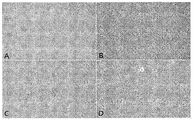
- FIG. 1 shows stem cells isolated from chorionic membrane or wharf cord colloid according to one embodiment of the present invention, and shows the photograph of the shape of the cells under a microscope while subcultured.
- A” and “C” show photographs of culture 5 of chorion-derived stem cells
- B” and “D” show photographs of culture Day 5 of wharton medullary stem cells.
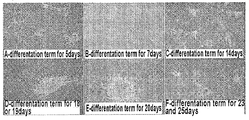
- Figure 2 shows a microscopic picture of the shape of the cells according to the period of induction of differentiation of stem cells from the chorionic membrane or wharf cord colloid according to one embodiment of the present invention.
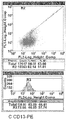
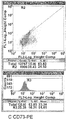
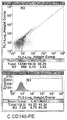
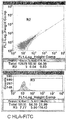
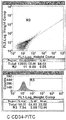
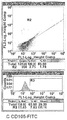
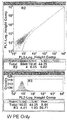
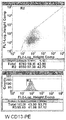
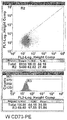
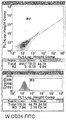
- 3a to 3j show the results of confirming whether the cells separated from the chorionic membrane of the placenta are stem cells through FACS analysis using specific markers on the cell surface.
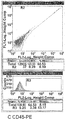
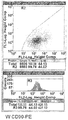
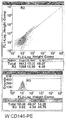
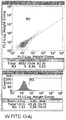
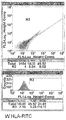
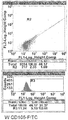
- Figures 4a to 4j shows the results of confirming whether the cells isolated from the Wharton umbilical cord colloid of the placenta through FACS analysis using specific markers on the cell surface.
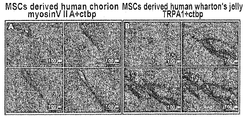
- Figure 5 shows the results of performing the double-label immunofluorescence using the markers of myosin VIIA and TRPA1 to determine whether the differentiation into hair cells.
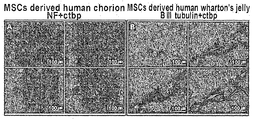
- Figure 6 shows the results of performing the double-label immunofluorescence using the markers of NF and ⁇ III-tubulin to determine whether the differentiation into neurons.
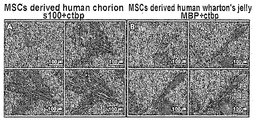
- Figure 7 shows the results of performing the double-label immunofluorescence using the markers of s100 and MBP to determine whether the differentiation into glial cells.
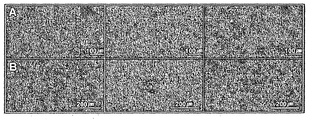
- FIG. 8 shows a fluorescence image of the state before differentiation.
- the upper row is before the differentiation of stem cells derived from Wharton umbilical cord, and the lower row is before the differentiation of stem cells derived from chorion.
- Blue indicates counterstaining of nuclei with DAPI and green indicates proliferation markers stained with brdU.
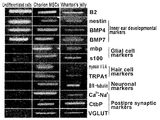
- Figure 9 shows the results of the differentiation and expression of neurons, hair cells and neuronal cell precursors from chorionic membrane or Wharton umbilical cord cells by RT-PCR method.
- Undifferentiated cells is a pre-differentiation of stem cells derived from chorionic or wharton umbilical cord
- Choorion MCSs is a result of stem cells derived from chorionic membranes differentiated according to the method of the present invention
- “Wharton's jelly” Stem cells derived from the collagen are shown after differentiation according to the method of the present invention.
- Example 2 Identification of adult stem cells derived from the isolated chorion or Wharton cord colloid
- Example 2 In order to confirm that the cells derived from placental chorionic umbilical membrane or Wharton umbilical cord gel obtained in Example 1 were adult stem cells, a cell surface maker of stem cells was used. For this purpose, CD34, CD45, CD73, CD90, CD146, CD103, CD105 and HLADR (histocompatibility marker) antibodies were identified using flow cytometry (FACS Caliber, Becton Dickson, San Diego, CA) equipment.
- flow cytometry FACS Caliber, Becton Dickson, San Diego, CA
- the cells derived from the chorionic membrane or the wharf cord colloid are stem cells (FIGS. 2 and 3A to 3J).
- the shape of the cells became longer as the number of subcultures increased. fibroblast like cell) was confirmed to change.
- the mesenchymal stem cells derived from the chorion membrane or Wharton cord gelatin isolated and cultured in Example 1 were differentiated into neural cell precursors, hair cells and neurons by the following method.
- the composition of the medium for differentiation from chorionic or Wharton cord-derived stem cells into neural cell precursors is shown in Table 1 below.
- the composition was induced differently from the culture medium of the neuronal cell precursor culture medium.
- the basal medium was used as a nerve cell culture medium (neurobasal medium), the neuronal growth factors of glioblastoma-derived nerve growth factor (Invitrogen), brain-derived neurotrophic factor (Invitrogen) and neurotropin-3 (Invitrogen) Neural system growth factors were used, and the composition of the medium used for the differentiation of hair cells and neurons is shown in Table 2 below.
- Neuronal cell precursors, hair cells and neurons obtained by differentiating from chorional membrane or Wharton cord colloid-derived mesenchymal stem cells by the method of Example 3 were subjected to immunofluorescence staining, respectively. And neuronal cells.
- BrdU is labeled on cells for 24 hours using BrdU (5-Bromo-2'-deoxy-uridine Labeling and Detection Kit, Roche, Indianapolis, IN), which is known as a marker for proliferating cells to identify specific proliferation. labeling).
- BrdU 5-Bromo-2'-deoxy-uridine Labeling and Detection Kit
- GFAP S-100
- MBP glial markers ⁇ III-tubulin
- NF NF
- MAP2 nestin
- neuronal markers myosin ⁇ A
- TRPA1 Double staining was performed using.
- the expression of ctbp2 was confirmed to simultaneously perform functional analysis of the hair cells.
- DAPI was used for nuclear staining, and expression was counted using the Fluorescence Attached Microscope to count the cells expressed per cell count.
- each of the stained cells were examined under a microscope.
- neural cell precursors differentiated from chorion or Wharton's collagen-derived mesenchymal stem cells they gradually became spherical in shape as they induced differentiation into neural progenitor cells.
- BrdU a marker of proliferating cells during cell division, was confirmed to be capable of self-proliferation, and markers of hair cells, myosin VII and TRPA, were also expressed (Fig. 5), NF and ⁇ III-tubulin neuronal markers and MBP and S-100, Glial cell markers, were also expressed (FIGS. 6 and 7).
- the chorion membrane or Wharton cord colloid-derived stem cells according to the present invention are well differentiated into neural cell precursors, hair cells, and neurons.
- Example 3 the expression of neural cell precursors, hair cells, and neurons was identified through RT-PCR of neural cell precursors, hair cells, and neurons differentiated from chorionic or Wharton cord-derived stem cells. That is, for this purpose, RNA was extracted from each of the cells after differentiation and subjected to polymerase chain reaction (PCR) through reverse transcription. Synthesized cDNA using BMP4 (Bone Morphology Protein 4), BMP7 primers of the genes used in the immunofluorescence staining method and denature the DNA at 94 °C for 5 minutes and reacted for 30 seconds at the binding temperature of each gene, 72 DNA synthesis and extension reaction were performed for 5 min.
- BMP4 Ben Morphology Protein 4
- GAPDH GlycerAldehyde-3-Phosphate DeHydrogenase
- genes of nestin which are markers of stem cells, were expressed, and gene expression was also identified in inner ear development markers BMP4 and BMP7.
- Myosin VIIA and TRPA1 which are markers of hair cells, and ⁇ III-, which are neuronal markers, were identified. It was confirmed that tubulin, MAP2, MBP, S-100 and GFAP genes are also expressed (Fig. 9).
- the present inventors found that neural cell precursors, hair cells, and neurons were well differentiated from the chorional membrane or Wharton umbilical cord-derived mesenchymal stem cells.
- the present invention relates to a method for differentiating neuronal cell precursors, neurons and / or hair cells from chorion or wharf cell-derived stem cells of human placental tissue, wherein the cell replacement therapy for treating hearing loss caused by hair cell damage And regenerative medicine.
Landscapes
- Health & Medical Sciences (AREA)
- Life Sciences & Earth Sciences (AREA)
- Engineering & Computer Science (AREA)
- Biomedical Technology (AREA)
- Chemical & Material Sciences (AREA)
- Biotechnology (AREA)
- Zoology (AREA)
- Cell Biology (AREA)
- Wood Science & Technology (AREA)
- Organic Chemistry (AREA)
- Genetics & Genomics (AREA)
- Bioinformatics & Cheminformatics (AREA)
- General Health & Medical Sciences (AREA)
- Developmental Biology & Embryology (AREA)
- Biochemistry (AREA)
- General Engineering & Computer Science (AREA)
- Microbiology (AREA)
- Epidemiology (AREA)
- Public Health (AREA)
- Veterinary Medicine (AREA)
- Pharmacology & Pharmacy (AREA)
- Medicinal Chemistry (AREA)
- Animal Behavior & Ethology (AREA)
- Neurosurgery (AREA)
- Neurology (AREA)
- Virology (AREA)
- Immunology (AREA)
- Ophthalmology & Optometry (AREA)
- Rheumatology (AREA)
- Dermatology (AREA)
- Vascular Medicine (AREA)
- Orthopedic Medicine & Surgery (AREA)
- Rehabilitation Therapy (AREA)
- Medicines Containing Material From Animals Or Micro-Organisms (AREA)
Abstract
본 발명은 인간 태반의 융모막(chorion) 또는 와튼제대교질(warthon's jelly)로부터 분리한 줄기세포를 분화시키는 방법에 관한 것으로, 보다 상세하게, 인간 태반의 융모막 또는 와튼제대교질로부터 분리한 줄기세포를 신경성장인자가 포함된 배지에서 배양하는 단계를 포함하는, 융모막 또는 와튼제대교질 유래 줄기세포를 신경계 세포 전구체, 유모세포, 신경세포로 분화시키는 방법에 관한 것이다. 또한 본 발명은 상기 분화된 신경계 세포 전구체, 유모세포, 신경세포를 유효성분으로 포함하는 난청의 예방 또는 치료용 조성물에 관한 것이다.
Description
본 발명은 인간 태반(placenta)의 융모막(chorion) 또는 와튼제대교질(warthon's jelly)로부터 분리한 줄기세포를 분화시키는 방법에 관한 것으로, 보다 상세하게, 인간 태반의 융모막 또는 와튼제대교질로부터 분리한 줄기세포를 신경성장인자가 포함된 배지에서 배양하는 단계를 포함하는, 융모막 또는 와튼제대교질 유래 줄기세포를 신경계 세포 전구체, 유모세포(hair cell), 신경세포로 분화시키는 방법에 관한 것이다. 또한 본 발명은 상기 분화된 신경계 세포 전구체, 유모 세포, 신경세포를 유효성분으로 포함하는 난청의 예방 또는 치료용 조성물에 관한 것이다.
종래 인간의 난치병 치료를 위해 장기이식이나 유전자 치료 등이 제시되었으나, 면역거부와 공급 장기 부족, 벡터 개발이나 질환 유전자에 대한 지식 부족으로 효율적인 실용화가 미진하였다.
이에 줄기세포 연구에 대한 관심이 고조되어, 증식과 분화를 통해 모든 기관을 형성할 능력을 가진 만능 줄기세포가 대부분의 질병 치료는 물론 장기 훼손을 근원적으로 해결할 수 있는 것으로 인식되었다. 또한, 많은 과학자들이 인체의 거의 모든 장기 재생은 물론 난치병이었던 파킨슨병, 각종 암, 당뇨병과 척수손상 등의 치료에 이르기까지 다양하게 줄기세포의 적용 가능성을 제시해 왔다.
또한, 최근 들어 질환에 의해 세포가 파괴되거나 손상 받았을 경우, 세포를 외부로부터 공급해주는 세포 대체 요법(cell replacement therapy)이 효과적인 치료법으로 제시되고 있으며, 특히 재생이 필요한 조직으로 증식 및 분화가 가능한 줄기세포(stem cell)가 각광을 받고 있다.
이렇게 다양한 기능을 갖는 줄기세포란 조직을 구성하는 각 세포로 분화되기 전 단계의 세포로서, 미분화 상태에서 무한 증식이 가능하며 특정 분화 자극에 의해 다양한 조직의 세포로 분화될 수 있는 잠재적 가능성을 가진 세포를 말한다. 신경 줄기세포 역시 자기복제능력을 가지고 있으며, 뉴론(neuron) 또는 글리아(glia), 예컨대, 성상세포(astrocyte), 희돌기교세포(oligodendrocyte) 또는 슈반세포(Schwann cell) 등으로 분화할 수 있는 다분화 능력을 가진 미분화 세포이며, 신경 줄기세포는 특정한 신경계 세포를 만들어내는 신경전구세포나 글리아전구세포의 단계를 거쳐서 신경세포(neural cell), 예를 들면 뉴론이나 글리아로 분화하게 된다.
한편, 간엽 줄기세포(mesenchymal stem cell, MSC)는 골, 연골, 지방조직, 근육, 건, 인대, 신경조직 등으로 분화할 수 있어 세포 치료요법에 적합한 세포로 주목받고 있다. 현재 간엽 줄기세포를 얻을 수 있는 가장 대표적 기원 조직으로 골수(bone marrow)를 들 수 있다. 그러나 골수에 존재하는 간엽 줄기세포는 제한적인 분화능과 증식능력으로 인해 그 응용범위가 한정적일 수밖에 없으며, 골수로부터 유래하는 한계로 인해 여러 단계의 시술이 필요하고, 시술 과정이 복잡하여 채취 대상자에게 시간적, 정신적 및 육체적 고통을 수반하는 것이 보통이다. 또한, 골수 이식을 위해서는 조직적합항원 비교를 통해 항원 표현형이 일치하여 이식편대숙주반응을 보이지 않는 공여자를 찾아야 한다는 문제점이 있다.
따라서 최근에는 많은 양의 줄기세포가 제대혈(Umblical cord blood, UCB)에 존재한다는 사실이 알려지면서 제대혈을 이용한 세포 치료 연구가 활발히 진행되고 있다. 특히, 임상적으로 제대혈 이식을 통해 혈액관련 질환을 치료하고자 하는 시도가 많이 이루어지고 있으며, 자가이식 치료를 위하여 제대혈을 냉동시켜 수년 후 사용가능한 상태로 보존하는 제대혈 은행이 국내에서도 활성화되고 있다.
또한, 최근에는 태아 조직(fetal tissue)에서 중간엽 줄기세포의 분리를 위한 연구가 활발히 진행되고 있는데 그 결과, 풍부한 중간엽 줄기세포가 있음이 밝혀졌으나, 세포치료제를 목적으로 한 태아 조직의 사용은 윤리적으로 제한이 있기 때문에 세포치료제로 사용하기 위한 한계가 있었다. 태아 중간엽 줄기세포(fetal MSC)에 대한 소스로서 제대혈에서도 중간엽 줄기세포를 분리하였지만, 그 수가 매우 적으며 증식이 잘 되지 않는 문제점이 있었다. 따라서 세포치료제로서 증식이 용이하고 대량 배양이 가능한 줄기세포의 분리 및 배양 방법에 대한 새로운 개발이 필요한 실정이다.
한편, 인체 감각의 하나인 청각이 소실될 경우, 개인적으로는 일상생활에 장애를 초래하며 사회 경제적으로는 막대한 손실을 초래한다. 난청은 청각 장애만을 유발하는 것이 아니라, 언어 습득 전에 심각한 난청이 발생할 경우에는 정상적인 언어발달에 지장을 받아 언어 장애가 동반되어 문제가 된다. 또한, 최근에는 노인성 인구가 기하급수적으로 증가하면서 노인성 난청 환자들이 급속히 증가하고 있는데 노인성 난청은 고혈압 및 퇴행성 관절염과 함께 3대 노인성 질환 중 하나로서 65세 이상 인구의 25~40%에서 발견되는 질환으로 알려져 있고, 노인성 난청의 대부분은 청각유모세포와 신경세포(spiral ganglion)의 퇴행성 변화로 유발되는 감각중추(sensory)형과 신경계(neural)형으로 알려져 있다.
일반적으로 포유동물에서의 내이는 이미 손상되었거나 죽은 내이의 감각 유모세포가 재생되지 않는 것으로 알려져 있다. 따라서 감각 유모 세포의 사멸 또는 약화로 인한 청력 이상은 전형적으로 영구 청력 장애를 일으킨다. 또한, 감각뉴론성 난청은 노화-관련 손실(노인성 난청), 소음 노출, 약물 노출(예를 들어, 항생제 및 항암 치료), 감염, 유전적 돌연변이(증후군성 및 비-증후군성) 및 자가면역 질환을 포함하는 다수의 요인들에 의해 야기될 수 있다.
현재, 감각뉴론성 난청을 위한 치료로 외부 보청기의 사용 및 와우각 이식이 사용되고 있는데, 두 가지 방법 모두는 다소 제한된 치료적 가능성만을 가진다. 또한, 최근에는 감각 내이 유모세포를 재생하는 방법이 개발되었는데, 국제특허출원 PCT/US99/24829에는 감각 유모세포를 포함하는 내이세포의 재생을 자극하는 방법이 개시되어 있다. 그러나 상기 기술은 내이세포의 재생을 자극할 수 있도록 전사 인자를 암호화하는 내이세포 핵산 분자를 도입하는 단계를 포함하는 등 매우 복잡한 과정 및 오랜 시간이 필요하다. 따라서 신경세포 및 유모세포를 효과적으로 재생하여 난청을 치료할 수 있는 새로운 기술이 요구되고 있다.
그러나 지금까지 난청의 치료를 위해 태반의 융모막 또는 와튼제대교질 유래 줄기세포로부터 신경세포 및 유모세포를 분화 및 증식시켜 세포치료제로 사용한 예가 없다.
이러한 배경 하에, 본 발명자들은 유모세포의 재생을 통해 효과적으로 난청을 치료할 수 있는 방법을 연구하던 중, 난청의 치료에 있어서 중요한 신경계 세포전구체, 신경세포, 유모세포를 태반의 융모막 또는 와튼제대교질 유래 간엽줄기세포로부터 분화시킬 수 있음을 확인함으로써 본 발명을 완성하였다.
본 발명의 목적은 인간 태반의 융모막 또는 와튼제대교질로부터 분리한 줄기세포를 신경성장인자가 포함된 배지에서 배양하는 단계를 포함하는, 융모막 또는 와튼제대교질 유래 줄기세포를 신경계 세포 전구체, 유모세포 및 신경세포로 이루어진 군에서 선택된 하나로 분화시키는 방법을 제공하는 것이다.
본 발명의 또 하나의 목적은 인간 태반의 융모막 또는 와튼제대교질 유래 줄기세포로부터 분화된 신경계 세포 전구체, 유모세포 및 신경세포로 이루어진 군에서 선택된 하나를 유효성분으로 포함하는, 난청의 예방 또는 치료용 조성물을 제공하는 것이다.
본 발명의 또 다른 목적은 난청이 있는 개체에 인간 태반의 융모막 또는 와튼제대교질 유래 줄기세포로부터 분화된 신경계 세포 전구체, 유모세포 및 신경세포로 이루어진 군에서 선택된 하나를 치료학적 유효량으로 투여하는 단계를 포함하는 난청의 치료 방법을 제공하는 것이다.
상기 목적을 달성하기 위한 하나의 양태로서, 본 발명은 인간 태반의 융모막 또는 와튼제대교질로부터 분리한 줄기세포를 신경성장인자가 포함된 배지에서 배양하는 단계를 포함하는, 융모막 또는 와튼제대교질 유래 줄기세포를 신경계 세포 전구체, 유모세포 및 신경세포로 이루어진 군에서 선택된 하나로 분화시키는 방법에 관한 것이다.
바람직하게, 상기 신경성장인자는 상피세포 성장인자(Epidermal Growth Factor, EGF), 섬유아세포 성장인자(basic fibroblast growth factor, bFGF), 교아세포유래 신경성장인자(Grial-derived neurotprophin factor, GDNF), 뇌유래 신경영양인자(Brain-derived neutrophin factor, BDNF) 및 뉴로트로핀-3(Neurotrophin-3, NT-3)으로 이루어진 군 중에서 선택된 하나 이상일 수 있다.
또한 바람직하게, 상기 배지는 B-27 첨가물(B-27 supplement) 1 내지 3 중량%(v/v), L-글루타민 1 내지 3mM 및 항생제 0.5 내지 2중량%(v/v)를 추가로 포함하는 것일 수 있다.
또한 바람직하게, 상기 배양하는 단계는 15 내지 26일 동안 배양되는 것일 수 있다.
또한 바람직하게, 상기 신경성장인자는 상피세포 성장인자 또는 섬유아세포성장인자이고, 융모막 또는 와튼제대교질 유래 줄기세포를 신경계 세포 전구체로 분화시키는 것일 수 있다.
보다 바람직하게, 상기 상피세포 성장인자는 배지에 5 내지 15 ng/㎖, 상기 섬유아세포 성장인자는 배지에 15 내지 25 ng/㎖ 포함되는 것일 수 있다.
또한 바람직하게, 상기 신경성장인자는 교아세포유래 신경성장인자, 뇌유래 신경영양인자 및 뉴로트로핀-3으로 이루어진 군 중에서 선택된 하나 이상이고, 융모막 또는 와튼제대교질 유래 줄기세포를 유모세포 또는 신경세포로 분화시키는 것일 수 있다.
보다 바람직하게, 상기 교아세포유래 신경성장인자는 배지에 5 내지 15 ng/㎖, 상기 뇌유래 신경영양인자는 배지에 5 내지 15 ng/㎖, 상기 뉴로트로핀-3은 배지에 5 내지 15 ng/㎖ 포함되는 것일 수 있다.
또 하나의 양태로서 본 발명은, 인간 태반의 융모막 또는 와튼제대교질 유래 줄기세포로부터 분화된 신경계 세포 전구체, 유모세포 및 신경세포로 이루어진 군에서 선택된 하나를 유효성분으로 포함하는, 난청의 예방 또는 치료용 조성물에 관한 것이다.
또 하나의 양태로서 본 발명은, 난청이 있는 개체에 인간 태반의 융모막 또는 와튼제대교질 유래 줄기세포로부터 분화된 신경계 세포 전구체, 유모세포 및 신경세포로 이루어진 군에서 선택된 하나를 치료학적 유효량으로 투여하는 단계를 포함하는 난청의 치료 방법에 관한 것이다.
바람직하게, 상기 신경계 세포 전구체는 인간 태반의 융모막 또는 와튼제대교질 유래 줄기세포를 상피세포 성장인자 또는 섬유아세포 성장인자가 포함된 배지에서 배양됨으로써 분화된 것일 수 있다.
또한 바람직하게, 상기 유모세포 또는 상기 신경세포는 인간 태반의 융모막 또는 와튼제대교질 유래 줄기세포를 교아세포유래 신경성장인자, 뇌유래 신경영양 인자 및 뉴로트로핀-3으로 이루어진 군 중에서 선택된 하나 이상의 신경성장인자가 포함된 배지에서 배양됨으로써 분화된 것일 수 있다.
이하, 본 발명을 보다 상세하게 설명한다.
본 발명은 태반의 융모막 또는 와튼제대교질로부터 유래된 간엽줄기세포를 신경성장인자가 포함된 배지(medium)에서 배양하는 단계를 포함하는, 태반의 융모막 또는 와튼제대교질 유래 간엽줄기세포를 신경세포 및 유모세포로 분화시키는 방법을 제공하는 것이다.
태반은 임신 중에 태아를 위해 만들어지는 것으로 무게 500g, 지름 15~20cm, 두께 2~3cm 정도의 원반 형태로 되어있다. 태반의 한쪽은 모체와 닿아 있고 다른 한쪽은 태아와 맞닿아 있으며 그 사이 공간에 모체의 혈액이 담겨 있어 태아에게 영양분을 공급하게 된다. 태반은 양막, 융모막, 탈락막의 3층으로 구성되어 있으며, 융모막은 양막과 탈락막 사이에 있는 얇은 막이고, 와튼제대교질은 제대(태아와 태반을 연결하는 끈 모양의 구조물, 탯줄)를 구성하는 주요성분이다.
한편, 본 발명에서는 태반을 이루고 있는 구성 중, 특히 융모막 또는 와튼제대교질로부터 줄기세포를 분리(실시예 1)하였고, 이를 특정 성장인자가 함유된 배지에서의 배양을 통해 신경세포 및 유모세포의 분화 조건을 확립하였다(실시예 3).
또한, 본 발명자들은 난청과 같은 청각 장애 질환을 치료하기 위한 목적으로, 지금까지 시도된 바 없는 태반의 융모막 또는 와튼제대교질 유래 간엽줄기세포를 이용하여 이로부터 신경세포 및 내이 감각세포인 유모세포로의 분화를 시도하였고, 분화 조건을 확립하여 태반조직의 융모막 또는 와튼제대교질로부터 줄기세포를 분리하였으며, 상기 간엽줄기세포를 신경성장인자가 포함된 배지에 배양하였을 경우, 신경세포 및 유모세포로 분화 유도됨을 확인할 수 있었다(실시예 4 및 5).
그러므로 본 발명은 태반조직의 융모막 또는 와튼제대교질 유래 줄기세포를 신경세포 및 유모세포로 분화시키는 방법을 제공할 수 있으며, 보다 구체적으로는, 인간 태반조직의 융모막 또는 와튼제대교질 유래 줄기세포를 신경성장인자가 포함된 배지에서 배양하는 단계를 포함하는 융모막 또는 와튼제대교질 유래 줄기세포를 신경세포 및 유모세포로 분화시키는 방법을 제공할 수 있다.
또한, 본 발명에 따른 융모막 또는 와튼제대교질 유래 줄기세포를 신경세포 및 유모세포로 분화시키는 방법은, 먼저 태반으로부터 융모막 또는 와튼제대교질을 분리하고 분리된 융모막 또는 와튼제대교질로부터 간엽줄기세포를 분리시킨 다음, 분리된 간엽줄기세포를 세포가 자라는 배양배지에 신경성장인자를 처리함으로써 신경세포 또는 유모세포로 각각 분화시킬 수 있다.
상기 융모막 또는 와튼제대교질로부터 줄기세포를 수득하는 방법은 먼저 태반 조직으로부터 융모막 또는 와튼제대교질을 분리한 다음, 융모막 또는 와튼제대교질로부터 줄기세포를 수득할 수 있는데, 이러한 방법은 당업계에 공지된 방법이라면 모두 사용가능하며, 예를 들어 인간 태반 조직샘플로부터 융모막 또는 와튼제대교질을 분리하고 Hanks' balanced salt 용액으로 세척하여 혈액을 제거한 다음, 0.05% 트립신 용액에서 화학적 분해 작업을 수행한 후, 트립신 처리한 용액을 모은 뒤, EGF가 함유된 배지에서 배양하여 인간 태반에서 분리한 융모막 또는 와튼제대교질 유래 줄기세포액을 수득할 수 있다. 또한, 수득한 줄기세포는 상기 줄기세포가 충분히 증폭될 때까지 계대배양을 반복할 수 있다.
상기와 같은 방법으로 수득한 융모막 또는 와튼제대교질 유래 줄기세포는 이후 세포가 자라는 배양배지에 신경성장인자를 처리하고 배양함으로써 신경세포 또는 유모세포로 각각 분화시킬 수 있다.
상기에서 배양배지는 통상적으로 사용하는 동물세포 배양용 배지라면 모두 사용가능하며, 이에 제한되지는 않으나, DMEM, 알파-DMEM, 이글스 기본 배지(Eagle's basal mediu,), RPMI 1640 배지, NPBM(Neural progenitor cell basal medium: SClonetics)등을 사용할 수 있다.
또한, 융모막 또는 와튼제대교질 유래 간엽줄기세포로부터 신경세포 또는 유모세포로 분화시키기 위해 본 발명에서 사용한 신경성장인자로는, 교아세포유래 신경성장인자, 뇌유래 신경영양인자 및 뉴로트로핀-3으로 이루어진 군중에서 선택된 하나 이상을 사용할 수 있으며, 배양배지의 총 부피에 대하여 상기 각 신경성장인자는 5ng/㎖ 내지 15ng/㎖의 농도로 포함될 수 있다.
또한, 상기 배양은 15일 내지 26일 동안 36 내지 38℃의 온도 및 4 내지 6% 이산화탄소 조건에서 수행할 수 있다.
또한, 상기 배지는 배지 총 부피에 대하여, B-27 첨가물 1 내지 3 중량%(v/v), L-글루타민 1 내지 3mM, 및 항생제-항진균제(예를 들어, 페니실린-스트렙토마이신) 0.5 내지 2 중량%(v/v)을 추가로 첨가하여 포함할 수 있다.
한편, 상기 신경성장인자들 중에서, 뇌유래 신경영양인자는 뇌에 가장 풍부하게 분포되어 있는 뉴로트로핀(neurotrophin)으로 신경원의 성장을 촉진하는 작용을 하고, 신경전달 물질의 합성, 대사, 유리 및 신경원의 활성을 조절하는 작용을 하는 것으로 알려져 있다.
또한, 상기 교아세포유래 신경성장인자 및 뉴로트로핀-3은 아교세포(Glial cells)와 별아교세포 및 신경세포의 성장을 촉진시키는 작용을 한다고 알려져 있다.
한편, 본 발명자들은 상기 기술된 본 발명의 방법에 따라 인간 태반조직의 융모막 또는 와튼제대교질로부터 분리된 줄기세포를 특정 성장인자가 함유된 배지에서 배양함으로써 신경세포 및 유모세포로 분화되었는지 조사한 결과, 융모막 또는 와튼제대교질 유래 줄기세포로부터 신경계 세포 전구체와 신경세포 및 유모세포가 잘 분화되는 것을 확인할 수 있었다.
보다 구체적으로, 본 발명의 일실시예에 따르면, GDNF, BDNF 및 NT-3의 신경성장인자가 포함된 배지에서 융모막 또는 와튼제대교질 유래 줄기세포를 배양함으로써 신경세포 및 유모세포의 분화를 유도하였고, 상기 신경세포 및 유모세포의 분화를 확인하기 위해 특정 분열증식을 확인할 수 있는 Brud5로 세포들을 1차 염색한 다음, 이후 각 특징적으로 분화된 세포 확인을 위해, 아교세포 표지자로 GFAP(Glial Fibrillary Acidic Protein), S-100 및 MBP(Myelin basic protein)를, 신경세포 표지자로서 베타 Ⅲ-튜불린(βⅢ-tubulin), NF(Neurofilamen) 및 MAP2(Microtubul-Associated Protein2)를, 신경계원종 표지자로 네스틴(nestin)을, 유모세포의 표지자로 미오신(myosin) ⅦA 및 TRPA1(Transient receptor potential cation channel)을 사용하여 이중 염색을 통한 형광면역분석법을 수행하였다.
그런 뒤, 염색된 각 세포들을 현미경을 통해 확인한 결과, 융모막 또는 와튼제대교질 유래 간엽줄기세포로부터 분화된 신경계 세포 전구체의 경우, 신경전구세포로의 분화를 유도함에 따라 점차 구형의 형상을 띄는 것으로 나타났고(도 2), 세포 분열 시 증식하는 세포의 표지자인 BrdU에 대하여 염색이 이루어져 스스로 증식이 가능한 세포임을 확인하였으며, 유모세포의 표지자인 myosin Ⅶ 및 TRPA도 발현되고 있는 것으로 나타났고(도 5), 신경세포 표지자인 NF 및 βⅢ-tubulin과 Glial 세포 표지자인 MBP 및 S-100도 발현되고 있음을 확인할 수 있었다(도 6 및 도 7).
또한 본 발명의 다른 일실시예에 따르면, GDNF, BDNF 및 NT-3의 신경성장인자가 포함된 배지에서 융모막 또는 와튼제대교질 유래 줄기세포로부터 신경세포 및 유모세포의 분화를 유도한 후, 각 특정 세포를 인식하는 표지자에 해당하는 유전자를 증폭할 수 있는 프라이머를 사용하여 RT-PCR을 수행함으로써 신경세포 및 유모세포의 분화 및 발현 정도를 조사하였다.
그 결과, 줄기세포의 표지자인 네스틴(nestin)의 유전자가 발현되는 것으로 나타났고, 내이(inner ear) 발달 표지자인 BMP4 및 BMP7도 유전자의 발현이 확인되었으며, 유모세포의 표지자인 Myosin ⅦA 및 TRPA1과 신경세포 표지자인 βⅢ-tubulin, MAP2,S-100 및 GFAP 유전자 또한 발현되고 있음을 확인할 수 있었다(도 9).
따라서 본 발명자들은 상기 결과를 통해 융모막 또는 와튼제대교질 유래 간엽줄기세포를 신경성장인자가 포함된 배지, 즉, GDNF, BDNF 또는 NT-3가 포함된 배지에서 배양할 경우, 융모막 또는 와튼제대교질 유래 간엽줄기세포로부터 신경세포 및 유모세포를 분화시킬 수 있음을 알 수 있었다.
나아가 본 발명자들은 융모막 또는 와튼제대교질 유래 간엽줄기세포로부터 신경계 세포 전구체의 분화를 유도하였다. 구체적으로, 상기 신경계 세포 전구체로의 분화는 융모막 또는 와튼제대교질 유래 간엽줄기세포를 상기 세포를 배양하는 배지에 상피세포 성장인자인 EGF 및 기질섬유세포 성장인자인 bFGF를 첨가하고 배양시킴으로써 분화를 유도하였다.
상기 융모막 또는 와튼제대교질 유래 간엽줄기세포로부터 신경계 세포 전구체의 분화를 유도하기 위하여 사용한 성장인자인 상피세포 성장인자는 턱밑샘(submaxillary glands)과 브루너선(brunner's gland)에서 유래된 것으로서, 간엽줄기세포와 아교세포 등의 분화를 증진시키는 것으로 알려져 있다. 또한, 인체 내의 대부분에서 얻을 수 있는 기질섬유세포 성장인자인 bFGF는 상처 치유와 세포의 분화를 증진시키는 것으로 알려져 있다.
본 발명의 일실시예에 따르면, 통상의 동물세포 배지로 사용되는 DMEM 배지에 10ng/㎖의 EGF 및 20ng/㎖ bFGF를 첨가하여 배양한 다음, 분화된 신경계 세포 전구체를 신경계 원종표지자인 네스틴을 사용하여 면역형광분석을 수행한 결과, 대부분이 네스틴이 발현되어 염색된 것으로 나타났고, 또한, 신경줄기세포 표지자인 네스틴, BMP4 및 BMP7의 유전자를 증폭시킬 수 있는 프라이머를 사용한 RT-PCT 실험을 통해서도 상기 표지자의 유전자들이 분화된 신경계 세포 전구체에서 모두 발현되는 것을 확인할 수 있었다(도 9).
따라서 상기와 같은 결과를 통해, 본 발명자들은 융모막 또는 와튼제대교질 유래 간엽줄기세포를 EGF 또는 bFGF이 첨가된 배지에서 배양할 경우, 신경계 세포 전구체로 분화되는 것을 알 수 있었고, 반면, GDNF, BDNF 또는 NT-3가 첨가된 배지에서 배양할 경우에는 신경세포 및 유모세포로 분화되는 것을 알 수 있었다.
한편, 난청은 전 세계적으로 가장 흔한 질환으로서 65세 이후의 노인의 경우, 약 30% 정도는 이러한 난청으로 일상생활에서 많은 어려움을 겪고 있다. 이러한 난청이 발생하게 되면 구심로의 차단에 따른 말초감각신경세포인 유모세포가 소실되고 이와 더불어 청각신경세포와 와우신경절의 세포들도 시간 경과에 따라 소실되는 현상이 나타난다. 이에 난청을 개선 및 치료하기 위해 현재 사용되고 있는 방법으로는 난청환자에 대해 보청기를 착용하게 하거나 또는 인공와우이식 수술을 통해 환자들로 하여금 도움을 주고 있으나 인공와우이식 대상자 중에서도 와우신경절의 신경원세포의 발달이 저하되어 있거나 장기간의 난청으로 퇴화되어 있는 경우 인공와우이식술을 시행하여도 청력이 완전히 회복되기에는 한계가 있다.
따라서 이러한 한계를 극복하기 위해서 청력 회복을 위한 신경세포 치료 개념이 대두되고 있는데, 특히 난청의 원인이 되는 말초감각신경세포인 유모세포를 재생할 수 있다면 난청을 보다 근원적으로 치료할 수 있다.
본 발명에 따른 융모막 또는 와튼제대교질 유래 간엽줄기세포를 신경세포 및 유모세포로 분화시키는 방법은 난청의 원인이 되는 청각 감각세포인 유모세포를 분화 및 재생시키는 효과가 있으므로 난청을 예방 또는 치료할 수 있는 특징이 있다.
그러므로 본 발명은 융모막 또는 와튼제대교질 유래 간엽줄기세포로부터 분화된 신경세포 및 유모세포를 유효성분으로 포함하는 난청의 예방 또는 치료용 조성물을 제공할 수 있다.
또한, 상기 본 발명의 조성물은 난청의 예방 또는 치료를 위한 약학적 조성물로 사용될 수 있다.
본 발명에서 상기 "난청"은 청각기관의 장애로 인해 청력이 저하 또는 소실된 상태를 말하는 것으로서, 크게 증후군(syndromic) 및 비증후군(nonsyndromic) 형태를 모두 포함할 수 있다. 상기 증후군 형태는 다시 3 가지로 더 세분화 할 수 있는데, 즉, 1) 청각장애와 관련된 감각신경 성분을 갖거나 갖지 않는 중이 및 외이 결함으로 인한 전음성 난청, 2) 청각장애와 관련된 감각신경 성분을 갖거나 갖지 않는 중이 결함으로 인한 전음성 난청, 및 3) 와우(cochlear) 또는 후미로(retrocochlear) 결함으로 인한 감각신경성 난청으로 나눌 수 있다. 또한, 상기 비증후군은 유전성 난청을 의미하는 것으로서 그들의 유전 양식에 따라 DFN, DFNA 및 DFNB로 분류될 수 있으며, 이들은 각각 X 염색체-연관, 상염색체 우성 및 상염색체 열성 전달 양식을 의미한다.
본 발명에 따른 난청의 예방 또는 치료용 조성물은 약학적으로 유효한 양의 융모막 또는 와튼제대교질 유래 간엽줄기세포로부터 분화된 신경세포 및 유모세포를 단독으로 포함하거나 하나 이상의 약학적으로 허용되는 담체, 부형제 또는 희석제를 포함할 수 있다. 상기에서 약학적으로 유효한 양이란 난청을 예방, 개선 및 치료하기에 충분한 양을 말한다.
또한, 본 발명은 난청이 있는 개체에 인간 태반의 융모막 또는 와튼제대교질 유래 줄기세포로부터 분화된 신경계 세포 전구체, 유모세포 및 신경세포로 이루어진 군에서 선택된 하나를 치료학적 유효량으로 투여하는 단계를 포함하는 난청의 치료 방법을 제공한다. 본 발명에서 사용된 용어 "치료학적 유효량" 또는 "유효량"은 난청 치료에 적용가능한 합리적인 수혜/위험 비율로 질환을 치료하기에 충분한 양을 의미하며, 유효 용량 수준은 개체 종류, 상태 및 중증도, 연령, 성별, 감염된 세균의 종류, 약물의 활성, 약물에 대한 민감도, 투여 시간, 투여 경로 및 배출 비율, 치료기간, 동시 사용되는 약물을 포함한 요소 및 기타 의학 분야에 잘 알려진 요소에 따라, 당업자에 의해 적절하게 선택될 수 있다.
상기 신경계 세포 전구체는 인간 태반의 융모막 또는 와튼제대교질 유래 줄기세포를 상피세포 성장인자 또는 섬유아세포 성장인자가 포함된 배지에서 배양됨으로써 분화된 것일 수 있다.
상기 유모세포 또는 상기 신경세포는 인간 태반의 융모막 또는 와튼제대교질 유래 줄기세포를 교아세포유래 신경성장인자, 뇌유래 신경영양인자 및 뉴로트로핀-3으로 이루어진 군 중에서 선택된 하나 이상의 신경성장인자가 포함된 배지에서 배양됨으로써 분화된 것일 수 있다.
본 발명에 따른 융모막 또는 와튼제대교질 유래 간엽줄기세포로부터 분화된 신경세포 및 유모세포의 약학적으로 유효한 양은 0.5 ~ 100 mg/day/체중kg, 바람직하게는 0.5 ~ 5 mg/day/체중kg이다. 그러나 상기 약학적으로 유효한 양은 난청의 증상 정도, 환자의 연령, 체중, 건강상태, 성별, 투여 경로 및 치료기간 등에 따라 적절히 변화될 수 있다.
상기 본 발명에 따른 약학적 조성물은 약학적으로 허용되는 담체를 추가로 포함할 수 있다. 상기에서 "약학적으로 허용되는"이란 생리학적으로 허용되고 인간에게 투여될 때, 통상적으로 위장 장애, 현기증 등과 같은 알레르기 반응 또는 이와 유사한 반응을 일으키지 않는 조성물을 말한다. 약학적으로 허용되는 담체로는 예를 들면, 락토스, 전분, 셀룰로스 유도체, 마그네슘 스테아레이트, 스테아르산 등과 같은 경구 투여용 담체 및 물, 적합한 오일, 식염수, 수성 글루코스 및 글리콜 등과 같은 비경구 투여용 담체 등이 있으며 안정화제 및 보존제를 추가로 포함할 수 있다. 적합한 안정화제로는 아황산수소나트륨, 아황산나트륨 또는 아스코르브산과 같은 항산화제가 있다. 적합한 보존제로는 벤즈알코늄 클로라이드, 메틸- 또는 프로필-파라벤 및 클로로부탄올이 있다. 그 밖의 약학적으로 허용되는 담체로는 다음의 문헌에 기재되어 있는 것을 참고로 할 수 있다(Remington's Pharmaceutical Sciences, 19th ed., Mack Publishing Company, Easton, PA, 1995). 본 발명에 따른 약학적 조성물은 상술한 바와 같은 약학적으로 허용되는 담체와 함께 당업계에 공지된 방법에 따라 적합한 형태로 제형화 될 수 있다. 즉, 본 발명의 약학적 조성물은 공지의 방법에 따라 다양한 비경구 또는 경구 투여용 형태로 제조될 수 있으며, 비경구 투여용 제형의 대표적인 것으로는 주사용 제형으로 등장성 수용액 또는 현탁액이 바람직하다. 주사용 제형은 적합한 분산제 또는 습윤제 및 현탁화제를 사용하여 당업계에 공지된 기술에 따라 제조할 수 있다. 예를 들면, 각 성분을 식염수 또는 완충액에 용해시켜 주사용으로 제형화될 수 있다. 또한, 경구 투여용 제형으로는, 이에 한정되지는 않으나, 분말, 과립, 정제, 환약 및 캡슐 등이 있다.
상기와 같은 방법으로 제형화된 약학적 조성물은 유효량으로 경구, 경피, 피하, 정맥 또는 근육을 포함한 여러 경로를 통해 투여될 수 있다. 상기에서 '유효량' 이란 환자에게 투여하였을 때, 예방 또는 치료 효과를 나타내는 양을 말한다.
본 발명에 따른 약학적 조성물의 투여량은 투여 경로, 투여 대상, 연령, 성별 체중, 개인차 및 질병 상태에 따라 적절히 선택할 수 있다. 바람직하게는, 본 발명의 약학적 조성물은 질환의 정도에 따라 유효성분의 함량을 달리할 수 있으나, 바람직하게는 1~10000㎍/체중kg/day, 더욱 바람직하게는 10~1000㎎/체중kg/day의 유효용량으로 하루에 수회 반복 투여될 수 있다. 또한, 본 발명에 따른 난청의 예방 또는 치료용 조성물은 난청을 예방, 개선 또는 치료하는 효과를 가지는 공지의 화합물과 병행하여 투여할 수도 있다.
따라서 본 발명은 융모막 또는 와튼제대교질 유래 줄기세포로부터 분화된 신경계 세포 전구체, 신경세포 및 유모세포를 유효성분으로 포함하는 난청의 예방 및 치료용 조성물을 제공할 수 있다.
본 발명은 인간 태반조직의 융모막 또는 와튼제대교질 유래 줄기세포로부터 신경계 세포 전구체, 신경세포 및/또는 유모세포로 분화시키는 방법 및 상기 분화된 신경계 세포 전구체, 신경세포 및/또는 유모세포를 포함하는 난청의 예방 또는 치료용 조성물을 제공하며, 유모세포의 손상으로 야기되는 난청을 치료하기 위한 세포 대체 요법 및 재생의학 분야에 우수하게 활용이 가능하고, 난청 치료를 위한 신약개발의 소재로도 사용할 수 있을 뿐만 아니라 난청 치료와 관련된 기초 연구 분야에서도 널리 사용될 수 있는 효과가 있다.
도 1은 본 발명의 일실시예에 따라 융모막 또는 와튼제대교질로부터 줄기세포를 분리한 후, 이를 계대 배양하면서 세포의 모양을 현미경으로 관찰한 사진을 나타낸다. "A" 및 "C"는 융모막 유래 줄기세포의 배양 5일때의 사진, "B" 및 "D"는 와튼제대교질 유래 줄기세포의 배양 5일째의 사진을 나타낸다.
도 2는 본 발명의 일실시예에 따라 융모막 또는 와튼제대교질로부터 줄기세포를 분화를 유도한 기간에 따른 세포의 모양을 현미경으로 관찰한 사진을 나타낸다.
도 3a 내지 3j는 세포 표면의 특정 표지자들을 이용한 FACS 분석법을 통하여 태반의 융모막으로부터 분리된 세포가 줄기세포인지를 확인한 결과를 나타낸 것이다.
도 4a 내지 4j는 세포 표면의 특정 표지자들을 이용한 FACS 분석법을 통하여 태반의 와튼제대교질로부터 분리된 세포가 줄기세포인지를 확인한 결과를 나타낸 것이다.
도 5는 유모세포로의 분화 여부를 확인하기 위해 미오신 VIIA와 TRPA1의 표지자를 이용하여 이중-표지 면역형광법을 수행한 결과를 나타낸다.
도 6은 신경세포로의 분화 여부를 확인하기 위해 NF와 βⅢ-tubulin의 표지자를 이용하여 이중-표지 면역형광법을 수행한 결과를 나타낸다.
도 7은 아교세포로의 분화 여부를 확인하기 위해 s100와 MBP의 표지자를 이용하여 이중-표지 면역형광법을 수행한 결과를 나타낸다.
도 8은 분화 전 상태의 형광 이미지를 나타낸다. 윗줄은 와튼제대교질로부터 유래된 줄기세포가 분화되기 전의 상태이고, 아랫줄은 융모막으로부터 유래된 줄기세포가 분화되기 전의 상태이다. 파란색은 DAPI로 핵을 대비염색, 녹색은 brdU로 proliferation 마커를 염색한 것을 나타낸다.
도 9는 융모막 또는 와튼제대교질 줄기세포로부터 신경세포 및 유모세포와 신경계 세포 전구체의 분화 및 발현을 RT-PCR 방법을 수행하여 확인한 결과를 나타낸다. "Undifferentiated cells"는 융모막 또는 와튼제대교질로부터 유래된 줄기세포의 분화 전 결과, "Chorion MCSs"는 융모막으로부터 유래된 줄기세포가 본 발명의 방법에 따라 분화된 후의 결과, "Wharton's jelly"는 와튼제대교질로부터 유래된 줄기세포가 본 발명의 방법에 따라 분화된 후의 결과를 나타낸다.
도 10은 분화 유도된 유모세포의 기능적 분석 결과를 나타낸다.
이하, 본 발명을 실시예에 의해 상세히 설명한다. 단, 하기 실시예는 본 발명을 예시하는 것일 뿐, 본 발명이 하기 실시예에 의해 한정되는 것은 아니다.
실시예 1. 사람의 태반 융모막 또는 와튼제대교질 줄기세포의 분리 및 배양
본 발명에서 수행한 하기의 실험들은 IRB의 승인(임상 연구 관리의 규정KC08CIMI0344)을 준수하여 수행하였으며, 태반으로부터 융모막 또는 와튼제대교질의 분리를 위해 먼저 산모의 동의하에 채취된 태반으로부터 융모막 또는 와튼제대교질과 태반을 분리하고 혈액을 제거하기 위해 Hanks' balanced salt soultion 으로 세척하였다. 이후 융모막 또는 와튼제대교질로부터 줄기세포를 분리하기 위해 융모막 또는 와튼제대교질을 PBS로 두 번 세척 후 잘게 잘랐다.
이후 0.25% 트립신 EDTA에 담가 37℃에서 100rpm으로 water bath 에서 1시간 동안 배양하였다. 이후 EDTA의 저해제(inhibitor)인 FBS가 포함된 배양배지를 10㎖ 넣고 파이펫팅을 20회 가량 하고 1000rpm에서 5분간 원심분리 이후 줄기세포의 배양을 위해 10ng/㎖의 EGF가 포함된 배양배지에서 분리된 세포를 배양하였다. 5일간의 배양 후 배양액 내의 세포들은 계대배양과 분화 유도를 위해 트립신을 이용하여 다시 세포 분리 과정을 시행하여 융모막 또는 와튼제대교질 유래의 줄기세포를 수득하였다.
실시예 2. 분리한 융모막 또는 와튼제대교질 유래의 성체줄기세포 확인
상기 실시예 1에서 수득한 태반 융모막 또는 와튼제대교질 유래의 세포가 성체줄기세포임을 확인하기 위하여 줄기세포의 표면 표지자(cell surface maker)를 사용하였다. 이를 위해 CD34, CD45, CD73, CD90, CD146, CD103, CD105 및 HLADR(조직적합성 표지자) 항체를 유세포 분석기(FACS Caliber, Becton Dickson, San Diego, CA) 장비를 이용하여 확인하였다.
그 결과, 융모막 또는 와튼제대교질 유래의 세포가 줄기세포임을 확인할 수 있었다(도 2, 도 3a 내지 3j). 뿐만 아니라, 융모막 또는 와튼제대교질로부터 분리한 단핵 세포의 계배 배양 시 계대 배양 횟수의 증가에 따른 세포 모양을 현미경으로 관찰한 결과, 계대 배양의 횟수가 증가할수록 세포의 모양은 길어져 섬유 모양의 세포(fibroblast like cell) 형태로 변화되는 것을 확인할 수 있었다.
실시예 3. 사람의 융모막 또는 와튼제대교질 유래의 줄기세포로부터 신경계세포 전구체와 유모세포 및 신경세포로의 분화
상기 실시예 1에서 분리 및 배양한 융모막 또는 와튼제대교질 유래의 간엽줄기세포는 하기와 같은 방법으로 신경계 세포 전구체와 유모세포 및 신경세포로 분화시켰다.
3-1. 신경계 세포 전구체로의 분화
융모막 또는 와튼제대교질 유래 줄기세포를 신경계 세포 전구체로 분화시키기 위해 상기 줄기세포의 배양 배지에 신경성장인자를 처리함으로써 신경계 세포전구체로 분화를 유도하였으며, 이때 신경계 세포전구체로의 분화를 위해 상기 배양 배지에 20ng/㎖의 EGF(Invitrogen) 및 10ng/㎖의 bFGF(basic fibroblast growth factor; Invitrogen사)를 처리하였고, 상기 인자들이 포함된 배지에서 21일 동안 배양하였으며, 3일 간격으로 10ng/㎖의 bFGF를 배양액에 3회 첨가하여 배양하였다. 융모막 또는 와튼제대교질 유래 줄기세포로부터 신경계 세포 전구체로의 분화를 위한 배지의 조성은 하기 표 1에 기재된 바와 같다.
표 1
| 신경계 세포 전구체 분화용 배양배지 | |
| 배지 | DMEM:F12(1:1) |
| B-27 supplement | 1㎖ |
| L-Glutamine | 2mM |
| EGF | 10ng/㎖ |
| bFGF | 20ng/㎖ |
| 1% antibiotic-antimycotic | |
| 총 부피 | 50㎖ |
3-2. 유모세포와 신경세포로의 분화
융모막 또는 와튼제대교질 유래 간엽줄기세포를 유모세포와 신경세포의 분화로 분화시키기 위해 상기 신경계 세포전구체 배양배지와는 다르게 조성을 바꾸어 유도하였다. 기본 배지는 신경세포 배양배지(neurobasal medium)를 사용하였고, 신경성장인자로는 교아세포유래 신경성장인자(Invitrogen사), 뇌유래 신경영양인자(Invitrogen사) 및 뉴로트로핀-3(Invitrogen사)의 신경계통 성장인자들을 사용하였으며, 유모세포와 신경세포의 분화를 위해 사용된 배지의 조성은 하기 표 2에 기재된 바와 같다.
표 2
| 유모세포 및 신경세포 분화용 배양 배지 | |
| 배지 | Neurobasal Medium |
| B-27 supplement | 1㎖ |
| L-Glutamine | 2 mM |
| BDNF | 10 ng/㎖ |
| GDNF | 10 ng/㎖ |
| NT3 | 10 ng/㎖ |
| 1% Penicilin-Streptomycin | |
| 총 부피 | 50㎖ |
실시예 4. 면역형광염색법을 이용한 신경계 세포전구체와 유모세포 및 신경세포로의 발현 분석
상기 실시예 3의 방법으로 융모막 또는 와튼제대교질 유래 간엽줄기세포로부터 분화시켜 수득한 신경계 세포전구체와 유모세포 및 신경세포를 대상으로 각각 면역형광염색법을 수행하여 분화된 세포가 신경계 세포 전구체와 유모세포 및 신경세포인지를 확인하였다.
먼저 특정 분열증식을 확인하기 위하여 증식하는 세포의 표지자로 알려진 BrdU(5-Bromo-2'-deoxy-uridine Labeling and Detection Kit, Roche, Indianapolis, IN)를 사용하여 24시간 동안 BrdU를 세포에 표지(labeling)하였다. 이후 특정세포로의 분화를 알아보기 위해 아교세포 표지자인 GFAP, S-100, MBP, 신경세포의 표지자인 βⅢ-tubulin, NF, MAP2, 신경계원종 표지자인 nestin, 유모세포의 표지자인 myosin ⅦA, TRPA1를 사용하여 이중염색을 시행하였다. 또한, 유모세포의 기능적 분석을 동시에 시행하기 위해 ctbp2의 발현을 확인하였다. 핵 염색을 위하여 DAPI를 사용하였으며, 발현은 Fluorescence Attached Microscope 을 이용하여 세포를 확인하고 전체 세포수 당 발현된 세포수로 계수하였다.
그 결과, 염색된 각 세포들을 현미경을 통해 확인한 결과, 융모막 또는 와튼제대교질 유래 간엽줄기세포로부터 분화된 신경계 세포 전구체의 경우, 신경전구세포로의 분화를 유도함에 따라 점차 구형의 형상을 띠는 것으로 나타났고(도 2), 세포 분열 시 증식하는 세포의 표지자인 BrdU에 대하여 염색이 이루어져 스스로 증식이 가능한 세포임을 확인하였고, 유모세포의 표지자인 myosin Ⅶ 및 TRPA도 발현되고 있는 것으로 나타났으며(도 5), 신경세포 표지자인 NF 및 βⅢ-tubulin과 Glial 세포 표지자인 MBP 및 S-100도 발현되고 있음을 확인할 수 있었다(도 6 및 도 7).
따라서 상기와 같은 결과를 통해 본 발명에 따른 융모막 또는 와튼제대교질 유래 줄기세포는 신경계 세포전구체와 유모세포 및 신경세포로 모두 잘 분화된 것을 알 수 있었다.
실시예 5. RT-PCR을 이용한 신경계 세포전구체와 유모세포 및 신경세포로의 발현 확인
상기 실시예 3에서 융모막 또는 와튼제대교질 유래 줄기세포로부터 분화시킨 신경계 세포 전구체와 유모세포 및 신경세포를 대상으로 RT-PCR을 통해 신경계 세포전구체와 유모세포 및 신경세포로의 발현을 확인하였다. 즉, 이를 위해 분화 후 세포들 각각으로부터 RNA를 추출하고 역전사(Reverse Transcription) 과정을 거쳐 중합효소연쇄반응(PCR)을 수행하였다. 합성된 cDNA는 BMP4(Bone Morphology Protein 4), BMP7을 포함하여 상기 면역형광 염색법에 사용한 유전자의 primer를 사용하여 94℃에서 5분간 DNA를 변성시키고 각각의 유전자의 결합온도에서 30초간 반응시키고, 72℃에서 5분간 DNA의 합성과 신장반응을 시행하였다. House keeping 유전자로 GAPDH(GlycerAldehyde-3-Phosphate DeHydrogenase)를 사용하며, 이후 2%의 agarose gel을 이용하여 발현을 확인하였다. 발현된 유전자는 Image Analysis System(Bio-Rad, Herculesus, CA)를 이용하여 밴드를 확인하였다.
그 결과, 줄기세포의 표지자인 네스틴의 유전자가 발현되는 것으로 나타났고, 내이 발달 표지자인 BMP4 및 BMP7도 유전자의 발현이 확인되었으며, 유모세포의 표지자인 Myosin ⅦA 및 TRPA1과 신경세포 표지자인 βⅢ-tubulin, MAP2, MBP, S-100 및 GFAP 유전자 또한 발현되고 있음을 확인할 수 있었다(도 9).
따라서 상기 결과를 통해 본 발명자들은 융모막 또는 와튼제대교질 유래 간엽줄기세포로부터 신경계 세포전구체와 유모세포 및 신경세포가 모두 잘 분화된 것을 알 수 있었다.
실시예 6. 분화 유도된 유모세포의 기능적 분석(도 10)
상기 실시예 3의 방법으로 융모막 또는 와튼제대교질 유래 간엽줄기세포로부터 분화시켜 수득한 유모세포를 대상으로 면역형광염색법을 수행하여 분화된 세포가 유모세포인지를 확인하였다. 유모세포로의 분화를 알아보기 위해 유모세포가 가지는 연접부위의 특성에 맞는 항체를 이용하여 확인하였다. 구체적으로 presynaptic marker(CtBP2, VGLUT3)와 postsynaptic marker(GluR subtybe)에 대한 항체를 이용하여 이들의 발현을 확인하였다. 핵 염색을 위하여 DAPI를 사용하였으며, 발현은 Fluorescence Attached Microscope를 이용하여 세포를 확인하고 전체 세포수 당 발현된 세포수로 계수하였다.
그 결과, 유모세포가 가지는 연접부위 마커인 presynaptic marker(CtBP2와 VGLUT3)와 postsynaptic marker(GluR subtybe)가 발현되는 것을 확인하였다(도 10).
본 발명은 인간 태반조직의 융모막 또는 와튼제대교질 유래 줄기세포로부터 신경계 세포 전구체, 신경세포 및/또는 유모세포로 분화시키는 방법에 관한 것으로, 유모세포의 손상으로 야기되는 난청을 치료하기 위한 세포 대체 요법 및 재생의학 분야에 사용될 수 있다.
Claims (14)
- 인간 태반의 융모막(chorion) 또는 와튼제대교질(warthon's jelly)로부터 분리한 줄기세포를 신경성장인자가 포함된 배지에서 배양하는 단계를 포함하는, 융모막 또는 와튼제대교질 유래 줄기세포를 신경계 세포 전구체, 유모세포 및 신경세포로 이루어진 군에서 선택된 하나로 분화시키는 방법.
- 청구항 1에 있어서,상기 신경성장인자는 상피세포 성장인자(Epidermal Growth Factor, EGF), 섬유아세포 성장인자(basic fibroblast growth factor, bFGF), 교아세포유래 신경성장인자(Grial-derived neurotprophin factor, GDNF), 뇌유래 신경영양인자(Brain-derived neutrophin factor, BDNF) 및 뉴로트로핀-3(Neurotrophin-3, NT-3)으로 이루어진 군 중에서 선택된 하나 이상인 방법.
- 청구항 1에 있어서,상기 배지는 B-27 첨가물(B-27 supplement) 1 내지 3중량%(v/v), L-글루타민 1 내지 3mM 및 항생제 0.5 내지 2중량%(v/v)를 추가로 포함하는 것인 방법.
- 청구항 1에 있어서,상기 배양하는 단계는 15 내지 26일 동안 배양되는 것인 방법.
- 청구항 1에 있어서,상기 신경성장인자는 상피세포 성장인자 또는 섬유아세포 성장인자이고, 융모막 또는 와튼제대교질 유래 줄기세포를 신경계 세포 전구체로 분화시키는 것인 방법.
- 청구항 5에 있어서,상기 상피세포 성장인자는 배지에 5 내지 15 ng/㎖, 상기 섬유아세포 성장인자는 배지에 15 내지 25 ng/㎖ 포함되는 것인 방법.
- 청구항 1에 있어서,상기 신경성장인자는 교아세포유래 신경성장인자, 뇌유래 신경영양인자 및 뉴로트로핀-3으로 이루어진 군 중에서 선택된 하나 이상이고, 융모막 또는 와튼제대교질 유래 줄기세포를 유모세포 또는 신경세포로 분화시키는 것인 방법.
- 청구항 7에 있어서,상기 교아세포유래 신경성장인자는 배지에 5 내지 15 ng/㎖, 상기 뇌유래 신경영양인자는 배지에 5 내지 15 ng/㎖, 상기 뉴로트로핀-3은 배지에 5 내지 15 ng/㎖ 포함되는 것인 방법.
- 인간 태반의 융모막 또는 와튼제대교질 유래 줄기세포로부터 분화된 신경계세포 전구체, 유모세포 및 신경세포로 이루어진 군에서 선택된 하나 이상을 유효성분으로 포함하는, 난청의 예방 또는 치료용 조성물.
- 청구항 9에 있어서,상기 신경계 세포 전구체는 인간 태반의 융모막 또는 와튼제대교질 유래 줄기세포를 상피세포 성장인자 또는 섬유아세포 성장인자가 포함된 배지에서 배양됨으로써 분화된 것인, 난청의 예방 또는 치료용 조성물.
- 청구항 9에 있어서,상기 유모세포 또는 상기 신경세포는 인간 태반의 융모막 또는 와튼제대교질 유래 줄기세포를 교아세포유래 신경성장인자, 뇌유래 신경영양인자 및 뉴로트로핀-3으로 이루어진 군 중에서 선택된 하나 이상의 신경성장인자가 포함된 배지에서 배양됨으로써 분화된 것인, 난청의 예방 또는 치료용 조성물.
- 난청이 있는 개체에 인간 태반의 융모막 또는 와튼제대교질 유래 줄기세포로부터 분화된 신경계 세포 전구체, 유모세포 및 신경세포로 이루어진 군에서 선택된 하나를 치료학적 유효량으로 투여하는 단계를 포함하는 난청의 치료 방법.
- 청구항 12에 있어서,상기 신경계 세포 전구체는 인간 태반의 융모막 또는 와튼제대교질 유래 줄기세포를 상피세포 성장인자 또는 섬유아세포 성장인자가 포함된 배지에서 배양됨으로써 분화된 것인, 난청의 치료 방법.
- 청구항 12에 있어서,상기 유모세포 또는 상기 신경세포는 인간 태반의 융모막 또는 와튼제대교질 유래 줄기세포를 교아세포유래 신경성장인자, 뇌유래 신경영양인자 및 뉴로트로핀-3으로 이루어진 군 중에서 선택된 하나 이상의 신경성장인자가 포함된 배지에서 배양됨으로써 분화된 것인, 난청의 치료 방법.
Applications Claiming Priority (2)
| Application Number | Priority Date | Filing Date | Title |
|---|---|---|---|
| KR1020130147850A KR20150062817A (ko) | 2013-11-29 | 2013-11-29 | 태반의 융모막 또는 와튼제대교질 유래 간엽줄기세포로부터 신경세포 및 유모세포를 분화시키는 방법 |
| KR10-2013-0147850 | 2013-11-29 |
Publications (1)
| Publication Number | Publication Date |
|---|---|
| WO2015080376A1 true WO2015080376A1 (ko) | 2015-06-04 |
Family
ID=53199288
Family Applications (1)
| Application Number | Title | Priority Date | Filing Date |
|---|---|---|---|
| PCT/KR2014/009485 Ceased WO2015080376A1 (ko) | 2013-11-29 | 2014-10-08 | 태반의 융모막 또는 와튼제대교질 유래 간엽줄기세포로부터 신경세포 및 유모세포를 분화시키는 방법 |
Country Status (2)
| Country | Link |
|---|---|
| KR (1) | KR20150062817A (ko) |
| WO (1) | WO2015080376A1 (ko) |
Cited By (1)
| Publication number | Priority date | Publication date | Assignee | Title |
|---|---|---|---|---|
| CN111500538A (zh) * | 2017-03-01 | 2020-08-07 | 中国科学院动物研究所 | 一种将非神经元细胞转化为神经元细胞的方法 |
Citations (3)
| Publication number | Priority date | Publication date | Assignee | Title |
|---|---|---|---|---|
| KR100449141B1 (ko) * | 2001-04-19 | 2004-09-21 | (주)라이프코드 | 간엽 간세포를 신경세포로 분화시키는 방법 |
| KR20130028294A (ko) * | 2011-09-09 | 2013-03-19 | 주식회사 강스템홀딩스 | 개과 동물의 와튼 젤리-유래 중간엽 줄기세포의 분리 및 특성화 |
| KR20130039467A (ko) * | 2011-10-12 | 2013-04-22 | 가톨릭대학교 산학협력단 | 태반의 양막 유래 간엽줄기세포로부터 신경세포 및 유모세포를 분화시키는 방법 |
-
2013
- 2013-11-29 KR KR1020130147850A patent/KR20150062817A/ko not_active Ceased
-
2014
- 2014-10-08 WO PCT/KR2014/009485 patent/WO2015080376A1/ko not_active Ceased
Patent Citations (3)
| Publication number | Priority date | Publication date | Assignee | Title |
|---|---|---|---|---|
| KR100449141B1 (ko) * | 2001-04-19 | 2004-09-21 | (주)라이프코드 | 간엽 간세포를 신경세포로 분화시키는 방법 |
| KR20130028294A (ko) * | 2011-09-09 | 2013-03-19 | 주식회사 강스템홀딩스 | 개과 동물의 와튼 젤리-유래 중간엽 줄기세포의 분리 및 특성화 |
| KR20130039467A (ko) * | 2011-10-12 | 2013-04-22 | 가톨릭대학교 산학협력단 | 태반의 양막 유래 간엽줄기세포로부터 신경세포 및 유모세포를 분화시키는 방법 |
Non-Patent Citations (3)
| Title |
|---|
| CHOI, YONG-SEOK ET AL.: "Functional analysis of differentiated neurons and hair cells from mesenchymal stem cells of human placental tissue", 19TH OTORHINOLARYNGOLOGY CONFERENCE, 11 October 2013 (2013-10-11) * |
| MITCHELL, KATHY E. ET AL.: "Matrix cells from Wharton's jelly form neurons and glia", STEM CELLS, vol. 21, no. 1, 2003, pages 50 - 60 * |
| PORTMANN-LANZ, C. BETTINA ET AL.: "Turning placenta into brain: placental mesenchymal stem cells differentiate into neurons and oligodendmeytes", AMERICAN JOURNAL OF OBSTETRICS AND GYNECOLOGY, vol. 202, no. 3, 2010, pages 294.E1 - 294.E11 * |
Cited By (1)
| Publication number | Priority date | Publication date | Assignee | Title |
|---|---|---|---|---|
| CN111500538A (zh) * | 2017-03-01 | 2020-08-07 | 中国科学院动物研究所 | 一种将非神经元细胞转化为神经元细胞的方法 |
Also Published As
| Publication number | Publication date |
|---|---|
| KR20150062817A (ko) | 2015-06-08 |
Similar Documents
| Publication | Publication Date | Title |
|---|---|---|
| KR100449141B1 (ko) | 간엽 간세포를 신경세포로 분화시키는 방법 | |
| WO2020071662A1 (ko) | 유도된 엑소좀을 포함하는 모발 재생 조성물 | |
| EP2099901B1 (en) | Use of a composition contaning human umbilical cord blood-derived mesenchymal stem cell for inducing differentiation and proliferation of neural precursor cells or neural stem cells to neural cells | |
| WO2012111997A2 (en) | Cell therapy composition for preventing or treating immune disease comprising mesenchymal stem cells and immunoregulatory t-cells as active ingredient | |
| WO2014171746A1 (ko) | 신경줄기세포 추출물을 함유하는 발모촉진 또는 탈모방지용 조성물 및 이의 제조방법 | |
| WO2013025042A2 (ko) | 줄기세포 유래 미세소포를 포함하는 신경 생성 촉진용 조성물 | |
| WO2019107939A1 (ko) | 줄기세포 유래 엑소좀 생성 촉진용 조성물 | |
| WO2013085303A1 (ko) | 개과동물 양막-유래 다분화능 줄기세포 | |
| WO2010018996A2 (ko) | 인간 신경줄기세포 및 이를 이용한 중추 또는 말초 신경계 질환 및 손상 치료용 약학적 조성물 | |
| WO2013131012A1 (en) | Isolation and use of pluripotent stem cell population from adult neural crest-derived tissues | |
| KR101162415B1 (ko) | 제대혈 유래 간엽줄기세포로부터 신경세포 및 유모세포를 분화시키는 방법 | |
| WO2017146468A1 (ko) | 줄기세포의 효능 개선을 위한 조성물 및 방법 | |
| WO2018160028A1 (ko) | 신경세포 분화용 배지 조성물 및 상기 배지 조성물을 이용한 체세포로부터 신경세포로의 분화 방법 | |
| TWI285219B (en) | Method and composition for inducing neural differentiation | |
| CN104130975B (zh) | 人源脂肪干细胞来源的神经元样细胞及其制备方法和应用 | |
| WO2016167528A1 (ko) | 소분자 화합물을 이용한 인간 섬유아세포를 신경줄기세포로 직접 전환하는 방법 | |
| WO2019216450A1 (ko) | 항염증 성분을 분비하는 줄기세포 배양방법 및 그 줄기세포 배양액을 포함하는 항염증 조성물 | |
| WO2012053718A9 (ko) | 전자기장을 이용한 성체 줄기세포의 신경세포 분화유도 방법 | |
| WO2022245138A1 (ko) | 기능강화 줄기세포를 포함하는 아토피 피부염 예방 또는 치료용 조성물 | |
| WO2022158698A1 (ko) | Ptx-3, timp1 및 bdnf를 발현하는 간엽줄기세포를 유효성분으로 포함하는 염증 질환 또는 통증의 예방 또는 치료용 약학 조성물 | |
| KR20150062817A (ko) | 태반의 융모막 또는 와튼제대교질 유래 간엽줄기세포로부터 신경세포 및 유모세포를 분화시키는 방법 | |
| WO2014209013A1 (ko) | 중간엽 줄기세포로부터 유래된, 내피세포의 특성을 포함하는 신규한 줄기세포 | |
| KR20130039467A (ko) | 태반의 양막 유래 간엽줄기세포로부터 신경세포 및 유모세포를 분화시키는 방법 | |
| WO2019190175A9 (ko) | 편도 유래 중간엽 줄기세포로부터 운동신경세포의 분화방법 | |
| WO2020242195A1 (ko) | 고양이과 와튼 젤리 유래 줄기세포 및 이의 제조방법 |
Legal Events
| Date | Code | Title | Description |
|---|---|---|---|
| 121 | Ep: the epo has been informed by wipo that ep was designated in this application |
Ref document number: 14865666 Country of ref document: EP Kind code of ref document: A1 |
|
| NENP | Non-entry into the national phase |
Ref country code: DE |
|
| 122 | Ep: pct application non-entry in european phase |
Ref document number: 14865666 Country of ref document: EP Kind code of ref document: A1 |