WO2015076542A1 - 단일 염기 다형성을 갖는 미생물 16S rDNA 유전자를 이용한 정량 분석 방법 - Google Patents
단일 염기 다형성을 갖는 미생물 16S rDNA 유전자를 이용한 정량 분석 방법 Download PDFInfo
- Publication number
- WO2015076542A1 WO2015076542A1 PCT/KR2014/011040 KR2014011040W WO2015076542A1 WO 2015076542 A1 WO2015076542 A1 WO 2015076542A1 KR 2014011040 W KR2014011040 W KR 2014011040W WO 2015076542 A1 WO2015076542 A1 WO 2015076542A1
- Authority
- WO
- WIPO (PCT)
- Prior art keywords
- snp
- rdna
- dna
- gene
- microorganism
- Prior art date
- Legal status (The legal status is an assumption and is not a legal conclusion. Google has not performed a legal analysis and makes no representation as to the accuracy of the status listed.)
- Ceased
Links
Images

Classifications
-
- C—CHEMISTRY; METALLURGY
- C12—BIOCHEMISTRY; BEER; SPIRITS; WINE; VINEGAR; MICROBIOLOGY; ENZYMOLOGY; MUTATION OR GENETIC ENGINEERING
- C12Q—MEASURING OR TESTING PROCESSES INVOLVING ENZYMES, NUCLEIC ACIDS OR MICROORGANISMS; COMPOSITIONS OR TEST PAPERS THEREFOR; PROCESSES OF PREPARING SUCH COMPOSITIONS; CONDITION-RESPONSIVE CONTROL IN MICROBIOLOGICAL OR ENZYMOLOGICAL PROCESSES
- C12Q1/00—Measuring or testing processes involving enzymes, nucleic acids or microorganisms; Compositions therefor; Processes of preparing such compositions
- C12Q1/68—Measuring or testing processes involving enzymes, nucleic acids or microorganisms; Compositions therefor; Processes of preparing such compositions involving nucleic acids
- C12Q1/6876—Nucleic acid products used in the analysis of nucleic acids, e.g. primers or probes
- C12Q1/6888—Nucleic acid products used in the analysis of nucleic acids, e.g. primers or probes for detection or identification of organisms
- C12Q1/689—Nucleic acid products used in the analysis of nucleic acids, e.g. primers or probes for detection or identification of organisms for bacteria
-
- C—CHEMISTRY; METALLURGY
- C12—BIOCHEMISTRY; BEER; SPIRITS; WINE; VINEGAR; MICROBIOLOGY; ENZYMOLOGY; MUTATION OR GENETIC ENGINEERING
- C12Q—MEASURING OR TESTING PROCESSES INVOLVING ENZYMES, NUCLEIC ACIDS OR MICROORGANISMS; COMPOSITIONS OR TEST PAPERS THEREFOR; PROCESSES OF PREPARING SUCH COMPOSITIONS; CONDITION-RESPONSIVE CONTROL IN MICROBIOLOGICAL OR ENZYMOLOGICAL PROCESSES
- C12Q1/00—Measuring or testing processes involving enzymes, nucleic acids or microorganisms; Compositions therefor; Processes of preparing such compositions
- C12Q1/68—Measuring or testing processes involving enzymes, nucleic acids or microorganisms; Compositions therefor; Processes of preparing such compositions involving nucleic acids
- C12Q1/6844—Nucleic acid amplification reactions
-
- C—CHEMISTRY; METALLURGY
- C12—BIOCHEMISTRY; BEER; SPIRITS; WINE; VINEGAR; MICROBIOLOGY; ENZYMOLOGY; MUTATION OR GENETIC ENGINEERING
- C12N—MICROORGANISMS OR ENZYMES; COMPOSITIONS THEREOF; PROPAGATING, PRESERVING, OR MAINTAINING MICROORGANISMS; MUTATION OR GENETIC ENGINEERING; CULTURE MEDIA
- C12N15/00—Mutation or genetic engineering; DNA or RNA concerning genetic engineering, vectors, e.g. plasmids, or their isolation, preparation or purification; Use of hosts therefor
- C12N15/09—Recombinant DNA-technology
- C12N15/11—DNA or RNA fragments; Modified forms thereof; Non-coding nucleic acids having a biological activity
-
- C—CHEMISTRY; METALLURGY
- C12—BIOCHEMISTRY; BEER; SPIRITS; WINE; VINEGAR; MICROBIOLOGY; ENZYMOLOGY; MUTATION OR GENETIC ENGINEERING
- C12Q—MEASURING OR TESTING PROCESSES INVOLVING ENZYMES, NUCLEIC ACIDS OR MICROORGANISMS; COMPOSITIONS OR TEST PAPERS THEREFOR; PROCESSES OF PREPARING SUCH COMPOSITIONS; CONDITION-RESPONSIVE CONTROL IN MICROBIOLOGICAL OR ENZYMOLOGICAL PROCESSES
- C12Q2525/00—Reactions involving modified oligonucleotides, nucleic acids, or nucleotides
-
- C—CHEMISTRY; METALLURGY
- C12—BIOCHEMISTRY; BEER; SPIRITS; WINE; VINEGAR; MICROBIOLOGY; ENZYMOLOGY; MUTATION OR GENETIC ENGINEERING
- C12Q—MEASURING OR TESTING PROCESSES INVOLVING ENZYMES, NUCLEIC ACIDS OR MICROORGANISMS; COMPOSITIONS OR TEST PAPERS THEREFOR; PROCESSES OF PREPARING SUCH COMPOSITIONS; CONDITION-RESPONSIVE CONTROL IN MICROBIOLOGICAL OR ENZYMOLOGICAL PROCESSES
- C12Q2545/00—Reactions characterised by their quantitative nature
- C12Q2545/10—Reactions characterised by their quantitative nature the purpose being quantitative analysis
- C12Q2545/114—Reactions characterised by their quantitative nature the purpose being quantitative analysis involving a quantitation step
-
- C—CHEMISTRY; METALLURGY
- C12—BIOCHEMISTRY; BEER; SPIRITS; WINE; VINEGAR; MICROBIOLOGY; ENZYMOLOGY; MUTATION OR GENETIC ENGINEERING
- C12Q—MEASURING OR TESTING PROCESSES INVOLVING ENZYMES, NUCLEIC ACIDS OR MICROORGANISMS; COMPOSITIONS OR TEST PAPERS THEREFOR; PROCESSES OF PREPARING SUCH COMPOSITIONS; CONDITION-RESPONSIVE CONTROL IN MICROBIOLOGICAL OR ENZYMOLOGICAL PROCESSES
- C12Q2600/00—Oligonucleotides characterized by their use
- C12Q2600/156—Polymorphic or mutational markers
-
- C—CHEMISTRY; METALLURGY
- C12—BIOCHEMISTRY; BEER; SPIRITS; WINE; VINEGAR; MICROBIOLOGY; ENZYMOLOGY; MUTATION OR GENETIC ENGINEERING
- C12Q—MEASURING OR TESTING PROCESSES INVOLVING ENZYMES, NUCLEIC ACIDS OR MICROORGANISMS; COMPOSITIONS OR TEST PAPERS THEREFOR; PROCESSES OF PREPARING SUCH COMPOSITIONS; CONDITION-RESPONSIVE CONTROL IN MICROBIOLOGICAL OR ENZYMOLOGICAL PROCESSES
- C12Q2600/00—Oligonucleotides characterized by their use
- C12Q2600/16—Primer sets for multiplex assays
Definitions
- the present invention relates to the use of artificially synthesized nucleic acid, more specifically, 16S rDNA gene of a microorganism having a single nucleotide polymorphism (SNP) at a specific position to be able to distinguish the gene and nucleotide sequence of the target microorganism
- the present invention relates to a method of quantitatively correcting the results of gene-based microbial community analysis by using the product as a comparator or internal standard that can be quantified by sequencing.
- Microbial community analysis is a technique widely used for the purpose of detecting harmful microorganisms in the environment, food and the human body.
- 16S rDNA analysis and multiple locus strain typing (MLST) method based on amplification of microbial genes through PCR
- Microbial community analysis high-sensitivity and high-precision genetic analysis can be used for environment, food, animal and More detailed information, such as the type of microorganisms derived from the human body, whether or not they are present, and antibiotic resistance, can be obtained.
- NGS next generation sequencing
- Microbial community analysis through genetic analysis has the advantage of detecting a variety of microorganisms simultaneously through a short analysis time, but there is a limit to the quantitative analysis of the microbial community.
- the limitation of genetic analysis based microbial community analysis is mainly due to the efficiency of genome extraction and amplification may vary from microorganism to microorganism.
- the microbial community analysis based on the amplification of 16S rDNA of microorganisms amplifies the 16S rDNA gene using degenerate primers to amplify as many microbial genes as possible. Can be.
- the bias of the gene amplification becomes even more apparent when the gene's origin is closely analyzed through NGS.
- bias due to PCR amplification is observed, and it is known that the amplification position and the nucleotide sequence of the primer are affected.
- the present invention prepares a DNA having a single nucleotide polymorphism by artificially substituting some nucleotide sequences of the original gene (16S rDNA) to be amplified and using it as an internal standard (SNP 16S DNA) microbial species We tried to quantitatively correct the bias of different 16S rDNA gene amplification.
- the present invention comprises the steps of: a) preparing a SNP 16S DNA in which some nucleotide sequences are substituted to have a single nucleotide polymorphism with respect to 16S rDNA gene; b) adding the SNP 16S DNA to the sample to be analyzed and simultaneously amplifying the 16S rDNA; c) distinguishing and quantifying 16S rDNA and SNP 16S DNA through base analysis of the amplified material in step b); d) correcting the amplification efficiency of 16S rDNA by dividing the amount of 16S rDNA quantified in step c) by the amount of SNP 16S DNA; It relates to a quantitative method of genetic analysis based cluster comprising a.
- the SNP 16S DNA may be added at the same time prepared from different populations of 1 to 30 species.
- the 16S rDNA gene of step a) is not limited, but cDNA synthesized by reverse transcription from RNA can be used.
- the community is not limited but is preferably a genome derived from a microorganism or a eukaryotes.
- the microorganism may be any one or more selected from, but not limited to, Escherichia coli , Bacillus cereus , Listeria monocytogenes, and Staphylococcus aureus
- the eukaryotes may use an organism belonging to any one or more selected from animals, plants and fungi.
- SNP 16S DNA prepared to artificially have a single nucleotide polymorphism has a single nucleotide polymorphism every about 150 bp on average where the amplification primers are not binding sites (Fig. 1).
- the prepared SNP 16S DNA has about 99% nucleotide sequence identity with 16S rDNA, and in particular, since the nucleotide sequence of the binding site for the amplification primer is completely identical, the SNP 16S DNA shows the same amplification efficiency as the original gene.
- the present invention can increase the accuracy of the analysis by correcting the amplification efficiency of different genes for each microorganism when quantitatively analyzing the microbial community through gene analysis.
- V1 ⁇ V9 is a variable region used to distinguish microorganisms.
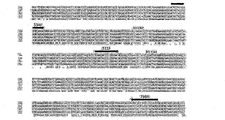
- Figure 3 shows the position of the primer used to amplify the 16S rDNA and the position of the single base polymorphism included in the amplification product.
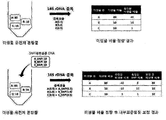
- Figure 4 uses the SNP 16S DNA as an internal standard to correct the amplification efficiency of 16S rDNA of each microorganism.
- SNP 16S DNA was prepared for Escherichia coli , Bacillus cereus , Listeria monocytogenes and Staphylococcus aureus .
- 16S rDNA sequences of the four microorganisms were obtained from NCBI GenBank and sorted using a ClustalW based multi-sequence alignment program (http://www.genome.jp/tools/clustalw). The nucleotide sequence was substituted to have nine monobasic polymorphisms interspersed with the variable sequences on the aligned nucleotide sequence with good intersequence nucleotide sequences (FIG. 1).
- SNP 16S DNAs having 9 monobasic polymorphisms compared to 16S rDNA for each of four microorganisms were prepared (Bionia, Korea) and inserted into plasmid vectors (pGEM-B1 TM , Bioneer). The base sequences of the four prepared SNP 16S DNAs were confirmed using a 3730 DNA analyzer (Life Technologies, Carlsbad, CA, USA).
- the length of the SNP 16S DNA sequence is E. coli (Ec_SNP) 1534 bp (SEQ ID NO: 1), B. cereus (Bc_SNP) 1554 bp (SEQ ID NO: 2), L. monocytogenes (Lm_SNP) 1550 bp (SEQ ID NO: 3) and S. aureus (Sa_SNP) 1554 bp (SEQ ID NO: 4).
- Escherichia coli (KCTC 2571, ATCC 8739 ), Bacillus cereus (KCTC 1012, ATCC 11778), Listeria monocytogenes (KCTC 3710, ATCC 19115) and Staphylococcus aureus (KCTC 1916, ATCC 23832 ) from the GenElute TM Bacterial Genomic DNA kit (Sigma, St Loius, USA) was used to extract the dielectrics. The extracted dielectric was fragmented to an size of 500 bp to 3 kb at 35% power using an ultrasonic crusher (Vibra Cell 500; Sonics, Newtown, USA) and then picogreen (Life Technologies, Carlsbad, USA). Quantitatively).
- the quantitative genomic DNA of the four microorganisms was quantitative PCR (qPCR) using forward primer 511F (5'-CCTACGGGAGGCAGCAG-3 ', SEQ ID NO: 6) and reverse primer 798R (5'-GACTACCAGGGTATCTAATCC-3', SEQ ID NO: 7).
- qPCR quantitative PCR
- a template mixture was prepared by mixing the four genome mixtures and the SNP DNA mixture in a 1: 1 ratio to make 100,000 copies per ⁇ L of eight 16S DNAs.
- 16S genes were subjected to amplification PCR reaction on the template mixture of the same amount of 16S rDNA and SNP 16S DNA, and then analyzed by a next-generation sequencing device (Miseq TM , Illumina, San Diego, USA). Standard amplification reactions were carried out using qPCR to prepare amplification reaction mixtures containing 500 nm primer and a template mixture containing 100,000 copies of 16S DNA each, followed by a final volume of 20 ⁇ L on a StepOne Plus TM instrument (Life Technologies). It was. The temperature cycling conditions were carried out 40 times in a two-step cyclic reaction, which was first modified at 95 ° C. for 5 minutes, reacted at 94 ° C. for 15 seconds, and at 60 ° C. for 1 minute. As a final reaction, extension reaction was performed at 60 ° C. for 5 minutes to complete.
- EDTA an inhibitory factor of the amplification reaction
- DMSO a 5% addition factor
- the cycle number of the amplification reaction was reduced to 20 times.
- the amplification reaction was also performed for 2N condition in which two random nucleotide sequences N were present in the nucleotide sequence of to examine the amplification efficiency of 16S rDNA and SNP 16S DNA.
- the 2 million nucleotide sequences analyzed by the next-generation sequencing device were classified into database items showing the highest similarity by comparing sequencing similarities with respect to four 16S rDNA sequences and four SNP 16S DNA sequences. It was.
- E. coli 16S rDNA (Ec_g) varies in sequence frequency from 749 to 119,369 depending on the amplification reaction conditions, which is about 150 times the amplification rate.
- SNP 16S DNA (Ec_SNP) maintains a similar amplification rate, it was confirmed that the value of Ec_g / Ec_SNP was maintained at about 2.5 regardless of amplification conditions.
- SEQ ID NO: 1 is SNP 16S DNA prepared for Escherichia coli .
- SEQ ID NO: 2 is SNP 16S DNA prepared for Bacillus cereus .
- SEQ ID NO: 3 is SNP 16S DNA prepared for Listeria monocytogene .
- SEQ ID NO: 4 is SNP 16S DNA prepared for Staphylococcus aureus .
- SEQ ID NO: 5 is forward primer 334F for 16S gene amplification.
- SEQ ID NO: 6 is forward primer 511F for 16S gene amplification.
- SEQ ID NO: 7 is Reverse Primer 798R for 16S gene amplification.
Landscapes
- Chemical & Material Sciences (AREA)
- Life Sciences & Earth Sciences (AREA)
- Organic Chemistry (AREA)
- Proteomics, Peptides & Aminoacids (AREA)
- Health & Medical Sciences (AREA)
- Engineering & Computer Science (AREA)
- Analytical Chemistry (AREA)
- Zoology (AREA)
- Wood Science & Technology (AREA)
- Genetics & Genomics (AREA)
- Molecular Biology (AREA)
- Bioinformatics & Cheminformatics (AREA)
- General Engineering & Computer Science (AREA)
- Biotechnology (AREA)
- Biophysics (AREA)
- Physics & Mathematics (AREA)
- Biochemistry (AREA)
- Microbiology (AREA)
- General Health & Medical Sciences (AREA)
- Immunology (AREA)
- Biomedical Technology (AREA)
- Measuring Or Testing Involving Enzymes Or Micro-Organisms (AREA)
- Chemical Kinetics & Catalysis (AREA)
- Plant Pathology (AREA)
Abstract
본 발명은 인위적으로 합성된 핵산의 활용에 관한 것으로서, 보다 상세하게는 대상 미생물의 유전자와 염기서열 상에서 구분이 가능하도록 특정 위치에 단일 염기 다형성을 갖는 미생물의 16S rDNA 유전자를 제조하고 이를 염기서열 분석을 통해 정량이 가능한 내부표준물질로 사용하여 유전자 기반 미생물 군집 분석 결과를 정량적으로 보정할 수 있다.
Description
본 발명은 인위적으로 합성된 핵산의 활용에 관한 것으로서, 보다 상세하게는 대상 미생물의 유전자와 염기서열 상에서 구분이 가능하도록 특정 위치에 단일 염기 다형성(single nucleotide polymorphism, SNP)을 갖는 미생물의 16S rDNA 유전자를 제조하고 이를 염기서열 분석을 통해 정량이 가능한 내부표준물질(competitor or internal standard)로 사용하여 유전자 기반 미생물 군집 분석 결과를 정량적으로 보정하는 방법에 관한 것이다.
미생물 군집 분석(microbial community analysis)은 환경, 식품 및 인체에 존재하는 유해 미생물을 검출하고자 하는 용도로 널리 사용되는 기법이다. 특히 PCR을 통한 미생물 유전자의 증폭을 기반으로 하는 16S rDNA 분석 및 다중 유전자 분석(multiple locus strain typing, MLST) 방법을 미생물 군집 분석에 활용하면 고감도, 고정밀의 유전학적 분석을 통해 환경, 식품, 동물 및 인체에서 유래한 미생물의 종류, 변종 여부, 항생제 내성 등 보다 상세한 정보를 얻을 수 있다. 최근에는 차세대 염기서열 분석(next generation sequencing, NGS)을 활용하여 다양한 환경에서 수집된 수백 종의 미지 미생물에 대해 빠르게 미생물 군집 분석을 수행할 수 있는 기술이 알려져 있다. 유전자 분석을 통한 미생물 군집 분석은 짧은 분석 시간을 통해 다양한 미생물을 동시에 검출할 수 있는 장점이 있지만 미생물 군집의 정량적 분석에는 한계를 갖고 있다. 유전자 분석 기반 미생물 군집 분석의 한계는 유전체 추출 및 증폭의 효율이 미생물마다 다를 수 있음에 주로 기인한다. 특히 미생물의 16S rDNA의 증폭을 기반으로 하는 미생물 군집 분석은 최대한 많은 종류의 미생물 유전자를 동시에 증폭하기 위해 허용적 프라이머(degenerate primer)를 사용하여 16S rDNA 유전자를 증폭하므로 미생물 별로 유전자 증폭의 편향성이 커질 수 있다. 상기 유전자 증폭의 편향성은 NGS를 통해 유전자의 기원을 정밀 분석했을 때 더욱 명확해진다. NGS를 통한 미생물 군집 분석의 결과에서는 PCR 증폭 과정에서 기인하는 편향성이 관찰되며, 증폭 위치, 프라이머의 염기서열 등에 영향을 받는 것으로 알려져 있다.
따라서, 유전자 기반 미생물 군집의 정량 분석 정확성 향상을 위해서는 PCR에 수반되는 유전자 증폭 편향성을 극복할 수 있는 새로운 기술의 개발이 절실하다.
상기 문제점의 해결을 위해, 본 발명에서는 증폭 대상 원본 유전자(16S rDNA)의 일부 염기서열을 인위적으로 치환한 단일 염기 다형성을 갖는 DNA를 제조하고 이를 내부표준물질(SNP 16S DNA)로 사용하여 미생물 종 별로 다른 16S rDNA 유전자 증폭의 편향성을 정량적으로 보정하고자 하였다.
본 발명은 a) 16S rDNA 유전자에 대해 단일염기다형성을 갖도록 일부 염기서열이 치환된 SNP 16S DNA를 제조하는 단계; b) 분석 대상 시료에 상기 SNP 16S DNA를 첨가하여 16S rDNA와 동시에 증폭하는 단계; c) b)단계에서 증폭된 물질의 염기분석을 통해 16S rDNA와 SNP 16S DNA를 구분하여 정량화하는 단계; d) c)단계에서 정량된 16S rDNA의 양을 SNP 16S DNA의 양으로 나누어 16S rDNA의 증폭효율을 보정하는 단계; 를 포함하는 유전자 분석 기반 군집의 정량 방법에 관한 것이다.
본 발명에서 상기 SNP 16S DNA는 서로 다른 1 내지 30 종의 군집으로부터 제조한 것을 동시에 첨가할 수 있다.
또한 본 발명에서, 상기 a)단계의 16S rDNA 유전자는 제한되지는 않지만 RNA로부터 역전사 반응에 의해 합성된 cDNA를 사용할 수 있다.
본 발명에서 상기 군집은 제한되지는 않지만 미생물 또는 진핵생물에서 유래한 유전체인 것이 바람직하다. 상기 미생물은 제한되지는 않지만 Escherichia coli, Bacillus cereus, Listeria monocytogenes 및 Staphylococcus aureus로부터 선택된 어느 하나 이상을 사용할 수 있으며, 상기 진핵생물은 동물류, 식물류 및 진균류로부터 선택된 어느 하나 이상에 속하는 생물을 사용할 수 있다.
인위적으로 단일염기다형성을 갖도록 제조된 SNP 16S DNA는 증폭용 프라이머가 결합하는 부위가 아닌 곳에 평균적으로 약 150 bp 마다 한 개의 단일염기다형성을 갖는다(도 1). 제조된 SNP 16S DNA는 16S rDNA와 99% 정도의 염기서열 동일성을 갖고 있으며, 특히 증폭용 프라이머가 결합하는 부위의 염기서열은 완전히 동일하기 때문에 유전자 증폭 과정에서 원본 유전자와 동일한 증폭 효율을 보인다. 상기와 같이 증폭된 16S rDNA를 염기서열 해독하여 16S rDNA와 SNP 16S DNA의 양적 비율을 계산할 수 있으며, 특정 미생물에서 증폭된 16S rDNA의 양을 SNP 16S DNA의 양으로 나누어 준 값을 적용함으로써 증폭 효율 편향성에 의한 미생물 정량의 편향성을 극복할 수 있다.
본 발명은 유전자 분석을 통해 미생물 군집을 정량적으로 분석하고자 할 때 미생물별로 다른 유전자의 증폭 효율을 보정함으로써 분석의 정확도를 높여줄 수 있다. 이를 통해 인체, 식품, 환경에 존재하는 미생물 군집에 대한 정확한 정량 정보를 제공함으로써 다양한 환경에서 미생물의 효과, 질병유발 요인 및 항생제의 효능 등을 정밀 분석할 수 있게 해 준다. 또한 병원성 미생물에 대한 효과적인 대응에 활용할 수 있으며, 미생물의 의학적, 산업적 활용성을 높이는 데에도 이용될 수 있다.
도 1은 미생물 SNP 16S DNA의 개략적인 구조와 9개의 단일 염기 다형성의 위치를 나타낸다. V1~V9 미생물 구분에 활용되는 가변부위(variable region)이다.
도 2는 SNP 16S DNA를 내부표준물질로 사용하여 16S rDNA 증폭효율을 보정하는 방법이다.
도 3은 16S rDNA를 증폭하기 위해 사용된 프라이머의 위치와 증폭 산물에 포함된 단일염기다형성의 위치를 표기한 것이다.
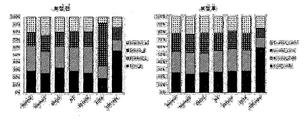
도 4는 SNP 16S DNA를 내부표준물질로 활용하여 각 미생물의 16S rDNA의 증폭 효율을 보정한 것이다.
이하 본 발명을 실시예를 참조하여 상세히 설명한다. 그러나 이들은 본 발명을 보다 상세하게 설명하기 위한 것으로, 본 발명의 권리범위가 하기의 실시예에 의해 한정되는 것은 아니다.
(실시예 1) SNP 16S DNA 제조
Escherichia coli, Bacillus cereus, Listeria monocytogenes 및 Staphylococcus aureus에 대해 SNP 16S DNA를 제조하였다. 상기 4종 미생물의 16S rDNA 염기서열을 NCBI GenBank에서 입수하여 ClustalW 기반 다중 염기서열 정렬 프로그램(http://www.genome.jp/tools/clustalw)를 이용하여 정렬하였다. 정렬된 염기서열 상에서 가변부위에 가까우면서 종간 염기서열이 좋은 위치에 9개의 단일염기다형성을 산재하여 갖도록 염기서열을 치환하였다(도 1). 4개의 미생물 별로 16S rDNA 대비 9개의 단일염기다형성을 갖는 4종의 SNP 16S DNA를 제조하여(바이오니아, 한국) 플라스미드 벡터(pGEM-B1TM,바이오니아)에 삽입하였다. 제조한 4종의 SNP 16S DNA의 염기서열은 3730 DNA analyzer(Life Technologies, Carlsbad, CA, USA)를 이용하여 확인하였다.
상기 SNP 16S DNA 서열의 길이는 E. coli (Ec_SNP) 1534 bp (서열번호 1), B. cereus (Bc_SNP) 1554 bp (서열번호 2), L. monocytogenes (Lm_SNP) 1550 bp (서열번호 3) 및 S. aureus (Sa_SNP) 1554 bp (서열번호 4)이다.
(실시예 2) SNP 16S DNA를 활용한 유전자 기반 미생물 군집 정량 분석
유전체 추출 및 정량
Escherichia coli (KCTC 2571, ATCC 8739), Bacillus cereus (KCTC 1012, ATCC 11778), Listeria monocytogenes (KCTC 3710, ATCC 19115) 및 Staphylococcus aureus (KCTC 1916, ATCC 23832)에서 GenEluteTM Bacterial Genomic DNA kit (Sigma, St. Loius, USA)를 이용하여 유전체를 추출하였다. 추출된 유전체를 초음파 파쇄기(Vibra Cell 500; Sonics, Newtown, USA)를 이용해 35%의 파워에서 500 bp~3 kb 정도의 크기를 갖도록 절편화(fragmentation)시킨 후 피코그린(Life Technologies, Carlsbad, USA)을 이용해 정량하였다. 상기 정량된 4종 미생물의 유전체 DNA는 정방향 프라이머 511F (5'-CCTACGGGAGGCAGCAG-3', 서열번호 6), 역방향 프라이머 798R (5'-GACTACCAGGGTATCTAATCC-3', 서열번호 7)을 이용하여 정량적 PCR(qPCR; SYBR premix EX TaqTM; Takara, Otsu, Japan).
유전체 양을 기준으로 4종 유전체를 혼합하고 각 16S rDNA가 μL 당 200,000 카피(copy)가 되도록 하였다. SNP 16S DNA에 대해서도 상기와 동일한 절차를 통해 피코그린을 통해 정량한 후, qPCR을 수행하여 개별 SNP 16S DNA의 최종 농도가 μL 당 200,000 카피(copy)가 되도록 하였다. 상기 4종 유전체 혼합물과 SNP DNA 혼합물을 1:1로 혼합하여 8종의 16S DNA가 μL 당 100,000 카피(copy)가 되도록 주형 혼합물(template mixture)을 제조하였다.
16S rDNA와 SNP 16S DNA의 증폭 효율
동일량의 16S rDNA와 SNP 16S DNA가 혼합된 주형 혼합물에 대해 16S 유전자를 증폭용 PCR 반응을 실시한 후, 차세대 염기서열 분석장치(MiseqTM, Illumina, San Diego, USA)를 통해 분석하였다. 표준적인 증폭 반응은 qPCR을 이용하여 500 nm 프라이머, 각 100,000 카피의 16S DNA가 혼합되어 있는 주형 혼합물을 첨가한 증폭 반응 혼합물을 제조한 후 StepOne PlusTM 장치(Life Technologies)에서 최종 부피 20 μL로 수행하였다. 온도 순환 조건은 95 ℃에서 5분간 최초 변성 후, 94 ℃에서 15초, 60 ℃에서 1분간 반응하는 2단계 순환 반응을 40회 실시하였다. 최종 반응으로서 60 ℃에서 5분간 연장 반응을 하여 완료하였다.
상기 표준적인 증폭 반응 조건 외에도 증폭 반응의 저해 요소인 EDTA가 1 mM로 첨가된 조건, 증폭 반응의 촉진 요소인 DMSO가 5% 첨가된 조건, 증폭 반응의 순환 횟수를 20회로 단축시킨 조건, 각 프라이머의 염기서열에 무작위적인 염기서열 N이 두 개 존재하는 2N 조건 등에 대해서도 증폭 반응을 수행하여 16S rDNA와 SNP 16S DNA의 증폭효율을 검사하였다. 차세대 염기서열 분석장치에 의해 분석된 약 200만 개의 염기서열은 미생물 별 16S rDNA 염기서열 4종, SNP 16S DNA 염기서열 4종에 대해 염기서열 유사성을 비교하여 가장 높은 유사성을 보이는 데이터베이스 항목으로 분류를 하였다. 이 때, SNP 부위에 16S rDNA 또는 SNP 16S DNA와 다른 염기서열을 갖는 데이터는 제외하였고, 동시에 두 개 이상의 데이터베이스에 유사성을 보이는 염기서열도 제외하였다. 상기 결과를 표 1에 도시하였다.
표 1
| Ec_g | Ec_SNP | Ec_g/ Ec_SNP | Bc_g | Bc_SNP | Bc_g/ Bc_SNP | Lm_g | Lm_SNP | LM_g/ Lm_SNP | |
| Normal | 6442 | 2553 | 2.52 | 7600 | 2851 | 2.67 | 4074 | 1775 | 2.30 |
| Normal2 | 74562 | 32101 | 2.32 | 87619 | 32496 | 2.70 | 67207 | 29384 | 2.29 |
| DMSO | 15168 | 5875 | 2.58 | 13392 | 5336 | 2.51 | 8839 | 3375 | 2.62 |
| N2 | 119369 | 48095 | 2.48 | 129119 | 49882 | 2.59 | 89423 | 41451 | 2.16 |
| 20cycle | 1922 | 671 | 2.86 | 2636 | 867 | 3.04 | 1476 | 623 | 2.37 |
| EDTA | 749 | 271 | 2.76 | 619 | 232 | 2.67 | 2242 | 1032 | 2.17 |
* Ec_g, Ec_SNP, Bc_g, Bc_SNP, Lm_g, Lm_SNP: read count 값을 나타냄.
상기 표 1의 결과는 증폭 반응 조건에 따라 16S rDNA의 증폭 효율이 달라지고 있음을 나타낸다. 예를 들어 E. coli 16S rDNA (Ec_g)는 증폭 반응 조건에 따라 749에서 119,369 까지 염기서열 빈도가 달라지는데 이는 약 150 배에 이르는 증폭률이다. 그러나, SNP 16S DNA (Ec_SNP)에서도 유사한 증폭률이 유지되고 있기 때문에 Ec_g/Ec_SNP의 값은 증폭 조건에 무관하게 약 2.5를 유지하고 있음을 확인하였다.
증폭 효율이 보정된 각 미생물의 16S rDNA 염기서열 빈도에 근거하여 주형 혼합물에 존재하는 각 미생물의 유전체의 양을 정량분석한 결과를 도 4에 도시하였다. 증폭 보정 후 각 미생물 유전체의 혼합 비율이 25%에 가까운 값으로 산출된다. 특히 20 사이클(cycle) 조건이나 EDTA가 첨가된 비우호적 조건에서도 SNP 16S DNA에 의한 보정이 잘 작동함을 확인하였다.
상기의 실시예로부터 미생물 각각의 SNP 16S DNA가 다양한 유전자 증폭 조건에서 16S rDNA와 동일한 증폭 효율을 갖는다는 사실을 확인하였고, 증폭 효율이 보정된 미생물 군집 정량 분석 결과는 그 정확도가 매우 높다는 사실을 발견하여 본 발명을 완성하였다.
서열목록 1은 Escherichia coli에 대해 제조된 SNP 16S DNA 이다.
서열목록 2는 Bacillus cereus에 대해 제조된 SNP 16S DNA 이다.
서열목록 3은 Listeria monocytogene에 대해 제조된 SNP 16S DNA 이다.
서열목록 4는 Staphylococcus aureus에 대해 제조된 SNP 16S DNA 이다.
서열목록 5는 16S 유전자 증폭을 위한 정방향 프라이머 334F이다.
서열목록 6은 16S 유전자 증폭을 위한 정방향 프라이머 511F이다.
서열목록 7은 16S 유전자 증폭을 위한 역방향 프라이머 798R이다.
Claims (6)
- a) 16S rDNA 유전자에 대해 단일염기다형성을 갖도록 일부 염기서열이 치환된 SNP 16S DNA를 제조하는 단계;b) 분석 대상 시료에 상기 SNP 16S DNA를 첨가하여 16S rDNA와 동시에 증폭하는 단계;c) b)단계에서 증폭된 물질의 염기분석을 통해 16S rDNA와 SNP 16S DNA를 구분하여 정량화하는 단계;d) c)단계에서 정량된 16S rDNA의 양을 SNP 16S DNA의 양으로 나누어 16S rDNA의 증폭효율을 보정하는 단계;를 포함하는 유전자 분석 기반 군집의 정량 방법.
- 제 1항에 있어서,상기 SNP 16S DNA는 서로 다른 1 내지 30 종의 군집으로부터 제조한 것을 동시에 첨가하는 유전자 분석 기반 군집의 정량 방법.
- 제 1항에 있어서,상기 a)단계의 16S rDNA 유전자는 RNA로부터 역전사 반응에 의해 합성된 cDNA인 유전자 분석 기반 군집의 정량 방법.
- 제 1항 내지 제 3항에 중 어느 한 항에 있어서,상기 군집은 미생물 또는 진핵생물에서 유래한 유전체인 유전자 분석 기반 군집의 정량 방법.
- 제 4항에 있어서,상기 미생물은 Escherichia coli, Bacillus cereus, Listeria monocytogenes 및 Staphylococcus aureus로부터 선택된 어느 하나 이상인 유전자 분석 기반 군집의 정량 방법.
- 제 4항에 있어서,상기 진핵생물은 동물류, 식물류 및 진균류로부터 선택된 어느 하나 이상에 속하는 생물인 유전자 분석 기반 군집의 정량 방법.
Priority Applications (1)
| Application Number | Priority Date | Filing Date | Title |
|---|---|---|---|
| US15/037,311 US10253378B2 (en) | 2013-11-19 | 2014-11-18 | Quantitative analysis method using microorganism 16S rDNA gene having single nucleotide polymorphism |
Applications Claiming Priority (2)
| Application Number | Priority Date | Filing Date | Title |
|---|---|---|---|
| KR1020130140292A KR101586678B1 (ko) | 2013-11-19 | 2013-11-19 | 단일 염기 다형성을 갖는 미생물 16S rDNA 유전자를 이용한 정량 분석 방법 |
| KR10-2013-0140292 | 2013-11-19 |
Publications (1)
| Publication Number | Publication Date |
|---|---|
| WO2015076542A1 true WO2015076542A1 (ko) | 2015-05-28 |
Family
ID=53179755
Family Applications (1)
| Application Number | Title | Priority Date | Filing Date |
|---|---|---|---|
| PCT/KR2014/011040 Ceased WO2015076542A1 (ko) | 2013-11-19 | 2014-11-18 | 단일 염기 다형성을 갖는 미생물 16S rDNA 유전자를 이용한 정량 분석 방법 |
Country Status (3)
| Country | Link |
|---|---|
| US (1) | US10253378B2 (ko) |
| KR (1) | KR101586678B1 (ko) |
| WO (1) | WO2015076542A1 (ko) |
Citations (2)
| Publication number | Priority date | Publication date | Assignee | Title |
|---|---|---|---|---|
| KR20110066018A (ko) * | 2009-12-10 | 2011-06-16 | 서울대학교산학협력단 | 16S rDNA-DGGE와 real-time PCR 증폭을 이용한 세균군집 분석법 |
| EP1570086B1 (en) * | 2002-12-06 | 2013-02-20 | Roche Diagnostics GmbH | Quantitative test for bacterial pathogens |
-
2013
- 2013-11-19 KR KR1020130140292A patent/KR101586678B1/ko active Active
-
2014
- 2014-11-18 WO PCT/KR2014/011040 patent/WO2015076542A1/ko not_active Ceased
- 2014-11-18 US US15/037,311 patent/US10253378B2/en active Active
Patent Citations (2)
| Publication number | Priority date | Publication date | Assignee | Title |
|---|---|---|---|---|
| EP1570086B1 (en) * | 2002-12-06 | 2013-02-20 | Roche Diagnostics GmbH | Quantitative test for bacterial pathogens |
| KR20110066018A (ko) * | 2009-12-10 | 2011-06-16 | 서울대학교산학협력단 | 16S rDNA-DGGE와 real-time PCR 증폭을 이용한 세균군집 분석법 |
Non-Patent Citations (3)
| Title |
|---|
| BLOK, H. J. ET AL.: "Quantitative analysis of 16S rDNA using competitive PCR and the QPCR System 5000", BIOTECHNIQUES, vol. 22, no. 4, April 1997 (1997-04-01), pages 700 - 704, XP000891888 * |
| SCHABEREITER-GURTNER, C. ET AL.: "16S rDNA-based identification of bacteria from conjunctival swabs by PCR and DGGE fingerprinting", INVEST. OPHTHALMOL. VIS. SCI., vol. 42, no. 6, May 2001 (2001-05-01), pages 1164 - 1171 * |
| YOHDA, M. ET AL.: "Quantitative discrimination of 16 S rRNA genes of Dehalococcoides species by MagSNiPer, a quantitative single-nucleot ide-polymorphism genotyping method", BIOTECHNOL. APPL. BIOCHEM., vol. 51, October 2008 (2008-10-01), pages 111 - 117 * |
Also Published As
| Publication number | Publication date |
|---|---|
| US10253378B2 (en) | 2019-04-09 |
| KR20150058628A (ko) | 2015-05-29 |
| KR101586678B1 (ko) | 2016-01-21 |
| US20160376638A1 (en) | 2016-12-29 |
Similar Documents
| Publication | Publication Date | Title |
|---|---|---|
| Dos Santos et al. | A 16S rDNA PCR-based theoretical to actual delta approach on culturable mock communities revealed severe losses of diversity information | |
| Hasman et al. | Rapid whole-genome sequencing for detection and characterization of microorganisms directly from clinical samples | |
| Platonov et al. | Molecular typing of Yersinia pestis | |
| Zaychikova et al. | Mycobacterium tuberculosis type II toxin-antitoxin systems: genetic polymorphisms and functional properties and the possibility of their use for genotyping | |
| Saxena et al. | Development of novel simple sequence repeat markers in bitter gourd (Momordica charantia L.) through enriched genomic libraries and their utilization in analysis of genetic diversity and cross-species transferability | |
| Riordan et al. | Genetic differentiation of Escherichia coli O157: H7 clades associated with human disease by real-time PCR | |
| Wang et al. | Molecular characterization of a mosaic locus in the genome of'Candidatus Liberibacter asiaticus' | |
| Gravot et al. | Two adjacent NLR genes conferring quantitative resistance to clubroot disease in Arabidopsis are regulated by a stably inherited epiallelic variation | |
| Lu et al. | Development of a new application for comprehensive viability analysis based on microbiome analysis by next-generation sequencing: insights into staphylococcal carriage in human nasal cavities | |
| Williams et al. | Large plasmids of Escherichia coli and Salmonella encode highly diverse arrays of accessory genes on common replicon families | |
| Puah et al. | Development of a species-specific PCR-RFLP targeting rpoD gene fragment for discrimination of Aeromonas species | |
| Komínková et al. | Genetic diversity of Blumeria graminis f. sp. hordei in Central Europe and its comparison with Australian population | |
| Hung et al. | Using groEL as the target for identification of Enterococcus faecium clades and 7 clinically relevant Enterococcus species | |
| Kumar et al. | Identification and Characterization of Staphylococcus aureus 16S rRNA gene isolated from different Food Specimens from South Indian Region | |
| EP3378948B1 (en) | Method for quantifying target nucleic acid and kit therefor | |
| Zheng et al. | Prophage region and short tandem repeats of “Candidatus Liberibacter asiaticus” reveal significant population structure in China | |
| Moghaddam et al. | Characterization and comparative analysis of the complete plastid genomes of four Astragalus species | |
| Ben Tekaya et al. | Sybr green-and TaqMan-based quantitative PCR approaches allow assessment of the abundance and relative distribution of Frankia clusters in soils | |
| Suneja et al. | Deciphering the phylogenetic relationships among rhizobia nodulating chickpea: a review | |
| CN116200475B (zh) | 一种检测tet(X)基因及其同源基因的简并引物对及其方法 | |
| Xu et al. | Evaluating the effects of whole genome amplification strategies for amplifying trace DNA using capillary electrophoresis and massive parallel sequencing | |
| Pchelin et al. | Genotyping of Russian isolates of fungal pathogen Trichophyton rubrum, based on simple sequence repeat and single nucleotide polymorphism | |
| Piccin‐Santos et al. | Phylogenetic study of G eitlerinema and M icrocystis (C yanobacteria) using PC‐IGS and 16S–23S ITS as markers: investigation of horizontal gene transfer | |
| WO2015076542A1 (ko) | 단일 염기 다형성을 갖는 미생물 16S rDNA 유전자를 이용한 정량 분석 방법 | |
| Yong et al. | A rapid approach for SSR development in Amorphophallus paeoniifolius using RAD-seq. |
Legal Events
| Date | Code | Title | Description |
|---|---|---|---|
| 121 | Ep: the epo has been informed by wipo that ep was designated in this application |
Ref document number: 14864453 Country of ref document: EP Kind code of ref document: A1 |
|
| WWE | Wipo information: entry into national phase |
Ref document number: 15037311 Country of ref document: US |
|
| NENP | Non-entry into the national phase |
Ref country code: DE |
|
| 122 | Ep: pct application non-entry in european phase |
Ref document number: 14864453 Country of ref document: EP Kind code of ref document: A1 |