WO2015073746A9 - 18f labeling of proteins using sortases - Google Patents
18f labeling of proteins using sortases Download PDFInfo
- Publication number
- WO2015073746A9 WO2015073746A9 PCT/US2014/065574 US2014065574W WO2015073746A9 WO 2015073746 A9 WO2015073746 A9 WO 2015073746A9 US 2014065574 W US2014065574 W US 2014065574W WO 2015073746 A9 WO2015073746 A9 WO 2015073746A9
- Authority
- WO
- WIPO (PCT)
- Prior art keywords
- optionally substituted
- sortase
- protein
- click chemistry
- radioactive
- Prior art date
- Legal status (The legal status is an assumption and is not a legal conclusion. Google has not performed a legal analysis and makes no representation as to the accuracy of the status listed.)
- Ceased
Links
- 0 *c1nnc(*)nn1 Chemical compound *c1nnc(*)nn1 0.000 description 5
- LDVUFEUMIXPPSJ-UHFFFAOYSA-N CCCN(C)CC(C)C Chemical compound CCCN(C)CC(C)C LDVUFEUMIXPPSJ-UHFFFAOYSA-N 0.000 description 1
Classifications
-
- A—HUMAN NECESSITIES
- A61—MEDICAL OR VETERINARY SCIENCE; HYGIENE
- A61K—PREPARATIONS FOR MEDICAL, DENTAL OR TOILETRY PURPOSES
- A61K51/00—Preparations containing radioactive substances for use in therapy or testing in vivo
- A61K51/02—Preparations containing radioactive substances for use in therapy or testing in vivo characterised by the carrier, i.e. characterised by the agent or material covalently linked or complexing the radioactive nucleus
- A61K51/04—Organic compounds
- A61K51/08—Peptides, e.g. proteins, carriers being peptides, polyamino acids, proteins
- A61K51/10—Antibodies or immunoglobulins; Fragments thereof, the carrier being an antibody, an immunoglobulin or a fragment thereof, e.g. a camelised human single domain antibody or the Fc fragment of an antibody
- A61K51/1093—Antibodies or immunoglobulins; Fragments thereof, the carrier being an antibody, an immunoglobulin or a fragment thereof, e.g. a camelised human single domain antibody or the Fc fragment of an antibody conjugates with carriers being antibodies
- A61K51/1096—Antibodies or immunoglobulins; Fragments thereof, the carrier being an antibody, an immunoglobulin or a fragment thereof, e.g. a camelised human single domain antibody or the Fc fragment of an antibody conjugates with carriers being antibodies radioimmunotoxins, i.e. conjugates being structurally as defined in A61K51/1093, and including a radioactive nucleus for use in radiotherapeutic applications
-
- A—HUMAN NECESSITIES
- A61—MEDICAL OR VETERINARY SCIENCE; HYGIENE
- A61K—PREPARATIONS FOR MEDICAL, DENTAL OR TOILETRY PURPOSES
- A61K51/00—Preparations containing radioactive substances for use in therapy or testing in vivo
- A61K51/02—Preparations containing radioactive substances for use in therapy or testing in vivo characterised by the carrier, i.e. characterised by the agent or material covalently linked or complexing the radioactive nucleus
- A61K51/04—Organic compounds
- A61K51/08—Peptides, e.g. proteins, carriers being peptides, polyamino acids, proteins
-
- C—CHEMISTRY; METALLURGY
- C07—ORGANIC CHEMISTRY
- C07H—SUGARS; DERIVATIVES THEREOF; NUCLEOSIDES; NUCLEOTIDES; NUCLEIC ACIDS
- C07H5/00—Compounds containing saccharide radicals in which the hetero bonds to oxygen have been replaced by the same number of hetero bonds to halogen, nitrogen, sulfur, selenium, or tellurium
- C07H5/02—Compounds containing saccharide radicals in which the hetero bonds to oxygen have been replaced by the same number of hetero bonds to halogen, nitrogen, sulfur, selenium, or tellurium to halogen
-
- C—CHEMISTRY; METALLURGY
- C07—ORGANIC CHEMISTRY
- C07K—PEPTIDES
- C07K16/00—Immunoglobulins [IG], e.g. monoclonal or polyclonal antibodies
- C07K16/18—Immunoglobulins [IG], e.g. monoclonal or polyclonal antibodies against material from animals or humans
- C07K16/28—Immunoglobulins [IG], e.g. monoclonal or polyclonal antibodies against material from animals or humans against receptors, cell surface antigens or cell surface determinants
- C07K16/2839—Immunoglobulins [IG], e.g. monoclonal or polyclonal antibodies against material from animals or humans against receptors, cell surface antigens or cell surface determinants against the integrin superfamily
- C07K16/2845—Immunoglobulins [IG], e.g. monoclonal or polyclonal antibodies against material from animals or humans against receptors, cell surface antigens or cell surface determinants against the integrin superfamily against integrin beta2-subunit-containing molecules, e.g. CD11, CD18
-
- C—CHEMISTRY; METALLURGY
- C12—BIOCHEMISTRY; BEER; SPIRITS; WINE; VINEGAR; MICROBIOLOGY; ENZYMOLOGY; MUTATION OR GENETIC ENGINEERING
- C12N—MICROORGANISMS OR ENZYMES; COMPOSITIONS THEREOF; PROPAGATING, PRESERVING, OR MAINTAINING MICROORGANISMS; MUTATION OR GENETIC ENGINEERING; CULTURE MEDIA
- C12N9/00—Enzymes; Proenzymes; Compositions thereof; Processes for preparing, activating, inhibiting, separating or purifying enzymes
- C12N9/14—Hydrolases (3)
- C12N9/48—Hydrolases (3) acting on peptide bonds (3.4)
- C12N9/50—Proteinases, e.g. Endopeptidases (3.4.21-3.4.25)
- C12N9/52—Proteinases, e.g. Endopeptidases (3.4.21-3.4.25) derived from bacteria or Archaea
-
- C—CHEMISTRY; METALLURGY
- C12—BIOCHEMISTRY; BEER; SPIRITS; WINE; VINEGAR; MICROBIOLOGY; ENZYMOLOGY; MUTATION OR GENETIC ENGINEERING
- C12Y—ENZYMES
- C12Y304/00—Hydrolases acting on peptide bonds, i.e. peptidases (3.4)
- C12Y304/22—Cysteine endopeptidases (3.4.22)
- C12Y304/2207—Sortase A (3.4.22.70)
-
- G—PHYSICS
- G01—MEASURING; TESTING
- G01N—INVESTIGATING OR ANALYSING MATERIALS BY DETERMINING THEIR CHEMICAL OR PHYSICAL PROPERTIES
- G01N33/00—Investigating or analysing materials by specific methods not covered by groups G01N1/00 - G01N31/00
- G01N33/48—Biological material, e.g. blood, urine; Haemocytometers
- G01N33/50—Chemical analysis of biological material, e.g. blood, urine; Testing involving biospecific ligand binding methods; Immunological testing
- G01N33/58—Chemical analysis of biological material, e.g. blood, urine; Testing involving biospecific ligand binding methods; Immunological testing involving labelled substances
- G01N33/60—Chemical analysis of biological material, e.g. blood, urine; Testing involving biospecific ligand binding methods; Immunological testing involving labelled substances involving radioactive labelled substances
-
- C—CHEMISTRY; METALLURGY
- C07—ORGANIC CHEMISTRY
- C07K—PEPTIDES
- C07K2317/00—Immunoglobulins specific features
- C07K2317/50—Immunoglobulins specific features characterized by immunoglobulin fragments
- C07K2317/55—Fab or Fab'
-
- C—CHEMISTRY; METALLURGY
- C07—ORGANIC CHEMISTRY
- C07K—PEPTIDES
- C07K2317/00—Immunoglobulins specific features
- C07K2317/50—Immunoglobulins specific features characterized by immunoglobulin fragments
- C07K2317/56—Immunoglobulins specific features characterized by immunoglobulin fragments variable (Fv) region, i.e. VH and/or VL
- C07K2317/569—Single domain, e.g. dAb, sdAb, VHH, VNAR or nanobody®
-
- G—PHYSICS
- G01—MEASURING; TESTING
- G01N—INVESTIGATING OR ANALYSING MATERIALS BY DETERMINING THEIR CHEMICAL OR PHYSICAL PROPERTIES
- G01N2333/00—Assays involving biological materials from specific organisms or of a specific nature
- G01N2333/90—Enzymes; Proenzymes
- G01N2333/914—Hydrolases (3)
- G01N2333/948—Hydrolases (3) acting on peptide bonds (3.4)
- G01N2333/95—Proteinases, i.e. endopeptidases (3.4.21-3.4.99)
-
- G—PHYSICS
- G01—MEASURING; TESTING
- G01N—INVESTIGATING OR ANALYSING MATERIALS BY DETERMINING THEIR CHEMICAL OR PHYSICAL PROPERTIES
- G01N2800/00—Detection or diagnosis of diseases
- G01N2800/52—Predicting or monitoring the response to treatment, e.g. for selection of therapy based on assay results in personalised medicine; Prognosis
-
- G—PHYSICS
- G01—MEASURING; TESTING
- G01N—INVESTIGATING OR ANALYSING MATERIALS BY DETERMINING THEIR CHEMICAL OR PHYSICAL PROPERTIES
- G01N2800/00—Detection or diagnosis of diseases
- G01N2800/70—Mechanisms involved in disease identification
- G01N2800/7023—(Hyper)proliferation
- G01N2800/7028—Cancer
Definitions
- PET Positron emission tomography
- Fluorine- 18 ( F) is a short-lived isotope of fluorine with suitable properties for PET -imaging. A majority of presently used radiopharmaceuticals in PET are labeled with
- aspects of the present disclosure relate to the recognition that efficient and facile means of labeling peptides and proteins for therapeutic and diagnostic applications are needed.
- PET or single-photon emission computed tomography (SPECT) diagnostic imaging utilizing peptide or protein-based tracers quickly generating radiolabeled peptides/proteins is prerequisite to the use of such tracers given the short half-life of commonly used radioisotopes such as 18 F.
- sortagging sortase-mediated transpeptidation
- sortase-mediated transpeptidation allows for a robust and efficient way of generating radiolabeled proteins, which are site-specifically labeled.
- Such methodology is useful, e.g., for quickly generating
- peptide/protein-based PET tracers Other aspects of the disclosure are based on the knowledge that there exist commercially available radioactive agents used in PET or other imaging modalities, and using such agents as a radiation source for labeling peptides or proteins of interest using sortagging technology can reduce the amount of time involved in preparing radiolabeled peptide/protein tracers and/or reduce the amount of time between the preparation and administration of peptide/protein tracers.
- other sources of radiation e.g. , non-commercially available compounds/reagents
- certain aspects of the invention provide methods for labeling a protein having a sortase recognition motif, with a radiolabel.
- the methods comprise contacting the protein with a radiolabeled sortase substrate peptide in the presence of a sortase under conditions suitable for the sortase to transamidate the protein and the sortase substrate peptide.
- the method comprises contacting the protein with a sortase substrate peptide in the presence of a sortase under conditions suitable for the sortase to transamidate the protein and the sortase substrate peptide, thereby producing a modified protein, wherein the sortase substrate peptide comprises a click chemistry handle (e.g., tetrazine or trans-cyclooctene); and contacting the modified protein with a radiolabeled agent, wherein the radiolabeled agent comprises a complementary click chemistry handle (e.g., tetrazine or trans-cyclooctene), which reacts with the click chemistry handle of the modified protein, thereby producing a radiolabeled protein.
- a click chemistry handle e.g., tetrazine or trans-cyclooctene
- the protein comprises either a C-terminal or N-terminal sortase recognition motif, and the sortase substrate peptide comprises a complementary sortase recognition motif.
- the protein comprises a C-terminal sortase recognition motif (e.g., LPXTG, where X is any amino acid), and the sortase substrate peptide comprises a complementary N-terminal sortase recognition motif (e.g., GGG).
- the sortase substrate peptide prior to being conjugated to the protein of interest, is linked to a radiolabeled agent through use of nucleophile/electrophile pairings, chelation (e.g., NOTA) or click chemistry.
- the sortase substrate peptide is linked to the agent via an oxime linkage, a hydrazone linkage, a thiosemicarbazone linkage, an amide linkage, an ester linkage, an ether linkage, a disulfide linkage, a click chemistry linkage, or other suitable linkage.
- the sortase substrate peptide is first tethered to a protein of interest using a sortase-mediated transpeptidation reaction and subsequently modified to incorporate the label
- a sortase substrate peptide comprising a click- chemistry handle may be conjugated to a protein of interest using a sortase mediated transpeptidation reaction.
- the protein of interest, containing the click chemistry handle may subsequently be labeled (e.g., with a radiolabel) using any suitable click chemistry reaction known in the art.
- the C-terminal sortase recognition motif is LPXTX or NPXTX, wherein each instance of X independently represents any amino acid residue.
- the C-terminal sortase recognition motif is LPETG (SEQ ID NO:2), LPETA (SEQ ID NO:3), NPQTN (SEQ ID NO:4), or NPKTG (SEQ ID NO:5).
- the N-terminal recognition motif comprises an oligoglycine or an oligoalanine sequence, for example 1-10 N-terminal glycine residues (e.g., GGG) or 1-10 N- terminal alanine residues (e.g., AAA), respectively.
- the sortase substrate peptide comprises the sequence (G) n iK, wherein nl is an integer between 1 and 10, inclusive.
- the radiolabeled sortase substrate peptide comprises one or more radionuclide(s) suitable for diagnostic and/or therapeutic applications, such as PET.
- the radionuclide is carbon-11, carbon-14, nitrogen-13, oxygen-15, fluorine-18, rubidium-82, copper-61, copper-62, copper-64, yttrium-86, gallium-68, zirconium-89, or iodine- 124.
- the radiolabeled agent linked to the sortase substrate is carbon-11, carbon-14, nitrogen-13, oxygen-15, fluorine-18, rubidium-82, copper-61, copper-62, copper-64, yttrium-86, gallium-68, zirconium-89, or iodine- 124.
- 18 peptide is a radiolabeled carbohydrate, for example, a sugar such as fludeoxyglucose ( F- FDG) or 14 C-(U)-glucose.
- F- FDG fludeoxyglucose
- 14 C-(U)-glucose the radiolabeled agent linked to the sortase
- substrate peptide is F, which in some embodiments is sourced or derived from sodium
- F-NaF fluoride
- F-NaF can be used as a source of F for labeling proteins and sortase substrate peptides using a substitution reaction where one functional group in a chemical compound is replaced by another functional group.
- the sortase used to transamidate the protein and sortase substrate peptide is sortase A, sortase B, sortase C or sortase D.
- the sortase used to transamidate the protein and sortase substrate peptide is sortase A from Staphylococcus aureus (SrtA aure us), sortase A from Staphylococcus aureus (SrtA aure us), sortase A from Staphylococcus aureus (SrtA aure us), sortase A from Staphylococcus aureus (SrtA aure us), sortase A from Staphylococcus aureus (SrtA aure us), sortas
- Streptococcus pyogenes S. aureus (SrtB aure us), sortase B from Bacillus anthracis (SrtB ant racis), sortase B from Listeria monocytogenes (SrtB monocytogenes), sortase C from Enterococcus faecalis (SrtC aeca/ « ), sortase C from Streptococcus agalactiae (SrtC agalactia ⁇ ) sortase C from Streptococcus pneumonia(SrtC ? consult eumo «;a), sortase C from
- the methods allow for the fast and efficient conjugation of the protein to the sortase substrate peptide.
- the protein is conjugated to the sortase substrate peptide in less than 5 minutes, less than 10 minutes, less than 15 minutes, less than 20 minutes, less than 25 minutes, less than 30 minutes, less than 45 minutes, less than 60 minutes, less than 90 minutes, or less than 120 minutes.
- the protein to be conjugated with a radiolabeled sortase substrate peptide is a protein suitable for diagnostic and/or therapeutic applications (e.g., PET or SPECT imaging), such as an antibody, an antibody fragment, an affibody, a single-domain antibody, a Fab fragment, or a therapeutic peptide.
- the protein binds to a tumor cell, a tumor-associated cell, or a tumor antigen.
- the protein binds to an immune cell, such as a T-cell, a B-cell, a plasma cell, a macrophage, a dendritic cell, a neutrophil, an eosinophil, or a mast cell.
- an immune cell such as a T-cell, a B-cell, a plasma cell, a macrophage, a dendritic cell, a neutrophil, an eosinophil, or a mast cell.
- the protein binds to a marker of inflammation (e.g., MHC class II molecules, CD3, CD4, CD8, CD1 lb).
- the method further involves purifying the labeled (e.g., conjugated) protein, resulting, in some embodiments, in a composition of the purified protein that comprises at least 10, at least 20, at lease 30, at least 40, at least 50, at least 75, at least 100, at least 150, at least 200, at least 250, at least 300, at least 350, at least 400, at least 450, at least 500, at least 550, at least 600, at least 700, at least 800, at least 900, or at least 1000 MBq of radioactivity.
- a composition of the purified protein that comprises at least 10, at least 20, at lease 30, at least 40, at least 50, at least 75, at least 100, at least 150, at least 200, at least 250, at least 300, at least 350, at least 400, at least 450, at least 500, at least 550, at least 600, at least 700, at least 800, at least 900, or at least 1000 MBq of radioactivity.
- compositions suitable for use in the methods, described herein include a radiolabeled sortase substrate peptide, a sortase, and a protein comprising a sortase recognition motif.
- the compositions for use in the methods, described herein include a protein that has been site-specifically conjugated to a click chemistry handle, and a radiolabel conjugated to a click chemistry handle.
- compositions for use in the methods, described herein include a sortase substrate peptide comprising a click chemistry handle, a sortase, a protein comprising a sortase recognition motif and a radiolabel conjugated to a click chemistry handle.
- a sortase substrate peptide comprising a click chemistry handle
- a sortase a protein comprising a sortase recognition motif
- a radiolabel conjugated to a click chemistry handle e.g., for site-specifically radiolabeling a protein
- the protein comprises a C-terminal sortase recognition motif (e.g., as described herein)
- the sortase substrate peptide comprises an N-terminal recognition motif (e.g., as described herein).
- the sortase substrate peptide comprises a radionuclide, for example, as part of an agent linked to the peptide, which is suitable for diagnostic and/or therapeutic applications as described herein.
- the composition further comprises a sortase as described herein.
- the protein in the composition is any protein suitable for the diagnostic and/or therapeutic applications described herein (e.g. , an antibody, an antibody fragment, an affibody, a single-domain antibody, a Fab fragment, or a therapeutic peptide), for example, those that bind to a tumor cell, a tumor-associated cell, or a tumor antigen.
- compositions comprising radiolabeled proteins are provided.
- the radiolabeled protein is generated according to the methods (e.g. , methods for radiolabeling proteins using sortases) provided herein.
- the site-specific conjugation of a protein to a peptide or other moiety may be achieved using other enzymes known in the art.
- formylglycine generating enzyme phosphopantetheinyltransferases, transglutaminase, farnesyltransferase, biotin ligase, lipoic acid ligase, or N-myristoyl transferase.
- the protein is radiolabeled with a radionuclide (e.g. , carbon- 1 1, carbon- 14, nitrogen-13, oxygen-15, fluorine-18, rubidium-82, copper-61 , copper-62, copper-64, yttrium- 86, gallium-68, zirconium-89, iodine-124, etc.) suitable for diagnostic and/or therapeutic applications described herein.
- a radionuclide e.g. , carbon- 1 1, carbon- 14, nitrogen-13, oxygen-15, fluorine-18, rubidium-82, copper-61 , copper-62, copper-64, yttrium- 86, gallium-68, zirconium-89, iodine-124, etc.
- the protein is labeled (using a sortase substrate peptide) with a sugar, such as fludeoxyglucose ( 18 F-FDG) or 14 C-(U)-glucose.
- F sodium fluoride is used to radiolabel an agent via a substitution reaction that comprises a click chemistry handle having a suitable leaving group.
- the radiolabeled click chemistry handle can be used to label a protein having a complementary click chemistry handle that has been site-specifically conjugated to the protein.
- the protein is any protein suitable for the diagnostic and/or therapeutic applications described herein (e.g., an antibody, antibody fragment, an affibody, a single-domain antibody, a Fab fragment, or a therapeutic peptide), for example, those that bind to a tumor cell, a tumor-associated cell, a tumor antigen, or a marker of inflammation.
- the composition comprises at least 10, at least 20, at lease 30, at least 40, at least 50, at least 75, at least 100, at least 150, at least 200, at least 250, at least 300, at least 350, at least 400, at least 450, at least 500, at least 550, at least 600, at least 700, at least 800, at least 900, or at least 1000 MBq of radioactivity.
- the composition is suitable for administration to a subject (e.g., a subject undergoing diagnostic and/or therapeutic procedure(s) described herein), and further comprises a pharmaceutically acceptable carrier.
- the compositions suitable for administration to a subject are substantially pure.
- compositions are at least 75%, at least 80%, at least 85%, at least 90%, at least 92%, at least 94%, at least 96%, at least 98%o, at least 99%, or at least 99.5% pure.
- compositions, suitable for administration to a subject, as described herein are at least 90% pure.
- methods for modifying a sortase substrate peptide are provided. Such methods are useful for generating radiolabeled sortase substrate peptides which are suitable for use in the methods described herein (e.g., methods for labeling a protein with a radiolabeled sortase substrate peptide).
- the method comprises contacting a sortase substrate peptide that comprises a nucleophilic group (e.g. , an aminooxy group, a hydrazide, thiosemicarbazide, or click chemistry handle, e.g., trans- cyclooctene) with a radiolabeled agent that comprises an electrophilic group (e.g.
- the agent comprises a radionuclide (e.g., carbon- 11, carbon- 14, nitrogen-13, oxygen-15, fluorine-18, rubidium-82, copper-61, copper-62, copper-64, yttrium- 86, gallium-68, zirconium-89, iodine-124, etc.) suitable for a diagnostic and/or therapeutic application described herein.
- the agent is a sugar, such as
- the agent comprises
- the sortase substrate peptide comprises an N-terminal sortase recognition motif, e.g., an oligoglycine or an oligoalanine sequence, for example 1-10 N-terminal glycine residues (e.g., GGG) or 1-10 N-terminal alanine residues (e.g. , AAA), respectively.
- the sortase substrate peptide comprises the sequence (G) n iK, wherein nl is an integer between 1 and 10, inclusive.
- the K is modified to include a nucleophilic group (e.g., an aminooxy group).
- the methods allow for the fast and efficient modification of a sortase substrate peptide, thus in some embodiments, the method further comprises contacting the sortase substrate peptide and/or agent with a catalyst.
- the catalyst is m-phenylenediamine (mPDA), o-phenylenediamine, p- phenylenediamine, o-aminophenol, m-aminophenol, /?-aminophenol, o-aminobenzoic acid, 5- methoxyanthranilic acid, 3,5-diaminobenzoic acid, or aniline.
- the sortase substrate peptide is modified in less than 5 minutes, less than 10 minutes, less than 15 minutes, less than 20 minutes, less than 25 minutes, less than 30 minutes, less than 45 minutes, less than 60 minutes, less than 90 minutes, or less than 120 minutes. Further, in some embodiments, at least 50%, at least 60%, at least 75%>, at least 90%>, at least 95%>, or at least 98%o of the sortase substrate peptide is covalently linked to the agent.
- sortase substrate peptides linked to a radiolabeled agent are provided.
- the sortase substrate peptide is generated according to methods provided herein.
- the sortase substrate peptide and agent are linked by an oxime, a hydrazone, a thiosemicarbazone, or a click chemistry linkage.
- the radiolabeled agent comprises a radionuclide (e.g., carbon-11, carbon-14, nitrogen-13, oxygen-15, fluorine-18, rubidium-82, copper-61, copper- 62, copper-64, yttrium-86, gallium-68, zirconium-89, iodine-124) suitable for the diagnostic and/or therapeutic applications described herein.
- the agent is a sugar, such as fludeoxyglucose ( 18 F-FDG) or 14 C-(U)-glucose.
- the sortase substrate peptide comprises an N-terminal sortase recognition motif, e.g., an oligoglycine or an oligoalanine sequence, for example, 1-10 N-terminal glycine residues (e.g., GGG) or 1-10 N-terminal alanine residues (e.g. , AAA), respectively.
- the sortase substrate peptide comprises the sequence (G) n iK, wherein nl is an integer between 1 and 10, inclusive.
- compositions comprising a sortase substrate peptide, a radiolabeled agent, and a catalyst are provided. Such compositions are useful for generating radiolabeled sortase substrate peptides according to the methods provided herein.
- the sortase substrate peptide comprises an N-terminal sortase recognition motif, e.g., an oligoglycine or an oligoalanine sequence, for example, 1-10 N-terminal glycine residues (e.g., GGG) or 1-10 N-terminal alanine residues (e.g., AAA), respectively.
- the sortase substrate peptide comprises the sequence (G) n iK, wherein nl is an integer between 1 and 10, inclusive.
- the K is modified to include a nucleophilic group (e.g., an aminooxy group).
- the radiolabeled agent comprises a radionuclide (e.g., carbon-11, carbon- 14, nitrogen-13, oxygen-15, fluorine- 18, rubidium-82, copper-61, copper-62, copper-64, yttrium-86, gallium- 68, zirconium-89, iodine-124, etc.) suitable for the diagnostic and/or therapeutic applications
- the agent is a sugar, such as fludeoxyglucose ( F- FDG) or 14 C-(U)-glucose.
- the catalyst is m-phenylenediamine (mPDA), o-phenylenediamine, /?-phenylenediamine, o-aminophenol, m-aminophenol, p- aminophenol, o-aminobenzoic acid, 5-methoxyanthranilic acid, 3,5-diaminobenzoic acid, or aniline.
- the method comprises: (a) administering an inventive composition (e.g. , a radiolabeled protein generated according to the methods provided herein) to the subject; and (b) detecting the radiolabel in the subject.
- an inventive composition e.g. , a radiolabeled protein generated according to the methods provided herein
- the subject has, has had, or is suspected of having cancer.
- the subject has, has had, or is suspected of having a proliferative disease.
- the subject has, has had, or is suspected of having an inflammatory disease or disorder.
- kits are provided.
- kits useful for carrying out any of the inventive methods or for generating any of the inventive compositions are provided.
- a kit for modifying a sortase substrate peptide comprising a sortase substrate peptide (e.g., a sortase substrate peptide comprising a nucleophilic group such as a click chemistry handle, an aminooxy group, a hydrazide, or thiosemicarbazide) a modifying agent (e.g., a radioactive agent that comprises an electrophilic group such as an click chemistry handle or a carbonyl-containing group (e.g., 18 F-FDG or 14 C-(U)-glucose)) and a catalyst (e.g., m-phenylenediamine (mPDA), o-phenylenediamine,/?-phenylenediamine, o- aminophenol, m-aminophenol, /?-aminophenol, o-aminobenzoic acid, aniline, etc.), are provided.
- a modifying agent e.g., a radioactive
- a kit (e.g., for labeling a protein) that comprises a radiolabeled sortase substrate peptide, e.g. , generated according to the inventive methods described herein.
- the kit comprises a sortase, such as sortase A, sortase B, sortase C, or sortase D.
- sortases that may be used are sortase A from Staphylococcus aureus (Srt ⁇ aureux ), sortase A from Streptococcus pyogenes (Srt Apyogenes), sortase B from Staphylococcus aureus (SrtB aura «), sortase B from Bacillus anthracis (SrtB a mecanic ⁇ rac «), sortase B from Listeria monocytogenes (SrtB monocytogenes ), sortase C from Enterococcus faecalis (SrtCf aeca/ « ), sortase C from Streptococcus agalactiae
- a kit comprises a radiolabeled protein (e.g., an antibody, an antibody fragment, an affibody, a single-domain antibody, a Fab fragment, or a therapeutic peptide) generated according to the inventive methods described herein.
- a radiolabeled protein e.g., an antibody, an antibody fragment, an affibody, a single-domain antibody, a Fab fragment, or a therapeutic peptide
- Figure 1 shows the dynamic equilibrium between cyclic hemiacetal and linear aldehyde forms of glucose
- A the modification of a sortase substrate peptide (B), and identification of sortagged protein (VHH4) using the modified substrate (C, D).
- B the modification of a sortase substrate peptide (B), and identification of sortagged protein (VHH4) using the modified substrate (C, D).
- B the modification of a sortase substrate peptide
- VHH4 sortagged protein
- FIG. 2 shows an exemplary site-specific labeling of VHH4 protein with fludeoxyglucose (FDG) using sortagging technology.
- FDG fludeoxyglucose
- FIG 3 shows the site-specific labeling of VHH4 with 14 C-(U)-glucose using sortagging.
- a and B Schematic representation of the reactions.
- C SDS-PAGE analysis of the labeling reaction. The band correlating with 14 C-radiobaleled VHH4 is indicated.
- Figure 4 shows a schematic representation of the strategy for site-specific
- FIG. 5 shows that 18 F-VHH7 (anti mouse Class II MHC) detects secondary lymphoid organs.
- A PET images of C57BL/6 (right) and Class II MHC /_ (left) mice 2 hours post-injection of 1 1 8 0 F-VHH7.
- B PET-CT 3D-rendering of C57BL/6 mouse 2 hours post-injection of 18 F-VHH7. Accumulation of 18 F-VHH7 is shown in lymph nodes
- FIG. 6 shows the pharmacokinetic profile of 18 F-VHH7.
- A PET-derived standardized uptake values (SUVs) for different tissues for a C57BL/6 mouse 2.5 hours post- injection.
- B Biodistribution of 18 F-VHH7 in C57BL/6 and MHC-IT " mice 2.5 hours post- injection.
- C Blood half-life measurement in the C57BL/6 mouse. Percent of injected dose per gram of blood (%ID/g) was measured at different times using decay-corrected intensities of collected bloods.
- D Data was fit to a two-compartment model (bi-exponential non-linear regression) to give a weighted blood half-life of 6.0 min.
- Figure 7 depicts imaging the presence of tumor-associated Class II MHC + cells
- a NOD-SCID mouse was inoculated subcutaneously with human MelJuSo melanoma cells and imaged 25 days post injection. Tumor cells lack mouse class II MHC molecules.
- A, B and C Coronal PET-CT images, moving anterior to posterior. In (A) and (B), different sets of bilaterally symmetrically disposed lymph nodes are visible. In (C), tumor-associated Class II MHC positive cells are visible, attributable to influx of host-derived Class II MHC positive cells.
- D PET-CT as
- F-VHH7 detects Class II MHC cells associated with small tumors at early stages.
- NOD-SCID mice were inoculated with Mel-Juso cells as in (A), 20 (E) and 6 (F) days prior to imaging.
- Transverse PET and CT images are shown for better visualization of the Class II MHC + cells at the site of cancer cells. Images are all window-leveled to the same intensity. Tumors and associated Class II MHC + cells are highlighted with arrows.
- Axillary (A), brachial (B) and mediastinal (M) lymph nodes and thymus (T) are shown in (F).
- G&H A NOD-SCID mouse was inoculated subcutaneously on the back of the neck with 5xl0 6 human Mel-Juso
- Tumor-associated CDl lb positive cells are visible, attributable to influx of host-derived CDl lb positive cells.
- I&J FACS analysis of tumor-infiltrating immune cells. The next day following the imaging, tumors were excised and digested with collagenase D, and tumor-infiltrating cells were obtained after Percoll gradient. Cell suspensions were then stained for FACS analysis.
- Histograms show the FACS staining with the VHH7 of mouse CD45 + tumor-infiltrating cells.
- FIG 8 shows that 64 Cu-VHH7 (anti mouse Class II MHC) and 64 Cu-VHHDC 13 (myeloid cell-specific) detect secondary lymphoid organs and inflammation. (A, B and C)
- FIG 9 shows 18F-VHH7 (anti mouse Class II MHC) and 18F-VHH DC 13 (anti CD1 lb) detect secondary lymphoid organs and inflammation.
- a and B Complete Freund's adjuvant (CFA) was injected to the left paw of C57BL/6 mice and 18F-VHHDC13 (for A) or 18F-VHH7 (for B) was used to image their targets 24 h after CFA injection.
- PET-CT Images were obtained 1.5 h post injection of 18F-VHHs; Images are all window-leveled to the same intensity for comparison.
- Figure 10 shows a schematic representation of the strategy for site-specific
- Figure 11 shows a scheme for the synthesis of of N-succinimidyl 4- [18F]fluorobenzoate (SFB).
- the reaction conditions are as follows: (A) Kryptofix 222,
- FIG 12 shows a schematic of site-specific 18F or 64Cu-labeling of single domain antibodies (VHHs) using sortase.
- VHHs single domain antibodies
- a VHH having a sortase recognition sequence (LPXTG) is contacted with a sortase substrate peptide having three glycines (G) 3 conjugated to a tetrazine derivative in the presence of sortase to produce a VHH having a site-specific
- Figure 13 shows tetrazine-amine (left) reacted with 18F-SFB to produce tetrazine- 18F.
- the product may be reacted with a site specific TCO-labeled protein to form the final 18F-labeled protein.
- Figure 14 shows exemplary application of the radioactive protein
- Compounds described herein can comprise one or more asymmetric centers, and thus can exist in various stereoisomeric forms, e.g., enantiomers and/or diastereomers.
- the compounds described herein can be in the form of an individual enantiomer, diastereomer or geometric isomer, or can be in the form of a mixture of stereoisomers, including racemic mixtures and mixtures enriched in one or more stereoisomer.
- Isomers can be isolated from mixtures by methods known to those skilled in the art, including chiral high pressure liquid chromatography (HPLC) and the formation and crystallization of chiral salts; or preferred isomers can be prepared by asymmetric syntheses.
- HPLC high pressure liquid chromatography
- the invention additionally encompasses compounds as individual isomers substantially free of other isomers, and alternatively, as mixtures of various isomers.
- — is absent, a coordination bond between a ligand and a metal, or a single bond.
- aliphatic includes both saturated and unsaturated, nonaromatic, straight chain (i.e., unbranched), branched, acyclic, and cyclic (i.e., carbocyclic) hydrocarbons, which are optionally substituted with one or more functional groups.
- aliphatic is intended herein to include, but is not limited to, alkyl, alkenyl, alkynyl, cycloalkyl, cycloalkenyl, and cycloalkynyl moieties.
- alkyl includes straight, branched and cyclic alkyl groups.
- alkyl is used to indicate those aliphatic groups (cyclic, acyclic, substituted, unsubstituted, branched or unbranched) having 1-20 carbon atoms (Ci_ 2 o aliphatic). In certain embodiments, the aliphatic group has 1-10 carbon atoms (C 1-10 aliphatic). In certain embodiments, the aliphatic group has 1-6 carbon atoms (C 1-6 aliphatic). In certain
- the aliphatic group has 1-5 carbon atoms (C 1-5 aliphatic). In certain embodiments, the aliphatic group has 1-5 carbon atoms (C 1-5 aliphatic). In certain embodiments, the aliphatic group has 1-5 carbon atoms (C 1-5 aliphatic). In certain embodiments, the aliphatic group has 1-5 carbon atoms (C 1-5 aliphatic). In certain embodiments, the aliphatic group has 1-5 carbon atoms (C 1-5 aliphatic). In certain
- the aliphatic group has 1-4 carbon atoms (C 1-4 aliphatic).
- the aliphatic group has 1-3 carbon atoms (C 1-3 aliphatic). In certain embodiments, the aliphatic group has 1-3 carbon atoms (C 1-3 aliphatic). In certain
- the aliphatic group has 1-2 carbon atoms (C 1-2 aliphatic).
- Aliphatic group substituents include, but are not limited to, any of the substituents described herein, that result in the formation of a stable moiety.
- heteroaliphatic refers to aliphatic moieties that contain one or more oxygen, sulfur, nitrogen, phosphorus, or silicon atoms, e.g., in place of carbon atoms. Heteroaliphatic moieties may be branched, unbranched, cyclic or acyclic and include saturated and unsaturated heterocycles such as morpholino, pyrrolidinyl, etc.
- heteroaliphatic moieties are substituted by independent replacement of one or more of the hydrogen atoms thereon with one or more moieties including, but not limited to aliphatic; heteroaliphatic; aryl; heteroaryl; arylalkyl; heteroarylalkyl; alkoxy; aryloxy;
- alkyl refers to saturated, straight- or branched-chain hydrocarbon radicals derived from a hydrocarbon moiety containing between one and twenty carbon atoms by removal of a single hydrogen atom.
- the alkyl group employed in the invention contains 1-20 carbon atoms (Ci_ 2 oalkyl).
- the alkyl group employed contains 1-15 carbon atoms (Ci_isalkyl).
- the alkyl group employed contains 1-10 carbon atoms (Ci_ioalkyl).
- the alkyl group employed contains 1-8 carbon atoms (Ci_ 8 alkyl). In another embodiment, the alkyl group employed contains 1-6 carbon atoms (Ci_ 6 alkyl). In another embodiment, the alkyl group employed contains 1-5 carbon atoms (Ci_salkyl). In another embodiment, the alkyl group employed contains 1-4 carbon atoms (Ci_ 4 alkyl). In another embodiment, the alkyl group employed contains 1-3 carbon atoms (Ci_ 3 alkyl). In another embodiment, the alkyl group employed contains 1-2 carbon atoms (Ci_ 2 alkyl).
- alkyl radicals include, but are not limited to, methyl, ethyl, n-propyl, isopropyl, n-butyl, iso-butyl, sec- butyl, sec-pentyl, iso-pentyl, tert-butyl, n-pentyl, neopentyl, n-hexyl, sec-hexyl, n-heptyl, n-octyl, n-decyl, n-undecyl, dodecyl, and the like, which may bear one or more substituents.
- Alkyl group substituents include, but are not limited to, any of the substituents described herein, that result in the formation of a stable moiety.
- alkylene refers to a biradical derived from an alkyl group, as defined herein, by removal of two hydrogen atoms. Alkylene groups may be cyclic or acyclic, branched or unbranched, substituted or unsubstituted. Alkylene group substituents include, but are not limited to, any of the substituents described herein, that result in the formation of a stable moiety.
- alkenyl denotes a monovalent group derived from a straight- or branched-chain hydrocarbon moiety having at least one carbon-carbon double bond by the removal of a single hydrogen atom.
- the alkenyl group employed in the invention contains 2-20 carbon atoms (C 2 - 2 oalkenyl).
- the alkenyl group employed in the invention contains 2-15 carbon atoms (C 2 -i 5 alkenyl).
- the alkenyl group employed contains 2-10 carbon atoms (C 2 -ioalkenyl).
- the alkenyl group contains 2-8 carbon atoms (C 2 _ 8 alkenyl).
- the alkenyl group contains 2-6 carbons (C 2 _ 6 alkenyl).
- the alkenyl group contains 2-5 carbons (C 2 - 5 alkenyl).
- the alkenyl group contains 2-20 carbon atoms (C 2 - 2 oalkenyl).
- the alkenyl group employed in the invention
- the alkenyl group contains 2-4 carbons (C 2 - 4 alkenyl). In yet other words, the alkenyl group contains 2-4 carbons (C 2 - 4 alkenyl). In yet other words, the alkenyl group contains 2-4 carbons (C 2 - 4 alkenyl).
- the alkenyl group contains 2-3 carbons (C 2 - 3 alkenyl). In yet other words, the alkenyl group contains 2-3 carbons (C 2 - 3 alkenyl). In yet other words, the alkenyl group contains 2-3 carbons (C 2 - 3 alkenyl).
- the alkenyl group contains 2 carbons (C 2 alkenyl).
- Alkenyl groups include, for example, ethenyl, propenyl, butenyl, l-methyl-2-buten-l-yl, and the like, which may bear one or more substituents.
- Alkenyl group substituents include, but are not limited to, any of the substituents described herein, that result in the formation of a stable moiety.
- alkenylene refers to a biradical derived from an alkenyl group, as defined herein, by removal of two hydrogen atoms.
- Alkenylene groups may be cyclic or acyclic, branched or unbranched, substituted or unsubstituted.
- Alkenylene group substituents include, but are not limited to, any of the substituents described herein, that result in the formation of a stable moiety.
- alkynyl refers to a monovalent group derived from a straight- or branched-chain hydrocarbon having at least one carbon-carbon triple bond by the removal of a single hydrogen atom.
- the alkynyl group employed in the invention contains 2-20 carbon atoms (C 2 - 2 oalkynyl).
- the alkynyl group employed in the invention contains 2-15 carbon atoms (C2-i 5 alkynyl).
- the alkynyl group employed contains 2-10 carbon atoms (C 2 _ioalkynyl).
- the alkynyl group contains 2-8 carbon atoms (C 2 _ 8 alkynyl). In still other embodiments, the alkynyl group contains 2-6 carbon atoms (C 2 - 6 alkynyl). In still other embodiments, the alkynyl group contains 2-5 carbon atoms (C 2-5 alkynyl). In still other embodiments, the alkynyl group contains 2-4 carbon atoms (C 2 _ 4 alkynyl). In still other embodiments, the alkynyl group contains 2-3 carbon atoms (C 2 _ 3 alkynyl). In still other embodiments, the alkynyl group contains 2 carbon atoms (C 2 alkynyl).
- alkynyl groups include, but are not limited to, ethynyl, 2-propynyl (propargyl), 1-propynyl, and the like, which may bear one or more substituents.
- Alkynyl group substituents include, but are not limited to, any of the substituents described herein, that result in the formation of a stable moiety.
- alkynylene refers to a biradical derived from an alkynylene group, as defined herein, by removal of two hydrogen atoms.
- Alkynylene groups may be cyclic or acyclic, branched or unbranched, substituted or unsubstituted.
- Alkynylene group substituents include, but are not limited to, any of the substituents described herein, that result in the formation of a stable moiety.
- heteroalkyl refers to an alkyl group, which further includes at least one heteroatom (e.g., 1, 2, 3, or 4 heteroatoms) selected from oxygen, nitrogen, or sulfur within (i.e., inserted between adjacent carbon atoms of) and/or placed at one or more terminal position(s) of the parent chain.
- a heteroalkyl group refers to a saturated group having from 1 to 10 carbon atoms and 1 or more heteroatoms within the parent chain (“heteroCi_io alkyl").
- a heteroalkyl group is a saturated group having 1 to 9 carbon atoms and 1 or more heteroatoms within the parent chain (“heteroCi_9 alkyl").
- a heteroalkyl group is a saturated group having 1 to 8 carbon atoms and 1 or more heteroatoms within the parent chain ("heteroCi_8 alkyl"). In some embodiments, a heteroalkyl group is a saturated group having 1 to 7 carbon atoms and 1 or more heteroatoms within the parent chain ("heteroCi_7 alkyl"). In some embodiments, a heteroalkyl group is a saturated group having 1 to 6 carbon atoms and 1 or more heteroatoms within the parent chain (“heteroCi_6 alkyl").
- a heteroalkyl group is a saturated group having 1 to 5 carbon atoms and 1 or 2 heteroatoms within the parent chain ("heteroCi_5 alkyl"). In some embodiments, a heteroalkyl group is a saturated group having 1 to 4 carbon atoms and lor 2 heteroatoms within the parent chain ("heteroCi_4 alkyl”). In some embodiments, a heteroalkyl group is a saturated group having 1 to 3 carbon atoms and 1 heteroatom within the parent chain (“heteroCi_3 alkyl”). In some embodiments, a heteroalkyl group is a saturated group having 1 to 2 carbon atoms and 1 heteroatom within the parent chain (“heteroCi_ 2 alkyl").
- a heteroalkyl group is a saturated group having 1 carbon atom and 1 heteroatom (“heteroCi alkyl"). In some embodiments, a heteroalkyl group is a saturated group having 2 to 6 carbon atoms and 1 or 2 heteroatoms within the parent chain ("heteroC 2 -6 alkyl"). Unless otherwise specified, each instance of a heteroalkyl group is independently unsubstituted (an "unsubstituted
- heteroalkyl or substituted (a "substituted heteroalkyl") with one or more substituents.
- the heteroalkyl group is an unsubstituted heteroCi_io alkyl. In certain embodiments, the heteroalkyl group is a substituted heteroCi_io alkyl.
- heteroalkenyl refers to an alkenyl group, which further includes at least one heteroatom (e.g., 1, 2, 3, or 4 heteroatoms) selected from oxygen, nitrogen, or sulfur within (i.e., inserted between adjacent carbon atoms of) and/or placed at one or more terminal position(s) of the parent chain.
- a heteroalkenyl group refers to a group having from 2 to 10 carbon atoms, at least one double bond, and 1 or more heteroatoms within the parent chain (“heteroC 2 -io alkenyl").
- a heteroalkenyl group has 2 to 9 carbon atoms at least one double bond, and 1 or more heteroatoms within the parent chain ("heteroC 2 -9 alkenyl"). In some embodiments, a heteroalkenyl group has 2 to 8 carbon atoms, at least one double bond, and 1 or more heteroatoms within the parent chain ("heteroC 2 -8 alkenyl"). In some embodiments, a heteroalkenyl group has 2 to 7 carbon atoms, at least one double bond, and 1 or more heteroatoms within the parent chain (“heteroC 2 -7 alkenyl").
- a heteroalkenyl group has 2 to 6 carbon atoms, at least one double bond, and 1 or more heteroatoms within the parent chain ("heteroC 2 -6 alkenyl"). In some embodiments, a heteroalkenyl group has 2 to 5 carbon atoms, at least one double bond, and 1 or 2 heteroatoms within the parent chain ("heteroC 2 -5 alkenyl"). In some embodiments, a heteroalkenyl group has 2 to 4 carbon atoms, at least one double bond, and lor 2
- heteroalkenyl group has 2 to 3 carbon atoms, at least one double bond, and 1 heteroatom within the parent chain ("heteroC 2 -3 alkenyl”). In some embodiments, a heteroalkenyl group has 2 to 6 carbon atoms, at least one double bond, and 1 or 2 heteroatoms within the parent chain ("heteroC 2 -6 alkenyl”). Unless otherwise specified, each instance of a heteroalkenyl group is independently unsubstituted (an "unsubstituted heteroalkenyl") or substituted (a "substituted heteroalkenyl") with one or more substituents. In certain embodiments, the heteroalkenyl group is an unsubstituted heteroC 2 -io alkenyl. In certain embodiments, the heteroalkenyl group is a substituted heteroC2-io alkenyl.
- heteroalkynyl refers to an alkynyl group, which further includes at least one heteroatom (e.g., 1, 2, 3, or 4 heteroatoms) selected from oxygen, nitrogen, or sulfur within (i.e., inserted between adjacent carbon atoms of) and/or placed at one or more terminal position(s) of the parent chain.
- a heteroalkynyl group refers to a group having from 2 to 10 carbon atoms, at least one triple bond, and 1 or more heteroatoms within the parent chain (“heteroC 2 -io alkynyl").
- a heteroalkynyl group has 2 to 9 carbon atoms, at least one triple bond, and 1 or more heteroatoms within the parent chain ("heteroC 2 -9 alkynyl"). In some embodiments, a heteroalkynyl group has 2 to 8 carbon atoms, at least one triple bond, and 1 or more heteroatoms within the parent chain ("heteroC 2 - 8 alkynyl"). In some embodiments, a heteroalkynyl group has 2 to 7 carbon atoms, at least one triple bond, and 1 or more heteroatoms within the parent chain (“heteroC 2 -7 alkynyl").
- a heteroalkynyl group has 2 to 6 carbon atoms, at least one triple bond, and 1 or more heteroatoms within the parent chain ("heteroC 2 -6 alkynyl"). In some embodiments, a heteroalkynyl group has 2 to 5 carbon atoms, at least one triple bond, and 1 or 2 heteroatoms within the parent chain ("heteroC 2 -5 alkynyl"). In some embodiments, a heteroalkynyl group has 2 to 4 carbon atoms, at least one triple bond, and lor 2 heteroatoms within the parent chain (“heteroC 2 -4 alkynyl").
- a heteroalkynyl group has 2 to 3 carbon atoms, at least one triple bond, and 1 heteroatom within the parent chain ("heteroC 2 -3 alkynyl"). In some embodiments, a heteroalkynyl group has 2 to 6 carbon atoms, at least one triple bond, and 1 or 2 heteroatoms within the parent chain ("heteroC 2 -6 alkynyl"). Unless otherwise specified, each instance of a heteroalkynyl group is independently unsubstituted (an “unsubstituted heteroalkynyl") or substituted (a "substituted
- heteroalkynyl with one or more substituents.
- the heteroalkynyl group is an unsubstituted heteroC 2 -io alkynyl. In certain embodiments, the heteroalkynyl group is a substituted heteroC 2 -io alkynyl.
- carbocyclyl refers to a radical of a non-aromatic cyclic hydrocarbon group having from 3 to 14 ring carbon atoms ("C 3 _i 4 carbocyclyl") and zero heteroatoms in the non-aromatic ring system.
- a carbocyclyl group has 3 to 10 ring carbon atoms ("C 3 _io carbocyclyl”).
- a carbocyclyl group has 3 to 8 ring carbon atoms (“C 3 _ 8 carbocyclyl”).
- carbocyclyl group has 3 to 7 ring carbon atoms (“C 3 _ 7 carbocyclyl”).
- carbocyclyl group has 3 to 6 ring carbon atoms ("C 3 _6 carbocyclyl”). In some embodiments, carbocyclyl group has 4 to 6 ring carbon atoms ("C ⁇ carbocyclyl”). In some embodiments, carbocyclyl group has 5 to 6 ring carbon atoms ("C 5 _6 carbocyclyl”). In some embodiments, carbocyclyl group has 5 to 10 ring carbon atoms ("C 5 _ 10 carbocyclyl”).
- Exemplary C 3 -6 carbocyclyl groups include, without limitation, cyclopropyl (C 3 ), cyclopropenyl (C 3 ), cyclobutyl (C 4 ), cyclobutenyl (C 4 ), cyclopentyl (C 5 ), cyclopentenyl (C 5 ), cyclohexyl (C 6 ), cyclohexenyl (C 6 ), cyclohexadienyl (C 6 ), and the like.
- Exemplary C 3 -8 carbocyclyl groups include, without limitation, the aforementioned C 3 -6 carbocyclyl groups as well as cycloheptyl (C 7 ), cycloheptenyl (C 7 ), cycloheptadienyl (C 7 ), cycloheptatrienyl (C 7 ), cyclooctyl (C 8 ), cyclooctenyl (C 8 ), bicyclo[2.2.1]heptanyl (C 7 ), bicyclo[2.2.2]octanyl (C 8 ), and the like.
- Exemplary C 3 -10 carbocyclyl groups include, without limitation, the
- C 3 -8 carbocyclyl groups as well as cyclononyl (C 9 ), cyclononenyl (C 9 ), cyclodecyl (C 10 ), cyclodecenyl (C 10 ), octahydro-lH-indenyl (C 9 ), decahydronaphthalenyl (Cio), spiro[4.5]decanyl (C 10 ), and the like.
- the carbocyclyl group is either monocyclic (“monocyclic carbocyclyl”) or polycyclic (e.g., containing a fused, bridged or spiro ring system such as a bicyclic system (“bicyclic carbocyclyl”) or tricyclic system (“tricyclic carbocyclyl”)) and can be saturated or can contain one or more carbon-carbon double or triple bonds.
- Carbocyclyl also includes ring systems wherein the carbocyclyl ring, as defined above, is fused with one or more aryl or heteroaryl groups wherein the point of attachment is on the carbocyclyl ring, and in such instances, the number of carbons continue to designate the number of carbons in the carbocyclic ring system.
- each instance of a carbocyclyl group is independently unsubstituted (an "unsubstituted carbocyclyl") or substituted (a "substituted carbocyclyl”) with one or more substituents.
- the carbocyclyl group ' an unsubstituted C 3 _i 4 carbocyclyl.
- the carbocyclyl group is a substituted C 3 _i 4 carbocyclyl.
- "carbocyclyl” is a monocyclic, saturated carbocyclyl group having from 3 to 14 ring carbon atoms ("C 3 _i 4 cycloalkyl").
- a cycloalkyl group has 3 to 10 ring carbon atoms ("C 3 _io cycloalkyl”).
- a cycloalkyl group has 3 to 8 ring carbon atoms ("C 3 _ 8 cycloalkyl").
- a cycloalkyl group has 3 to 6 ring carbon atoms ("C 3 _6 cycloalkyl”). In some embodiments, a cycloalkyl group has 4 to 6 ring carbon atoms ("C 4 _6 cycloalkyl”). In some embodiments, a cycloalkyl group has 5 to 6 ring carbon atoms ("Cs_6 cycloalkyl”). In some embodiments, a cycloalkyl group has 5 to 10 ring carbon atoms (“C 5 _ 10 cycloalkyl”). Examples of C5-6 cycloalkyl groups include cyclopentyl (C 5 ) and cyclohexyl (C 5 ).
- C 3 _ 6 cycloalkyl groups include the aforementioned C 5 _ 6 cycloalkyl groups as well as cyclopropyl (C 3 ) and cyclobutyl (C 4 ).
- C 3 _ 8 cycloalkyl groups include the aforementioned C 3 _6 cycloalkyl groups as well as cycloheptyl (C 7 ) and cyclooctyl (C 8 ).
- each instance of a cycloalkyl group is independently unsubstituted (an "unsubstituted cycloalkyl") or substituted (a "substituted cycloalkyl") with one or more substituents.
- the cycloalkyl group is an unsubstituted C 3 _i 4 cycloalkyl. In certain embodiments, the cycloalkyl group is a substituted C 3 _i 4 cycloalkyl.
- heterocyclyl refers to a radical of a 3- to 14- membered non-aromatic ring system having ring carbon atoms and 1 to 4 ring heteroatoms, wherein each heteroatom is independently selected from nitrogen, oxygen, and sulfur ("3-14 membered heterocyclyl").
- heterocyclyl groups that contain one or more nitrogen atoms, the point of attachment can be a carbon or nitrogen atom, as valency permits.
- a heterocyclyl group can either be monocyclic (“monocyclic heterocyclyl”) or polycyclic (e.g., a fused, bridged or spiro ring system such as a bicyclic system (“bicyclic heterocyclyl”) or tricyclic system (“tricyclic heterocyclyl”)), and can be saturated or can contain one or more carbon- carbon double or triple bonds.
- Heterocyclyl polycyclic ring systems can include one or more heteroatoms in one or both rings.
- Heterocyclyl also includes ring systems wherein the heterocyclyl ring, as defined above, is fused with one or more carbocyclyl groups wherein the point of attachment is either on the carbocyclyl or heterocyclyl ring, or ring systems wherein the heterocyclyl ring, as defined above, is fused with one or more aryl or heteroaryl groups, wherein the point of attachment is on the heterocyclyl ring, and in such instances, the number of ring members continue to designate the number of ring members in the heterocyclyl ring system. Unless otherwise specified, each instance of heterocyclyl is independently
- the heterocyclyl group is an unsubstituted 3-14 membered heterocyclyl. In certain embodiments, the heterocyclyl group is a substituted 3-14 membered heterocyclyl.
- a heterocyclyl group is a 5-10 membered non-aromatic ring system having ring carbon atoms and 1-4 ring heteroatoms, wherein each heteroatom is independently selected from nitrogen, oxygen, and sulfur ("5-10 membered heterocyclyl").
- a heterocyclyl group is a 5-8 membered non-aromatic ring system having ring carbon atoms and 1-4 ring heteroatoms, wherein each heteroatom is
- a heterocyclyl group is a 5-6 membered non-aromatic ring system having ring carbon atoms and 1-4 ring heteroatoms, wherein each heteroatom is
- the 5-6 membered heterocyclyl has 1-3 ring heteroatoms selected from nitrogen, oxygen, and sulfur. In some embodiments, the 5-6 membered heterocyclyl has 1-2 ring heteroatoms selected from nitrogen, oxygen, and sulfur. In some embodiments, the 5-6 membered heterocyclyl has 1 ring heteroatom selected from nitrogen, oxygen, and sulfur.
- Exemplary 3-membered heterocyclyl groups containing 1 heteroatom include, without limitation, azirdinyl, oxiranyl, and thiiranyl.
- Exemplary 4-membered heterocyclyl groups containing 1 heteroatom include, without limitation, azetidinyl, oxetanyl, and thietanyl.
- Exemplary 5-membered heterocyclyl groups containing 1 heteroatom include, without limitation, tetrahydrofuranyl, dihydrofuranyl, tetrahydrothiophenyl,
- Exemplary 5- membered heterocyclyl groups containing 2 heteroatoms include, without limitation, dioxolanyl, oxathiolanyl and dithiolanyl.
- Exemplary 5-membered heterocyclyl groups containing 3 heteroatoms include, without limitation, triazolinyl, oxadiazolinyl, and thiadiazolinyl.
- Exemplary 6-membered heterocyclyl groups containing 1 heteroatom include, without limitation, piperidinyl, tetrahydropyranyl, dihydropyridinyl, and thianyl.
- Exemplary 6-membered heterocyclyl groups containing 2 heteroatoms include, without limitation, piperazinyl, morpholinyl, dithianyl, and dioxanyl. Exemplary 6-membered heterocyclyl groups containing 2 heteroatoms include, without limitation, triazinanyl. Exemplary 7- membered heterocyclyl groups containing 1 heteroatom include, without limitation, azepanyl, oxepanyl and thiepanyl. Exemplary 8-membered heterocyclyl groups containing 1 heteroatom include, without limitation, azocanyl, oxecanyl and thiocanyl.
- Exemplary bicyclic heterocyclyl groups include, without limitation, indolinyl, isoindolinyl, dihydrobenzofuranyl, dihydrobenzothienyl, tetrahydrobenzothienyl, tetrahydrobenzofuranyl, tetrahydroindolyl, tetrahydroquinolinyl, tetrahydroisoquinolinyl, decahydroquinolinyl, decahydroisoquinolinyl, octahydrochromenyl, octahydroisochromenyl, decahydronaphthyridinyl, decahydro-1 ,8- naphthyridinyl, octahydropyrrolo[3,2-b]pyrrole, indolinyl, phthalimidyl, naphthalimidyl, chromanyl, chromenyl, lH-benzo[e][l
- aryl refers to a radical of a monocyclic or polycyclic (e.g., bicyclic or tricyclic) 4n+2 aromatic ring system (e.g., having 6, 10, or 14 ⁇ electrons shared in a cyclic array) having 6-14 ring carbon atoms and zero heteroatoms provided in the aromatic ring system ("C 6 -i 4 aryl").
- an aryl group has 6 ring carbon atoms ("C 6 aryl”; e.g., phenyl).
- an aryl group has 10 ring carbon atoms ("Cio aryl”; e.g., naphthyl such as 1-naphthyl and 2-naphthyl).
- an aryl group has 14 ring carbon atoms ("C14 aryl”; e.g., anthracyl).
- Aryl also includes ring systems wherein the aryl ring, as defined above, is fused with one or more carbocyclyl or heterocyclyl groups wherein the radical or point of attachment is on the aryl ring, and in such instances, the number of carbon atoms continue to designate the number of carbon atoms in the aryl ring system. Unless otherwise specified, each instance of an aryl group is
- the aryl group is an unsubstituted C 6 - i 4 aryl. In certain embodiments, the aryl group is a substituted C 6 -i 4 aryl.
- heteroaryl refers to a radical of a 5-14 membered monocyclic or polycyclic (e.g., bicyclic, tricyclic) 4n+2 aromatic ring system (e.g., having 6, 10, or 14 ⁇ electrons shared in a cyclic array) having ring carbon atoms and 1-4 ring heteroatoms rovided in the aromatic ring system, wherein each heteroatom is independently selected from nitrogen, oxygen, and sulfur ("5-14 membered heteroaryl").
- the point of attachment can be a carbon or nitrogen atom, as valency permits.
- Heteroaryl polycyclic ring systems can include one or more heteroatoms in one or both rings.
- Heteroaryl includes ring systems wherein the heteroaryl ring, as defined above, is fused with one or more carbocyclyl or heterocyclyl groups wherein the point of attachment is on the heteroaryl ring, and in such instances, the number of ring members continue to designate the number of ring members in the heteroaryl ring system.
- Heteroaryl also includes ring systems wherein the heteroaryl ring, as defined above, is fused with one or more aryl groups wherein the point of attachment is either on the aryl or heteroaryl ring, and in such instances, the number of ring members designates the number of ring members in the fused polycyclic (aryl/heteroaryl) ring system.
- Polycyclic heteroaryl groups wherein one ring does not contain a heteroatom e.g., indolyl, quinolinyl, carbazolyl, and the like
- the point of attachment can be on either ring, i.e., either the ring bearing a heteroatom (e.g., 2-indolyl) or the ring that does not contain a heteroatom (e.g., 5-indolyl).
- a heteroaryl group is a 5-10 membered aromatic ring system having ring carbon atoms and 1-4 ring heteroatoms provided in the aromatic ring system, wherein each heteroatom is independently selected from nitrogen, oxygen, and sulfur ("5-10 membered heteroaryl").
- a heteroaryl group is a 5-8 membered aromatic ring system having ring carbon atoms and 1-4 ring heteroatoms provided in the aromatic ring system, wherein each heteroatom is independently selected from nitrogen, oxygen, and sulfur ("5-8 membered heteroaryl").
- a heteroaryl group is a 5-6 membered aromatic ring system having ring carbon atoms and 1-4 ring heteroatoms provided in the aromatic ring system, wherein each heteroatom is independently selected from nitrogen, oxygen, and sulfur ("5-6 membered heteroaryl").
- the 5-6 membered heteroaryl has 1-3 ring heteroatoms selected from nitrogen, oxygen, and sulfur.
- the 5-6 membered heteroaryl has 1-2 ring heteroatoms selected from nitrogen, oxygen, and sulfur.
- the 5-6 membered heteroaryl has 1 ring heteroatom selected from nitrogen, oxygen, and sulfur. Unless otherwise specified, each instance of a heteroaryl group is independently unsubstituted (an
- heteroaryl group is an unsubstituted 5-14 membered heteroaryl. In certain embodiments, the heteroaryl group is a substituted 5-14 membered heteroaryl.
- Exemplary 5-membered heteroaryl groups containing 1 heteroatom include, without limitation, pyrrolyl, furanyl, and thiophenyl.
- Exemplary 5-membered heteroaryl groups containing 2 heteroatoms include, without limitation, imidazolyl, pyrazolyl, oxazolyl, isoxazolyl, thiazolyl, and isothiazolyl.
- Exemplary 5-membered heteroaryl groups containing 3 heteroatoms include, without limitation, triazolyl, oxadiazolyl, and thiadiazolyl.
- Exemplary 5-membered heteroaryl groups containing 4 heteroatoms include, without limitation, tetrazolyl.
- Exemplary 6-membered heteroaryl groups containing 1 heteroatom include, without limitation, pyridinyl.
- Exemplary 6-membered heteroaryl groups containing 2 heteroatoms include, without limitation, pyridazinyl, pyrimidinyl, and pyrazinyl.
- Exemplary 6-membered heteroaryl groups containing 3 or 4 heteroatoms include, without limitation, triazinyl and tetrazinyl, respectively.
- Exemplary 7-membered heteroaryl groups containing 1 heteroatom include, without limitation, azepinyl, oxepinyl, and thiepinyl.
- Exemplary 5,6- bicyclic heteroaryl groups include, without limitation, indolyl, isoindolyl, indazolyl, benzotriazolyl, benzothiophenyl, isobenzothiophenyl, benzofuranyl, benzoisofuranyl, benzimidazolyl, benzoxazolyl, benzisoxazolyl, benzoxadiazolyl, benzthiazolyl,
- Exemplary 6,6-bicyclic heteroaryl groups include, without limitation, naphthyridinyl, pteridinyl, quinolinyl, isoquinolinyl, cinnolinyl, quinoxalinyl, phthalazinyl, and quinazolinyl.
- Exemplary tricyclic heteroaryl groups include, without limitation, phenanthridinyl, dibenzofuranyl, carbazolyl, acridinyl, phenothiazinyl, phenoxazinyl and phenazinyl.
- unsaturated or “partially unsaturated” refers to a moiety that includes at least one double or triple bond.
- alkylene is the divalent moiety of alkyl
- alkenylene is the divalent moiety of alkenyl
- alkynylene is the divalent moiety of alkynyl
- heteroalkylene is the divalent moiety of heteroalkyl
- heteroalkenylene is the divalent moiety of heteroalkenyl
- heteroalkynylene is the divalent moiety of heteroalkynyl
- carbocyclylene is the divalent moiety of carbocyclyl
- heterocyclylene is the divalent moiety of heterocyclyl
- arylene is the divalent moiety of aryl
- heteroarylene is the divalent moiety of heteroaryl.
- a group is optionally substituted unless expressly provided otherwise.
- alkyl, alkenyl, alkynyl, heteroalkyl, heteroalkenyl, heteroalkynyl, carbocyclyl, heterocyclyl, aryl, and heteroaryl groups are optionally substituted.
- "Optionally substituted” refers to a group which may be substituted or unsubstituted ⁇ e.g., "substituted" or
- substituted means that at least one hydrogen present on a group is replaced with a permissible substituent, e.g., a substituent which upon substitution results in a stable compound, e.g., a compound which does not spontaneously undergo transformation such as by rearrangement, cyclization, elimination, or other reaction.
- a "substituted" group has a substituent at one or more substitutable positions of the group, and when more than one position in any given structure is substituted, the substituent is either the same or different at each position.
- substituted is contemplated to include substitution with all permissible substituents of organic compounds, and includes any of the substituents described herein that results in the formation of a stable compound.
- present invention contemplates any and all such combinations in order to arrive at a stable
- heteroatoms such as nitrogen may have hydrogen substituents and/or any suitable substituent as described herein which satisfy the valencies of the heteroatoms and results in the formation of a stable moiety.
- the invention is not intended to be limited in any manner by the exemplary substituents described herein.
- halo refers to fluorine (fluoro, -F), chlorine (chloro, - CI), bromine (bromo, -Br), or iodine (iodo, -I).
- amino refers to the group -NH 2 .
- substituted amino by extension, refers to a monosubstituted amino, a disubstituted amino, or a trisubstituted amino. In certain embodiments, the "substituted amino” is a monosubstituted amino or a
- trisubstituted amino refers to an amino group wherein the nitrogen atom directly attached to the parent molecule is substituted with three groups, and includes groups selected from -N(R bb ) 3 and -N(R bb ) 3 + X ⁇ , wherein R bb and X " are as defined herein.
- the substituent present on the nitrogen atom is an nitrogen protecting group (also referred to herein as an "amino protecting group").
- Nitrogen protecting groups are well known in the art and include those described in detail in Protecting Groups in Organic Synthesis, T. W. Greene and P. G. M. Wuts, 3 rd edition, John Wiley & Sons, 1999, incorporated herein by reference.
- Nitrogen protecting groups such as carbamate groups include, but are not limited to, methyl carbamate, ethyl carbamante, 9-fluorenylmethyl carbamate (Fmoc), 9-(2-sulfo)fluorenylmethyl carbamate, 9-(2,7-dibromo)fluoroenylmethyl carbamate, 2,7-di-t-butyl-[9-(l 0, 10-dioxo-l 0, 10, 10, 10-tetrahydrothioxanthyl)]methyl carbamate (DBD-Tmoc), 4-methoxyphenacyl carbamate (Phenoc), 2,2,2-trichloroethyl carbamate (Troc), 2-trimethylsilylethyl carbamate (Teoc), 2-phenylethyl carbamate (hZ), 1- (l-adamantyl)-l -methyl ethyl carbamate
- Nitrogen protecting groups such as sulfonamide groups include, but are not limited to, /?-toluenesulfonamide (Ts), benzenesulfonamide, 2,3,6,-trimethyl-4- methoxybenzenesulfonamide (Mtr), 2,4,6-trimethoxybenzenesulfonamide (Mtb), 2,6- dimethyl-4-methoxybenzenesulfonamide (Pme), 2,3 ,5 ,6-tetramethyl-4- methoxybenzenesulfonamide (Mte), 4-methoxybenzenesulfonamide (Mbs), 2,4,6- trimethylbenzenesulfonamide (Mts), 2,6-dimethoxy-4-methylbenzenesulfonamide (iMds), 2,2,5,7, 8-pentamethylchroman-6-sulfonamide (Pmc
- Ts /?-toluenesulfonamide
- Mtr
- nitrogen protecting groups include, but are not limited to, phenothiazinyl- (lO)-acyl derivative, N'-/?-toluenesulfonylaminoacyl derivative, N'-phenylaminothioacyl derivative, N-benzoylphenylalanyl derivative, N-acetylmethionine derivative, 4,5-diphenyl- 3-oxazolin-2-one, N-phthalimide, N-dithiasuccinimide (Dts), N-2,3-diphenylmaleimide, N-2,5-dimethylpyrrole, N-l,l,4,4-tetramethyldisilylazacyclopentane adduct (STABASE), 5-substituted l,3-dimethyl-l,3,5-triazacyclohexan-2-one, 5-substituted 1 ,3-dibenzyl- l,3,5-triazacyclohexan
- benzenesulfenamide o-nitrobenzenesulfenamide (Nps), 2,4-dinitrobenzenesulfenamide, pentachlorobenzenesulfenamide, 2-nitro-4-methoxybenzenesulfenamide,
- triphenylmethylsulfenamide triphenylmethylsulfenamide
- 3-nitropyridinesulfenamide Npys
- the substituent present on an oxygen atom is an oxygen protecting group (also referred to herein as an "hydroxyl protecting group").
- Oxygen protecting groups are well known in the art and include those described in detail in Protecting Groups in Organic Synthesis, T. W. Greene and P. G. M. Wuts, 3 rd edition, John Wiley & Sons, 1999, incorporated herein by reference.
- oxygen protecting groups include, but are not limited to, methyl, methoxylmethyl (MOM), methylthiomethyl (MTM), t-butylthiomethyl,
- DPMS diphenylmethylsilyl
- TMPS t-butylmethoxyphenylsilyl
- benzoylformate acetate, chloroacetate, dichloroacetate, trichloroacetate, trifluoroacetate, methoxyacetate, triphenylmethoxyacetate, phenoxyacetate, /?-chlorophenoxyacetate, 3- phenylpropionate, 4-oxopentanoate (levulinate), 4,4-(ethylenedithio)pentanoate (levulmoyldithioacetal), pivaloate, adamantoate, crotonate, 4-methoxycrotonate, benzoate, p— phenylbenzoate, 2,4,6-trimethylbenzoate (mesitoate), methyl carbonate, 9-fluorenylmethyl carbonate (Fmoc), ethyl carbonate, 2,2,2-trichloroethyl carbonate (Troc), 2- (trimethylsilyl)ethyl carbonate (TMSEC), 2-(phenylsulfonyl
- dimethylphosphinothioyl dimethylphosphinothioyl, alkyl 2,4-dinitrophenylsulfenate, sulfate, methanesulfonate (mesylate), benzylsulfonate, and tosylate (Ts).
- the substituent present on an sulfur atom is a sulfur protecting group (also referred to as a "thiol protecting group").
- Sulfur protecting groups are well known in the art and include those described in detail in Protecting Groups in Organic Synthesis, T. W. Greene and P. G. M. Wuts, 3 rd edition, John Wiley & Sons, 1999, incorporated herein by reference.
- aminooxy or aminooxy group
- aminooxy group are used interchangeably herein and refer to functional groups having the general formula:
- R is an amino acid, wherein the point of attachment for the oxygen is on the side chain of the amino acid.
- the amino acid is withinin a polypeptide.
- tautomers refers to two or more interconvertable compounds resulting from at least one formal migration of a hydrogen atom and at least one change in valency (e.g., a single bond to a double bond, a triple bond to a single bond, or vice versa).
- the exact ratio of the tautomers depends on several factors, including temperature, solvent, and pH. Tautomerizations (i.e., the reaction providing a tautomeric pair) may catalyzed by acid or base.
- Exemplary tautomerizations include keto-to-enol, amide-to-imide, lactam-to-lactim, enamine-to-imine, and enamine-to-(a different enamine) tautomerizations.
- enantiomers and those that are non-superimposable mirror images of each other are termed "enantiomers".
- An enantiomer can be characterized by the absolute configuration of its asymmetric center and is described by the R- and S-sequencing rules of Cahn and Prelog, or by the manner in which the molecule rotates the plane of polarized light and designated as dextrorotatory or levorotatory (i.e., as (+) or (-)-isomers respectively).
- a chiral compound can exist as either individual enantiomer or as a mixture thereof. A mixture containing equal proportions of the enantiomers is called a "racemic mixture".
- carbonyl or “carbonyl group,” are used interchangeably herein and refer to functional groups composed of a carbon atom double-bonded to any oxygen atom.
- Carbonyls have the general formula:
- each of R and R independently represents hydroxyl, optionally substituted amino, optionally substituted aliphatic, optionally substituted heteroaliphatic, optionally substituted aryl, optionally substituted heteroaryl, or optionally substituted heterocyclyl.
- carbonyls include, but are not limited to, aldehydes, ketones, carboxylic acids, esters, amides, enones, acyl halides, acid anhydrides, and imides.
- a carbonyl- containing compound refers to a compound having an aldehyde group, or a compound capable of forming an aldehyde group through isomerization.
- certain sugars such as glucose
- a sugar is classified as a reducing sugar if it has an open-chain form with an aldehyde group or a free hemiacetal group.
- Monosaccharides which contain an aldehyde group are known as aldoses, and those with a ketone group are known as ketoses.
- the aldehyde can be oxidized via a redox reaction in which another compound is reduced.
- a reducing sugar is one that is capable of reducing certain chemicals.
- R is optionally substituted aliphatic, optionally substituted heteroaliphatic, optionally substituted aryl, optionally substituted heteroaryl, or optionally substituted heterocyclyl.
- R 34 is an amino acid, wherein the point of attachment for the oxygen is on the side chain of the amino acid. In certain embodimetns, the amino acid is withinin a polypeptide.
- hydrozone refers to compound having the general formula: , wherein each of R , R , and R is independently optionally substituted aliphatic, optionally substituted heteroaliphatic, optionally substituted aryl, optionally substituted heteroaryl, or optionally substituted heterocyclyl.
- hydrozone linkage refers to compound having the general formula: , wherein each of R , R , and R is independently optionally substituted aliphatic, optionally substituted heteroaliphatic, optionally substituted aryl, optionally substituted heteroaryl, or optionally substituted heterocyclyl.
- Hydrzones can be prepared from, for example, joining of a compound comprising a hydrazide group and a compound comprising a carbonyl.
- acyl groups include aldehydes (-CHO), carboxylic acids (-C0 2 H), ketones, acyl halides, esters, amides, imines, carbonates, carbamates, and ureas.
- Acyl substituents include, but are not limited to, any of the substituents described herein, that result in the formation of a stable moiety.
- azide or "azido,” as used herein, refers to a group of the formula (- N 3 ).
- agent refers to any molecule, entity, or moiety that can be conjugated to a sortase recognition motif , a sortase substrate peptide, or any other enzymatic recognition motif or enzcymatic substrate peptide known in the art.
- an agent may be a protein, an amino acid, a peptide, a polynucleotide, a carbohydrate, a detectable label, a tag, a metal atom, a contrast agent, a non-polypeptide polymer, a synthetic polymer, a recognition element, a lipid, or chemical compound, such as a small molecule.
- the agent is radioactive or comprises a radiolabel.
- the agent is enriched for a particular isotope of an element.
- the agent comprises a radionuclide (e.g., a radioactive atom) or isotope selected from the group consisting of carbon- 11, carbon- 14, nitrogen- 13, oxygen-15, fluorine- 18, rubidium-82, copper-61, copper-62, copper-64, yttrium-86, gallium-68, zirconium-89, and iodine-124.
- the agent may connected to a radionuclide by a carbon bond,
- an F may be linked to the agent by a C- F bond.
- the agent is a carbonyl- (e.g., an aldehyde- or ketone-) containing group that comprises a
- the agent is fludeoxyglucose ( F-FDG). In other words, F-FDG.
- the agent is an alkene (e.g., a TCO) that comprises a radionuclide, such as F.
- alkene e.g., a TCO
- radionuclide such as F.
- Radiolabeling of tosyl-trans-coclooctene (TCO) with F can be achieved with [ F]- F/K222/K 2 C0 3 in DMSO for approximately 10 minutes at 90°C to produce 18F-TCO
- the agent is 14 C-(U)-glucose.
- the agent cannot be genetically encoded.
- the agent is a lipid, an amino acid, a nucleotide, a carbohydrate, or a small molecule.
- the agent is a radioactive carbohydrate, which in addition to FDG and 14 C-(U)-glucose, includes, but is not limited to, 2-deoxy-2-
- methyl a-D-glucopyranoside [glucose- 14 C(U)]; methyl-D-glucose, 3-0-[methyl- 14 C]; myoinositol, [ 3 H]; starch, [ 14 C(U)]; uridine diphospho-D-glucose, [6- 3 H]; and xylose, D-[U- 14 C].
- the particular isotope used to label any of the foregoing radioactive carbohydrates can be substituted with any other isotope described herein.
- the radioactive agent is a small molecule or compound, which include, but is not limited to, acetic acid, -[1- 14 C]; benzylamine HCL, [7- 14 C]; biotin, [8,9- 3 H(N)]-(VitaminH); choline chloride, [methyl- 14 C]; D- (+) Biotin, [ 3 H(G)]; ethyl maleimide, N- [ethyl- 1- 14 C]; ketoglutaric acid, a-[l- 14 C]; lactic acid, L-[ 14 C(U)]; malic acid, L-[1,4(2,3)- 14 C]; mephenytoin, S[4- 14 C]; methyl- tetrahydrofolic acid, 5-[ 14 C]- barium salt, NAD, [carbonyl- 14 C]; nociceptin, [leucyl-3,4,5- 3 H];
- NSP NSP [ H]-, (N-succininidyl[2,3- HJpropionate); polyethylene glycol, [1,2- H]; pyruvic acid, [1- 14 C]; sodium bicarbonate [ 14 C]; tetraethylammonium bromide, [1- 14 C]; urea, [14C];
- the radioactive agent is a lipid, which includes, but
- the agent is a radioactive nucleotide, which includes, but is not limited to, adenine, [2,8- 3 H]; adenosine 5 '-diphosphate [8- 14 C]; adenosine 5'-triphosphate, [2,5',8- 3 H]; caffeine, [1 -methyl- 14 C]; cytidine 5 '-triphosphate, [5- 3 H]; deoxy
- guanosine 5 '-triphosphate [8- H(N)]-, (dGTP, [8- H(N)]; deoxycytidine 5 -triphosphate 5,5-
- amino acid includes any naturally occurring and non-natural amino acid. There are many known non-natural amino acids any of which may be included in the polypeptides or proteins described herein. See, for example, S. Hunt, The Non-Protein Amino Acids: In Chemistry and Biochemistry of the Amino Acids, edited by G. C. Barrett, Chapman and Hall, 1985.
- non-natural amino acids are 4-hydroxyproline, desmosine, gamma-aminobutyric acid, beta- cyanoalanine, norvaline, 4-(E)-butenyl-4(R)-methyl-N-methyl-L-threonine, N-methyl-L- leucine, 1-amino-cyclopropanecarboxylic acid, l-amino-2-phenyl-cyclopropanecarboxylic acid, 1-amino-cyclobutanecarboxylic acid, 4-amino-cyclopentenecarboxylic acid, 3-amino- cyclohexanecarboxylic acid, 4-piperidylacetic acid, 4-amino-l-methylpyrrole-2-carboxylic acid, 2,4-diaminobutyric acid, 2,3-diaminopropionic acid, 2,4-diaminobutyric acid, 2- aminoheptanedioic acid, 4-(amino
- antibody refers to a protein belonging to the immunoglobulin superfamily.
- the terms antibody and immunoglobulin are used
- mammalian antibodies are typically made of basic structural units each with two large heavy chains and two small light chains. There are several different types of antibody heavy chains, and several different kinds of antibodies, which are grouped into different isotypes based on which heavy chain they possess. Five different antibody isotypes are known in mammals, IgG, IgA, IgE, IgD, and IgM, which perform different roles, and help direct the appropriate immune response for each different type of foreign object they encounter.
- an antibody is an IgG antibody, e.g., an antibody of the IgGl, 2, 3, or 4 human subclass.
- Antibodies from mammalian species e.g.
- human, mouse, rat, goat, pig, horse, cattle, camel are within the scope of the term, as are antibodies from non-mammalian species (e.g., from birds, reptiles, amphibia) are also within the scope of the term, e.g., IgY antibodies.
- Suitable antibodies and antibody fragments for use in the context of some embodiments of the present invention include, for example, human antibodies, humanized antibodies, domain antibodies, F(ab'), F(ab') 2 , Fab, Fv, Fc, and Fd fragments, antibodies in which the Fc and/or FR and/or CDR1 and/or CDR2 and/or light chain CDR3 regions have been replaced by homologous human or non-human sequences; antibodies in which the FR and/or CDR1 and/or CDR2 and/or light chain CDR3 regions have been replaced by homologous human or non-human sequences; antibodies in which the FR and/or CDR1 and/or CDR2 and/or light chain CDR3 regions have been replaced by homologous human or non-human sequences; and antibodies in which the FR and/or CDR1 and/or CDR2 regions have been replaced by homologous human or non-human sequences.
- so-called single chain antibodies e.g., ScFv
- single domain antibodies camelid and camelized antibodies and fragments thereof, for example, VHH domains, or nanobodies, such as those described in patents and published patent applications of Ablynx NV and Domantis are also encompassed in the term antibody.
- chimeric antibodies e.g., antibodies comprising two antigen-binding domains that bind to different antigens, are also suitable for use in the context of some embodiments of the present invention.
- antibody may also refer to "antibody mimetics,” which are organic compounds the can specifically bind antigens, but are not structurally related to antibodies.
- antibody mimetics known as “affibodies,” or “affibody molecules,” are small proteins engineered to bind e.g., target proteins or peptides with affinities comparable to monoclonal antibodies.
- an affibody includes a protein scaffold based on the Z domain (the immunoglobulin G binding domain) of protein A, and in contrast to antibodies, affibody molecules are composed of alpha helices and lack disulfide bridges.
- antigen-binding antibody fragment refers to a fragment of an antibody that comprises the paratope, or a fragment of the antibody that binds to the antigen the antibody binds to, with similar specificity and affinity as the intact antibody.
- Antibodies e.g., fully human monoclonal antibodies, may be identified using phage display (or other display methods such as yeast display, ribosome display, bacterial display).
- Display libraries e.g., phage display libraries, are available (and/or can be generated by one of ordinary skill in the art) that can be screened to identify an antibody that binds to an antigen of interest, e.g., using panning. See, e.g., Sidhu, S. (ed.) Phage Display in Biotechnology and Drug Discovery (Drug Discovery Series; CRC Press; 1 st ed., 2005;
- binding agent refers to any molecule that binds another molecule with high affinity. In some embodiments, a binding agent binds its binding partner with high specificity. Examples for binding agents include, without limitation, antibodies, antibody fragments, nucleic acid molecules, receptors, ligands, aptamers, and adnectins.
- click chemistry refers to a chemical philosophy introduced by K. Barry Sharpless of The Scripps Research Institute, describing chemistry tailored to generate covalent bonds quickly and reliably by joining small units comprising reactive groups together (see H. C. Kolb, M. G. Finn and K. B. Sharpless (2001). Click Chemistry: Diverse Chemical Function from a Few Good Reactions. Angewandte Chemie International Edition 40 (11): 2004-2021. Click chemistry does not refer to a specific reaction, but to a concept including, but not limited to, reactions that mimic reactions found in nature.
- click chemistry reactions are modular, wide in scope, give high chemical yields, generate inoffensive byproducts, are stereospecific, exhibit a large thermodynamic driving force to favor a reaction with a single reaction product, and/or can be carried out under physiological conditions.
- a click chemistry reaction exhibits high atom economy, can be carried out under simple reaction conditions, use readily available starting materials and reagents, uses no toxic solvents or uses a solvent that is benign or easily removed (preferably water), and/or provides simple product isolation by non-chromato graphic methods (crystallisation or distillation).
- the click chemistry reaction is a [2+3] dipolar cycloaddition.
- the click chemistry reaction is a Diels-Alder cycloaddition.
- click chemistry handle refers to a reactant, or a reactive group, that can partake in a click chemistry reaction.
- exemplary click chemistry handles are demonstrated in U.S. Patent Publication 20130266512, which is incorporated by reference herein.
- a strained alkyne e.g., a cyclooctyne
- click chemistry handle since it can partake in a strain-promoted cycloaddition (see, e.g., Table 1).
- click chemistry reactions require at least two molecules comprising click chemistry handles that can react with each other.
- click chemistry handle pairs that are reactive with each other are sometimes referred to herein as partner click chemistry handles.
- an azide is a partner click chemistry handle to a cyclooctyne or any other alkyne.
- Exemplary click chemistry handles suitable for use according to some aspects of this invention are described herein, for example, in Tables 1 and 2.
- the click chemistry partners are a conjugated diene and an optionally substituted alkene
- the click chemistry partners are an optionally substituted tetrazine and an optionally substituted trans-cyclooctene (TCO).
- the click chemistry partners are optionally substituted tetrazine (Tz) and optionally substituted trans-cyclooctene (TCO).
- Tz and TCO react with each other in a reverse-electron demand Diels-Alder cycloaddition reaction (See e.g., Example 2, Figure 4; Blackman et al., "The Tetrazine Ligation: Fast Bioconjugation based on Inverse-electron-demand Diels-Alder Reactivity.” J. Am. Chem. Soc. 2008; 130, 13518-13519).
- the click chemistry partners are an optionally substituted alkyne and an optionally substituted azide.
- the click chemistry partners are reactive dienes and suitable tetrazine dienophiles.
- TCO, norbornene, or biscyclononene can be paired with a suitable tetrazine dienophile as a click chemistry pair.
- tetrazoles can act as latent sources of nitrile imines, which can pair with unactivated alkenes in the presence of ultraviolet light to create a click chemistry pair, termed a "photo-click" chemistry pair.
- the click chemistry pair may also be a cysteine and a maleimide.
- the cysteine from a peptide e.g., GGGC
- a maleimide that is associated with a chelating agent (e.g., NOTA).
- Other suitable click chemistry handles are known to those of skill in the art (See, e.g., Table 1; Spicer et ah, "Selective chemical protein modification.” Nature Communications.
- the click chemistry handles of the molecules have to be reactive with each other, for example, in that the reactive moiety of one of the click chemistry handles can react with the reactive moiety of the second click chemistry handle to form a covalent bond.
- Such reactive pairs of click chemistry handles are well known to those of skill in the art and include, but are not limited to, those described in Table 1.
- Table 1 Exemplary click chemistry handles and reactions.
- Each of R 41 , R 42 , and R 43 is indpendently hydrogen, optionally substituted aliphatic, optionally substituted heteroaliphatic, optionally substituted aryl, optionally substituted heteroaryl, or optionally substituted heterocyclyl.
- at least one of R 41 , R 42 , and R 43 independently comprises a sortase recognition motif.
- one of R 41 , R 42 , and R 43 independently comprises a sortase recognition motif.
- two of R 41 , R 42 , and R 43 independently comprise a sortase recognition motif.
- each of R 41 , R 42 , and R 43 independently comprises a sortase recognition motif.
- R 41 , R 42 , and R 43 is independently R R -LPXT-[X] y -, wherein each occurrence of X independently represents any amino acid residue; each occurrence of y is an integer between 0 and 10, inclusive; and each occurrence of R R independently represents a protein or an agent (e.g. , a protein, peptide, a detectable label, a binding agent, a small molecule), and, optionally, a linker.
- Each instance of R 3 is independently H, substituted or unsubstituted alkyl (e.g., -CH 3 ), or substituted or unsubstituted aryl.
- click chemistry handles used can react to form covalent bonds in the absence of a metal catalyst.
- click chemistry handles are well known to those of skill in the art and include the click chemistry handles described in Becer, Hoogenboom, and Schubert (Table 2), "Click Chemistry beyond Metal-Catalyzed Cycloaddition,” Angewandte Chemie International Edition (2009) 48: 4900 - 4908:
- N 2 is the only by-product
- conjugated refers to an association of two molecules, for example, two proteins or a protein and an agent, e.g., a small molecule, with one another in a way that they are linked by a direct or indirect covalent or non-covalent interaction.
- agent e.g., a small molecule
- the association is covalent, and the entities are said to be “conjugated” to one another.
- a protein is post-translationally conjugated to another molecule, for example, a second protein, a small molecule, a detectable label, a click chemistry handle, or a binding agent, by forming a covalent bond between the protein and the other molecule after the protein has been formed, and, in some embodiments, after the protein has been isolated.
- two molecules are conjugated via a linker connecting both molecules.
- the two proteins may be conjugated via a
- polypeptide linker e.g., an amino acid sequence connecting the C-terminus of one protein to the N-terminus of the other protein.
- two proteins are conjugated at their respective C-termini, generating a C-C conjugated chimeric protein.
- two proteins are conjugated at their respective N-termini, generating an N-N conjugated chimeric protein.
- conjugation of a protein to a peptide is achieved by transpeptidation using a sortase. See, e.g., Ploegh et al, International PCT Patent Application, PCT/US2010/000274, filed February 1, 2010, published as
- conjugation of a protein to a peptide or other moiety may be achieved using other enzymes known in the art, for example, formylglycine generating enzyme, sialyltransferase, phosphopantetheinyltransferase, transglutaminase, farnesyltransferase, biotin ligase, lipoic acid ligase, or N-myristoyl transferase.
- formylglycine generating enzyme sialyltransferase, phosphopantetheinyltransferase, transglutaminase, farnesyltransferase, biotin ligase, lipoic acid ligase, or N-myristoyl transferase.
- sialyltransferase sialyltransferase
- phosphopantetheinyltransferase phosphopantetheinyltransferase
- transglutaminase transgluta
- detectable label refers to a moiety that has at least one element or isotope incorporated into the moiety which enables detection of the molecule, e.g., a protein or peptide, or other entity, to which the label is attached. Labels can be directly attached (i.e., via a bond) or can be attached by a linker. It will be appreciated that the label may be attached to or incorporated into a molecule, for example, a protein, polypeptide, a
- a detectable label contains isotopic moieties, which may be radioactive or heavy isotopes, including, but not limited to, 2 H, 3 H, n C, 13 C, 14 C, 61 Cu, 62 Cu, 13 N, 15 N, 15 0, 18 F, 31 P, 32 P, 35 S, 67 Ga, 68 Ga, 76 Br, 99m Tc (Tc-99m), m In, 123 1, 124 I, 125 I, 131 I, 153 Gd, 89 Zr, 86 Y, 169 Yb, 82 Rb, and 186 Re.
- a label comprises a radioactive isotope, preferably an isotope which emits detectable particles, such as a particles, ⁇ particles or rays, such as ⁇ rays.
- linker refers to a chemical group or molecule covalently linked to a molecule, for example, a protein, and a chemical group or moiety, for example, a click chemistry handle.
- the linker is positioned between, or flanked by, two groups, molecules, or moieties and connected to each one via a covalent bond, thus connecting the two.
- the linker is an amino acid or a plurality of amino acids.
- the linker comprises 1, 2, 3, 4, 5, 6, 7, 8, 9, 10, 11, 12, 13, 14, 15, 16, 17, 18, 19, 20, or more than 20 amino acids.
- the linker comprises a poly-glycine sequence. In some embodiments, the linker comprises a non-protein structure. In some embodiments, the linker is an organic molecule, group, polymer, or chemical moiety (e.g., poylethylene, polyethylene glycol).
- nucleic acid and “nucleic acid molecule,” as used herein, refer to a compound comprising a nucleobase and an acidic moiety, e.g., a nucleoside, a nucleotide, or a polymer of nucleotides.
- polymeric nucleic acids e.g., nucleic acid molecules comprising three or more nucleotides are linear molecules, in which adjacent nucleotides are linked to each other via a phosphodiester linkage.
- nucleic acid refers to individual nucleic acid residues (e.g. nucleotides and/or nucleosides).
- nucleic acid refers to an oligonucleotide chain comprising three or more individual nucleotide residues.
- oligonucleotide and
- nucleic acid can be used interchangeably to refer to a polymer of nucleotides (e.g., a string of at least three nucleotides).
- nucleic acid encompasses RNA as well as single and/or double-stranded DNA. Nucleic acids may be naturally occurring, for example, in the context of a genome, a transcript, an mRNA, tRNA, rRNA, siRNA, snRNA, a plasmid, cosmid, chromosome, chromatid, or other naturally occurring nucleic acid molecule.
- a nucleic acid molecule may be a non-naturally occurring molecule, e.g., a recombinant DNA or RNA, an artificial chromosome, an engineered genome, or fragment thereof, or a synthetic DNA, RNA, DNA/RNA hybrid, or including non-naturally occurring nucleotides or nucleosides.
- nucleic acid DNA
- RNA and/or similar terms include nucleic acid analogs, i.e. analogs having other than a phosphodiester backbone. Nucleic acids can be purified from natural sources, produced using recombinant expression systems, chemically synthesized, and, optionally, purified.
- nucleic acids can comprise nucleoside analogs such as analogs having chemically modified bases or sugars, and backbone modifications.
- a nucleic acid is or comprises natural nucleosides (e.g.
- nucleoside analogs e.g., 2- aminoadenosine, 2-thiothymidine, inosine, pyrrolo-pyrimidine, 3 -methyl adenosine, 5- methylcytidine, 2-aminoadenosine, C5-bromouridine, C5-fluorouridine, C5-iodouridine, C5- propynyl-uridine, C5-propynyl-cytidine, C5 -methyl cytidine, 2-aminoadenosine, 7- deazaadenosine, 7-deazaguanosine, 8-oxoadenosine, 8-oxoguanosine, 0(6)-methylguanine, and 2-thio
- oxime refers to compound having the general formula: , wherein each of R , R , and R is independently hydrogen, optionally substituted aliphatic, optionally substituted heteroaliphatic, optionally substituted aryl, optionally substituted heteroaryl, or optionally substituted heterocyclyl.
- protein refers to a polymer of amino acid residues linked together by peptide (amide) bonds.
- the terms refer to a protein, peptide, or polypeptide of any size, structure, or function. Typically, a protein, peptide, or polypeptide will be at least three amino acids long.
- a protein, peptide, or polypeptide may refer to an individual protein or a collection of proteins.
- One or more of the amino acids in a protein, peptide, or polypeptide may be modified, for example, by the addition of a chemical entity such as an aminooxy group, a hydrazide group, a
- thiosemicarbazide group a carbohydrate group, a hydroxyl group, a phosphate group, a farnesyl group, an isofarnesyl group, a fatty acid group, a linker for conjugation,
- a protein, peptide, or polypeptide may also be a single molecule or may be a multi-molecular complex.
- a protein, peptide, or polypeptide may be just a fragment of a naturally occurring protein or peptide.
- a protein, peptide, or polypeptide may be naturally occurring, recombinant, or synthetic, or any combination thereof.
- small molecule is used herein to refer to molecules, whether naturally- occurring or artificially created (e.g., via chemical synthesis) that have a relatively low molecular weight.
- a small molecule is an organic compound (i.e., it contains carbon).
- a small molecule may contain multiple carbon-carbon bonds, stereocenters, and other functional groups (e.g., amines, hydroxyl, carbonyls, heterocyclic rings, etc.).
- small molecules are monomeric and have a molecular weight of less than about 1500 g/mol.
- the molecular weight of the small molecule is less than about 1000 g/mol or less than about 500 g/mol.
- the small molecule is a drug, for example, a drug that has already been deemed safe and effective for use in humans or animals by the appropriate governmental agency or regulatory body.
- sortase refers to an enzyme able to carry out a transpeptidation reaction conjugating the C-terminus of a protein or peptide to the N-terminus of a protein or peptide via transamidation. Sortases are also referred to as transamidases, and typically exhibit both a protease and a transpeptidation activity. Various sortases from prokaryotic organisms have been identified. For example, some sortases from Gram-positive bacteria cleave and translocate proteins to proteoglycan moieties in intact cell walls.
- a transamidase used in accordance with the present invention is sortase A, e.g., from S. aureus, also referred to herein as SrtA aure us.
- a transamidase is a sortase B, e.g., from S. aureus, also referred to herein as SrtB aureus .
- Sortases have been classified into four classes, designated A , B, C, and D, designated sortase A, sortase B, sortase C, and sortase D, respectively, based on sequence alignment and phylogenetic analysis of 61 sortases from Gram-positive bacterial genomes (Dramsi S, Trieu-Cuot P, Bierne H, Sorting sortases: a nomenclature proposal for the various sortases of Gram-positive bacteria. Res Microbiol.156(3):289-97, 2005; the entire contents of which are incorporated herein by reference). These classes correspond to the following subfamilies, into which sortases have also been classified by Comfort and Clubb (Comfort D, Clubb RT.
- sortase A is used herein to refer to a class A sortase, usually named SrtA in any particular bacterial species, e.g., SrtA from S. aureus.
- sortase B is used herein to refer to a class B sortase, usually named SrtB in any particular bacterial species, e.g., SrtB from S. aureus.
- the invention encompasses embodiments relating to a sortase A from any bacterial species or strain.
- the invention encompasses embodiments relating to a sortase B from any bacterial species or strain.
- the invention encompasses embodiments relating to a class C sortase from any bacterial species or strain.
- the invention encompasses embodiments relating to a class D sortase from any bacterial species or strain.
- amino acid sequences of Srt A and Srt B and the nucleotide sequences that encode them are known to those of skill in the art and are disclosed in a number of references cited herein, the entire contents of all of which are incorporated herein by reference.
- the amino acid sequence of a sortase-transamidase from Staphylococcus aureus also has substantial homology with sequences of enzymes from other Gram-positive bacteria, and such transamidases can be utilized in the ligation processes described herein. For example, for SrtA there is about a 31 % sequence identity (and about 44% sequence similarity) with best alignment over the entire sequenced region of the S. pyogenes open reading frame.
- a transamidase bearing 18% or more sequence identity, 20%) or more sequence identity, 30%> or more sequence identity, 40%> or more sequence identity, or 50%> or more sequence identity with an S. pyogenes, A. naeslundii, S. mutans, E. faecalis or B. subtilis open reading frame encoding a sortase can be screened, and enzymes having transamidase activity comparable to Srt A or Srt B from S. aureas can be utilized ⁇ e.g., comparable activity sometimes is 10% of Srt A or Srt B activity or more).
- the sortase is a sortase A (SrtA).
- SrtA recognizes the motif LPXTX (wherein each occurrence of X represents independently any amino acid residue), with common recognition motifs being, e.g., LPKTG (SEQ ID NO:6), LPATG (SEQ ID NO:7), LPNTG (SEQ ID NO:8).
- LPKTG SEQ ID NO:6
- LPATG SEQ ID NO:7
- LPNTG SEQ ID NO:8
- LPETG SEQ ID NO:2
- motifs falling outside this consensus may also be recognized.
- the motif comprises an 'A' rather than a " ⁇ at position 4, e.g., LPXAG (SEQ ID NO:9), e.g., LPNAG (SEQ ID NO: 10).
- the motif comprises an 'A' rather than a 'G' at position 5, e.g., LPXTA (SEQ ID NO: 11), e.g., LPNTA (SEQ ID NO: 12), e.g., LPETA (SEQ ID NO:3).
- the motif comprises a 'G' rather than 'P' at position 2, e.g., LGXTG (SEQ ID NO: 13), e.g., LGATG (SEQ ID NO: 14).
- the motif comprises an T rather than 'L' at position 1, e.g., IPXTG (SEQ ID NO: 15), e.g., IPNTG (SEQ ID NO: 16) or IPETG (SEQ ID NO: 17).
- IPXTG SEQ ID NO: 15
- IPNTG SEQ ID NO: 16
- IPETG SEQ ID NO: 17
- the sortase is a sortase B (SrtB), e.g., a sortase B of S. aureus, B. anthracis, or L. monocytogenes.
- Motifs recognized by sortases of the B class (SrtB) often fall within the consensus sequences NPXTX, e.g., NP[Q/K]-[T/s]- [N/G/s], such as NPQTN (SEQ ID NO:4) or NPKTG (SEQ ID NO:5).
- anthracis cleaves the NPQTN (SEQ ID NO:4) or NPKTG (SEQ ID NO:5) motif of IsdC in the respective bacteria (see, e.g., Marraffini, L. and Schneewind, O., Journal of Bacteriology, 189(17), p. 6425-6436, 2007).
- Other recognition motifs found in putative substrates of class B sortases are NSKTA (SEQ ID NO: 18), NPQTG (SEQ ID NO: 19), NAKTN (SEQ ID NO:20), and NPQSS (SEQ ID NO:21).
- SrtB from L.
- monocytogenes recognizes certain motifs lacking P at position 2 and/or lacking Q or K at position 3, such as NAKTN (SEQ ID NO:22) and NPQSS (SEQ ID NO:23) (Mariscotti JF, Garcia-Del Portillo F, Pucciarelli MG.
- NAKTN SEQ ID NO:22
- NPQSS SEQ ID NO:23
- the listeria monocytogenes sortase-B recognizes varied amino acids at position two of the sorting motif. J Biol Chem. 2009 Jan 7.
- the sortase is a sortase C (Srt C).
- Sortase C may utilize LPXTX as a recognition motif, with each occurrence of X independently representing any amino acid residue.
- the sortase is a sortase D (Srt D).
- Sortases in this class are predicted to recognize motifs with a consensus sequence NA-[E/A/S/H]-TG (Comfort D, supra). Sortase D has been found, e.g., in Streptomyces spp., Corynebacterium spp.,
- LPXTA SEQ ID NO:24
- LAXTG SEQ ID NO:25
- sortase D e.g., of subfamilies 4 and 5, respectively subfamily-4 and subfamily-5 enzymes process the motifs LPXTA (SEQ ID NO:26) and LAXTG (SEQ ID NO:27), respectively).
- B. anthracis Sortase C has been shown to specifically cleave the LPNTA (SEQ ID NO:28) motif in B. anthracis Basl and BasH (see Marrafmi, supra).
- sortases that recognizes QVPTGV (SEQ ID NO:29) motif
- QVPTGV SEQ ID NO:29
- Additional sortases including, but not limited to, sortases and sortase variants recognizing additional sortase recognition motifs are also suitable for use in some embodiments of this invention. For example, sortases described in Chen I.
- a variant of a naturally occurring sortase may be used. Such variants may be produced through processes such as directed evolution, site-specific modification, etc.
- sortase enzymes e.g., sortase A enzymes
- NMR or crystal structures of SrtA alone or bound to a sortase recognition sequence see, e.g., Zong Y, et al. J. Biol Chem. 2004, 279, 31383- 31389).
- Three dimensional structure information is also available for other sortases, e.g., S. pyogenes SrtA (Race, PR, et al, J Biol Chem.
- S. aureus SrtA comprises His at position 120, Cys at position 184, and Arg at position 197, wherein Cys at position 184 is located within a TLXTC motif.
- Functional variants of other SrtA proteins may have His, Cys, Arg, and TLXTC motifs at positions that correspond to the positions of these residues in S. aureus SrtA.
- a sortase variant comprises a sequence at least 80%, 85%>, 90%, 91%, 92%, 93%, 94%, 95%, 96%, 97%, 98%, or 99% identical to a wild type sortase A sequence or catalytic domain thereof, e.g., at least 80%, 85%, 90%, 91%, 92%, 93%, 94%, 95%, 96%, 97%, 98%, or 99% identical to amino acids 60-206 of SEQ ID NO: 87 or SEQ ID NO: 88, or at least 80%, 85%, 90%, 91%, 92%, 93%, 94%, 95%, 96%, 97%, 98%, or 99% identical to amino acids 26-206 of SEQ ID NO: 87 or SEQ ID NO: 88.
- a wild type sortase A sequence or catalytic domain thereof e.g., at least 80%, 85%, 90%, 91%, 92%, 93%, 94%, 95%, 96%, 97%, 98%
- a sortase variant comprises 1, 2, 3, 4, 5, 6, 7, 8, 9, 10, 11, 12, 13, 14, or 15 amino acid substitutions relative to amino acids 60 - 206 of SEQ ID NO: 87 or relative to amino acids 26 - 206 of SEQ ID NO: 87 or SEQ ID NO: 88.
- a transamidase having higher transamidase activity than a naturally occurring sortase may be used.
- the activity of the transamidase is at least about 10, 15, 20, 40, 60, 80, 100, 120, 140, 160, 180, or 200 times as high as that of S. aureus sortase A.
- the activity is between about 10 and 50 times as high as that of S. aureus sortase A, e.g., between about 10 and 20 times as high, between about 20 and 30 times as high, between about 30 and 50 times as high.
- the activity is between about 50 and about 150 times as high as that of S.
- aureus sortase A e.g., between about 50 and 75 times as high, between about 75 and 100 times as high, between about 100 - 125 times as high, or between about 125 and 150 times as high.
- variants of S. aureus sortase A with up to a 140-fold increase in LPETG- coupling activity compared with the starting wild-type enzyme have been identified (Chen, I., et al, PNAS 108(28): 11399-11404, 2011).
- a sortase variant is used in a composition or method of the invention.
- a sortase variant comprises any one or more of the following substitutions relative to a wild type S. aureus SrtA: P94S or P94R, D160N, D165A, K190E, and K196T mutations.
- substitutions utilize standard notation of the form X 1 NX 2 , in which Xi and X 2 , represent amino acids and N represents an amino acid position, Xi represents an amino acid present in a first sequence (e.g., a wild type S. aureus SrtA sequence), and X 2 represents an amino acid that is substituted for Xi at position N, resulting in a second sequence that has X 2 at position N instead of Xi.
- a first sequence e.g., a wild type S. aureus SrtA sequence
- X 2 represents an amino acid that is substituted for Xi at position N, resulting in a second sequence that has X 2 at position N instead of Xi.
- the present disclosure is not intended to be limited in any way by the identity of the original amino acid residue Xi that is present at a particular position N in a wild type SrtA sequence used to generate a SrtA variant and is replaced by X 2 in the variant. Any substitution which results in the specified amino acid residue at a position specified herein is contemplated by the disclosure. Thus a substitution may be defined by the position and the identity of X 2 , whereas Xi may vary depending, e.g., on the particular bacterial species or strain from which a particular SrtA originates.
- a sortase A variant comprises any one or more of the following: an S residue at position 94 (S94) or an R residue at position 94 (R94), an N residue at position 160 (N160), an A residue at position 165 (A165) , an E residue at position 190 (E190), a T residue at position 196 (T196) (numbered according to the numbering of a wild type SrtA, e.g., SEQ ID NO: 87).
- a sortase A variant comprises two, three, four, or five of the afore -mentioned mutations relative to a wild type S. aureus SrtA (e.g., SEQ ID NO: 87).
- a sortase A variant comprises an S residue at position 94 (S94) or an R residue at position 94 (R94), and also an N residue at position 160 (N160), an A residue at position 165 (A165) , and a T residue at position 196 (T196).
- a sortase A variant comprises P94S or P94R, and also D160N, D165A, and K196T.
- a sortase A variant comprises an S residue at position 94 (S94) or an R residue at position 94 (R94) and also an N residue at position 160 (N160), A residue at position 165 (A165), a E residue at position 190, and a T residue at position 196.
- a sortase A variant comprises P94S or P94R, and also D160N, D165A, K190E, and K196T.
- a sortase A variant comprises an R residue at position 94 (R94), an N residue at position 160 (N160), a A residue at position 165 (A165), E residue at position 190, and a T residue at position 196.
- a sortase comprises P94R, D160N, D165A, K190E, and K196T.
- wild-type sequences of sortase A may vary, e.g., SrtA from various species may have gaps, insertions, and/or may vary in length relative to the amino acid sequence of exemplary wild-type S. aureus SrtA.
- positions described herein in regard to substitutions or other alterations pertain to the sequence of exemplary wild type S. aureus SrtA, unless otherwise indicated, and that such positions may be adjusted when making corresponding substitutions in different bacterial SrtA sequences in order to account for such gaps, insertions, and/or length differences.
- certain sortase variants comprise a substitution at amino acid position 94 (e.g., the amino acid is changed to an S residue).
- the amino acid at position 94 in S. aureus SrtA may correspond to an amino acid at a different position (e.g., position Z) in SrtA from a second bacterial species when the sequences are aligned.
- position 94 based on the wild type S. aureus SrtA sequence numbering
- any original wild-type sortase A sequence to be used for generating a SrtA variant with an exemplary wild-type S. aureus sortase A sequence for purposes of determining the positions in the original wild-type sortase A sequence that correspond to the exemplary wild-type S. aureus sortase A sequence when taking into account gaps and/or insertions in the alignment of the two sequences.
- amino acids at position 94, 160, 165, 190, and/or 196 are altered in a variant as compared with the amino acids present at those positions in a wild type S. aureus SrtA, and the other amino acids of the variant are identical to those present at the corresponding positions in a wild type SrtA, e.g., a wild type S. aureus SrtA.
- one or more of the other amino acids of a variant e.g., 1, 2, 3, 4, 5, 6, 7, 8, 9, or 10 of the other amino acids differ from those present at corresponding position(s) in a wild type SrtA, e.g., a wild type S. aureus SrtA.
- a variant may have any of the properties or degrees of sequence identity specified in the definition of "variants" above.
- S. aureus SrtA sequence (Gene ID: 3238307, NCBI RefSeq Acc. No. YP_187332.1; GenBank Acc. No. AAD48437) has a K residue at position 57 and a G residue at position 167, as shown below in SEQ ID NO: 88:
- Either or both of these amino acids may be present in or introduced into any SrtA sequence, e.g., any S. aureus SrtA sequence, whether naturally occurring or generated by man.
- any sortase sequence may further comprise a tag (e.g., 6XHis), a spacer, or both.
- the N- or C-terminus may be extended to encompass a tag, optionally separated from the rest of the sequence by a spacer,
- a sortase variant comprising the following sequence, in which amino acid substitutions relative to a wild type S. aureus SrtA of SEQ ID NO: 87 or SEQ ID NO: 88 are shown in underlined bold letters:
- GKDKQLTLITCDDYNEETGVWETRKIFVATEVK (SEQ ID NO: 89).
- amino acids 2-148 of the above sequence correspond to amino acids 60-206 of the full length S. aureus SrtA sequence (the catalytic domain).
- the "R" residue at position 36 of SEQ ID NO: 89 corresponds to the "P" residue at position 94 in SEQ ID NO: 87 or 88.
- sortase variants that have other substitutions at one or more of positions 94, 160, 165, 190, and 196 (numbered according to the numbering of SEQ ID NO: 87 or 88), e.g., wherein such substitutions utilize an amino acid that would be a conservative substitution at the relevant position as compared with the sequence of SEQ ID NO: 89.
- sortases found in any gram-positive organism such as those mentioned herein and/or in the references (including databases) cited herein is contemplated in the context of some embodiments of this invention.
- sortases found in gram negative bacteria e.g., Colwellia psychrerythraea, Microbulbifer degradans, Bradyrhizobium japonicum, Shewanella oneidensis, and Shewanella putrefaciens.
- sortases recognize sequence motifs outside the LPXTX consensus, for example,
- LP[Q/K]T[A/S]T In keeping with the variation tolerated at position 3 in sortases from gram- positive organisms, a sequence motif LPXT[A/S], e.g., LPXTA (SEQ ID NO:30) or LPSTS (SEQ ID NO:31) may be used.
- sortase recognition motif known in the art can be used in some embodiments of this invention, and that the invention is not limited in this respect.
- the sortase recognition motif is selected from: LPKTG (SEQ ID NO:32), LPITG (SEQ ID NO:33), LPDTA (SEQ ID NO:34), LPKTA (SEQ ID NO:34), LPDTA (SEQ ID NO:34), LPDTA (SEQ ID NO:34), LPDTA (SEQ ID NO:32), LPITG (SEQ ID NO:33), LPDTA (SEQ ID
- the sequence used may be LPXT, LAXT, LPXA, LGXT, IPXT, NPXT, NPQS (SEQ ID NO:50), LPST (SEQ ID NO:51), NSKT (SEQ ID NO:52), NPQT (SEQ ID NO:53), NAKT (SEQ ID NO:54), LPIT (SEQ ID NO:55), LAET (SEQ ID NO:56), or NPQS (SEQ ID NO:57).
- the invention encompasses
- 'X' in any sortase recognition motif disclosed herein or known in the art is amino acid, for example, any naturally occurring or any non-naturally occurring amino acid.
- X is selected from the 20 standard amino acids found most commonly in proteins found in living organisms.
- the recognition motif is LPXTG (SEQ ID NO: l) or LPXT
- X is D, E, A, N, Q, K, or R.
- X in a particular recognition motif is selected from those amino acids that occur naturally at position 3 in a naturally occurring sortase substrate.
- X is selected from K, E, N, Q, A in an LPXTG (SEQ ID NO: 1) or LPXT motif where the sortase is a sortase A.
- X is selected from K, S, E, L, A, N in an LPXTG (SEQ ID NO: l) or LPXT motif and a class C sortase is used.
- a sortase recognition sequence further comprises one or more additional amino acids, e.g., at the N- or C-terminus.
- additional amino acids e.g., at the N- or C-terminus.
- amino acids e.g., up to five amino acids
- Such additional amino acids may provide context that improves the recognition of the recognition motif.
- sortase substrate refers to any molecule that is recognized by a sortase, for example, any molecule that can partake in a sortase-mediated transpeptidation reaction.
- sortase substrate and “sortase substrate peptide” are used interchangeably.
- a typical sortase-mediated transpeptidation reaction involves a substrate comprising a C-terminal sortase recognition motif, e.g., an LPXTX motif, and a second substrate comprising an N-terminal sortase recognition motif, e.g. , an N- terminal polyglycine or polyalanine.
- a sortase recognition motif though described as being "C-terminal” or N-terminal,” is not required to be at the immediate C- or N-terminus.
- other amino acids for example a tag (e.g., a 6xHis-tag), are found at the immediate C-terminus of a protein comprising a C- terminal sortase recognition motif, and the C-terminal sortase recognition motif is adjacent (e.g., within 5, 10, 15 or 20 amino acids) thereto.
- a sortase substrate may be a peptide or a protein, for example, a peptide comprising a sortase recognition motif such as an LPXTX motif or a polyglycine or polyalanine, wherein the peptide is conjugated to an agent, e.g., a radiolabeled compound or small molecule.
- a sortase recognition motif such as an LPXTX motif or a polyglycine or polyalanine
- an agent e.g., a radiolabeled compound or small molecule.
- sortase substrates are described in more detail elsewhere herein and additional suitable sortase substrates will be apparent to the skilled artisan. The invention is not limited in this respect.
- sortagging refers to the process of adding a tag or agent, e.g., a moiety or molecule, for example, a radiolabeled compound or small molecule, onto a target molecule, for example, a target protein for use in PET applications via a sortase- mediated transpeptidation reaction.
- tags include, but are not limited to, amino acids, nucleic acids, polynucleotides, sugars, carbohydrates, polymers, lipids, fatty acids, and small molecules.
- Other suitable tags will be apparent to those of skill in the art and the invention is not limited in this aspect.
- a tag comprises a sequence useful for purifying, expressing, solubilizing, and/or detecting a polypeptide.
- a tag can serve multiple functions.
- a tag comprises an HA, TAP, Myc, 6xHis, Flag, streptavidin, biotin, or GST tag, to name a few examples.
- a tag is cleavable, so that it can be removed, e.g., by a protease. In some embodiments, this is achieved by including a protease cleavage site in the tag, e.g., adjacent or linked to a functional portion of the tag.
- Exemplary proteases include, e.g., thrombin, TEV protease, Factor Xa, PreScission protease, etc.
- a "self-cleaving" tag is used. See, e.g., Wood et ah, International PCT Application PCT/US2005/05763, filed on February 24, 2005, and published as
- subject includes, but is not limited to, vertebrates, more specifically a mammal ⁇ e.g., a human, horse, pig, rabbit, dog, sheep, goat, non-human primate, cow, cat, guinea pig or rodent), a fish, a bird or a reptile or an amphibian.
- the subject is a human subject.
- patient refers to a subject afflicted with a disease or disorder.
- patient includes human and veterinary subjects.
- target protein refers to a protein that is modified by the conjugation of an agent, for example a radioactive agent that renders the protein suitable for diagnostic and/or therapeutic applications such as PET.
- agent for example a radioactive agent that renders the protein suitable for diagnostic and/or therapeutic applications such as PET.
- target protein may refer to a wild type or naturally occurring form of the respective protein, or to an engineered form, for example, to a recombinant protein variant comprising a sortase recognition motif not contained in a wild- type form of the protein.
- modifying a target protein refers to a process of altering a target protein comprising a sortase recognition motif via a sortase-mediated transpeptidation reaction.
- the modification leads to the target protein being conjugated to an agent, for example, a peptide, protein, detectable label, or small molecule.
- the modification provides radiolabeled proteins.
- thiosemicarbazide or “thiosemicarbazide group,” are used interchangeably herein, and refer to functional groups having the general formula: , wherein R is optionally substituted aliphatic, optionally substituted heteroaliphatic, optionally substituted aryl, optionally substituted heteroaryl, or optionally substituted heterocyclyl.
- R 47 is an optionally substituted amino acid. In certain embodimetns, the amino acid is within a peptide chain.
- thiosemicarbazone refers to compound having the general formula:
- each of R , R , and R is independently optionally substituted aliphatic, optionally substituted heteroaliphatic, optionally substituted aryl, optionally substituted heteroaryl, or optionally substituted heterocyclyl
- at least one ofR 47 , R 48 , and R 49 is an optionally substituted amino acid.
- sortase substrates When incubated with peptides containing one or more N-terminal glycine residues and a sortase, these sortase substrates undergo a transacylation reaction resulting in the exchange of residues C-terminal to the threonine residue in the case of the LPXTG recognition sequence with the oligoglycine peptide, resulting in the protein C-terminus being ligated to the N-terminus of the peptide.
- sortases can be exploited to conjugate a variety of moieties to diagnostic and/or therapeutic proteins.
- sortase-mediated conjugation e.g., "sortagging” approaches can be used to confer new functions to diagnostic/therapeutic proteins.
- a radioactive agent e.g., a radiolabel
- SPECT single-photon emission computed tomography
- combined imaging methods such as PET/CT (PET with concurrent computed tomography imaging) or PET/MRI (PET with concurrent magnetic resonance imaging).
- sortase-mediated conjugation of radionuclides to therapeutic proteins or antibodies may further provide tumoricidal effects, e.g., in the treatment of cancer.
- Some aspects of this disclosure provide methods, reagents, compositions, systems, and kits that can be used to modify proteins, for example, by conjugating such proteins to an agent or molecule comprising a radionuclide. Also provided are reagents and techniques which allow for the conjugation of any agent or molecule comprising a carbonyl group (e.g., an aldehyde or ketone) or a click chemistry handle to a sortase peptide substrate. Such modified substrates, in turn, can be conjugated to a protein of interest using the sortase- mediated transpeptidation techniques described herein. Notably, many commercially available reagents can be employed using the methodology provided herein, which further provides for efficiently and reproducibly radiolabeling proteins of interest.
- F-fludeoxyglucose is an analog of glucose wherein the radioactive
- isotope fluorine- 18 ( F) is substituted for the typical hydroxyl group at the 2 ' position of
- the uptake of F-FDG by tissues is a marker for the tissue uptake of glucose
- a PET scanner can form two dimensional or three dimensional images
- the images can be assessed by a nuclear medicine physician or radiologist to provide diagnoses of various medical conditions.
- FDG as a ready source of F for radiolabeling proteins of interest, e.g., proteins suitable for PET diagnostic/therapeutic applications.
- any (radioactive) molecule or agent can be utilized in the present invention.
- any (radioactive) molecule or agent can be utilized in the present invention.
- another readily available source of 18 F is illustrated in Example 2, as described in Example 2, another readily available source of 18 F,
- F sodium fluoride F-NaF
- F-NaF F sodium fluoride
- sortagging technology and click chemistry reactions such as a tetrazine (Tz)/trans-cyclooctene (TCO) reverse-electron demand Diels- Alder cycloaddition reaction to modify proteins (e.g. , antibodies).
- Tz tetrazine
- TCO trans-cyclooctene
- This radiolabeled click chemistry handle may be used to label a pre -prepared sortagged protein (e.g., VHH-TCO) to form a final 18 F-labeled protein.
- a pre -prepared sortagged protein e.g., VHH-TCO
- the molecule or agent comprises a carbonyl group or a click chemistry handle.
- Molecules and agents that include a carbonyl group also include those that can form a carbonyl group through isomerization. For example, reducing sugars, such as glucose and FDG, can isomerize to form a linear molecule having an aldehyde group, and are thus amenable for use in the methods provided herein.
- Certain aspects of the present invention make use of electrophile-nucleophile pairs to generate sortase substrate peptides comprising desired modifications, such as the incorporation of a radiolabel.
- These sortase substrate peptides can then be used to modify proteins of interest using the sortase-mediated transpeptidation methods described herein.
- carbonyl groups e.g., aldehydes and ketones
- aminooxy groups e.g., aldehydes and ketones
- thiosemicarbazides react with aminooxy groups, hydrazides, and thiosemicarbazides to form oximes, hydrazones, and thiosemicarbazones, respectively.
- modifying agents e.g., radioactive agents such as FDG, 14 C-(U)-glucose, etc.
- sortase substrate peptides that comprise an aminooxy functional group, hydrazide, or thiosemicarbazide.
- the alpha effect renders the nucleophilic nitrogen atoms of aminooxy groups, hydrazides, and thiosemicarbazides less basic but more nucleophilic than an amino group. Because of this enhanced nucleophilicity, these reactions are thermodynamically favorable in water.
- Oxime, hydrazone, and thiosemicarbazone linkages are stable from pH 5 to pH 7, and have been used extensively in chemoselective ligation applications including e.g., the formation of peptide conjugates, in vivo protein labeling, and the generation of enzyme inhibitors (See, e.g., Rashidian et al., "A highly efficient catalyst for oxime ligation and hydrazone-oxime exchange suitable for bioconjugation.” Bioconjug. Chem. 2013 Mar 20;24(3):333-42; Langenhan et al., "Recent Carbohydrate -Based
- a sortase substrate peptide is first tethered to a protein of interest using a sortase-mediated transpeptidation reaction and subsequently modified to
- a label e.g., a radiolabel, such as F
- a sortase substrate peptide comprising a click-chemistry handle may be tethered to a protein of interest using a sortase- mediated transpeptidation reaction.
- the protein of interest, containing the complementary click chemistry handle is then labeled (e.g. , with a radiolabel) using any suitable click chemistry reaction known in the art.
- Tz tetrazine
- TCO trans-cyclooctene
- these sortase substrate peptides may be used in a sortagging reaction which conjugates the substrate peptide to a desired protein (e.g. , comprising a complementary sortase recognition motif), for example, in about 10 minutes, in about 25 minutes, in about 30 minutes or in about 45 minutes.
- a desired protein e.g. , comprising a complementary sortase recognition motif
- sortase substrate peptides may be modified following the sortagging reaction.
- reaction times are amenable to the use of F-labeled, or other radioactive agents, and therefore represent a novel, fast, and facile method to generate radiolabeled proteins for use in diagnostic and/or therapeutic applications such as PET.
- radiolabeled proteins can be prepared from modified proteins of Formula (I).
- L 1 is a linker comprising at least four amino acids formed by enzymatic conjugation between two enzyme recognition sequences
- Pv 1 comprises a reactive group capable of undergoing a click chemistry reaction.
- L 1 is a linker formed by enzymatic conjugation between two enzyme recognition sequences. In certain embodiments, L 1 comprises at least four amino acids. In certain embodiments, L 1 comprises at least five amino acids. In certain embodiments, L 1 comprises at least six amino acids. In certain embodiments, L 1 comprises at least seven amino acids. In certain embodiments, L 1 is a linker formed by sortase-mediated transpeptidation of two sortase recognition sequences.
- L 1 is - LPXTGGGK-, -LPXTGGG-, -NPXTGGGK-, NPXTGGG-, -LPXTAAA-, -NPXTAAA-,- LPXTGGGGG-, or -LPGAG-, wherein each instance of X is independently an amino acid.
- X is E.
- X is Q.
- X is K.
- the modified protein is formed by enzymatic conjugation
- A comprises LPXTX or NPXTX
- B comprises an oligoglycine or an oligoalanine sequence; wherein each instance of X is independently an amino acid.
- B comprises LPXTX or NPXTX
- A comprises an oligoglycine or an oligoalanine sequence; wherein each instance of X is independently an amino acid.
- A is LPETG (SEQ ID NO:2), LPETA (SEQ ID NO:3), NPQTN (SEQ ID NO:4), or NPKTG (SEQ ID NO:5)
- B is GGG or AAA.
- A comprises an oligoglycine or an oligoalanine sequence
- B comprises LPXTX or NPXTX, wherein each instance of X is independently an amino acid.
- B is LPETG (SEQ ID NO:2), LPETA (SEQ ID NO:3), NPQTN (SEQ ID NO:4), or NPKTG (SEQ ID NO:5)
- A is GGG or AAA.
- the enzyme recognition sequence is an amino acid sequence recognized by a transamidase enzyme.
- the transamidase recognition sequence is a sortase recognition sequence or a sortase recognition motif.
- the sortase is sortase A (SrtA).
- the sortase is sortase B
- R is a reactive group capable of undergoing a click chemistry reaction.
- Click chemistry is a chemical approach introduced by Sharpless in 2001 and describes chemistry tailored to generate substances quickly and reliably by joining small units together. See, e.g., Kolb, Finn and Sharpless Angewandte Chemie International Edition (2001) 40: 2004-2021; Evans, Australian Journal of Chemistry (2007) 60: 384-395).
- Exemplary coupling reactions include, but are not limited to, formation of esters, thioesters, amides ⁇ e.g., such as peptide coupling) from activated acids or acyl halides; nucleophilic displacement reactions ⁇ e.g., such as nucleophilic displacement of a halide or ring opening of strained ring systems); azide- alkyne Huisgon cycloaddition; thiol-yne addition; imine formation; Michael additions ⁇ e.g., maleimide addition); Diels- Alder reaction and inverse electron demand Diels- Alder reaction; and [4+1] cycloadditions ⁇ e.g.
- the click chemistry reaction is a Diels-Alder reaction. It is to be understood that the click chemistry reaction may be followed by additional one or more chemical transformations. In certain embodiments, the click chemistry reaction is a Diels-Alder reaction followed by an retro-Diels-Alder reaction.
- R 1 is a reactive group capable of undergoing a [3+2] cycloaddition. In certain embodiments, R 1 comprises a dipolarophile. In certain
- R 1 comprises an alkynyl group. In certain embodiments, R 1 comprises comprises a 1,3-dipole. In certain embodiments, R 1 comprises an azido. In certain
- R 1 is a reactive group capable of undergoing a a Diels-Alder cycloaddition. In certain embodiments, R 1 comprises a conjugated diene. In certain embodiments, R 1 comprises a tetrazine or a quadricyclane. In certain embodiments, R 1 comprises a tetrazine. In certain embodiments, R 1 comprises an unsubstituted tetrazine. In certain embodiments, R 1 comprises a substituted tetrazine.
- R 1 is of Formula (i):
- R l is hydrogen, optionally substituted aliphatic, optionally substituted heteroaliphatic, optionally substituted aryl, optionally substituted heteroaryl, or optionally substituted heterocyclyl; and R s is a bond, optionally substituted aliphatic, optionally substituted heteroaliphatic, optionally substituted arylene, optionally substituted heteroarylene, or optionally substituted heterocyclylene.
- R l is hydrogen, optionally substituted aliphatic, optionally substituted heteroaliphatic, optionally substituted aryl, optionally substituted heteroaryl, or optionally substituted heterocyclyl. In certain embodiments, R l is hydrogen. In certain embodiments, R l is optionally substituted aliphatic. In certain embodiments, R l is optionally substituted Ci_ 6 alkyl. In certain embodiments, R l is unsubstituted Ci_ 6 alkyl. In certain embodiments, R l is methyl or ethyl. In certain embodiments, R l is substituted Ci_ 6 alkyl. In certain embodiments, R l is optionally substituted aryl. In certain embodiments, R l is optionally substituted phenyl. In certain embodiments, R l is optionally substituted heteroaryl. In certain embodiments, R l is optionally substituted pyridine.
- R s is a bond, optionally substituted aliphatic, optionally substituted heteroaliphatic, optionally substituted arylene, optionally substituted heteroarylene, or optionally substituted heterocyclylene. In certain embodiments, R s is a bond. In certain embodiments, R s is optionally substituted aliphatic. In certain embodiments, R s is optionally substituted Ci_ 6 alkyl. In certain embodiments, R s is unsubstituted Ci_ 6 alkyl. In certain embodiments, R s is methyl or ethyl. In certain embodiments, R s is substituted Ci_ 6 alkyl. In certain embodiments, R s is optionally substituted heteroaliphatic.
- R s is optionally substituted arylene. In certain embodiments, R s is optionally substituted phenyl. In certain embodiments, R s is optionally substituted heteroarylene. In certain embodiments, R s is optionally substituted pyridine.
- R 1 comprises a dienophile. In certain embodiments, R 1 comprises an optionally substituted alkene. In certain embodiments, R 1 comprises a cyclooctene. In certain embodiments, R 1 comprises a substututed cyclooctene of the formula:
- R is a bond, optionally substituted aliphatic, optionally substituted heteroaliphatic, optionally substituted arylene, optionally substituted heteroarylene, or optionally substituted heterocyclylene.
- R 1 comprises a substututed cyclooctene of the formula: .
- R 1 comprises a trans-cyclooctene.
- R 1 com rises a substututed trans-c clooctene of the formula
- R 1 comprises an unsubstututed trans-cyclooctene.
- Another aspect of the invention provides a radioactive protein of Formula (II)
- L 1 is a linker comprising at least four amino acids formed by enzymatic conjugation between two enzyme recognition sequences
- L is optionally substituted aliphatic, optionally substituted heteroaliphatic, optionally substituted arylene, optionally substituted heteroarylene, or optionally substituted heterocyclylene.
- the linker L is formed by a click chemistry reaction. In certain embodiments, the linker L is formed by a [3+2] cycloaddition. In certain
- the linker L is formed by a Diels-Alder cycloaddition.
- the linker L is formed by a Diels-Alder cycloaddition followed by one or more chemical transformations. In certain embodiments, the linker L is formed by a Diels-Alder cycloaddition followed by one or more chemical transformations. In certain embodiments, the linker L is formed by a Diels-Alder cycloaddition followed by one or more chemical transformations. In certain embodiments, the linker L is formed by a Diels-Alder cycloaddition followed by one or more chemical transformations. In certain embodiments, the linker L is formed by a Diels-
- L is optionally substituted aliphatic, optionally substituted heteroaliphatic, optionally substituted arylene, optionally substituted
- L is optionally substituted aliphatic. In certain embodiments, L is optionally substituted heteroaliphatic. In certain embodiments, L is optionally substituted arylene. In certain
- L is optionally substituted cycloalkylene. In certain embodiments, L is optionally substituted heteroarylene.
- the radioactive protein of Formula (II) is formed by a click chemistry reaction of the modified protein of Formula (I) and a compound of Formula
- R is a reactive group capable of undergoing a click chemistry reaction.
- R is a reactive unsaturated group capable of undergoing a [3+2] cycloaddition.
- R comprises a dipolarophile.
- R comprises an alkynyl group. In certain embodiments, R comprises
- R comprises an azido.
- R is a reactive group capable of undergoing a a Diels-Alder cycloaddition. In certain embodiments,
- R comprises a conjugated diene.
- R comprises a tetrazine or a
- R comprises a tetrazine. In certain embodiments, R comprises an unsubstituted tetrazine. In certain embodiments, R comprises a substituted tetrazine.
- R is of Formula (i):
- R l is hydrogen, optionally substituted aliphatic, optionally substituted heteroaliphatic, optionally substituted aryl, optionally substituted heteroaryl, or optionally substituted heterocyclyl;
- R s is a bond, optionally substituted aliphatic, optionally substituted heteroaliphatic, optionally substituted arylene, optionally substituted heteroarylene, or optionally substituted heterocyclylene.
- R comprises a dienophile. In certain embodiments, R comprises an optionally substituted alkene. In certain embodiments, R comprises a cyclooctene. In certain embodiments, R comprises a trans-cyclooctene. In certain
- R comprises a substututed trans-cyclooctene. In certain embodiments, R comprises an unsubstututed trans-cyclooctene. 18 2
- a compound of Formula (b): F-R (b), is of Formula (b-
- R is optionally substituted aliphatic, optionally substituted heteroaliphatic, optionally substituted aryl, optionally substituted heteroaryl, or optionally substituted heterocyclyl; and R ⁇ comprises 18 F.
- R ⁇ is optionally substituted aliphatic.
- R ⁇ is optionally substituted heteroaliphatic.
- R ⁇ is -0-Ci_ 6 alkylene, wherein the Ci_ 6 alkylene comprises 18 F.
- a compound of Formula (b) is of Formula (b-l-a): (b-l-a), wherein h is an integer of 1 to 5, inclusive.
- the compounds of Formula (b-1) can be prepared according to Scheme S6 or Scheme S6-a.
- leaving group is given its ordinary meaning in the art of synthetic organic chemistry and refers to an atom or a group capable of being displaced by a nucleophile.
- suitable leaving groups include, but are not limited to, halogen (such as F, CI, Br, or I (iodine)), alkoxycarbonyloxy, aryloxycarbonyloxy, alkanesulfonyloxy, arenesulfonyloxy, alkyl-carbonyloxy (e.g. , acetoxy), arylcarbonyloxy, aryloxy, methoxy, N,O-dimethylhydroxylamino, pixyl, and haloformates.
- the leaving group is a sulfonic acid ester, such as toluenesulfonate (tosylate, -OTs), methanesulfonate (mesylate, - OMs), /?-bromobenzenesulfonyloxy (brosylate, -OBs), or trifluoromethanesulfonate (triflate, -OTf).
- the leaving group is a brosylate, such as /?-bromobenzenesulfonyloxy.
- the leaving group is a nosylate, such as 2-nitrobenzenesulfonyloxy.
- the leaving group is a sulfonate-containing group. In some embodiments, the leaving group is a tosylate group.
- the leaving group may also be a phosphineoxide (e.g., formed during a Mitsunobu reaction) or an internal leaving group such as an epoxide or cyclic sulfate.
- Other non-limiting examples of leaving groups are water, ammonia, alcohols, ether moieties, thioether moieties, zinc halides, magnesium moieties, diazonium salts, and copper moieties.
- LG is -OTs.
- a compound of Formula (b) is of Formula (b-l-b): L and Y are as defined herein.
- a compound of Formula (b) is of Formula (b-l-c)
- L 4 , M, L a , L b , and L c are as defined herein, and— indicates a coordination bond or absent, as valency permits.
- — is a single coordination bond.
- — is absent.
- a compound of Formula (b) is of the formula:
- a compound of Formula (b): F-R (b), is of Formula (b- 2):
- R s and R l are as defined herein.
- a compound of Formula (b) is of Formula (b-2-a):
- a compound of Formula (b) is of Formula (b-2-al):
- R l , R N1 , L 3 , R ql , and ql are as defined herein; and R is an optionally substituted
- a "carbohydrate group” or a “carbohydrate” refers to a monosaccharide or a polysaccharide (e.g., a disaccharide or oligosaccharide).
- exemplary monosaccharides include, but are not limited to, natural sugars, such as allose, altrose, glucose, mannose, gulose, idose, galactose, talose, ribose, arabinose, xylose, and lyxose.
- Disaccharides are two joined monosaccharides.
- Exemplary disaccharides include, but are not limited to, sucrose, maltose, cellobiose, and lactose.
- an oligosaccharide includes between three and ten monosaccharide units (e.g., raffinose, stachyose).
- the carbohydrate group may be a natural sugar or a modified sugar.
- modified sugars include, but are not limited to, sugars where the hydroxyl group is replaced with an amino group and/or alkyl group (e.g., such as desosamine), 2 ' -deoxyribose wherein a hydroxyl group is removed, 2 ' -fluororibose wherein a hydroxyl group is replace with a fluorine, or N-acetylglucosamine, or a nitrogen- containing form of glucose (e.g., 2 ' -fluororibose, deoxyribose, and hexose), and the like.
- an amino group and/or alkyl group e.g., such as desosamine
- 2 ' -deoxyribose where
- Carbohydrates may exist in many different forms, for example, conformers, cyclic forms, acyclic forms, stereoisomers, tautomers, anomers, and isomers.
- R is an optionally substituted glucose.
- a compound of Formula (b) is of Formula (b-2-a2):
- R l , R N1 are as defined herein; and R G1 is an optionally substituted carbohydrate group
- R comprises F
- the reaction is carried out in the presence of a catalyst.
- the catalyst is m- phenylenediamine, p-phenylenediamine, or p-anisidine. In certain embodiments, the catalyst is m-phenylenediamine. In certain embodiments, the molar ratio of the optionally substituted tetrazine-aminooxy to the catalyst is from about 10: 1 to 1 : 10. In certain embodiments, the molar ratio of the optionally substituted tetrazine-aminooxy to the catalyst is from about 1 : 1 to 1 :8. In certain embodiments, the molar ratio of the optionally substituted tetrazine- aminooxy to the catalyst is from about 1 : 1 to 1 :6.
- the molar ratio of the optionally substituted tetrazine-aminooxy to the catalyst is from about 1 :2 to 1 :4. In certain embodiments, the molar ratio of the optionally substituted tetrazine-aminooxy to the catalyst is about 1 :4.
- the resulting oxime product can be easily purified from the reaction mixture to the change in hydrophilicity.
- the excess of tetrazine-aminooxy can be captured by reacting with another water soluble carbohydrate.
- the water soluble carbohydrate is glucosamine 6-sulfate.
- a compound of Formula (b) is of Formula (b-2-a2):
- R l , R N1 , L 3 , R sl , R s2 , R s3 , and R s4 are as defined herein.
- a compound of Formula (b) is of Formula (b-2-a3):
- R l , R N1 , L 3 , R sl , R s2 , R s3 , and R s4 are as defined herein.
- a compound of Formula (b) is of Formula (b-2-b):
- R l , R N1 , L 3 , R ql , and ql are as defined herein.
- a compound of Formula (b) is of Formula (b-2-bl):
- a compound of Formula (b) is of Formula (b-3):
- R l , L 4 , and Y are as defined herein.
- a compound of Formula (b) is of Formula (b-3-a):
- R l , L 4 , L a , L b , and L c are as defined herein.
- a compound of Formula (b) is of the following formula:
- the linker L is of Formula (ii):
- R l is hydrogen, optionally substituted aliphatic, optionally substituted heteroaliphatic, optionally substituted aryl, optionally substituted heteroaryl, or optionally substituted heterocyclyl;
- R s is a bond, optionally substituted aliphatic, optionally substituted heteroaliphatic, optionally substituted arylene, optionally substituted heteroarylene, or optionally substituted heterocyclylene;
- each instance of R cl is hydrogen, optionally substituted aliphatic, optionally substituted heteroaliphatic, optionally substituted aryl, optionally substituted heteroaryl, or optionally substituted heterocyclyl; or optionally two R cl taken with the intervening atoms to form an optionally substituted carbocyclyl or optionally substituted heterocyclyl ring;
- R c2 is a bond, optionally substituted aliphatic, optionally substituted heteroaliphatic, optionally substituted arylene, optionally substituted heteroarylene, or optionally substituted heterocyclylene;
- n 0, 1, 2, 3, 4, 5, 6, 7, or 8, as valency permits;
- m is 0. In certain embodiments, m is 1. In certain embodiments, m is 2. In certain embodiments, m is 3. In certain embodiments, m is 4.
- each instance of R cl is independently hydrogen, optionally substituted aliphatic, optionally substituted heteroaliphatic, optionally substituted aryl, optionally substituted heteroaryl, or optionally substituted heterocyclyl.
- R cl is hydrogen.
- R cl is optionally substituted aliphatic.
- R cl is optionally substituted alkyl.
- R cl is optionally substituted heteroaliphatic.
- R c2 is a bond, optionally substituted aliphatic, optionally substituted heteroaliphatic, optionally substituted arylene, optionally substituted heteroarylene, or optionally substituted heterocyclylene. In certain embodiments, R c2 is a bond. In certain embodiments, R c2 is optionally substituted aliphatic. In certain embodiments, R c2 is optionally substituted alkyl. In certain embodiments, R c2 is optionally substituted heteroaliphatic. In certain embodiments, R c2 is optionally substituted alkoxy. In certain embodiments, R c2 is an optionally substituted amino group. [00174] In certain embodim nts, the linker L is of Formula (ii-a):
- n is an integer between 1 and 8, inclusive.
- n is 1. In certain embodiments, n is 2. In certain embodiments, n is 3. In certain embodiments, n is 4. In certain embodiments, n is 5. In embodiments, n is 6. In certain embodiments, n is 7. In certain embodiments, n is 8.
- the linker L is of Formula (ii-b):
- n is an integer between 1 and 8, inclusive.
- linker L is of Formula (iii):
- R l is hydrogen, optionally substituted aliphatic, optionally substituted heteroaliphatic, optionally substituted aryl, optionally substituted heteroaryl, or optionally substituted heterocyclyl;
- R s is a bond, optionally substituted aliphatic, optionally substituted heteroaliphatic, optionally substituted arylene, optionally substituted heteroarylene, or optionally substituted heterocyclylene;
- each instance of R cl is hydrogen, optionally substituted aliphatic, optionally substituted heteroaliphatic, optionally substituted aryl, optionally substituted heteroaryl, or optionally substituted heterocyclyl;
- R c2 is a bond, optionally substituted aliphatic, optionally substituted heteroaliphatic, optionally substituted arylene, optionally substituted heteroarylene, or optionally substituted heterocyclylene;
- n 0, 1, 2, 3, 4, 5, 6, 7, or 8, as valency permits;
- linker L is of Formula (iii-a):
- each instance of R p is independently hydrogen, optionally substituted aliphatic, optionally substituted heteroaliphatic, optionally substituted aryl, optionally substituted heteroaryl, optionally substituted heterocyclyl, hydroxyl, or optionally substituted amino; provided at least one R p is not hydrogen and comprises F 18 ; and
- p is 1, 2, 3, 4, or 5. [00180] In certain embodiments, p is 1. In certain embodiments, p is 2. In certain embodiments, p is 3. In certain embodiments, p is 4. In certain embodiments, p is 3. In certain embodiments, p is 5.
- R p is hydrogen, optionally substituted aliphatic, optionally substituted heteroaliphatic, optionally substituted aryl, optionally substituted heteroaryl, optionally substituted heterocyclyl, hydroxyl, or optionally substituted amino; wherein at least one R p is not hydrogen and comprises F 18 .
- R p is hydrogen.
- R p is optionally substituted aliphatic.
- R p is optionally substituted Ci_ 6 alkyl.
- R p is unsubstituted Ci_ 6 alkyl.
- R p is methyl or ethyl.
- R p is substituted Ci_ 6 alkyl. In certain embodiments, R p is optionally substituted aryl. In certain embodiments, R p is optionally substituted phenyl. In certain embodiments, R p is optionally substituted heteroaryl. In certain embodiments, R p is optionally substituted pyridine. In certain embodiments, least one R p is not hydrogen and comprises F 18 .
- L is a bond, optionally substituted aliphatic, optionally substituted heteroaliphatic, optionally substituted arylene, optionally substituted heteroarylene, or optionally substituted heterocyclylene;
- R N1 is independently hydrogen, optionally substituted aliphatic, optionally substituted heteroaliphatic, optionally substituted aryl, or optionally substituted heteroaryl, or a nitrogen protecting group;
- each of R sl , R s2 , R s3 , and R s4 is independently hydrogen, optionally substituted aliphatic, optionally substituted heteroaliphatic, optionally substituted aryl, or optionally substituted heteroaryl, or an oxygen protecting group.
- L is a bond, optionally substituted aliphatic, optionally substituted heteroaliphatic, optionally substituted arylene, optionally substituted heteroarylene, or optionally substituted heterocyclylene.
- L is a bond.
- L is optionally substituted aliphatic.
- R s2 , R s3 , and R s4 is independently hydrogen, optionally substituted aliphatic, optionally substituted heteroaliphatic, optionally substituted aryl, or optionally substituted heteroaryl, or an oxygen protecting group.
- L is optionally substituted heteroaliphatic.
- L comprises an oxime
- R N1 is independently hydrogen. In certain embodiments, R N1 is optionally substituted aliphatic. In certain embodiments, R N1 is optionally substituted alkyl. In certain embodiments, R N1 is an amino protectin group.
- R sl is independently hydrogen. In certain embodiments, R sl is optionally substituted aliphatic. In certain embodiments, R sl is optionally substituted alkyl. In certain embodiments, R sl is an oxygen protectin group. In certain embodiments, R sl is acyl (e.g. acetyl).
- R s2 is independently hydrogen. In certain embodiments, R s2 is optionally substituted aliphatic. In certain embodiments, R s2 is optionally substituted alkyl. In certain embodiments, R s2 is an oxygen protectin group. In certain embodiments, R s2 is acyl (e.g. acetyl).
- R s3 is independently hydrogen. In certain embodiments, R s3 is optionally substituted aliphatic. In certain embodiments, R s3 is optionally substituted alkyl. In certain embodiments, R s3 is an oxygen protectin group. In certain embodiments, R s3 is acyl (e.g. acetyl).
- R s4 is independently hydrogen. In certain embodiments, R s4 is optionally substituted aliphatic. In certain embodiments, R s4 is optionally substituted alkyl. In certain embodiments, R s4 is an oxygen protectin group. In certain embodiments, R s4 is acyl (e.g. acetyl).
- R sl , R s2 , R s3 , and R s4 are all hydrogen.
- R N1 , R sl , R s2 , R s3 , and R s4 are all hydrogen. [00191] In certain embodiments, R N1 , R sl , R s2 , R s3 , and R s4 are all hydrogen; and R l is optionally substituted aliphatic. In certain embodiments, R N1 , R sl , R s2 , R s3 , and R s4 are all s2 hydrogen; and R l is optionally substituted Ci_ 6 alkyl. In certain embodiments, R N1 , R sl , R ! R s3 , and R s4 are all hydrogen; and R l is methyl or ethyl.
- L is a bond, optionally substituted aliphatic, optionally substituted heteroaliphatic, optionally substituted arylene, optionally substituted heteroarylene, or optionally substituted heterocyclylene;
- R N1 is independently hydrogen, optionally substituted aliphatic, optionally substituted heteroaliphatic, optionally substituted aryl, or optionally substituted heteroaryl, or a nitrogen protecting group;
- each instance of R ql is independently hydrogen, optionally substituted aliphatic, optionally substituted heteroaliphatic, optionally substituted aryl, optionally substituted heteroaryl, optionally substituted heterocyclyl, hydroxyl, or optionally substituted amino; and ql is 0, 1 , 2, 3, or 4. [00194] In certain embodiments R l is optionally substituted aliphatic and R ql is hydrogen.
- u is 1 ; and R ql is hydrogen.
- -L -F is of the formula:
- -L -F is of Formula (iii-b3):
- R is independently hydrogen, optionally substituted aliphatic, optionally substituted heteroaliphatic, optionally substituted aryl, or optionally substituted heteroaryl, or a nitrogen protecting group;
- each instance of R q2 is independently hydrogen, optionally substituted aliphatic, optionally substituted heteroaliphatic, optionally substituted aryl, optionally substituted carbocyclyl, optionally substituted heteroaryl, optionally substituted heterocyclyl, hydroxyl, or optionally substituted amino; and
- q2 is 0, 1, 2, 3, or 4.
- q2 is 0. In certain embodiments, q2 is 1. In certain embodiments, ql is 2. In certain embodiments, q2 is 3. In certain embodiments, q2 is 4. [00198] In certain embodiments, R q2 is hydrogen. In certain embodiments, R q2 is optionally substituted aliphatic. In certain embodiments, R q2 is optionally substituted Ci_ 6 alkyl.
- R l is optionally substituted aliphatic and R q2 is hydrogen.
- L is a bond, optionally substituted aliphatic, optionally substituted heteroaliphatic, optionally substituted arylene, optionally substituted heteroarylene, or optionally substituted heterocyclylene;
- R N1 is independently hydrogen, optionally substituted aliphatic, optionally substituted heteroaliphatic, optionally substituted aryl, or optionally substituted heteroaryl, or a nitrogen protecting group;
- R z is independently hydrogen, optionally substituted aliphatic, optionally substituted heteroaliphatic, optionally substituted aryl, or optionally substituted heteroaryl, wherein RZ comprise F. 2 18
- R is an optionally substituted thiol.
- Y is a ligand capable of chelating to a pharmaceutically acceptable metal complex comprising F 18 ;
- L 4 is is a bond, optionally substituted aliphatic, optionally substituted heteroaliphatic, optionally substituted arylene, optionally substituted cycloalkylene, optionally substituted heteroarylene, or optionally substituted heterocyclylene.
- Y is a ligand capable of chelating to a
- a ligand refers to an ion or molecule (functional group) that binds to a central metal atom to form a
- metal-ligand bonding generally involves formal donation of one or more of the ligand's electron pairs.
- the nature of metal-ligand bonding can range from covalent to ionic.
- Exemplary monodentate ligands include, but are not limited to, CO, organonitriles (e.g., CH 3 CN, CH 3 CH 2 CN), monosubstituted amines, disubstituted amines, trisubstituted amines, heterocyclyls (e.g., pyridine, piperidine), dialkylcyanamides, triphenylphosphine oxide, THF, DMF, or NMF.
- Exemplary bidentate ligands include, but are not limited to, 1 ,5-cyclooctadiene, norbornadiene, 1 ,2-ethylenediamine,
- tridentate ligands include, but are not limited to, conjugated cyclic triene (e.g., cycloheptatriene), conjugated acyclic triene, arenes (e.g., benzene, toluene, xylene, mesitylene, naphthalene), tetraazamacrocyles (e.g., tetraazacyclododecane), polyamines (e.g., diethylenetriamine), and trithiocylononane.
- conjugated cyclic triene e.g., cycloheptatriene
- conjugated acyclic triene arenes (e.g., benzene, toluene, xylene, mesitylene, naphthalene)
- tetraazamacrocyles e.g., tetraazacyclododecane
- polyamines e.g., diethylenetriamine
- the ligand is a polydentate ligand.
- the ligand comprises 1 ,4,7-triazacyclononane- triacetic acid (NOT A), 1 ,4,7,10-tetraazacyclododecane-tetraacetic acid (DOTA), or triazacyclononane-phosphinate (TRAP) .
- the phrase "pharmaceutically acceptable” means that the metal complex is suitable for administration to a subject.
- the metal complex is a halide metal complex.
- the metal is a pharmaceutically acceptable metal.
- the metal is IIA or IIIA group metal.
- the metal is an early transition metal.
- the metal is Al.
- L 4 is a bond. In certain embodiments, L 4 is an optionally substituted aliphatic. In certain embodiments, L 4 is an optionally substituted heteroaliphatic.
- -L -F is of Formula (iii-cl):
- M is a pharmaceutically acceptable metal
- each of L a , L b , and L c is independently optionally substituted aliphatic, optionally substituted heteroaliphatic, optionally substituted arylene, optionally substituted
- — indicates the chelation formed between M and the ligand, as valency permits.
- M forms one chelating bond with the ligand.
- M forms two chelating bonds with the ligand.
- M forms three chelating bonds with the ligand.
- -L -F is of Formula (iii-c2):
- the radioactive protein is one of the following formulae:
- the linker L is of one of the following formulae:
- R S , R L , R C1 , R c2 , and m are as de effiinneedd hheerreeiinn..
- radioactive protein of Formula (III) is provided herein.
- L 1 is as defined herein;
- R comprises a ligand capable of chelating to a pharmaceutically acceptable radioactive metal complex.
- L 1 -R 3 is of the following formula:
- R z2 is optionally substituted aliphatic, optionally substituted
- R z2 comprises a ligand capable of chelating to a pharmaceutically acceptable radioactive metal complex.
- R comprises mono-dentecate ligand.
- R comprises a polydentecate ligand.
- R comprises 1,4,7-triazacyclononane-triacetic acid (NOT A), 1,4,7,10-tetraazacyclododecane-tetraacetic acid (DOT A), or triazacyclononane-phosphinate (TRAP).
- NOT A 1,4,7-triazacyclononane-triacetic acid
- DOT A 1,4,7,10-tetraazacyclododecane-tetraacetic acid
- TRIP triazacyclononane-phosphinate
- the metal is 64 Cu 2+ . In certain embodiments, the metal is
- the radioactive protein is one of the following formulae:
- radioactive protein of Formula (IV) is provided herein.
- L 1 is a linker comprising at least four amino acids formed by enzymatic conjugation between two enzyme recognition sequences
- R 4 comprises a radioactive optionally substituted carbohydrate
- R 4 is linked to the C-terminus of the adjacent amino acid in L 1 .
- R 4 comprises a radioactive optionally substituted carbohydrate. In certain embodiments, R 4 comprises a radioactive optionally substituted
- R comprises a radioactive glucose comprising F.
- R comprises an optionally substituted glucose comprising F.
- R 4 is linked to the C-terminus of the adjacent amino acid in L 1 .
- R 4 is linked to the side chain of the adjacent amino acid in L 1 .
- R 4 is of Formula (iv):
- v 1, 2, 3, 4, or 5;
- each of R s5 , R s6 , R s7 , and R s8 is independently hydrogen, optionally substituted aliphatic, optionally substituted heteroaliphatic, optionally substituted aryl, or optionally substituted heteroaryl, or an oxygen protecting group.
- R s5 is independently hydrogen. In certain embodiments, R s5 is optionally substituted aliphatic. In certain embodiments, R s5 is optionally substituted alkyl. In certain embodiments, R s5 is an oxygen protectin group. In certain embodiments, R s is acyl (e.g. acetyl).
- R s6 is independently hydrogen. In certain embodiments, R s6 is optionally substituted aliphatic. In certain embodiments, R s6 is optionally substituted alkyl. In certain embodiments, R s6 is an oxygen protectin group. In certain embodiments, R sl is acyl (e.g. acetyl).
- R s7 is independently hydrogen. In certain embodiments, R s7 is optionally substituted aliphatic. In certain embodiments, R s7 is optionally substituted alkyl. In certain embodiments, R s7 is an oxygen protectin group. In certain embodiments, R s is acyl (e.g. acetyl).
- R is independently hydrogen.
- R s8 is optionally substituted aliphatic.
- R s8 is optionally substituted alkyl.
- R s8 is an oxygen protectin group.
- R s is acyl (e.g. acetyl).
- R 4 is of the formula:
- the radioactive protein is of the following formula:
- R s , R s , R s , and R s are as defined herein; and L is optionally substituted aliphatic or optionally substituted heteroaliphatic.
- L is optionally substituted aliphatic. In certain embodiments, L is optionally substituted Ci_io alkyl. In certain embodiments, L is optionally substituted heteroaliphatic. In certain embodiments, L is of the formula:
- e indicates the point of attachment to oxygen and/indicates the point of attachment to the alpha carbon of the amino acid.
- the radioactive protein is of the following formula:
- neuropeptide a receptor protein, an enzyme, a structural protein, or a fragment thereof.
- ⁇ ' is an antibody or a fragment thereof.
- ⁇ ' is VHH or a fragment thereof. Synthesis of intermediates and radiolabeled proteins
- R as and R bs can be prepared from optionally substituted tetrazine-aminooxy and a radiolabeled optionally substituted aldehyde or optionally substituted ketone of the formula R as -CO-R bs , wherein R G1 is as defined herein; each of R as and R bs is independently hydrogen, optionally substituted aliphatic, optionally substituted heteroaliphatic, optionally substituted aryl, optionally substituted heteroaryl, or optionally substituted heterocyclyl; provided R as and R bs are not both hydrogen (Scheme SI).
- R as is an optionally substituted carbohydrate group or a fragment thereof. In certain embodiments, R as is an optionally substituted glucose or a fragment thereof. In certain embodiments, the reaction is carried out in the presence of a catalyst. In certain embodiments, the catalyst is m-phenylenediamine, p-phenylenediamine, or p-anisidine. In certain embodiments, the catalyst is m-phenylenediamine. In certain embodiments, the molar ratio of the optionally substituted tetrazine-aminooxy to the catalyst is from about 10: 1 to 1 : 10. In certain embodiments, the molar ratio of the optionally substituted tetrazine-aminooxy to the catalyst is from about 1 : 1 to 1 :8. In certain
- the molar ratio of the optionally substituted tetrazine-aminooxy to the catalyst is from about 1 : 1 to 1 : 6. In certain embodiments, the molar ratio of the optionally substituted tetrazine-aminooxy to the catalyst is from about 1 :2 to 1 :4. In certain embodiments, the molar ratio of the optionally substituted tetrazine-aminooxy to the catalyst is about 1 :4.
- the resulting oxime product can be easily purified from the reaction mixture to the change in hydrophilicity.
- the excess of tetrazine-aminooxy can be captured by reacting with another water soluble carbohydrate.
- the water soluble carbohydrate is glucosamine 6-sulfate.
- the Nu is an amino group. In certain embodiments, the
- electrophile is an optionally substituted N-succinimidyl comprising F.
- the optionally substituted N-succinimidyl is F-SFB of the formula
- F-SFB can be found in Figure 11.
- the radioactive protein of Formula (II) can be prepared from a modified protein
- R is the first click chemistry handle and R is the second
- R is the first click chemistry handle and R is the second click chemistry handle.
- Click chemistry should be modular, wide in scope, give high chemical yields, generate inoffensive byproducts, be stereospecific, be physiologically stable, exhibit a large thermodynamic driving force (e.g., > 84 kJ/mol to favor a reaction with a single reaction product), and/or have high atom economy.
- Several reactions have been identified which fit this concept:
- the Huisgen 1,3-dipolar cycloaddition e.g., the Cu(I)-catalyzed stepwise variant, often referred to simply as the "click reaction”; see, e.g., Tornoe et ah, Journal of Organic Chemistry (2002) 67: 3057-3064).
- Copper and ruthenium are the commonly used catalysts in the reaction.
- the use of copper as a catalyst results in the formation of 1 ,4-regioisomer whereas ruthenium results in formation of the 1,5- regioisomer;
- the click chemistry is a Diels-Alder cycloaddition.
- the radioactive protein of Formula (III) can be prepared from a compound comprising an aminooxy moiety with an optionally substituted aldehyde (Scheme S4):
- the radioactive protein of Formula (IV) can be prepared from a compound comprising an aminooxy moiety with an optionally substituted aldehyde or an optionally substituted ketone (Scheme S5), wherein L is as defined herein.
- the aldehyde is an optionally substituted carbohydrate comprising an aldehyde group or is capable of forming one through isomerism.
- the optionally substituted aldehyde is an optionally substituted
- the optionally substituted aldehyde is optionally substituted glucose, optionally substituted glyceraldehyde, or optionally substituted galactose. In certain embodiments, the optionally substituted aldehyde is optionally substituted glucose.
- the catalyst is m-phenylenediamine (mPDA), o- phenylenediamine, /?-phenylenediamine, o-aminophenol, m-aminophenol, /?-aminophenol, o- aminobenzoic acid, 5-methoxyanthranilic acid, 3,5-diaminobenzoic acid or aniline.
- the catalyst is m-phenylenediamine (mPDA).
- the radioactive optionally substituted cyclooctene is
- L is optionally substituted hereo aliphatic.
- L 61 is straight chain heteroaliphatic.
- L 61 is -0-Ci_ galkylene.
- L 61 is -0-(CH2)i_8-.
- the radioactive optionally substituted cyclooctene is synthesized as s
- the 18 F - " anion is from an inorganic salt comprising 18 F - " anion. In certain embodiments, the 18 F - " anion is from a metal salt comprising 18 F - " anion. In certain embodiments, the 18 F " anion is from IA, IIA, or IIIA metal fluoride. In certain embodiments, the 18 F - " anion is from transition metal complex comprising 18 F - " .
- the enzymatic conjugation is a modification using a formylglycine generating enzyme (FGE).
- FGE formylglycine generating enzyme
- the protein is an antibody.
- the enzyme is FGE.
- the FGE recognition sequence is CXPXR.
- the FGE recognition sequence is LCTPSRGSLFTGR.
- the radioactive protein is prepared according to Scheme El .
- R F is a reactive group capable of undergoing a click chemistry reaction, comprising a radioactive optionally substituted carbohydrate, or comprising a ligand capable of chelating to a pharmaceutically acceptable radioactive metal complex.
- X an independently amino acid
- the -CHO group generated from the FGE modification can undergo any suitable reaction to incorporate a radioactive label, for example, a click chemistry handle, a radioactive carbohydrate, or a ligand capable of chelating to a radioactive label, for example, a click chemistry handle, a radioactive carbohydrate, or a ligand capable of chelating to a radioactive label, for example, a click chemistry handle, a radioactive carbohydrate, or a ligand capable of chelating to a
- radioactive metal complex exemplary transformations such as reacting with hydrazine or hydroxylamine are shown in the Scheme El .
- the enzymatic conjugation is a modification using sialyltransferases.
- the protein is a cell surface polypeptide.
- the protein is a glycan.
- An exemplary sialylation is shown in Scheme E2, wherein R 4 is as defined herein.
- R 4 comprises a radioactive optionally substituted carbohydrate
- R 4 comprises radioactive optionally substituted glucose. In certain embodiments, R 4 comprises 18 F-FDG. In certain embodiments, R 4 comprises radioactive optionally substituted aldolase. In certain embodiments, R 4 comprises radioactive optionally substituted mannose.
- the enzymatic conjugation is a modification using phosphopantetheinyltransferases (PPTases).
- the protein is peptide carrier protein (PCP).
- the protein is acyl carrier protein (ACP).
- the PPT recognition sequence comprises a serine residue.
- the PPTase recognition sequence is DSLEFIASKLA, VLDSLEFIASKLA, or GSQD VLDSLEFIASKLA.
- the phosphopantetheinyltransferase is Sfp.
- Scheme E3 An exemplary modification using PPTase is shown in Scheme E3, wherein R is as defined herein.
- the enzymatic conjugation is a modification using polypeptidyltransferases (OGTases).
- the protein is nuclear pore protein.
- the OGTase is UDP-Glc-NAc.
- the OGTase recognition sequence comprises a serine residue or threonine residue. Exemplary modifications using polypeptidyltransferases are shown in Scheme E4, wherein R is as defined herein.
- each of R V1 , R V2 , R V3 , R V4 , R V5 , R V6 , and R V7 is independently H,
- the enzymatic conjugation is a modification using transglutaminase (TGases).
- the protein is an antibody.
- the TGase recognition sequence comprises a glutamine (Q) residue.
- the TGase recognition sequence comprises XXQXX.
- the protein recognition sequence is GGGSLLQG, PNPQLPF, PKPQQFM, or GQQQLG.
- the protein recognition sequence comprises a lysine (K) residue.
- the protein recognition sequence is MRHKGS.
- the enzymatic conjugation is a modification using biotin ligases.
- the protein is an antibody.
- the biotin ligase recognition sequence comprises lysine (K).
- the biotin ligase recognition sequence comprises GLNDIFEAQKIEWHE.
- the enzyme is E.coli biotin ligase, BirA.
- Scheme E7 An exemplary modification using biotin ligases is shown in Scheme E7, wherein R is as defined herein. R' ⁇ ⁇ ⁇ k- t - streptavidin-R F
- the enzymatic conjugation is a modification using lipoic acid ligases (LplAs).
- the protein is an antibody.
- the protein is a growth factor receptor.
- the LplA recognition sequence comprises GFEIDKVWYDLDA.
- the enzyme is E.coli Lpl.
- Scheme E8 An exemplary modification using LplAs is shown in Scheme E8, wherein R F is as defined herein.
- the enzymatic conjugation is a modification using N- myristoyltransferase (NMT).
- NMT N- myristoyltransferase
- the protein is an antibody.
- the protein is a tyrosine kinase.
- the protein is a HIV-1 matrix protein.
- the protein is a HIV Gag.
- the protein is an ADP-ribosylating factor.
- the NMT recognition sequence comprises GXXXS/T, wherein X is any amino acid.
- R F is as defined herein.
- R F is a reactive group capable of undergoing a click chemistry reaction. In certain embodiments, R F is R 1 as defined herein. In certain embodiments, R F is optionally substituted tetrazine. In certain embodiments, R F is optionally substituted tetrazine comprising 18 F. In certain embodiments, R F is optionally substituted tetrazine comprising 18 F- FDG or a fragment thereof. In certain embodiments, R F is optionally substituted tetrazine comprising 18 F-SFB or a fragment thereof. In certain embodiments, R F is optionally substituted cyclooctene. In certain embodiments, R F is optionally substituted trans- cyclooctene. In certain embodiments, R F is optionally substituted trans-cyclooctene
- R is comprises a ligand capable of chelating to a pharmaceutically acceptable radioactive metal complex.
- R F is R 3 as defined herein.
- R F comprises a ligand capable of chelating to a pharmaceutically acceptable metal complex comprising F 18.
- R F is Y as defined herein.
- R F comprises a radioactive optionally substituted carbohydrate.
- R F is R 4 as defined herein.
- the present invention provides methods, compositions, reagents, and kits for the modification or labeling of proteins and peptides using sortase-mediated transpeptidation of sortase substrate peptides that have been modified to include a desired modification, e.g., a radiolabel, or are isotopically enriched.
- a method of labeling a protein as provided herein comprises conjugating the target protein with an agent or a click chemistry handle via a sortase-mediated transpeptidation reaction.
- both the target protein and the agent must be recognized by the sortase and must be capable of acting as a substrate of the sortase in the transpeptidation reaction.
- the methods for labeling of proteins provided herein involve target proteins and agents that comprise or are conjugated to a sortase recognition motif.
- Some proteins and some agents ⁇ e.g., peptides comprising a radiolabel and/or a reactive moiety) may comprise a suitable sortase recognition motif.
- the target protein and/or the agent is engineered to comprise a suitable sortase recognition motif, for example, via protein engineering ⁇ e.g., using recombinant technologies) or via chemical synthesis ⁇ e.g., linking a non-protein agent to a sortase recognition motif).
- enzymes other than sortase may be used for the enzymatic modification of proteins as described herein.
- Exemplary enzymatic modifications include, but are not limited to, modifications by formylglycine generating enzyme (FGE), modifications by sialyltransferase, modifications by phosphopantethemyltransferase
- PPTases O-GlcNAc modifications by polypeptidyltransferase (OGTases), modifications by transglutaminase (TGases), modifications by protein farnesyltransferase (PFTases),
- a transglutaminase may be used to site-specifically incorporate an agent into a protein by catalyzing an acyl transfer reaction between the carboxamide group of a glutamine residue and a variety of unbranched primary amines, commonly the ⁇ -amino group of lysine.
- a protein farnesyltransferase may be used to transfer a farnesyl group to the cysteine of a CaaX tetrapeptide sequence at the carboxyl terminus of a protein, where C is cysteine, a is an aliphatic amino acid, and X is any amino acid.
- a formylglycine generating enzyme FGE is used to modify any of the proteins described herein. FGE recognizes a pentapeptide consensus sequence, CxPxR (where x is any amino acid), and site- specifically oxidizes the cysteine in this sequence to an aldehyde-bearing formylglyine.
- the FGE recognition sequence or aldehyde tag
- the FGE recognition sequence can be inserted into heterologous recombinant proteins produced in either prokaryotic or eukaryotic expression systems.
- an aldehyde group can be site- specifically added to the protein, which can then be used for covalent modification using complementary aminooxy- or hydrazide-functionalized reagents.
- Other enzymes that may be used for the labeling of proteins include, but are not limited to,
- PCP bfeR is «s (i t a>et: IS :i ; iA5>Ki..-Y", S3 s»
- a method for protein labeling as provided herein comprises contacting a target protein comprising a sortase recognition motif (e.g. , a diagnostic protein comprising a C-terminal recognition motif), with an agent comprising a complementary sortase recognition motif (e.g., a sortase substrate peptide comprising an N-terminal recognition motif (e.g., GGG)), in the presence of a sortase under conditions suitable for the sortase to conjugate the target protein to the agent via a sortase-mediated transpeptidation reaction.
- a sortase recognition motif e.g., a diagnostic protein comprising a C-terminal recognition motif
- an agent comprising a complementary sortase recognition motif e.g., a sortase substrate peptide comprising an N-terminal recognition motif (e.g., GGG)
- some embodiments provide methods for labeling a target protein with a radioactive agent (e.g., a sortase substrate peptide comprising a radioactive agent) by sortagging the agent to a diagnostic or therapeutic protein comprising a sortase recognition motif.
- the methods include contacting the target protein with a sortase substrate peptide conjugated to an agent (e.g. , a radioactive agent) in the presence of a sortase under conditions suitable for the sortase to ligate (e.g., transamidate) the sortase substrate to the target protein.
- the target protein comprises a C-terminal sortase recognition motif
- the sortase substrate peptide conjugated to the agent comprises an N-terminal sortase recognition motif.
- the target protein comprises an N-terminal sortase recognition motif
- the sortase substrate peptide conjugated to the agent comprises a C- terminal sortase recognition motif.
- the C- and N-terminal recognition motif are recognized as substrates by the sortase being employed and ligated in a transpeptidation reaction.
- the methods involve contacting a target protein with a sortase substrate peptide conjugated to an agent (e.g., an agent comprising a reactive moiety such as a click chemistry handle) in the presence of a sortase under conditions suitable for the sortase to transamidate the sortase substrate peptide to the target protein.
- an agent e.g., an agent comprising a reactive moiety such as a click chemistry handle
- the target protein is then reacted with a complementary click chemistry handle which results in attaching a label (e.g. , a radiolabel) to the target protein.
- a target protein e.g., an antibody
- a sortase substrate peptide comprising a reactive moiety (e.g., a tetrazine derivative click chemistry handle)
- a partner reactive moiety e.g., a trans-cyclooctene-containing molecule labeled with 18 F
- Sortase-mediated transpeptidation reactions are catalyzed by the transamidase activity of sortase, which forms a peptide linkage (an amide linkage), between an acyl donor compound and a nucleophilic acyl acceptor containing an NH 2 -CH 2 -moiety.
- the sortase employed to carry out a sortase-mediated transpeptidation reaction is sortase A (SrtA).
- the sortase employed to carry out a sortase-mediated transpeptidation reaction is sortase B (SrtB).
- any sortase, or transamidase, including engineered sortases, catalyzing a transacylation reaction can be used in the present invention, as the invention is not limited to the use of any particular sortase.
- a sortase-mediated transpeptidation reaction for C- terminal modification or labeling of a protein for example, of a diagnostic or therapeutic protein, is provided that comprises the step of contacting a protein comprising a C-terminal sortase recognition sequence of the structure:
- PRT is a target protein
- the sortase recognition motif is a C-terminal sortase recognition motif, e.g. , an
- LP(Xaa)TG (SEQ ID NO: l) motif wherein Xaa represents any amino acid residue
- X 51 is -0-, -NR x51 -, or -S-; wherein R x51 is hydrogen, substituted or unsubstituted aliphatic, or substituted or unsubstituted heteroaliphatic;
- R 51 is H, acyl, substituted or unsubstituted aliphatic, substituted or unsubstituted
- heteroaliphatic substituted or unsubstituted aryl, or substituted or unsubstituted heteroaryl
- nucleophilic moiety conjugated to an agent, according to the formula:
- the sortase recognition motif is an N-terminal sortase recognition motif, for example, a polyglycine (G nl ) or polyalanine (A nl ) motif (wherein nl is an integer between 0-100 inclusive) or a (G) n iK motif, wherein nl is an integer between 1 and 10, inclusive;
- the agent is any molecule or compound comprising one or more radionuclides, for example, an amino acid, a peptide, a protein, a nucleotide, a polynucleotide, a carbohydrate (e.g., 18 F-FDG, 14 C-(U)-glucose, etc.), a click chemistry handle, a tag, a metal atom, a non-polypeptide polymer, a synthetic polymer, a small molecule, a lipid, a compound, or a label;
- radionuclides for example, an amino acid, a peptide, a protein, a nucleotide, a polynucleotide, a carbohydrate (e.g., 18 F-FDG, 14 C-(U)-glucose, etc.), a click chemistry handle, a tag, a metal atom, a non-polypeptide polymer, a synthetic polymer, a small molecule,
- a sortase-mediated transpeptidation reaction for N- terminal modification or labeling of a protein for example, of a diagnostic or therapeutic protein, is provided that comprises a step of contacting a protein comprising an N-terminal sortase recognition sequence of the structure:
- PRT is a target protein
- the sortase recognition motif is an N-terminal sortase recognition motif, for example, a polyglycine (G ⁇ ) or polyalanine (A ⁇ ) motif (wherein n2 is an integer between 0-100 inclusive);
- the agent is any molecule or compound comprising one or more radionuclides, for example, an amino acid, a peptide, a protein, a nucleotide, a polynucleotide, a carbohydrate (e.g., 18 F-FDG, 14 C-(U)-glucose, etc.), a click chemistry handle, a tag, a metal atom, a non-polypeptide polymer, a synthetic polymer, a small molecule, a lipid, a compound, or a label;
- radionuclides for example, an amino acid, a peptide, a protein, a nucleotide, a polynucleotide, a carbohydrate (e.g., 18 F-FDG, 14 C-(U)-glucose, etc.), a click chemistry handle, a tag, a metal atom, a non-polypeptide polymer, a synthetic polymer, a small molecule,
- the sortase recognition motif is a C-terminal sortase recognition motif, e.g. , an
- LP(Xaa)TG motif (SEQ ID NO: l), wherein Xaa represents any amino acid residue;
- X 61 is -0-, -NR x61 -, or -S-; wherein R x61 is hydrogen, substituted or unsubstituted aliphatic, or substituted or unsubstituted heteroaliphatic; and
- R 61 is H, acyl, substituted or unsubstituted aliphatic, substituted or unsubstituted heteroaliphatic, substituted or unsubstituted aryl, or substituted or unsubstituted heteroaryl;
- any C-terminal sortase recognition motif may be used in the present invention.
- the invention is not limited in this respect.
- the C-terminal sortase recognition motif need only be compatible with the sortase being used.
- the C-terminal sortase recognition motif is LPXT, wherein X is a standard or non-standard amino acid.
- X is selected from D, E, A, N, Q, K, or R.
- the recognition sequence is selected from LPXT, LPXT, SPXT, LAXT, LSXT, NPXT, VPXT, IPXT, and YPXR.
- X is selected to match a naturally occurring transamidase recognition sequence.
- the transamidase recognition sequence is selected from LPKT (SEQ ID NO:58), LPIT (SEQ ID NO:59), LPDT (SEQ ID NO:60), SPKT (SEQ ID NO:61), LAET (SEQ ID NO:62), LAAT (SEQ ID NO:63), LAET (SEQ ID NO:64), LAST (SEQ ID NO:65), LAET (SEQ ID NO:66), LPLT (SEQ ID NO:67), LSRT (SEQ ID NO:68), LPET (SEQ ID NO:69), VPDT (SEQ ID NO:70), IPQT (SEQ ID NO:71), YPRR (SEQ ID NO:72), LPMT (SEQ ID NO: 73), LPLT (SEQ ID NO:74), LAFT (SEQ ID NO:75), LPQT (SEQ ID NO:76), NSKT (SEQ ID NO:77), NP
- the transamidase recognition motif comprises the amino acid sequence X 1 PX 2 X 3 G, where Xi is leucine, isoleucine, valine, or methionine; X 2 is any amino acid; X 3 is threonine, serine, or alanine; P is proline and G is glycine.
- the C-terminal glycine is omitted.
- Xi is leucine and X 3 is threonine.
- X 2 is aspartate, glutamate, alanine, glutamine, lysine, or methionine.
- the recognition sequence often comprises the amino acid sequence NPXiTX 2 , where Xi is glutamine or lysine; X 2 is asparagine or glycine; N is asparagine; P is proline, and T is threonine.
- the invention encompasses the recognition that selection of X may be based at least in part in order to confer desired properties on the compound containing the recognition motif.
- X is selected to modify a property of the compound that contains the recognition motif, such as to increase or decrease solubility in a particular solvent. In some embodiments, X is selected to be compatible with reaction conditions to be used in synthesizing a compound comprising the recognition motif, e.g., to be unreactive towards reactants used in the synthesis.
- reaction conditions to be used in synthesizing a compound comprising the recognition motif, e.g., to be unreactive towards reactants used in the synthesis.
- the C-terminal amino acid of the C-terminal sortase recognition motif may be omitted.
- an acyl group may replace the C- terminal amino acid of the sortase recognition motif.
- the acyl group is
- the acyl group is " ⁇ - OMe
- the agent to be conjugated to the target protein is a protein.
- the agent is a peptide.
- the agent is a radionuclide.
- the agent is a peptide comprising a radionuclide, e.g., a radiolabeled sortase substrate peptide.
- the agent is isotopically enriched ⁇ e.g., the agent has been enriched in one particular isotope of an element and depleted in other isotopic forms of the element).
- the agent comprises a reactive moiety, such as a click chemistry handle ⁇ e.g.
- tetrazine tetrazine-aminooxy, tetrazine dienophiles, azide, tetrazoles, nitrile imines, trans-cyclooctene (TCO), difluorinated cyclooctyne, dibenzocyclooctyne, biarylazacyclooctynone, cyclopropyl-fused
- n2 (designating the number of amino acids in the N- terminal sortase recognition motif) is an integer from 0 to 50, inclusive. In certain embodiments, n2 is an integer from 0 to 20, inclusive. In certain embodiments, n2 is 0. In certain embodiments, n2 is 1. In certain embodiments, n2 is nl, wherein nl is an integer of 1 to 10, inclusive. In certain embodiments, nl is 2. In certain embodiments, nl is 3. In certain embodiments, nl is 4. In certain embodiments, nl is 5. In certain embodiments, nl is 6.
- sortase that can carry out a transpeptidation reaction under conditions suitable for conjugating e.g., a radiolabeled sortase substrate peptide to a target protein, can be used this invention.
- suitable sortases include, but are not limited to, sortase A and sortase B, for example, from Staphylococcus aureus, or Streptococcus pyogenes.
- Sortases suitable for use in this invention will be apparent to those of skill in the art, including, but not limited to any of the 61 sortases described in Dramsi S, Trieu-Cuot P, Bierne H, Sorting sortases: a nomenclature proposal for the various sortases of Gram-positive bacteria. Res Microbiol.156(3):289-97, 2005, the entire contents of which are incorporated herein by reference. Sortases belonging to any class of sortases, e.g., class A, class B, class C, and class D sortases, and sortases belonging to any sub-family of sortases (subfamily 1, subfamily 2, subfamily 3, subfamily 4 and sub-family 5) can be used in this invention.
- any amino acid sequence recognized by a sortase can be used in the present invention. It will be understood by those of skill in the art, however, that in order for a certain sortase to carry out a transpeptidation reaction, the sortase recognition motif of the target protein to be modified and the sortase recognition motif the agent is conjugated to need to be recognized by that sortase. Numerous suitable sortase recognition motifs are provided herein, and additional suitable sortase recognition motifs will be apparent to the skilled artisan.
- some embodiments of this invention contemplate the use of non-naturally occurring sortase recognition motifs and sortases recognizing such motifs, for example, sortase motifs and sortases described in Piotukh et al. , Directed evolution of sortase A mutants with altered substrate selectivity profiles. J Am Chem Soc. 2011 Nov 9;133(44): 17536-9; and Chen I, Dorr BM, and Liu DR. A general strategy for the evolution of bond- forming enzymes using yeast display. Proc Natl Acad Sci USA. 2011 Jul 12;108(28): 11399-404; the entire contents of each of which are incorporated herein by reference.
- a recognition sequence e.g., a sortase recognition sequence as provided herein further comprises one or more additional amino acids, e.g., at the N- and/or C-terminus.
- additional amino acids e.g., at the N- and/or C-terminus.
- amino acids e.g., up to 5 amino acids
- Such additional amino acids may provide context that improves the recognition of the recognition motif.
- suitable sortase recognition motifs may be naturally present in a target protein, for example, an N-terminal or C-terminal recognition motif sequence, in which case no further engineering of the target protein may be required.
- suitable sortase for the (radio)labeling of a given target protein may depend on the sequence of the target protein, e.g. , on whether or not the target protein comprises a sequence at its C-terminus or its N-terminus that can be recognized as a substrate by any known sortase.
- use of a sortase that recognizes a naturally occurring C-terminal or N-terminal recognition motif is preferred since further engineering of the target protein can be avoided.
- Sortases Sortases, sortase-mediated transacylation reactions, and their use in
- transpeptidation (sometimes also referred to as transacylation) for protein engineering are well known to those of skill in the art (see, e.g., Ploegh et al., International PCT Patent Application, PCT/US2010/000274, filed February 1, 2010, published as WO 2010/087994 on August 5, 2010; Ploegh et al, International PCT Patent Application PCT/US2011/033303, filed April 20, 2011, published as WO 2011/133704 on October 27, 2011; and Ploegh et al, PCT/US2012/044584, filed June 28 2012, published as WO 2013/003555 on January 3, 2013; the entire contents of each are incorporated herein by reference).
- methods for radiolabeling a protein having a sortase recognition motif comprise contacting the protein with a sortase substrate peptide in the presence of a sortase under conditions suitable for the sortase to transamidate the protein and the sortase substrate peptide, wherein the sortase substrate peptide comprises a radiolabeled agent.
- the sortase substrate peptide comprises a reactive moiety, such as a click chemistry handle, which can be reacted with an agent comprising a complementary click chemistry handle and optionally radiolabel (e.g.,
- the radiolabeled agent is linked to the sortase substrate peptide by an oxime, a hydrazone, or a thiosemicarbazone, or through the use of click chemistry, as described herein.
- the protein comprises a C-terminal sortase recognition motif (as provided herein) and the sortase substrate peptide comprises an N-terminal sortase
- the protein to be radiolabeled comprises an N-terminal sortase recognition motif and the sortase substrate peptide comprises a C-terminal sortase recognition motif.
- the sortase substrate peptide comprises a radionuclide, or is linked (e.g., as described herein) to an agent (e.g., a small molecule) that comprises a radionuclide.
- the radionuclide is any radionuclide suitable for use in diagnostic and/or therapeutic applications, for example PET.
- radionuclides include, but are not limited to, those radionuclides with positron emission (e.g., beta plus decay), such as carbon- 1 1 , carbon- 14, nitrogen-13, oxygen-15, fluorine-18, rubidium-82, copper-61 , copper-62, copper-64, yttrium- 86, gallium-68, zirconium-89, or iodine-124.
- positron emission e.g., beta plus decay
- agents comprising fluorine-18 are conjugated to a sortase substrate peptide, for use in labeling a target protein.
- F fluorine-18
- FDG fludeoxyglucose
- F-FDG is a radioactive analog of glucose that is the most prevalent radiopharmaceutical used in PET. Because of its wide-spread use and availability, it is especially suited to the
- proteins are labeled using sortagging technology that makes use of sortase
- the sortase substrate peptides are linked to 14 C-(U)-glucose.
- any agent comprising a suitable radionuclide e.g., for use in diagnostic and/or therapeutic applications
- a target protein is labeled (e.g., sortagged with a radioactive sortase substrate peptide) in less than 5 minutes, less than 10 minutes, less than 15 minutes, less than 20 minutes, less than 25 minutes, less than 30 minutes, less than 45 minutes, less than 60 minutes, less than 90 minutes, or less than 120 minutes.
- the methods, compositions, reagents, and kits provided herein allow for an efficient labeling reaction, wherein at least 50%, at least 75%, at least 90%, at least 95%, or at least 98% of the protein is labeled with the agent.
- Methods for determining the efficiency (e.g. , the amount of labeled protein compared to un-labeled protein) of the labeling reaction are known, and include liquid chromatography-mass spectrometry (LC-MS). See, e.g., Lee et al., "LC/MS applications in drug development.” Mass Spectrometry Reviews. 1999;18 (3-4): 187-279 and Wysocki et al., "Mass
- the methods described herein generate an amount of purified, radiolabeled protein having a suitable amount of radioactivity for use in therapeutic and/or diagnostic applications, such as PET.
- the methods produce an amount of radiolabeled protein comprising at least 10, at least 20, at least 30, at least 40, at least 50, at least 75, at least 100, at least 150, at least 200, at least 250, at least 300, at least 350, at least 400, at least 450, at least 500, at least 550, at least 600, at least 700, at least 800, at least 900, or at least 1000 MBq of radioactivity.
- the protein to be labeled is a protein that is useful in diagnostic and/or therapeutic applications, e.g., as described herein.
- the protein is an antibody, an affibody, a single-domain antibody, a Fab fragment, or a therapeutic peptide.
- the protein comprises a VHH domain (e.g., VHH4, VHH7).
- the protein binds to a tumor cell, a tumor-associated cell (e.g., neovasculature cell), or a tumor antigen.
- a tumor-associated cell e.g., neovasculature cell
- the protein binds to any immune cell.
- immune cells include T-cells, B-cells, plasma cells, macrophages, dendritic cells, neutrophils, eosinophils, or mast cells.
- the protein binds to a marker of inflammation.
- the protein is an antibody useful in diagnostic applications involving PET.
- Such antibodies include monoclonal antibodies known to target or bind cancerous cells or tissues in a subject's body.
- FDA U.S. Food and Drug Administration
- Table 4 of Salsano and Treglia, "PET imaging using radiolabeled antibodies: future direction in tumor diagnosis and correlate applications.” Research and Reports in Nuclear Medicine. 2013: 3; 9-17, the entire contents of which are hereby incorporated by reference. The table is reproduced below.
- Table 4 List of monoclonal antibodies approved by the US Food and Drug Administration and the European Medicines Agency in cancer therapy.
- Tositumomab Bexxar Murine IgG2a CD20 NA 2003 lymphoma GSK
Landscapes
- Health & Medical Sciences (AREA)
- Life Sciences & Earth Sciences (AREA)
- Chemical & Material Sciences (AREA)
- Organic Chemistry (AREA)
- Engineering & Computer Science (AREA)
- General Health & Medical Sciences (AREA)
- Genetics & Genomics (AREA)
- Biochemistry (AREA)
- Medicinal Chemistry (AREA)
- Proteomics, Peptides & Aminoacids (AREA)
- Molecular Biology (AREA)
- Immunology (AREA)
- Wood Science & Technology (AREA)
- Zoology (AREA)
- Bioinformatics & Cheminformatics (AREA)
- Biotechnology (AREA)
- Biomedical Technology (AREA)
- Physics & Mathematics (AREA)
- General Engineering & Computer Science (AREA)
- Microbiology (AREA)
- Epidemiology (AREA)
- Pharmacology & Pharmacy (AREA)
- Optics & Photonics (AREA)
- Animal Behavior & Ethology (AREA)
- Public Health (AREA)
- Veterinary Medicine (AREA)
- Urology & Nephrology (AREA)
- Hematology (AREA)
- Cell Biology (AREA)
- Biophysics (AREA)
- Food Science & Technology (AREA)
- Analytical Chemistry (AREA)
- General Physics & Mathematics (AREA)
- Pathology (AREA)
- Medicines Containing Antibodies Or Antigens For Use As Internal Diagnostic Agents (AREA)
- Enzymes And Modification Thereof (AREA)
- Peptides Or Proteins (AREA)
Abstract
The present invention, in some aspects, provides methods, reagents, compositions, and kits for the radiolabeling of proteins, for example, of proteins useful for positron emission tomography (PET) or single-photon emission computed tomography (SPECT) (e.g., for diagnostic and therapeutic applications), using sortase-mediated transpeptidation reactions. Some aspects of this invention provide methods for the conjugation of an agent, for example, a radioactive agent or molecule to diagnostic or therapeutic peptides or proteins. Compositions comprising sortagged, radiolabeled proteins as well as reagents for generating radiolalebed proteins are also provided. Kits comprising reagents useful for the generation of radiolabeled proteins are provided, as are precursor proteins that comprise a sortase recognition motif.
Description
18F LABELING OF PROTEINS USING SORTASES
RELATED APPLICATIONS
[0001] This application claims priority under 35 U.S.C. § 119(e) to U.S. Provisional Patent Application, U.S. S.N. 61/903,834, filed November 13, 2013, which is incorporated herein by reference.
BACKGROUND OF THE INVENTION
[0002] Positron emission tomography (PET) is a powerful technology for medical and biological imaging and the scope of PET applications is expanding rapidly. The development of suitable PET tracers is critical to PET technology. An increasing number of PET tracers are peptide/protein based and are useful to specifically label tissues in therapeutic and/or diagnostic applications.
18
[0003] Fluorine- 18 ( F) is a short-lived isotope of fluorine with suitable properties for PET -imaging. A majority of presently used radiopharmaceuticals in PET are labeled with
18
fluorine- 18. However, since the half-life of F isotope is only about 110 minutes, there is currently no facile and general method to efficiently and site-specifically modify proteins
18
with F or other radionuclides in a short time period.
SUMMARY OF THE INVENTION
[0004] Aspects of the present disclosure relate to the recognition that efficient and facile means of labeling peptides and proteins for therapeutic and diagnostic applications are needed. In the context of PET or single-photon emission computed tomography (SPECT) diagnostic imaging utilizing peptide or protein-based tracers, quickly generating radiolabeled peptides/proteins is prerequisite to the use of such tracers given the short half-life of commonly used radioisotopes such as 18 F. Surprisingly, as disclosed herein, sortagging (sortase-mediated transpeptidation) of proteins of interest using novel radiolabeled sortase substrates allows for a robust and efficient way of generating radiolabeled proteins, which are site-specifically labeled. Such methodology is useful, e.g., for quickly generating
peptide/protein-based PET tracers. Other aspects of the disclosure are based on the knowledge that there exist commercially available radioactive agents used in PET or other imaging modalities, and using such agents as a radiation source for labeling peptides or proteins of interest using sortagging technology can reduce the amount of time involved in preparing radiolabeled peptide/protein tracers and/or reduce the amount of time between the
preparation and administration of peptide/protein tracers. However, other sources of radiation (e.g. , non-commercially available compounds/reagents) are amenable to use with the methods, compositions, reagents, systems, and kits provided herein.
[0005] Accordingly, certain aspects of the invention provide methods for labeling a protein having a sortase recognition motif, with a radiolabel. Typically, the methods comprise contacting the protein with a radiolabeled sortase substrate peptide in the presence of a sortase under conditions suitable for the sortase to transamidate the protein and the sortase substrate peptide. In some embodiments, the method comprises contacting the protein with a sortase substrate peptide in the presence of a sortase under conditions suitable for the sortase to transamidate the protein and the sortase substrate peptide, thereby producing a modified protein, wherein the sortase substrate peptide comprises a click chemistry handle (e.g., tetrazine or trans-cyclooctene); and contacting the modified protein with a radiolabeled agent, wherein the radiolabeled agent comprises a complementary click chemistry handle (e.g., tetrazine or trans-cyclooctene), which reacts with the click chemistry handle of the modified protein, thereby producing a radiolabeled protein. The protein comprises either a C-terminal or N-terminal sortase recognition motif, and the sortase substrate peptide comprises a complementary sortase recognition motif. For example, in some embodiments the protein comprises a C-terminal sortase recognition motif (e.g., LPXTG, where X is any amino acid), and the sortase substrate peptide comprises a complementary N-terminal sortase recognition motif (e.g., GGG). In some embodiments, prior to being conjugated to the protein of interest, the sortase substrate peptide is linked to a radiolabeled agent through use of nucleophile/electrophile pairings, chelation (e.g., NOTA) or click chemistry. In some embodiments, the sortase substrate peptide is linked to the agent via an oxime linkage, a hydrazone linkage, a thiosemicarbazone linkage, an amide linkage, an ester linkage, an ether linkage, a disulfide linkage, a click chemistry linkage, or other suitable linkage. In other embodiments, the sortase substrate peptide is first tethered to a protein of interest using a sortase-mediated transpeptidation reaction and subsequently modified to incorporate the label
18
(e.g., a radiolabel, such as F). For example, a sortase substrate peptide comprising a click- chemistry handle may be conjugated to a protein of interest using a sortase mediated transpeptidation reaction. The protein of interest, containing the click chemistry handle, may subsequently be labeled (e.g., with a radiolabel) using any suitable click chemistry reaction known in the art. In some embodiments, the C-terminal sortase recognition motif is LPXTX or NPXTX, wherein each instance of X independently represents any amino acid residue. For example, in some embodiments, the C-terminal sortase recognition motif is LPETG (SEQ
ID NO:2), LPETA (SEQ ID NO:3), NPQTN (SEQ ID NO:4), or NPKTG (SEQ ID NO:5). In some embodiments, the N-terminal recognition motif comprises an oligoglycine or an oligoalanine sequence, for example 1-10 N-terminal glycine residues (e.g., GGG) or 1-10 N- terminal alanine residues (e.g., AAA), respectively. In some embodiments, the sortase substrate peptide comprises the sequence (G)niK, wherein nl is an integer between 1 and 10, inclusive. The radiolabeled sortase substrate peptide comprises one or more radionuclide(s) suitable for diagnostic and/or therapeutic applications, such as PET. For example, in some embodiments, the radionuclide is carbon-11, carbon-14, nitrogen-13, oxygen-15, fluorine-18, rubidium-82, copper-61, copper-62, copper-64, yttrium-86, gallium-68, zirconium-89, or iodine- 124. In some embodiments, the radiolabeled agent linked to the sortase substrate
18 peptide is a radiolabeled carbohydrate, for example, a sugar such as fludeoxyglucose ( F- FDG) or 14C-(U)-glucose. In some embodiments, the radiolabeled agent linked to the sortase
18
substrate peptide is F, which in some embodiments is sourced or derived from sodium
18 18 18
fluoride ( F-NaF). F-NaF can be used as a source of F for labeling proteins and sortase substrate peptides using a substitution reaction where one functional group in a chemical compound is replaced by another functional group. In certain embodiments, the sortase used to transamidate the protein and sortase substrate peptide is sortase A, sortase B, sortase C or sortase D. In some embodiments, the sortase used to transamidate the protein and sortase substrate peptide is sortase A from Staphylococcus aureus (SrtAaureus), sortase A from
Streptococcus pyogenes (SrtApyogenes), sortase B from S. aureus (SrtBaureus), sortase B from Bacillus anthracis (SrtBant racis), sortase B from Listeria monocytogenes (SrtB monocytogenes), sortase C from Enterococcus faecalis (SrtC aeca/«), sortase C from Streptococcus agalactiae (SrtC agalactia^) sortase C from Streptococcus pneumonia(SrtC?„eumo«;a), sortase C from
Actinomyces oris (SrtC0r«), sortase C from Streptococcus suis (SrtCxu«), or sortase D from Bacillus cereus (SrtDcerem). In some embodiments, the methods allow for the fast and efficient conjugation of the protein to the sortase substrate peptide. For example, in some embodiments, the protein is conjugated to the sortase substrate peptide in less than 5 minutes, less than 10 minutes, less than 15 minutes, less than 20 minutes, less than 25 minutes, less than 30 minutes, less than 45 minutes, less than 60 minutes, less than 90 minutes, or less than 120 minutes. Further, in some embodiments, at least 50%, at least 60%, at least 75%>, at least 90%), at least 95%>, or at least 98%> of the protein is labeled with the sortase substrate peptide. In some embodiments, the protein to be conjugated with a radiolabeled sortase substrate peptide is a protein suitable for diagnostic and/or therapeutic applications (e.g., PET or SPECT imaging), such as an antibody, an antibody fragment, an affibody, a single-domain
antibody, a Fab fragment, or a therapeutic peptide. In some embodiments, the protein binds to a tumor cell, a tumor-associated cell, or a tumor antigen. In other embodiments, the protein binds to an immune cell, such as a T-cell, a B-cell, a plasma cell, a macrophage, a dendritic cell, a neutrophil, an eosinophil, or a mast cell. In some embodiments, the protein binds to a marker of inflammation (e.g., MHC class II molecules, CD3, CD4, CD8, CD1 lb). In some embodiments, the method further involves purifying the labeled (e.g., conjugated) protein, resulting, in some embodiments, in a composition of the purified protein that comprises at least 10, at least 20, at lease 30, at least 40, at least 50, at least 75, at least 100, at least 150, at least 200, at least 250, at least 300, at least 350, at least 400, at least 450, at least 500, at least 550, at least 600, at least 700, at least 800, at least 900, or at least 1000 MBq of radioactivity.
[0006] According to another aspect, compositions suitable for use in the methods, described herein, (e.g., methods for radiolabeling a protein using a sortase) are provided. In some embodiments, the compositions for use in the methods, described herein, include a radiolabeled sortase substrate peptide, a sortase, and a protein comprising a sortase recognition motif. In other embodiments, the compositions for use in the methods, described herein, include a protein that has been site-specifically conjugated to a click chemistry handle, and a radiolabel conjugated to a click chemistry handle. In yet other embodiments the compositions for use in the methods, described herein, include a sortase substrate peptide comprising a click chemistry handle, a sortase, a protein comprising a sortase recognition motif and a radiolabel conjugated to a click chemistry handle. It should be appreciated that the compositions useful for the methods, described herein, (e.g., for site-specifically radiolabeling a protein) may be provided in a kit. In some embodiments, the protein comprises a C-terminal sortase recognition motif (e.g., as described herein), and the sortase substrate peptide comprises an N-terminal recognition motif (e.g., as described herein). The sortase substrate peptide comprises a radionuclide, for example, as part of an agent linked to the peptide, which is suitable for diagnostic and/or therapeutic applications as described herein. In some embodiments, the composition further comprises a sortase as described herein. The protein in the composition is any protein suitable for the diagnostic and/or therapeutic applications described herein (e.g. , an antibody, an antibody fragment, an affibody, a single-domain antibody, a Fab fragment, or a therapeutic peptide), for example, those that bind to a tumor cell, a tumor-associated cell, or a tumor antigen.
[0007] According to another aspect, compositions comprising radiolabeled proteins are provided. In some embodiments, the radiolabeled protein is generated according to the
methods (e.g. , methods for radiolabeling proteins using sortases) provided herein. It should be appreciated that the site-specific conjugation of a protein to a peptide or other moiety (e.g., a radiolabeled agent) may be achieved using other enzymes known in the art. For example, formylglycine generating enzyme, phosphopantetheinyltransferases, transglutaminase, farnesyltransferase, biotin ligase, lipoic acid ligase, or N-myristoyl transferase. In some embodiments, the protein is radiolabeled with a radionuclide (e.g. , carbon- 1 1, carbon- 14, nitrogen-13, oxygen-15, fluorine-18, rubidium-82, copper-61 , copper-62, copper-64, yttrium- 86, gallium-68, zirconium-89, iodine-124, etc.) suitable for diagnostic and/or therapeutic applications described herein. In some embodiments, the protein is labeled (using a sortase substrate peptide) with a sugar, such as fludeoxyglucose (18F-FDG) or 14C-(U)-glucose. In
18 18
other embodiments, F sodium fluoride ( F-NaF) is used to radiolabel an agent via a substitution reaction that comprises a click chemistry handle having a suitable leaving group. In some embodiments, the radiolabeled click chemistry handle can be used to label a protein having a complementary click chemistry handle that has been site-specifically conjugated to the protein. In some embodiments, the protein is any protein suitable for the diagnostic and/or therapeutic applications described herein (e.g., an antibody, antibody fragment, an affibody, a single-domain antibody, a Fab fragment, or a therapeutic peptide), for example, those that bind to a tumor cell, a tumor-associated cell, a tumor antigen, or a marker of inflammation. In some embodiments, the composition comprises at least 10, at least 20, at lease 30, at least 40, at least 50, at least 75, at least 100, at least 150, at least 200, at least 250, at least 300, at least 350, at least 400, at least 450, at least 500, at least 550, at least 600, at least 700, at least 800, at least 900, or at least 1000 MBq of radioactivity. In some embodiments, the composition is suitable for administration to a subject (e.g., a subject undergoing diagnostic and/or therapeutic procedure(s) described herein), and further comprises a pharmaceutically acceptable carrier. In some embodiments, the compositions suitable for administration to a subject (e.g., site-specifically radiolabeled protieins), described herein, are substantially pure. In some embodiments the compositions are at least 75%, at least 80%, at least 85%, at least 90%, at least 92%, at least 94%, at least 96%, at least 98%o, at least 99%, or at least 99.5% pure. In yet other embodiments the compositions, suitable for administration to a subject, as described herein, are at least 90% pure.
[0008] According to yet another aspect, methods for modifying a sortase substrate peptide are provided. Such methods are useful for generating radiolabeled sortase substrate peptides which are suitable for use in the methods described herein (e.g., methods for labeling a protein with a radiolabeled sortase substrate peptide). Typically, the method
comprises contacting a sortase substrate peptide that comprises a nucleophilic group (e.g. , an aminooxy group, a hydrazide, thiosemicarbazide, or click chemistry handle, e.g., trans- cyclooctene) with a radiolabeled agent that comprises an electrophilic group (e.g. , a carbonyl- containing functional group or click chemistry handle, e.g., tetrazine) under conditions suitable for the formation of a covalent bond between the sortase substrate peptide and agent. In some embodiments, the agent comprises a radionuclide (e.g., carbon- 11, carbon- 14, nitrogen-13, oxygen-15, fluorine-18, rubidium-82, copper-61, copper-62, copper-64, yttrium- 86, gallium-68, zirconium-89, iodine-124, etc.) suitable for a diagnostic and/or therapeutic application described herein. In some embodiments, the agent is a sugar, such as
fludeoxyglucose (18F-FDG) or 14C-(U)-glucose. In other embodiments, the agent comprises
18 18 18
F (e.g. , sourced from F sodium fluoride ( F-NaF). In some embodiments, the sortase substrate peptide comprises an N-terminal sortase recognition motif, e.g., an oligoglycine or an oligoalanine sequence, for example 1-10 N-terminal glycine residues (e.g., GGG) or 1-10 N-terminal alanine residues (e.g. , AAA), respectively. In some embodiments, the sortase substrate peptide comprises the sequence (G)niK, wherein nl is an integer between 1 and 10, inclusive. In some embodiments, the K is modified to include a nucleophilic group (e.g., an aminooxy group). In some embodiments, the methods allow for the fast and efficient modification of a sortase substrate peptide, thus in some embodiments, the method further comprises contacting the sortase substrate peptide and/or agent with a catalyst. In some embodiments, the catalyst is m-phenylenediamine (mPDA), o-phenylenediamine, p- phenylenediamine, o-aminophenol, m-aminophenol, /?-aminophenol, o-aminobenzoic acid, 5- methoxyanthranilic acid, 3,5-diaminobenzoic acid, or aniline. In some embodiments, the sortase substrate peptide is modified in less than 5 minutes, less than 10 minutes, less than 15 minutes, less than 20 minutes, less than 25 minutes, less than 30 minutes, less than 45 minutes, less than 60 minutes, less than 90 minutes, or less than 120 minutes. Further, in some embodiments, at least 50%, at least 60%, at least 75%>, at least 90%>, at least 95%>, or at least 98%o of the sortase substrate peptide is covalently linked to the agent.
[0009] According to another aspect, sortase substrate peptides linked to a radiolabeled agent are provided. In some embodiments, the sortase substrate peptide is generated according to methods provided herein. In some embodiments, the sortase substrate peptide and agent are linked by an oxime, a hydrazone, a thiosemicarbazone, or a click chemistry linkage. In some embodiments, the radiolabeled agent comprises a radionuclide (e.g., carbon-11, carbon-14, nitrogen-13, oxygen-15, fluorine-18, rubidium-82, copper-61, copper- 62, copper-64, yttrium-86, gallium-68, zirconium-89, iodine-124) suitable for the diagnostic
and/or therapeutic applications described herein. In some embodiments, the agent is a sugar, such as fludeoxyglucose (18F-FDG) or 14C-(U)-glucose. In some embodiments, the sortase substrate peptide comprises an N-terminal sortase recognition motif, e.g., an oligoglycine or an oligoalanine sequence, for example, 1-10 N-terminal glycine residues (e.g., GGG) or 1-10 N-terminal alanine residues (e.g. , AAA), respectively. In some embodiments, the sortase substrate peptide comprises the sequence (G)niK, wherein nl is an integer between 1 and 10, inclusive.
[0010] In yet another aspect, compositions comprising a sortase substrate peptide, a radiolabeled agent, and a catalyst are provided. Such compositions are useful for generating radiolabeled sortase substrate peptides according to the methods provided herein. In some embodiments, the sortase substrate peptide comprises an N-terminal sortase recognition motif, e.g., an oligoglycine or an oligoalanine sequence, for example, 1-10 N-terminal glycine residues (e.g., GGG) or 1-10 N-terminal alanine residues (e.g., AAA), respectively. In some embodiments, the sortase substrate peptide comprises the sequence (G)niK, wherein nl is an integer between 1 and 10, inclusive. In some embodiments, the K is modified to include a nucleophilic group (e.g., an aminooxy group). In some embodiments, the radiolabeled agent comprises a radionuclide (e.g., carbon-11, carbon- 14, nitrogen-13, oxygen-15, fluorine- 18, rubidium-82, copper-61, copper-62, copper-64, yttrium-86, gallium- 68, zirconium-89, iodine-124, etc.) suitable for the diagnostic and/or therapeutic applications
18 described herein. In some embodiments, the agent is a sugar, such as fludeoxyglucose ( F- FDG) or 14C-(U)-glucose. In some embodiments, the catalyst is m-phenylenediamine (mPDA), o-phenylenediamine, /?-phenylenediamine, o-aminophenol, m-aminophenol, p- aminophenol, o-aminobenzoic acid, 5-methoxyanthranilic acid, 3,5-diaminobenzoic acid, or aniline.
[0011] According to another aspect, methods of diagnosing, monitoring, and/or treating a subject using the inventive compositions are provided. Typically, the method comprises: (a) administering an inventive composition (e.g. , a radiolabeled protein generated according to the methods provided herein) to the subject; and (b) detecting the radiolabel in the subject. In some embodiments, the subject has, has had, or is suspected of having cancer. In some embodiments, the subject has, has had, or is suspected of having a proliferative disease. In some embodiments, the subject has, has had, or is suspected of having an inflammatory disease or disorder. In some embodiments, detecting the radiolabel is performed using positron emission tomography (PET) or single-photon emission computed tomography (SPECT).
[0012] In another aspect, kits are provided. For example, kits useful for carrying out any of the inventive methods or for generating any of the inventive compositions are provided. In some embodiments, a kit for modifying a sortase substrate peptide comprising a sortase substrate peptide (e.g., a sortase substrate peptide comprising a nucleophilic group such as a click chemistry handle, an aminooxy group, a hydrazide, or thiosemicarbazide) a modifying agent (e.g., a radioactive agent that comprises an electrophilic group such as an click chemistry handle or a carbonyl-containing group (e.g., 18F-FDG or 14C-(U)-glucose)) and a catalyst (e.g., m-phenylenediamine (mPDA), o-phenylenediamine,/?-phenylenediamine, o- aminophenol, m-aminophenol, /?-aminophenol, o-aminobenzoic acid, aniline, etc.), are provided. In some embodiments, a kit (e.g., for labeling a protein) is provided that comprises a radiolabeled sortase substrate peptide, e.g. , generated according to the inventive methods described herein. In some embodiments, the kit comprises a sortase, such as sortase A, sortase B, sortase C, or sortase D. Some non-limiting examples of sortases that may be used are sortase A from Staphylococcus aureus (Srt^aureux), sortase A from Streptococcus pyogenes (Srt Apyogenes), sortase B from Staphylococcus aureus (SrtBaura«), sortase B from Bacillus anthracis (SrtBa„^rac«), sortase B from Listeria monocytogenes (SrtBmonocytogenes), sortase C from Enterococcus faecalis (SrtCfaeca/«), sortase C from Streptococcus agalactiae
(SrtCaga/acftae) sortase C from Streptococcus pneumonia ($rtCpneumonia), sortase C from
Actinomyces oris (SrtCor«) , sortase C from Streptococcus suis (SrtCxu«), or sortase D from Bacillus cereus (SrtDcerem). In some embodiments, a kit is provided that comprises a radiolabeled protein (e.g., an antibody, an antibody fragment, an affibody, a single-domain antibody, a Fab fragment, or a therapeutic peptide) generated according to the inventive methods described herein.
[0013] The above summary is intended to provide an overview of some aspects of this invention and is not to be construed to limit the invention in any way. Additional aspects, advantages, and embodiments of this invention are described herein, and further
embodiments will be apparent to those of skill in the art based on the instant disclosure. The entire contents of all references cited herein are incorporated by reference.
BRIEF DESCRIPTION OF THE DRAWINGS
[0014] Figure 1 shows the dynamic equilibrium between cyclic hemiacetal and linear aldehyde forms of glucose (A) the modification of a sortase substrate peptide (B), and identification of sortagged protein (VHH4) using the modified substrate (C, D). (B)
Schematic representation of the strategy to produce glucose-labeled protein using sortagging
technology. First the sortase substrate peptide (1) is labeled via oxime ligation with glucose using m-Phenylenediamine (mPDA) as the catalyst. Next, the product (2) is added to the sortagging reaction mixture which contains sortase and VHH4. The enzyme and non- sortagged protein is separated from the sortagged protein by incubating the solution with Ni- NTA beads. The product is analyzed by LC-MS analysis. (C) LC-MS analysis of the starting protein, VHH4-LPETGGHis6. (D) LC-MS analysis of the glucose-labeled protein, VHH4- LPET -peptide 2.
[0015] Figure 2 shows an exemplary site-specific labeling of VHH4 protein with fludeoxyglucose (FDG) using sortagging technology. First the sortase substrate peptide 1 is labeled via oxime ligation with FDG using mPDA as the catalyst. Next, the product (2) is added to the sortagging solution. The enzyme and non-sortagged protein is separated from the sortagged protein by incubating the solution with Ni-NTA beads. The product is analyzed with LC-MS analysis. (B) LC-MS analysis of the starting protein, VHH4-LPETGGHis6. (C) LC-MS analysis of the labeled protein, VHH4-LPET-peptide-FDG.
[0016] Figure 3 shows the site-specific labeling of VHH4 with 14C-(U)-glucose using sortagging. (A and B) Schematic representation of the reactions. (C) SDS-PAGE analysis of the labeling reaction. The band correlating with 14C-radiobaleled VHH4 is indicated.
[0017] Figure 4 shows a schematic representation of the strategy for site-specific
18
labeling of proteins with F using sortagging and the tetrazine (Tz)/trans-cyclooctene (TCO) reverse-electron demand Diels- Alder cycloaddition reaction. (A) A protein equipped at its C- terminus with the LPXTG sortase-recognition motif, followed by a tag (e.g., 6xHis) is incubated with sortase A, which cleaves the threonine-glycine bond and via its active site cysteine residue forms a reactive acyl intermediate. Addition of a peptide comprising a series of N-terminal glycine residues (e.g., three (3) glycines) and a functional moiety of choice results in site-specific modification of the protein. (B) A protein equipped with a sortase recognition motif is modified with a (Gly)3-R, e.g., where R is a tetrazine (Tz) derivative. (C) The formation of site-specifically modified protein is confirmed by LC-MS: shown here for VHH7-Tz, a single domain antibody specific for murine Class II MHC molecules, as an example. (D) Tosyl-trans-cyclooctene (TCO) and 18F-NaF are used to produce 18F-TCO and
18
purified by HPLC. F-TCO is added to the Tz -modified VHH, and the reaction is allowed to
18
proceed for ~20 min. The F-labeled VHH is quickly separated from free label by desalting on a PD-10 column pre-equilibrated with PBS, yielding a radiolabeled protein solution ready for injection. (E) The sortase reaction was used to install a high affinity copper chelating, 1 ,4,7-triazacyclononane-triacetic acid (NOT A), molecule at the C-terminus of a VHH protein
followed by addition of 64Cu2+ to produce 64Cu-VHH. (F) The NOTA-labeled VHH was confirmed by LC-MS. (G) Radio-TLC analysis of 18F-VHHs. Radio-TLC analysis of labeled VHHs was performed after size-exclusion chromatography demonstrating >98%
radiochemical purity of all labeled VHHs. (H) Radio-TLC analysis of 64Cu-VHHs. Radio- TLC analysis of labeled VHHs was performed after size-exclusion chromatography demonstrating >98% radiochemical purity of all labeled VHHs.
[0018] Figure 5 shows that 18F-VHH7 (anti mouse Class II MHC) detects secondary lymphoid organs. (A) PET images of C57BL/6 (right) and Class II MHC/_ (left) mice 2 hours post-injection of 1180F-VHH7. (B) PET-CT 3D-rendering of C57BL/6 mouse 2 hours post-injection of 18 F-VHH7. Accumulation of 18 F-VHH7 is shown in lymph nodes
(bilaterally symmetrical; numbers 1, 2, 4 and 5) and thymus (3), superimposed on ribcage, along the body axis.
[0019] Figure 6 shows the pharmacokinetic profile of 18F-VHH7. (A) PET-derived standardized uptake values (SUVs) for different tissues for a C57BL/6 mouse 2.5 hours post- injection. (B) Biodistribution of 18F-VHH7 in C57BL/6 and MHC-IT " mice 2.5 hours post- injection. (C) Blood half-life measurement in the C57BL/6 mouse. Percent of injected dose per gram of blood (%ID/g) was measured at different times using decay-corrected intensities of collected bloods. (D) Data was fit to a two-compartment model (bi-exponential non-linear regression) to give a weighted blood half-life of 6.0 min.
[0020] Figure 7 depicts imaging the presence of tumor-associated Class II MHC+ cells
18
using F-VHH7 (anti mouse Class II MHC). A NOD-SCID mouse was inoculated subcutaneously with human MelJuSo melanoma cells and imaged 25 days post injection. Tumor cells lack mouse class II MHC molecules. (A, B and C) Coronal PET-CT images, moving anterior to posterior. In (A) and (B), different sets of bilaterally symmetrically disposed lymph nodes are visible. In (C), tumor-associated Class II MHC positive cells are visible, attributable to influx of host-derived Class II MHC positive cells. (D) PET-CT as
18 " maximum intensity projections of all slices. (E&F) F-VHH7 detects Class II MHC cells associated with small tumors at early stages. NOD-SCID mice were inoculated with Mel-Juso cells as in (A), 20 (E) and 6 (F) days prior to imaging. Transverse PET and CT images (left and right, respectively) are shown for better visualization of the Class II MHC+ cells at the site of cancer cells. Images are all window-leveled to the same intensity. Tumors and associated Class II MHC+ cells are highlighted with arrows. Axillary (A), brachial (B) and mediastinal (M) lymph nodes and thymus (T) are shown in (F). (G&H) A NOD-SCID mouse
was inoculated subcutaneously on the back of the neck with 5xl06 human Mel-Juso
18
melanoma cells and imaged 30 days post injection with F-VHHDC13. Tumor-associated CDl lb positive cells are visible, attributable to influx of host-derived CDl lb positive cells. (I&J) FACS analysis of tumor-infiltrating immune cells. The next day following the imaging, tumors were excised and digested with collagenase D, and tumor-infiltrating cells were obtained after Percoll gradient. Cell suspensions were then stained for FACS analysis. (I) Histograms show the FACS staining with the VHH7 of mouse CD45+ tumor-infiltrating cells. Histograms on the left are gated on CDl lc CDl lb+ cells (dendritic cells) and histograms on the right are gated on CDl lc"CDl lb+ cells (macrophages and other myeloid cells) for the indicated time points. (J) Tumor-infiltrating cells were harvested 30 days after tumor inoculation as in (I) and stained with VHHDC13. Histograms show the levels of CDl lb as measured by VHHDC13 on the indicated cell populations. Spleen from the same mouse is shown for comparison. For left panel (spleen): gray, red and black represent CDl lb", CD1 lb CDl lc+ and CD1 lb CDl lc", respectively. For the right panel (tumor): the left is CD45-CDl lb- and the peak on the right is CD45 CDl lb+. Experiments are representative of two mice for each time point and FACS staining.
[0021] Figure 8 shows that 64Cu-VHH7 (anti mouse Class II MHC) and 64Cu-VHHDC 13 (myeloid cell-specific) detect secondary lymphoid organs and inflammation. (A, B and C)
18
PET images of C57BL/6 mouse 4 h, 8 h, and 24 h post-injection of F-VHH7, respectively, demonstrating specificity for Class II MHC organs. E) PET image of C57BL/6 mouse 4 h
18
post-injection of F-VHHDC13, demonstrating specificity for myeloid cells. (D and F) Complete Freund's adjuvant (CFA) was injected to the left paw of C57BL/6 mice and 64Cu- VHH7 (for D) or 64Cu-VHHDC13 (for F) was used to image inflammation 24 h after CFA injection. Images were obtained 4 h post injection of 64Cu-VHHs; inflammation around the injection site is clearly visible, attributable to influx of host-derived Class II+ or myeloid cells for (D) and (F), respectively (arrows). Images are all window-leveled to the same intensity for better comparison.
[0022] Figure 9 shows 18F-VHH7 (anti mouse Class II MHC) and 18F-VHH DC 13 (anti CD1 lb) detect secondary lymphoid organs and inflammation. (A and B) Complete Freund's adjuvant (CFA) was injected to the left paw of C57BL/6 mice and 18F-VHHDC13 (for A) or 18F-VHH7 (for B) was used to image their targets 24 h after CFA injection. PET-CT Images were obtained 1.5 h post injection of 18F-VHHs; Images are all window-leveled to the same intensity for comparison.
[0023] Figure 10 shows a schematic representation of the strategy for site-specific
18 18
labeling of proteins with F using a pre-prepared sortagged protein and F-FDG oxime-
18
tetrazine. (A) FDG is added to a solution of tetrazine-aminooxy and a catalyst, p-
18
phenylenediamine, to produce F-FDG oxime-tetrazine. (B) Excess tetrazine-aminooxy can
18 be captured by adding the highly water soluble sugar, glucosamine 6-sulfate. The F-FDG oxime-tetrazine can then be purified from the rest of the reaction mixture due to the change in hydrophilicity. (C) First, (1) A single domain antibody fragment (VHH) equipped at its C- terminus with the LPXTG sortase recognition motif is linked to a (glycine)3-TCO using a
18 sortase to generate a VHH having the TCO click chemistry handle. Second, (2) the F-FDG oxime-tetrazine generated in (B) is added to the VHH that has been sortagged to TCO to
18
create an F-labeled VHH.
[0024] Figure 11 shows a scheme for the synthesis of of N-succinimidyl 4- [18F]fluorobenzoate (SFB). The reaction conditions are as follows: (A) Kryptofix 222,
[18F]fluoride, DMSO, 120-140°C; B) KMn04, NaOH, 120°C; C) DSC, pyridine, CH3CN, 150°C (Vaidyanathan et al, Nature Protocols, 2006, (1), 1655 - 1661).
[0025] Figure 12 shows a schematic of site-specific 18F or 64Cu-labeling of single domain antibodies (VHHs) using sortase. (A) A VHH having a sortase recognition sequence (LPXTG) is contacted with a sortase substrate peptide having three glycines (G)3 conjugated to a tetrazine derivative in the presence of sortase to produce a VHH having a site-specific
18
tetrazine click-chemistry handle. (B) Tosyl-trans-cyclooctene (TCO) and F-NaF are used to
18
produce F-TCO and purified by HP LC. (C) The VHH having a site-specific tetrazine click-chemistry handle is reacted to the 18 F-TCO to generate a VHH that is site-specifically labeled with 18F. (D) The formation of site-specifically 18Fmodified VHH is confirmed by LC-MS. (E) The sortase reaction was used to install a high affinity copper chelating, 1,4,7- triazacyclononane-triacetic acid (NOTA), molecule at the C-terminus of a VHH protein followed by addition of 64Cu2+ to produce VHH-64Cu. The 64Cuin this figure may be replaced with 68Ga.
[0026] Figure 13 shows tetrazine-amine (left) reacted with 18F-SFB to produce tetrazine- 18F. The product may be reacted with a site specific TCO-labeled protein to form the final 18F-labeled protein.
[0027] Figure 14 shows exemplary application of the radioactive protein and
compositions thereof.
DEFINITIONS
[0028] Definitions of specific functional groups and chemical terms are described in more detail below. The chemical elements are identified in accordance with the Periodic Table of the Elements, CAS version, Handbook of Chemistry and Physics, 75th Ed., inside cover, and specific functional groups are generally defined as described therein. Additionally, general principles of organic chemistry, as well as specific functional moieties and reactivity, are described in Organic Chemistry, Thomas Sorrell, University Science Books, Sausalito, 1999; Smith and March March 's Advanced Organic Chemistry, 5th Edition, John Wiley & Sons, Inc., New York, 2001; Larock, Comprehensive Organic Transformations, VCH
Publishers, Inc., New York, 1989; and Carruthers, Some Modern Methods of Organic
Synthesis, 3rd Edition, Cambridge University Press, Cambridge, 1987.
[0029] Compounds described herein can comprise one or more asymmetric centers, and thus can exist in various stereoisomeric forms, e.g., enantiomers and/or diastereomers. For example, the compounds described herein can be in the form of an individual enantiomer, diastereomer or geometric isomer, or can be in the form of a mixture of stereoisomers, including racemic mixtures and mixtures enriched in one or more stereoisomer. Isomers can be isolated from mixtures by methods known to those skilled in the art, including chiral high pressure liquid chromatography (HPLC) and the formation and crystallization of chiral salts; or preferred isomers can be prepared by asymmetric syntheses. See, for example, Jacques et al., Enantiomers, Racemates and Resolutions (Wiley Interscience, New York, 1981); Wilen et al, Tetrahedron 33:2725 (1977); Eliel, E.L. Stereochemistry of Carbon Compounds (McGraw-Hill, NY, 1962); and Wilen, S.H. Tables of Resolving Agents and Optical
Resolutions p. 268 (E.L. Eliel, Ed., Univ. of Notre Dame Press, Notre Dame, FN 1972). The invention additionally encompasses compounds as individual isomers substantially free of other isomers, and alternatively, as mixtures of various isomers.
[0030] In a formula,— is absent, a coordination bond between a ligand and a metal, or a single bond.
[0031] When a range of values is listed, it is intended to encompass each value and subrange within the range. For example "Ci_6 alkyl" is intended to encompass, Cls C2, C3, C4, C5,
C6, Ci_6, Ci_5, Ci^, Ci_3, Ci_2, C2_6, C2_5, C2_3, C3_6, C3_5 , C3^, Cz|_6, C4_5 , and Cs_6 alkyl.
[0032] The term "aliphatic," as used herein, includes both saturated and unsaturated, nonaromatic, straight chain (i.e., unbranched), branched, acyclic, and cyclic (i.e., carbocyclic) hydrocarbons, which are optionally substituted with one or more functional groups. As will
be appreciated by one of ordinary skill in the art, "aliphatic" is intended herein to include, but is not limited to, alkyl, alkenyl, alkynyl, cycloalkyl, cycloalkenyl, and cycloalkynyl moieties. Thus, as used herein, the term "alkyl" includes straight, branched and cyclic alkyl groups. An analogous convention applies to other generic terms such as "alkenyl," "alkynyl," and the like. Furthermore, as used herein, the terms "alkyl," "alkenyl," "alkynyl," and the like encompass both substituted and unsubstituted groups. In certain embodiments, as used herein, "aliphatic" is used to indicate those aliphatic groups (cyclic, acyclic, substituted, unsubstituted, branched or unbranched) having 1-20 carbon atoms (Ci_2o aliphatic). In certain embodiments, the aliphatic group has 1-10 carbon atoms (C1-10 aliphatic). In certain embodiments, the aliphatic group has 1-6 carbon atoms (C1-6 aliphatic). In certain
embodiments, the aliphatic group has 1-5 carbon atoms (C1-5 aliphatic). In certain
embodiments, the aliphatic group has 1-4 carbon atoms (C1-4 aliphatic). In certain
embodiments, the aliphatic group has 1-3 carbon atoms (C1-3 aliphatic). In certain
embodiments, the aliphatic group has 1-2 carbon atoms (C1-2 aliphatic). Aliphatic group substituents include, but are not limited to, any of the substituents described herein, that result in the formation of a stable moiety.
[0033] The term "heteroaliphatic", as used herein, refers to aliphatic moieties that contain one or more oxygen, sulfur, nitrogen, phosphorus, or silicon atoms, e.g., in place of carbon atoms. Heteroaliphatic moieties may be branched, unbranched, cyclic or acyclic and include saturated and unsaturated heterocycles such as morpholino, pyrrolidinyl, etc. In certain embodiments, heteroaliphatic moieties are substituted by independent replacement of one or more of the hydrogen atoms thereon with one or more moieties including, but not limited to aliphatic; heteroaliphatic; aryl; heteroaryl; arylalkyl; heteroarylalkyl; alkoxy; aryloxy;
heteroalkoxy; heteroaryloxy; alkylthio; arylthio; heteroalkylthio; heteroarylthio; -F; -CI; -Br; -I; -OH; -N02; -CN; -CF3; -CH2CF3; -CHC12; -CH2OH; -CH2CH2OH; -CH2NH2; - CH2S02CH3; -C(0)Rx; -C02(Rx); -CON(Rx)2; -OC(0)Rx; -OC02Rx; -OCON(Rx)2; -N(RX)2; - S(0)2Rx; -NRx(CO)Rx, wherein each occurrence of Rx independently includes, but is not limited to, aliphatic, heteroaliphatic, aryl, heteroaryl, arylalkyl, or heteroarylalkyl, wherein any of the aliphatic, heteroaliphatic, arylalkyl, or heteroarylalkyl substituents described above and herein may be substituted or unsubstituted, branched or unbranched, cyclic or acyclic, and wherein any of the aryl or heteroaryl substituents described above and herein may be substituted or unsubstituted. Additional examples of generally applicable substitutents are illustrated by the specific embodiments shown in the Examples that are described herein.
[0034] The term "alkyl," as used herein, refers to saturated, straight- or branched-chain hydrocarbon radicals derived from a hydrocarbon moiety containing between one and twenty carbon atoms by removal of a single hydrogen atom. In some embodiments, the alkyl group employed in the invention contains 1-20 carbon atoms (Ci_2oalkyl). In another embodiment, the alkyl group employed contains 1-15 carbon atoms (Ci_isalkyl). In another embodiment, the alkyl group employed contains 1-10 carbon atoms (Ci_ioalkyl). In another embodiment, the alkyl group employed contains 1-8 carbon atoms (Ci_8alkyl). In another embodiment, the alkyl group employed contains 1-6 carbon atoms (Ci_6alkyl). In another embodiment, the alkyl group employed contains 1-5 carbon atoms (Ci_salkyl). In another embodiment, the alkyl group employed contains 1-4 carbon atoms (Ci_4alkyl). In another embodiment, the alkyl group employed contains 1-3 carbon atoms (Ci_3alkyl). In another embodiment, the alkyl group employed contains 1-2 carbon atoms (Ci_2alkyl). Examples of alkyl radicals include, but are not limited to, methyl, ethyl, n-propyl, isopropyl, n-butyl, iso-butyl, sec- butyl, sec-pentyl, iso-pentyl, tert-butyl, n-pentyl, neopentyl, n-hexyl, sec-hexyl, n-heptyl, n-octyl, n-decyl, n-undecyl, dodecyl, and the like, which may bear one or more substituents. Alkyl group substituents include, but are not limited to, any of the substituents described herein, that result in the formation of a stable moiety. The term "alkylene," as used herein, refers to a biradical derived from an alkyl group, as defined herein, by removal of two hydrogen atoms. Alkylene groups may be cyclic or acyclic, branched or unbranched, substituted or unsubstituted. Alkylene group substituents include, but are not limited to, any of the substituents described herein, that result in the formation of a stable moiety.
[0035] The term "alkenyl," as used herein, denotes a monovalent group derived from a straight- or branched-chain hydrocarbon moiety having at least one carbon-carbon double bond by the removal of a single hydrogen atom. In certain embodiments, the alkenyl group employed in the invention contains 2-20 carbon atoms (C2-2oalkenyl). In some embodiments, the alkenyl group employed in the invention contains 2-15 carbon atoms (C2-i5alkenyl). In another embodiment, the alkenyl group employed contains 2-10 carbon atoms (C2-ioalkenyl). In still other embodiments, the alkenyl group contains 2-8 carbon atoms (C2_8alkenyl). In yet other embodiments, the alkenyl group contains 2-6 carbons (C2_6alkenyl). In yet other embodiments, the alkenyl group contains 2-5 carbons (C2-5alkenyl). In yet other
embodiments, the alkenyl group contains 2-4 carbons (C2-4alkenyl). In yet other
embodiments, the alkenyl group contains 2-3 carbons (C2-3alkenyl). In yet other
embodiments, the alkenyl group contains 2 carbons (C2alkenyl). Alkenyl groups include, for example, ethenyl, propenyl, butenyl, l-methyl-2-buten-l-yl, and the like, which may bear
one or more substituents. Alkenyl group substituents include, but are not limited to, any of the substituents described herein, that result in the formation of a stable moiety. The term "alkenylene," as used herein, refers to a biradical derived from an alkenyl group, as defined herein, by removal of two hydrogen atoms. Alkenylene groups may be cyclic or acyclic, branched or unbranched, substituted or unsubstituted. Alkenylene group substituents include, but are not limited to, any of the substituents described herein, that result in the formation of a stable moiety.
[0036] The term "alkynyl," as used herein, refers to a monovalent group derived from a straight- or branched-chain hydrocarbon having at least one carbon-carbon triple bond by the removal of a single hydrogen atom. In certain embodiments, the alkynyl group employed in the invention contains 2-20 carbon atoms (C2-2oalkynyl). In some embodiments, the alkynyl group employed in the invention contains 2-15 carbon atoms (C2-i5alkynyl). In another embodiment, the alkynyl group employed contains 2-10 carbon atoms (C2_ioalkynyl). In still other embodiments, the alkynyl group contains 2-8 carbon atoms (C2_8alkynyl). In still other embodiments, the alkynyl group contains 2-6 carbon atoms (C2-6alkynyl). In still other embodiments, the alkynyl group contains 2-5 carbon atoms (C 2-5 alkynyl). In still other embodiments, the alkynyl group contains 2-4 carbon atoms (C2_4alkynyl). In still other embodiments, the alkynyl group contains 2-3 carbon atoms (C2_3alkynyl). In still other embodiments, the alkynyl group contains 2 carbon atoms (C2alkynyl). Representative alkynyl groups include, but are not limited to, ethynyl, 2-propynyl (propargyl), 1-propynyl, and the like, which may bear one or more substituents. Alkynyl group substituents include, but are not limited to, any of the substituents described herein, that result in the formation of a stable moiety. The term "alkynylene," as used herein, refers to a biradical derived from an alkynylene group, as defined herein, by removal of two hydrogen atoms. Alkynylene groups may be cyclic or acyclic, branched or unbranched, substituted or unsubstituted. Alkynylene group substituents include, but are not limited to, any of the substituents described herein, that result in the formation of a stable moiety.
[0037] The term "heteroalkyl" refers to an alkyl group, which further includes at least one heteroatom (e.g., 1, 2, 3, or 4 heteroatoms) selected from oxygen, nitrogen, or sulfur within (i.e., inserted between adjacent carbon atoms of) and/or placed at one or more terminal position(s) of the parent chain. In certain embodiments, a heteroalkyl group refers to a saturated group having from 1 to 10 carbon atoms and 1 or more heteroatoms within the parent chain ("heteroCi_io alkyl"). In some embodiments, a heteroalkyl group is a saturated group having 1 to 9 carbon atoms and 1 or more heteroatoms within the parent chain
("heteroCi_9 alkyl"). In some embodiments, a heteroalkyl group is a saturated group having 1 to 8 carbon atoms and 1 or more heteroatoms within the parent chain ("heteroCi_8 alkyl"). In some embodiments, a heteroalkyl group is a saturated group having 1 to 7 carbon atoms and 1 or more heteroatoms within the parent chain ("heteroCi_7 alkyl"). In some embodiments, a heteroalkyl group is a saturated group having 1 to 6 carbon atoms and 1 or more heteroatoms within the parent chain ("heteroCi_6 alkyl"). In some embodiments, a heteroalkyl group is a saturated group having 1 to 5 carbon atoms and 1 or 2 heteroatoms within the parent chain ("heteroCi_5 alkyl"). In some embodiments, a heteroalkyl group is a saturated group having 1 to 4 carbon atoms and lor 2 heteroatoms within the parent chain ("heteroCi_4 alkyl"). In some embodiments, a heteroalkyl group is a saturated group having 1 to 3 carbon atoms and 1 heteroatom within the parent chain ("heteroCi_3 alkyl"). In some embodiments, a heteroalkyl group is a saturated group having 1 to 2 carbon atoms and 1 heteroatom within the parent chain ("heteroCi_2 alkyl"). In some embodiments, a heteroalkyl group is a saturated group having 1 carbon atom and 1 heteroatom ("heteroCi alkyl"). In some embodiments, a heteroalkyl group is a saturated group having 2 to 6 carbon atoms and 1 or 2 heteroatoms within the parent chain ("heteroC2-6 alkyl"). Unless otherwise specified, each instance of a heteroalkyl group is independently unsubstituted (an "unsubstituted
heteroalkyl") or substituted (a "substituted heteroalkyl") with one or more substituents. In certain embodiments, the heteroalkyl group is an unsubstituted heteroCi_io alkyl. In certain embodiments, the heteroalkyl group is a substituted heteroCi_io alkyl.
[0038] The term "heteroalkenyl" refers to an alkenyl group, which further includes at least one heteroatom (e.g., 1, 2, 3, or 4 heteroatoms) selected from oxygen, nitrogen, or sulfur within (i.e., inserted between adjacent carbon atoms of) and/or placed at one or more terminal position(s) of the parent chain. In certain embodiments, a heteroalkenyl group refers to a group having from 2 to 10 carbon atoms, at least one double bond, and 1 or more heteroatoms within the parent chain ("heteroC2-io alkenyl"). In some embodiments, a heteroalkenyl group has 2 to 9 carbon atoms at least one double bond, and 1 or more heteroatoms within the parent chain ("heteroC2-9 alkenyl"). In some embodiments, a heteroalkenyl group has 2 to 8 carbon atoms, at least one double bond, and 1 or more heteroatoms within the parent chain ("heteroC2-8 alkenyl"). In some embodiments, a heteroalkenyl group has 2 to 7 carbon atoms, at least one double bond, and 1 or more heteroatoms within the parent chain ("heteroC2-7 alkenyl"). In some embodiments, a heteroalkenyl group has 2 to 6 carbon atoms, at least one double bond, and 1 or more heteroatoms within the parent chain ("heteroC2-6 alkenyl"). In some embodiments, a heteroalkenyl group has 2 to 5 carbon atoms, at least one double bond,
and 1 or 2 heteroatoms within the parent chain ("heteroC2-5 alkenyl"). In some embodiments, a heteroalkenyl group has 2 to 4 carbon atoms, at least one double bond, and lor 2
heteroatoms within the parent chain ("heteroC2-4 alkenyl"). In some embodiments, a heteroalkenyl group has 2 to 3 carbon atoms, at least one double bond, and 1 heteroatom within the parent chain ("heteroC2-3 alkenyl"). In some embodiments, a heteroalkenyl group has 2 to 6 carbon atoms, at least one double bond, and 1 or 2 heteroatoms within the parent chain ("heteroC2-6 alkenyl"). Unless otherwise specified, each instance of a heteroalkenyl group is independently unsubstituted (an "unsubstituted heteroalkenyl") or substituted (a "substituted heteroalkenyl") with one or more substituents. In certain embodiments, the heteroalkenyl group is an unsubstituted heteroC2-io alkenyl. In certain embodiments, the heteroalkenyl group is a substituted heteroC2-io alkenyl.
[0039] The term "heteroalkynyl" refers to an alkynyl group, which further includes at least one heteroatom (e.g., 1, 2, 3, or 4 heteroatoms) selected from oxygen, nitrogen, or sulfur within (i.e., inserted between adjacent carbon atoms of) and/or placed at one or more terminal position(s) of the parent chain. In certain embodiments, a heteroalkynyl group refers to a group having from 2 to 10 carbon atoms, at least one triple bond, and 1 or more heteroatoms within the parent chain ("heteroC2-io alkynyl"). In some embodiments, a heteroalkynyl group has 2 to 9 carbon atoms, at least one triple bond, and 1 or more heteroatoms within the parent chain ("heteroC2-9 alkynyl"). In some embodiments, a heteroalkynyl group has 2 to 8 carbon atoms, at least one triple bond, and 1 or more heteroatoms within the parent chain ("heteroC2- 8 alkynyl"). In some embodiments, a heteroalkynyl group has 2 to 7 carbon atoms, at least one triple bond, and 1 or more heteroatoms within the parent chain ("heteroC2-7 alkynyl"). In some embodiments, a heteroalkynyl group has 2 to 6 carbon atoms, at least one triple bond, and 1 or more heteroatoms within the parent chain ("heteroC2-6 alkynyl"). In some embodiments, a heteroalkynyl group has 2 to 5 carbon atoms, at least one triple bond, and 1 or 2 heteroatoms within the parent chain ("heteroC2-5 alkynyl"). In some embodiments, a heteroalkynyl group has 2 to 4 carbon atoms, at least one triple bond, and lor 2 heteroatoms within the parent chain ("heteroC2-4 alkynyl"). In some embodiments, a heteroalkynyl group has 2 to 3 carbon atoms, at least one triple bond, and 1 heteroatom within the parent chain ("heteroC2-3 alkynyl"). In some embodiments, a heteroalkynyl group has 2 to 6 carbon atoms, at least one triple bond, and 1 or 2 heteroatoms within the parent chain ("heteroC2-6 alkynyl"). Unless otherwise specified, each instance of a heteroalkynyl group is independently unsubstituted (an "unsubstituted heteroalkynyl") or substituted (a "substituted
heteroalkynyl") with one or more substituents. In certain embodiments, the heteroalkynyl
group is an unsubstituted heteroC2-io alkynyl. In certain embodiments, the heteroalkynyl group is a substituted heteroC2-io alkynyl.
[0040] The term "carbocyclyl" or "carbocyclic" refers to a radical of a non-aromatic cyclic hydrocarbon group having from 3 to 14 ring carbon atoms ("C3_i4 carbocyclyl") and zero heteroatoms in the non-aromatic ring system. In some embodiments, a carbocyclyl group has 3 to 10 ring carbon atoms ("C3_io carbocyclyl"). In some embodiments, a carbocyclyl group has 3 to 8 ring carbon atoms ("C3_8 carbocyclyl"). In some embodiments, carbocyclyl group has 3 to 7 ring carbon atoms ("C3_7 carbocyclyl"). In some embodiments, carbocyclyl group has 3 to 6 ring carbon atoms ("C3_6 carbocyclyl"). In some embodiments, carbocyclyl group has 4 to 6 ring carbon atoms ("C^ carbocyclyl"). In some embodiments, carbocyclyl group has 5 to 6 ring carbon atoms ("C5_6 carbocyclyl"). In some embodiments, carbocyclyl group has 5 to 10 ring carbon atoms ("C5_10 carbocyclyl"). Exemplary C3-6 carbocyclyl groups include, without limitation, cyclopropyl (C3), cyclopropenyl (C3), cyclobutyl (C4), cyclobutenyl (C4), cyclopentyl (C5), cyclopentenyl (C5), cyclohexyl (C6), cyclohexenyl (C6), cyclohexadienyl (C6), and the like. Exemplary C3-8 carbocyclyl groups include, without limitation, the aforementioned C3-6 carbocyclyl groups as well as cycloheptyl (C7), cycloheptenyl (C7), cycloheptadienyl (C7), cycloheptatrienyl (C7), cyclooctyl (C8), cyclooctenyl (C8), bicyclo[2.2.1]heptanyl (C7), bicyclo[2.2.2]octanyl (C8), and the like. Exemplary C3-10 carbocyclyl groups include, without limitation, the
aforementioned C3-8 carbocyclyl groups as well as cyclononyl (C9), cyclononenyl (C9), cyclodecyl (C10), cyclodecenyl (C10), octahydro-lH-indenyl (C9), decahydronaphthalenyl (Cio), spiro[4.5]decanyl (C10), and the like. As the foregoing examples illustrate, in certain embodiments, the carbocyclyl group is either monocyclic ("monocyclic carbocyclyl") or polycyclic (e.g., containing a fused, bridged or spiro ring system such as a bicyclic system ("bicyclic carbocyclyl") or tricyclic system ("tricyclic carbocyclyl")) and can be saturated or can contain one or more carbon-carbon double or triple bonds. "Carbocyclyl" also includes ring systems wherein the carbocyclyl ring, as defined above, is fused with one or more aryl or heteroaryl groups wherein the point of attachment is on the carbocyclyl ring, and in such instances, the number of carbons continue to designate the number of carbons in the carbocyclic ring system. Unless otherwise specified, each instance of a carbocyclyl group is independently unsubstituted (an "unsubstituted carbocyclyl") or substituted (a "substituted carbocyclyl") with one or more substituents. In certain embodiments, the carbocyclyl group ' an unsubstituted C3_i4 carbocyclyl. In certain embodiments, the carbocyclyl group is a substituted C3_i4 carbocyclyl.
[0041] In some embodiments, "carbocyclyl" is a monocyclic, saturated carbocyclyl group having from 3 to 14 ring carbon atoms ("C3_i4 cycloalkyl"). In some embodiments, a cycloalkyl group has 3 to 10 ring carbon atoms ("C3_io cycloalkyl"). In some embodiments, a cycloalkyl group has 3 to 8 ring carbon atoms ("C3_8 cycloalkyl"). In some embodiments, a cycloalkyl group has 3 to 6 ring carbon atoms ("C3_6 cycloalkyl"). In some embodiments, a cycloalkyl group has 4 to 6 ring carbon atoms ("C4_6 cycloalkyl"). In some embodiments, a cycloalkyl group has 5 to 6 ring carbon atoms ("Cs_6 cycloalkyl"). In some embodiments, a cycloalkyl group has 5 to 10 ring carbon atoms ("C5_10 cycloalkyl"). Examples of C5-6 cycloalkyl groups include cyclopentyl (C5) and cyclohexyl (C5). Examples of C3_6 cycloalkyl groups include the aforementioned C5_6 cycloalkyl groups as well as cyclopropyl (C3) and cyclobutyl (C4). Examples of C3_8 cycloalkyl groups include the aforementioned C3_6 cycloalkyl groups as well as cycloheptyl (C7) and cyclooctyl (C8). Unless otherwise specified, each instance of a cycloalkyl group is independently unsubstituted (an "unsubstituted cycloalkyl") or substituted (a "substituted cycloalkyl") with one or more substituents. In certain embodiments, the cycloalkyl group is an unsubstituted C3_i4 cycloalkyl. In certain embodiments, the cycloalkyl group is a substituted C3_i4 cycloalkyl.
[0042] The term "heterocyclyl" or "heterocyclic" refers to a radical of a 3- to 14- membered non-aromatic ring system having ring carbon atoms and 1 to 4 ring heteroatoms, wherein each heteroatom is independently selected from nitrogen, oxygen, and sulfur ("3-14 membered heterocyclyl"). In heterocyclyl groups that contain one or more nitrogen atoms, the point of attachment can be a carbon or nitrogen atom, as valency permits. A heterocyclyl group can either be monocyclic ("monocyclic heterocyclyl") or polycyclic (e.g., a fused, bridged or spiro ring system such as a bicyclic system ("bicyclic heterocyclyl") or tricyclic system ("tricyclic heterocyclyl")), and can be saturated or can contain one or more carbon- carbon double or triple bonds. Heterocyclyl polycyclic ring systems can include one or more heteroatoms in one or both rings. "Heterocyclyl" also includes ring systems wherein the heterocyclyl ring, as defined above, is fused with one or more carbocyclyl groups wherein the point of attachment is either on the carbocyclyl or heterocyclyl ring, or ring systems wherein the heterocyclyl ring, as defined above, is fused with one or more aryl or heteroaryl groups, wherein the point of attachment is on the heterocyclyl ring, and in such instances, the number of ring members continue to designate the number of ring members in the heterocyclyl ring system. Unless otherwise specified, each instance of heterocyclyl is independently
unsubstituted (an "unsubstituted heterocyclyl") or substituted (a "substituted heterocyclyl") with one or more substituents. In certain embodiments, the heterocyclyl group is an
unsubstituted 3-14 membered heterocyclyl. In certain embodiments, the heterocyclyl group is a substituted 3-14 membered heterocyclyl.
[0043] In some embodiments, a heterocyclyl group is a 5-10 membered non-aromatic ring system having ring carbon atoms and 1-4 ring heteroatoms, wherein each heteroatom is independently selected from nitrogen, oxygen, and sulfur ("5-10 membered heterocyclyl"). In some embodiments, a heterocyclyl group is a 5-8 membered non-aromatic ring system having ring carbon atoms and 1-4 ring heteroatoms, wherein each heteroatom is
independently selected from nitrogen, oxygen, and sulfur ("5-8 membered heterocyclyl"). In some embodiments, a heterocyclyl group is a 5-6 membered non-aromatic ring system having ring carbon atoms and 1-4 ring heteroatoms, wherein each heteroatom is
independently selected from nitrogen, oxygen, and sulfur ("5-6 membered heterocyclyl"). In some embodiments, the 5-6 membered heterocyclyl has 1-3 ring heteroatoms selected from nitrogen, oxygen, and sulfur. In some embodiments, the 5-6 membered heterocyclyl has 1-2 ring heteroatoms selected from nitrogen, oxygen, and sulfur. In some embodiments, the 5-6 membered heterocyclyl has 1 ring heteroatom selected from nitrogen, oxygen, and sulfur.
[0044] Exemplary 3-membered heterocyclyl groups containing 1 heteroatom include, without limitation, azirdinyl, oxiranyl, and thiiranyl. Exemplary 4-membered heterocyclyl groups containing 1 heteroatom include, without limitation, azetidinyl, oxetanyl, and thietanyl. Exemplary 5-membered heterocyclyl groups containing 1 heteroatom include, without limitation, tetrahydrofuranyl, dihydrofuranyl, tetrahydrothiophenyl,
dihydrothiophenyl, pyrrolidinyl, dihydropyrrolyl, and pyrrolyl-2,5-dione. Exemplary 5- membered heterocyclyl groups containing 2 heteroatoms include, without limitation, dioxolanyl, oxathiolanyl and dithiolanyl. Exemplary 5-membered heterocyclyl groups containing 3 heteroatoms include, without limitation, triazolinyl, oxadiazolinyl, and thiadiazolinyl. Exemplary 6-membered heterocyclyl groups containing 1 heteroatom include, without limitation, piperidinyl, tetrahydropyranyl, dihydropyridinyl, and thianyl. Exemplary 6-membered heterocyclyl groups containing 2 heteroatoms include, without limitation, piperazinyl, morpholinyl, dithianyl, and dioxanyl. Exemplary 6-membered heterocyclyl groups containing 2 heteroatoms include, without limitation, triazinanyl. Exemplary 7- membered heterocyclyl groups containing 1 heteroatom include, without limitation, azepanyl, oxepanyl and thiepanyl. Exemplary 8-membered heterocyclyl groups containing 1 heteroatom include, without limitation, azocanyl, oxecanyl and thiocanyl. Exemplary bicyclic heterocyclyl groups include, without limitation, indolinyl, isoindolinyl, dihydrobenzofuranyl, dihydrobenzothienyl, tetrahydrobenzothienyl, tetrahydrobenzofuranyl, tetrahydroindolyl,
tetrahydroquinolinyl, tetrahydroisoquinolinyl, decahydroquinolinyl, decahydroisoquinolinyl, octahydrochromenyl, octahydroisochromenyl, decahydronaphthyridinyl, decahydro-1 ,8- naphthyridinyl, octahydropyrrolo[3,2-b]pyrrole, indolinyl, phthalimidyl, naphthalimidyl, chromanyl, chromenyl, lH-benzo[e][l ,4]diazepinyl, l ,4,5,7-tetrahydropyrano[3,4- b]pyrrolyl, 5,6-dihydro-4H-furo[3,2-b]pyrrolyl, 6,7-dihydro-5H-furo[3,2-b]pyranyl, 5,7- dihydro-4H-thieno[2,3-c]pyranyl, 2,3-dihydro-lH-pyrrolo[2,3-b]pyridinyl, 2,3- dihydrofuro[2,3-b]pyridinyl, 4,5,6,7-tetrahydro-lH-pyrrolo[2,3-b]pyridinyl, 4,5,6,7-tetra- hydrofuro[3,2-c]pyridinyl, 4,5,6,7-tetrahydrothieno[3,2-b]pyridinyl, 1 ,2,3,4-tetrahydro-l ,6- naphthyridinyl, and the like.
[0045] The term "aryl" refers to a radical of a monocyclic or polycyclic (e.g., bicyclic or tricyclic) 4n+2 aromatic ring system (e.g., having 6, 10, or 14 π electrons shared in a cyclic array) having 6-14 ring carbon atoms and zero heteroatoms provided in the aromatic ring system ("C6-i4 aryl"). In some embodiments, an aryl group has 6 ring carbon atoms ("C6 aryl"; e.g., phenyl). In some embodiments, an aryl group has 10 ring carbon atoms ("Cio aryl"; e.g., naphthyl such as 1-naphthyl and 2-naphthyl). In some embodiments, an aryl group has 14 ring carbon atoms ("C14 aryl"; e.g., anthracyl). "Aryl" also includes ring systems wherein the aryl ring, as defined above, is fused with one or more carbocyclyl or heterocyclyl groups wherein the radical or point of attachment is on the aryl ring, and in such instances, the number of carbon atoms continue to designate the number of carbon atoms in the aryl ring system. Unless otherwise specified, each instance of an aryl group is
independently unsubstituted (an "unsubstituted aryl") or substituted (a "substituted aryl") with one or more substituents. In certain embodiments, the aryl group is an unsubstituted C6- i4 aryl. In certain embodiments, the aryl group is a substituted C6-i4 aryl.
[0046] The term "heteroaryl" refers to a radical of a 5-14 membered monocyclic or polycyclic (e.g., bicyclic, tricyclic) 4n+2 aromatic ring system (e.g., having 6, 10, or 14 π electrons shared in a cyclic array) having ring carbon atoms and 1-4 ring heteroatoms rovided in the aromatic ring system, wherein each heteroatom is independently selected from nitrogen, oxygen, and sulfur ("5-14 membered heteroaryl"). In heteroaryl groups that contain one or more nitrogen atoms, the point of attachment can be a carbon or nitrogen atom, as valency permits. Heteroaryl polycyclic ring systems can include one or more heteroatoms in one or both rings. "Heteroaryl" includes ring systems wherein the heteroaryl ring, as defined above, is fused with one or more carbocyclyl or heterocyclyl groups wherein the point of attachment is on the heteroaryl ring, and in such instances, the number of ring members
continue to designate the number of ring members in the heteroaryl ring system. "Heteroaryl" also includes ring systems wherein the heteroaryl ring, as defined above, is fused with one or more aryl groups wherein the point of attachment is either on the aryl or heteroaryl ring, and in such instances, the number of ring members designates the number of ring members in the fused polycyclic (aryl/heteroaryl) ring system. Polycyclic heteroaryl groups wherein one ring does not contain a heteroatom (e.g., indolyl, quinolinyl, carbazolyl, and the like) the point of attachment can be on either ring, i.e., either the ring bearing a heteroatom (e.g., 2-indolyl) or the ring that does not contain a heteroatom (e.g., 5-indolyl).
[0047] In some embodiments, a heteroaryl group is a 5-10 membered aromatic ring system having ring carbon atoms and 1-4 ring heteroatoms provided in the aromatic ring system, wherein each heteroatom is independently selected from nitrogen, oxygen, and sulfur ("5-10 membered heteroaryl"). In some embodiments, a heteroaryl group is a 5-8 membered aromatic ring system having ring carbon atoms and 1-4 ring heteroatoms provided in the aromatic ring system, wherein each heteroatom is independently selected from nitrogen, oxygen, and sulfur ("5-8 membered heteroaryl"). In some embodiments, a heteroaryl group is a 5-6 membered aromatic ring system having ring carbon atoms and 1-4 ring heteroatoms provided in the aromatic ring system, wherein each heteroatom is independently selected from nitrogen, oxygen, and sulfur ("5-6 membered heteroaryl"). In some embodiments, the 5-6 membered heteroaryl has 1-3 ring heteroatoms selected from nitrogen, oxygen, and sulfur. In some embodiments, the 5-6 membered heteroaryl has 1-2 ring heteroatoms selected from nitrogen, oxygen, and sulfur. In some embodiments, the 5-6 membered heteroaryl has 1 ring heteroatom selected from nitrogen, oxygen, and sulfur. Unless otherwise specified, each instance of a heteroaryl group is independently unsubstituted (an
"unsubstituted heteroaryl") or substituted (a "substituted heteroaryl") with one or more substituents. In certain embodiments, the heteroaryl group is an unsubstituted 5-14 membered heteroaryl. In certain embodiments, the heteroaryl group is a substituted 5-14 membered heteroaryl.
[0048] Exemplary 5-membered heteroaryl groups containing 1 heteroatom include, without limitation, pyrrolyl, furanyl, and thiophenyl. Exemplary 5-membered heteroaryl groups containing 2 heteroatoms include, without limitation, imidazolyl, pyrazolyl, oxazolyl, isoxazolyl, thiazolyl, and isothiazolyl. Exemplary 5-membered heteroaryl groups containing 3 heteroatoms include, without limitation, triazolyl, oxadiazolyl, and thiadiazolyl. Exemplary 5-membered heteroaryl groups containing 4 heteroatoms include, without limitation, tetrazolyl. Exemplary 6-membered heteroaryl groups containing 1 heteroatom include,
without limitation, pyridinyl. Exemplary 6-membered heteroaryl groups containing 2 heteroatoms include, without limitation, pyridazinyl, pyrimidinyl, and pyrazinyl. Exemplary 6-membered heteroaryl groups containing 3 or 4 heteroatoms include, without limitation, triazinyl and tetrazinyl, respectively. Exemplary 7-membered heteroaryl groups containing 1 heteroatom include, without limitation, azepinyl, oxepinyl, and thiepinyl. Exemplary 5,6- bicyclic heteroaryl groups include, without limitation, indolyl, isoindolyl, indazolyl, benzotriazolyl, benzothiophenyl, isobenzothiophenyl, benzofuranyl, benzoisofuranyl, benzimidazolyl, benzoxazolyl, benzisoxazolyl, benzoxadiazolyl, benzthiazolyl,
benzisothiazolyl, benzthiadiazolyl, indolizinyl, and purinyl. Exemplary 6,6-bicyclic heteroaryl groups include, without limitation, naphthyridinyl, pteridinyl, quinolinyl, isoquinolinyl, cinnolinyl, quinoxalinyl, phthalazinyl, and quinazolinyl. Exemplary tricyclic heteroaryl groups include, without limitation, phenanthridinyl, dibenzofuranyl, carbazolyl, acridinyl, phenothiazinyl, phenoxazinyl and phenazinyl.
[0049] The term "unsaturated" or "partially unsaturated" refers to a moiety that includes at least one double or triple bond.
[0050] Affixing the suffix "-ene" to a group indicates the group is a divalent moiety, e.g., alkylene is the divalent moiety of alkyl, alkenylene is the divalent moiety of alkenyl, alkynylene is the divalent moiety of alkynyl, heteroalkylene is the divalent moiety of heteroalkyl, heteroalkenylene is the divalent moiety of heteroalkenyl, heteroalkynylene is the divalent moiety of heteroalkynyl, carbocyclylene is the divalent moiety of carbocyclyl, heterocyclylene is the divalent moiety of heterocyclyl, arylene is the divalent moiety of aryl, and heteroarylene is the divalent moiety of heteroaryl.
[0051] A group is optionally substituted unless expressly provided otherwise. In certain embodiments, alkyl, alkenyl, alkynyl, heteroalkyl, heteroalkenyl, heteroalkynyl, carbocyclyl, heterocyclyl, aryl, and heteroaryl groups are optionally substituted. "Optionally substituted" refers to a group which may be substituted or unsubstituted {e.g., "substituted" or
"unsubstituted" alkyl, "substituted" or "unsubstituted" alkenyl, "substituted" or
"unsubstituted" alkynyl, "substituted" or "unsubstituted" heteroalkyl, "substituted" or "unsubstituted" heteroalkenyl, "substituted" or "unsubstituted" heteroalkynyl, "substituted" or "unsubstituted" carbocyclyl, "substituted" or "unsubstituted" heterocyclyl, "substituted" or "unsubstituted" aryl or "substituted" or "unsubstituted" heteroaryl group). In general, the term "substituted" means that at least one hydrogen present on a group is replaced with a permissible substituent, e.g., a substituent which upon substitution results in a stable compound, e.g., a compound which does not spontaneously undergo transformation such as
by rearrangement, cyclization, elimination, or other reaction. Unless otherwise indicated, a "substituted" group has a substituent at one or more substitutable positions of the group, and when more than one position in any given structure is substituted, the substituent is either the same or different at each position. The term "substituted" is contemplated to include substitution with all permissible substituents of organic compounds, and includes any of the substituents described herein that results in the formation of a stable compound. The present invention contemplates any and all such combinations in order to arrive at a stable
compound. For purposes of this invention, heteroatoms such as nitrogen may have hydrogen substituents and/or any suitable substituent as described herein which satisfy the valencies of the heteroatoms and results in the formation of a stable moiety. The invention is not intended to be limited in any manner by the exemplary substituents described herein.
[0052] The term "halo" or "halogen" refers to fluorine (fluoro, -F), chlorine (chloro, - CI), bromine (bromo, -Br), or iodine (iodo, -I).
[0053] The term "amino" refers to the group -NH2. The term "substituted amino," by extension, refers to a monosubstituted amino, a disubstituted amino, or a trisubstituted amino. In certain embodiments, the "substituted amino" is a monosubstituted amino or a
disubstituted amino group.
[0054] The term "monosubstituted amino" refers to an amino group wherein the nitrogen atom directly attached to the parent molecule is substituted with one hydrogen and one group other than hydrogen, and includes groups selected from -NH(Rbb), -NHC(=0)Raa, - NHC02Raa, -NHC(=0)N(Rbb)2, -NHC (=NRbb)N(Rbb)2 , -NHS02Raa, -NHP(=0)(ORcc)2, and -NHP(=0)(NRbb)2, wherein Raa, Rbb and Rcc are as defined herein, and wherein Rbb of the group -NH(Rbb) is not hydrogen.
[0055] The term "disubstituted amino" refers to an amino group wherein the nitrogen atom directly attached to the parent molecule is substituted with two groups other than hydrogen, and includes groups selected from -N(Rbb)2, -NRbb C(=0)Raa, -NRbbC02Raa, - NRbbC(=0)N(Rbb)2, -NRbbC(=NRbb)N(Rbb)2, -NRbbS02Raa, -NRbbP(=0)(ORcc)2, and - NRbbP(=0)(NRbb)2, wherein Raa, Rbb, and Rcc are as defined herein, with the proviso that the nitrogen atom directly attached to the parent molecule is not substituted with hydrogen.
[0056] The term "trisubstituted amino" refers to an amino group wherein the nitrogen atom directly attached to the parent molecule is substituted with three groups, and includes groups selected from -N(Rbb)3 and -N(Rbb)3 +X~, wherein Rbb and X" are as defined herein.
[0057] In certain embodiments, the substituent present on the nitrogen atom is an nitrogen protecting group (also referred to herein as an "amino protecting group"). Nitrogen
protecting groups include, but are not limited to, -OH, -ORaa, -N(RCC)2, -C(=0)Raa, - C(=0)N(Rcc)2, -C02Raa, -S02Raa, -C(=NRcc)Raa, -C(=NRcc)ORaa, -C(=NRCC)N(RCC)2, - S02N(Rcc)2, -S02Rcc, -S02ORcc, -SOR^, -C(=S)N(RCC)2, -C(=0)SRcc, -C(=S)SRCC, Ci_io alkyl (e.g., aralkyl, heteroaralkyl), C2_io alkenyl, C2_io alkynyl, heteroCno alkyl, heteroC2_io alkenyl, heteroC2_io alkynyl, C3_io carbocyclyl, 3-14 membered heterocyclyl, C6-i4 aryl, and 5-14 membered heteroaryl groups, wherein each alkyl, alkenyl, alkynyl, heteroalkyl, heteroalkenyl, heteroalkynyl, carbocyclyl, heterocyclyl, aralkyl, aryl, and heteroaryl is independently substituted with 0, 1 , 2, 3, 4, or 5 Rdd groups, and wherein Raa, Rbb, Rcc and Rdd are as defined herein. Nitrogen protecting groups are well known in the art and include those described in detail in Protecting Groups in Organic Synthesis, T. W. Greene and P. G. M. Wuts, 3rd edition, John Wiley & Sons, 1999, incorporated herein by reference.
[0058] For example, nitrogen protecting groups such as amide groups (e.g., -C(=0)Raa) include, but are not limited to, formamide, acetamide, chloroacetamide, trichloroacetamide, trifluoroacetamide, phenylacetamide, 3-phenylpropanamide, picolinamide, 3- pyridylcarboxamide, TV-benzoylphenylalanyl derivative, benzamide, /?-phenylbenzamide, o- nitophenylacetamide, o-nitrophenoxyacetamide, acetoacetamide, (TV - dithiobenzyloxyacylamino)acetamide, 3-(p-hydroxyphenyl)propanamide, 3-(o- nitrophenyl)propanamide, 2-methyl-2-(o-nitrophenoxy)propanamide, 2-methyl-2-(o- phenylazophenoxy)propanamide, 4-chlorobutanamide, 3-methyl-3-nitrobutanamide, o- nitrocinnamide, TV-acetylmethionine derivative, o-nitrobenzamide and o- (benzoyloxymethyl)benzamide.
[0059] Nitrogen protecting groups such as carbamate groups (e.g., -C(=0)ORaa) include, but are not limited to, methyl carbamate, ethyl carbamante, 9-fluorenylmethyl carbamate (Fmoc), 9-(2-sulfo)fluorenylmethyl carbamate, 9-(2,7-dibromo)fluoroenylmethyl carbamate, 2,7-di-t-butyl-[9-(l 0, 10-dioxo-l 0, 10, 10, 10-tetrahydrothioxanthyl)]methyl carbamate (DBD-Tmoc), 4-methoxyphenacyl carbamate (Phenoc), 2,2,2-trichloroethyl carbamate (Troc), 2-trimethylsilylethyl carbamate (Teoc), 2-phenylethyl carbamate (hZ), 1- (l-adamantyl)-l -methyl ethyl carbamate (Adpoc), l ,l-dimethyl-2-haloethyl carbamate, l , l-dimethyl-2,2-dibromoethyl carbamate (DB-t-BOC), l ,l-dimethyl-2,2,2-trichloroethyl carbamate (TCBOC), 1 -methyl- l-(4-biphenylyl)ethyl carbamate (Bpoc), l-(3,5-di-t- butylphenyl)-l-methylethyl carbamate (t-Bumeoc), 2-(2'- and 4'-pyridyl)ethyl carbamate (Pyoc), 2-(TVTV-dicyclohexylcarboxamido)ethyl carbamate, t-butyl carbamate (BOC or Boc), 1-adamantyl carbamate (Adoc), vinyl carbamate (Voc), allyl carbamate (Alloc), 1- isopropylallyl carbamate (Ipaoc), cinnamyl carbamate (Coc), 4-nitrocinnamyl carbamate
(Noc), 8-quinolyl carbamate, N-hydroxypiperidinyl carbamate, alkyldithio carbamate, benzyl carbamate (Cbz), /?-methoxybenzyl carbamate (Moz), /?-nitobenzyl carbamate, p— bromobenzyl carbamate, /?-chlorobenzyl carbamate, 2,4-dichlorobenzyl carbamate, 4- methylsulfmylbenzyl carbamate (Msz), 9-anthrylmethyl carbamate, diphenylmethyl carbamate, 2-methylthioethyl carbamate, 2-methylsulfonylethyl carbamate, 2-(p- toluenesulfonyl)ethyl carbamate, [2-(l ,3-dithianyl)]methyl carbamate (Dmoc), 4- methylthiophenyl carbamate (Mtpc), 2,4-dimethylthiophenyl carbamate (Bmpc), 2- phosphonioethyl carbamate (Peoc), 2-triphenylphosphonioisopropyl carbamate (Ppoc), 1 ,1- dimethyl-2-cyanoethyl carbamate, m-chloro-p-acyloxybenzyl carbamate, p—
(dihydroxyboryl)benzyl carbamate, 5-benzisoxazolylmethyl carbamate, 2-(trifluoromethyl)- 6-chromonylmethyl carbamate (Tcroc), m-nitrophenyl carbamate, 3,5-dimethoxybenzyl carbamate, o-nitrobenzyl carbamate, 3,4-dimethoxy-6-nitrobenzyl carbamate, phenyl(o- nitrophenyl)methyl carbamate, t-amyl carbamate, iS-benzyl thiocarbamate, /?-cyanobenzyl carbamate, cyclobutyl carbamate, cyclohexyl carbamate, cyclopentyl carbamate,
cyclopropylmethyl carbamate, /?-decyloxybenzyl carbamate, 2,2-dimethoxyacylvinyl carbamate, o-(N,N-dimethylcarboxamido)benzyl carbamate, l , l-dimethyl-3-(N,N- dimethylcarboxamido)propyl carbamate, 1 ,1-dimethylpropynyl carbamate, di(2- pyridyl)methyl carbamate, 2-furanylmethyl carbamate, 2-iodoethyl carbamate, isoborynl carbamate, isobutyl carbamate, isonicotinyl carbamate, p-(p '-methoxyphenylazo)benzyl carbamate, 1-methylcyclobutyl carbamate, 1-methylcyclohexyl carbamate, 1-methyl-l- cyclopropylmethyl carbamate, 1 -methyl- 1 -(3, 5-dimethoxyphenyl)ethyl carbamate, 1- methyl-l-(p-phenylazophenyl)ethyl carbamate, 1 -methyl- 1-phenylethyl carbamate, 1- methyl-l-(4-pyridyl)ethyl carbamate, phenyl carbamate, /?-(phenylazo)benzyl carbamate, 2,4,6-tri-t-butylphenyl carbamate, 4-(trimethylammonium)benzyl carbamate, and 2,4,6- trimethylbenzyl carbamate.
[0060] Nitrogen protecting groups such as sulfonamide groups (e.g., -S(=0)2Raa) include, but are not limited to, /?-toluenesulfonamide (Ts), benzenesulfonamide, 2,3,6,-trimethyl-4- methoxybenzenesulfonamide (Mtr), 2,4,6-trimethoxybenzenesulfonamide (Mtb), 2,6- dimethyl-4-methoxybenzenesulfonamide (Pme), 2,3 ,5 ,6-tetramethyl-4- methoxybenzenesulfonamide (Mte), 4-methoxybenzenesulfonamide (Mbs), 2,4,6- trimethylbenzenesulfonamide (Mts), 2,6-dimethoxy-4-methylbenzenesulfonamide (iMds), 2,2,5,7, 8-pentamethylchroman-6-sulfonamide (Pmc), methanesulfonamide (Ms), β- trimethylsilylethanesulfonamide (SES), 9-anthracenesulfonamide, 4-(4',8'-
dimethoxynaphthylmethyl)benzenesulfonamide (DNMBS), benzylsulfonamide, trifluoromethylsulfonamide, and phenacylsulfonamide.
[0061] Other nitrogen protecting groups include, but are not limited to, phenothiazinyl- (lO)-acyl derivative, N'-/?-toluenesulfonylaminoacyl derivative, N'-phenylaminothioacyl derivative, N-benzoylphenylalanyl derivative, N-acetylmethionine derivative, 4,5-diphenyl- 3-oxazolin-2-one, N-phthalimide, N-dithiasuccinimide (Dts), N-2,3-diphenylmaleimide, N-2,5-dimethylpyrrole, N-l,l,4,4-tetramethyldisilylazacyclopentane adduct (STABASE), 5-substituted l,3-dimethyl-l,3,5-triazacyclohexan-2-one, 5-substituted 1 ,3-dibenzyl- l,3,5-triazacyclohexan-2-one, 1-substituted 3,5-dinitro-4-pyridone, N-methylamine, N- allylamine, N-[2-(trimethylsilyl)ethoxy]methylamine (SEM), N-3-acetoxypropylamine, N- (l-isopropyl-4-nitro-2-oxo-3-pyroolin-3-yl)amine, quaternary ammonium salts, N- benzylamine, N-di(4-methoxyphenyl)methylamine, N-5-dibenzosuberylamine, N- triphenylmethylamine (Tr), N-[(4-methoxyphenyl)diphenylmethyl]amine (MMTr), N-9- phenylfluorenylamine (PhF), N-2,7-dichloro-9-fluorenylmethyleneamine, N- ferrocenylmethylamino (Fcm), N-2-picolylamino N'-oxide, N-1,1- dimethylthiomethyleneamine, N-benzylideneamine, N-/?-methoxybenzylideneamine, N- diphenylmethyleneamine, N-[(2-pyridyl)mesityl]methyleneamine, N-(N',N'- dimethylaminomethylene)amine, NN -isopropylidenediamine, N-/?-nitrobenzylideneamine, N-salicylideneamine, N-5-chlorosalicylideneamine, N-(5-chloro-2- hydroxyphenyl)phenylmethyleneamine, N-cyclohexylideneamine, N-(5,5-dimethyl-3-oxo- l-cyclohexenyl)amine, N-borane derivative, N-diphenylborinic acid derivative, N- [phenyl(pentaacylchromium- or tungsten)acyl] amine, N-copper chelate, N-zinc chelate, N- nitroamine, N-nitrosoamine, amine N-oxide, diphenylphosphinamide (Dpp),
dimethylthiophosphinamide (Mpt), diphenylthiophosphinamide (Ppt), dialkyl
phosphoramidates, dibenzyl phosphoramidate, diphenyl phosphoramidate,
benzenesulfenamide, o-nitrobenzenesulfenamide (Nps), 2,4-dinitrobenzenesulfenamide, pentachlorobenzenesulfenamide, 2-nitro-4-methoxybenzenesulfenamide,
triphenylmethylsulfenamide, and 3-nitropyridinesulfenamide (Npys).
[0062] In certain embodiments, the substituent present on an oxygen atom is an oxygen protecting group (also referred to herein as an "hydroxyl protecting group"). Oxygen protecting groups include, but are not limited to, -Raa, -N(Rbb)2, -C(=0)SRaa, -C(=0)Raa, - C02Raa, -C(=0)N(Rbb)2, -C(=NRbb)Raa, -C(=NRbb)ORaa, -C(=NRbb)N(Rbb)2, -S(=0)Raa, - S02Raa, -Si(Raa)3, -P(RCC)2, -P(RCC)3, -P(=0)2Raa, -P(=0)(Raa)2, -P(=0)(ORcc)2, - P(=0)2N(Rbb)2, and -P(=0)(NRbb)2, wherein Raa, Rbb, and Rcc are as defined herein. Oxygen
protecting groups are well known in the art and include those described in detail in Protecting Groups in Organic Synthesis, T. W. Greene and P. G. M. Wuts, 3rd edition, John Wiley & Sons, 1999, incorporated herein by reference.
[0063] Exemplary oxygen protecting groups include, but are not limited to, methyl, methoxylmethyl (MOM), methylthiomethyl (MTM), t-butylthiomethyl,
(phenyldimethylsilyl)methoxymethyl (SMOM), benzyloxymethyl (BOM), p- methoxybenzyloxymethyl (PMBM), (4-methoxyphenoxy)methyl (p-AOM), guaiacolmethyl (GUM), t-butoxymethyl, 4-pentenyloxymethyl (POM), siloxymethyl, 2- methoxyethoxymethyl (MEM), 2,2,2-trichloroethoxymethyl, bis(2-chloroethoxy)methyl, 2- (trimethylsilyl)ethoxymethyl (SEMOR), tetrahydropyranyl (THP), 3- bromotetrahydropyranyl, tetrahydrothiopyranyl, 1-methoxycyclohexyl, 4- methoxytetrahydropyranyl (MTHP), 4-methoxytetrahydrothiopyranyl, 4- methoxytetrahydrothiopyranyl S , S-dioxide, 1 -[(2-chloro^-methyl)phenyl]-4- methoxypiperidin-4-yl (CTMP), 1 ,4-dioxan-2-yl, tetrahydrofuranyl, tetrahydrothiofuranyl, 2,3,3a,4,5,6,7,7a-octahydro-7,8,8-trimethyl-4,7-methanobenzofuran-2-yl, 1-ethoxyethyl, l-(2-chloroethoxy)ethyl, 1 -methyl- 1-methoxyethyl, 1-methyl-l-benzyloxyethyl, 1- methyl-l-benzyloxy-2-fluoroethyl, 2,2,2-trichloroethyl, 2-trimethylsilylethyl, 2- (phenylselenyl)ethyl, t-butyl, allyl, /?-chlorophenyl, /?-methoxyphenyl, 2,4-dinitrophenyl, benzyl (Bn), /?-methoxybenzyl, 3,4-dimethoxybenzyl, o-nitrobenzyl, /?-nitrobenzyl, p— halobenzyl, 2,6-dichlorobenzyl, /?-cyanobenzyl, /?-phenylbenzyl, 2-picolyl, 4-picolyl, 3- methyl-2-picolyl N-oxido, diphenylmethyl, p,p '-dinitrobenzhydryl, 5-dibenzosuberyl, triphenylmethyl, a-naphthyldiphenylmethyl, /?-methoxyphenyldiphenylmethyl, di(p- methoxyphenyl)phenylmethyl, tri(p-methoxyphenyl)methyl, 4-(4'- bromophenacyloxyphenyl)diphenylmethyl, 4,4',4"-tris(4,5- dichlorophthalimidophenyl)methyl, 4,4',4"-tris(levulinoyloxyphenyl)methyl, 4,4 ',4"- tris(benzoyloxyphenyl)methyl, 3-(imidazol-l-yl)bis(4',4"-dimethoxyphenyl)methyl, 1,1- bis(4-methoxyphenyl)- -pyrenylmethyl, 9-anthryl, 9-(9-phenyl)xanthenyl, 9-(9-phenyl- 10-oxo)anthryl, l,3-benzodithiolan-2-yl, benzisothiazolyl S,S-dioxido, trimethylsilyl (TMS), triethylsilyl (TES), triisopropylsilyl (TIPS), dimethylisopropylsilyl (IPDMS), diethylisopropylsilyl (DEIPS), dimethylthexylsilyl, t-butyldimethylsilyl (TBDMS), t- butyldiphenylsilyl (TBDPS), tribenzylsilyl, tri-p-xylylsilyl, triphenylsilyl,
diphenylmethylsilyl (DPMS), t-butylmethoxyphenylsilyl (TBMPS), formate,
benzoylformate, acetate, chloroacetate, dichloroacetate, trichloroacetate, trifluoroacetate, methoxyacetate, triphenylmethoxyacetate, phenoxyacetate, /?-chlorophenoxyacetate, 3-
phenylpropionate, 4-oxopentanoate (levulinate), 4,4-(ethylenedithio)pentanoate (levulmoyldithioacetal), pivaloate, adamantoate, crotonate, 4-methoxycrotonate, benzoate, p— phenylbenzoate, 2,4,6-trimethylbenzoate (mesitoate), methyl carbonate, 9-fluorenylmethyl carbonate (Fmoc), ethyl carbonate, 2,2,2-trichloroethyl carbonate (Troc), 2- (trimethylsilyl)ethyl carbonate (TMSEC), 2-(phenylsulfonyl) ethyl carbonate (Psec), 2- (triphenylphosphonio) ethyl carbonate (Peoc), isobutyl carbonate, vinyl carbonate, allyl carbonate, t-butyl carbonate (BOC or Boc), /?-nitrophenyl carbonate, benzyl carbonate, p— methoxybenzyl carbonate, 3,4-dimethoxybenzyl carbonate, o-nitrobenzyl carbonate, p— nitrobenzyl carbonate, iS-benzyl thiocarbonate, 4-ethoxy-l-napththyl carbonate, methyl dithiocarbonate, 2-iodobenzoate, 4-azidobutyrate, 4-nitro-4-methylpentanoate, o- (dibromomethyl)benzoate, 2-formylbenzenesulfonate, 2-(methylthiomethoxy)ethyl, 4- (methylthiomethoxy)butyrate, 2-(methylthiomethoxymethyl)benzoate, 2,6-dichloro-4- methylphenoxyacetate, 2,6-dichloro-4-( 1 , 1 ,3 ,3-tetramethylbutyl)phenoxyacetate, 2,4- bis(l,l-dimethylpropyl)phenoxyacetate, chlorodiphenyl acetate, isobutyrate, monosuccinoate, (E)-2-methyl-2-butenoate, o-(methoxyacyl)benzoate, a-naphthoate, nitrate, alkyl
Ν,Ν,Ν',Ν -tetramethylphosphorodiamidate, alkyl N-phenylcarbamate, borate,
dimethylphosphinothioyl, alkyl 2,4-dinitrophenylsulfenate, sulfate, methanesulfonate (mesylate), benzylsulfonate, and tosylate (Ts).
[0064] In certain embodiments, the substituent present on an sulfur atom is a sulfur protecting group (also referred to as a "thiol protecting group"). Sulfur protecting groups include, but are not limited to, -Raa, -N(Rbb)2, -C(=0)SRaa, -C(=0)Raa, -C02Raa, - C(=0)N(Rbb)2, -C(=NRbb)Raa, -C(=NRbb)ORaa, -C(=NRbb)N(Rbb)2, -S(=0)Raa, -S02Raa, - Si(Raa)3 -P(RCC)2, -P(RCC)3, -P(=0)2Raa, -P(=0)(Raa)2, -P(=0)(ORcc)2, -P(=0)2N(Rbb)2, and - P(=0)(NRbb)2, wherein Raa, Rbb, and Rcc are as defined herein. Sulfur protecting groups are well known in the art and include those described in detail in Protecting Groups in Organic Synthesis, T. W. Greene and P. G. M. Wuts, 3rd edition, John Wiley & Sons, 1999, incorporated herein by reference.
[0065] The terms "aminooxy," or "aminooxy group," are used interchangeably herein and refer to functional groups having the general formula:
R N H2 s wherein R31 is optionally substituted aliphatic, optionally substituted heteroaliphatic, optionally substituted aryl, optionally substituted heteroaryl, or optionally
31
substituted heterocyclyl. In some embodiments, R is an amino acid, wherein the point of
attachment for the oxygen is on the side chain of the amino acid. In certain embodimetns, the amino acid is withinin a polypeptide.
[0066] The term "tautomers" or "tautomeric" refers to two or more interconvertable compounds resulting from at least one formal migration of a hydrogen atom and at least one change in valency (e.g., a single bond to a double bond, a triple bond to a single bond, or vice versa). The exact ratio of the tautomers depends on several factors, including temperature, solvent, and pH. Tautomerizations (i.e., the reaction providing a tautomeric pair) may catalyzed by acid or base. Exemplary tautomerizations include keto-to-enol, amide-to-imide, lactam-to-lactim, enamine-to-imine, and enamine-to-(a different enamine) tautomerizations.
[0067] It is also to be understood that compounds that have the same molecular formula but differ in the nature or sequence of bonding of their atoms or the arrangement of their atoms in space are termed "isomers". Isomers that differ in the arrangement of their atoms in space are termed "stereoisomers".
[0068] Stereoisomers that are not mirror images of one another are termed
"diastereomers" and those that are non-superimposable mirror images of each other are termed "enantiomers". When a compound has an asymmetric center, for example, it is bonded to four different groups, a pair of enantiomers is possible. An enantiomer can be characterized by the absolute configuration of its asymmetric center and is described by the R- and S-sequencing rules of Cahn and Prelog, or by the manner in which the molecule rotates the plane of polarized light and designated as dextrorotatory or levorotatory (i.e., as (+) or (-)-isomers respectively). A chiral compound can exist as either individual enantiomer or as a mixture thereof. A mixture containing equal proportions of the enantiomers is called a "racemic mixture".
[0069] The terms "carbonyl," or "carbonyl group," are used interchangeably herein and refer to functional groups composed of a carbon atom double-bonded to any oxygen atom.
Carbonyls have the general formula:

32 33
wherein each of R and R independently represents hydroxyl, optionally substituted amino, optionally substituted aliphatic, optionally substituted heteroaliphatic, optionally substituted aryl, optionally substituted heteroaryl, or optionally substituted heterocyclyl. Examples of carbonyls include, but are not limited to, aldehydes, ketones, carboxylic acids, esters, amides, enones, acyl halides, acid anhydrides, and imides. In some embodiments, a carbonyl- containing compound refers to a compound having an aldehyde group, or a compound
capable of forming an aldehyde group through isomerization. For example, in some embodiments, certain sugars (e.g., reducing sugars) such as glucose, form aldehydes through isomerization. A sugar is classified as a reducing sugar if it has an open-chain form with an aldehyde group or a free hemiacetal group. Monosaccharides which contain an aldehyde group are known as aldoses, and those with a ketone group are known as ketoses. The aldehyde can be oxidized via a redox reaction in which another compound is reduced. Thus, a reducing sugar is one that is capable of reducing certain chemicals. Sugars with ketone groups in their open chain form are capable of isomerizing via a series of tautomeric shifts to produce an aldehyde group in solution. Therefore, ketone-bearing sugars like fructose are considered reducing sugars but it is the isomer containing an aldehyde group which is reducing since ketones cannot be oxidized without decomposition of the sugar. This type of isomerization is catalyzed by the base present in solutions which test for the presence of aldehydes.
[0070] The term "hydrazide," as used herein, refers to functional groups having the general formula:
H N
R34 NH2
wherein R is optionally substituted aliphatic, optionally substituted heteroaliphatic, optionally substituted aryl, optionally substituted heteroaryl, or optionally substituted heterocyclyl. In some embodiments, R34 is an amino acid, wherein the point of attachment for the oxygen is on the side chain of the amino acid. In certain embodimetns, the amino acid is withinin a polypeptide.
[0071] The term "hydrazone," as used herein, refers to compound having the general formula:
 , wherein each of R , R , and R is independently optionally substituted aliphatic, optionally substituted heteroaliphatic, optionally substituted aryl, optionally substituted heteroaryl, or optionally substituted heterocyclyl. The term "hydrazone linkage,"
as used herein, refers to the formula:
 . Hydrzones can be prepared from, for
example, joining of a compound comprising a hydrazide group and a compound comprising a carbonyl.
. Hydrzones can be prepared from, for
example, joining of a compound comprising a hydrazide group and a compound comprising a carbonyl.
[0072] The term "acyl," as used herein, is a subset of a substituted alkyl group, and refers to a group having the general formula -C(=0)RA, -C(=0)ORA, -C(=0)-0-C(=0)RA, - C(=0)SRA, or -C(=0)N(RA)2, wherein each instance of RAis independently hydrogen, optionally substituted aliphatic, optionally substituted heteroaliphatic, optionally substituted aryl, optionally substituted heteroaryl, or optionally substituted heterocyclyl. Exemplary acyl groups include aldehydes (-CHO), carboxylic acids (-C02H), ketones, acyl halides, esters, amides, imines, carbonates, carbamates, and ureas. Acyl substituents include, but are not limited to, any of the substituents described herein, that result in the formation of a stable moiety.
[0073] The term "azide" or "azido," as used herein, refers to a group of the formula (- N3).
[0074] The term "agent," as used herein, refers to any molecule, entity, or moiety that can be conjugated to a sortase recognition motif , a sortase substrate peptide, or any other enzymatic recognition motif or enzcymatic substrate peptide known in the art. For example, an agent may be a protein, an amino acid, a peptide, a polynucleotide, a carbohydrate, a detectable label, a tag, a metal atom, a contrast agent, a non-polypeptide polymer, a synthetic polymer, a recognition element, a lipid, or chemical compound, such as a small molecule. In some embodiments, the agent is radioactive or comprises a radiolabel. In some
embodiments, the agent is enriched for a particular isotope of an element. In some embodiments, the agent comprises a radionuclide (e.g., a radioactive atom) or isotope selected from the group consisting of carbon- 11, carbon- 14, nitrogen- 13, oxygen-15, fluorine- 18, rubidium-82, copper-61, copper-62, copper-64, yttrium-86, gallium-68, zirconium-89, and iodine-124. The agent may connected to a radionuclide by a carbon bond,
18 18
for example, an F may be linked to the agent by a C- F bond. In some embodiments, the agent is a carbonyl- (e.g., an aldehyde- or ketone-) containing group that comprises a
18
radionuclide. In some embodiments, the agent is fludeoxyglucose ( F-FDG). In other
18 embodiments, the agent is an alkene (e.g., a TCO) that comprises a radionuclide, such as F.
18 18
Radiolabeling of tosyl-trans-coclooctene (TCO) with F can be achieved with [ F]- F/K222/K2C03 in DMSO for approximately 10 minutes at 90°C to produce 18F-TCO
(Keliher, E.J. et al. "Two-Step 18F Labeling Strategy for 18F-PARP1 Inhibitors.",
ChemMedChem 6, 424-427, 2011) and purified by HPLC. In some embodiments, the agent is 14C-(U)-glucose. In some embodiments, the agent cannot be genetically encoded. In some
such embodiments, the agent is a lipid, an amino acid, a nucleotide, a carbohydrate, or a small molecule. For example, in some embodiments, the agent is a radioactive carbohydrate, which in addition to FDG and 14C-(U)-glucose, includes, but is not limited to, 2-deoxy-2-
18 18 14
fluoro-D-mannose [10F]; 6-deoxy-6-fluoro-D-fructose [10F]; citric acid [1,5- C]; deoxy-D- glucose, 2-[l-14C], galactose 1-phosphate D-[14C(U)]; galactose, D-[1-14C]; glucosamine hydrochloride D-[6-3H(N)]; glucosamine, N-acetyl-D-[l-14C]; glucose 1-phosphate, a-D- [14C(U)]; glucose, 3-0-[methyl-D-l-3H]; glucose, D-[6-14C]; glucose, L-[1-14C]; glycerol, [14C(U)]; inositol, Myo-[2-3H(N)]; inulin-carboxyl, [carboxyl-14C]; inulin-methoxy,
[methoxy-3H]; lactose, [D-glucose-l-14C]; mannitol, D-[1-14C]; mannose, D-[2-3H(N)];
methyl a-D-glucopyranoside, [glucose-14C(U)]; methyl-D-glucose, 3-0-[methyl-14C]; myoinositol, [3H]; starch, [14C(U)]; uridine diphospho-D-glucose, [6-3H]; and xylose, D-[U-14C]. The particular isotope used to label any of the foregoing radioactive carbohydrates can be substituted with any other isotope described herein. In some embodiments, the radioactive agent is a small molecule or compound, which include, but is not limited to, acetic acid, -[1- 14C]; benzylamine HCL, [7-14C]; biotin, [8,9-3H(N)]-(VitaminH); choline chloride, [methyl- 14C]; D- (+) Biotin, [3H(G)]; ethyl maleimide, N- [ethyl- 1-14C]; ketoglutaric acid, a-[l-14C]; lactic acid, L-[14C(U)]; malic acid, L-[1,4(2,3)-14C]; mephenytoin, S[4-14C]; methyl- tetrahydrofolic acid, 5-[14C]- barium salt, NAD, [carbonyl-14C]; nociceptin, [leucyl-3,4,5-3H];
3 3 3
NSP [ H]-, (N-succininidyl[2,3- HJpropionate); polyethylene glycol, [1,2- H]; pyruvic acid, [1-14C]; sodium bicarbonate [14C]; tetraethylammonium bromide, [1-14C]; urea, [14C];
125
adenosine 3",5"-cyclic phosphoric acid, 2"-0-succinyl, [ I]-iodotyrosine methyl ester; and
125
deoxyuridine [ I]-iodo-2". The particular isotope used to label any of the foregoing radioactive small molecules or compounds can be substituted with any other isotope described herein. In some embodiments, the radioactive agent is a lipid, which includes, but
3 3
is not limited to, 3-indolylacetic acid, [5- H(N)]; 5 -hydroxy tryptamine, [ H]; acetyl coenzyme A [acetyl- 1-14C]; arachidonic acid [1-14C]; carnitine hydrochloride, L-[N-methyl- 14C]; cholesteryl hexadecyl ether, [cholesteryl-l,2-3H(N)]; choline chloride, [methyl-3H]; farnesyl pyrophosphate, tri ammonium salt, [1- H(N)]; geranylgeranyl pyrophosphate, [1- 3H(N)]glycerol [2-3H]; glycerol 3-phosphate, ammonium salt, L-[14C(U)]; glycerol tri oleate, [1-14C]; glycerol tri oleate, [9,10(N)-3H]; hydroxy-3 -methyl glutaryl coenzyme A, DL-3- [glutaryl-3-14C]; hydroxycholesterol, 25-[26,27-3H]; iloprost, [3H]; inositol-1,4,5- triphosphate, D- [inositol- 1-3H(N)]; isopentenyl pyrophosphate, [4-14C]; leukotriene
[14,15,19,20-3H(N)]; linoleic acid, [1-14C]; lysopalmitoyl phosphatidylcholine, L-l- [palmitoyl-l-14C]; lysophosphatidic acid, l-Oleoyl-[oleoyl-9,10-3H]; mevalonolactone, RS-
[2-14C]; myristic acid (tetradecanoic acid), [9,10-3H(N)]; oleic acid [1-14C]; oleoyl coenzyme A [oleoyl-l-14C]; palmitic acid [1-14C]; palmitoyl carnitine chloride, L-[palmitoyl-l-14C]; palmitoyl coenzyme A, [palmitoyl- 1-14C]; phenylethylamine hydrochloride, beta-ethyl 1,14C; phosphatidic acid, L-a-dipalmitoyl- [glycerol- 14C(U)]; phosphatidylcholine [dipalmitoyl-1- 14C]; phosphatidylinositol [MYO-inositol-2-3H(N)]; hexadecyl PAF,l-0-hexadecyl-[acetyl- 3H(N)]-[acetyl-3H]; retinoic acid, [11,12-3H(N)]; retinol, [11,12-3H(N)]; sphingomyelin
[choline-methyl-14C]; stearic acid, [1-14C]; taurine, [2,2,3H]; taurocholic acid, [carbonyl-14C];
3 3
triolein [9 10- H(N)]; and verapamil hydrochloride, [N-Methyl- H]. The particular isotope used to label any of the foregoing radioactive lipids can be substituted with any other isotope described herein. In some embodiments, the agent is a radioactive nucleotide, which includes, but is not limited to, adenine, [2,8-3H]; adenosine 5 '-diphosphate [8-14C]; adenosine 5'-triphosphate, [2,5',8-3H]; caffeine, [1 -methyl- 14C]; cytidine 5 '-triphosphate, [5-3H]; deoxy
3 3
guanosine 5 '-triphosphate, [8- H(N)]-, (dGTP, [8- H(N)]; deoxycytidine 5 -triphosphate 5,5-
3 3 3
H; deoxythymidine 5 '-triphosphate [methyl- H]; deoxyuridine 5 '-triphosphate, [5- H(N)]- (dUTP [5-3H(N)]); guanosine 5 '-triphosphate, [8-3H], (GTP,[3H]); hypoxanthine
monohydrochloride, 3H; nitrobenzylthioinosine, [benzyl-3H]; thymidine [2-14C]; thymidine, [6-3H]; uracil, 5,6,3H; uridine diphosphate glucose, [glucose-14C(U)]; and uridine, [U-14C]. The particular isotope used to label any of the foregoing radioactive nucleotides can be substituted with any other isotope described herein. Additional agents suitable for use in embodiments of the present invention will be apparent to the skilled artisan. The invention is not limited in this respect.
[0075] The term "amino acid," as used herein, includes any naturally occurring and non- naturally occurring amino acid. There are many known non-natural amino acids any of which may be included in the polypeptides or proteins described herein. See, for example, S. Hunt, The Non-Protein Amino Acids: In Chemistry and Biochemistry of the Amino Acids, edited by G. C. Barrett, Chapman and Hall, 1985. Some non-limiting examples of non- natural amino acids are 4-hydroxyproline, desmosine, gamma-aminobutyric acid, beta- cyanoalanine, norvaline, 4-(E)-butenyl-4(R)-methyl-N-methyl-L-threonine, N-methyl-L- leucine, 1-amino-cyclopropanecarboxylic acid, l-amino-2-phenyl-cyclopropanecarboxylic acid, 1-amino-cyclobutanecarboxylic acid, 4-amino-cyclopentenecarboxylic acid, 3-amino- cyclohexanecarboxylic acid, 4-piperidylacetic acid, 4-amino-l-methylpyrrole-2-carboxylic acid, 2,4-diaminobutyric acid, 2,3-diaminopropionic acid, 2,4-diaminobutyric acid, 2- aminoheptanedioic acid, 4-(aminomethyl)benzoic acid, 4-aminobenzoic acid, ortho-, meta- and /?ara-substituted phenylalanines (e.g., substituted with -C(=0)C6H5; -CF3; -CN; -halo;
-N02; -CH3), disubstituted phenylalanines, substituted tyrosines (e.g., further substituted with -C(=0)C6H5; -CF3; -CN; -halo; -N02; -CH ), and statine. In the context of amino acid sequences, "X" or "Xaa" represents any amino acid residue, e.g., any naturally occurring and/or any non-naturally occurring amino acid residue.
[0076] The term "antibody", as used herein, refers to a protein belonging to the immunoglobulin superfamily. The terms antibody and immunoglobulin are used
interchangeably. With some exceptions, mammalian antibodies are typically made of basic structural units each with two large heavy chains and two small light chains. There are several different types of antibody heavy chains, and several different kinds of antibodies, which are grouped into different isotypes based on which heavy chain they possess. Five different antibody isotypes are known in mammals, IgG, IgA, IgE, IgD, and IgM, which perform different roles, and help direct the appropriate immune response for each different type of foreign object they encounter. In some embodiments, an antibody is an IgG antibody, e.g., an antibody of the IgGl, 2, 3, or 4 human subclass. Antibodies from mammalian species (e.g. , human, mouse, rat, goat, pig, horse, cattle, camel) are within the scope of the term, as are antibodies from non-mammalian species (e.g., from birds, reptiles, amphibia) are also within the scope of the term, e.g., IgY antibodies.
[0077] Only part of an antibody is involved in the binding of the antigen, and antigen- binding antibody fragments, their preparation and use, are well known to those of skill in the art. As is well-known in the art, only a small portion of an antibody molecule, the paratope, is involved in the binding of the antibody to its epitope (see, in general, Clark, W.R. (1986) The Experimental Foundations of Modern Immunology Wiley & Sons, Inc., New York; Roitt, I. (1991) Essential Immunology, 7th Ed., Blackwell Scientific Publications, Oxford).
Suitable antibodies and antibody fragments for use in the context of some embodiments of the present invention include, for example, human antibodies, humanized antibodies, domain antibodies, F(ab'), F(ab')2, Fab, Fv, Fc, and Fd fragments, antibodies in which the Fc and/or FR and/or CDR1 and/or CDR2 and/or light chain CDR3 regions have been replaced by homologous human or non-human sequences; antibodies in which the FR and/or CDR1 and/or CDR2 and/or light chain CDR3 regions have been replaced by homologous human or non-human sequences; antibodies in which the FR and/or CDR1 and/or CDR2 and/or light chain CDR3 regions have been replaced by homologous human or non-human sequences; and antibodies in which the FR and/or CDR1 and/or CDR2 regions have been replaced by homologous human or non-human sequences. In some embodiments, so-called single chain antibodies (e.g., ScFv), (single) domain antibodies, and other intracellular antibodies may be
used in the context of the present invention. Domain antibodies, camelid and camelized antibodies and fragments thereof, for example, VHH domains, or nanobodies, such as those described in patents and published patent applications of Ablynx NV and Domantis are also encompassed in the term antibody. Further, chimeric antibodies, e.g., antibodies comprising two antigen-binding domains that bind to different antigens, are also suitable for use in the context of some embodiments of the present invention. In some embodiments, the term antibody may also refer to "antibody mimetics," which are organic compounds the can specifically bind antigens, but are not structurally related to antibodies. For example, antibody mimetics known as "affibodies," or "affibody molecules," are small proteins engineered to bind e.g., target proteins or peptides with affinities comparable to monoclonal antibodies. In some embodiments, an affibody includes a protein scaffold based on the Z domain (the immunoglobulin G binding domain) of protein A, and in contrast to antibodies, affibody molecules are composed of alpha helices and lack disulfide bridges. Methods for engineering and producing affibodies are known, and include those described in Nord et al, "A combinatorial library of an a-helical bacterial receptor domain." Prot. Eng. 1995; 8 (6): 601-608; Nord et al., "Binding proteins selected from combinatorial libraries of an a-helical bacterial receptor domain." Nature Biotechnol. 1997; 15 (8): 772-777; Stahl et al, "The use of gene fusions to protein A and protein G in immunology and biotechnology." Pathol. Biol. (Paris) 1997; 45 (1): 66-76; Ronnmark et al., "Construction and characterization of affibody- Fc chimeras produced in Escherichia coli." J. Immunol. Methods. 2002; 261 (1-2): 199-211; Ronnmark et al, "Affibody-beta-galactosidase immunoconjugates produced as soluble fusion proteins in the Escherichia coli cytosol." J. Immunol. Methods. 2003; 281 (1-2): 149-160; Nord et al, "Recombinant human factor Vlll-specific affinity ligands selected from phage- displayed combinatorial libraries of protein A." Eur. J. Biochem. 2001; 268 (15): 1-10;
Engfeldt et al, "Chemical synthesis of triple-labeled three-helix bundle binding proteins for specific fluorescent detection of unlabeled protein." Chem. BioChem. 2005; 6 (6): 1043— 1050; Ahlgren et al, "Targeting of HER2-expressing tumors with a site-specifically 99mTc- labeled recombinant affibody molecule, ZHER2:2395, with C-terminally engineered cysteine." J. Nucl. Med. 2009; 50 (5): 781-789; Orlova et al, "Evaluation of
[(111/114m)In]CHX-A"-DTPA-ZHER2:342, an affibody ligand conjugate for targeting of HER2-expressing malignant tumors." Q. J. Nucl. Med. Mol. Imaging. 2007; 51 (4): 314-23; Tran et al., "(99m)Tc-maEEE-Z(HER2:342), an Affibody molecule-based tracer for the detection of HER2 expression in malignant tumors". Bioconjug. Chem. 2007; 18 (6): 1956- 64; Orlova et al, "Tumor imaging using a picomolar affinity HER2 binding affibody
molecule." Cancer Res. 2006; 66 (8): 4339-48; Holm et al, "Electrophilic Affibodies Forming Covalent Bonds to Protein Targets." The Journal of Biological Chemistry 2009; 284 (47): 32906-13; Renberg et al, "Affibody molecules in protein capture microarrays:
evaluation of multidomain ligands and different detection formats." J. Proteome Res. 2007; 6 (1): 171-179; Lundberg et al, "Site-specifically conjugated anti-HER2 Affibody molecules as one-step reagents for target expression analyses on cells and xenograft samples." J.
Immunol. Methods 2007; 319 (1-2): 53-63; Tolmachev et al, "Radionuclide therapy of HER2 -positive microxenografts using a 177Lu-labeled HER2-specific Affibody molecule." Cancer Res. 2007; 67 (6): 2773-82; and Gebauer & Skerra, "Engineered protein scaffolds as next-generation antibody therapeutics." Current Opinion in Chemical Biology 2009; 13 (3): 245-55; Siontorou C, "Nanobodies as novel agents for disease diagnosis and therapy." Int. J. Nanomedicine 2013; 8: 4215-4227; the entire contents of each are hereby incorporated by reference in their entirety.
[0078] The term "antigen-binding antibody fragment," as used herein, refers to a fragment of an antibody that comprises the paratope, or a fragment of the antibody that binds to the antigen the antibody binds to, with similar specificity and affinity as the intact antibody. Antibodies, e.g., fully human monoclonal antibodies, may be identified using phage display (or other display methods such as yeast display, ribosome display, bacterial display). Display libraries, e.g., phage display libraries, are available (and/or can be generated by one of ordinary skill in the art) that can be screened to identify an antibody that binds to an antigen of interest, e.g., using panning. See, e.g., Sidhu, S. (ed.) Phage Display in Biotechnology and Drug Discovery (Drug Discovery Series; CRC Press; 1st ed., 2005;
Aitken, R. (ed.) Antibody Phage Display: Methods and Protocols (Methods in Molecular Biology) Humana Press; 2nd ed., 2009.
[0079] The term "binding agent," as used herein, refers to any molecule that binds another molecule with high affinity. In some embodiments, a binding agent binds its binding partner with high specificity. Examples for binding agents include, without limitation, antibodies, antibody fragments, nucleic acid molecules, receptors, ligands, aptamers, and adnectins.
[0080] The term "click chemistry" refers to a chemical philosophy introduced by K. Barry Sharpless of The Scripps Research Institute, describing chemistry tailored to generate covalent bonds quickly and reliably by joining small units comprising reactive groups together (see H. C. Kolb, M. G. Finn and K. B. Sharpless (2001). Click Chemistry: Diverse Chemical Function from a Few Good Reactions. Angewandte Chemie International Edition
40 (11): 2004-2021. Click chemistry does not refer to a specific reaction, but to a concept including, but not limited to, reactions that mimic reactions found in nature. In some embodiments, click chemistry reactions are modular, wide in scope, give high chemical yields, generate inoffensive byproducts, are stereospecific, exhibit a large thermodynamic driving force to favor a reaction with a single reaction product, and/or can be carried out under physiological conditions. In some embodiments, a click chemistry reaction exhibits high atom economy, can be carried out under simple reaction conditions, use readily available starting materials and reagents, uses no toxic solvents or uses a solvent that is benign or easily removed (preferably water), and/or provides simple product isolation by non-chromato graphic methods (crystallisation or distillation). In some embodiments, the click chemistry reaction is a [2+3] dipolar cycloaddition. In certain embodiments, the click chemistry reaction is a Diels-Alder cycloaddition.
[0081] The term "click chemistry handle," as used herein, refers to a reactant, or a reactive group, that can partake in a click chemistry reaction. Exemplary click chemistry handles are demonstrated in U.S. Patent Publication 20130266512, which is incorporated by reference herein. For example, a strained alkyne, e.g., a cyclooctyne, is a click chemistry handle, since it can partake in a strain-promoted cycloaddition (see, e.g., Table 1). In general, click chemistry reactions require at least two molecules comprising click chemistry handles that can react with each other. Such click chemistry handle pairs that are reactive with each other are sometimes referred to herein as partner click chemistry handles. For example, an azide is a partner click chemistry handle to a cyclooctyne or any other alkyne. Exemplary click chemistry handles suitable for use according to some aspects of this invention are described herein, for example, in Tables 1 and 2. In some embodiments, the click chemistry partners are a conjugated diene and an optionally substituted alkene, In other embodiments, the click chemistry partners are an optionally substituted tetrazine and an optionally substituted trans-cyclooctene (TCO). In some embodiments, the click chemistry partners are optionally substituted tetrazine (Tz) and optionally substituted trans-cyclooctene (TCO). Tz and TCO react with each other in a reverse-electron demand Diels-Alder cycloaddition reaction (See e.g., Example 2, Figure 4; Blackman et al., "The Tetrazine Ligation: Fast Bioconjugation based on Inverse-electron-demand Diels-Alder Reactivity." J. Am. Chem. Soc. 2008; 130, 13518-13519). In other embodiments, the click chemistry partners are an optionally substituted alkyne and an optionally substituted azide. For example, a
difluorinated cyclooctyne, a dibenzocyclooctyne, a biarylazacyclooctynone, or a cyclopropyl- fused bicyclononyne can be paired with an azide as a click chemistry pair. In other
embodiments, the click chemistry partners are reactive dienes and suitable tetrazine dienophiles. For example, TCO, norbornene, or biscyclononene can be paired with a suitable tetrazine dienophile as a click chemistry pair. In yet other embodiments, tetrazoles can act as latent sources of nitrile imines, which can pair with unactivated alkenes in the presence of ultraviolet light to create a click chemistry pair, termed a "photo-click" chemistry pair. The click chemistry pair may also be a cysteine and a maleimide. For example the cysteine from a peptide (e.g., GGGC) may be reacted with a maleimide that is associated with a chelating agent (e.g., NOTA). Other suitable click chemistry handles are known to those of skill in the art (See, e.g., Table 1; Spicer et ah, "Selective chemical protein modification." Nature Communications. 2014; 5:4740). For two molecules to be conjugated via click chemistry, the click chemistry handles of the molecules have to be reactive with each other, for example, in that the reactive moiety of one of the click chemistry handles can react with the reactive moiety of the second click chemistry handle to form a covalent bond. Such reactive pairs of click chemistry handles are well known to those of skill in the art and include, but are not limited to, those described in Table 1.
Table 1: Exemplary click chemistry handles and reactions.
Exemplary rate constant
(M'1 s'1)

4

Each of R41, R42, and R43 is indpendently hydrogen, optionally substituted aliphatic, optionally substituted heteroaliphatic, optionally substituted aryl, optionally substituted heteroaryl, or optionally substituted heterocyclyl. In certain embodiments, at least one of R41, R42, and R43 independently comprises a sortase recognition motif. In certain embodiments, one of R41, R42, and R43 independently comprises a sortase recognition motif. In certain embodiments, two of R41, R42, and R43 independently comprise a sortase recognition motif. In certain embodiments, each of R41, R42, and R43 independently comprises a sortase recognition motif. In some embodiments, at least one of R41, R42, and R43 is independently RR-LPXT-[X]y-, wherein each occurrence of X independently represents any amino acid residue; each occurrence of y is an integer between 0 and 10, inclusive; and each occurrence of RR independently represents a protein or an agent (e.g. , a protein, peptide, a detectable label, a binding agent, a small molecule), and, optionally, a linker. Each instance of R3 is independently H, substituted or unsubstituted alkyl (e.g., -CH3), or substituted or unsubstituted aryl.
aExemplary rate constant for small-molecule models.
bExemplary on-protein rate constant.
[0082] In some embodiments, click chemistry handles used can react to form covalent bonds in the absence of a metal catalyst. Such click chemistry handles are well known to those of skill in the art and include the click chemistry handles described in Becer,
Hoogenboom, and Schubert (Table 2), "Click Chemistry beyond Metal-Catalyzed Cycloaddition," Angewandte Chemie International Edition (2009) 48: 4900 - 4908:
Table 2: Exemplary click chemistry reactions.
Reagent A Reagent B Mechanism Notes on reaction[a]
Cu-catalyzed [3+2] azide-alkyne
0 azide alkyne 2 h at 60 °C in H20
cycloaddition (CuAAC)
strain-promoted [3+2] azide-
1 azide cyclooctyne 1 h at RT
alkyne cycloaddition (SPAAC)
activated
2 azide [3+2] Huisgen cycloaddition 4 h at 50 °C
alkyne
electron-
3 azide deficient [3+2] cycloaddition 12 h at RT in H20
alkyne
4 h at RT in THF with
4 azide aryne [3+2] cycloaddition crown ether or 24 h at RT in CH3CN
40 min at 25 °C
Diels- Alder retro- [4+2]
5 tetrazine alkene (100% yield)
cycloaddition
N2 is the only by-product
1,3 -dipolar cycloaddition few min UV irradiation
6 tetrazole alkene
(photoclick) and then overnight at 4°C
7 dithioester diene hetero-Diels-Alder cycloaddition 10 min at RT
8 anthracene maleimide [4+2] Diels-Alder reaction 2 days at reflux in toluene
30 min UV (quantitative radical addition
9 thiol alkene conv.) or 24 h UV
(thio click)
irradiation (> 96%)
10 thiol enone Michael addition 24 h at RT in CH3CN
11 thiol maleimide Michael addition 1 h at 40 °C in THF or overnight at RT in DMF or
12 thiol para-ii oro nucleophilic substitution
60 min at 40 °C in DMF
20 min MW at 95 °C in
13 amine /? r -fluoro nucleophilic substitution
NMP as solvent
[a] RT = room temperature, DMF = N,N-dimethylformamide, ΝΜΡ = N-methylpyrolidone, THF = tetrahydrofuran, CH3CN = acetonitrile.
[0083] Methods and compositions for using click chemistry in combination with sortagging technologies are known, and include those described by Ploegh et ah,
international PCT application, PCT/US2012/044584, filed June 28 2012, published as WO 2013/003555 on January 3, 2013; and Ploegh et al, U.S. Patent Application, U.S.S.N.
13/918,278, filed June 14, 2013; the entire contents of each of which are incorporated herein by reference.
[0084] The term "conjugated" or "conjugation" refers to an association of two molecules, for example, two proteins or a protein and an agent, e.g., a small molecule, with one another in a way that they are linked by a direct or indirect covalent or non-covalent interaction. In certain embodiments, the association is covalent, and the entities are said to be "conjugated" to one another. In some embodiments, a protein is post-translationally conjugated to another molecule, for example, a second protein, a small molecule, a detectable label, a click chemistry handle, or a binding agent, by forming a covalent bond between the protein and the other molecule after the protein has been formed, and, in some embodiments, after the protein has been isolated. In some embodiments, two molecules are conjugated via a linker connecting both molecules. For example, in some embodiments where two proteins are conjugated to each other to form a protein fusion, the two proteins may be conjugated via a
polypeptide linker, e.g., an amino acid sequence connecting the C-terminus of one protein to the N-terminus of the other protein. In some embodiments, two proteins are conjugated at their respective C-termini, generating a C-C conjugated chimeric protein. In some embodiments, two proteins are conjugated at their respective N-termini, generating an N-N conjugated chimeric protein. In some embodiments, conjugation of a protein to a peptide is achieved by transpeptidation using a sortase. See, e.g., Ploegh et al, International PCT Patent Application, PCT/US2010/000274, filed February 1, 2010, published as
WO/2010/087994 on August 5, 2010, and Ploegh et al, International Patent Application, PCT/US2011/033303, filed April 20, 2011, published as WO/2011/133704 on October 27, 2011, the entire contents of each of which are incorporated herein by reference, for exemplary sortases, proteins, recognition motifs, reagents, and methods for sortase-mediated transpeptidation. In other embodiments, conjugation of a protein to a peptide or other moiety may be achieved using other enzymes known in the art, for example, formylglycine generating enzyme, sialyltransferase, phosphopantetheinyltransferase, transglutaminase, farnesyltransferase, biotin ligase, lipoic acid ligase, or N-myristoyl transferase. Exemplary techniques and approaches for enzymatic labeling of proteins can be found in Rashidian, M., et al. "Enzymatic Labeling of Proteins: Techniques and Approaches", Bioconjugate Chem., 2013; 24, 1277-1294; which is incorporated by reference.
[0085] The term "detectable label" refers to a moiety that has at least one element or isotope incorporated into the moiety which enables detection of the molecule, e.g., a protein or peptide, or other entity, to which the label is attached. Labels can be directly attached (i.e., via a bond) or can be attached by a linker. It will be appreciated that the label may be attached to or incorporated into a molecule, for example, a protein, polypeptide, a
carbohydrate, or other entity, at any position. In some embodiments, a detectable label contains isotopic moieties, which may be radioactive or heavy isotopes, including, but not limited to, 2H, 3H, nC, 13C, 14C, 61Cu, 62Cu, 13N, 15N, 150, 18F, 31P, 32P, 35S, 67Ga, 68Ga, 76Br, 99mTc (Tc-99m), mIn, 1231, 124I, 125I, 131I, 153Gd, 89Zr, 86Y, 169Yb, 82Rb, and 186Re. In certain embodiments, a label comprises a radioactive isotope, preferably an isotope which emits detectable particles, such as a particles, β particles or rays, such as γ rays.
[0086] The term "linker," as used herein, refers to a chemical group or molecule covalently linked to a molecule, for example, a protein, and a chemical group or moiety, for example, a click chemistry handle. In some embodiments, the linker is positioned between, or flanked by, two groups, molecules, or moieties and connected to each one via a covalent bond, thus connecting the two. In some embodiments, the linker is an amino acid or a
plurality of amino acids. In some embodiments, the linker comprises 1, 2, 3, 4, 5, 6, 7, 8, 9, 10, 11, 12, 13, 14, 15, 16, 17, 18, 19, 20, or more than 20 amino acids. In some
embodiments, the linker comprises a poly-glycine sequence. In some embodiments, the linker comprises a non-protein structure. In some embodiments, the linker is an organic molecule, group, polymer, or chemical moiety (e.g., poylethylene, polyethylene glycol).
[0087] The terms "nucleic acid" and "nucleic acid molecule," as used herein, refer to a compound comprising a nucleobase and an acidic moiety, e.g., a nucleoside, a nucleotide, or a polymer of nucleotides. Typically, polymeric nucleic acids, e.g., nucleic acid molecules comprising three or more nucleotides are linear molecules, in which adjacent nucleotides are linked to each other via a phosphodiester linkage. In some embodiments, "nucleic acid" refers to individual nucleic acid residues (e.g. nucleotides and/or nucleosides). In some embodiments, "nucleic acid" refers to an oligonucleotide chain comprising three or more individual nucleotide residues. As used herein, the terms "oligonucleotide" and
"polynucleotide" can be used interchangeably to refer to a polymer of nucleotides (e.g., a string of at least three nucleotides). In some embodiments, "nucleic acid" encompasses RNA as well as single and/or double-stranded DNA. Nucleic acids may be naturally occurring, for example, in the context of a genome, a transcript, an mRNA, tRNA, rRNA, siRNA, snRNA, a plasmid, cosmid, chromosome, chromatid, or other naturally occurring nucleic acid molecule. On the other hand, a nucleic acid molecule may be a non-naturally occurring molecule, e.g., a recombinant DNA or RNA, an artificial chromosome, an engineered genome, or fragment thereof, or a synthetic DNA, RNA, DNA/RNA hybrid, or including non-naturally occurring nucleotides or nucleosides. Furthermore, the terms "nucleic acid," "DNA," "RNA," and/or similar terms include nucleic acid analogs, i.e. analogs having other than a phosphodiester backbone. Nucleic acids can be purified from natural sources, produced using recombinant expression systems, chemically synthesized, and, optionally, purified. Where appropriate, e.g., in the case of chemically synthesized molecules, nucleic acids can comprise nucleoside analogs such as analogs having chemically modified bases or sugars, and backbone modifications. In some embodiments, a nucleic acid is or comprises natural nucleosides (e.g. adenosine, thymidine, guanosine, cytidine, uridine, deoxyadenosine, deoxythymidine, deoxyguanosine, and deoxycytidine); nucleoside analogs (e.g., 2- aminoadenosine, 2-thiothymidine, inosine, pyrrolo-pyrimidine, 3 -methyl adenosine, 5- methylcytidine, 2-aminoadenosine, C5-bromouridine, C5-fluorouridine, C5-iodouridine, C5- propynyl-uridine, C5-propynyl-cytidine, C5 -methyl cytidine, 2-aminoadenosine, 7- deazaadenosine, 7-deazaguanosine, 8-oxoadenosine, 8-oxoguanosine, 0(6)-methylguanine,
and 2-thiocytidine); chemically modified bases; biologically modified bases (e.g., methylated bases); intercalated bases; modified sugars (e.g., 2'-fluororibose, ribose, 2'-deoxyribose, arabinose, and hexose); and/or modified phosphate groups (e.g., phosphorothioates and 5'-N- phosphoramidite linkages).
[0088] The term "oxime," as used herein, refers to compound having the general formula:
 , wherein each of R , R , and R is independently hydrogen, optionally substituted aliphatic, optionally substituted heteroaliphatic, optionally substituted aryl, optionally substituted heteroaryl, or optionally substituted heterocyclyl. The term "oxime linkage," as used herein, refers to a linker comprising the 0-N=C moiety. In certain embodiments, the oxime linkage can be formed by joining of a compound comprising an aminooxy group and a compound comprising a carbonyl.
[0089] The terms "protein," "peptide" and "polypeptide" are used interchangeably herein, and refer to a polymer of amino acid residues linked together by peptide (amide) bonds. The terms refer to a protein, peptide, or polypeptide of any size, structure, or function. Typically, a protein, peptide, or polypeptide will be at least three amino acids long. A protein, peptide, or polypeptide may refer to an individual protein or a collection of proteins. One or more of the amino acids in a protein, peptide, or polypeptide may be modified, for example, by the addition of a chemical entity such as an aminooxy group, a hydrazide group, a
thiosemicarbazide group, a carbohydrate group, a hydroxyl group, a phosphate group, a farnesyl group, an isofarnesyl group, a fatty acid group, a linker for conjugation,
functionalization, or other modification, etc. A protein, peptide, or polypeptide may also be a single molecule or may be a multi-molecular complex. A protein, peptide, or polypeptide may be just a fragment of a naturally occurring protein or peptide. A protein, peptide, or polypeptide may be naturally occurring, recombinant, or synthetic, or any combination thereof.
[0090] The term "small molecule" is used herein to refer to molecules, whether naturally- occurring or artificially created (e.g., via chemical synthesis) that have a relatively low molecular weight. Typically, a small molecule is an organic compound (i.e., it contains carbon). A small molecule may contain multiple carbon-carbon bonds, stereocenters, and other functional groups (e.g., amines, hydroxyl, carbonyls, heterocyclic rings, etc.). In some embodiments, small molecules are monomeric and have a molecular weight of less than about 1500 g/mol. In certain embodiments, the molecular weight of the small molecule is
less than about 1000 g/mol or less than about 500 g/mol. In certain embodiments, the small molecule is a drug, for example, a drug that has already been deemed safe and effective for use in humans or animals by the appropriate governmental agency or regulatory body.
[0091] The term "sortase," as used herein, refers to an enzyme able to carry out a transpeptidation reaction conjugating the C-terminus of a protein or peptide to the N-terminus of a protein or peptide via transamidation. Sortases are also referred to as transamidases, and typically exhibit both a protease and a transpeptidation activity. Various sortases from prokaryotic organisms have been identified. For example, some sortases from Gram-positive bacteria cleave and translocate proteins to proteoglycan moieties in intact cell walls. Among the sortases that have been isolated from Staphylococcus aureus, are sortase A (Srt A) and sortase B (Srt B). Thus, in certain embodiments, a transamidase used in accordance with the present invention is sortase A, e.g., from S. aureus, also referred to herein as SrtAaureus. In certain embodiments, a transamidase is a sortase B, e.g., from S. aureus, also referred to herein as SrtBaureus.
[0092] Sortases have been classified into four classes, designated A , B, C, and D, designated sortase A, sortase B, sortase C, and sortase D, respectively, based on sequence alignment and phylogenetic analysis of 61 sortases from Gram-positive bacterial genomes (Dramsi S, Trieu-Cuot P, Bierne H, Sorting sortases: a nomenclature proposal for the various sortases of Gram-positive bacteria. Res Microbiol.156(3):289-97, 2005; the entire contents of which are incorporated herein by reference). These classes correspond to the following subfamilies, into which sortases have also been classified by Comfort and Clubb (Comfort D, Clubb RT. "A comparative genome analysis identifies distinct sorting pathways in gram- positive bacteria" Infect Immun., 72(5):2710-22, 2004; the entire contents of which are incorporated herein by reference): Class A (Subfamily 1), Class B (Subfamily 2), Class C (Subfamily 3), Class D (Subfamilies 4 and 5). The aforementioned references disclose numerous sortases and recognition motifs. See also Pallen, M. J.; Lam, A. C; Antonio, M.; Dunbar, K. TRENDS in Microbiology, 2001, 9(3), 97-101; the entire contents of which are incorporated herein by reference. Those skilled in the art will readily be able to assign a sortase to the correct class based on its sequence and/or other characteristics such as those described in Drami, et ah, supra. The term "sortase A" is used herein to refer to a class A sortase, usually named SrtA in any particular bacterial species, e.g., SrtA from S. aureus. Likewise "sortase B" is used herein to refer to a class B sortase, usually named SrtB in any particular bacterial species, e.g., SrtB from S. aureus. The invention encompasses embodiments relating to a sortase A from any bacterial species or strain. The invention
encompasses embodiments relating to a sortase B from any bacterial species or strain. The invention encompasses embodiments relating to a class C sortase from any bacterial species or strain. The invention encompasses embodiments relating to a class D sortase from any bacterial species or strain.
[0093] Amino acid sequences of Srt A and Srt B and the nucleotide sequences that encode them are known to those of skill in the art and are disclosed in a number of references cited herein, the entire contents of all of which are incorporated herein by reference. The amino acid sequence of a sortase-transamidase from Staphylococcus aureus also has substantial homology with sequences of enzymes from other Gram-positive bacteria, and such transamidases can be utilized in the ligation processes described herein. For example, for SrtA there is about a 31 % sequence identity (and about 44% sequence similarity) with best alignment over the entire sequenced region of the S. pyogenes open reading frame. There is about a 28% sequence identity with best alignment over the entire sequenced region of the A. naeslundii open reading frame. It will be appreciated that different bacterial strains may exhibit differences in sequence of a particular polypeptide, and the sequences herein are exemplary.
[0094] In certain embodiments a transamidase bearing 18% or more sequence identity, 20%) or more sequence identity, 30%> or more sequence identity, 40%> or more sequence identity, or 50%> or more sequence identity with an S. pyogenes, A. naeslundii, S. mutans, E. faecalis or B. subtilis open reading frame encoding a sortase can be screened, and enzymes having transamidase activity comparable to Srt A or Srt B from S. aureas can be utilized {e.g., comparable activity sometimes is 10% of Srt A or Srt B activity or more).
[0095] Thus in some embodiments of the invention the sortase is a sortase A (SrtA). SrtA recognizes the motif LPXTX (wherein each occurrence of X represents independently any amino acid residue), with common recognition motifs being, e.g., LPKTG (SEQ ID NO:6), LPATG (SEQ ID NO:7), LPNTG (SEQ ID NO:8). In some embodiments LPETG (SEQ ID NO:2) is used as the sortase recognition motif. However, motifs falling outside this consensus may also be recognized. For example, in some embodiments the motif comprises an 'A' rather than a "Γ at position 4, e.g., LPXAG (SEQ ID NO:9), e.g., LPNAG (SEQ ID NO: 10). In some embodiments the motif comprises an 'A' rather than a 'G' at position 5, e.g., LPXTA (SEQ ID NO: 11), e.g., LPNTA (SEQ ID NO: 12), e.g., LPETA (SEQ ID NO:3). In some embodiments the motif comprises a 'G' rather than 'P' at position 2, e.g., LGXTG (SEQ ID NO: 13), e.g., LGATG (SEQ ID NO: 14). In some embodiments the motif comprises an T rather than 'L' at position 1, e.g., IPXTG (SEQ ID NO: 15), e.g., IPNTG
(SEQ ID NO: 16) or IPETG (SEQ ID NO: 17). Additional suitable sortase recognition motifs will be apparent to those of skill in the art, and the invention is not limited in this respect. It will be appreciated that the terms "recognition motif and "recognition sequence", with respect to sequences recognized by a transamidase or sortase, are used interchangeably.
[0096] In some embodiments of the invention the sortase is a sortase B (SrtB), e.g., a sortase B of S. aureus, B. anthracis, or L. monocytogenes. Motifs recognized by sortases of the B class (SrtB) often fall within the consensus sequences NPXTX, e.g., NP[Q/K]-[T/s]- [N/G/s], such as NPQTN (SEQ ID NO:4) or NPKTG (SEQ ID NO:5). For example, sortase B of S. aureus or B. anthracis cleaves the NPQTN (SEQ ID NO:4) or NPKTG (SEQ ID NO:5) motif of IsdC in the respective bacteria (see, e.g., Marraffini, L. and Schneewind, O., Journal of Bacteriology, 189(17), p. 6425-6436, 2007). Other recognition motifs found in putative substrates of class B sortases are NSKTA (SEQ ID NO: 18), NPQTG (SEQ ID NO: 19), NAKTN (SEQ ID NO:20), and NPQSS (SEQ ID NO:21). For example, SrtB from L. monocytogenes recognizes certain motifs lacking P at position 2 and/or lacking Q or K at position 3, such as NAKTN (SEQ ID NO:22) and NPQSS (SEQ ID NO:23) (Mariscotti JF, Garcia-Del Portillo F, Pucciarelli MG. The listeria monocytogenes sortase-B recognizes varied amino acids at position two of the sorting motif. J Biol Chem. 2009 Jan 7.)
[0097] In some embodiments, the sortase is a sortase C (Srt C). Sortase C may utilize LPXTX as a recognition motif, with each occurrence of X independently representing any amino acid residue.
[0098] In some embodiments, the sortase is a sortase D (Srt D). Sortases in this class are predicted to recognize motifs with a consensus sequence NA-[E/A/S/H]-TG (Comfort D, supra). Sortase D has been found, e.g., in Streptomyces spp., Corynebacterium spp.,
Tropheryma whipplei, Thermobifida fusca, and Bifidobacterium longhum. LPXTA (SEQ ID NO:24) or LAXTG (SEQ ID NO:25) may serve as a recognition sequence for sortase D, e.g., of subfamilies 4 and 5, respectively subfamily-4 and subfamily-5 enzymes process the motifs LPXTA (SEQ ID NO:26) and LAXTG (SEQ ID NO:27), respectively). For example, B. anthracis Sortase C has been shown to specifically cleave the LPNTA (SEQ ID NO:28) motif in B. anthracis Basl and BasH (see Marrafmi, supra).
[0099] See Barnett and Scott for description of a sortase that recognizes QVPTGV (SEQ ID NO:29) motif (Barnett, TC and Scott, JR, Differential Recognition of Surface Proteins in Streptococcus pyogenes by Two Sortase Gene Homologs. Journal of Bacteriology, Vol. 184, No. 8, p. 2181-2191, 2002; the entire contents of which are incorporated herein by reference). Additional sortases, including, but not limited to, sortases and sortase variants recognizing
additional sortase recognition motifs are also suitable for use in some embodiments of this invention. For example, sortases described in Chen I. et al.,"A general strategy for the evolution of bond-forming enzymes using yeast display." Proc Natl Acad Sci USA. 2011 Jul 12;108(28): 11399; Dorr, B. M., et al, "Reprogramming the specificity of sortase enzymes." Proc. Natl. Acad. Sci. U.S.A. 2014, 111, 13343-13348; the entire contents of each of which are incorporated herein by reference.
[00100] In some embodiments, a variant of a naturally occurring sortase may be used. Such variants may be produced through processes such as directed evolution, site-specific modification, etc. Considerable structural information regarding sortase enzymes, e.g., sortase A enzymes, is available, including NMR or crystal structures of SrtA alone or bound to a sortase recognition sequence (see, e.g., Zong Y, et al. J. Biol Chem. 2004, 279, 31383- 31389). Three dimensional structure information is also available for other sortases, e.g., S. pyogenes SrtA (Race, PR, et al, J Biol Chem. 2009, 284(11):6924-33). The active site and substrate binding pocket of S. aureus SrtA have been identified. One of ordinary skill in the art can generate functional variants by, for example, avoiding deletions or substitutions that would disrupt or substantially alter the active site or substrate binding pocket of a sortase. In some embodiments a functional variant of S. aureus SrtA comprises His at position 120, Cys at position 184, and Arg at position 197, wherein Cys at position 184 is located within a TLXTC motif. Functional variants of other SrtA proteins may have His, Cys, Arg, and TLXTC motifs at positions that correspond to the positions of these residues in S. aureus SrtA. In some embodiments, a sortase variant comprises a sequence at least 80%, 85%>, 90%, 91%, 92%, 93%, 94%, 95%, 96%, 97%, 98%, or 99% identical to a wild type sortase A sequence or catalytic domain thereof, e.g., at least 80%, 85%, 90%, 91%, 92%, 93%, 94%, 95%, 96%, 97%, 98%, or 99% identical to amino acids 60-206 of SEQ ID NO: 87 or SEQ ID NO: 88, or at least 80%, 85%, 90%, 91%, 92%, 93%, 94%, 95%, 96%, 97%, 98%, or 99% identical to amino acids 26-206 of SEQ ID NO: 87 or SEQ ID NO: 88. In some
embodiments, a sortase variant comprises 1, 2, 3, 4, 5, 6, 7, 8, 9, 10, 11, 12, 13, 14, or 15 amino acid substitutions relative to amino acids 60 - 206 of SEQ ID NO: 87 or relative to amino acids 26 - 206 of SEQ ID NO: 87 or SEQ ID NO: 88.
[00101] In some embodiments, a transamidase having higher transamidase activity than a naturally occurring sortase may be used. In some embodiments the activity of the transamidase is at least about 10, 15, 20, 40, 60, 80, 100, 120, 140, 160, 180, or 200 times as high as that of S. aureus sortase A. In some embodiments the activity is between about 10 and 50 times as high as that of S. aureus sortase A, e.g., between about 10 and 20 times as
high, between about 20 and 30 times as high, between about 30 and 50 times as high. In some embodiments the activity is between about 50 and about 150 times as high as that of S. aureus sortase A, e.g., between about 50 and 75 times as high, between about 75 and 100 times as high, between about 100 - 125 times as high, or between about 125 and 150 times as high. For example, variants of S. aureus sortase A with up to a 140-fold increase in LPETG- coupling activity compared with the starting wild-type enzyme have been identified (Chen, I., et al, PNAS 108(28): 11399-11404, 2011). In some embodiments such a sortase variant is used in a composition or method of the invention. In some embodiments a sortase variant comprises any one or more of the following substitutions relative to a wild type S. aureus SrtA: P94S or P94R, D160N, D165A, K190E, and K196T mutations.
[00102] One of ordinary skill in the art will appreciate that the foregoing descriptions of substitutions utilize standard notation of the form X1NX2, in which Xi and X2, represent amino acids and N represents an amino acid position, Xi represents an amino acid present in a first sequence (e.g., a wild type S. aureus SrtA sequence), and X2 represents an amino acid that is substituted for Xi at position N, resulting in a second sequence that has X2 at position N instead of Xi. It should be understood that the present disclosure is not intended to be limited in any way by the identity of the original amino acid residue Xi that is present at a particular position N in a wild type SrtA sequence used to generate a SrtA variant and is replaced by X2 in the variant. Any substitution which results in the specified amino acid residue at a position specified herein is contemplated by the disclosure. Thus a substitution may be defined by the position and the identity of X2, whereas Xi may vary depending, e.g., on the particular bacterial species or strain from which a particular SrtA originates. Thus in some embodiments, a sortase A variant comprises any one or more of the following: an S residue at position 94 (S94) or an R residue at position 94 (R94), an N residue at position 160 (N160), an A residue at position 165 (A165) , an E residue at position 190 (E190), a T residue at position 196 (T196) (numbered according to the numbering of a wild type SrtA, e.g., SEQ ID NO: 87). For example, in some embodiments a sortase A variant comprises two, three, four, or five of the afore -mentioned mutations relative to a wild type S. aureus SrtA (e.g., SEQ ID NO: 87). In some embodiments a sortase A variant comprises an S residue at position 94 (S94) or an R residue at position 94 (R94), and also an N residue at position 160 (N160), an A residue at position 165 (A165) , and a T residue at position 196 (T196). For example, in some embodiments a sortase A variant comprises P94S or P94R, and also D160N, D165A, and K196T. In some embodiments a sortase A variant comprises an S residue at position 94 (S94) or an R residue at position 94 (R94) and also an N residue at
position 160 (N160), A residue at position 165 (A165), a E residue at position 190, and a T residue at position 196. For example, in some embodiments a sortase A variant comprises P94S or P94R, and also D160N, D165A, K190E, and K196T. In some embodiments a sortase A variant comprises an R residue at position 94 (R94), an N residue at position 160 (N160), a A residue at position 165 (A165), E residue at position 190, and a T residue at position 196. In some embodiments a sortase comprises P94R, D160N, D165A, K190E, and K196T.
[00103] It is to be further understood that the disclosure contemplates variants of any wild- type sortase A. Those skilled in the art will appreciate that wild-type sequences of sortase A may vary, e.g., SrtA from various species may have gaps, insertions, and/or may vary in length relative to the amino acid sequence of exemplary wild-type S. aureus SrtA. Those skilled in the art will appreciate that the positions described herein in regard to substitutions or other alterations pertain to the sequence of exemplary wild type S. aureus SrtA, unless otherwise indicated, and that such positions may be adjusted when making corresponding substitutions in different bacterial SrtA sequences in order to account for such gaps, insertions, and/or length differences. For example, as noted above, certain sortase variants comprise a substitution at amino acid position 94 (e.g., the amino acid is changed to an S residue). However, the amino acid at position 94 in S. aureus SrtA may correspond to an amino acid at a different position (e.g., position Z) in SrtA from a second bacterial species when the sequences are aligned. When generating a variant of the SrtA of the second bacterial species comprising a substitution at "position 94" (based on the wild type S. aureus SrtA sequence numbering), it is the amino acid at position Z of the SrtA from the second bacterial species that should be changed (e.g., to S) rather than the amino acid at position 94. Those skilled in the art will understand how to align any original wild-type sortase A sequence to be used for generating a SrtA variant with an exemplary wild-type S. aureus sortase A sequence for purposes of determining the positions in the original wild-type sortase A sequence that correspond to the exemplary wild-type S. aureus sortase A sequence when taking into account gaps and/or insertions in the alignment of the two sequences.
[00104] In some embodiments, amino acids at position 94, 160, 165, 190, and/or 196 are altered in a variant as compared with the amino acids present at those positions in a wild type S. aureus SrtA, and the other amino acids of the variant are identical to those present at the corresponding positions in a wild type SrtA, e.g., a wild type S. aureus SrtA. In some embodiments, one or more of the other amino acids of a variant, e.g., 1, 2, 3, 4, 5, 6, 7, 8, 9, or 10 of the other amino acids differ from those present at corresponding position(s) in a wild
type SrtA, e.g., a wild type S. aureus SrtA. In some embodiments a variant may have any of the properties or degrees of sequence identity specified in the definition of "variants" above.
[00105] An exemplary wild type S. aureus SrtA sequence (Gene ID: 1125243, NCBI RefSeq Acc. No. NP 375640.1) is shown below, with the afore -mentioned positions underlined:
MKKWTNRLMTIAGVVLILVAAYLFAKPHIDNYLHDKDKDEKIEQYDKNVKEQASK DNKQQAKPQIPKDKSKVAGYIEIPDADIKEPVYPGPATPEQLNRGVSFAEENESLDDQ NISIAGHTFIDRPNYQFTNLKAAKKGSMVYFKVGNETRKYKMTSIRDVKPTDVEVLD EQKGKDKQLTLITCDDYNEKTGVWEKRKIFVATEVK (SEQ ID NO: 87).
One of ordinary skill in the art will appreciate that different subspecies, strains, and isolates may differ in sequence at positions that do not significantly affect activity. For example, another exemplary wild type S. aureus SrtA sequence (Gene ID: 3238307, NCBI RefSeq Acc. No. YP_187332.1; GenBank Acc. No. AAD48437) has a K residue at position 57 and a G residue at position 167, as shown below in SEQ ID NO: 88:
MKKWTNRLMTIAGVVLILVAAYLFAKPHIDNYLHDKDKDEKIEQYDKNVKEQASK
DKKQQAKPQIPKDKSKVAGYIEIPDADIKEPVYPGPATPEQLNRGVSFAEENESLDDQ
NISIAGHTFIDRPNYQFTNLKAAKKGSMVYFKVGNETRKYKMTSIRDVKPTDVGVLD
EQKGKDKQLTLITCDDYNEKTGVWEKRKIFVATEVK (SEQ ID NO: 88)
[00106] Either or both of these amino acids (i.e., K57 and/or G167) may be present in or introduced into any SrtA sequence, e.g., any S. aureus SrtA sequence, whether naturally occurring or generated by man. Furthermore, as described herein, any sortase sequence may further comprise a tag (e.g., 6XHis), a spacer, or both. For example, the N- or C-terminus may be extended to encompass a tag, optionally separated from the rest of the sequence by a spacer,
[00107] In some embodiments a sortase variant comprising the following sequence may be used, in which amino acid substitutions relative to a wild type S. aureus SrtA of SEQ ID NO: 87 or SEQ ID NO: 88 are shown in underlined bold letters:
MQAKPQIPKDKSKVAGYIEIPDADIKEPVYPGPATREQLNRGVSFAEENESLDDQNISI
AGHTFIDRPNYQFTNLKAAKKGSMVYFKVGNETRKYKMTSIRNVKPTAVEVLDEQK
GKDKQLTLITCDDYNEETGVWETRKIFVATEVK (SEQ ID NO: 89).
[00108] As will be appreciated, amino acids 2-148 of the above sequence correspond to amino acids 60-206 of the full length S. aureus SrtA sequence (the catalytic domain). For example, the "R" residue at position 36 of SEQ ID NO: 89 corresponds to the "P" residue at
position 94 in SEQ ID NO: 87 or 88. It is also contemplated in some embodiments to use sortase variants that have other substitutions at one or more of positions 94, 160, 165, 190, and 196 (numbered according to the numbering of SEQ ID NO: 87 or 88), e.g., wherein such substitutions utilize an amino acid that would be a conservative substitution at the relevant position as compared with the sequence of SEQ ID NO: 89.
[00109] The use of sortases found in any gram-positive organism, such as those mentioned herein and/or in the references (including databases) cited herein is contemplated in the context of some embodiments of this invention. Also contemplated is the use of sortases found in gram negative bacteria, e.g., Colwellia psychrerythraea, Microbulbifer degradans, Bradyrhizobium japonicum, Shewanella oneidensis, and Shewanella putrefaciens. Such sortases recognize sequence motifs outside the LPXTX consensus, for example,
LP[Q/K]T[A/S]T. In keeping with the variation tolerated at position 3 in sortases from gram- positive organisms, a sequence motif LPXT[A/S], e.g., LPXTA (SEQ ID NO:30) or LPSTS (SEQ ID NO:31) may be used.
[00110] Those of skill in the art will appreciate that any sortase recognition motif known in the art can be used in some embodiments of this invention, and that the invention is not limited in this respect. For example, in some embodiments the sortase recognition motif is selected from: LPKTG (SEQ ID NO:32), LPITG (SEQ ID NO:33), LPDTA (SEQ ID
NO:34), SPKTG (SEQ ID NO:35), LAETG (SEQ ID NO:36), LAATG (SEQ ID NO:37), LAHTG (SEQ ID NO:38), LASTG (SEQ ID NO:39), LAETG (SEQ ID NO:40), LPLTG (SEQ ID NO:41), LSRTG (SEQ ID NO:42), LPETG (SEQ ID NO:2), VPDTG (SEQ ID NO:43), IPQTG (SEQ ID NO:44), YPRRG (SEQ ID NO:45), LPMTG (SEQ ID NO:46), LPLTG (SEQ ID NO:47), LAFTG (SEQ ID NO:48), LPQTS (SEQ ID NO:49), it being understood that in various embodiments of the invention the fifth residue may be replaced with any other amino acid residue. For example, the sequence used may be LPXT, LAXT, LPXA, LGXT, IPXT, NPXT, NPQS (SEQ ID NO:50), LPST (SEQ ID NO:51), NSKT (SEQ ID NO:52), NPQT (SEQ ID NO:53), NAKT (SEQ ID NO:54), LPIT (SEQ ID NO:55), LAET (SEQ ID NO:56), or NPQS (SEQ ID NO:57). The invention encompasses
embodiments in which 'X' in any sortase recognition motif disclosed herein or known in the art is amino acid, for example, any naturally occurring or any non-naturally occurring amino acid. In some embodiments, X is selected from the 20 standard amino acids found most commonly in proteins found in living organisms. In some embodiments, e.g., where the recognition motif is LPXTG (SEQ ID NO: l) or LPXT, X is D, E, A, N, Q, K, or R. In some embodiments, X in a particular recognition motif is selected from those amino acids that
occur naturally at position 3 in a naturally occurring sortase substrate. For example, in some embodiments X is selected from K, E, N, Q, A in an LPXTG (SEQ ID NO: 1) or LPXT motif where the sortase is a sortase A. In some embodiments X is selected from K, S, E, L, A, N in an LPXTG (SEQ ID NO: l) or LPXT motif and a class C sortase is used.
[00111] In some embodiments, a sortase recognition sequence further comprises one or more additional amino acids, e.g., at the N- or C-terminus. For example, one or more amino acids (e.g., up to five amino acids) having the identity of amino acids found immediately N- terminal to, or C-terminal to, a five amino acid recognition sequence in a naturally occurring sortase substrate may be incorporated. Such additional amino acids may provide context that improves the recognition of the recognition motif.
[00112] The term "sortase substrate," as used herein, refers to any molecule that is recognized by a sortase, for example, any molecule that can partake in a sortase-mediated transpeptidation reaction. In some embodiments, "sortase substrate" and "sortase substrate peptide" are used interchangeably. A typical sortase-mediated transpeptidation reaction involves a substrate comprising a C-terminal sortase recognition motif, e.g., an LPXTX motif, and a second substrate comprising an N-terminal sortase recognition motif, e.g. , an N- terminal polyglycine or polyalanine. In some embodiments, a sortase recognition motif, though described as being "C-terminal" or N-terminal," is not required to be at the immediate C- or N-terminus. For example, in some embodiments, other amino acids, for example a tag (e.g., a 6xHis-tag), are found at the immediate C-terminus of a protein comprising a C- terminal sortase recognition motif, and the C-terminal sortase recognition motif is adjacent (e.g., within 5, 10, 15 or 20 amino acids) thereto. A sortase substrate may be a peptide or a protein, for example, a peptide comprising a sortase recognition motif such as an LPXTX motif or a polyglycine or polyalanine, wherein the peptide is conjugated to an agent, e.g., a radiolabeled compound or small molecule. Accordingly, both proteins and non-protein molecules can be sortase substrates as long as they comprise a sortase recognition motif. Some examples of sortase substrates are described in more detail elsewhere herein and additional suitable sortase substrates will be apparent to the skilled artisan. The invention is not limited in this respect.
[00113] The term "sortagging," as used herein, refers to the process of adding a tag or agent, e.g., a moiety or molecule, for example, a radiolabeled compound or small molecule, onto a target molecule, for example, a target protein for use in PET applications via a sortase- mediated transpeptidation reaction. Examples of additional suitable tags include, but are not limited to, amino acids, nucleic acids, polynucleotides, sugars, carbohydrates, polymers,
lipids, fatty acids, and small molecules. Other suitable tags will be apparent to those of skill in the art and the invention is not limited in this aspect. In some embodiments, a tag comprises a sequence useful for purifying, expressing, solubilizing, and/or detecting a polypeptide. In some embodiments, a tag can serve multiple functions. In some
embodiments, a tag comprises an HA, TAP, Myc, 6xHis, Flag, streptavidin, biotin, or GST tag, to name a few examples. In some embodiments, a tag is cleavable, so that it can be removed, e.g., by a protease. In some embodiments, this is achieved by including a protease cleavage site in the tag, e.g., adjacent or linked to a functional portion of the tag. Exemplary proteases include, e.g., thrombin, TEV protease, Factor Xa, PreScission protease, etc. In some embodiments, a "self-cleaving" tag is used. See, e.g., Wood et ah, International PCT Application PCT/US2005/05763, filed on February 24, 2005, and published as
WO/2005/086654 on September 22, 2005.
[00114] The term "subject" includes, but is not limited to, vertebrates, more specifically a mammal {e.g., a human, horse, pig, rabbit, dog, sheep, goat, non-human primate, cow, cat, guinea pig or rodent), a fish, a bird or a reptile or an amphibian. In some embodiments, the subject is a human subject. As used herein, "patient" refers to a subject afflicted with a disease or disorder. The term "patient" includes human and veterinary subjects.
[00115] The term "target protein," as used herein in the context of sortase-mediated modification of proteins, refers to a protein that is modified by the conjugation of an agent, for example a radioactive agent that renders the protein suitable for diagnostic and/or therapeutic applications such as PET. The term "target protein" may refer to a wild type or naturally occurring form of the respective protein, or to an engineered form, for example, to a recombinant protein variant comprising a sortase recognition motif not contained in a wild- type form of the protein. The term "modifying a target protein," as used herein in the context of sortase-mediated protein modification, refers to a process of altering a target protein comprising a sortase recognition motif via a sortase-mediated transpeptidation reaction. Typically, the modification leads to the target protein being conjugated to an agent, for example, a peptide, protein, detectable label, or small molecule. In certain embodiments, the modification provides radiolabeled proteins.
[00116] The terms "thiosemicarbazide" or "thiosemicarbazide group," are used interchangeably herein, and refer to functional groups having the general formula:
 , wherein R is optionally substituted aliphatic, optionally substituted heteroaliphatic, optionally substituted aryl, optionally substituted heteroaryl, or optionally substituted heterocyclyl. In some embodiments, R47 is an optionally substituted amino acid. In certain embodimetns, the amino acid is within a peptide chain.
[00117] The term "thiosemicarbazone," as used herein, refers to compound having the general formula:

linkage," as used herein, refers to the fo

DETAILED DESCRIPTION OF CERTAIN EMBODIMENTS
[00118] Site-specific enzymatic labeling of proteins has emerged as a general method for derivatizing proteins with various types of modifications. For example, the transpeptidation reaction catalyzed by sortases can be used for various types of modifications. For conventional sortase modifications, target proteins are engineered to include a sortase recognition motif (e.g. , LPXTG; SEQ ID NO: 1) near their C-termini. When incubated with peptides containing one or more N-terminal glycine residues and a sortase, these sortase substrates undergo a transacylation reaction resulting in the exchange of residues C-terminal to the threonine residue in the case of the LPXTG recognition sequence with the oligoglycine peptide, resulting in the protein C-terminus being ligated to the N-terminus of the peptide.
[00119] This invention is based, at least in part, on the recognition that sortases can be exploited to conjugate a variety of moieties to diagnostic and/or therapeutic proteins. Such sortase-mediated conjugation (e.g., "sortagging") approaches can be used to confer new functions to diagnostic/therapeutic proteins. For example, the conjugation of a radioactive
agent (e.g., a radiolabel) to a desired protein that binds to specific tissues or cells (e.g., an antibody) allows for the use of such in positron emission tomography (PET), single-photon emission computed tomography (SPECT), or combined imaging methods such as PET/CT (PET with concurrent computed tomography imaging) or PET/MRI (PET with concurrent magnetic resonance imaging). For another example, sortase-mediated conjugation of radionuclides to therapeutic proteins or antibodies may further provide tumoricidal effects, e.g., in the treatment of cancer.
[00120] Some aspects of this disclosure provide methods, reagents, compositions, systems, and kits that can be used to modify proteins, for example, by conjugating such proteins to an agent or molecule comprising a radionuclide. Also provided are reagents and techniques which allow for the conjugation of any agent or molecule comprising a carbonyl group (e.g., an aldehyde or ketone) or a click chemistry handle to a sortase peptide substrate. Such modified substrates, in turn, can be conjugated to a protein of interest using the sortase- mediated transpeptidation techniques described herein. Notably, many commercially available reagents can be employed using the methodology provided herein, which further provides for efficiently and reproducibly radiolabeling proteins of interest.
18
[00121] 10F-fludeoxyglucose (FDG) is an analog of glucose wherein the radioactive
18
isotope fluorine- 18 ( F) is substituted for the typical hydroxyl group at the 2 ' position of
18
glucose. The uptake of F-FDG by tissues is a marker for the tissue uptake of glucose,
18 which in turn is closely correlated with certain types of tissue metabolism. After F-FDG is injected into a patient, a PET scanner can form two dimensional or three dimensional images
18
of the distribution of F-FDG within the body. The images can be assessed by a nuclear medicine physician or radiologist to provide diagnoses of various medical conditions.
Because of the wide use and availability of FDG, methods and reagents provided herein were
18
developed, in part, to utilize FDG as a ready source of F for radiolabeling proteins of interest, e.g., proteins suitable for PET diagnostic/therapeutic applications.
[00122] However, any (radioactive) molecule or agent can be utilized in the present invention. For example, as described in Example 2, another readily available source of 18F,
18 18
F sodium fluoride ( F-NaF) can be used, in a substitution reaction, with sortagging technology and click chemistry reactions such as a tetrazine (Tz)/trans-cyclooctene (TCO) reverse-electron demand Diels- Alder cycloaddition reaction to modify proteins (e.g. , antibodies). As another example, described in Example 3, a tetrazine-aminooxy molecule
18 18
can be reacted with F-FDG to generate an F-labeled click chemistry handle. This
radiolabeled click chemistry handle may be used to label a pre -prepared sortagged protein (e.g., VHH-TCO) to form a final 18F-labeled protein.
[00123] In some embodiments, the molecule or agent comprises a carbonyl group or a click chemistry handle. Molecules and agents that include a carbonyl group also include those that can form a carbonyl group through isomerization. For example, reducing sugars, such as glucose and FDG, can isomerize to form a linear molecule having an aldehyde group, and are thus amenable for use in the methods provided herein.
[00124] Certain aspects of the present invention make use of electrophile-nucleophile pairs to generate sortase substrate peptides comprising desired modifications, such as the incorporation of a radiolabel. These sortase substrate peptides, can then be used to modify proteins of interest using the sortase-mediated transpeptidation methods described herein. For example, carbonyl groups (e.g., aldehydes and ketones) react with aminooxy groups, hydrazides, and thiosemicarbazides to form oximes, hydrazones, and thiosemicarbazones, respectively. Thus, modifying agents (e.g., radioactive agents such as FDG, 14C-(U)-glucose, etc.) that include a carbonyl can be chemically joined to sortase substrate peptides that comprise an aminooxy functional group, hydrazide, or thiosemicarbazide. Without wishing to be bound by any particular theory, it is believed that the alpha effect renders the nucleophilic nitrogen atoms of aminooxy groups, hydrazides, and thiosemicarbazides less basic but more nucleophilic than an amino group. Because of this enhanced nucleophilicity, these reactions are thermodynamically favorable in water. When ligation reactions are performed at mildly acidic pH (e.g., 4.0-5.5) enhanced selectivity is observed since the attenuated basicity of aminooxy groups, hydrazides, and thiosemicarbazides leaves these nucleophiles unprotonated while potentially competing amino groups are protonated (and therefore are not nucleophilic). Oxime, hydrazone, and thiosemicarbazone linkages are stable from pH 5 to pH 7, and have been used extensively in chemoselective ligation applications including e.g., the formation of peptide conjugates, in vivo protein labeling, and the generation of enzyme inhibitors (See, e.g., Rashidian et al., "A highly efficient catalyst for oxime ligation and hydrazone-oxime exchange suitable for bioconjugation." Bioconjug. Chem. 2013 Mar 20;24(3):333-42; Langenhan et al., "Recent Carbohydrate -Based
Chemoselective Ligation Applications." Current Organic Synthesis. 2005; 2, 59-81; the entire contents of each are incorporated herein by reference).
[00125] In another embodiment, a sortase substrate peptide is first tethered to a protein of interest using a sortase-mediated transpeptidation reaction and subsequently modified to
18
incorporate a label (e.g., a radiolabel, such as F). For example, a sortase substrate peptide
comprising a click-chemistry handle may be tethered to a protein of interest using a sortase- mediated transpeptidation reaction. The protein of interest, containing the complementary click chemistry handle, is then labeled (e.g. , with a radiolabel) using any suitable click chemistry reaction known in the art.
[00126] Another means of modifying proteins and peptide substrates for use in the methods described herein makes use of the tetrazine (Tz)/trans-cyclooctene (TCO) reverse- electron demand Diels-Alder cycloaddition reaction (See, e.g., Example 2, Figure 4). The TCO-tetrazine reaction is the fastest known bioorthogonal reaction to date, with an estimated second order rate constant of 2000 ± 400 M'V1 (Blackman et al., "The Tetrazine Ligation: Fast Bioconjugation based on Inverse-electron-demand Diels-Alder Reactivity." J. Am. Chem. Soc. 2008; 130, 13518-13519). Additionally, use of catalysts, as described herein, allow for the quick formation of these linkages, for example, in about 5 minutes, in about 10 minutes, in about 25 minutes, or in about 30 minutes. Once modified, these sortase substrate peptides may be used in a sortagging reaction which conjugates the substrate peptide to a desired protein (e.g. , comprising a complementary sortase recognition motif), for example, in about 10 minutes, in about 25 minutes, in about 30 minutes or in about 45 minutes.
Alternatively sortase substrate peptides may be modified following the sortagging reaction.
18
These reaction times are amenable to the use of F-labeled, or other radioactive agents, and therefore represent a novel, fast, and facile method to generate radiolabeled proteins for use in diagnostic and/or therapeutic applications such as PET.
Radiolabled proteins
[00127] Another aspect of the present invention provides radiolabeled proteins. The radiolabeled proteins can be prepared from modified proteins of Formula (I).
[00128] In certain embodiments, provided herein is a modified protein of Formula (I):
( Protein )— L1-R1 ^ wherein
L1 is a linker comprising at least four amino acids formed by enzymatic conjugation between two enzyme recognition sequences; and
Pv1 comprises a reactive group capable of undergoing a click chemistry reaction.
[00129] As generally defined herein, L1 is a linker formed by enzymatic conjugation between two enzyme recognition sequences. In certain embodiments, L1 comprises at least four amino acids. In certain embodiments, L1 comprises at least five amino acids. In certain
embodiments, L1 comprises at least six amino acids. In certain embodiments, L1 comprises at least seven amino acids. In certain embodiments, L1 is a linker formed by sortase-mediated transpeptidation of two sortase recognition sequences. In certain embodiments, L1 is - LPXTGGGK-, -LPXTGGG-, -NPXTGGGK-, NPXTGGG-, -LPXTAAA-, -NPXTAAA-,- LPXTGGGGG-, or -LPGAG-, wherein each instance of X is independently an amino acid. In certain embodiments, X is E. In certain embodiments, X is Q. In certain embodiments, X is K.
[00130] In certain embodiments, the modified protein is formed by enzymatic conjugation
Protein )— A .
of ; and a compound of Formula (a): B— R1 (a), wherein each of A and B is independently an enzyme recognition sequence. In certain embodiments, the modified protein
Protein )— A .
is formed by sortase-mediated transpeptidation of ; and the compound of
Formula (a): B— R (a), wherein A comprises a C-terminal sortase recognition sequence, and B comprises a N-terminal sortase recognition sequence; or A comprises a N-terminal sortase recognition sequence, and B comprises a C-terminal sortase recognition sequence.
[00131] In certain embodiments, A comprises LPXTX or NPXTX, and B comprises an oligoglycine or an oligoalanine sequence; wherein each instance of X is independently an amino acid. In certain embodiments, B comprises LPXTX or NPXTX, and A comprises an oligoglycine or an oligoalanine sequence; wherein each instance of X is independently an amino acid. In certain embodiments, A is LPETG (SEQ ID NO:2), LPETA (SEQ ID NO:3), NPQTN (SEQ ID NO:4), or NPKTG (SEQ ID NO:5), and B is GGG or AAA. In certain embodiments, A comprises an oligoglycine or an oligoalanine sequence, and B comprises LPXTX or NPXTX, wherein each instance of X is independently an amino acid. In certain embodiments, B is LPETG (SEQ ID NO:2), LPETA (SEQ ID NO:3), NPQTN (SEQ ID NO:4), or NPKTG (SEQ ID NO:5), and A is GGG or AAA.
[00132] As used herein, the enzyme recognition sequence is an amino acid sequence recognized by a transamidase enzyme. In certain embodiments, the transamidase recognition sequence is a sortase recognition sequence or a sortase recognition motif. In certain embodiments, the sortase is sortase A (SrtA). In certain embodiments, the sortase is sortase B
(SrtB).
[00133] As generally defined herein, R is a reactive group capable of undergoing a click chemistry reaction.
[00134] Click chemistry is a chemical approach introduced by Sharpless in 2001 and describes chemistry tailored to generate substances quickly and reliably by joining small units together. See, e.g., Kolb, Finn and Sharpless Angewandte Chemie International Edition (2001) 40: 2004-2021; Evans, Australian Journal of Chemistry (2007) 60: 384-395).
Exemplary coupling reactions (some of which may be classified as "Click chemistry") include, but are not limited to, formation of esters, thioesters, amides {e.g., such as peptide coupling) from activated acids or acyl halides; nucleophilic displacement reactions {e.g., such as nucleophilic displacement of a halide or ring opening of strained ring systems); azide- alkyne Huisgon cycloaddition; thiol-yne addition; imine formation; Michael additions {e.g., maleimide addition); Diels- Alder reaction and inverse electron demand Diels- Alder reaction; and [4+1] cycloadditions {e.g. between isonitriles (isocyanides) and tetrazines). In certain embodiments, the click chemistry reaction is a Diels-Alder reaction. It is to be understood that the click chemistry reaction may be followed by additional one or more chemical transformations. In certain embodiments, the click chemistry reaction is a Diels-Alder reaction followed by an retro-Diels-Alder reaction.
[00135] In certain embodiments, R1 is a reactive group capable of undergoing a [3+2] cycloaddition. In certain embodiments, R1 comprises a dipolarophile. In certain
embodiments, R1 comprises an alkynyl group. In certain embodiments, R1 comprises comprises a 1,3-dipole. In certain embodiments, R1 comprises an azido. In certain
embodiments, R1 is a reactive group capable of undergoing a a Diels-Alder cycloaddition. In certain embodiments, R1 comprises a conjugated diene. In certain embodiments, R1 comprises a tetrazine or a quadricyclane. In certain embodiments, R1 comprises a tetrazine. In certain embodiments, R1 comprises an unsubstituted tetrazine. In certain embodiments, R1 comprises a substituted tetrazine.
[00136] In certain embodiments, R1 is of Formula (i):

wherein
Rl is hydrogen, optionally substituted aliphatic, optionally substituted heteroaliphatic, optionally substituted aryl, optionally substituted heteroaryl, or optionally substituted heterocyclyl; and
Rs is a bond, optionally substituted aliphatic, optionally substituted heteroaliphatic, optionally substituted arylene, optionally substituted heteroarylene, or optionally substituted heterocyclylene.
[00137] As generally defined herein, Rl is hydrogen, optionally substituted aliphatic, optionally substituted heteroaliphatic, optionally substituted aryl, optionally substituted heteroaryl, or optionally substituted heterocyclyl. In certain embodiments, Rl is hydrogen. In certain embodiments, Rl is optionally substituted aliphatic. In certain embodiments, Rl is optionally substituted Ci_6 alkyl. In certain embodiments, Rl is unsubstituted Ci_6 alkyl. In certain embodiments, Rl is methyl or ethyl. In certain embodiments, Rl is substituted Ci_6 alkyl. In certain embodiments, Rl is optionally substituted aryl. In certain embodiments, Rl is optionally substituted phenyl. In certain embodiments, Rl is optionally substituted heteroaryl. In certain embodiments, Rl is optionally substituted pyridine.
[00138] As generally defined herein, Rs is a bond, optionally substituted aliphatic, optionally substituted heteroaliphatic, optionally substituted arylene, optionally substituted heteroarylene, or optionally substituted heterocyclylene. In certain embodiments, Rs is a bond. In certain embodiments, Rs is optionally substituted aliphatic. In certain embodiments, Rs is optionally substituted Ci_6 alkyl. In certain embodiments, Rs is unsubstituted Ci_6 alkyl. In certain embodiments, Rs is methyl or ethyl. In certain embodiments, Rs is substituted Ci_6 alkyl. In certain embodiments, Rs is optionally substituted heteroaliphatic. In certain embodiments, Rs is optionally substituted arylene. In certain embodiments, Rs is optionally substituted phenyl. In certain embodiments, Rs is optionally substituted heteroarylene. In certain embodiments, Rs is optionally substituted pyridine.
[00139] In certain embodiments, R1 comprises a dienophile. In certain embodiments, R1 comprises an optionally substituted alkene. In certain embodiments, R1 comprises a cyclooctene. In certain embodiments, R1 comprises a substututed cyclooctene of the formula:


comprises a

[00140] Another aspect of the invention provides a radioactive protein of Formula (II)
( Protein )— L1— L2— 18F ^ wherein
L1 is a linker comprising at least four amino acids formed by enzymatic conjugation between two enzyme recognition sequences; and
L is optionally substituted aliphatic, optionally substituted heteroaliphatic, optionally substituted arylene, optionally substituted heteroarylene, or optionally substituted heterocyclylene.
[00141] In certain embodiments, the linker L is formed by a click chemistry reaction. In certain embodiments, the linker L is formed by a [3+2] cycloaddition. In certain
embodiments, the linker L is formed by a Diels-Alder cycloaddition. In certain
2
embodiments, the linker L is formed by a Diels-Alder cycloaddition followed by one or more chemical transformations. In certain embodiments, the linker L is formed by a Diels-
Alder cycloaddition followed by retro- Diels-Alder reaction.
[00142] As generally defined herein, L is optionally substituted aliphatic, optionally substituted heteroaliphatic, optionally substituted arylene, optionally substituted
heteroarylene, or optionally substituted heterocyclylene. In certain embodiments, L is
optionally substituted aliphatic. In certain embodiments, L is optionally substituted heteroaliphatic. In certain embodiments, L is optionally substituted arylene. In certain
2 2 embodiments, L is optionally substituted cycloalkylene. In certain embodiments, L is optionally substituted heteroarylene.
[00143] In certain embodiments, the radioactive protein of Formula (II) is formed by a click chemistry reaction of the modified protein of Formula (I) and a compound of Formula
(b): 18 F-R 2 (b), wherein R 2 is a reactive group capable of undergoing the click chemistry reaction.
[00144] As generally defined herein, R is a reactive group capable of undergoing a click chemistry reaction. In certain embodiments, R is a reactive unsaturated group capable of undergoing a [3+2] cycloaddition. In certain embodiments, R comprises a dipolarophile. In
2 2
certain embodiments, R comprises an alkynyl group. In certain embodiments, R comprises
2 2 a 1,3-dipole. In certain embodiments, R comprises an azido. In certain embodiments, R is a reactive group capable of undergoing a a Diels-Alder cycloaddition. In certain embodiments,
2 2
R comprises a conjugated diene. In certain embodiments, R comprises a tetrazine or a
2 2 quadricyclane. In certain embodiments, R comprises a tetrazine. In certain embodiments, R comprises an unsubstituted tetrazine. In certain embodiments, R comprises a substituted tetrazine.
[00145] In certain embodiments, R is of Formula (i):

wherein
Rl is hydrogen, optionally substituted aliphatic, optionally substituted heteroaliphatic, optionally substituted aryl, optionally substituted heteroaryl, or optionally substituted heterocyclyl; and
Rs is a bond, optionally substituted aliphatic, optionally substituted heteroaliphatic, optionally substituted arylene, optionally substituted heteroarylene, or optionally substituted heterocyclylene.
2 2
[00146] In certain embodiments, R comprises a dienophile. In certain embodiments, R comprises an optionally substituted alkene. In certain embodiments, R comprises a cyclooctene. In certain embodiments, R comprises a trans-cyclooctene. In certain
2 2 embodiments, R comprises a substututed trans-cyclooctene. In certain embodiments, R comprises an unsubstututed trans-cyclooctene.
18 2
[00147] In certain embodiments, a compound of Formula (b): F-R (b), is of Formula (b-
1):

wherein R is optionally substituted aliphatic, optionally substituted heteroaliphatic, optionally substituted aryl, optionally substituted heteroaryl, or optionally substituted heterocyclyl; and R^ comprises 18F. In certain embodiments, R^ is optionally substituted aliphatic. In certain embodiments, R^ is optionally substituted heteroaliphatic. In certain embodiments, R^ is -0-Ci_6alkylene, wherein the Ci_6alkylene comprises 18F.
bodiments, a compound of Formula (b) is of Formula (b-l-a):
 (b-l-a), wherein h is an integer of 1 to 5, inclusive.
[00149] Compounds of Formula (b-l-a) can be prepared from a compound of Formula (b-
1-a-i):
 1-a-i), with a proper nucleophile comprising F, wherein h is as defined herein, LG is a leaving group. In certain embodiments, the compounds of Formula (b-1) can be prepared according to Scheme S6 or Scheme S6-a.
[00150] The term "leaving group" is given its ordinary meaning in the art of synthetic organic chemistry and refers to an atom or a group capable of being displaced by a nucleophile. Examples of suitable leaving groups include, but are not limited to, halogen (such as F, CI, Br, or I (iodine)), alkoxycarbonyloxy, aryloxycarbonyloxy, alkanesulfonyloxy, arenesulfonyloxy, alkyl-carbonyloxy (e.g. , acetoxy), arylcarbonyloxy, aryloxy, methoxy, N,O-dimethylhydroxylamino, pixyl, and haloformates. In some cases, the leaving group is a sulfonic acid ester, such as toluenesulfonate (tosylate, -OTs), methanesulfonate (mesylate, - OMs), /?-bromobenzenesulfonyloxy (brosylate, -OBs), or trifluoromethanesulfonate (triflate, -OTf). In some cases, the leaving group is a brosylate, such as /?-bromobenzenesulfonyloxy. In some cases, the leaving group is a nosylate, such as 2-nitrobenzenesulfonyloxy. In some embodiments, the leaving group is a sulfonate-containing group. In some embodiments, the leaving group is a tosylate group. The leaving group may also be a phosphineoxide (e.g., formed during a Mitsunobu reaction) or an internal leaving group such as an epoxide or cyclic sulfate. Other non-limiting examples of leaving groups are water, ammonia, alcohols,
ether moieties, thioether moieties, zinc halides, magnesium moieties, diazonium salts, and copper moieties. In certain embodiments, LG is -OTs.
[00151] In certain embodiments, a compound of Formula (b) is of Formula (b-l-b):
 L and Y are as defined herein.
In certain embodiments, a compound of Formula (b) is of Formula (b-l-c)

[00153] In certain embodiments, a compound of Formula (b) is of the formula:

18 2
[00154] In certain embodiments, a compound of Formula (b): F-R (b), is of Formula (b- 2):
N=N
18F— Rs— ^ )— R<
N-N (b-2),
wherein Rs and Rl are as defined herein.
[00155] In certain embodiments, a compound of Formula (b) is of Formula (b-2-a):

wherein Rl, Rp, and p are as defined herein.
[00156] In certain embodiments a compound of Formula (b) is of Formula (b-2-al):

wherein Rl, RN1, L3, Rql, and ql are as defined herein; and R is an optionally substituted
01 18
carbohydrate group; provided that R comprises F.
[00157] A "carbohydrate group" or a "carbohydrate" refers to a monosaccharide or a polysaccharide (e.g., a disaccharide or oligosaccharide). Exemplary monosaccharides include, but are not limited to, natural sugars, such as allose, altrose, glucose, mannose, gulose, idose, galactose, talose, ribose, arabinose, xylose, and lyxose. Disaccharides are two joined monosaccharides. Exemplary disaccharides include, but are not limited to, sucrose, maltose, cellobiose, and lactose. Typically, an oligosaccharide includes between three and ten monosaccharide units (e.g., raffinose, stachyose). The carbohydrate group may be a natural sugar or a modified sugar. Exemplary modified sugars include, but are not limited to, sugars where the hydroxyl group is replaced with an amino group and/or alkyl group (e.g., such as desosamine), 2'-deoxyribose wherein a hydroxyl group is removed, 2'-fluororibose wherein a hydroxyl group is replace with a fluorine, or N-acetylglucosamine, or a nitrogen- containing form of glucose (e.g., 2 '-fluororibose, deoxyribose, and hexose), and the like. Various carbohydrates are further described below and herein. Carbohydrates may exist in many different forms, for example, conformers, cyclic forms, acyclic forms, stereoisomers, tautomers, anomers, and isomers. In certain embodiments, R is an optionally substituted glucose.
[00158] In certain embodiments a compound of Formula (b) is of Formula (b-2-a2):
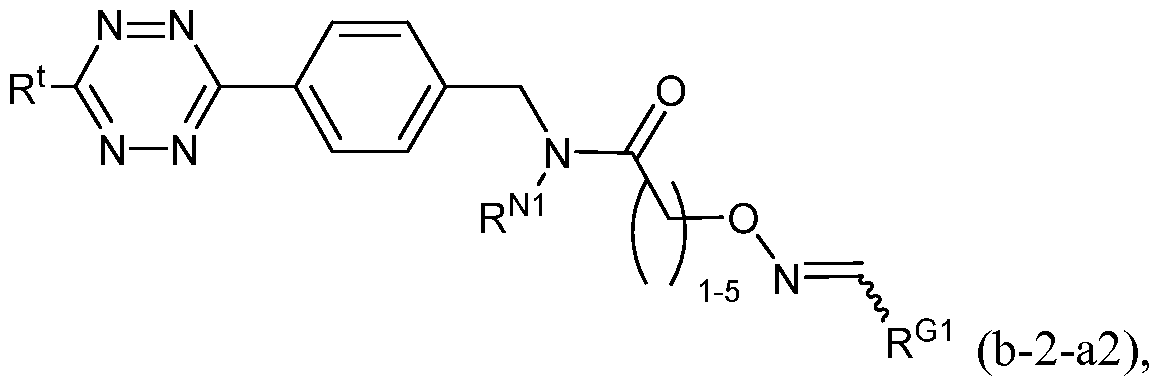
wherein Rl, RN1 are as defined herein; and RG1 is an optionally substituted carbohydrate group
1 18
or a fragment thereof; provided that R comprises F.
[00159] The oxime compounds of Formula (b-2-a2)

can be prepared from optionally substituted tetrazine-aminooxy and a radiolabeled optionally substituted aldehyde of the formula Ras-CHO, wherein Ras is optionally substituted aliphatic, optionally substituted heteroaliphatic, optionally substituted aryl, optionally substituted heteroaryl, or optionally substituted heterocyclyl (Scheme SI). In certain embodiments, Ras is an optionally substituted carbohydrate group or a fragment thereof. In certain embodiments, Ras is an optionally substituted glucose or a fragment thereof. In certain embodiments, the reaction is carried out in the presence of a catalyst. In certain embodiments, the catalyst is m- phenylenediamine, p-phenylenediamine, or p-anisidine. In certain embodiments, the catalyst is m-phenylenediamine. In certain embodiments, the molar ratio of the optionally substituted tetrazine-aminooxy to the catalyst is from about 10: 1 to 1 : 10. In certain embodiments, the molar ratio of the optionally substituted tetrazine-aminooxy to the catalyst is from about 1 : 1 to 1 :8. In certain embodiments, the molar ratio of the optionally substituted tetrazine- aminooxy to the catalyst is from about 1 : 1 to 1 :6. In certain embodiments, the molar ratio of the optionally substituted tetrazine-aminooxy to the catalyst is from about 1 :2 to 1 :4. In certain embodiments, the molar ratio of the optionally substituted tetrazine-aminooxy to the catalyst is about 1 :4.

Scheme SI .
[00160] In certain embodiments, Ras is an optionally substituted carbohydrate group or a fragment thereof, provided Ras comprises 18F. In certain embodiments, Ras is an optionally substituted glucose or a fragment thereof. In certain embodiments, Ras is 18F-FDG of a fragment thereof.
[00161] As provided in Scheme S 1 , the resulting oxime product can be easily purified from the reaction mixture to the change in hydrophilicity.
[00162] In certain embodimetns of Scheme S 1 , the excess of tetrazine-aminooxy can be captured by reacting with another water soluble carbohydrate. In certain embodiments, the water soluble carbohydrate is glucosamine 6-sulfate.
[00163] In certain embodiments, a compound of Formula (b) is of Formula (b-2-a2):

wherein Rl, RN1, L3, Rsl, Rs2, Rs3, and Rs4 are as defined herein.
[00164] In certain embodiments, a compound of Formula (b) is of Formula (b-2-a3):

wherein Rl, RN1, L3, Rsl, Rs2, Rs3, and Rs4 are as defined herein.
[00165] In certain embodiments, a compound of Formula (b) is of Formula (b-2-b):
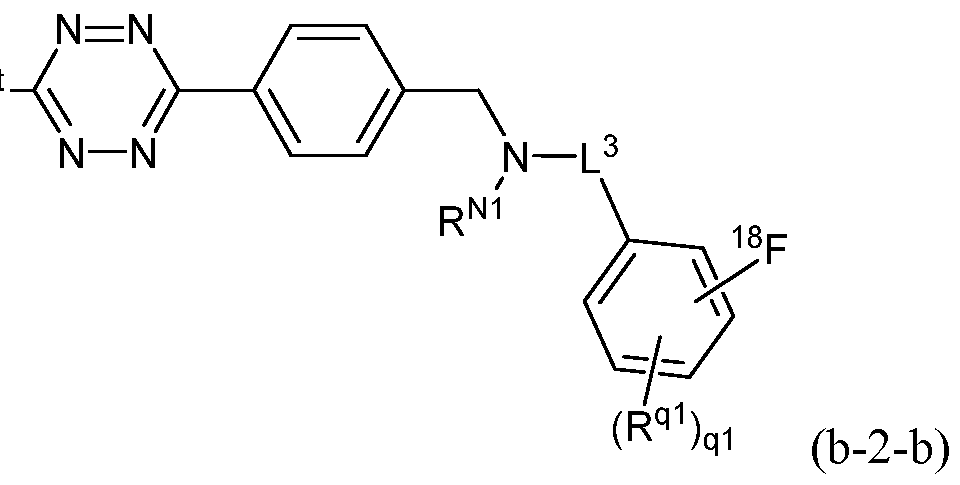
wherein Rl, RN1, L3, Rql, and ql are as defined herein.
[00166] In certain embodiments, a compound of Formula (b) is of Formula (b-2-bl):

[00167] In certain embodiments, a compound of Formula (b) is of Formula (b-3):

wherein Rl, L4, and Y are as defined herein.
[00168] In certain embodiments, a compound of Formula (b) is of Formula (b-3-a):

wherein Rl, L4, La, Lb, and Lc are as defined herein.
[00169] In certain embodiments, a compound of Formula (b) is of the following formula:

[00170] In certain embodim nts, the linker L is of Formula (ii):

wherein
Rl is hydrogen, optionally substituted aliphatic, optionally substituted heteroaliphatic, optionally substituted aryl, optionally substituted heteroaryl, or optionally substituted heterocyclyl;
Rs is a bond, optionally substituted aliphatic, optionally substituted heteroaliphatic, optionally substituted arylene, optionally substituted heteroarylene, or optionally substituted heterocyclylene;
each instance of Rcl is hydrogen, optionally substituted aliphatic, optionally substituted heteroaliphatic, optionally substituted aryl, optionally substituted heteroaryl, or optionally substituted heterocyclyl; or optionally two Rcl taken with the intervening atoms to form an optionally substituted carbocyclyl or optionally substituted heterocyclyl ring;
Rc2 is a bond, optionally substituted aliphatic, optionally substituted heteroaliphatic, optionally substituted arylene, optionally substituted heteroarylene, or optionally substituted heterocyclylene;
m is 0, 1, 2, 3, 4, 5, 6, 7, or 8, as valency permits;
a indicates point of attachment to L1; and
b indicates point of attachment to 18 F.
[00171] In certain embodiments, m is 0. In certain embodiments, m is 1. In certain embodiments, m is 2. In certain embodiments, m is 3. In certain embodiments, m is 4.
[00172] As generally defined herein, each instance of Rcl is independently hydrogen, optionally substituted aliphatic, optionally substituted heteroaliphatic, optionally substituted aryl, optionally substituted heteroaryl, or optionally substituted heterocyclyl. In certain embodiments, Rcl is hydrogen. In certain embodiments, Rcl is optionally substituted aliphatic. In certain embodiments, Rcl is optionally substituted alkyl. In certain embodiments, Rcl is optionally substituted heteroaliphatic. In certain embodiments, two Rcl taken with the intervening atoms to form an optionally substituted carbocyclyl. In certain embodiments, two Rcl taken with the intervening atoms to form an optionally substituted cyclopropyl.
[00173] As generally defined herein, Rc2 is a bond, optionally substituted aliphatic, optionally substituted heteroaliphatic, optionally substituted arylene, optionally substituted heteroarylene, or optionally substituted heterocyclylene. In certain embodiments, Rc2 is a bond. In certain embodiments, Rc2 is optionally substituted aliphatic. In certain embodiments, Rc2 is optionally substituted alkyl. In certain embodiments, Rc2 is optionally substituted heteroaliphatic. In certain embodiments, Rc2 is optionally substituted alkoxy. In certain embodiments, Rc2 is an optionally substituted amino group.
[00174] In certain embodim nts, the linker L is of Formula (ii-a):

wherein n is an integer between 1 and 8, inclusive.
[00175] In certain embodiments, n is 1. In certain embodiments, n is 2. In certain embodiments, n is 3. In certain embodiments, n is 4. In certain embodiments, n is 5. In embodiments, n is 6. In certain embodiments, n is 7. In certain embodiments, n is 8.
[00176] In certain embodiments, the linker L is of Formula (ii-b):

wherein n is an integer between 1 and 8, inclusive.
[00177] In certain embodiments the linker L is of Formula (iii):

wherein
Rl is hydrogen, optionally substituted aliphatic, optionally substituted heteroaliphatic, optionally substituted aryl, optionally substituted heteroaryl, or optionally substituted heterocyclyl;
Rs is a bond, optionally substituted aliphatic, optionally substituted heteroaliphatic, optionally substituted arylene, optionally substituted heteroarylene, or optionally substituted heterocyclylene;
each instance of Rcl is hydrogen, optionally substituted aliphatic, optionally substituted heteroaliphatic, optionally substituted aryl, optionally substituted heteroaryl, or optionally substituted heterocyclyl;
Rc2 is a bond, optionally substituted aliphatic, optionally substituted heteroaliphatic, optionally substituted arylene, optionally substituted heteroarylene, or optionally substituted heterocyclylene;
m is 0, 1, 2, 3, 4, 5, 6, 7, or 8, as valency permits;
a indicates point of attachment to L1; and
b indicates point of attachment to 18 F.
[00178] In certain embodiments the linker L is of Formula (iii-a):

In certain embodiments, wherein -L 2 -F 18
[00179] is of Formula (iii-b):

wherein
each instance of Rp is independently hydrogen, optionally substituted aliphatic, optionally substituted heteroaliphatic, optionally substituted aryl, optionally substituted heteroaryl, optionally substituted heterocyclyl, hydroxyl, or optionally substituted amino; provided at least one Rp is not hydrogen and comprises F18; and
p is 1, 2, 3, 4, or 5.
[00180] In certain embodiments, p is 1. In certain embodiments, p is 2. In certain embodiments, p is 3. In certain embodiments, p is 4. In certain embodiments, p is 3. In certain embodiments, p is 5.
[00181] As generally defined herein, Rp is hydrogen, optionally substituted aliphatic, optionally substituted heteroaliphatic, optionally substituted aryl, optionally substituted heteroaryl, optionally substituted heterocyclyl, hydroxyl, or optionally substituted amino; wherein at least one Rp is not hydrogen and comprises F18. In certain embodiments, Rp is hydrogen. In certain embodiments, Rp is optionally substituted aliphatic. In certain embodiments, Rp is optionally substituted Ci_6 alkyl. In certain embodiments, Rp is unsubstituted Ci_6 alkyl. In certain embodiments, Rp is methyl or ethyl. In certain
embodiments, Rp is substituted Ci_6 alkyl. In certain embodiments, Rp is optionally substituted aryl. In certain embodiments, Rp is optionally substituted phenyl. In certain embodiments, Rp is optionally substituted heteroaryl. In certain embodiments, Rp is optionally substituted pyridine. In certain embodiments, least one Rp is not hydrogen and comprises F18.
[00182] In certain mbodiments, wherein -L 2 -F 18 is of Formula (iii-bl):

wherein
L is a bond, optionally substituted aliphatic, optionally substituted heteroaliphatic, optionally substituted arylene, optionally substituted heteroarylene, or optionally substituted heterocyclylene;
RN1 is independently hydrogen, optionally substituted aliphatic, optionally substituted heteroaliphatic, optionally substituted aryl, or optionally substituted heteroaryl, or a nitrogen protecting group; and
each of Rsl, Rs2, Rs3, and Rs4 is independently hydrogen, optionally substituted aliphatic, optionally substituted heteroaliphatic, optionally substituted aryl, or optionally substituted heteroaryl, or an oxygen protecting group.
[00183] As generally defined herein, L is a bond, optionally substituted aliphatic, optionally substituted heteroaliphatic, optionally substituted arylene, optionally substituted heteroarylene, or optionally substituted heterocyclylene. In certain embodiments, L is a bond. In certain embodiments, L is optionally substituted aliphatic. In certain embodiments,
3 3
L is optionally substituted heteroaliphatic. In certain embodiments L comprises an oxime

moiety. In certain embodiments, L 3 is of the formula , wherein c indicates the point of attachment to -N-RN1-; d indicates the point of attachment to -CH and u is 1, 2, 3, 4, or 5. In certain embodiments, L is C=0.
[00184] In certain embodiments, RN1 is independently hydrogen. In certain embodiments, RN1 is optionally substituted aliphatic. In certain embodiments, RN1 is optionally substituted alkyl. In certain embodiments, RN1 is an amino protectin group.
[00185] In certain embodiments, Rsl is independently hydrogen. In certain embodiments, Rsl is optionally substituted aliphatic. In certain embodiments, Rsl is optionally substituted alkyl. In certain embodiments, Rsl is an oxygen protectin group. In certain embodiments, Rsl is acyl (e.g. acetyl).
[00186] In certain embodiments, Rs2 is independently hydrogen. In certain embodiments, Rs2 is optionally substituted aliphatic. In certain embodiments, Rs2 is optionally substituted alkyl. In certain embodiments, Rs2 is an oxygen protectin group. In certain embodiments, Rs2 is acyl (e.g. acetyl).
[00187] In certain embodiments, Rs3 is independently hydrogen. In certain embodiments, Rs3 is optionally substituted aliphatic. In certain embodiments, Rs3 is optionally substituted alkyl. In certain embodiments, Rs3 is an oxygen protectin group. In certain embodiments, Rs3 is acyl (e.g. acetyl).
[00188] In certain embodiments, Rs4 is independently hydrogen. In certain embodiments, Rs4 is optionally substituted aliphatic. In certain embodiments, Rs4 is optionally substituted alkyl. In certain embodiments, Rs4 is an oxygen protectin group. In certain embodiments, Rs4 is acyl (e.g. acetyl).
[00189] In certain embodiments, Rsl, Rs2, Rs3, and Rs4 are all hydrogen.
[00190] In certain embodiments, RN1 , Rsl , Rs2 , Rs3 , and Rs4 are all hydrogen.
[00191] In certain embodiments, RN1, Rsl, Rs2, Rs3, and Rs4 are all hydrogen; and Rl is optionally substituted aliphatic. In certain embodiments, RN1, Rsl, Rs2, Rs3, and Rs4 are all s2 hydrogen; and Rl is optionally substituted Ci_6 alkyl. In certain embodiments, RN1, Rsl, R! Rs3, and Rs4 are all hydrogen; and Rl is methyl or ethyl.
[00192] In certain embodiments wherein -I -F is of the formula

[00193] In certain embodiments, wherein -I -F is of Formula (iii-b2):

wherein
L is a bond, optionally substituted aliphatic, optionally substituted heteroaliphatic, optionally substituted arylene, optionally substituted heteroarylene, or optionally substituted heterocyclylene;
RN1 is independently hydrogen, optionally substituted aliphatic, optionally substituted heteroaliphatic, optionally substituted aryl, or optionally substituted heteroaryl, or a nitrogen protecting group;
each instance of Rql is independently hydrogen, optionally substituted aliphatic, optionally substituted heteroaliphatic, optionally substituted aryl, optionally substituted heteroaryl, optionally substituted heterocyclyl, hydroxyl, or optionally substituted amino; and ql is 0, 1 , 2, 3, or 4.
[00194] In certain embodiments Rl is optionally substituted aliphatic and Rql is hydrogen.
In certain embodiments,
 u is 1 ; and Rql is hydrogen.
2 18
[00195] In certain mbodiments, -L -F is of the formula:

2 18
[00196] In certain embodiments -L -F is of Formula (iii-b3):

wherein
R is independently hydrogen, optionally substituted aliphatic, optionally substituted heteroaliphatic, optionally substituted aryl, or optionally substituted heteroaryl, or a nitrogen protecting group; and
each instance of Rq2 is independently hydrogen, optionally substituted aliphatic, optionally substituted heteroaliphatic, optionally substituted aryl, optionally substituted carbocyclyl, optionally substituted heteroaryl, optionally substituted heterocyclyl, hydroxyl, or optionally substituted amino; and
q2 is 0, 1, 2, 3, or 4.
[00197] In certain embodiments, q2 is 0. In certain embodiments, q2 is 1. In certain embodiments, ql is 2. In certain embodiments, q2 is 3. In certain embodiments, q2 is 4.
[00198] In certain embodiments, Rq2 is hydrogen. In certain embodiments, Rq2 is optionally substituted aliphatic. In certain embodiments, Rq2 is optionally substituted Ci_6 alkyl.
[00199] In certain embodiments, Rl is optionally substituted aliphatic and Rq2 is hydrogen.
2 18
[00200] In certain embodiments -L -F is of the formula:

[00201] In certain embodiments, wherein -L 2 -F 18 is of Formula (iii-b4):

wherein
L is a bond, optionally substituted aliphatic, optionally substituted heteroaliphatic, optionally substituted arylene, optionally substituted heteroarylene, or optionally substituted heterocyclylene;
RN1 is independently hydrogen, optionally substituted aliphatic, optionally substituted heteroaliphatic, optionally substituted aryl, or optionally substituted heteroaryl, or a nitrogen protecting group; and
Rz is independently hydrogen, optionally substituted aliphatic, optionally substituted heteroaliphatic, optionally substituted aryl, or optionally substituted heteroaryl, wherein RZ comprise F.
2 18
[00202] In rtain embodiments, wherein -L -F is of Formula (iii-b4-a):

[00203] In certain embodiments, R is an optionally substituted thiol.
[00204] In certain embo a (iii-c):

(iii-c)
wherein
Y is a ligand capable of chelating to a pharmaceutically acceptable metal complex comprising F18; and
L4 is is a bond, optionally substituted aliphatic, optionally substituted heteroaliphatic, optionally substituted arylene, optionally substituted cycloalkylene, optionally substituted heteroarylene, or optionally substituted heterocyclylene.
[00205] As generally defined herein, Y is a ligand capable of chelating to a
18
pharmaceutically acceptable metal complex comprising F . As used herein, a ligand refers to an ion or molecule (functional group) that binds to a central metal atom to form a
coordination complex. The bonding between metal and ligand generally involves formal donation of one or more of the ligand's electron pairs. The nature of metal-ligand bonding can range from covalent to ionic. Exemplary monodentate ligands include, but are not limited to, CO, organonitriles (e.g., CH3CN, CH3CH2CN), monosubstituted amines, disubstituted amines, trisubstituted amines, heterocyclyls (e.g., pyridine, piperidine), dialkylcyanamides, triphenylphosphine oxide, THF, DMF, or NMF. Exemplary bidentate ligands include, but are not limited to, 1 ,5-cyclooctadiene, norbornadiene, 1 ,2-ethylenediamine,
tetramethylethylenediamine, 1 ,2-dimethoxyethane, diglyme, or 2,5-dithiahexane. Exemplary tridentate ligands include, but are not limited to, conjugated cyclic triene (e.g.,
cycloheptatriene), conjugated acyclic triene, arenes (e.g., benzene, toluene, xylene, mesitylene, naphthalene), tetraazamacrocyles (e.g., tetraazacyclododecane), polyamines (e.g., diethylenetriamine), and trithiocylononane. In certain embodiments, the ligand is a polydentate ligand. In certain embodiments, the ligand comprises 1 ,4,7-triazacyclononane- triacetic acid (NOT A), 1 ,4,7,10-tetraazacyclododecane-tetraacetic acid (DOTA), or triazacyclononane-phosphinate (TRAP) .
[00206] The phrase "pharmaceutically acceptable" means that the metal complex is suitable for administration to a subject. In certain embodiments, the metal complex is a halide metal complex. In certain embodiments, the metal is a pharmaceutically acceptable metal. In certain embodiments, the metal is IIA or IIIA group metal. In certain embodiments, the metal is an early transition metal. In certain embodiments, the metal is Al.
[00207] In certain embodiments, L4 is a bond. In certain embodiments, L4 is an optionally substituted aliphatic. In certain embodiments, L4 is an optionally substituted heteroaliphatic.
2 18
[00208] In certain embodiments -L -F is of Formula (iii-cl):

wherein
M is a pharmaceutically acceptable metal;
each of La, Lb, and Lc is independently optionally substituted aliphatic, optionally substituted heteroaliphatic, optionally substituted arylene, optionally substituted
cycloalkylene, optionally substituted heteroarylene, or optionally substituted heterocyclylene; and
"— " indicates a coordination bond or absend, as valency permits.
[00209] In certain embodiments, La is optionally substituted aliphatic. In certain embodiments, La is optionally substituted heteroaliphatic. In certain embodiments, La is optionally substituted heteroalkylene. In certain embodiments, La is -(CH2)1-3-C(=0)0-, wherein the chelation point to M is O. In certain embodiments, La is -CH2-C(=0)0-. In
certain embodiments, La is -(CH2)i_3-C(=0)OH, wherein the chelation point to M is O. In certain embodiments, La is -CH2-C(=0)OH.
[00210] In certain embodiments, Lb is optionally substituted aliphatic. In certain embodiments, Lb is optionally substituted hetero aliphatic. In certain embodiments, Lb is optionally substituted heteroalkylene. In certain embodiments, Lb is -(CH2)1-3-C(=0)0- wherein the chelation point to M is O. In certain embodiments, Lb is -CH2-C(=0)0-. In certain embodiments, Lb is -(CH2)i_3-C(=0)OH, wherein the chelation point to M is O. In certain embodiments, Lb is -CH2-C(=0)OH.
[00211] In certain embodiments, Lc is optionally substituted aliphatic. In certain embodiments, Lc is optionally substituted hetero aliphatic. In certain embodiments, Lc is optionally substituted heteroalkylene. In certain embodiments, Lc is -(CH2)1-3-C(=0)0- wherein the point of attachment to M is O. In certain embodiments, Lc is -CH2-C(=0)0-. In certain embodiments, Lc is -(CH2)1-3-C(=0)OH, wherein chelation point to M is O. In certain embodiments, Lc is -CH2-C(=0)OH.
[00212] As generally defined herein, "— " indicates the chelation formed between M and the ligand, as valency permits. In certain embodiments, M forms one chelating bond with the ligand. In certain embodiments, M forms two chelating bonds with the ligand. In certain embodiments, M forms three chelating bonds with the ligand.
2 18
[00213] In certain mbodiments, -L -F is of Formula (iii-c2):

[00214] In certain embodiments, the radioactive protein is one of the following formulae:

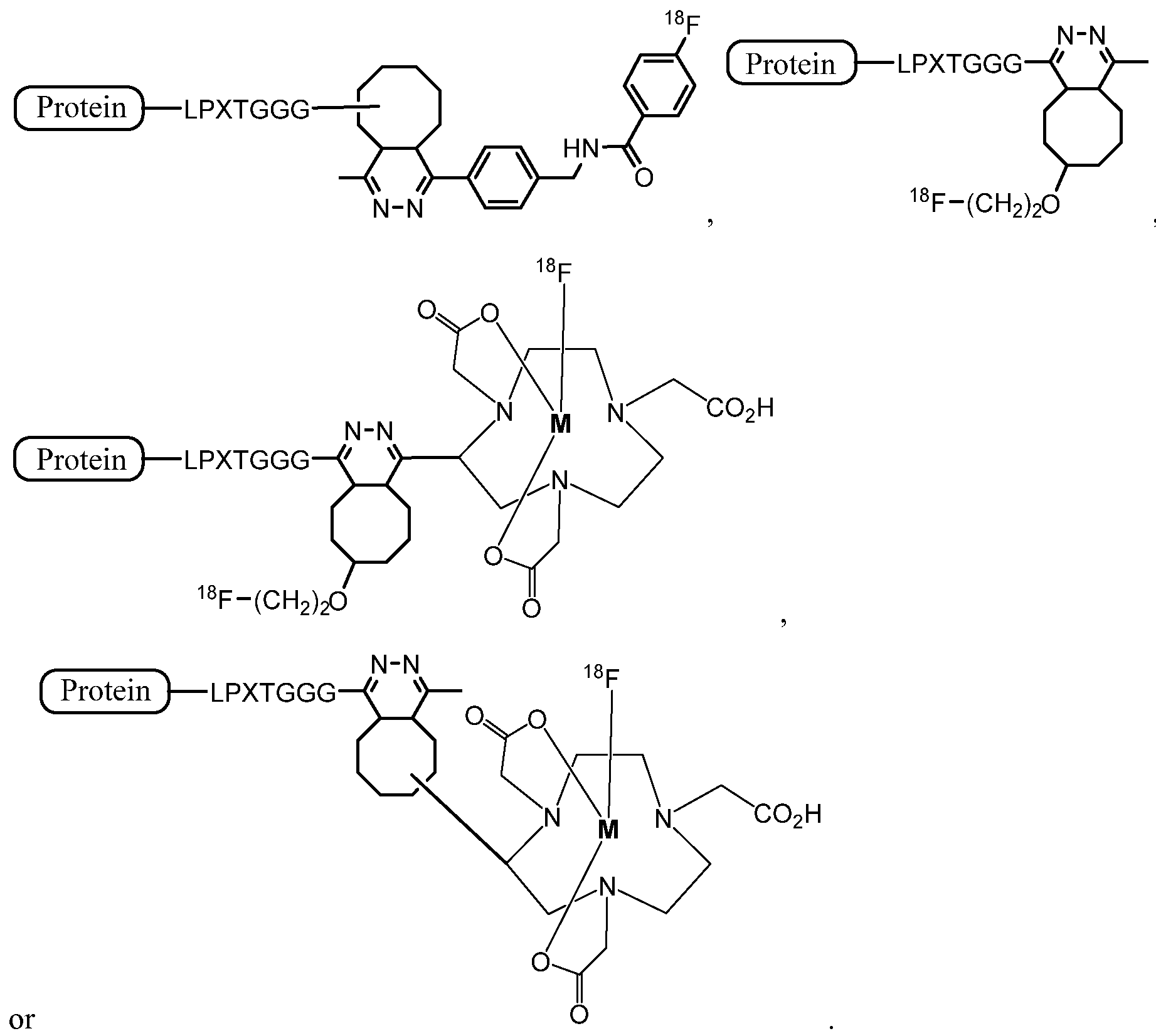
[00215] In certain embodiments, the linker L is of one of the following formulae:

wherein RS, RL, RC1, Rc2, and m are as de effiinneedd hheerreeiinn..
[00216] In certain embodiments, provided herein is a radioactive protein of Formula (III)
( Protein )— L1-R3
(III)
wherein
L1 is as defined herein; and
R comprises a ligand capable of chelating to a pharmaceutically acceptable radioactive metal complex.
In certain embodiments, L 1 -R 3 is of the following formula:

heteroaliphatic, optionally substituted aryl, or optionally substituted heteroaryl, or a nitrogen protecting group; wherein Rz2 comprises a ligand capable of chelating to a pharmaceutically acceptable radioactive metal complex.
[00218] In certain embodiments, R comprises mono-dentecate ligand. In certain
3 3
embodiments, R comprises a polydentecate ligand. In certain embodiments, R comprises 1,4,7-triazacyclononane-triacetic acid (NOT A), 1,4,7,10-tetraazacyclododecane-tetraacetic acid (DOT A), or triazacyclononane-phosphinate (TRAP).
[00219] In certain embodiments, the metal is 64Cu2+. In certain embodiments, the metal is
68Ga3+.
[00220] In certain embodiments,, the radioactive protein is one of the following formulae:
( Protein )— LPXTGGG— 64Cu— NOTA
or
( Protein )— LPXTGGG— 68Ga— NOTA
[00221] In certain embodiments, provided herein is a radioactive protein of Formula (IV)
f Protein )-L1-R4 (p/) wherein
L1 is a linker comprising at least four amino acids formed by enzymatic conjugation between two enzyme recognition sequences;
R4 comprises a radioactive optionally substituted carbohydrate; and
R4 is linked to the C-terminus of the adjacent amino acid in L1.
[00222] As generally defined herein, R4 comprises a radioactive optionally substituted carbohydrate. In certain embodiments, R4 comprises a radioactive optionally substituted
4 18 glucose. In certain embodiments, R comprises a radioactive glucose comprising F. In
4 18 certain embodiments, R comprises an optionally substituted glucose comprising F. In certain embodiments, R4 is linked to the C-terminus of the adjacent amino acid in L1. In certain embodiments, R4 is linked to the side chain of the adjacent amino acid in L1.
[00223] In certain embodiments, R4 is of Formula (iv):

wherein
v is 1, 2, 3, 4, or 5; and
each of Rs5, Rs6, Rs7, and Rs8 is independently hydrogen, optionally substituted aliphatic, optionally substituted heteroaliphatic, optionally substituted aryl, or optionally substituted heteroaryl, or an oxygen protecting group.
[00224] In certain embodiments, Rs5 is independently hydrogen. In certain embodiments, Rs5 is optionally substituted aliphatic. In certain embodiments, Rs5 is optionally substituted alkyl. In certain embodiments, Rs5 is an oxygen protectin group. In certain embodiments, Rs is acyl (e.g. acetyl).
[00225] In certain embodiments, Rs6 is independently hydrogen. In certain embodiments, Rs6 is optionally substituted aliphatic. In certain embodiments, Rs6 is optionally substituted alkyl. In certain embodiments, Rs6 is an oxygen protectin group. In certain embodiments, Rsl is acyl (e.g. acetyl).
[00226] In certain embodiments, Rs7 is independently hydrogen. In certain embodiments, Rs7 is optionally substituted aliphatic. In certain embodiments, Rs7 is optionally substituted alkyl. In certain embodiments, Rs7 is an oxygen protectin group. In certain embodiments, Rs is acyl (e.g. acetyl).
Q
[00227] In certain embodiments, R is independently hydrogen. In certain embodiments, Rs8 is optionally substituted aliphatic. In certain embodiments, Rs8 is optionally substituted alkyl. In certain embodiments, Rs8 is an oxygen protectin group. In certain embodiments, Rs is acyl (e.g. acetyl).
[00228] In certain embodiments, R4 is of the formula:


wherein Rs , Rs , Rs , and Rs are as defined herein; and L is optionally substituted aliphatic or optionally substituted heteroaliphatic.
[00230] In certain embodiments, L is optionally substituted aliphatic. In certain embodiments, L is optionally substituted Ci_io alkyl. In certain embodiments, L is optionally substituted heteroaliphatic. In certain embodiments, L is of the formula:

[00231] In certain embodiments, the radioactive protein is of the following formula:

[00232] In certain embodiments, ( Protein J ^ an an^0(jy5 a nuciear factor, a
neuropeptide, a receptor protein, an enzyme, a structural protein, or a fragment thereof. In
[ Protein )
certain embodiments, ^ ' is an antibody or a fragment thereof. In certain
I P ote in J
embodiments, ^ ' is VHH or a fragment thereof.
Synthesis of intermediates and radiolabeled proteins
[00233] The oxime compounds of Formula (b-2-a2)

can be prepared from optionally substituted tetrazine-aminooxy and a radiolabeled optionally substituted aldehyde or optionally substituted ketone of the formula Ras-CO-Rbs, wherein RG1 is as defined herein; each of Ras and Rbs is independently hydrogen, optionally substituted aliphatic, optionally substituted heteroaliphatic, optionally substituted aryl, optionally substituted heteroaryl, or optionally substituted heterocyclyl; provided Ras and Rbs are not both hydrogen (Scheme SI).

Scheme SI .
[00234] In certain embodiments, Ras is an optionally substituted carbohydrate group or a fragment thereof. In certain embodiments, Ras is an optionally substituted glucose or a fragment thereof. In certain embodiments, the reaction is carried out in the presence of a catalyst. In certain embodiments, the catalyst is m-phenylenediamine, p-phenylenediamine, or p-anisidine. In certain embodiments, the catalyst is m-phenylenediamine. In certain embodiments, the molar ratio of the optionally substituted tetrazine-aminooxy to the catalyst is from about 10: 1 to 1 : 10. In certain embodiments, the molar ratio of the optionally substituted tetrazine-aminooxy to the catalyst is from about 1 : 1 to 1 :8. In certain
embodiments, the molar ratio of the optionally substituted tetrazine-aminooxy to the catalyst is from about 1 : 1 to 1 : 6. In certain embodiments, the molar ratio of the optionally substituted
tetrazine-aminooxy to the catalyst is from about 1 :2 to 1 :4. In certain embodiments, the molar ratio of the optionally substituted tetrazine-aminooxy to the catalyst is about 1 :4.
[00235] In certain embodiments, Ras is an optionally substituted carbohydrate group or a fragment thereof, provided Ras comprises 18F. In certain embodiments, Ras is an optionally substituted glucose or a fragment thereof. In certain embodiments, Ras is 18F-FDG of a fragment thereof.
[00236] As provided in Scheme S 1 , the resulting oxime product can be easily purified from the reaction mixture to the change in hydrophilicity.
[00237] In certain embodimetns of Scheme S 1 , the excess of tetrazine-aminooxy can be captured by reacting with another water soluble carbohydrate. In certain embodiments, the water soluble carbohydrate is glucosamine 6-sulfate.
[00238] The compound of Formula b-2-b)

can be prepared from reacting an optionally substituted tetrazine comprising a nucleophic group with an electrophile comprising 18F such as 18F-SFB. Exemplary synthesis of Formula (b-2-b is provided in Scheme S2.

Scheme S2
[00239] In certain embodiments, the Nu is an amino group. In certain embodiments, the
18
electrophile is an optionally substituted N-succinimidyl comprising F. In certain
embodiments the optionally substituted N-succinimidyl is F-SFB of the formula

[00240] The radioactive protein of Formula (II) can be prepared from a modified protein
18 2 2
of Formula (I) with a compound of Formula (b): F-R (b), wherein R is a reactive group capable of undergoing the click chemistry reaction (Scheme S3):
18p_R2
( Protein )— L1-R1 ► ( Protein )— L1-L2-18F
click chemistry
Scheme S3.
1 2
[00241] In certain embodiments, R is the first click chemistry handle and R is the second
2 1 click chemistry handle. In certain embodiments, R is the first click chemistry handle and R is the second click chemistry handle.
[00242] Click chemistry should be modular, wide in scope, give high chemical yields, generate inoffensive byproducts, be stereospecific, be physiologically stable, exhibit a large thermodynamic driving force ( e.g., > 84 kJ/mol to favor a reaction with a single reaction product), and/or have high atom economy. Several reactions have been identified which fit this concept:
(1) The Huisgen 1,3-dipolar cycloaddition ( e.g., the Cu(I)-catalyzed stepwise variant, often referred to simply as the "click reaction"; see, e.g., Tornoe et ah, Journal of Organic Chemistry (2002) 67: 3057-3064). Copper and ruthenium are the commonly used catalysts in the reaction. The use of copper as a catalyst results in the formation of 1 ,4-regioisomer whereas ruthenium results in formation of the 1,5- regioisomer;
(2) Other cycloaddition reactions, such as the Diels-Alder cycloaddition;
(3) Nucleophilic addition to small strained rings like epoxides and aziridines;
(4) Nucleophilic addition to activated carbonyl groups; and
(4) Addition reactions to carbon-carbon double or triple bonds.
[00243] In certain embodiments, the click chemistry is a Diels-Alder cycloaddition.
Exemplary Diels-Alder cyclo additions can be found in U.S. Patent Publication No.
20130266512, which is incorporated by reference herein;
[00244] The radioactive protein of Formula (III) can be prepared from a compound comprising an aminooxy moiety with an optionally substituted aldehyde (Scheme S4):
+ B R3 enzymatic conjugation

radioactive metal
/ \ „ sortase , v .
( Protein )— LPXTG + GGG-R ► ( Protein )— LPXT-GGG-R3 comPlex
( Protein )— LPXT-GGG-R3
Metal complex
Scheme S4.
[00245] The radioactive protein of Formula (IV) can be prepared from a compound comprising an aminooxy moiety with an optionally substituted aldehyde or an optionally substituted ketone (Scheme S5), wherein L is as defined herein.
-NH2 catalyst
GGNHCH2- "~N L— CONH2 + Ras-C Rbs *~ GGNHCH2— N CONH2
H H
O NH2 N >
LG
9 catalyst 9
GGNHCHs-^N CONH2 + Ras— CHO ΟΟΝΗΟΗ2-"-Ν CONH2
H H
GGNHCH2

Scheme S5.
[00246] In certain embodiments, the aldehyde is an optionally substituted carbohydrate comprising an aldehyde group or is capable of forming one through isomerism. In certain embodiments, the optionally substituted aldehyde is an optionally substituted
monosaccharide. In certain embodiments, the optionally substituted aldehyde is optionally substituted glucose, optionally substituted glyceraldehyde, or optionally substituted galactose. In certain embodiments, the optionally substituted aldehyde is optionally substituted glucose.
[00247] In certain embodiments, the catalyst is m-phenylenediamine (mPDA), o- phenylenediamine, /?-phenylenediamine, o-aminophenol, m-aminophenol, /?-aminophenol, o-
aminobenzoic acid, 5-methoxyanthranilic acid, 3,5-diaminobenzoic acid or aniline. In certain embodiments, the catalyst is m-phenylenediamine (mPDA).
[00248] In certain embodiments, the radioactive optionally substituted cyclooctene is
18
synthesized by a nucleophilic reaction with an F anion with a substituted cyclooctene comprising a leaving group LG (Scheme S6), wherein LG is as defined herein and L61 is optionally substituted aliphatic, optionally substituted heteroaliphatic, optionally substituted arylene, optionally substituted heteroarylene, or optionall substituted heterocyclylene.

Scheme S6
[00249] In certain embodiments, L is optionally substituted hereo aliphatic. In certain embodiments, L61 is straight chain heteroaliphatic. In certain embodiments, L61 is -0-Ci_ galkylene. In certain embodiments, L61 is -0-(CH2)i_8-.
[00250] In certain embodiments, the radioactive optionally substituted cyclooctene is synthesized as s
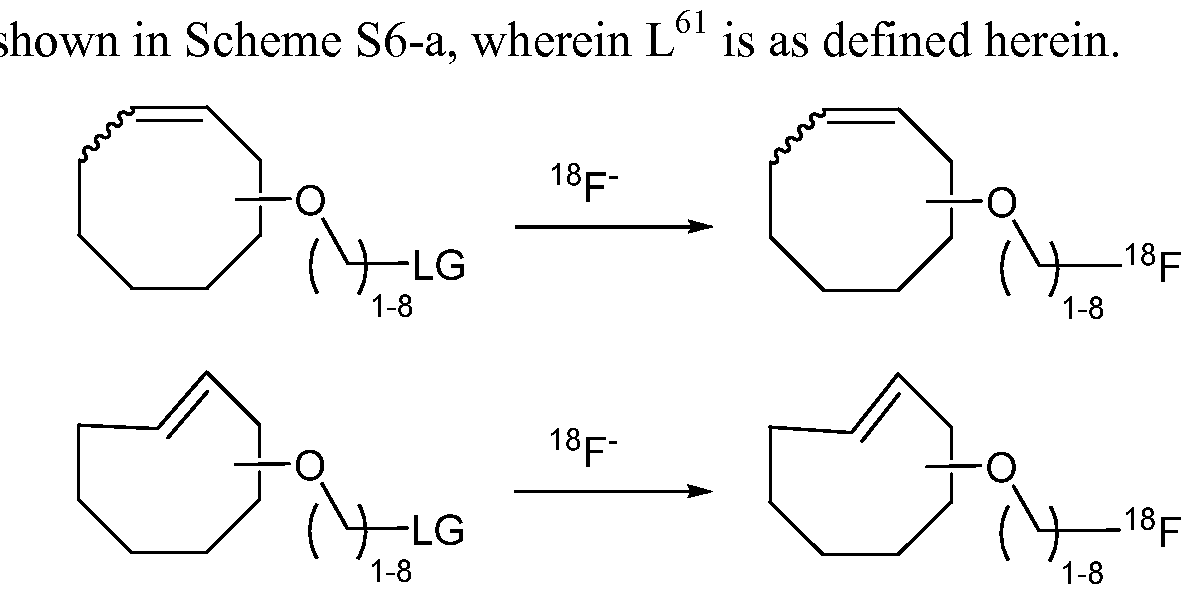
Scheme S6-a
[00251] In certain embodiemnts, the 18 F -" anion is from an inorganic salt comprising 18 F -" anion. In certain embodiments, the 18 F -" anion is from a metal salt comprising 18 F -" anion. In certain embodiments, the 18 F" anion is from IA, IIA, or IIIA metal fluoride. In certain embodiments, the 18 F -" anion is from transition metal complex comprising 18 F -".
[00252] In certain embodiments, the enzymatic conjugation is a modification using a formylglycine generating enzyme (FGE). In certain embodiments, the protein is an antibody. In certain embodiments, the enzyme is FGE. In certain embodiments, the FGE recognition sequence is CXPXR. In certain embodiments, the FGE recognition sequence is
LCTPSRGSLFTGR. In certain embodiments, the radioactive protein is prepared according to Scheme El .
Formylglycine
Generating CHQ
, v Enzyme (FGE) . . H I
( Protein )-CXPXR - ( Protein )-N 1 C(=0)— XPXR
or

RF is a reactive group capable of undergoing a click chemistry reaction, comprising a radioactive optionally substituted carbohydrate, or comprising a ligand capable of chelating to a pharmaceutically acceptable radioactive metal complex.
X = an independently amino acid.
Scheme El
[00253] It is to be understood that the -CHO group generated from the FGE modification can undergo any suitable reaction to incorporate a radioactive label, for example, a click chemistry handle, a radioactive carbohydrate, or a ligand capable of chelating to a
pharmaceutically acceptable radioactive metal complex. Exemplary transformations such as reacting with hydrazine or hydroxylamine are shown in the Scheme El .
[00254] In certain embodiments, the enzymatic conjugation is a modification using sialyltransferases. In certain embodiments, the protein is a cell surface polypeptide. In certain embodiments, the protein is a glycan. An exemplary sialylation is shown in Scheme E2, wherein R4 is as defined herein.
Sialyltransferase
( Protein ) + R4-H ► ( roteinJ-R4
R4 comprises a radioactive optionally substituted carbohydrate
Scheme E2
[00255] In certain embodiments, R4 comprises radioactive optionally substituted glucose. In certain embodiments, R4 comprises 18F-FDG. In certain embodiments, R4 comprises radioactive optionally substituted aldolase. In certain embodiments, R4 comprises radioactive optionally substituted mannose.
[00256] In certain embodiments, the enzymatic conjugation is a modification using phosphopantetheinyltransferases (PPTases). In certain embodiments, the protein is peptide
carrier protein (PCP). In certain embodiments, the protein is acyl carrier protein (ACP). In certain embodiments, the PPT recognition sequence comprises a serine residue. In certain embodiments, the PPTase recognition sequence is DSLEFIASKLA, VLDSLEFIASKLA, or GSQD VLDSLEFIASKLA. In certain embodiments, the phosphopantetheinyltransferase is Sfp. An exemplary modification using PPTase is shown in Scheme E3, wherein R is as defined herein.

Scheme E3
[00257] In certain embodiments, the enzymatic conjugation is a modification using polypeptidyltransferases (OGTases). In certain embodiments, the protein is nuclear pore protein. In certain embodiments, the OGTase is UDP-Glc-NAc. In certain embodiments, the OGTase recognition sequence comprises a serine residue or threonine residue. Exemplary modifications using polypeptidyltransferases are shown in Scheme E4, wherein R is as defined herein.

optionally substituted 0 -6 alkyl, or an oxygen protecting group
Scheme E4
[00258] In certain embodiments, the enzymatic conjugation is a modification using transglutaminase (TGases). In certain embodiments, the protein is an antibody. In certain embodiments, the TGase recognition sequence comprises a glutamine (Q) residue. In certain embodiments, the TGase recognition sequence comprises XXQXX. In certain embodiments, the protein recognition sequence is GGGSLLQG, PNPQLPF, PKPQQFM, or GQQQLG. In certain embodiments, the protein recognition sequence comprises a lysine (K) residue. In certain embodiments, the protein recognition sequence is MRHKGS. An exemplary modification using TGases is shown in Scheme E5, wherein R is as defined herein.

£^£i£LJ— ^ *~ ( Protein )-V \rF
Scheme E5
[00259] In certain embodiments, the enzymatic conjugation is a modification using protein farnesyltransferase (PFTase). In certain embodiments, the protein is an antibody. In certain embodiments, the PFTase recognition sequence comprises CaaX, wherein each instance of a is independently an aliphatic amino acid and X is as defined herein. Exemplary modifications using PFTases are shown in Scheme E6, wherein R is as defined herein.

or hydroxylamine
Scheme E6
[00260] In certain embodiments, the enzymatic conjugation is a modification using biotin ligases. In certain embodiments, the protein is an antibody. In certain embodiments, the biotin ligase recognition sequence comprises lysine (K). In certain embodiments, the biotin ligase recognition sequence comprises GLNDIFEAQKIEWHE. In certain embodiments, the enzyme is E.coli biotin ligase, BirA. An exemplary modification using biotin ligases is shown in Scheme E7, wherein R is as defined herein.
R' Δ ί τ k- t- streptavidin-RF
( Protein )-AP ' » ( Protein )-AP Biotin ( Protein )-AP Biotin Streptavidii
AP = acceptor peptide comprising lysine
Scheme E7
[00261] In certain embodiments, the enzymatic conjugation is a modification using lipoic acid ligases (LplAs). In certain embodiments, the protein is an antibody. In certain
embodiments, the protein is a growth factor receptor. In certain embodiments, the LplA recognition sequence comprises GFEIDKVWYDLDA. In certain embodiments, the enzyme is E.coli Lpl. An exemplary modification using LplAs is shown in Scheme E8, wherein RF is as defined herein.
( Protein )— NH3

Scheme E8
[00262] In certain embodiments, the enzymatic conjugation is a modification using N- myristoyltransferase (NMT). In certain embodiments, the protein is an antibody. In certain embodiments, the protein is a tyrosine kinase. In certain embodiments, the protein is a HIV-1 matrix protein. In certain embodiments, the protein is a HIV Gag. In certain embodiments, the protein is an ADP-ribosylating factor. In certain embodiments, the NMT recognition sequence comprises GXXXS/T, wherein X is any amino acid. An exemplary modification using NMT is shown in Scheme E9, wherein RF is as defined herein.
( Protein j +

Scheme E9
In certain embodiments, RF is a reactive group capable of undergoing a click chemistry reaction. In certain embodiments, RF is R1 as defined herein. In certain embodiments, RF is optionally substituted tetrazine. In certain embodiments, RF is optionally substituted tetrazine comprising 18 F. In certain embodiments, R F is optionally substituted tetrazine comprising 18 F- FDG or a fragment thereof. In certain embodiments, RF is optionally substituted tetrazine comprising 18 F-SFB or a fragment thereof. In certain embodiments, R F is optionally
substituted cyclooctene. In certain embodiments, RF is optionally substituted trans- cyclooctene. In certain embodiments, RF is optionally substituted trans-cyclooctene
18 F
comprising F. In certain embodiments, R is comprises a ligand capable of chelating to a pharmaceutically acceptable radioactive metal complex. In certain embodiments, RF is R3 as defined herein. In certain embodiments, RF comprises a ligand capable of chelating to a pharmaceutically acceptable metal complex comprising F 18. In certain embodiments, R F is Y as defined herein. In certain embodiments, RF comprises a radioactive optionally substituted carbohydrate. In certain embodiments, RF is R4 as defined herein. In certain embodiments, RF
18
comprises F-FDG or a fragment thereof.
Methods and reagents for sortase-mediated radiolabeling of proteins
[00263] The present invention provides methods, compositions, reagents, and kits for the modification or labeling of proteins and peptides using sortase-mediated transpeptidation of sortase substrate peptides that have been modified to include a desired modification, e.g., a radiolabel, or are isotopically enriched. Typically, a method of labeling a protein as provided herein comprises conjugating the target protein with an agent or a click chemistry handle via a sortase-mediated transpeptidation reaction. In order for a sortase-mediated transpeptidation to be possible, both the target protein and the agent must be recognized by the sortase and must be capable of acting as a substrate of the sortase in the transpeptidation reaction.
Accordingly, the methods for labeling of proteins provided herein involve target proteins and agents that comprise or are conjugated to a sortase recognition motif. Some proteins and some agents {e.g., peptides comprising a radiolabel and/or a reactive moiety) may comprise a suitable sortase recognition motif. However, in some embodiments, the target protein and/or the agent is engineered to comprise a suitable sortase recognition motif, for example, via protein engineering {e.g., using recombinant technologies) or via chemical synthesis {e.g., linking a non-protein agent to a sortase recognition motif). Methods for modifying, engineering, or synthesizing proteins {e.g., to include a sortase recognition motif and/or reactive moiety) are known, and include those described by Green and Sambrook, Molecular Cloning: A Laboratory Manual (4th ed., Cold Spring Harbor Laboratory Press, Cold Spring Harbor, N.Y. (2012)), and Nilsson et ah, "Chemical Synthesis of Proteins." Annu. Rev.
Biophys. Biomol. Struct. 2005; 34: 91-118; the entire contents of each are hereby
incorporated by reference.
[00264] It should be appreciated that enzymes other than sortase may be used for the enzymatic modification of proteins as described herein. Exemplary enzymatic modifications
include, but are not limited to, modifications by formylglycine generating enzyme (FGE), modifications by sialyltransferase, modifications by phosphopantethemyltransferase
(PPTases), O-GlcNAc modifications by polypeptidyltransferase (OGTases), modifications by transglutaminase (TGases), modifications by protein farnesyltransferase (PFTases),
modifications by biotin ligases, and modifications by lipoic acid ligase (Rashidian et al., Bioconjugate Chem. 2013, 24, 1277-1294). In certain embodiments, a transglutaminase may be used to site-specifically incorporate an agent into a protein by catalyzing an acyl transfer reaction between the carboxamide group of a glutamine residue and a variety of unbranched primary amines, commonly the ε-amino group of lysine. As another example, a protein farnesyltransferase may be used to transfer a farnesyl group to the cysteine of a CaaX tetrapeptide sequence at the carboxyl terminus of a protein, where C is cysteine, a is an aliphatic amino acid, and X is any amino acid. In certain embodiments, a formylglycine generating enzyme (FGE) is used to modify any of the proteins described herein. FGE recognizes a pentapeptide consensus sequence, CxPxR (where x is any amino acid), and site- specifically oxidizes the cysteine in this sequence to an aldehyde-bearing formylglyine. The FGE recognition sequence, or aldehyde tag, can be inserted into heterologous recombinant proteins produced in either prokaryotic or eukaryotic expression systems. By introducing this motif into proteins and subsequently reacting it with FGE, an aldehyde group can be site- specifically added to the protein, which can then be used for covalent modification using complementary aminooxy- or hydrazide-functionalized reagents. Other enzymes that may be used for the labeling of proteins include, but are not limited to,
phosphopantethemyltransferase, biotin ligase, lipoic acid ligase and N-myristoyl transferase. Exemplary enzymes and their corresponding recognition motifs are shown in table 3.
Table 3. Kinetic parameters of different enzymes used for protein labeling

AC?. PCP bfeR is«s (i t a>et: IS :i;iA5>Ki..-Y", S3 s»
-E"S JSKtA' 17 mar. GS JWUl«-,£t;lASKLA -Ci-sA)
i4,7 «!.!¾ aa«
LPXT i t.,2 am
 s; >>"
\f Jit tali: .use 4? 6
i!id 1.4 ; C is; wiiiius
' '.
31.2 i.7i 1S.2
I'm iOT-
4. i?

9,6 4.2
CPEJOjty VOLOA ■i.m - C »>r
[00265] Typically, a method for protein labeling as provided herein comprises contacting a target protein comprising a sortase recognition motif (e.g. , a diagnostic protein comprising a C-terminal recognition motif), with an agent comprising a complementary sortase recognition motif (e.g., a sortase substrate peptide comprising an N-terminal recognition motif (e.g., GGG)), in the presence of a sortase under conditions suitable for the sortase to conjugate the target protein to the agent via a sortase-mediated transpeptidation reaction.
[00266] For example, some embodiments provide methods for labeling a target protein with a radioactive agent (e.g., a sortase substrate peptide comprising a radioactive agent) by sortagging the agent to a diagnostic or therapeutic protein comprising a sortase recognition motif. The methods include contacting the target protein with a sortase substrate peptide conjugated to an agent (e.g. , a radioactive agent) in the presence of a sortase under conditions suitable for the sortase to ligate (e.g., transamidate) the sortase substrate to the target protein. In some embodiments, the target protein comprises a C-terminal sortase recognition motif, and the sortase substrate peptide conjugated to the agent comprises an N-terminal sortase recognition motif. In other embodiments, the target protein comprises an N-terminal sortase recognition motif, and the sortase substrate peptide conjugated to the agent comprises a C- terminal sortase recognition motif. The C- and N-terminal recognition motif are recognized as substrates by the sortase being employed and ligated in a transpeptidation reaction.
[00267] In some embodiments, the methods involve contacting a target protein with a sortase substrate peptide conjugated to an agent (e.g., an agent comprising a reactive moiety such as a click chemistry handle) in the presence of a sortase under conditions suitable for the sortase to transamidate the sortase substrate peptide to the target protein. Following the transpeptidation reaction, the target protein is then reacted with a complementary click chemistry handle which results in attaching a label (e.g. , a radiolabel) to the target protein. For example, as described in Example 2, in some embodiments a target protein (e.g., an antibody) is sortagged with a sortase substrate peptide comprising a reactive moiety (e.g., a tetrazine derivative click chemistry handle), and the sortagged protein is then reacted with a partner reactive moiety (e.g., a trans-cyclooctene-containing molecule labeled with 18 F) to yield a radiolabeled protein. See, e.g., Example 2, Figure 4.
[00268] Sortase-mediated transpeptidation reactions (also sometimes referred to as transacylation reactions) are catalyzed by the transamidase activity of sortase, which forms a peptide linkage (an amide linkage), between an acyl donor compound and a nucleophilic acyl acceptor containing an NH2-CH2-moiety. In some embodiments, the sortase employed to carry out a sortase-mediated transpeptidation reaction is sortase A (SrtA). In some
embodiments, the sortase employed to carry out a sortase-mediated transpeptidation reaction is sortase B (SrtB). However, it should be noted that any sortase, or transamidase, including engineered sortases, catalyzing a transacylation reaction can be used in the present invention, as the invention is not limited to the use of any particular sortase.
[00269] In certain embodiments, a sortase-mediated transpeptidation reaction for C- terminal modification or labeling of a protein, for example, of a diagnostic or therapeutic protein, is provided that comprises the step of contacting a protein comprising a C-terminal sortase recognition sequence of the structure:
PRT - Sortase recognition motif - C(=Q)
wherein:
PRT is a target protein;
the sortase recognition motif is a C-terminal sortase recognition motif, e.g. , an
LP(Xaa)TG (SEQ ID NO: l) motif, wherein Xaa represents any amino acid residue;
X51 is -0-, -NRx51-, or -S-; wherein Rx51 is hydrogen, substituted or unsubstituted aliphatic, or substituted or unsubstituted heteroaliphatic;
R51 is H, acyl, substituted or unsubstituted aliphatic, substituted or unsubstituted
heteroaliphatic, substituted or unsubstituted aryl, or substituted or unsubstituted heteroaryl;
with a nucleophilic moiety conjugated to an agent, according to the formula:
[Sortase recognition motif) - [Agentj
wherein
the sortase recognition motif is an N-terminal sortase recognition motif, for example, a polyglycine (Gnl) or polyalanine (Anl) motif (wherein nl is an integer between 0-100 inclusive) or a (G)niK motif, wherein nl is an integer between 1 and 10, inclusive;
the agent is any molecule or compound comprising one or more radionuclides, for example, an amino acid, a peptide, a protein, a nucleotide, a polynucleotide, a carbohydrate (e.g., 18F-FDG, 14C-(U)-glucose, etc.), a click chemistry handle, a tag, a metal atom, a non-polypeptide polymer, a synthetic polymer, a small molecule, a lipid, a compound, or a label;
in the presence of a sortase, under conditions suitable to form a modified protein of formula:
PRT I - 1 Sortase recognition sequence | - |Agent|.
[00270] In certain embodiments, a sortase-mediated transpeptidation reaction for N- terminal modification or labeling of a protein, for example, of a diagnostic or therapeutic protein, is provided that comprises a step of contacting a protein comprising an N-terminal sortase recognition sequence of the structure:
[Sortase recognition motif - |PRT|
wherein:
PRT is a target protein;
the sortase recognition motif is an N-terminal sortase recognition motif, for example, a polyglycine (G^) or polyalanine (A^) motif (wherein n2 is an integer between 0-100 inclusive);
with an agent conjugated to a C-terminal sortase recognition motif, of the formula:
61π 61
Lt| - [Sortase recognition motifj - |C(=Q) - wherein
the agent is any molecule or compound comprising one or more radionuclides, for example, an amino acid, a peptide, a protein, a nucleotide, a polynucleotide, a carbohydrate (e.g., 18F-FDG, 14C-(U)-glucose, etc.), a click chemistry handle, a tag, a metal atom, a non-polypeptide polymer, a synthetic polymer, a small molecule, a lipid, a compound, or a label;
the sortase recognition motif is a C-terminal sortase recognition motif, e.g. , an
LP(Xaa)TG motif (SEQ ID NO: l), wherein Xaa represents any amino acid residue;
X61 is -0-, -NRx61-, or -S-; wherein Rx61 is hydrogen, substituted or unsubstituted aliphatic, or substituted or unsubstituted heteroaliphatic; and
R61 is H, acyl, substituted or unsubstituted aliphatic, substituted or unsubstituted heteroaliphatic, substituted or unsubstituted aryl, or substituted or unsubstituted heteroaryl;
in the presence of a sortase, under conditions suitable to form a protein of formula:
:nt| - [Sortase recognition sequence)
[00271] Any C-terminal sortase recognition motif may be used in the present invention. The invention is not limited in this respect. The C-terminal sortase recognition motif need only be compatible with the sortase being used. In some embodiments, the C-terminal sortase recognition motif is LPXT, wherein X is a standard or non-standard amino acid. In
some embodiments, X is selected from D, E, A, N, Q, K, or R. In some embodiments, the recognition sequence is selected from LPXT, LPXT, SPXT, LAXT, LSXT, NPXT, VPXT, IPXT, and YPXR. In some embodiments, X is selected to match a naturally occurring transamidase recognition sequence. In some embodiments, the transamidase recognition sequence is selected from LPKT (SEQ ID NO:58), LPIT (SEQ ID NO:59), LPDT (SEQ ID NO:60), SPKT (SEQ ID NO:61), LAET (SEQ ID NO:62), LAAT (SEQ ID NO:63), LAET (SEQ ID NO:64), LAST (SEQ ID NO:65), LAET (SEQ ID NO:66), LPLT (SEQ ID NO:67), LSRT (SEQ ID NO:68), LPET (SEQ ID NO:69), VPDT (SEQ ID NO:70), IPQT (SEQ ID NO:71), YPRR (SEQ ID NO:72), LPMT (SEQ ID NO: 73), LPLT (SEQ ID NO:74), LAFT (SEQ ID NO:75), LPQT (SEQ ID NO:76), NSKT (SEQ ID NO:77), NPQT (SEQ ID NO:78), NAKT (SEQ ID NO:79), and NPQS (SEQ ID NO:80). In some embodiments, e.g., in certain embodiments in which sortase A is used, the transamidase recognition motif comprises the amino acid sequence X1PX2X3G, where Xi is leucine, isoleucine, valine, or methionine; X2 is any amino acid; X3 is threonine, serine, or alanine; P is proline and G is glycine. In some embodiments, the C-terminal glycine is omitted. In specific embodiments, as noted above, Xi is leucine and X3 is threonine. In certain embodiments, X2 is aspartate, glutamate, alanine, glutamine, lysine, or methionine. In certain embodiments, e.g., where sortase B is utilized, the recognition sequence often comprises the amino acid sequence NPXiTX2, where Xi is glutamine or lysine; X2 is asparagine or glycine; N is asparagine; P is proline, and T is threonine. The invention encompasses the recognition that selection of X may be based at least in part in order to confer desired properties on the compound containing the recognition motif. In some embodiments, X is selected to modify a property of the compound that contains the recognition motif, such as to increase or decrease solubility in a particular solvent. In some embodiments, X is selected to be compatible with reaction conditions to be used in synthesizing a compound comprising the recognition motif, e.g., to be unreactive towards reactants used in the synthesis. One of ordinary skill will appreciate that, in certain embodiments involving naturally-occurring C-terminal sortase recognition motifs or engineered motifs comprising five amino acids, the C-terminal amino acid of the C-terminal sortase recognition motif may be omitted. For example, an acyl group, may replace the C- terminal amino acid of the sortase recognition motif. In some embodiments, the acyl group is
O
an ester. In some embodiments, the acyl group is "^- OMe
[00272] In some embodiments, the agent to be conjugated to the target protein is a protein. In some embodiments, the agent is a peptide. In some embodiments, the agent is a
radionuclide. In some embodiments, the agent is a peptide comprising a radionuclide, e.g., a radiolabeled sortase substrate peptide. In some embodiments, the agent is isotopically enriched {e.g., the agent has been enriched in one particular isotope of an element and depleted in other isotopic forms of the element). In some embodiments, the agent comprises a reactive moiety, such as a click chemistry handle {e.g. , tetrazine, tetrazine-aminooxy, tetrazine dienophiles, azide, tetrazoles, nitrile imines, trans-cyclooctene (TCO), difluorinated cyclooctyne, dibenzocyclooctyne, biarylazacyclooctynone, cyclopropyl-fused
bicyclononyne, norbornene, biscyclononene, and unactivated alkenes).
[00273] In certain embodiments, n2 (designating the number of amino acids in the N- terminal sortase recognition motif) is an integer from 0 to 50, inclusive. In certain embodiments, n2 is an integer from 0 to 20, inclusive. In certain embodiments, n2 is 0. In certain embodiments, n2 is 1. In certain embodiments, n2 is nl, wherein nl is an integer of 1 to 10, inclusive. In certain embodiments, nl is 2. In certain embodiments, nl is 3. In certain embodiments, nl is 4. In certain embodiments, nl is 5. In certain embodiments, nl is 6.
[00274] Any sortase that can carry out a transpeptidation reaction under conditions suitable for conjugating e.g., a radiolabeled sortase substrate peptide to a target protein, can be used this invention. Examples of suitable sortases include, but are not limited to, sortase A and sortase B, for example, from Staphylococcus aureus, or Streptococcus pyogenes. Additional sortases suitable for use in this invention will be apparent to those of skill in the art, including, but not limited to any of the 61 sortases described in Dramsi S, Trieu-Cuot P, Bierne H, Sorting sortases: a nomenclature proposal for the various sortases of Gram-positive bacteria. Res Microbiol.156(3):289-97, 2005, the entire contents of which are incorporated herein by reference. Sortases belonging to any class of sortases, e.g., class A, class B, class C, and class D sortases, and sortases belonging to any sub-family of sortases (subfamily 1, subfamily 2, subfamily 3, subfamily 4 and sub-family 5) can be used in this invention.
[00275] Any amino acid sequence recognized by a sortase can be used in the present invention. It will be understood by those of skill in the art, however, that in order for a certain sortase to carry out a transpeptidation reaction, the sortase recognition motif of the target protein to be modified and the sortase recognition motif the agent is conjugated to need to be recognized by that sortase. Numerous suitable sortase recognition motifs are provided herein, and additional suitable sortase recognition motifs will be apparent to the skilled artisan. Aside from naturally occurring sortase recognition motifs, some embodiments of this invention contemplate the use of non-naturally occurring sortase recognition motifs and sortases recognizing such motifs, for example, sortase motifs and sortases described in
Piotukh et al. , Directed evolution of sortase A mutants with altered substrate selectivity profiles. J Am Chem Soc. 2011 Nov 9;133(44): 17536-9; and Chen I, Dorr BM, and Liu DR. A general strategy for the evolution of bond- forming enzymes using yeast display. Proc Natl Acad Sci USA. 2011 Jul 12;108(28): 11399-404; the entire contents of each of which are incorporated herein by reference. In some embodiments, a recognition sequence, e.g., a sortase recognition sequence as provided herein further comprises one or more additional amino acids, e.g., at the N- and/or C-terminus. For example, one or more amino acids {e.g., up to 5 amino acids) having the identity of amino acids found immediately N-terminal to, or C-terminal to, a five amino acid recognition sequence in a naturally occurring sortase substrate may be incorporated. Such additional amino acids may provide context that improves the recognition of the recognition motif.
[00276] In some embodiments, suitable sortase recognition motifs may be naturally present in a target protein, for example, an N-terminal or C-terminal recognition motif sequence, in which case no further engineering of the target protein may be required. The skilled artisan will understand that the choice of a suitable sortase for the (radio)labeling of a given target protein may depend on the sequence of the target protein, e.g. , on whether or not the target protein comprises a sequence at its C-terminus or its N-terminus that can be recognized as a substrate by any known sortase. In some embodiments, use of a sortase that recognizes a naturally occurring C-terminal or N-terminal recognition motif is preferred since further engineering of the target protein can be avoided.
[00277] Sortases, sortase-mediated transacylation reactions, and their use in
transpeptidation (sometimes also referred to as transacylation) for protein engineering are well known to those of skill in the art (see, e.g., Ploegh et al., International PCT Patent Application, PCT/US2010/000274, filed February 1, 2010, published as WO 2010/087994 on August 5, 2010; Ploegh et al, International PCT Patent Application PCT/US2011/033303, filed April 20, 2011, published as WO 2011/133704 on October 27, 2011; and Ploegh et al, PCT/US2012/044584, filed June 28 2012, published as WO 2013/003555 on January 3, 2013; the entire contents of each are incorporated herein by reference).
[00278] In some embodiments, methods for radiolabeling a protein having a sortase recognition motif are provided. The methods comprise contacting the protein with a sortase substrate peptide in the presence of a sortase under conditions suitable for the sortase to transamidate the protein and the sortase substrate peptide, wherein the sortase substrate peptide comprises a radiolabeled agent. In some embodiments, the sortase substrate peptide comprises a reactive moiety, such as a click chemistry handle, which can be reacted with an
agent comprising a complementary click chemistry handle and optionally radiolabel (e.g.,
18
F). In some embodiments, the radiolabeled agent is linked to the sortase substrate peptide by an oxime, a hydrazone, or a thiosemicarbazone, or through the use of click chemistry, as described herein. Typically, the protein comprises a C-terminal sortase recognition motif (as provided herein) and the sortase substrate peptide comprises an N-terminal sortase
recognition motif (as provided herein). However, as described above, in some embodiments the protein to be radiolabeled comprises an N-terminal sortase recognition motif and the sortase substrate peptide comprises a C-terminal sortase recognition motif.
[00279] Typically, the sortase substrate peptide comprises a radionuclide, or is linked (e.g., as described herein) to an agent (e.g., a small molecule) that comprises a radionuclide. The radionuclide is any radionuclide suitable for use in diagnostic and/or therapeutic applications, for example PET. Such radionuclides (isotopes) include, but are not limited to, those radionuclides with positron emission (e.g., beta plus decay), such as carbon- 1 1 , carbon- 14, nitrogen-13, oxygen-15, fluorine-18, rubidium-82, copper-61 , copper-62, copper-64, yttrium- 86, gallium-68, zirconium-89, or iodine-124. In some embodiments, because of its favorable
18
half-life (-1 10 minutes), agents comprising fluorine-18 ( F) are conjugated to a sortase substrate peptide, for use in labeling a target protein. For example, fludeoxyglucose (FDG, or
18
F-FDG) is a radioactive analog of glucose that is the most prevalent radiopharmaceutical used in PET. Because of its wide-spread use and availability, it is especially suited to the
18 18
methods and uses described herein. Similarly, sodium fluoride having F ( F-NaF) is
18
widely available and can be used as a source of F for labeling proteins and sortase substrate
18
peptides with F (e.g., using substitution reactions known in the art). Thus, in some embodiments, proteins are labeled using sortagging technology that makes use of sortase
18
substrate peptides linked to FDG or comprsing F, as described herein. In some
embodiments, the sortase substrate peptides are linked to 14C-(U)-glucose. However, those of skill in the art will understand that any agent comprising a suitable radionuclide (e.g., for use in diagnostic and/or therapeutic applications) can be linked to a sortase substrate peptide and used to label a target protein, as described herein, and the invention is not limited in this respect.
18
[00280] Because of the half-lives of certain isotopes (e.g., F), the methods, compositions, reagents, and kits of the instant invention provide fast and efficient means to generate radiolabeled proteins. For example, in some embodiments, a target protein is labeled (e.g., sortagged with a radioactive sortase substrate peptide) in less than 5 minutes, less than 10 minutes, less than 15 minutes, less than 20 minutes, less than 25 minutes, less than 30
minutes, less than 45 minutes, less than 60 minutes, less than 90 minutes, or less than 120 minutes. Additionally, in some embodiments, the methods, compositions, reagents, and kits provided herein allow for an efficient labeling reaction, wherein at least 50%, at least 75%, at least 90%, at least 95%, or at least 98% of the protein is labeled with the agent. Methods for determining the efficiency (e.g. , the amount of labeled protein compared to un-labeled protein) of the labeling reaction are known, and include liquid chromatography-mass spectrometry (LC-MS). See, e.g., Lee et al., "LC/MS applications in drug development." Mass Spectrometry Reviews. 1999;18 (3-4): 187-279 and Wysocki et al., "Mass
spectrometry of peptides and proteins." Methods. 2005; 35 (3): 211-22; the entire contents of each are hereby incorporated by reference.
[00281] In some embodiments, the methods described herein generate an amount of purified, radiolabeled protein having a suitable amount of radioactivity for use in therapeutic and/or diagnostic applications, such as PET. For example, in some embodiments, the methods produce an amount of radiolabeled protein comprising at least 10, at least 20, at least 30, at least 40, at least 50, at least 75, at least 100, at least 150, at least 200, at least 250, at least 300, at least 350, at least 400, at least 450, at least 500, at least 550, at least 600, at least 700, at least 800, at least 900, or at least 1000 MBq of radioactivity.
[00282] In some embodiments, the protein to be labeled is a protein that is useful in diagnostic and/or therapeutic applications, e.g., as described herein. In some embodiments, the protein is an antibody, an affibody, a single-domain antibody, a Fab fragment, or a therapeutic peptide. In some embodiments, the protein comprises a VHH domain (e.g., VHH4, VHH7).
[00283] In some embodiments, the protein binds to a tumor cell, a tumor-associated cell (e.g., neovasculature cell), or a tumor antigen. In other embodiments, the protein binds to any immune cell. Some examples of immune cells include T-cells, B-cells, plasma cells, macrophages, dendritic cells, neutrophils, eosinophils, or mast cells. In some embodiments, the protein binds to a marker of inflammation. For example, in some embodiments, the protein is an antibody useful in diagnostic applications involving PET. Use of antibodies for PET based applications is referred to as immunoPET (See, e.g., Knowles et al., "Advances in immuno-positron emission tomography: antibodies for molecular imaging in oncology." J Clin Oncol. 2012; 30:3884-3892; the entire contents of which are hereby incorporated by reference). Such antibodies include monoclonal antibodies known to target or bind cancerous cells or tissues in a subject's body. For example, a non-limiting list of antibodies approved by the U.S. Food and Drug Administration (FDA) and the European Medicines Agency is
provided in Table 4 of Salsano and Treglia, "PET imaging using radiolabeled antibodies: future direction in tumor diagnosis and correlate applications." Research and Reports in Nuclear Medicine. 2013: 3; 9-17, the entire contents of which are hereby incorporated by reference. The table is reproduced below.
Table 4: List of monoclonal antibodies approved by the US Food and Drug Administration and the European Medicines Agency in cancer therapy.
Target: Approval
Antibody Brand name Type antibody Application Company
type EU USA
Rituxan, Non-Hodgkin
Rituximab Chimeric IgGl CD20 Genentech 1998 1997
MabThera lymphoma
Humanized Genentech/
Trastuzumab Herceptin HER2 Breast cancer 2000 1998
IgGl Roche
Humanized
Gemtuzumab Acute myeloid Wyeth/
Mylotarg* IgG4, CD33 NA 2000 ozogamicin leukemia Pfizer
immunotoxin
MabCampath Humanized Chronic myeloid
Alemtuzumab CD52 Genzyme 2001 2001
Campath- IH IgGl leukemia
Ibritumomab Non-Hodgkin
Zevalin Murine IgGl CD20 Biogen Idee 2004 2002 tiuxetan lymphoma
Non-Hodgkin Corixa/
Tositumomab Bexxar Murine IgG2a CD20 NA 2003 lymphoma GSK
Colorectal cancer, Imclone/
Cetuximab Erbitux Chimeric IgGl EGFR 2004 2004 head and neck cancerLilly
Colorectal cancer,
Humanized Genentech/
Bevacizumab Avastin VEGF non-small cell lung 2005 2004
IgGl Roche
cancer
Panitumumab Vectibix Human IgG2 EGFR Colorectal cancer Amgen 2007 2006
Chronic lymphocytic
Ofatumumab Arzerra Human IgGl CD20 Genmab 2010 2009 leukemia
Bone metastases,
RANK
Denosumab Prolia Human IgG2 giant cell tumor of Amgen 2010 2010 ligand
bone
Ipilimumab Yervoy Human IgGl CTLA-4 Melanoma BMS 2011 2011
Anaplastic large cell
Brentuximab Chimeric IgGl, Seattle
Adcetris CD30 lymphoma, Hodgkin 2012 2011 vedotin drug-conjugate Genetics
lymphoma
Humanized Genentech/
Pertuzumab Perjeta HER2 Breast cancer 2013 2012
IgGl Roche
Ado- Humanized
Genentech/ in trastuzumab Kadcyla IgGl, drug- HER2 Breast cancer 2013
Roche review emtansine conjugate
Note: *withdrawn in 2010. Abbreviations: CTLA-4, cytotoxic T-lymphocyte antigen 4; EGFR, epidermal growth factor receptor; HER, human epidermal receptor; NA, not approved; VEGF, vascular endothelial growth factor
[00284] Any of the antibodies disclosed in Table 4 of Salsano and Treglia can be labeled according to the methods provided herein. Other antibodies amenable to labeling as described herein include, but are not limited to, those described in Wright and Lapi, "Designing the magic bullet? The advancement of immuno-PET into clinical use." J. Nucl. Med. 2013 Aug;54(8): 1171-4; the entire contents of which are hereby incorporated by reference. These antibodies (see below) were successfully labeled with isotopes and were used in PET based diagnostic and/or therapeutic applications. However, the antibodies were labeled via chemical means that are not always amenable to quickly generating labeled antibodies with isotopes having a short half-life. Thus, such antibodies can be quickly and
efficiently labeled with any desired isotope according to the methods, compositions, reagents, and kits provided herein. Antibodies disclosed by Wright and Lapi, include:
[00285] Humanized A33 (huA33), which recognizes A33 antigen, which is known to be expressed in greater than 95% of human colon adenocarcinomas. In a study utilizing
124
radiolabeled huA33 (Carrasquillo et al., " I-huA33 antibody PET of colorectal cancer." J. Nucl. Med. 2011;52: 1173-1180; the entire contents of which are hereby incorporated by reference), 25 patients with primary or metastatic colorectal cancer (CRC) were administered 44.4-396 MBq (median, 343 MBq) of 124I-huA33 with a total of 10 mg of huA33. No adverse side effects were observed during the treatment that could be attributed to the huA33. The antibody could be administered via intravenous administration or hepatic arterial infusion (HAI), with HAI giving no detectable advantage over intravenous injection. Eleven patients had 12 primary tumors, 10 of which were detected via immuno-PET. Ten patients
124
had liver metastases, all of which were detected by I-huA33. Four of 7 patients with nodal
124
metastases displayed uptake of the I-huA33, and 2 of 5 patients had lung lesions that were visualized by immuno-PET.
[00286] Radretumab (L19SIP), which targets an epitope contained in the extra-domain B of fibronectin, was labeled with 124I and used to establish provisional doses of 131I-labeled radretumab in 6 patients with brain metastasis (Poli et al., "Radretumab radioimmunotherapy
124
in patients with brain metastasis: a I-L19SIP dosimetric PET study. Cancer Immunol Res. 2013:OF1-OF10; the entire contents of which are hereby incorporated by reference).
[00287] Girentuximab (cG250), a chimeric antibody that binds carbonic anhydrase ΓΧ
124
(CAIX), expressed in >95% of clear cell renal carcinoma (ccRCC), was labeled with I and used to detect such cancers (Divgi et al., "Positron emission tomography/computed tomography identification of clear cell renal cell carcinoma: results from the REDECT Trial." J. Clin. Oncol. 2013; 31 : 187-194; the entire contents of which are hereby incorporated by reference).
[00288] Panitumumab, a fully humanized antibody that binds epidermal growth factor
89
receptor (EGFR), was successfully labeled with Zr and used to image colorectal tumor xenografts (Nayak et al., "PET and MR imaging of metastatic peritoneal and pulmonary colorectal cancer in mice with human epidermal growth factor receptor 1 -targeted 89 Zr- Labeled panitumumab." J. Nucl. Med. 2012; 53: 1 13-120; Chang et al., "Development and characterization of 89 Zr-labeled panitumumab for immuno-positron emission tomographic imaging of the epidermal growth factor receptor." Mol. Imaging. 2013; 12: 17-27; the entire contents of each are hereby incorporated by reference).
[00289] U36, a chimeric antibody that recognizes the v6 region of CD44, was labeled with
89 Zr to image head and neck squamous cell carcinoma (Borjesson et al. "Radiation dosimetry of 89Zr-labeled chimeric monoclonal antibody U36 as used for immuno-PET in head and neck cancer patients." J. Nucl. Med. 2009; 50: 1828-1836; the entire contents of which are hereby incorporated by reference).
[00290] Trastuzumab, cetuximab, and bevacizumab (see Table 4 above), were also
89
successfully labeled with Zr and used in PET applications (Dijkers et al., "Biodistribution
89
of Zr-trastuzumab and PET imaging of HER2 -positive lesions in patients with metastatic breast cancer." Clin. Pharmacol. Ther. 2010;87:586-592;
www.cancer.gov/clinicaltrials/search/results7protocolsearchid511815785. Accessed July 15, 2013; the entire contents of each are hereby incorporated by reference).
[00291] In some embodiments, the protein {e.g., antibody) to be radiolabeled binds to a tumor antigen. In general, a tumor antigen can be any antigenic substance produced by tumor cells {e.g., tumorigenic cells, or in some embodiments tumor stromal cells, e.g., tumor- associated cells such as cancer-associated fibroblasts). In many embodiments, a tumor antigen is a molecule (or portion thereof) that is differentially expressed by tumor cells as compared with non-tumor cells. In other embodiments, a tumor antigen is expressed on the surface of the cell. Tumor antigens may include, e.g., proteins that are normally produced in very small quantities and are expressed in larger quantities by tumor cells, proteins that are normally produced only in certain stages of development, proteins whose structure {e.g. , sequence or post-translational modification(s)) is modified due to a mutation in tumor cells, or normal proteins that are (under normal conditions) sequestered from the immune system. Tumor antigens may be useful in, e.g., identifying or detecting tumor cells {e.g., for purposes of diagnosis and/or for purposes of monitoring subjects who have received treatment for a tumor, e.g., to test for recurrence) and/or for purposes of targeting various agents {e.g., therapeutic agents) to tumor cells. For example, in some embodiments, a radiolabeled antibody is provided comprising an antibody or antibody fragment that binds a tumor antigen, thereby allowing detection of the tumor in vivo, e.g., using PET. In some embodiments, a tumor antigen is an expression product of a mutated gene, e.g., an oncogene or mutated tumor suppressor gene, an overexpressed or aberrantly expressed cellular protein, an antigen encoded by an oncogenic virus {e.g., HBV; HCV; herpesvirus family members such as EBV, KSV; papilloma virus, etc.), or an oncofetal antigen. Oncofetal antigens are normally produced in the early stages of embryonic development and largely or completely disappear by the time the immune system is fully developed. Examples are alphafetoprotein (AFP,
found, e.g. , in germ cell tumors and hepatocellular carcinoma) and carcinoembryonic antigen (CEA, found, e.g., in bowel cancers and occasionally in lung and breast cancers). Tyrosinase is an example of a protein normally produced in very low quantities but whose production is greatly increased in certain tumor cells (e.g., melanoma cells). Other exemplary tumor antigens include, e.g., CA-125 (found, e.g., in ovarian cancer); MUC-1 (found, e.g., in breast cancer); epithelial tumor antigen (found, e.g., in breast cancer); melanoma-associated antigen (MAGE; found, e.g., in malignant melanoma); and prostatic acid phosphatase (PAP, found in prostate cancer). In some embodiments, a tumor antigen is at least in part exposed at the cell surface of tumor cells. In some embodiments, a tumor antigen comprises an abnormally modified polypeptide or lipid, e.g., an aberrantly modified cell surface glyco lipid or glycoprotein. It will be appreciated that a tumor antigen may be expressed by a subset of tumors of a particular type and/or by a subset of cells in a tumor.
[00292] Other exemplary therapeutic/diagnostic antibodies that are useful in the production of radiolabeled antibodies or proteins according to the methods provided herein include, but are not limited to, the following antibodies (the target of the antibody is listed in parentheses together with exemplary non-limiting therapeutic indications):
[00293] Abciximab (glycoprotein Ilb/IIIa; cardiovascular disease), Adalimumab (TNF-a, various auto-immune disorders, e.g., rheumatoid arthritis), Alemtuzumab (CD52; chronic lymphocytic leukemia), Basiliximab (IL-2Ra receptor (CD25); transplant rejection),
Bevacizumab (vascular endothelial growth factor A; various cancers, e.g. , colorectal cancer, non-small cell lung cancer, glioblastoma, kidney cancer; wet age-related macular
degeneration), Catumaxomab (CD3 and EpCAM, malignant ascites), Cetuximab (EGF receptor, various cancers, e.g., colorectal cancer, head and neck cancer), Certolizumab (e.g., Certolizumab pegol) (TNF alpha; Crohn's disease, rheumatoid arthritis), Daclizumab (IL- 2Ra receptor (CD25); transplant rejection), Eculizumab (complement protein C5; paroxysmal nocturnal hemoglobinuria), Efalizumab (CDl la; psoriasis), Gemtuzumab (CD33; acute myelogenous leukemia (e.g., conjugated to calicheamicin)), Ibritumomab tiuxetan (CD20; Non-Hodgkin lymphoma (e.g., labeled with yttrium-90 or indium- 111)), Infliximab (TNF alpha; various autoimmune disorders, e.g., rheumatoid arthritis) Muromonab-CD3 (T Cell CD3 receptor; transplant rejection), Natalizumab (alpha-4 (a4) integrin; multiple sclerosis, Crohn's disease), Omalizumab (IgE; allergy-related asthma), Palivizumab (epitope of RSV F protein; Respiratory Syncytial Virus infection), Panitumumab (EGF receptor; cancer, e.g., colorectal cancer), Ranibizumab (vascular endothelial growth factor A; wet age-related macular degeneration) Rituximab (CD20; non-Hodgkin lymphoma), Tositumomab (CD20;
non-Hodgkin lymphoma), Trastuzumab (ErbB2; breast cancer), and any antigen-binding fragments thereof.
[00294] In some embodiments, the protein (e.g. , antibody) to be radiolabeled binds a marker of inflammation. In some embodiments the protein to be radiolabeled is a VHH7 or aVHHDC13, which binds murine MHC class II molecules and CD1 lb, respectively. The protein (e.g., VHH7 or VHHDC13) may contain additional sequences, including, but not limited to an enzyme recognition sequence (e.g., a sortase recognition sequence), an epitope tag (e.g., a His tag) or a PELB leader sequence. A PELB leader sequence is a sequence of amino acids that, when conjugated to a protein, directs the protein to the bacterial periplasm, where it is removed by a signal peptidase. Protein secretion may increase the stability of cloned gene products. In some embodiments the proteins, described herein may contain a PELB comprising the amino acid sequence MKYLLPTAAAGLLLLAAQPAMA (SEQ ID No: 82). The VHH7or VHHDC 13 protein, may comprise a sortase recognition motif, a His epitope tag and a PELB leader sequence. In some embodiments, the VHHDC13 is encoded by a nucleic acid comprising the nucleic acid sequence set forth in (SEQ ID NO: 83), which encodes the amino acid sequence set forth in (SEQ ID NO: 84). In other embodiments, the VHH7 is encoded by a nucleic acid comprising the nucleic acid sequence set forth in (SEQ ID NO: 85), which encodes the amino acid sequence set forth in (SEQ ID NO: 86). In other embodiments, the VHH4 is encoded by a nucleic acid comprising the nucleic acid sequence set forth in (SEQ ID NO: 90), which encodes the amino acid sequence set forth in (SEQ ID NO: 91).
ATGAAATACCTATTGCCTACGGCAGCCGCTGGATTGTTATTACTCGCGGCCCAGC
CGGCCATGGCCCAGGTGCAGCTGCAGGAGTCAGGGGGAGGATTGGTGCAAACTG
GGGGCTCTCTGAGACTCTCCTGTGCAGCCTCTGGAGTTGACTTCAATTGGTATAG
T ATGGGGTGGTTCC GC C AGGCTC C AGGG AAGG AGC GTG AAT AC GTTGC AAGT AT
AGACCAAGGTGGTGAATTAGATTATGCCATCTCCGTGAAGGGACGATTTACTATC
TCCAGAGACAACGCCAAGAACATGGTGTATCTCCAAATGAACAGCCTGAAACCT
GAGGACACGGCCGTTTATTACTGTGCAGCAGATTTCAGCGGGCGCGGCGCGAGT
AATCCAGATAAGTATAAATACTGGGGCCAGGGGACCCAGGTCACCGTCTCCTCA
GGAGGACTGCCGGAAACCGGCGGCCACCACCATCACCATCACTAATAG (SEQ ID
NO: 83).
MKYLLPTAAAGLLLLAAQPAMAQVQLQESGGGLVQTGGSLPvLSCAASGVDFNWYS MGWFRQAPGKEREYVASIDQGGELDYAISVKGRFTISPvDNAKNMVYLQMNSLKPED
TAVYYCAADFSGRGASNPDKYKYWGQGTQVTVSSGGLPETGGHHHHHH (SEQ ID NO: 84).
ATGAAATACCTATTGCCTACGGCAGCCGCTGGATTGTTATTACTCGCGGCCCAGC
CGGCCATGGCCCAGGTGCAGCTGCAGGAGTCAGGGGGAGGATTGGTGCAGGCTG
GGGACTCTCTGAGACTCTCCTGCGCAGCCTCTGGACGCACCTTCAGTCGCGGTGT
AATGGGCTGGTTCCGCCGGGCTCCAGGGAAGGAGCGTGAGTTTGTAGCAATCTTT
AGCGGGAGTAGCTGGAGTGGTCGTAGTACATACTATTCAGACTCCGTAAAGGGC
CGATTCACCATCTCCAGAGACAACGCCAAGAACACGGTGTATCTGCAAATGAAC
GGCCTGAAACCTGAGGACACGGCCGTTTATTACTGTGCAGCGGGATATCCGGAG
GCGTATAGCGCCTATGGTCGGGAGAGTACATATGACTACTGGGGCCAGGGGACC
CAGGTCACCGTCTCCTCAGGAGGACTGCCGGAAACCGGCGGCCACCACCATCAC
CATCACTAATAG (SEQ ID NO: 85).
MKYLLPT A AAGLLLL AAQP AM AQ VQLQES GGGL VQ AGD S LRLS C AAS GRTF SRG V MGWFRRAPGKEREFVAIFSGSSWSGRSTYYSDSVKGRFTISRDNAKNTVYLQMNGL KPEDTAVYYCAAGYPEAYSAYGRESTYDYWGQGTQVTVSSGGLPETGGHHHHHH
(SEQ ID NO: 86).
ATGAAATACCTATTGCCTACGGCAGCCGCTGGATTGTTATTACTCGCGGCCCAGC
CGGCCATGGCCCAGGTGCAGCTGCAGGAGTCAGGGGGAGGATTGGTGCAGGCTG
GGGGGTCTCTGAGACTCTCCTGTGCAGCCTCTGGAAGCACCCTCAGTAGCTATGG
CATGGGCTGGTACCGCCAGGCTCCAGGGAAGCAACGTGAAGTGGTCGCAACTAT
TAGTGCTACTGGTAGCATAAGCTATGCAGACTCCGTGAAGGGCCGATTCACCATC
TCCAGAGACAGTGCCAAGAACACGATGTATCTGCAACTGAACAGCCTGACACCT
GAGGACACGGCCGTCTATTACTGTAACACAATTTATAGGTCTACTCTCTACTGGG
GCCAGGGGACCCAGGTCACCGTCTCCTCAGGAGGACTGCCGGAAACCGGCGGCC
ACCACCATCACCATCAC (SEQ ID NO: 90).
MKYLLPTAAAGLLLLAAQPAMAQVQLQESGGGLVQAGGSLRLSCAASGSTLSSYG MGWYRQAPGKQREVVATISATGSISYADSVKGRFTISRDSAKNTMYLQLNSLTPEDT AVYYCNTIYRSTLYWGQGTQVTVSSGGLPETGGHHHHHH (SEQ ID NO: 91).
[00295] As one example, described in Example 2, radiolabeled VHH7 allowed for the successful in vivo imaging of immune cells, which localize to lymph tissues, as well as sites of inflammation surrounding tumors. In some embodiments, the radiolabeled proteins (e.g., radiolabeled antibodies or antibody fragments), described herein, may be used to image an immune response. The in vivo imaging of the inflammatory response, e.g., by labeling sites of inflammation using the methods and compositions provided herein, allows for noninvasive diagnosis, monitoring, and treatment of inflammatory disorders, as described herein. Other exemplary inflammatory markers to which radiolabeled proteins of the instant disclosure may bind include, but are not limited to, cytokines, tumor necrosis factor (TNF)-a, IL-6, IL-1 beta, IL-8, IL-10, IL-12, IL-16, IL-18, monocyte chemoattractant protein- 1 (MCP- 1), GPvO-a (Growth Related Oncogene-a), matrix metalloproteinase-8 (MMP-8), CSFs (colony-stimulating factors), epithelial cell-derived neutrophil-activating peptide-78 (ENA- 78), regulated on activation normal T cell expressed and secreted (RANTES) CCL5, CXCL6 (granulocyte chemotactic protein-2), CXCL9 MIG, CXCL10; IP-10, CXCL11, CXCL13 (BCA-1), Exodus-1 (CCL20), MIF (macrophage migration inhibitory factor): MIP-lalpha (CCL3), MIP-lbeta (CCL4), CDl lb, CDl lc, CD13, CD15, CD66, CD14, CD64, CD66b, CD18, CD16, CD62L, CD67, HLA-DR, sHLA-G, Dihydroepiandrotendione (DHEA)-S, Cortisol CRF (corticotrophin-releasing factor), CRF-binding protein, alpha-defensin, beta- defensin, neutrophil defensins (FINP 1-3), bactericidal/permeability-increasing protein (BPI), calprotectin (MRP8/14), surfactant protein-A, surfactant protein-D, serum amyloid P component, serum amyloid A, complement factors, mannan-binding lectin, fibrinogen, prothrombin, factor VIII, von Willebrand factor, plasminogen, mannan-bindinglectin, c- reactive protein, Pentraxin 3, scavenger receptors, C-type lectins, Toll-like receptor (TLR)-4, TLR-2, TLR-3, TLR-6, intracellular pattern recognition receptors (Nodi, Nod2, RIG-1, MDA-5), RAGE (receptor for advanced glycation endproduct), alpha 2-macroglobulin, ferritin, hepcidin, ceruloplasmin, haptoglobin, orosomucoid, alpha 1 -antitrypsin, alpha 1- antichymotrypsin, lipopolysaccharide-binding protein (LBP), albumin, transferrin (including lactoferrin), transthyretin, retinol-binding protein, antithrombin, transcortin,
adrenocorticotropin, Urocortin, estriol, MMP-1, MMP-2, TIMP-2, MMP-3, MMP-7, MMP-9, arachidonate lipoxygenase metabolites, prostaglandins, prostacyclins, thromboxanes, leukotrienes, Catalase, Caspase-1 (NALP3 inflammasome), leptin, adiponectin, resistin, visfatin, Retinol binding protein 4 (RBP4), endotoxin, Epidermal growth factor (EGF), insulin-like growth factor binding protein- 1 (IGFBP-1), neutrophil elastase, leukocyte elastase (ELA2, neutrophil), SLPI (secretory leukocyte protease inhibitor), SI 00 calcium
binding protein B, Heat shock protein, Endothel in-1, -2, Angiopoietin-2, Calcium-binding protein, Soluble Triggering receptor expressed on myeloid cells 1 (sTREMl), Protein-Z (vitamin K-dependent plasma glycoprotein), and Tissue factor and Platelet activating factor (PAF).
[00296] In other embodiments, the radiolabeled proteins (e.g., radiolabeled antibodies or antibody fragments), described herein, may be used to image immune cells independent of an immune response. This may be done using antibodies that detect specific immune cell markers that are not indicative of an active immune response. As one example, naive T cells may be imaged using any of the radiolabeled antibodies or antibody fragments, described herein, that bind to the na'ive T cell markers CD3, CD4, CD45RA, CD45RB, CD 197, or CD62L. Further information on varous immune cell types may be found in, e.g., Zhu, J., et al., Differentiation of effector CD4 T cell populations. Annu. Rev. Immunol., 28 (2010), pp. 445-489; S. Crotty, Follicular helper CD4 T cells (TFH), Annu. Rev. Immunol, 29 (2011), pp. 621-663. Of course it would be understood that certain of these markers (e.g., CD3, CD4) would also be expressed on T cells involved in an immune response and could be used as targets for imaging an immune response.
[00297] The inventive radiolabeled proteins (e.g., antibodies or antibody fragments) may be used to non-invasively image tumor and/or T cell markers. In some embodiments, the radiolabeled antibodies or antibody fragments detect markers including, but not limited to PD-Ll, PD-1, PD-2, CTLA-4, CD3, CD4, CD8, or CD28.
[00298] In certain embodiments, the inventive radiolabeled proteins (e.g., antibodies or antibody fragments) bind to proteins involved in immune checkpoint pathways. "Immune checkpoint pathways" or "immune checkpoints" are naturally existing inhibitory pathways of the immune system that play important roles in maintaining self-tolerance and modulating the duration and level of effector output (e.g., in the case of T cells, the levels of cytokine production, proliferation or target killing potential) of physiological immune responses in order to minimize damage to the tissues of the individual mounting the immune response. Such pathways may, for example, downmodulate T cell activity or enhance regulatory T cell immunosuppressive activity. Examples of immune checkpoint pathways include, but are not limited to the PD-1 pathway and the CTLA-4 pathway and the TIM3 pathway. Tumors frequently co-opt certain immune-checkpoint pathways as a major mechanism of immune resistance, e.g., against T cells that are specific for tumor antigens. Furthermore, chronic antigen exposure, such as occurs in cancer, can lead to high levels of expression of immune checkpoint proteins (e.g., PDl, PD-Ll, PD-L2) by immune cells, which can induce a state of
T cell exhaustion or anergy. Certain immune checkpoint proteins such as CTLA4 and PDl are highly expressed on T regulatory (TReg) cells and may enhance their proliferation. Many tumours are highly infiltrated with TReg cells that likely suppress effector immune responses, Thus, blockade of the PDl pathway and/or the CTLA4 pathway may enhance antitumour immune responses by diminishing the number and/or suppressive activity of intratumoral TReg cells. Certain aspects of the invention utilize the radiolabeled proteins (e.g., radiolabeled antibodies or antibody fragments) for diagnosing or monitoring a disease or condition (e.g., cancer) or the response of a disease or condition (e.g., cancer) to therapy. For example, the radiolebeled antibodies or antibody fragments may be used to detect whether a tumor expresses an immune checkpoint marker (e.g., an immune checkpoint protein) and/or to detect whether a tumor contains immune cells that express an immune checkpoint marker (e.g., an immune checkpoint protein). In other embodiments, the inventive radiolabeled proteins (e.g., radiolabeled antibodies or antibody fragments) bind to an immune checkpoint modulator. In some embodiments the immune checkpoint modulator is an immune checkpoint inhibitor. "Immune checkpoint inhibitor" refers to any agent that inhibits (suppresses, reduces activity of) an immune checkpoint pathway. In some embodiments the immune checkpoint modulator is an immune checkpoint activator. "Immune checkpoint activator" refers to any agent that activates (stimulates, increases activity of) an immune checkpoint pathway.
[00299] Immune checkpoint inhibitors, e.g., monoclonal antibodies that bind to immune checkpoint proteins such as CTLA4, PDl, PD-Ll have shown notable efficacy in treating a variety of different cancers, including cancers that are advanced, have failed to respond to conventional chemotherapeutic agents, and/or have a poor prognosis, such as metastatic melanoma (see, e.g., Pardoll, DM,, The blockade of immune checkpoints in cancer immunotherapy, Nat Rev Cancer. 2012; 12(4):252-64). However, not all subjects with tumors of a particular type may experience benefit from treatment with a given immune checkpoint inhibitor. One or ordinary skill would appreciate that a benefit could be, e.g., stable disease rather than progressive disease, eventual reduced number and/or volume of tumor lesions, increased mean survival, etc. Detection of immune checkpoint markers using any of the methods , described herein, may be used to determine whether or not to administer a therapeutic and/or to select a therapeutic (e.g., from among multiple different therapeutic options). For example, a radiolabeled antibody or antibody fragment that binds PD-Ll can be used to detect whether a tumor within a patient expresses PD-Ll . Patients having a PD-Ll positive tumor may then be administered a therapeutic that targets the PDl pathway, e.g., a
therapeutic (such as an antibody) that targets PD1 or PD-L1. A radiolabeled protein (e.g., radiolabeled antibody or antibody fragment) that binds PD1 can be used to detect whether a tumor within a patient is positive for PD1 (e.g., due to the presence of immune cells that express high levels of PD1). Patients having a PD1 positive tumor may then be administered a therapeutic agent that targets the PD1 pathway, In some embodiments a radiolabeled protein (e.g., radiolabeled antibody or antibody fragment) that binds TIM3 can be used to detect whether a tumor within a patient is positive for TIM3 (e.g., due to the presence of immune cells that express high levels of TIM3). Patients having a TIM3 positive tumor may then be administered a therapeutic that targets the TIM3 pathway,e.g., a therapeutic (such as an antibody) that targets TIM3. In some embodiments a radiolabeled protein (e.g., radiolabeled antibody or antibody fragment) that binds CTLA4 can be used to detect whether a tumor within a patient is positive for CTLA4 (e.g., due to the presence of immune cells that express high levels of CTLA4). Patients having a CTLA4 positive tumor may then be administered a therapeutic that targets the CTLA4 pathway, e.g., a therapeutic (such as an antibody) that targets CTLA4. In some embodiments a subject with a tumor may be imaged with two, three, or more radiolabeled proteins (e.g., antibodies, antibody fragments) that bind to different immune checkpoint proteins (e.g., proteins involved in different immune checkpoint pathways). One or more immune checkpoint pathways that are positive in the tumor are identified. The patient is then treated with one or more agent(s) that target those immune checkpoint pathways for which a tumor (or one or more tumor(s)) in the subject is positive. In some embodiments, if the tumor is negative for a particular immune checkpoint pathway or immune checkpoint protein, an alternative treatment may be administered instead of an immune checkpoint inhibitor that would target that immune checkpoint pathway or immune checkpoint protein. Other aspects of the invention utilize the radiolabeled antibodies or antibody fragments for monitoring the response to a therapeutic or monitoring expression of a protein, such as an immune checkpoint inhibitor protein. For example, a radiolabeled antibody or antibody fragmenat, described herein, may be used to detect whether an immune response has been generated or enhanced or suppressed at a site of interest, such as at the site of a tumor or a site of infection, or whether the tumor expresses an immune checkpoint protein (e.g., PD-L1). In some embodiments a radiolabeled protein that binds to an immune cell, e.g., a T cell, may be administered to a subject before, concurrently, and/or after administration of a treatment intended to enhance or inhibit an immune response. Images may be compared from before and after treatment to assess the effect of the treatment on the immune response. In some embodiments, the inventive radiolabeled proteins may be used to
monitor the response to a therapeutic at least every 1 day, at least every 5 days, at least every 10 days, at least every 15 days, at least every 30 days, at least every 45 days, at least every 60 days, at least every 120 days, at least every 180 days, at least every 240 days or at least every year. In some embodiments a subject may be monitored for, e.g., up to 3, 6, 9 months, up to 1, 2, 5, years, or more. In some embodiments, a therapeutic agent that targets an immune checkpoint inhibitor pathway is a monoclonal antibody. In some embodiments, the monoclonal antibody is a chimeric, humanized, or human monoclonal antibody. In some embodiments, the antibody is an IgG antibody, e.g., an IgGl or IgG4 antibody. In some embodiments, a therapeutic agent that targets the CTLA4 pathway is a monoclonal antibody that binds to CTLA4, such as ipilimumab (Yervoy) or tremilimumab. In some embodiments, a therapeutic agent that targets the PD1 pathway is a monoclonal antibody that binds to PD1, such as nivolumab (a fully human IgG4 monoclonal antibody), pidilizumab (also known as CT-011, a humanized IgGl monoclonal antibody), or pembrolizumab (Keytruda, formerly lambrolizumab; also known as MK-3475), a humanized IgG4 monoclonal antibody), or MEDI0680 (AMP-514, a humanized IgG4mAb against PD-1). In some embodiments, a therapeutic agent that targets the PD1 pathway is a monoclonal antibody that binds to PD-L1 such as BMS-936559 (a fully human IgG4 monoclonal antibody), MPDL3280A (human monoclonal, Genentech), MSB0010718C (Merck Serono), or MEDI4736. In some embodiments, a therapeutic agent that targets the PD1 pathway is a monoclonal antibody that binds to PD-L2. In some embodiments, a therapeutic agent that targets the PD1 pathway is a recombinant fusion protein comprising extracellular domain of PD-L2 such as AMP-224. A variety of PD1 pathway inhibitors, e.g., antibodies that bind to PD-1, PD-L1, or PD-L2 are described in U.S. Pat. Pub. No. 20040213795, 20110195068, 20120039906, 20120114649, 20130095098, 20130108651, 20130109843, 20130237580, and 20130291136, all of which are incorporated by reference herein.
[00300] In some embodiments, the subject suffers from a solid tumor. In some
embodiments, the subject suffers from melanoma, renal cell carcinoma, non-small-cell lung cancer, ovarian cancer, brain cancer (e.g., glioblastoma), lymphoma (e.g., Non-Hodgkin lymphoma), hepatocellular, esophageal, breast (e.g., triple negative breast cancer), multiple myeloma, or pancreatic cancer. In some embodiments, the subject has a metastatic cancer, stage III cancer, or stage IV cancer.
[00301] It would be understood that the immune checkpoint inhibitor could be
administered as a single agent or in combination with one or more other anti-tumor agents.
[00302] One aspect of the invention relates to radiolabeled proteins (e.g., antibodies or antibody fragments) that are capable of reaching their targets and are cleared quickly from the circulation. Whole antibodies and their fragments have different characteristics that determine their targeting properties, such as how quickly they reach the target antigen and clear from the blood, which organ clears the antibody from the blood, penetration into the tumor and amount of the injected radiolabeled antibody or antibody fragment binding to the target. Once antibodies target their respective antigens, they generally bind with high avidity, which in turn determines their tumor residence time, whereas the unbound antibody is processed by various organs in the body and eventually degraded and excreted. Whole IgG, which is the principal antibody form used, clears very slowly from the blood, requiring several days before a sufficient amount leaves the circulation to allow the specific
concentration taken into the tumor to be distinguished from blood and adjacent tissue radioactivity. Its slow clearance is in part owing to its large size (approximately 150,000 Da) that impedes its extravasation, resulting in a slow tumor accretion. As the molecular size of an antibody is reduced from a divalent F(ab')2 fragment (approximately 100,000 Da) to the monovalent binding Fab fragment (approximately 50,000 Da), there is a progressively faster clearance from the blood. Molecular engineering has enabled the formation of even smaller antibody structures, such as scFv (approximately 25,000 Da), which are cleared even more rapidly from the blood. See Goldenberg D. M. et al., "Novel radiolabeled antibody conjugates." Oncogene.2007, 26, 3734-3744; the entire contents of which are hereby incorporated by reference. Accordingly, in some embodiments the radiolabeled proteins (e.g., antibodies or antibody fragments), described herein, have a molecular weight of less than 60kDa, less than 55 kDa, less than 50 kDa, less than 45 kDa, less than 40kDa, less than 35 kDa, less than 30 kDa, less than 25 kDa less than 20 kDa, less than 15 kDa, less than lOkDa, or less than 5 kDa. In other embodiments the radiolabeled proteins (e.g., antibodies or antibody fragments), described herein, have a molecular weight ranging from 5 kDa- 15 kDa, from 5 kDa-20kDa, from 5 kDa-25 kDa, from 5 kDa-30kDa, from 5 kDa-35 kDa, from 5 kDa-40kDa, from 5 kDa-45 kDa, from 5 kDa-55kDa, from 5 kDa-60kDa, froml5 kDa-20 kDa, from 15 kDa-25 kDa, from 15 kDa-30 kDa, from 15 kDa-35 kDa, from 15 kDa-40 kDa, from 15 kDa-45 kDa, from 15 kDa-50 kDa, from 15 kDa-55 kDa, from 15 kDa-60 kDa, from 25 kDa-35 kDa, from 25 kDa-45 kDa, from 25 kDa-55 kDa, from 25 kDa-60 kDa, from 35 kDa-45 kDa, from 35 kDa-55 kDa, from 35 kDa-60 kDa, from 45 kDa-55 kDa, from 45 kDa- 60 kDa, or from 50 kDa-60 kDa. In yet other embodiments the radiolabeled proteins (e.g., antibodies or antibody fragments), described herein, are expediently cleared from the
circulation following injection into a patient. In some embodiments, at least 95% of the radiolabeled proteins (e.g., antibodies or antibody fragments) are cleared from the blood within 20 minutes, within 30 minutes, within 40 minutes, within 60 minutes, within 80 minutes, within 30 minutes, within 40 minutes, within 60 minutes, within 90 minutes, within 2 hours, whithin 3 hours, within 4 hours, within 6 hours, within 8 hours, within 10 hours or within 12 hours. In other embodiments, at least 95% of the radiolabeled proteins (e.g., antibodies or antibody fragments) are cleared from the body within 20 minutes, within 30 minutes, within 40 minutes, within 60 minutes, within 80 minutes, within 30 minutes, within 40 minutes, within 60 minutes, within 90 minutes, within 2 hours, whithin 3 hours, within 4 hours, within 6 hours, within 8 hours, within 10 hours or within 12 hours.
[00303] In some embodiments, the agent conjugated to a target protein is a protein, a detectable label, a radiolabeled compound or small molecule, or any other agent described herein. It should be appreciated that the inventive radiolabeled proteins, described herein, may be used for non-invasive diagnosis of disease, monitoring of disease progression, monitoring of response to treatment, or for the treatment of a disease.
[00304] In some embodiments, the methods provided herein further comprise purifying the labeled protein. Methods for purifying proteins are well known in the art, and include those described by Green and Sambrook, Molecular Cloning: A Laboratory Manual (4th ed., Cold Spring Harbor Laboratory Press, Cold Spring Harbor, N.Y. (2012)), the entire contents of which are incorporated herein by reference. In some embodiments, a target protein may further include a purification tag, detectable label, or both. For example, the fusion protein may comprise a poly-histidine tag (e.g., a 6xHis-tag) for purification purposes (e.g., nickel or cobalt affinity based purification; see Hochuli et al, Nature Biotechnology . 1988, 6, 1321- 1325). In some embodiments, the poly-histidine tag comprises 4, 5, 6, 7, 8, 9, or 10 histidines.
[00305] According to another embodiment of the invention, methods for modifying a sortase substrate peptide are provided. Such methods are useful for generating sortase substrate peptides having a desired label, such as a radiolabel {e.g., by linking a radioactive agent to the sortase substrate peptide). Such modified sortase substrate peptides can then be used to generate radiolabeled proteins using sortagging technology, as described herein. In some embodiments, the method comprises contacting a sortase substrate peptide that comprises a nucleophilic group with a radiolabeled agent that comprises an electrophilic group under conditions suitable for the formation of a covalent bond (linkage) between the sortase substrate peptide and agent. In some embodiments, the nucleophilic/electrophilic
pairings are any of those suitable for use in click chemistry, as described herein. In some embodiments, the nucleophilic group is an aminooxy group, a hydrazide, or
thiosemicarbazide. In some embodiments, the electrophilic group is a carbonyl group, such as an aldehyde or ketone. As described herein, aminooxy groups, hydrazides, and
thiosemicarbazides react with carbonyl groups (e.g., aldehydes and ketones) to form oxime, hydrazone, and thiosemicarbazone linkages, respectively. In some embodiments, the click chemistry partners are a conjugated diene and an optionally substituted alkene, In other embodiments, the click chemistry partners are an optionally substituted tetrazine and an optionally substituted trans-cyclooctene (TCO). In some embodiments, the click chemistry reactive pair includes tetrazine (Tz) and trans-cyclooctene (TCO). In other embodiments, the click chemistry partners are an alkyne and an azide. For example, a difluorinated
cyclooctyne, a dibenzocyclooctyne, a biarylazacyclooctynone, or a cyclopropyl-fused bicyclononyne can be paired with an azide as a click chemistry pair. In other embodiments, the click chemistry partners are reactive dienes and suitable tetrazine dienophiles. For example, TCO, norbornene or biscyclononene can be paired with a suitable tetrazine dienophile as a click chemistry pair. In yet other embodiments, tetrazoles can act as latent sources of nitrile imines, which can pair with unactivated alkenes in the presence of ultraviolet light to create a click chemistry pair, termed a "photo-click" chemistry pair. Other suitable click chemistry handles are known to those of skill in the art (See e.g., Table 1; Spicer et ah, "Selective chemical protein modification." Nature Communications. 2014; 5:4740). For two molecules to be conjugated via click chemistry, the click chemistry handles of the molecules have to be reactive with each other, for example, in that the reactive moiety of one of the click chemistry handles can react with the reactive moiety of the second click chemistry handle to form a covalent bond. Such reactive pairs of click chemistry handles are well known to those of skill in the art and include, but are not limited to, those described in Table 1.
[00306] In some embodiments, the agent linked to the sortase substrate is any radioactive molecule or compound useful for diagnostic and/or therapeutic applications, such as PET or SPECT, that can be conjugated to a sortase substrate peptide using nucleophile/electrophile pairs. For example, in some embodiments, a sortase substrate peptide and an agent to be conjugated each comprise click chemistry handles {e.g., as described herein) capable of specifically interacting with each other to form a covalent bond. In other embodiments, the sortase substrate peptide comprises an aminooxy group, a hydrazide, or thiosemicarbazide. For example, in some embodiments, a sortase substrate peptide is synthesized to an include a
C-terminal amino acid comprising an aminooxy group, a hydrazide, or thiosemicarbazide (e.g., lysine- (K-)aminooxy; see, e.g., Examples). Such a sortase substrate peptide reacts with a radioactive agent comprising a carbonyl group. In some embodiments, the radioactive agent comprising a carbonyl group (e.g., aldehyde, ketone, etc.) is a carbohydrate comprising any radionuclide (isotope) useful in diagnostic and/or therapeutic applications, for example those described herein. In some embodiments, the radioactive agent is FDG or 14C-(U)- glucose. As described herein, FDG and 14C-(U)-glucose (and other reducing sugars) isomerize in solution to form an open-chain molecule having an aldehyde that can react with a nucleophilic group of a sortase substrate peptide (e.g., as described herein). In some embodiments, the sortase peptide substrate comprises a tetrazine handle and is reacted with an agent comprising a trans-cyclooctene handle. In other embodiments, the sortase peptide substrate comprises an azide handle and is reacted with an agent comprising a difluorinated cyclooctyne, a dibenzocyclooctyne, a biarylazacyclooctynone, or a cyclopropyl-fused bicyclononyne handle. In certain embodiments, a sortase substrate comprises a tetrazine dienophile handle and is reacted with an agent comprising a TCO, a norbornene or a biscyclononene handle. In yet other embodiments, a sortase substrate comprises a nitrile imine handle and is reacted with an agent comprising an unactivated alkenes in the presence of ultraviolet light. In certain embodiments, a sortase substrate comprises a cysteine handle and is reacted with an agent comprising a maleimide. For example the cysteine from a peptide (e.g., GGGC) may be reacted with a maleimide that is associated with a chelating agent (e.g., NOTA).
[00307] In some embodiments, the sortase substrate peptide comprises a chelator. As one example, a sortase substrate peptide (e.g., GGGC) may be reacted with maleimide-NOTA to generate the sortase substrate peptide fused to a chelator (e.g., GGG-NOTA). The sortase substrate peptide, comprising a chelator, can be tethered to a protein of interest, having a sortase recognition motif (e.g., LPXTG) using a sortase-mediated transpeptidation reaction. The protein of interst fused to the chelator can then be treated with a radiolabel that binds the chelator (e.g., 64Cu) to generate a radiolabeled protein . For example, the sortase substrate peptide GGG-NOTA may be fused to a VHH protein having a LPXTG sortase recognition motif to generate a VHH protein that is fused to the NOTA chelator (e.g., VHH-NOTA). The VHH-NOTA molecule can then be treated with 64Cu to generate a 64Cu labeled VHH protein. In other embodiments, the sortase substrate peptide, comprising a chelator, is first treated with a radiolabel (e.g., 64Cu) to generate a radiolabeled substrate peptide, which may then be tethered to a protein of interest, having a sortase recognition motif (e.g., LPXTG) using a
sortase-mediated transpeptidation reaction. It should be appreciated that the chelator may be any chelating molecule known in the art and the examples provided are not meant to be limiting. Accordingly, the metal bound by the chelator may be any suitable metal or radiolabeled metal known in the art capable of binding to the chelator.
[00308] In some embodiments, the sortase substrate peptide comprises an N-terminal sortase recognition motif, e.g., as described herein. In other embodiments, the sortase substrate peptide comprises a C-terminal sortase recognition motif, e.g., as described herein. In some embodiments, the sortase substrate peptide {e.g., having either an N-terminal or C- terminal sortase recognition motif) further comprises a nucleophilic group, e.g., as described herein. In some embodiments, the sortase substrate peptide comprises an oligoglycine or an oligoalanine sequence, for example 1-10 N-terminal glycine residues or 1-10 N-terminal alanine residues, respectively. In some embodiments, the sortase substrate peptide comprises the sequence GGG. In some embodiments, the sortase substrate peptide comprises the sequence (G)niK, wherein nl is an integer between 1 and 10, inclusive. In some
embodiments, the sortase substrate peptide comprises the sequence GGGK (SEQ ID NO:81), wherein the lysine (K) is modified to include a nucleophilic group, e.g., as provided herein. In some embodiments, the lysine (K) is modified to include a click chemistry handle. In some embodiments, the lysine (K) is modified to include an aminoozy group, a hydrazide, or thiosemicarbazide. In some embodiments, the sortase substrate peptide comprises the sequence GGGK (SEQ ID NO:81), wherein the lysine (K) is modified to include an aminooxy group. In some embodiments, the sortase substrate peptide comprises an N- terminal sortase recognition motif, wherein any amino acid or other constituent of the substrate comprises a nucleophilic group as described herein. For example, in some embodiments, the sortase substrate peptide comprises the sequence (G)niX, wherein nl is an integer between 1 and 10, inclusive, and X is any amino acid, click chemistry handle, molecule, or compound having a nucleophilic group, e.g., as described herein. Methods for generating sortase substrate peptides comprising modified amino acids {e.g., modified to include nucleophilic groups) are known, and include peptide coupling reactions {e.g., synthesis). See, e.g., Nilsson et ah, "Chemical Synthesis of Proteins." Annu. Rev. Biophys. Biomol. Struct. 2005; 34: 91-118; the entire contents of which are hereby incorporated by reference.
[00309] In some embodiments, the methods for modifying a sortase substrate peptide further involve the use of one or more catalysts. For example, because of the need to quickly and efficiently generate radioactive sortase substrate peptides, in some embodiments the use
of a catalyst results in a fast and/or more efficient coupling reaction between the sortase substrate peptide and (radioactive) agent. Typically, the methods involve contacting the sortase substrate peptide and/or agent with a catalyst. In some embodiments, the catalyst is any catalyst capable of decreasing the reaction time and/or increasing the efficiency of the coupling reactions (e.g., the nucleophilic/electrophilic pairings) between sortase substrate peptides and (radioactive) agents described herein. The catalyst will be chosen based on the functional groups and chemistry being used to couple the sortase substrate peptide to the agent. For example, with use of certain click chemistry reactions such as azide-alkyne (e.g., Huisgen) cycloaddition (see Table 2), one of skill would choose a copper based catalyst. In some embodiments, the one or more catalysts is (are) chosen from the non-limiting list that includes m-phenylenediamine (mPDA), o-phenylenediamine, /?-phenylenediamine, o- aminophenol, m-aminophenol, /?-aminophenol, o-aminobenzoic acid, 5-methoxyanthranilic acid, 3,5-diaminobenzoic acid or aniline. In some embodiments, the catalyst is m- phenylenediamine (mPDA).
[00310] As described herein, it can be advantageous to modify a sortase substrate peptide in as short a time frame as possible, especially when conjugating (linking) a radioactive agent to the substrate that has a relatively short half-life. Thus, in some embodiments, the methods provided herein allow for the sortase substrate peptide to be modified (e.g., linked to a radioactive agent) in less 5 minutes, less than 10 minutes, less than 15 minutes, less than 20 minutes, less than 25 minutes, less than 30 minutes, less than 45 minutes, less than 60 minutes, less than 90 minutes, or less than 120 minutes. In some embodiments, the sortase substrate peptide is modified in about 1-30 minutes, about 2-25 minutes, about 3-20 minutes, about 4-15 minutes, or in about 5-10 minutes. In some embodiments, the methods provided herein allow for at least 90%, at least 95%, or at least 98% of the sortase substrate peptide to be covalently linked to an agent.
Methods of using sortagged, radiolabeled proteins
[00311] In another aspect, provided are methods of obtaining a radiologic image of a specific tissue or organ of a subject, comprising: (i) administering the radioactive protein as described herein, or the pharmaceutical composition thereof, to the subject; (ii) obtaining the radiologic image of the tissue or organ by capturing the radiation emitted. In certain embodiments, the gamma radiation is emitted. The provided imaging methods can facilitate diagnosing, monitoring, or treating a subject in need thereof. In certain embodiments, the
radioactive protein or composition thereof is prepared and administered shortly before the imaging collection step.
[00312] The subject is typically a mammalian subject, e.g., a human. In some
embodiments, the subject is a non-human animal that serves as a model for a disease or disorder that affects humans. The animal model may be used, e.g., in preclinical studies, to assess efficacy and/or determine a suitable dose.
[00313] In some aspects, the instant disclosure relates to the increasing awareness of the interplay between host stromal cells, tumor cells, and migratory cells, such as macrophages and lymphocytes, and raises a number of possibilities for non-invasive diagnosis of diseases and disorders, including cancers and other proliferative diseases as well as inflammatory disorders (Forssell et al., Clin. Cancer Res. 2007, 13, 1472-1479; Allavena et al., Crit. Rev. Oncol. Hematol. 2008, 66, 1-9). For example, activated macrophages are often present at the tumor margin. Depending on their functional properties (Ml or M2-type), macrophages help establish a microenvironment either detrimental or favorable to tumor growth. Therefore, the ability to non-invasively image their presence, as described in Example 2, using anti-Class II MHC antibody fragments, represents a significant improvement over prior art methods for the diagnosis, monitoring, and treatment of disease. Current methods rely on sampling peripheral blood to enumerate and characterize cells in the circulation, or more invasive strategies such as histological analysis of biopsies or at necropsy. However, as noted by other investigators: "Invasive measurements are prone to sampling errors and are poorly reflective of the dynamic changes in the location, number, and movement of lymphoid cells. These limitations indicate the need for non-invasive whole-body imaging methodologies that allow longitudinal, quantitative, and functional analyses of the immune system in vivo" (Nair-Gill et al., Immunol. Rev. 2008, 221, 214-228). Sites of an ongoing inflammatory or immune response provide clues as to the existence and location of tumor foci, which a biopsy can then confirm.
[00314] Prior art methods for protein {e.g., antibody) labeling have revolved mostly around chemical modification with metal chelators to enable installation of radioisotopes such as 64Cu, 68Ga, or 89 Zr (Tanaka et al, Org. Biomol. Chem. 2008, 6, 815; Fani et al., Contrast Media Mol. Imaging 2008, 3, 53-63; Vosjan et al., Nat. Protoc. 2010, 5, 739-743).
However, the creation of fluorine-carbon bonds in a manner that allows facile 18 F labeling without causing collateral damage to proteins has remained a synthetic challenge (Furuya et al., Curr. Opin. Drug Discov. Devel. 2008, 11, 803-819; Truong et al., J. Am. Chem. Soc. 2013, 135, 9342-9345). 18F PET, relative to other available PET isotopes such 68Ga, 64Cu,
89 Zr, and 124 I, has four major advantages: lower energy positron emission, shorter half-life,
18
reduced cost, and wider availability. While F PET imaging is used for diagnostic purposes and to monitor therapeutic efficacy, these approaches have relied mostly on agents that report
18
on metabolic activity, such as F-fluorodeoxyglucose (FDG) or labeled precursors in the biosynthesis of nucleic acids, to score reductions in tumor size (Bohnen et al., J. Nucl. Med. 2012, 53, 59-71; Groheux et al., Eur. J. Nucl. Med. Mol. Imaging 2011, 38, 426-435;
Youssef et al., J. Nucl. Med. 2012, 53, 241-248; Waldherr et al., J. Nucl. Med. Off. Publ. Soc. Nucl. Med. 2005, 46, 114-120).
[00315] While the methods provided herein are amenable for labeling any protein (e.g., any type of antibody or antibody fragment), the use of single domain VHHs offers a number of advantages: they are smaller in size (~15kDa) than Fab (~50 kDa), ScFv (~25 kDa), and "diabody" (a pair of scFvs connected to a pair of CH3 domains; -60 kDa) antibody derivatives, and VHHs lack an Fc portion. Technology to humanize these camelid VHHs has been developed (see e.g., Vincke et al., J. Biol. Chem. 2009, 284, 3273-3284; which is incorporated herein by reference), and several VHHs have been used already in a number of phase I and phase II clinical trials for therapeutic applications (see, e.g., De Meyer et al., Trends Biotechnol. 2014, 32, 263-270; which is incorporated herein by reference).
Accordingly, in some embodiments, methods for using radiolabeled VHHs (e.g., those labeled according to the methods provided herein) are provided.
[00316] In some embodiments, the methods comprise (a) administering any of the compositions comprising a radiolabeled protein described herein (e.g., those comprising pharmaceutically acceptable carriers) to a subject; and (b) detecting the radiolabel in the subject. The step of detecting may be carried out by any procedure known in the art that may allow the imaging of the radiolabeled protein that is administered. For example, in some embodiments, detecting (e.g., imaging) may be carried out by PET and/or single-photon emission computed tomography (SPECT) imaging. In other embodiments, the imaging may be carried out by both PET and SPECT or by combined imaging methods such as PET/CT (PET with concurrent computed tomography imaging) or PET/MRI (PET with concurrent magnetic resonance imaging). The imaging procedure may result in one or more images of the region of observation of the subject, and in embodiments in which imaging results in more than one image, these multiple images may be combined, overlaid, added, subtracted, color coded or otherwise fused and mathematically manipulated by any method known in the art. The image produced may be a digital or analog image that may be displayed as a "hard"
image on, for example, printer paper, photographic paper or film, or as an image on a screen, such as for example, a video or LCD screen.
[00317] The images produced using the imaging procedure embodied in the present invention may be analyzed by any method known in the art. For example, in one
embodiment, the image may be reviewed by a physician or another medical professional who visually observes the derived images and grades the disease state based on the observable presence of radiolabeled protein in the images produced. In another embodiment, the images may be analyzed by a processor or processor system. For example, in one embodiment, image data derived from a PET or SPECT scan can be inputted into a processor that identifies individual pixels or groups of pixels whose brightness is greater than a predetermined threshold or an average background, and identified pixels may be characterized as indicating the presence of a radiopharmaceutical. In another embodiment, the image data may be derived from images scanned and inputted into a processor. In such embodiments, a similar process that identifies bright spots on the image may be used to locate the
radiopharmaceuticals in the image. In certain embodiments, the analysis of the image may further include determining the intensity, concentration, strength or combination thereof of the output brightness, which may be correlated to the amount of radiolabeled protein in the image, an area or region of the image, or a particular spot on the image. Without wishing to be bound by theory, an area or spot on an image having a greater intensity than other areas or spots may hold a higher concentration of radiolabeled protein targeted to, for example, a tumor, and thus may have a higher concentration of the radioisotope attached to the region where the radiolabeled protein localizes. Images may also be analyzed by the spatial location of regions of interest to which the administered radiolabeled proteins are targeted. In other embodiments, analysis of the pharmacokinetics of the administered radiolabeled proteins may provide information on the appropriate timing of injection of the radiolabeled protein.
By identifying areas, regions, or spots on an image that correlate to the presence of a radiolabeled protein, the presence or absence of a diseased state may be determined. For example, in embodiments in which the protein binds a tumor cell, a tumor-associated cell (e.g. , neovasculature cell), or a tumor antigen, identifying regions or spots where such protein concentrates indicates the presence of a tumor. In some embodiments, images that correlate to the presence of a radiolabeled protein are used to assess the state of an inflammatory response, e.g. , in a disease or disorder involving inflammation. Accordingly, the methods provided herein are amenable for diagnosing, prognosing, or otherwise monitoring an inflammatory response. Exemplary inflammatory diseases/disorders include, but are not
limited to, inflammation associated with acne, anemia (e.g., aplastic anemia, haemolytic autoimmune anaemia), asthma, arteritis (e.g., polyarteritis, temporal arteritis, periarteritis nodosa, Takayasu's arteritis), arthritis (e.g., crystalline arthritis, osteoarthritis, psoriatic arthritis, gouty arthritis, reactive arthritis, rheumatoid arthritis and Reiter's arthritis), ankylosing spondylitis, amylosis, amyotrophic lateral sclerosis, autoimmune diseases, allergies or allergic reactions, atherosclerosis, bronchitis, bursitis, cancer, chronic prostatitis, conjunctivitis, Chagas disease, chronic obstructive pulmonary disease, cermatomyositis, diverticulitis, diabetes (e.g., type I diabetes mellitus, type 2 diabetes mellitus), a skin condition (e.g., psoriasis, eczema, burns, dermatitis, pruritus (itch)), endometriosis, Guillain- Barre syndrome, infection, ischaemic heart disease, Kawasaki disease, glomerulonephritis, gingivitis, hypersensitivity, headaches (e.g., migraine headaches, tension headaches), ileus (e.g. , postoperative ileus and ileus during sepsis), idiopathic thrombocytopenic purpura, interstitial cystitis (painful bladder syndrome), gastrointestinal disorder (e.g., selected from peptic ulcers, regional enteritis, diverticulitis, gastrointestinal bleeding, eosinophilic gastrointestinal disorders (e.g., eosinophilic esophagitis, eosinophilic gastritis, eosinophilic gastroenteritis, eosinophilic colitis), gastritis, diarrhea, gastroesophageal reflux disease (GORD, or its synonym GERD), inflammatory bowel disease (IBD) (e.g., Crohn's disease, ulcerative colitis, collagenous colitis, lymphocytic colitis, ischaemic colitis, diversion colitis, Behcet's syndrome, indeterminate colitis) and inflammatory bowel syndrome (IBS)), lupus, multiple sclerosis, morphea, myeasthenia gravis, myocardial ischemia, nephrotic syndrome, pemphigus vulgaris, pernicious aneaemia, peptic ulcers, polymyositis, primary biliary cirrhosis, neuroinflammation associated with brain disorders (e.g. , Parkinson's disease, Huntington's disease, and Alzheimer's disease), prostatitis, chronic inflammation associated with cranial radiation injury, pelvic inflammatory disease, reperfusion injury, regional enteritis, rheumatic fever, systemic lupus erythematosus, schleroderma, scierodoma, sarcoidosis, spondyloarthopathies, Sjogren's syndrome, thyroiditis, transplantation rejection, tendonitis, trauma or injury (e.g., frostbite, chemical irritants, toxins, scarring, burns, physical injury), vasculitis, vitiligo and Wegener's granulomatosis.
Compositions
[00318] According to other aspects, sortase-mediated radiolabeled proteins, radiolabeled sortase substrate peptides, and compositions thereof are provided. In some embodiments, compositions for labeling proteins and/or sortase substrate peptides are provided. In some embodiments, provided herein is a pharmaceutical composition comprising the radioactive
protein as described herein, or a pharmaceutically acceptable salt, solvate, hydrate, tautomer, stereoisomer, isotopically labeled derivative, or prodrug thereof, as described herein, and a pharmaceutically acceptable carrier.
[00319] For example, in some embodiments, the radiolabeled proteins generated according to any of the inventive methods described herein, are provided in an effective amount in the pharmaceutical composition. In certain embodiments, the effective amount is a diagnostically effective amount. In certain embodiments, the effective amount is sufficient for a medical professional to obtain one or more images of an organ or tissue in a subject.
[00320] In some embodiments, the protein is linked (conjugated) to a radioactive agent, e.g., by means of the inventive methods provided herein involving sortagging technology. In some embodiments, the agent is a carbohydrate, e.g., a sugar. In some embodiments, the agent is FDG or 14C-(U)-glucose. In some embodiments, the agent comprises one or more radionuclide(s) suitable for use in diagnostic and/or therapeutic applications (e.g., PET). In some embodiments, the one or more radionuclides is (are) carbon- 11, carbon- 14, nitrogen- 13, oxygen-15, fluorine-18, rubidium-82, copper-61, copper-62, copper-64, yttrium-86, gallium- 68, zirconium-89, or iodine-124. In some embodiments, the agent is labeled with a radionuclide that is fluorine-18.
[00321] In some embodiments, the protein is any protein having or engineered to have a sortase recognition motif. In some embodiments, the protein is any diagnostic or therapeutic protein including, but not limited to, those described herein (e.g., an antibody, an affibody, a single-domain antibody, a Fab fragment, or a therapeutic peptide). In some embodiments, the protein comprises a VHH domain (e.g., VHH4, VHH7). In some embodiments, the protein is one that binds to a tumor cell, a tumor-associated cell (e.g. , neovasculature cells) or a tumor antigen. In some embodiments, the protein is one that binds a marker of inflammation. In some embodiments, the protein is any antibody described herein, including those disclosed in Table 4 of Salsano and Treglia, "PET imaging using radiolabeled antibodies: future direction in tumor diagnosis and correlate applications." Research and Reports in Nuclear Medicine. 2013: 3; 9-17, and/or those described herein and disclosed in Wright and Lapi, "Designing the magic bullet? The advancement of immuno-PET into clinical use." J. Nucl. Med. 2013 Aug;54(8): 1171-4.
[00322] In some embodiments, the composition comprises an amount of radioactivity suitable for use in diagnostic and/or therapeutic applications, for example PET. In some embodiments, the composition comprises at least 10, at least 20, at lease 30, at least 40, at least 50, at least 75, at least 100, at least 150, at least 200, at least 250, at least 300, at least
350, at least 400, at least 450, at least 500, at least 550, at least 600, at least 700, at least 800, at least 900, or at least 1000 MBq of radioactivity.
[00323] In some embodiments, provided compositions further comprise a
pharmaceutically acceptable carrier. Thus, in some embodiments, the invention provides pharmaceutical compositions comprising any of the labeled proteins described herein, for example, a protein that has been conjugated to a radiolabeled agent via sortagging
technology.
[00324] A pharmaceutical composition may comprise a variety of pharmaceutically acceptable carriers. Pharmaceutically acceptable carriers are well known in the art and include, for example, aqueous solutions such as water, 5% dextrose, or physiologically buffered saline or other solvents or vehicles such as glycols, glycerol, oils such as olive oil, or injectable organic esters that are suitable for administration to a human or non-human subject. See, e.g., Remington: The Science and Practice of Pharmacy, 21st edition; Lippincott
Williams & Wilkins, 2005. In some embodiments, a pharmaceutically acceptable carrier or composition is sterile. A pharmaceutical composition can comprise, in addition to the active agent {e.g., radiolabeled protein), physiologically acceptable compounds that act, for example, as bulking agents, fillers, solubilizers, stabilizers, osmotic agents, uptake enhancers, etc. Physiologically acceptable compounds include, for example, carbohydrates, such as glucose, sucrose, lactose; dextrans; polyols such as mannitol; antioxidants, such as ascorbic acid or glutathione; preservatives; chelating agents; buffers; or other stabilizers or excipients. The choice of a pharmaceutically acceptable carrier(s) and/or physiologically acceptable compound(s) can depend for example, on the nature of the active agent, e.g., solubility, compatibility (meaning that the substances can be present together in the composition without interacting in a manner that would substantially reduce the pharmaceutical efficacy of the pharmaceutical composition under ordinary use situations) and/or route of administration of the composition. The pharmaceutical composition could be in the form of a liquid, gel, lotion, tablet, capsule, ointment, cream, transdermal patch, etc. A pharmaceutical composition can be administered to a subject by various routes including, for example, parenteral
administration. Exemplary routes of administration include intravenous administration;
respiratory administration {e.g., by inhalation), intramuscular administration, nasal administration, intraperitoneal administration, oral administration, subcutaneous
administration and topical administration. For oral administration, the agent(s) can be formulated with pharmaceutically acceptable carriers as tablets, pills, dragees, capsules, liquids, gels, syrups, slurries, suspensions, etc. In some embodiments an active agent may be
administered directly to a target tissue. Direct administration could be accomplished, e.g., by injection or by implanting a sustained release implant within the tissue. Of course a sustained release implant could be implanted at any suitable site. In some embodiments, a sustained release implant may be particularly suitable for prophylactic treatment of subjects at risk of developing a recurrent cancer. In some embodiments, a sustained release implant delivers therapeutic levels of the active agent for at least 30 days, e.g., at least 60 days, e.g., up to 3 months, 6 months, or more. One skilled in the art would select an effective dose and administration regimen taking into consideration factors such as the patient's weight and general health, the particular condition being treated, etc. Exemplary doses may be selected using in vitro studies, tested in animal models, and/or in human clinical trials as standard in the art.
[00325] A pharmaceutical composition comprising a radioactive protein according to aspects of this invention may be delivered in an effective amount, by which is meant an amount sufficient to achieve a biological response of interest, e.g., reducing one or more symptoms or manifestations of a disease or condition. In some embodiments, an effective amount is the amount required to visualize, detect, or identify a given tissue using diagnostic procedures such as PET. The exact amount required will vary from subject to subject, depending on factors such as the species, age, weight, sex, and general condition of the subject, the severity of the disease or disorder, the particular labeled protein and its activity, its mode of administration, concurrent therapies, and the like. In some embodiments, a compound, e.g., a protein, is formulated in unit dosage unit form for ease of administration and uniformity of dosage, which term as used herein refers to a physically discrete unit of agent appropriate for the patient to be treated. It will be understood, however, that the total daily dosage will be decided by the attending physician within the scope of sound medical judgment.
[00326] According to some embodiments, sortase substrate peptides linked to a radiolabeled agent, and compositions comprising such, are provided. In some embodiments, sortase substrate peptides linked to a reactive moiety, such as a click chemistry handle {e.g., tetrazine), are provided. In some embodiments, the sortase substrate peptide is any sortase substrate peptide generated according to the inventive methods provided herein. In some embodiments, the sortase substrate peptide and agent are linked by an oxime, a hydrazone, a thiosemicarbazone, a heterocyclylene linkage, an amide linkage, an ester linkage, an ether linkage, a disulfide linkage or through use of click chemistry e.g., as described herein. In some embodiments, the agent is a carbohydrate, e.g., a sugar. In some embodiments, the
agent is FDG or 14C-(U)-glucose. In some embodiments, the agent comprises one or more radionuclide(s) suitable for use in diagnostic and/or therapeutic applications (e.g., PET). In some embodiments, the one or more radionuclides is (are) carbon- 11, carbon- 14, nitrogen- 13, oxygen-15, fluorine-18, rubidium-82, copper-61, copper-62, copper-64, yttrium-86, gallium- 68, zirconium-89, or iodine-124. In some embodiments, the agent is labeled with a radionuclide that is fluorine-18.
[00327] In some embodiments, the sortase substrate peptide comprises either an N- terminal or C-terminal sortase recognition motif, e.g., any of those described herein. In some embodiments, the sortase substrate peptide comprises an oligoglycine or an oligoalanine sequence, for example 1-10 N-terminal glycine residues or 1-10 N-terminal alanine residues, respectively. In some embodiments, the sortase substrate peptide comprises the sequence GGG. In some embodiments, the sortase substrate peptide comprises the sequence (G)niK, wherein nl is an integer between 1 and 10, inclusive. In some embodiments, the sortase substrate peptide comprises the sequence GGGK (SEQ ID NO:81). In some embodiments, the sortase substrate peptide and agent are joined by an oxime linkage. In some
embodiments, the sortase peptide substrate is linked to an agent that is or comprises FDG or 14C-(U)-glucose.
[00328] According to some embodiments, compositions for use in the inventive methods described herein are provided. For example, in some embodiments, compositions for use in radiolabeling a protein using sortagging technology are provided. Typically, the
compositions comprise a radiolabeled sortase substrate peptide (e.g., as described herein), a sortase (e.g., as described herein), and a protein to be labeled (e.g., as described herein) comprising a sortase recognition motif. In some embodiments, the protein comprises a C- terminal sortase recognition motif (e.g., as described herein), and the sortase substrate peptide comprises an N-terminal sortase recognition motif (e.g., as described herein). In some embodiments, the protein comprises an N-terminal sortase recognition motif, and the sortase substrate peptide comprises a C-terminal sortase recognition motif. In some embodiments, the sortase substrate is linked (conjugated) to any radioactive agent described herein (e.g., FDG, 14C-(U)-glucose, 18F, etc.). In some embodiments, the sortase is any sortase described herein (e.g., sortase A from Staphylococcus aureus (SrtAaureus), sortase A from Streptococcus pyogenes (SrtApyogenes), sortase B from S. aureus (SrtBaureus), sortase B from Bacillus anthracis (SrtBant racis), or sortase B from Listeria monocytogenes (SrtBmonocytogenes). In some embodiments, the protein is any protein comprising (or engineered to comprise) a sortase
recognition motif (e.g. , an antibody, an affibody, a single-domain antibody, a Fab fragment, or a therapeutic peptide).
[00329] In some embodiments, compositions for use in modifying sortase substrate peptides are provided. In some embodiments, the composition comprises sortase substrate peptide (e.g., comprising a nucleophilic group as described herein) and a radioactive agent (e.g., comprising an electrophilic group as described herein). In some embodiments, the composition further comprises a catalyst (e.g., m-phenylenediamine (mPDA), o- phenylenediamine, /?-phenylenediamine, o-aminophenol, m-aminophenol, /?-aminophenol, o- aminobenzoic acid, or aniline).
[00330] In certain embodiments, the pharmaceutical compositions provided as described herein are of liquid dosage forms for oral or parenteral administration. In certain
embodiments, the pharmaceutical compositions are pharmaceutically acceptable emulsions, microemulsions, solutions, suspensions, syrups and elixirs. In addition to the active ingredients, the liquid dosage forms may comprise inert diluents commonly used in the art such as, for example, water or other solvents, solubilizing agents and emulsifiers such as ethyl alcohol, isopropyl alcohol, ethyl carbonate, ethyl acetate, benzyl alcohol, benzyl benzoate, propylene glycol, 1,3-butylene glycol, dimethylformamide, oils (e.g., cottonseed, groundnut, corn, germ, olive, castor, and sesame oils), glycerol, tetrahydrofurfuryl alcohol, polyethylene glycols and fatty acid esters of sorbitan, and mixtures thereof. Besides inert diluents, the oral compositions can include adjuvants such as wetting agents, emulsifying and suspending agents, sweetening, flavoring, and perfuming agents. In certain embodiments for parenteral administration, the conjugates of the invention are mixed with solubilizing agents such as Cremophor™, alcohols, oils, modified oils, glycols, polysorbates, cyclodextrins, polymers, and mixtures thereof.
[00331] Injectable preparations, for example, sterile injectable aqueous or oleaginous suspensions can be formulated according to the known art using suitable dispersing or wetting agents and suspending agents. The sterile injectable preparation can be a sterile injectable solution, suspension, or emulsion in a nontoxic parenterally acceptable diluent or solvent, for example, as a solution in 1,3-butanediol. Among the acceptable vehicles and solvents that can be employed are water, Ringer's solution, U.S. P. and isotonic sodium chloride solution. In addition, sterile, fixed oils are conventionally employed as a solvent or suspending medium. For this purpose any bland fixed oil can be employed including synthetic mono- or diglycerides. In addition, fatty acids such as oleic acid are used in the preparation of injectables.
[00332] The injectable formulations can be sterilized, for example, by filtration through a bacterial-retaining filter, or by incorporating sterilizing agents in the form of sterile solid compositions which can be dissolved or dispersed in sterile water or other sterile injectable medium prior to use.
[00333] Solid dosage forms for oral administration include capsules, tablets, pills, powders, and granules. In such solid dosage forms, the active ingredient is mixed with at least one inert, pharmaceutically acceptable excipient or carrier such as sodium citrate or dicalcium phosphate and/or (a) fillers or extenders such as starches, lactose, sucrose, glucose, mannitol, and silicic acid, (b) binders such as, for example, carboxymethylcellulose, alginates, gelatin, polyvinylpyrrolidinone, sucrose, and acacia, (c) humectants such as glycerol, (d) disintegrating agents such as agar, calcium carbonate, potato or tapioca starch, alginic acid, certain silicates, and sodium carbonate, (e) solution retarding agents such as paraffin, (f) absorption accelerators such as quaternary ammonium compounds, (g) wetting agents such as, for example, cetyl alcohol and glycerol monostearate, (h) absorbents such as kaolin and bentonite clay, and (i) lubricants such as talc, calcium stearate, magnesium stearate, solid polyethylene glycols, sodium lauryl sulfate, and mixtures thereof. In the case of capsules, tablets, and pills, the dosage form may include a buffering agent.
Kits
[00334] Some aspects of this invention provide kits useful for labeling proteins with radioactive agents using sortagging technology, and/or for generating radiolabeled sortase substrate peptides.
[00335] In some embodiments, the kit comprises a sortase substrate peptide comprising a nucleophilic group {e.g., those described herein), a modifying agent that comprises an electrophilic group {e.g., those described herein), and a catalyst. In some embodiments, the nucleophilic group is an aminooxy group, a hydrazide, a thiosemicarbazide, or a click chemistry handle. In some embodiments, the electrophilic group is an aldehyde, a ketone, or a click chemistry handle. In some embodiments, the electrophilic/nucleophilic pairings are tetrazine (Tz) and trans-cyclooctene (TCO). In some embodiments, the sortase substrate peptide comprises the sequence GGGK, wherein the K is modified to include a nucleophilic group {e.g., an aminooxy group, a hydrazide, a thiosemicarbazide, or a click chemistry handle). In some embodiments, the modifying agent is any radioactive agent described herein {e.g., FDG, 14C-(U)-glucose, 18F-NaF, etc.). In some embodiments, the catalyst is m- phenylenediamine (mPDA), o-phenylenediamine, /?-phenylenediamine, o-aminophenol, m-
aminophenol, /?-aminophenol, o-aminobenzoic acid, 5-methoxyanthranilic acid, 3,5- diaminobenzoic acid or aniline.
[00336] In some embodiments, a provided kit comprises a sortase substrate peptide that comprises or is linked to a radioactive agent (e.g., any of those described herein). In some embodiments, the kit comprises a sortase substrate peptide linked to an agent via an oxime linkage, and a sortase.
[00337] In some embodiments, the kit comprises one or more sortase(s) provided herein. In some embodiments, the sortase is sortase A from Staphylococcus aureus (SrtAaureus), sortase A from Streptococcus pyogenes (SrtApyogenes), sortase B from S. aureus (SrtBaureus), sortase B from Bacillus anthracis (SrtBant racis), or sortase B from Listeria monocytogenes
(SrtB monocytogenes)■
[00338] In some embodiments, the kit comprises a radiolabeled protein generated according to an inventive method provided herein.
[00339] In some embodiments, the kit further comprises a buffer or reagent useful for carrying out a sortase-mediated transpeptidation reaction, for example, a buffer or reagent described in the Examples section.
[00340] The following working examples are intended to describe exemplary reductions to practice of the methods, reagents, and compositions provided herein and do not limited the scope of the invention.
EXAMPLES
Example 1. Site-specific labeling of proteins using glucose, 2-deoxy-2-fluoroglucose (FDG), and U-14C-glucose.
[00341] In a first step, a short synthetic peptide (Gly)3-R (1, Figure IB) was generated, where R contains an aminooxy functionality that enables an oxime ligation reaction with a
18
F-FDG; this compound occurs both in a hemiacetal cyclical form and as a linear aldehyde.
18
The dynamic equilibrium between these two forms allowed the installation of F-glucose on the (Gly)3-R peptide. The reaction was optimized using non-isotopically labeled glucose, and reaction products were characterized by LC-MS (Figure IB, 1C, & ID). In this approach, the aminooxy- functionalized peptide was incubated with glucose (or other aldehydes) in the presence of a catalyst at pH 5 with constant agitation at 100 °C for 5 to 10 min. The actual timing was determined by the concentrations of the catalyst, aldehyde and aminooxy compounds used in each specific reaction. The reaction was cooled on ice for 30 s and quickly added to a pre-prepared solution containing the protein of interest and sortase at 30
°C. After 3 min of incubation, Ni-NTA beads were added and the reaction mixture was agitated for another 3 min at 30 °C. The protein being labeled contained a polyhistidine tag C-terminal of the Gly in the LPXTG (SEQ ID NO: 1) motif, which was lost from the desired product upon successful transacylation. The sortase itself also contained a His6 tag, so that sortase and any remaining unreacted proteins could be removed by adsorption to Ni-NTA resin, while the labeled protein remained free in solution. Ni-NTA beads were removed by centrifugation; the supernatant was recovered and loaded on a size-exclusion desalting spin column, pre-washed with phosphate buffer. Centrifugation at 1000 xg for 30 s provided the
18 final purified labeled-protein of interest. In view of the short (110 min) half-life of 10F, it was important to keep the labeling strategy as short as possible to obtain maximum radiochemical yields without compromising purity and ease of preparation. Using this methodology, >95% labeling was achieved when incubating 1 mM of the Gly3-aminooxy probe with 40 mM of glucose at 100 °C for 5 min. m-phenylenediamine (mPDA) was used as a catalyst, which is one of the most efficient of a series of catalysts that can catalyze the oxime ligation. Due to the fact that the pKa of mPDA is 4.9, the pH of the reaction was set between 5-5.3 to maximize the reaction rate.
[00342] After establishing the above method using glucose, the aminooxy probe was modified with 2-deoxy-2-fluoroglucose (FDG). Similarly, >90% yield of FDG-labeled proteins was achieved in as little as 15 min following the methodology summarized above (Figure 2). Product formation was confirmed via analysis by LC-MS (Figure 2B, 2C). The feasibility of the method was further confirmed by radiolabeling a protein - a single domain antibody fragment derived from an anti-Class II MHC antibody (VHH4; unpublished) - using U-14C-glucose. The desired product was obtained as assessed by SDS-PAGE and
autoradiography, confirming the installation of 14C-glucose onto the protein of interest (Figure 3).
Example 2. Non-invasive imaging of Class II MHC positive cells in a tumor model using site-specifically 18F-labeled and 64Cu-labeled single domain antibodies.
[00343] Non-invasive imaging of an immune response against a tumor remains a highly desirable and challenging goal. To this end, a labeling strategy was developed to generate a
18
site-specifically F-labeled single domain antibody specific for murine Class II MHC
18 18
products, 10F-VHH7. The 10F-VHH7 product was used to perform positron emission tomography (PET) imaging in mice, using wild type, MHC IT7" and NOD-SCID mice
18
xenografted with human melanoma as targets. Not only was F-VHH7 rapidly cleared from
the circulation, (t ½<20 min), it also stained secondary lymphoid organs with remarkable specificity. Moreover, Class II MHC positive cells surrounding a melanoma xenografted into
18
nude mice were clearly imaged with F-VHH7, which enables the possibility of early detection of inflammatory cells as an indicator of disease.
Materials and methods
Synthesis of (Gly)3-Tetrazine.

[00344] The tetrapeptide GGGC was synthesized by standard solid phase peptide synthesis. Maleimide-tetrazine (from ClickChemistryTools) was dissolved in 0.1 M phosphate buffer (PB) pH 7. The tetrapeptide GGGC was added and left to stir at room temperature for 3 h until TLC (1 : 1 Hex:EtOAc v/v) indicated near-complete conversion to the product. The solution was filtered and purified by reverse phase-HPLC with a semi- preparative column (Phenomenex, C18 column , Gemini, 5 μιη, 10x250 mm) at a flow rate of 5.0 mL/min;; solvent A: 0.1% TFA in H20, solvent B: 0.1% TFA in CH3CN. (G)3-Tetrazine eluted at 30-35 > solvent B. Fractions containing pure product were collected and
lyophilized. LC-MS calculated for C37H54NiiOi3S[M+H]+ 892.362, found 892.370.
Synthesis of (Gly)3-NOTA.

[00345] Maleimide-NOTA (from Macromolecules) was dissolved in 0.1 M PB pH 7. The tetrapeptide GGGC was added at room temperature for 3 h until TLC (1 : 1 Hex:EtOAc v/v) indicated almost complete conversion to the product. The solution was purified by RP-HPLC on a semi-preparative column (Phenomenex, C18 column , Gemini, 5 μιη, 10x250 mm) at a flow rate of 5.0 mL/min; solvent A: 0.1% TFA in H20, solvent B: 0.1% TFA in CH3CN. The desired product eluted from 15—20% solvent B. Fractions containing pure product were
collected and lyophilized. LC-MS calculated for C27H45N10O11S [M+H]+ 717.298, found 717.305.
Enzymatic incorporation of substrates into proteins using sortase.
[00346] The penta-mutant sortase A, with an improved kcat, was used (Chen, I., et al., "A general strategy for the evolution of bond-forming enzymes using yeast display." , Proc. Natl. Acad. Sci. U. S. A. 2011; 108, 11399-11404; the entire contents of which are hereby incorporated by reference). Reaction mixtures (1 mL) contained Tris'HCl (50 mM, pH 7.5), CaCl2 (10 mM), NaCl (150 mM), triglycine-containing probe (500 μΜ), LPETG-containing probe (100 μΜ), and sortase (5 μΜ) (Theile, C. S., et al, "Site-specific N-terminal labeling of proteins using sortase-mediated reactions.", Nat. Protoc. 2013; 8, 1800-1807; Witte, M. D., et al. "Preparation of unnatural N-to-N and C-to-C protein fusions.", Proc. Natl. Acad. Sci. 2012; 109, 11993-11998; the entire contents of which are hereby incorporated by reference). After incubation at 4 °C with agitation for 2 h, reaction products were analyzed by LC-MS, with yields generally >90%. When the yield was below 90%, the reaction was allowed to proceed for an additional two hours, with addition of sortase to 10 μΜ and triglycine-containing probe to 750 μΜ. Ni-NTA beads were added to the reaction mixture with agitation for 5 min at 25 °C followed by centrifugation to remove sortase and any remaining unreacted His-tagged substrate . The final product -either the tetrazine-labeled protein or NOTA-labeled protein, was purified by size exclusion chromatography in PBS or Tris-HCl (50 mM, pH 7.5).
Synthesis of 18F -TCO.
[00347] 2-[18F]-(E)-5-(2-Fluoroethoxy)cyclooct-l -ene (18F -TCO) was prepared as described (Keliher, E. J. et al. ChemMedChem 2011, 6, 424-427; incorporated herein by
18 18
reference). [ F]-Fluoride (no carrier added, (n.c.a.)) in H2 O, purchased from PETNET, was transferred to a microwave reaction vessel (10 mL) and diluted with Kryptofix 2.2.2 (33 mM in 300 \iL MeCN) and K2C03 (33 mM in 300 μ L H20) solutions. The [18F]- F/K222/K2C03 solution, 87.3 ± 22.6 mCi (3230.1 ± 836.2 MBq), was dried by azeotropic distillation of water with MeCN (added at 2, 6 and 8 min) by microwave heating (98 °C, 150 W, 15 min) under a stream of argon. After drying, (E)-2-(cyclooct-4-enyloxy)ethyl 4- methylbenzenesulfonate (4 mg, 30 mmol) in DMSO was added, the vessel was sealed and the reaction heated by microwave (75 W) to 90 °C for 10 min. After cooling to 50 °C, the mixture was diluted with MeCN (150 ]iL) and H20 (750 ]iL) and subjected to preparative HPLC
purification (1 : 1 MeCN/H20, 0.1% formic acid at 5.5 mL/min using a Macherey-Nagel
18
Nucleodur CI 8 Pyramid 10 x 250 mm Vario-Prep column). F-TCO was collected (tR = 13.5 min) in 5-6 mL of solvent, diluted with H20 (40 mL) and isolated by manual C 18 solid phase extraction. Elution from the CI 8 cartridge with DMSO (4 x 200 μΐ,) gave 22.1 ± 4.0 mCi (817.6 ± 149.5 MBq), a 35.6 ± 4.9% decay-corrected radiochemical yield.
1 it
Synthesis and characterization of F -VHHs.
[00348] In a typical reaction, a 1.5-mL centrifuge tube was loaded with VHH7-Tz in IxPBS (40 μΐ,, 150 μΜ), IxPBS (300 μΐ,), and 18F-TCO in DMSO (4.0 mCi (148.0 MBq), 100 μί). The tube was sealed and shaken at room temperature for 20 min. The mixture was analyzed by radio-TCO (ITLC, 100% MeCN, Rf 18F-TCO = 0.9, Rf 18F-VHH7 = 0.0)
18
showing 90% conversion to F-VHH7. The reaction mixture was loaded onto a PD-10 size- exclusion cartridge (GE Healthcare) and elution with IxPBS provided 2.3 mCi (85.1 MBq) of
18
F-VHH7 in 75.8% decay-corrected radiochemical yield. Starting with 5.3 mCi (196.1 MBq)
18 18 18
10F-TCO, 10F-VHHD03 was prepared following the same procedure as described for F- VHH7 to give 2.8 mCi (103.6 MBq) after size-exclusion chromatography, a 69.7% decay- corrected radiochemical yield.
Synthesis and characterization of 64Cu-VHHs.
[00349] In a typical reaction, a 1.5-mL centrifuge tube was loaded with VHH7-NOTA (400 μΐ,, 20 μΜ in 200 mM NH4OAc buffer (pH 6.5)) and 64CuCl2 (5.7 mCi, 210.8 MBq) in 200 mM NH4OAc buffer (75 uL, pH 6.5). The tube was sealed and shaken at 37 °C for 20 min. The mixture was analyzed by radio-TCO (ITLC, 50 mM EDTA pH 7, Rf 64Cu/EDTA = 1.0, Rf 64Cu-VHH7 = 0.0) showing 98% conversion to 64Cu-VHH7. At this time the mixture was loaded onto a PD-10 size-exclusion cartridge and elution with IxPBS provided 5.2 mCi (192.4 MBq) of 64Cu-VHH7 in 94.2% decay-corrected radiochemical yield. Starting with 3.5 mCi (129.5 MBq) 64CuCl2, 64Cu-VHHDC13 was prepared following the same procedure as described for 64Cu-VHH7 to give 3.1 mCi (114.7 MBq) after size-exclusion chromatography, a 92.3% decay-corrected radiochemical yield. Prior to injection both 64Cu-VHH7 and 64Cu- VHHDC13 were analyzed by radio-TLC (ITLC, 50 mM EDTA pH 7, Rf 64Cu/EDTA = 1.0, Rf 64Cu-VHH7 and 64Cu-VHHDC13 = 0.0) and were found to have 99.6 and 99.8% radiochemical purity, respectively.
PET-CT imaging.
[00350] All procedures and animal protocols were approved by the Massachusetts General Hospital subcommittee on research animal care. For all imaging experiments, mice were anesthetized using 1.5% isoflurane in 02 at a flow rate of ~ 1 L/min. Mice were imaged with PET-computed tomography (CT) using an Inveon small animal scanner (Siemens, Munich, Germany). Each PET acquisition took approximately 30 minutes. A high-resolution Fourier rebinning algorithm was used to rebin sinograms, followed by a filtered back-projection algorithm to reconstruct three-dimensional images without attenuation correction. Isotropic image voxel size was 0.796 x 0.861 x 0.861 mm, for a total of 128 x 128 x 159 voxels. Peak sensitivity of the Inveon accounts for 11.1% of positron emission, with a mean resolution of 1.65 mm. More than 100 counts were acquired per pixel, and the mean signal-to-noise ratio was greater than 20. CT images were reconstructed from 360 cone -beam x-ray projections with a power of 80 keV and 500 μΑ. The isotropic resolution of the CT images was 60 μτη. Reconstruction of data sets, PET-CT fusion, and image analysis were done using IRW software (Siemens). Two- and three-dimensional visualizations were produced using the DICOM viewer OsiriX (The OsiriX Foundation, Geneva, Switzerland).
1 it
Blood half-life measurement of F-VHHs.
18
[00351] Mice were administered 30 ± 3 uCi of F-VHH7 by intravenous tail-vein injection. Blood samples were obtained by retro-orbital puncture using tared, heparinized capillary tubes. Blood samples and capillaries were weighed and radioactivity was measured using a Perkin-Elmer Wallac Wizard 3" 1480 Automatic Gamma Counter. Non-linear regression analysis was performed using GraphPad Prism 4.0c. Values are expressed as percentages of the injected dose per gram of tissue and were fit to a bi-exponential decay model. Data is shown in Figure 6C.
Biodistribution analysis of 18F- or 64Cu-VHHs.
[00352] Mice were administered 296 ± 19 uCi of labeled VHHs by intravenous tail-vein injection. At 2 h post-injection, mice were euthanized, perfused with lxPBS (20 mL), and dissected. Blood, urine and tissues were excised and their wet weight was determined. Tissue radioactivity was measured with a Perkin-Elmer Wallac Wizard 3" 1480 Automatic Gamma Counter. Statistical analysis was performed using GraphPad Prism 4.0c. Values are expressed as percentages of the injected dose (excretion subtracted) per gram of tissue.
Results and Discussion
18
[00353] A challenge for immuno-PET using F as the tracer is its short half- life (ti/2=l 10 minutes), requiring it to be used almost immediately after production. The approach exemplified here is reproducible and site-specific, without compromising the VHH's binding site, and is applicable to any other suitably modified biological entity such as cytokines. All of these steps— up to and including purification of the desired product— are compatible with the short half-life of 18F (-110 min.).
[00354] A facile two-step process was developed for labeling proteins equipped with a
18
sortase recognition motif. The F-radionuclide was conjugated to the VHHs via the tetrazine (Tz)/trans-cyclooctene (TCO) reverse-electron demand Diels-Alder cycloaddition reaction. The TCO-Tetrazine reaction is the fastest known bioorthogonal reaction to date, with an estimated second order rate constant of 2000 ± 400 M'V1 (Blackman, M. L. et al. Am. Chem. Soc. 2008, 130, 13518-13519; which is incorporated by reference). The requisite sortase nucleophile, GGG-tetrazine, which participates efficiently in sortase reactions, was
18
synthesized in nearly quantitative yields. Thus, using F-TCO, prepared via a previously published method, (Keliher, E. J. et al. ChemMedChem 2011, 6, 424-427; incorporated
18
herein by reference) >5 mCi of F-labeled VHH7 was readily produced in two steps.
18
[00355] A tosyl-trans-cyclooctene (TCO) was reacted with F-NaF for ~10 min to
18 18
produce F-TCO. The product was purified via HPLC. Next, 10F-TCO was added to the Tz-
18 modified protein, and the reaction was allowed to proceed for ~20 min at pH 7. The F- labeled protein product was then quickly purified via a PD-10 column pre-equilibrated with PBS, providing a radiolabeled protein solution ready for injection. The labeling experiments
18 18
with F-TCO yielded F-VHH7 in 61 ± 9% decay-corrected radiochemical yield (Figure 4).
[00356] Antibody labeling strategies for PET often revolve around modification with metal chelators to enable installation of radioisotopes such as 64Cu, 68Ga, or 89Zr (Tanaka, K. et al. "PET (positron emission tomography) imaging of biomolecules using metal-DOTA complexes: a new collaborative challenge by chemists, biologists, and physicians for future diagnostics and exploration of in vivo dynamics.", Org. Biomol. Chem. 2008; 6, 815-828.; Fani, M., et al. "68Ga-PET: a powerful generator-based alternative to cyclotron-based PET radiopharmaceuticals.", Contrast Media Mol. Imaging 2008; 3, 53-63.; Vosjan, M. J. W. D. et al. "Conjugation and radiolabeling of monoclonal antibodies with zirconium-89 for PET imaging using the bifunctional chelate p-isothiocyanatobenzyl-desferrioxamine.", Nat.
Protoc. 2010; 5, 739-743.; the entire contents of each are hereby incorporated by reference). The longer half-life of 64Cu (12.7 h) relative to 18F (110 min) in principle allows a more extended imaging period to establish tissue penetration and dwell time of VHHs on their
targets. A NOTA-(Gly)3 sortase nucleophile was developed to enable site-specific labeling
2_|_ 1
of VHHs via this high affinity copper chelating agent (Keq for Cu : ~ 10 ) (Delgado, R. et al. "Stabilities of divalent and trivalent metal ion complexes of macrocyclic triazatriacetic acids.", Inorg. Chem. 1999; 32, 3320-3326.; the entire contents of which are hereby
2_|_
incorporated by reference). The [Cu -NOTA] complex is kinetically inert, with minimum metal exchange when exposed to other metals present in body (Zhang, Y. et al. "Positron Emission Tomography Imaging of CD 105 Expression with a 64Cu-Labeled Monoclonal Antibody: NOTA Is Superior to DOTA.", PLoS ONE. 2011; 6, e28005.; the entire contents of which are hereby incorporated by reference). Site-specifically labeled [(64Cu)-NOTA]-VHHs were produced in high radiochemical yield (-90% decay corrected) (Figure 4E, 4F and 4H) and used 64Cu-VHH7 to image a C57BL/6 mouse at 4 h, 8 h, and 24 h post injection. VHH7 stayed on its target (secondary lymphoid organs) even after 24 hours (Figure 8) but produced
18
images with an inferior signal to noise ratio when compared with F-VHH7.
[00357] Fluorophores were installed in a sortase-catalyzed reaction, and these
fluorescently labeled VHHs were used as staining agents for cytofluorimetry, establishing that VHH7 recognizes murine I-A products encoded by the H-2b and H-2d haplotypes present
18
in the common laboratory strains of mice. Administration of 10F-VHH7 in vivo showed excellent visualization of normal lymph nodes, spleen and thymus with a high degree of specificity and high signal to noise ratios observed in MHC-II+ mice (C57BL/6). Very little if any specific labeling is observed in MHC-II deficient mice (B6.129S2-H2<dlAbl-Ea>/J); (Figure 5).
18
[00358] 10F-VHH7 was also used for biodistribution analysis and blood half-life measurements in a C57BL/6 mouse model (Figure 6). Results show a t 2 of <20 min and excellent specificity of VHH7 for normal lymph nodes, spleen and thymus in MHC-II+ mice (C57BL/6). Very little specific labeling is observed in MHC-II deficient mice.
[00359] The application of anti-class II MHC single domain antibodies was also explored to determine whether it is feasible to image the behavior of lymphocytes in a xenograft tumor model. Both the distribution of macrophages at steady state and the evolution of their distribution and location over time in the course of such a response have never before been imaged non-invasively. The ability to monitor the presence or absence of macrophages endowed with markers such as Class II MHC during the course of clinical treatment is particularly important. These approaches are transposable to a clinical setting, because VHHs of this type, after suitable modification (humanization), have been used in Phase I and Phase II clinical trials for therapeutic indications (De Meyer, T. et al. Trends Biotechnol.
2014, 32, 263-270; which is incorporated by reference). The ability to assess the presence and distribution of the immunological checkpoint molecules presents an enormous enrichment of the diagnostic toolbox with which to monitor -if not predict- the clinical behavior of the appropriate patient populations.
[00360] In many tumor models, the margins of the tumor contain macrophages, which if activated should express Class II MHC products. Thus, PET imaging experiments were designed to investigate whether, in addition to the usual lymphoid structures as visualized by radiolabeled VHH7, it was also possible to detect the presence of macrophages around and possibly within a xenografted tumor. The Mel-Juso human melanoma cell line is positive for human Class II MHC products, and has been extensively characterized with respect to trafficking and surface display of Class II MHC molecules (Tulp, A. et al. Nature 1994, 369, 120-126. ;Bakke, O.; et al. Cell 1990, 63, 707-716; wich are incorporated by reference). As such, it is representative of a subset of human melanomas. Accordingly, Mel-Juso xenografts were created in NOD-SCID mice by subcutaneous inoculation. The SCID mice hosts contain some of the normal complement of murine Class II MHC+ antigen presenting cells such as macrophages, but no B or T cells, and should thus still be visible upon PET imaging with
18
radiolabeled VHH7. Result showed that by using F-VHH7, inflammation around the tumor is clearly visible (Figure 7A-D). This important observation shows the possibility of early state detection of diseases such as multiple sclerosis (MS), diabetes, and cancers using this methodology.
[00361] To determine if it is possible to image small tumors at earlier stages of growth NOD/SCID mice xenografted with 5xl06 Mel-Juso human melanoma cells (Fig. 7 E-J) were imaged at 6 days (Fig. 7F), 20 days (Fig. 7E) and 27 days post-injection. Inflammation was detected at the site of the malignant growth as the earliest time point after injection, a time when the incipient tumors are not detectable by palpation, only by cytofluorimetry or histology (Figure 71). Cytofluorimetry on cell suspensions prepared from the excised tumors again confirmed the presence of tumor-infiltrating Class II MHC+ cells. It may thus be worthwhile to explore early stage detection of diseases such as MS, diabetes, different infections or cancers, all characterized by an inflammatory signature (Keliher, E. J., et al. "High- Yielding, Two-Step 18F Labeling Strategy for 18F-PARP1 Inhibitors.",
ChemMedChem, 2011; 6, 424-427; which are incorporated by reference).
[00362] Inflammation in response to administration of complete Freund's adjuvant (CFA)
18
was also examined using F-labeled VHH7 and VHH DC13. Subcutaneous administration of CFA into one of the front paws resulted in inflammation, imaged 24 h post-injection using
18
F-labeled VHH7 and VHH DC 13, a single domain antibody that recognizes the neutrophil, macrophage and dendritic cell marker CD1 lb, as determined by mass spectrometry of immunoprecipitates prepared with immobilized VHH DC13. VHHs revealed inflammation with remarkable selectivity, with VHH DC 13 showing a stronger signal in the inflamed
18
region relative to VHH7 (Figure 9 A&B). Selective accumulation of F VHHDC13 when
18 " compared with the build-up of F VHH7 is consistent with the massive influx of CD1 lb neutrophils generally observed at the site of injection 24 h after administration of CFA. It is thus possible to monitor inflammation and immune responses non-invasively by exploiting specific sentinels such as Class II MHC+ or CD1 lb+ cells. A VHH was generated that recognizes human HLA-DR molecules in a monomorphic pattern of reactivity. The ability to monitor the presence or absence of activated macrophages as an indicator of inflammation will therefore be transposable to a clinical setting as a diagnostic tool.
18
[00363] In conclusion, exemplified here is the first enzyme mediated site-specific F- labeling and 64Cu-labeling of proteins using sortase. The method is highly efficient and
18 18
compatible with the short half-life of F. Using this method, F-VHH7, the camelid-derived single domain antibody against murine MHC class II molecules, was produced and successfully used to visualize and map the secondary lymphatic organs including lymph nodes, thymus and spleen. Results showed that not only is VHH7 rapidly cleared from the circulation (t ½<20 min), but also stained the secondary lymphoid organs with excellent specificity. This method thus represents a significant new tool for non-invasive imaging of the lymphatic system. Next, the application of the method to image inflammation was explored. Accordingly, xenograft mice models bearing human melanoma tumors were
18
created and imaged with F-VHH7. Importantly, due to the infiltration of macrophages, it was possible to clearly see the inflammation around the tumor. Thus, this method is amenable for early detection of many diseases such as MS, diabetes and different types of cancers. Further, the methodology exemplified here can be used with other proteins and VHHs for PET imaging. For example, the anti-mouse CD3 VHH can be used to visualize CD4+ and CD8+ T cells as well as CD4+CD8+ thymocytes. These experiments can be performed in RAG2-/- mice as the negative control (complete absence of T cells) and in C57B/6 mice as the positive control. A comparison of the VHH7 and CD3 VHH should prove informative on the ability to distinguish between the Class II MHC-positive localization (antigen presenting cells, B cells) and T cell localization. Additionally, the anti- CD 1 lb VHH can be used to distinguish between B cells and macrophages.
1 it
Example 3. F-Labeling of proteins using 18F-FDG generated from a catalyzed oxime ligation.
18
[00364] An F-FDG was added to a solution of Tetrazine-aminooxy and a catalyst to
18 18
generate the F labeled click chemistry handle ( F-FDG oxime-tetrazine) by oxime ligation (Figure 10A). A series of catalysts, including m-phenylenediamine, p-phenylenediamine and p-anisidine were tested to optimize this reaction. The data showed that p-phenylenediamine (pPDA) was the most efficient catalyst for the reaction. The optimized condition for this reaction is as follows: [Tz-Aoxy]=350mM, [pPDA]=400 mM, T=75°C. HPLC showed >95% conversion to the product in approximately 5 minutes.
[00365] Following the oxime ligation reaction, the product is purified via HPLC to provide a 18F-labeled Tetrazine . The fraction from HPLC is mixed with 4x volume of 1% NaHC03 and is loaded into a solid phase extraction (SPE) column. The 18F-tetrazine will stick to the column and hence is concentrated. The 18F-tetrazine is eluted with pure acetonitrile or ethanol (or a similar organic solvent) from the SPE column to a final volume of ~1 mL. This can be further dried or be used as it is depending to the scale of the nanobody conjugation in the next step. The organic solvent can be up to -25% of the volume for the final conjugation
18
reaction and not higher. The F-FDG oxime-tetrazine product can then be used to label a
18
pre -prepared sortagged VHH-TCO to form the final F-labeled VHH as shown in Figure IOC.
[00366] All publications, patents and sequence database entries mentioned herein, including those items listed above, are hereby incorporated by reference in their entirety as if each individual publication or patent was specifically and individually indicated to be incorporated by reference. In case of conflict, the present application, including any definitions herein, will control.
Equivalents and Scope
[00367] Those skilled in the art will recognize, or be able to ascertain using no more than routine experimentation, many equivalents to the specific embodiments of the invention described herein. The scope of the present invention is not intended to be limited to the above description, but rather is as set forth in the appended claims.
[00368] In the claims articles such as "a," "an," and "the" may mean one or more than one unless indicated to the contrary or otherwise evident from the context. Claims or descriptions that include "or" between one or more members of a group are considered satisfied if one, more than one, or all of the group members are present in, employed in, or otherwise relevant
to a given product or process unless indicated to the contrary or otherwise evident from the context. The invention includes embodiments in which exactly one member of the group is present in, employed in, or otherwise relevant to a given product or process. The invention also includes embodiments in which more than one, or all of the group members are present in, employed in, or otherwise relevant to a given product or process.
[00369] Furthermore, it is to be understood that the invention encompasses all variations, combinations, and permutations in which one or more limitations, elements, clauses, descriptive terms, etc., from one or more of the claims or from relevant portions of the description is introduced into another claim. For example, any claim that is dependent on another claim can be modified to include one or more limitations found in any other claim that is dependent on the same base claim. Furthermore, where the claims recite a
composition, it is to be understood that methods of using the composition for any of the purposes disclosed herein are included, and methods of making the composition according to any of the methods of making disclosed herein or other methods known in the art are included, unless otherwise indicated or unless it would be evident to one of ordinary skill in the art that a contradiction or inconsistency would arise.
[00370] Where elements are presented as lists, e.g., in Markush group format, it is to be understood that each subgroup of the elements is also disclosed, and any element(s) can be removed from the group. It is also noted that the term "comprising" is intended to be open and permits the inclusion of additional elements or steps. It should be understood that, in general, where the invention, or aspects of the invention, is/are referred to as comprising particular elements, features, steps, etc., certain embodiments of the invention or aspects of the invention consist, or consist essentially of, such elements, features, steps, etc. For purposes of simplicity those embodiments have not been specifically set forth in haec verba herein. Thus for each embodiment of the invention that comprises one or more elements, features, steps, etc., the invention also provides embodiments that consist or consist essentially of those elements, features, steps, etc.
[00371] Where ranges are given, endpoints are included. Furthermore, it is to be understood that unless otherwise indicated or otherwise evident from the context and/or the understanding of one of ordinary skill in the art, values that are expressed as ranges can assume any specific value within the stated ranges in different embodiments of the invention, to the tenth of the unit of the lower limit of the range, unless the context clearly dictates otherwise. It is also to be understood that unless otherwise indicated or otherwise evident from the context and/or the understanding of one of ordinary skill in the art, values expressed
as ranges can assume any subrange within the given range, wherein the endpoints of the subrange are expressed to the same degree of accuracy as the tenth of the unit of the lower limit of the range.
[00372] In addition, it is to be understood that any particular embodiment of the present invention may be explicitly excluded from any one or more of the claims. Where ranges are given, any value within the range may explicitly be excluded from any one or more of the claims. Any embodiment, element, feature, application, or aspect of the compositions and/or methods of the invention, can be excluded from any one or more claims. For purposes of brevity, all of the embodiments in which one or more elements, features, purposes, or aspects is excluded are not set forth explicitly herein.
Claims
1. A method for labeling a protein having a sortase recognition motif comprising: contacting the protein with a sortase substrate peptide in the presence of a sortase under conditions suitable for the sortase to transamidate the protein and the sortase substrate peptide, wherein the sortase substrate peptide comprises a radiolabeled agent.
2. A method for labeling a protein having a sortase recognition motif comprising: contacting the protein with a sortase substrate peptide in the presence of a sortase under conditions suitable for the sortase to transamidate the protein and the sortase substrate peptide, wherein the sortase substrate peptide comprises a click chemistry handle; and
contacting the protein with a radiolabeled agent, wherein the radiolabeled agent comprises a click chemistry handle which reacts with the click chemistry handle of the protein, thereby producing a radiolabeled protein.
3. The method of claim 2, wherein the sortase substrate peptide comprises a tetrazine click chemistry handle, and the radiolabeled agent comprises a trans-cyclooctene click chemistry handle; or wherein the sortase substrate peptide comprises a trans-cyclooctene click chemistry handle, and the radiolabeled agent comprises a tetrazine click chemistry handle.
4. The method of claim 1 or 2, wherein the sortase substrate peptide is linked to the radiolabeled agent by an oxime linkage, a hydrazone linkage, a thiosemicarbazone linkage, a heterocyclylene linkage, an amide linkage, an ester linkage, an ether linkage, a disulfide linkage or through use of click chemistry.
5. The method of any one of claims 1-4, wherein the protein comprises a C-terminal sortase recognition motif.
6. The method of claim 5, wherein the C-terminal recognition motif is LPXTX, wherein each instance of X independently represents any amino acid residue.
7. The method of claim 6, wherein the C-terminal recognition motif is LPETG (SEQ ID NO:2) or LPETA (SEQ ID NO:3).
8. The method of claim 5, wherein the C-terminal recognition motif is NPXTX, wherein each instance of X independently represents any amino acid residue.
9. The method of claim 8, wherein the C-terminal recognition motif is NPQTN (SEQ ID NO:4) or NPKTG (SEQ ID NO:5).
10. The method of any one of claims 1-9, wherein the sortase substrate comprises an N- terminal sortase recognition motif.
11. The method of claim 10, wherein the N-terminal sortase recognition motif comprises an oligoglycine or an oligoalanine sequence.
12. The method of claim 11, wherein the oligoglycine and/or the oligoalanine comprises 1-10 N-terminal glycine residues or 1-10 N-terminal alanine residues, respectively.
13. The method of claim 12, wherein the N-terminal sortase recognition motif comprises the sequence GGG.
14. The method of claim 13, wherein the sortase substrate peptide comprises the sequence (G)niK, wherein nl is an integer between 1 and 10, inclusive.
15. The method of claim 14, wherein the radiolabeled agent comprises a radionuclide that is carbon-11, carbon-14, nitrogen-13, oxygen-15, fluorine-18, rubidium-82, copper-61, copper-62, copper-64, yttrium-86, gallium-68, zirconium-89, or iodine-124.
16. The method of claim 15, wherein the radiolabeled agent comprises a radionuclide that is fluorine-18, coper-64, or gallium-68.
17. The method of claim 15 or 16, wherein the radiolebeled agent comprises a
radionuclide that is fluorine-18.
18. The method of any one of claims 1-16, wherein the radiolabeled agent comprises fiudeoxyglucose (18F-FDG).
19. The method of any one of claims 1-16, wherein the radiolabeled agent comprises F.
20. The method of any one of claims 1-19, wherein the sortase is sortase A from
Staphylococcus aureus (SrtAaureus), sortase A from Streptococcus pyogenes (SrtApyogenes), sortase B from S. aureus (SrtBaureus), sortase B from Bacillus anthracis (SrtBant racis), or sortase B from Listeria monocytogenes (StfB monocytogenes)-
21. The method of any one of claims 1-20, wherein the protein is conjugated to the sortase substrate peptide in less than 5 minutes, less than 10 minutes, less than 15 minutes, less than 20 minutes, less than 25 minutes, less than 30 minutes, less than 45 minutes, less than 60 minutes, less than 90 minutes, or less than 120 minutes.
22. The method of any one of claims 1-21, wherein at least 50%, at least 60%, at least 75%), at least 90%>, at least 95%, or at least 98%> of the protein is labeled with the sortase substrate peptide.
23. The method of any one of claims 1-22, wherein the protein is an antibody, or an antibody fragment.
23 a. The method of claim 23 a, , wherein the single domain antibody is a VHH single domain antibody.
23b. The method of any of claims 23-23b, wherein the antibody or antibody fragment binds to CD l ib.
23c. The method of any one of claims 1-22, wherein the protein is a therapeutic peptide.
24. The method of any of claims 23 -23c, wherein the protein binds to a tumor cell, a tumor-associated cell, or a tumor antigen.
25. The method of any of claims 23 -23d, wherein the protein binds to a marker of inflammation.
26. The method of any one of claims 1-25 further comprising purifying the labeled protein.
27. The method of claim 26, wherein the purified protein comprises at least 10, at least 20, at lease 30, at least 40, at least 50, at least 75, at least 100, at least 150, at least 200, at least 250, at least 300, at least 350, at least 400, at least 450, at least 500, at least 550, at least 600, at least 700, at least 800, at least 900, or at least 1000 MBq of radioactivity.
28. A composition comprising a radiolabeled sortase substrate polypeptide, a sortase, and a protein comprising a sortase recognition motif.
29. The composition of claim 28, wherein the sortase substrate polypeptide comprises an N-terminal sortase recognition motif.
30. The composition of claim 29, wherein the N-terminal sortase recognition motif comprises an oligoglycine or an oligoalanine sequence.
31. The composition of claim 30, wherein the oligoglycine and/or the oligoalanine comprises 1-10 N-terminal glycine residues or 1-10 N-terminal alanine residues, respectively.
32. The composition of claim 31 , wherein the N-terminal sortase recognition motif comprises the sequence GGG.
33. The composition of claim 32, wherein the sortase substrate polypeptide comprises the sequence (G)niK, wherein nl is an integer between 1 and 10, inclusive.
34. The composition of any one of claims 28-33, wherein the sortase substrate
polypeptide is linked to a radiolabeled agent labeled with a radionuclide that is carbon- 11, carbon- 14, nitrogen- 13, oxygen-15, fluorine- 18, rubidium-82, copper-61, copper-62, copper- 64, yttrium-86, gallium-68, zirconium-89, or iodine-124.
35. The composition of claim 34, wherein the radiolabeled agent is labeled with a radionuclide that is fluorine- 18.
36. The composition of claim 35, wherein the radiolabeled agent comprises a sugar.
18
37. The composition of claim 36, wherein the sugar is fludeoxyglucose ( F-FDG).
38. The composition of claim 38, wherein the radiolabeled agent comprises 18F.
39. The composition of any one of claims 28-38, wherein the sortase is sortase A from Staphylococcus aureus (SrtAaureus), sortase A from Streptococcus pyogenes (SrtApyogenes), sortase B from S. aureus (SrtBaureus), sortase B from Bacillus anthracis (SrtBant racis), or sortase B from Listeria monocytogenes (SrtBmonocytogenes).
40. The composition of any one of claims 28-39, wherein the protein is an antibody, an affibody, a single-domain antibody, a Fab fragment, or a therapeutic peptide.
41. The composition of claim 40, wherein the protein binds to a tumor cell, a tumor- associated cell, or a tumor antigen.
42. The composition of claim 41 , wherein the protein binds to a marker of inflammation.
43. The composition of any one of claims 28-42, wherein the protein comprises a C- terminal sortase recognition motif.
44. The composition of claim 43, wherein the C-terminal recognition motif is LPXTX, wherein each instance of X independently represents any amino acid residue.
45. The composition of claim 44, wherein the C-terminal recognition motif is LPETG (SEQ ID NO:2) or LPETA (SEQ ID NO:3).
46. The composition of claim 43, wherein the C-terminal recognition motif is NPXTX, wherein each instance of X independently represents any amino acid residue.
47. The composition of claim 46, wherein the C-terminal recognition motif is NPQTN (SEQ ID NO:4) or NPKTG (SEQ ID NO:5).
48. A composition comprising a radiolabeled protein generated using the method of any one of claims 1-27.
49. The composition of claim 48, wherein the radiolabeled protein is labeled with a radiolabeled agent that comprises a radionuclide that is carbon- 11, carbon- 14, nitrogen-13, oxygen-15, fluorine-18, rubidium-82, copper-61, copper-62, copper-64, yttrium-86, gallium- 68, zirconium-89, or iodine-124.
50. The composition of claim 49, wherein the radiolabeled agent comprises a sugar.
18
51. The composition of claim 50, wherein the sugar is fludeoxyglucose ( F-FDG).
52. The composition of claim 49, wherein the radiolabeled agent comprises 18 F.
53. The composition of any one of claims 48-52, wherein the protein is an antibody, an affibody, a single-domain antibody, a Fab fragment, or a therapeutic peptide.
54. The composition of claim 53, wherein the protein binds to a tumor cell, a tumor- associated cell, or a tumor antigen.
55. The composition of claim 53, wherein the protein binds to a marker of inflammation.
56. The composition of any one of claims 48-55, wherein the composition comprises at least 10, at least 20, at lease 30, at least 40, at least 50, at least 75, at least 100, at least 150, at least 200, at least 250, at least 300, at least 350, at least 400, at least 450, at least 500, at least 550, at least 600, at least 700, at least 800, at least 900, or at least 1000 MBq of radioactivity.
57. The composition of claim 56 further comprising a pharmaceutically acceptable carrier.
58. A method for radiolabeling a sortase substrate peptide comprising
contacting a sortase substrate peptide that comprises a nucleophilic group with a radiolabeled agent that comprises an electrophilic group under conditions suitable for the formation of a covalent bond between the sortase substrate peptide and radiolabeled agent.
59. The method of claim 61, wherein the nucleophilic group is an aminooxy group, a hydrazide, or thiosemicarbazide.
60. The method of claim 58 or 59, wherein the electrophilic group is an aldehyde or ketone.
61. The method of claim 58, wherein the covalent bond is formed using click chemistry.
62. The method of any one of claims 58-61, wherein the radiolabeled agent comprises a radionuclide is carbon-11, carbon-14, nitrogen-13, oxygen-15, fluorine-18, rubidium-82, copper-61, copper-62, copper-64, yttrium-86, gallium-68, zirconium-89, or iodine-124.
63. The method of claim 62, wherein the radionuclide is fluorine-18.
64. The method of any one of claims 58-63, wherein the radiolabeled agent is a molecule that comprises an aldehyde group or is capable of forming an aldehyde group through isomerization.
65. The method of claim 64, wherein the molecule is a sugar.
18
66. The method of claim 65, wherein the sugar is fludeoxyglucose ( F-FDG).
18
67. The method of claim 62, wherein the radiolabeled agent comprises F.
68. The method of any one of claims 58-67, wherein the sortase substrate peptide comprises an N-terminal sortase recognition motif.
69. The method of claim 68, wherein the N-terminal sortase recognition motif comprises an oligoglycine or an oligoalanine sequence.
70. The method of claim 69, wherein the oligoglycine and/or the oligoalanine comprises 1-10 N-terminal glycine residues or 1-10 N-terminal alanine residues, respectively.
71. The method of claim 70, wherein the N-terminal sortase recognition motif comprises the sequence GGG.
72. The method of claim 68, wherein the sortase substrate peptide comprises the sequence (G)niK, wherein nl is an integer between 1 and 10, inclusive.
73. The method of claim 72, wherein the lysine (K) is modified to include an aminooxy group.
74. The method of any one of claims 58-73, wherein the sortase substrate peptide comprises an aminooxy group, the radiolabeled agent comprises an aldehyde group or is capable of forming an aldehyde group through isomerization, and an oxime linkage forms between the peptide and radiolabeled agent.
75. The method of claim 74, wherein the radiolabeled agent comprises fludeoxyglucose (18F-FDG).
76. The method of any one of claims 58-75 further comprising contacting the sortase substrate peptide and/or radiolabeled agent with a catalyst.
77. The method of claim 76, wherein the catalyst is m-phenylenediamine (mPDA), o- phenylenediamine, /?-phenylenediamine, o-aminophenol, m-aminophenol, /?-aminophenol, o- aminobenzoic acid, or aniline.
78. The method of any one of claims 58-77, wherein the sortase substrate peptide is radiolabeled in less 5 minutes, less than 10 minutes, less than 15 minutes, less than 20 minutes, less than 25 minutes, less than 30 minutes, less than 45 minutes, less than 60 minutes, less than 90 minutes, or less than 120 minutes.
79. The method of any one of claims 58-78, wherein at least 50%, at least 60%, at least 75%), at least 90%>, at least 95%, or at least 98%> of the sortase substrate peptide is covalently linked to the radiolabeled agent.
80. A sortase substrate polypeptide comprising a radiolabeled agent.
81. The sortase substrate peptide of 83, wherein the sortase substrate peptide and radiolabeled agent are linked by an oxime, a hydrazone, a thiosemicarbazone, a
heterocyclylene linkage, an amide linkage, an ester linkage, an ether linkage, a disulfide linkage or through use of click chemistry.
82. The sortase peptide substrate of claim 80 or 81, wherein the sortase substrate peptide comprises a radionuclide that is carbon-11, carbon-14, nitrogen-13, oxygen-15, fluorine-18, rubidium-82, copper-61, copper-62, copper-64, yttrium-86, gallium-68, zirconium-89, or iodine- 124.
83. The sortase peptide substrate of claim 82, wherein the radionuclide is fluorine-18.
84. The sortase peptide substrate of claim 82 or 83, wherein the radiolabeled agent comprises a sugar.
18
85. The sortase peptide substrate of claim 84, wherein the sugar is fludeoxyglucose ( F- FDG).
86. The sortase peptide substrate of any one of claims 80-85, wherein the sortase substrate peptide comprises an N-terminal sortase recognition motif.
87. The sortase peptide substrate of claim 86, wherein the N-terminal sortase recognition motif comprises an oligoglycine or oligoalanine sequence.
88. The sortase peptide substrate of claim 87, wherein the oligoglycine and/or the oligoalanine comprises 1-10 N-terminal glycine residues or 1-10 N-terminal alanine residues, respectively.
89. The sortase peptide substrate of claim 88, wherein the N-terminal sortase recognition motif comprises the sequence GGG.
90. The sortase peptide substrate of claim 86 wherein the sortase substrate peptide comprises the sequence (G)niK, wherein nl is an integer between 1 and 10, inclusive.
91. The sortase peptide substrate of claim 90, wherein the peptide and radiolabeled agent are joined by an oxime linkage.
92. The sortase peptide substrate of claim 91, wherein the radiolabeled agent comprises
18
fludeoxyglucose ( F-FDG).
93. The sortase peptide substrate of any one of claims 80-92, wherein the sortase peptide substrate is produced according to the method of claim 58.
94. A composition comprising a sortase substrate peptide of any one of claims 80-92.
95. A composition comprising a sortase substrate polypeptide, a radiolabeled agent, and a catalyst, wherein the sortase substrate polypeptide can react with the radiolabeled agent to generate a radiolabeld polypeptide comprising an oxime moiety.
96. The composition of claim 95, wherein the sortase substrate peptide comprises an N- terminal sortase recognition motif.
97. The composition of claim 96, wherein the N-terminal sortase recognition motif comprises an oligoglycine or oligoalanine sequence.
98. The composition of claim 97, wherein the oligoglycine and/or the oligoalanine comprises 1-10 N-terminal glycine residues or 1-10 N-terminal alanine residues, respectively.
99. The composition of claim 98, wherein the N-terminal sortase recognition motif comprises the sequence GGG.
100. The composition of claim 96, wherein the sortase substrate peptide comprises the sequence (G)niK, wherein nl is an integer between 1 and 10, inclusive.
101. The composition of any one of claims 95-100, wherein the radiolabeled agent is labeled with a radionuclide that is carbon-11, carbon-14, nitrogen-13, oxygen-15, fluorine-18, rubidium-82, copper-61, copper-62, copper-64, yttrium-86, gallium-68, zirconium-89, or iodine- 124.
102. The composition of claim 101, wherein the radiolabeled agent is labeled with a radionuclide that is fluorine-18.
103. The composition of claim 101, wherein the radiolabeled agent comprises a sugar.
18
104. The composition of claim 103, wherein the sugar is fludeoxyglucose ( F-FDG).
105. The composition of any one of claims 95-104, wherein the catalyst is m- phenylenediamine (mPDA), o-phenylenediamine, /?-phenylenediamine, o-aminophenol, m- aminophenol, /?-aminophenol, o-aminobenzoic acid, or aniline.
106. A kit for modifying a sortase substrate peptide comprising a sortase substrate peptide comprising a nucleophilic group, a modifying agent that comprises an electrophilic group, and a catalyst, wherein the sortase substrate peptide or the modifying agent comprises a radioactive moiety.
107. The kit of claim 106, wherein the nucleophilic group is a nucleophilic click chemistry handle, an aminooxy group, a hydrazide, or thiosemicarbazide, and the electrophilic group is an electrophilic click chemistry handle, an aldehyde, or ketone.
108. The kit of 106 or 107, wherein the sortase substrate peptide comprises the sequence GGGK (SEQ ID NO:81), wherein the K is modified to include an aminooxy group.
109. The kit of any one of claims 106-108, wherein the modifying agent is
18
fludeoxyglucose ( F-FDG).
110. The kit of any one of claims 106-109, wherein the catalyst is m-Phenylenediamine (mPDA), o-Phenylenediamine, /?-Phenylenediamine, o-Aminophenol, m-Aminophenol, p- Aminophenol, o-Aminobenzoic acid, or aniline.
111. A kit comprising a sortase peptide substrate of any one of claims 80-93.
112. A kit for labeling a protein comprising a sortase substrate peptide linked to a radiolabeled agent via an oxime linkage, and a sortase.
113. The kit of claim 112, wherein the sortase substrate peptide comprises an N-terminal sortase recognition motif comprising the sequence GGG, or GGGK (SEQ ID NO:81).
18
114. The kit of claim 112 or 113, wherein the radiolabeled agent is fludeoxyglucose ( F- FDG).
115. The kit of any one of claims 112-114, wherein the sortase is sortase A from
Staphylococcus aureus (SrtAaureus), sortase A from Streptococcus pyogenes (SrtApyogenes), sortase B from S. aureus (SrtBaureus), sortase B from Bacillus anthracis (SrtBant racis), or sortase B from Listeria monocytogenes (SrtBmonocytogenes).
116. A kit comprising the composition of any one of claims 48-57.
117. A method of diagnosing, monitoring, or treating a subject comprising: (a) administering the composition of any of claims 48 to 57 to the subject; and (b) detecting the radiolabel in the subject.
118. The method of claim 117, wherein the subject has, has had, or is suspected of having cancer.
119. The method of claim 117, wherein the subject has, has had, or is suspected of having an inflammatory disease or disorder.
120. The method of claim 118 or 119, wherein step (b) is performed using positron emission tomography (PET).
Al . A method for site-specifically radiolabeling a protein comprising:
contacting a radiolabeled agent conjugated to a first click chemistry handle with a protein having a second click chemistry handle to produce a site-specifically radiolabeled protein.
A2. A method for site-specifically radiolabeling a protein comprising:
conjugating a radiolabeled agent to a first click chemistry handle; and
contacting the radiolabeled agent conjugated to the first click chemistry handle with a protein having a second click chemistry handle to produce a site-specifically radiolabeled protein.
A3. A method for site-specifically radiolabeling a protein comprising:
modifying a protein site-specifically with a second click chemistry handle; and contacting a radiolabeled agent conjugated to a first click chemistry handle with the protein modified with a second click chemistry handle to produce a site-specifically radiolabeled protein.
A4. A method for site-specifically radiolabeling a protein comprising:
conjugating a radiolabeled agent to a first click chemistry handle;
modifying a protein site-specifically with a second click chemistry handle; and contacting the radiolabeled agent conjugated to the first click chemistry handle with the protein having a second click chemistry handle to produce a site-specifically radiolabeled protein.
A5. The method of claim A3 or A4, wherein modifying the protein site-specifically with a second click chemistry handle comprises;
contacting the protein with an enzyme capable of site-specifically modifying the protein.
A6. The method of claim A5 wherein the enzyme is sortase, formylglycine generating enzyme, phosphopantetheinyltransferase, transglutaminase, farnesyltransferase, biotin ligase, lipoic acid ligase, or N-myristoyl transferase.
A7. The method of any of claims A1-A6, wherein the protein has an enzyme recognition sequence.
A8. The method of claim A7, wherein the enzyme recognition sequence is a a sortase recognition sequence, a formylglycine generating enzyme recognition sequence, a sialyltransferase, a phosphopantetheinyltransferase recognition sequence, a transglutaminase recognition sequence, a famesyltransferase recognition sequence, a biotin ligase recognition sequence, a lipoic acid ligase recognition sequence, or a N-myristoyl transferase recognition sequence.
A9. The method of any of claims A3-A8, wherein modifying the protein site-specifically with a second click chemistry handle comprises;
contacting the protein with a substrate peptide conjugated to the second click chemistry handle in the presence of an enzyme capable of conjugating the protein to the substrate peptide conjugated to the second click chemistry handle.
A10. The method of claim A9, wherein the enzyme is sortase and the substrate peptide is a sortase substrate peptide.
Al l . The method of claim Al 0, wherein the sortase substrate peptide comprises an N- terminal sortase recognition motif.
A12. The method of claim Al l, wherein the N-terminal sortase recognition motif comprises an oligoglycine or an oligoalanine sequence.
A13. The method of claim A12, wherein the oligoglycine and/or the oligoalanine comprises 1-10 N-terminal glycine residues or 1-10 N-terminal alanine residues, respectively.
A14. The method of claim Al 3, wherein the N-terminal sortase recognition motif comprises the sequence GGG.
A15. The method of claim A14, wherein the sortase substrate peptide comprises the sequence (G)niK, wherein nl is an integer between 1 and 10, inclusive.
A16. The method of any of claims A7-A15, wherein the enzyme recognition sequence is a sortase recognition sequence.
A17. The method of claim A16, wherein the sortase recognition sequence is a C-terminal sortase recognition motif.
A18 The method of claims A16 or A17, wherein the sortase recognition sequence is selected from the group consisting of LPXTX, NPXTX and LPXAG, wherein each instance of X independently represents any amino acid residue.
A19. The method of any of claims A16-A18, wherein the enzyme recognition sequence is LPETG, LPETA, NPQTN, NPKTG, LPSTG or LPXAG.
A20. The method of any of claims A6-A19, wherein the sortase is sortase A from
Staphylococcus aureus (SrtAaureus), sortase A from Streptococcus pyogenes
(SrtApyo genes), sortase B from S. aureus (SrtBaureus), sortase B from Bacillus anthracis (SrtBanthracis), or sortase B from Listeria monocytogenes (SrtBmonocytogenes).
A21. The method of any of claims A1-A20, wherein the protein is a therapeutic peptide.
A22. The method of any of claims A1-A21, wherein the protein is an antibody, or an antibody fragment.
A23. The method of claim A12, wherein the antibody fragment is an Fab', an F(ab')2, a single domain antibody, a diabody, a Cys-diabody, a minibody, scFv-FcWT, scFv-Fc DM, Anticalin, Centyrin, an affibody, a scFv or an IgG.
A24. The method of claim Al 3, wherein the single domain antibody is a VHH single domain antibody.
A25. The method of any of claims A22-A24, wherein the antibody or antibody fragment binds to CD l ib.
A26. The method of any one of claims A1-A25, wherein the radiolabeled agent comprises a radionuclide that is carbon-11, carbon-14, nitrogen-13, oxygen-15, fluorine-18, rubidium-82, copper-61, copper-62, copper-64, yttrium-86, gallium-68, zirconium-89, or iodine-124.
A27. The method of any one of claims A1-A25, wherein the radiolabeled agent comprises a radionuclide that is fluorine-18, copper-64, or gallium-68.
A28. The method of claim A27, wherein the radiolabeled agent comprises a radionuclide that is fluorine-18.
18
A29. The method of any of claims A1-A28, wherein the radiolabeled agent is F-labeled fiudeoxyglucose (18F-FDG).
18
A30. The method of claim A29, wherein the F-FDG and the first click chemistry handle are contacted in the presence of a catalyst.
A31. The method of claim A30, wherein the catalyst is m-phenylenediamine (mPDA), o- phenylenediamine (oPD A), /?-phenylenediamine (pPDA), o-aminophenol, m-aminophenol, p- aminophenol, o-aminobenzoic acid, /?-anisidine or aniline.
A32. The method of claim A30 or A31 , wherein the catalyst is p-phenylenediamine (pPDA).
A33. The method of any of claims A1-A32, wherein the first click chemistry handle is a conjugated diene, an optionally substituted tetrazine, an optionally substituted alkene, or an optionally substituted trans-cyclooctene (TCO).
A34. The method of any of claims A1-A32, wherein the first click chemistry handle is tetrazine.
A35. The method of any of claims A1-A32, wherein the second click chemistry handle is a conjugated diene, an optionally substituted tetrazine, an optionally substituted alkene, or an optionally substituted trans-cyclooctene (TCO).
A36. The method of any of claims A1-A32, wherein the second click chemistry handle is
TCO.
A37. The method of any of claims A1-A32, wherein the first click chemistry handle is a conjugated diene or an optionally substituted tetrazine and the second click chemistry handle is an optionally substituted alkene or an optionally substituted TCO.
A38. The method of any of claims A1-A32, wherein the first click chemistry handle is an optionally substituted alkene or an optionally substituted TCO and the second click chemistry handle is a conjugated diene or an optionally substituted tetrazine.
A39. The method of any of claims A1-A32, wherein the first click chemistry handle is tetrazine and the second click chemistry handle is TCO.
A40. The method of any of claims A1-A34, wherein the radiolabeled agent conjugated to the first click chemistry handle is of formula (A):

A41. The method of any of claims A30-A34, the first click chemistry handle is at a concentration ranging from 50mM to 150mM.
A42. The method of claim A41 , wherein the first click chemistry handle is at a
concentration of about lOOmM.
A43. The method of claim A41 or A42, wherein the catalyst is at a concentration rang from 200mM to 600mM.
A44. The method of any of claims A41-A43, wherein the catalyst is at a concentration of about 400mM.
18
A45. The method of any of claims A41-A44, wherein the F-FDG is contacted with the first click chemistry handle, in the presence of the catalyst at a temperature ranging from 60°C-100°C.
A46. The method of any of claims A41-A45, wherein the F-FDG is contacted with the first click chemistry handle, in the presence of the catalyst at a temperature of about 80 °C.
A47. The method of any of claims A41-A46, wherein the first click chemistry handle is tetrazine-aminooxy of furmula (B):

A48. The method of claim 47, wherein the catalyst is /?-phenylenediamine (pPDA).
A49. The method of any of claims A41-A48, wherein at least 80% of the 18F-FDG is conjugated to the the first click chemistry handle within 5 minutes, 10 minutes, 15 minutes,
18
20 minutes, 25 minutes or 30 minutes of contacting the F-FDG with the first click chemistry handle.
A50. The method of any of claim A41-A49, wherein at least 80% of the 18F-FDG is conjugated to the the first click chemistry handle within about 10 minutes.
A51. The method of any of claims A41-A50, wherein at least 90% of the 18F-FDG is conjugated to the the first click chemistry handle within 5 minutes, 10 minutes, 15 minutes,
18
20 minutes, 25 minutes or 30 minutes of contacting the F-FDG with the first click chemistry handle.
A52. The method of any of claim A41-A50, wherein at least 90% of the 18F-FDG is conjugated to the the first click chemistry handle within about 10 minutes.
18
A53. A method of separating the F-FDG conjugated to the tetrazine from excess tetrazine- aminooxy of any of claims A47-A52 comprising;
contacting the excess tetrazine-aminooxy with glucosamine 6-sulfate; and
18
separating the F-FDG conjugated to the tetrazine from the excess tetrazine- aminooxy based on the change in hydrophilicity.
A54. The method of claim 53, wherein contacting the excess tetrazine-aminooxy with glucosamine 6-sulfate produces formula (C):

A55. The method of claim A53 or A54, wherein the excess tetrazine-aminooxy is contacted with the glucosamine 6-sulfate for at least 5, at least 10, at leastl5, or at least 20 minutes.
A56. The method of any of claims A53-A55, wherein the excess tetrazine-aminooxy is contacted with the glucosamine 6-sulfate for at least 10 minutes.
A57. The method of any of claims A53-A56, wherein the excess tetrazine-aminooxy is contacted with the glucosamine 6-sulfate at a temperature ranging from 60°C-100°C.
A58. The method of any of claims A53-A57, wherein the excess tetrazine-aminooxy is contacted with the glucosamine 6-sulfate at a temperature of about 80 °C.
18
A59. The method of any of claims A53-A58, wherein the F-FDG conjugated to the tetrazine is separated from the excess tetrazine-aminooxy using a chromatography column.
18
A60. The method of any of claims A53-A59, wherein the F-FDG conjugated to the tetrazine is separated from the excess tetrazine-aminooxy using a solid phase extraction (SPE) column.
A61. The method of any of claims A1-A28, wherein the radiolabeled agent comprises an 18F anion (18F -).
A62. The method of claim A61 , wherein the radiolabeled agent is conjugated to a click chemistry handle having a leaving group.
A63. The method of claim A62, wherein the click chemistry handle is a conjugated diene, an optionally substituted tetrazine, an optionally substituted alkene, or an optionally substituted trans-cyclooctene (TCO).
A64. The method of claim A62 or A63, wherein the leaving group is OTs.
A65. The method of any of claims A1-A28, wherein the radiolabeled agent comprises a chelating moiety.
A66. The method of claim A65, wherein the chelating moiety comprises 1,4,7- triazacyclononane-triacetic acid (NOTA), 1,4,7,10-tetraazacyclododecane-tetraacetic acid (DOT A), or triazacyclononane-phosphinate (TRAP).
A67. The method of claim A65 or A66, wherein the chelating moiety binds a metal.
A68. The method of claim A67, wherein the metal is radioactive.
A69. The method of any of claims A65-A68, wherein the chelating moiety binds aluminum.
18
A70. The method of any of claims A65-A69, wherein the chelating moiety binds Al F, Copper-64, or Gallium-68.
18
A71. The method of any of claims A65-A70, wherein the chelating moiety binds Al F.
A72. The method of any of claims A65-A71, wherein the chelating moiety is conjugated to a click chemistry handle.
A73. The method of claim A72, wherein the click chemistry handle is a conjugated diene, an optionally substituted tetrazine, an optionally substituted alkene, or an optionally substituted trans-cyclooctene (TCO).
18
A74. The method of any of claims A1-A28, wherein the radiolebeled agent comprises F- SFB, having the formula of (D):

18
A75. The method of claim 74, wherein the F-SFB is contacted by tetrazine.
18
A76. The method of claim 75, wherein the tetrazine and F-SFB react to produce tetrazine- 18F, having the formula of (E):
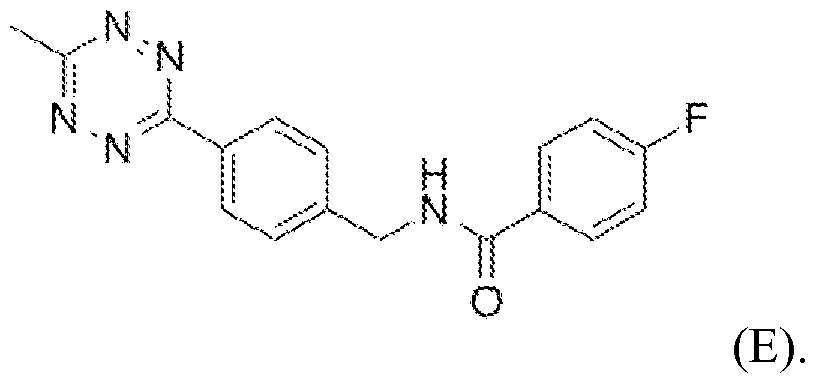
B 1. A modified protein of Formula (I)
( Protein )— L1-R1 ^ wherein
L1 is a linker comprising at least four amino acids formed by enzymatic conjugation between two enzyme recognition sequences; and
R1 is a reactive group capable of undergoing a click chemistry reaction.
B2. The modified protein of claim B 1 , wherein the modified protein is formed by
I Protein J Ί
enzymatic conjugation of^ ' ; and a compound of Formula (a): B— R (a), wherein each of A and B is independently an enzyme recognition sequence.
B3. The modified protein of claim Bl, wherein the modified protein is formed by sortase- mediated transpeptidation of ^ ' ; and the compound of Formula (a): B— R (a), wherein A comprises a C-terminal sortase recognition sequence, and B comprises a N- terminal sortase recognition sequence; or A comprises a N-terminal sortase recognition sequence, and B comprises a C-terminal sortase recognition sequence.
B4. The modified protein of claim B3, wherein A comprises LPXTX or NPXTX, and B comprises an oligoglycine or an oligoalanine sequence; wherein each instance of X is independently an amino acid.
B5. The modified protein of claim B4, wherein A is LPETG (SEQ ID NO:2), LPETA (SEQ ID NO:3), NPQTN (SEQ ID NO:4), or NPKTG (SEQ ID NO:5), and B is GGG or AAA.
B6. The modified protein of claim B3, wherein A comprises an oligoglycine or an oligoalanine sequence, and B comprises LPXTX or NPXTX, wherein each instance of X is independently an amino acid.
B7. The modified protein of claim B6, wherein B is LPETG (SEQ ID NO:2), LPETA (SEQ ID NO:3), NPQTN (SEQ ID NO:4), or NPKTG (SEQ ID NO:5), and A is GGG or AAA.
B8. The modified protein of any one of claims B1-B5, wherein the linker L1 is
LPXTGGGK-, -LPXTGGG-, -NPXTGGGK-, NPXTGGG-, -LPXTAAA-, -NPXTAAA-,- LPXTGGGGG-, or -LPGAG-, wherein each instance of X is an independently amino acid.
B9. The modified protein of claim B3, wherein the sortase is sortase A (SrtA).
BIO. The modified protein of claim B3, wherein the sortase is sortase B (SrtB).
B 11. The modified protein of claim B 1 , wherein R is a group capable of undergoing a Diels-Alder cycloaddition.
B12. The modified protein of claim Bl 1, wherein R1 comprises a conjugated diene.
B13. The modified protein of claim B12, wherein R1 comprises a tetrazine or a
quadricyclane.
B14. The modified protein of claim B13, wherein R1 comprises a tetrazine.
B15. The modified protein of claim B14, wherein R1 comprises a substituted tetrazine.
B16. The modified protein of claim B14, wherein R1 is of Formula (i):

wherein
Rl is hydrogen, optionally substituted aliphatic, optionally substituted heteroaliphatic, optionally substituted aryl, optionally substituted heteroaryl, or optionally substituted heterocyclyl; and
Rs is a bond, optionally substituted aliphatic, optionally substituted heteroaliphatic, optionally substituted arylene, optionally substituted heteroarylene, or optionally substituted heterocyclylene.
B17. The modified protein of claim Bl 1, wherein R1 comprises a dienophile.
B18. The modified protein of claim B17, wherein R1 comprises a cyclooctene.
B19. The modified protein of claim B18, wherein R1 comprises a trans-cyclooctene.
B20. The modified protein of claim B18, wherein R1 comprises a substituted trans- cyclooctene.
B21. A radioactive protein of Formula (II)
( Protein )— L1—L2-18F ^ wherein
L1 is a linker comprising at least four amino acids formed by enzymatic conjugation between two enzyme recognition sequences; and
L is optionally substituted aliphatic, optionally substituted heteroaliphatic, optionally substituted arylene, optionally substituted heteroarylene, or optionally substituted
heterocyclylene.
B22. The radioactive protein of claim B21, wherein the linker L is formed by a click chemistry reaction.
B23. The radioactive protein of claim B22, wherein the linker L is formed by a [3+2] cycloaddition.
B24. The radioactive protein of claim B22, wherein the linker L is formed by a Diels- Alder cycloaddition.
B25. The radioactive protein of claim B24, wherein the radioactive protein is formed by a click chemistry reaction of the modified protein of claim Bl and a compound of Formula (b):
18 F-R 2 (b), wherein R 2 is a reactive group capable of undergoing the click chemistry reaction.
B26. The radioactive protein of claim B25, wherein R is a reactive group capable of undergoing a Diels-Alder cycloaddition.
B27. The radioactive protein of claim B26, wherein R comprises a conjugated diene.
B28. The radioactive protein of claim B27, wherein R comprises a quadricyclane or a tetrazine.
2
B29. The radioactive protein of claim B28, wherein R comprises a tetrazine.
2
B30. The radioactive protein of claim B28, wherein R comprises a substituted tetrazine.
2
B31. The radioactive protein of claim B30, wherein R is of Formula (i):

wherein
Rl is hydrogen, optionally substituted aliphatic, optionally substituted heteroaliphatic, optionally substituted aryl, optionally substituted heteroaryl, or optionally substituted heterocyclyl; and
Rs is a bond, optionally substituted aliphatic, optionally substituted heteroaliphatic, optionally substituted arylene, optionally substituted heteroarylene, or optionally substituted heterocyclylene.
B32. The radioactive protein of claim B26, wherein R comprises a dienophile. B33. The radioactive protein of claim B32, wherein R comprises a cyclooctene. B34. The radioactive protein of claim B33, wherein R comprises a trans-cyclooctene. B35. The radioactive protein of any one of claims B31-B34, wherein Rs is a bond. B36. The radioactive protein of claim B21, wherein the linker L is of Formula (ii):

wherein
Rl is hydrogen, optionally substituted aliphatic, optionally substituted heteroaliphatic, optionally substituted aryl, optionally substituted heteroaryl, or optionally substituted heterocyclyl;
Rs is a bond, optionally substituted aliphatic, optionally substituted heteroaliphatic, optionally substituted arylene, optionally substituted heteroarylene, or optionally substituted heterocyclylene;
each instance of Rcl is hydrogen, optionally substituted aliphatic, optionally substituted heteroaliphatic, optionally substituted aryl, optionally substituted heteroaryl, or optionally substituted heterocyclyl; or optionally two Rcl taken with the intervening atoms to form an optionally substituted carbocyclyl or optionally substituted heterocyclyl ring;
Rc2 is a bond, optionally substituted aliphatic, optionally substituted heteroaliphatic, optionally substituted arylene, optionally substituted heteroarylene, or optionally substituted heterocyclylene;
m is 0, 1, 2, 3, 4, 5, 6, 7, or 8, as valency permits;
a indicates point of attachment to L1; and
b indicates point of attachment to 18 F.
2
B37. The radioactive prot in f claim B36, wherein the linker L is of Formula (ii-a):

wherein n is an integer between 1 and 8, inclusive.
2
B38. The radioactive protein f claim B37, wherein the linker L is of Formula (ii-b):

wherein n is an integer between 1 and 8, inclusive.
B39. The radioactive protein of any one of claims B16-B38, wherein Rl is optionally substituted aliphatic.
B40. The radioactive protein of claim B39, wherein Rl is optionally substituted Ci_6 alkyl.
B41. The radioactive protein of claim B40, wherein Rl is unsubstituted Ci_6 alkyl.
B42. The radioactive protein of claim B41 , wherein Rl is methyl.
B43. The radioactive protein of any one of claims B16-B38, wherein Rl is optionally substituted pyridine.
B44. The radioactive protein of any one of claims B16-B38, wherein Rl is optionally substituted phenyl.
B45. The modified protein of claim B36, wherein the linker L is of Formula (iii):

wherein
Rl is hydrogen, optionally substituted aliphatic, optionally substituted heteroaliphatic, optionally substituted aryl, optionally substituted heteroaryl, or optionally substituted heterocyclyl;
Rs is a bond, optionally substituted aliphatic, optionally substituted heteroaliphatic, optionally substituted arylene, optionally substituted heteroarylene, or optionally substituted heterocyclylene;
each instance of Rcl is hydrogen, optionally substituted aliphatic, optionally substituted heteroaliphatic, optionally substituted aryl, optionally substituted heteroaryl, or optionally substituted heterocyclyl;
Rc2 is a bond, optionally substituted aliphatic, optionally substituted heteroaliphatic, optionally substituted arylene, optionally substituted heteroarylene, or optionally substituted heterocyclylene;
m is 0, 1, 2, 3, 4, 5, 6, 7, or 8, as valency permits;
a indicates point of attachment to L1; and
b indicates point of attachment to 18 F.
2
B46. The radioactive protein of claim B45 wherein the linker L is of Formula (iii-a):

(iii-a).
2 18
B47. The radioactive protein of claim B46 wherein -L -F is of Formula (iii-b):
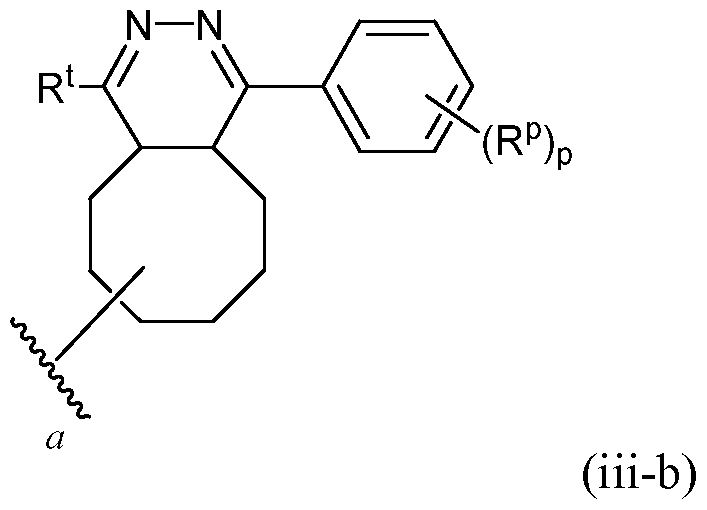
wherein
each instance of Rp is independently hydrogen, optionally substituted aliphatic, optionally substituted heteroaliphatic, optionally substituted aryl, optionally substituted heteroaryl, optionally substituted heterocyclyl, hydroxyl, or optionally substituted amino; provided at least one Rp is not hydrogen and comprises F18; and
p is 1, 2, 3, 4, or 5.
2 18
B48. The radioactive protein of claim B47, wherein -L -F is of Formula (iii-bl):

wherein
L is a bond, optionally substituted aliphatic, optionally substituted heteroaliphatic, optionally substituted arylene, optionally substituted heteroarylene, or optionally substituted heterocyclylene;
RN1 is independently hydrogen, optionally substituted aliphatic, optionally substituted heteroaliphatic, optionally substituted aryl, or optionally substituted heteroaryl, or a nitrogen protecting group; and
each of Rsl, Rs2, Rs3, and Rs4 is independently hydrogen, optionally substituted aliphatic, optionally substituted heteroaliphatic, optionally substituted aryl, or optionally substituted heteroaryl, or an oxygen protecting group.
2 18
B49. The radioactive rotein of claim B48, wherein -L -F is of the formula

B50. The radioactive protein of claim B47, wherein -L 2 -F 18 is of Formula (iii-b2):
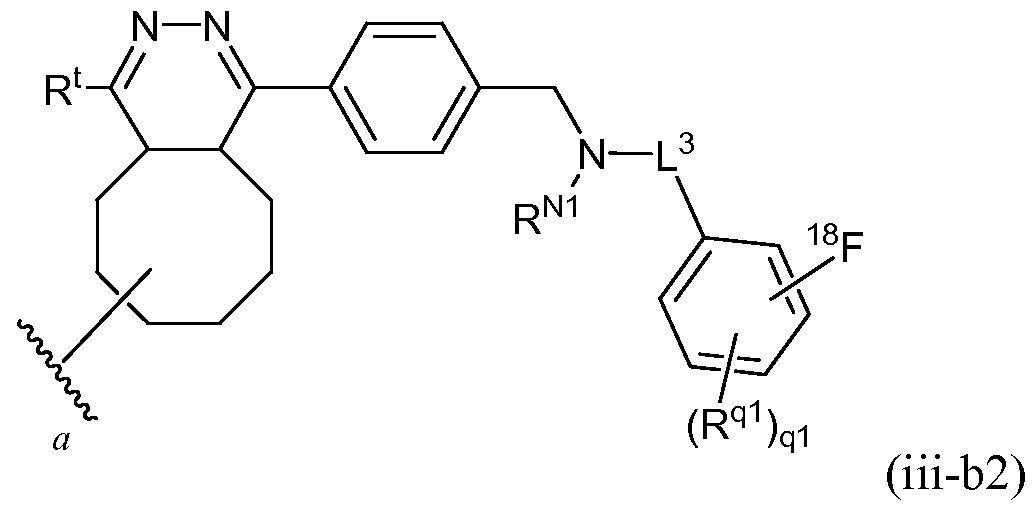
wherein
L is a bond, optionally substituted aliphatic, optionally substituted heteroaliphatic, optionally substituted arylene, optionally substituted heteroarylene, or optionally substituted heterocyclylene;
RN1 is independently hydrogen, optionally substituted aliphatic, optionally substituted heteroaliphatic, optionally substituted aryl, optionally substituted heteroaryl, optionally substituted heterocyclyl, or a nitrogen protecting group;
each instance of Rql is independently hydrogen, optionally substituted aliphatic, optionally substituted heteroaliphatic, optionally substituted aryl, optionally substituted heteroaryl, optionally substituted heterocyclyl, hydroxyl, or optionally substituted amino; and ql is 0, 1, 2, 3, or 4.
2 18
B51. The radioactive rotein of claim B50, wherein -L -F is of the formula:

B52. The radioactive rotein of claim B47, wherein -L 2 -F 18 is of Formula (iii-b3):

wherein
RN1 is independently hydrogen, optionally substituted aliphatic, optionally substituted heteroaliphatic, optionally substituted aryl, or optionally substituted heteroaryl, or a nitrogen protecting group; and
each instance of Rq2 is independently hydrogen, optionally substituted aliphatic, optionally substituted heteroaliphatic, optionally substituted aryl, optionally substituted heteroaryl, optionally substituted heterocyclyl, hydroxyl, or optionally substituted amino; and q2 is 0, 1, 2, 3, or 4.
B53. The radioactive protein of claim B52 wherein -L 2 -F 18 is of the formula:

B54. The radioactive protein of claim B21, wherein -L 2 -F 18 is of Formula (iii-c):
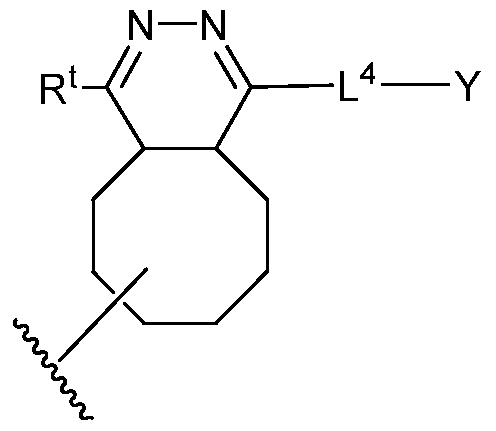
a
(iii-c)
wherein
Y is a ligand capable of chelating to a pharmaceutically acceptable metal complex comprising F18; and
L4 is a bond, optionally substituted aliphatic, optionally substituted heteroaliphatic, optionally substituted arylene, optionally substituted heteroarylene, or optionally substituted heterocyclylene.
2 18
B55. The radioactive protein of claim B54, wherein -L -F is of Formula (iii-cl):

(iii-cl)
wherein
M is a pharmaceutically acceptable metal;
each of La, Lb, and Lc is independently optionally substituted aliphatic, optionally substituted heteroaliphatic, optionally substituted arylene, optionally substituted heteroarylene, or optionally substituted heterocyclylene; and
— indicates a coordination bond or absent, as valency permits.
B56. The radioactive rotein of claim B55, wherein -L 2 -F 18 is of Formula (iii-c2):

(iii-c2).
B57. The radioactive protein of claim B54 or B55 , wherein L is a bond.
B58. The radioactive protein of any one of claims B54-B57, wherein M is Al.
B59. The radioactive protein of claim 21, wherein the radioactive protein is one of the following formulae:

A radioactive protein of Formula (III)
C Protein )— L1-R3
(III)
wherein
L1 is a linker comprising at least four amino acids formed by enzymatic conjugation between two enzyme recognition sequences; and
R comprises a ligand capable of chelating to a pharmaceutically acceptable radioactive metal complex.
B61. The radioactive protein of claim B60, wherein R comprises 1,4,7-triazacyclononane- triacetic acid (NOT A), 1,4,7,10-tetraazacyclododecane-tetraacetic acid (DOTA), or triazacyclononane-phosphinate (TRAP) .
B62. The radioactive protein of any one of claims B60 or B61, wherein the metal is 64Cu2+.
B63. The radioactive protein of any one of claims B60 or B61, wherein the metal is 68Ga3+.
B64. The radioactive protein of claim 60, wherein the radioactive protein is one of the following formulae:
f Protein }— LPXTGGG— 64Cu— NOTA
' , or
( Protein )— LPXTGGG— 68Ga— NOTA
B65. A radioactive protein of Formula (IV)
( Protein )— L1-R4 ^ wherein
L1 is a linker comprising at least four amino acids formed by enzymatic conjugation between two enzyme recognition sequences;
R4 comprises a radioactive optionally substituted carbohydrate; and
R4 is linked to the C-terminus of the adjacent amino acid in L1.
B66. The radioactive protein of claim B65, wherein R4 is a radioactive optionally substituted glucose.
B67. The radioactive protein of claim B66, wherein R4 of Formula (iv):

wherein
v is 1, 2, 3, 4, or 5; and
each of Rs5, Rs6, Rs7, and Rs8 is independently hydrogen, optionally substituted aliphatic, optionally substituted heteroaliphatic, optionally substituted aryl, or optionally substituted heteroaryl, or an oxygen protecting group.
B68. The radioactive protein of claim B67, wherein R4 of the formula:

B69. The radioactive protein of claim B66, wherein the linker L is formed by sortase- mediated transpeptidation.
B70. The radioactive protein of claim B69, wherein the linker L1 is LPXTGGGK-, - LPXTGGG-, -NPXTGGGK-, -NPXTGGG-, -LPXTAAA-, -NPXTAAA-, -LPXTGGGGG-, or -LPGAG-, wherein each instance of X is independently an amino acid.
B71. The radioactive protein of claim B70, wherein X is E, Q, or K.
B72. The radioactive protein of claim 66, wherein the modified protein is of the following formula:

wherein Rs , Rs , Rs , and Rs are as defined herein; and L is optionally substituted aliphatic or optionally substituted heteroaliphatic.
B73. The radioactive protein of claim 66, wherein the modified protein is one of the following formulae:

B74. The modified protein or radioactive protein of any one of preceding claims, wherein
(■ Pr°temJis an antibody, a nuclear factor, a neuropeptide, a receptor protein, an enzyme, a structural protein, or a fragment thereof.
I Protein )
B75. The modified protein or radioactive protein of claim B74, wherein ^ ' is an antibody or a fragment thereof.
I Protein J
B76. The modified protein or radioactive protein of claim B75, wherein ^ ' is VHH or a fragment thereof.
B77. A pharmaceutical composition comprising the radioactive protein of any one of claims B21-B76 and a pharmaceutically acceptable carrier.
B78. A method of obtaining a radiologic image of a specific tissue or organ of a subject, comprising:
(i) administering the radioactive protein of any one of claims B21-B76, or the pharmaceutical composition of claim B77, to the subject;
(ii) obtaining the radiologic image of the tissue or organ by capturing the radiation emitted.
Priority Applications (2)
| Application Number | Priority Date | Filing Date | Title |
|---|---|---|---|
| US15/035,924 US10556024B2 (en) | 2013-11-13 | 2014-11-13 | 18F labeling of proteins using sortases |
| US16/737,620 US11850216B2 (en) | 2013-11-13 | 2020-01-08 | 18F labeling of proteins using sortases |
Applications Claiming Priority (2)
| Application Number | Priority Date | Filing Date | Title |
|---|---|---|---|
| US201361903834P | 2013-11-13 | 2013-11-13 | |
| US61/903,834 | 2013-11-13 |
Related Child Applications (2)
| Application Number | Title | Priority Date | Filing Date |
|---|---|---|---|
| US15/035,924 A-371-Of-International US10556024B2 (en) | 2013-11-13 | 2014-11-13 | 18F labeling of proteins using sortases |
| US16/737,620 Division US11850216B2 (en) | 2013-11-13 | 2020-01-08 | 18F labeling of proteins using sortases |
Publications (3)
| Publication Number | Publication Date |
|---|---|
| WO2015073746A2 WO2015073746A2 (en) | 2015-05-21 |
| WO2015073746A9 true WO2015073746A9 (en) | 2015-07-23 |
| WO2015073746A3 WO2015073746A3 (en) | 2015-10-29 |
Family
ID=53058260
Family Applications (1)
| Application Number | Title | Priority Date | Filing Date |
|---|---|---|---|
| PCT/US2014/065574 Ceased WO2015073746A2 (en) | 2013-11-13 | 2014-11-13 | 18f labeling of proteins using sortases |
Country Status (2)
| Country | Link |
|---|---|
| US (2) | US10556024B2 (en) |
| WO (1) | WO2015073746A2 (en) |
Families Citing this family (40)
| Publication number | Priority date | Publication date | Assignee | Title |
|---|---|---|---|---|
| EP2726494B1 (en) | 2011-06-28 | 2017-01-04 | Whitehead Institute For Biomedical Research | Using sortases to install click chemistry handles for protein ligation |
| US10260038B2 (en) | 2013-05-10 | 2019-04-16 | Whitehead Institute For Biomedical Research | Protein modification of living cells using sortase |
| EP3693398A1 (en) | 2013-05-10 | 2020-08-12 | Whitehead Institute for Biomedical Research | In vitro production of red blood cells with sortaggable proteins |
| US10556024B2 (en) | 2013-11-13 | 2020-02-11 | Whitehead Institute For Biomedical Research | 18F labeling of proteins using sortases |
| US10047061B2 (en) | 2014-06-11 | 2018-08-14 | Arizona Board Of Regents On Behalf Of The University Of Arizona | Water-soluble triazabutadienes |
| US10125105B2 (en) | 2014-06-11 | 2018-11-13 | Arizona Board Of Regents On Behalf Of The University Of Arizona | Triazabutadienes as cleavable cross-linkers |
| WO2016016329A1 (en) * | 2014-07-29 | 2016-02-04 | Vrije Universiteit Brussel | Radio-labelled antibody fragments for use in the prognosis, diagnosis of cancer as well as for the prediction of cancer therapy response |
| US10053683B2 (en) | 2014-10-03 | 2018-08-21 | Whitehead Institute For Biomedical Research | Intercellular labeling of ligand-receptor interactions |
| WO2016086036A2 (en) | 2014-11-25 | 2016-06-02 | Bristol-Myers Squibb Company | Methods and compositions for 18f-radiolabeling of biologics |
| JP6622814B2 (en) | 2014-11-25 | 2019-12-18 | ブリストル−マイヤーズ スクイブ カンパニーBristol−Myers Squibb Company | Novel PD-L1 binding polypeptides for imaging |
| WO2016162368A1 (en) * | 2015-04-07 | 2016-10-13 | INSERM (Institut National de la Santé et de la Recherche Médicale) | Non-invasive imaging of tumor pd-l1 expression |
| KR20250174696A (en) | 2015-07-17 | 2025-12-12 | 브리제 유니버시타이트 브루셀 | Radiolabeled antibody fragment for use in cancer therapy |
| US10954195B2 (en) | 2015-08-11 | 2021-03-23 | Arizona Board Of Regents On Behalf Of The University Of Arizona | Substituted triazenes protected from degradation by carboxylation of N1 |
| US12048753B2 (en) | 2015-10-01 | 2024-07-30 | Whitehead Institute For Biomedical Research | Labeling of antibodies |
| US20210196842A1 (en) * | 2015-11-30 | 2021-07-01 | The Regents Of The University Of California | Site-specific radiofluorination of peptides with 8-[18f]-fluorooctanoic acid catalyzed by lipoic acid ligase |
| WO2017123666A2 (en) * | 2016-01-11 | 2017-07-20 | H. Lee Moffitt Cancer Center And Research Institute, Inc. | In vivo positron emission tomography-based perfusion/blood pool imaging using labeled erythrocytes |
| WO2017210335A1 (en) | 2016-06-01 | 2017-12-07 | Bristol-Myers Squibb Company | Imaging methods using 18f-radiolabeled biologics |
| CN109562195A (en) | 2016-06-01 | 2019-04-02 | 百时美施贵宝公司 | PET imaging is carried out with PD-L1 combination polypeptide |
| US11339129B2 (en) | 2016-07-29 | 2022-05-24 | Arizona Board of Regents on behalf of the University of Arizon | Triazabutadienes as cleavable cross-linkers |
| CN106478820A (en) * | 2016-10-10 | 2017-03-08 | 米度(南京)生物技术有限公司 | A kind of liver cancer PET diagnosis tracer and preparation method thereof and purposes |
| US10738338B2 (en) | 2016-10-18 | 2020-08-11 | The Research Foundation for the State University | Method and composition for biocatalytic protein-oligonucleotide conjugation and protein-oligonucleotide conjugate |
| RS67792B1 (en) | 2016-12-01 | 2026-03-31 | Regeneron Pharma | Radiolabeled anti-pd-l1 antibodies for immuno-pet imaging |
| BR112019021520A2 (en) | 2017-04-14 | 2020-08-04 | Tollnine, Inc. | oligonucleotide, compound, immunomodulatory polynucleotide, composition, conjugate, method to modulate a receptor, method of treating a tumor, method of treating cancer, method of treating a tumor, method of preventing cancer, method of inducing an immune response |
| JP2021506842A (en) | 2017-12-18 | 2021-02-22 | ヤンセン バイオテツク,インコーポレーテツド | Radioactive labeling of polypeptides |
| ES3075769T3 (en) | 2019-05-10 | 2026-08-07 | Janssen Biotech Inc | Macrocyclic chelators and methods of use thereof |
| TW202136221A (en) * | 2019-12-10 | 2021-10-01 | 美商美國禮來大藥廠 | Pre-targeting imaging agents |
| WO2021113921A1 (en) * | 2019-12-12 | 2021-06-17 | The University Of Melbourne | Compounds and methods for the diagnosis, imaging and treatment of neurodegenerative diseases and disorders |
| IL295759A (en) * | 2020-02-28 | 2022-10-01 | Tallac Therapeutics Inc | Transglutaminase-mediated conjugation |
| MX2022014530A (en) | 2020-05-20 | 2023-02-27 | Janssen Biotech Inc | Methods for site specific conjugation of proteins containing glycosylated fc domains. |
| US12227593B2 (en) | 2020-05-20 | 2025-02-18 | Janssen Biotech, Inc. | Site-specific conjugation of glycosylated monoclonal antibodies with transglutaminase |
| TW202233244A (en) | 2020-11-10 | 2022-09-01 | 美商健生生物科技公司 | Macrocyclic compounds and methods of use thereof |
| US20240051976A1 (en) * | 2020-12-28 | 2024-02-15 | Turun Yliopisto | A Tracer Compound and a Preparation Method Thereof |
| EP4305057A4 (en) * | 2021-03-08 | 2025-07-02 | Univ Duke | HIV-1 envelope glycopeptide DNANOparticles and their uses |
| CN113521320A (en) * | 2021-06-07 | 2021-10-22 | 复旦大学附属中山医院 | PET (polyethylene terephthalate) imaging agent targeting TREM2 receptor and preparation method and application thereof |
| WO2023026235A1 (en) | 2021-08-27 | 2023-03-02 | Janssen Biotech, Inc. | Anti-psma antibodies and uses thereof |
| EP4429718A1 (en) | 2021-11-09 | 2024-09-18 | Janssen Biotech, Inc. | Macrocyclic compounds and diagnostic uses thereof |
| WO2023084396A1 (en) | 2021-11-09 | 2023-05-19 | Janssen Biotech, Inc. | Macrocyclic compounds and methods of making the same |
| CN114315975A (en) * | 2022-01-05 | 2022-04-12 | 中南大学湘雅医院 | PET molecular probe with TIM-3 as target spot and application thereof |
| WO2024173266A1 (en) | 2023-02-15 | 2024-08-22 | Eli Lilly And Company | Glycosylated polypeptides |
| WO2024238987A2 (en) * | 2023-05-18 | 2024-11-21 | The Regents Of The University Of California | Labeled oligosaccharides and methods of use |
Family Cites Families (41)
| Publication number | Priority date | Publication date | Assignee | Title |
|---|---|---|---|---|
| US5670132A (en) | 1994-09-20 | 1997-09-23 | Immunomedics, Inc. | Modified radioantibody fragments for reduced renal uptake |
| US5728369A (en) * | 1994-10-05 | 1998-03-17 | Immunomedics, Inc. | Radioactive phosphorus labeling of proteins for targeted radiotherapy |
| CA2365523A1 (en) | 1999-04-15 | 2000-10-26 | The Regents Of The University Of California | Identification of sortase gene |
| WO2002004030A2 (en) | 2000-07-06 | 2002-01-17 | Bristol-Myers Squibb Pharma Company | Stable radiopharmaceutical compositions |
| ES2367430T3 (en) | 2002-12-23 | 2011-11-03 | Wyeth Llc | ANTIBODIES AGAINST PD-1 AND ITS USES. |
| US6960473B2 (en) | 2003-02-27 | 2005-11-01 | Istituto Superiore Di Sanita | In vitro mass production of human erythroid cells from the blood of normal donors and thalassemic patients |
| WO2005051976A2 (en) | 2003-11-20 | 2005-06-09 | Ansata Therapeutics, Inc. | Protein and peptide ligation processes and one-step purification processes |
| US20090098611A1 (en) | 2004-02-27 | 2009-04-16 | Wood David W | Self-cleaving affinity tags and methods of use |
| CA2566561C (en) | 2004-06-04 | 2013-01-08 | Universite Pierre Et Marie Curie - Paris Vi | A method for producing red blood cells |
| US8398956B2 (en) | 2007-01-11 | 2013-03-19 | Immunomedics, Inc. | In vivo copper-free click chemistry for delivery of therapeutic and/or diagnostic agents |
| PT2170959E (en) | 2007-06-18 | 2014-01-07 | Merck Sharp & Dohme | ANTIBODIES FOR THE PD-1 PROGRAMMED DEATH HUMAN RECEPTOR |
| EP2185188B1 (en) | 2007-08-22 | 2014-08-06 | Medarex, L.L.C. | Site-specific attachment of drugs or other agents to engineered antibodies with c-terminal extensions |
| US20110070154A1 (en) | 2008-08-13 | 2011-03-24 | Hyde Roderick A | Artificial cells |
| WO2010098788A2 (en) | 2008-08-25 | 2010-09-02 | Amplimmune, Inc. | Pd-i antagonists and methods for treating infectious disease |
| EA201500417A1 (en) | 2008-08-25 | 2015-11-30 | Эмплиммьюн, Инк. | ANTAGONIST COMPOSITIONS PD-1 AND APPLICATIONS |
| WO2010033913A1 (en) | 2008-09-22 | 2010-03-25 | Icb International, Inc. | Antibodies, analogs and uses thereof |
| JP2010115136A (en) | 2008-11-12 | 2010-05-27 | Teruyuki Nagamune | Method for creating membrane protein with labelled n-terminal end, and cell having membrane protein with labelled n-terminal end in its outer layer |
| WO2010078376A2 (en) | 2008-12-30 | 2010-07-08 | Ventana Medical Systems, Inc. | Fc-specific polymer-conjugated antibodies and their diagnostic use |
| US8940501B2 (en) | 2009-01-30 | 2015-01-27 | Whitehead Institute For Biomedical Research | Methods for ligation and uses thereof |
| WO2010089411A2 (en) | 2009-02-09 | 2010-08-12 | Universite De La Mediterranee | Pd-1 antibodies and pd-l1 antibodies and uses thereof |
| AR080154A1 (en) | 2010-02-10 | 2012-03-14 | Immunogen Inc | CD20 ANTIBODIES AND ITS USE |
| PL2539441T3 (en) | 2010-02-22 | 2017-06-30 | Université Pierre Et Marie Curie (Paris 6) | Cell culture medium for the growth and differentiation of cells of the hematopoietic lineage |
| CN102892786B (en) | 2010-03-11 | 2016-03-16 | Ucb医药有限公司 | Pd-1 antibody |
| US20130122043A1 (en) | 2010-04-20 | 2013-05-16 | Whitehead Institute For Biomedical Research | Modified polypeptides and proteins and uses thereof |
| CN103221398B (en) | 2010-07-23 | 2016-03-23 | 特拉华大学 | For the tetrazine-trans cyclooctene ligation of rapid build radioisotope labeling probe |
| WO2012142659A1 (en) | 2011-04-19 | 2012-10-26 | Baker Idi Heart And Diabetes Institute Holdings Limited | Site-selective modification of proteins |
| EP2726494B1 (en) | 2011-06-28 | 2017-01-04 | Whitehead Institute For Biomedical Research | Using sortases to install click chemistry handles for protein ligation |
| CN102559600A (en) | 2011-12-29 | 2012-07-11 | 上海交通大学医学院 | Artificial antigen presenting cell and application thereof in NK (natural killer) cell amplification |
| WO2013132317A1 (en) | 2012-03-07 | 2013-09-12 | Aurigene Discovery Technologies Limited | Peptidomimetic compounds as immunomodulators |
| CA2870485A1 (en) | 2012-04-13 | 2013-10-17 | Whitehead Institute For Biomedical Research | Sortase-modified vhh domains and uses thereof |
| US20140030697A1 (en) | 2012-06-14 | 2014-01-30 | Massachusetts Institute Of Technology | Sortase-mediated modification of viral surface proteins |
| US9267127B2 (en) | 2012-06-21 | 2016-02-23 | President And Fellows Of Harvard College | Evolution of bond-forming enzymes |
| US9511350B2 (en) | 2013-05-10 | 2016-12-06 | Clean Diesel Technologies, Inc. (Cdti) | ZPGM Diesel Oxidation Catalysts and methods of making and using same |
| US10260038B2 (en) | 2013-05-10 | 2019-04-16 | Whitehead Institute For Biomedical Research | Protein modification of living cells using sortase |
| EP3693398A1 (en) | 2013-05-10 | 2020-08-12 | Whitehead Institute for Biomedical Research | In vitro production of red blood cells with sortaggable proteins |
| WO2015051188A1 (en) | 2013-10-02 | 2015-04-09 | Washington University | Heterocyclic molecules for biomedical imaging and therapeutic applications |
| US9878045B2 (en) * | 2013-10-15 | 2018-01-30 | Regents Of The University Of Minnesota | Triorthogonal reagents for dual protein conjugation |
| US10556024B2 (en) | 2013-11-13 | 2020-02-11 | Whitehead Institute For Biomedical Research | 18F labeling of proteins using sortases |
| US10053683B2 (en) | 2014-10-03 | 2018-08-21 | Whitehead Institute For Biomedical Research | Intercellular labeling of ligand-receptor interactions |
| US12048753B2 (en) | 2015-10-01 | 2024-07-30 | Whitehead Institute For Biomedical Research | Labeling of antibodies |
| WO2020243006A1 (en) | 2019-05-24 | 2020-12-03 | Rubius Therapeutics, Inc. | Methods of generating enucleated erythroid cells |
-
2014
- 2014-11-13 US US15/035,924 patent/US10556024B2/en active Active
- 2014-11-13 WO PCT/US2014/065574 patent/WO2015073746A2/en not_active Ceased
-
2020
- 2020-01-08 US US16/737,620 patent/US11850216B2/en active Active
Also Published As
| Publication number | Publication date |
|---|---|
| US20160287734A1 (en) | 2016-10-06 |
| US11850216B2 (en) | 2023-12-26 |
| WO2015073746A3 (en) | 2015-10-29 |
| US10556024B2 (en) | 2020-02-11 |
| WO2015073746A2 (en) | 2015-05-21 |
| US20200384137A1 (en) | 2020-12-10 |
Similar Documents
| Publication | Publication Date | Title |
|---|---|---|
| US11850216B2 (en) | 18F labeling of proteins using sortases | |
| US20240325575A1 (en) | Labeling of antibodies | |
| Richardson-Sanchez et al. | Exploiting the biosynthetic machinery of Streptomyces pilosus to engineer a water-soluble zirconium (IV) chelator | |
| Adams et al. | Multifunctional desferrichrome analogues as versatile 89Zr (IV) chelators for immunoPET probe development | |
| Tieu et al. | Octadentate zirconium (IV)-loaded macrocycles with varied stoichiometry assembled from hydroxamic acid monomers using metal-templated synthesis | |
| WO2015058047A2 (en) | Fluorination of organic compounds | |
| Li et al. | Translating the concept of peptidelabeling with 5-deoxy-5-[18F] fluororibose into preclinical practice: 18F-labeling of Siglec-9 peptide for PET imaging of inflammation | |
| US20190202800A1 (en) | Small molecule modulators of the androgen receptor | |
| Patra et al. | Simultaneous photoradiochemical labeling of antibodies for immuno-positron emission tomography | |
| TW202128732A (en) | Radioactive metal-labeled antibodies, production method thereof, chelating linkers, and peptide-modified antibodies | |
| Verhoeven et al. | New fluoroethyl phenylalanine analogues as potential LAT1-targeting PET tracers for glioblastoma | |
| Teodoro et al. | Development of [18F] LU14 for PET imaging of cannabinoid receptor type 2 in the brain | |
| Lindbo et al. | Optimized molecular design of ADAPT-based HER2-imaging probes labeled with 111In and 68Ga | |
| Dierick et al. | Generic semi-automated radiofluorination strategy for single domain antibodies:[18F] FB-labelled single domain antibodies for PET imaging of fibroblast activation protein-α or folate receptor-α overexpression in cancer | |
| Tiwari et al. | Radiosynthesis and evaluation of acetamidobenzoxazolone based radioligand [11C] N′-MPB for visualization of 18 kDa TSPO in brain | |
| Lamba et al. | Synthetic 18F labeled biomolecules that are selective and promising for PET imaging: Major advances and applications | |
| UA125749C2 (en) | Radio-pharmaceutical complexes | |
| Skovsgaard et al. | Affinity-guided conjugation to antibodies for use in positron emission tomography | |
| Rochefort et al. | Metabolic exploitation of the sialic acid biosynthetic pathway to generate site-specifically labeled antibodies | |
| Huang et al. | Synthesis and preclinical evaluation of an Al18F radio-fluorinated bivalent PD-L1 nanobody | |
| Högnäsbacka et al. | Synthesis and preclinical evaluation of [11C] EAI045 as a PET tracer for imaging tumors expressing mutated epidermal growth factor receptor | |
| US20060083678A1 (en) | Radio-labeled compounds, compositions, and methods of making the same | |
| US20210260033A1 (en) | Combined therapy with icos binding proteins and argininemethyltransferase inhibitors | |
| EP4543990A1 (en) | Indocyanine green (icg) modification for treatment of liver cancer | |
| Wang | Synthesis of Labelled Small Molecules, Peptides and Proteins for Imaging |
Legal Events
| Date | Code | Title | Description |
|---|---|---|---|
| 121 | Ep: the epo has been informed by wipo that ep was designated in this application |
Ref document number: 14861992 Country of ref document: EP Kind code of ref document: A2 |
|
| WWE | Wipo information: entry into national phase |
Ref document number: 15035924 Country of ref document: US |
|
| NENP | Non-entry into the national phase |
Ref country code: DE |
|
| 122 | Ep: pct application non-entry in european phase |
Ref document number: 14861992 Country of ref document: EP Kind code of ref document: A2 |