WO2015033431A1 - アノテーション装置及びアノテーションシステム - Google Patents
アノテーション装置及びアノテーションシステム Download PDFInfo
- Publication number
- WO2015033431A1 WO2015033431A1 PCT/JP2013/074039 JP2013074039W WO2015033431A1 WO 2015033431 A1 WO2015033431 A1 WO 2015033431A1 JP 2013074039 W JP2013074039 W JP 2013074039W WO 2015033431 A1 WO2015033431 A1 WO 2015033431A1
- Authority
- WO
- WIPO (PCT)
- Prior art keywords
- annotation
- face image
- attribute
- user interface
- synthesized
- Prior art date
- Legal status (The legal status is an assumption and is not a legal conclusion. Google has not performed a legal analysis and makes no representation as to the accuracy of the status listed.)
- Ceased
Links
Images




Classifications
-
- G—PHYSICS
- G06—COMPUTING OR CALCULATING; COUNTING
- G06F—ELECTRIC DIGITAL DATA PROCESSING
- G06F21/00—Security arrangements for protecting computers, components thereof, programs or data against unauthorised activity
- G06F21/60—Protecting data
- G06F21/62—Protecting access to data via a platform, e.g. using keys or access control rules
- G06F21/6218—Protecting access to data via a platform, e.g. using keys or access control rules to a system of files or objects, e.g. local or distributed file system or database
- G06F21/6245—Protecting personal data, e.g. for financial or medical purposes
-
- G—PHYSICS
- G06—COMPUTING OR CALCULATING; COUNTING
- G06T—IMAGE DATA PROCESSING OR GENERATION, IN GENERAL
- G06T11/00—Two-dimensional [2D] image generation
Definitions
- the present invention relates to an annotation apparatus and an annotation system.
- a model is created by assigning (annotating) attributes such as age to a large number of face images.
- attributes such as age
- Patent Document 1 presents an annotator (attribute assigner) in a state where an individual can be identified without processing the face image, and there is a problem in protecting the privacy of the individual.
- an object of the present invention is to provide an annotation apparatus and an annotation system that can add attributes to a face image while protecting personal privacy.
- the annotation apparatus of the present invention includes: It can be connected to the user terminal via a communication network, Including a face image database, a synthesized face image generation means, and an annotation user interface creation means,
- face image database face images of a plurality of people acquired in advance are stored
- the synthesized face image generating means generates a synthesized face image with reference to face images of a plurality of persons stored in the face image database
- the annotation user interface creation means creates an annotation user interface including the composite face image and an attribute annotation operation function that enables an attribute annotation to be given an attribute by a user operation on the user terminal. , It is characterized by that.
- the annotation system of the present invention Including user terminals and annotation devices,
- the annotation device is the annotation device of the present invention, It is characterized by that.
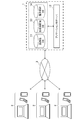
- FIG. 1 is a diagram showing an example of the configuration of the annotation apparatus of the present invention.
- FIG. 2 is a diagram showing an example of the configuration of the annotation system of the present invention using the annotation apparatus shown in FIG.
- FIG. 3 is a flowchart showing an example of the flow of processing in the annotation apparatus and annotation system of the present invention.
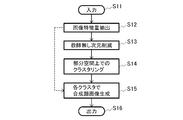
- FIG. 4 is a flowchart showing an example of the processing flow of the synthetic face image generation means in the annotation apparatus and annotation system of the present invention.
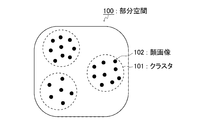
- FIG. 5 is a diagram showing an example of clustering in the synthetic face image generation means of the present invention.
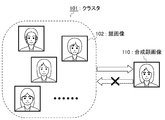
- FIG. 6 is a diagram showing an example of generation of a synthesized face image in the synthesized face image generation means using clustering according to the present invention.
- FIG. 1 is a diagram showing an example of the configuration of the annotation apparatus of the present invention.
- FIG. 2 is a diagram showing an example of the configuration of the annotation system of the present invention using the annotation apparatus shown in FIG.
- FIG. 3 is a flowchart
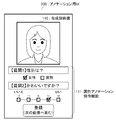
- FIG. 7 is a diagram showing an example of an annotation user interface in the annotation apparatus and annotation system of the present invention.
- FIG. 8 is a diagram showing another example of the configuration of the annotation apparatus of the present invention.
- FIG. 9 is a diagram showing an example of the configuration of the annotation system of the present invention using the annotation apparatus shown in FIG.
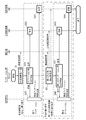
- FIG. 10 is a flowchart showing another example of the processing flow in the annotation apparatus and annotation system of the present invention.
- FIG. 11 is a flowchart showing still another example of the processing flow in the annotation apparatus and annotation system of the present invention.
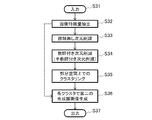
- FIG. 12 is a flowchart showing another example of the processing flow of the synthetic face image generation means in the annotation apparatus and annotation system of the present invention.
- the synthetic face image generation means clusters the face image stored in the face image database into a plurality of clusters based on the similarity of the extracted image features, and then, for each cluster, An aspect of generating a synthesized face image may be used.
- a ratio of specific personal information in the synthetic face image information is 33% or less. By setting the ratio to 33% or less, it becomes possible to protect personal privacy more suitably.
- the annotation apparatus of the present invention further includes a composite face image database and an attribute information database, and the annotation user interface creation means can transmit the created annotation user interface to the user terminal and the composite face image database.
- the synthetic face image database stores the synthetic face image included in the annotation user interface received from the annotation user interface creation means, and the attribute information database is transmitted from the user terminal. It is preferable that the attribute annotation result by the user's operation is received and the attribute information is stored. According to this aspect, it is possible to store (accumulate) the synthetic face image in the synthetic face image database and the attribute information in the attribute information database.
- the annotation apparatus of the present invention further includes a second synthesized face image generating means and a second annotation user interface creating means, wherein the second synthesized face image generating means includes a plurality of face images stored in the face image database. Generating a second composite face image by referring to the human face image, the composite face image stored in the composite face image database, and the attribute information stored in the attribute information database;
- the annotation user interface creation means includes a second annotation including the second composite face image and an attribute annotation operation function that enables an attribute annotation to give an attribute by a user operation on the user terminal.
- a user interface for the second annotation and the second annotation user The interface can be transmitted to the user terminal and the synthesized face image database, and the synthesized face image database is included in the second annotation user interface received from the second annotation user interface creation means.
- the data is updated by storing the second composite face image, and the attribute information database receives an attribute annotation result by the user's operation transmitted from the user terminal, and the newly received attribute It is preferable that the data is updated by storing the information.
- the second synthetic face image generation means refers to the attribute information stored in the attribute information database, image feature extraction highly correlated with the attribute of the annotation target can be performed, High quality annotations can be realized.
- the second synthesized face image generation means clusters the face images of a plurality of persons stored in the face image database into a plurality of clusters based on the extracted image feature similarity, It may be an aspect in which the second composite face image is generated for each cluster.
- the ratio of specific personal information in the second composite face image information is 33% or less. By setting the ratio to 33% or less, it becomes possible to protect personal privacy more suitably.
- FIG. 1 shows a schematic diagram of an example of the annotation apparatus of the present invention.
- FIG. 2 shows a schematic diagram of an example of the annotation system of the present invention using the annotation apparatus shown in FIG.
- the annotation device 1 of this embodiment includes a face image database (DB) 11 and an annotation server 12. Further, as shown in FIG. 2, the annotation device 1 can be connected to the user terminal 2 via the communication line network 3.
- DB face image database
- the face image DB 11 stores face images of a plurality of people acquired in advance.
- the face image DB 11 may be a public DB published on the Internet, or may be created by acquiring a plurality of face images in advance.
- the annotation server 12 includes synthetic face image generation means and annotation user interface (UI) creation means.
- the synthesized face image generating means generates a synthesized face image with reference to a plurality of face images stored in the face image DB 11.
- the annotation UI creation means creates an annotation UI that includes the composite face image and an attribute annotation operation function that enables an attribute annotation to be given an attribute by a user operation on the user terminal 2.
- the user terminal 2 is not particularly limited, and examples thereof include a personal computer (PC), a mobile phone, and a smartphone.
- PC personal computer
- mobile phone a mobile phone
- smartphone a smartphone
- the communication line network 3 may be wired or wireless, and examples thereof include the Internet and a LAN (Local Area Network).
- FIG 3 shows an example of the flow of attribute annotation processing by the annotation apparatus 1 and the annotation system of the present embodiment.
- a face image of a plurality of persons stored in the face image DB 11 is referred to generate a synthesized face image (S1).
- FIG. 4 is a flowchart showing an example of a process flow of generating a synthesized face image by the synthesized face image generating unit.
- face images of a plurality of people are input from the face image DB 11 (S11).
- image feature amounts are extracted from the face images of the plurality of persons (S12).
- the image feature include RGB feature, luminance distribution, HOG (Histograms of Oriented Gradients) feature, and the like.
- dimension reduction is performed on all face images from which image feature amounts have been extracted (S13). Since there is no attribute information to be referred to, this dimension reduction is an unsupervised dimension reduction that reduces the other parts while leaving the feature of the face image large regardless of the attribute information.
- the dimension reduction can be performed by, for example, principal component analysis (PCA), kernel PCA, locality preserving projection (LPP), or the like.
- the face image after the dimension reduction is clustered (grouped) into a plurality of clusters based on the similarity of the image features (S14).
- the clustering can be performed by, for example, the k-means method, fuzzy clustering, or the like.
- FIG. 5 shows an example of the clustering.
- 24 face images 102 are clustered into three clusters 101 in the partial space 100.
- FIG. 5 only schematically shows an example of the clustering, and the number of face images 102 and clusters 101 is not limited to this example.
- a composite face image is generated for each cluster (S15 in FIG. 4).
- the image feature extracted in S12 is used.
- the synthetic face image can be generated by, for example, synthesis of an average face or the like.
- all face images in each cluster may be used, or only a part of face images having closer features may be used.
- the generation of the composite face image may be performed for all the clusters in the partial space, or may be performed for only some of the clusters.
- FIG. 6 shows an example of generation of a synthesized face image by the synthesized face image generating means.
- a synthesized face image 110 is obtained by synthesizing an average face of the face images 102 in a certain cluster 101 on the partial space.
- the ratio of information of a specific individual for example, the person in the center face image of the cluster 101 shown in FIG. 6 in the synthetic face image information is preferably 33% or less. By setting the ratio to 33% or less, it becomes possible to protect personal privacy more suitably.
- the composite face image is output to the annotation UI creation means (S16 in FIG. 4), and the generation of the composite face image is terminated.
- an attribute annotation operation function that enables the synthetic face image and an attribute annotation to give an attribute by a user operation on the user terminal 2
- An annotation UI including is created (S21 in FIG. 3).
- FIG. 7 shows an example of the annotation UI.
- the annotation UI 200 of this example includes a composite face image 110 and an attribute annotation operation function 111 that enables an attribute annotation to be given an attribute by a user operation on the user terminal 2.
- the attribute annotation operation function 111 includes an annotation question 1 (“gender?” In the figure), an answer icon (“female” and “male” in the figure), annotation Question 2 (“Is it cute?” In the figure) and an answer icon (in this figure, “No” -2 to “Yes” +2 five-level evaluation), and composite face image 1 It is a button for repeating annotation processing for each sheet ("Register (Proceed to next image)" in the figure).
- the created annotation UI 200 is transmitted to the user terminal 2 via the communication line network 3, and attribute annotation is performed by the user's operation on the user terminal 2 (S22 in FIG. 3).
- the attributes for which the attribute annotation is implemented include, for example, the degree of impression of the face (degrees such as “cute”, “bright and refreshing”), gender (“male”, “female”), facial expression (“smile”, “Sad face”, “angry face” etc.), age ("31 years old” etc.), etc.
- the creation of the annotation UI 200 (S21 in FIG. 3) and the attribute annotation (S22 in FIG. 3) are repeated for each synthetic face image.
- the annotation apparatus 1 and the annotation system of the present embodiment by using the synthetic face image 110 that cannot identify an individual in the annotation UI 200, attributes are added to the face image while protecting the privacy of the individual. Is possible.
- FIG. 8 shows a schematic diagram of another example of the annotation apparatus of the present invention.
- FIG. 9 shows a schematic diagram of an example of the annotation system of the present invention using the annotation apparatus shown in FIG.
- the annotation apparatus 1 and the annotation system of the present embodiment further include the synthetic face image database (DB) 13 and the attribute information database (DB) 14, except that the implementation is shown in FIG. 1.
- DB synthetic face image database
- DB attribute information database
- the annotation UI creation means in the annotation server 12 can transmit the created annotation UI 200 to the user terminal 2 and the composite face image DB 13.
- the composite face image DB 13 stores the composite face image 110 included in the annotation UI 200 received from the annotation UI creation unit.
- the attribute information DB 14 receives the attribute annotation result transmitted from the user terminal 2 and operated by the user, and stores the attribute information.
- FIG 10 shows an example of the flow of attribute annotation processing by the annotation apparatus 1 and the annotation system of the present embodiment.
- the generation of the composite face image 110 (S1), the creation of the annotation UI 200 (S21), and the attribute annotation (S22) are performed.
- the annotation UI creating means in the annotation server 12 transmits the created annotation UI 200 to the synthesized face image DB 13.
- the combined face image DB 13 stores the combined face image 110 included in the annotation UI 200 received from the annotation UI creating unit (S23).
- the user terminal 2 transmits the attribute annotation result by the user's operation to the attribute information DB 14.
- the attribute information DB 14 receives the attribute annotation result transmitted from the user terminal 2 and operated by the user, and stores the attribute information (S24).
- the annotation apparatus 1 and the annotation system of the present embodiment it is possible to store (accumulate) the synthetic face image 110 in the synthetic face image DB 13 and the attribute information in the attribute information DB 14.
- the annotation server 12 is further provided with a second synthesized face image generating means and a second annotation in addition to the synthesized face image generating means and the annotation UI creating means. Except for the point including UI creation means, it is the same as the annotation apparatus 1 of the second embodiment shown in FIG. 8 and the annotation system shown in FIG.
- the second synthetic face image generating unit may be provided separately from the synthetic face image generating unit, and the synthetic face image generating unit may be provided with the second synthetic face. It may also serve as image generation means.
- the second annotation UI creation means may be provided separately from the annotation UI creation means, or the annotation UI creation means It may also serve as an annotation UI creation means.
- the second composite face image generation means includes a plurality of face images stored in the face image DB 11, a composite face image 110 stored in the composite face image DB 13, and the attribute information stored in the attribute information DB 14. To generate a second composite face image.
- the second annotation UI creation means includes a second synthetic face image and an attribute annotation operation function that enables an attribute annotation to give an attribute by a user operation on the user terminal 2.
- An annotation UI can be created, and the created second annotation UI can be transmitted to the user terminal 2 and the composite face image DB 13.
- the synthesized face image DB 13 updates the data by storing the second synthesized face image included in the second annotation UI received from the second annotation UI creation unit.
- the attribute information DB 14 receives the attribute annotation result by the user's operation transmitted from the user terminal 2, and updates the data by storing the newly received attribute information.
- FIG. 11 is a flowchart showing an example of the attribute annotation processing flow by the annotation apparatus 1 and the annotation system of the present embodiment.
- the composite face image 110 is generated (S1), the annotation UI 200 is created (S21), the attribute annotation (S22), and the composite face image included in the annotation UI 200 to the composite face image DB13. 110 is saved (S23), and the attribute information is saved in the attribute information DB 14 (S24).
- a second composite face image is generated with reference to the attribute information stored in the information DB 14 (S3).
- FIG. 12 is a flowchart showing an example of the second synthetic face image generation process performed by the second synthetic face image generation unit.
- face images of a plurality of persons are input from the face image DB 11, the composite face image 110 from the composite face image DB 13, and the attribute information from the attribute information DB 14 (S31).
- an image feature amount is extracted from the face images of the plurality of persons and the synthesized face image 110 (S32).
- dimension reduction is performed on all face images from which image feature amounts have been extracted in the same manner as in S13 of FIG. 4 described above (S33).
- This dimension reduction is an unsupervised dimension reduction in which the features of the face image remain large and other parts are reduced regardless of the attribute information.
- supervised dimension reduction is performed (S34).
- semi-supervised dimension reduction may be performed instead of or in addition to supervised dimension reduction.
- the semi-supervised dimension reduction is particularly effective because the dimension reduction can be prevented from becoming unstable when the number of teacher data (face images to which attribute information is added) is small.
- Dimensional reduction in this process includes, for example, Canonical Correlation Analysis (CCA), Regularized Canonical Correlation Analysis (Regularized Canonical Correlation Analysis: RCCA), Kernel Canonical Correlation Analysis, Semi-Supervised Canonical Correlation Analysis, It can be implemented by linear discriminant analysis (Linear Discriminant Analysis: LDA) or the like.
- the face image after the dimension reduction is clustered (grouped) into a plurality of clusters based on the similarity of the image features (S35).
- the clustering can be performed by, for example, the k-means method, fuzzy clustering, or the like.
- a second composite face image is generated for each cluster (S36).
- the ratio of specific personal information in the second composite face image information is preferably 33% or less. By setting the ratio to 33% or less, it becomes possible to protect personal privacy more suitably.
- the second synthesized face image is output to the second annotation UI creating means (S37), and the generation of the second synthesized face image is terminated.
- a second annotation UI including the attribute annotation operation function to be created is created (S41 in FIG. 11).
- Examples of the second annotation UI include an image obtained by replacing the synthetic face image 110 of the annotation UI 200 shown in FIG. 7 with the second synthetic face image.
- the created second annotation UI is transmitted to the user terminal 2 via the communication network 3, and attribute annotation is performed by the user's operation on the user terminal 2 (S42 in FIG. 11).
- the second annotation UI creating means in the annotation server 12 transmits the created second annotation UI to the synthesized face image DB 13.
- the synthesized face image DB 13 updates the data by storing the second synthesized face image included in the second annotation UI received from the second annotation UI creation unit (S43). ). Thereby, the synthesized face image 110 and the second synthesized face image are accumulated in the synthesized face image DB 13.
- the user terminal 2 transmits the attribute annotation result by the user's operation to the attribute information DB 14.
- the attribute information DB 14 receives the attribute annotation result by the user's operation transmitted from the user terminal 2, and updates the data by storing the newly received attribute information (S44). .
- the attribute information DB 14 stores the attribute information stored in S24 and the attribute information stored in S44. Synthesis of the second composite face image (S3), creation of the second annotation UI (S41), attribute annotation (S42), update of the composite face image DB 13 (S43), and update of the attribute information DB 14 (S44) Is repeated several times.
- the second synthesized face image generation unit refers to the attribute information stored in the attribute information DB 14, and thus has high correlation with the attribute of the annotation target. Image feature extraction can be performed, and high-quality annotation can be realized.
- Face images were collected and stored in the face image DB 11. All the face images satisfy the following conditions. (Face image conditions) Size: 64 pixels x 64 pixels, nose and mouth position: all face images are aligned to the same position (normalized) Attribute information: unknown
- a synthesized face image is generated using the synthesized face image generating means in the annotation server 12 (S1).
- S14 the k-average method
- the composite face image is output to the annotation UI creation means (S16), and the generation of the composite face image is completed.
- an annotation UI was created using the annotation UI creation means in the annotation server 12 (S21 in FIG. 11).
- the annotation UI is as shown in FIG.
- the created annotation UI is transmitted to the user terminal 2 via the communication network 3, and attribute annotation is performed by the user's operation on the user terminal 2 (S22).
- the creation of the annotation UI (S21) and the attribute annotation (S22) were repeated for each synthetic face image.
- the created annotation UI in the annotation server 12 is sent to the synthesized face image DB 13 by the created annotation UI creation means, and the synthesized face image included in the annotation UI is synthesized face image. It preserve
- the attribute annotation result by the user's operation is transmitted from the user terminal 2 to the attribute information DB 14, and the attribute information is stored in the attribute information DB 14 (S24).
- a second synthesized face image is generated using the second synthesized face image generating means in the annotation server 12 (S3). As will be described later, the generation of the second composite face image was repeated L times.
- the second synthesized face image is output to the second annotation UI creating means (S37), and the generation of the second synthesized face image is finished.
- a second annotation UI was created using the second annotation UI creation means in the annotation server 12 (S41 in FIG. 11).
- the second annotation UI is obtained by replacing the synthetic face image 110 of the annotation UI 200 shown in FIG. 7 with the second synthetic face image.
- the created second annotation UI is transmitted to the user terminal 2 via the communication line network 3, and attribute annotation is performed by the user's operation on the user terminal 2 (S42).
- the creation of the second annotation UI (S41) and the attribute annotation (S42) were repeated for each second synthetic face image.
- the second annotation UI creation means in the annotation server 12 sends the 20 created second annotation UIs to the composite face image DB 13, and the second annotation UI creation means The data was updated by storing the second composite face image included in the second annotation UI received from (S43).
- the attribute annotation result by the user's operation is transmitted from the user terminal 2 to the attribute information DB 14, and the data is updated by storing the newly received attribute information (S44).
- Synthesis of the second composite face image (S3), creation of the second annotation UI (S41), attribute annotation (S42), update of the composite face image DB 13 (S43), and update of the attribute information DB 14 (S44) was repeated L times.
- the present invention is widely used in the field of estimating attributes such as age, gender, facial impression degree, and the like from face images, and its application is not limited.
Landscapes
- Engineering & Computer Science (AREA)
- Theoretical Computer Science (AREA)
- General Health & Medical Sciences (AREA)
- General Physics & Mathematics (AREA)
- Health & Medical Sciences (AREA)
- Bioethics (AREA)
- Physics & Mathematics (AREA)
- Medical Informatics (AREA)
- Databases & Information Systems (AREA)
- Computer Hardware Design (AREA)
- Computer Security & Cryptography (AREA)
- Software Systems (AREA)
- General Engineering & Computer Science (AREA)
- Processing Or Creating Images (AREA)
- Image Processing (AREA)
Abstract
個人のプライバシーを保護しつつ、顔画像に属性を付与することが可能なアノテーション装置を提供する。 本発明のアノテーション装置は、使用者端末と通信回線網を介して接続可能であり、顔画像データベース、合成顔画像生成手段及びアノテーション用ユーザインターフェース作成手段を含み、前記顔画像データベースには、予め取得された複数人の顔画像が保存されており、前記合成顔画像生成手段は、前記顔画像データベースに保存された複数人の顔画像を参照して合成顔画像を生成し、前記アノテーション用ユーザインターフェース作成手段は、前記合成顔画像と、前記使用者端末における使用者の操作により属性を付与させる属性アノテーションを実施可能とする属性アノテーション操作機能とを含むアノテーション用ユーザインターフェースを作成する、ことを特徴とする。
Description
本発明は、アノテーション装置及びアノテーションシステムに関する。
タバコの自動販売機又は銀行のATM等のように本人確認が必要な装置において、ヒトの顔をカメラで撮影して顔画像を取得し、顔画像に年齢及び性別等の属性を付与する装置が提案されている(例えば、特許文献1)。年齢等の属性の付与は、例えば、多数のお手本顔画像情報により機械が学習してモデルを作成し、属性付与対象の顔画像を前記モデルと対比するというモデル学習で実施される。
前記モデル学習では、多数の顔画像に対し、ヒトが年齢等の属性を付与(アノテーション)してモデルを作成することになる。しかしながら、特許文献1に記載の属性付与では、顔画像を加工せずに、個人が特定できる状態のままアノテーター(属性付与者)に提示しており、個人のプライバシー保護上、問題がある。
そこで、本発明は、個人のプライバシーを保護しつつ、顔画像に属性を付与することが可能なアノテーション装置及びアノテーションシステムの提供を目的とする。
前記目的を達成するために、本発明のアノテーション装置は、
使用者端末と通信回線網を介して接続可能であり、
顔画像データベース、合成顔画像生成手段及びアノテーション用ユーザインターフェース作成手段を含み、
前記顔画像データベースには、予め取得された複数人の顔画像が保存されており、
前記合成顔画像生成手段は、前記顔画像データベースに保存された複数人の顔画像を参照して合成顔画像を生成し、
前記アノテーション用ユーザインターフェース作成手段は、前記合成顔画像と、前記使用者端末における使用者の操作により属性を付与させる属性アノテーションを実施可能とする属性アノテーション操作機能とを含むアノテーション用ユーザインターフェースを作成する、
ことを特徴とする。
使用者端末と通信回線網を介して接続可能であり、
顔画像データベース、合成顔画像生成手段及びアノテーション用ユーザインターフェース作成手段を含み、
前記顔画像データベースには、予め取得された複数人の顔画像が保存されており、
前記合成顔画像生成手段は、前記顔画像データベースに保存された複数人の顔画像を参照して合成顔画像を生成し、
前記アノテーション用ユーザインターフェース作成手段は、前記合成顔画像と、前記使用者端末における使用者の操作により属性を付与させる属性アノテーションを実施可能とする属性アノテーション操作機能とを含むアノテーション用ユーザインターフェースを作成する、
ことを特徴とする。
本発明のアノテーションシステムは、
使用者端末及びアノテーション装置を含み、
前記アノテーション装置が、前記本発明のアノテーション装置である、
ことを特徴とする。
使用者端末及びアノテーション装置を含み、
前記アノテーション装置が、前記本発明のアノテーション装置である、
ことを特徴とする。
本発明のアノテーション装置及びアノテーションシステムによれば、個人のプライバシーを保護しつつ、顔画像に属性を付与することが可能である。
本発明のアノテーション装置において、前記合成顔画像生成手段は、前記顔画像データベースに保存された顔画像を、抽出した画像特徴の類似度に基づき複数のクラスタにクラスタリングした後、各クラスタ毎に、前記合成顔画像を生成する、という態様であってもよい。
本発明のアノテーション装置において、前記合成顔画像情報中の特定の個人の情報が占める割合が、33%以下であることが好ましい。前記割合を33%以下とすることで、より好適に個人のプライバシーを保護することが可能となる。
本発明のアノテーション装置において、さらに、合成顔画像データベース及び属性情報データベースを含み、前記アノテーション用ユーザインターフェース作成手段は、作成した前記アノテーション用ユーザインターフェースを前記使用者端末及び前記合成顔画像データベースに送信可能であり、前記合成顔画像データベースは、前記アノテーション用ユーザインターフェース作成手段から受信した前記アノテーション用ユーザインターフェースに含まれる合成顔画像を保存し、前記属性情報データベースは、前記使用者端末から送信された前記使用者の操作による属性アノテーション結果を受信し、前記属性の情報を保存する、という態様であることが好ましい。この態様によれば、前記合成顔画像データベースに前記合成顔画像を、前記属性情報データベースに前記属性の情報を保存(蓄積)することが可能となる。
本発明のアノテーション装置において、さらに、第二の合成顔画像生成手段及び第二のアノテーション用ユーザインターフェース作成手段を含み、前記第二の合成顔画像生成手段は、前記顔画像データベースに保存された複数人の顔画像、前記合成顔画像データベースに保存された前記合成顔画像、及び、前記属性情報データベースに保存された前記属性の情報を参照して第二の合成顔画像を生成し、前記第二のアノテーション用ユーザインターフェース作成手段は、前記第二の合成顔画像と、前記使用者端末における使用者の操作により属性を付与させる属性アノテーションを実施可能とする属性アノテーション操作機能とを含む第二のアノテーション用ユーザインターフェースを作成し、かつ、作成した前記第二のアノテーション用ユーザインターフェースを前記使用者端末及び前記合成顔画像データベースに送信可能であり、前記合成顔画像データベースは、前記第二のアノテーション用ユーザインターフェース作成手段から受信した前記第二のアノテーション用ユーザインターフェースに含まれる前記第二の合成顔画像を保存することでデータを更新し、前記属性情報データベースは、前記使用者端末から送信された前記使用者の操作による属性アノテーション結果を受信し、新たに受信した前記属性の情報を保存することでデータを更新する、という態様であることが好ましい。この態様によれば、前記第二の合成顔画像生成手段が、前記属性情報データベースに保存された前記属性の情報を参照するため、アノテーション対象の属性と相関性の高い画像特徴抽出を実施でき、高品質のアノテーションを実現可能である。
本発明のアノテーション装置において、前記第二の合成顔画像生成手段は、前記顔画像データベースに保存された複数人の顔画像を、抽出した画像特徴の類似度に基づき複数のクラスタにクラスタリングした後、各クラスタ毎に、前記第二の合成顔画像を生成する、という態様であってもよい。
本発明のアノテーション装置において、前記第二の合成顔画像情報中の特定の個人の情報が占める割合が、33%以下であることが好ましい。前記割合を33%以下とすることで、より好適に個人のプライバシーを保護することが可能となる。
つぎに、本発明のアノテーション装置及びアノテーションシステムについて、例をあげて説明する。ただし、本発明は、下記の例に限定されない。なお、図1から図12において、同一部分には同一符号を付している。
[実施形態1]
図1に、本発明のアノテーション装置の一例の概略図を示す。また、図2に、図1に示すアノテーション装置を用いた本発明のアノテーションシステムの一例の概略図を示す。図1に示すとおり、本実施形態のアノテーション装置1は、顔画像データベース(DB)11及びアノテーション用サーバ12を含む。また、図2に示すとおり、アノテーション装置1は、使用者端末2と通信回線網3を介して接続可能である。
図1に、本発明のアノテーション装置の一例の概略図を示す。また、図2に、図1に示すアノテーション装置を用いた本発明のアノテーションシステムの一例の概略図を示す。図1に示すとおり、本実施形態のアノテーション装置1は、顔画像データベース(DB)11及びアノテーション用サーバ12を含む。また、図2に示すとおり、アノテーション装置1は、使用者端末2と通信回線網3を介して接続可能である。
顔画像DB11には、予め取得された複数人の顔画像が保存されている。顔画像DB11は、例えば、インターネット上で公開されている公開DBを用いてもよいし、複数人の顔画像を予め取得することで作製してもよい。
アノテーション用サーバ12は、合成顔画像生成手段及びアノテーション用ユーザインターフェース(UI)作成手段を含む。前記合成顔画像生成手段は、顔画像DB11に保存された複数の顔画像を参照して合成顔画像を生成する。前記アノテーション用UI作成手段は、前記合成顔画像と、使用者端末2における使用者の操作により属性を付与させる属性アノテーションを実施可能とする属性アノテーション操作機能とを含むアノテーション用UIを作成する。
使用者端末2は、特に制限されず、例えば、パーソナルコンピュータ(PC)、携帯電話、スマートフォン等があげられる。
通信回線網3は、有線でも無線でもよく、例えば、インターネット、LAN(Local Area Network)等があげられる。
図3のフローチャートに、本実施形態のアノテーション装置1及びアノテーションシステムによる属性アノテーションの処理の流れの一例を示す。
まず、アノテーション用サーバ12内の前記合成顔画像生成手段を用いて、顔画像DB11に保存された複数人の顔画像を参照して、合成顔画像を生成する(S1)。
図4のフローチャートに、前記合成顔画像生成手段による合成顔画像生成の処理の流れの一例を示す。
まず、顔画像DB11から複数人の顔画像を入力する(S11)。
つぎに、前記複数人の顔画像から画像特徴量を抽出する(S12)。前記画像特徴としては、例えば、RGB特徴、輝度分布、HOG(Histograms of Oriented Gradients)特徴等があげられる。
つぎに、画像特徴量を抽出した全ての顔画像について、次元削減を行う(S13)。この次元削減は、参照する属性情報が無いため、属性情報と無関係に、顔画像の特徴が大きいところを残して、他の部分を削減する教師無し次元削減となる。前記次元削減は、例えば、主成分分析(Principal Component Analysis:PCA)、カーネルPCA、局所性保存射影(Locality Preserving Projection:LPP)等により実施できる。
つぎに、前記次元削減後の顔画像を、画像特徴の類似度に基づき複数のクラスタにクラスタリング(グループ分け)する(S14)。前記クラスタリングは、例えば、k-平均法、ファジィ・クラスタリング等により実施できる。
図5に、前記クラスタリングの一例を示す。図5においては、部分空間100において、24人の顔画像102を、3個のクラスタ101にクラスタリングしている。ただし、図5は、前記クラスタリングの一例を模式的に示したに過ぎず、顔画像102及びクラスタ101の数はこの例に限定されない。
つぎに、各クラスタ毎に、合成顔画像を生成する(図4のS15)。前記合成顔画像の生成にあたっては、S12で抽出した画像特徴を使用する。前記合成顔画像の生成は、例えば、平均顔等の合成により実施できる。前記合成顔画像の生成においては、各クラスタ内の全ての顔画像を使用してもよいし、より特徴の近い一部の顔画像のみを使用してもよい。また、前記合成顔画像の生成は、部分空間上の全てのクラスタについて実施してもよいし、一部のクラスタのみについて実施してもよい。
図6に、前記合成顔画像生成手段における合成顔画像の生成の一例を示す。図6に示す例では、前記部分空間上のあるクラスタ101内の顔画像102の平均顔を合成することで、合成顔画像110を得ている。一方、図6に示すように、合成顔画像110から、クラスタ101内の個人を特定することは不可能である。前述のとおり、前記合成顔画像情報中の特定の個人(例えば、図6に示すクラスタ101の中央の顔画像の人物)の情報が占める割合は、33%以下であることが好ましい。前記割合を33%以下とすることで、より好適に個人のプライバシーを保護することが可能となる。
つぎに、前記合成顔画像を、アノテーション用UI作成手段へと出力し(図4のS16)、前記合成顔画像の生成を終了する。
つぎに、アノテーション用サーバ12内のアノテーション用UI作成手段を用いて、前記合成顔画像と、使用者端末2における使用者の操作により属性を付与させる属性アノテーションを実施可能とする属性アノテーション操作機能とを含むアノテーション用UIを作成する(図3のS21)。
図7に、前記アノテーション用UIの一例を示す。図7に示すとおり、本例のアノテーション用UI200は、合成顔画像110と、使用者端末2における使用者の操作により属性を付与させる属性アノテーションを実施可能とする属性アノテーション操作機能111とを含む。図7に示す例では、属性アノテーション操作機能111は、アノテーション用の質問1(同図では、「性別は?」)及び回答用のアイコン(同図では、「女性」及び「男性」)、アノテーション用の質問2(同図では、「かわいいですか?」)及び回答用のアイコン(同図では、「いいえ」の-2から「はい」の+2の五段階評価)、並びに、合成顔画像1枚毎にアノテーション処理を繰り返すためのボタン(同図では、「登録(次の画像に進む)」)となっている。
作成されたアノテーション用UI200は、通信回線網3を介して使用者端末2に送信され、使用者端末2における使用者の操作により属性アノテーションが実施される(図3のS22)。前記属性アノテーションが実施される属性としては、例えば、顔の印象度(「かわいい」、「明るくさわやか」等の度合い)、性別(「男性」、「女性」)、顔の表情(「笑顔」、「悲しい顔」、「怒っている顔」等)、年齢(「31歳」等)等があげられる。アノテーション用UI200の作成(図3のS21)及び属性アノテーション(図3のS22)は、前記合成顔画像1枚毎に繰り返される。
本実施形態のアノテーション装置1及びアノテーションシステムによれば、アノテーション用UI200に個人を特定することが不可能な合成顔画像110を用いることで、個人のプライバシーを保護しつつ、顔画像に属性を付与することが可能である。
[実施形態2]
図8に、本発明のアノテーション装置のその他の例の概略図を示す。また、図9に、図8に示すアノテーション装置を用いた本発明のアノテーションシステムの一例の概略図を示す。図8及び図9に示すとおり、本実施形態のアノテーション装置1及びアノテーションシステムは、さらに、合成顔画像データベース(DB)13及び属性情報データベース(DB)14を含む点を除き、図1に示す実施形態1のアノテーション装置1及び図2に示す実施形態1のアノテーションシステムと同様である。
図8に、本発明のアノテーション装置のその他の例の概略図を示す。また、図9に、図8に示すアノテーション装置を用いた本発明のアノテーションシステムの一例の概略図を示す。図8及び図9に示すとおり、本実施形態のアノテーション装置1及びアノテーションシステムは、さらに、合成顔画像データベース(DB)13及び属性情報データベース(DB)14を含む点を除き、図1に示す実施形態1のアノテーション装置1及び図2に示す実施形態1のアノテーションシステムと同様である。
本実施形態のアノテーション装置1及びアノテーションシステムにおいて、アノテーション用サーバ12内の前記アノテーション用UI作成手段は、作成したアノテーション用UI200を使用者端末2及び合成顔画像DB13に送信可能である。
合成顔画像DB13は、前記アノテーション用UI作成手段から受信したアノテーション用UI200に含まれる合成顔画像110を保存する。
属性情報DB14は、使用者端末2から送信された前記使用者の操作による属性アノテーション結果を受信し、前記属性の情報を保存する。
図10のフローチャートに、本実施形態のアノテーション装置1及びアノテーションシステムによる属性アノテーションの処理の流れの一例を示す。
まず、実施形態1と同様にして、合成顔画像110の生成(S1)、アノテーション用UI200の作成(S21)及び属性アノテーション(S22)を実施する。
つぎに、アノテーション用サーバ12内のアノテーション用UI作成手段は、作成されたアノテーション用UI200を、合成顔画像DB13に送信する。合成顔画像DB13は、前述のとおり、前記アノテーション用UI作成手段から受信したアノテーション用UI200に含まれる合成顔画像110を保存する(S23)。
つぎに、使用者端末2は、前記使用者の操作による属性アノテーション結果を、属性情報DB14に送信する。属性情報DB14は、前述のとおり、使用者端末2から送信された前記使用者の操作による属性アノテーション結果を受信し、前記属性の情報を保存する(S24)。
本実施形態のアノテーション装置1及びアノテーションシステムによれば、合成顔画像DB13に前記合成顔画像110を、属性情報DB14に前記属性の情報を保存(蓄積)することが可能となる。
[実施形態3]
本実施形態のアノテーション装置1及びアノテーションシステムは、アノテーション用サーバ12が、前記合成顔画像生成手段及び前記アノテーション用UI作成手段に加え、さらに、第二の合成顔画像生成手段及び第二のアノテーション用UI作成手段を含む点を除き、図8に示す実施形態2のアノテーション装置1及び図9に示すアノテーションシステムと同様である。本実施形態のアノテーション装置1及びアノテーションシステムにおいて、前記合成顔画像生成手段とは別に前記第二の合成顔画像生成手段を設けてもよいし、前記合成顔画像生成手段が前記第二の合成顔画像生成手段を兼ねてもよい。また、本実施形態のアノテーション装置1及びアノテーションシステムにおいて、前記アノテーション用UI作成手段とは別に前記第二のアノテーション用UI作成手段を設けてもよいし、前記アノテーション用UI作成手段が前記第二のアノテーション用UI作成手段を兼ねてもよい。
本実施形態のアノテーション装置1及びアノテーションシステムは、アノテーション用サーバ12が、前記合成顔画像生成手段及び前記アノテーション用UI作成手段に加え、さらに、第二の合成顔画像生成手段及び第二のアノテーション用UI作成手段を含む点を除き、図8に示す実施形態2のアノテーション装置1及び図9に示すアノテーションシステムと同様である。本実施形態のアノテーション装置1及びアノテーションシステムにおいて、前記合成顔画像生成手段とは別に前記第二の合成顔画像生成手段を設けてもよいし、前記合成顔画像生成手段が前記第二の合成顔画像生成手段を兼ねてもよい。また、本実施形態のアノテーション装置1及びアノテーションシステムにおいて、前記アノテーション用UI作成手段とは別に前記第二のアノテーション用UI作成手段を設けてもよいし、前記アノテーション用UI作成手段が前記第二のアノテーション用UI作成手段を兼ねてもよい。
前記第二の合成顔画像生成手段は、顔画像DB11に保存された複数人の顔画像、合成顔画像DB13に保存された合成顔画像110、及び、属性情報DB14に保存された前記属性の情報を参照して第二の合成顔画像を生成する。
前記第二のアノテーション用UI作成手段は、前記第二の合成顔画像と、使用者端末2における使用者の操作により属性を付与させる属性アノテーションを実施可能とする属性アノテーション操作機能とを含む第二のアノテーション用UIを作成し、かつ、作成した前記第二のアノテーション用UIを使用者端末2及び合成顔画像DB13に送信可能である。
合成顔画像DB13は、前記第二のアノテーション用UI作成手段から受信した前記第二のアノテーション用UIに含まれる前記第二の合成顔画像を保存することでデータを更新する。
属性情報DB14は、使用者端末2から送信された前記使用者の操作による属性アノテーション結果を受信し、新たに受信した前記属性の情報を保存することでデータを更新する。
図11のフローチャートに、本実施形態のアノテーション装置1及びアノテーションシステムによる属性アノテーションの処理の流れの一例を示す。
まず、実施形態2と同様にして、合成顔画像110の生成(S1)、アノテーション用UI200の作成(S21)、属性アノテーション(S22)、合成顔画像DB13へのアノテーション用UI200に含まれる合成顔画像110の保存(S23)及び属性情報DB14への前記属性の情報の保存(S24)を実施する。
つぎに、アノテーション用サーバ12内の第二の合成顔画像生成手段を用いて、顔画像DB11に保存された複数人の顔画像、合成顔画像DB13に保存された合成顔画像110、及び、属性情報DB14に保存された前記属性の情報を参照して第二の合成顔画像を生成する(S3)。
図12のフローチャートに、前記第二の合成顔画像生成手段による第二の合成顔画像生成の処理の流れの一例を示す。
まず、顔画像DB11から複数人の顔画像を、合成顔画像DB13から合成顔画像110を、属性情報DB14から前記属性の情報を入力する(S31)。
つぎに、前記複数人の顔画像及び合成顔画像110から画像特徴量を抽出する(S32)。
つぎに、前述の図4のS13と同様にして、画像特徴量を抽出した全ての顔画像について、次元削減を行う(S33)。この次元削減は、属性情報と無関係に、顔画像の特徴が大きいところを残して、他の部分を削減する教師無し次元削減とする。
つぎに、S31で入力された前記属性の情報と相関性の高い画像特徴を抽出し、教師付き次元削減を実施する(S34)。なお、本工程では、教師付き次元削減に代えて、若しくは教師付き次元削減に加え、半教師付き次元削減を実施してもよい。前記半教師付き次元削減は、教師データ(属性情報が付与された顔画像)の数が少ない場合に、次元削減が不安定になるのを回避でき、特に有効である。本工程における次元削減は、例えば、正準相関分析(Canonical Correlation Analysis:CCA)、正則化正準相関分析(Regularized Canonical Correlation Analysis:RCCA)、カーネル正準相関分析、半教師付き正準相関分析、線形判別分析(Linear Discriminant Analysis:LDA)等により実施できる。
つぎに、前記次元削減後の顔画像を、画像特徴の類似度に基づき複数のクラスタにクラスタリング(グループ分け)する(S35)。前記クラスタリングは、例えば、k-平均法、ファジィ・クラスタリング等により実施できる。
つぎに、図4のS15の合成顔画像110の生成と同様にして、各クラスタ毎に、第二の合成顔画像を生成する(S36)。前述のとおり、前記第二の合成顔画像情報中の特定の個人の情報が占める割合は、33%以下であることが好ましい。前記割合を33%以下とすることで、より好適に個人のプライバシーを保護することが可能となる。
つぎに、前記第二の合成顔画像を、第二のアノテーション用UI作成手段へと出力し(S37)、前記第二の合成顔画像の生成を終了する。
つぎに、アノテーション用サーバ12内の第二のアノテーション用UI作成手段を用いて、前記第二の合成顔画像と、前記使用者端末における使用者の操作により属性を付与させる属性アノテーションを実施可能とする属性アノテーション操作機能とを含む第二のアノテーション用UIを作成する(図11のS41)。前記第二のアノテーションUIとしては、例えば、図7に示すアノテーション用UI200の合成顔画像110を、前記第二の合成顔画像に置換したもの等があげられる。
作成された前記第二のアノテーション用UIは、通信回線網3を介して使用者端末2に送信され、使用者端末2における使用者の操作により属性アノテーションが実施される(図11のS42)。
つぎに、アノテーション用サーバ12内の第二のアノテーション用UI作成手段は、作成された前記第二のアノテーション用UIを、合成顔画像DB13に送信する。合成顔画像DB13は、前述のとおり、前記第二のアノテーション用UI作成手段から受信した前記第二のアノテーション用UIに含まれる前記第二の合成顔画像を保存することでデータを更新する(S43)。これにより、合成顔画像DB13には、合成顔画像110及び前記第二の合成顔画像が蓄積される。
つぎに、使用者端末2は、前記使用者の操作による属性アノテーション結果を、属性情報DB14に送信する。属性情報DB14は、前述のとおり、使用者端末2から送信された前記使用者の操作による属性アノテーション結果を受信し、新たに受信した前記属性の情報を保存することでデータを更新する(S44)。これにより、属性情報DB14には、S24で保存された前記属性の情報及びS44で保存された前記属性の情報が蓄積される。前記第二の合成顔画像の合成(S3)、前記第二のアノテーションUIの作成(S41)、前記属性アノテーション(S42)、合成顔画像DB13の更新(S43)及び属性情報DB14の更新(S44)は、何回か繰り返される。
本実施形態のアノテーション装置1及びアノテーションシステムによれば、前記第二の合成顔画像生成手段が、属性情報DB14に保存された前記属性の情報を参照するため、アノテーション対象の属性と相関性の高い画像特徴抽出を実施でき、高品質のアノテーションを実現可能である。
つぎに、本発明の実施例について説明する。なお、本発明は、下記の実施例により限定及び制限されない。
図9に示すアノテーションシステムを用いて、図11に示すフローチャートに従って、顔の印象度(かわいい)の属性アノテーションを実施した。
まず、340人の顔画像を収集し、顔画像DB11に保存した。前記顔画像は、全て、下記条件を満たすものとした。
(顔画像条件)
サイズ:64ピクセル×64ピクセル
目、鼻及び口の位置:全ての顔画像において、同じ位置にそろえる(正規化済み)
属性情報:未知
(顔画像条件)
サイズ:64ピクセル×64ピクセル
目、鼻及び口の位置:全ての顔画像において、同じ位置にそろえる(正規化済み)
属性情報:未知
つぎに、図4に示すフローチャートに従って、アノテーション用サーバ12内の合成顔画像生成手段を用いて、合成顔画像を生成した(S1)。
すなわち、まず、前記合成顔画像生成手段に、顔画像DB11から340人の顔画像を入力した(S11)。
つぎに、各顔画像から、RGB成分を画像特徴として、12288(=64×64×3)次元のベクトルを抽出した(S12)。
つぎに、S12で生成されたデータ(340個、12288次元)全てを学習データとして、PCAを行い、100次元まで次元削減したモデルを作成し、このモデルを用いて、S12で生成されたデータ全てを100次元まで次元削減した(S13)。
つぎに、S13で次元削減したデータを、k-平均法により、20個のクラスタ(k=20)にクラスタリング(グループ分け)した(S14)。本例では、RGB成分の画像特徴が近い物同士でグループ分けされているものと解釈できる。
つぎに、S14で生成された各クラスタの中心(データの平均値)により近い10個のデータを選び、それに対応した画像特徴抽出及び次元削減前の元の顔画像全ての各ピクセルの輝度値(S12で算出されたもの)の平均値を取ることで20個の合成顔画像を生成した(S15)。
つぎに、前記合成顔画像を、アノテーション用UI作成手段へと出力し(S16)、前記合成顔画像の生成を終了した。
つぎに、アノテーション用サーバ12内のアノテーション用UI作成手段を用いて、アノテーション用UIを作成した(図11のS21)。前記アノテーションUIは、図7に示すものとした。
つぎに、作成した前記アノテーション用UIを、通信回線網3を介して使用者端末2に送信し、使用者端末2における使用者の操作により属性アノテーションを実施した(S22)。前記アノテーション用UIの作成(S21)及び属性アノテーション(S22)は、前記合成顔画像1枚毎に繰り返した。
つぎに、アノテーション用サーバ12内のアノテーション用UI作成手段により、作成した20個の前記アノテーション用UIを、合成顔画像DB13に送信し、前記アノテーション用UIに含まれる前記合成顔画像を合成顔画像DB13に保存した(S23)。
つぎに、使用者端末2から、前記使用者の操作による属性アノテーション結果を、属性情報DB14に送信し、前記属性の情報を属性情報DB14に保存した(S24)。
つぎに、図12に示すフローチャートに従って、アノテーション用サーバ12内の第二の合成顔画像生成手段を用いて、第二の合成顔画像を生成した(S3)。なお、後述のように、前記第二の合成顔画像の生成は、L回繰り返した。
すなわち、まず、顔画像DB11から340人の顔画像を、合成顔画像DB13から20個の前記合成顔画像を、属性情報DB14から前記属性の情報を入力した(S31)。
つぎに、340人の前記顔画像及び20個の前記合成顔画像から、RGB成分を画像特徴として、12288(=64×64×3)次元のベクトルを抽出した(S32)。
つぎに、図4のS13で生成されたモデルを用いて、S32で生成されたデータ全てを100次元まで次元削減した(S33)。これにより、顔画像DB11に起因する属性情報なしデータ(説明変数100次元、目的変数なし)が340個、合成顔画像DB13に起因する属性情報ありデータ(説明変数1000次元、目的変数1次元)が20×L個(Lは、S3の実施回数=S33の開始数)が生成した。
つぎに、S33で生成した属性情報ありデータ(20×L個)を用いて、正則化正準相関分析により、説明変数と目的変数をそれぞれ1次元まで次元削減したモデルを作成し、このモデルを用いて、S33で生成した属性情報なしデータの説明変数を1次元まで次元削減した(S34)。
つぎに、S34で次元削減した属性情報なしデータを、k-平均法により、20個のクラスタ(k=20)にクラスタリング(グループ分け)した(S35)。本例では、L(S33の開始数)が大きいほど、属性情報が近いもの同士がグループ分けされているものと考えることができる。
つぎに、S35で生成された各クラスタの中心(データの平均値)により近い10個のデータを選び、それに対応した画像特徴抽出及び次元削減前の元の顔画像全ての各ピクセルの輝度値(S32で算出されたもの)の平均値を取ることで20個の第二の合成顔画像を生成した(S36)。
つぎに、前記第二の合成顔画像を、第二のアノテーション用UI作成手段へと出力し(S37)、前記第二の合成顔画像の生成を終了した。
つぎに、アノテーション用サーバ12内の第二のアノテーション用UI作成手段を用いて、第二のアノテーション用UIを作成した(図11のS41)。前記第二のアノテーションUIは、図7に示すアノテーション用UI200の合成顔画像110を、前記第二の合成顔画像に置換したものとした。
つぎに、作成した前記第二のアノテーション用UIを、通信回線網3を介して使用者端末2に送信し、使用者端末2における使用者の操作により属性アノテーションを実施した(S42)。前記第二のアノテーション用UIの作成(S41)及び属性アノテーション(S42)は、前記第二の合成顔画像1枚毎に繰り返した。
つぎに、アノテーション用サーバ12内の第二のアノテーション用UI作成手段により、作成した20個の前記第二のアノテーション用UIを、合成顔画像DB13に送信し、前記第二のアノテーション用UI作成手段から受信した前記第二のアノテーション用UIに含まれる前記第二の合成顔画像を保存することでデータを更新した(S43)。
つぎに、使用者端末2から、前記使用者の操作による属性アノテーション結果を、属性情報DB14に送信し、新たに受信した前記属性の情報を保存することでデータを更新した(S44)。前記第二の合成顔画像の合成(S3)、前記第二のアノテーションUIの作成(S41)、前記属性アノテーション(S42)、合成顔画像DB13の更新(S43)及び属性情報DB14の更新(S44)は、L回繰り返した。
以上、実施形態及び実施例を参照して本発明を説明したが、本発明は上記実施形態及び実施例に限定されるものではない。本発明の構成や詳細には、本発明のスコープ内で当業者が理解し得る様々な変更をすることができる。
本発明は、年齢、性別、顔の印象度等の属性を顔画像から推定する分野に広く用いられ、その用途は制限されない。
Claims (8)
- 使用者端末と通信回線網を介して接続可能であり、
顔画像データベース、合成顔画像生成手段及びアノテーション用ユーザインターフェース作成手段を含み、
前記顔画像データベースには、予め取得された複数人の顔画像が保存されており、
前記合成顔画像生成手段は、前記顔画像データベースに保存された複数人の顔画像を参照して合成顔画像を生成し、
前記アノテーション用ユーザインターフェース作成手段は、前記合成顔画像と、前記使用者端末における使用者の操作により属性を付与させる属性アノテーションを実施可能とする属性アノテーション操作機能とを含むアノテーション用ユーザインターフェースを作成する、
ことを特徴とするアノテーション装置。 - 前記合成顔画像生成手段は、前記顔画像データベースに保存された複数人の顔画像を、抽出した画像特徴の類似度に基づき複数のクラスタにクラスタリングした後、各クラスタ毎に、前記合成顔画像を生成する、
ことを特徴とする請求項1記載のアノテーション装置。 - 前記合成顔画像情報中の特定の個人の情報が占める割合が、33%以下である、
ことを特徴とする請求項1又は2記載のアノテーション装置。 - さらに、合成顔画像データベース及び属性情報データベースを含み、
前記アノテーション用ユーザインターフェース作成手段は、作成した前記アノテーション用ユーザインターフェースを前記使用者端末及び前記合成顔画像データベースに送信可能であり、
前記合成顔画像データベースは、前記アノテーション用ユーザインターフェース作成手段から受信した前記アノテーション用ユーザインターフェースに含まれる前記合成顔画像を保存し、
前記属性情報データベースは、前記使用者端末から送信された前記使用者の操作による属性アノテーション結果を受信し、前記属性の情報を保存する、
ことを特徴とする請求項1から3のいずれか一項に記載のアノテーション装置。 - さらに、第二の合成顔画像生成手段及び第二のアノテーション用ユーザインターフェース作成手段を含み、
前記第二の合成顔画像生成手段は、前記顔画像データベースに保存された複数人の顔画像、前記合成顔画像データベースに保存された前記合成顔画像、及び、前記属性情報データベースに保存された前記属性の情報を参照して第二の合成顔画像を生成し、
前記第二のアノテーション用ユーザインターフェース作成手段は、前記第二の合成顔画像と、前記使用者端末における使用者の操作により属性を付与させる属性アノテーションを実施可能とする属性アノテーション操作機能とを含む第二のアノテーション用ユーザインターフェースを作成し、かつ、作成した前記第二のアノテーション用ユーザインターフェースを前記使用者端末及び前記合成顔画像データベースに送信可能であり、
前記合成顔画像データベースは、前記第二のアノテーション用ユーザインターフェース作成手段から受信した前記第二のアノテーション用ユーザインターフェースに含まれる前記第二の合成顔画像を保存することでデータを更新し、
前記属性情報データベースは、前記使用者端末から送信された前記使用者の操作による属性アノテーション結果を受信し、新たに受信した前記属性の情報を保存することでデータを更新する、
ことを特徴とする請求項4記載のアノテーション装置。 - 前記第二の合成顔画像生成手段は、前記顔画像データベースに保存された複数人の顔画像を、抽出した画像特徴の類似度に基づき複数のクラスタにクラスタリングした後、各クラスタ毎に、前記第二の合成顔画像を生成する、
ことを特徴とする請求項5記載のアノテーション装置。 - 前記第二の合成顔画像情報中の特定の個人の情報が占める割合が、33%以下である、
ことを特徴とする請求項5又は6記載のアノテーション装置。 - 使用者端末及びアノテーション装置を含み、
前記アノテーション装置が、請求項1から7のいずれか一項に記載のアノテーション装置である、
ことを特徴とするアノテーションシステム。
Priority Applications (2)
| Application Number | Priority Date | Filing Date | Title |
|---|---|---|---|
| JP2015535228A JP5930450B2 (ja) | 2013-09-06 | 2013-09-06 | アノテーション装置及びアノテーションシステム |
| PCT/JP2013/074039 WO2015033431A1 (ja) | 2013-09-06 | 2013-09-06 | アノテーション装置及びアノテーションシステム |
Applications Claiming Priority (1)
| Application Number | Priority Date | Filing Date | Title |
|---|---|---|---|
| PCT/JP2013/074039 WO2015033431A1 (ja) | 2013-09-06 | 2013-09-06 | アノテーション装置及びアノテーションシステム |
Publications (1)
| Publication Number | Publication Date |
|---|---|
| WO2015033431A1 true WO2015033431A1 (ja) | 2015-03-12 |
Family
ID=52627938
Family Applications (1)
| Application Number | Title | Priority Date | Filing Date |
|---|---|---|---|
| PCT/JP2013/074039 Ceased WO2015033431A1 (ja) | 2013-09-06 | 2013-09-06 | アノテーション装置及びアノテーションシステム |
Country Status (2)
| Country | Link |
|---|---|
| JP (1) | JP5930450B2 (ja) |
| WO (1) | WO2015033431A1 (ja) |
Cited By (6)
| Publication number | Priority date | Publication date | Assignee | Title |
|---|---|---|---|---|
| JP2016207196A (ja) * | 2015-04-24 | 2016-12-08 | パナソニック インテレクチュアル プロパティ コーポレーション オブ アメリカPanasonic Intellectual Property Corporation of America | 画像タグ付け装置 |
| WO2018079020A1 (ja) * | 2016-10-26 | 2018-05-03 | ソニー株式会社 | 情報処理装置および情報処理方法 |
| JP2021528714A (ja) * | 2018-04-13 | 2021-10-21 | ライン プラス コーポレーションLINE Plus Corporation | アバター生成装置およびコンピュータプログラム |
| JP2022507811A (ja) * | 2018-11-21 | 2022-01-18 | ユニバーシティ オブ ワシントン | 遠隔眼科学における網膜テンプレート合致のためのシステムおよび方法 |
| CN114756889A (zh) * | 2022-03-24 | 2022-07-15 | 支付宝(杭州)信息技术有限公司 | 一种面部属性的处理方法、装置及设备 |
| JP7736858B1 (ja) | 2024-06-04 | 2025-09-09 | Nttドコモビジネス株式会社 | 生成装置、生成方法及び生成プログラム |
Citations (1)
| Publication number | Priority date | Publication date | Assignee | Title |
|---|---|---|---|---|
| WO2010041377A1 (ja) * | 2008-10-06 | 2010-04-15 | パナソニック株式会社 | 代表画像表示装置及び代表画像選択方法 |
-
2013
- 2013-09-06 JP JP2015535228A patent/JP5930450B2/ja active Active
- 2013-09-06 WO PCT/JP2013/074039 patent/WO2015033431A1/ja not_active Ceased
Patent Citations (1)
| Publication number | Priority date | Publication date | Assignee | Title |
|---|---|---|---|---|
| WO2010041377A1 (ja) * | 2008-10-06 | 2010-04-15 | パナソニック株式会社 | 代表画像表示装置及び代表画像選択方法 |
Non-Patent Citations (2)
| Title |
|---|
| "Kokoku Kikaku Senmon Bun'ya de Katsuyaku suru Macintosh", NIKKEI MAC, 15 May 1996 (1996-05-15), pages 192 - 193 * |
| TAKASHI SUENAGA ET AL.: "Claster Discriminant Analysis for Feature Space Visualization", IEICE TECHNICAL REPORT, vol. 101, no. 204, 11 July 2001 (2001-07-11), pages 39 - 46 * |
Cited By (11)
| Publication number | Priority date | Publication date | Assignee | Title |
|---|---|---|---|---|
| JP2016207196A (ja) * | 2015-04-24 | 2016-12-08 | パナソニック インテレクチュアル プロパティ コーポレーション オブ アメリカPanasonic Intellectual Property Corporation of America | 画像タグ付け装置 |
| WO2018079020A1 (ja) * | 2016-10-26 | 2018-05-03 | ソニー株式会社 | 情報処理装置および情報処理方法 |
| JPWO2018079020A1 (ja) * | 2016-10-26 | 2019-09-12 | ソニー株式会社 | 情報処理装置および情報処理方法 |
| US11610148B2 (en) | 2016-10-26 | 2023-03-21 | Sony Corporation | Information processing device and information processing method |
| JP2021528714A (ja) * | 2018-04-13 | 2021-10-21 | ライン プラス コーポレーションLINE Plus Corporation | アバター生成装置およびコンピュータプログラム |
| JP7031009B2 (ja) | 2018-04-13 | 2022-03-07 | ライン プラス コーポレーション | アバター生成装置およびコンピュータプログラム |
| JP2022507811A (ja) * | 2018-11-21 | 2022-01-18 | ユニバーシティ オブ ワシントン | 遠隔眼科学における網膜テンプレート合致のためのシステムおよび方法 |
| JP7677885B2 (ja) | 2018-11-21 | 2025-05-15 | ユニバーシティ オブ ワシントン | 遠隔眼科学における網膜テンプレート合致のためのシステムおよび方法 |
| CN114756889A (zh) * | 2022-03-24 | 2022-07-15 | 支付宝(杭州)信息技术有限公司 | 一种面部属性的处理方法、装置及设备 |
| JP7736858B1 (ja) | 2024-06-04 | 2025-09-09 | Nttドコモビジネス株式会社 | 生成装置、生成方法及び生成プログラム |
| JP2025183014A (ja) * | 2024-06-04 | 2025-12-16 | Nttドコモビジネス株式会社 | 生成装置、生成方法及び生成プログラム |
Also Published As
| Publication number | Publication date |
|---|---|
| JPWO2015033431A1 (ja) | 2017-03-02 |
| JP5930450B2 (ja) | 2016-06-08 |
Similar Documents
| Publication | Publication Date | Title |
|---|---|---|
| US11861936B2 (en) | Face reenactment | |
| US20220122378A1 (en) | Data-driven, photorealistic social face-trait encoding, prediction, and manipulation using deep neural networks | |
| JP5930450B2 (ja) | アノテーション装置及びアノテーションシステム | |
| Lee et al. | Two-dimensional canonical correlation analysis | |
| CN111353546B (zh) | 图像处理模型的训练方法、装置、计算机设备和存储介质 | |
| WO2021114814A1 (zh) | 人体属性识别方法、装置、电子设备以及存储介质 | |
| CN108182714B (zh) | 图像处理方法及装置、存储介质 | |
| CN113240760A (zh) | 一种图像处理方法、装置、计算机设备和存储介质 | |
| WO2020211396A1 (zh) | 静默式活体图片识别方法、装置、计算机设备和存储介质 | |
| JP2014203353A (ja) | 画像処理装置、画像処理方法、制御プログラムおよび記録媒体 | |
| JP2023543964A (ja) | 画像処理方法、画像処理装置、電子機器、記憶媒体およびコンピュータプログラム | |
| CN110210344B (zh) | 视频动作识别方法及装置、电子设备、存储介质 | |
| Vonikakis et al. | Morphset: Augmenting categorical emotion datasets with dimensional affect labels using face morphing | |
| US11812183B2 (en) | Information processing device and program | |
| CN117835007A (zh) | 视频生成方法、装置、电子设备及存储介质 | |
| CN112669244A (zh) | 人脸图像增强方法、装置、计算机设备以及可读存储介质 | |
| CN110147740A (zh) | 人脸识别方法、装置、设备和存储介质 | |
| CN109800687A (zh) | 会议效果反馈方法、装置、计算机设备和可读存储介质 | |
| CN119559335A (zh) | 图像合成方法和装置、电子设备及存储介质 | |
| US12572687B2 (en) | Method and electronic device for removing sensitive information from image data | |
| JP7677544B2 (ja) | 情報解析システム、情報解析方法及びプログラム | |
| CN116405724A (zh) | 图像生成方法、系统、电子设备及存储介质 | |
| CN111161328B (zh) | 一种基于二维码的屏幕图像采集方法 | |
| CN115760562A (zh) | 一种模型训练方法、装置、设备及介质 | |
| US12314312B2 (en) | Methods and systems for processing imagery |
Legal Events
| Date | Code | Title | Description |
|---|---|---|---|
| 121 | Ep: the epo has been informed by wipo that ep was designated in this application |
Ref document number: 13893010 Country of ref document: EP Kind code of ref document: A1 |
|
| ENP | Entry into the national phase |
Ref document number: 2015535228 Country of ref document: JP Kind code of ref document: A |
|
| NENP | Non-entry into the national phase |
Ref country code: DE |
|
| 122 | Ep: pct application non-entry in european phase |
Ref document number: 13893010 Country of ref document: EP Kind code of ref document: A1 |