WO2015029258A1 - 情報検索処理プログラム、装置、および方法 - Google Patents
情報検索処理プログラム、装置、および方法 Download PDFInfo
- Publication number
- WO2015029258A1 WO2015029258A1 PCT/JP2013/073584 JP2013073584W WO2015029258A1 WO 2015029258 A1 WO2015029258 A1 WO 2015029258A1 JP 2013073584 W JP2013073584 W JP 2013073584W WO 2015029258 A1 WO2015029258 A1 WO 2015029258A1
- Authority
- WO
- WIPO (PCT)
- Prior art keywords
- information
- search
- electronic medical
- medical record
- keyword
- Prior art date
- Legal status (The legal status is an assumption and is not a legal conclusion. Google has not performed a legal analysis and makes no representation as to the accuracy of the status listed.)
- Ceased
Links
Images




Classifications
-
- G—PHYSICS
- G06—COMPUTING OR CALCULATING; COUNTING
- G06F—ELECTRIC DIGITAL DATA PROCESSING
- G06F16/00—Information retrieval; Database structures therefor; File system structures therefor
- G06F16/30—Information retrieval; Database structures therefor; File system structures therefor of unstructured textual data
- G06F16/33—Querying
- G06F16/3331—Query processing
-
- G—PHYSICS
- G06—COMPUTING OR CALCULATING; COUNTING
- G06F—ELECTRIC DIGITAL DATA PROCESSING
- G06F16/00—Information retrieval; Database structures therefor; File system structures therefor
- G06F16/20—Information retrieval; Database structures therefor; File system structures therefor of structured data, e.g. relational data
- G06F16/22—Indexing; Data structures therefor; Storage structures
- G06F16/2228—Indexing structures
-
- G—PHYSICS
- G06—COMPUTING OR CALCULATING; COUNTING
- G06F—ELECTRIC DIGITAL DATA PROCESSING
- G06F16/00—Information retrieval; Database structures therefor; File system structures therefor
- G06F16/20—Information retrieval; Database structures therefor; File system structures therefor of structured data, e.g. relational data
- G06F16/24—Querying
- G06F16/245—Query processing
- G06F16/2458—Special types of queries, e.g. statistical queries, fuzzy queries or distributed queries
- G06F16/2468—Fuzzy queries
-
- G—PHYSICS
- G06—COMPUTING OR CALCULATING; COUNTING
- G06F—ELECTRIC DIGITAL DATA PROCESSING
- G06F16/00—Information retrieval; Database structures therefor; File system structures therefor
- G06F16/30—Information retrieval; Database structures therefor; File system structures therefor of unstructured textual data
- G06F16/35—Clustering; Classification
- G06F16/355—Creation or modification of classes or clusters
-
- G—PHYSICS
- G16—INFORMATION AND COMMUNICATION TECHNOLOGY [ICT] SPECIALLY ADAPTED FOR SPECIFIC APPLICATION FIELDS
- G16H—HEALTHCARE INFORMATICS, i.e. INFORMATION AND COMMUNICATION TECHNOLOGY [ICT] SPECIALLY ADAPTED FOR THE HANDLING OR PROCESSING OF MEDICAL OR HEALTHCARE DATA
- G16H10/00—ICT specially adapted for the handling or processing of patient-related medical or healthcare data
- G16H10/60—ICT specially adapted for the handling or processing of patient-related medical or healthcare data for patient-specific data, e.g. for electronic patient records
-
- G—PHYSICS
- G16—INFORMATION AND COMMUNICATION TECHNOLOGY [ICT] SPECIALLY ADAPTED FOR SPECIFIC APPLICATION FIELDS
- G16H—HEALTHCARE INFORMATICS, i.e. INFORMATION AND COMMUNICATION TECHNOLOGY [ICT] SPECIALLY ADAPTED FOR THE HANDLING OR PROCESSING OF MEDICAL OR HEALTHCARE DATA
- G16H20/00—ICT specially adapted for therapies or health-improving plans, e.g. for handling prescriptions, for steering therapy or for monitoring patient compliance
- G16H20/10—ICT specially adapted for therapies or health-improving plans, e.g. for handling prescriptions, for steering therapy or for monitoring patient compliance relating to drugs or medications, e.g. for ensuring correct administration to patients
-
- G—PHYSICS
- G16—INFORMATION AND COMMUNICATION TECHNOLOGY [ICT] SPECIALLY ADAPTED FOR SPECIFIC APPLICATION FIELDS
- G16H—HEALTHCARE INFORMATICS, i.e. INFORMATION AND COMMUNICATION TECHNOLOGY [ICT] SPECIALLY ADAPTED FOR THE HANDLING OR PROCESSING OF MEDICAL OR HEALTHCARE DATA
- G16H70/00—ICT specially adapted for the handling or processing of medical references
- G16H70/40—ICT specially adapted for the handling or processing of medical references relating to drugs, e.g. their side effects or intended usage
Definitions
- the present invention relates to an information search processing program, apparatus, and method for searching an electronic medical record.
- Patent Document 1 When the computer receives from the user an activation instruction for activating an input tool that assists the input of medical information in the input area, the keyword is acquired from a storage unit that stores a predetermined keyword in advance. In addition, when the acquired keyword is included in the medical information of the examinee who has been input to the input area, the computer transfers the keyword included in the medical information to the input tool.
- the storage unit stores a predetermined keyword in advance for each input tool, and the computer acquires a keyword corresponding to the input tool identified by the activation instruction from the storage unit.
- transposed index information is stored.
- the transposed index information is generated so that the keyword extracted from the electronic medical record is associated with the medical record number of the electronic medical record in which the keyword is described.
- the keyword “Itchy” has been searched in advance for being listed in the electronic medical records with medical chart numbers 001, 003, and 004.
- the medical record numbers 001, 003 and 004 are stored in association with the keyword “Itoi”.
- the search time can be shortened by preparing transposed index information.
- the code information may not be written in the information written in the electronic medical record.
- the transposed index information corresponding to the electronic medical record is created from the keywords extracted from the electronic medical record. For this reason, when the code information is not described in the description information of the electronic medical record, there is a problem that the electronic medical record cannot be searched by the code information.
- an object of one aspect of the present invention is to enable search of an electronic medical record even for code information to be searched that is not described as information described in the electronic medical record.
- An example of the aspect is a processing program for searching for information included in an electronic medical record, and includes an electronic medical record storage unit that stores identification information for identifying the electronic medical record and description information described in the electronic medical record in association with each other. Based on the master storage unit that is stored in association with the keyword information of the object and the code information for identifying the object, to determine the keyword information corresponding to the description information described in the read electronic medical record, Code information corresponding to the determined keyword information is read from the master storage unit, and identification information corresponding to the read electronic medical record is associated with each of the determined keyword information and the read code information so as to correspond to the read electronic medical record.
- Information detection that causes a computer to execute processing to generate index information Is a processing program.
- FIG. 1 is a block diagram of an information search processing apparatus according to an embodiment of the present invention (hereinafter referred to as “this embodiment”).
- the information search processing device includes an electronic medical record search processing device 100 and an electronic medical record data storage device 101.
- the electronic medical record data storage device 101 is a computer including one or a plurality of electronic medical record storage units 104 that store the electronic medical record as a database.
- the electronic medical record search processing apparatus 100 is a computer including one or a plurality of units including an index information creation function unit 102, a search processing function unit 103, a master storage unit 113, and an index information storage unit 114.
- the index information creation function unit 102 includes an electronic medical chart reading unit 105, a keyword information determination unit 106, a code information reading unit 107, and an index information generation unit 108.
- the search processing function unit 103 includes a search condition input unit 109, a keyword information / code information determination unit 110, an index information search unit 111, and an electronic medical record description information display unit 112.
- the electronic medical record storage unit 104 stores, for each electronic medical record, identification information for identifying the electronic medical record, for example, a medical record number and the description information described in the electronic medical record in association with each other. It is.
- the master storage unit 113 in the electronic medical record search processing apparatus 100 stores the keyword information of the target object and the code information for identifying the target object in association with each other, for example, as a user master dictionary.
- the object is, for example, a medicine.
- the keyword information of the target object is, for example, a medicine name.
- the code information for identifying the object is, for example, code information for identifying the medicine.
- the keyword information and code information in the user master dictionary are referred to as master keyword information and master code information, respectively.
- the electronic medical record reading unit 105 reads the electronic medical record from the electronic medical record storage unit 104.
- the keyword information determination unit 106 determines keyword information corresponding to the description information described in the electronic medical chart read out by the electronic medical chart reading unit 105 based on, for example, the user master dictionary stored in the master storage unit 113.
- the keyword information determined in this way is referred to as index keyword information.
- the code information reading unit 107 reads code information corresponding to the determined keyword information from, for example, a user master dictionary stored in the master storage unit 113.
- the code information read in this way is referred to as index code information.
- the index information generation unit 108 associates identification information corresponding to the electronic medical record read by the electronic medical record reading unit 105 with each of the index keyword information and the index code information. Thereby, the index information generation unit 108 generates index information corresponding to the electronic medical record and stores it in the index information storage unit 114.
- a search condition input unit 109 inputs a search condition specified by a terminal device or the like operated by the electronic medical record user.
- the keyword information / code information determination unit 110 determines search keyword information or search code information corresponding to the search condition input by the search condition input unit 109 based on, for example, the user master dictionary stored in the master storage unit 113. To do.
- the index information search unit 111 searches the index information stored in the index information storage unit 114 for index keyword information or index code information corresponding to the search keyword information or the search code information. Then, the index information search unit 111 extracts identification information corresponding to the search result.
- the electronic medical record description information display unit 112 reads the electronic medical record description information corresponding to the identification information extracted by the index information search unit 111 from the electronic medical record storage unit 104 in the electronic medical record data storage device 101, and the electronic medical record user Is displayed on a terminal device or the like operated by.
- FIG. 2, FIG. 3, and FIG. 4 are diagrams showing data configuration examples of the user master dictionary, master information, and user morpheme dictionary used in this embodiment.
- this user master dictionary is a table in which master keyword information and master code information of an object are associated with each other and stored in the master storage unit 113 in the electronic medical record search processing device 100 of FIG.
- the master keyword information is, for example, a medicine name.
- the master code information is code information for identifying a medicine, for example.
- the keyword information determination unit 106 in FIG. 1 obtains index keyword information corresponding to the description information described in the electronic medical record based on the user master dictionary illustrated in FIG. decide.
- keyword information is extracted from the description information described in the read electronic medical record.
- a morpheme analysis is performed to divide a sentence of description information described in the read electronic medical record into a morpheme sequence, and a predetermined part of speech (for example, “noun” “verb” “adjective” “ What is determined as “adjective verb” is extracted as keyword information.
- a predetermined part of speech for example, “noun” “verb” “adjective” “ What is determined as “adjective verb” is extracted as keyword information.
- an ambiguous search is performed on the master keyword information in the user master dictionary using this keyword information.
- the “fuzzy search” refers to a search that includes a character string of keyword information in part or all of the master keyword information, a search that considers full-width and half-width, upper-case and lower-case letters, katakana and hiragana, and the presence or absence of a long sound as the same. If the fuzzy search is successful, the master keyword information searched in the user master dictionary is determined as index keyword information.
- “Runmark” (generic name of drug) is a noun. If the morpheme analysis is directly performed on the text document of the description information of the electronic medical record including the drug name “run mark”, it may be divided into two morphemes as “run
- the user master dictionary associating the master keyword information and the master code information as illustrated in FIG. 2 is, for example, “Medical HOT developed by“ Medical Information System Development Center (MEDIS-DC) ”. It can be acquired from master information such as “code master”.
- FIG. 3 is a diagram illustrating a data configuration example of the master information “medical HOT code master”. Of the record structure in this master information, for example, by extracting the value of the “Receipt Computer Processing System Drug Name” item as master keyword information and the value of the “National Drug Price Listed Drug Code” item as master code information, the user master dictionary Can be created.
- the value “3999435A1020” in the “National Drug Price Listed Drug Code” item corresponds to the value “Ranmark Subcutaneous Injection 120 mg 1.7 mL” in the “Receipt Computer Processing System Drug Name” item.
- the official drug name of “Lanmark” is “Lanmark subcutaneous injection 120 mg 1.7 mL”, but when entering in a normal medical record, input such as “Lanmark subcutaneous injection 120 mg 1.7 mL” is not performed.
- a user master dictionary having not only “run mark” but also “run mark subcutaneous injection” “run mark subcutaneous injection 120 mg 1.7 mL” as master keyword information is generated. Also good.
- the value “3211001X1067” of the “price standard listed drug code” item corresponds to the value “calcium lactate“ Kozakai M ”” of the “recept computer processing system drug name” item illustrated in FIG. That is, the official drug name of “calcium lactate” is “calcium lactate“ Kozakai M ””, but when inputting in a normal medical record, input such as “calcium lactate“ Kozakai M ”” is not performed.
- a user master dictionary having not only “calcium lactate” but also “calcium lactate“ Kozakai M ”” as master keyword information may be generated.
- index information having each of the plurality of master keyword information extracted from the user master dictionary as index keyword information may be generated.
- each master keyword information “Lanmark” and “calcium lactate” illustrated in FIG. 2 is stored in a user dictionary for morphological analysis (hereinafter this dictionary is referred to as “user morphological dictionary”). Registered). Then, a morpheme analysis is performed to divide the sentence of the description information described in the read electronic medical record into a morpheme string, and the obtained morpheme determined as a predetermined part of speech is determined as index keyword information.
- each master keyword information in the user master dictionary can be divided as morphemes, and index information with high accuracy can be generated.
- FIG. 4 is a diagram illustrating a data configuration example of the user morpheme dictionary.
- the code information reading unit 107 in FIG. 1 when creating the index information, performs the master code corresponding to the index keyword information determined by the keyword information determination unit 106 in FIG. 1 as described above.
- the information is read from the user master dictionary exemplified in FIG. 2 and determined as index code information.
- FIG. 5 is an explanatory diagram showing an example of data transition in the present embodiment.
- Fig. 5 (a) as the description information of the electronic medical record, "Starting to take the RANMARK The RANMARK has symptoms of hypocalcemia as a side effect, and follow-up on symptoms such as numbness is necessary. Prevention Assuming that “I am taking calcium lactate” is registered.
- index keyword information determination process based on the morphological analysis described above requires “progressive measures related to the start of taking lanmarks, side effects, hypocalcemia, numbness, and symptoms” as illustrated in FIG. 5B. Index keyword information such as “Prevention of calcium lactate” is determined.
- index code information such as “3999435A1020 3211001X1067” is determined in addition to the index keyword information as illustrated in FIG. 5C by the above-described index code information determination process.
- the index information generation unit 108 in FIG. 1 generates index information by associating identification information corresponding to the read electronic medical record with each of the index keyword information and the index code information. To do.
- FIG. 6 is a data configuration diagram showing an example of an inverted index that is index information.
- inverted index for index keyword information corresponding to the description information of the electronic medical record, for example, “Lanmark”, identification information of the electronic medical record in which the description information corresponding to the keyword information is described, for example, “0000012345” is stored. It is associated.
- the index information “3999435A1020” extracted from the user master dictionary illustrated in FIG. 2 corresponds to the index information “Lanmark”, and the identification information of the electronic medical record, for example “0000012345”, corresponds to the index keyword information “Langmark”. It is attached.
- the search processing function unit 103 in FIG. 1 can search the electronic medical record even if it is drug code information that is not described as the electronic medical record description information. Is possible. Thereby, in this embodiment, it becomes possible to increase the possibility that an electronic medical record including contents to be browsed will be found by a search.
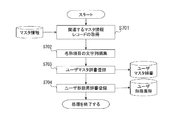
- FIG. 7 is a flowchart showing an example of processing for creating the user master dictionary exemplified in FIG. 2 and the user morpheme dictionary exemplified in FIG. 4 from the master information exemplified in FIG.
- This processing is realized, for example, as an operation in which a CPU (Central Processing Unit) 1001 executes a control program read from the external storage device 105 to the memory 1002 in a computer having a hardware configuration shown in FIG.
- a CPU Central Processing Unit
- step S701 related master information records are extracted from the above-described master information “medical HOT code master” (step S701).
- the value of “Receipt Computer Processing System Drug Name” item “Ranmark Subcutaneous Injection 120 mg 1.7 mL” and the corresponding value “3999435A1020” of the “National Drug Price Listed Drug Code” item are obtained. Is done.
- the value “calcium lactate“ Kozakai M ”” in the “Receipt computer system drug name” item and the corresponding value “3211001X1067” in the “price standard listed drug code” item are acquired.
- the character string of the name item is edited by the dictionary creation user who operates the computer having the hardware configuration of FIG. 10, for example, using the input device 1003 and the output device 1004 such as a display (step S702).
- drug names such as “Runmark” and “Runmark Subcutaneous Injection” are added to the drug name item “Runmark Subcutaneous Injection 120 mg 1.7 mL” of each record acquired in Step S701.
- a drug name such as “calcium lactate” is added to the drug name item “calcium lactate“ Kozakai M ”” of each record acquired in step S701.
- a user master dictionary composed of a pair of master keyword information and master code information is registered in the data format illustrated in FIG. 2 (step S703).
- FIG. 2 only the record corresponding to the master keyword information “run mark” and the record corresponding to the master keyword information “calcium lactate” are illustrated.
- a record corresponding to the master keyword information “Lanmark subcutaneous injection 120 mg 1.7 mL” and a record corresponding to the master keyword information “calcium lactate“ Kozakai M ”” may be registered.
- the user morpheme dictionary is registered in the data format illustrated in FIG. 4 (step S704).
- FIG. 8 is a flowchart showing an example of index information creation processing executed by the index information creation function unit 102 of FIG. This processing is performed, for example, as an operation in which the CPU 1001 executes the index information creation processing program read from the external storage device 105 to the memory 1002 in the computer of the electronic medical record search processing device 100 of FIG. 1 having the hardware configuration of FIG. Realized.
- difference data of the electronic medical record is acquired from the medical record storage unit 104 in the electronic medical record data storage device 101 of FIG. 1 (step S801).
- This process is a process of acquiring, as differential data, for example, electronic medical chart data newly stored in the medical chart storage unit 104 one by one after execution of the previous index information creation process.
- step S801 it is determined whether or not electronic medical chart data can be obtained and exists (step S802).
- step S803 display data processing is executed (step S803). Specifically, a process of converting the character code of the description information of the electronic medical record read from the medical chart storage unit 104 (FIG. 1) into a character code suitable for display on the browser software or the like of the terminal device is executed. The Alternatively, a process of converting the description information of the electronic medical record into data in an HTML (Hyper Text Markup Language) format suitable for displaying on the browser software or the like of the terminal device is executed.
- HTML Hyper Text Markup Language
- step S804 display data update processing is executed.
- a data display electronic medical record database held in the external storage device 1005 of the computer having the hardware configuration shown in FIG. 10 to be described later is updated with the electronic medical chart display data newly obtained in step S803.
- language analysis processing is executed using the user language dictionary for the description information of the electronic medical record acquired in step S801 (step S805).
- morphological analysis is executed as language analysis processing.
- a node refers to a unit of text to be subjected to language analysis processing.
- the node refers to all documents described in one electronic medical record. That is, the “node end” is the end of the document in the electronic medical record.
- step S806 If it is not processed until the end of the node and the determination in step S806 is NO, the part of speech of the keyword information that is the target acquired in step S805 is checked (step S807), and the part of speech is specified in advance by the user as a parameter. It is determined whether or not (step S808). For example, it is determined whether or not the part of speech is one of “noun”, “verb”, “adjective”, and “adjective verb”.
- step S805 If the part of speech of the keyword information acquired in step S805 does not correspond to any of “noun”, “verb”, “adjective”, and “adjective verb” and the determination in step S808 is NO, the keyword information is index keyword information. Otherwise, the process returns to step S805.
- the keyword information acquired in step S805 is specified in a registration exclusion dictionary (not shown). Is checked (step S809) and determined (step S810).
- the “registration exclusion dictionary” is a dictionary in which keyword information that is inappropriate and should not be detected as keyword information is registered.
- step S805 If the keyword information acquired in step S805 is specified in the registration exclusion dictionary and the determination in step S810 is YES, the keyword information is not used as index keyword information, and the process returns to step S805.
- step S811 a keyword master data dictionary check process is executed. Specifically, the process of the first method for determining the index keyword information based on the user master dictionary described above is executed. That is, an ambiguous search is performed on the master keyword information in the user master dictionary illustrated in FIG. 2 based on the keyword information acquired in step S805. Thereafter, it is determined whether or not the search is successful (step S812).
- step S812 If the fuzzy search is successful and the determination in step S812 is YES, the master keyword information and master code information of the record searched in the user master dictionary are acquired (step S813).
- step S814 the transposed indexing process is executed (step S814).
- the fuzzy search is successful and the determination in step S812 is YES, the following process is executed.
- the master keyword information and master code information acquired in step S813 are used as index keyword information and index code information.
- identification information of the electronic medical chart display data created in step S804 is associated with them, and a transposed index is created in the data format illustrated in FIG.
- the fuzzy search fails and the determination in step S812 is NO
- the keyword information acquired in step S805 is used as index keyword information
- the identification information of the electronic medical chart display data created in step S804 is associated with it.
- An inverted index is created. In this case, a transposed index using index code information is not created.
- a transposed index in which the identification information of the electronic medical chart display data is associated with the creation date, medical department, patient ID (identification information), and the like of the electronic medical chart created in step S804 may be created.
- step S814 the transposed index stored in the index information storage unit 114 of FIG. 1 is updated with the transposed index created in step S814 (step S815). Thereafter, the process returns to step S805.
- step S806 determines whether the process is completed up to the end of the node and the determination in step S806 is YES.
- step S802 If the difference data of the electronic medical record is lost and the determination in step S802 is NO, the following processing is executed. As will be described later, when search processing is distributed and executed by a plurality of computers, the data of the inverted index, which is the index information updated in step S815, is distributed (distributed) to the plurality of computers. (Step S816). Then, the index information creation process shown in the flowchart of FIG. 8 ends.
- FIG. 9 is a flowchart showing an example of search processing executed by the search processing function unit 103 of FIG. This processing is realized, for example, as an operation in which the CPU 1001 executes the search processing program read from the external storage device 105 to the memory 1002 in the computer of the electronic medical record search processing device 100 of FIG. 1 having the hardware configuration of FIG.
- Search conditions include, for example, keyword information for searching for drug names and code information for searching.
- the date, the medical subject, the patient ID, and the like of the electronic medical record may be included in the search condition.
- the search keyword user master dictionary check process is executed (step S902). Specifically, a morpheme analysis is performed for dividing the sentence of the search condition acquired in step S901 into a morpheme string. Of the obtained morphemes, those determined as predetermined parts of speech (for example, “noun”, “verb”, “adjective”, or “adjective verb”) are extracted as keyword information. On the other hand, out of the obtained morphemes, the one that matches the format of the master code information registered in the user master information exemplified in FIG. 2 is extracted as the code information. Next, an ambiguous search is performed on the master keyword information in the user master dictionary exemplified in FIG. 2 by the keyword information.
- predetermined parts of speech for example, “noun”, “verb”, “adjective”, or “adjective verb”.
- step S903 it is determined whether or not the search is successful. If the fuzzy search is successful and the determination in step S903 is YES, the master keyword information of the record searched in the user master dictionary is acquired (step S904).
- step S905 an inverted index acquisition process is executed (step S905).
- the fuzzy search is successful and the determination in step S904 is YES, the following process is executed.
- the master keyword information acquired in step S904 is used as search keyword information.
- the code information acquired in step S902 is used as search code information.
- the keyword information for index or the code information for index on the transposed index illustrated in FIG. 6 stored in the index information storage unit 114 of FIG. 1 is searched by the keyword information for search or the code information for search. Is done.
- the transposed index may be searched based on the date of the electronic medical record, the medical subject, the patient ID, and the like included in the search condition.
- step S904 determines whether the fuzzy search fails and the determination in step S904 is NO.
- the keyword information obtained by the morphological analysis in step S902 is used as search keyword information.
- the keyword information for index on the transposed index illustrated in FIG. 6 stored in the index information storage unit 114 of FIG. 1 is searched by the keyword information for search.
- the transposed index may be searched based on the date of the electronic medical record, the medical subject, the patient ID, and the like included in the search condition.
- the identification information of the electronic medical record corresponding to the searched index record is extracted from the transposed index.
- step S905 it is determined whether or not the data record of the searched inverted index exists and the identification information of the electronic medical record has been extracted (step S906).
- step S906 the search process is terminated, and the electronic medical record corresponding to the search condition is displayed in the browser software of the user terminal device that executes the search process. It is displayed that there is not.
- step S906 determines whether the data record of the searched inverted index exists and the determination in step S906 is YES. If the data record of the searched inverted index exists and the determination in step S906 is YES, the display data search key list including the search keyword information and the search code information described above is acquired (step S907). ).
- step S908 a sort process is performed on the key list acquired in step S907 (step S908).
- the electronic chart display data is obtained from the data display electronic chart database based on the electronic chart identification information extracted in step S905 corresponding to each search key. (Step S909).
- the data display electronic medical record database is obtained by the process of step S804 in FIG. 8 described above, and is held in, for example, an external storage device 1005 of a computer having a hardware configuration in FIG.
- step S910 it is determined whether or not the search key list is final.
- step S910 determines whether the search key list is final and the determination in step S910 is NO. If the search key list is not final and the determination in step S910 is NO, the electronic medical chart display data acquired in step S909 is set in the search key list (step S912). Thereafter, the process returns to step S909, and an electronic medical chart display data acquisition process corresponding to the next search key is executed.
- step S910 If the determination in step S910 is YES at the end of the search key list, the search key list and the electronic medical chart display data set for the search key list are searched for in the browser software of the user terminal device that executes the search process. The result is sent and displayed.
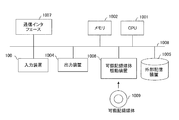
- FIG. 10 is a diagram illustrating an example of a hardware configuration of a computer that executes the electronic medical record search processing apparatus 100 of FIG. 1 as software processing.
- a CPU 1001 includes a memory 1002, an input device 1003, an output device 1004, an external storage device 1005, a portable recording medium driving device 1006 into which a portable recording medium 1009 is inserted, and a communication interface 1007. , These are connected to each other by a bus 1008.
- the configuration shown in the figure is an example of a computer that can implement the above system, and such a computer is not limited to this configuration.
- the CPU 1001 controls the entire computer.
- the memory 1002 is a memory such as a RAM that temporarily stores a program or data stored in the external storage device 1005 (or the portable recording medium 1009) when executing a program, updating data, or the like.
- the CUP 1001 performs overall control by reading the program into the memory 1002 and executing it.
- the input / output device 1003 detects an input operation by a user using a keyboard, a mouse, or the like, notifies the CPU 1001 of the detection result, and outputs data sent under the control of the CPU 1001 to a display device or a printing device.
- the external storage device 1005 is, for example, a hard disk storage device. Mainly used for storing various data and programs.
- the portable recording medium driving device 1006 accommodates a portable recording medium 1009 such as an optical disc, SDRAM, or Compact Flash (registered trademark), and has an auxiliary role for the external storage device 1005.
- a portable recording medium 1009 such as an optical disc, SDRAM, or Compact Flash (registered trademark)
- Compact Flash registered trademark
- the communication interface 1007 is a device for connecting, for example, a LAN (local area network) or a WAN (wide area network) communication line.
- the electronic medical record search processing apparatus 100 of the present embodiment is a program in which the functions of the index information creation function unit 102 or the search processing function unit 103 of FIG. 1 realized by the flowchart of FIG. 7, FIG. 8, or FIG. This is realized by the CPU 1001 executing.
- the program may be recorded and distributed in the external storage device 1005 or the portable recording medium 1009, or may be acquired from the network by the network connection device 1007.
- a Java (registered trademark) framework for distributed processing of large-scale data called “Hadoop” may be used.
- This framework is an open source platform that enables a large amount of data such as electronic medical records to be distributed and processed in a plurality of computers.
- a column-oriented distributed database called “Hbase” that is executed on the distributed file system “HDFS” of “Hadoop” may be used.
- the database of the medical chart storage unit 104 in FIG. 1 is distributed and processed in a plurality of computers of the electronic medical record data storage apparatus 101.
- Java registered trademark
- Java full-text search engine software called “Lucene”
- Sander a full-text search web application system equipped with a web-accessible management screen and a cache mechanism based on “Lucene”
- the search processing function unit 103 in FIG. 1 is constructed according to “Lucene” or “Sorr”.
- the index information which is a transposed index, holds the identification information corresponding to the electronic medical record having the description information corresponding to each of the index keyword information and the index code information.
- the transposed index stores the keyword information extracted from the description information corresponding to the index keyword information in the description information of the electronic medical record and the description position information where the index code information exists. May be.
- the object is, for example, a medicine
- the keyword information of the object is, for example, a medicine name
- the code information for identifying the object is, for example, code information for identifying the medicine.
- the target object may be, for example, disease or surgery
- the keyword information of the target object may be, for example, a disease name or surgery name
- the code information for identifying the target object may be, for example, code information for identifying the disease name or surgery name.
- the language used for the description information of the electronic medical record is not limited to Japanese, and may be various foreign languages including English, German and French.
Landscapes
- Engineering & Computer Science (AREA)
- Theoretical Computer Science (AREA)
- Health & Medical Sciences (AREA)
- Physics & Mathematics (AREA)
- General Engineering & Computer Science (AREA)
- General Physics & Mathematics (AREA)
- Databases & Information Systems (AREA)
- Primary Health Care (AREA)
- Medical Informatics (AREA)
- General Health & Medical Sciences (AREA)
- Epidemiology (AREA)
- Data Mining & Analysis (AREA)
- Public Health (AREA)
- Medicinal Chemistry (AREA)
- Chemical & Material Sciences (AREA)
- Bioinformatics & Cheminformatics (AREA)
- Computational Linguistics (AREA)
- Software Systems (AREA)
- Pharmacology & Pharmacy (AREA)
- Toxicology (AREA)
- Mathematical Physics (AREA)
- Fuzzy Systems (AREA)
- Probability & Statistics with Applications (AREA)
- Automation & Control Theory (AREA)
- Medical Treatment And Welfare Office Work (AREA)
- Information Retrieval, Db Structures And Fs Structures Therefor (AREA)
Abstract
電子カルテを検索するための情報検索処理プログラム、装置、および方法に関し、電子カルテの記載情報として記載されていない検索対象のコード情報であっても電子カルテの検索を可能にする。インデックス情報作成機能部102で、キーワード情報決定部106は、マスタ記憶部113のユーザマスタ辞書に基づき、電子カルテ読出し部105が読み出した電子カルテの記載情報に対応するキーワード情報を決定する。コード情報決定部107は、決定されたキーワード情報に対応するコード情報をマスタ記憶部113のユーザマスタ辞書から読み出して、コード情報とする。インデックス情報生成部108は、決定されたキーワード情報と読み出されたコード情報の各々に、上記電子カルテの識別情報を対応付けてインデックス情報を生成し、インデックス情報記憶部114に記憶させる。検索処理機能部103は、このインデックス情報を使って検索を行うことで、電子カルテの記載情報内に薬品等のコード情報がなくても、検索条件にコード情報を指定して検索できる。
Description
本発明は、電子カルテを検索するための情報検索処理プログラム、装置、および方法に関する。
電子カルテの普及に伴い、医師等が、例えばある薬品を投与した場合の類似症例等を、薬品名等をキーワードとして過去の電子カルテに記載されている情報から検索する次のような従来技術が知られている(例えば特許文献1)。コンピュータが、入力領域に対する診療情報の入力を補助する入力ツールを起動する起動指示を利用者から受け付けると、所定のキーワードを予め記憶する記憶部から該キーワードを取得する。また、コンピュータは、取得したキーワードが、入力領域に対して入力済みの受診者の診療情報に含まれている場合に、該診療情報に含まれているキーワードを入力ツールに転送する。また、記憶部は、入力ツールごとに所定のキーワードを予め記憶し、コンピュータは、起動指示によって識別される入力ツールに対応するキーワードを記憶部から取得する。
従来、利用者が希望する検索条件にマッチした電子カルテを抽出することが要望されていた。
電子カルテの記載情報をキーワードで検索するためには、電子カルテを全文検索する処理が必要になる。例えば、5000万件の電子カルテがある場合に、テキスト全文検索を行うと1時間程度かかる。そこで、電子カルテに出現するキーワードのインデックステーブルを予め作成しておき、検索の効率化を可能にすることができる。
インデックステーブルには、例えば転置インデックス情報が格納される。転置インデックス情報は、電子カルテから抜き出したキーワードに対して当該キーワードが記載された電子カルテのカルテ番号が対応付けられるように、生成される。
例えば、「かゆい」というキーワードが、カルテ番号001、003、004の電子カルテに記載されていることを事前に検索していたとする。このとき、インデックステーブルには、キーワード「かゆい」に対して、001、003,004のカルテ番号が対応付けられて記憶される。
その後、作業者が「かゆい」のキーワードを検索する場合、インデックステーブルを参照し、「かゆい」に対応するカルテ番号001,003,004を読み出すことで検索が完了する。よって転置インデックス情報を用意しておくことで、検索時間を短縮することができる。
ここで、電子カルテの検索をする場合、コード情報で検索を行いたい場合がある。例えば、薬品名で検索するのではなく、意味のあるコード(薬品コード)で該当する電子カルテを検索したい場合がある。
しかし、電子カルテの記載情報にコード情報が記載されていない場合がある。上述したように、電子カルテに対応する転置インデックス情報は、電子カルテから抜き出したキーワードから作成される。このため、コード情報が電子カルテの記載情報に記載されていない場合、コード情報による電子カルテの検索はできないという問題点がある。
そこで、本発明の1つの側面では、電子カルテの記載情報として記載されていない検索対象のコード情報であっても電子カルテの検索を可能にすることを目的とする。
態様の一例は、電子カルテに含まれる情報を検索する処理プログラムであって、電子カルテを識別する識別情報とその電子カルテに記載された記載情報とを関連付けて記憶する電子カルテ記憶部から電子カルテを読み出し、対象物のキーワード情報とその対象物を識別するコード情報とが関連付けられて記憶されたマスタ記憶部に基づき、読み出した電子カルテに記載された記載情報に対応するキーワード情報を決定し、決定したキーワード情報に対応するコード情報をマスタ記憶部から読み出し、決定したキーワード情報および読み出したコード情報のそれぞれに、読み出した電子カルテに対応する識別情報を対応付けることにより、読み出した電子カルテに対応するインデックス情報を生成する処理をコンピュータに実行させる情報検索処理プログラムである。
電子カルテの記載情報として記載されていない検索対象のコード情報であっても電子カルテの検索が可能となる。
以下、本発明を実施するための形態について図面を参照しながら詳細に説明する。
図1は、本発明の実施形態(以下「本実施形態」)に係る情報検索処理装置のブロック図である。
図1は、本発明の実施形態(以下「本実施形態」)に係る情報検索処理装置のブロック図である。
本実施形態に係る情報検索処理装置は、電子カルテ検索処理装置100と電子カルテデータ記憶装置101とから構成される。電子カルテデータ記憶装置101は、電子カルテをデータベースとして記憶する電子カルテ記憶部104を備える1台または複数台からなるコンピュータである。電子カルテ検索処理装置100は、インデックス情報作成機能部102と検索処理機能部103、マスタ記憶部113、およびインデックス情報記憶部114を備える1台または複数台からなるコンピュータである。インデックス情報作成機能部102は、電子カルテ読出し部105、キーワード情報決定部106、コード情報読出し部107、およびインデックス情報生成部108を備える。検索処理機能部103は、検索条件入力部109、キーワード情報/コード情報決定部110、インデックス情報検索部111、および電子カルテ記載情報表示部112を備える。
電子カルテデータ記憶装置101において、電子カルテ記憶部104は、電子カルテ毎に、その電子カルテを識別する識別情報、例えばカルテ番号と、その電子カルテに記載された記載情報とを関連付けて記憶するデータベースである。
電子カルテ検索処理装置100内のマスタ記憶部113は、対象物のキーワード情報と、その対象物を識別するコード情報とを関連付けて、例えばユーザマスタ辞書として記憶する。対象物は、例えば薬品である。対象物のキーワード情報は、例えば薬品名である。対象物を識別するコード情報は、例えば薬品を識別するコード情報である。以下、ユーザマスタ辞書中のキーワード情報およびコード情報をそれぞれ、マスタキーワード情報およびマスタコード情報と呼ぶ。
電子カルテ検索処理装置100内のインデックス情報作成機能部102において、電子カルテ読出し部105は、電子カルテ記憶部104から電子カルテを読み出す。
キーワード情報決定部106は、マスタ記憶部113が記憶する例えばユーザマスタ辞書に基づき、電子カルテ読出し部105が読み出した電子カルテに記載された記載情報に対応するキーワード情報を決定する。以下、このように決定されたキーワード情報をインデックス用キーワード情報と呼ぶ。
コード情報読出し部107は、上記決定されたキーワード情報に対応するコード情報をマスタ記憶部113が記憶する例えばユーザマスタ辞書から読み出す。以下、このように読み出されたコード情報をインデックス用コード情報と呼ぶ。
インデックス情報生成部108は、上記インデックス用キーワード情報および上記インデックス用コード情報のそれぞれに、電子カルテ読出し部105が読み出した電子カルテに対応する識別情報を対応付ける。これにより、インデックス情報生成部108は、その電子カルテに対応するインデックス情報を生成し、インデックス情報記憶部114に記憶させる。
電子カルテ検索処理装置100内の検索処理機能部103において、検索条件入力部109は、電子カルテ利用者が操作する端末装置等で指定された検索条件を入力する。
キーワード情報/コード情報決定部110は、マスタ記憶部113が記憶する例えばユーザマスタ辞書に基づき、検索条件入力部109が入力した検索条件に対応する検索用のキーワード情報または検索用のコード情報を決定する。
インデックス情報検索部111は、インデックス情報記憶部114が記憶するインデックス情報において、上記検索用のキーワード情報または上記検索用のコード情報に対応するインデックス用キーワード情報またはインデックス用コード情報を検索する。そして、インデックス情報検索部111は、上記検索の結果に対応する識別情報を抽出する。
電子カルテ記載情報表示部112は、インデックス情報検索部111が抽出した識別情報に対応する電子カルテの記載情報を、電子カルテデータ記憶装置101内の電子カルテ記憶部104から読み出して、電子カルテ利用者が操作する端末装置等に表示する。
上述の構成を有する本実施形態に係る情報検索処理装置の動作について、以下に詳細に説明する。
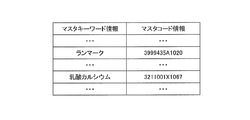
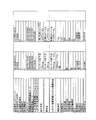
図2、図3、および図4は、本実施形態で使用されるユーザマスタ辞書、マスタ情報、およびユーザ形態素辞書のデータ構成例を示す図である。
図2に示されるように、このユーザマスタ辞書は、対象物のマスタキーワード情報とマスタコード情報とを関連付けて記憶したテーブルであり、図1の電子カルテ検索処理装置100内のマスタ記憶部113に記憶される。マスタキーワード情報は、例えば薬品名である。マスタコード情報は、例えば薬品を識別するコード情報である。
本実施形態では、インデックス情報の作成時にまず、図1のキーワード情報決定部106は、図2に例示されるユーザマスタ辞書に基づき、電子カルテに記載された記載情報に対応するインデックス用キーワード情報を決定する。
ユーザマスタ辞書に基づきインデックス用キーワード情報を決定する第1の手法としては、次のような手法を適用することができる。まず、読み出した電子カルテに記載された記載情報からキーワード情報を抽出する。この場合例えば、読み出した電子カルテに記載された記載情報の文を形態素の列に分割する形態素解析を実行し、得られた形態素のうち所定の品詞(例えば「名詞」「動詞」「形容詞」「形容動詞」のいずれか)と判別されたものをキーワード情報として抽出する。そして、このキーワード情報によってユーザマスタ辞書中のマスタキーワード情報に対してあいまい検索を実行する。「あいまい検索」とは、キーワード情報の文字列をマスタキーワード情報の一部または全部に含む検索、全角と半角、大文字と小文字、カタカナと平仮名、長音ありとなし等を同一とみなす検索をいう。あいまい検索に成功した場合には、ユーザマスタ辞書で検索されたマスタキーワード情報をインデックス用キーワード情報として決定する。
例えば、「ランマーク」(医薬品名総称)は、名詞である。この「ランマーク」という薬品名を含む電子カルテの記載情報のテキスト文書に形態素解析をそのまま実施すると、「ラン|マーク」というように、2つの形態素に分割される場合がある。しかし、このような2つの形態素「ラン」および「マーク」にそれぞれ、それらが出現する電子カルテの識別情報を対応させてインデックス情報を生成してしまうと、「ランマーク」という検索条件では該当する電子カルテが検索できなくなる可能性がある。そこで、本実施形態では、上述のように、例えば予め薬品名「ランマーク」というマスタキーワード情報と、それに対応するマスタコード情報「3999435A1020」を対応させたユーザマスタ辞書を用意しておく。そして、2つの形態素「ラン」および「マーク」をそれぞれ用いて、ユーザマスタ辞書に対してあいまい検索を実行することにより、ともに正しいマスタキーワード情報「ランマーク」を抽出し、それをインデックス用キーワード情報として決定する。これにより、薬品名「ランマーク」を含む電子カルテの記載情報のテキスト文書に対して、正しいインデックス用キーワード情報「ランマーク」を決定することが可能となる。
ここで、図2に例示されるような、マスタキーワード情報とマスタコード情報を対応付けるユーザマスタ辞書は、例えば「一般財団法人 医療情報システム開発センター(MEDIS-DC)」が開発している「医療HOTコードマスタ」のようなマスタ情報から取得することができる。図3は、マスタ情報「医療HOTコードマスタ」のデータ構成例を示す図である。このマスタ情報におけるレコード構成のうち例えば、「レセプト電算処理システム医薬品名」項目の値をマスタキーワード情報とし、「薬価基準収載医薬品コード」項目の値をマスタコード情報として抽出することにより、ユーザマスタ辞書を作成できる。
この場合、「レセプト電算処理システム医薬品名」項目の値「ランマーク皮下注120mg 1.7mL」に対して「薬価基準収載医薬品コード」項目の値「3999435A1020」が対応する。すなわち、「ランマーク」の正式医薬品名は「ランマーク皮下注120mg 1.7mL」だが、通常カルテで入力するときには、「ランマーク皮下注120mg 1.7mL」のような入力は行わない。
そこで、例えば「医療HOTコードマスタ」の「レセプト電算処理システム医薬品名」項目の値をマスタキーワード情報とするときには、図2に示されるように、電子カルテの記載情報として良く入力される値「ランマーク」が使用されてよい。
ただし、ユーザマスタ辞書におけるマスタキーワード情報のパターンとして、「ランマーク」だけでなく、「ランマーク皮下注」「ランマーク皮下注120mg 1.7mL」をマスタキーワード情報として有するユーザマスタ辞書が生成されてもよい。
同様に、図3に例示される「レセプト電算処理システム医薬品名」項目の値「乳酸カルシウム「コザカイ・M」」に対して「薬価基準収載医薬品コード」項目の値「3211001X1067」が対応する。すなわち、「乳酸カルシウム」の正式医薬品名は「乳酸カルシウム「コザカイ・M」」だが、通常カルテで入力するときには、「乳酸カルシウム「コザカイ・M」」のような入力は行わない。
そこで、例えば「医療HOTコードマスタ」の「レセプト電算処理システム医薬品名」項目の値をマスタキーワード情報とするときには、図2に示されるように、電子カルテの記載情報として良く入力される値「乳酸カルシウム」が使用されてよい。
ただし、ユーザマスタ辞書におけるマスタキーワード情報のパターンとして、「乳酸カルシウム」だけでなく、「乳酸カルシウム「コザカイ・M」」をマスタキーワード情報として有するユーザマスタ辞書が生成されてもよい。
さらに、ユーザマスタ辞書から抽出された上記複数のマスタキーワード情報を各々インデックス用キーワード情報として有するインデックス情報が生成されてもよい。
以上の第1の手法により、電子カルテの記載情報として記載される「ランマーク」や「乳酸カルシウム」に対応する検索条件の様々なバリエーションに対して、精度の高いインデックス情報を生成することが可能となる。
ユーザマスタ辞書に基づきインデックス用キーワード情報を決定する第2の手法としては、次のような手法を適用することができる。電子カルテの記載情報の文の形態素解析において、図2に例示される各マスタキーワード情報「ランマーク」や「乳酸カルシウム」等を、形態素解析のユーザ辞書(以下この辞書を「ユーザ形態素辞書」と呼ぶ)に登録する。そして、読み出した電子カルテに記載された記載情報の文を形態素の列に分割する形態素解析を実行し、得られた形態素のうち所定の品詞と判別されたものをインデックス用キーワード情報として決定する。
この第2の手法により、ユーザマスタ辞書内の各マスタキーワード情報が形態素として分割されるようにすることができ、精度の高いインデックス情報を生成することが可能となる。
図4は、ユーザ形態素辞書のデータ構成例を示す図である。図2に例示されるユーザマスタ辞書のマスタキーワード情報「ランマーク」や「乳酸カルシウム」をそれぞれ表層形項目および原形項目として有する、ユーザ形態素辞書の各レコードデータを生成する。
次に、本実施形態では、インデックス情報の作成時に、図1のコード情報読出し部107は、上述のようにして図1のキーワード情報決定部106で決定されたインデックス用キーワード情報に対応するマスタコード情報を、図2に例示されるユーザマスタ辞書から読み出して、インデックス用コード情報として決定する。
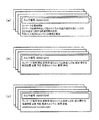
図5は、本実施形態におけるデータの遷移例を示す説明図である。
電子カルテの記載情報として、図5(a)に例示されるように、「ランマークを服用開始 ランマークは副作用として低カルシウム血症の症状があり、しびれなどの症状に関する経過観察が必要。予防として乳酸カルシウムの服用を実施」が登録されているとする。
電子カルテの記載情報として、図5(a)に例示されるように、「ランマークを服用開始 ランマークは副作用として低カルシウム血症の症状があり、しびれなどの症状に関する経過観察が必要。予防として乳酸カルシウムの服用を実施」が登録されているとする。
これに対して、上述の形態素解析をベースとするインデックス用キーワード情報の決定処理によって、図5(b)に例示されるように、「ランマーク 服用 開始 副作用 低カルシウム血症 しびれ 症状 関する経過措置 必要 予防 乳酸カルシウム 服用 実施」というようなインデックス用キーワード情報が決定される。
さらに、上述のインデックス用コード情報の決定処理によって、図5(c)に例示されるように、上記インデックス用キーワード情報に加え、「3999435A1020 3211001X1067」というようなインデックス用コード情報が決定される。
そして、本実施形態では、図1のインデックス情報生成部108が、上記インデックス用キーワード情報および上記インデックス用コード情報のそれぞれに、読み出した電子カルテに対応する識別情報を対応付けることにより、インデックス情報を生成する。
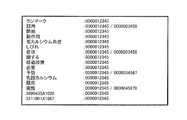
図6は、インデックス情報である転置インデックスの例を示すデータ構成図である。転置インデックスでは、電子カルテの記載情報に対応するインデックス用キーワード情報、例えば「ランマーク」に対して、そのキーワード情報に対応する記載情報が記載されている電子カルテの識別情報、例えば「0000012345」が対応付けられている。また、転置インデックスでは、インデックス用キーワード情報「ランマーク」に対して図2に例示のユーザマスタ辞書から抽出されたインデックス用コード情報「3999435A1020」に、電子カルテの識別情報、例えば「0000012345」が対応付けられている。
このようにして、本実施形態では、電子カルテの記載情報として検索対象である例えば薬品のコード情報が記載されていない場合であっても、図1のインデックス情報記憶部114が記憶するインデックス情報に、図6のようにコード情報を含めることができる。そして、このようなインデックス情報(転置インデックス)を用いることにより、図1の検索処理機能部103は、電子カルテの記載情報として記載されていない薬品のコード情報等であっても、電子カルテの検索が可能となる。これにより、本実施形態では、閲覧したい内容を含む電子カルテが検索で見つかる可能性を高めることが可能となる。
図7は、図3に例示されるマスタ情報から、図2に例示されるユーザマスタ辞書と図4に例示されるユーザ形態素辞書を作成する処理の例を示すフローチャートである。この処理は、例えば後述する図10のハードウェア構成を有するコンピュータにおいて、CPU(中央演算処理装置)1001が外部記憶装置105からメモリ1002に読み出した制御プログラムを実行する動作として実現される。
まず、前述したマスタ情報「医療HOTコードマスタ」などから、関連するマスタ情報レコードが抽出される(ステップS701)。図3のマスタ情報の例では、「レセプト電算処理システム医薬品名」項目の値「ランマーク皮下注120mg 1.7mL」と、それに対応する「薬価基準収載医薬品コード」項目の値「3999435A1020」が取得される。また、「レセプト電算処理システム医薬品名」項目の値「乳酸カルシウム「コザカイ・M」」と、それに対応する「薬価基準収載医薬品コード」項目の値「3211001X1067」が取得される。
次に、例えば図10のハードウェア構成を有するコンピュータを操作する辞書作成利用者によって、例えば入力装置1003およびディスプレイ等の出力装置1004を用いて、名称項目の文字列が編集される(ステップS702)。例えばステップS701で取得された各レコードの薬品名項目「ランマーク皮下注120mg 1.7mL」に対して、「ランマーク」や「ランマーク皮下注」等の薬品名が追加される。あるいは、例えばステップS701で取得された各レコードの医薬品名項目「乳酸カルシウム「コザカイ・M」」に対して、「乳酸カルシウム」等の薬品名が追加される。
その後、図2に例示されるデータフォーマットで、マスタキーワード情報とマスタコード情報のペアからなるユーザマスタ辞書が登録される(ステップS703)。なお、図2では、マスタキーワード情報「ランマーク」に対応するレコードと、マスタキーワード情報「乳酸カルシウム」に対応するレコードのみが例示されている。これ以外に、マスタキーワード情報「ランマーク皮下注120mg 1.7mL」に対応するレコードや、マスタキーワード情報「乳酸カルシウム「コザカイ・M」」に対応するレコードが登録されてもよい。
さらに、図4に例示されるデータフォーマットで、ユーザ形態素辞書が登録される(ステップS704)。
図8は、図1のインデックス情報作成機能部102が実行するインデックス情報作成処理の例を示すフローチャートである。この処理は、例えば後述する図10のハードウェア構成を有する図1の電子カルテ検索処理装置100のコンピュータで、CPU1001が外部記憶装置105からメモリ1002に読み出したインデックス情報作成処理プログラムを実行する動作として実現される。
まず、図1の電子カルテデータ記憶装置101内のカルテ記憶部104から、電子カルテの差分データが取得される(ステップS801)。この処理は、差分データとして例えば、前回のインデックス情報作成処理の実行時以降、カルテ記憶部104に新たに記憶された電子カルテのデータを、1件ずつ取得する処理である。
次に、ステップS801で電子カルテのデータが取得できて存在するか否かが判定される(ステップS802)。
電子カルテのデータが存在してステップS802の判定がYESならば、次の処理が実行される。その電子カルテのデータが検索されたときに検索利用者が操作する端末装置のディスプレイにその電子カルテを表示できるようにするために、表示用データの加工処理が実行される(ステップS803)。具体的には、カルテ記憶部104(図1)から読み出された電子カルテの記載情報の文字コードを、端末装置のブラウザソフトウェア等に表示するのに適した文字コードに変換する処理が実行される。或いは、電子カルテの記載情報を、端末装置のブラウザソフトウェア等に表示するのに適したHTML(Hyper Text Markup Language)形式のデータに変換する処理が実行される。
次に、表示用データの更新処理が実行される(ステップS804)。例えば後述する図10のハードウェア構成を有するコンピュータの外部記憶装置1005に保持されるデータ表示用電子カルテのデータベースが、ステップS803で新たに得られた電子カルテの表示用データによって更新される。
次に、ステップS801で取得された電子カルテの記載情報に対して、ユーザ言語辞書を用いて言語解析処理が実行される(ステップS805)。例えば、ユーザ言語辞書として図4に例示されるようにして作成されたユーザ形態素辞書を用いて、言語解析処理として形態素解析が実行される。
その後、ステップS801で取得された電子カルテの記載情報の文書のノード(Node)の最終まで処理されか否かが判定される(ステップS806)。ノードとは、言語解析処理されるテキストの単位をいい、本実施形態では1つの電子カルテの記載情報の全ての文書をいう。すなわち、「ノードの最終」とは電子カルテ中の文書の文末である。
ノードの最終まで処理されておらずステップS806の判定がNOならば、ステップS805で取得された対象であるキーワード情報の品詞がチェックされ(ステップS807)、予め利用者によってパラメータ指定された品詞であるか否かが判定される(ステップS808)。例えば、品詞が、「名詞」「動詞」「形容詞」「形容動詞」のいずれかであるか否かが判定される。
ステップS805で取得されたキーワード情報の品詞が「名詞」「動詞」「形容詞」「形容動詞」のいずれかに該当せずステップS808の判定がNOならば、そのキーワード情報はインデックス用キーワード情報とはされず、ステップS805の処理に戻る。
品詞が「名詞」「動詞」「形容詞」「形容動詞」のいずれかに該当しステップS808の判定がYESならばさらに、ステップS805で取得されたキーワード情報が特には図示しない登録排除辞書で指定されているか否かがチェックされ(ステップS809)、判定される(ステップS810)。「登録排除辞書」とは、キーワード情報として不適切で検出すべきでないキーワード情報を登録した辞書である。
ステップS805で取得されたキーワード情報が登録排除辞書で指定されておりステップS810の判定がYESならば、そのキーワード情報はインデックス用キーワード情報とはされず、ステップS805の処理に戻る。
ステップS805で取得されたキーワード情報が登録排除辞書で指定されておらずステップS810の判定がNOならば、キーワード情報のユーザマスタ辞書チェックの処理が実行される(ステップS811)。具体的には、前述した、ユーザマスタ辞書に基づきインデックス用キーワード情報を決定する第1の手法の処理が実行される。すなわち、ステップS805で取得されたキーワード情報によって図2に例示されるユーザマスタ辞書中のマスタキーワード情報に対してあいまい検索が実行される。その後、検索に成功したか否かが判定される(ステップS812)。
あいまい検索に成功しステップS812の判定がYESならば、ユーザマスタ辞書で検索されたレコードのマスタキーワード情報とマスタコード情報が取得される(ステップS813)。
次に、転置インデックス化処理が実行される(ステップS814)。この処理では、あいまい検索に成功しステップS812の判定がYESならば、次の処理が実行される。ステップS813で取得されたマスタキーワード情報とマスタコード情報が、インデックス用キーワード情報とインデックス用コード情報とされる。そして、それらにステップS804で作成された電子カルテの表示用データの識別情報が対応付けられ、図6に例示されるデータフォーマットで転置インデックスが作成される。あいまい検索に失敗しステップS812の判定がNOならば、ステップS805で取得されたキーワード情報がインデックス用キーワード情報とされ、それにステップS804で作成された電子カルテの表示用データの識別情報が対応付けられ、転置インデックスが作成される。なお、この場合は、インデックス用コード情報を用いた転置インデックスは作成されない。なお、ステップS804で作成された電子カルテの作成日付、診療科、患者ID(識別情報)等に電子カルテの表示用データの識別情報を対応付けた転置インデックスが作成されてもよい。
その後、ステップS814で作成された転置インデックスによって、図1のインデックス情報記憶部114に記憶されている転置インデックスが更新される(ステップS815)。その後、ステップS805の処理に戻る。
ノードの最終まで処理されてステップS806の判定がYESになると、ステップS801の処理に戻って、次の電子カルテの差分データが取得される。
電子カルテの差分データがなくなってステップS802の判定がNOになると、次の処理が実行される。後述するように検索処理が複数のコンピュータで分散されて実行されるような場合には、ステップS815で更新されたインデックス情報である転置インデックスのデータが、当該複数のコンピュータに分散化(配布)される(ステップS816)。そして、図8のフローチャートで示されるインデックス情報作成処理を終了する。
図9は、図1の検索処理機能部103が実行する検索処理の例を示すフローチャートである。この処理は、例えば後述する図10のハードウェア構成を有する図1の電子カルテ検索処理装置100のコンピュータで、CPU1001が外部記憶装置105からメモリ1002に読み出した検索処理プログラムを実行する動作として実現される。
まず、検索処理を実行する利用者が端末装置を操作して検索条件を指定すると、その情報が、例えば図10のハードウェア構成を有する図1の電子カルテ検索処理装置100のコンピュータにネットワーク等を介して通知される。この結果、図9のフローチャートで示される検索処理プログラムが起動する。
まず、検索条件が取得される(ステップS901)。検索条件には例えば、薬品名の検索用のキーワード情報や検索用のコード情報が含まれる。その他、電子カルテの日付や診療科目、患者ID等が検索条件に含まれてもよい。
次に、検索キーワードのユーザマスタ辞書チェックの処理が実行される(ステップS902)。具体的には、ステップS901で取得された検索条件の文を形態素の列に分割する形態素解析が実行される。そして、得られた形態素のうち所定の品詞(例えば「名詞」「動詞」「形容詞」「形容動詞」のいずれか)と判別されたものがキーワード情報として抽出される。一方、得られた形態素のうち図2に例示されるユーザマスタ情報に登録されているマスタコード情報のフォーマットに合うものがコード情報として抽出される。次に、上記キーワード情報によって図2に例示されるユーザマスタ辞書中のマスタキーワード情報に対してあいまい検索が実行される。
その後、検索に成功したか否かが判定される(ステップS903)。
あいまい検索に成功しステップS903の判定がYESならば、ユーザマスタ辞書で検索されたレコードのマスタキーワード情報が取得される(ステップS904)。
あいまい検索に成功しステップS903の判定がYESならば、ユーザマスタ辞書で検索されたレコードのマスタキーワード情報が取得される(ステップS904)。
次に、転置インデックス取得処理が実行される(ステップS905)。この処理では、あいまい検索に成功しステップS904の判定がYESならば、次の処理が実行される。ステップS904で取得されたマスタキーワード情報が、検索用のキーワード情報とされる。また、ステップS902で取得されたコード情報が検索用のコード情報とされる。そして、上記検索用のキーワード情報または検索用のコード情報によって、図1のインデックス情報記憶部114に記憶されている図6に例示される転置インデックス上のインデックス用キーワード情報またはインデックス用コード情報が検索される。その他、検索条件に含まれる電子カルテの日付や診療科目、患者ID等によって転置インデックスが検索されてもよい。一方、あいまい検索に失敗しステップS904の判定がNOならば、次の処理が実行される。ステップS902の形態素解析で得られてキーワード情報が、検索用のキーワード情報とされる。そして、この検索用のキーワード情報によって、図1のインデックス情報記憶部114に記憶されている図6に例示される転置インデックス上のインデックス用キーワード情報が検索される。その他、検索条件に含まれる電子カルテの日付や診療科目、患者ID等によって転置インデックスが検索されてもよい。以上の検索の結果、転置インデックスから、検索されたインデックスレコードに対応する電子カルテの識別情報が抽出される。
ステップS905の検索の結果、検索された転置インデックスのデータレコードが存在し電子カルテの識別情報が抽出されたか否かが判定される(ステップS906)。
検索された転置インデックスのデータレコードが存在せずステップS906の判定がNOならば、検索処理を終了し、検索処理を実行する利用者の端末装置のブラウザソフトウェアに、検索条件に該当する電子カルテが無い旨が表示される。
一方、検索された転置インデックスのデータレコードが存在しステップS906の判定がYESならば、前述した検索用のキーワード情報および検索用のコード情報を含む表示用データ検索キーリストが取得される(ステップS907)。
次に、ステップS907で取得されたキーリストに対してソート処理が実施される(ステップS908)。
そして、ステップS908でソートされたキーリストに従って、各検索キーに対応してステップS905で抽出された電子カルテの識別情報に基づいて、データ表示用電子カルテのデータベースから電子カルテの表示用データが取得される(ステップS909)。データ表示用電子カルテのデータベースは、前述した図8のステップS804の処理で得られ、例えば後述する図10のハードウェア構成を有するコンピュータの外部記憶装置1005に保持されている。
その後、検索キーリストの最終になったか否かが判定される(ステップS910)。
検索キーリストの最終になっておらずステップS910の判定がNOならば、ステップS909で取得された電子カルテの表示用データが検索キーリストに設定される(ステップS912)。その後、ステップS909の処理に戻り、次の検索キーに対応する電子カルテの表示用データの取得処理が実行される。
検索キーリストの最終になってステップS910の判定がYESならば、検索キーリストとそれに対して設定された電子カルテの表示用データが、検索処理を実行する利用者の端末装置のブラウザソフトウェアに検索結果として送信され表示される。
これにより、図9の検索処理のフローチャートの処理が終了する。
図10は、図1の電子カルテ検索処理装置100をソフトウェア処理として実行するコンピュータのハードウェア構成の一例を示す図である。
図10に示されるコンピュータは、CPU1001、メモリ1002、入力装置1003、出力装置1004、外部記憶装置1005、可搬記録媒体1009が挿入される可搬記録媒体駆動装置1006、及び通信インタフェース1007を有し、これらがバス1008によって相互に接続された構成を有する。同図に示される構成は上記システムを実現できるコンピュータの一例であり、そのようなコンピュータはこの構成に限定されるものではない。
CPU1001は、当該コンピュータ全体の制御を行う。メモリ1002は、プログラムの実行、データ更新等の際に、外部記憶装置1005(或いは可搬記録媒体1009)に記憶されているプログラム又はデータを一時的に格納するRAM等のメモリである。CUP1001は、プログラムをメモリ1002に読み出して実行することにより、全体の制御を行う。
入出力装置1003は、ユーザによるキーボードやマウス等による入力操作を検出し、その検出結果をCPU1001に通知し、CPU1001の制御によって送られてくるデータを表示装置や印刷装置に出力する。
外部記憶装置1005は、例えばハードディスク記憶装置である。主に各種データやプログラムの保存に用いられる。
可搬記録媒体駆動装置1006は、光ディスクやSDRAM、コンパクトフラッシュ(登録商標)等の可搬記録媒体1009を収容するもので、外部記憶装置1005の補助の役割を有する。
通信インタフェース1007は、例えばLAN(ローカルエリアネットワーク)又はWAN(ワイドエリアネットワーク)の通信回線を接続するための装置である。
本実施形態の電子カルテ検索処理装置100は、図7、図8、または図9のフローチャート等で実現される図1のインデックス情報作成機能部102または検索処理機能部103の各機能を搭載したプログラムをCPU1001が実行することで実現される。そのプログラムは、例えば外部記憶装置1005や可搬記録媒体1009に記録して配布してもよく、或いはネットワーク接続装置1007によりネットワークから取得できるようにしてもよい。
なお、大規模な電子カルテデータベースに対して効率的な情報検索を行うために例えば、アメリカ合衆国で登録された非営利団体Apache Software Foundationが開発している次のような技術を利用して本発明の実施形態を実現してもよい。
まず、「Hadoop」と呼ばれる、大規模データの分散処理のためのJava(登録商標)フレームワークを利用してもよい。このフレームワークは、電子カルテ等の大量のデータを複数のコンピュータに分散させて処理することを可能にするオープンソースプラットフォームである。この場合、図1のインデックス情報作成機能部102および検索処理機能部103は、「Hadoop」に従って構築され、複数のコンピュータ上で分散して実行される。
また、「Hadoop」の分散ファイルシステム「HDFS」上で実行される、「Hbase」と呼ばれる列指向の分散データベースを利用してもよい。この場合、図1のカルテ記憶部104のデータベースが、複数の電子カルテデータ記憶装置101のコンピュータに分散されて処理される。
さらに、「Lucene」と呼ばれるJava(登録商標)全文検索エンジンソフトウェアや、「Lucene」をベースにウェブアクセス可能な管理画面やキャッシュ機構を備える「Solr」と呼ばれる全文検索ウェブアプリケーションシステムを利用してもよい。この場合、図1の検索処理機能部103は、「Lucene」や「Solr」に従って構築される。
以上説明した実施形態において、転置インデックスであるインデックス情報は、インデックス用キーワード情報およびインデックス用コード情報のそれぞれに、それらに対応する記載情報を有する電子カルテに対応する識別情報を対応させて保持する。これに加えて、転置インデックスは、その電子カルテの記載情報内で上記インデックス用キーワード情報に対応する記載情報から抽出したキーワード情報や上記インデックス用コード情報が存在する記載位置の情報を対応づけて記憶してもよい。このような転置インデックスを用いることにより、検索された電子カルテの全体の記載情報のみでなく、その記載情報内での検索条件のキーワード等に対応する記載位置まで、検索結果として表示することができる。
上述の実施形態は、対象物が例えば薬品で、対象物のキーワード情報が例えば薬品名で、対象物を識別するコード情報は例えば薬品を識別するコード情報である場合について説明をした。これ以外に、対象物が例えば病気または手術、対象物のキーワード情報が例えば病名または手術名で、対象物を識別するコード情報は例えば病名または手術名を識別するコード情報であってもよい。
また、電子カルテの記載情報に使用される言語は、日本語に限られるものではなく、英語、ドイツ語、フランス語をはじめとする様々な外国語であってもよい。
Claims (16)
- 電子カルテに含まれる情報を検索する処理プログラムであって、
前記電子カルテを識別する識別情報と当該電子カルテに記載された記載情報とを関連付けて記憶する電子カルテ記憶部から電子カルテを読み出し、
対象物のキーワード情報と当該対象物を識別するコード情報とが関連付けられて記憶されたマスタ記憶部に基づき、読み出した前記電子カルテに記載された記載情報に対応するキーワード情報を決定し、
決定した前記キーワード情報に対応する前記コード情報を前記マスタ記憶部から読み出し、
決定した前記キーワード情報および読み出した前記コード情報のそれぞれに、読み出した前記電子カルテに対応する識別情報を対応付けることにより、読み出した前記電子カルテに対応するインデックス情報を生成する、
処理をコンピュータに実行させる情報検索処理プログラム。 - 前記キーワード情報の決定および前記コード情報の読出しにおいて、
読み出した前記電子カルテに記載された記載情報からキーワード情報を抽出し、
当該記載情報から抽出したキーワード情報によって前記マスタ記憶部に記憶されたマスタキーワード情報に対してあいまい検索を実行し、
当該あいまい検索に成功した場合には、前記マスタ記憶部で検索された前記キーワード情報および前記コード情報を、決定した前記キーワード情報および読み出した前記コード情報とし、
当該あいまい検索に失敗した場合には、前記記載情報から抽出したキーワード情報を前記キーワード情報として決定し、前記コード情報は読み出さない、
処理を前記コンピュータに実行させる請求項1に記載の情報検索処理プログラム。 - 読み出した前記電子カルテに記載された記載情報から前記キーワード情報を抽出する処理において、
読み出した前記電子カルテに記載された記載情報の文を形態素の列に分割する形態素解析を実行し、
当該形態素のうち所定の品詞と判別されたものを前記キーワード情報として抽出する、
処理を前記コンピュータに実行させる請求項2に記載の情報検索処理プログラム。 - 前記マスタ記憶部中の各キーワード情報を形態素解析のユーザ辞書に登録し、
前記キーワード情報の決定において、
読み出した前記電子カルテに記載された記載情報の文を形態素の列に分割する形態素解析を実行し、
当該形態素のうち所定の品詞と判別されたものを前記キーワード情報として決定する、
処理を前記コンピュータに実行させる請求項1に記載の情報検索処理プログラム。 - 前記インデックス情報は、決定した前記キーワード情報および読み出した前記コード情報のそれぞれに、読み出した前記電子カルテに対応する識別情報とともに、当該電子カルテの記載情報内で決定した前記キーワード情報に対応する前記記載情報から抽出したキーワード情報が存在する記載位置の情報を対応づけた転置インデックス情報である、
ことを特徴とする請求項2ないし4のいずれかに記載の情報検索処理プログラム。 - 前記対象物は薬品であり、
前記対象物のキーワード情報は薬品名であり、
前記対象物を識別するコード情報は薬品を識別するコード情報である、
ことを特徴とする請求項1ないし5のいずれかに記載の情報検索処理プログラム。 - 検索条件を入力し、
前記入力した検索条件に対応する検索用のキーワード情報または検索用のコード情報を決定し、
前記インデックス情報において、当該検索用のキーワード情報または検索用のコード情報に対応するキーワード情報またはコード情報を検索して、対応する前記識別情報を抽出し、
当該抽出した識別情報に対応する前記電子カルテの記載情報を前記電子カルテ記憶部から読み出して表示する、
処理を前記コンピュータに実行させる情報検索処理プログラム。 - 前記マスタ記憶部に基づき、前記入力した検索条件に対応する検索用のキーワード情報または検索用のコード情報を決定する、
処理を前記コンピュータに実行させる請求項7に記載の情報検索処理プログラム。 - 前記検索用のキーワード情報の決定において、
前記検索条件からキーワード情報またはコード情報を抽出し、
当該検索条件から抽出したコード情報を前記検索用のコード情報として決定し、
前記検索条件から抽出したキーワード情報によって前記マスタ記憶部に記憶されたキーワード情報に対してあいまい検索を実行し、
当該あいまい検索に成功した場合には、前記マスタ記憶部で検索された前記キーワード情報を、前記検索用のキーワード情報として決定し、
当該あいまい検索に失敗した場合には、前記検索条件から抽出したキーワード情報を前記検索用のキーワード情報として決定する、
処理を前記コンピュータに実行させる請求項8に記載の情報検索処理プログラム。 - 前記検索条件から前記キーワード情報または前記コード情報を抽出する処理において、
前記検索条件の文を形態素の列に分割する形態素解析を実行し、
当該形態素のうち所定の品詞と判別されたものを前記キーワード情報として抽出し、
前記形態素のうち前記マスタ記憶部中のコード情報のフォーマットに合うものを前記コード情報として抽出する、
処理を前記コンピュータに実行させる請求項9に記載の情報検索処理プログラム。 - 前記検索条件の文の形態素解析において、前記マスタ記憶部内の各キーワード情報が前記形態素として分割されるように、当該マスタ記憶部内の各キーワード情報を前記形態素解析のユーザ辞書に登録する、
処理を前記コンピュータに実行させる請求項10に記載の情報検索処理プログラム。 - 前記インデックス情報から検索したキーワード情報またはコード情報に対応する前記識別情報とともに、当該識別情報に対応する電子カルテの記載情報内で前記検索用のキーワード情報または前記検索用のコード情報に対応する前記検索条件から抽出したキーワード情報またはコード情報が存在する記載位置の情報を前記インデックス情報から抽出し、
当該抽出した識別情報に対応する前記電子カルテの記載情報を前記電子カルテ記憶部から読み出して、前記記載位置の情報とともに表示する、
処理を前記コンピュータに実行させる請求項7ないし11のいずれかに記載の情報検索処理プログラム。 - 電子カルテに含まれる情報を検索する処理装置であって、
前記電子カルテを識別する識別情報と当該電子カルテに記載された記載情報とを関連付けて記憶する電子カルテ記憶部から電子カルテを読み出す電子カルテ読出し部と、
対象物のキーワード情報と当該対象物を識別するコード情報とが関連付けられて記憶されたマスタ記憶部に基づき、読み出した前記電子カルテに記載された記載情報に対応するキーワード情報を決定するキーワード情報決定部と、
決定した前記キーワード情報に対応する前記コード情報を前記マスタ記憶部から読み出すコード情報読出し部と、
決定した前記キーワード情報および読み出した前記コード情報のそれぞれに、読み出した前記電子カルテに対応する識別情報を対応付けることにより、読み出した前記電子カルテに対応するインデックス情報を生成するインデックス情報生成部と、
を備えることを特徴とする情報検索処理装置。 - 検索条件を入力する検索条件入力部と、
前記マスタ記憶部に基づき、前記入力した検索条件に対応する検索用のキーワード情報または検索用のコード情報を決定するキーワード情報/コード情報決定部と、
前記インデックス情報において、当該検索用のキーワード情報または検索用のコード情報に対応するキーワード情報またはコード情報を検索して、対応する前記識別情報を抽出するインデックス情報検索部と、
当該抽出した識別情報に対応する前記電子カルテの記載情報を前記電子カルテ記憶部から読み出して表示する電子カルテ記載情報表示部と、
をさらに備えることを特徴とする請求項13に記載の情報検索処理装置。 - 電子カルテに含まれる情報を検索する処理方法であって、
前記電子カルテを識別する識別情報と当該電子カルテに記載された記載情報とを関連付けて記憶する電子カルテ記憶部から電子カルテを読み出し、
対象物のキーワード情報と当該対象物を識別するコード情報とが関連付けられて記憶されたマスタ記憶部に基づき、読み出した前記電子カルテに記載された記載情報に対応するキーワード情報を決定し、
決定した前記キーワード情報に対応する前記コード情報を前記マスタ記憶部から読み出し、
決定した前記キーワード情報および読み出した前記コード情報のそれぞれに、読み出した前記電子カルテに対応する識別情報を対応付けることにより、読み出した前記電子カルテに対応するインデックス情報を生成する、
ことを特徴とする情報検索処理方法。 - 検索条件を入力し、
前記マスタ記憶部に基づき、前記入力した検索条件に対応する検索用のキーワード情報または検索用のコード情報を決定し、
前記インデックス情報において、当該検索用のキーワード情報または検索用のコード情報に対応するキーワード情報またはコード情報を検索して、対応する前記識別情報を抽出し、
当該抽出した識別情報に対応する前記電子カルテの記載情報を前記電子カルテ記憶部から読み出して表示する、
ことをさらに実行することを特徴とする請求項15に記載の情報検索処理方法。
Priority Applications (3)
| Application Number | Priority Date | Filing Date | Title |
|---|---|---|---|
| JP2015533925A JP6098725B2 (ja) | 2013-09-02 | 2013-09-02 | 情報検索処理プログラム、装置、および方法 |
| PCT/JP2013/073584 WO2015029258A1 (ja) | 2013-09-02 | 2013-09-02 | 情報検索処理プログラム、装置、および方法 |
| US15/054,283 US20160180028A1 (en) | 2013-09-02 | 2016-02-26 | Information retrieval processing device and method |
Applications Claiming Priority (1)
| Application Number | Priority Date | Filing Date | Title |
|---|---|---|---|
| PCT/JP2013/073584 WO2015029258A1 (ja) | 2013-09-02 | 2013-09-02 | 情報検索処理プログラム、装置、および方法 |
Related Child Applications (1)
| Application Number | Title | Priority Date | Filing Date |
|---|---|---|---|
| US15/054,283 Continuation US20160180028A1 (en) | 2013-09-02 | 2016-02-26 | Information retrieval processing device and method |
Publications (1)
| Publication Number | Publication Date |
|---|---|
| WO2015029258A1 true WO2015029258A1 (ja) | 2015-03-05 |
Family
ID=52585863
Family Applications (1)
| Application Number | Title | Priority Date | Filing Date |
|---|---|---|---|
| PCT/JP2013/073584 Ceased WO2015029258A1 (ja) | 2013-09-02 | 2013-09-02 | 情報検索処理プログラム、装置、および方法 |
Country Status (3)
| Country | Link |
|---|---|
| US (1) | US20160180028A1 (ja) |
| JP (1) | JP6098725B2 (ja) |
| WO (1) | WO2015029258A1 (ja) |
Cited By (1)
| Publication number | Priority date | Publication date | Assignee | Title |
|---|---|---|---|---|
| CN112420202A (zh) * | 2019-08-23 | 2021-02-26 | 阿里巴巴集团控股有限公司 | 数据的处理方法、装置及设备 |
Families Citing this family (4)
| Publication number | Priority date | Publication date | Assignee | Title |
|---|---|---|---|---|
| JP6753401B2 (ja) * | 2015-07-24 | 2020-09-09 | 富士通株式会社 | 符号化プログラム、符号化装置、及び符号化方法 |
| US20170316161A1 (en) * | 2016-04-28 | 2017-11-02 | Barry Corel Sudduth | Automated system and method for content management and communication based on patient data |
| CN113821649B (zh) * | 2021-01-15 | 2022-11-08 | 北京沃东天骏信息技术有限公司 | 确定药品编码的方法、装置、电子设备以及计算机介质 |
| JP2025010889A (ja) * | 2023-07-10 | 2025-01-23 | 株式会社日立製作所 | 検索方法及び検索装置 |
Citations (7)
| Publication number | Priority date | Publication date | Assignee | Title |
|---|---|---|---|---|
| JP2004199282A (ja) * | 2002-12-17 | 2004-07-15 | Mitsubishi Electric Corp | 文書検索装置および文書登録装置 |
| JP2005174003A (ja) * | 2003-12-11 | 2005-06-30 | Sanyo Electric Co Ltd | 要約生成方法およびプログラム |
| JP2006215675A (ja) * | 2005-02-02 | 2006-08-17 | Sachio Hirokawa | データマップ作成サーバ、データマップ作成方法、およびデータマップ作成プログラム |
| JP2011192029A (ja) * | 2010-03-15 | 2011-09-29 | Nippon Telegr & Teleph Corp <Ntt> | 情報検索装置及び方法及びプログラム |
| WO2012141330A1 (ja) * | 2011-04-14 | 2012-10-18 | 株式会社 東芝 | 医療情報システム及び医療情報表示装置 |
| JP2012203772A (ja) * | 2011-03-28 | 2012-10-22 | Fuji Xerox Co Ltd | プログラムおよび情報処理装置 |
| WO2012176374A1 (ja) * | 2011-06-21 | 2012-12-27 | 日本電気株式会社 | 数値範囲検索装置、数値範囲検索方法、および数値範囲検索プログラム |
-
2013
- 2013-09-02 WO PCT/JP2013/073584 patent/WO2015029258A1/ja not_active Ceased
- 2013-09-02 JP JP2015533925A patent/JP6098725B2/ja not_active Expired - Fee Related
-
2016
- 2016-02-26 US US15/054,283 patent/US20160180028A1/en not_active Abandoned
Patent Citations (7)
| Publication number | Priority date | Publication date | Assignee | Title |
|---|---|---|---|---|
| JP2004199282A (ja) * | 2002-12-17 | 2004-07-15 | Mitsubishi Electric Corp | 文書検索装置および文書登録装置 |
| JP2005174003A (ja) * | 2003-12-11 | 2005-06-30 | Sanyo Electric Co Ltd | 要約生成方法およびプログラム |
| JP2006215675A (ja) * | 2005-02-02 | 2006-08-17 | Sachio Hirokawa | データマップ作成サーバ、データマップ作成方法、およびデータマップ作成プログラム |
| JP2011192029A (ja) * | 2010-03-15 | 2011-09-29 | Nippon Telegr & Teleph Corp <Ntt> | 情報検索装置及び方法及びプログラム |
| JP2012203772A (ja) * | 2011-03-28 | 2012-10-22 | Fuji Xerox Co Ltd | プログラムおよび情報処理装置 |
| WO2012141330A1 (ja) * | 2011-04-14 | 2012-10-18 | 株式会社 東芝 | 医療情報システム及び医療情報表示装置 |
| WO2012176374A1 (ja) * | 2011-06-21 | 2012-12-27 | 日本電気株式会社 | 数値範囲検索装置、数値範囲検索方法、および数値範囲検索プログラム |
Cited By (1)
| Publication number | Priority date | Publication date | Assignee | Title |
|---|---|---|---|---|
| CN112420202A (zh) * | 2019-08-23 | 2021-02-26 | 阿里巴巴集团控股有限公司 | 数据的处理方法、装置及设备 |
Also Published As
| Publication number | Publication date |
|---|---|
| JP6098725B2 (ja) | 2017-03-22 |
| JPWO2015029258A1 (ja) | 2017-03-02 |
| US20160180028A1 (en) | 2016-06-23 |
Similar Documents
| Publication | Publication Date | Title |
|---|---|---|
| US11222013B2 (en) | Custom named entities and tags for natural language search query processing | |
| KR102310650B1 (ko) | 검색 결과에서의 논리적인 질문 응답 기법 | |
| JP7507564B2 (ja) | ローカライズされたアプリケーションにおける翻訳テキストの位置の自動的な発見 | |
| US10810215B2 (en) | Supporting evidence retrieval for complex answers | |
| Li et al. | Bridging semantic gaps between natural languages and APIs with word embedding | |
| US20120278102A1 (en) | Real-Time Automated Interpretation of Clinical Narratives | |
| JP6176017B2 (ja) | 検索装置、検索方法、およびプログラム | |
| JP6098725B2 (ja) | 情報検索処理プログラム、装置、および方法 | |
| Senellart et al. | Automatic wrapper induction from hidden-web sources with domain knowledge | |
| KR20190118744A (ko) | 딥러닝 기반의 지식 구조 생성 방법을 활용한 의료 문헌 구절 검색 방법 및 시스템 | |
| Perevalov et al. | Multilingual question answering systems for knowledge graphs–a survey | |
| Schacht et al. | Promptie-information extraction with prompt-engineering and large language models | |
| Li et al. | ClassSum: a deep learning model for class-level code summarization | |
| Kroll et al. | A detailed library perspective on nearly unsupervised information extraction workflows in digital libraries | |
| Palmero Aprosio et al. | Towards an automatic creation of localized versions of DBpedia | |
| CN103970732B (zh) | 新词译文的挖掘方法和装置 | |
| CN121188178A (zh) | 查询语句的检索处理方法、装置、设备、介质及程序产品 | |
| CN110245242A (zh) | 医学知识图谱构建方法、装置以及终端 | |
| Dietz et al. | Incorporating Q&A Nuggets into Retrieval-Augmented Generation | |
| JP4417967B2 (ja) | 用例データベース及び用例検索システム | |
| Zuo et al. | From claim to evidence: verifying Chinese health claims with medical literature | |
| Barbosa | Using holographically compressed embeddings in question answering | |
| Anass | Advancing Multilingual Retrieval-Augmented Generation for Reliable Medication Counseling | |
| JP4034503B2 (ja) | 文書検索システムおよび文書検索方法 | |
| Sagi et al. | MEHDIE: the Middle East Heritage Data Integration Endeavor |
Legal Events
| Date | Code | Title | Description |
|---|---|---|---|
| 121 | Ep: the epo has been informed by wipo that ep was designated in this application |
Ref document number: 13892283 Country of ref document: EP Kind code of ref document: A1 |
|
| ENP | Entry into the national phase |
Ref document number: 2015533925 Country of ref document: JP Kind code of ref document: A |
|
| NENP | Non-entry into the national phase |
Ref country code: DE |
|
| 122 | Ep: pct application non-entry in european phase |
Ref document number: 13892283 Country of ref document: EP Kind code of ref document: A1 |