WO2014194201A2 - Cdk8 inhibitors and uses thereof - Google Patents
Cdk8 inhibitors and uses thereof Download PDFInfo
- Publication number
- WO2014194201A2 WO2014194201A2 PCT/US2014/040243 US2014040243W WO2014194201A2 WO 2014194201 A2 WO2014194201 A2 WO 2014194201A2 US 2014040243 W US2014040243 W US 2014040243W WO 2014194201 A2 WO2014194201 A2 WO 2014194201A2
- Authority
- WO
- WIPO (PCT)
- Prior art keywords
- compound
- ring
- nitrogen
- sulfur
- oxygen
- Prior art date
- Legal status (The legal status is an assumption and is not a legal conclusion. Google has not performed a legal analysis and makes no representation as to the accuracy of the status listed.)
- Ceased
Links
- 0 **CI(*)C(CC1)c2c1[s]c1c2c(*C2CCCCC2)nc(*)n1 Chemical compound **CI(*)C(CC1)c2c1[s]c1c2c(*C2CCCCC2)nc(*)n1 0.000 description 12
- FUCOMWZKWIEKRK-UHFFFAOYSA-N IC1CCCCC1 Chemical compound IC1CCCCC1 FUCOMWZKWIEKRK-UHFFFAOYSA-N 0.000 description 3
- MZTHONPEZIRAPY-CTYIDZIISA-N CN(C)[C@H](CC1)CC[C@@H]1Nc1c(c(CCC2)c2[s]2)c2nc(Nc2c[n](C)nc2)n1 Chemical compound CN(C)[C@H](CC1)CC[C@@H]1Nc1c(c(CCC2)c2[s]2)c2nc(Nc2c[n](C)nc2)n1 MZTHONPEZIRAPY-CTYIDZIISA-N 0.000 description 1
- KMIRCGJJHKKBDI-XYPYZODXSA-N CN(C)[C@H](CC1)CC[C@@H]1Nc1nc(Cl)nc2c1c(CCC1)c1[s]2 Chemical compound CN(C)[C@H](CC1)CC[C@@H]1Nc1nc(Cl)nc2c1c(CCC1)c1[s]2 KMIRCGJJHKKBDI-XYPYZODXSA-N 0.000 description 1
- KPIZPLMWWNTCNX-UHFFFAOYSA-N CN(CC1)Cc2c1[s]c1c2c(I)ncn1 Chemical compound CN(CC1)Cc2c1[s]c1c2c(I)ncn1 KPIZPLMWWNTCNX-UHFFFAOYSA-N 0.000 description 1
- SELDOZYNADJLCU-UHFFFAOYSA-N C[IH]C(CC1)Cc2c1[s]c1c2c(I)ncn1 Chemical compound C[IH]C(CC1)Cc2c1[s]c1c2c(I)ncn1 SELDOZYNADJLCU-UHFFFAOYSA-N 0.000 description 1
- LBGSWBJURUFGLR-UHFFFAOYSA-N C[n]1ncc(N)c1 Chemical compound C[n]1ncc(N)c1 LBGSWBJURUFGLR-UHFFFAOYSA-N 0.000 description 1
- DPCMVULTUPDBSP-UHFFFAOYSA-N C[n]1ncc(Nc2nc(NC3CCCCC3)c(c(CCC3)c3[s]3)c3n2)c1 Chemical compound C[n]1ncc(Nc2nc(NC3CCCCC3)c(c(CCC3)c3[s]3)c3n2)c1 DPCMVULTUPDBSP-UHFFFAOYSA-N 0.000 description 1
- HCUVOUBRQHSPSO-IPJUCJBFSA-N C[n]1ncc(Nc2nc(OC(CC3)CCC3N3CCOCC3)c(c([C@@H](CC=O)CC3)c3[s]3)c3n2)c1 Chemical compound C[n]1ncc(Nc2nc(OC(CC3)CCC3N3CCOCC3)c(c([C@@H](CC=O)CC3)c3[s]3)c3n2)c1 HCUVOUBRQHSPSO-IPJUCJBFSA-N 0.000 description 1
- WZUSITPCAVLUCL-RBSFLKMASA-N OC(C[C@@H](CC1)c2c1[s]c1c2c(O[C@H](CC2)CC[C@@H]2N2CCOCC2)ncn1)=O Chemical compound OC(C[C@@H](CC1)c2c1[s]c1c2c(O[C@H](CC2)CC[C@@H]2N2CCOCC2)ncn1)=O WZUSITPCAVLUCL-RBSFLKMASA-N 0.000 description 1
- MINBISDHYFSQMB-QQFBHYJXSA-N OCC[C@@H](CC1)c2c1[s]c1c2c(OC(CC2)CCC2N2CCOCC2)ncn1 Chemical compound OCC[C@@H](CC1)c2c1[s]c1c2c(OC(CC2)CCC2N2CCOCC2)ncn1 MINBISDHYFSQMB-QQFBHYJXSA-N 0.000 description 1
Classifications
-
- A—HUMAN NECESSITIES
- A61—MEDICAL OR VETERINARY SCIENCE; HYGIENE
- A61K—PREPARATIONS FOR MEDICAL, DENTAL OR TOILETRY PURPOSES
- A61K31/00—Medicinal preparations containing organic active ingredients
- A61K31/33—Heterocyclic compounds
- A61K31/395—Heterocyclic compounds having nitrogen as a ring hetero atom, e.g. guanethidine or rifamycins
- A61K31/535—Heterocyclic compounds having nitrogen as a ring hetero atom, e.g. guanethidine or rifamycins having six-membered rings with at least one nitrogen and one oxygen as the ring hetero atoms, e.g. 1,2-oxazines
- A61K31/5375—1,4-Oxazines, e.g. morpholine
- A61K31/5377—1,4-Oxazines, e.g. morpholine not condensed and containing further heterocyclic rings, e.g. timolol
-
- A—HUMAN NECESSITIES
- A61—MEDICAL OR VETERINARY SCIENCE; HYGIENE
- A61K—PREPARATIONS FOR MEDICAL, DENTAL OR TOILETRY PURPOSES
- A61K31/00—Medicinal preparations containing organic active ingredients
- A61K31/33—Heterocyclic compounds
- A61K31/395—Heterocyclic compounds having nitrogen as a ring hetero atom, e.g. guanethidine or rifamycins
- A61K31/495—Heterocyclic compounds having nitrogen as a ring hetero atom, e.g. guanethidine or rifamycins having six-membered rings with two or more nitrogen atoms as the only ring heteroatoms, e.g. piperazine or tetrazines
- A61K31/505—Pyrimidines; Hydrogenated pyrimidines, e.g. trimethoprim
- A61K31/519—Pyrimidines; Hydrogenated pyrimidines, e.g. trimethoprim ortho- or peri-condensed with heterocyclic rings
Definitions
- the present invention relates to compounds and methods useful for inhibiting cell division protein kinase 8 ("CDK8").
- CDK8 cell division protein kinase 8
- the invention also provides pharmaceutically acceptable compositions comprising compounds of the present invention and methods of using said compositions in the treatment of various disorders.
- Protein kinases constitute a large family of structurally related enzymes that are responsible for the control of a variety of signal transduction processes within the cell. Protein kinases are thought to have evolved from a common ancestral gene due to the conservation of their structure and catalytic function. Almost all kinases contain a similar 250-300 amino acid catalytic domain. The kinases may be categorized into families by the substrates they phosphorylate (e.g., protein-tyrosine, protein-serine/threonine, lipids, etc.).
- protein kinases mediate intracellular signaling by effecting a phosphoryl transfer from a nucleoside triphosphate to a protein acceptor that is involved in a signaling pathway. These phosphorylation events act as molecular on/off switches that can modulate or regulate the target protein biological function. These phosphorylation events are ultimately triggered in response to a variety of extracellular and other stimuli.
- Examples of such stimuli include environmental and chemical stress signals (e.g., osmotic shock, heat shock, ultraviolet radiation, bacterial endotoxin, and H 2 0 2 ), cytokines (e.g., interleukin-1 (IL-1), interleukin-8 (IL- 8) and tumor necrosis factor a (TNF-a)), and growth factors (e.g., granulocyte macrophage- colony-stimulating factor (GM-CSF), and fibroblast growth factor (FGF)).
- An extracellular stimulus may affect one or more cellular responses related to cell growth, migration, differentiation, secretion of hormones, activation of transcription factors, muscle contraction, glucose metabolism, control of protein synthesis, and regulation of the cell cycle.
- kinase-mediated events include, but are not limited to, autoimmune diseases, inflammatory diseases, bone diseases, metabolic diseases, neurological and neurodegenerative diseases, cancer, cardiovascular diseases, allergies and asthma, Alzheimer's disease, and hormone-related diseases. Accordingly, there remains a need to find protein kinase inhibitors useful as therapeutic agents.
- Compounds of the present invention are useful for treating a variety of diseases, disorders or conditions, associated with regulation of signaling pathways implicating CDK8 kinases. Such diseases, disorders, or conditions include those described herein.
- Compounds provided by this invention are also useful for the study of CDK8 enzymes in biological and pathological phenomena; the study of intracellular signal transduction pathways occurring in bodily tissues; and the comparative evaluation of new CDK8 inhibitors or other regulators of kinases, signaling pathways, and cytokine levels in vitro or in vivo.
- Compounds of the present invention, and compositions thereof, are useful as inhibitors of CDK8 protein kinase.
- the binding pocket of CDK8 contains a plurality of hydration sites, each of which is occupied by a single molecule of water. Each of these water molecules has a stability rating associated with it.
- stability rating refers to a numerical calculation which incorporates the enthalpy, entropy, and free energy values associated with each water molecule. This stability rating allows for a measurable determination of the relative stability of water molecules that occupy hydration sites in the binding pocket of CDK8.
- provided compounds displace or disrupt one or more unstable water molecules.
- a provided compound displaces or disrupts at least two unstable water molecules.
- the present invention provides a method of inhibiting CDK8 kinase comprising contacting s a I:
- Ring A is a 3-7 membered saturated or partially unsaturated carbocyclic ring or a 4-7 membered saturated or partially unsaturated heterocyclic ring having 1-3 heteroatoms independently selected from nitrogen, oxygen, or sulfur;
- n 0-4;
- each R 1 is independently -R, halogen, -CN, -N0 2 , -OR, -CH 2 OR, - SR, -N(R) 2 , -S0 2 R, -S0 2 N(R) 2 , -SOR, -C(0)R, -C0 2 R, -C(0)N(R) 2 , -C(0)N(R)-OR, - NRC(0)OR, -NRC(0)N(R) 2 , Cy, or -NRS0 2 R; or R 1 is selected from one of the following formulas:
- R 1 groups are taken together with their intervening atoms to form an optionally substituted 4-7 membered fused, spiro-fused, or bridged bicyclic ring having 0-2 heteroatoms independently selected from nitrogen, oxygen, or sulfur;
- each Cy is an optionally substituted ring selected from a 3-7 membered saturated or partially unsaturated carbocyclic ring or a 4-7 membered saturated or partially unsaturated heterocyclic ring having 1-3 heteroatoms independently selected from nitrogen, oxygen, or sulfur;
- each R is independently hydrogen, or an optionally substituted group selected from Ci_ 6 aliphatic, phenyl, 4-7 membered saturated or partially unsaturated heterocyclic having 1-2 heteroatoms independently selected from nitrogen, oxygen, or sulfur, or 5-6 membered heteroaryl ring having 1-4 heteroatoms independently selected from nitrogen, oxygen, or sulfur, or:
- Ring B is a 4-8 membered partially unsaturated carbocyclic fused ring; or a 4-7 membered
- Ring B may be optionally substituted by one or more oxo, thiono, or imino groups;
- W is N or -C(R 3 )-;
- R z is R, CN, NO 2 , halogen, -C(0)N(R) 2 , -C(0)OR, -C(0)R, -N(R) 2 , -NH-[Ar], - N(R)C(0)OR, -NRC(0)N(R) 2 , -OR, or -S0 2 N(R) 2 ;
- R 3 is hydrogen, halogen, -CN, Ci_ 4 aliphatic, Ci_ 4 haloaliphatic, -OR, -C(0)R, or -C(0)N(R) 2 ;
- [Ar] is an optionally substituted phenyl or heteroaromatic ring;
- L 1 is a covalent bond or a Ci_ 6 bivalent hydrocarbon chain wherein one or two methylene units of the chain are optionally and independently replaced by -NR-, -N(R)C(0)-, -C(0)N(R)- , -N(R)S0 2 -, -S0 2 N(R)-, -0-, -C(O)-, -OC(O)-, -C(0)0-, -S-, -SO- or -S0 2 -;
- each L 2 is independently a covalent bond or a Ci_ 6 bivalent hydrocarbon chain wherein one or two methylene units of the chain are optionally and independently replaced by -NR-, - N(R)C(0)-, -C(0)N(R)-, -N(R)S0 2 -, -S0 2 N(R)-, -0-, -C(O)-, -OC(O)-, -C(0)0-, -S-, -SO- or -S0 2 -; and
- each R 4 is independently halogen, -CN, -N0 2 , -OR,
- two -L 2 (R 4 ) P -R 4 groups are taken together with their intervening atoms to form an optionally substituted 4-7 membered fused, spiro-fused, or bridged bicyclic ring having 0-2 heteroatoms independently selected from nitrogen, oxygen, or sulfur.
- aliphatic or "aliphatic group”, as used herein, means a straight-chain (i.e., unbranched) or branched, substituted or unsubstituted hydrocarbon chain that is completely saturated or that contains one or more units of unsaturation, or a monocyclic hydrocarbon or bicyclic hydrocarbon that is completely saturated or that contains one or more units of unsaturation, but which is not aromatic (also referred to herein as "carbocycle,” “cycloaliphatic” or “cycloalkyl”), that has a single point of attachment to the rest of the molecule.
- aliphatic groups contain 1-6 aliphatic carbon atoms.
- aliphatic groups contain 1-5 aliphatic carbon atoms. In other embodiments, aliphatic groups contain 1-4 aliphatic carbon atoms. In still other embodiments, aliphatic groups contain 1-3 aliphatic carbon atoms, and in yet other embodiments, aliphatic groups contain 1-2 aliphatic carbon atoms.
- cycloaliphatic (or “carbocycle” or “cycloalkyl”) refers to a monocyclic C3-C6 hydrocarbon that is completely saturated or that contains one or more units of unsaturation, but which is not aromatic, that has a single point of attachment to the rest of the molecule.
- Suitable aliphatic groups include, but are not limited to, linear or branched, substituted or unsubstituted alkyl, alkenyl, alkynyl groups and hybrids thereof such as (cycloalkyl)alkyl, (cycloalkenyl)alkyl or (cycloalkyl)alkenyl.
- bridged bicyclic refers to any bicyclic ring system, i.e. carbocyclic or heterocyclic, saturated or partially unsaturated, having at least one bridge.
- a "bridge” is an unbranched chain of atoms or an atom or a valence bond connecting two bridgeheads, where a "bridgehead” is any skeletal atom of the ring system which is bonded to three or more skeletal atoms (excluding hydrogen).
- a bridged bicyclic group has 7-12 ring members and 0-4 heteroatoms independently selected from nitrogen, oxygen, or sulfur.
- bridged bicyclic groups are well known in the art and include those groups set forth below where each group is attached to the rest of the molecule at any substitutable carbon or nitrogen atom. Unless otherwise specified, a bridged bicyclic group is optionally substituted with one or more substituents as set forth for aliphatic groups. Additionally or alternatively, any substitutable nitrogen of a bridged bicyclic group is optionally substituted. Exemplary bridged bicyclics include:
- lower alkyl refers to a Ci_ 4 straight or branched alkyl group.
- exemplary lower alkyl groups are methyl, ethyl, propyl, isopropyl, butyl, isobutyl, and tert-butyl.
- lower haloalkyl refers to a Ci_ 4 straight or branched alkyl group that is substituted with one or more halogen atoms.
- heteroatom means one or more of oxygen, sulfur, nitrogen, phosphorus, or silicon (including, any oxidized form of nitrogen, sulfur, phosphorus, or silicon; the quaternized form of any basic nitrogen or; a substitutable nitrogen of a heterocyclic ring, for example N (as in 3,4-dihydro-2H-pyrrolyl), ⁇ (as in pyrrolidinyl) or NR + (as in N-substituted pyrrolidinyl)).
- Ci_g (or Ci_ 6 ) saturated or unsaturated, straight or branched, hydrocarbon chain
- bivalent alkylene, alkenylene, and alkynylene chains that are straight or branched as defined herein.
- alkylene refers to a bivalent alkyl group.
- An "alkylene chain” is a polymethylene group, i.e., -(CH 2 ) n -, wherein n is a positive integer, preferably from 1 to 6, from 1 to 4, from 1 to 3, from 1 to 2, or from 2 to 3.
- a substituted alkylene chain is a polymethylene group in which one or more methylene hydrogen atoms are replaced with a substituent. Suitable substituents include those described below for a substituted aliphatic group.
- alkenylene refers to a bivalent alkenyl group.
- a substituted alkenylene chain is a polymethylene group containing at least one double bond in which one or more hydrogen atoms are replaced with a substituent. Suitable substituents include those described below for a substituted aliphatic group.
- cyclopropylenyl refers to a bivalent cyclopropyl group of the following structure:
- halogen means F, CI, Br, or I.
- aryl used alone or as part of a larger moiety as in “aralkyl,” “aralkoxy,” or “aryloxyalkyl,” refers to monocyclic or bicyclic ring systems having a total of five to fourteen ring members, wherein at least one ring in the system is aromatic and wherein each ring in the system contains 3 to 7 ring members.
- aryl may be used interchangeably with the term “aryl ring.”
- aryl refers to an aromatic ring system which includes, but not limited to, phenyl, biphenyl, naphthyl, anthracyl and the like, which may bear one or more substituents.
- aryl is a group in which an aromatic ring is fused to one or more non-aromatic rings, such as indanyl, phthalimidyl, naphthimidyl, phenanthridinyl, or tetrahydronaphthyl, and the like.
- heteroaryl and “heteroar-,” used alone or as part of a larger moiety, e.g., “heteroaralkyl,” or “heteroaralkoxy,” refer to groups having 5 to 10 ring atoms, preferably 5, 6, or 9 ring atoms; having 6, 10, or 14 ⁇ electrons shared in a cyclic array; and having, in addition to carbon atoms, from one to five heteroatoms.
- heteroatom refers to nitrogen, oxygen, or sulfur, and includes any oxidized form of nitrogen or sulfur, and any quatemized form of a basic nitrogen.
- Heteroaryl groups include, without limitation, thienyl, furanyl, pyrrolyl, imidazolyl, pyrazolyl, triazolyl, tetrazolyl, oxazolyl, isoxazolyl, oxadiazolyl, thiazolyl, isothiazolyl, thiadiazolyl, pyridyl, pyridazinyl, pyrimidinyl, pyrazinyl, indolizinyl, purinyl, naphthyridinyl, and pteridinyl.
- heteroaryl and “heteroar-”, as used herein, also include groups in which a heteroaromatic ring is fused to one or more aryl, cycloaliphatic, or heterocyclyl rings, where the radical or point of attachment is on the heteroaromatic ring.
- Nonlimiting examples include indolyl, isoindolyl, benzothienyl, benzofuranyl, dibenzofuranyl, indazolyl, benzimidazolyl, benzthiazolyl, quinolyl, isoquinolyl, cinnolinyl, phthalazinyl, quinazolinyl, quinoxalinyl, 4H-quinolizinyl, carbazolyl, acridinyl, phenazinyl, phenothiazinyl, phenoxazinyl, tetrahydroquinolinyl, tetrahydroisoquinolinyl, and pyrido[2,3-b]-l,4-oxazin- 3(4H)-one.
- heteroaryl group may be mono- or bicyclic.
- heteroaryl may be used interchangeably with the terms “heteroaryl ring,” “heteroaryl group,” or “heteroaromatic,” any of which terms include rings that are optionally substituted.
- heteroarylkyl refers to an alkyl group substituted by a heteroaryl, wherein the alkyl and heteroaryl portions independently are optionally substituted.
- heterocycle As used herein, the terms “heterocycle,” “heterocyclyl,” “heterocyclic radical,” and “heterocyclic ring” are used interchangeably and refer to a stable 5- to 7-membered monocyclic or 7-10-membered bicyclic heterocyclic moiety that is either saturated or partially unsaturated, and having, in addition to carbon atoms, one or more, preferably one to four, heteroatoms, as defined above.
- nitrogen includes a substituted nitrogen.
- the nitrogen may be N (as in 3,4- dihydro-2H-pyrrolyl), ⁇ (as in pyrrolidinyl), or (as in N-substituted pyrrolidinyl).
- a heterocyclic ring can be attached to its pendant group at any heteroatom or carbon atom that results in a stable structure and any of the ring atoms can be optionally substituted.
- saturated or partially unsaturated heterocyclic radicals include, without limitation, tetrahydrofuranyl, tetrahydrothiophenyl pyrrolidinyl, piperidinyl, pyrrolinyl, tetrahydroquinolinyl, tetrahydroisoquinolinyl, decahydroquinolinyl, oxazolidinyl, piperazinyl, dioxanyl, dioxolanyl, diazepinyl, oxazepinyl, thiazepinyl, morpholinyl, and quinuclidinyl.
- heterocycle used interchangeably herein, and also include groups in which a heterocyclyl ring is fused to one or more aryl, heteroaryl, or cycloaliphatic rings, such as indolinyl, 3H-indolyl, chromanyl, phenanthridinyl, or tetrahydroquinolinyl.
- a heterocyclyl group may be mono- or bicyclic.
- heterocyclylalkyl refers to an alkyl group substituted by a heterocyclyl, wherein the alkyl and heterocyclyl portions independently are optionally substituted.
- partially unsaturated refers to a ring moiety that includes at least one double or triple bond.
- partially unsaturated is intended to encompass rings having multiple sites of unsaturation, but is not intended to include aryl or heteroaryl moieties, as herein defined.
- compounds of the invention may contain "optionally substituted” moieties.
- substituted whether preceded by the term “optionally” or not, means that one or more hydrogens of the designated moiety are replaced with a suitable substituent.
- an "optionally substituted” group may have a suitable substituent at each substitutable position of the group, and when more than one position in any given structure may be substituted with more than one substituent selected from a specified group, the substituent may be either the same or different at every position.
- Combinations of substituents envisioned by this invention are preferably those that result in the formation of stable or chemically feasible compounds.
- stable refers to compounds that are not substantially altered when subjected to conditions to allow for their production, detection, and, in certain embodiments, their recovery, purification, and use for one or more of the purposes disclosed herein.
- Suitable monovalent substituents on R° are independently halogen, -(CH 2 ) 0 2 R*, -(haloR*), -(CH 2 ) 0 2 OH, -(CH 2 ) 0 2 OR*, -(CH 2 ) 0 2 CH(OR*) 2 ; -O(haloR'), -CN, -N 3 , -(CH 2 ) 0 2 C(0)R*, -(CH 2 ) 0 2 C(0)OH, -(CH 2 ) 0 2 C(0)OR*, - (CH 2 )o 2 SR*, -(CH 2 )o 2 SH, -(CH 2 ) 0 2 NH 2 , -(CH 2 ) 0 2 NHR*, -(CH 2 ) 0 2 NR* 2 , -N0 2 , -SiR*
- Suitable divalent substituents that are bound to vicinal substitutable carbons of an "optionally substituted” group include: -0(CR 2 ) 2 3 0-, wherein each independent occurrence of R is selected from hydrogen, Ci_6 aliphatic which may be substituted as defined below, or an unsubstituted 5-6-membered saturated, partially unsaturated, or aryl ring having 0-4 heteroatoms independently selected from nitrogen, oxygen, or sulfur.
- Suitable substituents on the aliphatic group of R include halogen, - R*, -(haloR*), -OH, -OR*, -O(haloR'), -CN, -C(0)OH, -C(0)OR*, -NH 2 , -NHR*, -NR* 2 , or
- each R* is unsubstituted or where preceded by "halo” is substituted only with one or more halogens, and is independently Ci_ 4 aliphatic, -CH 2 Ph, -O(CH 2 ) 0 iPh, or a 5-6- membered saturated, partially unsaturated, or aryl ring having 0-4 heteroatoms independently selected from nitrogen, oxygen, or sulfur.
- Suitable substituents on a substitutable nitrogen of an "optionally substituted" group include -R ⁇ , -NR ⁇ 2 , -C(0)R ⁇ , -C(0)OR ⁇ , -C(0)C(0)R ⁇ , C(0)CH 2 C(0)R ⁇ , -S(0) 2 R ⁇ , -S(0) 2 NR ⁇ 2 , -C(S)NR ⁇ 2 , -C(NH)NR ⁇ 2 , or -N(R ⁇ )S(0) 2 R ⁇ ; wherein each R ⁇ is independently hydrogen, Ci_6 aliphatic which may be substituted as defined below, unsubstituted -OPh, or an unsubstituted 5-6-membered saturated, partially unsaturated, or aryl ring having 0-4 heteroatoms independently selected from nitrogen, oxygen, or sulfur, or, notwithstanding the definition above, two independent occurrences of R ⁇ , taken together with their intervening atom(s) form
- Suitable substituents on the aliphatic group of R ⁇ are independently halogen, - R*, -(haloR*), -OH, -OR*, -O(haloR'), -CN, -C(0)OH, -C(0)OR*, -NH 2 , -NHR*, -NR* 2 , or -N0 2 , wherein each R* is unsubstituted or where preceded by "halo" is substituted only with one or more halogens, and is independently Ci_ 4 aliphatic, -CH 2 Ph, -O(CH 2 ) 0 iPh, or a 5-6- membered saturated, partially unsaturated, or aryl ring having 0-4 heteroatoms independently selected from nitrogen, oxygen, or sulfur.
- the term "pharmaceutically acceptable salt” refers to those salts which are, within the scope of sound medical judgment, suitable for use in contact with the tissues of humans and lower animals without undue toxicity, irritation, allergic response and the like, and are commensurate with a reasonable benefit/risk ratio.
- Pharmaceutically acceptable salts are well known in the art. For example, S. M. Berge et al., describe pharmaceutically acceptable salts in detail in J. Pharmaceutical Sciences, 1977, 66, 1-19, incorporated herein by reference.
- Pharmaceutically acceptable salts of the compounds of this invention include those derived from suitable inorganic and organic acids and bases.
- Examples of pharmaceutically acceptable, nontoxic acid addition salts are salts of an amino group formed with inorganic acids such as hydrochloric acid, hydrobromic acid, phosphoric acid, sulfuric acid and perchloric acid or with organic acids such as acetic acid, oxalic acid, maleic acid, tartaric acid, citric acid, succinic acid or malonic acid or by using other methods used in the art such as ion exchange.
- inorganic acids such as hydrochloric acid, hydrobromic acid, phosphoric acid, sulfuric acid and perchloric acid
- organic acids such as acetic acid, oxalic acid, maleic acid, tartaric acid, citric acid, succinic acid or malonic acid or by using other methods used in the art such as ion exchange.
- salts include adipate, alginate, ascorbate, aspartate, benzenesulfonate, benzoate, bisulfate, borate, butyrate, camphorate, camphorsulfonate, citrate, cyclopentanepropionate, digluconate, dodecylsulfate, ethanesulfonate, formate, fumarate, glucoheptonate, glycerophosphate, gluconate, hemisulfate, heptanoate, hexanoate, hydroiodide, 2-hydroxy-ethanesulfonate, lactobionate, lactate, laurate, lauryl sulfate, malate, maleate, malonate, methanesulfonate, 2-naphthalenesulfonate, nicotinate, nitrate, oleate, oxalate, palmitate, pamoate, pectinate,
- Salts derived from appropriate bases include alkali metal, alkaline earth metal, ammonium and salts.
- Representative alkali or alkaline earth metal salts include sodium, lithium, potassium, calcium, magnesium, and the like.
- Further pharmaceutically acceptable salts include, when appropriate, nontoxic ammonium, quaternary ammonium, and amine cations formed using counterions such as halide, hydroxide, carboxylate, sulfate, phosphate, nitrate, loweralkyl sulfonate and aryl sulfonate.
- structures depicted herein are also meant to include all isomeric (e.g., enantiomeric, diastereomeric, and geometric (or conformational)) forms of the structure; for example, the R and S configurations for each asymmetric center, Z and E double bond isomers, and Z and E conformational isomers. Therefore, single stereochemical isomers as well as enantiomeric, diastereomeric, and geometric (or conformational) mixtures of the present compounds are within the scope of the invention. Unless otherwise stated, all tautomeric forms of the compounds of the invention are within the scope of the invention.
- structures depicted herein are also meant to include compounds that differ only in the presence of one or more isotopically enriched atoms.
- compounds having the present structures including the replacement of hydrogen by deuterium or tritium, or the replacement of a carbon by a 13 C- or 14 C-enriched carbon are within the scope of this invention.
- Such compounds are useful, for example, as analytical tools, as probes in biological assays, or as therapeutic agents in accordance with the present invention.
- an R 1 group of a provided compound comprises one or more deuterium atoms.
- Ring B of a provided compound may be substituted with one or more deuterium atoms.
- an inhibitor is defined as a compound that binds to and /or inhibits CDK8 with measurable affinity.
- an inhibitor has an IC 50 and/or binding constant of less than about 50 ⁇ , less than about 1 ⁇ , less than about 500 nM, less than about 100 nM, less than about 10 nM, or less than about 1 nM.
- a compound of the present invention may be tethered to a detectable moiety. It will be appreciated that such compounds are useful as imaging agents.
- a detectable moiety may be attached to a provided compound via a suitable substituent.
- suitable substituent refers to a moiety that is capable of covalent attachment to a detectable moiety.
- moieties are well known to one of ordinary skill in the art and include groups containing, e.g., a carboxylate moiety, an amino moiety, a thiol moiety, or a hydroxyl moiety, to name but a few.
- moieties may be directly attached to a provided compound or via a tethering group, such as a bivalent saturated or unsaturated hydrocarbon chain.
- such moieties may be attached via click chemistry.
- such moieties may be attached via a 1,3-cycloaddition of an azide with an alkyne, optionally in the presence of a copper catalyst.
- Methods of using click chemistry are known in the art and include those described by Rostovtsev et al. , Angew. Chem. Int. Ed. 2002, 41, 2596-99 and Sun et al, Bioconjugate Chem., 2006, 17, 52-57.
- detecttable moiety is used interchangeably with the term “label” and relates to any moiety capable of being detected, e.g., primary labels and secondary
- Primary labels such as radioisotopes (e.g., tritium, P, P, S, or C), mass-tags, and fluorescent labels are signal generating reporter groups which can be detected without further modifications.
- Detectable moieties also include luminescent and phosphorescent groups.
- secondary label refers to moieties such as biotin and various protein antigens that require the presence of a second intermediate for production of a detectable signal.
- the secondary intermediate may include streptavidin-enzyme conjugates.
- antigen labels secondary intermediates may include antibody-enzyme conjugates.
- fluorescent label refers to moieties that absorb light energy at a defined excitation wavelength and emit light energy at a different wavelength.
- fluorescent labels include, but are not limited to: Alexa Fluor dyes (Alexa Fluor 350, Alexa Fluor 488, Alexa Fluor 532, Alexa Fluor 546, Alexa Fluor 568, Alexa Fluor 594, Alexa Fluor 633, Alexa Fluor 660 and Alexa Fluor 680), AMCA, AMCA-S, BODIPY dyes (BODIPY FL, BODIPY R6G, BODIPY TMR, BODIPY TR, BODIPY 530/550, BODIPY 558/568, BODIPY 564/570, BODIPY 576/589, BODIPY 581/591, BODIPY 630/650, BODIPY 650/665), Carboxyrhodamine 6G, carboxy
- mass-tag refers to any moiety that is capable of being uniquely detected by virtue of its mass using mass spectrometry (MS) detection techniques.
- mass-tags include electrophore release tags such as N-[3-[4'-[(p- Methoxytetrafluorobenzyl)oxy]phenyl]-3-methylglyceronyl]isonipecotic Acid, 4 ' -[2,3 ,5 ,6- Tetrafluoro-4-(pentafluorophenoxyl)]methyl acetophenone, and their derivatives.
- mass-tags include, but are not limited to, nucleotides, dideoxynucleotides, oligonucleotides of varying length and base composition, oligopeptides, oligosaccharides, and other synthetic polymers of varying length and monomer composition.
- nucleotides dideoxynucleotides
- oligonucleotides of varying length and base composition oligopeptides, oligosaccharides
- other synthetic polymers of varying length and monomer composition.
- a large variety of organic molecules, both neutral and charged (biomolecules or synthetic compounds) of an appropriate mass range (100-2000 Daltons) may also be used as mass-tags.
- measurable affinity and “measurably inhibit,” as used herein, means a measurable change in a CDK8 protein kinase activity between a sample comprising a compound of the present invention, or composition thereof, and a CDK8 protein kinase, and an equivalent sample comprising an CDK8 protein kinase, in the absence of said compound, or composition thereof.
- the present invention provides a method of inhibiting CDK8 kinase, comprising contacting said kinase with a compound of formula I:
- Ring A is a 3-7 membered saturated or partially unsaturated carbocyclic ring or a 4-7 membered saturated or partially unsaturated heterocyclic ring having 1-3 heteroatoms independently selected from nitrogen, oxygen, or sulfur;
- n 0-4;
- each R 1 is independently -R, halogen, -CN, -N0 2 , -OR, -CH 2 OR, - SR, -N(R) 2 , -S0 2 R, -S0 2 N(R) 2 , -SOR, -C(0)R, -C0 2 R, -C(0)N(R) 2 , -C(0)N(R)-OR, - NRC(0)OR, -NRC(0)N(R) 2 , Cy, or -NRS0 2 R; or R 1 is selected from one of the following formulas:
- R 1 groups are taken together with their intervening atoms to form an optionally substituted 4-7 membered fused, spiro-fused, or bridged bicyclic ring having 0-2 heteroatoms independently selected from nitrogen, oxygen, or sulfur;
- each Cy is an optionally substituted monocyclic or bicyclic ring selected from a 3-7 membered saturated or partially unsaturated carbocyclic ring or a 4-7 membered saturated or partially unsaturated heterocyclic monocyclic or bicyclic ring having 1-3 heteroatoms independently selected from nitrogen, oxygen, or sulfur;
- each R is independently hydrogen, or an optionally substituted group selected from Ci_ 6 aliphatic, phenyl, 4-7 membered saturated or partially unsaturated heterocyclic having 1-2 heteroatoms independently selected from nitrogen, oxygen, or sulfur, or 5-6 membered heteroaryl ring having 1-4 heteroatoms independently selected from nitrogen, oxygen, or sulfur, or:
- Ring B is a 4-8 membered partially unsaturated carbocyclic fused ring; or a 4-7 membered
- Ring B may be optionally substituted by one or more oxo, thiono, or imino groups;
- n 0-4;
- p 0-2;
- W is N or -C(R 3 )-;
- R z is R, CN, N0 2 , halogen, -C(0)N(R) 2 , -C(0)OR, -C(0)R, -N(R) 2 , -NH-[Ar], - N(R)C(0)OR, -NRC(0)N(R) 2 , -OR, or -S0 2 N(R) 2 ;
- R 3 is hydrogen, halogen, -CN, Ci_ 4 aliphatic, Ci_ 4 haloaliphatic, -OR, -C(0)R, or -C(0)N(R) 2 ;
- [Ar] is an optionally substituted phenyl or heteroaromatic ring;
- L 1 is a covalent bond or a Ci_ 6 bivalent hydrocarbon chain wherein one or two methylene units of the chain are optionally and independently replaced by -NR-, -N(R)C(0)-, -C(0)N(R)- , -N(R)S0 2 -, -S0 2 N(R)-, -0-, -C(O)-, -OC(O)-, -C(0)0-, -S-, -SO- or -S0 2 -;
- each L 2 is independently a covalent bond or a Ci_ 6 bivalent hydrocarbon chain wherein one or two methylene units of the chain are optionally and independently replaced by -NR-, - N(R)C(0)-, -C(0)N(R)-, -N(R)S0 2 -, -S0 2 N(R)-, -0-, -C(O)-, -OC(O)-, -C(0)0-, -S-, -SO- or -S0 2 -; and
- each R 4 is independently halogen, -CN, -N0 2 , -OR,
- two -L 2 (R 4 ) P -R 4 groups are taken together with their intervening atoms to form an optionally substituted 4-7 membered fused, spiro-fused, or bridged bicyclic ring having 0-2 heteroatoms independently selected from nitrogen, oxygen, or sulfur.
- the Ring A group of formula I is a 3-7 membered saturated or partially unsaturated carbocyclic ring or a 4-7 membered saturated or partially unsaturated heterocyclic ring having 1-3 heteroatoms independently selected from nitrogen, oxygen, or sulfur.
- Ring A is a 3-7 membered saturated or partially unsaturated carbocyclic ring.
- Ring A is a 4-7 membered saturated or partially unsaturated heterocyclic ring having 1-3 heteroatoms independently selected from nitrogen, oxygen, or sulfur.
- Ring A is a 3-7 membered saturated carbocyclic ring. In certain embodiments, Ring A is cyclopentyl or cyclohexyl. In some embodiments, Ring A is cyclohexyl.
- Ring A when Ring A is a disubstituted cycloalkyl ring, said ring can have cis or trans relative stereochemistry.
- Ring A is a trans- 1 ,4-disubstituted cycloalkyl ring.
- Ring A a trans- 1 ,4-disubstituted cyclohexyl ring.
- Ring A is a 4-7 membered saturated heterocyclic ring having 1-3 heteroatoms independently selected from nitrogen, oxygen, or sulfur. In certain embodiments, Ring A is a 5-6 membered saturated heterocyclic ring having 1-3 heteroatoms independently selected from nitrogen, oxygen, or sulfur. In certain embodiments, Ring A is piperidinyl, piperazinyl, morpholinyl, thiomorpholinyl, tetrahydropyranyl, or tetrahydrofuranyl. In some embodiments, when Ring A is a 4-7 membered saturated heterocyclic ring, L 1 is a covalent bond.
- n group of formula I is 0-4. In some embodiments, n is 0. In some embodiments, n is 1-4. In certain embodiments, n is 1. In some embodiments, n is 2.
- each R 1 group of formula I is independently -R, halogen,
- NRC(0)R NRC(0)R, -NRC(0)N(R) 2 , Cy, or -NRS0 2 R; or R 1 is selected from one of the following formulas:
- R 1 groups are taken together with their intervening atoms to form an optionally substituted 4-7 membered fused, spiro-fused, or bridged bicyclic ring having 0-2 heteroatoms independently selected from nitrogen, oxygen, or sulfur.
- R 1 is R, -OR, -N(R) 2 , -C0 2 R, -C(0)N(R) 2 , -C(0)N(R)- OR, -S0 2 N(R) 2 , Cy, or -NRC(0)OR.
- R 1 is -C(0)NH 2 , -C(0)NHCH 3 , - C(0)NH-OH, -CH 3 , -CH 2 CH 3 , -S0 2 t-butyl, -OH, -C(0)OH, -NH 2 , -NHCH 3 , -N(CH 3 ) 2 , - N(CH 2 CH 3 ) 2 , -NHC(0)CH 3 , or -CH 2 phenyl.
- Rl is selected from one of the following formulas: ( CH 2)i-4 NR 2 (CH 2 ) 1-4 R
- R 1 is
- R 1 is -N(R) 2 .
- Exemplary R 1 groups include those depicted in Table 1. In some embodiments R 1 is R only where R is not hydrogen.
- the present invention provides a method utilizing a compound of formula I wherein two R 1 groups are taken together with their intervening atoms to form an optionally substituted 4-7 membered fused, spiro-fused, or bridged bicyclic ring having 0-2 heteroatoms independently selected from nitrogen, oxygen, or sulfur.
- two R 1 groups on adjacent carbon atoms are taken together to form an optionally substituted 4-7 membered ring fused to Ring A.
- two R 1 groups on the same carbon atom are taken together to form an optionally substituted 4-7 membered spiro-fused ring.
- Cy is an optionally substituted monocyclic or bicyclic ring selected from a 3-7 membered saturated or partially unsaturated carbocyclic ring or a 4-7 membered saturated or partially unsaturated heterocyclic monocyclic or bicyclic ring having 1-3 heteroatoms independently selected from nitrogen, oxygen, or sulfur.
- Cy is a 3-7 membered saturated carbocyclic ring. In certain embodiments, Cy is a 4-7 membered saturated heterocyclic ring containing 1-2 heteroatoms independently selected from nitrogen, oxygen or sulfur. In certain embodiments Cy is a spirobicyclic 7-membered ring. In some embodiments, Cy is 2-oxa-6-azaspiro[3.3]heptane. In certain embodiments, Cy is morpholinyl, pyrrolidinyl, azetidinyl, piperidinyl or piperazinyl.
- an R 1 substituent on a saturated carbon of Ring A forms a chiral center.
- that chiral center is in the (R) configuration.
- that chiral center is in the (S) configuration.
- the L 1 group of formula I is a covalent bond or a Ci_ 6 bivalent hydrocarbon chain wherein one or two methylene units of the chain are optionally and independently replaced by -NR-, -N(R)C(0)-, -C(0)N(R)-, -N(R)S0 2 -, -S0 2 N(R)-, -0-, -C(O)-, -OC(O)-, -C(0)0-, -S-, -SO- or -S0 2 -.
- L 1 is a covalent bond.
- L 1 is a Ci_ 6 bivalent hydrocarbon chain wherein one or two methylene units of the chain are optionally and independently replaced by -NR-, -N(R)C(0)-, -C(0)N(R)-, -N(R)S0 2 - , -S0 2 N(R)-, -0-, -C(O)-, -OC(O)-, -C(0)0-, -S-, -SO- or -S0 2 -.
- L 1 is -NH- (i.e., a Ci bivalent hydrocarbon chain wherein the methylene unit is replaced by -NH-), -0-, -CH 2 0-, -OCH 2 -, -NHC(O)-, -CH 2 NH-, or -NHCH 2 -.
- L 1 is -0-.
- L 1 is -NR-.
- L 1 is -OCH 2 -.
- L 1 is -NRCH 2 -.
- Exemplary L 1 groups include those depicted in Table 1.
- the Ring B group of formula I is a 4-8 membered partially unsaturated carbocyclic fused ring; or a 4-7 membered partially unsaturated heterocyclic fused ring having 1-2 heteroatoms selected from nitrogen, oxygen, or sulfur; wherein said Ring B may be optionally substituted by one or more oxo, thiono, or imino groups.
- Ring B is a 4-8 membered partially unsaturated carbocyclic fused ring. In other embodiments, Ring B is a 4-7 membered partially unsaturated azacyclic fused ring having one or two nitrogens. In some embodiments, Ring B is a cyclohexo- or cyclopento-fused ring. In other embodiments, Ring B is a piperidino-fused ring. In some embodiments, Ring B is a tetrahydropyrano-fused ring. In some embodiments, Ring B is a pyrrolidino-fused ring.
- a substituent on a saturated carbon of Ring B forms a chiral center.
- that chiral center is in the (R) configuration.
- that chiral center is in the (S) configuration.
- the m group of formula I is 0-4. In some embodiments, m is 0. In some embodiments, m is 1-4. In some embodiments, m is 1.
- each L 2 is independently a covalent bond or a Ci_ 6 bivalent hydrocarbon chain wherein one or two methylene units of the chain are optionally and independently replaced by -NR-, -N(R)C(0)-, -C(0)N(R)-, -N(R)S0 2 -, -S0 2 N(R)-, -0-, -C(O)-, -OC(O)-, -C(0)0-, -S-, -SO- or -S0 2 -.
- each L 2 is independently a covalent bond.
- each L 2 is a Ci_ 3 bivalent hydrocarbon chain wherein one or two methylene units of the chain are optionally and independently replaced by -C(0)N(R)-, -0-, -C(O)-, -S-, -SO- or - S0 2 -.
- L 2 is methylene.
- L 2 is -CH 2 -C(0)-.
- L 2 is a C 2 hydrocarbon chain substituted with a hydroxyl group (-CH 2 CH(OH)-).
- each R 4 is independently halogen, -CN, -N0 2 , -OR, -SR, -N(R) 2 , -S0 2 R, -S0 2 N(R) 2 , -SOR, -C(0)R, -C0 2 R, -C(0)N(R) 2 , -NRC(0)R, - NRC(0)N(R) 2 , -C(0)N(R)OR, -N(R)C(0)OR, -N(R)S(0) 2 N(R) 2 , -NRS0 2 R, or an optionally substituted group selected from Ci_ 6 aliphatic, phenyl, 4-7 membered saturated or partially unsaturated heterocyclic having 1-2 heteroatoms independently selected from nitrogen, oxygen, or sulfur, or 5-6 membered heteroaryl ring having 1-4 heteroatoms independently selected from nitrogen, oxygen, or sulfur, or: two -L 2 (R 4 ) P -R 4 groups
- each R 4 is independently - CN, -OR, -SR, -SOR, -S0 2 R, -C(0)N(R) 2 , -NRC(0)R, or an optionally substituted group selected from Ci_ 6 aliphatic, phenyl, 4-7 membered saturated or partially unsaturated heterocyclic having 1-2 heteroatoms independently selected from nitrogen, oxygen, or sulfur, or 5-6 membered heteroaryl ring having 1-4 heteroatoms independently selected from nitrogen, oxygen, or sulfur.
- each R 4 is independently - CN, -OR, -SR, -SOR, -S0 2 R, -C(0)N(R) 2 , -NRC(0)R, or an optionally substituted group selected from Ci_ 6 aliphatic, phenyl, 4-7 membered saturated or partially unsaturated heterocyclic having 1-2 heteroatoms independently selected from nitrogen, oxygen, or sulfur, or 5-6 membered heteroaryl ring having 1-4 heteroatoms independently selected from nitrogen, oxygen, or
- R 4 is an optionally substituted group selected from Ci_ 6 aliphatic, 4-7 membered saturated or partially unsaturated heterocyclic having 1-2 heteroatoms independently selected from nitrogen, oxygen, or sulfur, or 5-6 membered heteroaryl ring having 1-4 heteroatoms independently selected from nitrogen, oxygen, or sulfur.
- R 4 is hydroxyl.
- R 4 is -C(0)N(R) 2 .
- the present invention provides a method utilizing a compound of formula I wherein two -L 2 (R 4 ) P -R 4 groups are taken together with their intervening atoms to form an optionally substituted 4-7 membered fused, spiro-fused, or bridged bicyclic ring having 0-2 heteroatoms independently selected from nitrogen, oxygen, or sulfur.
- two -L 2 -R 4 groups on adjacent carbon atoms are taken together to form an optionally substituted 4-7 membered ring fused to Ring B.
- two -L 2 (R 4 ) P -R 4 groups on the same carbon atom are taken together to form an optionally substituted 4-7 membered spiro-fused ring.
- two -L 2 (R 4 ) P -R 4 groups on non-adjacent carbon atoms are taken together to form an optionally substituted bridged bicyclic ring with Ring B.
- any one or more -L 2 (R 4 ) P -R 4 groups are independently selected from deuterium, an unsubstituted alkyl group, a -C0 2 R group, and an unsubstituted heterocyclyl group. In some embodiments, any one or more -L 2 (R 4 ) P -R 4 groups are not independently selected from deuterium, an unsubstituted alkyl group a -C0 2 R group, and an unsubstituted heterocyclyl group.
- an -L 2 (R 4 ) P -R 4 substituent on a saturated carbon of Ring B forms a chiral center.
- that chiral center is in the (R) configuration.
- that chiral center is in the (S) configuration.
- the R z group of formula I is -R, -CN, -N0 2 , halogen, - C(0)N(R) 2 , -C(0)OR, -C(0)R, -N(R) 2 , -NH-[Ar], -N(R)C(0)OR, -NRC(0)N(R) 2 , -OR, or - S0 2 N(R) 2 .
- R z is hydrogen.
- R z is CN, halogen, -N(R) 2 or -C(0)N(R) 2 .
- R z is -NH-[Ar].
- R z groups include those depicted in Table 1.
- [Ar] is an optionally substituted phenyl or heteroaromatic ring.
- [Ar] is an optionally substituted phenyl or 5-6 membered heteroaromatic ring.
- [Ar] is an optionally substituted phenyl ring.
- [Ar] is an optionally substituted heteroaromatic ring.
- [Ar] is an optionally substituted 5-6 membered heteroaromatic ring.
- [Ar] is an optionally substituted 5-membered heteroaromatic ring.
- [Ar] is an optionally substituted 6-membered heteroaromatic ring.
- [Ar] is an optionally substituted pyrazole ring.
- p is 0-2. In some embodiments p is 0. In some embodiments p is 1. In certain embodiments, p is 2.
- a provided method employs a compound of formula I, wherein Ring B is a cyclopento fused ring, and W is N, thereby forming a compound of formula
- Ring A, L 1 , L 2 , R z , R 1 , R 4 , m, n, and p is as defined above and described in embodiments herein, both singly and in combination.
- a provided method employs a compound of formula II, wherein R 1 is one of the following formulas:
- Ring A, L 1 , L 2 , R, R z , R 1 , R 4 , m, n, and p is as defined above and described in embodiments herein, both singly and in combination.
- a provided method employs a compound of formula II, wherein m is 1, thereby forming a compound of formula III:
- Ring A, L 1 , L 2 , R z , R 1 , R 4 , n, and p is as defined above and described in embodiments herein, both singly and in combination.
- a provided method employs a compound of formula III, wherein Ring A is cyclohexyl, thereby forming a compound of formula IV:
- each of, L 1 , L 2 , R z , R 1 , R 4 , n, and p is as defined above and described in embodiments herein, both singly and in combination.
- a provided method employs a compound of formula III, wherein n is 1 and the cyclohexyl ring has trans stereochemistry, thereby forming a compound of formula V:
- V or a pharmaceutically acceptable salt thereof, wherein each of, L 1 , L 2 , R z , R 1 , R 4 , and p is as defined above and described in embodiments herein, both singly and in combination.
- a provided present invention provides a compound of formula V, wherein R z is -N(R) 2 , thereby forming a compound of formula VI:
- a provided method employss a compound of formula VII, wherein W 1 1 , W2% X 1 1 , Y 1 , Y2 and Z 1 1 are each independently hydrogen or deuterium:
- each of L 1 , L 2 , R 1 , R z , and R 4 is as defined above for formula I and described in embodiments herein, both singly and in combination.
- a provided method employs a compound of formula VIII, wherein W 1 1 , W2% X1 1 , Z1 1 and Z 2 are each independently hydrogen or deuterium:
- a provided method employs a compound of formula I, wherein Ring B is cyclohexo, W is N, and R z is hydrogen, thereby forming a compound of formula IX:
- Ring A, L 1 , L 2 , R 1 , R 4 , m, n, and p is as defined above and described in embodiments herein, both singly and in combination.
- a provided method employs a compound of formula IX, wherein m is 1 , and L 2 is attached a to the thiophene ring, thereby forming a compound of formula X:
- Ring A, L 1 , L 2 , R 1 , R 4 , n, and p is as defined above and described in embodiments herein, both singly and in combination.
- a provided method employs a compound of formula IX, wherein m is 1 , and L 2 is attached ⁇ to the thiophene ring, thereby forming a compound of formula XI:
- Ring A, L 1 , L 2 , R 1 , R 4 , n, and p is as defined above and described in embodiments herein, both singly and in combination.
- a provided method employs a compound of formula III, wherein R z is hydrogen, and L 2 is C 2 alkylene, thereby forming a compound of formula XII:
- Ring A, L 1 , R 1 , R 4 , n, and p is as defined above and described in embodiments herein, both singly and in combination.
- a provided method employs a compound of formula XII, wherein one instance of R4 is -C(0)NR 2 , thereby forming a compound of formula XIII:
- Ring A, L 1 , R, R 1 , R 4 , n, and p is as defined above and described in embodiments herein, both singly and in combination.
- a provided method employs a compound of formula XIII, wherein Ring A is 4-substituted cyclohexyl, thereby forming a compound of formula XIV:
- each of L 1 , R, R 1 , R 4 , n, and p is as defined above and described in embodiments herein, both singly and in combination.
- a provided method employs a compound of formula XIV, wherein n is 1 , and R 1 is -NR 2 , thereby forming a compound of formula XV:
- each of L 1 , R, R 4 , and p is as defined above and described in embodiments herein, both singly and in combination.
- a provided method employs a compound of formula XV, wherein the stereochemistry of the substituent on the cyclopento ring is (R), and the relative stereochemistry on the cyclohexyl rin is trans thereby forming a compound of formula XVI:
- each of L 1 , R, R 4 , and p is as defined above and described in embodiments herein, both singly and in combination.
- a provided method employs a compound of formula XVI wherein each R 4 is independently hydrogen, fluoro or -OR. [0094] In certain embodiments a provided method employs a compound of formula XVI wherein L 1 is -0-. In certain embodiments a provided method employs a compound of formula XVI wherein L 1 is -NH-.
- a provided method employs a compound of formula III, wherein R z is hydrogen, and L 2 is Ci alkylene, thereby forming a compound of formula XVII:
- Ring A, L 1 , R 1 , R 4 , n, and p is as defined above and described in embodiments herein, both singly and in combination.
- a provided method employs a compound of formula XVII, wherein one instance of R4 is -C(0)NR 2 , thereby forming a compound of formula XVIII:
- Ring A, L 1 , R, R 1 , R 4 , n, and p is as defined above and described in embodiments herein, both singly and in combination.
- a provided method employs a compound of formula XVIII, wherein Ring A is 4-substituted c clohexyl, thereby forming a compound of formula XIX:
- a provided method employs a compound of formula XIX, wherein n is 1 , and R 1 is -NR 2 , thereb forming a compound of formula XX:
- each of L 1 , R, R 4 , and p is as defined above and described in embodiments herein, both singly and in combination.
- a provided method employs a compound of formula XX, wherein the stereochemistry of the substituent on the cyclopento ring is (R), and the relative stereochemistry on the cyclohexyl ring is trans thereby forming a compound of formula XXI:
- each of L 1 , R, R 4 , and p is as defined above and described in embodiments herein, both singly and in combination.
- a provided method employs a compound of formula XXI wherein each R 4 is independently hydrogen, fluoro or -OR.
- a provided method employs a compound of formula XXI wherein L 1 is -0-. In certain embodiments a provided method employs a compound of formula XXI wherein L 1 is -NH-. [00102] In certain embodiments, a provided method employs a compound of formula I, wherein Ring B is piperidino, m is 1 , and R z is hydrogen, thereby forming a compound of formula XXII:
- Ring A, L 1 , L 2 , R 1 , R 4 , n, and p is as defined above and described in embodiments herein, both singly and in combination.
- a provided method employs a compound of formula XXII, wherein L 2 is a bond and p is 0, thereby forming a compound of formula XXIII:
- Ring A, L 1 , R 1 , R 4 , n, and p is as defined above and described in embodiments herein, both singly and in combination.
- a provided method employs a compound of formula XXIII wherein R 4 is -S(0) 2 R, -C(0)R, or -C(0)N(R) 2 .
- a provided method employs a compound of formula II, wherein L 1 is -0-, thereby forming a compound of formula XXIV:
- a provided method employs a compound of formula XXIV, wherein m is 1, thereby forming a :
- Ring A, L 2 , R z , R 1 , R 4 , n, and p is as defined above and described in embodiments herein, both singly and in combination.
- a provided method employs a compound of formula XXV, wherein Ring A is cyclohexyl, thereb forming a compound of formula XXVI:
- a provided method employs a compound of formula I, wherein R z is -NH-[Ar], thereby forming a compound of formula XXVII:
- a provided method employs a compound of formula XXVII, wherein n is 1 and Ring A is 1 ,4-trans-substituted cyclohexyl, thereby forming a compound of formula XXVIII:
- [Ar] is an optionally substituted phenyl or heteroaromatic ring. In some embodiments, [Ar] is optionally substituted phenyl. In some embodiments, [Ar] is an optionally substituted heteroaromatic ring. In some embodiments, [Ar] is an optionally substituted 5-membered heteroaromatic ring. In some embodiments, [Ar] is an optionally substituted 6-membered heteroaromatic ring. In some embodiments, [Ar] is an optionally substituted pyrazole ring.
- a provided method employs a compound of formula
- a provided method employs a compound of formula XXVIII, wherein Ring B is cyclohexo, thereby forming a compound of formula XXIX:
- a provided method employs a compound of formula XXVIII, wherein Ring B is a partially unsaturated tetrahydropyrano-fused ring, thereby forming a compound of one of formulae XXX-a, XXX-b, XXX-c, or XXX-d:
- a provided method employs a compound of formula
- Ring B is a partially unsaturated piperidino-fused ring, thereby forming compound of one of formulae XXXI-a, XXXI-b, XXXI-c, or XXXI-d:
- a provided method employs a compound of formula
- a provided method employs a compound of formula I, wherein n is 1 , Ring A is trans-substituted cyclohexyl, and Ring B is a partially unsaturated tetrahydropyrano-fused ring, thereby forming a compound of one of formulae XXXIII-a, XXXIII-b, XXXIII-c, or XXXIII-d:
- each of L 1 , L 2 , R 1 , R 4 , R z , m, and p is as defined above and described in embodiments herein, both singly and in combination.
- a provided method employs a compound of formula I, wherein n is 1 , Ring A is trans-substituted cyclohexyl, and Ring B is a partially unsaturated piperidino-fused ring, thereby forming a compound of one of formulae XXXIV-a, XXXIV-b, XXXIV-c, or XXXI -d:
- a provided method employs a compound of formula I, wherein n is 1 , Ring A is trans-substituted cyclohexyl, and Ring B is a partially unsaturated pyrrolidino-fused ring, thereby forming a compound of one of formulae XXXV-a, XXXV-b, or XXXV-c:
- each of L 1 , L 2 , R 1 , R 4 ,R Z , m, and p is as defined above and described in embodiments herein, both singly and in combination.
- a provided method employs a compound of formula
- each of L 1 , L 2 , R 1 , R 4 , m, and p is as defined above and described in embodiments herein, both singly and in combination.
- a provided method employs a compound of formula
- each of L 1 , L 2 , R 1 , R 4 , m, and p is as defined above and described in embodiments herein, both singly and in combination.
- a provided method employs a compound of formula XXXV- a, XXXV-b, or XXXV-c, wherein R z is hydrogen, thereby forming a compound of one of formula -a, XXXVIII-b, or XXXVIII-c:
- a provided method employs a compound of formula I, wherein W is N, and R z is hydrogen, thereby forming a compound of formula I-a:
- Ring A, Ring B, L 1 , L 2 , W, R z , R 1 , R 4 , m, n, and p is as defined above and described in embodiments herein, both singly and in combination.
- the method employs a compound set forth in Table 1, above, or a pharmaceutically acceptable salt thereof.
- a water molecule displaced or disrupted by an inhibitor compound, or pendant moiety of an inhibitor compound is an unstable water molecule.
- the method employs a complex comprising CDK8 and an inhibitor, wherein at least one unstable water of CDK8 is displaced or disrupted by the inhibitor. In some embodiments, at least two unstable waters selected are displaced or disrupted by the inhibitor.
- the compounds of this invention may be prepared or isolated in general by synthetic and/or semi-synthetic methods known to those skilled in the art for analogous compounds and by methods described in detail in the Examples, herein.
- compositions are provided.
- the invention provides a composition comprising a compound of this invention or a pharmaceutically acceptable derivative thereof and a pharmaceutically acceptable carrier, adjuvant, or vehicle.
- the amount of compound in compositions of this invention is such that is effective to measurably inhibit a CDK8 protein kinase, or a mutant thereof, in a biological sample or in a patient.
- the amount of compound in compositions of this invention is such that is effective to measurably inhibit a CDK8 protein kinase, or a mutant thereof, in a biological sample or in a patient.
- a composition of this invention is formulated for administration to a patient in need of such composition.
- a composition of this invention is formulated for oral administration to a patient.
- patient means an animal, preferably a mammal, and most preferably a human.
- compositions of this invention refers to a nontoxic carrier, adjuvant, or vehicle that does not destroy the pharmacological activity of the compound with which it is formulated.
- Pharmaceutically acceptable carriers, adjuvants or vehicles that may be used in the compositions of this invention include, but are not limited to, ion exchangers, alumina, aluminum stearate, lecithin, serum proteins, such as human serum albumin, buffer substances such as phosphates, glycine, sorbic acid, potassium sorbate, partial glyceride mixtures of saturated vegetable fatty acids, water, salts or electrolytes, such as protamine sulfate, disodium hydrogen phosphate, potassium hydrogen phosphate, sodium chloride, zinc salts, colloidal silica, magnesium trisilicate, polyvinyl pyrrolidone, cellulose-based substances, polyethylene glycol, sodium carboxymethylcellulose, polyacrylates, waxes, polyethylene-polyoxypropy
- a "pharmaceutically acceptable derivative” means any non-toxic salt, ester, salt of an ester or other derivative of a compound of this invention that, upon administration to a recipient, is capable of providing, either directly or indirectly, a compound of this invention or an inhibitorily active metabolite or residue thereof.
- the term "inhibitorily active metabolite or residue thereof means that a metabolite or residue thereof is also an inhibitor of a CDK8 protein kinase, or a mutant thereof.
- compositions of the present invention may be administered orally, parenterally, by inhalation spray, topically, rectally, nasally, buccally, vaginally or via an implanted reservoir.
- parenteral as used herein includes subcutaneous, intravenous, intramuscular, intraarticular, intra-synovial, intrasternal, intrathecal, intrahepatic, intralesional and intracranial injection or infusion techniques.
- the compositions are administered orally, intraperitoneally or intravenously.
- Sterile injectable forms of the compositions of this invention may be aqueous or oleaginous suspension. These suspensions may be formulated according to techniques known in the art using suitable dispersing or wetting agents and suspending agents.
- the sterile injectable preparation may also be a sterile injectable solution or suspension in a nontoxic parenterally acceptable diluent or solvent, for example as a solution in 1,3-butanediol.
- a nontoxic parenterally acceptable diluent or solvent for example as a solution in 1,3-butanediol.
- acceptable vehicles and solvents that may be employed are water, Ringer's solution and isotonic sodium chloride solution.
- sterile, fixed oils are conventionally employed as a solvent or suspending medium.
- any bland fixed oil may be employed including synthetic mono- or di-glycerides.
- Fatty acids such as oleic acid and its glyceride derivatives are useful in the preparation of injectables, as are natural pharmaceutically-acceptable oils, such as olive oil or castor oil, especially in their polyoxyethylated versions.
- These oil solutions or suspensions may also contain a long-chain alcohol diluent or dispersant, such as carboxymethyl cellulose or similar dispersing agents that are commonly used in the formulation of pharmaceutically acceptable dosage forms including emulsions and suspensions.
- Other commonly used surfactants such as Tweens, Spans and other emulsifying agents or bioavailability enhancers which are commonly used in the manufacture of pharmaceutically acceptable solid, liquid, or other dosage forms may also be used for the purposes of formulation.
- compositions of this invention may be orally administered in any orally acceptable dosage form including, but not limited to, capsules, tablets, aqueous suspensions or solutions.
- carriers commonly used include lactose and corn starch.
- Lubricating agents such as magnesium stearate, are also typically added.
- useful diluents include lactose and dried cornstarch.
- aqueous suspensions are required for oral use, the active ingredient is combined with emulsifying and suspending agents. If desired, certain sweetening, flavoring or coloring agents may also be added.
- compositions of this invention may be administered in the form of suppositories for rectal administration.
- suppositories for rectal administration.
- suppositories can be prepared by mixing the agent with a suitable non-irritating excipient that is solid at room temperature but liquid at rectal temperature and therefore will melt in the rectum to release the drug.
- suitable non-irritating excipient include cocoa butter, beeswax and polyethylene glycols.
- compositions of this invention may also be administered topically, especially when the target of treatment includes areas or organs readily accessible by topical application, including diseases of the eye, the skin, or the lower intestinal tract. Suitable topical formulations are readily prepared for each of these areas or organs.
- Topical application for the lower intestinal tract can be effected in a rectal suppository formulation (see above) or in a suitable enema formulation. Topically-transdermal patches may also be used.
- compositions may be formulated in a suitable ointment containing the active component suspended or dissolved in one or more carriers.
- Carriers for topical administration of compounds of this invention include, but are not limited to, mineral oil, liquid petrolatum, white petrolatum, propylene glycol, polyoxyethylene, polyoxypropylene compound, emulsifying wax and water.
- provided pharmaceutically acceptable compositions can be formulated in a suitable lotion or cream containing the active components suspended or dissolved in one or more pharmaceutically acceptable carriers.
- Suitable carriers include, but are not limited to, mineral oil, sorbitan monostearate, polysorbate 60, cetyl esters wax, cetearyl alcohol, 2-octyldodecanol, benzyl alcohol and water.
- compositions may be formulated as micronized suspensions in isotonic, pH adjusted sterile saline, or, preferably, as solutions in isotonic, pH adjusted sterile saline, either with or without a preservative such as benzylalkonium chloride.
- the pharmaceutically acceptable compositions may be formulated in an ointment such as petrolatum.
- compositions of this invention may also be administered by nasal aerosol or inhalation.
- Such compositions are prepared according to techniques well- known in the art of pharmaceutical formulation and may be prepared as solutions in saline, employing benzyl alcohol or other suitable preservatives, absorption promoters to enhance bioavailability, fluorocarbons, and/or other conventional solubilizing or dispersing agents.
- compositions of this invention are formulated for oral administration. Such formulations may be administered with or without food. In some embodiments, pharmaceutically acceptable compositions of this invention are administered without food. In other embodiments, pharmaceutically acceptable compositions of this invention are administered with food.
- compositions of the present invention that may be combined with the carrier materials to produce a composition in a single dosage form will vary depending upon the host treated, the particular mode of administration.
- provided compositions should be formulated so that a dosage of between 0.01 - 100 mg/kg body weight/day of the inhibitor can be administered to a patient receiving these compositions.
- a specific dosage and treatment regimen for any particular patient will depend upon a variety of factors, including the activity of the specific compound employed, the age, body weight, general health, sex, diet, time of administration, rate of excretion, drug combination, and the judgment of the treating physician and the severity of the particular disease being treated.
- the amount of a compound of the present invention in the composition will also depend upon the particular compound in the composition.
- Compounds and compositions described herein are generally useful for the inhibition of kinase activity of one or more enzymes.
- the kinase inhibited by the compounds and methods of the invention is CDK8
- CDK8 is a member of the class of the cyclin-dependent kinase enzymes ("CDKs") that are an essential part of the regulation of cell growth. Tumor and malignant cell growth is often associated with mutation or disregulation of CDKs or their regulators, and thus inhibition of CDKs may be important in the treatment of cancer and other proliferative disorders.
- CDKs cyclin-dependent kinase enzymes
- cdk8 (the gene encoding the CDK8 enzyme) has been identified as an oncogene, with regulatory effects on beta-catenin activity.
- Firestein et al “CDK8 is a colorectal cancer oncogene that regulates beta-catenin activity” Nature (2008) 455(25), 547-551.
- CDK8 has been identified as a key regulator of colon cancer cell proliferation.
- the cdk8 gene is located at 13ql2.13, which has been found to be a region of recurrent copy number gain in a substantial fraction of colon cancers. Suppression of the hyperactivity of CDK8, inhibits the proliferation of colon cancers, as well as other cancers associated with overexpression and/or hyperactivity of CDK8 or beta-catenin, and associated members of the Wnt pathway.
- Another key pathway for regulation of gene expression in colorectal cancer cells is the EGFR / KRAS pathway.
- CDK8 inhibition leads to inhibition of proliferative activity even in cancers that have mutations in EGFR and KRAS, as well as those having mutations in APC or beta-catenin.
- CDK8 inhibition leads to inhibition of proliferative activity even in cancers that have mutations in EGFR and KRAS, as well as those having mutations in APC or beta-catenin.
- CDK8 inhibition leads to inhibition of proliferative activity even in cancers that have mutations in EGFR and KRAS, as well as those having mutations in APC or beta-catenin.
- CDK8 inhibition By inhibiting CDK8, both Rzymski et al. "Antitumor activity of SEL120: orally available dual inhibitors of CDK8/CDK9, for standalone and combination therapy in colon cancer" AACR Annual Meeting 2012, poster #3845/26.
- CDK8 is correlated to maintenance of tumor cell dedifferentiation, and maintaining embryonic stem cell pluripotency.
- Adler et al. “CDK8 Maintains Tumor Dedifferentiation and Embryonic Stem Cell Pluripotency” Cancer Research (2012) 72; 2129-2139. Dedifferentiation of tumor cells is correlated to poor clinical outcome in cancers including colon cancer. Thus inhibition of CDK8 can lead to not only to decreased cancer cell proliferation, but also preventing cancer cells from maintaining their pluripotency, thereby improving clinical outcomes.
- CDK8 expression and the de localization of ⁇ -catenin expression in tumor cells shows a significant positive correlation with carcinogenesis and tumor progression, especially lymph node metastasis. Kim et al. "Roles of cyclin-dependent kinase 8 and beta-catenin in the oncogenesis and progression of gastric adenocarcinoma" Intl. J. Oncology (2011) 38; 1375-1383.
- CDK8 also leads to inhibition of Nuclear Factor kappa Beta (NFKB) transcriptional activity by both p21 and Tumor Necrosis Factor Alpha (TNF ). See WO2013/040153.
- NFKB Nuclear Factor kappa Beta
- CDK8 is also known to phosphorylate STAT1, STAT3, STAT4, and STAT5 in response to interferon-gamma (IFN- ⁇ ), and inhibition of CDK8 activity results in reduced expression of IFN-y-stimulated genes.
- IFN- ⁇ interferon-gamma
- CDK8 also plays a role, together with MED15, in regulating sterol regulatory element-binding protein (SREBP) transcription factors, which are master activators for genes that are responsible for lipid biosynthesis.
- SREBP sterol regulatory element-binding protein
- CDK8 has utility in treating obesity, cardiovascular disease (including atherosclerosis), metabolic disorders (such as Type II diabetes mellitus and hypertriglycemia), and other diseases implicating the MED 15 and SREBP transcription regulatory pathways (such as fatty liver, and non-alcoholic steatohepatitis).
- CDK8 direct inhibition of enzymes such as CDK8 has advantages over other chemotherapies that target DNA replication or induce DNA damage by interacting with DNA directly, as the specific inhibition of a tumor-associated enzyme should lead to reduced side effects and reduced complications such as secondary tumor development associated with chemotherapy-induced mutations.
- CDK8 has also been shown to be essential in early embryonic development, but not needed for mature cell proliferation. Westerling et al. "Cdk8 is essential for preimplantation mouse development" Mol. Cell. Biol. (2007) 27(17); 6177-6182. Accordingly, inhibition of CDK8 activity has selective antiproliferative effects in tumor cells featuring upregulated CDK8 activity over non-tumorigenic mature cells.
- the activity of a compound utilized in this invention as an inhibitor of CDK8, or a mutant thereof may be assayed in vitro, in vivo or in a cell line.
- In vitro assays include assays that determine inhibition of either the phosphorylation activity and/or the subsequent functional consequences, or ATPase activity of activated CDK8, or a mutant thereof. Alternate in vitro assays quantitate the ability of the inhibitor to bind to CDK8. Inhibitor binding may be measured by radiolabeling the inhibitor prior to binding, isolating the inhibitor/CDK8 complex and determining the amount of radiolabel bound.
- inhibitor binding may be determined by running a competition experiment where new inhibitors are incubated with CDK8 bound to known radioligands.
- Detailed conditions for assaying a compound utilized in this invention as an inhibitor of CDK8, or a mutant thereof, are set forth in the Examples below.
- treatment refers to reversing, alleviating, delaying the onset of, or inhibiting the progress of a disease or disorder, or one or more symptoms thereof, as described herein.
- treatment may be administered after one or more symptoms have developed.
- treatment may be administered in the absence of symptoms.
- treatment may be administered to a susceptible individual prior to the onset of symptoms (e.g., in light of a history of symptoms and/or in light of genetic or other susceptibility factors). Treatment may also be continued after symptoms have resolved, for example to prevent or delay their recurrence.
- the present invention provides a method for treating a CDK8-mediated or beta-catenin-mediated disorder comprising the step of administering to a patient in need thereof a compound of the present invention, or pharmaceutically acceptable composition thereof.
- the disorder is a CDK8-mediated disorder.
- the disorder is a beta-catenin-mediated disorder.
- CDK8-mediated disorders, diseases, and/or conditions means any disease or other deleterious condition in which CDK8 or a mutant thereof is known to play a role. Accordingly, another embodiment of the present invention relates to treating or lessening the severity of one or more diseases in which CDK8, or a mutant thereof, is known to play a role.
- CDK8-mediated disorders include but are not limited to cancers or other proliferative disorders.
- the cancer or other proliferative disorder is selected from acute myeloid leukemia (also known as acute myelogenous leukemia), solid tumors, gliomas, myelodysplasia syndrome, renal cell carcinoma, glioblastoma, prostate cancer, melanoma, acute lymphoblastic leukemia, myeloproliferative disorder, nasopharyngeal carcinoma, breast tumors, thrombocytopenia, polycythemia vera, myelofibrosis, chronic myelocytic leukemia, lung tumors, colorectal tumors, and autoimmune diseases.
- acute myeloid leukemia also known as acute myelogenous leukemia
- solid tumors also known as acute myelogenous leukemia
- gliomas also known as acute myelogenous leukemia
- myeloproliferative disorder nasopharyngeal carcinoma
- breast tumors thrombocytopenia
- polycythemia vera myel
- the disorder is selected from gliomas, myelodysplasia syndrome, acute lymphoblastic leukemia, myeloproliferative disorder, nasopharyngeal carcinoma, polycythemia vera, and myelofibrosis.
- the disorder is a gastrointestinal cancer. In some embodiments, the disorder is a colon cancer. In some embodiments, the disorder is a gastric cancer. In some embodiments the disorder is an adenocarcinoma. In some embodiments, the adenocarcinoma is colon adenocarcinoma or gastric adenocarcinoma. In some embodiments, the cancer is associated with an overexpression or copy number gain of CDK8. In some embodiments, the cancer is associated with a mutation in one or more members of the Wnt signaling pathway. In some embodiments, the cancer is associated with a mutation in one or more members of the EGFR signaling pathway. In some embodiments, the cancer is associated with mutations in one or more members of both the Wnt signaling pathway and the EGFR signaling pathway. In some embodiments, the cancer is resistant to anti-EGFR therapy.
- the present invention provides a method for treating one or more disorders, diseases, and/or conditions wherein the disorder, disease, or condition is a cancer, a neurodegenative disorder, a viral disease, an autoimmune disease, an inflammatory disorder, a hereditary disorder, a hormone-related disease, a metabolic disorder, conditions associated with organ transplantation, immunodeficiency disorders, a destructive bone disorder, a proliferative disorder, an infectious disease, a condition associated with cell death, thrombin- induced platelet aggregation, liver disease, pathologic immune conditions involving T cell activation, a cardiovascular disorder, or a CNS disorder.
- the disorder, disease, or condition is a cancer, a neurodegenative disorder, a viral disease, an autoimmune disease, an inflammatory disorder, a hereditary disorder, a hormone-related disease, a metabolic disorder, conditions associated with organ transplantation, immunodeficiency disorders, a destructive bone disorder, a proliferative disorder, an infectious disease, a condition associated with cell death, thro
- a human patient is treated with a compound of the current invention and a pharmaceutically acceptable carrier, adjuvant, or vehicle, wherein said compound is present in an amount to measurably inhibit CDK8 kinase activity or modulate CDK8 scaffold activity as it relates to cyclinC, MED 12, and MED 13
- Compounds of the current invention are useful in the treatment of a proliferative disease selected from a benign or malignant tumor, solid tumor, carcinoma of the brain, kidney, liver, adrenal gland, bladder, breast, stomach, gastric tumors, ovaries, colon, rectum, prostate, pancreas, lung, vagina, cervix, testis, genitourinary tract, esophagus, larynx, skin, bone or thyroid, sarcoma, glioblastomas, neuroblastomas, multiple myeloma, gastrointestinal cancer, especially colon carcinoma or colorectal adenoma, a tumor of the neck and head,
- Compounds according to the invention are useful in the treatment of inflammatory or obstructive airways diseases, resulting, for example, in reduction of tissue damage, airways inflammation, bronchial hyperreactivity, remodeling or disease progression.
- Inflammatory or obstructive airways diseases to which the present invention is applicable include asthma of whatever type or genesis including both intrinsic (non-allergic) asthma and extrinsic (allergic) asthma, mild asthma, moderate asthma, severe asthma, bronchitic asthma, exercise-induced asthma, occupational asthma and asthma induced following bacterial infection.
- Treatment of asthma is also to be understood as embracing treatment of subjects, e.g. of less than 4 or 5 years of age, exhibiting wheezing symptoms and diagnosed or diagnosable as "whez infants", an established patient category of major medical concern and now often identified as incipient or early-phase asthmatics.
- compounds of the invention are useful in treating ophthalmic diseases including age-related macular degeneration.
- Compounds according to the invention are useful in the treatment of heteroimmune diseases.
- heteroimmune diseases include, but are not limited to, graft versus host disease, transplantation, transfusion, anaphylaxis, allergies (e.g., allergies to plant pollens, latex, drugs, foods, insect poisons, animal hair, animal dander, dust mites, or cockroach calyx), type I hypersensitivity, allergic conjunctivitis, allergic rhinitis, and atopic dermatitis.
- Prophylactic efficacy in the treatment of asthma will be evidenced by reduced frequency or severity of symptomatic attack, e.g. of acute asthmatic or bronchoconstrictor attack, improvement in lung function or improved airways hyperreactivity. It may further be evidenced by reduced requirement for other, symptomatic therapy, such as therapy for or intended to restrict or abort symptomatic attack when it occurs, for example antiinflammatory or bronchodilatory.
- Prophylactic benefit in asthma may in particular be apparent in subjects prone to "morning dipping". "Morning dipping" is a recognized asthmatic syndrome, common to a substantial percentage of asthmatics and characterised by asthma attack, e.g. between the hours of about 4 to 6 am, i.e. at a time normally substantially distant form any previously administered symptomatic asthma therapy.
- Compounds of the current invention can be used for other inflammatory or obstructive airways diseases and conditions to which the present invention is applicable and include acute lung injury (ALI), adult/acute respiratory distress syndrome (ARDS), chronic obstructive pulmonary, airways or lung disease (COPD, COAD or COLD), including chronic bronchitis or dyspnea associated therewith, emphysema, as well as exacerbation of airways hyperreactivity consequent to other drug therapy, in particular other inhaled drug therapy.
- the invention is also applicable to the treatment of bronchitis of whatever type or genesis including, but not limited to, acute, arachidic, catarrhal, croupus, chronic or phthinoid bronchitis.
- pneumoconiosis an inflammatory, commonly occupational, disease of the lungs, frequently accompanied by airways obstruction, whether chronic or acute, and occasioned by repeated inhalation of dusts
- pneumoconiosis an inflammatory, commonly occupational, disease of the lungs, frequently accompanied by airways obstruction, whether chronic or acute, and occasioned by repeated inhalation of dusts
- aluminosis an inflammatory, commonly occupational, disease of the lungs, frequently accompanied by airways obstruction, whether chronic or acute, and occasioned by repeated inhalation of dusts
- aluminosis anthracosis
- asbestosis chalicosis
- ptilosis ptilosis
- siderosis silicosis
- tabacosis tabacosis and byssinosis.
- compounds of the invention are also useful in the treatment of eosinophil related disorders, e.g. eosinophilia, in particular eosinophil related disorders of the airways (e.g.
- eosinophilic infiltration of pulmonary tissues including hypereosinophilia as it effects the airways and/or lungs as well as, for example, eosinophil- related disorders of the airways consequential or concomitant to Loffler's syndrome, eosinophilic pneumonia, parasitic (in particular metazoan) infestation (including tropical eosinophilia), bronchopulmonary aspergillosis, polyarteritis nodosa (including Churg-Strauss syndrome), eosinophilic granuloma and eosinophil-related disorders affecting the airways occasioned by drug-reaction.
- Compounds of the invention are also useful in the treatment of inflammatory or allergic conditions of the skin, for example psoriasis, contact dermatitis, atopic dermatitis, alopecia areata, erythema multiforma, dermatitis herpetiformis, scleroderma, vitiligo, hypersensitivity angiitis, urticaria, bullous pemphigoid, lupus erythematosus, systemic lupus erythematosus, pemphigus vulgaris, pemphigus foliaceus, paraneoplastic pemphigus, epidermolysis bullosa acquisita, acne vulgaris, and other inflammatory or allergic conditions of the skin.
- Compounds of the invention may also be used for the treatment of other diseases or conditions, such as diseases or conditions having an inflammatory component, for example, treatment of diseases and conditions of the eye such as ocular allergy, conjunctivitis, keratoconjunctivitis sicca, and vernal conjunctivitis, diseases affecting the nose including allergic rhinitis, and inflammatory disease in which autoimmune reactions are implicated or having an autoimmune component or etiology, including autoimmune hematological disorders (e.g.
- hemolytic anemia aplastic anemia, pure red cell anemia and idiopathic thrombocytopenia
- systemic lupus erythematosus rheumatoid arthritis, polychondritis, scleroderma, Wegener granulamatosis, dermatomyositis, chronic active hepatitis, myasthenia gravis, Steven-Johnson syndrome, idiopathic sprue, autoimmune inflammatory bowel disease (e.g.
- ulcerative colitis and Crohn's disease irritable bowel syndrome, celiac disease, periodontitis, hyaline membrane disease, kidney disease, glomerular disease, alcoholic liver disease, multiple sclerosis, endocrine opthalmopathy, Grave's disease, sarcoidosis, alveolitis, chronic hypersensitivity pneumonitis, multiple sclerosis, primary biliary cirrhosis, uveitis (anterior and posterior), Sjogren's syndrome, keratoconjunctivitis sicca and vernal keratoconjunctivitis, interstitial lung fibrosis, psoriatic arthritis, systemic juvenile idiopathic arthritis, cryopyrin-associated periodic syndrome, nephritis, vasculitis, diverticulitis, interstitial cystitis, glomerulonephritis (with and without nephrotic syndrome, e.g.
- idiopathic nephrotic syndrome or minal change nephropathy chronic granulomatous disease, endometriosis, leptospiriosis renal disease, glaucoma, retinal disease, ageing, headache, pain, complex regional pain syndrome, cardiac hypertrophy, musclewasting, catabolic disorders, obesity, fetal growth retardation, hyperchlolesterolemia, heart disease, chronic heart failure, mesothelioma, anhidrotic ecodermal dysplasia, Behcet's disease, incontinentia pigmenti, Paget' s disease, pancreatitis, hereditary periodic fever syndrome, asthma (allergic and non-allergic, mild, moderate, severe, bronchitic, and exercise-induced), acute lung injury, acute respiratory distress syndrome, eosinophilia, hypersensitivities, anaphylaxis, nasal sinusitis, ocular allergy, silica induced diseases, COPD (reduction of damage, airways inflammation, bronchial hyperreactivity
- the inflammatory disease which can be treated according to the methods of this invention is selected from Sjogren's syndrome, allergic disorders, osteoarthritis, conditions of the eye such as ocular allergy, conjunctivitis, keratoconjunctivitis sicca and vernal conjunctivitis, and diseases affecting the nose such as allergic rhinitis.
- Cardiovascular diseases which can be treated according to the methods of this invention include, but are not limited to, restenosis, cardiomegaly, atherosclerosis, myocardial infarction, ischemic stroke, congestive heart failure, angina pectoris, reocclusion after angioplasty, restenosis after angioplasty, reocclusion after aortocoronary bypass, restenosis after aortocoronary bypass, stroke, transitory ischemia, a peripheral arterial occlusive disorder, pulmonary embolism, and deep venous thrombosis.
- the neurodegenerative disease which can be treated according to the methods of this invention include, but are not limited to, Alzheimer's disease, Parkinson's disease, amyotrophic lateral sclerosis, Huntington's disease, cerebral ischemia, and neurodegenerative disease caused by traumatic injury, glutamate neurotoxicity, hypoxia, epilepsy, treatment of diabetes, metabolic syndrome, obesity, organ transplantation and graft versus host disease.
- the invention provides a method of treating, preventing or lessening the severity of Alzheimer's disease comprising administering to a patient in need thereof a compound of formula I or a pharmaceutically acceptable salt or composition thereof.
- the invention provides a method of treating a disease or condition commonly occurring in connection with transplantation.
- the disease or condition commonly occurring in connection with transplantation is selected from organ transplantation, organ transplant rejection, and graft versus host disease.
- the invention provides a method of treating a metabolic disease.
- the metabolic disease is selected from Type 1 diabetes, Type 2 diabetes, metabolic syndrome, and obesity.
- the invention provides a method of treating a viral disease.
- the viral infection is HIV infection.
- the invention provides the use of a compound according to the definitions herein, or a pharmaceutically acceptable salt, or a hydrate or solvate thereof for the preparation of a medicament for the treatment of a proliferative disease, an inflammatory disease, an obstructive respiratory disease, a cardiovascular disease, a metabolic disease, a neurological disease, a neurodegenerative disease, a viral disease, or a disorder commonly occurring in connection with transplantation.
- additional therapeutic agents which are normally administered to treat that condition, may be administered in combination with compounds and compositions of this invention.
- additional therapeutic agents that are normally administered to treat a particular disease, or condition are known as "appropriate for the disease, or condition, being treated.”
- a provided combination, or composition thereof is administered in combination with another therapeutic agent.
- MS Multiple
- combination therapies of the present invention are administered in combination with a monoclonal antibody or an siR A therapeutic.
- Those additional agents may be administered separately from a provided combination therapy, as part of a multiple dosage regimen.
- those agents may be part of a single dosage form, mixed together with a compound of this invention in a single composition. If administered as part of a multiple dosage regime, the two active agents may be submitted simultaneously, sequentially or within a period of time from one another normally within five hours from one another.
- the term “combination,” “combined,” and related terms refers to the simultaneous or sequential administration of therapeutic agents in accordance with this invention.
- a combination of the present invention may be administered with another therapeutic agent simultaneously or sequentially in separate unit dosage forms or together in a single unit dosage form.
- the amount of additional therapeutic agent present in the compositions of this invention will be no more than the amount that would normally be administered in a composition comprising that therapeutic agent as the only active agent.
- the amount of additional therapeutic agent in the presently disclosed compositions will range from about 50% to 100% of the amount normally present in a composition comprising that agent as the only therapeutically active agent.
- the present invention provides a composition comprising a compound of formula I and one or more additional therapeutic agents.
- the therapeutic agent may be administered together with a compound of formula I, or may be administered prior to or following administration of a compound of formula I. Suitable therapeutic agents are described in further detail below.
- a compound of formula I may be administered up to 5 minutes, 10 minutes, 15 minutes, 30 minutes, 1 hour, 2 hours, 3 hours, 4 hours, 5, hours, 6 hours, 7 hours, 8 hours, 9 hours, 10 hours, 11 hours, 12 hours, 13 hours, 14 hours, 15 hours, 16 hours, 17 hours, or 18 hours before the therapeutic agent.
- a compound of formula I may be administered up to 5 minutes, 10 minutes, 15 minutes, 30 minutes, 1 hour, 2 hours, 3 hours, 4 hours, 5, hours, 6 hours, 7 hours, 8 hours, 9 hours, 10 hours, 11 hours, 12 hours, 13 hours, 14 hours, 15 hours, 16 hours, 17 hours, or 18 hours following the therapeutic agent.
- the present invention provides a method of treating an inflammatory disease, disorder or condition by administering to a patient in need thereof a compound of formula I and one or more additional therapeutic agents.
- additional therapeutic agents may be small molecules or recombinant biologic agents and include, for example, acetaminophen, non-steroidal anti-inflammatory drugs (NSAIDS) such as aspirin, ibuprofen, naproxen, etodolac (Lodine®) and celecoxib, colchicine (Colcrys®), corticosteroids such as prednisone, prednisolone, methylprednisolone, hydrocortisone, and the like, probenecid, allopurinol, febuxostat (Uloric®), sulfasalazine (Azulfidine®), antimalarials such as hydroxychloroquine (Plaquenil®) and chloroquine (Aralen®), methotrex
- NSAIDS non
- the present invention provides a method of treating rheumatoid arthritis comprising administering to a patient in need thereof a compound of formula I and one or more additional therapeutic agents selected from non-steroidal antiinflammatory drugs (NSAIDS) such as aspirin, ibuprofen, naproxen, etodolac (Lodine®) and celecoxib, corticosteroids such as prednisone, prednisolone, methylprednisolone, hydrocortisone, and the like, sulfasalazine (Azulfidine®), antimalarials such as hydroxychloroquine (Plaquenil®) and chloroquine (Aralen®), methotrexate (Rheumatrex®), gold salts such as gold thioglucose (Solganal®), gold thiomalate (Myochrysine®) and auranofm (Ridaura®), D-penicill
- NSAIDS non-
- the present invention provides a method of treating osteoarthritis comprising administering to a patient in need thereof a compound of formula I and one or more additional therapeutic agents selected from acetaminophen, non-steroidal antiinflammatory drugs (NSAIDS) such as aspirin, ibuprofen, naproxen, etodolac (Lodine®) and celecoxib, diclofenac, cortisone, hyaluronic acid (Synvisc® or Hyalgan®) and monoclonal antibodies such as tanezumab.
- NSAIDS non-steroidal antiinflammatory drugs
- the present invention provides a method of treating lupus comprising administering to a patient in need thereof a compound of formula I and one or more additional therapeutic agents selected from acetaminophen, non-steroidal anti-inflammatory drugs (NSAIDS) such as aspirin, ibuprofen, naproxen, etodolac (Lodine®) and celecoxib, corticosteroids such as prednisone, prednisolone, methylprednisolone, hydrocortisone, and the like, antimalarials such as hydroxychloroquine (Plaquenil®) and chloroquine (Aralen®), cyclophosphamide (Cytoxan®), methotrexate (Rheumatrex®), azathioprine (Imuran®) and anticoagulants such as heparin (Calcinparine® or Liquaemin®) and warfarin (Coumadin®).
- NSAIDS non-steroidal anti
- the present invention provides a method of treating inflammatory bowel disease comprising administering to a patient in need thereof a compound of formula I and one or more additional therapeutic agents selected from mesalamine (Asacol®) sulfasalazine (Azulfidine®), antidiarrheals such as diphenoxylate (Lomotil®) and loperamide (Imodium®), bile acid binding agents such as cholestyramine, alosetron (Lotronex®), lubiprostone (Amitiza®), laxatives such as Milk of Magnesia, polyethylene glycol (MiraLax®), Dulcolax®, Correctol® and Senokot® and anticholinergics or antispasmodics such as dicyclomine (Bentyl®), anti-TNF therapies, steroids, and antibiotics such as Flagyl or ciprofloxacin.
- mesalamine Asacol®
- Amulfidine® antidiarrheals
- the present invention provides a method of treating asthma comprising administering to a patient in need thereof a compound of formula I and one or more additional therapeutic agents selected from Singulair®, beta-2 agonists such as albuterol (Ventolin® HFA, Proventil® HFA), levalbuterol (Xopenex®), metaproterenol (Alupent®), pirbuterol acetate (Maxair®), terbutaline sulfate (Brethaire®), salmeterol xinafoate (Serevent®) and formoterol (Foradil®), anticholinergic agents such as ipratropium bromide (Atrovent®) and tiotropium (Spiriva®), inhaled corticosteroids such as prednisone, prednisolone, beclomethasone dipropionate (Beclovent®, Qvar®, and Vanceril®), triamcinolone acetonide (A)
- the present invention provides a method of treating COPD comprising administering to a patient in need thereof a compound of formula I and one or more additional therapeutic agents selected from beta-2 agonists such as albuterol (Ventolin® HFA, Proventil® HFA), levalbuterol (Xopenex®), metaproterenol (Alupent®), pirbuterol acetate (Maxair®), terbutaline sulfate (Brethaire®), salmeterol xinafoate (Serevent®) and formoterol (Foradil®), anticholinergic agents such as ipratropium bromide (Atrovent®) and tiotropium (Spiriva®), methylxanthines such as theophylline (Theo-Dur®, Theolair®, Slo-bid®, Uniphyl®, Theo-24®) and aminophylline, inhaled corticosteroids such as prednisone, pre
- the present invention provides a method of treating HIV comprising administering to a patient in need thereof a compound of formula I and one or more additional therapeutic agents selected from nucleoside reverse transcriptase inhibitors such as zidovudine (Retrovir®), abacavir (Ziagen®), abacavir/lamivudine (Epzicom®), abacavir/lamivudine/zidovudine (Trizivir®), didanosine (Videx®), emtricitabine (Emtriva®), lamivudine (Epivir®), lamivudine/zidovudine (Combivir®), stavudine (Zerit®), and zalcitabine (Hivid®), non-nucleoside reverse transcriptase inhibitors such as delavirdine (Rescriptor®), efavirenz (Sustiva®), nevairapine (Viramune®) and
- the present invention provides a method of treating a hematological malignancy comprising administering to a patient in need thereof a compound of formula I and one or more additional therapeutic agents selected from rituximab (Rituxan®), cyclophosphamide (Cytoxan®), doxorubicin (Hydrodaunorubicin®), vincristine (Oncovin®), prednisone, a hedgehog signaling inhibitor, a BTK inhibitor, a JAK/pan-JAK inhibitor, a TYK2 inhibitor, a PI3K inhibitor, a SYK inhibitor, and combinations thereof.
- the present invention provides a method of treating a solid tumor comprising administering to a patient in need thereof a compound of formula I and one or more additional therapeutic agents selected from rituximab (Rituxan®), cyclophosphamide (Cytoxan®), doxorubicin (Hydrodaunorubicin®), vincristine (Oncovin®), prednisone, a hedgehog signaling inhibitor, a BTK inhibitor, a JAK/pan-JAK inhibitor, a TYK2 inhibitor, a PI3K inhibitor, a SYK inhibitor, and combinations thereof.
- additional therapeutic agents selected from rituximab (Rituxan®), cyclophosphamide (Cytoxan®), doxorubicin (Hydrodaunorubicin®), vincristine (Oncovin®), prednisone, a hedgehog signaling inhibitor, a BTK inhibitor, a JAK/pan-JAK inhibitor,
- the present invention provides a method of treating a hematological malignancy comprising administering to a patient in need thereof a compound of formula I and a Hedgehog (Hh) signaling pathway inhibitor.
- the hematological malignancy is DLBCL (Ramirez et al "Defining causative factors contributing in the activation of hedgehog signaling in diffuse large B-cell lymphoma" Leuk. Res. (2012), published online July 17, and incorporated herein by reference in its entirety).
- the present invention provides a method of treating diffuse large B-cell lymphoma (DLBCL) comprising administering to a patient in need thereof a compound of formula I and one or more additional therapeutic agents selected from rituximab (Rituxan®), cyclophosphamide (Cytoxan®), doxorubicin (Hydrodaunorubicin®), vincristine (Oncovin®), prednisone, a hedgehog signaling inhibitor, and combinations thereof.
- rituximab Renuxan®
- Cytoxan® cyclophosphamide
- doxorubicin Hydrodaunorubicin®
- vincristine Oncovin®
- prednisone a hedgehog signaling inhibitor
- the present invention provides a method of treating multiple myeloma comprising administering to a patient in need thereof a compound of formula I and one or more additional therapeutic agents selected from bortezomib (Velcade®), and dexamethasone (Decadron®), a hedgehog signaling inhibitor, a BTK inhibitor, a JAK/pan-JAK inhibitor, a TYK2 inhibitor, a PI3K inhibitor, a SYK inhibitor in combination with lenalidomide (Revlimid®).
- additional therapeutic agents selected from bortezomib (Velcade®), and dexamethasone (Decadron®), a hedgehog signaling inhibitor, a BTK inhibitor, a JAK/pan-JAK inhibitor, a TYK2 inhibitor, a PI3K inhibitor, a SYK inhibitor in combination with lenalidomide (Revlimid®).
- the present invention provides a method of treating Waldenstrom's macroglobulinemia comprising administering to a patient in need thereof a compound of formula I and one or more additional therapeutic agents selected from chlorambucil ( Leukeran®), cyclophosphamide (Cytoxan®, Neosar®), fludarabine (Fludara®), cladribine (Leustatin®), rituximab (Rituxan®), a hedgehog signaling inhibitor, a BTK inhibitor, a JAK/pan-JAK inhibitor, a TYK2 inhibitor, a PI3K inhibitor, and a SYK inhibitor,
- additional therapeutic agents selected from chlorambucil ( Leukeran®), cyclophosphamide (Cytoxan®, Neosar®), fludarabine (Fludara®), cladribine (Leustatin®), rituximab (Rituxan®), a hedgehog signaling inhibitor, a B
- the present invention provides a method of treating Alzheimer's disease comprising administering to a patient in need thereof a compound of formula ⁇ and one or more additional therapeutic agents selected from donepezil (Aricept ® ), rivastigmine (Excelon ® ), galantamine (Razadyne ® ), tacrine (Cognex ® ), and memantine (Namenda ® ).
- the present invention provides a method of treating organ transplant rejection or graft vs. host disease comprising administering to a patient in need thereof a compound of formula I and one or more additional therapeutic agents selected from a steroid, cyclosporin, FK506, rapamycin, a hedgehog signaling inhibitor, a BTK inhibitor, a JAK/pan- JAK inhibitor, a TYK2 inhibitor, a PI3K inhibitor, and a SYK inhibitor.
- additional therapeutic agents selected from a steroid, cyclosporin, FK506, rapamycin, a hedgehog signaling inhibitor, a BTK inhibitor, a JAK/pan- JAK inhibitor, a TYK2 inhibitor, a PI3K inhibitor, and a SYK inhibitor.
- the present invention provides a method of treating or lessening the severity of a disease comprising administering to a patient in need thereof a compound of formula I and a BTK inhibitor, wherein the disease is selected from inflammatory bowel disease, arthritis, systemic lupus erythematosus (SLE), vasculitis, idiopathic thrombocytopenic purpura (ITP), rheumatoid arthritis, psoriatic arthritis, osteoarthritis, Still's disease, juvenile arthritis, diabetes, myasthenia gravis, Hashimoto's thyroiditis, Ord's thyroiditis, Graves' disease, autoimmune thyroiditis, Sjogren's syndrome, multiple sclerosis, systemic sclerosis, Lyme neuroborreliosis, Guillain-Barre syndrome, acute disseminated encephalomyelitis, Addison's disease, opsoclonus-myoclonus syndrome, ankylosing spondylos
- the disease is selected from
- the present invention provides a method of treating or lessening the severity of a disease comprising administering to a patient in need thereof a compound of formula I and a PI3K inhibitor, wherein the disease is selected from a cancer, a neurodegenative disorder, an angiogenic disorder, a viral disease, an autoimmune disease, an inflammatory disorder, a hormone-related disease, conditions associated with organ transplantation, immunodeficiency disorders, a destructive bone disorder, a proliferative disorder, an infectious disease, a condition associated with cell death, thrombin-induced platelet aggregation, chronic myelogenous leukemia (CML), chronic lymphocytic leukemia (CLL), liver disease, pathologic immune conditions involving T cell activation, a cardiovascular disorder, and a C S disorder.
- the disease is selected from a cancer, a neurodegenative disorder, an angiogenic disorder, a viral disease, an autoimmune disease, an inflammatory disorder, a hormone-related disease, conditions associated with organ transplantation, immuno
- the present invention provides a method of treating or lessening the severity of a disease comprising administering to a patient in need thereof a compound of .fb.rm.ul I and a PI3 . inhibitor, wherein the disease is selected from benign or malignant tumor, carcinoma or solid tumor of the brain, kidney (e.g., renal cell carcinoma (RCC)), liver, adrenal gland, bladder, breast, stomach, gastric tumors, ovaries, colon, rectum, prostate, pancreas, lung, vagina, endometrium, cervix, testis, genitourinary tract, esophagus, larynx, skin, bone or thyroid, sarcoma, glioblastomas, neuroblastomas, multiple myeloma or gastrointestinal cancer, especially colon carcinoma or colorectal adenoma or a tumor of the neck and head, an epidermal hyperproliferation, psoriasis, prostate hyperplasia, a n
- hemolytic anemia aplastic anemia, pure red cell anemia and idiopathic thrombocytopenia
- systemic lupus erythematosus rheumatoid arthritis, polychondritis, sclerodoma, Wegener granulamatosis, dermatomyositis, chronic active hepatitis, myasthenia gravis, Steven-Johnson syndrome, idiopathic sprue, autoimmune inflammatory bowel disease (e.g.
- ulcerative colitis and Crohn's disease endocrine opthalmopathy
- Grave's disease sarcoidosis, alveolitis, chronic hypersensitivity pneumonitis, multiple sclerosis, primary biliary cirrhosis, uveitis (anterior and posterior), keratoconjunctivitis sicca and vernal keratoconjunctivitis, interstitial lung fibrosis, psoriatic arthritis and glomerulonephritis (with and without nephrotic syndrome, e.g.
- idiopathic nephrotic syndrome or minal change nephropathy, restenosis, cardiomegaly, atherosclerosis, myocardial infarction, ischemic stroke and congestive heart failure, Alzheimer's disease, Parkinson's disease, amyotrophic lateral sclerosis, Huntington's disease, and cerebral ischemia, and neurodegenerative disease caused by traumatic injury, glutamate neurotoxicity and hypoxia.
- the compounds and compositions, according to the method of the present invention may be administered using any amount and any route of administration effective for treating or lessening the severity of a cancer, an autoimmune disorder, a proliferative disorder, an inflammatory disorder, a neurodegenerative or neurological disorder, schizophrenia, a bone- related disorder, liver disease, or a cardiac disorder.
- the exact amount required will vary from subject to subject, depending on the species, age, and general condition of the subject, the severity of the infection, the particular agent, its mode of administration, and the like.
- Compounds of the invention are preferably formulated in dosage unit form for ease of administration and uniformity of dosage.
- the expression "dosage unit form" as used herein refers to a physically discrete unit of agent appropriate for the patient to be treated.
- the specific effective dose level for any particular patient or organism will depend upon a variety of factors including the disorder being treated and the severity of the disorder; the activity of the specific compound employed; the specific composition employed; the age, body weight, general health, sex and diet of the patient; the time of administration, route of administration, and rate of excretion of the specific compound employed; the duration of the treatment; drugs used in combination or coincidental with the specific compound employed, and like factors well known in the medical arts.
- patient means an animal, preferably a mammal, and most preferably a human.
- compositions of this invention can be administered to humans and other animals orally, rectally, parenterally, intracisternally, intravaginally, intraperitoneally, topically (as by powders, ointments, or drops), bucally, as an oral or nasal spray, or the like, depending on the severity of the infection being treated.
- the compounds of the invention may be administered orally or parenterally at dosage levels of about 0.01 mg/kg to about 50 mg/kg and preferably from about 1 mg/kg to about 25 mg/kg, of subject body weight per day, one or more times a day, to obtain the desired therapeutic effect.
- Liquid dosage forms for oral administration include, but are not limited to, pharmaceutically acceptable emulsions, microemulsions, solutions, suspensions, syrups and elixirs.
- the liquid dosage forms may contain inert diluents commonly used in the art such as, for example, water or other solvents, solubilizing agents and emulsifiers such as ethyl alcohol, isopropyl alcohol, ethyl carbonate, ethyl acetate, benzyl alcohol, benzyl benzoate, propylene glycol, 1,3-butylene glycol, dimethylformamide, oils (in particular, cottonseed, groundnut, corn, germ, olive, castor, and sesame oils), glycerol, tetrahydrofurfuryl alcohol, polyethylene glycols and fatty acid esters of sorbitan, and mixtures thereof.
- the oral compositions can also include
- Injectable preparations for example, sterile injectable aqueous or oleaginous suspensions may be formulated according to the known art using suitable dispersing or wetting agents and suspending agents.
- the sterile injectable preparation may also be a sterile injectable solution, suspension or emulsion in a nontoxic parenterally acceptable diluent or solvent, for example, as a solution in 1,3-butanediol.
- the acceptable vehicles and solvents that may be employed are water, Ringer's solution, U.S. P. and isotonic sodium chloride solution.
- sterile, fixed oils are conventionally employed as a solvent or suspending medium.
- any bland fixed oil can be employed including synthetic mono- or diglycerides.
- fatty acids such as oleic acid are used in the preparation of injectables.
- Injectable formulations can be sterilized, for example, by filtration through a bacterial-retaining filter, or by incorporating sterilizing agents in the form of sterile solid compositions which can be dissolved or dispersed in sterile water or other sterile injectable medium prior to use.
- a compound of the present invention In order to prolong the effect of a compound of the present invention, it is often desirable to slow the absorption of the compound from subcutaneous or intramuscular injection. This may be accomplished by the use of a liquid suspension of crystalline or amorphous material with poor water solubility. The rate of absorption of the compound then depends upon its rate of dissolution that, in turn, may depend upon crystal size and crystalline form. Alternatively, delayed absorption of a parenterally administered compound form is accomplished by dissolving or suspending the compound in an oil vehicle. Injectable depot forms are made by forming microencapsule matrices of the compound in biodegradable polymers such as polylactide- polyglycolide.
- the rate of compound release can be controlled.
- biodegradable polymers include poly(orthoesters) and poly(anhydrides).
- Depot injectable formulations are also prepared by entrapping the compound in liposomes or microemulsions that are compatible with body tissues.
- compositions for rectal or vaginal administration are preferably suppositories which can be prepared by mixing the compounds of this invention with suitable non-irritating excipients or carriers such as cocoa butter, polyethylene glycol or a suppository wax which are solid at ambient temperature but liquid at body temperature and therefore melt in the rectum or vaginal cavity and release the active compound.
- suitable non-irritating excipients or carriers such as cocoa butter, polyethylene glycol or a suppository wax which are solid at ambient temperature but liquid at body temperature and therefore melt in the rectum or vaginal cavity and release the active compound.
- Solid dosage forms for oral administration include capsules, tablets, pills, powders, and granules.
- the active compound is mixed with at least one inert, pharmaceutically acceptable excipient or carrier such as sodium citrate or dicalcium phosphate and/or a) fillers or extenders such as starches, lactose, sucrose, glucose, mannitol, and silicic acid, b) binders such as, for example, carboxymethylcellulose, alginates, gelatin, polyvinylpyrrolidinone, sucrose, and acacia, c) humectants such as glycerol, d) disintegrating agents such as agar—agar, calcium carbonate, potato or tapioca starch, alginic acid, certain silicates, and sodium carbonate, e) solution retarding agents such as paraffin, f) absorption accelerators such as quaternary ammonium compounds, g) wetting agents such as, for example, cetyl alcohol
- Solid compositions of a similar type may also be employed as fillers in soft and hard- filled gelatin capsules using such excipients as lactose or milk sugar as well as high molecular weight polyethylene glycols and the like.
- the solid dosage forms of tablets, dragees, capsules, pills, and granules can be prepared with coatings and shells such as enteric coatings and other coatings well known in the pharmaceutical formulating art. They may optionally contain opacifying agents and can also be of a composition that they release the active ingredient(s) only, or preferentially, in a certain part of the intestinal tract, optionally, in a delayed manner. Examples of embedding compositions that can be used include polymeric substances and waxes. Solid compositions of a similar type may also be employed as fillers in soft and hard-filled gelatin capsules using such excipients as lactose or milk sugar as well as high molecular weight polethylene glycols and the like.
- the active compounds can also be in micro-encapsulated form with one or more excipients as noted above.
- the solid dosage forms of tablets, dragees, capsules, pills, and granules can be prepared with coatings and shells such as enteric coatings, release controlling coatings and other coatings well known in the pharmaceutical formulating art.
- the active compound may be admixed with at least one inert diluent such as sucrose, lactose or starch.
- Such dosage forms may also comprise, as is normal practice, additional substances other than inert diluents, e.g., tableting lubricants and other tableting aids such a magnesium stearate and microcrystalline cellulose.
- the dosage forms may also comprise buffering agents. They may optionally contain opacifying agents and can also be of a composition that they release the active ingredient(s) only, or preferentially, in a certain part of the intestinal tract, optionally, in a delayed manner.
- buffering agents include polymeric substances and waxes.
- Dosage forms for topical or transdermal administration of a compound of this invention include ointments, pastes, creams, lotions, gels, powders, solutions, sprays, inhalants or patches.
- the active component is admixed under sterile conditions with a pharmaceutically acceptable carrier and any needed preservatives or buffers as may be required.
- Ophthalmic formulation, ear drops, and eye drops are also contemplated as being within the scope of this invention.
- the present invention contemplates the use of transdermal patches, which have the added advantage of providing controlled delivery of a compound to the body.
- Such dosage forms can be made by dissolving or dispensing the compound in the proper medium.
- Absorption enhancers can also be used to increase the flux of the compound across the skin. The rate can be controlled by either providing a rate controlling membrane or by dispersing the compound in a polymer matrix or gel.
- the invention relates to a method of inhibiting protein kinase activity in a biological sample comprising the step of contacting said biological sample with a compound of this invention, or a composition comprising said compound.
- the invention relates to a method of inhibiting CDK8, or a mutant thereof, activity in a biological sample comprising the step of contacting said biological sample with a compound of this invention, or a composition comprising said compound.
- the invention relates to a method of irreversibly inhibiting CDK8, or a mutant thereof, activity in a biological sample comprising the step of contacting said biological sample with a compound of this invention, or a composition comprising said compound.
- the invention provides a method of simultaneously inhibiting both CDK8 and one or more other protein kinases selected from FLT3, IRAK-1, IRAK-2, and IRAK-4, CLK1, CLK2, or mutants thereof.
- biological sample includes, without limitation, cell cultures or extracts thereof; biopsied material obtained from a mammal or extracts thereof; and blood, saliva, urine, feces, semen, tears, or other body fluids or extracts thereof.
- Inhibition of protein kinase, or a protein kinase selected from CDK8, or a mutant thereof, activity in a biological sample is useful for a variety of purposes that are known to one of skill in the art. Examples of such purposes include, but are not limited to, blood transfusion, organ-transplantation, biological specimen storage, and biological assays.
- Another embodiment of the present invention relates to a method of inhibiting protein kinase activity in a patient comprising the step of administering to said patient a compound of the present invention, or a composition comprising said compound.
- the invention relates to a method of inhibiting activity of CDK8, or a mutant thereof, in a patient comprising the step of administering to said patient a compound of the present invention, or a composition comprising said compound.
- the invention relates to a method of reversibly or irreversibly inhibiting one or more of CDK8, or a mutant thereof, activity in a patient comprising the step of administering to said patient a compound of the present invention, or a composition comprising said compound.
- the present invention provides a method for treating a disorder mediated by CDK8, or a mutant thereof, in a patient in need thereof, comprising the step of administering to said patient a compound according to the present invention or pharmaceutically acceptable composition thereof.
- a disorder mediated by CDK8, or a mutant thereof in a patient in need thereof, comprising the step of administering to said patient a compound according to the present invention or pharmaceutically acceptable composition thereof.
- additional therapeutic agents that are normally administered to treat that condition may also be present in the compositions of this invention.
- additional therapeutic agents that are normally administered to treat a particular disease, or condition are known as "appropriate for the disease, or condition, being treated.”
- a compound of the current invention may also be used to advantage in combination with other therapeutic compounds.
- the other therapeutic compounds are antiproliferative compounds.
- antiproliferative compounds include, but are not limited to aromatase inhibitors; antiestrogens; topoisomerase I inhibitors; topoisomerase II inhibitors; microtubule active compounds; alkylating compounds; histone deacetylase inhibitors; compounds which induce cell differentiation processes; cyclooxygenase inhibitors; MMP inhibitors; mTOR inhibitors; antineoplastic antimetabolites; platin compounds; compounds targeting/decreasing a protein or lipid kinase activity and further anti-angiogenic compounds; compounds which target, decrease or inhibit the activity of a protein or lipid phosphatase; gonadorelin agonists; anti-androgens; methionine aminopeptidase inhibitors; matrix metalloproteinase inhibitors; bisphosphonates; biological response modifiers; antiproliferative
- aromatase inhibitor as used herein relates to a compound which inhibits estrogen production, for instance, the conversion of the substrates androstenedione and testosterone to estrone and estradiol, respectively.
- the term includes, but is not limited to steroids, especially atamestane, exemestane and formestane and, in particular, non-steroids, especially aminoglutethimide, roglethimide, pyridoglutethimide, trilostane, testolactone, ketokonazole, vorozole, fadrozole, anastrozole and letrozole.
- Exemestane is marketed under the trade name AromasinTM.
- Formestane is marketed under the trade name LentaronTM.
- Fadrozole is marketed under the trade name AfemaTM.
- Anastrozole is marketed under the trade name ArimidexTM.
- Letrozole is marketed under the trade names FemaraTM or FemarTM.
- Aminoglutethimide is marketed under the trade name OrimetenTM.
- a combination of the invention comprising a chemotherapeutic agent which is an aromatase inhibitor is particularly useful for the treatment of hormone receptor positive tumors, such as breast tumors.
- antiestrogen as used herein relates to a compound which antagonizes the effect of estrogens at the estrogen receptor level.
- the term includes, but is not limited to tamoxifen, fulvestrant, raloxifene and raloxifene hydrochloride.
- Tamoxifen is marketed under the trade name NolvadexTM.
- Raloxifene hydrochloride is marketed under the trade name EvistaTM.
- Fulvestrant can be administered under the trade name FaslodexTM.
- a combination of the invention comprising a chemotherapeutic agent which is an antiestrogen is particularly useful for the treatment of estrogen receptor positive tumors, such as breast tumors.
- anti-androgen as used herein relates to any substance which is capable of inhibiting the biological effects of androgenic hormones and includes, but is not limited to, bicalutamide (CasodexTM).
- gonadorelin agonist as used herein includes, but is not limited to abarelix, goserelin and goserelin acetate. Goserelin can be administered under the trade name ZoladexTM.
- topoisomerase I inhibitor includes, but is not limited to topotecan, gimatecan, irinotecan, camptothecian and its analogues, 9-nitrocamptothecin and the macromolecular camptothecin conjugate PNU-166148.
- Irinotecan can be administered, e.g. in the form as it is marketed, e.g. under the trademark CamptosarTM.
- Topotecan is marketed under the trade name HycamptinTM.
- topoisomerase II inhibitor includes, but is not limited to the anthracyclines such as doxorubicin (including liposomal formulation, such as CaelyxTM), daunorubicin, epirubicin, idarubicin and nemorubicin, the anthraquinones mitoxantrone and losoxantrone, and the podophillotoxines etoposide and teniposide.
- Etoposide is marketed under the trade name EtopophosTM.
- Teniposide is marketed under the trade name VM 26-Bristol
- Doxorubicin is marketed under the trade name AcriblastinTM or AdriamycinTM.
- Epirubicin is marketed under the trade name FarmorubicinTM.
- Idarubicin is marketed, under the trade name ZavedosTM.
- Mitoxantrone is marketed under the trade name Novantron.
- microtubule active agent relates to microtubule stabilizing, microtubule destabilizing compounds and microtublin polymerization inhibitors including, but not limited to taxanes, such as paclitaxel and docetaxel; vinca alkaloids, such as vinblastine or vinblastine sulfate, vincristine or vincristine sulfate, and vinorelbine; discodermolides; cochicine and epothilones and derivatives thereof.
- Paclitaxel is marketed under the trade name TaxolTM.
- Docetaxel is marketed under the trade name TaxotereTM.
- Vinblastine sulfate is marketed under the trade name Vinblastin R.PTM.
- Vincristine sulfate is marketed under the trade name FarmistinTM.
- alkylating agent includes, but is not limited to, cyclophosphamide, ifosfamide, melphalan or nitrosourea (BCNU or Gliadel). Cyclophosphamide is marketed under the trade name CyclostinTM. Ifosfamide is marketed under the trade name HoloxanTM.
- histone deacetylase inhibitors or "HDAC inhibitors” relates to compounds which inhibit the histone deacetylase and which possess antiproliferative activity. This includes, but is not limited to, suberoylanilide hydroxamic acid (SAHA).
- SAHA suberoylanilide hydroxamic acid
- antimetabolite includes, but is not limited to, 5-fluorouracil or 5-FU, capecitabine, gemcitabine, DNA demethylating compounds, such as 5-azacytidine and decitabine, methotrexate and edatrexate, and folic acid antagonists such as pemetrexed.
- Capecitabine is marketed under the trade name XelodaTM.
- Gemcitabine is marketed under the trade name GemzarTM.
- platinum compound as used herein includes, but is not limited to, carboplatin, cis-platin, cisplatinum and oxaliplatin.
- Carboplatin can be administered, e.g., in the form as it is marketed, e.g. under the trademark CarboplatTM.
- Oxaliplatin can be administered, e.g., in the form as it is marketed, e.g. under the trademark EloxatinTM.
- the term "compounds targeting/decreasing a protein or lipid kinase activity; or a protein or lipid phosphatase activity; or further anti-angiogenic compounds” as used herein includes, but is not limited to, protein tyrosine kinase and/or serine and/or threonine kinase inhibitors or lipid kinase inhibitors, such as a) compounds targeting, decreasing or inhibiting the activity of the platelet-derived growth factor-receptors (PDGFR), such as compounds which target, decrease or inhibit the activity of PDGFR, especially compounds which inhibit the PDGF receptor, such as an N-phenyl-2-pyrimidine-amine derivative, such as imatinib, SU101, SU6668 and GFB-111; b) compounds targeting, decreasing or inhibiting the activity of the fibroblast growth factor-receptors (FGFR); c) compounds targeting, decreasing or inhibiting the activity of the insulin-like growth factor receptor I (I
- BCR-Abl kinase and mutants, such as compounds which target decrease or inhibit the activity of c-Abl family members and their gene fusion products, such as an N-phenyl-2-pyrimidine-amine derivative, such as imatinib or nilotinib (AMN107); PD 180970; AG957; NSC 680410; PD 173955 from ParkeDavis; or dasatinib (BMS-354825); j) compounds targeting, decreasing or inhibiting the activity of members of the protein kinase C (PKC) and Raf family of serine/threonine kinases, members of the MEK, SRC, JAK/pan-JAK, FAK, PDK1, PKB/Akt, Ras/MAPK, PI3K, SYK, TYK2, BTK and TEC family, and/or members of the cyclin-dependent kinase family (CDK) including staurosporine derivatives, such as midostaurin;
- c-Met receptor compounds which target, decrease or inhibit the activity of c-Met, especially compounds which inhibit the kinase activity of c-Met receptor, or antibodies that target the extracellular domain of c-Met or bind to HGF
- PI3K inhibitor includes, but is not limited to compounds having inhibitory activity against one or more enzymes in the phosphatidylinositol-3 -kinase family, including, but not limited to ⁇ , ⁇ , ⁇ , ⁇ , PI3K-C2a, PBK-C2P, ⁇ - C2y, Vps34, pl l0-a, ⁇ 110- ⁇ , ⁇ 110- ⁇ , ⁇ 110- ⁇ , ⁇ 85- ⁇ , ⁇ 85- ⁇ , ⁇ 55- ⁇ , ⁇ 150, plOl, and ⁇ 87.
- ⁇ inhibitors useful in this invention include but are not limited to ATU-027, SF- 1126, DS-7423, PBI-05204, GSK-2126458, ZSTK-474, buparlisib, pictrelisib, PF-4691502, BYL-719, dactolisib, XL-147, XL-765, and idelalisib.
- BTK inhibitor includes, but is not limited to compounds having inhibitory activity against Bruton's Tyrosine Kinase (BTK), including, but not limited to AVL-292 and ibrutinib.
- SYK inhibitor includes, but is not limited to compounds having inhibitory activity against spleen tyrosine kinase (SYK), including but not limited to PRT-062070, R-343, R-333, Excellair, PRT-062607, and fostamatinib [00239] Further examples of BTK inhibitory compounds, and conditions treatable by such compounds in combination with compounds of this invention can be found in WO2008039218 and WO2011090760, the entirety of which are incorporated herein by reference.
- PI3K inhibitory compounds and conditions treatable by such compounds in combination with compounds of this invention can be found in WO2004019973, WO2004089925, WO2007016176, US8138347, WO2002088112, WO2007084786, WO2007129161, WO2006122806, WO2005113554, and WO2007044729 the entirety of which are incorporated herein by reference.
- JAK inhibitory compounds and conditions treatable by such compounds in combination with compounds of this invention can be found in WO2009114512, WO2008109943, WO2007053452, WO2000142246, and WO2007070514, the entirety of which are incorporated herein by reference.
- Further anti-angiogenic compounds include compounds having another mechanism for their activity, e.g. unrelated to protein or lipid kinase inhibition e.g. thalidomide (ThalomidTM) and TNP-470.
- ThilomidTM thalidomide
- TNP-470 TNP-470.
- proteasome inhibitors useful for use in combination with compounds of the invention include, but are not limited to bortezomib, disulfiram, epigallocatechin-3-gallate (EGCG), salinosporamide A, carfilzomib, ONX-0912, CEP- 18770, and MLN9708.
- Compounds which target, decrease or inhibit the activity of a protein or lipid phosphatase are e.g. inhibitors of phosphatase 1, phosphatase 2A, or CDC25, such as okadaic acid or a derivative thereof.
- Compounds which induce cell differentiation processes include, but are not limited to, retinoic acid, ⁇ - ⁇ - or ⁇ - tocopherol or a- ⁇ - or ⁇ -tocotrienol.
- cyclooxygenase inhibitor as used herein includes, but is not limited to, Cox- 2 inhibitors, 5-alkyl substituted 2-arylaminophenylacetic acid and derivatives, such as celecoxib (CelebrexTM), rofecoxib (VioxxTM), etoricoxib, valdecoxib or a 5-alkyl-2- arylaminophenylacetic acid, such as 5-methyl-2-(2'-chloro-6'-fluoroanilino)phenyl acetic acid, lumiracoxib.
- Cox- 2 inhibitors such as celecoxib (CelebrexTM), rofecoxib (VioxxTM), etoricoxib, valdecoxib or a 5-alkyl-2- arylaminophenylacetic acid, such as 5-methyl-2-(2'-chloro-6'-fluoroanilino)phenyl acetic acid, lumiracoxib.
- bisphosphonates includes, but is not limited to, etridonic, clodronic, tiludronic, pamidronic, alendronic, ibandronic, risedronic and zoledronic acid.
- Etridonic acid is marketed under the trade name DidronelTM.
- Clodronic acid is marketed under the trade name BonefosTM.
- Tiludronic acid is marketed under the trade name SkelidTM.
- Pamidronic acid is marketed under the trade name ArediaTM.
- Alendronic acid is marketed under the trade name FosamaxTM.
- Ibandronic acid is marketed under the trade name BondranatTM.
- Risedronic acid is marketed under the trade name ActonelTM.
- Zoledronic acid is marketed under the trade name ZometaTM.
- mTOR inhibitors relates to compounds which inhibit the mammalian target of rapamycin (mTOR) and which possess antiproliferative activity such as sirolimus (Rapamune®), everolimus (CerticanTM), CCI-779 and ABT578.
- heparanase inhibitor refers to compounds which target, decrease or inhibit heparin sulfate degradation.
- the term includes, but is not limited to, PI-88.
- biological response modifier refers to a lymphokine or interferons.
- inhibitor of Ras oncogenic isoforms such as H-Ras, K-Ras, or N-Ras, as used herein refers to compounds which target, decrease or inhibit the oncogenic activity of Ras; for example, a “farnesyl transferase inhibitor” such as L-744832, DK8G557 or Rl 15777 (ZarnestraTM).
- telomerase inhibitor refers to compounds which target, decrease or inhibit the activity of telomerase. Compounds which target, decrease or inhibit the activity of telomerase are especially compounds which inhibit the telomerase receptor, such as telomestatin.
- methionine ammopeptidase inhibitor refers to compounds which target, decrease or inhibit the activity of methionine ammopeptidase.
- Compounds which target, decrease or inhibit the activity of methionine ammopeptidase include, but are not limited to, bengamide or a derivative thereof.
- proteasome inhibitor refers to compounds which target, decrease or inhibit the activity of the proteasome.
- Compounds which target, decrease or inhibit the activity of the proteasome include, but are not limited to, Bortezomib (VelcadeTM) and MLN 341.
- matrix metalloproteinase inhibitor or (“MMP” inhibitor) as used herein includes, but is not limited to, collagen peptidomimetic and nonpeptidomimetic inhibitors, tetracycline derivatives, e.g. hydroxamate peptidomimetic inhibitor batimastat and its orally bioavailable analogue marimastat (BB-2516), prinomastat (AG3340), metastat (NSC 683551) BMS-279251 , BAY 12-9566, TAA211 , MMI270B or AAJ996.
- MMP matrix metalloproteinase inhibitor
- FMS-like tyrosine kinase inhibitors which are compounds targeting, decreasing or inhibiting the activity of FMS-like tyrosine kinase receptors (Flt-3R); interferon, ⁇ - ⁇ -D-arabinofuransylcytosine (ara-c) and bisulfan; and ALK inhibitors, which are compounds which target, decrease or inhibit anaplastic lymphoma kinase.
- FMS-like tyrosine kinase receptors are especially compounds, proteins or antibodies which inhibit members of the Flt-3R receptor kinase family, such as PKC412, midostaurin, a staurosporine derivative, SU11248 and MLN518.
- HSP90 inhibitors includes, but is not limited to, compounds targeting, decreasing or inhibiting the intrinsic ATPase activity of HSP90; degrading, targeting, decreasing or inhibiting the HSP90 client proteins via the ubiquitin proteosome pathway.
- Compounds targeting, decreasing or inhibiting the intrinsic ATPase activity of HSP90 are especially compounds, proteins or antibodies which inhibit the ATPase activity of HSP90, such as 17-allylamino,17-demethoxygeldanamycin (17AAG), a geldanamycin derivative; other geldanamycin related compounds; radicicol and HDAC inhibitors.
- antiproliferative antibodies includes, but is not limited to, trastuzumab (HerceptinTM), Trastuzumab-DMl, erbitux, bevacizumab (AvastinTM), rituximab (Rituxan ® ), PR064553 (anti-CD40) and 2C4 Antibody.
- trastuzumab HerceptinTM
- Trastuzumab-DMl erbitux
- bevacizumab AvastinTM
- rituximab Rasteran ®
- PR064553 anti-CD40
- the present invention provides a method of treating a cancer or other proliferative disorder comprising administering to a patient in need thereof a compound of the invention together with another CDK inhibitor.
- the CDK inhibitor is a CDK8, CDK9 and/or CDK19 inhibitor.
- the other CDK inhibitor is selected from Senexin A, SNX2, SNX14, SNX2-1-108, SNS-032, fiavopiridol, staurosporine, staurosporine derivatives, SEL120-1 and SEL120-34.
- HDAC histone deacetylase
- SAHA suberoylanilide hydroxamic acid
- HDAC inhibitors include MS275, SAHA, FK228 (formerly FR901228), Trichostatin A and compounds disclosed in US 6,552,065 including, but not limited to, N-hydroxy-3-[4-[[[2-(2-methyl-lH-indol-3-yl)-ethyl]- amino]methyl]phenyl]-2E-2-propenamide, or a pharmaceutically acceptable salt thereof and N- hydroxy-3-[4-[(2-hydroxyethyl) ⁇ 2-(lH-indol-3-yl)ethyl]-amino]methyl]phenyl]-2E-2- propenamide, or a pharmaceutically acceptable salt thereof, especially the lactate salt.
- Somatostatin receptor antagonists as used herein refer to compounds which target, treat or inhibit the somatostatin receptor such as octreotide, and SOM230.
- Tumor cell damaging approaches refer to approaches such as ionizing radiation.
- the term "ionizing radiation” referred to above and hereinafter means ionizing radiation that occurs as either electromagnetic rays (such as X- rays and gamma rays) or particles (such as alpha and beta particles). Ionizing radiation is provided in, but not limited to, radiation therapy and is known in the art. See Hellman, Principles of Radiation Therapy, Cancer, in Principles and Practice of Oncology, Devita et al, Eds., 4 th Edition, Vol. 1 , pp. 248-275 (1993).
- EDG binders and ribonucleotide reductase inhibitors.
- EDG binders refers to a class of immunosuppressants that modulates lymphocyte recirculation, such as FTY720.
- ribonucleotide reductase inhibitors refers to pyrimidine or purine nucleoside analogs including, but not limited to, fludarabine and/or cytosine arabinoside (ara-C), 6-thioguanine, 5-fluorouracil, cladribine, 6-mercaptopurine (especially in combination with ara-C against ALL) and/or pentostatin.
- Ribonucleotide reductase inhibitors are especially hydroxyurea or 2-hydroxy-lH-isoindole-l ,3-dione derivatives.
- VEGF vascular endothelial growth factor
- l-(4-chloroanilino)-4-(4-pyridylmethyl)phthalazine or a pharmaceutically acceptable salt thereof l-(4-chloroanilino)-4-(4-pyridylmethyl)phthalazine succinate
- AngiostatinTM EndostatinTM
- anthranilic acid amides ZD4190; ZD6474; SU5416; SU6668
- bevacizumab or anti-VEGF antibodies or anti-VEGF receptor antibodies, such as rhuMAb and RHUFab
- VEGF aptamer such as Macugon
- FLT-4 inhibitors, FLT-3 inhibitors VEGFR-2 IgGI antibody
- Angiozyme RI 4610)
- Bevacizumab AvastinTM
- Angiostatic steroids refers to compounds which block or inhibit angiogenesis, such as, e.g., anecortave, triamcinolone, hydrocortisone, 11-a-epihydrocotisol, cortexolone, 17a-hydroxyprogesterone, corticosterone, desoxycorticosterone, testosterone, estrone and dexamethasone.
- angiogenesis such as, e.g., anecortave, triamcinolone, hydrocortisone, 11-a-epihydrocotisol, cortexolone, 17a-hydroxyprogesterone, corticosterone, desoxycorticosterone, testosterone, estrone and dexamethasone.
- Implants containing corticosteroids refers to compounds, such as fiuocinolone and dexamethasone.
- chemotherapeutic compounds include, but are not limited to, plant alkaloids, hormonal compounds and antagonists; biological response modifiers, preferably lymphokines or interferons; antisense oligonucleotides or oligonucleotide derivatives; shRNA or siRNA; or miscellaneous compounds or compounds with other or unknown mechanism of action.
- the compounds of the invention are also useful as co-therapeutic compounds for use in combination with other drug substances such as anti-inflammatory, bronchodilatory or antihistamine drug substances, particularly in the treatment of obstructive or inflammatory airways diseases such as those mentioned hereinbefore, for example as potentiators of therapeutic activity of such drugs or as a means of reducing required dosaging or potential side effects of such drugs.
- a compound of the invention may be mixed with the other drug substance in a fixed pharmaceutical composition or it may be administered separately, before, simultaneously with or after the other drug substance.
- the invention includes a combination of a compound of the invention as hereinbefore described with an antiinflammatory, bronchodilatory, antihistamine or anti-tussive drug substance, said compound of the invention and said drug substance being in the same or different pharmaceutical composition.
- Suitable anti-inflammatory drugs include steroids, in particular glucocorticosteroids such as budesonide, beclamethasone dipropionate, fluticasone propionate, ciclesonide or mometasone furoate; non-steroidal glucocorticoid receptor agonists; LTB4 antagonists such LY293111, CGS025019C, CP-195543, SC-53228, BIIL 284, ONO 4057, SB 209247; LTD4 antagonists such as montelukast and zafirlukast; PDE4 inhibitors such cilomilast (Arifio® GlaxoSmithKline), Rofiumilast (Byk Gulden), V-l 1294A (Napp), BAY 19-8004 (Bayer), SCH- 351591 (Schering- Plough), Arofylline (Almirall Prodesfarma), PD 189659 / PD 168787 (Parke-
- Suitable bronchodilatory drugs include anticholinergic or antimuscarinic compounds, in particular ipratropium bromide, oxitropium bromide, tiotropium salts and CHF 4226 (Chiesi), and glycopyrrolate.
- Suitable antihistamine drug substances include cetirizine hydrochloride, acetaminophen, clemastine fumarate, promethazine, loratidine, desloratidine, diphenhydramine and fexofenadine hydrochloride, activastine, astemizole, azelastine, ebastine, epinastine, mizolastine and tefenadine.
- chemokine receptors e.g. CCR-1 , CCR-2, CCR-3, CCR-4, CCR-5, CCR-6, CCR-7, CCR-8, CCR-9 and CCR10
- CXCR1 , CXCR2, CXCR3, CXCR4, CXCR5, particularly CCR-5 antagonists such as Schering-Plough antagonists SC-351125, SCH- 55700 and SCH-D
- Takeda antagonists such as N-[[4-[[[[6,7-dihydro-2-(4-methylphenyl)- 5H-benzo-cyclohepten-8-yl]carbonyl]amino]phenyl]-methyl]tetrahydro-N,N-dimethyl-2H- pyran-4- aminium chloride (TAK-770).
- a compound of the current invention may also be used in combination with known therapeutic processes, for example, the administration of hormones or radiation.
- a provided compound is used as a radiosensitizer, especially for the treatment of tumors which exhibit poor sensitivity to radiotherapy.
- a compound of the current invention can be administered alone or in combination with one or more other therapeutic compounds, possible combination therapy taking the form of fixed combinations or the administration of a compound of the invention and one or more other therapeutic compounds being staggered or given independently of one another, or the combined administration of fixed combinations and one or more other therapeutic compounds.
- a compound of the current invention can besides or in addition be administered especially for tumor therapy in combination with chemotherapy, radiotherapy, immunotherapy, phototherapy, surgical intervention, or a combination of these. Long-term therapy is equally possible as is adjuvant therapy in the context of other treatment strategies, as described above. Other possible treatments are therapy to maintain the patient's status after tumor regression, or even chemopreventive therapy, for example in patients at risk.
- Those additional agents may be administered separately from an inventive compound-containing composition, as part of a multiple dosage regimen.
- those agents may be part of a single dosage form, mixed together with a compound of this invention in a single composition. If administered as part of a multiple dosage regime, the two active agents may be submitted simultaneously, sequentially or within a period of time from one another normally within five hours from one another.
- the term “combination,” “combined,” and related terms refers to the simultaneous or sequential administration of therapeutic agents in accordance with this invention.
- a compound of the present invention may be administered with another therapeutic agent simultaneously or sequentially in separate unit dosage forms or together in a single unit dosage form.
- the present invention provides a single unit dosage form comprising a compound of the current invention, an additional therapeutic agent, and a pharmaceutically acceptable carrier, adjuvant, or vehicle.
- compositions of this invention should be formulated so that a dosage of between 0.01 - 100 mg/kg body weight/day of an inventive compound can be administered.
- compositions which comprise an additional therapeutic agent that additional therapeutic agent and the compound of this invention may act synergistically. Therefore, the amount of additional therapeutic agent in such compositions will be less than that required in a monotherapy utilizing only that therapeutic agent. In such compositions a dosage of between 0.01 - 1,000 ⁇ g/kg body weight/day of the additional therapeutic agent can be administered.
- the amount of additional therapeutic agent present in the compositions of this invention will be no more than the amount that would normally be administered in a composition comprising that therapeutic agent as the only active agent.
- the amount of additional therapeutic agent in the presently disclosed compositions will range from about 50% to 100% of the amount normally present in a composition comprising that agent as the only therapeutically active agent.
- the compounds of this invention, or pharmaceutical compositions thereof, may also be incorporated into compositions for coating an implantable medical device, such as prostheses, artificial valves, vascular grafts, stents and catheters.
- an implantable medical device such as prostheses, artificial valves, vascular grafts, stents and catheters.
- Vascular stents for example, have been used to overcome restenosis (re -narrowing of the vessel wall after injury).
- patients using stents or other implantable devices risk clot formation or platelet activation. These unwanted effects may be prevented or mitigated by pre-coating the device with a pharmaceutically acceptable composition comprising a kinase inhibitor.
- Implantable devices coated with a compound of this invention are another embodiment of the present invention.
- the ee of 1.8 (98.5%>) and of 1.9 (100%) were determined by analytical chiral SFC under the following conditions: Column: phenomenex Lux 5u Cellulose-3, 4.6*250 mm, 5 ⁇ ; mobile phase: 90% C0 2 and 10% MeOH (0.01 DEA); flow rate: 4 mL/min; UV detection at 254 ⁇ .
- Example 2 Synthesis of (12S)-3-[[(lr,4r)-4-(morpholin-4-yl)cyclohexyl]oxy]-8- thia-4,6-diazatricyclo[7.4.0.0[2,7]]trideca-l(9),2(7),3,5-tetraene-12-carboxylic acid. (1-15)
- Example 4 Synthesis of 12-N-[4-(morpholin-4-yl)cyclohexyl]-10-N-[4-(piperidin- 4-yl)phenyl]-7-thia-9,ll-diazatricyclo[6.4.0.0[2,6]]dodeca-l(8),2(6),9,ll-tetraene-10,12- diamine hydrochloride (1-12).
- Compound 5.1 was prepared in a manner analogous to intermediate 3.4, substituting l-N,l-N-dimethylcyclohexane-l,4-diamine hydrochloride for 4-(morpholin-4-yl)cyclohexan-l- amine dihydrochloride. Isolated 5.1 (300 mg, 79%) as a yellow solid. MS (ES): m/z 252 (M+H) + .
- Example 6 Synthesis of 10-N-[l-(propan-2-yl)-lH-pyrazol-4-yl]-12-N-[trans-4- (morpholin-4-yl)cyclohexyl]-7-thia-9,ll-diazatricyclo[6.4.0.0[2,6]]dodeca-l(8),2(6),9,ll- tetraene-10 -diamine 1-10 .
- Example 7 Synthesis of 2-[(3S)-12-[[4-(dimethylamino)cyclohexyl]oxy]-10-[(l- methyl-lH-pyrazol-4-yl)amino]-7-thia-9, ll-diazatricyclo[6.4.0.0[2,6]]dodeca-l(8),2(6),9, 1 l-tetraen-3- l acetamide 1-25 .
- Example 8 Synthesis of 2-[(3R)-12-[[4-(dimethylamino)cyclohexyl]oxy]-10-[(l- methyl-lH-pyrazol-4-yl)amino]-7-thia-9,ll-diazatricyclo[6.4.0.0[2,6]]dodeca-l(8),2(6),9, 11- tetraen-3-yl]acetamide (1-14).
- Example 9 Synthesis of 12-N-[4-(dimethylamino)cyclohexyl]-10-N-(l-methyl- lH-pyrazol-4-yl)-7-thia-9,ll-diazatricyclo[6.4.0.0[2,6]]dodeca-l(8),2(6),9,ll-tetraene-10,12- diamine (1-13).
- Example 10 Synthesis of 10-N-(l-ethyl-lH-pyrazol-4-yl)-12-N-[trans-4- (morpholin-4-yl)cyclohexyl]-7-thia-9,ll-diazatricyclo[6.4.0.0[2,6]]dodeca-l(8),2(6),9,ll- tetraene-10,12-diamine (1-9)
- Compound 1-9 was prepared from 3.4 in a manner analogous to the synthesis of 1-10, substituting 1 -ethyl- lH-pyrazol-4-amine for l-(propan-2-yl)-lH-pyrazol-4-amine.
- Example 11 Synthesis of 5-N-(l-methyl-lH-pyrazol-4-yl)-3-N-[trans-4- (morpholin-4-yl)cyclohexyl] - 1 l-oxa-8-thia-4,6-diazatricyclo [7.4.0.0 A [2,7] ] trideca- l(9),2(7),3,5-tetraene-3,5-diamine (1-8)
- Example 12 Synthesis of 12-N-[4-(dimethylamino)cyclohexyl]-10-N-phenyl-7- thia-9,ll-di (1-11)
- Example 13 Synthesis of 10-N-(l-methyl-lH-pyrazol-4-yl)-12-N-[4-(morpholin- 4-yl)cyclohexyl]-7-thia-9,ll-diazatricyclo [6.4.0.0 [2,6]]dodeca-l(8),2(6),9,ll-tetraene-10,12- diamine (1-
- Example 17 Synthesis of (S)-2-hydroxy-3-((R)-4-(((lr,4R)-4-(pyrrolidin-l- yl)cyclohexyl)oxy)-6,7-dihydro-5H-cyclopenta [4,5] thieno [2,3-d] pyrimidin-5- yl)propanamide (1-21).
- Example 19 Synthesis of (2S)-3-[(3R)-12-[[4-(dimethylamino)cyclohexyl]oxy]-7- thia-9,11-diazatricyclo [6.4.0.0 [2,6] ] dodeca-l(8),2(6),9,l l-tetraen-3-yl]-2- hydroxypropanamide formate (1-18).
- Example 20 Synthesis of (S)-2-hydroxy-3-((R)-4-(((lr,4R)-4-(piperidin-l- yl)cyclohexyl)oxy)-6,7-dihydro-5H-cyclopenta [4,5] thieno [2,3-d] pyrimidin-5- yl)propanamide (1-17).
- step 3 Mol. Wt.: 560.82 step 4 Mol. Wt.:
- Example 23 Synthesis of (S)-2-hydroxy-3-((R)-4-(((lr,4R)-4- morpholinocyclohexyl)oxy)-6,7-dihydro-5H-cyclopenta [4,5] thieno [2,3-d] pyrimidin-5- yl)propanamide (1-3).
- Example 24 Synthesis of (12S)-3-[[4-(morpholin-4-yl)cyclohexyl]oxy]-8-thia-4,6- diazatricyclo[7.4.0.0[2,7]]trideca-l(9),2(7),3,5-tetraene-12-carboxamide. (1-4).
- Example 25 Synthesis of (12S)-3-[[4-(dimethylamino)cyclohexyl]oxy]-8-thia-4,6- diazatricyclo[7.4.0.0[2,7]]trideca-l(9),2(7),3,5-tetraene-12-carboxamide. (1-19).
- Example 27 Synthesis of 12-[[4-(morpholin-4-yl)cyclohexyl]oxy]-7-thia-9,ll- diazatricyclo[6.4.0.0[2,6]]dodeca-l(8),2(6),9,ll-tetraene (1-27).
- Example 28 Synthesis of (lr,4r)-Nl-(6,7-dihydro-5H-cyclopenta[4,5]thieno[2,3- d]pyrimidin-4-yl)-N4,N4-dimethylcyclohexane-l,4-diamine (1-1).
- Compound 29.1 was prepared from 18.3 in a manner analogous to the synthesis of 26.1 from 21.2. Isolated 0.9 g (76%) as a colourless oil.
- Example 31 Synthesis of 2-[(3R)-12-[[4-(dimethylamino)cyclohexyl]oxy]-7- thia-9,11-diazatricyclo [6.4.0.0 [2,6] ] dodeca-l(8),2(6),9,l l-tetraen-3-yl] acetamide 1-22.
- Example 33 Synthesis of N-((ls,4s)-4-morpholinocyclohexyl)-6,7-dihydro-5H- cyclopenta [4,5] thieno [2,3-d] pyrimidin-4-amine (1-24).
- Example 34 Synthesis of 2-((R)-4-(((lr,4R)-4-morpholinocyclohexyl)oxy)-6,7- dihydro-5H-cyclopenta [4,5] thieno [2,3-d] pyrimidin-5-yl)acetamide (1-2).
- Example 35 Synthesis of 2-((R)-4-(((lr,4R)-4-morpholinocyclohexyl)oxy)-6,7- dihydro-5H-cyclopenta [4,5] thie -d] pyrimidin-5-yl)acetamide (1-20).
- Example 36 Synthesis of 3-[[trans-4-(morpholin-4-yl)cyclohexyl]oxy]-8-thia- 4,6,12-triazatricyclo[7.4.0.0[2,7]]trideca-l(9),2(7),3,5-tetraene-12-sulfonamide (1-6).
- Example 37 Synthesis of 5-N-(l-methyl-lH-pyrazol-4-yl)-3-N-[(lr,4r)-4- (morpholin-4-yl)cyclohexyl]-8-thia-4,6-diazatricyclo[7.4.0.0 A [2,7]]trideca-l(9),2(7),3,5- tetraene-3,5-diamine (1-7).
- Example 38 Synthesis of 10-N-(5-methyl-lH-pyrazol-3-yl)-12-N-[trans-4- (morpholin-4-yl)cyclohexyl]-7-thia-9,ll-diazatricyclo[6.4.0.0[2,6]]dodeca-l(8),2(6),9,ll- tetraene-10,12-diamine (1-16).
- Example 39 Synthesis of (R)-2-hydroxy-3-((R)-4-(((lr,4R)-4-morpholin- ocyclohexyl)oxy)-6,7-dihydro-5H-cyclopenta [4,5] thieno [2,3-d] pyrimidin-5-yl)propan- amide, 1-28.
- Example 40 Synthesis of N2-(l-ethyl-lH-pyrazol-4-yl)-N4-((lr,4r)-4-morpho- linocyclohexyl)-6,8-dihydr o-5H-pyrano [4 ',3 ' :4,5] thieno [2,3-d] pyrimidine-2,4-diamine, 1-29.
- Example 41 Synthesis of N4-((lr,4r)-4-morpholinocyclohexyl)-N2-(l- (tetrahydro-2H-pyr an-4-yl)- IH-pyr azol-4-yl)-6,8-dihydro-5H-pyrano [4 ',3 ' : 4,5] thieno [2,3- d]pyrimidine-2,4-diamine, 1-30.
- Example 42 Synthesis of 2-[(3R)-12-[[trans-4-[morpholin-4-yl]cyclohexyl]oxy]- 7-thia-9,ll-diazatricyclo[6.4.0.0 A [2,6]]dodeca-l(8),2(6),9,ll-tetraen-3-yl]acetamide-d 8 , 1-31.
- the aqueous Kinase Buffer was freshly prepared using 50 mM Hepes (pH 7.5), 10 mM MgCl 2 , 1 mM EGTA, and 0.01% Brij-35.
- the test compounds were dissolved in 4 uL of Kinase Buffer at 4x concentration.
- 3-fold serial dilutions were conducted from the starting concentration.
- CDK8/cyclin C kinase and Eu-anti-His (“Kinase/Antibody Mixture”) (LanthaScreen® Eu, Life Technologies) was diluted to a 2x working concentration in the Kinase Buffer.
- the ATP-competitive Tracer (4X AlexaFluor® Tracer 236, Life Technologies) was prepared in Kinase Buffer. 4.0 uL of 4X test compound in Kinase Buffer was added to each well of a 384 well bar-coded, low volume plate (Greiner Cat. #784207). 8.0 uL of 2X Kinase/Antibody Mixture was added for a total CDK8 concentration of 5 nM and a total antibody concentration of 2 nM. 4.0 uL of the 4X Tracer was then added to each well for a total concentration of 10 nM of the Tracer. As a negative control, test compound was used, and as a positive control Staurosporine (10.6 nM IC50) was used. The plates were shaken for 30 seconds followed by a 60 minute incubation at room temperature. The plates were read on a fluorescence plate reader and the data analyzed and converted to displacement curves.
- Table 2 shows the activity of selected compounds of this invention in the CDK8 FRET assay.
- the compound numbers correspond to the compound numbers in Table 1.
- Compounds having an activity designated as "A” provided an IC 50 ⁇ 1 ⁇ ; compounds having an activity designated as “B” provided an IC 50 of 1-2.5 ⁇ ; compounds having an activity designated as “C” provided an IC 50 of 2.5-5 ⁇ ; and compounds having an activity designated as "D” provided an IC 50 > 5 ⁇ .
- “NA” stands for "not assayed.”
- Example 44 Mass Spectrometry CDK8 Inhibition Assay
- KiNativTM is based on biotinylated acyl phosphates of ATP and ADP that irreversibly react with protein kinases on conserved lysine residues in the ATP -binding pocket.
- Lys2 of the conserved kinase binding pocket is the relevant residue.
- PBMC peripheral blood mononuclear cells
- PBMC lysate A549 adenocarcinomic human alveolar basal epithelial cells
- A549 cell lysate A549 cell lysate
- Mass spectrometry is then used to determine the amount of covalent modification of the target enzyme. Less covalent probe attached is correlated with a higher degree of inhibition by the test compound, and an inhibition curve was generated from the results over multiple concentrations, from which the IC 50 was calculated. Results of the Mass Spectrometry assay for compound 1-2 are depicted in Table 3 below. Table 3. CDK8 Activity Inhibition Data for Compound 1-2
Landscapes
- Health & Medical Sciences (AREA)
- Chemical & Material Sciences (AREA)
- Medicinal Chemistry (AREA)
- Pharmacology & Pharmacy (AREA)
- Epidemiology (AREA)
- Life Sciences & Earth Sciences (AREA)
- Animal Behavior & Ethology (AREA)
- General Health & Medical Sciences (AREA)
- Public Health (AREA)
- Veterinary Medicine (AREA)
- Pharmaceuticals Containing Other Organic And Inorganic Compounds (AREA)
Abstract
The present invention provides methods of using compounds of formula I: and compositions thereof for the inhibition of CDK8, and the treatment of CDK8-mediated disorders.
Description
CDK8 INHIBITORS AND USES THEREOF
TECHNICAL FIELD OF THE INVENTION
[0001] The present invention relates to compounds and methods useful for inhibiting cell division protein kinase 8 ("CDK8"). The invention also provides pharmaceutically acceptable compositions comprising compounds of the present invention and methods of using said compositions in the treatment of various disorders.
BACKGROUND OF THE INVENTION
[0002] The search for new therapeutic agents has been greatly aided in recent years by a better understanding of the structure of enzymes and other biomolecules associated with diseases. One important class of enzymes that has been the subject of extensive study is the protein kinase family.
[0003] Protein kinases constitute a large family of structurally related enzymes that are responsible for the control of a variety of signal transduction processes within the cell. Protein kinases are thought to have evolved from a common ancestral gene due to the conservation of their structure and catalytic function. Almost all kinases contain a similar 250-300 amino acid catalytic domain. The kinases may be categorized into families by the substrates they phosphorylate (e.g., protein-tyrosine, protein-serine/threonine, lipids, etc.).
[0004] In general, protein kinases mediate intracellular signaling by effecting a phosphoryl transfer from a nucleoside triphosphate to a protein acceptor that is involved in a signaling pathway. These phosphorylation events act as molecular on/off switches that can modulate or regulate the target protein biological function. These phosphorylation events are ultimately triggered in response to a variety of extracellular and other stimuli. Examples of such stimuli include environmental and chemical stress signals (e.g., osmotic shock, heat shock, ultraviolet radiation, bacterial endotoxin, and H202), cytokines (e.g., interleukin-1 (IL-1), interleukin-8 (IL- 8) and tumor necrosis factor a (TNF-a)), and growth factors (e.g., granulocyte macrophage- colony-stimulating factor (GM-CSF), and fibroblast growth factor (FGF)). An extracellular stimulus may affect one or more cellular responses related to cell growth, migration,
differentiation, secretion of hormones, activation of transcription factors, muscle contraction, glucose metabolism, control of protein synthesis, and regulation of the cell cycle.
[0005] Many diseases are associated with abnormal cellular responses triggered by kinase- mediated events. These diseases include, but are not limited to, autoimmune diseases, inflammatory diseases, bone diseases, metabolic diseases, neurological and neurodegenerative diseases, cancer, cardiovascular diseases, allergies and asthma, Alzheimer's disease, and hormone-related diseases. Accordingly, there remains a need to find protein kinase inhibitors useful as therapeutic agents.
SUMMARY OF THE INVENTION
[0006] It has now been found that compounds of this invention, and pharmaceutically acceptable compositions thereof, are effective as inhibitors of CDK8 kinases. Such compounds have the general formula I:

I
or a pharmaceutically acceptable salt thereof, wherein each variable is as defined and described herein.
[0007] Compounds of the present invention, and pharmaceutically acceptable compositions thereof, are useful for treating a variety of diseases, disorders or conditions, associated with regulation of signaling pathways implicating CDK8 kinases. Such diseases, disorders, or conditions include those described herein.
[0008] Compounds provided by this invention are also useful for the study of CDK8 enzymes in biological and pathological phenomena; the study of intracellular signal transduction pathways occurring in bodily tissues; and the comparative evaluation of new CDK8 inhibitors or other regulators of kinases, signaling pathways, and cytokine levels in vitro or in vivo.
DETAILED DESCRIPTION OF CERTAIN EMBODIMENTS
1. General Description of Certain Embodiments of the Invention:
[0009] Compounds of the present invention, and compositions thereof, are useful as inhibitors of CDK8 protein kinase.
[0010] The binding pocket of CDK8 contains a plurality of hydration sites, each of which is occupied by a single molecule of water. Each of these water molecules has a stability rating associated with it. As used herein, the term "stability rating" refers to a numerical calculation which incorporates the enthalpy, entropy, and free energy values associated with each water molecule. This stability rating allows for a measurable determination of the relative stability of water molecules that occupy hydration sites in the binding pocket of CDK8.
[0011] Water molecules occupying hydration sites in the binding pocket of CDK8 having a stability rating of >2.5 kcal/mol are referred to as "unstable waters."
[0012] Without wishing to be bound by any particular theory, it is believed that displacement or disruption of an unstable water molecule (i.e., a water molecule having a stability rating of >2.5 kcal/mol), , or replacement of a stable water (i.e., a water molecule having a stability rating of <1 kcal/mol), by an inhibitor results in tighter binding of that inhibitor. Accordingly, inhibitors designed to displace one or more unstable water molecules (i.e., those unstable water molecules not displaced by any known inhibitor) will be a tighter binder and, therefore, more potent inhibitor as compared to an inhibitor that does not displace unstable water molecules.
[0013] It was surprisingly found that provided compounds displace or disrupt one or more unstable water molecules. In some embodiments, a provided compound displaces or disrupts at least two unstable water molecules.
[0014] In certain embodiments, the present invention provides a method of inhibiting CDK8 kinase comprising contacting s a I:

I
or a pharmaceutically acceptable salt thereof, wherein:
Ring A is a 3-7 membered saturated or partially unsaturated carbocyclic ring or a 4-7 membered saturated or partially unsaturated heterocyclic ring having 1-3 heteroatoms independently selected from nitrogen, oxygen, or sulfur;
n is 0-4;
each R1 is independently -R, halogen, -CN, -N02, -OR, -CH2OR, - SR, -N(R)2, -S02R, -S02N(R)2, -SOR, -C(0)R, -C02R, -C(0)N(R)2, -C(0)N(R)-OR, - NRC(0)OR, -NRC(0)N(R)2, Cy, or -NRS02R; or R1 is selected from one of the following formulas:

two R1 groups are taken together with their intervening atoms to form an optionally substituted 4-7 membered fused, spiro-fused, or bridged bicyclic ring having 0-2 heteroatoms independently selected from nitrogen, oxygen, or sulfur;
each Cy is an optionally substituted ring selected from a 3-7 membered saturated or partially unsaturated carbocyclic ring or a 4-7 membered saturated or partially unsaturated heterocyclic ring having 1-3 heteroatoms independently selected from nitrogen, oxygen, or sulfur;
each R is independently hydrogen, or an optionally substituted group selected from Ci_6 aliphatic, phenyl, 4-7 membered saturated or partially unsaturated heterocyclic having 1-2 heteroatoms independently selected from nitrogen, oxygen, or sulfur, or 5-6 membered heteroaryl ring having 1-4 heteroatoms independently selected from nitrogen, oxygen, or sulfur, or:
two R groups on the same nitrogen are taken together with their intervening atoms to form a 4-7 membered saturated, partially unsaturated, or heteroaryl ring having 0-3 heteroatoms, in addition to the nitrogen, independently selected from nitrogen, oxygen, or sulfur;
Ring B is a 4-8 membered partially unsaturated carbocyclic fused ring; or a 4-7 membered
partially unsaturated heterocyclic fused ring having 1-2 heteroatoms selected from nitrogen, oxygen, or sulfur; wherein said Ring B may be optionally substituted by one or more oxo, thiono, or imino groups;
m is 0-4;
p is 0-2;
W is N or -C(R3)-;
Rz is R, CN, NO2, halogen, -C(0)N(R)2, -C(0)OR, -C(0)R, -N(R)2, -NH-[Ar], - N(R)C(0)OR, -NRC(0)N(R)2, -OR, or -S02N(R)2;
R3 is hydrogen, halogen, -CN, Ci_4 aliphatic, Ci_4 haloaliphatic, -OR, -C(0)R, or -C(0)N(R)2; [Ar] is an optionally substituted phenyl or heteroaromatic ring;
L1 is a covalent bond or a Ci_6 bivalent hydrocarbon chain wherein one or two methylene units of the chain are optionally and independently replaced by -NR-, -N(R)C(0)-, -C(0)N(R)- , -N(R)S02-, -S02N(R)-, -0-, -C(O)-, -OC(O)-, -C(0)0-, -S-, -SO- or -S02-;
each L2 is independently a covalent bond or a Ci_6 bivalent hydrocarbon chain wherein one or two methylene units of the chain are optionally and independently replaced by -NR-, - N(R)C(0)-, -C(0)N(R)-, -N(R)S02-, -S02N(R)-, -0-, -C(O)-, -OC(O)-, -C(0)0-, -S-, -SO- or -S02-; and
each R4 is independently halogen, -CN, -N02, -OR,
SR, -N(R)2, -S02R, -S02N(R)2, -SOR, -C(0)R, -C02R, -C(0)N(R)2, -NRC(0)R, - NRC(0)N(R)2, -C(0)N(R)OR, -N(R)C(0)OR, -N(R)S(0)2N(R)2, -NRS02R, or an optionally substituted group selected from Ci_6 aliphatic, phenyl, 4-7 membered saturated or partially unsaturated heterocyclic having 1-2 heteroatoms independently selected from nitrogen, oxygen, or sulfur, or 5-6 membered heteroaryl ring having 1-4 heteroatoms independently selected from nitrogen, oxygen, or sulfur, or:
two -L2(R4)P-R4 groups are taken together with their intervening atoms to form an optionally substituted 4-7 membered fused, spiro-fused, or bridged bicyclic ring having 0-2 heteroatoms independently selected from nitrogen, oxygen, or sulfur.
2. Compounds and Definitions:
[0015] Compounds of the present invention include those described generally herein, and are further illustrated by the classes, subclasses, and species disclosed herein. As used herein, the following definitions shall apply unless otherwise indicated. For purposes of this invention, the chemical elements are identified in accordance with the Periodic Table of the Elements, CAS version, Handbook of Chemistry and Physics, 75th Ed. Additionally, general principles of organic chemistry are described in "Organic Chemistry", Thomas Sorrell, University Science
Books, Sausalito: 1999, and "March's Advanced Organic Chemistry", 5 Ed., Ed.: Smith, M.B. and March, J., John Wiley & Sons, New York: 2001, the entire contents of which are hereby incorporated by reference.
[0016] The term "aliphatic" or "aliphatic group", as used herein, means a straight-chain (i.e., unbranched) or branched, substituted or unsubstituted hydrocarbon chain that is completely saturated or that contains one or more units of unsaturation, or a monocyclic hydrocarbon or bicyclic hydrocarbon that is completely saturated or that contains one or more units of unsaturation, but which is not aromatic (also referred to herein as "carbocycle," "cycloaliphatic" or "cycloalkyl"), that has a single point of attachment to the rest of the molecule. Unless otherwise specified, aliphatic groups contain 1-6 aliphatic carbon atoms. In some embodiments, aliphatic groups contain 1-5 aliphatic carbon atoms. In other embodiments, aliphatic groups contain 1-4 aliphatic carbon atoms. In still other embodiments, aliphatic groups contain 1-3 aliphatic carbon atoms, and in yet other embodiments, aliphatic groups contain 1-2 aliphatic carbon atoms. In some embodiments, "cycloaliphatic" (or "carbocycle" or "cycloalkyl") refers to a monocyclic C3-C6 hydrocarbon that is completely saturated or that contains one or more units of unsaturation, but which is not aromatic, that has a single point of attachment to the rest of the molecule. Suitable aliphatic groups include, but are not limited to, linear or branched, substituted or unsubstituted alkyl, alkenyl, alkynyl groups and hybrids thereof such as (cycloalkyl)alkyl, (cycloalkenyl)alkyl or (cycloalkyl)alkenyl.
[0017] As used herein, the term "bridged bicyclic" refers to any bicyclic ring system, i.e. carbocyclic or heterocyclic, saturated or partially unsaturated, having at least one bridge. As defined by IUPAC, a "bridge" is an unbranched chain of atoms or an atom or a valence bond connecting two bridgeheads, where a "bridgehead" is any skeletal atom of the ring system which is bonded to three or more skeletal atoms (excluding hydrogen). In some embodiments, a bridged bicyclic group has 7-12 ring members and 0-4 heteroatoms independently selected from nitrogen, oxygen, or sulfur. Such bridged bicyclic groups are well known in the art and include those groups set forth below where each group is attached to the rest of the molecule at any substitutable carbon or nitrogen atom. Unless otherwise specified, a bridged bicyclic group is optionally substituted with one or more substituents as set forth for aliphatic groups. Additionally or alternatively, any substitutable nitrogen of a bridged bicyclic group is optionally substituted. Exemplary bridged bicyclics include:

[0018] The term "lower alkyl" refers to a Ci_4 straight or branched alkyl group. Exemplary lower alkyl groups are methyl, ethyl, propyl, isopropyl, butyl, isobutyl, and tert-butyl.
[0019] The term "lower haloalkyl" refers to a Ci_4 straight or branched alkyl group that is substituted with one or more halogen atoms.
[0020] The term "heteroatom" means one or more of oxygen, sulfur, nitrogen, phosphorus, or silicon (including, any oxidized form of nitrogen, sulfur, phosphorus, or silicon; the quaternized form of any basic nitrogen or; a substitutable nitrogen of a heterocyclic ring, for example N (as in 3,4-dihydro-2H-pyrrolyl), ΝΗ (as in pyrrolidinyl) or NR+ (as in N-substituted pyrrolidinyl)).
[0021] The term "unsaturated," as used herein, means that a moiety has one or more units of unsaturation.
[0022] As used herein, the term "bivalent Ci_g (or Ci_6) saturated or unsaturated, straight or branched, hydrocarbon chain", refers to bivalent alkylene, alkenylene, and alkynylene chains that are straight or branched as defined herein.
[0023] The term "alkylene" refers to a bivalent alkyl group. An "alkylene chain" is a polymethylene group, i.e., -(CH2)n-, wherein n is a positive integer, preferably from 1 to 6, from
1 to 4, from 1 to 3, from 1 to 2, or from 2 to 3. A substituted alkylene chain is a polymethylene group in which one or more methylene hydrogen atoms are replaced with a substituent. Suitable substituents include those described below for a substituted aliphatic group.
[0024] The term "alkenylene" refers to a bivalent alkenyl group. A substituted alkenylene chain is a polymethylene group containing at least one double bond in which one or more hydrogen atoms are replaced with a substituent. Suitable substituents include those described below for a substituted aliphatic group.
[0025] As used herein, the term "cyclopropylenyl" refers to a bivalent cyclopropyl group of the following structure:

[0026] The term "halogen" means F, CI, Br, or I.
[0027] The term "aryl" used alone or as part of a larger moiety as in "aralkyl," "aralkoxy," or "aryloxyalkyl," refers to monocyclic or bicyclic ring systems having a total of five to fourteen ring members, wherein at least one ring in the system is aromatic and wherein each ring in the system contains 3 to 7 ring members. The term "aryl" may be used interchangeably with the term "aryl ring." In certain embodiments of the present invention, "aryl" refers to an aromatic ring system which includes, but not limited to, phenyl, biphenyl, naphthyl, anthracyl and the like, which may bear one or more substituents. Also included within the scope of the term "aryl," as it is used herein, is a group in which an aromatic ring is fused to one or more non-aromatic rings, such as indanyl, phthalimidyl, naphthimidyl, phenanthridinyl, or tetrahydronaphthyl, and the like.
[0028] The terms "heteroaryl" and "heteroar-," used alone or as part of a larger moiety, e.g., "heteroaralkyl," or "heteroaralkoxy," refer to groups having 5 to 10 ring atoms, preferably 5, 6, or 9 ring atoms; having 6, 10, or 14 π electrons shared in a cyclic array; and having, in addition to carbon atoms, from one to five heteroatoms. The term "heteroatom" refers to nitrogen, oxygen, or sulfur, and includes any oxidized form of nitrogen or sulfur, and any quatemized form of a basic nitrogen. Heteroaryl groups include, without limitation, thienyl, furanyl, pyrrolyl, imidazolyl, pyrazolyl, triazolyl, tetrazolyl, oxazolyl, isoxazolyl, oxadiazolyl, thiazolyl, isothiazolyl, thiadiazolyl, pyridyl, pyridazinyl, pyrimidinyl, pyrazinyl, indolizinyl, purinyl, naphthyridinyl, and pteridinyl. The terms "heteroaryl" and "heteroar-", as used herein, also include groups in which a heteroaromatic ring is fused to one or more aryl, cycloaliphatic, or
heterocyclyl rings, where the radical or point of attachment is on the heteroaromatic ring. Nonlimiting examples include indolyl, isoindolyl, benzothienyl, benzofuranyl, dibenzofuranyl, indazolyl, benzimidazolyl, benzthiazolyl, quinolyl, isoquinolyl, cinnolinyl, phthalazinyl, quinazolinyl, quinoxalinyl, 4H-quinolizinyl, carbazolyl, acridinyl, phenazinyl, phenothiazinyl, phenoxazinyl, tetrahydroquinolinyl, tetrahydroisoquinolinyl, and pyrido[2,3-b]-l,4-oxazin- 3(4H)-one. A heteroaryl group may be mono- or bicyclic. The term "heteroaryl" may be used interchangeably with the terms "heteroaryl ring," "heteroaryl group," or "heteroaromatic," any of which terms include rings that are optionally substituted. The term "heteroaralkyl" refers to an alkyl group substituted by a heteroaryl, wherein the alkyl and heteroaryl portions independently are optionally substituted.
[0029] As used herein, the terms "heterocycle," "heterocyclyl," "heterocyclic radical," and "heterocyclic ring" are used interchangeably and refer to a stable 5- to 7-membered monocyclic or 7-10-membered bicyclic heterocyclic moiety that is either saturated or partially unsaturated, and having, in addition to carbon atoms, one or more, preferably one to four, heteroatoms, as defined above. When used in reference to a ring atom of a heterocycle, the term "nitrogen" includes a substituted nitrogen. As an example, in a saturated or partially unsaturated ring having 0-3 heteroatoms selected from oxygen, sulfur or nitrogen, the nitrogen may be N (as in 3,4- dihydro-2H-pyrrolyl), ΝΗ (as in pyrrolidinyl), or (as in N-substituted pyrrolidinyl).
[0030] A heterocyclic ring can be attached to its pendant group at any heteroatom or carbon atom that results in a stable structure and any of the ring atoms can be optionally substituted. Examples of such saturated or partially unsaturated heterocyclic radicals include, without limitation, tetrahydrofuranyl, tetrahydrothiophenyl pyrrolidinyl, piperidinyl, pyrrolinyl, tetrahydroquinolinyl, tetrahydroisoquinolinyl, decahydroquinolinyl, oxazolidinyl, piperazinyl, dioxanyl, dioxolanyl, diazepinyl, oxazepinyl, thiazepinyl, morpholinyl, and quinuclidinyl. The terms "heterocycle," "heterocyclyl," "heterocyclyl ring," "heterocyclic group," "heterocyclic moiety," and "heterocyclic radical," are used interchangeably herein, and also include groups in which a heterocyclyl ring is fused to one or more aryl, heteroaryl, or cycloaliphatic rings, such as indolinyl, 3H-indolyl, chromanyl, phenanthridinyl, or tetrahydroquinolinyl. A heterocyclyl group may be mono- or bicyclic. The term "heterocyclylalkyl" refers to an alkyl group substituted by a heterocyclyl, wherein the alkyl and heterocyclyl portions independently are optionally substituted.
[0031] As used herein, the term "partially unsaturated" refers to a ring moiety that includes at least one double or triple bond. The term "partially unsaturated" is intended to encompass rings having multiple sites of unsaturation, but is not intended to include aryl or heteroaryl moieties, as herein defined.
[0032] As described herein, compounds of the invention may contain "optionally substituted" moieties. In general, the term "substituted," whether preceded by the term "optionally" or not, means that one or more hydrogens of the designated moiety are replaced with a suitable substituent. Unless otherwise indicated, an "optionally substituted" group may have a suitable substituent at each substitutable position of the group, and when more than one position in any given structure may be substituted with more than one substituent selected from a specified group, the substituent may be either the same or different at every position. Combinations of substituents envisioned by this invention are preferably those that result in the formation of stable or chemically feasible compounds. The term "stable," as used herein, refers to compounds that are not substantially altered when subjected to conditions to allow for their production, detection, and, in certain embodiments, their recovery, purification, and use for one or more of the purposes disclosed herein.
[0033] Suitable monovalent substituents on a substitutable carbon atom of an "optionally substituted" group are independently halogen; -(CH2)o-4R°; -(CH2)0^OR°; -O(CH2)0_4R°, -O- (CH2)0 4C(0)OR°; -(CH2y4CH(OR°)2; -(CH2)0^SR°; -(CH2)0^Ph, which may be substituted with R°;
 which may be substituted with R°; -CH=CHPh, which may be substituted with R°; -(CH2)0_40(CH2)o_i-pyridyl which may be substituted with R°; -N02; -CN; -N3; -(CH2)o 4N(R°)2; -(CH2)0^N(Ro)C(O)R°; -N(R°)C(S)R°; -(CH2)0 4N(R°)C(0)NR°2; -N(R°)C(S)NR°2; -(CH2)0^N(Ro)C(O)OR°;
N(R°)N(R°)C(0)R°; -N(R°)N(R°)C(0)NR°2; -N(R°)N(R°)C(0)OR°; -(CH2)0 4C(0)R°; - C(S)R°; -(CH2)o 4C(0)OR°; -(CH2)0 4C(0)SR°; -(CH2)0^C(O)OSiR°3; -(CH2)0^OC(O)R°; - OC(0)(CH2)o 4SR- SC(S)SR°; -(CH2)0 4SC(0)R°; -(CH2)0 4C(0)NR°2; -C(S)NR°2; - C(S)SR°; -SC(S)SR°, -(CH2)0 4OC(0)NR°2; -C(0)N(OR°)R°; -C(0)C(0)R°; - C(0)CH2C(0)R°; -C(NOR°)R°; -(CH2)0 4SSR°; -(CH2)0^S(O)2R°; -(CH2)0 4S(0)2OR°; - (CH2)o 4OS(0)2R°; -S(0)2NR°2; -(CH2)0 4S(0)R°; -N(R°)S(0)2NR°2; -N(R°)S(0)2R°; - N(OR°)R°; -C(NH)NR°2; -P(0)2R°; -P(0)R°2; -OP(0)R°2; -OP(0)(OR°)2; SiR°3; -(C^
straight or branched alkylene)0-N(R°)2; or -(Ci_4 straight or branched alkylene)C(0)0-N(R°)2, wherein each R° may be substituted as defined below and is independently hydrogen, Ci_ 6 aliphatic, -CH2Ph, -O(CH2)0-iPh, -CH2-(5-6 membered heteroaryl ring), or a 5-6-membered saturated, partially unsaturated, or aryl ring having 0-4 heteroatoms independently selected from nitrogen, oxygen, or sulfur, or, notwithstanding the definition above, two independent occurrences of R°, taken together with their intervening atom(s), form a 3-12-membered saturated, partially unsaturated, or aryl mono- or bicyclic ring having 0-4 heteroatoms independently selected from nitrogen, oxygen, or sulfur, which may be substituted as defined below.
[0034] Suitable monovalent substituents on R° (or the ring formed by taking two independent occurrences of R° together with their intervening atoms), are independently halogen, -(CH2)0 2R*, -(haloR*), -(CH2)0 2OH, -(CH2)0 2OR*, -(CH2)0 2CH(OR*)2; -O(haloR'), -CN, -N3, -(CH2)0 2C(0)R*, -(CH2)0 2C(0)OH, -(CH2)0 2C(0)OR*, - (CH2)o 2SR*, -(CH2)o 2SH, -(CH2)0 2NH2, -(CH2)0 2NHR*, -(CH2)0 2NR*2, -N02, -SiR*3, - OSiR*3, -C(0)SR* -(Ci_4 straight or branched alkylene)C(0)OR*, or -SSR* wherein each R* is unsubstituted or where preceded by "halo" is substituted only with one or more halogens, and is independently selected from
 aliphatic, -CH2Ph, -O(CH2)0-iPh, or a 5-6-membered saturated, partially unsaturated, or aryl ring having 0-4 heteroatoms independently selected from nitrogen, oxygen, or sulfur. Suitable divalent substituents on a saturated carbon atom of R° include =0 and =S.
[0035] Suitable divalent substituents on a saturated carbon atom of an "optionally substituted" group include the following: =0, =S, = NR* 2, =NNHC(0)R*, =NNHC(0)OR*, =NNHS(0)2R*, =NR*, =NOR*, -0(C(R* 2))2 30- or -S(C(R* 2))2_3S- wherein each independent occurrence of R is selected from hydrogen, Ci_6 aliphatic which may be substituted as defined below, or an unsubstituted 5-6-membered saturated, partially unsaturated, or aryl ring having 0- 4 heteroatoms independently selected from nitrogen, oxygen, or sulfur. Suitable divalent substituents that are bound to vicinal substitutable carbons of an "optionally substituted" group include: -0(CR 2)2 30-, wherein each independent occurrence of R is selected from hydrogen, Ci_6 aliphatic which may be substituted as defined below, or an unsubstituted 5-6-membered saturated, partially unsaturated, or aryl ring having 0-4 heteroatoms independently selected from nitrogen, oxygen, or sulfur.
[0036] Suitable substituents on the aliphatic group of R include halogen, - R*, -(haloR*), -OH, -OR*, -O(haloR'), -CN, -C(0)OH, -C(0)OR*, -NH2, -NHR*, -NR*2, or
-N02, wherein each R* is unsubstituted or where preceded by "halo" is substituted only with one or more halogens, and is independently Ci_4 aliphatic, -CH2Ph, -O(CH2)0 iPh, or a 5-6- membered saturated, partially unsaturated, or aryl ring having 0-4 heteroatoms independently selected from nitrogen, oxygen, or sulfur.
[0037] Suitable substituents on a substitutable nitrogen of an "optionally substituted" group include -R†, -NR† 2, -C(0)R†, -C(0)OR†, -C(0)C(0)R†, C(0)CH2C(0)R†, -S(0)2R†, -S(0)2NR† 2, -C(S)NR† 2, -C(NH)NR† 2, or -N(R†)S(0)2R†; wherein each R† is independently hydrogen, Ci_6 aliphatic which may be substituted as defined below, unsubstituted -OPh, or an unsubstituted 5-6-membered saturated, partially unsaturated, or aryl ring having 0-4 heteroatoms independently selected from nitrogen, oxygen, or sulfur, or, notwithstanding the definition above, two independent occurrences of R^, taken together with their intervening atom(s) form an unsubstituted 3-12-membered saturated, partially unsaturated, or aryl mono- or bicyclic ring having 0-4 heteroatoms independently selected from nitrogen, oxygen, or sulfur.
[0038] Suitable substituents on the aliphatic group of R† are independently halogen, - R*, -(haloR*), -OH, -OR*, -O(haloR'), -CN, -C(0)OH, -C(0)OR*, -NH2, -NHR*, -NR*2, or -N02, wherein each R* is unsubstituted or where preceded by "halo" is substituted only with one or more halogens, and is independently Ci_4 aliphatic, -CH2Ph, -O(CH2)0 iPh, or a 5-6- membered saturated, partially unsaturated, or aryl ring having 0-4 heteroatoms independently selected from nitrogen, oxygen, or sulfur.
[0039] As used herein, the term "pharmaceutically acceptable salt" refers to those salts which are, within the scope of sound medical judgment, suitable for use in contact with the tissues of humans and lower animals without undue toxicity, irritation, allergic response and the like, and are commensurate with a reasonable benefit/risk ratio. Pharmaceutically acceptable salts are well known in the art. For example, S. M. Berge et al., describe pharmaceutically acceptable salts in detail in J. Pharmaceutical Sciences, 1977, 66, 1-19, incorporated herein by reference. Pharmaceutically acceptable salts of the compounds of this invention include those derived from suitable inorganic and organic acids and bases. Examples of pharmaceutically acceptable, nontoxic acid addition salts are salts of an amino group formed with inorganic acids such as
hydrochloric acid, hydrobromic acid, phosphoric acid, sulfuric acid and perchloric acid or with organic acids such as acetic acid, oxalic acid, maleic acid, tartaric acid, citric acid, succinic acid or malonic acid or by using other methods used in the art such as ion exchange. Other pharmaceutically acceptable salts include adipate, alginate, ascorbate, aspartate, benzenesulfonate, benzoate, bisulfate, borate, butyrate, camphorate, camphorsulfonate, citrate, cyclopentanepropionate, digluconate, dodecylsulfate, ethanesulfonate, formate, fumarate, glucoheptonate, glycerophosphate, gluconate, hemisulfate, heptanoate, hexanoate, hydroiodide, 2-hydroxy-ethanesulfonate, lactobionate, lactate, laurate, lauryl sulfate, malate, maleate, malonate, methanesulfonate, 2-naphthalenesulfonate, nicotinate, nitrate, oleate, oxalate, palmitate, pamoate, pectinate, persulfate, 3-phenylpropionate, phosphate, pivalate, propionate, stearate, succinate, sulfate, tartrate, thiocyanate, p-toluenesulfonate, undecanoate, valerate salts, and the like.
[0040] Salts derived from appropriate bases include alkali metal, alkaline earth metal, ammonium and
 salts. Representative alkali or alkaline earth metal salts include sodium, lithium, potassium, calcium, magnesium, and the like. Further pharmaceutically acceptable salts include, when appropriate, nontoxic ammonium, quaternary ammonium, and amine cations formed using counterions such as halide, hydroxide, carboxylate, sulfate, phosphate, nitrate, loweralkyl sulfonate and aryl sulfonate.
[0041] Unless otherwise stated, structures depicted herein are also meant to include all isomeric (e.g., enantiomeric, diastereomeric, and geometric (or conformational)) forms of the structure; for example, the R and S configurations for each asymmetric center, Z and E double bond isomers, and Z and E conformational isomers. Therefore, single stereochemical isomers as well as enantiomeric, diastereomeric, and geometric (or conformational) mixtures of the present compounds are within the scope of the invention. Unless otherwise stated, all tautomeric forms of the compounds of the invention are within the scope of the invention. Additionally, unless otherwise stated, structures depicted herein are also meant to include compounds that differ only in the presence of one or more isotopically enriched atoms. For example, compounds having the present structures including the replacement of hydrogen by deuterium or tritium, or the replacement of a carbon by a 13C- or 14C-enriched carbon are within the scope of this invention. Such compounds are useful, for example, as analytical tools, as probes in biological assays, or as therapeutic agents in accordance with the present invention. In certain embodiments, an R1
group of a provided compound comprises one or more deuterium atoms. In certain embodiments, Ring B of a provided compound may be substituted with one or more deuterium atoms.
[0042] As used herein, the term "inhibitor" is defined as a compound that binds to and /or inhibits CDK8 with measurable affinity. In certain embodiments, an inhibitor has an IC50 and/or binding constant of less than about 50 μΜ, less than about 1 μΜ, less than about 500 nM, less than about 100 nM, less than about 10 nM, or less than about 1 nM.
[0043] A compound of the present invention may be tethered to a detectable moiety. It will be appreciated that such compounds are useful as imaging agents. One of ordinary skill in the art will recognize that a detectable moiety may be attached to a provided compound via a suitable substituent. As used herein, the term "suitable substituent" refers to a moiety that is capable of covalent attachment to a detectable moiety. Such moieties are well known to one of ordinary skill in the art and include groups containing, e.g., a carboxylate moiety, an amino moiety, a thiol moiety, or a hydroxyl moiety, to name but a few. It will be appreciated that such moieties may be directly attached to a provided compound or via a tethering group, such as a bivalent saturated or unsaturated hydrocarbon chain. In some embodiments, such moieties may be attached via click chemistry. In some embodiments, such moieties may be attached via a 1,3-cycloaddition of an azide with an alkyne, optionally in the presence of a copper catalyst. Methods of using click chemistry are known in the art and include those described by Rostovtsev et al. , Angew. Chem. Int. Ed. 2002, 41, 2596-99 and Sun et al, Bioconjugate Chem., 2006, 17, 52-57.
[0044] As used herein, the term "detectable moiety" is used interchangeably with the term "label" and relates to any moiety capable of being detected, e.g., primary labels and secondary
32 33 35 14
labels. Primary labels, such as radioisotopes (e.g., tritium, P, P, S, or C), mass-tags, and fluorescent labels are signal generating reporter groups which can be detected without further modifications. Detectable moieties also include luminescent and phosphorescent groups.
[0045] The term "secondary label" as used herein refers to moieties such as biotin and various protein antigens that require the presence of a second intermediate for production of a detectable signal. For biotin, the secondary intermediate may include streptavidin-enzyme conjugates. For antigen labels, secondary intermediates may include antibody-enzyme conjugates. Some fluorescent groups act as secondary labels because they transfer energy to
another group in the process of nonradiative fluorescent resonance energy transfer (FRET), and the second group produces the detected signal.
[0046] The terms "fluorescent label", "fluorescent dye", and "fluorophore" as used herein refer to moieties that absorb light energy at a defined excitation wavelength and emit light energy at a different wavelength. Examples of fluorescent labels include, but are not limited to: Alexa Fluor dyes (Alexa Fluor 350, Alexa Fluor 488, Alexa Fluor 532, Alexa Fluor 546, Alexa Fluor 568, Alexa Fluor 594, Alexa Fluor 633, Alexa Fluor 660 and Alexa Fluor 680), AMCA, AMCA-S, BODIPY dyes (BODIPY FL, BODIPY R6G, BODIPY TMR, BODIPY TR, BODIPY 530/550, BODIPY 558/568, BODIPY 564/570, BODIPY 576/589, BODIPY 581/591, BODIPY 630/650, BODIPY 650/665), Carboxyrhodamine 6G, carboxy-X-rhodamine (ROX), Cascade Blue, Cascade Yellow, Coumarin 343, Cyanine dyes (Cy3, Cy5, Cy3.5, Cy5.5), Dansyl, Dapoxyl, Dialkylaminocoumarin, 4',5'-Dichloro-2',7'-dimethoxy-fluorescein, DM-NERF, Eosin, Erythrosin, Fluorescein, FAM, Hydroxycoumarin, IRDyes (IRD40, IRD 700, IRD 800), JOE, Lissamine rhodamine B, Marina Blue, Methoxy coumarin, Naphtho fluorescein, Oregon Green 488, Oregon Green 500, Oregon Green 514, Pacific Blue, PyMPO, Pyrene, Rhodamine B, Rhodamine 6G, Rhodamine Green, Rhodamine Red, Rhodol Green, 2',4',5',7'-Tetra- bromosulfone-fluorescein, Tetramethyl-rhodamine (TMR), Carboxytetramethylrhodamine (TAMRA), Texas Red, Texas Red-X.
[0047] The term "mass-tag" as used herein refers to any moiety that is capable of being uniquely detected by virtue of its mass using mass spectrometry (MS) detection techniques. Examples of mass-tags include electrophore release tags such as N-[3-[4'-[(p- Methoxytetrafluorobenzyl)oxy]phenyl]-3-methylglyceronyl]isonipecotic Acid, 4 ' -[2,3 ,5 ,6- Tetrafluoro-4-(pentafluorophenoxyl)]methyl acetophenone, and their derivatives. The synthesis and utility of these mass-tags is described in United States Patents 4,650,750, 4,709,016, 5,360,8191, 5,516,931, 5,602,273, 5,604,104, 5,610,020, and 5,650,270. Other examples of mass-tags include, but are not limited to, nucleotides, dideoxynucleotides, oligonucleotides of varying length and base composition, oligopeptides, oligosaccharides, and other synthetic polymers of varying length and monomer composition. A large variety of organic molecules, both neutral and charged (biomolecules or synthetic compounds) of an appropriate mass range (100-2000 Daltons) may also be used as mass-tags.
[0048] The terms "measurable affinity" and "measurably inhibit," as used herein, means a measurable change in a CDK8 protein kinase activity between a sample comprising a compound of the present invention, or composition thereof, and a CDK8 protein kinase, and an equivalent sample comprising an CDK8 protein kinase, in the absence of said compound, or composition thereof.
3. Description of Exemplary Embodiments:
[0049] As described above, in certain embodiments, the present invention provides a method of inhibiting CDK8 kinase, comprising contacting said kinase with a compound of formula I:

I
or a pharmaceutically acceptable salt thereof, wherein:
Ring A is a 3-7 membered saturated or partially unsaturated carbocyclic ring or a 4-7 membered saturated or partially unsaturated heterocyclic ring having 1-3 heteroatoms independently selected from nitrogen, oxygen, or sulfur;
n is 0-4;
each R1 is independently -R, halogen, -CN, -N02, -OR, -CH2OR, - SR, -N(R)2, -S02R, -S02N(R)2, -SOR, -C(0)R, -C02R, -C(0)N(R)2, -C(0)N(R)-OR, - NRC(0)OR, -NRC(0)N(R)2, Cy, or -NRS02R; or R1 is selected from one of the following formulas:

two R1 groups are taken together with their intervening atoms to form an optionally substituted 4-7 membered fused, spiro-fused, or bridged bicyclic ring having 0-2 heteroatoms independently selected from nitrogen, oxygen, or sulfur;
each Cy is an optionally substituted monocyclic or bicyclic ring selected from a 3-7 membered saturated or partially unsaturated carbocyclic ring or a 4-7 membered saturated or partially
unsaturated heterocyclic monocyclic or bicyclic ring having 1-3 heteroatoms independently selected from nitrogen, oxygen, or sulfur;
each R is independently hydrogen, or an optionally substituted group selected from Ci_6 aliphatic, phenyl, 4-7 membered saturated or partially unsaturated heterocyclic having 1-2 heteroatoms independently selected from nitrogen, oxygen, or sulfur, or 5-6 membered heteroaryl ring having 1-4 heteroatoms independently selected from nitrogen, oxygen, or sulfur, or:
two R groups on the same nitrogen are taken together with their intervening atoms to form a 4-7 membered saturated, partially unsaturated, or heteroaryl ring having 0-3 heteroatoms, in addition to the nitrogen, independently selected from nitrogen, oxygen, or sulfur;
Ring B is a 4-8 membered partially unsaturated carbocyclic fused ring; or a 4-7 membered
partially unsaturated heterocyclic fused ring having 1-2 heteroatoms selected from nitrogen, oxygen, or sulfur; wherein said Ring B may be optionally substituted by one or more oxo, thiono, or imino groups;
m is 0-4;
p is 0-2;
W is N or -C(R3)-;
Rz is R, CN, N02, halogen, -C(0)N(R)2, -C(0)OR, -C(0)R, -N(R)2, -NH-[Ar], - N(R)C(0)OR, -NRC(0)N(R)2, -OR, or -S02N(R)2;
R3 is hydrogen, halogen, -CN, Ci_4 aliphatic, Ci_4 haloaliphatic, -OR, -C(0)R, or -C(0)N(R)2; [Ar] is an optionally substituted phenyl or heteroaromatic ring;
L1 is a covalent bond or a Ci_6 bivalent hydrocarbon chain wherein one or two methylene units of the chain are optionally and independently replaced by -NR-, -N(R)C(0)-, -C(0)N(R)- , -N(R)S02-, -S02N(R)-, -0-, -C(O)-, -OC(O)-, -C(0)0-, -S-, -SO- or -S02-;
each L2 is independently a covalent bond or a Ci_6 bivalent hydrocarbon chain wherein one or two methylene units of the chain are optionally and independently replaced by -NR-, - N(R)C(0)-, -C(0)N(R)-, -N(R)S02-, -S02N(R)-, -0-, -C(O)-, -OC(O)-, -C(0)0-, -S-, -SO- or -S02-; and
each R4 is independently halogen, -CN, -N02, -OR,
SR, -N(R)2, -S02R, -S02N(R)2, -SOR, -C(0)R, -C02R, -C(0)N(R)2, -NRC(0)R, -
NRC(0)N(R)2, -C(0)N(R)OR, -N(R)C(0)OR, -N(R)S(0)2N(R)2, -NRS02R, or an optionally substituted group selected from Ci_6 aliphatic, phenyl, 4-7 membered saturated or partially unsaturated heterocyclic having 1-2 heteroatoms independently selected from nitrogen, oxygen, or sulfur, or 5-6 membered heteroaryl ring having 1-4 heteroatoms independently selected from nitrogen, oxygen, or sulfur, or:
two -L2(R4)P-R4 groups are taken together with their intervening atoms to form an optionally substituted 4-7 membered fused, spiro-fused, or bridged bicyclic ring having 0-2 heteroatoms independently selected from nitrogen, oxygen, or sulfur.
[0050] As defined generally above, the Ring A group of formula I is a 3-7 membered saturated or partially unsaturated carbocyclic ring or a 4-7 membered saturated or partially unsaturated heterocyclic ring having 1-3 heteroatoms independently selected from nitrogen, oxygen, or sulfur. In some embodiments, Ring A is a 3-7 membered saturated or partially unsaturated carbocyclic ring. In certain embodiments, Ring A is a 4-7 membered saturated or partially unsaturated heterocyclic ring having 1-3 heteroatoms independently selected from nitrogen, oxygen, or sulfur.
[0051] In some embodiments, Ring A is a 3-7 membered saturated carbocyclic ring. In certain embodiments, Ring A is cyclopentyl or cyclohexyl. In some embodiments, Ring A is cyclohexyl.
[0052] One of skill in the art will appreciate that a when Ring A is a disubstituted cycloalkyl ring, said ring can have cis or trans relative stereochemistry. In some embodiments, Ring A is a trans- 1 ,4-disubstituted cycloalkyl ring. In some embodiments, Ring A a trans- 1 ,4-disubstituted cyclohexyl ring.
[0053] In certain embodiments, Ring A is a 4-7 membered saturated heterocyclic ring having 1-3 heteroatoms independently selected from nitrogen, oxygen, or sulfur. In certain embodiments, Ring A is a 5-6 membered saturated heterocyclic ring having 1-3 heteroatoms independently selected from nitrogen, oxygen, or sulfur. In certain embodiments, Ring A is piperidinyl, piperazinyl, morpholinyl, thiomorpholinyl, tetrahydropyranyl, or tetrahydrofuranyl. In some embodiments, when Ring A is a 4-7 membered saturated heterocyclic ring, L1 is a covalent bond. In some embodiments, when Ring A is a 4-7 membered saturated heterocyclic ring, L1 is not a covalent bond.
[0054] As defined generally above, the n group of formula I is 0-4. In some embodiments, n is 0. In some embodiments, n is 1-4. In certain embodiments, n is 1. In some embodiments, n is 2.
[0055] As defined generally above, each R1 group of formula I is independently -R, halogen,
-CN, -N02, -OR, -CH2OR,
SR, -N(R)2, -S02R, -S02N(R)2, -SOR, -C(0)R, -C02R, -C(0)N(R)2, -C(0)N(R)-OR, -
NRC(0)R, -NRC(0)N(R)2, Cy, or -NRS02R; or R1 is selected from one of the following formulas:

two R1 groups are taken together with their intervening atoms to form an optionally substituted 4-7 membered fused, spiro-fused, or bridged bicyclic ring having 0-2 heteroatoms independently selected from nitrogen, oxygen, or sulfur.
[0056] . In certain embodiments, R1 is R, -OR, -N(R)2, -C02R, -C(0)N(R)2, -C(0)N(R)- OR, -S02N(R)2, Cy, or -NRC(0)OR. In some embodiments, R1 is -C(0)NH2, -C(0)NHCH3, - C(0)NH-OH, -CH3, -CH2CH3, -S02t-butyl, -OH, -C(0)OH, -NH2, -NHCH3, -N(CH3)2, - N(CH2CH3)2, -NHC(0)CH3, or -CH2phenyl. In certain embodiments, Rl is selected from one of the following formulas: (CH2)i-4 NR2 (CH2)1-4 R In certam embodiments, R1 is
Cy. In certain embodiments, R1 is -N(R)2. Exemplary R1 groups include those depicted in Table 1. In some embodiments R1 is R only where R is not hydrogen.
[0057] In some embodiments, the present invention provides a method utilizing a compound of formula I wherein two R1 groups are taken together with their intervening atoms to form an optionally substituted 4-7 membered fused, spiro-fused, or bridged bicyclic ring having 0-2 heteroatoms independently selected from nitrogen, oxygen, or sulfur. In certain embodiments, two R1 groups on adjacent carbon atoms are taken together to form an optionally substituted 4-7 membered ring fused to Ring A. In other embodiments, two R1 groups on the same carbon atom are taken together to form an optionally substituted 4-7 membered spiro-fused ring. In other embodiments, two R1 groups on non-adjacent carbon atoms are taken together to form an optionally substituted bridged bicyclic ring with Ring A.
[0058] As defined generally above, Cy is an optionally substituted monocyclic or bicyclic ring selected from a 3-7 membered saturated or partially unsaturated carbocyclic ring or a 4-7 membered saturated or partially unsaturated heterocyclic monocyclic or bicyclic ring having 1-3 heteroatoms independently selected from nitrogen, oxygen, or sulfur.
[0059] In some embodiments, Cy is a 3-7 membered saturated carbocyclic ring. In certain embodiments, Cy is a 4-7 membered saturated heterocyclic ring containing 1-2 heteroatoms independently selected from nitrogen, oxygen or sulfur. In certain embodiments Cy is a spirobicyclic 7-membered ring. In some embodiments, Cy is 2-oxa-6-azaspiro[3.3]heptane. In certain embodiments, Cy is morpholinyl, pyrrolidinyl, azetidinyl, piperidinyl or piperazinyl.
[0060] One of ordinary skill in the art will appreciate that an R1 substituent on a saturated carbon of Ring A forms a chiral center. In some embodiments, that chiral center is in the (R) configuration. In other embodiments, that chiral center is in the (S) configuration.
[0061] As defined generally above, the L1 group of formula I is a covalent bond or a Ci_6 bivalent hydrocarbon chain wherein one or two methylene units of the chain are optionally and independently replaced by -NR-, -N(R)C(0)-, -C(0)N(R)-, -N(R)S02-, -S02N(R)-, -0-, -C(O)-, -OC(O)-, -C(0)0-, -S-, -SO- or -S02-. In some embodiments, L1 is a covalent bond. In other embodiments, L1 is a Ci_6 bivalent hydrocarbon chain wherein one or two methylene units of the chain are optionally and independently replaced by -NR-, -N(R)C(0)-, -C(0)N(R)-, -N(R)S02- , -S02N(R)-, -0-, -C(O)-, -OC(O)-, -C(0)0-, -S-, -SO- or -S02-.
[0062] In some embodiments, L1 is -NH- (i.e., a Ci bivalent hydrocarbon chain wherein the methylene unit is replaced by -NH-), -0-, -CH20-, -OCH2-, -NHC(O)-, -CH2NH-, or -NHCH2-. In some embodiments, L1 is -0-. In some embodiments, L1 is -NR-. In some embodiments, L1 is -OCH2-. In some embodiments, L1 is -NRCH2-. Exemplary L1 groups include those depicted in Table 1.
[0063] As defined generally above, the Ring B group of formula I is a 4-8 membered partially unsaturated carbocyclic fused ring; or a 4-7 membered partially unsaturated heterocyclic fused ring having 1-2 heteroatoms selected from nitrogen, oxygen, or sulfur; wherein said Ring B may be optionally substituted by one or more oxo, thiono, or imino groups.
[0064] . In some embodiments, Ring B is a 4-8 membered partially unsaturated carbocyclic fused ring. In other embodiments, Ring B is a 4-7 membered partially unsaturated azacyclic fused ring having one or two nitrogens. In some embodiments, Ring B is a cyclohexo- or
cyclopento-fused ring. In other embodiments, Ring B is a piperidino-fused ring. In some embodiments, Ring B is a tetrahydropyrano-fused ring. In some embodiments, Ring B is a pyrrolidino-fused ring.
[0065] One of ordinary skill in the art will appreciate that a substituent on a saturated carbon of Ring B forms a chiral center. In some embodiments, that chiral center is in the (R) configuration. In other embodiments, that chiral center is in the (S) configuration.
[0066] As defined generally above, the m group of formula I is 0-4. In some embodiments, m is 0. In some embodiments, m is 1-4. In some embodiments, m is 1.
[0067] As defined generally above, each L2 is independently a covalent bond or a Ci_6 bivalent hydrocarbon chain wherein one or two methylene units of the chain are optionally and independently replaced by -NR-, -N(R)C(0)-, -C(0)N(R)-, -N(R)S02-, -S02N(R)-, -0-, -C(O)-, -OC(O)-, -C(0)0-, -S-, -SO- or -S02-.
[0068] In certain embodiments each L2 is independently a covalent bond. In some embodiments each L2 is a Ci_3 bivalent hydrocarbon chain wherein one or two methylene units of the chain are optionally and independently replaced by -C(0)N(R)-, -0-, -C(O)-, -S-, -SO- or - S02-. In certain embodiments, L2 is methylene. In certain embodiments, L2 is -CH2-C(0)-. In certain embodiments, L2 is a C2 hydrocarbon chain substituted with a hydroxyl group (-CH2CH(OH)-).
[0069] As defined generally above, each R4 is independently halogen, -CN, -N02, -OR, - SR, -N(R)2, -S02R, -S02N(R)2, -SOR, -C(0)R, -C02R, -C(0)N(R)2, -NRC(0)R, - NRC(0)N(R)2, -C(0)N(R)OR, -N(R)C(0)OR, -N(R)S(0)2N(R)2, -NRS02R, or an optionally substituted group selected from Ci_6 aliphatic, phenyl, 4-7 membered saturated or partially unsaturated heterocyclic having 1-2 heteroatoms independently selected from nitrogen, oxygen, or sulfur, or 5-6 membered heteroaryl ring having 1-4 heteroatoms independently selected from nitrogen, oxygen, or sulfur, or: two -L2(R4)P-R4 groups are taken together with their intervening atoms to form an optionally substituted 4-7 membered fused, spiro-fused, or bridged bicyclic ring having 0-2 heteroatoms independently selected from nitrogen, oxygen, or sulfur.
[0070] In some embodiments, each R4 is independently - CN, -OR, -SR, -SOR, -S02R, -C(0)N(R)2, -NRC(0)R, or an optionally substituted group selected from Ci_6 aliphatic, phenyl, 4-7 membered saturated or partially unsaturated heterocyclic having 1-2 heteroatoms independently selected from nitrogen, oxygen, or sulfur, or 5-6
membered heteroaryl ring having 1-4 heteroatoms independently selected from nitrogen, oxygen, or sulfur. In certain embodiments, each R4 is independently -
CN, -OR, -SR, -SOR, -SO2R, -C(0)N(R)2, or -NRC(0)R. In certain embodiments R4 is an optionally substituted group selected from Ci_6 aliphatic, 4-7 membered saturated or partially unsaturated heterocyclic having 1-2 heteroatoms independently selected from nitrogen, oxygen, or sulfur, or 5-6 membered heteroaryl ring having 1-4 heteroatoms independently selected from nitrogen, oxygen, or sulfur. In certain embodiments R4 is hydroxyl. In certain embodiments R4 is -C(0)N(R)2.
[0071] In some embodiments, the present invention provides a method utilizing a compound of formula I wherein two -L2(R4)P-R4 groups are taken together with their intervening atoms to form an optionally substituted 4-7 membered fused, spiro-fused, or bridged bicyclic ring having 0-2 heteroatoms independently selected from nitrogen, oxygen, or sulfur. In certain embodiments, two -L2-R4 groups on adjacent carbon atoms are taken together to form an optionally substituted 4-7 membered ring fused to Ring B. In other embodiments, two -L2(R4)P-R4 groups on the same carbon atom are taken together to form an optionally substituted 4-7 membered spiro-fused ring. In other embodiments, two -L2(R4)P-R4 groups on non-adjacent carbon atoms are taken together to form an optionally substituted bridged bicyclic ring with Ring B.
[0072] In some embodiments, any one or more -L2(R4)P-R4 groups are independently selected from deuterium, an unsubstituted alkyl group, a -C02R group, and an unsubstituted heterocyclyl group. In some embodiments, any one or more -L2(R4)P-R4 groups are not independently selected from deuterium, an unsubstituted alkyl group a -C02R group, and an unsubstituted heterocyclyl group.
[0073] One of ordinary skill in the art will appreciate that an -L2(R4)P-R4 substituent on a saturated carbon of Ring B forms a chiral center. In some embodiments, that chiral center is in the (R) configuration. In other embodiments, that chiral center is in the (S) configuration.
[0074] As defined generally above, the Rz group of formula I is -R, -CN, -N02, halogen, - C(0)N(R)2, -C(0)OR, -C(0)R, -N(R)2, -NH-[Ar], -N(R)C(0)OR, -NRC(0)N(R)2, -OR, or - S02N(R)2. In some embodiments, Rz is hydrogen. In other embodiments, Rz is CN, halogen, -N(R)2 or -C(0)N(R)2. In some embodiments, Rz is -NH-[Ar]. Exemplary Rz groups include those depicted in Table 1.
[0075] As defined generally above, [Ar] is an optionally substituted phenyl or heteroaromatic ring. In some embodiments, [Ar] is an optionally substituted phenyl or 5-6 membered heteroaromatic ring. In some embodiments, [Ar] is an optionally substituted phenyl ring. In some embodiments, [Ar] is an optionally substituted heteroaromatic ring. In some embodiments, [Ar] is an optionally substituted 5-6 membered heteroaromatic ring. In some embodiments, [Ar] is an optionally substituted 5-membered heteroaromatic ring. In some embodiments, [Ar] is an optionally substituted 6-membered heteroaromatic ring. In some embodiments, [Ar] is an optionally substituted pyrazole ring.
[0076] As defined generally above, p is 0-2. In some embodiments p is 0. In some embodiments p is 1. In certain embodiments, p is 2.
[0077] In certain embodiments, a provided method employs a compound of formula I, wherein Ring B is a cyclopento fused ring, and W is N, thereby forming a compound of formula
II:

II
or a pharmaceutically acceptable salt thereof, wherein each of Ring A, L1, L2, Rz, R1, R4, m, n, and p is as defined above and described in embodiments herein, both singly and in combination.
[0078] In certain embodiments, a provided method employs a compound of formula II, wherein R1 is one of the following formulas:

thereby forming a compound of formula Il-a or Il-

or a pharmaceutically acceptable salt thereof, wherein each of Ring A, L1, L2, R, Rz, R1, R4, m, n, and p is as defined above and described in embodiments herein, both singly and in combination.
[0079] In certain embodiments, a provided method employs a compound of formula II, wherein m is 1, thereby forming a compound of formula III:

III
or a pharmaceutically acceptable salt thereof, wherein each of Ring A, L1, L2, Rz, R1, R4, n, and p is as defined above and described in embodiments herein, both singly and in combination.
[0080] In certain embodiments, a provided method employs a compound of formula III, wherein Ring A is cyclohexyl, thereby forming a compound of formula IV:
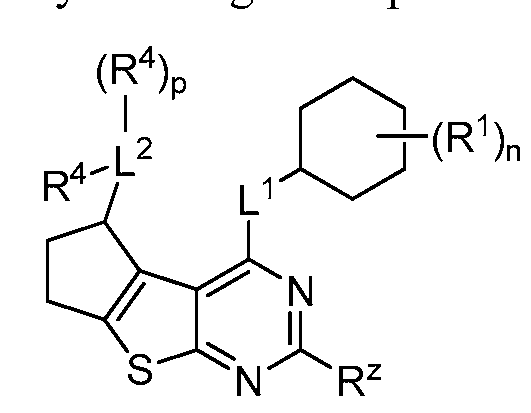
IV
or a pharmaceutically acceptable salt thereof, wherein each of, L1, L2, Rz, R1, R4, n, and p is as defined above and described in embodiments herein, both singly and in combination.
[0081] In certain embodiments, a provided method employs a compound of formula III, wherein n is 1 and the cyclohexyl ring has trans stereochemistry, thereby forming a compound of formula V:

V
or a pharmaceutically acceptable salt thereof, wherein each of, L1, L2, Rz, R1, R4, and p is as defined above and described in embodiments herein, both singly and in combination.
[0082] In certain embodiments, a provided present invention provides a compound of formula V, wherein Rz is -N(R)2, thereby forming a compound of formula VI:

VI
or a pharmaceutically acceptable salt thereof, wherein each of, L1, L2, R, R1, R4, and p is as defined above and described in embodiments herein, both singly and in combination.
[0083] In certain embodiments, a provided method employss a compound of formula VII, wherein W 11, W2% X 11,
 Y 1 , Y2 and Z 11 are each independently hydrogen or deuterium:

VII
or a pharmaceutically acceptable salt thereof, wherein each of L1, L2, R1, Rz, and R4 is as defined above for formula I and described in embodiments herein, both singly and in combination.
[0084] In certain embodiments, a provided method employs a compound of formula VIII, wherein W 11, W2% X11,
 Z11 and Z 2 are each independently hydrogen or deuterium:

VIII
or a pharmaceutically acceptable salt thereof, wherein each of L1, L2, R1, Rz, and R4 are defined above for formula I and described in embodiments herein, both singly and in combination.
[0085] In certain embodiments, a provided method employs a compound of formula I, wherein Ring B is cyclohexo, W is N, and Rz is hydrogen, thereby forming a compound of formula IX:

IX
or a pharmaceutically acceptable salt thereof, wherein each of Ring A, L1, L2, R1, R4, m, n, and p is as defined above and described in embodiments herein, both singly and in combination.
[0086] In certain embodiments, a provided method employs a compound of formula IX, wherein m is 1 , and L2 is attached a to the thiophene ring, thereby forming a compound of formula X:

X
or a pharmaceutically acceptable salt thereof, wherein each of Ring A, L1, L2, R1, R4, n, and p is as defined above and described in embodiments herein, both singly and in combination.
[0087] In certain embodiments, a provided method employs a compound of formula IX, wherein m is 1 , and L2 is attached β to the thiophene ring, thereby forming a compound of formula XI:

XI
or a pharmaceutically acceptable salt thereof, wherein each of Ring A, L1, L2, R1, R4, n, and p is as defined above and described in embodiments herein, both singly and in combination.
[0088] In certain embodiments, a provided method employs a compound of formula III, wherein Rz is hydrogen, and L2 is C2 alkylene, thereby forming a compound of formula XII:

XII
or a pharmaceutically acceptable salt thereof, wherein each of Ring A, L1, R1, R4, n, and p is as defined above and described in embodiments herein, both singly and in combination.
[0089] In certain embodiments, a provided method employs a compound of formula XII, wherein one instance of R4 is -C(0)NR2 , thereby forming a compound of formula XIII:

[0090] In certain embodiments, a provided method employs a compound of formula XIII, wherein Ring A is 4-substituted cyclohexyl, thereby forming a compound of formula XIV:

XIV
or a pharmaceutically acceptable salt thereof, wherein each of L1, R, R1, R4, n, and p is as defined above and described in embodiments herein, both singly and in combination.
[0091] In certain embodiments, a provided method employs a compound of formula XIV, wherein n is 1 , and R1 is -NR2, thereby forming a compound of formula XV:

XV
or a pharmaceutically acceptable salt thereof, wherein each of L1, R, R4, and p is as defined above and described in embodiments herein, both singly and in combination.
[0092] In certain embodiments, a provided method employs a compound of formula XV, wherein the stereochemistry of the substituent on the cyclopento ring is (R), and the relative stereochemistry on the cyclohexyl rin is trans thereby forming a compound of formula XVI:

XVI
or a pharmaceutically acceptable salt thereof, wherein each of L1, R, R4, and p is as defined above and described in embodiments herein, both singly and in combination.
[0093] In certain embodiments, a provided method employs a compound of formula XVI wherein each R4 is independently hydrogen, fluoro or -OR.
[0094] In certain embodiments a provided method employs a compound of formula XVI wherein L1 is -0-. In certain embodiments a provided method employs a compound of formula XVI wherein L1 is -NH-.
[0095] In certain embodiments, a provided method employs a compound of formula III, wherein Rz is hydrogen, and L2 is Ci alkylene, thereby forming a compound of formula XVII:

XVII
or a pharmaceutically acceptable salt thereof, wherein each of Ring A, L1, R1, R4, n, and p is as defined above and described in embodiments herein, both singly and in combination.
[0096] In certain embodiments, a provided method employs a compound of formula XVII, wherein one instance of R4 is -C(0)NR2 , thereby forming a compound of formula XVIII:

XVIII
or a pharmaceutically acceptable salt thereof, wherein each of Ring A, L1, R, R1, R4, n, and p is as defined above and described in embodiments herein, both singly and in combination.
[0097] In certain embodiments, a provided method employs a compound of formula XVIII, wherein Ring A is 4-substituted c clohexyl, thereby forming a compound of formula XIX:

XIX
or a pharmaceutically acceptable salt thereof, wherein each of L1, R, R1, R4, n, and p is as defined above and described in embodiments herein, both singly and in combination.
[0098] In certain embodiments, a provided method employs a compound of formula XIX, wherein n is 1 , and R1 is -NR2, thereb forming a compound of formula XX:

or a pharmaceutically acceptable salt thereof, wherein each of L1, R, R4, and p is as defined above and described in embodiments herein, both singly and in combination.
[0099] In certain embodiments, a provided method employs a compound of formula XX, wherein the stereochemistry of the substituent on the cyclopento ring is (R), and the relative stereochemistry on the cyclohexyl ring is trans thereby forming a compound of formula XXI:

XXI
or a pharmaceutically acceptable salt thereof, wherein each of L1, R, R4, and p is as defined above and described in embodiments herein, both singly and in combination.
[00100] In certain embodiments, a provided method employs a compound of formula XXI wherein each R4 is independently hydrogen, fluoro or -OR.
[00101] In certain embodiments a provided method employs a compound of formula XXI wherein L1 is -0-. In certain embodiments a provided method employs a compound of formula XXI wherein L1 is -NH-.
[00102] In certain embodiments, a provided method employs a compound of formula I, wherein Ring B is piperidino, m is 1 , and Rz is hydrogen, thereby forming a compound of formula XXII:

or a pharmaceutically acceptable salt thereof, wherein each of Ring A, L1, L2, R1, R4, n, and p is as defined above and described in embodiments herein, both singly and in combination.
[00103] In certain embodiments, a provided method employs a compound of formula XXII, wherein L2 is a bond and p is 0, thereby forming a compound of formula XXIII:

[00104] In certain embodiments a provided method employs a compound of formula XXIII wherein R4 is -S(0)2R, -C(0)R, or -C(0)N(R)2.
[00105] In certain embodiments, a provided method employs a compound of formula II, wherein L1 is -0-, thereby forming a compound of formula XXIV:

XXIV
or a pharmaceutically acceptable salt thereof, wherein each of Ring A, L2, Rz, R1, R4, m, n, and p is as defined above and described in embodiments herein, both singly and in combination.
[00106] In certain embodiments, a provided method employs a compound of formula XXIV, wherein m is 1, thereby forming a :

XXV
or a pharmaceutically acceptable salt thereof, wherein each of Ring A, L2, Rz, R1, R4, n, and p is as defined above and described in embodiments herein, both singly and in combination.
[00107] In certain embodiments, a provided method employs a compound of formula XXV, wherein Ring A is cyclohexyl, thereb forming a compound of formula XXVI:

XXVI
or a pharmaceutically acceptable salt thereof, wherein each of, L2, Rz, R1, R4, n, and p is as defined above and described in embodiments herein, both singly and in combination.
[00108] In certain embodiments, a provided method employs a compound of formula I, wherein Rz is -NH-[Ar], thereby forming a compound of formula XXVII:

[00109] In certain embodiments, a provided method employs a compound of formula XXVII, wherein n is 1 and Ring A is 1 ,4-trans-substituted cyclohexyl, thereby forming a compound of formula XXVIII:

XXVIII
or a pharmaceutically acceptable salt thereof, wherein [Ar] is an optionally substituted phenyl or heteroaromatic ring, and each of Ring A, Ring B, L1, L2, R1, R4, m, and p is as defined above and described in embodiments herein, both singly and in combination.
[00110] As described generally above, [Ar] is an optionally substituted phenyl or heteroaromatic ring. In some embodiments, [Ar] is optionally substituted phenyl. In some embodiments, [Ar] is an optionally substituted heteroaromatic ring. In some embodiments, [Ar] is an optionally substituted 5-membered heteroaromatic ring. In some embodiments, [Ar] is an optionally substituted 6-membered heteroaromatic ring. In some embodiments, [Ar] is an optionally substituted pyrazole ring.
[00111] In certain embodiments, a provided method employs a compound of formula
XXVIII, wherein Ring B is cyclopento, thereby forming a compound of formula XXIX:

XXIX
or a pharmaceutically acceptable salt thereof, wherein each of [Ar], L1, L2, R1, R4, m, and p is as defined above and described in embodiments herein, both singly and in combination.
[00112] In certain embodiments, a provided method employs a compound of formula XXVIII, wherein Ring B is cyclohexo, thereby forming a compound of formula XXIX:

XXIX
or a pharmaceutically acceptable salt thereof, wherein each of [Ar], L1, L2, R1, R4, m, and p is as defined above and described in embodiments herein, both singly and in combination.
[00113] In certain embodiments, a provided method employs a compound of formula XXVIII, wherein Ring B is a partially unsaturated tetrahydropyrano-fused ring, thereby forming a compound of one of formulae XXX-a, XXX-b, XXX-c, or XXX-d:

-a XXX-b

XXX-c XXX-d
or a pharmaceutically acceptable salt thereof, wherein each of [Ar], L1, L2, R1, R4, m, and defined above and described in embodiments herein, both singly and in combination.
[00114] In certain embodiments, a provided method employs a compound of formula
XXVIII, wherein Ring B is a partially unsaturated piperidino-fused ring, thereby forming compound of one of formulae XXXI-a, XXXI-b, XXXI-c, or XXXI-d:

-a XXXI-b

XXXI-c XXXI-d
or a pharmaceutically acceptable salt thereof, wherein each of [Ar], L1, L2, R1, R4, m, and p is as defined above and described in embodiments herein, both singly and in combination.
[00115] In certain embodiments, a provided method employs a compound of formula
XXVIII, wherein Ring B is a partially unsaturated pyrrolidino-fused ring, thereby forming a compound of one of formulae XXXII-a XXXII-b or XXXII-c:

XXXII-b XXXII-c
or a pharmaceutically acceptable salt thereof, wherein each of [Ar], L1, L2, R1, R4, m, and p is as defined above and described in embodiments herein, both singly and in combination.
[00116] In certain embodiments, a provided method employs a compound of formula I, wherein n is 1 , Ring A is trans-substituted cyclohexyl, and Ring B is a partially unsaturated tetrahydropyrano-fused ring, thereby forming a compound of one of formulae XXXIII-a, XXXIII-b, XXXIII-c, or XXXIII-d:


XXXIII-c XXXIII-d
or a pharmaceutically acceptable salt thereof, wherein each of L1, L2, R1, R4, Rz, m, and p is as defined above and described in embodiments herein, both singly and in combination.
[00117] In certain embodiments, a provided method employs a compound of formula I, wherein n is 1 , Ring A is trans-substituted cyclohexyl, and Ring B is a partially unsaturated piperidino-fused ring, thereby forming a compound of one of formulae XXXIV-a, XXXIV-b, XXXIV-c, or XXXI -d:

XXXIV-c XXXIV-d
or a pharmaceutically acceptable salt thereof, wherein each of L1, L2, R1, R4, Rz, m, and p is as defined above and described in embodiments herein, both singly and in combination.
[00118] In certain embodiments, a provided method employs a compound of formula I, wherein n is 1 , Ring A is trans-substituted cyclohexyl, and Ring B is a partially unsaturated pyrrolidino-fused ring, thereby forming a compound of one of formulae XXXV-a, XXXV-b, or XXXV-c:

or a pharmaceutically acceptable salt thereof, wherein each of L1, L2, R1, R4,RZ, m, and p is as defined above and described in embodiments herein, both singly and in combination.
[00119] In certain embodiments, a provided method employs a compound of formula
XXXIII-a, XXXIII-b, XXXIII-c, or XXXIII-d, wherein Rz is hydrogen, thereby forming a compound of one of fo -a, XXXVI-b, XXXVI-c, or XXXVI-d:

or a pharmaceutically acceptable salt thereof, wherein each of L1, L2, R1, R4, m, and p is as defined above and described in embodiments herein, both singly and in combination.
[00120] In certain embodiments, a provided method employs a compound of formula
XXXIV-a, XXXIV-b, XXXIV-c, or XXXIV-d, wherein Rz is hydrogen, thereby forming a compound of one of formulae XXXVII-a, XXXVII-b, XXXVII-c, or XXXVII-d:


XXXVII-c XXXVII-d
or a pharmaceutically acceptable salt thereof, wherein each of L1, L2, R1, R4, m, and p is as defined above and described in embodiments herein, both singly and in combination.
[00121] In certain embodiments, a provided method employs a compound of formula XXXV- a, XXXV-b, or XXXV-c, wherein Rz is hydrogen, thereby forming a compound of one of formula -a, XXXVIII-b, or XXXVIII-c:

XXXVIII-a XXXVIII-b XXXVIII-c or a pharmaceutically acceptable salt thereof, wherein each of L1, L2, R1, R4, m, and p is as defined above and described in embodiments herein, both singly and in combination.
[00122] In certain embodiments, a provided method employs a compound of formula I, wherein W is N, and Rz is hydrogen, thereby forming a compound of formula I-a:

or a pharmaceutically acceptable salt thereof, wherein each of Ring A, Ring B, L1, L2, W, Rz, R1, R4 , m, n, and p is as defined above and described in embodiments herein, both singly and in combination.
[00123] Exemplary compounds of the invention are set forth in Table 1, below.
Table 1. Exemplary Compounds


[00124] In some embodiments, the method employs a compound set forth in Table 1, above, or a pharmaceutically acceptable salt thereof.
[00125] Without wishing to be bound by any particular theory, it is believed that proximity of an inhibitor compound, or pendant moiety of an inhibitor compound, to the water of interest facilitates displacement or disruption of that water by the inhibitor compound, or pendant moiety
of an inhibitor compound. In some embodiments, a water molecule displaced or disrupted by an inhibitor compound, or pendant moiety of an inhibitor compound, is an unstable water molecule.
[00126] In certain embodiments, the method employs a complex comprising CDK8 and an inhibitor, wherein at least one unstable water of CDK8 is displaced or disrupted by the inhibitor. In some embodiments, at least two unstable waters selected are displaced or disrupted by the inhibitor.
4. General Methods of Providing the Present Compounds
[00127] The compounds of this invention may be prepared or isolated in general by synthetic and/or semi-synthetic methods known to those skilled in the art for analogous compounds and by methods described in detail in the Examples, herein.
5. Uses, Formulation and Administration
Pharmaceutically acceptable compositions
[00128] According to another embodiment, the invention provides a composition comprising a compound of this invention or a pharmaceutically acceptable derivative thereof and a pharmaceutically acceptable carrier, adjuvant, or vehicle. The amount of compound in compositions of this invention is such that is effective to measurably inhibit a CDK8 protein kinase, or a mutant thereof, in a biological sample or in a patient. In certain embodiments, the amount of compound in compositions of this invention is such that is effective to measurably inhibit a CDK8 protein kinase, or a mutant thereof, in a biological sample or in a patient. In certain embodiments, a composition of this invention is formulated for administration to a patient in need of such composition. In some embodiments, a composition of this invention is formulated for oral administration to a patient.
[00129] The term "patient," as used herein, means an animal, preferably a mammal, and most preferably a human.
[00130] The term "pharmaceutically acceptable carrier, adjuvant, or vehicle" refers to a nontoxic carrier, adjuvant, or vehicle that does not destroy the pharmacological activity of the compound with which it is formulated. Pharmaceutically acceptable carriers, adjuvants or vehicles that may be used in the compositions of this invention include, but are not limited to, ion exchangers, alumina, aluminum stearate, lecithin, serum proteins, such as human serum
albumin, buffer substances such as phosphates, glycine, sorbic acid, potassium sorbate, partial glyceride mixtures of saturated vegetable fatty acids, water, salts or electrolytes, such as protamine sulfate, disodium hydrogen phosphate, potassium hydrogen phosphate, sodium chloride, zinc salts, colloidal silica, magnesium trisilicate, polyvinyl pyrrolidone, cellulose-based substances, polyethylene glycol, sodium carboxymethylcellulose, polyacrylates, waxes, polyethylene-polyoxypropylene-block polymers, polyethylene glycol and wool fat.
[00131] A "pharmaceutically acceptable derivative" means any non-toxic salt, ester, salt of an ester or other derivative of a compound of this invention that, upon administration to a recipient, is capable of providing, either directly or indirectly, a compound of this invention or an inhibitorily active metabolite or residue thereof.
[00132] As used herein, the term "inhibitorily active metabolite or residue thereof means that a metabolite or residue thereof is also an inhibitor of a CDK8 protein kinase, or a mutant thereof.
[00133] Compositions of the present invention may be administered orally, parenterally, by inhalation spray, topically, rectally, nasally, buccally, vaginally or via an implanted reservoir. The term "parenteral" as used herein includes subcutaneous, intravenous, intramuscular, intraarticular, intra-synovial, intrasternal, intrathecal, intrahepatic, intralesional and intracranial injection or infusion techniques. Preferably, the compositions are administered orally, intraperitoneally or intravenously. Sterile injectable forms of the compositions of this invention may be aqueous or oleaginous suspension. These suspensions may be formulated according to techniques known in the art using suitable dispersing or wetting agents and suspending agents. The sterile injectable preparation may also be a sterile injectable solution or suspension in a nontoxic parenterally acceptable diluent or solvent, for example as a solution in 1,3-butanediol. Among the acceptable vehicles and solvents that may be employed are water, Ringer's solution and isotonic sodium chloride solution. In addition, sterile, fixed oils are conventionally employed as a solvent or suspending medium.
[00134] For this purpose, any bland fixed oil may be employed including synthetic mono- or di-glycerides. Fatty acids, such as oleic acid and its glyceride derivatives are useful in the preparation of injectables, as are natural pharmaceutically-acceptable oils, such as olive oil or castor oil, especially in their polyoxyethylated versions. These oil solutions or suspensions may also contain a long-chain alcohol diluent or dispersant, such as carboxymethyl cellulose or similar dispersing agents that are commonly used in the formulation of pharmaceutically
acceptable dosage forms including emulsions and suspensions. Other commonly used surfactants, such as Tweens, Spans and other emulsifying agents or bioavailability enhancers which are commonly used in the manufacture of pharmaceutically acceptable solid, liquid, or other dosage forms may also be used for the purposes of formulation.
[00135] Pharmaceutically acceptable compositions of this invention may be orally administered in any orally acceptable dosage form including, but not limited to, capsules, tablets, aqueous suspensions or solutions. In the case of tablets for oral use, carriers commonly used include lactose and corn starch. Lubricating agents, such as magnesium stearate, are also typically added. For oral administration in a capsule form, useful diluents include lactose and dried cornstarch. When aqueous suspensions are required for oral use, the active ingredient is combined with emulsifying and suspending agents. If desired, certain sweetening, flavoring or coloring agents may also be added.
[00136] Alternatively, pharmaceutically acceptable compositions of this invention may be administered in the form of suppositories for rectal administration. These can be prepared by mixing the agent with a suitable non-irritating excipient that is solid at room temperature but liquid at rectal temperature and therefore will melt in the rectum to release the drug. Such materials include cocoa butter, beeswax and polyethylene glycols.
[00137] Pharmaceutically acceptable compositions of this invention may also be administered topically, especially when the target of treatment includes areas or organs readily accessible by topical application, including diseases of the eye, the skin, or the lower intestinal tract. Suitable topical formulations are readily prepared for each of these areas or organs.
[00138] Topical application for the lower intestinal tract can be effected in a rectal suppository formulation (see above) or in a suitable enema formulation. Topically-transdermal patches may also be used.
[00139] For topical applications, provided pharmaceutically acceptable compositions may be formulated in a suitable ointment containing the active component suspended or dissolved in one or more carriers. Carriers for topical administration of compounds of this invention include, but are not limited to, mineral oil, liquid petrolatum, white petrolatum, propylene glycol, polyoxyethylene, polyoxypropylene compound, emulsifying wax and water. Alternatively, provided pharmaceutically acceptable compositions can be formulated in a suitable lotion or cream containing the active components suspended or dissolved in one or more pharmaceutically
acceptable carriers. Suitable carriers include, but are not limited to, mineral oil, sorbitan monostearate, polysorbate 60, cetyl esters wax, cetearyl alcohol, 2-octyldodecanol, benzyl alcohol and water.
[00140] For ophthalmic use, provided pharmaceutically acceptable compositions may be formulated as micronized suspensions in isotonic, pH adjusted sterile saline, or, preferably, as solutions in isotonic, pH adjusted sterile saline, either with or without a preservative such as benzylalkonium chloride. Alternatively, for ophthalmic uses, the pharmaceutically acceptable compositions may be formulated in an ointment such as petrolatum.
[00141] Pharmaceutically acceptable compositions of this invention may also be administered by nasal aerosol or inhalation. Such compositions are prepared according to techniques well- known in the art of pharmaceutical formulation and may be prepared as solutions in saline, employing benzyl alcohol or other suitable preservatives, absorption promoters to enhance bioavailability, fluorocarbons, and/or other conventional solubilizing or dispersing agents.
[00142] Most preferably, pharmaceutically acceptable compositions of this invention are formulated for oral administration. Such formulations may be administered with or without food. In some embodiments, pharmaceutically acceptable compositions of this invention are administered without food. In other embodiments, pharmaceutically acceptable compositions of this invention are administered with food.
[00143] The amount of compounds of the present invention that may be combined with the carrier materials to produce a composition in a single dosage form will vary depending upon the host treated, the particular mode of administration. Preferably, provided compositions should be formulated so that a dosage of between 0.01 - 100 mg/kg body weight/day of the inhibitor can be administered to a patient receiving these compositions.
[00144] It should also be understood that a specific dosage and treatment regimen for any particular patient will depend upon a variety of factors, including the activity of the specific compound employed, the age, body weight, general health, sex, diet, time of administration, rate of excretion, drug combination, and the judgment of the treating physician and the severity of the particular disease being treated. The amount of a compound of the present invention in the composition will also depend upon the particular compound in the composition.
Uses of Compounds and Pharmaceutically Acceptable Compositions
[00145] Compounds and compositions described herein are generally useful for the inhibition of kinase activity of one or more enzymes. In some embodiments the kinase inhibited by the compounds and methods of the invention is CDK8
[00146] CDK8 is a member of the class of the cyclin-dependent kinase enzymes ("CDKs") that are an essential part of the regulation of cell growth. Tumor and malignant cell growth is often associated with mutation or disregulation of CDKs or their regulators, and thus inhibition of CDKs may be important in the treatment of cancer and other proliferative disorders.
[00147] In particular, cdk8 (the gene encoding the CDK8 enzyme) has been identified as an oncogene, with regulatory effects on beta-catenin activity. Firestein et al "CDK8 is a colorectal cancer oncogene that regulates beta-catenin activity" Nature (2008) 455(25), 547-551. Furthermore, CDK8 has been identified as a key regulator of colon cancer cell proliferation. The cdk8 gene is located at 13ql2.13, which has been found to be a region of recurrent copy number gain in a substantial fraction of colon cancers. Suppression of the hyperactivity of CDK8, inhibits the proliferation of colon cancers, as well as other cancers associated with overexpression and/or hyperactivity of CDK8 or beta-catenin, and associated members of the Wnt pathway.
[00148] Another key pathway for regulation of gene expression in colorectal cancer cells is the EGFR / KRAS pathway. By regulating gene expression products common between the beta- catenin and EGFR pathways, CDK8 inhibition leads to inhibition of proliferative activity even in cancers that have mutations in EGFR and KRAS, as well as those having mutations in APC or beta-catenin. By inhibiting CDK8, both Rzymski et al. "Antitumor activity of SEL120: orally available dual inhibitors of CDK8/CDK9, for standalone and combination therapy in colon cancer" AACR Annual Meeting 2012, poster #3845/26.
[00149] CDK8 is correlated to maintenance of tumor cell dedifferentiation, and maintaining embryonic stem cell pluripotency. Adler et al. "CDK8 Maintains Tumor Dedifferentiation and Embryonic Stem Cell Pluripotency" Cancer Research (2012) 72; 2129-2139. Dedifferentiation of tumor cells is correlated to poor clinical outcome in cancers including colon cancer. Thus inhibition of CDK8 can lead to not only to decreased cancer cell proliferation, but also preventing cancer cells from maintaining their pluripotency, thereby improving clinical outcomes.
[00150] CDK8 expression and the de localization of β-catenin expression in tumor cells shows a significant positive correlation with carcinogenesis and tumor progression, especially lymph node metastasis. Kim et al. "Roles of cyclin-dependent kinase 8 and beta-catenin in the oncogenesis and progression of gastric adenocarcinoma" Intl. J. Oncology (2011) 38; 1375-1383.
[00151] Inhibition of CDK8 also leads to inhibition of Nuclear Factor kappa Beta (NFKB) transcriptional activity by both p21 and Tumor Necrosis Factor Alpha (TNF ). See WO2013/040153.
[00152] CDK8 is also known to phosphorylate STAT1, STAT3, STAT4, and STAT5 in response to interferon-gamma (IFN-γ), and inhibition of CDK8 activity results in reduced expression of IFN-y-stimulated genes. Bancerek et al. "CDK8 Kinase Phosphorylates Transcription Factor STAT1 to Selectively Regulate the Interferon Response" Immunity (2013) 38; 250-262. Thus inhibition of CDK8 is useful for decreasing immune and inflammatory responses relating to the STAT / IFN-γ pathways.
[00153] CDK8 also plays a role, together with MED15, in regulating sterol regulatory element-binding protein (SREBP) transcription factors, which are master activators for genes that are responsible for lipid biosynthesis. Xiaoli et al. "Mediating lipid biosynthesis: Implications for cardiovascular disease" Trends in Cardiovascular Med. (April 2013, in press). Thus inhibition of CDK8 has utility in treating obesity, cardiovascular disease (including atherosclerosis), metabolic disorders (such as Type II diabetes mellitus and hypertriglycemia), and other diseases implicating the MED 15 and SREBP transcription regulatory pathways (such as fatty liver, and non-alcoholic steatohepatitis).
[00154] Direct inhibition of enzymes such as CDK8 has advantages over other chemotherapies that target DNA replication or induce DNA damage by interacting with DNA directly, as the specific inhibition of a tumor-associated enzyme should lead to reduced side effects and reduced complications such as secondary tumor development associated with chemotherapy-induced mutations. CDK8 has also been shown to be essential in early embryonic development, but not needed for mature cell proliferation. Westerling et al. "Cdk8 is essential for preimplantation mouse development" Mol. Cell. Biol. (2007) 27(17); 6177-6182. Accordingly, inhibition of CDK8 activity has selective antiproliferative effects in tumor cells featuring upregulated CDK8 activity over non-tumorigenic mature cells.
[00155] The activity of a compound utilized in this invention as an inhibitor of CDK8, or a mutant thereof, may be assayed in vitro, in vivo or in a cell line. In vitro assays include assays that determine inhibition of either the phosphorylation activity and/or the subsequent functional consequences, or ATPase activity of activated CDK8, or a mutant thereof. Alternate in vitro assays quantitate the ability of the inhibitor to bind to CDK8. Inhibitor binding may be measured by radiolabeling the inhibitor prior to binding, isolating the inhibitor/CDK8 complex and determining the amount of radiolabel bound. Alternatively, inhibitor binding may be determined by running a competition experiment where new inhibitors are incubated with CDK8 bound to known radioligands. Detailed conditions for assaying a compound utilized in this invention as an inhibitor of CDK8, or a mutant thereof, are set forth in the Examples below.
[00156] As used herein, the terms "treatment," "treat," and "treating" refer to reversing, alleviating, delaying the onset of, or inhibiting the progress of a disease or disorder, or one or more symptoms thereof, as described herein. In some embodiments, treatment may be administered after one or more symptoms have developed. In other embodiments, treatment may be administered in the absence of symptoms. For example, treatment may be administered to a susceptible individual prior to the onset of symptoms (e.g., in light of a history of symptoms and/or in light of genetic or other susceptibility factors). Treatment may also be continued after symptoms have resolved, for example to prevent or delay their recurrence.
[00157] Provided compounds are inhibitors of CDK8 and are therefore useful for treating one or more disorders associated with activity of CDK8, beta-catenin, or mutants thereof. Thus, in certain embodiments, the present invention provides a method for treating a CDK8-mediated or beta-catenin-mediated disorder comprising the step of administering to a patient in need thereof a compound of the present invention, or pharmaceutically acceptable composition thereof. In some embodiments, the disorder is a CDK8-mediated disorder. In some embodiments, the disorder is a beta-catenin-mediated disorder.
[00158] As used herein, the term "CDK8-mediated" disorders, diseases, and/or conditions as used herein means any disease or other deleterious condition in which CDK8 or a mutant thereof is known to play a role. Accordingly, another embodiment of the present invention relates to treating or lessening the severity of one or more diseases in which CDK8, or a mutant thereof, is known to play a role. Such CDK8-mediated disorders include but are not limited to cancers or other proliferative disorders. In some embodiments, the cancer or other proliferative disorder is
selected from acute myeloid leukemia (also known as acute myelogenous leukemia), solid tumors, gliomas, myelodysplasia syndrome, renal cell carcinoma, glioblastoma, prostate cancer, melanoma, acute lymphoblastic leukemia, myeloproliferative disorder, nasopharyngeal carcinoma, breast tumors, thrombocytopenia, polycythemia vera, myelofibrosis, chronic myelocytic leukemia, lung tumors, colorectal tumors, and autoimmune diseases.
[00159] In some embodiments, the disorder is selected from gliomas, myelodysplasia syndrome, acute lymphoblastic leukemia, myeloproliferative disorder, nasopharyngeal carcinoma, polycythemia vera, and myelofibrosis.
[00160] In some embodiments, the disorder is a gastrointestinal cancer. In some embodiments, the disorder is a colon cancer. In some embodiments, the disorder is a gastric cancer. In some embodiments the disorder is an adenocarcinoma. In some embodiments, the adenocarcinoma is colon adenocarcinoma or gastric adenocarcinoma. In some embodiments, the cancer is associated with an overexpression or copy number gain of CDK8. In some embodiments, the cancer is associated with a mutation in one or more members of the Wnt signaling pathway. In some embodiments, the cancer is associated with a mutation in one or more members of the EGFR signaling pathway. In some embodiments, the cancer is associated with mutations in one or more members of both the Wnt signaling pathway and the EGFR signaling pathway. In some embodiments, the cancer is resistant to anti-EGFR therapy.
[00161] In some embodiments, the present invention provides a method for treating one or more disorders, diseases, and/or conditions wherein the disorder, disease, or condition is a cancer, a neurodegenative disorder, a viral disease, an autoimmune disease, an inflammatory disorder, a hereditary disorder, a hormone-related disease, a metabolic disorder, conditions associated with organ transplantation, immunodeficiency disorders, a destructive bone disorder, a proliferative disorder, an infectious disease, a condition associated with cell death, thrombin- induced platelet aggregation, liver disease, pathologic immune conditions involving T cell activation, a cardiovascular disorder, or a CNS disorder.
[00162] In one embodiment, a human patient is treated with a compound of the current invention and a pharmaceutically acceptable carrier, adjuvant, or vehicle, wherein said compound is present in an amount to measurably inhibit CDK8 kinase activity or modulate CDK8 scaffold activity as it relates to cyclinC, MED 12, and MED 13
[00163] Compounds of the current invention are useful in the treatment of a proliferative disease selected from a benign or malignant tumor, solid tumor, carcinoma of the brain, kidney, liver, adrenal gland, bladder, breast, stomach, gastric tumors, ovaries, colon, rectum, prostate, pancreas, lung, vagina, cervix, testis, genitourinary tract, esophagus, larynx, skin, bone or thyroid, sarcoma, glioblastomas, neuroblastomas, multiple myeloma, gastrointestinal cancer, especially colon carcinoma or colorectal adenoma, a tumor of the neck and head, an epidermal hyperproliferation, psoriasis, prostate hyperplasia, a neoplasia, a neoplasia of epithelial character, adenoma, adenocarcinoma, keratoacanthoma, epidermoid carcinoma, large cell carcinoma, non- small-cell lung carcinoma, lymphomas, Hodgkins and Non-Hodgkins, a mammary carcinoma, follicular carcinoma, undifferentiated carcinoma, papillary carcinoma, seminoma, melanoma, a CDK8 driven disorder, Smoldering of indolent multiple myeloma, or hematological malignancies (including leukemia, diffuse large B-cell lymphoma (DLBCL), ABC DLBCL, chronic lymphocytic leukemia (CLL), chronic lymphocytic lymphoma, primary effusion lymphoma, Burkitt lymphoma/leukemia, acute lymphocytic leukemia, B-cell prolymphocytic leukemia, lymphoplasmacytic lymphoma, Waldenstrom's macroglobulinemia (WM), splenic marginal zone lymphoma, multiple myeloma, plasmacytoma, intravascular large B-cell lymphoma, and acute myeloid leukemia (AML)).
[00164] Compounds according to the invention are useful in the treatment of inflammatory or obstructive airways diseases, resulting, for example, in reduction of tissue damage, airways inflammation, bronchial hyperreactivity, remodeling or disease progression. Inflammatory or obstructive airways diseases to which the present invention is applicable include asthma of whatever type or genesis including both intrinsic (non-allergic) asthma and extrinsic (allergic) asthma, mild asthma, moderate asthma, severe asthma, bronchitic asthma, exercise-induced asthma, occupational asthma and asthma induced following bacterial infection. Treatment of asthma is also to be understood as embracing treatment of subjects, e.g. of less than 4 or 5 years of age, exhibiting wheezing symptoms and diagnosed or diagnosable as "wheezy infants", an established patient category of major medical concern and now often identified as incipient or early-phase asthmatics.
[00165] In some embodiments, compounds of the invention are useful in treating ophthalmic diseases including age-related macular degeneration.
[00166] Compounds according to the invention are useful in the treatment of heteroimmune diseases. Examples of such heteroimmune diseases include, but are not limited to, graft versus host disease, transplantation, transfusion, anaphylaxis, allergies (e.g., allergies to plant pollens, latex, drugs, foods, insect poisons, animal hair, animal dander, dust mites, or cockroach calyx), type I hypersensitivity, allergic conjunctivitis, allergic rhinitis, and atopic dermatitis.
[00167] Prophylactic efficacy in the treatment of asthma will be evidenced by reduced frequency or severity of symptomatic attack, e.g. of acute asthmatic or bronchoconstrictor attack, improvement in lung function or improved airways hyperreactivity. It may further be evidenced by reduced requirement for other, symptomatic therapy, such as therapy for or intended to restrict or abort symptomatic attack when it occurs, for example antiinflammatory or bronchodilatory. Prophylactic benefit in asthma may in particular be apparent in subjects prone to "morning dipping". "Morning dipping" is a recognized asthmatic syndrome, common to a substantial percentage of asthmatics and characterised by asthma attack, e.g. between the hours of about 4 to 6 am, i.e. at a time normally substantially distant form any previously administered symptomatic asthma therapy.
[00168] Compounds of the current invention can be used for other inflammatory or obstructive airways diseases and conditions to which the present invention is applicable and include acute lung injury (ALI), adult/acute respiratory distress syndrome (ARDS), chronic obstructive pulmonary, airways or lung disease (COPD, COAD or COLD), including chronic bronchitis or dyspnea associated therewith, emphysema, as well as exacerbation of airways hyperreactivity consequent to other drug therapy, in particular other inhaled drug therapy. The invention is also applicable to the treatment of bronchitis of whatever type or genesis including, but not limited to, acute, arachidic, catarrhal, croupus, chronic or phthinoid bronchitis. Further inflammatory or obstructive airways diseases to which the present invention is applicable include pneumoconiosis (an inflammatory, commonly occupational, disease of the lungs, frequently accompanied by airways obstruction, whether chronic or acute, and occasioned by repeated inhalation of dusts) of whatever type or genesis, including, for example, aluminosis, anthracosis, asbestosis, chalicosis, ptilosis, siderosis, silicosis, tabacosis and byssinosis.
[00169] With regard to their anti-inflammatory activity, in particular in relation to inhibition of eosinophil activation, compounds of the invention are also useful in the treatment of eosinophil related disorders, e.g. eosinophilia, in particular eosinophil related disorders of the
airways (e.g. involving morbid eosinophilic infiltration of pulmonary tissues) including hypereosinophilia as it effects the airways and/or lungs as well as, for example, eosinophil- related disorders of the airways consequential or concomitant to Loffler's syndrome, eosinophilic pneumonia, parasitic (in particular metazoan) infestation (including tropical eosinophilia), bronchopulmonary aspergillosis, polyarteritis nodosa (including Churg-Strauss syndrome), eosinophilic granuloma and eosinophil-related disorders affecting the airways occasioned by drug-reaction.
[00170] Compounds of the invention are also useful in the treatment of inflammatory or allergic conditions of the skin, for example psoriasis, contact dermatitis, atopic dermatitis, alopecia areata, erythema multiforma, dermatitis herpetiformis, scleroderma, vitiligo, hypersensitivity angiitis, urticaria, bullous pemphigoid, lupus erythematosus, systemic lupus erythematosus, pemphigus vulgaris, pemphigus foliaceus, paraneoplastic pemphigus, epidermolysis bullosa acquisita, acne vulgaris, and other inflammatory or allergic conditions of the skin.
[00171] Compounds of the invention may also be used for the treatment of other diseases or conditions, such as diseases or conditions having an inflammatory component, for example, treatment of diseases and conditions of the eye such as ocular allergy, conjunctivitis, keratoconjunctivitis sicca, and vernal conjunctivitis, diseases affecting the nose including allergic rhinitis, and inflammatory disease in which autoimmune reactions are implicated or having an autoimmune component or etiology, including autoimmune hematological disorders (e.g. hemolytic anemia, aplastic anemia, pure red cell anemia and idiopathic thrombocytopenia), systemic lupus erythematosus, rheumatoid arthritis, polychondritis, scleroderma, Wegener granulamatosis, dermatomyositis, chronic active hepatitis, myasthenia gravis, Steven-Johnson syndrome, idiopathic sprue, autoimmune inflammatory bowel disease (e.g. ulcerative colitis and Crohn's disease), irritable bowel syndrome, celiac disease, periodontitis, hyaline membrane disease, kidney disease, glomerular disease, alcoholic liver disease, multiple sclerosis, endocrine opthalmopathy, Grave's disease, sarcoidosis, alveolitis, chronic hypersensitivity pneumonitis, multiple sclerosis, primary biliary cirrhosis, uveitis (anterior and posterior), Sjogren's syndrome, keratoconjunctivitis sicca and vernal keratoconjunctivitis, interstitial lung fibrosis, psoriatic arthritis, systemic juvenile idiopathic arthritis, cryopyrin-associated periodic syndrome, nephritis, vasculitis, diverticulitis, interstitial cystitis, glomerulonephritis (with and without nephrotic
syndrome, e.g. including idiopathic nephrotic syndrome or minal change nephropathy), chronic granulomatous disease, endometriosis, leptospiriosis renal disease, glaucoma, retinal disease, ageing, headache, pain, complex regional pain syndrome, cardiac hypertrophy, musclewasting, catabolic disorders, obesity, fetal growth retardation, hyperchlolesterolemia, heart disease, chronic heart failure, mesothelioma, anhidrotic ecodermal dysplasia, Behcet's disease, incontinentia pigmenti, Paget' s disease, pancreatitis, hereditary periodic fever syndrome, asthma (allergic and non-allergic, mild, moderate, severe, bronchitic, and exercise-induced), acute lung injury, acute respiratory distress syndrome, eosinophilia, hypersensitivities, anaphylaxis, nasal sinusitis, ocular allergy, silica induced diseases, COPD (reduction of damage, airways inflammation, bronchial hyperreactivity, remodeling or disease progression), pulmonary disease, cystic fibrosis, acid-induced lung injury, pulmonary hypertension, polyneuropathy, cataracts, muscle inflammation in conjunction with systemic sclerosis, inclusion body myositis, myasthenia gravis, thyroiditis, Addison's disease, lichen planus, Type 1 diabetes, or Type 2 diabetes, appendicitis, atopic dermatitis, asthma, allergy, blepharitis, bronchiolitis, bronchitis, bursitis, cervicitis, cholangitis, cholecystitis, chronic graft rejection, colitis, conjunctivitis, Crohn's disease, cystitis, dacryoadenitis, dermatitis, dermatomyositis, encephalitis, endocarditis, endometritis, enteritis, enterocolitis, epicondylitis, epididymitis, fasciitis, fibrositis, gastritis, gastroenteritis, Henoch-Schonlein purpura, hepatitis, hidradenitis suppurativa, immunoglobulin A nephropathy, interstitial lung disease, laryngitis, mastitis, meningitis, myelitis myocarditis, myositis, nephritis, oophoritis, orchitis, osteitis, otitis, pancreatitis, parotitis, pericarditis, peritonitis, pharyngitis, pleuritis, phlebitis, pneumonitis, pneumonia, polymyositis, proctitis, prostatitis, pyelonephritis, rhinitis, salpingitis, sinusitis, stomatitis, synovitis, tendonitis, tonsillitis, ulcerative colitis, uveitis, vaginitis, vasculitis, or vulvitis.
[00172] In some embodiments the inflammatory disease which can be treated according to the methods of this invention is selected from Sjogren's syndrome, allergic disorders, osteoarthritis, conditions of the eye such as ocular allergy, conjunctivitis, keratoconjunctivitis sicca and vernal conjunctivitis, and diseases affecting the nose such as allergic rhinitis.
[00173] Cardiovascular diseases which can be treated according to the methods of this invention include, but are not limited to, restenosis, cardiomegaly, atherosclerosis, myocardial infarction, ischemic stroke, congestive heart failure, angina pectoris, reocclusion after angioplasty, restenosis after angioplasty, reocclusion after aortocoronary bypass, restenosis after
aortocoronary bypass, stroke, transitory ischemia, a peripheral arterial occlusive disorder, pulmonary embolism, and deep venous thrombosis.
[00174] In some embodiments, the neurodegenerative disease which can be treated according to the methods of this invention include, but are not limited to, Alzheimer's disease, Parkinson's disease, amyotrophic lateral sclerosis, Huntington's disease, cerebral ischemia, and neurodegenerative disease caused by traumatic injury, glutamate neurotoxicity, hypoxia, epilepsy, treatment of diabetes, metabolic syndrome, obesity, organ transplantation and graft versus host disease.
[00175] In some embodiments the invention provides a method of treating, preventing or lessening the severity of Alzheimer's disease comprising administering to a patient in need thereof a compound of formula I or a pharmaceutically acceptable salt or composition thereof.
[00176] In some embodiments the invention provides a method of treating a disease or condition commonly occurring in connection with transplantation. In some embodiments, the disease or condition commonly occurring in connection with transplantation is selected from organ transplantation, organ transplant rejection, and graft versus host disease.
[00177] In some embodiments the invention provides a method of treating a metabolic disease. In some embodiments the metabolic disease is selected from Type 1 diabetes, Type 2 diabetes, metabolic syndrome, and obesity.
[00178] In some embodiments the invention provides a method of treating a viral disease. In some embodiments, the viral infection is HIV infection.
[00179] Furthermore, the invention provides the use of a compound according to the definitions herein, or a pharmaceutically acceptable salt, or a hydrate or solvate thereof for the preparation of a medicament for the treatment of a proliferative disease, an inflammatory disease, an obstructive respiratory disease, a cardiovascular disease, a metabolic disease, a neurological disease, a neurodegenerative disease, a viral disease, or a disorder commonly occurring in connection with transplantation.
Combination Therapies
[00180] Depending upon the particular condition, or disease, to be treated, additional therapeutic agents, which are normally administered to treat that condition, may be administered in combination with compounds and compositions of this invention. As used herein, additional
therapeutic agents that are normally administered to treat a particular disease, or condition, are known as "appropriate for the disease, or condition, being treated."
[00181] In certain embodiments, a provided combination, or composition thereof, is administered in combination with another therapeutic agent.
[00182] Examples of agents the combinations of this invention may also be combined with include, without limitation: treatments for Alzheimer's Disease such as Aricept® and Excelon®; treatments for HIV such as ritonavir; treatments for Parkinson's Disease such as L- DOPA/carbidopa, entacapone, ropinrole, pramipexole, bromocriptine, pergolide, trihexephendyl, and amantadine; agents for treating Multiple Sclerosis (MS) such as beta interferon (e.g., Avonex® and Rebif®), Copaxone®, and mitoxantrone; treatments for asthma such as albuterol and Singulair®; agents for treating schizophrenia such as zyprexa, risperdal, seroquel, and haloperidol; anti-inflammatory agents such as corticosteroids, TNF blockers, IL-1 RA, azathioprine, cyclophosphamide, and sulfasalazine; immunomodulatory and immunosuppressive agents such as cyclosporin, tacrolimus, rapamycin, mycophenolate mofetil, interferons, corticosteroids, cyclophophamide, azathioprine, and sulfasalazine; neurotrophic factors such as acetylcholinesterase inhibitors, MAO inhibitors, interferons, anti-convulsants, ion channel blockers, riluzole, and anti-Parkinsonian agents; agents for treating cardiovascular disease such as beta-blockers, ACE inhibitors, diuretics, nitrates, calcium channel blockers, and statins; agents for treating liver disease such as corticosteroids, cholestyramine, interferons, and anti-viral agents; agents for treating blood disorders such as corticosteroids, anti-leukemic agents, and growth factors; agents that prolong or improve pharmacokinetics such as cytochrome P450 inhibitors (i.e., inhibitors of metabolic breakdown) and CYP3A4 inhibitors (e.g., ketokenozole and ritonavir), and agents for treating immunodeficiency disorders such as gamma globulin.
[00183] In certain embodiments, combination therapies of the present invention, or a pharmaceutically acceptable composition thereof, are administered in combination with a monoclonal antibody or an siR A therapeutic.
[00184] Those additional agents may be administered separately from a provided combination therapy, as part of a multiple dosage regimen. Alternatively, those agents may be part of a single dosage form, mixed together with a compound of this invention in a single composition. If administered as part of a multiple dosage regime, the two active agents may be submitted
simultaneously, sequentially or within a period of time from one another normally within five hours from one another.
[00185] As used herein, the term "combination," "combined," and related terms refers to the simultaneous or sequential administration of therapeutic agents in accordance with this invention. For example, a combination of the present invention may be administered with another therapeutic agent simultaneously or sequentially in separate unit dosage forms or together in a single unit dosage form.
[00186] The amount of additional therapeutic agent present in the compositions of this invention will be no more than the amount that would normally be administered in a composition comprising that therapeutic agent as the only active agent. Preferably the amount of additional therapeutic agent in the presently disclosed compositions will range from about 50% to 100% of the amount normally present in a composition comprising that agent as the only therapeutically active agent.
[00187] In one embodiment, the present invention provides a composition comprising a compound of formula I and one or more additional therapeutic agents. The therapeutic agent may be administered together with a compound of formula I, or may be administered prior to or following administration of a compound of formula I. Suitable therapeutic agents are described in further detail below. In certain embodiments, a compound of formula I may be administered up to 5 minutes, 10 minutes, 15 minutes, 30 minutes, 1 hour, 2 hours, 3 hours, 4 hours, 5, hours, 6 hours, 7 hours, 8 hours, 9 hours, 10 hours, 11 hours, 12 hours, 13 hours, 14 hours, 15 hours, 16 hours, 17 hours, or 18 hours before the therapeutic agent. In other embodiments, a compound of formula I may be administered up to 5 minutes, 10 minutes, 15 minutes, 30 minutes, 1 hour, 2 hours, 3 hours, 4 hours, 5, hours, 6 hours, 7 hours, 8 hours, 9 hours, 10 hours, 11 hours, 12 hours, 13 hours, 14 hours, 15 hours, 16 hours, 17 hours, or 18 hours following the therapeutic agent.
[00188] In another embodiment, the present invention provides a method of treating an inflammatory disease, disorder or condition by administering to a patient in need thereof a compound of formula I and one or more additional therapeutic agents. Such additional therapeutic agents may be small molecules or recombinant biologic agents and include, for example, acetaminophen, non-steroidal anti-inflammatory drugs (NSAIDS) such as aspirin, ibuprofen, naproxen, etodolac (Lodine®) and celecoxib, colchicine (Colcrys®), corticosteroids such as prednisone, prednisolone, methylprednisolone, hydrocortisone, and the like, probenecid,
allopurinol, febuxostat (Uloric®), sulfasalazine (Azulfidine®), antimalarials such as hydroxychloroquine (Plaquenil®) and chloroquine (Aralen®), methotrexate (Rheumatrex®), gold salts such as gold thioglucose (Solganal®), gold thiomalate (Myochrysine®) and auranofin (Ridaura®), D-penicillamine (Depen® or Cuprimine®), azathioprine (Imuran®), cyclophosphamide (Cytoxan®), chlorambucil (Leukeran®), cyclosporine (Sandimmune®), leflunomide (Arava®) and "anti-TNF" agents such as etanercept (Enbrel®), infliximab (Remicade®), golimumab (Simponi®), certolizumab pegol (Cimzia®) and adalimumab (Humira®), "anti-IL-1" agents such as anakinra (Kineret®) and rilonacept (Arcalyst®), canakinumab (Ilaris®), anti-Jak inhibitors such as tofacitinib, antibodies such as rituximab (Rituxan®), "anti-T-cell" agents such as abatacept (Orencia®), "anti-IL-6" agents such as tocilizumab (Actemra®), diclofenac, cortisone, hyaluronic acid (Synvisc® or Hyalgan®), monoclonal antibodies such as tanezumab, anticoagulants such as heparin (Calcinparine® or Liquaemin®) and warfarin (Coumadin®), antidiarrheals such as diphenoxylate (Lomotil®) and loperamide (Imodium®), bile acid binding agents such as cholestyramine, alosetron (Lotronex®), lubiprostone (Amitiza®), laxatives such as Milk of Magnesia, polyethylene glycol (MiraLax®), Dulcolax®, Corrected® and Senokot®, anticholinergics or antispasmodics such as dicyclomine (Bentyl®), Singulair®, beta-2 agonists such as albuterol (Ventolin® HFA, Proventil® HFA), levalbuterol (Xopenex®), metaproterenol (Alupent®), pirbuterol acetate (Maxair®), terbutaline sulfate (Brethaire®), salmeterol xinafoate (Serevent®) and formoterol (Foradil®), anticholinergic agents such as ipratropium bromide (Atrovent®) and tiotropium (Spiriva®), inhaled corticosteroids such as beclomethasone dipropionate (Beclovent®, Qvar®, and Vanceril®), triamcinolone acetonide (Azmacort®), mometasone (Asthmanex®), budesonide (Pulmocort®), and flunisolide (Aerobid®), Afviar®, Symbicort®, Dulera®, cromolyn sodium (Intal®), methylxanthines such as theophylline (Theo-Dur®, Theolair®, Slo-bid®, Uniphyl®, Theo-24®) and aminophylline, IgE antibodies such as omalizumab (Xolair®), nucleoside reverse transcriptase inhibitors such as zidovudine (Retrovir®), abacavir (Ziagen®), abacavir/lamivudine (Epzicom®), abacavir/lamivudine/zidovudine (Trizivir®), didanosine (Videx®), emtricitabine (Emtriva®), lamivudine (Epivir®), lamivudine/zidovudine (Combivir®), stavudine (Zerit®), and zalcitabine (Hivid®), non-nucleoside reverse transcriptase inhibitors such as delavirdine (Rescriptor®), efavirenz (Sustiva®), nevairapine (Viramune®) and etravirine (Intelence®), nucleotide reverse transcriptase inhibitors such as tenofovir (Viread®),
protease inhibitors such as amprenavir (Agenerase®), atazanavir (Reyataz®), darunavir (Prezista®), fosamprenavir (Lexiva®), indinavir (Crixivan®), lopinavir and ritonavir (Kaletra®), nelfinavir (Viracept®), ritonavir (Norvir®), saquinavir (Fortovase® or Invirase®), and tipranavir (Aptivus®), entry inhibitors such as enfuvirtide (Fuzeon®) and maraviroc (Selzentry®), integrase inhibitors such as raltegravir (Isentress®), doxorubicin (Hydrodaunorubicin®), vincristine (Oncovin®), bortezomib (Velcade®), and dexamethasone (Decadron ®) in combination with lenalidomide (Revlimid ®), or any combination(s) thereof.
[00189] In another embodiment, the present invention provides a method of treating rheumatoid arthritis comprising administering to a patient in need thereof a compound of formula I and one or more additional therapeutic agents selected from non-steroidal antiinflammatory drugs (NSAIDS) such as aspirin, ibuprofen, naproxen, etodolac (Lodine®) and celecoxib, corticosteroids such as prednisone, prednisolone, methylprednisolone, hydrocortisone, and the like, sulfasalazine (Azulfidine®), antimalarials such as hydroxychloroquine (Plaquenil®) and chloroquine (Aralen®), methotrexate (Rheumatrex®), gold salts such as gold thioglucose (Solganal®), gold thiomalate (Myochrysine®) and auranofm (Ridaura®), D-penicillamine (Depen® or Cuprimine®), azathioprine (Imuran®), cyclophosphamide (Cytoxan®), chlorambucil (Leukeran®), cyclosporine (Sandimmune®), leflunomide (Arava®) and "anti- TNF" agents such as etanercept (Enbrel®), infliximab (Remicade®), golimumab (Simponi®), certolizumab pegol (Cimzia®) and adalimumab (Humira®), "anti-IL-1" agents such as anakinra (Kineret®) and rilonacept (Arcalyst®), antibodies such as rituximab (Rituxan®), "anti-T-cell" agents such as abatacept (Orencia®) and "anti-IL-6" agents such as tocilizumab (Actemra®).
[00190] In some embodiments, the present invention provides a method of treating osteoarthritis comprising administering to a patient in need thereof a compound of formula I and one or more additional therapeutic agents selected from acetaminophen, non-steroidal antiinflammatory drugs (NSAIDS) such as aspirin, ibuprofen, naproxen, etodolac (Lodine®) and celecoxib, diclofenac, cortisone, hyaluronic acid (Synvisc® or Hyalgan®) and monoclonal antibodies such as tanezumab.
[00191] In some embodiments, the present invention provides a method of treating lupus comprising administering to a patient in need thereof a compound of formula I and one or more additional therapeutic agents selected from acetaminophen, non-steroidal anti-inflammatory drugs (NSAIDS) such as aspirin, ibuprofen, naproxen, etodolac (Lodine®) and celecoxib,
corticosteroids such as prednisone, prednisolone, methylprednisolone, hydrocortisone, and the like, antimalarials such as hydroxychloroquine (Plaquenil®) and chloroquine (Aralen®), cyclophosphamide (Cytoxan®), methotrexate (Rheumatrex®), azathioprine (Imuran®) and anticoagulants such as heparin (Calcinparine® or Liquaemin®) and warfarin (Coumadin®).
[00192] In some embodiments, the present invention provides a method of treating inflammatory bowel disease comprising administering to a patient in need thereof a compound of formula I and one or more additional therapeutic agents selected from mesalamine (Asacol®) sulfasalazine (Azulfidine®), antidiarrheals such as diphenoxylate (Lomotil®) and loperamide (Imodium®), bile acid binding agents such as cholestyramine, alosetron (Lotronex®), lubiprostone (Amitiza®), laxatives such as Milk of Magnesia, polyethylene glycol (MiraLax®), Dulcolax®, Correctol® and Senokot® and anticholinergics or antispasmodics such as dicyclomine (Bentyl®), anti-TNF therapies, steroids, and antibiotics such as Flagyl or ciprofloxacin.
[00193] In some embodiments, the present invention provides a method of treating asthma comprising administering to a patient in need thereof a compound of formula I and one or more additional therapeutic agents selected from Singulair®, beta-2 agonists such as albuterol (Ventolin® HFA, Proventil® HFA), levalbuterol (Xopenex®), metaproterenol (Alupent®), pirbuterol acetate (Maxair®), terbutaline sulfate (Brethaire®), salmeterol xinafoate (Serevent®) and formoterol (Foradil®), anticholinergic agents such as ipratropium bromide (Atrovent®) and tiotropium (Spiriva®), inhaled corticosteroids such as prednisone, prednisolone, beclomethasone dipropionate (Beclovent®, Qvar®, and Vanceril®), triamcinolone acetonide (Azmacort®), mometasone (Asthmanex®), budesonide (Pulmocort®), fiunisolide (Aerobid®), Afviar®, Symbicort®, and Dulera®, cromolyn sodium (Intal®), methylxanthines such as theophylline (Theo-Dur®, Theolair®, Slo-bid®, Uniphyl®, Theo-24®) and aminophylline, and IgE antibodies such as omalizumab (Xolair®).
[00194] In some embodiments, the present invention provides a method of treating COPD comprising administering to a patient in need thereof a compound of formula I and one or more additional therapeutic agents selected from beta-2 agonists such as albuterol (Ventolin® HFA, Proventil® HFA), levalbuterol (Xopenex®), metaproterenol (Alupent®), pirbuterol acetate (Maxair®), terbutaline sulfate (Brethaire®), salmeterol xinafoate (Serevent®) and formoterol (Foradil®), anticholinergic agents such as ipratropium bromide (Atrovent®) and tiotropium
(Spiriva®), methylxanthines such as theophylline (Theo-Dur®, Theolair®, Slo-bid®, Uniphyl®, Theo-24®) and aminophylline, inhaled corticosteroids such as prednisone, prednisolone, beclomethasone dipropionate (Beclovent®, Qvar®, and Vanceril®), triamcinolone acetonide (Azmacort®), mometasone (Asthmanex®), budesonide (Pulmocort®), flunisolide (Aerobid®), Afviar®, Symbicort®, and Dulera®,
[00195] In some embodiments, the present invention provides a method of treating HIV comprising administering to a patient in need thereof a compound of formula I and one or more additional therapeutic agents selected from nucleoside reverse transcriptase inhibitors such as zidovudine (Retrovir®), abacavir (Ziagen®), abacavir/lamivudine (Epzicom®), abacavir/lamivudine/zidovudine (Trizivir®), didanosine (Videx®), emtricitabine (Emtriva®), lamivudine (Epivir®), lamivudine/zidovudine (Combivir®), stavudine (Zerit®), and zalcitabine (Hivid®), non-nucleoside reverse transcriptase inhibitors such as delavirdine (Rescriptor®), efavirenz (Sustiva®), nevairapine (Viramune®) and etravirine (Intelence®), nucleotide reverse transcriptase inhibitors such as tenofovir (Viread®), protease inhibitors such as amprenavir (Agenerase®), atazanavir (Reyataz®), darunavir (Prezista®), fosamprenavir (Lexiva®), indinavir (Crixivan®), lopinavir and ritonavir (Kaletra®), nelfinavir (Viracept®), ritonavir (Norvir®), saquinavir (Fortovase® or Invirase®), and tipranavir (Aptivus®), entry inhibitors such as enfuvirtide (Fuzeon®) and maraviroc (Selzentry®), integrase inhibitors such as raltegravir (Isentress®), and combinations thereof.
[00196] In another embodiment, the present invention provides a method of treating a hematological malignancy comprising administering to a patient in need thereof a compound of formula I and one or more additional therapeutic agents selected from rituximab (Rituxan®), cyclophosphamide (Cytoxan®), doxorubicin (Hydrodaunorubicin®), vincristine (Oncovin®), prednisone, a hedgehog signaling inhibitor, a BTK inhibitor, a JAK/pan-JAK inhibitor, a TYK2 inhibitor, a PI3K inhibitor, a SYK inhibitor, and combinations thereof.
[00197] In another embodiment, the present invention provides a method of treating a solid tumor comprising administering to a patient in need thereof a compound of formula I and one or more additional therapeutic agents selected from rituximab (Rituxan®), cyclophosphamide (Cytoxan®), doxorubicin (Hydrodaunorubicin®), vincristine (Oncovin®), prednisone, a hedgehog signaling inhibitor, a BTK inhibitor, a JAK/pan-JAK inhibitor, a TYK2 inhibitor, a PI3K inhibitor, a SYK inhibitor, and combinations thereof.
[00198] In another embodiment, the present invention provides a method of treating a hematological malignancy comprising administering to a patient in need thereof a compound of formula I and a Hedgehog (Hh) signaling pathway inhibitor. In some embodiments, the hematological malignancy is DLBCL (Ramirez et al "Defining causative factors contributing in the activation of hedgehog signaling in diffuse large B-cell lymphoma" Leuk. Res. (2012), published online July 17, and incorporated herein by reference in its entirety).
[00199] In another embodiment, the present invention provides a method of treating diffuse large B-cell lymphoma (DLBCL) comprising administering to a patient in need thereof a compound of formula I and one or more additional therapeutic agents selected from rituximab (Rituxan®), cyclophosphamide (Cytoxan®), doxorubicin (Hydrodaunorubicin®), vincristine (Oncovin®), prednisone, a hedgehog signaling inhibitor, and combinations thereof.
[00200] In another embodiment, the present invention provides a method of treating multiple myeloma comprising administering to a patient in need thereof a compound of formula I and one or more additional therapeutic agents selected from bortezomib (Velcade®), and dexamethasone (Decadron®), a hedgehog signaling inhibitor, a BTK inhibitor, a JAK/pan-JAK inhibitor, a TYK2 inhibitor, a PI3K inhibitor, a SYK inhibitor in combination with lenalidomide (Revlimid®).
[00201] In another embodiment, the present invention provides a method of treating Waldenstrom's macroglobulinemia comprising administering to a patient in need thereof a compound of formula I and one or more additional therapeutic agents selected from chlorambucil ( Leukeran®), cyclophosphamide (Cytoxan®, Neosar®), fludarabine (Fludara®), cladribine (Leustatin®), rituximab (Rituxan®), a hedgehog signaling inhibitor, a BTK inhibitor, a JAK/pan-JAK inhibitor, a TYK2 inhibitor, a PI3K inhibitor, and a SYK inhibitor,
[00202] in some embodiments, the present invention provides a method of treating Alzheimer's disease comprising administering to a patient in need thereof a compound of formula Ϊ and one or more additional therapeutic agents selected from donepezil (Aricept®), rivastigmine (Excelon®), galantamine (Razadyne®), tacrine (Cognex®), and memantine (Namenda®).
[00203] In another embodiment, the present invention provides a method of treating organ transplant rejection or graft vs. host disease comprising administering to a patient in need thereof a compound of formula I and one or more additional therapeutic agents selected from a steroid,
cyclosporin, FK506, rapamycin, a hedgehog signaling inhibitor, a BTK inhibitor, a JAK/pan- JAK inhibitor, a TYK2 inhibitor, a PI3K inhibitor, and a SYK inhibitor.
[00204] In another embodiment, the present invention provides a method of treating or lessening the severity of a disease comprising administering to a patient in need thereof a compound of formula I and a BTK inhibitor, wherein the disease is selected from inflammatory bowel disease, arthritis, systemic lupus erythematosus (SLE), vasculitis, idiopathic thrombocytopenic purpura (ITP), rheumatoid arthritis, psoriatic arthritis, osteoarthritis, Still's disease, juvenile arthritis, diabetes, myasthenia gravis, Hashimoto's thyroiditis, Ord's thyroiditis, Graves' disease, autoimmune thyroiditis, Sjogren's syndrome, multiple sclerosis, systemic sclerosis, Lyme neuroborreliosis, Guillain-Barre syndrome, acute disseminated encephalomyelitis, Addison's disease, opsoclonus-myoclonus syndrome, ankylosing spondylosis, antiphospholipid antibody syndrome, aplastic anemia, autoimmune hepatitis, autoimmune gastritis, pernicious anemia, celiac disease, Goodpasture's syndrome, idiopathic thrombocytopenic purpura, optic neuritis, scleroderma, primary biliary cirrhosis, Reiter's syndrome, Takayasu's arteritis, temporal arteritis, warm autoimmune hemolytic anemia, Wegener's granulomatosis, psoriasis, alopecia universalis, Behcet's disease, chronic fatigue, dysautonomia, membranous glomerulonephropathy, endometriosis, interstitial cystitis, pemphigus vulgaris, bullous pemphigoid, neuromyotonia, scleroderma, vulvodynia, a hyperproliferative disease, rejection of transplanted organs or tissues, Acquired Immunodeficiency Syndrome (AIDS, also known as HIV), type 1 diabetes, graft versus host disease, transplantation, transfusion, anaphylaxis, allergies (e.g., allergies to plant pollens, latex, drugs, foods, insect poisons, animal hair, animal dander, dust mites, or cockroach calyx), type I hypersensitivity, allergic conjunctivitis, allergic rhinitis, and atopic dermatitis, asthma, appendicitis, atopic dermatitis, asthma, allergy, blepharitis, bronchiolitis, bronchitis, bursitis, cervicitis, cholangitis, cholecystitis, chronic graft rejection, colitis, conjunctivitis, Crohn's disease, cystitis, dacryoadenitis, dermatitis, dermatomyositis, encephalitis, endocarditis, endometritis, enteritis, enterocolitis, epicondylitis, epididymitis, fasciitis, fibrositis, gastritis, gastroenteritis, Henoch-Schonlein purpura, hepatitis, hidradenitis suppurativa, immunoglobulin A nephropathy, interstitial lung disease, laryngitis, mastitis, meningitis, myelitis myocarditis, myositis, nephritis, oophoritis, orchitis, osteitis, otitis, pancreatitis, parotitis, pericarditis, peritonitis, pharyngitis, pleuritis, phlebitis, pneumonitis, pneumonia, polymyositis, proctitis,
prostatitis, pyelonephritis, rhinitis, salpingitis, sinusitis, stomatitis, synovitis, tendonitis, tonsillitis, ulcerative colitis, uveitis, vaginitis, vasculitis, or vulvitis, B-cell proliferative disorder, e.g., diffuse large B cell lymphoma, follicular lymphoma, chronic lymphocytic lymphoma, chronic lymphocytic leukemia, acute lymphocytic leukemia, B-cell prolymphocytic leukemia, lymphoplasmacytic lymphoma/Waldenstrom macroglobulinemia, splenic marginal zone lymphoma, multiple myeloma (also known as plasma cell myeloma), non-Hodgkin's lymphoma, Hodgkin's lymphoma, plasmacytoma, extranodal marginal zone B cell lymphoma, nodal marginal zone B cell lymphoma, mantle cell lymphoma, mediastinal (thymic) large B cell lymphoma, intravascular large B cell lymphoma, primary effusion lymphoma, Burkitt lymphoma/leukemia, or lymphomatoid granulomatosis, breast cancer, prostate cancer, or cancer of the mast cells (e.g., mastocytoma, mast cell leukemia, mast cell sarcoma, systemic mastocytosis), bone cancer, colorectal cancer, pancreatic cancer, diseases of the bone and joints including, without limitation, rheumatoid arthritis, seronegative spondyloarthropathies (including ankylosing spondylitis, psoriatic arthritis and Reiter's disease), Behcet's disease, Sjogren's syndrome, systemic sclerosis, osteoporosis, bone cancer, bone metastasis, a thromboembolic disorder, (e.g., myocardial infarct, angina pectoris, reocclusion after angioplasty, restenosis after angioplasty, reocclusion after aortocoronary bypass, restenosis after aortocoronary bypass, stroke, transitory ischemia, a peripheral arterial occlusive disorder, pulmonary embolism, deep venous thrombosis), inflammatory pelvic disease, urethritis, skin sunburn, sinusitis, pneumonitis, encephalitis, meningitis, myocarditis, nephritis, osteomyelitis, myositis, hepatitis, gastritis, enteritis, dermatitis, gingivitis, appendicitis, pancreatitis, cholocystitus, agammaglobulinemia, psoriasis, allergy, Crohn's disease, irritable bowel syndrome, ulcerative colitis, Sjogren's disease, tissue graft rejection, hyperacute rejection of transplanted organs, asthma, allergic rhinitis, chronic obstructive pulmonary disease (COPD), autoimmune polyglandular disease (also known as autoimmune polyglandular syndrome), autoimmune alopecia, pernicious anemia, glomerulonephritis, dermatomyositis, multiple sclerosis, scleroderma, vasculitis, autoimmune hemolytic and thrombocytopenic states, Goodpasture's syndrome, atherosclerosis, Addison's disease, Parkinson's disease, Alzheimer's disease, diabetes, septic shock, systemic lupus erythematosus (SLE), rheumatoid arthritis, psoriatic arthritis, juvenile arthritis, osteoarthritis, chronic idiopathic thrombocytopenic purpura, Waldenstrom macroglobulinemia, myasthenia gravis, Hashimoto's thyroiditis, atopic dermatitis, degenerative joint disease, vitiligo,
autoimmune hypopituitarism, Guillain-Barre syndrome, Behcet's disease, scleraderma, mycosis fungoides, acute inflammatory responses (such as acute respiratory distress syndrome and ischemia/reperfusion injury), and Graves' disease.
[00205] In another embodiment, the present invention provides a method of treating or lessening the severity of a disease comprising administering to a patient in need thereof a compound of formula I and a PI3K inhibitor, wherein the disease is selected from a cancer, a neurodegenative disorder, an angiogenic disorder, a viral disease, an autoimmune disease, an inflammatory disorder, a hormone-related disease, conditions associated with organ transplantation, immunodeficiency disorders, a destructive bone disorder, a proliferative disorder, an infectious disease, a condition associated with cell death, thrombin-induced platelet aggregation, chronic myelogenous leukemia (CML), chronic lymphocytic leukemia (CLL), liver disease, pathologic immune conditions involving T cell activation, a cardiovascular disorder, and a C S disorder.
[00206] In another embodiment, the present invention provides a method of treating or lessening the severity of a disease comprising administering to a patient in need thereof a compound of .fb.rm.ul I and a PI3 . inhibitor, wherein the disease is selected from benign or malignant tumor, carcinoma or solid tumor of the brain, kidney (e.g., renal cell carcinoma (RCC)), liver, adrenal gland, bladder, breast, stomach, gastric tumors, ovaries, colon, rectum, prostate, pancreas, lung, vagina, endometrium, cervix, testis, genitourinary tract, esophagus, larynx, skin, bone or thyroid, sarcoma, glioblastomas, neuroblastomas, multiple myeloma or gastrointestinal cancer, especially colon carcinoma or colorectal adenoma or a tumor of the neck and head, an epidermal hyperproliferation, psoriasis, prostate hyperplasia, a neoplasia, a neoplasia of epithelial character, adenoma, adenocarcinoma, keratoacanthoma, epidermoid carcinoma, large cell carcinoma, non-small-cell lung carcinoma, lymphomas, (including, for example, non-Hodgkin's Lymphoma (NHL) and Hodgkin's lymphoma (also termed Hodgkin's or Hodgkin's disease)), a mammary carcinoma, follicular carcinoma, undifferentiated carcinoma, papillary carcinoma, seminoma, melanoma, or a leukemia, diseases include Cowden syndrome, Lhermitte-Dudos disease and Bannayan-Zonana syndrome, or diseases in which the PI3K/PKB pathway is aberrantly activated, asthma of whatever type or genesis including both intrinsic (non-allergic) asthma and extrinsic (allergic) asthma, mild asthma, moderate asthma, severe asthma, bronchitic asthma, exercise-induced asthma, occupational asthma and asthma induced
following bacterial infection, acute lung injury (ALI), adult/acute respiratory distress syndrome (ARDS), chronic obstructive pulmonary, airways or lung disease (COPD, COAD or COLD), including chronic bronchitis or dyspnea associated therewith, emphysema, as well as exacerbation of airways hyperreactivity consequent to other drug therapy, in particular other inhaled drug therapy, bronchitis of whatever type or genesis including, but not limited to, acute, arachidic, catarrhal, croupus, chronic or phthinoid bronchitis, pneumoconiosis (an inflammatory, commonly occupational, disease of the lungs, frequently accompanied by airways obstruction, whether chronic or acute, and occasioned by repeated inhalation of dusts) of whatever type or genesis, including, for example, aluminosis, anthracosis, asbestosis, chalicosis, ptilosis, siderosis, silicosis, tabacosis and byssinosis, Loffler's syndrome, eosinophilic, pneumonia, parasitic (in particular metazoan) infestation (including tropical eosinophilia), bronchopulmonary aspergillosis, polyarteritis nodosa (including Churg-Strauss syndrome), eosinophilic granuloma and eosinophil-related disorders affecting the airways occasioned by drug-reaction, psoriasis, contact dermatitis, atopic dermatitis, alopecia areata, erythema multiforma, dermatitis herpetiformis, scleroderma, vitiligo, hypersensitivity angiitis, urticaria, bullous pemphigoid, lupus erythematosus, pemphisus, epidermolysis bullosa acquisita, conjunctivitis, keratoconjunctivitis sicca, and vernal conjunctivitis, diseases affecting the nose including allergic rhinitis, and inflammatory disease in which autoimmune reactions are implicated or having an autoimmune component or etiology, including autoimmune hematological disorders (e.g. hemolytic anemia, aplastic anemia, pure red cell anemia and idiopathic thrombocytopenia), systemic lupus erythematosus, rheumatoid arthritis, polychondritis, sclerodoma, Wegener granulamatosis, dermatomyositis, chronic active hepatitis, myasthenia gravis, Steven-Johnson syndrome, idiopathic sprue, autoimmune inflammatory bowel disease (e.g. ulcerative colitis and Crohn's disease), endocrine opthalmopathy, Grave's disease, sarcoidosis, alveolitis, chronic hypersensitivity pneumonitis, multiple sclerosis, primary biliary cirrhosis, uveitis (anterior and posterior), keratoconjunctivitis sicca and vernal keratoconjunctivitis, interstitial lung fibrosis, psoriatic arthritis and glomerulonephritis (with and without nephrotic syndrome, e.g. including idiopathic nephrotic syndrome or minal change nephropathy, restenosis, cardiomegaly, atherosclerosis, myocardial infarction, ischemic stroke and congestive heart failure, Alzheimer's disease, Parkinson's disease, amyotrophic lateral sclerosis, Huntington's disease, and cerebral
ischemia, and neurodegenerative disease caused by traumatic injury, glutamate neurotoxicity and hypoxia.
[00207] The compounds and compositions, according to the method of the present invention, may be administered using any amount and any route of administration effective for treating or lessening the severity of a cancer, an autoimmune disorder, a proliferative disorder, an inflammatory disorder, a neurodegenerative or neurological disorder, schizophrenia, a bone- related disorder, liver disease, or a cardiac disorder. The exact amount required will vary from subject to subject, depending on the species, age, and general condition of the subject, the severity of the infection, the particular agent, its mode of administration, and the like. Compounds of the invention are preferably formulated in dosage unit form for ease of administration and uniformity of dosage. The expression "dosage unit form" as used herein refers to a physically discrete unit of agent appropriate for the patient to be treated. It will be understood, however, that the total daily usage of the compounds and compositions of the present invention will be decided by the attending physician within the scope of sound medical judgment. The specific effective dose level for any particular patient or organism will depend upon a variety of factors including the disorder being treated and the severity of the disorder; the activity of the specific compound employed; the specific composition employed; the age, body weight, general health, sex and diet of the patient; the time of administration, route of administration, and rate of excretion of the specific compound employed; the duration of the treatment; drugs used in combination or coincidental with the specific compound employed, and like factors well known in the medical arts. The term "patient", as used herein, means an animal, preferably a mammal, and most preferably a human.
[00208] Pharmaceutically acceptable compositions of this invention can be administered to humans and other animals orally, rectally, parenterally, intracisternally, intravaginally, intraperitoneally, topically (as by powders, ointments, or drops), bucally, as an oral or nasal spray, or the like, depending on the severity of the infection being treated. In certain embodiments, the compounds of the invention may be administered orally or parenterally at dosage levels of about 0.01 mg/kg to about 50 mg/kg and preferably from about 1 mg/kg to about 25 mg/kg, of subject body weight per day, one or more times a day, to obtain the desired therapeutic effect.
[00209] Liquid dosage forms for oral administration include, but are not limited to, pharmaceutically acceptable emulsions, microemulsions, solutions, suspensions, syrups and elixirs. In addition to the active compounds, the liquid dosage forms may contain inert diluents commonly used in the art such as, for example, water or other solvents, solubilizing agents and emulsifiers such as ethyl alcohol, isopropyl alcohol, ethyl carbonate, ethyl acetate, benzyl alcohol, benzyl benzoate, propylene glycol, 1,3-butylene glycol, dimethylformamide, oils (in particular, cottonseed, groundnut, corn, germ, olive, castor, and sesame oils), glycerol, tetrahydrofurfuryl alcohol, polyethylene glycols and fatty acid esters of sorbitan, and mixtures thereof. Besides inert diluents, the oral compositions can also include adjuvants such as wetting agents, emulsifying and suspending agents, sweetening, flavoring, and perfuming agents.
[00210] Injectable preparations, for example, sterile injectable aqueous or oleaginous suspensions may be formulated according to the known art using suitable dispersing or wetting agents and suspending agents. The sterile injectable preparation may also be a sterile injectable solution, suspension or emulsion in a nontoxic parenterally acceptable diluent or solvent, for example, as a solution in 1,3-butanediol. Among the acceptable vehicles and solvents that may be employed are water, Ringer's solution, U.S. P. and isotonic sodium chloride solution. In addition, sterile, fixed oils are conventionally employed as a solvent or suspending medium. For this purpose any bland fixed oil can be employed including synthetic mono- or diglycerides. In addition, fatty acids such as oleic acid are used in the preparation of injectables.
[00211] Injectable formulations can be sterilized, for example, by filtration through a bacterial-retaining filter, or by incorporating sterilizing agents in the form of sterile solid compositions which can be dissolved or dispersed in sterile water or other sterile injectable medium prior to use.
[00212] In order to prolong the effect of a compound of the present invention, it is often desirable to slow the absorption of the compound from subcutaneous or intramuscular injection. This may be accomplished by the use of a liquid suspension of crystalline or amorphous material with poor water solubility. The rate of absorption of the compound then depends upon its rate of dissolution that, in turn, may depend upon crystal size and crystalline form. Alternatively, delayed absorption of a parenterally administered compound form is accomplished by dissolving or suspending the compound in an oil vehicle. Injectable depot forms are made by forming microencapsule matrices of the compound in biodegradable polymers such as polylactide-
polyglycolide. Depending upon the ratio of compound to polymer and the nature of the particular polymer employed, the rate of compound release can be controlled. Examples of other biodegradable polymers include poly(orthoesters) and poly(anhydrides). Depot injectable formulations are also prepared by entrapping the compound in liposomes or microemulsions that are compatible with body tissues.
[00213] Compositions for rectal or vaginal administration are preferably suppositories which can be prepared by mixing the compounds of this invention with suitable non-irritating excipients or carriers such as cocoa butter, polyethylene glycol or a suppository wax which are solid at ambient temperature but liquid at body temperature and therefore melt in the rectum or vaginal cavity and release the active compound.
[00214] Solid dosage forms for oral administration include capsules, tablets, pills, powders, and granules. In such solid dosage forms, the active compound is mixed with at least one inert, pharmaceutically acceptable excipient or carrier such as sodium citrate or dicalcium phosphate and/or a) fillers or extenders such as starches, lactose, sucrose, glucose, mannitol, and silicic acid, b) binders such as, for example, carboxymethylcellulose, alginates, gelatin, polyvinylpyrrolidinone, sucrose, and acacia, c) humectants such as glycerol, d) disintegrating agents such as agar—agar, calcium carbonate, potato or tapioca starch, alginic acid, certain silicates, and sodium carbonate, e) solution retarding agents such as paraffin, f) absorption accelerators such as quaternary ammonium compounds, g) wetting agents such as, for example, cetyl alcohol and glycerol monostearate, h) absorbents such as kaolin and bentonite clay, and i) lubricants such as talc, calcium stearate, magnesium stearate, solid polyethylene glycols, sodium lauryl sulfate, and mixtures thereof. In the case of capsules, tablets and pills, the dosage form may also comprise buffering agents.
[00215] Solid compositions of a similar type may also be employed as fillers in soft and hard- filled gelatin capsules using such excipients as lactose or milk sugar as well as high molecular weight polyethylene glycols and the like. The solid dosage forms of tablets, dragees, capsules, pills, and granules can be prepared with coatings and shells such as enteric coatings and other coatings well known in the pharmaceutical formulating art. They may optionally contain opacifying agents and can also be of a composition that they release the active ingredient(s) only, or preferentially, in a certain part of the intestinal tract, optionally, in a delayed manner. Examples of embedding compositions that can be used include polymeric substances and waxes.
Solid compositions of a similar type may also be employed as fillers in soft and hard-filled gelatin capsules using such excipients as lactose or milk sugar as well as high molecular weight polethylene glycols and the like.
[00216] The active compounds can also be in micro-encapsulated form with one or more excipients as noted above. The solid dosage forms of tablets, dragees, capsules, pills, and granules can be prepared with coatings and shells such as enteric coatings, release controlling coatings and other coatings well known in the pharmaceutical formulating art. In such solid dosage forms the active compound may be admixed with at least one inert diluent such as sucrose, lactose or starch. Such dosage forms may also comprise, as is normal practice, additional substances other than inert diluents, e.g., tableting lubricants and other tableting aids such a magnesium stearate and microcrystalline cellulose. In the case of capsules, tablets and pills, the dosage forms may also comprise buffering agents. They may optionally contain opacifying agents and can also be of a composition that they release the active ingredient(s) only, or preferentially, in a certain part of the intestinal tract, optionally, in a delayed manner. Examples of embedding compositions that can be used include polymeric substances and waxes.
[00217] Dosage forms for topical or transdermal administration of a compound of this invention include ointments, pastes, creams, lotions, gels, powders, solutions, sprays, inhalants or patches. The active component is admixed under sterile conditions with a pharmaceutically acceptable carrier and any needed preservatives or buffers as may be required. Ophthalmic formulation, ear drops, and eye drops are also contemplated as being within the scope of this invention. Additionally, the present invention contemplates the use of transdermal patches, which have the added advantage of providing controlled delivery of a compound to the body. Such dosage forms can be made by dissolving or dispensing the compound in the proper medium. Absorption enhancers can also be used to increase the flux of the compound across the skin. The rate can be controlled by either providing a rate controlling membrane or by dispersing the compound in a polymer matrix or gel.
[00218] According to one embodiment, the invention relates to a method of inhibiting protein kinase activity in a biological sample comprising the step of contacting said biological sample with a compound of this invention, or a composition comprising said compound.
[00219] According to another embodiment, the invention relates to a method of inhibiting CDK8, or a mutant thereof, activity in a biological sample comprising the step of contacting said
biological sample with a compound of this invention, or a composition comprising said compound. In certain embodiments, the invention relates to a method of irreversibly inhibiting CDK8, or a mutant thereof, activity in a biological sample comprising the step of contacting said biological sample with a compound of this invention, or a composition comprising said compound. In another embodiment, the invention provides a method of simultaneously inhibiting both CDK8 and one or more other protein kinases selected from FLT3, IRAK-1, IRAK-2, and IRAK-4, CLK1, CLK2, or mutants thereof.
[00220] The term "biological sample", as used herein, includes, without limitation, cell cultures or extracts thereof; biopsied material obtained from a mammal or extracts thereof; and blood, saliva, urine, feces, semen, tears, or other body fluids or extracts thereof.
[00221] Inhibition of protein kinase, or a protein kinase selected from CDK8, or a mutant thereof, activity in a biological sample is useful for a variety of purposes that are known to one of skill in the art. Examples of such purposes include, but are not limited to, blood transfusion, organ-transplantation, biological specimen storage, and biological assays.
[00222] Another embodiment of the present invention relates to a method of inhibiting protein kinase activity in a patient comprising the step of administering to said patient a compound of the present invention, or a composition comprising said compound.
[00223] According to another embodiment, the invention relates to a method of inhibiting activity of CDK8, or a mutant thereof, in a patient comprising the step of administering to said patient a compound of the present invention, or a composition comprising said compound. According to certain embodiments, the invention relates to a method of reversibly or irreversibly inhibiting one or more of CDK8, or a mutant thereof, activity in a patient comprising the step of administering to said patient a compound of the present invention, or a composition comprising said compound. In other embodiments, the present invention provides a method for treating a disorder mediated by CDK8, or a mutant thereof, in a patient in need thereof, comprising the step of administering to said patient a compound according to the present invention or pharmaceutically acceptable composition thereof. Such disorders are described in detail herein.
[00224] Depending upon the particular condition, or disease, to be treated, additional therapeutic agents that are normally administered to treat that condition, may also be present in the compositions of this invention. As used herein, additional therapeutic agents that are
normally administered to treat a particular disease, or condition, are known as "appropriate for the disease, or condition, being treated."
[00225] A compound of the current invention may also be used to advantage in combination with other therapeutic compounds. In some embodiments, the other therapeutic compounds are antiproliferative compounds. Such antiproliferative compounds include, but are not limited to aromatase inhibitors; antiestrogens; topoisomerase I inhibitors; topoisomerase II inhibitors; microtubule active compounds; alkylating compounds; histone deacetylase inhibitors; compounds which induce cell differentiation processes; cyclooxygenase inhibitors; MMP inhibitors; mTOR inhibitors; antineoplastic antimetabolites; platin compounds; compounds targeting/decreasing a protein or lipid kinase activity and further anti-angiogenic compounds; compounds which target, decrease or inhibit the activity of a protein or lipid phosphatase; gonadorelin agonists; anti-androgens; methionine aminopeptidase inhibitors; matrix metalloproteinase inhibitors; bisphosphonates; biological response modifiers; antiproliferative antibodies; heparanase inhibitors; inhibitors of Ras oncogenic isoforms; telomerase inhibitors; proteasome inhibitors; compounds used in the treatment of hematologic malignancies; compounds which target, decrease or inhibit the activity of Flt-3; Hsp90 inhibitors such as 17- AAG (17-allylaminogeldanamycin, NSC330507), 17-DMAG (17-dimethylaminoethylamino-17- demethoxy-geldanamycin, NSC707545), IPI-504, CNFIOIO, CNF2024, CNFIOIO from Conforma Therapeutics; temozolomide (Temodal®); kinesin spindle protein inhibitors, such as SB715992 or SB743921 from GlaxoSmithKline, or pentamidine/chlorpromazine from CombinatoRx; MEK inhibitors such as ARRY142886 from Array BioPharma, AZD6244 from AstraZeneca, PD 181461 from Pfizer and leucovorin. The term "aromatase inhibitor" as used herein relates to a compound which inhibits estrogen production, for instance, the conversion of the substrates androstenedione and testosterone to estrone and estradiol, respectively. The term includes, but is not limited to steroids, especially atamestane, exemestane and formestane and, in particular, non-steroids, especially aminoglutethimide, roglethimide, pyridoglutethimide, trilostane, testolactone, ketokonazole, vorozole, fadrozole, anastrozole and letrozole. Exemestane is marketed under the trade name Aromasin™. Formestane is marketed under the trade name Lentaron™. Fadrozole is marketed under the trade name Afema™. Anastrozole is marketed under the trade name Arimidex™. Letrozole is marketed under the trade names Femara™ or Femar™. Aminoglutethimide is marketed under the trade name Orimeten™. A combination of
the invention comprising a chemotherapeutic agent which is an aromatase inhibitor is particularly useful for the treatment of hormone receptor positive tumors, such as breast tumors.
[00226] The term "antiestrogen" as used herein relates to a compound which antagonizes the effect of estrogens at the estrogen receptor level. The term includes, but is not limited to tamoxifen, fulvestrant, raloxifene and raloxifene hydrochloride. Tamoxifen is marketed under the trade name Nolvadex™. Raloxifene hydrochloride is marketed under the trade name Evista™. Fulvestrant can be administered under the trade name Faslodex™. A combination of the invention comprising a chemotherapeutic agent which is an antiestrogen is particularly useful for the treatment of estrogen receptor positive tumors, such as breast tumors.
[00227] The term "anti-androgen" as used herein relates to any substance which is capable of inhibiting the biological effects of androgenic hormones and includes, but is not limited to, bicalutamide (Casodex™). The term "gonadorelin agonist" as used herein includes, but is not limited to abarelix, goserelin and goserelin acetate. Goserelin can be administered under the trade name Zoladex™.
[00228] The term "topoisomerase I inhibitor" as used herein includes, but is not limited to topotecan, gimatecan, irinotecan, camptothecian and its analogues, 9-nitrocamptothecin and the macromolecular camptothecin conjugate PNU-166148. Irinotecan can be administered, e.g. in the form as it is marketed, e.g. under the trademark Camptosar™. Topotecan is marketed under the trade name Hycamptin™.
[00229] The term "topoisomerase II inhibitor" as used herein includes, but is not limited to the anthracyclines such as doxorubicin (including liposomal formulation, such as Caelyx™), daunorubicin, epirubicin, idarubicin and nemorubicin, the anthraquinones mitoxantrone and losoxantrone, and the podophillotoxines etoposide and teniposide. Etoposide is marketed under the trade name Etopophos™. Teniposide is marketed under the trade name VM 26-Bristol Doxorubicin is marketed under the trade name Acriblastin™ or Adriamycin™. Epirubicin is marketed under the trade name Farmorubicin™. Idarubicin is marketed, under the trade name Zavedos™. Mitoxantrone is marketed under the trade name Novantron.
[00230] The term "microtubule active agent" relates to microtubule stabilizing, microtubule destabilizing compounds and microtublin polymerization inhibitors including, but not limited to taxanes, such as paclitaxel and docetaxel; vinca alkaloids, such as vinblastine or vinblastine sulfate, vincristine or vincristine sulfate, and vinorelbine; discodermolides; cochicine and
epothilones and derivatives thereof. Paclitaxel is marketed under the trade name Taxol™. Docetaxel is marketed under the trade name Taxotere™. Vinblastine sulfate is marketed under the trade name Vinblastin R.P™. Vincristine sulfate is marketed under the trade name Farmistin™.
[00231] The term "alkylating agent" as used herein includes, but is not limited to, cyclophosphamide, ifosfamide, melphalan or nitrosourea (BCNU or Gliadel). Cyclophosphamide is marketed under the trade name Cyclostin™. Ifosfamide is marketed under the trade name Holoxan™.
[00232] The term "histone deacetylase inhibitors" or "HDAC inhibitors" relates to compounds which inhibit the histone deacetylase and which possess antiproliferative activity. This includes, but is not limited to, suberoylanilide hydroxamic acid (SAHA).
[00233] The term "antineoplastic antimetabolite" includes, but is not limited to, 5-fluorouracil or 5-FU, capecitabine, gemcitabine, DNA demethylating compounds, such as 5-azacytidine and decitabine, methotrexate and edatrexate, and folic acid antagonists such as pemetrexed. Capecitabine is marketed under the trade name Xeloda™. Gemcitabine is marketed under the trade name Gemzar™.
[00234] The term "platin compound" as used herein includes, but is not limited to, carboplatin, cis-platin, cisplatinum and oxaliplatin. Carboplatin can be administered, e.g., in the form as it is marketed, e.g. under the trademark Carboplat™. Oxaliplatin can be administered, e.g., in the form as it is marketed, e.g. under the trademark Eloxatin™.
[00235] The term "compounds targeting/decreasing a protein or lipid kinase activity; or a protein or lipid phosphatase activity; or further anti-angiogenic compounds" as used herein includes, but is not limited to, protein tyrosine kinase and/or serine and/or threonine kinase inhibitors or lipid kinase inhibitors, such as a) compounds targeting, decreasing or inhibiting the activity of the platelet-derived growth factor-receptors (PDGFR), such as compounds which target, decrease or inhibit the activity of PDGFR, especially compounds which inhibit the PDGF receptor, such as an N-phenyl-2-pyrimidine-amine derivative, such as imatinib, SU101, SU6668 and GFB-111; b) compounds targeting, decreasing or inhibiting the activity of the fibroblast growth factor-receptors (FGFR); c) compounds targeting, decreasing or inhibiting the activity of the insulin-like growth factor receptor I (IGF-IR), such as compounds which target, decrease or inhibit the activity of IGF-IR, especially compounds which inhibit the kinase activity of IGF-I
receptor, or antibodies that target the extracellular domain of IGF-I receptor or its growth factors; d) compounds targeting, decreasing or inhibiting the activity of the Trk receptor tyrosine kinase family, or ephrin B4 inhibitors; e) compounds targeting, decreasing or inhibiting the activity of the Axl receptor tyrosine kinase family; f) compounds targeting, decreasing or inhibiting the activity of the Ret receptor tyrosine kinase; g) compounds targeting, decreasing or inhibiting the activity of the Kit/SCFR receptor tyrosine kinase, such as imatinib; h) compounds targeting, decreasing or inhibiting the activity of the C-kit receptor tyrosine kinases, which are part of the PDGFR family, such as compounds which target, decrease or inhibit the activity of the c-Kit receptor tyrosine kinase family, especially compounds which inhibit the c-Kit receptor, such as imatinib; i) compounds targeting, decreasing or inhibiting the activity of members of the c-Abl family, their gene-fusion products (e.g. BCR-Abl kinase) and mutants, such as compounds which target decrease or inhibit the activity of c-Abl family members and their gene fusion products, such as an N-phenyl-2-pyrimidine-amine derivative, such as imatinib or nilotinib (AMN107); PD 180970; AG957; NSC 680410; PD 173955 from ParkeDavis; or dasatinib (BMS-354825); j) compounds targeting, decreasing or inhibiting the activity of members of the protein kinase C (PKC) and Raf family of serine/threonine kinases, members of the MEK, SRC, JAK/pan-JAK, FAK, PDK1, PKB/Akt, Ras/MAPK, PI3K, SYK, TYK2, BTK and TEC family, and/or members of the cyclin-dependent kinase family (CDK) including staurosporine derivatives, such as midostaurin; examples of further compounds include UCN-01, safmgol, BAY 43-9006, Bryostatin 1, Perifosine; llmofosine; RO 318220 and RO 320432; GO 6976; lsis 3521; LY333531/LY379196; isochinoline compounds; FTIs; PD 184352 or QAN697 (a P13K inhibitor) or AT7519 (CDK inhibitor); k) compounds targeting, decreasing or inhibiting the activity of protein-tyrosine kinase inhibitors, such as compounds which target, decrease or inhibit the activity of protein-tyrosine kinase inhibitors include imatinib mesylate (Gleevec™) or tyrphostin such as Tyrphostin A23/RG-50810; AG 99; Tyrphostin AG 213; Tyrphostin AG 1748; Tyrphostin AG 490; Tyrphostin B44; Tyrphostin B44 (+) enantiomer; Tyrphostin AG 555; AG 494; Tyrphostin AG 556, AG957 and adaphostin (4-{[(2,5- dihydroxyphenyl)methyl] amino} -benzoic acid adamantyl ester; NSC 680410, adaphostin); 1) compounds targeting, decreasing or inhibiting the activity of the epidermal growth factor family of receptor tyrosine kinases (EGFRi ErbB2, ErbB3, ErbB4 as homo- or heterodimers) and their mutants, such as compounds which target, decrease or inhibit the activity of the epidermal
growth factor receptor family are especially compounds, proteins or antibodies which inhibit members of the EGF receptor tyrosine kinase family, such as EGF receptor, ErbB2, ErbB3 and ErbB4 or bind to EGF or EGF related ligands, CP 358774, ZD 1839, ZM 105180; trastuzumab (Herceptin™), cetuximab (Erbitux™), Iressa, Tarceva, OSI-774, Cl-1033, EKB-569, GW-2016, El .l, E2.4, E2.5, E6.2, E6.4, E2. l l, E6.3 or E7.6.3, and 7H-pyrrolo-[2,3-d]pyrimidine derivatives; m) compounds targeting, decreasing or inhibiting the activity of the c-Met receptor, such as compounds which target, decrease or inhibit the activity of c-Met, especially compounds which inhibit the kinase activity of c-Met receptor, or antibodies that target the extracellular domain of c-Met or bind to HGF, n) compounds targeting, decreasing or inhibiting the kinase activity of one or more JAK family members (JAK1/JAK2/JAK3/TYK2 and/or pan-JAK), including but not limited to PRT-062070, SB- 1578, baricitinib, pacritinib, momelotinib, VX-509, AZD-1480, TG-101348, tofacitinib, and ruxolitinib; o) compounds targeting, decreasing or inhibiting the kinase activity of PI3 kinase (PI3K) including but not limited to ATU-027, SF- 1126, DS-7423, PBI-05204, GSK-2126458, ZSTK-474, buparlisib, pictrelisib, PF-4691502, BYL-719, dactolisib, XL- 147, XL-765, and idelalisib; and; and q) compounds targeting, decreasing or inhibiting the signaling effects of hedgehog protein (Hh) or smoothened receptor (SMO) pathways, including but not limited to cyclopamine, vismodegib, itraconazole, erismodegib, and IPI-926 (saridegib).
[00236] The term "PI3K inhibitor" as used herein includes, but is not limited to compounds having inhibitory activity against one or more enzymes in the phosphatidylinositol-3 -kinase family, including, but not limited to ΡΒΚα, ΡΒΚγ, ΡΒΚδ, ΡΒΚβ, PI3K-C2a, PBK-C2P, ΡΒΚ- C2y, Vps34, pl l0-a, ρ110-β, ρ110-γ, ρ110-δ, ρ85-α, ρ85-β, ρ55-γ, ρ150, plOl, and ρ87. Examples of ΡΒΚ inhibitors useful in this invention include but are not limited to ATU-027, SF- 1126, DS-7423, PBI-05204, GSK-2126458, ZSTK-474, buparlisib, pictrelisib, PF-4691502, BYL-719, dactolisib, XL-147, XL-765, and idelalisib.
[00237] The term "BTK inhibitor" as used herein includes, but is not limited to compounds having inhibitory activity against Bruton's Tyrosine Kinase (BTK), including, but not limited to AVL-292 and ibrutinib.
[00238] The term "SYK inhibitor" as used herein includes, but is not limited to compounds having inhibitory activity against spleen tyrosine kinase (SYK), including but not limited to PRT-062070, R-343, R-333, Excellair, PRT-062607, and fostamatinib
[00239] Further examples of BTK inhibitory compounds, and conditions treatable by such compounds in combination with compounds of this invention can be found in WO2008039218 and WO2011090760, the entirety of which are incorporated herein by reference.
[00240] Further examples of SYK inhibitory compounds, and conditions treatable by such compounds in combination with compounds of this invention can be found in WO2003063794,
WO2005007623, and WO2006078846, the entirety of which are incorporated herein by reference.
[00241] Further examples of PI3K inhibitory compounds, and conditions treatable by such compounds in combination with compounds of this invention can be found in WO2004019973, WO2004089925, WO2007016176, US8138347, WO2002088112, WO2007084786, WO2007129161, WO2006122806, WO2005113554, and WO2007044729 the entirety of which are incorporated herein by reference.
[00242] Further examples of JAK inhibitory compounds, and conditions treatable by such compounds in combination with compounds of this invention can be found in WO2009114512, WO2008109943, WO2007053452, WO2000142246, and WO2007070514, the entirety of which are incorporated herein by reference.
[00243] Further anti-angiogenic compounds include compounds having another mechanism for their activity, e.g. unrelated to protein or lipid kinase inhibition e.g. thalidomide (Thalomid™) and TNP-470.
[00244] Examples of proteasome inhibitors useful for use in combination with compounds of the invention include, but are not limited to bortezomib, disulfiram, epigallocatechin-3-gallate (EGCG), salinosporamide A, carfilzomib, ONX-0912, CEP- 18770, and MLN9708.
[00245] Compounds which target, decrease or inhibit the activity of a protein or lipid phosphatase are e.g. inhibitors of phosphatase 1, phosphatase 2A, or CDC25, such as okadaic acid or a derivative thereof.
[00246] Compounds which induce cell differentiation processes include, but are not limited to, retinoic acid, α- γ- or δ- tocopherol or a- γ- or δ-tocotrienol.
[00247] The term cyclooxygenase inhibitor as used herein includes, but is not limited to, Cox- 2 inhibitors, 5-alkyl substituted 2-arylaminophenylacetic acid and derivatives, such as celecoxib (Celebrex™), rofecoxib (Vioxx™), etoricoxib, valdecoxib or a 5-alkyl-2- arylaminophenylacetic acid, such as 5-methyl-2-(2'-chloro-6'-fluoroanilino)phenyl acetic acid, lumiracoxib.
[00248] The term "bisphosphonates" as used herein includes, but is not limited to, etridonic, clodronic, tiludronic, pamidronic, alendronic, ibandronic, risedronic and zoledronic acid. Etridonic acid is marketed under the trade name Didronel™. Clodronic acid is marketed under the trade name Bonefos™. Tiludronic acid is marketed under the trade name Skelid™. Pamidronic acid is marketed under the trade name Aredia™. Alendronic acid is marketed under the trade name Fosamax™. Ibandronic acid is marketed under the trade name Bondranat™. Risedronic acid is marketed under the trade name Actonel™. Zoledronic acid is marketed under the trade name Zometa™. The term "mTOR inhibitors" relates to compounds which inhibit the mammalian target of rapamycin (mTOR) and which possess antiproliferative activity such as sirolimus (Rapamune®), everolimus (Certican™), CCI-779 and ABT578.
[00249] The term "heparanase inhibitor" as used herein refers to compounds which target, decrease or inhibit heparin sulfate degradation. The term includes, but is not limited to, PI-88. The term "biological response modifier" as used herein refers to a lymphokine or interferons.
[00250] The term "inhibitor of Ras oncogenic isoforms", such as H-Ras, K-Ras, or N-Ras, as used herein refers to compounds which target, decrease or inhibit the oncogenic activity of Ras; for example, a "farnesyl transferase inhibitor" such as L-744832, DK8G557 or Rl 15777 (Zarnestra™). The term "telomerase inhibitor" as used herein refers to compounds which target, decrease or inhibit the activity of telomerase. Compounds which target, decrease or inhibit the activity of telomerase are especially compounds which inhibit the telomerase receptor, such as telomestatin.
[00251] The term "methionine ammopeptidase inhibitor" as used herein refers to compounds which target, decrease or inhibit the activity of methionine ammopeptidase. Compounds which target, decrease or inhibit the activity of methionine ammopeptidase include, but are not limited to, bengamide or a derivative thereof.
[00252] The term "proteasome inhibitor" as used herein refers to compounds which target, decrease or inhibit the activity of the proteasome. Compounds which target, decrease or inhibit the activity of the proteasome include, but are not limited to, Bortezomib (Velcade™) and MLN 341.
[00253] The term "matrix metalloproteinase inhibitor" or ("MMP" inhibitor) as used herein includes, but is not limited to, collagen peptidomimetic and nonpeptidomimetic inhibitors, tetracycline derivatives, e.g. hydroxamate peptidomimetic inhibitor batimastat and its orally
bioavailable analogue marimastat (BB-2516), prinomastat (AG3340), metastat (NSC 683551) BMS-279251 , BAY 12-9566, TAA211 , MMI270B or AAJ996.
[00254] The term "compounds used in the treatment of hematologic malignancies" as used herein includes, but is not limited to, FMS-like tyrosine kinase inhibitors, which are compounds targeting, decreasing or inhibiting the activity of FMS-like tyrosine kinase receptors (Flt-3R); interferon, Ι-β-D-arabinofuransylcytosine (ara-c) and bisulfan; and ALK inhibitors, which are compounds which target, decrease or inhibit anaplastic lymphoma kinase.
[00255] Compounds which target, decrease or inhibit the activity of FMS-like tyrosine kinase receptors (Flt-3R) are especially compounds, proteins or antibodies which inhibit members of the Flt-3R receptor kinase family, such as PKC412, midostaurin, a staurosporine derivative, SU11248 and MLN518.
[00256] The term "HSP90 inhibitors" as used herein includes, but is not limited to, compounds targeting, decreasing or inhibiting the intrinsic ATPase activity of HSP90; degrading, targeting, decreasing or inhibiting the HSP90 client proteins via the ubiquitin proteosome pathway. Compounds targeting, decreasing or inhibiting the intrinsic ATPase activity of HSP90 are especially compounds, proteins or antibodies which inhibit the ATPase activity of HSP90, such as 17-allylamino,17-demethoxygeldanamycin (17AAG), a geldanamycin derivative; other geldanamycin related compounds; radicicol and HDAC inhibitors.
[00257] The term "antiproliferative antibodies" as used herein includes, but is not limited to, trastuzumab (Herceptin™), Trastuzumab-DMl, erbitux, bevacizumab (Avastin™), rituximab (Rituxan®), PR064553 (anti-CD40) and 2C4 Antibody. By antibodies is meant intact monoclonal antibodies, polyclonal antibodies, multispecific antibodies formed from at least 2 intact antibodies, and antibodies fragments so long as they exhibit the desired biological activity.
[00258] In some embodiments, the present invention provides a method of treating a cancer or other proliferative disorder comprising administering to a patient in need thereof a compound of the invention together with another CDK inhibitor. In some embodiments, the CDK inhibitor is a CDK8, CDK9 and/or CDK19 inhibitor. In some embodiments, the other CDK inhibitor is selected from Senexin A, SNX2, SNX14, SNX2-1-108, SNS-032, fiavopiridol, staurosporine, staurosporine derivatives, SEL120-1 and SEL120-34.
[00259] Other anti-leukemic compounds include, for example, Ara-C, a pyrimidine analog, which is the 2 -alpha-hydroxy ribose (arabinoside) derivative of deoxycytidine. Also included is
the purine analog of hypoxanthine, 6-mercaptopurine (6-MP) and fludarabine phosphate. Compounds which target, decrease or inhibit activity of histone deacetylase (HDAC) inhibitors such as sodium butyrate and suberoylanilide hydroxamic acid (SAHA) inhibit the activity of the enzymes known as histone deacetylases. Specific HDAC inhibitors include MS275, SAHA, FK228 (formerly FR901228), Trichostatin A and compounds disclosed in US 6,552,065 including, but not limited to, N-hydroxy-3-[4-[[[2-(2-methyl-lH-indol-3-yl)-ethyl]- amino]methyl]phenyl]-2E-2-propenamide, or a pharmaceutically acceptable salt thereof and N- hydroxy-3-[4-[(2-hydroxyethyl){2-(lH-indol-3-yl)ethyl]-amino]methyl]phenyl]-2E-2- propenamide, or a pharmaceutically acceptable salt thereof, especially the lactate salt. Somatostatin receptor antagonists as used herein refer to compounds which target, treat or inhibit the somatostatin receptor such as octreotide, and SOM230. Tumor cell damaging approaches refer to approaches such as ionizing radiation. The term "ionizing radiation" referred to above and hereinafter means ionizing radiation that occurs as either electromagnetic rays (such as X- rays and gamma rays) or particles (such as alpha and beta particles). Ionizing radiation is provided in, but not limited to, radiation therapy and is known in the art. See Hellman, Principles of Radiation Therapy, Cancer, in Principles and Practice of Oncology, Devita et al, Eds., 4th Edition, Vol. 1 , pp. 248-275 (1993).
[00260] Also included are EDG binders and ribonucleotide reductase inhibitors. The term "EDG binders" as used herein refers to a class of immunosuppressants that modulates lymphocyte recirculation, such as FTY720. The term "ribonucleotide reductase inhibitors" refers to pyrimidine or purine nucleoside analogs including, but not limited to, fludarabine and/or cytosine arabinoside (ara-C), 6-thioguanine, 5-fluorouracil, cladribine, 6-mercaptopurine (especially in combination with ara-C against ALL) and/or pentostatin. Ribonucleotide reductase inhibitors are especially hydroxyurea or 2-hydroxy-lH-isoindole-l ,3-dione derivatives.
[00261] Also included are in particular those compounds, proteins or monoclonal antibodies of VEGF such as l-(4-chloroanilino)-4-(4-pyridylmethyl)phthalazine or a pharmaceutically acceptable salt thereof, l-(4-chloroanilino)-4-(4-pyridylmethyl)phthalazine succinate; Angiostatin™; Endostatin™; anthranilic acid amides; ZD4190; ZD6474; SU5416; SU6668; bevacizumab; or anti-VEGF antibodies or anti-VEGF receptor antibodies, such as rhuMAb and RHUFab, VEGF aptamer such as Macugon; FLT-4 inhibitors, FLT-3 inhibitors, VEGFR-2 IgGI antibody, Angiozyme (RPI 4610) and Bevacizumab (Avastin™).
[00262] Photodynamic therapy as used herein refers to therapy which uses certain chemicals known as photosensitizing compounds to treat or prevent cancers. Examples of photodynamic therapy include treatment with compounds, such as Visudyne™ and porfimer sodium.
[00263] Angiostatic steroids as used herein refers to compounds which block or inhibit angiogenesis, such as, e.g., anecortave, triamcinolone, hydrocortisone, 11-a-epihydrocotisol, cortexolone, 17a-hydroxyprogesterone, corticosterone, desoxycorticosterone, testosterone, estrone and dexamethasone.
[00264] Implants containing corticosteroids refers to compounds, such as fiuocinolone and dexamethasone.
[00265] Other chemotherapeutic compounds include, but are not limited to, plant alkaloids, hormonal compounds and antagonists; biological response modifiers, preferably lymphokines or interferons; antisense oligonucleotides or oligonucleotide derivatives; shRNA or siRNA; or miscellaneous compounds or compounds with other or unknown mechanism of action.
[00266] The compounds of the invention are also useful as co-therapeutic compounds for use in combination with other drug substances such as anti-inflammatory, bronchodilatory or antihistamine drug substances, particularly in the treatment of obstructive or inflammatory airways diseases such as those mentioned hereinbefore, for example as potentiators of therapeutic activity of such drugs or as a means of reducing required dosaging or potential side effects of such drugs. A compound of the invention may be mixed with the other drug substance in a fixed pharmaceutical composition or it may be administered separately, before, simultaneously with or after the other drug substance. Accordingly the invention includes a combination of a compound of the invention as hereinbefore described with an antiinflammatory, bronchodilatory, antihistamine or anti-tussive drug substance, said compound of the invention and said drug substance being in the same or different pharmaceutical composition.
[00267] Suitable anti-inflammatory drugs include steroids, in particular glucocorticosteroids such as budesonide, beclamethasone dipropionate, fluticasone propionate, ciclesonide or mometasone furoate; non-steroidal glucocorticoid receptor agonists; LTB4 antagonists such LY293111, CGS025019C, CP-195543, SC-53228, BIIL 284, ONO 4057, SB 209247; LTD4 antagonists such as montelukast and zafirlukast; PDE4 inhibitors such cilomilast (Arifio® GlaxoSmithKline), Rofiumilast (Byk Gulden), V-l 1294A (Napp), BAY 19-8004 (Bayer), SCH- 351591 (Schering- Plough), Arofylline (Almirall Prodesfarma), PD 189659 / PD 168787 (Parke-
Davis), AWD-12- 281 (Asta Medica), CDC-801 (Celgene), SelCID(TM) CC- 10004 (Celgene), VM554/UM565 (Vernalis), T-440 (Tanabe), KW-4490 (Kyowa Hakko Kogyo); A2a agonists; A2b antagonists; and beta-2 adrenoceptor agonists such as albuterol (salbutamol), metaproterenol, terbutaline, salmeterol fenoterol, procaterol, and especially, formoterol and pharmaceutically acceptable salts thereof. Suitable bronchodilatory drugs include anticholinergic or antimuscarinic compounds, in particular ipratropium bromide, oxitropium bromide, tiotropium salts and CHF 4226 (Chiesi), and glycopyrrolate.
[00268] Suitable antihistamine drug substances include cetirizine hydrochloride, acetaminophen, clemastine fumarate, promethazine, loratidine, desloratidine, diphenhydramine and fexofenadine hydrochloride, activastine, astemizole, azelastine, ebastine, epinastine, mizolastine and tefenadine.
[00269] Other useful combinations of compounds of the invention with anti-inflammatory drugs are those with antagonists of chemokine receptors, e.g. CCR-1 , CCR-2, CCR-3, CCR-4, CCR-5, CCR-6, CCR-7, CCR-8, CCR-9 and CCR10, CXCR1 , CXCR2, CXCR3, CXCR4, CXCR5, particularly CCR-5 antagonists such as Schering-Plough antagonists SC-351125, SCH- 55700 and SCH-D, and Takeda antagonists such as N-[[4-[[[6,7-dihydro-2-(4-methylphenyl)- 5H-benzo-cyclohepten-8-yl]carbonyl]amino]phenyl]-methyl]tetrahydro-N,N-dimethyl-2H- pyran-4- aminium chloride (TAK-770).
[00270] The structure of the active compounds identified by code numbers, generic or trade names may be taken from the actual edition of the standard compendium "The Merck Index" or from databases, e.g. Patents International (e.g. IMS World Publications).
[00271] A compound of the current invention may also be used in combination with known therapeutic processes, for example, the administration of hormones or radiation. In certain embodiments, a provided compound is used as a radiosensitizer, especially for the treatment of tumors which exhibit poor sensitivity to radiotherapy.
[00272] A compound of the current invention can be administered alone or in combination with one or more other therapeutic compounds, possible combination therapy taking the form of fixed combinations or the administration of a compound of the invention and one or more other therapeutic compounds being staggered or given independently of one another, or the combined administration of fixed combinations and one or more other therapeutic compounds. A compound of the current invention can besides or in addition be administered especially for
tumor therapy in combination with chemotherapy, radiotherapy, immunotherapy, phototherapy, surgical intervention, or a combination of these. Long-term therapy is equally possible as is adjuvant therapy in the context of other treatment strategies, as described above. Other possible treatments are therapy to maintain the patient's status after tumor regression, or even chemopreventive therapy, for example in patients at risk.
[00273] Those additional agents may be administered separately from an inventive compound-containing composition, as part of a multiple dosage regimen. Alternatively, those agents may be part of a single dosage form, mixed together with a compound of this invention in a single composition. If administered as part of a multiple dosage regime, the two active agents may be submitted simultaneously, sequentially or within a period of time from one another normally within five hours from one another.
[00274] As used herein, the term "combination," "combined," and related terms refers to the simultaneous or sequential administration of therapeutic agents in accordance with this invention. For example, a compound of the present invention may be administered with another therapeutic agent simultaneously or sequentially in separate unit dosage forms or together in a single unit dosage form. Accordingly, the present invention provides a single unit dosage form comprising a compound of the current invention, an additional therapeutic agent, and a pharmaceutically acceptable carrier, adjuvant, or vehicle.
[00275] The amount of both an inventive compound and additional therapeutic agent (in those compositions which comprise an additional therapeutic agent as described above) that may be combined with the carrier materials to produce a single dosage form will vary depending upon the host treated and the particular mode of administration. Preferably, compositions of this invention should be formulated so that a dosage of between 0.01 - 100 mg/kg body weight/day of an inventive compound can be administered.
[00276] In those compositions which comprise an additional therapeutic agent, that additional therapeutic agent and the compound of this invention may act synergistically. Therefore, the amount of additional therapeutic agent in such compositions will be less than that required in a monotherapy utilizing only that therapeutic agent. In such compositions a dosage of between 0.01 - 1,000 μg/kg body weight/day of the additional therapeutic agent can be administered.
[00277] The amount of additional therapeutic agent present in the compositions of this invention will be no more than the amount that would normally be administered in a composition
comprising that therapeutic agent as the only active agent. Preferably the amount of additional therapeutic agent in the presently disclosed compositions will range from about 50% to 100% of the amount normally present in a composition comprising that agent as the only therapeutically active agent.
[00278] The compounds of this invention, or pharmaceutical compositions thereof, may also be incorporated into compositions for coating an implantable medical device, such as prostheses, artificial valves, vascular grafts, stents and catheters. Vascular stents, for example, have been used to overcome restenosis (re -narrowing of the vessel wall after injury). However, patients using stents or other implantable devices risk clot formation or platelet activation. These unwanted effects may be prevented or mitigated by pre-coating the device with a pharmaceutically acceptable composition comprising a kinase inhibitor. Implantable devices coated with a compound of this invention are another embodiment of the present invention.
EXEMPLIFICATION
[00279] As depicted in the Examples below, in certain exemplary embodiments, compounds are prepared according to the following general procedures. It will be appreciated that, although the general methods depict the synthesis of certain compounds of the present invention, the following general methods, and other methods known to one of ordinary skill in the art, can be applied to all compounds and subclasses and species of each of these compounds, as described herein.
[00280] Example 1: Synthesis of Intermediate 1.9


[00281] Synthesis of compound 1.2. Into a 10-L 4-necked round-bottom flask was placed a solution of 1.1 (550 g, 3.23 mol, 1.00 equiv) in ethanol (2200 mL) at room temperature. This was followed by the addition of NCCH2COOEt (440 g, 1.21 equiv), Et2NH (291.5 g, 1.23 equiv) and S (126.5 g, 1.22 equiv) in portions at room temperature. The solution was stirred overnight at room temperature and then concentrated under vacuum. The resulting solution was diluted with 5000 mL of EA and was washed with 2x1000 mL of brine. The mixture was dried over anhydrous sodium sulfate and concentrated under vacuum. The residue was applied onto a silica gel column with ethyl acetate/petroleum ether (1 :10). This resulted in 430 g (45%) of 1.2 as an orange oil.
[00282] Synthesis of compound 1.3. To a solution of triphosgene (2.205 g, 7.43 mmol, 1.0 equiv) in 80 mL of anhydrous DCM was added a solution of 1.2 (4.455 g, 14.98 mmol, 2.00 equiv) in DCM (20 mL) dropwise with stirring at 0 °C, followed by addition of TEA (3.8 g, 37.43 mmol, 5.0 equiv) via syringe under nitrogen. The resulting solution was stirred for 1 h at room temperature. To the mixture was added (2,4-dimethoxyphenyl)methanamine (5.01 g, 29.96 mmol, 4.00 equiv) and the resulting solution was allowed to react, with stirring, for an additional 1 h at ambient temperature. The solids were filtered out, washed with 2 x 100 mL of DCM and the filtrate was concentrated under vacuum. The residue was applied onto a silica gel column with ethyl acetate/petroleum ether (1 :5) to give 1.3 (4.5 g, 61%) as a yellow solid.
[00283] Synthesis of compound 1.4. Sodium hydride (2.2 g, 55.00 mmol, 3.00 equiv, 60%) was treated with 1.3 (9.0 g, 18.35 mmol, 1.00 equiv) in 100 mL of dioxane overnight at 100 °C under nitrogen. After cooling, the reaction was then quenched with water and the pH value of the solution was adjusted to 4 with 4 M hydrochloric acid. The solids were collected by filtration and dried in an oven (45 °C) to yield 6.2 g (81 >) of 1.4 as an off-white solid.
[00284] Synthesis of compound 1.5 A solution of 1.4 (6.0 g, 14.41 mmol, 1.00 equiv), ethanol (10 mL) and 4-methylbenzene-l -sulfonic acid (800 mg, 4.65 mmol, 0.32 equiv) in
toluene (110 mL) was stirred overnight at 120 °C. After cooling, the reaction was quenched with aqueous saturated sodium bicarbonate and extracted with 2 x 200 mL of ethyl acetate. The combined organic layers were dried over sodium sulfate and concentrated under vacuum. The residue was applied onto a silica gel column with ethyl acetate/petroleum ether (1/2) to give 1.5 (6.0 g, 94%) as a yellow solid.
[00285] Synthesis of compound 1.6. A solution of 1.5 (6.0 g, 13.4 mmol, 1.00 equiv) in 50 mL of trifluoroacetic acid was stirred for 4.5 h at 50 °C in an oil bath under nitrogen. After completion of the reaction, the resulting mixture was concentrated under vacuum to give 1.6 (4.5 g, crude) as a white solid.
[00286] Synthesis of compound 1.7. Into a 250-mL round-bottom flask was placed 1.6 (4.0 g, 13.59 mmol, 1.00 equiv) in POCI3 (70 mL) under nitrogen and the resulting mixture was stirred overnight at 105 °C in an oil bath. The resulting mixture was concentrated under vacuum and the residue was diluted with 150 mL of EtOAc. The pH value of the solution was adjusted to 7-8 with saturated sodium bicarbonate and extracted with 2 x 150 mL of ethyl acetate. The organic layers were washed with brine, dried over anhydrous sodium sulfate and concentrated under vacuum. The residue was applied onto a silica gel column with ethyl acetate/petroleum ether (1 : 10) to give the desired 1.7 (1.95 g, 43%) as a light yellow solid.
[00287] Synthesis of compound 1.8 and 1.9. The enantiomers of 1.7 (2.3 g) were separated by chiral-SFC under the following conditions: Column: Phenomenex Lux 5u Cellulose-3, 5*25 cm, 5 μιη; mobile phase: 75% C02 and 25% MeOH (0.01 DEA); flow rate: 200 g/min; UV detection at 220 μιη. The first fraction to elute (tR = 3.5 min) were collected and evaporated to remove solvent under reduced pressure to give 900 mg of 1.8. The second fraction to elute (tR = 4.25 min) was collected and evaporated to remove solvent under reduced pressure to give 900 mg of compound 1.9. The ee of 1.8 (98.5%>) and of 1.9 (100%) were determined by analytical chiral SFC under the following conditions: Column: phenomenex Lux 5u Cellulose-3, 4.6*250 mm, 5 μιη; mobile phase: 90% C02 and 10% MeOH (0.01 DEA); flow rate: 4 mL/min; UV detection at 254 μιη.
[00288] Example 2: Synthesis of (12S)-3-[[(lr,4r)-4-(morpholin-4-yl)cyclohexyl]oxy]-8- thia-4,6-diazatricyclo[7.4.0.0[2,7]]trideca-l(9),2(7),3,5-tetraene-12-carboxylic acid. (1-15)


[00289] Synthesis of compound 2.1. To a solution of trans-4-morpholinocyclohexanol (122.3 mg, 0.66 mmol, 1.1 equiv) in 5 mL of distilled THF was added NaHMDS (2 M in THF, 0.33 mL, 1.1 equiv) dropwise via a syringe at 0 °C under nitrogen. Then 1.9 (200 mg, 0.6 mmol, 1.0 equiv) in 3 mL of THF was added at this temperature and stirred for 30 min. After the reaction was complete, the reaction mixture was diluted with saturated aqueous NH4C1 and extracted with DCM, washed with brine, dried and concentrated in vacuo. The residue was purified by chromatography on silica gel with DCM/MeOH/NH4OH (80: 1 :0.01 to 50:1 :0.01) to give the desired product 2.1 (140 mg) as a light yellow oil.
[00290] Synthesis of compound 2.2. A mixture of compound 2.1 (140 mg, 0.292 mmol, 1.00 equiv), 1 -methyl- lH-pyrazol-4-amine (42.5 mg, 0.437 mmol, 1.5 equiv), Pd2dba3 (14.3 mg, 0.015 mmol, 0.05 equiv), Xantphos (18.1 mg, 0.030 mmol, 0.10 equiv), Cs2C03 (286 mg, 0.876 mmol, 3.0 equiv) in 8 mL of dioxane was degassed three times with nitrogen. The resulting mixture was stirred for 2 h at 100 °C. The reaction mixture was concentrated under vacuum and the residue was diluted with water and extracted with DCM. The combined organic layers were washed with brine, dried and concentrated in vacuo. Purification by chromatography on silica gel with DCM/MeOH/NH4OH (80: 1 to 30: 1 :0.01) to give the desired 2.2 (130 mg, 90% purity) as a yellow semi-solid.
[00291] Synthesis of compound 2.3. To the compound 2.2 (130 mg, 90% purity) dissolved in a mixture of THF/MeOH/water (3:3: 1.5 mL) was added LiOH-H20 (40 mg) at room temperature followed by stirring for 4 h at this temperature. The resulting solution was concentrated under reduced pressure. The residue was diluted with 3 mL of water, acidified with 1 M hydrochloric acid to pH 5 and extracted with CHCI3/IPA (v/v: 3: 1) four times. The combined organic layers were dried and evaporated in vacuo to give 100 mg crude of 2.3 as a yellow solid.
[00292] Synthesis of Compound 1-15. To a mixture of 2.3 (60 mg, 0.12 mmol, 1.00 equiv) in distilled DMF (5 mL) was added NH4C1 (19.08 mg, 0.36 mmol, 3.08 equiv), HATU (54.7 mg, 0.14 mmol, 1.23 equiv) and DIEA (33.4 mg, 0.26 mmol, 2.21 equiv) followed by stirring for 3 h at room temperature under nitrogen. The resulting solution was diluted with 5 mL of H20 and extracted with 3 x 20 mL of DCM and concentrated under vacuum. The crude product (56 mg) was purified by preparative HPLC under the following conditions (Waters): Column: XBridge Shield RP18 OBD 5 μιη, 19* 150 mm; mobile phase: water with 0.01% NH4HCO3 and acetonitrile (10%-35% in 10 min); flow rate: 15 ml/min; UV detection at 254 nm. This resulted in 12.5 mg (21%) of product 1-15 as a white solid. MS (ES): m/z 512 (M+H)+. 1H-NMR (400 MHz, CD3OD): δ 8.90 (s, 1H), 7.57 (s, 1H), 5.22-5.10 (m, 1H), 3.90 (s, 3H), 3.75-3.50 (m, 5H), 3.02-2.95 (m, 2H), 2.90-2.80 (m, 1H), 2.70-2.58 (m, 5H), 2.50-2.41 (m, 3H), 2.25-2.08 (m, 5H), 1.70-1.56 (m, 2H), 1.54-1.38 (m, 2H).
[00293] Example 3: Synthesis of Intermediate 3.4.

2

4
[00294] Synthesis of compound 3.1. Compound 3.1 was prepared in a manner analogous to compound 1.2, substituting cyclopentanone for 1.1. Isolated 3.1 (14.7 g, 35%>) as a light yellow
solid. MS (ES): m/z 212 (M+H)+. 1H NMR (400 MHz, CDC13): δ 5.84 (2H, br s), 4.26 (2H, q), 2.86-2.82 (2H, m), 2.76-2.72 (2H, m), 2.36-2.29 (2H, m), 1.34 (3H, t).
[00295] Synthesis of compound 3.2. 3.1 (500 mg, 2.37 mmol, 1.00 equiv) was treated with urea (2.1 g, 34.97 mmol, 15.00 equiv) at 180 °C for 2 h in a sand bath. After completion, the reaction temperature was cooled down to room temperature naturally and diluted with water. The pH value of the solution was adjusted to 14 with 6 M aqueous sodium hydroxide solution. The formed solids were filtered out and the filtrate was adjusted to pH 4 with 2 M hydrochloric acid. The isolated solid was collected and purified by recrystallization with water. The solid was dried in an oven under reduced pressure to give 3.2 (0.2 g, 41%) as a pale solid.
[00296] Synthesis of compound 3.3. To a solution of 3.2 (3 g, 14.41 mmol, 1.00 equiv) in POCl3 (25 mL) was added N,N-dimethylbenzene (2 mL) and the resulting solution was stirred for 2 h at 120 °C in an oil bath under nitrogen. After removal of excess amounts of POCl3 under reduced pressure, the residue was poured into cooled aqueous sodium carbonate solution and extracted with 3x100 mL of ethyl acetate. The combined organic layers were dried and concentrated under vacuum. The residue was applied onto a silica gel column with ethyl acetate/petroleum ether (1 :10) to afford 3.3 (3.1 g, 88%) as a white solid. MS (ES): m/z 245 (M+H)+.
[00297] Synthesis of compound 3.4. A solution of 3.4 (100 mg, 0.41 mmol, 1.00 equiv), 4- (morpholin-4-yl)cyclohexan-l -amine dihydrochloride (143.8 mg, 0.56 mmol, 1.37 equiv) and potassium carbonate (338 mg, 2.45 mmol, 5.99 equiv) in CH3CN (40 mL) in a 100 mL round- bottom flask was heated to reflux overnight in an oil bath. The resulting mixture was concentrated under vacuum. The residue was applied onto a silica gel column with dichloromethane/methanol (30: 1). This resulted in 230 mg (96%) of 3.4 as a white solid.
[00298] Example 4: Synthesis of 12-N-[4-(morpholin-4-yl)cyclohexyl]-10-N-[4-(piperidin- 4-yl)phenyl]-7-thia-9,ll-diazatricyclo[6.4.0.0[2,6]]dodeca-l(8),2(6),9,ll-tetraene-10,12- diamine hydrochloride (1-12).

2

1-12
[00299] Synthesis of compound 4.2. A solution of 4-(piperidin-4-yl)aniline hydrochloride (950 mg, 4.47 mmol, 1.00 equiv) and l,3-dihydro-2-benzofuran-l,3-dione (667.2 mg, 4.50 mmol, 1.01 equiv) in acetic acid (100 mL) was heated to reflux for 3 h. The resulting mixture was concentrated under vacuum to give 4.2 (1.49 g, 97%) as a white solid.
[00300] Synthesis of compound 4.3. A solution of 4.2 (1.49 g, 4.33 mmol, 1.00 equiv), 4- dimethylaminopyridine (109 mg, 0.89 mmol, 0.21 equiv), triethylamine (1.805 g, 17.84 mmol, 4.12 equiv) and di-tert-butyl dicarbonate (1.462 g, 6.70 mmol, 1.55 equiv) in dichloromethane (100 mL) was stirred for 3 h at room temperature under nitrogen. The resulting mixture was washed with H20 and extracted with DCM. The combined organic layers were washed with 1 M HCl and brine and dried over anhydrous sodium sulfate. After concentration under vacuum the residue was purified by chromatography on silica gel with EtOAc/PE (1 :30 to 1 : 10) to give 4.3 (1.44 g, 82%) as a white solid.
[00301] Synthesis of compound 4.4. In a 250-mL round-bottom flask a solution of 4.3 (1.433 g, 3.53 mmol, 1.00 equiv) and ΝΗ2ΝΗ2·Η20 (1.84 g, 36.71 mmol, 10.41 equiv) in 80 mL of ethanol was stirred for 4 h at 50 °C in an oil bath. The solids were filtered out. The filtrate was concentrated under vacuum and the residue was applied onto a silica gel column with ethyl acetate/petroleum ether (1 :2) to give 4.4 (446 mg, 46%>) as a white solid.
[00302] Synthesis of compound 4.5. In a 50-mL round-bottom flask purged and maintained with an inert atmosphere of nitrogen, a solution of 3.4 (90 mg, 0.23 mmol, 1.00 equiv), Pd2(dba)3 »CHCl3 (12 mg, 0.01 mmol, 0.05 equiv), Xantphos (13 mg, 0.02 mmol, 0.10 equiv), 4.4
(94 mg, 0.34 mmol, 1.48 equiv) and (tert-butoxy)sodium (88 mg, 0.92 mmol, 4.00 equiv) in 1,4- dioxane (10 mL) was stirred overnight at 100 °C in an oil bath. The solids were filtered out. The resulting mixture was concentrated under vacuum and the residue was applied onto a silica gel column with dichloromethane/methanol (30: 1) to give 4.5 (120 mg, 83%) as a yellow solid.
[00303] Synthesis of Compound 1-12. To a solution of 4.5 (120 mg, 0.19 mmol, 1.00 equiv) in dichloromethane (20 mL) was added 12 M hydrochloric acid (0.2 mL) followed by stirring for 1 h at 0 °C in a water/ice bath. The resulting mixture was concentrated under vacuum. Compound 1-12 (43.8 mg, 41%) was obtained by precipitation in MeOH/Et20 as an off- white solid. MS (ES): m/z 533 (M+H)+. 1H NMR (300 MHz, CD3OD): δ 7.55-7.44 (m, 4H), 4.27-3.92 (m, 5H), 3.61-3.51 (m, 4H), 3.35-2.95 (m, 10H), 2.62-2.53 (m, 2H), 2.40-2.26 (m, 4H), 2.14-1.98 (m, 4H), 1.84-1.63 (m, 4H).
[00304] Example 5: Synthesis of Intermediate 5.1.

3.3
5.1
[00305] Compound 5.1 was prepared in a manner analogous to intermediate 3.4, substituting l-N,l-N-dimethylcyclohexane-l,4-diamine hydrochloride for 4-(morpholin-4-yl)cyclohexan-l- amine dihydrochloride. Isolated 5.1 (300 mg, 79%) as a yellow solid. MS (ES): m/z 252 (M+H)+.
[00306] Example 6: Synthesis of 10-N-[l-(propan-2-yl)-lH-pyrazol-4-yl]-12-N-[trans-4- (morpholin-4-yl)cyclohexyl]-7-thia-9,ll-diazatricyclo[6.4.0.0[2,6]]dodeca-l(8),2(6),9,ll- tetraene-10 -diamine 1-10 .

3.4 1-10
[00307] A suspension of 3.4 (120 mg, 0.31 mmol, 1.00 equiv), l-(propan-2-yl)-lH-pyrazol-4- amine (46.5 mg, 0.372 mmol, 1.20 equiv) and hydrochloric acid (0.5 mL, 4 M in hexane) in dry isopropanol (5 mL) was heated in the microwave at 140 °C for 1.5 h. After cooling to rt, the resulting mixture was concentrated under vacuum. The residue was applied onto a silica gel column with dichloromethane/methanol/ammonia (20:1 :0.1) to give 66.1 mg (45%) of 1-10 as a white solid. MS (ES): m/z 482 (M+H)+. 1H NMR (300 MHz, CD3OD): δ 7.84 (s, 1H), 7.56 (s, 1H), 4.49-4.40 (m, 1H), 4.04-3.95 (m, 1H), 3.71-3.68 (m, 4H), 2.94 (t, 2H), 2.83 (t, 2H), 2.78- 2.62 (m, 4H), 2.50-2.45 (m, 2H), 2.39-2.25 (m, 1H), 2.25-2.14 (m, 2H), 2.11-1.99 (m, 2H) , 1.47 (d, 6H), 1.46-1.32 (m, 4H).
[00308] Example 7: Synthesis of 2-[(3S)-12-[[4-(dimethylamino)cyclohexyl]oxy]-10-[(l- methyl-lH-pyrazol-4-yl)amino]-7-thia-9, ll-diazatricyclo[6.4.0.0[2,6]]dodeca-l(8),2(6),9, 1 l-tetraen-3- l acetamide 1-25 .

I-25
[00309] Synthesis of compound 7.1. Compound 7.1 was prepared from 1.8 by reacting with sodium hydride and dimethylaminocyclohexanol in THF. Isolated 0.55 g of a light yellow oil in 46% yield.
[00310] Synthesis of compound 7.2. Compound 7.2 was prepared according to the method for the preparation of compound 4.5. Purification by chromatography on silica gel column with DCM/MeOH (10: 1 to 2: 1) gave 7.2 (180 mg, 62%) as a grey solid.
[00311] Synthesis of Compound 1-25. Compound 1-25 was prepared from 7.2 in a manner analogous to the synthesis of 1-12 from 2.3. Isolated 35.9 mg of a white solid in 20%> yield. MS (ES): m/z 470 (M+H)+. 1H NMR (300 MHz, CD3OD): δ 7.89 (1H, br s), 7.59 (lH,s), 5.19 (1H, m), 3.89 (3H, s), 3.66 (1H, m), 2.83-2.99 (4H, m), 2.70 (7H, m), 2.43 ( 2H, m), 2.14-2.39 (4H, m), 1.76-1.94 (4H, m).
[00312] Example 8: Synthesis of 2-[(3R)-12-[[4-(dimethylamino)cyclohexyl]oxy]-10-[(l- methyl-lH-pyrazol-4-yl)amino]-7-thia-9,ll-diazatricyclo[6.4.0.0[2,6]]dodeca-l(8),2(6),9, 11- tetraen-3-yl]acetamide (1-14).

1-14
Compound 1-14 was prepared from 1.9 and dimethylaminocyclohexanol in a manner analogous to the synthesis of 1-25 from 1.8. Isolated 62.2 mg of a white solid in 5% overall yield from 1.9. MS (ES): m/z 470 (M+H)+. 1H-NMR (300 MHz, CD3OD): δ 7.90 ( 1H, br s), 7.56 (lH,s), 5.22- 5.12 (1H, m), 3.92 (3H, s), 3.78-3.62 (1H, m), 3.08-2.80 (3H, m), 2.75-2.50 (2H, m), 2.44 (6H, s), 2.41-2.26 (2H, m), 2.25-2.05 (4H, m), 1.70-1.46 (4H, m).
[00313] Example 9: Synthesis of 12-N-[4-(dimethylamino)cyclohexyl]-10-N-(l-methyl- lH-pyrazol-4-yl)-7-thia-9,ll-diazatricyclo[6.4.0.0[2,6]]dodeca-l(8),2(6),9,ll-tetraene-10,12- diamine (1-13).

5.1 1-13
[00314] Compound 1-13 was prepared from 5.1 in a manner analogous to the synthesis of 4.5 from 4.4 and 3.4, substituting 1 -methyl- lH-pyrazol-4-amine for 4.4. Isolated 85.3 mg (36%) of a white solid. MS (ES): m/z 412 (M+H)+. 1H-NMR (300 MHz, CDC13): δ 7.86 (1H, s), 7.45 (1H, s), 6.65 (1H, s), 4.75 (1H, d), 4.04-3.93 (1H, m), 3.88 (3H, s), 3.01-2.82 (4H, m), 2.53-2.44 (2H, m), 2.38 (7H, s), 2.30-2.26 (2H, d), 2.06-2.02 (2H, d), 1.54-1.41 (2H, m), 1.32-1.18 (2H, m).
[00315] Example 10: Synthesis of 10-N-(l-ethyl-lH-pyrazol-4-yl)-12-N-[trans-4- (morpholin-4-yl)cyclohexyl]-7-thia-9,ll-diazatricyclo[6.4.0.0[2,6]]dodeca-l(8),2(6),9,ll- tetraene-10,12-diamine (1-9)

3.4 1-9
[00316] Compound 1-9 was prepared from 3.4 in a manner analogous to the synthesis of 1-10, substituting 1 -ethyl- lH-pyrazol-4-amine for l-(propan-2-yl)-lH-pyrazol-4-amine. MS (ES): m/z 468 [M+H]+; 1H NMR (300 MHz, CD3OD): δ 7.88 (1H, s), 7.58 (1H, s), 4.15 (2H, q), 4.15-4.00 (1H, m), 3.80-3.72 (4H, m), 3.00 (2H, t), 2.89 (2H, t), 2.70-2.60 (4H, m), 2.50 (2H, quintet), 2.40-2.29 (1H, m), 2.25-2.18 (2H, m), 2.15-2.08 (2H, m), 1.55-1.35 (7H, m).
[00317] Example 11: Synthesis of 5-N-(l-methyl-lH-pyrazol-4-yl)-3-N-[trans-4- (morpholin-4-yl)cyclohexyl] - 1 l-oxa-8-thia-4,6-diazatricyclo [7.4.0.0 A [2,7] ] trideca- l(9),2(7),3,5-tetraene-3,5-diamine (1-8)

3) HCI (pH: ~1) / overnight H \=/ \
11.1 11.2 11.3 11

11.5 1-8
[00318] Synthesis of compound 11.2. Compound 11.2 was prepared in a manner analogous to the synthesis of 1.2, substituting dihydro-2H-pyran-4(3H)-one for 1.1. Isolated 19.5 g (86%) of 11.2 as a yellow solid. LCMS (ES, m/z): 228 (M+H)+.
[00319] Synthesis of compound 11.3. A solution of 11.2 (10.0 g, 44.00 mmol, 1.00 equiv) in dry DCM (150 mL) was cooled down to -60 °C under nitrogen. Chlorosulfonylisocyanate (9.34 g, 65.99 mmol, 1.50 equiv) was added at a rate such that the internal temperature remained at -60 to -55 °C. After completion of the addition, the reaction mixture was allowed to warm to ambient temperature. After 11.2 was consumed, the resulting mixture was concentrated under vacuum.
The solid residue was transferred back to a 500 mL flask with water (250 mL) and heated for 70 °C for 1 h. Then the pH value of the mixture was adjusted to -13 with 10 M aqueous sodium hydroxide. The resulting mixture was heated at 80 °C for another 1 h. After cooling, the reaction mixture was acidified with concentrated hydrochloric acid to pH 1 and stirred overnight. The formed solids were collected by filtration and the filter cake was washed with water and dried in an oven at 50 °C for 24 h to afford 9.0 g (91%) of 11.2 as a brown solid. LCMS (ES, m/z): 225 (M+H)+.
[00320] Synthesis of compound 11.4. 11.4 was prepared from 11.3 in a manner analogous to the synthesis of 3.3 from 3.2. Isolated 4.0 g of a white solid. LCMS (ES, m/z): 261 and 263 (M+H)+.
[00321] Synthesis of compound 11.5. Compound 11.5 was prepared from 11.4 in a manner analogous to the synthesis of intermediate 3.4 from 3.3. Isolated 140 mg (89%) of a white solid. LCMS (ES, m/z): 409 and 411 (M+H)+.
[00322] Synthesis of Compound 1-8. Compound 1-8 was prepared from 11.5 in a manner analogous to the synthesis of 1-10, substituting 1 -methyl- lH-pyrazol-4-amine for l-(propan-2- yl)-lH-pyrazol-4-amine. LCMS (ES, m/z): 470 (M+H)+; 1H-NMR (300 MHz, DMSO) δ 8.94 (1H, brs), 7.80 (1H, brs), 7.45 (1H, s), 5.68 (1H, brs), 4.66 (2H, s), 4.05-3.85 (3H, m), 3.91 (3H, s), 3.57 (4H, brs), 2.95 (2H, brs), 2.40-2.28 (1H, m), 2.07 (2H, d), 1.90 (2H, d), 1.50-1.29 (4H, m).
[00323] Example 12: Synthesis of 12-N-[4-(dimethylamino)cyclohexyl]-10-N-phenyl-7- thia-9,ll-di (1-11)

[00324] Compound 1-11 was prepared from 5.1 in a manner analogous to the synthesis of 4.5 from 4.4 and 3.4. Isolated 20 mg (14%) of 1-11 as a grey solid. MS (ES): m/z 408 (M+H)+. 1H NMR (300 MHz, CD3OD) δ 6.67 (2H, d), 7.26 (2H, t), 6.94 (1H, t), 4.10-4.02 (1H, m), 3.01-2.92
(2H, m), 2.91-2.87 (2H, m), 2.55-2.45 (2H, m), 2.34 (7H, m), 2.23 (2H, brs), 2.03 (2H, brs), 1.46-1.42 (4H, m).
[00325] Example 13: Synthesis of 10-N-(l-methyl-lH-pyrazol-4-yl)-12-N-[4-(morpholin- 4-yl)cyclohexyl]-7-thia-9,ll-diazatricyclo [6.4.0.0 [2,6]]dodeca-l(8),2(6),9,ll-tetraene-10,12- diamine (1-

[00326] Compound 1-5 was prepared from 3.4 in a manner analogous to the synthesis of 4.5 from 4.4 and 3.4. Isolated 55.3 mg (47%) of 1-5 as a light yellow solid. MS (ES): m/z 454 (M+H)+. 1H NMR (300 MHz, CDC13): δ 7.84 (1H, s), 7.60-7.46 (1H, s), 6.91-6.52 (1H, s), 4.76- 4.73 (1H, d, J = 9.0 Hz), 4.04-3.95 (1H, m), 3.89 (3H, s), 3.78 (4H, s), 2.94-2.89 (4H, t, J = 7.5 Hz), 2.63 (4H, s), 2.53-2.44 (2H, m), 2.32-2.23 (3H, m), 2.15-2.04 (2H, m), 1.55-1.45 (2H, m), 1.31-1.19 (2H, m).
[00327] Example 14: Synthesis of Intermediate 14.1.

1.2 14.1
[00328] Synthesis of compound 14.1. To a 10-L 4-necked round-bottom flask, purged and maintained with an inert atmosphere of nitrogen, was added a solution of 1.2 (500 g, 1.68 mol, 1.00 equiv) in formamide (5 L) at room temperature. The resulting solution was stirred for 5 h at 180 °C in an oil bath. The reaction mixture was cooled to room temperature and then quenched by the addition of 10 L of water/ice. The resulting solution was extracted with 3 x 5 L of ethyl acetate and the organic layers were combined. The mixture was washed with 3 x 3000 mL of
brine, dried over anhydrous sodium sulfate and concentrated under vacuum. The solids were collected by filtration to afford 200 g (43%) of 14.1 as a yellow solid.
[00329] Example 15. Synthesis of Intermediates 15.3 and 15.4.

[00330] Synthesis of compound 15.1. A solution of 14.1 (15 g, 53.89 mmol, 1.00 equiv) and POCI3 (100 mL) in 100 mL of dioxane was heated at reflux for 3 h under nitrogen. After concentration under reduced pressure, the resulting solution was poured dropwise into saturated aqueous NaHC03 and extracted with ethyl acetate (3 x 150 mL). The combined organic layers were washed with brine and dried over sodium sulfate. After evaporation in vacuo, the residue was purified by column chromatography on silica gel with ethyl acetate/petroleum ether (1 :7) to afford 15.1 (15 g, 94%) as a light yellow oil. MS: m/z 297, 299 (M+H)+.
[00331] Synthesis of compound 15.2. To a 500-mL round-bottom flask under an atmosphere of nitrogen was added 15.1 (6 g, 20.22 mmol, 1.00 equiv) in 100 mL of distilled THF at -50 °C. DIBAL-H (25%) w/w in hexane, 50 mL) was added dropwise and the resulting solution was stirred for 2 h at under -30 °C under nitrogen. The reaction was quenched with saturated aqueous ammonium chloride and extracted with ethyl acetate (2 x 150 mL). The combined organic layers were washed with brine, dried over anhydrous sodium sulfate and concentrated under vacuum. The residue was purified by column chromatography on silica gel with EtO Ac/petroleum ether (1 :5 to 1 : 1) to afford 15.2 (5.0 g, 97%) as a yellow solid. MS: m/z 255, 257 (M+H)+.
[00332] Synthesis of compounds 15.3 and 15.4. The enantiomers of racemic 15.2 (5.0 g, 19.6 mmol) were separated by chiral-SFC under the following conditions: column: CHIRALPAK IA; 20% methanol with C02; flow rate: 250 mL/min; UV detection at 254 nm. The fractions corresponding to the peak with tR = 1.63 were collected and the methanol removed in vacuo to give enantiomerically pure 15.3 (2.0 g) in 100% ee. Similar treatment of the fractions corresponding to the peak with tR = 2.69 gave enantiomerically pure 15.4 (2.0 g) in 100% ee.
[00333] Example 16: Synthesis of Intermediate 16.1.
H

[00334] Intermediate 15.3 (1.3 g, 5.10 mmol, 1.00 equiv) was treated with imidazole (500 mg, 7.44 mmol, 1.40 equiv) and TBDMSC1 (920 mg, 6.10 mmol, 1.20 equiv) in distilled DMF (10 mL) for 2 h at room temperature under nitrogen. The reaction was then quenched with water and extracted with ethyl acetate (3 x 50 mL). The combined organic layers were washed with brine and dried over anhydrous sodium sulfate. After filtration and concentration under reduced pressure, the residue was loaded onto a silica gel column with ethyl acetate/petroleum ether (1 :5) and purified to give 16.1 (1.8 g, 96%) as a yellow oil.
[00335] Example 17: Synthesis of (S)-2-hydroxy-3-((R)-4-(((lr,4R)-4-(pyrrolidin-l- yl)cyclohexyl)oxy)-6,7-dihydro-5H-cyclopenta [4,5] thieno [2,3-d] pyrimidin-5- yl)propanamide (1-21).

16.1 17.1 17.2 17.3

17.6 17.7

1-21
17.8 17.9
[00336] Synthesis of compound 17.1. Compound 17.1 was prepared from 16.1 and trans-4- (pyrrolidin-l-yl)cyclohexan-l-ol in a manner analogous to the synthesis of 7.1 from 1.8. Isolated 1.09 g (89%) of 17.1 as a yellow oil.
[00337] Synthesis of compound 17.2. To a solution of 17.1 (1.05 g, 2.09 mmol, 1.00 equiv) in dichloromethane (50 mL) was added hydrochloric acid (12 M, 1 mL) and stirred for 1 h at 0 °C. The pH value of the solution was adjusted to 8 with saturated aqueous sodium bicarbonate, extracted with 3 x 50 mL of dichloromethane. The combined organic layers were washed with brine, dried over sodium sulfate and concentrated under vacuum. The residue was applied onto a silica gel column with dichloromethane/methanol (10/1) to afford 0.6 g (74%) of 17.2 as a colorless oil.
[00338] Synthesis of compound 17.3. To a solution of 17.2 (600 mg, 1.55 mmol, 1.00 equiv) in dichloromethane (20 mL) was added Dess-Martin periodinane (0.98 g, 1.50 equiv) at 0 °C. The resulting solution was stirred for 3 h at room temperature and diluted with water, extracted with 3 x 50 mL of dichloromethane. The combined organic layers were washed with brine, dried over sodium sulfate and concentrated under vacuum. The residue was applied onto a silica gel column with dichloromethane/methanol (10/1) to afford 0.45 g (75%) of 17.3 as a white solid.
[00339] Synthesis of compound 17.4. Into a 100 mL round-bottom flask containing a solution of 17.3 (450 mg, 1.17 mmol, 1.00 equiv) in dichloromethane (20 mL) was added trimethylsilanecarbonitrile (360 mg, 3.63 mmol, 3.00 equiv) and TEA (60 mg, 0.59 mmol, 0.50 equiv) and the resulting solution was stirred for 2 h at room temperature under nitrogen. The resulting solution was quenched with water and extracted with 3 x 50 mL of dichloromethane. The combined organic layers were concentrated under vacumm to give 0.52 g (crude) of 17.4 as a yellow oil.
[00340] Synthesis of compound 17.5. To a solution of 17.4 (520 mg, 1.07 mmol, 1.00 equiv) in 20 mL of MeOH was added acetic acid (1.0 mL) at 0 °C and the resulting solution was stirred for 1 h at room temperature. The pH value of the solution was adjusted to 8 with saturated
aqueous sodium bicarbonate and extracted with 3 x 50 mL of dichloromethane. The combined organic layers were dried over sodium sulfate and concentrated under vacuum. The residue was applied onto a silica gel column with dichloromethane/methanol (8/1). This resulted in 0.37 g (84%) of 17.5 as a white solid.
[00341] Synthesis of compound 17.6. Into a 50-mL round-bottom flask containing a solution of 17.5 (370 mg, 0.90 mmol, 1.00 equiv) in dichloromethane (20 mL) was added TBSC1 (0.41 g, 3.00 equiv), imidazole (0.24 g, 4.00 equiv) and 4-dimethylaminopyridine (24 mg) sequentially at room temperature. The resulting solution was stirred overnight at ambient temperature and quenched with water and extracted with 3 x 50 mL of dichloromethane. The organic layers were combined, dried over sodium sulfate and concentrated under reduced pressure. The residue was purified by silica gel column with DCM/MeOH (30: 1 to 10: 1) to provide 0.33 g (70%) of 17.6 as a yellow oil.
[00342] Synthesis of compound 17.7. Tris(triphenylphosphine)rhodium(I) chloride (18.0 mg, 0.019 mmol) was added to a stirred solution of 17.6 (330 mg, 0.63 mmol) and acetaldoxime (0.23 mL, 3.60 mmol) in toluene (5.0 mL) and the reaction mixture heated at reflux overnight. Then tris(triphenylphosphine)rhodium(I) chloride (4.6 mg, 0.005 mmol) and acetaldoxime (62 μί, 1.0 mmol) were again added and heating continued for 2 h. After completion, the mixture was concentrated, diluted with ethyl acetate, and the organic layer washed with water, brine, dried, and concentrated in vacuo. The residue was purified by chromatography on silica gel eluting with a gradient of 0-10% MeOH in DCM to give the desired product 17.7 (250 mg) as a light yellow foam.
[00343] Synthesis of compound 17.8. Into a 100-mL round-bottom flask, a solution of 17.7 (250 mg, 0.46 mmol, 1.00 equiv) in methanol (10 mL) was added hydrochloric acid (2 M, 0.8 mL) and stirred for 2 hr in a water/ice bath. After completion, the reaction was quenched with saturated aqueous sodium bicarbonate and extracted with 3 x 30 mL of DCM. The organic phase was dried over sodium sulfate and concentrated under vacuum. The residue was purified by preparative TLC (DCM/MeOH: 10/1) to afford the desired product 17.8 (150 mg, 76%) as a white solid.
[00344] Synthesis of Compound 1-21 and 17.9. The enantiomers of racemic alcohol 17.8 (150 mg, 96%o purity) were separated by chiral HPLC under the following conditions (Gilson G x 281): Column: Chiralpak IA, 2*25 cm, 5 μιη; mobile phase: phase A: hexanes (0.1% IPA)
(HPLC grade), phase B: EtOH (HPLC grade), gradient: 20% B in 7.6 min; flow rate: 20 mL/min; UV detection at 220/254 nm. The fractions of the first enantiomer to elute were collected and evaporated under reduced pressure and lyophilized overnight to afford 1-21 (36.2 mg) with 100% ee as a white solid. The fractions of the second enantiomer to elute were concentrated to give 17.9 (40.0 mg) with 94.2% ee, which was resubjected to the chiral HPLC conditons to give 30 mg with 98.4% ee as a white solid. The ee values of the two isomers were determined by chiral HPLC under the following conditions (SHIMADZU-PDA): Column: Chiralpak IA-3, 0.46* 15 cm, 3 μιη; mobile phase: hexanes (0.2% IP A): EtOH = 80:20; flow rate: 1.0 mL/min; UV detection at 254 nm.
[00345] Analytical data for Compound 1-21: MS (ES): m/z 431 (M+H)+. 1H-NMR (300 MHz, CD3OD): δ 8.45 (s, 1H), 5.31-5.24 (m, 1H), 4.06 (dd, J = 10.8, 2.4 Hz, 1H), 3.72-3.61 (m, 1H), 3.22-3.08 (m, 1H), 3.05-2.89 (m, 1H), 2.80-2.60 (m, 5H), 2.50-2.09 (m, 7H), 1.95-1.62 (m, 7H), 1.56-1.40 (m, 2H).
[00346] Analytical data for Compound 17.9: MS (ES): m/z 431 (M+H)+. 1H-NMR (300 MHz, CD3OD): δ 8.46 (s, 1H), 5.38-5.20 (m, 1H), 4.14 (dd, J = 7.5, 5.7 Hz, 1H), 3.60-3.50 (m, 1H), 3.15-3.06 (m, 1H), 3.04-2.92 (m, 4H), 2.78-2.60 (m, 2H), 2.55-2.41 (m, 2H), 2.40-2.15 (m, 4H), 1.94 (brs, 4H), 1.85-1.45 (m, 5H).
[00347] Example 18: Synthesis of (2S)-2-hydroxy-3-[(3R)-12-[[4-
(methylamino)cyclohexyl]oxy]-7-thia-9,ll-diazatricyclo[6.4.0.0[2,6]]dodeca-l(8),2(6),9,ll- tetraen-3-yl]propanamide (1-26)


18.9
[00348] Synthesis of compound 18.5. Compound 18.5 was prepared from 16.1 in a manner analogous to 17.4, substituting tert-butyl ((lr,4r)-4-hydroxycyclohexyl)(methyl)carbamate for trans-4-(pyrrolidin-l-yl)cyclohexan-l-ol and using TBAF/THF rather than HCl/DCM to cleave the TBS group in the second step. Isolated 402 mg of a yellow oil in 89% yield from 16.1.
[00349] Synthesis of compound 18.6. 18.5 (402 mg, 0.74 mmol, 1.00 equiv) and TBAF.3H20 (349 mg, 1.11 mmol, 1.50 equiv) in tetrahydrofuran (20 mL) was stirred for 1 h at room temperature. The resulting mixture was concentrated under vacuum and purified onto a silica gel column with ethyl acetate/petroleum ether (1 : 1). This resulted in 18.6 (301 mg, 86%) as a colorless oil.
[00350] Synthesis of compound 18.7. A solution of 18.6 (301 mg, 0.64 mmol, 1.00 equiv), imidazole (73 mg, 1.07 mmol, 1.69 equiv) and TBSCI (150 mg, 1.00 mmol, 1.57 equiv) in N,N- dimethylformamide (7 mL) was stirred overnight at room temperature. The resulting solution was diluted with 30 mL of water, extracted with 3x40 mL of ethyl acetate, washed with 50 mL of brine, concentrated under vacuum and purified onto a silica gel column with ethyl
acetate/petroleum ether (1 :3). This resulted in 18.7 (350 mg, 94%>) as a colorless oil.
[00351] Synthesis of compounds 18.8 and 18.9. A solution of 18.7 (420 mg, 0.72 mmol, 1.00 equiv), LiOH.H20 (60 mg, 1.43 mmol, 2.00 equiv) and H202 (30%) (0.5 mL) in methanol (20 mL) was stirred for 2 h at 0 °C in a water/ice bath. The reaction was then quenched by the addition of 30 mL of saturated Na2S03. The resulting solution was extracted with 3x40 mL of ethyl acetate, concentrated under vacuum and purified by preparative TLC (PE/EA = 1 : 1). This resulted in 18.8 (180 mg) as a colorless oil and 18.9 (160 mg) as a colorless oil.
[00352] Synthesis of Compound 1-26. 1-26 was prepared from 18.5 according to the method for the preparation of 1-12 from 4.5. Isolated 48.3 mg (47%) as a white solid. The product was
confirmed by LCMS and H-NMR. 1H NMR (400 MHz, CD3OD) 58.46 (s, 1H), 5.30 (m, 1H), 4.16 (m, 1H), 3.59 (m, 1H), 3.16-2.94 (m, 2H), 2.77-2.68 (m, 1H), 2.58-2.52 (m, 6H), 2.48-2.10 (m,4H), 1.75-1.72 (m, 3H), 1.66-1.34 (m, 2H). MS: m/z = 391 [M+H]+.
[00353] Example 19: Synthesis of (2S)-3-[(3R)-12-[[4-(dimethylamino)cyclohexyl]oxy]-7- thia-9,11-diazatricyclo [6.4.0.0 [2,6] ] dodeca-l(8),2(6),9,l l-tetraen-3-yl]-2- hydroxypropanamide formate (1-18).

18.6 19.1 19.2

[00354] Synthesis of compound 19.1. 650 mg of the racemic 18.6 was separated by Prep- chiral HPLC with the following conditions (Gilson Gx 281): column, Chiralpak IC(SFC), 2*25cm, 5um; mobile phase: hex : EtOH = 80:20; flow rate, 20 mL/min; UV detection at 254/220 nm. The product-containing eluents were collected and evaporated to remove the solvents under reduced pressure to give the desired enantiomeric pure compound (0.23 g, tR = 9.83) with 100% ee.
[00355] Synthesis of compound 19.2. Compound 19.2 was prepared in a manner analogous to the synthesis of 18.8. Isolated a white solid in 46% yield (110 mg). MS: (ES, m z): 491 (M+H)+.
[00356] Synthesis of Compound 1-18. Into a 10-mL round-bottom flask was placed a solution of 19.2 (110 mg, 0.22 mmol, 1.00 equiv) in dichloromethane (5.5 mL) at 0 °C under nitrogen. Then hydrochloric acid (12 M, 0.5 mL) was added and the resulting solution was stirred for 2 h at 0 °C. After completion of the reaction, the solvents were evaporated under reduced pressure. The residue was neutralized with 2 M aqueous sodium bicarbonate and
extracted with 3 x 20 mL of dichloromethane. The organic layers were combined and washed with brine, dried over anhydrous sodium sulfate and concentrated under vacuum to give 80 mg (crude) of (2S)-2-hydroxy-3-[(3R)-12-[[4-(methylamino)cyclohexyl]oxy]-7-thia-9,l 1- diazatricyclo[6.4.0.0[2,6]]dodeca-l(8),2(6),9,l l-tetraen-3-yl]propanamide as a yellow oil. The corresponding product (80 mg, crude) and HCHO (37%, 0.8 mL) in methanol (4 mL) was stirred at room temperature for 30 min. NaBH3CN (39 mg, 0.62 mmol) was added and the resulting solution was stirred for 12 h at room temperature. The crude product (65 mg) was purified by preparative HPLC with the following conditions (SHIMADZU): column: SunFire Prep CI 8, 19* 150mm 5um; mobile phase: water with 0.1% HCOOH and CH3CN (6.0% CH3CN up to 55.0% in 19 min); UV detection at 254/220 nm. The product containing fractions were collected and evaporated to remove the solvents under reduced pressure to afford the resulted 1-18 (39.9 mg) as a white solid. MS: (ES, m z): 405 (M+H)+. 1H-NMR (300 MHz, CD3OD) δ 8.48 (1H, br s), 8.42 (2H, d), 5.29 (1H, m), 4.10 (1H, m), 3.62 (1H, m), 2.90-3.13 (9H, m), 2.68 (1H, m),2.14- 2.55 (6H, m), 1.76 (5H, m).
[00357] Example 20: Synthesis of (S)-2-hydroxy-3-((R)-4-(((lr,4R)-4-(piperidin-l- yl)cyclohexyl)oxy)-6,7-dihydro-5H-cyclopenta [4,5] thieno [2,3-d] pyrimidin-5- yl)propanamide (1-17).

[00358] Synthesis of compound 20.1. Compound 20.1 was prepared from 16.1 and trans-4- (piperidin-l-yl)cyclohexan-l-ol in a manner analogous to the synthesis of 1-26, except that HCl/DCM was used in the first step rather than TBAF/THF. Isolated 0.1 g of a white solid in 8% overall yield.
[00359] Synthesis of Compounds 20.6 and 1-17. The enantiomers of 20.5 (100 mg, 0.22 mmol, 1.00 equiv) were separated by preparative chiral HPLC under the following conditions (Gilson): Column: CHIRALPAK OJ-H, 2*25 cm; mobile phase: hexanes (0.1% DEA) and IPA (0.2% DEA), gradient: (hold at 10% IPA in 23 min); flow rate: 20 mL/min; UV detection at 254/220 nm. Isolated 20 mg of 20.6 (tR = 12.05 min, 100% ee, 2% overall yield) and 22 mg of
1-17 (tR = 19.24 min, 100% ee, 2% overall yield), both as white solids. The ee values of the two isomers were determined by chiral HPLC under the following conditions (SHIMADZU): Column: Chiralpak AD-3, 0.46* 15 cm, 3 μιη (DAICEL); mobile phase: hexanes (0.1% TEA): IPA = 90: 10; UV detection at 254 nm. flow rate: 1.0 mL/min.
[00360] Analytical data for 1-17: MS (ES): m/z 445 (M+H)+. 1H-NMR (300 MHz, CD3OD): δ 8.45 (1H, s), 5.29-5.21 (1H, m), 4.14 (1H, dd), 3.65-3.50 (1H, m), 3.20-3.05 (1H, m), 3.02-2.89 (1H, m), 2.80-2.41 (8H, m), 2.40-2.20 (2H, m), 2.07 (2H, d), 1.80-1.40 (10H, m).
[00361] Example 21: Synthesis of Intermediate 21.1.

Mol. Wt.: 369.00 steo '■ Mol. Wt.: 517.80 step 2 Mol. Wt.: 403.54
21.2

21.3
[00362] Intermediate 21.3 was prepared from 16.1 in a manner analogous to the synthesis of 17.3. Isolated 150 mg of a white solid in 57% overall yield. LCMS (ES, m/z): 402 [M+H]+.
[00363] Example 22: Synthesis of Intermediate 22.4.

Mol. Wt.: 404.52 s e '! Mol. Wt.:428.55 step 2 Mol. Wt.: 542.81
21.3 22.1 22 2

step 3 Mol. Wt.: 560.82 step 4 Mol. Wt.:
22.3 446.56
22.4
[00364] Intermediate 22.4 was prepared from 21.3 in a manner analogous to the synthesis of 1-26, except that HCl/MeOH rather than TBAF/THF was used in the second step. Isolated 124 mg of a white solid in 48% overall yield. MS: (ES, m/z): 447 [M+H]+. 1H NMR (400 MHz, CDCI3): δ 8.46 (s, 1H), 5.28-5.25 (m, 1H), 4.17-4.06 (m, 51H), 3.74-3.72 (m, 5H), 3.37-2.98 (m, 2H), 2.72-2.28 (m, 10H), 2.11-2.08 (m, 2H), 1.79-1.46 (m, 5H).
[00365] Example 23: Synthesis of (S)-2-hydroxy-3-((R)-4-(((lr,4R)-4- morpholinocyclohexyl)oxy)-6,7-dihydro-5H-cyclopenta [4,5] thieno [2,3-d] pyrimidin-5- yl)propanamide (1-3).

22.4 1-3 1-28
[00366] The racemic 22.4 (1.6 g, 96.5%> purity) was separated by chiral HPLC with the following conditions (Gilson G x 281): column: Chiralpak AD-H, 2*25 cm Chiral-P(AD-H); mobile phase: phase A:hex (0.1 %> DEA) (HPLC grade), phase B: IPA (HPLC grade), gradient: 30% B in 9 min; Flow Rate: 20 mL/min; UV detection at 220/254 nm; The former fractions (tR = 4.75 min) were collected and evaporated under reduced pressure and lyophilized overnight to afford 23.1 (520 mg) with 100% ee as a white solid. And the latter fractions (tR = 5.82 min) were handled as former fractions to give the desired 1-3 (510 mg) with 99.6%> ee as a white solid. The ee values of the two isomers were determined by the chiral-HPLC with the following conditions (SHIMADZU-SPD-20A): column: Chiralpak AD-H, 0.46*25 cm, 5um (DAICEL); Mobile
phase: hex (0.1%TEA): IPA = 85: 15; UV detection at 254 nm. flow rate: 1.0 mL/min. tR(0280) = 7.939 min and tR (0279) = 11.918 min.
[00367] Analytical data for 1-3: MS: (ES, m/z) 447 [M+H]+. 1H NMR (400 MHz, CDC13): δ 8.46 (s, 1H), 5.32-5.22 (m, 1H), 4.15 (t, 1H), 3.73 (t, 4H), 3.59 (td, 1H), 3.19-3.08 (m, 1H), 3.02- 2.92 (m, 1H), 2.78-2.70 (m, 1H), 2.69-2.60 (m, 4H), 2.58-2.20 (m, 5H), 2.10 (d, 2H), 1.75-1.63 (m, 3H), 1.53-1.40 (m, 2H). MS (ES, m/z): 467[M+H]+. 1H-NMR (300 MHz, CD3OD, ppm): δ 8.474(lH,s) 5.226-5.333 (1H, m), 3.70-3.73(5H, m), 2.728-3.172 (4H, m), 2.62-2.65 (4H, m), 2.07-2.49 (7H, m), 1.63-1.75(2H, m),1.41-1.53(2H, m).
[00368] Example 24: Synthesis of (12S)-3-[[4-(morpholin-4-yl)cyclohexyl]oxy]-8-thia-4,6- diazatricyclo[7.4.0.0[2,7]]trideca-l(9),2(7),3,5-tetraene-12-carboxamide. (1-4).

Mol. Wt.: 417.52 Mol. Wt.: 416.54
[00369] Synthesis of compound 24.1. Compound 24.1 was prepared from ethyl 3- oxocyclohexane-l-carboxylate in a manner analogous to the synthesis of 15.3 from 1.1 via 14.1. Isolated 404 mg of 24.1 in 98.7% ee (as determined by analytical chiral HPLC with the following conditions: column: Lux Cellulose-4, 0.46* 15cm,5um, 4.6*250mm, 5um; mobile phase: hex:IPA=80:20; flow rate: 1 mL/min; UV detection at 254 um) and in 17% overall yield.
[00370] Synthesis of compound 24.2. A solution of 24.1 (253 mg, 0.99 mmol, 1.00 equiv) in acetone (10 mL) was added drop wise Jones reagent (2 mL) at 0 °C. The resulting mixture was stirred for 20 min at this temperature, quenched with aqueous saturated NaHS03, extracted with EtOAc (2 x 100 mL). The combined organic layers were washed with brine, dried over anhydrous sodium sulfate and concentrated under vacuum to yield 247 mg (93%>) of 24.2 as a white solid.
[00371] Synthesis of compound 24.3. 24.3 was prepared from 24.2 in a manner analogous to the synthesis of 2.1 from 1.9. Isolated 200 mg (quant., crude) as a white solid.
[00372] Synthesis of Compound 1-4. 1-4 was prepared from 24.3 in a manner analogous to the synthesis of 1-15 from 2.3. Isolated 79.6 mg (38%) of 1-4 as a white solid. LCMS (ES, m/z):
417 [M+H]+. 1H-NMR (300 MHz, CD3OD) δ 8.45 (1H, s), 5.30-5.22 (1H, m), 3.74-3.71 (4H, t),
3.33-3.26 (1H, m), 3.09-2.97 (3H, m), 2.87-2.70 (1H, m), 2.65-2.62 (4H, t), 2.45-2.30 (3H, m),
2.23-2.18 (1H, m), 2.11-2.07 (2H, m), 2.07-1.91 (1H, m), 1.64-1.44 (4H, m).
[00373] Example 25: Synthesis of (12S)-3-[[4-(dimethylamino)cyclohexyl]oxy]-8-thia-4,6- diazatricyclo[7.4.0.0[2,7]]trideca-l(9),2(7),3,5-tetraene-12-carboxamide. (1-19).

24.2 25.1 1-19
[00374] Synthesis of compound 25.1. 25.1 was prepared in a manner analogous to 1-15. Isolated 120 mg of a light yellow solid in 90% yield.
[00375] Synthesis of 1-19. 1-19 was prepared in a manner analogous to the synthesis of 2.1. Isolated 8.5 mg (11%) of a white solid. MS (ES): m/z 375 (M+H)+. 1H-NMR (300 MHz, CDC13): δ 8.49 (1H, s), 5.66-5.58 (1H, m), 5.48-5.41 (1H, m), 5.25-5.21 (1H, m), 3.33-3.25 (1H, m), 3.15-2.91 (3H, m), 2.89-2.63 (2H, m), 2.55 (6H, s), 2.46-2.36 (2H, m), 2.26-2.10 (3H, m), 2.10- 1.98 (lH, m), 1.61-1.60 (4H, m).
[00376] Example 26: Synthesis of of 2-[(3R)-12-[[4-(morpholin-4-yl)cyclohexyl]oxy]-7-

[00378] Example 27: Synthesis of 12-[[4-(morpholin-4-yl)cyclohexyl]oxy]-7-thia-9,ll- diazatricyclo[6.4.0.0[2,6]]dodeca-l(8),2(6),9,ll-tetraene (1-27).

Mol. Wt.: 210.68
[00379] Synthesis of compound 27.1. 27.1 was prepared from cyclopentanone in a manner analogous to the synthesis of 15.1. Isolated 6.6 g (29%, 3 steps) as a yellow solid. LC-MS (ES, m/z): 21 1 (M+H)+.
[00380] Synthesis of Compound 1-27. 1-27 was prepared from 27.1 in a manner analogous to the synthesis of 7.1 from 1.8. Isolated 55.4 mg (23%) as a white solid. LC-MS: (ES, m/z): 360 [M+H]+ and 401 [M+H+CH3CN]+. 1H-NMR (300 MHz, CD3OD): δ 8.44 (1H, s), 5.25 (1H, m), 3.72 (4H, t), 3.02 (4H, t), 2.63 (4H, t), 2.51 (2H, m), 2.40-2.29 (3H, m), 2.10-2.00 (2H, m), 1.65- 1.54 (4H, m).
[00381] Example 28: Synthesis of (lr,4r)-Nl-(6,7-dihydro-5H-cyclopenta[4,5]thieno[2,3- d]pyrimidin-4-yl)-N4,N4-dimethylcyclohexane-l,4-diamine (1-1).

[00382] Synthesis of compound 28.1. The mixture of 27.1 (1.0 eq) and trans-4- aminocyclohexylamine (3.0 eq) in iPrOH ([27.1] = 0.24 M) was heated at reflux for 12 h. The solvent was removed under vacuum and water (20 mL) was added. The aqueous phase was extracted by CH2C12 (3 x 40 mL). The combined organic phases were washed (brine), dried (Na2S04), filtered and concentrated. The residue was purified by column chromatography on silica gel. Isolated a white solid in 87% yield. 1H NMR (400 MHz, DMSO-d6) δ 1.16-1.23 (m, 2H), 1.44-1.53 (m, 2H), 1.80-1.92 (m, 4H), 2.40-2.43 (m, 2H), 2.58-2.63 (m, 1H), 2.92 (t, J= 7.2 Hz, 2H), 3.06 (t, J= 7.2 Hz, 2H), 4.00-4.04 (m, 1H), 5.97 (d, J= 8.0 Hz, 1H), 8.26 (s, 1 H). MS: m/z 289.1 (M+H) +.
[00383] Synthesis of Compound 1-1. A mixture of compound 28.1 (1.97 g, 6.83 mmol, 1.00 equiv) and formaldehyde (2.05 g, 68.24 mmol, 9.99 equiv) in formic acid (20 mL) was heated to reflux for 16 hr. The reaction mixture was cooled with a water/ice bath. The pH value of the solution was adjusted to 12 with sodium hydroxide (2N). The solids were collected by filtration. The crude product was purified by re-crystallization from ethanol to give 984.4 mg (53%) of Compound 1-1 as a yellow solid, m. p. = 97-98 °C. 1H NMR (400 MHz, CDC13) δ 8.36 (1H, s), 7.26-7.07 (4H, m), 4.85-4.83 (1H, d), 4.12-4.02 (1H, m), 3.00-2.97 (4H, m), 2.76-2.70 (4H, m), 2.58-2.49 (3H, m), 2.37 (3H, s), 2.27-2.23 (2H, d), 1.94-1.89 (2H, d), 1.71-1.47 (2H, q), 1.29- 1.25 (2H, q). MS: m/z 317 (M+H)+.
[00384] Example 29: Synthesis of Intermediate 29.1.
ill

18.3 29.1
[00385] Compound 29.1 was prepared from 18.3 in a manner analogous to the synthesis of 26.1 from 21.2. Isolated 0.9 g (76%) as a colourless oil.
[00386] Example 30: Synthesis of Intermediate 30.2.

29.1 30.1 30.2
[00387] Synthesis of compound 30.1. Into a 50-mL round-bottom flask containing a solution of 29.1 (220 mg, 0.48 mmol, 1.00 equiv) in 4 mL of distilled DMF was added HOBT (96.6 mg), 4-dimethylaminopyridine (86.6 mg), EDCI (136.7 mg) and NH4C1 (153.18 mg, 2.86 mmol, 6.01 equiv) successively at room temperature under nitrogen. The resulting solution was stirred for 14 hr at 25°C and diluted with water, extracted with 3 x 50 mL of ethyl acetate. The combined organic layers was washed with brine, dried over sodium sulfate and concentrated under vacuum. The residue was applied onto a silica gel column with ethyl acetate/petroleum ether (2: 1) to give 30.1 (176 mg, 80%) as a colorless oil. MS (ES): m/z 461 [M+H]+.
[00388] Synthesis of intermediate 30.2. 30.2 was prepared in a manner analogous to the synthesis of 1-12 from 4.5. Isolated 83 mg (62%) as a white solid. MS (ES): m/z 361 [M+H]+. 1H NMR (300 MHz, CD3OD): δ 8.43(lH,s), 5.28(1H, m), 3.76 (1H, m), 3.00-3.28 (1H, m), 2.97- 2.99 (2H, m), 2.66-2.73 (1H, m), 2.42-2.49 (1H, m), 2.36 (3H, s), 2.29-2.18 (4H, m), 2.00-2.03 (2H, m), 1.65-1.57 (2H-m), 1.26-1.35 (2H, m).
[00389] Example 31: Synthesis of 2-[(3R)-12-[[4-(dimethylamino)cyclohexyl]oxy]-7- thia-9,11-diazatricyclo [6.4.0.0 [2,6] ] dodeca-l(8),2(6),9,l l-tetraen-3-yl] acetamide 1-22.

30.2 1-22
[00390] Intermediate 30.2 (100 mg, crude) was treated with HCHO (37%, 1 mL) in methanol (8 mL) and the reaction stirred at room temperature for 30 min. Then NaBH3CN (52.5 mg, 0.83 mmol, 3.00 equiv) was added and the reaction stirred for a further 2 h at ambient temperature. The solvent was removed under reduced pressure to give the product (100 mg, crude), which was purified by preparative HPLC (SHIMADZU) under the following conditions: column: Xbridge Prep C18 5 um, 19* 150 mm; mobile phase: water (0.05% NH4HCO3 solution) and CH3CN (start at 6.0% CH3CN then ramp up to 50.0% over 25 min); UV detection at 254 nm. The product-containing fractions were collected and evaporated under reduced pressure to provide Compound 1-22 (76.8 mg) as a white solid. 1H NMR (300 MHz, CDC13): δ 8.51 (s, 1H), 5.34 (m, 3H), 3.81 (m, 1H), 3.04 (m, 3H), 2.98 (m, 2H), 2.35 (m, 11H), 2.01 (m, 2H), 1.74 (m, 1H), 1.44-1.66 (m, 4H). MS: m/z 374 (M+H)+.
[00391] Example 32: Synthesis of Intermediate 32.4.

32.4
[00392] Synthesis of compound 32.2. Ammonia gas was bubbled into a solution of 1,4- dioxaspiro[4.5]decan-8-one (31.2 g, 199.77 mmol, 1.00 equiv) in methanol (300 mL). The resulting solution was stirred for 8 hrs at 0-10 °C. This was followed by the addition of sodium borohydride (11.4 g, 301.35 mmol, 1.51 equiv) in several batches at 0-10 °C. The resulting solution was stirred for 1 h at room temperature. The resulting solution was diluted with 50 mL of water. The resulting solution was extracted with 4 x 300 mL of dichloromethane and the organic layers combined. The resulting mixture was washed with 2 x 100 mL of brine. The mixture was dried over anhydrous sodium sulfate and concentrated under vacuum to yield 20 g (64%) of l,4-dioxaspiro[4.5]decan-8-amine as a colorless oil.
[00393] Synthesis of compound 32.3. A mixture of 32.2 (2.8 g, 13.29 mmol, 1.00 equiv), l,4-dioxaspiro[4.5]decan-8-amine (12.28 g, 78.2 mmol, 6.00 equiv), triethylamine (3.36 g, 33.2 mmol, 2.50 equiv) in N,N-dimethylformamide (30 mL) was stirred overnight at room temperature. The reaction was then quenched by the addition of 150 mL of water and ice mixture. The solids were collected by filtration to yield 3.5 g (79%) of 32.3 as a gray solid. MS (ES): m/z 332 (M+H)+. 1H NMR (400 MHz, CDC13): δ 8.40 (1H, s), 5.0 (1H, s), 4.28-4.29 (lH,d), 4.39-4.40 (4H, d), 3.00-3.03 (4H, t), 2.54-2.60 (2H, m), 2.13-2.16 (2H, m), 1.79-1.87 (5H, m), 1.68-1.79(3H, m).
[00394] Synthesis of compound 32.4. A solution of 32.3 (3.5 g, 10.56 mmol, 1.00 equiv) in tetrahydrofuran / 6N hydrogen chloride (35 / 35 mL) was stirred overnight at 60 °C . The resulting mixture was concentrated under vacuum and cooled to 0 °C . The pH value of the solution was adjusted to 10-11 with sodium hydroxide (3 N). This resulted in 2.2 g (72%) of 32.4 as an off-white solid. MS (ES, m/z): 288 [M+H]+. 1H NMR (400 MHz, CDC13, ppm): δ 8.41 (1H, s), 4.96-4.98 (1H, d), 4.61-4.78 (3H, m), 3.00-3.05 (4H, m), 2.44-2.64(8H, m), 1.75- 1.86 (6H, m).
[00395] Example 33: Synthesis of N-((ls,4s)-4-morpholinocyclohexyl)-6,7-dihydro-5H- cyclopenta [4,5] thieno [2,3-d] pyrimidin-4-amine (1-24).

[00396] A mixture of 32.4 (1.0 g, 3.48 mmol, 1.00 equiv), acetic acid (2 mL), 1-
[acetyl(sodio)boranyl]ethan-l-one acetic acid dihydrate (1.5 g, 6.95 mmol, 2.00 equiv) and morpholine (500 mg, 5.74 mmol, 1.65 equiv) in dichloromethane (10 mL) was stirred overnight at room temperature. The reaction was then quenched by the addition of 50 mL of water. The pH value of the solution was adjusted to 10 with sodium hydroxide (3 N) at 0-5 °C. The resulting solution was extracted with 3 x 50 mL of ethyl acetate and the organic layers combined. The resulting mixture was washed with 3 x 50 mL of brine. The mixture was dried over anhydrous sodium sulfate and concentrated under vacuum. The residue was purified by preparative HPLC with the following conditions (Waters): column: SunFire Prep C18, 19* 150mm 5um; mobile phase: water with 0.05% trifluoroacetic acid and acetonitrile (10.0% acetonitrile up to 25.0% in 15 min, up to 100.0%) in 2 min, down to 10.0% in 2 min); Detector, UV 220 nm, to give 160 mg (13%) of 1-24 as a white solid. MS (ES, m/z): 359 [M+H]+. 1H-NMR (400 MHz, CDC13): δ 8.39 (1H, s), 4.86-4.88 (1H, d), 4.09-4.13 (lH,m), 3.76 (4H, s), 2.99-3.04 (4H, q), 2.52-2.61 (6H, m), 2.28-2.31 (3H, d), 2.00-2.03 (2H, d), 1.60(4H, s), 1.50-1.53 (2H, d), 1.22-1.31 (2H, q).
[00397] Example 34: Synthesis of 2-((R)-4-(((lr,4R)-4-morpholinocyclohexyl)oxy)-6,7- dihydro-5H-cyclopenta [4,5] thieno [2,3-d] pyrimidin-5-yl)acetamide (1-2).

[00398] Synthesis of Compound 1-2. A 50 mL round-bottom flask containing a solution of acid 1-23 (105 mg, 0.25 mmol, 1.00 equiv), NH4C1 (80 mg, 1.50 mmol, 6.00 equiv), EDCI (57
mg, 0.3 mmol, 1.2 equiv), 4-dimethylaminopyridine (37 mg, 0.3 mmol, 1.2 equiv) and HOBt (40 mg, 0.3 mmol, 1.2 equiv) in 5 mL of anhydrous DMF was stirred for 24 h at room temperature. The resulting solution was diluted with water and extracted with 4 x 50 mL of mixed solution of CHCl3:iso-PrOH. The combined organic layers were concentrated under vacuum. The crude product was purified by preparative HPLC (SHIMADZU) under the following conditions: column: SunFire Prep CI 8, 19* 150mm 5um; mobile phase: water (0.05% NH4C03) and CH3CN (6.0% CH3CN up to 50.0% in 25 min); UV detection at 254/220 nm. The product-containing fractions were collected and concentrated to give Compound 1-2 (22.5 mg) as a white solid. 1H
NMR (300 MHz, CD3OD) δ 8.43 (s, 1H), 5.27-5.20 (m, 1H), 3.80-3.70 (m, 5H), 3.29-3.27 (m, 1H), 3.12-2.90 (m, 2H), 2.73-2.67 (m, 5H), 2.49-2.42 (m, 1H), 2.32-2.19 (m, 4H), 2.10-2.06 (d, 2H), 1.67-1.46 (m, 4H). MS: m/z 417 (M+H)+.
[00399] Example 35: Synthesis of 2-((R)-4-(((lr,4R)-4-morpholinocyclohexyl)oxy)-6,7- dihydro-5H-cyclopenta [4,5] thie -d] pyrimidin-5-yl)acetamide (1-20).

1-20
[00400] Compound 1-20 was prepared from 15.3 in a manner analogous to the synthesis of 1-2 from 15.4 (via 1-23). Isolated a white solid in 39% overall yield. MS (ES, m z): 417 (M+H)+ 1H NMR (300 MHz, CD30D): δ 7.89 (1H, brs), 7.59 (1H, s), 5.19 (1H, m), 3.89 (3H, s), 3.66 (1H, m), 2.83-2.99 (4H, m), 2.70 (7H, m), 2.43 (2H, m), 2.14-2.39 (4H, m), 1.76-1.94 (4H, m).
[00401] Example 36: Synthesis of 3-[[trans-4-(morpholin-4-yl)cyclohexyl]oxy]-8-thia- 4,6,12-triazatricyclo[7.4.0.0[2,7]]trideca-l(9),2(7),3,5-tetraene-12-sulfonamide (1-6).

Mol. Wt: 348.42 Mol. Wt.:329.37
36.1 36.2

36.3 Mol. Wt: 359.83
36.4

Mol. Wt.: 374.50
Mol. Wt.: 453.58
36.6 I-6
[00402] Synthesis of compound 36.1. Compound 36.1 was prepared from benzyl 4- oxobutylcarbamate (commercially available) and ethyl cyanoacetate using the same method as for the preparation of compound 1.2. Isolated a yellow oil in 38% yield.
[00403] Synthesis of compound 36.2. A solution of 36.1 (5.2 g, 14.92 mmol, 1.00 equiv) and iminoformamide acetate (5.2 g, 49.95 mmol, 3.35 equiv) in formamide (200 mL) was stirred for 2 h at 130 °C and then heated to 160 °C for 2 h under nitrogen. After cooling to room temperature, the reaction was quenched brine, extracted with ethyl acetate. The organic layers were washed with brine and dried over anhydrous sodium sulfate. After filtration and concentration in vacuo, the residue was purified by a silica gel column with EtOAc/petroleum ether (1 : 1 to 100%EA) to afford 2.6 g (53%) of 36.2 as a white solid.
[00404] Synthesis of compound 36.3. To a mixture of 36.2 (2.0 g, 6.07 mmol, 1.00 equiv) and paraformaldehyde (2.0 g, 66.67 mmol, 10.98 equiv) in 50 mL of DCE was added TFA (4.0 mL) followed by stirring overnight at room temperature under nitrogen. After concentration under vacuum, the residue was applied onto a silica gel column with EtOAc/petroleum ether (1 : 1-2: 1) to afford 1.7 g (81%) of 36.3 as a light yellow solid.
[00405] Synthesis of compound 36.4. To a solution of 36.3 (1.02 g, 2.99 mmol, 1.00 equiv) in dioxane (50 mL) was added POCI3 (2.3 g, 15.00 mmol, 5.02 equiv) and the resulting mixture was stirred for 3 h at 100 °C. After cooling and concentration in vacuo, the reaction mixture was quenched with water/ice and the pH value of the solution was adjusted to 7 with saturated aqueous sodium bicarbonate, extracted with ethyl acetate. The organic layer was washed with brine and dried over anhydrous sodium sulfate. After filtration and concentration in vacuo, the residue was applied onto a silica gel column with EtOAc/petroleum ether (1 :5-1 :3) to provide 660 mg (61%) of 36.4 as a light yellow solid.
[00406] Synthesis of compound 36.5. Compound 36.5 was prepared from 36.4 in a manner analogous to the synthesis of 7.1 from 1.8. Isolated 168 mg (38%>) of 36.5 as a white solid. LCMS (ES, m/z): 509 (M+H)+.
[00407] Synthesis of compound 36.6. To a solution of 36.5 (168 mg, 0.33 mmol, 1.00 equiv) in dichloromethane (10 mL) was added cone, hydrochloric acid (0.84 mL) at 0 °C and the resulting solution was stirred overnight at room temperature. The resulting mixture was concentrated under vacuum to give 150 mg (crude) of 36.6 as a yellow solid.
[00408] Synthesis of Compound (1-6). To a suspension of 36.6 (1.0 g, crude) in anhydrous DCM (30 mL) was added TEA (810 mg, 8.00 mmol, 3.00 equiv) and sulfamoyl chloride (722 mg, 6.25 mmol, 2.34 equiv) at 0 °C under nitrogen. The resulting mixture was stirred for 2 h at room temperature and diluted with water, extracted with DCM, concentrated under vacuum. The crude product was purified by preparative HPLC with the following conditions (Waters): column: SunFire Prep C18, 19* 150mm 5um; mobile phase: water with 0.05%> NH4HCO3 and CH3CN (10.0% CH3CN up to 30.0% in 12 min, up to 100.0% in 2 min, down to 10.0% in 1 min); flow rate: 15 mL/min; UV detection at 220/254nm. This resulted in 126.9 mg (10%) of 1-6 as a white solid. MS (ES, m/z): 454 (M+H)+. 1H NMR (300 MHz, d6- DMSO): δ 8.59 ( lH,s), 7.01 (2H, s), 5.17-5.20 (1H, m), 4.44 (2H, s), 3.56-3.59 (4H, s), 3.40-3.44 (2H, t), 3.03-3.37 (2H, s), 2.50-2.73 (4H, s), 2.28-2.32 (3H, m), 1.88-1.92 (2H, d), 1.45-1.58 (4H, m).
[00409] Example 37: Synthesis of 5-N-(l-methyl-lH-pyrazol-4-yl)-3-N-[(lr,4r)-4- (morpholin-4-yl)cyclohexyl]-8-thia-4,6-diazatricyclo[7.4.0.0A[2,7]]trideca-l(9),2(7),3,5- tetraene-3,5-diamine (1-7).

Mol. Wt.: 467.63
37.1 I-7
[00410] Synthesis of compound 37.1. Compound 37.1 was prepared from cyclohexanone in a manner analogous to the synthesis of 3.4 from cyclopentanone. Isolated a white solid in 17% overall yield.
[00411] Synthesis of Compound 1-7. 1-7 was prepared from 37.1 in a manner analogous to the synthesis of 1-10 from 3.4. Isolated 38 mg (32%) of an off-white solid. MS (ES, m/z): 468 (M+H)+. 1H NMR (300 MHz, <¾-DMSO) δ 8.84 (s, 1H), 7.78 (s, 1H), 7.43 (s, 1H), 5.63 (s, 1H), 4.01-3.98 (m, 1H), 3.78 (s, 3H), 3.52-3.61 (m, 4H), 2.90-2.81 (m, 2H) , 2.66-2.59 (m, 2H), 2.29- 2.20 (m, 1H), 3.57 (m, 3H) , 2.14-2.05 (m, 2H), 1.9-1.75 (m, 6H), 1.52-1.30 (m, 4H).
[00412] Example 38: Synthesis of 10-N-(5-methyl-lH-pyrazol-3-yl)-12-N-[trans-4- (morpholin-4-yl)cyclohexyl]-7-thia-9,ll-diazatricyclo[6.4.0.0[2,6]]dodeca-l(8),2(6),9,ll- tetraene-10,12-diamine (1-16).

Mol. Wt: 392.95
3.4 Mol. Wt: 453.60
1-16
[00413] To a solution of intermediate 3.4 (150 mg, 0.38 mmol, 1.00 equiv) in 6 mL of anhydrous dioxane was added Cs2C03 (352 mg, 1.08 mmol, 3.00 equiv), 5 -methyl- lH-pyrazol- 3-amine (74 mg, 0.76 mmol, 2.00 equiv), Pd2(dba)3 (16 mg, 0.02 mmol, 0.05 equiv) and BINAP
(32 mg, 0.05 mmol, 0.10 equiv) at room temperature. The resulting mixture was degassed three times with nitrogen and stirred for 2 h at 100 °C in an oil bath. The resulting mixture was concentrated under vacuum. The residue was applied onto a silica gel column with
dichloromethane/methanol (20: 1) to give 67.3 mg (39%) of 1-16. MS (ES, m/z): 454 (M+H)+. 1H NMR (300 MHz, <¾-DMSO) δ 11.70 (s, 1H), 5.77 (s, 1H), 4.00-3.85 (m, 1H), 3.53 (s, 4H), 3.01-2.71 (m, 4H), 2.50-2.28 (m, 6H), 2.25-2.01 (m, 4H), 2.08-1.81 (m, 4H) ,1.50-1.27 (m, 4H).
[00414] Example 39. Synthesis of (R)-2-hydroxy-3-((R)-4-(((lr,4R)-4-morpholin- ocyclohexyl)oxy)-6,7-dihydro-5H-cyclopenta [4,5] thieno [2,3-d] pyrimidin-5-yl)propan- amide, 1-28.

22.4 1-3 1-28
[00415] Compound 1-28 was prepared using similar protocol as described in Example 23. Analytical data for 1-28: MS: (ES, m/z) 447 [M+H]+. 1H NMR (400 MHz, CD30D+CDC13): δ 8.47 (s, 1H), 5.32-5.22 (m, 1H), 4.08 (dd, 1H), 4.89-4.62 (m, 5H), 3.20-3.10 (m, 1H), 3.05-2.95 (m, 1H), 2.75-2.55 (m, 5H), 2.44-2.38 (m, 2H), 2.34-2.28 (m, 3H), 2.10 (d, 2H), 1.82-1.62 (m, 3H), 1.58-1.40 (m, 2H).
[00416] Example 40. Synthesis of N2-(l-ethyl-lH-pyrazol-4-yl)-N4-((lr,4r)-4-morpho- linocyclohexyl)-6,8-dihydr o-5H-pyrano [4 ',3 ' :4,5] thieno [2,3-d] pyrimidine-2,4-diamine, 1-29.

11.5 I-29
[00417] To a solution of compound 11.5 (100 mg, 0.24 mmol, 1.00 equiv) in 1 ,4-dioxane (10 mL) was added 1 -ethyl- lH-pyrazol-4-amine (33 mg, 0.30 mmol, 1.20 equiv), Cs2C03 (239 mg, 0.73 mmol, 3.00 equiv), Pd2(dba)3-CHC13 (25 mg, 0.02 mmol, 0.10 equiv) and XantPhos (28 mg, 0.05 mmol, 0.20 equiv) at room temperature. Reaction was refluxed for 3 hours under nitrogen. The resulting mixture was concentrated in vacuo and crude was purified using flash column chromatography to give 32.2 mg of compound 1-29 as a yellow solid. LCMS (ES, m/z): 484 [M+H]+; 1H-NMR (300 MHz, d6-OMSO): δ 1.32-1.47(m, 7H), 1.88-1.92 (d, 2H), 2.06-2.10 (m, 2H), 2.23-2.27 (m, 1H), 2.95 (m, 2H), 3.55-3.59 (m, 4H), 3.89-3.93 (m, 3H), 4.03-4.1 1 (q, 2H), 4.66 (s, 2H), 5.68-5.71 (m, 1H), 7.45 (s, 1H), 7.82 (s, 1H), 8.93 (s, 1H).
[00418] Example 41. Synthesis of N4-((lr,4r)-4-morpholinocyclohexyl)-N2-(l- (tetrahydro-2H-pyr an-4-yl)- IH-pyr azol-4-yl)-6,8-dihydro-5H-pyrano [4 ',3 ' : 4,5] thieno [2,3- d]pyrimidine-2,4-diamine, 1-30.

11.5 I-30
[00419] Compound 1-30 was prepared from compound 11.5 using procedure described in Example 10. LCMS (ES, m/z): 540 [M+H]+; 1H NMR (300 MHz, d6-OMSO): δ 8.95 (s, 1H), 7.88 (s, 1H), 7.46 (s, 1H), 5.78-5.62 (m, 1H), 4.75 (s, 2H), 4.40-4.20 (m, 1H), 4.10-3.85 (m, 5H), 3.57 (brs, 4H), 3.43 (td, 2H), 2.95 (s, 2H), 2.50 (s, 4H), 2.28-2.18 (m, 1H), 2.15-2.02 (m, 2H), 2.01-1.79 (m, 6H), 1.65-1.25 (m, 4H).
[00420] Example 42. Synthesis of 2-[(3R)-12-[[trans-4-[morpholin-4-yl]cyclohexyl]oxy]- 7-thia-9,ll-diazatricyclo[6.4.0.0A [2,6]]dodeca-l(8),2(6),9,ll-tetraen-3-yl]acetamide-d8, 1-31.

[00421] Synthesis of compound 42.2. To a solution of compound 42.1 (5.0 g, 37.29 mmol, 1.00 equiv) in methanol (100 mL) was added sulfuric acid (0.5 mL) and the resulting solution was stirred overnight at 80°C. Reaction was concentrated under vacuo and the residue was diluted with 100 mL of CH2CI2, washed with 2 x 50 mL of 2 M sodium bicarbonate followed brine. Organic layers were combined, dried over sodium sulfate and solvents were removed under reduced pressure to give 3.1 g (51%) of compound 42.2 as a light yellow solid. 1H NMR (300 MHz, CDCI3) <S4.22 (s, 4H), 3.74 (s, 6H).
[00422] Synthesis of compound 42.3. Sodium metal (461 mg, 20.05 mmol, 0.50 equiv) was dissolved in dry MeOD (20 mL) and compound 42.2 (6.5 g, 40.09 mmol, 1.00 equiv) was added. Reaction was stirred for 24 hrs under nitrogen at room temperature. The resulting solution was evaporated and a fresh portion of MeOD was added and the mixture was stirred for another 24 hrs. Replacement of the 'used' MeOD by 'fresh' one was repeated until the proton peak in 1H
NMR completely disappeared, usually requiring 3 cycles. After concentrated in vacuo, the residue was diluted with 20 mL of CH2C12, washed with 2 x 10 mL of D20 and dried over anhydrous sodium sulfate and concentrated under vacuum to give 2.8 g (42%) of compound 42.3 as a yellow oil. 1H NMR (400 MHz, CDC13) £3.80 (s, 6H).
[00423] Synthesis of compound 42.4. A solution of compound 42.3 (2.0 g, 12.04 mmol, 1.00 equiv) in dry THF (50 mL) was added LiAlD4 (964 mg, 22.96 mmol, 1.91 equiv) at 0 °C under nitrogen. Reaction was stirred for 4 hours at room temperature. The resulting solution was diluted with 100 mL of EtOAc, quenched with NaSO4 10H2O. The solids were filtered out and washed with 2 x 10 mL of EtOAc. The filtrate was concentrated under vacuum and crude was purified using flash column chromatography to give 530 mg of compound 42.4 as a light yellow oil.
[00424] Synthesis of compound 42.5. To a aqueous solution of NaOH (650 mg) was added compound 42.4 (530 mg, 4.64 mmol, 1.00 equiv). Reaction flask was cooled to 0 °C and tosylchloride (2.23 g, 11.7 mmol) in THF (25 ml) was added dropwise over a period of 1 h. Resulting mixture was stirred overnight at room temperature. The pH value of the solution was adjusted to 5 with hydrogen chloride (1 mol/L) and solution was extracted with 3 x 100 mL of ethyl acetate. The combined organic layers were dried over sodium sulfate and concentrated under vacuum. Crude was purified using flash column chromatography to furnish compound
42.5 as an off-white solid. 1H NMR (300 MHz, CDC13) ^7.78 (d, 4H), 7.34 (d, 4H), 2.45 (s, 6H).
[00425] Synthesis of compound 42.6. A solution of compound 42.5 (1 g, 2.37 mmol, 1.00 equiv) and trans-4-aminocyclohexan-l-ol (1.36 g, 11.81 mmol, 4.99 equiv) in 1,4-dioxane (30 mL) was added magnesium sulfate (1 g) and the resulting mixture was stirred overnight at 100°C under nitrogen. Reaction was cooled to ambient temperature, the solids were filtered out and filter cake was washed with EtOAc (3 x 50 mL). Filtrate was concentrated under vacuum and the residue was purified using flash column chromatography to afford 430 mg (94%) of compound
42.6 as a yellow solid. LCMS (ES, m/z): 194 [M+H]+.
[00426] Synthesis of compound 42.8. Compound 42.6 (400 mg, 2.07 mmol, 1.00 equiv) was treated with NaHMDS (3.1 mL, 2 M in THF) in 20 mL of distilled THF at 0 °C for 10 min under nitrogen. A solution of compound 42.7 (555 mg, 2.07 mmol, 1.00 equiv) in 10 mL of THF was added dropwise via syringe at this temperature and the reaction was stirred for 1 h. The resulting
solution was diluted with 30 mL of H20 and the pH value of the solution was adjusted to 5.0 using 1 M HC1 The resulting solution was extracted with CH2C12 , organic layers were combined and dried over anhydrous sodium sulfate. Solvents were removed in vacuo to give 1.5 g of compound 42.8 as a yellow solid. LCMS (ES, m/z): 426 [M+H]+.
[00427] Synthesis of compound 1-31. To a solution of compound 42.8 (1.5 g, 3.52 mmol, 1.00 equiv) in anhydrous CH2C12 (40 mL) was added oxalic dichloride (1.79 g, 14.10 mmol, 4.00 equiv) at 0°C, followed by addition of DMF (0.1 mL) under nitrogen. Reaction was stirred for 30 minuntes at room temperature and concentrated under vacuum to give 1.8 g crude acyl chloride. Into a 250-mL round-bottom flask charged with ammonia (100 mL) and 100 mL of CH2C12 was added dropwise a solution of acyl chloride (1.8 g, crude) in dry CH2C12 (20 mL). After addition, the resulting solution was diluted with 50 mL of H20, extracted with 3 x 100 mL of CH2C12. The combined organic layers were dried over sodium sulfate and concentrated under vacuum. Crude was purified using flash column chromatography to furnish 480 mg of 2-[(3R)-12-[[trans-4- [morpholin-4-yl]cyclohexyl]oxy]-7-thia-9, l l-diazatricyclo[6.4.0.0A[2,6]]dodeca-l(8),2(6),9,l l- tetraen-3-yl]acetamide-d8, 1-31 as a white solid. LCMS (ES, m/z): 425 [M+H]+; 1H NMR (400 MHz, CD3OD) (58.49 (1H, s), 5.32-5.22 (1H, m), 3.89-3.79 (1H, m), 3.17-3.10 (1H, m), 3.04- 2.97 (2H, m), 2.78-2.71 (1H, m), 2.40-2.22 (5H, m), 2.10 (2H, d), 1.72-1.58 (2H, m), 1.56-1.45 (2H, m).
[00428] Example 43: CDK8 FRET Assay
[00429] The aqueous Kinase Buffer was freshly prepared using 50 mM Hepes (pH 7.5), 10 mM MgCl2, 1 mM EGTA, and 0.01% Brij-35. The test compounds were dissolved in 4 uL of Kinase Buffer at 4x concentration. For 10 point titrations, 3-fold serial dilutions were conducted from the starting concentration. CDK8/cyclin C kinase and Eu-anti-His ("Kinase/Antibody Mixture") (LanthaScreen® Eu, Life Technologies) was diluted to a 2x working concentration in the Kinase Buffer. The ATP-competitive Tracer (4X AlexaFluor® Tracer 236, Life Technologies) was prepared in Kinase Buffer. 4.0 uL of 4X test compound in Kinase Buffer was added to each well of a 384 well bar-coded, low volume plate (Greiner Cat. #784207). 8.0 uL of 2X Kinase/Antibody Mixture was added for a total CDK8 concentration of 5 nM and a total antibody concentration of 2 nM. 4.0 uL of the 4X Tracer was then added to each well for a total concentration of 10 nM of the Tracer. As a negative control, test compound was used, and as a positive control Staurosporine (10.6 nM IC50) was used. The plates were shaken for 30 seconds
followed by a 60 minute incubation at room temperature. The plates were read on a fluorescence plate reader and the data analyzed and converted to displacement curves.
[00430] Table 2 shows the activity of selected compounds of this invention in the CDK8 FRET assay. The compound numbers correspond to the compound numbers in Table 1. Compounds having an activity designated as "A" provided an IC50 < 1 μΜ; compounds having an activity designated as "B" provided an IC50 of 1-2.5 μΜ; compounds having an activity designated as "C" provided an IC50 of 2.5-5 μΜ; and compounds having an activity designated as "D" provided an IC50 > 5 μΜ. "NA" stands for "not assayed."
Table 2. CDK8 Activity Inhibition Data


[00431] Example 44: Mass Spectrometry CDK8 Inhibition Assay
[00432] Compounds of the present invention were also assayed in a mass spectrometry assay using the KiNativ™ platform (ActivX Biosciences, Inc., La Jolla, CA). KiNativ™ is based on biotinylated acyl phosphates of ATP and ADP that irreversibly react with protein kinases on conserved lysine residues in the ATP -binding pocket. In the case of CDK8, Lys2 of the conserved kinase binding pocket is the relevant residue. Compounds of the invention were co- applied to either peripheral blood mononuclear cells (PBMC), PBMC lysate, A549 adenocarcinomic human alveolar basal epithelial cells, or A549 cell lysate, together with the modified ATP and ADP probes. Mass spectrometry is then used to determine the amount of covalent modification of the target enzyme. Less covalent probe attached is correlated with a higher degree of inhibition by the test compound, and an inhibition curve was generated from the results over multiple concentrations, from which the IC50 was calculated. Results of the Mass Spectrometry assay for compound 1-2 are depicted in Table 3 below.
Table 3. CDK8 Activity Inhibition Data for Compound 1-2

[00433] While we have described a number of embodiments of this invention, it is apparent that our basic examples may be altered to provide other embodiments that utilize the compounds and methods of this invention. Therefore, it will be appreciated that the scope of this invention is to be defined by the appended claims rather than by the specific embodiments that have been represented by way of example.
Claims
1. A method of inhibiting CDK8 kinase comprising contacting said kinase with a compound of formula I:

I
or a pharmaceutically acceptable salt thereof, wherein:
Ring A is a 3-7 membered saturated or partially unsaturated carbocyclic ring or a 4-7 membered saturated or partially unsaturated heterocyclic ring having 1-3 heteroatoms independently selected from nitrogen, oxygen, or sulfur;
n is 0-4;
each R1 is independently -R, halogen, -CN, -N02, -OR, -CH2OR, - SR, -N(R)2, -S02R, -S02N(R)2, -SOR, -C(0)R, -C02R, -C(0)N(R)2, -C(0)N(R)-OR, - NRC(0)OR, -NRC(0)N(R)2, Cy, or -NRS02R; or R1 is selected from one of the following formulas:

two R1 groups are taken together with their intervening atoms to form an optionally substituted 4-7 membered fused, spiro-fused, or bridged bicyclic ring having 0-2 heteroatoms independently selected from nitrogen, oxygen, or sulfur;
each Cy is an optionally substituted monocyclic or bicyclic ring selected from a 3-7 membered saturated or partially unsaturated carbocyclic ring or a 4-7 membered saturated or partially unsaturated heterocyclic monocyclic or bicyclic ring having 1-3 heteroatoms independently selected from nitrogen, oxygen, or sulfur;
each R is independently hydrogen, or an optionally substituted group selected from Ci_6 aliphatic, phenyl, 4-7 membered saturated or partially unsaturated heterocyclic having 1-2 heteroatoms independently selected from nitrogen, oxygen, or sulfur, or 5-6 membered heteroaryl ring having 1-4 heteroatoms independently selected from nitrogen, oxygen, or sulfur, or:
two R groups on the same nitrogen are taken together with their intervening atoms to form a 4-7 membered saturated, partially unsaturated, or heteroaryl ring having 0-3 heteroatoms, in addition to the nitrogen, independently selected from nitrogen, oxygen, or sulfur;
Ring B is a 4-8 membered partially unsaturated carbocyclic fused ring; or a 4-7 membered
partially unsaturated heterocyclic fused ring having 1-2 heteroatoms selected from nitrogen, oxygen, or sulfur; wherein said Ring B may be optionally substituted by one or more oxo, thiono, or imino groups;
m is 0-4;
p is 0-2;
W is N or -C(R3)-;
Rz is R, CN, N02, halogen, -C(0)N(R)2, -C(0)OR, -C(0)R, -N(R)2, -NH-[Ar], - N(R)C(0)OR, -NRC(0)N(R)2, -OR, or -S02N(R)2;
R3 is hydrogen, halogen, -CN, Ci_4 aliphatic, Ci_4 haloaliphatic, -OR, -C(0)R, or -C(0)N(R)2; [Ar] is an optionally substituted phenyl or heteroaromatic ring;
L1 is a covalent bond or a Ci_6 bivalent hydrocarbon chain wherein one or two methylene units of the chain are optionally and independently replaced by -NR-, -N(R)C(0)-, -C(0)N(R)- , -N(R)S02-, -S02N(R)-, -0-, -C(O)-, -OC(O)-, -C(0)0-, -S-, -SO- or -S02-;
each L2 is independently a covalent bond or a Ci_6 bivalent hydrocarbon chain wherein one or two methylene units of the chain are optionally and independently replaced by -NR-, - N(R)C(0)-, -C(0)N(R)-, -N(R)S02-, -S02N(R)-, -0-, -C(O)-, -OC(O)-, -C(0)0-, -S-, -SO- or -S02-; and
each R4 is independently halogen, -CN, -N02, -OR,
SR, -N(R)2, -S02R, -S02N(R)2, -SOR, -C(0)R, -C02R, -C(0)N(R)2, -NRC(0)R, - NRC(0)N(R)2, -C(0)N(R)OR, -N(R)C(0)OR, -N(R)S(0)2N(R)2, -NRS02R, or an
optionally substituted group selected from Ci_6 aliphatic, phenyl, 4-7 membered saturated or partially unsaturated heterocyclic having 1-2 heteroatoms independently selected from nitrogen, oxygen, or sulfur, or 5-6 membered heteroaryl ring having 1-4 heteroatoms independently selected from nitrogen, oxygen, or sulfur, or:
two -L2(R4)P-R4 groups are taken together with their intervening atoms to form an optionally substituted 4-7 membered fused, spiro-fused, or bridged bicyclic ring having 0-2 heteroatoms independently selected from nitrogen, oxygen, or sulfur.
2. The method of claim 1 wherein the compound is of formula II:

II
or a pharmaceutically acceptable salt thereof.
3. The method of claim 2 wherein the compound is of formula III:

III
or a pharmaceutically acceptable salt thereof.
4. The method of claim claim 3 wherein the compound is of formula IV:

IV
or a pharmaceutically acceptable salt thereof.
5. The method of claim 4 wherein the compound is of formula V:

6. The method of claim 1 wherein the compound is of formula XXIV:

XXIV
or a pharmaceutically acceptable salt thereof.
7. The method of claim 1 wherein the CDK8 is in a biological sample.
8. The method of claim 1 wherein the compound is selected from those depicted in Table 1, or pharmaceutically acceptable salts thereof.
9. A method of treating an CDK8-mediated disorder, disease, or condition in a patient comprising administering to said patient a pharmaceutical composition comprising a compound of formula I:

I
or a pharmaceutically acceptable salt thereof, wherein:
Ring A is a 3-7 membered saturated or partially unsaturated carbocyclic ring or a 4-7 membered saturated or partially unsaturated heterocyclic ring having 1-3 heteroatoms independently selected from nitrogen, oxygen, or sulfur;
n is 0-4;
each R1 is independently -R, halogen, -CN, -N02, -OR, -CH2OR, - SR, -N(R)2, -S02R, -S02N(R)2, -SOR, -C(0)R, -C02R, -C(0)N(R)2, -C(0)N(R)-OR, - NRC(0)OR, -NRC(0)N(R)2, Cy, or -NRS02R; or R1 is selected from one of the following formulas:

two R1 groups are taken together with their intervening atoms to form an optionally substituted 4-7 membered fused, spiro-fused, or bridged bicyclic ring having 0-2 heteroatoms independently selected from nitrogen, oxygen, or sulfur;
each Cy is an optionally substituted monocyclic or bicyclic ring selected from a 3-7 membered saturated or partially unsaturated carbocyclic ring or a 4-7 membered saturated or partially unsaturated heterocyclic monocyclic or bicyclic ring having 1-3 heteroatoms independently selected from nitrogen, oxygen, or sulfur;
each R is independently hydrogen, or an optionally substituted group selected from Ci_6 aliphatic, phenyl, 4-7 membered saturated or partially unsaturated heterocyclic having 1-2 heteroatoms independently selected from nitrogen, oxygen, or sulfur, or 5-6 membered heteroaryl ring having 1-4 heteroatoms independently selected from nitrogen, oxygen, or sulfur, or:
two R groups on the same nitrogen are taken together with their intervening atoms to form a 4-7 membered saturated, partially unsaturated, or heteroaryl ring having 0-3 heteroatoms, in addition to the nitrogen, independently selected from nitrogen, oxygen, or sulfur;
Ring B is a 4-8 membered partially unsaturated carbocyclic fused ring; or a 4-7 membered
partially unsaturated heterocyclic fused ring having 1-2 heteroatoms selected from nitrogen,
oxygen, or sulfur; wherein said Ring B may be optionally substituted by one or more oxo, thiono, or imino groups;
m is 0-4;
p is 0-2;
W is N or -C(R3)-;
Rz is R, CN, N02, halogen, -C(0)N(R)2, -C(0)OR, -C(0)R, -N(R)2, -NH-[Ar], - N(R)C(0)OR, -NRC(0)N(R)2, -OR, or -S02N(R)2;
R3 is hydrogen, halogen, -CN, Ci_4 aliphatic, Ci_4 haloaliphatic, -OR, -C(0)R, or -C(0)N(R)2; [Ar] is an optionally substituted phenyl or heteroaromatic ring;
L1 is a covalent bond or a Ci_6 bivalent hydrocarbon chain wherein one or two methylene units of the chain are optionally and independently replaced by -NR-, -N(R)C(0)-, -C(0)N(R)- , -N(R)S02-, -S02N(R)-, -0-, -C(O)-, -OC(O)-, -C(0)0-, -S-, -SO- or -S02-;
each L2 is independently a covalent bond or a Ci_6 bivalent hydrocarbon chain wherein one or two methylene units of the chain are optionally and independently replaced by -NR-, - N(R)C(0)-, -C(0)N(R)-, -N(R)S02-, -S02N(R)-, -0-, -C(O)-, -OC(O)-, -C(0)0-, -S-, -SO- or -S02-; and
each R4 is independently halogen, -CN, -N02, -OR,
SR, -N(R)2, -S02R, -S02N(R)2, -SOR, -C(0)R, -C02R, -C(0)N(R)2, -NRC(0)R, - NRC(0)N(R)2, -C(0)N(R)OR, -N(R)C(0)OR, -N(R)S(0)2N(R)2, -NRS02R, or an optionally substituted group selected from Ci_6 aliphatic, phenyl, 4-7 membered saturated or partially unsaturated heterocyclic having 1-2 heteroatoms independently selected from nitrogen, oxygen, or sulfur, or 5-6 membered heteroaryl ring having 1-4 heteroatoms independently selected from nitrogen, oxygen, or sulfur, or:
two -L2(R4)P-R4 groups are taken together with their intervening atoms to form an optionally substituted 4-7 membered fused, spiro-fused, or bridged bicyclic ring having 0-2 heteroatoms independently selected from nitrogen, oxygen, or sulfur.
10. The method of claim 9 wherein the disorder is a cancer or other proliferative disorder.
1 1. The method of claim 9 wherein the cancer or other proliferative disorder is a
gastrointestinal cancer.
12. The method of claim 9 wherein the cancer is a colorectal cancer.
13. The method of claim 11 wherein the gastrointestinal cancer is an adenocarcinoma.
13. The method of claim 12 wherein the colorectal cancer is associated with an
overexpression or copy number gain of CDK8.
14. The method of claim 11 wherein the gastrointestinal cancer is associated with a mutation in one or more members of the EGFR signaling pathway.
15. The method of claim 11 wherein the gastrointestinal cancer is associated with a mutation in one or more members of the Wnt signaling pathway.
16. The method of claim 14 wherein the gastrointestinal cancer is resistant to anti-EGFR therapy.
17. The method of claim 9 wherein the disorder is a metabolic disorder.
18. The method of claim 9 wherein the disorder is a cardiovascular disorder.
19. The method of claim 9 wherein the disease or disorder is an inflammatory disease or disorder.
20. The method of claim 19 wherein the inflammatory disease or disorder is related to the STAT or IFN-γ pathways.
Applications Claiming Priority (2)
| Application Number | Priority Date | Filing Date | Title |
|---|---|---|---|
| US201361829840P | 2013-05-31 | 2013-05-31 | |
| US61/829,840 | 2013-05-31 |
Publications (1)
| Publication Number | Publication Date |
|---|---|
| WO2014194201A2 true WO2014194201A2 (en) | 2014-12-04 |
Family
ID=51989541
Family Applications (2)
| Application Number | Title | Priority Date | Filing Date |
|---|---|---|---|
| PCT/US2014/040243 Ceased WO2014194201A2 (en) | 2013-05-31 | 2014-05-30 | Cdk8 inhibitors and uses thereof |
| PCT/US2014/040320 Ceased WO2014194245A2 (en) | 2013-05-31 | 2014-05-30 | Cdk8 inhibitors and uses thereof |
Family Applications After (1)
| Application Number | Title | Priority Date | Filing Date |
|---|---|---|---|
| PCT/US2014/040320 Ceased WO2014194245A2 (en) | 2013-05-31 | 2014-05-30 | Cdk8 inhibitors and uses thereof |
Country Status (1)
| Country | Link |
|---|---|
| WO (2) | WO2014194201A2 (en) |
Cited By (10)
| Publication number | Priority date | Publication date | Assignee | Title |
|---|---|---|---|---|
| EP2943202A4 (en) * | 2013-01-10 | 2016-08-24 | Nimbus Iris Inc | Irak inhibitors and uses thereof |
| US9518065B2 (en) | 2013-09-27 | 2016-12-13 | Nimbus Iris, Inc. | IRAK inhibitors and uses thereof |
| WO2017076968A1 (en) * | 2015-11-03 | 2017-05-11 | Lu License Ab | Compounds for treatment of hypoproliferative disorders |
| WO2018027082A1 (en) * | 2016-08-03 | 2018-02-08 | The Broad Institute, Inc. | Use of cdk8 inhibitors to treat diseases of inflammation and autoimmunity |
| WO2019068613A1 (en) | 2017-10-02 | 2019-04-11 | Boehringer Ingelheim International Gmbh | New [1,6]naphthyridine compounds and derivatives as cdk8/cdk19 inhibitors |
| US10450269B1 (en) | 2013-11-18 | 2019-10-22 | Global Blood Therapeutics, Inc. | Compounds and uses thereof for the modulation of hemoglobin |
| US11053195B2 (en) | 2013-03-15 | 2021-07-06 | Global Blood Therapeutics, Inc. | Compounds and uses thereof for the modulation of hemoglobin |
| US11168093B2 (en) | 2018-12-21 | 2021-11-09 | Celgene Corporation | Thienopyridine inhibitors of RIPK2 |
| US11572369B2 (en) | 2019-02-01 | 2023-02-07 | University Of South Carolina | Bicyclic pyridine compositions and methods of using the same for cancer therapy |
| US12410194B2 (en) | 2019-11-26 | 2025-09-09 | Dana-Farber Cancer Institute, Inc. | Potent and selective azaindole inhibitors of CDK8 and CDK19 |
Families Citing this family (10)
| Publication number | Priority date | Publication date | Assignee | Title |
|---|---|---|---|---|
| US20210322651A1 (en) * | 2014-12-18 | 2021-10-21 | Senex Biotechnology, Inc. | Suppression of neointimal formation following vascular surgeru using cdk8 inhibitors |
| CN114921468A (en) | 2017-01-30 | 2022-08-19 | 国立大学法人京都大学 | Novel compound and method for producing regulatory T cell |
| EP4410965A4 (en) | 2021-09-27 | 2025-09-24 | Univ Kyoto | Method for producing t cell |
| EP4438048A4 (en) | 2021-11-24 | 2025-10-22 | Regcell Co Ltd | Pharmaceutical composition for the treatment or prevention of T-cell-related diseases |
| TW202330911A (en) | 2021-11-24 | 2023-08-01 | 日商雷格細胞股份有限公司 | Human inducibility controllable t-cell and method for preparing same |
| WO2023182328A1 (en) | 2022-03-23 | 2023-09-28 | 国立大学法人京都大学 | Method for producing regulatory t cells |
| EP4596684A1 (en) | 2022-09-26 | 2025-08-06 | Regcell Co., Ltd. | Induced regulatory t cells containing chimeric antigen receptor (car) |
| KR20250077533A (en) | 2022-09-26 | 2025-05-30 | 고쿠리츠 다이가쿠 호진 교토 다이가쿠 | T cell manufacturing method |
| CN120676951A (en) | 2023-02-08 | 2025-09-19 | 雷格细胞股份有限公司 | Pharmaceutical composition for the treatment or prevention of pemphigus |
| WO2024204553A1 (en) | 2023-03-29 | 2024-10-03 | レグセル株式会社 | Human inducible regulatory t cells and method for producing same, and pharmaceutical composition for treating or preventing t cell-related disease |
Family Cites Families (5)
| Publication number | Priority date | Publication date | Assignee | Title |
|---|---|---|---|---|
| US6323214B1 (en) * | 1997-10-29 | 2001-11-27 | Medco Research, Inc | Allosteric adenosine receptor modulators |
| CA2586080A1 (en) * | 2004-11-01 | 2006-08-31 | University Of Southern California | Novel compounds for treatment of cancer and disorders associated with angiogenesis function |
| EP2231282A1 (en) * | 2008-01-22 | 2010-09-29 | Merck Patent GmbH | Protein kinase inhibitors and use thereof |
| EP2663312B1 (en) * | 2011-01-10 | 2017-10-11 | Nimbus Iris, Inc. | Irak inhibitors and uses thereof |
| CN104582705A (en) * | 2012-01-10 | 2015-04-29 | 林伯士艾瑞斯公司 | IRAK inhibitors and uses thereof |
-
2014
- 2014-05-30 WO PCT/US2014/040243 patent/WO2014194201A2/en not_active Ceased
- 2014-05-30 WO PCT/US2014/040320 patent/WO2014194245A2/en not_active Ceased
Cited By (14)
| Publication number | Priority date | Publication date | Assignee | Title |
|---|---|---|---|---|
| EP2943202A4 (en) * | 2013-01-10 | 2016-08-24 | Nimbus Iris Inc | Irak inhibitors and uses thereof |
| US11053195B2 (en) | 2013-03-15 | 2021-07-06 | Global Blood Therapeutics, Inc. | Compounds and uses thereof for the modulation of hemoglobin |
| US9518065B2 (en) | 2013-09-27 | 2016-12-13 | Nimbus Iris, Inc. | IRAK inhibitors and uses thereof |
| US10450269B1 (en) | 2013-11-18 | 2019-10-22 | Global Blood Therapeutics, Inc. | Compounds and uses thereof for the modulation of hemoglobin |
| AU2016348659B2 (en) * | 2015-11-03 | 2022-07-28 | Apriligen, Inc. | Compounds for treatment of hypoproliferative disorders |
| WO2017076968A1 (en) * | 2015-11-03 | 2017-05-11 | Lu License Ab | Compounds for treatment of hypoproliferative disorders |
| JP2018532784A (en) * | 2015-11-03 | 2018-11-08 | エルユー ライセンス エービーLu License Ab | Compounds for the treatment of hypoproliferative disorders |
| US11471446B2 (en) | 2015-11-03 | 2022-10-18 | Lu License Ab | Compounds for treatment of hypoproliferative disorders |
| WO2018027082A1 (en) * | 2016-08-03 | 2018-02-08 | The Broad Institute, Inc. | Use of cdk8 inhibitors to treat diseases of inflammation and autoimmunity |
| US11285144B2 (en) | 2016-08-03 | 2022-03-29 | The Broad Institute, Inc. | Use of CDK8 inhibitors to treat diseases of inflammation and autoimmunity |
| WO2019068613A1 (en) | 2017-10-02 | 2019-04-11 | Boehringer Ingelheim International Gmbh | New [1,6]naphthyridine compounds and derivatives as cdk8/cdk19 inhibitors |
| US11168093B2 (en) | 2018-12-21 | 2021-11-09 | Celgene Corporation | Thienopyridine inhibitors of RIPK2 |
| US11572369B2 (en) | 2019-02-01 | 2023-02-07 | University Of South Carolina | Bicyclic pyridine compositions and methods of using the same for cancer therapy |
| US12410194B2 (en) | 2019-11-26 | 2025-09-09 | Dana-Farber Cancer Institute, Inc. | Potent and selective azaindole inhibitors of CDK8 and CDK19 |
Also Published As
| Publication number | Publication date |
|---|---|
| WO2014194245A2 (en) | 2014-12-04 |
| WO2014194245A3 (en) | 2015-01-29 |
Similar Documents
| Publication | Publication Date | Title |
|---|---|---|
| US9790234B2 (en) | IRAK inhibitors and uses thereof | |
| US9751892B2 (en) | IRAK inhibitors and uses thereof | |
| WO2014194245A2 (en) | Cdk8 inhibitors and uses thereof | |
| US9067948B2 (en) | IRAK inhibitors and uses thereof | |
| US9340554B2 (en) | IRAK inhibitors and uses thereof | |
| US9518065B2 (en) | IRAK inhibitors and uses thereof | |
| EP3134091A1 (en) | Irak inhibitors and uses thereof | |
| WO2014011911A2 (en) | Irak inhibitors and uses thereof | |
| WO2017004133A1 (en) | Irak inhibitors and uses thereof | |
| WO2017004134A1 (en) | Irak inhibitors and uses thereof | |
| EP4511035A1 (en) | Ctps1 inhibitors and uses thereof | |
| WO2014194242A2 (en) | Flt3 inhibitors and uses thereof | |
| WO2021158516A1 (en) | IRE1α MODULATORS AND USES THEREOF | |
| HK1248690B (en) | Tyk2 inhibitors and uses thereof |
Legal Events
| Date | Code | Title | Description |
|---|---|---|---|
| 121 | Ep: the epo has been informed by wipo that ep was designated in this application |
Ref document number: 14803804 Country of ref document: EP Kind code of ref document: A2 |
|
| WA | Withdrawal of international application | ||
| NENP | Non-entry into the national phase in: |
Ref country code: DE |