WO2014157980A1 - 무선단말의 주파수 할당 시스템 및 방법 - Google Patents
무선단말의 주파수 할당 시스템 및 방법 Download PDFInfo
- Publication number
- WO2014157980A1 WO2014157980A1 PCT/KR2014/002651 KR2014002651W WO2014157980A1 WO 2014157980 A1 WO2014157980 A1 WO 2014157980A1 KR 2014002651 W KR2014002651 W KR 2014002651W WO 2014157980 A1 WO2014157980 A1 WO 2014157980A1
- Authority
- WO
- WIPO (PCT)
- Prior art keywords
- wireless terminal
- white space
- frequency
- interference reference
- interference
- Prior art date
- Legal status (The legal status is an assumption and is not a legal conclusion. Google has not performed a legal analysis and makes no representation as to the accuracy of the status listed.)
- Ceased
Links
Images


Classifications
-
- H—ELECTRICITY
- H04—ELECTRIC COMMUNICATION TECHNIQUE
- H04W—WIRELESS COMMUNICATION NETWORKS
- H04W16/00—Network planning, e.g. coverage or traffic planning tools; Network deployment, e.g. resource partitioning or cells structures
- H04W16/14—Spectrum sharing arrangements between different networks
-
- H—ELECTRICITY
- H04—ELECTRIC COMMUNICATION TECHNIQUE
- H04W—WIRELESS COMMUNICATION NETWORKS
- H04W72/00—Local resource management
- H04W72/04—Wireless resource allocation
- H04W72/044—Wireless resource allocation based on the type of the allocated resource
- H04W72/0453—Resources in frequency domain, e.g. a carrier in FDMA
-
- H—ELECTRICITY
- H04—ELECTRIC COMMUNICATION TECHNIQUE
- H04W—WIRELESS COMMUNICATION NETWORKS
- H04W72/00—Local resource management
- H04W72/50—Allocation or scheduling criteria for wireless resources
- H04W72/54—Allocation or scheduling criteria for wireless resources based on quality criteria
- H04W72/541—Allocation or scheduling criteria for wireless resources based on quality criteria using the level of interference
Definitions
- the present invention relates to a frequency allocation system and method for a wireless terminal.
- M2M Machine to Machine
- TV white space In order to prepare for such a surge in wireless data demand, interest in new frequency utilization methods such as TV white space is increasing. To this end, a database interworking method of TV white space is considered as an interference protection scheme for the existing primary broadcasting service of this band, but TV is required to secure reliability of home radio detection and frequency coexistence with various heterogeneous wireless devices. It is essential to use a white space database and spectrum sensing technology in parallel.
- 1 is a diagram illustrating a menstrual interference phenomenon.
- the UHF broadcasting band needs to be prepared to solve the menstrual interference phenomenon in order to coexist with the existing primary broadcasting service that requires interference protection and TV white space based service.
- the menstrual interference refers to an interference propagation phenomenon that may occur in a domestic frequency policy environment in which a use frequency is allocated around an administrative area. For example, it refers to a situation in which broadcasting channel radio waves designated to be used only in Gyeongsang-do region are transferred to neighboring Chungcheong-do region and mutual interference occurs. Due to the menstrual interference phenomenon, there is a difficulty in setting the interference protection standard of the existing broadcasting service required for the domestic TV white space service.
- Korean Laid-Open Patent Publication No. 2012-0139747 (name of the invention: a system and method for sharing spectrum between multiple wireless networks) is intended for wireless communication by more than one network or group of wireless devices. Systems and methods are described for facilitating simultaneous use of spectrum.
- Korean Laid-Open Patent Publication No. 2012-0132607 name of the invention: a resource management system and method in a communication system
- a resource management system and method in a communication system is effective by a plurality of systems coexisting in a frequency band usable in a frequency band already in use in a communication system.
- the present invention is to solve the above-mentioned problems of the prior art, some embodiments of the present invention in the operation of the TV white space service, to deal with the phenomenon of menstrual interference and accurate wireless communication in the home database of the TV white space It is an object of the present invention to provide a frequency allocation system and method for a wireless terminal that simultaneously operates the technology and the spectrum sensing technology.
- the frequency allocation system of a wireless terminal includes a storage unit for storing the user information of the wireless terminal and the TV white space database information available for the wireless terminal, A spectrum sensing information receiver for receiving spectrum sensing information transmitted from the wireless terminal, an interference reference setting unit for setting an interference reference by comparing an interference reference value of the TV white space database with the interference reference value based on the spectrum sensing information, and the set interference reference And a frequency allocator configured to set a radiation mask reference for the radio terminal based on the radio mask, and to allocate a frequency of a TV white space available to the radio terminal based on the radiation mask criterion. tablet If the interference reference value based on the beam is smaller than the interference reference value of the TV white space database, the interference reference value of the TV white space database is set as the interference reference.
- the method for allocating a frequency of a wireless terminal using the frequency allocation system of the wireless terminal Transmitting a list of s, receiving spectral sensing information transmitted from the wireless terminal, comparing an interference reference value of the TV white space database with an interference reference value based on the spectral sensing information, and setting an interference reference; Setting a radiation mask reference for the wireless terminal based on a criterion and assigning a TV white space frequency available to the wireless terminal based on the set radiation mask criterion, wherein the setting of the interference criterion comprises: The spectral sensing If the interference threshold based on the TV view is smaller than the interference threshold of the white-space database sets the interference threshold of the TV white space in the database based on interference.
- the interference reference value for extending the detection range and protecting the broadcast service can be efficiently set.
- 1 is a diagram illustrating a menstrual interference phenomenon.
- FIG. 3 is a block diagram of a frequency allocation system of a wireless terminal according to an embodiment of the present invention.
- FIG. 4 is a diagram comparing the boundary of the broadcast service protection area according to the comparison of the electric field strength value.
- FIG. 5 is a flowchart illustrating a frequency allocation method of a wireless terminal according to an embodiment of the present invention.
- FIG. 3 is a block diagram of a frequency allocation system 300 of a wireless terminal according to an embodiment of the present invention.
- the frequency allocation system 300 of the wireless terminal includes a storage unit 310, spectrum sensing information receiver 320, interference reference setting unit 330 and frequency allocation unit 340.
- components shown in FIG. 3 mean software components or hardware components such as a field programmable gate array (FPGA) or an application specific integrated circuit (ASIC), and perform predetermined roles. .
- FPGA field programmable gate array
- ASIC application specific integrated circuit
- 'components' are not meant to be limited to software or hardware, and each component may be configured to be in an addressable storage medium or may be configured to reproduce one or more processors.
- a component may include components such as software components, object-oriented software components, class components, and task components, and processes, functions, properties, procedures, and subs. Routines, segments of program code, drivers, firmware, microcode, circuits, data, databases, data structures, tables, arrays, and variables.
- Components and the functionality provided within those components may be combined into a smaller number of components or further separated into additional components.
- the storage unit 310 stores user information of a wireless terminal and information of a TV white space database that can be used by the wireless terminal.
- the TV white space database corresponds to a local TV white space database operated by a local operator.
- the storage 310 may include a cache, a read only memory (ROM), a programmable ROM (PROM), an erasable programmable ROM (EPROM), an electrically erasable programmable ROM (EEPROM), and a flash memory.
- ROM read only memory
- PROM programmable ROM
- EPROM erasable programmable ROM
- EEPROM electrically erasable programmable ROM
- flash memory a nonvolatile memory device or a volatile memory device such as a random access memory (RAM), or a storage medium such as a hard disk drive (HDD) or a CD-ROM may be implemented as at least one, but is not limited thereto.
- the spectrum sensing information receiver 320 receives the spectrum sensing information transmitted from the wireless terminal.
- the spectrum sensing information there is an effect that can exceed the detection limits of the database method of the conventional TV white space.
- the spectrum sensing information receiver 320 will be described with reference to FIG. 4.
- FIG. 4 is a diagram comparing the boundary of the broadcast service protection area according to the comparison of the electric field strength value.
- the table shown in FIG. 4 shows the broadcast service protection field strength when using the standardized broadcast service protection field strength reference value, the TV white space database operation method, and the spectrum service operation method when the TV white space database operation method is applied. The reference values are compared.
- the wireless terminal based on the TV white space can operate the service at a point outside the range of at least 131Km to 140Km from the DTV base station location.
- the TV white space database interference protection threshold includes the antenna height of the radio terminal proposed by the FCC and the distance value required for each DTV driving frequency channel (same or adjacent channel).
- the frequency allocation system 300 of the wireless terminal receives the spectrum sensing information transmitted from the wireless terminal through the spectrum sensing information receiver 320 and combines the spectral sensing scheme, thereby making database technology of the existing TV white space.
- the detection limit of the method can be exceeded.
- the spectral sensing method has an advantage that reliability is higher than that of the TV white space database method using a theoretical propagation model since the measured field strength value is actually used.
- the interference reference setting unit 330 sets the interference reference by comparing the interference reference value of the TV white space database with the interference reference value based on the spectrum sensing information. In this case, when the interference reference value based on the spectrum sensing information is smaller than the interference reference value of the TV white space database, the interference reference setting unit 330 sets the interference reference value of the TV white space database as the interference reference.
- the interference protection reference value of the TV white space database includes TV white space database information managed by a frequency management agency and wireless communication information for emergency or public use requiring protection in the service area.
- the interference reference setting unit 330 may convert the received power unit of the wireless terminal from dBm to dBuV.
- the unit In order to calculate the boundary value of the interference protection area that can be obtained through the TV white space database method and the spectrum sensing technology, the unit must be unified in the field strength (dBuV) unit.
- dBuV field strength
- one of the reasons for converting the received power reference value of the dBM unit to the dBuV unit applied to the spectrum sensing technology is that the dBuV unit is generally accepted by existing broadcasters and the US FCC.
- a process of converting a reception power unit of a TV white space based wireless terminal from dBm to dBuV will be described.
- Equation 1 is for measuring the received power of a wireless terminal consisting of an effective area capable of measuring the power density and the electric field incident on the receiving antenna of the wireless terminal based on the TV white space.
- S refers to the power density incident on the receiving antenna of the wireless terminal, the unit is a Watt / square meter.
- a E means an effective area capable of measuring the electric field strength, the unit uses a square meter.
- Equation 2 the power density S is calculated through Equation 2 below, and the effective area A E is calculated through Equation 3 below.
- E denotes an electric field strength value
- Volt / meter is used as a unit.
- R FS means an impedance value that affects propagation in free space, and corresponds to a value of about 377 kHz.
- G R denotes a gain value of a receiving antenna.
- Equation 4 shows a correlation between dBm and dBuV that can be calculated using Equation 3 in Equation 1.
- Equation 5 shows K values defined by conversion constants of dBuV and dBm, and assumes that the antenna is 0 dBi.
- the wavelength values ⁇ and K values that can be calculated can be expressed as follows.
- the frequency allocator 340 sets a radiation mask reference for the radio terminal based on the set interference reference.
- the radio terminal allocates a frequency of the available TV white space based on the set radiation mask criteria.
- the frequency allocator 340 may allocate the frequency of the TV white space in preference to the wireless terminal when requesting a wireless communication service to be used for emergency or public use.
- broadcasting white space, commercial wireless communication services, and wireless microphone services may be allocated with priority in the TV white space if necessary.
- the frequency allocation system 300 of the radio terminal may further include a radio terminal identification unit 350, the receiver 360 and the update unit 370.
- the wireless terminal identification unit 350 may receive user information of the wireless terminal stored in the storage 310 and identify the wireless terminal for user ID authentication and registration of the wireless terminal. That is, the wireless terminal identification unit 350 may approve the use of the service of the wireless terminal by identifying the wireless terminal based on the wireless terminal user information. If the service use is to be approved, the service use approval message may be transmitted to the frequency allocation unit 340.
- the receiver 360 may receive TV white space database information available for a wireless terminal from a frequency management authority and store the received information in a storage unit 310. That is, the receiver 360 serves to receive the database information of the TV white space managed by the domestic frequency management agency, and the frequency management agency includes the Korea Communications Commission, the National Radio Research Institute.
- the updater 370 may periodically update the frequency specification information and the TV white space database information changed by the frequency management authority. Since the frequency management authority changes the technical specification information periodically, it is necessary to periodically update the data in order to provide services according to the changed technical standard. At this time, the update interval is in accordance with the technical specifications proposed by the frequency management authority. In addition, the update unit 370 may update when a request from the frequency management authority or a radio communication service for emergency or public use to be protected in the region is implemented.
- FIG. 5 is a flowchart illustrating a frequency allocation method of a wireless terminal according to an embodiment of the present invention.
- a TV white space frequency allocation request (S510) of a wireless terminal is received, where the wireless terminal transmits identifier information and spectrum sensing information to the wireless terminal frequency allocation system.
- the spectrum sensing information transmitted from the wireless terminal is received (S520).
- the spectrum sensing information there is an effect that can exceed the detection limits of the database method of the conventional TV white space.
- the content related to the spectrum sensing information since the content related to the spectrum sensing information has been described with reference to FIG. 4, it will be omitted below.
- an interference reference value is set by comparing the interference reference value of the TV white space database with the interference reference value based on the spectrum sensing information (S530).
- the interference reference sets the interference reference value of the TV white space database as the interference reference when the interference reference value based on the sensing information is smaller than the interference reference value of the TV white space database.
- the unit of electric field strength (dBuV) In order to calculate the boundary value of the interference protection area that can be obtained through TV white space database technology and spectrum sensing technology, the unit of electric field strength (dBuV) must be unified. Since the conversion process has been described with reference to FIG. 4, a detailed description thereof will be omitted.
- a radiation mask reference of the radio terminal is set based on the set interference criteria (S540), and the TV white space frequency available to the radio terminal is allocated based on the set radiation mask criteria (S550).
- the frequency of the TV white space may be allocated in preference to the radio terminal.
- the frequency of the TV white space may be allocated in priority.
- the method may further include receiving TV white space database information available to the wireless terminal from the frequency management authority. That is, it receives the database information of the TV white space managed by the domestic frequency management agency, the frequency management agency is the Korea Communications Commission, the National Radio Research Institute.
- the method may further include periodically updating the changed frequency standard information and the TV white space database information by the frequency management organization. Since the frequency management authority changes the technical specification information periodically, it is necessary to periodically update the data in order to provide services according to the changed technical standard. At this time, the update interval is in accordance with the technical specifications proposed by the frequency management authority. In addition, updates may be made at the request of a frequency management agency or when implementing emergency or public radio services to be protected in the area.
- an embodiment of the present invention may be implemented in the form of a recording medium including instructions executable by a computer, such as a program module executed by the computer.
- Computer readable media can be any available media that can be accessed by a computer and includes both volatile and nonvolatile media, removable and non-removable media.
- Computer readable media may include both computer storage media and communication media.
- Computer storage media includes both volatile and nonvolatile, removable and non-removable media implemented in any method or technology for storage of information such as computer readable instructions, data structures, program modules or other data.
- Communication media typically includes computer readable instructions, data structures, program modules, or other data in a modulated data signal such as a carrier wave, or other transmission mechanism, and includes any information delivery media.
Landscapes
- Engineering & Computer Science (AREA)
- Computer Networks & Wireless Communication (AREA)
- Signal Processing (AREA)
- Quality & Reliability (AREA)
- Mobile Radio Communication Systems (AREA)
Abstract
본 발명인 무선단말의 주파수 할당 시스템은 상기 무선단말의 사용자 정보 및 상기 무선단말이 이용 가능한 TV 화이트 스페이스 데이터베이스 정보가 저장된 저장부, 상기 무선단말에서 전달한 스펙트럼 센싱 정보를 수신하는 스펙트럼 센싱 정보 수신부, 상기 TV 화이트 스페이스 데이터베이스의 간섭 기준값 및 상기 스펙트럼 센싱 정보에 기초한 간섭 기준값을 비교하여 간섭기준을 설정하는 간섭기준 설정부 및 상기 설정된 간섭기준에 기초하여 상기 무선단말의 방사마스크 기준을 설정하고, 상기 방사마스크 기준에 기초하여 상기 무선단말이 이용 가능한 TV 화이트 스페이스의 주파수를 할당하는 주파수 할당부를 포함하되, 상기 간섭기준 설정부는, 상기 스펙트럼 센싱 정보에 기초한 간섭 기준값이 상기 TV 화이트 스페이스 데이터베이스의 간섭 기준값보다 작은 경우 상기 TV 화이트 스페이스 데이터베이스의 간섭 기준값을 간섭기준으로 설정한다.
Description
본 발명은 무선단말의 주파수 할당 시스템 및 방법에 관한 것이다.
무선통신 환경에 있어서, 주변의 사물들이 네트워크를 통해 연결됨으로써 언제, 어디서나 필요한 정보를 쉽게 획득하고 전달할 수 있게 되었으며, 이를 기반으로 다양한 서비스 이용을 실현시킬 수 있는 M2M(Machine to Machine) 서비스가 차세대 무선통신 시장을 위한 주요 이슈로 부각되고 있다.
특히, 유비쿼터스 컨버전스 변화 환경에 부합하여 다수의 저비용 이종 무선기기와 계측 센서를 활용하여, 고효율 공공 및 산업 서비스용 무선통신 네트워크 망을 실현하기 위한 커넥티드 M2M 형태의 다양한 융합형 무선기기가 대중화될 것으로 예상되고 있다.
한편, 모바일 산업의 생태계의 다변화, 융합형 커넥티드 무선기기의 증가로 무선 트래픽 소요가 빠르게 증가할 것으로 예상되고 있으며, 이로 인해 기존 무선 네트워크 인프라의 한계로 인한 망의 과부화 현상이 발생될 것으로 예상되고 있다.
이와 같은 무선 데이터 수요 급증에 대비하고자 TV 화이트 스페이스와 같은 신규 주파수 활용 방안에 대한 관심이 증가하고 있다. 이를 위해, 본 대역의 기존 1차 방송 서비스에 대한 간섭보호 방안으로 TV 화이트 스페이스의 데이터베이스 연동 방식이 고려되고 있으나, 댁내 전파감지의 신뢰성 확보와 다양하게 존재하는 이기종 무선기기와의 주파수 공존을 위해서는 TV 화이트 스페이스의 데이터베이스와 스펙트럼 센싱 기술을 병행하여 사용하는 방식이 필수적이다.
도 1은 월경 간섭현상을 설명하기 위한 도면이다.
국내 UHF(Ultra High Frequency) 방송 대역의 경우, 간섭보호가 필요한 기존의 1차 방송 서비스와 TV 화이트 스페이스 기반 서비스의 공존을 위해 월경간섭 현상을 해결할 수 있는 대비책이 필요한 실정이다. 이때, 월경간섭이란 행정구역 중심으로 사용 주파수가 할당되는 국내 주파수 정책 환경에서 발생될 수 있는 간섭전파 침해 현상을 의미한다. 예를 들어, 경상도 지역에서만 사용되도록 지정된 방송채널 전파가 이웃하는 충청도 지역으로 전이되어 상호 간섭현상이 발생되는 상황을 말한다. 이와 같은 월경간섭 현상으로 인해 국내 TV 화이트 스페이스 서비스 이용을 위해 요구되는 기존 방송 서비스의 간섭보호 규격 설정에 있어 어려움이 나타나고 있다.
이와 관련하여, 기존의 미국 연방통신위원회(FCC)와 영국 통신위원회(Ofcom)에서는 공식적으로 TV 화이트 스페이스 데이터베이스 운용 방식을 단독으로 채택하고 있으나, 스펙트럼 센싱 기술과 TV 화이트 스페이스의 데이터베이스 방식이 융합된 형태의 TV 화이트 스페이스 서비스에 대한 운용 방식은 없는 상태이다. 국내 역시 월경간섭 현상에 대비한 대비책 또는 공식적으로 발표된 기술규격 또한 부재한 상태이다.
도 2는 DTV 보호를 위한 간섭 측정 가능범위를 비교한 도면이다.
위에서 설명한 바와 같이 국내의 경우 월경간섭에 대한 해결방안, 간섭보호 및 운용규격이 현재 부재한 상태이다. 또한, 기존의 TV 화이트 스페이스의 데이터베이스 방식을 이용할 경우 방송 서비스 보호를 위한 간섭 제한치 설정 기준이 한정적인 상태이다.
이러한 상황에서, TV 화이트 스페이스의 데이터베이스를 단독으로 사용할 경우 방송 서비스 보호영역을 확장할 수는 있으나, 지역적으로 사용 가능한 주파수 이용의 효율성이 감소하게 된다. 또한, TV 화이트 스페이스의 데이터베이스의 단독 운용으로 국내 월경간섭 현상 대처할 수 없다는 점과 GPS 위치추정 기능이 불가능한 댁내 무선통신 영역에서의 정확한 방송 서비스 보호기준 설정이 어렵다는 문제가 있다.
이와 관련하여 한국공개특허공보 제2012-0139747호(발명의 명칭: 복수 무선망들 간에 스펙트럼 공유를 위한 시스템 및 방법)는 하나의 망 또는 무선장치의 그룹보다 많은 망 또는 그룹에 의한 무선통신을 위한 스펙트럼의 동시 사용을 용이하게 하기 위한 시스템과 방법을 개시하고 있다.
또한, 한국공개특허공보 제2012-0132607호(발명의 명칭: 통신 시스템에서 자원 관리 시스템 및 방법)는 통신 시스템에서 이미 사용 중인 주파수 대역에서 사용 가능한 주파수 대역을 복수의 시스템들이 공존(coexistence)하여 효율적으로 사용하기 위한 자원 관리 시스템 및 방법을 개시하고 있다.
본 발명은 전술한 종래 기술의 문제점을 해결하기 위한 것으로서, 본 발명의 일부 실시예는 TV 화이트 스페이스 서비스를 운용하는데 있어, 월경간섭 현상의 대처 및 댁내에서의 정확한 무선통신을 위하여 TV 화이트 스페이스의 데이터베이스 기술과 스펙트럼 센싱 기술을 동시에 운용하는 무선단말의 주파수 할당 시스템 및 방법을 제공하는 것을 그 목적으로 한다.
상술한 기술적 과제를 달성하기 위한 기술적 수단으로서, 본 발명의 제 1 측면에 따른 무선단말의 주파수 할당 시스템은 상기 무선단말의 사용자 정보 및 상기 무선단말이 이용 가능한 TV 화이트 스페이스 데이터베이스 정보가 저장된 저장부, 상기 무선단말에서 전달한 스펙트럼 센싱 정보를 수신하는 스펙트럼 센싱 정보 수신부, 상기 TV 화이트 스페이스 데이터베이스의 간섭 기준값 및 상기 스펙트럼 센싱 정보에 기초한 간섭 기준값을 비교하여 간섭기준을 설정하는 간섭기준 설정부 및 상기 설정된 간섭기준에 기초하여 상기 무선단말의 방사마스크 기준을 설정하고, 상기 방사마스크 기준에 기초하여 상기 무선단말이 이용 가능한 TV 화이트 스페이스의 주파수를 할당하는 주파수 할당부를 포함하되, 상기 간섭기준 설정부는, 상기 스펙트럼 센싱 정보에 기초한 간섭 기준값이 상기 TV 화이트 스페이스 데이터베이스의 간섭 기준값보다 작은 경우 상기 TV 화이트 스페이스 데이터베이스의 간섭 기준값을 간섭기준으로 설정한다.
또한, 본 발명의 제 2 측면에 따른 무선단말의 주파수 할당 시스템을 이용하여 무선단말의 주파수를 할당하는 방법은 상기 무선단말의 TV 화이트 스페이스 주파수 할당 요청에 따라 상기 무선단말이 이용 가능한 TV 화이트 스페이스 데이터베이스의 리스트를 전달하는 단계, 상기 무선단말에서 전달한 스펙트럼 센싱 정보를 수신하는 단계, 상기 TV 화이트 스페이스 데이터베이스의 간섭 기준값 및 상기 스펙트럼 센싱 정보에 기초한 간섭 기준값을 비교하여 간섭기준을 설정하는 단계, 상기 설정된 간섭기준에 기초하여 무선단말의 방사마스크 기준을 설정하는 단계 및 상기 설정된 방사마스크 기준에 기초하여 상기 무선단말이 이용 가능한 TV 화이트 스페이스 주파수를 할당하는 단계를 포함하되, 상기 간섭기준을 설정하는 단계는, 상기 스펙트럼 센싱 정보에 기초한 간섭 기준값이 상기 TV 화이트 스페이스 데이터베이스의 간섭 기준값보다 작은 경우 상기 TV 화이트 스페이스 데이터베이스의 간섭 기준값을 간섭기준으로 설정한다.
전술한 본 발명의 과제 해결 수단에 의하면, TV 화이트 스페이스의 데이터베이스 기술과 더불어 스펙트럼 센싱 기술을 활용할 경우 TV 화이트 스페이스의 데이터베이스 기술의 보호영역의 경계치를 넘어서는 미세한 전파의 전계강도 값까지 파악이 가능하다는 효과가 있다.
이에 따라, 감지범위 확장 및 방송 서비스 보호를 위한 간섭 기준치를 효율적으로 설정할 수 있다.
또한, TV 화이트 스페이스의 데이터베이스 기술과 스펙트럼 센싱 기술을 병행하여 운용함으로써 월경간섭 현상을 대처할 수 있으며, GPS 위치 추정이 어려운 댁내 무선통신 환경에서의 정확한 방송 서비스의 보호기준을 설정할 수 있다는 효과가 있다.
도 1은 월경 간섭현상을 설명하기 위한 도면이다.
도 2는 DTV 보호를 위한 간섭 측정 가능범위를 비교한 도면이다.
도 3은 본 발명의 일 실시예에 따른 무선단말의 주파수 할당 시스템의 블록도이다.
도 4는 전계강도 값의 비교에 따른 방송 서비스 보호영역의 경계를 비교한 도면이다.
도 5는 본 발명의 일 실시예에 따른 무선단말의 주파수 할당 방법의 순서도이다.
아래에서는 첨부한 도면을 참조하여 본 발명이 속하는 기술 분야에서 통상의 지식을 가진 자가 용이하게 실시할 수 있도록 본 발명의 실시예를 상세히 설명한다. 그러나 본 발명은 여러 가지 상이한 형태로 구현될 수 있으며 여기에서 설명하는 실시예에 한정되지 않는다. 그리고 도면에서 본 발명을 명확하게 설명하기 위해서 설명과 관계없는 부분은 생략하였으며, 명세서 전체를 통하여 유사한 부분에 대해서는 유사한 도면 부호를 붙였다.
명세서 전체에서, 어떤 부분이 다른 부분과 "연결"되어 있다고 할 때, 이는 "직접적으로 연결"되어 있는 경우뿐 아니라, 그 중간에 다른 소자를 사이에 두고 "전기적으로 연결"되어 있는 경우도 포함한다. 또한 어떤 부분이 어떤 구성요소를 "포함"한다고 할 때, 이는 특별히 반대되는 기재가 없는 한 다른 구성요소를 제외하는 것이 아니라 다른 구성요소를 더 포함할 수 있는 것을 의미한다. 본원 명세서 전체에서 사용되는 정도의 용어 "~(하는) 단계" 또는 "~의 단계"는 "~ 를 위한 단계"를 의미하지 않는다.
도 3은 본 발명의 일 실시예에 따른 무선단말의 주파수 할당 시스템(300)의 블록도이다.
본 발명에 따른 무선단말의 주파수 할당 시스템(300)은 저장부(310), 스펙트럼 센싱 정보 수신부(320), 간섭기준 설정부(330) 및 주파수 할당부(340)를 포함한다.
참고로, 본 발명의 실시예에 따른 도 3에 도시된 구성 요소들은 소프트웨어 또는 FPGA(Field Programmable Gate Array) 또는 ASIC(Application Specific Integrated Circuit)와 같은 하드웨어 구성 요소를 의미하며, 소정의 역할들을 수행한다.
그렇지만 '구성 요소들'은 소프트웨어 또는 하드웨어에 한정되는 의미는 아니며, 각 구성 요소는 어드레싱할 수 있는 저장 매체에 있도록 구성될 수도 있고 하나 또는 그 이상의 프로세서들을 재생시키도록 구성될 수도 있다.
따라서, 일 예로서 구성 요소는 소프트웨어 구성 요소들, 객체지향 소프트웨어 구성 요소들, 클래스 구성 요소들 및 태스크 구성 요소들과 같은 구성 요소들과, 프로세스들, 함수들, 속성들, 프로시저들, 서브루틴들, 프로그램 코드의 세그먼트들, 드라이버들, 펌웨어, 마이크로 코드, 회로, 데이터, 데이터베이스, 데이터 구조들, 테이블들, 어레이들 및 변수들을 포함한다.
구성 요소들과 해당 구성 요소들 안에서 제공되는 기능은 더 작은 수의 구성 요소들로 결합되거나 추가적인 구성 요소들로 더 분리될 수 있다.
먼저, 저장부(310)는 무선단말의 사용자 정보 및 무선단말이 이용 가능한 TV 화이트 스페이스 데이터베이스의 정보가 저장되어 있다. 이때의 TV 화이트 스페이스 데이터베이스는 지역 사업자가 운용하는 로컬 형태의 TV 화이트 스페이스 데이터베이스에 해당한다.
한편, 도 3에 따른 저장부(310)는 캐쉬, ROM(Read Only Memory), PROM(Programmable ROM), EPROM(Erasable Programmable ROM), EEPROM(Electrically Erasable Programmable ROM) 및 플래쉬 메모리(Flash memory)와 같은 비휘발성 메모리 소자 또는 RAM(Random Access Memory)과 같은 휘발성 메모리 소자 또는 하드디스크 드라이브(HDD, Hard Disk Drive), CD-ROM과 같은 저장 매체 중 적어도 하나로 구현될 수 있으나 이에 한정되지는 않는다.
스펙트럼 센싱 정보 수신부(320)는 무선단말에서 전달한 스펙트럼 센싱 정보를 수신한다. 스펙트럼 센싱 정보를 이용할 경우, 기존의 TV 화이트 스페이스의 데이터베이스 방식의 감지 한계를 넘어설 수 있는 효과가 있다. 이하에서는 도 4를 참조하여 스펙트럼 센싱 정보 수신부(320)에 대하여 설명한다.
도 4는 전계강도 값의 비교에 따른 방송 서비스 보호영역의 경계를 비교한 도면이다.
도 4에 도시된 표는 기존의 규격화된 방송 서비스 보호 전계강도 기준값, TV 화이트 스페이스 데이터베이스 운용 방식을 적용했을 때의 방송 서비스 보호 전계강도 기준값 및 스펙트럼 센싱 운용방식을 이용했을 때의 방송 서비스 보호 전계강도 기준값을 비교한 것이다.
먼저, TV 화이트 스페이스 데이터베이스 운용 방식을 이용할 경우, TV 화이트 스페이스 기반의 무선단말은 DTV 기지국 위치를 중심으로 최소 131Km에서 최대 140Km 범위를 벗어난 지점에서 서비스 운용이 가능하다.
이때, TV 화이트 스페이스 데이터베이스 간섭보호 경계치는 FCC에서 제시한 무선단말의 안테나 높이와 DTV 구동 주파수 채널(동일 또는 인접채널)별 요구되는 이격거리 값을 포함하고 있다.
그러나, TV 화이트 스페이스의 데이터베이스 방식의 경우, 기존의 규격화된 DTV 보호영역 전계강도 기준값에 이격거리가 합해진 간섭 경계치를 제시하므로 TV 화이트 스페이스 서비스 활성화 및 주파수 이용의 효율화 증대 측면에서 한계가 존재하게 된다.
한편, 스펙트럼 센싱 기법은 FCC의 DTV 수신신호 전력감지 판단 기준치인 최대 -114dBm값에 부합하는 전계강도 값(19dBuV)을 감지할 수 있으므로 기존 TV 화이트 스페이스의 데이터베이스 운용방식에 비해 넓은 감지범위를 가지며, 낮은 DTV 수신 신호에 대해 감지할 수 있다. 따라서, -114dBm(=19dBu)를 감지할 수 있는 TV 화이트 스페이스 기반의 무선단말의 경우, 기존의 규격화된 방송 서비스의 전계강도 값인 41dBu 대비 175% 정도 확장된 감지범위를 가질 수 있다.
따라서, 본 발명에 따른 무선단말의 주파수 할당 시스템(300)은 스펙트럼 센싱 정보 수신부(320)를 통해 무선단말에서 전달한 스펙트럼 센싱 정보를 수신하여, 스펙트럼 센싱 방식을 결합함으로써, 기존 TV 화이트 스페이스의 데이터베이스 기술 방식의 감지 한계를 초과할 수 있게 된다. 아울러, 스펙트럼 센싱 방식은 실제 측정된 전계강도 값을 이용하므로 이론적인 전파전달 모델을 이용한 TV 화이트 스페이스의 데이터베이스 방식에 비하여 신뢰도가 높다는 장점이 있다.
다시 도 3을 참조하면, 간섭기준 설정부(330)는 TV 화이트 스페이스 데이터베이스의 간섭 기준값 및 스펙트럼 센싱 정보에 기초한 간섭 기준값을 비교하여 간섭기준을 설정한다. 이때, 간섭기준 설정부(330)는 스펙트럼 센싱 정보에 기초한 간섭 기준값이 TV 화이트 스페이스 데이터베이스의 간섭 기준값보다 작은 경우, TV 화이트 스페이스 데이터베이스의 간섭 기준값을 간섭기준으로 설정한다. TV 화이트 스페이스 데이터베이스의 간섭보호 기준값에는 주파수 관리기관에서 관리하는 TV 화이트 스페이스 데이터베이스 정보와 서비스 지역 내 보호가 필요한 긴급 또는 공공 용도의 무선통신 정보가 포함되어 있다.
이와 더불어, 간섭기준 설정부(330)는 무선단말의 수신전력 단위를 dBm에서 dBuV로 변환할 수 있다. TV 화이트 스페이스 데이터베이스 방식 기술과 스펙트럼 센싱 기술을 통해 취득 가능한 간섭보호 영역의 경계치를 산출하기 위해서는 전계강도(dBuV) 단위로 통일해야 한다. 이때, 스펙트럼 센싱 기술에 적용되고 있는 dBM 단위의 수신전력 기준치를 dBuV 단위로 변환하는 이유 중 하나는 dBuV단위가 기존 방송 사업자와 미국 FCC에서 일반적으로 수용하는 방식이기 때문이다. 이하에서는 TV 화이트 스페이스 기반의 무선단말의 수신 전력 단위를 dBm에서 dBuV로 변환하는 과정에 대하여 설명하도록 한다.
[수학식 1]은 TV 화이트 스페이스 기반의 무선단말의 수신 안테나에 입사되는 전력밀도와 전계강도 측정이 가능한 실효영역으로 구성되는 무선단말의 수신전력을 측정하기 위한 것이다.
[수학식 1]

이때, S는 무선단말의 수신 안테나에 입사되는 전력밀도를 의미하며, 단위는 Watt/square meter을 사용한다. 그리고, AE는 전계강도 측정이 가능한 실효영역을 의미하며, 단위는 square meter을 사용한다.
이때, 전력밀도 S는 하기의 [수학식 2]를 통해 산출되며, 실효영역 AE는 하기의 [수학식 3]을 통해 산출된다. 하기 [수학식 2]에서 E는 전계강도 값을 의미하고, 단위로 Volt/meter을 사용한다. 그리고, RFS는 자유공간에서의 전파에 영향을 주는 임피던스 값을 의미하며, 약 377Ω의 값에 해당한다. 또한 [수학식 3]에서 GR은 수신 안테나의 이득 값을 의미한다.
[수학식 2]
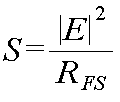
[수학식 3]

다음으로, [수학식 4]는 [수학식 1]에서 [수학식 3]을 이용하여 산출 가능한 dBm과 dBuV의 상관관계를 나타내고 있다.
[수학식 4]


다음으로, [수학식 5]는 dBuV와 dBm의 변환상수로 정의한 K값을 나타내고 있으며, 이때 안테나는 0dBi로 가정한다.
[수학식 5]

이와 같은 수학식을 이용하여 TV 화이트 스페이스 대역 내 3개의 특정 중심 주파수 값을 고려했을 경우 산출 가능한 파장값 λ와 K값은 아래와 같이 나타낼 수 있다.
표 1
| F(MHz) | λ(m) | K(dB) |
| 512 | .586 | 131.4 |
| 605 | .496 | 132.9 |
| 698 | .430 | 134.1 |
다시 도 3을 참조하면, 주파수 할당부(340)는 설정된 간섭기준에 기초하여 무선단말의 방사마스크 기준을 설정한다. 그리고 설정된 방사마스크 기준에 기초하여 무선단말이 이용 가능한 TV 화이트 스페이스의 주파수를 할당한다.
이때, 주파수 할당부(340)는 긴급 또는 공공 용도로 사용되어야 할 무선통신 서비스 요청시, 무선단말에 우선하여 TV 화이트 스페이스의 주파수를 할당할 수 있다. 긴급 또는 공공 용도의 무선통신 서비스 외에도 방송 서비스, 상업적 무선통신 서비스 및 무선 마이크 서비스의 경우에도 필요시 우선하여 TV 화이트 스페이스의 주파수를 할당할 수 있다.
한편, 본 발명에 따른 무선단말의 주파수 할당 시스템(300)은 무선단말 식별부(350), 수신부(360) 및 갱신부(370)를 더 포함할 수 있다.
무선단말 식별부(350)는 저장부(310)에 저장된 무선단말의 사용자 정보를 수신하고, 무선단말의 사용자 ID 인증 및 등록을 위해 무선단말을 식별할 수 있다. 즉, 무선단말 식별부(350)는 무선단말 사용자 정보에 기초하여 무선단말을 식별함으로써 무선단말의 서비스 사용을 승인할 수 있다. 서비스 사용을 승인하게 될 경우 서비스 사용 승인 메시지를 주파수 할당부(340)로 전송할 수 있다.
수신부(360)는 무선단말이 이용 가능한 TV 화이트 스페이스 데이터베이스 정보를 주파수 관리기관으로부터 수신하여 저장부(310)에 저장할 수 있다. 즉, 수신부(360)는 국내 주파수 관리기관이 관리하는 TV 화이트 스페이스의 데이터베이스 정보를 수신하는 역할을 수행하며, 이때 주파수 관리기관은 방송통신위원회, 국립전파연구소 등이 있다.
갱신부(370)는 주파수 관리기관에서 변경된 주파수 규격 정보 및 TV 화이트 스페이스 데이터베이스 정보를 주기적으로 갱신할 수 있다. 주파수 관리기관에서는 기술규격 정보를 주기적으로 변경하므로, 변경된 기술규격에 따라 서비스를 실시하기 위해서는 주기적으로 데이터를 업데이트 해야 한다. 이때, 업데이트의 간격은 주파수 관리기관에서 제시하는 기술규격에 따른다. 이와 더불어, 갱신부(370)는 주파수 관리기관의 요청 또는 지역 내 보호되어야 할 긴급 또는 공공 용도의 무선통신 서비스를 시행할 경우에 업데이트를 할 수 있다.
도 5는 본 발명의 일 실시예에 따른 무선단말의 주파수 할당 방법의 순서도이다.
먼저, 무선단말의 TV 화이트 스페이스 주파수 할당 요청(S510)을 수신하며, 이때 무선단말은 식별자 정보 및 스펙트럼 센싱 정보를 무선단말 주파수 할당 시스템에 전달하게 된다.
다음으로, 무선단말에서 전달한 스펙트럼 센싱 정보를 수신한다(S520). 스펙트럼 센싱 정보를 이용할 경우, 기존의 TV 화이트 스페이스의 데이터베이스 방식의 감지 한계를 넘어설 수 있는 효과가 있다. 한편, 스펙트럼 센싱 정보와 관련된 내용은 도 4에서 설명하였으므로, 이하에서는 생략하도록 한다.
다음으로, TV 화이트 스페이스 데이터베이스의 간섭 기준값 및 스펙트럼 센싱 정보에 기초한 간섭 기준값을 비교하여 간섭기준을 설정한다(S530). 간섭기준은 센싱 정보에 기초한 간섭 기준값이 TV 화이트 스페이스 데이터베이스의 간섭 기준값보다 작은 경우 TV 화이트 스페이스 데이터베이스의 간섭 기준값을 간섭기준으로 설정한다. 이때, 간섭기준을 설정함에 있어서, 무선단말의 수신전력 단위를 dBm에서 dBuV로 변환할 수 있다.
TV 화이트 스페이스 데이터베이스 기술과 스펙트럼 센싱 기술을 통해 취득 가능한 간섭보호 영역의 경계치를 산출하기 위해서는 전계강도(dBuV) 단위로 통일해야 하며, 이때 TV 화이트 스페이스 기반의 무선단말의 수신 전력 단위를 dBm에서 dBuV로 변환하는 과정은 도 4에서 설명하였으므로, 구체적인 설명은 생략하도록 한다.
다음으로, 설정된 간섭기준에 기초하여 무선단말의 방사마스크 기준을 설정 하고(S540), 설정된 방사마스크 기준에 기초하여 무선단말이 이용 가능한 TV 화이트 스페이스 주파수를 할당한다(S550). 이때, 주파수를 할당하는 단계는 긴급 또는 공공 용도로 사용되어야 할 무선통신 서비스 요청시, 무선단말에 우선하여 TV 화이트 스페이스의 주파수를 할당할 수 있다. 또한, 긴급 또는 공공 용도의 무선통신 서비스 외에도 방송 서비스, 상업적 무선통신 서비스 및 무선 마이크 서비스의 경우에도 필요시 우선하여 TV 화이트 스페이스의 주파수를 할당할 수 있다.
이와 더불어, 무선단말이 이용 가능한 TV 화이트 스페이스 데이터베이스 정보를 주파수 관리기관으로부터 수신하는 단계를 더 포함할 수 있다. 즉, 국내 주파수 관리기관이 관리하는 TV 화이트 스페이스의 데이터베이스 정보를 수신하며, 이때 주파수 관리기관은 방송통신위원회, 국립전파연구소 등이 있다.
또한, 주파수 관리기관에서 변경된 주파수 규격 정보 및 TV 화이트 스페이스 데이터베이스 정보를 주기적으로 갱신하는 단계를 더 포함할 수 있다. 주파수 관리기관에서는 기술규격 정보를 주기적으로 변경하므로, 변경된 기술규격에 따라 서비스를 실시하기 위해서는 주기적으로 데이터를 업데이트 해야 한다. 이때, 업데이트의 간격은 주파수 관리기관에서 제시하는 기술규격에 따른다. 이와 더불어, 주파수 관리기관의 요청 또는 지역 내 보호되어야 할 긴급 또는 공공 용도의 무선통신 서비스를 시행할 경우에 업데이트를 할 수 있다.
한편, 본 발명의 일 실시예는 컴퓨터에 의해 실행되는 프로그램 모듈과 같은 컴퓨터에 의해 실행 가능한 명령어를 포함하는 기록 매체의 형태로도 구현될 수 있다. 컴퓨터 판독 가능 매체는 컴퓨터에 의해 액세스될 수 있는 임의의 가용 매체일 수 있고, 휘발성 및 비휘발성 매체, 분리형 및 비분리형 매체를 모두 포함한다. 또한, 컴퓨터 판독가능 매체는 컴퓨터 저장 매체 및 통신 매체를 모두 포함할 수 있다. 컴퓨터 저장 매체는 컴퓨터 판독가능 명령어, 데이터 구조, 프로그램 모듈 또는 기타 데이터와 같은 정보의 저장을 위한 임의의 방법 또는 기술로 구현된 휘발성 및 비휘발성, 분리형 및 비분리형 매체를 모두 포함한다. 통신 매체는 전형적으로 컴퓨터 판독가능 명령어, 데이터 구조, 프로그램 모듈, 또는 반송파와 같은 변조된 데이터 신호의 기타 데이터, 또는 기타 전송 메커니즘을 포함하며, 임의의 정보 전달 매체를 포함한다.
전술한 본 발명의 설명은 예시를 위한 것이며, 본 발명이 속하는 기술분야의 통상의 지식을 가진 자는 본 발명의 기술적 사상이나 필수적인 특징을 변경하지 않고서 다른 구체적인 형태로 쉽게 변형이 가능하다는 것을 이해할 수 있을 것이다. 그러므로 이상에서 기술한 실시예들은 모든 면에서 예시적인 것이며 한정적이 아닌 것으로 이해해야만 한다. 예를 들어, 단일형으로 설명되어 있는 각 구성 요소는 분산되어 실시될 수도 있으며, 마찬가지로 분산된 것으로 설명되어 있는 구성 요소들도 결합된 형태로 실시될 수 있다.
본 발명의 범위는 상기 상세한 설명보다는 후술하는 특허청구범위에 의하여 나타내어지며, 특허청구범위의 의미 및 범위 그리고 그 균등 개념으로부터 도출되는 모든 변경 또는 변형된 형태가 본 발명의 범위에 포함되는 것으로 해석되어야 한다.
Claims (11)
- 무선단말의 주파수 할당 시스템에 있어서,상기 무선단말의 사용자 정보 및 상기 무선단말이 이용 가능한 TV 화이트 스페이스 데이터베이스 정보가 저장된 저장부,상기 무선단말에서 전달한 스펙트럼 센싱 정보를 수신하는 스펙트럼 센싱 정보 수신부,상기 TV 화이트 스페이스 데이터베이스의 간섭 기준값 및 상기 스펙트럼 센싱 정보에 기초한 간섭 기준값을 비교하여 간섭기준을 설정하는 간섭기준 설정부 및상기 설정된 간섭기준에 기초하여 상기 무선단말의 방사마스크 기준을 설정하고, 상기 방사마스크 기준에 기초하여 상기 무선단말이 이용 가능한 TV 화이트 스페이스의 주파수를 할당하는 주파수 할당부를 포함하되,상기 간섭기준 설정부는,상기 스펙트럼 센싱 정보에 기초한 간섭 기준값이 상기 TV 화이트 스페이스 데이터베이스의 간섭 기준값보다 작은 경우 상기 TV 화이트 스페이스 데이터베이스의 간섭 기준값을 간섭기준으로 설정하는 것인 무선단말의 주파수 할당 시스템.
- 제 1 항에 있어서,상기 간섭기준 설정부는 상기 무선단말의 수신전력 단위를 dBm에서 dBuV로 변환하는 무선단말의 주파수 할당 시스템.
- 제 1 항에 있어서,상기 저장부에 저장된 상기 무선단말의 사용자 정보를 수신하고, 상기 무선단말의 사용자 ID 인증 및 등록을 통해 무선단말을 식별하는 무선단말 식별부를 더 포함하는 무선단말의 주파수 할당 시스템.
- 제 1 항에 있어서,상기 무선단말이 이용 가능한 TV 화이트 스페이스 데이터베이스 정보를 주파수 관리기관으로부터 수신하여 상기 저장부에 저장하는 수신부를 더 포함하는 무선단말의 주파수 할당 시스템.
- 제 1 항에 있어서,주파수 관리기관에서 변경된 주파수 규격 정보 및 상기 TV 화이트 스페이스 데이터베이스 정보를 주기적으로 갱신하는 갱신부를 더 포함하는 무선단말의 주파수 할당 시스템.
- 제 1 항에 있어서,상기 주파수 할당부는 긴급 또는 공공 용도로 사용되어야 할 무선통신 서비스 요청시, 상기 무선단말에 우선하여 상기 TV 화이트 스페이스의 주파수를 할당하는 무선단말의 주파수 할당 시스템.
- 무선단말의 주파수 할당 시스템을 이용하여 무선단말의 주파수를 할당하는 방법에 있어서,상기 무선단말의 TV 화이트 스페이스 주파수 할당 요청에 따라 상기 무선단말이 이용 가능한 TV 화이트 스페이스 데이터베이스의 리스트를 전달하는 단계,상기 무선단말에서 전달한 스펙트럼 센싱정보를 수신하는 단계,상기 TV 화이트 스페이스 데이터베이스의 간섭 기준값 및 상기 스펙트럼 센싱 정보에 기초한 간섭 기준값을 비교하여 간섭기준을 설정하는 단계,상기 설정된 간섭기준에 기초하여 무선단말의 방사마스크 기준을 설정하는 단계 및상기 설정된 방사마스크 기준에 기초하여 상기 무선단말이 이용 가능한 TV 화이트 스페이스 주파수를 할당하는 단계를 포함하되,상기 간섭기준을 설정하는 단계는,상기 스펙트럼 센싱 정보에 기초한 간섭 기준값이 상기 TV 화이트 스페이스 데이터베이스의 간섭 기준값보다 작은 경우 상기 TV 화이트 스페이스 데이터베이스의 간섭 기준값을 간섭기준으로 설정하는 것인 무선단말의 주파수 할당 방법.
- 제 7 항에 있어서,상기 간섭기준을 설정하는 단계는,상기 무선단말의 수신전력 단위를 dBm에서 dBuV로 변환하는 것인 무선단말의 주파수 할당 방법.
- 제 7 항에 있어서,상기 무선단말이 이용 가능한 TV 화이트 스페이스 데이터베이스 정보를 주파수 관리기관으로부터 수신하는 단계를 더 포함하는 무선단말의 주파수 할당 방법.
- 제 7 항에 있어서,상기 주파수 관리기관에서 변경된 주파수 규격 정보 및 상기 TV 화이트 스페이스 데이터베이스 정보를 주기적으로 갱신하는 단계를 더 포함하는 무선단말의 주파수 할당 방법.
- 제 7 항에 있어서,TV 화이트 스페이스 주파수를 할당하는 단계는,긴급 또는 공공 용도로 사용되어야 할 무선통신 서비스 요청시, 상기 무선단말에 우선하여 상기 TV 화이트 스페이스의 주파수를 할당하는 무선단말의 주파수 할당 방법.
Applications Claiming Priority (2)
| Application Number | Priority Date | Filing Date | Title |
|---|---|---|---|
| KR10-2013-0034571 | 2013-03-29 | ||
| KR1020130034571A KR20140118506A (ko) | 2013-03-29 | 2013-03-29 | 무선단말의 주파수 할당 시스템 및 방법 |
Publications (1)
| Publication Number | Publication Date |
|---|---|
| WO2014157980A1 true WO2014157980A1 (ko) | 2014-10-02 |
Family
ID=51624836
Family Applications (1)
| Application Number | Title | Priority Date | Filing Date |
|---|---|---|---|
| PCT/KR2014/002651 Ceased WO2014157980A1 (ko) | 2013-03-29 | 2014-03-28 | 무선단말의 주파수 할당 시스템 및 방법 |
Country Status (2)
| Country | Link |
|---|---|
| KR (1) | KR20140118506A (ko) |
| WO (1) | WO2014157980A1 (ko) |
Families Citing this family (1)
| Publication number | Priority date | Publication date | Assignee | Title |
|---|---|---|---|---|
| KR101881987B1 (ko) * | 2016-07-29 | 2018-07-25 | 숭실대학교산학협력단 | Tv 화이트 스페이스를 이용한 긴급 상황 통신 장치 및 방법 |
Citations (5)
| Publication number | Priority date | Publication date | Assignee | Title |
|---|---|---|---|---|
| KR20120060534A (ko) * | 2010-12-02 | 2012-06-12 | 숭실대학교산학협력단 | 이동 액세스 포인트로 동작하는 휴대용 단말기 및 그의 무선랜 서비스 제공 방법 |
| KR20120076281A (ko) * | 2010-12-29 | 2012-07-09 | 숭실대학교산학협력단 | Tv 유휴 채널로 동작하는 스마트 유틸리티 네트워크에서의 무선 접속 제공 장치 및 방법 |
| KR20120115986A (ko) * | 2010-02-09 | 2012-10-19 | 스펙트럼 브리지 인크. | 스펙트럼 할당시스템 및 방법 |
| KR20120132607A (ko) * | 2010-11-10 | 2012-12-06 | 한국전자통신연구원 | 통신 시스템에서 자원 관리 시스템 및 방법 |
| US20120314098A1 (en) * | 2011-06-13 | 2012-12-13 | Funai Electric Co., Ltd. | Video Reproducing Apparatus |
-
2013
- 2013-03-29 KR KR1020130034571A patent/KR20140118506A/ko not_active Withdrawn
-
2014
- 2014-03-28 WO PCT/KR2014/002651 patent/WO2014157980A1/ko not_active Ceased
Patent Citations (5)
| Publication number | Priority date | Publication date | Assignee | Title |
|---|---|---|---|---|
| KR20120115986A (ko) * | 2010-02-09 | 2012-10-19 | 스펙트럼 브리지 인크. | 스펙트럼 할당시스템 및 방법 |
| KR20120132607A (ko) * | 2010-11-10 | 2012-12-06 | 한국전자통신연구원 | 통신 시스템에서 자원 관리 시스템 및 방법 |
| KR20120060534A (ko) * | 2010-12-02 | 2012-06-12 | 숭실대학교산학협력단 | 이동 액세스 포인트로 동작하는 휴대용 단말기 및 그의 무선랜 서비스 제공 방법 |
| KR20120076281A (ko) * | 2010-12-29 | 2012-07-09 | 숭실대학교산학협력단 | Tv 유휴 채널로 동작하는 스마트 유틸리티 네트워크에서의 무선 접속 제공 장치 및 방법 |
| US20120314098A1 (en) * | 2011-06-13 | 2012-12-13 | Funai Electric Co., Ltd. | Video Reproducing Apparatus |
Also Published As
| Publication number | Publication date |
|---|---|
| KR20140118506A (ko) | 2014-10-08 |
Similar Documents
| Publication | Publication Date | Title |
|---|---|---|
| US11516678B2 (en) | Apparatus, method, and program for exchanging information between a plurality of wireless systems | |
| CA3009728C (en) | Communication control device, communication control method, program, and wireless communication device | |
| US10034178B2 (en) | Method and apparatus for multi-channel operation in wireless local area network system | |
| CN102598539B (zh) | 在无线局域网系统中发送空白区映射信息的方法和装置 | |
| CN102792738B (zh) | Wlan系统中保护主服务的方法和设备 | |
| US9019909B2 (en) | Method, apparatus, and computer program product for coexistence management | |
| US20100195590A1 (en) | Method and apparatus for radio spectrum sensing or monitoring | |
| WO2011122860A2 (ko) | 효율적인 채널 사용 방법. | |
| WO2011030960A1 (ko) | 무선랜 시스템에서 화이트스페이스 센싱 방법과 이를 수행하는 장치 | |
| CN102742333A (zh) | 无线局域网络中的发送功率控制的方法和设备 | |
| WO2014007519A1 (en) | Apparatus and method for operating resources in communication system | |
| CN103313433B (zh) | 用于无线电网络中资源的临时释放的方法和装置 | |
| EP3648495B1 (en) | Control device, base station, terminal device, method, and recording medium | |
| WO2012153892A1 (ko) | 상호공존 방식에서 주파수 대역 결정 방법 | |
| JP2012060455A (ja) | 異種のコグニティブ無線システムを共存させるためのシステム | |
| WO2014157980A1 (ko) | 무선단말의 주파수 할당 시스템 및 방법 | |
| KR20120076281A (ko) | Tv 유휴 채널로 동작하는 스마트 유틸리티 네트워크에서의 무선 접속 제공 장치 및 방법 | |
| WO2021034147A1 (ko) | Tvws(television white space) 대역을 통해 데이터 통신을 제공하는 통신 시스템 | |
| JP6662444B2 (ja) | 装置、方法及びプログラム | |
| KR100960794B1 (ko) | 무선 인터넷 접속 환경에서 불량 액세스 포인트 식별 장치및 방법 | |
| WO2013115626A1 (ko) | 무선통신 시스템에서 공통 기준 신호 포트를 할당하기 위한 장치 및 방법 | |
| CN101247296A (zh) | 一种信标设备及信标状态指示方法及系统 | |
| WO2012033387A2 (ko) | 통신 시스템에서 자원 관리 시스템 및 방법 | |
| CN101202612A (zh) | 一种信标设备及信标状态指示方法及系统 |
Legal Events
| Date | Code | Title | Description |
|---|---|---|---|
| 121 | Ep: the epo has been informed by wipo that ep was designated in this application |
Ref document number: 14774217 Country of ref document: EP Kind code of ref document: A1 |
|
| NENP | Non-entry into the national phase |
Ref country code: DE |
|
| 122 | Ep: pct application non-entry in european phase |
Ref document number: 14774217 Country of ref document: EP Kind code of ref document: A1 |