WO2014143907A1 - Novel dosing regimens of celgosivir for the treatment of dengue - Google Patents
Novel dosing regimens of celgosivir for the treatment of dengue Download PDFInfo
- Publication number
- WO2014143907A1 WO2014143907A1 PCT/US2014/028076 US2014028076W WO2014143907A1 WO 2014143907 A1 WO2014143907 A1 WO 2014143907A1 US 2014028076 W US2014028076 W US 2014028076W WO 2014143907 A1 WO2014143907 A1 WO 2014143907A1
- Authority
- WO
- WIPO (PCT)
- Prior art keywords
- compound
- formula
- hours
- dose
- days
- Prior art date
- Legal status (The legal status is an assumption and is not a legal conclusion. Google has not performed a legal analysis and makes no representation as to the accuracy of the status listed.)
- Ceased
Links
- 0 *[C@](CC1)[C@]2N1C[C@](*)C1(*C1)C[C@@]2O* Chemical compound *[C@](CC1)[C@]2N1C[C@](*)C1(*C1)C[C@@]2O* 0.000 description 1
Classifications
-
- A—HUMAN NECESSITIES
- A61—MEDICAL OR VETERINARY SCIENCE; HYGIENE
- A61K—PREPARATIONS FOR MEDICAL, DENTAL OR TOILETRY PURPOSES
- A61K31/00—Medicinal preparations containing organic active ingredients
- A61K31/33—Heterocyclic compounds
- A61K31/395—Heterocyclic compounds having nitrogen as a ring hetero atom, e.g. guanethidine or rifamycins
- A61K31/435—Heterocyclic compounds having nitrogen as a ring hetero atom, e.g. guanethidine or rifamycins having six-membered rings with one nitrogen as the only ring hetero atom
- A61K31/4353—Heterocyclic compounds having nitrogen as a ring hetero atom, e.g. guanethidine or rifamycins having six-membered rings with one nitrogen as the only ring hetero atom ortho- or peri-condensed with heterocyclic ring systems
- A61K31/437—Heterocyclic compounds having nitrogen as a ring hetero atom, e.g. guanethidine or rifamycins having six-membered rings with one nitrogen as the only ring hetero atom ortho- or peri-condensed with heterocyclic ring systems the heterocyclic ring system containing a five-membered ring having nitrogen as a ring hetero atom, e.g. indolizine, beta-carboline
-
- A—HUMAN NECESSITIES
- A61—MEDICAL OR VETERINARY SCIENCE; HYGIENE
- A61P—SPECIFIC THERAPEUTIC ACTIVITY OF CHEMICAL COMPOUNDS OR MEDICINAL PREPARATIONS
- A61P31/00—Antiinfectives, i.e. antibiotics, antiseptics, chemotherapeutics
- A61P31/12—Antivirals
- A61P31/14—Antivirals for RNA viruses
-
- Y—GENERAL TAGGING OF NEW TECHNOLOGICAL DEVELOPMENTS; GENERAL TAGGING OF CROSS-SECTIONAL TECHNOLOGIES SPANNING OVER SEVERAL SECTIONS OF THE IPC; TECHNICAL SUBJECTS COVERED BY FORMER USPC CROSS-REFERENCE ART COLLECTIONS [XRACs] AND DIGESTS
- Y02—TECHNOLOGIES OR APPLICATIONS FOR MITIGATION OR ADAPTATION AGAINST CLIMATE CHANGE
- Y02A—TECHNOLOGIES FOR ADAPTATION TO CLIMATE CHANGE
- Y02A50/00—TECHNOLOGIES FOR ADAPTATION TO CLIMATE CHANGE in human health protection, e.g. against extreme weather
- Y02A50/30—Against vector-borne diseases, e.g. mosquito-borne, fly-borne, tick-borne or waterborne diseases whose impact is exacerbated by climate change
Definitions
- Dengue infection is caused by one of four immunologically distinct serotypes of the dengue virus (DENV 1-4). The virus is spread by the urban breeding mosquito Aedes aegypti.
- the present invention pertains to methods of treating a dengue virus (DENV) infection in a human subject.
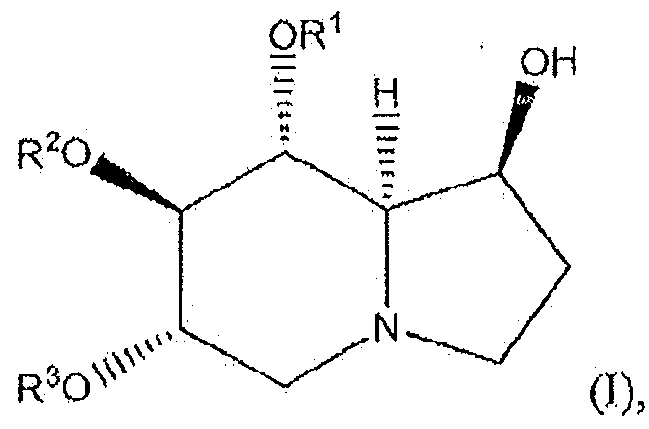
- the method comprises administering to the human subject an initial (loading) dose of about 100 to 600 mg of a compound of Formula (I), or a pharmaceutical composition comprising a compound of Formula (I), within from about onset of fever to about 72 hours of fever onset due to dengue infection, followed by administration of one or more subsequent doses of about 25 to about 300 mg of a compound of Formula (I), or a pharmaceutical composition comprising a compound of Formula (I).
- the subsequent doses are administered at intervals of from about 6 to about 12 hours. In other embodiments, the subsequent doses are administered about every 6 hours, about every 8 hours, about every 12 hours, or about every 24 hours.
- the subsequent doses are administered for about 1-10 days. In other embodiments, the subsequent doses are administered for about 1 -5 days, 1 -4 days, 1-3 days, 2-3 days, or 1-2 days. In further embodiments, the subsequent doses are administered until there is an improvement in the infection or its symptoms.
- the human subject can be an adult or a child.
- R', R 2 , and R 3 are independently H, (Ci-C 14 ) acyl, (Ci-Ci 4 ) alkenylacyl, (C 3 -Cg) cycloalkylacyl, (C1 -C14) haloalkylacyl (C]-C 8 ) alkoxyacyl, or (C 6 -Ci 0 ) arylacyl.
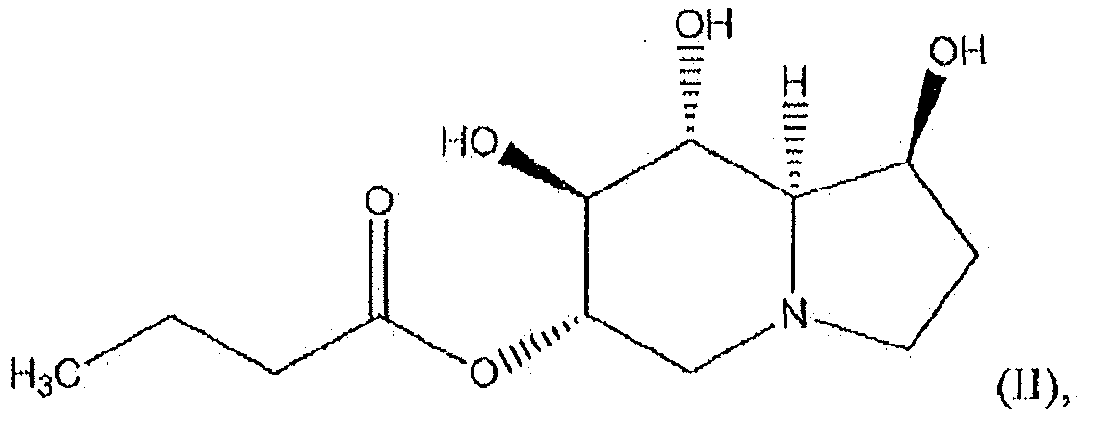
- the compound of Formula (1) is specifically the compound of Formula (II), below, or a pharmaceutically acceptable salt thereof:
- the compound of Formula (I) is prodrug of
- castanospermine a natural product derived from the seeds of Castanospevmum australe. Once administered compounds of Formula (I) are rapidly converted to castanospermine. Compounds of Formula (I) (e.g. , celgosivir) are more rapidly and efficiently absorbed than castanospermine. Compounds of Formula (I) are also more readily absorbed into cells. As a result, compounds of Formula (I) may have higher 50% effective concentration (EC50) values and in vivo efficacy than castanospermine against the dengue (DENV) virus.
- EC50 effective concentration
- the initial dose is the same as the subsequent doses, while in other embodiments the initial dose differs from the subsequent doses. In particular embodiments, the initial dose is higher than the subsequent doses.
- the initial dose of a compound of Formula (I) can be between about 100 to about 600 mg. In other embodiments, the initial dose of a compound of Formula (I) in an adult subject can be about 150-600 mg, about 200- 500 mg, or about 250-400 mg.
- the initial dose of a compound of Formula (I) in an adult subject can be about 100 mg, about 125 mg, about 150 mg, about 175 mg, about 200 mg, about 225 mg, about 250 mg, about 275 mg, about 300 mg, about 325 mg, about 350 mg, about 375 mg, about 400 mg, about 425 mg, about 450 mg, about 475 mg, about 500 mg, about 525 mg, about 550 mg, about 575 mg, or about 600 mg.
- the initial dose of a compound of Formula (I) in an adult subject is between about 550 to about 600 mg.
- the initial dose of a compound of Formula (1) in an adult subject is between about 500 to about 550 mg.
- the initial dose of a compound of Formula (I) in an adult subject is between about 450 to about 500 mg.
- the initial dose of a compound of Formula (I) in an adult subject is between about 400 to about 450 mg.
- the initial dose of a compound of Formula (I) in an adult subject is between about 350 to about 400 mg. In further embodiment, the initial dose of compound of Formula (1) in an adult subject is between about 300 to about 350 mg. In yet another embodiment, the initial dose of a compound of Formula (I) in an adult subject is between about 250 to about 300 mg. In further embodiment, the initial dose of compound of Formula (I) in an adult subject is between about 200 to about 250 mg. In another embodiment, the initial dose of a compound of Formula (I) in an adult subject is between about 150 to about 200 mg. In another embodiment, the initial dose of compound of Formula (I) in an adult subject is between about 100 to about 150 mg.
- the subsequent doses of a compound of Formula (I) in an adult subject can be between about 100 to about 300 mg. In one embodiment, the subsequent dose of a compound of Formula (I) in an adult subject is between about 250 to about 300 mg. In another embodiment the subsequent dose of a compound of Formula (1) in an adult subject is between about 200 to about 250 mg. In yet another embodiment, the subsequent dose of a compound of Formula (I) in an adult subject is between about 150 to about 200 mg. In further embodiment, the subsequent dose of a compound of Formula (I) in an adult subject is between about 100 to about 200 mg. In an additional embodiment, the subsequent dose of a compound of Formula (I) in an adult subject is between about 125 to about 175 mg. In yet another embodiment, the subsequent dose of a compound of Formula (I) in an adult subject is about 150 mg.
- the initial dose of a compound of Formula (I) in a child subject can be between about 25 to about 450 mg. In one embodiment, the initial dose of a compound of Formula (I) in a child subject is between about 25 to about 50 mg. In another embodiment, the initial dose of a compound of Formula (I) in a child subject is between about 50 to about 75 mg. In yet another embodiment, the initial dose of a compound of Formula (I) in a child subject is between about 75 to about 100 mg. In further embodiment, the initial dose of a compound of Formula (I) in a child subject is between about 100 to about 150 mg. In another embodiment, the initial dose of a compound of Formula (I) in a child subject is between about 150 to about 200 mg.
- the initial close of a compound of Formula (I) in a child subject is between about 200 to about 250 mg. In further embodiment, the initial dose of a compound of Formula (I) in a child subject is between about 250 to about 300 mg. In another embodiment, the initial dose of a compound of Formula (I) in a child subject is between about 300 to about 350 mg. In yet another embodiment, the initial dose of a compound of Formula (I) in a child subject is between about 350 to about 400 mg.
- the subsequent doses of a compound of Formula (I) in a child subject can be between about 25 to about 200 mg. In one embodiment, the subsequent dose of a compound of Formula (I) in a child subject is between about 25 to about 50 mg. In another embodiment, the subsequent dose of a compound of Formula (I) in a child subject is between about 50 to about 75 mg. Tn yet another embodiment, the subsequent dose of a compound of Formula (I) in a child subject is between about 75 to about 100 mg. In further embodiment, the subsequent dose of a compound of Formula (I) in a child subject is between about 100 to about 125 mg. In another embodiment, the subsequent dose of a compound of Formula (I) in a child subject is between about 125 to about 150 mg.
- the subsequent dose of a compound of Formula (I) in a child subject is between about 150 to about 200 mg.
- the initial dose is administered at the time of fever onset due to dengue infection. In another embodiment, the initial dose is administered within 24 hours of fever onset due to dengue infection. In yet another embodiment, the initial dose is administered within 48 hours of fever onset due to dengue infection. In a further another embodiment, the initial dose is administered within 72 hours of fever onset due to dengue infection.
- the compounds or pharmaceutical compositions of the present invention can be administered intravenously, orally, rectally or sublingually.
- the route of administration is intravenous.
- the route of administration is oral.
- the route of administration is rectal.
- the route of administration is sublingual.
- the compounds or pharmaceutical compositions of the present invention can be administered as a single or as a divided dose.
- the initial dose is a single dose.
- the subsequent doses can be single, divided, or a combination thereof, during the course of therapy depending upon patient and progress of the infection.
- the human subject is administered a divided dose of from about 25 to about 300 mg of a compound of Formula (I), or a pharmaceutical composition comprising a compound of Formula (I), for between about 1 day to about 10 days.
- the human subject is administered a single dose of from about 25 to about 300 mg of a compound of Formula (I), or a pharmaceutical composition comprising a compound of Formula (I), for between about 1 day to about 10 days.
- the human subject is administered a single dose of from about 25 to about 300 mg of a compound of Formula (I), or a pharmaceutical composition comprising a compound of Formula (I), for between about 1 day to about 2 days.
- the human subject is administered a single dose of from about 25 to about 300 mg of a compound of Formula (I), or a pharmaceutical composition comprising a compound of Formula (I), for between about 2 days to about 5 days.
- the subsequent doses are administered no longer than about 1 day; in yet other versions no longer than about 2 days; in further versions no longer than about 5 days; and other versions no longer than about 10 days.
- the invention also relates to methods of treating a dengue virus infection by achieving a steady slate Cmin serum or plasma concentration of between about 0.05 and about 2.0 microgram/mL of castanospermine in an adult or child subject.
- the steady state Cmin serum or plasma concentration achieved in an adult or child subject is between about 0.08 and about 0.5 microgram/mL of castanospermine.
- the steady state Cmin serum or plasma concentration achieved in an adult or child subject is between about 0.05 and about 0.08 microgram/mL of
- the steady state Cmin serum or plasma concentration achieved in an adult or child subject is between about 0.08 and about 0.1 1 macOgram/niL of castanospermine. In a further embodiment, the steady state Cmin serum or plasma concentration achieved in an adult or child subject is between about 0.1 1 and about 0.3 microgram/mL of castanospermine. In another embodiment, the steady state Cmin serum or plasma concentration achieved in an adult or child subject is between about 0.3 and about 0.75 microgram/mL of castanospermine. In further embodiment, the steady state Cmin serum or plasma concentration achieved in an adult or child subject is between about 0.75 and about 1.0 microgram/mL of castanospermine.
- the steady state Cmin serum or plasma concentration achieved in an adult or child subject is between about 1.0 and about 2.0 microgram/mL of castanospermine. In another embodiment, the steady state Cmin serum or plasma concentration achieved in an adult or child subject is between about 1 .0 and about 1.5 microgram/mL of castanospermine. In further embodiment, the steady state Cmin serum or plasma concentration achieved in an adult or child subject is between about 1.5 and about 2.0 microgram/mL of castanospermine. In yet another embodiment, the steady state Cmin scrum or plasma concentration achieved in an adult or child subject is between about 1.25 and about 1.75 microgram/mL of castanospermine.
- the invention relates to methods for treating a dengue viral infection comprising at least one dengue virus selected from DEN V I , DENV2, DENV3 and DENV4.
- the dengue virus is DENV1.
- the dengue virus is DEN V2.
- the dengue virus is DENV3.
- the dengue virus is DENV4.
- the invention relates to methods of treating a dengue viral infection in a human subject who has tested positive for dengue virus.
- Known methods for diagnosis of dengue viral infection can be used including, but are not limited to, an NS1 (nonstructural protein 1) strip assay or a quantitative Polymerase Chain Reaction (PGR) assay.
- the selected method should be rapid enough for a diagnosis within from about onset of fever to about 72 hours of fever onset to optimize the therapeutic regimen of the various embodiments of the invention.
- the invention also relates to methods of treating a secondary dengue (DENV) viral infection in a human subject, comprising administering to the human subject an initial dose of about 100 to about 600 mg of a compound of Formula (1), or a pharmaceutical composition comprising a compound of Formula (1), within from about onset of fever to about 72 hours of fever onset due to dengue infection and administering to the human subject a dose of about 25 to about 300 mg of a compound of Formula (I), or a pharmaceutical composition comprising a compound of Formula (I), at intervals of from about 6 to about 12 hours until there is an improvement in the infection or between from about 1 day to about 10 days.
- DEV secondary dengue
- viral load reduction of treated human subjects is at least 50% greater than untreated or placebo-treated human subjects.
- the virological log reduction in human subjects treated with a compound of Formula (I) is at least 50% greater than untreated or placebo-treated groups.
- the virological log reduction in human subjects treated with a compound of Formula (I) is between about 60 to about 70% greater than untreated or placebo-treated groups.
- the virological log reduction in human subjects treated with a compound of Formula (I) is between about 70 to about 80% greater than untreated or placebo-treated groups.
- the virological log reduction in human subjects treated with a compound of Formula (I) is between about 80 to about 90% greater than untreated or placebo-treated groups.
- the invention is also directed to methods of treating a dengue viral infection comprising administering a pharmaceutical composition comprising a compound of Formula (I), Formula (II), or Formula (III) according to any one of the dosing regimens described herein.
- a pharmaceutical composition comprising a compound of Formula (I), Formula (II), or Formula (III) according to any one of the dosing regimens described herein.
- the disclosed compounds of Formula (I), Formula (II) or Formula (III) can be administered lo the subject in conjunction with an acceptable pharmaceutical carrier or diluent as part of a pharmaceutical composition for treatment of a dengue (DENV) infection.
- FIG. 1 shows a concentration response curve of celgosivir on DENV2 infection in the Cell-based flaviviral immunodetection assay (CFI) assay; EC50 ranges from 0.2 to 0.7 ⁇ .
- FIG. 2 shows immunofluorescence microscopy of untreated and celgosivir (20 ⁇ ) treated DENV2 infected BHK21. Nuclei are stained with blue fluorescent DAPI. Virus replication was detected using monoclonal anti-NSl antibody (green fluorescence). The top row shows that untreated, infected cells have abundant NS 1 in the cytoplasm while the bottom row shows that infected cells treated with celgosivir have very low levels of NSl . Low levels of NSl indicate suppression of viral replication.
- FIG. 4A shows the ADE effect - antibody against dengue E protein increases viremia in THP-1 human monocytes infected with dengue virus.
- FIG 4B shows the effect of celgosivir on DENV2 infected human monocytes pretreated with antibody to DEN V E protein.
- FIG. 5 A shows a schematic of the dosing conducted in the DENV2 infected mice in a lethal ADE model of viremia.
- FIG. 5B shows celgosivir improves survival of DEN V2 infected mice in a lethal ADE model of viremia in a dose- and schedule-dependent manner. Survival at day 12 was 1/8 (13%) at 10 mg/kg twice daily (BID), 5/8 (63%) at 25 mg/kg BID, 7/7 (100%) at 50 mg/kg BID, and 0/8 (0%) at 100 mg/kg once daily (QD).
- FIG. 6A shows a concentration profile of celgosivir and castano spermine after a single 50 mg/kg IP dose.
- FIG. 6B shows a castanospermine profile calculated for 50 mg/kg BID dosing regimen.
- FIG. 7 shows the castanospermine concentration-time data over the treatment period. Circles represent embodved concentrations. Shaded grey area represents the model predicted 10 lh to 90 th prediction interval. Solid line represents the 50 th prediction interval.
- FIG. 8A shows a simulated population mean castanospermine exposure after a
- 8B shows a simulated population mean castanospermine exposure after a 400 mg loading dose of celgosivir followed by 4 subsequent doses of 200 mg of celgosivir given at 12 hour intervals.
- 8C shows a simulated population mean
- 8D shows a simulated population mean castanospermine exposure after a 400 mg loading dose of celgosivir followed by 6 subsequent doses of 133 mg of celgosivir given at 8 hour intervals.
- 8E shows a simulated population mean castanospermine exposure after a 300 mg loading dose of celgosivir followed by 3 subsequent doses of 300 mg of celgosivir given at 12 hour intervals.
- 8F shows a simulated population mean castanospermine exposure after a 200 mg loading dose of celgosivir followed by 5 subsequent doses of 200 mg of celgosivir given at 8 hour intervals.
- 8G shows a simulated population mean castanospermine exposure after a 150 mg loading dose of celgosivir followed by 7 subsequent doses of 150 mg of celgosivir given at 6 hour intervals.
- 8H shows a simulated population mean castanospermine exposure after a single dose of 600 mg.
- the solid line represents the simulated dosing regimen
- the dotted line represents a dosing regimen of 400 mg initial dose followed by 200 mg every 12 hours for 9 doses (i.e. 5 days of treatment) and the dashed line represents target minimum trough concentration.
- LD loading dose
- q is 'every' and refers to the duration of time between doses.
- Alkyl as used alone or as part of a larger moiety as in “arylalkyl” or
- aryloxyalkyl means a saturated aliphatic branched or straight-chain monovalent
- hydrocarbon radicals typically C1-C16, preferably C1-C12.
- (C1 -C6) alkyl means a radical having from 1-6 carbon atoms in a linear or branched arrangement.
- “(CI -C6) alkyl” includes methyl, ethyl, propyl, butyl, tert-butyl, pentyl and hexyl.
- Alkylene means a saturated aliphatic straight-chain divalent hydrocarbon radical.
- (Ci-C 6 ) alkylene means a divalent saturated aliphatic radical having from 1-6 carbon atoms in a linear arrangement.
- (Ci-C 6 ) alkylene includes methylene, ethylene, propylene, butylene, pentylene and hexylene.
- Cycloalkyl means saturated aliphatic cyclic hydrocarbon ring.
- C 3 -C 8 cycloalkyl means (3-8 membered) saturated aliphatic cyclic hydrocarbon ring.
- C 3 -C 8 cycloalkyl includes, but is not limited to cyclopropyl, cyclobutyl, cyclopentyl, cyclohexyl, cycloheptyl, and cyclooctyl.
- cycloalkyl is C 3 -C cycloalkyl.
- alkoxy means -O-alkyl; "arylalkoxy” means an alkoxy group substituted at any carbon by an aryl group; "hydroxy alkyl” means alkyl substituted with hydroxy; “arylalkyl” means alkyl substituted with an aryl group; “alkoxyalkyl” mean alkyl substituted with an alkoxy group; "cycloalkylalkyl” means alkyl substituted with cycloalkyl; “alkylcarbonyl” means -C(0)-A*, wherein A* is alkyl; “alkoxycarbonyl” means -C(0)-OA*, wherein A* is alkyl; and where alkyl is as defined above. Alkoxy is preferably 0(C] -C6) alkyl and includes methoxy, ethoxy, propoxy, butoxy, pentoxy and hexoxy.
- Cycloalkoxy means a cycloalkyl-O- group wherein the cycloalkyl is as defined above.
- Exemplary (C 3 -C 7 ) cycloalkyloxy groups include cyclopropoxy, cyclobutoxy, cyclopentoxy, cyclohexoxy and cycloheptoxy.
- Halogen and "halo” are interchangeably used herein and each refers to fluorine, chlorine, bromine, or iodine.
- haloalkyl means alkyl, cycloalkyl, or alkoxy, as the case may be, substituted with one or more halogen atoms.
- haloalkyl means alkyl, cycloalkyl, or alkoxy, as the case may be, substituted with one or more halogen atoms.
- halogen or "halo" means F, CI, Br or 1.
- Acyl refers to R"-C(0)-, where R" is H, alkyl, substituted alkyl, heteroalkyl, substituted heteroalkyl, alkenyl, substituted alkenyl, aryl, alkylaryl, or substituted alkylaryl, and is indicated in the general formula of a particular embodiment as "Ac”.
- alkylene group is represented by -[CH 2 ] Z -, wherein z is a positive integer, preferably from one to eight, more preferably from one to four.
- (C 6 -C 10 ) aryl used alone or as part of a larger moiety as in “arylalkyl", “arylalkoxy”, “aryloxy”, or “aryloxyalkyl”, means carbocyclic aromatic rings.
- carbocyclic aromatic group may be used interchangeably with the terms “aryl”, “aryl ring” “carbocyclic aromatic ring”, “aryl group” and “carbocyclic aromatic group”.
- An aryl group typically has 6-10 ring atoms.
- a "substituted aryl group” is substituted at any one or more substitutable ring atom.
- C 6 -Ci 6 aryl as used herein means a monocyclic, bicyclic or tricyclic carbocyclic ring system containing from 6 to 16 carbon atoms and includes phenyl (Ph), naphthyl, anfhracenyl, 1,2-dihydronaphthyl, 1,2,3,4-tetrahydronaphthyl, fluorenyl, indanyl, indenyl and the like.
- alkenyl as used alone or as part of a larger moiety as in " Alkenylacyl” or "haloalkylacyl” means a straight or branched hydrocarbon radical having a specified number of carbon atoms and includes at least one double bond.
- An alkenyl group generally has between 2 and 6 carbon atoms.
- the (C 6 -Ci 0 ) aryl (C 2 -C 6 ) alkenyl group connects to the remainder of the molecule through the (C 2 -C 6 ) alkenyl portion of (C 6 -Cio) aryl (C 2 -C 6 ) alkenyl.
- “Pharmaceutically acceptable carrier” means non-therapeutic components that are of sufficient purity and quality for use in the formulation of a composition of the invention that, when appropriately administered to typically do not produce an adverse reaction, and that are used as a vehicle for a drug substance (e.g. , a compound of Formula (I)).
- Intraperitoneal injection refers to the injection of a substance into the peritoneum (body cavity).
- QDS Frour times a day dosing
- BDI refers to twice daily.
- QD refers to once daily.
- Cmin refers to the minimum concentration that a drug achieves after the drug has been administered and prior to the administration of a second or additional dose.
- Cmax refers to the maximum concentration.
- Tmax refers to the time of maximum concentration.
- AUC used herein, is the area under the concentration-time curve.
- EC50 50% effective concentration
- the term “about” refers to a number that differs from the given number by less than 10%. In other embodiments, the term “about” indicates that the number differs from the given number by less than 9%, 8%, 7%, 6%, 5%, 4%, 3%, 2%, or 1%.
- DENV dengue virus
- DENV1 dengue virus
- DENV2 dengue virus
- DENV3 dengue virus
- DENV4 dengue virus
- ADE Antibody enhanced or “Antibody Dependent Enhancement” (ADE), as used herein interchangeably, refers to a DEN V infection made more severe due to a prior infection with one of the four DENV serotypes: DENV1, DENV2, DENV3, and DENV4.
- DHF dengue hemorrhagic fever
- DSS dengue shock syndrome
- viral load refers to the amount of virus in the blood stream of a human subject.
- the present invention pertains to methods of treating a dengue virus (DENV) infection in a human subject, comprising administering to the human subject an initial dose of about 100 to about 600 mg of a compound of Formula (I), or a pharmaceutical composition comprising a compound of Formula (I), within from about onset of fever to about 72 hours of fever onset due Lo dengue infection and administering to the human subject a dose of about 25 to about 300 mg of a compound of Formula (1), or a pharmaceutical composition comprising a compound of Formula (I), at intervals of from about 6 to about 12 hours until there is an improvement in the infection or between from about 1 day to about 10 days.
- DEV dengue virus
- Ihe compound of the invention is a compound of Formula (1):
- R 1 , R 2 , and R 3 are independently H, (CI -CI 4) acyl, (CI -CI 4) alkenylacyl, (C3-C8) cycloalkylacyl, (C1 -C14) haloalkylacyl (C1-C8) alkoxyacyl, or (C6-C10) arylacyl.
- R and R are H and R is a (CI -CI 4) acyl.
- R is CII 3 -CH 2 CH 2 -C(0)-. In yet another embodiment, R is
- R 3 is CH 3 -CH 2 CH 2 -C(0)-.
- at least one but not more than two Rl, R2, and R3 is a hydrogen.
- the compound of the invention is a compound of Formula (II):
- the compound of Formula (II), or pharmaceutical composition comprising a compound of Formula (II), can be used in any of the embodiments provided herein for Formula (1).
- the compound of the invention is a compound of Formula (III):
- R' , R 2 , and R 3 are independently H, (C1-C14) acyl, (C1 -C14) alkenylacyl, (C3-C8) cycloalkylacyl, (C1-C14) haloalkylacyl (C1-C8) alkoxyacyl, or (C6-C10) arylacyl.
- the compound of Formula (III), or pharmaceutical composition comprising a compound of Formula (III), can be used in any of the embodiments provided herein for Formula (I).
- the compounds of the invention useful for practicing the methods described herein may possess one or more chiral centers and so exist in a number of stereoisomeric forms. All stereoisomers and mixtures thereof are included in the scope of the present invention. Racemic compounds may cither be separated using preparative HPLC and a column with a chiral stationary phase or resolved to yield individual enantiomers utilizing methods loiown to those skilled in the art. In addition, chiral intermediate compounds may be resolved and used to prepare chiral compounds of the invention. [0067] The compounds described herein may exist in one or more tautomeric forms. All tautomers and mixtures thereof are included in the scope of the present invention.
- the compounds of the present invention can be administered as the free base or as a pharmaceutically acceptable salt.
- an acid salt of a compound of the present invention containing an amine or other basic group can be obtained by reacting the compound with a suitable organic or inorganic acid, resulting in pharmaceutically acceptable anionic salt forms.
- anionic salts include the acetate, benzenesulfonate, benzoate, bicarbonate, bitartrale, bromide, calcium edetate, camsylatc, carbonate, chloride, citrate, dihydrochloride, edetate, edisylate, estotate, esylate, fumarate, glyceptate, gluconate, ghitamate, glycollylarsanilate, hexylresorcinate, hydrobromide, hydrochloride,
- the compound of Formula (1) is a hydrochloride salt.
- the compound of Formula (II) is a hydrochloride salt.
- the invention is also directed to methods of the invention using a pharmaceutical composition comprising a compound of Formula (I) or Formula (II).
- a pharmaceutical composition comprising a compound of Formula (I) or Formula (II).
- the disclosed compounds of Formula (I) and Formula (II) can be administered to the subject in conjunction with an acceptable pharmaceutical carrier or diluent as part of a pharmaceutical composition for treatment of a dengue (DENV) infection, and according to any of the dosing regimens described herein.
- Formulation of the compound to be administered will vary according to the route of administration selected (e.g., solution, emulsion, capsule).
- Suitable pharmaceutical carriers may contain inert ingredients which do not interact with the compound. Standard pharmaceutical formulation techniques can be employed, such as those described in
- Suitable pharmaceutical carriers for parenteral administration include, for example, sterile water, physiological saline, bacteriostatic saline (saline containing about 0.9% mg/ml benzyl alcohol), phosphate-buffered saline, Hank's solution, Ringer's-lactale and the like.
- Methods for encapsulating compositions are known in the art (Baker, et al, "Controlled Release of Biological Active Agents", John Wiley and Sons, 1986).
- the pharmaceutical composition comprises a
- the pharmaceutical composition comprises a pharmaceutically acceptable carrier or diluent and a compound Formula (II).
- the compound of Formula (I) is prodrug of
- castanospermine a natural product derived from the seeds of Castanospermum a slrale.
- compounds of Formula (I) are rapidly converted to castanospermine.
- Compounds of Formula (I) ⁇ e.g. , celgosivir) are more rapidly and efficiently absorbed than castanospermine.
- Compounds of Formula (I) are also more readily absorbed into cells.
- compounds of Formula (I) may have higher EC50 values and in vivo efficacy than castanospermine against the dengue (DENV) virus.
- Castanospermine has been shown to exert antiviral activity by inhibiting host alpha-glucosidases I and II, enzymes essential for proper folding of dengue-virus encoded glycoproteins such as E and prM. (6,7) Castanospermine targets dengue NS 1 protein folding in dengue virus infected cells. Impaired glycosylation of the NS1 protein leads to
- the drug target is a host enzyme required for viral maturation, the potential for development of resistance is expected to be lower than a drug directed against a viral enzyme.
- the methods of the invention treat a human subject having a dengue viral infection.
- treating or “treatment” refers to obtaining desired
- the effect can include achieving, partially or substantially one or more of the following results: partially or totally reducing the extent of the disease, disorder or syndrome; ameliorating or improving a clinical symptom or indicator associated with the disease, disorder or syndrome; delaying, inhibiting or decreasing the likelihood of the progression of the disease, disorder or syndrome.
- the initial dose of a compound of Formula (I), or a pharmaceutical composition comprising a compound of Formula (I), can be administered at any time within from about the onset of fever to about 72 hours after fever onset due to dengue infection. In one embodiment, the initial dose is administered at the time of fever onset. In another embodiment,
- the initial dose is administered within from about 24 hours of fever onset. In yet another embodiment, the initial dose is administered within from about 48 hours of fever onset. In a further embodiment, the initial dose is administered within from about 72 hours of fever onset. Subsequent doses can be the same amount or vary to achieve steady state Cmin or plasma concentrations in the subject.
- the human subject may be an adult or a child.
- a "child” refers to a human subject who is between the ages of 1 day to 17 years of age.
- the term "adult” refers to a human subject who is 18 years of age or older.
- the plurality of human subjects may include adults or children. In some embodiments, the plurality of human subjects may include only adults. In another embodiment, the plurality of human subjects may include only children. In yet another embodiment, the plurality of human subjects may include both adults and children.
- the present invention relates to a method of treating a dengue invention in an adult subject comprising administering to the adult subject an initial dose of aboul 100 to about 600 mg of a compound of Formula (1), or a pharmaceutical composition comprising a compound of Formula (I), within from about onset of fever to about 72 hours of fever onset due to dengue infection and administering to the adult subject a dose of about 25 to about 300 mg of a compound of Formula (I), or a pharmaceutical composition comprising a compound of Formula (I), at intervals of from about 6 to about 12 hours until there is an improvement in the infection or between about 1 day to about 10 days.
- Example embodiments of initial and subsequent doses in an adult are shown in Table 1 :
- Length of subsequent dosing a) until infection improves, b) between about 1 day to 2 days, c) between about 2 to 3 days, d) between about 3 to 4 days, d) between about 4 to 5 days, e) between about 5 to 7 day, or f) between about 7 to 10 days.
- the present invention relates to methods of treating a dengue invention in an child subject comprising administering to the child subject an initial dose of about 100 to about 600 mg of a compound of Formula (I), or a pharmaceutical composition comprising a compound of Formula (I), within from about onset of fever to about 72 hours of fever onset due to dengue infection and administering to the child subject a dose of about 25 to about 300 mg of a compound of Formula (I), or a pharmaceutical composition comprising a compound of Formula (I), at intervals of from about 6 to about 12 hours until there is an improvement in the infection or between from about 1 day to about 10 days.
- the human subject can be administered a compound of the present invention for a period of about between about 1 day to about 10 days.
- the subsequent dose of a compound of Formula (I), or a pharmaceutical composition comprising a compound of Formula (I) is administered for about 1 day to about 2 days.
- the subsequent dose of a compound of Formula (I), or a pharmaceutical composition comprising a compound of Formula (1) is administered for about 2 to about 3 days.
- the subsequent dose of a compound of Formula (I), or a pharmaceutical composition comprising a compound of Formula (I) is administered for about 3 to about 5 days.
- the subsequent dose of a compound of Formula (I), or a pharmaceutical composition comprising a compound of Formula (I) is administered for about 5 to about 7 days. In another embodiment, the subsequent dose of a compound of Formula (I), or a pharmaceutical composition comprising a compound of Formula (I), is administered for about 7 to about 10 days.
- the present invention pertains to methods of treating a dengue virus (DENV) infection in a human subject, comprising administering to the human subject an initial dose of about 100 to about 600 mg of a compound of Formula (I), or a pharmaceutical composition comprising a compound of Formula (1), within from about onset of fever to about 72 hours of fever onset due to dengue infection; and administering to the human subject a dose of about 25 to about 300 mg of a compound of Formula (I), or a pharmaceutical composition comprising a compound of Formula (I), at intervals of from about 6 to about 12 hours until there is an improvement in the infection or between from about 1 day to about 10 days, wherein R 1 , R 2 , and R 3 are independently H, (C1-C14) acyl, (C1-C14) alkenylacyl, (C3-C8) cycloalkylacyl, (CI -CI 4) haloalkylacyl (C1-C8) alkoxyacyl, or (C6-C10) ary
- the invention is also directed to methods of treating a secondary dengue infection in a human subject, comprising administering to the human subject an initial dose of about 100 to about 600 mg of a compound of Formula (I), or a pharmaceutical composition comprising a compound of Formula (1), within from about onset of fever to about 72 hours of fever onset due to dengue infection; and administering to the human subject a dose of about 25 to about 300 mg of a compound of Formula (I), or a pharmaceutical composition comprising a compound of Formula (I), at intervals of from about 6 to about 12 hours until there is an improvement in the infection or between from about 1 day to about 10 days, wherein R 1 , R 2 , and R 3 are independently H, (C1-C14) acyl, (C1-C14) alkenylacyl, (C3-C8) cycloalkylacyl, (C1 -C14) haloalkylacyl (C1-C8) alkoxyacyl, or (C6-C10) arylacyl
- the compound of Formula (I) is a compound of Formula (II) or a pharmaceutically acceptable salt thereof.
- the invention also relates to methods of treating a dengue virus (DENV) infection in a human subject, comprising administering to the human subject an initial dose of about 100 to about 600 mg of a compound of Formula (II), or a pharmaceutical composition comprising a compound of Formula (II), within from about onset of fever to about 72 hours of fever onset due to dengue infection; and administering to the human subject a dose of about 25 to about 300 mg of a compound of Formula (II), or a pharmaceutical composition comprising a compound of Formula (II), at intervals of from about 6 to about 12 hours until there is an improvement in the infection or between from about 1 day to about 10 days.
- DEV dengue virus
- the invention relates to methods of treating a dengue virus (DENV) infection in a human subject, comprising administering orally to the human subject an initial dose of about 100 to about 600 mg of a compound of Formula (I), or a
- compositions comprising a compound of Formula (I), within from about onset of fever to about 72 hours of fever onset due to dengue infection; and administering orally to the human subject a dose of about 25 to about 300 mg of a compound of Formula (1), or a pharmaceutical composition comprising a compound of Formula (I), at intervals of from about 6 to about 12 hours until there is an improvement in the infection or between from about 1 day to about 10 days, wherein R 1 , R 2 , and R 3 are independently H, (CI -CI 4) acyl, (CI -CI 4) alkenylacyl, (C3-C8) cycloalkylacyl, (CI -CI 4) haloalkylacyl (C1-C8) alkoxyacyl, or (C6-C10) arylacyl.
- the invention pertains to methods of treating a dengue virus (DENV) infection in a human subject, comprising administering to the human subject an initial dose of about 100 to about 600 mg of a compound of Formula (III), or a
- compositions comprising a compound of Formula (III), within from about onset of fever to about 72 hours of fever onset due to dengue infection; and administering to the human subject a dose of about 25 to about 300 mg of a compound of Formula (III), or a pharmaceutical composition comprising a compound of Formula (III), at intervals of from about 6 to about 12 hours until there is an improvement in the infection or between from about 1 day to about 10 days; wherein R 1 , R 2 , and R 3 are independently H, (CI -CI 4) acyl, (C1 -C14) alkenylacyl, (C3-C8) cycloalkylacyl, (C1-C14) haloalkylacyl (C1-C8) alkoxyacyl, or (C6-C 10) arylacyl.
- the human subject is an adult or a child.
- the plurality of human subjects may include adults or children.
- the plurality of human subjects may include only adults.
- the plurality of human subjects may include only children.
- the plurality of human subjects may include both adults and children.
- each of the plurality of human subjects may be given a different dose.
- each of the plurality of human subjects may be given the same dose.
- each of the plurality of human subjects may be given a variety of doses.
- some of the plurality of the human subjects may be given the same dose and some of the plurality of the human subjects may be given a different dose.
- compound of Formula (I), the compound of Formula (II), or the compound of Formula (III) is converted to castanospermine after administration to a human subject.
- a steady slate Cmin serum or plasma concentration of between about 0.05 and about 2.0 microgram/mL of castanospermine in an adult or child human subject is attained.
- dengue viral infection comprises at least one dengue virus selected from DENVl, DENV2, DENV3 and DENV4.
- the dengue viral infection is secondary dengue infection.
- the human subject to be treated is positive for a dengue infection using a NS1 strip assay or quantitative PCR.
- the virological log reduction in treated human subjects is at least 50% greater than untreated or placebo-treated groups.
- administering the compound, or the pharmaceutical composition achieves a steady state Cmin serum or plasma concentration of between about 0.05 and about 2.0 microgram/mL of castanospermine.
- the compound, or the pharmaceutical composition is administered intravenously, orally, rectally or sublingually.
- the human subject is administered an initial dose of 150 mg and a dose of 100 mg is administered to the human subject every 6 hours for about 1 day.
- the human subject is administered an initial dose of 150 mg and a dose of 100 mg is administered to the human subject every 6 hours for about 2 days.
- the human subject is administered an initial dose of 150 mg and a dose of 100 mg is administered to the human subject every 6 hours for about 5 days.
- the human subject is administered an initial dose of 150 mg and a dose of 100 mg is administered to the human subject every 8 hours for about 1 day.
- the human subject is administered an initial dose of 150 mg and a dose of 100 mg is administered to the human subject every 8 hours for about 2 days.
- the human subject is administered an initial dose of 150 mg and a dose of 100 mg is administered to the human subject every 8 hours for about 5 days. In yet another embodiment, the human subject is administered an initial dose of 1 50 mg and a dose of 100 mg is administered to the human subject every 12 hours for about 1 day. In another embodiment, the human subject is administered an initial dose of 150 mg and a dose of 100 mg is administered to the human subject every 12 hours for about 2 days. In further embodiment, the human subject is administered an initial dose of 150 mg and a dose of 100 mg is administered to the human subject every 12 hours for about 5 days. In yet another embodiment, the human subject is administered an initial dose of 150 mg and a dose of 150 mg is administered to the human subject every 6 hours for about 1 day.
- the human subject is administered an initial dose of 150 mg and a dose of 150 mg is administered to the human subject every 6 hours for about 2 days. In yet another embodiment, the human subject is administered an initial dose of 150 mg and a dose of 150 mg is administered to the human subject every 6 hours for about 5 days. In another embodiment, the human subject is administered an initial dose of 1 50 mg and a dose of 150 mg is administered to the human subject every 8 hours for about 1 day. In certain embodiments,
- the human subject is administered an initial dose of 150 mg and a dose of 150 mg is administered to the human subject every 8 hours for about 2 days. In yet another embodiment, the human subject is administered an initial dose of 150 mg and a dose of 150 mg is administered to the human subject every 8 hours for about 5 days. In one embodiment, the human subject is administered an initial dose of 150 mg and a dose of 150 mg is administered to the human subject every 12 hours for about 1 day. In further embodiment, the human subject is administered an initial dose of 150 mg and a dose of 150 mg is administered to the human subject every 12 hours for about 2 days. In yet another embodiment, the human subject is administered an initial dose of 150 mg and a dose of 150 mg is administered to the human subject every 12 hours for about 5 days.
- the human subject is administered an initial dose of 150 mg and a dose of 200 mg is administered to the human subject every 6 hours for about 1 day.
- the human subject is administered an initial dose of 150 mg and a dose of 200 mg is administered to the human subject every 6 hours for about 2 days.
- the human subject is administered an initial dose of 150 mg and a dose of 200 mg is administered to the human subject every 6 hours for about 5 days.
- wherein the human subject is administered an initial dose of 150 mg and a dose of 200 mg is administered to the human subject every 8 hours for about 1 day.
- the human subject is administered an initial dose of 1 50 mg and a dose of 200 mg is administered to the human subject every 8 hours for about 2 days.
- the human subject is administered an initial dose of 150 mg and a dose of 200 mg is administered to the human subject every 8 hours for about 5 days. In another embodiment, the human subject is administered an initial dose of 150 mg and a dose of 200 mg is administered to the human subject every 12 hours for about 1 day. In further embodiment, the human subject is administered an initial dose of 150 mg and a dose of 200 mg is administered to the human subject every 12 hours for about 2 days. In another embodiment, the human subject is administered an initial dose of 150 mg and a dose of 200 mg is administered to the human subject every 12 hours for about 5 days. In certain embodiment, the human subject is administered an initial dose of 200 mg and a dose of 100 mg is administered to the human subject every 6 hours for about 1 day.
- the human subject is administered an initial dose of 200 mg and a dose of 100 mg is administered to the human subject every 6 hours for about 2 days. In another embodiment, the human subject is administered an initial dose of 200 mg and a dose of 100 mg is administered to the human subject every 6 hours for about 5 days. In one embodiment, the human subject is administered an initial dose of 200 mg and a dose of 100 mg is administered to the human subject every 8 hours for about 1 day. In further embodiment, the human subject is administered an initial dose of 200 mg and a dose of 100 mg is administered to the human subject every 8 hours for about 2 days. In yet another embodiment, the human subject is administered an initial dose of 200 mg and a dose of 100 mg is administered to the human subject every 8 hours for about 5 days.
- the human subject is administered an initial dose of 200 mg and a dose of 100 mg is administered to the human subject every 12 hours for about 1 day. In one embodiment, the human subject is administered an initial dose of 200 mg and a dose of 100 mg is administered to the human subject every 12 hours for about 2 days. In another embodiment, the human subject is administered an initial dose of 200 mg and a dose of 100 mg is administered to the human subject every 12 hours for about 5 days. In further embodiment, the human subject is administered an initial dose of 200 mg and a dose of 150 mg is administered to the human subject every 6 hours for about 1 day. In another embodiment of the invention, the human subject is administered an initial dose of 200 mg and a dose of 150 mg is administered to the human subject every 6 hours for about 2 days.
- the human subject is administered an initial dose of 200 mg and a dose of 150 mg is administered to the human subject every 6 hours for about 5 days. In another embodiment, the human subject is administered an initial dose of 200 mg and a dose of 1 50 mg is administered to the human subject every 8 hours for about 1 day. In one embodiment, the human subject is administered an initial dose of 200 mg and a dose of 150 mg is administered to the human subject every 8 hours for about 2 days. In yet another embodiment, the human subject is administered an initial dose of 200 mg and a dose of 150 mg is administered to the human subject every 8 hours for about 5 days. In another embodiment, the human subject is administered an initial dose of 200 mg and a dose of 150 mg is administered to the human subject every 12 hours for about 1 day.
- the human subject is administered an initial dose of 200 mg and a dose of 150 mg is administered to the human subject every 12 hours for about 2 days.
- the human subject is administered an initial dose of 200 mg and a dose of 150 mg is administered to the human subject every 12 hours for about 5 days.
- the human subject is administered an initial dose of 200 mg and a dose of 200 mg is administered to the human subject every 6 hours for about 1 day.
- the human subject is administered an initial dose of 200 mg and a dose of 200 mg is administered to the human subject every 6 hours for about 2 days.
- the human subject is administered an initial dose of 200 mg and a dose of 200 mg is administered to the human subject every 6 hours for about 5 days.
- the human subject is administered an initial dose of 200 mg and a dose of 200 mg is administered to the human subject every 8 hours for about 1 day. In further embodiment, the human subject is administered an initial dose of 200 mg and a dose of 200 mg is administered to the human subject every 8 hours for about 2 days. In yet another embodiment, the human subject is administered an initial dose of 200 mg and a dose of 200 mg is administered to the human subject every 8 hours for about 5 days. In another embodiment, the human subject is administered an initial dose of 200 mg and a dose of 200 mg is administered to the human subject every 12 hours for about 1 day. In an embodiment of the invention, the human subject is administered an initial dose of 200 mg and a dose of 200 mg is administered to the human subject every 12 hours for about 2 days. In one
- the human subject is administered an initial dose of 200 mg and a dose of 200 mg is administered to the human subject every 12 hours for about 5 days.
- the human subject is administered a single or a divided dose of about 25 to about 300 mg of the compound or the pharmaceutical composition, for about between about 5 days to about 10 days.
- the human subject is administered a divided dose of about 25 to about 300 mg of the compound, or the pharmaceutical composition, for about between about 5 days to about 10 days.
- the compounds of the present invention can be administered in a single or a divided dose.
- the human subject is administered a divided dose of about 25 to about 300 mg of a compound of Formula (I), or a pharmaceutical composition comprising a compound of Formula (I), for about between about 1 day to about 10 days.
- the human subject is administered a single dose of about 25 to about 300 mg of a compound of Formula (I), or a pharmaceutical composition comprising a compound of Formula (I), for about between about 1 day to about 10 days.
- EC50 refers to the concentration of an anti-viral that produces 50% of the maximal possible antiviral effect.
- the method of the invention is used to treat an infection caused by at least one dengue virus selected from DENV1 , DENV2, DENV3, and DENV4.
- the method of the present invention is used to treat a dengue viral infection in a subject who has tested positive for a dengue virus.
- Known methods for diagnosis of dengue viral infection can be used including, but not limited to, an NSl strip assay or a quantitative PCR assay.
- the selected method should be rapid enough for a diagnosis within from about onset of fever to about 72 hours of fever onset to optimize the therapeutic regimen of the various embodiments of the invention.
- the human subject tests positive for a dengue infection in a NS l strip assay. In another embodiment, the human subject tests positive for a dengue infection in a quantitative PCR assay.
- the compounds of the present invention can be administered intravenously, orally, rectally or sublingually.
- Intravenous, oral, rectal and sublingual dosing can be in a single or divided dose.
- Intravenous dosing can also be a slow infusion over a period of time and the slow infusions can be constant or intermittent.
- the compounds of the invention can be administered several times a day or as needed to maintain a steady Cmin serum concentration of between about 0.05 and about 2.0 microgram/mL.
- a suitable interval between the two administrations includes any time period which maintains a therapeutically effective plasma level of a compound of Formula (1). Such an interval can be, for example, about 12 hours.
- the human subject is administered a compound of Formula (I) or a compound of Formula (II) twice a day. Dosing at intervals is intended to cover subsequent dosing, either as a single or a divided dose, routinely during the course of therapy.
- dosing can be about every 6 to about 12 hours during the course of treatment, but it is intended to cover the possibility that a dose may have been missed during at least one interval.
- the human subject is administered a compound of Formula (I) or a compound of Formula (II) three times a day.
- the human subject is administered a compound of Formula (I) or a compound of Formula (II) four times a day.
- a first dose can be administered at 6 am on Day 1 and a second dose can be administered at 6 pm on Day 1 for a total of two doses in a 24 hour period or day. Further, a first dose can be administered at 12 am on Day 1, a second dose can be administered at 6 am on Day 1 , a third dose can be administered at 12 pm on Day 1, and a fourth dose can be administered at 6 pm on Day 1 for a total of four doses in a 24 hour period or day.
- the therapeutically effective plasma level is the level at which the Cmin concentration of a compound of Formula (I) is achieved.
- the invention also relates to a method of treating a dengue virus infection by achieving a steady state Cmin serum or plasma concentration of between about 0.05 and about 2.0 microgram/mL of castanospermine in an adult or child human subject.
- Cmin refers to the minimum concentration that a drug achieves after the drug has been administered and prior to the administration of a second or additional dose. Steady state Cmin is achieved when the overall intake of a drug Cmin concentration is fairly in dynamic equilibrium with its elimination. In some embodiments, Cmin concentration of
- castanospermine is determined at one or more points following treatment with techniques known in the art.
- the steady state Cmin serum or plasma concentration achieved in an adult or child subject is between about 0.08 and about 0.5 microgram/mL of castanospermine. In another embodiment, the steady state Cmin serum or plasma
- concentration achieved in an adult or child subject is between about 0.05 and about 0.08 microgram/mL of castanospermine.
- the steady state Cmin serum or plasma concentration achieved in an adult or child subject is between about 0.08 and about 0.11 microgram/mL of castanospermine.
- the steady state Cmin serum or plasma concentration achieved in an adult or child subject is between about 0.1 1 and about 0.3 microgram/mL of castanospermine.
- the steady state Cmin scrum or plasma concentration achieved in an adult or child subject is between about 0.3 and about 0.75 microgram/mL of castanospermine.
- the steady state Cmin serum or plasma concentration achieved in an adult or child subject is between about 0.75 and about 1.0 microgram/mL of castanospermine. In yet another embodiment, the steady state Cmin serum or plasma concentration achieved in an adult or child subject is between about 1 .0 and about 2.0 microgram mL of castanospermine. In another embodiment, the steady state Cmin serum or plasma concentration achieved in an adult or child subject is between about 1.0 and about 1.5 microgram/mL of castanospermine. In further embodiment, the steady state Cmin serum or plasma concentration achieved in an adult or child subject is between about 1.5 and about 2.0 microgram/mL of castanospermine. In yet another embodiment, the steady state Cmin scrum or plasma concentration achieved in an adult or child subject is between about 1.25 and about 1.75 microgram/mL of castanospermine.
- the invention further relates to a method of treating a dengue virus infection by achieving an average steady state Cmin serum or plasma concentration of between about 0.05 and about 2.0 microgram/mL of castanosperine in a plurality of human subjects after the administration of the compounds of the invention.
- the average steady state Cmin of the plurality of human subjects is calculated as an average of steady state Cmin serum or plasma concentrations from each of the plurality of human subjects.
- an average steady state Cmin serum or plasma concentration of between about 0.05 and about 2.0 microgram/mL of castanospermine in the plurality of human subjects is attained after treatment.
- the average steady state Cmin scrum or plasma concentration achieved in the plurality of human subjects is between about 0.08 and about 0.5
- the average steady state Cmin serum or plasma concentration achieved in the plurality of human subjects is between about 0.05 and about 0.08 microgram/mL of castanospermine. In yet another embodiment, the average steady state Cmin serum or plasma concentration achieved in the plurality of human subjects is between about 0.08 and about 0.11 microgram/mL of castanospermine. In a further embodiment, the average steady state Cmin serum or plasma concentration achieved in the plurality of human subjects is between about 0.11 and about 0.3 microgram/mL of castanospermine. In another embodiment, the average steady state Cmin serum or plasma concentration achieved in the plurality of human subjects is between about 0.3 and about 0.75 microgram/mL of castanospermine.
- the average steady state Cmin serum or plasma concentration achieved in the plurality of human subjects is between about 0.75 and about 1.0 microgram/mL of castanospermine. In yet another embodiment, the average steady state Cmin serum or plasma concentration achieved in the plurality of human subjects is between about 1.0 and about 2.0 microgram/mL of castanospermine. In another embodiment, the average steady state Cmin serum or plasma concentration achieved in the plurality of human subjects is between about 1.0 and about 1.5 microgram/mL of
- the average steady state Cmin serum or plasma concentration achieved in the plurality of human subjects is between about 1.5 and about 2.0 microgram/mL of castanospermine. In yet another embodiment, the average steady state Cmin serum or plasma concentration achieved in the plurality of human subjects is between about 1.25 and about 1.75 microgram/mL of castanospermine.
- methods of the present invention can treat a secondary dengue infection or an "antibody enhanced” (ADE) dengue infection.
- a “secondary” infection refers to a DENV infection in a patient who was previously infected with DENV.
- An “antibody enhanced” infection refers to a DENV infection made more severe due to a prior infection with one of the four DENV serotypes.
- DHF dengue hemorrhagic fever
- DSS dengue shock syndrome
- prior infection causes generation of an antibody that takes on a pathogenic role.
- the antibody response triggers a systemic inflammatory reaction resulting in vascular leakage.
- the dengue viral infection is a secondary dengue infection.
- viral load reduction of a treated human subject is aL least 50% greater than untreated or placebo-treated human subjects.
- the term "viral load” refers to the amount of virus in the blood stream of a human subject. The viral load is measured before administration of the first dose and then at various time intervals after administration. The dose amounts can be adjusted to increase the viral load reduction or if no viral reduction is observed at a specific dose it can be adjusted to promote viral reduction.
- the virological log reduction in human subjects treated with a compound of Formula (I) is at least about 50% greater than untreated or placebo-treated groups. In another embodiment, the virological log reduction in human subjects treated with a compound of Formula (I) is between about 60 to 70% greater than untreated or placebo- treated groups. In another embodiment, the virological log reduction in human subjects treated with a compound of Formula (I) is between about 70 to 80% greater than untreated or placebo-treated groups. In yet another embodiment, the virological log reduction in human subjects treated with a compound of Formula (I) is between about 80 to 90% greater than untreated or placebo-treated groups.
- BHK21 cells were seeded at 1.3x10⁴ in 96-well plate and incubated overnight at 37°C in 5% C0 2 incubator. Confluent monolayer of BHK21 cells were infected with DENV2 (TSV01 strain) at an MOT (multiplicity of infection) 0.3 in the presence of various concentrations of test compounds and incubated for 1 hour at 37°C in 5% C0 2 incubator. Infected cells were incubated with test compounds for another 48 hours at 37°C in 5% C0 2 . Cells were fixed with methanol and mouse monoclonal antibody 4G2 was used to detect DENV E protein, which was quantified using a secondary anti-mouse antibody conjugated with horseradish peroxidase (HRP). Absorbance was read at 450 nm and dose-response curve was plotted accordingly. The 50% effective concentration (EC50), that is, the concentration of the test compound that decreased the level of viral E protein production by 50%, was calculated by nonlinear regression analysis.
- EC50 50%
- Celgosivir inhibits virus production in a concentration-dependent manner with an EC50 0.22 ⁇ for DENV2 (FIG. 1).
- the EC50 values for the other three serotypes are also in the sub-micromolar range (0.31 to 0.65 ⁇ ).
- Castanospermine (CAST) has an EC50 of -21 ⁇ against DENV2, which may be attributed to its lower uptake into cells compared with celgosivir.
- Table 3 EC50 values of celgosivir hydrochloride on DENV 1-4 infection in the CFI assay.
- BHK21 cells were infected with DENV2 and treated with 20 ⁇ celgosivir or saline. After 24 hr incubation, cells were stained with nuclear stain diamidino- 2-phenylindole (DAPI) or with a MAb against NS 1 in conjunction with a secondary antibody conjugated with Alexa-488 (green), then examined by fluorescent microscopy for the presence of NSl , a marker for viral replication. Vi al -infected cells show abundant NS l in the cytoplasm, whereas those treated with celgosivir have almost complete suppression of viral replication (FIG. 2).
- DAPI nuclear stain diamidino- 2-phenylindole
- Alexa-488 green
- Celgosivir treatment also results in upregulation of pro-survival host gene products such as EDEM and XBP1, while apoptotic markers such as CHOP are down- regulated during drug-induced unfolded protein response (data not shown).
- the pro-survival products enhance the clearance of misfolded proteins by directing them to the proteosome for degradation.
- the DENV subgenomic replicon was derived from the DENV2 strain NGC and consists of a Iuciferase reporter and a puromycin resistance gene for stable transfection. (7) Only the nonstructural proteins NSl, NS2A, NS2B, NS3, NS4A, NS4B, and NS5 were represented in the replicon construct. Of the nonstructural proteins, only NS1 is known to be glycosylated.
- the stably transfected A549 replicon cell line was plated into a 96-well plate in the presence of various concentrations of test compounds and incubated for 48 hour at 37°C in 5% C0 2 incubator.
- Example 4 ADE infection of human monocytes
- THP-1 cells were grown in RPMI-1640 maintenance medium containing 10% fetal calf serum and 1 % Penicillin- streptomycin and cultured in 37°C incubator supplemented with 5% C0 2 .
- virus DENV2, MOl-10
- sub-neutralizing concentration of humanized 4G2 monoclonal antibody 0.05 ⁇ ig/0.5 ml
- the immune complex was then added on to THP-1 (lxl 0 5 ) cells per well in a 24 well plate and further incubated for 2 hours at 37°C incubator. An excess unbound immune complex was then removed by spinning cells at 1000 rpm for 5 min and then cells were supplemented with complete growth maintenance medium. For drug testing in the ADE condition, cells were mock (untreated) or celgosivir-treated for 48 hours, and finally media supernatant was collected for plaque assay analysis.
- mice were injected IP (intraperitoneal) with 15 mg of mouse monoclonal antibody against the (DENV) E protein (4G2 clone) one day prior to infection.
- celgosivir was injected IP once or twice daily for a total of 5 days. Mice were monitored every day till Day 12 post infection. The data were plotted as Kaplan-Meier curves using Prism 5.0 software.
- celgosivir was still able to confer protection, with 75% and 50%o survival, respectively at Day 12.
- Dosing studies at 10, 25, and 50 mg/kg PO BID resulted in 12%, 62% and 100% survival respectively.
- mice were treated once daily at 100 mg/kg PO no mice survived past day 6 compared to 100% Survival at 50 mg/kg twice daily, indicating that the drug, when divided into two doses, is more effective than giving the same total dose once a day.
- Example 6 Dosing and schedule effects.
- Celgosivir demonstrated significantly lower viremia in treated mice - levels were 17%, 26% and 69% of levels in sham-treated mice when treatment was immediate, delayed 24 hr, or delayed 48 hr, respectively. The results also demonstrate that lower viremia is associated with improved outcome.
- Celgosivir is more rapidly and efficiently absorbed than castanospermine.
- single-dose celgosivir 25 mg/kg PC
- celgosivir concentrations in the portal vein were approximately 4.4 to 13.2-fold higher than those in peripheral circulation.
- the mean Cmax of celgosivir in the portal vein was 1.9 ⁇ g/ml compared with 105.6 ⁇ g/mL ⁇ for castanospermine.
- AUC 0-60 min was 1.0 ⁇ g ⁇ hr/ml for celgosivir vs. 63.9 ⁇ g ⁇ hr/ml for castanospermine. (10) Hence the majority of celgosivir was converted to castanospermine prior to liver exposure, probably in the gastrointestinal tract.
- Example 8 Effect of diet on gastrointestinal effects of glucosidase inhibitors
- celgosivir has been shown to rapidly convert to castanospermine where only the latter was detected in plasma.
- the celgosivir was also shown to rapidly absorb with peak concentrations of castanospermine occurring between 0.3 and 1.3 hr. Cmax and AUC were also shown to increase in proportion to dose.
- the terminal half-life for celgosivir in humans was 1 8 hr, and oral clearance was 12 L/hr. (15)
- Celgosivir is rapidly converted to castanospermine, which is excreted unchanged in the urine, with no other metabolites detected.
- Adverse events were largely gastrointestinal, namely flatulence and diarrhea, of mild to moderate intensity.
- Asymptomatic elevations in serum creatine kinase were also observed, which were reversed within 2 weeks after discontinuation of the drug. No serious adverse events have been reported.
- Example 10 Treatment of a dengue infection in an adult subject with celgosivir
- a human subject was orally administered an initial loading dose of 400 mg of celgosivir followed by a maintenance dose of 200 mg every 12 hr for a total of nine (9) doses.
- Drug was taken by the human subject without food, i.e., 1 hr before consuming food or 2 hr afterwards.
- Subject was also placed on a special diet of protein, vitamins, and glucose containing minimal complex sugars or starches to minimize the likelihood of gastrointestinal side effects. During treatment, several serum and urine samples were obtained to analyze for drug levels.
- VASP joint and muscle pain
- NCA non- compartmental PK analysis
- AUC SS is area under the concentration- time curve at steady-state
- C' constitutional meaning 1XiSS is the maximum concentration at steady-state
- t max is the lime of maximum concentration
- C mill is the minimum concenlralinn at steady-state
- /2 is the terminal elimination half-life.
- NR represents values that were nut reported.
- a sparse PK sampling design was employed with plasma samples collected at pre- dose and 23, 25, 47, 49.5, 71, 74 and 95 hours after first dose administration.
- (20) A total of 50 otherwise healthy patients who had dengue fever were enrolled and randomly assigned in a 1 : 1 ratio to receive either celgosivir or placebo. Active treatment participants received a 400 mg loading dose followed by 200 mg every 12 hours for 9 doses (i.e. 5 days of treatment). A total of 163 concentrations from 24 individuals were available for analysis. Pharmacokinetic data were best described by a 1 -compartment model with first-order input and elimination. No time-dependent changes in PK were observed.
- a plot of measured concentrations overlayed with the 10 th to 90 lh prediction interval from data simulated for 2000 individuals demonstrates the model adequately decribes the data and is illustrated in Figure 7.
- the predicted individual NCA paramer values after doses 1 and 9 are summarised in Table 5. No major accumulation was observed, with mean exposure (i.e. C max and AUC ta u) on day 5 (dose 9; 200 mg) less than that after first dose (400 mg). Variability in exposure between subjects was considered small to moderate.
Landscapes
- Health & Medical Sciences (AREA)
- Life Sciences & Earth Sciences (AREA)
- Pharmacology & Pharmacy (AREA)
- Veterinary Medicine (AREA)
- Chemical & Material Sciences (AREA)
- Public Health (AREA)
- General Health & Medical Sciences (AREA)
- Medicinal Chemistry (AREA)
- Animal Behavior & Ethology (AREA)
- Virology (AREA)
- Epidemiology (AREA)
- Oncology (AREA)
- Organic Chemistry (AREA)
- Nuclear Medicine, Radiotherapy & Molecular Imaging (AREA)
- General Chemical & Material Sciences (AREA)
- Chemical Kinetics & Catalysis (AREA)
- Communicable Diseases (AREA)
- Molecular Biology (AREA)
- Pharmaceuticals Containing Other Organic And Inorganic Compounds (AREA)
- Steroid Compounds (AREA)
Abstract
Description


Claims



Priority Applications (8)
| Application Number | Priority Date | Filing Date | Title |
|---|---|---|---|
| MX2015013115A MX378015B (en) | 2013-03-15 | 2014-03-14 | Novel dosing regimens of celgosivir for the treatment of dengue |
| SG11201507254VA SG11201507254VA (en) | 2013-03-15 | 2014-03-14 | Novel dosing regimens of celgosivir for the treatment of dengue |
| BR112015023806A BR112015023806A2 (en) | 2013-03-15 | 2014-03-14 | NEW CELGOSIVIR DOSING REGIMES FOR THE TREATMENT OF DENGUE |
| AU2014228035A AU2014228035B2 (en) | 2013-03-15 | 2014-03-14 | Novel dosing regimens of celgosivir for the treatment of dengue |
| US14/772,873 US9763921B2 (en) | 2013-03-15 | 2014-03-14 | Dosing regimens of celgosivir for the treatment of dengue |
| PH12015502128A PH12015502128A1 (en) | 2013-03-15 | 2015-09-15 | Novel dosing regimens of celgosivir for the treatment of dengue |
| US15/706,845 US10517854B2 (en) | 2013-03-15 | 2017-09-18 | Dosing regiments of celgosivir for the treatment of dengue |
| US16/725,387 US11219616B2 (en) | 2013-03-15 | 2019-12-23 | Dosing regimens of celgosivir for the treatment of dengue |
Applications Claiming Priority (4)
| Application Number | Priority Date | Filing Date | Title |
|---|---|---|---|
| US201361798100P | 2013-03-15 | 2013-03-15 | |
| US61/798,100 | 2013-03-15 | ||
| US201361911795P | 2013-12-04 | 2013-12-04 | |
| US61/911,795 | 2013-12-04 |
Related Child Applications (2)
| Application Number | Title | Priority Date | Filing Date |
|---|---|---|---|
| US14/772,873 A-371-Of-International US9763921B2 (en) | 2013-03-15 | 2014-03-14 | Dosing regimens of celgosivir for the treatment of dengue |
| US15/706,845 Continuation US10517854B2 (en) | 2013-03-15 | 2017-09-18 | Dosing regiments of celgosivir for the treatment of dengue |
Publications (1)
| Publication Number | Publication Date |
|---|---|
| WO2014143907A1 true WO2014143907A1 (en) | 2014-09-18 |
Family
ID=51537558
Family Applications (1)
| Application Number | Title | Priority Date | Filing Date |
|---|---|---|---|
| PCT/US2014/028076 Ceased WO2014143907A1 (en) | 2013-03-15 | 2014-03-14 | Novel dosing regimens of celgosivir for the treatment of dengue |
Country Status (8)
| Country | Link |
|---|---|
| US (3) | US9763921B2 (en) |
| AU (1) | AU2014228035B2 (en) |
| BR (1) | BR112015023806A2 (en) |
| MX (1) | MX378015B (en) |
| MY (1) | MY170991A (en) |
| PH (1) | PH12015502128A1 (en) |
| SG (2) | SG11201507254VA (en) |
| WO (1) | WO2014143907A1 (en) |
Cited By (3)
| Publication number | Priority date | Publication date | Assignee | Title |
|---|---|---|---|---|
| WO2017100505A1 (en) * | 2015-12-11 | 2017-06-15 | 60° Pharmaceuticals Llc | Novel dosing regimens of celgosivir for the prevention of dengue |
| US11369592B2 (en) | 2020-02-21 | 2022-06-28 | Florida State University Research Foundation, Inc. | Treatment of human coronavirus infections using alpha-glucosidase glycoprotein processing inhibitors |
| US12569473B2 (en) | 2022-07-05 | 2026-03-10 | 60 Degrees Pharmaceuticals, Inc. | Methods to treat respiratory infection utilizing castanospermine analogs |
Families Citing this family (3)
| Publication number | Priority date | Publication date | Assignee | Title |
|---|---|---|---|---|
| SG11201507254VA (en) * | 2013-03-15 | 2015-10-29 | 60 Pharmaceuticals Llc | Novel dosing regimens of celgosivir for the treatment of dengue |
| WO2018017426A1 (en) | 2016-07-16 | 2018-01-25 | Florida State University Research Foundation, Inc. | Compounds and methods for treatment and prevention of flavivirus infection |
| WO2019075011A1 (en) | 2017-10-10 | 2019-04-18 | Florida State University Research Foundation, Inc. | Emetine compounds for treatment and prevention of flavivirus infection |
Citations (2)
| Publication number | Priority date | Publication date | Assignee | Title |
|---|---|---|---|---|
| US20040147549A1 (en) * | 2001-05-03 | 2004-07-29 | Tyms Albert Stanley | Antiviral compounds |
| US20090117083A1 (en) * | 2004-01-21 | 2009-05-07 | M N L Pharma Limited | Immunomodulatory alkaloids |
Family Cites Families (2)
| Publication number | Priority date | Publication date | Assignee | Title |
|---|---|---|---|---|
| WO2001054692A1 (en) | 2000-01-28 | 2001-08-02 | Synergy Pharmaceuticals, Inc. | Use of castanospermine and substituted-castanospermine compounds for treating hepatitis virus infections |
| SG11201507254VA (en) * | 2013-03-15 | 2015-10-29 | 60 Pharmaceuticals Llc | Novel dosing regimens of celgosivir for the treatment of dengue |
-
2014
- 2014-03-14 SG SG11201507254VA patent/SG11201507254VA/en unknown
- 2014-03-14 WO PCT/US2014/028076 patent/WO2014143907A1/en not_active Ceased
- 2014-03-14 BR BR112015023806A patent/BR112015023806A2/en not_active Application Discontinuation
- 2014-03-14 AU AU2014228035A patent/AU2014228035B2/en active Active
- 2014-03-14 MY MYPI2015002372A patent/MY170991A/en unknown
- 2014-03-14 MX MX2015013115A patent/MX378015B/en unknown
- 2014-03-14 SG SG10201908089V patent/SG10201908089VA/en unknown
- 2014-03-14 US US14/772,873 patent/US9763921B2/en active Active
-
2015
- 2015-09-15 PH PH12015502128A patent/PH12015502128A1/en unknown
-
2017
- 2017-09-18 US US15/706,845 patent/US10517854B2/en active Active
-
2019
- 2019-12-23 US US16/725,387 patent/US11219616B2/en active Active
Patent Citations (2)
| Publication number | Priority date | Publication date | Assignee | Title |
|---|---|---|---|---|
| US20040147549A1 (en) * | 2001-05-03 | 2004-07-29 | Tyms Albert Stanley | Antiviral compounds |
| US20090117083A1 (en) * | 2004-01-21 | 2009-05-07 | M N L Pharma Limited | Immunomodulatory alkaloids |
Non-Patent Citations (3)
| Title |
|---|
| DATABASE PUBCHEM retrieved from https://pubchem.ncbi.nlm.nih.gov/summary/summary.cgi?cid=60734 accession no. ID 60734 * |
| LOW ET AL.: "Celgosivir as a Treatment Against Dengue (CELADEN).", CLINICAL TRIALS.GOV IDENTIFIER: NCT01619969., 19 October 2012 (2012-10-19), Retrieved from the Internet <URL:https://web.archive.org/web/20121019071451> [retrieved on 20140626] * |
| WATANABE ET AL.: "Dose- and schedule-dependent protective efficacy of celgosivir in a lethal mouse model for dengue virus infection informs dosing regimen for a proof of concept clinical trial.", ANTIVIRAL RESEARCH, vol. 96, no. 1, 2012, pages 32 - 35 * |
Cited By (6)
| Publication number | Priority date | Publication date | Assignee | Title |
|---|---|---|---|---|
| WO2017100505A1 (en) * | 2015-12-11 | 2017-06-15 | 60° Pharmaceuticals Llc | Novel dosing regimens of celgosivir for the prevention of dengue |
| US20180360809A1 (en) * | 2015-12-11 | 2018-12-20 | 60 Degrees Pharmaceuticals, LLC | Novel Dosing Regimens of Celgosivir For The Prevention of Dengue |
| US11000516B2 (en) | 2015-12-11 | 2021-05-11 | 60 Degrees Pharmaceuticals, LLC | Dosing regimens of celgosivir for the prevention of dengue |
| AU2016368580B2 (en) * | 2015-12-11 | 2021-08-19 | 60 Degrees Pharmaceuticals, Inc. | Novel dosing regimens of celgosivir for the prevention of dengue |
| US11369592B2 (en) | 2020-02-21 | 2022-06-28 | Florida State University Research Foundation, Inc. | Treatment of human coronavirus infections using alpha-glucosidase glycoprotein processing inhibitors |
| US12569473B2 (en) | 2022-07-05 | 2026-03-10 | 60 Degrees Pharmaceuticals, Inc. | Methods to treat respiratory infection utilizing castanospermine analogs |
Also Published As
| Publication number | Publication date |
|---|---|
| US20180064693A1 (en) | 2018-03-08 |
| MX378015B (en) | 2025-03-10 |
| AU2014228035B2 (en) | 2018-12-06 |
| US10517854B2 (en) | 2019-12-31 |
| US9763921B2 (en) | 2017-09-19 |
| AU2014228035A1 (en) | 2015-09-24 |
| US20160030403A1 (en) | 2016-02-04 |
| BR112015023806A2 (en) | 2017-08-22 |
| SG11201507254VA (en) | 2015-10-29 |
| US11219616B2 (en) | 2022-01-11 |
| MY170991A (en) | 2019-09-23 |
| US20200338050A1 (en) | 2020-10-29 |
| SG10201908089VA (en) | 2019-10-30 |
| PH12015502128A1 (en) | 2016-01-25 |
| MX2015013115A (en) | 2016-06-21 |
Similar Documents
| Publication | Publication Date | Title |
|---|---|---|
| US11219616B2 (en) | Dosing regimens of celgosivir for the treatment of dengue | |
| Chang et al. | Combination of α-glucosidase inhibitor and ribavirin for the treatment of dengue virus infection in vitro and in vivo | |
| US20110189771A1 (en) | Novel Imino Sugar Derivatives Demonstrate Potent Antiviral Activity and Reducted Toxicity | |
| EP3046558B1 (en) | Deoxynojirimycin derivatives and methods of their using | |
| US20110117055A1 (en) | Methods of Treating Hepatitis C Virus with Oxoacetamide Compounds | |
| JP5653438B2 (en) | Treatment of orthomyxovirus infection | |
| CN102655746B (en) | Imino sugars and methods of treating viral diseases | |
| KR20220101679A (en) | Treatment and prevention of dengue disease | |
| AU2013203400B2 (en) | Dosing regimen for use of celgosivir as an antiviral therapeutic for dengue virus infection | |
| HK1209674A1 (en) | Heterocyclyl carboxamides for treating viral diseases | |
| US11000516B2 (en) | Dosing regimens of celgosivir for the prevention of dengue | |
| Byrne et al. | Murine models of dengue virus infection for novel drug discovery | |
| CN102335171B (en) | Application of N-(2-thiazole)benzamide derivatives | |
| US12569473B2 (en) | Methods to treat respiratory infection utilizing castanospermine analogs | |
| EA049504B1 (en) | TREATMENT AND PREVENTION OF DENGUE FEVER | |
| Chapel et al. | 943 NOVEL GLUCOSIDASE INHIBITORS WITH ANTI-HBV AND ANTI-HCV ACTIVITY | |
| Fletcher et al. | 944 PK/PD assessment of a phase 1 healthy volunteer study with ANA773, an oral prodrug of a TLR7 agonist for the treatment of HCV | |
| JP2018009928A (en) | Anti-dengue virus agent and screening method thereof | |
| HK1226942B (en) | Deoxynojirimycin derivatives and methods of their using | |
| HK1226942A1 (en) | Deoxynojirimycin derivatives and methods of their using | |
| OA17683A (en) | Deoxynojirimycin derivatives and methods of their using. |
Legal Events
| Date | Code | Title | Description |
|---|---|---|---|
| 121 | Ep: the epo has been informed by wipo that ep was designated in this application |
Ref document number: 14763528 Country of ref document: EP Kind code of ref document: A1 |
|
| WWE | Wipo information: entry into national phase |
Ref document number: 14772873 Country of ref document: US |
|
| NENP | Non-entry into the national phase |
Ref country code: DE |
|
| WWE | Wipo information: entry into national phase |
Ref document number: IDP00201505732 Country of ref document: ID Ref document number: 12015502128 Country of ref document: PH Ref document number: MX/A/2015/013115 Country of ref document: MX |
|
| ENP | Entry into the national phase |
Ref document number: 2014228035 Country of ref document: AU Date of ref document: 20140314 Kind code of ref document: A |
|
| REG | Reference to national code |
Ref country code: BR Ref legal event code: B01A Ref document number: 112015023806 Country of ref document: BR |
|
| 122 | Ep: pct application non-entry in european phase |
Ref document number: 14763528 Country of ref document: EP Kind code of ref document: A1 |
|
| ENP | Entry into the national phase |
Ref document number: 112015023806 Country of ref document: BR Kind code of ref document: A2 Effective date: 20150915 |