WO2014129125A1 - 信頼性設計支援装置、信頼性設計支援方法、及び信頼性設計支援プログラム - Google Patents
信頼性設計支援装置、信頼性設計支援方法、及び信頼性設計支援プログラム Download PDFInfo
- Publication number
- WO2014129125A1 WO2014129125A1 PCT/JP2014/000537 JP2014000537W WO2014129125A1 WO 2014129125 A1 WO2014129125 A1 WO 2014129125A1 JP 2014000537 W JP2014000537 W JP 2014000537W WO 2014129125 A1 WO2014129125 A1 WO 2014129125A1
- Authority
- WO
- WIPO (PCT)
- Prior art keywords
- target device
- stress
- input
- failure rate
- calculating
- Prior art date
- Legal status (The legal status is an assumption and is not a legal conclusion. Google has not performed a legal analysis and makes no representation as to the accuracy of the status listed.)
- Ceased
Links
Images




Classifications
-
- G—PHYSICS
- G01—MEASURING; TESTING
- G01L—MEASURING FORCE, STRESS, TORQUE, WORK, MECHANICAL POWER, MECHANICAL EFFICIENCY, OR FLUID PRESSURE
- G01L5/00—Apparatus for, or methods of, measuring force, work, mechanical power, or torque, specially adapted for specific purposes
- G01L5/22—Apparatus for, or methods of, measuring force, work, mechanical power, or torque, specially adapted for specific purposes for measuring the force applied to control members, e.g. control members of vehicles, triggers
-
- G—PHYSICS
- G06—COMPUTING OR CALCULATING; COUNTING
- G06Q—INFORMATION AND COMMUNICATION TECHNOLOGY [ICT] SPECIALLY ADAPTED FOR ADMINISTRATIVE, COMMERCIAL, FINANCIAL, MANAGERIAL OR SUPERVISORY PURPOSES; SYSTEMS OR METHODS SPECIALLY ADAPTED FOR ADMINISTRATIVE, COMMERCIAL, FINANCIAL, MANAGERIAL OR SUPERVISORY PURPOSES, NOT OTHERWISE PROVIDED FOR
- G06Q10/00—Administration; Management
- G06Q10/04—Forecasting or optimisation specially adapted for administrative or management purposes, e.g. linear programming or "cutting stock problem"
-
- G—PHYSICS
- G06—COMPUTING OR CALCULATING; COUNTING
- G06F—ELECTRIC DIGITAL DATA PROCESSING
- G06F2111/00—Details relating to CAD techniques
- G06F2111/10—Numerical modelling
-
- G—PHYSICS
- G06—COMPUTING OR CALCULATING; COUNTING
- G06F—ELECTRIC DIGITAL DATA PROCESSING
- G06F30/00—Computer-aided design [CAD]
- G06F30/20—Design optimisation, verification or simulation
- G06F30/23—Design optimisation, verification or simulation using finite element methods [FEM] or finite difference methods [FDM]
Definitions
- the present invention relates to a reliability design support device, a reliability design support method, and a reliability design support program.
- a general risk assessment is performed by the following process, for example.
- step (2) “(3) Hazard identification, risk level estimation given by hazard” is executed. This includes the process of identifying hazards caused by failures and behaviors caused by product use and misuse (3-1: identification of hazards), and the process of estimating the degree of risk given by hazards (3-2: risk level Estimate).
- Patent Document 1 discloses a reliability design support device that calculates the failure rate of home appliances and the like installed and used indoors.
- the reliability design support apparatus clarifies a reference value for occurrence of a failure, and calculates a failure rate by comparing the probability density distribution of the characteristic values of parts with the reference value.
- failure rates are calculated using a stress-strength model.
- the input stress in the market is defined as a distribution by measurement or the like, and the failure rate is calculated by collating the distribution with the probability density distribution of the component characteristic values.
- the reliability design support apparatus described in Patent Literature 1 calculates a failure rate by clarifying a reference value for occurrence of a failure.
- a reference value for occurrence of a defect cannot be determined, and thus the reliability design support apparatus cannot be used.
- the input stress distribution is used as described above.
- the input stress distribution is determined by factors such as the user's physical characteristics and usage (road surface conditions when using the product) in addition to design factors such as the shape and configuration of the parts constituting the product.
- the general stress-strength model does not consider these factors.
- the failure rate can be calculated with high accuracy by the stress-strength model.
- the conventional technology has a problem that the product failure rate cannot be calculated accurately when a factor that changes according to the user and the environment has a large correlation with the input stress.
- the present invention has been made in view of the above problems, and is a reliability design support that accurately calculates a product failure rate even when a factor that changes according to the user or the environment has a large correlation with input stress.
- the main purpose is to provide a device, a reliability design support method, and a program.
- One aspect of a reliability design support apparatus is an approximation to a data string in which a value of a target factor that changes according to a user and an environment and an input stress measurement value measured when the target apparatus is used are associated with each other.
- Relational expression calculating means for calculating a relational expression by performing calculation, input stress calculating means for calculating an input stress input to the target device according to the relational expression and the index data of the target factor, and Failure rate calculation means for calculating a failure rate of the target device according to the input stress and the characteristic value distribution of the target device.
- the index data is a probability density distribution related to the physical characteristics of the user
- the input stress calculation means relates to the input stress based on the relational expression and the probability density distribution. It is preferable that a stress distribution as a distribution is calculated, and the failure rate calculation means calculates a failure rate of the target device from an overlap between the stress distribution and the characteristic value distribution.
- the input stress calculation unit calculates a threshold line by substituting the worst value of the target factor into the relational expression
- the failure rate calculation unit includes the characteristic value distribution and the threshold line. It is desirable to calculate the failure rate of the target device from the distribution region formed by
- the input stress distribution adjusting means for adjusting the input stress calculated by the input stress calculating means by performing finite element analysis using the part shape data used for the target device is further provided. It is desirable to have.
- the target factor is a physical feature of the user, a usage environment of the target device, an actual measurement value when the target device is used, or a characteristic value of the target device, and the index data is ,
- the target factor is a physical feature of the user, the probability density distribution on the physical feature of the user, and when the target factor is a measured value when the target device is used, A plurality of values are actually measured data, and are the worst values that can be calculated from the properties of the target device when the target factor is the characteristic value of the target device.
- One aspect of the reliability design support method is an approximation to a data string in which a value of a target factor that changes according to a user or an environment and an input stress measurement value measured when the target device is used are associated with each other.
- a relational expression calculating step for calculating a relational expression by performing a calculation; an input stress calculating step for calculating an input stress input to the target device according to the relational expression and the index data of the target factor; and
- a failure rate calculation step of calculating a failure rate of the target device according to the input stress and the characteristic value distribution of the target device is executed.
- One aspect of the program according to the present invention is an approximate calculation for a data string in which a value of a target factor that changes according to a user or an environment and an input stress measurement value measured when the target device is used are associated with a computer.
- a relational expression calculating step for calculating a relational expression, an input stress calculating step for calculating an input stress input to the target device according to the relational expression and the index data of the target factor, and the input A failure rate calculating step of calculating a failure rate of the target device according to the stress and the characteristic value distribution of the target device is executed.
- a reliability design support apparatus a reliability design support method, and a program for accurately calculating a product failure rate even when a target factor that changes according to a user or an environment has a large correlation with input stress. Can be provided.
- FIG. 1 is a block diagram showing a configuration of a reliability design support apparatus 1 according to a first exemplary embodiment.
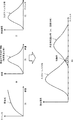
- FIG. 3 is a conceptual diagram showing an operation of the reliability design support apparatus 1 according to the first exemplary embodiment.
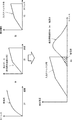
- FIG. 3 is a conceptual diagram showing an operation of the reliability design support apparatus 1 according to the first exemplary embodiment.
- FIG. 3 is a conceptual diagram showing an operation of the reliability design support apparatus 1 according to the first exemplary embodiment.
- 3 is a flowchart showing a risk assessment method using the reliability design support device 1 according to the first exemplary embodiment;
- 1 is a block diagram showing a hardware configuration of a reliability design support apparatus 1 according to a first exemplary embodiment.
- FIG. 3 is a block diagram showing a configuration of a reliability design support apparatus 1 according to a second exemplary embodiment.
- FIG. 1 is a block diagram showing the configuration of the reliability design support apparatus according to the present embodiment.
- the reliability design support apparatus 1 is an apparatus that performs each process of risk assessment (the above (1) to (4)) at the time of product development.
- the configuration and operation relating to “(2-1) Estimating failure rate” in the above-described process will be mainly described.
- a device that is a target for which the reliability design support device 1 performs design support may be an arbitrary product.
- the target device is an electrically assisted bicycle that is in close contact with the human body, a small mobility, a wearable robot, or the like.
- These target devices are mainly devices that come into contact with the human body, and factors such as weight (for example, weight) and environment (such as road surface conditions in which the target device is used) that vary from user to user are dominant with respect to input stress. It is a device (very influential). For example, when the user's weight increases or decreases, the stress applied to the product changes greatly.
- the reliability design support device 1 includes a relational expression calculating means 10, an input stress calculating means 20, a characteristic value distribution calculating means 30, and a failure rate calculating means 40. Details of each means will be described below.
- the relational expression calculation means 10 reads the stress measurement value file.
- the stress measurement value file is a file in which a data string in which a value of a certain factor (also referred to as a target factor in the following description) and a stress measurement value corresponding to the value of the target factor are associated is described. It is.
- the target factor is a factor that can change depending on the user and the environment
- the stress measurement value is a value measured when the target device is used.
- the stress measurement file describes a data string in which the weight of each user's weight is associated with the stress measurement value when each user uses the target device.
- the target factors described in the stress measurement file include, in addition to weight, physical characteristics such as height and shoe size, and the ratio between height and handle height of small mobile mobility.
- the relational expression calculating means 10 calculates a relational expression indicating the relation between the value of the target factor and the magnitude of the stress by analyzing the data string of the stress measurement value file using a general approximation method.
- the relational expression calculating means 10 calculates the relational expression using, for example, a response surface method as an approximation method.
- the relational expression calculating means 10 may use multiple regression analysis or the like as an approximation method.
- the relational expression calculation unit 10 supplies the calculated relational expression to the input stress calculation unit 20.
- the input stress calculation means 20 reads the index data file in which the index data of the target factor is described.
- the index data file describes the probability density distribution of the target factor.
- the index data file describes graph information (or similar information) in which the horizontal axis is the weight and the vertical axis is the distribution ratio.
- it is desirable to use known data with high reliability such as human body statistical data for the index data file.
- the input stress calculation means 20 calculates an input stress distribution based on the relational expression calculated by the relational expression calculation means 10 and the index data file.
- the worst value that can be logically calculated in addition to the probability density distribution as described above, it is possible to describe actually measured statistical data and the worst value that can be logically calculated.
- measured statistical data for example, the distribution of the positions of both feet of the user when using small mobile mobility can be used.
- the worst values that can be calculated logically include, for example, the maximum torque and maximum speed of the motor determined by the design of the target site, and the chemical substance concentration (value standardized by IEC (International Electrotechnical Commission) standards). To do.
- the input stress distribution calculated by the input stress calculation means 20 is information indicating the stress magnitude on the horizontal axis and the occurrence frequency on the vertical axis.
- the input stress calculation means 20 calculates the input stress distribution by performing analysis using, for example, the Monte Carlo method on the relational expression calculated by the relational expression calculation means 10 and the index data file.
- the input stress calculation unit 20 supplies the calculated input stress distribution to the failure rate calculation unit 40. Note that the input stress calculated by the input stress calculation means 20 is not necessarily in the form of distribution, but may be a linear expression as shown in FIG.
- the characteristic value distribution calculating unit 30 reads the characteristic value file.
- the characteristic value file is a file in which characteristic values such as the strength of parts used in the target device are described.
- the characteristic value file a plurality of corresponding parts of the target device are sampled, and measurement values obtained by measuring the magnitude of stress of each part are described. The stress is measured by, for example, a general tensile test.
- the characteristic value distribution calculating unit 30 calculates a characteristic value distribution from the characteristic value file with the horizontal axis as stress and the vertical axis as frequency of occurrence.
- the characteristic value distribution calculating unit 30 supplies the calculated characteristic value distribution to the failure rate calculating unit 40.
- each means reads out the file format information, but is not necessarily limited to this, and is stored in, for example, a database. Each data may be read out.
- the characteristic value distribution calculating unit 30 calculates the characteristic value distribution of the target device from the characteristic value file.
- the present invention is not limited to this.
- an input file describing a characteristic value distribution may be directly input to the reliability design support apparatus 1.
- the failure rate calculation means 40 calculates the failure rate of the target device according to the overlap between the input stress distribution and the characteristic value distribution. Details of the failure rate calculation method will be described later with reference to FIG.
- the failure rate calculation means 40 outputs the calculated failure rate to an arbitrary output means (for example, a display device) or a storage device (for example, a file system).
- FIG. 2 is a conceptual diagram illustrating a first operation example of the reliability design support apparatus 1.
- the target factor is the weight of the user.
- the weight of the user is a different factor for each user.
- the relational expression calculation means 10 reads all data strings in the stress measurement value file.
- the data string for example, a user with body weight Xkg and a stress measurement value when a user with body weight Xkg uses the target device are described in association with each other.
- the relational expression calculating means 10 calculates a relational expression (FIG. 2A) by using all data strings in the stress measurement value file as analysis targets of an approximation method such as a response surface method.
- the input stress calculation means 20 reads an index data file indicating statistical information of the weight distribution as shown in FIG.
- the index data file may be a file described as appropriate according to the application of the target device. For example, when the target device is used only by Japanese people, the probability density distribution of the weights of Japanese people may be used instead of the probability density distribution of the weights of all human beings.
- the input stress calculation means 20 performs a known analysis (for example, analysis by the Monte Carlo method) using a relational expression (FIG. 2 (A)) and statistical information on the weight distribution (FIG. 2 (B)), thereby providing an input stress distribution ( FIG. 2C is calculated.
- the input stress distribution is a distribution indicating the relationship between the magnitude of stress and the occurrence frequency as described above.
- the characteristic value distribution calculating means 30 analyzes the strength of the parts used in the target product and calculates the characteristic value distribution (for example, intensity distribution) of the parts (FIG. 2D).
- the component characteristic distribution is a distribution representing the relationship between the magnitude of stress and the frequency of failure as shown in FIG.
- the failure rate calculation means 40 collates the input stress distribution (FIG. 2 (C), FIG. 2 (D)) with the characteristic value distribution (FIG. 2 (D)), and calculates the failure rate. Specifically, the failure rate calculation unit 40 calculates a ratio between the overlapping portion of both distributions and the entire characteristic value distribution of parts as a failure rate. That is, the failure rate calculation unit 40 calculates the failure rate by performing calculation using the total number of components as the denominator and the number of components related to the overlapping portion as the numerator.
- FIG. 3 is a conceptual diagram illustrating a second operation example of the reliability design support apparatus 1.
- the target factor is the temperature of the user's living environment where the target device is used.
- the temperature of the living environment is also a factor that changes according to the use state of the user.
- the relational expression calculation means 10 reads all data strings in the stress measurement value file.
- the data string for example, a temperature and a stress measurement value when the target device is used at the temperature are described in association with each other.
- the relational expression calculation means 10 calculates a relational expression (FIG. 3A) by using all data strings in the stress measurement value file as analysis targets of an approximation method such as a response surface method.
- the input stress calculation means 20 reads the index data file. For example, in the index data file, a plurality of temperature data measured at the usage location of the target device are described. The input stress calculation means 20 extracts the maximum value (the maximum temperature, indicating the worst value) from the temperature data (FIG. 3B). The input stress calculation means 20 calculates a threshold straight line (FIG. 3C) indicating the input stress maximum value by substituting the extracted maximum value into the relational expression (FIG. 3A).
- the failure rate calculation means 40 calculates a failure rate by collating the threshold line (FIGS. 3C and 3D) indicating the maximum input stress value and the characteristic value distribution (FIG. 3D). The failure rate calculation means 40 calculates the failure rate based on a range where the stress is smaller than the threshold line as shown in the figure.
- FIG. 4 is a conceptual diagram illustrating a third operation example of the reliability design support apparatus 1.
- the target device is small mobile mobility.
- the target factor is a velocity distribution when the target device is used. Since the operation example is different from the first operation example described with reference to FIG. 2 only in the index data file, the contents of the index data file will be described below.
- the input stress calculation means 20 performs a known analysis (for example, analysis by the Monte Carlo method) using a relational expression (FIG. 4A) and a velocity distribution (FIG. 4B) to thereby input stress distribution (FIG. C)) is calculated.
- a method for risk assessment using the reliability design support apparatus 1 will be described with reference to FIG.
- a designer assumes a user of a target device (or a device that may come into contact with the target device) that is a target of risk assessment (S1). Then, the designer clarifies the usage method and foreseeable misuse by the assumed user (or the person who may contact the target device) (S1).
- the designer identifies the hazard that is caused by the behavior caused by the use and misuse of the target device (S3-1). Then, the designer estimates the degree of risk based on the influence of the hazard on the user (S3-2). Subsequently, the designer defines an allowable risk occurrence frequency, that is, an allowable failure rate, based on the estimated risk level, the planned number of target devices to be shipped, and the like (S4). For example, the designer defines the allowable failure rate so that there is a probability that none of the target devices will have a significant effect on the user.
- the designer sets the reliability design support apparatus 1 described above (S2-1-a). Then, the designer prepares various files (index data file, stress measurement value file, characteristic value file) to be input to the reliability design support apparatus 1.
- the reliability design support device 1 calculates a failure rate by the above-described method, and compares the calculated failure rate with an allowable failure rate. The designer appropriately adjusts the design of the target device until the calculated failure rate becomes smaller than the allowable failure rate.
- the reliability design support apparatus 1 for handling this allowable failure rate may include failure rate evaluation means (not shown) in the subsequent stage of the failure rate calculation means 40 in addition to the configuration of FIG.
- the failure rate evaluation unit compares the failure rate calculated by the failure rate calculation unit 40 with the allowable failure rate input by the designer.
- the reliability design support apparatus 1 includes an input device 110, a CPU (Central Processing Unit) 120, a ROM (Read Only Memory) 130, a RAM (Random Access Memory) 140, and an output device 150 as hardware.
- the configuration illustrated in FIG. 6 is an example, and other configurations may be used.
- a storage device such as a USB (Universal Serial Bus) memory may be configured to be detachable.
- the input device 110 is an information input device such as a keyboard and a mouse.
- the ROM 130 is a storage device used for storage such as BIOS (Basic Input / Output System) and IPL (Initial Program Loader).
- BIOS Basic Input / Output System
- IPL Initial Program Loader
- the RAM 140 is a memory that holds a program and is used as a working area of the CPU 120 that executes the program.
- the CPU 120 reads and executes a program and controls output to the output device 150.
- the output device 150 is a device that outputs arithmetic processing results and the like under the control of the CPU 120.
- the output device 150 is, for example, a liquid crystal display device or a printer device.
- the reliability design support device 1 uses the input stress (for example, FIG. 2C) and FIG. 3 (C)).
- the reliability design support device 1 calculates the failure rate of the target device using this input stress. That is, the reliability design support apparatus 1 calculates the input stress considering the change of the factor value. Therefore, the reliability design support apparatus 1 can calculate an appropriate failure rate even when a change factor that changes depending on the user or the environment is dominant with respect to the input stress.
- the reliability design support device 1 targets a human body support device (for example, an electrically assisted bicycle, a small mobile mobility, a wearable robot, etc.) in which physical characteristics such as weight and height have a great influence on input stress. Even in this case, the failure rate can be accurately calculated. This makes it possible to design a target device that achieves high reliability and low cost.
- the reliability design support device 1 can calculate the failure rate in consideration of the user's physical characteristics (weight, height, etc.) as the target factors as shown in FIG. In this case, the reliability design support apparatus 1 can calculate an input stress distribution based on a statistical probability density distribution having a large parameter, that is, a highly reliable distribution. Therefore, the reliability design support apparatus 1 can calculate a highly reliable input stress distribution. Therefore, the reliability design support device 1 can accurately calculate the failure rate.
- the reliability design support device 1 can also calculate the failure rate based on the maximum value (worst value) of the target factor as shown in FIG. Thereby, the reliability design support apparatus 1 can calculate the failure rate in consideration of the case where the target apparatus is used in the worst environment (for example, when used at the highest temperature). By evaluating this failure rate, safer product design can be realized.
- the maximum value of the target factor is used.
- the present invention is not necessarily limited thereto. For example, a failure rate may be calculated in consideration of the minimum value according to the nature of the factor.
- the reliability design support apparatus 1 according to the present embodiment is characterized in that a failure rate is calculated in consideration of the shape characteristics of components used in the target apparatus.
- the reliability design support apparatus 1 according to the present embodiment will be described below with respect to differences from the first embodiment. In the following description, the same processing units as those in the first embodiment are given the same names and the same reference numerals, and detailed descriptions thereof are omitted.
- FIG. 7 is a block diagram showing a configuration of the reliability design support apparatus 1 according to the present embodiment.
- the reliability design support apparatus 1 according to the present embodiment is configured to further include an input stress distribution adjusting unit 50 in addition to the configuration of FIG.
- the input stress calculation means 20 calculates the stress distribution by the above method. At this time, the input stress calculation means 20 calculates the stress on the horizontal axis as a value in Newton units, calculates the input stress distribution with the vertical axis as the occurrence frequency, and inputs the input stress distribution to the input stress adjustment means 50. Supply.
- a part shape file is input to the input stress adjusting means 50.
- the part shape file is a file in which data indicating the shape of a part constituting the target device is stored.
- the part shape file stores data (part shape data) in a format that can be used for finite element analysis described later.
- the input stress adjustment means 50 performs finite element analysis based on the part shape file and the input stress distribution, and calculates the adjusted input stress distribution.
- This input stress distribution is a distribution in which the stress on the horizontal axis is calculated using megapascal (Mpa) units, and the vertical axis is the frequency of occurrence.
- the input stress adjustment means 50 supplies the failure rate calculation means 40 with the input stress distribution (stress distribution with the stress on the horizontal axis as the unit of megapascal (Mpa)) adjusted using the component shape file.
- the failure rate calculation means 40 may calculate the failure rate by the same method as in the first embodiment.
- the input stress distribution is calculated in consideration of the part shape used for the target device.
- the reliability design support apparatus 1 concerning this Embodiment can implement
- Each means (relational expression calculating means 10, input stress calculating means 20, characteristic value distribution calculating means 30, failure rate calculating means 40, input stress of the reliability design support apparatus 1 according to the first embodiment and the second embodiment described above.
- the adjusting means 50) is executed by the CPU 120 in the form of a program.
- the program can be stored and provided to a computer using various types of non-transitory computer readable media.
- Non-transitory computer readable media include various types of tangible storage media (tangible storage medium).
- non-transitory computer-readable media examples include magnetic recording media (eg flexible disks, magnetic tapes, hard disk drives), magneto-optical recording media (eg magneto-optical discs), CD-ROMs (Read Only Memory), CD-Rs, CD-R / W, semiconductor memory (for example, mask ROM, PROM (Programmable ROM), EPROM (Erasable ROM), flash ROM, RAM (random access memory)) are included.
- the program may also be supplied to the computer by various types of temporary computer-readable media. Examples of transitory computer readable media include electrical signals, optical signals, and electromagnetic waves.
- the temporary computer-readable medium can supply the program to the computer via a wired communication path such as an electric wire and an optical fiber, or a wireless communication path.
Landscapes
- Engineering & Computer Science (AREA)
- Business, Economics & Management (AREA)
- Economics (AREA)
- Human Resources & Organizations (AREA)
- Strategic Management (AREA)
- Physics & Mathematics (AREA)
- General Physics & Mathematics (AREA)
- Game Theory and Decision Science (AREA)
- Marketing (AREA)
- Operations Research (AREA)
- Quality & Reliability (AREA)
- Tourism & Hospitality (AREA)
- Entrepreneurship & Innovation (AREA)
- General Business, Economics & Management (AREA)
- Development Economics (AREA)
- Theoretical Computer Science (AREA)
- Management, Administration, Business Operations System, And Electronic Commerce (AREA)
- Complex Calculations (AREA)
Abstract
Description
以下、図面を参照して本発明の実施の形態について説明する。図1は、本実施の形態にかかる信頼性設計支援装置の構成を示すブロック図である。信頼性設計支援装置1は、上述の製品開発時におけるリスクアセスメントの各プロセス(上述の(1)~(4))を行う装置である。以下の説明では、上述のプロセス内の「(2-1)故障率の見積もり」に関する構成及び動作について主に説明する。
本実施の形態にかかる信頼性設計支援装置1は、対象装置に使用される部品の形状特性を考慮した故障率算出を行うことを特徴とする。本実施の形態にかかる信頼性設計支援装置1について、実施の形態1と異なる点を以下に説明する。なお、以下の説明において実施の形態1と同一の処理部については、同一名称及び同一符号を付し、その詳細な説明は省略する。
10 関係式算出手段
20 入力ストレス算出手段
30 特性値分布算出手段
40 故障率算出手段
50 入力ストレス調整手段
110 入力装置
120 CPU
130 ROM
140 RAM
150 出力装置
Claims (7)
- ユーザや環境に応じて変化する対象因子の値と、対象装置の使用時に計測した入力ストレス計測値と、を関連づけたデータ列に対して近似計算を行って関係式を算出する関係式算出手段と、
前記関係式と、前記対象因子の指標データと、に応じて前記対象装置に入力される入力ストレスを算出する入力ストレス算出手段と、
前記入力ストレスと、前記対象装置の特性値分布と、に応じて前記対象装置の故障率を算出する故障率算出手段と、
を有する、信頼性設計支援装置。 - 前記指標データは、前記ユーザの身体的特徴に関する確率密度分布であり、
前記入力ストレス算出手段は、前記関係式と、前記確率密度分布と、を基に前記入力ストレスとしてストレス分布を算出し、
前記故障率算出手段は、前記ストレス分布と前記特性値分布と、の重複から前記対象装置の故障率を算出する、
ことを特徴とする請求項1に記載の信頼性設計支援装置。 - 前記入力ストレス算出手段は、前記対象因子の最悪値を前記関係式に代入することにより閾値直線を算出し、
前記故障率算出手段は、前記特性値分布と前記閾値直線が形成する分布領域から前記対象装置の故障率を算出する、
ことを特徴とする請求項1に記載の信頼性設計支援装置。 - 前記対象装置に使用される部品形状データを使用して有限要素解析を行うことにより、前記入力ストレス算出手段が算出した前記入力ストレスを調整する入力ストレス分布調整手段を更に有する、
ことを特徴とする請求項1~請求項3のいずれか1項に記載の信頼性設計支援装置。 - 前記対象因子は、前記ユーザの身体的特徴、前記対象装置の使用環境、前記対象装置の使用時の実測値、または前記対象装置の特性値であり、
前記指標データは、
前記対象因子が前記ユーザの身体的特徴である場合に、前記ユーザの身体的特徴にかかる確率密度分布であり、
前記対象因子が前記対象装置の使用時の実測値である場合に、当該実測値が複数列挙された実測データであり、
前記対象因子が前記対象装置の特性値である場合に、前記対象装置の性質から算出できる最悪値である、請求項1~請求項4のいずれか1項に記載の信頼性設計支援装置。 - ユーザや環境に応じて変化する対象因子の値と、対象装置の使用時に計測した入力ストレス計測値と、を関連づけたデータ列に対して近似計算を行って関係式を算出する関係式算出ステップと、
前記関係式と、前記対象因子の指標データと、に応じて前記対象装置に入力される入力ストレスを算出する入力ストレス算出ステップと、
前記入力ストレスと、前記対象装置の特性値分布と、に応じて前記対象装置の故障率を算出する故障率算出ステップと、
を実行する信頼性設計支援方法。 - コンピュータに、
ユーザや環境に応じて変化する対象因子の値と、対象装置の使用時に計測した入力ストレス計測値と、を関連づけたデータ列に対して近似計算を行って関係式を算出する関係式算出ステップと、
前記関係式と、前記対象因子の指標データと、に応じて前記対象装置に入力される入力ストレスを算出する入力ストレス算出ステップと、
前記入力ストレスと、前記対象装置の特性値分布と、に応じて前記対象装置の故障率を算出する故障率算出ステップと、を実行させる、
信頼性設計支援プログラム。
Priority Applications (4)
| Application Number | Priority Date | Filing Date | Title |
|---|---|---|---|
| CN201480009173.8A CN104995624B (zh) | 2013-02-21 | 2014-01-31 | 可靠性设计辅助装置以及可靠性设计辅助方法 |
| DE112014000935.0T DE112014000935T5 (de) | 2013-02-21 | 2014-01-31 | Zuverlässigkeitsentwurf-Unterstützungsvorrichtung, Zuverlässigkeitsentwurf-Unterstützungsverfahren und Zuverlässigkeitsentwurf-Unterstützungsprogramm |
| US14/768,937 US11085843B2 (en) | 2013-02-21 | 2014-01-31 | Reliability design assistance device, reliability design assistance method, and reliability design assistance program |
| KR1020157022249A KR101658748B1 (ko) | 2013-02-21 | 2014-01-31 | 신뢰성 설계 지원 장치 및 신뢰성 설계 지원 방법 |
Applications Claiming Priority (2)
| Application Number | Priority Date | Filing Date | Title |
|---|---|---|---|
| JP2013031747A JP5761225B2 (ja) | 2013-02-21 | 2013-02-21 | 信頼性設計支援装置、信頼性設計支援方法、及び信頼性設計支援プログラム |
| JP2013-031747 | 2013-02-21 |
Publications (1)
| Publication Number | Publication Date |
|---|---|
| WO2014129125A1 true WO2014129125A1 (ja) | 2014-08-28 |
Family
ID=51390932
Family Applications (1)
| Application Number | Title | Priority Date | Filing Date |
|---|---|---|---|
| PCT/JP2014/000537 Ceased WO2014129125A1 (ja) | 2013-02-21 | 2014-01-31 | 信頼性設計支援装置、信頼性設計支援方法、及び信頼性設計支援プログラム |
Country Status (6)
| Country | Link |
|---|---|
| US (1) | US11085843B2 (ja) |
| JP (1) | JP5761225B2 (ja) |
| KR (1) | KR101658748B1 (ja) |
| CN (1) | CN104995624B (ja) |
| DE (1) | DE112014000935T5 (ja) |
| WO (1) | WO2014129125A1 (ja) |
Families Citing this family (2)
| Publication number | Priority date | Publication date | Assignee | Title |
|---|---|---|---|---|
| KR101705249B1 (ko) * | 2016-02-19 | 2017-02-10 | 울산과학기술원 | 유한요소법을 이용한 구조물 신뢰성 평가를 위한 인터페이스, 시스템 및 방법 |
| CN110276093B (zh) * | 2019-04-29 | 2023-06-02 | 北京圣涛平试验工程技术研究院有限责任公司 | 电线电缆可靠性评估方法和装置 |
Citations (2)
| Publication number | Priority date | Publication date | Assignee | Title |
|---|---|---|---|---|
| JP2002149714A (ja) * | 2000-08-31 | 2002-05-24 | Toshiba Corp | 信頼性設計支援装置および信頼性設計支援方法およびプログラムを記録した媒体およびプログラム製品 |
| JP2007108843A (ja) * | 2005-10-11 | 2007-04-26 | Toshiba Corp | 半導体装置設計支援方法、半導体装置設計支援システム、半導体装置設計支援プログラム |
Family Cites Families (7)
| Publication number | Priority date | Publication date | Assignee | Title |
|---|---|---|---|---|
| JPH06195370A (ja) * | 1992-12-22 | 1994-07-15 | Mitsubishi Kasei Corp | 数値データの広がりの評価方法 |
| JPH06348683A (ja) * | 1993-04-16 | 1994-12-22 | Sony Corp | 集積回路のシミュレーション方法 |
| JP4613555B2 (ja) | 2004-09-08 | 2011-01-19 | サンスター株式会社 | 有限要素解析による歯ブラシ柄部の設計方法、及び該設計に用いるコンピュータ解析システム |
| US8290753B2 (en) * | 2006-01-24 | 2012-10-16 | Vextec Corporation | Materials-based failure analysis in design of electronic devices, and prediction of operating life |
| DE102010024683A1 (de) | 2010-06-23 | 2011-12-29 | Siemens Aktiengesellschaft | Verfahren zum rechnergestützten Ermitteln eines von einem technischen System ausgehenden Risikos für einen Nutzer |
| CN102589891B (zh) * | 2012-03-02 | 2013-12-18 | 北京理工大学 | 一种车用电机驱动系统耐久寿命的估计方法 |
| CN102663201B (zh) * | 2012-04-24 | 2013-12-25 | 北京航空航天大学 | 一种考虑电气互连结构可靠性的电子产品可靠性预计方法 |
-
2013
- 2013-02-21 JP JP2013031747A patent/JP5761225B2/ja active Active
-
2014
- 2014-01-31 US US14/768,937 patent/US11085843B2/en active Active
- 2014-01-31 KR KR1020157022249A patent/KR101658748B1/ko not_active Expired - Fee Related
- 2014-01-31 WO PCT/JP2014/000537 patent/WO2014129125A1/ja not_active Ceased
- 2014-01-31 DE DE112014000935.0T patent/DE112014000935T5/de not_active Withdrawn
- 2014-01-31 CN CN201480009173.8A patent/CN104995624B/zh active Active
Patent Citations (2)
| Publication number | Priority date | Publication date | Assignee | Title |
|---|---|---|---|---|
| JP2002149714A (ja) * | 2000-08-31 | 2002-05-24 | Toshiba Corp | 信頼性設計支援装置および信頼性設計支援方法およびプログラムを記録した媒体およびプログラム製品 |
| JP2007108843A (ja) * | 2005-10-11 | 2007-04-26 | Toshiba Corp | 半導体装置設計支援方法、半導体装置設計支援システム、半導体装置設計支援プログラム |
Non-Patent Citations (1)
| Title |
|---|
| TETSURO SEKI, JITSUMU NI YAKUDATSU SERIES 3 SHINRAISEI DATA KAISEKI NYUMON, 5 October 2011 (2011-10-05), pages 152 - 154 * |
Also Published As
| Publication number | Publication date |
|---|---|
| CN104995624B (zh) | 2018-05-08 |
| DE112014000935T5 (de) | 2015-11-26 |
| JP2014164308A (ja) | 2014-09-08 |
| US20160003695A1 (en) | 2016-01-07 |
| US11085843B2 (en) | 2021-08-10 |
| CN104995624A (zh) | 2015-10-21 |
| KR101658748B1 (ko) | 2016-09-21 |
| JP5761225B2 (ja) | 2015-08-12 |
| KR20150108884A (ko) | 2015-09-30 |
Similar Documents
| Publication | Publication Date | Title |
|---|---|---|
| CN103323703B (zh) | 一种电缆接头故障诊断方法 | |
| WO2025036056A1 (zh) | 一种基于熵值算法的动力电池电压故障在线诊断处理方法 | |
| JP6141235B2 (ja) | 時系列データにおける異常を検出する方法 | |
| CN103487682A (zh) | 一种电压暂降扰动下敏感客户电能体验质量的预警方法 | |
| CN103827653B (zh) | 检测异常的发生的方法、设备及计算机程序 | |
| CN105512812A (zh) | 基于动态仿真模型的核电厂设备故障预警分析方法及系统 | |
| RU2016142123A (ru) | Способ оценки нормальности или ненормальности измеренного значения физического параметра двигателя летательного аппарата | |
| CN111340367B (zh) | 基于多维度关联性数据分析的少油设备状态评估方法及系统 | |
| Karbalaei et al. | A comparison of voltage collapse proximity indicators | |
| CN104075825A (zh) | 一种电力电缆光纤测温基准数据测量方法 | |
| CN108681319B (zh) | 一种基于传递函数的变压器绕组故障识别方法 | |
| CN113177343A (zh) | 一种输电线路弧垂计算方法、设备及计算机介质 | |
| JP5761225B2 (ja) | 信頼性設計支援装置、信頼性設計支援方法、及び信頼性設計支援プログラム | |
| JP2015052487A (ja) | 材料強度評価装置 | |
| CN119989759A (zh) | 一种基于数字孪生技术的电缆接头的状态评估方法和系统 | |
| CN104713730A (zh) | 一种根据振动信号确定飞机发动机退化率的方法 | |
| CN115219916A (zh) | 电池温升情况检测方法、装置和电子设备 | |
| JP7107386B2 (ja) | 情報処理装置 | |
| JP2016512949A (ja) | コンピュータ支援により送配電網のインピーダンスを求める方法 | |
| KR20170140753A (ko) | 소프트웨어 안전성 분석 방법 및 장치 | |
| CN120086610A (zh) | 一种基于数据分析的保护器成品质量检测方法及系统 | |
| CN105891645A (zh) | 确定防滑刹车控制装置振动故障分布的方法 | |
| JP2013200245A (ja) | 前処理方法 | |
| CN110567576A (zh) | 一种变电站厂界噪声超标原因的确定方法及装置 | |
| CN103644884A (zh) | 基于温度测量的电力电缆接头施工规范性检测方法 |
Legal Events
| Date | Code | Title | Description |
|---|---|---|---|
| 121 | Ep: the epo has been informed by wipo that ep was designated in this application |
Ref document number: 14754057 Country of ref document: EP Kind code of ref document: A1 |
|
| ENP | Entry into the national phase |
Ref document number: 20157022249 Country of ref document: KR Kind code of ref document: A |
|
| WWE | Wipo information: entry into national phase |
Ref document number: 1120140009350 Country of ref document: DE Ref document number: 112014000935 Country of ref document: DE |
|
| 122 | Ep: pct application non-entry in european phase |
Ref document number: 14754057 Country of ref document: EP Kind code of ref document: A1 |