WO2014115199A1 - 入力支援システム、入力支援方法および入力支援プログラム - Google Patents
入力支援システム、入力支援方法および入力支援プログラム Download PDFInfo
- Publication number
- WO2014115199A1 WO2014115199A1 PCT/JP2013/005268 JP2013005268W WO2014115199A1 WO 2014115199 A1 WO2014115199 A1 WO 2014115199A1 JP 2013005268 W JP2013005268 W JP 2013005268W WO 2014115199 A1 WO2014115199 A1 WO 2014115199A1
- Authority
- WO
- WIPO (PCT)
- Prior art keywords
- input
- information
- type
- field
- fields
- Prior art date
- Legal status (The legal status is an assumption and is not a legal conclusion. Google has not performed a legal analysis and makes no representation as to the accuracy of the status listed.)
- Ceased
Links
Images







Classifications
-
- G—PHYSICS
- G06—COMPUTING OR CALCULATING; COUNTING
- G06F—ELECTRIC DIGITAL DATA PROCESSING
- G06F40/00—Handling natural language data
- G06F40/10—Text processing
- G06F40/166—Editing, e.g. inserting or deleting
- G06F40/177—Editing, e.g. inserting or deleting of tables; using ruled lines
- G06F40/18—Editing, e.g. inserting or deleting of tables; using ruled lines of spreadsheets
-
- G—PHYSICS
- G06—COMPUTING OR CALCULATING; COUNTING
- G06Q—INFORMATION AND COMMUNICATION TECHNOLOGY [ICT] SPECIALLY ADAPTED FOR ADMINISTRATIVE, COMMERCIAL, FINANCIAL, MANAGERIAL OR SUPERVISORY PURPOSES; SYSTEMS OR METHODS SPECIALLY ADAPTED FOR ADMINISTRATIVE, COMMERCIAL, FINANCIAL, MANAGERIAL OR SUPERVISORY PURPOSES, NOT OTHERWISE PROVIDED FOR
- G06Q90/00—Systems or methods specially adapted for administrative, commercial, financial, managerial or supervisory purposes, not involving significant data processing
Definitions
- the present invention relates to an input support system, an input support method, and an input support program that support input to an input field by a user.
- Patent Document 1 describes a technique for inputting a facility name into a text box and converting it into an address.
- Patent Document 2 describes a technique for supporting input to an input form having a plurality of input items.
- the input support method described in Patent Document 2 analyzes a group of a plurality of input items included in an input form, manages the input items related to each other as one combined group, and stores past input items on these items. Are stored in units of join groups.
- the input cases of all the input items in the combined group are extracted using the input item and the input information as a search condition, and other results obtained as a result
- An input example of an input item is displayed as an input candidate for the other input item.
- Patent Document 3 describes a technique relating to a problem in which the name of a field for inputting user information is not shared by each system.
- Specific attributes are specified, and standard attributes specified on the server side are associated with the names of input fields and managed. In this way, the burden of information input to the input form for other users after the next time is reduced.
- An input form displayed on a screen or the like may be provided with a plurality of input fields or an input field for further inputting information related to information entered on another screen.
- information input in one input field and information input in another input field, such as information about a person or a product. .
- the input field has such a relationship between the input information, when the information is input to one input field, the information input to the other input field using the input information as a clue Can often be predicted.
- Patent Document 1 As a technique related to input support using such a relationship between input fields, there is a method described in Patent Document 1, for example.
- Patent Document 1 it is necessary to previously specify the type of data that can be input in each input field.
- Patent Document 2 without specifying in advance the type of data that can be input to each input field, based on the relationship between the input fields and information input in the past, Input candidates for other input items can be displayed.
- the method described in Patent Document 2 has a problem that input candidates for other input items cannot be obtained when the same or similar information has not been input in the past.
- Patent Document 3 it is assumed that an input field is associated with a standard attribute from a past input by another user or the like. If such association is performed, even a user who uses it for the first time can automatically input the user's information in other input fields from information identifying the user such as a user ID.
- the method described in Patent Document 3 is a method for supporting user information form input, and is not considered until it is applied to an input field in which various information can be input.
- a standard attribute of the input field is specified based on an input value of one user. For this reason, for example, if the input value overlaps with the value of another attribute, or if the input value description format is different and does not match the registered value of the attribute that should be true, the attribute to be input There was a problem that could not be identified.
- An object is to provide an input support system, an input support method, and an input support program that can support input.
- An input support system is an input support system that supports input to a plurality of input fields, and stores information input in the past in association with a plurality of input fields as an input relation log.
- a relation log storage means an input candidate group storage means for storing input candidates for each type of information in association with other types of input candidates, an input relation log stored in the input relation log storage means, Based on the type-specific input candidates stored in the input candidate group storage means and the combination thereof, the relationship between the types of input information among the input fields included in the plurality of input fields is stored in the input candidate group storage means.
- input type relationship estimating means for estimating which combination of the type-specific fields, which is the type-specific field, corresponds.
- the input support method is an input support method for supporting input to a plurality of input fields, and the input relation log storage means respectively corresponds to information input in the past to the plurality of input fields.
- the input candidate group storage means stores the input candidates for each type of information in association with other types of input candidates
- the input type relation estimation means includes the input relation log storage means.
- the relationship between the types of input information among the input fields included in the plurality of input fields based on the input relationship log stored in the input candidate group and the input candidates for each type stored in the input candidate group storage means and combinations thereof Is an input type relationship estimator that estimates the combination of the type field that is the type field stored in the input candidate group storage unit. Based on the estimation result, the input candidates for each type stored in the input candidate group storage means, and the combination thereof, the error determination of the input information or the prediction of the input information is performed for a plurality of input fields. It is characterized by performing.
- the input support program includes an input relation log storage means for storing information input in the past in association with a plurality of input fields, and an input candidate for each type of information.
- An input support program applied to a computer that is accessible to an input candidate group storage unit that stores the input candidate in association with the input candidate, and the computer stores an input relationship log stored in the input relationship log storage unit, and an input Based on the input candidates classified by type and the combinations stored in the candidate group storage means, the relationship between the types of input information among the input fields included in the plurality of input fields is stored in the input candidate group storage means.
- the present invention is characterized in that a process for estimating which combination of the type-specific fields, which are the types-specific fields, is executed.
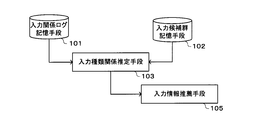
- FIG. 1 is a block diagram illustrating a configuration example of the input support system according to the first embodiment.
- the input support system shown in FIG. 1 includes an input relationship log storage unit 101, an input candidate group storage unit 102, and an input type relationship estimation unit 103.
- the input relation log storage unit 101 stores information groups input in the past in a plurality of input fields as one set and stores them as an input relation log.
- the input relation log means a log of information indicating an input relation which is a relation of input information between two or more input fields.
- the input relation log storage unit 101 may collect information input at the same timing for a plurality of designated input fields so that the correspondence with the input field of the input destination can be understood. .
- the input relation log storage unit 101 may store information after conversion into correct information as a result of input support for each input field.
- the input field specified here is based on the premise that the input information is related to each other. However, the input type relationship estimation means 103 described later determines whether there is a relationship. Also good.
- information indicating which input field is related to which input field may be stored in the system in advance, or may be dynamically acquired by form analysis or the like. Further, in the case of a Web page, these input fields may be related to each other, assuming that the input fields for inputting the information from the information transmitted to the server at once are related to each other.
- FIG. 2 is an explanatory diagram showing an example of the input relation log stored in the input relation log storage means 101.
- information input in the past in the input field 1 and information input in the past in the input field 2 are stored in association with each other at the input timing as input relation logs. It is shown that.
- the information included in one record represents the same input timing.
- FIG. 2 shows that as the first input relation log, the information “Yamamoto” in the input field 1 and the information “KK Co., Ltd.” in the input field 2 are input at the same input timing. Has been. Note that what is considered the same input timing depends on the target form.
- the input candidate group storage means 102 stores input candidates for each type of information in association with other types of input candidates.
- each type of input candidate is homogeneous data in the type expression method. That is, in this embodiment, it is assumed that each type of input candidate is data in which the same expression method is used for the corresponding type.
- the content and the number of types to be held in the input candidate group storage unit 102 are arbitrary, but it is preferable that the type of information that the system wants to input is included in the input column that is the target of input support.
- information that is an input candidate may be registered in advance for the type of information that is generally easy to input in the input field. It is also possible to use an existing database such as a database of person information belonging to an organization or a database of product information of a company as the input candidate group storage unit 102.
- input logs acquired in other systems can be used as different types of input candidates for each input field that is the input destination.
- FIG. 3 is an explanatory diagram showing an example of an input candidate group stored in the input candidate group storage unit 102.
- FIG. 3 shows an example of an input candidate group stored in the input candidate group storage means 102 having five type fields given field names (identifiers) “field A” to “field E”. Yes.
- the information group registered in one record in “field A” to “field E” is information about the same person.
- the input candidate group storage unit 102 stores each type of input candidate in association with each other.
- the input type relationship estimation unit 103 is registered in the input relationship log based on the input relationship log stored in the input relationship log storage unit 101 and the input candidate group stored in the input candidate group storage unit 102. An input type relationship between input fields included in a plurality of input fields is estimated.
- the input relation log stored in the input relation log storage unit 101 indicates input logs of a plurality of input fields associated with each other.
- storage means 102 shows the input candidate according to the type matched with each other, and those combinations. More specifically, the type-specific input candidates and their combinations stored in the input candidate group storage unit 102 are more specifically associated with each type of input candidate and another type of input candidate. This means a correspondence relationship.
- the input type relationship between the input fields included in the plurality of input fields registered in the input relationship log indicates the relationship of the type of input information between the input fields included in the plurality of input fields. More specifically, the input type relationship estimating unit 103 stores the input information type relationship between the input fields included in the plurality of input fields registered in the input relationship log in the input candidate group storage unit 102. It is estimated which combination of the field by type (hereinafter referred to as the field by type) corresponds.
- the field refers to a collection of information stored in the storage means with an identifiable label or a storage area storing it. It should be noted that the input type relationship estimation means 103 does not have to specify the specific content of the type of input information in each input field as an estimation result of the input type relationship between certain input fields.
- the input type relationship estimation means 103 may make the input type relationship between the input field and another input field or the input type relationship between the input fields unknown.
- the input type relationship estimation unit 103 performs the same processing for all pairs included in the specified input field group, and determines the input type relationship. It may be estimated.
- the input type relationship estimating unit 103 stores, in the input candidate group storage unit 102, the type of information to be input to the input column from the input log of each input column stored in the input relationship log storage unit 101. It is also possible to perform processing for estimating which of the respective types of fields is applicable. Then, the input type relationship estimation means 103 may estimate the input type relationship between the input fields based on the estimation result and the correspondence relationship of the past input information between the input fields in the input relationship log.
- the input type relationship estimation unit 103 calculates the degree of coincidence with the input log of the input field, that is, past input information, for each type field stored in the input candidate group storage unit 102. May be. Then, the input type relationship estimation means 103 may estimate the type field with the degree of match equal to or greater than a predetermined threshold or the maximum value as the type field corresponding to the type of information to be input in the input field. . For example, the input type relationship estimation unit 103 stores each past input information stored as an input log for each type field stored in the input candidate group storage unit 102 in the type field. You may determine whether it matches any of the candidates.
- the input type relationship estimating means 103 may use a numerical value based on the number of matched input logs found as a result (hereinafter referred to as the number of matched logs) as the matching degree.
- the number of match logs for each type field may be used as the match level.
- the ratio of the number of matched logs in the total number of input logs may be set as the degree of matching.
- the input type relationship estimation means 103 may estimate which type field each input field corresponds to in this way. Based on the estimation result, the input type relationship estimation unit 103 refers to, for example, the input relationship log between the target input fields, and in the registered input relationship log, the relationship between the input logs of the two input fields is determined. , It is also possible to count the relations between types of fields that are the respective estimation results. Then, the input type relationship estimation means 103 specifies the combination of the type fields indicated as a result of the estimation by the type determination means 1031 as the input type relationship between the input fields if the ratio is equal to or greater than a predetermined threshold. Good. Note that the input type relationship estimation unit 103 may make the input type relationship between the input fields unknown if the ratio is less than a predetermined threshold.
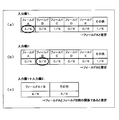
- FIG. 4 is an explanatory diagram showing an example of estimating the input type relationship between the input fields where the input type relationship estimating means 103 is provided.
- the input type relationship between the input field 1 and the input field 2 is estimated based on the example of the input relation log shown in FIG. 2 and the example of the input candidate group shown in FIG. This is an example.
- the input type relationship estimating means 103 first estimates which type of information corresponds to the type of information to be input for the target input field 1 and input field 2.
- the input type relationship estimation means 103 specifies for each input field targeted, which of the candidates included in the type field corresponds to the contents of each record in the input log of the input field. To do. Then, the input type relationship estimation means 103 counts the number of matched logs for each type field, and calculates the degree of match based on the result. The input type relationship estimation means 103 may determine whether or not the content of each record of the input log matches a candidate included in the type field by various methods. For example, the input type relationship estimation unit 103 may treat each piece of information as character string information and determine whether or not the two match completely. Further, the input type relationship estimation means 103 may determine whether or not the candidate character string that is the candidate content matches the previous input character string that is the log content. Further, the input type relationship estimation means 103 may determine whether the ratio of the number of characters that matched the past input character string to the number of characters of the candidate character string is equal to or greater than a predetermined value when there is a forward match. .
- the input type relationship estimation means 103 compares the past input character string and the candidate character string, for example, and if the similarity between the two character strings is equal to or greater than a predetermined value, the number of matching logs is determined as matching. You may add. Note that the input type relationship estimation unit 103 may use the edit distance, the distance of information vectorized by n-gram, or the like for the determination of the similarity between character strings. Further, the input type relationship estimation means 103 may use a weighted distance that changes the importance depending on the character position, such as emphasizing that the leading character strings match.
- the input type relationship estimation unit 103 may count the number of matching logs for each field. In addition, when the forward matching method is used, the input type relationship estimation unit 103 matches only the field with the larger percentage of the number of matched characters or the closer distance indicating the similarity of the character strings. The number of logs may be counted.
- FIG. 4A shows an example of the type-specific field estimation process for the input field 1.
- FIG. 4A among the input logs in the input field 1, 4 out of 6 input logs that match the candidates in “Field A” and 6 input logs that match the candidates in “Field B”. 0 out of 6 cases, 1 out of 6 input logs that match the candidates in “Field C”, 0 out of 6 input logs that match the candidates in “Field D”, and candidates in “Field E”
- An example is shown in which 0 of 6 input logs are matched with “1”, and 1 of 6 input logs does not match “other”, that is, any type field candidate. From such an example, in FIG.
- the input type relationship estimating means 103 shows an example in which the type field corresponding to the input field 1 is estimated as “field A”.
- the input type relationship estimation means 103 may make the estimation result “no corresponding field”, that is, the type unknown.
- FIG. 4B shows an example of the type-specific field estimation process for the input field 2.
- An example is shown in which 0 of 6 input logs are matched with “1”, and 1 of 6 input logs does not match “other”, that is, any type field candidate. From such an example, in FIG.
- the input type relationship estimating means 103 shows an example in which the type field corresponding to the input field 2 is estimated as “field B”.
- FIG. 4 (c) shows an example in which the input type relationship between the input field 1 and the input field 2 is estimated based on the estimation results for the input field 1 and the input field 2.
- the input type relationship estimation unit 103 may input the input field based on the input information type estimation result of the input field 1 and the input field 2 and the input log correspondence between the input fields in the input relationship log.
- the input type relationship between 1 and the input field 2 is estimated.
- the input type relationship estimation means 103 refers to, for example, the input relationship log of the input column 1 and the input column 2, and the correspondence relationship between the input log of the input column 1 and the input column 2 is “estimation result” “field A”. And “field B” may be counted.
- the input type relationship estimating means 103 determines that the input type relationship between the input field 1 and the input field 2 is the relationship between “field A” and “field B” if the ratio is equal to or greater than a predetermined threshold. Also good. In the example shown in FIG. 4C, in the input relation log of the input field 1 and the input field 2, the input log of the input field 1 matches “field A”, and the input log of the input field 2 becomes “field B”. There are 4 matching records, and the matching ratio is 0.5 or more. Therefore, the input type relationship estimation unit 103 estimates that the input type relationship between the input field 1 and the input field 2 is the relationship between “field A” and “field B” in the input candidate group storage unit 102.
- each content is further stored as one record in the input candidate group storage unit 102. It may be added to the determination result whether or not it matches the associated candidate combination. In that case, the number of matching records in FIG.
- the input type relationship estimation means 103 may estimate the input type relationship between the input fields using a method other than the above method. For example, the input type relationship estimation unit 103 may determine whether the input type relationship between the input fields in the input relationship log is based on the result of the match determination between each input log of each input field that is an input type relationship estimation target and each type field candidate. The most common combination of type fields may be estimated as the input type relationship between the input fields.
- the input type relationship estimation means 103 does not represent whether the input log matches each type field candidate with the type of text, instead of using binary values such as 1 and 0 to indicate whether they match. It may be expressed by the similarity between them.
- the similarity between texts includes, for example, similarity using edit distance, similarity after vectorization by n-gram, similarity after vectorization after morphological analysis or feature word extraction, etc. Can be mentioned. That is, when counting the number of matched logs, the input type relationship estimating unit 103 may add the similarity without determining whether or not they match, instead of adding 1 when they match.
- the input type relationship estimation unit 103 may treat the validity level as a weight.
- the input type relationship estimation means 103 may perform processing such as multiplying the effectiveness of each record and taking the sum when handling the number of cases and the similarity.
- a log with validity is obtained, for example, by waiting for the result of error determination for the input when registering the log and registering it together with the result.
- the input relation log storage unit 101 and the input candidate group storage unit 102 are realized by a storage device such as a database.
- the input type relationship estimation means 103 is implement
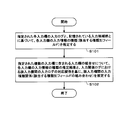
- FIG. 5 is a flowchart showing an example of the operation of the present embodiment.
- FIG. 5 is a flowchart showing an example of the processing flow of the input type relationship estimation processing between the input fields by the input type relationship estimation unit 103 in the operation of the present embodiment.
- the input type relationship estimation unit 103 first inputs, for each input field, the input log of the input field stored in the input relationship log storage unit 101 and the candidate group stored in the input candidate group storage unit 102. Based on the above, it may be estimated which type of information the type of information to be input to each input field corresponds to (step S101).
- the input type relationship estimating unit 103 determines that the input type relationship between the input fields is the type based on the estimation result and the input log correspondence relationship between the input fields stored in the input relationship log storage unit 101. It is estimated which combination of other fields corresponds (step S102).
- Such an input type relationship estimation process between the input fields may be performed, for example, in an initialization process when the system is introduced, or may be performed periodically during system operation.
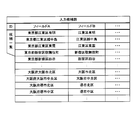
- FIG. 6 is an explanatory diagram showing another example of the input candidate group stored in the input candidate group storage means 102.
- the input candidate group may be registered as different types of candidates that have a plurality of description formats for the same entry.
- each input is input to the input candidate group storage unit 102 having a type field given a field name “field A” and a type field given a field name “field B”.
- An example of an input candidate group in which candidates are registered in association with each other is shown.
- input candidates representing “address” are registered in both “field A” and “field B”. More specifically, a list of information candidates “address starting from the prefecture name” is registered in “field A”, and information “address excluding the prefecture name” is registered in “field B”.
- Candidate list of is registered.
- each input field is displayed after distinguishing such differences in description format. It is possible to estimate which type field is applicable. Therefore, even if the type of data that can be input in advance is not specified, the input of information in which the description format is distinguished from the estimation result based on the input log and the information input in other corresponding input fields is performed. Can help.
- FIG. 7 is an explanatory diagram showing another example of the input candidate group stored in the input candidate group storage unit 102.
- the input candidate group may be a group of fields for registering information having different granularities, which are registered as one field by type.
- “field A” and “field B” are obtained by dividing predetermined information (information indicating an address in this example) as input candidates.
- predetermined information information indicating an address in this example
- the input type relationship estimation means 103 may treat the concatenated field as one type-specific field and perform a match determination with the input log in each input column.
- the input type relationship estimation unit 103 may use the type field classification by “ID1” instead of the type field classification by “ID2”.
- the input type relationship estimation means 103 may treat information obtained by concatenating information of each record in the fields A and B as information of each record in the concatenated field.
- the input type relationship estimating means 103 is “Osaka City” which is a candidate registered in the first record of the field A and “Kita-ku” which is a candidate registered in the first record of the field B. ". Then, the input type relationship estimating means 103 may compare the connected “Osaka City Kita Ward” with each record of the input log, assuming that the connected “Kita-ku, Osaka” is a candidate registered in the first record of the connected field.
- FIG. 8 is an explanatory diagram showing an example of an input relation log with information indicating an input person.
- Such an input log with information indicating an input person is used together with information for identifying a currently logged-in user when registering a log using an authentication system such as inputting a user ID at the time of system login, for example. Obtained by registering to.
- the input type relation estimation means 103 uses only the input log of the same input person as the current input person. Then, a process for each user, such as an estimation process, may be performed.
- the input type relationship estimating unit 103 has previously input the relationship between the types of input information among the input fields included in the plurality of input fields into each target input field. Estimation based on the received information, the corresponding relationship, and the input candidate group in the input candidate group storage means 102. Therefore, without first enter detailed type can be inputted data such advance what information that is entered for each input field, an error of the other input fields populated based on the one input field Input support such as determination and prediction conversion can be performed for various combinations of input fields. Further, according to the present embodiment, the input type relationship estimating unit 103 can register the input candidate group to be registered in the input candidate group storage unit 102 and the input to be stored without performing detailed designation in advance for each input field. Depending on the combination with the relation log, the type of input information in each input field can be derived dynamically. Therefore, a detailed input support system can be easily introduced.
- fine determination can be made with a granularity such as whether an address in Tokyo is easily entered even with the same address, or whether a general address is easily entered. it can. Thereby, the accuracy of predictive conversion and error determination can be increased. Even when the system is in operation, it is possible to change the type and granularity of information to be input in the input field depending on how the input log is given.
- FIG. 9 is a block diagram illustrating a configuration example of the input support system according to the second embodiment.
- the input support system shown in FIG. 9 is different from the first embodiment shown in FIG. 1 in that an error detection unit 104 is newly provided.
- the error detection unit 104 includes the input type relationship estimated by the input type relationship estimation unit 103 between the input fields included in the input field group that is the error detection target, and the input candidates stored in the input candidate group storage unit 102. Based on a group (that is, a candidate for each type and a combination thereof), an error determination is performed when there is a new input to the target input field group. For example, the error detection unit 104 determines whether or not the combination of information input to each input field included in the target input field group matches the combination of candidate fields in the type field to which each input field corresponds. An error may be detected by determining and not matching.
- the error detection unit 104 is realized by an information processing device that operates according to a program such as a CPU.
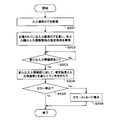
- FIG. 10 is a flowchart showing an example of the operation of the input support system of this embodiment.
- an input field group that is an error detection target is designated in advance.
- the input relation log storage unit 101 information groups input in the past in each input field included in the input field group that is set as the error detection target are stored in one record and stored as an input relation log.
- the input type relationship estimating unit 103 inputs the target based on the input relationship log stored in the input relationship log storage unit 101 and the input candidate group stored in the input candidate group storage unit 102.
- An input type relationship between the input fields included in the field group is estimated (step S202).
- at least information indicating a set of type fields corresponding to the type of input information between the input fields is obtained as an estimation result.
- the error detection unit 104 when new information is input to each input field included in the input field group that is an error detection target (Yes in step S203), the error detection unit 104 causes each input field included in the input field group to include each input field. Based on the estimation result of the input type relationship between the columns and the input candidate group stored in the input candidate group storage unit 102, error determination is performed on the combination of the input information input in each input column (step S204). ). If an error is detected (Yes in step S205), the error detection unit 104 displays an error message (step S206).
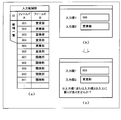
- FIG. 11 is an explanatory diagram showing an example of error detection processing by the error detection means 104.
- the input field 1 and the input field 2 of the input form shown in FIG. 11B are specified as one of the input field groups to be detected by the error.
- the error detection unit 104 determines that the input type relationship between the input field 1 and the input field 2 is “field A” in the input candidate group storage unit 102 shown in FIG. ”And“ field B ”are obtained.
- FIG. 11B it is assumed that “009” is input to the input field 1 and “Sales Department” is input to the input field 2 as input of new information.
- the error detection unit 104 inputs an input in which a combination that matches a set of information input to each input field included in the target input field group is registered in the input candidate group storage unit 102. It is determined whether or not it is included in the candidate group, and if it is not included, an error may be detected.
- the set of input information is “009” and “sales department”, but such combinations are candidates for “field A” and “field B” registered in the input candidate group storage unit 102. Not present in the combination. Therefore, the error detection unit 104 detects an error.
- the error detection unit 104 determines that there is an error in either the input to the input field 1 or the input to the input field 2, and an error message to notify that. May be displayed. For example, the error detection unit 104 may output a message such as “Is there an error in the input in the input column 1 or 2?” As shown in FIG.
- the error detection unit 104 may output the input field having the larger type (different number) of information as the input field having an error in the candidate list.
- the error detection unit 104 sets the input field as an erroneous input field and indicates that there is an error in the input to the input field. May be output.
- the error detection unit 104 uses the name to output a message such as “Please write the department name for 009”. May be.
- FIG. 12 is an explanatory diagram showing another example of error detection processing by the error detection means 104.
- the error detection unit 104 determines that the combination that completely matches the set of information input in each input field corresponds to the type in which each input field registered in the input candidate group storage unit 102 corresponds. Even if it is not included in a candidate combination of another field, if there is a combination by a candidate whose character string partially matches or a combination by a candidate whose character string similarity is a predetermined value or more, that candidate May be output as a correct answer candidate, and a message confirming whether or not there is a mistake while showing the correct answer candidate may be output.
- FIG. 12 is an explanatory diagram showing another example of error detection processing by the error detection means 104.
- the input type relationship between the input field 1 and the input field 2 is “field” of the input candidate group storage unit 102 shown in FIG.
- “009” is input to the input field 1 as input of new information
- “basket” is input to the input field 2. ”Is an example of error detection processing when“ ”is input (see FIG. 12B).
- the error detection unit 104 regards “009” and “basketball” in which the similarity of the character strings obtained by combining the candidates for each type is equal to or greater than a predetermined value, as the correct candidates, A message such as “Are you basketball?” As shown in FIG. 12C may be displayed.
- the error detection unit 104 has an input in which a combination that matches the combination of information input in each input field is registered in the input candidate group storage unit 102. Whether it is included in the candidate group is determined, and if it is not included, an error may be detected. When an error is detected when there are three or more input fields, the error detection unit 104 may compare the combination of input information with the candidate combination that best matches the combination. Then, the error detection means 104 may output an error message indicating that there is an error in the input to the input field where the input field whose input information does not match the candidate is an erroneous input field.
- FIG. 13 is a block diagram illustrating a configuration example of the input support system according to the third embodiment.
- the input support system shown in FIG. 13 is different from the first embodiment shown in FIG. 1 in that an input information recommendation unit 105 is newly provided.
- the input information recommendation unit 105 determines whether or not a new input has been made to at least one input field included in the input field group that is the target of the input candidate recommendation. When such an input is made, the input information recommendation unit 105 stores the input type relationship between the input fields in the input field group estimated by the input type relationship estimation unit 103 and the input candidate group storage unit 102. Based on the input candidate group (that is, the type-specific candidates and combinations thereof), information input to other input fields included in the input field group is predicted and presented to the user as input candidates. Thus, in this embodiment, an input candidate is estimated by using the input candidate group in the input candidate group memory
- the input information recommendation unit 105 is realized by an information processing apparatus that operates according to a program such as a CPU, for example.
- FIG. 14 is a flowchart showing an example of the operation of the input support system of this embodiment.
- steps S201 to S202 in FIG. 14 are the same as those in the second embodiment shown in FIG.
- an input field group for which an input candidate is recommended is designated in advance.
- information groups input in the past in each input field included in the input field group that is the target of the input candidate recommendation are collected into one record as an input relation log. Suppose that it is remembered.
- step S301 when a new input is made to at least one input field included in the input field group that is the target of the input candidate recommendation (Yes in step S301), the input information recommendation unit 105 displays the input information. And other input included in the input field group based on the estimation result of the input type relationship between the input fields included in the input field group and the input candidate group stored in the input candidate group storage unit 102 Information input to the column is predicted (step S302). Then, the input information recommendation unit 105 outputs the result as an input candidate (step S303).
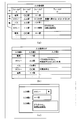
- FIG. 15 is an explanatory diagram showing an example of prediction processing by the input information recommendation unit 105.
- the input field 1 and the input field 2 of the input form shown in FIG. 15B are designated as one of the input field groups for which input candidates are recommended.
- the input information recommendation unit 105 determines that the input type relationship between the input field 1 and the input field 2 is “field” of the input candidate group storage unit 102 shown in FIG. It is assumed that information indicating that the relationship is “A” and “Field B” is obtained. In such a case, as shown in FIG. 15B, it is assumed that “009” is input in the input field 1 as input of new information.
- the input information recommendation unit 105 searches for a record including a candidate that matches the input information from among the candidates for the type field to which the input field in which the information is input corresponds. And the input information recommendation means 105 may acquire the candidate of the field according to the type to which the other input column matched with the said candidate in the record corresponds as an input candidate of this other input column. In the case of this example, the input information recommendation unit 105 searches for records including candidates that match the input information “009” from the candidates registered in “Field A”. The input information recommendation unit 105 may acquire “development department” that is a candidate of “field B” associated with the candidate “009” in the record as an input candidate of the input field 2.
- the input information recommendation unit 105 may present input candidates by displaying a possible character string itself in the input field, for example. At this time, in order to distinguish between information input by the user (user input information) and input candidates (recommended information) presented by the input information recommendation unit 105, the input information recommendation unit 105 displays, for example, recommendation information. The aspect may be different from the user input information. For example, the input information recommendation unit 105 may display the recommendation information in a font thinner than the user input information. In addition, in the example shown in FIG.15 (c), it distinguishes by drawing an underline. By doing in this way, user input information and recommendation information can be distinguished.
- the input information recommendation unit 105 recommends using a combo box or the like when an input operation to the input field becomes active, for example, by clicking on the input form of the input field.
- Information may be displayed in a list.
- the input information recommendation unit 105 may display them in descending order of appearance frequency in the input candidate group and the input log.
- a candidate set that matches the input information group set may be narrowed down.
- the input information recommending unit 105 re-searches a candidate set that matches the set of input information groups each time the user newly inputs information or selects a candidate. May be narrowed down dynamically.
- FIG. 16 is an explanatory diagram showing another example of the prediction process performed by the input information recommendation unit 105.
- the input field 1, the input field 2, and the input field 3 of the input form shown in FIG. 16B are designated as one of the input field groups for which input candidates are recommended.
- the input information recommendation unit 105 determines that the input type relationship among the input field 1, the input field 2, and the input field 3 is the input candidate group storage unit shown in FIG. It is assumed that information indicating the relationship between “field C”, “field D”, and “fold E” in 102 is obtained. In such a case, as shown in FIG. 16B, it is assumed that “male” is input to the input field 1 and “40's” is input to the input field 2 as input of new information.
- FIG. 17 is an explanatory diagram showing an example of the input relation log at this time.
- the input information recommendation unit 105 searches the input relation log for a record that matches the combination of the input information input in the input field 1 and the input field 2, and inputs included in the searched record
- the data in column 3 may be recommended in descending order of application frequency.
- the input information recommendation unit 105 performs processing such as giving priority to the input field 3 in the input candidate group storage unit 102 if there is a candidate in the corresponding type field. Also good.
- the input information recommendation unit 105 may order the values by multiplying the frequency included in the input candidates by the frequency included in the input relation log. Alternatively, the input information recommendation unit 105 may prioritize either one.
- the input information recommendation unit 105 may take into account the effectiveness added to the input log.
- the input candidate is extracted by searching for a combination in which both the input field 1 and the input field 2 match.
- the input information recommendation unit 105 may match at least one input information.
- the record may be extracted as a candidate for the target data.
- the input information recommendation unit 105 may rank the data using the frequency of data in the input field 3 in which the input field 1 and the input field 2 match each other.
- the input information recommendation unit 105 performs the same processing on the input candidate group in the input candidate group storage unit 102 if there is no data corresponding to the input relationship log as a result of the prediction process based on the input relationship log. An extraction process may be performed. Note that the input information recommendation unit 105 may perform input candidate extraction processing in addition to the input candidate group in the input candidate group storage unit 102 even when there is data corresponding to the input relation log.
- the combination of the prediction process based on an input relation log and the prediction process based on an input candidate group is applicable also when there are two input fields. it can. Also, regardless of the number of input fields, whether to perform prediction processing based on the input relationship log, whether to prioritize the input candidate group or the input relationship log when performing prediction processing based on the input relationship log, or Conditions such as how much priority is given to the input candidate group and the input relation log may be given by setting, and the conditions may be switched.
- the input field in the system is not limited to a text input, but may be a component that performs selective input such as a radio button, a combo box, or a check box.
- FIG. 16C shows an example of a list display of input candidates in this example.
- the input information “aaaa” in the input field 3 included in the input relation log is excluded because it is not included in the candidate list. May be added to one of the candidates without.
- FIG. 18 is an explanatory diagram showing another example of the prediction process performed by the input information recommendation unit 105.
- the input field 1, the input field 2, and the input field 3 of the input form shown in FIG. 18C are designated as one of the input field groups to be recommended.
- the input information recommendation unit 105 determines that the input type relationship among the input field 1, the input field 2, and the input field 3 is the input candidate group storage unit shown in FIG. It is assumed that information indicating the relationship between “field A”, “field B”, and “fold D” in 102 is obtained.
- FIG. 18B is an example of the input relation log at this time. In such a case, as shown in FIG. 18C, it is assumed that “taxi” is input in the input field 1 and “xx station” is input in the input field 2 as input of new information.
- the input information recommendation unit 105 searches for a record that matches the set of input information input in the input field 1 and the input field 2 from the input relation log, and as a result, for example,
- the input candidate group in the input candidate group storage unit 102 may be a search target, and a record that matches the set of input information input to the input field 1 and the input field 2 may be searched.
- data “meeting. Efficiency of time” can be obtained as an input candidate in the input field 3.
- the input candidate may be a sentence as in this example.
- the estimation result by the input type relationship estimation unit 103, the input candidate group stored in the input candidate group storage unit 102 (that is, the type-specific candidate list and combinations thereof), Can be used to predict input candidates in other input fields. Therefore, it is possible to present input candidates for the corresponding input field even if the type of data that can be input to each input field is not specified in advance or information is input for the first time.
- the input information recommendation unit 105 is added to the configuration of the first embodiment.
- the input information recommendation unit 105 is added to the configuration of the second embodiment. May be.
- error detection and prediction conversion candidate presentation may be performed simultaneously, or only one of the functions may be selectively performed.
- an output unit that displays a screen including an input field that receives an input from the user and an input unit that receives an input to the input field by the user are not illustrated.
- These input / output means are realized by, for example, a display device, a keyboard, a touch panel, or the like.
- the relationship between these input / output means and other processing means may be realized by a server / client system such as a Web system, or may be realized by a single device (stand-alone system). Good.
- the present invention can be suitably applied to a system having various input fields in the user interface.
- Input relation log storage means 101 Input candidate group storage means 102 Input candidate group storage means 103 Input type relation estimation means 104 Error detection means 105 Input information recommendation means
Landscapes
- Engineering & Computer Science (AREA)
- Theoretical Computer Science (AREA)
- Physics & Mathematics (AREA)
- General Physics & Mathematics (AREA)
- Business, Economics & Management (AREA)
- Audiology, Speech & Language Pathology (AREA)
- Computational Linguistics (AREA)
- General Health & Medical Sciences (AREA)
- Health & Medical Sciences (AREA)
- General Engineering & Computer Science (AREA)
- Artificial Intelligence (AREA)
- Economics (AREA)
- General Business, Economics & Management (AREA)
- User Interface Of Digital Computer (AREA)
- Management, Administration, Business Operations System, And Electronic Commerce (AREA)
Abstract
Description
次に、本発明の第2の実施形態について説明する。図9は、第2の実施形態の入力支援システムの構成例を示すブロック図である。図9に示す入力支援システムは、図1に示す第1の実施形態と比べて、新たにエラー検出手段104を備えている点が異なる。
次に、本発明の第3の実施形態について説明する。図13は、第3の実施形態の入力支援システムの構成例を示すブロック図である。図13に示す入力支援システムは、図1に示す第1の実施形態と比べて、新たに入力情報推薦手段105を備えている点が異なる。
102 入力候補群記憶手段
103 入力種類関係推定手段
104 エラー検出手段
105 入力情報推薦手段
Claims (12)
- 複数の入力欄への入力を支援する入力支援システムであって、
前記複数の入力欄に対して過去に入力された情報を各々対応づけて入力関係ログとして記憶する入力関係ログ記憶手段と、
情報の種類別の入力候補を、各々他の種類の入力候補と対応づけて記憶する入力候補群記憶手段と、
前記入力関係ログ記憶手段に記憶されている入力関係ログと、前記入力候補群記憶手段に記憶されている種類別の入力候補とその組み合わせとに基づいて、前記複数の入力欄に含まれる各入力欄間の入力情報の種類の関係が、前記入力候補群記憶手段に記憶されている種類別のフィールドである種類別フィールドのどの組み合わせに該当するかを推定する入力種類関係推定手段とを備えた
ことを特徴とする入力支援システム。 - 前記入力種類関係推定手段による推定結果と、前記入力候補群記憶手段に記憶されている種類別の入力候補とその組み合わせとに基づいて、前記複数の入力欄に含まれる各入力欄に入力された情報に対してエラー判定を行い、エラーを検出するエラー検出手段を備えた
請求項1に記載の入力支援システム。 - 前記エラー検出手段は、前記複数の入力欄に含まれる各入力欄に入力された情報の組み合わせが、前記入力候補群記憶手段に記憶されている当該各入力欄が該当する種類別フィールドの入力候補の組み合わせと一致するか否かを判定し、一致しない場合にエラーを検出する
請求項2に記載の入力支援システム。 - 前記入力種類関係推定手段による推定結果と、前記入力候補群記憶手段に記憶されている種類別の入力候補とその組み合わせとに基づいて、前記複数の入力欄に含まれる少なくとも1つの入力欄に情報が入力されたときに、前記複数の入力欄に含まれる他の入力欄に入力される情報を予測して、入力候補として出力する入力情報推薦手段を備えた
請求項1から請求項3のうちのいずれか1項に記載の入力支援システム。 - 前記入力情報推薦手段は、情報が入力された入力欄が該当する種類別フィールドの入力候補の中から入力された情報と一致する入力候補を検索し、検索された入力候補と対応づけられている他の入力欄が該当する種類別フィールドの入力候補を取得し、取得された入力候補を当該他の入力欄に入力される情報の入力候補として出力する
請求項4に記載の入力支援システム。 - 前記入力種類関係推定手段は、前記入力関係ログ記憶手段に記憶されている前記複数の入力欄の各々について、当該入力欄に対して過去に入力された情報と、前記入力候補群記憶手段に記憶されている種類別の入力候補とを比較して、当該入力欄の入力情報の種類が前記入力候補群記憶手段に記憶されている種類別フィールドのいずれに該当するかを推定し、その推定結果と、前記入力関係ログ記憶手段に記憶されている入力関係ログにおける各入力欄間の過去に入力された情報の対応関係とに基づいて、前記複数の入力欄に含まれる各入力欄間の入力情報の種類の関係が、前記入力候補群記憶手段に記憶されている種類別フィールドのどの組み合わせに該当するかを推定する
請求項1から請求項5のうちのいずれか1項に記載の入力支援システム。 - 前記入力種類関係推定手段は、前記入力関係ログ記憶手段に記憶されている前記複数の入力欄の各入力欄に対して過去に入力された情報と、前記入力候補群記憶手段に記憶されている種類別の入力候補とを比較して、前記各入力欄に対して過去に入力された情報が各々前記入力候補群記憶手段に記憶されている種類別フィールドのいずれに該当するかを推定し、その推定結果によって示される、前記入力関係ログ記憶手段に記憶されている入力関係ログにおける各入力欄間の過去に入力された情報の種類の対応関係とに基づいて、前記複数の入力欄に含まれる各入力欄間の入力情報の種類の関係が、前記入力候補群記憶手段に記憶されている種類別フィールドのどの組み合わせに該当するかを推定する
請求項1から請求項5のうちのいずれか1項に記載の入力支援システム。 - 複数の入力欄への入力を支援する入力支援方法であって、
入力関係ログ記憶手段が、前記複数の入力欄に対して過去に入力された情報を各々対応づけて入力関係ログとして記憶し、
入力候補群記憶手段が、情報の種類別の入力候補を各々他の種類の入力候補と対応づけて記憶し、
入力種類関係推定手段が、前記入力関係ログ記憶手段に記憶されている入力関係ログと、前記入力候補群記憶手段に記憶されている種類別の入力候補とその組み合わせとに基づいて、前記複数の入力欄に含まれる各入力欄間の入力情報の種類の関係が、前記入力候補群記憶手段に記憶されている種類別のフィールドである種類別フィールドのどの組み合わせに該当するかを推定し、
エラー検出手段または入力情報推薦手段が、前記入力種類関係推定手段による推定結果と、前記入力候補群記憶手段に記憶されている種類別の入力候補とその組み合わせとに基づいて、前記複数の入力欄に対して、入力された情報のエラー判定または入力される情報の予測を行う
ことを特徴とする入力支援方法。 - エラー検出手段が、前記複数の入力欄に含まれる各入力欄に入力された情報の組み合わせが、前記入力候補群記憶手段に記憶されている当該各入力欄が該当する種類別フィールドの入力候補の組み合わせと一致するか否かを判定し、一致しない場合にエラーを検出する
請求項8に記載の入力支援方法。 - 入力情報推薦手段が、前記複数の入力欄のうち情報が入力された入力欄が該当する種類別フィールドの入力候補の中から入力された情報と一致する入力候補を検索し、検索された入力候補と対応づけられている他の入力欄が該当する種類別フィールドの入力候補を取得し、取得された入力候補を該他の入力欄に入力される情報の予測結果として出力する
請求項8または請求項9に記載の入力支援方法。 - 複数の入力欄に対して過去に入力された情報を各々対応づけて記憶する入力関係ログ記憶手段と、情報の種類別の入力候補を、各々他の種類の入力候補と対応づけて記憶する入力候補群記憶手段とにアクセス可能なコンピュータに適用される入力支援プログラムであって、
前記コンピュータに、
前記入力関係ログ記憶手段に記憶されている入力関係ログと、前記入力候補群記憶手段に記憶されている種類別の入力候補とその組み合わせとに基づいて、前記複数の入力欄に含まれる各入力欄間の入力情報の種類の関係が、前記入力候補群記憶手段に記憶されている種類別のフィールドである種類別フィールドのどの組み合わせに該当するかを推定する処理を実行させる
ための入力支援プログラム。 - 前記コンピュータに、
前記推定結果と、前記入力候補群記憶手段に記憶されている種類別の入力候補とその組み合わせとに基づいて、前記複数の入力欄に対して、入力された情報のエラー判定または入力される情報の予測を行わせる
請求項11に記載の入力支援プログラム。
Priority Applications (2)
| Application Number | Priority Date | Filing Date | Title |
|---|---|---|---|
| US14/761,180 US20150363379A1 (en) | 2013-01-22 | 2013-09-05 | Input support system, input support method and input support program |
| JP2014558290A JP5950369B2 (ja) | 2013-01-22 | 2013-09-05 | 入力支援システム、入力支援方法および入力支援プログラム |
Applications Claiming Priority (2)
| Application Number | Priority Date | Filing Date | Title |
|---|---|---|---|
| JP2013-009572 | 2013-01-22 | ||
| JP2013009572 | 2013-01-22 |
Publications (1)
| Publication Number | Publication Date |
|---|---|
| WO2014115199A1 true WO2014115199A1 (ja) | 2014-07-31 |
Family
ID=51227020
Family Applications (1)
| Application Number | Title | Priority Date | Filing Date |
|---|---|---|---|
| PCT/JP2013/005268 Ceased WO2014115199A1 (ja) | 2013-01-22 | 2013-09-05 | 入力支援システム、入力支援方法および入力支援プログラム |
Country Status (3)
| Country | Link |
|---|---|
| US (1) | US20150363379A1 (ja) |
| JP (1) | JP5950369B2 (ja) |
| WO (1) | WO2014115199A1 (ja) |
Cited By (1)
| Publication number | Priority date | Publication date | Assignee | Title |
|---|---|---|---|---|
| JP2016091087A (ja) * | 2014-10-30 | 2016-05-23 | 富士通株式会社 | 情報提示プログラム、情報提示方法及び情報提示装置 |
Citations (2)
| Publication number | Priority date | Publication date | Assignee | Title |
|---|---|---|---|---|
| JP2008176516A (ja) * | 2007-01-18 | 2008-07-31 | Dainippon Printing Co Ltd | アプリケーションプログラムへの入力操作支援装置およびアプリケーションプログラムへの入力操作支援装置 |
| JP2011187011A (ja) * | 2010-03-11 | 2011-09-22 | Fujitsu Ltd | 入力装置、入力支援方法及びコンピュータプログラム |
Family Cites Families (12)
| Publication number | Priority date | Publication date | Assignee | Title |
|---|---|---|---|---|
| US6629098B2 (en) * | 2001-01-16 | 2003-09-30 | Hewlett-Packard Development Company, L.P. | Method and system for validating data submitted to a database application |
| US20060200754A1 (en) * | 2001-10-24 | 2006-09-07 | Infosnap | Systems and methods for storing personal information, automatically filling out forms, and sharing information with a data recipient |
| US7203699B2 (en) * | 2004-06-28 | 2007-04-10 | Bellamy Robert E | Computerized system for automated completion of forms |
| US20060007189A1 (en) * | 2004-07-12 | 2006-01-12 | Gaines George L Iii | Forms-based computer interface |
| EP1842140A4 (en) * | 2005-01-19 | 2012-01-04 | Truecontext Corp | DIRECTIVE-CONTROLLED MOBILE FORM APPLICATIONS |
| US7996589B2 (en) * | 2005-04-22 | 2011-08-09 | Microsoft Corporation | Auto-suggest lists and handwritten input |
| US20070112599A1 (en) * | 2005-10-26 | 2007-05-17 | Peiya Liu | Method and system for generating and validating clinical reports with built-in automated measurement and decision support |
| US8095476B2 (en) * | 2006-11-27 | 2012-01-10 | Inquira, Inc. | Automated support scheme for electronic forms |
| US20080235567A1 (en) * | 2007-03-22 | 2008-09-25 | Binu Raj | Intelligent form filler |
| US20090204881A1 (en) * | 2008-02-08 | 2009-08-13 | M/S. Scmooth (India) Private Limited | Method and system for knowledge-based filling and verification of complex forms |
| US20100211863A1 (en) * | 2009-02-19 | 2010-08-19 | Microsoft Corporation | Action-based pre-population of user profiles |
| US20110231773A1 (en) * | 2010-03-19 | 2011-09-22 | Avaya Inc. | System and method for providing just-in-time resources based on context |
-
2013
- 2013-09-05 JP JP2014558290A patent/JP5950369B2/ja active Active
- 2013-09-05 WO PCT/JP2013/005268 patent/WO2014115199A1/ja not_active Ceased
- 2013-09-05 US US14/761,180 patent/US20150363379A1/en not_active Abandoned
Patent Citations (2)
| Publication number | Priority date | Publication date | Assignee | Title |
|---|---|---|---|---|
| JP2008176516A (ja) * | 2007-01-18 | 2008-07-31 | Dainippon Printing Co Ltd | アプリケーションプログラムへの入力操作支援装置およびアプリケーションプログラムへの入力操作支援装置 |
| JP2011187011A (ja) * | 2010-03-11 | 2011-09-22 | Fujitsu Ltd | 入力装置、入力支援方法及びコンピュータプログラム |
Cited By (1)
| Publication number | Priority date | Publication date | Assignee | Title |
|---|---|---|---|---|
| JP2016091087A (ja) * | 2014-10-30 | 2016-05-23 | 富士通株式会社 | 情報提示プログラム、情報提示方法及び情報提示装置 |
Also Published As
| Publication number | Publication date |
|---|---|
| JP5950369B2 (ja) | 2016-07-13 |
| JPWO2014115199A1 (ja) | 2017-01-19 |
| US20150363379A1 (en) | 2015-12-17 |
Similar Documents
| Publication | Publication Date | Title |
|---|---|---|
| KR102466489B1 (ko) | 관심 지점에 관련된 정보를 사용자에게 제공하기 위한 방법 및 시스템 | |
| JP6029192B2 (ja) | 入力支援システム、入力支援方法および入力支援プログラム | |
| CN107229659B (zh) | 一种信息搜索方法及装置 | |
| US20180341866A1 (en) | Method of building a sorting model, and application method and apparatus based on the model | |
| JP2020135891A (ja) | 検索提案を提供する方法、装置、機器及び媒体 | |
| US20140351228A1 (en) | Dialog system, redundant message removal method and redundant message removal program | |
| US20140172415A1 (en) | Apparatus, system, and method of providing sentiment analysis result based on text | |
| WO2018151774A1 (en) | Grouping and summarization of messages based on topics | |
| US10037367B2 (en) | Modeling actions, consequences and goal achievement from social media and other digital traces | |
| KR20190008331A (ko) | 자연 언어 사용자 인터페이스 입력에 기초하여 자연 출력을 생성하는 방법 및 장치 | |
| CN102314452B (zh) | 一种通过输入法平台进行导航的方法及系统 | |
| AU2014228754C1 (en) | Non-deterministic disambiguation and matching of business locale data | |
| CN112528145A (zh) | 信息推荐方法、装置、设备及可读存储介质 | |
| EP2805266A1 (en) | Grouping search results into a profile page | |
| CN113569012A (zh) | 医疗数据查询方法、装置、设备及存储介质 | |
| CN111753089A (zh) | 话题聚类方法、装置、电子设备及存储介质 | |
| KR20150059208A (ko) | 소셜 웹 미디어의 이벤트 시공간 연관성 분석 장치 및 그 방법 | |
| CN110580337A (zh) | 一种基于实体相似度计算的专业实体消歧实现方法 | |
| JP2010211575A (ja) | 情報評価支援システム | |
| JP2012008899A (ja) | 検索クエリ推薦方法、検索クエリ推薦装置及び検索クエリ推薦プログラム | |
| JP5950369B2 (ja) | 入力支援システム、入力支援方法および入力支援プログラム | |
| US20160283458A1 (en) | Input assistance system, input assistance method, and input assistance program | |
| JP5826148B2 (ja) | 図面管理サーバ及びこれを用いた図面管理システム | |
| KR101402339B1 (ko) | 문서 관리 시스템 및 문서 관리 방법 | |
| JP6083819B2 (ja) | 入力支援システム、入力支援方法および入力支援プログラム |
Legal Events
| Date | Code | Title | Description |
|---|---|---|---|
| 121 | Ep: the epo has been informed by wipo that ep was designated in this application |
Ref document number: 13872931 Country of ref document: EP Kind code of ref document: A1 |
|
| ENP | Entry into the national phase |
Ref document number: 2014558290 Country of ref document: JP Kind code of ref document: A |
|
| WWE | Wipo information: entry into national phase |
Ref document number: 14761180 Country of ref document: US |
|
| NENP | Non-entry into the national phase |
Ref country code: DE |
|
| 122 | Ep: pct application non-entry in european phase |
Ref document number: 13872931 Country of ref document: EP Kind code of ref document: A1 |