WO2014100807A1 - Antimicrobial bispyridine amine compositions and uses - Google Patents
Antimicrobial bispyridine amine compositions and uses Download PDFInfo
- Publication number
- WO2014100807A1 WO2014100807A1 PCT/US2013/077428 US2013077428W WO2014100807A1 WO 2014100807 A1 WO2014100807 A1 WO 2014100807A1 US 2013077428 W US2013077428 W US 2013077428W WO 2014100807 A1 WO2014100807 A1 WO 2014100807A1
- Authority
- WO
- WIPO (PCT)
- Prior art keywords
- composition
- skin
- octenidine
- topical antimicrobial
- antimicrobial composition
- Prior art date
- Legal status (The legal status is an assumption and is not a legal conclusion. Google has not performed a legal analysis and makes no representation as to the accuracy of the status listed.)
- Ceased
Links
Classifications
-
- A—HUMAN NECESSITIES
- A61—MEDICAL OR VETERINARY SCIENCE; HYGIENE
- A61K—PREPARATIONS FOR MEDICAL, DENTAL OR TOILETRY PURPOSES
- A61K8/00—Cosmetics or similar toiletry preparations
- A61K8/18—Cosmetics or similar toiletry preparations characterised by the composition
- A61K8/30—Cosmetics or similar toiletry preparations characterised by the composition containing organic compounds
- A61K8/49—Cosmetics or similar toiletry preparations characterised by the composition containing organic compounds containing heterocyclic compounds
- A61K8/4906—Cosmetics or similar toiletry preparations characterised by the composition containing organic compounds containing heterocyclic compounds with one nitrogen as the only hetero atom
- A61K8/4926—Cosmetics or similar toiletry preparations characterised by the composition containing organic compounds containing heterocyclic compounds with one nitrogen as the only hetero atom having six membered rings
-
- A—HUMAN NECESSITIES
- A61—MEDICAL OR VETERINARY SCIENCE; HYGIENE
- A61K—PREPARATIONS FOR MEDICAL, DENTAL OR TOILETRY PURPOSES
- A61K31/00—Medicinal preparations containing organic active ingredients
- A61K31/33—Heterocyclic compounds
- A61K31/395—Heterocyclic compounds having nitrogen as a ring hetero atom, e.g. guanethidine or rifamycins
- A61K31/435—Heterocyclic compounds having nitrogen as a ring hetero atom, e.g. guanethidine or rifamycins having six-membered rings with one nitrogen as the only ring hetero atom
- A61K31/44—Non condensed pyridines; Hydrogenated derivatives thereof
- A61K31/4425—Pyridinium derivatives, e.g. pralidoxime, pyridostigmine
-
- A—HUMAN NECESSITIES
- A61—MEDICAL OR VETERINARY SCIENCE; HYGIENE
- A61K—PREPARATIONS FOR MEDICAL, DENTAL OR TOILETRY PURPOSES
- A61K8/00—Cosmetics or similar toiletry preparations
- A61K8/18—Cosmetics or similar toiletry preparations characterised by the composition
- A61K8/30—Cosmetics or similar toiletry preparations characterised by the composition containing organic compounds
- A61K8/33—Cosmetics or similar toiletry preparations characterised by the composition containing organic compounds containing oxygen
- A61K8/36—Carboxylic acids; Salts or anhydrides thereof
- A61K8/361—Carboxylic acids having more than seven carbon atoms in an unbroken chain; Salts or anhydrides thereof
-
- A—HUMAN NECESSITIES
- A61—MEDICAL OR VETERINARY SCIENCE; HYGIENE
- A61P—SPECIFIC THERAPEUTIC ACTIVITY OF CHEMICAL COMPOUNDS OR MEDICINAL PREPARATIONS
- A61P17/00—Drugs for dermatological disorders
- A61P17/02—Drugs for dermatological disorders for treating wounds, ulcers, burns, scars, keloids, or the like
-
- A—HUMAN NECESSITIES
- A61—MEDICAL OR VETERINARY SCIENCE; HYGIENE
- A61P—SPECIFIC THERAPEUTIC ACTIVITY OF CHEMICAL COMPOUNDS OR MEDICINAL PREPARATIONS
- A61P31/00—Antiinfectives, i.e. antibiotics, antiseptics, chemotherapeutics
-
- A—HUMAN NECESSITIES
- A61—MEDICAL OR VETERINARY SCIENCE; HYGIENE
- A61Q—SPECIFIC USE OF COSMETICS OR SIMILAR TOILETRY PREPARATIONS
- A61Q15/00—Anti-perspirants or body deodorants
-
- A—HUMAN NECESSITIES
- A61—MEDICAL OR VETERINARY SCIENCE; HYGIENE
- A61Q—SPECIFIC USE OF COSMETICS OR SIMILAR TOILETRY PREPARATIONS
- A61Q17/00—Barrier preparations; Preparations brought into direct contact with the skin for affording protection against external influences, e.g. sunlight, X-rays or other harmful rays, corrosive materials, bacteria or insect stings
- A61Q17/005—Antimicrobial preparations
-
- C—CHEMISTRY; METALLURGY
- C11—ANIMAL OR VEGETABLE OILS, FATS, FATTY SUBSTANCES OR WAXES; FATTY ACIDS THEREFROM; DETERGENTS; CANDLES
- C11D—DETERGENT COMPOSITIONS; USE OF SINGLE SUBSTANCES AS DETERGENTS; SOAP OR SOAP-MAKING; RESIN SOAPS; RECOVERY OF GLYCEROL
- C11D3/00—Other compounding ingredients of detergent compositions covered in group C11D1/00
- C11D3/48—Medical, disinfecting agents, disinfecting, antibacterial, germicidal or antimicrobial compositions
Definitions
- the invention relates generally to an antimicrobial composition comprising a bispyridine amine.
- the antimicrobial composition comprising a bispyridine amine is advantageously used in personal care and cosmetic preparations such as, for example, a deodorant, hair cleansing preparation, a preparation for the treatment of blemished, oily skin, comedones, and foot odor.
- the antimicrobial composition comprising bispyridine amine is also advantageously used as a bacteriostatic/bactericidal agent for use in wound cleaning and as a disinfectant in treating hard surfaces.
- the bispyridine amine used according to the invention is an octenidine distearate.
- Deodorants function in many ways to eliminate odor. For example, they are able to mask or complement the odor to minimize the offensive smell; trap the odor so that the volatile components do not reach the nose; or prevent or slow down the generation of volatile odiferous chemicals.
- Deodorants can also be formulated with antimicrobials to slow bacterial growth. For such formulations to be effective, antimicrobials should be easily applied and remain active on the skin for many hours. Inhibitors of perspiration (antiperspirants), which directly influence the secretion of perspiration, are also used to eliminate body odor. For easy application, antimicrobials need to be compatible with typical deodorant ingredients and, for consumer acceptance should not have adverse effects on skin. Additionally, deodorants should be developed so as to not react with sweat or create yellow stains on clothing.
- Octenidine in particular octenidine dihydrochloride, is an antimicrobial agent which has been previously described for use in antiseptic agents for the skin, the mucous membranes and wound antisepsis.
- Octenidine is known to strongly adhere to lipid components in cell membranes, which contributes to its high antimicrobial effect while at the same time being well tolerated by the human epithelia and traumatic tissues.
- Octenidine primarily acts anti-bacterially due to its affinity to bacterial surfaces.
- octenidine in particular octenidine dihydrochloride
- antiseptic preparations has been effective against microorganisms which contribute to, for example, body odor, blemished and/or oily skin, comedones, dandruff and foot odor.
- octenidine dihydrochloride has a disinfecting/antimicrobial effect against fungi and viruses. Consequently, the inclusion of octenidine hydrochloride in preparations for use in wound cleaning and as a disinfectant in treating hard surfaces such as, for example, operating room tables and laboratory equipment has also been previously described.
- antimicrobial octenidine compositions such as octenidine dihydrochloride
- octenidine dihydrochloride have a tendency towards decomposition upon prolonged storage, for example, a period of several months.
- degradation products can form from octenidine dihydrochloride alone and when used in combination with certain auxiliaries, which causes peroxides and aldehydes to form.
- antimicrobial octenidine dihydrochloride compositions are used in aerosol containers made of, for example, tinplate, aluminum, stainless steel, and other metals, the octenidine composition has caused corrosion in the aerosol container.
- antimicrobial compositions that facilitate easy application on the skin, do not penetrate the skin, are compatible with typical deodorant and cosmetic ingredients, and do not cause adverse effects (e.g., irritation) to skin and clothing. Additionally, there is also a need for antimicrobial compositions for use in wound cleaning and as a biocide for treating hard surfaces. Moreover, there is a need for antimicrobial compositions that are stable when stored at a comparatively high concentration, even at elevated temperatures, without degradation, formation of decomposition products or reduction in active ingredient content and do not cause corrosion of the dispenser. Summary of the Invention
- the present invention is directed to antimicrobial bispyridine amine compositions that facilitate easy application on the skin, do not penetrate the skin, are compatible with typical deodorant ingredients, and do not cause adverse effects on skin and clothing.
- the present invention relates to an antimicrobial composition including an organic acid salt of a bispyridine amine where the organic acid contains from about 4 to about 30 carbon atoms. Because the organic acid salts of bispyridine amines are large molecules, they will not easily penetrate the skin, and will stay on the surface where they were applied and where they are needed to have their effect.
- the bispyridine amine is an octenidine distearate. In a one embodiment, the bispyridine amine is added to, and is compatible with, ingredients typically used in personal care and cosmetics. In an alternative embodiment, the bispyridine amine is added to, and is compatible with, ingredients typically used for wound cleansing and as a biocide.
- Figure 1 depicts the average number of bacterial colony forming units per square centimeter (CFU/cm 2 ) of skin over an 8 hour time period after application of ethanol, Cosmocil ® S, octenidine distearate and octenidine distearate in propylene glycol.
- Figure 2 depicts the corrosion on (1) an aluminum coupon following exposure to 0.3% octenidine dihydrochloride, (2) an aluminum coupon following exposure to 0.3%
- octenidine distearate (3) a steel coupon following exposure to 0.3% octenidine dihydrochloride, (4) a steel coupon following exposure to 0.3% octenidine distearate, (5) an aluminum coupon following exposure to 0.3% octenidine dihydrochloride added as a 20% solution in propylene glycol, (6) an aluminum coupon following exposure to 0.3% octenidine distearate added as a 30% solution in propylene glycol, (7) an aluminum coupon in 0.3% polyhexamethylene biguanide hydrochloride (PHMB) added as a 20% solution in propylene glycol, (8) an aluminum coupon following exposure to 0.3% PHMBS added as a 20% solution in propylene glycol, (9) an aluminum coupon following exposure to 0.3% stearic acid, and (10) an aluminum coupon following exposure to 0.3% octenidine distearate and 0.1% sodium gluconate.
- PHMB polyhexamethylene biguanide hydrochloride
- the present invention is directed to antimicrobial bispyridine amine compositions that do not irritate the skin, facilitate easy application on the skin, do not penetrate the skin, stay on the surface of the skin where applied, do not cause adverse effects on the skin and clothing, and are compatible with ingredients typically used in personal care and cosmetic preparations such as, for example, a deodorant, hair cleansing preparation, a preparation for the treatment of blemished, oily skin, comedones, and foot odor.
- the present invention is directed to an antimicrobial bispyridine amine composition having the general formula:
- R is selected from a group consisting of hydrogen, Q-C ⁇ linear or branched hydrocarbon, which may be saturated or unsaturated and may be optionally substituted with a halogen, or a hydroxyl group.
- Q-C ⁇ hydrocarbons include Q- C 2 o linear alkyl, C4-C20 branched alkyl, C6-C20 cyclic alkyl, C6-C20 branched cyclic alkyl, C6-C20 linear alkenyl, C 6 -C 20 branched alkenyl, C 6 -C 20 cyclic alkenyl, C 6 -C 20 branched cyclic alkenyl, C 6 -C 20 substituted or unsubstituted aryl, the moieties which substitute the aryl units can be alkyl moieties, and mixtures thereof.
- R 1 is a Cs linear alkyl group.
- A denotes a linear or branched, saturated or unsaturated Q to C 20 divalent hydrocarbons which may be optionally substituted with a hydroxyl, carboxyl, carboxylate or a halogen.
- Q to C 20 divalent hydrocarbons include, Q-C 20 linear alkylene, C 4 -C 20 branched alkylene, C 6 -C 20 cyclic alkylene, C 6 -C 20 branched cyclic alkylene, C 6 -C 20 linear alkenylene, C 6 - C 20 branched alkenylene, C 6 -C 20 cyclic alkenylene, C 6 -C 20 branched cyclic alkenylene, C 6 -C 20 substituted or unsubstituted arylene, generally the moieties which substitute the aryl units are alkyl moieties, and mixtures thereof.
- A is a C 10 linear alkylene.
- X is an organic acid having the formula R 4 -COO ⁇ , wherein R 4 is hydrogen, hydroxyl, or Q-C 40 alkyl.
- suitable organic acids include but are not limited to, carboxylic acids, such as (Q-C 40 ) alkanecarboxylic acids which, for example, are unsubstituted or substituted by halogen, saturated or unsaturated dicarboxylic acids, such as hydroxycarboxylic acids, such as amino acids, such as (C G t o) alkylsulfonic acids.
- organic acids from which salts can be derived include, for example, acetic acid, propionic acid, phosphoric acid, glycolic acid, pyruvic acid, oxalic acid, maleic acid, malonic acid, succinic acid, fumaric acid, tartaric acid, citric acid, benzoic acid, cinnamic acid, mandelic acid, methanesulfonic acid, ethanesulfonic acid, p-toluenesulfonic acid, glycyrrhizinic acid and salicylic acid.
- Another aspect of the present invention is directed to an antimicrobial bispyridine amine composition, which is an octenidine distearate having the general formula:
- X is an anion of an organic acid having the formula R 4 -COO " , wherein R 4 is hydrogen, hydroxyl, or C C 4 o alkyl.
- organic acids that can be used in embodiments of the present invention include, but are not limited to, carboxylic acids, such as (CrC 4 o) alkanecarboxylic acids which, for example, are unsubstituted or substituted by halogen, saturated or unsaturated dicarboxylic acids, such as hydroxycarboxylic acids, such as amino acids, such as (C G f o) alkylsulfonic acids.
- organic acids from which salts can be derived include, for example, acetic acid, propionic acid, phosphoric acid, glycolic acid, pyruvic acid, oxalic acid, maleic acid, malonic acid, succinic acid, fumaric acid, tartaric acid, citric acid, benzoic acid, cinnamic acid, mandelic acid, methanesulfonic acid, ethanesulfonic acid, p- toluenesulfonic acid, and salicylic acid.
- Additional exemplary organic acids that can be used in embodiments of the present invention include stearic acid, phosphonic acid, trifluoroacetic acid, cyanoacetic acid, benzoic acid, 4-cyanobenzoic acid, 2-chlorobenzoic acid, 2-nitrobenzoic acid, citric acid, fumaric acid, malonic acid, oxalic acid, maleic acid, phenoxyacetic acid, methanesulfonic acid, p-toluenesulfonic acid, stearic acid, benzenesulfonic acid, p- toluenesulfinic acid and the like.
- a particularly important feature of the organic salts of bispyridine amines of the present invention is their ability to remain on the surface of the skin at the location where applied while slowing bacterial growth on the skin. While not intending to be bound by any particular theory of action, this ability to remain on the surface of the skin is believed to be the result of the large molecular sizes of bispyridine amines conferred by the alkyl chain.
- Preparations of deodorants come in many forms, including but not restricted to aerosol sprays, roll-ons, deodorant sticks, pumps, powders, power sprays, creams and gels.
- Preparations of the antimicrobial compositions of the invention can be combined with astringents such as, for example, aluminum salts such as aluminum oxychloride.
- Basic aerosol deodorants typically contain alcohol, a propellant, fragrance and typically an antimicrobial agent and an emollient.
- Dry aerosol deodorants typically contain propellant, volatile silicone, antiperspirant salts like aluminum chlorohydrate, modified clay, and fragrance.
- aerosol containers that can be used in the present invention include, for example, lacquered tinplate (steel with a layer of tin), which is generally made with two or three pieces of metal crimped together, aluminum and stainless steel.
- the bispyridine amine of the present invention was less corrosive than actives, such as, for example octenidine dihydrochloride and Polyhexamethylene biguanide stearafce (PHMB, polihexanide), which are commonly used in personal care and cosmetic preparations.
- actives such as, for example octenidine dihydrochloride and Polyhexamethylene biguanide stearafce (PHMB, polihexanide
- Deodorant solution roll-ons are typically hydroalcoholic formulations including alcohol, water, fragrance and a viscosity control agent like cellulosic gum.
- Deodorant emulsion roll-ons are typically oil-in-water systems containing water, oil, emulsifiers, fragrance and typically include a skin-care active and an antimicrobial agent.
- Stick deodorants are typically gelled glycol or hydroalcohol solutions of fragrance and deodorant active, and often contain sodium stearate or dibenzylidene sorbitol as the gellant.
- Antiperspirant formulations that offer both deodorant and perspiration protection are typically prepared using building blocks, such as an antiperspirant active, carrier fluids and aerosol propellants, structurants and emulsifies, sensory modifiers and fragrance. While a specific deodorant active is not usually included, such an addition could offer additional product benefits.
- the present invention provides the use of a compound of formula (I) or (II), or an acceptable salt thereof, in the manufacture of an antimicrobial composition for use in personal care deodorant.
- the deodorant may include other components permitting a broader scope of antimicrobial and antiperspirant effect than the compounds of the present invention alone.
- the bispyridine amine is combined with a polyalcohol. Examples of polyalcohols that can be used with the invention are provided in U.S. Publication No. US2011/0217260, which is incorporated by reference herein.
- the antimicrobial bispyridine amine composition according to the present invention will contain from about 0.01% to about 5%, from about 0.03% to about 3%, or from about 0.05% to about 1% by weight of the bispyridine amine of formula (I) or (II) based on the total weight of the composition in which they are present, excluding any volatile propellant,
- Products of the present invention may comprise compositions taking any form. When a product comprises more than one composition, it is preferred that the compositions take the same form.
- Exemplary compositions of the present invention include, for example, wa -based sticks, soap-based sticks, compressed powder sticks, roll-on suspensions or solutions, emulsions, gels, creams, squeeze sprays, pump sprays, and aerosols, Each product form contains its own selection of additional components, both essential and nonessential. The types of components typical for each of the above product forms may be incorporated in the corresponding compositions of the invention.
- a cosmetically acceptable carrier material is a highly desired additional component of the products of the invention.
- the earner material may be hydrophobic or hydrophilic, solid or liquid.
- Typical carrier materials are liquids.
- Hydrophobic liquids suitable for use include liquid silicones, such as liquid polyorganosiloxanes. Such materials may be cyclic or linear, examples include Dow Corning si licone fluids 344, 345, 244, 245, 246, 556, and the 200 series; Union Carbide Corporation Silicones 7207 and 7158; and General Electric silicone SF1202, Alternatively, or additionally, non-silicone hydrophobic liquids may be used.
- Such materials include mineral oils, hydrogenated polyisobutene, polydecene, paraffins, isoparaffins of at least 10 carbon atoms, aliphatic or aromatic ester oils (e.g.
- Hquid carrier materials are organic solvents, such as aliphatic alcohols (monohydric or polyhydric having 2 to 8 carbon atoms) and polyglycol ethers, such as oligoglycol ethers having only 2 to 5 repeat units. Examples include dipropylene glycol, glycerol propylene glycol, butylene glycol, ethanol, propanol, isopropanol, and industrial methylated spirits.
- Organic solvents used in some embodiments of the present invention are aliphatic alcohols, in particular those having 2 to 3 carbon atoms, especially ethanol and isopropanol.
- compositions of the invention may also be used.
- the total amount of carrier material employed can be at least 5%, from 30% to 99%, or from 60% to 98%' by weight of the composition, excluding any volatile propellant present.
- Structurants and ernulsifiers are further additional components of the compositions of the invention that are highly desirable in certain product forms. Structurants, when employed, can be present at from 1% to 30% by weight of a composition, while ernulsifiers can be present at from 0.1% to 10% by weight of a composition.
- Suitable structurants include cellulosic thickeners such as hydroxy propyl cellulose and hydroxy ethyl cellulose, and dibenzylidene sorbitol.
- Other suitable structurants include sodium stearate, stearyl alcohol, cetyl alcohol, hydrogenated castor oil, synthetic waxes, paraffin waxes, hydroxy stearic acid, dibutyl lauroyl glutamide, alky] silicone waxes, quatemiurn-18 bentonite, quateraium-18 hectorite, silica, and propylene carbonate.
- Suitable ernulsifiers include steareth-2, steareth--2Q, stearefh--21 , ceteareth-20, glyceryl stearate, cetyl alcohol, cetearyl alcohol, PEG-20 stearate, dimethicone copolyol, and poloxamines.
- Further emulsifiers/surfactants desirable in certain compositions of the invention are perfume solubilisers and wash-off agents.
- the former include PEG-hydrogenated castor oil, available from BASF in the Cremophor ® RH and CO ranges, which can be present at up to 1.5% by weight, or from 0.3 to 0.7% by weight.
- the latter include pol y( oxyetib ylenejethers .
- Certain sensory modifiers are further desirable components in the compositions of the invention, Such materials can be used at a level of up to 20% by weight of a composition.
- Emollients, humectants, volatile oils, non-volatile oils, and particulate solids which impart lubricity are all suitable classes of sensory modifiers.
- Examples of such materials include cyclomethicone, dimethicone, dimethiconol, isopropvl myri state, isopropvl palmitate, talc, finely divided silica (e.g. Aerosii ® 200), polyethylene (e.g.
- ACumist ® B 18 polysaccharides, corn starch, Ci2-Cj5 alcohol benzoate, PPG-3 myristyl ether, octyl dodecanol, C7- 4 isoparaffins, dill isopropyi adipate, isosorbide laurate, PPG- 14 butyl ether, glycerol, hydrogenated polyisobutene, polydecene, titanium dioxide, phenyl trimethicone, clioctyl adipate, and hexamethyl disiloxane.
- Fragrance is also a desirable additional component in the compositions of the invention
- Suitable materials include conventional perfumes, such as perfume oils and also include so-called deo-per umes. These latter materials may also qualify as additional organic anti- microbial agents.
- Levels of incorporation are preferably up to 4% by weight, particularly from 0,1% to 2% by weight, and especially from 0.7% to 1,7% by weight of a composition. Synergies can exist between the essential components of the invention and certain fragrance components— long-lasting odor control being the result.
- compositions perform more than one function.
- Such components are additional ingredients, their use often saving both money and formulation space.
- examples of such components include ethanol, isopropyi myristate, and the many components that can act as both structurants and sensory modifiers, for example silica.
- colorants and preservatives are colorants and preservatives.
- a volatile propellant is an essential component of such composition.
- the level of incorporation of the volatile propellant is typically from 30 to 99 parts by weight and particularly from 50 to 95 parts by weight.
- Non-chlorinated volatile propellant can be used, in particular liquefied hydrocarbons or halogenated hydrocarbon gases (particularly fluorinated hydrocarbons such as 1,1- difiuoroethane and/or l -trifluoro-2-iiuoroethane) that have a boiling point of belo 10° C. and especially those with a boiling point below 0° C.
- Some embodiments of the present invention employ liquefied hydrocarbon gases, and especially C;> to Ce hydrocarbons, including propane, isopropane, butane, isobutane, pentane, isopentane and mixtures of two or more thereof.
- exemplary propeilants include isobutane, isobutane/i sopropane, isobutane/propane and mixtures of isopropane, isobutane, butane, and the like,
- propeilants that can be contemplated include alkyl ethers, such as dimethyl ether or compressed non-reactive gases such air, nitrogen or carbon dioxide.
- Embodiments of the invention provide a safe and effective method of slowing bacterial growth on the skin.
- the invention also provides a safe and effective method of improving wound care products, antiperspirants and could be used in topical antimicrobial personal care products.
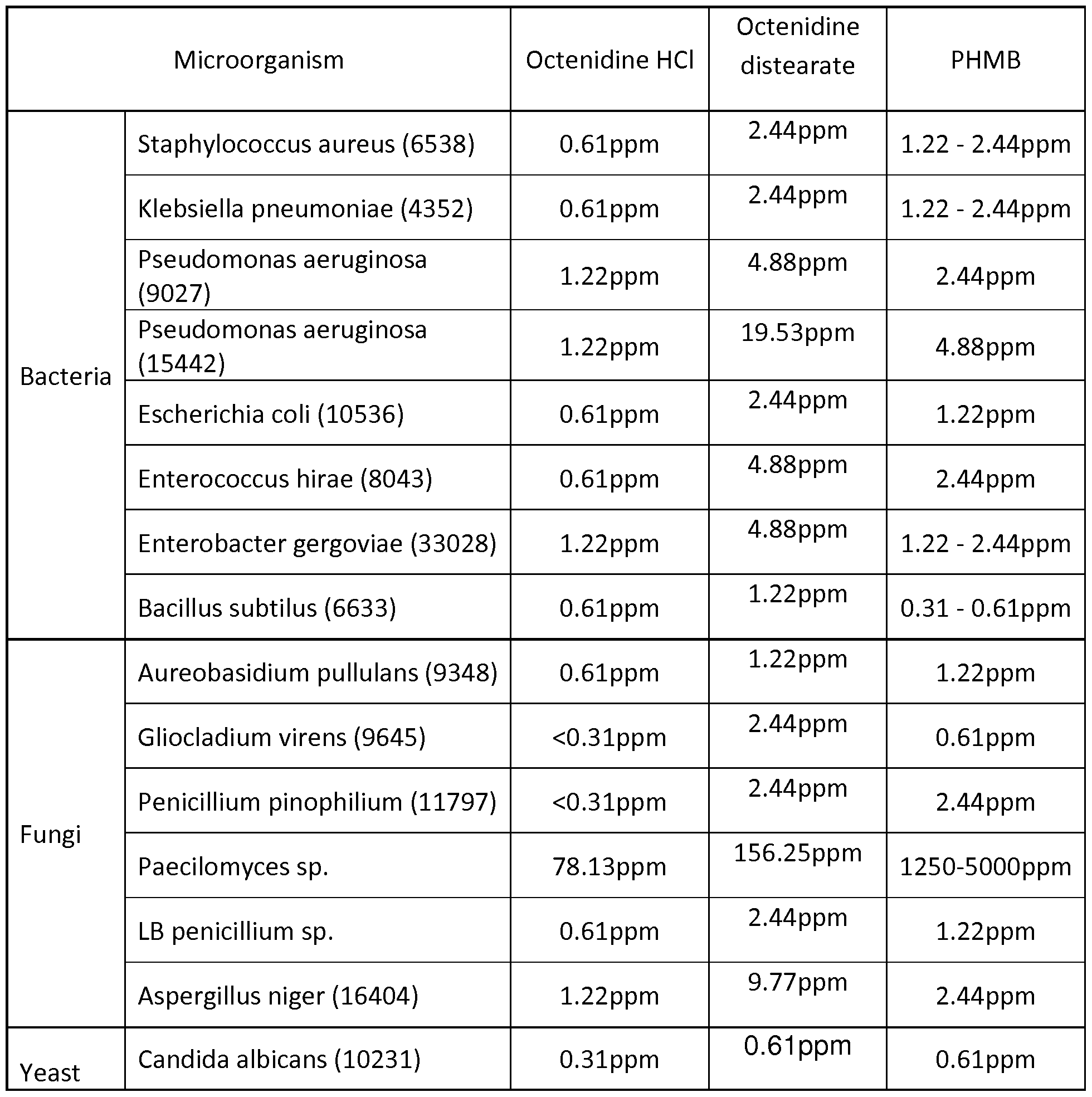
- a stock solution (2500 ppm) of Octenidine distearate was prepared in methanol and stock solutions (2500ppm) of Octenidine dihydrochloride and PHMB were prepared in absolute ethanol.
- the stock solutions were serially diluted in the 96 well plates and tested at final concentrations ranging from 625- 0.31 ppm.
- Bacterial inocula were grown in Tryptic Soy Broth or Brain Heart Infusion (E. hirae) for 24 hrs. and were adjusted to approximately one million cells per milliliter in same type of broth.
- Fungal inocula were grown up on Sabouraud Dextrose Agar plates (yeast) or Potato Dextrose Agar plates (mold) and mold spores and yeast cells were adjusted to approximately 100,000 per milliliter in Sabouraud Dextrose Broth (pH 5.6).
- PMBS Stearate
- octenidine distearate (a bispyridine amine compound of the present invention) and Polyhexamethylene biguanide stearate (PHMBS) were tested against a range of typical skin microorganisms in a Minimum Inhibitory Concentration (MIC) test. MICs for the organisms were determined using a standard 96-well microtiter plate assay in Trypic Soy Broth (TSB).
- TTB Trypic Soy Broth
- Bacteria were grown in Tryptic Soy Broth or Brain Heart Infusion (E. hirae) for 24 hrs and were adjusted to one million cells per milliliter in same type of broth. Following incubation (48hrs at 36°C), the lowest concentration of test compound inhibiting growth was recorded as the Minimum Inhibitory Concentration (MIC).
- the actives were serially diluted and tested at final concentrations ranging from 156.3 - 0.61 ppm. MIC was run for two different sets.
- TSB Tryptic Soy Brother
- BHI Brain Heart Infusion
- the lowest concentration of test compound inhibiting growth was recorded as the minimum inhibitory concentration. The minimum concentration observed to completely inhibit growth was determined visually.
- the synergy of octenidine distearate and PHMBS was evaluated by a two- dimensional broth micro dilution checkerboard procedure in a 96-well microplate. Similar to the MIC procedure described above, in the first column of the 96-well microplate, 0.09ml of broth and 0.01 ml of octenidine distearate was added, and mixed with a pipetter approximately 4 times. 0.05 ml from each well of the column was then transferred to the next well of the second column and mixed as in the first column.
- FIC A MICA in combination
- FIC B MK3 ⁇ 4 in combination
- A octenidine distearate
- Table 2 shows the minimum concentration of octenidine distearate and PHMBS required for an inhibitory effect against a wide range of skin bacteria.
- Octenidine distearate and is inhibitory to skin microflora at low concentrations making it attractive as an antimicrobial active ingredient in personal care products and cosmetics.
- Synergy between octenidine distearate and PHMBS was observed against Staphylococcus epidermidis and Staphylococcus haemolyticus but not against the other skin organisms.
- testing was performed using pig skin. Although alternatives, such as VITRO-SKIN ® , offered a less variable test matrix, it was decided that testing on pig skin was a better model for this application, as the pig skin allowed for actual growth of bacteria on the surface, not merely the survival of bacteria on the surface, providing more representative user skin conditions.
- TSB Tryptic Soy Broth
- Test samples of octenidine distearate, octenidine distearate in propylene glycol, and Cosmocil ® S were each prepared in ethanol at 200 ppm.
- the skin has a lipid barrier layer and the lipophilic nature of octenidine distearate would make this material more compatible to the skin structure. Also octenidine distearate provides advantages over commonly used active agents, which allows deodorant manufacturers to package the composition in metal cans as this form would be less prone to inducing can corrosion compared to the hydrochloride form.
- a foam height test was performed to determine if octenidine distearate possesses the same foaming capabilities inherent to PHMB.
- a 250 ml beaker was filed with 49.5 ml of deionized (DI) water for each sample. Then, 0.5 grams of the active was added to the beaker. Each solution was blended with a Bamix ® wand homogenizer/mixer for 1 minute. The solution was then poured into a 100 ml graduated cylinder with 1 ml line increments. The height of the foam was documented at an initial, 30 second, 1 minute, and 2 minute time point. Results are provided in Table 2. TABLE 3
- a test was performed to determine the corrosive properties of the octenidine and PHMB actives on metal samples commonly used for aerosol preparations for personal care and cosmetic products.
- a 0.3% solution of each active was prepared by adding 100 grams of each active to a denatured ethanol solution. Additional solutions were prepared wherein a chelator (sodium gluconate) was added to see if the corrosion from the active could be reduced. The solutions were placed in 8 ounce glass jars with lids. A corrosion coupon made of aluminum or steel was completely submerged in each sample and was left undisturbed for 5 days (samples without chelator) or 7 days (samples with chelator). The samples were monitored daily to determine any corrosion on the coupons. On either day 5 or 7, the corrosion coupon was removed from the jar, dried, and photographed. The samples were visually examined to determine the degree and location of the corrosion. The results are provided in Table 4.
- a chelator sodium gluconate
- the MatTek EpiDermTM MTT Viability Assay (MatTek Corp.) was utilized to determine the dermal irritancy and toxicology of octenidine distearate and octenidine dihydrochloride.
- the assay was performed using the EpiDerm Skin Model (EPI-200) as well as the Methyl thiazole tetrazolium (MTT) Kit (MTT- 100).
- the EpiDerm Skin Model closely parallels human skin, thus providing a useful in vitro method to assess dermal irritancy and toxicology.
- MatTek EpiDermTM tissue samples were treated in duplicate with the test articles (as a 1.25% w/v dilution in water) and positive controls for the various exposure times provided below. Negative controls (treated with tissue culture water) were tested at 4 hours only. Following treatment, the viability of the tissues was determined using MTT uptake and reduction. The absorbance of each sample was measured at 540 nm using a reference wavelength of 690 nm. The viability was then expressed as a percent of Negative Control or Vehicle Control values. The mean percent viability for each time point was used to calculate and ET 50 , which represents the time at which the EpiDerm tissue viability was reduced 50%, compared to Negative Control or Vehicle Control tissues. The ET 50 scores were converted to an irritancy classification.
- MTT Reduction 25 ⁇ of the test article were added to 75 ⁇ of tissue culture water (TCH 2 0) to yield a 25% v/v solution. 150 ⁇ of the test article were added to 450 ⁇ of TCH 2 0 to yield a 25% v/v solution. 75 ⁇ of the test article were added to 225 ⁇ of TCH 2 0 to yield a 25% solution (clear colorless liquid).
- MTT Reduction 704 ⁇ of mineral oil were heated at 70C for 10 minutes. 8.8 mg of the test article were added and the mixture was heated for an additional 10 minutes, with vortexing, to yield a homogeneous suspension (cloudy white liquid). 7.2 mg of the test article were crushed, added to 576 ⁇ of warm (at 70°C for 10 minutes) mineral oil, and vortexed (cloudy white liquid). 7.0 mg of the test article were crushed, added to 560 ⁇ of warm (at 70°C for 10 minutes) mineral oil, and vortexed (cloudy white liquid).
- test article 12.5 mg were brought to a volume of 1 ml with tissue culture water, warmed to 50°C in a water bath until the test article went into solution, and mixed to yield a 1.25% dilution (clear colorless liquid).
- test articles were diluted as described in the sample preparation above. 100 ⁇ of the test article dilution were mixed with 1 ml of MTT solution (1 mg/ml MTT diluted in
- DMEM Dulbecco's Modified Eagle's Medium
- a negative control 100 ⁇ of tissue culture water
- a vehicle control 100 ⁇ of mineral oil
- the solutions were incubated at room temperature in the dark for 60 minutes. After incubation, the solutions were visually inspected for purple coloration, which is a positive indication that the test article reduced MTT. Since tissue viability is based on MTT reduction, direct reduction by a test article can exaggerate viability, making a test article seem less irritating that it really is. Neither of the test articles nor the vehicle control were found to have reduced MTT and the assay continued as per the protocol.
- Test article NAB plankton extract - 25% was dosed diluted to 25% in tissue culture water (TCH 2 0), octenidine distearate - 1.25% was dose diluted to 1.25% in mineral oil and octenidine dihydrochloride - 1.25%, was dose diluted to 1.25% in tissue culture water (TCH 2 0).
- test article dilutions 100 ⁇ of the test article dilutions were applied to the top of each EpiDerm tissue.
- the test articles remained in contact with the EpiDerm tissue for 1, 4 and 24 hours.
- Vehicle controls (TCH 2 0 and mineral oil) for the test articles were tested at 4 hours.
- a positive control 1% Triton ® X-100 was tested at 4 and 9 hours.
- a negative control (TCH 2 0) was tested at 4 hours.
- Each treatment with test article or control was conducted in duplicate.
- each EpiDermTM tissue was rinsed with phosphate buffered saline (PBS) and transferred to a 24-well plate containing 300 ⁇ of MTT solution (1 mg/ml MTT in DMEM). The tissues were then returned to the incubator for three- hour MTT incubation period. Following the MTT incubation period, each EpiDerm tissue was rinsed and then treated overnight with 2.0 ml of extractant solution (isopropanol) per well. An aliquot of the extracted MTT formazan was measured at 540 nm using a plate reader ⁇ Quant Plate Reader, Bio-Tek Instruments, Winooski, VT), subtracting the absorbance at a reference wavelength of 690 nm.
- PBS phosphate buffered saline
- % viability 100 x (OD sample/OD negative control or vehicle control)
- the ET 50 the time at which the EpiDerm tissue viability was reduced 50% compared to control tissues, was then determined using a macro in Microsoft Excel 5.0, provided by MatTek, using the equation:
- V a + b log t
- V percent viability
- t time in hours
- a and b constants that can be determined by using the viability data for two different exposure times of the text article to the tissue. These exposure times must yield viabilities that flank 50%.
- EpiDerm MTT viability assay are provide below in Table 6.
- the ET 50 of the positive control (1.0% Triton ® X-100) was 5.8 and 5.9 for the testing of octenidine distearate and octenidine dihydrochloride, respectively, which fall within MatTek' s acceptance range of 4.8 - 8.7 hours.
- the ET 50 of octenidine dihydrochloride was 1.1, which indicates a moderate irritant.
- the ET 50 of octenidine distearate was greater than 24.0, which indicates that it is not a dermal irritant. Consequently, in surprising contrast to octenidine dihydrochloride, octenidine distearate does not show potential skin hazards, which makes is more favorable for topical application.
- MatTek EpiOcularTM MTT Viability Assay (MatTek Corp.) was utilized to assess ocular irritancy and toxicology of octenidine distearate and octenidine dihydrochloride.
- the assay was performed using the MatTek EpiOcular Tissue Model (OCL-200) as well as the
- Methyl thiazole tetrazolium (MTT) Kit (MTT- 100).
- the EpiOcular Tissue Model closely parallels human ocular tissue, thus providing a useful in vitro method to assess ocular irritancy and toxicology.
- MTT Reduction 25 ⁇ of the test article were added to 75 ⁇ of tissue culture water (TCH 2 0) to yield a 25% v/v solution. 100 ⁇ of the test article were added to 300 ⁇ of TCH 2 0 and vortexed to yield a 25% v/v solution (clear colorless liquid). 200 ⁇ of the test article were added to 600 ⁇ of TCH 2 0 to yield a 25% solution (clear colorless liquid).
- MTT Reduction 704 ⁇ of mineral oil were heated at 70°C for 10 minutes. 8.8 mg of the test article were added and the mixture was heated for an additional 10 minutes, with vortexing, to yield a homogeneous suspension (cloudy white liquid). 7.4 mg of the test article were crushed, added to 592 ⁇ of warm (70°C for 10 minutes) mineral oil, and vortexed (cloudy white liquid). 9.4 mg of the test article were crushed, added to 752 ⁇ of warm (70°C for 10 minutes) mineral oil, and vortexed (cloudy white liquid).
- test article 12.5 mg were brought to a volume of 1 ml with tissue culture water, warmed to 50°C in a water bath until the test article went into solution, and mixed to yield a 1.25% dilution (clear colorless liquid).
- Triton ® X- 100 (MatTek) (clear liquid) was used as a positive control.
- Tissue culture water (TCH 2 0) (Sigma) (clear liquid) was used as a negative control.
- Mineral oil (Sigma)
- test articles were diluted as described in the sample preparation above. 100 ⁇ of the test article dilution were mixed with 1 ml of MTT solution (1 mg/ml MTT diluted in
- DMEM Dulbecco's Modified Eagle's Medium
- a negative control 100 ⁇ of tissue culture water
- a vehicle control 100 ⁇ of mineral oil
- the solutions were incubated at room temperature in the dark for 60 minutes. After incubation, the solutions were visually inspected for purple coloration, which is a positive indication that the test article reduced MTT. Since tissue viability is based on MTT reduction, direct reduction by a test article can exaggerate viability, making a test article seem less irritating that it really is. Neither of the test articles nor the vehicle control were found to have reduced MTT and the assay continued as per the protocol.
- Test article NAB plankton extract - 25% was dosed diluted to 25% in tissue culture water (TC3 ⁇ 40), octenidine distearate - 1.25% was dose diluted to 1.25% in mineral oil and octenidine dihydrochloride - 1.25%, was dose diluted to 1.25% in tissue culture water (TC3 ⁇ 40).
- each EpiOcularTM tissue was rinsed with phosphate buffered saline (PBS), soaked for 10 minutes in assay medial and transferred to a 24- well plate containing 300 ⁇ of MTT solution (1 mg/ml MTT in DMEM). The tissues were then returned to the incubator for three-hour MTT incubation period. Following the MTT incubation period, each EpiOcular tissue was rinsed with PBS and then treated overnight with 2.0 ml of extractant solution (isopropanol) per well. An aliquot of the extracted MTT formazan was measured at 540 nm using a plate reader ⁇ Quant Plate Reader, Bio-Tek Instruments, Winooski, VT), subtracting the absorbance at a reference wavelength of 690 nm.
- PBS phosphate buffered saline
- % viability 100 x (OD sample/OD negative control or vehicle control)
- the ET 50 the time at which the EpiOcular tissue viability was reduced 50% compared to control tissues, was then determined using a macro in Microsoft Excel 5.0, provided by MatTek, using the equation:
- V a + b log t
- V percent viability
- t time in hours
- a and b constants that can be determined by using the viability data for two different exposure times of the text article to the tissue. These exposure times must yield viabilities that flank 50%.
- Triton ® X-100 (positive control) 24.8, 28.1 Within Range (12.2 - 37.5)
Landscapes
- Health & Medical Sciences (AREA)
- Life Sciences & Earth Sciences (AREA)
- Veterinary Medicine (AREA)
- Public Health (AREA)
- General Health & Medical Sciences (AREA)
- Animal Behavior & Ethology (AREA)
- Epidemiology (AREA)
- Chemical & Material Sciences (AREA)
- Birds (AREA)
- Medicinal Chemistry (AREA)
- Pharmacology & Pharmacy (AREA)
- Dermatology (AREA)
- Organic Chemistry (AREA)
- Chemical Kinetics & Catalysis (AREA)
- Engineering & Computer Science (AREA)
- Emergency Medicine (AREA)
- Nuclear Medicine, Radiotherapy & Molecular Imaging (AREA)
- General Chemical & Material Sciences (AREA)
- Oil, Petroleum & Natural Gas (AREA)
- Wood Science & Technology (AREA)
- Communicable Diseases (AREA)
- Bioinformatics & Cheminformatics (AREA)
- Oncology (AREA)
- Cosmetics (AREA)
- Pharmaceuticals Containing Other Organic And Inorganic Compounds (AREA)
Abstract
Description




Claims


Priority Applications (3)
| Application Number | Priority Date | Filing Date | Title |
|---|---|---|---|
| US14/654,025 US9687432B2 (en) | 2012-12-21 | 2013-12-23 | Antimicrobial bispyridine amine compositions and uses |
| BR112015015037A BR112015015037A2 (en) | 2012-12-21 | 2013-12-23 | antimicrobial compositions of bispyridine amine and uses |
| EP13866270.5A EP2934526A4 (en) | 2012-12-21 | 2013-12-23 | ANTIMICROBIAL AMINO BIS-PYRIDINE COMPOSITIONS AND USES THEREOF |
Applications Claiming Priority (4)
| Application Number | Priority Date | Filing Date | Title |
|---|---|---|---|
| US201261740512P | 2012-12-21 | 2012-12-21 | |
| US61/740,512 | 2012-12-21 | ||
| US201361752707P | 2013-01-15 | 2013-01-15 | |
| US61/752,707 | 2013-01-15 |
Publications (1)
| Publication Number | Publication Date |
|---|---|
| WO2014100807A1 true WO2014100807A1 (en) | 2014-06-26 |
Family
ID=50979308
Family Applications (1)
| Application Number | Title | Priority Date | Filing Date |
|---|---|---|---|
| PCT/US2013/077428 Ceased WO2014100807A1 (en) | 2012-12-21 | 2013-12-23 | Antimicrobial bispyridine amine compositions and uses |
Country Status (4)
| Country | Link |
|---|---|
| US (1) | US9687432B2 (en) |
| EP (1) | EP2934526A4 (en) |
| BR (1) | BR112015015037A2 (en) |
| WO (1) | WO2014100807A1 (en) |
Cited By (10)
| Publication number | Priority date | Publication date | Assignee | Title |
|---|---|---|---|---|
| WO2020201945A1 (en) * | 2019-04-01 | 2020-10-08 | 3M Innovative Properties Company | Antimicrobial composition |
| EP3771770A1 (en) | 2019-07-29 | 2021-02-03 | The Procter & Gamble Company | Antimicrobial freshening compositions |
| EP3771337A1 (en) | 2019-07-29 | 2021-02-03 | The Procter & Gamble Company | Antimicrobial composition |
| EP3771339A1 (en) | 2019-07-29 | 2021-02-03 | The Procter & Gamble Company | Disinfectant composition |
| EP3771741A1 (en) | 2019-07-29 | 2021-02-03 | The Procter & Gamble Company | Fabric treatment |
| EP3771338A1 (en) | 2019-07-29 | 2021-02-03 | The Procter & Gamble Company | Acidic antimicrobial composition |
| EP3816272A1 (en) | 2019-10-31 | 2021-05-05 | The Procter & Gamble Company | Fabric care composition |
| JP2022535706A (en) * | 2019-05-24 | 2022-08-10 | スリーエム イノベイティブ プロパティズ カンパニー | adhesive composition |
| WO2025004478A1 (en) | 2023-06-30 | 2025-01-02 | 花王株式会社 | Biofilm germicide composition |
| WO2025004479A1 (en) | 2023-06-30 | 2025-01-02 | 花王株式会社 | Biofilm remover composition |
Families Citing this family (2)
| Publication number | Priority date | Publication date | Assignee | Title |
|---|---|---|---|---|
| CN111051285A (en) * | 2017-08-21 | 2020-04-21 | 迪氏曼卡博金艾美斯有限公司 | Octenidine-based compounds |
| US20240384470A1 (en) | 2023-05-19 | 2024-11-21 | Berkley Medical Resources, Inc. | Dissolvable nanocellulose sheet |
Citations (4)
| Publication number | Priority date | Publication date | Assignee | Title |
|---|---|---|---|---|
| US5370875A (en) * | 1992-01-17 | 1994-12-06 | C. R. Bard, Inc. | Topical, antimicobial powders of chloroxylenol and chlorhexidine diacetate |
| US20060165612A1 (en) * | 2005-01-19 | 2006-07-27 | Wolfgang Beilfuss | Compositions for hygienic hand disinfection and disinfectant handwashing |
| US20070255004A1 (en) * | 2006-04-28 | 2007-11-01 | Bayer Business Services Gmbh | Antiseptic containing silicone elastomers |
| US20110091551A1 (en) * | 2009-10-15 | 2011-04-21 | Lair Liquide, Societe Anonyme Pour L'etude Et L'exploitation Des Procedes Georges Claude Claude | Wound covering comprising octenidine dihydrochloride for use in the antisepsis of catheter insertion points |
Family Cites Families (7)
| Publication number | Priority date | Publication date | Assignee | Title |
|---|---|---|---|---|
| US4206215A (en) * | 1976-02-25 | 1980-06-03 | Sterling Drug Inc. | Antimicrobial bis-[4-(substituted-amino)-1-pyridinium]alkanes |
| DE10109925B4 (en) * | 2001-03-01 | 2004-11-25 | Antiseptica Chemisch-Pharmazeutische Produkte Gmbh | Wound and mucous membrane antiseptic |
| DE102005002645A1 (en) * | 2005-01-19 | 2006-07-20 | Schülke & Mayr GmbH | Alcoholic compositions for disinfection |
| DE102008011692A1 (en) * | 2008-02-28 | 2009-09-10 | Schülke & Mayr GmbH | Active substance combination and their use |
| DE102008011691A1 (en) * | 2008-02-28 | 2009-09-10 | Schülke & Mayr GmbH | Stabilized antimicrobial composition containing bispyridiniumalkane |
| DE102008021473A1 (en) * | 2008-04-29 | 2009-11-12 | Heraeus Kulzer Gmbh | Dental materials equipped with antiplaque agent (s) |
| DE102010044787A1 (en) * | 2010-09-09 | 2012-03-15 | Beiersdorf Ag | Macroemulsions with improved deodorant activity |
-
2013
- 2013-12-23 WO PCT/US2013/077428 patent/WO2014100807A1/en not_active Ceased
- 2013-12-23 BR BR112015015037A patent/BR112015015037A2/en not_active Application Discontinuation
- 2013-12-23 US US14/654,025 patent/US9687432B2/en not_active Expired - Fee Related
- 2013-12-23 EP EP13866270.5A patent/EP2934526A4/en not_active Withdrawn
Patent Citations (4)
| Publication number | Priority date | Publication date | Assignee | Title |
|---|---|---|---|---|
| US5370875A (en) * | 1992-01-17 | 1994-12-06 | C. R. Bard, Inc. | Topical, antimicobial powders of chloroxylenol and chlorhexidine diacetate |
| US20060165612A1 (en) * | 2005-01-19 | 2006-07-27 | Wolfgang Beilfuss | Compositions for hygienic hand disinfection and disinfectant handwashing |
| US20070255004A1 (en) * | 2006-04-28 | 2007-11-01 | Bayer Business Services Gmbh | Antiseptic containing silicone elastomers |
| US20110091551A1 (en) * | 2009-10-15 | 2011-04-21 | Lair Liquide, Societe Anonyme Pour L'etude Et L'exploitation Des Procedes Georges Claude Claude | Wound covering comprising octenidine dihydrochloride for use in the antisepsis of catheter insertion points |
Non-Patent Citations (1)
| Title |
|---|
| See also references of EP2934526A4 * |
Cited By (18)
| Publication number | Priority date | Publication date | Assignee | Title |
|---|---|---|---|---|
| WO2020201945A1 (en) * | 2019-04-01 | 2020-10-08 | 3M Innovative Properties Company | Antimicrobial composition |
| US12419823B2 (en) | 2019-04-01 | 2025-09-23 | Solventum Intellectual Properties Company | Antimicrobial composition |
| US20220105018A1 (en) * | 2019-04-01 | 2022-04-07 | 3M Innovative Properties Company | Antimicrobial composition |
| JP2022535706A (en) * | 2019-05-24 | 2022-08-10 | スリーエム イノベイティブ プロパティズ カンパニー | adhesive composition |
| WO2021022286A1 (en) | 2019-07-29 | 2021-02-04 | The Procter & Gamble Company | Antimicrobial composition |
| EP3771337A1 (en) | 2019-07-29 | 2021-02-03 | The Procter & Gamble Company | Antimicrobial composition |
| WO2021022287A1 (en) | 2019-07-29 | 2021-02-04 | The Procter & Gamble Company | Acidic antimicrobial composition |
| WO2021022290A1 (en) | 2019-07-29 | 2021-02-04 | The Procter & Gamble Company | Disinfectant composition |
| EP3771741A1 (en) | 2019-07-29 | 2021-02-03 | The Procter & Gamble Company | Fabric treatment |
| WO2021022289A1 (en) | 2019-07-29 | 2021-02-04 | The Procter & Gamble Company | Fabric treatment |
| WO2021022288A1 (en) | 2019-07-29 | 2021-02-04 | The Procter & Gamble Company | Antimicrobial freshening compositions |
| EP3771770A1 (en) | 2019-07-29 | 2021-02-03 | The Procter & Gamble Company | Antimicrobial freshening compositions |
| EP3771338A1 (en) | 2019-07-29 | 2021-02-03 | The Procter & Gamble Company | Acidic antimicrobial composition |
| EP3771339A1 (en) | 2019-07-29 | 2021-02-03 | The Procter & Gamble Company | Disinfectant composition |
| WO2021087506A1 (en) | 2019-10-31 | 2021-05-06 | The Procter & Gamble Company | Fabric care composition |
| EP3816272A1 (en) | 2019-10-31 | 2021-05-05 | The Procter & Gamble Company | Fabric care composition |
| WO2025004478A1 (en) | 2023-06-30 | 2025-01-02 | 花王株式会社 | Biofilm germicide composition |
| WO2025004479A1 (en) | 2023-06-30 | 2025-01-02 | 花王株式会社 | Biofilm remover composition |
Also Published As
| Publication number | Publication date |
|---|---|
| US20150328115A1 (en) | 2015-11-19 |
| EP2934526A4 (en) | 2016-06-15 |
| EP2934526A1 (en) | 2015-10-28 |
| BR112015015037A2 (en) | 2017-07-11 |
| US9687432B2 (en) | 2017-06-27 |
Similar Documents
| Publication | Publication Date | Title |
|---|---|---|
| US9687432B2 (en) | Antimicrobial bispyridine amine compositions and uses | |
| EP1898952B1 (en) | Synergistic mixtures of aromatic alcohols and derivatives thereof with tropolone | |
| EP2594248B1 (en) | Active ingredient combination and use thereof | |
| JP4418976B2 (en) | Antiseptic disinfectant and cosmetic composition | |
| US20070265352A1 (en) | Synergistic mixtures of at least one 1,2 alkanediol such as 1,2-hexanediol and 1,2-octanediol with a further compound having antimicrobial properties | |
| BR102012028255A2 (en) | TERNARY SYNERGY ACTION MIXTURES | |
| US20090306154A1 (en) | Synergistic anti-microbial mixtures of tropolone (derivatives) and selected compounds | |
| JP2008517037A (en) | Synergistic mixture comprising 1,2-hexanediol and 1,2-octanediol and further a preservative | |
| WO2007103441A2 (en) | Antimicrobial esters | |
| JP5264829B2 (en) | Antiseptic disinfectant and cosmetic composition | |
| EP3195851A1 (en) | Composition containing meso-2,3-butanediol | |
| US12161738B2 (en) | Deodorant compositions | |
| KR20210111230A (en) | Antibacterial or conservative composition containing polyglycerine-3 | |
| EP2872220B1 (en) | Deodorant methods | |
| JP2007145771A (en) | Antibacterial agent composition and deodorant agent | |
| JP4743704B2 (en) | Antibacterial agent for bad odor bacteria, anti-odor agent and external preparation for skin containing the antibacterial agent | |
| JP2007145750A (en) | Antibacterial agent to osmidrosis bacterium, and osmidrosis-preventing agent and external preparation for skin, containing the antibacterial agent | |
| JP5393962B2 (en) | Antibacterial agent for odor-causing bacteria and anti-odor agent containing the antibacterial agent | |
| CN111031796B (en) | Antimicrobial mixture containing 4- (3-ethoxy-4-hydroxyphenyl) butan-2-one and cosmetic composition containing the same | |
| RU2806238C2 (en) | Preservation systems and compositions containing them | |
| JP2007161654A (en) | Antiseptic microbicide, cosmetic or medicine comprising the same antiseptic microbicide formulated therein and antiseptic microbicidal method | |
| WO2026017783A1 (en) | Use of unsaturated fatty acids alone or in combination with antimicrobial peptide in a topical personal care composition | |
| WO2025006194A1 (en) | Therapeutic and non-therapeutic uses of a personal cleansing composition and methods of treatement | |
| WO2023053137A1 (en) | Molecular iodine, alcohol, and propanediol based formulation and its application for relieving body odor |
Legal Events
| Date | Code | Title | Description |
|---|---|---|---|
| 121 | Ep: the epo has been informed by wipo that ep was designated in this application |
Ref document number: 13866270 Country of ref document: EP Kind code of ref document: A1 |
|
| WWE | Wipo information: entry into national phase |
Ref document number: 14654025 Country of ref document: US |
|
| NENP | Non-entry into the national phase |
Ref country code: DE |
|
| REG | Reference to national code |
Ref country code: BR Ref legal event code: B01A Ref document number: 112015015037 Country of ref document: BR |
|
| WWE | Wipo information: entry into national phase |
Ref document number: 2013866270 Country of ref document: EP |
|
| ENP | Entry into the national phase |
Ref document number: 112015015037 Country of ref document: BR Kind code of ref document: A2 Effective date: 20150622 |