WO2014052836A2 - Methods and compositions for treating infection - Google Patents
Methods and compositions for treating infection Download PDFInfo
- Publication number
- WO2014052836A2 WO2014052836A2 PCT/US2013/062309 US2013062309W WO2014052836A2 WO 2014052836 A2 WO2014052836 A2 WO 2014052836A2 US 2013062309 W US2013062309 W US 2013062309W WO 2014052836 A2 WO2014052836 A2 WO 2014052836A2
- Authority
- WO
- WIPO (PCT)
- Prior art keywords
- lower alkyl
- phenyl
- infection
- inhibitor
- alkyl
- Prior art date
- Legal status (The legal status is an assumption and is not a legal conclusion. Google has not performed a legal analysis and makes no representation as to the accuracy of the status listed.)
- Ceased
Links
- ZMISODWVFHHWNR-UHFFFAOYSA-N OC(C1CCNCC1)(c1ccccc1)c1ccccc1 Chemical compound OC(C1CCNCC1)(c1ccccc1)c1ccccc1 ZMISODWVFHHWNR-UHFFFAOYSA-N 0.000 description 2
- DKWKEPIGDFDPRT-UHFFFAOYSA-N CC(C)(C(OC)=O)c(cc1)ccc1C#CCCN(CC1)CCC1C(c1ccccc1)(c1ccccc1)O Chemical compound CC(C)(C(OC)=O)c(cc1)ccc1C#CCCN(CC1)CCC1C(c1ccccc1)(c1ccccc1)O DKWKEPIGDFDPRT-UHFFFAOYSA-N 0.000 description 1
- PGQMZSGBFIPEKX-UHFFFAOYSA-N CC(C)(C(OC)=O)c(cc1)ccc1C(CCCN(CC1)CCC1C(c1ccccc1)(c1ccccc1)O)=O Chemical compound CC(C)(C(OC)=O)c(cc1)ccc1C(CCCN(CC1)CCC1C(c1ccccc1)(c1ccccc1)O)=O PGQMZSGBFIPEKX-UHFFFAOYSA-N 0.000 description 1
- SSRPEQQTTXNTQE-UHFFFAOYSA-N CC(C)(C)c(cc1)ccc1C(N(CC1)CCC1C(c1ccccc1)(c1ccccc1)O)=O Chemical compound CC(C)(C)c(cc1)ccc1C(N(CC1)CCC1C(c1ccccc1)(c1ccccc1)O)=O SSRPEQQTTXNTQE-UHFFFAOYSA-N 0.000 description 1
- HUNZBQQTPUVPOL-UHFFFAOYSA-N CC(C)(C)c1cccc(CCOS(c2ccc(C)cc2)(=O)=O)c1 Chemical compound CC(C)(C)c1cccc(CCOS(c2ccc(C)cc2)(=O)=O)c1 HUNZBQQTPUVPOL-UHFFFAOYSA-N 0.000 description 1
- FZSQPQGERLSIOR-UHFFFAOYSA-N CC(C)c1ccc(C(CCCN(CC2)CCC2C(c2ccccc2)(c2ccccc2)O)O)cc1 Chemical compound CC(C)c1ccc(C(CCCN(CC2)CCC2C(c2ccccc2)(c2ccccc2)O)O)cc1 FZSQPQGERLSIOR-UHFFFAOYSA-N 0.000 description 1
- VIYDBKFBABXJKC-UHFFFAOYSA-N CC1C=CC=CC1C(C1CCNCC1)(c1ccccc1)O Chemical compound CC1C=CC=CC1C(C1CCNCC1)(c1ccccc1)O VIYDBKFBABXJKC-UHFFFAOYSA-N 0.000 description 1
- ZMANZCXQSJIPKH-UHFFFAOYSA-N CCN(CC)CC Chemical compound CCN(CC)CC ZMANZCXQSJIPKH-UHFFFAOYSA-N 0.000 description 1
- WTCVMJLGKMOROW-UHFFFAOYSA-N FC(c1ccc(CCBr)cc1)(F)F Chemical compound FC(c1ccc(CCBr)cc1)(F)F WTCVMJLGKMOROW-UHFFFAOYSA-N 0.000 description 1
- NPXWSBIYEBUEKQ-UHFFFAOYSA-N OC(C1CCN(CCc2ccc(C(F)(F)F)cc2)CC1)(c1ccccc1)c1ccccc1 Chemical compound OC(C1CCN(CCc2ccc(C(F)(F)F)cc2)CC1)(c1ccccc1)c1ccccc1 NPXWSBIYEBUEKQ-UHFFFAOYSA-N 0.000 description 1
- OLRHCBMEFIAHBF-UHFFFAOYSA-N OCCCN(CC1)CCC1C(c1ccccc1)(c1ccccc1)O Chemical compound OCCCN(CC1)CCC1C(c1ccccc1)(c1ccccc1)O OLRHCBMEFIAHBF-UHFFFAOYSA-N 0.000 description 1
Classifications
-
- A—HUMAN NECESSITIES
- A61—MEDICAL OR VETERINARY SCIENCE; HYGIENE
- A61K—PREPARATIONS FOR MEDICAL, DENTAL OR TOILETRY PURPOSES
- A61K31/00—Medicinal preparations containing organic active ingredients
- A61K31/13—Amines
- A61K31/135—Amines having aromatic rings, e.g. ketamine, nortriptyline
- A61K31/138—Aryloxyalkylamines, e.g. propranolol, tamoxifen, phenoxybenzamine
-
- A—HUMAN NECESSITIES
- A61—MEDICAL OR VETERINARY SCIENCE; HYGIENE
- A61K—PREPARATIONS FOR MEDICAL, DENTAL OR TOILETRY PURPOSES
- A61K31/00—Medicinal preparations containing organic active ingredients
- A61K31/33—Heterocyclic compounds
- A61K31/395—Heterocyclic compounds having nitrogen as a ring hetero atom, e.g. guanethidine or rifamycins
- A61K31/41—Heterocyclic compounds having nitrogen as a ring hetero atom, e.g. guanethidine or rifamycins having five-membered rings with two or more ring hetero atoms, at least one of which being nitrogen, e.g. tetrazole
- A61K31/415—1,2-Diazoles
- A61K31/4152—1,2-Diazoles having oxo groups directly attached to the heterocyclic ring, e.g. antipyrine, phenylbutazone, sulfinpyrazone
-
- A—HUMAN NECESSITIES
- A61—MEDICAL OR VETERINARY SCIENCE; HYGIENE
- A61K—PREPARATIONS FOR MEDICAL, DENTAL OR TOILETRY PURPOSES
- A61K31/00—Medicinal preparations containing organic active ingredients
- A61K31/33—Heterocyclic compounds
- A61K31/395—Heterocyclic compounds having nitrogen as a ring hetero atom, e.g. guanethidine or rifamycins
- A61K31/435—Heterocyclic compounds having nitrogen as a ring hetero atom, e.g. guanethidine or rifamycins having six-membered rings with one nitrogen as the only ring hetero atom
- A61K31/44—Non condensed pyridines; Hydrogenated derivatives thereof
- A61K31/445—Non condensed piperidines, e.g. piperocaine
-
- A—HUMAN NECESSITIES
- A61—MEDICAL OR VETERINARY SCIENCE; HYGIENE
- A61K—PREPARATIONS FOR MEDICAL, DENTAL OR TOILETRY PURPOSES
- A61K31/00—Medicinal preparations containing organic active ingredients
- A61K31/33—Heterocyclic compounds
- A61K31/395—Heterocyclic compounds having nitrogen as a ring hetero atom, e.g. guanethidine or rifamycins
- A61K31/435—Heterocyclic compounds having nitrogen as a ring hetero atom, e.g. guanethidine or rifamycins having six-membered rings with one nitrogen as the only ring hetero atom
- A61K31/44—Non condensed pyridines; Hydrogenated derivatives thereof
- A61K31/445—Non condensed piperidines, e.g. piperocaine
- A61K31/4515—Non condensed piperidines, e.g. piperocaine having a butyrophenone group in position 1, e.g. haloperidol
-
- A—HUMAN NECESSITIES
- A61—MEDICAL OR VETERINARY SCIENCE; HYGIENE
- A61K—PREPARATIONS FOR MEDICAL, DENTAL OR TOILETRY PURPOSES
- A61K31/00—Medicinal preparations containing organic active ingredients
- A61K31/33—Heterocyclic compounds
- A61K31/395—Heterocyclic compounds having nitrogen as a ring hetero atom, e.g. guanethidine or rifamycins
- A61K31/435—Heterocyclic compounds having nitrogen as a ring hetero atom, e.g. guanethidine or rifamycins having six-membered rings with one nitrogen as the only ring hetero atom
- A61K31/44—Non condensed pyridines; Hydrogenated derivatives thereof
- A61K31/445—Non condensed piperidines, e.g. piperocaine
- A61K31/4523—Non condensed piperidines, e.g. piperocaine containing further heterocyclic ring systems
- A61K31/4525—Non condensed piperidines, e.g. piperocaine containing further heterocyclic ring systems containing a five-membered ring with oxygen as a ring hetero atom
-
- A—HUMAN NECESSITIES
- A61—MEDICAL OR VETERINARY SCIENCE; HYGIENE
- A61K—PREPARATIONS FOR MEDICAL, DENTAL OR TOILETRY PURPOSES
- A61K31/00—Medicinal preparations containing organic active ingredients
- A61K31/33—Heterocyclic compounds
- A61K31/395—Heterocyclic compounds having nitrogen as a ring hetero atom, e.g. guanethidine or rifamycins
- A61K31/435—Heterocyclic compounds having nitrogen as a ring hetero atom, e.g. guanethidine or rifamycins having six-membered rings with one nitrogen as the only ring hetero atom
- A61K31/44—Non condensed pyridines; Hydrogenated derivatives thereof
- A61K31/445—Non condensed piperidines, e.g. piperocaine
- A61K31/4523—Non condensed piperidines, e.g. piperocaine containing further heterocyclic ring systems
- A61K31/4545—Non condensed piperidines, e.g. piperocaine containing further heterocyclic ring systems containing a six-membered ring with nitrogen as a ring hetero atom, e.g. pipamperone, anabasine
-
- A—HUMAN NECESSITIES
- A61—MEDICAL OR VETERINARY SCIENCE; HYGIENE
- A61K—PREPARATIONS FOR MEDICAL, DENTAL OR TOILETRY PURPOSES
- A61K31/00—Medicinal preparations containing organic active ingredients
- A61K31/56—Compounds containing cyclopenta[a]hydrophenanthrene ring systems; Derivatives thereof, e.g. steroids
- A61K31/565—Compounds containing cyclopenta[a]hydrophenanthrene ring systems; Derivatives thereof, e.g. steroids not substituted in position 17 beta by a carbon atom, e.g. estrane, estradiol
- A61K31/566—Compounds containing cyclopenta[a]hydrophenanthrene ring systems; Derivatives thereof, e.g. steroids not substituted in position 17 beta by a carbon atom, e.g. estrane, estradiol having an oxo group in position 17, e.g. estrone
-
- A—HUMAN NECESSITIES
- A61—MEDICAL OR VETERINARY SCIENCE; HYGIENE
- A61K—PREPARATIONS FOR MEDICAL, DENTAL OR TOILETRY PURPOSES
- A61K31/00—Medicinal preparations containing organic active ingredients
- A61K31/66—Phosphorus compounds
-
- A—HUMAN NECESSITIES
- A61—MEDICAL OR VETERINARY SCIENCE; HYGIENE
- A61P—SPECIFIC THERAPEUTIC ACTIVITY OF CHEMICAL COMPOUNDS OR MEDICINAL PREPARATIONS
- A61P31/00—Antiinfectives, i.e. antibiotics, antiseptics, chemotherapeutics
- A61P31/04—Antibacterial agents
-
- A—HUMAN NECESSITIES
- A61—MEDICAL OR VETERINARY SCIENCE; HYGIENE
- A61P—SPECIFIC THERAPEUTIC ACTIVITY OF CHEMICAL COMPOUNDS OR MEDICINAL PREPARATIONS
- A61P31/00—Antiinfectives, i.e. antibiotics, antiseptics, chemotherapeutics
- A61P31/10—Antimycotics
-
- A—HUMAN NECESSITIES
- A61—MEDICAL OR VETERINARY SCIENCE; HYGIENE
- A61P—SPECIFIC THERAPEUTIC ACTIVITY OF CHEMICAL COMPOUNDS OR MEDICINAL PREPARATIONS
- A61P31/00—Antiinfectives, i.e. antibiotics, antiseptics, chemotherapeutics
- A61P31/12—Antivirals
-
- C—CHEMISTRY; METALLURGY
- C12—BIOCHEMISTRY; BEER; SPIRITS; WINE; VINEGAR; MICROBIOLOGY; ENZYMOLOGY; MUTATION OR GENETIC ENGINEERING
- C12Q—MEASURING OR TESTING PROCESSES INVOLVING ENZYMES, NUCLEIC ACIDS OR MICROORGANISMS; COMPOSITIONS OR TEST PAPERS THEREFOR; PROCESSES OF PREPARING SUCH COMPOSITIONS; CONDITION-RESPONSIVE CONTROL IN MICROBIOLOGICAL OR ENZYMOLOGICAL PROCESSES
- C12Q1/00—Measuring or testing processes involving enzymes, nucleic acids or microorganisms; Compositions therefor; Processes of preparing such compositions
- C12Q1/02—Measuring or testing processes involving enzymes, nucleic acids or microorganisms; Compositions therefor; Processes of preparing such compositions involving viable microorganisms
- C12Q1/18—Testing for antimicrobial activity of a material
-
- C—CHEMISTRY; METALLURGY
- C12—BIOCHEMISTRY; BEER; SPIRITS; WINE; VINEGAR; MICROBIOLOGY; ENZYMOLOGY; MUTATION OR GENETIC ENGINEERING
- C12Q—MEASURING OR TESTING PROCESSES INVOLVING ENZYMES, NUCLEIC ACIDS OR MICROORGANISMS; COMPOSITIONS OR TEST PAPERS THEREFOR; PROCESSES OF PREPARING SUCH COMPOSITIONS; CONDITION-RESPONSIVE CONTROL IN MICROBIOLOGICAL OR ENZYMOLOGICAL PROCESSES
- C12Q1/00—Measuring or testing processes involving enzymes, nucleic acids or microorganisms; Compositions therefor; Processes of preparing such compositions
- C12Q1/48—Measuring or testing processes involving enzymes, nucleic acids or microorganisms; Compositions therefor; Processes of preparing such compositions involving transferase
- C12Q1/485—Measuring or testing processes involving enzymes, nucleic acids or microorganisms; Compositions therefor; Processes of preparing such compositions involving transferase involving kinase
-
- Y—GENERAL TAGGING OF NEW TECHNOLOGICAL DEVELOPMENTS; GENERAL TAGGING OF CROSS-SECTIONAL TECHNOLOGIES SPANNING OVER SEVERAL SECTIONS OF THE IPC; TECHNICAL SUBJECTS COVERED BY FORMER USPC CROSS-REFERENCE ART COLLECTIONS [XRACs] AND DIGESTS
- Y02—TECHNOLOGIES OR APPLICATIONS FOR MITIGATION OR ADAPTATION AGAINST CLIMATE CHANGE
- Y02A—TECHNOLOGIES FOR ADAPTATION TO CLIMATE CHANGE
- Y02A50/00—TECHNOLOGIES FOR ADAPTATION TO CLIMATE CHANGE in human health protection, e.g. against extreme weather
- Y02A50/30—Against vector-borne diseases, e.g. mosquito-borne, fly-borne, tick-borne or waterborne diseases whose impact is exacerbated by climate change
Definitions
- a method of treating or preventing an infection in a subject with or at risk of developing an infection comprising administering to the subject
- R represents hydrogen or hydroxyl and R 1 represents hydrogen, or R and R 1 taken together form a second bond between the carbon atoms bearing R and R 1 ;
- R 2 represents hydrogen or phenyl;
- n is zero or a positive whole integer of from 1 to 4;
- Z represents thienyl, pyridinyl, substituted pyridinyl, phenyl or substituted phenyl wherein the substituents on the substituted pyridinyl or substituted phenyl are selected from phenyl, pyridinyl, nitro, a halogen atom, such as chlorine, fluorine, bromine, or iodine, a straight or branched lower alkyl chain of from 1 to 4 carbon atoms, a lower alkoxy group of from 1 to 4 carbon atoms, amino,
- R 5 is hydrogen or lower alkyl
- R 6 and R 7 independently are hydrogen or methyl or a pharmaceutically acceptable salt thereof.
- R 1 and R 2 are independently selected from ethyl or methyl, n 1 or 2, R 3 and R 4 are both phenyl or substituted phenyl, wherein the substituent can be halo (for example, fluoro-, chloro-, iodo- or bromo-), hydroxyl, a lower alkyl or a substituted lower alkyl wherein the substituent can be halo, hydroxy, or lower alkoxy, and R 5 is hydrogen, a halogen, a lower alkyl from about 1 to 4 carbon atoms or a substituted alkyl wherein the substituent can be halo, hydroxy, or lower alkoxy.
- R 1 and R 2 are independently selected from ethyl or methyl, n 1 or 2
- R 3 and R 4 are both phenyl or substituted phenyl, wherein the substituent can be halo (for example, fluoro-, chloro-, iodo- or bromo-), hydroxy
- 3 ⁇ 4 is a lower alkyl group having from 1 to 4 carbon atoms being substituted with one or several halogen atoms
- Z is hydrogen or a lower alkyl group having from 1 to 4 carbon atoms
- m is 2 or 3
- X 2 is the ethylene imino roup or the group having the formula:
- R is hydrogen or a lower alkyl group having from 1 to 4 carbon atoms which can substituted with a chlorine atom or a hydroxy group, and Z and m have the above-given meaning, a compound of Formula X
- R represents a lower alkyl or a lower alkenyl group, a phenyl group which can be substituted by halogen, methyl or lower alkoxy groups, or a benzyl group which can be nuclear substituted by halogen, methyl or lower alkoxy groups,
- X represents -0-, -S-, -SO-, or -S0 2 -, n represents an integer from 1-4, and
- Aryl represents a phenyl group which can be substituted by lower alkoxy or lower alkylmercapto groups; a compound of Formula XII
- R and R 6 are the same or different and are hydroxy, lower alkoxy, lower alkenoxy, dilower alkylamino lower alkoxy (dimethylaminoethoxy), acylamino lower alkoxy
- acetylaminoethoxy acyloxy lower alkoxy (pivaloyloxymethoxy), aryloxy, such as phenoxy, arloweralkoxy, such as benzyloxy, substituted aryloxy or substituted arloweralkoxy wherein the substitutent is methyl, halo or methoxy, amino, loweralkylamino, diloweralkylamino, hydroxyamino, arloweralkylamino such as benzylamino;
- R 1 is hydrogen, alkyl of from 1 to 20 carbon atoms which include branched and cyclic and unsaturated (such as allyl) alkyl groups, substituted loweralkyl wherein the substituent can be halo, hydroxy, lower alkoxy, aryloxy such as phenoxy, amino, diloweralkylamino, acylamino, such as acetamido and benzamido, arylamino, guanidino, imidazolyl, indolyl, mercapto, loweralkylthio, arylthio such as phenylthio, carboxy or carboxamido,
- aryl such as phenyl or naphthyl, substituted aryl such as phenyl wherein the substituent is lower alkyl, lower alkoxy or halo, arloweralkyl, arloweralkenyl,
- heteroarlower alkyl or heteroarlower alkenyl such as benzyl, styryl or indolyl ethyl, substituted arloweralkyl, substituted arloweralkenyl, substituted heteroarlower alkyl, or substituted heteroarlower alkenyl, wherein the substituent(s) is halo, dihalo, lower alkyl, hydroxy, lower alkoxy, amino, aminomethyl, acylamino (acetyl amino or benzoylamino) diloweralkylamino, loweralkylamino, carboxyl, haloloweralkyl, cyano or sulfonamido;
- R 2 and R 7 are the same or different and are hydrogen or lower alkyl
- R 3 is hydrogen, lower alkyl, phenyl lower alkyl, aminomethyl phenyl lower alkyl, hydroxy phenyl lower alkyl, hydroxy lower alkyl, acylamino lower alkyl (such as benzoylamino lower alkyl, acetylamino lower alkyl), amino lower alkyl, dimethylamino lower alkyl, halo lower alkyl, guanidino lower alkyl, imidazolyl lower alkyl, indolyllower alkyl, mercapto lower alkyl, lower alkyl thio lower alkyl;
- R 4 is hydrogen or lower alkyl;
- R 5 is hydrogen, lower alkyl, phenyl, phenyl lower alkyl, hydroxy phenyl lower alkyl, hydroxy lower alkyl, amino lower alkyl, guanidino lower alkyl, imidazolyl lower alkyl, indolyl lower alkyl, mercapto lower alkyl or lower alkyl thio lower alkyl; R 4 and R 5 can be connected together to form an alkylene bridge of from 2 to 4 carbon atoms, an alkylene bridge of from 2 to 3 carbon atoms and one sulfur atom, an alkylene bridge of from 3 to 4 carbon atoms containing a double bond or an alkylene bridge as above substituted with hydroxy, loweralkoxy, loweralkylor diloweralky; a compound of Formula XIII
- Ri is H, alkyl, acyl or silyl(alkyl) 3 ; R 2 is H and R 3 is OH, O-acyl, O-alkyl or O-silyl (alkyl) 3 or R 3 is H and R 2 is OH.
- Ri might also represent a substituted alkyl such as e.g. methoxy ethoxy methyl; a compound of Formula XIV
- a method of treating or preventing an infection in a subject with or at risk of developing an infection comprising administering to the subject a compound selected from the group consisting of: Didanosine, Norcyclobenzaprine,
- Niridazole Ifosfamide, Cefalonium, Tamoxifen citrate, Butoconazole, Suloctidil,
- a method of removing or preventing biofilm formation on a surface comprising administering to a biofilm containing surface or a surface susceptible to biofilm formation an effective amount of a compound selected from the group consisting of:
- R represents hydrogen or hydroxyl and R 1 represents hydrogen, or R and R 1 taken together form a second bond between the carbon atoms bearing R and R 1 ;
- R 2 represents hydrogen or phenyl;
- n is zero or a positive whole integer of from 1 to 4;
- Z represents thienyl, pyridinyl, substituted pyridinyl, phenyl or substituted phenyl wherein the substituents on the substituted pyridinyl or substituted phenyl are selected from phenyl, pyridinyl, nitro, a halogen atom, such as chlorine, fluorine, bromine, or iodine, a straight or branched lower alkyl chain of from 1 to 4 carbon atoms, a lower alkoxy group of from 1 to 4 carbon atoms, amino,
- R 5 is hydrogen or lower alkyl
- R 6 and R 7 independently are hydrogen or methyl or a pharmaceutically acceptable salt thereof.
- Figure 1 depicts the adenylate kinase (AK) assay described in the Examples.
- Bactericidal agents compromise bacterial cell integrity, releasing cellular adenylate kinase. Extracellular AK is measured by the addition of a commercial ToxiLight AK cocktail containing ADP and luciferase, resulting in luminescence.
- FIG. 2 shows AK assay development.
- A AK assay measures of E. coli lysed cell supernatants. E. coli DH5a cells (1 x 10 9 ) were heat inactivated by boiling and diluted, and the AK assay was used to measure adenylate kinase release. Background signal is also shown (mock-treated cells (right-hand column in Figure 2A). "*" indicates a significant difference between results for boiled and mock treatment (Student's t test; P ⁇ 0.05).
- B AK assay results for colistin-treated baumannii strain 98-37-09. Cells were treated with the indicated concentration of colistin, and AK was measured; MIC (4 ⁇ g mf 1 is indicated.
- Figure 3 shows AK assay measures of S. aureus strain RN4220 treatment with bacteriostatic and bactericidal antibiotics. Standard MIC testing determined the MIC of each antibiotic class (in parentheses). Graphed are the fold changes in AK signal of cells treated with 0.5 x or 1.0 X the MIC value (left hand column and right hand column, respsectively) for each antibiotic, in comparison to untreated control cells; "*" indicates a significant change in signal as determined by Student's t test; P ⁇ 0.05 (compared to results for untreated cells).
- Figure 4 shows AK assay measures of antibiotic-treated biofilms and small-colony variants.
- A Graphed are AK signals generated by static biofilm-associated cells following mock or antibiotic treatment: colistin (P. aeruginosa) or ciprofloxacin (S. aureus and A. baumannii).
- B Fold change of AK measures of S. aureus SCV UAMS-1112 cells following treatment with l x and 10 x ciprofloxacin, meropenem, and vancomycin, compared to results for mock treated cells. "*" indicates a significant change in signal in comparison to results for mock-treated cells (Student's t test, P ⁇ 0.05).
- Figure 5 shows AK-based HTS development and screening.
- A Z' factor assay results for Klebsiella pneumoniae. Three-hundred-eighty- four- well microtiter plates were seeded with K. pneumoniae, and alternating rows were mock treated (DMSO) or treated with 50 ⁇ colistin. Following 3 h of incubation, AK release was measured and plotted. DMSO-treated well measures are shown at the bottom of Figure 5 A; colistin-treated wells are shown at the top of Figure 5 A.
- B Prestwick library Klebsiella pneumoniae screening results. In total, 26 compounds were determined to result in a 3-fold increase in AK signal, in comparison to results for DMSO-treated cells. Included among this list were polymyxin, cephalosporins, aminoglycosides, fluoroquinolones, and detergents; the complete Prestwick screening results for K pneumoniae and all other organisms screened are provided in Table 4.
- Figure 6 shows antimicrobial properties of terfenadine and tamoxifen.
- A Fold changes in AK signal of terfenadine-treated (10 x MIC) S. aureus strain UAMS-1 static bio films and the SCV strain UAMS-1112, compared to those for mock (DMSO)-treated populations, are plotted. "*" indicates a significant increase in signal over that with mock- treated cells (Student's t test, P ⁇ 0.05).
- B Plotted are the percent survival of G. mellonella larvae at 48 h post-E.faecium inoculation.
- R represents hydrogen or hydroxyl and R 1 represents hydrogen, or R and R 1 taken together form a second bond between the carbon atoms bearing R and R 1 ;
- R 2 represents hydrogen or phenyl;
- n is zero or a positive whole integer of from 1 to 4;
- Z represents thienyl, pyridinyl, substituted pyridinyl, phenyl or substituted phenyl wherein the substituents on the substituted pyridinyl or substituted phenyl are selected from phenyl, pyridinyl, nitro, a halogen atom, such as chlorine, fluorine, bromine, or iodine, a straight or branched lower alkyl chain of from 1 to 4 carbon atoms, a lower alkoxy group of from 1 to 4 carbon atoms, amino
- R 5 is hydrogen or lower alkyl
- R 6 and R 7 independently are hydrogen or methyl.
- the substituents on the substituted phenyl may be attached at the ortho, meta or para positions of the phenyl ring.
- Compounds of Formula I include compounds of Formula II,
- R represents hydrogen or hydroxyl and R 1 represents hydrogen, or R and R 1 taken together form a second bond between the carbon atoms bearing R and R 1 ;
- n is zero or a positive whole integer of from 1 to 4;
- Z represents thienyl, pyridinyl, substituted pyridinyl, phenyl or substituted phenyl wherein the substituents on the substituted pyridinyl or substituted phenyl are selected from phenyl, pyridinyl, nitro, a halogen atom, such as chlorine, fluorine, bromine, or iodine, a straight or branched lower alkyl chain of from 1 to 4 carbon atoms, a lower alkoxy group of from 1 to 4 carbon atoms, amino, a mono or di(lower)alkylamino group, a saturated monocyclic heterocyclic group such as pyrrolidino, piperidino, morpholino, or N-(lower)al
- R 5 is hydrogen or lower alkyl
- R 6 and R 7 independently are hydrogen or methyl or a pharmaceutically acceptable salt thereof.
- Compounds of Formula I also include terfenadine and derivatives thereof, including, but not limited to the following compounds.
- the compounds are identified by structure, name and registry number.
- the registry number for each compound is also set forth in Table 6 as an additional identifier for each compound.
- R 1 and R 2 are independently selected from ethyl or methyl, n 1 or 2, R 3 and R 4 are both phenyl or substituted phenyl, wherein the substituent can be halo (for example, fluoro-, chloro-, iodo- or bromo-), hydroxyl, a lower alkyl or a substituted lower alkyl wherein the substituent can be halo, hydroxy, or lower alkoxy, and R 5 is hydrogen, a halogen, a lower alkyl from about 1 to 4 carbon atoms or a substituted alkyl wherein the substituent can be halo, hydroxy, or lower alkoxy.
- the compounds of Formula III include, tamoxifen and derivatives
- the infection can be an infection, wherein the infection is not a fungal infection or a parasitic infection.
- 3 ⁇ 4 is a lower alkyl group having from 1 to 4 carbon atoms being substituted with one or several halogen atoms
- Z is hydrogen or a lower alkyl group having from 1 to 4 carbon atoms
- m is 2 or 3
- X 2 is the ethylene imino roup or the group having the formula:
- R is hydrogen or a lower alkyl group having from 1 to 4 carbon atoms which may be substituted with a chlorine atom or a hydroxy group
- Z and m have the above-given meaning, or a pharmaceutically acceptable salt thereof.
- lower alkyl group containing from 1 to 4 carbon atoms means methyl, ethyl, n-propyl, isopropyl, n-butyl, isobutyl, tertiary butyl, and I- methylpropyl.
- halogen means chlorine, bromine, fluorine, and iodine. Included herein are compounds of formula IV that correspond to formula VI:
- R ls X 2 and m have the same meaning as in Formula IV.
- Additional compounds of formula IV include the compounds of formula VII:
- R 2 is a ⁇ -chloroethyl or a ⁇ -chloropropyl group
- R 3 is hydrogen, a methyl group or an ethyl group, optionally substituted in the ⁇ -position with a chlorine atom or a hydroxy group.
- the compound of formula VIII is 3-(2-chloroethyl)-2-[(2-chloroethyl)amino]tetrahydro-2H- 1,3,2-oxazaphosphorine 2-oxide or ifosfamide. Ifosfamide is also known as IFEX.
- a method of treating or preventing an infection in a subject with or at risk of developing an infection comprising administering to the subject a compound selected from the group consisting of: a compound of Formula X
- R represents a lower alkyl or a lower alkenyl group, a phenyl group which can be substituted by halogen, methyl or lower alkoxy groups, or a benzyl group which can be nuclear substituted by halogen, methyl or lower alkoxy groups,
- X represents -0-, -S-, -SO-, or -S0 2 -, n represents an integer from 1-4, and
- Aryl represents a phenyl group which can be substituted by lower alkoxy or lower alkylmercapto groups; or a pharmaceutically acceptable salt thereof.
- R represents a lower alkyl or a lower alkenyl group, a phenyl group which can be substituted by halogen, methyl or lower alkoxy groups, or a benzyl group which can be nuclear substituted by halogen, methyl or lower alkoxy groups
- X represents -0-, -S-, -SO-, or -S02-
- n represents an integer from 1-4
- aryl represents a phenyl group which can be substituted by lower alkoxy or lower alkylmercapto groups.
- -R-X-C n H 2n - can represent the following groups: methoxy-, ethoxy-, propoxy-, isopropoxy-, butoxy-, isobutoxy-, allyloxy-, crotyloxy-.
- aryl can be, for example, the o- or p-methylmercaptophenyl group, the o- or p-ethyl mercaptophenyl group, the o-; m-, or p-methoxyphenyl group or the 0-, m- or p-ethoxyphenyl group.
- formula XI An example of the compound of formula X is set forth herein as formula XI.
- the compound of formula X is sulfmapyrazone. Sulfmapyrazone is also known as Anturane.
- Also provided herein is a method of treating or preventing an infection in a subject with or at risk of developing an infection, the method comprising administering to the subject a compound selected from the group consisting of: a compound of Formula XII
- R and R 6 are the same or different and are hydroxy, lower alkoxy, lower alkenoxy, dilower alkylamino lower alkoxy (dimethylaminoethoxy), acylamino lower alkoxy
- acetylaminoethoxy acyloxy lower alkoxy (pivaloyloxymethoxy), aryloxy, such as phenoxy, arloweralkoxy, such as benzyloxy, substituted aryloxy or substituted arloweralkoxy wherein the substitutent is methyl, halo or methoxy, amino, loweralkylamino, diloweralkylamino, hydroxyamino, arloweralkylamino such as benzylamino;
- R 1 is hydrogen, alkyl of from 1 to 20 carbon atoms which include branched and cyclic and unsaturated (such as allyl) alkyl groups, substituted loweralkyl wherein the substituent can be halo, hydroxy, lower alkoxy, aryloxy such as phenoxy, amino, diloweralkylamino, acylamino, such as acetamido and benzamido, arylamino, guanidino, imidazolyl, indolyl, mercapto, loweralkylthio, arylthio such as phenylthio, carboxy or carboxamido, carboloweralkoxy, aryl such as phenyl or naphthyl, substituted aryl such as phenyl wherein the substituent is lower alkyl, lower alkoxy or halo, arloweralkyl, arloweralkenyl,
- heteroarlower alkyl or heteroarlower alkenyl such as benzyl, styryl or indolyl ethyl, substituted arloweralkyl, substituted arloweralkenyl, substituted heteroarlower alkyl, or substituted heteroarlower alkenyl, wherein the substituent(s) is halo, dihalo, lower alkyl, hydroxy, lower alkoxy, amino, aminomethyl, acylamino (acetyl amino or benzoylamino) diloweralkylamino, loweralkylamino, carboxyl, haloloweralkyl, cyano or sulfonamido;
- R 2 and R 7 are the same or different and are hydrogen or lower alkyl
- R 3 is hydrogen, lower alkyl, phenyl lower alkyl, aminomethyl phenyl lower alkyl, hydroxy phenyl lower alkyl, hydroxy lower alkyl, acylamino lower alkyl (such as benzoylamino lower alkyl, acetylamino lower alkyl), amino lower alkyl, dimethylamino lower alkyl, halo lower alkyl, guanidino lower alkyl, imidazolyl lower alkyl, indolyllower alkyl, mercapto lower alkyl, lower alkyl thio lower alkyl;
- R 4 is hydrogen or lower alkyl
- R 5 is hydrogen, lower alkyl, phenyl, phenyl lower alkyl, hydroxy phenyl lower alkyl, hydroxy lower alkyl, amino lower alkyl, guanidino lower alkyl, imidazolyl lower alkyl, indolyl lower alkyl, mercapto lower alkyl or lower alkyl thio lower alkyl;
- R 4 and R 5 may be connected together to form an alkylene bridge of from 2 to 4 carbon atoms, an alkylene bridge of from 2 to 3 carbon atoms and one sulfur atom, an alkylene bridge of from 3 to 4 carbon atoms containing a double bond or an alkylene bridge as above substituted with hydroxy, loweralkoxy, loweralkylor diloweralky; or a pharmaceutically acceptable salt thereof.
- R and R 6 are the same or different and are hydroxy, lower alkoxy, lower alkenoxy, dilower alkylamino lower alkoxy (dimethylaminoethoxy), acylamino lower alkoxy (acetylaminoethoxy), acyloxy lower alkoxy (pivaloyloxymethoxy), aryloxy, such as phenoxy, arloweralkoxy, such as benzyloxy, substituted aryloxy or substituted arloweralkoxy wherein the substitutent is methyl, halo or methoxy, amino, loweralkylamino, diloweralkylamino, hydroxy amino, arloweralkylamino such as
- R 1 is hydrogen, alkyl of from 1 to 20 carbon atoms which include branched and cyclic and unsaturated (such as allyl) alkyl groups, substituted loweralkyl wherein the substituent can be halo, hydroxy, lower alkoxy, aryloxy such as phenoxy, amino, diloweralkylamino, acylamino, such as acetamido and benzamido, arylamino, guanidino, imidazolyl, indolyl, mercapto, loweralkylthio, arylthio such as phenylthio, carboxy or carboxamido,
- aryl such as phenyl or naphthyl, substituted aryl such as phenyl wherein the substituent is lower alkyl, lower alkoxy or halo, arloweralkyl, arloweralkenyl, heteroarlower alkyl or heteroarlower alkenyl such as benzyl, styryl or indolyl ethyl, substituted arloweralkyl, substituted arloweralkenyl, substituted heteroarlower alkyl, or substituted heteroarlower alkenyl, wherein the substituent(s) is halo, dihalo, lower alkyl, hydroxy, lower alkoxy, amino, aminomethyl, acylamino (acetyl amino or benzoylamino) diloweralkylamino, loweralkylamino, carboxyl, haloloweralkyl, cyano or sulfonamido;
- R 2 and R 7 are the same or different and are hydrogen or lower alkyl
- R 3 is hydrogen, lower alkyl, phenyl lower alkyl, aminomethyl phenyl lower alkyl, hydroxy phenyl lower alkyl, hydroxy lower alkyl, acylamino lower alkyl (such as
- R 4 is hydrogen or lower alkyl
- R 5 is hydrogen, lower alkyl, phenyl, phenyl lower alkyl, hydroxy phenyl lower alkyl, hydroxy lower alkyl, amino lower alkyl, guanidino lower alkyl, imidazolyl lower alkyl, indolyl lower alkyl, mercapto lower alkyl or lower alkyl thio lower alkyl;
- R 4 and R 5 may be connected together to form an alkylene bridge of from 2 to 4 carbon atoms, an alkylene bridge of from 2 to 3 carbon atoms and one sulfur atom, an alkylene bridge of from 3 to 4 carbon atoms containing a double bond or an alkylene bridge as above substituted with hydroxy, loweralkoxy, loweralkylor diloweralky.
- the loweralkyl or lower alkenyl groups except where noted otherwise represented by any of the variables include straight and branched chain hydrocarbon radicals from one to six carbon atoms, for example, methyl, ethyl, propyl, isopropyl, butyl, isobutyl, t-butyl, pentyl, isopentyl, hexyl or vinyl, allyl, butenyl and the like.
- the aralkyl groups represented by any of the above variables have from one to four carbon atoms in the alkyl portion thereof and include for example, benzyl, p-methoxy benzyl and the like.
- Halo means chloro, bromo, iodo or fluoro.
- Aryl where it appears in any of the radicals except where noted represents phenyl or naphthyl.
- Heteroaryl groups where they appear include for example pyridyl, thienyl, furyl, indolyl, benzthienyl, imidazoyl and thiazolyl.
- the R 1 , R 3 and R 5 substituted lower alkyl moieties are exemplified by groups such as
- R 4 and R 5 when joined through the carbon and nitrogen atoms to which they are attached form a 4 to 6 membered ring which may contain one sulfur atom or a double bond.
- Preferred rings have the formulae:
- Y is CH 2 , S, or CHOCH 3 .
- R and R 6 can each independently be hydroxy, lower alkoxy, lower alkenoxy, arloweralkyloxy, amino, dilower alkylamino lower alkoxy, acylamino lower alkoxy, acyloxy lower alkoxy wherein the substituent is methyl, halo or methoxy;
- R 2 and R 7 are hydrogen;
- R 3 is lower alkyl, amino lower alkyl, imidazoyllower alkyl, halo lower alkyl;
- R 4 and R 5 are joined to form the preferred rings as defined above where Y is C3 ⁇ 4, S,
- R 1 is as defined previously.
- R 1 is alkyl having from 1 to 8 carbon atoms, substituted lower alkyl wherein the alkyl group has 1-5 carbon atoms and the substituent is amino, arylthio, aryloxy or arylamino, aralkyl or heteroaralkyl wherein the alkyl portion has 1 to 3 carbon atoms such as phenethyl or indolylethyl or substituted arloweralkyl 65 (phenyl lower alkyl or naphthyl lower alkyl) and substituted heteroarloweralkyl wherein the alkyl groups have 1-3 carbons and wherein the substituent(s) is halo, dihalo, amino, aminoalkyl, hydroxy, lower alkoxy or lower alkyl.
- R 2 and R 7 are hydrogen
- R 3 is methyl or amino lower alkyl
- R 4 and R 5 are joined through the carbon and nitrogen atom to form proline, 4- thiaproline or 4-methoxy proline;
- R 1 is alkyl having from 1 to 8 carbon atoms, substituted lower alkyl wherein the alkyl group has 1-5 carbon atoms and the substituent is amino, arylthio or aryloxy, aralkyl or heteroaralkyl wherein the alkyl portion has 1 to 3 carbon atoms such as phenethyl or indolylethyl or substituted aralkyl (phenyl lower alkyl or naphthyl lower alkyl) and substituted heteroaralkyl wherein the alkyl groups have 1-3 carbons and wherein the substituent(s) is halo, dihalo, amino, aminoalkyl, hydroxy, lower alkoxy or lower alkyl.
- compounds of Formula XII include, but are not limited to: N-(l(S)-carboxy-3-phenylpropyl)-L-alanyl-L-proline;
- Also provided herein is a method of treating or preventing an infection in a subject with or at risk of developing an infection, the method comprising administering to the subject a compound selected from the group consisting of: a compound of Formula XIII
- 3 ⁇ 4 is H, alkyl, acyl or silyl(alkyl) 3 ;
- R 2 is H and R 3 is OH, O-acyl, O-alkyl or O-silyl (alkyl) 3 or
- R 3 is H and R 2 is OH.
- Ri might also represent a substituted alkyl such as e.g. methoxy ethoxy methyl; or a pharmaceutically acceptable salt thereof.
- Also provided herein is a method of treating or preventing an infection in a subject with or at risk of developing an infection, the method comprising administering to the subject a compound selected from the group consisting of: a compound of Formula XIV
- PY is 4- or 3- or 2-pyridinyl or 4- or 3-or 2-pyridinyl having one or two lower-alkyl substituents
- R is hydrogen, lower-alkyl or lower- hydroxyalkyl
- Q is nitro, carbamyl, halo, amino, lower-alkylamino, di(lower- alkyl)amino, or NHAc where Ac is lower-alkanoyl or lower-carbalkoxy, or pharmaceutically- acceptable acid-addition salt thereof.
- Q is amino, lower- alkylamino, di-(lower-alkyl) amino, or NHAc are provided herein.
- Other compounds of Formula XIII include compounds where Q is amino, R is hydrogen and PY is 4-pyridinyl or 3-pyridinyl, for example, 3- amino-5-(4-pyridinyl)- 2(lH)-pyridinone (amrinone).
- a method of treating or preventing an infection in a subject with or at risk of developing an infection comprising administering to the subject a compound selected from the group consisting of: a compound of Formula XV
- Formula XV is fluspirilen
- Formula XVI is hexestrol
- Formula XVII is dienestrol
- Formula XVIII is napelline, Formula XIX is iopanoic acid and Formula XX is suloctodil.
- a method of treating or preventing an infection in a subject with or at risk of developing an infection comprising administering to the subject a compound selected from the group consisting of: Didanosine, Norcyclobenzaprine,
- Niridazole Ifosfamide, Cefalonium, Tamoxifen citrate, Butoconazole, Suloctidil,
- a method of treating or preventing an infection in a subject with or at risk of developing an infection comprising administering to the subject a compound selected from the group consisting of: Didanosine, Norcyclobenzaprine,
- Niridazole Ifosfamide, Cefalonium, Tamoxifen citrate, Butoconazole, Suloctidil,
- a method of treating or preventing a bacterial infection in a subject with or at risk of developing a bacterial infection in a subject comprising administering to the subject a compound that inhibits bacterial DNA gyrase or topoisomerase IV.
- the compound can be, for example, a compound of Formula I.
- a compound of Formula I can be terfenadine or a derivative thereof.
- an inhibitor of bacterial DNA gyrase or topoisomerase IV can be used to treat or prevent Staphylococcus aureus infection.
- compositions or derivatives of the compounds set forth herein can be administered to treat or prevent infection.
- combinations of the compounds set forth herein are also provided.
- Pharmaceutically acceptable salts of all of the compounds set forth herein are also provided.
- pharmaceutically acceptable salt as used herein refers to those salts of any of the compounds described herein or derivatives thereof that are, within the scope of sound medical judgment, suitable for use in contact with the tissues of subjects without undue toxicity, irritation, allergic response, and the like, commensurate with a reasonable benefit/risk ratio, and effective for their intended use, as well as the zwitterionic forms, where possible, of the compounds described herein.
- salts refers to the relatively non-toxic, inorganic and organic acid addition salts of the compounds described herein. These salts can be prepared in situ during the isolation and purification of the compounds or by separately reacting the purified compound in its free base form with a suitable organic or inorganic acid and isolating the salt thus formed.
- Representative salts include the hydrobromide, hydrochloride, sulfate, bisulfate, nitrate, acetate, oxalate, valerate, oleate, palmitate, stearate, laurate, borate, benzoate, lactate, phosphate, tosylate, citrate, maleate, fumarate, succinate, tartrate, naphthylate mesylate, glucoheptonate, lactobionate, methane sulphonate, and laurylsulphonate salts, and the like.
- alkali and alkaline earth metals such as sodium, lithium, potassium, calcium, magnesium, and the like
- non-toxic ammonium, quaternary ammonium, and amine cations including, but not limited to ammonium, tetramethylammonium, tetraethylammonium, methylamine, dimethylamine, trimethylamine, triethylamine, ethylamine, and the like.
- the infection can be a viral infection, bacterial infection, fungal infection or a parasitic infection, to name a few. All strains and types of pathogenic infection are contemplated herein.
- the infection can also be a respiratory infection, a gastrointestinal infection or a skin infection, to name a few.
- the infection can be any infection, wherein the infection is not a bacterial infection. In any of the methods of treating or preventing infection set forth herein, the infection can be any infection, wherein the infection is not a viral infection. In any of the methods of treating or preventing infection set forth herein, the infection can be any infection, wherein the infection is not a parasitic infection. In any of the methods of treating or preventing infection set forth herein, the infection can be any infection, wherein the infection is not a fungal infection. In any of the methods of treating or preventing infection set forth herein, the infection can be any infection, wherein the infection is not a protozoal infection.
- bacterial infections include, but are not limited to infections caused by the Gram negative or Gram positive bacteria.
- the infection can be caused by Listeria (sp.), Franscicella tularensis, Enterobacter sp. Enterococcus faecium, other
- bacteria include M. tuberculosis, Legionella pneumophila, other Legionella species, Salmonella typhi, other Salmonella species, Shigella species, Yersinia pestis, Pasteurella haemolytica,
- Pasteurella multocida other Pasteurella species, Actinobacillus pleuropneumoniae, Listeria monocytogenes, Listeria ivanovii, Brucella abortus, other Brucella species, Chlamydia pneumoniae, Chlamydia trachomatis, Chlamydia psittaci, Coxiella burnetti, other Rickettsial species, Ehrlichia species, Staphylococcus aureus, Staphylococcus epidermidis,
- Streptococcus pyogenes Streptococcus pyogenes, Streptococcus agalactiae, Bacillus anthracis, Escherichia coli, Vibrio cholerae, Kingella kingae, Campylobacter species, Neiserria meningitidis, Neiserria gonorrhea, Pseudomonas aeruginosa, other Pseudomonas species, Haemophilus influenzae, Haemophilus ducreyi, other Hemophilus species, Clostridium tetani, other Clostridium species, Yersinia enterolitica, and other Yersinia species.
- one or more compounds set forth herein can treat or prevent one or more bacterial infections selected from the group consisting of Enter obacterium faecium, Staphylococcus aureus, Klebsiella pneumonia, Acinebacter baumannii, Pseudomonas aeruginosa and Enterobacter sp.
- the bacteria can be a small colony variant strain, for example a small colony strain of Staphylococcus aureus.
- the infection can be a bacterial infection, wherein the bacterial infection is not tuberculosis, for example, Mycobacterium tuberculosis.
- compounds of Formula I and II can be used to treat or prevent infection in a subject with or at risk of developing an infection, wherein the infection is not tuberculosis.
- parasitic infections include, but are not limited to infections caused by the following parasites: Cryptosporidium, Plasmodium (all species), American trypanosomes ( T. cruzi), African trypanosomes, Acanthamoeba, Entaoeba histolytica, Angiostrongylus, Anisakis, Ascaris, Babesia, Balantidium, Baylisascaris, lice, ticks, mites, fleas, Capillaria, Clonorchis, Chilomastix mesnili, Cyclspora, Diphyllobothrium, Dipylidium caninum, Fasciola, Giardia, Gnathostoma, Hetetophyes, Hymenolepsis, Isospora, Loa loa,
- the infection can be a parasitic infection, wherein the parasitic infection is not malaria, for example, malaria caused by any species of Plasmodium including Plasmodium falciparum.
- the compounds set forth herein, including compounds of Formula I and II can be used to treat or prevent infection in a subject with or at risk of developing an infection, wherein the infection is not malaria.
- protozoan and fungal species contemplated within the present methods include, but are not limited to, Plasmodium falciparum, other Plasmodium species, Toxoplasma gondii, Pneumocystis carinii, Trypanosoma cruzi, other trypanosomal species, Leishmania donovani, other Leishmania species, Theileria annulata, other Theileria species, Eimeria tenella, other Eimeria species, Histoplasma capsulatum, Cryptococcus neoformans, Blastomyces dermatitidis, Coccidioides immitis, Paracoccidioides brasiliensis, Penicillium marneffei, and Candida species.
- the infection can be a protozoan infection, wherein the protozoan infection is not leishmaniasis, for example, leishmaniasis caused by a Leishmania species, for example, Leishmania major.
- the protozoan infection is not leishmaniasis, for example, leishmaniasis caused by a Leishmania species, for example, Leishmania major.
- any of the compounds set forth herein, including compounds of Formula I and III can be used to treat or prevent infection in a subject with or at risk of developing an infection, wherein the infection is not leishmaniasis.
- viral infections include but are not limited to, infections caused by RNA viruses (including negative stranded RNA viruses, positive stranded RNA viruses, double stranded RNA viruses and retroviruses) and DNA viruses. All strains, types, subtypes of DNA and RNA viruses are contemplated herein.
- RNA viruses include, but are not limited to picornaviruses, which include aphthoviruses (for example, foot and mouth disease virus O, A, C, Asia 1, SAT1, SAT2 and SAT3), cardioviruses (for example, encephalomycarditis virus and Theiller's murine encephalomyelitis virus), enteroviruses (for example polioviruses 1, 2 and 3, human enteroviruses A-D, bovine enteroviruses 1 and 2, human coxsackieviruses A1-A22 and A24, human coxsackieviruses B1-B5, human echoviruses 1-7, 9, 11-12, 24, 27, 29-33, human enteroviruses 68-71, porcine enteroviruses 8-10 and simian enteroviruses 1-18), erboviruses (for example, equine rhinitis virus), hepatovirus (for example human hepatitis A virus and simian
- RNA viruses include calici viruses, which include noroviruses (for example, Norwalk virus), sapoviruses (for example, Sapporo virus), lagoviruses (for example, rabbit hemorrhagic disease virus and European brown hare syndrome) and vesiviruses (for example vesicular exanthema of swine virus and feline calicivirus).
- noroviruses for example, Norwalk virus
- sapoviruses for example, Sapporo virus
- lagoviruses for example, rabbit hemorrhagic disease virus and European brown hare syndrome
- vesiviruses for example vesicular exanthema of swine virus and feline calicivirus.
- RNA viruses include astroviruses, which include mastorviruses and avastroviruses. Togaviruses are also RNA viruses. Togaviruses include alphaviruses (for example, Chikungunya virus, Sindbis virus, Semliki Forest virus, Western equine
- RNA viruses include the flaviviruses (for example, tick-borne encephalitis virus, Tyuleniy virus, Aroa virus, Dengue virus (types 1 to 4), Kedougou virus, Japanese encephalitis virus (JEV), West Nile virus (WNV), Kokobera virus, Ntaya virus, Spondweni virus, Yellow fever virus, Entebbe bat virus, Modoc virus, Rio Bravo virus, Cell fusing agent virus, pestivirus, GB virus A, GBV-A like viruses, GB virus C, Hepatitis G virus, hepacivirus (hepatitis C virus (HCV)) all six genotypes), bovine viral diarrhea virus (BVDV) types 1 and 2, and GB virus B).
- flaviviruses for example, tick-borne encephalitis virus, Tyuleniy virus, Aroa virus, Dengue virus (types 1 to 4), Kedougou virus, Japanese encephalitis virus (JEV), West Nile virus (WNV), Koko
- RNA viruses are the coronaviruses, which include, human respiratory coronaviruses such as SARS-CoV, HCoV-229E, HCoV-NL63 and HCoV-OC43. Coronaviruses also include bat SARS-like CoV, turkey coronavirus, chicken coronavirus, feline coronavirus and canine coronavirus. Additional RNA viruses include arteriviruses (for example, equine arterivirus, porcine reproductive and respiratory syndrome virus, lactate dehyrogenase elevating virus of mice and simian hemorraghic fever virus).
- arteriviruses for example, equine arterivirus, porcine reproductive and respiratory syndrome virus, lactate dehyrogenase elevating virus of mice and simian hemorraghic fever virus.
- RNA viruses include the rhabdoviruses, which include lyssaviruses (for example, rabies, Lagos bat virus, Mokola virus, Duvenhage virus and European bat lyssavirus), vesiculoviruses (for example, VSV-Indiana, VSV-New Jersey, VSV-Alagoas, Piry virus, Cocal virus, Maraba virus, Isfahan virus and Chandipura virus), and ephemeroviruses (for example, bovine ephemeral fever virus, Sydney River virus and Berrimah virus).
- RNA viruses include the filoviruses. These include the Marburg and Ebola viruses (for example, EBOV-Z, EBOV-S, EBOV-IC and EBOV-R.
- the paramyxoviruses are also RNA viruses.
- these viruses are the rubulaviruses (for example, mumps, parainfluenza virus 5, human parainfluenza virus type 2, Mapuera virus and porcine rubulavirus), avulaviruses (for example, Newcastle disease virus), respoviruses (for example, Sendai virus, human parainfluenza virus type 1 and type 3, bovine parainfluenza virus type 3), henipaviruses (for example, Hendra virus and Nipah virus), morbilloviruses (for example, measles, Cetacean morvilliirus, Canine distemper virus, Peste- des-petits-ruminants virus, Phocine distemper virus and Rinderpest virus), pneumoviruses (for example, human respiratory syncytial virus A2, Bl and S2, bovine respiratory syncytial virus and pneumonia virus of mice), metapneumoviruses (for example, human respiratory syncy
- Additional paramyxoviruses include Fer-de- Lance virus, Tupaia paramyxovirus, Menangle virus, Tioman virus, Beilong virus, J virus, Mossman virus, Salem virus and Nariva virus.
- Additional RNA viruses include the orthomyxoviruses.
- influenza viruses include influenza viruses and strains (e.g., influenza A (H1N1
- H2N2, H3N2, H5N1 , H7N7, H1N2, H9N2, H7N2, H7N3 and H10N7 B and C viruses, as well as avian influenza (for example, strains H5N1 , H5N2, H7N1 , H7N7 and H9N2) thogotoviruses and isaviruses.
- Orthobunyaviruses for example, Akabane virus, California encephalitis, Cache Valley virus, Snowshoe hare virus,) nairoviruses (for example, Washington sheep virus, Crimean- Congo hemorrhagic fever virus Group and Hughes virus), phleboviruses (for example, Candiru, Punta Toro, Rift Valley Fever, Sandfly Fever, Naples, Toscana, Sicilian and Chagres), and hantaviruses (for example, Hantaan, Dobrava, Seoul, Puumala, Sin Nombre, Bayou, Black Creek Canal, Andes and Thottapalayam) are also RNA viruses.
- phleboviruses for example, Candiru, Punta Toro, Rift Valley Fever, Sandfly Fever, Naples, Toscana, Sicilian and Chagres
- hantaviruses for example, Hantaan, Dobrava, Seoul, Puumala, Sin Nombre, Bay
- Arenaviruses such as lymphocytic choriomeningitis virus, Lujo virus, Lassa fever virus, Argentine hemorrhagic fever virus, Venezuelan hemorrhagic fever virus, SABV and WWAV are also RNA viruses.
- Borna disease virus is also an RNA virus.
- Hepatitis D (Delta) virus and hepatitis E are also RNA viruses. Any of the compounds set forth herein, including, but not limited to the compounds of Formula I and II can be used to treat or prevent a viral infection, wherein the viral infection is not a Lassa fever virus infection.
- RNA viruses include reoviruses, rotaviruses, birnaviruses, chryso viruses, cystoviruses, hypoviruses partitiviruses and totoviruses.
- Orbiviruses such as African horse sickness virus, Blue tongue virus, Changuinola virus, Chenuda virus, Chobar Gorge
- Retroviruses include alpharetroviruses (for example, Rous sarcoma virus and avian leukemia virus), betaretroviruses (for example, mouse mammary tumor virus, Mason-Pfizer monkey virus and Jaagsiekte sheep retrovirus), gammaretroviruses (for example, murine leukemia virus and feline leukemia virus, deltraretroviruses (for example, human T cell leukemia viruses (HTLV-1, HTLV-2), bovine leukemia virus, STLV-1 and STLV-2), epsilonretriviruses (for example, Walleye dermal sarcoma virus and Walleye epidermal hyperplasia virus 1), reticuloendotheliosis virus (for example, chicken syncytial virus, lentiviruses (for example, human immunodeficiency virus (HIV) type 1 , human
- alpharetroviruses for example, Rous sarcoma virus and avian leukemia virus
- HIV immunodeficiency virus
- HAV human immunodeficiency virus
- HIV human immunodeficiency virus
- simian immunodeficiency virus equine infectious anemia virus
- feline immunodeficiency virus caprine arthritis encephalitis virus
- Visna maedi virus simian immunodeficiency virus
- spumaviruses for example, human foamy virus and feline syncytia-forming virus
- DNA viruses examples include polyomaviruses (for example, simian virus 40, simian agent 12, BK virus, JC virus, Merkel Cell polyoma virus, bovine polyoma virus and lymphotrophic papovavirus), papillomaviruses (for example, human papillomavirus, bovine papillomavirus, adenoviruses (for example, adenoviruses A-F, canine adenovirus type I, canined adeovirus type 2), circoviruses (for example, porcine circovirus and beak and feather disease virus (BFDV)), parvoviruses (for example, canine parvovirus), erythroviruses (for example, adeno-associated virus types 1-8), betaparvoviruses, amdoviruses, densoviruses, iteraviruses, brevidenso viruses, pefudensoviruses, herpes viruses 1,2, 3, 4, 5,
- One or more of the compounds described herein can be contacted with a cell or populations of cells in vitro, ex vivo or in vivo.
- the cell or population of cells can be in a subject, or in an in vitro culture.
- one or more compounds set forth herein can be used to inhibit bacterial growth, fungal growth, parasitic growth, protozoal growth or viral replication, in vitro, ex vivo or in vivo. Any of the compounds set forth herein can be used alone or in combination with other therapeutic agents such as antiviral compounds, antibacterial agents (for example, antibiotics), antifungal agents, antiparasitic agents, anti-inflammatory agents, anti-cancer agents, etc.
- the level of infection for example, in a cell, or a population of cells, or a cell culture, can be assessed by measuring an antigen or other product associated with a particular infection.
- the level of infection can also be measured in a tissue sample or a culture of cells from a subject, either before or after administration of one or more compounds disclosed herein.
- the level of viral infection can be measured by real-time quantitative reverse transcription-polymerase chain reaction (RT-PCR) assay (See for example, Payungporn et al. "Single step multiplex real-time RT-PCR for H5N1 influenza A virus detection.” J Virol Methods . Sep 22, 2005; Landolt et la. "Use of real-time reverse transcriptase polymerase chain reaction assay and cell culture methods for detection of swine influenza A viruses" Am J Vet Res. 2005 Jan;66(l): 119-24).
- RT-PCR real-time quantitative reverse transcription-polymerase chain reaction
- Chemotherapy 48 (suppl 1): 5-16 (2001)).
- Other methods for determining antifungal and antibacterial activity are known in the art. See, for example, Hayhoe et al. "Screening for Antibacterial, Antifungal and Anti quorum Sensing Activity," Methods Mol. Biol. 1055: 219- 225 (2013)); Doddanna et al. "Antimicrobial activity of plant extracts on Candida albicans: An in vitro study Indian J. Dent. Res. 24(4): 401-405 (2013), both of which are incorporated by this reference in their entireties.
- subject an individual.
- the subject is a mammal such as a primate, and, more preferably, a human.
- Non-human primates are subjects as well.
- subject includes domesticated animals, such as cats, dogs, etc., livestock (for example, cattle, horses, pigs, sheep, goats, etc.) and laboratory animals (for example, ferret, chinchilla, mouse, rabbit, rat, gerbil, guinea pig, etc.).
- livestock for example, cattle, horses, pigs, sheep, goats, etc.
- laboratory animals for example, ferret, chinchilla, mouse, rabbit, rat, gerbil, guinea pig, etc.
- veterinary uses and medical formulations are contemplated herein.
- a biological sample is a sample derived from a subject such as a mammal or human and includes, but is not limited to, any biological fluid, including a bodily fluid.
- bodily fluids include, but are not limited to, whole blood, plasma, serum, urine, saliva, ocular fluid, ascites, a stool sample, spinal fluid, tissue infiltrate, pleural effusions, lung lavage fluid, and the like.
- the biological fluid includes a cell culture medium or supernatant of cultured cells from the subject.
- the methods and compounds as described herein are useful for therapeutic treatment. Use of one or more of the compounds set forth herein for the treatment or prevention of infection is also contemplated herein. One or more of the compounds set forth herein for use in a method of treating or preventing infection is also provided herein.
- Therapeutic treatment involves administering to a subject a therapeutically effective amount of one or more of the agents described herein, optionally, after diagnosis of an infection or risk of infection in the subject. Therefore, all of the methods disclosed herein, can optionally comprise the step of diagnosing a subject with an infection or diagnosing a subject in need of prophylaxis or prevention of infection.
- treatment refers to a method of reducing the effects of a disease or condition or symptom of the disease or condition.
- treatment can refer to a 10%, 20%, 30%, 40%, 50%, 60%, 70%, 80%, 90%), or 100%) reduction in the severity of an established disease or condition or symptom of the disease or condition.
- a method for treating a disease is considered to be a treatment if there is a 10% reduction in one or more symptoms of the disease in a subject as compared to a control.
- a control subject can be a subject that has not received a compound set forth herein.
- the reduction can be a 10%, 20%, 30%, 40%, 50%, 60%, 70%, 80%, 90%), 100%), or any percent reduction in between 10%> and 100% as compared to native or control levels. It is understood that treatment does not necessarily refer to a cure or complete ablation of the disease, condition, or symptoms of the disease or condition.
- preventing infection is meant a method of precluding, delaying, averting, obviating, forestalling, stopping, or hindering the onset, incidence, severity, or recurrence of infection.
- the disclosed method is considered to be a prevention if there is about a 10%> reduction in onset, incidence, severity, or recurrence of infection, or symptoms of infection (e.g., inflammation, fever, lesions, weight loss, etc.) in a subject exposed to an infection when compared to control subjects exposed to an infection that did not receive a composition for decreasing infection.
- the reduction in onset, incidence, severity, or recurrence of infection can be about a 10, 20, 30, 40, 50, 60, 70, 80, 90, 100%, or any amount of reduction in between as compared to a control subject. For example, and not to be limiting, if about 10%> of the subjects in a population do not become infected as compared to subjects that did not receive preventive treatment, this is considered prevention.
- the compounds set forth herein can also be used to decrease infection in a cell.
- a decrease or inhibition of infection can occur in a cell, in vitro, ex vivo or in vivo.
- the term "infection” encompasses all phases of pathogenic life cycles including, but not limited to, attachment to cellular receptors, entry, internalization, disassembly, replication, genomic integration of pathogenic sequences, transcription of pathogen R A, translation of pathogen RNA, transcription of host cell mRNA, translation of host cell mRNA, proteolytic cleavage of pathogenic proteins or cellular proteins, assembly of particles, endocytosis, cell lysis, budding, and egress of the pathogen from the cells.
- the compounds described herein can be provided in a pharmaceutical composition.
- the pharmaceutical composition can be in the form of solid, semi-solid or liquid dosage forms, such as, for example, tablets, suppositories, pills, capsules, powders, liquids, or suspensions, preferably in unit dosage form suitable for single administration of a precise dosage.
- the compositions will include a therapeutically effective amount of the compound described herein or derivatives thereof in combination with a pharmaceutically acceptable carrier and, in addition, may include other medicinal agents, pharmaceutical agents, carriers, or diluents.
- pharmaceutically acceptable is meant a material that is not biologically or otherwise undesirable, which can be administered to an individual along with the selected agent without causing unacceptable biological effects or interacting in a deleterious manner with the other components of the pharmaceutical composition in which it is contained.
- the term carrier encompasses any excipient, diluent, filler, salt, buffer, stabilizer, solubilizer, lipid, stabilizer, or other material well known in the art for use in pharmaceutical formulations.
- the choice of a carrier for use in a composition will depend upon the intended route of administration for the composition. The preparation of
- physiologically acceptable carriers include buffers such as phosphate buffers, citrate buffer, and buffers with other organic acids; antioxidants including ascorbic acid; low molecular weight (less than about 10 residues) polypeptides; proteins, such as serum albumin, gelatin, or immunoglobulins; hydrophilic polymers such as polyvinylpyrrolidone; amino acids such as glycine, glutamine, asparagine, arginine or lysine; monosaccharides, disaccharides, and other carbohydrates including glucose, mannose, or dextrins; chelating agents such as EDTA; sugar alcohols such as mannitol or sorbitol; salt-forming counterions such as sodium; and/or nonionic surfactants such as TWEEN
- compositions containing the compound(s) described herein suitable for parenteral injection may comprise physiologically acceptable sterile aqueous or nonaqueous solutions, dispersions, suspensions or emulsions, and sterile powders for reconstitution into sterile injectable solutions or dispersions.
- suitable aqueous and nonaqueous carriers, diluents, solvents or vehicles include water, ethanol, polyols (propyleneglycol,
- polyethyleneglycol, glycerol, and the like suitable mixtures thereof, vegetable oils (such as olive oil) and injectable organic esters such as ethyl oleate.
- vegetable oils such as olive oil
- injectable organic esters such as ethyl oleate.
- Proper fluidity can be maintained, for example, by the use of a coating such as lecithin, by the maintenance of the required particle size in the case of dispersions and by the use of surfactants.
- compositions may also contain adjuvants such as preserving, wetting, emulsifying, and dispensing agents.
- adjuvants such as preserving, wetting, emulsifying, and dispensing agents.
- Prevention of the action of microorganisms can be promoted by various antibacterial and antifungal agents, for example, parabens,
- chlorobutanol phenol, sorbic acid, and the like.
- Isotonic agents for example, sugars, sodium chloride, and the like may also be included.
- Prolonged absorption of the injectable pharmaceutical form can be brought about by the use of agents delaying absorption, for example, aluminum monostearate and gelatin.
- Solid dosage forms for oral administration of the compounds described herein or derivatives thereof include capsules, tablets, pills, powders, and granules.
- the compounds described herein or derivatives thereof is admixed with at least one inert customary excipient (or carrier) such as sodium citrate or dicalcium phosphate or (a) fillers or extenders, as for example, starches, lactose, sucrose, glucose, mannitol, and silicic acid, (b) binders, as for example, carboxymethylcellulose, alignates, gelatin,
- inert customary excipient such as sodium citrate or dicalcium phosphate
- fillers or extenders as for example, starches, lactose, sucrose, glucose, mannitol, and silicic acid
- binders as for example, carboxymethylcellulose, alignates, gelatin
- the dosage forms may also comprise buffering agents.
- humectants as for example, glycerol
- disintegrating agents as for example, agar-agar, calcium carbonate, potato or tapioca starch, alginic acid, certain complex silicates, and sodium carbonate
- e) solution retarders as for example, paraffin
- absorption accelerators as for example, quaternary ammonium compounds
- wetting agents as for example, cetyl alcohol, and glycerol monostearate
- adsorbents as for example, kaolin and bentonite
- lubricants as for example, talc, calcium stearate, magnesium stearate, solid polyethylene glycols, sodium lauryl sulfate, or mixtures thereof.
- the dosage forms may also comprise buffering agents.
- compositions of a similar type may also be employed as fillers in soft and hard- filled gelatin capsules using such excipients as lactose or milk sugar as well as high molecular weight polyethyleneglycols, and the like.
- Solid dosage forms such as tablets, dragees, capsules, pills, and granules can be prepared with coatings and shells, such as enteric coatings and others known in the art. They may contain opacifying agents and can also be of such composition that they release the active compound or compounds in a certain part of the intestinal tract in a delayed manner. Examples of embedding compositions that can be used are polymeric substances and waxes. The active compounds can also be in micro-encapsulated form, if appropriate, with one or more of the above-mentioned excipients.
- Liquid dosage forms for oral administration of the compounds described herein or derivatives thereof include pharmaceutically acceptable emulsions, solutions, suspensions, syrups, and elixirs.
- the liquid dosage forms may contain inert diluents commonly used in the art, such as water or other solvents, solubilizing agents, and emulsifiers, as for example, ethyl alcohol, isopropyl alcohol, ethyl carbonate, ethyl acetate, benzyl alcohol, benzyl benzoate, propyleneglycol, 1,3-butyleneglycol, dimethylformamide, oils, in particular, cottonseed oil, groundnut oil, corn germ oil, olive oil, castor oil, sesame oil, glycerol, tetrahydrofurfuryl alcohol, polyethyleneglycols, and fatty acid esters of sorbitan, or mixtures of these substances, and the like.
- inert diluents commonly used in the art
- composition can also include additional agents, such as wetting, emulsifying, suspending, sweetening, flavoring, or perfuming agents.
- additional agents such as wetting, emulsifying, suspending, sweetening, flavoring, or perfuming agents.
- Administration can be carried out using therapeutically effective amounts of the agents described herein for periods of time effective to treat or prevent infection in a subject.
- the effective amount may be determined by one of ordinary skill in the art and includes exemplary dosage amounts for a mammal of from about 0.5 to about 200mg/kg of body weight of active compound per day, which may be administered in a single dose or in the form of individual divided doses, such as from 1 to 4 times per day.
- the dosage amount can be from about 0.5 to about 150mg/kg of body weight of active compound per day, about 0.5 to lOOmg/kg of body weight of active compound per day, about 0.5 to about 75mg/kg of body weight of active compound per day, about 0.5 to about 50mg/kg of body weight of active compound per day, about 0.5 to about 25mg/kg of body weight of active compound per day, about 1 to about 20mg/kg of body weight of active compound per day, about 1 to about lOmg/kg of body weight of active compound per day, about 20mg/kg of body weight of active compound per day, about lOmg/kg of body weight of active compound per day, or about 5mg/kg of body weight of active compound per day.
- the subject is administered an effective amount of the compound.
- effective amount and effective dosage are used interchangeably.
- effective amount is defined as any amount necessary to produce a desired physiologic response.
- Effective amounts and schedules for administering the agent may be determined empirically, and making such determinations is within the skill in the art.
- the dosage ranges for administration are those large enough to produce the desired effect in which one or more symptoms of the disease or disorder are affected (e.g., reduced or delayed). The dosage should not be so large as to cause substantial adverse side effects, such as unwanted cross-reactions, anaphylactic reactions, and the like.
- the dosage will vary with the activity of the specific compound employed, the metabolic stability and length of action of that compound, the species, age, body weight, general health, sex and diet of the subject, the mode and time of administration, rate of excretion, drug combination, and severity of the particular condition and can be determined by one of skill in the art.
- the dosage can be adjusted by the individual physician in the event of any contraindications. Dosages can vary, and can be administered in one or more dose administrations daily, for one or several days. Guidance can be found in the literature for appropriate dosages for given classes of pharmaceutical products.
- compositions are administered via any of several routes of administration, including topically, orally, parenterally, intravenously, intra-articularly, intraperitoneally, intramuscularly,
- composition is administered by oral inhalation, nasal inhalation, or intranasal mucosal administration.
- compositions by inhalant can be through the nose or mouth via delivery by spraying or droplet mechanism, for example, in the form of an aerosol.
- Pharmaceutical compositions can be delivered locally to the area in need of treatment, for example by topical application or local injection. Multiple administrations and/or dosages can also be used. Effective doses can be extrapolated from dose-response curves derived from in vitro or animal model test systems.
- the disclosure also provides a pharmaceutical pack or kit comprising one or more containers filled with one or more of the ingredients of the pharmaceutical compositions.
- a pharmaceutical pack or kit comprising one or more containers filled with one or more of the ingredients of the pharmaceutical compositions.
- Optionally associated with such container(s) can be a notice in the form prescribed by a governmental agency regulating the manufacture, use or sale of pharmaceuticals or biological products, which notice reflects approval by the agency of manufacture, use or sale for human administration.
- Instructions for use of the composition can also be included.
- removal can refer to a 10%, 20%, 30%, 40%, 50%, 60%, 70%, 80%, 90%, or 100% reduction in the amount of biofilm on a surface.
- a method for removing biofilm from a surface is considered to be removal if there is a 10% reduction in the amount of biofilm on the surface as compared to a control.
- a control surface can be a biofilm containing surface that has not received a compound set forth herein.
- the reduction can be a 10%>, 20%>, 30%, 40%, 50%, 60%, 70%, 80%, 90%, 100%, or any percent reduction in between 10% and 100% as compared to control.
- a method of preventing biofilm formation on a surface comprising administering an effective amount of one or more of the compounds provided herein to the surface, wherein the amount is effective to prevent biofilm formation.
- the surface can be susceptible to biofilm formation.
- the biofilm can be produced by an organism selected from the group consisting of bacteria, algae, fungi and protozoa.
- the compound can be, but is not limited to, a compound of Formula I
- R represents hydrogen or hydroxyl and R 1 represents hydrogen, or R and R 1 taken together form a second bond between the carbon atoms bearing R and R 1 ;
- R 2 represents hydrogen or phenyl;
- n is zero or a positive whole integer of from 1 to 4;
- Z represents thienyl, pyridinyl, substituted pyridinyl, phenyl or substituted phenyl wherein the substituents on the substituted pyridinyl or substituted phenyl are selected from phenyl, pyridinyl, nitro, a halogen atom, such as chlorine, fluorine, bromine, or iodine, a straight or branched lower alkyl chain of from 1 to 4 carbon atoms, a lower alkoxy group of from 1 to 4 carbon atoms, amino,
- R 5 is hydrogen or lower alkyl
- R 6 and R 7 independently are hydrogen or methyl or a pharmaceutically acceptable salt thereof.
- biodegradable antimicrobial compositions can be combined with one or more biodegradable polymers to form a biodegradable antimicrobial composition. These compositions can be applied to a surface or used as a coating.
- the biodegradable polymers include but are not limited to polylactic acid, polyglycolic acid and copolymers and mixtures thereof such as poly(L-lactide) (PLLA), poly(D,L-lactide) (PLA), polyglycolic acid
- polyglycolide (PGA) poly(L-lactide-co-D,L-lactide) (PLLA/PLA), poly(L-lactide-co- glycolide) (PLLA/PGA), poly(D,L-lactide-co-glycolide) (PLA/PGA), poly(glycolide-co- trimethylene carbonate) (PGA/PTMC), poly(D,L-lactide-co-caprolactone) (PLA/PCL) and poly(glycolide-co-caprolactone) (PGA/PCL); polyethylene oxide (PEO), polydioxanone (PDS), polypropylene fumarate, poly(ethyl glutamate-co-glutamic acid), poly(tert-butyloxy- carbonylmethyl glutamate), polycaprolactone (PCL), polycaprolactone co-butylacrylate, polyhydroxybutyrate (PHBT) and copolymers of polyhydroxybutyrate, poly(phosphazene
- polycarbonates tyrosine-derived polyiminocarbonates, tyrosine-derived polyphosphonates, polyethylene oxide, polyethylene glycol, polyalkylene oxides, hydroxypropylmethylcellulose, polysaccharides such as hyaluronic acid, chitosan and regenerate cellulose, and proteins such as gelatin and collagen, and mixtures and copolymers thereof, among others as well as PEG derivatives or blends of any of the foregoing.
- the surface can be a hard (for example, glass, metal, wood, chrome, plastic, vinyl or formica) or a soft surface (for example, cloth or upholstery).
- the methods set forth herein can be used to remove or prevent biofilm formation in vitro, ex vivo or in vivo.
- the methods set forth herein can also be used to remove or prevent biofilm formation on a medical device or a part thereof.
- the methods set forth herein can be used to remove or prevent biofilm formation on an implantable medical device such as a cardiac rhythm management device (for example, a pacemaker, a defibrillator, an implantable cardioverter defibrillator (ICD) and a cardiac resynchronization therapy defibrillator (CRT device), a neurostimulator, a pulse generator, a drug pump, an infusion device, a physiological monitoring device (for example, a glucose sensor), contact lenses, a stent, a catheter, tubing or a breast implant.
- a cardiac rhythm management device for example, a pacemaker, a defibrillator, an implantable cardioverter defibrillator (ICD) and a cardiac resynchronization therapy defibrillator (CRT device
- a neurostimulator for example, a pacemaker, a defibrillator, an implantable cardioverter defibrillator (ICD) and a cardiac resynchronization therapy defi
- organs can be treated with one or more of the compounds set forth herein prior to transplantation in a subject.
- One or more of the compounds set forth herein can be used to inhibit biofilm formation by one or more of Staphylococcus aureus, Pseudomonas aeuroginosa, Staphylococcus epidermidis, Escherichia coli or Acinetobacter baummanii.
- preventing biofilm formation is meant a method of precluding, delaying, averting, obviating, forestalling, stopping, or hindering the onset, incidence, severity, or recurrence of biofilm formation.
- the disclosed method is considered to be prevention if there is about a 10% reduction in onset, incidence, severity, or recurrence of biofilm formation on a surface when compared to a control surface that did not receive a composition for preventing biofilm formation.
- the reduction in onset, incidence, severity, or recurrence of biofilm can be about a 10, 20, 30, 40, 50, 60, 70, 80, 90, 100%, or any amount of reduction in between as compared to a control surface.
- a biofilm can also exist or form in a biological subject, for example, on the teeth or gums of a subject. Therefore, one or more of the compounds set forth herein can be in a toothpaste, mouth rinse, gel, foam, varnish, polish, floss, dental strip, or copolymer membrane in order to remove or prevent biofilm formation on a dental surface.
- a method of identifying an antimicrobial agent comprising contacting a bacterial culture with a test agent and measuring adenylate kinase release in the supernatant of the bacterial culture, wherein an increase in adenylate kinase release as compared to a control indicates that the test compound is an antimicrobial agent.
- the control can be a bacterial culture that was not contacted with the test compound.
- the bacterial culture can be a culture of any bacterial strain, for example, a culture of any of the bacteria disclosed herein.
- the bacterial culture can also be small colony variant bacterial culture or a biofilm associated bacterial culture. Examples of agents identified utilizing this method are provided in the Examples.
- any subset or combination of these is also specifically contemplated and disclosed. This concept applies to all aspects of this disclosure including, but not limited to, steps in methods using the disclosed compositions. Thus, if there are a variety of additional steps that can be performed, it is understood that each of these additional steps can be performed with any specific method steps or combination of method steps of the disclosed methods, and that each such combination or subset of combinations is specifically contemplated and should be considered disclosed. Publications cited herein and the material for which they are cited are hereby specifically incorporated by reference in their entireties.
- AK Adenylate kinase
- the AK assay exhibits improved sensitivity over that of growth-based assays and can detect agents that are active against bacteria in clinically relevant growth, states that are difficult to screen using conventional approaches, such as small colony variants (SCV) and bacteria within established biofilms,
- SCV small colony variants
- the usefulness of tire A assay was validated by screening a Library of off-patent drugs for agents that exhibit antimicrobial properties toward a vari ety of bacterial species, including Escherichia coil and all members of the "ESKAPE" pathogens
- the assay detected antibiotics within the library that were expected to be active against the organism screened. Moreover, 38 drugs elicited AK release. Examples include, the antihistamine, terfenadine, which was active against S, aureus pi nktonic, SCV population, and bio film -associated cells, to name a few. Tamoxifen, an estrogen receptor antagonist, was active toward E. faecium in vitro and also reduced E.
- AK assay provides an attracti ve screening approach for identifying new antimicrobial agents.
- drugs identified using this screening approach for example, terfenadine and tamoxifen, provide novel antimicrobial drug development scaffolds.
- the ESKAPE pathogens frequently cause health care-associated bacterial infections and can escape the effects of most currently available antibiotics.
- the most successful and widely applied method to identify agents with antibacterial activity has been whole-cell, bacterial growth assays. In this approach, libraries of small molecules or natural products are screened for agents that limit bacterial growth.
- growth-based assays have limitations. For example, the growth or no-growth readout has a limited dynamic range. This is likely to be problematic because growth assays lack the sensitivity required to detect antimicrobial molecules that are present in low concentrations within complex natural product extract libraries or compounds with limited antimicrobial activity. While the latter would obviously not represent a molecule that could be directly translated to clinical use, these low-activity hits could provide structurally novel scaffolds suitable for medicinal chemistry-based optimization.
- HT5 high-throughput screen
- the assay is based on the rel ease of intracellular adenylate kinase (A ) into culture medium as a reporter of bacterial cell death .
- A adenylate kinase
- the AK assay exhibits improved sensitivity over that of conventional whole-cell growth assays and displays specificity for bactericidal agents.
- the assay can be used to screen for agents that kill small-colony-variant bacteria and bacteria within established biofiims.
- the Prestwick library of off-patent drugs was screened against £ ' . coli and each of the ESKAPE pathogens.
- This library contains representative examples of nearly all classes of antibiotics, and the bactericidal agents within the library that, were expected to be active against, the organism screened were identified. Additionally, agents with no previously reported antibiotic activity were identified.
- Traditional MIC testing confirmed the antimicrobial, properties of many of these molecules, showing that they could be repurposed as antimicrobials or serve as lead molecules for antibiotic development.. Consistent wi h that prediction, it.
- tamoxifen is active against E.faecium in a Galleria melloneHa model of infection. Further, it was shown that terfenadine is active against plankionic, small-colony variant, and biofiim-associated S. aureus. Taken together, these data demonstrate that the AK assay provides a general approach to screening for new antimicrobial agents active against a variety of pathogens during plankionic and other disease-associated growth states.
- S. aureus strain UAMS- 1112 (generous gift from M. Smeltzer, University of Arkansas Medical Center) is a stable small-colony variant of the common laboratory S. aureus strain 8325-4, which harbors a heniB deletion. Unless otherwise noted, bacteria were grown for 16 h in Mueiler-Hinton (MH) (Becton, Dickinson, Franklin Lakes, NJ) or brain heart infusion (B I) (Becton, Dickinson.) -medium at. 37°C on a rotary shaker at 225 rotations per min (rpm) and then used to inoculate (1 TOO) fresh medium and processed, as described below.
- MH Mueiler-Hinton
- B I brain heart infusion
- Prestwick Chemical Library of molecules with known biological activities was acquired from Prestwick Chemical (Illkireh, Prance). ToxiLight BioAssay kits were obtained from Lonza (Basel, Switzerland). Terfenadine, suloctidil, clomiphene citrate, ceftriaxone, sulfamethoxazole, erythromycin, kanamycin, ciprofloxacin, rifampin, axnpicillhi, minocycline, tamoxifen, and trimethoprim were purchased from Sigma-Aidrich (Si. Louis, MO). Meropenem, linezolid, and vancomycin were purchased from Thermo Fisher
- the resulting cultures were incubated at 37°C in a rotary shaker at 225 rpm to exponential phase ( ⁇ 1 x 10 s CPU rnb 1 ) and then diluted in fresh MH medium to a. cell density of ⁇ 3 x 10 '' CPU mi " 1 .
- Ten microliters of the diluted cultures was added to 88 ⁇ of M B medium in individual wells of a 96-welL round-bottom plate (Corning, Inc.), and 2 ⁇ of a stock solution of the indicated reference antibiotic or test compound (0 to 256 ⁇ ml "1 ) was added to each well.
- the carrier solvent was either water or dimethyl sulfoxide (DMSO); final DMSO concentrations were less than or equal to 2%.
- Ninety-eight microli ters of MH medium, 2 ⁇ of the indicated antibiotic, and 5 x 10 6 bacteria were added to individual wel ls of a white-walled, 96-well microliter plate.
- Well components were mixed by pipetting and incubated at 37°C for 3 h. The plate was equilibrated to room temperature for 30 min.
- 100 ⁇ of ToxiLight AKL reagent was added to each well and incubated at room temperature for 30 mm, and luminescence was measured using a SpectraMax M5 plate reader.
- AK assay 384 ⁇ well format and high-throughput screening- Overnight cultures of each bacterial species were used to inoculate (1 :100 dilution) 25 ml of fresh medium and grown at 37°C on a rotary shaker at 225 rpm to exponential phase (- ⁇ 1 x 10 s CFXJ mi '"1 ).
- 24 ⁇ of MH medium, 0.3 ul (50 ⁇ ) of antibiotic or compound, and 5 10° bacteria were added to individual wells and incubated at 37°C for 3 h.
- the plates were equilibrated at room temperature for I h. Twenty-five microliters of ToxiLight AK reagent was then added to each well, followed by incubation at room, temperature for 30 roiu, and luminescence was measured using a SpectraMax M5 plate reader.
- baumannii were cultured overnight in Luria-Bertani medium and then used to seed 96-weIl. flat-bottom plates. Plates were incubated at 37°C in a humidified incubator for 48 h. to allow the formation of static biofilms. Nonadherent ceils were removed by aspiration and washing with sterile phosphate-buffered saline (PBS). Fresh LB medium supplemented with 0, Ix, 10*, or 100 x MIC of antibiotic was added to each well and incubated overnight at 37°C.
- PBS sterile phosphate-buffered saline
- Biofi!m-associated bacteria were enumerated by resuspending each biofilm in fresh PBS and plating.
- S. aureus UAMS-1 biofilms 96-weli, flat-bottom plates were first coated with 100 pi of 20% human plasma in carbonate buffer overnight at 4°C. Following coating, the plasma solution was removed and cells were inoculated in each well 1 :200 in 100 pi of tryptic soy broth supplemented with 3% glucose and 0.5% NaCl. Biofilms were cultured for 48 h in a humidified incubator at 37°C. Established S. aureus biofilms were washed once with PBS and then treated with a 100 ⁇ of ToxiLight lysis buffer for 3 h, after which the amount of AK. released into supernatants was measured, as described above.
- Smali-eoiony variant AK assays Thirty-six-hour cultures of S. aureus strain UAMS-1112 were used to inoculate (1 :100 dilution) 100 ml of fresh MH medium and grown at 37°C on a rotary shaker at 225 rpra to an optical density (600 nm) of 0.1 to 0.2, corresponding to -- ! >; 10° CFU ml i . Ceils were pelleted by centrifugation and resuspended in 2 ml of fresh MH medium.
- Galleria mellonella model of S. aureus infection A Galleria mellonella model of infection was used to measure the putative antimicrobial properties of tamoxifen against E.faecium and terfenadine against S. aureus. To do so, overnight cultures of E. faecium strain 824-05 or S. aureus strain USA300-0.1 14 were used to inoculate ( 1 : 100 dilution) 25 ml of fresh MH medium and grown at 37°C on a rotary shaker at 225 rpm to exponential phase ( ⁇ 1 x 10 s CFU ml '"1 ).
- mice were also treated with the test compound tamoxifen at 80, .160, or 320 mg kg l , whereas groups were treated with the test compound terfenadine (80, 160, or 320 mg kg l ) for S. aureus studies.
- Treatments were administered in the same manner as infection, except that each injection was in the next left proleg moving toward the head of the worm.
- Larvae were housed in petri dishes in the dark at 37°C and monitored for viability at the conclusion of the study (48 h postinoculation); worms were considered dead if they did not respond to physical stimuli.
- adenylate kinase as a reporter of bacterial cell lysis- Adenylate kinase (AK) is a ubiquitous intracellular enzyme that catalyzes the conversion of 2 ADP * ⁇ ATP -?- AMP and is released into the extracellular space upon cell lysis.
- the premise of the assay is that agents which disrupt cellular integrity, either directly through damage of the membrane/cell wall or indirectly .following the death of tire cell, will induce release of A . into the culture medium. Extracellular AK is subsequently detected by the addition of commercially available ToxiLight AK assay reporter cocktail (Lonza, Basel, Switzerland), which generates a luminescent signal by utilizing AK-generated ATP in the standard luciferase catalyzed reaction (see Fig, 1). As shown herein, an AK assay was developed as a high-throughput screening platform for antibacterial drug discover)'.
- T e AK assay provides a sensitive measu e of bacterial lysis-
- sensitivity with which the assay measures AK. in the culture supernatants of heat-killed E. coll and S. aureus was determined.
- Each bacterial species was grown to exponential phase, harvested, and resuspended at 1 x 10 9 CFU per m! in Mueller-Hinton (Ml]) medium.
- Bacterial suspensions were heat killed, and a 10-fold dilution series of supernatants was prepared; an aliquot of each heat-killed sample was plated to ensure >99% bacterial death.
- the AK. acti vity of the dilution series was measured and compared to the AK activity of mock-treated (viable) bacteria by Student's t test. In comparison to untreated cells, a statistically significant increase in AK activity was detected at dilutions containing 1 ,7 x 10* or more heat-killed E. coii supernatants, compared to results for live bacteria (see Fig. 2A).
- AK activity increased ⁇ 433 ⁇ fold and ⁇ 1,574-fold in cultures with 1 x 10' and 1 x 10* heat- killed E. coii supernatants, respectively, compared to results for mock-treated bacteria.
- a comparison of AK released from heat-killed S. aureus to that of mock-treated cells revealed a statistically significant difference in AK activity was detected at dilutions containing 1.8 x 10 4 or more heat-killed S, aureus supernatants, with a maximum 122-fold increase in AK activity observed for 1 ⁇ 10 iysed cells.
- the AK assay reproducibly detects AK release following bacterial cel l lysis and that the assay is extremely sensitive, allowing the identification of agents that cause lysis in 0.0001% or 0.001% of the starting inoculum of E, coii or S, aureus cel ls, respectively. Furthermore, the AK assay exhibited a dynamic range of nearly 3 orders of magnitude and an excellent signal- to-noise ratio.
- the AK assay detects bactericidal molecules that are active against the ESKAPE pathogens- Next, ability of the AK assay to detect the activities of bactericidal antibiotics toward E. coii and each of the ESKAPE pathogens was examined.
- the M ICs of six classes of bactericidal antibiotics penicillin, cephalosporin, quinolone, glycopeptide, carbapenem, and polymyxin
- An A assay was then performed at 0, 0.125 * ⁇ , 0.25x, 0.5x, 1 x , and 2x MIC of each antibiotic.
- AK release was detected at antibiotic concentrations below the MIC for most antibiotics tested, showing that the AK assay is more sensitive than growth-based assays for detecting bactericidal agents.
- Fig. 2B presents the AK assay measured polymyxin (eolistm)-mediated killing of A. baumannii strain 98-37-09. The MIC of colistm for this strain is 4 p.g ml "1 , whereas AK release was robustly detected at 0.25 x, 0.5x, and f x MIC value.
- a Shading indicates significant increase in AK signal (greater than or equal to threefold over vehicle-treated ceils).
- the MIC measures for each. ESKAPE pathogen and each organism's corresponding fold increase in AK signal following treatment with 0.5 X and l .G x the MIC are provided in Table 2 (bactericidal agents).
- the AK assay proved to be superior to growth-based assays with respect to detecting the killing properties of bactericidal agents at sub- MIC values. More specifically, 100% of the organisms that were determined to be susceptible to the cell wall-active antibiotics ampicillin, meropenem, and colistin exhibited a significant increase in AK signal (>3-fold over that for vehicle-treated cells) at both 0.5 x and 1.0* their MICs.
- AK release by each of the ESKAPE pathogens following exposure to five classes of bacteriostatic agents was also measured.
- M IC value of each bacteriostatic antibiotic/organism pair was measured by a conventional growth-based approach.
- AK release by each bacterial species following treatment with 0.5* or l.Ox MIC of each bacteriostatic agent was subsequently measured. As shown in Fig. 3, S.
- aureus strain RN4220 was susceptible to all agents tested but bacteriostatic agents generated very low AK release, whereas bactericidal antibiotics generated robust AK. detection, in most instances, a simi lar trend was observed for the other ESKAPE pathogens, indicating that the assay enriches for the identification of bactericidal agents, which are arguably the most valuable antibiotics because they can be used to treat patients with immunological defects or rapidly lethal infections (Table 2, bacteriostatic agents). Two exceptions were noted. Surprisingly, A. ha mannii generated significant AK. signal in response to all the bacteriostatic agents evaluated, showing that AK release may be a fea ture of a more general stress response in this organism. Additionally, the bacteriosta tic agent minocycline generated signal by five of the eight (63%) organisms tested.
- the AK assay provides a viable screening approach for identifying bactericidal agents at sub-MICs that could otherwise be missed by growth-based assays. Further, because the AK. assay relies on. bacterial killing as opposed to growth changes to generate its readout, it was hypothesized that it would provide a format to develop screens that are not readily available by conventional, growth-based approaches.
- aeruginosa strain PAOl static biofilms were formed hi 96-weil flat-bottom plates. Forty- eight hours postinoculation, one well corresponding to each organism was stained with crystal violet to verify that biofilm formation had occurred, whereas the remaining wells were treated with 10* the MIC value with either eolistin (A. baumannii biofiims) or ciprofloxacin (P. aeruginosa, and S. aureus biofilms). Following overnight antibiotic treatment, biofilm- associated bacteria were enumerated by plating, and the corresponding superaatants were analyzed by the AK assay. Plating verified that IQx MIC antibiotic treatment resulted in a significant reduction in biofilm-associated P.
- aeruginosa (a 3.1 -log decrease), S. aureus (a 0.7-iog decrease), and baumannii (a 1.8-log decrease) compared to findings for untreated biofilms.
- corresponding AK measures indicated that the assay robustly detects the rnikl effects of these antibiotics on each bacterial species tested, showing that it represents a promising approach to identify agents that exhibit bactericidal activity toward established bacterial biofilms.
- SCV colony variants
- coli in a 384-weil format were determined. Based on these experiments, a standardized assay, as described above, was developed. As part of this optimization process, control assays in a 384- weli format were performed to measure the signal to noise and reproducibility of the assay in an HTS manner, For this, plates were seeded with E. coli or an ESKAPE pathogen. Alternating columns of the plate were then mixed with either 2% DM SO (negative control) or a bactericidal antibiotic (positive control), and AK signal was detected; a representative result for DMSO- and colistin-treated K. pneumoniae is shown in Fig. 5 A. Comparisons of the variance in signal between positive- and negative-control measures indicated that the AK assay provides Z '-factor scores between 0.59 and 0.82 (depending on the specific organism), indicating that the assay is sufficiently robust for HTS.
- E. coli and each of the ESKAPE pathogens was screened against the Prestwick library of FDA-approved drugs and biologically active molecules (1,120 compounds, total; 50 ⁇ final drug concentration).
- the Prestwick library contains representatives of nearly ail classes of antibiotics currently in clinical use. making it art ideal library for testing the ability of the AK assay to detect bactericidal agents in a high- throughput screening format. Accordingly, the library was screened for antimicrobial agents that were active against planktonic E.
- Tetracyclines e.ve identified.
- Pindolol Beta adrenergic antagonist Antiarrhythmic Isoniazid Antibacterial Mexiletine hydrochloride Na+ channel blocker Antiarrhythmic
- Pentylenetetrazole GABA antagonist CNS stimulant Flavoxate hydrochloride Phosphodiesterase inhibitor Antispasmodic Chlorzoxazone Muscle relaxant Bufexamac Antiinflammator Ornidazole Bacterial DNA damage Antibacterial Glutethimide, para-amino Aromatase inhibitor Antineoplasic
- Betazole hydrochloride Histamine analog Gastric secretion stim Dehydrocholic acid Choleretic Isoxicam Cyclooxygenase inhibitor Antiinflammator Hesperetin P450 inhibitor
- Antidiabetic type noninsulin-dependure
- Nifedipine L-type Ca2+ channels blocker Antihypertensor Chlorhexidine Detergent Bacteriostatic Chlorpromazine hydrochloride Dopamine antagonist Antiemetic
- Vasoconstrictor 1.1 1.3 1.0 1.6 1.2 Telenzepine dihydrochloride Ml muscarinic antagonist Antiulcerative 1.0 1.1 1.1 1.4 1.2 Oxymetazoline hydrochloride Partial alpha2A agonist Vasoconstrictor
- Phentolamine hydrochloride Alpha adrenergic antagonist Antihypertensor Mebeverine hydrochloride Antispasmodic
- Adiphenine hydrochloride Anticholinergic Local anesthesic Paclitaxel Tubuline inhibitor Antineoplastic Dibucaine Na+ channel blocker Local anesthesic Ivermectin GABA ligand Anthelmintic Prednisone Glucocorticoid Gallamine triethiodide M2 antagonist allosteric Muscle relaxant Thioridazine hydrochloride Ca2+ channel antagonist Neuroleptic Neomycin sulfate Antibacterial
- Desipramine hydrochloride inhibitor 5-HT transport Antidepressant inhibitor
- Cisapride 5-HT antagonist Peristaltic stimula 1.0 0.9 Vigabatrin GABA transaminase inhibitor Anticonvulsant 0.9 1.0 Hydrastine hydrochloride GABAa antagonist Hypotensor 1.0 0.9 Biperiden hydrochloride Anticholinergic Antiparkinsonian 1.0 0.9 Lobelanidine hydrochloride Nicotinic ligand
- Ginkgolide A Cholinergic antagonist Alzheimer treatme Brinzolamide Carbonic anhydrase inhibitor Antiglaucoma dru Cyclobenzaprine hydrochloride Muscle relaxant Ambroxol hydrochloride Expectorant Carteolol hydrochloride Antihypertensor
- Anticancer agent (L,+) synthetase inhibitor
- Muscle relaxant 1.1 1.0 0.9 1.0 Diflorasone Diacetate Anti-inflammatory (to 1.5 1.0 1.0 1.1 Clorsulon Anthelmintic 1.3 0.6 1.0 0.9 Harmane hydrochloride Imidazoline receptors ligand Vasorelaxant 1.4 1.1 2.9 1.3 Lidoflazine Ca++ channel activator Coronary vasodilata 0.9 0.8 1.3 1.1 Tropisetron HCI 5 HT3 antagonist Antiemetic 0.9 1.0 1.4 1.1 Betaxolol hydrochloride Beta adrenergic antagonist Antihypertensor 1.2 1 1.8 II Cefixime Antibacterial 0.6 1.0 1.3 1.1 Nicardipine hydrochloride Ca2+ channel antagonist Antihypertensor 1.2 1.0 1.3 1.2 Metrizamide Contrasting produ 0.6 0.9 1.4 1.1 Probucol Antihyperlipoprotein
- Neostigmine bromide Cholinesterase inhibitor Spinal analgesic
- Ketoconazole inhibitor sterol 14- Antifungal demethylase inhibitor
- Trimetazidine dihydrochloride Antianoxic Gramine Cholinesterase inhibitor
- Antibacterial Parthenolide MAP kinase inhibitor Antiinflammator Dimethisoquin hydrochloride
- Local anesthesic Terbutaline hemisulfate Beta-2 adrenergic agonist
- Acetylcholine stores
Landscapes
- Health & Medical Sciences (AREA)
- Chemical & Material Sciences (AREA)
- Life Sciences & Earth Sciences (AREA)
- General Health & Medical Sciences (AREA)
- Medicinal Chemistry (AREA)
- Pharmacology & Pharmacy (AREA)
- Animal Behavior & Ethology (AREA)
- Public Health (AREA)
- Veterinary Medicine (AREA)
- Epidemiology (AREA)
- Organic Chemistry (AREA)
- Proteomics, Peptides & Aminoacids (AREA)
- Zoology (AREA)
- Wood Science & Technology (AREA)
- Engineering & Computer Science (AREA)
- Oncology (AREA)
- Chemical Kinetics & Catalysis (AREA)
- General Chemical & Material Sciences (AREA)
- Nuclear Medicine, Radiotherapy & Molecular Imaging (AREA)
- Communicable Diseases (AREA)
- Molecular Biology (AREA)
- Bioinformatics & Cheminformatics (AREA)
- Analytical Chemistry (AREA)
- Biotechnology (AREA)
- Immunology (AREA)
- Microbiology (AREA)
- Physics & Mathematics (AREA)
- Genetics & Genomics (AREA)
- General Engineering & Computer Science (AREA)
- Biochemistry (AREA)
- Biophysics (AREA)
- Toxicology (AREA)
- Virology (AREA)
- Pharmaceuticals Containing Other Organic And Inorganic Compounds (AREA)
Description
METHODS AND COMPOSITIONS FOR TREATING INFECTION
CROSS REFERENCE TO RELATED APPLICATIONS
This application claims the benefit of U.S. Provisional Application No. 61/706,492, filed on September 27, 2012, which is incorporated by reference herein in its entirety.
STATEMENT REGARDING FEDERALLY FUNDED RESEARCH
This invention was made with government funding under Grant Nos.
1R01AI1075033-03 and 5P50GM069663 from the National Institutes of Health. The government has certain rights in this invention.
BACKGROUND
Infectious diseases affect the health of people and animals around the world, causing serious illness and death. Thus, an urgent need exists for treatments for infections.
SUMMARY
Provided herein is a method of treating or preventing an infection in a subject with or at risk of developing an infection, the method comprising administering to the subject
a compound of Formula


where R5 is hydrogen or lower alkyl, and R6 and R7 independently are hydrogen or methyl or a pharmaceutically acceptable salt thereof.
Further provided is a method of treating or preventing an infection in a subject with at risk of developing an infection, the method comprising administering to the subject a compound of Formula III

or a pharmaceutically acceptable salt thereof, wherein R1 and R2are independently selected from ethyl or methyl, n 1 or 2, R3 and R4 are both phenyl or substituted phenyl, wherein the substituent can be halo (for example, fluoro-, chloro-, iodo- or bromo-), hydroxyl, a lower alkyl or a substituted lower alkyl wherein the substituent can be halo, hydroxy, or lower alkoxy, and R5 is hydrogen, a halogen, a lower alkyl from about 1 to 4 carbon atoms or a substituted alkyl wherein the substituent can be halo, hydroxy, or lower alkoxy.
Also provided is a method of treating or preventing infection in a subject with or at risk of developing an infection, the method comprising administering to the subject a compound selected from the group consisting of:
a compound of Formula V

wherein ¾ is a lower alkyl group having from 1 to 4 carbon atoms being substituted with one or several halogen atoms, Z is hydrogen or a lower alkyl group having from 1 to 4 carbon atoms, m is 2 or 3 and X2 is the ethylene imino roup or the group having the formula:

wherein R is hydrogen or a lower alkyl group having from 1 to 4 carbon atoms which can substituted with a chlorine atom or a hydroxy group, and Z and m have the above-given meaning, a compound of Formula X

X represents -0-, -S-, -SO-, or -S02-, n represents an integer from 1-4, and
Aryl represents a phenyl group which can be substituted by lower alkoxy or lower alkylmercapto groups;
a compound of Formula XII

(acetylaminoethoxy), acyloxy lower alkoxy (pivaloyloxymethoxy), aryloxy, such as phenoxy, arloweralkoxy, such as benzyloxy, substituted aryloxy or substituted arloweralkoxy wherein the substitutent is methyl, halo or methoxy, amino, loweralkylamino, diloweralkylamino, hydroxyamino, arloweralkylamino such as benzylamino;
R1 is hydrogen, alkyl of from 1 to 20 carbon atoms which include branched and cyclic and unsaturated (such as allyl) alkyl groups, substituted loweralkyl wherein the substituent can be halo, hydroxy, lower alkoxy, aryloxy such as phenoxy, amino, diloweralkylamino, acylamino, such as acetamido and benzamido, arylamino, guanidino, imidazolyl, indolyl, mercapto, loweralkylthio, arylthio such as phenylthio, carboxy or carboxamido,
carboloweralkoxy, aryl such as phenyl or naphthyl, substituted aryl such as phenyl wherein the substituent is lower alkyl, lower alkoxy or halo, arloweralkyl, arloweralkenyl,
heteroarlower alkyl or heteroarlower alkenyl such as benzyl, styryl or indolyl ethyl, substituted arloweralkyl, substituted arloweralkenyl, substituted heteroarlower alkyl, or substituted heteroarlower alkenyl, wherein the substituent(s) is halo, dihalo, lower alkyl, hydroxy, lower alkoxy, amino, aminomethyl, acylamino (acetyl amino or benzoylamino) diloweralkylamino, loweralkylamino, carboxyl, haloloweralkyl, cyano or sulfonamido;
arloweralkyl or heteroarloweralkyl substituted on the alkyl portion by amino or acylamino (acetylamino or benzoylamino);
R2 and R7 are the same or different and are hydrogen or lower alkyl;
R3 is hydrogen, lower alkyl, phenyl lower alkyl, aminomethyl phenyl lower alkyl, hydroxy phenyl lower alkyl, hydroxy lower alkyl, acylamino lower alkyl (such as benzoylamino lower alkyl, acetylamino lower alkyl), amino lower alkyl, dimethylamino lower alkyl, halo lower alkyl, guanidino lower alkyl, imidazolyl lower alkyl, indolyllower alkyl, mercapto lower alkyl, lower alkyl thio lower alkyl;
R4 is hydrogen or lower alkyl;
R5 is hydrogen, lower alkyl, phenyl, phenyl lower alkyl, hydroxy phenyl lower alkyl, hydroxy lower alkyl, amino lower alkyl, guanidino lower alkyl, imidazolyl lower alkyl, indolyl lower alkyl, mercapto lower alkyl or lower alkyl thio lower alkyl; R4 and R5 can be connected together to form an alkylene bridge of from 2 to 4 carbon atoms, an alkylene bridge of from 2 to 3 carbon atoms and one sulfur atom, an alkylene bridge of from 3 to 4 carbon atoms containing a double bond or an alkylene bridge as above substituted with hydroxy, loweralkoxy, loweralkylor diloweralky; a compound of Formula XIII


(XIV) wherein PY is 4- or 3- or 2-pyridinyl or 4- or 3 -or 2-pyridinyl having one or two lower-alkyl substituents, R is hydrogen, lower-alkyl or lower-hydroxyalkyl, and Q is nitro, carbamyl,
halo, amino, lower-alkylamino, di(lower-alkyl)amino, or NHAc where Ac is lower-alkanoyl or lower-carbalkoxy;
a compound of Formula XV


a compound of Formula XVII

(XVII)
a compound of Formula XVIII

(XVIII) a compound of Formula XIX

(XIX) a compound of Formula (XX)

(XX) or a pharmaceutically acceptable salt thereof.
Further provided is a method of treating or preventing an infection in a subject with or at risk of developing an infection, the method comprising administering to the subject a compound selected from the group consisting of: Didanosine, Norcyclobenzaprine,
Niridazole, Ifosfamide, Cefalonium, Tamoxifen citrate, Butoconazole, Suloctidil,
Clomiphene, Sulconazole, Miconazole, Mefloquine, Sulfinpyrazone, Terfenadine, Lisinopril, Econzaole, Clofazimine, Equilin, Felodipine, Dacarbazine, Furazolidone, Perhexiline maleate, Oxethazaine, Pimozide, Trifluoperazine, Ellipticine, Fluspirilen, Hexestrol,
Dienestrol, Zidovudine, Metoprolol, Napelline, Methimazole, Amrinone, lopanoic acid, R- Propanolol, Rimexolone and Pyrvinium pamoate, wherein the infection is a bacterial infection.
Also provided is a method of removing or preventing biofilm formation on a surface, the method comprising administering to a biofilm containing surface or a surface susceptible to biofilm formation an effective amount of a compound selected from the group consisting of:
a compound of Formula I

{CH-in-X-Z :
(I) wherein R represents hydrogen or hydroxyl and R1 represents hydrogen, or R and R1 taken together form a second bond between the carbon atoms bearing R and R1; R2 represents hydrogen or phenyl; n is zero or a positive whole integer of from 1 to 4; X represents CH2, CHOH, NH, C=0, CHNR3R4, where R3 and R4 independently are hydrogen or lower alkyl; and Z represents thienyl, pyridinyl, substituted pyridinyl, phenyl or substituted phenyl wherein the substituents on the substituted pyridinyl or substituted phenyl are selected from phenyl, pyridinyl, nitro, a halogen atom, such as chlorine, fluorine, bromine, or iodine, a straight or branched lower alkyl chain of from 1 to 4 carbon atoms, a lower alkoxy group of from 1 to 4 carbon atoms, amino, a mono or di(lower)alkylamino group, a saturated monocyclic heterocyclic group such as pyrrolidino, piperidino, morpholino, or N- (lower)alkylpiperazino, or a group having the structure -COOR5, -CR6R7COOR5, -CF3, CHF2, CH2F, or

Figure 1 depicts the adenylate kinase (AK) assay described in the Examples.
Bactericidal agents compromise bacterial cell integrity, releasing cellular adenylate kinase. Extracellular AK is measured by the addition of a commercial ToxiLight AK cocktail containing ADP and luciferase, resulting in luminescence.
Figure 2 shows AK assay development. (A) AK assay measures of E. coli lysed cell supernatants. E. coli DH5a cells (1 x 10⁹) were heat inactivated by boiling and diluted, and the AK assay was used to measure adenylate kinase release. Background signal is also shown (mock-treated cells (right-hand column in Figure 2A). "*" indicates a significant difference between results for boiled and mock treatment (Student's t test; P < 0.05). (B) AK assay results for colistin-treated baumannii strain 98-37-09. Cells were treated with the indicated concentration of colistin, and AK was measured; MIC (4 μg mf1 is indicated. "*" indicates a significant increase in signal compared to that for mock treatment (0 μg mf1; Student's t test, < 0.05). Figure 3 shows AK assay measures of S. aureus strain RN4220 treatment with bacteriostatic and bactericidal antibiotics. Standard MIC testing determined the MIC of each antibiotic class (in parentheses). Graphed are the fold changes in AK signal of cells treated with 0.5 x or 1.0X the MIC value (left hand column and right hand column, respsectively) for each antibiotic, in comparison to untreated control cells; "*" indicates a significant change in signal as determined by Student's t test; P < 0.05 (compared to results for untreated cells).
Figure 4 shows AK assay measures of antibiotic-treated biofilms and small-colony variants. (A) Graphed are AK signals generated by static biofilm-associated cells following mock or antibiotic treatment: colistin (P. aeruginosa) or ciprofloxacin (S. aureus and A. baumannii). (B) Fold change of AK measures of S. aureus SCV UAMS-1112 cells following treatment with l x and 10x ciprofloxacin, meropenem, and vancomycin, compared to results for mock treated cells. "*" indicates a significant change in signal in comparison to results for mock-treated cells (Student's t test, P < 0.05).
Figure 5 shows AK-based HTS development and screening. (A) Z' factor assay results for Klebsiella pneumoniae. Three-hundred-eighty- four- well microtiter plates were seeded with K. pneumoniae, and alternating rows were mock treated (DMSO) or treated with 50 μΜ colistin. Following 3 h of incubation, AK release was measured and plotted. DMSO-treated
well measures are shown at the bottom of Figure 5 A; colistin-treated wells are shown at the top of Figure 5 A. (B) Prestwick library Klebsiella pneumoniae screening results. In total, 26 compounds were determined to result in a 3-fold increase in AK signal, in comparison to results for DMSO-treated cells. Included among this list were polymyxin, cephalosporins, aminoglycosides, fluoroquinolones, and detergents; the complete Prestwick screening results for K pneumoniae and all other organisms screened are provided in Table 4.
Figure 6 shows antimicrobial properties of terfenadine and tamoxifen. (A) Fold changes in AK signal of terfenadine-treated (10x MIC) S. aureus strain UAMS-1 static bio films and the SCV strain UAMS-1112, compared to those for mock (DMSO)-treated populations, are plotted. "*" indicates a significant increase in signal over that with mock- treated cells (Student's t test, P < 0.05). (B) Plotted are the percent survival of G. mellonella larvae at 48 h post-E.faecium inoculation. Groups of larvae (n = 45) were treated at 2 h and 24 h with either PBS (mock), DMSO, 80 mg kg 1 tamoxifen, 160 mg kg 1 tamoxifen, or 20 mg kg-1 vancomycin.
DETAILED DESCRIPTION
Provided herein is a method of treating or preventing an infection in a subject with or at risk of developing an infection, the method comprising administering to the subject a compound selected from the group consisting of:
a compound of Formula I

' M i ) wherein R represents hydrogen or hydroxyl and R1 represents hydrogen, or R and R1 taken together form a second bond between the carbon atoms bearing R and R1; R2 represents hydrogen or phenyl; n is zero or a positive whole integer of from 1 to 4; X represents CH2, CHOH, NH, C=0, CHNR3R4, where R3 and R4 independently are hydrogen or lower alkyl; and Z represents thienyl, pyridinyl, substituted pyridinyl, phenyl or substituted phenyl
wherein the substituents on the substituted pyridinyl or substituted phenyl are selected from phenyl, pyridinyl, nitro, a halogen atom, such as chlorine, fluorine, bromine, or iodine, a straight or branched lower alkyl chain of from 1 to 4 carbon atoms, a lower alkoxy group of from 1 to 4 carbon atoms, amino, a mono or di(lower)alkylamino group, a saturated monocyclic heterocyclic group such as pyrrolidino, piperidino, morpholino, or N- (lower)alkylpiperazino, or a group having the structure -COOR5, -CR6R7COOR5, -CF3, CHF2, CH2F, or

where R5 is hydrogen or lower alkyl, and R6 and R7 independently are hydrogen or methyl. The substituents on the substituted phenyl may be attached at the ortho, meta or para positions of the phenyl ring.
Compounds of Formula I include compounds of Formula II,


where R5 is hydrogen or lower alkyl, and R6 and R7 independently are hydrogen or methyl or a pharmaceutically acceptable salt thereof.
Compounds of Formula I also include terfenadine and derivatives thereof, including, but not limited to the following compounds. The compounds are identified by structure, name and registry number. The registry number for each compound is also set forth in Table 6 as an additional identifier for each compound.


{2-{[i .1'-fei^w^i- -^58!t y!'^i «*idlf

' SC-352-0S8
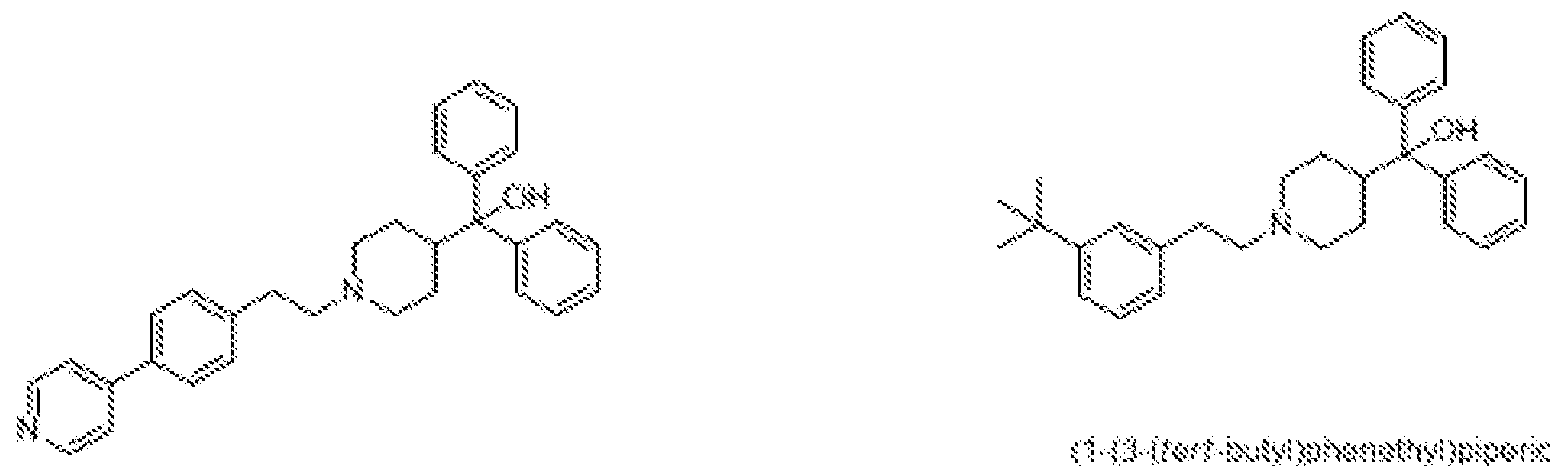
KSC-352- S4


1-(4-c lorop enyl)-4-(4-( ydroxydiphenylmet yl)piperidin-1-yl)butan-1 -ol
KSC-335-015

<1-<2-(fιaf !>ι^ί>i*^^^i^ίdiΛ· -^ si^ph^ylm8th»I^
SC - 38 020
Also provided is a method of treating or preventing an infection in a subject with or at risk of developing an infection, the method comprising administering to the subject a compound selected from the group consisting of:
a compound of Formula III

or a pharmaceutically acceptable salt thereof, wherein R1 and R2are independently selected from ethyl or methyl, n 1 or 2, R3 and R4 are both phenyl or substituted phenyl, wherein the substituent can be halo (for example, fluoro-, chloro-, iodo- or bromo-), hydroxyl, a lower alkyl or a substituted lower alkyl wherein the substituent can be halo, hydroxy, or lower alkoxy, and R5 is hydrogen, a halogen, a lower alkyl from about 1 to 4 carbon atoms or a substituted alkyl wherein the substituent can be halo, hydroxy, or lower alkoxy. Examples of the compounds of Formula III include, tamoxifen and derivatives

thereof, including but not limited to tamoxifen (Formula IV), 4-hydroxy tamoxifen and clomiphene. In the methods provided herein, wherein a one or more compounds of Formula III are used to treat or prevent infection, the infection can be an infection, wherein the infection is not a fungal infection or a parasitic infection.
Further provided herein is a method of treating or preventing an infection in a subject with or at risk of developing an infection, the method comprising administering to the subject a compound selected from the group consisting of:
a compound of Formula V


wherein R is hydrogen or a lower alkyl group having from 1 to 4 carbon atoms which may be substituted with a chlorine atom or a hydroxy group, and Z and m have the above-given meaning, or a pharmaceutically acceptable salt thereof.
As used throughout, the term "lower alkyl group containing from 1 to 4 carbon atoms" means methyl, ethyl, n-propyl, isopropyl, n-butyl, isobutyl, tertiary butyl, and I-
methylpropyl. The term "halogen" means chlorine, bromine, fluorine, and iodine. Included herein are compounds of formula IV that correspond to formula VI:


Further provided herein is a method of treating or preventing an infection in a subject with or at risk of developing an infection, the method comprising administering to the subject a compound selected from the group consisting of:
a compound of Formula X

X represents -0-, -S-, -SO-, or -S02-, n represents an integer from 1-4, and
Aryl represents a phenyl group which can be substituted by lower alkoxy or lower alkylmercapto groups; or a pharmaceutically acceptable salt thereof.
With respect to Formula X, R represents a lower alkyl or a lower alkenyl group, a phenyl group which can be substituted by halogen, methyl or lower alkoxy groups, or a benzyl group which can be nuclear substituted by halogen, methyl or lower alkoxy groups, X represents -0-, -S-, -SO-, or -S02-, n represents an integer from 1-4, and aryl represents a phenyl group which can be substituted by lower alkoxy or lower alkylmercapto groups.
For example, -R-X-CnH2n- can represent the following groups: methoxy-, ethoxy-, propoxy-, isopropoxy-, butoxy-, isobutoxy-, allyloxy-, crotyloxy-. phenoxy-, o,-m- and p- methylphenoxy-, ο,ρ-dimethylphenoxy-, m,p-dimethylphenoxy-, p-chlorophenoxy-, p- bromophenoxy-, -o, m and p-methoxyphenoxy-, p-ethoxyphenoxy-, benzyloxy-, o-, m-, and p-methylbenzyloxy-, p-chlorobenzyloxy-, p-bromobenzyloxy, o, m and p- methoxybenzyloxyand-, p- ethoxybenzyloxy-; methyl, -ethyl, -propyl, -isopropyl, and butyl radicals and -analogous radicals with SO or S02 instead of O as divalent group X.
Besides the phenyl group, aryl can be, for example, the o- or p-methylmercaptophenyl group, the o- or p-ethyl mercaptophenyl group, the o-; m-, or p-methoxyphenyl group or the 0-, m- or p-ethoxyphenyl group.
An example of the compound of formula X is set forth herein as formula XI. The compound of formula X is sulfmapyrazone. Sulfmapyrazone is also known as Anturane.

Also provided herein is a method of treating or preventing an infection in a subject with or at risk of developing an infection, the method comprising administering to the subject a compound selected from the group consisting of: a compound of Formula XII

(acetylaminoethoxy), acyloxy lower alkoxy (pivaloyloxymethoxy), aryloxy, such as phenoxy, arloweralkoxy, such as benzyloxy, substituted aryloxy or substituted arloweralkoxy wherein the substitutent is methyl, halo or methoxy, amino, loweralkylamino, diloweralkylamino, hydroxyamino, arloweralkylamino such as benzylamino;
R1 is hydrogen, alkyl of from 1 to 20 carbon atoms which include branched and cyclic and unsaturated (such as allyl) alkyl groups, substituted loweralkyl wherein the substituent can be halo, hydroxy, lower alkoxy, aryloxy such as phenoxy, amino, diloweralkylamino, acylamino, such as acetamido and benzamido, arylamino, guanidino, imidazolyl, indolyl,
mercapto, loweralkylthio, arylthio such as phenylthio, carboxy or carboxamido, carboloweralkoxy, aryl such as phenyl or naphthyl, substituted aryl such as phenyl wherein the substituent is lower alkyl, lower alkoxy or halo, arloweralkyl, arloweralkenyl,
heteroarlower alkyl or heteroarlower alkenyl such as benzyl, styryl or indolyl ethyl, substituted arloweralkyl, substituted arloweralkenyl, substituted heteroarlower alkyl, or substituted heteroarlower alkenyl, wherein the substituent(s) is halo, dihalo, lower alkyl, hydroxy, lower alkoxy, amino, aminomethyl, acylamino (acetyl amino or benzoylamino) diloweralkylamino, loweralkylamino, carboxyl, haloloweralkyl, cyano or sulfonamido;
arloweralkyl or heteroarloweralkyl substituted on the alkyl portion by amino or acylamino (acetylamino or benzoylamino);
R2 and R7 are the same or different and are hydrogen or lower alkyl;
R3 is hydrogen, lower alkyl, phenyl lower alkyl, aminomethyl phenyl lower alkyl, hydroxy phenyl lower alkyl, hydroxy lower alkyl, acylamino lower alkyl (such as benzoylamino lower alkyl, acetylamino lower alkyl), amino lower alkyl, dimethylamino lower alkyl, halo lower alkyl, guanidino lower alkyl, imidazolyl lower alkyl, indolyllower alkyl, mercapto lower alkyl, lower alkyl thio lower alkyl;
R4 is hydrogen or lower alkyl;
R5 is hydrogen, lower alkyl, phenyl, phenyl lower alkyl, hydroxy phenyl lower alkyl, hydroxy lower alkyl, amino lower alkyl, guanidino lower alkyl, imidazolyl lower alkyl, indolyl lower alkyl, mercapto lower alkyl or lower alkyl thio lower alkyl;
R4 and R5 may be connected together to form an alkylene bridge of from 2 to 4 carbon atoms, an alkylene bridge of from 2 to 3 carbon atoms and one sulfur atom, an alkylene bridge of from 3 to 4 carbon atoms containing a double bond or an alkylene bridge as above substituted with hydroxy, loweralkoxy, loweralkylor diloweralky; or a pharmaceutically acceptable salt thereof.
With respect to Formula XII, R and R6 are the same or different and are hydroxy, lower alkoxy, lower alkenoxy, dilower alkylamino lower alkoxy (dimethylaminoethoxy), acylamino lower alkoxy (acetylaminoethoxy), acyloxy lower alkoxy (pivaloyloxymethoxy), aryloxy, such as phenoxy, arloweralkoxy, such as benzyloxy, substituted aryloxy or
substituted arloweralkoxy wherein the substitutent is methyl, halo or methoxy, amino, loweralkylamino, diloweralkylamino, hydroxy amino, arloweralkylamino such as
benzylamino;
R1 is hydrogen, alkyl of from 1 to 20 carbon atoms which include branched and cyclic and unsaturated (such as allyl) alkyl groups, substituted loweralkyl wherein the substituent can be halo, hydroxy, lower alkoxy, aryloxy such as phenoxy, amino, diloweralkylamino, acylamino, such as acetamido and benzamido, arylamino, guanidino, imidazolyl, indolyl, mercapto, loweralkylthio, arylthio such as phenylthio, carboxy or carboxamido,
carboloweralkoxy, aryl such as phenyl or naphthyl, substituted aryl such as phenyl wherein the substituent is lower alkyl, lower alkoxy or halo, arloweralkyl, arloweralkenyl, heteroarlower alkyl or heteroarlower alkenyl such as benzyl, styryl or indolyl ethyl, substituted arloweralkyl, substituted arloweralkenyl, substituted heteroarlower alkyl, or substituted heteroarlower alkenyl, wherein the substituent(s) is halo, dihalo, lower alkyl, hydroxy, lower alkoxy, amino, aminomethyl, acylamino (acetyl amino or benzoylamino) diloweralkylamino, loweralkylamino, carboxyl, haloloweralkyl, cyano or sulfonamido;
arloweralkyl or heteroarloweralkyl substituted on the alkyl portion by amino or acylamino (acetylamino or benzoylamino);
R2 and R7 are the same or different and are hydrogen or lower alkyl;
R3 is hydrogen, lower alkyl, phenyl lower alkyl, aminomethyl phenyl lower alkyl, hydroxy phenyl lower alkyl, hydroxy lower alkyl, acylamino lower alkyl (such as
benzoylamino lower alkyl, acetylamino lower alkyl), amino lower alkyl, dimethylamino lower alkyl, halo lower alkyl, guanidino lower alkyl, imidazolyl lower alkyl, indolyllower alkyl, mercapto lower alkyl, lower alkyl thio lower alkyl;
R4 is hydrogen or lower alkyl; R5 is hydrogen, lower alkyl, phenyl, phenyl lower alkyl, hydroxy phenyl lower alkyl, hydroxy lower alkyl, amino lower alkyl, guanidino lower alkyl, imidazolyl lower alkyl, indolyl lower alkyl, mercapto lower alkyl or lower alkyl thio lower alkyl;
R4 and R5 may be connected together to form an alkylene bridge of from 2 to 4 carbon atoms, an alkylene bridge of from 2 to 3 carbon atoms and one sulfur atom, an alkylene
bridge of from 3 to 4 carbon atoms containing a double bond or an alkylene bridge as above substituted with hydroxy, loweralkoxy, loweralkylor diloweralky.
The loweralkyl or lower alkenyl groups except where noted otherwise represented by any of the variables include straight and branched chain hydrocarbon radicals from one to six carbon atoms, for example, methyl, ethyl, propyl, isopropyl, butyl, isobutyl, t-butyl, pentyl, isopentyl, hexyl or vinyl, allyl, butenyl and the like. The aralkyl groups represented by any of the above variables have from one to four carbon atoms in the alkyl portion thereof and include for example, benzyl, p-methoxy benzyl and the like. Halo means chloro, bromo, iodo or fluoro. Aryl where it appears in any of the radicals except where noted represents phenyl or naphthyl. Heteroaryl groups where they appear include for example pyridyl, thienyl, furyl, indolyl, benzthienyl, imidazoyl and thiazolyl. The R1, R3 and R5 substituted lower alkyl moieties are exemplified by groups such as

R4 and R5 when joined through the carbon and nitrogen atoms to which they are attached form a 4 to 6 membered ring which may contain one sulfur atom or a double bond. Preferred rings have the formulae:

Compounds of Formula XI include compounds wherein:
R and R6 can each independently be hydroxy, lower alkoxy, lower alkenoxy, arloweralkyloxy, amino, dilower alkylamino lower alkoxy, acylamino lower alkoxy, acyloxy lower alkoxy wherein the substituent is methyl, halo or methoxy;
R2 and R7 are hydrogen; R3 is lower alkyl, amino lower alkyl, imidazoyllower alkyl, halo lower alkyl;
R4 and R5 are joined to form the preferred rings as defined above where Y is C¾, S,

R1 is as defined previously.
Other compounds include compounds of Formula XI wherein further R1 is alkyl having from 1 to 8 carbon atoms, substituted lower alkyl wherein the alkyl group has 1-5 carbon atoms and the substituent is amino, arylthio, aryloxy or arylamino, aralkyl or heteroaralkyl wherein the alkyl portion has 1 to 3 carbon atoms such as phenethyl or indolylethyl or substituted arloweralkyl 65 (phenyl lower alkyl or naphthyl lower alkyl) and substituted heteroarloweralkyl wherein the alkyl groups have 1-3 carbons and wherein the substituent(s) is halo, dihalo, amino, aminoalkyl, hydroxy, lower alkoxy or lower alkyl.
Other compounds of Formula XI include compounds wherein Rand R6 are hydroxy, lower alkoxy, aralkyloxy;
R2 and R7 are hydrogen;
R3 is methyl or amino lower alkyl; R4 and R5 are joined through the carbon and nitrogen atom to form proline, 4- thiaproline or 4-methoxy proline;
R1 is alkyl having from 1 to 8 carbon atoms, substituted lower alkyl wherein the alkyl group has 1-5 carbon atoms and the substituent is amino, arylthio or aryloxy, aralkyl or heteroaralkyl wherein the alkyl portion has 1 to 3 carbon atoms such as phenethyl or indolylethyl or substituted aralkyl (phenyl lower alkyl or naphthyl lower alkyl) and substituted heteroaralkyl wherein the alkyl groups have 1-3 carbons and wherein the substituent(s) is halo, dihalo, amino, aminoalkyl, hydroxy, lower alkoxy or lower alkyl.
Further examples of compounds of Formula XII include, but are not limited to:
N-(l(S)-carboxy-3-phenylpropyl)-L-alanyl-L-proline;
N-(l(S)-ethoxycarbonyl-3-phenylpropyl)-L-alanyl-L-proline and its maleate salt;
N-(l(S)-ethoxycarbonyl-4-methylpentyl)-L-alanyl-L-proline;
N-(l-carboxy-5-aminopentyl)-L-alanyl-L-proline;
N-. alpha. -(l(S)-carboxy-3-phenylpropyl)-L-lysyl-L-proline (lisinopril);
N-.alpha.(l(S)-ethoxycarbonyl-3-phenylpropyl)-L-lysyl-L-proline;
N-. alpha. [ 1 (S)-carboxy-3-(3-indolyl)propyl]-L-lysyl-L-proline;
N-. alpha. -[l(S)-carboxy-3-(4-chlorophenyl)-propyl]-L-lysyl-L-proline;
N-. alpha. -[l(S)-carboxy-2-phenylthioethyl]-L-lysyl-L-proline;
N- .alpha. - [ 1 (S)-carboxy-3 -(4-chlorophenyl)-propyl] -L-lysyl-L-4.alpha.-metho xyproline; N-. alpha. -[l(S)-carboxy-5-aminopentyl]-L-lysyl-L-proline;
Ethyl N-(l (S)-ethoxycarbonyl-3-phenylpropyl)-L-alanyl-L-prolinate hydrochloride;
and the like.
Also provided herein is a method of treating or preventing an infection in a subject with or at risk of developing an infection, the method comprising administering to the subject a compound selected from the group consisting of: a compound of Formula XIII

Also provided herein is a method of treating or preventing an infection in a subject with or at risk of developing an infection, the method comprising administering to the subject a compound selected from the group consisting of:
a compound of Formula XIV

(XIV) wherein PY is 4- or 3- or 2-pyridinyl or 4- or 3 -or 2-pyridinyl having one or two lower-alkyl substituents, R is hydrogen, lower-alkyl or lower-hydroxyalkyl, and Q is nitro, carbamyl, halo, amino, lower-alkylamino, di(lower-alkyl)amino, or NHAc where Ac is lower-alkanoyl or lower-carbalkoxy; or a pharmaceutically acceptable salt thereof.
With respect to Formula XIII, PY is 4- or 3- or 2-pyridinyl or 4- or 3-or 2-pyridinyl having one or two lower-alkyl substituents, R is hydrogen, lower-alkyl or lower- hydroxyalkyl, and Q is nitro, carbamyl, halo, amino, lower-alkylamino, di(lower- alkyl)amino, or NHAc where Ac is lower-alkanoyl or lower-carbalkoxy, or pharmaceutically- acceptable acid-addition salt thereof. Compounds of formula XIII where Q is amino, lower- alkylamino, di-(lower-alkyl) amino, or NHAc are provided herein. The compounds of formula XIII where Q is nitro or carbamyl are useful as intermediates for preparing the said compounds where Q is amino and those where Q is halo are useful as intermediates in the preparation of the compounds where Q is lower-alkylamino and di-(lower-alkyl)amino.
Other compounds of Formula XIII include compounds where Q is amino, R is hydrogen and PY is 4-pyridinyl or 3-pyridinyl, for example, 3- amino-5-(4-pyridinyl)- 2(lH)-pyridinone (amrinone).
Further provided herein is a method of treating or preventing an infection in a subject with or at risk of developing an infection, the method comprising administering to the subject a compound selected from the group consisting of: a compound of Formula XV


a compound of Formula XVII

(XVII) a compound of Formula XVIII


(XIX) a compound of Formula (XX)

(XX) or pharmaceutically acceptable salt thereof. Formula XV is fluspirilen, Formula XVI is hexestrol, Formula XVII is dienestrol,
Formula XVIII is napelline, Formula XIX is iopanoic acid and Formula XX is suloctodil.
Further provided is a method of treating or preventing an infection in a subject with or at risk of developing an infection, the method comprising administering to the subject a compound selected from the group consisting of: Didanosine, Norcyclobenzaprine,
Niridazole, Ifosfamide, Cefalonium, Tamoxifen citrate, Butoconazole, Suloctidil,
Clomiphene, Sulconazole, Miconazole, Mefloquine, Sulfinpyrazone, Terfenadine, Lisinopril, Econzaole, Clofazimine, Equilin, Felodipine, Dacarbazine, Furazolidone, Perhexiline maleate, Oxethazaine, Pimozide, Trifluoperazine, Ellipticine, Fluspirilen, Hexestrol,
Dienestrol, Zidovudine, Metoprolol, Napelline, Methimazole, Amrinone, Iopanoic acid, R- Propanolol, Rimexolone and Pyrvinium pamoate, or a pharmaceutically acceptable salt thereof.
Further provided is a method of treating or preventing an infection in a subject with or at risk of developing an infection, the method comprising administering to the subject a compound selected from the group consisting of: Didanosine, Norcyclobenzaprine,
Niridazole, Ifosfamide, Cefalonium, Tamoxifen citrate, Butoconazole, Suloctidil,
Clomiphene, Sulconazole, Miconazole, Mefloquine, Sulfinpyrazone, Terfenadine, Lisinopril, Econzaole, Clofazimine, Equilin, Felodipine, Dacarbazine, Furazolidone, Perhexiline maleate, Oxethazaine, Pimozide, Trifluoperazine, Ellipticine, Fluspirilen, Hexestrol,
Dienestrol, Zidovudine, Metoprolol, Napelline, Methimazole, Amrinone, Iopanoic acid, R- Propanolol, Rimexolone and Pyrvinium pamoate, or a pharmaceutically acceptable salt thereof, wherein the infection is a bacterial infection selected from the group consisting of Enter obacterium faecium, Staphylococcus aureus, Klebsiella pneumonia, Acinebacter baumannii, Pseudomonas aeruginosa and Enterobacter sp.
Further provided is a method of treating or preventing a bacterial infection in a subject with or at risk of developing a bacterial infection in a subject comprising administering to the subject a compound that inhibits bacterial DNA gyrase or topoisomerase IV. The compound can be, for example, a compound of Formula I. As set forth above, a compound of Formula I can be terfenadine or a derivative thereof. In the methods set forth herein an inhibitor of bacterial DNA gyrase or topoisomerase IV can be used to treat or prevent Staphylococcus aureus infection.
It is contemplated that one or more, for example, two, three, four, five, etc., of the compounds or derivatives of the compounds set forth herein can be administered to treat or prevent infection. Thus, combinations of the compounds set forth herein are also provided. Pharmaceutically acceptable salts of all of the compounds set forth herein are also provided. The term pharmaceutically acceptable salt as used herein refers to those salts of any of the compounds described herein or derivatives thereof that are, within the scope of sound medical judgment, suitable for use in contact with the tissues of subjects without undue toxicity, irritation, allergic response, and the like, commensurate with a reasonable benefit/risk ratio, and effective for their intended use, as well as the zwitterionic forms, where possible, of the compounds described herein. The term salts refers to the relatively non-toxic, inorganic and organic acid addition salts of the compounds described herein. These salts can be prepared in situ during the isolation and purification of the compounds or by separately reacting the purified compound in its free base form with a suitable organic or inorganic acid and isolating the salt thus formed. Representative salts include the hydrobromide, hydrochloride, sulfate, bisulfate, nitrate, acetate, oxalate, valerate, oleate, palmitate, stearate, laurate, borate, benzoate, lactate, phosphate, tosylate, citrate, maleate, fumarate, succinate, tartrate, naphthylate mesylate, glucoheptonate, lactobionate, methane sulphonate, and laurylsulphonate salts, and the like. These may include cations based on the alkali and alkaline earth metals, such as sodium, lithium, potassium, calcium, magnesium, and the like, as well as non-toxic ammonium, quaternary ammonium, and amine cations including, but not
limited to ammonium, tetramethylammonium, tetraethylammonium, methylamine, dimethylamine, trimethylamine, triethylamine, ethylamine, and the like.
The infection can be a viral infection, bacterial infection, fungal infection or a parasitic infection, to name a few. All strains and types of pathogenic infection are contemplated herein. The infection can also be a respiratory infection, a gastrointestinal infection or a skin infection, to name a few.
In any of the methods of treating or preventing infection set forth herein, the infection can be any infection, wherein the infection is not a bacterial infection. In any of the methods of treating or preventing infection set forth herein, the infection can be any infection, wherein the infection is not a viral infection. In any of the methods of treating or preventing infection set forth herein, the infection can be any infection, wherein the infection is not a parasitic infection. In any of the methods of treating or preventing infection set forth herein, the infection can be any infection, wherein the infection is not a fungal infection. In any of the methods of treating or preventing infection set forth herein, the infection can be any infection, wherein the infection is not a protozoal infection.
Examples of bacterial infections include, but are not limited to infections caused by the Gram negative or Gram positive bacteria. For example, the infection can be caused by Listeria (sp.), Franscicella tularensis, Enterobacter sp. Enterococcus faecium, other
Enterococcus species, Klebsiella pneumonia, Acinetobacter baumannii, Mycobacterium tuberculosis, Rickettsia (all types), Ehrlichia or Chylamida. Further examples of bacteria include M. tuberculosis, Legionella pneumophila, other Legionella species, Salmonella typhi, other Salmonella species, Shigella species, Yersinia pestis, Pasteurella haemolytica,
Pasteurella multocida, other Pasteurella species, Actinobacillus pleuropneumoniae, Listeria monocytogenes, Listeria ivanovii, Brucella abortus, other Brucella species, Chlamydia pneumoniae, Chlamydia trachomatis, Chlamydia psittaci, Coxiella burnetti, other Rickettsial species, Ehrlichia species, Staphylococcus aureus, Staphylococcus epidermidis,
Streptococcus pyogenes, Streptococcus agalactiae, Bacillus anthracis, Escherichia coli, Vibrio cholerae, Kingella kingae, Campylobacter species, Neiserria meningitidis, Neiserria gonorrhea, Pseudomonas aeruginosa, other Pseudomonas species, Haemophilus influenzae, Haemophilus ducreyi, other Hemophilus species, Clostridium tetani, other Clostridium species, Yersinia enterolitica, and other Yersinia species. In the methods provided herein, one or more compounds set forth herein can treat or prevent one or more bacterial infections selected from the group consisting of Enter obacterium faecium, Staphylococcus aureus, Klebsiella pneumonia, Acinebacter baumannii, Pseudomonas aeruginosa and Enterobacter
sp. In the methods set forth herein, the bacteria can be a small colony variant strain, for example a small colony strain of Staphylococcus aureus. In any of the methods set forth herein, the infection can be a bacterial infection, wherein the bacterial infection is not tuberculosis, for example, Mycobacterium tuberculosis. For example, and not to be limiting any of the compounds set forth herein, including compounds of Formula I and II can be used to treat or prevent infection in a subject with or at risk of developing an infection, wherein the infection is not tuberculosis.
Examples of parasitic infections include, but are not limited to infections caused by the following parasites: Cryptosporidium, Plasmodium (all species), American trypanosomes ( T. cruzi), African trypanosomes, Acanthamoeba, Entaoeba histolytica, Angiostrongylus, Anisakis, Ascaris, Babesia, Balantidium, Baylisascaris, lice, ticks, mites, fleas, Capillaria, Clonorchis, Chilomastix mesnili, Cyclspora, Diphyllobothrium, Dipylidium caninum, Fasciola, Giardia, Gnathostoma, Hetetophyes, Hymenolepsis, Isospora, Loa loa,
Microsporidia, Naegleria, Toxocara, Onchocerca, Opisthorchis, Paragonimus,
Baylisascaris, Strongyloides, Taenia, Trichomonas and Trichuris. In any of the methods set forth herein, the infection can be a parasitic infection, wherein the parasitic infection is not malaria, for example, malaria caused by any species of Plasmodium including Plasmodium falciparum. For example, and not to be limiting any of the compounds set forth herein, including compounds of Formula I and II can be used to treat or prevent infection in a subject with or at risk of developing an infection, wherein the infection is not malaria.
Furthermore, examples of protozoan and fungal species contemplated within the present methods include, but are not limited to, Plasmodium falciparum, other Plasmodium species, Toxoplasma gondii, Pneumocystis carinii, Trypanosoma cruzi, other trypanosomal species, Leishmania donovani, other Leishmania species, Theileria annulata, other Theileria species, Eimeria tenella, other Eimeria species, Histoplasma capsulatum, Cryptococcus neoformans, Blastomyces dermatitidis, Coccidioides immitis, Paracoccidioides brasiliensis, Penicillium marneffei, and Candida species. In any of the methods set forth herein, the infection can be a protozoan infection, wherein the protozoan infection is not leishmaniasis, for example, leishmaniasis caused by a Leishmania species, for example, Leishmania major. For example, and not to be limiting any of the compounds set forth herein, including compounds of Formula I and III can be used to treat or prevent infection in a subject with or at risk of developing an infection, wherein the infection is not leishmaniasis.
Examples of viral infections include but are not limited to, infections caused by RNA viruses (including negative stranded RNA viruses, positive stranded RNA viruses, double stranded RNA viruses and retroviruses) and DNA viruses. All strains, types, subtypes of DNA and RNA viruses are contemplated herein.
Examples of RNA viruses include, but are not limited to picornaviruses, which include aphthoviruses (for example, foot and mouth disease virus O, A, C, Asia 1, SAT1, SAT2 and SAT3), cardioviruses (for example, encephalomycarditis virus and Theiller's murine encephalomyelitis virus), enteroviruses (for example polioviruses 1, 2 and 3, human enteroviruses A-D, bovine enteroviruses 1 and 2, human coxsackieviruses A1-A22 and A24, human coxsackieviruses B1-B5, human echoviruses 1-7, 9, 11-12, 24, 27, 29-33, human enteroviruses 68-71, porcine enteroviruses 8-10 and simian enteroviruses 1-18), erboviruses (for example, equine rhinitis virus), hepatovirus (for example human hepatitis A virus and simian hepatitis A virus), kobuviruses (for example, bovine kobuvirus and Aichi virus), parechoviruses (for example, human parechovirus 1 and human parechovirus 2), rhinovirus (for example, human rhinovirus 1-100 and bovine rhinoviruses 1-3) and teschoviruses (for example, porcine tescho virus).
Additional examples of RNA viruses include calici viruses, which include noroviruses (for example, Norwalk virus), sapoviruses (for example, Sapporo virus), lagoviruses (for example, rabbit hemorrhagic disease virus and European brown hare syndrome) and vesiviruses (for example vesicular exanthema of swine virus and feline calicivirus).
Other RNA viruses include astroviruses, which include mamastorviruses and avastroviruses. Togaviruses are also RNA viruses. Togaviruses include alphaviruses (for example, Chikungunya virus, Sindbis virus, Semliki Forest virus, Western equine
encephalitis, Getah virus, Everglades virus, Venezuelan equine encephalitis virus and Aura virus) and rubella viruses. Additional examples of RNA viruses include the the flaviviruses (for example, tick-borne encephalitis virus, Tyuleniy virus, Aroa virus, Dengue virus (types 1 to 4), Kedougou virus, Japanese encephalitis virus (JEV), West Nile virus (WNV), Kokobera virus, Ntaya virus, Spondweni virus, Yellow fever virus, Entebbe bat virus, Modoc virus, Rio Bravo virus, Cell fusing agent virus, pestivirus, GB virus A, GBV-A like viruses, GB virus C, Hepatitis G virus, hepacivirus (hepatitis C virus (HCV)) all six genotypes), bovine viral diarrhea virus (BVDV) types 1 and 2, and GB virus B).
Other examples of RNA viruses are the coronaviruses, which include, human respiratory coronaviruses such as SARS-CoV, HCoV-229E, HCoV-NL63 and HCoV-OC43. Coronaviruses also include bat SARS-like CoV, turkey coronavirus, chicken coronavirus, feline coronavirus and canine coronavirus. Additional RNA viruses include arteriviruses (for example, equine arterivirus, porcine reproductive and respiratory syndrome virus, lactate dehyrogenase elevating virus of mice and simian hemorraghic fever virus). Other RNA viruses include the rhabdoviruses, which include lyssaviruses (for example, rabies, Lagos bat virus, Mokola virus, Duvenhage virus and European bat lyssavirus), vesiculoviruses (for example, VSV-Indiana, VSV-New Jersey, VSV-Alagoas, Piry virus, Cocal virus, Maraba virus, Isfahan virus and Chandipura virus), and ephemeroviruses (for example, bovine ephemeral fever virus, Adelaide River virus and Berrimah virus). Additional examples of RNA viruses include the filoviruses. These include the Marburg and Ebola viruses (for example, EBOV-Z, EBOV-S, EBOV-IC and EBOV-R.
The paramyxoviruses are also RNA viruses. Examples of these viruses are the rubulaviruses (for example, mumps, parainfluenza virus 5, human parainfluenza virus type 2, Mapuera virus and porcine rubulavirus), avulaviruses (for example, Newcastle disease virus), respoviruses (for example, Sendai virus, human parainfluenza virus type 1 and type 3, bovine parainfluenza virus type 3), henipaviruses (for example, Hendra virus and Nipah virus), morbilloviruses (for example, measles, Cetacean morvilliirus, Canine distemper virus, Peste- des-petits-ruminants virus, Phocine distemper virus and Rinderpest virus), pneumoviruses (for example, human respiratory syncytial virus A2, Bl and S2, bovine respiratory syncytial virus and pneumonia virus of mice), metapneumoviruses (for example, human
metapneumovirus and avian metapneumo virus). Additional paramyxoviruses include Fer-de- Lance virus, Tupaia paramyxovirus, Menangle virus, Tioman virus, Beilong virus, J virus, Mossman virus, Salem virus and Nariva virus. Additional RNA viruses include the orthomyxoviruses.
These viruses include influenza viruses and strains (e.g., influenza A (H1N1
(including but not limited to A/WS/33 and A/California/04/2009 strains) H2N2, H3N2, H5N1 , H7N7, H1N2, H9N2, H7N2, H7N3 and H10N7), B and C viruses, as well as avian influenza (for example, strains H5N1 , H5N2, H7N1 , H7N7 and H9N2) thogotoviruses and isaviruses. Orthobunyaviruses (for example, Akabane virus, California encephalitis, Cache Valley virus, Snowshoe hare virus,) nairoviruses (for example, Nairobi sheep virus, Crimean- Congo hemorrhagic fever virus Group and Hughes virus), phleboviruses (for example,
Candiru, Punta Toro, Rift Valley Fever, Sandfly Fever, Naples, Toscana, Sicilian and Chagres), and hantaviruses (for example, Hantaan, Dobrava, Seoul, Puumala, Sin Nombre, Bayou, Black Creek Canal, Andes and Thottapalayam) are also RNA viruses. Arenaviruses such as lymphocytic choriomeningitis virus, Lujo virus, Lassa fever virus, Argentine hemorrhagic fever virus, Bolivian hemorrhagic fever virus, Venezuelan hemorrhagic fever virus, SABV and WWAV are also RNA viruses. Borna disease virus is also an RNA virus. Hepatitis D (Delta) virus and hepatitis E are also RNA viruses. Any of the compounds set forth herein, including, but not limited to the compounds of Formula I and II can be used to treat or prevent a viral infection, wherein the viral infection is not a Lassa fever virus infection.
Additional RNA viruses include reoviruses, rotaviruses, birnaviruses, chryso viruses, cystoviruses, hypoviruses partitiviruses and totoviruses. Orbiviruses such as African horse sickness virus, Blue tongue virus, Changuinola virus, Chenuda virus, Chobar Gorge
Corriparta virus, epizootic hemorraghic disease virus, equine encephalosis virus, Eubenangee virus, Ieri virus, Great Island virus, Lebombo virus, Orungo virus, Palyam virus, Peruvian Horse Sickness virus, St. Croix River virus, Umatilla virus, Wad Medani virus, Wallal virus, Warrego virus and Wongorr virus are also RNA viruses.
Retroviruses include alpharetroviruses (for example, Rous sarcoma virus and avian leukemia virus), betaretroviruses (for example, mouse mammary tumor virus, Mason-Pfizer monkey virus and Jaagsiekte sheep retrovirus), gammaretroviruses (for example, murine leukemia virus and feline leukemia virus, deltraretroviruses (for example, human T cell leukemia viruses (HTLV-1, HTLV-2), bovine leukemia virus, STLV-1 and STLV-2), epsilonretriviruses (for example, Walleye dermal sarcoma virus and Walleye epidermal hyperplasia virus 1), reticuloendotheliosis virus (for example, chicken syncytial virus, lentiviruses (for example, human immunodeficiency virus (HIV) type 1 , human
immunodeficiency virus (HIV) type 2, human immunodeficiency virus (HIV) type 3, simian immunodeficiency virus, equine infectious anemia virus, feline immunodeficiency virus, caprine arthritis encephalitis virus and Visna maedi virus) and spumaviruses (for example, human foamy virus and feline syncytia-forming virus). Examples of DNA viruses include polyomaviruses (for example, simian virus 40, simian agent 12, BK virus, JC virus, Merkel Cell polyoma virus, bovine polyoma virus and lymphotrophic papovavirus), papillomaviruses (for example, human papillomavirus, bovine papillomavirus, adenoviruses (for example, adenoviruses A-F, canine adenovirus type I,
canined adeovirus type 2), circoviruses (for example, porcine circovirus and beak and feather disease virus (BFDV)), parvoviruses (for example, canine parvovirus), erythroviruses (for example, adeno-associated virus types 1-8), betaparvoviruses, amdoviruses, densoviruses, iteraviruses, brevidenso viruses, pefudensoviruses, herpes viruses 1,2, 3, 4, 5, 6, 7 and 8 (for example, herpes simplex virus 1, herpes simplex virus 2, varicella-zoster virus, Epstein-Barr virus, cytomegalovirus, Kaposi's sarcoma associated herpes virus, human herpes virus-6 variant A, human herpes virus-6 variant B and cercophithecine herpes virus 1 (B virus)), poxviruses (for example, smallpox (variola), cowpox, monkeypox, vaccinia, Uasin Gishu, camelpox, psuedocowpox, pigeonpox, horsepox, fowlpox, turkeypox and swinepox), and hepadnaviruses (for example, hepatitis B and hepatitis B-like viruses).
One or more of the compounds described herein can be contacted with a cell or populations of cells in vitro, ex vivo or in vivo. For example, the cell or population of cells can be in a subject, or in an in vitro culture. In another example, one or more compounds set forth herein can be used to inhibit bacterial growth, fungal growth, parasitic growth, protozoal growth or viral replication, in vitro, ex vivo or in vivo. Any of the compounds set forth herein can be used alone or in combination with other therapeutic agents such as antiviral compounds, antibacterial agents (for example, antibiotics), antifungal agents, antiparasitic agents, anti-inflammatory agents, anti-cancer agents, etc.
In the methods described herein, the level of infection, for example, in a cell, or a population of cells, or a cell culture, can be assessed by measuring an antigen or other product associated with a particular infection. The level of infection can also be measured in a tissue sample or a culture of cells from a subject, either before or after administration of one or more compounds disclosed herein. For example, the level of viral infection can be measured by real-time quantitative reverse transcription-polymerase chain reaction (RT-PCR) assay (See for example, Payungporn et al. "Single step multiplex real-time RT-PCR for H5N1 influenza A virus detection." J Virol Methods . Sep 22, 2005; Landolt et la. "Use of real-time reverse transcriptase polymerase chain reaction assay and cell culture methods for detection of swine influenza A viruses" Am J Vet Res. 2005 Jan;66(l): 119-24).
Methods of measuring bacterial growth and inhibition of bacterial growth are provided in the Examples. Further, one of skill in the art would know how to determine the concentration of a compound that inhibits bacterial infection (see, for example, Andrews, et al. "Determination of minimum inhibitory concentrations". Journal of Antimicrobial
Chemotherapy 48 (suppl 1): 5-16 (2001)). Other methods for determining antifungal and
antibacterial activity are known in the art. See, for example, Hayhoe et al. "Screening for Antibacterial, Antifungal and Anti quorum Sensing Activity," Methods Mol. Biol. 1055: 219- 225 (2013)); Doddanna et al. "Antimicrobial activity of plant extracts on Candida albicans: An in vitro study Indian J. Dent. Res. 24(4): 401-405 (2013), both of which are incorporated by this reference in their entireties.
As used throughout, by subject is meant an individual. Preferably, the subject is a mammal such as a primate, and, more preferably, a human. Non-human primates are subjects as well. The term subject includes domesticated animals, such as cats, dogs, etc., livestock (for example, cattle, horses, pigs, sheep, goats, etc.) and laboratory animals (for example, ferret, chinchilla, mouse, rabbit, rat, gerbil, guinea pig, etc.). Thus, veterinary uses and medical formulations are contemplated herein.
As used herein, a biological sample is a sample derived from a subject such as a mammal or human and includes, but is not limited to, any biological fluid, including a bodily fluid. Examples of bodily fluids include, but are not limited to, whole blood, plasma, serum, urine, saliva, ocular fluid, ascites, a stool sample, spinal fluid, tissue infiltrate, pleural effusions, lung lavage fluid, and the like. The biological fluid includes a cell culture medium or supernatant of cultured cells from the subject.
The methods and compounds as described herein are useful for therapeutic treatment. Use of one or more of the compounds set forth herein for the treatment or prevention of infection is also contemplated herein. One or more of the compounds set forth herein for use in a method of treating or preventing infection is also provided herein. Therapeutic treatment involves administering to a subject a therapeutically effective amount of one or more of the agents described herein, optionally, after diagnosis of an infection or risk of infection in the subject. Therefore, all of the methods disclosed herein, can optionally comprise the step of diagnosing a subject with an infection or diagnosing a subject in need of prophylaxis or prevention of infection.
As used herein, the terms treatment, treat, or treating refers to a method of reducing the effects of a disease or condition or symptom of the disease or condition. Thus, in the disclosed methods, treatment can refer to a 10%, 20%, 30%, 40%, 50%, 60%, 70%, 80%, 90%), or 100%) reduction in the severity of an established disease or condition or symptom of the disease or condition. For example, a method for treating a disease is considered to be a treatment if there is a 10% reduction in one or more symptoms of the disease in a subject as
compared to a control. A control subject can be a subject that has not received a compound set forth herein. Thus, the reduction can be a 10%, 20%, 30%, 40%, 50%, 60%, 70%, 80%, 90%), 100%), or any percent reduction in between 10%> and 100% as compared to native or control levels. It is understood that treatment does not necessarily refer to a cure or complete ablation of the disease, condition, or symptoms of the disease or condition.
As utilized herein, by preventing infection is meant a method of precluding, delaying, averting, obviating, forestalling, stopping, or hindering the onset, incidence, severity, or recurrence of infection. For example, the disclosed method is considered to be a prevention if there is about a 10%> reduction in onset, incidence, severity, or recurrence of infection, or symptoms of infection (e.g., inflammation, fever, lesions, weight loss, etc.) in a subject exposed to an infection when compared to control subjects exposed to an infection that did not receive a composition for decreasing infection. Thus, the reduction in onset, incidence, severity, or recurrence of infection can be about a 10, 20, 30, 40, 50, 60, 70, 80, 90, 100%, or any amount of reduction in between as compared to a control subject. For example, and not to be limiting, if about 10%> of the subjects in a population do not become infected as compared to subjects that did not receive preventive treatment, this is considered prevention.
The compounds set forth herein can also be used to decrease infection in a cell. A decrease or inhibition of infection can occur in a cell, in vitro, ex vivo or in vivo. As utilized throughout, the term "infection" encompasses all phases of pathogenic life cycles including, but not limited to, attachment to cellular receptors, entry, internalization, disassembly, replication, genomic integration of pathogenic sequences, transcription of pathogen R A, translation of pathogen RNA, transcription of host cell mRNA, translation of host cell mRNA, proteolytic cleavage of pathogenic proteins or cellular proteins, assembly of particles, endocytosis, cell lysis, budding, and egress of the pathogen from the cells. The compounds described herein can be provided in a pharmaceutical composition.
Depending on the intended mode of administration, the pharmaceutical composition can be in the form of solid, semi-solid or liquid dosage forms, such as, for example, tablets, suppositories, pills, capsules, powders, liquids, or suspensions, preferably in unit dosage form suitable for single administration of a precise dosage. The compositions will include a therapeutically effective amount of the compound described herein or derivatives thereof in combination with a pharmaceutically acceptable carrier and, in addition, may include other medicinal agents, pharmaceutical agents, carriers, or diluents. By pharmaceutically
acceptable is meant a material that is not biologically or otherwise undesirable, which can be administered to an individual along with the selected agent without causing unacceptable biological effects or interacting in a deleterious manner with the other components of the pharmaceutical composition in which it is contained. As used herein, the term carrier encompasses any excipient, diluent, filler, salt, buffer, stabilizer, solubilizer, lipid, stabilizer, or other material well known in the art for use in pharmaceutical formulations. The choice of a carrier for use in a composition will depend upon the intended route of administration for the composition. The preparation of
pharmaceutically acceptable carriers and formulations containing these materials is described in, e.g., Remington's Pharmaceutical Sciences, 21st Edition, ed. University of the Sciences in Philadelphia, Lippincott, Williams & Wilkins, Philadelphia Pa., 2005. Examples of physiologically acceptable carriers include buffers such as phosphate buffers, citrate buffer, and buffers with other organic acids; antioxidants including ascorbic acid; low molecular weight (less than about 10 residues) polypeptides; proteins, such as serum albumin, gelatin, or immunoglobulins; hydrophilic polymers such as polyvinylpyrrolidone; amino acids such as glycine, glutamine, asparagine, arginine or lysine; monosaccharides, disaccharides, and other carbohydrates including glucose, mannose, or dextrins; chelating agents such as EDTA; sugar alcohols such as mannitol or sorbitol; salt-forming counterions such as sodium; and/or nonionic surfactants such as TWEEN® (ICI, Inc.; Bridgewater, New Jersey), polyethylene glycol (PEG), and PLURONICS™ (BASF; Florham Park, NJ).
Compositions containing the compound(s) described herein suitable for parenteral injection may comprise physiologically acceptable sterile aqueous or nonaqueous solutions, dispersions, suspensions or emulsions, and sterile powders for reconstitution into sterile injectable solutions or dispersions. Examples of suitable aqueous and nonaqueous carriers, diluents, solvents or vehicles include water, ethanol, polyols (propyleneglycol,
polyethyleneglycol, glycerol, and the like), suitable mixtures thereof, vegetable oils (such as olive oil) and injectable organic esters such as ethyl oleate. Proper fluidity can be maintained, for example, by the use of a coating such as lecithin, by the maintenance of the required particle size in the case of dispersions and by the use of surfactants.
These compositions may also contain adjuvants such as preserving, wetting, emulsifying, and dispensing agents. Prevention of the action of microorganisms can be promoted by various antibacterial and antifungal agents, for example, parabens,
chlorobutanol, phenol, sorbic acid, and the like. Isotonic agents, for example, sugars, sodium
chloride, and the like may also be included. Prolonged absorption of the injectable pharmaceutical form can be brought about by the use of agents delaying absorption, for example, aluminum monostearate and gelatin.
Solid dosage forms for oral administration of the compounds described herein or derivatives thereof include capsules, tablets, pills, powders, and granules. In such solid dosage forms, the compounds described herein or derivatives thereof is admixed with at least one inert customary excipient (or carrier) such as sodium citrate or dicalcium phosphate or (a) fillers or extenders, as for example, starches, lactose, sucrose, glucose, mannitol, and silicic acid, (b) binders, as for example, carboxymethylcellulose, alignates, gelatin,
polyvinylpyrrolidone, sucrose, and acacia, (c) humectants, as for example, glycerol, (d) disintegrating agents, as for example, agar-agar, calcium carbonate, potato or tapioca starch, alginic acid, certain complex silicates, and sodium carbonate, (e) solution retarders, as for example, paraffin, (f) absorption accelerators, as for example, quaternary ammonium compounds, (g) wetting agents, as for example, cetyl alcohol, and glycerol monostearate, (h) adsorbents, as for example, kaolin and bentonite, and (i) lubricants, as for example, talc, calcium stearate, magnesium stearate, solid polyethylene glycols, sodium lauryl sulfate, or mixtures thereof. In the case of capsules, tablets, and pills, the dosage forms may also comprise buffering agents.
Solid compositions of a similar type may also be employed as fillers in soft and hard- filled gelatin capsules using such excipients as lactose or milk sugar as well as high molecular weight polyethyleneglycols, and the like.
Solid dosage forms such as tablets, dragees, capsules, pills, and granules can be prepared with coatings and shells, such as enteric coatings and others known in the art. They may contain opacifying agents and can also be of such composition that they release the active compound or compounds in a certain part of the intestinal tract in a delayed manner. Examples of embedding compositions that can be used are polymeric substances and waxes. The active compounds can also be in micro-encapsulated form, if appropriate, with one or more of the above-mentioned excipients.
Liquid dosage forms for oral administration of the compounds described herein or derivatives thereof include pharmaceutically acceptable emulsions, solutions, suspensions, syrups, and elixirs. In addition to the active compounds, the liquid dosage forms may contain inert diluents commonly used in the art, such as water or other solvents, solubilizing agents, and emulsifiers, as for example, ethyl alcohol, isopropyl alcohol, ethyl carbonate, ethyl acetate, benzyl alcohol, benzyl benzoate, propyleneglycol, 1,3-butyleneglycol,
dimethylformamide, oils, in particular, cottonseed oil, groundnut oil, corn germ oil, olive oil, castor oil, sesame oil, glycerol, tetrahydrofurfuryl alcohol, polyethyleneglycols, and fatty acid esters of sorbitan, or mixtures of these substances, and the like.
Besides such inert diluents, the composition can also include additional agents, such as wetting, emulsifying, suspending, sweetening, flavoring, or perfuming agents.
Administration can be carried out using therapeutically effective amounts of the agents described herein for periods of time effective to treat or prevent infection in a subject. The effective amount may be determined by one of ordinary skill in the art and includes exemplary dosage amounts for a mammal of from about 0.5 to about 200mg/kg of body weight of active compound per day, which may be administered in a single dose or in the form of individual divided doses, such as from 1 to 4 times per day. Alternatively, the dosage amount can be from about 0.5 to about 150mg/kg of body weight of active compound per day, about 0.5 to lOOmg/kg of body weight of active compound per day, about 0.5 to about 75mg/kg of body weight of active compound per day, about 0.5 to about 50mg/kg of body weight of active compound per day, about 0.5 to about 25mg/kg of body weight of active compound per day, about 1 to about 20mg/kg of body weight of active compound per day, about 1 to about lOmg/kg of body weight of active compound per day, about 20mg/kg of body weight of active compound per day, about lOmg/kg of body weight of active compound per day, or about 5mg/kg of body weight of active compound per day. According to the methods taught herein, the subject is administered an effective amount of the compound. The terms effective amount and effective dosage are used interchangeably. The term effective amount is defined as any amount necessary to produce a desired physiologic response. Effective amounts and schedules for administering the agent may be determined empirically, and making such determinations is within the skill in the art. The dosage ranges for administration are those large enough to produce the desired effect in which one or more symptoms of the disease or disorder are affected (e.g., reduced or delayed). The dosage should not be so large as to cause substantial adverse side effects, such as unwanted cross-reactions, anaphylactic reactions, and the like. Generally, the dosage will vary with the activity of the specific compound employed, the metabolic stability and length of action of that compound, the species, age, body weight, general health, sex and diet of the subject, the mode and time of administration, rate of excretion, drug combination, and severity of the particular condition and can be determined by one of skill in the art. The dosage can be adjusted by the individual physician in the event of any contraindications.
Dosages can vary, and can be administered in one or more dose administrations daily, for one or several days. Guidance can be found in the literature for appropriate dosages for given classes of pharmaceutical products.
Any appropriate route of administration can be employed, depending on whether local or systemic treatment is desired, and on the area to be treated. The compositions are administered via any of several routes of administration, including topically, orally, parenterally, intravenously, intra-articularly, intraperitoneally, intramuscularly,
subcutaneously, intracavity, transdermally, intrahepatically, intracranially,
nebulization/inhalation, or by installation via bronchoscopy. Optionally, the composition is administered by oral inhalation, nasal inhalation, or intranasal mucosal administration.
Administration of the compositions by inhalant can be through the nose or mouth via delivery by spraying or droplet mechanism, for example, in the form of an aerosol. Pharmaceutical compositions can be delivered locally to the area in need of treatment, for example by topical application or local injection. Multiple administrations and/or dosages can also be used. Effective doses can be extrapolated from dose-response curves derived from in vitro or animal model test systems.
The disclosure also provides a pharmaceutical pack or kit comprising one or more containers filled with one or more of the ingredients of the pharmaceutical compositions. Optionally associated with such container(s) can be a notice in the form prescribed by a governmental agency regulating the manufacture, use or sale of pharmaceuticals or biological products, which notice reflects approval by the agency of manufacture, use or sale for human administration. Instructions for use of the composition can also be included.
Also provided is a method of removing biofilm from a surface, comprising
administering an effective amount of one or more of the compounds provided herein to a biofilm-containing surface, wherein the amount is effective to remove biofilm from the surface. Removal of the biofilm from this surface does not have to be complete as this can range from a reduction to complete removal of the biofilm. Thus, in the disclosed methods, removal can refer to a 10%, 20%, 30%, 40%, 50%, 60%, 70%, 80%, 90%, or 100% reduction in the amount of biofilm on a surface. For example, a method for removing biofilm from a surface is considered to be removal if there is a 10% reduction in the amount of biofilm on the surface as compared to a control. A control surface can be a biofilm containing surface that has not received a compound set forth herein. Thus, the reduction can be a 10%>, 20%>,
30%, 40%, 50%, 60%, 70%, 80%, 90%, 100%, or any percent reduction in between 10% and 100% as compared to control.
Further provided is a method of preventing biofilm formation on a surface comprising administering an effective amount of one or more of the compounds provided herein to the surface, wherein the amount is effective to prevent biofilm formation. The surface can be susceptible to biofilm formation. The biofilm can be produced by an organism selected from the group consisting of bacteria, algae, fungi and protozoa.
The compound can be, but is not limited to, a compound of Formula I

(I) wherein R represents hydrogen or hydroxyl and R1 represents hydrogen, or R and R1 taken together form a second bond between the carbon atoms bearing R and R1; R2 represents hydrogen or phenyl; n is zero or a positive whole integer of from 1 to 4; X represents CH2, CHOH, NH, C=0, CHNR3R4, where R3 and R4 independently are hydrogen or lower alkyl; and Z represents thienyl, pyridinyl, substituted pyridinyl, phenyl or substituted phenyl wherein the substituents on the substituted pyridinyl or substituted phenyl are selected from phenyl, pyridinyl, nitro, a halogen atom, such as chlorine, fluorine, bromine, or iodine, a straight or branched lower alkyl chain of from 1 to 4 carbon atoms, a lower alkoxy group of from 1 to 4 carbon atoms, amino, a mono or di(lower)alkylamino group, a saturated monocyclic heterocyclic group such as pyrrolidino, piperidino, morpholino, or N- (lower)alkylpiperazino, or a group having the structure -COOR5, -CR6R7COOR5, -CF3, CHF2, CH2F, or

where R5 is hydrogen or lower alkyl, and R6 and R7 independently are hydrogen or methyl or a pharmaceutically acceptable salt thereof.
One or more of the compounds set forth herein can be combined with one or more biodegradable polymers to form a biodegradable antimicrobial composition. These compositions can be applied to a surface or used as a coating. The biodegradable polymers include but are not limited to polylactic acid, polyglycolic acid and copolymers and mixtures thereof such as poly(L-lactide) (PLLA), poly(D,L-lactide) (PLA), polyglycolic acid
[polyglycolide (PGA)], poly(L-lactide-co-D,L-lactide) (PLLA/PLA), poly(L-lactide-co- glycolide) (PLLA/PGA), poly(D,L-lactide-co-glycolide) (PLA/PGA), poly(glycolide-co- trimethylene carbonate) (PGA/PTMC), poly(D,L-lactide-co-caprolactone) (PLA/PCL) and poly(glycolide-co-caprolactone) (PGA/PCL); polyethylene oxide (PEO), polydioxanone (PDS), polypropylene fumarate, poly(ethyl glutamate-co-glutamic acid), poly(tert-butyloxy- carbonylmethyl glutamate), polycaprolactone (PCL), polycaprolactone co-butylacrylate, polyhydroxybutyrate (PHBT) and copolymers of polyhydroxybutyrate, poly(phosphazene), polyphosphate ester), poly(amino acid), polydepsipeptides, maleic anhydride copolymers, polyiminocarbonates, poly[(97.5% dimethyl-trimethylene carbonate)-co-(2.5% trimethylene carbonate)], poly(orthoesters), tyrosine-derived polyarylates, tyrosine-derived
polycarbonates, tyrosine-derived polyiminocarbonates, tyrosine-derived polyphosphonates, polyethylene oxide, polyethylene glycol, polyalkylene oxides, hydroxypropylmethylcellulose, polysaccharides such as hyaluronic acid, chitosan and regenerate cellulose, and proteins such as gelatin and collagen, and mixtures and copolymers thereof, among others as well as PEG derivatives or blends of any of the foregoing.
In the methods of removing or preventing biofilm formation, the surface can be a hard (for example, glass, metal, wood, chrome, plastic, vinyl or formica) or a soft surface (for example, cloth or upholstery). The methods set forth herein can be used to remove or prevent biofilm formation in vitro, ex vivo or in vivo. The methods set forth herein can also be used to
remove or prevent biofilm formation on a medical device or a part thereof. For example, the methods set forth herein can be used to remove or prevent biofilm formation on an implantable medical device such as a cardiac rhythm management device (for example, a pacemaker, a defibrillator, an implantable cardioverter defibrillator (ICD) and a cardiac resynchronization therapy defibrillator (CRT device), a neurostimulator, a pulse generator, a drug pump, an infusion device, a physiological monitoring device (for example, a glucose sensor), contact lenses, a stent, a catheter, tubing or a breast implant. Mesh, bandages, and implantable devices, for example, can be coated with a compositions comprising one or more of the compounds set forth herein. Further, organs can be treated with one or more of the compounds set forth herein prior to transplantation in a subject. One or more of the compounds set forth herein can be used to inhibit biofilm formation by one or more of Staphylococcus aureus, Pseudomonas aeuroginosa, Staphylococcus epidermidis, Escherichia coli or Acinetobacter baummanii.
As utilized herein, by preventing biofilm formation is meant a method of precluding, delaying, averting, obviating, forestalling, stopping, or hindering the onset, incidence, severity, or recurrence of biofilm formation. For example, the disclosed method is considered to be prevention if there is about a 10% reduction in onset, incidence, severity, or recurrence of biofilm formation on a surface when compared to a control surface that did not receive a composition for preventing biofilm formation. Thus, the reduction in onset, incidence, severity, or recurrence of biofilm can be about a 10, 20, 30, 40, 50, 60, 70, 80, 90, 100%, or any amount of reduction in between as compared to a control surface.
A biofilm can also exist or form in a biological subject, for example, on the teeth or gums of a subject. Therefore, one or more of the compounds set forth herein can be in a toothpaste, mouth rinse, gel, foam, varnish, polish, floss, dental strip, or copolymer membrane in order to remove or prevent biofilm formation on a dental surface.
Further provided herein is a method of identifying an antimicrobial agent comprising contacting a bacterial culture with a test agent and measuring adenylate kinase release in the supernatant of the bacterial culture, wherein an increase in adenylate kinase release as compared to a control indicates that the test compound is an antimicrobial agent. The control can be a bacterial culture that was not contacted with the test compound. The bacterial culture can be a culture of any bacterial strain, for example, a culture of any of the bacteria disclosed herein. The bacterial culture can also be small colony variant bacterial culture or a
biofilm associated bacterial culture. Examples of agents identified utilizing this method are provided in the Examples.
Disclosed are materials, compositions, and components that can be used for, can be used in conjunction with, can be used in preparation for, or are products of the disclosed methods and compositions. These and other materials are disclosed herein, and it is understood that when combinations, subsets, interactions, groups, etc. of these materials are disclosed that while specific reference of each various individual and collective combinations and permutations of these compounds may not be explicitly disclosed, each is specifically contemplated and described herein. For example, if a method is disclosed and discussed and a number of modifications that can be made to a number of molecules including in the method are discussed, each and every combination and permutation of the method, and the modifications that are possible are specifically contemplated unless specifically indicated to the contrary. Likewise, any subset or combination of these is also specifically contemplated and disclosed. This concept applies to all aspects of this disclosure including, but not limited to, steps in methods using the disclosed compositions. Thus, if there are a variety of additional steps that can be performed, it is understood that each of these additional steps can be performed with any specific method steps or combination of method steps of the disclosed methods, and that each such combination or subset of combinations is specifically contemplated and should be considered disclosed. Publications cited herein and the material for which they are cited are hereby specifically incorporated by reference in their entireties.
The following examples are put forth so as to provide those of ordinary skill in the art with a complete disclosure and description of how the compounds and/or methods claimed herein are made and evaluated, and are intended to be purely exemplary of the invention and are not intended to limit the scope of what the inventors regard as their invention except as and to the extent that th are included in the accompanying claims.

Adenylate kinase (AK) is a ubi uitous intracellular enzyme that is released into the extracel lular space upon ceil lysis. As shown herein, AK release serves as a useful reporter of bactericidal agent activity and can be exploited for antimicrobial screening purposes. The AK
assay exhibits improved sensitivity over that of growth-based assays and can detect agents that are active against bacteria in clinically relevant growth, states that are difficult to screen using conventional approaches, such as small colony variants (SCV) and bacteria within established biofilms, The usefulness of tire A assay was validated by screening a Library of off-patent drugs for agents that exhibit antimicrobial properties toward a vari ety of bacterial species, including Escherichia coil and all members of the "ESKAPE" pathogens
(Enterococcus faecium, Staphylococcus aureus, Klebsiella pneumoniae, Acinetohacter baumannii, Pseudomonas aeruginosa, and Enterobacter species). The assay detected antibiotics within the library that were expected to be active against the organism screened. Moreover, 38 drugs elicited AK release. Examples include, the antihistamine, terfenadine, which was active against S, aureus pi nktonic, SCV population, and bio film -associated cells, to name a few. Tamoxifen, an estrogen receptor antagonist, was active toward E. faecium in vitro and also reduced E. faecium pathogenesis in a Gatteria melhnella infection model. These data demonstrate that the AK assay provides an attracti ve screening approach for identifying new antimicrobial agents. Further, drugs identified using this screening approach, for example, terfenadine and tamoxifen, provide novel antimicrobial drug development scaffolds.
The ESKAPE pathogens frequently cause health care-associated bacterial infections and can escape the effects of most currently available antibiotics. The most successful and widely applied method to identify agents with antibacterial activity has been whole-cell, bacterial growth assays. In this approach, libraries of small molecules or natural products are screened for agents that limit bacterial growth. However, growth-based assays have limitations. For example, the growth or no-growth readout has a limited dynamic range. This is likely to be problematic because growth assays lack the sensitivity required to detect antimicrobial molecules that are present in low concentrations within complex natural product extract libraries or compounds with limited antimicrobial activity. While the latter would obviously not represent a molecule that could be directly translated to clinical use, these low-activity hits could provide structurally novel scaffolds suitable for medicinal chemistry-based optimization. In addition, traditional growth-based assays are not readily amenable to screening for agents that target bacteria within certain clinically relevant bacterial growth states, such as established biofilms and small-colony variants.
To address these limitations, provided herein is a high-throughput screen (HT5)- compatible whole-cell assay to detect agents that, directly kill bacteria. The assay is based on the rel ease of intracellular adenylate kinase (A ) into culture medium as a reporter of bacterial cell death . As shown herein., the AK assay exhibits improved sensitivity over that of conventional whole-cell growth assays and displays specificity for bactericidal agents.
Further, the assay can be used to screen for agents that kill small-colony-variant bacteria and bacteria within established biofiims.
To validate the AK assay as an HTS-compatible screening platform, the Prestwick library of off-patent drugs was screened against £'. coli and each of the ESKAPE pathogens. This library contains representative examples of nearly all classes of antibiotics, and the bactericidal agents within the library that, were expected to be active against, the organism screened were identified. Additionally, agents with no previously reported antibiotic activity were identified. Traditional MIC testing confirmed the antimicrobial, properties of many of these molecules, showing that they could be repurposed as antimicrobials or serve as lead molecules for antibiotic development.. Consistent wi h that prediction, it. was shown that one of these compounds, tamoxifen, is active against E.faecium in a Galleria melloneHa model of infection. Further, it was shown that terfenadine is active against plankionic, small-colony variant, and biofiim-associated S. aureus. Taken together, these data demonstrate that the AK assay provides a general approach to screening for new antimicrobial agents active against a variety of pathogens during plankionic and other disease-associated growth states.
Bacterial growth conditions- The bacterial, species and strains used in these experiments are listed in Table 1. S. aureus strain UAMS- 1112 (generous gift from M. Smeltzer, University of Arkansas Medical Center) is a stable small-colony variant of the common laboratory S. aureus strain 8325-4, which harbors a heniB deletion. Unless otherwise noted, bacteria were grown for 16 h in Mueiler-Hinton (MH) (Becton, Dickinson, Franklin Lakes, NJ) or brain heart infusion (B I) (Becton, Dickinson.) -medium at. 37°C on a rotary shaker at 225 rotations per min (rpm) and then used to inoculate (1 TOO) fresh medium and processed, as described below.
Table 1 -Bacterial Strains

a Abbreviations: anipieillin, Amp; colisim, CI; ceftriaxone, Cf; ciprofloxacin, Cp; erythromycin, Erm; kanamycin, Kan; linezolid, Lz; meropenem, Mp; minocycline, Min; Sulfamethoxazole, Sul; vancomycin, Van; not determined, ND; Univ., university.
''' Clinical isolates were obtained from the University of Rochester School of Medicine and Dentistry.
Chemicals- The Prestwick Chemical Library of molecules with known biological activities was acquired from Prestwick Chemical (Illkireh, Prance). ToxiLight BioAssay kits were obtained from Lonza (Basel, Switzerland). Terfenadine, suloctidil, clomiphene citrate, ceftriaxone, sulfamethoxazole, erythromycin, kanamycin, ciprofloxacin, rifampin, axnpicillhi, minocycline, tamoxifen, and trimethoprim were purchased from Sigma-Aidrich (Si. Louis, MO). Meropenem, linezolid, and vancomycin were purchased from Thermo Fisher
(Waltharn, MA). Colistin was purchased from APP Pharmaceuticals (Schaumb rg, IL).
MIC testing- M IC testing was performed to determine the antibiotic susceptibility profile of selected bacterial strains according to Clinical and Laboratory Standards (CLSi) protocols (Hindler et ai. Antimicrobial susceptibility testing, section 5. Clinical microbiology procedures handbook, Vol, 1 America Society of Microbiology, Washington, DC (2010). Briefly, colonies of each, bacterial species were collected from MB agar plates and suspended in individual tubes of MH medium to an optical density (600 nm) of 0.8. The resulting cultures were incubated at 37°C in a rotary shaker at 225 rpm to exponential phase (~1 x 10s CPU rnb1) and then diluted in fresh MH medium to a. cell density of ~3 x 10'' CPU mi " 1. Ten microliters of the diluted cultures was added to 88 μΐ of M B medium in individual wells of a 96-welL round-bottom plate (Corning, Inc.), and 2 μΐ of a stock solution of the indicated reference antibiotic or test compound (0 to 256 μ§ ml"1) was added to each well. The carrier solvent was either water or dimethyl sulfoxide (DMSO); final DMSO concentrations were less than or equal to 2%. Plates were incubated at 37°C for 24 h, and the IC was defined as the lowest concentration of antibiotic in which there was no visible cell pellet in the wells. Heat-killed bacterial AK release assays- Overnight cultures of E. coil strain 8295 or S. aureus RN4220 were used to inoculate (1 : 100 dilution) 25 ml of fresh MH medium and grown at 37°C on a rotary shaker at 225 rpm to exponential phase (~ 1 x 10 CPU ml"1). Cells were pelleted by centrifugaiion (2,000 >: g) and resuspended in 2.5 ml of sterile water. One milliliter of the resulting suspension was boiled for 3 min and filter sterilized (0.45-μιη filter) to remove cell debris. The filtrate was serially diluted in sterile water, and 100 μί of each dilution was added to individual wells of a white-walled, 96-well plate (Corning, Inc., Corning, NY). To measure the AK activity in the supernatants at each dilution, 100 μΐ of ToxiLight AK reagent was added to each wel l, followed by incubation at room temperature for 30 min, and luminescence was measured using a SpectraMax M5 plate reader (Molecular Devices, Sunnyvale, CA). Cells were serial ly diluted and plated to enumerate CFU (CFU mf1) before and after boiling to correlate cell lysis with viability.
AK assay 96-we!I format- Overnight cultures of each bacterial species were used to inoculate (1 : 100 dilution) 25 ml of fresh MH medium and grow at 37°C on a rotary shaker at 225 rpm to exponential phase (~1 x 10s CPU mi'"1). Ninety-eight microli ters of MH medium, 2 μΐ of the indicated antibiotic, and 5 x 10⁶ bacteria were added to individual wel ls of a white-walled, 96-well microliter plate. Well components were mixed by pipetting and incubated at 37°C for 3 h. The plate was equilibrated to room temperature for 30 min. Next,
100 μΐ of ToxiLight AKL reagent was added to each well and incubated at room temperature for 30 mm, and luminescence was measured using a SpectraMax M5 plate reader.
AK assay 384~well format and high-throughput screening- Overnight cultures of each bacterial species were used to inoculate (1 :100 dilution) 25 ml of fresh medium and grown at 37°C on a rotary shaker at 225 rpm to exponential phase (-~ 1 x 10s CFXJ mi'"1 ). in a white- wailed, 384-well plate, 24 μΐ of MH medium, 0.3 ul (50 μΜ) of antibiotic or compound, and 5 10° bacteria were added to individual wells and incubated at 37°C for 3 h. The plates were equilibrated at room temperature for I h. Twenty-five microliters of ToxiLight AK reagent was then added to each well, followed by incubation at room, temperature for 30 roiu, and luminescence was measured using a SpectraMax M5 plate reader.
AK assay of established biofilms- Biofilms were grown as previously described (Beerskers et af. Infect, hnmun. 71 : 4206-4211 (2003); Musken et a . Nat. Protoc. 5: 1460- 1459 (2010); Tomaras et af. Microbiology 149: 3473-3483 (2003)). Briefly, P. aeruginosa and A.
baumannii were cultured overnight in Luria-Bertani medium and then used to seed 96-weIl. flat-bottom plates. Plates were incubated at 37°C in a humidified incubator for 48 h. to allow the formation of static biofilms. Nonadherent ceils were removed by aspiration and washing with sterile phosphate-buffered saline (PBS). Fresh LB medium supplemented with 0, Ix, 10*, or 100 x MIC of antibiotic was added to each well and incubated overnight at 37°C. Following treatment, 100 μΐ of each biofilm supernatant was transferred to 96-weli, white- walled plates, 100 μΐ of ToxiLight AK reagent was added to each well, mixtures were incubated for 30 min at room temperature, and luminescence was measured using a
SpectraMax M5 plate reader. Biofi!m-associated bacteria were enumerated by resuspending each biofilm in fresh PBS and plating. For S. aureus UAMS-1 biofilms, 96-weli, flat-bottom plates were first coated with 100 pi of 20% human plasma in carbonate buffer overnight at 4°C. Following coating, the plasma solution was removed and cells were inoculated in each well 1 :200 in 100 pi of tryptic soy broth supplemented with 3% glucose and 0.5% NaCl. Biofilms were cultured for 48 h in a humidified incubator at 37°C. Established S. aureus biofilms were washed once with PBS and then treated with a 100 μΐ of ToxiLight lysis buffer for 3 h, after which the amount of AK. released into supernatants was measured, as described above.
Smali-eoiony variant AK assays- Thirty-six-hour cultures of S. aureus strain UAMS-1112 were used to inoculate (1 :100 dilution) 100 ml of fresh MH medium and grown at 37°C on a
rotary shaker at 225 rpra to an optical density (600 nm) of 0.1 to 0.2, corresponding to -- ! >; 10° CFU ml i. Ceils were pelleted by centrifugation and resuspended in 2 ml of fresh MH medium. Ninety-eigh microliters of MH medium containing 5 x 10⁶ bacteria and 2 μΐ of the indicated antibiotic were added to individual wells of a white-walled, 96-well microti ter plate. Well, components were mixed by pipetting and incubated a 37°C for 3 h. The plate was equilibrated to room temperature for 30 min. Next, 100 μΐ of ToxiLight AK reagent was added to each well, followed by incubation at room temperature for 30 min, and
luminescence was measured using a SpectraMax M5 plate reader.
Galleria mellonella model of S. aureus infection- A Galleria mellonella model of infection was used to measure the putative antimicrobial properties of tamoxifen against E.faecium and terfenadine against S. aureus. To do so, overnight cultures of E. faecium strain 824-05 or S. aureus strain USA300-0.1 14 were used to inoculate ( 1 : 100 dilution) 25 ml of fresh MH medium and grown at 37°C on a rotary shaker at 225 rpm to exponential phase (~ 1 x 10s CFU ml'"1). Cultures were pelleted by centrifugation (2,000 x g), washed with sterile PBS, and resuspended at ~1 κ 1Q CFU ml ' in fresh PBS, Galleria mellonella larvae (Vanderhorst Wholesale, inc.; St. Marys, OH) weighing 200 to 300 mg were inoculated with 5 μΐ of E. faeciim or S. aureus (5 ¾ 10° CFU) into the last left proleg using a 10~f.il Hamilton syringe. Worms were then rnock treated with either DMSO (negative control), vancomycin (20 rng kg !; positive control) at 2 h and 24 h postinoculation. For E. faecium studies, groups were also treated with the test compound tamoxifen at 80, .160, or 320 mg kg l, whereas groups were treated with the test compound terfenadine (80, 160, or 320 mg kg l) for S. aureus studies. Treatments were administered in the same manner as infection, except that each injection was in the next left proleg moving toward the head of the worm. Larvae were housed in petri dishes in the dark at 37°C and monitored for viability at the conclusion of the study (48 h postinoculation); worms were considered dead if they did not respond to physical stimuli. In addition to mock or compound treatment of infected larvae, studies included two additional noninfected negative-control groups: one group that did not receive injections and one group that was injected with PBS to control for the impact of physical trauma. AH experimental groups contained .15 worms, and each experiment was repeated three times. Rationale for adenylate kinase as a reporter of bacterial cell lysis- Adenylate kinase (AK) is a ubiquitous intracellular enzyme that catalyzes the conversion of 2 ADP *→ ATP -?- AMP and is released into the extracellular space upon cell lysis. The premise of the assay is that
agents which disrupt cellular integrity, either directly through damage of the membrane/cell wall or indirectly .following the death of tire cell, will induce release of A . into the culture medium. Extracellular AK is subsequently detected by the addition of commercially available ToxiLight AK assay reporter cocktail (Lonza, Basel, Switzerland), which generates a luminescent signal by utilizing AK-generated ATP in the standard luciferase catalyzed reaction (see Fig, 1). As shown herein, an AK assay was developed as a high-throughput screening platform for antibacterial drug discover)'.
T e AK assay provides a sensitive measu e of bacterial lysis- As an initial test of AK release as a reporter of bacterial ceil death for Gram-positive and Gram-negative organisms, the sensitivity with which the assay measures AK. in the culture supernatants of heat-killed E. coll and S. aureus was determined. Each bacterial species was grown to exponential phase, harvested, and resuspended at 1 x 10⁹ CFU per m! in Mueller-Hinton (Ml]) medium.
Bacterial suspensions were heat killed, and a 10-fold dilution series of supernatants was prepared; an aliquot of each heat-killed sample was plated to ensure >99% bacterial death. The AK. acti vity of the dilution series was measured and compared to the AK activity of mock-treated (viable) bacteria by Student's t test. In comparison to untreated cells, a statistically significant increase in AK activity was detected at dilutions containing 1 ,7 x 10* or more heat-killed E. coii supernatants, compared to results for live bacteria (see Fig. 2A). AK activity increased ~433~fold and ~ 1,574-fold in cultures with 1 x 10' and 1 x 10* heat- killed E. coii supernatants, respectively, compared to results for mock-treated bacteria. A comparison of AK released from heat-killed S. aureus to that of mock-treated cells revealed a statistically significant difference in AK activity was detected at dilutions containing 1.8 x 10⁴ or more heat-killed S, aureus supernatants, with a maximum 122-fold increase in AK activity observed for 1 χ 10 iysed cells. Taken together, these results indicate that the AK assay reproducibly detects AK release following bacterial cel l lysis and that the assay is extremely sensitive, allowing the identification of agents that cause lysis in 0.0001% or 0.001% of the starting inoculum of E, coii or S, aureus cel ls, respectively. Furthermore, the AK assay exhibited a dynamic range of nearly 3 orders of magnitude and an excellent signal- to-noise ratio. The AK assay detects bactericidal molecules that are active against the ESKAPE pathogens- Next, ability of the AK assay to detect the activities of bactericidal antibiotics toward E. coii and each of the ESKAPE pathogens was examined. To do so, the M ICs of six classes of bactericidal antibiotics (penicillin, cephalosporin, quinolone, glycopeptide,
carbapenem, and polymyxin) were determined for each organism (see '"Fable 2). An A assay was then performed at 0, 0.125 *·, 0.25x, 0.5x, 1 x, and 2x MIC of each antibiotic. As discussed below, AK release was detected at antibiotic concentrations below the MIC for most antibiotics tested, showing that the AK assay is more sensitive than growth-based assays for detecting bactericidal agents. As a represe tative example. Fig. 2B presents the AK assay measured polymyxin (eolistm)-mediated killing of A. baumannii strain 98-37-09. The MIC of colistm for this strain is 4 p.g ml"1, whereas AK release was robustly detected at 0.25 x, 0.5x, and f x MIC value.
TABLE 2
MIC and AK. measures of bacterial species and antibiotic combinations


The MIC measures for each. ESKAPE pathogen and each organism's corresponding fold increase in AK signal following treatment with 0.5X and l .Gx the MIC are provided in Table 2 (bactericidal agents). For four of the six bactericidal antibiotics tested, the AK assay proved to be superior to growth-based assays with respect to detecting the killing properties of bactericidal agents at sub- MIC values. More specifically, 100% of the organisms that were determined to be susceptible to the cell wall-active antibiotics ampicillin, meropenem, and colistin exhibited a significant increase in AK signal (>3-fold over that for vehicle-treated cells) at both 0.5 x and 1.0* their MICs. Eighty-three percent and 100% of ceftriaxone- susceptible species exhibited increased AK signal at 0.5 x and I x their MICs, respectively. Five of six (83%) ciproftoxacin-susceptible organisms exhibited AK signal at both 0.5 x and l.Ox MIC. Interestingly, the cell wall-targeted glycopeptide, vancomycin, caused significant AK release at 0.5 and l .Ox their MICs in only 40% and 60% of susceptible species.
To evaluate the specificity of the assay for detecting bactericidal agents, measured AK release by each of the ESKAPE pathogens following exposure to five classes of bacteriostatic agents (sulfonamide, tetracycline, macrolide, aminoglycoside, and oxazolidine) was also measured. To do this, the M IC value of each bacteriostatic antibiotic/organism pair was measured by a conventional growth-based approach. AK release by each bacterial species following treatment with 0.5* or l.Ox MIC of each bacteriostatic agent was subsequently measured. As shown in Fig. 3, S. aureus strain RN4220 was susceptible to all agents tested but bacteriostatic agents generated very low AK release, whereas bactericidal antibiotics generated robust AK. detection, in most instances, a simi lar trend was observed for the other ESKAPE pathogens, indicating that the assay enriches for the identification of bactericidal agents, which are arguably the most valuable antibiotics because they can be used to treat patients with immunological defects or rapidly lethal infections (Table 2, bacteriostatic agents). Two exceptions were noted. Surprisingly, A. ha mannii generated significant AK. signal in response to all the bacteriostatic agents evaluated, showing that AK release may be a fea ture of a more general stress response in this organism. Additionally, the bacteriosta tic agent minocycline generated signal by five of the eight (63%) organisms tested.
Taken together, these results show that the AK assay provides a viable screening approach for identifying bactericidal agents at sub-MICs that could otherwise be missed by growth-based assays. Further, because the AK. assay relies on. bacterial killing as opposed to
growth changes to generate its readout, it was hypothesized that it would provide a format to develop screens that are not readily available by conventional, growth-based approaches.
Use of the AK assay to identify agents with antimicrobial activities against established biofilms and small colony variants- Established bacterial biofi lms represent a particularly problematic disease state, in part because biofilm-associated bacteria are recalcitrant to conventional antibiotic therapy. Thus, they ha ve been a focus of antibiotic development. As a result, a number of approaches to screening for molecules with activity toward bacterial biofilms have been developed recently (Benoit et al Environ. Microh. 76: 4136-4142; Perez et al. Lett. Appl. Microb. 51 :331-337 (2010)). Although each has its advantages, they also have a number of limitations, including reproducibility, reliance on specialized equipment, or low throughput. It was hypothesized that the AK. assay would provide a solution to some of these problems because it is rapid, sensitive, and simple to perform and it detects bactericidal molecules, the type of antibiotics required to treat established biofilms.
To determine whether the AK assay could detect agents with activity against established biofilms, S. aureus strain UAMS-.1 , A. baumannii strain 98-37-09, and P.
aeruginosa strain PAOl static biofilms were formed hi 96-weil flat-bottom plates. Forty- eight hours postinoculation, one well corresponding to each organism was stained with crystal violet to verify that biofilm formation had occurred, whereas the remaining wells were treated with 10* the MIC value with either eolistin (A. baumannii biofiims) or ciprofloxacin (P. aeruginosa, and S. aureus biofilms). Following overnight antibiotic treatment, biofilm- associated bacteria were enumerated by plating, and the corresponding superaatants were analyzed by the AK assay. Plating verified that IQx MIC antibiotic treatment resulted in a significant reduction in biofilm-associated P. aeruginosa (a 3.1 -log decrease), S. aureus (a 0.7-iog decrease), and baumannii (a 1.8-log decrease) compared to findings for untreated biofilms. As shown in Fig. 4A, corresponding AK measures indicated that the assay robustly detects the rnikl effects of these antibiotics on each bacterial species tested, showing that it represents a promising approach to identify agents that exhibit bactericidal activity toward established bacterial biofilms.
Another context in which the AK assay can be particularly valuable is in the identification of molecules that exhibit bactericidal activity toward bacterial sma! [-colony variants (SCV). SCV are slow-growing populations of bacterial species that have been hypothesized to cause latent or recurrent infections and are tolerant of standard antibiotic
treatment regimens. Based on the aberrant SCV growth characteristics, typical growth-based FITS assays would be difficult to employ. Accordingly, the ability of the A . assay to identify agents that kill S. aureus SCV strain UAMS- 1112 was tested. To do so, 1 χ 10° UAMS- 1 112 cells were treated with 1 >: or 10χ MIC ciprofloxacin, meropenem, or vancomycin for 3 h, Following treatment, suspensions were plated to measure the antimicrobial properties of each antibiotic, and the AK assay was performed to measure adenylate kinase release. Plating revealed that ciprofloxacin and vancomycin had no effect on SCV viability at any concentration tested and exhibited no change in AK release in comparison to results for mock- treated cells (Fig. 4B), supporting the observation that S. aureus small-colony variants are recalcitrant to antibiotic treatment. Meropenem treatment resulted in a 0.5-log decrease in SCV viability, which corresponded to a 2, 5-fold increase in AK signal compared to that for mock-treated cells (Fig. 4B). Taken together, these results show that the AK assay provides the sensitivity needed to detect the slight antimicrobial effects of antibiotics, such as meropenem, toward S. aureus SCV. Validation of AK as an HTS-cempatible assa of antibacterial activity- To test the viability of the AK assay as a general tool in HTS-based antibacterial small-molecule discovery, optimized assay parameters, including inoculum, drug incubation time, and AK. reaction time, for screening pianktonic ES APE species as well as E. coli in a 384-weil format were determined. Based on these experiments, a standardized assay, as described above, was developed. As part of this optimization process, control assays in a 384- weli format were performed to measure the signal to noise and reproducibility of the assay in an HTS manner, For this, plates were seeded with E. coli or an ESKAPE pathogen. Alternating columns of the plate were then mixed with either 2% DM SO (negative control) or a bactericidal antibiotic (positive control), and AK signal was detected; a representative result for DMSO- and colistin-treated K. pneumoniae is shown in Fig. 5 A. Comparisons of the variance in signal between positive- and negative-control measures indicated that the AK assay provides Z '-factor scores between 0.59 and 0.82 (depending on the specific organism), indicating that the assay is sufficiently robust for HTS.
AK~based screening of library of off-patent drags and biologically active molecules- To further validate the AK assay protocol, E. coli and each of the ESKAPE pathogens was screened against the Prestwick library of FDA-approved drugs and biologically active molecules (1,120 compounds, total; 50 μΜ final drug concentration). The Prestwick library contains representatives of nearly ail classes of antibiotics currently in clinical use. making it
art ideal library for testing the ability of the AK assay to detect bactericidal agents in a high- throughput screening format. Accordingly, the library was screened for antimicrobial agents that were active against planktonic E. coli and each of the ESKAPE pathogens using the AK assay; the cutoff for positive-scoring molecules was set at a 3-fold increase in extracellular AK activity, corresponding to the detection limit of statistically significant increases in AK activity for planktonic bacteria. The hit rates for the different organisms ranged from 1 A% to 4.8%; a representative example of raw screening data for Klebsiella pneumoniae is shown in Fig. SB. Screening results for all ESKAPE pathogens are summarized in Table 3, whereas results for all compounds within the Prestwick library are provided in Table 4.
Table 3- Preswick library screening results

" Tetracyclines e.ve identified.
Table 4 AK-based Prestwick Library Screening Results.

Hydrochlorothiazide Na+ CI- transport inhibitor Diuretic
Ursolic acid Diuretic
Inhibitor of folic acid
Sulfaguanidine Antibacterial synthesis
Pindolol Beta adrenergic antagonist Antiarrhythmic Isoniazid Antibacterial Mexiletine hydrochloride Na+ channel blocker Antiarrhythmic
Pentylenetetrazole GABA antagonist CNS stimulant Flavoxate hydrochloride Phosphodiesterase inhibitor Antispasmodic Chlorzoxazone Muscle relaxant Bufexamac Antiinflammator Ornidazole Bacterial DNA damage Antibacterial Glutethimide, para-amino Aromatase inhibitor Antineoplasic
Ca++ channel inhibitor
Ethosuximide Anticonvulsant voltage dependant
Dropropizine (R,S) Antitussive
Inhibitor of folic acid
Mafenide hydrochloride Antibacterial biosynthesis
K+ channel Ca++ dependant
Pinacidil Vasodilatator activator
Riluzole hydrochloride Glutamate antagonist Neuroprotective Albendazole
Nitrofurantoin Bacterial DNA damage Urinary antisepti

Clonidine hydrochloride Alpha2 agonist Antihypertensor
Hydralazine hydrochloride Adrenergic antagonist Antihypertensor
Bupropion hydrochloride Antidepressant
Phenelzine sulfate MAO inhibitor Antidepressant
Alprenolol hydrochloride Betal antagonist Antihypertensor
Meticrane Na+ channel blocker Antihypertensor
Khellin Phototherapeutic a
Benzonatate Antitussive
Zimelidine dihydrochloride
5-HT uptake inhibitor Antidepressant monohydrate
Hydroflumethiazide Na+ CI- transport inhibitor Antihypertensor
Azacyclonol HI antagonist Anxiolytic
Sulfacetamide sodic hydrate Antipsoriasic
Azathioprine Antimetabolite Immunosuppressa
Heptaminol hydrochloride Antihypotensive
Lynestrenol Antioestrogen Progestogen
Inhibitor of folic acid
Sulfathiazole Antibacterial synthesis
Guanabenz acetate Alpha agonist Antihypertensor
Tyrosine aminotransferase
Levodopa Antiparkinsonian inhibitor
Dopamine beta-hydroxylase
Disulfiram Alcohol deterren inhibitor

Nucleic acid synthesis
Idoxuridine Antiviral inhibitors
Acetylsalicylsalicylic acid Cyclooxygenase inhibitor Antiinflammator
Angiotensive converting
Captopril Antihypertensor enzyme inhibitor
Mianserine hydrochloride 5-HT antagonist Antidepressant Minoxidil K+ channel activator Antihypertensor Nocodazole Microtubule poison Antineoplastic Tranexamic acid Plasminogen inhibitor Hemostatic Chlorothiazide Na+ CI- transport inhibitor Antihypertensor Etofylline Phosphodiesterase inhibitor Cardiac analepti Diphenidol hydrochloride Antivertigo Tranylcypromine hydrochloride MAO inhibitor Antidepressant Norethindrone Progestogen Alverine citrate salt Anticholinergic Spasmolytic
Norepinephrine uptake
Nortriptyline hydrochloride Antidepressant inhibitor
Aceclofenac Cyclooxygenase inhibitor Antiinflammator
Prostaglandine synthesis
Niflumic acid Analgesic inhibitor
Monoamine oxydase
Iproniazide phosphate Antidepressant inhibitor (non selective)
Isotretinoin Cystic acne

0.7 1.0 0.7 0.6 Sulfamethoxazole
0.7 1.0 0.8 0.6 Retinoic acid eratolytic 0.7 1.0 0.8 0.7 Mephenesin Muscle relaxant 0.7 1.0 0.8 0.6 Antazoline hydrochloride HI antagonist Antihistaminic 0.8 1.0 0.7 0.6 Phenformin hydrochloride Neoglucogenese inhibitor Antidiabetic 0.7 1.3 1.4 0.6 Ethacrynic acid Na+ CI- uptake inhibitor Diuretic
Androgenic receptor
0.7 1.0 0.4 0.6 Flutamide Anticancer antagonist
Modulates cell membrane
0.9 1.0 0.8 0.6 Praziquantel Anthelmintic permeability
Inhibitor of folic acid
0.8 0.8 0.8 0.7 Sulfaphenazole Antibacterial synthesis
R(-) Apomorphine hydrochloride
0.8 0.8 0.9 0.8 Dl agonist Emetic hemihydrate
0.9 0.8 0.6 0.7 Panthenol (D) Vitamin
Dopamine-reuptake
1.0 0.9 0.7 0.8 Amoxapine Antidepressant inhibitor
Inhibitor of folic acid
1.0 0.8 0.7 0.7 Sulfadiazine Antibacterial synthesis
0.9 0.9 0.6 0.6 Cyproheptadine hydrochloride 5-HT antagonist Antipruritic 0.9 0.9 0.7 0.7 Norethynodrel Progestogen 0.9 0.8 0.5 0.8 Famotidine H2 histaminic antagonist Antiulcerative
Ribosomal protein synthesis
0.9 0.9 0.4 Thiamphenicol Antibacterial inhibitor

0.6 0.9 0.8 Danazol Estrogen antagonist Antigonadotropi
0.7 0.8 0.8 Cimetidine H2 antagonist Antiulcer 0.8 0.8 0.7 Nicorandil Antihypertensor 0.6 0.8 0.8 Doxylamine succinate HI antagonist Antihistaminic 0.7 1.0 0.8 Tomatine Antifungal 0.7 0.8 0.7 Ethambutol dihydrochloride Chelating agent Antibacterial 0.8 0.8 0.8 Nomifensine maleate Dopamine uptake inhibitor Antidepressant 0.7 1.0 0.8 Antipyrine Analgesic 0.7 0.8 0.9 Dizocilpine maleate Probe for NMDA receptors
0.7 0.8 0.8 Antipyrine, 4-hydroxy Antipyrine metabol 0.7 0.8 0.9 Acenocoumarol Vitamin K antagonist Anticoagulant 0.7 0.9 1.0 Am py rone Analgesic 0.8 0.9 1.0 Ethisterone Progestogen
Alkaline phosphatase
0.7 1.1 1.0 Levamisole hydrochloride Immunomodulat inhibitor
0.7 0.9 1.0 Triprolidine hydrochloride HI antagonist Antihistaminic
Monoamine oxidase
0.8 0.9 1.0 Pargyline hydrochloride Antihypertensor inhibitor
0.8 0.9 1.1 Doxepin hydrochloride Adrenaline uptake inhibitor Anticonvulsant 0.6 0.9 0.9 Methocarbamol Muscle relaxant 0.7 0.9 1.0 Dyclonine hydrochloride Na+ channel blocker Local anesthesic 2.6 1 Aztreonam Antibacterial
Bacterial transpeptidase

inhibitor
1.0 0.8 0.7 0.8 Dimenhydrinate HI antogonist Antihistaminic
Bacterial transpeptidase
1.0 0.7 1.3 Cloxacillin sodium salt Antibacterial inhibitor
0.9 2.7 0.6 0.9 Disopyramide Na+ channel blocker Antiarrhythmic 1.0 0.8 0.8 0.8 Catharanthine
Specific inhibitor of Ca2+
1.3 2.0 1.0 Clotrimazole Antibacterial activated K+ channels
0.9 0.7 0.7 1.0 Pentolinium bitartrate Ganglionic blocking agent Antihypertensor 1.0 0.8 0.8 0.9 Vinpocetine Phosphodiesterase inhibitor Nootropic drug
Inhibitor of respiratory
0.9 0.7 0.8 0.8 Aminopurine, 6-benzyl
kinase in plants
Noradrenaline reuptake
1.1 0.8 0.7 1.0 Clomipramine hydrochloride Antidepressant inhibitor
K+ channel ATP dependant
1.0 0.7 0.8 0.9 Tolbutamide Hypoglycemic inhibitor
1.1 0.8 0.8 1.5 Fendiline hydrochloride Ca++ channel activator Antianginal
Ribosomal
0.8 0.2 1.0 Chloramphenicol Antibacterial peptidyltransferase inhibitor
0.8 0.7 0.6 0.8 Naloxone hydrochloride Opiate antagonist Opioate antidote 0.8 2.2 0.7 0.9 Epirizole Antiinflammator 0.8 0.7 0.6 0.8 Metolazone Diuretic 0.9 0.7 0.6 0.8 Diprophylline Phosphodiesterase inhibitor Cardiac analepti 1.2 1.5 0.8 2.2 Ciprofloxacin hydrochloride Anti-bacterial

Non competitive
Triamterene Diuretic aldosterone antagonist
Ampicillin trihydrate Antibacterial Dapsone Folic acid antagonist Antiinflammator Haloperidol Dopamine antagonist Antipsychotic
Ribosomal protein synthesis
Troleandomycin Antibacterial inhibitor
Naltrexone hydrochloride
Opioid antagonist Analgesic dihydrate
Pyrimethamine Antimalarial
Chlorpheniramine maleate HI antagonist Antihistaminic
Hexamethonium dibromide
Ganglion blocking agent Antihypertensor dihydrate
Nalbuphine hydrochloride Opioid ligand Analgesic
Diflunisal Cyclooxygenase inhibitor Antiinflammator
Eicosenoid receptor
Picotamide monohydrate Antithrombotic antagonist
Niclosamide Helmintic DNA damage Anthelmintic Triamcinolone Antiinflamatory Midodrine hydrochloride Alpha adrenergic Hypotensor Vincamine Cerebral antianox Thalidomide Immunosuppressa Indomethacin Cyclooxygenase inhibitor Antiinflammator

Oxolinic acid Topoisomerase II inhibitor Antibacterial
Cortisone Antiinflammator Nimesulide Cyclooxygenase 2 inhibitor Antiinflammator Prednisolone Glucocorticoid Hydrastinine hydrochloride Dopamine receptor blocker Cardiotonic Fenofibrate Lipoprotein lipase activator Hypolipidemiant Pentoxifylline Phosphodiesterase inhibitor Vasodilatator
Vascular cyclooxygenase
Bumetanide Diuretic activator
Metaraminol bitartrate Adrenergic agonist Vasoconstrictor
Labetalol hydrochloride
Salbutamol Beta adrenergic agonist Bronchodilatato
Cinnarizine HI antagonist Antihistaminic
Prilocaine hydrochloride Na+ channel blocker Local anesthesic
Methylprednisolone, 6-alpha Glucocorticoid
Camptothecine (S,+) Topoisomerase I inhibitor Antitumor agent
Quinidine hydrochloride
Heme polymerase inhibitor Antiarrhythmic monohydrate
Procaine hydrochloride Na+ channel blocker Local anesthesic
Bromocryptine mesylate Prolactin inhibitor Antiparkinsonian
Moxisylyte hydrochoride Alpha antagonist Vasodilatator
Metanephrine hydrochloride DL
Isoprenaline uptake inhibitor

extraneuronal
Betazole hydrochloride Histamine analog Gastric secretion stim Dehydrocholic acid Choleretic Isoxicam Cyclooxygenase inhibitor Antiinflammator Hesperetin P450 inhibitor
Naproxen Cyclooxygenase inhibitor Antiinflammator Perphenazine Dopamine antagonist Antipsychotic Naphazoline hydrochloride Adrenergic ligand Vasoconstrictor Mefloquine hydrochloride Heme polymerase inhibitor Antimalarial Ticlopidine hydrochloride ADP antagonist Platelet antiaggreg
Sterol 14-demethylase
Isoconazole Antibacterial inhibitor
Dicyclomine hydrochloride Anticholinergic Antispasmodic Spironolactone Aldosterone antagonist Diuretic Amyleine hydrochloride Na+ channel blocker Local Anesthesic
Pirenzepine dihydrochloride Ml antagonist Antiulcerative
Lidocai'ne hydrochloride Na+ channel blocker Local anesthesic
Dexamethasone acetate Antiinflammator
Ranitidine hydrochloride H2 antagonist Antiulcerative
Fludrocortisone acetate Mineralocorticoi
Tiratricol, 3,3',5-
Hypocholesterolemic triiodothyroacetic acid

Fenoterol hydrobromide Beta adrenergic agonist Bronchodilatato
Flufenamic acid Cyclooxygenase inhibitor Analgesic
Homochlorcyclizine
HI antagonist Antihistaminic dihydrochloride
Flumequine Topoisomerase II inhibitor Antibacterial
Diethyicarbamazine citrate Lipoxygenase inhibitor Antihelmintic
Tolfenamic acid Cyclooxygenase inhibitor Antiinflammator
Chenodiol Detergent Anticholelithogen
Meclofenamic acid sodium salt
Cyclooxygenase inhibitor Antiinflammator monohydrate
Perhexiline maleate Ca2+ blocking agent Vasodilatator
Kawain Ca++ channel blocker Antiaggregant
Oxybutynin chloride Anticholinergic Spasmolytic
Trimethoprim Folic acid antagonist Antibacterial
Spiperone D2 antagonist Antipsychotic
Metoclopramide
5-HT3 antagonist Antiemetic monohydrochloride
Pyrilamine maleate HI antagonist Antihistaminic
Microtubule formation
Fenbendazole Antihelmintic inhibitor
Sulfinpyrazone Uricosuric Trichlorfon Cholinesterase inhibitor Antihelminthic Glipizide

Anticonvulsivant
Anxiolytic Antipsychotic Antihistaminic Antiinflammator
Antianginal
Antidiabetic (type noninsulin-depend
Antipsychotic Antihistaminic Local anesthesic
Antibacterial
Local anesthesic Antihistaminic Antihistaminic
Antibacterial
Vasodilatator
Antibacterial

1.2 1.1 Piroxicam Cyclooxygenase inhibitor Antiinflammator 1.0 1.0 Dantrolene sodium salt Blocker of Ca2+ release Skeletal muscle rela
Neuromuscular depolarizing
1.3 1.1 Pyrantel tartrate Anthelmintic agent
0.9 1.0 Trazodone hydrochloride 5-HT uptake inhibitor Antidepressant 1.3 1.0 Fenspiride hydrochloride Bradykinin antagonist Antiinflammator 1.2 1.1 Glafenine hydrochloride Analgesic 1.3 1.0 Gemfibrozil Antihyperlipoprotein 1.4 1.1 Pimethixene maleate Anticholinergic Antihistaminic 1.2 1.0 Mefexamide hydrochloride Psychoanaleptic 1.3 1.0 Pergolide mesylate Dopaminergic agonist Antiparkinsonian 1.4 1.1 Tiapride hydrochloride Dopamine antagonist Antidyskinetic 1.2 1.0 Acemetacin Cyclooxygenase inhibitor Antiinflammator 0.8 0.9 Mebendazole
1.3 1.1 Benzydamine hydrochloride 5-HT receptor antagonist Analgesic 0.8 0.8 Fenbufen Cyclooxygenase inhibitor Antiinflammator 1.3 1.1 Fipexide hydrochloride Glutamatergic Nootropic 1.1 0.9 Ketoprofen Cyclooxygenase inhibitor Antiinflammator
Progesterone receptor
1.3 1.1 Mifepristone Abortifacient antagonist
1.1 1.1 Indapamide Diuretic 1.4 1.1 Diperodon hydrochloride Local anesthesic

Fumarate reductase
Morantel tartrate Anthelmintic inhibitor
Verapamyl hydrochloride Alphal antagonist Antyhypertensiv Homatropine hydrobromide (R,S) Muscarinic antagonist Antispasmodic Dipyridamole
Nifedipine L-type Ca2+ channels blocker Antihypertensor Chlorhexidine Detergent Bacteriostatic Chlorpromazine hydrochloride Dopamine antagonist Antiemetic
Loperamide hydrochloride Ca2+ channel antagonist Antidiarrhoeic Diphenhydramine hydrochloride HI receptor antagonist Antihistaminic
Ribosomal protein synthesis
Chlortetracycline hydrochloride Antibacterial inhibitor
Minaprine dihydrochloride Dopamine agonist Antidepressant
Oestrogen receptor
Tamoxifen citrate
antagonist

Sterol 14-demethylase
Miconazole Antifungal inhibitor
Nicergoline Alpha agonist Vasodilatator Isoxsuprine hydrochloride beta adrenergic agonist Vasodilatator Canrenoic acid potassium salt Detergent Antihypercholesterol
Acebutolol hydrochloride Betal antagonist Antianginal Thioproperazine dimesylate Dopamine antagonist Antipsychotic Tolnaftate Antifungal

1.0 1.0 0.9 1.5 1.2 Dihydroergotamine tartrate Serotonine antagonist Antimigraine 1.5 1.8 0.8 I Norfloxacin Topoisomerase II inhibitor Antibacterial 1.0 I 1.0 1.3 1.2 Lisinopril Converting enzyme inhibitor Antihypertensor
Inhibitor of mitochondrial
1.1 1.0 1.0 1.4 1.1 Antimycin A Antifungal electron transport
Ribosomal protein synthesis
1.3 0.9 1.2 1.2 Lincomycin hydrochloride Antibacterial inhibitor
1.0 1.2 0.9 1.3 1.2 Xylometazoline hydrochloride Vasoconstrictor 1.1 1.3 1.0 1.6 1.2 Telenzepine dihydrochloride Ml muscarinic antagonist Antiulcerative 1.0 1.1 1.1 1.4 1.2 Oxymetazoline hydrochloride Partial alpha2A agonist Vasoconstrictor
Ergosterol synthesis
1.5 mi 1.3 1.3 Econazole nitrate Antifungal inhibition
1.0 1.3 1.0 1.6 1.2 Nifenazone Cyclooxygenase inhibitor Analgesic 1.0 1.1 1.0 1.4 1.2 Bupivacaine hydrochloride Na+ channel blocker Local anesthesic 1.1 1.4 0.9 1.4 1.3 Griseofulvin Enzymatic inductor Antifungal 1.0 1.2 1.1 1.5 1.2 Clemastine fumarate HI antagonist Antihistaminic 1.2 1.6 1.0 1.6 1.2 Clemizole hydrochloride HI antagonist Antihistaminic
Ribosomal protein synthesis
0.9 0.2 0.5 Oxytetracycline dihydrate Antibacterial inhibitor
1.0 1.1 1.1 1.2 Tropicamide Muscarinic antagonist Mydriatic 1.3 2.3 1.3 1.3 Pimozide Dopamine antagonist ? Antipsychotic 1.0 1.1 0.9 1.2 Nefopam hydrochloride Analgesic 1.1 1.3 0.9 1.2 Heme polymerase inhibitor Antimalarial
Amodiaquin dihydrochloride

dihydrate
Phentolamine hydrochloride Alpha adrenergic antagonist Antihypertensor Mebeverine hydrochloride Antispasmodic
Todralazine hydrochloride Antihypertensor
Ribosomal protein synthesis
Erythromycin Antibacterial inhibitor
Imipramine hydrochloride 5-HT transport inhibitor Antidepressant
Ribosomal protein synthesis
Oleandomycin phosphate Antibacterial inhibitor
Sulindac Cyclooxygenase inhibitor Antiinflammator
Transrcriptase inverse
Didanosine Antiviral inhibitor
Amitryptiline hydrochloride Alpha 1 antogonist Antidiabetic
Ribosomal protein synthesis
Josamycin Antibacterial inhibitor
Adiphenine hydrochloride Anticholinergic Local anesthesic Paclitaxel Tubuline inhibitor Antineoplastic Dibucaine Na+ channel blocker Local anesthesic Ivermectin GABA ligand Anthelmintic Prednisone Glucocorticoid Gallamine triethiodide M2 antagonist allosteric Muscle relaxant Thioridazine hydrochloride Ca2+ channel antagonist Neuroleptic Neomycin sulfate Antibacterial
Ribosomal protein synthesis

inhibitor
Diphemanil methylsulfate Anticholinergic Bronchodilatato
Ribosomal protein synthesis
Dihydrostreptomycin sulfate Antibacterial inhibitor
Trimethobenzamide
D2 antagonist Antiemetic hydrochloride
Ribosomal protein synthesis
Gentamicine sulfate Antibacterial inhibitor
Etodolac Cyclooxygenase inhibitor Antiinflammator
Ifenprodil tartrate Adrenergic antagonist Vasodilatator
Scopolamin-N-oxide
Anticholinergic Antiparkinsonia hydrobromide
Flunarizine dihydrochloride Na+ channel blocker Vasodilatator
Hyoscyamine (L) Cholinergic Antispasmodic
Trifluoperazine dihydrochloride Dopamine antagonist Psycholeptic
Chlorphensin carbamate Muscle relaxant
Enalapril maleate Converting enzyme inhibitor Antihypertensor
Bacterial transpeptidase
Metampicillin sodium salt Antibacterial inhibitor
Ribosomal protein synthesis
Minocycline hydrochloride Antibacterial inhibitor
Dilazep dihydrochloride Adenosine uptake inhibitor Vasodilatator
ATP-dependent K+ channel
Glibenclamide Antidiabetic inhibitor

1.4 2.8 1.0 Ofloxacin Topoisomerase II inhibitor Antibacterial 1.1 1.1 1.1 1.3 1.4 Guanethidine sulfate Catecholamine depletor Antihypertensor 1.5 I 1.0 Lomefloxacin hydrochloride Topoisomerase II inhibitor Antibacterial
Quinacrine dihydrochloride Monoamine oxydase
1.0 1.2 1.0 1.3 0.9 Antimalarial dihydrate inhibitor
1.0 1.0 1.2 1.3 1.1 Orphenadrine hydrochloride HI antogonist Antihistaminic 1.4 1.2 1.5 1.6 1.3 Clofilium tosylate K+ channel blocker Antiarrhythmic 1.0 1.1 1.2 1.3 1.1 Proglumide Gastrin inhibitor Antiulcerative 1.1 1.0 1.5 1.6 1.1 Fluphenazine dihydrochloride Dopamine antagonist Antipsychotic
Ribosomal protein synthesis
0.9 0.4 0.3 0.4 0.4 Streptomycin sulfate Antibacterial inhibitor
0.9 0.3 0.4 0.5 0.4 Testosterone propionate Androgen
Alpha 1- adrenergic
0.9 0.3 0.4 0.4 0.4 Alfuzosin hydrochloride Antihypertensor antagonist
0.9 0.4 0.4 0.4 0.4 Arecoline hydrobromide Cholinergic Anthelmintic
Glucagon secretogen,
0.9 0.4 0.4 0.3 0.3 Chlorpropamide Antidiabetic somatostatin secretogen
1.0 0.2 0.4 0.4 0.4 Thyroxine (L) Thyroid hormone Hypocholesterolemic
Phenylpropanolamine
0.8 0.3 0.5 0.4 0.4 Alpha adrenergic agonist Decongestant hydrochloride
0.9 0.4 0.4 0.4 0.4 Tocopherol (R,S) Anti-oxidant 0.9 0.4 0.5 0.4 0.3 Ascorbic acid Vitamin
Aspartic proteases
0.8 0.4 0.5 0.4 0.4 Pepstatin A Antiviral irreversible inhibitor

L-aromatic aminoacid
0.6 0.9 0.4 0.6 0.5 0.4 Methyldopa (L,-) Antihypertensor decarboxylase inhibitor
0.5 0.8 0.4 0.5 0.5 0.4 SR-95639A Ml agonist receptor
Bacterial transpeptidase
0.9 0.7 2.1 0.7 Cefoperazone dihydrate Antibacterial inhibitor
Inhibition of viral uncoating
and viral assembly,
0.5 0.9 0.4 0.5 0.5 0.4 Adamantamine fumarate Antiviral alteration of dopamine
release and reuptake
0.7 0.8 0.4 0.6 0.4 0.4 Zoxazolamine Uric acid uptake inhibitor Muscle relaxant 0.7 ill 0.6 0.7 2.0 0.5 Butoconazole nitrate Ergosterol inhibitor Antifungal 0.5 0.9 0.5 0.4 0.5 0.5 Tacrine hydrochloride hydrate Cholinesterase inhibitor Cognition enhanc
Na+ channel blocker, K+
channel blocker, non¬
0.7 1.7 0.7 0.6 2.2 0.5 Amiodarone hydrochloride Antiarrhythmic competitive beta-adrenergic
blocker
0.5 0.9 0.6 0.5 0.5 0.5 Bisoprolol fumarate Betal antagonist Antihypertensor 0.5 0.9 0.5 0.7 0.5 0.4 Amphotericin B Ergosterol ligand Antibacterial 0.8 0.9 0.6 0.6 0.6 0.6 Serotonin hydrochloride 5-HT agonist Neurotransmitte
Tubocurarine chloride
0.7 0.9 0.5 0.6 0.7 0.6 Curarising Muscle relaxant pentahydrate (+)
0.9 2.3 0.9 0.6 Cefotiam hydrochloride Antibacterial

5-HT antagonist, partial
0.7 0.9 0.5 0.6 0.7 0.6 Dihydroergocristine mesylate adrenergic agonist, partial Vasodilatator dopaminergic agonist
0.6 0.9 0.4 0.5 0.5 0.6 Azathymine, 6 Antimetabolite Anticancer
Inhibitor of carbachol-
0.5 0.5 0.6 0.5 Noscapine stimulated phosphoinositide Antitussive turnover
Dopamine antagonist, 5-HT
0.5 0.5 0.5 0.6 Benperidol Antipsychotic antagonist
0.3 0.5 0.6 0.5 Syrosingopine Catecholamine depletor
Bacterial transpeptidase
0.5 2.5 1.5 0.5 Cefaclor Antibacterial inhibitor
0.5 0.5 0.5 0.5 Atropine sulfate monohydrate Muscarinic antagonist Anticholinergic
Performs membrane
0.6 11 m. Colistin sulfate Antibacterial ionophores
Eserine sulfate, physostigmine
0.4 0.5 0.5 0.6 Cholinesterase inhibitor Ophtalmic agent sulfate
2.1 0.5 0.6 0.5 Daunorubicin hydrochloride DNA intercaling Antineoplastic 0.5 0.5 0.6 0.5 Aconitine Open TTX-Na+ channel Analgesic 0.5 0.5 0.5 0.5 Dosulepin hydrochloride Antidepressant 0.3 0.6 1.1 0.4 Rescinnamin Catecholamine depletor Antihypertensor 0.4 3.2 0.5 I Ceftazidime pentahydrate Antibacterial
High affinity GABA A
0.4 0.5 0.5 0.4 Dihydroergotoxine mesylate receptor CI- channel, Anticonvulsant prolactin inhibitor
0.5 0.5 0.5 0.4 lobenguane sulfate Antineoplastic if radiol
Protein synthesis inhibitor,
0.5 0.6 0.5 0.5 Emetine dihydrochloride Antiamebic
5-HT Iigand
0.5 0.6 0.7 0.6 Tremorine dihydrochloride Cholinergic Convulsant

Androsterone Antihypertensor
Practolol Beta antagonist Antihypertensor
Acetylcholine esterase
Anisomycin Antiprotozoal inhibitor
Transcriptase reverse
Zidovudine, AZT Antiviral inhibitor
Carbarsone Antiamebic
Inhibitor of folic acid
Sulfisoxazole biosynthesis, Eta endothelin Antibacterial receptor antagonist
Apigenin MAP kinase inhibitor Antiproliferative cGMP phosphodiesterase
Zaprinast inhibitor, phosphodiesterase Erectogen
5 inhibitor
Aspartic acid, N-acetyl (R,S)
Chlormezanone Skeletal muscle rela
Bacterial transpeptidase
Bacampicillin hydrochloride Antibacterial inhibitor
Alpha antagonist,
Procainamide hydrochloride antinuclear antibodies, Antiarrhythmic anticholinergic
Apoptosis inducer, PLA2
Betulinic acid Antimalarial inhibitor
N6-methyladenosine Antimetabolite Anticancer Biotin Vitamin H

Guanfacine hydrochloride Alpha 2A agonist Antihypertensor
Bisacodyl Na+ uptake inhibitor Cathartic Domperidone Dopamine Antagonists Antiemetic
Stimulator of calcium and
Calciferol Vitamin D phosphate absorption
Metixene hydrochloride Anticholinergic Antiparkinsonian Tetracaine hydrochloride Local anesthesic Nitrofural Bacterial DNA damage Antibacterial Mometasone furoate Antiinflammator
Non competitive ATPase H+
Omeprazole Antiulcerative pump inhibitor
Tomatidine Cholinesterase activity Antifungal Propylthiouracil Antimetabolite Antihyperthyroid Dacarbazine Alkylating agent Antineoplastic
Sterol 14-demethylase
Terconazole Antifungal inhibitor
Ipratropium bromide Antimuscarinic agent Bronchodilatato Tiaprofenic acid Cyclooxygenase inhibitor Antiinflammator Acetopromazine maleate salt Dopaminergic antagonist ? Tranquilizer
Bacterial mucopeptide
Vancomycin hydrochloride Antibacterial biosynthesis inhibitor
Rauwolscine hydrochloride Alpha2 antagonist Antidepressant Artemisinin Oxidant Antimalarial

Alpha 1-adrenoreceptor
Corynanthine hydrochloride Anti-leishmania dr antagonist
Propafenone hydrochloride Beta adrenergic antagonist Antiarrhythmic Palmatine chloride Anticholinestrase activity Uterine contracta Ethamivan Respiratory analep Trimethylcolchicinic acid Tubuline inhibitor ? Anticancer agent
Na+ CI- uptake inhibitor,
Furosemide Diuretic carbonic anhydrase inhibitor
Suloctidil Vasodilatator Methapyrilene hydrochloride Histamine HI antagonist Antihistaminic Carcinine Anti-oxidant
Adrenergic transport
Desipramine hydrochloride inhibitor, 5-HT transport Antidepressant inhibitor
Carisoprodol Muscle relaxant
Monoamine oxidase A
Clorgyline hydrochloride Antidepressant inhibitor
Bacterial transpeptidase
Cephalosporanic acid, 7-amino Antibacterial inhibitor
Clenbuterol hydrochloride Beta adrenergic agonist Bronchodilatato
Competitive glutamate
Chicago sky blue 6B
uptake inhibitor
Noradrenaline uptake
Maprotiline hydrochloride inhibitor, 5-HT uptake Antidepressant inhibitor

0.8 0.8 Buflomedil hydrochloride Vasodilatator 0.8 0.9 Thioguanosine Antimetabolite Anticancer
Glucose-6-phosphate
0.8 0.9 Chlorogenic acid Antiinflammator translocase inhibitor
D2 dopamine receptor
1.0 1.0 Chlorprothixene hydrochloride antagonist, GABAA receptors Neuroleptic antagonist
0.8 1.0 Roxatidine Acetate HCI Antiulcerative 0.8 0.9 Ritodrine hydrochloride Beta2 agonist Tocolytic 1.0 0.9 Cholecalciferol Vitamin
5-HT antagonist, dopamine
0.9 0.9 Clozapine Antipsychotic antagonist, GABA ligand
0.9 0.9 Cisapride 5-HT antagonist Peristaltic stimula 1.0 0.9 Vigabatrin GABA transaminase inhibitor Anticonvulsant 0.9 1.0 Hydrastine hydrochloride GABAa antagonist Hypotensor 1.0 0.9 Biperiden hydrochloride Anticholinergic Antiparkinsonian 1.0 0.9 Lobelanidine hydrochloride Nicotinic ligand
0.9 0.9 Cetirizine dihydrochloride HI antagonist Antihistaminic 0.9 1.0 Papaverine hydrochloride Phosphodiesterase inhibitor Vasodilator 1.1 0.9 Etifenin Chelating agent Diagnostic agent 0.8 0.9 Yohimbine hydrochloride Alpha antagonist Mydriatic
Metaproterenol sulfate,
1.0 0.9 Beta-adrenergic agonist Bronchodilatato orciprenaline sulfate

Lobeline alpha (-) hydrochoride Nicotinic receptor ligand Respiratory stimul
Ribosomal protein synthesis
Sisomicin sulfate Antibacterial inhibitor
Anti-HIV reverse
Berberine chloride transcriptase, cholinesterase Antibacterial inhibitor
Quercetine dihydrate Lipoxygenase inhibitor Antimalarial Cilostazol Antithrombotic Resveratrol Antiinflammator
Cholinesterase inhibitor,
Galanthamine hydrobromide Alzheimer treatme nicotinic receptor agonist
Bromperidol Dopamine antagonist Antipsychotic Bicuculline (+) GABAa receptor antagonist Convulsant Cyclizine hydrochloride HI antagonist Antiemetic Yohimbinic acid monohydrate
Na+ uptake inhibitor,
Chlorthalidone Diuretic carbonic anhydrase inhibitor
Coralyne chloride hydrate Topoisomerase I inhibitor Anti-leukemic Dobutamine hydrochloride Betal, Beta2 agonist Bronchodilatato Corticosterone Glucocorticoid
Mono amine oxidase
Moclobemide Antidepressant inhibitor (Type A)
Cyanocobalamin Vitamin Clopamide Gonad stimuling agent Antihypertensor

Bacterial transpeptidase
Cefadroxil Antibacterial inhibitor
Hycanthone DNA intercaling agent Anthelmintic
IL 2 synthesis inhibitor,
Cyclosporin A calcineurine phosphatase Immunosuppressa inhibitor
Ca++ channel block,
Adenosine 5'-monophosphate adenosine receptor
Nutrient monohydrate activation, activation of
outward K+ current
Digitoxigenin Na+ K+ ATPase inhibitor Cardiotonic
Bacterial transpeptidase
Amoxicillin Antibacterial inhibitor
Digoxin Na+ K+ ATPase inhibitor Cardiotonic
Bacterial transpeptidase
Cephalexin monohydrate Antibacterial inhibitor
Doxorubicin hydrochloride DNA intercalant Antibacterial
Dextromethorphan hydrobromide
Opioid ligand Antitussive monohydrate
Carbimazole Iodine oxidazing inhibitor Antityroidic hormo
Alpha adrenergic antagonist,
Droperidol 5-HT antagonist, dopamine Antipsychotic antagonist
Epiandrosterone Anabolic steroid Fluoxetine hydrochloride 5-HT uptake inhibitor Antidepressant Laudanosine (R,S) Convulsant

lohexol Diagnostic aid
Ajmalicine hydrochloric! Alpha antagonist Antihypertensor Norcyclobenzaprine Antiulcerative Trigonelline Antihyperglycaemic agent
Pyrazinamide Antibacterial Diclofenac sodium Cyclooxygenase inhibitor Antiinflammator
Ca++ channel blocker
Trimethadione Anticonvulsant voltage dependant ?
Calycanthine Calcium channel blocker
HMG CoA reductase
Lovastatin Antihypercholesterol inhibitor
Convolamine hydrochlori Cholinergic ligand Vasodilatator
Performs membrane
Nystatine Antifungal ionophores
Isocorydine (+) Ganglioblocker Hypotensor Budesonide Antiinflammator Xylazine Alpha-2 adrenergic agonist Antinociceptive
Bacterial transpeptidase
Imipenem Antibacterial inhibitor
Seneciphylline Antitumor activit
15- hydroxydehydrogenase
Sulfasalazine Treatment of ulcerativ inhibitor
Boldine Smooth muscle relaxant Choleretic

Beta2 adrenergic receptor
Bambuterol hydrochloride Bronchodilatato agonist
Estradiol-17 beta Estrogen Betamethasone Glucocorticoid
Dopamine beta hydroxylase
Fusaric acid Antibacterial inhibitor
Tubulin polymerisation
Colchicine Antiinflammator inhibitor
Gabazine Antagonist GABA
5-HT1 antagonist, D2
Metergoline Antiprolactin agonist, 5-HT2 antagonist
Ginkgolide A Cholinergic antagonist Alzheimer treatme Brinzolamide Carbonic anhydrase inhibitor Antiglaucoma dru Cyclobenzaprine hydrochloride Muscle relaxant Ambroxol hydrochloride Expectorant Carteolol hydrochloride Antihypertensor
Increase of glucose
penetration and use by cells,
Benfluorex hydrochloride Hypolipedimic decrease of triglyceride
intestinal absorption
Hydrocortisone base Glucocorticoid Bepridil hydrochloride Ca++ channel blocker Antianginal
Acetylcholine esterase
Hydroxytacrine maleate (R,S)
inhibitor
Meloxicam Cyclooxygenase inhibitor Anti-inflammator

Pilocarpine nitrate Cholinergic Antiglaucoma dru
Benzbromarone Uric acid transport inhibitor Coronarodilatato
Bacterial transpeptidase
Dicloxacillin sodium salt Antibacterial inhibitor
Glycocholic acid Detergent Anticholelithogen
Dopamine antagonist,
Scoulerine Antiemetic alphal antagonist
Thiostrepton Antibacterial
Inhibitor of glucose uptake
Ajmaline Antihypertensor by heart tissue
Glutamine synthetase
Methionine sulfoximine (L)
inhibitor
For inducing pulmo
Monocrotaline
diseases in rats
Tiabendazole Microtubule inhibitor Anthelmintic Piperlongumine Antifungal Rifampicin RNA polymerase inhibitor Antibacterial Hydrocotarnine hydrobromide Hemostatic Ethionamide Antibacterial (-)-Cinchonidine Antimalarial
Tenoxicam Cyclooxygenase inhibitor Antiinflammator Eburnamonine (-) Cerebral vasodilata Triflusal Cyclooxygenase inhibitor Antithrombotic

Cinchonine Heme polymerase inhibitor Antimalarial
Mesoridazine besylate D antagonist Antipsychotic
Canavanine sulfate monohydrate Nitric oxide inductible
Anticancer agent (L,+) synthetase inhibitor
Trolox Vitamin E analog
Harmaline hydrochloride Monoamine oxydase
Antihelminthic dihydrate inhibitor
Ketotifen fumarate HI antagonist Antihistaminic
Alizapride HCI Antiemetic
Debrisoquin sulfate Catecholamine depletor Antihypertensor
Lactobionic acid Antithrombonic
Dehydrofolate reductase
Amethopterin (R,S) Antineoplastic inhibitor
Microtubule
Lumicolchicine gamma
depolymerizating agent
5-HT antagonist, alpha
Methylergometrine maleate Oxytocic adrenergic agonist
Lysergol 5-HT antagonist Antipsychotic
5-HT autoreceptor
antagonist, 5-HTlc
Methiothepin maleate antagonist, 5-HT release
inhibitor electrical or K+
induced
Mebhydroline 1,5-
HI antagonist Antihistaminic naphtalenedisulfonate

1.2 1.0 1.1 1.0 Clofazimine Antileprosy
Ribosomal protein synthesis
0.8 1.0 0.3 mi 0.5 Meclocycline subsalicylate Antibacterial inhibitor
Phosphodiesterase inhibitor
1.0 1.0 0.9 1.0 1.0 1.1 Nafronyl oxalate ?, 5-HT antagonist, Vasodilatator bradykinine antagonist
1.2 1.2 2.1 0.9 1.9 1.2 Meclozine dihydrochloride Histamine antagonist Antiemetic
0.9 0.8 1.1 0.7 0.8 1.0 Bezafibrate Lipoprotein lipase activator Antihyperlipoprotein
0.9 1.0 1.3 0.8 1.2 1.1 Melatonin Melatonin receptor ligand Immunostimulan
Cell cycle blocker, apoptosis
1.0 1.0 1.4 0.9 0.9 1.1 Mimosine Anticancer agent inducer
1.0 1.1 1.4 1.0 1.0 1.2 Menadione Vitamin K3
1.0 1.1 1.2 1.0 1.0 0.9 Clebopride maleate Spasmolytic
1.0 1.0 1.4 1.0 1.2 1.0 Dinoprost trometamol Protaglandin agonist Smooth muscle activ
1.1 1.1 1.1 1.0 1.2 1.2 Pirenperone 5-HT2 antagonist
1.2 1.0 0.8 0.8 1.1 1.2 Harmalol hydrochloride dihydrate Vasorelaxant
Isoquinoline, 6,7-dimethoxy-l-
1.3 0.9 1.0 1.0 1.0 1.2 methyl-l,2,3,4-tetrahydro,
hydrochloride
Harmol hydrochloride
1.4 1.0 0.9 0.9 1.1 1.1 Liver conjugation probe Anxiolytic monohydrate
1.2 0.9 0.8 0.9 1.1 0.9 Phenacetin Cyclooxygenase inhibitor Analgesic
1.1 1.1 0.9 0.7 1.0 1.2 Harmine hydrochloride Topoisomerase II inhibitor Antibacterial
1.1 1.0 1.2 0.8 1.2 1.0 Atovaquone Antipneumocysti

0.8 1.0 m 1.2 Ellipticine Intercaling agent Anticancer 0.9 1.0 1.0 1.2 Methoxamine hydrochloride Alpha adrenergic agonist Antihypotensive 0.1 0.8 0.8 1.0 Chrysene-l,4-quinone
Blokage of the action of
1.2 0.9 1.1 1.1 (S(-(-)-Atenolol adrenergic mediators on Antihypertensor beta receptors
0.8 1.0 1.1 1.3 Demecarium bromide Cholinergic (ophtal 1.0 1.0 0.9 1.1 Piracetam Nootropic drug 1.0 0.8 1.0 1.2 Quipazine dimaleate salt 5-HT agonist, 5-HT3 ligand 1.1 1.1 1.1 0.9 Phenindione Antivitamin K Anticoagulant 1.1 1.0 1.0 1.0 Sparteine (-) Ganglioplegic Antiarrhythmic 1.2 0.8 0.9 1.0 Thiocolchicoside GABA agonist ? Muscle relaxant 1.1 1.0 0.9 1.0 Diflorasone Diacetate Anti-inflammatory (to 1.5 1.0 1.0 1.1 Clorsulon Anthelmintic 1.3 0.6 1.0 0.9 Harmane hydrochloride Imidazoline receptors ligand Vasorelaxant 1.4 1.1 2.9 1.3 Lidoflazine Ca++ channel activator Coronary vasodilata 0.9 0.8 1.3 1.1 Tropisetron HCI 5 HT3 antagonist Antiemetic 0.9 1.0 1.4 1.1 Betaxolol hydrochloride Beta adrenergic antagonist Antihypertensor 1.2 1 1.8 II Cefixime Antibacterial 0.6 1.0 1.3 1.1 Nicardipine hydrochloride Ca2+ channel antagonist Antihypertensor 1.2 1.0 1.3 1.2 Metrizamide Contrasting produ 0.6 0.9 1.4 1.1 Probucol Antihyperlipoprotein

Constituent of bacterial
Muramic acid, N-acetyl
peptidoglycan
DNA topoisomerase II
Mitoxantrone dihydrochloride Antineoplastic inhibitor
Neutral endopeptidase
Myricetin
inhibitor
GBR 12909 dihydrochloride Dopamine reuptake inhibitor Antidepressant Naringenine Antiestrogenic Carbetapentane citrate Sigmal receptor ligand Antitussive Naringin hydrate Anti-oxidant
Blocker of the apamin- sensitive small conductance
Dequalinium dichloride Antibacterial
Ca2+ activated K+ channel,
detergent
Neostigmine bromide Cholinesterase inhibitor Spinal analgesic
Cytochrome P450cl7
Ketoconazole inhibitor, sterol 14- Antifungal demethylase inhibitor
Niridazole Helminthic DNA damage Anthelmintic
Protein synthesis inhibitor
Fusidic acid sodium salt Antibacterial
GTPase coupled
Ceforanide Antibacterial
Cell membrane proteins
Ciclopirox ethanolamine Antifungal synthesis inhibitor
Benzodiazepine receptor
Methoxy-6-harmalan Psoriasis treatme ligand

Probenecid Uric acid uptake inhibitor Uricosuric
Potent inhibitor of
Stachydrine hydrochloride
tyrosinase
Betahistine mesylate HI agonist, H3 antagonist Vasodilatator Pyridoxine hydrochloride Vitamin
Ribosomal protein synthesis
Tobramycin Antibacterial inhibitor
Partial nicotinic receptor
Cytisine (-) Antiinflammator antagonist
Alkaline phosphatase
Tetramisole hydrochloride Antihelminthic inhibitor
Pseudopelletierine hydrochloride
Pregnenolone Estrogen Racecadotril Enkephalinase inhibitor Antidiarrhoeic Molsidomine NO° production ? Vasodilatator Folic acid Vitamin Be or M Chloroquine diphosphate Heme polymerase inhibitor Antipaludic Salsolinol hydrobromide Dopamine analog
Trimetazidine dihydrochloride Antianoxic Gramine Cholinesterase inhibitor Antibacterial Parthenolide MAP kinase inhibitor Antiinflammator Dimethisoquin hydrochloride Local anesthesic Terbutaline hemisulfate Beta-2 adrenergic agonist Bronchodilatato

Na+ K+ ion dependant
1.2 1.0 1.1 0.9 1.2 1.1 Strophantine octahydrate Cardiotonic
ATPase inhibitor
5-HT1, 5-HT2, 5-HT2A
1.3 1.0 1.0 1.0 1.2 1.0 Ketanserin tartrate hydrate Antihypertensor antagonist
Pantothenic acid calcium salt
1.1 1.1 1.1 1.0 1.1 1.0 Nutritional facto monohydrate
Acetylcholine stores
1.1 0.9 1.0 1.0 1.2 0.9 Hemicholinium bromide depleter, acetylcholine
uptake inhibitor
mm 1.2 2.5 2.0 1.2 Cefotetan Antibacterial
Ribosomal protein synthesis
1.2 0.9 2.5 1.0 1.1 1.0 Kanamycin A sulfate Antibacterial inhibitor
0.4 0.3 0.2 0.3 0.4 0.4 Piperine Enzyme inhibitor Antidiarrhoeic mm mm Ribosomal protein synthesis
1.0 1.3 Amikacin hydrate Antibacterial inhibitor
HI Antagonist,
1.4 1.0 1.1 1.1 1.2 1.1 Brompheniramine maleate Antihistaminic anticholinergic
Topoisomerase II inhib
1.2 1.1 1.4 1.0 1.2 1.0 Etoposide Antineoplastic kinase inhibitor
1.2 0.9 2.1 1.0 1.1 1.0 Primaquine diphosphate Heme polymerase inhibitor Antimalarial
Antioestrogen, gonad-
2.0 1.6 1.4 Clomiphene citrate (Z,E) Ovulation inducto stimulating agent
1.0 1.1 1.1 1.1 1.1 1.0 Progesterone Progestogen
Fumarate reductase
1.1 1.0 1.3 1.0 1.1 1.0 Oxantel pamoate inhibitor, neuromuscular Anthelmintic depolarizing agent
Felodipine L-type Ca2+ channels blocker Antihypertensor

M ethoxy-8-psora I en Apoptosis inducer with UV Psoriasis treatme Hesperidin Anticancer Puromycin dihydrochloride Antimetabolite Antiprotozoal Hexetidine Detergent Antifungal Thiamine hydrochloride Vitamin
Monoamine B oxydase
Selegiline hydrochloride Antiparkinsonian inhibitor
Dipivefrin hydrochloride Antiglaucoma dru Pentamidine isethionate Antiparasitic
Neutral endopeptidase
Thiorphan Antinociceptive inhibitor
ATP-sensitive K+ ion
Tolazamide Antidiabetic channels blocker
Riboflavine Vitamin
Nifuroxazide Bacterial DNA damage Antibacterial
Hydroquinine hydrobromide
Preventor of muscular hydrate
Inosine monophosphate
Mycophenolic acid Antineoplastic dehydrogenase inhibitor
Epivincamine Antiaggregant
Ribosomal protein synthesis
Dirithromycin Antibacterial inhibitor

Retrorsine Antineoplastic
K+ channel voltage
Gliclazide Antidiabetic dependant inhibitor
Conessine Antiamebic DO 897/99 D3 antagonist
Acetylcholinesterase release
Protoveratrine A Antihypertenso stimulant
Prenylamine lactate Ca++ channel activator Vasodilatator
Butyrylcholinesterase
Solanine alpha Antifungal inhibitor
Phosphodiesterase III
Sulmazole Cardiotonic inhibitor
Althiazide Na+ CI- transport inhibitor Diuretic Epicatechin-(-) Antidiarrhoeic Isopyrin hydrochloride Cyclooxygenase inhibitor Antipyretic Flunisolide Glucocorticoid
Bacterial transpeptidase
Phenethicillin potassium salt Antibacterial inhibitor
N-Acetyl-DL-homocysteine
Disulfure bridge breaker Expectorant Thiolactone
Inhibitor of folic acid
Sulfamethoxypyridazine Antibacterial synthesis
Flurandrenolide Glucocorticoid Deferoxamine mesylate Iron chelating agent

Helveticoside Inhibitor of membrane ATP Cardiotonic
Alpha-adrenergic receptor
Mephentermine hemisulfate Antihypotensive agonist
Myosmine Cholinergic
Ergocryptine-alpha Vasoconstrictor Betonicine
Inhibitor of folic acid
Sulfadimethoxine Antibacterial biosynthesis
Antineoplastic adju Etanidazole DNA damage
(radiosensitizer)
Inhibitor of folic acid
Sulfanilamide Antibacterial biosynthesis
Ribosomal protein synth
Butirosin disulfate salt Antibacterial inhibitor
Balsalazide Sodium Anti-inflammator Carbinoxamine maleate salt Histamine antagonist Antihistaminic Niacin Antihyperlipoprotein Methazolamide Anhydrase carbonic inhibitor Diuretic Bemegride Respiratory stimul Pyrithyldione Sedative
Mainly used as a non-
Digoxigenin Diagnosis isotopic label for DNA
Ribosomal protein synthesis
Spectinomycin dihydrochloride Antibacterial inhibitor

0.5 0.8 0.5 0.7 0.5 Meglumine Expectorant 0.6 0.9 0.7 0.6 0.5 Piromidic acid Topoisomerase II inhibitor Antibacterial 0.6 0.8 0.5 0.6 0.5 Cantharidin Aphrodisiac noradrednaline and 5-HT
uptake inhibitor, alpha
0.6 0.9 0.5 0.6 0.6 Trimipramine maleate salt antagonist, anticholinergic,
Dopamine and Histamine
antagonist
0.5 0.9 0.2 0.6 1.1 Clioquinol Anti-infective 0.7 0.9 0.5 0.6 0.6 Chloropyramine hydrochloride HI antagonist Antihistaminic 0.5 0.7 0.4 0.4 0.4 Oxybenzone Ultraviolet scree
Monoamine oxidase
0.8 0.9 0.8 0.4 Furazolidone inhibitor and protozoal DNA Antiinfective damage
0.6 0.8 0.5 0.5 0.6 Promethazine hydrochloride Antihistaminic 0.6 1.1 0.5 0.5 0.5 Dichlorphenamide Carbonic anhydrase inhibitor
0.2 0.3 0.2 0.2 0.2 Chrysin 5-lipoxygenase inhibitor Antifungal
Ergosterol synthesis
0.8 0.7 0.9 2.6 Sulconazole nitrate Antifungal inhibition
0.5 0.9 0.5 0.5 0.6 Proxyphylline Vasodilator 0.5 1.4 0.5 0.7 0.7 Glimepiride Antidiabetic
Inhibitor of folic acid
0.6 0.9 0.7 0.6 1.0 Sulfaquinoxaline sodium salt Antibacterial synthesis
0.6 1.0 0.6 0.6 0.7 Picrotoxinin GABA channel blocker Analeptic 0.7 2.6 1.2 1.4 0.7 Streptozotocin Antineoplastic

Anticholinergic and
0.7 Mepenzolate bromide
muscarinic antagonist
7.0 Metoprolol-(+,-) (+)-tartrate salt Beta adrenergic antagonist
0.8 Benfotiamine Vitamin 0.8 Flumethasone Antiinflammator 0.8 Halcinonide Antiinflammator 0.7 Flecainide acetate Antiarrhythmic 1.0 Lanatoside C Na+ K+ ATPase inhibitor Cardiotonic
Bacterial transpeptidase
0.9 Cefazolin sodium salt Antibacterial inhibitor
Na+ channel blocker and
0.7 Benzamil hydrochloride blocker of Na+/Ca++
exchanger
Nucleotide transport
0.8 Atractyloside potassium salt Anticancer inhibitor
0.8 Suxibuzone Antiinflammator 0.7 Folinic acid calcium salt Antianemic 0.9 6-Furfurylaminopurine Plant growth acceler 0.7 Levonordefrin Adrenergic receptor agonist Vasoconstrictor 0.9 Avermectin Bl Ligand GABA receptors Antihelmetic 0.7 Ebselen Cyclooxygenase inhibitor Antiinflammator 1.1 Bergenin monohydrate Antiarrhythmic 1.1 3-Acetylcoumarin

Cromolyn disodium salt Antiasthmatic
Esculin Hydrate Skin protectant Bucladesine sodium salt Adenylate cyclase modulator Cardiotonic Felbinac Analgesic
Bacterial transpeptidase
Cefsulodin sodium salt Antibacterial inhibitor
Butylparaben Antifungal Fosfosal Cyclooxygenase inhibitor Analgesic Aminohippuric acid Diagnostic aid (renal fu
Suprofen Cyclooxygenase inhibitor Analgesic N-Acetyl-L-leucine Vertigo Catechin-(+,-) hydrate Antidiarrhoeic Pipemidic acid Antibacterial
Nadolol Adrenergic beta antagonist Antihypertensor Dioxybenzone Ultraviolet scree
Bacterial transpeptidase
Moxalactam disodium salt Antibacterial inhibitor
Adrenosterone Androgenic activi
Mastocytes degranulation
Aminophylline inhibitor and Vasodilatator benzodiazepines antagonist
Methylatropine nitrate Mydriatic Vitexin Antiviral

Coenzyme nicotinamide
Nadide
adenine dinucleotide
Gelsemine Tumour inhibito
Inhibitor of folic acid
Sulfamethizole Antibacterial synthesis
Solasodine Cytotoxic Medrysone Glucocorticoid Delcorine Nicotinic ligand Antiarrhythmic Flunixin meglumine Analgesic Evoxine Glycine receptor antagonist Sedative
Ribosomal protein synthesis
Spiramycin Antibacterial inhibitor
Nisoldipine Antihypertensiv Glycopyrrolate Antispasmodic Foliosidine Anticonvulsant
Bacterial transpeptidase
Cefamandole sodium salt Antibacterial inhibitor
Skimmianine 5- HT ligand Sedative
Performs membrane
onensin sodium salt Antibacterial ionophores
Anabasine Insecticide Isoetharine mesylate salt Beta adrenergic agonist Bronchodilator Tetrandrine Analgesic

Mevalonic-D, L acid lactone HMG CoA substrate
Bacterial transpeptidase
Azlocillin sodium salt Antibacterial inhibitor
Hymecromone Antispasmodic Clidinium bromide Anticholinergic Spasmolytic Caffeic acid Antineoplastic
Inhibitor of folic acid
Sulfamonomethoxine Antiseptic synthesis
Diloxanide furoate Antiamebic Benzthiazide Na+ CI- transport inhibitor Diuretic
Diagnostic aid (pitui
Metyrapone
function)
Trichlormethiazide Na+ CI- transport inhibitor Diuretic Urapidil hydrochloride Antihypertensor Oxalamine citrate salt Antiinflammator
Fluspirilen Antipsychotic Propantheline bromide Muscarinic antagonist Antiulcerative S-(+)-ibuprofen Analgesic
Membrane ionophores
Lasalocid sodium salt Antibacterial producer
Ethynodiol diacetate Progestogen Dimethadione Anticonvulsant Nabumetone Analgesic

Ethaverine hydrochloride Antispasmodic
Nisoxetine hydrochloride Inhibitor of noradrenaline
Dydrogesterone Progestogen
Treatment of benign pr
Terazosin hydrochloride Alpha adrenergic antagonist
hyperplasia
(dJ)-Tetrahydroberberine Sedative Phenazopyridine hydrochloride Analgesic Deltaline Nicotinic receptor ligand Antiarrhythmic
Ribosomal protein synthesis
Demeclocycline hydrochloride Antibacterial inhibitor
topoisomerase II inhibitor?
Graveoline Antihypotensive and CNS stimulant
Fenoprofen calcium salt dihydrate Cyclooxygenase inhibitor Antiinflammator Hippeastrine hydrobromide Hypotensor
Bacterial transpeptidase
Piperacillin sodium salt Antibacterial inhibitor
Beta-Escin Peripheral vascular dis Diethylstilbestrol Estrogen
Gossypol Ca2+ uptake inhibitor Local contracepti Chlorotrianisene Nuclear receptor ligand Non-steroidal estro Ricinine
Ribosomal protein synthesis
Ribostamycin sulfate salt Antibacterial inhibitor

Nicotinic receptor antagonist
and Ganglioblocker
Cholinergic agonist
Muscle relaxant
Nicotinic receptor antagonist Spasmolytic Na+ channel blocker Local anesthesic
Sympathomimetic (
Bacterial transpeptidase
Antibacterial inhibitor
Depigmentor Antineoplastic
Ligand and potent inhibitor
of carbonic anhydrase B
DNA topoisomerase IV
Antibacterial inhibitor
Estrogen Keratolytic
CCKa ligand
Cyclooxygenase inhibitor Analgesic
Antihypertensor
Mucus stimulating synthesis Antiulcerative
Anti-inflammator

Diagnostic aid (radiop locetamic acid
medium)
Nimodipine Vasodilator Ganciclovir Antimetabolite Antiviral Bacitracin Antibacterial Ethopropazine hydrochloride Anticholinergic Antiparkinsonian
Potent inhibitor of vesicular
L(-)-vesamicol hydrochloride
acetylcholine storage
Austricine hydrate Antiatheroscleroti
Butamben Na+ channel blocker Anesthetic beta- Belladonnine Muscarinic receptor and
dichloroethylate nicotinic receptor lignad
Sulfa pyridine Antibacterial
Nicotinic acetylcholine
Pempidine tartrate Antihypertensor receptor antagonist
Meclofenoxate hydrochloride Acetylcholine precursor Cerebral stimulan
Model for hepatitis and
Heliotrine
cirrhosis in liver
Furaltadone hydrochloride Bacterial DNA damage Antibacterial Nitrarine dihydrochloride Hypotensor Ethoxyquin Antifungal
Inhibitor of protein
Lycorine hydrochloride Antitumoral translation
Tinidazole Antiprotozoal
Protozoal and bacterial DNA

damage
1.0 1.2 0.9 1.0 1.1 Karakoline Inhibitor of ACE Hypotensor 1.0 1.2 0.7 1.0 1.1 Guanadrel sulfate Antihypertensor 1.0 1.1 1.0 1.0 1.1 Estropipate Menopause 1.1 1.5 0.7 1.0 1.0 Vidarabine Adenosine antimetabolite Antiviral 1.0 1.2 1.0 1.1 1.1 Ungerine nitrate Enhancer of analgesics Sedative
Inhibitor of folic acid
1.0 1.2 1.0 2.3 1.1 Sulfameter Antibacterial synthesis
1.0 1.4 1.0 1.0 1.1 Napelline Anticholinergic agent Antiarrhythmic 1.1 1.2 1.1 1.0 1.2 Isopropamide iodide Anticholinergic
1.0 1.1 0.8 1.1 1.2 Securinine CNS stimulant 1.0 1.2 0.9 1.0 1.2 Nizatidine H2 antagonist Antiulcerative 1.0 1.1 0.9 1.1 1.2 Trimeprazine tartrate Histamine antagonist Antipruritic 1.0 1.1 1.0 1.0 1.3 Thioperamide maleate H3 antagonist Antiemetic
Nafcillin sodium salt Bacterial transpeptidase
1.0 mi 1.0 1.5 1.3 Antibacterial monohydrate inhibitor
beta 1-Adrenoceptor
1.0 1.1 0.8 1.0 1.2 Xamoterol hemifumarate Cardiotonic selective partial agonist
1.1 1.2 0.9 1.1 1.2 Procyclidine hydrochloride Muscarinic antagonist Antiparkinsonian 1.0 1.3 1.0 1.2 1.2 Rolipram Nootropic drug 1.1 1.3 0.9 1.2 1.1 Amiprilose hydrochloride Immunomodulat
MM 1.5 Thonzonium bromide Detergent

Ethynylestradiol 3-methyl ether Estrogen
Idazoxan hydrochloride Alpha2 agonist Antiparkinsonian (-) -Levobunolol hydrochloride renergic beta antagonist Antiglaucoma dru Quinapril HCI Angiotensin
Diagnostic aid (radiop lodixanol
medium)
Nilutamide Antineoplastic
Ribosomal protein synthesis
Rolitetracycline Antibacterial inhibitor
Ketorolac tromethamine Analgesic Equilin Estrogen
Protriptyline hydrochloride Antidepressant
Fillalbin
Alclometasone dipropionate Corticoi'de Anti-inflammator Citalopram Hydrobromide 5HT uptake inhibitor
Inhibitor of T and B cell
Leflunomide Immunosuppressi proliferation
Dopamine receptor
Promazine hydrochloride Antipsychotic antagonist
Norgestrel-(-)-D Progestogen Oral contraceptiv
Inhibitor of folic acid
Sulfamerazine Antibacterial synthesis
Fluocinonide Antiinflammator

Inhibitor of glutathione
Acacetin reductase and of Antitumor agent topoisomerase I
Inhibitor of folic acid
Sulfamethazine sodium salt Antibacterial synthesis
Ethotoin Anticonvulsant
Guaifenesin Expectorant
3-alpha-Hydroxy-5-beta- androstan-17-one
Alexidine dihydrochloride Detergent Antibacterial
Tetrahydrozoline hydrochloride Adrenergic Vasoconstrictor
Cytochrome P450 mono-
Proadifen hydrochloride oxygenases inhibitor, Na+ Local anesthesic channel blocker
Hexestrol Nuclear receptor ligand Estrogen antineopla Zomepirac sodium salt Cyclooxygenase inhibitor
Bacterial transpeptidase
Cefmetazole sodium salt Antibacterial inhibitor
Cinoxacin Topoisomerase II inhibitor Antibacterial Paroxetine Hydrochloride 5-HT uptake inhibitor
Propofol Anesthetic (intraven
Ribosomal protein synthesis
Doxycycline hyclate Antibacterial inhibitor
S(-)Eticlopride hydrochloride
Liothyronine Thyroid hormone Thyroidic drug

Primidone Anticonvulsant
Ribosomal protein synthesis
Roxithromycin Antibacterial inhibitor
Flucytosine Antifungal Beclomethasone dipropionate Antiinflammator (-)-MK 801 hydrogen maleate NMDA antagonist Anticonvulsant Tolmetin sodium salt dihydrate Cyclooxygenase inhibitor Antiinflammator Bephenium hydroxynaphthoate Antihelmintic (+) -Levobunolol hydrochloride Beta adrenergic antagonist Antiglaucoma dru Dehydroisoandosterone 3-acetate Menopausal syndro
Alpha 1 adrenergic
Doxazosin mesylate Antihypertensor antagonist
Inhibitor of L-aromatic In combination with le Benserazide hydrochloride
amino acid decarboxylase as antiparkinsonia
HMG CoA reductase
Fluvastatin sodium salt Anti- hyperlipoprotei inhibitor
Diagnostic aid (radiop lodipamide
medium-cholecystogr
Methylhydantoin-5-(L)
Esculetin Antifungal
Trihexyphenidyl-D,L
Anticholinergic Antiparkinsonian Hydrochloride
Clobetasol propionate Glucocorticoid
Succinylsulfathiazole Antibacterial
Inhibitor of folic acid

Antiviral
Antipyretic r
Antihyperlipoprotein
Antiemetic
Diuretic
Antibacterial
Anticoagulant
Antihistaminic
Antihyperthyroid
Antihistaminic
Antibacterial
Antibacterial
Local anesthesic
Pigmentation age (photosensitizer)
Spasmolytic
Cardiotonic
Antibacterial
Anticonvulsant

Raloxifene hydrochloride
Bretylium tosylate Antiadrenergic Etidronic acid, disodium salt Calcium regulato Pralidoxime chloride
Methylhydantoin-5-(D)
Nonselective alpha-
Phenoxybenzamine hydrochloride Antihypertensor adrenergic blockade
HMG-CoA reductase
Simvastatin Antihyperlipidemi inhibitor
beta 2 adrenergic
Salmeterol Bronchodilator agonist
Azacytidine-5 Antimetabolite Antineoplastic Altretamine
Ribosomal protein synthesis
Paromomycin sulfate Antiamebic inhibitor
Prazosin hydrochloride Antihypertensor
Acetaminophen Cyclooxygenase inhibitor Antipyretic Timolol maleate salt Antiglaucoma dru
Inhibitor of folic acid
Phthalylsulfathiazole Antibacterial synthesis
beta-3 Adrenergic receptor
(+,-)-Octopamine hydrochloride Adrenergic agonist
Luteolin Expectorant (±)-Nipecotic acid
Activates GABA-like ion

channels
Inhibitor of folic acid
1.1 1.2 1.1 1.6 Sulfabenzamide Antibacterial synthesis
1.0 1.0 1.0 1.1 1.7 ( ) -Naproxen sodium salt Cyclooxygenase inhibitor Antiinflammator 1.0 1.2 0.9 1.2 1.6 Benzocaine Na+ channel blocker Anesthetic 0.8 1.4 0.8 1.1 1.6 Propidium iodide Detergent Antibacterial 1.0 1.4 1.1 1.1 1.4 Dipyrone Cyclooxygenase inhibitor Antipyretic 1.1 1.3 1.2 1.4 2.0 Cloperastine hydrochloride Histamine antagonist Antitussive 1.0 1.2 1.0 1.1 1.8 Isosorbide dinitrate Nitric oxide (NO) donor Antianginal 1.1 1.3 0.9 1.1 1.6 Eucatropine hydrochloride Anticholinergic
Inhibitor of folic acid
1.0 1.1 1.1 2.1 1.5 Sulfachloropyridazine Antibacterial synthesis
1.0 1.5 1.1 1.1 1.5 Isocarboxazid Antidepressant 1.0 1.3 1.1 1.1 1.5 Pramoxine hydrochloride Local anesthesic
Anticholelithogenic,
1.2 1.1 0.8 1.0 1.7 Lithocholic acid Cholagogue gastrointestinal agent
1.1 1.0 0.9 1.2 1.8 Finasteride Antialopecia age 1.0 1.2 1.0 1.1 1.8 Methotrimeprazine maleat salt Analgesic 1.0 1.2 1.0 1.3 1.7 Fluorometholone Glucocorticoid 1.3 0.4 0.9 II Dienestrol Nuclear receptor ligand Non-steroidal estro
Bacterial transpeptidase
1.0 1.1 2.0 Cephalothin sodium salt Antibacterial inhibitor
1.1 1.2 0.9 1.1 1.6 Pridinol methanesulfonate salt Anticholinergic Antiparkinsonia

Bacterial transpeptidase
Cefuroxime sodium salt Antibacterial inhibitor
Amrinone TNF production inhibitor
Diagnostic aid (radio lopamidol
medium)
Crotamiton Scabicide lopromide Contrast molecule
Propranolol hydrochloride Beta blocking agent Antiarrhythmic
Mastocyte degranulation
Theophylline monohydrate Bronchodilatato inhibitor in vitro
(R)-(+)-Atenolol
Adenosine receptor
Theobromine Cardiotonic antagonist
Tyloxapol Mucolytic Reserpine
Florfenicol Antibacterial Arcaine sulfate Lowers blood sugar
Megestrol acetate Progestogen selective muscarinic
Scopolamine hydrochloride Antiemetic antagonist
Deoxycorticosterone Corticoide Antiinflammator
Diagnostic aid (radio loversol
medium)
Urosiol

Capsaicin Vanilloid receptor ligand Topical analgesic
Proparacaine hydrochloride Local anesthesic (V
Cholinergic agonist,
Carbachol Myotic
Cholinesterase inhibitor ?
Aminocaproic acid Antiallergic
Bittering agent to prevent
Denatonium benzoate
poisoning
Etomidate Hypnotic Scopoletin Eicosanoid release inhibitor Antispasmodic Tridihexethyl chloride Antispasmodic Enilconazole Antifungal Penbutolol sulfate Antiarrhythmic Methacycline hydrochloride Antibacterial Prednicarbate Glucocorticoid (topi Gibberellic acid Plant growth regula Sertaconazole nitrate Antibacterial Sotalol hydrochloride Beta-blocker
Repaglinide Antidiabetic 6-Hydroxytropinone
Piretanide Antihypertensor Decamethonium bromide Muscle relaxant (skel Piperacetazine Antipsychotic

0.4 3-Acetamidocoumarin Antiinflammator
0.5 Oxyphenbutazone Inhibition of cyclo-oxygenase Anti-inflammator
Control of enteric infe
0.5 Roxarsone To improve growth an efficiency (VET)
0.4 Quinethazone Diuretic 0.8 Remoxipride Hydrochloride Dopaminergic antagonist Antipsychotic 0.7 Moricizine hydrochloride Antiarrhythmic 0.8 THIP Hydrochloride GABAergic Agonist
■i t. lopanoic acid Contrast molecule
Highly selective reversible
Anti depressant
0.7 Pirlindole mesylate inhibitor of monoamine
Seizures oxidase type A
0.8 Pivmecillinam hydrochloride Antibacterial 0.9 Pronethalol hydrochloride Antihypertensor 0.7 Levopropoxyphene napsylate Antitussive 0.9 Naftopidil dihydrochloride Alphal agonist Antihypertensor 0.7 Piperidolate hydrochloride Antispasmodic 0.7 Tracazolate hydrochloride GABA receptor ligand
0.7 Trifluridine Antiviral (ophthalm
Phosphodiesterase III & IV
0.9 Zardaverine
inhibitor
Blocking beta-adrenergic
0.9 Oxprenolol hydrochloride Antiarrhythmic receptors

Memantine Hydrochloride NMDA receptor antagonist Altzheimer diseas
Antagonist of 5- hydroxytryptamine
Ondansetron Hydrochloride Antiemetic
(serotonin) subtype 3 (5-HT
3 ) receptors
Thromboxane synthase
Ozagrel hydrochloride Antianginal inhibitor
Propoxycaine hydrochloride Local anesthesic Piribedil hydrochloride Dopaminergic agonist Vasodilator (periph Oxaprozin Analgesic Nitrocaramiphen hydrochloride Muscarinic antago Phensuximide Anticonvulsant Nandrolone Anabolic
Low-osmolar, ionic contrast Diagnostic aid (radiop loxaglic acid
medium medium)
Histamine H2 receptor
Dimaprit dihydrochloride
agonist
Naftifine hydrochloride Antifungal Reserpinic acid hydrochloride
Meprylcaine hydrochloride Local anesthesic Beta-sistosterol Anticholesteremi
Milrinone Cardiotonic Proscillaridin A Glucoside cardioto Methantheline bromide Antispasmodic

Sanguinarine Potent cytotoxic Antimicrobial dru
Ticarcillin sodium Antibacterial Harpagoside Antiinflammator Thiethylperazine malate adrenergic antagonist Antiemetic Asiaticoside Antibiotic
Anti-inflammator
Mesalamine
(gastrointestinal)
Betulin Antineoplastic alpha-Santonin Anthelmintic Gliquidone Antidiabetic Imidurea
Pizotifen malate Antihistaminic Lansoprazole Antiulcerative Ribavirin Antiviral Bethanechol chloride Cholinergic
Cyclopenthiazide Diuretic Cyproterone acetate Antiandrogen Fluvoxamine maleate Antidepressant
Beta-adrenergic receptor
(R)-Propranolol hydrochloride Antihypertensor blocking agent
Prophylactic use in m Cefalonium
and dry udder ther

Ciprofibrate Antihyperlipoprotein
Fluticasone propionate Anti-inflammator Tropine
Blocking of Dl and D2
Zuclopenthixol hydrochloride Schizophrenia dopaminergic receptors
Benzylpenicillin sodium Antibacterial
Inhibition of dihydrofolate
Proguanil hydrochloride
reductase
Chlorambucil Antineoplastic Lymecycline Antibiotic Methiazole
In combination with alf
Alfadolone acetate
as anesthesic (intrave
Beta-adrenergic blocking
(S)-propranolol hydrochloride Antihypertensor agent
In combination with alf
Alfaxalone acetate as anesthe
(intravenous)
Anti-acetylcholinesterase
(-)-Eseroline fumarate salt activity & opiate agonist Potent analgesic activity
Azapropazone Cyclooxygenase inhibitor Analgesic Condelphine
Meptazinol hydrochloride Analgesic (narcoti Leucomisine

Apramycin Antibacterial
Dubinidine
Epitiostanol Antineoplastic
Competitive inhibition of
D-cycloserine alanin racenase and D-alanin
synthase (bacterial cell wall)
Fursultiamine Hydrochloride Altzheimer's disea 2-Chloropyrazine Cardiotonic Gabexate mesilate Anticoagulant (+,-)-Synephrine Hypertensive
Pivampicillin Antibacterial (S)-(-)-Cycloserine Tuberculosis Talampicillin hydrochloride Antibacterial Homosalate Tool for uv screen
Flucloxacillin sodium Antibacterial Spaglumic acid NMDA receptor ligands
Trapidil Vasodilator (corona Ranolazine Antianginal Deptropine citrate Chronic bronchiti
D2-dopamine
(-)-Quinpirole hydrochloride receptor agonist, some
selectivity for D3 sites
Sertraline 5-HT uptake inhibitor

Inhibition of
1.0 1.3 Sulfadoxine Antibacterial dihydropteroate synthase
1.0 0.8 Ethamsylate Retinopathy 1.1 1.3 Cyclopentolate hydrochloride Mydriatic 1.1 1.8 Moxonidine Imidazoline receptor ligand Antihypertensor 1.0 1.4 Estriol Estrogen 1.1 1.5 Etilefrine hydrochloride Adrenergic agonist Antihypotensive
Cardiovascular drug (Sic
1.1 2.3 (-(-Isoproterenol hydrochloride Beta Adrenergic Agonist
Syndrome)
1.1 1.4 Alprostadil Vasodilator
Topoisomerase I inhibitor,
0.6 1.6 Kaempferol tyrosin kinase, xanthin Anti-inflammator oxidase
1.1 1.5 Tribenoside Antihaemorrhoidic 1.2 1.4 Nialamide Antidepressant 1.0 4 ¾ Rimexolone Corticoid Anti-inflammatory (l
Dietary factor for cont
1.1 1.6 Vitamin K2
blood pressure
1.1 1.4 Isradipine Antianginal 1.2 1.3 Perindopril Antihypertensiv 1.1 1.4 Tiletamine hydrochloride Anesthetic 1.0 1.3 Fexofenadine HCI Antihistaminic 1.1 1.2 Isometheptene mucate Adrenergic Sympathomimetic (

Quinic acid
Nifurtimox Antiprotozoal (Trypano Clonixin Lysinate Analgesic Letrozole Antineoplastic
Treatment of age-rel
Verteporfin
macular degenerati
Tyrosinase inhibitor and
Arbutin Melanin biosynthesis Antibacterial inhibitor
Meropenem Antibacterial Tocainide hydrochloride Antiarrhythmic Ramipril Converting enzyme inhibitor Antihypertensor Benzathine benzylpenicillin Antibacterial Mephenytoin Anticonvulsant Risperidone 5-HT2 antagonist Antipsychotic
Inhibition of RNA-
Rifabutin Antibacterial polymerase DNA-dependent
Torsemide Diuretic Parbendazole Anthelmintic (VE Halofantrine hydrochloride Antimalarial Mecamylamine hydrochloride Antihypertensor Articaine hydrochloride Local Anesthesic Procarbazine hydrochloride DNA depolymerization

1.1 1.2 1.0 1.1 1.1 1.1 Nomegestrol acetate Progestin 1.0 1.0 1.3 0.9 1.1 0.9 Viomycin sulfate Antibacterial
Competitive antagonist of
1.1 1.0 1.1 1.0 1.1 0.9 Pancuronium bromide autonomic cholinergic Neuromuscular blockin receptors
1.3 1.2 0.9 1.1 1.5 1.0 Saquinavir mesylate Protease inhibitor
1.1 1.0 1.1 1.0 1.1 0.9 Molindone hydrochloride Antipsychotic 1.1 1.1 1.3 1.7 1.6 1.0 Ronidazole Antimicrobial 1.4 1.0 1.2 1.0 1.4 1.0 Alcuronium chloride Neuromuscular blockin 1.1 2.3 1.0 1.1 1.2 0.9 Dorzolamide hydrochloride Antiglaucoma dru
Reverse transcriptase
1.3 1.1 1.1 1.1 1.2 1.0 Zalcitabine Antiviral (HIV) inhibitor
1.1 1.0 1.2 1.0 1.2 1.0 Azaperone Tranquilizer 1.2 1.1 1.2 1.2 1.4 1.1 Methyldopate hydrochloride Antihypertensor
I 1.0 II 1 I Cefepime hydrochloride Antibacterial
1.1 1.0 1.1 1.1 1.2 1.0 Levocabastine hydrochloride Antihistaminic 1.0 1.1 1.1 1.0 1.2 1.0 Clocortolone pivalate Glucocorticoid
Anthelmintic (Nemat
0.8 1.5 1.4 0.8 0.9 0.7 Pyrvinium pamoate
enterobiasis)
II: 2.9 Nadifloxacin Antibacterial
Consistent with expectations, a detailed assessment of the hits revealed that AK screening enriches for the identification of bactericidal compounds (Table 3). More specifically, 100% of the antibiotics that were identified to be active against P. aeruginosa or K. pneumoniae represented bactericidal agents. Similarly, 96%>, 94%>, and 80%> of the antibiotics that were active against E. coli, E. cloacae, and E.faecium, respectively, were bactericidal antibiotics. The assay identified 71% and 64% bactericidal antibiotics for A. baumannii and S. aureus.
Among the bactericidal antibiotics detected, β-lactam, cephalosporin, polymyxin, and fluoroquinolone antibiotics were active against Gram-negative pathogens (E. coli and the ESKAPE pathogens A. baumannii, P. aeruginosa, and K. pneumoniae), and penicillins, cephalosporins, quinolines, glycopeptides, and carbapenems were active toward S. aureus (see Table 4). It was also determined that clofazimine, which was initially developed as an antimycobacterial agent and was recently shown to exhibit bactericidal activity toward S. aureus, was indeed active against S. aureus. Bacteriostatic compounds, such as clindamycin, and macrolides, such as erythromycin, were not identified as being active toward any of the species tested. Interestingly, many tetracyclines were identified as killing S. aureus strain USA300-0114 and A. baumannii strain 98-37-09. In addition, the library contains membrane- active antiseptics, such as chlorhexidine, and with the exception of E. cloacae, these were also strong hits against all organisms tested. Screening results also revealed that the E.
faecium strain tested proved to be resistant to most classes of antibiotics within the Prestwick library by MIC testing (Table 2), and this was also observed in the AK assay, indicating that the assay exhibits a low false-positive rate. Interestingly, the assay also detected 38 drugs with no known antimicrobial properties (denoted as "other" in Table 3) that were active against each organism; see Table 4 for a complete list of these compounds.
Antimicrobial activities of nonantibiotic drugs that induce AK release- Recently, the exploration of the so-called "off-target" activities of previously developed drugs has emerged as an approach to identify chemical scaffolds that could be exploited for new therapeutic indications. In that regard, Prestwick library screening results revealed that 4% to 56% (depending on the organism) of the members that generated significant AK signal were compounds with no previously reported antimicrobial activity (see Table 4).
To determine whether the 38 nonantibiotics identified in the screen have potential for repurposing as anti-infectives, 4 nonantibiotic drugs that were commercially available were further evaluated by two secondary assays. First, dose-response assays were performed to validate that they induced AK activity, and all were reconfirmed. Second, the in vitro antimicrobial activity for each drug was measured by standard MIC testing. With the exception of one drug/organism pair, all drugs exhibited in vitro activity toward each organism. More specifically, tamoxifen, suloctidil, and clomiphene exhibited MICs of 8 μg mf1 against E.faecium. S. aureus and A. baumannii were susceptible to terfenadine (16^g mf1 MIC and 64^g mF1 MIC, respectively). Suloctidil was also detected to be active against P. aeruginosa by both primary and confirmatory AK screens, but the drug did not elicit an antimicrobial response by MIC measures. Some strains of P. aeruginosa secrete AK at high cell density, and it is possible that suloctidil may trigger a similar response.
Terfenadine and tamoxifen, which exhibited antimicrobial properties toward planktonic S. aureus and E.faecium cells, respectively, were characterized further.
Terfenadine was evaluated for activity against S. aureus biofilms and small-colony variants using the AK assays described above. Treatment of 48-h S. aureus strain UAMS-1 biofilms with lOx-MIC terfenadine elicited a modest 2.7-fold increase in AK release (see Fig. 6A); plating-based viability assays determined that this correlated with a 1.1-log reduction in biofilm cell viability, which was comparable to the activity of ciprofloxacin under the same assay conditions (see Fig. 4A). Similarly, treatment of S. aureus small-colony-variant UAMS-1112 cells with 10x MIC terfenadine elicited a 3.3-fold increase in AK signal in comparison to that for mock-treated cells (see Fig. 6A). Conventional MIC testing subsequently verified that terfenadine is active against UAMS-1112 at 2 μg mf1.
Next, the in vivo antimicrobial properties of terfenadine and tamoxifen were evaluated using a Galleria mellonella model of S. aureus and E. faecium infection, respectively. For terfenadine, groups of larvae (n = 45) were infected with 1.0 x 10⁶S. aureus USA300-1114 cells. Worms were then treated at 2 h and 24 h with a range of terfenadine concentrations (20 to 160 mg kg 1), vehicle (DMSO; negative control), or 20 mg kg 1 vancomycin (positive control), and larval survival was assessed 48 h postinoculation. For tamoxifen studies, experiments were performed exactly as described above except that larvae were inoculated with 1.4 x 10i E.faecium strain 824-05 cells and larvae were treated with either 80 or 160 mg kg 1 tamoxifen. Terfenadine-treated larvae did not reproducibly exhibit increased survival
relative to vehicle-treated larvae. However, tamoxifen treatment of E. faecium- fQctcd larvae resulted in a dose-dependent increase in survival. As shown in Fig. 6B, treatment with 80 or 160 mg kg 1 resulted in a 4.2-fold- or 7-fold-higher survival, respectively, than was found with vehicle-treated controls. Taken together, these results indicate that terfenadine exhibits in vitro activity toward S. aureus planktonic, SCV, and biofilm populations and that tamoxifen is active toward planktonic E. faecium and against the organism in a simple animal model of infection. As discussed below, these data show that tamoxifen and terfenadine represent attractive new chemical scaffolds for antibacterial optimization.
As set forth herein, Prestwick library screening revealed that each bacterial species studied was susceptible to members of the library with no previously reported antimicrobial activity. The antimicrobial properties of two of these drugs was studied in more detail:
terfenadine and tamoxifen. Terfenadine is a nonsedating antihistamine based on a 4- substituted piperidine scaffold. Based on further studies, it was determined that terfenadine acts as a topoisomerase inhibitor and is structurally similar to certain topoisomerase inhibitors, including for example novel bacterial topoisomerase II inhibitor (NBTI). Based on the structural similarity between terfenadine and these molecules, it is likely that terfenadine is acting as a DNA gyrase and topoisomerase inhibitor. More specifically, terfenadine and derivatives thereof act as topoisomerase 4 inhibitors. Furthermore, it was found that terfenadine has activity against S. aureus small-colony variants and biofilms, properties not previously reported for this scaffold.
A screen of E. faecium identified two structurally related nonsteroid estrogen receptor antagonists, tamoxifen and clomiphene. Tamoxifen is used to treat some forms of estrogen- receptor-positive breast cancer, while clomiphene is used in fertility treatment regimens. These two compounds are members of the triarylethylene class of estrogen receptors.
Since the number of agents with activity toward enterococcus is quite limited, tamoxifen's in vivo activity was investigated using a Galleria model of enterococcus infection. Although it was not as active as vancomycin, tamoxifen did impart a survival benefit, indicating that it has in vivo antimicrobial activity. High-dose tamoxifen therapy has been used in experimental treatment of refractory human cancers, and dosing results in micromolar serum concentrations of tamoxifen corresponding to the levels of drug associated with antienterococcal activity observed in the studies provided herein.
In addition to providing a powerful new HTS approach to identify antimicrobial agents active against planktonic bacteria, an AK assay that is easily amenable to screening bacteria in disease states that cannot be readily screened via conventional approaches is provided herein. In that regard, the AK assay is capable of measuring the killing properties of bactericidal agents administered to biofilms formed by both Gram-negative and Gram- positive representatives of the ESKAPE pathogens. Similarly, the AK assay can detect the bactericidal properties of antibiotics toward a phenotypically stable S. aureus small-colony variant. These features can be exploited to develop corresponding high-throughput screening assays for the identification of agents that kill established biofilms and small-colony variants or provide powerful secondary assays aimed at characterizing the potential antimicrobial properties of molecules of interest.
EXAMPLE II
Antimicrobial properties of terfenadine and terfenadine derivaties.
Terfenadine derivatives were synthesized as described below.

General Method A
KSC-335-007
l-(4-(tert-butyl)phenyl)-4-(4-(hydroxydiphenylmethyl)piperidin-l-yl)butan-l-one. To a vial was added the diphenyl(piperidin-4-yl)methanol (1.190 g, 4.45 mmol), l-(4-(tert- butyl)phenyl)-4-chlorobutan-l-one (1.012 g, 4.24 mmol), sodium bicarbonate (0.427 g, 5.09 mmol) with water:2-butanone (18 mL, 1 :5). The reaction stirred at 85 °C for 16 h and was then cooled to rt and water (50 mL) was added. The reaction was extracted with EtOAc (3 x 50 mL). The EtOAc layer was dried with MgS04, filtered, concentrated and purified by MPLC (20 min, 0 - 10% MeOH:DCM) to produce pure l-(4-(tert-butyl)phenyl)-4-(4- (hydroxydiphenylmethyl) piperidin-l-yl)butan-l-one (1.37 g, 2.92 mmol, 69%> yield) as a colorless oil. 1H NMR (500 MHz, CDC13): δ 7.90 (d, J= 8.4 Hz, 2H), 7.49 - 7.45 (m, 6H), 7.31 - 7.25 (m, 4H), 7.20 - 7.14 (m, 2H), 2.97 - 2.92 (m, 4H), 2.45 - 2.36 (m, 3H), 2.09 (br s, 1H), 2.00 - 1.87 (m, 4H), 1.49 - 1.32 (m, 4H), 1.34 (s, 9H). 13C NMR (125 MHz, CDC13) δ 199.7, 156.5, 146.0, 134.5, 128.1, 128.0, 126.4, 125.7, 125.4, 79.4, 57.9, 43.9, 43.4, 44.1, 36.2, 35.0, 31.0, 26.2, 21.9. LCMS Retention time: 4.207 min. LCMS purity 99.5%. HRMS (ESI): m/z calcd for C32H39N02 [M+H]+ 470.2981, found 470.3054.

KSC-335-005
4-(4-(Hydroxydiphenylmethyl)piperidin-l-yl)-l-(4-isopropylphenyl)butan-l-one.
Method A: diphenyl(piperidin-4-yl)methanol (0.620 g, 2.317 mmol), 4-chloro-l-(4-
isopropylphenyl)butan-l-one (0.496 g, 2.207 mmol), sodium bicarbonate (0.222 g, 2.65

mmol) with water (3 mL) and 2-butanone (15 mL, Ratio: 5). to produce pure
(hydroxydiphenylmethyl)piperidin-l-yl)-l-(4-isopropylphenyl)butan-l-one (0.481 g, 1.056 mmol, 48% yield) as a colorless oil. 1H NMR (500 MHz, CDC13): δ 7.89 (d, J = 8.4 Hz, 2H), 7.49 - 7.45 (m, 4H), 7.31 - 7.26 (m, 6H), 7.20 - 7.14 (m, 2H), 2.98 - 2.91 (m, 4H), 2.45 - 2.35 (m, lH), 2.38 (t, J = 6.8 Hz, 2H), 2.08 (br s, 1H), 1.99 - 1.89 (m, 4H), 1.61 (br s, 1H), 1.48 - 1.33 (m, 4H), 1.27 (d, J= 6.8 Hz, 6H).
KSC-335-006
l-(4-(tert-butyl)phenyl)-5-(4-(hydroxydiphenylmethyl)piperidin-l-yl)pentan-l-one.
Method A: diphenyl(piperidin-4-yl)methanol (0.544 g, 2.035 mmol), l-(4-(tert-butyl)phenyl)- 5-chloropentan-l-one (0.490 g, 1.938 mmol), sodium bicarbonate (0.195 g, 2.326 mmol) with water:2-butanone (18 mL, 1 :5) to produce pure l-(4-(tert-butyl)phenyl)-5-(4- (hydroxydiphenylmethyl)piperidin-l-yl)pentan-l-one (0.600 g, 1.240 mmol, 64.0 % yield) as a colorless oil. 1H NMR (500 MHz, CDC13): δ 7.89 (d, J = 8.4 Hz, 2H), 7.49 - 7.45 (m, 6H), 7.32 - 7.26 (m, 4H), 7.20 - 7.14 (m, 2H), 2.98 - 2.92 (m, 4H), 2.48 - 2.32 (m, 3H), 2.14 (br s, 1H), 1.99 - 1.89 (m, 2H), 1.77 - 1.62 (m, 2H), 1.60 - 1.42 (m, 6H), 1.34 (s, 9H).

KSC-335-008
l-(4-(tert-butyl)phenyl)-3-(4-(hydroxydiphenylmethyl)piperidin-l-yl)propan-l-one.
Method A: diphenyl(piperidin-4-yl)methanol (0.543 g, 2.032 mmol), l-(4-(tert- butyl)phenyl)-3-chloropropan-l-one (0.435 g, 1.936 mmol), sodium bicarbonate (0.195 g, 2.323 mmol) with water:2-butanone (18 mL, 1 :5) to produce pure l-(4-(tert-butyl)phenyl)-3- (4-(hydroxydiphenyl methyl)piperidin-l-yl)propan-l-one (0.838 g, 1.84 mmol, 95% yield) as a colorless oil. 1H NMR (500 MHz, CDC13): δ 7.89 (d, J = 8.4 Hz, 2H), 7.50 - 7.45 (m, 6H), 7.32 - 7.25 (m, 4H), 7.21 - 7.14 (m, 2H), 3.15 (t, J = 7.1 Hz, 2H), 3.01 - 2.96 (m, 2H), 2.81 (t, J = 7.1 Hz, 2H), 2.49 - 2.42 (m, 1H), 2.15 - 2.04 (m, 3H), 1.56 - 1.46 (m, 4H), 1.33 (s, 9H). 13C NMR (125 MHz, CDC13): δ 198.9, 171.1 , 156.8, 145.8, 134.3, 128.2, 128.0, 126.5, 125.8, 125.5, 79.4, 60.4, 54.2, 53.4, 44.0, 36.3, 35.1 , 31.1 , 26.4, 21.1 , 14.2. LCMS Retention time: 3.968 min. LCMS purity 98.1%. HRMS (ESI): m/z calcd for C3iH37N02 [M+H]+ 456.2824, found 456.2897.

KSC-335-009
l-(4-chlorophenyl)-4-(4-(hydroxydiphenylmethyl)piperidin-l-yl)butan-l-one. Method A: diphenyl(piperidin-4-yl)methanol (0.626 g, 2.341 mmol), 4-chloro-l-(4-chlorophenyl) butan- 1-one (0.484 g, 2.229 mmol), sodium bicarbonate (0.225 g, 2.68 mmol) with water:2- butanone (18 mL, 1 :5) to produce pure l-(4-chlorophenyl)-4-(4-
(hydroxydiphenylmethyl)piperidin-l-yl)butan-l-one (0.394 g, 0.879 mmol, 39.4 % yield) as a colorless oil. 1H NMR (400 MHz, CDC13): δ 7.90 (d, J = 8.4 Hz, 2H), 7.48 - 7.44 (m, 4H), 7.42 (d, J = 8.6 Hz, 2H), 7.31 - 7.26 (m, 4H), 7.20 - 7.15 (m, 2H), 3.96 - 2.89 (m, 4H), 2.45 - 2.34 (m, 3H), 2.08 (br s, 1H), 1.99 - 1.87 (m, 4H), 1.50 - 1.30 (m, 4H).

General Method B KSC-335-014, Terfenadine l-(4-(tert-butyl)phenyl)-4-(4-(hydroxydiphenylmethyl)piperidin-l-yl)butan-l-ol. To a vial was added the l-(4-(tert-butyl)phenyl)-4-(4-(hydroxydiphenylmethyl)piperidin-l- yl)butan-l-one (KSC-335-007 (0.198 g, 0.422 mmol) and MeOH (2 mL). The sodium borohydride (0.032 g, 0.844 mmol) was then added and the reaction stirred at rt for 3 h. The reaction was concentrated to dryness, water (5 mL) was added and a white precipitate formed. The precipitate was filtered out and then dissolved in DCM (10 mL), dried with MgS04, filtered and concentrated to produce pure l-(4-(tert-butyl)phenyl)-4-(4- (hydroxydiphenylmethyl)piperidin-l-yl)butan-l-ol (0.151 g, 0.320 mmol, 76% yield) as on oil. 1H NMR (400 MHz, CDC13): δ 7.52 - 7.46 (m, 4H), 7.33 - 7.25 (m, 8H), 7.21 - 7.15 (m, 2H), 4.61 - 4.56 (m, 1H), 3.16 - 3.1 1 (br m, 1H), 3.00 - 2.94 (m, 1H), 2.51 - 2.34 (m, 4H), 2.10 - 1.88 (m, 4H), 1.83 - 1.75 (m, 1H), 1.70 - 1.45 (m, 6H), 1.30 (s, 9H). 13C NMR (125 MHz, CDC13): δ 149.4, 146.1 , 146.0, 142.7, 128.2, 128.1 , 126.4, 126.3, 125.7, 125.6, 125.3, 125.0, 79.2, 73.4, 58.9, 54.7, 53.3, 44.2, 39.7, 34.4, 31.4, 26.0, 25.9, 24.1. LCMS Retention time: 4.137 min. LCMS purity 97.5%. HRMS (ESI): m/z calcd for C32H4iN02 [M+H]+ 472.3144, found 472.3219.

KSC-335-012
4-(4-(hydroxydiphenylmethyl)piperidin-l-yl)-l-(4-isopropylphenyl)butan-l-ol. Method B : 4-(4-(hydroxydiphenylmethyl)piperidin- 1 -yl)- 1 -(4-isopropylphenyl)butan- 1 -one (KSC- 335-005) (0.154 g, 0.338 mmol) and MeOH (2 mL) sodium borohydride (0.026 g, 0.676 mmol) to produce pure 4-(4-(hydroxydiphenylmethyl)piperidin-l-yl)-l-(4- isopropylphenyl)butan-l-ol (0.146 g, 0.319 mmol, 94% yield) as on oil. 1H NMR (400 MHz, CDCI3): δ 7.52 - 7.46 (m, 4H), 7.32 - 7.23 (m, 6H), 7.20 - 7.14 (m, 4H), 4.61 - 4.58 (m, 1H), 3.18 - 3.11 (br m, 1H), 3.00 - 2.94 (br m, 1H), 2.87 (septet, J = 6.9 Hz, 1H), 2.50 - 2.33 (m, 3H), 2.29 (br s, 1H), 2.10 - 1.89 (m, 3H), 1.82 - 1.44 (m, 8H), 1.22 (d, J= 6.9 Hz, 6H). 13C NMR (125 MHz, CDC13): δ 147.2, 146.1, 146.0, 128.2, 128.1, 126.5, 126.4, 126.1, 125.7, 125.7, 79.2, 73.5, 58.9, 54.7, 53.3, 44.2, 39.9, 33.7, 26.0, 25.9, 24.2, 24.1, 24.0. LCMS Retention time: 4.056 min. LCMS purity 98.6%. HRMS (ESI): m/z calcd for C31H39NO2 [M+H]+ 458.2986, found 458.3062.

KSC-335-013
l-(4-(tert-butyl)phenyl)-5-(4-(hydroxydiphenylmethyl)piperidin-l-yl)pentan-l-ol.
Method B : 1 -(4-(tert-butyl)phenyl)-5 -(4-(hydroxydiphenylmethyl)piperidin- 1 -yl)pentan- 1 - one (KSC-335-006) (0.204 g, 0.422 mmol) and MeOH (2 mL) and sodium borohydride (0.032 g, 0.844 mmol) to produce pure l-(4-(tert-butyl)phenyl)-5-(4-
(hydroxydiphenylmethyl)piperidin-l-yl)pentan-l-ol (0.156 g, 0.321 mmol, 76 %> yield) as on oil. 1H NMR (400 MHz, CDC13): δ 7.50 - 7.45 (m, 4H), 7.36 (d, J= 8.4 Hz, 2H), 7.31 - 7.24 (m, 6H), 7.19 - 7.14 (m, 2H), 4.65 - 4.60 (m, 1H), 2.98 - 2.90 (br m, 1H), 2.48 - 2.38 (m, lH), 2.30 (t, J= 7.2 Hz, 2H), 2.23 (br s, 1H), 1.97 - 1.87 (m, 2H), 1.84 - 1.60 (m, 4H), 1.55 - 1.35 (m, 8H), 1.31 (s, 9H). 13C NMR (125 MHz, CDCI3): δ 150.3, 146.0, 142.0, 128.1, 126.4, 125.8, 125.5, 125.3, 79.4, 74.1, 58.4, 54.1, 54.0, 44.2, 38.5, 34.5, 31.4, 31.3, 26.5, 26.3, 26.2, 23.7. LCMS Retention time: 4.254 min. LCMS purity 96.4%. HRMS (ESI): m/z calcd for C33H43NO2 [M+H]+ 486.3294, found 486.3370.

KSC-335-015
l-(4-chlorophenyl)-4-(4-(hydroxydiphenylmethyl)piperidin-l-yl)butan-l-ol. Method B: 1 -(4-chlorophenyl)-4-(4-(hydroxydiphenylmethyl)piperidin- 1 -yl)butan-l -one (KSC-335-009) (0.156 g, 0.348 mmol) and MeOH (2 mL) sodium borohydride (0.026 g, 0.696 mmol) to produce pure 1 -(4-chlorophenyl)-4-(4-(hydroxydiphenylmethyl)piperidin- 1 -yl)butan- 1 -ol (0.1 18 g, 0.262 mmol, 75% yield) as on oil. 1H NMR (400 MHz, CDC13): δ 7.51 - 7.46 (m, 4H), 7.32 - 7.24 (m, 8H), 7.20 - 7.15 (m, 2H), 4.61 - 4.56 (m, 1H), 3.16 - 3.10 (br m, 1H), 2.97 - 2.91 (m, 1H), 2.51 - 2.33 (m, 4H), 2.12 - 1.88 (m, 3H), 1.83 - 1.75 (m, 1H), 1.78 - 1.46 (m, 8H). 13C NMR (125 MHz, CDC13): δ 146.0, 145.9, 144.5, 139.1 , 128.19, 128.18, 128.1 , 127.1 , 126.49, 126.45, 125.62, 125.57, 79.2, 72.9, 58.8, 54.7, 53.2, 44.2, 40.2, 26.0, 25.9, 24.1. LCMS Retention time: 3.845 min. LCMS purity 98.4%. HRMS (ESI): m/z calcd for C28H32C1N02 [M+H]+ 450.2122, found 450.2194.

KSC-335-016 l-(4-(tert-butyl)phenyl)-3-(4-(hydroxydiphenylmethyl)piperidin-l-yl)propan-l-ol.
Method B : 1 -(4-(tert-butyl)phenyl)-3 -(4-(hydroxydiphenylmethyl)piperidin- 1 -yl)propan- 1 - one (KSC-335-008) (0.1 16 g, 0.255 mmol) and MeOH (2 mL) and sodium borohydride (0.019 g, 0.509 mmol) to produce pure l-(4-(tert-butyl)phenyl)-3-(4-
(hydroxydiphenylmethyl)piperidin-l-yl)propan-l-ol (0.106 g, 0.232 mmol, 91%> yield) as on oil. 1H NMR (400 MHz, CDC13): δ 7.49 - 7.44 (m, 4H), 7.36 - 7.25 (m, 8H), 7.22 - 7.16 (m, 2H), 6.72 (br s, 1H), 4.90 - 4.85 (m, 1H), 3.21 - 3.15 (br m, 1H), 3.1 1 - 3.05 (br m, 1H), 2.70 - 2.62 (m, 1H), 2.57 - 2.40 (m, 2H), 2.14 - 2.06 (m, 2H), 1.91 - 1.79 (m, 3H), 1.57 - 1.45 (m, 4H), 1.31 (s, 9H). 13C NMR (125 MHz, CDC13): δ 149.6, 145.8, 145.7, 141.9, 128.2, 128.1 , 126.6, 126.5, 125.8, 125.7, 125.2, 125.0, 79.4, 75.3, 57.3, 55.2, 53.2, 44.1 , 34.4, 33.7, 31.4, 26.7, 26.4. LCMS Retention time: 4.006 min. LCMS purity 97.7%. HRMS (ESI): m/z calcd for C3iH39N02 [M+H]+ 458.2991 , found 458.3066.

KSC-335-018
4-(4-(hydroxydiphenylmethyl)piperidin-l-yl)-l-phenylbutan-l-one. Method A:
diphenyl(piperidin-4-yl)methanol (0.524 g, 1.961 mmol), 4-chloro-l-phenylbutan-l-one (0.300 ml, 1.868 mmol), sodium bicarbonate (0.188 g, 2.241 mmol) with water:2-butanone (18 mL, 1 :5) to produce pure 4-(4-(hydroxydiphenylmethyl)piperidin-l-yl)-l-phenylbutan-l- one (0.177 g, 0.428 mmol, 23% yield) as a colorless oil. 1H NMR (500 MHz, CDC13): δ 7.98
- 7.94 (m, 2H), 7.57 - 7.52 (m, 1H), 7.49 - 7.42 (m, 6H), 7.32 - 7.26 (m, 4H), 7.20 - 7.15 (m, 2H), 3.00 - 2.90 (m, 4H), 2.46 - 2.35 (m, 3H), 2.09 (br s, 1H), 2.00 - 1.87 (m, 4H), 1.50
- 1.33 (m, 4H).

KSC-335-020
l-(tert-butyl)-4-(4-chlorobutyl)benzene. To a vial was added the l-(4-(tert-butyl)phenyl)- 4-chlorobutan-l-one (0.266 g, 1.114 mmol) and triethylsilane (0.518 g, 0.712 ml, 4.46 mmol) with TFA (4 mL). The reaction stirred at 75 °C for 18 h, was cooled to rt and concentrated in vacuo. The residue was then dissolved in DCM (5 mL) and washed with water (4 mL). The DCM layer was collected and washed with water (1 x 5 mL), dried with MgS04, filtered and adsorbed to silica and purified by Teledyne ISCO Combiflash chromatography (20 min, 0 - 40% EtOAc:Hex) and fractions 4 and 5 were collected to produce pure l-(tert-butyl)-4-(4- chlorobutyl)benzene (0.155 g, 0.690 mmol, 61.9 % yield) as an oil. 1H NMR (400 MHz, CDC13): δ 7.32 (d, J= 7.6 Hz, 2H), 7.12 (d, J= 7.6 Hz, 2H), 3.56 (t, J= 6.5 Hz, 2H), 2.62 (t, J= 7.5 Hz, 2H), 1.87 - 1.74 (m, 4H), 1.32 (s, 9H).

4-(4-(hydroxydiphenylmethyl)piperidin-l-yl)-l-phenylbutan-l-ol. Method B: 4-(4- (hydroxydiphenylmethyl)piperidin-l-yl)-l-phenylbutan-l-one (KSC-335-018) (0.065 g, 0.157 mmol) and MeOH (2 mL) and sodium borohydride (0.012 g, 0.314 mmol) to produce pure 4-(4-(hydroxydiphenylmethyl) piperidin-l-yl)-l-phenylbutan-l-ol (0.048 g, 0.116 mmol, 73% yield) as on oil. 1H NMR (400 MHz, CDC13): δ 7.51 - 7.46 (m, 4H), 7.37 - 7.33 (m, 2H), 7.32 - 7.26 (m, 5H), 7.23 - 7.14 (m, 3H), 4.65 - 4.61 (m, 1H), 3.15 (d, J= 11.7 Hz, 1H), 2.96 (d, J= 11.7 Hz, 1H), 2.52 - 2.31 (m, 4H), 2.11 - 1.90 (m, 3H), 1.84 - 1.74 (m, 2H), 1.70 - 1.44 (m, 7H). 13C NMR (125 MHz, CDC13): δ 146.0, 145.9, 145.8, 128.2, 128.1, 128.0, 126.6, 126.5, 126.4, 125.6, 125.6, 79.2, 73.6, 58.9, 54.7, 53.3, 44.2, 40.1, 26.0, 25.9, 24.1. LCMS Retention time: 3.711 min. LCMS purity 99.8%. HRMS (ESI): m/z calcd for C28H33N02 [M+H]+ 416.2517, found 416.2592.

KSC-335-022
Methyl 2-methyl-2-(4-(4-((methylsulfonyl)oxy)but-l-yn-l-yl)phenyl)propanoate. To a vial was added the methyl 2-(4-(4-hydroxybut-l-yn-l-yl)phenyl)-2-methylpropanoate (0.051 g, 0.207 mmol) and dry DCM (2 mL). The methanesulfonyl chloride (0.047 g, 0.032 mL, 0.414 mmol) and pyridine (0.147 g, 0.151 mL, 1.864 mmol) were each added and the reaction and stirred at rt for 16 h. The reaction was then diluted with DCM (5 mL) and washed with 1%> w/v sulfuric acid in water (3 x 7 mL), saturated NaHC03 (7 mL) and brine (7 mL). The organic layer was dried with MgS04, filtered and concentrated to produce methyl 2-methyl-2-(4-(4-((methylsulfonyl) oxy)but-l-yn-l-yl)phenyl)propanoate (0.063 g,
0.194 mmol, 94 % yield). 1H NMR (400 MHz, CDC13): δ 7.35 (d, J= 8.6 Hz, 2H), 7.26 (d, J = 8.6 Hz, 2H), 4.38 (t, J= 6.8 Hz, 2H), 3.64 (s, 3H), 3.06 (s, 3H), 2.87 (t, J= 6.8 Hz, 2H), 1.56 (s, 6H).

KSC-335-023
4-(4-(hydroxydiphenylmethyl)piperidin-l-yl)-l-(4-methoxyphenyl)butan-l-one. Method A: diphenyl(piperidin-4-yl)methanol (0.490 g, 1.832 mmol), 4-chloro-l-(4- methoxyphenyl)butan-l-one (0.371 g, 1.744 mmol), sodium bicarbonate (0.176 g, 2.093 mmol) with water (3 mL) and 2-butanone (15 mL) to produce pure 4-(4- (hydroxydiphenylmethyl)piperidin-l-yl)-l-(4-methoxyphenyl)butan-l-one (0.282 g, 0.636 mmol, 36% yield) as a colorless oil. 1H NMR (400 MHz, CDC13): δ 7.94 (d, J= 9.0 Hz, 2H), 7.49 - 7.45 (m, 4H), 7.31 - 7.26 (m, 4H), 7.17 (tt, Ji = 7.3 Hz, J2 = 1.3 Hz, 2H), 6.92 (d, J = 8.9 Hz, 2H), 3.87 (s, 3H), 2.97 (br s, 1H), 2.93 (t, J= 7.3 Hz, 2H), 2.48 - 2.35 (m, 3H), 2.02 - 1.88 (m, 4H), 1.63 - 1.40 (m, 4H).

KSC-335-024
l-(4-Fluorophenyl)-4-(4-(hydroxydiphenylmethyl)piperidin-l-yl)butan-l-one. Method A: diphenyl(piperidin-4-yl)methanol (0.385 g, 1.439 mmol), 4-chloro-l-(4- fluorophenyl)butan-l-one (0.275 g, 1.371 mmol), sodium bicarbonate (0.138 g, 1.645 mmol) with water (3 mL) and 2-butanone (15 mL) to produce pure 1 -(4-fluorophenyl)-4-(4- (hydroxydiphenylmethyl)piperidin-l-yl)butan-l-one (0.174 g, 0.403 mmol, 29% yield) as a colorless oil. 1H NMR (400 MHz, CDC13): δ 8.00 - 7.96 (m, 2H), 7.48 - 7.44 (m, 4H), 7.31 - 7.26 (m, 4H), 7.20 - 7.15 (m, 2H), 7.14 - 7.08 (m, 2H), 2.97 - 2.94 (m, 4H), 2.46 - 2.36 (m, 3H), 2.15 (br s, 1H), 2.01 - 1.88 (m, 4H), 1.52 - 1.35 (m, 4H).

KSC-335-025
l-(4-Bromophenyl)-4-(4-(hydroxydiphenylmethyl)piperidin-l-yl)butan-l-one. Method A: diphenyl(piperidin-4-yl)methanol (0.439 g, 1.642 mmol), l-(4-bromophenyl)-4- chlorobutan-l-one (0.409 g, 1.564 mmol), sodium bicarbonate (0.158 g, 1.877 mmol) with water (3 mL) and 2-butanone (15 mL) to produce pure l-(4-bromophenyl)-4-(4- (hydroxydiphenylmethyl)piperidin-l-yl)butan-l-one (0.245 g, 0.498 mmol, 32% yield) as a colorless oil. 1H NMR (400 MHz, CDC13): δ 7.83 - 7.79 (m, 2H), 7.60 - 7.56 (m, 2H), 7.48 - 7.45 (m, 4H), 7.31 - 7.26 (m, 4H), 7.20 - 7.15 (m, 2H), 2.95 - 2.90 (m, 4H), 2.45 - 2.35 (m, 3H), 2.17 (br s, 1H), 2.00 - 1.88 (m, 4H), 1.51 - 1.33 (m, 4H).

KSC-335-030
4-(4-(hydroxydiphenylmethyl)piperidin-l-yl)-l-(4-methoxyphenyl)butan-l-ol. Method B: 4-(4-(hydroxydiphenylmethyl)piperidin- 1 -yl)- 1 -(4-methoxyphenyl)butan- 1 -one (KSC-335- 023) (0.113 g, 0.255 mmol) and MeOH (2 mL) and sodium borohydride (0.019 g, 0.509 mmol) to produce pure 4-(4-(hydroxydiphenylmethyl)piperidin-l-yl)-l-(4- methoxyphenyl)butan-l-ol (0.062 g, 0.139 mmol, 55% yield) as on oil. 1H NMR (400 MHz, CDC13): δ 7.51 - 7.46 (m, 4H), 7.32 - 7.24 (m, 6H), 7.20 - 7.15 (m, 2H), 6.84 (d, J= 7.0 Hz, 2H), 4.60 - 4.56 (m, 1H), 3.78 (s, 3H), 3.14 (d, J= 11.7 Hz, 1H), 2.95 (d, J= 11.7 Hz, 1H), 2.50 - 2.35 (m, 4H), 2.10 - 2.02 (m, 1H), 1.99 - 1.86 (m, 2H), 1.80 - 1.73 (m, 1H), 1.69 - 1.45 (m, 7H). 13C NMR (125 MHz, CDC13): δ 158.3, 146.1, 146.0, 138.1, 128.1, 128.1, 126.7, 126.4, 126.4, 125.7, 125.6, 113.5, 79.2, 73.2, 58.9, 55.2, 54.7, 53.2, 44.2, 40.0, 26.0, 25.9, 24.1. LCMS Retention time: 3.620 min. LCMS purity 98.3%. HRMS (ESI): m/z calcd for C29H35N03 [M+H]+ 446.2652, found 446.2728.

KSC-335-031
l-(4-fluorophenyl)-4-(4-(hydroxydiphenylmethyl)piperidin-l-yl)butan-l-ol. Method B: 1- (4-fluorophenyl)-4-(4-(hydroxydiphenylmethyl)piperidin- 1 -yl)butan- 1 -one (KSC-335-024) (0.064 g, 0.148 mmol) and MeOH (2 mL) and sodium borohydride (0.011 g, 0.297 mmol) to produce pure 1 -(4-fluorophenyl)-4-(4-(hydroxydiphenylmethyl)piperidin- 1 -yl)butan- 1 -ol (0.059 g, 0.136 mmol, 92% yield) as on oil. 1H NMR (400 MHz, CDC13): δ 7.51 - 7.46 (m, 4H), 7.33 - 7.25 (m, 6H), 7.20 - 7.14 (m, 2H), 6.96 (t, J= 8.8 Hz, 2H), 4.61 - 4.57 (m, 1H), 3.14 (d, J= 11.7 Hz, 1H), 2.94 (d, J= 11.7 Hz, 1H), 2.51 - 2.35 (m, 4H), 2.13 - 2.02 (m, 1H), 2.02 - 1.86 (m, 2H), 1.78 - 1.45 (m, 7H). 13C NMR (125 MHz, CDC13): δ 162.6, 160.7, 146.0, 145.9, 141.7, 141.6, 128.2, 128.1, 127.2, 127.1, 126.5, 126.4, 125.6, 125.5, 114.9, 114.7, 79.2, 73.0, 58.8, 54.8, 53.1, 44.2, 40.3, 30.9, 26.0, 25.9, 24.1. LCMS Retention time: 3.691 min. LCMS purity 98.5%. HRMS (ESI): m/z calcd for C28H32FN02 [M+H]+ 434.2406, found 434.2482.

KSC-335-032
l-(4-bromophenyl)-4-(4-(hydroxydiphenylmethyl)piperidin-l-yl)butan-l-ol. Method B: 1 -(4-bromophenyl)-4-(4-(hydroxydiphenylmethyl)piperidin- 1 -yl)butan- 1 -one (KSC-335-025) (0.083 g, 0.169 mmol) and MeOH (2 mL) and sodium borohydride (0.013 g, 0.337 mmol) to produce pure 1 -(4-bromophenyl)-4-(4-(hydroxydiphenylmethyl)piperidin- 1 -yl)butan- 1 -ol (0.053 g, 0.107 mmol, 63.6 % yield) as on oil. 1H NMR (400 MHz, CDC13): δ 7.51 - 7.46 (m, 4H), 7.41 (d, J= 6.8 Hz, 2H), 7.32 - 7.26 (m, 4H), 7.22 (d, J= 6.6 Hz, 2H), 7.20 - 7.15 (m, 2H), 4.60 - 4.56 (m, 1H), 3.14 (d, J= 11.7 Hz, 1H), 2.93 (d, J= 11.7 Hz, 1H), 2.50 - 2.42 (m, 1H), 2.41 - 2.34 (m, 2H), 2.11 - 2.05 (m, 1H), 2.01 - 1.95 (m, 1H), 1.94 - 1.86 (m, 1H), 1.78 - 1.45 (m, 8H). 13C NMR (125 MHz, CDC13): δ 146.0, 145.9, 145.1, 131.1, 128.2, 128.1, 127.5, 126.5, 126.4, 125.6, 125.6, 120.2, 79.2, 72.9, 58.8, 54.7, 53.2, 44.1, 40.1, 26.0, 25.9, 24.1. LCMS Retention time: 3.902 min. LCMS purity 99.1%. HRMS (ESI): m/z calcd for C28H32BrN02 [M+H]+ 494.1614, found 494.1673.

KSC-335-041
(l-(4-(4-(tert-butyl)phenyl)butyl)piperidin-4-yl)diphenylmethanol. To a vial was added the diphenyl(piperidin-4-yl)methanol (0.153 g, 0.571 mmol), l-(tert-butyl)-4-(4- chlorobutyl)benzene (KSC-335-020) (0.154 g, 0.685 mmol) and potassium carbonate (0.473 g, 3.43 mmol) in acetonitrile. The reaction stirred overnight at 85 °C and for 18 h and was then cooled to rt and filtered. The filtrate was then diluted with brine and extracted with diethyl ether (3 x 15 mL). The ether layers were combined, dried with MgS04, filtered and purified by reverse-phase MPLC (20 min, 10 - 100% MeCN:H20) to produce pure (l-(4-(4- (tert-butyl)phenyl)butyl)piperidin-4-yl)diphenylmethanol (0.180 g, 0.395 mmol, 69% yield) as an oil. 1H NMR (400 MHz, CDC13): δ 7.38 - 7.34 (m, 4H), 7.19 - 7.14 (m, 6H), 7.07 - 7.02 (m, 2H), 6.99 - 6.95 (m, 2H), 2.86 - 2.80 (m, 2H), 2.45 (t, J= 7.3 Hz, 2H), 2.35 - 2.26 (m, 1H), 2.22 - 2.17 (m, 2H), 1.84 - 1.76 (m, 3H), 1.52 - 1.30 (m, 8H), 1.18 (s, 9H). 13C NMR (125 MHz, CDC13): δ 171.1, 148.4, 146.0, 139.4, 128.1, 128.0, 126.4, 125.8, 125.1, 79.5, 60.4, 58.8, 54.1, 44.2, 35.2, 34.3, 31.4, 29.5, 26.8, 26.4, 21.0, 14.2. LCMS Retention time: 3.928 min. LCMS purity 97.8%. HRMS (ESI): m/z calcd for C32H4iNO [M+H]+ 456.3188, found 456.3261.

KSC-335-053
Methyl 4-(l,3-dithian-2-yl)benzoate. A flame dried vial was evaporated 3 times with argon and methyl 4-formylbenzoate (0.50 g, 3.05 mmol) was added with anhydrous DCM (8.70 mL) followed by 1,3-propanedithiol (0.339 mL, 3.35 mmol). The reaction began to stir at rt for 1.5 h. The reaction was then cooled to 0 °C and the BF3 Et2 (0.425 ml, 3.35 mmol) was added dropwise. The reaction was then warmed slowly to rt and stirred overnight. The reaction was then diluted with DCM (15 mL) and quenched with saturated NaHC03 (15 mL) and the DCM layer was dried with MgS04, filtered and adsorbed to silica and purified by MPLC (20 min, 0 - 35% EtOAc:Hex) to produce methyl 4-(l,3-dithian-2-yl)benzoate (0.669
g, 2.63 mmol, 86% yield). 1H NMR (400 MHz, CDC13): δ 8.01 (d, J= 8.4 Hz, 2H), 7.54 (d, J = 8.3 Hz, 2H), 3.91 (s, 3H), 3.12 - 3.03 (m, 2H), 2.96 - 2.90 (m, 2H), 2.23 - 2.16 (m, 1H), 2.01 - 1.89 (m, 1H), 1.55 (s, 2H).

KSC-335-054
Methyl 2-(4-(4-(4-(hydroxydiphenylmethyl)piperidin-l-yl)but-l-yn-l-yl)phenyl)-2- methylpropanoate. To a vial was added the diphenyl(piperidin-4-yl)methanol (0.528 g, 1.974 mmol), methyl 2-methyl-2-(4-(4-((methylsulfonyl)oxy)but-l-yn-l- yl)phenyl)propanoate (KSC-335-022) (0.582 g, 1.794 mmol) and potassium carbonate (0.744 g, 5.38 mmol) with acetonitrile (10 mL). The reaction stirred at 70 °C for 18 h and cooled to rt and filtered to remove the potassium carbonate. The filtrate was adsorbed to silica gel and purified by reverse-phase MPLC (20 min, 10 - 100% MeCN:H20) to produce pure methyl 2- (4-(4-(4-(hydroxydiphenylmethyl) piperidin- 1 -yl)but- 1 -yn- 1 -yl)phenyl)-2-methylpropanoate (0.434 g, 0.876 mmol, 49% yield). 1H NMR (400 MHz, CDC13): δ 7.49 - 7.46 (m, 4H), 7.34 - 7.27 (m, 6H), 7.25 - 7.15 (m, 4H), 3.64 (s, 3H), 3.03 - 2.97 (m, 2H), 2.68 - 2.63 (m, 2H), 2.59 - 2.54 (m, 2H), 2.48 - 2.40 (m, 1H), 2.14 - 2.06 (m, 2H), 1.63 (br s, 1H), 1.55 (s, 6H), 1.55 - 1.45 (m, 4H).

KSC-335-056
Methyl 4-(2-(3-chloropropyl)-l,3-dithian-2-yl)benzoate. To a dry vial was added the methyl 4-(l,3-dithian-2-yl)benzoate (KSC-335-053) (0.256 g, 1.01 mmol) and this was evacuated with argon 3 times. The dry THF (7 mL) was added and the reaction was cooled to -78 °C at and the NaHMDS (1.258 mL, 1.258 mmol) was added. After 30 minutes the 1- chloro-3-iodopropane (0.531 mL, 5.03 mmol) was added. The reaction was then allowed to warm to rt overnight. The mixture was quenched with the addition of saturated NH4C1 (10 mL) at and diluted with EtOAc (15 mL) and shaken. The EtOAc layer was collected, dried
with MgS04, filtered and adsorbed to silica and purified by MPLC (20 min, - 25% EtOAc:Hex) to produce pure methyl 4-(2-(3-chloropropyl)-l ,3-dithian-2-yl)benzoate (0.102 g, 0.308 mmol, 31% yield). ). 1H NMR (400 MHz, CDC13): δ 8.07 - 8.03 (m, 2H), 8.01 -
7.98 (m, 2H), 3.93 (s, 3H), 3.41 (t, J = 6.4 Hz, 2H), 2.74 - 2.62 (m, 4H), 2.19 - 2.13 (m, 2H),
1.99 - 1.92 (m, 2H), 1.78 - 1.70 (m, 2H).

KSC-335-059
(S)-l-(4-(tert-butyl)phenyl)-4-chlorobutan-l-ol. To a flame-dried vial was added dry THF (2 mL) and then cooled to 0 °C. The 1.0 M i?-5,5-Diphenyl-2-methyl-3,4-propano-l ,3,2- oxazaborlidine (0.105 mL, 0.105 mmol) in THF was added followed by the 2.0 M borane- methyl sulfide complex (0.654 mL, 1.309 mmol) in THF. The reaction began to stir at 0 °C for 30 minutes. To another flame-dried vial was added the l-(4-(tert-butyl)phenyl)-4- chlorobutan-l-one (0.250 g, 1.047 mmol) and this was evacuated with argon 3 times then dissolved in dry THF (5 mL) and the oxazaborlidine solution was added dropwise at 0 °C and the reaction was allowed to warm to rt stirred for 2 h. The reaction was quenched with MeOH (10 mL) extracted with EtOAc (20 mL) then was washed with 1.0 M HC1 (3 x 25 mL). The EtOAc layer was dried with MgS04, filtered and concentrated to produce pure
(S)-l-(4-(tert-butyl)phenyl)-4-chlorobutan-l-ol (0.248 g, 1.030 mmol, 98% yield).
[alpha]25589 = -24.0° (c = 10 in CHCI3). 1H NMR (400 MHz, CDC13): δ 7.38 (d, J= 8.4 Hz, 2H), 7.28 (d, J= 8.4, 2H), 4.71 - 4.67 (m, 1H), 3.61 - 3.53 (m, 2H), 1.98 - 1.79 (m, 4H), 1.32 (s, 9H).

KSC-335-060
(R)-l-(4-(tert-butyl)phenyl)-4-chlorobutan-l-ol. Prepared the same as KSC-335-059 with 1.0 M (5)-5,5-diphenyl-2-methyl-3,4-propano-l ,3,2-oxazaborlidine (0.105 ml, 0.105 mmol), 2.0 M Borane -methyl sulfide complex (0.654 ml, 1.309 mmol) and l-(4-(tert-butyl)phenyl)- 4-chlorobutan-l-one (0.250 g, 1.047 mmol) to produce pure (R)-l-(4-(tert-butyl)phenyl)-4- chlorobutan-l-ol (0.216 g, 0.897 mmol, 86% yield). [alpha]25589 = +23. Γ (c = 10 in
CHCI3). 1H NMR (400 MHz, CDC13): δ 7.38 (d, J= 8.4 Hz, 2H), 7.28 (d, J
- 4.67 (m, 1H), 3.61 - 3.53 (m, 2H), 1.98 - 1.79 (m, 4H), 1.32 (s, 9H).

KSC-335-061
Methyl 4-(4-chlorobutanoyl)benzoate. To a vial was added the methyl 4-(2-(3- chloropropyl)-l,3-dithian-2-yl)benzoate (KSC-335-056) (0.102 g, 0.308 mmol) and acetonitrile (1.5 mL) with water (0.2 mL). The (bis(trifluoroacetoxy)iodo)benzene (0.199 g, 0.462 mmol) was then added and the reaction stirred at rt for 1 h. The reaction was quenched with saturated NaHC03 (7 mL) then diluted with EtOAc (10 mL) and extracted. The EtOAc was collected and washed with water (2 x 8 mL) and then dried with MgS04, filtered and adsorbed to silica and purified by MPLC (20 min, 0 - 25% EtOAc:hex to produce pure methyl 4-(4-chlorobutanoyl)benzoate (0.0512 g, 0.213 mmol, 69% yield). 1H NMR (400 MHz, CDCI3): δ 8.11 (d, J= 8.00 Hz, 2H), 8.00 (d, J= 8.6 Hz, 2H), 3.93 (s, 3H), 3.67 (t, J = 6.1 Hz, 2H), 3.19 (t, J = 6.1 Hz, 2H), 2.22 (quintet, J= 6.3 Hz, 2H).

(S)-l-(4-(tert-butyl)phenyl)-4-chlorobutyl acetate. To a vial was added the (S)-l-(4-(tert- butyl)phenyl)-4-chlorobutan-l-ol (KSC-335-059) (0.248 g, 1.030 mmol) and diethyl ether (5.15 ml). The TEA (0.215 mL, 1.545 mmol) was added followed by the acetyl chloride (0.073 mL, 1.030 mmol) and the reaction began to stir at rt for 2 h. A white precipiate formed immediately. Water (5 mL) was added the reaction after 2 h and the ether layer was extracted. The aqueous was extracted again with more ether and the combined organics were dried with MgS04, filtered and concentrated to produce pure (S)-l-(4-(tert-butyl)phenyl)-4- chlorobutyl acetate (0.250 g, 0.884 mmol, 86 % yield). [alpha]25589 = -42.11, (c = 10,
CH2C12). 1H NMR (400 MHz, CDC13): δ 7.36 (d, J= 8.4 Hz, 2H), 7.25 (d, J= 8.4 Hz, 2H), 5.78 - 5.73 (m, 1H), 3.53 (t, J= 6.4 Hz, 2H), 2.06 (s, 3H), 2.02 - 1.68 (m, 4H), 1.31 (s, 9H).

KSC-336-063
(R)-l-(4-(tert-butyl)phenyl)-4-chlorobutyl acetate. Prepared the same as KSC-335-062 with (R)-l-(4-(tert-butyl)phenyl)-4-chlorobutan-l-ol (KSC-335-060) (0.216 g, 0.897 mmol) and diethyl ether (4.5 mL), TEA (0.188 ml, 1.346 mmol) and acetyl chloride (0.064 ml, 0.897 mmol) to produce pure (R)-l-(4-(tert-butyl)phenyl)-4-chlorobutyl acetate (0.249 g, 0.880 mmol, 98% yield). [alpha]25589 = +54.57, (c = 10, CH2C12). 1H NMR (400 MHz, CDC13): δ 7.36 (d, J= 8.4 Hz, 2H), 7.25 (d, J= 8.4 Hz, 2H), 5.78 - 5.73 (m, 1H), 3.53 (t, J= 6.4 Hz, 2H), 2.06 (s, 3H), 2.02 - 1.68 (m, 4H), 1.31 (s, 9H).

KSC-335-064
(S)-l-(4-(tert-butyl)phenyl)-4-(4-(hydroxydiphenylmethyl)piperidin-l-yl)butyl acetate.
To a vial was added the diphenyl(piperidin-4-yl)methanol (0.154 g, 0.578 mmol), (S)-l-(4- (tert-butyl)phenyl)-4-chlorobutyl acetate (0.196 g, 0.693 mmol) (KSC-335-062) and potassium carbonate (0.319 g, 2.310 mmol) in acetonitrile ( 10 mL). The reaction stirred overnight at 70 °C for 18 h and was then cooled to rt and filtered. The filtrate was then diluted with DCM and washed with water (10 mL) and brine (10 mL). The DCM layers were combined, dried with MgS04, filtered and purified by reverse-phase MPLC (20 min, 10 - 100% MeCN: water) to produce pure (S)-l-(4-(tert-butyl)phenyl)-4-(4- (hydroxydiphenylmethyl)piperidin-l-yl)butyl acetate (0.135 g, 0.263 mmol, 46%> yield) as a brown oil. 1H NMR (400 MHz, CDC13): δ 7.48 - 7.45 (m, 4H), 7.35 - 7.14 (m, 10H), 5.73 -
5.68 (m, 1H), 2.93 - 2.87 (m, 2H), 2.46 - 2.37 (m, 1H), 2.87 (t, J= 7.7 Hz, 2H), 2.11 (br s, 1H), 2.04 (s, 3H), 1.95 - 1.84 (m, 3H), 1.80 - 1.72 (m, 1H), 1.53 - 1.38 (m, 6H), 1.29 (s, 9H).

KSC-335-065
(R)-l-(4-(tert-butyl)phenyl)-4-(4-(hydroxydiphenylmethyl)piperidin-l-yl)butyl acetate.
Prepared the same way as KSC-335-064 with diphenyl(piperidin-4-yl)methanol (0.196 g, 0.734 mmol), (R)-l-(4-(tert-butyl)phenyl)-4-chlorobutyl acetate (KSC-335-063) (0.249 g, 0.880 mmol) and potassium carbonate (0.406 g, 2.93 mmol) in acetonitrile to produce pure (R)- 1 -(4-(tert-butyl)phenyl)-4-(4-(hydroxydiphenylmethyl)piperidin- 1 -yl)butyl acetate (0.237 g, 0.461 mmol, 63% yield) as a brown oil. 1H NMR (400 MHz, CDC13): δ 7.48 - 7.45 (m, 4H), 7.35 - 7.14 (m, 10H), 5.73 - 5.68 (m, 1H), 2.93 - 2.87 (m, 2H), 2.46 - 2.37 (m, 1H), 2.87 (t, J= 7.7 Hz, 2H), 2.11 (br s, 1H), 2.04 (s, 3H), 1.95 - 1.84 (m, 3H), 1.80 - 1.72 (m, 1H), 1.53 - 1.38 (m, 6H), 1.29 (s, 9H).

KSC-335-066
Methyl 2-(4-(4-(4-(hydroxydiphenylmethyl)piperidin-l-yl)butanoyl)phenyl)-2- methylpropanoate. To a vial was added the methyl 2-(4-(4-(4-
(hydroxydiphenylmethyl)piperidin- 1 -yl)but- 1 -yn- 1 -yl)phenyl)-2-methylpropanoate (KSC- 335-054) (0.074 g, 0.149 mmol). The mercuric oxide (1.493 ml, 0.045 mmol) was made into a 0.03 M solution in 4% w/v sulfuric acid and added to the starting material then heated to 55 °C and stirred for 3.5 h. The reaction turned a milky white color upon addition of the mercuric oxide solution. The reaction was removed from heat and diluted with saturated NaHC03 (10 mL) and extracted with DCM (3 x 10 mL). The DCM layers were combined and dried with MgS04, filtered and concentrated then purified by reverse-phase MPLC (10 - 100% MeCN: water) to produce methyl 2-(4-(4-(4-(hydroxydiphenylmethyl) piperidin-1- yl)butanoyl)phenyl)-2-methylpropanoate (0.0217 g, 0.042 mmol, 28.3 % yield). 1H NMR (400 MHz, CDC13): δ 7.93 - 7.91 (m, 2H), 7.48 - 7.45 (m, 4H), 7.42 - 7.39 (m, 2H), 7.30 -
7.26 (m, 4H), 7.19 - 7.14 (m, 2H), 3.63 (s, 3H), 2.96 - 2.88 (m, 4H), 2.44 - 2.34 (m, 3H), 2.08 (br s, 1H), 1.60 (s, 6H), 1.62 - 1.56 (m, 4H), 1.46 - 1.30 (m, 4H).

KSC-335-069
(S)-l-(4-(tert-butyl)phenyl)-4-(4-(hydroxydiphenylmethyl)piperidin-l-yl)butan-l-ol. To a vial was added the (S)-l-(4-(tert-butyl)phenyl)-4-(4-(hydroxydiphenylmethyl)piperidin-l- yl)butyl acetate (0.135 g, 0.263 mmol) and this vial was evacuated with nitrogen 3 times. The dry THF (9 mL) was then added. The 1.0 M lithium aluminum hydride (0.263 mL, 0.263 mmol) in THF was added dropwise at rt and the reaction stirred for 5 h. The reaction was quenched slowly with water (10 mL) and then extracted with diethyl ether (2 x 10 mL). The ether layer was dried with MgS04, filtered, concentrated and purified by reverse-phase MPLC (20 min, 10 - 100%, MeCN:H20) to produce pure (S)-l-(4-(tert-butyl)phenyl)-4-(4- (hydroxydiphenylmethyl)piperidin-l-yl)butan-l-ol (0.100 g, 0.212 mmol, 81 % yield).
[alpha]25589 = . 38.8°. 1H NMR (400 MHz, CDC13): δ 7.51 - 7.46 (m, 4H), 7.33 - 7.24 (m, 8H), 7.20 - 7.14 (m, 2H), 4.59 (dd, J= 8.2 Hz, 2.8 Hz, 1H), 3.13 (br d, J = 1 1.2 Hz, 1H), 2.97 (br d, J = 1 1.2 Hz, 1H), 2.50 - 2.34 (m, 3H), 2.10 - 1.88 (m, 4H), 1.84 - 1.74 (m, 1H), 1.68 - 1.44 (m, 6H), 1.30 (s, 9H). 13C NMR (125 MHz, CDC13): δ 149.4, 146.1 , 146.0, 142.7, 128.2, 128.1 , 126.45, 126.43, 125.7, 125.6, 125.4, 125.0, 79.3, 73.4, 58.9, 54.7, 53.3, 44.2, 39.7, 34.4, 31.4, 26.1 , 26.0, 24.1. LCMS Retention time: 4.159 min. LCMS purity 99.7%. HRMS (ESI): m/z calcd for C32H4iN02 [M+H]+ 472.3137, found 472.3210.

KSC-335-070
(R)-l-(4-(tert-butyl)phenyl)-4-(4-(hydroxydiphenylmethyl)piperidin-l-yl)butan-l-ol. To a vial was added the (i?)-l-(4-(tert-butyl)phenyl)-4-(4-(hydroxydiphenylmethyl)piperidin-l- yl)butyl acetate (0.237 g, 0.461 mmol) and this vial was evacuated with nitrogen 3 times. The dry THF (Volume: 4.61 ml) was added and then the 1.0 M lithium aluminum hydride
(0.461 mL, 0.461 mmol) in THF was added portionwise at rt for 5 h. The reaction was quenched slowly with water (10 mL) and then extracted with diethyl ether (2 x 10 mL). The ether layer was dried with MgSC"4, filtered, concentrated and purified by reverse-phase MPLC (20 min, 10 - 100%, MeCN:J¾0) to produce pure (R)-l-(4-(tert-butyl)phenyl)-4-(4- (hydroxydiphenylmethyl) piperidin-l-yl)butan-l-ol (0.116 g, 0.246 mmol, 53% yield).
[alpha]25589 = + 38.6°. 1H NMR (400 MHz, CDC13): δ 7.51 - 7.46 (m, 4H), 7.33 - 7.24 (m, 8H), 7.20 - 7.14 (m, 2H), 4.59 (dd, J= 8.2 Hz, 2.8 Hz, 1H), 3.13 (br d, J= 11.2 Hz, 1H), 2.97 (br d, J= 11.2 Hz, 1H), 2.50 - 2.34 (m, 3H), 2.10 - 1.88 (m, 4H), 1.84 - 1.74 (m, 1H), 1.68 - 1.44 (m, 6H), 1.30 (s, 9H). 13C NMR (125 MHz, CDC13): δ 149.4, 146.1, 146.0, 142.7, 128.2, 128.1, 126.45, 126.43, 125.7, 125.6, 125.4, 125.0, 79.3, 73.4, 58.9, 54.7, 53.3, 44.2, 39.7, 34.4, 31.4, 26.1, 26.0, 24.1. LCMS Retention time: 4.156 min. LCMS purity 97.8%. HRMS (ESI): m/z calcd for C32H4iN02 [M+H]+ 472.3137, found 472.3210.

KSC-335-077
4-(4-(hydroxydiphenylmethyl)piperidin-l-yl)-l-(p-tolyl)butan-l-ol. Method B: 4-(4- (hydroxydiphenylmethyl)piperidin-l-yl)-l-(p-tolyl)butan-l-one (0.073 g, 0.171 mmol) and MeOH (Volume: 2 mL) and SODIUM BOROHYDRIDE (0.013 g, 0.341 mmol) to produce pure 4-(4-(hydroxydiphenylmethyl)piperidin-l-yl)-l-(p-tolyl)butan-l-ol (0.070 g, 0.163 mmol, 95% yield) as on oil. 1H NMR (400 MHz, CDC13): δ 7.51 - 7.46 (m, 4H), 7.32 - 7.09 (m, 10H), 4.59 (dd, J= 8.0, 2.8 Hz, 1H), 3.15 - 3.09 (m, 1H), 2.99 - 2.92 (m, 1H), 2.52 - 2.32 (m, 6H), 2.32 (s, 3H), 2.09 - 1.87 (m, 3H), 1.82 - 1.73 (m, 1H), 1.68 - 1.44 (m, 6H). 13C NMR (125 MHz, CDC13): δ 146.1, 146.0, 142.9, 136.0, 128.7, 128.11, 128.10, 128.06, 126.39, 126.37, 125.7, 125.6, 125.5, 79.2, 73.3, 58.9, 54.6, 53.4, 53.3, 44.2, 39.9, 30.9, 26.0, 25.9, 26.0, 21.0. LCMS Retention time: 3.809 min. LCMS purity 94.1%. HRMS (ESI): m/z calcd for C29H35N02 [M+H]+ 430.2668, found 430.2741.

KSC-335-080
Methyl 2-(4-(l-hydroxy-4-(4-(hydroxydiphenylmethyl)piperidin-l-yl)butyl)phenyl)-2- methylpropanoate. Method B: methyl 2-(4-(4-(4-(hydroxydiphenylmethyl) piperidin-1- yl)butanoyl)phenyl)-2-methylpropanoate (KSC-335-066)(0.148 g, 0.288 mmol) and MeOH (1 mL) and sodium borohydride (0.016 g, 0.432 mmol) to produce pure methyl 2-(4-(l- hydroxy-4-(4-(hydroxydiphenylmethyl)piperidin-l-yl)butyl)phenyl)-2-methylpropanoate (0.108 g, 0.209 mmol, 73% yield). 1H NMR (400 MHz, CDC13): δ 7.54 - 7.49 (m, 4H), 7.35 - 7.27 (m, 8H), 7.23 - 7.17 (m, 2H), 4.62 (dd, J = 8.0, 2.8 Hz, 1H), 3.65 (s, 3H), 3.16 (d, J = 1 1.7 Hz, 1H), 2.98 (d, J = 1 1.7 Hz, 1H), 2.53 - 2.40 (m, 3H), 2.29 (br s, 1H), 2.14 - 2.06 (m, 1H), 2.01 - 1.93 (m, 2H), 1.84 - 1.50 (m, 14H). LCMS Retention time: 3.786 min. LCMS purity 98.2%. HRMS (ESI): m/z calcd for C33H4iN04 [M+H]+ 516.3036, found 516.3108.

KSC-335-081
2-(4-(l-hydroxy-4-(4-(hydroxydiphenylmethyl)piperidin-l-yl)butyl)phenyl)-2- methylpropanoic acid. To a vial was added the methyl 2-(4-(l-hydroxy-4-(4- (hydroxydiphenylmethyl)piperidin- 1 -yl)butyl)phenyl)-2-methylpropanoate (KSC-335-080) (0.094 g, 0.182 mmol) and THF (Volume: 3 mL,). The LiOH (0.022 g, 0.91 1 mmol) was dissolved in water (3.00 mL) and then added to the reaction stirred at 80°C for 18 h. The reaction was removed from heat and cooled to rt and 1.0 M HCl in water was added to adjust to pH to 4 and a gummy off-white solid formed. DCM (5 mL) was added to the mixture and it was sonicated to break up the solid. The DCM layer was removed and the aqueous was extracted with DCM (2 x 5 mL). The DCM layer was concentrated and the residue was purified by reverse-phase MPLC (20 min, 10 - 100%) MeCN:water) to produce the product with impurities. This was submitted to the purification core. The pure sample was recovered to produce 2-(4-( 1 -hydroxy-4-(4-(hydroxydiphenylmethyl)piperidin- 1 -yl)butyl)phenyl)-2- methylpropanoic acid (0.0378 g, 0.075 mmol, 41% yield). 1H NMR (400 MHz, DMSO-d6):
δ 8.22 (s, 1H), 7.52 - 7.49 (m, 4H), 7.29 - 7.26 (m, 8H), 7.15 7.10 (m, 2H), 4.47 (t, J= 5.9 Hz, 1H), 2.94 - 2.86 (m, 3H), 2.35 - 2.30 (m, 2H), 2.05 - 1.95 (m, 2H), 1.60 - 1.35 (m, 12H), 1.28 - 1.22 (m, 2H). 13C NMR (125 MHz, CDC13): δ 177.7, 163.7, 147.2, 144.4, 143.4, 127.8, 125.8, 125.7, 125.6, 125.1, 78.4, 71.8, 57.7, 53.4, 53.2, 45.5, 43.1, 37.3, 26.5, 25.6, 22.6. LCMS Retention time: 2.612 min. LCMS purity 100%. HRMS (ESI): m/z calcd for C32H39N04 [M+H]+ 502.2879, found 502.2952.

KSC-342-006
l-(4-(tert-butyl)phenyl)-2-(4-(hydroxydiphenylmethyl)piperidin-l-yl)ethanone. Method A: diphenyl(piperidin-4-yl)methanol (0.4 g, 1.496 mmol), l-(4-(tert-butyl)phenyl)-2- chloroethanone (0.300 g, 1.425 mmol), sodium bicarbonate (0.144 g, 1.710 mmol) with water (3 mL) and 2-butanone (Volume: 15 mL) to produce pure l-(4-(tert-butyl)phenyl)-2-(4- (hydroxydiphenylmethyl)piperidin-l-yl)ethanone (0.452 g, 1.024 mmol, 71.8 % yield) as a colorless oil. . 1H NMR (500 MHz, CDC13): δ 7.93 (d, J= 8.6 Hz, 2H), 7.50 - 7.43 (m, 6H), 7.32 - 7.26 (m, 4H), 7.20 - 7.15 (m, 2H), 3.78 (s, 2H), 3.07 - 3.01 (m, 2H), 2.47 (tt, J= 11.8 Hz, 3.5 Hz, 1H), 2.26 - 2.18 (m, 2H), 1.66 - 1.45 (m, 5H), 1.33 (s, 9H). ). 13C NMR (125 MHz, CDC13): δ 196.1, 157.0, 145.8, 133.5, 129.8, 128.2, 128.0, 126.5, 125.8, 125.5, 125.1, 79.5, 64.2, 54.2, 43.8, 35.1, 31.2, 31.0, 26.2. LCMS Retention time: 3.987 min. LCMS purity 98.8%. HRMS (ESI): m/z calcd for C30H35NO2 [M+H]+ 442.2668, found 442.2741.

KSC-342-010
l-(4-(tert-butyl)phenyl)-2-(4-(hydroxydiphenylmethyl)piperidin-l-yl)ethanol. Methon B: l-(4-(tert-butyl)phenyl)-2-(4-(hydroxydiphenylmethyl)piperidin-l-yl)ethanone (0.113 g, 0.256 mmol) and MeOH (1 mL) and SODIUM BOROHYDRIDE (0.019 g, 0.512 mmol) to produce pure 1 -(4-(tert-butyl)phenyl)-2-(4-(hydroxydiphenylmethyl)piperidin- 1 -yl)ethanol
(0.106 g, 0.239 mmol, 93% yield) as a solid. 1H NMR (400 MHz, CDC13): δ 7.50 - 7.46 (m, 4H), 7.37 - 7.26 (m, 8H), 7.22 - 7.17 (M, 2H), 4.67 (m, 1H), 4.01 (br s, 1H), 3.20 (m, 1H), 2.86 (m, 1H), 2.50 - 2.45 (m, 3H), 2.37 - 2.30 (m, 1H), 2.10 - 2.02 (m, 1H), 1.60 - 1.45 (m, 5H), 1.31 (s, 9H). 13C NMR (125 MHz, CDC13): δ 150.3, 145.82, 145.78, 139.1, 128.20, 128.19, 126.59, 126.57, 125.7, 125.6, 125.2, 79.5, 68.6, 66.3, 55.8, 53.4, 52.2, 44.1, 34.5, 31.3, 26.8, 26.5. LCMS Retention time: 4.083 min. LCMS purity 94.2%. HRMS (ESI): m/z calcd for C30H37NO2 [M+H]+ 444.2824, found 444.2897.

KSC-342-014
Methyl 4-(4-chloro-l-hydroxybutyl)benzoate. Method B: methyl 4-(4- chlorobutanoyl)benzoate (KSC-335-061) (0.042 g, 0.175 mmol) and MeOH with sodium borohydride (0.013 g, 0.349 mmol). to produce methyl 4-(4-chloro-l-hydroxybutyl)benzoate (0.037 g, 0.152 mmol, 87 % yield). 1H NMR (400 MHz, CDC13): δ 8.00 (d, J= 8.4 Hz, 2H), 7.40 (d, J= 8.2 Hz, 2H), 4.8 - 4.6 (m, 1H), 3.90 (s, 3H), 3.58 - 3.52 (m, 2H), 2.19 (br s, 1H), 1.96 - 1.78 (m, 4H)

KSC-342-017
Methyl 4-(l-hydroxy-4-(4-(hydroxydiphenylmethyl)piperidin-l-yl)butyl)benzoate. To a vial was added the methyl 4-(4-chloro-l-hydroxybutyl)benzoate (KSC-342-014) (0.037 g, 0.152 mmol), diphenyl(piperidin-4-yl)methanol (0.122 g, 0.457 mmol), SODIUM
BICARBONATE (0.026 g, 0.305 mmol), SODIUM IODIDE (1.143 mg, 7.62 μιηοΐ) and the vial was evacuated with argon 3 times. Dry acetonitrile (2 ml) was added and the reaction stirred overnight at reflux and was then cooled to rt after 18 h and the solvent was concentrated. The residue was dissolved in DCM (5 mL) and washed with 0.1 N HC1 (5 mL), water (5 mL) and brine (5 mL). The product was purified by MPLC (0 - 10 %>
MeOH:DCM) to produce pure methyl 4-(l-hydroxy-4-(4-(hydroxydiphenylmethyl)piperidin- l-yl)butyl)benzoate (0.0268 g, 0.057 mmol, 37% yield). 1H NMR (400 MHz, CDC13): δ 7.97
(d, J= 8.4 Hz, 2H), 7.52 - 7.47 (m, 4H), 7.42 (d, J= 7.9 Hz, 2H), 7.32 - 7.29 (m, 4H), 7.20 - 7.14 (m, 2H), 4.66 (m, 1H), 3.90 (s, 3H), 3.14 (m, 1H), 2.94 (m, 1H), 2.78 (br s, 1H), 2.52 - 2.43 (m, lH), 2.39 (t, J= 4.8 Hz, 2H), 2.13 - 2.06 (m, 1H), 2.04 - 1.92 (m, 2H), 1.77 - 1.47 (m, 8H). 13C NMR (125 MHz, CDC13): δ 167.2, 151.4, 146.0, 145.9, 129.5, 128.4, 128.2, 128.2, 126.51, 126.48, 125.64, 125.59, 79.2, 73.2, 58.8, 54.7, 51.9, 44.2, 40.0, 26.0, 25.9, 24.0. LCMS Retention time: 3.652 min. LCMS purity 100%. HRMS (ESI): m/z calcd for C30H35NO4 [M+H]+ 474.2566, found 474.2639.

KSC-342-021
4-(l-hydroxy-4-(4-(hydroxydiphenylmethyl)piperidin-l-yl)butyl)benzoic acid. To a vial was added the methyl 4-(l-hydroxy-4-(4-(hydroxydiphenylmethyl)piperidin-l- yl)butyl)benzoate (0.0195 g, 0.041 mmol) and THF (1 mL). The LiOH (6.90 mg, 0.288 mmol) was dissolved in water (1 mL) and added to the reaction. The reaction stirred at overnight and was then acidified with 1.0 M HCl to pH 2 - 3 then extracted with DCM (3 x 5 mL). The DCM layer was concentrated and purified by reverse-phase MPLC (10 - 100 % MeCN: water) to produce pure 4-(l-hydroxy-4-(4-(hydroxydiphenylmethyl)piperidin-l- yl)butyl)benzoic acid (0.009 g, 0.020 mmol, 47% yield). 1H NMR (400 MHz, CD3OD): δ 7.85 (d, J= 8.2 Hz, 2H), 7.53 - 7.49 (m, 4H), 7.34 - 7.26 (m, 6H), 7.19 - 7.14 (m, 2H), 4.70 (m, 1H), 3.46 (m, 1H), 3.35 (s, 2H), 3.01 - 2.96 (m, 2H), 2.92 - 2.77 (m, 3H), 1.84 - 1.64 (m, 8H). 13C NMR (125 MHz, CD3OD): δ 174.7, 148.2, 147.2, 137.6, 130.4, 129.1, 127.6, 127.0, 126.4, 79.9, 74.0, 53.9, 49.8, 36.9, 25.5, 21.8. LCMS Retention time: 2.490 min. LCMS purity 100%. HRMS (ESI): m/z calcd for C29H33N04 [M+H]+ 460.2410, found 460.2482.
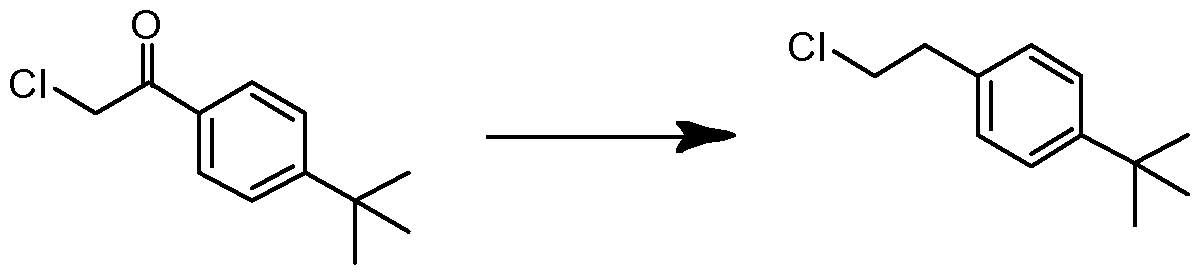
KSC-342-074
1- (Tert-butyl)-4-(2-chloroethyl)benzene. To a vial was added the l-(4-(tert-butyl)phenyl)-
2- chloroethanone (0.171 g, 0.812 mmol) and triethylsilane (0.519 mL, 3.25 mmol) with TFA (4 mL). The reaction stirred at 75 °C for 17 h and was then concentrated in vacuo. The residue was dissolved in DCM (5 mL) and washed with water (4 mL). The DCM layer was
collected and washed with water (1 x 5 mL), dried with MgS04, filtered and adsorbed to silica and purified by MPLC (20 min, 0 - 40% EtOAc:hex) to produce pure l-(tert-butyl)-4- (2-chloroethyl)benzene (0.1 14 g, 0.580 mmol, 71% yield). 1H NMR (400 MHz, CDC13): δ 7.34 (d, J= 8.3 Hz, 2H), 7.16 (d, J= 8.3 Hz, 2H), 3.71 (t, J= 7.5 Hz, 2H), 3.05 (t, J= 7.6 Hz, 2H), 1.32 (s, 9H).

KSC-342-080
(l-(3-(4-(Tert-butyl)phenyl)propyl)piperidin-4-yl)diphenylmethanol. To a vial was added the diphenyl(piperidin-4-yl)methanol (0.142 g, 0.530 mmol), l-(tert-butyl)-4-(3- chloropropyl)benzene (0.134 g, 0.636 mmol) and POTASSIUM CARBONATE (0.439 g, 3.18 mmol) in acetonitrile. The reaction stirred overnight at 85 °C for 18 h and then filtered. The filtrate was then diluted with brine and extracted with diethyl ether (3 x 15 mL). The ether layers were combined, dried with MgS04, filtered and purified by reverse-phase MPLC (20 min, 10 - 100% MeCN: water) to produce pure (l-(3-(4-(tert- butyl)phenyl)propyl)piperidin-4-yl)diphenylmethanol (0.152 g, 0.344 mmol, 65%> yield) as an oil. 1H NMR (400 MHz, CDC13): δ 7.49 - 7.45 (m, 4H), 7.31 - 7.24 (m, 6H), 7.19 - 7.14 (m, 2H), 7.1 1 - 7.08 (m, 2H), 2.96 (m, 2H), 2.57 (t, J= 7.7 Hz, 2H), 2.48 - 2.32 (m, 3H), 2.22 (br s, 1H), 1.97 - 1.90 (m, 2H), 1.83 - 1.75 (m, 2H), 1.53 - 1.45 (m, 4H), 1.29 (s, 9H). LCMS Retention time: 2.965 min. LCMS purity 97.2%. HRMS (ESI): m/z calcd for C3iH39NO
[M+H]+ 442.3032, found 442.3104.

KSC-342-081
(l-(4-(Tert-butyl)phenethyl)piperidin-4-yl)diphenylmethanol. To a vial was added the diphenyl(piperidin-4-yl)methanol (0.150 g, 0.561 mmol), l-(tert-butyl)-4-(2- chloroethyl)benzene (KSC-342-074) (0.1 10 g, 0.561 mmol) and potassium carbonate (0.465 g, 3.37 mmol) in acetonitrile. The reaction stirred overnight at 85 °C for 18 h and then filtered. The filtrate was then diluted with brine and extracted with diethyl ether (3 x 15 mL). The ether layers were combined, dried with MgS04, filtered and purified by reverse-phase MPLC (20 min, 10 - 100% MeCN:water) to produce pure (l-(4-(tert-
butyl)phenethyl)piperidin-4-yl)diphenylmethanol (0.180 g, 0.421 mmol, 75% yield) as an oil. 1H NMR (400 MHz, CDC13): δ 7.51 - 7.47 (m, 4H), 7.33 - 7.27 (m, 6H), 7.21 - 7.16 (m, 2H), 7.14 - 7.11 (m, 2H), 3.09 - 3.03 (m, 2H), 2.80 - 2.74 (m, 2H), 2.60 - 2.55 (m, 2H), 2.51 - 2.42 (m, 1H), 2.28 (br s, 1H), 2.08 - 2.00 (m, 2H), 1.57 - 1.50 (m, 4H), 1.30 (s, 9H). 13C NMR (125 MHz, CDC13): δ 148.8, 145.9, 137.3, 128.3, 128.1, 126.5, 125.8, 125.2, 79.5, 60.8, 54.0, 44.2, 40.9, 34.3, 33.1, 31.4, 26.4. LCMS Retention time: 4.384 min. LCMS purity 99.7%. HRMS (ESI): m/z calcd for C30H37NO [M+H]+ 428.2875, found 428.2948.
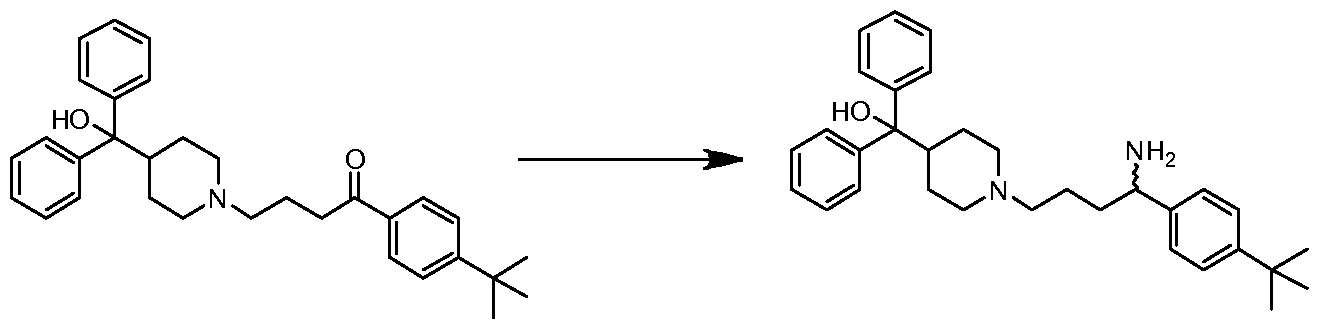
KSC-342-088
(l-(4-amino-4-(4-(tert-butyl)phenyl)butyl)piperidin-4-yl)diphenylmethanol. To a vial was added the l-(4-(tert-butyl)phenyl)-4-(4-(hydroxydiphenylmethyl)piperidin-l-yl)butan-l- one (0.200 g, 0.426 mmol), Ammonium acetate (0.328 g, 4.26 mmol) and Sodium
cyanoborohydride (0.040 g, 0.639 mmol) with MeOH (Volume: 4 ml). The reaction stirred at rt at 2:56:22 PM. The reaction was stirred overnight and then concentrated and diluted with dilute aqueous ammonium hydroxide and extracted with DCM. The DCM layer was concentrated and the crude NMR showed product and starting material. The reaction then purified by reverse-phase Teledyne ISCO Combiflash chromatography (10 - 100%)
MeCN:basic water) and fractions 5 and 6 were collected. These were then subjected to normal phase purification (0 - 10% MeOH (5% NH30H):DCM) to produce pure (l-(4- amino-4-(4-(tert-butyl)phenyl)butyl)piperidin-4-yl)diphenylmethanol (0.010 g, 0.021 mmol, 5% yield). 1H NMR (400 MHz, CDC13): δ 7.48 - 7.44 (m, 4H), 7.34 - 7.26 (m, 6H), 7.22 - 7.14 (m, 4H), 3.84 (t, J= 6.7 Hz, 1H), 2.95 - 2.87 (m, 2H), 2.46 - 2.37 (m, 1H), 2.28 (t, J = 7.6 Hz, 2H), 1.95 - 1.85 (m, 2H), 1.70 - 1.60 (m, 5H), 1.55 - 1.40 (m, 6H), 1.30 (s, 9H). 13C NMR (125 MHz, CDC13): δ 149.7, 146.0, 143.3, 128.1, 126.5, 125.9, 125.8, 125.3, 79.5, 58.7, 55.8, 54.2, 54.0, 44.2, 37.5, 34.4, 31.4, 26.4, 24.2. LCMS Retention time: 2.397 min. LCMS purity 100%. HRMS (ESI): m/z calcd for C32H42N20 [M+H]+ 471.3297, found 471.3370.

KSC-348-001
l-([l,l'-Biphenyl]-4-yl)-4-(4-(hy(iroxy(iiphenylmethyl)piperi(iin-l-yl)butan-l-one. To a vial was added the l-(4-bromophenyl)-4-(4-(hydroxydiphenylmethyl)piperidin-l-yl)butan-l- one (0.098 g, 0.199 mmol), Ι,Γ-bis (di-t-butylphosphino)ferrocene palladium dichloride, (2.71 mg, 3.98 μηιοΐ) and phenylboronic acid (0.029 g, 0.239 mmol) followed by acetonitrile (1.5 mL). The potassium carbonate (0.041 g, 0.299 mmol) was dissolved in water (1.5 mL) and added the reaction. The reaction stirred at 60 °C for 18 h. The reaction was stopped and the organic layer was diluted with EtOAc and extracted then washed with brine. The EtOAc layer was collected, dried with MgS04, filtered and purified by reverse-phase MPLC (10 - 100% MeCN: water) to produce the desired l-([l,l'-biphenyl]-4-yl)-4-(4- (hydroxydiphenylmethyl)piperidin- 1 -yl)butan- 1 -one (0.035 g, 0.071 mmol, 36% yield). 1H NMR (400 MHz, CDC13): δ 8.03 (d, J= 8.6 Hz, 2H), 7.67 (d, J= 8.4 Hz, 2H), 7.64 - 7.61 (m, 2H), 7.50 - 7.45 (m, 6H), 7.42 - 7.38 (m, 1H), 7.31 - 7.26 (m, 4H), 7.19 - 7.14 (m, 2H), 3.02 - 2.91 (m, 4H), 2.46 - 2.37 (m, 3H), 2.10 (br s, 1H), 1.97 - 1.92 (m, 4H), 1.50 - 1.35 (m, 4H).
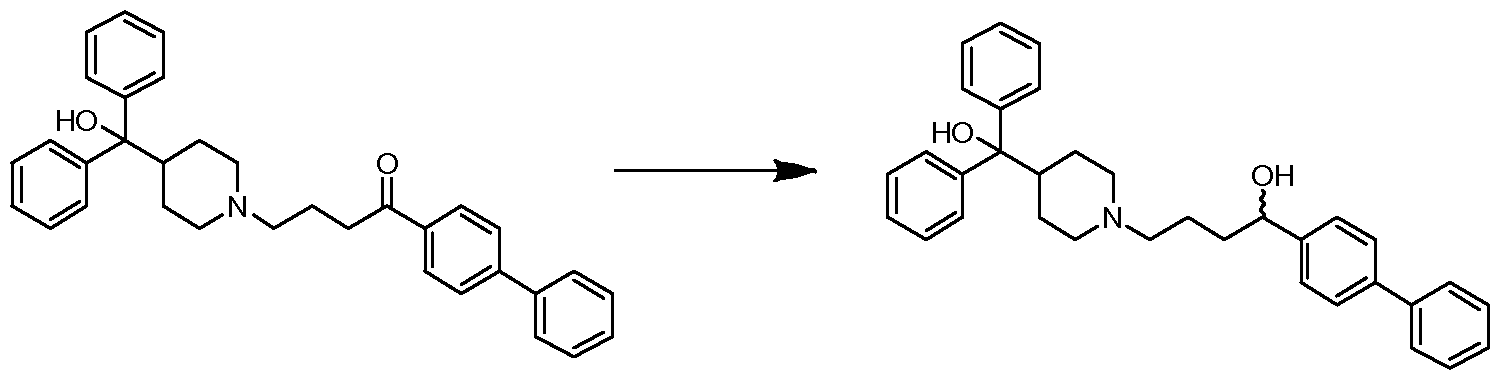
KSC-348-002
l-([l,l'-biphenyl]-4-yl)-4-(4-(hydroxydiphenylmethyl)piperi(iin-l-yl)butan-l-ol. Method B : 1 -([ 1 , 1 '-biphenyl]-4-yl)-4-(4-(hydroxydiphenylmethyl)piperidin- 1 -yl)butan- 1 -one (KSC- 348-001) (0.035 g, 0.071 mmol) and MeOH (2 mL) and sodium borohydride (5.41 mg, 0.143 mmol) to produce pure l-([l, -biphenyl]-4-yl)-4-(4-(hydroxydiphenylmethyl)piperidin-l- yl)butan-l-ol (0.033 g, 0.067 mmol, 94% yield) as on oil. 1H NMR (400 MHz, CDC13): δ 7.59 - 7.55 (m, 2H), 7.53 - 7.46 (m, 6H), 7.43 - 7.38 (m, 4H), 7.34 - 7.25 (m, 5H), 7.19 - 7.13 (m, 2H), 4.65 (dd, J= 8.2 Hz, 2.7 Hz, 1H), 3.16 - 3.10 (m, 1H), 2.99 - 2.93 (m, 1H), 2.56 (br s, 1H), 2.50 - 2.34 (m, 3H), 2.10 - 1.92 (m, 3H), 1.86 - 1.76 (m, 1H), 1.70 - 1.45 (m, 6H). ). 13C NMR (125 MHz, CDC13): δ 146.1, 146.0, 145.0, 141.1, 139.4, 128.6, 128.2, 128.1, 127.01, 126.96, 126.8, 126.44, 126.41, 126.1, 125.7, 125.6, 79.2, 73.3, 58.9, 54.7,
53.3, 44.2, 40.0, 26.0, 25.9, 24.1. LCMS Retention time: 4.049 min. LCMS purity 97.6%. HRMS (ESI): m/z calcd for C34H37NO2 [M+H]+ 492.2824, found 492.2897.

KSC-348-049
(4-(tert-butyl)phenyl)(4-(hydroxydiphenylmethyl)piperidin-l-yl)methanone. To a vial was added the diphenyl(piperidin-4-yl)methanol (0.232 g, 0.868 mmol), acetonitrile (3 mL) and TEA (0.181 ml, 1.30 mmol). The 4-(tert-butyl)benzoyl chloride (0.173 mL, 0.954 mmol) was added and the reaction stirred at 70 °C for 6 h and was diluted with EtOAc (15 mL) and washed with saturated NaHC03 (15 mL). The EtOAc was collected, dried with MgS04, filtered and adsorbed to silica and purified by MPLC (20 min, 0 - 30 % EtOAc:Hex) to produce pure (4-(tert-butyl)phenyl)(4-(hydroxydiphenylmethyl)piperidin- 1 -yl)methanone (0.304 g, 0.711 mmol, 82% yield) as a white solid. 1H NMR (400 MHz, CDC13): δ 7.50 - 7.44 (m, 4H), 7.38 - 7.14 (m, 10H), 4.77 (br s, 1H), 3.84 (br s, 1H), 3.05 - 2.63 (m, 3H), 2.25 - 2.17 (m, 1H), 1.75 - 1.35 (m, 4H), 1.29 (s, 9H). 13C NMR (125 MHz, CDC13): δ 170.4, 152.7, 145.4, 133.2, 128.3, 126.7, 125.7, 125.2, 79.5, 44.5, 34.7, 31.2. LCMS Retention time: 3.774 min. LCMS purity 100%. HRMS (ESI): m/z calcd for C29H33NO2 [M+H]+ 428.2511, found 428.2584.

KSC-348-050
(l-(4-(tert-butyl)benzyl)piperidin-4-yl)diphenylmethanol. To a vial was added the diphenyl(piperidin-4-yl)methanol (0.085 ml, 0.393 mmol), acetonitrile (2 mL) and TEA (0.082 ml, 0.589 mmol). The p-tert-butylbenzyl bromide (0.098 g, 0.432 mmol) was then added and the reaction stirred at 70 °C and stirred for 5 h then diluted with EtOAc (15 mL) and washed with saturated NaHC03 (15 mL). The EtOAc was collected, dried with MgS04, filtered and adsorbed to silica and purified by reverse phase MPLC (20 min, 10 - 100 % MeCN: water) to produce pure (l-(4-(tert-butyl)benzyl)piperidin-4-yl)diphenylmethanol (0.131 g, 0.317 mmol, 81% yield) as a brown oil. 1H NMR (400 MHz, CDCI3): δ 7.48 - 7.45 (m, 4H), 7.32 - 7.25 (m, 6H), 7.22 - 7.14 (m, 4H), 3.47 (s, 2H), 2.96 - 2.90 (m, 2H), 2.46 -
2.38 (m, 1H), 2.02 - 1.95 (m, 1H), 1.51 - 1.44 (m, 4H), 1.30 (s, 9H). 13C NMR (125 MHz, CDCls): δ 149.8, 146.0, 135.1, 128.9, 128.1, 126.4, 125.8, 125.0, 79.5, 62.8, 53.9, 44.2, 34.4, 31.4, 26.5, 21.0. LCMS Retention time: 4.186 min. LCMS purity 99.7%. HRMS (ESI): m/z calcd for C29H35NO [M+H]+ 414.2719, found 414.2791.

KSC-348-058
(l-(4-methoxyphenethyl)piperidin-4-yl)diphenylmethanol. To a vial was added the diphenyl(piperidin-4-yl)methanol (0.381 g, 1.425 mmol), acetonitrile (5 mL) and TEA (0.298 ml, 2.138 mmol). The l-(2-bromoethyl)-4-methoxybenzene (0.245 ml, 1.568 mmol) was then added and the reaction stirred at 75 °C and the stirred for 16 h then was quenched with saturated NaHC03, extracted with EtOAc, dried with MgS04, filtered and adsorbed to silica. The product was purified by MPLC (20 min, 0 - 10% MeOH:DCM) to produce pure (1- (4methoxyphenethyl) piperidin-4-yl)diphenylmethanol (0.289 g, 0.720 mmol, 50% yield) as a sticky solid. 1H NMR (400 MHz, CDC13): δ 7.49 - 7.46 (m, 4H), 7.32 - 7.28 (m, 4H), 7.19 (tt, J= 7.3 Hz, 1.9 Hz, 2H), 7.12 (d, J= 8.6 Hz, 2H), 6.82 (d, J= 8.5 Hz, 2H), 3.77 (s, 3H),
3.29 - 3.24 (m, 2H), 2.95 - 2.90 (m, 2H), 2.80 - 2.75 (m, 2H), 2.58 - 2.50 (m, 1H), 2.42 -
2.30 (m, 3H), 1.90 - 1.77 (m, 2H), 1.65 - 1.57 (m, 2H). 13C NMR (125 MHz, CDC13): δ 158.3, 145.5, 129.6, 128.3, 126.7, 125.6, 114.0, 79.3, 55.3, 53.6, 53.4, 43.4, 31.5, 25.1.
LCMS Retention time: 3.695 min. LCMS purity 100%. HRMS (ESI): m/z calcd for
C27H3iN02 [M+H]+ 402.2355, found 402.2353.

KSC-352-055
4-(4-Benzoylpiperidin-l-yl)-l-(4-(tert-butyl)phenyl)butan-l-one. To a vial was added the l-(4-(tert-butyl)phenyl)-4-chlorobutan-l-one (0.060 g, 0.252 mmol) and potassium iodide (0.063 g, 0.377 mmol) with acetonitrile (2 mL). The reaction stirred at 85 °C for 1 h then the phenyl(piperidin-4-yl)methanone (0.050 g, 0.264 mmol) along with potassium carbonate
(0.052 g, 0.377 mmol) was added. The reaction was then heated back to 85 °C for 48 h. The reaction was cooled to rt and diluted with water then extracted with EtOAc (3 x 15 mL). The EtOAc layer was dried with MgS04, filtered and adsorbed to silica. The product was purified by reverse-phase MPLC (20 min, 10 - 100% MeCN:water) to produce 4-(4-benzoylpiperidin- l-yl)-l-(4-(tert-butyl)phenyl)butan-l-one (0.026 g, 0.066 mmol, 26% yield). 1H NMR (400 MHz, CDCls): δ 7.95 - 7.90 (m, 4H), 7.57 - 7.53 (m, 1H), 7.49 - 7.44 (m, 4H), 3.27 - 3.18 (m, 1H), 3.03 - 2.96 (m, 4H), 2.44 (t, J= 7.04 Hz, 2H), 2.13 - 2.06 (m, 2H), 1.98 - 1.91 (m,

2H), 1.85 - 1.76 (m, 4H), 1.34 (s, 9H).
KSC-352-060
(l-(4-nitrophenethyl)piperidin-4-yl)diphenylmethanol. To a vial was added the diphenyl(piperidin -4-yl)methanol (0.513 g, 1.919 mmol), l-(2-bromoethyl)-4-nitrobenzene (0.401 g, 1.744 mmol) and acetonitrile (10 mL). The TEA (0.365 ml, 2.62 mmol) was then added and the reaction stirred at 85 °C for 18 h then cooled to rt. The reaction was diluted with water and extracted with EtOAc (3 x 15 mL). The EtOAc layer was collected and dried with MgS04, filtered and adsorbed to silica then purified by MPLC (15 min, 0 - 10 %> MeOH:DCM). to produce pure (l-(4-nitrophenethyl)piperidin-4-yl)diphenylmethanol (0.145 g, 0.348 mmol, 20% yield). 1H NMR (400 MHz, CDC13): δ 8.13 (d, J= 8.7 Hz, 2H), 7.49 - 7.46 (m, 4H), 7.35 (d, J= 8.7 Hz, 2H), 7.32 - 7.27 (m, 4H), 7.21 - 7.16 (m, 2H), 3.11 - 3.05 (m, 2H), 2.97 - 2.91 (m, 2H), 2.69 - 2.63 (m, 2H), 2.52 - 2.43 (m, 1H), 2.25 (br s, 1H), 2.20 - 2.10 (m, 2H), 1.63 - 1.53 (m, 4H). 13C NMR (125 MHz, CDC13): δ 147.9, 146.5, 145.7, 129.5, 128.2, 126.6, 125.7, 123.7, 79.4, 59.4, 53.9, 43.9, 33.2, 26.1, 21.1. LCMS Retention time: 3.654 min. LCMS purity 98.8%. HRMS (ESI): m/z calcd for C26H28N2O3 [M+H]+ 417.2162, found 417.2173.

(l-(4-bromophenethyl)piperidin-4-yl)diphenylmethanol. To a vial was added the diphenyl(piperidin-4-yl)methanol (0.496 g, 1.855 mmol), l-bromo-4-(2-bromoethyl)benzene (0.258 ml, 1.69 mmol) and acetonitrile (10 mL). The TEA (0.353 mL, 2.53 mmol) was then added and the reaction stirred at 85 °C for 18 h then cooled to rt. The reaction was diluted with water and extracted with EtOAc (3 x 15 mL). The EtOAc layer was collected and dried with MgS04, filtered and adsorbed to silica then purified by MPLC (15 min, 0 - 10 %
MeOH:DCM). to produce pure (l-(4-bromophenethyl)piperidin-4-yl)diphenylmethanol (0.488 g, 1.083 mmol, 64% yield). 1H NMR (400 MHz, CDC13): δ 7.50 - 7.46 (m, 4H), 7.38 (d, J= 8.3 Hz, 2H), 7.34 - 7.27 (m, 4H), 7.18 (tt, J= 7.3 Hz, 1.8 Hz, 2H), 7.06 (d, J= 8.4 Hz, 2H), 3.06 - 3.00 (m, 2H), 2.77 - 2.72 (m, 2H), 2.58 - 2.52 (m, 2H), 2.50 - 2.41 (m, 1H), 2.15 - 2.00 (m, 3H), 1.56 - 1.49 (m, 4H). 13C NMR (125 MHz, CDC13): δ 145.8, 139.3, 131.4, 130.4, 128.2, 126.6, 125.8, 119.8, 79.5, 60.4, 54.0, 44.1, 33.1, 26.4, 21.1 LCMS Retention time: 3.969 min. LCMS purity 99.8%. HRMS (ESI): m/z calcd for C26H28BrNO [M+H]+ 450.1354, found 450.1427.

KSC-352-063
(l-(2-([l,l'-biphenyl]-4-yl)ethyl)piperidin-4-yl)(iiphenylmethanol. To a vial was added the phenylboronic acid (0.019 g, 0.152 mmol), l, -bis(di-tert-butylphosphino)ferrocene palladium dichloride (4.12 mg, 6.33 μιηοΐ), (l-(4-bromophenethyl)piperidin-4- yl)diphenylmethanol (KSC-352-061) (0.057 g, 0.127 mmol) and potassium carbonate (0.035 g, 0.253 mmol). The vial was then evacuated with argon 3 times and acetonitrile (1 mL) was added followed by water (1 mL). The reaction then stirred at 60 °C for 18 h then was diluted with EtOAc (5 mL) and saturated NaHC03 (5 mL). The EtOAc layer was collected and the aqueous layer was extracted with more EtOAc (2 x 5 mL). The EtOAc layers were combined and dried with MgS04, filtered and concentrated. The reaction was purified by MPLC (10 - 100%) MeCN:water) to produce pure (l-(2-([l,l'-biphenyl]-4-yl)ethyl)piperidin-4- yl)diphenylmethanol (0.045 g, 0.101 mmol, 79% yield) as a clear oil. 1H NMR (400 MHz, CDC13): δ 7.59 - 7.45 (m, 2H), 7.53 - 7.48 (m, 6H), 7.45 - 7.40 (m, 2H), 7.35 - 7.25 (m,
7H), 7.22 - 7.16 (m, 2H), 3.11 - 3.05 (m, 2H), 2.87 - 2.81 (m, 2H), 2.65 - 2.59 (m, 2H), 2.53 - 2.44 (m, 1H), 2.22 (br s, 1H), 2.12 - 2.04 (m, 2H), 1.59 - 1.52 (m, 4H). 13C NMR (125 MHz, CDCls): δ 145.9, 141.0, 139.5, 139.0, 129.1, 128.7, 128.2, 127.1, 127.03, 126.96, 126.5, 125.8, 79.5, 60.7, 54.0, 50.8, 44.2, 33.3, 26.4. LCMS Retention time: 4.086 min.
LCMS purity 99%. HRMS (ESI): m/z calcd for C32H33NO [M+H]+ 448.2562, found
448.2635.

KSC-352-064
Diphenyl(l-(4-(pyridin-4-yl)phenethyl)piperidin-4-yl)methanol. To a vial was added the (l-(4-bromophenethyl)piperidin-4-yl)diphenylmethanol (KSC-352-061) (0.050 g, 0.111 mmol), pyridin-4-ylboronic acid (0.018 g, 0.133 mmol), 1 , l'-bis(di-tert- butylphosphino)ferrocene palladium dichloride (3.62 mg, 5.55 μιηοΐ) and potassium carbonate (0.031 g, 0.222 mmol). The vial was evacuated 3 times with argon and then acetonitrile (1 mL) followed by water (1 mL) was added. The reaction stirred at 60 °C for 18 h and was then cooled to rt and diluted with EtOAc (5 mL) and saturated NaHC03 (5 mL). The EtOAc layer was collected and the aqueous layer was extracted with more EtOAc (2 x 5 mL). The EtOAc layers were combined and dried with MgS04, filtered and concentrated. The reaction was purified by reverse-phase MPLC (10 - 100% MeCN: water) to produce pure diphenyl(l-(4-(pyridin-4-yl)phenethyl)piperidin-4-yl)methanol (0.015 g, 0.033 mmol, 30%> yield) as an oil. 1H NMR (400 MHz, CDCI3): δ 8.64 - 8.62 (m, 2H), 7.60 (d, J = 8.2 Hz, 2H), 7.51 - 7.46 (m, 6H), 7.32 - 7.28 (m, 6H), 7.18 (tt, J= 7.3 Hz, 1.8 Hz, 2H), 3.10 - 3.04 (m, 2H), 2.88 - 2.82 (m, 2H), 2.65 - 2.58 (m, 2H), 2.51 - 2.43 (m, 1H), 2.19 (br s, 1H), 2.12 - 2.03 (m, 2H), 1.58 - 1.51 (m, 4H). 13C NMR (125 MHz, CDCI3): δ 150.2, 148.1, 145.9, 141.7, 135.8, 129.5, 128.2, 127.0, 126.5, 125.8, 121.4, 79.5, 60.5, 54.1, 44.1, 41.0, 33.4, 26.4. LCMS Retention time: 3.585 min. LCMS purity 93.3%. HRMS (ESI): m/z calcd for
C31H32N2O [M+H]+ 449.2515, found 449.2587.

KSC-352-065
Diphenyl(l-(4-(pyridin-3-yl)phenethyl)piperidin-4-yl)methanol. To a vial was added the (l-(4-bromophenethyl)piperidin-4-yl)diphenylmethanol (0.057 g, 0.127 mmol), pyridin-3- ylboronic acid (0.019 g, 0.152 mmol), l ,l'-Bis(di-tert-butylphosphino)ferrocene palladium dichloride (4.12 mg, 6.33 μιηοΐ) and potassium carbonate (0.035 g, 0.253 mmol). The vial was evacuated with argon 3 times and then acetonitrile (1 mL) followed by water (1 mL) was added. The reaction stirred at 60 °C for 18 h and then cooled to rt and diluted with EtOAc (5 mL) and saturated NaHC03 (5 mL). The EtOAc layer was collected and the aqueous layer was extracted with more EtOAc (2 x 5 mL). The EtOAc layers were combined and dried with MgS04, filtered and concentrated. The reaction was purified by RP MPLC (10 - 100% MeCN: water) to produce pure diphenyl(l-(4-(pyridin-3-yl)phenethyl)piperidin-4-yl)methanol (0.05 g, 0.1 1 1 mmol, 88% yield) as an oil. 1H NMR (400 MHz, CDC13): δ 8.79 (dd, J = 2.4 Hz, 0.9 Hz, 1H), 8.53 (dd, J = 4.8 Hz, 1.6 Hz, 1H), 7.86 - 7.83 (m, 1H), 7.51 - 7.47 (m, 6H), 7.36 - 7.27 (m, 7H), 7.20 - 7.15 (m, 2H), 3.10 - 3.03 (m, 2H), 2.87 - 2.81 (m, 2H), 2.71 (br s, 1H), 2.63 - 2.58 (m, 2H), 2.51 - 2.43 (m, 1H), 2.1 1 - 2.03 (m, 2H), 1.58 - 1.52 (m, 4H). ). 13C NMR (125 MHz, CDC13): δ 148.04, 147.97, 146.0, 140.5, 136.5, 135.5, 134.3, 129.4, 128.1 , 127.1 , 126.4, 125.8, 123.5, 79.4, 60.5, 54.1 , 44.1 , 33.2, 26.2. LCMS Retention time: 3.582 min. LCMS purity 98.8%. HRMS (ESI): m/z calcd for C3iH32N20 [M+H]+ 449.2515, found 449.2587.
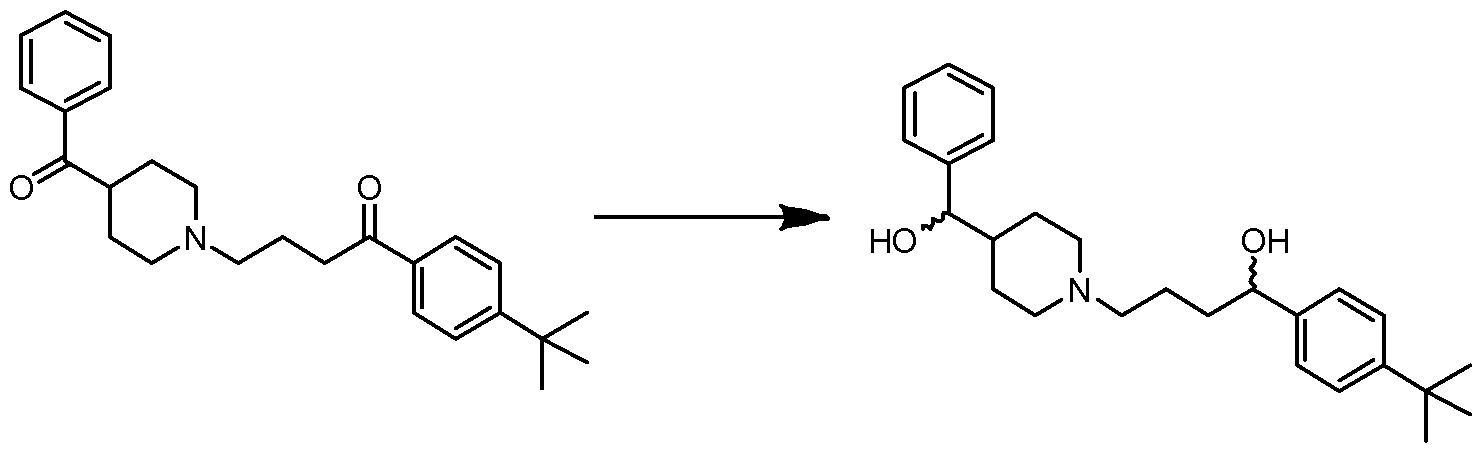
KSC-352-066
l-(4-(tert-butyl)phenyl)-4-(4-(hydroxy(phenyl)methyl)piperidin-l-yl)butan-l-ol. Method B: 4-(4-benzoylpiperidin-l-yl)-l-(4-(tert-butyl)phenyl)butan-l-one (KSC-352-055) (0.026 g, 0.066 mmol) and MeOH (2 mL) and sodium borohydride (10.05 mg, 0.266 mmol) to produce pure 1 -(4-(tert-butyl)phenyl)-4-(4-(hydroxy(phenyl)methyl)piperidin- 1 -yl)butan- 1 -ol (0.019 g, 0.048 mmol, 72% yield) as a mixture of diastereomers. 1H NMR (400 MHz, CDC13): δ
7.36 - 7.24 (m, 9H), 4.63 - 4.57 (m, 1H), 4.33 (d, J= 7.6 Hz, 1H), 3.23 - 2.83 (m, 2H), 2.42 - 2.35 (m, 2H), 2.13 - 1.89 (m, 3H), 1.86 - 1.52 (m, 6H), 1.46 - 1.16 (m, 4H), 1.31 (s, 9H). 13C NMR (125 MHz, CDC13): δ 149.4, 143.4, 142.8, 128.3, 127.63, 127.61, 126.6, 125.4, 125.0, 78.74, 78.67, 73.4, 58.9, 54.30, 54.26, 52.8, 52.7, 43.21, 43.2, 39.9, 34.4, 31.4, 28.4, 28.3, 28.2, 24.2, 24.1. LCMS Retention time: 3.707 min. LCMS purity 97.1%. HRMS (ESI): m/z calcd for C26H37N02 [M+H]+ 396.2824, found 396.2897.

KSC-352-069
(l-(4-aminophenethyl)piperidin-4-yl)diphenylmethanol. To a vial was added the (l-(4- nitrophenethyl) piperidin-4-yl)diphenylmethanol (KSC-352-060) (0.135 g, 0.324 mmol) with MeOH (1 mL) and DCM (1 mL). The reaction was cooled to 0 °C and the Raney Nickel (1.902 mg, 0.032 mmol) was added. The sodium borohydride (0.031 g, 0.810 mmol) was then added portionwise and the reaction stirred at rt for 28 h and the Raney Nickel filtered through celite. The reaction was diluted with DCM and washed with water and the DCM layer was dried with MgS04, filtered and adsorbed to silica then purified by MPLC (0 - 15%> MeOH:DCM) to produce pure (l-(4-aminophenethyl)piperidin-4-yl)diphenylmethanol (0.077 g, 0.199 mmol, 61% yield). 1H NMR (400 MHz, CDC13): δ 7.51 - 7.47 (m, 4H), 7.32 - 7.27 (m, 4H), 7.18 (tt, J= 7.3 Hz, 1.8 Hz, 2H), 6.97 (d, J= 8.3 Hz, 2H), 6.61 (d, J= 8.3 Hz, 2H), 3.52 (br s, 2H), 3.07 - 3.01 (m, 2H), 2.70 - 2.65 (m, 2H), 2.54 - 2.41 (m, 3H), 2.22 (br s, 1H), 2.07 - 1.98 (m, 2H), 1.56 - 1.49 (m, 4H). 13C NMR (125 MHz, CDC13): δ 145.9, 144.4, 130.4, 129.4, 128.1, 126.5, 125.8, 115.2, 79.5, 61.2, 54.1, 44.2, 32.8, 26.4, 21.0.
LCMS Retention time: 3.328 min. LCMS purity 93.1%. HRMS (ESI): m/z calcd for
C26H3oN20 [M+H]+ 387.2358, found 387.2431.

KSC-352-075
(l-(4-(Dimethylamino)phenethyl)piperidin-4-yl)diphenylmethanol. To a vial was added the (l-(4-aminophenethyl)piperidin-4-yl)diphenylmethanol (KSC-352-069) (0.030 g, 0.078 mmol) and acetic acid (1 mL). The paraformaldehyde (0.058 mL, 0.776 mmol) solution in water followed by sodium cyanoborohydride (0.015 g, 0.233 mmol) was then added and the reaction stirred at rt for 20 h. The reaction was concentrated and diluted with saturated NaHC03 and extracted with EtOAc (3 x 5 mL). The EtOAc layer was dried with MgS04, filtered and concentrated. The product was purified by reverse-phase MPLC (10 - 100% MeCN: water) to produce (l-(4-(dimethylamino)phenethyl)piperidin-4-yl)diphenylmethanol (0.027 g, 0.065 mmol, 84% yield). 1H NMR (400 MHz, CDC13): δ 7.50 - 7.46 (m, 4H), 7.31 - 7.26 (m, 4H), 7.17 (tt, J= 7.3 Hz, 1.8 Hz, 2H), 7.06 (d, J= 8.3 Hz, 2H), 6.68 (d, J= 8.3 Hz, 2H), 3.08 - 3.02 (m, 2H), 2.90 (s, 6H), 2.72 - 2.67 (m, 2H), 2.56 - 2.50 (m, 2H), 2.48 - 2.42 (m, 1H), 2.30 (br s, 1H), 2.07 - 2.00 (m, 2H), 1.56 - 1.51 (m, 4H). 13C NMR (125 MHz, CDC13): δ 149.1, 146.0, 129.2, 128.4, 128.1, 126.4, 125.8, 112.9, 79.4, 61.1, 54.0, 44.2, 41.0, 40.8, 32.6, 26.4. LCMS Retention time: 2.50 min. LCMS purity 96.1%. HRMS (ESI): m/z calcd for C28H34N20 [M+H]+ 415.2671, found 415.2744.

KSC-352-082
Diphenyl(l-(4-(trifluoromethyl)phenethyl)piperidin-4-yl)methanol. To a vial was added the diphenyl(piperidin-4-yl)methanol (0.100 g, 0.374 mmol), l-(2-bromoethyl)-4- (trifluoromethyl)benzene (0.057 ml, 0.340 mmol) and acetonitrile (10 mL). The TEA (0.071 mL, 0.510 mmol) was then added and the reaction stirred at 85 °C for 18 h. The reaction was diluted with water and extracted with EtOAc (3 x 15 mL). The EtOAc layer was collected and dried with MgS04, filtered and adsorbed to silica then purified by MPLC (15 min, 0 - 10 % MeOH:DCM) to produce pure diphenyl(l-(4-(trifluoromethyl)phenethyl)piperidin-4- yl)methanol (0.074 g, 0.168 mmol, 49% yield) as an oil. 1H NMR (400 MHz, CDC13): δ 7.54
- 7.47 (m, 4H), 7.33 - 7.27 (m, 6H), 7.19 (tt, J= 7.3 Hz, 1.8 Hz, 2H), 3.06 - 3.00 (m, 2H), 2.86 - 2.80 (m, 2H), 2.60 - 2.55 (m, 2H), 2.51 - 2.42 (m, 1H), 2.14 (br s, 1H), 2.10 - 2.03 (m, 2H), 1.57 - 1.47 (m, 4H). 13C NMR (125 MHz, CDC13): δ 145.9, 144.6, 129.0, 128.3 (q, J= 32 Hz), 128.2, 126.5, 125.8, 125.2 (q, 3.8 Hz), 124.2 (q, J= 271.8 Hz), 79.5, 60.2, 54.1, 44.1, 33.6, 26.4, 21.0. LCMS Retention time: 3.877 min. LCMS purity 99.1%. HRMS (ESI): m/z calcd for C27H28F3NO [M+H]+ 440.2123, found 440.2196.

KSC-352-088
(l-(4-Fluorophenethyl)piperidin-4-yl)diphenylmethanol. To a vial was added the diphenyl(piperidin-4-yl)methanol (0.099 g, 0.370 mmol), l-(2-bromoethyl)-4-fluorobenzene (0.047 rriL, 0.337 mmol) and acetonitrile (10 mL). The TEA (0.070 mL, 0.505 mmol) was then added and the reaction stirred at 85 °C at for 19 h and was cooled to rt. The reaction was diluted with water and extracted with EtOAc (3 x 15 mL). The EtOAc layer was collected and dried with MgS04, filtered and adsorbed to silica then purified by MPLC (15 min, 0 - 10 % MeOH:DCM) to produce pure (l-(4-fluorophenethyl)piperidin-4-yl)diphenylmethanol (0.123 g, 0.316 mmol, 94% yield). 1H NMR (400 MHz, CDC13): δ 7.51 - 7.47 (m, 4H), 7.32
- 7.27 (m, 4H), 7.21 - 7.11 (m, 4H), 6.98 - 6.92 (m, 2H), 3.06 - 3.00 (m, 2H), 2.78 - 2.72 (m, 2H), 2.56 - 2.51 (m, 2H), 2.50 - 2.42 (m, 1H), 2.21 (br s, 1H), 2.08 - 1.99 (m, 2H), 1.57
- 1.48 (m, 4H). 13C NMR (125 MHz, CDC13): δ 161.2 (d, J= 243.6 Hz), 145.9, 136.5 (d, J = 3.2 Hz), 129.9 (d, J= 7.9 Hz), 128.1, 126.5, 125.8, 115.0 (d, J= 21.2 Hz), 79.5, 60.8, 54.1, 44.2, 33.0, 26.4, 21.0. LCMS Retention time: 3.733 min. LCMS purity 96.8%. HRMS (ESI): m/z calcd for C26H28FNO [M+H]+ 390.2155, found 390.2228.

KSC-352-090
2-(3-(Tert-butyl)phenyl)ethanol. To a vial was added the l-bromo-3-(tert-butyl)benzene (0.107 g, 0.502 mmol) and dry THF. The reaction was then cooled to -78 °C and the BuLi (0.221 mL, 0.552 mmol) (2.5 M in hexanes) was added dropwise and the reaction stirred for 30 min at -78 °C and then ethylene oxide (0.502 mL, 1.255 mmol) (2.5 - 3.3M solution in THF) was added dropwise and the reaction stirred for 10 minutes at -78 °C then warmed to rt
and stirred for 1 h. The reaction was then quenched with 1.0 M HC1 (2 mL) and extracted with EtOAc (3 x 5 mL). The EtOAc layer was combined, concentrated and purified by reverse-phase MPLC (10 - 100 % MeCN: water) to produce pure 2-(3-(tert- butyl)phenyl)ethanol (0.035 g, 0.196 mmol, 39% yield). 1H NMR (400 MHz, CDC13): δ 7.31 - 7.27 (m, 3H), 7.10 -7.07 (m, 1H), 3.90 (t, J= 6.6 Hz, 2H), 2.91 (t, J= 6.5 Hz, 2H), 1.52 (br s, 1H), 1.36 (s, 9H).

KSC-352-093
3-(Tert-butyl)phenethyl 4-methylbenzenesulfonate. To a vial was added the 2-(3-(tert- butyl)phenyl)ethanol (KSC-352-090) (0.035 g, 0.196 mmol), TEA (0.082 mL, 0.589 mmol) and DCM (2 mL) followed by p-toluenesulfonyl chloride (0.056 g, 0.294 mmol). The reaction began to stir at rt for 20 h and was then diluted with saturated NaHC03 and extracted with EtOAc. The EtOAc was then dried with MgS04, filtered and concentrated then purified by reverse-phase MPLC (10 - 100% MeCN: water) to provide pure 3-(tert-butyl)phenethyl 4- methylbenzenesulfonate (0.060 g, 0.180 mmol, 92% yield). 1H NMR (400 MHz, CDC13): δ 7.70 (d, J= 8.4 Hz, 2H), 7.30 - 7.24 (m, 3H), 7.19 (t, J= 7.52 Hz, 1H), 7.14 - 7.12 (m, 1H), 4.22 (t, J= 7.2 Hz, 2H), 2.96 (t, J= 7.2 Hz, 2H), 2.43 (s, 3H), 1.29 (s, 9H).

KSC-352-097
(l-(3-(Tert-butyl)phenethyl)piperidin-4-yl)diphenylmethanol. To a vial was added the 3- (tert-butyl)phenethyl 4-methylbenzenesulfonate (KSC-352-093) (0.060 g, 0.180 mmol), diphenyl(piperidin-4-yl)methanol (0.048 g, 0.180 mmol) and acetonitrile (1 mL). The TEA (0.038 mL, 0.271 mmol) was added and the reaction stirred at 85 °C for 18 h and was cooled to rt then diluted with water and extracted with EtOAc. The EtOAc layer was concentrated
and the crude product was purified by reverse-phase MPLC (10 - 100% MeCN: water) to produce the pure (l-(3-(tert-butyl)phenethyl)piperidin-4-yl)diphenylmethanol (0.065 g, 0.152 mmol, 84% yield). 1H NMR (400 MHz, CDC13): δ 7.51 - 7.47 (m, 4H), 7.32 - 7.27 (m, 4H), 7.23 - 7.16 (m, 5H), 7.01 - 6.98 (m, 1H), 3.09 - 3.04 (m, 2H), 2.81 - 2.76 (m, 2H), 2.61 - 2.55 (m, 2H), 2.51 - 2.43 (m, 1H), 2.28 (br s, 1H), 2.10 - 2.02 (m, 2H), 1.30 (s, 9H), 1.32 - 1.26 (m, 4H). 13C NMR (125 MHz, CDC13): δ 151.2, 145.9, 140.0, 128.1, 128.0, 126.5, 125.8, 125.71, 125.68, 123.0, 79.5, 54.1, 44.2, 34.6, 34.0, 31.6, 31.4, 26.4, 22.6. LCMS Retention time: 4.214 min. LCMS purity 96.4%. HRMS (ESI): m/z calcd for C30H37NO
[M+H]+ 428.2875, found 428.2948.

KSC-352-099
3-((Phenylsulfonyl)methylene)oxetane. To an oven-dried vial was added
(methylsulfonyl)benzene (0.570 g, 3.65 mmol) and the vial was evacuated with argon 3 times. The dry THF (17 mL) was added and the reaction was cooled to 0 °C. The 2.5 M BuLi in hexanes (3.21 mL, 8.03 mmol) was added dropwise and the reaction began to stir at 0 °C and stirred for 45 minutes. The diethyl chlorophosphate (0.528 mL, 3.65 mmol) was then added at 0 °C and the reaction stirred for 30 minutes. The reaction was then cooled to -78 °C and the oxetan-3-one (0.330 mL, 5.15 mmol) was then added dropwise and the reaction stirred for 2 h. The reaction was then warmed to rt and filtered through a silica plug. The reaction was then concentrated onto silica and purified by MPLC (20 min, 0 - 40%
EtOAc:hex) to provide pure 3-((phenylsulfonyl)methylene)oxetane (0.579 g, 2.75 mmol,
75% yield). 1H NMR (400 MHz, CDC13): δ 7.91 - 7.87 (m, 2H), 7.69 - 7.64 (m, 1H), 7.60 - 7.55 (m, 2H), 6.12 (quintet, J= 2.3 Hz, 1H), 5.66 - 5.63 (m, 2H), 5.30 - 5.27 (m, 2H).

KSC-367-003
2-(4-(3-((Phenylsulfonyl)methyl)oxetan-3-yl)phenyl)ethanol. To a vial was added the chloro(l,5-cyclooctadiene)rhodium(I), dimer (0.012 g, 0.025 mmol) and 1,4-dioxane (10 mL). The 1.5 M aqueous KOH (0.496 mL, 0.745 mmol) was then added and the reaction
stirred for 1 minute at rt. Then the (4-(2-hydroxyethyl)phenyl)boronic acid (0.103 g, 0.621 mmol) and 3-((phenylsulfonyl)methylene)oxetane (KSC-352-099) (0.052 g, 0.248 mmol) in 1 mL dioxane was added and the reaction stirred for 30 minutes at 100 °C in μwaves. The reaction was then cooled to rt and diluted with EtOAc and washed with 1.0 M HC1. The water layer was extracted with EtOAc (3 x 15 mL). The EtOAc layer was collected and the water was extracted with EtOAc again. The EtOAc layers were combined and dried with MgS04, filtered and concentrated then purified by reverse-phase MPLC (30 min, 10 - 100% MeCN: water) to produce pure 2-(4-(3-((phenylsulfonyl)methyl) oxetan-3-yl)phenyl)ethanol (0.063 g, 0.190 mmol, 76% yield). 1H NMR (400 MHz, CDC13): δ 7.55 - 7.52 (m, 2H), 7.50 - 7.46 (m, 1H), 7.36 - 7.31 (m, 2H), 7.09 (d, J= 8.4 Hz, 2H), 7.01 (d, J= 8.3 Hz, 2H), 5.03 (d, J= 6.4 Hz, 2H), 4.93 (d, J= 6.4 Hz, 2H), 4.03 (s, 2H), 3.82 (t, J= 7.3 Hz, 2H), 2.80 (t, J = 7.3 Hz, 2H).

KSC-367-027
4-(diphenylmethylene)piperidine. To a vial was added the diphenyl(piperidin-4- yl)methanol (0.514 g, 1.922 mmol) and TFA (4 mL). The reaction stirred at 75 °C at for 24 h and was concentrated in vacuo. The residue was then dissolved in DCM (5 mL) and washed with water (4 mL). The DCM layer was collected and washed with water (1 x 5 mL), dried with MgS04, filtered concentrated then purified by reverse-phase MPLC (10 - 100%
MeCN:Hex) to produce pure 4-(diphenylmethylene)piperidine (0.296 g, 1.187 mmol, 62%> yield). 1H NMR (400 MHz, CDC13): δ 7.34 - 7.28 (m, 4H), 7.25 - 7.20 (m, 2H), 7.18 - 7.14 (m, 4H), 2.96 - 2.92 (m, 4H), 2.37 - 2.33 (m, 4H), 1.75 (br s, 1H).

KSC-367-032
4-(4-Benzylpiperidin-l-yl)-l-(4-(tert-butyl)phenyl)butan-l-one. To a vial was added the 4-benzylpiperidine (0.25 ml, 1.422 mmol), l-(4-(tert-butyl)phenyl)-4-chlorobutan-l-one (0.407 g, 1.707 mmol), acetonitrile and TEA (0.297 mL, 2.133 mmol). The reaction stirred at 85 °C for 17 h. The reaction was cooled to rt and diluted with saturated NaHC03 then extracted with EtOAc. The EtOAc was dried with MgS04, filtered and concentrated. The
crude material was purified by reverse-phase MPLC (10 - 100% MeCN: water) to produce 4- (4-benzylpiperidin-l-yl)-l-(4-(tert-butyl)phenyl)butan-l-one (0.291 g, 0.771 mmol, 54% yield). 1H NMR (400 MHz, CDC13): δ 7.91 (d, J= 8.6 Hz, 2H), 7.47 (d, J= 8.5 Hz, 2H), 7.29 - 7.24 (m, 2H), 7.20 - 7.16 (m, 1H), 7.14 - 7.11 (m, 2H), 2.96 (t, J= 7.2 Hz, 2H), 2.90 - 2.84 (m, 2H), 2.50 (d, J= 7.0 Hz, 2H), 2.36 (t, J= 7.3 Hz, 2H), 1.96 - 1.82 (m, 4H), 1.63 - 1.56 (m, 2H), 1.53 - 1.46 (m, 1H), 1.34 (s, 9H), 1.28 - 1.18 (m, 2H).

KSC-367-033
3-(4-(Hydroxydiphenylmethyl)piperidin-l-yl)propan-l-ol. To a vial was added the diphenyl(piperidin-4-yl)methanol (0.502 g, 1.878 mmol), 3-bromopropan-l-ol (0.204 mL, 2.253 mmol), acetonitrile and TEA (0.393 mL, 2.82 mmol). The reaction stirred at 85 °C for 3 h. The reaction was cooled to rt and diluted with saturated NaHC03 and extracted with EtOAc. The EtOAc layer was concentrated and purified by reverse-phase MPLC (10 - 100 % MeCN: water) to provide 3-(4-(hydroxydiphenylmethyl)piperidin-l-yl)propan-l-ol (0.395 g, 1.214 mmol, 65% yield) as a white solid. 1H NMR (400 MHz, CDC13): δ 7.48 - 7.44 (m, 4H), 7.31 - 7.27 (m, 4H), 7.20 - 7.15 (m, 2H), 5.45 (br s, 1H), 3.75 (t, J= 5.2 Hz, 2H), 3.12 - 3.06 (m, 2H), 2.57 (t, J= 5.7 Hz, 2H), 2.47 - 2.36 (m, 1H), 1.98 - 1.91 (m, 2H), 1.70 - 1.65 (m, 3H), 1.54 - 1.42 (m, 4H).
KSC-367-036
3-(4-(Hydroxydiphenylmethyl)piperidin-l-yl)propyl 4-methylbenzenesulfonate. Prepared with same method at KSC-352-093 using 3-(4-(hydroxydiphenylmethyl)piperidin-l- yl)propan-l-ol (KSC-367-033) (0.395 g, 1.214 mmol), 4-methylbenzene-l-sulfonyl chloride (0.347 g, 1.821 mmol), DCM (5 mL) and TEA (0.508 mL, 3.64 mmol) to produce pure 3-(4- (hydroxydiphenylmethyl)piperidin-l-yl)propyl 4-methylbenzenesulfonate (0.193 g, 0.402 mmol, 33% yield). 1H NMR (400 MHz, CDC13): δ 7.69 - 7.66 (m, 2H), 7.46 - 7.41 (m, 4H), 7.24 - 7.19 (m, 4H), 7.15 - 7.05 (m, 4H), 4.26 - 4.12 (m, 4H), 3.73 - 3.65 (m, 2H), 3.27 -
3.18 (m, 2H), 2.68 - 2.60 (m, 1H), 2.47 - 2.37 (m, 2H), 2.30 (s, 3H), 1.88 - 1.76 (m, 2H), 1.52 - 1.43 (m, 2H).

KSC-367-039
4-(4-Benzylpiperidin-l-yl)-l-(4-(tert-butyl)phenyl)butan-l-ol. Method B: 4-(4- benzylpiperidin-l-yl)-l-(4-(tert-butyl)phenyl)butan-l-one (KSC-367-032) (0.291 g, 0.771 mmol) and MeOH (5 mL) and sodium borohydride (0.117 g, 3.08 mmol) to produce pure 4- (4-benzylpiperidin-l-yl)-l-(4-(tert-butyl)phenyl)butan-l-ol (0.232 g, 0.611 mmol, 79% yield). 1H NMR (400 MHz, CDC13): δ 7.35 - 7.25 (m, 6H), 7.21 - 7.12 (m, 3H), 4.64 - 4.60 (m, 1H), 3.13 - 3.07 (m, 1H), 2.94 - 2.88 (m, 1H), 2.54 (d, J= 7.0 Hz, 2H), 2.44 - 2.34 (m, 2H), 2.03 - 1.93 (m, 2H), 1.90 - 1.38 (m, 10H), 1.31 (s, 9H). 13C NMR (125 MHz, CDC13): δ 149.4, 142.9, 140.7, 129.1, 128.2, 125.8, 125.4, 125.0, 73.5, 59.0, 54.6, 52.9, 42.9, 40.1, 38.0, 34.4, 31.8, 31.6, 31.4, 24.3. LCMS Retention time: 4.330 min. LCMS purity 99.1%. HRMS (ESI): m/z calcd for C26H37NO [M+H]+ 380.2875, found 380.2948.

KSC-367-043
(l-(3-((4-(Tert-butyl)phenyl)amino)propyl)piperidin-4-yl)diphenylmethanol. To a vial was added the 3-(4-(hydroxydiphenylmethyl)piperidin-l-yl)propyl 4-methylbenzenesulfonate (KSC-367-036) (0.088 g, 0.183 mmol), 4-(tert-butyl)aniline (0.035 mL, 0.220 mmol) and TEA (0.038 mL, 0.275 mmol) with acetonitrile (3 mL). The reaction began to stir at 85 °C for 18 h and was then cooled to rt and diluted with saturated NaHC03 then extracted with EtOAc. The EtOAc was concentrated and purified by reverse-phase MPLC (10 - 100% MeCN: water) to produce pure (l-(3-((4-(tert-butyl)phenyl)amino) propyl)piperidin-4- yl)diphenylmethanol (0.038 g, 0.083 mmol, 45% yield). 1H NMR (400 MHz, CDC13): δ 7.50 - 7.46 (m, 4H), 7.33 - 7.28 (m, 4H), 7.21 - 7.16 (m, 4H), 6.51 (d, J= 8.7 Hz, 2H), 3.13 (t, J
= 6.4 Hz, 2H), 3.02 - 2.96 (m, 2H), 2.49 - 2.41 (m, 3H), 2.15 (br s, 1H), 2.00 - 1.93 (m, 2H), 1.80 - 1.73 (m, 2H), 1.57 - 1.43 (m, 5H), 1.27 (s, 9H). 13C NMR (125 MHz, CDC13): δ 146.4, 145.9, 139.7, 128.2, 126.5, 125.9, 125.8, 112.4, 79.6, 57.4, 54.2, 44.2, 43.7, 33.8, 31.5, 26.6, 26.2. LCMS Retention time: 4.208 min. LCMS purity 100%. HRMS (ESI): m/z calcd for C30H38N2O [M+H]+ 457.6620, found 457.3194.

KSC-367-044
(l-(3-(4-(Tert-butyl)phenoxy)propyl)piperidin-4-yl)diphenylmethanol. To a vial was added the 3-(4-(hydroxydiphenylmethyl)piperidin-l-yl)propyl 4-methylbenzenesulfonate (KSC-367-036) (0.105 g, 0.219 mmol), 4-(tert-butyl)phenol (0.039 g, 0.263 mmol) and TEA (0.046 mL, 0.328 mmol) with acetonitrile (3 mL). The reaction stirred at 85 °C for 18 h then diluted with saturated NaHC03 and extracted with EtOAc. The EtOAc layer was
concentrated and purified by RP MPLC (10 - 100% MeCN: water) to produce pure (l-(3-(4- (tert-butyl)phenoxy)propyl)piperidin-4-yl)diphenylmethanol (0.015 g, 0.033 mmol, 15 %> yield). 1H NMR (400 MHz, CDC13): δ 7.49 - 7.46 (m, 4H), 7.31 - 7.26 (m, 6H), 7.19 - 7.14 (m, 2H), 6.81 (d, J= 8.8 Hz, 2H), 3.96 (t, J= 6.4 Hz, 2H), 3.01 - 2.94 (m, 2H), 2.51 - 2.40 (m, 3H), 1.99 - 1.89 (m, 5H), 1.52 - 1.45 (m, 4H), 1.28 (s, 9H). 13C NMR (125 MHz, CDC13): δ 156.7, 145.9, 143.2, 128.1, 126.5, 126.1, 125.7, 116.3, 113.9, 79.5, 66.3, 60.4, 55.4, 54.1, 44.1, 34.0, 31.5, 29.7, 27.0, 26.4. LCMS Retention time: 4.293 min. LCMS purity 95.2%. HRMS (ESI): m/z calcd for C30H37NO2 [M+H]+ 458.6470, found 458.3068.

KSC-367-047
2-(6-(tert-butyl)pyridin-3-yl)ethanol. Prepared by same method as KSC-352-090 with 5- bromo-2-(tert-butyl)pyridine (0.303 g, 1.415 mmol), dry THF (10 mL), 2.5 M BuLi in hexanes (0.623 mL, 1.557 mmol) and ethylene oxide (1.415 ml, 3.54 mmol) (2.5 - 3.3M solution in THF) to produce pure 2-(6-(tert-butyl)pyridin-3-yl)ethanol (0.211 g, 1.177 mmol, 83% yield). ). 1H NMR (400 MHz, CDC13): δ 8.40 (br d, J= 2.4 Hz, 1H), 7.48 (dd, J= 8.2 Hz, 2.4 Hz, 1H), 7.26 (dd, J= 8.2 Hz, 0.8 Hz, 1H), 3.85 (br t, J= 6.0 Hz, 2H), 2.82 (t, J= 6.5 Hz, 2H), 2.29 (br s, 1H), 1.33 (s, 9H).

KSC-367-049
2-(6-(tert-butyl)pyridin-3-yl)ethyl 4-methylbenzenesulfonate. Prepared by same method at KSC-352-093 with 2-(6-(tert-butyl)pyridin-3-yl)ethanol (KSC-367-047) (0.211 g, 1.177 mmol), TEA (0.492 mL, 3.53 mmol) and DCM (2 mL) followed by p-toluenesulfonyl chloride (0.337 g, 1.766 mmol) to provide pure 2-(6-(tert-butyl)pyridin-3-yl)ethyl 4- methylbenzenesulfonate (0.260 g, 0.780 mmol, 66% yield). 1H NMR (400 MHz, CDC13): δ 8.29 (br d, J= 2.4 Hz, 1H), 7.69 (d, J= 8.3 Hz, 2H), 7.40 (dd, J= 8.2 Hz, 2.4 Hz, 1H), 7.30 - 7.27 (m, 2H), 7.23 (dd, J= 8.2 Hz, 0.8 Hz, 1H), 4.19 (t, J= 6.9 Hz, 2H), 2.92 (t, J= 6.8 Hz, 2H), 2.43 (s, 3H), 1.34 (s, 9H).

KSC-367-052
(l-(2-(6-(Tert-butyl)pyridin-3-yl)ethyl)piperidin-4-yl)diphenylmethanol. To a vial was added the diphenyl(piperidin-4-yl)methanol (0.250 g, 0.936 mmol), 2-(6-(tert-butyl)pyridin- 3-yl)ethyl 4-methylbenzenesulfonate (KSC-367-049) (0.260 g, 0.780 mmol) and acetonitrile (5 mL). The TEA (0.163 mL, 1.170 mmol) was then added and the reaction stirred at 50 °C for 20 h and was then cooled to rt and diluted with saturated NaHC03 then extracted with DCM. The DCM layer was concentrated and purified by reverse-phase MPLC (10 - 100% MeCN: water) to produce pure (l-(2-(6-(tert-butyl)pyridin-3-yl)ethyl)piperidin-4- yl)diphenylmethanol (0.308 g, 0.719 mmol, 92% yield). 1H NMR (400 MHz, CDC13): δ 8.39 - 8.38 (m, 1H), 7.51 - 7.48 (m, 4H), 7.42 (dd, J= 8.1 Hz, 2.4 Hz, 1H), 7.32 - 7.27 (m, 4H), 7.25 - 7.22 (m, 1H), 7.20 - 7.15 (m, 2H), 3.07 - 3.01 (m, 2H), 2.76 - 2.71 (m, 2H), 2.57 - 2.52 (m, 2H), 2.50 - 2.42 (m, 1H), 2.31 (br s, 1H), 2.09 - 2.01 (m, 2H), 1.57 - 1.48 (m, 4H), 1.35 (s, 9H). 13C NMR (125 MHz, CDC13): δ 166.9, 148.7, 145.9, 136.3, 132.3, 128.1, 126.5, 125.8, 118.6, 79.4, 60.2, 54.0, 44.1, 37.0, 30.3, 30.2, 26.4. LCMS Retention time: 3.802 min. LCMS purity 99.5%. HRMS (ESI): m/z calcd for C29H36N20 [M+H]+ 429.2828, found 429.2900.

KSC-367-053
l-(4-(Tert-butyl)phenyl)-4-(4-(diphenylmethylene)piperidin-l-yl)butan-l-one. To a vial was added the 4-(diphenylmethylene)piperidin-l-ium 2,2,2-trifluoroacetate (KSC-367-027) (0.0475 g, 0.131 mmol), l-(4-(tert-butyl)phenyl)-4-chlorobutan-l-one (0.037 g, 0.157 mmol) and TEA (0.046 mL, 0.327 mmol) in acetonitrile. The reaction stirred at 75 °C for 20 h. The reaction was removed from heat and diluted with saturated NaHC03, extracted with EtOAc. The EtOAc layer was concentrated and purified by reverse-phase MPLC (10 - 100%
MeCN: water) to produce pure l-(4-(tert-butyl)phenyl)-4-(4-(diphenylmethylene)piperidin-l- yl)butan-l-one (0.019 g, 0.042 mmol, 32% yield). 1H NMR (400 MHz, CDC13): δ 7.91 (d, J = 8.2 Hz, 2H), 7.46 (d, J= 8.3 Hz, 2H), 7.30 - 7.25 (m, 4H), 7.21 - 7.17 (m, 2H), 7.13 - 7.10 (m, 4H), 2.99 (t, J= 7.2 Hz, 2H), 2.51 - 2.32 (m, 10H), 1.98 - 1.91 (m, 2H), 1.34 (s, 9H).

KSC-367-055
(l-(4-Chlorophenethyl)piperidin-4-yl)diphenylmethanol. To a vial was added the diphenyl(piperidin-4-yl)methanol (0.221 g, 0.827 mmol), l-(2-bromoethyl)-4-chlorobenzene (0.165 g, 0.752 mmol), acetonitrile (4 mL) and TEA (0.157 mL, 1.128 mmol). The reaction stirred at 75 °C for 18 h then was cooled to rt and diluted with saturated NaHC03 and extracted with EtOAc. The EtOAc layer was concentrated and purified by reverse-phase MPLC (10 - 100%) MeCN: water) to produce pure (l-(4-chlorophenethyl)piperidin-4- yl)diphenylmethanol (0.224 g, 0.552 mmol, 73% yield). 1H NMR (400 MHz, CDC13): δ 7.39 - 7.36 (m, 4H), 7.20 - 7.15 (m, 4H), 7.12 - 7.09 (m, 2H), 7.08 - 7.03 (m, 2H), 6.99 - 6.96 (m, 2H), 2.92 - 2.87 (m, 2H), 2.64 - 2.58 (m, 2H), 2.43 - 2.38 (m, 2H), 2.37 - 2.30 (m, 1H), 2.22 (br s, 1H), 1.95 - 1.88 (m, 2H), 1.44 - 1.35 (m, 4H). 13C NMR (125 MHz, CDC13): δ 145.9, 145.8, 138.9, 131.6, 129.9, 128.3, 128.0, 126.4, 125.7, 79.4, 79.3, 60.4, 57.0, 44.1, 33.0, 26.4. LCMS Retention time: 3.903 min. LCMS purity 99.6%. HRMS (ESI): m/z calcd for C26H28C1N0 [M+H]+ 406.1859, found 406.1932.

KSC-367-058
l-(4-(Tert-butyl)phenyl)-4-(4-(diphenylmethylene)piperidin-l-yl)butan-l-ol. Method B: l-(4-(tert-butyl)phenyl)-4-(4-(diphenylmethylene)piperidin-l-yl)butan-l-one (KSC-367-053) (0.019 g, 0.042 mmol) and sodium borohydride (6.37 mg, 0.168 mmol) to produce pure l-(4- (tert-butyl)phenyl)-4-(4-(diphenylmethylene)piperidin-l-yl)butan-l-ol (0.010 g, 0.022 mmol, 52% yield). 1H NMR (400 MHz, CDC13): δ 7.35 - 7.26 (m, 8H), 7.23 - 7.18 (m, 2H), 7.13 - 7.10 (m, 4H), 4.68 - 4.65 (m, 1H), 2.66 - 2.60 (m, 2H), 2.55 - 2.42 (m, 8H), 2.00 - 1.94 (m, 1H), 1.90 - 1.81 (m, 1H), 1.73 - 1.63 (m, 3H), 1.30 (s, 9H). 13C NMR (125 MHz, CDC13): δ 149.5, 142.7, 142.3, 136.4, 134.6, 129.7, 128.0, 126.4, 125.3, 125.0, 73.3, 58.7, 55.0, 39.6, 34.4, 31.6, 31.4, 31.1, 24.0, 22.6. LCMS Retention time: 4.454 min. LCMS purity 97.1%. HRMS (ESI): m/z calcd for C32H39NO [M+H]+ 454.3032, found 454.3104.

KSC-367-066
4-(3-((phenylsulfonyl)methyl)oxetan-3-yl)phenethyl 4-methylbenzenesulfonate. Prepared by the same method as KSC-352-093 with 2-(4-(3-((phenylsulfonyl)methyl)oxetan-3- yl)phenyl)ethanol (KSC-367-003) (0.104 g, 0.313 mmol), TEA (0.131 mL, 0.939 mmol) and DCM (2 mL) followed by p-toluenesulfonyl chloride (0.089 g, 0.469 mmol) to produce 4-(3- ((phenylsulfonyl)methyl)oxetan-3-yl)phenethyl 4-methylbenzenesulfonate (0.041 g, 0.084 mmol, 27% yield). 1H NMR (400 MHz, CDC13): δ 7.75 (d, J= 8.3 Hz, 2H), 7.57 - 7.46 (m, 4H), 7.36 - 7.32 (m, 4H), 7.02 - 6.96 (m, 3H), 5.00 (d, J= 6.4 Hz, 2H), 4.93 (d, J= 6.4 Hz, 2H), 4.17 (t, J = 7.0 Hz, 2H), 4.01 (s, 2H), 2.90 (t, J= 7.0 Hz, 2H), 2.45 (s, 3H).

KSC-367-069
Diphenyl(l-(4-(3-((phenylsulfonyl)methyl)oxetan-3-yl)phenethyl)piperidin-4- yl)methanol. To a vial was added the 4-(3-((phenylsulfonyl)methyl)oxetan-3-yl)phenethyl 4- methylbenzenesulfonate (KSC-367-066) (0.041 g, 0.084 mmol) and diphenyl(piperidin-4- yl)methanol (0.025 g, 0.093 mmol) in acetonitrile. The TEA (0.018 ml, 0.126 mmol) was then added and the reaction stirred at 50 °C for 18 h. The reaction was removed from heat and cooled to rt then diluted with saturated NaHC03. The reaction was then extracted with EtOAc (3 x 5 mL) and the EtOAc layer was dried with MgS04, filtered and concentrated. The crude residue was purified by reverse-phase MPLC (15 min, 10 - 100% MeCN: water) to produce diphenyl(l-(4-(3 ((phenylsulfonyl) methyl)oxetan-3-yl)phenethyl)piperidin-4- yl)methanol (0.024 g, 0.041 mmol, 49% yield). 1H NMR (400 MHz, CDC13): δ 7.53 - 7.43
(m, 6H), 7.33 - 7.27 (m, 7H), 7.21 - 7.16 (m, 2H), 7.04 (d, J= 8.2 Hz, 2H), 6.96 (d, J= 8.2 Hz, 2H), 5.02 (d, J= 6.4 Hz, 2H), 4.92 (d, J= 6.4 Hz, 2H), 4.01 (s, 2H), 3.08 - 3.02 (m, 2H), 2.74 - 2.69 (m, 2H), 2.56 - 2.44 (m, 3H), 2.10 - 2.02 (m, 2H), 1.60 - 1.50 (m, 5H).

KSC-367-072
(l-(4-(3-Methyloxetan-3-yl)phenethyl)piperidin-4-yl)diphenylmethanol. To a vial was added the diphenyl(l -(4-(3-((phenylsulfonyl)methyl)oxetan-3-yl)phenethyl)piperidin-4- yl)methanol (KSC-367-069) (0.024 g, 0.041 mmol) and MeOH (10 mL) and the reaction as heated to 50 °C. The magnesium was added in 3 additions (0.016 g, 0.066 mmol, 16 equiv) 1.5 h apart. The reaction was removed from heat 1.5 h after the final magnesium addition, cooled to rt and poured into 1.0 M HCl with ice. The aqueous layer was then extracted with DCM (3 x 10 mL) and the organic layers were combined and dried with MgS04, filtered and concentrated then purifed by reverse-phase MPLC (15 min, 10 - 100% MeCN: water). To produce (l-(4-(3-methyloxetan-3-yl)phenethyl)piperidin-4-yl)diphenylmethanol (0.0045 g, 10.19 μιηοΐ, 24.70 % yield) as a light brown solid. 1H NMR (400 MHz, CDC13): δ 7.51 - 7.47
(m, 4H), 7.32 - 7.27 (m, 4H), 7.21 - 7.16 (m, 4H), 7.13 - 7.10 (m, 2H), 4.95 (d, J= 5.5 Hz, 2H), 4.61 (d, J= 5.5 Hz, 2H), 3.09 - 3.02 (m, 2H), 2.81 - 2.75 (m, 2H), 2.59 - 2.54 (m, 2H), 2.50 - 2.42 (m, 1H), 2.16 (br s, 1H), 2.09 - 2.00 (m, 2H), 1.71 (s, 3H), 1.56 - 1.48 (m, 4H).
C NMR (125 MHz, CDC13): δ 145.9, 144.1, 138.4, 128.8, 128.2, 126.5, 125.8, 125.1, 83.8, 79.5, 60.7, 54.1, 44.1, 43.1, 33.3, 27.8, 26.4. LCMS Retention time: 3.652 min. LCMS purity 97.9%. HRMS (ESI): m/z calcd for C3oH35N02 [M+H]+ 442.2668, found 442.2741.

KSC-367-088
2-(Tert-butyl)phenyl trifluoromethanesulfonate. To a vial was added the 2-(tert- butyl)phenol (1.0 ml, 6.51 mmol) and DCM (4 mL) followed by pyridine (1.053 mL, 13.02 mmol). The reaction was then cooled to 0 °C and the triflic anhydride (1.320 mL, 7.81 mmol) was added dropwise and the reaction stirred for 2 h. The reaction was then allowed to warm to rt and was diluted with DCM and quenched with 1.0 M HC1. The DCM layer was collected and washed with saturated NaHC03 and brine. The organic layer was then dried (MgS04), filtered and adsorbed to silica and purified by MPLC (0 - 25% EtOAc:hex) to produce pure 2-(tert-butyl)phenyl trifluoromethanesulfonate (1.66 g, 5.88 mmol, 90%> yield).
1H NMR (400 MHz, CDC13): δ 7.49 - 7.46 (m, 1H), 7.37 - 7.34 (m, 1H), 7.31 - 7.27 (m, 2H), 1.43 (s, 9H).

KSC-381-009
2-(2-(Tert-butyl)phenyl)-4,4,5,5-tetramethyl-l,3,2-dioxaborolane. To a flame-dried vial was added molecular sieves and 2-(tert-butyl)phenyl trifluoromethanesulfonate (KSC-367- 088) (0.475 g, 1.683 mmol) and l, -Bis(diphenylphosphino)ferrocenedichloropalladium(II) (0.042 g, 0.050 mmol). The vial was evacuated with argon 3 times and then dioxane (1 mL), TEA (0.704 mL, 5.05 mmol) and 4,4,5,5-tetramethyl-l,3,2-dioxaborolane (0.732 mL, 5.05 mmol) were added via syringe. The reaction stirred at reflux (100 °C) for 2 h. The reaction was then removed from heat and diluted with water then extracted with DCM (3 x 5 mL). The DCM layer was then washed again with water (3 x 10 mL). The DCM layer was dried with MgS04, filtered and concentrated. The residue was diluted with hexanes and filtered through MgS04 to remove the residual Pd complex. The hexanes layer was then
concentrated to produce pure 2-(2-(tert-butyl)phenyl)-4,4,5,5-tetramethyl-l,3,2- dioxaborolane (0.093 g, 0.357 mmol, 86% yield). 1H NMR (400 MHz, CDC13): δ 7.45 (dd, J = 7.2 Hz, 1.2 Hz, 1H), 7.41 - 7.39 (m, 1H), 7.29 (td, J= 7.6 Hz, 2.0 Hz, 1H), 7.14 (td, J= 7.6 Hz, 2.0 Hz, 1H), 1.41 (s, 9H), 1.38 (s, 12H).

KSC-381-011
l-Bromo-2-(tert-butyl)benzene. To a vial was added the 2-(2-(tert-butyl)phenyl)-4,4,5,5- tetramethyl-l,3,2-dioxaborolane (KSC-381-009) (0.180 g, 0.692 mmol) and MeOH (1.5 mL). The copper (II) bromide (0.464 g, 2.075 mmol) was then dissolved in water and added to the reaction then stirred at 80 °C for 24 h. The reaction was then removed from heat and diluted with water and extracted with EtOAc. The EtOAc was dried with MgS04, filtered and concentrated to produce l-bromo-2-(tert-butyl)benzene (0.103 g, 0.483 mmol, 70% yield) as a brown liquid. 1H NMR (400 MHz, CDC13): δ 7.59 (dd, J= 8.0 Hz, 1.6 Hz, 1H), 7.44 (dd, J = 8.0 Hz, 1.6 Hz, 1H), 7.24 (td, J= 7.6 Hz, 2.0 Hz, 1H), 7.02 (td, J= 7.6 Hz, 2.0 Hz, 1H), 1.51 (s, 9H).

KSC-381-015
2-(2-(Tert-butyl)phenyl)ethanol. Prepared by same method as KSC-352-090 with 1-bromo- 2-(tert-butyl)benzene (KSC-381-011) (0.147 g, 0.690 mmol), dry THF, 2.5 M BuLi in hexanes (0.303 ml, 0.759 mmol) and then ethylene oxide (0.690 ml, 1.724 mmol) (2.5 - 3.3M solution in THF) to produce pure 2-(2-(tert-butyl)phenyl)ethanol (0.018 g, 0.101 mmol, 14.64 % yield) as a clear oil. 1H NMR (400 MHz, CDC13): δ 7.43 - 7.37 (m, 1H), 7.23 - 7.19 (m, 1H), 7.18 - 7.14 (m, 2H), 3.90 (t, J= 7.6 Hz, 2H), 3.19 (t, J = 7.6 Hz, 2H), 1.44 (s, 9H).

KSC-381-018
2-(Tert-butyl)phenethyl 4-methylbenzenesulfonate. Prepared according to same procedure as KSC-352-093 with 2-(2-(tert-butyl)phenyl)ethanol (KSC-381-015) (0.018 g, 0.101 mmol), TEA (0.042 mL, 0.303 mmol) and DCM (2 mL) followed by p-toluenesulfonyl chloride (0.029 g, 0.151 mmol) to provide pure 2-(tert-butyl)phenethyl 4-
methylbenzenesulfonate (0.022 g, 0.066 mmol, 66% yield) and a clear oil. 1H NMR (400 MHz, CDCls): δ 7.76 (d, J= 8.0 Hz, 2H), 7.37 - 7.31 (m, 3H), 7.17 - 7.04 (m, 3H), 4.19 (t, J = 7.6 Hz, 2H), 3.25 (t, J= 7.6 Hz, 2H), 2.44 (s, 3H), 1.33 (s, 9H).

KSC-381-020
(l-(2-(Tert-butyl)phenethyl)piperidin-4-yl)diphenylmethanol. To a vial was added the 2- (tert-butyl)phenethyl 4-methylbenzenesulfonate (KSC-381-018) (0.022 g, 0.066 mmol), diphenyl(piperidin-4-yl)methanol (0.018 g, 0.066 mmol) and acetonitrile. The TEA (0.014 mL, 0.099 mmol) was added and the reaction stirred at 85 °C for 20 h. The reaction was cooled to rt and diluted with water then extracted with EtOAc. The EtOAc layer was concentrated and the crude product was purified by reverse-phase MPLC (10 - 100%
MeCN: water) to produce the pure (l-(2-(tert-butyl)phenethyl) piperidin-4- yl)diphenylmethanol (0.013 g, 0.030 mmol, 46% yield). 1H NMR (400 MHz, CDC13): δ 7.51 - 7.48 (m, 4H), 7.37 - 7.28 (m, 5H), 7.21 - 7.09 (m, 5H), 3.15 - 3.04 (m, 4H), 2.65 - 2.60 (m, 2H), 2.52 - 2.42 (m, 1H), 2.17 - 2.08 (m, 3H), 1.60 - 1.53 (m, 4H), 1.41 (s. 9H). 13C NMR (125 MHz, CDC13): δ 147.7, 145.9, 138.5, 132.1, 128.2, 126.5, 126.1, 125.9, 125.84, 125.79, 79.5, 61.7, 54.2, 44.2, 35.7, 31.7, 29.7, 26.4. LCMS Retention time: 4.200 min. LCMS purity 99.3%. HRMS (ESI): m/z calcd for C30H37NO [M+H]+ 428.2875, found 428.2948.
Bacterial Strains and Conditions
All strains used to evaluate the antimicrobial activity of terfenadine and
corresponding structural derivatives are shown below in Table 5. S. aureus strain UAMS-1 is an osteomyelitis clinical isolate (Gillaspy et al. "Role of the accessory gene regulator (agr) in pathogenesis of staphylococcal osteomyelitis. Infect. Immun. 63:3373-3380 (1995)), whereas cipro floxacin-resistant strains CRC118 and CRC61 are spontaneous ciprofloxacin-resistant derivatives of UAMS-1 that were selected by growth on Mueller-Hinton agar (MHA) (Becton, Dickinson & Company, Franklin Lakes, NJ) at 1.5X MIC ciprofloxacin (0.75 μg/ml).
Species Strain Source
S. aureus UAMS-1 1
CRC61 Dunman Lab, URMC
CRC118 Dunman Lab, URMC
Minimum Inhibitory Concentration (MIC) Testing
Minimum Inhibitory Concentration (MIC) testing was performed to determine the minimum concentration of test compound that is necessary to inhibit visible growth of bacteria according to Clinical and Laboratory Standards (CLSI) guidelines (Clinical and Laboratory Standards Institute (CLSI). Methods for Dilution Antimicrobial Susceptibility Tests for Bacteria That Grow Aerobically; Approved Standard— Ninth Edition. CLSI document M07-A9. 2012. Clinical and Laboratory Standards Institute, 940 West Valley Road, Suite 1400, Wayne, Pennsylvania 19087-1898 USA.) To do so, 105 colony forming units of an overnight bacterial culture were seeded into individual wells of 96-well round- bottom microtiter plates containing 88 μΐ of MHB medium. To the first column, 2 μΐ of the test compound's corresponding solvent was also added to each well (negative control). To the next ten columms, 2 μΐ of the test compound (dissolved in DMSO for terfenadine and its derivatives or sterile water for ciprofloxacin) was added in increasing 2-fold increments of 0.5 μg/ml to 256 μg/ml to each successive well. Each test compound was evaluated in duplicate. Plates were incubated at 37°C incubator for 16 h at which point the minimum inhibitory concentration was determined to be the lowest concentration of test compound that inhibited bacterial growth, as judged by the unaided eye.
S. aureus DNA Gyrase Supercoiling Assay (TopoGEN)
The gyrase supercoiling assays were performed to determine if test compounds interfered with S. aureus DNA gyrase activity, following the manufacturer's
recommendations (TopoGEN). Reactions (20 μΐ) contained kit provided assay buffer, ATP, potassium glutamate, relaxed plasmid DNA (0.4 μg/ml), 2 Units of S. aureus DNA gyrase, and various amounts of test compound. Reactions were incubated at 37°C for 30 min and then stopped by the addition of 10% SDS, filtered through 0.025 μιη Millipore membrane filters in a 10 mM Tris-HCl buffer (pH 8), and electrophoresed in a 1% agarose TAE gel. Gels were stained with 0.5 μg/ml ethidium bromide and images were analyzed using densitometry (Image J, NIH). The IC50 values for each test compound was determined to be the compound concentration that inhibited S. aureus DNA gyrase activity by 50%. S. aureus Topoisomerase IV Decatenation Assay (Inspiralis)
A Topoisomerase IV assay was performed on test compounds to determine if they interfered with the ability of S. aureus topoisomerase IV to decatenate kDNA, according to the recommendations of the manufacturer (Inspiralis). To do so, 0.25 U S. aureus topoisomerase IV enzyme was mixed with 200 ng kDNA in kit provided reaction buffer, in the absence or presence of various concentrations of test compounds at 37°C for 30 min. The reaction was stopped by the addition of STEB stop buffer and 30 μΐ of 24: 1
chlorform:isoamyl alcohol (total volume 90 μΐ). Reaction products then electrophoresed in a 1%) agarose TAE gel, stained with 0.5 μg/ml ethidium bromide and images were analyzed using densitometry (Image J, NIH). The IC50 value for each test compound was determined as the compound concentration that inhibited S. aureus topoisomerase IV activity by 50%.
The results are set forth in Table 6.


Claims
What is claimed is:
1. A method of treating or preventing an infection in a subject with or at risk of
developing an infection, the method comprising administering to the subject a a compound of Formula I

R
 wherein R represents hydrogen or hydroxyl and R1 represents hydrogen, or R and R1 taken together form a second bond between the carbon atoms bearing R and R1; R2 represents hydrogen or phenyl; n is zero or a positive whole integer of from 1 to 4; X represents CH2, CHOH, NH, C=0, CHNR3R4, where R3 and R4 independently are hydrogen or lower alkyl; and Z represents thienyl, pyridinyl, substituted pyridinyl, phenyl or substituted phenyl wherein the substituents on the substituted pyridinyl or substituted phenyl are selected from phenyl, pyridinyl, nitro, a halogen atom, such as chlorine, fluorine, bromine, or iodine, a straight or branched lower alkyl chain of from 1 to 4 carbon atoms, a lower alkoxy group of from 1 to 4 carbon atoms, amino, a mono or di(lower)alkylamino group, a saturated monocyclic heterocyclic group such as pyrrolidino, piperidino, morpholino, or N-(lower)alkylpiperazino, or a group having the structure -COOR5, -CR6R7COOR5, -CF3, CHF2, CH2F, or

A method of treating or preventing an infection in a subject with or at risk of developing an infection, the method comprising administering to the subject a compound of Formula III

3. A method of treating or preventing infection in a subject with or at risk of developing an infection, the method comprising administering to the subject a compound selected from the group consisting of:
a compound of F

(V) wherein Ri is a lower alkyl group having from 1 to 4 carbon atoms being substituted with one or several halogen atoms, Z is hydrogen or a lower alkyl group having from 1 to 4 carbon atoms, m is 2 or 3 and X2 is the ethylene imino group or the group having the formula:

wherein R is hydrogen or a lower alkyl group having from 1 to 4 carbon atoms which may be substituted with a chlorine atom or a hydroxy group, and Z and m have the above-given meaning, a compound of Formula X

X represents -0-, -S-, -SO-, or -S02-, n represents an integer from 1-4, and
Aryl represents a phenyl group which can be substituted by lower alkoxy or lower alkylmercapto groups; a compound of Formula XII

R1 is hydrogen, alkyl of from 1 to 20 carbon atoms which include branched and cyclic and unsaturated (such as allyl) alkyl groups, substituted loweralkyl wherein the substituent can be halo, hydroxy, lower alkoxy, aryloxy such as phenoxy, amino, diloweralkylamino, acylamino, such as acetamido and benzamido, arylamino, guanidino, imidazolyl, indolyl, mercapto, loweralkylthio, arylthio such as phenylthio, carboxy or carboxamido, carboloweralkoxy, aryl such as phenyl or naphthyl, substituted aryl such as phenyl wherein the substituent is lower alkyl, lower alkoxy or halo, arloweralkyl, arloweralkenyl, heteroarlower alkyl or heteroarlower alkenyl such as benzyl, styryl or indolyl ethyl, substituted arloweralkyl, substituted arloweralkenyl, substituted heteroarlower alkyl, or substituted heteroarlower alkenyl, wherein the substituent(s) is halo, dihalo, lower alkyl, hydroxy, lower alkoxy, amino,
aminomethyl, acylamino (acetyl amino or benzoylamino) diloweralkylamino, loweralkylamino, carboxyl, haloloweralkyl, cyano or sulfonamido; arloweralkyl or heteroarloweralkyl substituted on the alkyl portion by amino or acylamino
(acetylamino or benzoylamino);
R2 and R7 are the same or different and are hydrogen or lower alkyl;
R3 is hydrogen, lower alkyl, phenyl lower alkyl, aminomethyl phenyl lower alkyl, hydroxy phenyl lower alkyl, hydroxy lower alkyl, acylamino lower alkyl (such as benzoylamino lower alkyl, acetylamino lower alkyl), amino lower alkyl,
dimethylamino lower alkyl, halo lower alkyl, guanidino lower alkyl, imidazolyl lower alkyl, indolyllower alkyl, mercapto lower alkyl, lower alkyl thio lower alkyl;
R4 is hydrogen or lower alkyl;
R5 is hydrogen, lower alkyl, phenyl, phenyl lower alkyl, hydroxy phenyl lower alkyl, hydroxy lower alkyl, amino lower alkyl, guanidino lower alkyl, imidazolyl lower alkyl, indolyl lower alkyl, mercapto lower alkyl or lower alkyl thio lower alkyl;
R4 and R5 may be connected together to form an alkylene bridge of from 2 to 4 carbon atoms, an alkylene bridge of from 2 to 3 carbon atoms and one sulfur atom, an
alkylene bridge of from 3 to 4 carbon atoms containing a double bond or an alkylene bridge as above substituted with hydroxy, loweralkoxy, loweralkylor diloweralky; a compound of Formula XIII


(XIV) wherein PY is 4- or 3- or 2-pyridinyl or 4- or 3 -or 2-pyridinyl having one or two lower-alkyl substituents, R is hydrogen, lower-alkyl or lower-hydroxyalkyl, and Q is nitro, carbamyl, halo, amino, lower-alkylamino, di(lower-alkyl)amino, or NHAc where Ac is lower-alkanoyl or lower-carbalkoxy; a compound of Formula XV

a compound of Formula XVI

a compound of Formula XVII

(XVII) a compound of Formula XVIII

(XVIII) a compound of Formula XIX
(XIX) a compound of Formula (XX)

(XX) or a pharmaceutically acceptable salt thereof.
4. The method of claim 3, wherein the compound is selected from the group consisting of ifosfamide, sulfinpyrazone, lisinopril, equilin, fluspirilen, hexestrol, dienestrol, napelline, amrinone and iopanoic acid.
5. The method of any of claims 1-4, wherein the infection is a bacterial infection, a viral infection, a parasitic infection or a fungal infection.
6. The method of any one of claims 1-5, wherein the infection is a respiratory infection.
7. The method of any one of claims 1-5, wherein the infection is a gastrointestinal
infection.
8. The method of any one of claims 1-5, wherein the infection is a skin infection.
9. The method of claim 5 wherein the bacterial infection is selected from the group consisting of Enter obacterium faecium, Staphylococcus aureus, Klebsiella pneumonia, Acinebacter baumannii, Pseudomonas aeruginosa and Enterobacter sp.
10. The method of claim 5, wherein the bacterial infection is a small colony variant bacterial infection.
11. A method of treating or preventing an infection in a subject with or at risk of
developing an infection, the method comprising administering to the subject a compound selected from the group consisting of: Didanosine, Norcyclobenzaprine, Niridazole, Ifosfamide, Cefalonium, Tamoxifen citrate, Butoconazole, Suloctidil, Clomiphene, Sulconazole, Miconazole, Mefloquine, Sulfinpyrazone, Terfenadine, Lisinopril, Econzaole, Clofazimine, Equilin, Felodipine, Dacarbazine, Furazolidone, Perhexiline maleate, Oxethazaine, Pimozide, Trifluoperazine, Ellipticine, Fluspirilen, Hexestrol, Dienestrol, Zidovudine, Metoprolol, Napelline, Methimazole, Amrinone, Iopanoic acid, R-Propanolol, Rimexolone and Pyrvinium pamoate, wherein the infection is a bacterial infection.
12. The method of claim 11, wherein the bacterial infection is selected from the group consisting of Enter obacterium faecium, Staphylococcus aureus, Klebsiella pneumonia, Acinebacter baumannii, Pseudomonas aeruginosa and Enterobacter sp.
13. A method of removing or preventing bio film formation on a surface, the method
comprising administering to a biofilm containing surface or a surface susceptible to bio film formation an effective amount of a compound of Formula I

(CHiln-X-Zl
(I) wherein R represents hydrogen or hydroxyl and R1 represents hydrogen, or R and R1 taken together form a second bond between the carbon atoms bearing R and R1; R2 represents hydrogen or phenyl; n is zero or a positive whole integer of from 1 to 4; X represents CH2, CHOH, NH, C=0, CHNR3R4, where R3 and R4 independently are hydrogen or lower alkyl; and Z represents thienyl, pyridinyl, substituted pyridinyl, phenyl or substituted phenyl wherein the substituents on the substituted pyridinyl or
substituted phenyl are selected from phenyl, pyridinyl, nitro, a halogen atom, such as chlorine, fluorine, bromine, or iodine, a straight or branched lower alkyl chain of from 1 to 4 carbon atoms, a lower alkoxy group of from 1 to 4 carbon atoms, amino, a mono or di(lower)alkylamino group, a saturated monocyclic heterocyclic group such as pyrrolidino, piperidino, morpholino, or N-(lower)alkylpiperazino, or a group having the structure -COOR5, -CR6R7COOR5, -CF3, CHF2, CH2F, or

where R5 is hydrogen or lower alkyl, and R6 and R7 independently are hydrogen or methyl or a pharmaceutically acceptable salt thereof.
14. The method of claim 13, wherein the bio film comprises one or more of
Staphylococcus aureus, Pseudomonas aeuroginosa, Staphylococcus epidermidis, Escherichia coli or Acinetobacter baummanii.
15. A method of identifying an antimicrobial agent comprising:
a) contacting a bacterial culture with a test agent;
b) and measuring adenylate kinase release in the supernatant of the bacterial culture, wherein an increase in adenylate kinase release as compared to a control indicates that the test compound is an antimicrobial agent.
16. The method of claim 15, wherein the bacterial culture is selected from the group consisting of Staphylococcus aureus, Pseudomonas aeuroginosa, Staphylococcus epidermidis, Escherichia coli or Acinetobacter baummanii.
Priority Applications (2)
| Application Number | Priority Date | Filing Date | Title |
|---|---|---|---|
| US14/431,031 US20150238473A1 (en) | 2012-09-27 | 2013-09-27 | Methods and compositions for treating infection |
| US15/356,940 US10004701B2 (en) | 2012-09-27 | 2016-11-21 | Methods and compositions for treating infection |
Applications Claiming Priority (2)
| Application Number | Priority Date | Filing Date | Title |
|---|---|---|---|
| US201261706492P | 2012-09-27 | 2012-09-27 | |
| US61/706,492 | 2012-09-27 |
Related Child Applications (2)
| Application Number | Title | Priority Date | Filing Date |
|---|---|---|---|
| US14/431,031 A-371-Of-International US20150238473A1 (en) | 2012-09-27 | 2013-09-27 | Methods and compositions for treating infection |
| US15/356,940 Division US10004701B2 (en) | 2012-09-27 | 2016-11-21 | Methods and compositions for treating infection |
Publications (2)
| Publication Number | Publication Date |
|---|---|
| WO2014052836A2 true WO2014052836A2 (en) | 2014-04-03 |
| WO2014052836A3 WO2014052836A3 (en) | 2014-05-22 |
Family
ID=50389149
Family Applications (1)
| Application Number | Title | Priority Date | Filing Date |
|---|---|---|---|
| PCT/US2013/062309 Ceased WO2014052836A2 (en) | 2012-09-27 | 2013-09-27 | Methods and compositions for treating infection |
Country Status (2)
| Country | Link |
|---|---|
| US (2) | US20150238473A1 (en) |
| WO (1) | WO2014052836A2 (en) |
Cited By (9)
| Publication number | Priority date | Publication date | Assignee | Title |
|---|---|---|---|---|
| WO2016008977A1 (en) * | 2014-07-16 | 2016-01-21 | Irbm Science Park S.P.A. | Use of perhexiline |
| WO2016097754A1 (en) * | 2014-12-18 | 2016-06-23 | Helperby Therapeutics Limited | Novel combination and use |
| CN108459094A (en) * | 2017-12-07 | 2018-08-28 | 广东东阳光药业有限公司 | A kind of evaluation method of rats'liver CYP450 enzyme inductions |
| CN112156089A (en) * | 2020-09-27 | 2021-01-01 | 天津国际生物医药联合研究院 | Application of benzbromarone in resisting mycobacterium tuberculosis infection |
| EP3939585A4 (en) * | 2020-05-20 | 2022-03-02 | Syntekabio, Inc. | PREVENTIVE OR THERAPEUTIC COMPOSITION AGAINST AN INFECTIOUS DISEASE CAUSED BY CORONAVIRUS TYPE 2 RESPONSIBLE FOR SEVERE ACUTE RESPIRATORY SYNDROME |
| CN114259485A (en) * | 2021-12-14 | 2022-04-01 | 华中科技大学协和深圳医院 | Application of benzbromarone in resisting staphylococcus aureus and biofilm infection thereof |
| CN114601822A (en) * | 2020-12-09 | 2022-06-10 | 润佳(苏州)医药科技有限公司 | Pharmaceutical applications of fused-ring phenolic compounds |
| CN117209417A (en) * | 2023-08-01 | 2023-12-12 | 梯尔希(南京)药物研发有限公司 | A kind of preparation method of fexofenadine isomer |
| CN118496647A (en) * | 2024-07-19 | 2024-08-16 | 泰州泽钰新材料科技有限公司 | Modified polylactic acid heat-resistant degradable composite material and preparation method thereof |
Families Citing this family (18)
| Publication number | Priority date | Publication date | Assignee | Title |
|---|---|---|---|---|
| US10588899B2 (en) * | 2015-03-31 | 2020-03-17 | Mymd Pharmaceuticals, Inc. | Methods of treating diabetes |
| GB201616909D0 (en) * | 2016-10-05 | 2016-11-16 | Helperby Therapeutics Ltd | Combination |
| CN106859800B (en) * | 2017-02-27 | 2018-03-06 | 滨州医学院 | A kind of tumor planting device |
| EP3524237A1 (en) | 2018-02-13 | 2019-08-14 | European Molecular Biology Laboratory | Repurposing compounds for the treatment of infections and for modulating the composition of the gut microbiome |
| BR112021000035A2 (en) * | 2018-07-16 | 2021-04-06 | The Medical College Of Wisconsin, Inc. | REUTERICYCLINE OR LACTOBACILLUS REUTERII TO REDUCE WEIGHT GAIN |
| CN111000841A (en) * | 2020-01-03 | 2020-04-14 | 陕西科技大学 | Application of luteolin in inhibition of growth of multiple drug-resistant enterobacter cloacae |
| WO2021202014A1 (en) * | 2020-03-30 | 2021-10-07 | Applied Biology, Inc. | Anti-androgen or an androgen receptor antagonist for treatment of a viral respiratory infection |
| US11338010B2 (en) | 2020-03-30 | 2022-05-24 | Suzhou Kintor Pharmaceuticals, Inc. | Systems, methods, and kits for diagnostics and treatment of viral respiratory infection |
| EP4132653A4 (en) * | 2020-04-11 | 2024-05-22 | Geneticure Inc. | GENETIC METHOD FOR DIAGNOSIS AND TREATMENT OF PRE- AND POSTCORONAVIRUS INFECTIONS |
| WO2021252709A1 (en) * | 2020-06-10 | 2021-12-16 | Rutgers, The State University Of New Jersey | Compounds, compositions, and methods for treating, ameliorating, and/or preventing sigma receptor related diseases and/or disorders |
| US11857551B1 (en) | 2020-07-10 | 2024-01-02 | Ting Therapeutics Llc | Methods for the prevention and treatment of hearing loss |
| CN115068454A (en) * | 2021-03-15 | 2022-09-20 | 中国医学科学院药物研究所 | Application of salmeterol medicine for preventing and treating coronavirus infection |
| CN113318115B (en) * | 2021-06-22 | 2022-11-22 | 山东省农业科学院畜牧兽医研究所 | Application of metacycline in preparation of medicine for preventing and treating bovine parainfluenza virus type 3 virus infection |
| US11724077B2 (en) * | 2021-07-28 | 2023-08-15 | Subhash Dhawan | Therapeutic swabs for treating upper respiratory infections |
| CN114224891B (en) * | 2021-12-29 | 2023-04-18 | 佛山科学技术学院 | Application of clofazimine in preparation of medicines for preventing and treating Porcine Reproductive and Respiratory Syndrome (PRRSV) |
| CN115737628B (en) * | 2022-02-23 | 2024-04-12 | 安阳工学院 | Application of bergenin sulfonate derivatives in anti-drug resistant bacteria activity |
| CN114456983B (en) * | 2022-03-03 | 2022-09-16 | 云南农业大学 | A kind of Acinetobacter lophilus AL202103 strain degrading α-solanine and its preparation method and application |
| CN116115607A (en) * | 2023-02-03 | 2023-05-16 | 扬州大学 | Application of donax base and combination of donax base and antibiotics in preparation of medicines for treating bacterial infectious diseases |
Family Cites Families (18)
| Publication number | Priority date | Publication date | Assignee | Title |
|---|---|---|---|---|
| US3689646A (en) | 1969-09-04 | 1972-09-05 | Univ Pennsylvania | Antimutagenic treatment of bacteria |
| US5261896A (en) | 1990-01-10 | 1993-11-16 | Rochester Medical Corporation | Sustained release bactericidal cannula |
| EP1688142A1 (en) * | 1992-08-03 | 2006-08-09 | Sepracor Inc. | Terfenadine carboxylate and the treatment of dermal irritation |
| US5610198A (en) | 1994-03-18 | 1997-03-11 | The United States Of America As Represented By The Department Of Health And Human Services | Anti-mycobacterial compositions and their use for the treatment of tuberculosis and related diseases |
| JP3981151B2 (en) * | 1994-03-28 | 2007-09-26 | ザ トラスティーズ オブ コロンビア ユニバーシティー イン ザ シティー オブ ニューヨーク | Composition for inactivating stimulants in a liquid |
| WO1999013872A1 (en) | 1997-09-17 | 1999-03-25 | Eisai Co., Ltd. | Antimicrobials |
| US20040241842A1 (en) * | 1999-04-15 | 2004-12-02 | Monash University | Stimulation of thymus for vaccination development |
| PE20020578A1 (en) | 2000-10-10 | 2002-08-14 | Upjohn Co | A TOPICAL ANTIBIOTIC COMPOSITION FOR THE TREATMENT OF EYE INFECTIONS |
| WO2003020274A1 (en) * | 2001-08-30 | 2003-03-13 | Aventis Pharmaceuticals Inc. | Treatment of atopic dermatitis |
| US20110092488A1 (en) | 2005-10-28 | 2011-04-21 | Geoffrey Dow | Quninoline Methanol Compounds for the Treatment and Prevention of Parasitic Infections |
| CA2659391A1 (en) | 2006-08-03 | 2008-02-07 | Prosensa Technologies B.V. | Antibiotic composition |
| WO2008033466A2 (en) * | 2006-09-14 | 2008-03-20 | Combinatorx (Singapore) Pre. Ltd. | Compositions and methods for treatment of viral diseases |
| KR20090100357A (en) | 2006-11-16 | 2009-09-23 | 이-테라퓨틱스 리미티드 | Imidazoles for the treatment of multi-drug resistant bacterial infections |
| WO2009143309A2 (en) * | 2008-05-21 | 2009-11-26 | Trustees Of Dartmouth College | Female reproductive tract and anal prophylaxes |
| GB0813211D0 (en) | 2008-07-18 | 2008-08-27 | E Therapeutics Plc | Antibacterial combination therapy for the treatment of gram positive bacterial infections |
| WO2011137376A2 (en) * | 2010-04-30 | 2011-11-03 | University Of Rochester | Compounds for anti-fungal treatment |
| RS60310B1 (en) | 2010-08-10 | 2020-07-31 | Rempex Pharmaceuticals Inc | Cyclic boronic acid ester derivatives, method for the preparation and therapeutic uses thereof |
| GB201015079D0 (en) * | 2010-09-10 | 2010-10-27 | Helperby Therapeutics Ltd | Novel use |
-
2013
- 2013-09-27 US US14/431,031 patent/US20150238473A1/en not_active Abandoned
- 2013-09-27 WO PCT/US2013/062309 patent/WO2014052836A2/en not_active Ceased
-
2016
- 2016-11-21 US US15/356,940 patent/US10004701B2/en not_active Expired - Fee Related
Cited By (12)
| Publication number | Priority date | Publication date | Assignee | Title |
|---|---|---|---|---|
| WO2016008977A1 (en) * | 2014-07-16 | 2016-01-21 | Irbm Science Park S.P.A. | Use of perhexiline |
| WO2016097754A1 (en) * | 2014-12-18 | 2016-06-23 | Helperby Therapeutics Limited | Novel combination and use |
| US10335454B2 (en) | 2014-12-18 | 2019-07-02 | Helperby Therapeutics Limited | Combination and use |
| CN108459094A (en) * | 2017-12-07 | 2018-08-28 | 广东东阳光药业有限公司 | A kind of evaluation method of rats'liver CYP450 enzyme inductions |
| EP3939585A4 (en) * | 2020-05-20 | 2022-03-02 | Syntekabio, Inc. | PREVENTIVE OR THERAPEUTIC COMPOSITION AGAINST AN INFECTIOUS DISEASE CAUSED BY CORONAVIRUS TYPE 2 RESPONSIBLE FOR SEVERE ACUTE RESPIRATORY SYNDROME |
| JP2022528813A (en) * | 2020-05-20 | 2022-06-16 | シンテカバイオ インコーポレイティッド | Composition for the prevention or treatment of coronavirus infection of the second kind severe acute respiratory syndrome |
| JP7104449B2 (en) | 2020-05-20 | 2022-07-21 | シンテカバイオ インコーポレイティッド | Composition for prevention or treatment of coronavirus infection of type 2 severe acute respiratory syndrome |
| CN112156089A (en) * | 2020-09-27 | 2021-01-01 | 天津国际生物医药联合研究院 | Application of benzbromarone in resisting mycobacterium tuberculosis infection |
| CN114601822A (en) * | 2020-12-09 | 2022-06-10 | 润佳(苏州)医药科技有限公司 | Pharmaceutical applications of fused-ring phenolic compounds |
| CN114259485A (en) * | 2021-12-14 | 2022-04-01 | 华中科技大学协和深圳医院 | Application of benzbromarone in resisting staphylococcus aureus and biofilm infection thereof |
| CN117209417A (en) * | 2023-08-01 | 2023-12-12 | 梯尔希(南京)药物研发有限公司 | A kind of preparation method of fexofenadine isomer |
| CN118496647A (en) * | 2024-07-19 | 2024-08-16 | 泰州泽钰新材料科技有限公司 | Modified polylactic acid heat-resistant degradable composite material and preparation method thereof |
Also Published As
| Publication number | Publication date |
|---|---|
| US20150238473A1 (en) | 2015-08-27 |
| US10004701B2 (en) | 2018-06-26 |
| US20170065540A1 (en) | 2017-03-09 |
| WO2014052836A3 (en) | 2014-05-22 |
Similar Documents
| Publication | Publication Date | Title |
|---|---|---|
| US10004701B2 (en) | Methods and compositions for treating infection | |
| CN113950471B (en) | Charged ion channel blockers and methods of use thereof | |
| US7842815B2 (en) | Compounds and methods for inhibiting the interaction of BCL proteins with binding partners | |
| EP1146790A1 (en) | Compounds and methods | |
| JP2011500577A (en) | Pharmaceutical formulation of valsartan | |
| EA038337B1 (en) | Ezh2 inhibitors for treating lymphoma | |
| US20240084308A1 (en) | Fibrotic treatment | |
| HUP0102752A2 (en) | Substituted anilide compounds | |
| JP2011507971A (en) | Triarylmethane analogs and their use in the treatment of cancer | |
| KR20160009667A (en) | Cryopyrin inhibitors for preventing and treating inflammation | |
| JP2021507944A (en) | Compositions and treatments for neuropathy, including motor neuron disease | |
| US20130225610A1 (en) | Antimetastatic compounds | |
| CN106999462A (en) | Include selective S1P1The pharmaceutical composition of receptor stimulating agent | |
| JP2022525856A (en) | Charged ion channel blockers and usage | |
| WO2015069693A1 (en) | Inhibitors of histone deacetylase | |
| WO2004010942A2 (en) | Substituted heterocyclic compounds as modulators of the ccr5 receptor | |
| WO2017041112A1 (en) | Ketamine and cytochrome p 450 inhibitor combinations | |
| WO2016088813A1 (en) | Novel diazabicyclo[2.2.2]octane derivative | |
| CN107625762A (en) | The new application of naphthalene nucleus class medicine | |
| HUP0104019A2 (en) | Prophylactic use of n-methyl-d-aspartate (nmda) antagonists | |
| HRP20020178A2 (en) | Use of bis-sulphonamides for producing medicaments used for preventing or treating hyperlipidaemia | |
| WO2025104490A9 (en) | Indole derivatives as serotonergic agents useful for the treatment of disorders related thereto | |
| EP3233799A1 (en) | Dopamine d2 receptor ligands | |
| JP2010506884A (en) | A composition for the treatment of tinnitus, hearing loss or tinnitus and hearing loss, comprising an NK-1 receptor antagonist and SSRI | |
| JP2025536344A (en) | Treatment of mitochondrial disorders with sGC stimulators |
Legal Events
| Date | Code | Title | Description |
|---|---|---|---|
| WWE | Wipo information: entry into national phase |
Ref document number: 14431031 Country of ref document: US |
|
| 122 | Ep: pct application non-entry in european phase |
Ref document number: 13842010 Country of ref document: EP Kind code of ref document: A2 |