WO2014045932A1 - 代謝物の抽出方法 - Google Patents
代謝物の抽出方法 Download PDFInfo
- Publication number
- WO2014045932A1 WO2014045932A1 PCT/JP2013/074319 JP2013074319W WO2014045932A1 WO 2014045932 A1 WO2014045932 A1 WO 2014045932A1 JP 2013074319 W JP2013074319 W JP 2013074319W WO 2014045932 A1 WO2014045932 A1 WO 2014045932A1
- Authority
- WO
- WIPO (PCT)
- Prior art keywords
- extracting
- water
- organic solvent
- metabolite
- extraction
- Prior art date
- Legal status (The legal status is an assumption and is not a legal conclusion. Google has not performed a legal analysis and makes no representation as to the accuracy of the status listed.)
- Ceased
Links
Images



Classifications
-
- B—PERFORMING OPERATIONS; TRANSPORTING
- B01—PHYSICAL OR CHEMICAL PROCESSES OR APPARATUS IN GENERAL
- B01D—SEPARATION
- B01D11/00—Solvent extraction
- B01D11/02—Solvent extraction of solids
-
- G—PHYSICS
- G01—MEASURING; TESTING
- G01N—INVESTIGATING OR ANALYSING MATERIALS BY DETERMINING THEIR CHEMICAL OR PHYSICAL PROPERTIES
- G01N1/00—Sampling; Preparing specimens for investigation
- G01N1/28—Preparing specimens for investigation including physical details of (bio-)chemical methods covered elsewhere, e.g. G01N33/50, C12Q
- G01N1/40—Concentrating samples
- G01N1/4055—Concentrating samples by solubility techniques
-
- G—PHYSICS
- G01—MEASURING; TESTING
- G01N—INVESTIGATING OR ANALYSING MATERIALS BY DETERMINING THEIR CHEMICAL OR PHYSICAL PROPERTIES
- G01N1/00—Sampling; Preparing specimens for investigation
- G01N1/28—Preparing specimens for investigation including physical details of (bio-)chemical methods covered elsewhere, e.g. G01N33/50, C12Q
- G01N1/40—Concentrating samples
- G01N1/4055—Concentrating samples by solubility techniques
- G01N2001/4061—Solvent extraction
Definitions
- the present invention relates to a method for extracting a metabolite, and particularly suitable for use in qualitative and quantitative analysis of a hydrophilic metabolite in cultured cells and microorganisms or for extracting a product substance, while suppressing oxidation.
- the present invention relates to a method for extracting a metabolite capable of quickly stopping metabolism and efficiently extracting a hydrophilic substance.
- Metabolomic analysis is a method for comprehensive analysis of metabolites in the living body. However, in order to grasp metabolism more accurately, it is possible to stop metabolism quickly and suppress oxidation, thereby efficiently analyzing metabolites. A method of extraction is needed.
- Non-patent Document 1 As a simple method for extracting metabolites in cells, there is a method of extraction with an organic solvent such as methanol or acetonitrile or a mixture of organic solvent and water (Non-patent Document 1).
- Patent Documents 1 to 3 There are also methods for extracting metabolites by liquid-liquid extraction using three liquids of methanol, water and chloroform (Patent Documents 1 to 3, Non-Patent Document 2).
- Non-Patent Document 3 reports a two-stage extraction method in which extraction is performed by adding water to the extraction residue after extraction with methanol.
- the present invention has been made to solve the above-mentioned conventional problems, and efficiently extracts a hydrophilic metabolite by a simple method while rapidly stopping the progress of metabolism while suppressing oxidation. Is an issue.
- Non-Patent Document 3 The method described in Non-Patent Document 3 is similar to the present invention in that it operates in two steps, but extraction is performed every time a solvent is added, and the method is performed in two steps as in the present invention. Extraction is not performed once by adding a solvent.
- the organic solvent added in the first step can be methanol or acetonitrile.
- the water added in the second step can be ultrapure water or pure water.
- the organic solvent added in the first step can be a first solution containing a predetermined ratio or less of water.
- the water added in the second step can be a second solution containing an organic solvent in a predetermined ratio or less.
- the ratio of the organic solvent in the second solution can be made smaller than the ratio of the organic solvent in the first solution.
- the ratio of the total amount of the organic solvent in the first solution and the organic solvent in the second solution to the total amount of the first solution and the second solution can be a predetermined value or more.
- the supernatant can be ultrafiltered.
- a thiol compound can be extracted using the extraction method described above.
- metabolites can be extracted from adherent cells using the extraction method described above.
- the enzyme since an organic solvent is first added, the enzyme can be reliably deactivated while suppressing oxidation, and the progress of metabolism can be stopped rapidly. Subsequently, since water is added, hydrophilic metabolites that are hardly soluble in organic solvents can be dissolved in the liquid phase, and the liquid phase can be recovered.
- a substance having a thiol group that is easily oxidized, acetyl CoA, and pyruvic acid have a large improvement effect. Therefore, it is possible to quickly stop the metabolism while suppressing oxidation by a simple method, efficiently extract a hydrophilic metabolite, and improve reproducibility.
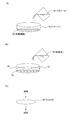
- FIG. 1 is a flowchart showing the procedure of this embodiment.
- an organic solvent for example, methanol, acetonitrile, etc.
- methanol 14 in FIG. 2 eg, methanol 14 in FIG. 2
- the organic solvent to be added is desirably 100%, but water may be mixed, for example, about 10%.
- the hydrophilic metabolite is difficult to dissolve in the organic solvent, the hydrophilic metabolite is dissolved in the liquid phase by adding water, for example, ultrapure water 16, as shown in FIG. After the state is made easy, the liquid phase is separated and collected in step 130.
- water for example, ultrapure water 16
- the water added here is preferably 100%, but an organic solvent may be mixed. Furthermore, the water added here is not limited to ultrapure water as long as there is no problem of impurities, and may be pure water or tap water.
- the ratio of the organic solvent added in step 120 needs to be kept lower than the ratio of the organic solvent added in step 110.
- step 130 the liquid phase is collected and, for example, ultrafiltered through the filter 18 as illustrated in FIG.
- the ultrafiltration is performed in order to completely remove the protein during measurement with a capillary electrophoresis mass spectrometer (CE-MS).
- CE-MS capillary electrophoresis mass spectrometer
- filtration with a normal filter may be used.
- the enzyme can be reliably deactivated while inhibiting oxidation, and a hydrophilic metabolite can be efficiently extracted. .
- the operation is simple.
- methanol 800 ⁇ L is added to 2 ⁇ 10 7 cultured cells on a 90 mm diameter petri dish, methanol is infiltrated into the whole cultured cell on the petri dish, the enzyme is inactivated while inhibiting oxidation, and metabolism is stopped. I let you.
- liquid-liquid detection using 1000 ⁇ L of methanol, 1000 ⁇ L of chloroform, 400 ⁇ L of water and ultrasonic waves was performed on the same cultured cells.
- Fig. 3 shows the results of comparison with the extraction amount and reproducible liquid-liquid extraction method.
- the oxidation does not proceed and the extraction amount of the compound having a thiol group such as reduced glutathione and CoA is high.
- oxidation of the thiol group is suppressed, and disulfide compounds formed by oxidation of the compound having a thiol group are reduced. That is, the conversion from thiol to disulfide is suppressed.
- the liquid-liquid extraction method has a large variation.
- acetyl CoA and pyruvic acid which are considered to continue the enzymatic reaction.
- Table 1 shows the quantitative values of CoA and acetyl CoA.
- the relative standard deviation RSD of acetyl CoA is large, but the RSD is small when the sum of acetyl CoA and CoA is taken. That is, conversion from acetyl CoA to CoA occurs in the liquid-liquid extraction method, which is considered to be suppressed in the method of the present invention.
- CoA has a reaction that it is consumed during lipid metabolism and acetyl CoA is produced, and in the liquid-liquid extraction method, the enzyme is not completely inactivated, and it is considered that such a reaction occurs.
- pyruvic acid is a metabolite immediately after acetyl-CoA, and pyruvic acid is considered to be affected by it.
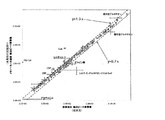
- FIG. 4 shows a comparison result of the extraction amount and reproducibility between the 60% methanol aqueous solution extraction method and Example 1 of the present invention.
- the methanol aqueous solution extraction method was performed by adding 1300 ⁇ L of 60% methanol to the same cultured cells.
- NADPH is enzymatically oxidized to NADP +, but the reaction is suppressed in the method of the present invention.
- the RSD of O-acetylhomoserine, thioproline, pyruvic acid, glyceraldehyde 3-phosphate is remarkably reduced.
- the method of the present invention enables extraction with high reproducibility while stopping oxidation and metabolism as compared with the conventional method.
- acetonitrile aqueous solution (v / v) is added to 2 ⁇ 10 7 cultured cells on a 90 mm diameter petri dish, and the whole cultured cells on the petri dish are infiltrated with 90% acetonitrile aqueous solution to suppress oxidation. While inactivating the enzyme, the metabolism was stopped.
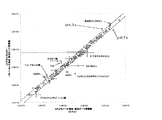
- Fig. 5 shows the results of comparison with the extraction amount and reproducible liquid-liquid extraction method.
- the variation in thiol-related substances is reduced, and cysteine glutathione disulfide is reduced. Compared with the liquid-liquid extraction method, oxidation of the thiol compound is suppressed as in Example 1. The variation of acetyl CoA is also reduced, and the metabolism of acetyl CoA is suppressed as in Example 1, compared to the liquid-liquid extraction method.
- 650 ⁇ L of methanol is added to 2 ⁇ 10 7 cultured cells on a 90 mm diameter petri dish, methanol is infiltrated into the entire cultured cell on the petri dish, the enzyme is deactivated while suppressing oxidation, and metabolism is stopped. I let you.
- FIG. 6 shows the comparison results of the extraction amounts and reproducibility in Examples 1, 3 and 4.
- the method of the present invention suppressed the oxidation of thiols and the metabolism of substances related to acetyl CoA regardless of the solvent.
- the method of the present invention when compared with the methanol aqueous solution extraction method, the method of the present invention was improved in reproducibility for substances with large variations, and it was confirmed that thiol oxidation and NADPH oxidation were suppressed.
- the method of the present invention was able to realize high extraction efficiency while efficiently stopping the progress of metabolism while suppressing the oxidation of substances.
- the sample prepared by the method of the present invention can be applied to analysis using CE, liquid chromatography, gas chromatography, MS, thin layer chromatography, nuclear magnetic resonance, spectroscopic techniques, and the like.
- the sample prepared by the method of the present invention can also be used as a substrate for enzyme reaction.
- the present invention can also be used as an efficient method for extracting a target substance in substance production using cultured cells or microorganisms.
- the method of the present invention can be applied to microorganisms such as Escherichia coli and yeast, cultured animal cells, cultured plant cells, blood cells, sperm, ova, other single cell samples, and living tissues such as liver, brain and muscle.
- microorganisms such as Escherichia coli and yeast, cultured animal cells, cultured plant cells, blood cells, sperm, ova, other single cell samples, and living tissues such as liver, brain and muscle.
Landscapes
- Chemical & Material Sciences (AREA)
- General Health & Medical Sciences (AREA)
- Immunology (AREA)
- Health & Medical Sciences (AREA)
- Analytical Chemistry (AREA)
- Biochemistry (AREA)
- Physics & Mathematics (AREA)
- General Physics & Mathematics (AREA)
- Life Sciences & Earth Sciences (AREA)
- Pathology (AREA)
- Chemical Kinetics & Catalysis (AREA)
- Extraction Or Liquid Replacement (AREA)
- Sampling And Sample Adjustment (AREA)
- Measuring Or Testing Involving Enzymes Or Micro-Organisms (AREA)
- Preparation Of Compounds By Using Micro-Organisms (AREA)
Applications Claiming Priority (2)
| Application Number | Priority Date | Filing Date | Title |
|---|---|---|---|
| JP2012206518A JP6173667B2 (ja) | 2012-09-20 | 2012-09-20 | 代謝物の抽出方法 |
| JP2012-206518 | 2012-09-20 |
Publications (1)
| Publication Number | Publication Date |
|---|---|
| WO2014045932A1 true WO2014045932A1 (ja) | 2014-03-27 |
Family
ID=50341246
Family Applications (1)
| Application Number | Title | Priority Date | Filing Date |
|---|---|---|---|
| PCT/JP2013/074319 Ceased WO2014045932A1 (ja) | 2012-09-20 | 2013-09-10 | 代謝物の抽出方法 |
Country Status (2)
| Country | Link |
|---|---|
| JP (1) | JP6173667B2 (enExample) |
| WO (1) | WO2014045932A1 (enExample) |
Cited By (2)
| Publication number | Priority date | Publication date | Assignee | Title |
|---|---|---|---|---|
| CN104614212A (zh) * | 2015-01-20 | 2015-05-13 | 济宁神康生物科技有限公司 | 一种贴壁细胞定量代谢组学分析样品预处理的方法 |
| EP3348988A4 (en) * | 2015-09-11 | 2019-05-22 | Keio University | PROCESS FOR EXTRACTION OF A SUBSTANCE FROM A CHAIR TEST |
Citations (3)
| Publication number | Priority date | Publication date | Assignee | Title |
|---|---|---|---|---|
| JP2007192746A (ja) * | 2006-01-20 | 2007-08-02 | Keio Gijuku | 酸化ストレスの判定方法 |
| WO2011003945A1 (en) * | 2009-07-08 | 2011-01-13 | Basf Plant Science Company Gmbh | Methods for analyzing polar metabolites of the energy metabolism |
| WO2011158590A1 (ja) * | 2010-06-18 | 2011-12-22 | 学校法人 慶應義塾 | 肝臓疾患マーカー、その測定方法、装置及び医薬品の検定方法 |
-
2012
- 2012-09-20 JP JP2012206518A patent/JP6173667B2/ja active Active
-
2013
- 2013-09-10 WO PCT/JP2013/074319 patent/WO2014045932A1/ja not_active Ceased
Patent Citations (3)
| Publication number | Priority date | Publication date | Assignee | Title |
|---|---|---|---|---|
| JP2007192746A (ja) * | 2006-01-20 | 2007-08-02 | Keio Gijuku | 酸化ストレスの判定方法 |
| WO2011003945A1 (en) * | 2009-07-08 | 2011-01-13 | Basf Plant Science Company Gmbh | Methods for analyzing polar metabolites of the energy metabolism |
| WO2011158590A1 (ja) * | 2010-06-18 | 2011-12-22 | 学校法人 慶應義塾 | 肝臓疾患マーカー、その測定方法、装置及び医薬品の検定方法 |
Cited By (3)
| Publication number | Priority date | Publication date | Assignee | Title |
|---|---|---|---|---|
| CN104614212A (zh) * | 2015-01-20 | 2015-05-13 | 济宁神康生物科技有限公司 | 一种贴壁细胞定量代谢组学分析样品预处理的方法 |
| EP3348988A4 (en) * | 2015-09-11 | 2019-05-22 | Keio University | PROCESS FOR EXTRACTION OF A SUBSTANCE FROM A CHAIR TEST |
| US10927401B2 (en) | 2015-09-11 | 2021-02-23 | Keio University | Method for extracting substance from feces sample |
Also Published As
| Publication number | Publication date |
|---|---|
| JP6173667B2 (ja) | 2017-08-02 |
| JP2014061459A (ja) | 2014-04-10 |
Similar Documents
| Publication | Publication Date | Title |
|---|---|---|
| Dettmer et al. | Metabolite extraction from adherently growing mammalian cells for metabolomics studies: optimization of harvesting and extraction protocols | |
| Gong et al. | The recent developments in sample preparation for mass spectrometry-based metabolomics | |
| Li et al. | Application of metabolomics in fungal research | |
| Birjandi et al. | High throughput solid phase microextraction: A new alternative for analysis of cellular lipidome? | |
| CN102472741B (zh) | 用于分析能量代谢中极性代谢物的方法 | |
| Ibáñez et al. | Metabolomics of adherent mammalian cells by capillary electrophoresis-mass spectrometry: HT-29 cells as case study | |
| Xiao et al. | Glucose feeds the tricarboxylic acid cycle via excreted ethanol in fermenting yeast | |
| US11808675B2 (en) | Room temperature methods for preparing biological analytes | |
| Salomón et al. | Ketone body acetoacetate buffers methylglyoxal via a non-enzymatic conversion during diabetic and dietary ketosis | |
| Haberhauer-Troyer et al. | Accurate quantification of the redox-sensitive GSH/GSSG ratios in the yeast Pichia pastoris by HILIC–MS/MS | |
| Pietkiewicz et al. | Free amino acid alterations in patients with gynecological and breast cancer: a review | |
| Zhang et al. | Advanced mass spectrometry-based biomarker identification for metabolomics of diabetes mellitus and its complications | |
| Filla et al. | Automated sample preparation in a microfluidic culture device for cellular metabolomics | |
| JP6173667B2 (ja) | 代謝物の抽出方法 | |
| Wang et al. | Discovery of biomarkers for oxidative stress based on cellular metabolomics | |
| Erngren et al. | The effects of sampling and storage conditions on the metabolite profile of the marine sponge Geodia barretti | |
| Contin et al. | New analytical strategies applied to the determination of Coenzyme Q10 in biological matrix | |
| Yuan et al. | Quantification of menadione from plasma and urine by a novel cysteamine-derivatization based UPLC–MS/MS method | |
| Caudy et al. | Metabolomics in yeast | |
| Wu et al. | A novel derivatization approach for simultaneous determination of glyoxal, methylglyoxal, and 3-deoxyglucosone in plasma by gas chromatography–mass spectrometry | |
| Herz et al. | Development and validation of a bioanalytical method for the quantification of nitrated fatty acids in plasma using LC-MS/MS: application to cardiovascular patients | |
| Shivapurkar et al. | An efficient method for the production of isotopically enriched cholesterol for NMR [S] | |
| Carneiro et al. | Yeast metabolomics: Sample preparation for a GC/MS-based analysis | |
| CN117099774A (zh) | 烟酸代谢物血液样品的保存、检测方法、试剂盒及其应用 | |
| CN102662015B (zh) | 基于无机盐促相变分离纳米金的生物样品的净化方法 |
Legal Events
| Date | Code | Title | Description |
|---|---|---|---|
| 121 | Ep: the epo has been informed by wipo that ep was designated in this application |
Ref document number: 13839751 Country of ref document: EP Kind code of ref document: A1 |
|
| NENP | Non-entry into the national phase |
Ref country code: DE |
|
| 122 | Ep: pct application non-entry in european phase |
Ref document number: 13839751 Country of ref document: EP Kind code of ref document: A1 |