WO2014041815A1 - Communication system, control device, communication device, communication terminal, control method of control device, control method of communication device and program - Google Patents
Communication system, control device, communication device, communication terminal, control method of control device, control method of communication device and program Download PDFInfo
- Publication number
- WO2014041815A1 WO2014041815A1 PCT/JP2013/005435 JP2013005435W WO2014041815A1 WO 2014041815 A1 WO2014041815 A1 WO 2014041815A1 JP 2013005435 W JP2013005435 W JP 2013005435W WO 2014041815 A1 WO2014041815 A1 WO 2014041815A1
- Authority
- WO
- WIPO (PCT)
- Prior art keywords
- communication
- broadcast
- processing
- packet
- regulation
- Prior art date
- Legal status (The legal status is an assumption and is not a legal conclusion. Google has not performed a legal analysis and makes no representation as to the accuracy of the status listed.)
- Ceased
Links
Images















Classifications
-
- H—ELECTRICITY
- H04—ELECTRIC COMMUNICATION TECHNIQUE
- H04L—TRANSMISSION OF DIGITAL INFORMATION, e.g. TELEGRAPHIC COMMUNICATION
- H04L12/00—Data switching networks
- H04L12/02—Details
- H04L12/16—Arrangements for providing special services to substations
- H04L12/18—Arrangements for providing special services to substations for broadcast or conference, e.g. multicast
- H04L12/189—Arrangements for providing special services to substations for broadcast or conference, e.g. multicast in combination with wireless systems
Definitions
- the present invention relates to a communication system, a control device, a communication device, a communication terminal, a control method of a control device, a control method of a communication device and a program.
- OpenFlow is a technology which regards communication as an end-to-end flow and performs control such as path control, failure recovery, load sharing and optimization by a flow.
- the OpenFlow Switch (OFS) specified in non-patent document 2 has a secure channel for communication between the OpenFlow Controller (OFC).
- the OFC operates in accordance with description of a flow-table.
- the set of the matching rule (header field) checked with the packet header, the flow statistics information (Counters) and the actions which defines a process content (Actions) is defined for each flow in the flow-table.
- Fig. 34 is a diagram showing an example of the set of the header field, the flow statistics information and the action by which process content was defined.
- the contents defined by the flow-table shown in Fig. 34 are added or rewritten by directions from an open flow controller via a secure channel.
- the open flow switch when receiving a packet, the open flow switch searches for an entry with a matching rule (refer to a header field of Fig. 34) fitting in with the header information on the received packet from the flow-table.
- a matching rule (refer to a header field of Fig. 34) fitting in with the header information on the received packet from the flow-table.
- the open flow switch updates the flow statistics information (Counters). And the open flow switch performs processing (such as packet transmission from a specifying port, flooding and discard) written in the action field of the entry to the received packet.
- the open flow switch requests entry setting to the open flow controller via the secure channel. That is, in this case, the open flow switch transmits a request of selection in a path of a packet based on a source and a destination of the received packet.
- the open flow switch receives the flow entry corresponding to the request and updates the flow-table.
- the open flow switch employs the entry stored in the flow-table as a processing regulation and performs packet transfer.
- Non-patent document 3 discloses a technology which equips a switch function for a mobile terminal and switches a communication path of the mobile terminal from a controller on the network.
- patent document 3 discloses an inter-network connection device which transfers a multicast frame.
- Patent document 4 discloses a communication method by which a controller of a switch controls packet converting of other switch.
- NPL 1 Nick McKeown et al., "OpenFlow: Enabling Innovation in Campus Networks," [online] and [searched on August 27th in 2012] and the Internet (URL:http://www.openflowswitch.org/documents/openflow-wp-latest.pdf)
- NPL 2 "OpenFlow Switch Specification" Version 1.0.0.
- An object of the present invention is to reduce the traffic volume between a control device and a controlled object.
- a communication system of the invention includes a control device which generates a processing regulation for processing a packet; and a plurality of communication devices which process the packet by the processing regulation, wherein the control device notifies the plurality of communication devices of the processing regulation by a broadcast communication.
- a control device of the invention includes generation means for generating a processing regulation for processing a packet; and notifying means for notifying a plurality of communication devices which process a packet by the processing regulation of the processing regulation by a broadcast communication.
- a communication device of the invention includes reception means for receiving a processing regulation which was notified by a broadcast transmission from a control device which generates a processing regulation for processing a packet; and processing means for processing a packet which was received by the received processing regulation.
- a control method of a control device of the invention includes a step of generating a processing regulation for processing a packet; and a step of notifying a plurality of communication devices which process the packet by the processing regulation of the processing regulation by a broadcast communication.
- a control method of a communication device of the invention includes a step of receiving a processing regulation which was notified by a broadcast transmission from a control device which generates a processing regulation for processing a packet; and a step of processing a packet which was received by the received processing regulation.
- the communication system of the present invention can reduce the traffic volume between the control device and the controlled object.
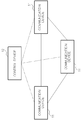
- FIG. 1 A diagram showing an example of a configuration of a communication system in an exemplary embodiment of the present invention
- FIG. 2 A diagram showing an example of configuration of a communication system in a first exemplary embodiment
- FIG. 3 A diagram showing an example of configuration of a communication device in the first exemplary embodiment
- FIG. 4 A diagram showing an example of configuration of a control device in the first exemplary embodiment
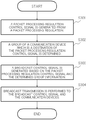
- FIG. 5 A flow chart showing a procedure example by which a packet processing regulation control signal is transmitted in the first exemplary embodiment
- FIG. 6 A flow chart showing a procedure example by which a packet processing regulation control signal is received in the first exemplary embodiment
- FIG. 7 A diagram showing an example of configuration of a communication device in a second exemplary embodiment [Fig.
- FIG. 8 A diagram showing an example of configuration of a control device in the second exemplary embodiment
- FIG. 9 A flow chart showing a procedure by which the broadcast control signal is transmitted in the second exemplary embodiment
- FIG. 10 A flow chart showing a procedure by which the broadcast control signal in the second exemplary embodiment is received.
- FIG. 11 A diagram showing a configuration of a communication system in a third exemplary embodiment
- FIG. 12 A diagram showing a configuration of a communication device in the third exemplary embodiment
- FIG. 13 A diagram showing a configuration of a control device in the third exemplary embodiment
- FIG. 14 A diagram showing a configuration of a broadcast control manager in the third exemplary embodiment
- FIG. 15 A diagram showing a configuration of a broadcast control agent in the third exemplary embodiment [Fig.
- FIG. 16 A flow chart showing a procedure by which a broadcast notification signal is transmitted in the third exemplary embodiment
- FIG. 17 A flow chart showing an example of procedure by which a broadcast notification signal is received in the third exemplary embodiment
- FIG. 18 A diagram showing a configuration of a communication system in the fourth exemplary embodiment of the present invention
- FIG. 19 A diagram showing a configuration of a communication device in the fourth exemplary embodiment
- FIG. 20 A diagram showing a configuration of a control device in the fourth exemplary embodiment
- FIG. 21 A diagram showing a configuration of a broadcast control manager in the fourth exemplary embodiment
- FIG. 22 A diagram showing a configuration of a broadcast control agent in the fourth exemplary embodiment [Fig.
- FIG. 23 A flow chart showing a procedure by which a packet processing regulation control signal is transmitted in the fourth exemplary embodiment
- FIG. 24 A flow chart showing a procedure by which a packet processing regulation control signal in the fourth exemplary embodiment is received
- FIG. 25 A diagram showing a configuration of a packet controller in the fourth exemplary embodiment
- FIG. 26 A diagram showing a configuration of a communication device in the fourth exemplary embodiment
- FIG. 27 A diagram showing a configuration of Cell Broadcast Service of a fifth exemplary embodiment of the present invention
- FIG. 28 A diagram showing a configuration of the OFC [Fig. 29]
- a diagram showing a configuration of the CBC A diagram showing a configuration of the UE [Fig. 31]
- FIG. 31 A diagram showing an operation sequence of the CBS [Fig.
- FIG. 32 A diagram showing a configuration of a communication system including a UE having a plurality of access interfaces
- FIG. 33 A diagram showing a configuration of a communication system to which a broadcast notification control system is applied to the ANDSF.
- FIG. 34 A diagram showing an example of the set of the header field, the flow statistics information and the action by which process content was defined.
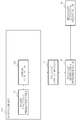
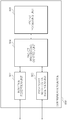
- FIG. 1 is a diagram showing an example of a configuration of a communication system in an exemplary embodiment of the present invention.
- a communication system of the present invention is realized in a configuration including communication devices 11 and a control device 12.
- drawing reference marks added to this outline was added to each element for convenience as an example for helping understanding, and the marks is not intended to limit the present invention to a form of illustration.
- the control device 12 functions as a means which generates a processing regulation for processing a packet and a means which notifies the communication devices 11 of the generated packet processing regulation.
- the control device 12 notifies of a generated packet processing regulation by a broadcast communication to the communication devices 11.
- the control device 12 can notify of the packet processing regulation at the same time to a plurality of communication devices 11.
- the communication devices 11 process a received packet based on the packet processing regulation notified from the control device 12.
- the communication devices 11 are a packet processor such as switches and routeres.
- the communication devices 11 are communication terminals of a radio communication terminal.
- the control device 12 notifies of the packet processing regulation for processing a packet by broadcast communication to the communication devices 11. Therefore, the control device 12 can notify of the packet processing regulation at the same time to a plurality of communication devices 11. Therefore, according to the communication system shown in Fig. 1, the control device 12 can reduce the number of times that receives a request of the packet processing regulation from the communication devices 11 separately, and the traffic volume between the communication devices 11 and the control device 12 can be reduced.
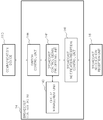
- Fig. 2 is a diagram showing an example of configuration of a communication system according to a first exemplary embodiment of the present invention.
- a communication system 1A in the first exemplary embodiment of the present invention includes communication devices 11A and a control device 12A.
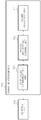
- Fig. 3 is a block diagram showing an example of configuration of the communication device 11A.
- the communication device 11A includes a packet processing unit 111, a packet processing control unit 112 and a controller communication unit 113.
- the packet processing unit 111 generates a packet processing regulation and holds the generated packet processing regulation.
- the packet processing regulation is a regulation which processes a packet sent and received in the communication device 11A.
- the packet processing unit 111 refers to a packet processing regulation based on information held by the packet.
- the packet processing unit 111 itself has a packet processing regulation corresponding to the information held in the packet, the packet processing unit 111 processes the packet according to the packet processing regulation.
- information held by the packet there is information on a source and a destination of a packet.
- a packet processing control unit 112 performs registering, changing and deleting of the packet processing regulation to the packet processing unit 111 based on a packet processing regulation control signal generated by the controller communication unit 113.
- the controller communication unit 113 receives a broadcast control signal from the control device 12A and generates a packet processing regulation control signal from the received broadcast control signal.
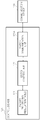
- Fig. 4 is a block diagram showing an example of configuration of the control device 12A.
- the control device 12A includes a packet processing regulation table 121, a switch control unit 122 and a switch notification unit 123A.
- Conditions to distinguish a packet sent and received in each of the communication devices 11A, processing performed when a packet meets the conditions, and the communication device 11A which is an applicable object of a packet processing regulation are related and held on the packet processing regulation table 121.
- the switch control unit 122 refers to the packet processing regulation table 121 and generates a packet processing regulation control signal including a packet processing regulation to the communication devices 11A.
- the switch notification unit 123A establishes communication paths to the communication devices 11A, generates a broadcast control signal based on the packet processing regulation control signal to the communication devices 11A and notifies of the generated broadcast control signals by a broadcast communication.
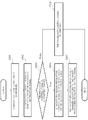
- Fig. 5 is a flow chart showing a procedure by which a packet processing regulation control signal is transmitted.
- the switch control unit 122 generates a packet processing regulation control signal to the communication devices 11A based on the packet processing regulation obtained from the packet processing regulation table 121 (Step S101).
- the packet processing regulation control signal is a signal which controls the packet processing regulation held by each of the communication devices 11A.
- the switch notification unit 123A After that, the switch notification unit 123A generates a broadcast control signal from the packet processing regulation control signal and notifies the communication devices 11A of the generated broadcast control signal by a broadcast communication (Step S102).
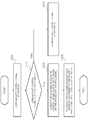
- FIG. 6 is a flow chart showing a procedure by which a packet processing regulation control signal is received.
- the controller communication unit 113 provided in each of the communication devices 11A receives a broadcast control signal and generates a packet processing regulation control signal from the broadcast control signal (Step S201).
- the packet processing control unit 112 carries out registering, changing and deleting of a packet processing regulation held by the packet processing unit 111 based on the packet processing regulation control signal generated by the controller communication unit 113 (Step S202).
- the communication system 1A of the first exemplary embodiment can solve a problem that it is difficult to control a large number of switches simultaneously and separately by one controller when the number of switches managed by the controller is large in OpenFlow technology disclosed in patent documents 1 and 2 and non-patent documents 1 - 3.
- a TCP (Transmission Control Protocol) connection in a secure channel between the controller and the switch, a TCP (Transmission Control Protocol) connection is used. And the TCP port number is used in the controller for identification of communication with the switch.
- the upper limits of the number of switches that can be controlled simultaneously and separately in a controller are about tens of thousands from restriction of the number of TCP port numbers.
- the switch when the switch is loaded into a mobile communication terminal belonging to mobile communication career network, millions of switches are connected to the network. It is difficult to control the switches on such a large number of terminals simultaneously and separately by one controller by a TCP connection.
- the control device 12A notifies the plurality of communication devices 11A at the same time of a packet processing regulation. For this reason, the communication system 1A can control simultaneously to a plurality of switches from a controller. Accordingly, the communication system 1A can solve a problem that it is difficult to control a large number of switches simultaneously and separately by one controller when the number of switches managed by the controller is large in OpenFlow technology.
- a received packet is processed based on a packet processing regulation which a specific communication device (the specific communication device might be plural) or at least one communication device belonging to a specific group was notified by a control device using a broadcast communication.
- a packet processing regulation which a specific communication device (the specific communication device might be plural) or at least one communication device belonging to a specific group was notified by a control device using a broadcast communication.
- a point of difference between the second exemplary embodiment and the first exemplary embodiment is configuration of the communication device and the control device. Because others are same as the first exemplary embodiment, description is made centering on the point of difference at below.
- Fig. 7 is a block diagram showing an example of configuration of a communication device 11B.
- the communication device 11B shown in Fig. 7 includes a packet processing unit 111, a packet processing control unit 112, a controller communication unit 113, a broadcast control signal processing unit 114 and a group management unit 115.
- the packet processing control unit 112 performs registering, changing and deleting of a packet processing regulation to the packet processing unit 111 based on a packet processing regulation control signal included in a broadcast control signal processed with the broadcast control signal processing unit 114.
- the broadcast control signal processing unit 114 processes a broadcast control signal based on an identifier that identifies a communication device given to the broadcast control signal and an identifier of the device (the communication device 11B which received a broadcast control signal). For example, when the identifier of the communication device included in the broadcast control signal and the identifier of the communication device 11B are identical, the broadcast control signal processing unit 114 receives the broadcast control signal, and when not identical, the broadcast control signal processing unit 114 discards the broadcast control signal, for example.
- the broadcast control signal processing unit 114 processes a broadcast control signal based on group information given to a broadcast control signal generated by the broadcast notification transmission unit 116 and group information held by the group management unit 115. For example, when group information included in the broadcast control signal agrees group information held by the group management unit 115, the broadcast control signal processing unit 114 receives the broadcast control signal, and when not agree, the broadcast control signal processing unit 114 may discard the broadcast control signal. Moreover, by a decode key corresponding to group information included in the received broadcast control signal, the broadcast control signal processing unit 114 may perform a decoding process of the packet processing regulation control signal included in the broadcast control signal.
- the group management unit 115 holds group information about a group to which the communication device 11B belongs.
- information held by the group management unit 115 there are a group identifier of a group to which the communication device 11B belongs, information related to a group and a decode key required for decoding the broadcast control signal.
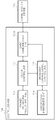
- Fig. 8 is a block diagram showing an example of configuration of a control device 12B.
- the control device 12B includes a packet processing regulation table 121, a switch control unit 122, a switch notification unit 123A, a switch group management unit 124 and a broadcast control signal control unit 125.
- the switch group management unit 124 manages the communication devices 11B under the management of the control device 12B as a group.
- the switch group management unit 124 relates and manages the identifier of the communication device 11B, position information on the communication device 11B, the identifier of a group to which the communication device 11B belongs and information related to a group.
- information related to a group there is information shared by the group such a decode key when encrypting a broadcast control signal.
- the broadcast control signal control unit 125 refers to the switch group management unit 124 and selects at least one communication device to which a packet processing regulation generated by the switch control unit 122 is applied. And the broadcast control signal control unit 125 adds the identifier of the selected communication device to a packet processing regulation control signal generated by the switch control unit 122 and generates a broadcast control signal.
- the broadcast control signal control unit 125 refers to the switch group management unit 124 and selects at least one group to which a packet processing regulation generated by the switch control unit 122 is applied. And the broadcast control signal control unit 125 acquires information on the selected group from the switch group management unit 124, adds acquired group information to a packet processing regulation control signal generated by the switch control unit 122 and generates a broadcast control signal.
- the broadcast control signal control unit 125 notifies the communication devices 11B of the generated broadcast control signal via the switch notification unit 123A.
- Fig. 9 and Fig. 10 an example that the broadcast control signal control unit 125 selects at least one group to which a packet processing regulation generated by the switch control unit 122 is applied is described.
- the broadcast control signal control unit 125 may select at least one communication device to which a packet processing regulation generated by the switch control unit 122 is applied.
- Fig. 9 is a flow chart showing a procedure by which a broadcast control signal generated from a packet processing regulation control signal is transmitted.
- the switch control unit 122 generates a packet processing regulation control signal to the communication devices 11A based on a packet processing regulation obtained from the packet processing regulation table 121 (Step S301).
- the broadcast control signal control unit 125 selects a group that includes the communication device which is destination of a packet processing regulation control signal using the switch group management unit 124 based on extracted destination information (Step S302).
- the broadcast control signal control unit 125 generates a broadcast control signal based on the packet processing regulation control signal and the selected group information (Step S303).
- the switch notification unit 123A performs broadcast transmission of the broadcast control signal generated in the broadcast control signal control unit 125 to the communication devices 11B (Step S304).
- FIG. 10 is a flow chart showing a procedure by which the broadcast control signal is received.
- the controller communication unit 113 provided in the communication device 11B receives the broadcast control signal (Step S401).
- the broadcast control signal processing unit 114 judges whether the broadcast control signal is a target of reception based on at least one of group information given to the broadcast control signal received by the controller communication unit 113 and group information held by the group management unit 115 (Step S402).
- the broadcast control signal processing unit 114 When the broadcast control signal is a target of reception, the broadcast control signal processing unit 114 generates a packet processing regulation control signal from the broadcast control signal (Step S403). On the other hand, when the broadcast control signal is not a target of reception, the broadcast control signal processing unit 114 discards the broadcast control signal (Step S404).
- the packet processing control unit 112 registers a packet processing regulation to the packet processing unit 111 based on a packet processing regulation control signal generated by the broadcast control signal processing unit 114, and changes or deletes the packet processing regulation held by the packet processing unit 111 (Step S405).
- the communication device belonging to a specific group can process the received packet based on the packet processing regulation notified by the control device using a broadcast communication.
- a means for performing a broadcast communication is set up outside of the communication device and the control device.
- Fig. 11 is a diagram showing an example of configuration of a communication system according to a third exemplary embodiment of the present invention.
- a communication system 1C of the third exemplary embodiment of the present invention includes at least one communication device 11C, a control device 12C, a broadcast control manager 13, at least one broadcast control agent 14, a broadcast notification transmission unit 15 and at least one broadcast notification reception unit 16.
- the broadcast control manager 13 controls a broadcast notification between the control device 12C and the communication device 11C.
- the broadcast notification transmission unit 15 transmits a broadcast control signal received from the broadcast control manager 13 as a broadcast notification signal to one or more broadcast notification reception units 16 by a broadcast communication.
- the broadcast notification transmission unit 15 may perform broadcast transmission of the broadcast control signal received from the broadcast control manager 13 to the broadcast notification reception unit 16 just as it is without generating a broadcast notification signal.
- the broadcast notification reception unit 16 receives a broadcast notification signal from the broadcast notification transmission unit 15, generates a broadcast control signal from the received broadcast notification signal, and transmits the generated broadcast control signal to the broadcast control agent 14. Further, when the broadcast control signal is received, the broadcast notification reception unit 16 transmits the received broadcast control signal to the broadcast control agent just as it is.
- the broadcast control agent 14 generates a packet processing regulation control signal from the received broadcast control signal and notifies the packet processing regulation control signal to the communication device 11C.
- control device 12C there is one control device 12C, and there are n sets of communication devices 11C related to the control device 12C.
- n is an integer of no smaller than one. Accordingly, there is a relation of 1-to-n between the number of the broadcast notification transmission unit 15 and the number of the broadcast notification reception units 16.
- 1-to-1 there is a relation of 1-to-1 between the number of the control device 12C and the number of the broadcast control manager 13, and between the number of the broadcast control manager 13 and the number of the broadcast notification transmission unit 15.
- 1-to-1 between the number of the communication device 11C and the number of the broadcast control agent 14, and between the number of the broadcast control agent 14 and the number of the broadcast notification reception unit 16.
- the control device 12C may not be limited to one but may be more than one.
- the broadcast notification transmission unit 15 receives a broadcast control signal from the broadcast control manager 13. And the broadcast notification transmission unit 15 transmits a broadcast notification signal generated based on a broadcast notification request signal to a broadcast notification destination (broadcast notification reception unit 16) extracted from information added to the broadcast control signal.
- the broadcast notification transmission unit 15 may receive a broadcast notification request signal from the broadcast control manager 13. In this case, the broadcast notification transmission unit 15 transmits a broadcast notification signal generated based on the broadcast notification request signal to a broadcast notification destination (broadcast notification reception units 16) specified by the broadcast notification request signal.
- the broadcast notification reception unit 16 receives the broadcast notification signal from the broadcast notification transmission unit 15 and transmits the broadcast notification signal to the broadcast control agent 14.
- Fig. 12 is a diagram showing a configuration of the communication device 11C.
- the communication device 11C includes a packet processing unit 111, a packet processing control unit 112 and a controller communication unit 113.
- the packet processing control unit 112 receives a packet processing regulation control signal from the broadcast control agent 14.
- Fig. 13 is a diagram showing a configuration of the control device 12C.
- the control device 12C includes a packet processing regulation table 121, a switch control unit 122 and a switch communication unit 123.
- the switch control unit 122 transmits a packet processing regulation control signal to the broadcast control manager 13.
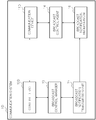
- Fig. 14 is a diagram showing a configuration of the broadcast control manager 13.
- the broadcast control manager 13 includes a switch control signal processing unit 131, a switch group management unit 132, a broadcast control signal control unit 133 and a broadcast notification transmission control unit 134.
- the switch control signal processing unit 131 identifies the communication device 11C which is a transmission object based on the identifier of the communication device included in the packet processing regulation control signal received from the control device 12C.
- the switch group management unit 132 manages the communication devices 11C under the management of the control device 12C as a group. For example, the switch group management unit 132 relates and manages the identifier of the communication device 11C, the identifier of the group to which the communication device 11C belongs and information related to the group. As an example of information related to the group, there is information shared by the group, such as a decode key used for decoding the broadcast control signal.
- the broadcast control signal control unit 133 refers to the identifier of the communication device 11C managed in the switch group management unit 132 and selects at least one communication device to which a packet processing regulation generated by the control device 12C is applied. In addition, the broadcast control signal control unit 133 adds the identifier of the selected communication device to the packet processing regulation control signal generated by the control device 12C and generates a broadcast control signal.
- the broadcast control signal control unit 133 refers to the identifier of the communication device 11C and the identifier of the group to which the communication device 11C belongs managed in the switch group management unit 132 and selects at least one group to which a packet processing regulation generated by the control device 12C is applied. And the broadcast control signal control unit 133 acquires group information on the selected group from the switch group management unit 132, adds the acquired group information to the packet processing regulation control signal generated by the control device 12C, and generates a broadcast control signal.
- the broadcast notification transmission control unit 134 transfers the broadcast control signal generated in the broadcast control signal control unit 133 to the broadcast notification transmission unit 15. Further, the broadcast notification transmission control unit 134 may generate a broadcast notification transmission request signal to which a broadcast notification destination required by the broadcast notification transmission unit 15 was given based on the group information held by the switch group management unit 132 to the broadcast control signal generated in the broadcast control signal control unit 133 and transmit to the broadcast notification transmission unit 15.
- Fig. 15 is a diagram showing a configuration of the broadcast control agent 14.
- the broadcast control agent 14 includes a broadcast notification receiving processing unit 141, a broadcast control signal processing unit 142, a group management unit 143 and a switch control unit 144.
- the broadcast notification receiving processing unit 141 generates a broadcast control signal from the broadcast notification signal inputted from the broadcast notification reception unit 16 and transfers to the broadcast control signal processing unit 142.
- the broadcast control signal processing unit 142 processes the broadcast control signal based on group information given to the broadcast control signal and group information held by the group management unit 143. For example, when a group identifier included in these group information are identical, the broadcast control signal processing unit 142 may receive the broadcast control signal, and when not identical, the broadcast control signal processing unit 142 may discard the broadcast control signal.
- the broadcast control signal processing unit 142 may decode the packet processing regulation control signal using a decode key corresponding to group information included in the received broadcast control signal shared by a group.
- the broadcast control signal processing unit 142 generates a packet processing regulation control signal from the broadcast control signal which is a target of reception and outputs to the switch control unit 144.
- the group management unit 143 manages information in relation to the communication device 11C connected with the broadcast control agent 14 among group information held by the broadcast control manager 13.
- managed information there is a group identifier of a group to which the communication device 11C belongs and information related to the group.
- information related to a group there is a decode key required to decoding of a broadcast control signal.
- the switch control unit 144 transmits a packet processing regulation control signal obtained in the broadcast control signal processing unit 142 to the communication device 11C.
- Fig. 16 and Fig. 17 an example is described by using an example that the broadcast control signal control unit 133 selects at least one group to which a packet processing regulation generated by the control device 12C is applied.
- the broadcast control signal control unit 133 may select at least one communication device to which a packet processing regulation generated by the control device 12C is applied.
- Fig. 16 is a flow chart showing a procedure by which a broadcast notification signal is transmitted.
- a packet processing regulation control signal to the communication device 11C is generated based on a packet processing regulation obtained from the packet processing regulation table 121 (Step S501).
- the switch control unit 122 notifies the broadcast control manager 13 of the generated packet processing regulation control signal (Step S502).
- the switch control signal processing unit 131 of the broadcast control manager 13 extracts destination information on a destination's packet transfer device from the packet processing regulation control signal (Step S503). And the broadcast control signal control unit 133 selects a destination's group using the switch group management unit 132 based on the extracted destination information (Step S504). After that, the broadcast notification transmission control unit 134 adds group information to the packet processing regulation control signal and generates a broadcast control signal (Step S505). Incidentally, the broadcast notification transmission control unit 134 may acquire position information on the destination's switch from the switch group management unit 132 based on destination's information included in the packet processing regulation control signal.
- the broadcast notification transmission control unit 134 transmits the broadcast control signal to the broadcast notification transmission unit 15 (Step S506).
- the broadcast notification transmission unit 15 performs broadcast transmission of the broadcast notification signal generated based on the broadcast control signal to a plurality of broadcast notification reception units 16 (Step S507).
- FIG. 17 is a flow chart showing a procedure by which a broadcast notification signal is received.
- the broadcast notification reception unit 16 receives a broadcast notification signal which the broadcast notification transmission unit 13 transmitted (Step S601).
- the broadcast notification receiving processing unit 141 generates a broadcast control signal from the broadcast notification signal (Step S602). And in the broadcast control signal processing unit 142, whether the broadcast control signal is a target of reception or not is determined based on at least one of group information included in the broadcast control signal and group information held by the group management unit 143 (Step S603).
- the broadcast control signal is a target of reception
- a packet processing regulation control signal is generated from the broadcast control signal (Step S604). Further, when no group information is included in the broadcast control signal, it may be determined that the broadcast control signal is a target of reception.
- the switch control unit 144 converts the packet processing regulation control signal into the form suitable for the communication devices 11C and transfers to the communication devices 11C (Step S605).
- the packet processing control unit 112 provided in the communication device 11C registers a packet processing regulation in the packet processing unit 111 and changes the packet processing regulation which the packet processing unit 111 holds, or deletes the packet processing regulation (Step S606).
- a control device can notify of a processing regulation by a broadcast communication to communication devices using a means for performing a broadcast communication set up outside the control device and the communication devices.
- a control device notifies communication devices of a processing regulation separately in addition to the notification of a processing regulation by a broadcast communication.
- a broadcast notification is a mechanism to notify a plurality of destinations of identical directions. For this reason, when a control device notifies of a processing regulation by a broadcast notification, each of a plurality of communication devices receives an identical processing regulation and performs identical processing to a packet.
- a control device by having a means which notifies a processing regulation separately to each of communication devices, a control device can make the communication devices carry out processing different for each communication device to a packet. For example, in a network including a plurality of communication devices, each port of the communication device is connected to a different destination. For this reason, when a route of a certain communication is set, route setting different for each communication device is needed. In such case, a control device of this exemplary embodiment can make the communication devices carry out processing different for each communication device.
- Fig. 18 is a diagram showing a configuration of a communication system in the fourth exemplary embodiment of the present invention.
- a communication system 1D includes at least one communication device 11D, a control device 12D, a broadcast control manager 13, at least one broadcast control agent 14, a broadcast notification transmission unit 15 and at least one broadcast notification reception unit 16.
- the communication device 11D is a communication device which processes a received packet according to a packet processing regulation held by the communication device 11D.
- the control device 12D is a packet control device which generates a packet processing regulation control signal.
- the packet processing regulation control signal is a signal which performs addition, change and deleting or the like of a regulation to a packet processing regulation.
- the broadcast control manager 13 controls a broadcast notification between the communication device 11D and the control device 12D.
- the broadcast notification transmission unit 15 transmits a signal received from the broadcast control manager 13 as a broadcast notification signal to one or more broadcast notification reception units 16 by a broadcast communication.
- the broadcast notification reception unit 16 receives the broadcast notification signal from the broadcast notification transmission unit 15 and transmits to the broadcast control agent 14.
- the broadcast control agent 14 generates a packet processing regulation control signal from the signal received by a broadcast notification and controls the communication device 11D.
- n is an integer of no smaller than one. Accordingly, there is a relation of 1-to-n between the number of the broadcast notification transmission unit 15 and the number of the broadcast notification reception unit 16. There is a relation of 1 to 1 between the number of the control device 12D and the number of the broadcast control manager 13, and between the number of the broadcast control manager 13 and the number of the broadcast notification transmission unit 15. There is also a relation of 1 to 1 between the number of the communication device 11D and the number of the broadcast control agent 14, and between the number of the broadcast control agent 14 and the number of the broadcast notification reception unit 16.
- the broadcast notification transmission unit 15 receives a broadcast notification request signal from the broadcast control manager 13. And the broadcast notification transmission unit 15 transmits a broadcast notification signal generated based on the broadcast notification request signal to the broadcast notification destination (broadcast notification reception unit 16) specified by the broadcast notification request signal.
- the broadcast notification reception unit 16 receives the broadcast notification signal from the broadcast notification transmission unit 15 and transmits the broadcast notification signal to the broadcast control agent 14.
- Fig. 19 is a diagram showing a configuration of the communication device 11D.
- the communication device 11D includes a packet processing unit 111, a packet processing control unit 112 and a controller communication unit 113.
- the communication device 11D is provided with interfaces which transmits and receives a packet which is a target to be processed, description of those interfaces and a route of a packet inside the communication device 11D are omitted in Fig. 19.
- the communication device 11D may be provided with a plurality of interfaces.
- the packet processing unit 111 holds a packet processing regulation.
- the packet processing regulation is a regulation for processing a packet transmitted and received in the communication device 11D.
- the packet processing unit 111 refers to a packet processing regulation based on information held by the packet.
- the packet processing unit 111 itself has a packet processing regulation corresponding to information held in the packet, the packet processing unit 111 processes the packet according to the packet processing regulation.
- information held by a packet there is information on a source and a destination of a packet.
- the packet processing control unit 112 performs registering, changing and deleting of a packet processing regulation to the packet processing unit 111 following directions of the switch control signal received from the controller communication unit 113 or the broadcast control agent 14.
- the controller communication unit 113 establishes a secure communication path of 1-to-1 between the controller communication unit 113 and the control device 12D.
- the packet processing regulation control signal is transmitted between the controller communication unit 113 and the control device 12D.
- Fig. 20 is a diagram showing a configuration of the control device 12D.
- the control device 12D includes a packet processing regulation table 121, a switch control unit 122 and a switch communication unit 123.
- the switch communication unit 123 exchanges control message such as a packet processing regulation control signal between the communication devices 11D.
- control message such as a packet processing regulation control signal between the communication devices 11D.
- the condition to distinguish a packet transmitted and received in the communication devices 11D, processing performed when a packet fits in with the condition, and a communication device which is an applicable object of a packet processing regulation are associated and held in a packet processing regulation table 121.
- the switch control unit 122 When a request to set a packet processing regulation to the communication device 11D occurs, the switch control unit 122 generates a packet processing regulation control signal to the communication device 11D with reference to the packet processing regulation table 121. And the switch control unit 122 selects at least one unit among the switch communication unit 123 and the broadcast control manager 13 as a unit which notifies the communication device 11D of a packet processing regulation control signal.
- the switch communication unit 123 establishes a secure communication path of 1-to-1 between the switch communication unit 123 and the communication device 11D, control message including a packet processing regulation control signal is exchanged between switch communication unit 123 and the communication device 11D.
- Fig. 21 is a diagram showing a configuration of the broadcast control manager 13.
- the broadcast control manager 13 includes a switch control signal processing unit 131, a switch group management unit 132, a broadcast control signal control unit 133 and a broadcast notification transmission control unit 134.
- the switch control signal processing unit 131 identifies the control device 11D of a transmission object based on the identifier included in the packet processing regulation control signal received from the control device 12D.
- the switch group management unit 132 manages the communication devices 11D under the management of the control device 12D as a group. For example, the switch group management unit 132 associates the identifier of the communication device 11D, position information on the communication device 11D, the identifier of a group to which the communication device 11D belongs and information related to the groups , and manages the identifiers, the position information and the groups of the communication device 11D.
- information related to a group there is information such as a decode key when encrypting a broadcast control signal shared by a group.
- the broadcast control signal control unit 133 adds group information to the packet processing regulation control signal received from the switch control signal processing unit 131 using group information obtained from the switch group management unit 132 and generates a broadcast control signal.
- the broadcast notification transmission control unit 134 generates a broadcast notification transmission request signal to which a broadcast notification destination required by a broadcast notification transmission unit 15 was given based on position information and group information on the communication device 11D held by the switch group management unit 132 to the broadcast control signal generated in the broadcast control signal control unit 133 and transmits the broadcast notification transmission request signal to the broadcast notification transmission unit 15.
- Fig. 22 is a diagram showing a configuration of the broadcast control agent 14.
- the broadcast control agent 14 includes a broadcast notification receiving processing unit 141, a broadcast control signal processing unit 142, a group management unit 143 and a switch control unit 144.
- the broadcast notification receiving processing unit 141 generates a broadcast control signal from the broadcast notification signal inputted from the broadcast notification reception unit 16 and transmits the broadcast control signal to the broadcast control signal processing unit 142.
- the broadcast control signal processing unit 142 processes the broadcast control signal based on group information given to the broadcast control signal and group information held by the group management unit 143. For example, when group identifiers included in such group information are identical, the broadcast control signal processing unit 142 receives the broadcast control signal, and when not identical, the broadcast control signal processing unit 142 may discard the broadcast control signal.
- the broadcast control signal processing unit 142 may perform a decoding process of a packet processing regulation control signal by a decode key corresponding to group information included in the received broadcast control signal shared by a group.
- the broadcast control signal processing unit 142 generates a packet processing regulation control signal from a broadcast control signal which is a target of reception and outputs the packet processing regulation control signal to the switch control unit 144.
- the group management unit 143 manages information in relation to the communication device 11D connected with the broadcast control agent 14 among group information held by the broadcast control manager 13.
- managed information there are a group identifier of a group to which the communication device 11D belongs and information related to the group.
- information related to a group there is a decode key required to decoding of a broadcast control signal.
- the switch control unit 144 transmits the packet processing regulation control signal obtained in the broadcast control signal processing unit 142 to the communication device 11D. For example, by a secure communication path which the switch communication unit 123 established between the switch communication unit 123 and the communication device 11D, the switch control unit 144 transmits the packet processing regulation control signal.
- a communication path from which the switch control unit 144 transmits a packet processing regulation control signal is not limited to the secure communication path which the switch communication unit 123 established between the communication device 11D, and the secure communication path may be any kind of communication path.
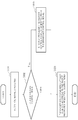
- Fig. 23 is a flow chart showing a procedure by which a packet processing regulation control signal is transmitted.
- the switch control unit 122 generates a packet processing regulation control signal for the communication device 11D based on the packet processing regulation obtained from the packet processing regulation table 121 (Step S701).
- the packet processing regulation control signal is a signal which controls a packet processing regulation held by the communication device 11D.
- the switch control units 122 determines whether a destination of a packet processing regulation control signal is one communication device or a plurality of communication devices (Step S702). Whether a destination of a packet processing regulation control signal is plural or not may be determined based on the standard set separately.
- a packet processing regulation control signal may be transmitted to a plurality of destinations.
- the switch control section 122 may determine whether a destination of a packet is one communication device or a communication device included in a predetermined group. For example, when it is desirable to apply the same packet processing regulation to a communication device included in a predetermined group, a packet processing regulation control signal may be transmitted to a destination included in the group.
- the communication device included in a predetermined group may not necessarily be plural and be one.
- a transmission means is selected based on whether a transmission destination of a packet processing regulation control signal is one communication device or plural (Step S703).
- a transmission means may be selected based on whether a destination of a packet is one communication device or a communication device included in a predetermined group.
- the packet processing regulation control signal is transmitted to the communication device 11D using the switch communication unit 123 (Step S704).
- the switch control signal processing unit 131 extracts destination information on destination's communication devices from the packet processing regulation control signal. And for example, the broadcast control signal control unit 133 selects destination's group using the switch group management unit 132 based on the extracted destination information.
- a broadcast control signal is generated by giving group information to the packet processing regulation control signal (Step S705).
- the broadcast notification transmission control unit 134 may acquire position information on the destination's switch from the switch group management unit 132 based on group information included in the broadcast control signal or destination's information included in the packet processing regulation control signal. And the broadcast control signal may be transmitted to a broadcast notification transmission unit 15 after adding destination's position information thereto. And for example, the broadcast control signal is transmitted to a plurality of broadcast notification reception units 16 as a broadcast notification signal (Step S706). Incidentally, the broadcast control signal is not transmitted to a plurality of broadcast notification reception units 16 necessarily, and when the communication device included in destination's group is one, the broadcast control signal is transmitted to one broadcast notification reception unit 16.
- Fig. 24 is a flow chart showing a procedure by which a packet processing regulation control signal is received.
- the controller communication unit 113 or the broadcast notification reception unit 16 provided in the communication device 11 receives a control signal (Step S801). And by whether a packet processing regulation control signal was received in the controller communication unit 113 or the packet processing regulation control signal was received as a broadcast notification signal in the broadcast notification reception unit 16, the packet processing control unit 112 determines whether the received signal is a broadcast control signal or not, and determines the next processing means as follows (Step S802). In Step S802, the packet processing control unit 112 may determine whether the received signal is a broadcast control signal or not based on information obtained from the received signal.
- the packet processing control unit 112 determines whether the received signal is a broadcast control signal or not.
- the packet processing regulation control signal is received in the broadcast notification reception unit 16
- the packet processing regulation control signal is included in the broadcast control signal.
- the packet processing regulation control signal when the packet processing regulation control signal is received in the controller communication unit 113, the packet processing regulation control signal is not a broadcast control signal (Step S803: False).
- the packet processing control unit 112 controls the packet processing unit 111 based on the received packet processing regulation control signal (Step S803).
- the broadcast notification receiving processing unit 141 when the broadcast notification signal is received in the broadcast notification reception unit 16, the broadcast control signal including a packet processing regulation control signal is included in the broadcast notification signal (Step S802: true). And the broadcast notification receiving processing unit 141 generates a broadcast control signal from the broadcast notification signal. And a broadcast control signal processing unit 142 determines whether a broadcast control signal is a target of reception based on group information and position information included in the broadcast control signal, and group information and position information held by the group management unit 143. When the broadcast control signal is a target of reception, the broadcast notification receiving processing unit 141 generates a packet processing regulation control signal from the broadcast control signal (Step S804). Incidentally, when neither of group information and position information is included in a broadcast control signal, it may be determined that the broadcast control signal is a target of reception.
- the switch control unit 144 converts the packet processing regulation control signal into the form suitable for the communication device 11D and transmits to the communication device 11D.
- the packet processing control unit 112 provided in the communication device 11D controls the packet processing unit 111 based on the packet processing regulation control signal (Step S803).
- the received broadcast control signal is a target of reception, and even the controller communication unit 113 may receive the packet processing regulation control signal.
- the packet processing control unit 112 changes the packet processing regulation by the packet processing regulation control signal received in the broadcast notification reception unit.
- the packet processing control unit 112 may change the packet processing regulation further based on the packet processing regulation control signal received in the controller reception unit.
- the communication system 1D of the fourth exemplary embodiment having such configuration obtains the effect that a packet processing regulation control signal can be notified simultaneously to a plurality of communication devices.
- a broadcast communication means is provided between the communication devices 11D and the control device 12D using the broadcast notification transmission unit 15 and the broadcast notification reception unit 16.
- the communication system 1 does not need to use a TCP connection by using a broadcast notification, and a packet processing regulation control signal can be notified simultaneously to a large number of communication devices.
- the communication system 1D can perform management of a packet control rule of the communication devices 11D by a packet processing regulation control signal as an individual control of the communication device.
- the communication system 1D is provided with an individual communication means using the controller communication unit 113 and the switch communication unit 123 between the communication devices 11D and the control device 12D in addition to a broadcast communication means. That is, in the communication system 1D, for example, a communication path of 1-to-1 has been secured between the communication devices 11D and the control apparatus 12D apart from a delivery route of a packet processing regulation control signal using a broadcast communication. Incidentally, in the communication system 1D, a delivery route of a packet processing regulation control signal using a broadcast communication and a communication path of 1 to 1 used for individual communication may be same. In a broadcast communication, although identical control is performed to all communication devices in a notification destination, individual setting to the communication devices is possible by control via an individual communication means of 1 to 1.
- a communication system 1D is further provided with an individual communication means in addition to a broadcast communication means, even when one communication means cannot be used, if other communication means is available, the effect that the communication devices 11D can be controlled by the control device 12D can be obtained.
- the communication system 1D can control the switch by the group.
- the reason is that it is possible to determine whether the broadcast control manager 13 performs broadcast notification of a packet processing regulation control signal. And the reason is that the broadcast control agent 14 can determine whether the propriety of the reception of a packet processing regulation control signal transmitted by a broadcast communication by a group unit.
- the communication system 1D can reduce the detection of notification of new communication to which an identical regulation is applied that occurs from a plurality of communication devices.
- the reason is because an chance of occurrence of the similar detection notification in the other communication devices can be reduced, by setting a processing regulation to new communication similarly to other communication devices by the control device 12D in case when new communication was detected in one communication device 11D to the control device 12D.
- the effect of the fourth exemplary embodiment can be also obtained in the following packet control device 500 or a communication device 600.
- the packet controller 500 and the communication device 600 are modifications of the fourth exemplary embodiment.
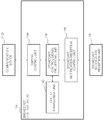
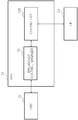
- Fig. 25 is a diagram showing a configuration of the packet control device 500.
- the packet control device 500 includes a packet processing regulation control unit 501, an individual transmission unit 502 and a broadcast notification transmission unit 503.
- the packet processing regulation control unit 501 generates a packet processing regulation (packet processing regulation control signal) used by a communication device which transmits a packet.
- the communication device is not illustrated in Fig. 25.
- the individual transmission unit 502 transmits the packet processing regulation by communication of 1 to 1 to the communication device from the packet processing regulation control unit.
- the broadcast notification unit 503 transmits an identical packet processing regulation by a broadcast communication to a plurality of communication devices from the packet processing regulation control unit.
- the packet processing regulation control unit 501 corresponds to the switch control unit 122 shown in Fig. 20.
- the individual transmission unit 502 corresponds to the switch communication unit 123 shown in Fig. 20.
- the broadcast notification transmission unit 503 corresponds to the broadcast control manager 13 and the broadcast notification transmission unit 15 shown in Fig. 18.
- a communication path of 1-to-1 is secured between the packet control device 500 and the communication device in addition to a delivery route of a packet processing regulation using a broadcast communication. Accordingly, the packet control device 500 can perform identical control to a large number of switches by a broadcast communication and individual setting to a communication device is possible by individual communication of 1-to-1.
- Fig. 26 is a diagram showing a configuration of the communication device 600.
- the communication device 600 (a switch) includes a packet processing unit 601, an individual reception unit 602, a broadcast notification reception unit 603 and a packet processing control unit 604.
- the packet processing unit 601 transfers a packet based on a packet processing regulation (a packet processing regulation control signal).
- the individual reception unit 602 receives the packet processing regulation by communication of 1-to-1 from the packet control device which generates a processing regulation of the packet processing unit 601.
- the broadcast notification reception unit 603 receives the packet processing regulation transmitted by a broadcast communication from the packet control device.
- the packet processing control unit 604 sets the packet processing regulation of the packet processing unit 601 based on the packet processing regulation received by at least one of the individual reception unit 602 and the broadcast notification reception unit 603.
- the packet processing unit 601, the individual reception unit 602 and the packet processing control unit 604 correspond to the packet processing unit 111, the controller communication unit 113 and the packet processing control unit 112 shown in Fig. 19, respectively.
- the broadcast notification reception unit 603 corresponds to the broadcast notification reception unit 16 and the broadcast control agent 14 shown in Fig. 18.
- a communication path of 1-to-1 is secured for the communication device 600 having such configuration between the packet control device (it is not illustrated) and the communication device 600 in addition to a delivery route of a processing regulation using a broadcast communication. Accordingly, even if a large number of communication devices 600 are under control of one packet control device 500, an identical packet processing regulation can be applied by a broadcast communication to a large number of communication devices and a packet processing regulation can be applied by individual communication of 1-to-1 to a specific communication device separately.
- Fig. 27 is a diagram showing a configuration of Cell Broadcast Service (CBS) 2 of a fifth exemplary embodiment of the present invention.
- the broadcast notification transmission unit 15 and the broadcast notification reception unit 16 described in the fourth exemplary embodiment are also applied to CBS 2.
- CBS 2 is a broadcast system defined in 3GPP (3rd Generation Partnership Project) TS23.401.
- target communication systems are GSM (Global System for Mobile Communications), UMTS (Universal Mobile Telecommunications System) and EPS (Evolved Packet System) in CBS.
- Fig. 27 shows a configuration in an EPS of the CBS 2. Incidentally, the configuration of Fig. 27 can also be applied to Earthquake and Tsunami Warning System: (ETWS) and CMAS (Commercial Mobile Alert System) or the like that are technologies to which the CBS is applied and extended.
- ETWS Earthquake and Tsunami Warning System
- CMAS Common Mobile Alert System
- CBS 2 shown in Fig. 27 includes an OFC (Open Flow Controller) 21, a UE (User Equipment) 23, a CBC (Cell Broadcast Center) 22, an MME (Mobility Management Entity) 24 and an eNodeB (evolved Node B) 25.
- OFC Open Flow Controller
- UE User Equipment
- CBC Cell Broadcast Center
- MME Mobility Management Entity
- eNodeB evolved Node B
- the OFC 21 is an open flow controller used by the open flow technology and manages a packet processing regulation of the UE 23 using a broadcast notification or an individual communication.
- the UEs 23 are terminals having the switch that processes a packet according to the packet processing regulation.
- the CBC 22 performs a broadcast notification in the specified range.
- the MME 24 is a movement management control node and transmits a broadcast notification from the CBC 22 to the eNodeB 25 of the specified subordinate.
- the eNodeB25 is a wireless base station which performs a broadcast notification of the received broadcast notification to all UEs 23 in the management area of the eNodeB25.
- a dashed line which connects the OFC 21 and the UEs 23 directly corresponds to a secure channel which are a communication path by an individual communication means described in the fourth exemplary embodiment and a communication path via the broadcast notification transmission unit 15 and the broadcast notification reception unit 16 described in the fourth exemplary embodiment.
- solid lines to the UEs 23 via the MME 24 and the eNodeB 25 from the CBC 22 may be a communication path by an individual communication means described in the fourth exemplary embodiment and a communication path via the broadcast notification transmission unit 15 and the broadcast notification reception unit 16 described in the fourth exemplary embodiment.
- the dashed line may be a communication path by an individual communication means, and the solid line may be a communication path via the broadcast notification transmission unit 15 and the broadcast notification reception unit 16.
- the solid line may be a communication path by an individual communication means, and the dashed line may be a communication path via the broadcast notification transmission unit 15 and the broadcast notification reception unit 16.
- the communication path in the secure channel is logical and may actually be a transmission line via the eNodeB 25, or a transmission line in other routes.
- Fig. 28 is a diagram showing a configuration of the OFC 21.
- the OFC 21 includes a controller (a control device) 12 and a broadcast control manager 13.
- the UE 23 has a function as a switch.
- the UE 23 may realize the function as the switch by data downloaded from an external device.
- a controller 12E manages a packet processing regulation of the switch (a packet processor) provided in the UE 23.
- the broadcast control manager 13 manages transmission by a broadcast notification to the UEs 23 of the packet processing regulation.
- a transmission line between the controller 12E and the UE 23 is a secure channel which is a communication path by an individual communication means.
- Fig. 29 is a diagram showing a configuration of the CBC 22.
- the CBC 22 includes a broadcast notification transmission unit 15. That is, the CBC 22 has the function of the broadcast notification transmission unit 15 and transmits a broadcast control signal received from the OFC 21 to the UEs 23 as a broadcast notification. Because the details of operation of the broadcast notification unit 15 are similar to the broadcast notification unit 15 described in the fourth exemplary embodiment, the description thereof will be omitted here.
- Fig. 30 is a diagram showing a configuration of the UE 23.
- the UE 23 includes a switch 11E, a broadcast control agent 14 and a CBS processing unit 231.
- the switch 11E processes packets which the UE 23 transmits and receives according to a packet processing regulation.
- a packet which the UE 23 transmits and receives although there are a packet of voice communication, a text data on the network and a packet of image data, the packets transmitted and received by the UE23 are not limited to these.
- the CBS processing unit 231 includes a broadcast notification reception unit 16 which receives a broadcast notification.
- the CBS processing unit 231 processes a CBS signal received from the eNodeB 25 according to operation specified in 3GPP TS 23.401.
- the CBS processing unit 231 transfers the message to the broadcast control agent 14.
- the broadcast control agent 14 controls the switch 11E based on the broadcast control signal received by the broadcast notification.
- the CBS processing unit 231 receives a signal transmitted via the CBC 22.
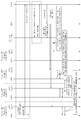
- Fig. 31 is a diagram showing an operation sequence of the CBS 2. An attribute held by the UE 23 will be described for a description using a sequence diagram shown in Fig. 31.
- the UE 23 belongs to at least one or more groups and one or more UEs 23 belong to the group defined here.
- the UE 23 holds an identifier of a geographical area.
- the group to which the UE 23 belongs is determined optionally based on an attribute which the UE 23 has or an establishment by an owner of the OFC 21.
- an attribute used as the standard of grouping there are a type of access interfaces which the UE 23 possesses and information of contract between the owner of the UE 23 and the administrator of the CBS 2 (network operator).
- the identifier of the geographical area held by the UE 23 is determined based on information set by a network operator.
- this geographical identifier there is a cell identifier (Cell-ID) that indicates a wireless communication area in 3GPP.
- Cell-ID cell identifier
- Each of the UE 23 belongs to groups A or B, and the value of either 10 or 20 is held as the cell identifier (Cell-ID) as the identifier of the geographical area.
- Cell-ID cell identifier
- the OFC 21 transmits a change signal (Flow-mod) message of the packet processing regulation (flow entry) to the UEs 23.
- Flow-mod change signal
- the Flow-mod message is also transmitted when a network operator who manages the OFC 21 requests the change of the packet processing regulation of the UE 23 to the OFC 21.
- the OFC 21 which has received the Packet-in message notifies the UEs 23 of the Flow-mod, a transmission request (Packet_out) of the packet which caused the opportunity or both messages using an individual communication means or a broadcast notification means about handling of a frame which caused the opportunity of the transmission of the Packet-in message.
- Packet_out a transmission request of the packet which caused the opportunity or both messages using an individual communication means or a broadcast notification means about handling of a frame which caused the opportunity of the transmission of the Packet-in message.
- the OFC 21 determines which of an individual communication means and a broadcast notification means to use for the transmission of the Flow-mod message to the UEs 23 (refer to Fig. 31 and Fig. 20).
- the OFC 21 uses an individual communication means.
- the OFC 21 uses a broadcast notification means.
- the switch control unit 122 provided in the OFC 21 selects an individual communication means, the OFC 21 can notify of the above-mentioned Flow-mod message, Packet-out message or both of the messages.
- the switch control unit 122 hands the Flow-mod message to the broadcast control manager 13.
- the switch control unit 122 may notify of the different setting to the specific UE 23.
- the broadcast control manager 13 provided in the OFC 21 specifies a group which is a controlled object by the Flow-mod message and generates a broadcast control signal to which group information was given. In generation processing of a broadcast control signal based on the group information, the broadcast control manager 13 may perform different processing for each group. As an example of processing for each group, there is encryption of a message using an encryption key common to a group.
- the broadcast control manager 13 may specify the UE 23 which connects with a certain eNodeB 25 as a controlled object by a Flow-mod message. As a result, for example, the OFC 21 can perform broadcast transmission of a uniform Flow-mod message to the UEs 23 managed by the eNodeB 25.
- the OFC 21 can direct at the same time the UEs 23 which connect with the eNodeB 25 to connect with a network without passing the eNodeB 25, for example (by off-road, for example).
- the broadcast control manager 13 performs a broadcast notification request to the CBC 22.
- the broadcast notification request includes a broadcast control signal to which group information was given and an identifier in the broadcast notification range that can be understood in the CBC 22.
- the identifier in the broadcast notification range the cell identifier (Cell-ID) that is one of identifiers of the wireless communication area of 3GPP is used.
- the CBC 22 transfers a signal including a packet processing regulation to the MME 24 belonging to a specified broadcast notification range according to the broadcast notification request received from the OFC 21.
- the CBC 22, the MME 24 and the eNodeB 25 transfer a signal including a packet processing regulation to the UE 23 belonging to the range of the broadcast notification specified in the CBC 22 according to a rule of 3GPP TS 23.401.
- an identical packet processing regulation can be delivered to terminals in different geographically.
- only one geographical identifier is specified in Fig. 31, by specifying a plurality of geographical identifiers, a broadcast notification can be performed to the UEs 23 which exist in a plurality of geographical areas.
- the UE 23 receives a broadcast notification signal from the eNodeB 25 by the broadcast notification reception unit 25.
- the UE 23 may perform direct reception of a broadcast notification signal from the OFC 21 by the broadcast notification reception unit 25.
- the broadcast notification reception unit 25 transfers the received broadcast notification signal to the broadcast control agent 14 ("OFS Agent" of Fig. 31).
- the broadcast control agent 14 generates a packet processing regulation control signal from the broadcast notification signal based on group information held in the group management unit 143.
- the broadcast notification signal including a group "A” is notified. Accordingly, when recognizing that control by a broadcast notification signal is non-applicable, the UE (terminal) in which the held group identifier is different from “A” discards the broadcast notification signal. A terminal in which the held group identifier is "A” converts a broadcast notification signal into a packet processing regulation control signal and transmits to the switch ("OFS" of Fig. 31) as a Flow_mod message. Incidentally, as other example of group information, a key for decoding encrypted message is considered.
- the group information set up common to both of the OFC 21 and the UE 23 beforehand may be used.
- the group information may be exchanged using an individual communication means set between the OFC 21 and the UE 23 before the group information is used and both of group information may be made identical.
- group information can be exchanged safely by providing an individual communication means as an encrypted route.
- a different packet processing regulation control signal can be set for each switch by an individual communication means. Accordingly, a different control rule for each switch can be set to an identical Flow-mod message.
- the UE 23 holds three interfaces of a 3GPP access interface, a WiMAX (Worldwide interoperability for Microwave Access) access interface and a WLAN (Wireless Local Area Network) access interface, and a group identifier is "A".
- the switch 11E of the UE 23 has a function to select an access interface which the UE 23 uses.
- the WLAN interface may be unable to be used.
- the WLAN interface of the UE 23 cannot be used.
- resetting a group identifier according to the state of the UE that is, changing the group identifier of the UE 23 from "A" requires large cost, for example, such that reconstruction of a database provided in the OFC 21 and the broadcast control manager 13 is required.
- OFC21 sets or changes the packet processing regulation separately by an individual communication means to the UE 23 belonging to the group identifier "A" which cannot process the packet with the packet processing regulation by the Flow-mod message by which the broadcast notification was performed in the example mentioned above.
- the OFC 21 and the broadcast control manager 13 reconstruct a database, and the change in an entire system can be reduced as the result.
- the change mentioned above it is considered a case that the UE 23 by which a group identifier is A cannot use the WLAN access interface when setting or change of a packet processing regulation from which a group identifier transmits a packet using the WLAN access interface by the Flow-mod message including "A" is notified, and the setting transmitted by the Flow-mod message is replaced as setting or change of a packet processing regulation which transmits a packet using the WiMAX access interface.
- a packet processing regulation control signal generated by these operation is transmitted to the switch 11E, and the switch 11E sets or changes the packet processing regulation.
- the cell broadcast system (CBS) 2 of the fifth exemplary embodiment described above produces the effect that a packet processing regulation control signal can be transmitted simultaneously from the OFC 21 to the respective switches provided in a plurality of UEs 23.
- the CBC22 including the broadcast notification transmission unit 15 is provided between the UEs 23 and the OFC 21, and the broadcast notification reception unit 16 is provided in the UEs 23, and as the result, a broadcast communication unit is formed between the UEs 23 and the OFC 21.
- the CBS 2 can perform management of a packet control rule of the UE 23 by a broadcast notification signal through individual control to the switch provided in the UE 23.
- the CBS2 is provided with an individual communication means capable of individual communication between the UE 23 and the OFC 21 in addition to a broadcast communication means. That is, in the CBS 2, a communication path of 1 to 1 has been secured between the UE 23 and the OFC 21. Because the OFC 21 transmits a uniform Flow-mod message to the switches of a plurality of UEs 23 by a broadcast communication, identical control is performed from the OFC 21. On the other hand, the OFC 21 can perform individual setting of a packet processing regulation to the UEs 23 by a transmission of Flow-mod message via an individual communication means of 1 to 1 between the UE 22 and the OFC 21.
- the CBS 2 is provided with an individual communication means in addition to a broadcast communication means. For this reason, even when one communication means cannot be used, if other communication means is available, the CBS 2 can control the UE 23 using the OFC 21.
- the CBS2 can control the UE by a group. The reason is that it is possible to determine the propriety of the control to the switch 11E by a group at the UE 23 to a broadcast packet processing regulation control signal.
- the CBS 2 can reduce the notification of a new communication detection to which an identical regulation is applied that occurs from a plurality of UEs.
- the OFC 21 can reduce occurrence of the similar detection notification in other UEs 23 by setting a similar packet control rule using a broadcast communication to the other UEs 23.
- Fig. 32 is a diagram showing a configuration of the communication system 3 including the UE having a plurality of access interfaces.
- each of the UEs 23 holds a 3G access interface capable of communication with eNodeB 25 and a WLAN access interface capable of communication with the WLAN-AP 31.
- Four UEs of UE #1 - UE #4 are described in Fig. 32.
- the UEs 23 #1 and #2 which have received this Flow-mod message change the access interface used by the UEs #1 and #2 to the WLAN access interface from the 3G access interface.
- a Flow-mod message processes all flows which generating at a specific access interface and can specify an access interface by which a flow is processed by a flow unit. Accordingly, it is possible to select a traffic which applies a load to a 3G access network using the Flow-mod message, and make only the traffic go through the WLAN access interface. Further, a traffic which is made go through a 3G access network may be specified in the Flow-mod message.
- coverage of control can be restricted by a group unit in addition to geographical restriction by setting a group identifier made an applicable object of a broadcast notification signal.
- a UE which is a controlled object can be restricted by defining a group identifier corresponding to the content of the contract of the UE, and giving a different group identifier to the UE 23 which can also use a 3G access network with priority at the time of congestion based on contract.
- the UE 23 #2 belonging to a group B is made out of a controlled object by restricting the controlled object to only a group A by a group identifier.
- control for avoidance of the network congestion can be realized by the selected geographical area and an unit of a terminal group.
- ANDSF Access Network Discovery & Selection Function
- Fig. 33 is a diagram showing a configuration of a communication system 4 to which a broadcast notification control system was applied to the ANDSF.
- a configuration of a network has the same configuration as the case that the OFC 21 in Fig. 27 was changed to the ANDSF 41.
- Each of the UEs 23 selects an access network used by the UE 23 based on a delivered policy.
- a Push Model and a Pull Model are specified.
- the Push Model the notification of policy update from the ANDSF which is a server to the UE will be an opportunity of a policy delivery.
- a policy is transmitted via the communication path.
- the Pull Model occurrence of necessity of a policy in the UE will be opportunity of a delivery of a policy. In this case, when a policy in the UE is needed, a secure communication path is established between the ANDSF and the UE, and a policy is transmitted via the communication path.
- a policy update notification of the ANDSF can be broadcast to UEs belonging to an arbitrary group which exists within the limits of a predetermined geographical restriction by applying a configuration of a communication system of the fourth exemplary embodiment to policy update.
- a load to a network by a large number of policy update notifications can be reduced.
- a policy which is control information can be delivered by broadcasting. Thereby, establishment of connections between the ANDSF and the UEs become unnecessary and a policy can be delivered to a lot of UEs from the ANDSF.
- individual change control setting to the policy received by a broadcast notification via an individual secure communication path which the ANDSF has is possible.
- a decryption key of an encrypted message transmitted by the broadcast notification may be exchanged using the individual secure communication path.
- the message transmitted by the broadcast notification is also received in a UE unnecessary originally, and after determining the necessity of the message in the UE, the unnecessary message is discarded. For this reason, the safety of the message transmitted by the broadcast notification is low compared with an individual secure communication path. Accordingly, it is possible to encrypt a message by which broadcast notification is performed to the UE from the ANDSF by distributing a decoding key via an individual secure communication path to a group which becomes a distribution object beforehand and to raise a safety of distribution of the key.
- a communication system including: a control device which generates a processing regulation for processing a packet; and a plurality of communication devices which process the packet by the processing regulation, wherein the control device notifies the plurality of communication devices of the processing regulation by a broadcast communication.
- control device determines communication devices to which the generated processing regulation is applied, and notifies the plurality of communication devices of the identifier that identifies at least one of the determined communication devices and the processing regulation by a broadcast communication.
- each of the plurality of communication devices includes a plurality of communication interfaces
- the control device determines the communication interface used for transmitting the packet among the plurality of communication interfaces, and notifies the plurality of communication devices of the processing regulation for transmitting a packet by the determined communication interface by a broadcast communication.
- each of the plurality of communication devices includes a first communication interface and a second communication interface
- the control device notifies the plurality of communication devices of the processing regulation for switching a communication interface used for transmitting the received packet from the first communication interface to the second communication interface by a broadcast communication.
- a control device including: generation means for generating a processing regulation for processing a packet; and notifying means for notifying a plurality of communication devices which process a packet by the processing regulation of the processing regulation by a broadcast communication.
- each of the plurality of communication devices further belongs to at least one group and includes decision means for determining a group of communication devices which applies the generated processing regulation, and the notifying means notifies the plurality of communication devices of the determined information which identifies the group and the processing regulation by a broadcast communication.
- control device according to supplementary note 15 further including decision means for determining at least one communication device to which the generated processing regulation is applied, wherein the notifying means notifies the plurality of communication devices of an identifier that identifies at least one of the determined communication devices and the processing regulation by a broadcast communication.
- the generation means generates the processing regulation for switching a communication interface used for a transmission of the received packet among the first communication interface and the second communication interface provided in each of the plurality of communication devices from the first communication interface to the second communication interface, and the notifying means notifies the plurality of communication devices of the generated processing regulation by a broadcast communication.
- a communication device including: reception means for receiving a processing regulation which was notified by a broadcast transmission from a control device which generates a processing regulation for processing a packet; and processing means for processing a packet which was received by the received processing regulation.
- the communication device according to any one of supplementary notes 27 to 29, further including request means for requesting the processing regulation for processing the received packet to the control device, wherein the reception means receives the processing regulation which the control device generated in response to the request, and the processing means processes the received packet by the received processing regulation.
- a control method of a control device including: a step of generating a processing regulation for processing a packet; and a step of notifying a plurality of communication devices which process the packet by the processing regulation of the processing regulation by a broadcast communication.
- the control method of a control device including: a step of determining at least one communication device to which the generated processing regulation is applied; and a step of notifying the plurality of communication devices of an identifier that identifies at least one determined communication device and the processing regulation by a broadcast communication.
- control method of a control device including a step of determining at least one communication device to which the generated processing regulation is applied based on position information on the plurality of communication devices.
- the control method of a control device including: a step of determining a communication interface used for transmitting a packet among a plurality of communication interfaces provided in each of the plurality of communication devices; a step of generating the processing regulation for transmitting a packet which was received by the determined communication interface; and a step of notifying the plurality of communication devices of the generated processing regulation by a broadcast communication.
- the control method of a control device including: a step of generating the processing regulation for switching a communication interface used for a transmission of the received packet among a plurality of communication interfaces provided in each of the plurality of communication devices from a first communication interface to a second communication interface; and a step of notifying the plurality of communication devices of the generated processing regulation by a broadcast communication.
- control method of a control device including: a step of generating a processing regulation notified to the plurality of communication devices in response to a request from at least one of the plurality of the communication device; and a step of notifying the plurality of communication devices of the generated processing regulation by a broadcast communication.
- a control method of a communication device including: a step of receiving a processing regulation which was notified by a broadcast transmission from a control device which generates a processing regulation for processing a packet; and a step of processing a packet which was received by the received processing regulation.
- the control method of a communication device including: a step of receiving the processing regulation and an identifier that identifies a communication device; and a step of processing a packet which was received by a processing regulation which was notified from the control device when the identifier received from the control device and the identifier of the communication device were identical.
- the control method of a communication device including: a step of requesting the processing regulation for processing a received packet; a step of receiving a processing regulation which was generated in response to the request by the control device; and a step of processing the received packet by the received processing regulation.
- the control method of a communication device including: a step of receiving information which indicates the state of a plurality of networks notified by a broadcast transmission through the control device; and a step of determining a network to be connected from the plurality of networks based on information which indicates the state of the plurality of received networks.
- a program for making a control device for managing a plurality of communication devices execute processing of: generating a processing regulation for processing the packet; and notifying the plurality of communication devices of the processing regulation by a broadcast communication.
- each of the plurality of communication devices belongs to at least one group, the program including: processing of determining a group to which the generated processing regulation is applied; and processing of notifying the plurality of communication devices of information which identifies the determined group and the processing regulation by a broadcast communication.
- a program for making a communication device which processes a packet based on a predetermined regulation execute processing of: receiving a processing regulation which was notified by a broadcast transmission from a control device which generates a processing regulation for processing a packet; and processing a packet which was received by the received processing regulation.
- a communication terminal for processing a packet based on a predetermined regulation including: reception means for receiving a processing regulation which was notified by a broadcast transmission from a control device which generates a processing regulation for processing a packet; and processing means for processing a packet which was received by the received processing regulation.
- the communication terminal according to supplementary note 53, wherein the communication terminal belongs to at least one of communication terminal groups, the reception means receives the processing regulation and information which identifies at least one of the groups, and the processing means processes a packet which was received by a processing regulation which was notified from the control device when information which identifies a group received from the control device and information on a group to which the communication terminal belongs were identical.
- switch control unit 21 open flow controller (OFC) 22 cell broadcast center (CBC) 23 terminal (UE) 24 movement management control node (MME). 25 wireless base station (eNodeB). 231 CBS processing unit 31 wireless LAN access point (WLAN-AP). 32 network operator (NW Operator) 41 access network detection selection function (ANDSF) 500 packet control device 501 packet processing regulation control unit 502 individual transmission unit 503 broadcast notification unit 600 communication device. 601 packet processing unit 602 individual reception unit 603 broadcast notification reception unit 604 packet processing control unit
Landscapes
- Engineering & Computer Science (AREA)
- Computer Networks & Wireless Communication (AREA)
- Signal Processing (AREA)
- Data Exchanges In Wide-Area Networks (AREA)
- Mobile Radio Communication Systems (AREA)
Description
The present invention relates to a communication system, a control device, a communication device, a communication terminal, a control method of a control device, a control method of a communication device and a program.
In recent years, technology called OpenFlow is proposed (refer to patent documents 1 and 2, and non-patent documents 1 and 2). The OpenFlow is a technology which regards communication as an end-to-end flow and performs control such as path control, failure recovery, load sharing and optimization by a flow. The OpenFlow Switch (OFS) specified in non-patent document 2 has a secure channel for communication between the OpenFlow Controller (OFC). The OFC operates in accordance with description of a flow-table. The set of the matching rule (header field) checked with the packet header, the flow statistics information (Counters) and the actions which defines a process content (Actions) is defined for each flow in the flow-table. Fig. 34 is a diagram showing an example of the set of the header field, the flow statistics information and the action by which process content was defined. The contents defined by the flow-table shown in Fig. 34 are added or rewritten by directions from an open flow controller via a secure channel.
For example, when receiving a packet, the open flow switch searches for an entry with a matching rule (refer to a header field of Fig. 34) fitting in with the header information on the received packet from the flow-table. When an entry fitting is found in the received packet as the result of the search, the open flow switch updates the flow statistics information (Counters). And the open flow switch performs processing (such as packet transmission from a specifying port, flooding and discard) written in the action field of the entry to the received packet.
On the other hand, when an entry fitting is not found in the received packet as the result of the search, the open flow switch requests entry setting to the open flow controller via the secure channel. That is, in this case, the open flow switch transmits a request of selection in a path of a packet based on a source and a destination of the received packet.
The open flow switch receives the flow entry corresponding to the request and updates the flow-table. Thus, the open flow switch employs the entry stored in the flow-table as a processing regulation and performs packet transfer.
Non-patent document 3 discloses a technology which equips a switch function for a mobile terminal and switches a communication path of the mobile terminal from a controller on the network.
Moreover, patent document 3 discloses an inter-network connection device which transfers a multicast frame. Patent document 4 discloses a communication method by which a controller of a switch controls packet converting of other switch.
[PTL 1] WO2008/095010
[PTL 2] Japanese Patent Application Laid-Open No. 2012-049674
[PTL 3] Japanese Patent Application Laid-Open No. 1997-083576
[PTL 4] Japanese Patent Application Laid-Open No. 2005-229559
[PTL 2] Japanese Patent Application Laid-Open No. 2012-049674
[PTL 3] Japanese Patent Application Laid-Open No. 1997-083576
[PTL 4] Japanese Patent Application Laid-Open No. 2005-229559
[NPL 1] Nick McKeown et al., "OpenFlow: Enabling Innovation in Campus Networks," [online] and [searched on August 27th in 2012] and the Internet (URL:http://www.openflowswitch.org/documents/openflow-wp-latest.pdf)
[NPL 2] "OpenFlow Switch Specification" Version 1.0.0. (Wire Protocol 0x01) [it is searched for on August 27th in 2012], the Internet (URL:http://www.openflowswitch.org/documents/openflow-spec-v1.0.0.pdf)
[NPL 3] Syuichi Karino, Takahiro Iihoshi, Gen Morita, Akira Tsuji, "Using OpenFlow to Control Mobile Terminals from Operators", Institute of Electronics, Information and Communication Engineers Technological Research Report vol.111, no.468, NS2011-201, pp. 123-128 (March, 2012)
[NPL 2] "OpenFlow Switch Specification" Version 1.0.0. (Wire Protocol 0x01) [it is searched for on August 27th in 2012], the Internet (URL:http://www.openflowswitch.org/documents/openflow-spec-v1.0.0.pdf)
[NPL 3] Syuichi Karino, Takahiro Iihoshi, Gen Morita, Akira Tsuji, "Using OpenFlow to Control Mobile Terminals from Operators", Institute of Electronics, Information and Communication Engineers Technological Research Report vol.111, no.468, NS2011-201, pp. 123-128 (March, 2012)
When the number of the controlled objects is large, and a control device and controlled objects communicate separately, a network of the central control type like OpenFlow disclosed in patent documents 1 and 2 and non-patent documents 1 - 3 has a problem that the traffic volume becomes enormous. And patent document 3 and 4 do not disclose a means for solving such problem.
(Object of invention)
An object of the present invention is to reduce the traffic volume between a control device and a controlled object.
An object of the present invention is to reduce the traffic volume between a control device and a controlled object.
A communication system of the invention includes a control device which generates a processing regulation for processing a packet; and a plurality of communication devices which process the packet by the processing regulation, wherein the control device notifies the plurality of communication devices of the processing regulation by a broadcast communication.
A control device of the invention includes generation means for generating a processing regulation for processing a packet; and notifying means for notifying a plurality of communication devices which process a packet by the processing regulation of the processing regulation by a broadcast communication.
A communication device of the invention includes reception means for receiving a processing regulation which was notified by a broadcast transmission from a control device which generates a processing regulation for processing a packet; and processing means for processing a packet which was received by the received processing regulation.
A control method of a control device of the invention includes a step of generating a processing regulation for processing a packet; and a step of notifying a plurality of communication devices which process the packet by the processing regulation of the processing regulation by a broadcast communication.
A control method of a communication device of the invention includes a step of receiving a processing regulation which was notified by a broadcast transmission from a control device which generates a processing regulation for processing a packet; and a step of processing a packet which was received by the received processing regulation.
The communication system of the present invention can reduce the traffic volume between the control device and the controlled object.
[Fig. 1] A diagram showing an example of a configuration of a communication system in an exemplary embodiment of the present invention
[Fig. 2] A diagram showing an example of configuration of a communication system in a first exemplary embodiment
[Fig. 3] A diagram showing an example of configuration of a communication device in the first exemplary embodiment
[Fig. 4] A diagram showing an example of configuration of a control device in the first exemplary embodiment
[Fig. 5] A flow chart showing a procedure example by which a packet processing regulation control signal is transmitted in the first exemplary embodiment
[Fig. 6] A flow chart showing a procedure example by which a packet processing regulation control signal is received in the first exemplary embodiment
[Fig. 7] A diagram showing an example of configuration of a communication device in a second exemplary embodiment
[Fig. 8] A diagram showing an example of configuration of a control device in the second exemplary embodiment
[Fig. 9] A flow chart showing a procedure by which the broadcast control signal is transmitted in the second exemplary embodiment
[Fig. 10] A flow chart showing a procedure by which the broadcast control signal in the second exemplary embodiment is received.
[Fig. 11] A diagram showing a configuration of a communication system in a third exemplary embodiment
[Fig. 12] A diagram showing a configuration of a communication device in the third exemplary embodiment
[Fig. 13] A diagram showing a configuration of a control device in the third exemplary embodiment
[Fig. 14] A diagram showing a configuration of a broadcast control manager in the third exemplary embodiment
[Fig. 15] A diagram showing a configuration of a broadcast control agent in the third exemplary embodiment
[Fig. 16] A flow chart showing a procedure by which a broadcast notification signal is transmitted in the third exemplary embodiment
[Fig. 17] A flow chart showing an example of procedure by which a broadcast notification signal is received in the third exemplary embodiment
[Fig. 18] A diagram showing a configuration of a communication system in the fourth exemplary embodiment of the present invention
[Fig. 19] A diagram showing a configuration of a communication device in the fourth exemplary embodiment
[Fig. 20] A diagram showing a configuration of a control device in the fourth exemplary embodiment
[Fig. 21] A diagram showing a configuration of a broadcast control manager in the fourth exemplary embodiment
[Fig. 22] A diagram showing a configuration of a broadcast control agent in the fourth exemplary embodiment
[Fig. 23] A flow chart showing a procedure by which a packet processing regulation control signal is transmitted in the fourth exemplary embodiment
[Fig. 24] A flow chart showing a procedure by which a packet processing regulation control signal in the fourth exemplary embodiment is received
[Fig. 25] A diagram showing a configuration of a packet controller in the fourth exemplary embodiment
[Fig. 26] A diagram showing a configuration of a communication device in the fourth exemplary embodiment
[Fig. 27] A diagram showing a configuration of Cell Broadcast Service of a fifth exemplary embodiment of the present invention
[Fig. 28] A diagram showing a configuration of the OFC
[Fig. 29] A diagram showing a configuration of the CBC
[Fig. 30] A diagram showing a configuration of the UE
[Fig. 31] A diagram showing an operation sequence of the CBS
[Fig. 32] A diagram showing a configuration of a communication system including a UE having a plurality of access interfaces
[Fig. 33] A diagram showing a configuration of a communication system to which a broadcast notification control system is applied to the ANDSF.
[Fig. 34] A diagram showing an example of the set of the header field, the flow statistics information and the action by which process content was defined.
[Fig. 2] A diagram showing an example of configuration of a communication system in a first exemplary embodiment
[Fig. 3] A diagram showing an example of configuration of a communication device in the first exemplary embodiment
[Fig. 4] A diagram showing an example of configuration of a control device in the first exemplary embodiment
[Fig. 5] A flow chart showing a procedure example by which a packet processing regulation control signal is transmitted in the first exemplary embodiment
[Fig. 6] A flow chart showing a procedure example by which a packet processing regulation control signal is received in the first exemplary embodiment
[Fig. 7] A diagram showing an example of configuration of a communication device in a second exemplary embodiment
[Fig. 8] A diagram showing an example of configuration of a control device in the second exemplary embodiment
[Fig. 9] A flow chart showing a procedure by which the broadcast control signal is transmitted in the second exemplary embodiment
[Fig. 10] A flow chart showing a procedure by which the broadcast control signal in the second exemplary embodiment is received.
[Fig. 11] A diagram showing a configuration of a communication system in a third exemplary embodiment
[Fig. 12] A diagram showing a configuration of a communication device in the third exemplary embodiment
[Fig. 13] A diagram showing a configuration of a control device in the third exemplary embodiment
[Fig. 14] A diagram showing a configuration of a broadcast control manager in the third exemplary embodiment
[Fig. 15] A diagram showing a configuration of a broadcast control agent in the third exemplary embodiment
[Fig. 16] A flow chart showing a procedure by which a broadcast notification signal is transmitted in the third exemplary embodiment
[Fig. 17] A flow chart showing an example of procedure by which a broadcast notification signal is received in the third exemplary embodiment
[Fig. 18] A diagram showing a configuration of a communication system in the fourth exemplary embodiment of the present invention
[Fig. 19] A diagram showing a configuration of a communication device in the fourth exemplary embodiment
[Fig. 20] A diagram showing a configuration of a control device in the fourth exemplary embodiment
[Fig. 21] A diagram showing a configuration of a broadcast control manager in the fourth exemplary embodiment
[Fig. 22] A diagram showing a configuration of a broadcast control agent in the fourth exemplary embodiment
[Fig. 23] A flow chart showing a procedure by which a packet processing regulation control signal is transmitted in the fourth exemplary embodiment
[Fig. 24] A flow chart showing a procedure by which a packet processing regulation control signal in the fourth exemplary embodiment is received
[Fig. 25] A diagram showing a configuration of a packet controller in the fourth exemplary embodiment
[Fig. 26] A diagram showing a configuration of a communication device in the fourth exemplary embodiment
[Fig. 27] A diagram showing a configuration of Cell Broadcast Service of a fifth exemplary embodiment of the present invention
[Fig. 28] A diagram showing a configuration of the OFC
[Fig. 29] A diagram showing a configuration of the CBC
[Fig. 30] A diagram showing a configuration of the UE
[Fig. 31] A diagram showing an operation sequence of the CBS
[Fig. 32] A diagram showing a configuration of a communication system including a UE having a plurality of access interfaces
[Fig. 33] A diagram showing a configuration of a communication system to which a broadcast notification control system is applied to the ANDSF.
[Fig. 34] A diagram showing an example of the set of the header field, the flow statistics information and the action by which process content was defined.
First, an outline of an exemplary embodiment of the present invention will be described with reference to a drawing. Fig. 1 is a diagram showing an example of a configuration of a communication system in an exemplary embodiment of the present invention. As shown in Fig. 1, a communication system of the present invention is realized in a configuration including communication devices 11 and a control device 12. Further, drawing reference marks added to this outline was added to each element for convenience as an example for helping understanding, and the marks is not intended to limit the present invention to a form of illustration.
The control device 12 functions as a means which generates a processing regulation for processing a packet and a means which notifies the communication devices 11 of the generated packet processing regulation.
In Fig. 1, the control device 12 notifies of a generated packet processing regulation by a broadcast communication to the communication devices 11. In order to notify of the packet processing regulation by the broadcast communication, the control device 12 can notify of the packet processing regulation at the same time to a plurality of communication devices 11.
The communication devices 11 process a received packet based on the packet processing regulation notified from the control device 12. For example, the communication devices 11 are a packet processor such as switches and routeres. For example, the communication devices 11 are communication terminals of a radio communication terminal.
According to a configuration shown in Fig. 1, the control device 12 notifies of the packet processing regulation for processing a packet by broadcast communication to the communication devices 11. Therefore, the control device 12 can notify of the packet processing regulation at the same time to a plurality of communication devices 11. Therefore, according to the communication system shown in Fig. 1, the control device 12 can reduce the number of times that receives a request of the packet processing regulation from the communication devices 11 separately, and the traffic volume between the communication devices 11 and the control device 12 can be reduced.
(First exemplary embodiment)
A first exemplary embodiment of the present invention will be described with reference to a drawing. Fig. 2 is a diagram showing an example of configuration of a communication system according to a first exemplary embodiment of the present invention. As shown in Fig. 2, a communication system 1A in the first exemplary embodiment of the present invention includescommunication devices 11A and a control device 12A.
A first exemplary embodiment of the present invention will be described with reference to a drawing. Fig. 2 is a diagram showing an example of configuration of a communication system according to a first exemplary embodiment of the present invention. As shown in Fig. 2, a communication system 1A in the first exemplary embodiment of the present invention includes
Fig. 3 is a block diagram showing an example of configuration of the communication device 11A. As shown in Fig. 3, the communication device 11A includes a packet processing unit 111, a packet processing control unit 112 and a controller communication unit 113.
The packet processing unit 111 generates a packet processing regulation and holds the generated packet processing regulation. The packet processing regulation is a regulation which processes a packet sent and received in the communication device 11A. When receiving a packet, the packet processing unit 111 refers to a packet processing regulation based on information held by the packet. And when the packet processing unit 111 itself has a packet processing regulation corresponding to the information held in the packet, the packet processing unit 111 processes the packet according to the packet processing regulation. Here, as information held by the packet, there is information on a source and a destination of a packet.
A packet processing control unit 112 performs registering, changing and deleting of the packet processing regulation to the packet processing unit 111 based on a packet processing regulation control signal generated by the controller communication unit 113.
The controller communication unit 113 receives a broadcast control signal from the control device 12A and generates a packet processing regulation control signal from the received broadcast control signal.
Fig. 4 is a block diagram showing an example of configuration of the control device 12A. As shown in Fig. 4, the control device 12A includes a packet processing regulation table 121, a switch control unit 122 and a switch notification unit 123A.
Conditions to distinguish a packet sent and received in each of the communication devices 11A, processing performed when a packet meets the conditions, and the communication device 11A which is an applicable object of a packet processing regulation are related and held on the packet processing regulation table 121.
The switch control unit 122 refers to the packet processing regulation table 121 and generates a packet processing regulation control signal including a packet processing regulation to the communication devices 11A.
The switch notification unit 123A establishes communication paths to the communication devices 11A, generates a broadcast control signal based on the packet processing regulation control signal to the communication devices 11A and notifies of the generated broadcast control signals by a broadcast communication.
Next, processing of the communication system 1A in the first exemplary embodiment will be described in detail with reference to flow charts of Fig. 5 and Fig. 6.
First, operation by which a packet processing regulation control signal is transmitted will be described. Fig. 5 is a flow chart showing a procedure by which a packet processing regulation control signal is transmitted. The switch control unit 122 generates a packet processing regulation control signal to the communication devices 11A based on the packet processing regulation obtained from the packet processing regulation table 121 (Step S101). The packet processing regulation control signal is a signal which controls the packet processing regulation held by each of the communication devices 11A.
After that, the switch notification unit 123A generates a broadcast control signal from the packet processing regulation control signal and notifies the communication devices 11A of the generated broadcast control signal by a broadcast communication (Step S102).
Next, operation by which a packet processing regulation control signal is received will be described. Fig. 6 is a flow chart showing a procedure by which a packet processing regulation control signal is received.
The controller communication unit 113 provided in each of the communication devices 11A receives a broadcast control signal and generates a packet processing regulation control signal from the broadcast control signal (Step S201).
After that, the packet processing control unit 112 carries out registering, changing and deleting of a packet processing regulation held by the packet processing unit 111 based on the packet processing regulation control signal generated by the controller communication unit 113 (Step S202).
By having a configuration shown in the Fig. 2, the communication system 1A of the first exemplary embodiment can solve a problem that it is difficult to control a large number of switches simultaneously and separately by one controller when the number of switches managed by the controller is large in OpenFlow technology disclosed in patent documents 1 and 2 and non-patent documents 1 - 3.
In OpenFlow technology disclosed in patent documents 1 and 2 and non-patent documents 1 - 3, in a secure channel between the controller and the switch, a TCP (Transmission Control Protocol) connection is used. And the TCP port number is used in the controller for identification of communication with the switch. In such situation, the upper limits of the number of switches that can be controlled simultaneously and separately in a controller are about tens of thousands from restriction of the number of TCP port numbers. On the other hand, when the switch is loaded into a mobile communication terminal belonging to mobile communication career network, millions of switches are connected to the network. It is difficult to control the switches on such a large number of terminals simultaneously and separately by one controller by a TCP connection.
In contrast, in the communication system 1A of the first exemplary embodiment, the control device 12A notifies the plurality of communication devices 11A at the same time of a packet processing regulation. For this reason, the communication system 1A can control simultaneously to a plurality of switches from a controller. Accordingly, the communication system 1A can solve a problem that it is difficult to control a large number of switches simultaneously and separately by one controller when the number of switches managed by the controller is large in OpenFlow technology.
(Second exemplary embodiment)
According to a second exemplary embodiment of the present invention, a received packet is processed based on a packet processing regulation which a specific communication device (the specific communication device might be plural) or at least one communication device belonging to a specific group was notified by a control device using a broadcast communication. The second exemplary embodiment will be described below with reference to a drawing.
According to a second exemplary embodiment of the present invention, a received packet is processed based on a packet processing regulation which a specific communication device (the specific communication device might be plural) or at least one communication device belonging to a specific group was notified by a control device using a broadcast communication. The second exemplary embodiment will be described below with reference to a drawing.
A point of difference between the second exemplary embodiment and the first exemplary embodiment is configuration of the communication device and the control device. Because others are same as the first exemplary embodiment, description is made centering on the point of difference at below.
Fig. 7 is a block diagram showing an example of configuration of a communication device 11B. The communication device 11B shown in Fig. 7 includes a packet processing unit 111, a packet processing control unit 112, a controller communication unit 113, a broadcast control signal processing unit 114 and a group management unit 115.
The packet processing control unit 112 performs registering, changing and deleting of a packet processing regulation to the packet processing unit 111 based on a packet processing regulation control signal included in a broadcast control signal processed with the broadcast control signal processing unit 114.
The broadcast control signal processing unit 114 processes a broadcast control signal based on an identifier that identifies a communication device given to the broadcast control signal and an identifier of the device (the communication device 11B which received a broadcast control signal). For example, when the identifier of the communication device included in the broadcast control signal and the identifier of the communication device 11B are identical, the broadcast control signal processing unit 114 receives the broadcast control signal, and when not identical, the broadcast control signal processing unit 114 discards the broadcast control signal, for example.
Besides, the broadcast control signal processing unit 114 processes a broadcast control signal based on group information given to a broadcast control signal generated by the broadcast notification transmission unit 116 and group information held by the group management unit 115. For example, when group information included in the broadcast control signal agrees group information held by the group management unit 115, the broadcast control signal processing unit 114 receives the broadcast control signal, and when not agree, the broadcast control signal processing unit 114 may discard the broadcast control signal. Moreover, by a decode key corresponding to group information included in the received broadcast control signal, the broadcast control signal processing unit 114 may perform a decoding process of the packet processing regulation control signal included in the broadcast control signal.
The group management unit 115 holds group information about a group to which the communication device 11B belongs. As an example of information held by the group management unit 115, there are a group identifier of a group to which the communication device 11B belongs, information related to a group and a decode key required for decoding the broadcast control signal.
Fig. 8 is a block diagram showing an example of configuration of a control device 12B. As shown in Fig. 8, the control device 12B includes a packet processing regulation table 121, a switch control unit 122, a switch notification unit 123A, a switch group management unit 124 and a broadcast control signal control unit 125.
The switch group management unit 124 manages the communication devices 11B under the management of the control device 12B as a group. For example, the switch group management unit 124 relates and manages the identifier of the communication device 11B, position information on the communication device 11B, the identifier of a group to which the communication device 11B belongs and information related to a group. As an example of information related to a group, there is information shared by the group such a decode key when encrypting a broadcast control signal.
For example, the broadcast control signal control unit 125 refers to the switch group management unit 124 and selects at least one communication device to which a packet processing regulation generated by the switch control unit 122 is applied. And the broadcast control signal control unit 125 adds the identifier of the selected communication device to a packet processing regulation control signal generated by the switch control unit 122 and generates a broadcast control signal.
Moreover, for example, the broadcast control signal control unit 125 refers to the switch group management unit 124 and selects at least one group to which a packet processing regulation generated by the switch control unit 122 is applied. And the broadcast control signal control unit 125 acquires information on the selected group from the switch group management unit 124, adds acquired group information to a packet processing regulation control signal generated by the switch control unit 122 and generates a broadcast control signal.
The broadcast control signal control unit 125 notifies the communication devices 11B of the generated broadcast control signal via the switch notification unit 123A.
Next, processing of the communication device 11B and the control device 12B is described in detail referring to flow charts of Fig. 9 and Fig. 10. Incidentally, in Fig. 9 and Fig. 10, an example that the broadcast control signal control unit 125 selects at least one group to which a packet processing regulation generated by the switch control unit 122 is applied is described. In Fig. 9 and Fig. 10, the broadcast control signal control unit 125 may select at least one communication device to which a packet processing regulation generated by the switch control unit 122 is applied.
First, operation by which a packet processing regulation control signal is transmitted will be described. Fig. 9 is a flow chart showing a procedure by which a broadcast control signal generated from a packet processing regulation control signal is transmitted. The switch control unit 122 generates a packet processing regulation control signal to the communication devices 11A based on a packet processing regulation obtained from the packet processing regulation table 121 (Step S301).
The broadcast control signal control unit 125 selects a group that includes the communication device which is destination of a packet processing regulation control signal using the switch group management unit 124 based on extracted destination information (Step S302).
Next, the broadcast control signal control unit 125 generates a broadcast control signal based on the packet processing regulation control signal and the selected group information (Step S303).
Finally, the switch notification unit 123A performs broadcast transmission of the broadcast control signal generated in the broadcast control signal control unit 125 to the communication devices 11B (Step S304).
Next, operation by which the broadcast control signal is received will be described. Fig. 10 is a flow chart showing a procedure by which the broadcast control signal is received.
The controller communication unit 113 provided in the communication device 11B receives the broadcast control signal (Step S401).
Next, the broadcast control signal processing unit 114 judges whether the broadcast control signal is a target of reception based on at least one of group information given to the broadcast control signal received by the controller communication unit 113 and group information held by the group management unit 115 (Step S402).
When the broadcast control signal is a target of reception, the broadcast control signal processing unit 114 generates a packet processing regulation control signal from the broadcast control signal (Step S403). On the other hand, when the broadcast control signal is not a target of reception, the broadcast control signal processing unit 114 discards the broadcast control signal (Step S404).
After that, the packet processing control unit 112 registers a packet processing regulation to the packet processing unit 111 based on a packet processing regulation control signal generated by the broadcast control signal processing unit 114, and changes or deletes the packet processing regulation held by the packet processing unit 111 (Step S405).
As mentioned above, according to this exemplary embodiment, the communication device belonging to a specific group can process the received packet based on the packet processing regulation notified by the control device using a broadcast communication.
(Third exemplary embodiment)
A third exemplary embodiment of the present invention will be described with reference to a drawing. According to a third exemplary embodiment, a means for performing a broadcast communication is set up outside of the communication device and the control device. Fig. 11 is a diagram showing an example of configuration of a communication system according to a third exemplary embodiment of the present invention. As shown in Fig. 11, a communication system 1C of the third exemplary embodiment of the present invention includes at least one communication device 11C, a control device 12C, abroadcast control manager 13, at least one broadcast control agent 14, a broadcast notification transmission unit 15 and at least one broadcast notification reception unit 16.
A third exemplary embodiment of the present invention will be described with reference to a drawing. According to a third exemplary embodiment, a means for performing a broadcast communication is set up outside of the communication device and the control device. Fig. 11 is a diagram showing an example of configuration of a communication system according to a third exemplary embodiment of the present invention. As shown in Fig. 11, a communication system 1C of the third exemplary embodiment of the present invention includes at least one communication device 11C, a control device 12C, a
The broadcast control manager 13 controls a broadcast notification between the control device 12C and the communication device 11C.
The broadcast notification transmission unit 15 transmits a broadcast control signal received from the broadcast control manager 13 as a broadcast notification signal to one or more broadcast notification reception units 16 by a broadcast communication. The broadcast notification transmission unit 15 may perform broadcast transmission of the broadcast control signal received from the broadcast control manager 13 to the broadcast notification reception unit 16 just as it is without generating a broadcast notification signal.
The broadcast notification reception unit 16 receives a broadcast notification signal from the broadcast notification transmission unit 15, generates a broadcast control signal from the received broadcast notification signal, and transmits the generated broadcast control signal to the broadcast control agent 14. Further, when the broadcast control signal is received, the broadcast notification reception unit 16 transmits the received broadcast control signal to the broadcast control agent just as it is. The broadcast control agent 14 generates a packet processing regulation control signal from the received broadcast control signal and notifies the packet processing regulation control signal to the communication device 11C.
In the communication system 1C shown in Fig. 11, there is one control device 12C, and there are n sets of communication devices 11C related to the control device 12C. n is an integer of no smaller than one. Accordingly, there is a relation of 1-to-n between the number of the broadcast notification transmission unit 15 and the number of the broadcast notification reception units 16. There is a relation of 1-to-1 between the number of the control device 12C and the number of the broadcast control manager 13, and between the number of the broadcast control manager 13 and the number of the broadcast notification transmission unit 15. There is also a relation of 1-to-1 between the number of the communication device 11C and the number of the broadcast control agent 14, and between the number of the broadcast control agent 14 and the number of the broadcast notification reception unit 16. Incidentally, the control device 12C may not be limited to one but may be more than one.
The broadcast notification transmission unit 15 receives a broadcast control signal from the broadcast control manager 13. And the broadcast notification transmission unit 15 transmits a broadcast notification signal generated based on a broadcast notification request signal to a broadcast notification destination (broadcast notification reception unit 16) extracted from information added to the broadcast control signal. Incidentally, the broadcast notification transmission unit 15 may receive a broadcast notification request signal from the broadcast control manager 13. In this case, the broadcast notification transmission unit 15 transmits a broadcast notification signal generated based on the broadcast notification request signal to a broadcast notification destination (broadcast notification reception units 16) specified by the broadcast notification request signal.
The broadcast notification reception unit 16 receives the broadcast notification signal from the broadcast notification transmission unit 15 and transmits the broadcast notification signal to the broadcast control agent 14.
Fig. 12 is a diagram showing a configuration of the communication device 11C. The communication device 11C includes a packet processing unit 111, a packet processing control unit 112 and a controller communication unit 113.
The packet processing control unit 112 receives a packet processing regulation control signal from the broadcast control agent 14.
Fig. 13 is a diagram showing a configuration of the control device 12C. The control device 12C includes a packet processing regulation table 121, a switch control unit 122 and a switch communication unit 123.
The switch control unit 122 transmits a packet processing regulation control signal to the broadcast control manager 13.
Fig. 14 is a diagram showing a configuration of the broadcast control manager 13. The broadcast control manager 13 includes a switch control signal processing unit 131, a switch group management unit 132, a broadcast control signal control unit 133 and a broadcast notification transmission control unit 134.
The switch control signal processing unit 131 identifies the communication device 11C which is a transmission object based on the identifier of the communication device included in the packet processing regulation control signal received from the control device 12C.
The switch group management unit 132 manages the communication devices 11C under the management of the control device 12C as a group. For example, the switch group management unit 132 relates and manages the identifier of the communication device 11C, the identifier of the group to which the communication device 11C belongs and information related to the group. As an example of information related to the group, there is information shared by the group, such as a decode key used for decoding the broadcast control signal.
For example, the broadcast control signal control unit 133 refers to the identifier of the communication device 11C managed in the switch group management unit 132 and selects at least one communication device to which a packet processing regulation generated by the control device 12C is applied. In addition, the broadcast control signal control unit 133 adds the identifier of the selected communication device to the packet processing regulation control signal generated by the control device 12C and generates a broadcast control signal.
For example, the broadcast control signal control unit 133 refers to the identifier of the communication device 11C and the identifier of the group to which the communication device 11C belongs managed in the switch group management unit 132 and selects at least one group to which a packet processing regulation generated by the control device 12C is applied. And the broadcast control signal control unit 133 acquires group information on the selected group from the switch group management unit 132, adds the acquired group information to the packet processing regulation control signal generated by the control device 12C, and generates a broadcast control signal.
The broadcast notification transmission control unit 134 transfers the broadcast control signal generated in the broadcast control signal control unit 133 to the broadcast notification transmission unit 15. Further, the broadcast notification transmission control unit 134 may generate a broadcast notification transmission request signal to which a broadcast notification destination required by the broadcast notification transmission unit 15 was given based on the group information held by the switch group management unit 132 to the broadcast control signal generated in the broadcast control signal control unit 133 and transmit to the broadcast notification transmission unit 15.
Fig. 15 is a diagram showing a configuration of the broadcast control agent 14. The broadcast control agent 14 includes a broadcast notification receiving processing unit 141, a broadcast control signal processing unit 142, a group management unit 143 and a switch control unit 144.
The broadcast notification receiving processing unit 141 generates a broadcast control signal from the broadcast notification signal inputted from the broadcast notification reception unit 16 and transfers to the broadcast control signal processing unit 142. The broadcast control signal processing unit 142 processes the broadcast control signal based on group information given to the broadcast control signal and group information held by the group management unit 143. For example, when a group identifier included in these group information are identical, the broadcast control signal processing unit 142 may receive the broadcast control signal, and when not identical, the broadcast control signal processing unit 142 may discard the broadcast control signal. The broadcast control signal processing unit 142 may decode the packet processing regulation control signal using a decode key corresponding to group information included in the received broadcast control signal shared by a group. The broadcast control signal processing unit 142 generates a packet processing regulation control signal from the broadcast control signal which is a target of reception and outputs to the switch control unit 144.
The group management unit 143 manages information in relation to the communication device 11C connected with the broadcast control agent 14 among group information held by the broadcast control manager 13. As an example of managed information, there is a group identifier of a group to which the communication device 11C belongs and information related to the group. As an example of information related to a group, there is a decode key required to decoding of a broadcast control signal.
The switch control unit 144 transmits a packet processing regulation control signal obtained in the broadcast control signal processing unit 142 to the communication device 11C.
Next, processing of the communication system 1C of the third exemplary embodiment will be described in detail with reference to flow charts of Fig. 16 and Fig. 17. Incidentally, in Fig. 16 and Fig. 17, an example is described by using an example that the broadcast control signal control unit 133 selects at least one group to which a packet processing regulation generated by the control device 12C is applied. In Fig. 16 and Fig. 17, the broadcast control signal control unit 133 may select at least one communication device to which a packet processing regulation generated by the control device 12C is applied.
First, operation by which a packet processing regulation control signal is transmitted will be described. Fig. 16 is a flow chart showing a procedure by which a broadcast notification signal is transmitted.
In the switch control unit 122, a packet processing regulation control signal to the communication device 11C is generated based on a packet processing regulation obtained from the packet processing regulation table 121 (Step S501).
The switch control unit 122 notifies the broadcast control manager 13 of the generated packet processing regulation control signal (Step S502).
Next, the switch control signal processing unit 131 of the broadcast control manager 13 extracts destination information on a destination's packet transfer device from the packet processing regulation control signal (Step S503). And the broadcast control signal control unit 133 selects a destination's group using the switch group management unit 132 based on the extracted destination information (Step S504). After that, the broadcast notification transmission control unit 134 adds group information to the packet processing regulation control signal and generates a broadcast control signal (Step S505). Incidentally, the broadcast notification transmission control unit 134 may acquire position information on the destination's switch from the switch group management unit 132 based on destination's information included in the packet processing regulation control signal.
Continuously, the broadcast notification transmission control unit 134 transmits the broadcast control signal to the broadcast notification transmission unit 15 (Step S506).
Finally, the broadcast notification transmission unit 15 performs broadcast transmission of the broadcast notification signal generated based on the broadcast control signal to a plurality of broadcast notification reception units 16 (Step S507).
Next, operation by which a packet processing regulation control signal is received will be described. Fig. 17 is a flow chart showing a procedure by which a broadcast notification signal is received.
The broadcast notification reception unit 16 receives a broadcast notification signal which the broadcast notification transmission unit 13 transmitted (Step S601).
Next, the broadcast notification receiving processing unit 141 generates a broadcast control signal from the broadcast notification signal (Step S602). And in the broadcast control signal processing unit 142, whether the broadcast control signal is a target of reception or not is determined based on at least one of group information included in the broadcast control signal and group information held by the group management unit 143 (Step S603). When the broadcast control signal is a target of reception, a packet processing regulation control signal is generated from the broadcast control signal (Step S604). Further, when no group information is included in the broadcast control signal, it may be determined that the broadcast control signal is a target of reception.
The switch control unit 144 converts the packet processing regulation control signal into the form suitable for the communication devices 11C and transfers to the communication devices 11C (Step S605).
The packet processing control unit 112 provided in the communication device 11C registers a packet processing regulation in the packet processing unit 111 and changes the packet processing regulation which the packet processing unit 111 holds, or deletes the packet processing regulation (Step S606).
As described above, according to this exemplary embodiment, a control device can notify of a processing regulation by a broadcast communication to communication devices using a means for performing a broadcast communication set up outside the control device and the communication devices.
(Fourth exemplary embodiment)
Next, a fourth exemplary embodiment will be described with reference to a drawing. According to the fourth exemplary embodiment, a control device notifies communication devices of a processing regulation separately in addition to the notification of a processing regulation by a broadcast communication.
Next, a fourth exemplary embodiment will be described with reference to a drawing. According to the fourth exemplary embodiment, a control device notifies communication devices of a processing regulation separately in addition to the notification of a processing regulation by a broadcast communication.
A broadcast notification is a mechanism to notify a plurality of destinations of identical directions. For this reason, when a control device notifies of a processing regulation by a broadcast notification, each of a plurality of communication devices receives an identical processing regulation and performs identical processing to a packet.
In a this exemplary embodiment, by having a means which notifies a processing regulation separately to each of communication devices, a control device can make the communication devices carry out processing different for each communication device to a packet. For example, in a network including a plurality of communication devices, each port of the communication device is connected to a different destination. For this reason, when a route of a certain communication is set, route setting different for each communication device is needed. In such case, a control device of this exemplary embodiment can make the communication devices carry out processing different for each communication device.
Fig. 18 is a diagram showing a configuration of a communication system in the fourth exemplary embodiment of the present invention.
A communication system 1D includes at least one communication device 11D, a control device 12D, a broadcast control manager 13, at least one broadcast control agent 14, a broadcast notification transmission unit 15 and at least one broadcast notification reception unit 16.
The communication device 11D is a communication device which processes a received packet according to a packet processing regulation held by the communication device 11D. The control device 12D is a packet control device which generates a packet processing regulation control signal. The packet processing regulation control signal is a signal which performs addition, change and deleting or the like of a regulation to a packet processing regulation. The broadcast control manager 13 controls a broadcast notification between the communication device 11D and the control device 12D.
The broadcast notification transmission unit 15 transmits a signal received from the broadcast control manager 13 as a broadcast notification signal to one or more broadcast notification reception units 16 by a broadcast communication. The broadcast notification reception unit 16 receives the broadcast notification signal from the broadcast notification transmission unit 15 and transmits to the broadcast control agent 14. The broadcast control agent 14 generates a packet processing regulation control signal from the signal received by a broadcast notification and controls the communication device 11D.
In the communication system 1D shown in Fig. 18, there is one control device 12D, and there are n sets of communication devices 11D related to the control device 12D. n is an integer of no smaller than one. Accordingly, there is a relation of 1-to-n between the number of the broadcast notification transmission unit 15 and the number of the broadcast notification reception unit 16. There is a relation of 1 to 1 between the number of the control device 12D and the number of the broadcast control manager 13, and between the number of the broadcast control manager 13 and the number of the broadcast notification transmission unit 15. There is also a relation of 1 to 1 between the number of the communication device 11D and the number of the broadcast control agent 14, and between the number of the broadcast control agent 14 and the number of the broadcast notification reception unit 16.
The broadcast notification transmission unit 15 receives a broadcast notification request signal from the broadcast control manager 13. And the broadcast notification transmission unit 15 transmits a broadcast notification signal generated based on the broadcast notification request signal to the broadcast notification destination (broadcast notification reception unit 16) specified by the broadcast notification request signal.
The broadcast notification reception unit 16 receives the broadcast notification signal from the broadcast notification transmission unit 15 and transmits the broadcast notification signal to the broadcast control agent 14.
Fig. 19 is a diagram showing a configuration of the communication device 11D. The communication device 11D includes a packet processing unit 111, a packet processing control unit 112 and a controller communication unit 113. Incidentally, although the communication device 11D is provided with interfaces which transmits and receives a packet which is a target to be processed, description of those interfaces and a route of a packet inside the communication device 11D are omitted in Fig. 19. Incidentally, the communication device 11D may be provided with a plurality of interfaces.
The packet processing unit 111 holds a packet processing regulation. The packet processing regulation is a regulation for processing a packet transmitted and received in the communication device 11D. When receiving a packet, the packet processing unit 111 refers to a packet processing regulation based on information held by the packet. And when the packet processing unit 111 itself has a packet processing regulation corresponding to information held in the packet, the packet processing unit 111 processes the packet according to the packet processing regulation. Here, as information held by a packet, there is information on a source and a destination of a packet.
The packet processing control unit 112 performs registering, changing and deleting of a packet processing regulation to the packet processing unit 111 following directions of the switch control signal received from the controller communication unit 113 or the broadcast control agent 14.
The controller communication unit 113 establishes a secure communication path of 1-to-1 between the controller communication unit 113 and the control device 12D. The packet processing regulation control signal is transmitted between the controller communication unit 113 and the control device 12D.
Fig. 20 is a diagram showing a configuration of the control device 12D. The control device 12D includes a packet processing regulation table 121, a switch control unit 122 and a switch communication unit 123.
The switch communication unit 123 exchanges control message such as a packet processing regulation control signal between the communication devices 11D. The condition to distinguish a packet transmitted and received in the communication devices 11D, processing performed when a packet fits in with the condition, and a communication device which is an applicable object of a packet processing regulation are associated and held in a packet processing regulation table 121.
When a request to set a packet processing regulation to the communication device 11D occurs, the switch control unit 122 generates a packet processing regulation control signal to the communication device 11D with reference to the packet processing regulation table 121. And the switch control unit 122 selects at least one unit among the switch communication unit 123 and the broadcast control manager 13 as a unit which notifies the communication device 11D of a packet processing regulation control signal.
The switch communication unit 123 establishes a secure communication path of 1-to-1 between the switch communication unit 123 and the communication device 11D, control message including a packet processing regulation control signal is exchanged between switch communication unit 123 and the communication device 11D.
Fig. 21 is a diagram showing a configuration of the broadcast control manager 13. The broadcast control manager 13 includes a switch control signal processing unit 131, a switch group management unit 132, a broadcast control signal control unit 133 and a broadcast notification transmission control unit 134.
The switch control signal processing unit 131 identifies the control device 11D of a transmission object based on the identifier included in the packet processing regulation control signal received from the control device 12D.
The switch group management unit 132 manages the communication devices 11D under the management of the control device 12D as a group. For example, the switch group management unit 132 associates the identifier of the communication device 11D, position information on the communication device 11D, the identifier of a group to which the communication device 11D belongs and information related to the groups , and manages the identifiers, the position information and the groups of the communication device 11D. As an example of information related to a group, there is information such as a decode key when encrypting a broadcast control signal shared by a group.
The broadcast control signal control unit 133 adds group information to the packet processing regulation control signal received from the switch control signal processing unit 131 using group information obtained from the switch group management unit 132 and generates a broadcast control signal.
The broadcast notification transmission control unit 134 generates a broadcast notification transmission request signal to which a broadcast notification destination required by a broadcast notification transmission unit 15 was given based on position information and group information on the communication device 11D held by the switch group management unit 132 to the broadcast control signal generated in the broadcast control signal control unit 133 and transmits the broadcast notification transmission request signal to the broadcast notification transmission unit 15.
Fig. 22 is a diagram showing a configuration of the broadcast control agent 14. The broadcast control agent 14 includes a broadcast notification receiving processing unit 141, a broadcast control signal processing unit 142, a group management unit 143 and a switch control unit 144.
The broadcast notification receiving processing unit 141 generates a broadcast control signal from the broadcast notification signal inputted from the broadcast notification reception unit 16 and transmits the broadcast control signal to the broadcast control signal processing unit 142. The broadcast control signal processing unit 142 processes the broadcast control signal based on group information given to the broadcast control signal and group information held by the group management unit 143. For example, when group identifiers included in such group information are identical, the broadcast control signal processing unit 142 receives the broadcast control signal, and when not identical, the broadcast control signal processing unit 142 may discard the broadcast control signal. The broadcast control signal processing unit 142 may perform a decoding process of a packet processing regulation control signal by a decode key corresponding to group information included in the received broadcast control signal shared by a group. The broadcast control signal processing unit 142 generates a packet processing regulation control signal from a broadcast control signal which is a target of reception and outputs the packet processing regulation control signal to the switch control unit 144.
The group management unit 143 manages information in relation to the communication device 11D connected with the broadcast control agent 14 among group information held by the broadcast control manager 13. As an example of managed information, there are a group identifier of a group to which the communication device 11D belongs and information related to the group. As an example of information related to a group, there is a decode key required to decoding of a broadcast control signal.
The switch control unit 144 transmits the packet processing regulation control signal obtained in the broadcast control signal processing unit 142 to the communication device 11D. For example, by a secure communication path which the switch communication unit 123 established between the switch communication unit 123 and the communication device 11D, the switch control unit 144 transmits the packet processing regulation control signal. Incidentally, a communication path from which the switch control unit 144 transmits a packet processing regulation control signal is not limited to the secure communication path which the switch communication unit 123 established between the communication device 11D, and the secure communication path may be any kind of communication path.
(Description of operation)
Next, processing of thecommunication system 1D of the fourth exemplary embodiment will be described in detail with reference to flow charts of Fig. 23 and Fig. 24.
Next, processing of the
First, operation by which a packet processing regulation control signal is transmitted will be described. Fig. 23 is a flow chart showing a procedure by which a packet processing regulation control signal is transmitted. The switch control unit 122 generates a packet processing regulation control signal for the communication device 11D based on the packet processing regulation obtained from the packet processing regulation table 121 (Step S701). The packet processing regulation control signal is a signal which controls a packet processing regulation held by the communication device 11D. After the packet processing regulation control signal is generated, the switch control units 122 determines whether a destination of a packet processing regulation control signal is one communication device or a plurality of communication devices (Step S702). Whether a destination of a packet processing regulation control signal is plural or not may be determined based on the standard set separately. For example, when it is desirable that identical setting is applied to a plurality of communication devices, a packet processing regulation control signal may be transmitted to a plurality of destinations. In Step S702, the switch control section 122 may determine whether a destination of a packet is one communication device or a communication device included in a predetermined group. For example, when it is desirable to apply the same packet processing regulation to a communication device included in a predetermined group, a packet processing regulation control signal may be transmitted to a destination included in the group. Incidentally, the communication device included in a predetermined group may not necessarily be plural and be one.
And a transmission means is selected based on whether a transmission destination of a packet processing regulation control signal is one communication device or plural (Step S703). In Step S703, a transmission means may be selected based on whether a destination of a packet is one communication device or a communication device included in a predetermined group. And when a transmission destination is one communication device (Step S703: False), the packet processing regulation control signal is transmitted to the communication device 11D using the switch communication unit 123 (Step S704).
When the transmission destinations are a plurality of communication devices, or when the transmission destinations are communication devices included in a predetermined group (Step S703: true), the switch control signal processing unit 131 extracts destination information on destination's communication devices from the packet processing regulation control signal. And for example, the broadcast control signal control unit 133 selects destination's group using the switch group management unit 132 based on the extracted destination information. A broadcast control signal is generated by giving group information to the packet processing regulation control signal (Step S705).
The broadcast notification transmission control unit 134 may acquire position information on the destination's switch from the switch group management unit 132 based on group information included in the broadcast control signal or destination's information included in the packet processing regulation control signal. And the broadcast control signal may be transmitted to a broadcast notification transmission unit 15 after adding destination's position information thereto. And for example, the broadcast control signal is transmitted to a plurality of broadcast notification reception units 16 as a broadcast notification signal (Step S706). Incidentally, the broadcast control signal is not transmitted to a plurality of broadcast notification reception units 16 necessarily, and when the communication device included in destination's group is one, the broadcast control signal is transmitted to one broadcast notification reception unit 16.
Next, operation by which a packet processing regulation control signal is received will be described. Fig. 24 is a flow chart showing a procedure by which a packet processing regulation control signal is received. The controller communication unit 113 or the broadcast notification reception unit 16 provided in the communication device 11 receives a control signal (Step S801). And by whether a packet processing regulation control signal was received in the controller communication unit 113 or the packet processing regulation control signal was received as a broadcast notification signal in the broadcast notification reception unit 16, the packet processing control unit 112 determines whether the received signal is a broadcast control signal or not, and determines the next processing means as follows (Step S802). In Step S802, the packet processing control unit 112 may determine whether the received signal is a broadcast control signal or not based on information obtained from the received signal. For example, when information which shows a broadcast notification is included in the broadcast control signal, by whether information which shows a broadcast notification is included in the received signal, the packet processing control unit 112 determines whether the received signal is a broadcast control signal or not. Incidentally, when the packet processing regulation control signal is received in the broadcast notification reception unit 16, the packet processing regulation control signal is included in the broadcast control signal.
For example, when the packet processing regulation control signal is received in the controller communication unit 113, the packet processing regulation control signal is not a broadcast control signal (Step S803: False). In this case, the packet processing control unit 112 controls the packet processing unit 111 based on the received packet processing regulation control signal (Step S803).
For example, when the broadcast notification signal is received in the broadcast notification reception unit 16, the broadcast control signal including a packet processing regulation control signal is included in the broadcast notification signal (Step S802: true). And the broadcast notification receiving processing unit 141 generates a broadcast control signal from the broadcast notification signal. And a broadcast control signal processing unit 142 determines whether a broadcast control signal is a target of reception based on group information and position information included in the broadcast control signal, and group information and position information held by the group management unit 143. When the broadcast control signal is a target of reception, the broadcast notification receiving processing unit 141 generates a packet processing regulation control signal from the broadcast control signal (Step S804). Incidentally, when neither of group information and position information is included in a broadcast control signal, it may be determined that the broadcast control signal is a target of reception.
The switch control unit 144 converts the packet processing regulation control signal into the form suitable for the communication device 11D and transmits to the communication device 11D. The packet processing control unit 112 provided in the communication device 11D controls the packet processing unit 111 based on the packet processing regulation control signal (Step S803).
Incidentally, the received broadcast control signal is a target of reception, and even the controller communication unit 113 may receive the packet processing regulation control signal. In such case, first, the packet processing control unit 112 changes the packet processing regulation by the packet processing regulation control signal received in the broadcast notification reception unit. After that, the packet processing control unit 112 may change the packet processing regulation further based on the packet processing regulation control signal received in the controller reception unit. Thus, the contents of the setting by a broadcast communication can be changed and applied for each communication device by using individual communication and a broadcast communication.
The communication system 1D of the fourth exemplary embodiment having such configuration obtains the effect that a packet processing regulation control signal can be notified simultaneously to a plurality of communication devices.
The reason is that a broadcast communication means is provided between the communication devices 11D and the control device 12D using the broadcast notification transmission unit 15 and the broadcast notification reception unit 16. And the communication system 1 does not need to use a TCP connection by using a broadcast notification, and a packet processing regulation control signal can be notified simultaneously to a large number of communication devices.
Moreover, the communication system 1D can perform management of a packet control rule of the communication devices 11D by a packet processing regulation control signal as an individual control of the communication device.
The reason is that the communication system 1D is provided with an individual communication means using the controller communication unit 113 and the switch communication unit 123 between the communication devices 11D and the control device 12D in addition to a broadcast communication means. That is, in the communication system 1D, for example, a communication path of 1-to-1 has been secured between the communication devices 11D and the control apparatus 12D apart from a delivery route of a packet processing regulation control signal using a broadcast communication. Incidentally, in the communication system 1D, a delivery route of a packet processing regulation control signal using a broadcast communication and a communication path of 1 to 1 used for individual communication may be same. In a broadcast communication, although identical control is performed to all communication devices in a notification destination, individual setting to the communication devices is possible by control via an individual communication means of 1 to 1.
Because a communication system 1D is further provided with an individual communication means in addition to a broadcast communication means, even when one communication means cannot be used, if other communication means is available, the effect that the communication devices 11D can be controlled by the control device 12D can be obtained.
The communication system 1D can control the switch by the group. The reason is that it is possible to determine whether the broadcast control manager 13 performs broadcast notification of a packet processing regulation control signal. And the reason is that the broadcast control agent 14 can determine whether the propriety of the reception of a packet processing regulation control signal transmitted by a broadcast communication by a group unit.
The communication system 1D can reduce the detection of notification of new communication to which an identical regulation is applied that occurs from a plurality of communication devices.
The reason is because an chance of occurrence of the similar detection notification in the other communication devices can be reduced, by setting a processing regulation to new communication similarly to other communication devices by the control device 12D in case when new communication was detected in one communication device 11D to the control device 12D.
Incidentally, the effect of the fourth exemplary embodiment can be also obtained in the following packet control device 500 or a communication device 600. The packet controller 500 and the communication device 600 are modifications of the fourth exemplary embodiment.
Fig. 25 is a diagram showing a configuration of the packet control device 500. The packet control device 500 includes a packet processing regulation control unit 501, an individual transmission unit 502 and a broadcast notification transmission unit 503.
The packet processing regulation control unit 501 generates a packet processing regulation (packet processing regulation control signal) used by a communication device which transmits a packet. The communication device is not illustrated in Fig. 25. The individual transmission unit 502 transmits the packet processing regulation by communication of 1 to 1 to the communication device from the packet processing regulation control unit. The broadcast notification unit 503 transmits an identical packet processing regulation by a broadcast communication to a plurality of communication devices from the packet processing regulation control unit.
Further, the packet processing regulation control unit 501 corresponds to the switch control unit 122 shown in Fig. 20. And, the individual transmission unit 502 corresponds to the switch communication unit 123 shown in Fig. 20. The broadcast notification transmission unit 503 corresponds to the broadcast control manager 13 and the broadcast notification transmission unit 15 shown in Fig. 18.
In the packet control device 500 having such configuration, a communication path of 1-to-1 is secured between the packet control device 500 and the communication device in addition to a delivery route of a packet processing regulation using a broadcast communication. Accordingly, the packet control device 500 can perform identical control to a large number of switches by a broadcast communication and individual setting to a communication device is possible by individual communication of 1-to-1.
Fig. 26 is a diagram showing a configuration of the communication device 600. The communication device 600 (a switch) includes a packet processing unit 601, an individual reception unit 602, a broadcast notification reception unit 603 and a packet processing control unit 604.
The packet processing unit 601 transfers a packet based on a packet processing regulation (a packet processing regulation control signal). The individual reception unit 602 receives the packet processing regulation by communication of 1-to-1 from the packet control device which generates a processing regulation of the packet processing unit 601. The broadcast notification reception unit 603 receives the packet processing regulation transmitted by a broadcast communication from the packet control device. The packet processing control unit 604 sets the packet processing regulation of the packet processing unit 601 based on the packet processing regulation received by at least one of the individual reception unit 602 and the broadcast notification reception unit 603.
Incidentally, the packet processing unit 601, the individual reception unit 602 and the packet processing control unit 604 correspond to the packet processing unit 111, the controller communication unit 113 and the packet processing control unit 112 shown in Fig. 19, respectively. Moreover, the broadcast notification reception unit 603 corresponds to the broadcast notification reception unit 16 and the broadcast control agent 14 shown in Fig. 18.
A communication path of 1-to-1 is secured for the communication device 600 having such configuration between the packet control device (it is not illustrated) and the communication device 600 in addition to a delivery route of a processing regulation using a broadcast communication. Accordingly, even if a large number of communication devices 600 are under control of one packet control device 500, an identical packet processing regulation can be applied by a broadcast communication to a large number of communication devices and a packet processing regulation can be applied by individual communication of 1-to-1 to a specific communication device separately.
(Fifth exemplary embodiment)
Next, an embodiment that the present invention is applied to a specific communication system will be described. Fig. 27 is a diagram showing a configuration of Cell Broadcast Service (CBS) 2 of a fifth exemplary embodiment of the present invention. The broadcastnotification transmission unit 15 and the broadcast notification reception unit 16 described in the fourth exemplary embodiment are also applied to CBS 2.
Next, an embodiment that the present invention is applied to a specific communication system will be described. Fig. 27 is a diagram showing a configuration of Cell Broadcast Service (CBS) 2 of a fifth exemplary embodiment of the present invention. The broadcast
The OFC 21 is an open flow controller used by the open flow technology and manages a packet processing regulation of the UE 23 using a broadcast notification or an individual communication. The UEs 23 are terminals having the switch that processes a packet according to the packet processing regulation. The CBC 22 performs a broadcast notification in the specified range. The MME 24 is a movement management control node and transmits a broadcast notification from the CBC 22 to the eNodeB 25 of the specified subordinate. The eNodeB25 is a wireless base station which performs a broadcast notification of the received broadcast notification to all UEs 23 in the management area of the eNodeB25.
In CBS 2, for example, a dashed line which connects the OFC 21 and the UEs 23 directly corresponds to a secure channel which are a communication path by an individual communication means described in the fourth exemplary embodiment and a communication path via the broadcast notification transmission unit 15 and the broadcast notification reception unit 16 described in the fourth exemplary embodiment. For example, solid lines to the UEs 23 via the MME 24 and the eNodeB 25 from the CBC 22 may be a communication path by an individual communication means described in the fourth exemplary embodiment and a communication path via the broadcast notification transmission unit 15 and the broadcast notification reception unit 16 described in the fourth exemplary embodiment. The dashed line may be a communication path by an individual communication means, and the solid line may be a communication path via the broadcast notification transmission unit 15 and the broadcast notification reception unit 16. The solid line may be a communication path by an individual communication means, and the dashed line may be a communication path via the broadcast notification transmission unit 15 and the broadcast notification reception unit 16. Incidentally, the communication path in the secure channel is logical and may actually be a transmission line via the eNodeB 25, or a transmission line in other routes.
In the following description, the identical reference marks are attached to the elements described in the fourth exemplary embodiment, and the respective detailed descriptions thereof are omitted.
Fig. 28 is a diagram showing a configuration of the OFC 21. The OFC 21 includes a controller (a control device) 12 and a broadcast control manager 13. The UE 23 has a function as a switch. For example, the UE 23 may realize the function as the switch by data downloaded from an external device. A controller 12E manages a packet processing regulation of the switch (a packet processor) provided in the UE 23. The broadcast control manager 13 manages transmission by a broadcast notification to the UEs 23 of the packet processing regulation. In Fig. 28, a transmission line between the controller 12E and the UE 23 is a secure channel which is a communication path by an individual communication means.
Fig. 29 is a diagram showing a configuration of the CBC 22. The CBC 22 includes a broadcast notification transmission unit 15. That is, the CBC 22 has the function of the broadcast notification transmission unit 15 and transmits a broadcast control signal received from the OFC 21 to the UEs 23 as a broadcast notification. Because the details of operation of the broadcast notification unit 15 are similar to the broadcast notification unit 15 described in the fourth exemplary embodiment, the description thereof will be omitted here.
Fig. 30 is a diagram showing a configuration of the UE 23. The UE 23 includes a switch 11E, a broadcast control agent 14 and a CBS processing unit 231.
The switch 11E processes packets which the UE 23 transmits and receives according to a packet processing regulation. As a packet which the UE 23 transmits and receives, although there are a packet of voice communication, a text data on the network and a packet of image data, the packets transmitted and received by the UE23 are not limited to these.
The CBS processing unit 231 includes a broadcast notification reception unit 16 which receives a broadcast notification. The CBS processing unit 231 processes a CBS signal received from the eNodeB 25 according to operation specified in 3GPP TS 23.401. When the received CBS signal is determined as a message for the broadcast control agent 14, the CBS processing unit 231 transfers the message to the broadcast control agent 14.
The broadcast control agent 14 controls the switch 11E based on the broadcast control signal received by the broadcast notification. The CBS processing unit 231 receives a signal transmitted via the CBC 22.
Fig. 31 is a diagram showing an operation sequence of the CBS 2. An attribute held by the UE 23 will be described for a description using a sequence diagram shown in Fig. 31. The UE 23 belongs to at least one or more groups and one or more UEs 23 belong to the group defined here. The UE 23 holds an identifier of a geographical area.
The group to which the UE 23 belongs is determined optionally based on an attribute which the UE 23 has or an establishment by an owner of the OFC 21. As an example of an attribute used as the standard of grouping, there are a type of access interfaces which the UE 23 possesses and information of contract between the owner of the UE 23 and the administrator of the CBS 2 (network operator).
The identifier of the geographical area held by the UE 23 is determined based on information set by a network operator. As an example of this geographical identifier, there is a cell identifier (Cell-ID) that indicates a wireless communication area in 3GPP.
Four UEs 23 (Terminal # 1 – Terminal #4) are illustrated in Fig. 31. Each of the UE 23 belongs to groups A or B, and the value of either 10 or 20 is held as the cell identifier (Cell-ID) as the identifier of the geographical area.
When the packet processing regulation in the UE 23 needs to be changed, the OFC 21 transmits a change signal (Flow-mod) message of the packet processing regulation (flow entry) to the UEs 23. As an opportunity by which the Flow-mod message is transmitted, there is a case when a request signal (Packet-in message) of a packet processing regulation transmitted from the UE 23 is received in the OFC 21. Further, the Flow-mod message is also transmitted when a network operator who manages the OFC 21 requests the change of the packet processing regulation of the UE 23 to the OFC 21. The OFC 21 which has received the Packet-in message notifies the UEs 23 of the Flow-mod, a transmission request (Packet_out) of the packet which caused the opportunity or both messages using an individual communication means or a broadcast notification means about handling of a frame which caused the opportunity of the transmission of the Packet-in message.
In the switch control unit 122 provided in the control device 12D, the OFC 21 determines which of an individual communication means and a broadcast notification means to use for the transmission of the Flow-mod message to the UEs 23 (refer to Fig. 31 and Fig. 20). When the Flow-mod message is transmitted to a specific UE 23, for example, the OFC 21 uses an individual communication means. When the Flow-mod message is for performing a broadcast notification, for example, the OFC 21 uses a broadcast notification means. When the switch control unit 122 provided in the OFC 21 selects an individual communication means, the OFC 21 can notify of the above-mentioned Flow-mod message, Packet-out message or both of the messages. When the OFC 21 selects a broadcast notification means, the switch control unit 122 hands the Flow-mod message to the broadcast control manager 13. In this case, by the above-mentioned individual communication means, the switch control unit 122 may notify of the different setting to the specific UE 23.
The broadcast control manager 13 provided in the OFC 21 specifies a group which is a controlled object by the Flow-mod message and generates a broadcast control signal to which group information was given. In generation processing of a broadcast control signal based on the group information, the broadcast control manager 13 may perform different processing for each group. As an example of processing for each group, there is encryption of a message using an encryption key common to a group. The broadcast control manager 13 may specify the UE 23 which connects with a certain eNodeB 25 as a controlled object by a Flow-mod message. As a result, for example, the OFC 21 can perform broadcast transmission of a uniform Flow-mod message to the UEs 23 managed by the eNodeB 25. According to such configuration, when the number of the UEs 23 which connect with a certain eNodeB25 becomes large and congestion is caused in communication via the eNodeB 25 (or the possibility of the generation is high), the OFC 21 can direct at the same time the UEs 23 which connect with the eNodeB 25 to connect with a network without passing the eNodeB 25, for example (by off-road, for example).
For example, the broadcast control manager 13 performs a broadcast notification request to the CBC 22. The broadcast notification request includes a broadcast control signal to which group information was given and an identifier in the broadcast notification range that can be understood in the CBC 22. In this exemplary embodiment, as an example of the identifier in the broadcast notification range, the cell identifier (Cell-ID) that is one of identifiers of the wireless communication area of 3GPP is used.
The CBC 22 transfers a signal including a packet processing regulation to the MME 24 belonging to a specified broadcast notification range according to the broadcast notification request received from the OFC 21. The CBC 22, the MME 24 and the eNodeB 25 transfer a signal including a packet processing regulation to the UE 23 belonging to the range of the broadcast notification specified in the CBC 22 according to a rule of 3GPP TS 23.401. At that time, by specifying Cell-ID=10 as the range of the broadcast notification, the broadcast notification is not transmitted to a destination by which Cell-ID=10 is not included. As the result, an identical packet processing regulation can be delivered to terminals in different geographically. Although only one geographical identifier is specified in Fig. 31, by specifying a plurality of geographical identifiers, a broadcast notification can be performed to the UEs 23 which exist in a plurality of geographical areas.
For example, the UE 23 receives a broadcast notification signal from the eNodeB 25 by the broadcast notification reception unit 25. For example, the UE 23 may perform direct reception of a broadcast notification signal from the OFC 21 by the broadcast notification reception unit 25. The broadcast notification reception unit 25 transfers the received broadcast notification signal to the broadcast control agent 14 ("OFS Agent" of Fig. 31). The broadcast control agent 14 generates a packet processing regulation control signal from the broadcast notification signal based on group information held in the group management unit 143.
In this Fig. 31, the broadcast notification signal including a group "A" is notified. Accordingly, when recognizing that control by a broadcast notification signal is non-applicable, the UE (terminal) in which the held group identifier is different from "A" discards the broadcast notification signal. A terminal in which the held group identifier is "A" converts a broadcast notification signal into a packet processing regulation control signal and transmits to the switch ("OFS" of Fig. 31) as a Flow_mod message. Incidentally, as other example of group information, a key for decoding encrypted message is considered.
In order to make the OFC 21 and the UE 23 share the group information, the group information set up common to both of the OFC 21 and the UE 23 beforehand may be used. Or, the group information may be exchanged using an individual communication means set between the OFC 21 and the UE 23 before the group information is used and both of group information may be made identical. When individual communication means is used, group information can be exchanged safely by providing an individual communication means as an encrypted route.
Further, in converting to a packet processing regulation control signal, a different packet processing regulation control signal can be set for each switch by an individual communication means. Accordingly, a different control rule for each switch can be set to an identical Flow-mod message.
For example, it is assumed that the UE 23 holds three interfaces of a 3GPP access interface, a WiMAX (Worldwide interoperability for Microwave Access) access interface and a WLAN (Wireless Local Area Network) access interface, and a group identifier is "A". The switch 11E of the UE 23 has a function to select an access interface which the UE 23 uses. In this case, it is assumed that the OFC 21 notified of a Flow-mod message that a packet is transmitted using the "WLAN access interface" to the UE 23 belonging to the group "A" by a broadcast communication means. At that time, depending on the state of the UE 23, the WLAN interface may be unable to be used. For example, when the WLAN interface is disabled by the user's setting, or when there is not an AP (access point) of the WLAN near to the UE 23, the WLAN interface of the UE 23 cannot be used. At that time, resetting a group identifier according to the state of the UE, that is, changing the group identifier of the UE 23 from "A" requires large cost, for example, such that reconstruction of a database provided in the OFC 21 and the broadcast control manager 13 is required. Accordingly, OFC21 sets or changes the packet processing regulation separately by an individual communication means to the UE 23 belonging to the group identifier "A" which cannot process the packet with the packet processing regulation by the Flow-mod message by which the broadcast notification was performed in the example mentioned above. Thereby, it becomes unnecessary for the OFC 21 and the broadcast control manager 13 to reconstruct a database, and the change in an entire system can be reduced as the result. As an example of the change mentioned above, it is considered a case that the UE 23 by which a group identifier is A cannot use the WLAN access interface when setting or change of a packet processing regulation from which a group identifier transmits a packet using the WLAN access interface by the Flow-mod message including "A" is notified, and the setting transmitted by the Flow-mod message is replaced as setting or change of a packet processing regulation which transmits a packet using the WiMAX access interface.
A packet processing regulation control signal generated by these operation is transmitted to the switch 11E, and the switch 11E sets or changes the packet processing regulation.
The cell broadcast system (CBS) 2 of the fifth exemplary embodiment described above produces the effect that a packet processing regulation control signal can be transmitted simultaneously from the OFC 21 to the respective switches provided in a plurality of UEs 23.
The reason is because the CBC22 including the broadcast notification transmission unit 15 is provided between the UEs 23 and the OFC 21, and the broadcast notification reception unit 16 is provided in the UEs 23, and as the result, a broadcast communication unit is formed between the UEs 23 and the OFC 21.
Moreover, the CBS 2 can perform management of a packet control rule of the UE 23 by a broadcast notification signal through individual control to the switch provided in the UE 23.
The reason is that the CBS2 is provided with an individual communication means capable of individual communication between the UE 23 and the OFC 21 in addition to a broadcast communication means. That is, in the CBS 2, a communication path of 1 to 1 has been secured between the UE 23 and the OFC 21. Because the OFC 21 transmits a uniform Flow-mod message to the switches of a plurality of UEs 23 by a broadcast communication, identical control is performed from the OFC 21. On the other hand, the OFC 21 can perform individual setting of a packet processing regulation to the UEs 23 by a transmission of Flow-mod message via an individual communication means of 1 to 1 between the UE 22 and the OFC 21.
Further, the CBS 2 is provided with an individual communication means in addition to a broadcast communication means. For this reason, even when one communication means cannot be used, if other communication means is available, the CBS 2 can control the UE 23 using the OFC 21.
Further, the CBS2 can control the UE by a group. The reason is that it is possible to determine the propriety of the control to the switch 11E by a group at the UE 23 to a broadcast packet processing regulation control signal.
Further, the CBS 2 can reduce the notification of a new communication detection to which an identical regulation is applied that occurs from a plurality of UEs.
The reason is that when new communication is detected in a certain UE 23, and the Packet-in is transmitted to the OFC 21, the OFC 21 can reduce occurrence of the similar detection notification in other UEs 23 by setting a similar packet control rule using a broadcast communication to the other UEs 23.
(First application example of the fifth exemplary embodiment)
As an example of practical use by a configuration of the fifth exemplary embodiment, an example of avoidance of network congestion by a network operator will be described below. Fig. 32 is a diagram showing a configuration of thecommunication system 3 including the UE having a plurality of access interfaces.
As an example of practical use by a configuration of the fifth exemplary embodiment, an example of avoidance of network congestion by a network operator will be described below. Fig. 32 is a diagram showing a configuration of the
As shown in the Fig. 32, each of the UEs 23 holds a 3G access interface capable of communication with eNodeB 25 and a WLAN access interface capable of communication with the WLAN-AP 31. A lot of UEs 23 exist, and the UEs 23 can communicate with a 3G or a WLAN network using one of access interfaces. Four UEs of UE #1 - UE # 4 are described in Fig. 32.
It is assumed that a network operator 32 detected congestion of an access network via the eNodeB 25 in a network area which indicates Cell-ID=10. As a result, the network operator 32 requests the OFC 21 to set so that the UE 23 which is under Cell-ID=10 may access to a network not using the 3G access interface, but using the WLAN access interface. Incidentally, at least one of UEs 23 under control of Cell-ID=10, UE 23 #1, for example, may detect that an access network via the eNodeB 25 cannot be used and request setting of a new packet processing regulation to the OFC 21.
In response to the request from the network operator 32 or at least one UE 23 under control of Cell-ID=10, the OFC 21 requests the CBC 22 to notify the subordinates of Cell-ID=10 of a Flow-mod message to change the interface of the UEs 23 from the 3G access interface to the WLAN access interface . And the CBC 22 performs the broadcast notification including the Flow-mod message to the UEs 23 #1 and #2 under the Cell-ID=10.
The UEs 23 #1 and #2 which have received this Flow-mod message change the access interface used by the UEs # 1 and #2 to the WLAN access interface from the 3G access interface.
A Flow-mod message processes all flows which generating at a specific access interface and can specify an access interface by which a flow is processed by a flow unit. Accordingly, it is possible to select a traffic which applies a load to a 3G access network using the Flow-mod message, and make only the traffic go through the WLAN access interface. Further, a traffic which is made go through a 3G access network may be specified in the Flow-mod message.
In the OFC 21, coverage of control can be restricted by a group unit in addition to geographical restriction by setting a group identifier made an applicable object of a broadcast notification signal. For example, a UE which is a controlled object can be restricted by defining a group identifier corresponding to the content of the contract of the UE, and giving a different group identifier to the UE 23 which can also use a 3G access network with priority at the time of congestion based on contract.
In a method which is not conscious of the above-mentioned group identifier or a method to specify all group identifiers, the UEs 23 #1 and #2 under control of Cell-ID=10 will be controlled objects. However, the UE 23 #2 belonging to a group B is made out of a controlled object by restricting the controlled object to only a group A by a group identifier.
As mentioned above, the control for avoidance of the network congestion can be realized by the selected geographical area and an unit of a terminal group.
(Second application example of the fifth exemplary embodiment)
As a second example to which the fifth exemplary embodiment was applied, an application example to distribution of a network selection policy in ANDSF (Access Network Discovery & Selection Function) will be described below. The ANDSF is the specification specified in 3GPP TS 23.402 and is a mechanism to deliver a selection policy to a plurality of access networks to UEs.
As a second example to which the fifth exemplary embodiment was applied, an application example to distribution of a network selection policy in ANDSF (Access Network Discovery & Selection Function) will be described below. The ANDSF is the specification specified in 3GPP TS 23.402 and is a mechanism to deliver a selection policy to a plurality of access networks to UEs.
Fig. 33 is a diagram showing a configuration of a communication system 4 to which a broadcast notification control system was applied to the ANDSF. A configuration of a network has the same configuration as the case that the OFC 21 in Fig. 27 was changed to the ANDSF 41.
Each of the UEs 23 selects an access network used by the UE 23 based on a delivered policy. In the ANDSF, as a method to deliver a policy, a Push Model and a Pull Model are specified. In the Push Model, the notification of policy update from the ANDSF which is a server to the UE will be an opportunity of a policy delivery. In this case, after the UE establishes a secure communication path to the ANDSF, a policy is transmitted via the communication path. In the Pull Model, occurrence of necessity of a policy in the UE will be opportunity of a delivery of a policy. In this case, when a policy in the UE is needed, a secure communication path is established between the ANDSF and the UE, and a policy is transmitted via the communication path.
In a policy delivery using such ANDSF, the following problem existed. That is, in the Push Model, policy update by the ANDSF to the UEs is notified by a SMS (short message service). When this policy update notification is performed to each UE, a load to a network is high by the SMS. When a plurality of UEs perform policy acquisition simultaneously, a secure connection establishment is required up to the number of UEs to the ANDSF, and when the number of UEs is enormous, control of the connection thereof is difficult.
Accordingly, a policy update notification of the ANDSF can be broadcast to UEs belonging to an arbitrary group which exists within the limits of a predetermined geographical restriction by applying a configuration of a communication system of the fourth exemplary embodiment to policy update. Thereby, a load to a network by a large number of policy update notifications can be reduced.
Further, a policy which is control information can be delivered by broadcasting. Thereby, establishment of connections between the ANDSF and the UEs become unnecessary and a policy can be delivered to a lot of UEs from the ANDSF.
Moreover, individual change control setting to the policy received by a broadcast notification via an individual secure communication path which the ANDSF has is possible. For example, a decryption key of an encrypted message transmitted by the broadcast notification may be exchanged using the individual secure communication path. The message transmitted by the broadcast notification is also received in a UE unnecessary originally, and after determining the necessity of the message in the UE, the unnecessary message is discarded. For this reason, the safety of the message transmitted by the broadcast notification is low compared with an individual secure communication path. Accordingly, it is possible to encrypt a message by which broadcast notification is performed to the UE from the ANDSF by distributing a decoding key via an individual secure communication path to a group which becomes a distribution object beforehand and to raise a safety of distribution of the key.
By these operations, a problem of the scalability in the ANDSF can be solved.
Although the present invention has been described with reference to an exemplary embodiment as mentioned above, the present invention is not limited to the above-mentioned exemplary embodiment. Various changes which a person skilled in the art can understand in the scope of the present invention can be performed in configurations and details of the present invention.
This application is based upon and claims the benefit of priority from Japanese patent application No. 2012-202961, filed on September 14, 2012, the disclosure of which is incorporated herein in its entirety by reference.
This application is based upon and claims the benefit of priority from Japanese patent application No. 2012-202961, filed on September 14, 2012, the disclosure of which is incorporated herein in its entirety by reference.
Further, although the part or everything of the above-mentioned exemplary embodiment can also be described like the following supplementary notes, the exemplary embodiment is not limited to the followings.
(Supplementary note 1) A communication system including: a control device which generates a processing regulation for processing a packet; and a plurality of communication devices which process the packet by the processing regulation, wherein the control device notifies the plurality of communication devices of the processing regulation by a broadcast communication.
(Supplementary note 2) The communication system according to supplementary note 1, wherein each of the plurality of communication devices belong to at least one group, and the control device determines a group including the communication device to which the generated processing regulation is applied and notifies the plurality of communication devices of information which identifies the determined group and of the processing regulation by a broadcast communication.
(Supplementary note 3) The communication system according to supplementary note 2, wherein each of the plurality of communication devices processes a packet which was received by the processing regulation notified from the control device when information which identifies the group notified from the control device and information on the group to which the communication device belongs were identical.
(Supplementary note 4) The communication system according to supplementary notes 2 or 3, wherein a group to which the generated processing regulation is applied is determined based on position information of each of the plurality of communication devices.
(Supplementary note 5) The communication system according to supplementary note 4, wherein the position information is an identifier which indicates a wireless communication area.
(Supplementary note 6) The communication system according to supplementary note 1, wherein the control device determines communication devices to which the generated processing regulation is applied, and notifies the plurality of communication devices of the identifier that identifies at least one of the determined communication devices and the processing regulation by a broadcast communication.
(Supplementary note 7) The communication system according to supplementary note 6, wherein each of the plurality of communication devices processes the packet which was received by the processing regulation which was notified from the control device when the identifier notified from the control device and the identifier of the communication device are identical.
(Supplementary note 8) The communication system according to supplementary notes 6 or 7, wherein the control device determines at least one communication device to which the generated processing regulation is applied based on position information on the plurality of communication devices.
(Supplementary note 9) The communication system according to supplementary notes 5 or 8, wherein the position information is an identifier that indicate a wireless communication area.
(Supplementary note 10) The communication system according to any one of supplementary notes 1 to 9, wherein at least one of the plurality of communication devices requests the processing regulation to the control device, and the control device generates the processing regulation according to the request and notifies the communication device which performed the request of the generated processing regulation.
(Supplementary note 11) The communication system according to any one of supplementary notes 1 to 10, wherein each of the plurality of communication devices includes a plurality of communication interfaces, and the control device determines the communication interface used for transmitting the packet among the plurality of communication interfaces, and notifies the plurality of communication devices of the processing regulation for transmitting a packet by the determined communication interface by a broadcast communication..
(Supplementary note 12) The communication system according to supplementary note 11, wherein the control device determines a communication interface having low traffic load as a communication interface used for transmitting the packet among the plurality of communication interfaces.
(Supplementary note 13) The communication system according to any one of supplementary notes 1 to 12, wherein each of the plurality of communication devices includes a first communication interface and a second communication interface, and the control device notifies the plurality of communication devices of the processing regulation for switching a communication interface used for transmitting the received packet from the first communication interface to the second communication interface by a broadcast communication.
(Supplementary note 14) The communication system according to any one of supplementary notes 1 to 13, wherein the control device generates the processing regulation notified to the plurality of communication devices in response to the request from at least one of the plurality of communication devices, and notifies the plurality of communication devices of the generated processing regulation by a broadcast communication.
(Supplementary note 15) A control device including: generation means for generating a processing regulation for processing a packet; and notifying means for notifying a plurality of communication devices which process a packet by the processing regulation of the processing regulation by a broadcast communication.
(Supplementary note 16) The control device according to supplementary note 15, wherein each of the plurality of communication devices further belongs to at least one group and includes decision means for determining a group of communication devices which applies the generated processing regulation, and the notifying means notifies the plurality of communication devices of the determined information which identifies the group and the processing regulation by a broadcast communication.
(Supplementary note 17) The control device according to supplementary note 16, wherein the decision means selects a group to which the generated processing regulation is applied based on position information on the plurality of communication devices.
(Supplementary note 18) The control device according to supplementary note 15 further including decision means for determining at least one communication device to which the generated processing regulation is applied, wherein the notifying means notifies the plurality of communication devices of an identifier that identifies at least one of the determined communication devices and the processing regulation by a broadcast communication.
(Supplementary note 19) The control device according to supplementary note 18, wherein the decision means determines at least one communication device to which the generated processing regulation is applied based on position information on the plurality of communication devices.
(Supplementary note 20) The control device according to supplementary notes 17 or 19, wherein the position information is an identifier that indicates a wireless communication area.
(Supplementary note 21) The control device according to any one of supplementary notes 15 to 20, wherein the generation means generates the processing regulation in response to a request from at least one of the plurality of communication devices, and the notifying means notifies of the generated processing regulation to a communication device which performed the request.
(Supplementary note 22) The control device according to any one of supplementary notes 15 to 21, wherein the generation means determines a communication interface used for transmitting a packet among a plurality of communication interfaces provided in each of the plurality of communication devices, and generates the processing regulation for transmitting the packet received by the determined communication interface, and the notifying means notifies the plurality of communication devices of the generated processing regulation by a broadcast communication.
(Supplementary note 23) The control device according to supplementary note 22, wherein the generation means determines a communication interface having low traffic load as a communication interface used for transmitting the packet among the plurality of communication interfaces.
The control device according to any one of supplementary notes 15 to 23, the generation means generates the processing regulation for switching a communication interface used for a transmission of the received packet among the first communication interface and the second communication interface provided in each of the plurality of communication devices from the first communication interface to the second communication interface, and the notifying means notifies the plurality of communication devices of the generated processing regulation by a broadcast communication.
(Supplementary note 25) The control device according to any one of supplementary notes 15 to 24, wherein the generation means generates the processing regulation notified to the plurality of communication devices in response to a request from at least one of the plurality of communication devices, and the notifying means notifies the plurality of communication devices of the generated processing regulation by a broadcast communication.
(Supplementary note 26) The control device according to any one of supplementary notes 15 to 25, wherein the notifying means notifies the plurality of communication devices of information which indicates the state of a plurality of networks to which each of the plurality of communication devices is connectable by a broadcast communication.
(Supplementary note 27) A communication device including: reception means for receiving a processing regulation which was notified by a broadcast transmission from a control device which generates a processing regulation for processing a packet; and processing means for processing a packet which was received by the received processing regulation.
(Supplementary note 28) The communication device according to supplementary note 27, wherein the communication device belongs to at least one group, the reception means receives the processing regulation and information which identifies at least one of the groups, and the processing means processes the received packet by the processing regulation which was notified from the control device when information which identifies a group received from the control device and information on a group to which the communication device belongs are identical.
(Supplementary note 29) The communication device according to supplementary note 27, wherein the reception means receives the processing regulation and an identifier that identifies a communication device, and the processing means processes a packet which was received by a processing regulation which was notified from the control device when the identifier received from the control device and the identifier of the communication device are identical.
(Supplementary note 30) The communication device according to any one of supplementary notes 27 to 29, further including request means for requesting the processing regulation for processing the received packet to the control device, wherein the reception means receives the processing regulation which the control device generated in response to the request, and the processing means processes the received packet by the received processing regulation.
(Supplementary note 31) The communication device according to any one of supplementary notes 27 to 30, wherein the selection means receives information which indicates the state of a plurality of networks notified by a broadcast transmission of the control device, and the processing means determines a network to be connected from the plurality of networks based on the received information which indicates the state of the plurality of networks.
(Supplementary note 32) A control method of a control device, the method including: a step of generating a processing regulation for processing a packet; and a step of notifying a plurality of communication devices which process the packet by the processing regulation of the processing regulation by a broadcast communication.
(Supplementary note 33) The control method of a control device according to supplementary note 32, wherein each of the plurality of communication devices belongs to at least one group, and the method includes a step of determining a group to which the generated processing regulation is applied and a step of notifying the plurality of communication devices of information which identifies the determined group and the processing regulation by a broadcast communication.
(Supplementary note 34) The control method of a control device according to supplementary note 33, including a step of selecting a group to which the generated processing regulation is applied based on position information on the plurality of communication devices.
(Supplementary note 35) The control method of a control device according to supplementary note 32 including: a step of determining at least one communication device to which the generated processing regulation is applied; and a step of notifying the plurality of communication devices of an identifier that identifies at least one determined communication device and the processing regulation by a broadcast communication.
(Supplementary note 36) The control method of a control device according to supplementary note 35 including a step of determining at least one communication device to which the generated processing regulation is applied based on position information on the plurality of communication devices.
(Supplementary note 37) The control method of a control device according to supplementary notes 34 or 36, wherein the position information is an identifier that indicates a wireless communication area.
(Supplementary note 38) The control method of a control device according to any one of supplementary notes 32 to 37 including; a step of generating the processing regulation in response to a request from at least one of the plurality of communication devices; and a step of notifying the communication device which performed the request of the generated processing regulation.
(Supplementary note 39) The control method of a control device according to any one of supplementary notes 32 to 38 including: a step of determining a communication interface used for transmitting a packet among a plurality of communication interfaces provided in each of the plurality of communication devices; a step of generating the processing regulation for transmitting a packet which was received by the determined communication interface; and a step of notifying the plurality of communication devices of the generated processing regulation by a broadcast communication.
(Supplementary note 40) The control method of a control device according to supplementary note 39, including a step of determining a communication interface having low traffic load among the plurality of communication interfaces as a communication interface used for transmitting the packet.
(Supplementary note 41) The control method of a control device according to any one of supplementary notes 32 to 40 including: a step of generating the processing regulation for switching a communication interface used for a transmission of the received packet among a plurality of communication interfaces provided in each of the plurality of communication devices from a first communication interface to a second communication interface; and a step of notifying the plurality of communication devices of the generated processing regulation by a broadcast communication.
(Supplementary note 42) The control method of a control device according to any one of supplementary notes 32 to 41 including: a step of generating a processing regulation notified to the plurality of communication devices in response to a request from at least one of the plurality of the communication device; and a step of notifying the plurality of communication devices of the generated processing regulation by a broadcast communication.
(Supplementary note 43) The control method of a control device according to any one of supplementary notes 32 to 42 including a step of notifying the plurality of communication devices of information which indicates the state of a plurality of networks to which each of the plurality of communication devices is connectable by a broadcast communication.
(Supplementary note 44) A control method of a communication device including: a step of receiving a processing regulation which was notified by a broadcast transmission from a control device which generates a processing regulation for processing a packet; and a step of processing a packet which was received by the received processing regulation.
(Supplementary note 45) The control method of a communication device according to supplementary note 44, wherein the communication device belongs to a group of at least one communication device, the method including: a step of receiving the processing regulation and information which identifies at least one of the groups; and a step of processing a packet which was received by a processing regulation which was notified from the control device when information which identifies a group received from the control device and information on a group to which the communication device belongs were identical.
(Supplementary note 46) The control method of a communication device according to supplementary note 44 including: a step of receiving the processing regulation and an identifier that identifies a communication device; and a step of processing a packet which was received by a processing regulation which was notified from the control device when the identifier received from the control device and the identifier of the communication device were identical.
(Supplementary note 47) The control method of a communication device according to any one of supplementary notes 44 to 46 including: a step of requesting the processing regulation for processing a received packet; a step of receiving a processing regulation which was generated in response to the request by the control device; and a step of processing the received packet by the received processing regulation.
(Supplementary note 48) The control method of a communication device according to any one of supplementary notes 44 to 47 including: a step of receiving information which indicates the state of a plurality of networks notified by a broadcast transmission through the control device; and a step of determining a network to be connected from the plurality of networks based on information which indicates the state of the plurality of received networks.
(Supplementary note 49) A program for making a control device for managing a plurality of communication devices execute processing of: generating a processing regulation for processing the packet; and notifying the plurality of communication devices of the processing regulation by a broadcast communication.
(Supplementary note 50) The program according to supplementary note 49, wherein each of the plurality of communication devices belongs to at least one group, the program including: processing of determining a group to which the generated processing regulation is applied; and processing of notifying the plurality of communication devices of information which identifies the determined group and the processing regulation by a broadcast communication.
(Supplementary note 51) A program for making a communication device which processes a packet based on a predetermined regulation execute processing of: receiving a processing regulation which was notified by a broadcast transmission from a control device which generates a processing regulation for processing a packet; and processing a packet which was received by the received processing regulation.
(Supplementary note 52) The program according to supplementary note 51, wherein the communication device belongs to at least one of communication device groups, the program including processing of: receiving the processing regulation and information which identifies at least one of the groups; and processing a packet which was received by a processing regulation which was notified from the control device when information which identifies a group received from the control device and information on a group to which the communication device belongs were identical.
(Supplementary note 53) A communication terminal for processing a packet based on a predetermined regulation, including: reception means for receiving a processing regulation which was notified by a broadcast transmission from a control device which generates a processing regulation for processing a packet; and processing means for processing a packet which was received by the received processing regulation.
(Supplementary note 54) The communication terminal according to supplementary note 53, wherein the communication terminal belongs to at least one of communication terminal groups, the reception means receives the processing regulation and information which identifies at least one of the groups, and the processing means processes a packet which was received by a processing regulation which was notified from the control device when information which identifies a group received from the control device and information on a group to which the communication terminal belongs were identical.
1, 3, 1A, 1B, 1C, 1D communication system
2 cell broadcasting system
11, 11A, 11B, 11C, 11D communication device
11E switch
12, 12A, 12B, 12C, 12D control device
12E controller
13 broadcast control manager
14 broadcast control agent
15 broadcast notification transmission unit
16 broadcast notification reception unit
111 packet processing unit
112 packet processing control unit
113 controller communication unit
114 broadcast control signal processing unit
115 group management unit
121 packet processing regulation table
122 switch control unit
123 switch communication unit.
123A switch notification unit
124 switch group management unit
125 broadcast control signal control unit
131 switch control signal processing unit
132 switch group management unit
133 broadcast control signal control unit
134 broadcast notification transmission control unit
141 broadcast notification receiving processing unit
142 broadcast control signal processing unit
143 group management unit
144 switch control unit
21 open flow controller (OFC)
22 cell broadcast center (CBC)
23 terminal (UE)
24 movement management control node (MME).
25 wireless base station (eNodeB).
231 CBS processing unit
31 wireless LAN access point (WLAN-AP).
32 network operator (NW Operator)
41 access network detection selection function (ANDSF)
500 packet control device
501 packet processing regulation control unit
502 individual transmission unit
503 broadcast notification unit
600 communication device.
601 packet processing unit
602 individual reception unit
603 broadcast notification reception unit
604 packet processing control unit
2 cell broadcasting system
11, 11A, 11B, 11C, 11D communication device
11E switch
12, 12A, 12B, 12C, 12D control device
12E controller
13 broadcast control manager
14 broadcast control agent
15 broadcast notification transmission unit
16 broadcast notification reception unit
111 packet processing unit
112 packet processing control unit
113 controller communication unit
114 broadcast control signal processing unit
115 group management unit
121 packet processing regulation table
122 switch control unit
123 switch communication unit.
123A switch notification unit
124 switch group management unit
125 broadcast control signal control unit
131 switch control signal processing unit
132 switch group management unit
133 broadcast control signal control unit
134 broadcast notification transmission control unit
141 broadcast notification receiving processing unit
142 broadcast control signal processing unit
143 group management unit
144 switch control unit
21 open flow controller (OFC)
22 cell broadcast center (CBC)
23 terminal (UE)
24 movement management control node (MME).
25 wireless base station (eNodeB).
231 CBS processing unit
31 wireless LAN access point (WLAN-AP).
32 network operator (NW Operator)
41 access network detection selection function (ANDSF)
500 packet control device
501 packet processing regulation control unit
502 individual transmission unit
503 broadcast notification unit
600 communication device.
601 packet processing unit
602 individual reception unit
603 broadcast notification reception unit
604 packet processing control unit
Claims (18)
- A communication system comprising:
a control device which generates a processing regulation for processing a packet; and
a plurality of communication devices which process the packet by the processing regulation, wherein
the control device notifies the plurality of communication devices of the processing regulation by a broadcast communication. - The communication system according to claim 1, wherein
each of the plurality of communication devices belong to at least one group, and
the control device
determines a group including the communication device to which the generated processing regulation is applied and
notifies the plurality of communication devices of information which identifies the determined group and of the processing regulation by a broadcast communication. - The communication system according to claim 2, wherein
each of the plurality of communication devices processes a packet which was received by the processing regulation notified from the control device when information which identifies the group notified from the control device and information on the group to which the communication device belongs were identical. - The communication system according to claims 2 or 3, wherein a group to which the generated processing regulation is applied is determined based on position information of each of the plurality of communication devices.
- The communication system according to claim 4, wherein the position information is an identifier which indicates a wireless communication area.
- The communication system according to any one of claims 1 to 5, wherein
at least one of the plurality of communication devices requests the processing regulation to the control device, and
the control device generates the processing regulation according to the request and notifies the communication device which performed the request of the generated processing regulation. - The communication system according to any one of claims 1 to 6, wherein
each of the plurality of communication devices includes a plurality of communication interfaces, and
the control device determines the communication interface used for transmitting the packet among the plurality of communication interfaces and notifies the plurality of communication devices of the processing regulation for transmitting a packet by the determined communication interface by a broadcast communication. - The communication system according to claim 7, wherein the control device determines a communication interface having low traffic load as a communication interface used for transmitting the packet among the plurality of communication interfaces.
- The communication system according to any one of claims 1 to 6, wherein
each of the plurality of communication devices includes a first communication interface and a second communication interface, and
the control device notifies the plurality of communication devices of the processing regulation for switching a communication interface used for transmitting the received packet from the first communication interface to the second communication interface by a broadcast communication. - The communication system according to any one of claims 1 to 9, wherein the control device generates the processing regulation for notifying the plurality of communication devices in response to the request from at least one of the plurality of communication devices, and notifies the plurality of communication devices of the generated processing regulation by a broadcast communication.
[Claim 11] A control device comprising:
generation means for generating a processing regulation for processing a packet; and
notifying means for notifying a plurality of communication devices which process a packet by the processing regulation of the processing regulation by a broadcast communication. - The control device according to claim 11, wherein
each of the plurality of communication devices further belongs to at least one group and includes decision means for determining a group of communication devices which applies the generated processing regulation, and
the notifying means notifies the plurality of communication devices of the determined information which identifies the group and the processing regulation by a broadcast communication. - A communication device comprising:
reception means for receiving a processing regulation which was notified by a broadcast transmission from a control device which generates a processing regulation for processing a packet; and
processing means for processing a packet which was received by the received processing regulation. - The communication device according to claim 13, wherein
the communication device belongs to at least one group,
the reception means receives the processing regulation and information which identifies at least one of the groups, and
the processing means processes the received packet by the processing regulation which was notified from the control device when information which identifies a group received from the control device and information on a group to which the communication device belongs are identical. - A control method of a control device comprising:
a step of generating a processing regulation for processing a packet; and
a step of notifying a plurality of communication devices which process the packet by the processing regulation of the processing regulation by a broadcast communication. - A control method of a communication device comprising:
a step of receiving a processing regulation which was notified by a broadcast transmission from a control device which generates a processing regulation for processing a packet; and
a step of processing a packet which was received by the received processing regulation. - A program for making a control device for managing a plurality of communication devices execute processing of:
generating a processing regulation for processing the packet; and
notifying the plurality of communication devices of the processing regulation by a broadcast communication. - A program for making a communication device which processes a packet based on a predetermined regulation execute processing of:
receiving a processing regulation which was notified by a broadcast transmission from a control device which generates a processing regulation for processing a packet; and
processing a packet which was received by the received processing regulation. - A communication terminal for processing a packet based on a predetermined regulation, comprising:
reception means for receiving a processing regulation which was notified by a broadcast transmission from a control device which generates a processing regulation for processing a packet; and
a processing means for processing a packet which was received by the received processing regulation.
Priority Applications (1)
| Application Number | Priority Date | Filing Date | Title |
|---|---|---|---|
| JP2015512402A JP2015536051A (en) | 2012-09-14 | 2013-09-13 | COMMUNICATION SYSTEM, CONTROL DEVICE, COMMUNICATION DEVICE, COMMUNICATION TERMINAL, CONTROL DEVICE CONTROL METHOD, COMMUNICATION DEVICE CONTROL METHOD, AND PROGRAM |
Applications Claiming Priority (2)
| Application Number | Priority Date | Filing Date | Title |
|---|---|---|---|
| JP2012-202961 | 2012-09-14 | ||
| JP2012202961 | 2012-09-14 |
Publications (1)
| Publication Number | Publication Date |
|---|---|
| WO2014041815A1 true WO2014041815A1 (en) | 2014-03-20 |
Family
ID=50277955
Family Applications (1)
| Application Number | Title | Priority Date | Filing Date |
|---|---|---|---|
| PCT/JP2013/005435 Ceased WO2014041815A1 (en) | 2012-09-14 | 2013-09-13 | Communication system, control device, communication device, communication terminal, control method of control device, control method of communication device and program |
Country Status (2)
| Country | Link |
|---|---|
| JP (1) | JP2015536051A (en) |
| WO (1) | WO2014041815A1 (en) |
Cited By (2)
| Publication number | Priority date | Publication date | Assignee | Title |
|---|---|---|---|---|
| CN104821923A (en) * | 2015-05-15 | 2015-08-05 | 杭州华三通信技术有限公司 | Method and device for transmitting upper-supply controller protocol message in SDN network |
| US12200719B2 (en) | 2019-06-10 | 2025-01-14 | Fujitsu Limited | Communication device and communication system |
Families Citing this family (1)
| Publication number | Priority date | Publication date | Assignee | Title |
|---|---|---|---|---|
| WO2023105720A1 (en) * | 2021-12-09 | 2023-06-15 | 三菱電機株式会社 | Train information management assistance device, central device, display device, train information management system, train information management assistance method, and train information management assistance program |
Citations (2)
| Publication number | Priority date | Publication date | Assignee | Title |
|---|---|---|---|---|
| JP2001292139A (en) * | 2000-04-06 | 2001-10-19 | Fujitsu Ltd | Setting control method, setting control server, setting control system, and recording medium recording setting control program |
| JP2004349976A (en) * | 2003-05-21 | 2004-12-09 | Mitsubishi Electric Corp | Wireless communication system, wireless resource management device, and wireless communication terminal |
-
2013
- 2013-09-13 WO PCT/JP2013/005435 patent/WO2014041815A1/en not_active Ceased
- 2013-09-13 JP JP2015512402A patent/JP2015536051A/en active Pending
Patent Citations (2)
| Publication number | Priority date | Publication date | Assignee | Title |
|---|---|---|---|---|
| JP2001292139A (en) * | 2000-04-06 | 2001-10-19 | Fujitsu Ltd | Setting control method, setting control server, setting control system, and recording medium recording setting control program |
| JP2004349976A (en) * | 2003-05-21 | 2004-12-09 | Mitsubishi Electric Corp | Wireless communication system, wireless resource management device, and wireless communication terminal |
Non-Patent Citations (1)
| Title |
|---|
| "Version 1.1.0 Implemented", OPENFLOWSWITCH SPECIFICATION, 28 February 2011 (2011-02-28) * |
Cited By (2)
| Publication number | Priority date | Publication date | Assignee | Title |
|---|---|---|---|---|
| CN104821923A (en) * | 2015-05-15 | 2015-08-05 | 杭州华三通信技术有限公司 | Method and device for transmitting upper-supply controller protocol message in SDN network |
| US12200719B2 (en) | 2019-06-10 | 2025-01-14 | Fujitsu Limited | Communication device and communication system |
Also Published As
| Publication number | Publication date |
|---|---|
| JP2015536051A (en) | 2015-12-17 |
Similar Documents
| Publication | Publication Date | Title |
|---|---|---|
| EP3895385B1 (en) | Methods and apparatuses for supporting a local area network (lan) | |
| CN113841443B (en) | Data transmission method and device | |
| JP6218166B2 (en) | Inter-base station handover method | |
| JP7004021B2 (en) | Communication systems, data centers and communication methods | |
| US20190281116A1 (en) | Data Transmission Method, Apparatus, and System, and Storage Medium | |
| CN107667512B (en) | Method and apparatus for use in an intelligent transportation system | |
| JP2018535583A (en) | Receiving public alarm system data | |
| EP3787367B1 (en) | Tunnel establishment | |
| WO2014041815A1 (en) | Communication system, control device, communication device, communication terminal, control method of control device, control method of communication device and program | |
| EP4231751A1 (en) | Wireless communication method, device, and system | |
| CN104703293B (en) | A kind of LIPA/SIPTO establishment of connection method and apparatus | |
| US8983496B1 (en) | Systems and methods of managing tracking area updates | |
| CN116391397A (en) | Method and device for network intercommunication | |
| JP2019024216A (en) | Data center, communication method, and communication system | |
| EP3163954B1 (en) | Methods and apparatuses for reporting location information of user equipment | |
| JP2020014176A (en) | Data relay method for relaying between network devices by relay device on shortest path | |
| JP6792210B2 (en) | Communication equipment, communication methods and communication systems | |
| US9391953B2 (en) | Method, device, and system for notifying mobile stations participating in a non-LLE call of new LLE call | |
| US9439169B2 (en) | Reducing paging delays using location analytics in communications networks | |
| EP4642072A1 (en) | Communication method and communication apparatus | |
| EP3783934A1 (en) | Mobile communication system, mobile station, switching station, and location registration method for mobile station | |
| CN107079526A (en) | System and method for combining Evolved Packet Core service bus | |
| EP2905995B1 (en) | Long term evolution femtocell based content service system, and driving method thereof | |
| JPWO2014162691A1 (en) | Cellular communication system, mobile station, base station, control node, and method related thereto | |
| CN121367911A (en) | Communication method, communication device and communication system |
Legal Events
| Date | Code | Title | Description |
|---|---|---|---|
| 121 | Ep: the epo has been informed by wipo that ep was designated in this application |
Ref document number: 13836509 Country of ref document: EP Kind code of ref document: A1 |
|
| ENP | Entry into the national phase |
Ref document number: 2015512402 Country of ref document: JP Kind code of ref document: A |
|
| NENP | Non-entry into the national phase |
Ref country code: DE |
|
| 122 | Ep: pct application non-entry in european phase |
Ref document number: 13836509 Country of ref document: EP Kind code of ref document: A1 |