WO2014034970A1 - 양자점이 함유된 광섬유를 이용한 전광섬유 아이솔레이터 - Google Patents
양자점이 함유된 광섬유를 이용한 전광섬유 아이솔레이터 Download PDFInfo
- Publication number
- WO2014034970A1 WO2014034970A1 PCT/KR2012/006845 KR2012006845W WO2014034970A1 WO 2014034970 A1 WO2014034970 A1 WO 2014034970A1 KR 2012006845 W KR2012006845 W KR 2012006845W WO 2014034970 A1 WO2014034970 A1 WO 2014034970A1
- Authority
- WO
- WIPO (PCT)
- Prior art keywords
- optical
- optical fiber
- isolator
- magneto
- quantum dots
- Prior art date
- Legal status (The legal status is an assumption and is not a legal conclusion. Google has not performed a legal analysis and makes no representation as to the accuracy of the status listed.)
- Ceased
Links
Images


Classifications
-
- G—PHYSICS
- G02—OPTICS
- G02F—OPTICAL DEVICES OR ARRANGEMENTS FOR THE CONTROL OF LIGHT BY MODIFICATION OF THE OPTICAL PROPERTIES OF THE MEDIA OF THE ELEMENTS INVOLVED THEREIN; NON-LINEAR OPTICS; FREQUENCY-CHANGING OF LIGHT; OPTICAL LOGIC ELEMENTS; OPTICAL ANALOGUE/DIGITAL CONVERTERS
- G02F1/00—Devices or arrangements for the control of the intensity, colour, phase, polarisation or direction of light arriving from an independent light source, e.g. switching, gating or modulating; Non-linear optics
- G02F1/01—Devices or arrangements for the control of the intensity, colour, phase, polarisation or direction of light arriving from an independent light source, e.g. switching, gating or modulating; Non-linear optics for the control of the intensity, phase, polarisation or colour
- G02F1/09—Devices or arrangements for the control of the intensity, colour, phase, polarisation or direction of light arriving from an independent light source, e.g. switching, gating or modulating; Non-linear optics for the control of the intensity, phase, polarisation or colour based on magneto-optical elements, e.g. exhibiting Faraday effect
- G02F1/095—Devices or arrangements for the control of the intensity, colour, phase, polarisation or direction of light arriving from an independent light source, e.g. switching, gating or modulating; Non-linear optics for the control of the intensity, phase, polarisation or colour based on magneto-optical elements, e.g. exhibiting Faraday effect in an optical waveguide structure
- G02F1/0955—Devices or arrangements for the control of the intensity, colour, phase, polarisation or direction of light arriving from an independent light source, e.g. switching, gating or modulating; Non-linear optics for the control of the intensity, phase, polarisation or colour based on magneto-optical elements, e.g. exhibiting Faraday effect in an optical waveguide structure used as non-reciprocal devices, e.g. optical isolators, circulators
-
- G—PHYSICS
- G02—OPTICS
- G02B—OPTICAL ELEMENTS, SYSTEMS OR APPARATUS
- G02B6/00—Light guides; Structural details of arrangements comprising light guides and other optical elements, e.g. couplings
- G02B6/02—Optical fibres with cladding with or without a coating
- G02B6/02295—Microstructured optical fibre
- G02B6/02314—Plurality of longitudinal structures extending along optical fibre axis, e.g. holes
- G02B6/02319—Plurality of longitudinal structures extending along optical fibre axis, e.g. holes characterised by core or core-cladding interface features
-
- G—PHYSICS
- G02—OPTICS
- G02B—OPTICAL ELEMENTS, SYSTEMS OR APPARATUS
- G02B6/00—Light guides; Structural details of arrangements comprising light guides and other optical elements, e.g. couplings
- G02B6/02—Optical fibres with cladding with or without a coating
- G02B6/02295—Microstructured optical fibre
- G02B6/02314—Plurality of longitudinal structures extending along optical fibre axis, e.g. holes
- G02B6/02342—Plurality of longitudinal structures extending along optical fibre axis, e.g. holes characterised by cladding features, i.e. light confining region
-
- G—PHYSICS
- G02—OPTICS
- G02B—OPTICAL ELEMENTS, SYSTEMS OR APPARATUS
- G02B6/00—Light guides; Structural details of arrangements comprising light guides and other optical elements, e.g. couplings
- G02B6/10—Light guides; Structural details of arrangements comprising light guides and other optical elements, e.g. couplings of the optical waveguide type
- G02B6/12—Light guides; Structural details of arrangements comprising light guides and other optical elements, e.g. couplings of the optical waveguide type of the integrated circuit kind
-
- G—PHYSICS
- G02—OPTICS
- G02F—OPTICAL DEVICES OR ARRANGEMENTS FOR THE CONTROL OF LIGHT BY MODIFICATION OF THE OPTICAL PROPERTIES OF THE MEDIA OF THE ELEMENTS INVOLVED THEREIN; NON-LINEAR OPTICS; FREQUENCY-CHANGING OF LIGHT; OPTICAL LOGIC ELEMENTS; OPTICAL ANALOGUE/DIGITAL CONVERTERS
- G02F1/00—Devices or arrangements for the control of the intensity, colour, phase, polarisation or direction of light arriving from an independent light source, e.g. switching, gating or modulating; Non-linear optics
- G02F1/0009—Materials therefor
- G02F1/0036—Magneto-optical materials
-
- G—PHYSICS
- G02—OPTICS
- G02F—OPTICAL DEVICES OR ARRANGEMENTS FOR THE CONTROL OF LIGHT BY MODIFICATION OF THE OPTICAL PROPERTIES OF THE MEDIA OF THE ELEMENTS INVOLVED THEREIN; NON-LINEAR OPTICS; FREQUENCY-CHANGING OF LIGHT; OPTICAL LOGIC ELEMENTS; OPTICAL ANALOGUE/DIGITAL CONVERTERS
- G02F1/00—Devices or arrangements for the control of the intensity, colour, phase, polarisation or direction of light arriving from an independent light source, e.g. switching, gating or modulating; Non-linear optics
- G02F1/01—Devices or arrangements for the control of the intensity, colour, phase, polarisation or direction of light arriving from an independent light source, e.g. switching, gating or modulating; Non-linear optics for the control of the intensity, phase, polarisation or colour
- G02F1/09—Devices or arrangements for the control of the intensity, colour, phase, polarisation or direction of light arriving from an independent light source, e.g. switching, gating or modulating; Non-linear optics for the control of the intensity, phase, polarisation or colour based on magneto-optical elements, e.g. exhibiting Faraday effect
- G02F1/093—Devices or arrangements for the control of the intensity, colour, phase, polarisation or direction of light arriving from an independent light source, e.g. switching, gating or modulating; Non-linear optics for the control of the intensity, phase, polarisation or colour based on magneto-optical elements, e.g. exhibiting Faraday effect used as non-reciprocal devices, e.g. optical isolators, circulators
-
- G—PHYSICS
- G02—OPTICS
- G02F—OPTICAL DEVICES OR ARRANGEMENTS FOR THE CONTROL OF LIGHT BY MODIFICATION OF THE OPTICAL PROPERTIES OF THE MEDIA OF THE ELEMENTS INVOLVED THEREIN; NON-LINEAR OPTICS; FREQUENCY-CHANGING OF LIGHT; OPTICAL LOGIC ELEMENTS; OPTICAL ANALOGUE/DIGITAL CONVERTERS
- G02F2201/00—Constructional arrangements not provided for in groups G02F1/00 - G02F7/00
- G02F2201/02—Constructional arrangements not provided for in groups G02F1/00 - G02F7/00 fibre
-
- G—PHYSICS
- G02—OPTICS
- G02F—OPTICAL DEVICES OR ARRANGEMENTS FOR THE CONTROL OF LIGHT BY MODIFICATION OF THE OPTICAL PROPERTIES OF THE MEDIA OF THE ELEMENTS INVOLVED THEREIN; NON-LINEAR OPTICS; FREQUENCY-CHANGING OF LIGHT; OPTICAL LOGIC ELEMENTS; OPTICAL ANALOGUE/DIGITAL CONVERTERS
- G02F2202/00—Materials and properties
- G02F2202/10—Materials and properties semiconductor
- G02F2202/108—Materials and properties semiconductor quantum wells
Definitions
- the present invention relates to an optical isolator, and more particularly, to an all-optical fiber isolator with improved magneto-optical effect.
- Optical isolators irreversible devices that only allow unidirectional propagation, have received a lot of attention because of their use in high power fiber lasers, optical amplifiers and high speed fiber optical communications devices to block back reflection of unwanted light and unwanted propagation of light. .
- the most common isolators are optical isolators that require large optics such as birefringent plates and special launch lenses that require precise alignment and careful handling.
- all-optical isolators have received a lot of attention in the use of all-optical devices in optical laser systems and fiber optical amplifiers because they provide advantages such as low insertion loss, high reflection characteristics and high isolation.
- high power Yb-doped fiber laser (pulse) systems operating at 660 nm (multi-kW output level) have been developed for industrial and biomedical applications.
- the propagation loss of the fibers has been found to be much more than the propagation loss of silica glass fibers.
- an object of the present invention is to provide an all-optical fiber isolator having an improved magneto-optical effect.
- An object of the present invention as described above is an optical isolator comprising an optical fiber serving as an optical waveguide for propagating incident light, a polarizer for polarizing the incident light, a Faraday rotor for rotating the polarization plane polarized by the polarizer 45 °, At least one or more selected from the group consisting of a compound semiconductor, a rare earth element, a paramagnetic material, a diamagnetic material, a magneto-optical glass, and a magneto-optical single crystal in the core layer of the optical fiber exhibits a magneto-optical effect that can be used as an optical isolator at visible wavelengths. Achieved by an all-optical isolator.
- the optical fiber includes a cladding layer or an inner cladding layer, and the compound semiconductor, rare earth elements, paramagnetic materials, diamagnetic materials, magneto-optical glass, and magneto-optical layers on the cladding layer or the inner cladding layer. It is further achieved by an all-optical fiber isolator which additionally contains at least one or more selected from the group consisting of single crystals and exhibits a magneto-optical effect to the extent that it is used as an optical isolator at visible wavelengths.
- the rare earth element is La, Ce, Pr, Nd, Pm, Sm, Eu, Gd, Tb, Dy, Ho, Er, Tm, Yb or Lu quantum dots
- said The paramagnetic material is Fe, Ni, Co, Cr, Mn, Pt, Al or Ti quantum dots
- the diamagnetic material is Bi, Sb, P, Au, Ag, Hg, Cu or Pb quantum dots
- the magneto-optical glass is FR-5, Quantum dots or fine powders of FR-7, MOS-4, MOS-10, Tb
- the compound semiconductor is Cd 0.5 Mn 0.5 Te quantum dots.
- the visible light wavelength is 660 nm.
- the Faraday effect which exhibits a magneto-optical effect that is used as an optical isolator at the visible wavelength, has a Verde constant of 3.5 to 5.5 radT ⁇ 1 m ⁇ 1 at 660 nm.
- the optical fiber used in the all-optical fiber isolator contains a quantum dot to increase the magneto-optic effect, so that even when a Faraday rotor gives a weak magnetic field or a magnetic field for a short length of the optical fiber, a sufficient Faraday effect is exhibited. May cause
- the visible light wavelength can exhibit a Faraday effect with sufficient light in various wavelength bands, including a wavelength of 660 nm which is required for biomedical applications.
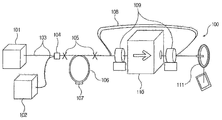
- FIG. 1 is a diagram schematically illustrating an experimental apparatus for measuring magneto-optical properties of an all-optical fiber isolator to which a CdSe quantum dot doped optical fiber is applied according to the present invention.
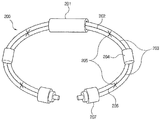
- FIG. 2 is a view schematically showing the structure of an all-optical fiber isolator according to the present invention.
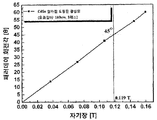
- FIG. 3 is a graph showing a change in the Faraday rotation angle of the optical fiber doped with CdSe quantum dots when the magnetic field changes in accordance with the present invention.
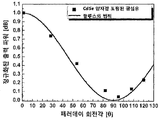
- FIG. 4 is a graph showing a change in normalized output of a CdSe quantum dot doped optical fiber according to the Faraday rotation angle according to the present invention.
- 5 is a graph showing the change in optical isolation of CdSe quantum dot doped optical fiber when the applied magnetic field is changed according to the present invention.
- FIG. 6 is a graph showing a value measured at 660 nm Faraday rotation angle of the optical fiber containing Cd 0.5 Mn 0.5 Te, CdSe, Co, and Mn according to the present invention.
- the present invention provides an all-optical isolator having an improved magneto-optical effect (Faraday effect or Zeeman effect).
- An optical isolator for allowing light to flow in only one direction generally includes an optical fiber serving as an optical waveguide for propagating incident light, a polarizer for polarizing the incident light, and a Faraday rotator for rotating the polarized plane polarized at the polarizer by 45 °. have.
- the present invention solves the problem by including quantum dots in the core layer and / or the cladding layer or the inner cladding layer of the optical fiber.
- the magneto-optic effect it is possible to reduce the strength of the magnetic field in the Faraday rotor and to reduce the range of the magnetic field.
- the present invention can be applied to the optical fiber consisting of the core layer and the cladding layer which is a general optical fiber structure, the core layer and / or the optical fiber structure shown in the prior patent of the present inventors It may be applied only to the inner cladding layer.
- the quantum dots may be at least one quantum dot selected from the group consisting of compound semiconductors, rare earth elements, paramagnetic materials, diamagnetic materials, magneto-optical glasses, and magneto-optical single crystals.
- the rare earth elements are La, Ce, Pr, Nd, Pm, Sm, Eu, Gd, Tb, Dy, Ho, Er, Tm, Yb, Lu quantum dots.
- the paramagnetic material is Fe, Ni, Co, Cr, Mn, Pt, Al, Ti.
- the diamagnetic material is Bi, Sb, P, Au, Ag, Hg, Cu, Pb quantum dots.
- the magneto-optical glass is FR-5 and FR-7 of Schott, Germany, MOS-4 and MOS-10 of MolTech GmbH, Germany, and Foxtech Photonics Co., Ltd. Tb-10, Tb-12, and Tb-15 of Foctek Photonics Inc., China, which are pulverized and contained in the core and / or the cladding layer or the inner cladding layer of the optical fiber in the form of quantum dots or very fine powder. .
- the magneto-optical glass refers to a glass whose optical properties change with a change in the applied magnetic field produced by adding rare earth elements such as Tb, Y, Eu to the borosilicate glass composition.
- the magneto-optical single crystal may be pulverized and added to the core and / or cladding layer or inner cladding layer of the optical fiber in quantum dots or very fine powder state.
- This magneto-optical single crystal is collectively referred to as a chemical component, and the most common is the TGG (Terbium Gallium Garnet) crystal and YIG (Yttrium Iron Garnet) crystal.
- FIG. 2 shows one embodiment of various embodiments of the all-optical fiber isolator applying the optical fiber according to the present invention.
- FIG. 2 is a symmetrical structure, in which a portion labeled with a sign and a symmetric opposite part without a sign are the same.
- the Faraday rotor 201 may be a permanent magnet or a solenoid, but is not limited thereto.
- the optical fiber connected between the Faraday rotor 201 and the Faraday rotor 201 to the junction point 205 is the optical fiber 202 doped with quantum dots.
- the optical fiber connected inside the linear polarizer 204 and from the linear polarizer 204 to the junction point 205 is the polarization maintaining optical fiber 203.
- the optical fiber connected from the connector 207 to the junction point 205 may be a single mode fiber or a multimode fiber.
- the optical fiber, Faraday rotor 201, the linear polarizer 204 and the connector 207 of the above structure one all-optical fiber isolator 200 is configured.
- the present inventors could induce a high Faraday effect by doping CdSe quantum dots or containing Cd 0.5 Mn 0.5 Te quantum dots in the core layer and / or the cladding layer or the inner cladding layer of the optical fiber. This will be described in detail with reference. Embodiments of the present invention will be described so that those skilled in the art can easily practice the present invention. As can be easily understood by those skilled in the art, the embodiments described below may be modified in various forms without departing from the concept and scope of the present invention. Where possible, the same or similar parts are represented using the same reference numerals in the drawings.
- the optical fiber base material doped with CdSe quantum dots was produced by modified chemical vapor deposition (MCVD).
- MCVD modified chemical vapor deposition
- Toluene solution containing CdSe quantum dots (Sigma-Aldrich: Lumidot CdSe QDs in toluene, peak absorption ⁇ 650 nm, 7.5 mg in 1.5 ml solution) was added to the core layer of alumino-germano-silica glass laminated on a silica glass tube. And doped at room temperature in a solution doping process.
- the soaked tube is dried after the solution doping process and then an additional glass layer is deposited.
- the tube is dried, sintered, partially shrunk and sealed with a rod base material. Finally, the base material was drawn out to a fiber having an outer diameter of 125 ⁇ m at 2150 ° C. using an extractor.
- the core diameter and cut-off wavelength of the fiber produced are 5.4 ⁇ m and 560 nm, respectively.
- the absorption coefficient of the optical fiber was about 0.003 m ⁇ 1 at 660 nm as measured by the cutback method.
- the Verde constant of the optical fiber doped with CdSe quantum dots was determined to be 5.3 rad / Tm at 633 nm.
- FIG. 1 an experimental apparatus for measuring optical properties of a CdSe quantum dot doped optical fiber 108 manufactured by the above method is shown.
- Faraday rotation angle of CdSe quantum dot doped optical fiber is measured with polarimeter (PA510: Thorlabs, USA) using 660 nm laser diode 101 and linear polarizer 107 as light source under magnetic field supplied by Faraday rotor 110 It became.
- the laser diode 101 output was 1.1 mV
- the output light spectrum reflected by the reflecting mirror was monitored by an optical spectrum analyzer 102 (OSA, resolution: 1 nm).
- the CdSe quantum dot doped optical fiber 108 is single mode (operating at 660 nm) at a wavelength of 660 nm and the fibrous linear polarizer 107 was sliced directly into the fiber.
- the Faraday rotation angle of the CdSe quantum dot-doped optical fiber 108 has been shown to increase linearly as shown in FIG. 3.
- the Faraday rotation angle reached 45 °.
- Equation 1 I and I 0 are the powers of the reflected optical signal (rear ratio) and the incident light source (front ratio), respectively, and ⁇ is a Faraday rotation angle. Note that the attenuation factors such as bending, coupling, splicing and return loss of optical power are ignored in the equation.
- FIG. 4 the obtained output data were assembled into a laxity curve and matched well with a small deviation error.
- Optical isolation of the CdSe quantum dot doped optical fiber 108 with respect to the applied magnetic field is shown in FIG. 5. The maximum separation was about 14 dB at 0.1 T, which increased as the magnetic field increased from 0 to 0.1 T. When the magnetic field is greater than 0.1 T, the isolation is reduced due to the fact that the polarization state returns to the original input state.
- the discrepancy between the experimental results in FIGS. 4 and 5 and the law of Malus is caused by the linear birefringence of the optical fiber due to the bending of the optical fiber to the Faraday rotor 110 to increase the effective length.
- the linear birefringence should be minimized along the fiber. This can be done using a special fiber with a high Verde constant, so that a short length of fiber is sufficient to be straight at a fixed length without twisting or bending the fiber to induce very high annular birefringence on the fiber.
- the experimental parameters of the all-optical isolator using CdSe quantum dot doped optical fiber at the applied magnetic field change are summarized in Table 1. This all-optic isolator can be applied to various optical fibers such as optical switches, optical modulators, non-reversible elements in laser gyroscopes, optical circulators, and optical sensors.
- the optical fiber matrix containing Cd 0.5 Mn 0.5 Te quantum dots was fabricated by modified chemical vapor deposition (MCVD). After the partial sintering process, a porous core layer was formed at 1650 ° C using SiCl 4 and GeCl 4 inside the silica glass tube, and 0.475 g (0.1 M) was added to 5 ml nitric acid (Junsei Chem., 70%). A solution containing Cd 0.5 Mn 0.5 Te powder (International Crystal Lab.) was infiltrated into the porous core layer to prepare an optical fiber base material containing Cd 0.5 Mn 0.5 Te quantum dots. Withdrawn.
- MCVD modified chemical vapor deposition
- the magneto-optical characteristics according to the change of the magnetic field were measured using a 660 nm laser diode (LD) light source and polarizer (THORLABs, PA-510). Measured.
- LD laser diode
- Mn ion-added optical fibers were prepared and compared.
- Faraday rotation characteristics of optical fiber containing Cd 0.5 Mn 0.5 Te quantum dots were compared with cobalt (Co) ion-doped fiber, CdSe quantum dot-doped fiber and general monomode fiber.
- the optical fiber containing Cd 0.5 Mn 0.5 Te quantum dots showed Faraday rotation angle about 1.5 times and 6 times higher than the optical fiber containing Co ions and Mn ions under the same magnetic field, and about 1.5 times and It was found that the rotation angle increased about 2 times than SMF.
- Mn ion-doped optical fiber it was found to increase in the negative direction, indicating that Cd 0.5 Mn 0.5 Te quantum dot had more influence on Faraday rotation of optical fiber containing Cd 0.5 Mn 0.5 Te quantum dot than Mn ion. This is due to the Zeeman effect of Cd 0.5 Mn 0.5 Te quantum dots.
- the Verde constants of CMF 0.5 Mn 0.5 Te quantum dots, Co ions or Mn ions and SMF's Verde constants, measured using the Faraday rotation angle, were measured at 660 nm, respectively, 5.12, 3.54, -1.04 and 2.77 radT -1 m -1 It was.
- Table 1 shows magneto-optical characteristics of the optical fiber containing Cd 0.5 Mn 0.5 Te quantum dots, Co ions or Mn ions.
Landscapes
- Physics & Mathematics (AREA)
- Nonlinear Science (AREA)
- General Physics & Mathematics (AREA)
- Optics & Photonics (AREA)
- Engineering & Computer Science (AREA)
- Power Engineering (AREA)
- Microelectronics & Electronic Packaging (AREA)
- Optical Modulation, Optical Deflection, Nonlinear Optics, Optical Demodulation, Optical Logic Elements (AREA)
Abstract
본 발명은 입사광을 전파시키는 광도파로의 역할을 하는 광섬유, 상기 입사광을 편광시키는 편광자, 상기 편광자에서 편광된 편광면을 45˚회전시키는 패러데이 회전자를 포함하는 광 아이솔레이터로서, 상기 광섬유의 코어층 및/또는 상기 및 내부 클래딩층에 양자점을 함유함으로써 가시광선 파장에서 광 아이솔레이터로 사용될 정도의 자기 광학 효과를 나타내는 전광섬유 아이솔레이터를 제공한다.
Description
본 발명은 광 아이솔레이터에 관한 것으로서, 더 상세하게는, 자기 광학 효과를 향상시킨 전광섬유 아이솔레이터에 관한 것이다.
단지 한방향의 전파만을 허용하는 비가역 장치인 광 아이솔레이터는 원치 않는 광의 후방반사 및 광의 원치 않는 전파를 차단하기 위한, 고출력 광섬유 레이저, 광 증폭기 및 고속 섬유 광통신장치들에서의 그의 용도 때문에 많은 관심을 얻고 있다.
선형 편광이 자기장하의 자기 광학 매체를 통과하여 편광 평면의 45˚ 회전을 하고, 다시 자기 광학 매체로 되돌아 올 때, 광의 평광 평면이 45˚ 회전하여 90˚ 회전한 역-반사된 광은 차단되어 아이솔레이션되게 된다.
가장 일반적인 아이솔레이터는 정밀한 정렬 및 신중한 조작을 필요로 하는 복굴절판 및 특수 런칭 렌즈 같은 큰 광학장치들을 필요로 하는 광 아이솔레이터이다. 최근에는 전광섬유 아이솔레이터가 저삽입 손실, 높은 반사 특성 및 높은 아이솔레이션 등의 장점을 제공하기 때문에, 광 레이저 시스템 및 섬유 광 증폭기에 전광식 장치들의 용도로 많은 관심을 받고 있다. 특히, 660 nm(다중-kW 출력 레벨)에서 작동하는 고출력 Yb-도핑 광섬유 레이저(펄스형) 시스템이 산업 및 바이오 의학 용도로 개발되었다.
그러나, 660 nm 파장에서 작동하는 전광섬유 아이솔레이터는 아직 개발되어 않았다. 그 이유는 주로 실리카 유리섬유의 낮은 감도 때문이며, 이 낮은 감도는 가시 파장에서 실리카 섬유의 낮은 자기-광학 감도 때문이다(베르데 상수 1550 nm에서 -0.64 rad/Tm 및 1310 nm에서-0.22 rad/Tm).
어닐링 섬유, 트위스트 섬유 및 플린트 섬유 등의 특수 광섬유가 섬유의 선형 복굴절을 감소시켜 자기-광학 감도를 증가시키기 위해 제안되었지만, 복잡한 제조공정, 높은 슬라이싱 손실, 및 높은 비용이 여전히 문제점으로 남아 있다.
이들 문제를 해결하기 위하여, 높은 베르데 상수를 갖는 Tb-이온들이 통합된 인산염 또는 붕규산염 유리 광 섬유들이 보고되었고, 여기서 로드-인-튜브 기술(a rod-in-Tube technique)이 사용된다.
그러나, 상기 섬유들의 전파 손실은 실리카 유리 섬유의 전파 손실보다 훨씬 더 많은 것으로 밝혀졌다.
상술한 선행기술의 문제점을 해결하기 위하여, 본 발명에서는 향상된 자기 광학 효과를 갖는 전광섬유 아이솔레이터를 제공하는 것을 목적으로 한다.
상기와 같은 본 발명의 목적은 입사광을 전파시키는 광도파로의 역할을 하는 광섬유, 상기 입사광을 편광시키는 편광자, 상기 편광자에서 편광된 편광면을 45˚회전시키는 패러데이 회전자를 포함하는 광 아이솔레이터로서, 상기 광섬유의 코어층에 화합물 반도체, 희토류 원소, 상자성 물질, 반자성 물질, 광자기 글라스 및 광자기 단결정으로 그룹에서 선택된 적어도 하나 이상을 함유하여, 가시광선 파장에서 광 아이솔레이터로 사용될 정도의 자기 광학 효과를 나타내는 전광섬유 아이솔레이터에 의하여 달성된다.
상기와 같은 본 발명의 또 다른 목적은 상기 광섬유는 클래딩층 또는 내부 클래딩층을 포함하며, 상기 클래딩층 또는 상기 내부 클래딩층에 화합물 반도체, 희토류 원소, 상자성 물질, 반자성 물질, 광자기 글라스 및 광자기 단결정으로 이루어진 그룹에서 선택된 적어도 하나 이상을 추가적으로 함유하여, 가시광선 파장에서 광 아이솔레이터로 사용될 정도의 자기 광학 효과를 나타내는 전광섬유 아이솔레이터에 의하여 달성된다.
여기에서, 바람직하게는 상기 화합물 반도체는 PbSe, PbS, PbTe, CdMnTe, CdMnTe, ZnMnTe, MnGeAs2, MnGeP2, CdMnSe, CdSe, ZnSe, ZnXO (X=Co, Mn), As2S2, Bi12SiO, Y3Fe5O12, ZnO 또는 CdS 양자점, 상기 희토류 원소는 La, Ce, Pr, Nd, Pm, Sm, Eu, Gd, Tb, Dy, Ho, Er, Tm, Yb 또는 Lu 양자점, 상기 상자성 물질은 Fe, Ni, Co, Cr, Mn, Pt, Al 또는 Ti 양자점, 상기 반자성 물질은 Bi, Sb, P, Au, Ag, Hg, Cu 또는 Pb 양자점, 상기 광자기 글라스는 FR-5, FR-7, MOS-4, MOS-10, Tb-10, Tb-12 또는 Tb-15 글라스의 양자점 또는 미세 분말, 및 상기 광자기 단결정은 TGG(Terbium Gallium Garnet)결정 또는 YIG(Yttrium Iron Garnet)결정의 양자점 또는 미세분말이다.
바람직하게는, 상기 화합물 반도체는 Cd0.5Mn0.5Te 양자점이다.
바람직하게는, 상기 가시광선 파장은 660nm이다.
바람직하게는, 상기 가시광선 파장에서 광 아이솔레이터로 사용될 정도의 자기 광학 효과를 나타내는 패러데이 효과는 660nm 파장에서 베르데 상수가 3.5 내지 5.5 radT-1m-1이다.
본 발명은 전광섬유 아이솔레이터에서 사용하는 광섬유에 양자점을 함유하여 자기 광학 효과를 높여줌으로써, 패러데이 회전자에서 약한 자기장을 주거나 광섬유의 짧은 길이동안 자기장을 주어도 충분한 패러데이 효과가 나타나 편광면의 45˚의 회전을 일으킬 수 있다. 그리고 가시광선 파장대의 광은 패러데이 효과가 잘 일어나지 않는 유리 성분인 광섬유 코어에서도 바이오 의학 용도로 필요로 하는 660nm의 파장을 포함하여 다양한 파장대의 광이 충분한 패러데이 효과가 나타나도록 할 수 있다.
도 1은 본 발명에 따른 CdSe 양자점이 도핑된 광섬유가 적용된 전광섬유 아이솔레이터의 자기 광학 물성을 측정하는 실험 장치를 개략적으로 도시한 도면이다.
도 2는 본 발명에 따른 전광섬유 아이솔레이터의 구조를 개략적으로 보여주는 도면이다.
도 3은 본 발명에 따른 자기장 변화시 CdSe 양자점이 도핑된 광섬유의 패러데이 회전각의 변화를 보여주는 그래프이다.
도 4는 본 발명에 따른 패러데이 회전각에 따른 CdSe 양자점 도핑된 광섬유의 정규화된 출력의 변화를 나타낸 그래프이다.
도 5는 본 발명에 따른 인가된 자기장이 변화할 때 CdSe 양자점 도핑된 광섬유의 광학적 아이솔레이션의 변화를 나타낸 그래프이다.
도 6은 본 발명에 따른 Cd0.5Mn0.5Te, CdSe, Co, 및 Mn이 함유된 광섬유의 패러데이 회전각을 660nm에서 측정한 값을 나타낸 그래프이다.
이하에서 사용되는 기술용어 및 과학용어를 포함하는 모든 용어들은 본 발명이 속하는 기술분야에서 통상의 지식을 가진 자가 일반적으로 이해하는 의미와 동일한 의미를 가진다. 사전에 정의된 용어들은 관련기술문헌과 현재 개시된 내용에 부합하는 의미를 가지는 것으로 추가 해석되고, 정의되지 않는 한 이상적이거나 매우 공식적인 의미로 해석되지 않는다.
본 발명은 향상된 자기 광학 효과(페러데이 효과 또는 제만 효과)를 갖는 전광섬유 아이솔레이터를 제공한다.
광을 한 방향으로만 흐르도록 하는 광 아이솔레이터는 일반적으로 입사광을 전파시키는 광도파로의 역할을 하는 광섬유, 상기 입사광을 편광시키는 편광자, 상기 편광자에서 편광된 편광면을 45˚회전시키는 패러데이 회전자로 이루어져 있다.
그러나, 상술한 것처럼 가시광선대의 파장을 사용하기 위해서는 좀 더 자기 광학 효과를 높일 필요성이 있기 때문에 본 발명에서는 광섬유의 코어층 및/또는 클래딩층 또는 내부 클래딩층에 양자점을 함유함으로써 그 문제를 해결하였고, 더 나아가 자기 광학 효과를 높혀줌으로 해서, 페러데이 회전자에서의 자기장의 세기를 낮춰줄 수 있고 그 자기장을 가해주는 범위도 줄여줄 수 있게 되었다.
여기에서, 상기 내부 클래딩층은, 본 발명자의 선행특허인 “특허공개번호 2011-0134869, 발명의 명칭: 낮은 구부림 손실 광섬유”에서 기재하고 있는, 클래딩층을 내부 클래딩층, 트렌치 층 및 외부 클래딩층으로 분리한 구조에서의 내부 클래딩층을 의미하는 것으로, 본 발명은 일반적인 광섬유 구조인 코어층과 클래딩층으로 이루어진 광섬유에도 적용될 수 있지만, 상기 본 발명자의 선행특허에서 보여진 광섬유 구조의 코어층 및/또는 내부 클래딩층에만 적용될 수도 있다.
여기에서, 상기 양자점은 화합물 반도체, 희토류 원소, 상자성 물질, 반자성 물질, 광자기 글라스 및 광자기 단결정으로 이루어진 그룹에서 선택된 적어도 하나 이상의 양자점일 수 있다.
바람직하게는, 상기 화합물 반도체는 PbSe, PbS, PbTe, CdMnTe, CdMnTe, ZnMnTe, MnGeAs2, MnGeP2, CdMnSe, CdSe, ZnSe, ZnXO (X=Co, Mn), As2S2, Bi12SiO, Y3Fe5O12, ZnO, CdS 양자점이다.
바람직하게는, 상기 희토류 원소는 La, Ce, Pr, Nd, Pm, Sm, Eu, Gd, Tb, Dy, Ho, Er, Tm, Yb, Lu 양자점이다.
바람직하게는, 상기 상자성 물질은 Fe, Ni, Co, Cr, Mn, Pt, Al, Ti 양자이다.
바람직하게는, 상기 반자성 물질은 Bi, Sb, P, Au, Ag, Hg, Cu, Pb 양자점이다.
바람직하게는, 상기 광자기 글라스는 쇼트사(Schott,Germany)의 FR-5 및 FR-7, 몰테크 게엠베하사(MolTech GmbH, Germany)의 MOS-4 및 MOS-10, 및 폭텍 포토닉스사(Foctek Photonics Inc., China)의 Tb-10, Tb-12 및 Tb-15 이며, 상기 광자기 글라스를 분쇄하여 양자점 혹은 아주 미세한 분말 상태로 광섬유의 코어 및/또는 클래딩층 또는 내부 클래딩층에 함유한다.
여기에서, 상기 광자기 글라스란 붕규산 유리 조성에 Tb, Y, Eu 등의 희토류 원소를 첨가하여 제조하는 인가되는 자기장의 변화에 광학적 특성이 변하는 유리를 의미한다.
바람직하게는, 상기 광자기 단결정은 분쇄 첨가하여 양자점 또는 아주 미세한 분말 상태로 광섬유의 코어 및/또는 클래딩층 또는 내부 클래딩층에 함유할 수 있다. 이 광자기 단결정은 화학성분으로 통칭되고 있으며, TGG(Terbium Gallium Garnet)결정 및 YIG(Yttrium Iron Garnet)결정이 가장 대표적이다.
도 2에서는 본 발명에 따른 광섬유를 적용한 전광섬유 아이솔레이터의 다양한 실시예중 하나의 실시예를 보여주고 있다. 도 2는 대칭적인 구조로 되어있어, 부호를 표시한 부분과 부호를 표시하지 않은 대칭적인 반대부분은 동일한 구조이다. 여기에서, 패러데이 회전자(201)는 영구자석 또는 솔레노이드일 수 있고, 여기에 제한되지 않는다. 패러데이 회전자(201) 내부 및 패러데이 회전자(201)에서 접합점(205)까지 연결된 광섬유는 양자점이 도핑된 광섬유(202)이다. 또한, 선형 편광자(204) 내부 및 선형 편광자(204)에서 접합점(205)까지 연결된 광섬유는 편광유지 광섬유(203)이다. 커넥터(207)에서 접합점(205)까지 연결된 광섬유는 단일모드 광섬유 또는 다중모드 광섬유 일 수 있다. 위와 같은 구조의 광섬유, 패러데이 회전자(201), 선형 편광자(204) 및 커넥터(207)를 구비함으로써, 하나의 전광섬유 아이솔레이터(200)를 구성한다.
본 발명자는 광섬유의 코어층 및/또는 클래딩층 또는 내부 클래딩층에 CdSe 양자점을 도핑하거나 Cd0.5Mn0.5Te 양자점을 함유시킴으로써, 높은 패러데이 효과를 유도할 수 있었고, 이하 다음의 실시예에서 첨부한 도면을 참조하여 자세히 설명한다. 본 발명이 속하는 기술분야에서 통상의 지식을 가진 자가 용이하게 실시할 수 있도록 본 발명의 실시예를 설명한다. 본 발명의 속하는 기술분야에서 통상의 지식을 가진 자가 용이하게 이해할 수 있는 바와 같이, 후술하는 실시예는 본 발명의 개념과 범위를 벗어나지 않는 한도내에서 다양한 형태로 변형될 수 있다. 가능한 한 동일하거나 유사한 부분은 도면에서 동일한 도면부호를 사용하여 나타낸다.
[실시예 1]
광섬유에 CdSe 양자점이 도핑된 전광섬유 아이솔레이터의 제조 및 성능
CdSe 양자점들로 도핑된 광섬유 모재는 수정된 화학 기상 증착법(MCVD)에 의해 제조되었다. 실리카 유리관에 적층된 알루미노-게르마노-실리카 유리의 코어층에 CdSe 양자점들(Sigma-Aldrich: Lumidot CdSe QDs in toluene, peak absorption ~650 nm, 7.5 mg in 1.5 ml solution)을 함유하는 톨루엔 용액을 사용하여 용액 도핑 공정으로 상온에서 도핑시켰다. 수정된 화학 기상 증착 공정 동안에 일어날 수 있는 도펀트의 증발을 감소시키기 위하여 흠뻑 젖은 관을 용액 도핑 공정이후에 건조시키고 이어서 추가적인 유리 층을 적층시킨다. 관을 건조, 소결, 부분적으로 수축시키고 봉 모재로 밀봉시킨다. 최종적으로, 모재를 인출장치를 사용하여 2150℃에서 외경 125 ㎛의 섬유로 인발하였다. 제조된 섬유의 코어 직경 및 커트-오프 파장은 각각 5.4 ㎛ 및 560 nm이다. 광 섬유의 흡수 계수는 커트백 방법으로 측정하여 660 nm에서 약 0.003 m-1이었다. CdSe 양자점으로 도핑된 광섬유의 베르데 상수는 633 nm에서 5.3 rad/Tm인 것으로 측정되었다.
도 1에서 위와 같은 방법으로 제조된 CdSe 양자점이 도핑된 광섬유(108)의 광학 물성을 측정한 실험 장치를 나타내고 있다. CdSe 양자점 도핑된 광섬유의 패러데이 회전각이 패러데이 회전자(110)에 의해 공급되는 자기장하에서 광원으로서 660 nm 레이저 다이오드(101) 및 선형 편광자(107)를 사용하여 편광계(PA510:Thorlabs, USA)로 측정되었다. 여기에서, 레이져 다이오스(101) 출력은 1.1 mV 이고, 반사 거울에 의해 반사된 출력 광 스펙트럼은 광 스펙트럼 분석기(102)(OSA, resolution: 1 nm)로 모니터링 하였다. CdSe 양자점 도핑 광섬유(108)는 660 nm의 파장에 단일 모드이고(660 nm에서 작동하는) 섬유형 선형 편광자(107)는 섬유로 직접 슬라이싱되었다.
도 3은 자기장의 함수로서 660 nm에서 패러데이 회전각을 보여준다. 측정 동안, CdSe 양자점 도핑된 광섬유(108)를 패러데이 회전자(110)에 감아 섬유의 유효 길이를 증가시켰으며, 이는 자기장과 같은 방향하에 있는 광섬유의 총 길이이다. 솔레노이드로 이루어져 있는 패러데이 회전자(110)의 전류를 변화시켜 적용된 자기장을 증가시킴에 따라, CdSe의 양자점 도핑된 광섬유(108)의 패러데이 회전각이 도 3에 나타난 바와 같이 선형으로 증가하는 것으로 나타났다. 0.1 T의 자기장이 섬유의 유효 길이 183cm에 적용됐을 때, 패러데이 회전각이 45˚에 도달했다. 후방-반사광의 90˚ 회전의 편광각이 패러데이 효과의 비-가역적인 성질에 기인하는 것으로 예측되기 때문에, 이 결과는 660 nm에서 반사된 광을 차단하는 전광섬유 아이솔레이터가 가능하다는 것을 보여준다.
광이 직접적으로 후방으로 반사되기 때문에, 패러데이 회전은 패러데이 효과의 비가역적 성질에 기인하여 부가적이다. 자기장 강도에서의 변화에 따른 입력측에서 실제 반사된 파워의 측정은 단지 섬유 광학 장치에 의해 제공되는 아이솔레이션의 아이디어를 제공할 것이다. 이 실험은 CdSe 양자점 으로부터의 660nm 여기광을 반사시키는 반사 거울(111)을 사용하여 수행하고, 후방 반사 파워는 도 1에 나타난 바와 같이 3dB 커플러(104)(660 nm)를 사용하여 측정하였다. 도 4는 자기장을 0으로부터 0.16T로 변화시 측정된 패러데이 회전각에 따른 섬유의 정규화된 출력 파워(반사된 파워)의 변화를 보여준다. 정규화는 자기장이 없이 출력 파워로 만들어졌다. 정규화된 출력 파워는 패러데이 회전각의 증가와 함께 감소하는 것으로 발견되었고, 어떤 출력 파워도 90˚의 각에서 검출되지 않아, 우수한 아이솔레이션 물성을 나타낸다. 패러데이 회전각이 90˚를 넘었을 때, 출력 파워는 다시 증가되는데, 그 이유는 편광 상태가 원래 상태로 되돌아가기 시작하기 때문이다. 반사된 광학 파워는 말루스의 법칙으로 간단히 기술될 수 있다.
[식 1]
I = I0cos2θ
상기 식 1에서, I 및 I0는 각각 반사된 광학 신호(후방 비율) 입사광 공급원(전방 비율)의 파워이고, θ는 패러데이 회전각이다. 주목할 것은 광학 파워의 구부림, 커플링, 스플라이싱 및 반사 손실과 같은 감쇠 인자가 등식에서 무시되었다는 것이다. 도 4에 나타난 바와 같이, 얻어진 출력 데이터를 완하 곡선으로 짜 맞추고 작은 편차 에러로 잘 매치시켰다. 적용된 자기장에 관하여 CdSe 양자점 도핑된 광섬유(108)의 광학적 아이솔레이션이 도 5에 나타나 있다. 최대 분리는 0.1 T에서 약 14 dB이었고, 이는 자기장이 0으로부터 0.1 T까지 증가함에 따라 증가하였다. 자기장이 0.1 T 보다 클때, 아이솔레이션은 편광 상태가 본래의 입력 상태로 되돌아간다는 사실에 기인하여 감소하였다.
도 4 와 도 5에서의 실험 결과들과 말루스의 법칙 사이의 불일치는 유효 길이를 증가시키기 위하여 패러데이 회전자(110)에 광섬유가 감김으로써 구부림에 의한 광섬유의 선형 복굴절률이 원인이다. 전광섬유 아이솔레이터의 정밀도 및 성능을 향상시키기 위하여, 선형 복굴절률은 섬유를 따라 최소화되어야 한다. 이는 높은 베르데 상수의 특수 광섬유를 사용하여 수행될 수 있어, 광섬유 상에 매우 높은 환형 복굴절률을 유도하기 위하여 광섬유를 꼬거나 구부림없이 고정된 길이에서 직선이기에 충분한 짧은 길이의 섬유를 사용할 수 있다. 적용된 자기장 변화시 CdSe 양자점 도핑된 광섬유를 사용하여 전광섬유 아이솔레이터의 실험 파라미터가 표 1에 요약되어 있다. 이 전광섬유 아이솔레이터는 광학 스위치, 광학 모듈레이터, 레이저 기로스코프에서 비-가역성 요소, 광학적 서큘레이터, 및 광학 센서와 같은 다양한 광섬유에서 적용을 할 수 있다.
자기장의 변화에 따른 CdSe 양자점 도핑된 광섬유를 사용한 전광섬유 아이솔레이터의 실험적 파라미터들을 다음의 표 1에 나타내었다.
표 1
| 솔레노이드전류[A] | 자기장[T] | 패러데이회전각[θ] | 출력[dBm/nW] | 정규화된출력 | 아이솔레이션[dB] |
| 0 | 0 | 0 | -50.67/8.56 | 1.000 | 0 |
| 10 | 0.037 | 27.8 | -51.99/6.31 | 0.737 | 1.32 |
| 20 | 0.072 | 53.8 | -54.44/3.59 | 0.420 | 3.77 |
| 30 | 0.107 | 81.8 | -60.22/0.95 | 0.111 | 9.55 |
| 35 | 0.124 | 95.0 | -64.64/0.04 | 0.034 | 13.97 |
| 40 | 0.145 | 107.8 | -59.54/1.11 | 0.130 | 8.87 |
| 45 | 0.160 | 120.0 | -57.02/1.98 | 0.232 | 6.34 |
[실시예 2]
Cd
0.5
Mn
0.5
Te 양자점이 함유된 광섬유의 자기 광학 특성
Cd0.5Mn0.5Te 양자점이 함유된 광섬유 모재는 수정된 화학 기상 증착법(MCVD)을 통해 제작하였다. 실리카유리 튜브 내부에 SiCl4과 GeCl4를 이용하여 1650 °C에서 다공성의 코어 층을 형성하여 부분 소결 과정을 거친 후, 5 ml 질산(Junsei Chem., 70%)에 0.475g(0.1M)의 Cd0.5Mn0.5Te 분말(International Crystal Lab.)을 섞은 용액을 다공성의 코어 층에 침투시켜 Cd0.5Mn0.5Te 양자점이 함유된 광섬유 모재를 제작하였고, 이렇게 제작된 광섬유 모재를 2000°C이하에서 광섬유로 인출하였다. 광섬유를 솔레노이드(Walker LDJ, 3.0-28-1500DC) 중앙으로 통과시킨 후, 자기장의 변화에 따른 자기광학 특성을 660 nm 파장의 레이저 다이오드(LD) 광원과 편광계(THORLABs, PA-510)를 이용하여 측정하였다.
광섬유 코어 내에 함께 존재하는 것으로 확인된 Mn 이온의 영향을 확인하기 위해, Mn 이온 첨가 광섬유를 제조하여 비교하였다. 그리고 Cd0.5Mn0.5Te 양자점이 함유된 광섬유의 패러데이 회전 특성평가를 위해, 코발트(Co) 이온 첨가 광섬유와 본 연구실에서 제작한 CdSe 양자점 첨가 광섬유 및 일반 단일모드광섬유 와 함께 비교하였다. 각 광섬유의 자기광학 특성을 솔레노이드 전류 값의 증가를 통한 광섬유에 평행한 자기장을 인가하여 편광계를 통해 측정해 본 결과, 도 6과 같이 모든 광섬유는 자기장이 증가할수록 패러데이 회전각이 직선적으로 증가하였고, Cd0.5Mn0.5Te 양자점이 함유된 광섬유의 경우 같은 자기장하에서 Co 이온과 Mn 이온이 함유된 광섬유보다 절대 값이 약 1.5배와 6배 높은 패러데이 회전각을 나타내었고, CdSe 함유 광섬유 보다 약 1.5배 그리고 SMF 보다 약 2배 정도 회전각이 증가하였음을 알 수 있었다. Mn 이온이 첨가된 광섬유의 경우 음의 방향으로 증가함을 보여 Cd0.5Mn0.5Te 양자점이 함유된 광섬유의 패러데이 회전 증가에 Mn 이온 보다 Cd0.5Mn0.5Te 양자점이 영향을 크게 미쳤음을 알 수 있었고, 이는 Cd0.5Mn0.5Te 양자점의 제만 효과(Zeeman effect)에 의한 것으로 인한 것이다. 측정한 패러데이 회전각을 이용하여 구한 Cd0.5Mn0.5Te 양자점, Co 이온 또는 Mn 이온이 함유된 광섬유와 SMF의 베르데 상수는 660 nm 파장에서 각각 5.12, 3.54, -1.04와 2.77 radT-1m-1 이었다.
다음의 표 1에 Cd0.5Mn0.5Te 양자점, Co 이온 또는 Mn 이온이 함유된 광섬유의 자기 광학적 특성을 나타내었다.
표 2
| 유효 길이(m) | 자기장(T) | 회전각(θ) | 베르데 상수(rad-1m-1) | |
| Cd0.5Mn0.5Te 도핑된 섬유 | 0.7 | 0.142 | 29.18 | 5.12 |
| Co 도핑된 섬유 | 0.7 | 0.142 | 20.18 | 3.54 |
| CdSe 도핑된 섬유 | 0.7 | 0.142 | 20.28 | 3.56 |
| Mn 도핑된 섬유 | 0.7 | 0.142 | -5.93 | -1.04 |
| SMF | 0.7 | 0.142 | 15.82 | 2.77 |
이상 설명한 바와 같이 본 발명의 예시적인 실시예가 도시되어 설명되었지만, 다양한 변형과 다른 실시예가 본 분야의 숙련된 기술자들에 의해 행해질 수 있을 것이다. 이러한 변형과 다른 실시예들은 첨부된 청구범위에 모두 고려되고 포함되어, 본 발명의 진정한 취지 및 범위를 벗어나지 않는다 할 것이다.
[부호의 설명]
100: 전광섬유 아이솔레이트의 광학 물성 측정 장치
101: 레이저 다이오드
102: 광 스펙트럼 분석기
103: 단일모드 광섬유
104: 커플러
105: 접합점(splicing point)
106: 편광유지 광섬유(PM fiber)
107: 선형 편광자
108: 양자점이 도핑된 광섬유
109: 광섬유 지지대
110: 패러데이 회전자
111: 거울
200: 예시적인 전광섬유 아이솔레이터의 구조
201: 패러데이 회전자
202: 양자점이 도핑된 광섬유
203: 편광유지 광섬유(PM fiber)
204: 선형 편광자
205: 접합점(splicing point)
206: 단일모드 광섬유 또는 다중모드 광섬유
207: 커넥터
Claims (6)
- 입사광을 전파시키는 광도파로의 역할을 하는 광섬유, 상기 입사광을 편광시키는 편광자, 상기 편광자에서 편광된 편광면을 45˚회전시키는 패러데이 회전자를 포함하는 광 아이솔레이터로서,상기 광섬유의 코어층에 화합물 반도체, 희토류 원소, 상자성 물질, 반자성 물질, 광자기 글라스 및 광자기 단결정으로 이루어진 그룹에서 선택된 적어도 하나 이상을 함유하여, 가시광선 파장에서 광 아이솔레이터로 사용될 정도의 자기 광학 효과를 나타내는 전광섬유 아이솔레이터.
- 제 1 항에 있어서, 상기 광섬유는 클래딩층 또는 내부 클래딩층을 포함하며, 상기 클래딩층 또는 상기 내부 클래딩층에 화합물 반도체, 희토류 원소, 상자성 물질, 반자성 물질, 광자기 글라스 및 광자기 단결정으로 이루어진 그룹에서 선택된 적어도 하나 이상을 추가적으로 함유하여, 가시광선 파장에서 광 아이솔레이터로 사용될 정도의 자기 광학 효과를 나타내는 전광섬유 아이솔레이터.
- 제 1 항 또는 제 2 항에 있어서, 상기 화합물 반도체는 PbSe, PbS, PbTe, CdMnTe, CdMnTe, ZnMnTe, MnGeAs2, MnGeP2, CdMnSe, CdSe, ZnSe, ZnXO (X=Co, Mn), As2S2, Bi12SiO, Y3Fe5O12, ZnO 또는 CdS 양자점, 상기 희토류 원소는 La, Ce, Pr, Nd, Pm, Sm, Eu, Gd, Tb, Dy, Ho, Er, Tm, Yb 또는 Lu 양자점, 상기 상자성 물질은 Fe, Ni, Co, Cr, Mn, Pt, Al 또는 Ti 양자점, 상기 반자성 물질은 Bi, Sb, P, Au, Ag, Hg, Cu 또는 Pb 양자점, 상기 광자기 글라스는 FR-5, FR-7, MOS-4, MOS-10, Tb-10, Tb-12 또는 Tb-15 글라스의 양자점 또는 미세분말, 및 상기 광자기 단결정은 TGG(Terbium Gallium Garnet)결정 또는 YIG(Yttrium Iron Garnet)결정의 양자점 또는 미세분말인 것을 특징으로 하는 전광섬유 아이솔레이터.
- 제 1 항 또는 제 2 항에 있어서, 상기 화합물 반도체는 Cd0.5Mn0.5Te 양자점인 것을 특징으로 하는 전광섬유 아이솔레이터.
- 제 1 항 또는 제 2 항에 있어서, 상기 가시광선 파장은 660nm인 것을 특징으로 하는 전광섬유 아이솔레이터.
- 제 1 항 또는 제 2 항에 있어서, 상기 가시광선 파장에서 광 아이솔레이터로 사용될 정도의 자기 광학 효과를 나타내는 패러데이 효과는 660nm 파장에서 베르데 상수가 3.5 내지 5.5 radT-1m-1인 것을 특징으로 하는 전광섬유 아이솔레이터.
Priority Applications (2)
| Application Number | Priority Date | Filing Date | Title |
|---|---|---|---|
| PCT/KR2012/006845 WO2014034970A1 (ko) | 2012-08-27 | 2012-08-27 | 양자점이 함유된 광섬유를 이용한 전광섬유 아이솔레이터 |
| US14/424,603 US9618777B2 (en) | 2012-08-27 | 2012-08-27 | All-fiber isolator using optical fiber including quantum dots |
Applications Claiming Priority (1)
| Application Number | Priority Date | Filing Date | Title |
|---|---|---|---|
| PCT/KR2012/006845 WO2014034970A1 (ko) | 2012-08-27 | 2012-08-27 | 양자점이 함유된 광섬유를 이용한 전광섬유 아이솔레이터 |
Publications (1)
| Publication Number | Publication Date |
|---|---|
| WO2014034970A1 true WO2014034970A1 (ko) | 2014-03-06 |
Family
ID=50183765
Family Applications (1)
| Application Number | Title | Priority Date | Filing Date |
|---|---|---|---|
| PCT/KR2012/006845 Ceased WO2014034970A1 (ko) | 2012-08-27 | 2012-08-27 | 양자점이 함유된 광섬유를 이용한 전광섬유 아이솔레이터 |
Country Status (2)
| Country | Link |
|---|---|
| US (1) | US9618777B2 (ko) |
| WO (1) | WO2014034970A1 (ko) |
Cited By (2)
| Publication number | Priority date | Publication date | Assignee | Title |
|---|---|---|---|---|
| WO2016025970A1 (de) * | 2014-08-18 | 2016-02-25 | Technische Universität Wien | Optische diode |
| CN105467610A (zh) * | 2015-12-07 | 2016-04-06 | 西北大学 | 用于受激发射损耗显微镜的全保偏光纤激光点阵产生装置 |
Families Citing this family (5)
| Publication number | Priority date | Publication date | Assignee | Title |
|---|---|---|---|---|
| ES2941672T3 (es) * | 2017-01-06 | 2023-05-24 | Univ Macquarie | Láser Raman en anillo monomodo longitudinal |
| CN108710223A (zh) * | 2018-05-17 | 2018-10-26 | 华中科技大学 | 一种全光纤磁光器件 |
| US12560832B2 (en) * | 2019-04-23 | 2026-02-24 | Regents Of The University Of Minnesota | High gyrotropy photonic isolators directly on substrate |
| CN114988690B (zh) * | 2022-05-09 | 2023-06-20 | 华南理工大学 | 一种利用溶液制作纤芯的多材料光纤的制备方法 |
| CN116736444A (zh) * | 2023-06-19 | 2023-09-12 | 珠海光焱科技有限公司 | 一种基于旋光光纤的保偏光隔离器 |
Citations (4)
| Publication number | Priority date | Publication date | Assignee | Title |
|---|---|---|---|---|
| JP2000228551A (ja) * | 1999-02-08 | 2000-08-15 | Shin Etsu Chem Co Ltd | 波長多重光伝送路用利得平坦化装置 |
| KR20040034993A (ko) * | 2002-10-18 | 2004-04-29 | 주식회사 나노포토닉스 | 전자기파 아이솔레이터 |
| KR20060067181A (ko) * | 2004-12-14 | 2006-06-19 | 한국전자통신연구원 | 광섬유 |
| KR20110008024A (ko) * | 2008-02-29 | 2011-01-25 | 노스롭 그루만 시스템즈 코퍼레이션 | 광섬유 시스템 및 그 제조 방법 |
Family Cites Families (6)
| Publication number | Priority date | Publication date | Assignee | Title |
|---|---|---|---|---|
| KR100634208B1 (ko) | 2004-10-13 | 2006-10-16 | 한국전자통신연구원 | 광섬유 및 이를 이용한 광섬유 증폭기 |
| CN101206281A (zh) | 2007-12-07 | 2008-06-25 | 浙江工业大学 | 一种掺杂PbSe量子点的光纤及其光纤放大器 |
| KR20100071901A (ko) | 2008-12-19 | 2010-06-29 | 에쓰이에이치에프코리아 (주) | 낮은 구부림 손실 광섬유 |
| US20110037454A1 (en) * | 2009-08-13 | 2011-02-17 | Won Taek Han | CdSe QUANTUM DOTS DOPED OPTICAL FIBER AND A CURRENT SENSOR USING THE SAME |
| US8755642B2 (en) * | 2009-12-01 | 2014-06-17 | Advalue Photonics, Inc. | Fiber-amplifiers with all-fiber optical isolator |
| US20110261454A1 (en) * | 2009-12-01 | 2011-10-27 | Advalue Photonics, Inc. | All-Fiber Optical Isolator |
-
2012
- 2012-08-27 WO PCT/KR2012/006845 patent/WO2014034970A1/ko not_active Ceased
- 2012-08-27 US US14/424,603 patent/US9618777B2/en not_active Expired - Fee Related
Patent Citations (4)
| Publication number | Priority date | Publication date | Assignee | Title |
|---|---|---|---|---|
| JP2000228551A (ja) * | 1999-02-08 | 2000-08-15 | Shin Etsu Chem Co Ltd | 波長多重光伝送路用利得平坦化装置 |
| KR20040034993A (ko) * | 2002-10-18 | 2004-04-29 | 주식회사 나노포토닉스 | 전자기파 아이솔레이터 |
| KR20060067181A (ko) * | 2004-12-14 | 2006-06-19 | 한국전자통신연구원 | 광섬유 |
| KR20110008024A (ko) * | 2008-02-29 | 2011-01-25 | 노스롭 그루만 시스템즈 코퍼레이션 | 광섬유 시스템 및 그 제조 방법 |
Cited By (4)
| Publication number | Priority date | Publication date | Assignee | Title |
|---|---|---|---|---|
| WO2016025970A1 (de) * | 2014-08-18 | 2016-02-25 | Technische Universität Wien | Optische diode |
| JP2017532589A (ja) * | 2014-08-18 | 2017-11-02 | テヒニッシュ・ウニベルズィテート・ウイーンTechnische Universitat Wien | 光ダイオード |
| US9952384B2 (en) | 2014-08-18 | 2018-04-24 | Technische Universität Wien | Optical diode |
| CN105467610A (zh) * | 2015-12-07 | 2016-04-06 | 西北大学 | 用于受激发射损耗显微镜的全保偏光纤激光点阵产生装置 |
Also Published As
| Publication number | Publication date |
|---|---|
| US9618777B2 (en) | 2017-04-11 |
| US20150261020A1 (en) | 2015-09-17 |
Similar Documents
| Publication | Publication Date | Title |
|---|---|---|
| WO2014034970A1 (ko) | 양자점이 함유된 광섬유를 이용한 전광섬유 아이솔레이터 | |
| Sun et al. | Compact all-fiber optical Faraday components using 65-wt%-terbium–doped fiber with a record Verdet constant of− 32 rad/(Tm) | |
| CN104280901B (zh) | 光隔离器 | |
| US4726652A (en) | Faraday rotation single-mode optical fiber | |
| US8509574B2 (en) | Faraday rotator and isolator | |
| CN106785844A (zh) | 一种采用反射镜结构的二维纳米材料锁模全光纤激光器 | |
| EP0699936A2 (en) | Optical fiber non-reciprocal phase shifters and optical isolators using them | |
| Sun et al. | All-fiber optical isolator based on Faraday rotation in highly terbium-doped fiber | |
| CN108873176B (zh) | 一种紧凑式三向波分复用/解复用器及实现方法 | |
| Linganna et al. | Development of aluminosilicate glass fiber doped with high Pr3+ concentration for all-optical fiber isolator application | |
| JP2015125375A (ja) | 光アイソレータ | |
| CN108710223A (zh) | 一种全光纤磁光器件 | |
| KR101713679B1 (ko) | 양자점이 함유된 광섬유를 이용한 전광섬유 아이솔레이터 | |
| Ju et al. | Demonstration of all-optical fiber isolator based on a CdSe quantum dots doped optical fiber operating at 660 nm | |
| CN101706599A (zh) | 一种宽带光纤光源 | |
| US20230138280A1 (en) | Active optical fiber with low birefringence | |
| KR20140028214A (ko) | 양자점이 함유된 광섬유를 이용한 전류센서 | |
| CN103869507B (zh) | 法拉第旋转器和隔离器 | |
| Huang et al. | Silicon microring isolator with large optical isolation and low loss | |
| JPS6170516A (ja) | 光アイソレ−タ付半導体レ−ザモジユ−ル | |
| Annovazzi-Lodi et al. | All-fiber Faraday rotator made by a multiturn figure-of-eight coil with matched birefringence | |
| Sun et al. | All-fiber optical faraday mirror using 56-wt%-terbium-doped fiber | |
| JP2000206576A (ja) | 光スイッチ用素子および光スイッチ | |
| Warbrick | Single-mode optical isolator at 1.3 μm using all-fibre components | |
| CN101655612A (zh) | 高功率光纤隔离器 |
Legal Events
| Date | Code | Title | Description |
|---|---|---|---|
| 121 | Ep: the epo has been informed by wipo that ep was designated in this application |
Ref document number: 12883913 Country of ref document: EP Kind code of ref document: A1 |
|
| NENP | Non-entry into the national phase |
Ref country code: DE |
|
| WWE | Wipo information: entry into national phase |
Ref document number: 14424603 Country of ref document: US |
|
| 122 | Ep: pct application non-entry in european phase |
Ref document number: 12883913 Country of ref document: EP Kind code of ref document: A1 |