WO2014030485A1 - 画像圧縮装置ならびにその動作制御方法およびその動作プログラム - Google Patents
画像圧縮装置ならびにその動作制御方法およびその動作プログラム Download PDFInfo
- Publication number
- WO2014030485A1 WO2014030485A1 PCT/JP2013/070164 JP2013070164W WO2014030485A1 WO 2014030485 A1 WO2014030485 A1 WO 2014030485A1 JP 2013070164 W JP2013070164 W JP 2013070164W WO 2014030485 A1 WO2014030485 A1 WO 2014030485A1
- Authority
- WO
- WIPO (PCT)
- Prior art keywords
- compression
- image
- data amount
- page
- frame
- Prior art date
- Legal status (The legal status is an assumption and is not a legal conclusion. Google has not performed a legal analysis and makes no representation as to the accuracy of the status listed.)
- Ceased
Links
Images








Classifications
-
- H—ELECTRICITY
- H04—ELECTRIC COMMUNICATION TECHNIQUE
- H04N—PICTORIAL COMMUNICATION, e.g. TELEVISION
- H04N19/00—Methods or arrangements for coding, decoding, compressing or decompressing digital video signals
- H04N19/10—Methods or arrangements for coding, decoding, compressing or decompressing digital video signals using adaptive coding
- H04N19/189—Methods or arrangements for coding, decoding, compressing or decompressing digital video signals using adaptive coding characterised by the adaptation method, adaptation tool or adaptation type used for the adaptive coding
- H04N19/192—Methods or arrangements for coding, decoding, compressing or decompressing digital video signals using adaptive coding characterised by the adaptation method, adaptation tool or adaptation type used for the adaptive coding the adaptation method, adaptation tool or adaptation type being iterative or recursive
- H04N19/194—Methods or arrangements for coding, decoding, compressing or decompressing digital video signals using adaptive coding characterised by the adaptation method, adaptation tool or adaptation type used for the adaptive coding the adaptation method, adaptation tool or adaptation type being iterative or recursive involving only two passes
-
- H—ELECTRICITY
- H04—ELECTRIC COMMUNICATION TECHNIQUE
- H04N—PICTORIAL COMMUNICATION, e.g. TELEVISION
- H04N19/00—Methods or arrangements for coding, decoding, compressing or decompressing digital video signals
- H04N19/10—Methods or arrangements for coding, decoding, compressing or decompressing digital video signals using adaptive coding
- H04N19/102—Methods or arrangements for coding, decoding, compressing or decompressing digital video signals using adaptive coding characterised by the element, parameter or selection affected or controlled by the adaptive coding
- H04N19/124—Quantisation
-
- H—ELECTRICITY
- H04—ELECTRIC COMMUNICATION TECHNIQUE
- H04N—PICTORIAL COMMUNICATION, e.g. TELEVISION
- H04N19/00—Methods or arrangements for coding, decoding, compressing or decompressing digital video signals
- H04N19/10—Methods or arrangements for coding, decoding, compressing or decompressing digital video signals using adaptive coding
- H04N19/134—Methods or arrangements for coding, decoding, compressing or decompressing digital video signals using adaptive coding characterised by the element, parameter or criterion affecting or controlling the adaptive coding
- H04N19/146—Data rate or code amount at the encoder output
- H04N19/15—Data rate or code amount at the encoder output by monitoring actual compressed data size at the memory before deciding storage at the transmission buffer
-
- H—ELECTRICITY
- H04—ELECTRIC COMMUNICATION TECHNIQUE
- H04N—PICTORIAL COMMUNICATION, e.g. TELEVISION
- H04N19/00—Methods or arrangements for coding, decoding, compressing or decompressing digital video signals
- H04N19/10—Methods or arrangements for coding, decoding, compressing or decompressing digital video signals using adaptive coding
- H04N19/169—Methods or arrangements for coding, decoding, compressing or decompressing digital video signals using adaptive coding characterised by the coding unit, i.e. the structural portion or semantic portion of the video signal being the object or the subject of the adaptive coding
- H04N19/17—Methods or arrangements for coding, decoding, compressing or decompressing digital video signals using adaptive coding characterised by the coding unit, i.e. the structural portion or semantic portion of the video signal being the object or the subject of the adaptive coding the unit being an image region, e.g. an object
- H04N19/172—Methods or arrangements for coding, decoding, compressing or decompressing digital video signals using adaptive coding characterised by the coding unit, i.e. the structural portion or semantic portion of the video signal being the object or the subject of the adaptive coding the unit being an image region, e.g. an object the region being a picture, frame or field
Definitions
- the present invention relates to an image compression apparatus, an operation control method thereof, and an operation program thereof.
- Patent Document 1 When compressing image data, encoding is performed while continuing to input the image data (Patent Document 1), so that the image size of each page is constant in the image data in which each page is divided into a plurality of blocks. There are those that do (Patent Document 2), those that compress images at a compression rate set by the user (Patent Document 3), and those that prevent a reduction in the speed of continuous recording (Patent Document 4).
- JP 2004-312180 A JP 2004-159069 A JP-A-6-326872 JP-A-6-654309
- An object of the present invention is to make the image quality of each page of an image group such as a cartoon, a photo book, and a photo book (photo album) equal.
- the compression apparatus includes a first compression rate at which each page image of an image group composed of a plurality of page images has an image quality equal to or higher than a predetermined minimum image quality.
- the first compression means for performing the first compression processing using the initial compression ratio between the second compression ratio in which the data amount of the compressed image group is equal to or less than the predetermined overall target data amount , And the second compression processing is performed in order of decreasing data amount after compression of the page images constituting the image group compressed by the first compression means, and the nth (n is an integer of 1 or more) th
- the page image target data amount for the page image is [(total target data amount) ⁇ ⁇ total data amount when the second compression processing is performed for the (n ⁇ 1) th page images ⁇ ] ⁇ (First compression process Data amount of the nth page image obtained in step) / [(data amount of the entire image group obtained in the first compression processing) ⁇ ⁇ (n ⁇ 1) th obtained in the first compression processing)
- Second compression means for performing the second compression processing so that
- the present invention also provides an operation control method suitable for an image compression apparatus.
- the first compression means has the image quality of the page group of the image group composed of a plurality of page images, and the compressed page image has an image quality higher than the predetermined minimum image quality.
- the first compression processing is performed using an initial compression ratio between the first compression ratio and a second compression ratio at which the data amount of the compressed image group is equal to or less than a predetermined overall target data amount.
- the second compression means performs the second compression processing in order from the smallest data amount after compression of the page images constituting the image group compressed by the first compression means, and the nth page
- the page image target data amount for the image is [(total target data amount) ⁇ ⁇ total data amount when the second compression processing is performed for the (n ⁇ 1) th page images ⁇ ] ⁇ (first Obtained in 1 compression process Data amount of the n-th page image) / [(data amount of the entire image group obtained in the first compression processing) ⁇ ⁇ up to (n ⁇ 1) -th obtained in the first compression processing]
- the second compression process is performed so that the total data amount of the page image ⁇ is obtained.
- the present invention also provides a computer-readable program for controlling the operation of the image compression apparatus.
- a recording medium storing such a program may be provided.
- each of the page images constituting the image group has the first compression rate at which the image quality exceeds the minimum image quality, and the second compression at which the data amount of the image group after compression is equal to or less than the total target data amount.
- the first compression processing is performed using an initial compression ratio between the ratios.
- the second compression processing is performed in ascending order of the data amount after compression of the first compression processing.
- the second compression process is performed according to the ratio between the data amount of the entire image group after the first compression process and the total target data amount, the first compression process and the second compression process are performed.
- the data amount of the subsequent image group becomes the total target data amount, and the image quality of all the page images constituting the image group becomes relatively uniform.
- the second compression unit may increase the target data amount of the page image by a predetermined ratio, for example, when the second compression processing that becomes the page image target data amount cannot be performed.
- the second compression means for example, the m-th image in order of decreasing (data amount of frame / area of frame) after the first compression processing.
- the frame image target data amount for the frame image is [(page image target data amount) ⁇ ⁇ total data amount of the frame image when the second compression processing is performed for the (m ⁇ 1) th frame images. ⁇ ] ⁇ (data amount of the m-th frame image data obtained in the first compression process) / [(data amount of the page image obtained in the first compression process) ⁇ ⁇ in the first compression process
- the second compression processing may be performed for each frame so that the total data amount of the obtained (m ⁇ 1) th frame image ⁇ .
- the second compression means may perform the second compression process at the same compression rate for the spread page image, for example, in response to the frame being allocated over the spread page image.
- the second compression means is assigned to the first page image in response to the fact that frames are assigned over the spread page image composed of the first page image and the second page image in succession.
- the second compression processing may be performed by regarding the first frame portion and the second frame portion allocated to the second page image as separate frames.
- the second compression means is assigned to the first page image in response to the fact that frames are assigned over the spread page image composed of the first page image and the second page image in succession.
- the second compression process may be performed so that the compression rate of the first frame portion and the compression rate of the second frame portion assigned to the second page image are the same.
- FIG. 1 shows an embodiment of the present invention, and is a block diagram showing an electrical configuration of a comic image compression apparatus 1.
- the overall operation of the comic image compression apparatus 1 is controlled by the CPU 2.
- the comic image compression apparatus 1 includes a communication interface 3 for connecting to a network such as the Internet, a memory 4 for storing data, a display device 5 for displaying comic images, and an input device 6 such as a keyboard.
- the comic image compression apparatus 1 also includes a hard disk 8, a hard disk drive 7 that accesses the hard disk 8, and a CD-ROM (compact disk-read only memory) drive 9.
- a CD-ROM 10 storing a program for controlling operations described later is read by the CD-ROM drive 9
- the read program is installed in the comic image compression apparatus 1.
- the program may be recorded on a recording medium other than the CD-ROM 10, and may be read from such a recording medium and installed in the comic image compression apparatus 1.
- the program may be transmitted to the comic image compression apparatus 1 via the Internet or the like, and the program received via the communication interface 3 may be installed in the comic image compression apparatus 1.
- the comic image compression apparatus 1 can be configured using a computer.
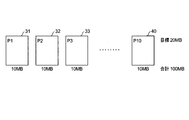
- Fig. 2 shows a comic image composed of 10 pages of page images.
- the comic image is composed of ten page images 31 to 40 from the first page image 31 to the tenth page image 40.
- the comic image may be composed of page images less than 10 page images, or may be composed of more page images than 10 page images.
- the data amount of each page image from the first page image 31 to the tenth page image 40 is 10 MB.
- the total data amount of comic images is 100 MB.
- the image quality of each page image from the first page image 31 to the tenth page image 40 is made as uniform as possible, and the total data amount of the comic images is the target data amount (total target data amount).
- the comic image is compressed so as to be 20 MB.
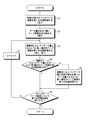
- FIG. 3 is a flowchart showing the processing procedure of the comic image compression apparatus 1.
- JPEG Joint Photographic Experts Group
- an image is divided into blocks of 8 pixels ⁇ 8 pixels, and converted from the spatial domain to the frequency domain using discrete cosine transform in units of blocks.
- the converted data is subjected to entropy coding using Huffman codes after the amount of data is reduced by quantization.
- a parameter used in quantization is called a Q value, and the amount of data after compression changes depending on the value of the Q value.
- the first Q value is such that the image quality after compression of each of the plurality of page images 31 to 40 is equal to or higher than a predetermined minimum image quality.
- First compression rate and a second Q value (second compression rate) at which the total data amount of the compressed comic image is equal to or less than a predetermined overall target data amount (for example, 20 MB)
- the initial Q value is determined. Using such initial Q value, the page images of all the page images 31 to 40 constituting the comic image are compressed (first compression process) (step 21).
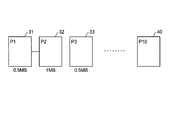
- FIG. 4 shows a comic image after the first compression processing.
- the data amount of the first page image 31 and the data amount of the third page image 33 are both 0.5 MB
- the data amount of the second page image 32 is 1 MB
- the data amount of the page image 40 is 2 MB.
- Other page images are also smaller than the data amount before the first compression processing.
- the amount of data after the first compression processing is different for each page image because the density of the cartoon is different for each page image.
- a fine page image has a larger amount of data after the first compression process than a non-fine page image.
- the entire data amount of the comic image is 10 MB as a result of the first compression process.
- This total data amount of 10 MB is smaller than the total target data amount of 20 MB.
- the page images 31 to 40 are rearranged in order of decreasing data amount after the first compression processing (step 22 in FIG. 3). Rearrangement is performed so that a page image with a small amount of data after the first compression processing is preferentially subjected to second compression processing described later.
- FIG. 5 shows the rearranged page images 31-40.
- page images are arranged from the left side in ascending order of data amount after the first compression processing.
- Page images with the same amount of data after the first compression processing are arranged so that the page image of the previous page is on the left side (first), but is arranged so that the page image of the subsequent page is on the left side. It may be done.
- the first page image 31 with a data amount of 0.5 MB is arranged at the very beginning (leftmost), and then the third page image 33 with a data amount of 0.5 MB is arranged.
- the second page image 32 having a data amount of 1 MB is arranged.
- the fourth and subsequent page images (not shown) are also arranged in ascending order of data amount after the first compression processing.
- the 10th page image 40 having a data amount of 2 MB is arranged.
- the n-th (n is an integer equal to or greater than 1) -th page image is compressed so that the data amount (page target data amount) based on the arithmetic expression of Equation 1 is obtained. (Second compression process) (Step 23 in FIG. 3).
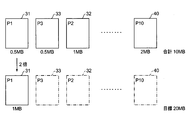
- FIG. 6 shows a state in which the first page image 31 is subjected to the second compression processing according to Equation 1.
- the second compression processing is performed for the page images up to (n ⁇ 1) th in the equation 1.
- the total data amount at the time when the image data is performed ⁇ and ⁇ the total data amount of the (n ⁇ 1) th page images obtained in the first compression process ⁇ are both 0.
- the second compression process the data amount of the first page image subjected to the first compression process is doubled.
- the second compression process may be performed such that the data amount matches the data amount obtained based on Equation 1, but it may not.
- the data amount obtained based on Equation 1 is set to a predetermined value.
- the nth page image is compressed so that the data amount is close to the data amount multiplied by the ratio (for example, 1.1) (step 25).
- step 23 and step 24 are performed for all page images (the processing of step 25 is also performed as necessary) (step 26). If the processing in step 23 and the like has not been completed for all page images, n is incremented (step 27), and the processing from step 23 is repeated again.
- FIG. 7 shows a state in which the second page image 33 is subjected to the second compression processing according to Equation 1.
- the same processing is repeated for the third and subsequent page images.
- the image quality of the page image after the second compression processing is relatively uniform.
- the data amount of the entire comic image after the second compression processing is close to the target data amount.
- FIG. 8 is an example of page images 31 to 40 rearranged after the first compression processing, and corresponds to FIG.
- the page images 31 to 40 are rearranged in ascending order of the amount of data after compression.
- a frame may be formed across the two-page spread image.
- rearrangement is defined so as to be continuous.
- the data amount of both the first page image 31 and the third page image 33 after the first compression processing is 0.5 MB
- the data amount of the second page image 32 after the first compression processing is 1 MB.
- the first page image 31, the third page image 33, and the second page image 32 are rearranged in order of decreasing data amount.
- the frame is formed over the page image 32, the first page image 31 and the second page image are formed even though the data amount of the second page image 32 is smaller than the data amount of the third page image 33. 32 is continuous.
- the second compression processing described above may be performed by rearranging the page images in which the frames are formed over the spread so as to be continuous. Furthermore, when a frame is allocated over spread page images, these spread page images may be compressed with the same Q value (compression ratio). Data indicating whether or not a frame is formed over the spread page is stored in advance in the header of the file representing the cartoon image, and the frame is formed on the spread page by referring to the data. Needless to say.
- the above-described compression process is performed for each frame included in the page image.
- the first compression processing is performed with the initial Q value for all page images constituting the comic image (step 51).
- FIG. 11 shows an example of the first page image 31 that has been subjected to the first compression processing.
- the data amount of the first page image 31 on which the first compression processing has been performed is 0.5 MB as described above.
- the first page image 31 includes six frames from the first frame 71 to the sixth frame 76.
- the amount and the data amount of the sixth frame 76 are 0.5 MB, 0.07 MB, 0.12 MB, 0.02 MB, 0.11 MB, and 0.08 MB, respectively.
- FIG. 12 is an example of a frame table for the first page image 31.
- a frame table is similarly formed for the page images constituting the comic image other than the first page image 31.
- the frame table columns of frame number, coordinates, area, and data amount are formed.
- the frame number identifies a frame included in the page image.
- Frame numbers 1, 2, 3, 4, 5, and 6 are respectively the first frame 71, the second frame 72, the third frame 73, the fourth frame 74, the fifth frame 75, and the sixth frame. It corresponds to frame 76.
- the coordinates indicate the position of each frame in the page image. Since the frames 71 to 76 constituting the first page image 31 are quadrangles, the positions of the frames 71 to 76 are specified by representing the vertices of the quadrangles with coordinates. For example, the upper left (upper right) of the first page image 31 is the origin. The area is the area of each frame.
- the data amount is the data amount of each frame on which the first compression processing has been performed. These coordinates, area, and data amount are stored in the frame table corresponding to the frame number. By storing the frame table in the memory 4 of the comic image compression apparatus 1, the coordinates and the like are stored in the comic image compression apparatus 1 for each frame.
- the frame images constituting the first compressed page image are rearranged in the ascending order of (frame data amount / frame area) (step 53 in FIG. 9).
- FIG. 13 shows an example of the frame images rearranged in ascending order of (frame data amount / frame area).
- the page images are rearranged in the order of the data amount of the page image after the first compression processing.
- the frame images are represented by (frame data amount / frame area). ) In ascending order. This is because the second compression process is preferentially performed for frames with a small amount of data per unit area.
- the second frame 72, the fourth frame 74, the sixth frame 76, the fifth frame 75, the third frame 73, and the first frame are in order of increasing (data amount of frame / area of frame).
- One frame 71 is arranged.
- the mth ((frame image target data amount)) becomes the data amount (the frame image target data amount) based on the arithmetic expression of Equation 2 in the order of decreasing (frame data amount / frame area).
- the m-th frame image is compressed (second compression processing) (step 54 in FIG. 9).
- FIG. 14 shows a state in which the first frame image 72 is subjected to the second compression processing according to Equation 2.
- the second compression process may be performed such that the data amount matches the data amount obtained based on Equation 2, but it may not be possible.
- the m-th frame image is compressed so as to obtain a data amount in the vicinity of the data amount obtained by multiplying the obtained data amount by a predetermined ratio (for example, 1.1) (step 56).
- step 54 and step 55 is performed for all the frame images (the processing of step 56 is also performed if necessary) (step 57). If the processing in step 54 and the like has not been completed for all the frame images, m is incremented (step 58), and the processing from step 54 is repeated again.
- FIG. 15 shows a state in which the second frame image 74 is subjected to the second compression processing in accordance with Equation 2.
- the same processing is repeated for the third and subsequent page images.
- the image quality of the frame image after the second compression processing is relatively uniform within the page image.
- step 59 in FIG. 10 it is confirmed whether or not the processing has been completed for all page images. If not completed (NO in step 59 in FIG. 10), n is incremented (step 60 in FIG. 10), and the processing from step 52 in FIG. 9 is repeated for the next page image.
- FIG. 16 is an example of a page image showing a frame formed over a spread page.
- the right side is the first page image 101 and the left side is the second page image 102.
- frames 81 to 85 are formed, and in the second page image 102, frames 91 to 95 are formed.
- a frame 90 is formed across the first page image 101 and the second page image 102.
- the frame portion 90A included in the first page image 101 and the frame portion 90B included in the second page image 102 are regarded as separate frames, and the above-described processing is performed. You may make it perform. Further, the Q value of the frame portion 90A and the Q value of the frame portion 90B may be the same.
- the second compression processing is performed for each frame image so that all the page images constituting the comic image are rearranged for each frame image, and the data amount after the second compression processing becomes the total target data amount. You may be made to be.
- comic images have been described. Needless to say, the present invention can be applied not only to comic images but also to image groups such as photo books and photo books (photo albums) composed of a plurality of page images. Nor.
- 1 cartoon image compression device 2 CPU 31-40, 101, 102 page images 71-76, 81-85, 90-95 frames
Landscapes
- Engineering & Computer Science (AREA)
- Multimedia (AREA)
- Signal Processing (AREA)
- Compression Or Coding Systems Of Tv Signals (AREA)
- Compression Of Band Width Or Redundancy In Fax (AREA)
Description
この発明は,画像圧縮装置ならびにその動作制御方法およびその動作プログラムに関する。
電子化された漫画をスマートフォンに代表される携帯電話に送信することにより,携帯電話の表示画面などに漫画を表示できるようになってきている。電子化された漫画を圧縮せずに送信するとデータ量が多いので,電子化された漫画全体のデータ量が所定のデータ量以下となるように圧縮することが多い。
画像データを圧縮する場合に,画像データの入力を継続しながら符号化するもの(特許文献1),各ページが複数のブロックに分割された画像データにおいて各ページの画像サイズが一定となるようにするもの(特許文献2),ユーザが設定した圧縮率で画像を圧縮するもの(特許文献3),連続記録のスピードの低下を防止するもの(特許文献4)などがある。
電子化された漫画を圧縮する場合,漫画の緻密さはすべてのページにおいて均一ではないので,すべてのページを一律の圧縮率で圧縮するとページごとに画質の違いが目立ってしまうことがある。
この発明は,漫画,写真集,フォト・ブック(フォト・アルバム)などの画像群のページごとの画質が等しくなるようにすることを目的とする。
この発明による圧縮装置は,複数のページ画像から構成される画像群のそれぞれのページ画像を,圧縮後のそれぞれのページ画像があらかじめ定められている最低画質以上の画質となる第1の圧縮率と,圧縮後の画像群のデータ量があらかじめ定められている全体目標データ量以下となる第2の圧縮率と,の間の初期圧縮率を用いて第1の圧縮処理を行う第1の圧縮手段,および第1の圧縮手段によって圧縮された画像群を構成するページ画像の圧縮後のデータ量の少ない順に第2の圧縮処理を行うものであって,第n(nは1以上の整数)番目のページ画像についてのページ画像目標データ量が,[(全体目標データ量)-{第(n-1)番目までのページ画像について第2の圧縮処理が行われたときの総データ量}]×(第1の圧縮処理において得られた第n番目のページ画像のデータ量)/[(第1の圧縮処理において得られた画像群全体のデータ量)-{第1の圧縮処理において得られた第(n-1)番目までのページ画像の総データ量}となるように第2の圧縮処理を行う第2の圧縮手段を備えていることを特徴とする。
この発明は,画像圧縮装置に適した動作制御方法も提供している。すなわち,この方法は,第1の圧縮手段が,複数のページ画像から構成される画像群のそれぞれのページ画像を,圧縮後のそれぞれのページ画像があらかじめ定められている最低画質以上の画質となる第1の圧縮率と,圧縮後の画像群のデータ量があらかじめ定められている全体目標データ量以下となる第2の圧縮率との間の初期圧縮率を用いて第1の圧縮処理を行い,第2の圧縮手段が,第1の圧縮手段によって圧縮された画像群を構成するページ画像の圧縮後のデータ量の少ない順に第2の圧縮処理を行うものであって,第n番目のページ画像についてのページ画像目標データ量が,[(全体目標データ量)-{第(n-1)番目までのページ画像について第2の圧縮処理が行われたときの総データ量}]×(第1の圧縮処理において得られた第n番目のページ画像のデータ量)/[(第1の圧縮処理において得られた画像群全体のデータ量)-{第1の圧縮処理において得られた第(n-1)番目までのページ画像の総データ量}となるように第2の圧縮処理を行うものである。
この発明は,画像圧縮装置の動作を制御するコンピュータが読み取り可能なプログラムも提供している。そのようなプログラムを格納した記録媒体を提供するようにしてもよい。
この発明によると,画像群を構成するページ画像のそれぞれが,最低画質以上の画質となる第1の圧縮率と,圧縮後の画像群のデータ量が全体目標データ量以下となる第2の圧縮率と,の間の初期圧縮率を用いて第1の圧縮処理が行われる。第1の圧縮処理が行われた画像群を構成する複数のページ画像については,第1の圧縮処理の圧縮後のデータ量の少ない順に第2の圧縮処理が行われる。この第2の圧縮処理は,第n(nは1以上の整数)番目のページ画像のデータ量が,(全体目標データ量)-{第(n-1)番目までのページ画像について第2の圧縮処理が行われたときの総データ量}]×(第1の圧縮処理において得られた第n番目のページ画像のデータ量)/[(第1の圧縮処理において得られた画像群全体のデータ量)-{第1の圧縮処理において得られた第(n-1)番目までのページ画像の総データ量}となるように行われる。
この発明によると,第1の圧縮処理後の画像群全体のデータ量と全体目標データ量との比率に応じて第2の圧縮処理が行われるので,第1の圧縮処理および第2の圧縮処理後の画像群のデータ量は全体目標データ量となり,かつ画像群を構成する複数のページ画像のすべての画質が比較的均一となる。
第2の圧縮手段は,たとえば,ページ画像目標データ量となるような第2の圧縮処理ができない場合にはページ画像の目標データ量を所定割合だけ大きくするものでもよい。
ページ画像に,複数のコマが割り当てられている場合には,第2の圧縮手段は,たとえば,第1の圧縮処理後の(コマのデータ量/コマの面積)が少ない順に,第m番目のコマ画像についてのコマ画像目標データ量が,[(ページ画像目標データ量)-{第(m-1)番目までのコマ画像について第2の圧縮処理が行われたときのコマ画像の総データ量}]×(第1の圧縮処理において得られた第m番目のコマ画像データのデータ量)/[(第1の圧縮処理において得られたページ画像のデータ量)-{第1の圧縮処理において得られた第(m-1)番目までのコマ画像の総データ量}となるようにコマごとに第2の圧縮処理を行うようにしてもよい。
第2の圧縮手段は,たとえば,見開きのページ画像にわたってコマが割り当てられていることに応じて,その見開きのページ画像については同じ圧縮率で第2の圧縮処理を行うものでもよい。
第2の圧縮手段は,連続して第1のページ画像と第2のページ画像とで構成される見開きのページ画像にわたってコマが割り当てられていることに応じて,第1のページ画像に割り当てられている第1のコマ部分と第2のページ画像に割り当てられている第2のコマ部分とを別々のコマと見なして第2の圧縮処理を行うものでもよい。
第2の圧縮手段は,連続して第1のページ画像と第2のページ画像とで構成される見開きのページ画像にわたってコマが割り当てられていることに応じて,第1のページ画像に割り当てられている第1のコマ部分の圧縮率と第2のページ画像に割り当てられている第2のコマ部分の圧縮率とが同一の圧縮率となるように第2の圧縮処理を行うものでもよい。
図1は,この発明の実施例を示すもので,漫画画像圧縮装置1の電気的構成を示すブロック図である。
漫画画像圧縮装置1の全体の動作は,CPU2によって統括される。
漫画画像圧縮装置1には,インターネットなどのネットワークと接続するための通信インターフェイス3,データを記憶するメモリ4,漫画画像を表示する表示装置5およびキーボードなどの入力装置6が含まれている。また,漫画画像圧縮装置1には,ハードディスク8およびハードディスク8にアクセスするハードディスク・ドライブ7ならびにCD-ROM(コンパクト・ディスク-リード・オンリ・メモリ)ドライブ9も含まれている。後述する動作を制御するプログラムが格納されているCD-ROM10がCD-ROMドライブ9によって読み取られると,読み取られたプログラムが漫画画像圧縮装置1にインストールされる。プログラムは,CD-ROM10以外の記録媒体に記録されており,そのような記録媒体から読み取られて漫画画像圧縮装置1にインストールされるようにしてもよい。また,インターネットなどを介して漫画画像圧縮装置1にプログラムを送信して,通信インターフェイス3を介して受信したプログラムが漫画画像圧縮装置1にインストールされるようにしてもよい。漫画画像圧縮装置1はコンピュータを利用して構成できる。
図2は,10ページ分のページ画像から構成される漫画画像を示している。
漫画画像は,第1ページ画像31から第10ページ画像40までの10個のページ画像31~40で構成されている。もちろん,漫画画像は10個のページ画像未満のページ画像によって構成されていてもよいし,10個のページ画像より多くのページ画像によって構成されていてもよい。
第1ページ画像31から第10ページ画像40のそれぞれのページ画像のデータ量は,すべて10MBであるとする。もちろん,ページ画像ごとにデータ量が異なっていてもよい。漫画画像の合計のデータ量は100MBとなる。この実施例では,第1ページ画像31から第10ページ画像40のそれぞれのページ画像の画質ができるだけ均等になるように,かつ漫画画像の合計のデータ量が目標のデータ量(全体目標データ量)である20MBとなるように,漫画画像を圧縮するものである。
図3は,漫画画像圧縮装置1の処理手順を示すフローチャートである。
この実施例では,漫画画像の圧縮はJPEG(Joint Photographic Experts Group)が利用される。JPEGでは,画像を8画素×8画素のブロックに分割し,そのブロック単位で離散コサイン変換を用いて空間領域から周波数領域へ変換される。変換されたデータが,量子化によってデータ量が落とされてから,ハフマン符号によるエントロピー符号化がなされる。量子化において利用されるパラメータがQ値と呼ばれ,そのQ値の値により圧縮後のデータ量が変わる。
まず,この実施例では,図2に示したように複数のページ画像31~40のそれぞれのページ画像の圧縮後の画質が,あらかじめ定められている最低画質以上となるような第1のQ値(第1の圧縮率)と,圧縮後の漫画画像の合計のデータ量があらかじめ定められている全体目標データ量(例えば,20MB)以下となる第2のQ値(第2の圧縮率)と,の間の初期Q値(初期圧縮率)が決定されている。そのような初期Q値を用いて,漫画画像を構成するすべてのページ画像31~40のそれぞれのページ画像が圧縮される(第1の圧縮処理)(ステップ21)。
図4は,第1の圧縮処理後の漫画画像を示している。
第1の圧縮処理が行われたことにより,第1ページ画像31のデータ量および第3ページ画像33のデータ量はいずれも0.5MBとなり,第2ページ画像32のデータ量は1MBとなり,第10ページ画像40のデータ量は2MBとなったものとする。その他のページ画像も第1の圧縮処理前のデータ量よりも少なくなっている。ページ画像ごとに第1の圧縮処理後のデータ量が異なっているのは,ページ画像ごとに漫画の緻密さが異なっているからである。緻密なページ画像の方が緻密でないページ画像よりも第1の圧縮処理後のデータ量が多くなっている。
第1の圧縮処理が行われたことにより,漫画画像の全体のデータ量は10MBとなったものとする。この全体のデータ量10MBは,全体目標データ量である20MBよりも少ない。
第1の圧縮処理が行われると,第1の圧縮処理後のデータ量の少ない順にページ画像31~40が並び換えられる(図3ステップ22)。第1圧縮処理後のデータ量が少ないページ画像を,優先的に後述する第2の圧縮処理が行われるようにするために並び換えが行われる。
図5は,並び換えられたページ画像31~40を示している。
図5においては,第1の圧縮処理後のデータ量が少ない順に左側からページ画像が並べられている。第1の圧縮処理後のデータ量が同じページ画像については,先のページのページ画像が左側(先)となるように並べられているが,後のページのページ画像が左側となるように並べられていてもよい。
図5では,一番初め(一番左側)に,データ量が0.5MBの第1ページ画像31が並べられ,次に,データ量が0.5MBの第3ページ画像33が並べられている。三番目に,データ量が1MBの第2ページ画像32が並べられている。四番目以降のページ画像(図示略)についても第1の圧縮処理後のデータ量の少ない順に並べられている。最後に,データ量が2MBの第10ページ画像40が並べられている。
ページ画像31~40の並び替えが行われると,式1の演算式にもとづくデータ量(ページ目標データ量)となるように第n(nは1以上の整数)番目のページ画像が圧縮される(第2の圧縮処理)(図3ステップ23)。
[(全体目標データ量)-{第(n-1)番目までのページ画像について第2の圧縮処理が行われたときの総データ量}]×(第1の圧縮処理において得られた第n番目のページ画像のデータ量)/[(第1の圧縮処理において得られた漫画画像全体のデータ量)-{第1の圧縮処理において得られた第(n-1)番目までのページ画像の総データ量}・・・式1
図6は,式1にしたがって,第1番目のページ画像31が第2の圧縮処理された様子を示している。
全体目標データ量は20MBであり,第1番目のページ画像31は,式1においてn=1であるから,式1において,{第(n-1)番目までのページ画像について第2の圧縮処理が行われたときの総データ量}および{第1の圧縮処理において得られた第(n-1)番目までのページ画像の総データ量}は,いずれも0となる。したがって,第1番目のページ画像31は,{(20MB-0MB)×(0.5MB)}/{(10MB)-(0MB)}=1MBとなるようなQ値が指定されて,第2の圧縮処理が行われる。第2の圧縮処理により,第1の圧縮処理が行われた第1番目のページ画像のデータ量が2倍となる。
式1にもとづいて得られるデータ量となるようにQ値が指定されて第2の圧縮処理が行われた場合,式1にもとづいて得られるデータ量となるかどうかは実際に圧縮してみないと分らない。このために,式1にもとづいて得られるデータ量と一致するデータ量となるような第2の圧縮処理を行うことができることもあるが,できないこともある。このために,式1にもとづいて得られるデータ量と一致するデータ量となるような第2の圧縮処理が行われたかどうかが確認される(ステップ24)。そのような第2の圧縮処理において,式1にもとづいて得られるデータ量と一致するデータ量とならなかった場合には(ステップ24でNO),式1にもとづいて得られるデータ量に所定の割合(たとえば,1.1)を乗じたデータ量近傍のデータ量となるように第n番目のページ画像が圧縮される(ステップ25)。
すべてのページ画像について,ステップ23およびステップ24の処理が行われる(必要に応じてステップ25の処理も)(ステップ26)。すべてのページ画像についてステップ23等の処理が終了していなければ,nがインクレメントされ(ステップ27),再びステップ23からの処理が繰り返される。
図7は,式1にしたがって,第2番目のページ画像33が第2の圧縮処理された様子を示している。
全体目標データ量は20MBであり,第2番目のページ画像33は,式1においてn=2であるから,{(20MB-1MB)×(0.5MB)}/{(10MB)-(0.5MB)}=1MBとなるようなQ値が指定されて,第2の圧縮処理が行われる。
第3番目以降のページ画像についても同様の処理が繰り返される。第2の圧縮処理後のページ画像の画質は比較的均等になる。しかも,第2の圧縮処理後の漫画画像全体のデータ量は目標データ量近傍となる。
図8は,第1の圧縮処理後に並び換えられたページ画像31~40の一例であり,図5に対応している。
上述したように,第1の圧縮処理が行われると,圧縮後のデータ量の少ない順にページ画像31~40が並び換えられる。しかしながら,漫画画像には,見開きの2ページの画像に渡ってコマが形成されていることがある。そのようなコマが形成されている見開きの2ページの画像については連続するように並び替えが規定される。
図5では,第1の圧縮処理後の第1ページ画像31および第3ページ画像33のいずれもデータ量が0.5MBであり,第1圧縮処理後の第2ページ画像32のデータ量が1MBであったので,データ量の少ない順として,第1ページ画像31,第3ページ画像33,第2ページ画像32と並び替えが行われていたが,図8では,第1ページ画像31と第2ページ画像32とは見開きにわたってコマが形成されているので,第2ページ画像32のデータ量が第3ページ画像33のデータ量よりも少ないにも関わらず,第1ページ画像31と第2ページ画像32とが連続している。
このように,見開きに渡ってコマが形成されているページ画像が連続するように並び替えが行われて上述した第2の圧縮処理が行われるようにしてもよい。さらに,見開きのページ画像にわたってコマが割り当てられている場合には,これらの見開きのページ画像については同じQ値(圧縮率)で圧縮するようにしてもよい。見開きページにわたってコマが形成されているか否かを示すデータは,漫画画像を表わすファイルのヘッダ等にあらかじめ記憶されており,そのデータを参照することにより,見開きのページにコマが形成されていることが分るのはいうまでもない。
図9から図15は,他の実施例を示している。
この実施例では,ページ画像に含まれるコマごとに上述した圧縮処理が行われる。
上述したように(図4参照),漫画画像を構成するすべてのページ画像について初期Q値で第1の圧縮処理が行われる(ステップ51)。
第1の圧縮処理が行われたすべてのページ画像のそれぞれのページ画像において,ページ画像に含まれるコマごとに,コマの座標,コマの面積,第1の圧縮処理後のコマのデータ量が記憶される(ステップ52)。
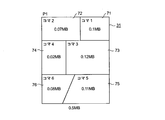
図11は,第1の圧縮処理が行われた第1ページ画像31の一例である。
第1の圧縮処理が行われた第1ページ画像31のデータ量は,上述のように0.5MBである。
第1ページ画像31には,第1のコマ71から第6のコマ76までの6つのコマが含まれている。第1の圧縮処理後の第1のコマ71のデータ量,第2のコマ72のデータ量,第3のコマ73のデータ量,第4のコマ74のデータ量,第5のコマ75のデータ量および第6のコマ76のデータ量は,それぞれ0.5MB,0.07MB,0.12MB,0.02MB,0.11MBおよび0.08MBであったものとする。
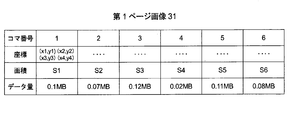
図12は,第1ページ画像31についてのコマ・テーブルの一例である。第1ページ画像31以外の漫画画像を構成するページ画像についても同様にコマ・テーブルが形成される。
コマ・テーブルには,コマ番号,座標,面積,データ量の各欄が形成されている。コマ番号は,ページ画像に含まれるコマを識別するものである。コマ番号1,2,3,4,5および6のそれぞれが,第1のコマ71,第2のコマ72,第3のコマ73,第4のコマ74,第5のコマ75および第6のコマ76に対応している。座標は,ページ画像における各コマの位置を示している。第1ページ画像31を構成するコマ71から76は四角形であるために,それらの四角形の頂点が座標で表わされることにより,コマ71から76の各コマの位置が特定される。たとえば,第1ページ画像31の左上(右上)が原点とされる。面積は,各コマの面積である。データ量は第1圧縮処理が行われた各コマのデータ量である。これらの座標,面積およびデータ量がコマ番号に対応してコマ・テーブルに格納される。コマ・テーブルが漫画画像圧縮装置1のメモリ4に格納されることにより,コマごとに座標等が漫画画像圧縮装置1に記憶されることとなる。
つづいて,(コマのデータ量/コマの面積)の小さい順に,第1の圧縮処理されたページ画像を構成するコマ画像が並び換えられる(図9ステップ53)。
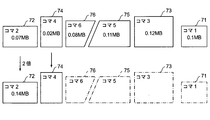
図13は,(コマのデータ量/コマの面積)の小さい順に並び換えられたコマ画像の一例である。
図5に示した例では,第1圧縮処理後のページ画像のデータ量の少ない順にページ画像が並び換えられているが,この実施例では,コマ画像は,(コマのデータ量/コマの面積)の小さい順に並び換えられる。これは,単位面積当たりのデータ量が少ないコマについて優先的に第2の圧縮処理が行われるようにするためである。
図13においては,(コマのデータ量/コマの面積)の小さい順に,第2のコマ72,第4のコマ74,第6のコマ76,第5のコマ75,第3のコマ73および第1のコマ71が並べられている。
コマ画像71から76の並び換えが行われると,(コマのデータ量/コマの面積)が少ない順に,式2の演算式にもとづくデータ量(コマ画像目標データ量)となるように第m(mは1以上の整数)番目のコマ画像が圧縮される(第2の圧縮処理)(図9ステップ54)。
[(ページ画像目標データ量)-{第(m-1)番目までのコマ画像について第2の圧縮処理が行われたときのコマ画像の総データ量}]×(第1の圧縮処理において得られた第m番目のコマ画像のデータ量)/[(第1の圧縮処理において得られたページ画像のデータ量)-{第1の圧縮処理において得られた第(m-1)番目までのコマ画像の総データ量}・・・式2
図14は,式2にしたがって,第1番目のコマ画像72が第2の圧縮処理された様子を示している。
ページ画像目標データ量は図6から分るように,1MBである。第1番目のコマ画像72は,式2においてm=1であるから,式2において,{第(m-1)番目までのコマ画像について第2の圧縮処理が行われたときのコマ画像の総データ量}および第1の圧縮処理において得られた第(m-1)番目までのコマ画像の総データ量}は,いずれも0となる。したがって,第1番目のコマ画像72は,[(1MB-0MB)×(0.07MB)/(0.5MB)=0.14MBとなるようなQ値が指定されて第2の圧縮処理が行われる。第2の圧縮処理により,第1の圧縮処理が行われた第1番目のコマ画像のデータ量が2倍となる。
式2にもとづいて得られるデータ量となるようにQ値が指定されて第2の圧縮処理が行われた場合,式1の場合と同様に,式2にもとづいて得られるデータ量となるかどうかは実際に圧縮してみないと分らない。このために,式2にもとづいて得られるデータ量と一致するデータ量となるような第2の圧縮処理を行うことができることもあるが,できないこともある。このために,式2にもとづいて得られるデータ量と一致するデータ量となるような第2の圧縮処理が行われたかどうかが確認される(ステップ55)。そのような第2の圧縮処理において,式2にもとづいて得られるデータ量と一致するデータ量とならなかった場合には(ステップ55でNO),上述したのと同様に,式2にもとづいて得られるデータ量に所定の割合(たとえば,1.1)を乗じたデータ量近傍のデータ量となるように第m番目のコマ画像が圧縮される(ステップ56)。
すべてのコマ画像についてステップ54およびステップ55の処理が行われる(必要に応じてステップ56の処理も)(ステップ57)。すべてのコマ画像についてステップ54等の処理が終了していなければmがインクレメントされ(ステップ58),再びステップ54からの処理が繰り返される。
図15は,式2にしたがって,第2番目のコマ画像74が第2圧縮処理された様子を示している。
ページ画像の目標データ量は1MBであり,第2番目のコマ画像74は,式2においてm=2であるから,{(1MB-0.14MB)×(0.02MB)}/{(0.5MB)-(0.07MB)}=0.04MBとなるようなQ値が指定されて,第2の圧縮処理が行われる。
第3番目以降のページ画像についても同様の処理が繰り返される。第2の圧縮処理後のコマ画像の画質は,そのページ画像内で比較的均等となる。
第n番目のページ画像について上述したコマ画像についての圧縮処理が終了すると,すべてのページ画像について処理が終了したかどうかが確認される(図10ステップ59)。終了していなければ(図10ステップ59でNO),nがインクレメントされ(図10ステップ60),次のページ画像について図9ステップ52からの処理が繰り返される。
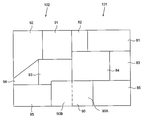
図16は,見開きのページに渡ってコマが形成されている様子を示すページ画像の一例である。
図16において,右側が第1ページ画像101であり,左側が第2ページ画像102である。第1ページ画像101には,コマ81から85が形成されており,第2ページ画像102にはコマ91から95が形成されている。さらに,第1ページ画像101と第2ページ画像102とにわたってコマ90が形成されている。
このような場合に,コマ90のうち,第1ページ画像101に含まれているコマ部分90Aと第2ページ画像102に含まれているコマ部分90Bとを別々のコマと見なして上述した処理を行うようにしてもよい。また,コマ部分90AのQ値とコマ部分90BのQ値とが同じとなるようにしてもよい。
さらに,漫画画像を構成するすべてのページ画像をコマ画像ごとに並び換えて,第2の圧縮処理後のデータ量が全体目標データ量となるように,コマ画像ごとに第2の圧縮処理が行われるようにしてもよい。
上述の実施例においては,漫画画像について説明したが,漫画画像だけでなく,複数のページ画像から構成される写真集,フォト・ブック(フォト・アルバム)などの画像群について適用できるのはいうまでもない。
1 漫画画像圧縮装置
2 CPU
31~40,101,102 ページ画像
71~76,81~85,90~95 コマ画像
2 CPU
31~40,101,102 ページ画像
71~76,81~85,90~95 コマ画像
Claims (8)
- 複数のページ画像から構成される画像群のそれぞれのページ画像を,圧縮後のそれぞれのページ画像があらかじめ定められている最低画質以上の画質となる第1の圧縮率と,圧縮後の画像群のデータ量があらかじめ定められている全体目標データ量以下となる第2の圧縮率と,の間の初期圧縮率を用いて第1の圧縮処理を行う第1の圧縮手段,および
上記第1の圧縮手段によって圧縮された画像群を構成するページ画像の圧縮後のデータ量の少ない順に第2の圧縮処理を行うものであって,第n番目のページ画像についてはページ画像目標データ量が,[(上記全体目標データ量)-{第(n-1)番目までのページ画像について第2の圧縮処理が行われたときの総データ量}]×(上記第1の圧縮処理において得られた第n番目のページ画像のデータ量)/[(上記第1の圧縮処理において得られた画像群全体のデータ量)-{上記第1の圧縮処理において得られた第(n-1)番目までのページ画像の総データ量}となるように第2の圧縮処理を行う第2の圧縮手段,
を備えた画像圧縮装置。 - 上記第2の圧縮手段は,
上記ページ画像目標データ量となるような第2の圧縮処理ができない場合には上記ページ画像の目標データ量を所定割合だけ大きくするものである,
請求項1に記載の画像圧縮装置。 - 上記ページ画像は,複数のコマが割り当てられており,
上記第2の圧縮手段は,
上記第1の圧縮処理後の(コマのデータ量/コマの面積)が少ない順に,第m番目のコマ画像についてのコマ画像目標データ量が,[(上記ページ画像目標データ量)-{第(m-1)番目までのコマ画像について第2の圧縮処理が行われたときのコマ画像の総データ量}]×(上記第1の圧縮処理において得られた第m番目のコマ画像のデータ量)/[(上記第1の圧縮処理において得られたページ画像のデータ量)-{上記第1の圧縮処理において得られた第(m-1)番目までのコマ画像の総データ量}となるようにコマごとに第2の圧縮処理を行うものである,
請求項1または2に記載の画像圧縮装置。 - 上記第2の圧縮手段は,
見開きのページ画像にわたってコマが割り当てられていることに応じて,その見開きのページ画像については同じ圧縮率で第2の圧縮処理を行うものである,
請求項1から3のうち,いずれか一項に記載の画像圧縮装置。 - 上記第2の圧縮手段は,
連続して第1のページ画像と第2のページ画像とで構成される見開きのページ画像にわたってコマが割り当てられていることに応じて,第1のページ画像に割り当てられている第1のコマ部分と第2のページ画像に割り当てられている第2のコマ部分とを別々のコマと見なして第2の圧縮処理を行うものである,
請求項3または4に記載の画像圧縮装置。 - 上記第2の圧縮手段は,
連続して第1のページ画像と第2のページ画像とで構成される見開きのページ画像にわたってコマが割り当てられていることに応じて,第1のページ画像に割り当てられている第1のコマ部分の圧縮率と第2のページ画像に割り当てられている第2のコマ部分の圧縮率とが同一の圧縮率となるように第2の圧縮処理を行うものである,
請求項3または4に記載の画像圧縮装置。 - 第1の圧縮手段が,複数のページ画像から構成される画像群のそれぞれのページ画像を,圧縮後のそれぞれのページ画像があらかじめ定められている最低画質以上の画質となる第1の圧縮率と,圧縮後の画像群のデータ量があらかじめ定められている全体目標データ量以下となる第2の圧縮率と,の間の初期圧縮率を用いて第1の圧縮処理を行い,
第2の圧縮手段が,上記第1の圧縮手段によって圧縮された画像群を構成するページ画像の圧縮後のデータ量の少ない順に第2の圧縮処理を行うものであって,第n番目のページ画像についてのページ画像目標データ量が,[(上記全体目標データ量)-{第(n-1)番目までのページ画像について第2の圧縮処理が行われたときの総データ量}]×(上記第1の圧縮処理において得られた第n番目のページ画像のデータ量)/[(上記第1の圧縮処理において得られた画像群全体のデータ量)-{上記第1の圧縮処理において得られた第(n-1)番目までのページ画像の総データ量}となるように第2の圧縮処理を行う,
画像圧縮装置の動作制御方法。 - 画像圧縮装置のコンピュータを制御するコンピュータが読み取り可能なプログラムであって,
複数のページ画像から構成される画像群のそれぞれのページ画像を,圧縮後のそれぞれのページ画像があらかじめ定められている最低画質以上の画質となる第1の圧縮率と,圧縮後の画像群のデータ量があらかじめ定められている全体目標データ量以下となる第2の圧縮率と,の間の初期圧縮率を用いて第1の圧縮処理を行わせ,
第1の圧縮処理によって圧縮された画像群を構成するページ画像の圧縮後のデータ量の少ない順に第2の圧縮処理を行わせるものであって,第n番目のページ画像についてのページ画像目標データ量が,[(上記全体目標データ量)-{第(n-1)番目までのページ画像について第2の圧縮処理が行われたときの総データ量}]×(上記第1の圧縮処理において得られた第n番目のページ画像のデータ量)/[(上記第1の圧縮処理において得られた画像群全体のデータ量)-{上記第1の圧縮処理において得られた第(n-1)番目までのページ画像の総データ量}となるように第2の圧縮処理を行わせるように画像圧縮装置のコンピュータを制御するプログラム。
Priority Applications (1)
| Application Number | Priority Date | Filing Date | Title |
|---|---|---|---|
| JP2014531553A JP5947384B2 (ja) | 2012-08-24 | 2013-07-25 | 画像圧縮装置ならびにその動作制御方法およびその動作プログラム |
Applications Claiming Priority (2)
| Application Number | Priority Date | Filing Date | Title |
|---|---|---|---|
| JP2012-185458 | 2012-08-24 | ||
| JP2012185458 | 2012-08-24 |
Publications (1)
| Publication Number | Publication Date |
|---|---|
| WO2014030485A1 true WO2014030485A1 (ja) | 2014-02-27 |
Family
ID=50149796
Family Applications (1)
| Application Number | Title | Priority Date | Filing Date |
|---|---|---|---|
| PCT/JP2013/070164 Ceased WO2014030485A1 (ja) | 2012-08-24 | 2013-07-25 | 画像圧縮装置ならびにその動作制御方法およびその動作プログラム |
Country Status (2)
| Country | Link |
|---|---|
| JP (1) | JP5947384B2 (ja) |
| WO (1) | WO2014030485A1 (ja) |
Citations (2)
| Publication number | Priority date | Publication date | Assignee | Title |
|---|---|---|---|---|
| JPH08130616A (ja) * | 1994-08-12 | 1996-05-21 | Fuji Xerox Co Ltd | 画像処理装置 |
| JP2000261799A (ja) * | 1999-03-10 | 2000-09-22 | Fujitsu Ltd | 可変レート動画像符号化装置 |
-
2013
- 2013-07-25 WO PCT/JP2013/070164 patent/WO2014030485A1/ja not_active Ceased
- 2013-07-25 JP JP2014531553A patent/JP5947384B2/ja active Active
Patent Citations (2)
| Publication number | Priority date | Publication date | Assignee | Title |
|---|---|---|---|---|
| JPH08130616A (ja) * | 1994-08-12 | 1996-05-21 | Fuji Xerox Co Ltd | 画像処理装置 |
| JP2000261799A (ja) * | 1999-03-10 | 2000-09-22 | Fujitsu Ltd | 可変レート動画像符号化装置 |
Non-Patent Citations (1)
| Title |
|---|
| KEI KAWAMURA: "Study on Super-Heigh-Compression Coding for Comics", IPSJ SIG NOTES, vol. 2003, no. 99, 3 October 2003 (2003-10-03), pages 7 - 16 * |
Also Published As
| Publication number | Publication date |
|---|---|
| JP5947384B2 (ja) | 2016-07-06 |
| JPWO2014030485A1 (ja) | 2016-07-28 |
Similar Documents
| Publication | Publication Date | Title |
|---|---|---|
| JP6590925B2 (ja) | 動画像を作成するための方法 | |
| CN107169927B (zh) | 一种图像处理系统、方法及显示装置 | |
| WO2000005680A1 (en) | Memory saving wavelet-like image transform system and method for digital camera and other memory conservative applications | |
| JP7147075B2 (ja) | 複数の画像全体の圧縮 | |
| JP4090975B2 (ja) | 画像処理装置 | |
| JP5947384B2 (ja) | 画像圧縮装置ならびにその動作制御方法およびその動作プログラム | |
| CN111145180A (zh) | 一种应用于可视化大屏的地图瓦片的处理方法和相关装置 | |
| WO2010005360A1 (en) | Method for compressing images and a format for compressed images | |
| JP4097108B2 (ja) | ウェーブレット変換装置及び符号化復号化装置 | |
| CN101370142A (zh) | 图像解码和缩放的方法及装置、图像显示系统 | |
| JPH04100379A (ja) | 画像再生方式 | |
| JP5947385B2 (ja) | 画像圧縮装置ならびにその動作制御方法およびその動作制御プログラム | |
| JP4584115B2 (ja) | 画像符号化装置、画像符号化方法、画像符号化プログラムおよび画像符号化プログラムを記録したコンピュータ読み取り可能な記録媒体 | |
| JP4510946B2 (ja) | 復号方法及び復号装置 | |
| JPS61135286A (ja) | 画像デ−タ圧縮装置 | |
| JP3790179B2 (ja) | 電子会議システム | |
| JP4353986B2 (ja) | 画像合成装置、画像合成方法、画像合成プログラムおよび画像合成プログラムを記録したコンピュータ読取可能な記録媒体 | |
| JP6431803B2 (ja) | 画像記録装置および画像再生装置ならびにそれらの方法およびそれらのプログラム | |
| US20110280482A1 (en) | Image data expansion apparatus, image data compression apparatus and methods of controlling operation of same | |
| JP6724581B2 (ja) | 画像符号化装置、方法、及びプログラム | |
| KR20170046279A (ko) | 디코딩 장치, 전자 장치 및 그 제어 방법 | |
| JP6223012B2 (ja) | 画像符号化装置及び画像符号化方法 | |
| US20130051695A1 (en) | Image compressing device, image compressing method, and image compressing program | |
| Mietens et al. | New dct computation algorithm for video quality scaling | |
| KR20070041078A (ko) | 이동 통신 단말기의 이미지 표시 방법 |
Legal Events
| Date | Code | Title | Description |
|---|---|---|---|
| 121 | Ep: the epo has been informed by wipo that ep was designated in this application |
Ref document number: 13830870 Country of ref document: EP Kind code of ref document: A1 |
|
| ENP | Entry into the national phase |
Ref document number: 2014531553 Country of ref document: JP Kind code of ref document: A |
|
| NENP | Non-entry into the national phase |
Ref country code: DE |
|
| 122 | Ep: pct application non-entry in european phase |
Ref document number: 13830870 Country of ref document: EP Kind code of ref document: A1 |