WO2013077549A1 - 시나리오 유사관계 분석 시스템 - Google Patents
시나리오 유사관계 분석 시스템 Download PDFInfo
- Publication number
- WO2013077549A1 WO2013077549A1 PCT/KR2012/008415 KR2012008415W WO2013077549A1 WO 2013077549 A1 WO2013077549 A1 WO 2013077549A1 KR 2012008415 W KR2012008415 W KR 2012008415W WO 2013077549 A1 WO2013077549 A1 WO 2013077549A1
- Authority
- WO
- WIPO (PCT)
- Prior art keywords
- scenario
- query
- question
- similarity
- database
- Prior art date
- Legal status (The legal status is an assumption and is not a legal conclusion. Google has not performed a legal analysis and makes no representation as to the accuracy of the status listed.)
- Ceased
Links
Images

Classifications
-
- G—PHYSICS
- G06—COMPUTING OR CALCULATING; COUNTING
- G06F—ELECTRIC DIGITAL DATA PROCESSING
- G06F16/00—Information retrieval; Database structures therefor; File system structures therefor
- G06F16/90—Details of database functions independent of the retrieved data types
- G06F16/903—Querying
-
- G—PHYSICS
- G06—COMPUTING OR CALCULATING; COUNTING
- G06F—ELECTRIC DIGITAL DATA PROCESSING
- G06F16/00—Information retrieval; Database structures therefor; File system structures therefor
- G06F16/90—Details of database functions independent of the retrieved data types
Definitions
- the present invention relates to a system for analyzing the similarity of scenarios for story or scenario development of movies and animations.
- the present invention relates to a system for analyzing a scenario through a question-and-answer system proposed by the inventor, and assigning a weight to each query to perform similarity analysis based on narrative components.
- the scenario affinity analysis system aims to solve the following problems.
- the present invention is to analyze the scenario similarity using the narrative component-based question and answer system devised by the inventor.
- the scenario affinity analysis system includes a query response database in which a query for determining a scenario affinity and an example of a response to a query are stored, a scenario database in which a response to a query for a disclosed scenario is already input, and a query stored in a query database. Is displayed on the display unit, an input unit in which a specific response is input among the response to the query stored in the query database, a weight setting unit in which a weight is set for the query stored in the query database, and a response to the query input from the input unit It includes a similarity analysis unit for analyzing the similarity of the scenario using the weight.
- the query for determining similarity is characterized by a narrative component of a person, an action, an event, or a background.
- a query query and an example for determining a similarity are as shown in Table 1 below.
- Weights of the weight setting unit according to the present invention are classified into three groups (up, middle, down) or five groups (top, top, middle, bottom, bottom), and the weight of each group is the same. do.
- the matching of the query and the group of weights according to the present invention may be set in advance by the user according to the overall similarity or the similarity for individual items.
- the weight of the weight setting unit according to the present invention may set the weight for each query.
- the present invention was developed as a literary theory of dramatic narrative creation and developed a system that can support the scenario creation activities of the artists based on Aristotle, a structure that can contribute the human-specific artistic creation activity of story creation as indexing and analytical data of computing technology. To provide.
- the present invention supports the promotion of human creative thinking and activities in both directions of exploratory creativity and transformative creativity, so that the existing story is similar to the author's intention based on the result of elaborate narrative analysis of the existing story. It is meaningful in that it helps to prevent controversial similarities in the creative process in advance and also provides a numerical basis for story similarity.
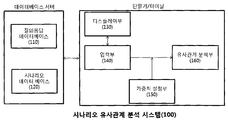
- FIG. 1 is a block diagram schematically showing the configuration of a scenario affinity analysis system according to the present invention.
- FIG. 2 is an example of a display unit screen on which a question and answer example of the present invention is output.
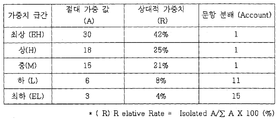
- 3 is a table illustrating an example of weight application for each group according to the present invention.
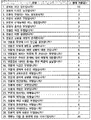
- FIG. 4 is a table illustrating an example of weight application for each query according to the present invention.
- FIG. 5 is a flowchart illustrating the operation of a scenario affinity analysis system according to the present invention.
- the present invention for solving the above-described technical problem is stored in a query database for storing a query for determining the scenario affinity and a response example for a query, a scenario database for inputting a response to a query for a disclosed scenario, a query database
- a display unit for outputting a query, an input unit in which a specific response is input among the response to the query stored in the query database, a weight setting unit in which weights are set for the query stored in the query database, and a response and a query for the input query in the input unit.
- It includes a similarity analysis unit for analyzing the similarity of the scenario using the weight for the.
- first, second, A, B, etc. may be used to describe various components, but the components are not limited by the terms, but merely for distinguishing one component from other components. Only used as For example, without departing from the scope of the present invention, the first component may be referred to as the second component, and similarly, the second component may also be referred to as the first component.
- scenario affinity analysis system 100 will be described in detail with reference to the accompanying drawings.
- the present invention micro-analyzes the existing creative story with narrative components, such as people, actions (events), and background, in developing software for supporting film and animation story ideas, treatments, and scenario authoring.
- narrative components such as people, actions (events), and background
- the present invention recognizes the authoring activity and the creation process of a human artist as Boden's exploratory creative-transforming creative process, and refers to the works of similar relations reflecting the author's intentions, making the quality of creations more original and In other words, they should be able to contribute to entering into multilateral possibilities.
- a "Q & A system for judging similarity relationships" consisting of 29 question items and selective answers for each item to determine the author's intention, form, and content specificity. (Questionnaire System for Analogy rating).
- the story similarity equation has a numerical similarity value by adding each weight to the user's answer to the query.
- FIG. 1 is a block diagram schematically illustrating a configuration of a scenario affinity analysis system 100 according to the present invention.
- the scenario affinity analysis system 100 includes a query response database 110 in which a query for determining a scenario affinity and an example of a response to a query are stored, and a scenario database in which a response to a query for a disclosed scenario is already input.
- a display unit 130 for outputting a query stored in a query database
- an input unit 140 for inputting a specific response among examples of responses to a query stored in the query database
- It includes a similarity analysis unit 160 for analyzing the similarity of the scenario using the response to the query input from the setting unit 150 and the input unit 140 and the weight for the query.
- the question and answer database 110 stores a question devised by the inventor and a response example thereof.
- a query is about a narrative component of a person, action, event, or background. This allows basic scenario analysis.
- the scenario database 120 stores reference data (hereinafter, referred to as a “reference scenario”) for analyzing a scenario and a similarity that is an analysis target.
- reference scenario reference data
- it is a database for various scenarios disclosed in the related art.
- the reference scenario stored in the scenario database 120 has a value previously input according to the question and answer provided in the present invention. Through this, it is possible to compare similarity with the scenario to be analyzed.
- the analysis of the stored reference scenario may be automatically performed using a separate analysis tool.
- the analysis tool classifies scenarios using data mining techniques.
- Genre refers to a pattern formed by repetition of certain logic and narrative systems.
- the pattern is a form of expression that catches the audience's attention by refinement of the detail when similar elements are accumulated in the dramatic plot of characters, characters, and themes.
- the use of genre elements in the scenario creation process helps to gain formal familiarity by having a universal propensity to the behavior and type of characters in the scenario.
- the genre grammar which is the core of the elements of the film genre, can be classified into three categories. That is the narrative convention of Formulas, Conventional Events or Episode Conventions, and the Smallest Icon.
- Formula is a structure of a whole narrative form that repeats in a genre, a plot that establishes and heightens similar conflicts within a specific context and then ends up meeting the expectations of the audience.
- Conventions on the other hand, can be regarded as the basic unit, or episode unit, that formalizes elements of inevitable conflicts between familiar character types in a formula through repetition.
- icons refer to elements of the mise en scene, such as costumes, props, or specific spaces, which are a key factor in the genre that encompasses not only visual but also auditory elements.
- the genre-specific scenarios proposed by the present invention form a story and a story structure by combining a character, a theme, a word, a symbol, a motif, and a plot.
- the present invention divides the story into 24 genres. This is based on Steve Neal's analysis of 16 genres, which he revised and reorganized, because his 16 film genres are the subject of a detailed investigation by film critics. This is consistent with the name given to the film industry, and it can be used practically. Specific genre categories are shown in the following table. Similar distinctions apply to genres such as movies and animations and novels.
- Question 7 asks about the type of person and is shown in the table below.
- the question elements of this query system contain the parts necessary for the artist to create the main character. As the artist follows the question, he establishes the elements necessary to envision the figure and based on this, he can create his own character. Furthermore, this question becomes a piece of data that finds existing works with similar inclinations. Existing works with high scores in the matching rate system will allow the artist to identify the similarities and differences of his ideas with the existing works and inspire him to develop his ideas based on them.
- Tobias The best force to advance the story is the plot, and the composition of the choices for the plot uses Ronald Tobias' plot classification. Tobias first emphasizes that the plot is not a product of the original individual, but a public resource, and then reads a number of works, outlines them and types them. Tobias's point of view, in particular, does not apply logical laws, but gives the most useful methodological implications in that he plots the plot in a very practical way. Secondly, Tobias explains the former as an action-based plot and the latter as a character-oriented plot, which can be divided into two categories: 'body plot' and 'heart plot'.
- Tobias For example, 'to pursue something' is defined as 'plot of pursuit' when it appears as an internal pursuit, and 'plot of adventure' when it is expressed as an external action. Therefore, twenty plots of Tobias can serve as granular validity information about plot development. This can be a valid strategy for further refinement.
- Tobias describes twenty plot types and extracts narratives from narrator-related narrative programs such as pursuit, adventure, and maturity. This is a discussion of the power of the story driver to move the story among the plots, and Tobias's classification is the most crucial weight for plot development, given that the narrative represents the progress of the story. A closer look at Tobias's 20 plots is shown in Table 6.
- FIG. 2 is an example of a screen of the display unit 130 on which a question and answer example of the present invention is output.
- the query order may be given randomly regardless of the number of the query.
- the display unit 130 may be implemented through an output device of various hardware such as a mobile communication terminal such as a personal PC or a smartphone.
- the input unit 140 may be implemented through a device such as a keyboard, a mouse, or a touch screen, which is an input device connected to a computer device.
- the weight setting unit 150 assigns a weight to the query according to the characteristics of the scenario or the planning intention. Through this, the similarity can be analyzed based on the part (individual items) that the user focuses on, or the similarity can be analyzed based on the overall comprehensive similarity.
- the weight of the weight setting unit 150 is classified into three groups (up, middle, down) or five groups (top, top, middle, bottom, bottom), and the weight of each group is the same.
- FIG. 3 is a table illustrating an example of weighting according to the present invention.
- the weight groups shown in FIG. 3 are five groups, and the distribution of queries for each weight is indicated on the right side. Which query belongs to which weight group is set by the user in advance, or the weight group set in advance according to the scenario type is used.
- the weight group may be preset for each query according to the genre of the scenario.
- the weighting part it is desirable to set a high determinant to make a person's state in a high interval and a low determinant to a low interval in relation to a state variable of the person. It is preferable to set the basic variable that produces the best interval to the development of the plot.
- weighted values 29 weighted questions are divided into 5 groups for 1) genre, 2) person, and 3) plot.
- weighting is possible. It is possible to set weights for each query without classifying them into fixed groups for each question.
- weight application for each query is not set for each group, and the user may set a different group for each query or for each query depending on the nature of the work.
- the similarity analysis unit 160 compares the existing scenario and the analysis target scenario and presents a high similarity scenario.
- a plurality of scenarios with high similarity may be presented, and similar scenarios in a combined form according to scenario plots or questions may be presented.
- the numerical indication of the similarity may be expressed in the form of a graph or the like.
- the question and answer database 110, the scenario database 120, the display 130, the input unit 140, the weight setting unit 150, and the similarity analysis unit 160 may be implemented in one computer device.
- a configuration such as a scenario database 120 having a large capacity may be stored in a separate server connected by wire or wirelessly. That is, the physical location of each component can be various combinations. In FIG. 1, only a database is disposed at a remote location, and the rest of the configuration is illustrated in one terminal.
- FIG. 5 is a flowchart illustrating the operation of the scenario affinity analysis system 100 according to the present invention.
- step S1 where a question and answer example for affinity analysis of a scenario is presented
- step S2 in which a user inputs a response to each query
- step S3 in which a weight is applied to the response input value
- the affinity analysis unit 160 is applied.
- the main process is the S4 step through which similarity is analyzed. This content may be output in various forms. In FIG. 4, the descending order according to the similarity value is taken as an example.
Landscapes
- Engineering & Computer Science (AREA)
- Databases & Information Systems (AREA)
- Theoretical Computer Science (AREA)
- Data Mining & Analysis (AREA)
- Physics & Mathematics (AREA)
- General Engineering & Computer Science (AREA)
- General Physics & Mathematics (AREA)
- Computational Linguistics (AREA)
- Information Retrieval, Db Structures And Fs Structures Therefor (AREA)
Abstract
본 발명에 따른 시나리오 유사관계 분석 시스템(100)은 시나리오 유사관계 판단을 위한 질의 및 질의에 대한 응답예가 저장된 질의응답 데이터베이스(110), 기공개된 시나리오에 대한 질의에 대한 응답이 이미 입력된 시나리오 데이터베이스(120), 질의 데이터베이스에 저장된 질의가 출력되는 디스플레이부(130), 질의 데이터베이스에 저장된 질의에 대한 응답예 중 특정 응답이 입력되는 입력부(140), 질의 데이터베이스에 저장된 질의에 대한 가중치가 설정되는 가중치 설정부(150) 및 입력부(140)에서 입력된 질의에 대한 응답과 질의에 대한 가중치를 이용하여 시나리오의 유사관계를 분석하는 유사관계 분석부(160)를 포함한다. 분석대상 시나리오와 기존 시나리오와의 유사 관계 확인은 곧 이를 변용한 보다 창의적이고 새로운 스토리 창작의 과학적, 객관적 기반이 될 수 있다.
Description
본 발명은 영화 및 애니메이션의 스토리 내지 시나리오 개발을 위하여 시나리오의 유사도를 분석하는 시스템에 관한 것이다. 특히 본 발명은 발명자가 제안한 질의응답 시스템을 통하여 시나리오를 분석하고, 질의 별 가중치를 부여하여 서사적 구성요소를 기반으로 한 유사도 분석을 수행하는 시스템에 관한 것이다.
현재 기술발전에 따라 3D 영화, IPTV, 이동 통신 단말기, 클라우딩 컴퓨터 등 문화 콘텐츠에 대한 다양한 접근 방법이 나오고 있다. 더불어 문화 콘텐츠를 제공하는 영화, 애니메이션, 드라마, 소설 등이 많이 배출되고 있다.
현대 사회 문화, 예술, 엔터테인먼트 분야에서 중요한 요소를 차지하는 것은 콘텐츠이다. 따라서 이러한 콘텐츠에 대한 발굴 및 연구개발은 중요한 분야라고 하겠다.
특히 영화, 애니매이션 등 대중적 서사 장르의 핵심이자 기반인 스토리 텔링 기획 및 개발을 지원하는 도구 개발이 요구되고 있다.
이러한 도구에는 콘텐츠의 스토리 내지 시나리오에 대한 유사도를 분석하기 위한 방법 내지 시스템이 필요합니다. 다양한 시나리오가 쏟아지고 있는 상황에서 현재 기획하고 있는 시나리오가 종래 공개된 시나리오와 유사한지 여부를 사전에 알 수 있다면, 모방에 의한 사회적 문제 등을 사전에 배제할 수 있고, 나아가 종래 시나리오와 유사한 부분 내지 비유사한 부분에 대한 개발을 통해 독창적인 시나리오 발굴이 가능하다고 하겠다.
인력에 의한 유사도 분석도 가능하지만, 기간이 오래 소요되고 주관적인 관점에 따라 서로 다른 분석이 가능하다.
따라서 객관적이고 단시간 내에 유사도 분석 가능한 시나리오 유사도 분석 도구(tool)에 대한 개발이 요구된다고 하겠다.
본 발명에 따른 시나리오 유사관계 분석 시스템은 다음과 같은 해결과제를 목적으로 한다.
첫째, 본 발명은 발명자가 고안한 서사적 구성 요소 기반의 질의응답 시스템을 이용하여 시나리오 유사관계를 분석하고자 한다.
둘째, 복수 개의 질의응답에 대해 개별적인 가중치를 부여하여, 현재 시나리오의 특성 내지 기획 의도를 고려한 유사관계를 분석하고자 한다.
셋째, 기공개된 시나리오와 분석 대상인 시나리오와의 유사관계 분석을 통해 독창적인 시나리오 또는 기획의도에 맞는 시나리오 발굴을 가능하게 하고자 한다.
본 발명의 해결과제는 이상에서 언급된 것들에 한정되지 않으며, 언급되지 아니한 다른 해결과제들은 아래의 기재로부터 당업자에게 명확하게 이해될 수 있을 것이다.
본 발명에 따른 시나리오 유사관계 분석 시스템은 시나리오 유사관계 판단을 위한 질의 및 질의에 대한 응답예가 저장된 질의응답 데이터베이스, 기공개된 시나리오에 대한 질의에 대한 응답이 이미 입력된 시나리오 데이터베이스, 질의 데이터베이스에 저장된 질의가 출력되는 디스플레이부, 질의 데이터베이스에 저장된 질의에 대한 응답예 중 특정 응답이 입력되는 입력부, 질의 데이터베이스에 저장된 질의에 대한 가중치가 설정되는 가중치 설정부 및 입력부에서 입력된 질의에 대한 응답과 질의에 대한 가중치를 이용하여 시나리오의 유사관계를 분석하는 유사관계 분석부를 포함한다.
본 발명에 따른 시나리오 유사관계 분석 시스템에서 유사관계 판단을 위한 질의는 서사적 구성요소인 인물, 행동, 사건 또는 배경에 대한 것을 특징으로 한다.
본 발명에 따른 시나리오 유사관계 분석 시스템에서 유사관계 판단을 위한 질의질의 및 응답예는 아래의 표 1과 같은 것을 특징으로 한다.
본 발명에 따른 가중치 설정부의 가중치는 3개의 그룹(상,중,하)으로 분류되거나, 5개의 그룹(최상,상,중,하,최하)로 분류되고, 각 그룹의 가중치는 동일한 것을 특징으로 한다.
본 발명에 따른 질의와 가중치의 그룹에 대한 매칭은 종합적 유사관계 또는 개별 항목에 대한 유사관계에 따라 사용자가 사전에 설정할 수도 있다.
본 발명에 따른 가중치 설정부의 가중치는 각 질의 별로 가중치를 설절할 수도 있다.
본 발명은 극적 서사 창작의 문학 이론으로서 아리스토텔레스를 토대로 작가의 시나리오 창작활동을 지원할 수 있는 시스템을 개발한 것으로, 스토리 창작이라는 인간고유의 예술적 창조활동을 컴퓨팅 기술의 인덱싱과 분석 데이터로서 기여할 수 있는 구조를 제공한다.
본 발명은 인간의 창의적 사고와 활동의 촉진을 탐색적 창의력과 변형적 창의력 관점의 양방향에서 지원함으로써 기존 스토리에 대한 정교한 서사 분석 결과를 토대로 작가가 자신의 저작 의도와 유사 관계에 놓여 있는 현존하는 스토리를 리뷰함으로써 창작 과정의 소모적 유사성 논란을 사전에 방지할 수 있도록 지원하며, 또한 스토리 유사 논란에 수치적 근거 기준을 제공할 수 있다는 점에서 유의미하다.
변형적 창의력 관점에서는 역사적으로 제한성을 가지고 있는 유한한 모티프와 플롯 구성의 재조합과 변용이 새로운 서사 창작의 토대가 되어 왔음을 상기할 때, 기존 스토리와의 유사 관계 확인은 곧 이를 변용한 보다 창의적이고 새로운 스토리 창작의 과학적, 객관적 기반이 될 수 있다는 점에서 유의미하다.
본 발명의 효과는 이상에서 언급된 것들에 한정되지 않으며, 언급되지 아니한 다른 효과들은 아래의 기재로부터 당업자에게 명확하게 이해될 수 있을 것이다.
도 1은 본 발명에 따른 시나리오 유사관계 분석 시스템의 구성을 개략적으로 도시한 블록도이다.
도 2는 본 발명의 질의 및 응답예가 출력된 디스플레이부 화면에 대한 일예이다.
도 3은 본 발명에 따른 그룹별 가중치 적용의 예를 도시한 테이블이다.
도 4는 본 발명에 따른 질의별 가중치 적용의 예를 도시한 테이블이다.
도 5는 본 발명에 따른 시나리오 유사관계 분석 시스템의 동작을 도시한 순서도이다.
전술한 기술적과제를 해결하기 위한 본 발명은 시나리오 유사관계 판단을 위한 질의 및 질의에 대한 응답예가 저장된 질의응답 데이터베이스, 기공개된 시나리오에 대한 질의에 대한 응답이 이미 입력된 시나리오 데이터베이스, 질의 데이터베이스에 저장된 질의가 출력되는 디스플레이부, 질의 데이터베이스에 저장된 질의에 대한 응답예 중 특정 응답이 입력되는 입력부, 질의 데이터베이스에 저장된 질의에 대한 가중치가 설정되는 가중치 설정부 및 입력부에서 입력된 질의에 대한 응답과 질의에 대한 가중치를 이용하여 시나리오의 유사관계를 분석하는 유사관계 분석부를 포함한다.
본 발명은 다양한 변경을 가할 수 있고 여러 가지 실시예를 가질 수 있는 바, 특정 실시예들을 도면에 예시하고 상세한 설명에 상세하게 설명하고자 한다. 그러나, 이는 본 발명을 특정한 실시 형태에 대해 한정하려는 것이 아니며, 본 발명의 사상 및 기술 범위에 포함되는 모든 변경, 균등물 내지 대체물을 포함하는 것으로 이해되어야 한다.
제1, 제2, A, B 등의 용어는 다양한 구성요소들을 설명하는데 사용될 수 있지만, 해당 구성요소들은 상기 용어들에 의해 한정되지는 않으며, 단지 하나의 구성요소를 다른 구성요소로부터 구별하는 목적으로만 사용된다. 예를 들어, 본 발명의 권리 범위를 벗어나지 않으면서 제1 구성요소는 제2 구성요소로 명명될 수 있고, 유사하게 제2 구성요소도 제1 구성요소로 명명될 수 있다. 및/또는 이라는 용어는 복수의 관련된 기재된 항목들의 조합 또는 복수의 관련된 기재된 항목들 중의 어느 항목을 포함한다.
본 명세서에서 사용되는 용어에서 단수의 표현은 문맥상 명백하게 다르게 해석되지 않는 한 복수의 표현을 포함하는 것으로 이해되어야 하고, "포함한다" 등의 용어는 설시된 특징, 개수, 단계, 동작, 구성요소, 부분품 또는 이들을 조합한 것이 존재함을 의미하는 것이지, 하나 또는 그 이상의 다른 특징들이나 개수, 단계 동작 구성요소, 부분품 또는 이들을 조합한 것들의 존재 또는 부가 가능성을 배제하지 않는 것으로 이해되어야 한다.
도면에 대한 상세한 설명을 하기에 앞서, 본 명세서에서의 구성부들에 대한 구분은 각 구성부가 담당하는 주기능 별로 구분한 것에 불과함을 명확히 하고자 한다. 즉, 이하에서 설명할 2개 이상의 구성부가 하나의 구성부로 합쳐지거나 또는 하나의 구성부가 보다 세분화된 기능별로 2개 이상으로 분화되어 구비될 수도 있다. 그리고 이하에서 설명할 구성부 각각은 자신이 담당하는 주기능 이외에도 다른 구성부가 담당하는 기능 중 일부 또는 전부의 기능을 추가적으로 수행할 수도 있으며, 구성부 각각이 담당하는 주기능 중 일부 기능이 다른 구성부에 의해 전담되어 수행될 수도 있음은 물론이다. 따라서, 본 명세서를 통해 설명되는 각 구성부들의 존재 여부는 기능적으로 해석되어야 할 것이며, 이러한 이유로 본 발명의 시나리오 유사관계 분석 시스템(100)에 따른 구성부들의 구성은 본 발명의 목적을 달성할 수 있는 한도 내에서 도 1과는 상이해질 수 있음을 명확히 밝혀둔다.
이하에서는 도면을 참조하면서 시나리오 유사관계 분석 시스템(100)에 관하여 구체적으로 설명하겠다.
본 발명은 영화 및 애니메이션 스토리 아이디어, 트리트먼트, 시나리오 저작 지원을 위한 소프트웨어 개발에 있어 기존 창작 스토리를 서사적 구성 요소인 인물, 행동(사건), 배경으로 미시 분석하여 스토리 분석 결과 값을 작가와의 질의 응답 트랜스액션을 통하여 현재 작가가 창작하고자 하는 새로운 이야기와의 유사 관계를 평가하여 수치화된 유사 관계를 제공한다.
본 발명은 인간 작가의 저작 활동과 저작물의 창작 과정을 보덴(Boden)의 탐색적 창의- 변형적 창의 과정으로 인식하여 작가의 저작 의도를 반영한 유사 관계의 저작물을 참고함으로써 창작물의 품질을 보다 독창적이고, 다변형적인 가능성으로 진입할 수 있도록 기여할 수 있도록 한다.
본 발명에 있어 핵심적인 부분은 두 가지로, 첫째, 작가의 저작 의도와 형식, 내용적 특이성을 판별할 수 있도록 29개의 질문 항목과 항목별 선택 답변으로 구성된 "유사관계 판별을 위한 질의 응답 시스템"(Questionnaire System for Analogy rating)의 개발에 있다. 두번째, 유사도 판독의 적합성 제고를 위해 개발된 '상/중/하' 3개 그룹 등으로 분류된 각 질문 항목별 "스토리 영향도 가중치" (Story Impact Weight)의 분배와 밸런스 구축에 있다.
29개 질문 각각은 스토리 임팩트에 따라 3개 또는 5개의 가중치 값 중 하나를 갖게 되므로 스토리 유사도 산식은 질의에 응답한 사용자의 답변에 각 가중치를 합산하여 수치화된 유사도 값을 갖게 된다.
도 1은 본 발명에 따른 시나리오 유사관계 분석 시스템(100)의 구성을 개략적으로 도시한 블록도이다.
본 발명에 따른 시나리오 유사관계 분석 시스템(100)은 시나리오 유사관계 판단을 위한 질의 및 질의에 대한 응답예가 저장된 질의응답 데이터베이스(110), 기공개된 시나리오에 대한 질의에 대한 응답이 이미 입력된 시나리오 데이터베이스(120), 질의 데이터베이스에 저장된 질의가 출력되는 디스플레이부(130), 질의 데이터베이스에 저장된 질의에 대한 응답예 중 특정 응답이 입력되는 입력부(140), 질의 데이터베이스에 저장된 질의에 대한 가중치가 설정되는 가중치 설정부(150) 및 입력부(140)에서 입력된 질의에 대한 응답과 질의에 대한 가중치를 이용하여 시나리오의 유사관계를 분석하는 유사관계 분석부(160)를 포함한다.
질의응답 데이터베이스(110)에는 발명자가 고안한 질의와 이에 대한 응답예가 저장된다. 질의는 서사적 구성요소인 인물, 행동, 사건 또는 배경에 대한 것이다. 이를 통해 기본적인 시나리오 분석이 가능하다.
시나리오 데이터베이스(120)는 분석 대상인 시나리오와 유사관계를 분석하기 위한 기준 데이터(이하 '기준 시나리오'라 함)를 저장한다. 즉, 종래에 공개된 각종 시나리오에 대한 데이터베이스이다.
시나리오 데이터베이스(120)에 저장된 기준 시나리오는 본 발명에서 제공되는 질의응답에 따라 사전에 입력된 값을 갖는다. 이를 통해 분석 대상인 시나리오와 유사관계 비교가 가능하다.
시나리오 데이터베이스(120)에는 특정 기준에 따라 시나리오의 시놉시스 내지 전문을 저장하면, 별도의 분석 툴을 이용하여 저장된 기준 시나리오에 대한 분석이 자동으로 수행될 수 있다. 상기 분석 툴은 데이터 마이닝 기법 등을 활용하여 시나리오에 대한 분류를 수행한다.
대량의 기준 시나리오가 준비될수록 분석 대상 시나리오에 대한 유사관계 분석이 정확해지므로, 기준 시나리오를 사전에 많이 보유하는 것이 바람직하다.
질의응답 데이터 베이스에 저장된 질의 및 응답예는 아래의 표와 같다.
표 1 

상기 질의 및 이에 대한 응답예는 본 발명의 발명자가 고안한 것으로, 스토리 내지 시나리오에 대한 정교한 서사 분석을 가능하게 한다.
상기 질의 및 응답예 중 중요한 질의 및 응답예에 대한 구체적인 설명은 다음과 같다.
(1) 장르
먼저 작가들이 어떤 장르의 작품을 쓰고 싶은지를 질문한다. 이는 작가가 장르를 택하는 것이 시나리오 작업에 있어 필수적인 요소라고 판단했기 때문이다. 장르란 특정한 논리와 내러티브 체계가 반복되면서 형성된 패턴을 의미한다. 여기서 패턴이란 이야기들의 극적 플롯이나 캐릭터, 주제 등에서 비슷한 요소가 반복되어 익숙해진 세부 요소들이 축적되었을 때, 이것을 세련되게 가다듬어 관객의 시선을 끄는 표현 형식이다. 시나리오 창작 과정에서 장르적 요소의 활용은 시나리오 내의 등장인물의 행동과 유형에 보편적 성향을 갖도록 하여 형식적 친숙함을 얻도록 하는데 도움을 준다.
영화의 장르를 구성하는 요소 중 가장 핵심적이라 할 수 있는 장르문법은 크게 세 가지로 세분화 할 수 있다. 내러티브적 관습인 포뮬러(Formula), 정형화된 사건 또는 에피소드 단위의 컨벤션(Convention), 그리고 가장 작은 단위의 도상(Icon)이 바로 그것이다. 포뮬러는 한 장르 안에서 반복되는 전체 내러티브 형식의 구조물로서, 특정 콘텍스트 내에서 유사한 갈등을 설정하고 고조시킨 다음 관객의 기대치에 걸맞은 결말을 내리는 플롯을 의미한다. 반면에 컨벤션은 포뮬러 속의 낯익은 캐릭터 유형들 사이에 발생하는 필연적인 갈등의 요소들을 반복을 통해 정형화하는 기본 단위, 즉 에피소드 단위라고 볼 수 있다. 마지막으로 도상은 의상이나 소품 또는 특정 공간 같은 미장센의 요소들을 칭하는데 시각적인 요소뿐 아니라 청각적 요소까지 아우르는 장르의 핵심 인자이다. 본 발명에서 제시한 장르별 시나리오의 구성은 Character, Theme, Word, Symbol, Motif, Plot 등을 결합하여 Episode 및 Story Structure를 이루게 된다. 이를 Scene 으로 구성하고 재결합함으로서 디지털 스토리텔링 기반의 영화 및 애니메이션 시나리오 창작이 완성되도록 도움을 줄 수 있다.
본 발명은 스토리를 24개의 장르로 분할하고 있다. 이는 스티브 닐의 16개의 장르분석에 기반을 두어 수정 및 재편성한 것인데, 그가 제시한 16개의 영화 장르는 영화 비평가들의 상세한 조사 대상이기 때문이다. 이는 영화 산업이 부여한 명칭과 일치하여 실제적 활용이 가능하다고 보았다. 구체적 장르 구분은 다음 표와 같다. 한편 영화를 기본으로 설명한 것이나, 애니메이션이나 소설과 같은 장르도 유사한 구분이 적용된다.
표 2 


(2) 인물의 멘탄(mental) 성향
멘탈 성향은 융의 심리 유형론을 기반으로 한다. 8번부터 11번까지의 질문은 인간의 인식과정을 감각(Sensing)과 직관(Ntuition)으로 구분하고, 판단 과정을 사고(Thinking)와 감정(Feeling)으로 구분하려는 목적을 갖는다. 또한 이를 사용해 어떤 태도를 취하는 가에 따라 외향(Extraversion)과 내향(Introversion) 및 판단(Judging)과 인식(Perceiving)으로 구분하여 주인공으로 설정된 인간의 생활양식과 성향을 알 수 있도록 한 것이다. 이러한 성향을 면밀히 살펴보면 아래의 표와 같이 나타난다.
표 3 
또한 이 질문에는 러시아의 문호 투르게네프(Turgenev)의 인간 성향 구분에 대한 요소도 반영되어 있다. 인물 유형에 관해 묻는 7번 질문이 그것이고 아래 표와 같다.
표 4 
이러한 성향들은 인물들이 어떤 관심사를 갖고 있으며, 어떻게 행동하는지, 내적인 문제는 무엇인지, 그리고 주어진 문제에 대해 어떤 식으로 대응하는지를 결정짓는다. 12번부터 15번 질문은 이에 관한 질문이다. 인물들이 취하는 행동이 어떤 상황에 관한 것이며, 행동의 주 성향은 어떤지를 묻는다. 또한 주어진 문제에 대응하는 방법과, 이들이 가진 문제의 내적인 근원이 어디에 속하는지를 묻는다. 12번부터 15번까지의 질문과 성향 구분에 대한 구체적 설명은 다음 표와 같다.
표 5 
본 질의 시스템의 질문 요소들은 작가가 주인공을 만들어 내는데 필요한 부분들을 담고 있다. 작가는 질문을 따라가면서 인물을 구상할 때 필요한 요소들에 대해 확립을 하며 이를 바탕으로 자신의 독자적 캐릭터를 창조할 수 있게 된다. 나아가 이 질문은 주인공의 성향이 비슷한 기존 작품들을 찾는 하나의 데이터가 된다. 매칭율 시스템에서 높은 점수를 제안된 기존 작품들을 통해 작가는 자신의 아이디어가 기존 작품과 어떤 유사성과 차이성을 가지고 있는지 파악하고 이를 토대로 자신의 아이디어를 어떻게 발전시킬지 영감을 얻을 수 있게 된다.
스토리를 진행 시키는 최상의 힘은 플롯이며 플롯에 관한 선택값의 구성은 로널드 토비아스의 플롯 분류를 활용한다. 토비아스는 첫째, 플롯이 독창적인 개인의 산물이 아니라 공공자원임을 강조하면서 일단 많은 작품을 읽어내어 이에 대한 개요를 작성하고, 이를 유형화하는 방식을 취하고 있다. 특히 토비아스의 관점은 논리적인 법칙을 적용하고 있지는 않지만, 매우 실제적인 방식으로 플롯을 유형화하고 있다는 점에서 가장 유용한 방법론적 시사를 던져주고 있다. 둘째, 토비아스는 지금까지 만들어진 플롯을 살펴보면 크게 ‘몸의 플롯’과 ‘마음의 플롯’으로 두가지 범주로 나눌 수 있다면서 전자를 행동 중심의 플롯, 후자를 인물 중심의 플롯으로 설명하고 있다. 예를 들어 ‘어떤 대상을 추구한다’는 플롯이 내면적인 추구로 나타날 때에는 ‘추구의 플롯’으로, 외적인 행동으로 나타날 때에는 ‘모험의 플롯’으로 규정된다는 것이다. 그러므로 토비아스의 스무가지 플롯은 플롯 전개에 관한 세분화된 유효 정보로 작용될 수 있다. 좀더 세분화하는데 있어서 유효한 전략이 될 수 있다. 특히 토비아스는 스무가지 플롯 유형을 설명하면서 ‘추구(하다)’ ‘모험(하다)’ ‘성숙(하다)’와 같이 행동주와 관련한 서술프로그램 중에서 ‘서술어’를 중심으로 추출하고 있다. 이는 스토리 드라이버가 플롯 중에서도 스토리를 움직이는 힘에 관한 논의이며, 서술어는 이야기의 진행을 나타낸다는 점을 고려할 때 토비아스의 분류는 플롯 전개에 있어 가장 결정적인 가중값을 같는다. 토비아스의 20개의 플롯을 자세히 살펴보면 다음 표 6과 같다.
표 6 

도 2는 본 발명의 질의 및 응답예가 출력된 디스플레이부(130) 화면에 대한 일 예이다.
디스플레이부(130)에 상기 질의 및 응답예가 출력되면 사용자는 질의에 대한 응답을 입력한다. 질의 순서는 상기 질의의 번호와 관계없이 랜덤하게 주어질 수도 있다.
디스플레이부(130)는 개인용 PC나 스마트폰과 같은 이동통신 단말기 등 다양한 하드웨어의 출력장치를 통해 구현가능하다.
입력부(140)는 컴퓨터 장치에 연결된 입력 장치인 키보드, 마우스 또는 터치 스크린과 같은 장치를 통해 구현가능하다.
가중치 설정부(150)는 상기 질의에 대해 시나리오의 특성 내지 기획 의도에 따라 가중치를 부여한다. 이를 통해 사용자가 중점을 두고 있는 부분(개별 항목)을 중심으로 유사관계를 분석하거나, 전체적인 종합 유사관계를 기준으로 유사관계를 분석할 수도 있다.
가중치 설정부(150)의 가중치는 3개의 그룹(상,중,하)으로 분류되거나, 5개의 그룹(최상,상,중,하,최하)로 분류되고, 각 그룹의 가중치는 동일하다.
도 3은 본 발명에 따른 가중치 적용의 예를 도시한 테이블이다.
도 3에 도시된 가중치 그룹은 5개의 그룹이고, 각 가중치별 질의의 분배는 우측에 표기되어 있다. 어떤 질의가 어떤 가중치 그룹에 속할지는 사전에 사용자가 설정하거나, 시나리오 유형에 따라 사전에 설정된 가중치 그룹을 선택하여 이용한다. 시나리오의 장르 등에 따라 가중치 그룹이 질의별로 사전에 설정될 수 있다.
가중치 부분은 인물의 상태변수와 관련하여 인물의 상태를 만드는 결정요인이 큰 것을 높은 급간으로 하고 결정요인이 작은 것을 낮은 급간으로 설정하는 것이 바람직하다. 최상의 급간을 이루는 기본적인 변인은 플롯의 전개로 설정하는 것이 바람직하다.
가중값의 경우 1) 장르, 2) 인물, 3)플롯을 중심으로 구성된 29개 질문에 대하여 5개로 나누어진 그룹에 따라 차등 적용된 가중치를 부여 받는다.
나아가 가중치 적용에 대한 다른 실시예가 가능하다. 문항별로 고정된 그룹으로 분류하지 않고, 질의별로 가중치를 설정하는 것이 가능하다.
도 4는 본 발명에 따른 질의별 가중치 적용의 예를 도시한 테이블이다. 가중치는 그룹별로 설정하지 않고, 작품 성격에 따라 사용자가 질의별로 또는 질의별 그룹을 다르게 설정할 수 있다.
입력부(140)를 통해 질의에 대한 응답이 입력이 완료되면 유사관계 분석부(160)는 기존 시나리오와 분석 대상 시나리오를 비교분석하여 유사도가 높은 시나리오를 제시한다. 유사도가 높은 복수 개의 시나리오가 제시될 수 있고, 시나리오 플롯이나 문항에 따라 조합된 형태의 유사 시나리오가 제시될 수 있다. 나아가 유사도에 대한 수치적 표시가 그래프 등의 형식으로 표현될 수도 있다.
한편 상기 질의응답 데이터베이스(110), 시나리오 데이터베이스(120), 디스플레이부(130), 입력부(140), 가중치 설정부(150) 및 유사관계 분석부(160)는 하나의 컴퓨터 장치에 구현될 수도 있고, 용량이 많은 시나리오 데이터베이스(120)와 같은 구성은 유선 또는 무선으로 연결된 별도의 서버에 저장될 수도 있다. 즉 각 구성의 물리적 위치는 다양한 조합이 가능한 것이다. 도 1에서는 데이터베이스만 원격지에 배치되고, 나머지 구성은 하나의 단말기에 배치된 형태를 도시하였다.
도 5는 본 발명에 따른 시나리오 유사관계 분석 시스템(100)의 동작을 도시한 순서도이다.
시나리오의 유사관계 분석을 위한 질의 및 응답예가 제시되는 S1 단계, 사용자가 각 질의에 대한 응답을 입력하는 S2 단계, 응답 입력 값에 대한 가중치가 적용는 S3 단계, 최종적으로 유사관계 분석부(160)를 통해 유사관계가 분석되는 S4 단계를 주된 과정이다. 이 내용이 다양한 형태로 출력될 수 있으며 도 4에서는 유사도 값에 따른 내림차순 출력을 예시로 들었다.
본 실시예 및 본 명세서에 첨부된 도면은 본 발명에 포함되는 기술적 사상의 일부를 명확하게 나타내고 있는 것에 불과하며, 본 발명의 명세서 및 도면에 포함된 기술적 사상의 범위 내에서 당업자가 용이하게 유추할 수 있는 변형 예와 구체적인 실시예는 모두 본 발명의 권리범위에 포함되는 것이 자명하다고 할 것이다.
Claims (6)
- 시나리오 유사관계 판단을 위한 질의 및 질의에 대한 응답예가 저장된 질의응답 데이터베이스;기공개된 시나리오에 대한 상기 질의에 대한 응답이 이미 입력된 시나리오 데이터베이스;상기 질의 데이터베이스에 저장된 질의가 출력되는 디스플레이부;상기 질의 데이터베이스에 저장된 질의에 대한 응답예 중 특정 응답이 입력되는 입력부;상기 질의 데이터베이스에 저장된 질의에 대한 가중치가 설정되는 가중치 설정부; 및상기 입력부에서 입력된 상기 질의에 대한 응답과 상기 질의에 대한 가중치를 이용하여 시나리오의 유사관계를 분석하는 유사관계 분석부를 포함하는 것을 특징으로 하는 시나리오 유사관계 분석 시스템.
- 제1항에 있어서,상기 질의는 서사적 구성요소인 인물, 행동, 사건 또는 배경에 대한 것을 특징으로 하는 시나리오 유사관계 분석 시스템.
- 제1항에 있어서,상기 질의 및 응답예는 아래의 표와 같은 것을 특징으로 하는 시나리오 유사관계 분석 시스템.


- 제1항에 있어서,상기 가중치 설정부의 가중치는 3개의 그룹(상,중,하)으로 분류되거나, 5개의 그룹(최상,상,중,하,최하)로 분류되고, 각 그룹의 가중치는 동일한 것을 특징으로 하는 시나리오 유사관계 분석 시스템.
- 제4항에 있어서,상기 질의와 상기 가중치의 그룹에 대한 매칭은 종합적 유사관계 또는 개별 항목에 대한 유사관계에 따라 사용자가 사전에 설정 가능한 것을 특징으로 하는 시나리오 유사관계 분석 시스템.
- 제1항에 있어서,상기 가중치 설정부의 가중치는 각 질의 별로 가중치를 설정하는 것을 특징으로 하는 시나리오 유사관계 분석 시스템.
Applications Claiming Priority (2)
| Application Number | Priority Date | Filing Date | Title |
|---|---|---|---|
| KR10-2011-0123673 | 2011-11-24 | ||
| KR1020110123673A KR101238985B1 (ko) | 2011-11-24 | 2011-11-24 | 시나리오 유사관계 분석 시스템 |
Publications (1)
| Publication Number | Publication Date |
|---|---|
| WO2013077549A1 true WO2013077549A1 (ko) | 2013-05-30 |
Family
ID=48181035
Family Applications (1)
| Application Number | Title | Priority Date | Filing Date |
|---|---|---|---|
| PCT/KR2012/008415 Ceased WO2013077549A1 (ko) | 2011-11-24 | 2012-10-16 | 시나리오 유사관계 분석 시스템 |
Country Status (2)
| Country | Link |
|---|---|
| KR (1) | KR101238985B1 (ko) |
| WO (1) | WO2013077549A1 (ko) |
Cited By (1)
| Publication number | Priority date | Publication date | Assignee | Title |
|---|---|---|---|---|
| CN114639052A (zh) * | 2022-03-23 | 2022-06-17 | 阿里巴巴(中国)有限公司 | 生成拍摄场次分组信息的方法、装置及设备 |
Families Citing this family (3)
| Publication number | Priority date | Publication date | Assignee | Title |
|---|---|---|---|---|
| KR101320509B1 (ko) * | 2013-03-13 | 2013-10-23 | 국방과학연구소 | 개체 정보 전달 필터링 방법 |
| KR102119944B1 (ko) * | 2018-05-23 | 2020-06-05 | 중앙대학교 산학협력단 | 서사 콘텐츠 분석 방법 및 그 장치 |
| KR20200081613A (ko) | 2018-12-27 | 2020-07-08 | 인하대학교 산학협력단 | 서사의 갈등 상승 구간 검출 시스템 및 방법 |
Citations (1)
| Publication number | Priority date | Publication date | Assignee | Title |
|---|---|---|---|---|
| US20110258543A1 (en) * | 2008-10-30 | 2011-10-20 | Talkamatic Ab | Dialog system |
-
2011
- 2011-11-24 KR KR1020110123673A patent/KR101238985B1/ko not_active Expired - Fee Related
-
2012
- 2012-10-16 WO PCT/KR2012/008415 patent/WO2013077549A1/ko not_active Ceased
Patent Citations (1)
| Publication number | Priority date | Publication date | Assignee | Title |
|---|---|---|---|---|
| US20110258543A1 (en) * | 2008-10-30 | 2011-10-20 | Talkamatic Ab | Dialog system |
Non-Patent Citations (3)
| Title |
|---|
| HYUNJEONG, KIM ET AL.: "Dialogue Management System for Home Network Control", JOURNAL OF KOREA COMPUTER CONGRESS, vol. 34, no. I, 2007 * |
| M. MCTEAR, SPOKEN DIALOGUE TECHNOLOGY, 2004 * |
| S. LARSSON ET AL.: "Information State and Dialogue Management in the TRINDI Dialogue Move Engine Toolikit", NATURAL LANGUAGE ENGINEERING, 2000, pages 323 - 340, XP009041069, DOI: doi:10.1017/S1351324900002539 * |
Cited By (2)
| Publication number | Priority date | Publication date | Assignee | Title |
|---|---|---|---|---|
| CN114639052A (zh) * | 2022-03-23 | 2022-06-17 | 阿里巴巴(中国)有限公司 | 生成拍摄场次分组信息的方法、装置及设备 |
| CN114639052B (zh) * | 2022-03-23 | 2023-08-04 | 阿里巴巴(中国)有限公司 | 生成拍摄场次分组信息的方法、装置及设备 |
Also Published As
| Publication number | Publication date |
|---|---|
| KR101238985B1 (ko) | 2013-03-04 |
Similar Documents
| Publication | Publication Date | Title |
|---|---|---|
| MacKenzie | Human-computer interaction: An empirical research perspective | |
| Campbell et al. | There’sa religious app for that! A framework for studying religious mobile applications | |
| Raptis et al. | MuMIA: Multimodal interactions to better understand art contexts | |
| Langarika-Rocafort et al. | A systematic review of research on augmentative and alternative communication interventions for children aged 6–10 in the last decade | |
| Colamatteo et al. | The role of immersive technologies in cultural contexts: future challenges from the literature | |
| JP6225543B2 (ja) | 議論支援プログラム、議論支援装置及び議論支援方法 | |
| WO2013077549A1 (ko) | 시나리오 유사관계 분석 시스템 | |
| Chen et al. | Ai based research on exploration and innovation of development direction of piano performance teaching in university | |
| Vlachostergiou et al. | Investigating context awareness of affective computing systems: a critical approach | |
| Kitromili et al. | What is Hypertext Authoring? | |
| CN119808926A (zh) | 一种知识图谱构建方法、装置、设备和存储介质 | |
| Aekanth | Transforming e-learning through the use of virtual and augmented reality: A systematic review | |
| Han et al. | Worried, anxious and uplifted: emotions of Chinese parents of children with autism spectrum disorder when expressing information needs | |
| KR20160146387A (ko) | 아동심리, 가족심리 및 보육자심리의 연관관계를 이용한 아동정서 관리방법, 이를 구현하기 위한 프로그램이 저장된 기록매체 및 이를 구현하기 위해 매체에 저장된 컴퓨터프로그램 | |
| Sarwar et al. | Making and Accessibility: A Systematic Literature Review on the Multilayered Dimensions of Accessible Making | |
| Wang | Design and implementation of english learning platform for college school students based on virtual community and image processing technology | |
| KR20160146397A (ko) | 아동 정서안정 지원 관리 시스템 | |
| Hanson | Epistemic genres as a conceptual tool in the history of Chinese medicine | |
| Jacko | Human-Computer Interaction: Design and Development Approaches: 14th International Conference, HCI International 2011, Orlando, FL, USA, July 9-14, 2011, Proceedings | |
| Deshmukh et al. | MindMap: A review on mental health analysis using ML | |
| Bartlett | Curating/Containing: Exhibiting digital art about mental health | |
| KR102235587B1 (ko) | 만다라 및 타로를 이용한 심리 분석 및 투사 방법 | |
| Greenough | Theological Talk in a Salsa Bar on Wigan Pier | |
| WO2025110845A1 (ko) | 인공지능을 이용한 문화 예술인의 성장 관리 서비스 제공 방법 및 장치 | |
| WO2017122872A1 (ko) | 전자 출판물에 대한 정보를 생성하는 장치 및 방법 |
Legal Events
| Date | Code | Title | Description |
|---|---|---|---|
| 121 | Ep: the epo has been informed by wipo that ep was designated in this application |
Ref document number: 12850803 Country of ref document: EP Kind code of ref document: A1 |
|
| NENP | Non-entry into the national phase |
Ref country code: DE |
|
| 122 | Ep: pct application non-entry in european phase |
Ref document number: 12850803 Country of ref document: EP Kind code of ref document: A1 |