WO2012175962A1 - COMPOUNDS FOR USE IN STABILISING p53 MUTANTS - Google Patents
COMPOUNDS FOR USE IN STABILISING p53 MUTANTS Download PDFInfo
- Publication number
- WO2012175962A1 WO2012175962A1 PCT/GB2012/051428 GB2012051428W WO2012175962A1 WO 2012175962 A1 WO2012175962 A1 WO 2012175962A1 GB 2012051428 W GB2012051428 W GB 2012051428W WO 2012175962 A1 WO2012175962 A1 WO 2012175962A1
- Authority
- WO
- WIPO (PCT)
- Prior art keywords
- optionally substituted
- independently
- compound according
- substituents
- compound
- Prior art date
- Legal status (The legal status is an assumption and is not a legal conclusion. Google has not performed a legal analysis and makes no representation as to the accuracy of the status listed.)
- Ceased
Links
- 0 CCC[C@@](CC)(C1)[C@]([C@@](C)C(C)(C[C@](C)CC[C@](CC)C[C@]2CC[C@](C)CC2)[C@@]2*[C@@](CC3)[C@]3CC2)[C@]11C[C@@](CC)CC1 Chemical compound CCC[C@@](CC)(C1)[C@]([C@@](C)C(C)(C[C@](C)CC[C@](CC)C[C@]2CC[C@](C)CC2)[C@@]2*[C@@](CC3)[C@]3CC2)[C@]11C[C@@](CC)CC1 0.000 description 16
- PVOAHINGSUIXLS-UHFFFAOYSA-N CN1CCNCC1 Chemical compound CN1CCNCC1 PVOAHINGSUIXLS-UHFFFAOYSA-N 0.000 description 2
- CPTOIRJUTARRLY-UHFFFAOYSA-N CC1CC(CC2)NC2C1 Chemical compound CC1CC(CC2)NC2C1 CPTOIRJUTARRLY-UHFFFAOYSA-N 0.000 description 1
- CDUQWBAPFRDIKZ-UHFFFAOYSA-N CC1CNCC(C)(C)C1 Chemical compound CC1CNCC(C)(C)C1 CDUQWBAPFRDIKZ-UHFFFAOYSA-N 0.000 description 1
- IBVYFMBUJCLHRP-UHFFFAOYSA-N CCN(CC)C1CCN(Cc2cc(C#CC3(CCCCC3)O)cc(I)c2O)CC1 Chemical compound CCN(CC)C1CCN(Cc2cc(C#CC3(CCCCC3)O)cc(I)c2O)CC1 IBVYFMBUJCLHRP-UHFFFAOYSA-N 0.000 description 1
- ZKDQXHZZOAHFTN-UHFFFAOYSA-N CCN(CI)C1CCN(Cc2cc(C#CC3(CCN(C)CC3)O)cc(I)c2O)CC1 Chemical compound CCN(CI)C1CCN(Cc2cc(C#CC3(CCN(C)CC3)O)cc(I)c2O)CC1 ZKDQXHZZOAHFTN-UHFFFAOYSA-N 0.000 description 1
- MKWDLLNKRKUEHO-UHFFFAOYSA-N CN(CC1)CCS1=O Chemical compound CN(CC1)CCS1=O MKWDLLNKRKUEHO-UHFFFAOYSA-N 0.000 description 1
- SJRJJKPEHAURKC-UHFFFAOYSA-N CN1CCOCC1 Chemical compound CN1CCOCC1 SJRJJKPEHAURKC-UHFFFAOYSA-N 0.000 description 1
- KDTVWEHAAISPNW-UHFFFAOYSA-N CN1CCSCC1 Chemical compound CN1CCSCC1 KDTVWEHAAISPNW-UHFFFAOYSA-N 0.000 description 1
Classifications
-
- C—CHEMISTRY; METALLURGY
- C07—ORGANIC CHEMISTRY
- C07D—HETEROCYCLIC COMPOUNDS
- C07D211/00—Heterocyclic compounds containing hydrogenated pyridine rings, not condensed with other rings
- C07D211/04—Heterocyclic compounds containing hydrogenated pyridine rings, not condensed with other rings with only hydrogen or carbon atoms directly attached to the ring nitrogen atom
- C07D211/06—Heterocyclic compounds containing hydrogenated pyridine rings, not condensed with other rings with only hydrogen or carbon atoms directly attached to the ring nitrogen atom having no double bonds between ring members or between ring members and non-ring members
- C07D211/36—Heterocyclic compounds containing hydrogenated pyridine rings, not condensed with other rings with only hydrogen or carbon atoms directly attached to the ring nitrogen atom having no double bonds between ring members or between ring members and non-ring members with hetero atoms or with carbon atoms having three bonds to hetero atoms with at the most one bond to halogen, e.g. ester or nitrile radicals, directly attached to ring carbon atoms
- C07D211/56—Nitrogen atoms
- C07D211/58—Nitrogen atoms attached in position 4
-
- A—HUMAN NECESSITIES
- A61—MEDICAL OR VETERINARY SCIENCE; HYGIENE
- A61K—PREPARATIONS FOR MEDICAL, DENTAL OR TOILETRY PURPOSES
- A61K31/00—Medicinal preparations containing organic active ingredients
- A61K31/33—Heterocyclic compounds
- A61K31/395—Heterocyclic compounds having nitrogen as a ring hetero atom, e.g. guanethidine or rifamycins
- A61K31/40—Heterocyclic compounds having nitrogen as a ring hetero atom, e.g. guanethidine or rifamycins having five-membered rings with one nitrogen as the only ring hetero atom, e.g. sulpiride, succinimide, tolmetin, buflomedil
-
- A—HUMAN NECESSITIES
- A61—MEDICAL OR VETERINARY SCIENCE; HYGIENE
- A61K—PREPARATIONS FOR MEDICAL, DENTAL OR TOILETRY PURPOSES
- A61K31/00—Medicinal preparations containing organic active ingredients
- A61K31/33—Heterocyclic compounds
- A61K31/395—Heterocyclic compounds having nitrogen as a ring hetero atom, e.g. guanethidine or rifamycins
- A61K31/435—Heterocyclic compounds having nitrogen as a ring hetero atom, e.g. guanethidine or rifamycins having six-membered rings with one nitrogen as the only ring hetero atom
- A61K31/4353—Heterocyclic compounds having nitrogen as a ring hetero atom, e.g. guanethidine or rifamycins having six-membered rings with one nitrogen as the only ring hetero atom ortho- or peri-condensed with heterocyclic ring systems
- A61K31/437—Heterocyclic compounds having nitrogen as a ring hetero atom, e.g. guanethidine or rifamycins having six-membered rings with one nitrogen as the only ring hetero atom ortho- or peri-condensed with heterocyclic ring systems the heterocyclic ring system containing a five-membered ring having nitrogen as a ring hetero atom, e.g. indolizine, beta-carboline
-
- A—HUMAN NECESSITIES
- A61—MEDICAL OR VETERINARY SCIENCE; HYGIENE
- A61K—PREPARATIONS FOR MEDICAL, DENTAL OR TOILETRY PURPOSES
- A61K31/00—Medicinal preparations containing organic active ingredients
- A61K31/33—Heterocyclic compounds
- A61K31/395—Heterocyclic compounds having nitrogen as a ring hetero atom, e.g. guanethidine or rifamycins
- A61K31/435—Heterocyclic compounds having nitrogen as a ring hetero atom, e.g. guanethidine or rifamycins having six-membered rings with one nitrogen as the only ring hetero atom
- A61K31/44—Non condensed pyridines; Hydrogenated derivatives thereof
- A61K31/4427—Non condensed pyridines; Hydrogenated derivatives thereof containing further heterocyclic ring systems
- A61K31/444—Non condensed pyridines; Hydrogenated derivatives thereof containing further heterocyclic ring systems containing a six-membered ring with nitrogen as a ring heteroatom, e.g. amrinone
-
- A—HUMAN NECESSITIES
- A61—MEDICAL OR VETERINARY SCIENCE; HYGIENE
- A61K—PREPARATIONS FOR MEDICAL, DENTAL OR TOILETRY PURPOSES
- A61K31/00—Medicinal preparations containing organic active ingredients
- A61K31/33—Heterocyclic compounds
- A61K31/395—Heterocyclic compounds having nitrogen as a ring hetero atom, e.g. guanethidine or rifamycins
- A61K31/495—Heterocyclic compounds having nitrogen as a ring hetero atom, e.g. guanethidine or rifamycins having six-membered rings with two or more nitrogen atoms as the only ring heteroatoms, e.g. piperazine or tetrazines
- A61K31/505—Pyrimidines; Hydrogenated pyrimidines, e.g. trimethoprim
- A61K31/519—Pyrimidines; Hydrogenated pyrimidines, e.g. trimethoprim ortho- or peri-condensed with heterocyclic rings
- A61K31/52—Purines, e.g. adenine
- A61K31/522—Purines, e.g. adenine having oxo groups directly attached to the heterocyclic ring, e.g. hypoxanthine, guanine, acyclovir
-
- C—CHEMISTRY; METALLURGY
- C07—ORGANIC CHEMISTRY
- C07C—ACYCLIC OR CARBOCYCLIC COMPOUNDS
- C07C215/00—Compounds containing amino and hydroxy groups bound to the same carbon skeleton
- C07C215/74—Compounds containing amino and hydroxy groups bound to the same carbon skeleton having hydroxy groups and amino groups bound to carbon atoms of six-membered aromatic rings of the same carbon skeleton
- C07C215/76—Compounds containing amino and hydroxy groups bound to the same carbon skeleton having hydroxy groups and amino groups bound to carbon atoms of six-membered aromatic rings of the same carbon skeleton of the same non-condensed six-membered aromatic ring
-
- C—CHEMISTRY; METALLURGY
- C07—ORGANIC CHEMISTRY
- C07C—ACYCLIC OR CARBOCYCLIC COMPOUNDS
- C07C281/00—Derivatives of carbonic acid containing functional groups covered by groups C07C269/00 - C07C279/00 in which at least one nitrogen atom of these functional groups is further bound to another nitrogen atom not being part of a nitro or nitroso group
- C07C281/06—Compounds containing any of the groups, e.g. semicarbazides
- C07C281/08—Compounds containing any of the groups, e.g. semicarbazides the other nitrogen atom being further doubly-bound to a carbon atom, e.g. semicarbazones
- C07C281/14—Compounds containing any of the groups, e.g. semicarbazides the other nitrogen atom being further doubly-bound to a carbon atom, e.g. semicarbazones the carbon atom being further bound to a carbon atom of a six-membered aromatic ring
-
- C—CHEMISTRY; METALLURGY
- C07—ORGANIC CHEMISTRY
- C07D—HETEROCYCLIC COMPOUNDS
- C07D205/00—Heterocyclic compounds containing four-membered rings with one nitrogen atom as the only ring hetero atom
- C07D205/02—Heterocyclic compounds containing four-membered rings with one nitrogen atom as the only ring hetero atom not condensed with other rings
- C07D205/04—Heterocyclic compounds containing four-membered rings with one nitrogen atom as the only ring hetero atom not condensed with other rings having no double bonds between ring members or between ring members and non-ring members
-
- C—CHEMISTRY; METALLURGY
- C07—ORGANIC CHEMISTRY
- C07D—HETEROCYCLIC COMPOUNDS
- C07D207/00—Heterocyclic compounds containing five-membered rings not condensed with other rings, with one nitrogen atom as the only ring hetero atom
- C07D207/02—Heterocyclic compounds containing five-membered rings not condensed with other rings, with one nitrogen atom as the only ring hetero atom with only hydrogen or carbon atoms directly attached to the ring nitrogen atom
- C07D207/04—Heterocyclic compounds containing five-membered rings not condensed with other rings, with one nitrogen atom as the only ring hetero atom with only hydrogen or carbon atoms directly attached to the ring nitrogen atom having no double bonds between ring members or between ring members and non-ring members
- C07D207/08—Heterocyclic compounds containing five-membered rings not condensed with other rings, with one nitrogen atom as the only ring hetero atom with only hydrogen or carbon atoms directly attached to the ring nitrogen atom having no double bonds between ring members or between ring members and non-ring members with hydrocarbon radicals, substituted by hetero atoms, attached to ring carbon atoms
- C07D207/09—Radicals substituted by nitrogen atoms, not forming part of a nitro radical
-
- C—CHEMISTRY; METALLURGY
- C07—ORGANIC CHEMISTRY
- C07D—HETEROCYCLIC COMPOUNDS
- C07D207/00—Heterocyclic compounds containing five-membered rings not condensed with other rings, with one nitrogen atom as the only ring hetero atom
- C07D207/02—Heterocyclic compounds containing five-membered rings not condensed with other rings, with one nitrogen atom as the only ring hetero atom with only hydrogen or carbon atoms directly attached to the ring nitrogen atom
- C07D207/04—Heterocyclic compounds containing five-membered rings not condensed with other rings, with one nitrogen atom as the only ring hetero atom with only hydrogen or carbon atoms directly attached to the ring nitrogen atom having no double bonds between ring members or between ring members and non-ring members
- C07D207/10—Heterocyclic compounds containing five-membered rings not condensed with other rings, with one nitrogen atom as the only ring hetero atom with only hydrogen or carbon atoms directly attached to the ring nitrogen atom having no double bonds between ring members or between ring members and non-ring members with hetero atoms or with carbon atoms having three bonds to hetero atoms with at the most one bond to halogen, e.g. ester or nitrile radicals, directly attached to ring carbon atoms
- C07D207/12—Oxygen or sulfur atoms
-
- C—CHEMISTRY; METALLURGY
- C07—ORGANIC CHEMISTRY
- C07D—HETEROCYCLIC COMPOUNDS
- C07D207/00—Heterocyclic compounds containing five-membered rings not condensed with other rings, with one nitrogen atom as the only ring hetero atom
- C07D207/02—Heterocyclic compounds containing five-membered rings not condensed with other rings, with one nitrogen atom as the only ring hetero atom with only hydrogen or carbon atoms directly attached to the ring nitrogen atom
- C07D207/04—Heterocyclic compounds containing five-membered rings not condensed with other rings, with one nitrogen atom as the only ring hetero atom with only hydrogen or carbon atoms directly attached to the ring nitrogen atom having no double bonds between ring members or between ring members and non-ring members
- C07D207/10—Heterocyclic compounds containing five-membered rings not condensed with other rings, with one nitrogen atom as the only ring hetero atom with only hydrogen or carbon atoms directly attached to the ring nitrogen atom having no double bonds between ring members or between ring members and non-ring members with hetero atoms or with carbon atoms having three bonds to hetero atoms with at the most one bond to halogen, e.g. ester or nitrile radicals, directly attached to ring carbon atoms
- C07D207/14—Nitrogen atoms not forming part of a nitro radical
-
- C—CHEMISTRY; METALLURGY
- C07—ORGANIC CHEMISTRY
- C07D—HETEROCYCLIC COMPOUNDS
- C07D211/00—Heterocyclic compounds containing hydrogenated pyridine rings, not condensed with other rings
- C07D211/04—Heterocyclic compounds containing hydrogenated pyridine rings, not condensed with other rings with only hydrogen or carbon atoms directly attached to the ring nitrogen atom
- C07D211/06—Heterocyclic compounds containing hydrogenated pyridine rings, not condensed with other rings with only hydrogen or carbon atoms directly attached to the ring nitrogen atom having no double bonds between ring members or between ring members and non-ring members
- C07D211/08—Heterocyclic compounds containing hydrogenated pyridine rings, not condensed with other rings with only hydrogen or carbon atoms directly attached to the ring nitrogen atom having no double bonds between ring members or between ring members and non-ring members with hydrocarbon or substituted hydrocarbon radicals directly attached to ring carbon atoms
- C07D211/18—Heterocyclic compounds containing hydrogenated pyridine rings, not condensed with other rings with only hydrogen or carbon atoms directly attached to the ring nitrogen atom having no double bonds between ring members or between ring members and non-ring members with hydrocarbon or substituted hydrocarbon radicals directly attached to ring carbon atoms with substituted hydrocarbon radicals attached to ring carbon atoms
- C07D211/20—Heterocyclic compounds containing hydrogenated pyridine rings, not condensed with other rings with only hydrogen or carbon atoms directly attached to the ring nitrogen atom having no double bonds between ring members or between ring members and non-ring members with hydrocarbon or substituted hydrocarbon radicals directly attached to ring carbon atoms with substituted hydrocarbon radicals attached to ring carbon atoms with hydrocarbon radicals, substituted by singly bound oxygen or sulphur atoms
- C07D211/22—Heterocyclic compounds containing hydrogenated pyridine rings, not condensed with other rings with only hydrogen or carbon atoms directly attached to the ring nitrogen atom having no double bonds between ring members or between ring members and non-ring members with hydrocarbon or substituted hydrocarbon radicals directly attached to ring carbon atoms with substituted hydrocarbon radicals attached to ring carbon atoms with hydrocarbon radicals, substituted by singly bound oxygen or sulphur atoms by oxygen atoms
-
- C—CHEMISTRY; METALLURGY
- C07—ORGANIC CHEMISTRY
- C07D—HETEROCYCLIC COMPOUNDS
- C07D211/00—Heterocyclic compounds containing hydrogenated pyridine rings, not condensed with other rings
- C07D211/04—Heterocyclic compounds containing hydrogenated pyridine rings, not condensed with other rings with only hydrogen or carbon atoms directly attached to the ring nitrogen atom
- C07D211/06—Heterocyclic compounds containing hydrogenated pyridine rings, not condensed with other rings with only hydrogen or carbon atoms directly attached to the ring nitrogen atom having no double bonds between ring members or between ring members and non-ring members
- C07D211/08—Heterocyclic compounds containing hydrogenated pyridine rings, not condensed with other rings with only hydrogen or carbon atoms directly attached to the ring nitrogen atom having no double bonds between ring members or between ring members and non-ring members with hydrocarbon or substituted hydrocarbon radicals directly attached to ring carbon atoms
- C07D211/18—Heterocyclic compounds containing hydrogenated pyridine rings, not condensed with other rings with only hydrogen or carbon atoms directly attached to the ring nitrogen atom having no double bonds between ring members or between ring members and non-ring members with hydrocarbon or substituted hydrocarbon radicals directly attached to ring carbon atoms with substituted hydrocarbon radicals attached to ring carbon atoms
- C07D211/26—Heterocyclic compounds containing hydrogenated pyridine rings, not condensed with other rings with only hydrogen or carbon atoms directly attached to the ring nitrogen atom having no double bonds between ring members or between ring members and non-ring members with hydrocarbon or substituted hydrocarbon radicals directly attached to ring carbon atoms with substituted hydrocarbon radicals attached to ring carbon atoms with hydrocarbon radicals, substituted by nitrogen atoms
-
- C—CHEMISTRY; METALLURGY
- C07—ORGANIC CHEMISTRY
- C07D—HETEROCYCLIC COMPOUNDS
- C07D211/00—Heterocyclic compounds containing hydrogenated pyridine rings, not condensed with other rings
- C07D211/04—Heterocyclic compounds containing hydrogenated pyridine rings, not condensed with other rings with only hydrogen or carbon atoms directly attached to the ring nitrogen atom
- C07D211/06—Heterocyclic compounds containing hydrogenated pyridine rings, not condensed with other rings with only hydrogen or carbon atoms directly attached to the ring nitrogen atom having no double bonds between ring members or between ring members and non-ring members
- C07D211/36—Heterocyclic compounds containing hydrogenated pyridine rings, not condensed with other rings with only hydrogen or carbon atoms directly attached to the ring nitrogen atom having no double bonds between ring members or between ring members and non-ring members with hetero atoms or with carbon atoms having three bonds to hetero atoms with at the most one bond to halogen, e.g. ester or nitrile radicals, directly attached to ring carbon atoms
- C07D211/40—Oxygen atoms
-
- C—CHEMISTRY; METALLURGY
- C07—ORGANIC CHEMISTRY
- C07D—HETEROCYCLIC COMPOUNDS
- C07D211/00—Heterocyclic compounds containing hydrogenated pyridine rings, not condensed with other rings
- C07D211/04—Heterocyclic compounds containing hydrogenated pyridine rings, not condensed with other rings with only hydrogen or carbon atoms directly attached to the ring nitrogen atom
- C07D211/06—Heterocyclic compounds containing hydrogenated pyridine rings, not condensed with other rings with only hydrogen or carbon atoms directly attached to the ring nitrogen atom having no double bonds between ring members or between ring members and non-ring members
- C07D211/36—Heterocyclic compounds containing hydrogenated pyridine rings, not condensed with other rings with only hydrogen or carbon atoms directly attached to the ring nitrogen atom having no double bonds between ring members or between ring members and non-ring members with hetero atoms or with carbon atoms having three bonds to hetero atoms with at the most one bond to halogen, e.g. ester or nitrile radicals, directly attached to ring carbon atoms
- C07D211/40—Oxygen atoms
- C07D211/42—Oxygen atoms attached in position 3 or 5
-
- C—CHEMISTRY; METALLURGY
- C07—ORGANIC CHEMISTRY
- C07D—HETEROCYCLIC COMPOUNDS
- C07D211/00—Heterocyclic compounds containing hydrogenated pyridine rings, not condensed with other rings
- C07D211/04—Heterocyclic compounds containing hydrogenated pyridine rings, not condensed with other rings with only hydrogen or carbon atoms directly attached to the ring nitrogen atom
- C07D211/06—Heterocyclic compounds containing hydrogenated pyridine rings, not condensed with other rings with only hydrogen or carbon atoms directly attached to the ring nitrogen atom having no double bonds between ring members or between ring members and non-ring members
- C07D211/36—Heterocyclic compounds containing hydrogenated pyridine rings, not condensed with other rings with only hydrogen or carbon atoms directly attached to the ring nitrogen atom having no double bonds between ring members or between ring members and non-ring members with hetero atoms or with carbon atoms having three bonds to hetero atoms with at the most one bond to halogen, e.g. ester or nitrile radicals, directly attached to ring carbon atoms
- C07D211/40—Oxygen atoms
- C07D211/44—Oxygen atoms attached in position 4
- C07D211/48—Oxygen atoms attached in position 4 having an acyclic carbon atom attached in position 4
-
- C—CHEMISTRY; METALLURGY
- C07—ORGANIC CHEMISTRY
- C07D—HETEROCYCLIC COMPOUNDS
- C07D211/00—Heterocyclic compounds containing hydrogenated pyridine rings, not condensed with other rings
- C07D211/04—Heterocyclic compounds containing hydrogenated pyridine rings, not condensed with other rings with only hydrogen or carbon atoms directly attached to the ring nitrogen atom
- C07D211/06—Heterocyclic compounds containing hydrogenated pyridine rings, not condensed with other rings with only hydrogen or carbon atoms directly attached to the ring nitrogen atom having no double bonds between ring members or between ring members and non-ring members
- C07D211/36—Heterocyclic compounds containing hydrogenated pyridine rings, not condensed with other rings with only hydrogen or carbon atoms directly attached to the ring nitrogen atom having no double bonds between ring members or between ring members and non-ring members with hetero atoms or with carbon atoms having three bonds to hetero atoms with at the most one bond to halogen, e.g. ester or nitrile radicals, directly attached to ring carbon atoms
- C07D211/60—Carbon atoms having three bonds to hetero atoms with at the most one bond to halogen, e.g. ester or nitrile radicals
-
- C—CHEMISTRY; METALLURGY
- C07—ORGANIC CHEMISTRY
- C07D—HETEROCYCLIC COMPOUNDS
- C07D211/00—Heterocyclic compounds containing hydrogenated pyridine rings, not condensed with other rings
- C07D211/04—Heterocyclic compounds containing hydrogenated pyridine rings, not condensed with other rings with only hydrogen or carbon atoms directly attached to the ring nitrogen atom
- C07D211/06—Heterocyclic compounds containing hydrogenated pyridine rings, not condensed with other rings with only hydrogen or carbon atoms directly attached to the ring nitrogen atom having no double bonds between ring members or between ring members and non-ring members
- C07D211/36—Heterocyclic compounds containing hydrogenated pyridine rings, not condensed with other rings with only hydrogen or carbon atoms directly attached to the ring nitrogen atom having no double bonds between ring members or between ring members and non-ring members with hetero atoms or with carbon atoms having three bonds to hetero atoms with at the most one bond to halogen, e.g. ester or nitrile radicals, directly attached to ring carbon atoms
- C07D211/60—Carbon atoms having three bonds to hetero atoms with at the most one bond to halogen, e.g. ester or nitrile radicals
- C07D211/62—Carbon atoms having three bonds to hetero atoms with at the most one bond to halogen, e.g. ester or nitrile radicals attached in position 4
-
- C—CHEMISTRY; METALLURGY
- C07—ORGANIC CHEMISTRY
- C07D—HETEROCYCLIC COMPOUNDS
- C07D213/00—Heterocyclic compounds containing six-membered rings, not condensed with other rings, with one nitrogen atom as the only ring hetero atom and three or more double bonds between ring members or between ring members and non-ring members
- C07D213/02—Heterocyclic compounds containing six-membered rings, not condensed with other rings, with one nitrogen atom as the only ring hetero atom and three or more double bonds between ring members or between ring members and non-ring members having three double bonds between ring members or between ring members and non-ring members
- C07D213/04—Heterocyclic compounds containing six-membered rings, not condensed with other rings, with one nitrogen atom as the only ring hetero atom and three or more double bonds between ring members or between ring members and non-ring members having three double bonds between ring members or between ring members and non-ring members having no bond between the ring nitrogen atom and a non-ring member or having only hydrogen or carbon atoms directly attached to the ring nitrogen atom
- C07D213/24—Heterocyclic compounds containing six-membered rings, not condensed with other rings, with one nitrogen atom as the only ring hetero atom and three or more double bonds between ring members or between ring members and non-ring members having three double bonds between ring members or between ring members and non-ring members having no bond between the ring nitrogen atom and a non-ring member or having only hydrogen or carbon atoms directly attached to the ring nitrogen atom with substituted hydrocarbon radicals attached to ring carbon atoms
- C07D213/28—Radicals substituted by singly-bound oxygen or sulphur atoms
-
- C—CHEMISTRY; METALLURGY
- C07—ORGANIC CHEMISTRY
- C07D—HETEROCYCLIC COMPOUNDS
- C07D221/00—Heterocyclic compounds containing six-membered rings having one nitrogen atom as the only ring hetero atom, not provided for by groups C07D211/00 - C07D219/00
- C07D221/02—Heterocyclic compounds containing six-membered rings having one nitrogen atom as the only ring hetero atom, not provided for by groups C07D211/00 - C07D219/00 condensed with carbocyclic rings or ring systems
- C07D221/22—Bridged ring systems
-
- C—CHEMISTRY; METALLURGY
- C07—ORGANIC CHEMISTRY
- C07D—HETEROCYCLIC COMPOUNDS
- C07D223/00—Heterocyclic compounds containing seven-membered rings having one nitrogen atom as the only ring hetero atom
- C07D223/02—Heterocyclic compounds containing seven-membered rings having one nitrogen atom as the only ring hetero atom not condensed with other rings
- C07D223/04—Heterocyclic compounds containing seven-membered rings having one nitrogen atom as the only ring hetero atom not condensed with other rings with only hydrogen atoms, halogen atoms, hydrocarbon or substituted hydrocarbon radicals, directly attached to ring carbon atoms
-
- C—CHEMISTRY; METALLURGY
- C07—ORGANIC CHEMISTRY
- C07D—HETEROCYCLIC COMPOUNDS
- C07D231/00—Heterocyclic compounds containing 1,2-diazole or hydrogenated 1,2-diazole rings
- C07D231/02—Heterocyclic compounds containing 1,2-diazole or hydrogenated 1,2-diazole rings not condensed with other rings
- C07D231/10—Heterocyclic compounds containing 1,2-diazole or hydrogenated 1,2-diazole rings not condensed with other rings having two or three double bonds between ring members or between ring members and non-ring members
- C07D231/12—Heterocyclic compounds containing 1,2-diazole or hydrogenated 1,2-diazole rings not condensed with other rings having two or three double bonds between ring members or between ring members and non-ring members with only hydrogen atoms, hydrocarbon or substituted hydrocarbon radicals, directly attached to ring carbon atoms
-
- C—CHEMISTRY; METALLURGY
- C07—ORGANIC CHEMISTRY
- C07D—HETEROCYCLIC COMPOUNDS
- C07D257/00—Heterocyclic compounds containing rings having four nitrogen atoms as the only ring hetero atoms
- C07D257/02—Heterocyclic compounds containing rings having four nitrogen atoms as the only ring hetero atoms not condensed with other rings
- C07D257/04—Five-membered rings
- C07D257/06—Five-membered rings with nitrogen atoms directly attached to the ring carbon atom
-
- C—CHEMISTRY; METALLURGY
- C07—ORGANIC CHEMISTRY
- C07D—HETEROCYCLIC COMPOUNDS
- C07D295/00—Heterocyclic compounds containing polymethylene-imine rings with at least five ring members, 3-azabicyclo [3.2.2] nonane, piperazine, morpholine or thiomorpholine rings, having only hydrogen atoms directly attached to the ring carbon atoms
- C07D295/04—Heterocyclic compounds containing polymethylene-imine rings with at least five ring members, 3-azabicyclo [3.2.2] nonane, piperazine, morpholine or thiomorpholine rings, having only hydrogen atoms directly attached to the ring carbon atoms with substituted hydrocarbon radicals attached to ring nitrogen atoms
- C07D295/12—Heterocyclic compounds containing polymethylene-imine rings with at least five ring members, 3-azabicyclo [3.2.2] nonane, piperazine, morpholine or thiomorpholine rings, having only hydrogen atoms directly attached to the ring carbon atoms with substituted hydrocarbon radicals attached to ring nitrogen atoms substituted by singly or doubly bound nitrogen atoms
- C07D295/125—Heterocyclic compounds containing polymethylene-imine rings with at least five ring members, 3-azabicyclo [3.2.2] nonane, piperazine, morpholine or thiomorpholine rings, having only hydrogen atoms directly attached to the ring carbon atoms with substituted hydrocarbon radicals attached to ring nitrogen atoms substituted by singly or doubly bound nitrogen atoms with the ring nitrogen atoms and the substituent nitrogen atoms attached to the same carbon chain, which is not interrupted by carbocyclic rings
- C07D295/13—Heterocyclic compounds containing polymethylene-imine rings with at least five ring members, 3-azabicyclo [3.2.2] nonane, piperazine, morpholine or thiomorpholine rings, having only hydrogen atoms directly attached to the ring carbon atoms with substituted hydrocarbon radicals attached to ring nitrogen atoms substituted by singly or doubly bound nitrogen atoms with the ring nitrogen atoms and the substituent nitrogen atoms attached to the same carbon chain, which is not interrupted by carbocyclic rings to an acyclic saturated chain
-
- C—CHEMISTRY; METALLURGY
- C07—ORGANIC CHEMISTRY
- C07D—HETEROCYCLIC COMPOUNDS
- C07D295/00—Heterocyclic compounds containing polymethylene-imine rings with at least five ring members, 3-azabicyclo [3.2.2] nonane, piperazine, morpholine or thiomorpholine rings, having only hydrogen atoms directly attached to the ring carbon atoms
- C07D295/04—Heterocyclic compounds containing polymethylene-imine rings with at least five ring members, 3-azabicyclo [3.2.2] nonane, piperazine, morpholine or thiomorpholine rings, having only hydrogen atoms directly attached to the ring carbon atoms with substituted hydrocarbon radicals attached to ring nitrogen atoms
- C07D295/12—Heterocyclic compounds containing polymethylene-imine rings with at least five ring members, 3-azabicyclo [3.2.2] nonane, piperazine, morpholine or thiomorpholine rings, having only hydrogen atoms directly attached to the ring carbon atoms with substituted hydrocarbon radicals attached to ring nitrogen atoms substituted by singly or doubly bound nitrogen atoms
- C07D295/135—Heterocyclic compounds containing polymethylene-imine rings with at least five ring members, 3-azabicyclo [3.2.2] nonane, piperazine, morpholine or thiomorpholine rings, having only hydrogen atoms directly attached to the ring carbon atoms with substituted hydrocarbon radicals attached to ring nitrogen atoms substituted by singly or doubly bound nitrogen atoms with the ring nitrogen atoms and the substituent nitrogen atoms separated by carbocyclic rings or by carbon chains interrupted by carbocyclic rings
-
- C—CHEMISTRY; METALLURGY
- C07—ORGANIC CHEMISTRY
- C07D—HETEROCYCLIC COMPOUNDS
- C07D401/00—Heterocyclic compounds containing two or more hetero rings, having nitrogen atoms as the only ring hetero atoms, at least one ring being a six-membered ring with only one nitrogen atom
- C07D401/02—Heterocyclic compounds containing two or more hetero rings, having nitrogen atoms as the only ring hetero atoms, at least one ring being a six-membered ring with only one nitrogen atom containing two hetero rings
- C07D401/04—Heterocyclic compounds containing two or more hetero rings, having nitrogen atoms as the only ring hetero atoms, at least one ring being a six-membered ring with only one nitrogen atom containing two hetero rings directly linked by a ring-member-to-ring-member bond
-
- C—CHEMISTRY; METALLURGY
- C07—ORGANIC CHEMISTRY
- C07D—HETEROCYCLIC COMPOUNDS
- C07D471/00—Heterocyclic compounds containing nitrogen atoms as the only ring hetero atoms in the condensed system, at least one ring being a six-membered ring with one nitrogen atom, not provided for by groups C07D451/00 - C07D463/00
- C07D471/02—Heterocyclic compounds containing nitrogen atoms as the only ring hetero atoms in the condensed system, at least one ring being a six-membered ring with one nitrogen atom, not provided for by groups C07D451/00 - C07D463/00 in which the condensed system contains two hetero rings
- C07D471/10—Spiro-condensed systems
-
- C—CHEMISTRY; METALLURGY
- C07—ORGANIC CHEMISTRY
- C07D—HETEROCYCLIC COMPOUNDS
- C07D487/00—Heterocyclic compounds containing nitrogen atoms as the only ring hetero atoms in the condensed system, not provided for by groups C07D451/00 - C07D477/00
- C07D487/02—Heterocyclic compounds containing nitrogen atoms as the only ring hetero atoms in the condensed system, not provided for by groups C07D451/00 - C07D477/00 in which the condensed system contains two hetero rings
- C07D487/04—Ortho-condensed systems
Definitions
- the present invention relates to compounds that have the ability to bind to p53 protein molecules, the use of such compounds and the compounds per se.
- tumour suppressor protein p53 is a 393 amino acid transcription factor that regulates the cell cycle and plays a key role in the prevention of cancer development, thus sometimes dubbed the 'guardian of the genome' (1 ).
- p53 can initiate the transcription of a multitude of genes resulting in a variety of cellular outcomes.
- tumour suppression pathways have been described for p53 depending on the tissue, the cell context, as well as the character, duration, and intensity of the stress signal (2).
- apoptosis genes such as Bax, Noxa and PUMA (3, 4), and genes such as p21 and others connected with G1 and G2 cell cycle arrest and DNA repair (2, 5, 6).
- apoptosis genes such as Bax, Noxa and PUMA (3, 4)
- genes such as p21 and others connected with G1 and G2 cell cycle arrest and DNA repair (2, 5, 6).
- p53 is often directly inactivated by mutation (8).
- Somatic TP53 mutations occur in almost every type of cancer at rates from 38%-50% in ovarian, esophageal, colorectal, head and neck, larynx, and lung cancers to about 5% in primary leukemia, sarcoma, testicular cancer, malignant melanoma, and cervical cancer (9).
- the multi-functionality of p53 is reflected in the complexity of its structure.
- Each chain in the p53 tetramer is composed of several domains. There are well-defined DNA-binding and tetramerization domains and highly mobile, largely unstructured regions (10-15).
- Most p53 cancer mutations are located in the DNA-binding core domain of the protein (8, 9). This domain has been structurally characterized in complex with its cognate DNA by X-ray crystallography (10) and in its free form in solution by NMR (1 6). It consists of a central ⁇ -sandwich of two anti-parallel ⁇ - sheets that serves as basic scaffold for the DNA-binding surface.
- the DNA- binding surface is composed of two ⁇ -turn loops (L2 and L3) that are stabilized by a zinc ion and a loop-sheet-helix motif. Together, these structural elements form an extended DNA-binding surface that is rich in positively charged amino acids and makes specific contacts with the various p53 response elements.
- thermodynamically destabilize the folded protein (1 7). While structural changes in the DNA-binding region result in loss of DNA-binding affinity, destabilization of the core domain leads to rapid thermal denaturation of p53 at body temperature because wild-type p53 already is an intrinsically unstable protein (18, 19).
- a functional thermostable synthetic variant of p53 referred to as " 7 " -p53C” has been used (20). This variant has the substitutions M133L, V203A, N239Y and N268D.
- This construct which otherwise has essentially wild-type characteristics, has been used as a vector to carry various known oncogenic mutations of p53 in a form that allows determination of their structure by X-ray crystallography.
- Y220C is the most common mutation outside the DNA-binding surface, with about 75,000 new cancer cases being reported per year (21 ). It is located at the far end of the ⁇ -sandwich at the start of the turn connecting ⁇ -strands S7 and S8.
- the structure of 7 " -p53C with the Y220C mutation has been described (22). With tyrosine at position 220, the benzene moiety of Tyr-220 forms part of the hydrophobic core of the beta-sandwich, whereas the hydroxyl group points toward the solvent.
- the mutation creates a solvent-accessible cleft that is filled with water molecules at defined positions but leaves the overall structure of the core domain intact.
- Boeckler et al. (21 ) were able to identify the small molecule binder PhiKan083 which reversibly binds to the mutation-induced cavity of the 7 " -p53C-Y220C mutant with reasonable affinity ( d ⁇ 150 ⁇ ) and stabilizes the mutant by increasing its melting temperature.
- This approach represents the first successful attempt to develop a lead that specifically reactivates a p53 mutant.
- We have developed a novel class of compounds that exhibit improved binding properties show improved stabilization of the Y220C mutant protein, substantially delay its aggregation and are able to stabilize p53-Y220C in vivo in a cancer cell line (H1 299).
- the present inventors have discovered that a number of compounds which contain a benzene or pyridine core, or a related scaffold, bind to 7 " -p53C-Y220C and stabilizes the protein so as to alter, such as to increase, its melting temperature.
- a compound of formula (I) as described herein for use in a method of treatment of a subject who has a lesion or a tumour in which p53 carries a Y220C mutation.
- the invention provides a method for treating a cell in which p53 carries a Y220C mutation, the method comprising contacting the cell with a compound of formula (I).
- the invention provides a method for treating a subject who has a lesion or a tumour in which p53 carries a Y220C mutation, the method comprising administering to the subject a compound of formula (I).
- the invention provides a compound of formula (I) for use in a method of treatment of a subject who has a lesion or a tumour in which p53 carries a Y220C mutation.
- the invention further provides a method of determining the binding of a molecule to a p53 which carries a Y220C mutation, the method comprising bringing the molecule into contact with said p53 in competition with a compound of formula (I), and measuring the binding or displacement of one or other of said compounds.
- one or both of the compounds may carry a label, such as a radiolabel, chromophore, fluorophore or a fluorine function for competition- based 9 F-screening using magnetic resonance techniques.
- a further aspect of the present invention relates to novel compounds within formula (I), for example compounds of formula (IV).
- Figure 1 shows the effect of PK5174 on 7 " -p53C-Y220C aggregation
- Figure 2 shows the effect of PK5176 on 7 " -p53C-Y220C aggregation.
- Figure 3 shows the K D for PK5176 from nucleation (ki) part of aggregation (modified Finke-Watzky model).
- Figure 4 shows that k 2 (growth) rates do not change significantly upon increasing compound concentration.
- Figure 5 shows the initial rates of scattering in the presence of PK5174.
- Figure 6 shows the initial rates of scattering in the presence of PK5176.
- Figure 7 shows the K D from initial rates of scattering for PK51 74.
- Figure 8 shows the K D from initial rates of scattering for PK51 76.
- Figures 9 A-K are the crystal structures of T-p53C-Y220C ligand complexes with (A) PK5086, (B) PK5174, (C) PK5176, (D) PK51 16, (E) PK51 17, (F) PK51 18, (G) PK51 85, (H) PK5188, (I) PK51 91 , (J) PK5090.
- K is the superposition of PK5090 and PK5176 binding modes.
- Figure 10 is a series of Western Blots demonstrating the effect of p53-Y220C stabilization by PK5174.
- Figure 1 1 is a series of graphs showing the effects of PK51 1 6 (a), PK5174 (b) and PK51 96 (c) in NUGC-3 (p53-Y220C +/+ ) and NUGC-4 (p53-wt +/+ ) cell lines at different concentrations. While PK51 16 does not induce Caspase-3/7 activation, apoptosis is induced by the more potent binders PK5174 and PK5196 at high concentrations in Y220C mutant cells, but not in wild-type cells.
- Figure 1 2 is a series of images of gels showing p53 and p21 protein levels in human cancer cells after 5h treatment with PK5201 .
- p21 levels are elevated with increasing compound concentrations in NUGC-3 (p53-Y220C +/+ ) cells.
- the p21 levels are constantly low in MKN-1 3 (p53-V1 43A +/+ ) and constantly high in NUGC-4 (p53-wt +/+ ) cell lines and are not influenced by PK5201 .
- Figure 1 3 is confocal microscopy images of_NUGC-3 (p53-Y220C +/+ ) cells with and without treatment with PK5201 .
- the DAPI stain is in blue. Folded p53 levels increase markedly after treatment of NUGC-3 cells with PK5201 for 4 hours (bottom row).
- Figure 14 is a series of graphs showing the effect of (a) PhiKan51 16, (b)
- a compound for use in a method of treatment of a subject who has a lesion or a tumour in which p53 carries a Y220C mutation in which the compound is selected from compounds of the following formula (I), and pharmaceutically acceptable salts, hydrates, a
- A is independently CR 4 or N ;
- -Ri is independently selected from -OH , -OMe, -NH 2 , -SH, -F and -CF 3 ;
- -Pt 2 is independently selected from -I , -CI, -Br, and ethynyl (-C ⁇ CH) ;
- -R 3 is independently selected from -R 3S , -I , -Br, -CI, ethynyl (-C ⁇ CH), -H , -OMe, and -N0 2 ; wherein -R 3S is independently selected from :
- -R 6 A is independently saturated aliphatic d ioalkyl and is optionally substituted with one or more substituents -R T ,
- -R 6 B is independently saturated C 3 -ioCycloalkyl and is optionally substituted with one or more substituents -R T ,
- -R 6 c is independently -Qi or -Q 2 ,
- -Qi is independently C 6 -i 0 carboaryl, and is optionally substituted with one or more substituents -R T ,
- -Q 2 is independently C 5 .i 2 heteroaryl, and is optionally substituted with one or more substituents -R T ,
- -R 6D is independently aliphatic C 2 - 7 alkenyl and is optionally substituted with one or more substituents -R T ,
- -R 6E is independently aliphatic C 2 . 6 alkynyl and is optionally substituted with one or more substituents -R T ,
- -R 6F is independently C 3 . 6 cycloalkenyl and is optionally substituted with one or more substituents -R T ,
- -R 6G is independently C 3- i 0 heterocyclyl, where the carbon ring atoms are optionally substituted with one or more substituents - R T , and any nitrogen ring atoms, where present, are optionally substituted with -R TN , and the heterocyclyl optionally comprises one or more double bonds,
- each -R T is independently selected from:
- each -RTN is independently selected from:
- each -R E is independently -R E i, -RE 2 , -RE3, -RE 4 , -RES, -RE6 or -R E7 ;
- each -R E1 is independently saturated aliphatic Ci_i 0 alkyl and is optionally substituted with one or more substituents -R S ;
- each -R E2 is independently saturated C 3 -i 0 cycloalkyl and is optionally substituted with one or more substituents -R S ; each -R E
- -R 4 is independently selected from -H and -R 4 s; where -R 4S is independently selected from:
- each -R w is independently -Rwi , -Rw2, -Rw3, -Rw4, - Rw5, -Rwe or -R W 7; each -Rwi is independently saturated aliphatic Ci-i 0 alkyl and is optionally substituted with one or more substituents -R s ; each -R W 2 is independently saturated C 3 -i 0 cycloalkyl and is optionally substituted with one or more substituents -R s ; each -R W3 is independently -Qi or -Q 2 ; -Qi is independently C 6- i 0 carboaryl, and is optionally substituted with one or more substituents -R s ;
- each -Rw 7 is independently C 3 -ioheterocyclyl where the carbon ring atoms are optionally substituted with one or more substituents -R s , and any nitrogen ring atoms, where present, are optionally substituted with -R S N, and the heterocyclyl optionally comprises one or more double bonds, each -NR WN1 R WN2 , if present, is independently azetidino, pyrrolidino, piperidino, piperazino, morpholino, azepano, diazepano, thiomorpholino, oxidised thiomorpholino, or octahydro-pyrrolo[1 ,2-a]pyrazino, where the carbon ring atoms are optionally substituted with one or more substituents -R s , and any nitrogen ring atoms, where present,
- -R 5 is independently selected from -COOH and: formula Ilia formula 1Mb formula 111
- -R 7A is independently -H or -R s ;
- -R 7B is independently -H or -R s ;
- -R 8 is independently selected from:
- Ri 3 is independently selected from -H and -R S N ; and -L N - is independently selected from: where -L N i - is saturated d- 6 alkylene, and is optionally substituted by one or more substituents -R s ;
- -Rci and -R C2 together with the carbon atom to which they are attached form a C 3 -i 0 cyclohexyl ring where the carbon ring atoms are optionally substituted with one or more substituents -R N , and any nitrogen ring atoms, where present, are optionally substituted with -R NN , and the heterocyclyl optionally comprises one or more double bonds;
- -R N i is independently selected from -NH 2 , -NHR E , -N(R E ) 2 , and -R EN1 where -R E NI is a C 3 .i 0 cyclohexyl ring where the carbon ring atoms are optionally substituted with one or more substituents - R N , and any nitrogen ring atoms, where present, are optionally substituted with -R NN , and the heterocyclyl optionally comprises one or more double bonds
- -R N4 is independentlysaturated aliphatic d- 6 alkyl and is optionally substituted with one or more substituents -R S ;
- -R N 5 is independently a nitrogen-containing C 3 -ioheterocyclyl group, and the carbon ring atoms are optionally substituted with one or more substituents -R N , and any nitrogen ring atoms, where present, are optionally substituted with
- each -R N is independently selected from:
- each -R NN is independently selected from:
- each -R S is independently selected from:
- each - R S N is independently selected from:
- each -R B is independently -R S i , -R S2 > -Rsa. - Rs4 > -Rss.
- each -Rsi is independently saturated aliphatic Ci_i 0 alkyl and is optionally substituted with one or more substituents selected from: -F, -CI, -Br, -I, -CF 3 , -OH, -OR W11 , and -OCF 3 , wherein each -R W 1 is independently saturated aliphatic Ci- 4 alkyl; each -R S2 is independently saturated C 3 - 6 cycloalkyl and is optionally substituted with one or more substituents selected from: -R W n , -F, -CI, -Br, -I, -CF 3 , -OH, -CN, and -N0 2 , -OR W n , and -OCF 3 , wherein each -R W n is
- each -R S3 is independently -Q 3 or -Q 4 ;
- -Q 3 is independently C 6 -iocarboaryl, and is optionally substituted with one or more substituents selected from: -R W n , -F, -CI, -Br, -I, -CF 3 , -OH, -CN, and -N0 2 , -ORwii , and -OCF 3 , wherein each -R W n is independently saturated aliphatic Ci- 4 alkyl;
- -Q 4 is independently C 5 -i 2 heteroaryl, and is optionally substituted with one or more substituents selected from: -R W n , -F, -CI, -Br, -I, -CF 3 , -OH, -CN, and -N0 2 , -ORwii , and -OCF 3 , wherein each -R
- each -R S5 is independently aliphatic C 2 . 6 alkynyl and is optionally
- each -R S6 is independently C 3 - 6 cycloalkenyl and is optionally substituted with one or more substituents selected from: -R W n , -F, -CI, -Br, -I, -CF 3 , -OH, -CN, and -N0 2 , -OR W n , and -OCF 3 , wherein each -R W n is independently saturated aliphatic C 1-4 alkyl; each -R S7 is independently C 3 _i 0 heterocyclyl where the carbon ring atoms are optionally substituted with one or more substituents selected from: -R W n , -F, -CI, -Br, -I, -CF 3 , -OH, -CN, and -N0 2 , -0R W11 , and -OCF 3 , wherein each -R W11 is independently saturated alipha
- each -R 6A if present, is independently saturated aliphatic d- 6 alkyl and is optionally substituted with one or more substituents -R T .
- each -R 6A if present, is independently saturated aliphatic d- 4 alkyl and is optionally substituted with one or more substituents -R T .
- each -R 6A is independently -Me, -Et, -nPr, -iPr, or -tBu, and is optionally substituted with one or more substituents -R T .
- each -R 6A if present, is independently -Me or -Et, and is optionally substituted with one or more substituents -R T .
- each -R 6A if present, is independently -Me, and is optionally substituted with one or more substituents -R T .
- the Group -R 6B (46) A compound according to any one of (1 ) to (45), wherein -R 6B , if present, is saturated C 3 -i 0 cycloalkyl and is substituted with -R T at the carbon atom geminal to the point of attachment, and optionally one or more further substituents -R T . (47) A compound according to any one of (1 ) to (45), wherein -R 6B , if present, is saturated C 3 - 6 cycloalkyl and is substituted with -R T at the carbon atom geminal to the point of attachment, and optionally one or more further substituents -R T .
- the group shown below is illustrative of a C 3 - 6 cycloalkyl having a substituent -R T . at the carbon atom geminal to the point of attachment, (as indicated by the wavy line) and optionally one or more further substituents -R T .
- each -R 6D is independently aliphatic C 2 - 4 alkenyl, and is optionally substituted with one or more substituents -R T .
- each -R 6E if present, is independently -C ⁇ CH, -C ⁇ C-CH 3 , or -C ⁇ C-CH 2 -CH 3 , and is optionally substituted with one or more substituents -R T .
- each -R 6F is independently cyclopentenyl or cyclohexenyl, and is optionally substituted with one or more substituents -R T .
- each -R 6G if present, is C 3 . 7 heterocyclyl and the carbon ring atoms are optionally substituted with one or more substituents -R T , and any nitrogen ring atoms, where present, are optionally substituted with -R TN , and the heterocyclyl optionally comprises one or more double bonds.
- each -R 6G if present, is C 3 - 7 heterocyclyl and the carbon ring atoms are optionally substituted with one or more substituents -R T , and any nitrogen ring atoms, where present, are optionally substituted with -R T N- (64)
- each -R 6G is independently selected from pyrrolidino, piperidino, piperazino, morpholino, thiomorpholino, and oxidised thiomorpholino, and the carbon ring atoms are optionally substituted with one or more substituents -R T , and any nitrogen ring atoms, where present, are optionally substituted with -R T N- (66)
- the Group -R T (79) A compound according to any one of (1 ) to (78), wherein each -R T , if present, is independently selected from: -F, -CI, -Br, -I,
- -Q 2 if present, is independently furanyl, thienyl, pyrrolyl, imidazolyl, oxazolyl, thiazolyl, pyrazolyl, isoxazolyl, or isothiazolyl, and is optionally substituted with one or more substituents -R s
- -Q 2 if present, is independently furanyl, thienyl, pyrrolyl, imidazolyl, oxazolyl, thiazolyl, pyrazolyl, isoxazolyl, or isothiazo
- the Group -R 7B (128) A compound according to any one of (1 ) to (127), wherein -R 7B , if present, is -H.
- (140) A compound according to any one of (1 ) to (139), wherein -L N i - , if present, is saturated aliphatic d. 6 alkylene and is optionally substituted with one or more substituents -R S .
- (141 ) A compound according to any one of (1 ) to (139), wherein -L N1 -, if present, is linear saturated d- 6 alkylene and is optionally substituted with one -R S .
- the Group -R N1 (157) A compound according to any one of (1 ) to (156), wherein -R N1 , if present, is -N(R E ) 2 or -R EN1 .
- carbon ring atoms are optionally substituted with one or more substituents -R N , and any nitrogen ring atoms, where present, are optionally substituted with -R N N .
- carbon ring atoms are optionally substituted with one or more substituents -R N , and any nitrogen ring atoms, where present, are optionally substituted with -R NN .
- carbon ring atoms are optionally substituted with one or more substituents -R N , and any nitrogen ring atoms, where present, are optionally substituted with -R NN .
- carbon ring atoms are optionally substituted with one or more substituents -R N , and any nitrogen ring atoms, where present, are optionally substituted with -R NN .
- carbon ring atoms are optionally substituted with one or more substituents -R N , and any nitrogen ring atoms, where present, are optionally substituted with -R NN .
- carbon ring atoms are optionally substituted with one or more substituents -R N , and any nitrogen ring atoms, where present, are optionally substituted with -R NN .
- (183) A compound according to any one of (1 ) to (173), wherein -NR N2 R N3 , if present, is independently diazepano, and the carbon ring atoms are optionally substituted with one or more substituents -R N , and any nitrogen ring atoms, where present, are optionally substituted with -R NN .
- carbon ring atoms are optionally substituted with one or more substituents -R N , and any nitrogen ring atoms, where present, are optionally substituted with -R NN .
- carbon ring atoms are optionally substituted with one or more substituents -R N , and any nitrogen ring atoms, where present, are optionally substituted with -R NN .
- carbon ring atoms are optionally substituted with one or more substituents -R N , and any nitrogen ring atoms, where present, are optionally substituted with -R NN .
- the Group -R NN (199) A compound according to any one of (1 ) to (198), wherein -R NN , if present, is independently selected from:
- the Group -R N4 (203) A compound according to any one of (1 ) to (202), wherein -R N4 , if present, is saturated aliphatic d- 3 alkyl and is optionally substituted with one or more substituents -R S .
- carbon ring atoms are optionally substituted with one or more substituents -R T , and any nitrogen ring atoms, where present, are optionally substituted with -R T N-
- carbon ring atoms are optionally substituted with one or more substituents -R T , and any nitrogen ring atoms, where present, are optionally substituted with -R T N-
- carbon ring atoms are optionally substituted with one or more substituents -R T , and any nitrogen ring atoms, where present, are optionally substituted with -R T N-
- each -R W is independently -R W i , -Rw2, -Rw3, or -R W 7- (210)
- each -R W is independently -Me, -Et, -nPr, -iPr, or -tBu, and is optionally substituted with one or more substituents -R S .
- each -R W 2 is independently cyclopropyl, cyclobutyl, cyclopentyl, or cyclohexyl, and is optionally substituted with one or more substituents -R s .
- each -R W 4 if present, is independently aliphatic C 2 - 4 alkenyl, and is optionally substituted with one or more substituents -R s .
- each -R W 5, if present, is independently -C ⁇ CH, -C ⁇ C-CH 3 , or -C ⁇ C-CH 2 -CH 3 , and is optionally substituted with one or more substituents -R s .
- each -R W6 is independently cyclopentenyl or cyclohexenyl, and is optionally substituted with one or more substituents -R S .
- the Group -R W7 (232) A compound according to any one of (1 ) to (231 ), wherein each -R W7 , if present, is C 3 - 7 heterocyclyl and the carbon ring atoms are optionally substituted with one or more substituents -R T , and any nitrogen ring atoms, where present, are optionally substituted with -R T N, and the heterocyclyl optionally comprises one or more double bonds.
- each -R W7 is independently selected from azetidino, pyrrolidino, piperidino, piperazino, morpholino, azepano, diazepano, thiomorpholino, oxidised
- -NRWNI RWN2 if present, is independently azetidino, pyrrolidino, piperidino, piperazino, morpholino, azepano, diazepano, thiomorpholino, oxidised
- R WN R WN2 is independently pyrrolidino, piperidino, piperazino, morpholino, thiomorpholino, or oxidised thiomorpholine, , where the carbon ring atoms are optionally substituted with one or more substituents -R S , and any nitrogen ring atoms, where present, are optionally substituted with -R SN -
- each -R E i is independently saturated aliphatic Ci_ 6 alkyl and is optionally substituted with one or more substituents -R s
- each -R E i is independently -Me, -Et, -nPr, -iPr, or -tBu , and is optionally substituted with one or more substituents -R s .
- each -R E1 if present, is independently -Me or -Et, and is optionally substituted with one or more substituents -R s .
- each -R E2 is independently cyclopropyl, cyclobutyl, cyclopentyl, or cyclohexyl, and is optionally substituted with one or more substituents -R s .
- each -R E2 if present, is independently cyclopropyl, and is optionally substituted with one or more substituents -R s .
- the Group -R E3 (251 ) A compound according to any one of (1 ) to (250), wherein each -R E3 , if present, is -Qi .
- each -R E4 if present, is independently aliphatic C 2 - 4 alkenyl, and is optionally substituted with one or more substituents -R s .
- the Group -R E5 (256) A compound according to any one of (1 ) to (255), wherein each -R E5 , if present, is independently -C ⁇ CH, -C ⁇ C-CH 3 , or -C ⁇ C-CH 2 -CH 3 , and is optionally substituted with one or more substituents -R s .
- each -R E5 if present, is independently -C ⁇ CH, and is optionally substituted with one or more substituents -R s .
- each -R E6 is independently cyclopentenyl or cyclohexenyl, and is optionally substituted with one or more substituents -R s .
- each -R E7 if present, is C 3 . 7 heterocyclyl and the carbon ring atoms are optionally substituted with one or more substituents -R T , and any nitrogen ring atoms, where present, are optionally substituted with -R TN .
- each -R E7 is independently selected from azetidino, pyrrolidino, piperidino, piperazino, morpholino, azepano, diazepano, thiomorpholino, oxidised
- each -R E7 is independently selected from pyrrolidino, piperidino, piperazino, morpholino, thiomorpholino, and oxidised thiomorpholino, and the carbon ring atoms are optionally substituted with one or more substituents -R T , and any nitrogen ring atoms, where present, are optionally substituted with -R T N-
- each -R E is independently selected from azetidino, pyrrolidino, piperidino, and piperazino, and the carbon ring atoms are optionally substituted with one or more substituents -R T , and any nitrogen ring atoms, where present, are optionally substituted with -R T N-
- each -NR EN i R EN2 is independently azetidino, pyrrolidino, piperidino, piperazino, morpholino, azepano, diazepano, thiomorpholino, oxidised thiomorpholino, or octahydro-pyrrolo[1 ,2-a]pyrazino, where the carbon ring atoms are optionally substituted with one or more substituents -R s , and any nitrogen ring atoms, where present, are optionally substituted with -R S N-
- each -NR EN R EN2 is independently pyrrolidino, piperidino, piperazino, morpholino, thiomorpholino, or oxidised thiomorpholine, where the carbon ring atoms are optionally substituted with one or more substituents -R S , and any nitrogen ring atoms, where present, are optionally substituted with -R S N-
- each -R s is independently -R S i , -Rs2, -F1 ⁇ 2 or -R S7 .
- each -R S i is independently saturated aliphatic d- 6 alkyl and is optionally substituted with one or more substituents selected from: -F, -CI, -Br, -I, -CF 3 , -OH, -OR W11 , and -OCF 3 , wherein each -R W 1 is independently saturated aliphatic Ci- 4 alkyl
- each -R S i is independently saturated aliphatic Ci_ 4 alkyl and is optionally substituted with one or more substituents selected from: -F, -CI, -Br, -I, -CF 3 , -OH, -OR W11 , and -OCF 3 , wherein each -R W 1 is independently saturated aliphatic Ci- 4 alkyl
- each -R S i is independently -Me, -Et, -nPr, -iPr, or -tBu, and is optionally substituted with one or more substituents selected from: -F, -CI, -Br, -I, -CF 3 , -OH, -OR W11 , and -OCF 3 , wherein each -R W 1 is independently saturated aliphatic Ci_ 4 alkyl.
- each -R S i is independently -Me or -Et, and is optionally substituted with one or more substituents selected from: -F, -CI, -Br, -I, -CF 3 , -OH, -OR W11 , and -OCF 3 , wherein each -R W 1 is independently saturated aliphatic C 1 _ 4 alkyl.
- each -R S i is independently -Me, and is optionally substituted with one or more substituents selected from: -F, -CI, -Br, -I, -CF 3 , -OH, -OR W11 , and -OCF 3 , wherein each -R W 1 is independently saturated aliphatic C 1 _ 4 alkyl.
- each -R S2 is independently cyclopropyl, cyclobutyl, cyclopentyl, or cyclohexyl, and is optionally substituted with one or more substituents selected from: -R W n , -F, -CI, -Br, -I, -CF 3 , -OH, -CN, and -N0 2 , -OR W n , and -OCF 3 , wherein each -R W n is independently saturated aliphatic Ci_ 4 alkyl.
- each -R E2 if present, is independently cyclopropyl, and is optionally substituted with one or more substituents selected from: -R W n , -F, -CI, -Br, -I, -CF 3 , -OH, -CN, and -N0 2 , -ORwii , and -OCF 3 , wherein each -R W11 is independently saturated aliphatic Ci- 4 alkyl.
- the Group -R S3 (285) A compound according to any one of (1 ) to (284), wherein each -R S3 , if present, is -Qi .
- (290) A compound according to any one of (1 ) to (289), wherein -Q 2 , if present, is independently C 5 . 6 heteroaryl or C 9 .i 0 heteroaryl, and is optionally substituted with one or more substituents selected from: -R W n , -F, -CI, -Br, -I, -CF 3 , -OH, -CN, and -N0 2 , -ORwii , and -OCF 3 , wherein each -R W n is independently saturated aliphatic Ci -4 alkyl.
- benzothiazolyl benzoisoxazolyl, benzoisothiazolyl, quinolinyl, isoquinolinyl, cinnolinyl, quinoxalinyl, quinazolinyl, or phthalazinyl, and is optionally substituted with one or more substituents selected from: -R W n , -F, -CI, -Br, -I, -CF 3 , -OH, -CN, and -N0 2 , -OR W n , and -OCF 3 , wherein each -R W n is independently saturated aliphatic C 1 _ 4 alkyl.
- the Group -R S 4 (298) A compound according to any one of (1 ) to (297), wherein each -R S4 , if present, is independently aliphatic C 2 . 4 alkenyl, and is optionally substituted with one or more substituents selected from: -R W n , -F, -CI, -Br, -I, -CF 3 , -OH, -CN, and -NO2, -ORwii , and -OCF 3 , wherein each -R W n is independently saturated aliphatic Ci- 4 alkyl.
- the Group -R S 5 is independently saturated aliphatic Ci- 4 alkyl.
- each -R S5 if present, is independently -C ⁇ CH, -C ⁇ C-CH 3 , or -C ⁇ C-CH 2 -CH 3 , and is optionally substituted with one or more substituents selected from: -R W n , -F, -CI, -Br, -I, -CF 3 , -OH, -CN, and -N0 2 , -OR W n , and -OCF 3 , wherein each -R W11 is independently saturated aliphatic C -4 alkyl.
- each -R S5 if present, is independently -C ⁇ CH, and is optionally substituted with one or more substituents selected from: -R W n , -F, -CI, -Br, -I, -CF 3 , -OH, -CN, and -N0 2 , -ORwii , and -OCF 3 , wherein each -R W11 is independently saturated aliphatic Ci- 4 alkyl.
- the Group -R S e (303) A compound according to any one of (1 ) to (302), wherein each -R S6 , if present, is independently cyclopentenyl or cyclohexenyl, and is optionally substituted with one or more substituents selected from: -R W n , -F, -CI, -Br, -I, -CF 3 , -OH, -CN, and -N0 2 , -OR W n , and -OCF 3 , wherein each -R W n is
- each -R E6 if present, is independently: and is optionally substituted with one or more substituents selected from: -R W n , -F, -CI, -Br, -I, -CF 3 , -OH, -CN, and -N0 2 , -OR W n , and -OCF 3 , wherein each -R W1 1 is independently saturated aliphatic C 1 -4 alkyl.
- each -N R SN i RSN 2 is independently azetidino, pyrrolidino, piperidino, piperazino, morpholino, azepano, diazepano, thiomorpholino, oxidised thiomorpholino, or octahydro-pyrrolo[1 ,2-a]pyrazino, where the carbon ring atoms are optionally substituted with one or more substituents selected from: -R W n , -F, -CI , -Br, - I , -CF 3 , -OH , -CN , and -N0 2 , -OR W n , and -OCF 3 , wherein each -R W n is
- each -N R EN R EN2 is independently pyrrolidino, piperidino, piperazino, morpholino, thiomorpholino, or oxidised thiomorpholine, where the carbon ring atoms are optionally substituted with one or more substituents selected from: -R W n , -F, -CI , -Br, - I , -CF 3 , -OH , -CN , and -N0 2 , -OR W n , and -OCF 3 , wherein each -R W n is independently saturated aliphatic d- 4 alkyl; and any nitrogen ring atoms, where present, are optionally substituted with - R W n or -CF 3 .
- -Ri , -R 2 , -R 6 , -R 7A , -R 7B , and -R 8 are as defined in any one of (1 ) to
- -Ri , -R 2 , -Re, and -R 8 are as defined in any one of (1 ) to (307), where present..
- -Ri , -R 2 , and -R 3 are as defined in any one of (1 ) to (307), where present, and the carbon ring atoms of the piperazine are optionally substituted with one or more substituents -R N , and a further nitrogen ring atom, where present, is optionally substituted with -R NN .
- -Ri , -R 2 , and -R 3 are as defined in any one of (1 ) to (307), where present, and the carbon ring atoms of the piperazine are optionally substituted with one or more substituents -R N , and a further nitrogen ring atom, where present, is optionally substituted with -R NN .
- -Ri , -R 2 , and -R 3 are as defined in any one of (1 ) to (307), where present, and the carbon ring atoms of the piperazine are optionally substituted with one or more substituents -R N .
- C 3 -i 0 heterocyclyl may encompass fused ring systems.
- a reference to a carboaryl, heteroaryl, cycloalkyi, heterocyclyl, or cycloalkenyl group as being substituted with a carboaryl, heteroaryl, cycloalkyi, heterocyclyl, or cycloalkenyl group may be construed as referred to the fusion of the first ring system with the second ring system.
- the present invention relates to a p53 protein carrying a 220C mutation.
- a p53 protein which carries a Y220C mutation may be the wild-type mammalian, particularly human, protein, or a stabilized version thereof.
- SEQ ID NO:1 (AAC12971 ) provides the wild-type human sequence of p53. The use of human p53 is preferred.
- the p53 protein may be a truncated p53 comprising the DNA-binding domain.
- a domain will generally comprise the region corresponding to residues 95 to 289 of the human sequence. Examples of such domains are found in Joerger et a/ (Ref. 22), e.g. the region corresponding to residues 94-312 of the human sequence or a truncation thereof, such as 94-293.
- the invention may use full length or truncated p53 proteins as described above, and may incorporate one or more stabilizing alteration, e.g. one or more of the substitutions found in 7 ⁇ -p53C.
- the p53 will be native to the cell in which it is present.
- a p53 native to the cell in which it is present will correspond to the wild type sequence of p53 apart from the substitution at the position equivalent to residue 220 of SEQ ID NO:1 .
- the protein may comprise one or more other mutations.
- the present invention provides a compound of formula (I) as defined in any one of (1 ) to (325).
- the compounds of the present invention are for use in the stabilisation of a p53 mutant. Stabilisation of the mutant may be determined experimentally by measurement of the change in melting point temperature of the p53 mutant. In one embodiment, of the invention the compounds of the invention increase the melting point temperature of the p53 mutant. Changes in melting point temperature may be determined from
- DSF differential scanning fluorimetry
- the increase in melting point temperature (i.e. positive ⁇ T m ) is at least 0.01 , at least 0.05, at least 0.1 0, at least 0.20, at least 0.30, at least 0.40, at least 0.50, at least 0.60 °C.
- the compounds of the present invention are suitable for binging to a p53 mutant.
- the binding affinity expressed as the dissociation constant K d , is at least 5, at least 10, at least 50, at least 100, at least 200, at least 500, at least 1000, at least 2,000, or at least 5,000 ⁇ .
- K d may refer to the dissociation constant at 20 °C.
- K d is determined by isothermal titration calorimetry (ITC) or by H/ 5 N -HSQC NMR spectroscopy. Such methods may be conducted as described herein.
- the substantially purified form is at least 50% by weight, e.g., at least 60% by weight, e.g., at least 70% by weight, e.g., at least 80% by weight, e.g., at least 90% by weight, e.g., at least 95% by weight, e.g., at least 97% by weight, e.g., at least 98% by weight, e.g., at least 99% by weight.
- the substantially purified form refers to the compound in any stereoisomeric or enantiomeric form.
- the substantially purified form refers to a mixture of stereoisomers, i.e., purified with respect to other compounds.
- the substantially purified form refers to one stereoisomer, e.g., optically pure stereoisomer.
- the substantially purified form refers to a mixture of enantiomers.
- the substantially purified form refers to an equimolar mixture of enantiomers (i.e., a racemic mixture, a racemate).
- the substantially purified form refers to one enantiomer, e.g., optically pure
- the contaminants represent no more than 50% by weight, e.g., no more than 40% by weight, e.g., no more than 30% by weight, e.g., no more than 20% by weight, e.g., no more than 1 0% by weight, e.g., no more than 5% by weight, e.g., no more than 3% by weight, e.g., no more than 2% by weight, e.g., no more than 1 % by weight.
- the contaminants refer to other compounds, that is, other than stereoisomers or enantiomers. In one embodiment, the contaminants refer to other compounds and other stereoisomers. In one embodiment, the contaminants refer to other compounds and the other enantiomer.
- the substantially purified form is at least 60% optically pure (i.e., 60% of the compound, on a molar basis, is the desired stereoisomer or enantiomer, and 40% is the undesired stereoisomer or enantiomer), e.g., at least 70% optically pure, e.g., at least 80% optically pure, e.g., at least 90% optically pure, e.g., at least 95% optically pure, e.g., at least 97% optically pure, e.g., at least 98% optically pure, e.g., at least 99% optically pure.
- 60% optically pure i.e., 60% of the compound, on a molar basis, is the desired stereoisomer or enantiomer, and 40% is the undesired stereoisomer or enantiomer
- at least 70% optically pure e.g., at least 80% optically pure, e.g., at least 90% optically pure, e
- Certain compounds, as defined in any one of (1 ) to (325), may exist in one or more particular geometric, optical, enantiomeric, diasteriomeric, epimeric, atropic, stereoisomeric, tautomeric, conformational, or anomeric forms, including but not limited to, cis- and trans-forms; E- and Z-forms; c-, t-, and r- forms; endo- and exo-forms; R-, S-, and meso-forms; D- and L-forms; d- and l-forms; (+) and (-) forms; keto-, enol-, and enolate-forms; syn- and anti-forms; synclinal- and anticlinal-forms; a- and ⁇ -forms; axial and equatorial forms; boat-, chair-, twist-, envelope-, and halfchair-forms; and combinations thereof, hereinafter collectively referred to as "isomers" (or "iso
- isomers are structural (or constitutional) isomers (i.e., isomers which differ in the connections between atoms rather than merely by the position of atoms in space).
- a reference to a methoxy group, -OCH 3 is not to be construed as a reference to its structural isomer, a
- ortho-chlorophenyl is not to be construed as a reference to its structural isomer, meta-chlorophenyl.
- a reference to a class of structures may well include structurally isomeric forms falling within that class (e.g., d- 7 alkyl includes n-propyl and iso- propyl; butyl includes n-, iso-, sec-, and tert-butyl; methoxyphenyl includes ortho-, meta-, and para-methoxyphenyl).
- d- 7 alkyl includes n-propyl and iso- propyl
- butyl includes n-, iso-, sec-, and tert-butyl
- methoxyphenyl includes ortho-, meta-, and para-methoxyphenyl
- keto/enol illustrated below
- imine/enamine amide/imino alcohol
- H may be in any isotopic form, including H, 2 H (D), and 3 H (T); C may be in any isotopic form, including 2 C, 3 C, and 4 C; O may be in any isotopic form, including 6 0 and 8 0; and the like.
- a reference to a particular compound includes all such isomeric forms, including mixtures (e.g., racemic mixtures) thereof.
- Methods for the preparation e.g., asymmetric synthesis
- separation e.g., fractional crystallisation and chromatographic means
- isomeric forms are either known in the art or are readily obtained by adapting the methods taught herein, or known methods, in a known manner.
- a salt may be formed with a suitable cation.
- suitable inorganic cations include, but are not limited to, alkali metal ions such as Na + and K + , alkaline earth cations such as Ca 2+ and Mg 2+ , and other cations such as ⁇ 3 .
- Suitable organic cations include, but are not limited to, ammonium ion (i.e., NH 4 + ) and substituted ammonium ions (e.g., NH 3 R + , ⁇ 2 ⁇ 2 + , NHR 3 + , NR 4 + ).
- suitable substituted ammonium ions are those derived from: ethylamine, diethylamine, dicyclohexylamine, triethylamine, butylamine, ethylenediamine, ethanolamine, diethanolamine, piperizine, benzylamine, phenylbenzylamine, choline,
- a salt may be formed with a suitable anion.
- suitable inorganic anions include, but are not limited to, those derived from the following inorganic acids: hydrochloric, hydrobromic, hydroiodic, sulfuric, sulfurous, nitric, nitrous, phosphoric, and phosphorous.
- Suitable organic anions include, but are not limited to, those derived from the following organic acids: 2-acetyoxybenzoic, acetic, ascorbic, aspartic, benzoic, camphorsulfonic, cinnamic, citric, edetic, ethanedisulfonic,
- ethanesulfonic fumaric, glucheptonic, gluconic, glutamic, glycolic, hydroxymaleic, hydroxynaphthalene carboxylic, isethionic, lactic, lactobionic, lauric, maleic, malic, methanesulfonic, mucic, oleic, oxalic, palmitic, pamoic, pantothenic, phenylacetic, phenylsulfonic, propionic, pyruvic, salicylic, stearic, succinic, sulfanilic, tartaric, toluenesulfonic, and valeric.
- suitable polymeric organic anions include, but are not limited to, those derived from the following polymeric acids: tannic acid, carboxymethyl cellulose.
- a reference to a particular compound also includes salt forms thereof.
- solvate is used herein in the conventional sense to refer to a complex of solute (e.g., compound, salt of compound) and solvent. If the solvent is water, the solvate may be conveniently referred to as a hydrate, for example, a mono- hydrate, a di-hydrate, a tri-hydrate, etc.
- a reference to a particular compound, as defined in any one of (1 ) to (325), also includes solvate and hydrate forms thereof.
- composition e.g., a composition
- a composition e.g., a composition
- composition comprising a compound, as defined in any one of (1 ) to (325), and a pharmaceutically acceptable carrier, diluent, or excipient.
- the composition optionally comprises a second active agent.
- Another aspect of the present invention pertains to a method of preparing a composition (e.g., a pharmaceutical composition) comprising admixing an compound, as defined in any one of (1 ) to (325), and a pharmaceutically acceptable carrier, diluent, or excipient.
- Another aspect of the present invention pertains to a compound, as defined in any one of (1 ) to (325), for use in a method of altering the stability of a p53 mutant.
- the alteration may be a change in the melting temperature (T m ) of the p53 mutant.
- the melting point change may be recorded by differential scanning fluorimetry (DSF).
- the change in melting point temperature (either positive or negative ⁇ T m ) may be at least 0.00, at least 0.01 , at least 0.05, at least 0.10, at least 0.20, at least 0.30, at least 0.40, at least 0.50, at least 0.60 °C.
- the method is for stabilizing a p53 protein which carries a Y220C mutation, the method comprising bringing the p53 into contact with a compound of formula (I) as described herein. Such a method may be practiced in vitro, e.g. differential scanning fluorimetry, as described in the accompanying examples.
- stabilizing p53 it is meant increasing the melting temperature of a p53 protein having a Y220C mutation, and/or increasing the half-life of such protein.
- the compounds of the invention as defined in any one of (1 ) to (325), are for use in a method of increasing the stability (stabilising) of a p53 mutant.
- the compound may increase the melting temperature of the p53 mutant.
- the increase in melting point temperature i.e. positive ⁇ T m
- the increase in melting point temperature is at least 0.01 , at least 0.05, at least 0.1 0, at least 0.20, at least 0.30, at least 0.40, at least 0.50, at least 0.60 °C.
- the method of the invention may also be practiced on cells, e.g. in a cell culture of mammalian, such as human cells, wherein the cells express a p53 carrying the Y220C mutation.
- the cells may be genetically engineered to express a human p53 Y220C protein in addition to, or in place of, the native p53 protein.
- Cells in the culture may be primary cells, e.g. derived from a tumour of a human or non-human mammalian subject, or a cell line.
- the above-described method may be practiced on a primary cell line or sample of a human lesion or tumour which has, or is suspected to have, a Y220C p53 protein, in order to determine the effectiveness of a compound of formula (I), as defined in any one of (1 ) to (325), in restoring or improving p53 function in the cell.
- a compound of formula (I) as defined in any one of (1 ) to (325)
- such an improvement or restoration may be marked by an increased rate of apoptosis in the cell culture compared to a culture of the same cells not treated with a compound of formula (I).
- the invention may further comprise the step of administering to the subject from whom the sample was obtained the compound of formula (I), as defined in any one of (1 ) to (325).
- lesion it is meant a non-cancerous growth of cells, e.g. such as a benign or pre-cancerous growth.
- tumor it is meant any cancerous growth of a cell in which un-regulated cell division occurs at least in part as a result of the loss of p53 function caused by the presence of a Y220C mutation. In some instances, the mutation will be present together with one or more other mutations to other genes present in the cell, which will affect the growth and spread of the cancerous cells.
- the invention may be administered to a mammalian subject, such as a human, in order to treat a lesion or a tumour which has a p53 Y220C mutation.
- the invention will comprise administering to the subject an effective amount of a compound of formula (I) so as to improve or restore p53 function.
- the invention further provides a method of determining the binding of a molecule to a p53 which carries a Y220C mutation, the method comprising bringing the molecule into contact with said p53 in competition with a compound, as defined in any one of (1 ) to (325), and measuring the binding or displacement of one or other of said compounds.
- one or both of the compounds may carry a label, such as a radiolabel, chromophore, fluorophore or a fluorine function for competition-based 9 F-screening using magnetic resonance techniques.
- a compound as defined in any one of (1 ) to (325), is provided with a label, such as a radiolabel, chromophore, fluorophore or a fluorine function for competition-based 9 F-screening using magnetic resonance techniques, it may be used as a probe to detect the presence of a p53 which carries a Y220C mutation, either in vivo or in vitro.
- a label such as a radiolabel, chromophore, fluorophore or a fluorine function for competition-based 9 F-screening using magnetic resonance techniques
- the compound in question stabilise the p53.
- the compound for its use it may be sufficient that the compound bind to the p53 in order to be detected, or in order to be displaced in the competition assay.
- Another aspect of the present invention pertains to a compound, as defined in any one of (1 ) to (325), for use in a method of treatment of the human or animal body by therapy.
- the invention may be administered to a mammalian subject, such as a human, in order to treat a lesion or a tumour which has a p53 Y220C mutation.
- Another aspect of the present invention pertains to use of a compound, as defined in any one of (1 ) to (325), in the manufacture of a medicament for use in treatment.
- the medicament comprises a compound, as defined in any one of (1 ) to (325). In one embodiment, the medicament is for use in the treatment of a lesion or a tumour which has a p53 Y220C mutation.
- Another aspect of the present invention pertains to a method of treatment comprising administering to a patient in need of treatment a therapeutically effective amount of a compound as defined in any one of (1 ) to (325), preferably in the form of a pharmaceutical composition.
- Another aspect of the present invention pertains to a method for treating a cell in which p53 carries a Y220C mutation, the method comprising contacting the cell with a compound of formula (I) as defined in any one of (1 ) to (325).
- Another aspect of the present invention pertains to a method for treating a subject who has a lesion or a tumour in which p53 carries a Y220C mutation, the method comprising contacting the cell with a compound of formula (I) as defined in any one of (1 ) to (325).
- Another aspect of the present invention pertains to a method of determining the binding of a molecule to a p53 which carries a Y220C mutation, the method comprising bringing the molecule into contact with said p53 in competition with a compound of formula (I) as defined in any one of (1 ) to (325), and measuring the binding or displacement of one or other of said compounds.
- the invention is not confined to any one particular type cell, but to any lesion or tumour in which p53 function is compromised by the presence of a Y220C mutation.
- a Y220C mutation may be found, for example, in leukaemias,
- lymphomas myelomas, plasmacytomas, and the like; and solid tumours.
- solid tumours include but are not limited to colon carcinoma, pancreatic cancer, breast cancer, ovarian cancer, prostate cancer, squamous cell carcinoma, basal cell carcinoma, adenocarcinoma, renal cell carcinoma, hepatoma, cervical cancer, testicular tumour, lung carcinoma, small cell lung carcinoma, bladder carcinoma, epithelial carcinoma, melanoma, neuroblastoma, and retinoblastoma.
- the treatment is treatment of a solid tumour cancer, e.g., cancer of the bladder, breast cancer (female and / or male), colon cancer, kidney cancer, lung cancer, pancreatic cancer, prostate cancer, brain cancer, skin cancer, thyroid cancer, or melanoma, e.g., a solid tumour cancer, cancer of the bladder, breast cancer (female and / or male), colon cancer, kidney cancer, lung cancer, pancreatic cancer, prostate cancer, brain cancer, skin cancer, thyroid cancer, e.g., alone, or in combination with, and to augment the efficacy of, radiotherapy or chemotherapy.
- a solid tumour cancer e.g., cancer of the bladder, breast cancer (female and / or male)
- colon cancer cancer of the bladder, breast cancer (female and / or male
- colon cancer cancer of the bladder, breast cancer (female and / or male)
- colon cancer cancer of the bladder, breast cancer (female and / or male
- colon cancer cancer of the bladder, breast cancer (fe
- the treatment is treatment of a haematological malignancy, e.g., T-cell lymphoblastic lymphoma, mantle cell lymphoma, or acute
- lymphoblastic leukemia e.g., a haematological malignancy, T-cell lymphoblastic lymphoma, mantle cell lymphoma, or acute lymphoblastic leukemia associated with inactivation or impairment of caspase induction or with aberrant caspase signalling, e.g., alone or in combination with, and to augment the efficacy of, radiotherapy or chemotherapy.
- the treatment is treatment of a solid tumour cancer, e.g., renal cell carcinoma, breast cancer (female and / or male), gastric cancer, prostate cancer, colon cancer, or basal cell ameloblastoma, e.g., a solid tumour cancer, e.g., renal cell carcinoma, breast cancer (female and / or male), gastric cancer, prostate cancer, colon cancer, or basal cell ameloblastoma associated with inactivation or impairment of caspase induction or with aberrant caspase signalling, e.g., alone, or in combination with, and to augment the efficacy of, radiotherapy or chemotherapy.
- a solid tumour cancer e.g., renal cell carcinoma, breast cancer (female and / or male)
- gastric cancer e.g., prostate cancer, colon cancer
- basal cell ameloblastoma associated with inactivation or impairment of caspase induction or with aberrant caspase signalling, e.g., alone, or in combination
- the treatment is part of treatment by combination therapy, e.g., in combination with, and to augment the efficacy of, radiotherapy or chemotherapy.
- treatment pertains generally to treatment and therapy, whether of a human or an animal (e.g., in veterinary applications), in which some desired therapeutic effect is achieved, for example, the inhibition of the progress of the condition, and includes a reduction in the rate of progress, a halt in the rate of progress, alleviation of symptoms of the condition, amelioration of the condition, and cure of the condition.
- Treatment as a prophylactic measure i.e., prophylaxis
- prophylaxis is also included.
- treatment use with patients who have not yet developed the condition, but who are at risk of developing the condition, is encompassed by the term "treatment.”
- therapeutically-effective amount pertains to that amount of a compound, or a material, composition or dosage form comprising a compound, which is effective for producing some desired therapeutic effect, commensurate with a reasonable benefit/risk ratio, when administered in accordance with a desired treatment regimen.
- treatment includes combination treatments and therapies, in which two or more treatments or therapies are combined, for example, sequentially or simultaneously.
- treatments and therapies include, but are not limited to, chemotherapy (the administration of active agents, including, e.g., drugs, antibodies (e.g., as in immunotherapy), prodrugs (e.g., as in photodynamic therapy, GDEPT, ADEPT, etc.); surgery; radiation therapy; and gene therapy.
- kits comprising (a) a compound as defined in any one of (1 ) to (325), or a composition comprising a compound as defined in any one of (1 ) to (325), e.g., preferably provided in a suitable container and/or with suitable packaging; and (b) instructions for use, e.g., written instructions on how to administer the compound or composition.
- the written instructions may also include a list of indications for which the compound as defined in any one of (1 ) to (325) is a suitable treatment.
- the compound or pharmaceutical composition comprising the compound as defined in any one of (1 ) to (325) may be administered to a subject by any convenient route of administration, whether systemically/peripherally or topically (i.e., at the site of desired action).
- Routes of administration include, but are not limited to, oral (e.g., by ingestion); buccal; sublingual ; transdermal (including, e.g., by a patch, plaster, etc.);
- transmucosal including, e.g., by a patch, plaster, etc.
- intranasal e.g., by nasal spray
- ocular e.g., by eyedrops
- pulmonary e.g., by inhalation or insufflation therapy using, e.g., via an aerosol, e.g., through the mouth or nose
- rectal e.g., by suppository or enema
- vaginal e.g., by pessary
- parenteral for example, by injection, including subcutaneous, intradermal, intramuscular, intravenous, intraarterial, intracardiac, intrathecal, intraspinal, intracapsular, subcapsular, intraorbital, intraperitoneal, intratracheal, subcuticular, intraarticular,
- a depot or reservoir for example, subcutaneously or intramuscularly.
- the invention may be practiced on a non-human animal in which a human p53 Y220C cell line is present.
- a human p53 Y220C cell line may be a xenograft cell line or the non-human animal may be a transgenic non-human mammal in which their p53 gene is replaced by a human Y220C p53 gene.
- the gene may be linked to a promoter that is activatable, e.g. in a temporal fashion (i.e. at a certain point in development), in a cell-specific manner or by being induced (e.g. a tetracycline-inducible promoter).
- a non-human mammal may be a rodent.
- Rodents include rats, mice, guinea pigs, chinchillas and other similarly-sized small rodents used in laboratory research.
- the subject/patient may be a chordate, a vertebrate, a mammal, a placental mammal, a marsupial (e.g., kangaroo, wombat), a rodent (e.g., a guinea pig, a hamster, a rat, a mouse), murine (e.g., a mouse), a lagomorph (e.g., a rabbit), avian (e.g., a bird), canine (e.g., a dog), feline (e.g., a cat), equine (e.g., a horse), porcine (e.g., a pig), ovine (e.g., a sheep), bovine (e.g.,
- the subject/patient may be any of its forms of development, for example, a foetus.
- the subject/patient is a human.
- the present invention provides a pharmaceutical composition
- a pharmaceutical composition comprising a compound of formula (I) as defined in any one of (1 ) to (325) together with a pharmaceutically acceptable carrier.
- composition, preparation, medicament comprising at least one compound, as described herein, together with one or more other pharmaceutically acceptable ingredients well known to those skilled in the art, including, but not limited to, pharmaceutically acceptable carriers, diluents, excipients, adjuvants, fillers, buffers, preservatives, antioxidants, lubricants, stabilisers, solubilisers, surfactants (e.g., wetting agents), masking agents, colouring agents, flavouring agents, and sweetening agents.
- the formulation may further comprise other active agents, for example, other therapeutic or prophylactic agents.
- the present invention further provides pharmaceutical compositions, as defined above, and methods of making a pharmaceutical composition comprising admixing at least one compound, as described herein, together with one or more other pharmaceutically acceptable ingredients well known to those skilled in the art, e.g., carriers, diluents, excipients, etc. If formulated as discrete units (e.g., tablets, etc.), each unit contains a predetermined amount (dosage) of the compound.
- pharmaceutically acceptable pertains to compounds, ingredients, materials, compositions, dosage forms, etc., which are, within the scope of sound medical judgment, suitable for use in contact with the tissues of the subject in question (e.g., human) without excessive toxicity, irritation, allergic response, or other problem or complication, commensurate with a reasonable benefit/risk ratio.
- Each carrier, diluent, excipient, etc. must also be “acceptable” in the sense of being compatible with the other ingredients of the formulation.
- Suitable carriers, diluents, excipients, etc. can be found in standard
- the formulations may be prepared by any methods well known in the art of pharmacy. Such methods include the step of bringing into association the compound with a carrier which constitutes one or more accessory ingredients. In general, the formulations are prepared by uniformly and intimately bringing into association the compound with carriers (e.g., liquid carriers, finely divided solid carrier, etc.), and then shaping the product, if necessary.
- carriers e.g., liquid carriers, finely divided solid carrier, etc.
- the formulation may be prepared to provide for rapid or slow release; immediate, delayed, timed, or sustained release; or a combination thereof.
- Formulations may suitably be in the form of liquids, solutions (e.g., aqueous, non- aqueous), suspensions (e.g., aqueous, non-aqueous), emulsions (e.g., oil-in- water, water-in-oil), elixirs, syrups, electuaries, mouthwashes, drops, tablets (including, e.g., coated tablets), granules, powders, losenges, pastilles, capsules (including, e.g., hard and soft gelatin capsules), cachets, pills, ampoules, boluses, suppositories, pessaries, tinctures, gels, pastes, ointments, creams, lotions, oils, foams, sprays, mists, or aerosols.
- solutions e.g., aqueous, non- aqueous
- suspensions e.g., aqueous, non-aqueous
- Formulations may suitably be provided as a patch, adhesive plaster, bandage, dressing, or the like which is impregnated with one or more compounds and optionally one or more other pharmaceutically acceptable ingredients, including, for example, penetration, permeation, and absorption enhancers. Formulations may also suitably be provided in the form of a depot or reservoir.
- the compound may be dissolved in, suspended in, or admixed with one or more other pharmaceutically acceptable ingredients.
- the compound may be presented in a liposome or other microparticulate which is designed to target the compound, for example, to blood components or one or more organs.
- Formulations suitable for oral administration include liquids, solutions (e.g., aqueous, non-aqueous), suspensions (e.g., aqueous, non- aqueous), emulsions (e.g., oil-in-water, water-in-oil), elixirs, syrups, electuaries, tablets, granules, powders, capsules, cachets, pills, ampoules, boluses.
- Formulations suitable for buccal administration include mouthwashes, losenges, pastilles, as well as patches, adhesive plasters, depots, and reservoirs.
- Losenges typically comprise the compound in a flavoured basis, usually sucrose and acacia or tragacanth.
- Pastilles typically comprise the compound in an inert matrix, such as gelatin and glycerin, or sucrose and acacia.
- Mouthwashes typically comprise the compound in a suitable liquid carrier.
- Formulations suitable for sublingual administration include tablets, losenges, pastilles, capsules, and pills.
- Formulations suitable for oral transmucosal administration include liquids, solutions (e.g., aqueous, non-aqueous), suspensions (e.g., aqueous, nonaqueous), emulsions (e.g., oil-in-water, water-in-oil), mouthwashes, losenges, pastilles, as well as patches, adhesive plasters, depots, and reservoirs.
- solutions e.g., aqueous, non-aqueous
- suspensions e.g., aqueous, nonaqueous
- emulsions e.g., oil-in-water, water-in-oil
- mouthwashes e.g., losenges, pastilles, as well as patches, adhesive plasters, depots, and reservoirs.
- Formulations suitable for non-oral transmucosal administration include liquids, solutions (e.g., aqueous, non-aqueous), suspensions (e.g., aqueous, nonaqueous), emulsions (e.g., oil-in-water, water-in-oil), suppositories, pessaries, gels, pastes, ointments, creams, lotions, oils, as well as patches, adhesive plasters, depots, and reservoirs.
- solutions e.g., aqueous, non-aqueous
- suspensions e.g., aqueous, nonaqueous
- emulsions e.g., oil-in-water, water-in-oil
- suppositories e.g., pessaries, gels, pastes, ointments, creams, lotions, oils, as well as patches, adhesive plasters, depots, and reservoirs.
- Formulations suitable for transdermal administration include gels, pastes, ointments, creams, lotions, and oils, as well as patches, adhesive plasters, bandages, dressings, depots, and reservoirs.
- Tablets may be made by conventional means, e.g., compression or moulding, optionally with one or more accessory ingredients.
- Compressed tablets may be prepared by compressing in a suitable machine the compound in a free-flowing form such as a powder or granules, optionally mixed with one or more binders (e.g., povidone, gelatin, acacia, sorbitol, tragacanth, hydroxypropylmethyl cellulose); fillers or diluents (e.g., lactose, microcrystalline cellulose, calcium hydrogen phosphate); lubricants (e.g., magnesium stearate, talc, silica);
- binders e.g., povidone, gelatin, acacia, sorbitol, tragacanth, hydroxypropylmethyl cellulose
- fillers or diluents e.g., lactose, microcrystalline cellulose, calcium hydrogen phosphate
- lubricants e
- disintegrants e.g., sodium starch glycolate, cross-linked povidone, cross-linked sodium carboxymethyl cellulose
- surface-active or dispersing or wetting agents e.g., sodium lauryl sulfate
- preservatives e.g., methyl p-hydroxybenzoate, propyl p-hydroxybenzoate, sorbic acid
- flavours e.g., methyl p-hydroxybenzoate, propyl p-hydroxybenzoate, sorbic acid
- flavours e.g., methyl p-hydroxybenzoate, propyl p-hydroxybenzoate, sorbic acid
- flavours e.g., methyl p-hydroxybenzoate, propyl p-hydroxybenzoate, sorbic acid
- flavours e.g., methyl p-hydroxybenzoate, propyl p-hydroxybenzoate, sorbic acid
- flavours e.g., methyl p-hydroxybenzo
- the tablets may optionally be coated or scored and may be formulated so as to provide slow or controlled release of the compound therein using, for example, hydroxypropylmethyl cellulose in varying proportions to provide the desired release profile. Tablets may optionally be provided with a coating, for example, to affect release, for example an enteric coating, to provide release in parts of the gut other than the stomach.
- Ointments are typically prepared from the compound and a paraffinic or a water- miscible ointment base.
- Creams are typically prepared from the compound and an oil-in-water cream base.
- the aqueous phase of the cream base may include, for example, at least about 30% w/w of a polyhydric alcohol, i.e., an alcohol having two or more hydroxyl groups such as propylene glycol, butane-1 ,3-diol, mannitol, sorbitol, glycerol and polyethylene glycol and mixtures thereof.
- the topical formulations may desirably include a compound which enhances absorption or penetration of the compound through the skin or other affected areas. Examples of such dermal penetration enhancers include dimethylsulfoxide and related analogues.
- Emulsions are typically prepared from the compound and an oily phase, which may optionally comprise merely an emulsifier (otherwise known as an emulgent), or it may comprises a mixture of at least one emulsifier with a fat or an oil or with both a fat and an oil.
- an emulsifier also known as an emulgent
- a hydrophilic emulsifier is included together with a lipophilic emulsifier which acts as a stabiliser. It is also preferred to include both an oil and a fat.
- the emulsifier(s) with or without stabiliser(s) make up the so-called emulsifying wax
- the wax together with the oil and/or fat make up the so-called emulsifying ointment base which forms the oily dispersed phase of the cream formulations.
- Suitable emulgents and emulsion stabilisers include Tween 60, Span 80, cetostearyl alcohol, myristyl alcohol, glyceryl monostearate and sodium lauryl sulfate.
- suitable oils or fats for the formulation is based on achieving the desired cosmetic properties, since the solubility of the compound in most oils likely to be used in pharmaceutical emulsion formulations may be very low.
- the cream should preferably be a non-greasy, non-staining and washable product with suitable consistency to avoid leakage from tubes or other containers.
- Straight or branched chain, mono- or dibasic alkyl esters such as di-isoadipate, isocetyl stearate, propylene glycol diester of coconut fatty acids, isopropyl myristate, decyl oleate, isopropyl palmitate, butyl stearate, 2-ethylhexyl palmitate or a blend of branched chain esters known as Crodamol CAP may be used, the last three being preferred esters. These may be used alone or in combination depending on the properties required. Alternatively, high melting point lipids such as white soft paraffin and/or liquid paraffin or other mineral oils can be used.
- Formulations suitable for intranasal administration, where the carrier is a liquid include, for example, nasal spray, nasal drops, or by aerosol administration by nebuliser, include aqueous or oily solutions of the compound.
- Formulations suitable for intranasal administration, where the carrier is a solid include, for example, those presented as a coarse powder having a particle size, for example, in the range of about 20 to about 500 microns which is administered in the manner in which snuff is taken, i.e., by rapid inhalation through the nasal passage from a container of the powder held close up to the nose.
- Formulations suitable for pulmonary administration include those presented as an aerosol spray from a pressurised pack, with the use of a suitable propellant, such as
- dichlorodifluoromethane trichlorofluoromethane, dichoro-tetrafluoroethane, carbon dioxide, or other suitable gases.
- Formulations suitable for ocular administration include eye drops wherein the compound is dissolved or suspended in a suitable carrier, especially an aqueous solvent for the compound.
- Formulations suitable for rectal administration may be presented as a suppository with a suitable base comprising, for example, natural or hardened oils, waxes, fats, semi-liquid or liquid polyols, for example, cocoa butter or a salicylate; or as a solution or suspension for treatment by enema.
- a suitable base comprising, for example, natural or hardened oils, waxes, fats, semi-liquid or liquid polyols, for example, cocoa butter or a salicylate; or as a solution or suspension for treatment by enema.
- Formulations suitable for vaginal administration may be presented as pessaries, tampons, creams, gels, pastes, foams or spray formulations containing in addition to the compound, such carriers as are known in the art to be appropriate.
- Formulations suitable for parenteral administration include aqueous or non-aqueous, isotonic, pyrogen-free, sterile liquids (e.g., solutions, suspensions), in which the compound is dissolved, suspended, or otherwise provided (e.g., in a liposome or other microparticulate).
- Such liquids may additional contain other pharmaceutically acceptable ingredients, such as anti- oxidants, buffers, preservatives, stabilisers, bacteriostats, suspending agents, thickening agents, and solutes which render the formulation isotonic with the blood (or other relevant bodily fluid) of the intended recipient.
- excipients include, for example, water, alcohols, polyols, glycerol, vegetable oils, and the like.
- suitable isotonic carriers for use in such formulations include Sodium Chloride Injection, Ringer's Solution, or Lactated Ringer's
- the concentration of the compound in the liquid is from about 1 ng/mL to about 100 g/mL, for example from about 1 0 ng/mL to about 10 g/mL, for example from about 10 ng/mL to about 1 ⁇ g/mL.
- the formulations may be presented in unit-dose or multi-dose sealed containers, for example, ampoules and vials, and may be stored in a freeze-dried (lyophilised) condition requiring only the addition of the sterile liquid carrier, for example water for injections, immediately prior to use. Extemporaneous injection solutions and suspensions may be prepared from sterile powders, granules, and tablets.
- the invention will comprise administering to the subject an effective amount of a compound of formula (I) as defined in any one of (1 ) to (325) so as to improve or restore p53 function.
- appropriate dosages of the compounds, and compositions comprising the compounds can vary from patient to patient. Determining the optimal dosage will generally involve the balancing of the level of therapeutic benefit against any risk or deleterious side effects.
- the selected dosage level will depend on a variety of factors including, but not limited to, the activity of the particular compound as defined in any one of (1 ) to (325), the route of administration, the time of administration, the rate of excretion of the compound as defined in any one of (1 ) to (325), the duration of the treatment, other drugs, compounds, and/or materials used in combination, the severity of the condition, and the species, sex, age, weight, condition, general health, and prior medical history of the patient.
- the amount of compound as defined in any one of (1 ) to (325) and route of administration will ultimately be at the discretion of the physician, veterinarian, or clinician, although generally the dosage will be selected to achieve local concentrations at the site of action which achieve the desired effect without causing substantial harmful or deleterious side-effects.
- Administration can be effected in one dose, continuously or intermittently (e.g., in divided doses at appropriate intervals) throughout the course of treatment.
- Methods of determining the most effective means and dosage of administration are well known to those of skill in the art and will vary with the formulation used for therapy, the purpose of the therapy, the target cell(s) being treated, and the subject being treated. Single or multiple administrations can be carried out with the dose level and pattern being selected by the treating physician, veterinarian, or clinician.
- a suitable dose of the compound as defined in any one of (1 ) to (325) is in the range of about 10 ⁇ g to about 250 mg (more typically about 1 00 ⁇ g to about 25 mg) per kilogram body weight of the subject per day.
- the compound is a salt, an ester, an amide, a prodrug, or the like
- the amount administered is calculated on the basis of the parent compound and so the actual weight to be used is increased proportionately.
- administering in conjunction with other anti-cancer agents.
- Administration may be simultaneous, separate or sequential.
- simultaneous administration it is meant that the compound of formula (I) and a second anti-cancer agent are administered to a subject in a single dose by the same route of administration.
- sequential it is meant that the two agents are administered at different points in time, provided that the activity of the first administered agent is present and ongoing in the subject at the time the second agent is administered.
- another anti-cancer agent may be administered first, such that tumour cells in the subject are damaged, followed by administration of the compound of formula (I) such that p53 function is provided to induce apoptosis.
- a sequential dose will occur such that the second of the two agents is administered within 48 hours, preferably within 24 hours, such as within 1 2, 6, 4, 2 or 1 hour(s) of the first agent.
- the amount of the compound of formula (I) as defined in any one of (1 ) to (325) to be administered to a subject will ultimately depend upon the nature of the subject and the disease to be treated.
- the second therapeutic compound may be an anti-cancer agent which is a chemotherapeutic agent, an apoptosis-inducing agent, a cytotoxin, a steroid, an antimetabolite, an anthracycline, a vinca alkaloid, an antibiotic, a chemokine, a topoisomerase inhibitor, taxane, a DNA cross-linking agent, an intercalating agent, a microtubule-directed agent, a kinase inhibitor, a farnesyl transferase inhibitor, a hormone, a hormone antagonist, a DNA fragmenting agent, a protein synthesis inhibitor, a glucocorticoid, a LHRH antagonist or an alkylating agent.
- Reference to compounds of formula (I) as defined in any one of (1 ) to (325) in the above, and herein below, is to be understood to include any compound covered by this definition including preferred subsets of these compounds, unless explicitly stated to the contrary.
- the second anti-cancer agent is selected from
- gemcitabine taxol, vincristine, vinblastine, a combretastatin, doxorubicin, etoposide, actinomycin-D, docetaxel, cyclophosphamide, edelfosine,
- the second anti-cancer agent is selected from angiostatin, endostatin, a 16 kDa prolactin fragment, a laminin peptide, a fibronectin peptide, a tissue metalloproteinase inhibitor, a plasminogen activator inhibitor, TGF- ⁇ , IFN- ⁇ , IFN- ⁇ , an ELR-CXC chemokine, SDF-1 , MIG, platelet factor 4, IP-1 0, thrombospondin, SPARC, 2-Methoxyoestradiol, proliferin-related protein, suramin, thalidomide, cortisone, linomide, fumagillin, a retinoid, CM1 01 , dexarnethasone and leukemia inhibitory factor.
- the second anti-cancer agent is an anti-tubulin drug, a calcium flux inducing agent, a calcium ionophore or an inflammatory cytokine.
- the second anti-cancer agent is an antibody or an antigen- binding fragment thereof (e.g. a scFv, Fv, Fab', Fab, diabody, linear antibody or F(ab') 2 antigen-binding fragment) that binds to a tumour cell, an intracellular antigen released from a necrotic tumor cell or to a component of tumour vasculature.
- an antigen- binding fragment thereof e.g. a scFv, Fv, Fab', Fab, diabody, linear antibody or F(ab') 2 antigen-binding fragment
- the second anti-cancer agent is taxol, vincristine, vinblastine, neomycin, a podophyllotoxin, TNF-a, angiostatin, endostatin, vasculostatin, a calcium-flux inducing agent or a calcium ionophore.
- the second anti-cancer agent is a combretastatin, paclitaxol or docetaxel.
- the second agent is an agent that alters the activity of a protein within the p53 pathway.
- the second agent may be used in combination with a compound of formula (I), as defined in any of (1 ) to (325), to regulate one or more transduction pathways involved in apoptosis.
- proteins that may be targeted by the second agent include MDM2 (murine double minute) and MDMX, as well as a CREB (CAMP responsive element binding protein) protein.
- pk5151 1 - ⁇ 1 -[(3,5-dichloro-2-hydroxyphenyl)methyl]piperidin-4-yl ⁇ piperidin-4-ol pk5152 2- ⁇ [2-(3-bromophenyl)pyrrolidin-1 -yl]methyl ⁇ -4,6-diiodophenol pk5153 2- ⁇ [3-(2-hydroxyethyl)-4-methylpiperazin-1 -yl]methyl ⁇ -4,6-diiodophenol pk5154 2- ⁇ [2-(hydroxymethyl)pyrrolidin-1 -yl]methyl ⁇ -4,6-diiodophenol pk5155 1 -[(2-hydroxy-3,5-diiodophenyl)methyl]-3-methylpiperidin-3-ol pk5156 (3R,4R)-1 -[(2-hydroxy-3,5-diiodophenyl)methyl]pyrrolidine-3,4-diol pk5157
- the present invention provides a method of preparing compound of formula (X):
- A, -Ri , -R 2 , -R 3 , -R 4 , and -R 8 are as defined in any one of (1 ) to
- -R 2 , -R3, and -R 8 are as defined in any one of (1 ) to (325), if present.
- A, -Ri , -R 2 , -R 3 , -R 4 , and -R 8 A are as defined in any one of (1 ) to (325), if present.
- -R 2 , -R3, and -R 8 are as defined in any one of (1 ) to (325), if present.
Landscapes
- Chemical & Material Sciences (AREA)
- Organic Chemistry (AREA)
- Health & Medical Sciences (AREA)
- Epidemiology (AREA)
- Medicinal Chemistry (AREA)
- Pharmacology & Pharmacy (AREA)
- Life Sciences & Earth Sciences (AREA)
- Animal Behavior & Ethology (AREA)
- General Health & Medical Sciences (AREA)
- Public Health (AREA)
- Veterinary Medicine (AREA)
- Micro-Organisms Or Cultivation Processes Thereof (AREA)
- Pharmaceuticals Containing Other Organic And Inorganic Compounds (AREA)
Abstract
Provided are compounds for use in a method of treatment of a subject who has a lesion or a tumour in which p53 carries a Y220C mutation, in which the compound is selected from compounds of the following formula (I), and pharmaceutically acceptable salts, hydrates, and solvates thereof: (I) R: where A is CR4 or N; -R-1 is selected from -OH, -OMe, -NH2, -SH, -F and -CF3; -R2 is selected from -CI, -Br, -I, and ethynyl (-C≡CH); -R3 is selected from -I, -Br, -CI, ethynyl (-C≡CH), -R35, -H, -OMe, and -N02; wherein -R3S is selected from: and -R5 is selected from -COOH and: 8A formula Ilia formula 1Mb formula 111 o 3 where -R6, -R7A, - R7B, -Rs, and -R8A are as defined in the specification. Compounds of formula (I) are also provided, as is their use in methods of treatment, and methods for their preparation.
Description
COMPOUNDS FOR USE IN STABILISING p53 MUTANTS
Priority This application claims the benefit of GB 1 1 10390.0, which was filed on 20 June 201 1 , the contents of which are hereby incorporated by reference in their entirety
Field of the Invention The present invention relates to compounds that have the ability to bind to p53 protein molecules, the use of such compounds and the compounds per se.
Background to the Invention The tumour suppressor protein p53 is a 393 amino acid transcription factor that regulates the cell cycle and plays a key role in the prevention of cancer development, thus sometimes dubbed the 'guardian of the genome' (1 ). In response to cellular stress such as UV irradiation, hypoxia and DNA damage, p53 can initiate the transcription of a multitude of genes resulting in a variety of cellular outcomes. Several tumour suppression pathways have been described for p53 depending on the tissue, the cell context, as well as the character, duration, and intensity of the stress signal (2). Among these pathways are activation of apoptosis genes such as Bax, Noxa and PUMA (3, 4), and genes such as p21 and others connected with G1 and G2 cell cycle arrest and DNA repair (2, 5, 6). Because of its crucial role as tumour suppressor, parts of the p53 network are inactivated in almost all cancer types (7). Additionally, p53 is often directly inactivated by mutation (8). Somatic TP53 mutations occur in almost every type of cancer at rates from 38%-50% in ovarian, esophageal, colorectal, head and neck, larynx, and lung cancers to about 5% in primary leukemia, sarcoma, testicular cancer, malignant melanoma, and cervical cancer (9).
The multi-functionality of p53 is reflected in the complexity of its structure. Each chain in the p53 tetramer is composed of several domains. There are well-defined DNA-binding and tetramerization domains and highly mobile, largely unstructured regions (10-15). Most p53 cancer mutations are located in the DNA-binding core domain of the protein (8, 9). This domain has been structurally characterized in complex with its cognate DNA by X-ray crystallography (10) and in its free form in solution by NMR (1 6). It consists of a central β-sandwich of two anti-parallel β- sheets that serves as basic scaffold for the DNA-binding surface. The DNA- binding surface is composed of two β-turn loops (L2 and L3) that are stabilized by
a zinc ion and a loop-sheet-helix motif. Together, these structural elements form an extended DNA-binding surface that is rich in positively charged amino acids and makes specific contacts with the various p53 response elements.
Most p53 cancer mutations located in the core domain either distort the DNA- binding site or thermodynamically destabilize the folded protein (1 7). While structural changes in the DNA-binding region result in loss of DNA-binding affinity, destabilization of the core domain leads to rapid thermal denaturation of p53 at body temperature because wild-type p53 already is an intrinsically unstable protein (18, 19). A functional thermostable synthetic variant of p53, referred to as " 7"-p53C" has been used (20). This variant has the substitutions M133L, V203A, N239Y and N268D. This construct, which otherwise has essentially wild-type characteristics, has been used as a vector to carry various known oncogenic mutations of p53 in a form that allows determination of their structure by X-ray crystallography.
Y220C is the most common mutation outside the DNA-binding surface, with about 75,000 new cancer cases being reported per year (21 ). It is located at the far end of the β-sandwich at the start of the turn connecting β-strands S7 and S8. The structure of 7"-p53C with the Y220C mutation has been described (22). With tyrosine at position 220, the benzene moiety of Tyr-220 forms part of the hydrophobic core of the beta-sandwich, whereas the hydroxyl group points toward the solvent. In the mutant when cysteine is present (Y220C), the mutation creates a solvent-accessible cleft that is filled with water molecules at defined positions but leaves the overall structure of the core domain intact. The structural changes upon mutation link two rather shallow surface clefts, pre-existing in the wild type, to form an extended crevice in 7"-p53C-Y220C, which has its deepest point at the mutation site. The positions of neighbouring hydrophobic side chains located in the core of the β-sandwich are not shifted significantly, but the protein is highly destabilized as a result of the mutation (22). By the laws of mass action, any small molecule that binds to the native but not to the denatured state of a thermodynamically destabilized β-sandwich mutant such as Y220C should raise its melting temperature and hence restore the biological activity of the protein (22, 23). The creation of a surface cleft by the large-to-small mutation Y220C that is remote from functional areas of the protein makes this mutant an interesting target for rescue by small-molecule binders.
Employing a combined approach of in silico screening and biophysical testing, Boeckler et al. (21 ) were able to identify the small molecule binder PhiKan083 which reversibly binds to the mutation-induced cavity of the 7"-p53C-Y220C mutant with reasonable affinity ( d ~ 150 μΜ) and stabilizes the mutant by increasing its melting temperature. This approach represents the first successful attempt to develop a lead that specifically reactivates a p53 mutant.
We have developed a novel class of compounds that exhibit improved binding properties, show improved stabilization of the Y220C mutant protein, substantially delay its aggregation and are able to stabilize p53-Y220C in vivo in a cancer cell line (H1 299).
Summary of the Invention
The present inventors have discovered that a number of compounds which contain a benzene or pyridine core, or a related scaffold, bind to 7"-p53C-Y220C and stabilizes the protein so as to alter, such as to increase, its melting temperature.
According to a first aspect of the invention there is provided a compound of formula (I) as described herein for use in a method of treatment of a subject who has a lesion or a tumour in which p53 carries a Y220C mutation.
In another aspect, the invention provides a method for treating a cell in which p53 carries a Y220C mutation, the method comprising contacting the cell with a compound of formula (I).
The above aspects may be carried out in vivo or in vitro.
In another aspect, the invention provides a method for treating a subject who has a lesion or a tumour in which p53 carries a Y220C mutation, the method comprising administering to the subject a compound of formula (I).
In another aspect, the invention provides a compound of formula (I) for use in a method of treatment of a subject who has a lesion or a tumour in which p53 carries a Y220C mutation.
The invention further provides a method of determining the binding of a molecule to a p53 which carries a Y220C mutation, the method comprising bringing the molecule into contact with said p53 in competition with a compound of formula (I), and measuring the binding or displacement of one or other of said compounds. In this aspect of the invention, one or both of the compounds may carry a label, such as a radiolabel, chromophore, fluorophore or a fluorine function for competition- based 9F-screening using magnetic resonance techniques.
Another aspect of the invention provides a pharmaceutical composition comprising a compound of formula (I) together with a pharmaceutically acceptable carrier and optionally together with a second active agent.
Another aspect of the invention provides a compound of formula (I) for use in a method of therapy.
A further aspect of the present invention relates to novel compounds within formula (I), for example compounds of formula (IV).
Description of the Figures
Figure 1 shows the effect of PK5174 on 7"-p53C-Y220C aggregation Figure 2 shows the effect of PK5176 on 7"-p53C-Y220C aggregation.
Concentrations used were ΟμΜ (no compound), 20μΜ, 40μΜ, 60μΜ, 1 00μΜ and 150μΜ from left to right. Data fitted to equation (6).
Figure 3 shows the KD for PK5176 from nucleation (ki) part of aggregation (modified Finke-Watzky model).
Figure 4 shows that k2 (growth) rates do not change significantly upon increasing compound concentration. Figure 5 shows the initial rates of scattering in the presence of PK5174.
Figure 6 shows the initial rates of scattering in the presence of PK5176.
Figure 7 shows the KD from initial rates of scattering for PK51 74.
Figure 8 shows the KD from initial rates of scattering for PK51 76.
Figures 9 A-K are the crystal structures of T-p53C-Y220C ligand complexes with (A) PK5086, (B) PK5174, (C) PK5176, (D) PK51 16, (E) PK51 17, (F) PK51 18, (G) PK51 85, (H) PK5188, (I) PK51 91 , (J) PK5090. (K) is the superposition of PK5090 and PK5176 binding modes.
Figure 10 is a series of Western Blots demonstrating the effect of p53-Y220C stabilization by PK5174.
Figure 1 1 is a series of graphs showing the effects of PK51 1 6 (a), PK5174 (b) and PK51 96 (c) in NUGC-3 (p53-Y220C+/+) and NUGC-4 (p53-wt+/+) cell lines at different concentrations. While PK51 16 does not induce Caspase-3/7 activation, apoptosis is induced by the more potent binders PK5174 and PK5196 at high concentrations in Y220C mutant cells, but not in wild-type cells.
Figure 1 2 is a series of images of gels showing p53 and p21 protein levels in human cancer cells after 5h treatment with PK5201 . p21 levels are elevated with increasing compound concentrations in NUGC-3 (p53-Y220C+/+) cells. The p21 levels are constantly low in MKN-1 3 (p53-V1 43A+/+) and constantly high in NUGC-4 (p53-wt+/+) cell lines and are not influenced by PK5201 .
Figure 1 3 is confocal microscopy images of_NUGC-3 (p53-Y220C+/+) cells with and without treatment with PK5201 . The DAPI stain is in blue. Folded p53 levels increase markedly after treatment of NUGC-3 cells with PK5201 for 4 hours (bottom row).
Figure 14 is a series of graphs showing the effect of (a) PhiKan51 16, (b)
PhiKan5174, and (c) PhiKan51 96 on NUGC-3 (Y220C) and NUGC-4 (wild-type p53) cell viabilities at a range of concentrations.
Detailed Description of the Invention
Some embodiments of the invention include the following :
(1 ) A compound for use in a method of treatment of a subject who has a lesion or a tumour in which p53 carries a Y220C mutation , in which the compound is selected from compounds of the following formula (I), and pharmaceutically acceptable salts, hydrates, a

wherein :
A is independently CR4 or N ;
-Ri is independently selected from -OH , -OMe, -NH2, -SH, -F and -CF3;
-Pt2 is independently selected from -I , -CI, -Br, and ethynyl (-C≡CH) ;
-R3 is independently selected from -R3S, -I , -Br, -CI, ethynyl (-C≡CH), -H , -OMe, and -N02; wherein -R3S is independently selected from :

formula Ma formula Mb formula lie and each -R6 is independently selected from:
-R6A; -R6B; - R6C; " R6D; "R6E; "R6F; "R6G;
-L-R6B; -L-R6C; -L-R6F; "I--R6G;
-R6A is independently saturated aliphatic d ioalkyl and is optionally substituted with one or more substituents -RT,
-R6B is independently saturated C3-ioCycloalkyl and is optionally substituted with one or more substituents -RT,
-R6c is independently -Qi or -Q2,
-Qi is independently C6-i0carboaryl, and is optionally substituted with one or more substituents -RT,
-Q2 is independently C5.i2heteroaryl, and is optionally substituted with one or more substituents -RT,
-R6D is independently aliphatic C2-7alkenyl and is optionally substituted with one or more substituents -RT,
-R6E is independently aliphatic C2.6alkynyl and is optionally substituted with one or more substituents -RT,
-R6F is independently C3.6cycloalkenyl and is optionally substituted with one or more substituents -RT,
-R6G is independently C3-i0heterocyclyl, where the carbon ring atoms are optionally substituted with one or more substituents - RT, and any nitrogen ring atoms, where present, are optionally substituted with -RTN, and the heterocyclyl optionally comprises one or more double bonds,
and -L- is saturated aliphatic Ci-6alkylene and is optionally substituted with one or more substituents -RT; and each -RT is independently selected from:
-NH2! -NHRE! -N(RE)2, -NRENI EN2!
-C(=0)H, -C(=0)RE,
-C(=0)OH, -C(=0)ORE,
-OC(=0)RE,
-OC(=0)NH2, -OC(=0)NHRE, -OC(=0)N(RE)2,
 REi
REi

-NHC(=0)RE, -NREC(=0)RE,

-NHC(=0)ORE, -NREC(=0)ORE,
-NHC(=0)NH2, -NHC(=0)NHRE,

-NREC(=0)NH2, -NREC(=0)NHRE,

-S(=0)NH2, -S(=0)NHRE, -S(=0)N(RE) 2,
 REN2
REN2

-NHS(=0)2RE, -NRES(=0)2RE,
-NHS(=0)RE, -NRES(=0)RE,
-S(=0)2RE, or -S(=0)2CF3; each -RTN is independently selected from:

-CF3!
-C(=0)H, -C(=0)RE,
-C(=0)OH, -C(=0)ORE,


-Q2 is independently C5-i2heteroaryl, and is optionally substituted with one or more substituents -Rs; each -RE4 is independently aliphatic C2-6alkenyl and is optionally substituted with one or more substituents -Rs; each -RE5 is independently aliphatic C2-6alkynyl and is optionally substituted with one or more substituents -Rs; each -RE6 is independently C3-6cycloalkenyl and is optionally substituted with one or more substituents -Rs; each -RE7 is independently C3-i 0heterocyclyl where the carbon ring atoms are optionally substituted with one or more substituents - RS, and any nitrogen ring atoms, where present, are optionally substituted with -RSN, and the heterocyclyl optionally comprises one or more double bonds; each -N RENI REN2, if present, is independently azetidino, pyrrolidino, piperidino, piperazino, morpholino, azepano, diazepano, thiomorpholino, oxidised thiomorpholino, or octahydro-pyrrolo[1 ,2-a]pyrazino, where the carbon ring atoms are optionally substituted with one or more substituents -RS, and any nitrogen ring atoms, where present, are optionally substituted with -RSN, and the heterocyclyl optionally comprises one or more double bonds;
-R4 is independently selected from -H and -R4s; where -R4S is independently selected from:
-C(=0)H, -C(=0)Rw,
-C(=0)OH, -C(=0)ORw,
-OC(=0)Rw,
-OC(=0)NH2, -OC(=0)NHRw, -OC(=0)N(Rw)2,

-OC(=0)N(Rw)2! -OC(=0)N RWN1 RWN2!
-N HC(=0) RW, -N RWC(=0) RW,
-C(=0)NH2, -C(=0)NHRw, -C(=0)N(RW)2, -C(=0)NRWN1 RWN2,
-NHC(=0)ORw, -N RWC(=0)ORW,
-NHC(=0)ORw, -NRwC(=0)ORw,
-NHC(=0)NH2, -NHC(=0)NHRw,

-N RWC(=0) NH2, -NRWC(=0)N H RW,
-NRWC(=0)N(RE)2,
 RWN2,
RWN2,
-S(=0)N H2, -S(=0)NHRw, -S(=0)N(Rw )2,
-S(=0)2N H2, -S(=0)2NHRw, -S(=0)2N(Rw

-NHS(=0)2RW, -N RWS(=0)2RW,
-NHS(=0) RW, -N RWS(=0) RW,
-S(=0)2Rw, or -S(=0)2CF3; each -Rw is independently -Rwi , -Rw2, -Rw3, -Rw4, - Rw5, -Rwe or -RW7; each -Rwi is independently saturated aliphatic Ci-i0alkyl and is optionally substituted with one or more substituents -Rs; each -RW2 is independently saturated C3-i0cycloalkyl and is optionally substituted with one or more substituents -Rs; each -RW3 is independently -Qi or -Q2; -Qi is independently C6-i0carboaryl, and is optionally substituted with one or more substituents -Rs;
-Q2 is independently C5-i2heteroaryl, and is optionally substituted with one or more substituents -Rs; each -RW4 is independently aliphatic C2.6alkenyl and is optionally substituted with one or more substituents -Rs; each -Rw5 is independently aliphatic C2-6alkynyl and is optionally substituted with one or more substituents -Rs;
each -RW6 is independently C3.6cycloalkenyl and is optionally substituted with one or more substituents -Rs; each -Rw7 is independently C3-ioheterocyclyl where the carbon ring atoms are optionally substituted with one or more substituents -Rs, and any nitrogen ring atoms, where present, are optionally substituted with -RSN, and the heterocyclyl optionally comprises one or more double bonds, each -NRWN1 RWN2, if present, is independently azetidino, pyrrolidino, piperidino, piperazino, morpholino, azepano, diazepano, thiomorpholino, oxidised thiomorpholino, or octahydro-pyrrolo[1 ,2-a]pyrazino, where the carbon ring atoms are optionally substituted with one or more substituents -Rs, and any nitrogen ring atoms, where present, are optionally substituted with -RSN, and the heterocyclyl optionally comprises one or more double bonds;
-R5 is independently selected from -COOH and:
 formula Ilia formula 1Mb formula 111
-R7A is independently -H or -Rs;
-R7B is independently -H or -Rs;
-R8 is independently selected from:

-N(R13)-RN5;
Ri 3 is independently selected from -H and -RSN ; and -LN- is independently selected from:
 where -LNi - is saturated d-6alkylene, and is optionally substituted by one or more substituents -Rs;
-Rci and -RC2 together with the carbon atom to which they are attached form a C3-i 0cyclohexyl ring where the carbon ring atoms are optionally substituted
with one or more substituents -RN, and any nitrogen ring atoms, where present, are optionally substituted with -RNN, and the heterocyclyl optionally comprises one or more double bonds;
-RNi is independently selected from -NH2, -NHRE, -N(RE)2, and -R EN1 where -RENI is a C3.i 0cyclohexyl ring where the carbon ring atoms are optionally substituted with one or more substituents - RN, and any nitrogen ring atoms, where present, are optionally substituted with -RNN, and the heterocyclyl optionally comprises one or more double bonds
-RN2 and -RN3 together with the nitrogen atom to which they are attached form a C3-i o cyclohexyl ring where the carbon ring atoms are optionally substituted with one or more substituents -RN, and any nitrogen ring atoms, where present, are optionally substituted with -RNN, and the heterocyclyl optionally comprises one or more double bonds;
-RN4 is independentlysaturated aliphatic d-6alkyl and is optionally substituted with one or more substituents -RS ;
-RN5 is independently a nitrogen-containing C3-ioheterocyclyl group, and the carbon ring atoms are optionally substituted with one or more substituents -RN, and any nitrogen ring atoms, where present, are optionally substituted with
and each -RN is independently selected from:
-NHC(=0)RE, -NREC(=0)RE,
-C(=0)NH2! -C(=0)NHRE! -C(=0)N(RE)2, -C(=0)NREN1 REN2, -NHC(=0)ORE, -NREC(=0)ORE,
-NHC(=0)NH2, -NHC(=0)NHRE,
-NHC(=0)N(RE)2, -NHC(=0)NREN1REN2,
-NREC(=0)NH2, -NREC(=0)NHRE,
-NREC(=0)N(RE)2! -NREC(=0)NREN1REN2!
-S(=0)NH2, -S(=0)NHRE, -S(=0)N(RE»2, -S(=0)NREN1 REN2 -S(=0)2NH2! -S(=0)2NHRE! -S(=0)2N(RE)2, -S(=0)2NREN1 REN2, -NHS(=0)2RE, -NRES(=0)2RE,
-NHS(=0)RE, -NRES(=0)RE,
-S(=0)2RE, or -S(=0)2CF3; each -RNN is independently selected from:
-RE1 , -RE2,

-CF3!
-C(=0)H, -C(=0)RE>
-C(=0)OH, -C(=0)ORE,
-C(=0)NH2! -C(=0)NHRE! -C(=0)N(RE)2, -C(=0)NREN1 REN2, -S(=0)NH2, -S(=0)NHRE, -S(=0)N(RE»2, -S(=0)NREN1 REN2 -S(=0)2NH2, -S(=0)2NHRE, -S(=0)2N(RE)2, -S(=0)2NREN1 REN2 -S(=0)2RE, or -S(=0)2CF3;
-R8A is independently =N-R9, where -R9 is independently selected from:

-NH2! -NHRE! -N(RE)2, -NREN1REN2!
-C(=0)H, -C(=0)RE>
-C(=0)OH, -C(=0)ORE,
-NHC(=0)RE, -NREC(=0)RE,
-C(=0)NH2! -C(=0)NHRE! -C(=0)N(RE)2, -C(=0)NREN1 REN2, -NHC(=0)ORE, -NREC(=0)ORE,
-NHC(=0)NH2, -NHC(=0)NHRE,
-NHC(=0)N(RE)2, -NHC(=0)NREN1REN2,
-NREC(=0)NH2, -NREC(=0)NHRE,
-NREC(=0)N(RE)2, -NREC(=0)NREN1REN2. and each -RS is independently selected from:
-F, -CI, -Br, -I,

-CF3! -OCF3!
-CN, -N02,

-NH2, -NHRB, -N(RB)2, -NRSNI RSN2,
-C(=0)H, -C(=0)RB,
-C(=0)OH, -C(=0)ORs,
-OC(=0)RB,
RSN2,

-N HC(=0) RB, -N RSC(=0) RB,

-NHC(=0)ORB, -NRSC(=0)ORB,
-N HC(=0)NH2, -N HC(=0)NHRB,
-NRBC(=0)NH2, -NRBC(=0)NHRB,

-NHS(=0)2RB, -NRBS(=0)2RB,
-NHS(=0) RB, -NRBS(=0)RB,
-S(=0)2RB, or -S(=0)2CF3; and each - RSN is independently selected from:
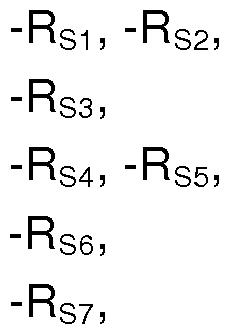
-CF3,
-C(=0)H, -C(=0)RB>
-C(=0)OH, -C(=0)ORB,
-C(=0)NH2! -C(=0)NHRB, -C(=0)N(RB)2, -C(=0)NRSN1 RSN2,

-S(=0)2RB, or -S(=0)2CF3;
each -RB is independently -RSi , -RS2> -Rsa. - Rs4> -Rss. -Rse or -RS7; each -Rsi is independently saturated aliphatic Ci_i0alkyl and is optionally substituted with one or more substituents selected from: -F, -CI, -Br, -I, -CF3, -OH, -ORW11 , and -OCF3, wherein each -RW 1 is independently saturated aliphatic Ci-4alkyl; each -RS2 is independently saturated C3-6cycloalkyl and is optionally substituted with one or more substituents selected from: -RWn , -F, -CI, -Br, -I, -CF3, -OH, -CN, and -N02, -ORWn , and -OCF3, wherein each -RWn is
independently saturated aliphatic C1_4alkyl; each -RS3 is independently -Q3 or -Q4; -Q3 is independently C6-iocarboaryl, and is optionally substituted with one or more substituents selected from: -RWn , -F, -CI, -Br, -I, -CF3, -OH, -CN, and -N02, -ORwii , and -OCF3, wherein each -RWn is independently saturated aliphatic Ci-4alkyl; -Q4 is independently C5-i2heteroaryl, and is optionally substituted with one or more substituents selected from: -RWn , -F, -CI, -Br, -I, -CF3, -OH, -CN, and -N02, -ORwii , and -OCF3, wherein each -RWn is independently saturated aliphatic Ci-4alkyl; each -RS4 is independently aliphatic C2-6alkenyl and is optionally
substituted with one or more substituents selected from: -RWn , -F, -CI, -Br, -I, -CF3, -OH, -CN, and -N02, -ORWn , and -OCF3, wherein each -RWn is
independently saturated aliphatic C -4alkyl; each -RS5 is independently aliphatic C2.6alkynyl and is optionally
substituted with one or more substituents selected from: -RWn , -F, -CI, -Br, -I, -CF3, -OH, -CN, and -N02, -ORWn , and -OCF3, wherein each -RW11 is
independently saturated aliphatic d-4alkyl; each -RS6 is independently C3-6cycloalkenyl and is optionally substituted with one or more substituents selected from: -RWn , -F, -CI, -Br, -I, -CF3, -OH, -CN, and -N02, -ORWn , and -OCF3, wherein each -RWn is independently saturated aliphatic C1-4alkyl; each -RS7 is independently C3_i0heterocyclyl where the carbon ring atoms are optionally substituted with one or more substituents selected from: -RWn , -F, -CI, -Br, -I, -CF3, -OH, -CN, and -N02, -0RW11, and -OCF3, wherein each -RW11 is
independently saturated aliphatic C -4alkyl; and any nitrogen ring atoms, where present, are optionally substituted with - RWn or -CF3, and the heterocyclyl optionally comprises one or more double bonds, each -N RSNI RSN2, if present, is independently azetidino, pyrrolidino, piperidino, piperazino, morpholino, azepano, diazepano, thiomorpholino, oxidised thiomorpholino, or octahydro-pyrrolo[1 ,2-a]pyrazino, where the carbon ring atoms are optionally substituted with one or more substituents selected from: -RWn , -F, -CI, -Br, -I, -CF3, -OH, -CN, and -N02, -0RW1 1 , and -OCF3, wherein each -RW1 1 is independently saturated aliphatic d-4alkyl; and any nitrogen ring atoms, where present, are optionally substituted with - RWn or -CF3, and the heterocyclyl optionally comprises one or more double bonds.
The Group A
(2) A compound according to (1 ), wherein A is independently CR4. Such a compound therefore has a benzene core.
(3) A compound according to (1 ), wherein A is independently N. Such a compound therefore has a pyridine core.
The Group -R1
(4) A compound according to any one of 1 ) to (3), wherein -Ri is independently selected from OH, -NH2, and -OMe.
(5) A compound according to any one of 1 ) to (3), wherein -Ri is independently selected from OH and -NH2.
(6) A compound according to any one of 1 ) to (3), wherein -Ri is independently -OH.
(7) A compound according to any one of 1 ) to (3), wherein -Ri is independently -OMe.
(8) A compound according to any one of 1 ) to (3), wherein -Ri is independently -NH2.
The Group -R2
(9) A compound according to any one of (1 ) to (8), wherein -R2 is independently selected from -I, -Br, and ethynyl (-C≡CH).
(10) A compound according to any one of (1 ) to (8), wherein -R2 is independently -I or ethynyl (-C≡CH).
(1 1 ) A compound according to any one of (1 to (8), wherein -R2 is independently selected from -CI, -Br, and -I.
(12) A compound according to any one of (1 to (8), wherein -R2 is independently -I.
(13) A compound according to any one of (1 to (8), wherein -R2 is independently -Br.
(14) A compound according to any one of (1 to (8), wherein -R2 is independently -CI.
(15) A compound according to any one of (1 to (8), wherein -R2 is independently ethynyl.
The Group -R3
(16) A compound according to any one of (1 ) to (1 5), wherein -R3 is independently selected from -I, -Br, -CI, and ethynyl (-C≡CH).
(17) A compound according to any one of (1 ) to (1 5), wherein -R3 is independently selected from -I, -Br, and -CI.
(18) A compound according to any one of (1 ) to (1 5), wherein -R3 is independently selected from -I, -Br, and -R3S.
(19) A compound according to any one of (1 ) to (1 5), wherein -R3 is independently selected from -I and -R3S.
(20) A compound according to any one of (1 ) to (1 5), wherein -R3 is independently -I.
(21 ) A compound according to any one of (1 ) to (1 5), wherein -R3 is independently -R3S.
(22) A compound according to any one of (1 ) to (1 5), wherein -R3 is independently -Br.
(23) A compound according to any one of (1 ) to (1 5), wherein -R3 is independently -CI.
(24) A compound according to any one of (1 ) to (1 5), wherein -R3 is independently ethynyl.
(25) A compound according to any one of (1 ) to (1 5), wherein -R3 is independently -H
(26) A compound according to any one of (1 ) to (1 5), wherein -R3 is independently -OMe.
(27) A compound according to any one of (1 ) to (1 5), wherein -R3 is independently -N02.
The Group -R3S
(28) A compound according to any one of (1 ) to (27), wherein -R3S, if present, is independently selected from:
 formula Ma formula Mb formula lie
(29) A compound according to any to (27), wherein -R3S, if present, is:

formula Ma
(30) A compound according to any one of (1 ) to (27), wherein -R3S, if present, is independently selected from:
 formula Mb formula lie
The Group -R6
(31 ) A compound according to any one of (1 to (30), wherein -R6, if present, is independently selected from -R6A, - R -RBF -R -L and -L
(32) A compound according to any one of (1 to (30), wherein -R6, if present, is independently selected from -R6A, - R -RBF and -Rec¬
(33) A compound according to any one of (1 to (30), wherein -R6, if present, is independently selected from -R6B, - R6F and -
(34) A compound according to any one of to (30), wherein -R6, if present, is
(35) A compound according to any one of to (30), wherein -R6, if present, is
(36) A compound according to any one of to (30), wherein -R6, if present, is
(37) A compound according to any one of to (30), wherein -R6, if present, is
(38) A compound according to any one of to (30), wherein -R6, if present, is -L-R6C.
(39) A compound according to any one of to (30), wherein -R6, if present, is -L-R6G.
The Group -R6A
(40) A compound according to any one of (1 ) to (39), wherein each -R6A, if present, is independently saturated aliphatic d-6alkyl and is optionally substituted with one or more substituents -RT.
(41 ) A compound according to any one of (1 ) to (39), wherein each -R6A, if present, is independently saturated aliphatic d-4alkyl and is optionally substituted with one or more substituents -RT.
(42) A compound according to any one of (1 ) to (39), wherein each -R6A, if present, is independently -Me, -Et, -nPr, -iPr, or -tBu, and is optionally substituted with one or more substituents -RT.
(43) A compound according to any one of (1 ) to (39), wherein each -R6A, if present, is independently -Me or -Et, and is optionally substituted with one or more substituents -RT.
(44) A compound according to any one of (1 ) to (39), wherein each -R6A, if present, is independently -Me, and is optionally substituted with one or more substituents -RT.
(45) A compound according to any one of (1 ) to (39), wherein each -R6A, if present, is independently -Me, and is substituted with one or two substituents -RT.
The Group -R6B (46) A compound according to any one of (1 ) to (45), wherein -R6B, if present, is saturated C3-i 0cycloalkyl and is substituted with -RT at the carbon atom geminal to the point of attachment, and optionally one or more further substituents -RT. (47) A compound according to any one of (1 ) to (45), wherein -R6B, if present, is saturated C3-6cycloalkyl and is substituted with -RT at the carbon atom geminal to the point of attachment, and optionally one or more further substituents -RT.
The group shown below is illustrative of a C3-6cycloalkyl having a substituent -RT. at the carbon atom geminal to the point of attachment, (as indicated by the wavy line) and optionally one or more further substituents -RT.
Geminal carbon

(48) A compound according to any one of (1 ) to (45), wherein -R6B, if present, is saturated C3.6cycloalkyl and is substituted with -RT. at the carbon atom geminal to the point of attachment.
(49) A compound according to any one of (1 ) to (45), wherein -R6B, if present, is cyclopentyl or cyclohexyl, where each is optionally substituted with one or more substituents -RT.
(50) A compound according to any one of (1 ) to (45), wherein -R6B, if present, is cyclopentyl or cyclohexyl and is substituted with -RT at the carbon atom geminal to the point of attachment, and optionally one or more further substituents -RT.

(51 ) A compound according to any one of (1 ) to (45), wherein -R6B, if present, is cyclopentyl or cyclohexyl and is substituted with -RT at the carbon atom geminal to the point of attachment.
The Group -R6C
(52) A compound according to any one of (1 ) to (51 ), wherein each -R6C, if present, is -Qi .
(53) A compound according to any one of (1 ) to (51 ), wherein each -R6C, if present, is -Q2.
The Group -R6D
(54) A compound according to any one of (1 ) to (53), wherein each -R6D, if present, is independently aliphatic C2-4alkenyl, and is optionally substituted with one or more substituents -RT.
(55) A compound according to any one of (1 ) to (53), wherein each -R6D, if present, is independently -CH=CH2, -CH=CH-CH3, or -CH=CH-CH2-CH3, and is optionally substituted with one or more substituents -RT.
(56) A compound according to any one of (1 ) to (53), wherein each -R6D, if present, is independently -CH=CH2, and is optionally substituted with one or two substituents -RT.
The Group -R6E
(57) A compound according to any one of (1 ) to (56), wherein each -R6E, if present, is independently -C≡CH, -C≡C-CH3, or -C≡C-CH2-CH3, and is optionally substituted with one or more substituents -RT.
(58) A compound according to any one of (1 ) to (56), wherein each -R6E, if present, is independently -C≡CH, and is optionally substituted with one or more substituents -RT.
The Group -R6F
(59) A compound according to any one of (1 ) to (58), wherein each -R6F, if present, is independently cyclopentenyl or cyclohexenyl, and is optionally substituted with one or more substituents -RT.
(60) A compound according to any one of (1 ) to (58), wherein each -R6F, if present, is independentl

and is optionally substituted with one or more substituents -RT.
(61 ) A compound according to any one of (1 ) to (58), wherein each
if present, is independentl

The Group -R6G
(62) A compound according to any one of (1 ) to (61 ), wherein each -R6G, if present, is C3.7heterocyclyl and the carbon ring atoms are optionally substituted with one or more substituents -RT, and any nitrogen ring atoms, where present, are optionally substituted with -RTN, and the heterocyclyl optionally comprises one or more double bonds.
(63) A compound according to any one of (1 ) to (61 ), wherein each -R6G, if present, is C3-7heterocyclyl and the carbon ring atoms are optionally substituted with one or more substituents -RT, and any nitrogen ring atoms, where present, are optionally substituted with -RTN- (64) A compound according to any one of (1 ) to (61 ), wherein each -R6G, if present, is independently selected from azetidino, pyrrolidino, piperidino, piperazino, morpholino, azepano, diazepano, thiomorpholino, oxidised
thiomorpholino, and octahydro-pyrrolo[1 ,2-a]pyrazino, and the carbon ring atoms are optionally substituted with one or more substituents - RT, and any nitrogen ring atoms, where present, are optionally substituted with -RTN-
(65) A compound according to any one of (1 ) to (61 ), wherein each -R6G, if present, is independently selected from pyrrolidino, piperidino, piperazino, morpholino, thiomorpholino, and oxidised thiomorpholino, and the carbon ring atoms are optionally substituted with one or more substituents -RT, and any nitrogen ring atoms, where present, are optionally substituted with -RTN-
(66) A compound according to any one of (1 ) to (61 ), wherein each -R6G, if present, is independently selected from:

and the carbon ring atoms are optionally substituted with one or more
substituents -RT, and a nitrogen ring atom is optionally substituted with -RTN.
(67) A compound according to any one of (1 ) to (61 ), wherein each -R6G, if present, is independently selected from:

and is substituted with -RT at the carbon atom geminal to the point of attachment, and optionally one or more carbon atoms is substituted with -RT, and a nitrogen ring atom is optionally substituted with -RTN-
(68) A compound according to any one of (1 ) to (61 ), wherein each -R6G, if present, is independently selected from:

and is substituted with -RT at the carbon atom geminal to the point of attachment, and optionally one or more carbon atoms is substituted with -RT, and a nitrogen ring atom is optionally substituted with -RTN-
(69) A compound according to any one of (1 ) to (61 ), wherein each -R6G, if present, is
 and is substituted with -RT at the carbon atom geminal to the point of attachment, and optionally one or more carbon atoms is substituted with -RT, and the nitrogen ring atom is optionally substituted with -RTN.
(70) A compound according to any one of (1 ) to (61 ), wherein each -R6G, if present, is inde endentl selected from:

and is substituted with -RT at the carbon atom geminal to the point of attachment, and a nitrogen ring atom is optionally substituted with -RTN.
(71 ) A compound according to any one of (1 ) to (61 ), wherein each
if present, is:

and is substituted with -RT at the carbon atom geminal to the point of attachment, and the nitrogen ring atom is optionally substituted with -RTN-
The Group -L-
(72) A compound according to any one of (1 ) to (71 ), wherein -L-, if present, is Ci-4alkylene and is optionally substituted with one or more substituents -RT.
(73) A compound according to any one of (1 ) to (71 ), wherein -L-, if present, is Ci-2alkylene and is optionally substituted with one or more substituents -RT.
(74) A compound according to any one of (1 ) to (71 ), wherein -L-, if present, is -CH2- and is optionally substituted with one or two substituents -RT.
(75) A compound according to any one of (1 ) to (71 ), wherein -L-, if present, is -CH2- and is optionally substituted with one or two substituents -RT.
(76) A compound according to any one of (1 ) to (71 ), wherein -L-, if present, is -CH2- and is optionally substituted with one substituent -RT.
(77) A compound according to any one of (1 ) to (71 ), wherein -L-, if present, is -CH2- and is optionally substituted with two substituents -RT.
(78) A compound according to any one of (1 ) to (71 ), wherein -L-, if present, is -CH2-.
The Group -RT (79) A compound according to any one of (1 ) to (78), wherein each -RT, if present, is independently selected from:
-F, -CI, -Br, -I,
,

-NH2, -NHRE, -N(RE)2, -NREN1REN2,
-C(=0)H, -C(=0)RE,
-C(=0)OH, -C(=0)ORE,
-OC(=0)RE,
-OC(=0)NH2, -OC(=0)NHRE, -OC(=0)N(RE)2,
 REN2,
REN2,

-NHC(=0)RE, -NREC(=0)RE,
-C(=0)NH2, -C(=0)NHRE, -C(=0)N(RE)2,
 REN2,
REN2,
-NHC(=0)ORE, -NREC(=0)ORE.
(80) A compound according to any one of (1) to (78), wherein each -RT, if present, is independently selected from:

-RE7>
-OH, -ORE,

-NH2, -NHRE, -N(RE)2, -NREN1REN2!
-OC(=0)RE,

-NHC(=0)RE, -NREC(=0)RE,

-NHC(=0)ORE, -NREC(=0)ORE. (81) A compound according to any one of (1) to (78), wherein each -RT, if present, is independently selected from:

-SH, -SRE,
-NH2, -NHRE, -N(RE)2, -NRENI E
-NHC(=0)ORE, -NREC(=0)ORE.
(82) A compound according to any one of (1) to (78), wherein each -RT, if present, is independently selected from: ,

-NH2, -NHRE, -N(RE)2, -NRENIREN2,
-NHC(=0)ORE.
(83) A compound according to any one of (1) to (78), wherein each -RT, if present, is independently selected from:

-NH2, -N(RE)2
-NHC(=0)OR
(84) A compound according to any one of (1) to (78), wherein each -RT, if present, is independently selected from:
-OH, -ORE,
-NH2, -N(RE)2, -NRENIREN2.
The Group -RTN
(85) A compound according to any one of (1) to (84), wherein -RTN, if present, independently selected from:
(86) A compound according to any one of (1 ) to (84), wherein -RTN, if present, is independently selected from:

-C(=0) RE,
-C(=0)ORE,
-C(=0)NHRE.
(87) A compound according to any one of (1 ) to (84), wherein -RTN, if present, is
The Group -RE
(88) A compound according to any one of (1 ) to (87), wherein -RE, if present, is independently -REi , -RE2, - RE3 , or -RE7.
(89) A compound according to any one of (1 ) to (87), wherein -RE, if present, is independently -REi , -RE3, or -RE7.
(90) A compound according to any one of (1 ) to (87), wherein -RE, if present, is independently -REi , or -RE3.
(91 ) A compound according to any one of (1 ) to (87), wherein -RE, if present, is compound according to any one of (1 ) to (87), wherein -RE, if present, is

(93) A compound according to any one of (1 ) to (87), wherein -RE, if present, is independently -RE1 , or -RE7.
The Group -Rw
(94) A compound according to any one of (1 ) to (93), wherein -Rw, if present, is independently -RWi , -Rw2, -Rw3> or -RW7- (95) A compound according to any one of (1 ) to (93), wherein -Rw, if present, is independently -RWi , -Rw3, or -RW7-
(96) A compound according to any one of (1 ) to (93), wherein -Rw, if present, is independently -RWi , or -RW3-
(97) A compound according to any one of (1 ) to (93), wherein -Rw, if present, is compound according to any one of (1 ) to (93), wherein -Rw, if present, is

(99) A compound according to any one of (1 ) to (93), wherein -Rw, if present, is independently -RWi , or -RW7.
The Group -Q1
(100) A compound according to any one of (1 ) to (99) wherein -Q1 ; if present, is independently phenyl or naphthyl, and is optionally substituted with one or more substituents -Rs.

Benzene Naphthalene
(101 ) A compound according to any one of (1 ) to (99), wherein -Ο , if present, is independently phenyl, and is optionally substituted with one or more substituents
-Rs-
(102) A compound according to any one of (1 ) to (99), wherein -Q1 ; if present, is independently napthyl, and is optionally substituted with one or more substituents -Rs.
The Group -Q2
(103) A compound according to any one of (1 ) to (102), wherein -Q2, if present, is independently Cs-eheteroaryl or C9-i 0heteroaryl, and is optionally substituted with one or more substituents -Rs.
(104) A compound according to any one of (1 ) to (102), wherein -Q2, if present, is independently furanyl, thienyl, pyrrolyl, imidazolyl, oxazolyl, thiazolyl, pyrazolyl, isoxazolyl, isothiazolyl, pyridyl, pyridazinyl, pyrimidinyl, pyrazinyl, indolyl, benzoimidazolyl, indazolyl, benzofuranyl, benzothienyl, benzooxazolyl, benzothiazolyl, benzoisoxazolyl, benzoisothiazolyl, quinolinyl, isoquinolinyl, cinnolinyl, quinoxalinyl, quinazolinyl, or phthalazinyl, and is optionally substituted with one or more substituents -Rs.

Furan Thiophene 1 H-Pyrrole

1 H-lmidazole Oxazole Thiazole

1 H-Pyrazole Isoxazole Isothiazole

Pyridine Pyridazine Pyrimidine Pyrazine

1 H-l ndole 1 H-Benzoimidazole 1 H-lndazole

Benzofuran Benzo[b]thiophene

Benzooxazole Benzothiazole Benzo d isoxazole Benzo[d]isothiazole

Quinoline Isoquinoline

Cinnoline Quinoxaline Quinazoline Phthalazine
(105) A compound according to any one of (1 ) to (102), wherein -Q2, if present, is independently C5.6heteroaryl, and is optionally substituted with one or more substituents -Rs
(106) A compound according to any one of (1 ) to (102), wherein -Q2, if present, is independently furanyl, thienyl, pyrrolyl, imidazolyl, oxazolyl, thiazolyl, pyrazolyl, isoxazolyl, isothiazolyl, pyridyl, pyridazinyl, pyrimidinyl, or pyrazinyl, and is optionally substituted with one or more substituents -Rs.
(107) A compound according to any one of (1 ) to (102), wherein -Q2, if present, is independently furanyl, thienyl, pyrrolyl, imidazolyl, oxazolyl, thiazolyl, pyrazolyl, isoxazolyl, or isothiazolyl, and is optionally substituted with one or more substituents -Rs
(108) A compound according to any one of (1 ) to (102), wherein -Q2 if present, is independently pyridyl, pyridazinyl, pyrimidinyl, or pyrazinyl, and is optionally substituted with one or more substituents -Rs. (109) A compound according to any one of (1 ) to (102), wherein -Q2, if present, is independently pyridyl, pyrimidinyl, or pyrazinyl, and is optionally substituted with one or more substituents -Rs.
(1 10) A compound according to any one of (1 ) to (102), wherein -Q2, if present, is independently pyridyl, and is optionally substituted with one or more substituents -Rs-
The Group -R4 (1 1 1 ) A compound according to any one of (1 ) to (1 10), wherein -R4 is
independently selected from -H and -R4s-
(1 12) A compound according to any one of (1 ) to (1 10), wherein -R4 is
independently -H.
(1 13) A compound according to any one of (1 ) to (1 10), wherein -R4 is
independently -R4s-
The Group -R4s
(1 14) A compound according to any one of (1 ) to (1 13), wherein -R4S, if present, is independently selected from:
-F, -CI, -Br, -I
(1 15) A compound according to any one of (1 ) to (1 13), wherein -R4S, if present, is independently selected from:
-F, -CI, -Br, -I

-OH, -ORw,
-CN, -N02,
-NH2, -NHRw, -N(RW)2, -N RWNI RWN2J
-C(=0)H, -C(=0)Rw,
-C(=0)OH, -C(=0)ORw,
-OC(=0)Rw,
-OC(=0)NH2, -OC(=0)NHRw,
-OC(=0)N(Rw)2, -OC(=0)N RWNI RWN2,
-NHC(=0)Rw, -NRwC(=0)Rw,
-C(=0)NH2> -C(=0)NHRw, -C(=0)N(Rw)2,
 RWN2, -NHC(=0)ORw, -NRwC(=0)ORw.
(1 16) A compound according to any one of (1 ) to (1 13), wherein -R4s, if present, is independently selected from:
-F, -CI, -Br, -I

-OH, -ORw,
-CN, -N02,
-NH2, -NHRw, -N(Rw)2, -N RWNI RWN2,
-C(=0)H, -C(=0)Rw,
-C(=0)OH, -C(=0)ORw,
-OC(=0)Rw,
-OC(=0)NH2, -OC(=0)NHRw,
-OC(=0)N(Rw)2, -OC(=0)N RWNI RWN2,
-NHC(=0)Rw, -NRwC(=0)Rw,
-C(=0)NH2> -C(=0)NHRw, -C(=0)N(Rw)2,
 RWN2, -NHC(=0)ORw, -NRwC(=0)ORw. (1 17) A compound according to any one of (1 ) to (1 13), wherein -R4Sl if present, is independently selected from:
-F, -CI, -Br, -I,

-OH,
-CN, -N02,
-NH2,
-C(=0)H,
-C(=0)OH,
-OC(=0)NH2,
-C(=0)NH2. (1 18) A compound according to any one of (1 ) to (1 13), wherein -R4S, if present, is independently selected from:
-F, -CI, -Br, -I,

-OH,
-NH2,
-C(=0)OH.
The Group -R5
(1 19) A compound according to any one of (1 ) to (1 18), wherein -R5 is selected from:
 formula Ilia formula 11 lc
(120) A compound according to any one of (1 ) to (1 18), wherein -
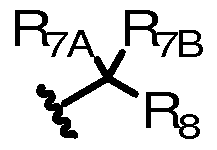 formula Ilia (1 21 ) A compound according to any one of (1 ) to (1 18), wherein -R5 is
O
formula I lie
(122) A compound according to any one of (1 ) to (1 18), wherein -R5 is

(123) A compound according to any one of (1 ) to (1 18), wherein -R5 is -COOH.
The Group -R7A
(124) A compound according to any one of (1 ) to (123), wherein -R7A, if present, is -H.
(125) A compound according to any one of (1 ) to (123), wherein -R7A, if present, is -Rs.
(126) A compound according to any one of (1 ) to (123), wherein -R7A, if present, is (127) A compound according to any one of (1 ) to (123), wherein -R7A, if present, is -Me.
The Group -R7B (128) A compound according to any one of (1 ) to (127), wherein -R7B, if present, is -H.
(129) A compound according to any one of (1 ) to (127), wherein -R7A, if present, is -Rs-
(130) A compound according to any one of (1 ) to (127), wherein -R7B, if present, is
(131 ) A compound according to any one of (1 ) to (127), wherein -R7B, if present, is -Me.
The Group -R8
(132) A compound according to any one of (1 ) to (131 ) wherein each -R8, if present, is independently -N(RI3)-LN-RNI or -N(RN2RN3)-
(133) A compound according to any one of (1 ) to (131 ), wherein each -R8, if present, is -N(RI3)-LN-RNI- (134) A compound according to any one of (1 ) to (131 ), wherein each -R8, if present, is -N(RN2RN3).
(135) A compound according to any one of (1 ) to (131 ), wherein each -R8, if present, is -N(R13)-RN4.
(136) A compound according to any one of (1 ) to (131 ), wherein each -R8, if present, is -N(R13)-RN5.
The Group -LN-
(137) A compound according to any one of (1 ) to (136), wherein -LN-, if present, is -LNI-.
(138) A compound according to any one of (1 ) to (136), wherein -LN-, if present, is

(139) A compound according to any one of (1 ) to (136), wherein -LN-, if present, is

The Group -LN1-
(140) A compound according to any one of (1 ) to (139), wherein -LNi - , if present, is saturated aliphatic d.6alkylene and is optionally substituted with one or more substituents -RS.
(141 ) A compound according to any one of (1 ) to (139), wherein -LN1 -, if present, is linear saturated d-6alkylene and is optionally substituted with one -RS.
(142) A compound according to any one of (1 ) to (139), wherein -LN1 -, if present, is branched saturated d-6alkylene and is optionally substituted with one - RS. (143) A compound according to any one of (1 ) to (139), wherein -LN1 -, if present, is saturated d-6alkylene and is optionally substituted with one - RS.
(144) A compound according to any one of (1 ) to (139), wherein -LN1 -, if present, is saturated linear d-6alkylene and is optionally substituted with one - RS.
(145) A compound according to any one of (1 ) to (139), wherein -LNi - , if present, is saturated d-4alkylene and is optionally substituted with one substituent - RS.
(146) A compound according to any one of (1 ) to (139), wherein - LNi - , if present, is saturated C2-3alkylene.
(147) A compound according to any one of (1 ) to (139), wherein - LNi - , if present, is selected from -CH2CH2-, -CH2CH(CH3)-, -CH2C(CH3)2-, -C(CH3)2CH2-,
-CH2CH (CH (CH3)2)- , -CH2CH2CH2-, and -CH2CH (CH3)CH2-.
(148) A compound according to any one of (1 ) to (139), wherein - LNi - , if present, is -CH2CH2- or -CH2CH2CH2-.
(149) A compound according to any one of (1 ) to (139), wherein - LNi - , if present, is -CH2CH2-.
The Groups -RCi and -RC2
(150) A compound according to any one of (1 ) to (149), wherein -RCi and -RC2, if present, together with the carbon atom to which they are attached form a C3.7 cyclohexyl ring.
(151 ) A compound according to any one of (1 ) to (149), wherein -RCi and -RC2, if present, together with the carbon atom to which they are attached form a cyclopentyl, cyclohexyl or cycloheptyl ring.
(152) A compound according to any one of (1 ) to (149), wherein -RCi and -RC2, if present, together with the carbon atom to which they are attached form a cyclohexyl or cycloheptyl ring.
The Group -R13
(153) A compound according to any one of (1 ) to (152), wherein -R 3, if present, is -H.
(154) A compound according to any one of (1 ) to (152), wherein -R 3, if present, is
(155) A compound according to any one of (1 ) to (152), wherein -R 3, if present, is -Me or -Et.
(156) A compound according to any one of (1 ) to (152), wherein -R 3, if present, is -Me.
The Group -RN1 (157) A compound according to any one of (1 ) to (156), wherein -RN1 , if present, is -N(RE)2 or -REN1 .
(158) A compound according to any one of (1 ) to (156), wherein -RN1 , if present, is -N(RE)2.
(159) A compound according to any one of (1 ) to (156), wherein -RN1 , if present, is -N(Me)2, -N(Et)2 or -N(Pr)2.
(160) A compound according to any one of (1 ) to (156), wherein -RN1 , if present,
The Group -RENI
(161 ) A compound according to any one of (1 ) to (160), wherein -RENI , if present, is a nitrogen-containing C3-9heterocyclyl group, the carbon ring atoms are optionally substituted with one or more substituents -RN, and any nitrogen ring atoms, where present, are optionally substituted with -RNN, and the heterocyclyl optionally comprises one or more double bonds.
(162) A compound according to any one of (1 ) to (160), wherein -RENI if present, is independently selected from the group:

and the carbon ring atoms are optionally substituted with one or more substituents -RN, and any nitrogen ring atoms, where present, are optionally substituted with -RN N.
(163) A compound according to any one of (1 ) to (160), wherein -NRENI , if present, i


and the carbon ring atoms are optionally substituted with one or more substituents -RN, and any nitrogen ring atoms, where present, are optionally substituted with -RNN.
(165) A compound according to any one of (1 ) to (160), wherein -NRENI , if present, is independently selected from the group:

(166) A compound according to any one of (1 ) to (160), wherein -NREN1 , if present, is independently selected from the group:
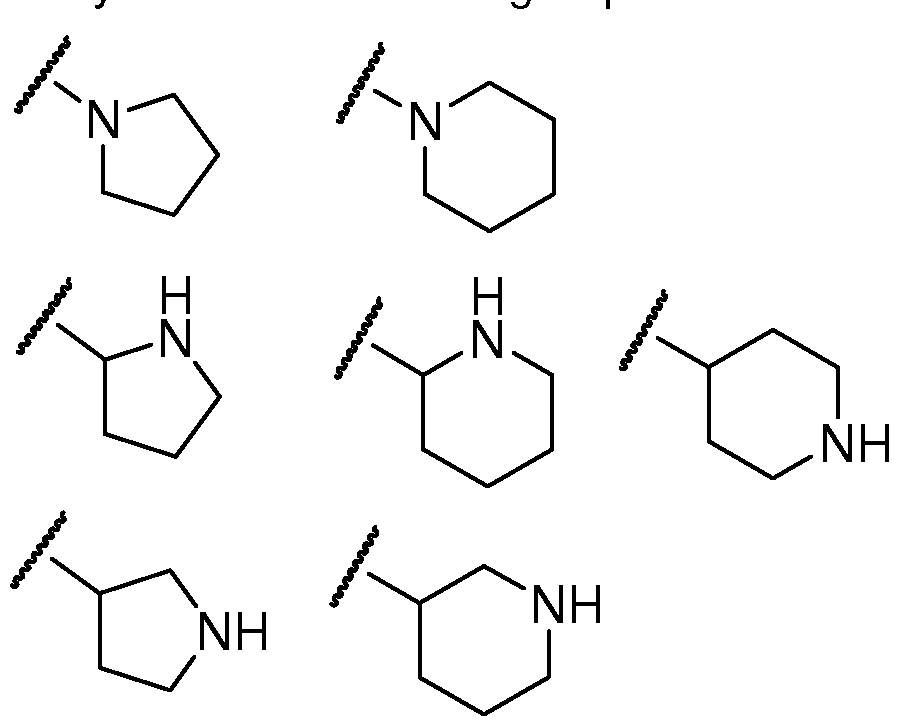
and the carbon ring atoms are optionally substituted with one or more substituents -RN, and any nitrogen ring atoms, where present, are optionally substituted with -RNN.
(167) A compound according to any one of (1 ) to (160), wherein -NRENI , if present, is independently selected from the group:

and the carbon ring atoms are optionally substituted with one or more substituents -RN, and any nitrogen ring atoms, where present, are optionally substituted with -RNN.
(168) A compound according to any one of (1 ) to (160), wherein -NREN1 , if present, is independently selected from the group:

and the carbon ring atoms are optionally substituted with one or more substituents -RN, and any nitrogen ring atoms, where present, are optionally substituted with -RNN.
(169) A compound according to any one of (1 ) to (160), wherein -NRENI , if present, is independently:

and is optionally substituted with one or more substituents -R
(170) A compound according to any one of (1 ) to (160), wherein -NR
present, is independently:
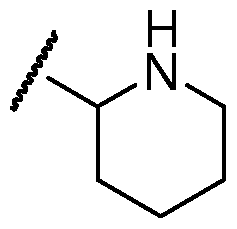
and is optionally substituted with one or more substituents -RS.
(171 ) A compound according to any one of (1 ) to (160), wherein -NRENI , if present, is independently:

and is optionally substituted with one or more substituents -R
(172) A compound according to any one of (1 ) to (160), wherein -NR
present, is independently:

and is optionally substituted with one or more substituents
(173) A compound according to any one of (1 ) to (160), wherein -NRENI , if present, is

and is optionally substituted with one or more substituents -RS.
The Group -N(RN2RN3)
(174) A compound according to any one of (1 ) to (173), wherein -NRN2RN3, if present, is independently azetidino, pyrrolidino, piperidino, piperazino, morpholino, azepano, diazepano, thiomorpholine, or oxidised thiomorpholine, and the carbon ring atoms are optionally substituted with one or more substituents
-RN, and any nitrogen ring atoms, where present, are optionally substituted with -RNN, and the heterocyclyl optionally comprises one or more double bonds.
(175) A compound according to any one of (1 ) to (173), wherein -NRN2RN3, if present, is independently azetidino, pyrrolidino, piperidino, piperazino, morpholino, azepano, diazepano, thiomorpholine, or oxidised thiomorpholine, and the carbon ring atoms are optionally substituted with one or more substituents -RN, and any nitrogen ring atoms, where present, are optionally substituted with
(176) A compound according to any one of (1 ) to (173), wherein -NRN2RN3, if present, is independently azetidino, pyrrolidino, piperidino, piperazino, diazepano, or octahydro-pyrrolo[1 ,2-a]pyrazino, and the carbon ring atoms are optionally substituted with one or more substituents -RN, and any nitrogen ring atoms, where present, are optionally substituted with -RNN.
(177) A compound according to any one of (1 ) to (173), wherein -NRN2RN3, if present, is independently azetidino, pyrrolidino, or piperidino, and the carbon ring atoms are optionally substituted with one or more substituents -RN, and any nitrogen ring atoms, where present, are optionally substituted with -RNN.
(178) A compound according to any one of (1 ) to (173), wherein -NRN2RN3, if present, is independently azetidino, and the carbon ring atoms are optionally substituted with one or more substituents -RN, and any nitrogen ring atoms, where present, are optionally substituted with - RNN.
(179) A compound according to any one of (1 ) to (173), wherein -NRN2RN3, if present, is independently pyrrolidino, and the carbon ring atoms are optionally substituted with one or more substituents -RN, and any nitrogen ring atoms, where present, are optionally substituted with - RNN.
(180) A compound according to any one of (1 ) to (173), wherein -NRN2RN3, if present, is independently piperidino, and the carbon ring atoms are optionally substituted with one or more substituents -RN, and any nitrogen ring atoms, where present, are optionally substituted with - RNN.
(181 ) A compound according to any one of (1 ) to (173), wherein -NRN2RN3, if present, is independently piperazino, diazepano, or octahydro-pyrrolo[1 ,2- a]pyrazino, and the carbon ring atoms are optionally substituted with one or more substituents -RN, and any nitrogen ring atoms, where present, are optionally substituted with -RNN.
(182) A compound according to any one of (1 ) to (173), wherein -NRN2RN3, if present, is independently piperazino, and the carbon ring atoms are optionally substituted with one or more substituents -RN, and any nitrogen ring atoms, where present, are optionally substituted with - RNN.
(183) A compound according to any one of (1 ) to (173), wherein -NRN2RN3, if present, is independently diazepano, and the carbon ring atoms are optionally substituted with one or more substituents -RN, and any nitrogen ring atoms, where present, are optionally substituted with -RNN.
(184) A compound according to any one of (1 ) to (173), wherein -NRN2RN3, if present, is independently selected from the group:

and the carbon ring atoms are optionally substituted with one or more substituents -RN, and any nitrogen ring atoms, where present, are optionally substituted with -RNN.
(185) A compound according to any one of (1 ) to (173), wherein -NRN2RN3, if present, is indep

and the carbon ring atoms are optionally substituted with one or more substituents -RN, and any nitrogen ring atoms, where present, are optionally substituted with -RNN. (186) A compound according to any one of (1 ) to (173), wherein -NRN2RN3, if present, is independently selected from the group:

and the carbon ring atoms are optionally substituted with one or more substituents -RN, and any nitrogen ring atoms, where present, are optionally substituted with -RNN.
(187) A compound according to any one of (1 ) to (173), wherein -NRN2RN3, if present, is:

and the carbon ring atoms are optionally substituted with one or more substituents -RN, and any nitrogen ring atoms, where present, are optionally substituted with -RNN.
(188) A compound according to any one of (1 ) to (173), wherein -NRN2RN3, if present, is:

and the carbon ring atoms are optionally substituted with one or more substituents -RN, and any nitrogen ring atoms, where present, are optionally substituted with -RNN.
The Group -RN
(189) A compound according to any one of (1 ) to (188), wherein -RN, if present, is independently selected from:
, -I,
,

-N H2, -NH RE, -N(RE)2, -NREN1 REN2,
-C(=0) H , -C(=0) RE,
-C(=0)OH , -C(=0)ORE,
-OC(=0) RE,
-OC(=0)N H2, -OC(=0)N H RE, -OC(=0)N(RE)2,
 REI
REI

-N HC(=0) RE, -N REC(=0) RE,

-N HC(=0)ORE, -NREC(=0)ORE.
(190) A compound according to any one of (1 ) to (188), wherein -RN, if present, is independently selected from:

-NH2, -NHRE, -N(RE)2, -NRENIREN2!
-C(=0)H, -C(=0)RE,
-C(=0)OH, -C(=0)ORE,
-OC(=0)RE,
-OC(=0)NH2, -OC(=0)NHRE, -OC(=0)N(RE)2,
 REN2,
REN2,

-NHC(=0)RE, -NREC(=0)RE,

-NHC(=0)ORE, -NREC(=0)ORE. (191 ) A compound according to any one of (1 ) to (188), wherein -RN, if present, is independently selected from:

-NH2, -NHRE, -N(RE)2, -NRENIREN2!
-OC(=0)RE,

-NHC(=0)RE, -NREC(=0)RE,

-NHC(=0)ORE, -NREC(=0)ORE.
(192) A compound according to any one of (1 ) to (188), wherein -RN, if present, is independently selected from:

-OH, -ORE,

-NH2, -NHRE, -N(RE)2, -NRENIREN2,
-NHC(=0)ORE, -NREC(=0)ORE. (193) A compound according to any one of (1 ) to (188), wherein -RN, if present, is independently selected from:

-NH2, -NHRE, -N(RE)2, -NRENIREN2,
-C(=0)H, -C(=0)RE,
-C(=0)OH, -C(=0)ORE,
-OC(=0)RE,
-OC(=0)NH2, -OC(=0)NHRE, -OC(=0)N(RE)2,
 REN2,
REN2,

-NHC(=0)RE, -NREC(=0)RE,

-NHC(=0)ORE, -NREC(=0)ORE.
(194) A compound according to any one of (1 ) to (188), wherein -RN, if present, is independently selected from:

-NH2, -NHRE, -N(RE)2, -NREN1REN2!
-NHC(=0)ORE.
(195) A compound according to any one of (1 ) to (188), wherein -RN, if present, is independently selected from:

-RE7,
-OH, -ORE,

-NH2, -N(RE)2, -NREN1REN2,
-NHC(=0)ORE.
(196) A compound according to any one of (1 ) to (188), wherein -RN, if present, is independently selected from:

-OH , -ORE,
-N H2, -N( RE)2
-N HC(=0)OR
(197) A compound according to any one of (1 ) to (188), wherein -RN, if present, is independently -REi or - RE2. (198) A compound according to any one of (1 ) to (188), wherein -RN, if present, is
The Group -RNN (199) A compound according to any one of (1 ) to (198), wherein -RNN, if present, is independently selected from:

(200) A compound according to any one of (1 ) to (198), wherein -RNN, if present, is independently selected from:

-C(=0) RE,
-C(=0)ORE,
-C(=0)N H RE.
(201 ) A compound according to any one of (1 ) to (198), wherein -RNN, if present,

(202) A compound according to any one of (1 ) to (198), wherein -RNN, if present,
The Group -RN4
(203) A compound according to any one of (1 ) to (202), wherein -RN4, if present, is saturated aliphatic d-3alkyl and is optionally substituted with one or more substituents -RS.
(204) A compound according to any one of (1 ) to (202), wherein -RN4, if present, is saturated aliphatic Cialkyl (-Me) and is optionally substituted with one or more substituents -RS.
(205) A compound according to any one of (1 ) to (202), wherein -RN4, if present, is saturated aliphatic Cialkyl (-Me) and is optionally substituted with one or more substituents -RS.
The Group -RN5
(206) A compound according to any one of (1 ) to (205), wherein -RN4, if present, is independently selected from:

and the carbon ring atoms are optionally substituted with one or more substituents -RT, and any nitrogen ring atoms, where present, are optionally substituted with -RTN-
(207) A compound according to any one of (1 ) to (205), wherein -RN4, if present, is independently selected from:
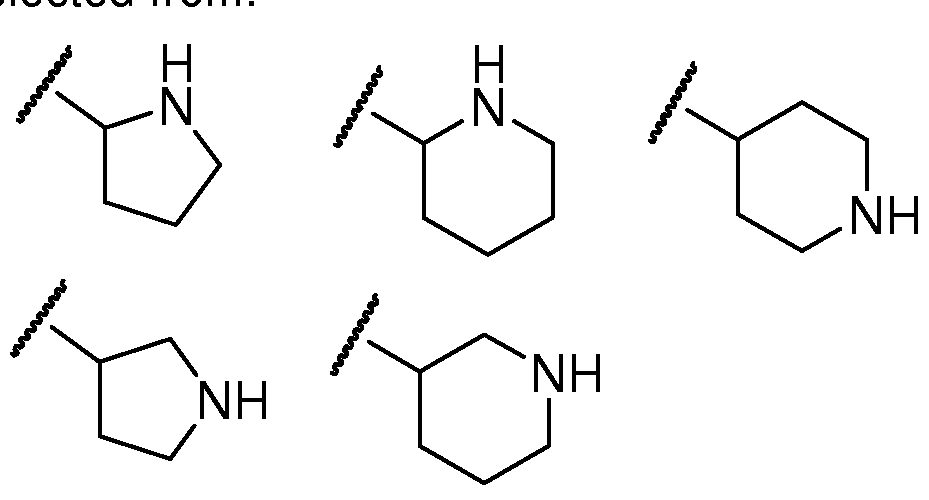
and the carbon ring atoms are optionally substituted with one or more substituents -RT, and any nitrogen ring atoms, where present, are optionally substituted with -RTN-
(208) A compound according to any one of (1 ) to (205), wherein -RN4, if present, is independently:

and the carbon ring atoms are optionally substituted with one or more substituents -RT, and any nitrogen ring atoms, where present, are optionally substituted with -RTN-
The Group -Rw
(209) A compound according to any one of (1 ) to (208), wherein each -RW, if present, is independently -RWi , -Rw2, -Rw3, or -RW7- (210) A compound according to any one of (1 ) to (208), wherein each -RW, if present, is independently -RWi , -Rw3, or -RW7.
(21 1 ) A compound according to any one of (1 ) to (208), wherein each -RW, if present, is independently -RWi or -RW3 -
(212) A compound according to any one of (1 ) to (208), wherein each -RW, if present, is -RWi -
(213) A compound according to any one of (1 ) to (208), wherein each -RW, if present, is -RW3 -
(214) A compound according to any one of (1 ) to (208), wherein each -RW, if present, is -RW7-
The Group -RWi
(215) A compound according to any one of (1 ) to (214), wherein each -RW1 , if present, is independently saturated aliphatic d-6alkyl and is optionally substituted with one or more substituents -RS
(216) A compound according to any one of (1 ) to (214), wherein each -RW , if present, is independently saturated aliphatic d-4alkyl and is optionally substituted with one or more substituents -RS
(217) A compound according to any one of (1 ) to (214), wherein each -RW , if present, is independently -Me, -Et, -nPr, -iPr, or -tBu, and is optionally substituted with one or more substituents -RS.
(218) A compound according to any one of (1 ) to (214), wherein each -RW , if present, is independently -Me or -Et, and is optionally substituted with one or more substituents -RS.
(219) A compound according to any one of (1 ) to (214), wherein each -RW , if present, is independently -Me, and is optionally substituted with one or more substituents -RS.
The Group -RW2
(220) A compound according to any one of (1 ) to (219), wherein each -RW2, if present, is independently cyclopropyl, cyclobutyl, cyclopentyl, or cyclohexyl, and is optionally substituted with one or more substituents -Rs.
(221 ) A compound according to any one of (1 ) to (219), wherein each -RW2, if present, is independently cyclopropyl, and is optionally substituted with one or more substituents -Rs. The Group -RW3
(222) A compound according to any one of (1 ) to (221 ), wherein each -RW3, if present, is -Qi .
(223) A compound according to any one of (1 ) to (221 ), wherein each -RW3, if present, is -Q2.
The Group -RW4
(224) A compound according to any one of (1 ) to (223), wherein each -RW4, if present, is independently aliphatic C2-4alkenyl, and is optionally substituted with one or more substituents -Rs.
(225) A compound according to any one of (1 ) to (223), wherein each -RW4, if present, is independently -CH=CH2, -CH=CH-CH3, or -CH=CH-CH2-CH3, and is optionally substituted with one or more substituents -Rs.
(226) A compound according to any one of (1 ) to (223), wherein each -RW4, if present, is independently -CH=CH2, and is optionally substituted with one or two substituents -Rs.
The Group -RW5
(227) A compound according to any one of (1 ) to (226), wherein each -RW5, if present, is independently -C≡CH, -C≡C-CH3, or -C≡C-CH2-CH3, and is optionally substituted with one or more substituents -Rs.
(228) A compound according to any one of (1 ) to (226), wherein each -RW5, if present, is independently -C≡CH, and is optionally substituted with one or more substituents -Rs.
The Group -RW6
(229) A compound according to any one of (1 ) to (228), wherein each -RW6, if present, is independently cyclopentenyl or cyclohexenyl, and is optionally substituted with one or more substituents -RS.
(230) A compound according to any one of (1 ) to (228), wherein each -RW6, if present, is independently:

and is optionally substituted with one or more substituents -RS.
(231 ) A compound according to any one of (1 ) to (228), wherein each -RW6, if present, is independently:

The Group -RW7 (232) A compound according to any one of (1 ) to (231 ), wherein each -RW7, if present, is C3-7heterocyclyl and the carbon ring atoms are optionally substituted with one or more substituents -RT, and any nitrogen ring atoms, where present, are optionally substituted with -RTN, and the heterocyclyl optionally comprises one or more double bonds.
(233) A compound according to any one of (1 ) to (231 ), wherein each -RW7, if present, is C3-7heterocyclyl and the carbon ring atoms are optionally substituted with one or more substituents -RT, and any nitrogen ring atoms, where present, are optionally substituted with -RTN-
(234) A compound according to any one of (1 ) to (231 ), wherein each -RW7, if present, is independently selected from azetidino, pyrrolidino, piperidino, piperazino, morpholino, azepano, diazepano, thiomorpholino, oxidised
thiomorpholino, and octahydro-pyrrolo[1 ,2-a]pyrazino, and the carbon ring atoms are optionally substituted with one or more substituents - RT, and any nitrogen ring atoms, where present, are optionally substituted with -RTN- (235) A compound according to any one of (1 ) to (231 ), wherein each -RW7, if present, is independently selected from pyrrolidino, piperidino, piperazino, morpholino, thiomorpholino, and oxidised thiomorpholino, and the carbon ring atoms are optionally substituted with one or more substituents -RT, and any nitrogen ring atoms, where present, are optionally substituted with -RTN.
The Group
(236) A compound according to any one of (1 ) to (235), wherein each
-NRWNI RWN2, if present, is independently azetidino, pyrrolidino, piperidino, piperazino, morpholino, azepano, diazepano, thiomorpholino, oxidised
thiomorpholino, or octahydro-pyrrolo[1 ,2-a]pyrazino, where the carbon ring atoms are optionally substituted with one or more substituents - RS, and any nitrogen ring atoms, where present, are optionally substituted with -RSN-

Azetine Pyrrolidine Piperidine Piperazine Morpholine

Azepane [1 ,2]Diazepan8 [1 ,3]Diazepan8 [1 ,4]Diazepan8

Thiomorpholine 1 -One 1 ,1 -Dione
Thiomorpholine Thiomorpholine Octahydro-pyrrolo[1 ,2-a]pyrazine
(237) A compound according to any one of (1 ) to (235), wherein each
-N RWN RWN2, if present, is independently pyrrolidino, piperidino, piperazino, morpholino, thiomorpholino, or oxidised thiomorpholine, , where the carbon ring atoms are optionally substituted with one or more substituents -RS, and any nitrogen ring atoms, where present, are optionally substituted with -RSN-
The Group -RE
(238) A compound according to any one of (1 ) to (237), wherein each -RE, if present, is independently -REi , -RE2, - RE3 , or -RE7.
(239) A compound according to any one of (1 ) to (237), wherein each -RE, if present, is independently -REi , -RE3 , or - RE7.
(240) A compound according to any one of (1 ) to (237), wherein each -RE, if present, is independently -REi or -RE3.
(241 ) A compound according to any one of (1 ) to (237), wherein each -RE, if present, is - REi .
(242) A compound according to any one of (1 ) to (237), wherein each -RE, if present, is -RE3.
(243) A compound according to any one of (1 ) to (237), wherein each -RE, if present, is -RE7.
The Group -REi
(244) A compound according to any one of (1 ) to (243), wherein each -REi , if present, is independently saturated aliphatic Ci_6alkyl and is optionally substituted with one or more substituents -Rs
(245) A compound according to any one of (1 ) to (243), wherein each -RE1 , if present, is independently saturated aliphatic d-4alkyl and is optionally substituted with one or more substituents -Rs
(246) A compound according to any one of (1 ) to (243), wherein each -REi , if present, is independently -Me, -Et, -nPr, -iPr, or -tBu , and is optionally substituted with one or more substituents -Rs.
(247) A compound according to any one of (1 ) to (243), wherein each -RE1 , if present, is independently -Me or -Et, and is optionally substituted with one or more substituents -Rs.
(248) A compound according to any one of (1 ) to (243), wherein each -REi , if present, is independently -Me, and is optionally substituted with one or more substituents -Rs.
The Group -RE2
(249) A compound according to any one of (1 ) to (248), wherein each -RE2, if present, is independently cyclopropyl, cyclobutyl, cyclopentyl, or cyclohexyl, and is optionally substituted with one or more substituents -Rs.
(250) A compound according to any one of (1 ) to (248), wherein each -RE2, if present, is independently cyclopropyl, and is optionally substituted with one or more substituents -Rs.
The Group -RE3 (251 ) A compound according to any one of (1 ) to (250), wherein each -RE3, if present, is -Qi .
(252) A compound according to any one of (1 ) to (250), wherein each -RE3, if present, is -Q2.
The Group -RE4
(253) A compound according to any one of (1 ) to (252), wherein each -RE4, if present, is independently aliphatic C2-4alkenyl, and is optionally substituted with one or more substituents -Rs.
(254) A compound according to any one of (1 ) to (252), wherein each -RE4, if present, is independently -CH=CH2, -CH=CH-CH3, or -CH=CH-CH2-CH3, and is optionally substituted with one or more substituents -Rs.
(255) A compound according to any one of (1 ) to (252), wherein each -RE4, if present, is independently -CH=CH2, and is optionally substituted with one or two substituents -Rs.
The Group -RE5 (256) A compound according to any one of (1 ) to (255), wherein each -RE5, if present, is independently -C≡CH, -C≡C-CH3, or -C≡C-CH2-CH3, and is optionally substituted with one or more substituents -Rs.
(257) A compound according to any one of (1 ) to (255), wherein each -RE5, if present, is independently -C≡CH, and is optionally substituted with one or more substituents -Rs.
The Group -RE6
(258) A compound according to any one of (1 ) to (257), wherein each -RE6, if present, is independently cyclopentenyl or cyclohexenyl, and is optionally substituted with one or more substituents -Rs.
(259) A compound according to any one of (1 ) to (257), wherein each -RE6, if present, is independently:

and is optionally substituted with one or more substituents -Rs.
(260) A compound according to any one of (1 ) to (257), wherein each
if present, is independently:

The Group -RE7
(261 ) A compound according to any one of (1 ) to (260), wherein each -RE7, if present, is C3.7heterocyclyl and the carbon ring atoms are optionally substituted
with one or more substituents -RT, and any nitrogen ring atoms, where present, are optionally substituted with -RTN, and the heterocyclyl optionally comprises one or more double bonds.
(262) A compound according to any one of (1 ) to (260), wherein each -RE7, if present, is C3.7heterocyclyl and the carbon ring atoms are optionally substituted with one or more substituents -RT, and any nitrogen ring atoms, where present, are optionally substituted with -RTN.
(263) A compound according to any one of (1 ) to (260), wherein each -RE7, if present, is independently selected from azetidino, pyrrolidino, piperidino, piperazino, morpholino, azepano, diazepano, thiomorpholino, oxidised
thiomorpholino, and octahydro-pyrrolo[1 ,2-a]pyrazino, and the carbon ring atoms are optionally substituted with one or more substituents -RT, and any nitrogen ring atoms, where present, are optionally substituted with -RTN-
(264) A compound according to any one of (1 ) to (260), wherein each -RE7, if present, is independently selected from pyrrolidino, piperidino, piperazino, morpholino, thiomorpholino, and oxidised thiomorpholino, and the carbon ring atoms are optionally substituted with one or more substituents -RT, and any nitrogen ring atoms, where present, are optionally substituted with -RTN-
(265) A compound according to any one of (1 ) to (260), wherein each -RE , if present, is independently selected from azetidino, pyrrolidino, piperidino, and piperazino, and the carbon ring atoms are optionally substituted with one or more substituents -RT, and any nitrogen ring atoms, where present, are optionally substituted with -RTN-
(266) A compound according to any one of (1 ) to (260), wherein each -RE7, if present, is independently selected from azetidino, pyrrolidino, and piperidino, and the carbon ring atoms are optionally substituted with one or more
substituents -RT, and any nitrogen ring atoms, where present, are optionally substituted with -RTN. The Group -NREN1REN2
(267) A compound according to any one of (1 ) to (266), wherein each -NRENi REN2, if present, is independently azetidino, pyrrolidino, piperidino, piperazino, morpholino, azepano, diazepano, thiomorpholino, oxidised thiomorpholino, or octahydro-pyrrolo[1 ,2-a]pyrazino, where the carbon ring atoms are optionally substituted with one or more substituents -Rs, and any nitrogen ring atoms, where present, are optionally substituted with -RSN-
(268) A compound according to any one of (1 ) to (266), wherein each -NREN REN2, if present, is independently pyrrolidino, piperidino, piperazino, morpholino, thiomorpholino, or oxidised thiomorpholine, where the carbon ring atoms are
optionally substituted with one or more substituents -RS, and any nitrogen ring atoms, where present, are optionally substituted with -RSN-
The Group -RS
(269) A compound according to any one of 1 ) to (268), wherein each -Rs, if present, is independently -RSi , -Rs2, -F½ or -RS7.
(270) A compound according to any one of 1 ) to (268), wherein each -Rs, if present, is independently -RSi , -Rs3, or -R S7- (271 ) A compound according to any one of 1 ) to (268), wherein each -Rs, if present, is independently -RSi or -RS3.
(272) A compound according to any one of 1 ) to (268), wherein each -Rs, if present, is -RSi .
(273) A compound according to any one of 1 ) to (268), wherein each -Rs, if present, is -RS3.
(274) A compound according to any one of 1 ) to (268), wherein each -Rs, if present, is -RS7.
The Group -RSN
(275) A compound according to any one of (1 ) to (274), wherein -RSN, if present, is independently selected from:

-C(=0)H, -C(=0)Rs,
-C(=0)OH, -C(=0)ORs,
-C(=0)NH2, -C(=0)NHRs, -C(=0)N(Rs)2,
 RSN2.
RSN2.
(276) A compound according to any one of (1 ) to (274), wherein -RSN, if present, is independently selected from:

-C(=0)Rs,
-C(=0)ORs,
-C(=0)NHRs.
(277) A compound according to any one of (1 ) to (274), wherein -RSN, if present, is -Rsi .
The Group -RSi
(278) A compound according to any one of (1 ) to (277), wherein each -RSi , if present, is independently saturated aliphatic d-6alkyl and is optionally substituted with one or more substituents selected from: -F, -CI, -Br, -I, -CF3, -OH, -ORW11 , and -OCF3, wherein each -RW 1 is independently saturated aliphatic Ci-4alkyl
(279) A compound according to any one of (1 ) to (277), wherein each -RSi , if present, is independently saturated aliphatic Ci_4alkyl and is optionally substituted with one or more substituents selected from: -F, -CI, -Br, -I, -CF3, -OH, -ORW11 , and -OCF3, wherein each -RW 1 is independently saturated aliphatic Ci-4alkyl
(280) A compound according to any one of (1 ) to (277), wherein each -RSi , if present, is independently -Me, -Et, -nPr, -iPr, or -tBu, and is optionally substituted with one or more substituents selected from: -F, -CI, -Br, -I, -CF3, -OH, -ORW11 , and -OCF3, wherein each -RW 1 is independently saturated aliphatic Ci_4alkyl.
(281 ) A compound according to any one of (1 ) to (277), wherein each -RSi , if present, is independently -Me or -Et, and is optionally substituted with one or more substituents selected from: -F, -CI, -Br, -I, -CF3, -OH, -ORW11 , and -OCF3, wherein each -RW 1 is independently saturated aliphatic C1_4alkyl.
(282) A compound according to any one of (1 ) to (277), wherein each -RSi , if present, is independently -Me, and is optionally substituted with one or more substituents selected from: -F, -CI, -Br, -I, -CF3, -OH, -ORW11 , and -OCF3, wherein each -RW 1 is independently saturated aliphatic C1_4alkyl.
The Group -RS2
(283) A compound according to any one of (1 ) to (282), wherein each -RS2, if present, is independently cyclopropyl, cyclobutyl, cyclopentyl, or cyclohexyl, and is optionally substituted with one or more substituents selected from: -RWn , -F, -CI, -Br, -I, -CF3, -OH, -CN, and -N02, -ORWn , and -OCF3, wherein each -RWn is independently saturated aliphatic Ci_4alkyl.
(284) A compound according to any one of (1 ) to (282), wherein each -RE2, if present, is independently cyclopropyl, and is optionally substituted with one or more substituents selected from: -RWn , -F, -CI, -Br, -I, -CF3, -OH, -CN, and -N02, -ORwii , and -OCF3, wherein each -RW11 is independently saturated aliphatic Ci-4alkyl. The Group -RS3
(285) A compound according to any one of (1 ) to (284), wherein each -RS3, if present, is -Qi .
(286) A compound according to any one of (1 ) to (284), wherein each -RS3, if present, is -Q2.
The Group -Q3
(287) A compound according to any one of (1 ) to (286), wherein -Q3, if present, is independently phenyl or naphthyl, and is optionally substituted with one or more groups a group selected from: -RWn , -F, -CI, -Br, -I, -CF3, -OH, -CN, and -N02, -ORwii , and -OCF3, wherein each -RW11 is independently saturated aliphatic Ci-4alkyl.
(288) A compound according to any one of (1 ) to (286), wherein -Q3, if present, is independently phenyl, and is optionally substituted with one or more groups selected from: -RWn , -F, -CI, -Br, -I, -CF3, -OH, -CN, and -N02, -ORWn , and -OCF3, wherein each -RWn is independently saturated aliphatic C1 -4alkyl.
(289) A compound according to any one of (1 ) to (286), wherein -Q3, if present, is independently napthyl, and is optionally substituted with one or more groups selected from: -RWn , -F, -CI, -Br, -I, -CF3, -OH, -CN, and -N02, -ORWn , and -OCF3, wherein each -RWn is independently saturated aliphatic Ci-4alkyl.
The Group -Q4
(290) A compound according to any one of (1 ) to (289), wherein -Q2, if present, is independently C5.6heteroaryl or C9.i0heteroaryl, and is optionally substituted with one or more substituents selected from: -RWn , -F, -CI, -Br, -I, -CF3, -OH, -CN, and -N02, -ORwii , and -OCF3, wherein each -RWn is independently saturated aliphatic Ci-4alkyl.
(291 ) A compound according to any one of (1 ) to (289), wherein -Q2, if present, is independently furanyl, thienyl, pyrrolyl, imidazolyl, oxazolyl, thiazolyl, pyrazolyl, isoxazolyl, isothiazolyl, pyridyl, pyridazinyl, pyrimidinyl, pyrazinyl, indolyl, benzoimidazolyl, indazolyl, benzofuranyl, benzothienyl, benzooxazolyl,
benzothiazolyl, benzoisoxazolyl, benzoisothiazolyl, quinolinyl, isoquinolinyl, cinnolinyl, quinoxalinyl, quinazolinyl, or phthalazinyl, and is optionally substituted with one or more substituents selected from: -RWn , -F, -CI, -Br, -I, -CF3, -OH, -CN, and -N02, -ORWn , and -OCF3, wherein each -RWn is independently saturated aliphatic C1_4alkyl.
(292) A compound according to any one of (1 ) to (289), wherein -Q2, if present, is independently Cs-eheteroaryl, and is optionally substituted with one or more substituents selected from: -RWn , -F, -CI, -Br, -I, -CF3, -OH, -CN, and -N02, -ORwii , and -OCF3, wherein each -RWn is independently saturated aliphatic C1 -4alkyl
(293) A compound according to any one of (1 ) to (289), wherein -Q2, if present, is independently furanyl, thienyl, pyrrolyl, imidazolyl, oxazolyl, thiazolyl, pyrazolyl, isoxazolyl, isothiazolyl, pyridyl, pyridazinyl, pyrimidinyl, or pyrazinyl, and is optionally substituted with one or more substituents selected from: -RWn , -F, -CI, -Br, -I, -CF3, -OH, -CN, and -N02, -ORWn , and -OCF3, wherein each -RWn is independently saturated aliphatic d-4alkyl.
(294) A compound according to any one of (1 ) to (289), wherein -Q2, if present, is independently furanyl, thienyl, pyrrolyl, imidazolyl, oxazolyl, thiazolyl, pyrazolyl, isoxazolyl, or isothiazolyl, and is optionally substituted with one or more substituents selected from: -RWn , -F, -CI, -Br, -I, -CF3, -OH, -CN, and -N02, -ORwii , and -OCF3, wherein each -RWn is independently saturated aliphatic Ci-4alkyl
(295) A compound according to any one of (1 ) to (289), wherein -Q2 if present, is independently pyridyl, pyridazinyl, pyrimidinyl, or pyrazinyl, and is optionally substituted with one or more substituents selected from: -RWn , -F, -CI, -Br, -I, -CF3, -OH, -CN, and -N02, -ORWn , and -OCF3, wherein each -RWn is
independently saturated aliphatic Ci-4alkyl.
(296) A compound according to any one of (1 ) to (289), wherein -Q2, if present, is independently pyridyl, pyrimidinyl, or pyrazinyl, and is optionally substituted with one or more substituents selected from: -RWn , -F, -CI, -Br, -I, -CF3, -OH, -CN, and -N02, -ORwii , and -OCF3, wherein each -RWn is independently saturated aliphatic Ci-4alkyl.
(297) A compound according to any one of (1 ) to (289), wherein -Q2, if present, is independently pyridyl, and is optionally substituted with one or more substituents selected from: -RWn , -F, -CI, -Br, -I, -CF3, -OH, -CN, and -N02, -ORWn , and -OCF3, wherein each -RWn is independently saturated aliphatic C1 -4alkyl.
The Group -RS4 (298) A compound according to any one of (1 ) to (297), wherein each -RS4, if present, is independently aliphatic C2.4alkenyl, and is optionally substituted with
one or more substituents selected from: -RWn , -F, -CI, -Br, -I, -CF3, -OH, -CN, and -NO2, -ORwii , and -OCF3, wherein each -RWn is independently saturated aliphatic Ci-4alkyl.
(299) A compound according to any one of (1 ) to (297), wherein each -RS4, if present, is independently -CH=CH2, -CH=CH-CH3, or -CH=CH-CH2-CH3, and is optionally substituted with one or more substituents selected from: -RWn , -F, -CI, -Br, -I, -CF3, -OH, -CN, and -N02, -ORWn , and -OCF3, wherein each -RW11 is independently saturated aliphatic Ci-4alkyl.
(300) A compound according to any one of (1 ) to (297), wherein each -RS4, if present, is independently -CH=CH2, and is optionally substituted with one or two substituents selected from: -RWn , -F, -CI, -Br, -I, -CF3, -OH, -CN, and -N02, -ORwii , and -OCF3, wherein each -RWn is independently saturated aliphatic Ci-4alkyl. The Group -RS5
(301 ) A compound according to any one of (1 ) to (300), wherein each -RS5, if present, is independently -C≡CH, -C≡C-CH3, or -C≡C-CH2-CH3, and is optionally substituted with one or more substituents selected from: -RWn , -F, -CI, -Br, -I, -CF3, -OH, -CN, and -N02, -ORWn , and -OCF3, wherein each -RW11 is independently saturated aliphatic C -4alkyl.
(302) A compound according to any one of (1 ) to (300), wherein each -RS5, if present, is independently -C≡CH, and is optionally substituted with one or more substituents selected from: -RWn , -F, -CI, -Br, -I, -CF3, -OH, -CN, and -N02, -ORwii , and -OCF3, wherein each -RW11 is independently saturated aliphatic Ci-4alkyl.
The Group -RSe (303) A compound according to any one of (1 ) to (302), wherein each -RS6, if present, is independently cyclopentenyl or cyclohexenyl, and is optionally substituted with one or more substituents selected from: -RWn , -F, -CI, -Br, -I, -CF3, -OH, -CN, and -N02, -ORWn , and -OCF3, wherein each -RWn is
independently saturated aliphatic Ci-4alkyl.
(304) A compound according to any one of (1 ) to (302), wherein each -RE6, if present, is independently:
 and is optionally substituted with one or more substituents selected from: -RWn , -F, -CI, -Br, -I, -CF3, -OH, -CN, and -N02, -ORWn , and -OCF3, wherein each -RW1 1 is independently saturated aliphatic C1 -4alkyl.
(305) A compound according to any one of (1 ) to (302), wherein each -RS6, if present, is independently:

The Group -NRSNIRSN2 (306) A compound according to any one of (1 ) to (305), wherein each -N RSNi RSN2, if present, is independently azetidino, pyrrolidino, piperidino, piperazino, morpholino, azepano, diazepano, thiomorpholino, oxidised thiomorpholino, or octahydro-pyrrolo[1 ,2-a]pyrazino, where the carbon ring atoms are optionally substituted with one or more substituents selected from: -RWn , -F, -CI , -Br, - I , -CF3, -OH , -CN , and -N02, -ORWn , and -OCF3, wherein each -RWn is
independently saturated aliphatic C -4alkyl; and any nitrogen ring atoms, where present, are optionally substituted with - RWn or -CF3.
(307) A compound according to any one of (1 ) to (305), wherein each -N REN REN2, if present, is independently pyrrolidino, piperidino, piperazino, morpholino, thiomorpholino, or oxidised thiomorpholine, where the carbon ring atoms are optionally substituted with one or more substituents selected from: -RWn , -F, -CI , -Br, - I , -CF3, -OH , -CN , and -N02, -ORWn , and -OCF3, wherein each -RWn is independently saturated aliphatic d-4alkyl; and any nitrogen ring atoms, where present, are optionally substituted with - RWn or -CF3.
The Central Core
(308) A compound according to any one of (1 ) to (307), wherein the compounds of formula ( I) are independently selected from the following compounds:

and -R8 is as defined in any one of (1 ) to (307), where present.
(309) A compound according to any one of (1 ) to (307), wherein the compounds of formula (I) are selected from:

and -R8 is as defined in any one of (1 ) to (307), where present.
(310) A compound according to any one of (1 ) to (307), wherein the compounds of formula (I) are selected from:

and -R8 is as defined in any one of (1 ) to (307), where present.
(31 1 ) A compound according to any one of (1 ) to (307), wherein the compounds of formula (I) are selected fro

and -Ri , -R2, - R5 and -R6 are as defined in any one of (1 ) to (307), where present.
(312) A compound according to any one of (1 ) to (307), wherein the compounds of formula (I) are selected from:

and -Ri , -R2, -R6, -R7A, -R7B, and -R8 are as defined in any one of (1 ) to
(307), where present.
(313) A compound according to any one of (1 ) to (307), wherein the compounds of formula (I) are independently selected from the following compounds:

and -Ri , -R2, -Re, and -R8 are as defined in any one of (1 ) to (307), where present..
(314) A compound according to any one of (1 ) to (307), wherein the compounds of formula (I) are selected fr

and -R6 and -R8 is as defined in any one of (1 ) to (307), where present.
(315) A compound according to any one of (1 ) to (307), wherein the compounds of formula (I) are selected fr

and -R6 and -R8 are as defined in any one of (1 ) to (307), where present. (316) A compound according to any one of (1 ) to (307), wherein the compounds of formula (I) are selected fro

and -R6 and -R5 are as defined in any one of (1 ) to (307), where present. (317) A compound according to any one of (1 ) to (307), wherein the compounds of formula (I) are independently selected from the following compounds:

(318) A compound according to any one of (1 ) to (307), wherein the compounds of formula (I) are independently selected from the following compounds:


and -Ri , -R2, and -R3 are as defined in any one of (1 ) to (307), where present, and the carbon ring atoms of the piperazine are optionally substituted with one or more substituents -RN, and a further nitrogen ring atom, where present, is optionally substituted with -RNN.
(319) A compound according to any one of (1 ) to (307), wherein the compounds of formula (I) are selected from:


and -Ri , -R2, and -R3 are as defined in any one of (1 ) to (307), where present, and the carbon ring atoms of the piperazine are optionally substituted with one or more substituents -RN.
Optionally Substituted (321 ) A compound according to any one of (1 ) to (320), wherein the phrase optionally substituted with one or more substituents, where used, refers to the presence of one, two or three of those substituents.
(322) A compound according to any one of (1 ) to (320), wherein the phrase optionally substituted with one or more substituents, where used, refers to the presence of one or two of those substituents.
(323) A compound according to any one of (1 ) to (320), wherein the phrase optionally substituted with one or more substituents, where used, refers to the presence of one or of those substituents.
(324) A compound according to any one of (1 ) to (320), wherein the phrase optionally substituted with one or more substituents, where used, refers to a group that is unsubstituted.
(325) A compound according to any one of (1 ) to (320), where a saturated aliphatic Ci-ioalkyl group is not optionally substituted with an alkyl group.
Fused Rings
A reference to a C6-iocarboaryl, C5-i2heteroaryl, C3-i0cycloalkyl and a
C3-i0heterocyclyl may encompass fused ring systems.
A reference to a carboaryl, heteroaryl, cycloalkyi, heterocyclyl, or cycloalkenyl group as being substituted with a carboaryl, heteroaryl, cycloalkyi, heterocyclyl, or
cycloalkenyl group may be construed as referred to the fusion of the first ring system with the second ring system. p53 Mutant
The present invention relates to a p53 protein carrying a 220C mutation.
In the present invention, a p53 protein which carries a Y220C mutation may be the wild-type mammalian, particularly human, protein, or a stabilized version thereof. SEQ ID NO:1 (AAC12971 ) provides the wild-type human sequence of p53. The use of human p53 is preferred.
The p53 protein may be a truncated p53 comprising the DNA-binding domain. Such a domain will generally comprise the region corresponding to residues 95 to 289 of the human sequence. Examples of such domains are found in Joerger et a/ (Ref. 22), e.g. the region corresponding to residues 94-312 of the human sequence or a truncation thereof, such as 94-293.
Generally, where methods of the invention relate to methods such as those where p53 is provided in in vitro or other model systems, the invention may use full length or truncated p53 proteins as described above, and may incorporate one or more stabilizing alteration, e.g. one or more of the substitutions found in 7~-p53C. In relation to methods in of the invention relating to the treatment of lesions or tumours, the p53 will be native to the cell in which it is present. Generally, a p53 native to the cell in which it is present will correspond to the wild type sequence of p53 apart from the substitution at the position equivalent to residue 220 of SEQ ID NO:1 . However, it is also possible that the protein may comprise one or more other mutations. Compounds
In one embodiment, the present invention provides a compound of formula (I) as defined in any one of (1 ) to (325). Compound Properties
The compounds of the present invention, as defined in any one of (1 ) to (325), are for use in the stabilisation of a p53 mutant. Stabilisation of the mutant may be determined experimentally by measurement of the change in melting point temperature of the p53 mutant. In one embodiment, of the invention the compounds of the invention increase the melting point temperature of the p53
mutant. Changes in melting point temperature may be determined from
differential scanning fluorimetry (DSF) measurements.
In one embodiment, the increase in melting point temperature (i.e. positive Δ Tm) is at least 0.01 , at least 0.05, at least 0.1 0, at least 0.20, at least 0.30, at least 0.40, at least 0.50, at least 0.60 °C.
The compounds of the present invention, as defined in any one of (1 ) to (325), are suitable for binging to a p53 mutant.
In one embodiment the binding affinity, expressed as the dissociation constant Kd, is at least 5, at least 10, at least 50, at least 100, at least 200, at least 500, at least 1000, at least 2,000, or at least 5,000 μΜ. Kd may refer to the dissociation constant at 20 °C. In one embodiment, Kd is determined by isothermal titration calorimetry (ITC) or by H/ 5N -HSQC NMR spectroscopy. Such methods may be conducted as described herein.
Substantially Purified Forms
One aspect of the present invention pertains to compounds, as defined in any one of (1 ) to (325), in substantially purified form and/or in a form substantially free from contaminants. In one embodiment, the substantially purified form is at least 50% by weight, e.g., at least 60% by weight, e.g., at least 70% by weight, e.g., at least 80% by weight, e.g., at least 90% by weight, e.g., at least 95% by weight, e.g., at least 97% by weight, e.g., at least 98% by weight, e.g., at least 99% by weight. Unless specified, the substantially purified form refers to the compound in any stereoisomeric or enantiomeric form. For example, in one embodiment, the substantially purified form refers to a mixture of stereoisomers, i.e., purified with respect to other compounds. In one embodiment, the substantially purified form refers to one stereoisomer, e.g., optically pure stereoisomer. In one embodiment, the substantially purified form refers to a mixture of enantiomers. In one embodiment, the substantially purified form refers to an equimolar mixture of enantiomers (i.e., a racemic mixture, a racemate). In one embodiment, the substantially purified form refers to one enantiomer, e.g., optically pure
enantiomer.
In one embodiment, the contaminants represent no more than 50% by weight, e.g., no more than 40% by weight, e.g., no more than 30% by weight, e.g., no
more than 20% by weight, e.g., no more than 1 0% by weight, e.g., no more than 5% by weight, e.g., no more than 3% by weight, e.g., no more than 2% by weight, e.g., no more than 1 % by weight. Unless specified, the contaminants refer to other compounds, that is, other than stereoisomers or enantiomers. In one embodiment, the contaminants refer to other compounds and other stereoisomers. In one embodiment, the contaminants refer to other compounds and the other enantiomer. In one embodiment, the substantially purified form is at least 60% optically pure (i.e., 60% of the compound, on a molar basis, is the desired stereoisomer or enantiomer, and 40% is the undesired stereoisomer or enantiomer), e.g., at least 70% optically pure, e.g., at least 80% optically pure, e.g., at least 90% optically pure, e.g., at least 95% optically pure, e.g., at least 97% optically pure, e.g., at least 98% optically pure, e.g., at least 99% optically pure.
Isomers
Certain compounds, as defined in any one of (1 ) to (325), may exist in one or more particular geometric, optical, enantiomeric, diasteriomeric, epimeric, atropic, stereoisomeric, tautomeric, conformational, or anomeric forms, including but not limited to, cis- and trans-forms; E- and Z-forms; c-, t-, and r- forms; endo- and exo-forms; R-, S-, and meso-forms; D- and L-forms; d- and l-forms; (+) and (-) forms; keto-, enol-, and enolate-forms; syn- and anti-forms; synclinal- and anticlinal-forms; a- and β-forms; axial and equatorial forms; boat-, chair-, twist-, envelope-, and halfchair-forms; and combinations thereof, hereinafter collectively referred to as "isomers" (or "isomeric forms").
Note that, except as discussed below for tautomeric forms, specifically excluded from the term "isomers," as used herein, are structural (or constitutional) isomers (i.e., isomers which differ in the connections between atoms rather than merely by the position of atoms in space). For example, a reference to a methoxy group, -OCH3, is not to be construed as a reference to its structural isomer, a
hydroxymethyl group, -CH2OH. Similarly, a reference to ortho-chlorophenyl is not to be construed as a reference to its structural isomer, meta-chlorophenyl.
However, a reference to a class of structures may well include structurally isomeric forms falling within that class (e.g., d-7alkyl includes n-propyl and iso- propyl; butyl includes n-, iso-, sec-, and tert-butyl; methoxyphenyl includes ortho-, meta-, and para-methoxyphenyl).
The above exclusion does not pertain to tautomeric forms, for example, keto-, enol-, and enolate-forms, as in, for example, the following tautomeric pairs:
keto/enol (illustrated below), imine/enamine, amide/imino alcohol,
amidine/amidine, nitroso/oxime, thioketone/enethiol, N-nitroso/hydroxyazo, and nitro/aci-nitro.

enolate
Note that specifically included in the term "isomer" are compounds with one or more isotopic substitutions. For example, H may be in any isotopic form, including H, 2H (D), and 3H (T); C may be in any isotopic form, including 2C, 3C, and 4C; O may be in any isotopic form, including 60 and 80; and the like.
Unless otherwise specified, a reference to a particular compound includes all such isomeric forms, including mixtures (e.g., racemic mixtures) thereof. Methods for the preparation (e.g., asymmetric synthesis) and separation (e.g., fractional crystallisation and chromatographic means) of such isomeric forms are either known in the art or are readily obtained by adapting the methods taught herein, or known methods, in a known manner. Salts
It may be convenient or desirable to prepare, purify, and/or handle a
corresponding salt of a compound, as defined in any one of (1 ) to (325), for example, a pharmaceutically-acceptable salt. Examples of pharmaceutically acceptable salts are discussed in Berge et al., 1977, "Pharmaceutically
Acceptable Salts," J. Pharm. Sci., Vol. 66, pp. 1 -19.
For example, if the compound is anionic, or has a functional group which may be anionic (e.g., -COOH may be -COO"), then a salt may be formed with a suitable cation. Examples of suitable inorganic cations include, but are not limited to, alkali metal ions such as Na+ and K+, alkaline earth cations such as Ca2+ and Mg2+, and other cations such as Α 3. Examples of suitable organic cations include, but are not limited to, ammonium ion (i.e., NH4 +) and substituted ammonium ions (e.g., NH3R+, ΝΗ2Ρΐ2 +, NHR3 +, NR4 +). Examples of some suitable substituted ammonium ions are those derived from: ethylamine, diethylamine, dicyclohexylamine, triethylamine, butylamine, ethylenediamine, ethanolamine, diethanolamine, piperizine, benzylamine, phenylbenzylamine, choline,
meglumine, and tromethamine, as well as amino acids, such as lysine and arginine. An example of a common quaternary ammonium ion is N(CH3)4 +.
If the compound is cationic, or has a functional group which may be cationic (e.g., -NH2 may be -NH3 +), then a salt may be formed with a suitable anion. Examples of suitable inorganic anions include, but are not limited to, those derived from the following inorganic acids: hydrochloric, hydrobromic, hydroiodic, sulfuric, sulfurous, nitric, nitrous, phosphoric, and phosphorous.
Examples of suitable organic anions include, but are not limited to, those derived from the following organic acids: 2-acetyoxybenzoic, acetic, ascorbic, aspartic, benzoic, camphorsulfonic, cinnamic, citric, edetic, ethanedisulfonic,
ethanesulfonic, fumaric, glucheptonic, gluconic, glutamic, glycolic, hydroxymaleic, hydroxynaphthalene carboxylic, isethionic, lactic, lactobionic, lauric, maleic, malic, methanesulfonic, mucic, oleic, oxalic, palmitic, pamoic, pantothenic, phenylacetic, phenylsulfonic, propionic, pyruvic, salicylic, stearic, succinic, sulfanilic, tartaric, toluenesulfonic, and valeric. Examples of suitable polymeric organic anions include, but are not limited to, those derived from the following polymeric acids: tannic acid, carboxymethyl cellulose.
Unless otherwise specified, a reference to a particular compound also includes salt forms thereof.
Solvates and Hydrates
It may be convenient or desirable to prepare, purify, and/or handle a
corresponding solvate of a compound, as defined in any one of (1 ) to (325). The term "solvate" is used herein in the conventional sense to refer to a complex of solute (e.g., compound, salt of compound) and solvent. If the solvent is water, the solvate may be conveniently referred to as a hydrate, for example, a mono- hydrate, a di-hydrate, a tri-hydrate, etc.
Unless otherwise specified, a reference to a particular compound, as defined in any one of (1 ) to (325), also includes solvate and hydrate forms thereof.
Compositions
One aspect of the present invention pertains to a composition (e.g., a
pharmaceutical composition) comprising a compound, as defined in any one of (1 ) to (325), and a pharmaceutically acceptable carrier, diluent, or excipient. The composition optionally comprises a second active agent.
Another aspect of the present invention pertains to a method of preparing a composition (e.g., a pharmaceutical composition) comprising admixing an compound, as defined in any one of (1 ) to (325), and a pharmaceutically acceptable carrier, diluent, or excipient.
Use in Altering the Stability of a p53 Mutant
Another aspect of the present invention pertains to a compound, as defined in any one of (1 ) to (325), for use in a method of altering the stability of a p53 mutant.
In one embodiment, the alteration may be a change in the melting temperature (Tm) of the p53 mutant. The melting point change may be recorded by differential scanning fluorimetry (DSF). The change in melting point temperature (either positive or negative Δ Tm) may be at least 0.00, at least 0.01 , at least 0.05, at least 0.10, at least 0.20, at least 0.30, at least 0.40, at least 0.50, at least 0.60 °C. In one embodiment, the method is for stabilizing a p53 protein which carries a Y220C mutation, the method comprising bringing the p53 into contact with a compound of formula (I) as described herein. Such a method may be practiced in vitro, e.g. differential scanning fluorimetry, as described in the accompanying examples.
By "stabilizing p53", it is meant increasing the melting temperature of a p53 protein having a Y220C mutation, and/or increasing the half-life of such protein. In one embodiment, the compounds of the invention, as defined in any one of (1 ) to (325), are for use in a method of increasing the stability (stabilising) of a p53 mutant. In this embodiment, the compound may increase the melting temperature of the p53 mutant. In one embodiment, the increase in melting point temperature (i.e. positive Δ Tm) is at least 0.01 , at least 0.05, at least 0.1 0, at least 0.20, at least 0.30, at least 0.40, at least 0.50, at least 0.60 °C.
The method of the invention may also be practiced on cells, e.g. in a cell culture of mammalian, such as human cells, wherein the cells express a p53 carrying the Y220C mutation. In the case of non-human mammalian cells, the cells may be genetically engineered to express a human p53 Y220C protein in addition to, or in place of, the native p53 protein. Cells in the culture may be primary cells, e.g. derived from a tumour of a human or non-human mammalian subject, or a cell line. In one aspect, the above-described method may be practiced on a primary cell line or sample of a human lesion or tumour which has, or is suspected to have, a
Y220C p53 protein, in order to determine the effectiveness of a compound of formula (I), as defined in any one of (1 ) to (325), in restoring or improving p53 function in the cell. For example, such an improvement or restoration may be marked by an increased rate of apoptosis in the cell culture compared to a culture of the same cells not treated with a compound of formula (I).
In a further aspect, where the method of the invention described above is practiced on a cell line or sample results in improvement or restoration of p53 function, the invention may further comprise the step of administering to the subject from whom the sample was obtained the compound of formula (I), as defined in any one of (1 ) to (325).
By "lesion" it is meant a non-cancerous growth of cells, e.g. such as a benign or pre-cancerous growth. By "tumour" it is meant any cancerous growth of a cell in which un-regulated cell division occurs at least in part as a result of the loss of p53 function caused by the presence of a Y220C mutation. In some instances, the mutation will be present together with one or more other mutations to other genes present in the cell, which will affect the growth and spread of the cancerous cells.
In some aspects the invention may be administered to a mammalian subject, such as a human, in order to treat a lesion or a tumour which has a p53 Y220C mutation. Generally, the invention will comprise administering to the subject an effective amount of a compound of formula (I) so as to improve or restore p53 function.
Use in Competition Assay and as Probe
The invention further provides a method of determining the binding of a molecule to a p53 which carries a Y220C mutation, the method comprising bringing the molecule into contact with said p53 in competition with a compound, as defined in any one of (1 ) to (325), and measuring the binding or displacement of one or other of said compounds. In this aspect of the invention, one or both of the compounds may carry a label, such as a radiolabel, chromophore, fluorophore or a fluorine function for competition-based 9F-screening using magnetic resonance techniques.
Where a compound, as defined in any one of (1 ) to (325), is provided with a label, such as a radiolabel, chromophore, fluorophore or a fluorine function for competition-based 9F-screening using magnetic resonance techniques, it may be
used as a probe to detect the presence of a p53 which carries a Y220C mutation, either in vivo or in vitro.
In these embodiments, it is not necessary that the compound in question stabilise the p53. For its use it may be sufficient that the compound bind to the p53 in order to be detected, or in order to be displaced in the competition assay.
Use in Methods of Therapy
Another aspect of the present invention pertains to a compound, as defined in any one of (1 ) to (325), for use in a method of treatment of the human or animal body by therapy.
In some aspects the invention may be administered to a mammalian subject, such as a human, in order to treat a lesion or a tumour which has a p53 Y220C mutation.
Use in the Manufacture of Medicaments
Another aspect of the present invention pertains to use of a compound, as defined in any one of (1 ) to (325), in the manufacture of a medicament for use in treatment.
In one embodiment, the medicament comprises a compound, as defined in any one of (1 ) to (325). In one embodiment, the medicament is for use in the treatment of a lesion or a tumour which has a p53 Y220C mutation.
Methods of Treatment
Another aspect of the present invention pertains to a method of treatment comprising administering to a patient in need of treatment a therapeutically effective amount of a compound as defined in any one of (1 ) to (325), preferably in the form of a pharmaceutical composition.
Another aspect of the present invention pertains to a method for treating a cell in which p53 carries a Y220C mutation, the method comprising contacting the cell with a compound of formula (I) as defined in any one of (1 ) to (325).
Another aspect of the present invention pertains to a method for treating a subject who has a lesion or a tumour in which p53 carries a Y220C mutation, the method
comprising contacting the cell with a compound of formula (I) as defined in any one of (1 ) to (325).
Another aspect of the present invention pertains to a method of determining the binding of a molecule to a p53 which carries a Y220C mutation, the method comprising bringing the molecule into contact with said p53 in competition with a compound of formula (I) as defined in any one of (1 ) to (325), and measuring the binding or displacement of one or other of said compounds. Diseases and Disorders
The invention is not confined to any one particular type cell, but to any lesion or tumour in which p53 function is compromised by the presence of a Y220C mutation. Such a mutation may be found, for example, in leukaemias,
lymphomas, myelomas, plasmacytomas, and the like; and solid tumours.
Examples of solid tumours include but are not limited to colon carcinoma, pancreatic cancer, breast cancer, ovarian cancer, prostate cancer, squamous cell carcinoma, basal cell carcinoma, adenocarcinoma, renal cell carcinoma, hepatoma, cervical cancer, testicular tumour, lung carcinoma, small cell lung carcinoma, bladder carcinoma, epithelial carcinoma, melanoma, neuroblastoma, and retinoblastoma.
In one embodiment, the treatment is treatment of a solid tumour cancer, e.g., cancer of the bladder, breast cancer (female and / or male), colon cancer, kidney cancer, lung cancer, pancreatic cancer, prostate cancer, brain cancer, skin cancer, thyroid cancer, or melanoma, e.g., a solid tumour cancer, cancer of the bladder, breast cancer (female and / or male), colon cancer, kidney cancer, lung cancer, pancreatic cancer, prostate cancer, brain cancer, skin cancer, thyroid cancer, e.g., alone, or in combination with, and to augment the efficacy of, radiotherapy or chemotherapy.
In one embodiment, the treatment is treatment of a haematological malignancy, e.g., T-cell lymphoblastic lymphoma, mantle cell lymphoma, or acute
lymphoblastic leukemia, e.g., a haematological malignancy, T-cell lymphoblastic lymphoma, mantle cell lymphoma, or acute lymphoblastic leukemia associated with inactivation or impairment of caspase induction or with aberrant caspase signalling, e.g., alone or in combination with, and to augment the efficacy of, radiotherapy or chemotherapy. In one embodiment, the treatment is treatment of a solid tumour cancer, e.g., renal cell carcinoma, breast cancer (female and / or male), gastric cancer,
prostate cancer, colon cancer, or basal cell ameloblastoma, e.g., a solid tumour cancer, e.g., renal cell carcinoma, breast cancer (female and / or male), gastric cancer, prostate cancer, colon cancer, or basal cell ameloblastoma associated with inactivation or impairment of caspase induction or with aberrant caspase signalling, e.g., alone, or in combination with, and to augment the efficacy of, radiotherapy or chemotherapy.
In one embodiment, the treatment is part of treatment by combination therapy, e.g., in combination with, and to augment the efficacy of, radiotherapy or chemotherapy.
Treatment
The term "treatment," as used herein in the context of treating a condition, pertains generally to treatment and therapy, whether of a human or an animal (e.g., in veterinary applications), in which some desired therapeutic effect is achieved, for example, the inhibition of the progress of the condition, and includes a reduction in the rate of progress, a halt in the rate of progress, alleviation of symptoms of the condition, amelioration of the condition, and cure of the condition. Treatment as a prophylactic measure (i.e., prophylaxis) is also included. For example, use with patients who have not yet developed the condition, but who are at risk of developing the condition, is encompassed by the term "treatment." The term "therapeutically-effective amount," as used herein, pertains to that amount of a compound, or a material, composition or dosage form comprising a compound, which is effective for producing some desired therapeutic effect, commensurate with a reasonable benefit/risk ratio, when administered in accordance with a desired treatment regimen.
The term "treatment" includes combination treatments and therapies, in which two or more treatments or therapies are combined, for example, sequentially or simultaneously. Examples of treatments and therapies include, but are not limited to, chemotherapy (the administration of active agents, including, e.g., drugs, antibodies (e.g., as in immunotherapy), prodrugs (e.g., as in photodynamic therapy, GDEPT, ADEPT, etc.); surgery; radiation therapy; and gene therapy.
Kits
One aspect of the invention pertains to a kit comprising (a) a compound as defined in any one of (1 ) to (325), or a composition comprising a compound as
defined in any one of (1 ) to (325), e.g., preferably provided in a suitable container and/or with suitable packaging; and (b) instructions for use, e.g., written instructions on how to administer the compound or composition. The written instructions may also include a list of indications for which the compound as defined in any one of (1 ) to (325) is a suitable treatment.
Routes of Administration The compound or pharmaceutical composition comprising the compound as defined in any one of (1 ) to (325) may be administered to a subject by any convenient route of administration, whether systemically/peripherally or topically (i.e., at the site of desired action). Routes of administration include, but are not limited to, oral (e.g., by ingestion); buccal; sublingual ; transdermal (including, e.g., by a patch, plaster, etc.);
transmucosal (including, e.g., by a patch, plaster, etc.); intranasal (e.g., by nasal spray); ocular (e.g., by eyedrops); pulmonary (e.g., by inhalation or insufflation therapy using, e.g., via an aerosol, e.g., through the mouth or nose); rectal (e.g., by suppository or enema); vaginal (e.g., by pessary) ; parenteral, for example, by injection, including subcutaneous, intradermal, intramuscular, intravenous, intraarterial, intracardiac, intrathecal, intraspinal, intracapsular, subcapsular, intraorbital, intraperitoneal, intratracheal, subcuticular, intraarticular,
subarachnoid, and intrasternal; by implant of a depot or reservoir, for example, subcutaneously or intramuscularly.
The Subject/Patient
It is also envisaged that the invention may be practiced on a non-human animal in which a human p53 Y220C cell line is present. This may be a xenograft cell line or the non-human animal may be a transgenic non-human mammal in which their p53 gene is replaced by a human Y220C p53 gene. Optionally, the gene may be linked to a promoter that is activatable, e.g. in a temporal fashion (i.e. at a certain point in development), in a cell-specific manner or by being induced (e.g. a tetracycline-inducible promoter).
A non-human mammal may be a rodent. Rodents include rats, mice, guinea pigs, chinchillas and other similarly-sized small rodents used in laboratory research. The subject/patient may be a chordate, a vertebrate, a mammal, a placental mammal, a marsupial (e.g., kangaroo, wombat), a rodent (e.g., a guinea pig, a
hamster, a rat, a mouse), murine (e.g., a mouse), a lagomorph (e.g., a rabbit), avian (e.g., a bird), canine (e.g., a dog), feline (e.g., a cat), equine (e.g., a horse), porcine (e.g., a pig), ovine (e.g., a sheep), bovine (e.g., a cow), a primate, simian (e.g., a monkey or ape), a monkey (e.g., marmoset, baboon), an ape (e.g., gorilla, chimpanzee, orang-utan, gibbon), or a human.
Furthermore, the subject/patient may be any of its forms of development, for example, a foetus.
In one preferred embodiment, the subject/patient is a human.
Formulations
In one aspect, the present invention provides a pharmaceutical composition comprising a compound of formula (I) as defined in any one of (1 ) to (325) together with a pharmaceutically acceptable carrier.
While it is possible for the compound to be administered alone, it is preferable to present it as a pharmaceutical formulation (e.g., composition, preparation, medicament) comprising at least one compound, as described herein, together with one or more other pharmaceutically acceptable ingredients well known to those skilled in the art, including, but not limited to, pharmaceutically acceptable carriers, diluents, excipients, adjuvants, fillers, buffers, preservatives, antioxidants, lubricants, stabilisers, solubilisers, surfactants (e.g., wetting agents), masking agents, colouring agents, flavouring agents, and sweetening agents. The formulation may further comprise other active agents, for example, other therapeutic or prophylactic agents.
Thus, the present invention further provides pharmaceutical compositions, as defined above, and methods of making a pharmaceutical composition comprising admixing at least one compound, as described herein, together with one or more other pharmaceutically acceptable ingredients well known to those skilled in the art, e.g., carriers, diluents, excipients, etc. If formulated as discrete units (e.g., tablets, etc.), each unit contains a predetermined amount (dosage) of the compound.
The term "pharmaceutically acceptable," as used herein, pertains to compounds, ingredients, materials, compositions, dosage forms, etc., which are, within the scope of sound medical judgment, suitable for use in contact with the tissues of the subject in question (e.g., human) without excessive toxicity, irritation, allergic response, or other problem or complication, commensurate with a reasonable
benefit/risk ratio. Each carrier, diluent, excipient, etc. must also be "acceptable" in the sense of being compatible with the other ingredients of the formulation.
Suitable carriers, diluents, excipients, etc. can be found in standard
pharmaceutical texts, for example, Remington's Pharmaceutical Sciences, 18th edition, Mack Publishing Company, Easton, Pa., 1990; and Handbook of
Pharmaceutical Excipients, 5th edition, 2005.
The formulations may be prepared by any methods well known in the art of pharmacy. Such methods include the step of bringing into association the compound with a carrier which constitutes one or more accessory ingredients. In general, the formulations are prepared by uniformly and intimately bringing into association the compound with carriers (e.g., liquid carriers, finely divided solid carrier, etc.), and then shaping the product, if necessary.
The formulation may be prepared to provide for rapid or slow release; immediate, delayed, timed, or sustained release; or a combination thereof.
Formulations may suitably be in the form of liquids, solutions (e.g., aqueous, non- aqueous), suspensions (e.g., aqueous, non-aqueous), emulsions (e.g., oil-in- water, water-in-oil), elixirs, syrups, electuaries, mouthwashes, drops, tablets (including, e.g., coated tablets), granules, powders, losenges, pastilles, capsules (including, e.g., hard and soft gelatin capsules), cachets, pills, ampoules, boluses, suppositories, pessaries, tinctures, gels, pastes, ointments, creams, lotions, oils, foams, sprays, mists, or aerosols.
Formulations may suitably be provided as a patch, adhesive plaster, bandage, dressing, or the like which is impregnated with one or more compounds and optionally one or more other pharmaceutically acceptable ingredients, including, for example, penetration, permeation, and absorption enhancers. Formulations may also suitably be provided in the form of a depot or reservoir.
The compound may be dissolved in, suspended in, or admixed with one or more other pharmaceutically acceptable ingredients. The compound may be presented in a liposome or other microparticulate which is designed to target the compound, for example, to blood components or one or more organs.
Formulations suitable for oral administration (e.g., by ingestion) include liquids, solutions (e.g., aqueous, non-aqueous), suspensions (e.g., aqueous, non- aqueous), emulsions (e.g., oil-in-water, water-in-oil), elixirs, syrups, electuaries, tablets, granules, powders, capsules, cachets, pills, ampoules, boluses.
Formulations suitable for buccal administration include mouthwashes, losenges, pastilles, as well as patches, adhesive plasters, depots, and reservoirs.
Losenges typically comprise the compound in a flavoured basis, usually sucrose and acacia or tragacanth. Pastilles typically comprise the compound in an inert matrix, such as gelatin and glycerin, or sucrose and acacia. Mouthwashes typically comprise the compound in a suitable liquid carrier.
Formulations suitable for sublingual administration include tablets, losenges, pastilles, capsules, and pills.
Formulations suitable for oral transmucosal administration include liquids, solutions (e.g., aqueous, non-aqueous), suspensions (e.g., aqueous, nonaqueous), emulsions (e.g., oil-in-water, water-in-oil), mouthwashes, losenges, pastilles, as well as patches, adhesive plasters, depots, and reservoirs.
Formulations suitable for non-oral transmucosal administration include liquids, solutions (e.g., aqueous, non-aqueous), suspensions (e.g., aqueous, nonaqueous), emulsions (e.g., oil-in-water, water-in-oil), suppositories, pessaries, gels, pastes, ointments, creams, lotions, oils, as well as patches, adhesive plasters, depots, and reservoirs.
Formulations suitable for transdermal administration include gels, pastes, ointments, creams, lotions, and oils, as well as patches, adhesive plasters, bandages, dressings, depots, and reservoirs.
Tablets may be made by conventional means, e.g., compression or moulding, optionally with one or more accessory ingredients. Compressed tablets may be prepared by compressing in a suitable machine the compound in a free-flowing form such as a powder or granules, optionally mixed with one or more binders (e.g., povidone, gelatin, acacia, sorbitol, tragacanth, hydroxypropylmethyl cellulose); fillers or diluents (e.g., lactose, microcrystalline cellulose, calcium hydrogen phosphate); lubricants (e.g., magnesium stearate, talc, silica);
disintegrants (e.g., sodium starch glycolate, cross-linked povidone, cross-linked sodium carboxymethyl cellulose); surface-active or dispersing or wetting agents (e.g., sodium lauryl sulfate); preservatives (e.g., methyl p-hydroxybenzoate, propyl p-hydroxybenzoate, sorbic acid); flavours, flavour enhancing agents, and sweeteners. Moulded tablets may be made by moulding in a suitable machine a mixture of the powdered compound moistened with an inert liquid diluent. The tablets may optionally be coated or scored and may be formulated so as to provide slow or controlled release of the compound therein using, for example, hydroxypropylmethyl cellulose in varying proportions to provide the desired release profile. Tablets may optionally be provided with a coating, for example, to
affect release, for example an enteric coating, to provide release in parts of the gut other than the stomach.
Ointments are typically prepared from the compound and a paraffinic or a water- miscible ointment base.
Creams are typically prepared from the compound and an oil-in-water cream base. If desired, the aqueous phase of the cream base may include, for example, at least about 30% w/w of a polyhydric alcohol, i.e., an alcohol having two or more hydroxyl groups such as propylene glycol, butane-1 ,3-diol, mannitol, sorbitol, glycerol and polyethylene glycol and mixtures thereof. The topical formulations may desirably include a compound which enhances absorption or penetration of the compound through the skin or other affected areas. Examples of such dermal penetration enhancers include dimethylsulfoxide and related analogues.
Emulsions are typically prepared from the compound and an oily phase, which may optionally comprise merely an emulsifier (otherwise known as an emulgent), or it may comprises a mixture of at least one emulsifier with a fat or an oil or with both a fat and an oil. Preferably, a hydrophilic emulsifier is included together with a lipophilic emulsifier which acts as a stabiliser. It is also preferred to include both an oil and a fat. Together, the emulsifier(s) with or without stabiliser(s) make up the so-called emulsifying wax, and the wax together with the oil and/or fat make up the so-called emulsifying ointment base which forms the oily dispersed phase of the cream formulations.
Suitable emulgents and emulsion stabilisers include Tween 60, Span 80, cetostearyl alcohol, myristyl alcohol, glyceryl monostearate and sodium lauryl sulfate. The choice of suitable oils or fats for the formulation is based on achieving the desired cosmetic properties, since the solubility of the compound in most oils likely to be used in pharmaceutical emulsion formulations may be very low. Thus the cream should preferably be a non-greasy, non-staining and washable product with suitable consistency to avoid leakage from tubes or other containers. Straight or branched chain, mono- or dibasic alkyl esters such as di-isoadipate, isocetyl stearate, propylene glycol diester of coconut fatty acids, isopropyl myristate, decyl oleate, isopropyl palmitate, butyl stearate, 2-ethylhexyl palmitate or a blend of branched chain esters known as Crodamol CAP may be used, the last three being preferred esters. These may be used alone or in combination depending on the properties required. Alternatively, high melting point lipids such as white soft paraffin and/or liquid paraffin or other mineral oils can be used.
Formulations suitable for intranasal administration, where the carrier is a liquid, include, for example, nasal spray, nasal drops, or by aerosol administration by nebuliser, include aqueous or oily solutions of the compound. Formulations suitable for intranasal administration, where the carrier is a solid, include, for example, those presented as a coarse powder having a particle size, for example, in the range of about 20 to about 500 microns which is administered in the manner in which snuff is taken, i.e., by rapid inhalation through the nasal passage from a container of the powder held close up to the nose.
Formulations suitable for pulmonary administration (e.g., by inhalation or insufflation therapy) include those presented as an aerosol spray from a pressurised pack, with the use of a suitable propellant, such as
dichlorodifluoromethane, trichlorofluoromethane, dichoro-tetrafluoroethane, carbon dioxide, or other suitable gases.
Formulations suitable for ocular administration include eye drops wherein the compound is dissolved or suspended in a suitable carrier, especially an aqueous solvent for the compound.
Formulations suitable for rectal administration may be presented as a suppository with a suitable base comprising, for example, natural or hardened oils, waxes, fats, semi-liquid or liquid polyols, for example, cocoa butter or a salicylate; or as a solution or suspension for treatment by enema.
Formulations suitable for vaginal administration may be presented as pessaries, tampons, creams, gels, pastes, foams or spray formulations containing in addition to the compound, such carriers as are known in the art to be appropriate. Formulations suitable for parenteral administration (e.g., by injection), include aqueous or non-aqueous, isotonic, pyrogen-free, sterile liquids (e.g., solutions, suspensions), in which the compound is dissolved, suspended, or otherwise provided (e.g., in a liposome or other microparticulate). Such liquids may additional contain other pharmaceutically acceptable ingredients, such as anti- oxidants, buffers, preservatives, stabilisers, bacteriostats, suspending agents, thickening agents, and solutes which render the formulation isotonic with the blood (or other relevant bodily fluid) of the intended recipient. Examples of excipients include, for example, water, alcohols, polyols, glycerol, vegetable oils, and the like. Examples of suitable isotonic carriers for use in such formulations include Sodium Chloride Injection, Ringer's Solution, or Lactated Ringer's
Injection. Typically, the concentration of the compound in the liquid is from about 1 ng/mL to about 100 g/mL, for example from about 1 0 ng/mL to about
10 g/mL, for example from about 10 ng/mL to about 1 μg/mL. The formulations may be presented in unit-dose or multi-dose sealed containers, for example, ampoules and vials, and may be stored in a freeze-dried (lyophilised) condition requiring only the addition of the sterile liquid carrier, for example water for injections, immediately prior to use. Extemporaneous injection solutions and suspensions may be prepared from sterile powders, granules, and tablets.
Dosage Generally, the invention will comprise administering to the subject an effective amount of a compound of formula (I) as defined in any one of (1 ) to (325) so as to improve or restore p53 function.
It will be appreciated by one of skill in the art that appropriate dosages of the compounds, and compositions comprising the compounds, can vary from patient to patient. Determining the optimal dosage will generally involve the balancing of the level of therapeutic benefit against any risk or deleterious side effects. The selected dosage level will depend on a variety of factors including, but not limited to, the activity of the particular compound as defined in any one of (1 ) to (325), the route of administration, the time of administration, the rate of excretion of the compound as defined in any one of (1 ) to (325), the duration of the treatment, other drugs, compounds, and/or materials used in combination, the severity of the condition, and the species, sex, age, weight, condition, general health, and prior medical history of the patient. The amount of compound as defined in any one of (1 ) to (325) and route of administration will ultimately be at the discretion of the physician, veterinarian, or clinician, although generally the dosage will be selected to achieve local concentrations at the site of action which achieve the desired effect without causing substantial harmful or deleterious side-effects. Administration can be effected in one dose, continuously or intermittently (e.g., in divided doses at appropriate intervals) throughout the course of treatment.
Methods of determining the most effective means and dosage of administration are well known to those of skill in the art and will vary with the formulation used for therapy, the purpose of the therapy, the target cell(s) being treated, and the subject being treated. Single or multiple administrations can be carried out with the dose level and pattern being selected by the treating physician, veterinarian, or clinician.
In general, a suitable dose of the compound as defined in any one of (1 ) to (325) is in the range of about 10 μg to about 250 mg (more typically about 1 00 μg to about 25 mg) per kilogram body weight of the subject per day. Where the
compound is a salt, an ester, an amide, a prodrug, or the like, the amount administered is calculated on the basis of the parent compound and so the actual weight to be used is increased proportionately. Combination Therapy
Compounds of formula (I) as defined in any one of (1 ) to (325) may be
administered in conjunction with other anti-cancer agents. Administration may be simultaneous, separate or sequential. By "simultaneous " administration, it is meant that the compound of formula (I) and a second anti-cancer agent are administered to a subject in a single dose by the same route of administration.
By "separate" administration, it is meant that the compound of formula (I), as defined in any one of (1 ) to (325), and a second anti-cancer agent are
administered to a subject by two different routes of administration which occur at the same time. This may occur for example where one agent is administered by infusion and the other is given orally during the course of the infusion.
By "sequential" it is meant that the two agents are administered at different points in time, provided that the activity of the first administered agent is present and ongoing in the subject at the time the second agent is administered. For example, another anti-cancer agent may be administered first, such that tumour cells in the subject are damaged, followed by administration of the compound of formula (I) such that p53 function is provided to induce apoptosis. Generally, a sequential dose will occur such that the second of the two agents is administered within 48 hours, preferably within 24 hours, such as within 1 2, 6, 4, 2 or 1 hour(s) of the first agent.
The amount of the compound of formula (I) as defined in any one of (1 ) to (325) to be administered to a subject will ultimately depend upon the nature of the subject and the disease to be treated.
The second therapeutic compound may be an anti-cancer agent which is a chemotherapeutic agent, an apoptosis-inducing agent, a cytotoxin, a steroid, an antimetabolite, an anthracycline, a vinca alkaloid, an antibiotic, a chemokine, a topoisomerase inhibitor, taxane, a DNA cross-linking agent, an intercalating agent, a microtubule-directed agent, a kinase inhibitor, a farnesyl transferase inhibitor, a hormone, a hormone antagonist, a DNA fragmenting agent, a protein synthesis inhibitor, a glucocorticoid, a LHRH antagonist or an alkylating agent.
Reference to compounds of formula (I) as defined in any one of (1 ) to (325) in the above, and herein below, is to be understood to include any compound covered by this definition including preferred subsets of these compounds, unless explicitly stated to the contrary.
In some embodiments, the second anti-cancer agent is selected from
gemcitabine, taxol, vincristine, vinblastine, a combretastatin, doxorubicin, etoposide, actinomycin-D, docetaxel, cyclophosphamide, edelfosine,
estramustine, meiphalan, fluorouracil, methotrexate, mercaptopurine, LIFT, tegafur, uracil, cytarabine, bleomycin, epirubicin, mitomycin, mitoxantrone, camptothecin, irinotecan, topotecan, paclitaxel, cisplatin, octreotide, fludarabine, 5-fluoro-29-deoxyuridine, gemeitabine, hydroxyurea, ehlorambucil, nitrogen mustard, mitixantrone, teniposide, colcemid, flavopiridol, staurosporine,
7-hydroxystaurosporine, fenretinide, tamoxifen, finasteride, L-asparaginase, cycloheximide and puromycin.
In some embodiments, the second anti-cancer agent is selected from angiostatin, endostatin, a 16 kDa prolactin fragment, a laminin peptide, a fibronectin peptide, a tissue metalloproteinase inhibitor, a plasminogen activator inhibitor, TGF-βΙ , IFN- β, IFN-γ, an ELR-CXC chemokine, SDF-1 , MIG, platelet factor 4, IP-1 0, thrombospondin, SPARC, 2-Methoxyoestradiol, proliferin-related protein, suramin, thalidomide, cortisone, linomide, fumagillin, a retinoid, CM1 01 , dexarnethasone and leukemia inhibitory factor. In some embodiments, the second anti-cancer agent is an anti-tubulin drug, a calcium flux inducing agent, a calcium ionophore or an inflammatory cytokine.
If some embodiments, the second anti-cancer agent is an antibody or an antigen- binding fragment thereof (e.g. a scFv, Fv, Fab', Fab, diabody, linear antibody or F(ab')2 antigen-binding fragment) that binds to a tumour cell, an intracellular antigen released from a necrotic tumor cell or to a component of tumour vasculature.
In some embodiments, the second anti-cancer agent is taxol, vincristine, vinblastine, neomycin, a podophyllotoxin, TNF-a, angiostatin, endostatin, vasculostatin, a calcium-flux inducing agent or a calcium ionophore.
In some embodiments, the second anti-cancer agent is a combretastatin, paclitaxol or docetaxel.
In some embodiments, the second agent is an agent that alters the activity of a protein within the p53 pathway. The second agent may be used in combination
with a compound of formula (I), as defined in any of (1 ) to (325), to regulate one or more transduction pathways involved in apoptosis. Examples of proteins that may be targeted by the second agent include MDM2 (murine double minute) and MDMX, as well as a CREB (CAMP responsive element binding protein) protein.
Specific Compounds
Specific compounds of the invention and for sue in the invention are set out below:
PK # lUPAC Name
pk779 2,4-diiodo-6-[(1 E)-[2-(1 H-1 ,2,3,4-tetrazol-5-yl)hydrazin-1 - ylidene]methyl]phenol
pk784 2,4-diiodo-6-{[methyl(1 -methylpiperidin-4-yl)amino]methyl}phenol pk786 2,4-diiodo-6-[(4-methylpiperazin-1 -yl)methyl]phenol
pk814 2-[N-(4-benzylpiperazin-1 -yl)carboximidoyl]-4,6-diiodophenol pk831 2-({[2-(dimethylamino)ethyl](methyl)amino}methyl)-4,6-diiodophenol pk832 2,4-dibromo-6-{[4-(2-hydroxyethyl)piperazin-1 -yl]methyl}phenol pk834 2-[(4-ethylpiperazin-1 -yl)methyl]-4,6-diiodophenol
pk841 2,4-dichloro-6-{[methyl(1 -methylpiperidin-4-yl)amino]methyl}phenol pk842 2-[(4-benzylpiperazin-1 -yl)methyl]-4,6-dibromophenol
pk843 2,4-dibromo-6-[(4-ethylpiperazin-1 -yl)methyl]phenol
pk846 2-({1 -cyclohexyl-octahydropyrrolo[1 ,2-a]piperazin-2-yl}methyl)-4,6- diiodophenol
pk877 2,4-dibromo-6-[N-(4-methylpiperazin-1 -yl)carboximidoyl]phenol pk878 [(E)-[(3,5-dibromo-2-hydroxyphenyl)methylidene]amino]urea
pk883 N-(5-chloro-2-hydroxyphenyl)piperidine-4-carboxamide
pk887 3,5-dibromo-N-[3-(dimethylamino)-2,2-dimethylpropyl]-2- hydroxybenzamide
pk906 2-hydroxy-3,5-diiodobenzoic acid
pk907 2-amino-3,5-diiodobenzoic acid
pk915 2-{[benzyl(methyl)amino]methyl}-4,6-diiodophenol
pk5001 N-[3-(dimethylamino)-2,2-dimethylpropyl]-2-hydroxy-3,5- diiodobenzamide
pk5002 2-({[(1 ,3-dimethylpyrrolidin-3-yl)methyl]amino}methyl)-4,6-diiodophenol pk5003 1 -(2-{[(2-hydroxy-3,5-diiodophenyl)methyl]amino}ethyl)piperidine-3- carboxamide
pk5004 2,4-diiodo-6-({[2-(1 -methylpiperidin-3-yl)ethyl]amino}methyl)phenol pk5005 2,4-diiodo-6-({[2-(1 -methylpyrrolidin-2-yl)ethyl]amino}methyl)phenol
PK # lUPAC Name
pk5006 2-hydroxy-N-{3-[3-(hydroxymethyl)piperidin-1 -yl]propyl}-3,5- diiodobenzamide
pk5007 2-hydroxy-3,5-diiodo-N-{[1 -(4-methylpiperazin-1 - yl)cyclohexyl]methyl}benzamide
pk5008 2,4-diiodo-6-({[(1 -methylpyrrolidin-3-yl)methyl]amino}methyl)phenol pk5009 1 -(3-{[(2-hydroxy-3,5-diiodophenyl)methyl]amino}propyl)piperidine-3- carboxamide
pk5010 3-{[(2-hydroxy-3,5-diiodophenyl)methyl]amino}-1 -[4-(propan-2- yl)piperazin-1 -yl]propan-1 -one
pk501 1 2-hydroxy-3,5-diiodo-N-[2-(1 -methylpyrrolidin-2-yl)ethyl]benzamide pk5012 2-hydroxy-3,5-diiodo-N-{3-oxo-3-[4-(propan-2-yl)piperazin-1 - yl]propyl}benzamide
pk5013 2-hydroxy-N-[2-(3-hydroxypiperidin-1 -yl)ethyl]-3,5-diiodobenzamide pk5014 2-({[(1 -ethylpiperidin-3-yl)methyl](methyl)amino}methyl)-4,6- diiodophenol
pk5015 2-[({2-[3-(hydroxymethyl)piperidin-1 -yl]ethyl}amino)methyl]-4,6- diiodophenol
pk5016 N-[(1 ,3-dimethylpyrrolidin-3-yl)methyl]-2-hydroxy-3,5-diiodobenzamide pk5017 2-hydroxy-3,5-diiodo-N-[(1 -methylpyrrolidin-3-yl)methyl]benzamide pk5018 2-hydroxy-3,5-diiodo-N-{[1 -(1 -methylpiperidin-4-yl)piperidin-4- yl]methyl}benzamide
pk5019 1 -{3-[(2-hydroxy-3,5-diiodophenyl)formamido]propyl}piperidine-3- carboxamide
pk5020 2,4-diiodo-6-({[(1 -methylpiperidin-4-yl)methyl]amino}methyl)phenol pk5021 2-[({3-[3-(hydroxymethyl)piperidin-1 -yl]propyl}amino)methyl]-4,6- diiodophenol
pk5022 2-hydroxy-N-{3-[2-(hydroxymethyl)piperidin-1 -yl]propyl}-3,5- diiodobenzamide
pk5023 2-hydroxy-3,5-diiodo-N-{[1 -(propan-2-yl)piperidin-4- yl]methyl}benzamide
pk5024 2-hydroxy-N-[2-(4-hydroxy-1 -methylpiperidin-4-yl)ethyl]-3,5- diiodobenzamide
pk5025 2-({[3-(dimethylamino)-2,2-dimethylpropyl]amino}methyl)-4,6- diiodophenol
pk5026 2,4-diiodo-6-({methyl[(1 -methylpiperidin-4- yl)methyl]amino}methyl)phenol
pk5027 2,4-diiodo-6-({methyl[2-(4-methylpiperazin-1 - yl)ethyl]amino}methyl)phenol
pk5028 2-hydroxy-N-{2-[3-(hydroxymethyl)piperidin-1 -yl]ethyl}-3,5- diiodobenzamide
PK # lUPAC Name
pk5029 2-hydroxy-3,5-diiodo-N-[(1 -methylpiperidin-4-yl)methyl]benzamide pk5030 2-hydroxy-3,5-diiodo-N-[2-(1 -methylpiperidin-3-yl)ethyl]benzamide pk5031 2,4-diiodo-6-[({[1 -(4-methylpiperazin-1 - yl)cyclohexyl]methyl}amino)methyl]phenol
pk5032 1 -(2-{[(2-hydroxy-3,5-diiodophenyl)methyl]amino}ethyl)piperidin-4-ol pk5033 4-(2-{[(2-hydroxy-3,5-diiodophenyl)methyl]amino}ethyl)-1 - methylpiperidin-4-ol
pk5034 2-hydroxy-3,5-diiodo-N-[1 -(1 -methylpiperidin-4-yl)ethyl]benzamide pk5035 2-hydroxy-N-[2-(4-hydroxypiperidin-1 -yl)ethyl]-3,5-diiodobenzamide pk5036 2,4-diiodo-6-[({[1 -(propan-2-yl)piperidin-4- yl]methyl}amino)methyl]phenol
pk5037 2,4-diiodo-6-({methyl[(1 -methylpiperidin-3- yl)methyl]amino}methyl)phenol
pk5038 1 -(2-{[(2-hydroxy-3,5-diiodophenyl)methyl]amino}ethyl)piperidin-3-ol pk5039 2-[({[1 -(2-hydroxyethyl)piperidin-3-yl]methyl}(methyl)amino)methyl]-4,6- diiodophenol
pk5040 2-({ethyl[2-(4-methylpiperazin-1 -yl)ethyl]amino}methyl)-4,6-diiodophenol pk5041 2-hydroxy-N-[3-(3-hydroxypiperidin-1 -yl)propyl]-3,5-diiodobenzamide pk5042 2-[({3-[2-(hydroxymethyl)piperidin-1 -yl]propyl}amino)methyl]-4,6- diiodophenol
pk5043 2-({[(1 -ethylpyrrolidin-3-yl)methyl](methyl)amino}methyl)-4,6- diiodophenol
pk5044 1 -(3-{[(2-hydroxy-3,5-diiodophenyl)methyl]amino}propyl)piperidin-3-ol pk5045 2,4-diiodo-6-[({[1 -(1 -methylpiperidin-4-yl)piperidin-4- yl]methyl}amino)methyl]phenol
pk5046 2,4-diiodo-6-({[1 -(1 -methylpiperidin-4-yl)ethyl]amino}methyl)phenol pk5047 1 -{2-[(2-hydroxy-3,5-diiodophenyl)formamido]ethyl}piperidine-3- carboxamide
pk5048 2-({[(1 -ethylpiperidin-4-yl)methyl]amino}methyl)-4,6-diiodophenol pk5049 2,4-diiodo-6-{[(4-{4-[3-(trifluoromethyl)phenyl]piperazin-1 - yl}butyl)amino]methyl}phenol
pk5051 2,4-diiodo-6-({[2-methyl-3-(4-methylpiperazin-1 - yl)propyl]amino}methyl)phenol
pk5052 2,4-diiodo-6-({[(1 -propylpyrrolidin-3-yl)methyl]amino}methyl)phenol pk5053 2,4-diiodo-6-{[({1 -[2-(morpholin-4-yl)ethyl]pyrrolidin-3- yl}methyl)amino]methyl}phenol
pk5054 2,4-diiodo-6-{[4-(pyrrolidin-1 -yl)piperidin-1 -yl]methyl}phenol
pk5055 2-({[2-(4-ethylpiperazin-1 -yl)ethyl]amino}methyl)-4,6-diiodophenol pk5056 2-(4-{[(2-hydroxy-3,5-diiodophenyl)methyl]amino}piperidin-1 -yl)-N- propylacetamide
PK # lUPAC Name
pk5057 2,4-diiodo-6-({[4-(4-methylpiperazin-1 -yl)butyl]amino}methyl)phenol pk5058 2,4-diiodo-6-{[(1 H-pyrazol-4-ylmethyl)amino]methyl}phenol
pk5059 2,4-diiodo-6-({[2-methyl-2-(4-methylpiperazin-1 - yl)propyl]amino}methyl)phenol
pk5060 1 -(3-{[(2-hydroxy-3,5-diiodophenyl)methyl]amino}propyl)piperidine-4- carboxamide
pk5061 2,4-diiodo-6-({[(5-methyl-1 H-pyrazol-4-yl)methyl]amino}methyl)phenol pk5062 2,4-diiodo-6-[({[1 -(4-methylpiperazin-1 - yl)cycloheptyl]methyl}amino)methyl]phenol
pk5063 2,4-diiodo-6-({[2-methyl-3-(piperidin-1 -yl)propyl]amino}methyl)phenol pk5064 2-(4-{[(2-hydroxy-3,5-diiodophenyl)methyl]amino}piperidin-1 -yl)-N- (propan-2-yl)acetamide
pk5065 2,4-diiodo-6-({[3-(piperidin-1 -yl)propyl]amino}methyl)phenol pk5066 2,4-diiodo-6-[({[1 -(propan-2-yl)pyrrolidin-3- yl]methyl}amino)methyl]phenol
pk5067 2-({[(1 -benzylpiperidin-4-yl)methyl]amino}methyl)-4,6-diiodophenol pk5068 2-({[2-hydroxy-3-(piperidin-1 -yl)propyl]amino}methyl)-4,6-diiodophenol pk5069 2,4-diiodo-6-({[3-methyl-2-(4-methylpiperazin-1 - yl)butyl]amino}methyl)phenol
pk5070 2-[({2-[bis(propan-2-yl)amino]ethyl}amino)methyl]-4,6-diiodophenol pk5071 2-({[3-(dimethylamino)propyl]amino}methyl)-4,6-diiodophenol pk5072 2-{[(2-hydroxypropyl)amino]methyl}-4,6-diiodophenol
pk5073 1 -(3-{[(2-hydroxy-3,5-diiodophenyl)methyl]amino}propyl)piperidin-4-ol pk5074 2,4-diiodo-6-{[({8-methyl-8-azabicyclo[3.2.1 ]octan-3- yl}methyl)amino]methyl}phenol
pk5075 2-({[(1 -benzylpiperidin-3-yl)methyl]amino}methyl)-4,6-diiodophenol pk5076 2-({[3-(4-ethylpiperazin-1 -yl)propyl]amino}methyl)-4,6-diiodophenol pk5077 2-({[4-(4-ethylpiperazin-1 -yl)butyl]amino}methyl)-4,6-diiodophenol pk5078 2,4-diiodo-6-({[3-(4-methyl-2-phenylpiperazin-1 - yl)propyl]amino}methyl)phenol
pk5079 2-({[2-(4-ethylpiperazin-1 -yl)propyl]amino}methyl)-4,6-diiodophenol pk5080 2,4-diiodo-6-[(4-methyl-1 ,4-diazepan-1 -yl)methyl]phenol
pk5081 2-{[4-(2-hydroxyethyl)piperazin-1 -yl]methyl}-4,6-diiodophenol pk5082 2-[({3-[benzyl(methyl)amino]propyl}amino)methyl]-4,6-diiodophenol pk5083 2,4-diiodo-6-({[3-(4-methylpiperazin-1 -yl)propyl]amino}methyl)phenol pk5084 2-({[3-(4-ethylpiperazin-1 -yl)-2-methylpropyl]amino}methyl)-4,6- diiodophenol
pk5085 2-({[2-(4-benzylpiperazin-1 -yl)ethyl]amino}methyl)-4,6-diiodophenol pk5086 2-{[4-(diethylamino)piperidin-1 -yl]methyl}-4,6-diiodophenol
PK # lUPAC Name
pk5087 2,4-diiodo-6-({[2-(4-methyl-2-phenylpiperazin-1 - yl)ethyl]amino}methyl)phenol
pk5088 2-({[(1 -ethylpyrrolidin-3-yl)methyl]amino}methyl)-4,6-diiodophenol pk5089 2-({[2-hydroxy-3-(pyrrolidin-1 -yl)propyl]amino}methyl)-4,6-diiodophenol pk5090 2,4-diiodo-6-{[4-(piperidin-1 -yl)piperidin-1 -yl]methyl}phenol
pk5091 2-{[4-(6,7-dimethoxy-1 ,2,3,4-tetrahydroisoquinolin-2-yl)piperidin-1 - yl]methyl}-4,6-diiodophenol
pk5092 2-[(4-{[2-(dimethylamino)ethyl](methyl)amino}piperidin-1 -yl)methyl]-4,6- diiodophenol
pk5093 2-{[3-(dimethylamino)pyrrolidin-1 -yl]methyl}-4,6-diiodophenol pk5094 2-{[3-(diethylamino)pyrrolidin-1 -yl]methyl}-4,6-diiodophenol
pk5095 N,N-diethyl-1 -[(2-hydroxy-3,5-diiodophenyl)methyl]piperidine-4- carboxamide
pk5096 2,4-diiodo-6-{[4-(thiomorpholin-4-yl)piperidin-1 -yl]methyl}phenol pk5097 2,4-diiodo-6-{[4-(piperidin-1 -ylmethyl)piperidin-1 -yl]methyl}phenol pk5098 2-({4-[1 -(dimethylamino)ethyl]piperidin-1 -yl}methyl)-4,6-diiodophenol pk5099 2-{[4-(dimethylamino)piperidin-1 -yl]methyl}-4,6-diiodophenol
pk5100 2-{[3-(dimethylamino)piperidin-1 -yl]methyl}-4,6-diiodophenol
pk5101 2-({4-[benzyl(ethyl)amino]piperidin-1 -yl}methyl)-4,6-diiodophenol pk5102 2-({4-[(2-hydroxyethyl)(methyl)amino]piperidin-1 -yl}methyl)-4,6- diiodophenol
pk5103 2-{[(3S)-3-(dimethylamino)pyrrolidin-1 -yl]methyl}-4,6-diiodophenol pk5104 N-{1 -[(2-hydroxy-3,5-diiodophenyl)methyl]piperidin-4-yl}acetamide pk5105 2,4-diiodo-6-{[3-(piperidin-1 -yl)azetidin-1 -yl]methyl}phenol
pk5106 4-[(dimethylamino)methyl]-1 -[(2-hydroxy-3,5- diiodophenyl)methyl]piperidin-4-ol
pk5107 2-{[4-(dipropylamino)piperidin-1 -yl]methyl}-4,6-diiodophenol
pk5108 2-[(4-cyclohexyl-1 ,4-diazepan-1 -yl)methyl]-4,6-diiodophenol
pk5109 1 -{1 -[(2-hydroxy-3,5-diiodophenyl)methyl]piperidin-4-yl}piperidin-4-ol pk51 10 2,4-diiodo-6-{[4-(morpholin-4-yl)piperidin-1 -yl]methyl}phenol
pk51 1 1 N-({1 -[(2-hydroxy-3,5-diiodophenyl)methyl]piperidin-4- yl}methyl)acetamide
pk51 12 1 -[(2-hydroxy-3,5-diiodophenyl)methyl]piperidine-4-carbonitrile pk51 13 N-ethyl-N-{1 -[(2-hydroxy-3,5-diiodophenyl)methyl]pyrrolidin-3- yljacetamide
pk51 14 1 -[(2-hydroxy-3,5-diiodophenyl)methyl]piperidin-4-ol
pk51 15 N-{1 -[(2-hydroxy-3,5-diiodophenyl)methyl]piperidin-4- yljmethanesulfonamide
pk51 16 2-{[4-(diethylamino)piperidin-1 -yl]methyl}-4-(3-hydroxyprop-1 -yn-1 -yl)-6- iodophenol
PK # lUPAC Name
pk51 17 2-{[4-(diethylamino)piperidin-1 -yl]methyl}-4-[2-(1 - hydroxycyclopentyl)ethynyl]-6-iodophenol
pk51 18 2-{[4-(diethylamino)piperidin-1 -yl]methyl}-6-iodo-4-(3-methoxy-3- phenylprop-1 -yn-1 -yl)phenol
pk51 19 2-{[4-(diethylamino)piperidin-1 -yl]methyl}-4-(3-hydroxy-3-phenylprop-1 - yn-1 -yl)-6-iodophenol
pk5120 1 -{1 -[(2-hydroxy-3-iodo-5-nitrophenyl)methyl]piperidin-4-yl}piperidin-4-ol pk5121 1 -{1 -[(5-chloro-2-hydroxy-3-iodophenyl)methyl]piperidin-4-yl}piperidin-4- ol
pk5122 2-{[3-(hydroxymethyl)piperidin-1 -yl]methyl}-4,6-diiodophenol
pk5124 1 -{1 -[(2-hydroxy-3,5-diiodophenyl)methyl]piperidin-4-yl}piperidin-3-ol pk5125 2-({4-[3-(hydroxymethyl)piperidin-1 -yl]piperidin-1 -yl}methyl)-4,6- diiodophenol
pk5126 2-{[4-(hydroxymethyl)piperidin-1 -yl]methyl}-4,6-diiodophenol
pk5127 2,4-diiodo-6-({4-[1 -(pyrrolidin-1 -yl)ethyl]piperidin-1 -yl}methyl)phenol pk5128 2,4-diiodo-6-({8-methyl-2,8-diazaspiro[5.5]undecan-2-yl}methyl)phenol pk5129 2-{[4-(4-fluorophenoxy)piperidin-1 -yl]methyl}-4,6-diiodophenol pk5130 2-{[4-(1 -hydroxypropyl)piperidin-1 -yl]methyl}-4,6-diiodophenol pk5131 2-({4-[hydroxy(pyridin-3-yl)methyl]piperidin-1 -yl}methyl)-4,6- diiodophenol
pk5132 2-({4-[(1 S,2S)-2-hydroxycyclohexyl]piperazin-1 -yl}methyl)-4,6- diiodophenol
pk5133 2-{[3-(hydroxymethyl)-3-methylpiperidin-1 -yl]methyl}-4,6-diiodophenol pk5134 2-{[3-(2-hydroxypropan-2-yl)piperidin-1 -yl]methyl}-4,6-diiodophenol pk5135 2-{[4-(2-hydroxypropan-2-yl)piperidin-1 -yl]methyl}-4,6-diiodophenol pk5136 2,4-diiodo-6-{[(2S)-2-(pyrrolidin-1 -ylmethyl)pyrrolidin-1 -yl]methyl}phenol pk5137 2-{[3-ethyl-3-(hydroxymethyl)piperidin-1 -yl]methyl}-4,6-diiodophenol pk5138 2-{[4-(1 -hydroxyethyl)piperidin-1 -yl]methyl}-4,6-diiodophenol
pk5139 2-{[3-(hydroxymethyl)morpholin-4-yl]methyl}-4,6-diiodophenol pk5140 2-{[3-(hydroxymethyl)pyrrolidin-1 -yl]methyl}-4,6-diiodophenol pk5141 (3S,4S)-4-(dimethylamino)-1 -[(2-hydroxy-3,5- diiodophenyl)methyl]pyrrolidin-3-ol
pk5142 2-{[4,4-bis(hydroxymethyl)piperidin-1 -yl]methyl}-4,6-diiodophenol pk5143 (3S,4S)-1 -[(2-hydroxy-3,5-diiodophenyl)methyl]-4-(4-methylpiperazin-1 - yl)pyrrolidin-3-ol
pk5144 2-{[4-(1 -hydroxypropan-2-yl)piperidin-1 -yl]methyl}-4,6-diiodophenol pk5145 2-({3-[(dimethylamino)methyl]piperidin-1 -yl}methyl)-4,6-diiodophenol pk5146 1 -[(2-hydroxy-3,5-diiodophenyl)methyl]-4-(hydroxymethyl)piperidin-4-ol pk5147 1 -{1 -[(2-amino-3,5-dibromophenyl)methyl]piperidin-4-yl}piperidin-4-ol pk5148 1 -{1 -[(3,5-dibromo-2-hydroxyphenyl)methyl]piperidin-4-yl}piperidin-4-ol
PK # lUPAC Name
pk5149 1 -{1 -[(3-bromo-5-chloro-2-hydroxyphenyl)methyl]piperidin-4-yl}piperidin- 4-ol
pk5150 1 -{1 -[(3-bromo-2-hydroxy-5-methoxyphenyl)methyl]piperidin-4- yl}piperidin-4-ol
pk5151 1 -{1 -[(3,5-dichloro-2-hydroxyphenyl)methyl]piperidin-4-yl}piperidin-4-ol pk5152 2-{[2-(3-bromophenyl)pyrrolidin-1 -yl]methyl}-4,6-diiodophenol pk5153 2-{[3-(2-hydroxyethyl)-4-methylpiperazin-1 -yl]methyl}-4,6-diiodophenol pk5154 2-{[2-(hydroxymethyl)pyrrolidin-1 -yl]methyl}-4,6-diiodophenol pk5155 1 -[(2-hydroxy-3,5-diiodophenyl)methyl]-3-methylpiperidin-3-ol pk5156 (3R,4R)-1 -[(2-hydroxy-3,5-diiodophenyl)methyl]pyrrolidine-3,4-diol pk5157 2,4-diiodo-6-{[4-(piperidin-4-yl)piperidin-1 -yl]methyl}phenol
pk5158 1 -{1 -[(3-bromo-2-hydroxyphenyl)methyl]piperidin-4-yl}piperidin-4-ol pk5159 1 -{1 -[(3-bromo-2-hydroxy-5-nitrophenyl)methyl]piperidin-4-yl}piperidin- 4-ol
pk5161 2,4-diiodo-6-({4-[methyl(propan-2-yl)amino]piperidin-1 -yl}methyl)phenol pk5162 2-{[4-(4-ethylpiperazin-1 -yl)piperidin-1 -yl]methyl}-4,6-diiodophenol pk5163 2,4-diiodo-6-{[4-(morpholin-4-ylmethyl)piperidin-1 -yl]methyl}phenol pk5164 2,4-diiodo-6-{[4-(pyrrolidin-1 -ylmethyl)piperidin-1 -yl]methyl}phenol pk5166 2-({4-[(dimethylamino)methyl]piperidin-1 -yl}methyl)-4,6-diiodophenol pk5167 2,4-diiodo-6-{[(1 -methylpiperidin-4-yl)amino]methyl}phenol
pk5168 2,4-diiodo-6-({4-[(4-methylpiperazin-1 -yl)methyl]piperidin-1 - yl}methyl)phenol
pk5170 2,4-diiodo-6-({4-[(4-methylpiperidin-1 -yl)methyl]piperidin-1 - yl}methyl)phenol
pk5171 2-({4-[(diethylamino)methyl]piperidin-1 -yl}methyl)-4,6-diiodophenol pk5174 tert-butyl N-[3-(3-{[4-(diethylamino)piperidin-1 -yl]methyl}-4-hydroxy-5- iodophenyl)prop-2-yn-1 -yl]carbamate
pk5175 4-(3-aminoprop-1 -yn-1 -yl)-2-{[4-(diethylamino)piperidin-1 -yl]methyl}-6- iodophenol
pk5176 2-{[4-(diethylamino)piperidin-1 -yl]methyl}-6-iodo-4-(3-phenoxyprop-1 - yn-1 -yl)phenol
pk5177 2-{[4-(diethylamino)piperidin-1 -yl]methyl}-6-iodo-4-(3-methoxyprop-1 - yn-1 -yl)phenol
pk5181 2-{[4-(diethylamino)piperidin-1 -yl]methyl}-6-iodo-4-(4-phenylbut-1 -yn-1 - yl)phenol
pk5182 4-{3-[benzyl(methyl)amino]prop-1 -yn-1 -yl}-2-{[4-(diethylamino)piperidin- 1 -yl]methyl}-6-iodophenol
pk5183 4-[5-(3-chlorophenoxy)-4-hydroxypent-1 -yn-1 -yl]-2-{[4- (diethylamino)piperidin-1 -yl]methyl}-6-iodophenol
PK # lUPAC Name
pk5185 2-{[4-(diethylamino)piperidin-1 -yl]methyl}-6-iodo-4-[3- (phenylsulfanyl)prop-l -yn-1 -yl]phenol
pk5186 4-[2-(cyclopent-1 -en-1 -yl)ethynyl]-2-{[4-(diethylamino)piperidin-1 - yl]methyl}-6-iodophenol
pk5187 4-[3-(3-{[4-(diethylamino)piperidin-1 -yl]methyl}-4- hydroxy-5- iodophenyl)prop-2-yn-1 -yl]-1 A6-thiomorpholine-1 ,1 -dione
pk5188 (2E)-3-{2-[4-(3-{[4-(diethylamino)piperidin-1 -yl]methyl}-4-hydroxy-5- iodophenyl)but-3-yn-1 -yl]phenyl}prop-2-enoic acid
pk5189 2-{[4-(diethylamino)piperidin-1 -yl]methyl}-4-[2-(1 - hydroxycyclohexyl)ethynyl]-6-iodophenol
pk5190 tert-butyl N-{1 -[2-(3-{[4-(diethylamino)piperidin-1 -yl]methyl}-4-hydroxy- 5-iodophenyl)ethynyl]cyclohexyl}carbamate
pk5191 1 -benzyl-4-[2-(3-{[4-(diethylamino)piperidin-1 -yl]methyl}-4-hydroxy-5- iodophenyl)ethynyl]piperidin-4-ol
pk5192 4-[2-(1 -aminocyclohexyl)ethynyl]-2-{[4-(diethylamino)piperidin-1 - yl]methyl}-6-iodophenol
pk5193 4-[2-(3-{[4-(diethylamino)piperidin-1 -yl]methyl}-4-hydroxy-5- iodophenyl)ethynyl]-1 -methylpiperidin-4-ol
pk5195 1 -[2-(3-{[4-(diethylamino)piperidin-1 -yl]methyl}-5-iodo-4- methoxyphenyl)ethynyl]cyclopentan-1 -ol
Methods of Preparation
Amine Compounds
In a further aspect the present invention provides a method of preparing compound of formula (X):

where A, -Ri , -R2, -R3, -R4, and -R8 are as defined in any one of (1 ) to
(325) , if present.
(326) A method as described above, wherein a compound of formula (X) is obtained by reductive amination of a compound of formula (XI) with a compound of formula (XI I):

(XI) (XII) (X) where A, -R1 ; -R2, -R3, -R4, and -R8 are as defined in any one of (1 ) to (325), if present.
(327) A method as described above), wherein a compound of formula (X-A) is obtained by reductive amination of a compound of formula (Xl-A) with a
compound of formula (XI I):
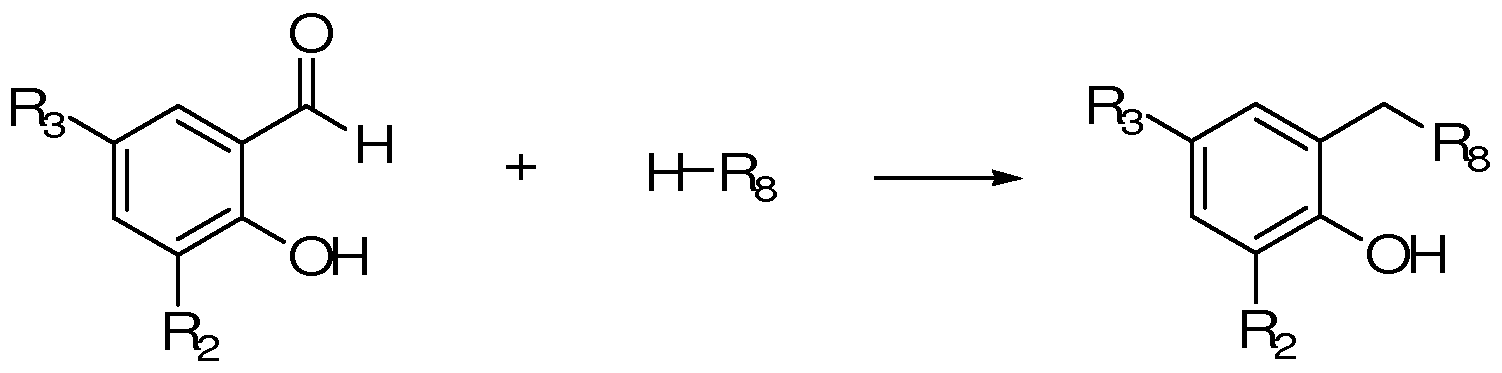
(Xl-A) (XII) (X-A)
-R2, -R3, and -R8 are as defined in any one of (1 ) to (325), if present.
Imine Compounds
(328) In a further aspect the present invention provides a method of preparing a compound of formula (XX):

where A, -Ri , -R2, -R3, -R4, and -R8A are as defined in any one of (1 ) to (325), if present.
(329) A method according to (328), wherein a compound of formula (XX) is obtained by imination of a compound of formula (XI) with a compound of formula (XXI I):

(XI) (XXII) (XX) where A, -Ri , -R2, -R3, -R4, and -R8A are as defined in any one of (1 ) to (325), if present.
(330) A method according to (328), wherein a compound of formula (XX-A) is obtained by reductive amination of a compound of formula (Xl-A) with a
compound of formula (XXII):

(Xl-A) (XXII) (XX-A)
-R2, -R3, and -R8 are as defined in any one of (1 ) to (325), if present.
Amide Compounds
(331 ) In a further aspect the present invention provides a method of preparing a compound of formula (X):

325where A, -R -R2, -R3, -R4, and -R8 are as defined in any one of (1 ) to (325), if present.
(332) A method according to (331 ), wherein a compound of formula (XXX) is obtained by amide bond formation between a compound of formula (XXXI) with a compound of formula (XI I):

(XXXI) (XII) (XXX) where A, -R1 ; -R2, -R3, -R4, and -R8 are as defined in any one of (1 ) to (325), if present.
(333) A method according to (331 ), wherein a compound of formula (XXX-A) is obtained by amide bond formation between a compound of formula (XXXI-A) with a compound of formula (XII):

(XXXI-A) (XII) (XXX-A) where -R2, -R3, and -R8 are as defined in any one of (1 ) to (325), if present.
(334) A method according to any one of (331 ) to (333), wherein the amide bond formation is performed via an activated carboxylic acid.
(335) A method according to (334), wherein the amide bond formation is performed as a Schotten-Baumann reaction.
Ethylene Compounds
(336) In a further aspect the present invention provides a method of preparing a compound of formula (

where -RXL is -H or -R6, and A, -Ri , -R2, -R4, -R5 and -R6 are as defined in any one of (1 ) to (325), if present.
(337) A method according to (336), wherein a compound of formula (XL) is obtained by coupling a compound of formula (XLI) with a compound of formula (XLI I):

(XLII) (XLI) (XL) where -RXL is -H or -R6, and A, -Ri , -R2, -R4, - R5 and -R6 are as defined in any one of (1 ) to (325), if present.
(338) A method according to (336), wherein a compound of formula (XL-A) is obtained by coupling a compound of formula (XLI-A) with a compound of formula (XLI I):

(XLII) (XLI-A) (XL-A)
where -RXL is -H or -R6, and -R2, - R5 and -R6 are as defined in any one (1 ) to (325), if present. Examples
The following examples are provided solely to illustrate the present invention and are not intended to limit the scope of the invention, as described herein. Example Syntheses
Further the invention is concerned with a process for the manufacture of the above compounds.
The compounds of formula VI can be obtained by a two-step reaction pathway consisting of reductive amination followed by Sonogashira coupling.
Step 1: Synthesis of Intermediate, 2-{[4-(diethylamino)piperidin-1-yl]methyl}- 4,6-diiodophenol 1:

Sodium triacetoxyborohydride (8.56g, 38.4mmol) was added portionwise to a solution of 2-hydroxy-3,5-diiodobenzaldehyde (9.8g, 26.0mmol),
/V,/V-diethylpiperidin-4-amine (4.0g, 26.0mmol) and acetic acid (1 .5ml_, 26.0mmol) in dichloromethane (60ml_). After 4-5h of stirring at rt, the reaction was diluted with dichloromethane before being washed with saturated aqueous solution of NaHC03. The organic layer was dried over Na2S04, filtered and evaporated. The residue was purified on silica gel (dichloromethane/methanol 99/1 to 95/5 with 1 % triethylamine) to provide 2-{[4-(diethylamino)piperidin-1 -yl]methyl}-4,6- diiodophenol (8.5g, 1 6.5mmol, 64% yield) as a beige foam.
Step 2: General procedure for Sonogashira coupling and salt formation

General procedure:
Tetrakis(triphenylphosphine)palladium(0) (5%) was added to a solution of 2-{[4-(diethylamino)piperidin-1 -yl]methyl}-4,6-diiodophenol 1 (1 eq.), alkyne (1 eq.), copper iodide (20%) and triethylamine (2.5eq.) in anhydrous tetrahydrofuran (1 mL/0.1 mmol). The reaction was stirred at rt (or at 60 °C if required) and monitored by TLC. Ethyl acetate was added to the reaction and the organic layer was washed with a saturated aqueous solution of NaHC03 (twice). The organic layer was washed with brine, dried over Na2S04, filtered and evaporated. The residue was purified on silica gel (dichloromethane/methanol with or without 1 % triethylamine) to provide pure free base compound.
NBoc compounds were deprotected by TFA (1 00eq.) treatment in
dichloromethane (2 volumes of TFA) to give free primary amine after basic work up and purification on aluminium oxide. Free base compounds were converted into salts using solutions of hydrogen chloride in diethyl ether or methanol (HCI salt) or oxalic acid in methanol
(oxalate). Salts were isolated by filtration if precipitation occurred or by trituration after evaporation to dryness.
All of the alkynes involved in the Sonogashira coupling reaction are commercially available and were used without further purification.
To overcome a reactivity problem in the Sonogashira coupling reaction of alkynes bearing a free primary amine function, propargylamine and
1 -ethynylcyclohexylamine were protected as terf-butyl carbamates 2 and 3 with good yields and used without purification. Syntheses of those non-standard building blocks are given below.
Prop-2-ynyl-carbamic acid tert-butyl ester 2:
BocHN
Di-tert-butyl dicarbonate (9.0g, 40.0mmol) was added to a solution of
propargylamine (2.0g, 36.0mmol) and triethylamine (7.6ml_, 54.5mmol) in dichloromethane (20ml_) at rt. After overnight stirring, the reaction was washed with saturated solution of NH4CI and brine. The organic layer was dried over Na2S04, filtered and evaporated to provide Boc-propargylamine 2 as a brown viscous oil (5.1 g, 36.0mmol, 90% yield).
(l-Ethyl-cyclohexyl)-carbamic acid tert-butyl ester 3:
Bo
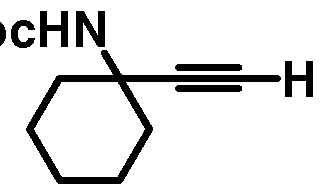
Using similar procedure for the synthesis of 2, Boc protected amine 3 was obtained as a pale yellow solid (1 .8g, 7.9mmol, 97% yield) from
1 -ethynylcyclohexylamine (1 .0g, 8.1 mmol) using Di-tert-butyl dicarbonate (2.0g, 8.9mmol) and triethylamine (1 .7ml_, 12.2mmol) in dichloromethane (15ml_).
Compounds
PK51 16
2-((4-(Diethylamino)piperidin-1-yl)methyl)-4-(3-hydroxyprop-1-yny iodophenol

Salt form: 2 HCI
Molecular weight: 515.26 g/mol
Appearance: off-white solid
Analytical data:
Mass spectrometry: [M+H]+ = 443.1 (ESI+, base compound)
NMR (1 H, D20, 300 MHz) δ ppm: 1 .2-1 .3 (m, 6H, 1 ), 1 .8-2.1 (m, 2H, 4), 2.2-2.4 (m, 2H, 4), 2.9-3.4 (m, 6H, 2), 3.5-3.7 (m, 3H, 2, 3), 4.1 -4.4 (m, 4H, 5, 8), 7.4 (s, 1 H, 6), 7.95 (s, 1 H, 7)
PK51 17
2-((4-(Diethylamino)piperidin-1-yl)methyl)-4-(2-(1- hydroxycyclopentyl)ethynyl)-6-iodophenol

Salt form: 2 HCI
Molecular weight: 569.35 g/mol
Appearance: brown solid
Analytical data:
Mass spectrometry: [M+H]+ = 497.4 (ESI+, base compound)
NMR ( H, MeOD, 300 MHz) δ ppm: 1 .3-1 .5 (m, 6H, 1 ), 1 .7-2.6 (m, 12H, 4, 8), 3.1 - 3.5 (m, 6H, 2), 3.6-3.9 (m, 3H, 2, 3), 4.4 (m, 2H, 5), 7.55 (s, 1 H, 6), 7.95 (s, 1 H, 7)
PK51 18
2-((4-(Diethylamino)piperidin-1-yl)methyl)-6-iodo-4-(3-methoxy-3- phenylprop- 1 -ynyl)phenol

Salt form: 2 HCI
Molecular weight: 605.38 a/mol
Appearance: orange solid
Analytical data:
Mass spectrometry: [M+H]+ = 533.4 (ESI+, base compound)
NMR ( H, MeOD, 300 MHz) δ ppm: 1 .3-1 .5 (m, 6H, 1 ), 2.05-2.45 (m, 4H, 4), 3.2- 3.5 (m, 9H, 2, 10), 3.6-3.9 (m, 3H, 2, 3), 4.3-4.5 (m, 2H, 5), 5.35 (s, 1 H, 8), 7.3- 7.5 (m, 3H, 9), 7.5-7.6 (m, 2H, 9), 7.65 (s, 1 H, 6), 8.0 (s, 1 H, 7).
PK51 19
2-((4-(Diethylamino)piperidin- 1 -yl)methyl)-4-(3-hydroxy-3-phenylprop-1- ynyl)-6-iodophenol

Salt form: 2 HCI
Molecular weight: 591 .35 g/mol
Appearance: red solid
Analytical data:
Mass spectrometry: [M+H]+ = 519.4 (ESI+, base compound)
NMR ( H, MeOD, 300 MHz) δ ppm: 1.2-1.4 (m, 6H, 1), 2.0-2.4 (m, 4H, 4), 3.0-3.3 (m, 6H, 2), 3.5-3.9 (m, 3H, 2, 3), 4.2-4.4 (m, 2H, 5), 5.25 (s, 1H, 8), 7.15-7.35 (m, 3H, 9), 7.35-7.5 (m, 2H, 9), 7.65 (s, 1H, 6), 8.0 (s, 1H, 7).
PK5174
tert-Butyl 3-(3-((4-(diethylamino)piperidin-1-yl)methyl)-4-hydroxy-5- iodophenyl)prop-2-ynylcarbamate

Synthesis Note: Prop-2-ynyl-carbamic acid tert-butyl ester used in Sonogashira coupling reaction, no deprotection
Salt form: free base
Molecular weight: 541.5 q/mol
Appearance: yellow oil
Analytical data:
HPLC: 96.0% (228 nm)
Mass spectrometry: [M+H]+ = 542.5 (ESI+)
NMR ( H, CDCI3, 300 MHz) δ ppm: 1.0-1.1 (m, 6H, 1), 1.5 (m, 9H, 9), 1.55-1.75
(m, 2H, 4), 1.75-1.85 (m, 2H, 4), 2.1-2.2 (m, 2H, 2), 2.5-2.7 (m, 5H, 2, 3), 3.0-3.1
(m, 2H, 2), 3.6 (m, 2H, 5), 4.1 (m, 2H, 8), 7.0 (s, 1H, 6), 7.7 (s, 1H, 7).
PK5175
4-(3-Aminoprop-1-ynyl)-2-((4-(diethylamino)piperidin-1-yl)methyl)-6- iodophenol
8

Salt form: 3 HCI
Molecular weight: 550.7 g/mol
Appearance: brown solid
Analytical data:
Mass spectrometry: [M+H]+ = 442.4 (ESI+, base compound)
NMR ( H, MeOD, 300 MHz) δ ppm: 1 .35-1 .45 (m, 6H, 1 ), 2.1 5-2.45 (m, 4H, 4), 3.1 5-3.45 (m, 6H, 2), 3.6-3.85 (m, 3H, 2, 3), 4.05 (m, 2H, 5), 4.45 (m, 2H, 8), 7.7 (s, 1 H, 6), 8.0 (s, 1 H, 7).
PK51 76
2-((4-(Diethylamino)piperidin-1-yl)methyl)-6-iodo-4-(3-phenoxyprop-1- ynyl)phenol

Salt form: 2 HCI
Molecular weight: 591 .4 g/mol
Appearance: light brown solid
Analytical data:
HPLC: 95.1 % (228 nm)
Mass spectrometry: [M+H]+ = 51 9.4 (ESI+, base compound)
NMR ( H, MeOD, 300 MHz) δ ppm: 1 .4 (m, 6H, 1 ), 2.1 -2.4 (m, 4H, 4), 3.1 -3.4 (m,
6H, 2), 3.6-3.85 (m, 3H, 2, 3), 4.4 (m, 2H, 5), 4.95 (m, 2H, 8), 6.95-7.1 (m, 3H, 9),
7.25-7.35 (m, 2H, 9), 7.6 (s, 1 H, 6), 7.95 (s, 1 H, 7).
PK51 77
2-((4-(Diethylamino)piperidin-1-yl)methyl)-6-iodo-4-(3-methoxyprop ynyl)phenol

Salt form: 2 HCI
Molecular weight: 529.3 g/mol
Appearance: brown solid
Analytical data:
HPLC: 93.5% (228 nm)
Mass spectrometry: [M+H]+ = 457.4 (ESI+, base compound)
NMR ( H, MeOD, 300 MHz) δ ppm: 1 .6 (m, 6H, 1 ), 2.1 -2.3 (m, 2H, 4), 2.35-2.5 (m, 2H, 4), 3.2-3.4 (m, 6H, 2), 3.45 (s, 3H, 9), 3.6-3.9 (m, 3H, 2, 3), 4.3 (m, 2H, 5), 4.45 (m, 2H, 8), 7.6 (s, 1 H, 6), 8.0 (s, 1 H, 7).
PK51 81
2-((4-(Diethylamino)piperidin-1-yl)methyl)-6-iodo-4-(4-phe
ynyl)phenol

Salt form: 2 HCI
Molecular weight: 589.4 g/mol
Appearance: light brown solid
Analytical data:
HPLC: 96.7% (21 0 nm)
Mass spectrometry: [M+H]+ = 51 7.3 (ESI+, base compound)
NMR ( H, MeOD, 300 MHz) δ ppm: 1 .3-1 .45 (m, 6H, 1 ), 2.1 -2.3 (m, 2H, 4), 2.3- 2.45 (m, 2H, 4), 2.7 (m, 2H, 9), 2.9 (m, 2H , 8), 3.2-3.4 (m, 6H, 2), 3.6-3.8 (m, 3H, 2, 3), 4.4 (m, 2H, 5), 7.15-7.4 (m, 5H, 10), 7.5 (s, 1 H, 6), 7.8 (s, 1 H, 7).
PK51 82
4-(3-(N-Benzyl^-methylamino)prop-1-ynyl)-2-((4-(diethylamino)p
yl)methyl)-6-iodophenol

Salt form: 3 HCI
Molecular weight: 654.9 g/mol
Appearance: brown solid
Analytical data:
HPLC: 93.3% (21 0 nm)
Mass spectrometry: [M+H]+ = 546.3 (ESI+, base compound)
NMR ( H, MeOD, 300 MHz) δ ppm: 1 .4 (m, 6H, 1 ), 2.2-2.5 (m, 4H, 4), 3.0 (m, 1 1 ), 3.2-3.5 (m, 6H, 2), 3.6-3.8 (m, 3H, 2, 3), 4.2-4.6 (m, 6H, 5, 8, 9), 7.5-7.7 ( 5H, 10), 7.9 (s, 1 H, 6), 8.1 (s, 1 H, 7).
PK51 83
4-(4-(3-Chlorophenoxy)-3-hydroxybut- 1 -ynyl)-2-((4-(diethylamino )piperidin- 1 - yl)methyl)-6-iodophenol

Salt form: 2 HCI
Molecular weight: 655.8 g/mol
Appearance: light brown solid
Analytical data:
HPLC: 95.1% (210 nm)
Mass spectrometry: [M+H]+ = 583.3 (ESI+, base compound)
NMR ( H, MeOD, 300 MHz) δ ppm: 1.4 (m, 6H, 1), 2.1-2.4 (m, 4H, 4), 3.2-3.4 (m, 6H, 2), 3.6-3.9 (m, 3H, 2, 3), 4.1-4.25 (m, 2H, 8), 4.4 (m, 2H, 5), 6.9-7.1 (m, 3H, 9), 7.3 (m, 1H, 10), 7.6 (s, 1H, 6), 8.0 (s, 1H, 7).
PK5185
2-((4-(Diethylamino)piperidin-1-yl)methyl)-6-iodo-4-(3-(phenylthio)pro ynyl)phenol

Salt form: 2 HCI
Molecular weight: 607.4 g/mol
Appearance: light brown solid
Analytical data:
HPLC: 95.1% (210 nm)
Mass spectrometry: [M+H]+ = 535.2 (ESI+, base compound)
NMR ( H, MeOD, 300 MHz) δ ppm: 1.4 (m, 6H, 1), 2.1-2.4 (m, 4H, 4), 3.1-3.4 (m, 6H, 2), 3.6-3.8 (m, 3H, 2, 3), 3.9 (m, 2H, 8), 4.4 (m, 2H, 5), 7.2-7.4 (m, 3H, 9), 7.5 (m, 3H, 9, 6), 7.8 (s, 1H, 7).
PK51 86
4-(2-Cyclopentenylethynyl)-2-((4-(diethylamino)piperid
iodophenol

Salt form: 2 HCI
Molecular weight: 565.4 g/mol
Appearance: light brown solid
Analytical data:
HPLC: 83.6% (21 0 nm)
Mass spectrometry: [M+H]+ = 493.3 (ESI+, base compound)
NMR ( H, MeOD, 300 MHz) δ ppm: 1 .4 (m, 6H, 1 ), 2.0 (m, 2H, 9), 2.1 -2.5 (m, 4H, 4), 3.2-3.4 (m, 6H, 2), 3.6-3.85 (m, 3H, 2, 3), 3.9 (m, 4H, 8), 4.4 (m, 2H, 5), 6.2 (s, 1 H, 10), 7.65 (s, 1 H, 6), 8.0 (s, 1 H, 7).
PK51 87
4-[3-(3-{[4-(Diethylamino)piperidin-1-yl]methyl}-4- hydroxy-5- iodophenyl)prop-2-yn-1-yl]- 1A6-thiomorpholine- 1, 1 -dione

Salt form: 3 HCI
Molecular weight: 668.9 g/mol
Appearance: brown solid
Analytical data:
HPLC: 89.4% (229 nm)
Mass spectrometry: [M+H]+ = 560.2 (ESI+, base compound)
NMR ( H, MeOD, 300 MHz) δ ppm: 1.4 (m, 6H, 1), 2.1-2.5 (m, 4H, 4), 3.15-3.45 (m, 10H, 2, 9), 3.6-4.0 (m, 7H, 2, 3, 10), 4.4 (m, 4H, 5, 8), 7.8 (s, 1H, 6), 8.05 (s, 1H, 7).
PK5188
(E)-3-(2-(4-(3-((4-(Diethylamino)piperidin-1-yl)methyl)-4-h^
iodophenyl)but-3-ynyl)phenyl)acrylic acid

Salt form: 2 HCI
Molecular weight: 659.4 g/mol
Appearance: brown solid
Analytical data:
HPLC: 82.1% (229 nm)
Mass spectrometry: [M+H]+ = 589.2 (ESI+, base compound)
NMR ( H, MeOD, 300 MHz) δ ppm: 1.15-1.3 (m, 6H, 1), 1.7-1.85 (m, 2H, 8), 1.95- 2.1 (m, 4H, 4), 2.15-2.3 (m, 2H, 9), 2.9-3.3 (m, 9H, 2, 3), 3.65 (m, 2H, 5), 4.95 (m, 1H, 12), 6.9-7.0 (m, 1H, 10), 7.05-7.15 (m, 2H, 10), 7.3 (m, 1H, 10), 7.5 (m, 1H, 11), 7.6 (m, 1H, 6), 7.9 (m, 1H, 7).
PK51 89
2-((4-(Diethylamino)piperidin-1-yl)methyl)-4-(2-(1- hydroxycyclohexyl)ethynyl)-6-iodophenol

Salt form: 1 Oxalate
Molecular weight: 600.5 g/mol
Appearance: light brown solid
Analytical data:
HPLC: 99.4% (229 nm)
Mass spectrometry: [M+H]+ = 51 1 .2 (ESI+, base compound)
NMR ( H, MeOD, 300 MHz) δ ppm: 1 .3-1 .4 (m, 6H, 1 ), 1 .5-1 .85 (m, 7H, 8), 1 .9- 2.1 (m, 3H, 8), 2.1 -2.3 (m, 4H, 4), 3.3 (m, 8H, 2), 3.5 (m, 1 H, 3), 4.0 (m, 2H, 5), 7.3 (m, 1 H, 6), 7.8 (m, 1 H, 7).
PK51 90
tert-Butyl 1-(2-(3-((4-(diethylamino)piperidin-1-yl)methyl)-4-hydroxy-5- iodophenyl)ethynyl)cyclohexylcarbamate

Synthesis Note: (l -Ethyl-cyclohexyl)-carbamic acid tert-butyl ester used i Sonogashira coupling reaction, no deprotection
Salt form: 1 Oxalate
Molecular weight: 699.6 g/mol
Appearance: light brown solid
Analytical data:
HPLC: 81.3% (229 nm)
Mass spectrometry: [M+H]+ = 610.3 (ESI+, base compound)
NMR ( H, MeOD, 300 MHz) δ ppm: 1.3-1.8 (m, 25H, 1, 8, 9), 2.1-2.3 (m, 4H, 4), 3.2-3.4 (m, 9H, 2, 3), 4.0 (m, 2H, 5), 7.3 (m, 1H, 6), 7.8 (m, 1H, 7).
PK5191
1-Benzyl-4-(2-(3-((4-(diethylamino)piperidin-1-yl)methyl)-4-hydroxy-5- iodophenyl)ethynyl)piperidin-4-ol

Salt form: 1 Oxalate
Molecular weight: 691.6 g/mol
Appearance: light brown solid
Analytical data:
HPLC: 97.7% (229 nm)
Mass spectrometry: [M+H]+ = 602.2 (ESI+, base compound)
NMR ( H, MeOD, 300 MHz) δ ppm: 1.4 (m, 6H, 1), 1.8-2.4 (m, 8H, 4, 8), 3.05-3.4 (m, 13H, 2, 3, 9), 3.75 (m, 2H, 10), 4.2 (m, 2H, 5), 7.15 (m, 1H, 6), 7.4-7.6 (m, 5H, 11), 7.7 (m, 1H, 7).
PK51 92
4-(2-(1-Aminocyclohexyl)ethynyl)-2-((4-(diethylamino)piperidin-1-yl)
6-iodophenol

Synthesis Note: (l -Ethyl-cyclohexyl)-carbamic acid tert-butyl ester used in Sonogashira coupling reaction followed by deprotection of Boc group - deprotected by TFA (100eq.) treatment in dichloromethane (2 volumes of TFA) to give free primary amine after basic work up and purification on aluminium oxide. Salt form: 3 HCI
Molecular weight: 618.8 g/mol
Appearance: light brown solid
Analytical data:
HPLC: 78.8% (229 nm)
Mass spectrometry: [M+H]+ = 51 0.2 (ESI+, base compound)
NMR ( H, MeOD, 300 MHz) δ ppm: 1 .4 (m, 6H, 1 ), 1 .7-1 .9 (m, 7H, 4, 8), 2.1 -2.4
(m, 7H, 4, 8), 3.1 -3.4 (m, 9H, 2, 3), 4.4 (m, 2H, 5), 7.25 (m, 1 H, 6), 8.0 (m, 1 H, 7).
PK51 93
4-(2-(3-((4-(Diethylamino)piperidin-1-yl)methyl)-4-hydroxy-5- iodophenyl)ethynyl)-1-methylpiperidin-4-ol

Synthesis: Step 1 in analogy to general procedure. Then, preparation of acetylene component:
Salt form: 3 HCI
Molecular weight: 634.8 g/mol
Appearance: brown solid
Analytical data:
Mass spectrometry: [M+2H]/2+ = 263.6 (ESI+, base compound)
NMR ( H, MeOD, 300 MHz) δ ppm: 1 .2 (m, 6H, 1 ), 1 .8-2.4 (m, 8H, 4, 8), 2.8 (m, 3H, 2), 2.95-3.4 (m, 10H, 2, 3, 9), 3.6 (m, 2H, 10), 4.3 (m, 2H, 5), 7.4 (m, 1 H, 6), 7.95 (m, 1 H, 7).
PK51 95
1 -(2-(3-((4-(Diethylamino )piperidin- 1 -yl)me thyl)-5-iodo-4- methoxyphenyl)ethynyl)cyclopentanol

Methyl iodide (1 .1 eq.) was added to a suspension of caesium carbonate (2eq.) in a solution of phenol derivative (1 eq.) in acetone (1 mL/0.1 mmol). The reaction was stirred at rt overnight before being filtered, evaporated and purified as previously described.
Free base form was converted into oxalate salt as previously described.
Salt form: 1 Oxalate
Molecular weight: 600.49 g/mol
Appearance: light brown solid
Analytical data:
HPLC: 82.6% (229 nm)
Mass spectrometry: [M+H]+ = 51 1 .2 (ESI+, base compound)
NMR ( H, MeOD, 300 MHz) δ ppm: 1 .4 (m, 6H, 1 ), 1 .7-2.3 (m, 1 2H, 4, 9), 3.2-3.8 (m, 9H, 2, 3), 3.9 (m, 3H, 8), 4.2 (m, 2H, 5), 7.6 (s, 1 H, 6), 7.95 (s, 1 H, 7)
Biophysical Testing - Methods
Experimental Procedures Protein Expression and Purification
For crystallographic experiments, the DNA coding for residues 94-31 2 of T-p53C, the human p53 core domain mutant M1 33L/V203A/N239Y/N268D was subcloned from a pRSET(A) vector into the polylinker region of a pET-24a(+) vector
(Novagen) using the Nde l and EcoRI restriction sites. The additional point mutation of Y220C was introduced using the QuikChange Site-directed
Mutagenesis kit (Stratagene) yielding "construct ".
For all other experiments, the DNA coding for residues 94-31 2 of T-p53C was inserted into a modified pET24a(+) vector using BamH I and EcoRI restriction sites. The sequence encoding the amino acids 1 -85 of the B. stearothermophilus dihydrolipoyl acetyltransferase domain (lipoyl domain, EC 2.1 .1 2) fused to a N- terminal 6x-His tag and C-terminal TEV protease cleavage site ENLYFQG(GS) was inserted between the Ndel and BamH I sites of pET24a(+) to make this modified vector. The additional point mutation for Y220C was introduced using the QuikChange Site-directed Mutagenesis kit (Stratagene) yielding "construct2". All expression vectors were transformed into Escheria coli C41 (DE3) chemically competent cells using a standard protocol for heat shock (45 sec at 42 °C, 2 min on ice). After recovery (incubation with 1 mL 2xTY for 30 min at 37 °C and 220 rpm) the cells were plated on antibiotic plates (kanamycin) and incubated overnight at 37 °C. To obtain a starter culture of a single clone, a single colony was picked and incubated in 1 00 mL 2xTY (50 μg/ mL kanamycin) until the optical density at 600 nm (OD600nm) was greater than 0.2. Expression cultures were prepared by inoculating 800 mL 2xTY (50 μg/mL kanamycin) with 8 mL starter culture. The cells were grown at 37 °C and 220 rpm in a shaking incubator until an OD600nm of 0.6-0.8 was reached. The medium was supplemented with 0.1 mM ZnS04 and protein expression was induced with 1 mM isopropyl β-D- thiogalactoside (IPTG). After incubation for 1 6 h at 22 °C, cells were harvested by centrifugation at 4 °C and 4,500 rpm for 20 min . For storage, cells were flash- frozen in liquid N2 and stored at -20 °C.
For the expression of 5N-labelled protein, instead of 2xTY medium, M9 minimal medium was used. It was supplemented with kanamycin (50 mg/L) , MgS04 (0.24 g/L), Solution Q (consisting of 40 M L/L 5M HCI, 1 0 mg/L FeCI2 ■ 4 H20, 368 g/L CaCI2 ■ 2 H20, 1 28 g/L B(OH)3, 360 g/L CoCI2 ■ 6 H20, 8 Mg/L CuCI2 ■ 6
H20, 680 Mg L ZnCI2, 1 .21 mg/L Na2Mo04 ■ 2H20, 80 Mg L MnCI2 ■ 4 H20), vitamin
mix (consisting of 5 mg/L thiamine, 1 mg/L d-biotin, 1 mg/L choline chloride, 1 mg/L folic acid, 1 mg/L niacinamide, 1 mg/L d-panthothenic acid, 1 mg/L pyridoxal, 0.1 mg/L riboflavin), glucose (6 g/L), and 5NH4CI (1 g/L) as the sole nitrogen source.
Purification chromatography was performed using an AKTA system (GE
Healthcare). All buffers were filtered using a 0.22 μηι filter before use.
Construct 1
Construct 1 was purified using the following protocol:
Harvested cell pellets were first resuspended and homogenised in lysis buffer of 25 mM KH2P04/K2HP04-buffer (KPi), pH 7.5, 5mM DTT, 1 tablet / 50 ml
'Complete' EDTA-free protease inhibitor as well as small amounts of DNase and RNase. This was kept on ice at all times. 25 ml of lysis buffer per litre of original cell culture was used. Cells were cracked using an Emulsiflex C5 high pressure homogeniser (Glen Creston). The lysate was centrifuged for 40 min at 1 7,000 rpm in a Sorvall SS34 rotor cooled to 4 °C. The supernatant was filtered using a 0.22 μηι StericupTM disposable vacuum filter device (Millipore). This was then loaded onto a Sepharose HP SP column that had been pre-equilibrated with 25mM KPi, pH 7.5 and 5mM DTT and eluted after 5 CV of washing by increasing the concentration of NaCI in a gradient to 2M over 10 CV. The pooled fractions were diluted tenfold with pre-chilled 25mM NaPi, pH 7.5 + 5mM DTT, to less than 50mM salt concentration. This was then loaded onto a Heparin HP column and eluted after 5 CV of washing by increasing the concentration of NaCI in a gradient to 2M over 10 CV. The final purification step was done using a Superdex® 75 26/60 Prep Grade HiLoad column (Amersham) equilibrated with a buffer of 25 mM NaPi, pH 7.5, 1 50 mM NaCI and 5 mM DTT. Fractions were pooled and concentrated using a Centriprep centrifugal concentrating device (Ultracel YM-1 0) with a 10 kDa molecular weight cutoff in an Eppendorf benchtop centrifuge that was pre-cooled to 4°C. The purity of the protein was judged by SDS PAGE and was greater than 95% pure. Samples were flash frozen in liquid nitrogen and stored at -80 °C. Construct 2
Construct 2 was purified using the following protocol:
Harvested cell pellets were first resuspended and homogenised in lysis buffer of 50 mM KH2P04/K2HP04-buffer (KPi), pH 8.0, 300 mM NaCI, 10 mM imidazole, 2 mM TCEP, 1 tablet / 50 ml 'Complete' EDTA-free protease inhibitor as well as small amounts of DNase and RNase. This was kept on ice at all times. 25 ml of
lysis buffer per litre of original cell culture was used. Cells were cracked using an Emulsiflex C5 high pressure homogeniser (Glen Creston). The lysate was centrifuged for 40 min at 17,500 rpm in a Sorvall SS34 rotor cooled to 4°C. The supernatant was filtered using a 0.22 μηι StericupTM disposable vacuum filter device (Millipore). This was then loaded onto 4 x 5 ml HisTrap™ FF crude Ni- columns that had been pre-equilibrated with 50 mM KPi, pH 8.0, 300 mM NaCI, 10 mM imidazole, 5 mM TCEP, and eluted with a 1 0-250 mM imidazole gradient over 5 column volumes. Dependent on the yield of the protein expression, the lysate was loaded in portions and/or the flowthrough was reloaded until most T- p53C-Y220C was recovered. The pooled fractions were digested with Tobacco Etch Virus protease (TEV) overnight at 4 °C cleaving the 6xHIS + Lipoyl part off the expressed protein by cutting at the TEV recognition site between ENLYFQ and GGS. The degree of cleavage was monitored by SDS-PAGE. After completion of cleavage, the solution was diluted tenfold with pre-chilled 25 mM NaPi, pH 7.5, 5 mM DTT to less than 30 mM salt concentration. This was then loaded onto a Heparin HP column and eluted after 5 CV of washing by increasing the concentration of NaCI in a gradient to 2M over 10 CV. The protein was then subjected to gel filtration as a final purification step using a Superdex® 75 26/60 Prep Grade HiLoad column (Amersham) equilibrated with a buffer of 25 mM KPi, pH 7.2, 150 mM NaCI and 5 mM DTT. Fractions were pooled and concentrated using a Centriprep centrifugal concentrating device (Ultracel YM-10) with a 10kDa molecular weight cutoff in an Eppendorf benchtop centrifuge that was pre-cooled to 4°C. The purity of the protein was judged by SDS PAGE and was greater than 95% pure. Samples were flash frozen in liquid nitrogen and stored at -80 °C. Protein concentrations were measured spectrophotometrically. The molar extinction coefficient for T-p53C-Y220C at 280 nm (ε280) was calculated to be ε280 = 17420 cm" M"1 from its amino acid sequence.
Biophysical Assays
Measuring thermal stabilization by differential scanning fluorimetry (DSF)
The effect of compounds on the melting temperature of T-p53C-Y220C was monitored using SYPRO orange (Invitrogen, USA) as fluorescent probe which quantitatively binds to the hydrophobic protein patches, exposed upon thermal denaturation. Real-time melt analysis was performed using a Corbett (Qiagen) Rotor-Gene 6000 real-time qPCR thermocycler. Excitation and emission filters were 460 and 510 nm, respectively. Heating from 28 °C to 60 °C, a constant heating rate of 90 °C/h was applied. The protein (final concentration : 10 μΜ) was briefly mixed with SYPRO orange (10x) in buffer (25 mM KPi pH 7.2, 1 50 mM
NaCI, 1 mM TCEP), and compound (5mM) dissolved in neat DMSO was added to
yield a final compound concentration of 250 μΜ in 5% (v/v) DMSO. The melting temperature (Tm) of the protein in presence of compounds was determined from the inflection point of the melting curve. Melting temperatures were compared to control samples without compound. All samples were measured in triplicate.
Binding analysis by H/ 5N -HSQC NMR spectroscopy
Uniformly 5N-labelled core domain of T-p53C-Y220C was expressed and purified according to the above described protocol ("Construct 2").
Samples were prepared by adding dilutions of compound from 40mM stock in DMSO-d6 to buffer (25 mM KPi, pH 7.2, 1 50 mM NaCI, and 5 mM DTT) to a final concentration of 5% (v/v) DMSO-d6. H/ 5N-HSQC spectra of T-p53-Y220C (75 μΜ) were acquired at 20 °C on a Bruker Avance-800 spectrometer (800 MHz H frequency) using a 5-mm inverse cryogenic probe. All HSQC spectra were acquired with 8 transients per ti data point, 1 024 data points in t2, and 64 complex data points in ti , with spectral widths of 1 1 .0 kHz for H and 2.7 kHz for 5N, and a recycle delay of 800 ms. After zero filling, forward complex linear prediction in fi and Fourier transformation , the digital resolution was 0.01 ppm/point for H and 0.1 3 ppm/point for 5N.
Chemical shifts were considered significant if the average weighted H/ 5N chemical shift difference :
Αδ(ιΗ 1 15 N) = l(AS H))2 + (Αδ(15Ν) / 5) was greater than 0.04 ppm. To determine dissociation constants, final compound concentrations were chosen depending on the expected magnitude of the dissociation constant, and at least five 5N/ H HSQC spectra per compound at different compound concentrations were measured. Spectra analysis was performed using Sparky 3.1 14 and Bruker Topspin 2.0 software. To derive KD values, a quadratic saturation binding equation was fitted to the concentration- dependent chemical shift changes of the relevant shifting peaks:
i ] HP0] + KD - ^([L0] HP0] + KD)2 - 4 -[P0] -[L~] d d max
2 TO
Measuring binding affinity by isothermal titration calorimetry (ITC)
To confirm the binding affinity of compounds, ITC experiments were conducted using a MicroCal (Amherst, USA) iTC200 calorimeter. Protein samples used in the cell unit were prepared to a final concentration of 50μΜ in 25 mM KPi, pH 7.2, 1 50 mM NaCI, 1 mM TCEP with final concentration of 5% (v/v) DMSO.
Compounds (2 mM) for use in the syringe unit were dissolved in the same buffer at 5% (v/v) DMSO. Measurements were performed at 20 °C using injection steps of 2 μΙ_ at 0.5 μ-Js (initial injection : 0.5 μΙ_) and 120 s spacing. Data analysis was performed using the MicroCal Origin software.
Effects of compounds on the kinetics of aggregation by time-dependent fluorescence spectroscopy
To measure the effect of compounds on the kinetics of aggregation of T-p53C- Y220C, protein aggregation was monitored by measuring light scattering at 37 °C at 500 nm as excitation and emission wavelengths (excitation slit width 0.8 nm, emission slit width 2 nm), using a Horiba (Kyoto, Japan) FluoroMax-3
spectrophotometer. Experiments were performed at a protein concentration of 3 μΜ in 25 mM potassium phosphate, pH 7.2, 1 50 mM NaCI, and 5 mM DTT. To obtain homogenous mixing, Scienceware (Bel-Art Products, USA) spectrometer cell spinbars were used. Effects of aggregation seeds were minimized using disposable Fisher Scientific UV grade PMMA cuvettes and storing the spinbars in nitric acid when not in use.
Data analysis was performed using KaleidaGraph (Synergy Software, USA).
Biophysical testing - Results - Formula I
The present invention relates to the use of compounds of formula I for the stabilization of p53 mutants.
The following tables show the results of the thermal denaturation studies using differential scanning fluorimetry , where ATm is the increase in T-p53C-Y220C melting temperature on adding 250 μΜ of the test compound.
Additionally, mostly for compounds showing high ATm values in the DSF screen, KD values determined by chemical shift mapping in HSQC NMR are given in μΜ. Finally, for some compounds, KD values were determined by ITC.
Amines
For ease of reference, compound classes are defined as follows:
Class 1 .1 R5 = amine sidechain, first amine group not member of a ring, no second amine function
Class 1 .2 R5 = amine sidechain, first amine group not member of a ring, second protonable amine connected by 2-atom spacer
Class 1 .3 R5 = amine sidechain, first amine group not member of a ring, second protonable amine connected by 3-atom spacer
Class 1 .4 R5 = amine sidechain, first amine group not member of a ring, second protonable amine connected by 4-atom spacer
Class 2 R5 = amine sidechain, first amine group not member of a ring but in direct neighbourhood to a ring system
Class 3.1 R5 = amine sidechain, first amine group is part of a 4-membered or 5-membered ring
Class 3.2 R5 = amine sidechain, first amine group is part of a piperidine ring that has additional substituents in 4-position
Class 3.3 R5 = amine sidechain, first amine group is part of a piperidine or morpholine ring that has additional substituents in 2-position or 3-position
Class 3.4 R5 = amine sidechain, first amine group is part of a piperazine ring Class 3.5 R5 = amine sidechain, first amine group is part of a 7-membered ring
Amines - Class 1 .1


PK# R DSF KD KD
ATm NMR ITC
[μΜ] [μΜ]
5071 0.1 1
H I
5025 0.10
5082 0.10
5037 0.43
5014 0.38
5039 0.34
5075 0.28
5065 0.12
5063 0.14
5044 0.19
5021 -0.04

 Amines - Class 1 .4


Amines - Class 2


Amines - Class 3.1

 Amines - Class 3.2


PK# R DSF ATm KD KD ITC
NMR [μΜ] [μΜ]
5124 0.73 122.4
5125 0.62 154.1
5110 0.10
5096 -0.07
5091 0.17
Amines - Class 3.3

PK# R DSF KD KD
ATm NMR ITC
[μΜ] [μΜ]
 Amines - Class 3.4


Amides
For ease of reference, compound classes are defined as follows:
Class 1 R5 = amide sidechain, amine function separated from amide moiety by 2-atom spacer ('spacer length = 2').
Class 2 R5 = amide sidechain, amine function separated from amide moiety by 3-atom spacer ('spacer length = 3').
Class 3 R5 = amide sidechain, amine function separated from amide moiety by at least 4-atom spacer ('spacer length > 3').
Amides - Class I (spacer lengt


Amides - Class II (spacer lengt


Scaffold Variations Central Scaffold Variatio


Central Scaffold Variations - Part II


PK# Ri R3 R5 Re DSF KD NMR KD
[μΜ] ITC
[μΜ]
877 Br Br OH no curve 201 ±16 —
814 I I OH no curve — —
878 Br Br OH no curve 9091143 —

Biophysical testing - Results - Formula VI The invention additionally relates to using compounds of formula VI for
stabilization of p53 mutants.The following tables show the results of the thermal denaturation studies using differential scanning fluorimetry , where ATm is the
increase in 7"-p53C-Y220C melting temperature on adding 250 μΜ of the test compound.
Additionally, mostly for compounds showing high ATm values in the DSF screen, KD values determined by chemical shift mapping in HSQC NMR are given in μΜ.
Finally, for some compounds, KD values were determined by ITC.


Additioinal Biophysical testing - Results - Formula VI


[a] A Tm = 7m(ligand-bound protein) - 7" m(free protein)
[b] For binders with a KD in the low micromolar region, line broadening (intermediate exchange) was observed instead of chemical shift perturbation.

[a] A Tm =rm(ligand-bound protein) - 7" m(free protein)
[b] For binders with a KD in the low micromolar region, line broadening (intermediate exchange) was observed instead of chemical shift perturbation.


[a] A Tm =rm(ligand-bound protein) - Tm(free protein)
[b] For binders with a KD in the low micromolar region, line broadening (intermediate exchange) was observed instead of chemical shift perturbation.
Aggregation Studies
Here, we take a new route to monitoring the effects of putative drugs by examining their effects on the kinetics of aggregation. Aggregation may be an important route for inactivation in vivo ('Cancer is a p53 protein aggregation disease', (24) and so monitoring loss of p53 by this route may be a useful guide to efficacy of drug candidates.
Aggregation was measured under the conditions laid out above, monitoring light scattering. There is an initial lag period, indicating nucleation events taking place during the same time regime as the initial denaturation, a growth period, and then a levelling off as substrate is depleted. The underlying kinetics are probably complex, but the aggregation data for p53 DBD fitted the Finke-Watzky model
(25). This is a highly simplified model, reducing the process of aggregation to two steps, nucleation and aggregation (scheme 1 ).

nucleation growth
Scheme 1
The analytical solution is (25):
B, = Ao -(ki/k2 + Ao)/(1 + (ki/k2Ao)exp(ki +k2A0)t) (1 ). In terms of observed light scattering, S
S = s(Ao - (ki/k2 + AO)/(1 + (ki/k2Ao)exp(ki +k2A0)t)) (2) where s is the intrinsic increase in scattering of the polymer on addition of a monomer. In practice, data were fitted to the equation:
S= m3*(Ao-(m1 /m2+A0)/(1 +(m1 /(m2*Ao))*exp((m1 +m2*A0)*mO)))+m4 (3) using the program Kaleidagraph, where m3 is scattering intensity, ml = k1 ; m2 = k2, m4 = initial scatter, and mO is time.
It can be convenient to eliminate A0 from the equations so let k2A0 = k2(app)
S = s(k2(app)/k2- (k!/k2+ k2(app)/k2)/(1 + (k1/k2app)exp(k1+k2app)t)) (4),
Which is fitted to:
S = m3*(m2-(m1 +m2)/(1 +(m1 /m2)*exp((m1 +m2)*m0))) +m4 (5) where ml = k1 ; m2 = k2(app), m3 = s/k2, m4 = initial scatter, and mO is time.
The effects of the best two Y220C stabilizers, PK5174 and PK5176 on
aggregation were monitored at 500 nm to avoid any light absorbance by them. The addition of PK5174 at up to 80 μΜ significantly inhibited aggregation (Figure 1 ). However, the shape of the curve changed with increasing concentration, having a sloping phase before levelling off. This behaviour was more marked with PK51 76, which was available in higher concentrations (Figure 2). There can be artefacts from stirring that are not fully reproducible towards the ends of the time courses as the solutions become more turbid. But, the data do change
consistently with increasing ligand concentration, with very significant increases in lag times, an apparently slower growth rate and a significant, almost parallel series of second linear growth phases. The initial and two linear phases could be fitted to the Finke-Watzky equation that was modified to have sloping base lines by adding a multiplier of (1 + m6*m0) to the amplitude in equation 3 and an initial slope of m5*m0 to give:
S = m3*(m2-(m1 +m2)/(1 +(m1 /m2)*exp((m 1 +m2)*m0)))*(1 + m6*m0) +m4+m5*m0
(6).
If this procedure is valid, then it does produce reasonable fits, with ki fitting to a standard saturation curve (Figure 3), with KD = 24 ±2μΜ, and, possibly, a small decrease in k2 with increasing concentration of PK5176 (Figure 4). The curve fitting for different modifications of the Finke-Wazky equation and different levels of truncation of data all produced values of KD about 20-50 μΜ. If the procedure is valid, it indicates that the apparent slowing down of the growth rate is a visual artefact and there is only a small change (Figure 4).
Following the procedure of Wetzel and coworkers (26, 27), we plotted the initial rates of scattering against t2, where t is time since the slope should vary as k^ k2. Plots of the first 5-10% of the time courses were linear (Figures 5 and 6). The slopes of the plots fitted saturation curves when plotted against concentrations of PK51 74 and PK51 76 and gave KDs of 27 ± 3 (PK51 74) and 35 ±4 μΜ (PK51 76), respectively. This is in reasonable agreement with ITC KD data.
Crystallographic Studies
Experimental details
Crystals of T-p53C-Y220C were grown via the sitting drop vapor diffusion method as described previously (22). They were soaked in solutions of compound (30 mM or saturated solution) in cryo buffer (19% polyethylene glycol 4000, 20% glycerol, 10 mM sodium phosphate, pH 7.2, 100 mM HEPES, pH 7.2, 150 mM KCI, 10 mM DTT) for 1 -3 hours and flash frozen in liquid nitrogen. X-ray datasets were collected at 100 K at the Diamond Light Source, Oxford (beamlines I02, I03, I04). All data sets were processed with MOSFLM (28) and SCALA (29). The structure was solved by rigid body refinement with PHENIX (30) using the structure of the ligand-free mutant (PDB ID 2J 1 X) as starting model. After an initial round of refinement, water molecules were added to the structures using PHENIX. The fragments were then manually built into the structure using COOT (31 ), and the resulting models were further refined with PHENIX and COOT. Data collection and refinement statistics are shown in Table 1 . Binding modes of compounds
We solved high-resolution crystal structures of a series of Y220C-ligand complexes (resolution of 1 .4 - 1 .7 A), revealing the detailed binding mode of these compounds (Figure 9A-K). Figures 9A-J are the crystal structures of T-p53C-Y220C ligand complexes with (A) PK5086, (B) PK5174, (C) PK5176, (D) PK51 16, (E) PK51 17, (F) PK51 18, (G) PK5185, (H) PK5188, (I) PK51 91 , (J) PK5090.
The protein backbone is shown in gray, with selected residues in the binding pocket highlighted as stick models. Halogen bonding is shown by a magenta broken line and selected polar interactions are shown as green broken lines. The interaction of the ligand phenol group with a structural water molecule shown in (A) and (J) is conserved in all ligand structures but omitted for clarity. (K)
Superposition of PK5090 and PK5176 binding modes, showing that replacement of the second iodine by an acetylene group allows design of compounds that interact with a subsite of the pocket that is not occupied by the parent diodo- compounds. The binding pocket is shown as a surface representation. PK5090 is shown as a green stick model (visible as the compound uppermost in the figure) and PK5176 is shown as a yellow stick model (visible as the compound lowermost in the figure).
In the structures of the parent di-iodo compounds, PK5086 and PK5090, the benzene moiety sits at the center of the mutation-induced cavity in Y220C, flanked by three prolines (Pro151 , Pro222 and Pro223), Val147 and Thr150. The two iodine atoms are facing the bottom of the cavity (Figure 9A/J). One iodine atom sits close to Cys220, whereas the other forms an energetically favorable halogen bond with the main chain oxygen of Leu145. The distance between iodine and oxygen atom is 3.0 A, which is significantly shorter than the sum of the van-der-Waals radii of the two atoms, consistent with quantum mechanical calculations on the nature of halogen bonds. This interaction is conserved in all ligand structures and the l-O distance is consistently between 3.0 and 3.1 A. The phenol group interacts with a structural water molecule, which in turn is stabilized by hydrogen bonds with main chain atoms of Val147 and Asp228. In addition, the phenol hydroxyl forms an internal hydrogen bond with the piperidine moiety. The latter packs against residues 147-1 50 and protrudes from the central region of the pocket, extending into the solvent.
Replacement of the iodine facing Cys220 with an acetylene linker in our second- generation compounds had only minor effects on the binding mode of the central scaffold. The acetylene group occupies the narrowest part of the cavity between residues Pro1 51 , Cys220 and Pro222 that leads into a previously unoccupied subsite of the cavity, thus allowing a variety of additional interactions to be formed (Figure 9K). Observed are hydrogen bonds with the main chain oxygens of Cys220 (PK5191 ) and Pro1 51 (PK51 16, PK51 17 and PK5174), with the latter being associated with more tightly binding compounds. Other compounds are stabilized by packing of a benzene ring against Pro1 53 and additional
hydrophobic interactions with Thr1 50 and Pro222 (PK51 18, PK5176, PK5185) Interestingly, PK51 74, one of the best binders, combines a hydrogen bond with the carbonyl group of Pro151 and hydrophobic interactions with the
aforementioned three residues (Figure 9B). Overall the structures highlight the crucial role of the acetylene linker (as specified as preferential embodiment of general structure VI) for designing high-affinity ligands occupying both subsites of the Y220C binding pocket. Table 1 is the X-ray data collection and refinement statistics of p53-Y220C:ligand complexes.
Table 1
PhiKan 5086 5116 5117 5118 5090
A. Data Collection
Space Group P212121 P212121 fl2i2i2! fl2i2i2! fl2i2i2! a (A) 64.98 65.04 65.04 65.13 65.1 b(A) 71.17 71.26 71.05 71.10 71.10 c(A) 104.96 104.88 105.25 105.08 105.17
Molecules/AU 2 2 2 2 2
Resolution (A)a 35.4-1.52 35.4-1.60 35.5-1.43 35.5-1.70 35.5-1.50
(1.60-1.52) (1.69-1.60) (1.51-1.43) (1.79-1.70) (1.58-1.50)
Unique reflections 73,697 64,327 90,170 53,653 76,982
Completeness (%)a 97.8 (94.2) 99.0 (97.0) 99.5 (98.8) 98.8 (98.0) 97.8 (95.1)
Multiplicity3 5.7 (5.5) 5.4 (5.3) 5.7 (5.6) 5.9 (5.9) 5.7 (5.8)
P>merge(%) 7.7 (39.4) 7.8 (31.4) 9.3 (35.8) 10.9 (33.9) 7.2 (27.0)
<I |>a 13.8 (4.1) 12.9 (4.4) 10.9 (4.0) 10.3 (4.6) 14.1 (5.5)
Wilson B value (A2) 12.8 13.4 11.9 13.1 12.8
B. Refinement
No. of protein atomsc 3153 3260 3162 3238 3149
No. of water atoms 626 609 688 541 548
No. of zinc atoms 2 2 2 2 2
No. of ligand atoms 42 48 56 62 44
Rcryst, (%) 17.3 17.6 17.1 17.3 16.9
Rfree, (%)d 19.7 19.3 18.8 20.3 18.5
R.m.s.d. bonds (A) 0.06 0.05 0.05 0.06 0.06
R.m.s.d. angles (°) 1.1 1.0 1.0 1.0 1.1 aValues in parentheses are for the highest resolution shell. bRmerge = ∑(lh - <lh>)/∑lh,i cNumber includes alternative conformations. dRcryst and Rfree =∑||Fobs |Fcaic||/∑|Fobs| where Rfreewas calculated over 5 % of the amplitudes chosen at random and not used in the refinement.
Table 1 cont.
PhiKan 5174 5176 5185 5188 5191
A. Data Collection
Space Group P212121 P212121 fl2i2i2! fl2i2i2! fl2i2i2! a (A) 65.05 65.08 64.99 65.02 64.67 b(A) 71.13 71.17 71.16 71.21 71.16 c(A) 105.15 104.98 105.00 104.84 104.86
Molecules/AU 2 2 2 2 2
Resolution (A)a 35.5-1.45 35.4-1.50 35.4-1.45 35.4-1.45 35.3-1.60
(1.53-1.45) (1.58-1.50) (1.53-1.45) (1.53-1.45) (1.69-1.60)
Unique reflections 84,513 79,145 84,646 86,933 61,823
Completeness (%)a 97.3 (93.2) 99.9 (99.9) 97.2 (95.6) 99.6 (98.8) 96.1 (90.9)
Multiplicity3 5.5 (5.7) 5.7 (5.5) 6.0 (5.9) 5.8 (5.8) 5.4 (5.6)
P>merge(%) 7.2 (31.4) 6.7 (22.9) 5.3 (18.3) 7.1 (29.6) 7.0 (36.2)
<I |>a 14.4 (5.0) 16.3 (6.7) 21.5 (8.5) 15.6 (5.3) 14.5 (4.4)
Wilson B value (A2) 10.8 11.5 11.1 11.6 12.9
B. Refinement
No. of protein atomsc 3126 3137 3121 3120 3123
No. of water atoms 557 577 539 533 504
No. of zinc atoms 2 2 2 2 2
No. of ligand atoms 62 60 60 70 72
Rcryst, (%) 19.4 16.8 18.4 18.7 18.8
Rfree, (%)d 21.6 18.7 20.6 20.2 20.4
R.m.s.d. bonds (A) 0.06 0.06 0.08 0.08 0.06
R.m.s.d. angles (°) 1.1 1.1 1.2 1.2 1.1 aValues in parentheses are for the highest resolution shell. bRmerge = ∑ h,i - <lh>)/∑lh,i cNumber includes alternative conformations. dRcryst and Rfree = ∑||Fobs|- |Fca|C||/∑|Fobs| where Rfreewas calculated over 5 % of the amplitudes chosen at random and not used in the refinement.
Biological Data Western Blotting To investigate the stabilizing effect of the compound PK51 74 in vivo, the effect of the compound on the amount of p53 and p21 in stably transfected H 1299 + p53Y220C cells was measured using western blotting. Two additional cell lines were used as negative controls: H 1299 (p53-null) cells, to rule out unspecific effects not related to the p53 pathway, and H1 299 + p53V143A cells. V143A is a destabilized mutant like Y220C which is also mainly unfolded at body temperature and thus non-functional. The main difference is that the V143A mutation does not induce the formation of a druggable cavity and thus cannot be rescued by compounds designed to bind to the Y220C binding site. Cells were incubated at 37 °C for 24 h in the presence of 20 μΜ, 40 μΜ and 60 μΜ (omitted in the first experiment) of compound and 1 % DMSO. As a negative control, cells were grown in the presence of 1 % DMSO only. The cells were lysed in radio immunoprecipitation assay (RIPA) buffer (50 mM TRIS HCI, pH 8, 150 mM NaCI, 1 % NP-40, 0.5% sodium deoxycholate, 0.1 % SDS, protease inhibitor) and the cell debris removed by centrifugation (3 min, 13,000 rpm). The lysate obtained was separated by SDS-PAGE and electroblotted onto an
Immobilon P membrane using transfer buffer (10% MeOH, 12 mM TRIS base, 96 mM glycine). After blocking the Immobilon P membrane with blocking buffer (5% (w/v) dry milk, 10 mM TRIS, pH 7.5, 150 mM NaCI, 0.05% Tween 20) for 2 h, the blocking buffer was washed off with TRIS-buffered saline and Tween 20 (TBST) buffer (10 mM TRIS, pH 7.5, 150 mM NaCI, 0.05% Tween 20) and the membrane incubated with the monoclonal mouse antibodies for β-Actin (Abeam, 1 .0 μg mL), p53 (Abeam, 1 .0 μg mL) and p21 (Biosciences Pharmingen,
1 .0 μg mL) overnight. The next day, the membrane was washed again with TBST buffer before it was incubated for 1 h with horseradish peroxidase
(HRP)-conjugated secondary mouse antibodies. After the unbound secondary antibody was washed off with TBST buffer as well, the membrane was incubated with electrochemical luminescence (ECL) solution (GE Healthcare, UK) for 5 min and then exposed to film.
Results
Figure 1 0 shows the results of three separate western blotting experiments. It is demonstrated that PK5174 is able to induce elevated p21 expression in Y220C cells but not H 1299 cells (Figure 10a), indicating that PK51 74 indeed stabilizes Y220C in vivo and thus reactivates ("rescues") the mutant. No effect of the
compound is observed for the H 1299 (p53-null) cells. Additionally, p21 levels are not elevated in the V143A mutant (Figure 1 0b). Comparing V143A and Y220C cell lines (Figure 10c), it is clear that the reactivation of p53 and thus elevation of p21 levels leading to cell-cycle arrest is Y220C-specific. p21 expression is elevated at higher compound concentration only and selectively for the Y220C-containing cells, consistent with induction of cell-cycle arrest by PK51 74. Figure 10 (a) p21 levels are elevated at 20μΜ and 40μΜ concentration in Y220C cells, but not in H 1 299 (p53-null) cells. Figure 10 (b) p21 levels in neither H 1299 nor p53-V143A are elevated in the presence of compound, indicating that the destabilized mutant V143A cannot be rescued by PK5174. Figure 1 0 (c) p21 levels are elevated at 20μΜ, 40μΜ and 60μΜ concentration in Y220C cells, but not in V143A cells: Rescue by PK5174 is Y220C-specific. We have developed a new class of compounds that exhibit greatly improved binding affinities compared to published work (21 ) with KD values in the low micromolar range. Compounds of formula I and formula VI show an unusual binding mode (based on a l-O halogen bond), and PK5174, a compound based on the novel scaffold with ethynyl linker, shows activity in a cancer cell line.
Additionally, PK5174 and PK5176 significantly delay the aggregation of p53-Y220C in biophysical studies.
Additional Information The biophysical characteristics of the compounds set out below were determined by DSF, NMR and ITC.
Variations in the amine side chain (3-5) were created starting from building block 1 by reductive amination (as described herein). Variation in the halogen substitution pattern (6-8) for systematically studying the strength of the
halogen-oxygen interactions was done by using different building blocks. The established scaffold was further extended into subsite 2 by Sonogashira coupling of 4 with different acetylenes yielding analogues 9-1 3 (as described herein).


12(5176) 13(5196)
DSF TM [K]
Compound NMR KD [μΜ] ITC KD [μΜ]
At 250 μΜ3
2 n.d. 819 ± 68 n.d.
3 0.55 184 ± 23 225
4 0.97 104 ± 23 105
5 1.10 87 ± 17 78
6 0.31 247 ± 44 n.d.

a ATm = Tm(ligand-bound protein) - Tm(free protein). b For binders with a KD in the low micromolar region, line broadening (intermediate exchange) was observed instead of chemical shift perturbation.
Additional Biological Data
Caspase-3/7 Activation Assays with PK51 1 6, PK5174 and PK51 96 The effects of PK51 16, PK5174 and PK51 96 were tested on the human gastric cancer cell lines NUGC-3 (p53-Y220C+/+) and NUGC-4 (wild-type p53+/+) using a Caspase-3/7 apoptosis assay at concentrations ranging from 6.25 - 1 00 μΜ (Figure 11 ). PK51 16, the weakest binder of the three ligands tested, showed no effect on caspase activity in either NUGC-3 or NUGC-4 cells after 6 h at 37 °C. The more potent binders PK5174 and PK5196, on the other hand, induced apoptosis in the Y220C-containing NUGC-3 cells in a dose-dependent manner. Onset of apoptosis with PK5196 was observed at a concentration of 50 μΜ, whereas PK5174 induced apoptosis only at 100 μΜ compound concentration, which is consistent with the two-fold higher affinity of PK51 96 toward the Y220C mutant measured in our biophysical studies. In contrast, no significant effect on apoptosis/caspase activity was observed in the NUGC-4 cell line with wild-type p53 under the same conditions, implying that the apoptotic effects of PK5174 and PK51 96 in the NUGC-3 cell line are mutant-specific. Western Blotting Experiments with PK5201
PK5201 is the compound with the highest affinity tested on p53-Y220C to date (ITC KD = 8.0 μΜ). Western blotting techniques were used to investigate whether PK5201 shows specific stabilizing effects on the Y220C mutant protein in cancer cells. Three cell lines from human gastric cancer tissue were used, NUGC-3 (p53- Y220C+/+), NUGC-4 (wild-type p53+/+) and MKN-1 (p53-V143A+/+), and checked for
elevated p21 levels after treatment with PK5201 . p21 is transactivated by functional p53 but not by denatured (mutant) p53 in destabilized mutants such as Y220C or V143A (see Brown et al., Nat Rev Cancer, 2009). Both NUGC-4 and MKN-1 served as negative controls: In NUGC-4 (wild-type) cells, p21 levels should be constant throughout and should not be influenced by compound treatment, and in MKN-1 (V143A) cells, p21 levels should be constantly low. In contrast, p21 levels in NUGC-3 should increase with increasing PK5201 concentration due to stabilization of p53-Y220C in that cell line. Cells were incubated at 37°C for 5 h in the presence of 5 μΜ, 10 μΜ and 20 μΜ of PK5201 and 1 % DMSO. As a negative control, cells were grown in the presence of 1 % DMSO only. The cells were lysed in radio immunoprecipitation assay (RIPA) buffer (50 mM TRIS HCI, pH 8, 150 mM NaCI, 1 % NP-40, 0.5% sodium deoxycholate, 0.1 % SDS, protease inhibitor) and the cell debris removed by centrifugation (3 min, 1 3,000 rpm). The lysate obtained was separated by
SDS-PAGE and electroblotted onto an Immobilon P membrane using transfer buffer (10% MeOH, 1 2 mM TRIS base, 96 mM glycine). After blocking the Immobilon P membrane with blocking buffer (5% (w/v) dry milk, 1 0 mM TRIS, pH 7.5, 1 50 mM NaCI, 0.05% Tween 20) for 2 h, the blocking buffer was washed off with TRIS-buffered saline and Tween 20 (TBST) buffer (10 mM TRIS, pH 7.5, 1 50 mM NaCI, 0.05% Tween 20) and the membrane incubated with the
monoclonal mouse p53 (Dako DO-7) and p21 (Millipore) antibodies overnight. The next day, the membrane was washed again with TBST buffer before it was incubated for 1 h with horseradish peroxidase (HRP)-conjugated secondary mouse antibodies. After the unbound secondary antibody was washed off with TBST buffer as well, the membrane was incubated with electrochemical luminescence (ECL) solution (GE Healthcare, UK) for 5 min and then exposed to film. See Figure 12 for the imaged results. p53-Y220C Folding State in Cells Measured by Confocal Microscopy
We investigated the folding state of p53 in NUGC-3 (p53-Y220C+/+) cells using confocal microscopy. The antibody Pab1 620 recognises a thermosensitive epitope in the p53 core domain that is only present if the protein is folded (see Xirodimas et al. Molecular Evolution of the Thermosensitive PAb 1620 Epitope of Human p53 by DNA Shuffling. Journal of Biological Chemistry). As Y220C is a destabilizing mutation, it lowers the melting temperature of the protein and p53-Y220C is mainly unfolded at 37°C. After treatment with 20 μΜ of PK5201 for four hours, levels of folded p53 (as measured through binding of p53 to PAb1 620 and using a fluorescent secondary
antibody) increased markedly compared to the DMSO control (Figure 1 3, bottom row). As an additional control, total p53 levels were measured through binding of DO-7 (Dako) antibody (Figure 1 3, top row). The results show that PK5201 is able to reactivate Y220C in NUGC-3 cells at concentrations as low as 20 μΜ.
References
1 . Lane, D.P., p53, guardian of the genome. Nature, 1 992. 358(6381 ): p. 15-16.
2. Vousden, K.H. and C. Prives, Blinded by the Light: The Growing Complexity of p53. Cell, 2009. 137(3): p. 413-431 .
3. Shaw, P., et al., Induction of apoptosis by wild-type p53 in a human colon tumor-derived cell line. Proceedings of the National Academy of Sciences, 1 992. 89(1 0): p. 4495-4499.
4. Yu, J. and L. Zhang, No PUMA, no death: Implications for p53-dependent apoptosis. Cancer Cell, 2003. 4(4): p. 248-249.
5. Vousden, K.H. and X. Lu, Live or let die: the cell's response to p53. Nat Rev Cancer, 2002. 2(8): p. 594-604.
6. Vogelstein, B., D. Lane, and A.J. Levine, Surfing the p53 network. Nature, 2000. 408(681 0): p. 307-10.
7. Junttila, M.R. and G.I. Evan, p53 - a Jack of all trades but master of none. Nat Rev Cancer, 2009. 9(1 1 ): p. 821 -829.
8. Olivier, M., et al., The IARC TP53 database: New online mutation analysis and recommendations to users. Human Mutation, 2002. 19(6): p. 607-614.
9. Olivier, M., M. Hollstein, and P. Hainaut, TP53 Mutations in Human Cancers: Origins, Consequences, and Clinical Use. Cold Spring Harbor Perspectives in Biology, 201 0. 2(1 ).
10. Cho, Y., et al., Crystal structure of a p53 tumor suppressor-DNA complex: understanding tumorigenic mutations. Science, 1994. 265(51 70): p. 346-355.
1 1 . Clore, G.M., et al., Refined solution structure of the oligomerization domain of the tumour suppressor p53. Nat Struct Mol Biol, 1995. 2(4): p. 321 -333.
12. Jeffrey, P., S. Gorina, and N. Pavletich, Crystal structure of the
tetramerization domain of the p53 tumor suppressor at 1 .7 angstroms. Science, 1995. 267(5203): p. 1498-1502.
1 3. Bell, S., et al., p53 Contains Large Unstructured Regions in its Native State. Journal of Molecular Biology, 2002. 322(5): p. 917-927.
14. Dawson, R., et al., The N-terminal Domain of p53 is Natively Unfolded.
Journal of Molecular Biology, 2003. 332(5): p. 1 131 -1 141 .
1 5. Veprintsev, D.B., et al., Core domain interactions in full-length p53 in solution. Proceedings of the National Academy of Sciences of the United States of
America, 2006. 103(7): p. 21 15-21 19.
1 6. Canadillas, J.M.P., et al., Solution structure of p53 core domain: Structural basis for its instability. Proceedings of the National Academy of Sciences of the United States of America, 2006. 103(7): p. 21 09-21 14.
1 7. Joerger, A.C. and A.R. Fersht, Structure-function-rescue: the diverse nature of common p53 cancer mutants. Oncogene, 2007. 26(15): p. 2226-2242.
1 8. Bullock, A.N., et al., Thermodynamic stability of wild-type and mutant p53 core domain. Proceedings of the National Academy of Sciences, 1997. 94(26): p. 14338-14342.
1 9. Bullock, A.N., J. Henckel, and A.R. Fersht, Quantitative analysis of residual folding and DNA binding in mutant p53 core domain: definition of mutant states for rescue in cancer therapy. Oncogene, 2000. 19(10): p. 1 245-1256.
20. Joerger, A.C, M.D. Allen, and A.R. Fersht, Crystal Structure of a Superstable Mutant of Human p53 Core Domain. Journal of Biological Chemistry, 2004.
279(2): p. 1 291 -1296.
21 . Boeckler, F.M., et al., Targeted rescue of a destabilized mutant of p53 by an in silico screened drug. Proceedings of the National Academy of Sciences, 2008. 1 05(30): p. 10360-1 0365.
22. Joerger, A.C, H.C Ang, and A.R. Fersht, Structural basis for understanding oncogenic p53 mutations and designing rescue drugs. Proc Natl Acad Sci U S A, 2006. 103(41 ): p. 15056-61 .
23. Bullock, A.N. and A.R. Fersht, Rescuing the function of mutant p53. Nat Rev Cancer, 2001 . 1 (1 ): p. 68-76.
24. Xu, J., et al., Gain of function of mutant p53 by coaggregation with multiple tumor suppressors. Nat Chem Biol, 201 1 . advance online publication.
25. Morris, A.M., et al., Fitting Neurological Protein Aggregation Kinetic Data via a 2-Step, Minimal/Ockham's Razor" Model: The Finke-Watzky Mechanism of Nucleation Followed by Autocatalytic Surface Growth†. Biochemistry, 2008. 47(8): p. 2413-2427.
26. Chen, S., F.A. Ferrone, and R. Wetzel, Huntington's disease age-of-onset linked to polyglutamine aggregation nucleation. Proceedings of the National Academy of Sciences, 2002. 99(18): p. 1 1 884-1 1889.
27. Bhattacharyya, A.M., A.K. Thakur, and R. Wetzel, Polyglutamine aggregation nucleation: Thermodynamics of a highly unfavorable protein folding reaction.
Proceedings of the National Academy of Sciences of the United States of
America, 2005. 102(43): p. 15400-1 5405.
28. Leslie, A.G.W., Recent Changes to the MOSFLM Package for Processing Film and Image Plate Data. Joint CCP4 and ESF-EACMB Newsletter on Protein Crystallography, 1 992. Vol. 26: p. Daresbury Laboratory, Warrington, UK.
29. Evans, P., Scaling and assessment of data quality. Acta Crystallogr D Biol Crystallogr, 2006. 62(Pt 1 ): p. 72-82.
30. Adams, P.D., et al., PHENIX: building new software for automated
crystallographic structure determination. Acta Crystallogr D Biol Crystallogr, 2002. 58(Pt 1 1 ): p. 1948-54.
31 . Emsley, P., et al., Features and development of Coot. Acta Crystallogr D Biol Crystallogr, 2010. 66(Pt 4): p. 486-501 .
And additionally:
Brown, C.J., et al., Awakening guardian angels: drugging the p53 pathway. Nat Rev Cancer, 2009. 9(1 2): p. 862-873.
Wilcken et al. Halogen-enriched fragment libraries as leads for drug rescue of mutant p53. J Am Chem Soc. 2012,
Xirodimas et al. Molecular Evolution of the Thermosensitive PAb 1620 Epitope of Human p53 by DNA Shuffling. Journal of Biological Chemistry, 1 999. 274(39): p. 28042-28049
Sequence Listing
SEQ ID NO:1
Met Glu Glu Pro Gin Ser Asp Pro Ser Val Glu Pro Pro Leu Ser Gin
Glu Thr Phe Ser Asp Leu Trp Lys Leu Leu Pro Glu Asn Asn Val Leu
Ser Pro Leu Pro Ser Gin Ala Met Asp Asp Leu Met Leu Ser Pro Asp
Asp He Glu Gin Trp Phe Thr Glu Asp Pro Gly Pro Asp Glu Ala Pro
Arg Met Pro Glu Ala Ala Pro Arg Val Ala Pro Ala Pro Ala Ala Pro
Thr Pro Ala Ala Pro Ala Pro Ala Pro Ser Trp Pro Leu Ser Ser Ser
Val Pro Ser Gin Lys Thr Tyr Gin Gly Ser Tyr Gly Phe Arg Leu Gly
Phe Leu His Ser Gly Thr Ala Lys Ser Val Thr Cys Thr Tyr Ser Pro
Ala Leu Asn Lys Met Phe Cys Gin Leu Ala Lys Thr Cys Pro Val Gin
Leu Trp Val Asp Ser Thr Pro Pro Pro Gly Thr Arg Val Arg Ala Met
Ala He Tyr Lys Gin Ser Gin His Met Thr Glu Val Val Arg Arg Cys
Pro His His Glu Arg Cys Ser Asp Ser Asp Gly Leu Ala Pro Pro Gin
His Leu He Arg Val Glu Gly Asn Leu Arg Val Glu Tyr Leu Asp Asp
Arg Asn Thr Phe Arg His Ser Val Val Val Pro Tyr Glu Pro Pro Glu
Val Gly Ser Asp Cys Thr Thr He His Tyr Asn Tyr Met Cys Asn Ser
Ser Cys Met Gly Gly Met Asn Arg Arg Pro He Leu Thr He He Thr
Leu Glu Asp Ser Ser Gly Asn Leu Leu Gly Arg Asn Ser Phe Glu Val
Arg Val Cys Ala Cys Pro Gly Arg Asp Arg Arg Thr Glu Glu Glu Asn
Leu Arg Lys Lys Gly Glu Pro His His Glu Leu Pro Pro Gly Ser Thr
Lys Arg Ala Leu Pro Asn Asn Thr Ser Ser Ser Pro Gin Pro Lys Lys
Lys Pro Leu Asp Gly Glu Tyr Phe Thr Leu Gin He Arg Gly Arg Glu
Arg Phe Glu Met Phe Arg Glu Leu Asn Glu Ala Leu Glu Leu Lys Asp
Ala Gin Ala Gly Lys Glu Pro Gly Gly Ser Arg Ala His Ser Ser His
Leu Lys Ser Lys Lys Gly Gin Ser Thr Ser Arg His Lys Lys Leu Met
Phe Lys Thr Glu Gly Pro Asp Ser Asp
Claims
Claims:
1 . A compound for use in a method of treatment of a subject who has a lesion or a tumour in which p53 carries a Y220C mutation, in which the compound is selected from compounds of the following formula (I), and pharmaceutically acceptable salts, hydrates, a

wherein : A is independently CR4 or N;
-Ri is independently selected from -OH, -OMe, -NH2, -SH, -F and -CF3; -R2 is independently selected from -CI, -Br, -I, and ethynyl (-C≡CH) ;
-R3 is independently selected from -I, -Br, -CI, ethynyl (-C≡CH), -R3S, -H, -OMe, and -N02; wherein -R3S is independently selected from:

formula Ma formula Mb formula lie and each -R6 is independently selected from:
-R6A; -R6B; - R6C; " R6D; "R6E; "R6F; "R6G;
-L-R6B, -L-R6C, -L-R6F, -L-R6G,
-R6A is independently saturated aliphatic Ci_i0alkyl and is optionally substituted with one or more substituents -RT,
-R6B is independently saturated C3.i0cycloalkyl and is optionally substituted with one or more substituents -RT,
-R6C is independently -Qi or -Q2,
-Qi is independently C6-iocarboaryl, and is optionally substituted with one or more substituents -RT,
-Q2 is independently C5-i2heteroaryl, and is optionally substituted with one or more substituents -RT,
-R6D is independently aliphatic C2-7alkenyl and is optionally substituted with one or more substituents -RT,
-R6E is independently aliphatic C2-6alkynyl and is optionally substituted with one or more substituents -RT,
-R6F is independently C3.6cycloalkenyl and is optionally substituted with one or more substituents -RT,
-R6G is independently C3.i0heterocyclyl, where the carbon ring atoms are optionally substituted with one or more substituents -RT, and any nitrogen ring atoms, where present, are optionally substituted with -RTN, and the heterocyclyl optionally comprises one or more double bonds,
and -L- is saturated aliphatic d-6alkylene and is optionally substituted with one or more substituents -RT; and each -RT is independently selected from:
-F, -CI, -Br, -I,

-NH2, -NHRE, -N(RE)2, -NRENIREN2,
-C(=0)H, -C(=0)RE,
-C(=0)OH, -C(=0)ORE,
-OC(=0)RE,
-OC(=0)NH2, -OC(=0)NHRE, -OC(=0)N(RE)2,
 REN2,
REN2,

-NHC(=0)RE, -NREC(=0)RE,

-NHC(=0)ORE, -NREC(=0)ORE,
-NHC(=0)NH2, -NHC(=0)NHRE,

-NREC(=0)NH2, -NREC(=0)NHRE,

-S(=0)NH2, -S(=0)NHRE, -S(=0)N(RE ) 2, -S(=0)NREN1 REN2

-NHS(=0)2RE, -NRES(=0)2RE,
-NHS(=0)RE, -NRES(=0)RE,
-S(=0)2RE, or -S(=0)2CF3;
and each -RTN is independently selected from:
-RE1 , -RE2,

-CF3!
-C(=0)H, -C(=0)RE>
-C(=0)OH, -C(=0)ORE,
-C(=0)NH2! -C(=0)NHRE! -C(=0)N(RE)2, -C(=0)NREN1 REN2, -S(=0)NH2> -S(=0)NHRE, -S(=0)N(RE»2, -S(=0)NREN1 REN2
-S(=0)2NH2! -S(=0)2NHRE! -S(=0)2N(RE)2, -S(=0)2NREN1 REN2, -S(=0)2RE, or -S(=0)2CF3; each -RE is independently -REi, -RE2, -RE3, -RE4, -RES, -RE6 or -RE7; each -RE is independently saturated aliphatic Ci-i0alkyl and is optionally substituted with one or more substituents -RS; each -RE2 is independently saturated C3-6cycloalkyl and is optionally substituted with one or more substituents -RS; each -RE3 is independently -Qi or -Q2;
-Qi is independently C6-i0carboaryl, and is optionally substituted with one or more substituents -RS;
-Q2 is independently C5-i2heteroaryl, and is optionally substituted with one or more substituents -RS; each -RE4 is independently aliphatic C2.6alkenyl and is optionally substituted with one or more substituents -RS; each -RE5 is independently aliphatic C2-6alkynyl and is optionally substituted with one or more substituents -RS; each -RE6 is independently C3.6cycloalkenyl and is optionally substituted with one or more substituents -RS; each -RE7 is independently C3-i0heterocyclyl where the carbon ring atoms are optionally substituted with one or more substituents -RS, and any nitrogen ring
atoms, where present, are optionally substituted with -RSN, and the heterocyclyl optionally comprises one or more double bonds; each -N RENI REN2, if present, is independently azetidino, pyrrolidino, piperidino, piperazino, morpholino, azepano, diazepano, thiomorpholino, oxidised thiomorpholino, or octahydro-pyrrolo[1 ,2-a]pyrazino, where the carbon ring atoms are optionally substituted with one or more substituents -RS, and any nitrogen ring atoms, where present, are optionally substituted with -RSN, and the heterocyclyl optionally comprises one or more double bonds;
-R4 is independently selected from -H and -R4s; where -R4S is independently selected from:
-F, -CI, -Br, -I,

-NH2, -NHRw, -N(Rw)2, - RWNI WN2,
-C(=0)H, -C(=0)Rw,
-C(=0)OH, -C(=0)ORw,
-OC(=0)Rw,
-OC(=0)NH2, -OC(=0)NHRw, -OC(=0)N(Rw)2, -OC(=0)NRWN1 RWN2, -OC(=0)N(Rw)2, -OC(=0)N RWNI RWN2,
-NHC(=0)Rw, -NRwC(=0)Rw,
-C(=0)NH2, -C(=0)NHRw, -C(=0)N(RW)2,
 WN2, -NHC(=0)ORW, -NRwC(=0)ORW,
-NHC(=0)ORW, -N RWC(=0)ORW,
-NHC(=0)NH2, -NHC(=0)NHRw,
-NHC(=0)N(Rw)2, -N HC(=0)N RWNI RWN2,
-N RWC(=0)NH2, -NRWC(=0)N H RW,
-NRWC(=0)N(RE)2, -N RWC(=0)N RWNI WN2,
-S(=0)NH2, -S(=0)NHRw, -S(=0)N(RW ) 2, -S(=0)N RWN1 RWN2
 RWN2, -NHS(=0)2Rw, -NRwS(=0)2Rw,
-NHS(=0)Rw, -N RWS(=0)RW,
-S(=0)2Rw, or -S(=0)2CF3;
each -Rw is independently -Rwi , - w2, - w3, -Rw4, -Rws, -Rwe or -RW7; each -Rwi is independently saturated aliphatic d-ioalkyl and is optionally substituted with one or more substituents -Rs; each -RW2 is independently saturated C3.6cycloalkyl and is optionally substituted with one or more substituents -Rs; each -RW3 is independently -Qi or -Q2;
-Qi is independently C6-iocarboaryl, and is optionally substituted with one or more substituents -Rs; -Q2 is independently Cs-^heteroaryl, and is optionally substituted with one or more substituents -Rs; each -Rw4 is independently aliphatic C2-6alkenyl and is optionally substituted with one or more substituents -Rs; each -Rws is independently aliphatic C2-6alkynyl and is optionally substituted with one or more substituents -Rs; each -Rwe is independently C3-6cycloalkenyl and is optionally substituted with one or more substituents -Rs; each -Rw7 is independently C3-ioheterocyclyl where the carbon ring atoms are optionally substituted with one or more substituents -Rs, and any nitrogen ring atoms, where present, are optionally substituted with -RSN, and the heterocyclyl optionally comprises one or more double bonds, each -NRWN1 RWN2, if present, is independently azetidino, pyrrolidino, piperidino, piperazino, morpholino, azepano, diazepano, thiomorpholino, oxidised thiomorpholino, or octahydro-pyrrolo[1 ,2-a]pyrazino, where the carbon ring atoms are optionally substituted with one or more substituents -Rs, and any nitrogen ring atoms, where present, are optionally substituted with -RSN, and the heterocyclyl optionally comprises one or more double bonds;
-R5 is independently selected from -COOH and:
 formula Ilia formula 1Mb formula 111 o
-R7A is independently -H or -RS;
-R7B is independently -H or -RS;
-R8 is independently selected from :

-N(R1 3)- RN5 ;
Ri3 is independently selected from -H and and -LN- is independently selected from:
 where -LNi- is saturated d-6alkylene, and is optionally substituted by one or more substituents -Rs;
-Rci and -RC2 together with the carbon atom to which they are attached form a C3.i0cyclohexyl ring where the carbon ring atoms are optionally substituted with one or more substituents -RN, and any nitrogen ring atoms, where present, are optionally substituted with -RNN, and the heterocyclyl optionally comprises one or more double bonds;
-RNi is independently selected from -NH2, -NHRE, -N(RE)2, and -RENI ; where -RENI is a C3-i0cyclohexyl ring where the carbon ring atoms are optionally substituted with one or more substituents -RN, and any nitrogen ring atoms, where present, are optionally substituted with -RNN, and the heterocyclyl optionally comprises one or more double bonds
-RN2 and -RN3 together with the nitrogen atom to which they are attached form a C3-io cyclohexyl ring where the carbon ring atoms are optionally substituted with one or more substituents -RN, and any nitrogen ring atoms, where present, are optionally substituted with -RNN, and the heterocyclyl optionally comprises one or more double bonds;
-RN4 is independentlysaturated aliphatic d-6alkyl and is optionally substituted with one or more substituents -RS; -RN5 is independently a nitrogen-containing C3.i0heterocyclyl group, and the carbon ring atoms are optionally substituted with one or more substituents -RN, and any nitrogen ring atoms, where present, are optionally substituted with
and each -RN is independently selected from:
-F, -CI, -Br, -I,

-CN, -N02,
-SH, -SRE,
-NH2, -NHRE, -N(RE)2, -NRENIREN2!
-C(=0)H, -C(=0)RE,
-C(=0)OH, -C(=0)ORE,
-OC(=0)RE,
-OC(=0)NH2, -OC(=0)NHRE, -OC(=0)N(RE)2,
 REN2,
REN2,

-NHC(=0)RE, -NREC(=0)RE,

-NHC(=0)ORE, -NREC(=0)ORE,
-NHC(=0)NH2, -NHC(=0)NHRE,

-NREC(=0)NH2, -NREC(=0)NHRE,

-S(=0)NH2, -S(=0)NHRE, -S(=0)N(RE ) 2, -S(=0)NREN1 REN2

-NHS(=0)2RE, -NRES(=0)2RE,
-NHS(=0)RE, -NRES(=0)RE,
-S(=0)2RE, or -S(=0)2CF3; and each -RNN is independently selected from:

-RE3J

-CF3!
-C(=0)H, -C(=0)RE,
-C(=0)OH, -C(=0)ORE,
-C(=0)NH2! -C(=0)NHRE! -C(=0)N(RE)2, -C(=0)NREN1 REN2, -S(=0)NH2, -S(=0)NHRE, -S(=0)N(RE ) 2, -S(=0)NREN1 REN2
-S(=0)2NH2! -S(=0)2NHRE, -S(=0)2N(RE)2, -S(=0)2NREN1 REN2, -S(=0)2RE, or -S(=0)2CF3;
-R8A is independently =N-R9, where -R9 is independently selected from:

-NH2! -NHRE, -N(RE)2, -NREN1REN2!
-C(=0)H, -C(=0)RE,
-C(=0)OH, -C(=0)ORE,
-NHC(=0)RE, -NREC(=0)RE,
-C(=0)NH2, -C(=0)NHRE, -C(=0)N(RE)2, -C(=0)NREN1 REN2, -NHC(=0)ORE, -NREC(=0)ORE,
-NHC(=0)NH2, -NHC(=0)NHRE,
-NHC(=0)N(RE)2, -NHC(=0)NREN1REN2,
-NREC(=0)NH2, -NREC(=0)NHRE,
-NREC(=0)N(RE)2, -NREC(=0)NREN1REN2. and each -Rs is independently selected from:
-F, -CI, -Br, -I,

-NH2, -NHRB, -N(RB)2, -NRSN1RSN2,
-C(=0)H, -C(=0)RB,
-C(=0)OH, -C(=0)ORS,
-OC(=0)RB,
-OC(=0)NH2, -OC(=0)NHRB, -OC(=0)N(RB)2,
 SN2,
SN2,

-NHC(=0)RB, -NRSC(=0)RB,
-C(=0)NH2! -C(=0)NHRB, -C(=0)N(RB)2, -C(=0)NRSN1 RSN2, -NHC(=0)ORB, -NRSC(=0)ORB,
-NHC(=0)NH2, -NHC(=0)NHRB,

-NRBC(=0)NH2, -NRBC(=0)NHRB,

-S(=0)NH2! -S(=0)NHRB! -S(=0)N(RB)2, -S(=0)NRSN1 RSN2

-NHS(=0)2RB! -NRBS(=0)2RB!
-NHS(=0)RB, -NRBS(=0)RB,
-S(=0)2RB, or -S(=0)2CF3; each -RSN is independently selected from:

-CF3!
-C(=0)H, -C(=0)RB,
-C(=0)OH, -C(=0)ORB,

-S(=0)2RB, or -S(=0)2CF3; each -RB is independently -RSi, -RS2, -Rsa, -Rs4, -Rss, -Rse or -RS7; each -Rsi is independently saturated aliphatic d-ioalkyl and is optionally substituted with one or more substituents selected from: -F, -CI, -Br, -I, -CF3, -OH, -ORW11, and -OCF3, wherein each -RW 1 is independently saturated aliphatic Ci-4alkyl; each -RS2 is independently saturated C3.6cycloalkyl and is optionally substituted with one or more substituents selected from: -RWn, -F, -CI, -Br, -I, -CF3, -OH, -CN, and -N02, -ORWn, and -OCF3, wherein each -RW11 is
independently saturated aliphatic d-4alkyl; each -RS3 is independently -Q3 or -Q4;
-Q3 is independently C6-iocarboaryl, and is optionally substituted with one or more substituents selected from: -RWn, -F, -CI, -Br, -I, -CF3, -OH, -CN, and
-N02, -ORwi i , and -OCF3, wherein each -RWn is independently saturated aliphatic Ci-4alkyl;
-Q4 is independently C5-i2heteroaryl, and is optionally substituted with one or more substituents selected from: -RWn , -F, -CI, -Br, -I , -CF3, -OH , -CN, and -N02, -ORwi i , and -OCF3, wherein each -RWn is independently saturated aliphatic Ci-4alkyl; each -RS4 is independently aliphatic C2-6alkenyl and is optionally
substituted with one or more substituents selected from: -RWn , -F, -CI, -Br, -I, -CF3, -OH , -CN, and -N02, -ORWn , and -OCF3, wherein each -RWn is
independently saturated aliphatic C1_4alkyl; each -RS5 is independently aliphatic C2-6alkynyl and is optionally
substituted with one or more substituents selected from: -RWn , -F, -CI, -Br, -I, -CF3, -OH , -CN, and -N02, -ORWn , and -OCF3, wherein each -RWn is
independently saturated aliphatic d-4alkyl; each -Rs6 is independently C3-6cycloalkenyl and is optionally substituted with one or more substituents selected from: -RWn , -F, -CI , -Br, -I , -CF3, -OH , -CN, and -N02, -ORWn , and -OCF3, wherein each -RWn is independently saturated aliphatic Ci-4alkyl; each -Rs7 is independently C3-i 0heterocyclyl where the carbon ring atoms are optionally substituted with one or more substituents selected from: -RWn , -F, -CI, -Br, -I , -CF3, -OH , -CN, and -N02, -0RW1 1 , and -OCF3, wherein each -RW1 1 is independently saturated aliphatic d-4alkyl; and any nitrogen ring atoms, where present, are optionally substituted with -RWn or -CF3, and the heterocyclyl optionally comprises one or more double bonds, each -N RSNI RSN2, if present, is independently azetidino, pyrrolidino, piperidino, piperazino, morpholino, azepano, diazepano, thiomorpholino, oxidised thiomorpholino, or octahydro-pyrrolo[1 ,2-a]pyrazino, where the carbon ring atoms are optionally substituted with one or more substituents selected from: -RWn , -F, -CI, -Br, -I , -CF3, -OH , -CN, and -N02, -ORWn , and -OCF3, wherein each -RW1 1 is independently saturated aliphatic C -4alkyl; and any nitrogen ring atoms, where present, are optionally substituted with -RWn or -CF3, and the heterocyclyl optionally comprises one or more double bonds.
The compound according to claim 1 , wherein -R^ is independently -OH.
3. The compound according to claim 1 or claim 2, wherein -R2 is
independently -I.
4. The compound according to any one of claims 1 to 3, wherein A is independently CR4.
5. The compound according to claim 4, wherein -R4 is -H.
6. A compound according to any one of claims 1 to 5, wherein -R3 is independently selected from -I and -R3S.
7. A compound according to claim 6, wherein -R3 is independently -I.
8. A compound according to claim 6, wherein -R3 is independently -R3S.
9. A compound according to cla ein -R3S is:

formula Ma
10. A compound according to claim 9, wherein -R6 is -R6A, -RSB, -ReF or -R6G.
1 1 . A compound according to claim 10, wherein -R6 is -R6A.
12. A compound according to any one of claims 9 to 1 1 , wherein -R6A is -Me, and is substituted with one or two substituents -RT.
13. A compound according to any one of claims 1 1 to 1 2, wherein -RT is independently selected from:

14. A compound according to claim 10, wherein -R6 is -R6B.
1 5. A compound according to any one of claims 1 to 10 and 14, wherein -R6B is cyclopentyl or cyclohexyl and is substituted with -RT at the carbon atom geminal to the point of attachment, and optionally one or more further substituents -RT.
1 6. A compound according to claim 15, wherein -R6B is cyclopentyl or cyclohexyl and is substituted with -RT at the carbon atom geminal to the point of attachment.
17. A compound according to any one of claims 14 to 1 6, wherein each -RT is independently selected from:

-N H2, -N( RE)2, -N RENI REN2.
1 8. A compound according to claim 10, wherein -R6 is -R6G.
19. A compound according to any one of claims 1 to1 0 and 18, wherein -R6G is independently selected from pyrrolidino, piperidino, piperazino, morpholino, thiomorpholino, and oxidised thiomorpholino, and the carbon ring atoms are optionally substituted with one or more substituents -RT, and any nitrogen ring atoms, where present, are optionally substituted with -RTN-
20. A compound according to claim 1 9, wherein -R6G is independently selected from:

and the carbon ring atoms are optionally substituted with one or more
substituents -RT, and a nitrogen ring atom is optionally substituted with
21 . A compound according to c ein -R6G is

and is substituted with -RT at the carbon atom geminal to the point of attachment, and optionally one or more carbon atoms is substituted with -RT, and the nitrogen ring atom is optionally substituted with -RTN-
22. A compound according to any of claims 18 to 21 , wherein each -RT is independently selected from:
-OH , -ORE,
-N H2, -N( RE)2, -N RENI REN2.
23. A compound according to any of claims 18 to 22, wherein each -RTN is
24. A compound according to any one of claims 1 to 23, wherein -R5 is selected from:
 formula Ilia formula 11 lc
25. A compound according to claim 24, wherein -R5 is:
 formula Ilia
26. A compound according to any one of claims 1 to 25, wherein -R7A is -H . 27. A compound according to any one of claims 1 to 26, wherein -R7B is -H .
28. A compound according to any one of claims 25 to 27, wherein -R8 is -N(RI 3)- LN-RNI or -N(RN2RN3). 29. A compound according to claim 28, wherein -R8 is -N(RN2RN3).
30. A compound according to claim 29, wherein -N(RN2RN3) is independently selected from the group:

and the carbon ring atoms are optionally substituted with one or more substituents -RN, and any nitrogen ring atoms, where present, are optionally substituted with -RNN.
31 . A compound according to claim 30, wherein -NRN2RN3 is independently selected from the group:

and the carbon ring atoms are optionally substituted with one or more substituents -RN, and any nitrogen ring atoms, where present, are optionally substituted with -RNN.
32. A compound according to cl rein -NRN2RN3 is:

and the carbon ring atoms are optionally substituted with one or more substituents -RN, and any nitrogen ring atoms, where present, are optionally substituted with -RNN.
33. A compound according to claim 31 , wherein -NRN2RN3 is

and the carbon ring atoms are optionally substituted with one or more substituents -RN, and any nitrogen ring atoms, where present, are optionally substituted with -RNN.
34. A compound according to any one of claims 28 to 33, wherein -RN is independently selected from:

35. A compound according to any one of claims 28 to 34, wherein -RNN is independently -REi or -RE2. 36. A compound according to claim 28, wherein -R8 is -N(Ri3)-LN-RNi .
37. A compound according to claim 36, wherein -Ri3 is -H.
38. A compound according to claim 36 or claim 37, wherein -LN- is saturated
39. A compound according to claim 36 to claim 37, wherein -LNi - is saturated Ci-4alkylene and is optionally substituted with one substituent -Rs. 40. A compound according to claim 39, wherein -LNi- is -CH2CH2- or -CH^CH^CH^-.
41 . A compound according to any one of claims 36 to 40, wherein -RN1 is -N(RE)2 or -REN1 .
A compound according to any one of claims 36 to 41 , wherein
-RE N1■
43. A compound according to claim 42, wherein -REN1 is independently selected from the group:

and the carbon ring atoms are optionally substituted with one or more substituents -RN, and any nitrogen ring atoms, where present, are optionally substituted with -RNN.
44. A compound according to claim 43, wherein -RENI is independently selected from the group:


and the carbon ring atoms are optionally substituted with one or more substituents -RN, and any nitrogen ring atoms, where present, are optionally substituted with -RNN.
46. A compound according to any one of claims 42 to 45, wherein -RN is independently selected from:

-OH , -ORE,
-SH, -SRE,
-NH2, -NHRE, -N(RE)2, -NREN1 REN2,

47. A compound according to any one of claims 42 to 46, wherein -RNN is -RE1.
48. A compound according to any one of claims 36 to 39, wherein -RNi is
-N(RE)2.
49. A compound according to claim 24, wherein -R5 is:
O
formula I lie
50. A compound according to claim 49, wherein -R8 is -N(Ri3)-LN-RNv
51 . A compound according to claim 50, wherein -R13 is -H.
52. A compound according to claim 50 or 51 , wherein -LN- is saturated -LN1-
53. A compound according to claim 52, wherein -LNi - is saturated d-4alkyle and is optionally substituted with one substituent -Rs.
54. A compound according to claim 53, wherein -LN1- is -CH2CH2- or
-CH2CH2CH2-.
55. A compound according to any one of claims 50 to 54, wherein
N1■
56. A compound according to claim 55, wherein -RENI is independently selected from the group:

and the carbon ring atoms are optionally substituted with one or more substituents -RN, and any nitrogen ring atoms, where present, are optionally substituted with -RNN.
57. A compound according to any one of claims 49 to 56, wherein -RN is independently selected from:

-N H2, -NH RE, -N(RE)2, -NRENI REN2,
-C(=0) H , -C(=0) RE,
-C(=0)OH , -C(=0)ORE,
-OC(=0) RE,
-OC(=0)N H2, -OC(=0)N H RE, -OC(=0)N(RE)2, -OC(=0)N RENI REN2, -OC(=0)N(RE)2, -OC(=0)N REN1 REN2!
-NHC(=0)RE, -NREC(=0)RE,
-C(=0)NH2, -C(=0)NHRE, -C(=0)N(RE)2, -C(=0)NREN1 REN2, -NHC(=0)ORE, -NREC(=0)ORE. 58. A compound according to any one of claims 49 to 57, wherein -RNN is -REi .
59. A method for treating a cell in which p53 carries a Y220C mutation, the method comprising contacting the cell with a compound of formula (I), as defined in any one of claims 1 to 58.
60. The method according to claim 59, which is an in vivo method.
61 . The method according to claim 59, which is an in vitro method.
62. A method for treating a subject who has a lesion or a tumour in which p53 carries a Y220C mutation, the method comprising administering to the subject a compound of formula (I), as defined in any one of claims 1 to 58. 63. A compound of formula (I), as defined in any one of claims 1 to 58, for use in a method of treatment of a subject who has a lesion or a tumour in which p53 carries a Y220C mutation.
64. A method of determining the binding of a molecule to a p53 which carries a Y220C mutation, the method comprising bringing the molecule into contact with said p53 in competition with a compound of formula (I), as defined in any one of claims 1 to 58, and measuring the binding or displacement of one or other of said compounds 65. A pharmaceutical composition comprising a compound of formula (I), as defined in any one of claims 1 to 58, together with a pharmaceutically acceptable carrier and optionally together with a second active agent.
66. A compound of formula (I), as defined in any one of claims 1 to 58, for use in a method of therapy.
67. A compound selected from compounds of the following formula (IV), and pharmaceutically acceptable salts, hydrates, and solvates thereof:

where -Ri , -R2, -Re, -R , -R , and -R are as defined in any one of claims 1 to 58, where present.
A method for preparing a compound of formula (X)

wherein the compound of formula (X) is obtained by reductive amination of a compound of formula (XI) with a compound of formula (XII):

(XI) (XII) (X) where A, -Ri , -R2, -R3, -R4, and -R8 are as defined in any one of claims 1 to 58, if present. 69. The method according to claim 68, wherein compound (X) is compound (X-A) and compound (XI) is (Xl-A):

(Xl-A) (XII) (X-A)
70. A of preparing a compound of formula (XX):

wherein the compound of formula (XX) is obtained by imination of a compound of formula (XI) with a compound of formula (XXI I):

(XI) (XXII) (XX) where A, -Ri , -R2, -R3, -R4, and -R8A are as defined in any one of claims 1 to 58, if present.
71 . The method according to claim 70, wherein the compound of formula (XX) is (XX-A) and the compound of formula (XI) is (Xl-A):

(Xl-A) (XXII) (XX-A)
72. A method of preparing a compound of formula (X):

wherein the compound of formula (XXX) is obtained by amide bond formation between a compound of formula (XXXI) with a compound of formula (XII):

(XXXI) (XI I) (XXX) where A, -R1 ; -R2, -R3, -R4, and -R8 are as defined in any one of claims 1 to 58, if present.
The method according to claim 72, wherein the compound of formula -A) and the compound of formula (XXXI) is (XXXI-A):
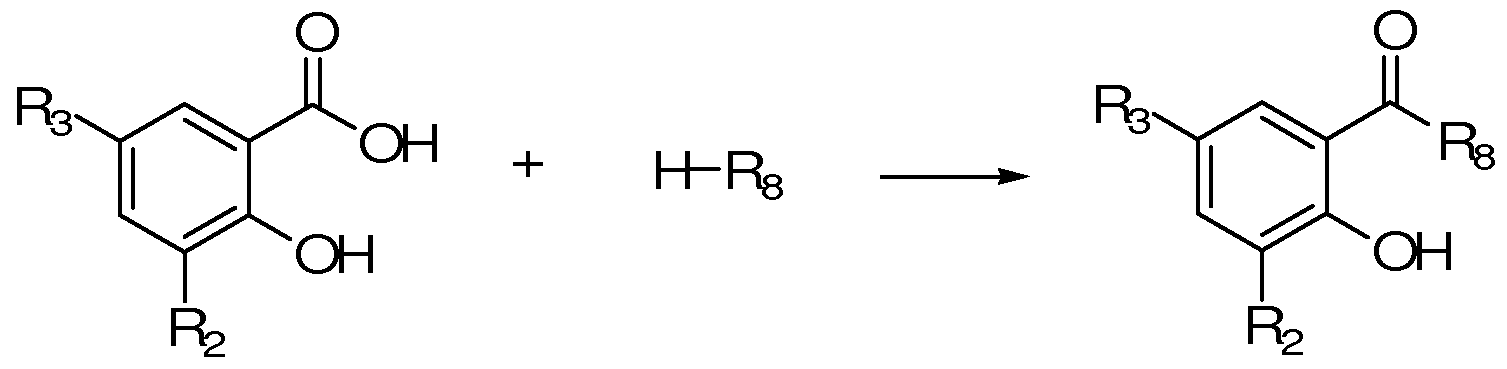
(XXXI-A) (XII) (XXX-A)
74. The method according to claim 72 or claim 73, wherein the amide bond formation is performed via an activated carboxylic acid.
75. The method according to claim 74, wherein the amide bond formation is performed as a Schotten-Baumann reaction.
A method of preparing a compound of formula (XL)

wherein the compound of formula (XL) is obtained by coupling a compound of formula (XLI) with a compound of formula (XLII):

(XLI I) (XLI) (XL)
where -RXL is -H or -R6, and A, -Ri , -R2, -R4, - R5 and -R6 are as defined in any one of claim 1 to 58, if present.
77. A method according to claim 76, wherein the compound of formula (XL) is (XL-A) and the compound of formula (XLI) is (XLI-A):

(XLI I) (XLI-A) (XL-A)
Applications Claiming Priority (2)
| Application Number | Priority Date | Filing Date | Title |
|---|---|---|---|
| GB201110390A GB201110390D0 (en) | 2011-06-20 | 2011-06-20 | Compounds for use in stabilising p53 mutants |
| GB1110390.0 | 2011-06-20 |
Publications (1)
| Publication Number | Publication Date |
|---|---|
| WO2012175962A1 true WO2012175962A1 (en) | 2012-12-27 |
Family
ID=44454323
Family Applications (1)
| Application Number | Title | Priority Date | Filing Date |
|---|---|---|---|
| PCT/GB2012/051428 Ceased WO2012175962A1 (en) | 2011-06-20 | 2012-06-20 | COMPOUNDS FOR USE IN STABILISING p53 MUTANTS |
Country Status (2)
| Country | Link |
|---|---|
| GB (1) | GB201110390D0 (en) |
| WO (1) | WO2012175962A1 (en) |
Cited By (26)
| Publication number | Priority date | Publication date | Assignee | Title |
|---|---|---|---|---|
| US8859723B2 (en) | 2010-08-13 | 2014-10-14 | Aileron Therapeutics, Inc. | Peptidomimetic macrocycles |
| US8889632B2 (en) | 2007-01-31 | 2014-11-18 | Dana-Farber Cancer Institute, Inc. | Stabilized p53 peptides and uses thereof |
| US8927500B2 (en) | 2012-02-15 | 2015-01-06 | Aileron Therapeutics, Inc. | Peptidomimetic macrocycles |
| US8987414B2 (en) | 2012-02-15 | 2015-03-24 | Aileron Therapeutics, Inc. | Triazole-crosslinked and thioether-crosslinked peptidomimetic macrocycles |
| US9096684B2 (en) | 2011-10-18 | 2015-08-04 | Aileron Therapeutics, Inc. | Peptidomimetic macrocycles |
| WO2016123246A1 (en) * | 2015-01-27 | 2016-08-04 | Rutgers, The State University Of New Jersey | (thio, oxo and seleno) semicarbazone complexes with zinc and their use for treating cancer |
| WO2016123242A1 (en) * | 2015-01-27 | 2016-08-04 | Rutgers, The State University Of New Jersey | (thio)semicarbazone derivatives and their use for treating cancer |
| WO2016123250A1 (en) * | 2015-01-27 | 2016-08-04 | Rutgers, The State University Of New Jersey | Zinc complexes of hydrazones and (thio)semicarbazones and their use for the treatment of cancer |
| US9604919B2 (en) | 2012-11-01 | 2017-03-28 | Aileron Therapeutics, Inc. | Disubstituted amino acids and methods of preparation and use thereof |
| WO2017143291A1 (en) * | 2016-02-19 | 2017-08-24 | Pmv Pharmaceuticals, Inc. | METHODS AND COMPOUNDS FOR RESTORING MUTANT p53 FUNCTION |
| US10023613B2 (en) | 2015-09-10 | 2018-07-17 | Aileron Therapeutics, Inc. | Peptidomimetic macrocycles as modulators of MCL-1 |
| US10253067B2 (en) | 2015-03-20 | 2019-04-09 | Aileron Therapeutics, Inc. | Peptidomimetic macrocycles and uses thereof |
| US10301351B2 (en) | 2007-03-28 | 2019-05-28 | President And Fellows Of Harvard College | Stitched polypeptides |
| US10471120B2 (en) | 2014-09-24 | 2019-11-12 | Aileron Therapeutics, Inc. | Peptidomimetic macrocycles and uses thereof |
| US10828288B2 (en) | 2015-01-27 | 2020-11-10 | Rutgers, The State University Of New Jersey | Hydrazone derivatives for the treatment of cancer |
| US10905739B2 (en) | 2014-09-24 | 2021-02-02 | Aileron Therapeutics, Inc. | Peptidomimetic macrocycles and formulations thereof |
| WO2021262483A1 (en) * | 2020-06-24 | 2021-12-30 | Pmv Pharmaceuticals, Inc. | METHODS AND COMPOUNDS FOR RESTORING MUTANT p53 FUNCTION |
| WO2021262541A1 (en) * | 2020-06-24 | 2021-12-30 | Pmv Pharmaceuticals, Inc. | Companion diagnostic tool for mutant p53 reactivating compounds |
| US20210405056A1 (en) * | 2020-06-24 | 2021-12-30 | Pmv Pharmaceuticals, Inc. | Methods for detecting mutant p53 function |
| KR20230091051A (en) * | 2021-12-14 | 2023-06-22 | (주)프레이저테라퓨틱스 | Novel compounds for the degradaton of targeted proteins or polypeptides by polyubiquitination |
| US11814373B2 (en) | 2019-09-23 | 2023-11-14 | Pmv Pharmaceuticals, Inc. | Methods and compounds for restoring mutant p53 function |
| US11938124B2 (en) | 2020-06-24 | 2024-03-26 | Pmv Pharmaceuticals, Inc. | Combination therapy for treatment of cancer |
| US11963953B2 (en) | 2022-01-27 | 2024-04-23 | Pmv Pharmaceuticals, Inc. | Deuterated compounds for restoring mutant p53 function |
| US12280065B2 (en) | 2019-04-23 | 2025-04-22 | Rutgers, The State University Of New Jersey | Pharmaceutical compounds and therapeutic methods |
| US12344626B2 (en) | 2019-04-23 | 2025-07-01 | Rutgers, The State University Of New Jersey | Pharmaceutical compounds and therapeutic methods |
| US12570645B2 (en) | 2020-06-22 | 2026-03-10 | Pmv Pharmaceuticals, Inc. | Uses of p53 x-ray co-crystal structures |
Citations (4)
| Publication number | Priority date | Publication date | Assignee | Title |
|---|---|---|---|---|
| GB1110390A (en) | 1965-08-21 | 1968-04-18 | Dynamit Nobel Ag | Permitted explosives |
| ES2002438A6 (en) * | 1986-12-01 | 1988-08-01 | Servicios Y Suministros Farmac | Cyclohexyl-benzylamine deriv. prepn. |
| WO2009136175A1 (en) * | 2008-05-07 | 2009-11-12 | Medical Research Council | Compounds for use in stabilizing p53 mutants |
| WO2010139289A1 (en) * | 2009-06-03 | 2010-12-09 | Univerzita Palackeho V Olomouci | Substituted 6-(2-hydroxybenzylamino)purine derivatives, their use as medicaments and compositions containing these derivatives |
-
2011
- 2011-06-20 GB GB201110390A patent/GB201110390D0/en not_active Ceased
-
2012
- 2012-06-20 WO PCT/GB2012/051428 patent/WO2012175962A1/en not_active Ceased
Patent Citations (4)
| Publication number | Priority date | Publication date | Assignee | Title |
|---|---|---|---|---|
| GB1110390A (en) | 1965-08-21 | 1968-04-18 | Dynamit Nobel Ag | Permitted explosives |
| ES2002438A6 (en) * | 1986-12-01 | 1988-08-01 | Servicios Y Suministros Farmac | Cyclohexyl-benzylamine deriv. prepn. |
| WO2009136175A1 (en) * | 2008-05-07 | 2009-11-12 | Medical Research Council | Compounds for use in stabilizing p53 mutants |
| WO2010139289A1 (en) * | 2009-06-03 | 2010-12-09 | Univerzita Palackeho V Olomouci | Substituted 6-(2-hydroxybenzylamino)purine derivatives, their use as medicaments and compositions containing these derivatives |
Non-Patent Citations (42)
| Title |
|---|
| "Handbook of Pharmaceutical Excipients", 2005 |
| "Remington's Pharmaceutical Sciences", 1990, MACK PUBLISHING COMPANY |
| ADAMS, P.D. ET AL.: "PHENIX: building new software for automated crystallographic structure determination", ACTA CRYSTALLOGR D BIOL CRYSTALLOGR, vol. 58, 2002, pages 1948 - 54 |
| BASSE, NICOLAS ET AL: "Toward the Rational Design of p53 -Stabilizing Drugs: Probing the Surface of the Oncogenic Y220C Mutant", CHEMISTRY & BIOLOGY (CAMBRIDGE, MA, UNITED STATES) , 17(1), 46-56 CODEN: CBOLE2; ISSN: 1074-5521, 2010, XP002684225 * |
| BELL, S. ET AL.: "p53 Contains Large Unstructured Regions in its Native State", JOURNAL OF MOLECULAR BIOLOGY, vol. 322, no. 5, 2002, pages 917 - 927, XP004449784, DOI: doi:10.1016/S0022-2836(02)00848-3 |
| BERGE ET AL.: "Pharmaceutically Acceptable Salts", J. PHARM. SCI., vol. 66, 1977, pages 1 - 19 |
| BHATTACHARYYA, A.M.; A.K. THAKUR; R. WETZEL: "Polyglutamine aggregation nucleation: Thermodynamics of a highly unfavorable protein folding reaction", PROCEEDINGS OF THE NATIONAL ACADEMY OF SCIENCES OF THE UNITED STATES OF AMERICA, vol. 102, no. 43, 2005, pages 15400 - 15405 |
| BOECKLER, F.M. ET AL.: "Targeted rescue of a destabilized mutant of p53 by an in silico screened drug", PROCEEDINGS OF THE NATIONAL ACADEMY OF SCIENCES, vol. 105, no. 30, 2008, pages 10360 - 10365, XP002684226, DOI: doi:10.1073/pnas.0805326105 |
| BOECKLER, FRANK M. ET AL: "Targeted rescue of a destabilized mutant of p53 by an in silico screened drug", PROCEEDINGS OF THE NATIONAL ACADEMY OF SCIENCES OF THE UNITED STATES OF AMERICA, EARLY EDITION (JULY 23. 2008), vol. 105, no. 30, July 2008 (2008-07-01), pages 10360 - 10365, XP002684226, DOI: 10.1073/pnas.0805326105 * |
| BROWN ET AL., NAT REV CANCER, 2009 |
| BROWN, C.J. ET AL.: "Awakening guardian angels: drugging the p53 pathway", NAT REV CANCER, vol. 9, no. 12, 2009, pages 862 - 873 |
| BULLOCK, A.N. ET AL.: "Thermodynamic stability of wild-type and mutant p53 core domain", PROCEEDINGS OF THE NATIONAL ACADEMY OF SCIENCES, vol. 94, no. 26, 1997, pages 14338 - 14342 |
| BULLOCK, A.N.; A.R. FERSHT: "Rescuing the function of mutant p53", NAT REV CANCER, vol. 1, no. 1, 2001, pages 68 - 76, XP007903088, DOI: doi:10.1038/35094077 |
| BULLOCK, A.N.; J. HENCKEL; A.R. FERSHT: "Quantitative analysis of residual folding and DNA binding in mutant p53 core domain: definition of mutant states for rescue in cancer therapy", ONCOGENE, vol. 19, no. 10, 2000, pages 1245 - 1256 |
| CANADINAS, J.M.P. ET AL.: "Solution structure of p53 core domain: Structural basis for its instability", PROCEEDINGS OF THE NATIONAL ACADEMY OF SCIENCES OF THE UNITED STATES OF AMERICA, vol. 103, no. 7, 2006, pages 2109 - 2114 |
| CHEN, S.; F.A. FERRONE; R. WETZEL: "Huntington's disease age-of-onset linked to polyglutamine aggregation nucleation", PROCEEDINGS OF THE NATIONAL ACADEMY OF SCIENCES, vol. 99, no. 18, 2002, pages 11884 - 11889 |
| CHO, Y. ET AL.: "Crystal structure of a p53 tumor suppressor-DNA complex: understanding tumorigenic mutations", SCIENCE, vol. 265, no. 5170, 1994, pages 346 - 355 |
| CLORE, G.M. ET AL.: "Refined solution structure of the oligomerization domain of the tumour suppressor p53", NAT STRUCT MOL BIOL, vol. 2, no. 4, 1995, pages 321 - 333, XP000607122, DOI: doi:10.1038/nsb0495-321 |
| DAWSON, R. ET AL.: "The N-terminal Domain of p53 is Natively Unfolded", JOURNAL OF MOLECULAR BIOLOGY, vol. 332, no. 5, 2003, pages 1131 - 1141, XP004456078, DOI: doi:10.1016/j.jmb.2003.08.008 |
| DUPLAIS, CHRISTOPHE ET AL: "UC Pd: A New Form of Pd/C for Sonogashira Couplings", CHEMISTRY--A EUROPEAN JOURNAL, vol. 16, no. 11, 2010, pages 3366 - 3371, XP002684224, ISSN: 0947-6539 * |
| EMSLEY, P. ET AL.: "Features and development of Coot", ACTA CRYSTALLOGR D BIOL CRYSTALLOGR, vol. 66, 2010, pages 486 - 501 |
| EVANS, P.: "Scaling and assessment of data quality", ACTA CRYSTALLOGR D BIOL CRYSTALLOGR, vol. 62, 2006, pages 72 - 82 |
| JEFFREY, P.; S. GORINA; N. PAVLETICH: "Crystal structure of the tetramerization domain of the p53 tumor suppressor at 1.7 angstroms", SCIENCE, vol. 267, no. 5203, 1995, pages 1498 - 1502, XP000608194, DOI: doi:10.1126/science.7878469 |
| JOERGER, A.C.; A.R. FERSHT: "Structure-function-rescue: the diverse nature of common p53 cancer mutants", ONCOGENE, vol. 26, no. 15, 2007, pages 2226 - 2242, XP055181289, DOI: doi:10.1038/sj.onc.1210291 |
| JOERGER, A.C.; H.C. ANG; A.R. FERSHT: "Structural basis for understanding oncogenic p53 mutations and designing rescue drugs", PROC NATL ACAD SCI USA, vol. 103, no. 41, 2006, pages 15056 - 61 |
| JOERGER, A.C.; M.D. ALLEN; A.R. FERSHT: "Crystal Structure of a Superstable Mutant of Human p53 Core Domain", JOURNAL OF BIOLOGICAL CHEMISTRY, vol. 279, no. 2, 2004, pages 1291 - 1296, XP002461472, DOI: doi:10.1074/jbc.M309732200 |
| JUNTTILA, M.R.; G.I. EVAN: "p53 - a Jack of all trades but master of none", NAT REV CANCER, vol. 9, no. 11, 2009, pages 821 - 829 |
| LANE, D.P.: "p53, guardian of the genome", NATURE, vol. 358, no. 6381, 1992, pages 15 - 16, XP002045254, DOI: doi:10.1038/358015a0 |
| LESLIE, A.G.W.: "Joint CCP4 and ESF-EACMB Newsletter on Protein Crystallography", vol. 26, 1992, DARESBURY LABORATORY, article "Recent Changes to the MOSFLM Package for Processing Film and Image Plate Data" |
| MORRIS, A.M. ET AL.: "Fitting Neurological Protein Aggregation Kinetic Data via a 2-Step, Minimal/''Ockham's Razor'' Model: The Finke-Watzky Mechanism of Nucleation Followed by Autocatalytic Surface Growtht", BIOCHEMISTRY, vol. 47, no. 8, 2008, pages 2413 - 2427 |
| OLIVIER, M. ET AL.: "The IARC TP53 database: New online mutation analysis and recommendations to users", HUMAN MUTATION, vol. 19, no. 6, 2002, pages 607 - 614 |
| OLIVIER, M.; M. HOLLSTEIN; P. HAINAUT: "TP53 Mutations in Human Cancers: Origins, Consequences, and Clinical Use", COLD SPRING HARBOR PERSPECTIVES IN BIOLOGY, vol. 2, no. 1, 2010, XP055079066, DOI: doi:10.1101/cshperspect.a001008 |
| SHAW, P. ET AL.: "Induction of apoptosis by wild-type p53 in a human colon tumor-derived cell line", PROCEEDINGS OF THE NATIONAL ACADEMY OF SCIENCES, vol. 89, no. 10, 1992, pages 4495 - 4499, XP000619253, DOI: doi:10.1073/pnas.89.10.4495 |
| VEPRINTSEV, D.B. ET AL.: "Core domain interactions in full-length p53 in solution", PROCEEDINGS OF THE NATIONAL ACADEMY OF SCIENCES OF THE UNITED STATES OF AMERICA, vol. 103, no. 7, 2006, pages 2115 - 2119 |
| VOGELSTEIN, B.; D. LANE; A.J. LEVINE: "Surfing the p53 network", NATURE, vol. 408, no. 6810, 2000, pages 307 - 10, XP008151714, DOI: doi:10.1038/35042675 |
| VOUSDEN, K.H.; C. PRIVES: "Blinded by the Light: The Growing Complexity of p53", CELL, vol. 137, no. 3, 2009, pages 413 - 431 |
| VOUSDEN, K.H.; X. LU: "Live or let die: the cell's response to p53", NAT REV CANCER, vol. 2, no. 8, 2002, pages 594 - 604 |
| WILCKEN ET AL.: "Halogen-enriched fragment libraries as leads for drug rescue of mutant p53", J AM CHEM SOC., 2012 |
| XIRODIMAS ET AL.: "Molecular Evolution of the Thermosensitive PAb 1620 Epitope of Human p53 by DNA Shuffling", JOURNAL OF BIOLOGICAL CHEMISTRY |
| XIRODIMAS ET AL.: "Molecular Evolution of the Thermosensitive PAb 1620 Epitope of Human p53 by DNA Shuffling", JOURNAL OF BIOLOGICAL CHEMISTRY, vol. 274, no. 39, 1999, pages 28042 - 28049, XP002133469, DOI: doi:10.1074/jbc.274.39.28042 |
| XU, J. ET AL.: "Gain of function of mutant p53 by coaggregation with multiple tumor suppressors", NAT CHEM BIOL, 2011 |
| YU, J.; L. ZHANG: "No PUMA, no death: Implications for p53-dependent apoptosis", CANCER CELL, vol. 4, no. 4, 2003, pages 248 - 249, XP002995503, DOI: doi:10.1016/S1535-6108(03)00249-6 |
Cited By (47)
| Publication number | Priority date | Publication date | Assignee | Title |
|---|---|---|---|---|
| US8889632B2 (en) | 2007-01-31 | 2014-11-18 | Dana-Farber Cancer Institute, Inc. | Stabilized p53 peptides and uses thereof |
| US9527896B2 (en) | 2007-01-31 | 2016-12-27 | Dana-Farber Cancer Institute, Inc. | Stabilized p53 peptides and uses thereof |
| US10301351B2 (en) | 2007-03-28 | 2019-05-28 | President And Fellows Of Harvard College | Stitched polypeptides |
| US8859723B2 (en) | 2010-08-13 | 2014-10-14 | Aileron Therapeutics, Inc. | Peptidomimetic macrocycles |
| US9957299B2 (en) | 2010-08-13 | 2018-05-01 | Aileron Therapeutics, Inc. | Peptidomimetic macrocycles |
| US9522947B2 (en) | 2011-10-18 | 2016-12-20 | Aileron Therapeutics, Inc. | Peptidomimetic macrocycles |
| US10308699B2 (en) | 2011-10-18 | 2019-06-04 | Aileron Therapeutics, Inc. | Peptidomimetic macrocycles |
| US9096684B2 (en) | 2011-10-18 | 2015-08-04 | Aileron Therapeutics, Inc. | Peptidomimetic macrocycles |
| US10227380B2 (en) | 2012-02-15 | 2019-03-12 | Aileron Therapeutics, Inc. | Triazole-crosslinked and thioether-crosslinked peptidomimetic macrocycles |
| US9505804B2 (en) | 2012-02-15 | 2016-11-29 | Aileron Therapeutics, Inc. | Peptidomimetic macrocycles |
| US8987414B2 (en) | 2012-02-15 | 2015-03-24 | Aileron Therapeutics, Inc. | Triazole-crosslinked and thioether-crosslinked peptidomimetic macrocycles |
| US8927500B2 (en) | 2012-02-15 | 2015-01-06 | Aileron Therapeutics, Inc. | Peptidomimetic macrocycles |
| US10213477B2 (en) | 2012-02-15 | 2019-02-26 | Aileron Therapeutics, Inc. | Peptidomimetic macrocycles |
| US9604919B2 (en) | 2012-11-01 | 2017-03-28 | Aileron Therapeutics, Inc. | Disubstituted amino acids and methods of preparation and use thereof |
| US9845287B2 (en) | 2012-11-01 | 2017-12-19 | Aileron Therapeutics, Inc. | Disubstituted amino acids and methods of preparation and use thereof |
| US10669230B2 (en) | 2012-11-01 | 2020-06-02 | Aileron Therapeutics, Inc. | Disubstituted amino acids and methods of preparation and use thereof |
| US10471120B2 (en) | 2014-09-24 | 2019-11-12 | Aileron Therapeutics, Inc. | Peptidomimetic macrocycles and uses thereof |
| US10905739B2 (en) | 2014-09-24 | 2021-02-02 | Aileron Therapeutics, Inc. | Peptidomimetic macrocycles and formulations thereof |
| US10828288B2 (en) | 2015-01-27 | 2020-11-10 | Rutgers, The State University Of New Jersey | Hydrazone derivatives for the treatment of cancer |
| US10729671B2 (en) | 2015-01-27 | 2020-08-04 | Rutgers, The State University Of New Jersey | Zinc complexes of hydrazones and (thio)semicarbazones and their use for the treatment of cancer |
| WO2016123250A1 (en) * | 2015-01-27 | 2016-08-04 | Rutgers, The State University Of New Jersey | Zinc complexes of hydrazones and (thio)semicarbazones and their use for the treatment of cancer |
| WO2016123242A1 (en) * | 2015-01-27 | 2016-08-04 | Rutgers, The State University Of New Jersey | (thio)semicarbazone derivatives and their use for treating cancer |
| WO2016123246A1 (en) * | 2015-01-27 | 2016-08-04 | Rutgers, The State University Of New Jersey | (thio, oxo and seleno) semicarbazone complexes with zinc and their use for treating cancer |
| US10221133B2 (en) | 2015-01-27 | 2019-03-05 | Rutgers, The State University Of New Jersey | (Thio, oxo, and seleno) semicarbazone complexes with zinc and their use for treating cancer |
| US10604481B2 (en) | 2015-01-27 | 2020-03-31 | Rutgers, The State University Of New Jersey | (Thio, oxo and seleno) semicarbazone complexes with zinc and their use for treating cancer |
| US10604480B2 (en) * | 2015-01-27 | 2020-03-31 | Rutgers, The State University Of New Jersey | (Thio, oxo, and seleno) semicarbazone derivatives and their use for treating cancer |
| US10253067B2 (en) | 2015-03-20 | 2019-04-09 | Aileron Therapeutics, Inc. | Peptidomimetic macrocycles and uses thereof |
| US10023613B2 (en) | 2015-09-10 | 2018-07-17 | Aileron Therapeutics, Inc. | Peptidomimetic macrocycles as modulators of MCL-1 |
| WO2017143291A1 (en) * | 2016-02-19 | 2017-08-24 | Pmv Pharmaceuticals, Inc. | METHODS AND COMPOUNDS FOR RESTORING MUTANT p53 FUNCTION |
| CN109069481A (en) * | 2016-02-19 | 2018-12-21 | 皮姆维制药公司 | Methods and compounds for restoring function of mutant p53 |
| US10138219B2 (en) | 2016-02-19 | 2018-11-27 | Pmv Pharmaceuticals | Methods and compounds for restoring mutant p53 function |
| US10640485B2 (en) | 2016-02-19 | 2020-05-05 | Pmv Pharmaceuticals, Inc. | Methods and compounds for restoring mutant p53 function |
| CN119161324A (en) * | 2016-02-19 | 2024-12-20 | 皮姆维制药公司 | Methods and compounds for restoring mutant p53 function |
| US11339141B2 (en) | 2016-02-19 | 2022-05-24 | Pmv Pharmaceuticals, Inc. | Methods and compounds for restoring mutant p53 function |
| AU2017221472B2 (en) * | 2016-02-19 | 2023-01-05 | Pmv Pharmaceuticals, Inc. | Methods and compounds for restoring mutant p53 function |
| US12344626B2 (en) | 2019-04-23 | 2025-07-01 | Rutgers, The State University Of New Jersey | Pharmaceutical compounds and therapeutic methods |
| US12280065B2 (en) | 2019-04-23 | 2025-04-22 | Rutgers, The State University Of New Jersey | Pharmaceutical compounds and therapeutic methods |
| US12428406B2 (en) | 2019-09-23 | 2025-09-30 | Pmv Pharmaceuticals, Inc. | Methods and compounds for restoring mutant p53 function |
| US11814373B2 (en) | 2019-09-23 | 2023-11-14 | Pmv Pharmaceuticals, Inc. | Methods and compounds for restoring mutant p53 function |
| US12570645B2 (en) | 2020-06-22 | 2026-03-10 | Pmv Pharmaceuticals, Inc. | Uses of p53 x-ray co-crystal structures |
| WO2021262541A1 (en) * | 2020-06-24 | 2021-12-30 | Pmv Pharmaceuticals, Inc. | Companion diagnostic tool for mutant p53 reactivating compounds |
| US11938124B2 (en) | 2020-06-24 | 2024-03-26 | Pmv Pharmaceuticals, Inc. | Combination therapy for treatment of cancer |
| US20210405056A1 (en) * | 2020-06-24 | 2021-12-30 | Pmv Pharmaceuticals, Inc. | Methods for detecting mutant p53 function |
| WO2021262483A1 (en) * | 2020-06-24 | 2021-12-30 | Pmv Pharmaceuticals, Inc. | METHODS AND COMPOUNDS FOR RESTORING MUTANT p53 FUNCTION |
| KR102676912B1 (en) | 2021-12-14 | 2024-06-24 | (주)프레이저테라퓨틱스 | Novel compounds for the degradaton of targeted proteins or polypeptides by polyubiquitination |
| KR20230091051A (en) * | 2021-12-14 | 2023-06-22 | (주)프레이저테라퓨틱스 | Novel compounds for the degradaton of targeted proteins or polypeptides by polyubiquitination |
| US11963953B2 (en) | 2022-01-27 | 2024-04-23 | Pmv Pharmaceuticals, Inc. | Deuterated compounds for restoring mutant p53 function |
Also Published As
| Publication number | Publication date |
|---|---|
| GB201110390D0 (en) | 2011-08-03 |
Similar Documents
| Publication | Publication Date | Title |
|---|---|---|
| WO2012175962A1 (en) | COMPOUNDS FOR USE IN STABILISING p53 MUTANTS | |
| ES3040401T3 (en) | Methods and compounds for restoring mutant p53 function | |
| JP7168773B2 (en) | Isoindoline compounds, methods of preparation, pharmaceutical compositions and uses thereof | |
| US9567324B2 (en) | Substituted nicotinamide derivatives as kinase inhibitors | |
| CN109153636B (en) | Cyclopropyl-amide compounds as dual LSD1/HDAC inhibitors | |
| KR102104144B1 (en) | 3-aryl-5-substituted-isoquinolin-1-one compounds and their therapeutic use | |
| KR101866858B1 (en) | Arylcyclopropylamine based demethylase inhibitors of lsd1 and their medical use | |
| TW202115065A (en) | Kras mutant protein inhibitor | |
| US8324226B2 (en) | Therapeutic oxy-phenyl-aryl compounds and their use | |
| CA3133753A1 (en) | Novel small molecule inhibitors of tead transcription factors | |
| KR20240062147A (en) | Compounds targeting mutants of P53 | |
| US9765056B2 (en) | Indole and pyrrole compounds, a process for their preparation and pharmaceutical compositions containing them | |
| CA2395564A1 (en) | Novel compounds | |
| US20230322723A1 (en) | Compounds for suppressing egfr mutant cancer and pharmaceutical use thereof | |
| US20210269440A1 (en) | Immunomodulators, compositions and methods thereof | |
| AU2022235533B2 (en) | Compounds useful as inhibitors of alcat 1 | |
| JP2023524439A (en) | BCL-2 protein inhibitor | |
| CA3018014A1 (en) | Naphthyridines as integrin antagonists | |
| CA2871453A1 (en) | Quinazolinedione derivative | |
| EP3212652A1 (en) | Ripk2 inhibitors and method of treating cancer with same | |
| US9266869B2 (en) | Substituted dialkyl(oxido)-lambda4-sulfanylidene nicotinamide derivatives as kinase inhibitors | |
| AU2021410119A1 (en) | Tetrahydroquinoline derivative and medicinal use thereof | |
| TW202134213A (en) | Compound having lysophosphatidic acid receptor agonistic activity and pharmaceutical use of said compound | |
| US11926632B2 (en) | Methods and compounds for restoring mutant p53 function | |
| WO2019149205A1 (en) | Benzoheteroaryl derivative and preparation method and medical application thereof |
Legal Events
| Date | Code | Title | Description |
|---|---|---|---|
| 121 | Ep: the epo has been informed by wipo that ep was designated in this application |
Ref document number: 12731144 Country of ref document: EP Kind code of ref document: A1 |
|
| NENP | Non-entry into the national phase |
Ref country code: DE |
|
| 32PN | Ep: public notification in the ep bulletin as address of the adressee cannot be established |
Free format text: NOTING OF LOSS OF RIGHTS PURSUANT TO RULE 112(1) EPC (EPO FORM 1205A DATED 02/04/2014) |
|
| 122 | Ep: pct application non-entry in european phase |
Ref document number: 12731144 Country of ref document: EP Kind code of ref document: A1 |