WO2012161360A1 - 신규한 다당류 분해활성을 갖는 셀룰로파가 속 균주 및 이의 용도 - Google Patents
신규한 다당류 분해활성을 갖는 셀룰로파가 속 균주 및 이의 용도 Download PDFInfo
- Publication number
- WO2012161360A1 WO2012161360A1 PCT/KR2011/003810 KR2011003810W WO2012161360A1 WO 2012161360 A1 WO2012161360 A1 WO 2012161360A1 KR 2011003810 W KR2011003810 W KR 2011003810W WO 2012161360 A1 WO2012161360 A1 WO 2012161360A1
- Authority
- WO
- WIPO (PCT)
- Prior art keywords
- polysaccharide
- strain
- pdb
- polysaccharides
- cellulophaga
- Prior art date
- Legal status (The legal status is an assumption and is not a legal conclusion. Google has not performed a legal analysis and makes no representation as to the accuracy of the status listed.)
- Ceased
Links
Images

Classifications
-
- C—CHEMISTRY; METALLURGY
- C12—BIOCHEMISTRY; BEER; SPIRITS; WINE; VINEGAR; MICROBIOLOGY; ENZYMOLOGY; MUTATION OR GENETIC ENGINEERING
- C12P—FERMENTATION OR ENZYME-USING PROCESSES TO SYNTHESISE A DESIRED CHEMICAL COMPOUND OR COMPOSITION OR TO SEPARATE OPTICAL ISOMERS FROM A RACEMIC MIXTURE
- C12P19/00—Preparation of compounds containing saccharide radicals
- C12P19/14—Preparation of compounds containing saccharide radicals produced by the action of a carbohydrase (EC 3.2.x), e.g. by alpha-amylase, e.g. by cellulase, hemicellulase
-
- C—CHEMISTRY; METALLURGY
- C12—BIOCHEMISTRY; BEER; SPIRITS; WINE; VINEGAR; MICROBIOLOGY; ENZYMOLOGY; MUTATION OR GENETIC ENGINEERING
- C12P—FERMENTATION OR ENZYME-USING PROCESSES TO SYNTHESISE A DESIRED CHEMICAL COMPOUND OR COMPOSITION OR TO SEPARATE OPTICAL ISOMERS FROM A RACEMIC MIXTURE
- C12P7/00—Preparation of oxygen-containing organic compounds
- C12P7/02—Preparation of oxygen-containing organic compounds containing a hydroxy group
- C12P7/04—Preparation of oxygen-containing organic compounds containing a hydroxy group acyclic
- C12P7/06—Ethanol, i.e. non-beverage
-
- C—CHEMISTRY; METALLURGY
- C12—BIOCHEMISTRY; BEER; SPIRITS; WINE; VINEGAR; MICROBIOLOGY; ENZYMOLOGY; MUTATION OR GENETIC ENGINEERING
- C12N—MICROORGANISMS OR ENZYMES; COMPOSITIONS THEREOF; PROPAGATING, PRESERVING, OR MAINTAINING MICROORGANISMS; MUTATION OR GENETIC ENGINEERING; CULTURE MEDIA
- C12N1/00—Microorganisms; Compositions thereof; Processes of propagating, maintaining or preserving microorganisms or compositions thereof; Processes of preparing or isolating a composition containing a microorganism; Culture media therefor
- C12N1/20—Bacteria; Culture media therefor
-
- C—CHEMISTRY; METALLURGY
- C12—BIOCHEMISTRY; BEER; SPIRITS; WINE; VINEGAR; MICROBIOLOGY; ENZYMOLOGY; MUTATION OR GENETIC ENGINEERING
- C12N—MICROORGANISMS OR ENZYMES; COMPOSITIONS THEREOF; PROPAGATING, PRESERVING, OR MAINTAINING MICROORGANISMS; MUTATION OR GENETIC ENGINEERING; CULTURE MEDIA
- C12N1/00—Microorganisms; Compositions thereof; Processes of propagating, maintaining or preserving microorganisms or compositions thereof; Processes of preparing or isolating a composition containing a microorganism; Culture media therefor
- C12N1/20—Bacteria; Culture media therefor
- C12N1/205—Bacterial isolates
-
- C—CHEMISTRY; METALLURGY
- C12—BIOCHEMISTRY; BEER; SPIRITS; WINE; VINEGAR; MICROBIOLOGY; ENZYMOLOGY; MUTATION OR GENETIC ENGINEERING
- C12N—MICROORGANISMS OR ENZYMES; COMPOSITIONS THEREOF; PROPAGATING, PRESERVING, OR MAINTAINING MICROORGANISMS; MUTATION OR GENETIC ENGINEERING; CULTURE MEDIA
- C12N9/00—Enzymes; Proenzymes; Compositions thereof; Processes for preparing, activating, inhibiting, separating or purifying enzymes
- C12N9/14—Hydrolases (3)
- C12N9/24—Hydrolases (3) acting on glycosyl compounds (3.2)
- C12N9/2402—Hydrolases (3) acting on glycosyl compounds (3.2) hydrolysing O- and S- glycosyl compounds (3.2.1)
- C12N9/2405—Glucanases
- C12N9/2434—Glucanases acting on beta-1,4-glucosidic bonds
- C12N9/2437—Cellulases (3.2.1.4; 3.2.1.74; 3.2.1.91; 3.2.1.150)
-
- C—CHEMISTRY; METALLURGY
- C12—BIOCHEMISTRY; BEER; SPIRITS; WINE; VINEGAR; MICROBIOLOGY; ENZYMOLOGY; MUTATION OR GENETIC ENGINEERING
- C12R—INDEXING SCHEME ASSOCIATED WITH SUBCLASSES C12C - C12Q, RELATING TO MICROORGANISMS
- C12R2001/00—Microorganisms ; Processes using microorganisms
- C12R2001/01—Bacteria or Actinomycetales ; using bacteria or Actinomycetales
-
- Y—GENERAL TAGGING OF NEW TECHNOLOGICAL DEVELOPMENTS; GENERAL TAGGING OF CROSS-SECTIONAL TECHNOLOGIES SPANNING OVER SEVERAL SECTIONS OF THE IPC; TECHNICAL SUBJECTS COVERED BY FORMER USPC CROSS-REFERENCE ART COLLECTIONS [XRACs] AND DIGESTS
- Y02—TECHNOLOGIES OR APPLICATIONS FOR MITIGATION OR ADAPTATION AGAINST CLIMATE CHANGE
- Y02E—REDUCTION OF GREENHOUSE GAS [GHG] EMISSIONS, RELATED TO ENERGY GENERATION, TRANSMISSION OR DISTRIBUTION
- Y02E50/00—Technologies for the production of fuel of non-fossil origin
- Y02E50/10—Biofuels, e.g. bio-diesel
Definitions
- the present invention relates to a novel Cellulophaga sp. Strain having a polysaccharide degradation activity, and more particularly, a novel cellulopaga genus having various polysaccharide degradation activities isolated from seawater, tidal flats and shores. It is about a strain.
- Biofuels are renewable and environmentally friendly. This is because biofuel is produced from biomass produced by photosynthesis by carbon dioxide fixation. In particular, with the ever-increasing concern for the supply of chemical fuels and the need for clean renewable energy, the need for biofuels is on the rise.
- biofuels are proposed and used as alternative fuels for gasoline and diesel, respectively. Not only do they have a positive effect on reducing atmospheric carbon dioxide emissions and global warming, they can also be used without altering existing vehicle systems.
- biofuels is the production of bioethanol using cellulose resources such as grasses, hay and switchgrss. Recently, the annual worldwide production of bioethanol is estimated at approximately one billion gallons. Most of these are produced from starches and sugars in existing established systems.
- Current technology is limited to producing biofuels using polysaccharides derived from land plants, the most abundant carbon source in nature. In particular, land plants vary depending on their type but take time to grow and respond easily to changes in climatic conditions. Therefore, there is a limit to commercial use of polysaccharides derived from land plants for the production of biofuels.
- Algae in aquatic life multiply through spores 'asexual reproduction method and spouses' sexual reproduction method. They can multiply faster than on land plants if appropriate conditions are met. They also live in the oceans, which make up more than 70% of the world's supply, so they are very likely to be supplied.
- extracellular polysaccharides derived from algae that can grow rapidly and have a larger cultivation area than land plants may provide higher efficiency in producing biofuels than polysaccharides derived from land plants.
- Cellulose refers to a polysaccharide composed of D-glucose units of ⁇ - (1, 4) -bonds. It is a major component of plant cell walls and the most abundant source of carbon on earth. Degrading cellulose by microorganisms is an important issue for global carbon recycling. Cellulose Degrading Microorganisms produce endoglucanase, exoglucanase, beta-glucosidase, and coenzyme to synergistically degrade ⁇ -1,4-glucosidic bonds of cellulose and effectively break down glucose into glucose. These enzymes often include an accessory module called the carborhydrate binding domain (CBD). The main role of CBD is to bring about effective hydrolysis by transferring the catalytic domain of cellulase closer to the cellulose surface.
- CBD carborhydrate binding domain
- the inventors of the present invention in order to screen new microorganisms capable of degrading algae and plant-derived polysaccharides, isolate various microorganisms by collecting various samples, and then isolate microorganisms capable of degrading carboxymethyl cellulose (CMC).
- CMC carboxymethyl cellulose
- the present invention provides a strain of Cellulophaga genus having a polysaccharide decomposition activity.
- the present invention also provides a composition for degrading polysaccharide comprising a cellulose genus strain having a polysaccharide degrading activity and a culture supernatant thereof.
- the present invention provides a composition for producing bioethanol comprising a cellulose genus strain having a polysaccharide degradation activity and a culture supernatant thereof.
- the present invention also provides a polysaccharide decomposition method comprising the step of contacting the cellulose genus strain having a polysaccharide degradation activity and its culture supernatant with the polysaccharide.
- step 2) contacting the polysaccharide of step 1) with the strain of claim 1 or 2, or a culture supernatant thereof to produce monosaccharides;
- the present invention provides a cellulose genus strain and its culture supernatant for use as a composition for degradation of polysaccharides.
- the present invention provides a strain of the genus Cellulopa and its culture supernatant for use as a composition for producing bio-ethanol.
- the present invention is an accession number KCTC11940BP Cellulophaga sp.
- accession number KCTC11941BP Cellulophaga sp Provided is a Cellulophaga genus strain having polysaccharide degradation activity deposited with PDB-2.
- the polysaccharide is preferably any one selected from the group consisting of agarose, carrageenan, starch, pullulan, carboxylmethylcellulose (CMC), xylan, laminarin, chitin and pectin, but is not limited thereto.
- the inventors in order to isolate microorganisms that break down polysaccharides, the inventors take samples from seawater, tidal flats and coastal areas of the South Sea to separate microorganisms, and then decompose carboxymethyl cellulose (CMC). Possible microorganisms were selected.
- CMC carboxymethyl cellulose
- the inventors performed sequencing and phylogenetic analysis of the 16S rRNA gene to identify the selected microorganisms, and these microorganisms are represented by SEQ ID NO: 1 and SEQ ID NO: 2. Like C. It was confirmed that this corresponds to the classification of the clade containing the genus Cellulophaga ( Cellulopaga ) which forms a consistent cluster in lytica ATCC 23178 T and C. fucicola NN015860 T (see FIG. 2).
- the present inventors performed a zymogram analysis on SDS-PAGE with CMC to confirm the cellulolytic activity of the selected microorganisms. It was confirmed (see FIG. 2).
- the inventors performed N-terminal sequencing of the 35 kDa protein of PDB-1, and found that the N-terminal sequence of the 35 kDa protein did not match other known cellulose degrading enzymes. It was.
- the inventors of the present invention provide for analyzing the degradation activity of the secreted protein of PDB-1.
- the secreted protein of PDB-1 hydrolyzed the CMC well, while the crystal substrate could not be effectively hydrolyzed. This confirmed that these enzymes are more active in ⁇ -1,4 binding of the amorphous region of cellulose (see Table 1).
- the present inventors in order to confirm the polysaccharide degradation activity of cellulose is PDB-1 and PDB-2, after culturing in a minimal medium culture containing polysaccharides, polysaccharide degradation of the secreted protein extracellularly As a result of confirming the ability, it was confirmed that PDB-1 and PDB-2 have a decomposition system of various polysaccharides such as agarose, carrageenan, starch, pullulan, CMC, xylan, laminarin, chitin, pectin (FIGS. 8).
- the present invention provides a composition for degrading polysaccharide comprising PDB-1 and PDB-2, or a culture supernatant thereof.
- the present inventors are directed to analyzing the degradation activity of the secreted protein of PDB-1.
- the secreted protein of PDB-1 hydrolyzed the CMC well, while the crystal substrate could not be effectively hydrolyzed. This confirmed that these enzymes are more active in ⁇ -1,4 binding of the amorphous region of cellulose (see Table 1).
- the present inventors in order to confirm the polysaccharide degradation activity of cellulose is PDB-1 and PDB-2, after culturing in a minimal medium culture containing polysaccharides, polysaccharide degradation of the secreted protein extracellularly As a result of confirming the ability, it was confirmed that PDB-1 and PDB-2 have a decomposition system of various polysaccharides such as agarose, carrageenan, starch, pullulan, CMC, xylan, laminarin, chitin, pectin (FIGS. 8).
- PDB-1 and PDB-2, or the culture supernatant thereof of the present invention have a degradation activity for a variety of polysaccharides can be usefully used as a composition for degradation of polysaccharides.
- the present invention also provides a polysaccharide degradation method comprising the step of contacting a polysaccharide comprising PDB-1 and PDB-2, or a culture supernatant thereof.
- the step of contacting the polysaccharide is a polysaccharide and PDB-1 and PDB-2, or a culture supernatant thereof at 55 °C-85 °C, preferably 65 °C, for 10-30 minutes at pH 5.0 to 5.5 or 7.5 to 8.0 It is preferred to contact but not limited thereto.
- PDB-1 and PDB-2, or the culture supernatant thereof of the present invention can be used as a polysaccharide decomposition method comprising the step of contacting the polysaccharide because it has a degradation activity for a variety of polysaccharides.
- the present invention provides a composition for producing bio-ethanol comprising PDB-1 and PDB-2, or a culture supernatant thereof.
- the bioethanol is preferably prepared by the following method, but is not limited thereto.
- step 2) contacting the polysaccharide of step 1) with the strain of claim 1 or 2, or a culture supernatant thereof to produce monosaccharides;
- the biomass is rice straw, barley straw, sweet potato stalk, rapeseed stem, agricultural by-product of cassava stalk, waste paper, solid waste of fluff, thin lumber, waste wood, wood of processed by-products, algae, seaweed And it is preferably any one selected from the group consisting of a combination thereof, but is not limited thereto.
- the polysaccharide of step 1) is preferably one selected from the group consisting of agarose, carrageenan, starch, pullulan, carboxymethyl cellulose, xylan, laminarin, chitin and pectin, but is not limited thereto.
- the microorganism of step 3) is Saccharomyces cerevisiae, Sarcina ventriculum, Kluyveromyces pragilis, Zygomonas mobilis, Kluyveromyces maxianas IMB3, Bretanomyces custersii, Clos It is preferably, but not limited to, any one selected from the group consisting of tridium acetobutylicum, clostridium biyeringki, clostridium aurantibutylricum and clostridium tetanomorphium.
- PDB-1 and PDB-2, or the culture supernatant thereof of the present invention has degradation activity for various polysaccharides, so that the bioethanol is effectively reacted by reacting microorganisms capable of producing biofuels with the polysaccharide degradation products produced through such degradation. It can manufacture.
- the present invention also provides PDB-1 and PDB-2, or a culture supernatant thereof, for use as a composition for degrading polysaccharides.
- PDB-1 and PDB-2, or the culture supernatant thereof of the present invention has a degradation activity for a variety of polysaccharides can be usefully used as a composition for degradation of polysaccharides.
- the present invention provides PDB-1, PDB-2, or culture supernatant thereof, for use as a composition for producing bioethanol.
- bioethanol is effectively reacted by reacting microorganisms capable of producing biofuels with the polysaccharide degradation products generated through such degradation. Since it can be produced, it can be usefully used as a composition for producing bio ethanol.
- An object of the present invention relates to a novel Cellulophaga genus strain having a polysaccharide degrading activity.
- the microorganisms capable of degrading were selected, and 16S rRNA analysis confirmed that the microorganisms were novel strains of cellulose, and then the strains and their culture supernatants were confirmed to have degrading activity of various polysaccharides.
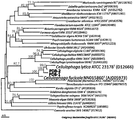
- FIG. 1 is a diagram showing a phylogenetic analysis of 16S rRNA of Cellulophaga genus PDB-1 and PDB-2. Adjacent phylogenetic tree along the 16S rRNA gene shows the location of PDB-1 and PDB-2 among other related taxa. Bootstrap values (expressed as a percentage of 1000 replicates)> 50% at the branching point. Bacteroides fragilis ATCC 25285T (GenBank accession number, X83935) was used as the outgroup. Scale bar, 0.01 substitutions per nucleotide position.
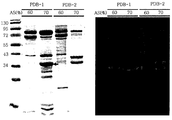
- FIG. 2 is a diagram showing CMC-SDA-PAGE analysis and gyography of extracellular cellulase of Cellulopa genus PDB-1 and PDB-2;
- FIG. 2 is a diagram showing CMC-SDA-PAGE analysis and gyography of extracellular cellulase of Cellulopa genus PDB-1 and PDB-2;
- the left panel shows SDS-PAGE analysis via Coomassie Brilliant Blue R-250 stained 0.1% CMC of proteins precipitated in 60% and 70% ammonium sulfate;
- the right panel shows zymography for cellulase activity staining of precipitated proteins.
- 60 is the precipitated extracellular protein of PDB-1 and PDB-2 in 60% ammonium sulfate
- 70 is the precipitated extracellular protein of PDB-1 and PDB-2 in 70% ammonium sulfate
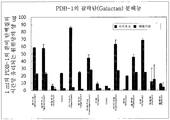
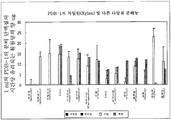
- FIG. 3 is a diagram showing the galactan (Galactan) resolution of the secreted protein of the genus PDB-1 cellulose.
- the x-axis shows the monosaccharides and polysaccharides contained on the culture, and the y-axis shows the low-temperature soluble agarose and carrageenan, the polysaccharides contained on the reaction solution, when the culture medium containing 1 mL of PDB-1 secreted protein was added.
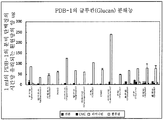
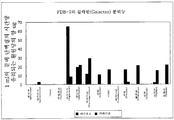
- FIG. 4 is a diagram showing the glucan resolution of the secreted protein of the genus PDB-1 cellulose.
- the x-axis shows the monosaccharides and polysaccharides contained on the culture, and the y-axis shows the starch, CMC, and laminarin, which are the polysaccharides contained on the reaction solution when the culture medium containing the secreted protein of 1 mL of PDB-1 was added.
- FIG. 5 is a diagram showing the resolution of xylan and other polysaccharides of the secreted protein of genus PDB-1.
- the x-axis shows the monosaccharides and polysaccharides contained on the culture, and the y-axis shows the polysaccharides, xylan, alginate and colloid chitin, included in the reaction solution when the culture medium containing 1 mL of PDB-1 secreted protein was added.
- Chitin, Pectin shows the amount of reducing sugar released per hour.
- FIG. 6 is a diagram showing the galactan (Galactan) resolution of the secreted protein of the genus PDB-2 cellulose.
- the x-axis shows the monosaccharides and polysaccharides contained on the culture, and the y-axis shows the low-temperature soluble agarose and carrageenan, the polysaccharides included in the reaction solution, when the culture medium containing the secreted protein of 1 mL of PDB-2 was added. Shows the amount of reducing sugar liberated per hour from.
- FIG. 7 is a diagram showing the glucan resolution of the secreted protein of the genus PDB-2 cellulose.
- the x-axis shows the monosaccharides and polysaccharides contained on the culture, and the y-axis shows the starch, CMC, and laminarin, which are the polysaccharides contained in the reaction solution when the culture medium containing the secreted protein of 1 mL of PDB-1 was added. , Shows the amount of reducing sugar freed from Pullulan per hour.
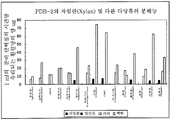
- FIG. 8 is a diagram showing the resolution of xylan and other polysaccharides of the secreted protein of genus PDB-2.
- the x-axis shows the monosaccharides and polysaccharides contained on the culture, and the y-axis shows the polysaccharides, xylan, alginate and colloid chitin, included in the reaction solution when the culture medium containing 1 mL of PDB-1 secreted protein was added.
- Chitin, Pectin shows the amount of reducing sugar released per hour.
- CMC carboxymethyl cellulose
- the isolated microorganism was transferred to a method of smearing and spreading on a CMC agar medium (1.0% of carboxymethyl cellulose (Sigma, USA) and MA), incubated at 25 ° C. for 3 days, and then the plates were 0.1% After staining with Congo red solution for 15 minutes and washing with 1M NaCl (Beguin, 1983), two strains with CMC degrading activity showing large halos were selected. .
- strain PDB-2 is strain PDB-1, C. fucicola NN015860 T , And C.
- SDS-PAGE gel of 0.1% CMC was prepared, followed by 70 V electrophoresis, and then refolding buffer (20 mM Tris-HCl, pH 8.0, 150 mM NaCl, and 1% Triton-X100). Incubated at room temperature for 1 hour and replaced with fresh refolding buffer. After an additional incubation for 1 hour, the gel was kept overnight in 20 mM Tris-HCl, pH 8.0 with 150 mM NaCl, and then stained with 0.1% Congo Red.
- FIG. 2 a Zymogram analysis of SDS-PAGE was performed with CMC, and it was confirmed that each bacterium had cellulose degrading enzymes having various molecular weights and similar clear bands. , They confirmed that they had a similar cellulose decomposition system (FIG. 2).
- N-terminal sequencing of 35 kDa protein of PDB-1 was performed. SDS-PAGE analysis of precipitated fractions of extracellular proteins of PDB-1 in 70% saturated ammonium sulfate followed by electrotransferred onto polyvinylidene difluoride membrane (PVDF). After the N-terminal amino acid sequencing of the 35 kDa protein was performed using an Automatic Protein Sequencer (Applied Biosystems).
- N-terminal sequence of the protein is NTAQTVV.
- DSM 14237 The genome sequence of DSM 14237 has been reported and cellulase (GenBank Accession No. ADV51156, ADV50035, and ADV 47383) and Glucoside Hydrolysis Series 5 (GenBank Accession No. 4) for four ORFs. ADV50845).
- the N-terminal sequence of the 35 kDa protein, as well as other known cellulose degrading enzymes, C. algicola It did not match DSM 14237 cellulase. therefore, Cellulophaga Genus PDB-1 was found to possess a novel cellulose degradation system.
- the released reducing sugar para-hydroxybenzoic acid hydrazine Zaid (p -hydroxybenzoic acid hydrazide; pHBH) using the assay was measured by the change in absorbance at 415 nm (Moretti and Thorson, 2008 ).
- the secreted protein of PDB-1 hydrolyzed the CMC well, while the crystalline substrate could not be effectively hydrolyzed.
- these enzymes are more active in ⁇ -1,4 binding of the amorphous region of cellulose.
- the specific activities at pH 5.0 and pH 7.0 were similar.
- the cellulose degradation system of PDB-1 is active at acidic and neutral pH. Since the marine environment is generally weakly alkaline, most of the characterized cellulase obtained in the marine environment exhibits maximum activity in neutral and weakly alkaline conditions, and in acidic conditions, the cellulose system of PDB-1 It is interesting that the CMC can be hydrolyzed well at this pH 5.0.
- each medium contains 0.2% carbon source of artificial sea water (Artificial sea water: NaCl 23.6 g / L, KCl 0.64 g / L, MgCl 2 6H 2 O 4.53 g / L, MgSO 4 H 2 O 5.94 g / L, CaCl 2 H 2 g 1.3 g / L), 1.0 g / L yeast extract, 0.5 g / L ammonium chloride (NH 4 Cl), 6.05 g / L trisma base, and then using hydrochloric acid Titrated to pH 7.4.
- Artificial sea water NaCl 23.6 g / L
- KCl 0.64 g / L MgCl 2 6H 2 O 4.53 g / L
- 1.0 g / L yeast extract 0.5 g / L ammonium chloride (NH 4 Cl), 6.05 g / L t
- the monosaccharides used were glucose, galactose, N-acetylglucosamine (NAG) and xylose.
- the polysaccharides were low temperature soluble agarose (Agarose, Lonza) and alginic acid. (Alginate, Wako), Carrageenan (Sigma), Carboxymethylcellulose (Sigma), Colloidal chitin (Sigma), Laminarin (Sigma), Pectin from apple peel (Sigma), Pulu Eggs (Pullulan, Sigma), starch (Soluble starch, Difco), xylan (Birchwood xylan, Sigma) were used and cultured with a medium containing no added monosaccharides and polysaccharides. Colloidal chitin was prepared by conventional methods using concentrated hydrochloric acid. As a carbon source for spawn culture, 0.1% of Bacto-Trypton (Difco) was used.
- Cellulopagar PDB-2 was cultured using the following medium to measure the ability of cellulosic PDB-2 to degrade polysaccharides.
- Each medium contains 0.2% carbon source in artificial sea water (Artificial sea water: NaCl 23.6 g / L, KCl 0.64 g / L, MgCl 2 6H 2 O 4.53 g / L, MgSO 4 H 2 O 5.94 g / L, CaCl 2 H 2 g 1.3 g / L), 1.0 g / L yeast extract, 0.5 g / L ammonium chloride (NH 4 Cl), 6.05 g / L trisma base, and then using hydrochloric acid Titrated to pH 7.4.
- the monosaccharides used were glucose, galactose, N-acetylglucosamine (NAG) and xylose.
- the polysaccharides were low temperature soluble agarose (Agarose, Lonza), alginic acid ( Alginate, Wako, Carrageenan (Sigma), Carboxymethylcellulose (Sigma), Colloidal chitin (Sigma), Laminarin (Sigma), Pectin from apple peel (Sigma), Pullulan (Pullulan, Sigma), starch (Soluble starch, Difco), xylan (Birchwood xylan, Sigma) were used and cultured with a medium containing no added monosaccharides and polysaccharides.
- Colloidal chitin was prepared by conventional methods using concentrated hydrochloric acid. As a carbon source for spawn culture, 0.1% of Bacto-Trypton (Difco) was used.
- KCTC Microbial Resources Center
- KCTC Microbial Resources Center
Landscapes
- Chemical & Material Sciences (AREA)
- Life Sciences & Earth Sciences (AREA)
- Organic Chemistry (AREA)
- Engineering & Computer Science (AREA)
- Health & Medical Sciences (AREA)
- Zoology (AREA)
- Wood Science & Technology (AREA)
- Bioinformatics & Cheminformatics (AREA)
- Genetics & Genomics (AREA)
- Biotechnology (AREA)
- General Health & Medical Sciences (AREA)
- Microbiology (AREA)
- Biochemistry (AREA)
- General Engineering & Computer Science (AREA)
- Biomedical Technology (AREA)
- Medicinal Chemistry (AREA)
- Tropical Medicine & Parasitology (AREA)
- Virology (AREA)
- Chemical Kinetics & Catalysis (AREA)
- General Chemical & Material Sciences (AREA)
- Molecular Biology (AREA)
- Micro-Organisms Or Cultivation Processes Thereof (AREA)
- Preparation Of Compounds By Using Micro-Organisms (AREA)
- Enzymes And Modification Thereof (AREA)
Abstract
본 발명은 다당류 분해 활성을 갖는 신규한 셀룰로파가(Cellulophaga sp.) 속 균주에 관한 것으로, 보다 상세하게는, 남해 지역의 해수, 갯벌, 해안가에서 시료를 채취하여 미생물을 분리한 후, 카르복시메칠셀룰로오즈(CMC)를 분해할 수 있는 미생물을 선별하고, 16S rRNA 분석을 통해 상기 미생물이 셀룰로파가 속 신규한 균주임을 확인한 다음, 상기 균주 및 이의 배양 상층액이 다양한 다당류의 분해 활성을 가지는 것을 확인하였다.
Description
본 발명은 다당류 분해 활성을 갖는 신규한 셀룰로파가(Cellulophaga sp.) 속 균주에 관한 것으로, 보다 상세하게는 해수, 갯벌, 해안가에서 분리한 다양한 다당류 분해 활성을 갖는 신규한 셀룰로파가 속 균주에 관한 것이다.
바이오연료(biofuel)는 재생 가능하고 환경 친화적이다. 왜냐하면, 바이오연료는 이산화탄소 고정에 의한 광합성으로 생성되는 바이오매스(biomass)로 부터 생산되기 때문이다. 특히 점점 줄어드는 화학 연료 공급에 대한 우려, 및 깨끗한 재생가능 에너지에 대한 요구로 인해 바이오연료에 대한 필요성은 증가하는 추세이다.
현재 두 개의 바이오연료인 바이오알코올(바이오에탄올)과 바이오디젤이 각각 가솔린 및 디젤의 대안이 되는 연료로 제안되고 있으며 또한 사용되고 있다. 이들은 대기중 이산화탄소 방출 감소 및 지구 온난화에 긍정적인 효과를 줄 뿐만 아니라, 기존의 자동차의 시스템을 변화시키지 않고 사용될 수 있다. 바이오연료의 일례로는 목초, 건초 및 스위치그래스(switchgrss)와 같은 셀룰로오스 자원을 이용하여 바이오에탄올을 생산하고 있다. 최근에, 바이오에탄올의 매년 전세계 생산은 대략 10억 갤론으로 평가되고 있다. 이들 대부분은 기존의 정립된 시스템의 전분 및 당으로부터 생산되고 있다. 현재의 기술은 자연 상태에서 가장 풍부한 탄소원인 육상 식물로부터 유래된 다당류를 이용하여 바이오연료를 생산하는 것에 제한되고 있다. 특히, 육상 식물은 그 종류에 따라 차이는 있지만 자라는데 시간이 걸리고 기후 조건의 변화에 쉽게 반응한다. 따라서, 육상 식물로부터 유래된 다당류를 바이오연료를 생산에 상용하는 것은 한계가 있다.
수생에서 서식하는 해조류는 포자에 의한 무성 생식 방법과 배우자에 의한 유성 생식 방법을 통하여 증식한다. 이들은 적절한 조건이 갖추어지면 육상 식물에 비해 더 빠른 속도로 증식할 수 있다. 또한, 이들은 지구의 70% 이상을 차지하는 바다 속에서 서식하고 있어 그 공급 가능성도 크다. 따라서, 빠른 속도로 증식할 수 있고 육상 식물에 비해 넓은 재배 면적을 갖는 해조류로부터 유래된 세포 외 다당류는 육상 식물로부터 유래된 다당류에 비해 바이오연료를 생산하는데 더 높은 효율을 제공할 수 있을 것이다.
셀롤로스란 β-(1, 4)-결합의 D-포도당 유닛으로 구성된 다당류를 말한다. 이는 식물 세포벽에서 주요한 구성요소이자 지구상에 존재하는 가장 풍부한 탄소원이기도 하다. 미생물에 의해 셀룰로스를 분해한다는 것은 지구 탄소 재활용에 있어 중요한 사안이다. 셀룰로스 분해 미생물들은 엔도글루카나아제, 엑소글루카나아제, 베타-글루코시다아제, 및 보조적 효소들을 생산함으로써 셀룰로스의 β-1,4-글룰코시드 결합을 시너지 효과를 일으키며 포도당으로 효과적으로 분해한다. 이들 효소들은 종종 탄수화물 결합 도메인(carborhydrate binding domain; CBD)라고 칭해지는 부속적 모듈을 포함한다. CBD의 주 역할은 셀룰라아제의 촉매적 도메인을 좀 더 근접하게 셀룰로스 표면으로 이송함으로써 효과적 가수분해를 일으키는 데에 있다.
현재, 셀룰라아제가 동물 사료, 섬유, 폐기물 처리 및 양조 산업에서 광범위하게 사용되고 있다(Beguin, 1983; Mandels, 1985). 또한, 셀룰로스 바이오매스를 셀룰라아제에 의해 분해함으로써 얻어지는 포도당을 이용한 발효를 통한 에탄올 및 부탄올과 같은 생물연료는 점차적으로 매력적인 지속적이자 대안적 에너지원으로 간주되고 있다. 따라서, 셀룰라아제를 이용한 효과적 셀룰로스 분해가 셀롤로스 바이오매스의 사용에 있어 중요한 이슈가 되는 것이다. 퇴비 토양, 부패 식물재료, 하수도 찌꺼기, 반추류의 분변 및 극심한 환경 등과 같은 다양한 소스에서 곰팡이 및 세균에 의해 생성된 셀룰로스 분해 효소 다량을 분리하여 특성화했다(Blumer-Schuette et al., 2008; Doi, 2008; Maki et al., 2009; Viikari et al., 2007). 그러나, 해양 세균에서 얻어지는 셀룰로스 분해 시스템에 대해서는 상대적으로 연구된 수가 적은 편이다(Ekborg et al., 2007; Fu et al., 2010; Gao et al., 2010; Hirasawa et al., 2006; Ryu et al., 2001; Shanmughapriya et al., 2010; Taylor et al., 2006; Yin et al., 2010; Zeng et al., 2006). 최근 들어, Saccharophagus degradans 2-20T 및 Teredinibacter turnerae T7902T 에 대해 보고된바 있다(Taylor et al., 2006; Yang et al., 2009). S.degradans 2-20T 및 T.turnerae T7902T 은 다중 엔도글루카나아제 및 엑소글루카나아제와 함께 기타 해조류(marine algae and plants)의 다당류 분해 시스템을 보유한다. 따라서, 해양 세균류가 신규한 셀룰로스 바이오매스 분해 시스템을 위해 풍부한 소스가 될 것으로 보인다.
이에, 본 발명자들은 해조류 및 식물 유래 다당류를 분해할 수 있는 신규 미생물을 선별하기 위하여, 다양한 시료를 채취하여 미생물을 분리한 후, 카로복시메칠 셀룰로오즈(carboxymethyl cellulose; CMC)를 분해할 수 있는 미생물을 선별하고, 16S rRNA 분석을 통해 셀룰로파가(Cellulophaga) 속에 속하는 신규한 미생물임을 확인한 다음, 상기 신규한 미생물이 다양한 다당류 효과적으로 분해할 수 있음을 확인함으로써 본 발명을 완성하였다.
본 발명의 목적은 다당류 분해 활성을 가지는 신규한 균주, 상기 균주를 이용한 다당류 분해용 조성물 및 상기 균주를 이용한 다당류 분해하는 방법을 제공한다.
상기 목적을 달성하기 위하여, 본 발명은 다당류 분해 활성을 갖는 셀룰로파가(Cellulophaga) 속 균주를 제공한다.
또한, 본 발명은 다당류 분해 활성을 갖는 셀룰로파가 속 균주 및 이의 배양 상층액을 포함하는 다당류 분해용 조성물을 제공한다.
또한, 본 발명은 다당류 분해 활성을 갖는 셀룰로파가 속 균주 및 이의 배양 상층액을 포함하는 바이오 에탄올 생산용 조성물을 제공한다.
또한, 본 발명은 다당류 분해 활성을 갖는 셀룰로파가 속 균주 및 이의 배양 상층액을 다당류에 접촉시키는 단계를 포함하는 다당류 분해 방법을 제공한다.
또한, 본 발명은
1) 바이오매스로부터 다당류를 분리하는 단계;
2) 단계 1)의 다당류에 제 1항 또는 제 2항의 균주, 또는 이의 배양 상층액을 접촉시켜 단당류를 생성시키는 단계; 및
3) 단계 2)의 단당류를 미생물에 의해 발효시키는 단계를 포함하는 바이오에탄올의 제조방법을 제공한다.
또한, 본 발명은 다당류 분해용 조성물로 사용하기 위한 셀룰로파가 속 균주 및 이의 배양 상층액을 제공한다.
아울러, 본 발명은 바이오 에탄올 생산용 조성물로 사용하기 위한 셀룰로파가 속 균주 및 이의 배양 상층액을 제공한다.
이하, 본 발명을 상세히 설명한다.
본 발명은 수탁번호 KCTC11940BP Cellulophaga sp. PDB-1로 기탁된 다당류 분해 활성을 갖는 셀룰로파가(Cellulophaga) 속 균주를 제공한다.
또한, 본 발명은 수탁번호 KCTC11941BP Cellulophaga sp. PDB-2로 기탁된 다당류 분해 활성을 갖는 셀룰로파가(Cellulophaga) 속 균주를 제공한다.
상기 다당류는 아가로즈, 카라기난, 전분, 풀루난, 카르복시메칠셀룰로오즈(carboxylmethylcellulose; CMC), 자일란, 라미나린, 키틴 및 펙틴으로 이루어진 군으로부터 선택되는 어느 하나인 것이 바람직하나 이에 한정되지 않는다.
본 발명의 한가지 실시태양에서 본 발명자들은 다당류를 분해하는 미생물을 분리하기 위하여, 남해지역의 해수, 갯벌 및 해안가에서 시료를 채취하여 미생물을 분리한 후, 카르복시메칠 셀룰로오즈(carboxymethyl cellulosel; CMC)를 분해할 수 있는 미생물을 선별하였다.
또한, 본 발명의 한가지 실시태양에서 본 발명자들은 상기 선별된 미생물을 동정하기 위하여, 16S rRNA 유전자의 시퀀싱과 계통발생학적 분석을 수행한 결과, 이들 미생물들이 서열번호: 1 및 서열번호 2로 나타낸 바와 같이 C. lytica ATCC 23178T 및 C. fucicola NN015860T 에 일관된 클러스터를 형성하는 Cellulophaga(셀롤로파가) 속을 포함하는 클레이드(clade)의 분류에 해당함을 확인하였다(도 2 참조).
또한, 본 발명의 한가지 실시태양에서 본 발명자들은 상기 선별된 미생물의 셀롤로스 분해활성을 확인하기 위하여 CMC로 SDS-PAGE에 대한 자이모그램 분석을 수행한 결과, 상기 미생물은 셀룰로스 분해 효소를 가지는 것을 확인하였다(도 2 참조).
또한, 본 발명의 한가지 실시태양에서 본 발명자들은 PDB-1의 35 kDa 단백질의 N-말단 시퀀싱을 수행한 결과, 35 kDa 단백질의 N-말단 시퀀스는 기타 공지된 셀룰로스 분해 효소와 매칭되지 않는 것을 확인하였다.
또한, 본 발명의 한가지 실시태양에서 본 발명자들은 PDB-1의 분비 단백질의 분해 활성 분석하기 위하여 PDB-1의 분비 단백질의 셀룰로스 분해 활성을 확인한 결과, PDB-1의 분비 단백질은 CMC를 잘 가수분해하는 반면, 결정체 기질(substrate)는 효과적으로 가수분해할 수 없었다. 이를 통해 이들 효소가 셀룰로스의 비결정질 부위의 β-1,4 결합에 더욱 활성을 보임을 확인하였다(표 1 참조).
또한, 본 발명의 한가지 실시태양에서 본 발명자들은 셀룰로파가 PDB-1 및 PDB-2의 다당류 분해 활성 확인하기 위하여, 다당류를 포함하는 최소 배지 배양액 하에서 배양 후, 세포 외로 분비된 단백질의 다당류 분해능력을 확인한 결과, PDB-1 및 PDB-2는 아가로즈, 카라기난, 전분, 풀루란, CMC, 자일란, 라미나린, 키틴, 펙틴과 같은 다양한 다당류의 분해시스템을 갖고 있음을 확인하였다(도 3 내지 도 8 참조).
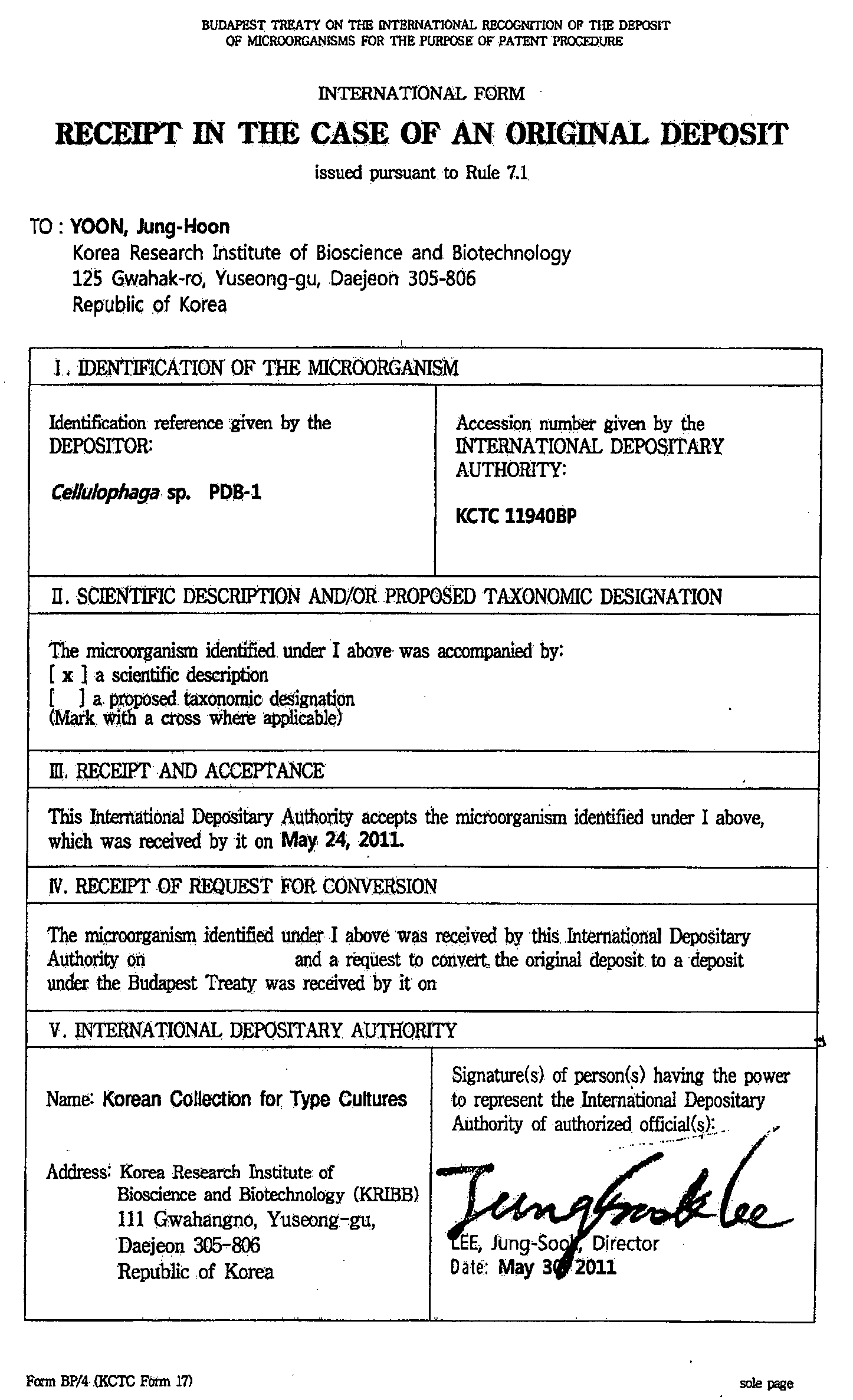
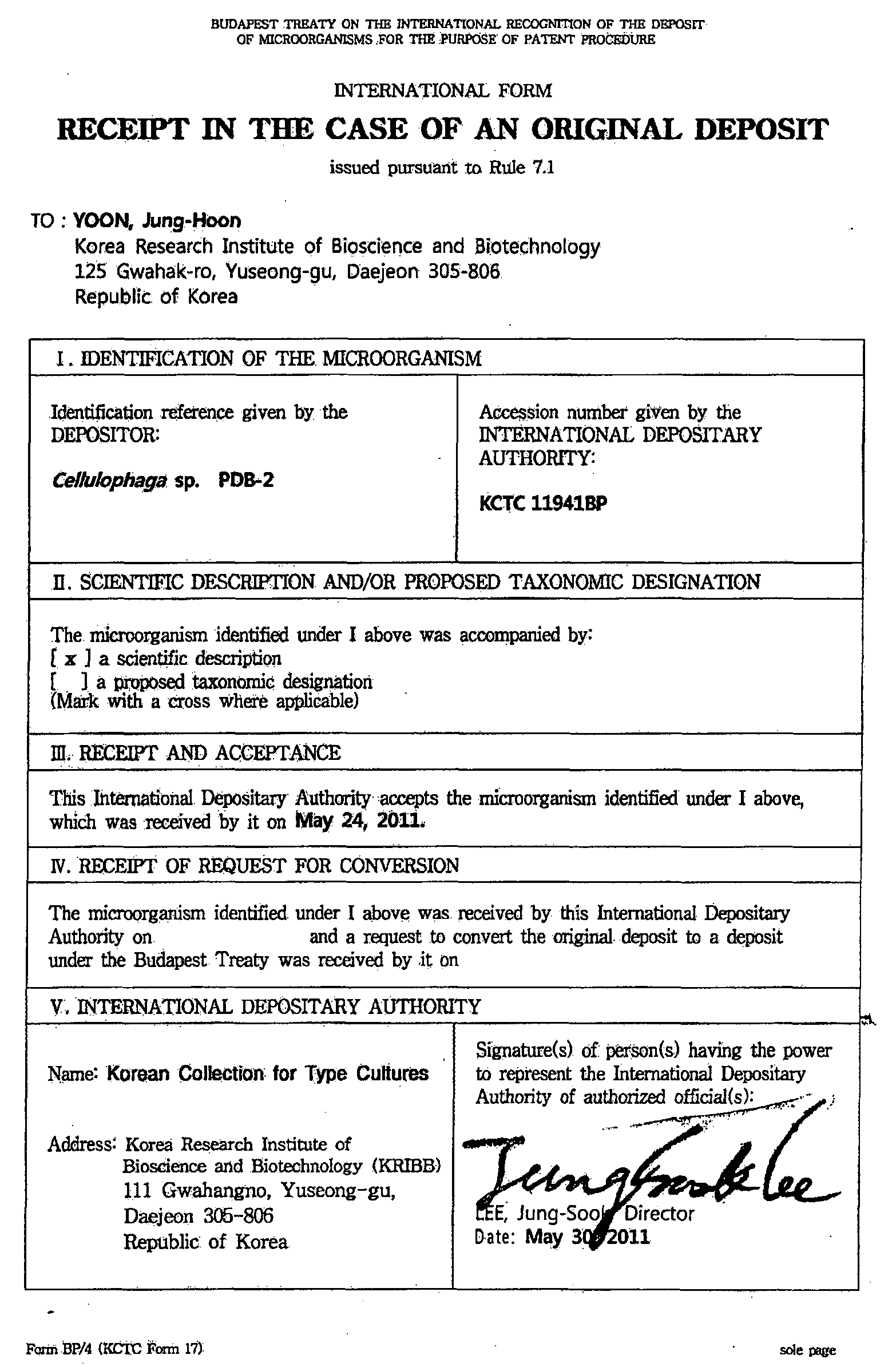
따라서, 상기 다양한 다당류에 대한 분해 활성을 가진 신규한 미생물을 셀룰로파가 속으로 동정하고, Cellulophaga sp. PDB-1 및 Cellulophaga sp. PDB-2으로 명명하였으며 2011년 05월 24일에 한국생명공학연구원(KRIBB) 생물자원관리본부(KBRC) 미생물자원센터(KCTC)에 기탁하였다.(기탁번호: KCTC11940BP 및 KCTC11941BP).
또한, 본 발명은 PDB-1 및 PDB-2, 또는 이의 배양 상층액을 포함하는 다당류 분해용 조성물을 제공한다.
본 발명의 한가지 실시태양에서 본 발명자들은 PDB-1의 분비 단백질의 분해 활성 분석하기 위하여 PDB-1의 분비 단백질의 셀룰로스 분해 활성을 확인한 결과, PDB-1의 분비 단백질은 CMC를 잘 가수분해하는 반면, 결정체 기질(substrate)은 효과적으로 가수분해할 수 없었다. 이를 통해 이들 효소가 셀룰로스의 비결정질 부위의 β-1,4 결합에 더욱 활성을 보임을 확인하였다(표 1 참조).
또한, 본 발명의 한가지 실시태양에서 본 발명자들은 셀룰로파가 PDB-1 및 PDB-2의 다당류 분해 활성 확인하기 위하여, 다당류를 포함하는 최소 배지 배양액 하에서 배양 후, 세포 외로 분비된 단백질의 다당류 분해능력을 확인한 결과, PDB-1 및PDB-2는 아가로즈, 카라기난, 전분, 풀루란, CMC, 자일란, 라미나린, 키틴, 펙틴과 같은 다양한 다당류의 분해시스템을 갖고 있음을 확인하였다(도 3 내지 도 8 참조).
따라서, 본 발명의 PDB-1 및 PDB-2, 또는 이의 배양 상층액은 다양한 다당류에 대한 분해 활성을 가지므로 다당류 분해용 조성물로 유용하게 이용될 수 있다.
또한, 본 발명은 PDB-1 및 PDB-2, 또는 이의 배양 상층액을 포함하는 다당류에 접촉시키는 단계를 포함하는 다당류 분해 방법을 제공한다.
상기 다당류를 접촉시키는 단계는 다당류와 PDB-1 및 PDB-2, 또는 이의 배양 상층액을 55℃-85℃, 바람직하게는 65℃에서, pH 5.0 내지 5.5 또는 7.5 내지 8.0에서 10-30분 동안 접촉시키는 것이 바람직하나 이에 한정하지 않는다.
본 발명의 PDB-1 및 PDB-2, 또는 이의 배양 상층액은 다양한 다당류에 대한 분해 활성을 가지므로 다당류에 접촉시키는 단계를 포함하는 다당류 분해 방법으로 이용될 수 있다.
또한, 본 발명은 PDB-1 및 PDB-2, 또는 이의 배양 상층액을 포함하는 바이오 에탄올 생산용 조성물을 제공한다.
상기 바이오 에탄올은 하기의 방법으로 제조되는 것이 바람직하나 이에 한정되지 않는다.
1) 바이오매스로부터 다당류를 분리하는 단계;
2) 단계 1)의 다당류에 제 1항 또는 제 2항의 균주, 또는 이의 배양 상층액을 접촉시켜 단당류를 생성시키는 단계; 및
3) 단계 2)의 단당류를 미생물에 의해 발효시키는 단계를 포함하는 바이오에탄올의 제조방법을 제공한다.
상기 바이오매스는 다당류를 포함하는 볏짚, 보릿짚, 고구마 줄기, 유채줄기, 카사바 줄기의 농업 부산물, 폐지, 플러프의 고체 쓰레기, 간벌목, 폐목재, 가공 부산물의 목재, 담조류, 해조류의 수상 식물 및 이들의 조합으로 이루어진 군으로부터 선택되는 어느 하나인 것이 바람직하나 이에 한정하지 않는다.
상기 단계 1)의 다당류는 아가로즈, 카라기난, 전분, 풀루난, 카르복시메칠셀룰로오즈, 자일란, 라미나린, 키틴 및 펙틴으로 이루어진 군으로부터 선택되는 어느 하나인 것이 바람직하나 이에 한정하지 않는다.
상기 단계 3)의 미생물은 사카로마이세스 세레비시애, 사르시나 벤트리큘리, 클루이베로마이세스 프라질리스, 자이고모모나스 모빌리스, 클루이베로마이세스 막시아너스 IMB3, 브레타노마이세스 쿠스테르시이, 클로스트리디움 아세토부틸리쿰, 클로스트리디움 바이예링키, 클로스트리디움 아우란티부틸리쿰 및 클로스트리디움 테타노모르퓸으로 구성된 군으로부터 선택되는 어느 하나인 것이 바람직하나 이에 한정하지 않는다.
본 발명의 PDB-1 및 PDB-2, 또는 이의 배양 상층액은 다양한 다당류에 대한 분해 활성을 가지므로 이러한 분해를 통해 생성된 다당류 분해 생성물에 바이오 연료를 생산할 수 있는 미생물을 반응시켜 효과적으로 바이오에탄올을 제조할 수 있다.
또한, 본 발명은 다당류 분해용 조성물로 사용하기 위한, PDB-1 및 PDB-2, 또는 이의 배양 상층액을 제공한다.
본 발명의 PDB-1 및 PDB-2, 또는 이의 배양 상층액은 다양한 다당류에 대한 분해 활성을 가지므로 다당류 분해용 조성물로 유용하게 사용될 수 있다.
아울러, 본 발명은 바이오 에탄올 생산용 조성물로 사용하기 위한, , PDB-1 및 PDB-2, 또는 이의 배양 상층액을 제공한다.
본 발명의 PDB-1 및 PDB-2, 또는 이의 배양 상층액은 다양한 다당류에 대한 분해 활성을 가지므로 이러한 분해를 통해 생성된 다당류 분해 생성물에 바이오 연료를 생산할 수 있는 미생물을 반응시켜 효과적으로 바이오에탄올을 생산할 수 있으므로 바이오 에탄올 생산용 조성물로 유용하게 사용될 수 있다.
본 발명의 목적은 다당류 분해 활성을 가지는 신규한 셀룰로파가(Cellulophaga) 속 균주에 관한 것으로, 남해 지역의 해수, 갯벌, 해안가에서 시료를 채취하여 미생물을 분리한 후, 카르복시메칠셀룰로오즈(CMC)를 분해할 수 있는 미생물을 선별하고, 16S rRNA 분석을 통해 상기 미생물이 셀룰로파가 속 신규한 균주임을 확인한 다음, 상기 균주 및 이의 배양 상층액이 다양한 다당류의 분해 활성을 가지는 것을 확인하였다.
도 1은 셀룰로파가(Cellulophaga) 속 PDB-1 및 PDB-2의 16S rRNA의 계통도 분석을 나타낸 도이다. 16S rRNA 유전자에 따른 인접한 계통도가 기타 다른 관련된 분류군들 사이에서 PDB-1 및 PDB-2의 위치를 보여준다. 분기점(branching point)에서 붓스트랩 값(bootstrap values)(1000 복제의 퍼센트로 표현됨) > 50 % 이 나타낸다. Bacteroides fragilis ATCC 25285T(GenBank accession number, X83935)를 외군비교(outgroup)로 사용했다. Scale bar, 0.01 substitutions per nucleotide position.
도 2는 셀룰로파가 속 PDB-1 및 PDB-2의 세포 외 셀룰라아제에 대한 CMC-SDA-PAGE 분석 및 자이코그래피를 나타낸 도이다;
좌측 패널에는 60% 및 70 % 황산암모늄(ammonium sulfate)에서 침전된 단백질의 Coomassie Brilliant Blue R-250 염색된 0.1 % CMC를 통한 SDS-PAGE 분석을 나타낸다; 및
우측 패널은 침전 단백질의 셀룰라아제 활성 염색에 대한 자이모그램(zymography)을 나타낸다.
Lanes: M: 분자무게 마커 단밸질
60은 60% 황산암모늄에서의 PDB-1 및 PDB-2의 침전된 세포 외 단백질;
70은 70% 황산암모늄에서의 PDB-1 및 PDB-2의 침전된 세포 외 단백질; 및
화살표는 N-말단 시퀀싱 수행을 수행한 35 kDa 단백질을 나타낸다.
도 3은 셀룰로파가 속 PDB-1의 분비 단백질의 갈락탄(Galactan)분해능을 나타낸 도이다. x축은 배양액 상에 포함된 단당류 및 다당류를 나타낸 것이며, y축은 1 mL의 PDB-1의 분비 단백질을 포함하는 배양액 첨가 시 반응액 상에 포함된 다당류인 저온 용해성 아가로스(Agarose)와 카라기난(Carrageenan)으로부터 시간당 유리되는 환원당의 양을 나타낸 것이다.
도 4는 셀룰로파가 속 PDB-1의 분비 단백질의 글루칸(Glucan)분해능을 나타낸 도이다. x축은 배양액 상에 포함된 단당류 및 다당류를 나타낸 것이며, y축은 1 mL의 PDB-1의 분비 단백질을 포함하는 배양액 첨가 시 반응액 상에 포함된 다당류인 전분(Starch), CMC, 라미나린(Laminarin), 풀루란(Pullulan)로부터 시간당 유리되는 환원당의 양을 나타낸 것이다.
도 5는 셀룰로파가 속 PDB-1의 분비 단백질의 자일란과 다른 다당류들에 대한 분해능을 나타낸 도이다. x축은 배양액 상에 포함된 단당류 및 다당류를 나타낸 것이며, y축은 1 mL의 PDB-1의 분비 단백질을 포함하는 배양액 첨가 시 반응액상에 포함된 다당류인 자일란(xylan), 알긴산(Alginate), 콜로이드 키틴(Chitin), 펙틴(Pectin)으로부터 시간당 유리되는 환원당의 양을 나타낸 것이다.
도 6은 셀룰로파가 속 PDB-2의 분비 단백질의 갈락탄(Galactan)분해능을 나타낸 도이다. x축은 배양액 상에 포함된 단당류 및 다당류를 나타낸 것이며, y축은 1 mL의 PDB-2의 분비 단백질을 포함하는 배양액 첨가 시 반응액상에 포함된 다당류인 저온 용해성 아가로스(Agarose)와 카라기난(Carrageenan)으로부터 시간당 유리되는 환원당의 양을 나타낸 것이다.
도 7은 셀룰로파가 속 PDB-2의 분비 단백질의 글루칸(Glucan)분해능을 나타낸 도이다. x축은 배양액 상에 포함된 단당류 및 다당류를 나타낸 것이며, y축은 1 mL의 PDB-1의 분비 단백질을 포함하는 배양액 첨가 시 반응액상에 포함된 다당류인 전분(Starch), CMC, 라미나린(Laminarin), 풀루란(Pullulan)로부터 시간당 유리되는 환원당의 양을 나타낸 것이다.
도 8은 셀룰로파가 속 PDB-2의 분비 단백질의 자일란과 다른 다당류들에 대한 분해능을 나타낸 도이다. x축은 배양액 상에 포함된 단당류 및 다당류를 나타낸 것이며, y축은 1 mL의 PDB-1의 분비 단백질을 포함하는 배양액 첨가 시 반응액상에 포함된 다당류인 자일란(xylan), 알긴산(Alginate), 콜로이드 키틴(Chitin), 펙틴(Pectin)으로부터 시간당 유리되는 환원당의 양을 나타낸 것이다.
이하, 본 발명을 실시예에의해 상세히 설명한다.
단, 하기 실시예는 본 발명을 예시하는 것일 뿐, 본 발명의 내용이 하기 실시예 및 실험예에 한정되는 것은 아니다.
<실시예 1> 미생물의 분리
셀룰라아제(cellulase)를 생산하는 미생물을 분리하기 위해, 대한민국 거제도 남해 모래 해안에서 dilution plating 방법을 이용하여 Marine Agar 2216(MA; Difco, 미국)에서 성장하는 미생물을 분리하였다.
분리한 미생물 중 셀룰라아제를 생산하는 미생물을 선별하기 위하여, 카르복시메칠 셀룰로오즈(carboxymethyl cellulosel; CMC)를 분해할 수 있는 미생물을 선별하였다.
구체적으로 상기 분리한 미생물은 CMC 한천배지(1.0%의 카르복시메틸 셀룰로스(Sigma, 미국)와 MA)상으로 찍어서 도말하는 방법으로 옮겨진 후, 3일 동안 25℃에서 배양한 후, 상기 플레이트들을 0.1% 콩고 레드(congo red) 용액으로 15분 동안 염색한 후, 1M NaCl으로 세척(Beguin, 1983)한 결과, 큰 헤일로(halos)를 나타내는 CMC 분해 활성(degrading activity)을 가진 두 종류의 균주를 선별하였다.
<실시예 2> 미생물의 동정
상기 <실시예 1>에서 선별된 미생물을 분류하기 위해, Yoon et al.에 기재된 방법에 따라, 분리된 박테리아에 대해 염색체 DNA 추출 및 정제를 수행하고, 이와 함께 RNase T1 102의 변형을 RNase A와 조합하여 사용함으로써 RNA에 의한 오염을 최소화했다(Yoon et al., 1996). 상기 언급한 두 개의 유니버셜 프라이머(universal primers)를 사용하여 16S rRNA 유전자 증폭을 수행한 후(Yoon et al., 1998), Yoon et al.에 기재된 방법에 따라, 증폭된 16S rRNA 유전자의 시퀀싱과 계통발생학적 분석을 수행했다(Yoon et al., 2003).
그 결과, 도 1에 나타낸 바와 같이 PDB-1 및 PDB-2의 16S rRNA에 대한 계통발생학적 분석에 따라, 이들 미생물들이 서열번호: 1 및 서열번호 2로 나타낸 바와 같이 C lytica ATCC 23178T 및 C. fucicola NN015860T 에 일관된 클러스터를 형성하는 Cellulophaga(셀롤로파가) 속을 포함하는 클레이드(clade)의 분류에 해당함을 확인하였다. 또한, 스트레인(strain) PDB-2는 스트레인 PDB-1, C. fucicola NN015860T
, 및 C. lytica ATCC 23178T, 각각에 대해 16S rRNA 유전자 상동성 99.0, 98.5, 및 97.6%를 가지며, 다만 기타 다른 Cellulophaga 속에 대해서는 92.2 내지 93.6% 값을 갖는 것을 확인한 후(도 1), Cellulophaga sp. PDB-1 및 Cellulophaga sp. PDB-2으로 명명하였으며 2011년 05월 24일에 한국생명공학연구원(KRIBB) 생물자원관리본부(KBRC) 미생물자원센터(KCTC)에 기탁하였다.(기탁번호: KCTC11940BP 및 KCTC11941BP).
<실시예 3> 미생물의 셀롤로스 (cellulose) 분해 활성 확인
상기 <실시예 2>에 선별한 미생물의 셀롤로스 분해활성을 확인하기 위하여, 0.2% CMC의 MA 배지 내에서 30℃에서 이틀간 배양된 PDB-1 및 PDB-2의 세포외 단백질에 대해 4℃에서 염석(salting out)을 수행하였다. 대부분의 활성 셀룰라아제 분획물은 포화 황산 암모늄 50 내지 70% 범위 사이에서 침전되었고, 자이모그래피(zymography technique) 용법을 이용하여 탈염 분획물을 분석하였다.
구체적으로, 0.1 % CMC의 SDS-PAGE 젤을 제조한 후, 70 V 전기영동 한 다음, 리폴딩(refolding) 버퍼(20 mM Tris-HCl, pH 8.0, 150 mM NaCl, 및 1% Triton-X100)에서 실온에서 1 시간 동안 인큐베이션하고, 새로운 리폴딩 버퍼로 바꿨다. 1 시간 동안 추가로 인큐베이션을 한 뒤, 상기 젤을 150 mM NaCl으로 20 mM Tris-HCl, pH 8.0에서 하룻밤 동안 유지시킨 다음, 0.1% 콩고 레드(Congo Red)로 염색했다.
그 결과, 도 2에 나타낸 바와 같이 CMC로 SDS-PAGE에 대한 자이모그램 분석을 수행한 결과, 각 세균의 다양한 분자량 및 유사한 소거 밴드(clear band)를 지니는 셀룰로스 분해 효소를 가지는 것을 확인하였고, 또한, 이들은 유사한 셀룰로스 분해 시스템을 가지고 있는 것을 확인하였다(도 2).
<실시예 4> 미생물 유래 단백질의 활성 분석
<4-1>
N-말단 시퀀싱(sequencing)
PDB-1의 35 kDa 단백질의 N-말단 시퀀싱을 수행했다. 70% 포화 황산암모늄(ammonium sulfate) 내의 PDB-1의 세포외 단백질의 침전 분획물을 SDS-PAGE 분석한 후, 이를 폴리비닐리덴 디플루오라이드 멤브레인(polyvinylidene difluoride membrane; PVDF) 상으로 전자이동(electrotransferred)시킨 후, 35 kDa 단백질의 N-말단 아미노산 시퀀싱을 Automatic Protein Sequencer(Applied Biosystems)를 이용하여 수행하였다.
그 결과, 상기 단백질의 N-말단 시퀀스는 NTAQTVV임을 확인하였다. 최근 들어, C. algicola DSM 14237의 게놈 시퀀스가 보고되었고, 네 개의 ORF에 대해 셀룰라아제(GenBank 등록번호. ADV51156, ADV50035, 및 ADV 47383) 및 글루코시드 가수분해 계열 5(GenBank 등록번호. ADV50845)로 주석이 달린 바가 있다. 그러나 35 kDa 단백질의 N-말단 시퀀스는 기타 공지된 셀룰로스 분해 효소는 물론, C. algicola DSM 14237 셀룰라아제와 매칭되지는 않았다. 따라서, Cellulophaga 속 PDB-1은 신규한 셀룰로스 분해 시스템을 보유하고 있는 것을 확인하였다.
<4-2> PDB-1의 분비 단백질의 분해 활성 분석
PDB-1의 분비 단백질의 셀룰로스 분해 활성을 알아보기 위해, 450 μL의 카르복시메틸셀룰로스(CMC), 20 μm의 마이크로크리스탈린 셀룰로스 및 아비셀 PH-101, 셀룰로스 섬유를 이용하여 0.5% 농도로 pH 5.0의 25 mM citrate 완충용액과 pH 7.0의 10 mM phosphate 완충용액에 현탁하였다. 각 반응용액에 50 μg의 PDB-1의 분비 단백질을 첨가한 후, 30℃에서 1시간 동안 반응을 진행하였다. 100℃로 가열하여 효소를 실활 한 후, 방출된 환원당을 파라-하이드록시벤조산 히드라자이드 (p-hydroxybenzoic acid hydrazide; pHBH) 분석법을 이용하여 415 nm에서 흡광도변화를 통해 측정하였다 (Moretti and Thorson, 2008).
그 결과, 표 1에 나타낸 바와 같이, PDB-1의 분비 단백질은 CMC를 잘 가수분해하는 반면, 결정체 기질(substrate)는 효과적으로 가수분해할 수 없었다. 이를 통해 이들 효소가 셀룰로스의 비결정질 부위의 β-1,4 결합에 더욱 활성을 보임을 확인하였다. 또한, pH 5.0 및 pH 7.0에서의 특정 활성도는 유사함을 확인하였다. 따라서, PDB-1의 셀룰로스 분해 시스템은 산성 및 중성 pH에서 활동적이다. 해양환경은 일반적으로 약 알칼리성 조건이기 때문에 해양 환경에서 얻어진 대부분의 특징화된 셀룰라아제가 중성 및 약 알칼리 조건에서 최대 활성을 보이고, 산성 조건에서는 활성이 감소된다는 사실을 고려할 때, PDB-1의 셀룰로스 시스템이 pH 5.0 하에서 CMC를 잘 가수분해할 수 있다는 것은 흥미로운 사실이다. 또한, 총 세포외 단백질과 50 ~ 70%의 포화 황산암모늄에서의 침전 단백질이 유사한 특정 활성을 보였다. 따라서, PDB-1의 셀룰로스 분해 시스템은 산성 조건하에서도 활성을 유지했다. 이러한 특성은 산성 조건 하에서 전 처리된 셀룰로스 재료의 분해와 같은 생명공학적 적용에서 유용하게 이용될 수 있음을 확인하였다.
표 1 
<실시예 5> 셀룰로파가 PDB-1의 다당류 분해 활성 확인
셀룰로파가 PDB-1의 다당류 분해 능력을 측정하기 위하여 아래의 배지를 이용하여 셀룰로파가 PDB-1을 배양하였다. 각 배지는 0.2%의 탄소원에 인공 해수(Artificial sea water: NaCl 23.6 g/L, KCl 0.64 g/L, MgCl26H2O 4.53 g/L, MgSO4H2O 5.94 g/L, CaCl2H2O 1.3g/L)에 효모 추출물(Yeast Extract) 1.0 g/L, 염화 암모늄(NH4Cl) 0.5 g/L, 트리즈마 염(Trizma Base) 6.05 g/L을 첨가 한 후, 염산을 이용하여 pH 7.4로 적정하였다. 사용된 단당류는 포도당(glucose), 갈락토스(galactose), N-아세틸글루코사(N-acetylglucosamine, NAG), 자일로스(xylose)를 이용하였으며, 다당류로는 저온 용해성 아가로스(Agarose, Lonza), 알긴산(Alginate, Wako), 카라기난(Carrageenan, Sigma), 카르복시메틸셀룰로스(Carboxymethylcellulose, Sigma), 콜로이드 키틴(Colloidal chitin, Sigma), 라미나린(Laminarin, Sigma), 펙틴(Pectin from apple peel, Sigma), 풀루란(Pullulan, Sigma), 전분(Soluble starch, Difco), 자일란(Birchwood xylan, Sigma)을 이용하였으며 단당류 및 다당류가 첨가되지 않은 배지를 포함하여 배양하였다. 콜로이드 키틴은 농축 염산을 이용하여 종래의 방법으로 제조하였다. 종균 배양의 탄소원으로서는 0.1 %의 Bacto-Trypton(Difco)를 이용하였다.
구체적으로, 균주를 3 mL 종균 배양(seed culture)한 후, 30 mL 종균 배양한 다음, 단당류 및 다당류를 포함하는 50 mL 배지를 main culture에서 30℃에서 배양하였다. 그런 다음, 원심분리를 통해 세포를 제거한 후, 배지 용액을 동결하여 보관하였다. 세포 밖으로 분비된 단백질의 양을 Lowey 방법으로 측정하였다. 분비 단백질의 활성 측정을 위해 반응에 이용된 다당류는 배지에 탄소원으로 이용된 다당류와 동일하였으며 저장액의 농도는 0.5%였다. 다당류 저장액과 배지를 혼합한 후, 30℃에서 24시간 동안 400 rpm으로 반응시켰다. 각 반응액을 1/10으로 희석한 후, 0.5M 염산 녹인 2 %(w/v) pHBH 와 2M NaOH의 1:1 혼합액 120 μL에 희석액 40 μL 섞은 후, 100℃에서 7분간 가열하였다. 그런 다음 마이크로플레이트(microplate) 분석을 이용하여 415 nm 흡광도를 측정하였다(Moretti and Thorson, 2008).
그 결과, 도 3 내지 도 5에 나타낸 바와 같이, 셀룰로파가 PDB-1은 갈락탄, 글루칸, 자일란 및 다른 다당류에 대한 유의적인 다당류 분해 활성을 가지는 것을 확인하였다(도 3 내지 도 5).
<실시예 6> 셀룰로파가 PDB-2의 다당류 분해 활성 확인
셀룰로파가 PDB-2의 다당류 분해 능력을 측정하기 위하여 아래의 배지를 이용하여 셀룰로파가 PDB-2를 배양하였다. 각 배지는 0.2% 의 탄소원에 인공 해수(Artificial sea water: NaCl 23.6 g/L, KCl 0.64 g/L, MgCl26H2O 4.53 g/L, MgSO4H2O 5.94 g/L, CaCl2H2O 1.3g/L)에 효모 추출물(Yeast Extract) 1.0 g/L, 염화 암모늄(NH4Cl) 0.5 g/L, 트리즈마 염(Trizma Base) 6.05 g/L을 첨가 한 후, 염산을 이용하여 pH 7.4로 적정하였다. 사용된 단당류는 포도당(glucose), 갈락토스(galactose), N-아세틸글루코사민(N-acetylglucosamine, NAG), 자일로스(xylose)를 이용하였으며, 다당류로는 저온 용해성 아가로스(Agarose, Lonza), 알긴산(Alginate, Wako), 카라기난(Carrageenan, Sigma), 카르복시메틸셀룰로스(Carboxymethylcellulose, Sigma), 콜로이드 키틴(Colloidal chitin, Sigma), 라미나린(Laminarin, Sigma), 펙틴(Pectin from apple peel, Sigma), 풀루란(Pullulan, Sigma), 전분(Soluble starch, Difco), 자일란(Birchwood xylan, Sigma)을 이용하였으며 단당류 및 다당류가 첨가되지 않은 배지를 포함하여 배양하였다. 콜로이드 키틴은 농축 염산을 이용하여 종래의 방법으로 제조하였다. 종균 배양의 탄소원으로서는 0.1 %의 Bacto-Trypton(Difco)를 이용하였다.
구체적으로, 균주를 3 mL 종균 배양(seed culture)한 후, 30 mL 종균 배양한 다음, 단당류 및 다당류를 포함하는 50 mL 배지를 main culture에서 30℃에서 배양하였다. 그런 다음, 원심분리를 통해 세포를 제거한 후, 배지 용액을 동결하여 보관하였다. 세포 밖으로 분비된 단백질의 양을 Lowey 방법으로 측정하였다. 분비 단백질의 활성 측정을 위해 반응에 이용된 다당류는 배지에 탄소원으로 이용된 다당류와 동일하였으며 저장액의 농도는 0.5% 였다. 다당류 저장액과 배지를 혼합한 후, 30℃에서 24시간 동안 400 rpm으로 반응시켰다. 각 반응액을 1/10으로 희석한 후, 0.5M 염산 녹인 2 % (w/v) pHBH 와 2M NaOH의 1:1 혼합액 120 μL에 희석액 40 μL 섞은 후, 100℃에서 7분간 가열하였다. 그런 다음 마이크로플레이트 분석을 이용하여 415 nm 흡광도를 측정하였다(Moretti and Thorson, 2008).
그 결과, 도 6 내지 도 8에 나타낸 바와 같이, 셀룰로파가 PDB-2는 갈락탄, 글루칸, 자일란 및 다른 다당류에 대한 유의적인 다당류 분해 활성을 가지는 것을 확인하였다(도 6 내지 도 8).
[수탁번호]
기탁기관명 : 한국생명공학연구원 생물자원관리본부 미생물자원센터(KCTC)
수탁번호 : KCTC11940BP
수탁일자 : 20110524
기탁기관명 : 한국생명공학연구원 생물자원관리본부 미생물자원센터(KCTC)
수탁번호 : KCTC11941BP
수탁일자 : 20110524
[규칙 제91조에 의한 정정 06.07.2011]
Claims (12)
- 수탁번호 KCTC11940BP로 기탁된 다당류 분해 활성을 갖는 셀룰로파가(Cellulophaga) 속 균주.
- 수탁번호 KCTC11941BP로 기탁된 다당류 분해 활성을 갖는 셀룰로파가(Cellulophaga) 속 균주.
- 제 1항 또는 제 2항에 있어서, 상기 다당류는 아가로즈, 카라기난, 전분, 풀루난, 카르복시메칠셀룰로오즈(carboxylmethylcellulose; CMC), 자일란, 라미나린, 키틴 및 펙틴으로 이루어진 군으로부터 선택되는 어느 하나인 것을 특징으로 하는 셀룰로파가(Cellulophaga) 속 균주.
- 제 1항 또는 제 2항의 균주, 또는 이의 배양 상층액을 포함하는 다당류 분해용 조성물.
- 제 1항 또는 제 2항의 균주, 또는 이의 배양 상층액을 포함하는 바이오 에탄올 생산용 조성물.
- 제 1항 또는 제 2항의 균주, 또는 이의 배양 상층액을 다당류에 접촉시키는 단계를 포함하는 다당류 분해 방법.
- 1) 바이오매스로부터 다당류를 분리하는 단계;2) 단계 1)의 다당류에 제 1항 또는 제 2항의 균주, 또는 이의 배양 상층액을 접촉시켜 단당류를 생성시키는 단계; 및3) 단계 2)의 단당류를 미생물에 의해 발효시키는 단계를 포함하는 바이오에탄올의 제조방법.
- 제 7항에 있어서, 상기 바이오매스는 다당류를 포함하는 볏짚, 보릿짚, 고구마 줄기, 유채줄기, 카사바 줄기의 농업 부산물, 폐지, 플러프의 고체 쓰레기, 간벌목, 폐목재, 가공 부산물의 목재, 담조류, 해조류의 수상 식물 및 이들의 조합으로 이루어진 군으로부터 선택되는 어느 하나인 것을 특징으로 하는 바이오에탄올의 제조방법.
- 제 7항에 있어서, 상기 단계 1)의 다당류는 아가로즈, 카라기난, 전분, 풀루난, 카르복시메칠셀룰로오즈, 자일란, 라미나린, 키틴 및 펙틴으로 이루어진 군으로부터 선택되는 어느 하나인 것을 특징으로 하는 바이오에탄올 제조방법.
- 제 7항에 있어서, 상기 단계 3)의 미생물은 사카로마이세스 세레비시애, 사르시나 벤트리큘리, 클루이베로마이세스 프라질리스, 자이고모모나스 모빌리스, 클루이베로마이세스 막시아너스 IMB3, 브레타노마이세스 쿠스테르시이, 클로스트리디움 아세토부틸리쿰, 클로스트리디움 바이예링키, 클로스트리디움 아우란티부틸리쿰 및 클로스트리디움 테타노모르퓸으로 구성된 군으로부터 선택되는 어느 하나인 것을 특징으로 하는 바이오에탄올 제조방법.
- 다당류 분해용 조성물로 사용하기 위한, 제 1항 또는 제 2항의 균주, 또는 이의 배양 상층액.
- 바이오 에탄올 생산용 조성물로 사용하기 위한, 제 1항 또는 제 2항의 균주, 또는 이의 배양 상층액.
Applications Claiming Priority (2)
| Application Number | Priority Date | Filing Date | Title |
|---|---|---|---|
| KR20110049266A KR101482663B1 (ko) | 2011-05-24 | 2011-05-24 | 신규한 다당류 분해활성을 갖는 셀룰로파가 속 균주 및 이의 용도 |
| KR10-2011-0049266 | 2011-05-24 |
Publications (1)
| Publication Number | Publication Date |
|---|---|
| WO2012161360A1 true WO2012161360A1 (ko) | 2012-11-29 |
Family
ID=47217417
Family Applications (1)
| Application Number | Title | Priority Date | Filing Date |
|---|---|---|---|
| PCT/KR2011/003810 Ceased WO2012161360A1 (ko) | 2011-05-24 | 2011-05-24 | 신규한 다당류 분해활성을 갖는 셀룰로파가 속 균주 및 이의 용도 |
Country Status (2)
| Country | Link |
|---|---|
| KR (1) | KR101482663B1 (ko) |
| WO (1) | WO2012161360A1 (ko) |
Cited By (1)
| Publication number | Priority date | Publication date | Assignee | Title |
|---|---|---|---|---|
| CN118726180A (zh) * | 2024-07-23 | 2024-10-01 | 绵阳禾本生物工程有限公司 | 产淀粉酶卓贝尔氏菌新菌种及其应用 |
Families Citing this family (1)
| Publication number | Priority date | Publication date | Assignee | Title |
|---|---|---|---|---|
| KR102038287B1 (ko) * | 2017-12-19 | 2019-10-30 | 대한민국 | 신규한 당화효소 생산 셀룰로파가 속 미생물 및 이의 이용 |
Citations (1)
| Publication number | Priority date | Publication date | Assignee | Title |
|---|---|---|---|---|
| JP2007236236A (ja) * | 2006-03-07 | 2007-09-20 | Saga Prefecture | セルロファーガ属細菌により生産されるポルフィラン特異的分解酵素 |
-
2011
- 2011-05-24 KR KR20110049266A patent/KR101482663B1/ko active Active
- 2011-05-24 WO PCT/KR2011/003810 patent/WO2012161360A1/ko not_active Ceased
Patent Citations (1)
| Publication number | Priority date | Publication date | Assignee | Title |
|---|---|---|---|---|
| JP2007236236A (ja) * | 2006-03-07 | 2007-09-20 | Saga Prefecture | セルロファーガ属細菌により生産されるポルフィラン特異的分解酵素 |
Non-Patent Citations (4)
| Title |
|---|
| KANG, HYEONG IL ET AL.: "Cellulophaga tyrosinoxydans sp. nov., a tyrosinase-producing bacterium isolated from seawater", INTERNATIONAL JOURNAL OF SYSTEMATIC AND EVOLUTIONARY MICROBIOLOGY, vol. 59, no. 4, April 2009 (2009-04-01), pages 654 - 657 * |
| LEE, EUN JEONG ET AL.: "Industrial scaled optimization for production of carboxy- methylcellulase and cellobiase by marine bacterium Cellulophaga lytica LBH-14 from Rice Bran.", JOURNAL OF INTERNATIONAL CONFERENCE OF THE KOREAN SOCIETY FOR MICROBIOLOGY AND BIOTECHNOLOGY, 24 June 2010 (2010-06-24), pages 395 * |
| OH, GI HUN ET AL.: "Polysaccharide degradation activity of novel marine bacteria Cellulophaga sp. M-M6 and M-M24.", JOURNAL OF INTERNATIONAL CONFERENCE OF THE MICROBIOLOGICAL SOCIETY OF KOREA, 12 May 2011 (2011-05-12), pages 167 * |
| SHUHEI YANASE ET AL.: "Ethanol production from cellulosic materials using cellulase-expressing yeast.", BIOTECHNOLOGY JOURNAL, vol. 5, no. 5, May 2010 (2010-05-01), pages 449 - 455 * |
Cited By (1)
| Publication number | Priority date | Publication date | Assignee | Title |
|---|---|---|---|---|
| CN118726180A (zh) * | 2024-07-23 | 2024-10-01 | 绵阳禾本生物工程有限公司 | 产淀粉酶卓贝尔氏菌新菌种及其应用 |
Also Published As
| Publication number | Publication date |
|---|---|
| KR20120131066A (ko) | 2012-12-04 |
| KR101482663B1 (ko) | 2015-01-16 |
Similar Documents
| Publication | Publication Date | Title |
|---|---|---|
| Dar et al. | Exploring the gut of Helicoverpa armigera for cellulose degrading bacteria and evaluation of a potential strain for lignocellulosic biomass deconstruction | |
| Dar et al. | Isolation of cellulolytic bacteria from the gastro-intestinal tract of Achatina fulica (Gastropoda: Pulmonata) and their evaluation for cellulose biodegradation | |
| Raghuwanshi et al. | Bioprocessing of enhanced cellulase production from a mutant of Trichoderma asperellum RCK2011 and its application in hydrolysis of cellulose | |
| Gonçalves et al. | Isolation, identification and characterization of a novel high level β-glucosidase-producing Lichtheimia ramosa strain | |
| Marco et al. | Purification and characterization of a thermostable alkaline cellulase produced by Bacillus licheniformis 380 isolated from compost | |
| Akhtar et al. | Characterization of cellulase producing Bacillus sp. for effective degradation of leaf litter biomass | |
| Saratale et al. | Production of thermotolerant and alkalotolerant cellulolytic enzymes by isolated Nocardiopsis sp. KNU | |
| JP2009519005A (ja) | バイオマス処理の酵素および方法 | |
| Jo et al. | Pilot-scale production of carboxymethylcellulase from rice hull by Bacillus amyloliquefaciens DL-3 | |
| CN112251374A (zh) | 一种耐高温的高产纤维素酶枯草芽孢杆菌及其应用 | |
| KR20110119961A (ko) | 셀룰라아제를 생산하는 넥트리아 시나바리나 및 이를 이용한 셀룰로오스의 당화방법 | |
| CN114214206A (zh) | 一株高效降解生物质的菌株及其应用 | |
| Santhi et al. | A novel marine bacterium Isoptericola sp. JS-C42 with the ability to saccharifying the plant biomasses for the aid in cellulosic ethanol production | |
| Listyaningrum et al. | Characterization of thermostable cellulase produced by Bacillus strains isolated from solid waste of carrageenan | |
| CN114292777B (zh) | 一株纤维素降解细菌及其应用 | |
| Mou et al. | Isolation of a newly Trichoderma asperellum LYS1 with abundant cellulase-hemicellulase enzyme cocktail for lignocellulosic biomass degradation | |
| Kumar et al. | Production of Cellulase Enzyme by Trichoderma reesei Cef19 and its Application in tlie Production of Bio-etlıanol | |
| Khuong et al. | Isolation, screening, identification of cellulolytic bacteria and optimization of factors affecting fpuase synthesis for bagasse hydrolysis | |
| Sreena et al. | Production of cellulases and xylanase from Bacillus subtilis MU S1 isolated from protected areas of Munnar wildlife division | |
| Rastegari | Molecular mechanism of cellulase production systems in penicillium | |
| Tan et al. | Draft genome sequence of Hahella sp. CR1 and its ability in producing cellulases for saccharifying agricultural biomass | |
| Kuancha et al. | Fermentable sugars production from lignocellulosic materials hydrolysis by thermophilic enzymes from Bacillus subtilis J12 | |
| Sadhu et al. | Characterization of a Bosea sp. strain SF5 (MTCC 10045) isolated from compost soil capable of producing cellulase | |
| KR101482663B1 (ko) | 신규한 다당류 분해활성을 갖는 셀룰로파가 속 균주 및 이의 용도 | |
| CN112322525B (zh) | 一种用于纤维素降解的东方醋酸菌及应用 |
Legal Events
| Date | Code | Title | Description |
|---|---|---|---|
| 121 | Ep: the epo has been informed by wipo that ep was designated in this application |
Ref document number: 11865977 Country of ref document: EP Kind code of ref document: A1 |
|
| NENP | Non-entry into the national phase |
Ref country code: DE |
|
| 122 | Ep: pct application non-entry in european phase |
Ref document number: 11865977 Country of ref document: EP Kind code of ref document: A1 |