WO2012141049A1 - 有害生物防除組成物及び有害生物の防除方法 - Google Patents
有害生物防除組成物及び有害生物の防除方法 Download PDFInfo
- Publication number
- WO2012141049A1 WO2012141049A1 PCT/JP2012/059133 JP2012059133W WO2012141049A1 WO 2012141049 A1 WO2012141049 A1 WO 2012141049A1 JP 2012059133 W JP2012059133 W JP 2012059133W WO 2012141049 A1 WO2012141049 A1 WO 2012141049A1
- Authority
- WO
- WIPO (PCT)
- Prior art keywords
- parts
- compound
- group
- present
- control composition
- Prior art date
- Legal status (The legal status is an assumption and is not a legal conclusion. Google has not performed a legal analysis and makes no representation as to the accuracy of the status listed.)
- Ceased
Links
Classifications
-
- A—HUMAN NECESSITIES
- A01—AGRICULTURE; FORESTRY; ANIMAL HUSBANDRY; HUNTING; TRAPPING; FISHING
- A01N—PRESERVATION OF BODIES OF HUMANS OR ANIMALS OR PLANTS OR PARTS THEREOF; BIOCIDES, e.g. AS DISINFECTANTS, AS PESTICIDES OR AS HERBICIDES; PEST REPELLANTS OR ATTRACTANTS; PLANT GROWTH REGULATORS
- A01N47/00—Biocides, pest repellants or attractants, or plant growth regulators containing organic compounds containing a carbon atom not being member of a ring and having no bond to a carbon or hydrogen atom, e.g. derivatives of carbonic acid
- A01N47/40—Biocides, pest repellants or attractants, or plant growth regulators containing organic compounds containing a carbon atom not being member of a ring and having no bond to a carbon or hydrogen atom, e.g. derivatives of carbonic acid the carbon atom having a double or triple bond to nitrogen, e.g. cyanates, cyanamides
-
- A—HUMAN NECESSITIES
- A01—AGRICULTURE; FORESTRY; ANIMAL HUSBANDRY; HUNTING; TRAPPING; FISHING
- A01N—PRESERVATION OF BODIES OF HUMANS OR ANIMALS OR PLANTS OR PARTS THEREOF; BIOCIDES, e.g. AS DISINFECTANTS, AS PESTICIDES OR AS HERBICIDES; PEST REPELLANTS OR ATTRACTANTS; PLANT GROWTH REGULATORS
- A01N33/00—Biocides, pest repellants or attractants, or plant growth regulators containing organic nitrogen compounds
- A01N33/26—Biocides, pest repellants or attractants, or plant growth regulators containing organic nitrogen compounds containing nitrogen-to-nitrogen bonds, e.g. azides, diazo-amino compounds, diazonium compounds, hydrazine derivatives
-
- A—HUMAN NECESSITIES
- A01—AGRICULTURE; FORESTRY; ANIMAL HUSBANDRY; HUNTING; TRAPPING; FISHING
- A01N—PRESERVATION OF BODIES OF HUMANS OR ANIMALS OR PLANTS OR PARTS THEREOF; BIOCIDES, e.g. AS DISINFECTANTS, AS PESTICIDES OR AS HERBICIDES; PEST REPELLANTS OR ATTRACTANTS; PLANT GROWTH REGULATORS
- A01N37/00—Biocides, pest repellants or attractants, or plant growth regulators containing organic compounds containing a carbon atom having three bonds to hetero atoms with at the most two bonds to halogen, e.g. carboxylic acids
- A01N37/18—Biocides, pest repellants or attractants, or plant growth regulators containing organic compounds containing a carbon atom having three bonds to hetero atoms with at the most two bonds to halogen, e.g. carboxylic acids containing the group —CO—N<, e.g. carboxylic acid amides or imides; Thio analogues thereof
- A01N37/22—Biocides, pest repellants or attractants, or plant growth regulators containing organic compounds containing a carbon atom having three bonds to hetero atoms with at the most two bonds to halogen, e.g. carboxylic acids containing the group —CO—N<, e.g. carboxylic acid amides or imides; Thio analogues thereof the nitrogen atom being directly attached to an aromatic ring system, e.g. anilides
- A01N37/24—Biocides, pest repellants or attractants, or plant growth regulators containing organic compounds containing a carbon atom having three bonds to hetero atoms with at the most two bonds to halogen, e.g. carboxylic acids containing the group —CO—N<, e.g. carboxylic acid amides or imides; Thio analogues thereof the nitrogen atom being directly attached to an aromatic ring system, e.g. anilides containing at least one oxygen or sulfur atom being directly attached to the same aromatic ring system
-
- A—HUMAN NECESSITIES
- A01—AGRICULTURE; FORESTRY; ANIMAL HUSBANDRY; HUNTING; TRAPPING; FISHING
- A01N—PRESERVATION OF BODIES OF HUMANS OR ANIMALS OR PLANTS OR PARTS THEREOF; BIOCIDES, e.g. AS DISINFECTANTS, AS PESTICIDES OR AS HERBICIDES; PEST REPELLANTS OR ATTRACTANTS; PLANT GROWTH REGULATORS
- A01N37/00—Biocides, pest repellants or attractants, or plant growth regulators containing organic compounds containing a carbon atom having three bonds to hetero atoms with at the most two bonds to halogen, e.g. carboxylic acids
- A01N37/18—Biocides, pest repellants or attractants, or plant growth regulators containing organic compounds containing a carbon atom having three bonds to hetero atoms with at the most two bonds to halogen, e.g. carboxylic acids containing the group —CO—N<, e.g. carboxylic acid amides or imides; Thio analogues thereof
- A01N37/28—Biocides, pest repellants or attractants, or plant growth regulators containing organic compounds containing a carbon atom having three bonds to hetero atoms with at the most two bonds to halogen, e.g. carboxylic acids containing the group —CO—N<, e.g. carboxylic acid amides or imides; Thio analogues thereof containing the group; Thio analogues thereof
-
- A—HUMAN NECESSITIES
- A01—AGRICULTURE; FORESTRY; ANIMAL HUSBANDRY; HUNTING; TRAPPING; FISHING
- A01N—PRESERVATION OF BODIES OF HUMANS OR ANIMALS OR PLANTS OR PARTS THEREOF; BIOCIDES, e.g. AS DISINFECTANTS, AS PESTICIDES OR AS HERBICIDES; PEST REPELLANTS OR ATTRACTANTS; PLANT GROWTH REGULATORS
- A01N37/00—Biocides, pest repellants or attractants, or plant growth regulators containing organic compounds containing a carbon atom having three bonds to hetero atoms with at the most two bonds to halogen, e.g. carboxylic acids
- A01N37/36—Biocides, pest repellants or attractants, or plant growth regulators containing organic compounds containing a carbon atom having three bonds to hetero atoms with at the most two bonds to halogen, e.g. carboxylic acids containing at least one carboxylic group or a thio analogue, or a derivative thereof, and a singly bound oxygen or sulfur atom attached to the same carbon skeleton, this oxygen or sulfur atom not being a member of a carboxylic group or of a thio analogue, or of a derivative thereof, e.g. hydroxy-carboxylic acids
- A01N37/38—Biocides, pest repellants or attractants, or plant growth regulators containing organic compounds containing a carbon atom having three bonds to hetero atoms with at the most two bonds to halogen, e.g. carboxylic acids containing at least one carboxylic group or a thio analogue, or a derivative thereof, and a singly bound oxygen or sulfur atom attached to the same carbon skeleton, this oxygen or sulfur atom not being a member of a carboxylic group or of a thio analogue, or of a derivative thereof, e.g. hydroxy-carboxylic acids having at least one oxygen or sulfur atom attached to an aromatic ring system
- A01N37/40—Biocides, pest repellants or attractants, or plant growth regulators containing organic compounds containing a carbon atom having three bonds to hetero atoms with at the most two bonds to halogen, e.g. carboxylic acids containing at least one carboxylic group or a thio analogue, or a derivative thereof, and a singly bound oxygen or sulfur atom attached to the same carbon skeleton, this oxygen or sulfur atom not being a member of a carboxylic group or of a thio analogue, or of a derivative thereof, e.g. hydroxy-carboxylic acids having at least one oxygen or sulfur atom attached to an aromatic ring system having at least one carboxylic group or a thio analogue, or a derivative thereof, and one oxygen or sulfur atom attached to the same aromatic ring system
-
- A—HUMAN NECESSITIES
- A01—AGRICULTURE; FORESTRY; ANIMAL HUSBANDRY; HUNTING; TRAPPING; FISHING
- A01N—PRESERVATION OF BODIES OF HUMANS OR ANIMALS OR PLANTS OR PARTS THEREOF; BIOCIDES, e.g. AS DISINFECTANTS, AS PESTICIDES OR AS HERBICIDES; PEST REPELLANTS OR ATTRACTANTS; PLANT GROWTH REGULATORS
- A01N43/00—Biocides, pest repellants or attractants, or plant growth regulators containing heterocyclic compounds
- A01N43/02—Biocides, pest repellants or attractants, or plant growth regulators containing heterocyclic compounds having rings with one or more oxygen or sulfur atoms as the only ring hetero atoms
- A01N43/04—Biocides, pest repellants or attractants, or plant growth regulators containing heterocyclic compounds having rings with one or more oxygen or sulfur atoms as the only ring hetero atoms with one hetero atom
- A01N43/14—Biocides, pest repellants or attractants, or plant growth regulators containing heterocyclic compounds having rings with one or more oxygen or sulfur atoms as the only ring hetero atoms with one hetero atom six-membered rings
- A01N43/16—Biocides, pest repellants or attractants, or plant growth regulators containing heterocyclic compounds having rings with one or more oxygen or sulfur atoms as the only ring hetero atoms with one hetero atom six-membered rings with oxygen as the ring hetero atom
-
- A—HUMAN NECESSITIES
- A01—AGRICULTURE; FORESTRY; ANIMAL HUSBANDRY; HUNTING; TRAPPING; FISHING
- A01N—PRESERVATION OF BODIES OF HUMANS OR ANIMALS OR PLANTS OR PARTS THEREOF; BIOCIDES, e.g. AS DISINFECTANTS, AS PESTICIDES OR AS HERBICIDES; PEST REPELLANTS OR ATTRACTANTS; PLANT GROWTH REGULATORS
- A01N43/00—Biocides, pest repellants or attractants, or plant growth regulators containing heterocyclic compounds
- A01N43/48—Biocides, pest repellants or attractants, or plant growth regulators containing heterocyclic compounds having rings with two nitrogen atoms as the only ring hetero atoms
- A01N43/56—1,2-Diazoles; Hydrogenated 1,2-diazoles
Definitions
- the present invention relates to a harmful arthropod control composition and a method for controlling harmful arthropods.
- a harmful arthropod control composition comprising a cyanamide compound represented by formula (1), one or more insect growth control compounds selected from the group (A), and one or more blight control compounds selected from the group (B) object.
- the blight control compound is flutolanil, pencyclon, or N- [2- (1,3-dimethylbutyl) phenyl] -5-fluoro-1,3-dimethyl-1H-pyrazole-4-carboxamide.
- a method for controlling harmful arthropods comprising a step of applying an effective amount of the composition for controlling harmful arthropods according to any one of [1] to [4] to a plant or a plant cultivation site.
- the harmful arthropod control composition of the present invention is a cyanamide compound represented by the following formula (1) (hereinafter sometimes referred to as the present cyanamide compound) and one or more selected from the following group (A).
- Insect growth control compound hereinafter may be referred to as the present insect growth control compound
- one or more blight control compounds selected from the following group (B) hereinafter referred to as the present blight control compound Is included.
- Group (B) Group consisting of flutolanil, pencyclone, N- [2- (1,3-dimethylbutyl) phenyl] -5-fluoro-1,3-dimethyl-1H-pyrazole-4-carboxamide, flametopyr and validamycin A .
- the present cyanamide compound is a known compound and can be produced, for example, by the method described in International Publication No. 2007/095229.
- Methoxyphenozide, chromafenozide, tebufenozide, flutolanil, pencyclon, furamethpyr, and validamycin A are all known compounds, for example, “The Pesticide Manual-15th edition (BCPC); ISBN 978-1901396-18-8”, 764.
- N- [2- (1,3-dimethylbutyl) phenyl] -5-fluoro-1,3-dimethyl-1H-pyrazole-4-carboxamide (hereinafter referred to as the present active compound (I)) is a known compound. For example, it can be produced by the method described in International Publication No. 2003/010149 pamphlet.
- the blight control compound flutolanil, pencyclon and the active compound (I) are preferable.
- the content ratio of the present cyanamide compound, the present insect growth control compound, and the main blight control compound is not particularly limited, but is 100 parts by weight of the present cyanamide compound.
- the present insect growth control compound is usually 0.2 to 50000 parts by weight, preferably 2 to 5000 parts by weight, more preferably 5 to 2000 parts by weight. It is ⁇ 100,000 parts by weight, preferably 2 to 10,000 parts by weight, more preferably 5 to 5,000 parts by weight.
- the weight ratio of the present cyanamide compound to the present insect growth control compound (the present cyanamide compound: the present insect growth control compound) in the harmful arthropod control composition of the present invention is usually 500: 1 to 1: 500, preferably 50: 1 to 1:50, more preferably 20: 1 to 1:20.
- the weight ratio of the present cyanamide compound to the main blight control compound (the present cyanamide compound: main blight control compound) is usually 500: 1 to 1: 1000, The ratio is preferably 50: 1 to 1: 100, more preferably 20: 1 to 1:50.
- the harmful arthropod control composition of the present invention may be a mixture of the present cyanamide compound, the present insect growth control compound, and the present blight control compound, but usually the present cyanamide compound and the present insect growth control compound.
- a compound for controlling blight of this coat and an inert carrier is added, and if necessary, surfactants and other formulation adjuvants are added to obtain oils, emulsions, flowables, wettable powders, and granular wettable powders. , Powders, granules and the like are used.
- the formulated arthropod pest control composition can be used as it is or by adding other inactive ingredients (water, sand, vegetable oil, etc.).
- the total amount of the present cyanamide compound, the present insect growth control compound and the main blight control compound is usually 0.01 to 99% by weight, preferably 0.1 to 90% by weight. %, More preferably 0.5 to 70% by weight.
- the inert carrier include a solid carrier and a liquid carrier.
- solid carriers include kaolin clay, attapulgite clay, bentonite, montmorillonite, acid clay, pyrophyllite, talc, diatomaceous earth, calcite, and other natural organic substances such as corn cob powder and walnut shell powder, urea, and the like.
- Examples thereof include fine powders or granular materials composed of synthetic organic substances, salts such as calcium carbonate and ammonium sulfate, and synthetic inorganic substances such as synthetic hydrous silicon oxide.
- the liquid carrier include aromatic hydrocarbons such as xylene, alkylbenzene, and methylnaphthalene; alcohols such as 2-propanol, ethylene glycol, propylene glycol, and ethylene glycol monoethyl ether; ketones such as acetone, cyclohexanone, and isophorone;
- Examples include vegetable oils such as soybean oil and cottonseed oil, petroleum aliphatic hydrocarbons, esters, dimethyl sulfoxide, acetonitrile and water.
- surfactants include anionic interfaces such as alkyl sulfate esters, alkylaryl sulfonates, dialkyl sulfosuccinates, polyoxyethylene alkylaryl ether phosphate esters, lignin sulfonates, naphthalene sulfonate formaldehyde polycondensates, and the like.
- Nonionic surfactants such as activators and polyoxyethylene alkyl aryl ethers, polyoxyethylene alkyl polyoxypropylene block copolymers, sorbitan fatty acid esters, and cationic surfactants such as alkyltrimethylammonium salts.
- Examples of other adjuvants for preparation include water-soluble polymers such as polyvinyl alcohol and polyvinylpyrrolidone, gum arabic, alginic acid and salts thereof, polysaccharides such as CMC (carboxymethylcellulose) and xanthan gum, inorganic substances such as aluminum magnesium silicate and alumina sol. , Preservatives, colorants and stabilizers such as PAP (isopropyl acid phosphate) and BHT (dibutylhydroxytoluene).
- the harmful arthropod control composition of the present invention can be used to protect a plant from harm by a harmful arthropod that causes feeding, sucking or the like to the plant.
- Examples of the harmful arthropods having the controlling effect of the harmful arthropod control composition of the present invention include the following. Hemiptera: small brown planthopper (Laodelphax striatellus), brown planthopper (Nilaparvata lugens), planthopper such Sejirounka (Sogatella furcifera), green rice leafhopper (Nephotettix cincticeps), Taiwan green rice leafhopper (Nephotettix virescens), Inazuma leafhopper (Recilia dorsalis), Chanomidorihime Leafhoppers such as leafhopper (Empoasca onukii), cotton aphid (Aphis gossypi), peach aphid (Myzus persicae), radish aphid (Brevicorine brassicae), snowy spruce (Aphasianis spruce) la), tulip beetle aphids (Macrosiphum euporbiae),
- Lepidoptera rice stem borer (Chilo suppressalis), Sankameiga (Tryporyza incertulas), leaf roller (Cnaphalocrocis medinalis), Watanomeiga (Notarcha derogata), Indian meal moth (Plodia interpunctella), the European corn borer (Ostrinia furnacalis), high Madara Roh moth (Hellula undalis), Common moths such as Pediasia teterrellus, Spodoptera litura, Spodoptera exigua, Pseudoteria sepata, Seiyoto ferens), mushroom brassicae, agrotis ipsilon, tamanagiwawa (plusia nigrisigna), cervus genus, trichoplusia ni White butterflies, genus Adoxofies, papaver moth (Graphophrita molesta), leguminivola glycinivolorella, azusayamashi
- Kibaga such as, Tiger Moth such as the United States White Arctiidae (Hyphantria cunea), clothes moth (Tinea translucens), Hirozukoga such as webbing clothes moth (Tineola bisselliella), Tuta absolute diluter (Tuta absoluta) and the like.
- Thysanoptera western flower thrips (Frankliniella occidentalis), Minami thrips (Thrips peri), yellow tea thrips (Scirtothrips dorsalis), green onion thrips (Thrips tabaci), Hirazuhanaazamiuma (Frankliniella intonsa), tobacco thrips (Frankliniella fusca), onion thrips Thrips such as (Thrips tabaci), rice thrips (Stenchaethotrips biformis), and rice thrips (Haplotrips acculeatus), etc .; Diptera: onion maggot (Hylemya antiqua), seedcorn maggot (Hylemya platura), rice leafminer (Agromyza oryzae), rice Hime leafminer (Hydrellia griseola), Inekimoguribae (Chlorops oryzae), leafminer such as beans leafminer (Liriomyza trifolii), melon fly
- the harmful arthropods preferred examples include planthoppers, leafhoppers, aphids, stink bugs, rice weevil, rice beetles, moths, and moths.
- the harmful arthropod control composition of the present invention can also control plant diseases such as rice blight (Rhizoctonia solani).
- the harmful arthropod control composition of the present invention can be used in agricultural fields such as fields, paddy fields, dry fields, lawns, orchards, or non-cultivated areas.
- Agricultural crops corn, rice, wheat, barley, rye, oat, sorghum, cotton, soybean, peanut, buckwheat, sugar beet, rapeseed, sunflower, sugarcane, tobacco, etc.
- Vegetables Solanum vegetables (eggplants, tomatoes, peppers, peppers, potatoes, etc.), Cucurbitaceae vegetables (cucumbers, pumpkins, zucchini, watermelons, melons, etc.), Brassicaceae vegetables (radish, turnip, horseradish, kohlrabi, Chinese cabbage, cabbage) , Mustard, broccoli, cauliflower, rape, etc.), asteraceae vegetables (burdock, shungiku, artichoke, lettuce, etc.), liliaceae vegetables (eg, leek, onion, garlic, asparagus), celery family vegetables (carrot, parsley, celery, American Bow Fu etc.), Rubiaceae vegetables (spinach, chard, etc.), Lamiaceae vegetables (shiso, mint
- Fruit trees berries (apples, pears, Japanese pears, quince, quince, etc.), nuclear fruits (peaches, plums, nectarines, ume, sweet cherry, apricots, prunes, etc.), citrus (satsuma mandarin, orange, lemon, lime, grapefruit) ), Nuts (chestnut, walnut, hazel, almond, pistachio, cashew nut, macadamia nut, etc.), berries (blueberry, cranberry, blackberry, raspberry, etc.), grape, oyster, olive, loquat, banana, coffee, Date palm, coconut palm, oil palm etc.
- Trees other than fruit trees tea, mulberry, flowering trees (Satsuki, camellia, hydrangea, sasanqua, shikimi, sakura, yurinoki, crape myrtle, snapdragon, etc.), roadside trees (ash, birch, dogwood, eucalyptus, ginkgo, lilac, maple, oak) , Poplar, redwood, fu, sycamore, zelkova, blackfish, Japanese amberjack, moths, pine, pine, spruce, yew, elm, Japanese cypress, etc.), coral jug, dogwood, cedar, cypress, croton, masaki, kanamochi, etc.
- Lawn Shiba (Nasis, Pleurotus, etc.), Bermudagrass (Neurodonidae, etc.), Bentgrass (Oleoptera, Hykonukagusa, Odonoptera, etc.), Bluegrass (Nagahagusa, Oosuzunokatabira, etc.), Fescue (Oonishi nokegusa, Drosophila, etc.) , Grass, etc.), ryegrass (rat, wheat, etc.), anemonefish, blue whale, etc.
- the “plant” may be a plant imparted with resistance by a genetic recombination technique or a breeding method by crossing.
- the harmful arthropod control composition of the present invention can control harmful arthropods, for example, by applying it to plants or plant cultivation areas.
- the plant can be applied to plant foliage, plant flowers, plant nuts, plant seeds, and the like.
- the method for controlling harmful arthropods according to the present invention includes a step of applying an effective amount of the composition for controlling harmful arthropods to a plant or a plant cultivation site.
- the method for controlling harmful arthropods of the present invention is performed by applying the composition for controlling harmful arthropods of the present invention.
- Specific application methods include treatment of plant foliage such as foliage spraying, treatment of plant seeds, soil treatment, treatment of plant cultivation areas such as water surface application, and the like. Plants cultivated by ground spraying using a human sprayer, power sprayer, boom sprayer or cruckle sprayer, aerial spraying using an unmanned helicopter, etc. The method of processing to the surface of this is mentioned.
- Examples of the treatment for plant seeds include dipping treatment, spraying treatment, smearing treatment, film coating treatment, and pellet coating treatment.
- Plant planting treatment includes planting hole treatment, plant root treatment, grooving treatment, rowing treatment, full surface treatment, side row treatment, seedling box treatment, nursery bed treatment, soil mixing, bed soil mixing, paste fertilizer mixing , Water surface treatment, water spraying and the like.
- the application amount is the type of plant, the type and degree of occurrence of harmful arthropods to be controlled, the form of preparation, the processing time.
- the total amount of the present cyanamide compound, the present insect growth control compound and the present blight control compound is usually 0.5 to 3000 g per 1000 m 2 where the plant is cultivated, preferably 5 to 300 g.
- the effective amount means the total dose of the cyanamide compound, the insect growth control compound and the blight control compound, and the dose necessary for controlling harmful arthropods.
- the harmful arthropod composition of the present invention is an emulsion, wettable powder, flowable preparation or the like, it is usually applied by diluting with water and spraying.
- the total concentration of the present cyanamide compound, the present insect growth control compound and the present blight control compound is usually 0.00001 to 10% by weight, preferably 0.0001 to 5% by weight.
- the harmful arthropod composition of the present invention is a powder, granule or the like, it is usually applied as it is without dilution.
- Formulation Example 1 Add 5 parts of this cyanamide compound, 20 parts of methoxyphenozide and 2 parts of flutolanil to a mixture of 4 parts of sodium lauryl sulfate, 2 parts of calcium lignin sulfonate, 20 parts of synthetic silicon hydroxide fine powder and the remainder of diatomaceous earth and mix well. To obtain 100 parts of wettable powder.
- Formulation Examples 2-5 It replaces with 2 parts of flutolanil, and except having applied each compound and usage-amount of the [Table 1] description, operation similar to the formulation example 1 is performed, and 100 parts of each wettable powder is obtained.
- Formulation Example 6 Add 5 parts of this cyanamide compound, 20 parts of chromafenozide and 2 parts of flutolanil to a mixture of 4 parts of sodium lauryl sulfate, 2 parts of calcium lignin sulfonate, 20 parts of synthetic silicon hydroxide fine powder and the remainder of diatomaceous earth and mix well. To obtain 100 parts of wettable powder.
- Formulation Examples 7-10 It replaces with 2 parts of flutolanil, and except having applied each compound and usage-amount of the [Table 2] description, operation similar to the formulation example 6 is performed, and 100 parts of each wettable powder is obtained.
- Formulation Example 11 Add 5 parts of the present cyanamide compound, 40 parts of tebufenozide and 2 parts of flutolanil to a mixture of 4 parts of sodium lauryl sulfate, 2 parts of calcium lignin sulfonate, 20 parts of synthetic silicon hydroxide-containing fine powder and the remainder of diatomaceous earth and mix well. To obtain 100 parts of wettable powder.
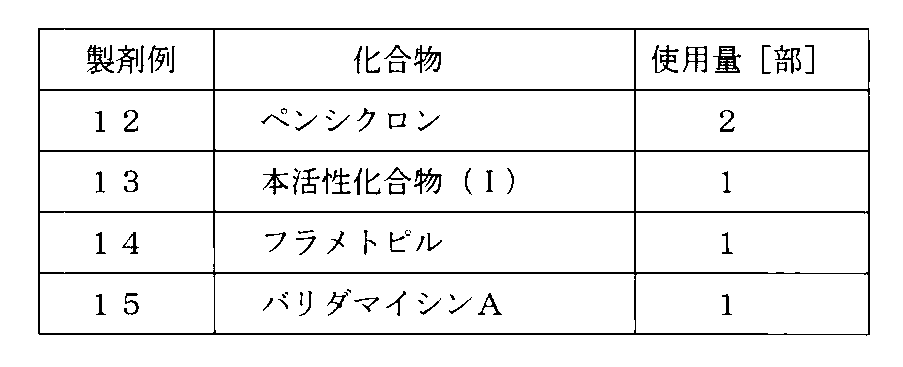
- Formulation Examples 12-15 It replaces with 2 parts of flutolanil, and except having applied each compound and usage-amount of the [Table 3] description, operation similar to the formulation example 11 is performed, and 100 parts of each wettable powder is obtained.
- Formulation Example 16 By thoroughly pulverizing and mixing 0.35 part of the present cyanamide compound, 0.5 part of methoxyphenozide, 2 parts of flutolanil, 10 parts of talc and the remainder of kaolin clay, 100 parts of a powder is obtained.
- Formulation Examples 17-20 It replaces with 2 parts of flutolanil, and except having applied each compound and usage-amount of the [Table 4] description, operation similar to the formulation example 16 is performed, and 100 parts of each powder agent is obtained.
- Formulation Example 21 By thoroughly pulverizing and mixing 0.35 part of the present cyanamide compound, 0.5 part of chromafenozide, 2 parts of flutolanil, 10 parts of talc and the remainder of kaolin clay, 100 parts of a powder is obtained.
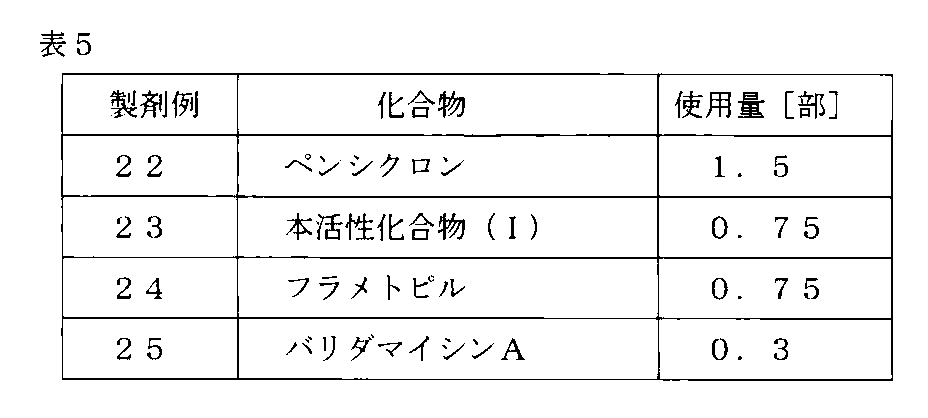
- Formulation Examples 22-25 It replaces with 2 parts of flutolanil, and except having applied each compound and usage-amount of [Table 5], operation similar to the formulation example 21 is performed, and 100 parts of each powder agent is obtained.
- Formulation Example 26 By thoroughly pulverizing and mixing 0.35 parts of the present cyanamide compound, 0.75 parts of tebufenozide, 2 parts of flutolanil, 10 parts of talc and the remainder of kaolin clay, 100 parts of a powder is obtained.
- Formulation Examples 27-30 It replaces with 2 parts of flutolanil, and except having applied each compound and usage-amount of the [Table 6] description, operation similar to the formulation example 26 is performed, and 100 parts of each powder agent is obtained.
- Formulation Example 31 By finely pulverizing 100 parts of a mixture of 2 parts of the present cyanamide compound, 4 parts of methoxyphenozide, 16 parts of flutolanil, 30 parts of white carbon containing 50 parts of polyoxyethylene alkyl ether sulfate ammonium salt and the remainder of the water by a wet grinding method, Obtain a flowable agent.
- white carbon containing 50 parts of polyoxyethylene alkyl ether sulfate ammonium salt means a 1: 1 weight ratio mixture of polyoxyethylene alkyl ether sulfate ammonium salt and white carbon.
- Formulation Examples 32-35 It replaces with 16 parts of flutolanil, and except having applied each compound and usage-amount of the [Table 7] description, operation similar to the formulation example 31 is performed, and 100 parts of each flowable agent is obtained.
- Formulation Example 36 By finely pulverizing 100 parts of a mixture obtained by mixing 2 parts of the present cyanamide compound, 4 parts of chromafenozide, 16 parts of flutolanil, 30 parts of white carbon containing 50 parts of polyoxyethylene alkyl ether sulfate ammonium salt and the remainder of water by a wet pulverization method, Obtain a flowable agent.
- Formulation Examples 37-40 It replaces with 16 parts of flutolanil, and except having applied each compound and usage-amount of the [Table 8] description, operation similar to the formulation example 36 is performed, and 100 parts of each flowable agent is obtained.
- Formulation Example 41 By finely pulverizing 100 parts of a mixture of 2 parts of the present cyanamide compound, 8 parts of tebufenozide, 16 parts of flutolanil, 30 parts of white carbon containing 50 parts of polyoxyethylene alkyl ether sulfate ammonium salt and the remainder of the water by a wet grinding method, Obtain a flowable agent.
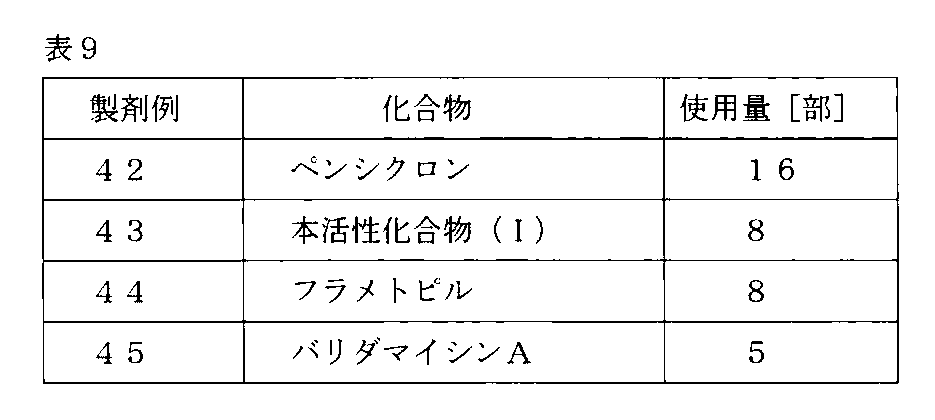
- Formulation Examples 42 to 45 It replaces with 16 parts of flutolanil, and except having applied each compound and usage-amount of [Table 9], operation similar to the formulation example 41 is performed, and 100 parts of each flowable agent is obtained. Next, the effect of the present invention will be shown by test examples.
- Test example 1 After dissolving 6 mg of this cyanamide compound in 0.2 ml of acetone (manufactured by Wako Pure Chemical Industries, Ltd.) each containing Sorgen TW-20 (manufactured by Daiichi Kogyo Seiyaku), a spreading agent (trade name: Dyne) (Registered trademark, manufactured by Sumika Takeda Horticulture) was diluted with water containing 0.02% by volume.
- a water diluted solution of the present cyanamide compound, an aqueous diluted solution of methoxyphenozide, chromafenozide or tebufenozide, and an aqueous diluted solution of flutolanil, pencyclon or the active compound (I) were mixed to prepare a test drug solution.
- 2.5 ml of paper pot planted rice (Oryza sativa, variety: Hoshino Yume) seedlings were sprayed with 10 ml of the test chemical per strain.
- the rice seedlings were air-dried and placed in a glass test tube (diameter 30 mm, height 200 mm) containing 4.8 ml of water.
- harmful arthropods can be controlled.
Landscapes
- Life Sciences & Earth Sciences (AREA)
- Agronomy & Crop Science (AREA)
- Pest Control & Pesticides (AREA)
- Plant Pathology (AREA)
- Health & Medical Sciences (AREA)
- Engineering & Computer Science (AREA)
- Dentistry (AREA)
- General Health & Medical Sciences (AREA)
- Wood Science & Technology (AREA)
- Zoology (AREA)
- Environmental Sciences (AREA)
- Agricultural Chemicals And Associated Chemicals (AREA)
Abstract
式(1)で示されるシアナミド化合物と、群(A)より選ばれる1種以上の昆虫成長制御化合物と、群(B)より選ばれる1種以上の紋枯病防除化合物とを含有する有害節足動物防除組成物。群(A):メトキシフェノジド、クロマフェノジド及びテブフェノジドからなる群。群(B):フルトラニル、ペンシクロン、N-[2-(1,3-ジメチルブチル)フェニル]-5-フルオロ-1,3-ジメチル-1H-ピラゾール-4-カルボキサミド、フラメトピル及びバリダマイシンAからなる群。
Description
本発明は、有害節足動物防除組成物及び有害節足動物の防除方法に関するものである。
有害節足動物防除組成物の有効成分として、多くの化合物が知られている(例えば、The Pesticide Manual−15th edition(BCPC刊);ISBN 978−1−901396−18−8参照)。有害節足動物防除組成物の有効成分として、
クロマフェノジド、
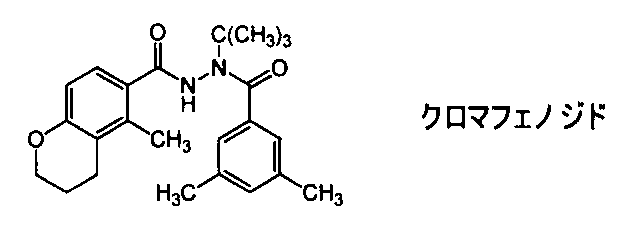 メトキシフェノジド
 及びテブフェノジド
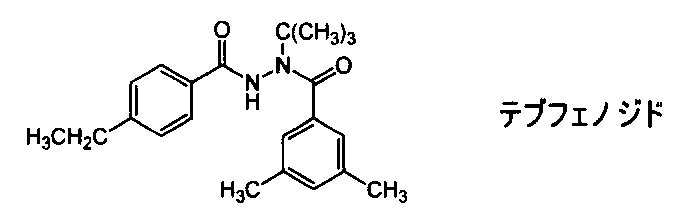 などが知られている。
クロマフェノジド、
本発明とは以下の[1]~[6]のものである。
[1] 式(1)
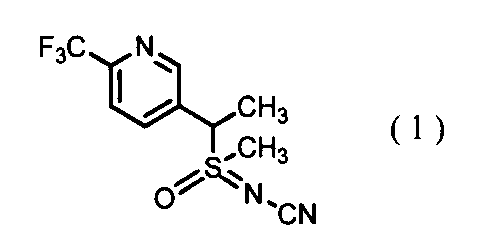 で示されるシアナミド化合物と、群(A)より選ばれる1種以上の昆虫成長制御化合物と、群(B)より選ばれる1種以上の紋枯病防除化合物とを含有する有害節足動物防除組成物。
群(A):メトキシフェノジド、クロマフェノジド及びテブフェノジドからなる群。
群(B):フルトラニル、ペンシクロン、N−[2−(1,3−ジメチルブチル)フェニル]−5−フルオロ−1,3−ジメチル−1H−ピラゾール−4−カルボキサミド、フラメトピル及びバリダマイシンAからなる群。
[2] シアナミド化合物と、昆虫成長制御化合物との重量比が、50:1~1:50である[1]記載の有害節足動物防除組成物。
[3] シアナミド化合物と、紋枯病防除化合物との重量比が、50:1~1:100である[1]または[2]記載の有害節足動物防除組成物。
[4] 紋枯病防除化合物が、フルトラニル、ペンシクロン又はN−[2−(1,3−ジメチルブチル)フェニル]−5−フルオロ−1,3−ジメチル−1H−ピラゾール−4−カルボキサミドである[1]~[3]いずれか一項記載の有害節足動物防除組成物。
[5] [1]~[4]いずれか一項記載の有害節足動物防除組成物の有効量を、植物又は植物の栽培地に施用する工程を含む有害節足動物の防除方法。
[6] 植物又は植物の栽培地に施用する工程が、イネ又はイネの栽培地に施用する工程である[5]記載の有害節足動物の防除方法。
[1] 式(1)
群(A):メトキシフェノジド、クロマフェノジド及びテブフェノジドからなる群。
群(B):フルトラニル、ペンシクロン、N−[2−(1,3−ジメチルブチル)フェニル]−5−フルオロ−1,3−ジメチル−1H−ピラゾール−4−カルボキサミド、フラメトピル及びバリダマイシンAからなる群。
[2] シアナミド化合物と、昆虫成長制御化合物との重量比が、50:1~1:50である[1]記載の有害節足動物防除組成物。
[3] シアナミド化合物と、紋枯病防除化合物との重量比が、50:1~1:100である[1]または[2]記載の有害節足動物防除組成物。
[4] 紋枯病防除化合物が、フルトラニル、ペンシクロン又はN−[2−(1,3−ジメチルブチル)フェニル]−5−フルオロ−1,3−ジメチル−1H−ピラゾール−4−カルボキサミドである[1]~[3]いずれか一項記載の有害節足動物防除組成物。
[5] [1]~[4]いずれか一項記載の有害節足動物防除組成物の有効量を、植物又は植物の栽培地に施用する工程を含む有害節足動物の防除方法。
[6] 植物又は植物の栽培地に施用する工程が、イネ又はイネの栽培地に施用する工程である[5]記載の有害節足動物の防除方法。
本発明の有害節足動物防除組成物とは、下記式(1)で示されるシアナミド化合物(以下、本シアナミド化合物と記す場合がある。)と、下記群(A)より選ばれる1種以上の昆虫成長制御化合物(以下、本昆虫成長制御化合物と記す場合がある。)と、下記群(B)より選ばれる1種以上の紋枯病防除化合物(以下、本紋枯病防除化合物と記す場合がある。)とを含有するものである。
 群(A):メトキシフェノジド、クロマフェノジド及びテブフェノジドからなる群。
群(B):フルトラニル、ペンシクロン、N−[2−(1,3−ジメチルブチル)フェニル]−5−フルオロ−1,3−ジメチル−1H−ピラゾール−4−カルボキサミド、フラメトピル及びバリダマイシンAからなる群。
本シアナミド化合物は公知の化合物であり、たとえば国際公開第2007/095229号パンフレットに記載された方法で製造することができる。
メトキシフェノジド、クロマフェノジド、テブフェノジド、フルトラニル、ペンシクロン、フラメトピル及びバリダマイシンAはいずれも公知の化合物であり、例えば「The Pesticide Manual−15th edition(BCPC刊);ISBN 978−1−901396−18−8」の764、211、1074、559、871、580及び1187ページ等に記載されている。これらの化合物は市販の製剤から得るか、公知の方法で製造することにより得られる。
N−[2−(1,3−ジメチルブチル)フェニル]−5−フルオロ−1,3−ジメチル−1H−ピラゾール−4−カルボキサミド(以下、本活性化合物(I)と記す。)は公知の化合物であり、例えば国際公開第2003/010149号パンフレットに記載された方法で製造することができる。
前記紋枯病防除化合物としては、フルトラニル、ペンシクロンおよび本活性化合物(I)が好ましい。
本発明の有害節足動物防除組成物における、本シアナミド化合物と本昆虫成長制御化合物と本紋枯病防除化合物との含有割合は、特に限定されるものではないが、本シアナミド化合物100重量部に対して、本昆虫成長制御化合物が、通常0.2~50000重量部、好ましくは2~5000重量部、より好ましくは5~2000重量部であり、本紋枯病防除化合物が、通常0.2~100000重量部、好ましくは2~10000重量部、より好ましくは5~5000重量部である。
本発明の有害節足動物防除組成物における本シアナミド化合物と本昆虫成長制御化合物との重量比(本シアナミド化合物:本昆虫成長制御化合物)は、通常500:1~1:500であり、好ましくは50:1~1:50であり、より好ましくは20:1~1:20である。
本発明の有害節足動物防除組成物における本シアナミド化合物と本紋枯病防除化合物との重量比(本シアナミド化合物:本紋枯病防除化合物)は、通常500:1~1:1000であり、好ましくは50:1~1:100であり、より好ましくは20:1~1:50である。
本発明の有害節足動物防除組成物は、本シアナミド化合物と本昆虫成長制御化合物と本紋枯病防除化合物とを単に混合したものでもよいが、通常は、本シアナミド化合物、本昆虫成長制御化合物及び本紋枯病防除化合物と不活性担体とを混合し、必要に応じて界面活性剤やその他の製剤用補助剤を添加して、油剤、乳剤、フロアブル剤、水和剤、顆粒水和剤、粉剤、粒剤等に製剤化されたものが用いられる。
製剤化された有害節足動物防除組成物は、そのまま又はその他の不活性成分(水、砂、植物油等)を添加して使用することができる。
本発明の有害節足動物防除組成物における、本シアナミド化合物、本昆虫成長制御化合物及び本紋枯病防除化合物の合計量は、通常0.01~99重量%、好ましくは0.1~90重量%、さらに好ましくは0.5~70重量%である。
不活性担体としては、固体担体、液体担体が挙げられる。
固体担体としては、例えばカオリンクレー、アッタパルジャイトクレー、ベントナイト、モンモリロナイト、酸性白土、パイロフィライト、タルク、珪藻土、方解石等の鉱物、トウモロコシ穂軸粉、クルミ殻粉等の天然有機物、尿素等の合成有機物、炭酸カルシウム、硫酸アンモニウム等の塩類、合成含水酸化珪素等の合成無機物等からなる微粉末あるいは粒状物等が挙げられる。
液体担体としては、例えばキシレン、アルキルベンゼン、メチルナフタレン等の芳香族炭化水素類、2−プロパノール、エチレングリコール、プロピレングリコール、エチレングリコールモノエチルエーテル等のアルコール類、アセトン、シクロヘキサノン、イソホロン等のケトン類、ダイズ油、綿実油等の植物油、石油系脂肪族炭化水素類、エステル類、ジメチルスルホキシド、アセトニトリル及び水等が挙げられる。
界面活性剤としては、例えばアルキル硫酸エステル塩、アルキルアリールスルホン酸塩、ジアルキルスルホコハク酸塩、ポリオキシエチレンアルキルアリールエーテルリン酸エステル塩、リグニンスルホン酸塩、ナフタレンスルホネートホルムアルデヒド重縮合物等の陰イオン界面活性剤及びポリオキシエチレンアルキルアリールエーテル、ポリオキシエチレンアルキルポリオキシプロピレンブロックコポリマー、ソルビタン脂肪酸エステル等の非イオン界面活性剤、及びアルキルトリメチルアンモニウム塩等の陽イオン界面活性剤が挙げられる。
その他の製剤用補助剤としては、例えばポリビニルアルコール、ポリビニルピロリドン等の水溶性高分子、アラビアガム、アルギン酸及びその塩、CMC(カルボキシメチルセルロース)、ザンサンガム等の多糖類、アルミニウムマグネシウムシリケート、アルミナゾル等の無機物、防腐剤、着色剤及びPAP(酸性リン酸イソプロピル)、BHT(ジブチルヒドロキシトルエン)等の安定化剤が挙げられる。
本発明の有害節足動物防除組成物は、植物に対して摂食、吸汁等の加害を行う有害節足動物による加害から植物を保護するために用いることができる。
本発明の有害節足動物防除組成物が防除効力を有する有害節足動物としては、例えば次のものが挙げられる。
半翅目害虫:ヒメトビウンカ(Laodelphax striatellus)、トビイロウンカ(Nilaparvata lugens)、セジロウンカ(Sogatella furcifera)等のウンカ類、ツマグロヨコバイ(Nephotettix cincticeps)、タイワンツマグロヨコバイ(Nephotettix virescens)、イナズマヨコバイ(Recilia dorsalis)、チャノミドリヒメヨコバイ(Empoasca onukii)等のヨコバイ類、ワタアブラムシ(Aphis gossypii)、モモアカアブラムシ(Myzus persicae)、ダイコンアブラムシ(Brevicoryne brassicae)、ユキヤナギアブラムシ(Aphis spiraecola)、チューリップヒゲナガアブラムシ(Macrosiphum euphorbiae)、ジャガイモヒゲナガアブラムシ(Aulacorthum solani)、ムギクビレアブラムシ(Rhopalosiphum padi)、ミカンクロアブラムシ(Toxoptera citricidus)、モモコフキアブラムシ(Hyalopterus pruni)、リンゴワタムシ(Eriosoma lanigerum)等のアブラムシ類、アオクサカメムシ(Nezara antennata)、アカヒゲホソミドリカスミカメ(Trigonotylus caelestialium)、アカスジカメムシ(Graphosoma rubrolineatum)、オオトゲシラホシカメムシ(Eysarcoris lewisi)、ホソハリカメムシ(Riptortus clavetus)、クモヘリカメムシ(Leptocorisa chinensis)、トゲシラホシカメムシ(Eysarcoris parvus)、クサギカメムシ(Halyomorpha mista)、ミナミアオカメムシ(Nezara viridula)、ターニシュトプラントバグ(Lygus lineolaris)等のカメムシ類、オンシツコナジラミ(Trialeurodes vaporariorum)、タバココナジラミ(Bemisia tabaci)、ミカンコナジラミ(Dialeurodes citri)、ミカントゲコナジラミ(Aleurocanthus spiniferus)等のコナジラミ類、アカマルカイガラムシ(Aonidiella aurantii)、サンホーゼカイガラムシ(Comstockaspis perniciosa)、シトラススノースケール(Unaspis citri)、ルビーロウムシ(Ceroplastes rubens)、イセリヤカイガラムシ(Icerya purchasi)、フジコナカイガラムシ(Planococcus kraunhiae)、クワコナカイガラムシ(Pseudococcus longispinis)、クワシロカイガラムシ(Pseudaulacaspis pentagona)等のカイガラムシ類、グンバイムシ類、トコジラミ(Cimex lectularius)等のトコジラミ類、ペアシラ(Cacopsylla pyricola)等のキジラミ類等。
鱗翅目害虫:ニカメイガ(Chilo suppressalis)、サンカメイガ(Tryporyza incertulas)、コブノメイガ(Cnaphalocrocis medinalis)、ワタノメイガ(Notarcha derogata)、ノシメマダラメイガ(Plodia interpunctella)、アワノメイガ(Ostrinia furnacalis)、ハイマダラノメイガ(Hellula undalis)、シバツトガ(Pediasia teterrellus)等のメイガ類、ハスモンヨトウ(Spodoptera litura)、シロイチモジヨトウ(Spodoptera exigua)、アワヨトウ(Pseudaletia separata)、イネヨトウ(Sesamia inferens)、ヨトウガ(Mamestra brassicae)、タマナヤガ(Agrotis ipsilon),タマナギンウワバ(Plusia nigrisigna)、イラクサギンウワバ(Trichoplusia ni)、トリコプルシア属、ヘリオティス属、ヘリコベルパ属等のヤガ類、モンシロチョウ(Pieris rapae)等のシロチョウ類、アドキソフィエス属、ナシヒメシンクイ(Grapholita molesta)、マメシンクイガ(Leguminivora glycinivorella),アズキサヤムシガ(Matsumuraeses azukivora)、リンゴコカクモンハマキ(Adoxophyes orana fasciata)、チャノコカクモンハマキ(Adoxophyes honmai)、チャハマキ(Homona magnanima)、ミダレカクモンハマキ(Archips fuscocupreanus)、コドリンガ(Cydia pomonella)等のハマキガ類、チャノホソガ(Caloptilia theivora)、キンモンホソガ(Phyllonorycter ringoneella)のホソガ類、モモシンクイガ(Carposina niponensis)等のシンクイガ類、リオネティア属等のハモグリガ類、リマントリア属、ユープロクティス属等のドクガ類、コナガ(Plutella xylostella)等のスガ類、ワタアカミムシ(Pectinophora gossypiella)ジャガイモガ(Phthorimaea operculella)等のキバガ類、アメリカシロヒトリ(Hyphantria cunea)等のヒトリガ類、イガ(Tinea translucens)、コイガ(Tineola bisselliella)等のヒロズコガ類、トゥタアブソリュータ(Tuta absoluta)等。
アザミウマ目害虫:ミカンキイロアザミウマ(Frankliniella occidentalis)、ミナミキイロアザミウマ(Thrips parmi)、チャノキイロアザミウマ(Scirtothrips dorsalis)、ネギアザミウマ(Thrips tabaci)、ヒラズハナアザミウマ(Frankliniella intonsa)、タバコアザミウマ(Frankliniella fusca)、オニオンスリップス(Thrips tabaci)、イネアザミウマ(Stenchaetothrips biformis)、イネクダアザミウマ(Haplothrips aculeatus)等のアザミウマ類等;
双翅目害虫:タマネギバエ(Hylemya antiqua)、タネバエ(Hylemya platura)、イネハモグリバエ(Agromyza oryzae)、イネヒメハモグリバエ(Hydrellia griseola)、イネキモグリバエ(Chlorops oryzae)、マメハモグリバエ(Liriomyza trifolii)等のハモグリバエ類、ウリミバエ(Dacus cucurbitae)、チチュウカイミバエ(Ceratitis capitata)等;
甲虫目害虫:ニジュウヤホシテントウ(Epilachna vigintioctopunctata)、ウリハムシ(Aulacophora femoralis)、キスジノミハムシ(Phyllotreta striolata)、イネドロオイムシ(Oulema oryzae)、イネゾウムシ(Echinocnemus squameus)、イネミズゾウムシ(Lissorhoptrus oryzophilus)、ワタミゾウムシ(Anthonomus grandis)、アズキゾウムシ(Callosobruchus chinensis)、シバオサゾウムシ(Sphenophorus venatus)、マメコガネ(Popillia japonica)、ドウガネブイブイ(Anomala cuprea)、コーンルートワームの仲間(Diabrotica spp.)、コロラドハムシ(Leptinotarsa decemlineata)、コメツキムシの仲間(Agriotes spp.)、タバコシバンムシ(Lasioderma serricorne)等;
直翅目害虫:ケラ(Gryllotalpa africana)、コバネイナゴ(Oxya yezoensis)、ハネナガイナゴ(Oxya japonica)等。
前記有害節足動物の中でも、好ましい例として、ウンカ類、ヨコバイ類、アブラムシ類、カメムシ類、イネミズゾウムシ、イネドロオイムシ、メイガ類、ヤガ類等を挙げることができる。
本発明の有害節足動物防除組成物は、イネの紋枯病(Rhizoctonia solani)等の植物病害を防除することもできる。
本発明の有害節足動物防除組成物は、畑、水田、乾田、芝生、果樹園等の農耕地又は非農耕地用にて用いることができる。また、本発明の有害節足動物防除組成物は、「植物」等を栽培する農耕地等において、当該農耕地の有害生物を防除するために使用することができる。
本発明の有害節足動物防除組成物を用いることができる植物としては、例えば次のものが挙げられる。
農作物:トウモロコシ、イネ、コムギ、オオムギ、ライムギ、エンバク、ソルガム、ワタ、ダイズ、ピーナッツ、ソバ、テンサイ、ナタネ、ヒマワリ、サトウキビ、タバコ等。
野菜;ナス科野菜(ナス、トマト、ピーマン、トウガラシ、ジャガイモ等)、ウリ科野菜(キュウリ、カボチャ、ズッキーニ、スイカ、メロン等)、アブラナ科野菜(ダイコン、カブ、セイヨウワサビ、コールラビ、ハクサイ、キャベツ、カラシナ、ブロッコリー、カリフラワー、アブラナ等)、キク科野菜(ゴボウ、シュンギク、アーティチョーク、レタス等)、ユリ科野菜(ネギ、タマネギ、ニンニク、アスパラガス等)、セリ科野菜(ニンジン、パセリ、セロリ、アメリカボウフウ等)、アカザ科野菜(ホウレンソウ、フダンソウ等)、シソ科野菜(シソ、ミント、バジル等)、イチゴ、サツマイモ、ヤマノイモ、サトイモ等。
果樹:仁果類(リンゴ、セイヨウナシ、ニホンナシ、カリン、マルメロ等)、核果類(モモ、スモモ、ネクタリン、ウメ、オウトウ、アンズ、プルーン等)、カンキツ類(ウンシュウミカン、オレンジ、レモン、ライム、グレープフルーツ等)、堅果類(クリ、クルミ、ハシバミ、アーモンド、ピスタチオ、カシューナッツ、マカダミアナッツ等)、液果類(ブルーベリー、クランベリー、ブラックベリー、ラズベリー等)、ブドウ、カキ、オリーブ、ビワ、バナナ、コーヒー、ナツメヤシ、ココヤシ、アブラヤシ等。
果樹以外の樹木:チャ、クワ、花木類(サツキ、ツバキ、アジサイ、サザンカ、シキミ、サクラ、ユリノキ、サルスベリ、キンモクセイ等)、街路樹(トネリコ、カバノキ、ハナミズキ、ユーカリ、イチョウ、ライラック、カエデ、カシ、ポプラ、ハナズオウ、フウ、プラタナス、ケヤキ、クロベ、モミノキ、ツガ、ネズ、マツ、トウヒ、イチイ、ニレ、トチノキ等)、サンゴジュ、イヌマキ、スギ、ヒノキ、クロトン、マサキ、カナメモチ、等。
芝生:シバ類(ノシバ、コウライシバ等)、バミューダグラス類(ギョウギシバ等)、ベントグラス類(コヌカグサ、ハイコヌカグサ、イトコヌカグサ等)、ブルーグラス類(ナガハグサ、オオスズメノカタビラ等)、フェスク類(オニウシノケグサ、イトウシノケグサ、ハイウシノケグサ等)、ライグラス類(ネズミムギ、ホソムギ等)、カモガヤ、オオアワガエリ等。
その他:花卉類(バラ、カーネーション、キク、トルコギキョウ、カスミソウ、ガーベラ、マリーゴールド、サルビア、ペチュニア、バーベナ、チューリップ、アスター、リンドウ、ユリ、パンジー、シクラメン、ラン、スズラン、ラベンダー、ストック、ハボタン、プリムラ、ポインセチア、グラジオラス、カトレア、デージー、シンビジューム、ベゴニア等)、バイオ燃料植物(ヤトロファ、ベニバナ、アマナズナ類、スイッチグラス、ミスカンサス、クサヨシ、ダンチク、ケナフ、キャッサバ、ヤナギ等)、観葉植物等。
前記植物の中でも、好ましい例として、トウモロコシ、コムギ、イネ等を挙げることができる。その中でも、特にイネが好ましい。
上記「植物」は、遺伝子組換え技術や交配による育種法により耐性を付与された植物であってもよい。
本発明の有害節足動物防除組成物は、植物又は植物の栽培地に施用すること等により、有害節足動物を防除することができる。ここで植物としては、植物の茎葉、植物の花、植物の実、植物の種子等に施用することができる。
本発明の有害節足動物の防除方法は、前記有害節足動物防除組成物の有効量を、植物又は植物の栽培地に施用する工程を含む。
本発明の有害節足動物の防除方法は、本発明の有害節足動物防除組成物を施用することにより行われる。具体的な施用方法としては、茎葉散布などの植物の茎葉への処理、植物の種子への処理、土壌処理、水面施用などの植物の栽培地への処理等が挙げられる。
植物の茎葉への処理としては、人力噴霧機、動力噴霧機、ブームスプレーヤ若しくはパンクルスプレーヤを用いて行う地上散布や、航空防除若しくは無人ヘリコプターを用いて行う空中散布等により、栽培されている植物の表面に処理する方法が挙げられる。
植物の種子への処理としては、浸漬処理、吹きつけ処理、塗沫処理、フィルムコート処理及びペレットコート処理等が挙げられる。
植物の栽培地への処理としては、植穴処理、株元処理、植溝処理、作条処理、全面処理、側条処理、育苗箱処理、苗床処理、培土混和、床土混和、ペースト肥料混和、水面処理、湛水散布等が挙げられる。
本発明の有害節足動物組成物を、植物又は植物の栽培地に施用する場合、その施用量は、植物の種類、防除対象である有害節足動物の種類や発生程度、製剤形態、処理時期、気象条件等によって変化させ得るが、本シアナミド化合物と本昆虫成長制御化合物と本紋枯病防除化合物との合計量として、当該植物を栽培する場所1000m2あたり通常0.5~3000g、好ましくは5~300gである。
本明細書において、有効量とは、本シアナミド化合物と本昆虫成長制御化合物と本紋枯病防除化合物との合計施用量であって、有害節足動物を防除するために必要な施用量を意味する。
本発明の有害節足動物組成物は、乳剤、水和剤、フロアブル剤等である場合、通常水で希釈して散布することにより施用される。この場合、本シアナミド化合物と本昆虫成長制御化合物と本紋枯病防除化合物との合計での濃度は、通常0.00001~10重量%、好ましくは0.0001~5重量%である。本発明の有害節足動物組成物は、粉剤、粒剤等である場合は、通常希釈することなくそのまま施用される。
群(B):フルトラニル、ペンシクロン、N−[2−(1,3−ジメチルブチル)フェニル]−5−フルオロ−1,3−ジメチル−1H−ピラゾール−4−カルボキサミド、フラメトピル及びバリダマイシンAからなる群。
本シアナミド化合物は公知の化合物であり、たとえば国際公開第2007/095229号パンフレットに記載された方法で製造することができる。
メトキシフェノジド、クロマフェノジド、テブフェノジド、フルトラニル、ペンシクロン、フラメトピル及びバリダマイシンAはいずれも公知の化合物であり、例えば「The Pesticide Manual−15th edition(BCPC刊);ISBN 978−1−901396−18−8」の764、211、1074、559、871、580及び1187ページ等に記載されている。これらの化合物は市販の製剤から得るか、公知の方法で製造することにより得られる。
N−[2−(1,3−ジメチルブチル)フェニル]−5−フルオロ−1,3−ジメチル−1H−ピラゾール−4−カルボキサミド(以下、本活性化合物(I)と記す。)は公知の化合物であり、例えば国際公開第2003/010149号パンフレットに記載された方法で製造することができる。
前記紋枯病防除化合物としては、フルトラニル、ペンシクロンおよび本活性化合物(I)が好ましい。
本発明の有害節足動物防除組成物における、本シアナミド化合物と本昆虫成長制御化合物と本紋枯病防除化合物との含有割合は、特に限定されるものではないが、本シアナミド化合物100重量部に対して、本昆虫成長制御化合物が、通常0.2~50000重量部、好ましくは2~5000重量部、より好ましくは5~2000重量部であり、本紋枯病防除化合物が、通常0.2~100000重量部、好ましくは2~10000重量部、より好ましくは5~5000重量部である。
本発明の有害節足動物防除組成物における本シアナミド化合物と本昆虫成長制御化合物との重量比(本シアナミド化合物:本昆虫成長制御化合物)は、通常500:1~1:500であり、好ましくは50:1~1:50であり、より好ましくは20:1~1:20である。
本発明の有害節足動物防除組成物における本シアナミド化合物と本紋枯病防除化合物との重量比(本シアナミド化合物:本紋枯病防除化合物)は、通常500:1~1:1000であり、好ましくは50:1~1:100であり、より好ましくは20:1~1:50である。
本発明の有害節足動物防除組成物は、本シアナミド化合物と本昆虫成長制御化合物と本紋枯病防除化合物とを単に混合したものでもよいが、通常は、本シアナミド化合物、本昆虫成長制御化合物及び本紋枯病防除化合物と不活性担体とを混合し、必要に応じて界面活性剤やその他の製剤用補助剤を添加して、油剤、乳剤、フロアブル剤、水和剤、顆粒水和剤、粉剤、粒剤等に製剤化されたものが用いられる。
製剤化された有害節足動物防除組成物は、そのまま又はその他の不活性成分(水、砂、植物油等)を添加して使用することができる。
本発明の有害節足動物防除組成物における、本シアナミド化合物、本昆虫成長制御化合物及び本紋枯病防除化合物の合計量は、通常0.01~99重量%、好ましくは0.1~90重量%、さらに好ましくは0.5~70重量%である。
不活性担体としては、固体担体、液体担体が挙げられる。
固体担体としては、例えばカオリンクレー、アッタパルジャイトクレー、ベントナイト、モンモリロナイト、酸性白土、パイロフィライト、タルク、珪藻土、方解石等の鉱物、トウモロコシ穂軸粉、クルミ殻粉等の天然有機物、尿素等の合成有機物、炭酸カルシウム、硫酸アンモニウム等の塩類、合成含水酸化珪素等の合成無機物等からなる微粉末あるいは粒状物等が挙げられる。
液体担体としては、例えばキシレン、アルキルベンゼン、メチルナフタレン等の芳香族炭化水素類、2−プロパノール、エチレングリコール、プロピレングリコール、エチレングリコールモノエチルエーテル等のアルコール類、アセトン、シクロヘキサノン、イソホロン等のケトン類、ダイズ油、綿実油等の植物油、石油系脂肪族炭化水素類、エステル類、ジメチルスルホキシド、アセトニトリル及び水等が挙げられる。
界面活性剤としては、例えばアルキル硫酸エステル塩、アルキルアリールスルホン酸塩、ジアルキルスルホコハク酸塩、ポリオキシエチレンアルキルアリールエーテルリン酸エステル塩、リグニンスルホン酸塩、ナフタレンスルホネートホルムアルデヒド重縮合物等の陰イオン界面活性剤及びポリオキシエチレンアルキルアリールエーテル、ポリオキシエチレンアルキルポリオキシプロピレンブロックコポリマー、ソルビタン脂肪酸エステル等の非イオン界面活性剤、及びアルキルトリメチルアンモニウム塩等の陽イオン界面活性剤が挙げられる。
その他の製剤用補助剤としては、例えばポリビニルアルコール、ポリビニルピロリドン等の水溶性高分子、アラビアガム、アルギン酸及びその塩、CMC(カルボキシメチルセルロース)、ザンサンガム等の多糖類、アルミニウムマグネシウムシリケート、アルミナゾル等の無機物、防腐剤、着色剤及びPAP(酸性リン酸イソプロピル)、BHT(ジブチルヒドロキシトルエン)等の安定化剤が挙げられる。
本発明の有害節足動物防除組成物は、植物に対して摂食、吸汁等の加害を行う有害節足動物による加害から植物を保護するために用いることができる。
本発明の有害節足動物防除組成物が防除効力を有する有害節足動物としては、例えば次のものが挙げられる。
半翅目害虫:ヒメトビウンカ(Laodelphax striatellus)、トビイロウンカ(Nilaparvata lugens)、セジロウンカ(Sogatella furcifera)等のウンカ類、ツマグロヨコバイ(Nephotettix cincticeps)、タイワンツマグロヨコバイ(Nephotettix virescens)、イナズマヨコバイ(Recilia dorsalis)、チャノミドリヒメヨコバイ(Empoasca onukii)等のヨコバイ類、ワタアブラムシ(Aphis gossypii)、モモアカアブラムシ(Myzus persicae)、ダイコンアブラムシ(Brevicoryne brassicae)、ユキヤナギアブラムシ(Aphis spiraecola)、チューリップヒゲナガアブラムシ(Macrosiphum euphorbiae)、ジャガイモヒゲナガアブラムシ(Aulacorthum solani)、ムギクビレアブラムシ(Rhopalosiphum padi)、ミカンクロアブラムシ(Toxoptera citricidus)、モモコフキアブラムシ(Hyalopterus pruni)、リンゴワタムシ(Eriosoma lanigerum)等のアブラムシ類、アオクサカメムシ(Nezara antennata)、アカヒゲホソミドリカスミカメ(Trigonotylus caelestialium)、アカスジカメムシ(Graphosoma rubrolineatum)、オオトゲシラホシカメムシ(Eysarcoris lewisi)、ホソハリカメムシ(Riptortus clavetus)、クモヘリカメムシ(Leptocorisa chinensis)、トゲシラホシカメムシ(Eysarcoris parvus)、クサギカメムシ(Halyomorpha mista)、ミナミアオカメムシ(Nezara viridula)、ターニシュトプラントバグ(Lygus lineolaris)等のカメムシ類、オンシツコナジラミ(Trialeurodes vaporariorum)、タバココナジラミ(Bemisia tabaci)、ミカンコナジラミ(Dialeurodes citri)、ミカントゲコナジラミ(Aleurocanthus spiniferus)等のコナジラミ類、アカマルカイガラムシ(Aonidiella aurantii)、サンホーゼカイガラムシ(Comstockaspis perniciosa)、シトラススノースケール(Unaspis citri)、ルビーロウムシ(Ceroplastes rubens)、イセリヤカイガラムシ(Icerya purchasi)、フジコナカイガラムシ(Planococcus kraunhiae)、クワコナカイガラムシ(Pseudococcus longispinis)、クワシロカイガラムシ(Pseudaulacaspis pentagona)等のカイガラムシ類、グンバイムシ類、トコジラミ(Cimex lectularius)等のトコジラミ類、ペアシラ(Cacopsylla pyricola)等のキジラミ類等。
鱗翅目害虫:ニカメイガ(Chilo suppressalis)、サンカメイガ(Tryporyza incertulas)、コブノメイガ(Cnaphalocrocis medinalis)、ワタノメイガ(Notarcha derogata)、ノシメマダラメイガ(Plodia interpunctella)、アワノメイガ(Ostrinia furnacalis)、ハイマダラノメイガ(Hellula undalis)、シバツトガ(Pediasia teterrellus)等のメイガ類、ハスモンヨトウ(Spodoptera litura)、シロイチモジヨトウ(Spodoptera exigua)、アワヨトウ(Pseudaletia separata)、イネヨトウ(Sesamia inferens)、ヨトウガ(Mamestra brassicae)、タマナヤガ(Agrotis ipsilon),タマナギンウワバ(Plusia nigrisigna)、イラクサギンウワバ(Trichoplusia ni)、トリコプルシア属、ヘリオティス属、ヘリコベルパ属等のヤガ類、モンシロチョウ(Pieris rapae)等のシロチョウ類、アドキソフィエス属、ナシヒメシンクイ(Grapholita molesta)、マメシンクイガ(Leguminivora glycinivorella),アズキサヤムシガ(Matsumuraeses azukivora)、リンゴコカクモンハマキ(Adoxophyes orana fasciata)、チャノコカクモンハマキ(Adoxophyes honmai)、チャハマキ(Homona magnanima)、ミダレカクモンハマキ(Archips fuscocupreanus)、コドリンガ(Cydia pomonella)等のハマキガ類、チャノホソガ(Caloptilia theivora)、キンモンホソガ(Phyllonorycter ringoneella)のホソガ類、モモシンクイガ(Carposina niponensis)等のシンクイガ類、リオネティア属等のハモグリガ類、リマントリア属、ユープロクティス属等のドクガ類、コナガ(Plutella xylostella)等のスガ類、ワタアカミムシ(Pectinophora gossypiella)ジャガイモガ(Phthorimaea operculella)等のキバガ類、アメリカシロヒトリ(Hyphantria cunea)等のヒトリガ類、イガ(Tinea translucens)、コイガ(Tineola bisselliella)等のヒロズコガ類、トゥタアブソリュータ(Tuta absoluta)等。
アザミウマ目害虫:ミカンキイロアザミウマ(Frankliniella occidentalis)、ミナミキイロアザミウマ(Thrips parmi)、チャノキイロアザミウマ(Scirtothrips dorsalis)、ネギアザミウマ(Thrips tabaci)、ヒラズハナアザミウマ(Frankliniella intonsa)、タバコアザミウマ(Frankliniella fusca)、オニオンスリップス(Thrips tabaci)、イネアザミウマ(Stenchaetothrips biformis)、イネクダアザミウマ(Haplothrips aculeatus)等のアザミウマ類等;
双翅目害虫:タマネギバエ(Hylemya antiqua)、タネバエ(Hylemya platura)、イネハモグリバエ(Agromyza oryzae)、イネヒメハモグリバエ(Hydrellia griseola)、イネキモグリバエ(Chlorops oryzae)、マメハモグリバエ(Liriomyza trifolii)等のハモグリバエ類、ウリミバエ(Dacus cucurbitae)、チチュウカイミバエ(Ceratitis capitata)等;
甲虫目害虫:ニジュウヤホシテントウ(Epilachna vigintioctopunctata)、ウリハムシ(Aulacophora femoralis)、キスジノミハムシ(Phyllotreta striolata)、イネドロオイムシ(Oulema oryzae)、イネゾウムシ(Echinocnemus squameus)、イネミズゾウムシ(Lissorhoptrus oryzophilus)、ワタミゾウムシ(Anthonomus grandis)、アズキゾウムシ(Callosobruchus chinensis)、シバオサゾウムシ(Sphenophorus venatus)、マメコガネ(Popillia japonica)、ドウガネブイブイ(Anomala cuprea)、コーンルートワームの仲間(Diabrotica spp.)、コロラドハムシ(Leptinotarsa decemlineata)、コメツキムシの仲間(Agriotes spp.)、タバコシバンムシ(Lasioderma serricorne)等;
直翅目害虫:ケラ(Gryllotalpa africana)、コバネイナゴ(Oxya yezoensis)、ハネナガイナゴ(Oxya japonica)等。
前記有害節足動物の中でも、好ましい例として、ウンカ類、ヨコバイ類、アブラムシ類、カメムシ類、イネミズゾウムシ、イネドロオイムシ、メイガ類、ヤガ類等を挙げることができる。
本発明の有害節足動物防除組成物は、イネの紋枯病(Rhizoctonia solani)等の植物病害を防除することもできる。
本発明の有害節足動物防除組成物は、畑、水田、乾田、芝生、果樹園等の農耕地又は非農耕地用にて用いることができる。また、本発明の有害節足動物防除組成物は、「植物」等を栽培する農耕地等において、当該農耕地の有害生物を防除するために使用することができる。
本発明の有害節足動物防除組成物を用いることができる植物としては、例えば次のものが挙げられる。
農作物:トウモロコシ、イネ、コムギ、オオムギ、ライムギ、エンバク、ソルガム、ワタ、ダイズ、ピーナッツ、ソバ、テンサイ、ナタネ、ヒマワリ、サトウキビ、タバコ等。
野菜;ナス科野菜(ナス、トマト、ピーマン、トウガラシ、ジャガイモ等)、ウリ科野菜(キュウリ、カボチャ、ズッキーニ、スイカ、メロン等)、アブラナ科野菜(ダイコン、カブ、セイヨウワサビ、コールラビ、ハクサイ、キャベツ、カラシナ、ブロッコリー、カリフラワー、アブラナ等)、キク科野菜(ゴボウ、シュンギク、アーティチョーク、レタス等)、ユリ科野菜(ネギ、タマネギ、ニンニク、アスパラガス等)、セリ科野菜(ニンジン、パセリ、セロリ、アメリカボウフウ等)、アカザ科野菜(ホウレンソウ、フダンソウ等)、シソ科野菜(シソ、ミント、バジル等)、イチゴ、サツマイモ、ヤマノイモ、サトイモ等。
果樹:仁果類(リンゴ、セイヨウナシ、ニホンナシ、カリン、マルメロ等)、核果類(モモ、スモモ、ネクタリン、ウメ、オウトウ、アンズ、プルーン等)、カンキツ類(ウンシュウミカン、オレンジ、レモン、ライム、グレープフルーツ等)、堅果類(クリ、クルミ、ハシバミ、アーモンド、ピスタチオ、カシューナッツ、マカダミアナッツ等)、液果類(ブルーベリー、クランベリー、ブラックベリー、ラズベリー等)、ブドウ、カキ、オリーブ、ビワ、バナナ、コーヒー、ナツメヤシ、ココヤシ、アブラヤシ等。
果樹以外の樹木:チャ、クワ、花木類(サツキ、ツバキ、アジサイ、サザンカ、シキミ、サクラ、ユリノキ、サルスベリ、キンモクセイ等)、街路樹(トネリコ、カバノキ、ハナミズキ、ユーカリ、イチョウ、ライラック、カエデ、カシ、ポプラ、ハナズオウ、フウ、プラタナス、ケヤキ、クロベ、モミノキ、ツガ、ネズ、マツ、トウヒ、イチイ、ニレ、トチノキ等)、サンゴジュ、イヌマキ、スギ、ヒノキ、クロトン、マサキ、カナメモチ、等。
芝生:シバ類(ノシバ、コウライシバ等)、バミューダグラス類(ギョウギシバ等)、ベントグラス類(コヌカグサ、ハイコヌカグサ、イトコヌカグサ等)、ブルーグラス類(ナガハグサ、オオスズメノカタビラ等)、フェスク類(オニウシノケグサ、イトウシノケグサ、ハイウシノケグサ等)、ライグラス類(ネズミムギ、ホソムギ等)、カモガヤ、オオアワガエリ等。
その他:花卉類(バラ、カーネーション、キク、トルコギキョウ、カスミソウ、ガーベラ、マリーゴールド、サルビア、ペチュニア、バーベナ、チューリップ、アスター、リンドウ、ユリ、パンジー、シクラメン、ラン、スズラン、ラベンダー、ストック、ハボタン、プリムラ、ポインセチア、グラジオラス、カトレア、デージー、シンビジューム、ベゴニア等)、バイオ燃料植物(ヤトロファ、ベニバナ、アマナズナ類、スイッチグラス、ミスカンサス、クサヨシ、ダンチク、ケナフ、キャッサバ、ヤナギ等)、観葉植物等。
前記植物の中でも、好ましい例として、トウモロコシ、コムギ、イネ等を挙げることができる。その中でも、特にイネが好ましい。
上記「植物」は、遺伝子組換え技術や交配による育種法により耐性を付与された植物であってもよい。
本発明の有害節足動物防除組成物は、植物又は植物の栽培地に施用すること等により、有害節足動物を防除することができる。ここで植物としては、植物の茎葉、植物の花、植物の実、植物の種子等に施用することができる。
本発明の有害節足動物の防除方法は、前記有害節足動物防除組成物の有効量を、植物又は植物の栽培地に施用する工程を含む。
本発明の有害節足動物の防除方法は、本発明の有害節足動物防除組成物を施用することにより行われる。具体的な施用方法としては、茎葉散布などの植物の茎葉への処理、植物の種子への処理、土壌処理、水面施用などの植物の栽培地への処理等が挙げられる。
植物の茎葉への処理としては、人力噴霧機、動力噴霧機、ブームスプレーヤ若しくはパンクルスプレーヤを用いて行う地上散布や、航空防除若しくは無人ヘリコプターを用いて行う空中散布等により、栽培されている植物の表面に処理する方法が挙げられる。
植物の種子への処理としては、浸漬処理、吹きつけ処理、塗沫処理、フィルムコート処理及びペレットコート処理等が挙げられる。
植物の栽培地への処理としては、植穴処理、株元処理、植溝処理、作条処理、全面処理、側条処理、育苗箱処理、苗床処理、培土混和、床土混和、ペースト肥料混和、水面処理、湛水散布等が挙げられる。
本発明の有害節足動物組成物を、植物又は植物の栽培地に施用する場合、その施用量は、植物の種類、防除対象である有害節足動物の種類や発生程度、製剤形態、処理時期、気象条件等によって変化させ得るが、本シアナミド化合物と本昆虫成長制御化合物と本紋枯病防除化合物との合計量として、当該植物を栽培する場所1000m2あたり通常0.5~3000g、好ましくは5~300gである。
本明細書において、有効量とは、本シアナミド化合物と本昆虫成長制御化合物と本紋枯病防除化合物との合計施用量であって、有害節足動物を防除するために必要な施用量を意味する。
本発明の有害節足動物組成物は、乳剤、水和剤、フロアブル剤等である場合、通常水で希釈して散布することにより施用される。この場合、本シアナミド化合物と本昆虫成長制御化合物と本紋枯病防除化合物との合計での濃度は、通常0.00001~10重量%、好ましくは0.0001~5重量%である。本発明の有害節足動物組成物は、粉剤、粒剤等である場合は、通常希釈することなくそのまま施用される。
以下、本発明を製剤例及び試験例にてさらに詳しく説明するが、本発明は以下の例のみに限定されるものではない。なお、以下の例において、部は特にことわりの無い限り重量部を表す。
まず、製剤例を示す。
製剤例1
本シアナミド化合物5部、メトキシフェノジド20部及びフルトラニル2部を、ラウリル硫酸ナトリウム4部、リグニンスルホン酸カルシウム2部、合成含水酸化珪素微粉末20部及び珪藻土残部を混合した中に加え、よく攪拌混合して水和剤100部を得る。
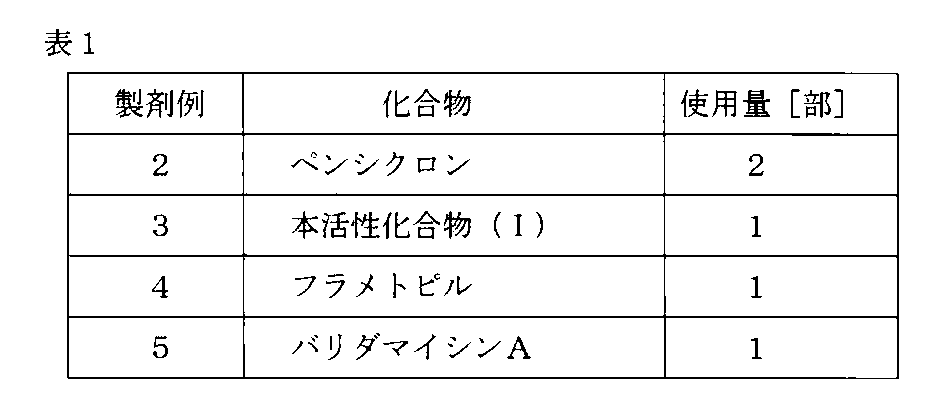
製剤例2~5
フルトラニル2部に代えて、[表1]記載のそれぞれの化合物及び使用量を適用した以外は製剤例1と同様の操作を行い、それぞれの水和剤100部を得る。
製剤例6
本シアナミド化合物5部、クロマフェノジド20部及びフルトラニル2部を、ラウリル硫酸ナトリウム4部、リグニンスルホン酸カルシウム2部、合成含水酸化珪素微粉末20部及び珪藻土残部を混合した中に加え、よく攪拌混合して水和剤100部を得る。
製剤例7~10
フルトラニル2部に代えて、[表2]記載のそれぞれの化合物及び使用量を適用した以外は製剤例6と同様の操作を行い、それぞれの水和剤100部を得る。

製剤例11
本シアナミド化合物5部、テブフェノジド40部及びフルトラニル2部を、ラウリル硫酸ナトリウム4部、リグニンスルホン酸カルシウム2部、合成含水酸化珪素微粉末20部及び珪藻土残部を混合した中に加え、よく攪拌混合して水和剤100部を得る。
製剤例12~15
フルトラニル2部に代えて、[表3]記載のそれぞれの化合物及び使用量を適用した以外は製剤例11と同様の操作を行い、それぞれの水和剤100部を得る。

 製剤例16
製剤例16
本シアナミド化合物0.35部、メトキシフェノジド0.5部、フルトラニル2部、タルク10部及びカオリンクレー残部をよく粉砕混合することにより粉剤100部を得る。
製剤例17~20
フルトラニル2部に代えて、[表4]記載のそれぞれの化合物及び使用量を適用した以外は製剤例16と同様の操作を行い、それぞれの粉剤100部を得る。

製剤例21
本シアナミド化合物0.35部、クロマフェノジド0.5部、フルトラニル2部、タルク10部及びカオリンクレー残部をよく粉砕混合することにより粉剤100部を得る。
製剤例22~25
フルトラニル2部に代えて、[表5]記載のそれぞれの化合物及び使用量を適用した以外は製剤例21と同様の操作を行い、それぞれの粉剤100部を得る。
製剤例26
本シアナミド化合物0.35部、テブフェノジド0.75部、フルトラニル2部、タルク10部及びカオリンクレー残部をよく粉砕混合することにより粉剤100部を得る。
製剤例27~30
フルトラニル2部に代えて、[表6]記載のそれぞれの化合物及び使用量を適用した以外は製剤例26と同様の操作を行い、それぞれの粉剤100部を得る。

製剤例31
本シアナミド化合物2部、メトキシフェノジド4部、フルトラニル16部、ポリオキシエチレンアルキルエーテルサルフェートアンモニウム塩50部を含むホワイトカーボン30部及び水残部を混合した混合物100部を湿式粉砕法で微粉砕することにより、フロアブル剤を得る。
本明細書において、ポリオキシエチレンアルキルエーテルサルフェートアンモニウム塩50部を含むホワイトカーボンとは、ポリオキシエチレンアルキルエーテルサルフェートアンモニウム塩とホワイトカーボンとの重量比1:1の混合物を意味する。
製剤例32~35
フルトラニル16部に代えて、[表7]記載のそれぞれの化合物及び使用量を適用した以外は製剤例31と同様の操作を行い、それぞれのフロアブル剤100部を得る。

製剤例36
本シアナミド化合物2部、クロマフェノジド4部、フルトラニル16部、ポリオキシエチレンアルキルエーテルサルフェートアンモニウム塩50部を含むホワイトカーボン30部及び水残部を混合した混合物100部を湿式粉砕法で微粉砕することにより、フロアブル剤を得る。
製剤例37~40
フルトラニル16部に代えて、[表8]記載のそれぞれの化合物及び使用量を適用した以外は製剤例36と同様の操作を行い、それぞれのフロアブル剤100部を得る。

製剤例41
本シアナミド化合物2部、テブフェノジド8部、フルトラニル16部、ポリオキシエチレンアルキルエーテルサルフェートアンモニウム塩50部を含むホワイトカーボン30部及び水残部を混合した混合物100部を湿式粉砕法で微粉砕することにより、フロアブル剤を得る。
製剤例42~45
フルトラニル16部に代えて、[表9]記載のそれぞれの化合物及び使用量を適用した以外は製剤例41と同様の操作を行い、それぞれのフロアブル剤100部を得る。
次に、本発明の効果を試験例にて示す。
試験例1
本シアナミド化合物6mgを、それぞれソルゲンTW−20(第一工業製薬製)を含むアセトン(和光純薬工業製)0.2mlに溶解した後、所定濃度になるように展着剤(商品名:ダイン(登録商標)、住化タケダ園芸製)0.02容量%を含有する水で希釈した。メトキシフェノジド、クロマフェノジド、テブフェノジド、フルトラニル、ペンシクロン及び本活性化合物(I)3mgを、それぞれソルゲンTW−20(第一工業製薬製)を含むアセトン(和光純薬工業製)0.2mlに溶解した後、所定濃度になるように展着剤(商品名:ダイン(登録商標)、住化タケダ園芸製)0.02容量%を含有する水で希釈した。
本シアナミド化合物の水希釈液と、メトキシフェノジド、クロマフェノジド又はテブフェノジドの水希釈液と、フルトラニル、ペンシクロン又は本活性化合物(I)の水希釈液とを混合し、試験用薬液を調製した。
2.5葉期のペーパーポット植えイネ(Oryza sativa、品種:ほしのゆめ)稚苗に、前記試験用薬液を株あたり10ml散布した。このイネ稚苗を風乾後、水を4.8ml入れたガラス製試験管(直径30mm、高さ200mm)に入れた。その試験管の中にトビイロウンカの3齢幼虫を10頭ずつ放飼し、室内(25℃、湿度55%)に置き、処理区とした。
前記試験用薬液を散布していない2.5葉期のペーパーポット植えイネ(Oryza sativa、品種:ほしのゆめ)稚苗と水4.8mlとを入れたガラス製試験管(直径30mm、高さ200mm)に、処理区と同様にトビイロウンカの3齢幼虫を放飼し、室内に置き、無処理区とした。
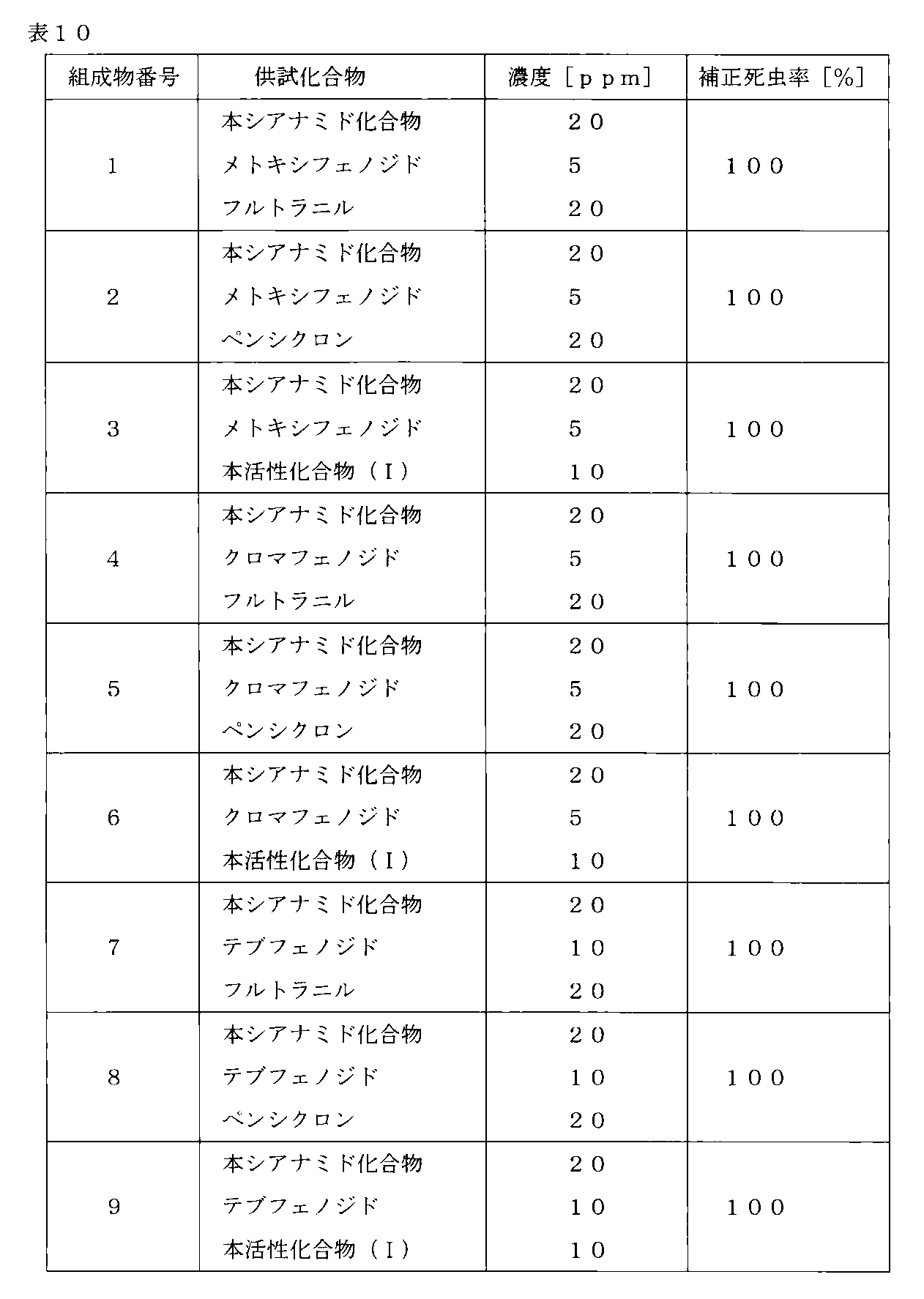
処理区、無処理区共に、放飼開始より5日後に供試した幼虫の生死を観察した。これらの観察結果から、式1)によって死虫率、式2)によって補正死虫率を算出した。なお、試験は2反復で行った。その平均値を表10に示す。
式1)死虫率(%)=(供試虫数−生存虫数)/供試虫数×100
式2)補正死虫率(%)={(処理区死虫率−無処理区死虫率)/(100−無処理区死虫率)}×100
まず、製剤例を示す。
製剤例1
本シアナミド化合物5部、メトキシフェノジド20部及びフルトラニル2部を、ラウリル硫酸ナトリウム4部、リグニンスルホン酸カルシウム2部、合成含水酸化珪素微粉末20部及び珪藻土残部を混合した中に加え、よく攪拌混合して水和剤100部を得る。
製剤例2~5
フルトラニル2部に代えて、[表1]記載のそれぞれの化合物及び使用量を適用した以外は製剤例1と同様の操作を行い、それぞれの水和剤100部を得る。
本シアナミド化合物5部、クロマフェノジド20部及びフルトラニル2部を、ラウリル硫酸ナトリウム4部、リグニンスルホン酸カルシウム2部、合成含水酸化珪素微粉末20部及び珪藻土残部を混合した中に加え、よく攪拌混合して水和剤100部を得る。
製剤例7~10
フルトラニル2部に代えて、[表2]記載のそれぞれの化合物及び使用量を適用した以外は製剤例6と同様の操作を行い、それぞれの水和剤100部を得る。
本シアナミド化合物5部、テブフェノジド40部及びフルトラニル2部を、ラウリル硫酸ナトリウム4部、リグニンスルホン酸カルシウム2部、合成含水酸化珪素微粉末20部及び珪藻土残部を混合した中に加え、よく攪拌混合して水和剤100部を得る。
製剤例12~15
フルトラニル2部に代えて、[表3]記載のそれぞれの化合物及び使用量を適用した以外は製剤例11と同様の操作を行い、それぞれの水和剤100部を得る。
本シアナミド化合物0.35部、メトキシフェノジド0.5部、フルトラニル2部、タルク10部及びカオリンクレー残部をよく粉砕混合することにより粉剤100部を得る。
製剤例17~20
フルトラニル2部に代えて、[表4]記載のそれぞれの化合物及び使用量を適用した以外は製剤例16と同様の操作を行い、それぞれの粉剤100部を得る。
本シアナミド化合物0.35部、クロマフェノジド0.5部、フルトラニル2部、タルク10部及びカオリンクレー残部をよく粉砕混合することにより粉剤100部を得る。
製剤例22~25
フルトラニル2部に代えて、[表5]記載のそれぞれの化合物及び使用量を適用した以外は製剤例21と同様の操作を行い、それぞれの粉剤100部を得る。
本シアナミド化合物0.35部、テブフェノジド0.75部、フルトラニル2部、タルク10部及びカオリンクレー残部をよく粉砕混合することにより粉剤100部を得る。
製剤例27~30
フルトラニル2部に代えて、[表6]記載のそれぞれの化合物及び使用量を適用した以外は製剤例26と同様の操作を行い、それぞれの粉剤100部を得る。
本シアナミド化合物2部、メトキシフェノジド4部、フルトラニル16部、ポリオキシエチレンアルキルエーテルサルフェートアンモニウム塩50部を含むホワイトカーボン30部及び水残部を混合した混合物100部を湿式粉砕法で微粉砕することにより、フロアブル剤を得る。
本明細書において、ポリオキシエチレンアルキルエーテルサルフェートアンモニウム塩50部を含むホワイトカーボンとは、ポリオキシエチレンアルキルエーテルサルフェートアンモニウム塩とホワイトカーボンとの重量比1:1の混合物を意味する。
製剤例32~35
フルトラニル16部に代えて、[表7]記載のそれぞれの化合物及び使用量を適用した以外は製剤例31と同様の操作を行い、それぞれのフロアブル剤100部を得る。
本シアナミド化合物2部、クロマフェノジド4部、フルトラニル16部、ポリオキシエチレンアルキルエーテルサルフェートアンモニウム塩50部を含むホワイトカーボン30部及び水残部を混合した混合物100部を湿式粉砕法で微粉砕することにより、フロアブル剤を得る。
製剤例37~40
フルトラニル16部に代えて、[表8]記載のそれぞれの化合物及び使用量を適用した以外は製剤例36と同様の操作を行い、それぞれのフロアブル剤100部を得る。
本シアナミド化合物2部、テブフェノジド8部、フルトラニル16部、ポリオキシエチレンアルキルエーテルサルフェートアンモニウム塩50部を含むホワイトカーボン30部及び水残部を混合した混合物100部を湿式粉砕法で微粉砕することにより、フロアブル剤を得る。
製剤例42~45
フルトラニル16部に代えて、[表9]記載のそれぞれの化合物及び使用量を適用した以外は製剤例41と同様の操作を行い、それぞれのフロアブル剤100部を得る。
試験例1
本シアナミド化合物6mgを、それぞれソルゲンTW−20(第一工業製薬製)を含むアセトン(和光純薬工業製)0.2mlに溶解した後、所定濃度になるように展着剤(商品名:ダイン(登録商標)、住化タケダ園芸製)0.02容量%を含有する水で希釈した。メトキシフェノジド、クロマフェノジド、テブフェノジド、フルトラニル、ペンシクロン及び本活性化合物(I)3mgを、それぞれソルゲンTW−20(第一工業製薬製)を含むアセトン(和光純薬工業製)0.2mlに溶解した後、所定濃度になるように展着剤(商品名:ダイン(登録商標)、住化タケダ園芸製)0.02容量%を含有する水で希釈した。
本シアナミド化合物の水希釈液と、メトキシフェノジド、クロマフェノジド又はテブフェノジドの水希釈液と、フルトラニル、ペンシクロン又は本活性化合物(I)の水希釈液とを混合し、試験用薬液を調製した。
2.5葉期のペーパーポット植えイネ(Oryza sativa、品種:ほしのゆめ)稚苗に、前記試験用薬液を株あたり10ml散布した。このイネ稚苗を風乾後、水を4.8ml入れたガラス製試験管(直径30mm、高さ200mm)に入れた。その試験管の中にトビイロウンカの3齢幼虫を10頭ずつ放飼し、室内(25℃、湿度55%)に置き、処理区とした。
前記試験用薬液を散布していない2.5葉期のペーパーポット植えイネ(Oryza sativa、品種:ほしのゆめ)稚苗と水4.8mlとを入れたガラス製試験管(直径30mm、高さ200mm)に、処理区と同様にトビイロウンカの3齢幼虫を放飼し、室内に置き、無処理区とした。
処理区、無処理区共に、放飼開始より5日後に供試した幼虫の生死を観察した。これらの観察結果から、式1)によって死虫率、式2)によって補正死虫率を算出した。なお、試験は2反復で行った。その平均値を表10に示す。
式1)死虫率(%)=(供試虫数−生存虫数)/供試虫数×100
式2)補正死虫率(%)={(処理区死虫率−無処理区死虫率)/(100−無処理区死虫率)}×100
本発明により、有害節足動物を防除することができる。
Claims (6)
- 式(1)
で示されるシアナミド化合物と、群(A)より選ばれる1種以上の昆虫成長制御化合物と、群(B)より選ばれる1種以上の紋枯病防除化合物とを含有する有害節足動物防除組成物。
群(A):メトキシフェノジド、クロマフェノジド及びテブフェノジドからなる群。
群(B):フルトラニル、ペンシクロン、N−[2−(1,3−ジメチルブチル)フェニル]−5−フルオロ−1,3−ジメチル−1H−ピラゾール−4−カルボキサミド、フラメトピル及びバリダマイシンAからなる群。 - シアナミド化合物と、昆虫成長制御化合物との重量比が、50:1~1:50である請求項1記載の有害節足動物防除組成物。
- シアナミド化合物と、紋枯病防除化合物との重量比が、50:1~1:100である請求項1または2記載の有害節足動物防除組成物。
- 紋枯病防除化合物が、フルトラニル、ペンシクロン又はN−[2−(1,3−ジメチルブチル)フェニル]−5−フルオロ−1,3−ジメチル−1H−ピラゾール−4−カルボキサミドである請求項1~3いずれか一項記載の有害節足動物防除組成物。
- 請求項1~4いずれか一項記載の有害節足動物防除組成物の有効量を、植物又は植物の栽培地に施用する工程を含む有害節足動物の防除方法。
- 植物又は植物の栽培地に施用する工程が、イネ又はイネの栽培地に施用する工程である請求項5記載の有害節足動物の防除方法。
Priority Applications (2)
| Application Number | Priority Date | Filing Date | Title |
|---|---|---|---|
| KR1020137029980A KR101879902B1 (ko) | 2011-04-15 | 2012-03-28 | 유해 생물 방제 조성물 및 유해 생물의 방제 방법 |
| CN2012800179701A CN103458693A (zh) | 2011-04-15 | 2012-03-28 | 有害生物防除组合物以及有害生物的防除方法 |
Applications Claiming Priority (2)
| Application Number | Priority Date | Filing Date | Title |
|---|---|---|---|
| JP2011090796A JP5776293B2 (ja) | 2011-04-15 | 2011-04-15 | 有害節足動物防除組成物及び有害節足動物の防除方法 |
| JP2011-090796 | 2011-04-15 |
Publications (1)
| Publication Number | Publication Date |
|---|---|
| WO2012141049A1 true WO2012141049A1 (ja) | 2012-10-18 |
Family
ID=47009228
Family Applications (1)
| Application Number | Title | Priority Date | Filing Date |
|---|---|---|---|
| PCT/JP2012/059133 Ceased WO2012141049A1 (ja) | 2011-04-15 | 2012-03-28 | 有害生物防除組成物及び有害生物の防除方法 |
Country Status (5)
| Country | Link |
|---|---|
| JP (1) | JP5776293B2 (ja) |
| KR (1) | KR101879902B1 (ja) |
| CN (1) | CN103458693A (ja) |
| TW (1) | TWI524847B (ja) |
| WO (1) | WO2012141049A1 (ja) |
Families Citing this family (1)
| Publication number | Priority date | Publication date | Assignee | Title |
|---|---|---|---|---|
| CN107047600A (zh) * | 2017-04-19 | 2017-08-18 | 深圳诺普信农化股份有限公司 | 一种含有环虫酰肼的杀虫组合物及其应用 |
Citations (4)
| Publication number | Priority date | Publication date | Assignee | Title |
|---|---|---|---|---|
| WO2009134224A1 (en) * | 2008-05-01 | 2009-11-05 | Dow Agrosciences Llc | Synergistic pesticidal mixtures |
| WO2009135613A1 (de) * | 2008-05-07 | 2009-11-12 | Bayer Cropscience Aktiengesellschaft | Synergistische wirkstoffkombinationen |
| JP2011503138A (ja) * | 2007-11-16 | 2011-01-27 | ビーエーエスエフ ソシエタス・ヨーロピア | シアノスルホキシミン化合物を含む農薬混合物 |
| US20120004100A1 (en) * | 2010-06-30 | 2012-01-05 | Bayer Cropscience Ag | Active compound combinations |
-
2011
- 2011-04-15 JP JP2011090796A patent/JP5776293B2/ja not_active Expired - Fee Related
-
2012
- 2012-03-28 KR KR1020137029980A patent/KR101879902B1/ko not_active Expired - Fee Related
- 2012-03-28 WO PCT/JP2012/059133 patent/WO2012141049A1/ja not_active Ceased
- 2012-03-28 CN CN2012800179701A patent/CN103458693A/zh active Pending
- 2012-04-03 TW TW101111812A patent/TWI524847B/zh not_active IP Right Cessation
Patent Citations (4)
| Publication number | Priority date | Publication date | Assignee | Title |
|---|---|---|---|---|
| JP2011503138A (ja) * | 2007-11-16 | 2011-01-27 | ビーエーエスエフ ソシエタス・ヨーロピア | シアノスルホキシミン化合物を含む農薬混合物 |
| WO2009134224A1 (en) * | 2008-05-01 | 2009-11-05 | Dow Agrosciences Llc | Synergistic pesticidal mixtures |
| WO2009135613A1 (de) * | 2008-05-07 | 2009-11-12 | Bayer Cropscience Aktiengesellschaft | Synergistische wirkstoffkombinationen |
| US20120004100A1 (en) * | 2010-06-30 | 2012-01-05 | Bayer Cropscience Ag | Active compound combinations |
Also Published As
| Publication number | Publication date |
|---|---|
| CN103458693A (zh) | 2013-12-18 |
| TWI524847B (zh) | 2016-03-11 |
| JP2012224552A (ja) | 2012-11-15 |
| TW201244630A (en) | 2012-11-16 |
| KR20140024380A (ko) | 2014-02-28 |
| JP5776293B2 (ja) | 2015-09-09 |
| KR101879902B1 (ko) | 2018-07-18 |
Similar Documents
| Publication | Publication Date | Title |
|---|---|---|
| JP5629881B2 (ja) | 有害節足動物防除組成物及び有害節足動物の防除方法 | |
| JP5760781B2 (ja) | 有害節足動物防除組成物及び有害節足動物の防除方法 | |
| JP6119362B2 (ja) | 有害節足動物防除組成物及び有害節足動物の防除方法 | |
| JP2013133307A (ja) | 有害節足動物防除組成物及び有害節足動物の防除方法 | |
| JP2012136469A (ja) | 有害節足動物防除組成物及び有害節足動物の防除方法 | |
| JP5706179B2 (ja) | 有害節足動物防除組成物及び有害節足動物の防除方法 | |
| JP5810748B2 (ja) | 有害節足動物防除組成物及び有害節足動物の防除方法 | |
| JP2013139436A (ja) | 有害節足動物防除組成物及び有害節足動物の防除方法 | |
| JP2013139438A (ja) | 有害節足動物防除組成物及び有害節足動物の防除方法 | |
| JP2012149039A (ja) | 有害節足動物防除組成物及び有害節足動物の防除方法 | |
| WO2012090911A1 (ja) | 有害節足動物防除組成物及び有害節足動物の防除方法 | |
| JP2013213026A (ja) | 有害生物防除組成物及び有害生物の防除方法 | |
| JP5810749B2 (ja) | 有害節足動物防除組成物及び有害節足動物の防除方法 | |
| JP2012149037A (ja) | 有害節足動物防除組成物及び有害節足動物の防除方法 | |
| JP2013047214A (ja) | 有害節足動物防除組成物及び有害節足動物の防除方法 | |
| JP5776293B2 (ja) | 有害節足動物防除組成物及び有害節足動物の防除方法 | |
| JP2013107860A (ja) | 有害節足動物防除組成物及び有害節足動物の防除方法 | |
| JP2013107861A (ja) | 有害生物防除組成物及び有害生物の防除方法 | |
| JP2013047216A (ja) | 有害節足動物防除組成物及び有害節足動物の防除方法 | |
| JP2012149043A (ja) | 有害節足動物防除組成物及び有害節足動物の防除方法 | |
| JP2013047215A (ja) | 有害節足動物防除組成物及び有害節足動物の防除方法 | |
| JP2013047213A (ja) | 有害節足動物防除組成物及び有害節足動物の防除方法 | |
| JP2013047212A (ja) | 有害節足動物防除組成物及び有害節足動物の防除方法 | |
| WO2013058392A1 (ja) | 有害生物防除組成物及び有害生物の防除方法 | |
| JP6011597B2 (ja) | 有害節足動物防除組成物及び有害節足動物の防除方法 |
Legal Events
| Date | Code | Title | Description |
|---|---|---|---|
| 121 | Ep: the epo has been informed by wipo that ep was designated in this application |
Ref document number: 12771360 Country of ref document: EP Kind code of ref document: A1 |
|
| NENP | Non-entry into the national phase |
Ref country code: DE |
|
| ENP | Entry into the national phase |
Ref document number: 20137029980 Country of ref document: KR Kind code of ref document: A |
|
| 122 | Ep: pct application non-entry in european phase |
Ref document number: 12771360 Country of ref document: EP Kind code of ref document: A1 |