WO2012105630A1 - 脂質代謝関連疾患の検査方法、ならびに脂質代謝関連疾患の予防および/または治療剤の評価方法 - Google Patents
脂質代謝関連疾患の検査方法、ならびに脂質代謝関連疾患の予防および/または治療剤の評価方法 Download PDFInfo
- Publication number
- WO2012105630A1 WO2012105630A1 PCT/JP2012/052321 JP2012052321W WO2012105630A1 WO 2012105630 A1 WO2012105630 A1 WO 2012105630A1 JP 2012052321 W JP2012052321 W JP 2012052321W WO 2012105630 A1 WO2012105630 A1 WO 2012105630A1
- Authority
- WO
- WIPO (PCT)
- Prior art keywords
- fat
- lipid metabolism
- dec1
- gene
- circadian rhythm
- Prior art date
- Legal status (The legal status is an assumption and is not a legal conclusion. Google has not performed a legal analysis and makes no representation as to the accuracy of the status listed.)
- Ceased
Links
Images







Classifications
-
- C—CHEMISTRY; METALLURGY
- C12—BIOCHEMISTRY; BEER; SPIRITS; WINE; VINEGAR; MICROBIOLOGY; ENZYMOLOGY; MUTATION OR GENETIC ENGINEERING
- C12Q—MEASURING OR TESTING PROCESSES INVOLVING ENZYMES, NUCLEIC ACIDS OR MICROORGANISMS; COMPOSITIONS OR TEST PAPERS THEREFOR; PROCESSES OF PREPARING SUCH COMPOSITIONS; CONDITION-RESPONSIVE CONTROL IN MICROBIOLOGICAL OR ENZYMOLOGICAL PROCESSES
- C12Q1/00—Measuring or testing processes involving enzymes, nucleic acids or microorganisms; Compositions therefor; Processes of preparing such compositions
- C12Q1/68—Measuring or testing processes involving enzymes, nucleic acids or microorganisms; Compositions therefor; Processes of preparing such compositions involving nucleic acids
- C12Q1/6876—Nucleic acid products used in the analysis of nucleic acids, e.g. primers or probes
- C12Q1/6883—Nucleic acid products used in the analysis of nucleic acids, e.g. primers or probes for diseases caused by alterations of genetic material
-
- C—CHEMISTRY; METALLURGY
- C12—BIOCHEMISTRY; BEER; SPIRITS; WINE; VINEGAR; MICROBIOLOGY; ENZYMOLOGY; MUTATION OR GENETIC ENGINEERING
- C12Q—MEASURING OR TESTING PROCESSES INVOLVING ENZYMES, NUCLEIC ACIDS OR MICROORGANISMS; COMPOSITIONS OR TEST PAPERS THEREFOR; PROCESSES OF PREPARING SUCH COMPOSITIONS; CONDITION-RESPONSIVE CONTROL IN MICROBIOLOGICAL OR ENZYMOLOGICAL PROCESSES
- C12Q2600/00—Oligonucleotides characterized by their use
- C12Q2600/158—Expression markers
Definitions
- the present invention relates to a method for examining a lipid metabolism-related disease and a method for evaluating a prophylactic and / or therapeutic agent for a lipid metabolism-related disease using the fat regulator DEC1.
- Lipid metabolism-related diseases such as metabolic syndrome and obesity are multifactorial diseases, and there are many unclear points regarding the pathology or pathogenesis. Therefore, many pharmaceutical companies are researching and developing drugs for diagnosis, prevention and treatment of metabolic syndrome and obesity.
- Examples of fat regulatory factors related to metabolic syndrome and obesity include, for example, basic 1helix-loop-helix type transcription regulatory factor DEC1 (also referred to as SHARP-2, STRA13, or BHLHB2 in various animals).
- DEC1 basic 1helix-loop-helix type transcription regulatory factor
- Patent Document 2 shows the relationship between DEC1 and fatty acid metabolism, and as a basis, ⁇ -oxidation of fatty acid in mouse myoblast cell line based on DEC1 control (oxidizes fatty acid to produce fatty acyl-CoA, Examples relating to the inhibition of the metabolic pathway (withdrawing acetyl-CoA) are described.
- DEC1 is known to have various functions in addition to factors related to fatty acid metabolism regulation. As one of them, DEC1 is also a clock transcription factor that controls the body clock itself, and is known to be expressed in circadian rhythm.
- Patent Document 3 and Non-Patent Document 1 describe in detail the role of DEC1 as a molecular clock and describe a method of adjusting circadian rhythm using DEC1. Specifically, a method is described in which DEC1 is used through an E-box enhancer to control and regulate the transcriptional activation induced by CLOCK and BMAL1, which also function as a molecular clock.
- Patent Document 2 shows the relationship between DEC1 and fatty acid metabolism, and describes an example relating to inhibition in fatty acid ⁇ -oxidation metabolic pathway in hepatocytes based on DEC1 control.
- DEC1 the effect of DEC1 on fatty acid metabolism including all the regulation of fatty acid metabolism associated with metabolic syndrome, obesity and the like, that is, fat storage in adipocytes has not been fully demonstrated yet.
- the specific mechanism of action of DEC1 as a fat regulator (fatty acid metabolism regulator) and other fat-related factors has not been elucidated.
- DEC1 is generally expressed in circadian rhythm. Therefore, even when the mechanism of action of fatty acid metabolism by DEC1 regulation is clarified, research and development of practical therapeutic agents with no metabolic syndrome, obesity, etc. The expression in the daily rhythm must be considered.
- the present invention has been made in view of the above circumstances, and more specifically examines lipid metabolism-related diseases having certainty by utilizing the action mechanism of caffeine rhythms with other fat-related factors in DEC1. It is an object of the present invention to provide a method and a method for evaluating a prophylactic and / or therapeutic agent for a disease related to lipid metabolism.
- the present inventors analyzed the mechanism of regulation of Dec1 expression by nuclear receptors using experimental methods such as luciferase reporter assay, chromatin immunoprecipitation (ChIP assay), gel shift assay, and real-time PCR. Analysis of the role of DEC1 using a model of adipose differentiation of mouse 3T3-L1 cells and analysis of target genes in the regulation of adipogenesis / lipid metabolism in DEC1 knockout mice (see Examples) were performed.
- DEC1 is a transcription factor that induces circadian rhythm of the entire fat-related gene cassette and also comprehensively controls fat differentiation, fat metabolism and adipocytokine production.
- DEC1-adipose-related gene system ROR ⁇ first promotes DEC1 expression, and DEC1 binds to RXR ⁇ , a partner of PPAR ⁇ .
- RXR ⁇ a partner of PPAR ⁇
- the PPAR ⁇ 2: RXR ⁇ action is suppressed, and the expression of PPAR ⁇ 2 and its target gene group is also suppressed.
- DEC1 interacts with RXR ⁇ that forms a heterodimer with a nuclear receptor and the like and functions as a suppressor
- Cho, Y., M. Noshiro, M. Choi, K. Morita, T. Kawamoto, K. Fujimoto, K. Kato, and M. Makishima 2009
- DEC1-adipose-related gene system operates mainly in adipose tissue selective. Specifically, it has been clarified that in the case of the liver, there are few or no fat-related genes whose circadian rhythm is induced by DEC1 (see Examples and Comparative Examples).
- the quantity is used as an index.
- the sample is a fat cell, adipose tissue, or a biological sample containing a substance secreted from the fat cell.
- the at least one fat-related gene is Abca1, Acsl1, Adfp, Agpat2, Cd36, Sidec, Fabp4, Fasn, Gpat3, Lipe, Lpin1, Plin, Pnpla2, S3-12, Cebp ⁇ , Ceb ⁇ , Ceb ⁇ , c-Jun, Klf-4, Klf-15, Retn, Acot2, Chka, Klf-5, Pgc-l ⁇ , Srebp2, Tc10-like, IL-6, Rbp4, Adipoq and / or Leptin .
- the at least one fat-related gene is a gene related to expression of adipocytokines.
- the adipocytokine is adiponectin.
- the method for evaluating a prophylactic and / or therapeutic agent for a lipid metabolism-related disease comprises: A measurement step of measuring an expression level based on circadian rhythm of at least one fat-related gene induced by DEC1 in a sample collected from a subject in the presence and absence of a test substance; The circadian day of the at least one fat-related gene in the sample in the presence of the test substance relative to the expression level based on the circadian rhythm of the at least one fat-related gene in the sample in the absence of the test substance; A comparison process for comparing expression levels based on rhythm, It is characterized by including.
- the sample is a fat cell, adipose tissue, or a biological sample containing a substance secreted from the fat cell.
- the at least one fat-related gene is Abca1, Acsl1, Adfp, Agpat2, Cd36, Sidec, Fabp4, Fasn, Gpat3, Lipe, Lpin1, Plin, Pnpla2, S3-12, Cebp ⁇ , Ceb ⁇ , Ceb ⁇ , c-Jun, Klf-4, Klf-15, Retn, Acot2, Chka, Klf-5, Pgc-l ⁇ , Srebp2, Tc10-like, IL-6, Rbp4, Adipoq and / or Leptin .
- the at least one fat-related gene is a gene related to expression of adipocytokines.
- the adipocytokine is adiponectin.
- a more specific method for testing a lipid metabolism-related disease having certainty utilizing the mechanism of action with other fat-related factors in DEC1 and the effect of circadian rhythm and A method for evaluating a prophylactic and / or therapeutic agent can be provided.
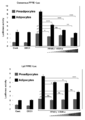
- FIG. 5 shows the effect of DEC1 on the PPRE reporter in the NIH3T3 cell line.
- FIG. 3 shows the effect of DEC1 on the PPRE reporter in the mouse 3T3-L1 cell line.
- Embodiment 1 of the present invention relates to a test (diagnosis) method for lipid metabolism-related diseases. Specifically, the expression level based on the circadian rhythm of at least one fat-related gene whose circadian rhythm is induced by DEC1 in the sample collected from the subject is used as an index.
- lipid metabolism-related disease means many diseases related to lipid metabolism (fat flow in the body). For example, metabolic syndrome or obesity can be mentioned.
- the “subject” means an organism that can be a test object, such as an animal, a plant, or a microorganism. In particular, animals (most preferably mammals such as humans, mice, rats, hamsters, guinea pigs, monkeys, cows, pigs, horses, rabbits, sheep, goats, cats or dogs) are preferred.
- the “sample” can be collected from any of the aforementioned subjects, and “expression based on circadian rhythm of at least one fat-related gene whose circadian rhythm is induced by DEC1.
- amount is meant any sample of interest that is generally available to those skilled in the art.
- a biological sample such as a cell, tissue or liquid component can be mentioned.
- the DEC1-adipose-related gene system operates selectively in adipose tissue. Therefore, such a sample is preferably an adipocyte, an adipose tissue, or a biological sample containing a substance secreted from an adipocyte.
- the sample collected from the subject is peripheral blood containing substances secreted from adipocytes collected from humans.
- the sample can be collected by any method that can be generally used by those skilled in the art as appropriate for the subject and the sample. For example, when collecting human peripheral blood, about 5 ml of peripheral blood may be collected from a vein with a syringe or the like.
- “Fat-related genes whose circadian rhythm is induced by DEC1” include genes related to the expression of fat metabolism regulators, neutral fat metabolism-related genes, other lipid metabolism enzyme genes and genes related to the expression of adipocytokines, etc. , And among them, the circadian rhythm is induced by DEC1.
- genes related to the expression of adipocytokine are preferable.
- Adipoq adiponectin
- IL-6 IL-6
- Leptin Leptin
- Rbp4 IL-6
- Retn adiponectin
- adiponectin is most preferred.
- the method for measuring the expression level of these fat-related genes based on the circadian rhythm is not limited as long as it is a method known in the art according to the subject and sample.
- the expression level of the transcription product can be measured by quantitative real-time PCR or Northern blotting using total RNA prepared from cells or tissues.
- the expression level of the translation product can be measured by preparing an extract from cells or tissues and immunologically. As an immunological technique, it can be measured by radioisotope immunoassay (RIA method), ELISA method or fluorescent antibody method.
- a sample of a plurality of lipid metabolism-related diseases and a sample of a non-lipid metabolism-related disease (depending on the sample, a normal and healthy sample having the same conditions such as the same age and the same surname as the subject is preferable)
- Data on the expression level based on the circadian rhythm of (at least one) adipocytokines in peripheral blood collected from is collected by quantitative real-time PCR or the like.
- the disease is a lipid metabolism-related disease at any time zone in the circadian rhythm without comparing the entire circadian rhythm.
- first similarly, average data of circadian rhythms by time zone of adipocytokines in peripheral blood of a sample of a plurality of lipid metabolism-related diseases and a sample of a non-lipid metabolism-related disease is obtained by the RIA method or the like. Collect it. Next, peripheral blood is collected from the subject and the amount of adipocytokine is measured by the RIA method or the like.
- the adipocytokines in the average data for the time zone in the time zone in which peripheral blood was collected from the subject in the average data It is possible to easily examine (diagnose) whether or not the subject has a lipid metabolism-related disease.
- the present specification describes an inspection method using the phenomenon that a specific fat-related gene is expressed with a specific circadian rhythm as described above by DEC1 expressed with a circadian rhythm.
- DEC1 expressed with a circadian rhythm.
- it is shown as a test method using as an index the expression level based on the circadian rhythm of fat-related genes whose circadian rhythm is induced by DEC1.
- the expression level (based on circadian rhythm) is used as an index” means that at least one circadian rhythm is induced by DEC1 in the same kind of sample collected from the same kind of normal and healthy specimen. How the expression level of the subject changes based on the circadian rhythm of the same fat-related gene compared to the expression level based on the circadian rhythm (for example, Or the like, whether the expression level according to the time zone is the same, or whether it has the same phase, etc.).
- the test result is likely to be a non-lipid metabolism related disease (normal and healthy)
- the test result is likely to be a non-lipid metabolism related disease (normal and healthy)
- the test result is a lipid metabolism-related disease.
- the change pattern of the expression level based on the circadian rhythm in the case of a non-lipid metabolism related disease (normal and healthy) refer to Examples and FIG. 14 described later.
- the expression level based on the circadian rhythm of one or more fat-related genes may be used as an index
- multivariate analysis can be used. For example, as described above, expression level data based on the circadian rhythm of adipocytokines is collected from collected peripheral blood in advance, and clustering (preferably complete clustering hierarchical clustering) analysis using statistical software, etc. It is also possible to perform an inspection.
- the present inventors suggest that the DEC1-adipose-related gene system operates selectively in adipose tissue. Therefore, it becomes possible to research and develop preventive and / or therapeutic agents for lipid metabolism-related diseases with few side effects by using drugs that act / express only on adipose tissue.
- drugs that act / express only on adipose tissue.
- when testing, ie, diagnosing, using human peripheral blood as a sample and the expression level of adipocytokine as an indicator perform accurate diagnosis of lipid metabolism-related diseases without causing pain to living humans. Can produce more advantageous effects.
- Embodiment 2 of the present invention relates to a method for evaluating a prophylactic and / or therapeutic agent for lipid metabolism-related diseases.
- a method for evaluating a prophylactic and / or therapeutic agent for a lipid metabolism-related disease includes the meaning “a screening method for a prophylactic and / or therapeutic agent for a lipid metabolism-related disease”.
- the measurement step is to measure the amount of expression based on circadian rhythm of at least one fat-related gene induced by DEC1 in the sample collected from the subject in the presence and absence of the test substance. It is a process to do.
- the comparison step refers to the expression level based on the circadian rhythm of the at least one fat-related gene in the sample in the absence of the test substance with respect to the at least one fat-related gene in the sample in the presence of the test substance. It is the process of comparing the expression level based on circadian rhythms.
- test substance means any substance that can be an object of evaluation as to whether it is a preventive and / or therapeutic agent for lipid metabolism-related diseases.
- a low molecular compound, a nucleic acid, or a polypeptide can be used.
- the low molecular weight compound, nucleic acid, polypeptide or the like may be extracted and purified from a natural product, or may be artificially synthesized.
- purified thing but an unpurified thing can be used as a test substance.
- a novel substance but a well-known substance or its improvement may be sufficient. For example, it is possible to evaluate an existing therapeutic agent or prophylactic agent or a derivative thereof.
- the expression level based on the circadian rhythm of (at least one) adipocytokine in peripheral blood collected from a subject having a lipid metabolism-related disease is quantitative real-time PCR. Measure by such as.
- the test substance is orally or intravenously administered to the subject.
- the expression level based on the circadian rhythm of the adipocytokines of peripheral blood collected from the subject in the same manner is measured by quantitative real-time PCR or the like, and the expression level based on the measured circadian rhythm is compared, Whether or not the test substance is a preventive and / or therapeutic agent for lipid metabolism-related diseases can be evaluated.
- the expression level of adipocytokine in the peripheral blood of a subject having a lipid metabolism-related disease is first measured by a RIA method or the like in a specific time zone.
- the test substance is orally or intravenously administered to the subject.
- the expression level of adipocytokine in peripheral blood collected from the subject is measured by the RIA method or the like in a time zone similar to the specific time zone initially measured.
- the test substance is a preventive and / or therapeutic agent for lipid metabolism-related diseases by comparing the measured expression levels.
- a sample of a non-lipid metabolism-related disease can be evaluated in advance as to whether it becomes a therapeutic agent for a lipid metabolism-related disease or the like by comparing the entire measured circadian rhythm or the expression level in a specific time zone. Measure the expression level in the whole circadian rhythm or in a specific period of time (which varies depending on the sample, but preferably a normal and healthy sample of the same age and the same name as the subject, for example). And it is sufficient. In other words, in the absence of the test substance, it is determined whether the measurement result of the subject whose expression level in the circadian rhythm or the specific time zone is different from the measurement standard is close to the measurement standard in the presence of the test substance. That's fine.
- multivariate analysis can also be used.
- a clustering analysis using statistical software or the like (preferably a hierarchical clustering of a complete connection method).
- the sample when the sample is a fat cell, adipose tissue, or a biological sample containing a substance secreted from the adipocyte, a drug that acts / expresses only in the adipose tissue is used.
- a drug that acts / expresses only in the adipose tissue is used.
- research and development of preventive and / or therapeutic agents for lipid metabolism-related diseases with few side effects are possible.
- the sample when the sample is human peripheral blood and the evaluation (screening) is based on the expression level of adipocytokine, it is not painful to living humans and is directly related to lipid metabolism-related diseases. Since it is considered that prophylactic and / or therapeutic drugs can be screened, it is highly likely that they will contribute greatly to new drugs.
- the expression level of adipose-related gene in which circadian rhythm is induced by Dec1 and DEC1 in adipose tissue It suggests a method of regulating lipid metabolism using regulation.
- the fat-related genes whose circadian rhythm is induced by DEC1 are Abca1, Acsl1, Adfp, Agpat2, Cd36, Cidec, Fabp4, Fasn, Gpat3, Lipe, Lpin1, Plin, Pnpla, S3-12, Cebp ⁇ , Cebp ⁇ , Cebp ⁇ , c-Jun, Klf-4, Klf-15, Ret, Acot2, Chka, Ldlr, Klf-5, Pgc-la, Rgs2, Rxr ⁇ , Srebp2, Tc10-like, IL- 6, Rbp4, Adipoq and / or Leptin.
- Dec1 itself is also included in the method for regulating the lipid metabolism system.
- lipid metabolism using an inhibitor for example, RNAi
- a promoter for example, a drug, a growth factor or a hormone
- the lipid metabolism system is normally regulated by promoting or adjusting the function.
- Such regulation of lipid metabolism suggests improvement of lipid metabolism-related diseases (such as metabolic syndrome and obesity).
- the expression of fat-related genes whose circadian rhythm is induced by DEC1, including Dec1 has a circadian rhythm.
- the circadian rhythm of the expression of at least one or more of these genes in a subject with lipid metabolism-related disease is measured, and the circadian expression of at least one or more of these genes in a sample with non-lipid metabolism-related disease is measured. It suggests a method of regulating the lipid metabolism system in which an inhibitor or promoter of the expression of a fat-related gene whose circadian rhythm is induced by Dec1 and DEC1 is administered based on the circadian rhythm so as to approximate the entire rhythm . That is, as described above, it means that an appropriate drug administration time can be developed.
- Mouse 3T3-L1 cells are cultured in a medium containing insulin 10 ⁇ g / mL, isobutylmethylxanthine 500 ⁇ M and dexamethasone 1 ⁇ M using a 6-well plate, and differentiation containing insulin 10 ⁇ g / mL every 2 days The culture was performed while changing to the maintenance medium. In order to perform real-time PCR later, RNA was collected over time from 2 days before differentiation induction to 8 days after differentiation induction.
- FIG. 1 is a graph showing the time course of fat differentiation of mouse 3T3-L1 cells. As shown in FIG. 1, final fat differentiation was confirmed by oil red staining. As a result, oil droplets were observed on the 4th day after differentiation induction, and cells having considerable oil droplets were observed on the 8th day after differentiation induction.
- FIG. 2 is a diagram showing differentiation-related and lipid metabolism gene expression during the fat differentiation process of mouse 3T3-L1 cells.
- the graph of FIG. 2 is shown as a relative value (%) where the maximum value of each expression level is 100 (%).
- the expression level of immediate early genes such as c-Fos and c-Jun increases in the early stage of adipogenic induction, and C / ebp ⁇ increases immediately thereafter.
- FIG. 3 is a diagram showing genes related to neutral fat metabolism in adipocytes.
- the triglyceride metabolism pathway in fat cells takes in free fatty acids (FFA, free fatty acid) from Very low density lipoprotein (VLDL), etc., re-synthesizes neutral fat and accumulates it as oil droplets. At the same time, free fatty acids are released as necessary.
- FFA free fatty acids
- VLDL Very low density lipoprotein
- mRNA expression levels of all 14 genes examined were wild type and had the same circadian rhythm, and increased at night by Dec1 knockout to decrease the rhythmicity (see the lower right graph in FIG. See example).
- ConsensusPPRE-Luc incorporating a DNA linking three regions containing the identified PPRE consensus sequence ((39) shown in SEQ ID NO: 1), and the identified Lpl PPRE A luciferase reporter was constructed (including the PGL-4 Minimal promoter) with Lpl-PPRE-Luc into which a DNA comprising three elements including the element ((40) shown in SEQ ID NO: 2) was linked.
- DEC1, PPAR ⁇ , and RXR ⁇ expression plasmid that forms a heterodimer with PPAR ⁇ were introduced into NIH3T3 cells after adipogenesis using FuGENE HD Transfection Reagent, and luciferase reporter assay was performed.
- As ligands for RXR ⁇ and PPAR ⁇ 9-cis retinoic acid (5 ⁇ 10 ⁇ 7 M) and troglitazone (5 ⁇ 10 ⁇ 6 M) were added to the culture medium.
- FIG. 4 shows the effect of DEC1 on the PPRE reporter in the NIH3T3 cell line.
- n 3, * p ⁇ 0.05, and ** p ⁇ 0.01, and the same experiment was repeated to confirm reproducibility.
- the schematic diagram shown at the bottom of FIG. 4 shows the results of the experimental system. That is, PPAR ⁇ and RXR ⁇ promoted the promoter activities of ConsensusPPRE-Luc and Lpl-PPRE-Luc.
- DEC1 suppressed the promoting effect of RXR ⁇ -PPAR ⁇ heterodimer on both promoters.
- FIG. 5 shows the effect of DEC1 on the PPRE reporter in the mouse 3T3-L1 cell line.
- PPAR ⁇ and RXR ⁇ promoted the promoter activity of ConsensusPPRE-Luc and Lpl-PPRE-Luc.
- DEC1 suppressed the promoting effect of RXR ⁇ -PPAR ⁇ heterodimer on both promoters. Further, DEC1 alone had almost no effect.
- PPRE sites have been identified as targets for PPAR ⁇ in Lpl, Perilipin, Resistin and the like.
- isoforms PPAR ⁇ 1 and PPAR ⁇ 2 that are generated by properly using exons are known for mouse or human Ppar ⁇ genes, and their promoters are also different.
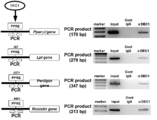
- the latter Ppar ⁇ 2 gene is a target of PPAR ⁇ itself, and its approximate binding site has been analyzed. Therefore, based on these information, binding of DEC1 to four genes Ppar ⁇ 2, Lpl, Perilipin, and Resistin was examined by chromatin immunoprecipitation (ChIP assay).
- mice 3T3-L1 cells 6 days after induction of adipogenesis were sampled, and DNA fragments co-precipitated with DEC1 antibody against PPAR regions of Ppar ⁇ 2, Lpl, Perilipin, and Resistin were analyzed for each gene. Primers that amplify the PPRE region were designed and subjected to PCR analysis.
- FIG. 6 is a diagram showing the results of a CHIP assay relating to the PPRE region of each gene of Ppar ⁇ 2, Lpl, Perilipin, and Resistin. As shown in FIG. 6, the results showed that DEC1 was bound to any of Ppar ⁇ 2, Lpl, Perilipin, and Resistin genes.
- FIG. 7 is a diagram showing the results of an immunoprecipitation method in which a protein on which DEC1 directly acts is analyzed. As shown in FIG.
- RXR ⁇ was precipitated by DEC1 either alone or in the presence of PPAR ⁇ , but PPAR ⁇ was not precipitated unless RXR ⁇ was present. From this result, it was clarified that DEC1 binds to RXR ⁇ protein.
- FIG. 8 is a diagram showing a dual mechanism of suppression of target gene expression by DEC1. That is, FIG. 8 is a diagram schematically showing the various results described above.
- the Ppar ⁇ gene has a PPAR response element PPRE and is also controlled by its own gene product PPAR ⁇ protein.
- the target gene of PPAR ⁇ is similarly controlled.
- DEC1 binds to RXR ⁇ , which is a nuclear receptor partner, and suppresses its target gene. That is, DEC1 can be repressed in two modes: transcriptional repression of the Ppar ⁇ gene and repression due to a decrease in PPAR ⁇ production. Since the Ppar ⁇ gene itself and its target gene are suppressed by DEC1, the action of RXR ⁇ -PPAR ⁇ heterodimer seems to be strongly controlled by DEC1. This suggests that various actions of RXR ⁇ -PPAR ⁇ are affected by DEC1.
- Dec1 knockout mice were C57BL / 6J mice from InGenious Targeting Laboratory (see Nakashima A. et al, 2008, DEC1 modulates the circadian phase of clock gene expression, Mol Cell Biol 28, 4080-4092).
- Male wild-type mice (WT) and Dec1 knockout ( ⁇ / ⁇ ) mice aged 4 to 6 months were bred for 2 to 3 weeks under light / dark conditions every 12 hours, and a total of 3 mice per group every 6 hours. Twenty-four animals were sacrificed, and intraperitoneal groin white fat was collected.
- QIAGEN quantitative real-time PCR
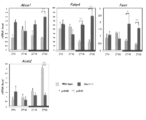
- FIG. 9 is a diagram showing the influence of the DEC1 knockout mouse according to the example on the expression of the clock gene. Specifically, the expression levels in ZT (Zeitgeber Time) 4, ZT10, ZT16 and ZT22 in the clock genes Dec1, Dec2, Ror ⁇ , Rev-erb ⁇ , Bmal1, Clock, Dbp, Per2 and Npas2 are shown. ZT0 is a lighting time, and ZT12 is a light-off time. Except for Dec1, the left graph is a wild-type mouse, and the right graph is a Dec1 knockout ( ⁇ / ⁇ ) mouse.
- FIG. 10 is a diagram showing the influence of the DEC1 knockout mouse according to the example on the expression of a fat metabolism regulator. Specifically, the expression levels of ZT4, ZT10, ZT16 and ZT22 are shown in the fat metabolism regulators c-Fos, c-Jun, Cebp ⁇ , Cebp ⁇ , Cebp ⁇ , Klf4, Klf15 and Ppar ⁇ .
- FIG. 11 is a diagram showing the influence of the DEC1 knockout mouse according to the example on the expression of a neutral fat metabolism-related gene. Specifically, ZT4, ZT10, ZT16 and ZT22 in the triglyceride-related genes Lpl, Acsl1, Cd36, Gpat3, Agpat2, Lipin, Dgat2, Plin, Adipophilin (Adfp), Cidec, S3-12, Atgl, Lipe and Mgll The expression level is shown.
- FIG. 12 is a diagram showing the influence of the DEC1 knockout mouse according to the example on the expression of other lipid metabolizing enzyme genes. Specifically, the expression levels in ZT4, ZT10, ZT16 and ZT22 in other lipid metabolism enzyme genes Abca1, Fabp4, Fasn and Acat2 are shown.
- FIG. 13: is a figure which shows the influence which the DEC1 knockout mouse based on an Example has on the expression of an adipocytokine. Specifically, the expression levels of Adiponectin (Adiponectin (Adipoq), Resistin (Retn) and Leptin in ZT4, ZT10, ZT16 and ZT22 are shown.
- the circadian rhythm of the expression level of these fat-related genes is caused by various genes such as those that are significantly decreased, those that are increased, or those that are less changed compared to wild type mice. There were individual differences. However, when these were observed, it was observed that wild-type mice have a circadian rhythm change pattern that is common in the expression level of many fat-related genes. Moreover, such a common change pattern was observed in both wild type mice and DEC1 knockout mice, and it was also confirmed that the common circadian rhythm change patterns were different patterns.
- FIG. 14 is a diagram showing the rhythmicity of expression of a fat metabolism regulatory gene, a neutral fat metabolism-related gene, and an adipocytokine in the DEC1 knockout mouse according to the example.
- Each graph in FIG. 14 selects several genes from the fat-related genes shown in FIG. 10 to FIG. 13, and the expression in the wild-type mouse is easy to confirm the change pattern of the circadian rhythm of the expression level.
- the change pattern of the amount of circadian rhythm is connected by a line.
- the circadian rhythm having a peak at ZT10 is observed in the change pattern of circadian rhythm of the expression levels of the fat metabolism regulatory gene, the neutral fat metabolism related gene and the adipocytokine. It was.
- a change pattern of circadian rhythms of the expression levels of many fat metabolism regulatory genes, neutral fat metabolism-related genes and adipocytokines in the wild type which are included in the mechanism of action of DEC1 (specifically, in the case of mice,
- a change pattern that increases from ZT4 to ZT10 has a peak at ZT10, decreases the expression level from ZT10 to ZT16, and further to ZT22, these fat metabolism regulation genes and neutral fat metabolism-related genes
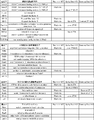
- FIG. 15 is a diagram showing the effect of DEC1 knockout mice on adipose tissue on the expression of fat-related genes. That is, the results shown in FIGS. 10 to 13 are simply tabulated.
- the fat-related genes are divided into fat metabolism regulators, neutral fat metabolism-related genes, other lipid metabolism enzyme genes, and adipocytokines.
- Rhythm in ⁇ WT column describes whether there is a circadian rhythm in the expression of the gene in wild-type mice. In some cases, Rhythm in ⁇ WT is described as Rhysmic. Means no circadian rhythm or expression). The column of Up or Down by Dec1 KO specifically describes in which time zone it was lowered or raised (if not stated, there is no change or no change compared to wild type mice). Means less).
- livers of wild-type mice and Dec1 knockout ( ⁇ / ⁇ ) mice were collected, RNA was extracted from the collected livers, and the expression levels of each gene were summarized by quantitative real-time PCR. The daily rhythm was investigated.
- FIG. 16 shows the influence of Dec1 knockout mice in the liver on the expression of fat-related genes.
- FIG. 16 shows the influence of Dec1 knockout mice in the liver on the expression of fat-related genes.
- few of the fat-related genes in the liver had the same circadian rhythm.
- the expression level of each fat-related gene due to Dec1 knockout is less common and the expression level changes. Time zones were often random.
- DEC1 is a transcription factor that induces the circadian rhythm of the entire fat-related gene cassette selectively in adipose tissue, and that comprehensively controls fat differentiation, fat metabolism, and adipocytokine production.
- adipocytes secretion from adipocytes, adipose tissue, or adipocytes, rather than analysis using fat-related genes in the liver
- the analysis should be performed using a fat-related gene in a biological sample (in particular, adipocytokine) containing the substance to be treated.
- DEC1 is a transcription factor that induces circadian rhythm of the entire fat-related gene cassette and also comprehensively controls fat differentiation, fat metabolism and adipocytokine production.
- DEC1-adipose-related gene system Furthermore, it was suggested that the DEC1-adipose-related gene system operates selectively in adipose tissue.
- lipid metabolism-related diseases having certainty utilizing the mechanism of action with other fat-related factors in DEC1 and the effect of circadian rhythm, and lipid metabolism
- a method for evaluating a prophylactic and / or therapeutic agent for a related disease can be provided.
Landscapes
- Chemical & Material Sciences (AREA)
- Life Sciences & Earth Sciences (AREA)
- Health & Medical Sciences (AREA)
- Proteomics, Peptides & Aminoacids (AREA)
- Organic Chemistry (AREA)
- Genetics & Genomics (AREA)
- Zoology (AREA)
- Analytical Chemistry (AREA)
- Wood Science & Technology (AREA)
- Engineering & Computer Science (AREA)
- Microbiology (AREA)
- Biochemistry (AREA)
- Biotechnology (AREA)
- Molecular Biology (AREA)
- Biophysics (AREA)
- Physics & Mathematics (AREA)
- Pathology (AREA)
- Immunology (AREA)
- Bioinformatics & Cheminformatics (AREA)
- General Engineering & Computer Science (AREA)
- General Health & Medical Sciences (AREA)
- Measuring Or Testing Involving Enzymes Or Micro-Organisms (AREA)
- Investigating Or Analysing Biological Materials (AREA)
- Micro-Organisms Or Cultivation Processes Thereof (AREA)
Abstract
より具体的なDEC1における他の脂肪関連因子との作用機序および概日リズムの影響を利用した、確実性を有する脂質代謝関連疾患の検査方法、ならびに脂質代謝関連疾患の予防および/または治療剤の評価方法を提供する。脂質代謝関連疾患の検査方法は、被検体から採取した試料における、DEC1により概日リズムを誘導される少なくとも一つの脂肪関連遺伝子の概日リズムに基づく発現量を指標とすることを特徴とする。好ましくは、当該試料は、脂肪細胞、脂肪組織、または、脂肪細胞から分泌される物質を含む生体試料のいずれかである。
Description
本発明は、脂肪調節因子DEC1を利用する、脂質代謝関連疾患の検査方法、ならびに脂質代謝関連疾患の予防および/または治療剤の評価方法に関する。
脂質代謝関連疾患、例えば、メタボリックシンドローム・肥満は多因子性疾患であり、病態または病因には不明な点が多い。その為、多くの製薬会社がメタボリックシンドローム・肥満の診断、予防および治療薬等を研究、開発している。
近年報告されたメタボリックシンドローム・肥満等に関連する脂肪調節因子として、例えば、basic helix-loop-helix型転写調節因子であるDEC1(種々の動物において、SHARP-2、STRA13またはBHLHB2ともいう)が挙げられる(特許文献1参照)。さらに、特許文献2には、DEC1と脂肪酸代謝との関係が示されており、根拠としてDEC1制御に基づくマウス筋芽細胞株における脂肪酸のβ酸化(脂肪酸を酸化して脂肪酸アシルCoAを生成し、アセチルCoAを取り出す代謝経路)の抑制に係る実施例が記載されている。
さらに、DEC1は脂肪酸代謝調節に関連する因子である以外にも、多様な機能を持っていることが知られている。その一つとして、DEC1は体内時計自体を制御する時計転写因子でもあり、概日リズムにおける発現をしていることが分かっている。例えば、特許文献3および非特許文献1には、分子時計としてのDEC1の役割が詳細に記載されており、DEC1を用いて概日リズムを調節する方法が記載されている。具体的には、E-boxエンハンサを通してDEC1を用い、同様に分子時計として機能しているCLOCKおよびBMAL1の誘発する転写活性化を制御し調節する方法が記載されている。
Kawamoto, T., M. Noshiro, F. Sato, K. Maemura, N. Takeda, R. Nagai, T. Iwata, K. Fujimoto, M. Furukawa, K. Miyazaki, S. Honma, K. Honma, and Y. Kato.、2004、A novel autofeedback loop of Dec1 transcription involved in circadian rhythm regulation.、Biochem Biophys Res Commun 313、117-124
前述したとおり、特許文献2には、DEC1と脂肪酸代謝との関係が示されており、DEC1制御に基づく肝細胞での脂肪酸β酸化代謝経路における抑制に係る実施例が記載されている。しかし、メタボリックシンドローム・肥満等が関連する全ての脂肪酸代謝調節、すなわち脂肪細胞での脂肪の貯蔵等をも含む脂肪酸代謝におけるDEC1の作用は未だ完全には実証されていない。さらに、脂肪調節因子(脂肪酸代謝調節因子)としてのDEC1と、他の脂肪関連因子との具体的な作用機序についても解明されていない。
このような場合、脂肪調節因子のDEC1制御を、メタボリックシンドローム・肥満等の診断、予防および副作用のない実用的な治療薬等の研究、開発において直接的に繋げ、利用することは難しい。
また、特許文献3に記載されているように、一般的にDEC1は概日リズムにおける発現をしている。その為、DEC1制御による脂肪酸代謝の作用機序が明らかとなった場合でも、メタボリックシンドローム・肥満等の診断、予防および副作用のない実用的な治療薬等の研究、開発には、当該DEC1の概日リズムでの発現を考慮しなければならない。
しかし、前述したように、DEC1が他の脂肪関連因子とどのように作用しているかは完全には明らかとなっていない為、当該DEC1の概日リズム発現と脂肪酸代謝調節とを単純に組み合わせるのみでは、メタボリックシンドローム・肥満等の診断、予防および副作用のない実用的な治療薬等の研究、開発が可能であるとは言い難い。
本発明は上記事情に鑑みてなされたものであり、より具体的なDEC1における他の脂肪関連因子との作用機序および概日リズムの影響を利用した、確実性を有する脂質代謝関連疾患の検査方法、ならびに脂質代謝関連疾患の予防および/または治療剤の評価方法を提供することを目的とする。
上記目的を達成する為、本発明者らは、ルシフェラーゼレポーターアッセイ、クロマチン免疫沈降法(ChIPアッセイ)、ゲルシフトアッセイおよびリアルタイムPCR等の実験方法を用い、核内受容体によるDec1の発現調節機構の解析、マウス3T3-L1細胞の脂肪分化モデルを用いたDEC1の役割解析、および、DEC1ノックアウトマウスの脂肪分化・脂質代謝調節における標的遺伝子の解析(実施例参照)を行った。
本発明者らが鋭意研究を重ねた結果、DEC1は脂肪関連遺伝子カセット全体の概日リズムを誘導するとともに、脂肪分化、脂肪代謝およびアディポサイトカイン産生を統合的に制御する転写因子であることが解明された(DEC1-脂肪関連遺伝子系)。具体的には、まず、RORαがDEC1発現を促進し、DEC1がPPARγのパートナーのRXRαに結合する。その結果、PPARγ2:RXRα作用が抑制され、PPARγ2とその標的遺伝子群の発現も抑制される。最後には、脂肪代謝抑制および脂肪分化抑制に至るということが解明された。
なお、Choらの最近の報告でも、DEC1は核内受容体等とヘテロ二量体をつくるRXRαと相互作用し、抑制因子として機能することがわかっている(Cho, Y., M. Noshiro, M. Choi, K. Morita, T. Kawamoto, K. Fujimoto, K. Kato, and M. Makishima、2009、The basic helix-loop-helix proteins differentiated embryo chondrocyte (Dec)1 and DEC2 function as corepressors of retinoid X receptors.、Mol Pharmacol 76、1360-1369参照 )。
さらには、このようなDEC1-脂肪関連遺伝子系は、主として脂肪組織選択的に作動するということも示唆された。具体的には、肝臓の場合、DEC1により概日リズムを誘導される脂肪関連遺伝子は少ないか、または存在しないということが解明された(実施例および比較例参照)。
そこで、本発明の第1の態様に係る脂質代謝関連疾患の検査方法は、被検体から採取した試料における、DEC1により概日リズムを誘導される少なくとも一つの脂肪関連遺伝子の概日リズムに基づく発現量を指標とすることを特徴とする。
好ましくは、前記試料は、脂肪細胞、脂肪組織、または、脂肪細胞から分泌される物質を含む生体試料のいずれかであることを特徴とする。
また、好ましくは、前記少なくとも一つの脂肪関連遺伝子は、Abca1、Acsl1、Adfp、Agpat2、Cd36、Cidec、Fabp4、Fasn、Gpat3、Lipe、Lpin1、Plin、Pnpla2、S3-12、Cebpα、Cebpβ、Cebpδ、c-Jun、Klf-4、Klf-15、Retn、Acot2、Chka、Klf-5、Pgc-lα、Srebp2、Tc10-like、IL-6、Rbp4、Adipoqおよび/またはLeptinであることを特徴とする。
より好ましくは、前記少なくとも一つの脂肪関連遺伝子は、アディポサイトカインの発現に関連する遺伝子であることを特徴とする。
さらに好ましくは、前記アディポサイトカインは、アディポネクチンであることを特徴とする。
本発明の第2の態様に係る脂質代謝関連疾患の予防および/または治療剤の評価方法は、
被験物質の存在下および非存在下での、被検体から採取した試料における、DEC1により概日リズムを誘導される少なくとも一つの脂肪関連遺伝子の概日リズムに基づく発現量を測定する測定工程と、
前記被験物質の非存在下での前記試料における前記少なくとも一つの脂肪関連遺伝子の概日リズムに基づく発現量に対する、前記被験物質の存在下での前記試料における前記少なくとも一つの脂肪関連遺伝子の概日リズムに基づく発現量を比較する比較工程と、
を含むことを特徴とする。
被験物質の存在下および非存在下での、被検体から採取した試料における、DEC1により概日リズムを誘導される少なくとも一つの脂肪関連遺伝子の概日リズムに基づく発現量を測定する測定工程と、
前記被験物質の非存在下での前記試料における前記少なくとも一つの脂肪関連遺伝子の概日リズムに基づく発現量に対する、前記被験物質の存在下での前記試料における前記少なくとも一つの脂肪関連遺伝子の概日リズムに基づく発現量を比較する比較工程と、
を含むことを特徴とする。
好ましくは、前記試料は、脂肪細胞、脂肪組織、または、脂肪細胞から分泌される物質を含む生体試料のいずれかであることを特徴とする。
また、好ましくは、前記少なくとも一つの脂肪関連遺伝子は、Abca1、Acsl1、Adfp、Agpat2、Cd36、Cidec、Fabp4、Fasn、Gpat3、Lipe、Lpin1、Plin、Pnpla2、S3-12、Cebpα、Cebpβ、Cebpδ、c-Jun、Klf-4、Klf-15、Retn、Acot2、Chka、Klf-5、Pgc-lα、Srebp2、Tc10-like、IL-6、Rbp4、Adipoqおよび/またはLeptinであることを特徴とする。
より好ましくは、前記少なくとも一つの脂肪関連遺伝子は、アディポサイトカインの発現に関連する遺伝子であることを特徴とする。
さらに好ましくは、前記アディポサイトカインは、アディポネクチンであることを特徴とする。
本発明によれば、より具体的なDEC1における他の脂肪関連因子との作用機序および概日リズムの影響を利用した、確実性を有する脂質代謝関連疾患の検査方法、ならびに脂質代謝関連疾患の予防および/または治療剤の評価方法を提供することができる。
以下、本発明の実施の形態について詳細に説明する。本明細書において「含む」または「含有する」といった表現は、「からなる」または「から構成される」という意も含むものとする。
(脂質代謝関連疾患の検査方法)
本発明の実施の形態1は、脂質代謝関連疾患の検査(診断)方法に関する。具体的には、被検体から採取した試料における、DEC1により概日リズムを誘導される少なくとも一つの脂肪関連遺伝子の概日リズムに基づく発現量を指標とすることを特徴とする。
本発明の実施の形態1は、脂質代謝関連疾患の検査(診断)方法に関する。具体的には、被検体から採取した試料における、DEC1により概日リズムを誘導される少なくとも一つの脂肪関連遺伝子の概日リズムに基づく発現量を指標とすることを特徴とする。
なお、本明細書において「脂質代謝関連疾患」とは、脂質代謝(体内における脂肪の流れ)が関連している多くの疾患を意味する。例えば、メタボリックシンドロームまたは肥満等を挙げることができる。本明細書において「被検体」とは、検査対象となり得る生物、例えば動物、植物または微生物等を意味する。特に、動物(最も好ましくは、ヒト、マウス、ラット、ハムスター、モルモット、サル、ウシ、ブタ、ウマ、ウサギ、ヒツジ、ヤギ、ネコまたはイヌ等の哺乳動物)が好ましい。
本明細書において、「試料」とは、前述した任意の被検体から採取することが可能であり、かつ「DEC1により概日リズムを誘導される少なくとも一つの脂肪関連遺伝子の概日リズムに基づく発現量」を測定することが可能である、当業者が一般的に利用しうる任意の対象試料を意味する。例えば、細胞、組織または液体成分等の生体試料が挙げられる。後の実施例において詳細に説明するが、DEC1-脂肪関連遺伝子系は、脂肪組織選択的に作動することが示唆される。その為、このような試料は脂肪細胞、脂肪組織、または、脂肪細胞から分泌される物質を含む生体試料のいずれかが好ましい。
最も好ましくは、被検体から採取した試料とは、ヒトから採取した脂肪細胞から分泌される物質を含む末梢血である。試料の採取方法については、被検体および試料に適宜合った当業者が一般的に利用しうる任意の方法において採取することが可能である。例えば、ヒトの末梢血を採取する場合には、注射器等により静脈から5ml程度の末梢血を採取すればよい。
「DEC1により概日リズムを誘導される脂肪関連遺伝子」は、脂肪代謝調節因子の発現に関連する遺伝子、中性脂肪代謝関連遺伝子、その他の脂質代謝酵素遺伝子およびアディポサイトカインの発現に関連する遺伝子等が含まれ、かつこれらのうちDEC1によって概日リズムを誘導されるものを意味する。特に、Abca1、Acsl1、Adfp、Agpat2、Cd36、Cidec、Fabp4、Fasn、Gpat3、Lipe、Lpin1、Plin、Pnpla2、S3-12、Cebpα、Cebpβ、Cebpδ、c-Jun、Klf-4、Klf-15、Retn、Acot2、Chka、Klf-5、Pgc-lα、Srebp2、Tc10-like、IL-6、Rbp4、Adipoqおよび/またはLeptinが好ましい。
このうち、前述したように、被検体の試料としてヒトの末梢血を採取する場合には、アディポサイトカインの発現に関連する遺伝子が好ましく、例えばAdipoq(アディポネクチン)、IL-6、Leptin、Rbp4および/またはRetn等を挙げることができる。これらのうち、アディポネクチンが最も好ましい。
これらの脂肪関連遺伝子の概日リズムに基づく発現量(一日24時間周期で変動する発現量)の測定方法は、被検体および試料に適宜合わせ、当該技術分野において公知である方法なら限定されない。例えば、転写産物の発現量は、細胞または組織から調整したTotal RNAでの定量リアルタイムPCRまたはノザンブロッティング等により測定され得る。また、翻訳産物の発現量は、細胞または組織から抽出液を調製し、免疫学的手法により測定され得る。免疫学的手法としては、放射性同位元素免疫測定法(RIA法)、ELISA法または蛍光抗体法等により測定され得る。
具体的には、例えば、まず複数の脂質代謝関連疾患の検体および非脂質代謝関連疾患の検体(検体によって異なるが、被検体と同齢および同姓等の同条件の正常かつ健康な検体が好ましい)から採取した末梢血内の、(少なくとも一つ以上の)アディポサイトカインの概日リズムに基づく発現量のデータを定量リアルタイムPCR等によって収集しておく。次に、当該概日リズム全体におけるそれぞれの検体の発現量の平均データと、定量リアルタイムPCR等によって測定した被検体から採取した末梢血の当該概日リズム全体とを比較することによって、被検体が脂質代謝関連疾患であるか否かを検査(診断)することができる。
また、概日リズム全体において比較せずとも、概日リズムにおける任意の時間帯においても、脂質代謝関連疾患であるか否かを検査(診断)することができる。具体的には、例えば、まず同様に、複数の脂質代謝関連疾患の検体および非脂質代謝関連疾患の検体の末梢血中のアディポサイトカインの時間帯別の概日リズムの平均データをRIA法等によって収集しておく。次は、被検体から末梢血を採取し、アディポサイトカインの量をRIA法等により測定する。平均データと被検体から採取した末梢血中のアディポサイトカインの量とを比較する際に、当該平均データにおいて、被検体から末梢血を採取した時間帯における、当該時間帯の平均データでのアディポサイトカインの量と比較することによって、被検体が脂質代謝関連疾患であるか否かを容易に検査(診断)することができる。
これらのように、概日リズムを有して発現するDEC1により、前述したような特定の脂肪関連遺伝子が特定の概日リズムを持って発現するという現象を利用した検査方法のことを、本明細書においては、DEC1により概日リズムを誘導される脂肪関連遺伝子の概日リズムに基づく発現量を指標とする検査方法、として示している。
すなわち、本明細書における「(概日リズムに基づく)発現量を指標とする」とは、正常かつ健康な同種の検体から採取した同種の試料における、DEC1により概日リズムを誘導される少なくとも一つの同脂肪関連遺伝子の概日リズムに基づく発現量と比較した場合において、当該被検体の概日リズムに基づく発現量がどのように変化しているのか(例えば、同様の概日リズムを有しているか否か、時間帯による発現量が同様であるか否か、または同様の位相を有しているか否か等)を判断するという意味を示す。より具体的には、当該被検体の概日リズムに基づく発現量の変化が比較対象と同様の場合は非脂質代謝関連疾患(正常かつ健康)であるとの検査結果である可能性が高く、前述したような差異を有する場合は脂質代謝関連疾患であるとの検査結果である可能性が高い。非脂質代謝関連疾患(正常かつ健康)である場合の概日リズムに基づく発現量の変化パターンについては、後述の実施例および図14を参照されたい。
なお、一つ以上の脂肪関連遺伝子の概日リズムに基づく発現量を指標としても構わない為、多変量解析を用いることも可能である。例えば、前述と同様に、採取した末梢血から予めアディポサイトカインの概日リズムに基づく発現量のデータを収集しておき、統計ソフト等を用いたクラスタリング(好ましくは完全連結法の階層的クラスタリング)解析を行い検査することも可能である。
このように、本実施の形態1に係る脂質代謝関連疾患の検査方法では、本発明者らによって解明された、より具体的なDEC1における他の脂肪関連因子との作用機序および概日リズムの影響が利用されている。この場合、概日リズムに合致した脂質代謝関連疾患の検査(診断)ができる為、より確実性を有する検査(診断)をすることが可能となり、また、実用的な(例えば、薬の投与時間等を取り入れた)脂質代謝関連疾患の予防薬および/または治療薬等の研究、開発に直接的に繋げて利用することも可能となる。
特に、試料を脂肪細胞、脂肪組織、または、脂肪細胞から分泌される物質を含む生体試料とした場合、本発明者らによりDEC1-脂肪関連遺伝子系は脂肪組織選択的に作動することが示唆された為、脂肪組織のみに作用・発現する薬剤等を利用し、副作用が少ない脂質代謝関連疾患の予防薬および/または治療薬等の研究、開発が可能となる。また、試料をヒトの末梢血とし、アディポサイトカインの発現量を指標として検査、すなわち診断を行う場合には、生きているヒトに対し苦痛を伴わずに正確な脂質代謝関連疾患の診断を行うことができる為、さらに有利な効果を奏する。
(脂質代謝関連疾患の予防および/または治療剤の評価方法)
本発明の実施の形態2は、脂質代謝関連疾患の予防および/または治療剤の評価方法に関する。なお、本明細書において「脂質代謝関連疾患の予防および/または治療剤の評価方法」とは、「脂質代謝関連疾患の予防および/または治療剤のスクリーニング方法」の意を含む。
本発明の実施の形態2は、脂質代謝関連疾患の予防および/または治療剤の評価方法に関する。なお、本明細書において「脂質代謝関連疾患の予防および/または治療剤の評価方法」とは、「脂質代謝関連疾患の予防および/または治療剤のスクリーニング方法」の意を含む。
本実施の形態2では、具体的には、測定工程と比較工程とを含む。測定工程とは、被験物質の存在下および非存在下での、被検体から採取した試料における、DEC1により概日リズムを誘導される少なくとも一つの脂肪関連遺伝子の概日リズムに基づく発現量を測定する工程である。比較工程とは、被験物質の非存在下での試料における当該少なくとも一つの脂肪関連遺伝子の概日リズムに基づく発現量に対する、当該被験物質の存在下での当該試料における当該少なくとも一つの脂肪関連遺伝子の概日リズムに基づく発現量を比較する工程である。
本明細書において「被験物質」とは、脂質代謝関連疾患の予防および/または治療剤となるか否かの評価の対象となり得るあらゆる物質を意味する。例えば、低分子化合物、核酸またはポリペプチド等が挙げられる。低分子化合物、核酸またはポリペプチド等は、天然物から抽出および精製されたものであってもよく、人工的に合成されたものであっても構わない。また、精製されたものに限らず、未精製のものでも被験物質として使用することができる。また、新規な物質に限らず、公知の物質またはその改良物であってもよい。例えば、既存の治療薬もしくは予防薬またはその誘導体であっても、評価をすることが可能である。
なお、被検体から採取した試料の意味および好ましい例、DEC1により概日リズムを誘導される少なくとも一つの脂肪関連遺伝子の概日リズムに基づく発現量の意味および好ましい例、ならびにその発現量の測定方法については、前述の実施の形態1と同様である。
本実施の形態2は、具体的には、例えば、まず脂質代謝関連疾患の被検体から採取した末梢血の、(少なくとも一つ以上の)アディポサイトカインの概日リズムに基づく発現量を定量リアルタイムPCR等によって測定しておく。次に、被検体に対し被験物質の経口投与または静脈内投与等を行う。その後、同様に被検体から採取した末梢血のアディポサイトカインの概日リズムに基づく発現量を定量リアルタイムPCR等によって測定し、それぞれの測定した当該概日リズムに基づく発現量を比較することによって、当該被験物質が脂質代謝関連疾患の予防および/または治療剤であるか否かを評価することができる。
また、概日リズム全体において比較せずとも、概日リズムにおける任意の時間帯においても、脂質代謝関連疾患の治療剤であるか否かを評価することができる。具体的には、例えば、まず脂質代謝関連疾患の被検体の末梢血中のアディポサイトカインの発現量を特定の時間帯においてRIA法等によって測定しておく。次に、同様に、被検体に対し被験物質の経口投与または静脈内投与等を行う。その後、最初に測定した特定の時間帯と同様の時間帯において、被検体から採取した末梢血のアディポサイトカインの発現量をRIA法等によって測定する。最後に、それぞれの測定した当該発現量を比較することによって、当該被験物質が脂質代謝関連疾患の予防および/または治療剤であるか否かを評価することができる。
また、それぞれの測定した概日リズム全体または特定の時間帯の発現量を比較することによる脂質代謝関連疾患の治療剤等となるか否かの評価は、例えば、予め非脂質代謝関連疾患の検体(検体によって異なるが、例えば、被検体と同齢および同姓等の同条件の正常かつ健康な検体が好ましい)の概日リズム全体または特定の時間帯における発現量を測定しておき、これらを基準とすればよい。すなわち、被験物質非存在下では概日リズム全体または特定の時間帯における発現量が当該測定基準と離れていた被検体の測定結果が、被験物質存在下では当該測定基準に近づくか否か判断すればよい。例えば、当該測定基準と比較し、同様の概日リズムを有するようになるか否か、時間帯による発現量が同様となるか否か、または同様の位相を有するようになるか否か等を判断すればよい。判断の結果、当該測定基準に近づいた場合、脂質代謝関連疾患の治療剤等となる可能性が高い。
なお、一つ以上の脂肪関連遺伝子の概日リズムに基づく発現量を測定・比較しても構わない為、多変量解析を用いることも可能である。例えば、前述の実施の形態1と同様に、統計ソフト等を用いたクラスタリング(好ましくは完全連結法の階層的クラスタリング)解析を行い検査することも可能である。
このように、本実施の形態2に係る脂質代謝関連疾患の予防および/または治療剤の評価方法では、前述の実施の形態1と同様に、より具体的なDEC1における他の脂肪関連因子との作用機序および概日リズムの影響が利用されている。この場合、概日リズムに合致した脂質代謝関連疾患の予防および/または治療剤の評価ができる為、より正確に評価・スクリーニングをすることが可能となる。すなわち、実用的な(例えば、薬の投与時間等を取り入れた)脂質代謝関連疾患の予防薬および/または治療薬等の研究、開発に直接的に繋げて利用することも可能となる。
特に、前述の実施の形態1と同様に、試料を脂肪細胞、脂肪組織、または、脂肪細胞から分泌される物質を含む生体試料とした場合、脂肪組織のみに作用・発現する薬剤等を利用し、副作用が少ない脂質代謝関連疾患の予防薬および/または治療薬等の研究、開発が可能となる。さらに、試料をヒトの末梢血とし、アディポサイトカインの発現量を基準として評価(スクリーニング)を行う場合には、生きているヒトに対し苦痛を伴わず、ヒトに対して直接的な脂質代謝関連疾患の予防薬および/または治療薬がスクリーニングできることも思慮される為、新薬に対し大いに貢献する可能性が高い。
また、本発明者らにより示唆された、DEC1-脂肪関連遺伝子系の脂肪組織特異的な作用機序を考慮すると、脂肪組織におけるDec1およびDEC1により概日リズムを誘導される脂肪関連遺伝子の発現量調節を利用した、脂質代謝系の調節方法が示唆される。
前述の実施の形態1と同様に、DEC1により概日リズムを誘導される脂肪関連遺伝子は、Abca1、Acsl1、Adfp、Agpat2、Cd36、Cidec、Fabp4、Fasn、Gpat3、Lipe、Lpin1、Plin、Pnpla2、S3-12、Cebpα、Cebpβ、Cebpδ、c-Jun、Klf-4、Klf-15、Retn、Acot2、Chka、Ldlr、Klf-5、Pgc-lα、Rgs2、Rxrα、Srebp2、Tc10-like、IL-6、Rbp4、Adipoqおよび/またはLeptin等が挙げられる。なお、当該脂質代謝系の調節方法には、これらの他にもDec1自身も含まれる。
簡潔に説明すると、Dec1およびDEC1により概日リズムを誘導される脂肪関連遺伝子の発現の阻害剤(例えば、RNAi等)あるいは促進剤(例えば、薬剤、成長因子またはホルモン等)を利用し、脂質代謝を促進あるいは調整することによって、脂質代謝系を正常に調節する。このような脂質代謝の調節により、脂質代謝関連疾患(メタボリックシンドロームおよび肥満等)の改善が示唆される。
より具体的に説明すると、前述したように、DEC1-脂肪関連遺伝子系が作動する脂肪組織においては、Dec1も含めDEC1により概日リズムを誘導される脂肪関連遺伝子の発現は概日リズムを有している。そこで、脂質代謝関連疾患の被検体における少なくとも一つ以上のこれらの遺伝子の発現の概日リズム全体を測定し、非脂質代謝関連疾患の検体における少なくとも一つ以上のこれらの遺伝子の発現の概日リズム全体に近似するよう、前述のDec1およびDEC1により概日リズムを誘導される脂肪関連遺伝子の発現の阻害剤あるいは促進剤を概日リズムに基づき投与等行う脂質代謝系の調節方法が示唆される。すなわち、前述したような、適切な薬の投与時間が開発可能であることを意味する。
まず、マウス3T3-L1細胞の脂肪分化過程における、分化関連および脂質代謝遺伝子の発現に与えるDEC1の役割について実験を行い検討した。
マウス3T3-L1細胞を、6-wellプレートを用い、インスリン10μg/mL、イソブチルメチルキサンチン500μMおよびデキサメタゾン1μMを含む培地にて分化誘導をしながら培養し、2日後ごとにインスリン10μg/mLを含む分化維持培地に交換しながら培養した。後にリアルタイムPCRを行うため、分化誘導前2日から、分化誘導後8日まで経時的にRNA回収を行っておいた。
図1は、マウス3T3-L1細胞の脂肪分化の経時変化を示す図である。図1に示すように、最終的な脂肪分化は、オイルレッド染色にて確認した。その結果、油滴は分化誘導後4日目には見られ、分化誘導後8日目にはかなりの油滴を有する細胞が観察された。
次に、前述の回収したRNAサンプルを用い、脂肪分化段階における様々な脂肪分化関連および脂質代謝関連遺伝子の発現パターンをリアルタイムPCRにて解析する実験を行った。図2は、マウス3T3-L1細胞の脂肪分化過程における分化関連および脂質代謝遺伝子の発現を示す図である。図2のグラフは、それぞれの発現レベルの最大値を100(%)とした相対値(%)で以て示されている。図2に示すように、脂肪分化誘導初期にc-Fosおよびc-Junといった前初期遺伝子の発現量が上昇し、そのすぐ後にC/ebpβが上昇する。分化誘導2日目からは、脂肪分化において最も重要とされるPparγ、RorαおよびLpl等が上昇し、最終的にはFabp4、Lipin、MgllおよびPerilipin等の脂肪代謝関連遺伝子が上昇し、脂肪分化が進む。
RORαおよびDEC1が、PPARγに作用し、脂肪分化抑制因子として機能することは背景技術として知られている。しかし、前述したように、DEC1は他の脂肪関連因子も含め、RORαさらにはPPARγとどのような作用で機能しているか、詳細は完全には明らかとなっていない。そこで、本発明者らは、DEC1とPPARγとの関連性についてより詳細に調べた。
図3は、脂肪細胞における中性脂肪代謝関連遺伝子を示す図である。図3に示すように、脂肪細胞における中性脂肪代謝経路は、Very low density lipoprotein(VLDL)等から遊離脂肪酸(FFA、free fatty acid)を取り込み、中性脂肪を再合成し油滴として蓄積するとともに、必要に応じて遊離脂肪酸を放出する。なお、調べた14遺伝子全てのmRNA発現レベルが野生型で同様の概日リズムを有し、Dec1ノックアウトで夜間に上昇し当該リズム性を減少させた(図3右下グラフ、および後述の(実施例)参照)。
ここで、後に(実施例)にて具体的に説明するが、本発明者が鋭意研究した結果、脂肪組織における脂質関連遺伝子の多くがDec1により発現抑制されていることが明らかとなった。これらの遺伝子は、PPARγのターゲットであると示唆される。このことを検証するために、同定されているPPREコンセンサス配列(配列番号1に示す(39))を含む領域を三個繋いだDNAを組み込んだConsensusPPRE-Lucと、同定されているLplのPPREのエレメント(配列番号2に示す(40))を含む領域を三個繋いだDNAを組み込んだLpl-PPRE-Lucとで、ルシフェラーゼレポーターを構築した(PGL-4Minimalプロモーターを含む)。次いで、DEC1、PPARγ、および、PPARγとヘテロ二量体を形成するRXRαの発現プラスミドと共に、脂肪分化後のNIH3T3細胞にFuGENE HD Transfection Reagentを用いて導入し、ルシフェラーゼレポーターアッセイを行った。RXRαおよびPPARγのそれぞれのリガンドとして、9-cis retinoic acid(5×10⁻⁷M)およびtroglitazone(5×10⁻⁶M)を培養液に加えた。
図4は、NIH3T3細胞系におけるDEC1のPPREレポーターへの影響を示す図である。なお、図4の上のグラフの実験系では、n=3、*p<0.05、**p<0.01であり、同様の実験を繰り返し行い再現性を確認した。図4の下に示す概要図は、当該実験系による結果を示している。すなわち、PPARγおよびRXRαは、ConsensusPPRE-LucおよびLpl-PPRE-Lucのプロモーター活性を促進した。一方、DEC1は、両プロモーターに対するRXRα-PPARγヘテロ二量体による促進効果を抑制した。
同様に、脂肪分化能を有するマウス3T3-L1細胞系に変えて実験を行った。同様の方法にて、分化前(Preadipocytes)と脂肪分化後(Adipocytes)との両方のマウス3T3-L1細胞に導入し、ルシフェラーゼレポーターアッセイを行った。図5は、マウス3T3-L1細胞系におけるDEC1のPPREレポーターへの影響を示す図である。図5に示すように、PPARγおよびRXRαは、ConsensusPPRE-LucおよびLpl-PPRE-Lucのプロモーター活性を促進した。一方、DEC1は、両プロモーターに対するRXRα-PPARγヘテロ二量体による促進効果を抑制した。また、DEC1単独では殆ど影響しなかった。
次に、脂質代謝関連遺伝子のPPREへのDEC1の結合について解析する実験を行った。
後に(実施例)にて詳細に述べるDec1ノックアウトマウスで発現レベルが上昇した脂質代謝関連遺伝子の中で、Lpl、Perilipin、および、Resistin等は、PPARγの標的としてPPREサイトが同定されている。また、マウスまたはヒトのPparγ遺伝子には、エクソンの使い分けで生じるアイソフォームPPARγ1とPPARγ2とが知られており、それぞれのプロモーターも異なる。後者のPparγ2遺伝子は、PPARγ自身の標的となり、そのおおよその結合サイトが解析されている。そこで、これらの情報に基づいて、四つの遺伝子Pparγ2、Lpl、Perilipin、および、Resistinに対するDEC1の結合をクロマチン免疫沈降法(ChIPアッセイ)にて検討した。これらのPPREを含むプロモーター領域には、E-Boxは存在しない。そこで、脂肪分化誘導後6日目のマウス3T3-L1細胞をサンプリングし、Pparγ2、Lpl、Perilipin、および、ResistinのPPRE領域に対し、DEC1抗体を用いて共沈してくるDNA断片について各遺伝子のPPRE領域を増幅するプライマーを設計し、PCR解析を行った。
図6は、Pparγ2、Lpl、PerilipinおよびResistinの各遺伝子のPPRE領域に係るCHIPアッセイの結果を示す図である。図6に示すように、Pparγ2、Lpl、PerilipinおよびResistinのいずれの遺伝子においても、DEC1が結合しているという結果が出た。
このように、DEC1タンパクがRXRα-PPARγヘテロ二量体に作用することが明らかとなったが、そのどちらのタンパク質へ直接作用を持つのかを調べるために免疫沈降法で解析した。Flagを付したDEC1タンパク質、Flagのみ、PPARγおよびRXRαの四つのタンパク質を組み合わせ、これらをHEK293細胞系で発現させ、その後DEC1抗体で沈降させたものにPPARγまたはRXRαの何れのタンパクが共沈殿してくるかを調べた。図7は、DEC1が直接作用するタンパク質を解析した免疫沈降法の結果を示す図である。図7に示すように、RXRαは単独でも、PPARγ共存でも、DEC1によって沈降してきたが、PPARγはRXRαが共存しなければ沈降してこなかった。この結果から、DEC1が結合するのはRXRαタンパク質であることが明らかになった。
図8は、DEC1による標的遺伝子発現抑制の二重の機構を示す図である。すなわち、図8は、上述した種々の結果を模式的に示した図である。具体的には、Pparγ遺伝子はPPAR応答配列PPREを持っており、自身の遺伝子産物PPARγタンパクによっても制御されている。PPARγの標的遺伝子も同様の制御を受ける。DEC1は核内受容体のパートナーであるRXRαに結合し、その標的遺伝子を抑制する。すなわち、DEC1はPparγ遺伝子の転写抑制と、PPARγ生成の低下による抑制の二つのモードで抑制制御することが考えられる。Pparγ遺伝子自身とその標的遺伝子がDEC1によって抑制されることにより、RXRα-PPARγヘテロ二量体の作用はDEC1の制御を強く受けていると思われる。それによって、RXRα-PPARγの多様な作用がDEC1の影響を受けることが示唆される。
以下、実施例および比較例を用いて本発明をより詳細に説明するが、実施例および比較例は本発明を限定するものではない。
(実施例)
本実施例では、Dec1ノックアウトマウスが、時計関連遺伝子および脂肪関連遺伝子に及ぼす影響について検討した。
本実施例では、Dec1ノックアウトマウスが、時計関連遺伝子および脂肪関連遺伝子に及ぼす影響について検討した。
Dec1ノックアウトマウスは、inGenious Targeting LaboratoryのC57BL/6Jマウスを使用した(Nakashima A. et al、2008、DEC1 modulates the circadian phase of clock gene expression.、Mol Cell Biol 28、4080-4092参照)。雄性の生後4から6ヶ月の野生型マウス(WT)およびDec1ノックアウト(-/-)マウスを、12時間ごとの明暗条件下において2から3週間飼育し、6時間ごとに各グループ3匹ずつ合計24匹屠殺し、腹腔内鼠径部白色脂肪を採取した。
このように採取した脂肪組織からRNAを抽出し、定量リアルタイムPCRによって各遺伝子の発現量の概日リズムを調査した。この際、RNAはTRIzol reagent(Invitrogen)を用いて抽出し、Total RNAはRNeasy mini kit(QIAGEN)を用いて精製した。定量リアルタイムPCRは、精製したTotal RNA(0.5μg)からReverTraAce(東洋紡)を用いてcDNAを合成し、ABI Prism 7900 sequence detection system(Applied Biosystems)を用いて解析を行った。
各遺伝子の発現量の測定には、それぞれに特異的なCustomized Taqman プローブとプライマーとの組み合わせ、またはUniversal Taqman Probe(Roche Diagnostics)とプライマーとの組み合わせを使用した。
図9は、実施例に係るDEC1ノックアウトマウスが時計遺伝子の発現に及ぼす影響を示す図である。詳細には、時計遺伝子Dec1、Dec2、Rorα、Rev-erbα、Bmal1、Clock、Dbp、Per2およびNpas2における、ZT(Zeitgeber Time)4、ZT10、ZT16およびZT22での発現量を示している。ZT0は点灯時刻、ZT12は消灯時刻である。なお、Dec1以外は、左側のグラフが野生型マウスであり、右側のグラフがDec1ノックアウト(-/-)マウスである。
以下、同様に脂肪関連遺伝子の発現量を測定した結果を示す。図10は、実施例に係るDEC1ノックアウトマウスが脂肪代謝調節因子の発現に及ぼす影響を示す図である。詳細には、脂肪代謝調節因子c-Fos、c-Jun、Cebpα、Cebpβ、Cebpδ、Klf4、Klf15およびPparγにおける、ZT4、ZT10、ZT16およびZT22での発現量を示している。
図11は、実施例に係るDEC1ノックアウトマウスが中性脂肪代謝関連遺伝子の発現に及ぼす影響を示す図である。詳細には、中性脂肪関連遺伝子Lpl、Acsl1、Cd36、Gpat3、Agpat2、Lipin、Dgat2、Plin、Adipophilin(Adfp)、Cidec、S3-12、Atgl、LipeおよびMgllにおける、ZT4、ZT10、ZT16およびZT22での発現量を示している。
図12は、実施例に係るDEC1ノックアウトマウスがその他の脂質代謝酵素遺伝子の発現に及ぼす影響を示す図である。詳細には、その他の脂質代謝酵素遺伝子Abca1、Fabp4、FasnおよびAcat2における、ZT4、ZT10、ZT16およびZT22での発現量を示している。図13は、実施例に係るDEC1ノックアウトマウスがアディポサイトカインの発現に及ぼす影響を示す図である。詳細には、アディポサイトカインのAdiponectin(Adipoq)、Resistin(Retn)およびLeptinにおける、ZT4、ZT10、ZT16およびZT22での発現量を示している。
図10ないし図13に示すように、これらの脂肪関連遺伝子の発現量の概日リズムは、野生型マウスと比較し有意に低下するもの、上昇するものまたは変化が少ないものなど、様々な遺伝子による個別差があった。しかし、これらを観察すると、野生型マウスには、多くの脂肪関連遺伝子に発現量の共通する概日リズムの変化パターンが存在することが観察された。また、このような共通する変化パターンは、野生型マウスとDEC1ノックアウトマウスのいずれにも観察され、それぞれの共通する概日リズムの変化パターンは異なるパターンであることも確認された。
図14は、実施例に係るDEC1ノックアウトマウスの脂肪代謝調節遺伝子、中性脂肪代謝関連遺伝子およびアディポサイトカインの発現のリズム性を示す図である。図14の各グラフは、図10ないし図13に示した脂肪関連遺伝子から数個の遺伝子のグラフを選別し、発現量の概日リズムの変化パターンが確認し易いよう、野生型マウスでの発現量の概日リズムの変化パターンを線により繋いだものである。図14に示すように、野生型マウスの場合、脂肪代謝調節遺伝子、中性脂肪代謝関連遺伝子およびアディポサイトカインの発現量の概日リズムの変化パターンは、ZT10にピークを持つ概日リズムが観察された。一方、DEC1ノックアウトマウスの場合、いずれの脂肪代謝調節遺伝子、中性脂肪代謝関連遺伝子およびアディポサイトカインの発現量の概日リズムの変化パターンでも夜間に発現の上昇が観察され、さらにはリズム性が失われたり、位相がずれたりしていた。
すなわち、DEC1が作用機構に含まれる、多くの脂肪代謝調節遺伝子、中性脂肪代謝関連遺伝子およびアディポサイトカインの野生型での発現量の概日リズムの変化パターン(具体的には、マウスの場合、ZT4からZT10にかけて上昇し、ZT10にピークを持ち、ZT10からZT16へ、さらにはZT22へと発現量が減少する変化パターン)を指標とすることにより、これら脂肪代謝調節遺伝子、中性脂肪代謝関連遺伝子およびアディポサイトカインの発現が関連する脂肪代謝関連疾患についての検査、さらには脂肪代謝関連疾患に対する予防薬または治療薬等の開発に繋がることが考えられる。
図15は、脂肪組織でのDEC1ノックアウトマウスが脂肪関連遺伝子の発現に及ぼす影響を示す図である。すなわち、図10ないし図13により示された結果を簡単に表にしたものである。図15では、脂肪関連遺伝子を、脂肪代謝調節因子、中性脂肪代謝関連遺伝子、その他の脂質代謝酵素遺伝子、およびアディポサイトカインに分けて記載されている。
また、Rhythm in WTの欄には、野生型のマウスにおいて当該遺伝子の発現に概日リズムがあるか否かが記載されており、ある場合にはRhysmicと記載されている(記載されていない場合は、概日リズムを有さないか、または発現していない事を意味する)。UpまたはDown by Dec1 KOの欄は、具体的にどの時間帯において低下または上昇したかが記載されている(記載されていない場合は、野生型マウスと比較しても変化がない、または変化が少ない事を意味する)。
(比較例)
本比較例では、前述の実施例におけるDec1ノックアウトマウスの脂肪組織の脂肪関連遺伝子に及ぼす影響と、Dec1ノックアウトマウスの肝臓の脂肪関連遺伝子に及ぼす影響とについて検討した。
本比較例では、前述の実施例におけるDec1ノックアウトマウスの脂肪組織の脂肪関連遺伝子に及ぼす影響と、Dec1ノックアウトマウスの肝臓の脂肪関連遺伝子に及ぼす影響とについて検討した。
実施例において前述した方法と同様の方法において、野生型マウスおよびDec1ノックアウト(-/-)マウスの肝臓を採取し、採取した肝臓からRNAを抽出し、定量リアルタイムPCRによって各遺伝子の発現量の概日リズムを調査した。
なお、本比較例においては、前述の図15のように結果を簡単に表にしたもののみを示す。図16は、肝臓でのDec1ノックアウトマウスが脂肪関連遺伝子の発現に及ぼす影響を示す図である。図16に示すように、肝臓における脂肪関連遺伝子のうち同様の概日リズムを有するものは少なかった。また、概日リズムを有している場合でも、脂肪組織(図10ないし図15)と比較すると、Dec1のノックアウトによる各脂肪関連遺伝子の発現量の変化に共通性が少なく、発現量が変化する時間帯はランダムである場合が多かった。
この結果から、DEC1は、脂肪組織選択的に脂肪関連遺伝子カセット全体の概日リズムを誘導するとともに、脂肪分化、脂肪代謝およびアディポサイトカイン産生を統合的に制御する転写因子であることが考えられる。すなわち、脂質代謝関連疾患の診断、予防薬または治療薬等の効率的な開発・研究の為には、肝臓における脂肪関連遺伝子により解析を行うのではなく、脂肪細胞、脂肪組織または脂肪細胞から分泌される物質を含む生体試料(特に、アディポサイトカイン)等における脂肪関連遺伝子により解析を行うべきであることが示唆される。
本発明は、上記発明の実施の形態および実施例の説明に何ら限定されるものではない。特許請求の範囲の記載を逸脱せず、当業者が容易に想到できる範囲で種々の変形態様もこの発明に含まれる。
本明細書の中で明示した論文および公開特許公報等の内容は、その全ての内容を援用によって引用することとする。
本出願は、2011年2月3日に出願された日本国特許出願2011-22172号に基づく。本明細書中に、日本国特許出願2011-22172号の、明細書、特許請求の範囲、図面全体を参照として取り込むものとする。
本発明者らが鋭意研究を重ねた結果、DEC1は脂肪関連遺伝子カセット全体の概日リズムを誘導するとともに、脂肪分化、脂肪代謝およびアディポサイトカイン産生を統合的に制御する転写因子であることが解明された(DEC1-脂肪関連遺伝子系)。さらに、当該DEC1-脂肪関連遺伝子系は、脂肪組織選択的に作動するということも示唆された。
そこで、本発明によれば、より具体的なDEC1における他の脂肪関連因子との作用機序および概日リズムの影響を利用した、確実性を有する脂質代謝関連疾患の検査方法、ならびに、脂質代謝関連疾患の予防および/または治療剤の評価方法を提供することができる。
Claims (10)
- 被検体から採取した試料における、DEC1により概日リズムを誘導される少なくとも一つの脂肪関連遺伝子の概日リズムに基づく発現量を指標とすることを特徴とする、脂質代謝関連疾患の検査方法。
- 前記試料は、脂肪細胞、脂肪組織、または、脂肪細胞から分泌される物質を含む生体試料のいずれかであることを特徴とする、請求項1に記載の脂質代謝関連疾患の検査方法。
- 前記少なくとも一つの脂肪関連遺伝子は、Abca1、Acsl1、Adfp、Agpat2、Cd36、Cidec、Fabp4、Fasn、Gpat3、Lipe、Lpin1、Plin、Pnpla2、S3-12、Cebpα、Cebpβ、Cebpδ、c-Jun、Klf-4、Klf-15、Retn、Acot2、Chka、Klf-5、Pgc-lα、Srebp2、Tc10-like、IL-6、Rbp4、Adipoqおよび/またはLeptinであることを特徴とする、請求項1または2に記載の脂質代謝関連疾患の検査方法。
- 前記少なくとも一つの脂肪関連遺伝子は、アディポサイトカインの発現に関連する遺伝子であることを特徴とする、請求項1ないし3のいずれか1項に記載の脂質代謝関連疾患の検査方法。
- 前記アディポサイトカインは、アディポネクチンであることを特徴とする、請求項4に記載の脂質代謝関連疾患の検査方法。
- 被験物質の存在下および非存在下での、被検体から採取した試料における、DEC1により概日リズムを誘導される少なくとも一つの脂肪関連遺伝子の概日リズムに基づく発現量を測定する測定工程と、
前記被験物質の非存在下での前記試料における前記少なくとも一つの脂肪関連遺伝子の概日リズムに基づく発現量に対する、前記被験物質の存在下での前記試料における前記少なくとも一つの脂肪関連遺伝子の概日リズムに基づく発現量を比較する比較工程と、
を含むことを特徴とする、脂質代謝関連疾患の予防および/または治療剤の評価方法。 - 前記試料は、脂肪細胞、脂肪組織、または、脂肪細胞から分泌される物質を含む生体試料のいずれかであることを特徴とする、請求項6に記載の脂質代謝関連疾患の予防および/または治療剤の評価方法。
- 前記少なくとも一つの脂肪関連遺伝子は、Abca1、Acsl1、Adfp、Agpat2、Cd36、Cidec、Fabp4、Fasn、Gpat3、Lipe、Lpin1、Plin、Pnpla2、S3-12、Cebpα、Cebpβ、Cebpδ、c-Jun、Klf-4、Klf-15、Retn、Acot2、Chka、Klf-5、Pgc-lα、Srebp2、Tc10-like、IL-6、Rbp4、Adipoqおよび/またはLeptinであることを特徴とする、請求項6または7に記載の脂質代謝関連疾患の予防および/または治療剤の評価方法。
- 前記少なくとも一つの脂肪関連遺伝子は、アディポサイトカインの発現に関連する遺伝子であることを特徴とする、請求項6ないし8のいずれか1項に記載の脂質代謝関連疾患の予防および/または治療剤の評価方法。
- 前記アディポサイトカインは、アディポネクチンであることを特徴とする、請求項9に記載の脂質代謝関連疾患の予防および/または治療剤の評価方法。
Priority Applications (1)
| Application Number | Priority Date | Filing Date | Title |
|---|---|---|---|
| JP2012555943A JPWO2012105630A1 (ja) | 2011-02-03 | 2012-02-01 | 脂質代謝関連疾患の検査方法、ならびに脂質代謝関連疾患の予防および/または治療剤の評価方法 |
Applications Claiming Priority (2)
| Application Number | Priority Date | Filing Date | Title |
|---|---|---|---|
| JP2011022172 | 2011-02-03 | ||
| JP2011-022172 | 2011-02-03 |
Publications (1)
| Publication Number | Publication Date |
|---|---|
| WO2012105630A1 true WO2012105630A1 (ja) | 2012-08-09 |
Family
ID=46602836
Family Applications (1)
| Application Number | Title | Priority Date | Filing Date |
|---|---|---|---|
| PCT/JP2012/052321 Ceased WO2012105630A1 (ja) | 2011-02-03 | 2012-02-01 | 脂質代謝関連疾患の検査方法、ならびに脂質代謝関連疾患の予防および/または治療剤の評価方法 |
Country Status (2)
| Country | Link |
|---|---|
| JP (1) | JPWO2012105630A1 (ja) |
| WO (1) | WO2012105630A1 (ja) |
Cited By (3)
| Publication number | Priority date | Publication date | Assignee | Title |
|---|---|---|---|---|
| KR101851639B1 (ko) * | 2015-01-29 | 2018-04-26 | 재단법인 전주농생명소재연구원 | 모과 추출물 또는 이의 분획물을 유효성분으로 함유하는 항비만용 조성물 |
| CN113549702A (zh) * | 2021-09-14 | 2021-10-26 | 北京大学第三医院(北京大学第三临床医学院) | 一种人脂肪酸代谢关键酶基因检测方法以及试剂盒 |
| CN113604573A (zh) * | 2021-09-14 | 2021-11-05 | 北京大学第三医院(北京大学第三临床医学院) | 一种使用至少八种脂肪酸代谢关键酶基因检测方法以及试剂盒 |
Citations (1)
| Publication number | Priority date | Publication date | Assignee | Title |
|---|---|---|---|---|
| JP2006514113A (ja) * | 2002-12-06 | 2006-04-27 | ファイブローゲン、インコーポレーテッド | 脂肪調節 |
-
2012
- 2012-02-01 WO PCT/JP2012/052321 patent/WO2012105630A1/ja not_active Ceased
- 2012-02-01 JP JP2012555943A patent/JPWO2012105630A1/ja active Pending
Patent Citations (1)
| Publication number | Priority date | Publication date | Assignee | Title |
|---|---|---|---|---|
| JP2006514113A (ja) * | 2002-12-06 | 2006-04-27 | ファイブローゲン、インコーポレーテッド | 脂肪調節 |
Non-Patent Citations (4)
| Title |
|---|
| ANDO, H. ET AL.: "Rhythmic Messenger Ribonucleic Acid Expression of Clock Genes and Adipocytokines in Mouse Visceral Adipose Tissue", ENDOCRINOLOGY, vol. 146, no. 12, 2005, pages 5631 - 5636 * |
| GARAULET, M. ET AL.: "An Approximation to the Temporal Order in Endogenous Circadian Rhythms of Genes Implicated in Human Adipose Tissue Metabolism", J. CELL. PHYSIOL., vol. 226, August 2011 (2011-08-01), pages 2075 - 2080 * |
| IIZUKA, K. ET AL.: "Regulation of Lipogenesis via BHLHB2/DEC1 and ChREBP feedback looping", BIOCHEMICAL AND BIOPHYSICAL RESEARCH COMMUNICATIONS, vol. 374, 2008, pages 95 - 100, XP023182668, DOI: doi:10.1016/j.bbrc.2008.06.101 * |
| SUKUMARAN, S. ET AL.: "Circadian Variations in Gene Expression in Rat Abdominal Adipose Tissue and Relationship to Physiology", PHYSIOL. GENOMICS, vol. 42A, 2010, pages 141 - 152 * |
Cited By (3)
| Publication number | Priority date | Publication date | Assignee | Title |
|---|---|---|---|---|
| KR101851639B1 (ko) * | 2015-01-29 | 2018-04-26 | 재단법인 전주농생명소재연구원 | 모과 추출물 또는 이의 분획물을 유효성분으로 함유하는 항비만용 조성물 |
| CN113549702A (zh) * | 2021-09-14 | 2021-10-26 | 北京大学第三医院(北京大学第三临床医学院) | 一种人脂肪酸代谢关键酶基因检测方法以及试剂盒 |
| CN113604573A (zh) * | 2021-09-14 | 2021-11-05 | 北京大学第三医院(北京大学第三临床医学院) | 一种使用至少八种脂肪酸代谢关键酶基因检测方法以及试剂盒 |
Also Published As
| Publication number | Publication date |
|---|---|
| JPWO2012105630A1 (ja) | 2014-07-03 |
Similar Documents
| Publication | Publication Date | Title |
|---|---|---|
| Park et al. | Overexpression of glucose-6-phosphate dehydrogenase is associated with lipid dysregulation and insulin resistance in obesity | |
| Koutsodendris et al. | Neuronal APOE4 removal protects against tau-mediated gliosis, neurodegeneration and myelin deficits | |
| Li et al. | The nuclear orphan receptor COUP-TFII plays an essential role in adipogenesis, glucose homeostasis, and energy metabolism | |
| Chen et al. | FOXO1 mediates vitamin D deficiency–induced insulin resistance in skeletal muscle | |
| Han et al. | ER stress signalling through eIF2α and CHOP, but not IRE1α, attenuates adipogenesis in mice | |
| Liu et al. | Low density lipoprotein (LDL) receptor-related protein 6 (LRP6) regulates body fat and glucose homeostasis by modulating nutrient sensing pathways and mitochondrial energy expenditure | |
| Shinoda et al. | Regulation of bone formation by adiponectin through autocrine/paracrine and endocrine pathways | |
| Kim et al. | FoxO1 haploinsufficiency protects against high-fat diet–induced insulin resistance with enhanced peroxisome proliferator–activated receptor γ activation in adipose tissue | |
| Wang et al. | Adipocytokines and the regulation of lipid metabolism in growth hormone transgenic and calorie-restricted mice | |
| McCurdy et al. | Attenuated Pik3r1 expression prevents insulin resistance and adipose tissue macrophage accumulation in diet-induced obese mice | |
| Hammarstedt et al. | Adipose tissue dysfunction is associated with low levels of the novel Palmitic Acid Hydroxystearic Acids | |
| Menon et al. | The contribution of visceral fat to improved insulin signaling in Ames dwarf mice | |
| Menezes‐Garcia et al. | Lack of platelet‐activating factor receptor protects mice against diet‐induced adipose inflammation and insulin‐resistance despite fat pad expansion | |
| Tsuneki et al. | Timed inhibition of orexin system by suvorexant improved sleep and glucose metabolism in type 2 diabetic db/db mice | |
| Cuvelier et al. | Overexpression of wild-type human alpha-synuclein causes metabolism abnormalities in Thy1-aSYN transgenic mice | |
| Wu et al. | In utero exposure to PM2. 5 during gestation caused adult cardiac hypertrophy through histone acetylation modification | |
| Pajed et al. | Advanced lipodystrophy reverses fatty liver in mice lacking adipocyte hormone-sensitive lipase | |
| Si et al. | Smads as muscle biomarkers in amyotrophic lateral sclerosis | |
| Zhu et al. | A disintegrin and metalloproteinase with thrombospondin motifs 18 deficiency leads to visceral adiposity and associated metabolic syndrome in mice | |
| Al-Massadi et al. | Pharmacological and genetic manipulation of p53 in brown fat at adult but not embryonic stages regulates thermogenesis and body weight in male mice | |
| Petrov et al. | Improved metabolic regulation is associated with retinoblastoma protein gene haploinsufficiency in mice | |
| Pessentheiner et al. | APMAP interacts with lysyl oxidase–like proteins, and disruption of Apmap leads to beneficial visceral adipose tissue expansion | |
| Zheng et al. | Intermittent fasting–improved glucose homeostasis is not entirely dependent on caloric restriction in db/db male mice | |
| Nyrén et al. | Localization of lipoprotein lipase and GPIHBP1 in mouse pancreas: effects of diet and leptin deficiency | |
| Skrabak et al. | Slack K+ channels limit kainic acid-induced seizure severity in mice by modulating neuronal excitability and firing |
Legal Events
| Date | Code | Title | Description |
|---|---|---|---|
| 121 | Ep: the epo has been informed by wipo that ep was designated in this application |
Ref document number: 12742421 Country of ref document: EP Kind code of ref document: A1 |
|
| DPE1 | Request for preliminary examination filed after expiration of 19th month from priority date (pct application filed from 20040101) | ||
| ENP | Entry into the national phase |
Ref document number: 2012555943 Country of ref document: JP Kind code of ref document: A |
|
| NENP | Non-entry into the national phase |
Ref country code: DE |
|
| 122 | Ep: pct application non-entry in european phase |
Ref document number: 12742421 Country of ref document: EP Kind code of ref document: A1 |