WO2012084469A1 - A washing machine comprising a door lock display - Google Patents
A washing machine comprising a door lock display Download PDFInfo
- Publication number
- WO2012084469A1 WO2012084469A1 PCT/EP2011/071733 EP2011071733W WO2012084469A1 WO 2012084469 A1 WO2012084469 A1 WO 2012084469A1 EP 2011071733 W EP2011071733 W EP 2011071733W WO 2012084469 A1 WO2012084469 A1 WO 2012084469A1
- Authority
- WO
- WIPO (PCT)
- Prior art keywords
- door lock
- door
- display
- blinking
- washing
- Prior art date
- Legal status (The legal status is an assumption and is not a legal conclusion. Google has not performed a legal analysis and makes no representation as to the accuracy of the status listed.)
- Ceased
Links
Images


Classifications
-
- D—TEXTILES; PAPER
- D06—TREATMENT OF TEXTILES OR THE LIKE; LAUNDERING; FLEXIBLE MATERIALS NOT OTHERWISE PROVIDED FOR
- D06F—LAUNDERING, DRYING, IRONING, PRESSING OR FOLDING TEXTILE ARTICLES
- D06F37/00—Details specific to washing machines covered by groups D06F21/00 - D06F25/00
- D06F37/26—Casings; Tubs
- D06F37/28—Doors; Security means therefor
-
- D—TEXTILES; PAPER
- D06—TREATMENT OF TEXTILES OR THE LIKE; LAUNDERING; FLEXIBLE MATERIALS NOT OTHERWISE PROVIDED FOR
- D06F—LAUNDERING, DRYING, IRONING, PRESSING OR FOLDING TEXTILE ARTICLES
- D06F34/00—Details of control systems for washing machines, washer-dryers or laundry dryers
- D06F34/28—Arrangements for programme selection, e.g. control panels therefor; Arrangements for indicating programme parameters, e.g. the selected programme or its progress
- D06F34/30—Arrangements for programme selection, e.g. control panels therefor; Arrangements for indicating programme parameters, e.g. the selected programme or its progress characterised by mechanical features, e.g. buttons or rotary dials
Definitions
- the present invention relates to a washing machine comprising a door lock providing the door to be kept locked during the washing process and a display that warns the user in the open or closed positions of the door lock.
- the door of the washing machine is automatically locked by a safety mechanism during the washing process.
- the energy holding the door lock locked is cut off at the end of the washing process after the drum wherein the laundry is placed stops rotating.
- door locks generally bimetal type mechanisms that change shape by heat are used, and the door lock does not become openable at the moment the energy thereof is cut off, a certain cooling time duration has to pass for the bimetal mechanism to open the lock.
- the LEDs, the icons disposed on the screen and similar displays inform the user about the state of the door lock.
- the LED when a LED is used for showing the state of the door lock, the LED is turned off when the door is locked, and turned on when not locked, and the LED flashes on and off in the cooling period when the energy of the door lock is cut off at the end of the washing process but the door is not yet allowed to be opened.
- the blinking duration of the LED depends on the temperature of the environment wherein the washing machine operates and the temperature level of the selected washing program.
- the opening duration of the door lock increases and decreases in direct proportion with the temperature of the environment. As the temperature of the environment increases, the door lock opens later and as the temperature of the environment decreases the door lock opens sooner.
- the duration for the door lock to open lasts for 1.5 to 2 minutes. If the temperature of the environment is high, opening of the door lock can sometimes last more than normal, the LED blinks continuously during this time and the user estimates that the door will be opened in a short while however waits more than his/her estimate.
- washing machines that comprise LEDs which blink when the temporary stop button is pushed during the washing process, thus informing the user that the door opening time is soon.
- the aim of the present invention is the realization of a washing machine comprising a door lock display that provides the user to estimate the duration wherein the door can be opened at the end of the washing process.
- the washing machine realized in order to attain the aim of the present invention, explicated in the first claim and the respective claims thereof, comprises a LED that flashes on and off from the moment the energy of the door lock is cut off by the triac at the end of the washing process until the door lock cools down and allows the door to be opened and that flashes on and off more quickly as the time nears for the door lock to be opened by the blinking frequency increasing or a display like an icon disposed on the screen of the control panel.
- the energy of the door lock is cut off by the triac which is controlled by the microprocessor and the display blinks in a certain period and frequency, the display, its period getting shorter and the frequency increasing, blinks more quickly than at the start as the door lock cools down and the time the door can open nears.
- the user approximately estimates the time the door can open by looking at the blinking speed of the display.
- the blinking frequency or speed of the LED increases gradually during the cooling time of the door lock.
- the blinking frequency or speed of the LED increases continuously during the cooling time of the door lock.
- the gradual or continuous increase in the blinking speed of the display, informing the user the state of the door lock, is provided by making a small change in the software in the microprocessor, elements like heat sensor and the like that increase costs are not used.
- Figure 1 – is the perspective view of a washing machine.
- Figure 2 – is the schematic view of a door lock control circuit.
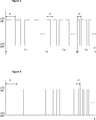
- Figure 3 – is the diagram showing change with respect to time in periods of blinking of a door lock display in an embodiment of the present invention.
- Figure 4 – is the diagram showing change with respect to time in periods of blinking of a door lock display in another embodiment of the present invention.
- the washing machine (1) comprises a motor (2) rotating the drum wherein the laundry is placed, a door (3) providing access of the user into the drum, a door lock (4) locked during the washing process, preventing the door (3) from opening and keeping the door (3) locked during the washing process and allowing the door (3) to open at the end of the washing process, having for example bimetal mechanism (not shown in the figures) that moves with respect to temperature, a switch (5), for example a triac, activating the door lock (4) by energizing it at the start of the washing program, providing the door (3) to be kept locked and cutting off the energy of the door lock (4) at the end of the washing program, after the motor (2) stops rotating due to inertia effect, a microprocessor (6) that regulates functioning of the switch (5) depending on the state of the washing process and a display (7) controlled by the microprocessor (6), remaining in the passive (off) state during the washing program, and at the end of the washing program that blinks in the time (T) starting from the moment energy of the door lock
- the washing machine (1) of the present invention comprises the display (7), the frequency of which increases by the blinking periods (P) getting shorter from the moment the energy of the door lock (4) is cut off during the opening time (T) of the door lock (4), thus blinking more quickly than the start of the time (T), towards the end of the time (T) as nearing the moment the door (3) can be opened by the user.
- the bimetal mechanism disposed in the door lock (4) starts cooling down at the end of the washing program, after the energy of the door lock (4) is cut off by means of the switch (5) commanded by the microprocessor (6).
- the door (3) is kept locked, not allowed to be opened by the user, as long as the cooling down of the bimetal mechanism disposed in the door lock (4) is not completed.
- the display (7) starts blinking with a certain period and as the cooling time (T) of the door lock (4) progresses and gets closer to the moment the door (3) can be opened, the display (7) blinks more quickly and the user can estimate when the door (3) can be opened.
- the estimated opening time (T) of the door lock (4) is divided into two or more phases (T1, T2, T3, ...) and prerecorded in the memory of the microprocessor (6) by the producer, the blinking periods (P) of the display (7) gradually decrease in each phase (T2, T3, ...) following the first phase (T1), the blinking frequency increases, in other words, the display (7) blinks more quickly with respect to the previous phase in each phase (T2, T3, ...) following the first phase (T1) ( Figure 3).
- the estimated opening time (T) of the door lock (4) is divided into three phases (T1, T2, T3) and in the first phase (T1) the display (7) is turned on for 1 second and turned off for 1 second in approximately 2 seconds of blinking periods (P), in the second phase (T2) is turned on for 0.5 seconds and turned off for 0.5 seconds in approximately 1 second of blinking periods (P), and in the third phase (T3) is turned on for 0.3 seconds and turned off for 0.3 in approximately 0.6 seconds of blinking periods (P).
- the first phase (T1) lasts for approximately 40 seconds wherein the display (7) blinks in approximately 2 second periods (P)
- the second phase (T2) lasts for approximately 40 seconds wherein it blinks in approximately 1 second periods (P)
- the third phase (T3) wherein it blinks in approximately 0.6 second periods (P) lasts from the end of the second phase (T2) until the door lock (4) opens.
- the estimated cooling time (T) of the door lock (4) is approximately 1.5 minutes and the first phase (T1) is 40 seconds
- the second phase (T2) is 40 seconds
- the third phase (T3) with 0.6 second periods (P) lasts approximately for 10 seconds.
- the estimated cooling time (T) of the door lock (4) is approximately 2 minutes
- the third phase (T3) with 0.6 second periods (P) lasts approximately for 40 seconds.
- the blinking periods (P) of the display (7) continuously decrease during the opening time (T) of the door lock (4), from the start of the time (T) to the end and the blinking frequency increases continuously (Figure 4).
- each blinking period (P) of the display (7) during the estimated door lock (4) opening time (T) is shorter than the previous period (P), the blinking speed of the display (7) increases regularly during the said time (T).
- the display (7) is a LED (Light Emitting Diode) disposed on the control panel ( Figure 1).
- the display (7) is an icon disposed on the control panel.
- the increase in blinking speed of the display (7), showing the state of the door lock (4) is realized by only interfering with the software, additional elements like the heat sensor are not used, the user estimates approximately when the door lock (4) will be opened by looking at the blinking speed of the display (7) after the washing program ends.
Landscapes
- Engineering & Computer Science (AREA)
- Textile Engineering (AREA)
- Control Of Washing Machine And Dryer (AREA)
Abstract
The present invention relates to a washing machine (1) that comprises a door (3), a door lock (4) allowing the door (3) to be opened at the end of the washing process, a switch (5) activating the door lock (4) by energizing it at the start of the washing program, and cutting off the energy at the end of the washing program, a microprocessor (6) that regulates functioning of the switch (5) and a display (7) controlled by the microprocessor (6), remaining in the passive state during the washing program, at the end of the washing program, warning the user by blinking in the time (T) starting from the moment energy of the door lock (4) is cut off by the switch (5) until the door lock (4) allows the door (3) to be opened.
Description
The present invention relates to a washing machine comprising a door lock providing the door to be kept locked during the washing process and a display that warns the user in the open or closed positions of the door lock.
In terms of user safety, the door of the washing machine is automatically locked by a safety mechanism during the washing process. The energy holding the door lock locked is cut off at the end of the washing process after the drum wherein the laundry is placed stops rotating. In door locks, generally bimetal type mechanisms that change shape by heat are used, and the door lock does not become openable at the moment the energy thereof is cut off, a certain cooling time duration has to pass for the bimetal mechanism to open the lock. In known embodiments, the LEDs, the icons disposed on the screen and similar displays inform the user about the state of the door lock. For example, when a LED is used for showing the state of the door lock, the LED is turned off when the door is locked, and turned on when not locked, and the LED flashes on and off in the cooling period when the energy of the door lock is cut off at the end of the washing process but the door is not yet allowed to be opened. The blinking duration of the LED depends on the temperature of the environment wherein the washing machine operates and the temperature level of the selected washing program. The opening duration of the door lock increases and decreases in direct proportion with the temperature of the environment. As the temperature of the environment increases, the door lock opens later and as the temperature of the environment decreases the door lock opens sooner. For example, if the temperature of the environment wherein the washing machine is used is 25 C, then the duration for the door lock to open lasts for 1.5 to 2 minutes. If the temperature of the environment is high, opening of the door lock can sometimes last more than normal, the LED blinks continuously during this time and the user estimates that the door will be opened in a short while however waits more than his/her estimate.
In the state of the art Korean Patent Applications no KR20030065111 and KR20030065112, washing machines are explained, that comprise LEDs which blink when the temporary stop button is pushed during the washing process, thus informing the user that the door opening time is soon.
The aim of the present invention is the realization of a washing machine comprising a door lock display that provides the user to estimate the duration wherein the door can be opened at the end of the washing process.
The washing machine realized in order to attain the aim of the present invention, explicated in the first claim and the respective claims thereof, comprises a LED that flashes on and off from the moment the energy of the door lock is cut off by the triac at the end of the washing process until the door lock cools down and allows the door to be opened and that flashes on and off more quickly as the time nears for the door lock to be opened by the blinking frequency increasing or a display like an icon disposed on the screen of the control panel.
In the washing machine, at the end of the washing program, the energy of the door lock is cut off by the triac which is controlled by the microprocessor and the display blinks in a certain period and frequency, the display, its period getting shorter and the frequency increasing, blinks more quickly than at the start as the door lock cools down and the time the door can open nears. Thus, the user approximately estimates the time the door can open by looking at the blinking speed of the display.
In an embodiment of the present invention, the blinking frequency or speed of the LED, increases gradually during the cooling time of the door lock.
In another embodiment of the present invention, the blinking frequency or speed of the LED increases continuously during the cooling time of the door lock.
The gradual or continuous increase in the blinking speed of the display, informing the user the state of the door lock, is provided by making a small change in the software in the microprocessor, elements like heat sensor and the like that increase costs are not used.
The washing machine realized in order to attain the aim of the present invention is illustrated in the attached figures, where:
Figure 1 – is the perspective view of a washing machine.
Figure 2 – is the schematic view of a door lock control circuit.
Figure 3 – is the diagram showing change with respect to time in periods of blinking of a door lock display in an embodiment of the present invention.
Figure 4 – is the diagram showing change with respect to time in periods of blinking of a door lock display in another embodiment of the present invention.
The elements illustrated in the figures are numbered as follows:
- Washing machine
- Motor
- Door
- Door lock
- Switch
- Microprocessor
- Display
The washing machine (1) comprises a motor (2) rotating the drum wherein the laundry is placed, a door (3) providing access of the user into the drum, a door lock (4) locked during the washing process, preventing the door (3) from opening and keeping the door (3) locked during the washing process and allowing the door (3) to open at the end of the washing process, having for example bimetal mechanism (not shown in the figures) that moves with respect to temperature, a switch (5), for example a triac, activating the door lock (4) by energizing it at the start of the washing program, providing the door (3) to be kept locked and cutting off the energy of the door lock (4) at the end of the washing program, after the motor (2) stops rotating due to inertia effect, a microprocessor (6) that regulates functioning of the switch (5) depending on the state of the washing process and a display (7) controlled by the microprocessor (6), remaining in the passive (off) state during the washing program, and at the end of the washing program that blinks in the time (T) starting from the moment energy of the door lock (4) is cut off by the switch (5) until the door lock (4) allows the door (3) to be opened (from now on will be referred to as “door lock (4) opening time” or door lock (4) cooling time” or shortly “time”) and that warns the user by being continuously in the open (on) state starting from opening of the door lock (4) until the door (3) is opened by the user.
The washing machine (1) of the present invention, comprises the display (7), the frequency of which increases by the blinking periods (P) getting shorter from the moment the energy of the door lock (4) is cut off during the opening time (T) of the door lock (4), thus blinking more quickly than the start of the time (T), towards the end of the time (T) as nearing the moment the door (3) can be opened by the user.
In the washing machine (1), the bimetal mechanism disposed in the door lock (4) starts cooling down at the end of the washing program, after the energy of the door lock (4) is cut off by means of the switch (5) commanded by the microprocessor (6). The door (3) is kept locked, not allowed to be opened by the user, as long as the cooling down of the bimetal mechanism disposed in the door lock (4) is not completed. Starting from the moment the energy of the door lock (4) is cut off by the switch (5), the display (7) starts blinking with a certain period and as the cooling time (T) of the door lock (4) progresses and gets closer to the moment the door (3) can be opened, the display (7) blinks more quickly and the user can estimate when the door (3) can be opened.
In an embodiment of the present invention, the estimated opening time (T) of the door lock (4) is divided into two or more phases (T1, T2, T3, ...) and prerecorded in the memory of the microprocessor (6) by the producer, the blinking periods (P) of the display (7) gradually decrease in each phase (T2, T3, ...) following the first phase (T1), the blinking frequency increases, in other words, the display (7) blinks more quickly with respect to the previous phase in each phase (T2, T3, ...) following the first phase (T1) (Figure 3).
In a version of this embodiment, the estimated opening time (T) of the door lock (4) is divided into three phases (T1, T2, T3) and in the first phase (T1) the display (7) is turned on for 1 second and turned off for 1 second in approximately 2 seconds of blinking periods (P), in the second phase (T2) is turned on for 0.5 seconds and turned off for 0.5 seconds in approximately 1 second of blinking periods (P), and in the third phase (T3) is turned on for 0.3 seconds and turned off for 0.3 in approximately 0.6 seconds of blinking periods (P). In this embodiment, the first phase (T1) lasts for approximately 40 seconds wherein the display (7) blinks in approximately 2 second periods (P), the second phase (T2) lasts for approximately 40 seconds wherein it blinks in approximately 1 second periods (P) and the third phase (T3) wherein it blinks in approximately 0.6 second periods (P) lasts from the end of the second phase (T2) until the door lock (4) opens. In the washing machine (1), if for example the estimated cooling time (T) of the door lock (4) is approximately 1.5 minutes and the first phase (T1) is 40 seconds, the second phase (T2) is 40 seconds, then the third phase (T3) with 0.6 second periods (P) lasts approximately for 10 seconds. Similarly, if the estimated cooling time (T) of the door lock (4) is approximately 2 minutes, the third phase (T3) with 0.6 second periods (P) lasts approximately for 40 seconds.
How long the phases (T1, T2, T3, ...) last that divide the estimated door lock (4) opening time (T) and the blinking periods (P) of the display (7) in these phases (T1, T2, T3, ...) is determined according to environment temperature conditions in the country wherein the washing machine (1) is used and recorded in the memory of the microprocessor (6) by the producer.
In an embodiment of the present invention, the blinking periods (P) of the display (7) continuously decrease during the opening time (T) of the door lock (4), from the start of the time (T) to the end and the blinking frequency increases continuously (Figure 4). In this embodiment, each blinking period (P) of the display (7) during the estimated door lock (4) opening time (T) is shorter than the previous period (P), the blinking speed of the display (7) increases regularly during the said time (T).
In an embodiment of the present invention, the display (7) is a LED (Light Emitting Diode) disposed on the control panel (Figure 1).
In another embodiment of the present invention, the display (7) is an icon disposed on the control panel.
In the washing machine (1) of the present invention, the increase in blinking speed of the display (7), showing the state of the door lock (4), is realized by only interfering with the software, additional elements like the heat sensor are not used, the user estimates approximately when the door lock (4) will be opened by looking at the blinking speed of the display (7) after the washing program ends.
It is to be understood that the present invention is not limited by the embodiments disclosed above and a person skilled in the art can easily introduce different embodiments. These should be considered within the scope of the protection postulated by the claims of the present invention.
Claims (5)
- A washing machine (1) that comprises a door (3) providing access to the drum wherein the laundry is placed, a door lock (4) providing the door (3) to be kept locked during the washing process and allowing the door (3) to open at the end of the washing process, a switch (5) providing the door lock (4) to be energized at the start of the washing program, and cutting off the energy thereof at the end of the washing program, a microprocessor (6) that regulates functioning of the switch (5) and a display (7) controlled by the microprocessor (6), remaining in the passive state during the washing program and at the end of the washing program, blinking in the time (T) starting from the moment energy of the door lock (4) is cut off until the door (3) is allowed to be opened, characterized by the display (7), the frequency of which increases by the blinking periods (P) getting shorter from the moment the energy of the door lock (4) is cut off during the opening time (T) of the door lock (4), and blinking more quickly towards the end of the time (T).
- A washing machine (1) as in Claim 1, characterized by the microprocessor (6) wherein the estimated opening time (T) of the door lock (4) is divided into two or more phases (T1, T2, T3, ...) and prerecorded in its memory and the display (7) the blinking frequency of which increases by blinking periods (P) gradually decreasing in each phase (T2, T3, ...) following the first phase (T1).
- A washing machine (1) as in Claim 1, characterized by the display (7), the frequency of which increases by the blinking periods (P) continuously decreasing from the start of the time (T) to the end during the opening time (T) of the door lock (4).
- A washing machine (1) as in any one of the above Claims, characterized by the display (7) which is a LED.
- A washing machine (1) as in any one of the above Claims, characterized by the display (7) which is an icon situated on the control panel screen.
Applications Claiming Priority (2)
| Application Number | Priority Date | Filing Date | Title |
|---|---|---|---|
| TR201010885 | 2010-12-24 | ||
| TRA2010/10885 | 2010-12-24 |
Publications (1)
| Publication Number | Publication Date |
|---|---|
| WO2012084469A1 true WO2012084469A1 (en) | 2012-06-28 |
Family
ID=45099092
Family Applications (1)
| Application Number | Title | Priority Date | Filing Date |
|---|---|---|---|
| PCT/EP2011/071733 Ceased WO2012084469A1 (en) | 2010-12-24 | 2011-12-05 | A washing machine comprising a door lock display |
Country Status (1)
| Country | Link |
|---|---|
| WO (1) | WO2012084469A1 (en) |
Cited By (1)
| Publication number | Priority date | Publication date | Assignee | Title |
|---|---|---|---|---|
| WO2026000818A1 (en) * | 2024-06-24 | 2026-01-02 | 无锡美芝电器有限公司 | Control method for laundry treatment device and laundry treatment device |
Citations (3)
| Publication number | Priority date | Publication date | Assignee | Title |
|---|---|---|---|---|
| JP2001204992A (en) * | 2000-01-26 | 2001-07-31 | Sanyo Electric Co Ltd | Washing machine |
| KR20030065112A (en) | 2002-01-31 | 2003-08-06 | 엘지전자 주식회사 | Door open display method of washer |
| KR20030065111A (en) | 2002-01-31 | 2003-08-06 | 엘지전자 주식회사 | One time ceasing display method using door lock LED of washer |
-
2011
- 2011-12-05 WO PCT/EP2011/071733 patent/WO2012084469A1/en not_active Ceased
Patent Citations (3)
| Publication number | Priority date | Publication date | Assignee | Title |
|---|---|---|---|---|
| JP2001204992A (en) * | 2000-01-26 | 2001-07-31 | Sanyo Electric Co Ltd | Washing machine |
| KR20030065112A (en) | 2002-01-31 | 2003-08-06 | 엘지전자 주식회사 | Door open display method of washer |
| KR20030065111A (en) | 2002-01-31 | 2003-08-06 | 엘지전자 주식회사 | One time ceasing display method using door lock LED of washer |
Cited By (1)
| Publication number | Priority date | Publication date | Assignee | Title |
|---|---|---|---|---|
| WO2026000818A1 (en) * | 2024-06-24 | 2026-01-02 | 无锡美芝电器有限公司 | Control method for laundry treatment device and laundry treatment device |
Similar Documents
| Publication | Publication Date | Title |
|---|---|---|
| KR101594362B1 (en) | Washing device and control method | |
| US20150345068A1 (en) | User control interface for an appliance, and associated method | |
| EP2766519B1 (en) | Washing machine and method for controlling the same | |
| EP1132038A2 (en) | Dishwashing machine with differentiated washing capabilities | |
| EP3450612B1 (en) | Laundry washing machine and method for selecting washing modes of a laundry washing machine | |
| EP3019656A1 (en) | Appliance for drying laundry with enhanced operation flexibility | |
| JP2019122479A (en) | Game machine | |
| KR20150028006A (en) | Washing apparatus | |
| EP2929074B1 (en) | A household appliance having key lock function | |
| US8952577B2 (en) | Safety control system for an electromagnetic door lock of an electric household appliance | |
| US20040099655A1 (en) | Method for drying laundry and machine implementing such a method | |
| EP3252211A1 (en) | Method for controlling a heat pump laundry drying machine | |
| CA1281183C (en) | Dryer control with momentary tumble feature | |
| KR100315832B1 (en) | Cover lock devices such as washing machines | |
| US20120137739A1 (en) | Washing machine | |
| JP5509040B2 (en) | Laundry equipment | |
| ES2276957T3 (en) | A METHOD FOR AUTOMATIC CONTROL OF A CORRESPONDING WATER DRIVING AND ELECTRICAL APPLIANCES. | |
| EP0808935A2 (en) | Washing machine with instant-action door interlock arrangement | |
| EP2929075B1 (en) | A household appliance having key lock function | |
| EP3227488B1 (en) | A household appliance operated in encrypted mode | |
| RU2658377C1 (en) | Household device, supplied by input blocking unit | |
| WO2012038311A2 (en) | A washing machine | |
| WO2016087079A1 (en) | A household appliance operated in safe mode | |
| EP2837724B1 (en) | Laundry machine equipped with a user interface with a start-up procedure | |
| EP4116478A1 (en) | Night cycle for a laundry appliance |
Legal Events
| Date | Code | Title | Description |
|---|---|---|---|
| 121 | Ep: the epo has been informed by wipo that ep was designated in this application |
Ref document number: 11791549 Country of ref document: EP Kind code of ref document: A1 |
|
| WWE | Wipo information: entry into national phase |
Ref document number: 2013/03733 Country of ref document: TR |
|
| NENP | Non-entry into the national phase |
Ref country code: DE |
|
| 122 | Ep: pct application non-entry in european phase |
Ref document number: 11791549 Country of ref document: EP Kind code of ref document: A1 |