WO2012063699A1 - 認証サーバ及び認証サーバによる認証方法 - Google Patents
認証サーバ及び認証サーバによる認証方法 Download PDFInfo
- Publication number
- WO2012063699A1 WO2012063699A1 PCT/JP2011/075277 JP2011075277W WO2012063699A1 WO 2012063699 A1 WO2012063699 A1 WO 2012063699A1 JP 2011075277 W JP2011075277 W JP 2011075277W WO 2012063699 A1 WO2012063699 A1 WO 2012063699A1
- Authority
- WO
- WIPO (PCT)
- Prior art keywords
- transmission delay
- delay time
- communication terminal
- unit
- content
- Prior art date
- Legal status (The legal status is an assumption and is not a legal conclusion. Google has not performed a legal analysis and makes no representation as to the accuracy of the status listed.)
- Ceased
Links
Images









Classifications
-
- H—ELECTRICITY
- H04—ELECTRIC COMMUNICATION TECHNIQUE
- H04W—WIRELESS COMMUNICATION NETWORKS
- H04W12/00—Security arrangements; Authentication; Protecting privacy or anonymity
- H04W12/06—Authentication
-
- G—PHYSICS
- G06—COMPUTING OR CALCULATING; COUNTING
- G06F—ELECTRIC DIGITAL DATA PROCESSING
- G06F21/00—Security arrangements for protecting computers, components thereof, programs or data against unauthorised activity
- G06F21/50—Monitoring users, programs or devices to maintain the integrity of platforms, e.g. of processors, firmware or operating systems
- G06F21/55—Detecting local intrusion or implementing counter-measures
- G06F21/554—Detecting local intrusion or implementing counter-measures involving event detection and direct action
-
- H—ELECTRICITY
- H04—ELECTRIC COMMUNICATION TECHNIQUE
- H04L—TRANSMISSION OF DIGITAL INFORMATION, e.g. TELEGRAPHIC COMMUNICATION
- H04L63/00—Network architectures or network communication protocols for network security
- H04L63/10—Network architectures or network communication protocols for network security for controlling access to devices or network resources
- H04L63/102—Entity profiles
-
- H—ELECTRICITY
- H04—ELECTRIC COMMUNICATION TECHNIQUE
- H04W—WIRELESS COMMUNICATION NETWORKS
- H04W12/00—Security arrangements; Authentication; Protecting privacy or anonymity
- H04W12/08—Access security
Definitions
- the present invention relates to an authentication server that prevents browsing from a computer and allows browsing from a mobile phone when browsing content limited to mobile phone users, and an authentication method using the authentication server.
- the access source is a mobile phone or a computer by referring to the IP address of the access source.
- the IP address may be disguised by the computer and may be changed by the mobile phone company. Therefore, it has not been possible to safely and accurately determine whether the access source is a mobile phone or a computer.
- one of the two communication terminals is measured by measuring the transmission delay time between the two communication terminals and measuring the distance between the two communication terminals.
- the communication terminal authenticates the other communication terminal. However, it does not determine whether the other communication terminal is a mobile phone or a computer.
- the first invention allows a mobile phone user and a computer to safely and accurately determine whether the access source is a mobile phone or a computer when browsing content only to mobile phone users. It is a first object to provide an authentication server that can be determined and an authentication method using the authentication server.
- the ID generated in the normal Internet is not a unique ID with high safety, so is the mobile phone user a legitimate user? I was unable to judge safely and accurately.
- one of the two communication terminals is measured by measuring the transmission delay time between the two communication terminals and measuring the distance between the two communication terminals.
- the communication terminal authenticates the other communication terminal. However, regardless of the distance between the two communication terminals, it is not determined whether the user of the other communication terminal is a regular user.
- a second object of the present invention is to provide an authentication server that can perform authentication and an authentication method using the authentication server.
- the communication terminal is a wireless communication terminal such as a mobile phone or a computer It was decided whether it was a wired communication terminal such as.
- a communication terminal that performs authentication for browsing content, a data communication unit that performs data communication, and a transmission delay time between the data communication unit and the communication terminal are set a plurality of times.
- a transmission delay time measurement unit for measuring the transmission delay time
- a transmission delay time distribution characteristic determination unit for determining whether the distribution characteristic of the transmission delay time measured over a plurality of times is discrete, and a distribution characteristic of the transmission delay time.
- a content browsing authentication unit that approves browsing of the content when it is determined to be discrete and rejects browsing of the content when it is determined that the distribution characteristic of the transmission delay time is not discrete; It is an authentication server characterized by comprising.
- the data communication unit transmits an HTML file including a plurality of data elements to the communication terminal, receives a request signal for requesting each data element from the communication terminal, and transmits the transmission.
- the delay time measurement unit measures the transmission delay time from the data communication unit to the communication terminal and the data communication from the communication terminal by measuring an interval at which a request signal requesting each data element is received from the communication terminal. It is an authentication server characterized by measuring the total transmission delay time to the unit.
- the access source only needs to have a web browser and does not need to have software for measuring the transmission delay time.
- the data communication unit sequentially repeats reception of one request signal and transmission of one data element, and the transmission delay time measurement unit measures an interval at which each request signal is received.
- the total of the transmission delay times may be measured by According to this configuration, even in a communication terminal that performs pipeline processing, by measuring the interval at which a request signal for requesting each data element is received from the communication terminal, the data communication unit to the communication terminal can be measured. The total of the transmission delay time and the transmission delay time from the communication terminal to the data communication unit can be measured.
- the data communication unit receives a connection close signal from the communication terminal that has received the data element, and the transmission delay time measurement unit receives the request signal and then receives the request signal.
- An authentication server that measures the total of the transmission delay time from the data communication unit to the communication terminal and the transmission delay time from the communication terminal to the data communication unit by measuring the time interval until the close signal is received. is there. According to this configuration, transmission delay time can be measured without using dedicated software. Furthermore, since a connection with a communication terminal is used, transmission delay times with a plurality of communication terminals can be measured in parallel.
- the data communication unit performs telephone communication with the communication terminal, and the content browsing authentication unit determines that the distribution characteristic of the transmission delay time is discrete.
- the content viewing is approved and it is determined that the distribution characteristic of the transmission delay time is discrete.
- An authentication server characterized in that browsing of the content is rejected when an incoming call response is not made from the communication terminal.
- the first invention is a content browsing authentication receiving step for receiving authentication for browsing content performed by a communication terminal, and a transmission delay time measuring step for measuring a transmission delay time between the communication terminal a plurality of times.
- a transmission delay time distribution characteristic determining step for determining whether or not the distribution characteristic of the transmission delay time measured over a plurality of times is discrete, and the distribution characteristic of the transmission delay time is determined to be discrete
- a content browsing authentication step for sequentially approving the browsing of the content and rejecting the browsing of the content when it is determined that the distribution characteristic of the transmission delay time is not discrete. This is an authentication method by an authentication server.
- the transmission delay time measuring step transmits an HTML file including a plurality of data elements to the communication terminal, receives a request signal for requesting each data element from the communication terminal, By measuring the interval at which a request signal requesting each data element is received from the communication terminal, the total of the transmission delay time from the authentication server to the communication terminal and the transmission delay time from the communication terminal to the authentication server It is an authentication method by an authentication server characterized by measuring.
- the access source only needs to have a web browser and does not need to have software for measuring the transmission delay time.
- the transmission delay time measurement step sequentially repeats the reception of one request signal and the transmission of one data element, and measures the transmission delay time by measuring the interval at which each request signal is received. A total may be measured.
- a transmission delay from the data communication unit to the communication terminal is measured by measuring an interval at which a request signal for requesting each data element is received from the communication terminal. The total of time and transmission delay time from the communication terminal to the data communication unit can be measured.
- the transmission delay time measuring step receives a close signal of a connection from the communication terminal that has received the data element, and until the close signal is received after receiving the request signal.
- This is an authentication method by an authentication server that measures the total of the transmission delay time from the data communication unit to the communication terminal and the transmission delay time from the communication terminal to the data communication unit by measuring the time interval. According to this configuration, transmission delay time can be measured without using dedicated software. Furthermore, since a connection with a communication terminal is used, transmission delay times with a plurality of communication terminals can be measured in parallel.
- the content browsing authentication step performs telephone communication with the communication terminal, determines that the distribution characteristic of the transmission delay time is discrete, and then performs the telephone communication.
- the viewing of the content is approved, and when it is determined that the distribution characteristic of the transmission delay time is discrete, the incoming call response from the communication terminal to the telephone communication is determined.
- the browsing of the content is rejected when the authentication is not performed.
- the data communication unit performs telephone communication with the communication terminal, and the content browsing authentication unit determines that the distribution characteristic of the transmission delay time is discrete.
- the content browsing authentication unit determines whether or not the distribution characteristic of the transmission delay time has changed with respect to telephone communication.
- the authentication server according to the first invention is a wireless communication terminal having a communication function Can be confirmed. And in order to authenticate the provision of content after the content browsing authentication unit confirms that the communication terminal is a wireless communication terminal having a call function, whether the access source is a mobile communication terminal or a computer, It is possible to judge more safely and accurately.
- the content browsing authentication step performs telephone communication with the communication terminal, and it is determined that the distribution characteristic of the transmission delay time is discrete.
- the distribution characteristic of the transmission delay time is changed for the telephone communication, the viewing of the content is approved, and it is determined that the distribution characteristic of the transmission delay time is discrete.
- browsing of the content may be rejected.
- the authentication method by the authentication server according to the first aspect of the present invention is a wireless communication terminal in which the communication terminal has a call function It can be confirmed. And in order to authenticate the provision of the content after confirming that the communication terminal is a wireless communication terminal having a call function in the content browsing authentication step, whether the access source is a mobile communication terminal or a computer, It is possible to judge more safely and accurately.
- the authentication server includes a communication terminal that performs authentication for browsing content, a data communication unit that performs data communication, and a transmission delay between the data communication unit and the communication terminal.
- Transmission delay time measurement unit that measures time multiple times, and transmission delay time measured by the transmission delay time measurement unit is accumulated to detect the peak value of transmission delay time, and transmission within a certain range including each peak value
- the distribution characteristic determining unit for determining whether or not the distribution characteristic determining unit determines that the content is determined to be discrete
- the content viewing unit approves the viewing of the content.
- a reject content browsing authentication unit the list the list.
- the authentication server according to the first invention includes a data communication unit, a transmission delay time measurement unit, an extraction unit, a distribution characteristic calculation unit, and a distribution characteristic determination unit. Therefore, the communication terminal is a wireless communication terminal. Whether it is a wired communication terminal or not can be determined. Since the authentication server according to the first invention includes a content browsing authentication unit, when the communication terminal is a wireless communication terminal, content can be provided to the communication terminal, and the communication terminal is a wired communication terminal. Can prevent the provision of content to the communication terminal. As a result, the authentication server according to the first invention can determine whether the access source is a mobile communication terminal or a computer. Here, the authentication server according to the first aspect of the invention can perform the determination safely and accurately because the authentication server performs the authentication. Therefore, according to the first aspect of the present invention, it is possible to safely and accurately determine whether the access source is the mobile communication terminal or the computer when browsing the content limited to the user of the mobile communication terminal. .
- the data communication unit transmits an HTML file including a plurality of data elements to the communication terminal, receives a request signal for requesting each data element from the communication terminal
- the transmission delay time measuring unit may measure a transmission delay time from the data communication unit to the communication terminal by measuring an interval at which a request signal requesting each data element is received from the communication terminal.
- the data communication unit sequentially repeats reception of one request signal and transmission of one data element, and the transmission delay time measurement unit measures an interval at which each request signal is received.
- the total of the transmission delay times may be measured by According to the present invention, even in a communication terminal that performs pipeline processing, a transmission delay from the data communication unit to the communication terminal is measured by measuring an interval at which a request signal for requesting each data element is received from the communication terminal. The total of time and transmission delay time from the communication terminal to the data communication unit can be measured.
- the data communication unit receives a connection close signal from the communication terminal that has received the data element, and the transmission delay time measurement unit receives the request signal and then receives the request signal.
- An authentication server that measures the total of the transmission delay time from the data communication unit to the communication terminal and the transmission delay time from the communication terminal to the data communication unit by measuring the time interval until the close signal is received. is there. According to this configuration, transmission delay time can be measured without using dedicated software. Furthermore, since a connection with a communication terminal is used, transmission delay times with a plurality of communication terminals can be measured in parallel.
- the data communication unit performs telephone communication with the communication terminal, and determines whether or not the data communication unit has received an incoming response from the communication terminal.
- the content browsing authentication unit approves the browsing of the content when it is determined that the distribution characteristic determination unit determines that it is discrete and the call determination unit determines that an incoming call response has been received, When the distribution characteristic determination unit determines that the call is not discrete or the call determination unit determines that no incoming response is received, the browsing of the content may be rejected. Since the authentication server according to the first invention includes the call determination unit, it can be confirmed that the communication terminal has a call function. Then, since the content browsing authentication unit confirms that the communication terminal has a call function and authenticates the provision of the content, it is more secure whether the access source is the mobile communication terminal or the computer. It is possible to judge accurately and accurately.
- the transmission delay time calculated by the distribution characteristic calculation unit A call change determining unit that determines whether or not the distribution characteristic of the content has changed, wherein the content browsing authentication unit determines that the distribution characteristic determining unit is discrete, and the call change determining unit determines the transmission delay time. If it is determined that the distribution characteristic has changed, the content viewing is approved and the distribution characteristic determination unit determines that the distribution characteristic is not discrete, or the call change determination unit has not changed the transmission delay time distribution characteristic. When the determination is made, browsing of the content may be refused.
- the authentication server includes a call change determination unit, it can be confirmed that the communication terminal is a wireless communication terminal having a call function. And in order to authenticate the provision of content after the content browsing authentication unit confirms that the communication terminal is a wireless communication terminal having a call function, whether the access source is a mobile communication terminal or a computer, It is possible to judge more safely and accurately.
- the data communication unit performs data communication with a communication terminal that performs authentication for content browsing, and the transmission delay time measurement unit performs the communication. Measures the transmission delay time with the terminal multiple times, and the extraction unit accumulates the transmission delay time and detects the peak value of the transmission delay time, and extracts the transmission delay time within a certain range including each peak value.
- the distribution characteristic calculating unit calculates the distribution characteristic of the extracted transmission delay time, and the distribution characteristic determining unit determines whether or not the calculated distribution characteristic is discrete, the distribution If it is determined that the content is determined to be discrete in the characteristic determination step, the content browsing is approved, and if it is determined that the distribution characteristic determination step is not discrete, the content inspection is rejected. It has an authentication step, in this order.
- the authentication method by the authentication server according to the first invention includes the distribution characteristic determination step, it can be determined whether the communication terminal is a wireless communication terminal or a wired communication terminal. Since the authentication method by the authentication server according to the first invention has a content browsing authentication step, when the communication terminal is a wireless communication terminal, it is possible to provide content to the communication terminal, and the communication terminal is a wired communication terminal. In this case, provision of content to the communication terminal can be prevented. As a result, the authentication server according to the first invention can determine whether the access source is a mobile communication terminal or a computer.
- the authentication server since the authentication server performs authentication, the determination can be performed safely and accurately. Therefore, according to the first aspect of the present invention, it is possible to safely and accurately determine whether the access source is the mobile communication terminal or the computer when browsing the content limited to the user of the mobile communication terminal. .
- the transmission delay time measuring unit transmits an HTML file including a plurality of data elements to the communication terminal, and the communication terminal Measure the transmission delay time from the authentication server to the communication terminal by receiving a request signal requesting each data element and measuring the interval at which the request signal requesting each data element is received from the communication terminal. May be.
- authentication can be performed simply by allowing the communication terminal to access the web browser, so that it is not necessary to install special software for measuring the transmission delay time in the communication terminal. For this reason, it can authenticate easily.
- reception of one request signal and transmission of one data element are sequentially repeated, and the total transmission delay time is measured by measuring an interval at which each request signal is received. May be measured.
- a transmission delay from the data communication unit to the communication terminal is measured by measuring an interval at which a request signal for requesting each data element is received from the communication terminal. The total of time and transmission delay time from the communication terminal to the data communication unit can be measured.
- a connection close signal is received from the communication terminal that has received the data element, and the request signal is received until the close signal is received.
- An authentication method by an authentication server that measures a total of transmission delay time from the data communication unit to the communication terminal and transmission delay time from the communication terminal to the data communication unit by measuring a time interval. According to this configuration, transmission delay time can be measured without using dedicated software. Furthermore, since a connection with a communication terminal is used, transmission delay times with a plurality of communication terminals can be measured in parallel.
- the data communication unit performs telephone communication with the communication terminal, and the call determination unit receives the incoming call response from the communication terminal.
- a call determination step for determining whether or not the distribution characteristic determination step is performed simultaneously with the distribution characteristic determination step or between the distribution characteristic determination step and the content browsing authentication step.
- the content browsing authentication unit approves the browsing of the content when it is determined that the distribution characteristic is determined to be discrete in the distribution characteristic determination step and the incoming call response is received in the call determination step, and the distribution characteristic determination In the step, it is determined that it is not discrete, or the incoming call response is not received in the call determination step. Viewing of the content may be rejected if it is determined that.
- the authentication method by the authentication server according to the first invention includes the call determination step, it can be confirmed that the communication terminal has a call function.
- the access source is a mobile communication terminal or a computer. It is possible to judge accurately and accurately.
- the data communication unit performs telephone communication with the communication terminal, and a call change determination unit performs the distribution characteristics after the telephone communication by the data communication unit.
- the call change determination step for determining whether or not the distribution characteristic of the transmission delay time calculated by the calculation unit has changed is performed before the distribution characteristic determination step, simultaneously with the distribution characteristic determination step or the distribution characteristic determination step and the content.
- the content browsing authentication unit determines that it is discrete in the distribution characteristic determination step, and distribution characteristics of transmission delay time in the call change determination step If it is determined that the content has changed, the viewing of the content is approved, and the distribution characteristic determination step Viewing of the content may be rejected if the distribution characteristic of the transmission delay time in or the call change determination step is determined not to be specifically determined to have not changed. Since the authentication method by the authentication server according to the first invention includes the call change determination step, it can be confirmed that the communication terminal is a wireless communication terminal having a call function. And in order to authenticate the provision of the content after confirming that the communication terminal is a wireless communication terminal having a call function in the content browsing authentication step, whether the access source is a mobile communication terminal or a computer, It is possible to judge more safely and accurately.
- the user of the communication terminal It was decided to determine whether the user is a legitimate user.
- the second invention relates to a data communication unit that performs data communication with a communication terminal that performs authentication for browsing content, and a correspondence that associates an identifier or password of the communication terminal with a telephone number of the communication terminal.
- the table and the data communication unit when the authentication for browsing the content using the identifier or the password is performed from the communication terminal, the correspondence table is associated with the identifier or the password A telephone communication unit that executes telephone communication using a telephone number; a transmission delay time measurement unit that measures a transmission delay time between the data communication unit and the communication terminal a plurality of times; and the telephone communication unit performs telephone communication.
- the transmission delay time measuring unit is measuring when the telephone communication unit is not performing telephone communication when the transmission delay time is being executed.
- a transmission delay time change determination unit for determining whether there is a change in transmission delay time, and when the transmission delay time change determination unit determines that there is a change in the transmission delay time, approves browsing of the content;
- An authentication server comprising: a content browsing authentication unit that rejects browsing of the content when the transmission delay time change determining unit determines that there is no change in the transmission delay time.
- the data communication unit transmits an HTML file including a plurality of data elements to the communication terminal, receives a request signal for requesting each data element from the communication terminal, and transmits the transmission.
- the delay time measurement unit measures the transmission delay time from the data communication unit to the communication terminal and the data communication from the communication terminal by measuring an interval at which a request signal requesting each data element is received from the communication terminal. It is an authentication server characterized by measuring the total transmission delay time to the unit.
- the mobile phone only needs to have a web browser, and may not have software for measuring transmission delay time.
- the data communication unit sequentially repeats reception of one request signal and transmission of one data element, and the transmission delay time measurement unit measures an interval at which each request signal is received.
- the total of the transmission delay times may be measured by According to the present invention, even in a communication terminal that performs pipeline processing, a transmission delay from the data communication unit to the communication terminal is measured by measuring an interval at which a request signal for requesting each data element is received from the communication terminal. The total of time and transmission delay time from the communication terminal to the data communication unit can be measured.
- the data communication unit receives a connection close signal from the communication terminal that has received the data element
- the transmission delay time measurement unit receives the request signal and then receives the request signal.
- An authentication server that measures the total of the transmission delay time from the data communication unit to the communication terminal and the transmission delay time from the communication terminal to the data communication unit by measuring the time interval until the close signal is received. is there. According to this configuration, transmission delay time can be measured without using dedicated software. Furthermore, since a connection with a communication terminal is used, transmission delay times with a plurality of communication terminals can be measured in parallel.
- the transmission delay time change determining unit is more effective when the telephone communication unit is performing telephone communication than when the telephone communication unit is not performing telephone communication.
- the transmission delay time measuring unit determines whether there is an increase in the transmission delay time
- the content browsing authentication unit determines that the transmission delay time change determining unit has an increase in the transmission delay time.
- An authentication server that approves browsing of the content and rejects browsing of the content when the transmission delay time change determination unit determines that the transmission delay time does not increase. .
- the transmission delay time change determining unit is more effective when the telephone communication unit is performing telephone communication than when the telephone communication unit is not performing telephone communication.
- the data communication unit determines whether or not the transmission delay time measurement packet has been received from the communication terminal, and the content browsing authentication unit determines that the transmission delay time change determination unit measures the transmission delay time.
- the viewing of the content is approved, and when the transmission delay time change determination unit determines that there is reception of a packet for measurement of the transmission delay time, the content It is an authentication server characterized by refusing browsing.
- the content browsing authentication unit determines that the transmission delay time change determining unit determines that the transmission delay time has changed, and receives an incoming call response from the communication terminal to the telephone communication.
- the transmission delay time change determination unit determines that the transmission delay time has changed, and the incoming call response is not received from the communication terminal for the telephone communication.
- the authentication server is characterized in that browsing of the content is rejected.
- the second aspect of the present invention provides a content browsing authentication receiving step for receiving authentication for browsing content performed by a communication terminal, and measuring the transmission delay time between the communication terminal a plurality of times.
- a telephone communication execution step for executing telephone communication using a telephone number associated with an identifier or a password used for authentication for browsing, and telephone communication is being executed when the telephone communication is being executed.
- a transmission delay time change determining step for determining whether or not there is a change in the transmission delay time being measured, and browsing of the content when it is determined that there is a change in the transmission delay time.
- a content browsing authentication step that approves and rejects browsing of the content when it is determined that there is no change in the transmission delay time. An authentication process by the authentication server, wherein the door.
- the telephone communication execution step transmits an HTML file including a plurality of data elements to the communication terminal, receives a request signal for requesting each data element from the communication terminal, By measuring the interval at which the request signal requesting each data element is received from the communication terminal, the transmission delay time from the authentication server to the communication terminal and the transmission delay time from the communication terminal to the authentication server are calculated.
- the communication terminal only needs to have a web browser, and may not have software for measuring transmission delay time.
- the telephone communication execution step sequentially repeats reception of one request signal and transmission of one data element, and measures the interval at which each request signal is received, thereby calculating the total transmission delay time. May be measured.
- a transmission delay from the data communication unit to the communication terminal is measured by measuring an interval at which a request signal for requesting each data element is received from the communication terminal. The total of time and transmission delay time from the communication terminal to the data communication unit can be measured.
- the telephone communication execution step includes receiving a connection close signal from the communication terminal that has received the data element, and receiving the request signal until receiving the close signal.
- An authentication method by an authentication server that measures a total of transmission delay time from the authentication server to the communication terminal and transmission delay time from the communication terminal to the authentication server by measuring a time interval. According to this configuration, transmission delay time can be measured without using dedicated software. Furthermore, since a connection with a communication terminal is used, transmission delay times with a plurality of communication terminals can be measured in parallel.
- the transmission delay time change determining step is increased in the measured transmission delay time when the telephone communication is being executed, compared to when the telephone communication is not being executed.
- the content browsing authentication step determines that there is an increase in the transmission delay time, it approves the browsing of the content and determines that there is no increase in the transmission delay time. An authentication method by an authentication server, wherein browsing of the content is rejected.
- the transmission delay time change determining step measures the transmission delay time from the communication terminal when the telephone communication is performed, compared to when the telephone communication is not performed.
- the content browsing authentication step approves the browsing of the content and determines that the transmission of the transmission is performed when it is determined that the packet for measuring the transmission delay time is not received.
- An authentication method by an authentication server wherein when it is determined that a packet for measuring a delay time is received, browsing of the content is rejected.
- the content browsing authentication step determines that the transmission delay time is changed in the transmission delay time change determining step, and an incoming response is received from the communication terminal for the telephone communication.
- the communication terminal does not receive an incoming call response to the telephone communication.
- an authentication method by an authentication server is characterized in that browsing of the content is rejected.
- an authentication server and an authentication method using the authentication server can be provided.
- the second invention provides an authentication server and an authentication server that can safely and accurately determine whether or not a mobile phone user is a legitimate user when browsing content only to the mobile phone user An authentication method can be provided.
- FIG. 1 It is a figure which shows the structure of an authentication server. It is a figure which shows the process of an authentication server. It is a figure which shows the measuring method of transmission delay time. It is a figure which shows the distribution characteristic of the transmission delay time at the time of performing browsing authentication from a wireless communication terminal. It is a figure which shows the distribution characteristic of the transmission delay time at the time of performing browsing authentication from a wired communication terminal. It is a figure which shows the identification method of a communication terminal. It is a figure which shows the identification method of a communication terminal. It is a figure which shows the relationship between an identification threshold value and identification accuracy. An example of the content provision system which concerns on Embodiment 3 is shown. An example of transition of the transmission delay time when the communication terminal 200 is a true smartphone is shown.
- An example of the calculation method of transmission delay time is shown.
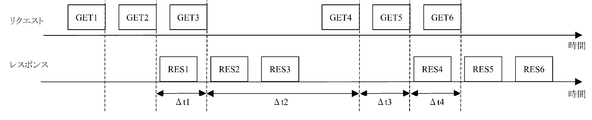
- An example of the content provision system which concerns on Embodiment 4 is shown. It is a figure which shows the measuring method of the transmission delay time in the case of performing a pipeline process. It is a figure which shows another example of the measuring method of transmission delay time. It is a figure which shows the structure of the authentication server which concerns on Embodiment 5.
- FIG. It is a figure which shows the process of the authentication server which concerns on Embodiment 5.
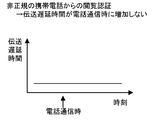
- It is a figure which shows the measuring method of transmission delay time It is a figure which shows the change content of the transmission delay time when a regular mobile phone performs browsing authentication. It is a figure which shows the change content of the transmission delay time when an unauthorized cell phone performs browsing authentication. It is a figure which shows the measuring method of the transmission delay time in the case of performing a pipeline process. It is a figure which shows another example of the measuring method of transmission delay time.
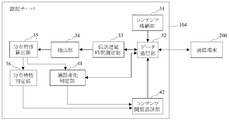
- the configuration of the authentication server is shown in FIG.
- the authentication server 1 accepts browsing authentication from the communication terminal 2, if the communication terminal 2 is a mobile phone 2A via a wireless network, the authentication server 1 approves browsing, and the communication terminal 2 is a computer 2B via a wired network. If there is, refuse to view it.
- the authentication server 1 includes a content storage unit 11, a data communication unit 12, a transmission delay time measurement unit 13, a transmission delay time distribution characteristic determination unit 14, and a content browsing authentication unit 15.
- the content storage unit 11 stores content.
- the data communication unit 12 performs data communication with the communication terminal 2 that performs authentication for browsing content.
- the transmission delay time measurement unit 13 measures the transmission delay time between the data communication unit 12 and the communication terminal 2 a plurality of times.
- the transmission delay time distribution characteristic determining unit 14 determines whether or not the distribution characteristic of the transmission delay time measured a plurality of times is discrete.
- the content browsing authentication unit 15 recognizes that the communication terminal 2 is a wireless communication terminal, approves the browsing of the content, and sets the transmission delay time.
- the communication terminal 2 recognizes that the communication terminal 2 is a wired communication terminal, and refuses to browse the content.
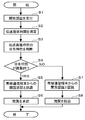
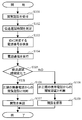
- FIG. 2 shows the authentication server processing.
- the data communication unit 12 receives authentication for browsing content performed by the communication terminal 2 (step S1).
- the transmission delay time measuring unit 13 measures the transmission delay time with the communication terminal 2 a plurality of times (step S2).
- the transmission delay time measurement step will be described later in detail with reference to FIG.
- the transmission delay time distribution characteristic determination step the transmission delay time distribution characteristic determination unit 14 determines whether or not the distribution characteristic of the transmission delay time measured a plurality of times is discrete (steps S3 and S4).
- the transmission delay time distribution characteristic determination step will be described in detail later with reference to FIGS.
- the content browsing authentication step will be described.
- the content browsing authentication unit 15 recognizes that the communication terminal 2 is a wireless communication terminal (step S5). Approve the browsing of the content (step S6).
- the data communication unit 12 notifies the mobile phone 2A of approval to browse the content, and provides the content stored in the content storage unit 11 to the mobile phone 2A.
- the data communication unit 12 may provide only the content stored in the content storage unit 11 to the mobile phone 2 ⁇ / b> A instead of approving the browsing of the content.
- step S4 When it is determined that the distribution characteristic of the transmission delay time is not discrete (“NO” in step S4), the content browsing authentication unit 15 recognizes that the communication terminal 2 is a wired communication terminal (step S7). The content browsing is rejected (step S8). Then, the data communication unit 12 notifies the computer 2B of refusal to view the content.
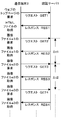
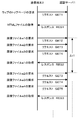
- the communication terminal 2 transmits a request GET1 to the authentication server 1 and requests a web top page.
- the data communication unit 12 transmits a response RES1 to the communication terminal 2 and provides an HTML file.
- the communication terminal 2 analyzes the HTML file and requests a plurality of image files included in the HTML file as follows.
- the communication terminal 2 sends a request GET2 to the authentication server 1 and requests an image file e1.
- the data communication unit 12 transmits the response RES2 to the communication terminal 2 and provides the image file e1.
- the communication terminal 2 transmits a request GET3 to the authentication server 1 and requests an image file e2.
- the data communication unit 12 transmits the response RES3 to the communication terminal 2 and provides the image file e2.
- the communication terminal 2 transmits a request GET4 to the authentication server 1 and requests an image file e3.
- the data communication unit 12 transmits the response RES4 to the communication terminal 2 and provides the image file e3. The above processing is repeated until the communication terminal 2 acquires all the image files included in the HTML file.
- the transmission delay time measurement unit 13 determines the time ⁇ t1 from when the request GET2 is received from the communication terminal 2 to the next reception of the request GET3 from the communication terminal 2, the transmission delay time from the data communication unit 12 to the communication terminal 2, and It is measured as the total transmission delay time from the communication terminal 2 to the data communication unit 12.
- the transmission delay time measurement unit 13 determines the time ⁇ t2 from when the request GET3 is received from the communication terminal 2 to the next reception of the request GET4 from the communication terminal 2, the transmission delay time from the data communication unit 12 to the communication terminal 2, and It is measured as the total transmission delay time from the communication terminal 2 to the data communication unit 12. The above processing is repeated until the data communication unit 12 provides all the image files included in the HTML file.
- the transmission delay time measurement unit 13 does not measure the time from when the request GET1 is received from the communication terminal 2 until the next request GET2 is received from the communication terminal 2. This not only includes the transmission delay time from the data communication unit 12 to the communication terminal 2 and the transmission delay time from the communication terminal 2 to the data communication unit 12, but also the analysis time of the HTML file at the communication terminal 2. It is for further including.
- the mobile phone 2A only needs to have a web browser, does not have to have software for measuring transmission delay time, and development of new software is unnecessary.
- Pipeline processing is processing that can speed up page access by sending request signals together.
- the communication terminal 2 receives a request GET2 that is a request signal for the image file e1, a request GET3 that is a request signal for the image file e2, a request GET4 that is a request signal for the image file e3, Are sent together.
- the mobile phone 2A since the mobile phone 2A transmits the request GET2 and the request GET3 almost simultaneously, even if the time from the request GET2 to the request GET3 is measured, the total transmission delay time is calculated. It cannot be measured. Therefore, the data communication unit 12 of the authentication server 1 repeats reception of one request signal and transmission of one data element in order. Then, the transmission delay time measurement unit 13 measures the total transmission delay time by measuring the interval at which each request signal is received.
- the data communication unit 12 when the data communication unit 12 collectively receives the request GET2, the request GET3, and the request GET4, the data communication unit 12 transmits a response RES2 to the request GET2 to the communication terminal 2, and then the data communication unit 12 establishes a TCP connection after transmitting the response RES2. Is closed. Thus, the response RES3 and the response RES4 are not transmitted to the request GET3 and the request GET4. Thereby, the communication terminal 2 transmits the request GET3 again after receiving the response RES2.
- the transmission delay time measurement unit 13 receives, from the data communication unit 12, a time ⁇ t 1 from when the request GET 2 of the request GET 2, the request GET 3, and the request GET 4 received together is received until the retransmitted request GET 3 is received. Measured as the sum of the transmission delay time to the communication terminal 2 and the transmission delay time from the communication terminal 2 to the data communication unit 12.
- the data communication unit 12 that has received the request GET1 for requesting the web top page informs the communication terminal 2 that it does not support pipeline processing.
- the pipeline processing of the communication terminal 2 may be stopped. Specifically, the fact that it is HTTP of the specification of HTTP / 1.0 or HTTP / 0.9 is transmitted to the communication terminal 2. By doing so, it is possible to measure the transmission delay time that sequentially repeats reception of one request signal and transmission of one data element as shown in FIG.
- FIG. 14 shows an example of another transmission delay time measurement method in the transmission delay time measurement unit 13.
- the communication terminal 2 Upon receiving the image file e2, the communication terminal 2 transmits a TCP close signal (FIN) C2 to the authentication server 1.
- This method uses this TCP close signal (FIN), and measures the interval from when the authentication server 1 receives a request signal until it receives a close signal after transmitting a data element as a transmission delay time.
- the transmission delay time measurement unit 13 measures the interval from when the authentication server 1 receives the request GET2 until it receives the close signal C2 from the communication terminal 2 as the transmission delay time ⁇ t1.
- This method is not a pipeline method but can be applied when multiple TCP connections are established simultaneously. For this reason, the transmission delay time can be measured simultaneously by the number of connections, and the speed of image download can be increased. When the size of the image is large, the close time for a GET sent later is delayed, so it is expected that the transmission delay time will be long, but the transmission delay characteristic between the communication terminal 2 and the authentication server 1 is included. Therefore, it can be used as processing data.
- FIGS. 4 shows the distribution characteristics of the transmission delay time at the time of browsing authentication from the wireless communication terminal.
- FIG. 5 shows the distribution characteristics of the transmission delay time at the time of browsing authentication from the wired communication terminal.
- the distribution characteristic of the transmission delay time becomes non-discrete. That is, only one frequency peak appears for the transmission delay time.
- the transmission delay time distribution characteristic determination unit 14 executes processing as follows in order to determine whether or not the distribution characteristic of the transmission delay time is discrete. First, the frequency at the transmission delay time separated from the mode by a natural number multiple of about 10 ms is added. Next, the added value is divided by the frequency of the mode value, and the divided value is compared with a predetermined threshold value. When the division value is larger than the predetermined threshold value, it is determined that a frequency peak appears at an interval of about 10 ms with respect to the transmission delay time, and it is determined that there is browsing authentication from the mobile phone 2A via the wireless network.
- the predetermined threshold is set to increase the determination accuracy.
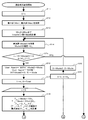
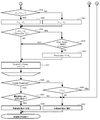
- the method for identifying the communication terminal is shown in FIGS.
- the total number of identification processes of the communication terminal 2 may be any number, and is set according to the level of identification accuracy.
- the parameter r indicating the number of identification processes of the communication terminal 2 is reset to 0 (step S11).
- step S12 The minimum value Min and the maximum value Max of the transmission delay time are searched (step S12).
- the frequency is calculated from the minimum value Min to the maximum value Max with a bin width of 1 ms (step S13). Find the most frequent value Mode0 of transmission delay time, it puts the frequency in the mode Mode0 and C 0 (step S14).
- the parameter r has been reset to 0 (NO in step S15), and the process proceeds to step S16. Step S15 will be described later.
- the transmission delay time is often around a natural number multiple of 10 ms or a natural number multiple of 10 ms.
- the mode value Mode0 is a natural number multiple of 10 ms
- the mode value Mode0 is in the vicinity of a natural number multiple of 10 ms, it is difficult to recognize the frequency peak in the transmission delay time separated from the mode value Mode0 by a natural number multiple of 10 ms, and it is difficult to recognize the discrete distribution characteristics. .
- the 1st digit of the mode value Mode0 is rounded off to obtain a new mode value Mode.
- the User Agent is Company A. Therefore, when User Agent is company A, as an exception, mode value Mode0 is set as a new mode value mode, and when User Agent is another company other than company A, as a rule, 1 of mode value Mode0. Is rounded off to obtain a new mode value Mode (step S16).
- the User Agent may be determined using the ID, password, ID unique to the mobile phone company, telephone number, and the like. However, considering that the ID and telephone number unique to the mobile phone company are difficult to be tampered with, the User Agent is preferably determined using the ID and telephone number unique to the mobile phone company. Furthermore, considering that there is a company that does not give a unique ID to a mobile phone company, it is still preferable that the User Agent determine using a phone number.
- the maximum frequency around the transmission delay time that is separated from the mode value Mode by a natural number multiple of 10 ms is calculated, and the maximum frequency is added when the natural number varies. Dividing the added value at a frequency C 0 in the mode Mode0 comparing the quotient with a predetermined threshold.
- the natural number n is set to 1 and the total total of the maximum frequencies is reset to 0 (step S17).
- steps S18 to S25 are repeated.
- the maximum frequency C n is larger than a predetermined value
- the above-mentioned division value may be larger than a predetermined threshold, which is mistaken for browsing authentication from a wireless communication terminal. There is. Therefore, when the maximum frequency C n is larger than a predetermined value, the frequency smaller than the maximum frequency C n is added as an exception.
- step S23 When the condition X is not satisfied (NO in step S23), the exception, half the predetermined threshold value Threshold / 2 a in terms of the a new F n (step S24), and the total Total maximum frequency, new to the current value It is set to a value obtained by adding the F n (step S25).
- Step S26 When the natural number n is 1, 2, 3, and 4, Steps S18 to S25 are repeated, and it is determined whether or not the maximum total frequency Total is greater than a predetermined threshold Threshold (Step S26).
- Threshold When the total of the maximum frequencies Total is larger than a predetermined threshold Threshold (YES in step S26), in principle, it is identified that the browsing authentication is from a wireless communication terminal (step S28).
- the maximum total Total is smaller than the predetermined threshold Threshold (NO in step S26), in principle, the browsing authentication is identified as from a wired communication terminal (step S30).
- the predetermined threshold Threshold may be set according to the User Agent.
- the total total of the maximum frequency may be larger than the predetermined threshold Threshold, which is the browsing authentication from the wireless communication terminal. May be mistaken.
- Threshold the predetermined threshold
- the cellular phone 2A can use the telephone line
- the data module for the computer 2B cannot use the telephone line. Therefore, the browsing authentication from the cellular phone 2A and the data module for the computer 2B is performed using this fact. Can be distinguished.
- the data communication unit 12 performs telephone communication with the communication terminal 2.
- This telephone communication transmits not only human voice data but also any data.
- the content browsing authentication unit 15 recognizes that the communication terminal 2 is the mobile phone 2A using the telephone line when the incoming call response is made from the communication terminal 2 to the telephone communication, and approves the browsing of the content.
- the communication terminal 2 recognizes that the communication terminal 2 is a data module of the computer 2B that does not use the telephone line, and refuses to browse the content.
- the authentication server 1 should just store the data of the telephone number of the communication terminal 2.
- the mobile phone 2A may return an incoming call response by detecting the user's voice, or the mobile phone 2A may return an incoming call response by outputting automatic voice using software installed in itself. Good. Further, the mobile phone 2A may return an incoming call response by detecting that the user presses the reception button, and the mobile phone 2A returns an incoming call response by sending a signal using software installed in itself. Also good.
- the browsing authentication is performed from the mobile phone 2A as a rule. It is identified as being present (step S28). Where the maximum total Total is greater than a predetermined threshold Threshold (YES in step S26), when there is no incoming response to the telephone communication (NO in step S27), as an exception, the browsing authentication is performed from the data module of the computer 2B. (Step S30).
- a frequency peak may appear with a transmission delay time of several ms or ten and several ms.
- the transmission delay time is the mode value Mode0, a discrete distribution is obtained. It is difficult to recognize the characteristics. Therefore, the mode value Mode0 is searched again other than the mode value Mode0 searched first, and re-identification is performed.
- Step S30 When the total Total of the maximum frequencies is smaller than the predetermined threshold Threshold (NO in step S26) and the parameter r is not 0 (NO in step S29), it is identified that the browsing authentication is from the wired communication terminal (in principle) ( Step S30).
- the process proceeds to steps S31 and S32 as an exception to perform re-identification.
- step S31 it sets the parameter r representing the number of the identification processing of the communication terminal 2 to 1, and sets the frequency C 0 to 0 in the mode Mode0 which first searches.
- step S32 the mode value Mode0 and the mode value Mode are reset to zero.
- step S14 and S15 it is determined whether the parameter r is 1 and the mode Mode0 that the frequency C 0 in and the mode Mode0 less than 10ms is 1 or less (referred to condition Y) is satisfied.
- condition Y is satisfied (YES in step S15)
- condition Y is not satisfied (NO in step S15)
- the process proceeds to step S16. In this way, browsing authentication from a wireless communication terminal in which a frequency peak may appear with a transmission delay time of several ms or several tens of ms can be distinguished from browsing authentication from a wired communication terminal.
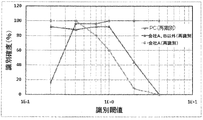
- the relationship between the identification threshold and the identification accuracy is shown in FIG.
- the horizontal axis indicates a predetermined threshold Threshold, and the vertical axis indicates the accuracy of identification.
- the rectangular data point indicates the identification accuracy for the browsing authentication from the computer 2B
- the triangular data point indicates the identification accuracy for the browsing authentication from the mobile phone 2A of the company other than the company A and the company B
- the circular data point indicates the company
- the identification accuracy is shown for browsing authentication from A's mobile phone 2A. Both data points allow for re-identification.
- the predetermined threshold Threshold it is preferable to set the predetermined threshold Threshold to a value that is neither too large nor too small. Specifically, in the case of FIG. 8, it is preferable to set the predetermined threshold Threshold to a value of about 0.4.
- the predetermined threshold Threshold when the total total of the maximum frequencies is larger than the predetermined threshold Threshold, it is identified that there has been browsing authentication from the wireless communication terminal, and when the total total of the maximum frequencies is smaller than the predetermined threshold Threshold, from the wired communication terminal Is identified as having been viewed. In another embodiment, it is determined that the probability that there is browsing authentication from the wireless communication terminal is higher as the total total of the maximum frequencies is larger than the predetermined threshold Threshold, and the total total of the maximum frequencies is smaller than the predetermined threshold Threshold. Alternatively, it may be determined that there is a high probability that there is browsing authentication from the wired communication terminal.
- identification of the ID of the communication terminal 2 in order to further improve the identification accuracy, identification of the ID of the communication terminal 2, a unique ID generated in the network of the mobile phone company, the password of the communication terminal 2, the location information of the communication terminal 2, etc.
- the element may be used in combination with the distribution characteristic of the transmission delay time and the incoming call response to the telephone communication.
- the authentication server 1 stores content in the content storage unit 11. In another embodiment, the authentication server 1 does not store content, and a content server other than the authentication server 1 may store content. At this time, the data communication unit 12 may notify the mobile phone 2A of approval to browse the content, and provide the mobile phone 2A with content stored in a content server other than the authentication server 1.
- the mobile phone 2A or the computer 2B issues a browsing request and is notified of whether browsing is possible.
- a device other than the mobile phone 2A may issue a browsing request and be notified of browsing approval.
- the mobile phone 2A does not change the browsing authentication. That is, in another embodiment, another device issues a browsing request, the authentication server 1 issues an authentication request to the mobile phone 2A, the mobile phone 2A performs browsing authentication, and the authentication server 1 browses to another device. Notify approval and provide content. However, the authentication server 1 may provide only the content instead of the browsing approval. At this time, the authentication server 1 stores information related to other devices and the mobile phone 2A in association with each other.
- another apparatus may be via a wireless network and may be via a wired network.
- the authentication method by the authentication server according to the present embodiment uses telephone communication in the content browsing authentication step described in the first embodiment. Therefore, before the content browsing authentication step, the data communication unit 12 shown in FIG. 1 performs telephone communication with the communication terminal.
- the authentication server according to the present embodiment operates as follows.
- the content browsing authentication unit 15 approves browsing of content when the distribution characteristic of the transmission delay time is determined to be discrete and the distribution characteristic of the transmission delay time is changed for telephone communication. On the other hand, when it is determined that the distribution characteristic of the transmission delay time is discrete, the content browsing authentication unit 15 rejects browsing of the content when the distribution characteristic of the transmission delay time does not change for telephone communication. .
- step S27 shown in FIG. 7 it is determined whether the distribution characteristic of the transmission delay time has changed instead of whether there is an incoming call response.
- the communication terminal is the mobile phone 2A
- the communication terminal temporarily or continuously increases the transmission delay time or interrupts communication for authentication when performing telephone communication. Then, a change occurs such that the distribution of the long transmission delay time increases or the distribution of the transmission delay time decreases as a whole.
- the communication terminal is the computer 2B
- the communication terminal does not temporarily or continuously increase the transmission delay time or interrupt the communication for authentication even when making a telephone call. .
- step S28 it is possible to determine whether the communication terminal 200 is the mobile phone 2A or the computer 2B by detecting a change in the distribution characteristic of the transmission delay time when a telephone call is made. If the distribution characteristic changes, it is identified that the browsing authentication is from the mobile phone 2A (step S28). If the distribution characteristic does not change, the process proceeds to step S30.
- step S27 shown in FIG. 7 in addition to whether or not there is an incoming call response, it may be determined whether or not the distribution characteristic of the transmission delay time has changed. In this case, if there is an incoming call response and the distribution characteristic changes, the process proceeds to step S28, and if there is no incoming call response or the distribution characteristic does not change, it is identified that the browsing authentication is from the data module of the computer 2B. (Step S30). Thereby, it can be determined more accurately whether the communication terminal is the mobile phone 2A or the computer 2B.
- FIG. 9 shows an example of a content providing system according to the third embodiment.
- the authentication server 103 determines whether the communication terminal 200 is a true smartphone or a computer is a fake smartphone impersonating a smartphone.
- the authentication server 103 provides content if the communication terminal 200 is a true smartphone, and does not provide content if the communication terminal 200 is a fake smartphone.
- the authentication server 103 includes a content storage unit 31, a data communication unit 32, a transmission delay time measurement unit 33, an extraction unit 35, a distribution characteristic calculation unit 34, a distribution characteristic determination unit 36, and a content browsing authentication unit 37.
- the content storage unit 31 stores content to be provided to the communication terminal 200.
- FIG. 2 shows an example of an authentication method by the authentication server according to the third embodiment.
- the authentication method by the authentication server according to the present embodiment includes a browsing authentication reception step, a distribution characteristic determination step, and a content browsing authentication step in order.
- the browsing authentication receiving step the data communication unit 32 receives authentication for browsing the content performed by the communication terminal 200 (reference S1 shown in FIG. 2).
- the distribution characteristic determination step steps S2 to S4 are executed.
- steps S5 to S8 are executed.
- the data communication unit 32 performs data communication with the communication terminal 200 that performs authentication for browsing content.
- the transmission delay time measuring unit 33 measures the transmission delay time between the data communication unit 32 and the communication terminal 200 a plurality of times (reference S2 shown in FIG. 2). As a result, when the communication terminal 200 is a true smartphone, sharp peaks P1 to P4 appear in the transmission delay time as shown in FIG.
- the extraction unit 35 accumulates the transmission delay time measured by the transmission delay time measurement unit 33, detects the transmission delay time that is the peak value of each peak P1 to P4, and transmits the transmission delay within a certain range ⁇ T including each peak value. Extract time.
- the fixed range ⁇ T is an arbitrary range that exceeds a threshold ⁇ t T that can separate the peak of transmission delay time and the background and includes a plurality of peak values.
- the distribution characteristic calculation unit 34 accumulates the transmission delay time extracted by the extraction unit 35 and calculates the distribution characteristic of the transmission delay time. Then, when the communication terminal 200 is a true smartphone, a discrete distribution as shown in FIG. 4 is obtained, and when the communication terminal 200 is a fake smartphone, a non-discrete distribution as shown in FIG. 5 is obtained.
- the distribution characteristic determination unit 36 determines whether or not the distribution characteristic calculated by the distribution characteristic calculation unit 34 is discrete (reference S4 shown in FIG. 2). Thereby, it can be determined whether the communication terminal 200 is a true smartphone or a fake smartphone.
- the content browsing authentication unit 37 determines that the distribution characteristic determination unit 36 is discrete (“YES” in step S4)
- the content browsing authentication unit 37 recognizes browsing authentication from a true smartphone (reference S5 shown in FIG. 2), and The browsing is approved (reference S6 shown in FIG. 2).
- the data communication unit 32 notifies the communication terminal 200 of approval for viewing the content, and provides the communication terminal 200 with the content stored in the content storage unit 31.
- the data communication unit 32 may provide only the content stored in the content storage unit 31 to the communication terminal 200 instead of approving the browsing of the content.
- the content browsing authentication unit 37 determines that the distribution characteristic determination unit 36 is not discrete (“NO” in S4 shown in FIG.
- the content browsing authentication unit 37 recognizes browsing authentication from a fake smartphone (the code shown in FIG. 2). S7) The content browsing is rejected (reference S8 shown in FIG. 2). Then, the data communication unit 32 does not transmit the content stored in the content storage unit 31 to the communication terminal 200 and notifies the communication terminal 200 of the refusal to view the content.
- the authentication server 103 When browsing the contents of the authentication server 103 only for a true smartphone user, it is possible to safely and accurately determine whether the communication terminal 200 is a true smartphone or a fake smartphone. Since the above determination is performed not by the communication terminal 200 but by the authentication server 103, there is no possibility that the distribution characteristics are impersonated by the computer.
- a call determination step (not shown) may be included.
- the call determination step is executed between the browsing authentication acceptance step and the distribution characteristic determination step, simultaneously with the distribution characteristic determination step or between the distribution characteristic determination step and the content browsing authentication step.
- the content providing system operates as follows.
- the data communication unit 32 performs telephone communication with the communication terminal.
- the call determination unit 38 determines whether the data communication unit 32 has received an incoming call response from the communication terminal 200.
- the communication terminal 200 is a terminal having a telephone function such as a mobile phone or a smartphone.
- an incoming call response cannot be received from the communication terminal 200, it can be confirmed that the communication terminal 200 is a pretending terminal that does not have a telephone function such as a computer.
- the content providing system in the case of having a call determination step, in the content browsing authentication step, operates as follows. If the content browsing authentication unit 37 determines that the distribution characteristic determination unit 36 is discrete and the call determination unit 38 determines that the incoming call response has been received, the content browsing authentication unit 37 approves browsing of the content. Then, the data communication unit 32 notifies the communication terminal 200 of approval for viewing the content, and provides the communication terminal 200 with the content stored in the content storage unit 31. On the other hand, if the content browsing authentication unit 37 determines that the distribution characteristic determination unit 36 is not discrete or the call determination unit 38 determines not to receive an incoming call response, the content browsing authentication unit 37 rejects browsing of the content. Then, the data communication unit 32 does not transmit the content stored in the content storage unit 31 to the communication terminal 200 and notifies the communication terminal 200 of the refusal to view the content.
- the data communication unit 32 transmits an HTML file including a plurality of data elements to the communication terminal 200 and receives a request signal for requesting each data element from the communication terminal 200. Then, the transmission delay time measurement unit 33 measures the transmission delay time from the data communication unit 32 to the communication terminal 200 and the communication terminal 200 by measuring the interval at which the request signal requesting each data element is received from the communication terminal 200. The total transmission delay time from to the data communication unit 32 is measured.
- the data element is, for example, an image file.
- FIG. 3 shows an example of a method for measuring the transmission delay time when the data element is an image file.
- the communication terminal 200 transmits a request GET1 to the authentication server 103 and requests a web top page.
- the data communication unit 32 transmits the response RES1 to the communication terminal 200 and provides an HTML file.
- the communication terminal 200 analyzes the HTML file and requests a plurality of image files e1, e2, e3,... Included in the HTML file as follows.
- the communication terminal 200 transmits a request GET2 to the authentication server 103 and requests an image file e1.
- the data communication unit 32 transmits the response RES2 to the communication terminal 200 and provides the image file e1.
- the communication terminal 200 transmits a request GET3 to the authentication server 103 and requests an image file e2.
- the data communication unit 32 transmits the response RES3 to the communication terminal 200 and provides the image file e2.
- the communication terminal 200 transmits a request GET4 to the authentication server 103 and requests an image file e3.
- the data communication unit 32 transmits the response RES4 to the communication terminal 200 and provides the image file e3. The above processing is repeated until the communication terminal 200 acquires all the image files included in the HTML file.
- FIG. 11 shows an example of a method for calculating the transmission delay time.
- the transmission delay time measurement unit 33 uses the time ⁇ t1 from when the request GET2 is received from the communication terminal 200 to the next reception of the request GET3 from the communication terminal 200 as the transmission delay time from the data communication unit 32 to the communication terminal 200. taking measurement.
- the transmission delay time measurement unit 33 uses the time ⁇ t2 from when the request GET3 is received from the communication terminal 200 to the next reception of the request GET4 from the communication terminal 200 as the transmission delay time from the data communication unit 32 to the communication terminal 200. taking measurement.
- the above processing is repeated until the data communication unit 32 provides all the image files included in the HTML file. Thereby, the transmission delay time shown in FIG. 10 is obtained.
- the communication terminal 200 only needs to have a web browser, does not need to have software for measuring transmission delay time, and development of new software is unnecessary.
- the transmission delay time is measured a plurality of times, and the frequency at which the transmission delay time in a predetermined range is measured is measured in the form of a histogram.
- the distribution characteristic of the transmission delay time becomes discrete as shown in FIG. For example, frequency peaks appear at intervals of about 10 ms with respect to the transmission delay time.
- the distribution characteristic of the transmission delay time becomes non-discrete as shown in FIG. That is, only one frequency peak appears for the transmission delay time.
- the distribution characteristic determination unit 34 executes processing as follows in order to determine whether or not the distribution characteristic of the transmission delay time is discrete. First, the frequency at the transmission delay time separated from the mode by a natural number multiple of about 10 ms is added. Next, the added value is divided by the frequency of the mode value, and the divided value is compared with a predetermined threshold value. When the division value is larger than the predetermined threshold, it is determined that a frequency peak appears at an interval of about 10 ms with respect to the transmission delay time, and it is determined that there is browsing authentication from the smartphone via the wireless network. When the division value is smaller than the predetermined threshold value, it is determined that only one frequency peak has appeared with respect to the transmission delay time, and it is determined that there is browsing authentication from a fake smartphone.
- the predetermined threshold is set to increase the determination accuracy.
- the total number of identification processes of the communication terminal 200 may be any number, and is set according to the level of identification accuracy.
- the parameter r indicating the number of identification processes of the communication terminal 200 is reset to 0 (step S11).
- step S12 The minimum value Min and the maximum value Max of the transmission delay time are searched (step S12).
- the frequency is calculated from the minimum value Min to the maximum value Max with a bin width of 1 ms (step S13). Find the most frequent value Mode0 of transmission delay time, it puts the frequency in the mode Mode0 and C 0 (step S14).
- the parameter r has been reset to 0 (NO in step S15), and the process proceeds to step S16. Step S15 will be described later.
- the transmission delay time is often around a natural number multiple of 10 ms or a natural number multiple of 10 ms.
- the mode value Mode0 is a natural number multiple of 10 ms
- the mode value Mode0 is in the vicinity of a natural number multiple of 10 ms, it is difficult to recognize the frequency peak in the transmission delay time separated from the mode value Mode0 by a natural number multiple of 10 ms, and it is difficult to recognize the discrete distribution characteristics. .
- the 1st digit of the mode value Mode0 is rounded off to obtain a new mode value Mode.
- the User Agent is Company A. Therefore, when User Agent is company A, as an exception, mode value Mode0 is set as a new mode value mode, and when User Agent is another company other than company A, as a rule, 1 of mode value Mode0. Is rounded off to obtain a new mode value Mode (step S16).
- the User Agent may be determined using the ID and password of the communication terminal 200, the ID and telephone number unique to the mobile phone company, and the like. However, considering that the ID and telephone number unique to the mobile phone company are difficult to be tampered with, the User Agent is preferably determined using the ID and telephone number unique to the mobile phone company. Furthermore, considering that there is a company that does not give a unique ID to a mobile phone company, it is still preferable that the User Agent determine using a phone number.
- the maximum frequency around the transmission delay time that is separated from the mode value Mode by a natural number multiple of 10 ms is calculated, and the maximum frequency is added when the natural number varies. Dividing the added value at a frequency C 0 in the mode Mode0 comparing the quotient with a predetermined threshold.
- the natural number n is set to 1 and the total total of the maximum frequencies is reset to 0 (step S17).
- steps S18 to S25 are repeated.
- step S23 When the condition X is not satisfied (NO in step S23), the exception, half the predetermined threshold value Threshold / 2 a in terms of the a new F n (step S24), and the total Total maximum frequency, new to the current value It is set to a value obtained by adding the F n (step S25).
- Step S26 When the natural number n is 1, 2, 3, and 4, Steps S18 to S25 are repeated, and it is determined whether or not the maximum total frequency Total is greater than a predetermined threshold Threshold (Step S26).
- Threshold a predetermined threshold
- the browsing authentication is identified as from a true smartphone (step S28).
- the maximum total Total is smaller than the predetermined threshold Threshold (NO in step S26)
- the browsing authentication is identified as being from a fake smartphone (step S30).
- the predetermined threshold Threshold may be set according to the User Agent.
- the browsing authentication is from a data module for a computer
- the total maximum total may be greater than a predetermined threshold Threshold, and the browsing authentication is from a true smartphone. May be mistaken.
- Threshold a predetermined threshold
- the communication terminal 200 is a smartphone
- a telephone line can be used.
- the data module for the communication terminal 200 cannot use a telephone line, this is used to determine whether it is a smartphone or a computer. Browsing authentication from the data module can be distinguished.
- the data communication unit 32 performs telephone communication with the communication terminal 200.
- This telephone communication transmits not only human voice data but also any data.
- the content browsing authentication unit 15 recognizes that the communication terminal 200 is the communication terminal 200 using the telephone line when the communication terminal 200 receives an incoming response to the telephone communication, and approves the content browsing.
- the communication terminal 200 recognizes that the communication terminal 200 is a data module of a computer that does not use a telephone line, and refuses to browse content.
- the authentication server 103 only needs to store data of the telephone number of the communication terminal 200.
- the communication terminal 200 may return an incoming call response by detecting the user's voice, or the communication terminal 200 may return an incoming call response by outputting an automatic voice using software installed in itself. Good. Further, the communication terminal 200 may return an incoming response by detecting that the user presses the reception button, and the communication terminal 200 returns an incoming response by sending a signal using software installed in itself. Also good.
- the browsing authentication is from the smartphone as a rule. Identify (step S28). Where the total maximum total is greater than the predetermined threshold Threshold (YES in step S26), when there is no incoming response to the telephone communication (NO in step S27), as an exception, the browsing authentication is performed from the data module of the computer. It is identified as being present (step S30).
- a frequency peak may appear with a transmission delay time of a few ms or a few tens of ms.
- the transmission delay time is the mode Mode 0
- a discrete distribution It is difficult to recognize the characteristics. Therefore, the mode value Mode0 is searched again other than the mode value Mode0 searched first, and re-identification is performed.
- step S31 it sets the parameter r representing the number of the identification processing of the communication terminal 200 to 1, and sets the frequency C 0 to 0 in the mode Mode0 which first searches.
- step S32 the mode value Mode0 and the mode value Mode are reset to zero.
- step S14 and S15 it is determined whether the parameter r is 1 and the mode Mode0 that the frequency C 0 in and the mode Mode0 less than 10ms is 1 or less (referred to condition Y) is satisfied.
- condition Y is satisfied (YES in step S15)
- condition Y is not satisfied (NO in step S15)
- the process proceeds to step S16. In this way, it is possible to distinguish browsing authentication from a true smartphone, in which a frequency peak appears with a transmission delay time of several ms or several tens of ms, from browsing authentication from a fake smartphone.
- Fig. 8 shows the relationship between the identification threshold and the identification accuracy.
- the horizontal axis indicates a predetermined threshold Threshold, and the vertical axis indicates the accuracy of identification.
- the rectangular data point indicates the identification accuracy for the browsing authentication from the computer
- the triangular data point indicates the identification accuracy for the browsing authentication from the communication terminal 200 of the company other than the company A and the company B
- the circular data point indicates the company A
- the identification accuracy is shown for browsing authentication from the communication terminal 200. Both data points allow for re-identification.
- the predetermined threshold Threshold it is preferable to set the predetermined threshold Threshold to a value that is neither too large nor too small. Specifically, in the case of FIG. 8, it is preferable to set the predetermined threshold Threshold to a value of about 0.4.
- the predetermined threshold Threshold when the total total of the maximum frequencies is larger than the predetermined threshold Threshold, it is identified that there is browsing authentication from the true smartphone, and when the total total of the maximum frequencies is smaller than the predetermined threshold Threshold, from the fake smartphone Is identified as having been viewed. In another embodiment, it is determined that the probability that there is a browsing authentication from a true smartphone is higher as the total total of the maximum frequencies is larger than the predetermined threshold Threshold, and the total total of the maximum frequencies is smaller than the predetermined threshold Threshold. Alternatively, it may be determined that there is a high probability that there has been browsing authentication from a fake smartphone.
- identification of the ID of the communication terminal 200 in order to further improve the identification accuracy, identification of the ID of the communication terminal 200, a unique ID generated in the network of the mobile phone company, the password of the communication terminal 200, the location information of the communication terminal 200, etc.
- the element may be used in combination with the distribution characteristic of the transmission delay time and the incoming call response to the telephone communication.
- the communication terminal 200 may not be a smartphone.
- any terminal that can perform a call and perform data communication by wireless communication such as a mobile phone may be used.
- the authentication server 103 stores content in the content storage unit 31. In another embodiment, the authentication server 103 does not store content, and a content server other than the authentication server 103 may store content. At this time, the data communication unit 32 may notify the communication terminal 200 of approval to view the content and provide the communication terminal 200 with the content stored in the content server other than the authentication server 103.
- the communication terminal 200 issues a browsing request and is notified of whether browsing is possible.
- a device other than the communication terminal 200 may issue a browsing request and be notified of browsing approval.
- the communication terminal 200 does not change the browsing authentication. That is, in another embodiment, another device issues a browsing request, the authentication server 103 issues an authentication request to the communication terminal 200, the communication terminal 200 performs browsing authentication, and the authentication server 103 browses to another device. Notify approval and provide content. However, the authentication server 103 may provide only the content instead of the browsing approval. At this time, the authentication server 103 stores information related to other devices and the communication terminal 200 in association with each other.
- another apparatus may be via a wireless network and may be via a wired network.
- FIG. 12 shows an example of a content providing system according to the fourth embodiment.
- the content providing system according to the present embodiment includes an authentication server 104 instead of the authentication server 103 shown in FIG.
- the authentication server 104 does not include the call determination unit 38 and the content browsing authentication unit 37 but includes the call change determination unit 41 and the content browsing authentication unit 42.
- the authentication method by the authentication server includes the browsing authentication receiving step, the distribution characteristic determining step, and the content browsing authentication step described in the third embodiment in order.
- a call change determination step is included between the browsing authentication acceptance step and the distribution characteristic determination step, and simultaneously with the distribution characteristic determination step or between the distribution characteristic determination step and the content browsing authentication step.
- the content providing system operates as follows.
- the data communication unit 32 performs telephone communication with the communication terminal 200 and outputs to the call change determination unit 41 that the telephone communication has been performed.
- the call change determination unit 41 determines whether the distribution characteristic of the transmission delay time calculated by the distribution characteristic calculation unit 34 has changed. Then, the call change determination unit 41 compares the distribution characteristics of the transmission delay time before and after acquiring that the telephone communication is performed from the data communication unit 32. Then, the call change determination unit 41 determines whether or not the distribution characteristic of the transmission delay time has changed after the data communication unit 32 performs telephone communication.
- the communication terminal 200 When the communication terminal 200 is a true smartphone, the communication terminal 200 temporarily or continuously increases the transmission delay time or interrupts communication for authentication when making a telephone call. Then, a change occurs such that the distribution of the long transmission delay time increases or the distribution of the transmission delay time decreases as a whole.
- the communication terminal 200 when the communication terminal 200 is a fake smartphone, the communication terminal 200 temporarily or continuously increases the transmission delay time or interrupts communication for authentication even when making a telephone call. There is nothing. For this reason, it is possible to determine whether the communication terminal 200 is a smartphone or a wired computer by detecting a change in the distribution characteristic of the transmission delay time when a telephone call is made.
- the content providing system operates as follows.
- the content browsing authentication unit 42 approves browsing of the content when the distribution characteristic determination unit 36 determines that the distribution characteristic is discrete and the call change determination unit 41 determines that the distribution characteristic of the transmission delay time has changed. Then, the data communication unit 32 notifies the communication terminal 200 of approval for viewing the content, and provides the communication terminal 200 with the content stored in the content storage unit 31.
- the content browsing authentication unit 42 determines that the distribution characteristic determination unit 36 is not discrete or the call change determination unit 41 determines that the distribution characteristic of the transmission delay time has not changed, the content browsing authentication unit 42 rejects browsing of the content. Then, the data communication unit 32 does not transmit the content stored in the content storage unit 31 to the communication terminal 200 and notifies the communication terminal 200 of the refusal to view the content.
- a call determination step may be further included immediately before, immediately after, or simultaneously with the call change determination step.
- the authentication server 104 further includes a call determination unit 38.
- the content browsing authentication step the content providing system according to the present embodiment operates as follows.
- the content browsing authentication unit 42 determines that the distribution characteristic determination unit 36 is discrete
- the call change determination unit 41 determines that the distribution characteristic of the transmission delay time has changed
- the call determination unit 38 receives the incoming call response. If it is determined, the content viewing is approved. Then, the data communication unit 32 notifies the communication terminal 200 of approval for viewing the content, and provides the communication terminal 200 with the content stored in the content storage unit 31.
- the content browsing authentication unit 42 determines that the distribution characteristic determination unit 36 is not discrete, determines whether the distribution characteristic of the transmission delay time has not changed in the call change determination unit 41, or receives an incoming call response in the call determination unit 38 If it is determined that the content is not received, content browsing is refused. Then, the data communication unit 32 does not transmit the content stored in the content storage unit 31 to the communication terminal 200, and notifies the communication terminal 200 of the refusal to view the content. Thereby, it can be determined more accurately whether the communication terminal is a smartphone or a computer.
- FIG. 15 shows the configuration of the authentication server according to the fifth embodiment.
- the authentication server 1 accepts the browsing authentication from the communication terminal 2, if the communication terminal 2 is a regular mobile phone 3A, the authentication server 1 approves the browsing and the communication terminal 2 impersonates the mobile phone 3C. If it is 3B, the browsing is refused.
- the authentication server 1 includes a content storage unit 51, a data communication unit 52, an identifier (ID) / phone number correspondence table 53, a telephone communication unit 54, a transmission delay time measurement unit 55, a transmission delay time change determination unit 56, and a content browsing authentication unit. 57.
- the content storage unit 51 stores content.
- the data communication unit 52 performs data communication with the communication terminal 2 that performs authentication for browsing content.
- the ID / phone number correspondence table 53 associates the ID and the telephone number of the communication terminal 2.
- the telephone communication unit 54 is associated with the ID in the ID / phone number correspondence table 53.
- Execute telephone communication using This telephone communication transmits not only human voice data but also any data.
- a correspondence table (not shown) may associate the password and the telephone number of the communication terminal 2 with each other. Below, the case where ID and the telephone number of the communication terminal 2 are matched is demonstrated.
- the transmission delay time measuring unit 55 measures the transmission delay time between the data communication unit 52 and the communication terminal 2 a plurality of times.
- the transmission delay time change determination unit 56 is measured by the transmission delay time measurement unit 55 when the telephone communication unit 54 is performing telephone communication, compared to when the telephone communication unit 54 is not performing telephone communication. It is determined whether there is a change in the transmission delay time.
- the content browsing authentication unit 57 determines that the communication terminal 2 is an authorized mobile phone 3A, and approves content browsing. .
- the ID and the phone number of the regular mobile phone 3A are the first ID and the first phone number, respectively, and are associated with each other in the ID / phone number correspondence table 53. That is, data communication and telephone communication are performed between the regular mobile phone 3A and the authentication server 1, and share a wireless communication channel. Therefore, when telephone communication is executed, an interruption occurs in data communication, and a change occurs in transmission delay time.
- the content browsing authentication unit 57 determines that the communication terminal 2 is an unauthorized mobile phone 3B impersonating the mobile phone 3C. , Refuse to view the content.
- the ID and the telephone number of the mobile phone 3C are the second ID and the second telephone number, respectively, and are associated with each other in the ID / phone number correspondence table 53.
- the non-regular mobile phone 3B impersonating the mobile phone 3C can falsify the ID, but cannot falsify the phone number. That is, even if the data communication is executed between the non-regular mobile phone 3B and the authentication server 1, the telephone communication is executed between the mobile phone 3C and the authentication server 1, and both communication is performed by wireless communication. You are not sharing the channel. Therefore, even when telephone communication is executed, no interruption occurs in data communication, and no change occurs in transmission delay time.
- the processing of the authentication server is shown in FIG.
- the data communication unit 52 receives authentication for browsing content performed by the communication terminal 2 (step S101).
- the telephone communication unit 54 performs authentication for browsing the content.
- the telephone number associated with the ID used for the search is retrieved from the ID / phone number correspondence table 53 (step S103), and telephone communication using the telephone number is executed (step S104).
- the transmission delay time change determination unit 56 performs transmission when the telephone communication unit 54 is executing telephone communication compared to when the telephone communication unit 54 is not executing telephone communication. It is determined whether or not there is a change in the transmission delay time measured by the delay time measuring unit 55 (step S105).
- the transmission delay time change determination step will be described in detail with reference to FIG.
- the content browsing authentication unit 57 determines that the communication terminal 2 is a regular mobile phone 3A. (Step S106) and approves the browsing of the content (step S107). Then, the data communication unit 52 notifies the authorized mobile phone 3A of the approval of viewing the content, and provides the content stored in the content storage unit 51 to the authorized mobile phone 3A. However, the data communication unit 52 may provide only the content stored in the content storage unit 51 to the authorized mobile phone 3A, instead of approving the browsing of the content.
- the transmission delay time change determination unit 56 determines that there is no change in the transmission delay time (NO in step S105)
- the content browsing authentication unit 57 impersonates the mobile phone 3C as an unauthorized mobile phone. It is determined that the content is 3B (step S108), and content browsing is rejected (step S109). Then, the data communication unit 52 notifies the unauthorized mobile phone 3B of the refusal to view the content.
- the second aspect of the present invention it is possible to confirm whether the communication terminal that has performed authentication and the communication terminal that has received telephone communication are the same communication terminal. Therefore, when browsing content only to a mobile phone user, it is possible to safely and accurately determine whether the mobile phone user is a legitimate user.
- the communication terminal 2 transmits a request GET1 to the authentication server 1 and requests a web top page.
- the data communication unit 52 transmits a response RES1 to the communication terminal 2 and provides an HTML file.
- the communication terminal 2 analyzes the HTML file and requests a plurality of image files included in the HTML file as follows.
- the communication terminal 2 sends a request GET2 to the authentication server 1 and requests an image file e1.
- the data communication unit 52 transmits the response RES2 to the communication terminal 2 and provides the image file e1.
- the communication terminal 2 transmits a request GET3 to the authentication server 1 and requests an image file e2.
- the data communication unit 52 transmits the response RES3 to the communication terminal 2 and provides the image file e2.
- the communication terminal 2 transmits a request GET4 to the authentication server 1 and requests an image file e3.
- the data communication unit 52 transmits the response RES4 to the communication terminal 2 and provides the image file e3. The above processing is repeated until the communication terminal 2 acquires all the image files included in the HTML file.
- the transmission delay time measuring unit 55 calculates the time ⁇ t1 from when the request GET2 is received from the communication terminal 2 until the next request GET3 is received from the communication terminal 2, the transmission delay time from the data communication unit 52 to the communication terminal 2, and It is measured as the total transmission delay time from the communication terminal 2 to the data communication unit 52.
- the transmission delay time measuring unit 55 calculates the time ⁇ t2 from when the request GET3 is received from the communication terminal 2 to the next reception of the request GET4 from the communication terminal 2, the transmission delay time from the data communication unit 52 to the communication terminal 2, and It is measured as the total transmission delay time from the communication terminal 2 to the data communication unit 52. The above processing is repeated until the data communication unit 52 provides all the image files included in the HTML file.
- the transmission delay time measuring unit 55 does not measure the time from when the request GET1 is received from the communication terminal 2 until the next request GET2 is received from the communication terminal 2. This not only includes the transmission delay time from the data communication unit 52 to the communication terminal 2 and the transmission delay time from the communication terminal 2 to the data communication unit 52, but also the analysis time of the HTML file at the communication terminal 2. It is for further including.
- the legitimate mobile terminal 3A only needs to have a web browser, does not have to have software for measuring transmission delay time, and development of new software is unnecessary.
- Pipeline processing is processing that can speed up page access by sending request signals together.
- the communication terminal 2 receives a request GET2 that is a request signal for the image file e1, a request GET3 that is a request signal for the image file e2, a request GET4 that is a request signal for the image file e3, Are sent together.
- the cellular phone 3A that performs such pipeline processing, since the cellular phone 2A transmits the request GET2 and the request GET3 almost simultaneously, even if the time from the request GET2 to the request GET3 is measured, the total transmission delay time is calculated. It cannot be measured. Therefore, the data communication unit 52 of the authentication server 1 repeats reception of one request signal and transmission of one data element in order. Then, the transmission delay time measuring unit 53 measures the total transmission delay time by measuring the interval at which each request signal is received.
- the data communication unit 52 when the data communication unit 52 collectively receives the request GET2, the request GET3, and the request GET4, the data communication unit 52 transmits a response RES2 to the request GET2 to the communication terminal 2, and then transmits the response RES2 so that the data communication unit 52 establishes a TCP connection. Is closed. Thus, the response RES3 and the response RES4 are not transmitted to the request GET3 and the request GET4. Thereby, the communication terminal 2 transmits the request GET3 again after receiving the response RES2.
- the transmission delay time measurement unit 53 receives, from the data communication unit 52, a time ⁇ t1 from when the request GET2 of the request GET2, the request GET3, and the request GET4 received together is received until the retransmitted request GET3 is received. It is measured as the sum of the transmission delay time to the communication terminal 2 and the transmission delay time from the communication terminal 2 to the data communication unit 52.
- the data communication unit 52 that has received the request GET1 for requesting the web top page informs the communication terminal 2 that the pipeline processing is not supported.
- the pipeline processing of the communication terminal 2 may be stopped. Specifically, the fact that it is HTTP of the specification of HTTP / 1.0 or HTTP / 0.9 is transmitted to the communication terminal 2. By doing so, it is possible to measure the transmission delay time that sequentially repeats reception of one request signal and transmission of one data element as shown in FIG.
- FIG. 21 shows an example of another transmission delay time measurement method in the transmission delay time measurement unit 53.
- the communication terminal 2 Upon receiving the image file e2, the communication terminal 2 transmits a TCP close signal (FIN) C2 to the authentication server 1.
- This method uses this TCP close signal (FIN), and measures the interval from when the authentication server 1 receives a request signal until it receives a close signal after transmitting a data element as a transmission delay time.
- the transmission delay time measuring unit 53 measures the interval from when the authentication server 1 receives the request GET2 until the close signal C2 is received from the communication terminal 2 as the transmission delay time ⁇ t1.
- This method is not a pipeline method but can be applied when multiple TCP connections are established simultaneously. For this reason, the transmission delay time can be measured simultaneously by the number of connections, and the speed of image download can be increased. When the size of the image is large, the close time for a request GET sent later is delayed, so that the transmission delay time is expected to be long. However, the transmission delay characteristic between the communication terminal 2 and the authentication server 1 is Since it is included, it can be used as processing data.
- the change contents of the transmission delay time are shown in FIGS.
- the time change of the transmission delay time at the time of browsing authentication from the regular mobile phone 3A is shown in FIG. 18, and the time of the transmission delay time at the time of browsing authentication from the non-regular mobile phone 3B is shown.
- the change is shown in FIG.
- the transmission delay time change determination unit 56 is compared with the case where the telephone communication unit 54 is not performing telephone communication when the telephone communication unit 54 is performing telephone communication. Thus, it is determined whether or not there is an increase in the transmission delay time measured by the transmission delay time measurement unit 55.
- the content browsing authentication unit 57 determines that the communication terminal 2 is an authorized mobile phone 3A when the transmission delay time change determination unit 56 determines that there is an increase in the transmission delay time. And approve viewing the content. After the telephone communication is stopped, the transmission delay time is restored to the original state before the telephone communication is started.
- the transmission delay time change determining unit 56 determines that the transmission delay time does not increase
- the content browsing authentication unit 57 determines that the communication terminal 2 is an unauthorized mobile phone 3B. Judgment and refuse to browse content.
- the transmission delay time change determination unit 56 is configured such that when the telephone communication unit 54 is performing telephone communication, the data communication unit 52 is connected from the communication terminal 2 as compared to when the telephone communication unit 54 is not performing telephone communication. It is determined whether or not a packet for measuring the transmission delay time has been received.
- the packets for measuring the transmission delay time are, for example, requests GET2, GET3, GET4,... Shown in FIG.
- the transmission delay time change determination unit 56 determines that the transmission delay time measurement packet is not received
- the content browsing authentication unit 57 determines that the communication terminal 2 is an authorized mobile phone 3A, and the content Approve viewing of. After the telephone communication is stopped, the transmission delay time measurement packet may or may not be retransmitted.
- the content browsing authentication unit 57 determines that the communication terminal 2 is an unauthorized mobile phone 3B, Deny content viewing.
- the transmission delay time change determination unit 56 is measured by the transmission delay time measurement unit 55 when the telephone communication unit 54 is performing telephone communication, compared to when the telephone communication unit 54 is not performing telephone communication. It is determined whether there is a decrease in the transmission delay time.
- the transmission delay time may be reduced because when the telephone communication interrupts the data communication, the regular mobile phone 3A or the non-regular mobile phone 3B may increase the processing capability. It is.
- the transmission delay time change determination unit 56 determines that there is a decrease in the transmission delay time
- the content browsing authentication unit 57 determines that the communication terminal 2 is an authorized mobile phone 3A, and approves content browsing. . After the telephone communication is stopped, the transmission delay time is restored to the original state before the telephone communication is started.
- the content browsing authentication unit 57 determines that the communication terminal 2 is an unauthorized mobile phone 3B and rejects browsing of the content To do.
- the change content of the transmission delay time may or may not be set variously for each regular mobile phone 3A.
- the storage unit (not shown) of the authentication server 1 may store the change contents.
- the transmission delay time change determination unit 56 may determine whether or not there is any change.
- the content browsing authentication unit 57 determines whether to approve browsing of content depending on whether there is a change in the transmission delay time. In another embodiment, the content browsing authentication unit 57 determines whether to approve browsing of content depending on whether there is a change in the transmission delay time and whether an incoming call response is made from the communication terminal 2 for telephone communication. to decide.
- the content browsing authentication unit 57 determines that the transmission delay time change determination unit 56 has changed the transmission delay time, and receives an incoming call response from the communication terminal 2 for telephone communication. Then, it is determined that the communication terminal 2 is a regular mobile phone 3A, and the content browsing is approved. Then, the content browsing authentication unit 57 determines that the transmission delay time change determination unit 56 has a change in the transmission delay time, and when the incoming call response is not made from the communication terminal 2 to the telephone communication, the communication terminal 2 It is determined that the mobile phone 3B impersonates the mobile phone 3C, and the content browsing is refused. Thereby, it can be judged more safely and correctly whether the user of a mobile phone is a regular user.
- the communication terminal 2 may return the incoming response by detecting the user's voice, and the communication terminal 2 returns the incoming response by outputting the automatic voice using software installed in itself. Also good. Further, the communication terminal 2 may return an incoming call response by detecting that the user has pressed the reception button, and the communication terminal 2 returns an incoming call response by sending a signal using software installed in itself. Also good.
- the authentication server 1 stores content in the content storage unit 51.
- the authentication server 1 does not store content, and a content server other than the authentication server 1 may store content.
- the data communication unit 52 may notify the authorized mobile phone 3A of the approval of browsing the content and provide the authorized mobile phone 3A with the content stored in the content server other than the authentication server 1.
- the regular mobile phone 3A or the non-regular mobile phone 3B issues a browsing request and is notified of whether or not browsing is possible.
- a device other than the regular mobile phone 3A may issue a browsing request and be notified of browsing approval.
- the authorized mobile phone 3A performs browsing authentication. That is, in another embodiment, another device issues a viewing request, the authentication server 1 issues an authentication request to the authorized mobile phone 3A, the authorized mobile phone 3A performs viewing authentication, and the authentication server 1 performs other authentication.
- the device is notified of the browsing approval and the content is provided.
- the authentication server 1 may provide only the content instead of the browsing authentication.
- the authentication server 1 stores information related to other devices and the regular mobile phone 3A in association with each other.
- the first invention can be applied to the information and communication industry.
- the authentication server and the authentication method using the authentication server according to the second invention can be used when browsing content only for a mobile phone user.
- Authentication server 2 Communication terminal 2A: Mobile phone 2B: Computer 11: Content storage unit 12: Data communication unit 13: Transmission delay time measurement unit 14: Transmission delay time distribution characteristic determination unit 15: Content browsing authentication unit 31: Content Storage unit 32: Data communication unit 33: Transmission delay time measurement unit 34: Distribution characteristic calculation unit 35: Extraction unit 36: Distribution characteristic determination unit 37, 42: Content browsing authentication unit 38: Call determination unit 41: Call change determination unit 103 104: Authentication server 200: Communication terminal 1: Authentication server 2: Communication terminals 3A, 3B, 3C: Mobile phone 51: Content storage unit 52: Data communication unit 53: ID / phone number correspondence table 54: Telephone communication unit 55: Transmission delay time measurement unit 56: Transmission delay time change determination unit 57: Content browsing authentication unit
Landscapes
- Engineering & Computer Science (AREA)
- Computer Security & Cryptography (AREA)
- Computer Networks & Wireless Communication (AREA)
- Signal Processing (AREA)
- Theoretical Computer Science (AREA)
- Computer Hardware Design (AREA)
- General Engineering & Computer Science (AREA)
- Software Systems (AREA)
- Physics & Mathematics (AREA)
- General Physics & Mathematics (AREA)
- Computing Systems (AREA)
- Telephonic Communication Services (AREA)
- Mobile Radio Communication Systems (AREA)
- Data Exchanges In Wide-Area Networks (AREA)
- Information Transfer Between Computers (AREA)
Abstract
Description
この構成によれば、パイプライン処理を行う通信端末であっても、通信端末から各データ要素を要求する要求信号が受信された間隔を測定することにより、前記データ通信部から前記通信端末までの伝送遅延時間及び前記通信端末から前記データ通信部までの伝送遅延時間の合計を測定することができる。
この構成によれば、専用のソフトウェアを用いずに伝送遅延時間の測定を行うことができる。さらに、通信端末とのコネクションを用いるため、複数の通信端末との伝送遅延時間を平行して測定することができる。
本発明により、パイプライン処理を行う通信端末であっても、通信端末から各データ要素を要求する要求信号が受信された間隔を測定することにより、前記データ通信部から前記通信端末までの伝送遅延時間及び前記通信端末から前記データ通信部までの伝送遅延時間の合計を測定することができる。
この構成によれば、専用のソフトウェアを用いずに伝送遅延時間の測定を行うことができる。さらに、通信端末とのコネクションを用いるため、複数の通信端末との伝送遅延時間を平行して測定することができる。
コンテンツ閲覧認証部が電話通信に対し伝送遅延時間の分布特性が変化したか否かを判定するため、本第1の発明に係る認証サーバは、通信端末が通話機能を有する無線通信端末であることを確認することができる。そして、コンテンツ閲覧認証部が通信端末が通話機能を有する無線通信端末であることを確認した上でコンテンツの提供の認証を行うため、アクセス元が移動通信端末及びコンピュータのうちいずれであるかを、より安全にかつ正確に判断することができる。
コンテンツ閲覧認証ステップにおいて電話通信に対し伝送遅延時間の分布特性が変化したか否かを判定するため、本第1の発明に係る認証サーバによる認証方法は、通信端末が通話機能を有する無線通信端末であることを確認することができる。そして、コンテンツ閲覧認証ステップにおいて通信端末が通話機能を有する無線通信端末であることを確認した上でコンテンツの提供の認証を行うため、アクセス元が移動通信端末及びコンピュータのうちいずれであるかを、より安全にかつ正確に判断することができる。
本第1の発明によれば、通信端末にウェブブラウザへのアクセスを行わせるだけで認証を行うことができるため、伝送遅延時間の測定用の特別なソフトウェアを通信端末に搭載させる必要がない。このため、容易に認証を行うことができる。
本発明により、パイプライン処理を行う通信端末であっても、通信端末から各データ要素を要求する要求信号が受信された間隔を測定することにより、前記データ通信部から前記通信端末までの伝送遅延時間及び前記通信端末から前記データ通信部までの伝送遅延時間の合計を測定することができる。
この構成によれば、専用のソフトウェアを用いずに伝送遅延時間の測定を行うことができる。さらに、通信端末とのコネクションを用いるため、複数の通信端末との伝送遅延時間を平行して測定することができる。
本第1の発明に係る認証サーバは、通話判定部を備えるため、通信端末が通話機能を有していることを確認することができる。そして、コンテンツ閲覧認証部が通信端末が通話機能を有していることを確認した上でコンテンツの提供の認証を行うため、アクセス元が移動通信端末及びコンピュータのうちいずれであるかを、より安全にかつ正確に判断することができる。
本第1の発明に係る認証サーバは、通話変化判定部を備えるため、通信端末が通話機能を有する無線通信端末であることを確認することができる。そして、コンテンツ閲覧認証部が通信端末が通話機能を有する無線通信端末であることを確認した上でコンテンツの提供の認証を行うため、アクセス元が移動通信端末及びコンピュータのうちいずれであるかを、より安全にかつ正確に判断することができる。
本第1の発明によれば、通信端末にウェブブラウザへのアクセスを行わせるだけで認証を行うことができるため、伝送遅延時間の測定用の特別なソフトウェアを通信端末に搭載させる必要がない。このため、容易に認証を行うことができる。
本発明により、パイプライン処理を行う通信端末であっても、通信端末から各データ要素を要求する要求信号が受信された間隔を測定することにより、前記データ通信部から前記通信端末までの伝送遅延時間及び前記通信端末から前記データ通信部までの伝送遅延時間の合計を測定することができる。
この構成によれば、専用のソフトウェアを用いずに伝送遅延時間の測定を行うことができる。さらに、通信端末とのコネクションを用いるため、複数の通信端末との伝送遅延時間を平行して測定することができる。
本第1の発明に係る認証サーバによる認証方法は、通話判定ステップを有するため、通信端末が通話機能を有していることを確認することができる。そして、コンテンツ閲覧認証ステップにおいて通信端末が通話機能を有していることを確認した上でコンテンツの提供の認証を行うため、アクセス元が移動通信端末及びコンピュータのうちいずれであるかを、より安全にかつ正確に判断することができる。
本第1の発明に係る認証サーバによる認証方法は、通話変化判定ステップを有するため、通信端末が通話機能を有する無線通信端末であることを確認することができる。そして、コンテンツ閲覧認証ステップにおいて通信端末が通話機能を有する無線通信端末であることを確認した上でコンテンツの提供の認証を行うため、アクセス元が移動通信端末及びコンピュータのうちいずれであるかを、より安全にかつ正確に判断することができる。
本発明により、パイプライン処理を行う通信端末であっても、通信端末から各データ要素を要求する要求信号が受信された間隔を測定することにより、前記データ通信部から前記通信端末までの伝送遅延時間及び前記通信端末から前記データ通信部までの伝送遅延時間の合計を測定することができる。
この構成によれば、専用のソフトウェアを用いずに伝送遅延時間の測定を行うことができる。さらに、通信端末とのコネクションを用いるため、複数の通信端末との伝送遅延時間を平行して測定することができる。
本発明により、パイプライン処理を行う通信端末であっても、通信端末から各データ要素を要求する要求信号が受信された間隔を測定することにより、前記データ通信部から前記通信端末までの伝送遅延時間及び前記通信端末から前記データ通信部までの伝送遅延時間の合計を測定することができる。
この構成によれば、専用のソフトウェアを用いずに伝送遅延時間の測定を行うことができる。さらに、通信端末とのコネクションを用いるため、複数の通信端末との伝送遅延時間を平行して測定することができる。
認証サーバの構成を図1に示す。認証サーバ1は、通信端末2から閲覧認証を受け付けたときに、通信端末2が無線ネットワークを介した携帯電話2Aであれば、閲覧を承認し、通信端末2が有線ネットワークを介したコンピュータ2Bであれば、閲覧を拒否する。認証サーバ1は、コンテンツ格納部11、データ通信部12、伝送遅延時間測定部13、伝送遅延時間分布特性判断部14及びコンテンツ閲覧認証部15から構成される。
本実施形態に係る認証サーバによる認証方法は、実施形態1で説明したコンテンツ閲覧認証ステップにおいて電話通信を用いることを特徴とする。そのため、コンテンツ閲覧認証ステップの前に、図1に示すデータ通信部12は、通信端末に対して電話通信を行う。そして、コンテンツ閲覧認証ステップにおいて、本実施形態に係る認証サーバは以下のように動作する。
図9に、実施形態3に係るコンテンツ提供システムの一例を示す。認証サーバ103は、通信端末200にコンテンツを提供するに際し、通信端末200が真のスマートフォンであるのか、又はコンピュータがスマートフォンに成りすました偽のスマートフォンであるかを判定する。そして、認証サーバ103は、通信端末200が真のスマートフォンであればコンテンツを提供し、通信端末200が偽のスマートフォンであればコンテンツを提供しない。
データ通信部32は、コンテンツの閲覧のための認証を行う通信端末200とデータ通信を行う。伝送遅延時間測定部33は、データ通信部32及び通信端末200の間の伝送遅延時間を複数回にわたり測定する(図2に示す符号S2)。この結果、通信端末200が真のスマートフォンである場合、図10に示すように、伝送遅延時間に鋭いピークP1~P4が現れる。
コンテンツ閲覧認証部37は、分布特性判定部36が離散的であると判定すると(ステップS4において「YES」)、真のスマートフォンからの閲覧認証と認識し(図2に示す符号S5)、コンテンツの閲覧を承認する(図2に示す符号S6)。すると、データ通信部32は、コンテンツの閲覧の承認を通信端末200に通知するとともに、コンテンツ格納部31の格納するコンテンツを通信端末200に提供する。ただし、データ通信部32は、コンテンツの閲覧の承認に代えて、コンテンツ格納部31の格納するコンテンツのみを通信端末200に提供してもよい。
一方、コンテンツ閲覧認証部37は、分布特性判定部36が離散的でないと判定すると(図2に示す符号S4において「NO」)、偽のスマートフォンからの閲覧認証と認識し(図2に示す符号S7)、コンテンツの閲覧を拒否する(図2に示す符号S8)。すると、データ通信部32は、コンテンツ格納部31の格納するコンテンツを通信端末200に送信せず、コンテンツの閲覧の拒否を通信端末200に通知する。
コンテンツ閲覧認証部37は、分布特性判定部36において離散的であると判定しかつ通話判定部38において着信応答を受信したと判定した場合、コンテンツの閲覧を承認する。すると、データ通信部32は、コンテンツの閲覧の承認を通信端末200に通知するとともに、コンテンツ格納部31の格納するコンテンツを通信端末200に提供する。
一方、コンテンツ閲覧認証部37は、分布特性判定部36において離散的でないと判定するか又は通話判定部38において着信応答を受信しないと判定した場合、コンテンツの閲覧を拒否する。すると、データ通信部32は、コンテンツ格納部31の格納するコンテンツを通信端末200に送信せず、コンテンツの閲覧の拒否を通信端末200に通知する。
通信端末200は、リクエストGET1を認証サーバ103に送信し、ウェブのトップページを要求する。データ通信部32は、レスポンスRES1を通信端末200に送信し、HTMLファイルを提供する。通信端末200は、HTMLファイルを解析し、HTMLファイルに包含される複数の画像ファイルe1、e2、e3・・・を以下のように要求する。
図12に、実施形態4に係るコンテンツ提供システムの一例を示す。本実施形態に係るコンテンツ提供システムは、図9に示す認証サーバ103に代えて認証サーバ104を備える。認証サーバ104は、通話判定部38及びコンテンツ閲覧認証部37を備えず、通話変化判定部41及びコンテンツ閲覧認証部42を備える。
コンテンツ閲覧認証部42は、分布特性判定部36において離散的であると判定しかつ通話変化判定部41において伝送遅延時間の分布特性が変化したと判定した場合、コンテンツの閲覧を承認する。すると、データ通信部32は、コンテンツの閲覧の承認を通信端末200に通知するとともに、コンテンツ格納部31の格納するコンテンツを通信端末200に提供する。
一方、コンテンツ閲覧認証部42は、分布特性判定部36において離散的でないと判定するか又は通話変化判定部41において伝送遅延時間の分布特性が変化なかったと判定した場合、コンテンツの閲覧を拒否する。すると、データ通信部32は、コンテンツ格納部31の格納するコンテンツを通信端末200に送信せず、コンテンツの閲覧の拒否を通信端末200に通知する。
コンテンツ閲覧認証部42は、分布特性判定部36において離散的であると判定しかつ通話変化判定部41において伝送遅延時間の分布特性が変化したと判定しかつ通話判定部38において着信応答を受信したと判定した場合、コンテンツの閲覧を承認する。すると、データ通信部32は、コンテンツの閲覧の承認を通信端末200に通知するとともに、コンテンツ格納部31の格納するコンテンツを通信端末200に提供する。
一方、コンテンツ閲覧認証部42は、分布特性判定部36において離散的でないと判定するか、通話変化判定部41において伝送遅延時間の分布特性が変化なかったと判定するか又は通話判定部38において着信応答を受信しないと判定した場合、コンテンツの閲覧を拒否する。すると、データ通信部32は、コンテンツ格納部31の格納するコンテンツを通信端末200に送信せず、コンテンツの閲覧の拒否を通信端末200に通知する。これにより、通信端末がスマートフォン又はコンピュータのいずれであるかをさらに正確に判定することができる。
実施形態5に係る認証サーバの構成を図15に示す。認証サーバ1は、通信端末2から閲覧認証を受け付けたときに、通信端末2が正規の携帯電話3Aであれば、閲覧を承認し、通信端末2が携帯電話3Cになりすました非正規の携帯電話3Bであれば、閲覧を拒否する。
2:通信端末
2A:携帯電話
2B:コンピュータ
11:コンテンツ格納部
12:データ通信部
13:伝送遅延時間測定部
14:伝送遅延時間分布特性判断部
15:コンテンツ閲覧認証部
31:コンテンツ格納部
32:データ通信部
33:伝送遅延時間測定部
34:分布特性算出部
35:抽出部
36:分布特性判定部
37、42:コンテンツ閲覧認証部
38:通話判定部
41:通話変化判定部
103、104:認証サーバ
200:通信端末
1:認証サーバ
2:通信端末
3A、3B、3C:携帯電話
51:コンテンツ格納部
52:データ通信部
53:ID/電話番号対応テーブル
54:電話通信部
55:伝送遅延時間測定部
56:伝送遅延時間変化判断部
57:コンテンツ閲覧認証部
Claims (38)
- コンテンツの閲覧のための認証を行う通信端末とデータ通信を行うデータ通信部と、
前記データ通信部及び前記通信端末の間の伝送遅延時間を複数回にわたり測定する伝送遅延時間測定部と、
複数回にわたり測定された前記伝送遅延時間の分布特性が離散的であるかどうかを判断する伝送遅延時間分布特性判断部と、
前記伝送遅延時間の分布特性が離散的であると判断されたときに、前記コンテンツの閲覧を承認し、前記伝送遅延時間の分布特性が離散的でないと判断されたときに、前記コンテンツの閲覧を拒否するコンテンツ閲覧認証部と、
を備えることを特徴とする認証サーバ。 - 前記データ通信部は、前記通信端末に複数のデータ要素を包含するHTMLファイルを送信し、前記通信端末から各データ要素を要求する要求信号を受信し、
前記伝送遅延時間測定部は、前記通信端末から各データ要素を要求する要求信号が受信された間隔を測定することにより、前記データ通信部から前記通信端末までの伝送遅延時間及び前記通信端末から前記データ通信部までの伝送遅延時間の合計を測定することを特徴とする、請求項1に記載の認証サーバ。 - 前記データ通信部は、1つの前記要求信号の受信と1つの前記データ要素の送信を順に繰り返し、
前記伝送遅延時間測定部は、各々の前記要求信号が受信された間隔を測定することにより前記伝送遅延時間の合計を測定することを特徴とする、請求項2に記載の認証サーバ。 - 前記データ通信部は、前記データ要素を受信した前記通信端末からコネクションのクローズ信号を受信し、
前記伝送遅延時間測定部は、前記要求信号を受信してから前記クローズ信号を受信するまでの時間間隔を測定することにより、前記データ通信部から前記通信端末までの伝送遅延時間及び前記通信端末から前記データ通信部までの伝送遅延時間の合計を測定することを特徴とする、請求項1に記載の認証サーバ。 - 前記データ通信部は、前記通信端末に対して電話通信を行い、
前記コンテンツ閲覧認証部は、前記伝送遅延時間の分布特性が離散的であると判断されたうえに、前記電話通信に対し前記通信端末から着信応答がなされたときに、前記コンテンツの閲覧を承認し、前記伝送遅延時間の分布特性が離散的であると判断されたところ、前記電話通信に対し前記通信端末から着信応答がなされなかったときに、前記コンテンツの閲覧を拒否することを特徴とする、請求項1から4のいずれかに記載の認証サーバ。 - 前記データ通信部は、前記通信端末に対して電話通信を行い、
前記コンテンツ閲覧認証部は、前記伝送遅延時間の分布特性が離散的であると判断されたうえに、前記電話通信に対し前記伝送遅延時間の分布特性が変化したときに、前記コンテンツの閲覧を承認し、前記伝送遅延時間の分布特性が離散的であると判断されたところ、前記電話通信に対し前記伝送遅延時間の分布特性が変化しなかったときに、前記コンテンツの閲覧を拒否することを特徴とする、請求項1から5のいずれかに記載の認証サーバ。 - 通信端末の行うコンテンツの閲覧のための認証を受け付けるコンテンツ閲覧認証受付ステップと、
前記通信端末との間の伝送遅延時間を複数回にわたり測定する伝送遅延時間測定ステップと、
複数回にわたり測定された前記伝送遅延時間の分布特性が離散的であるかどうかを判断する伝送遅延時間分布特性判断ステップと、
前記伝送遅延時間の分布特性が離散的であると判断されたときに、前記コンテンツの閲覧を承認し、前記伝送遅延時間の分布特性が離散的でないと判断されたときに、前記コンテンツの閲覧を拒否するコンテンツ閲覧認証ステップと、
を順に備えることを特徴とする認証サーバによる認証方法。 - 前記伝送遅延時間測定ステップは、前記通信端末に複数のデータ要素を包含するHTMLファイルを送信し、前記通信端末から各データ要素を要求する要求信号を受信し、前記通信端末から各データ要素を要求する要求信号が受信された間隔を測定することにより、前記認証サーバから前記通信端末までの伝送遅延時間及び前記通信端末から前記認証サーバまでの伝送遅延時間の合計を測定することを特徴とする、請求項7に記載の認証サーバによる認証方法。
- 前記伝送遅延時間測定ステップは、1つの前記要求信号の受信と1つの前記データ要素の送信を順に繰り返し、各々の前記要求信号が受信された間隔を測定することにより前記伝送遅延時間の合計を測定することを特徴とする、請求項8に記載の認証サーバによる認証方法。
- 前記伝送遅延時間測定ステップは、前記データ要素を受信した前記通信端末からコネクションのクローズ信号を受信し、前記要求信号を受信してから前記クローズ信号を受信するまでの時間間隔を測定することにより、前記データ通信部から前記通信端末までの伝送遅延時間及び前記通信端末から前記データ通信部までの伝送遅延時間の合計を測定することを特徴とする、請求項7に記載の認証サーバによる認証方法。
- 前記コンテンツ閲覧認証ステップは、前記通信端末に対して電話通信を行い、前記伝送遅延時間の分布特性が離散的であると判断されたうえに、前記電話通信に対し前記通信端末から着信応答がなされたときに、前記コンテンツの閲覧を承認し、前記伝送遅延時間の分布特性が離散的であると判断されたところ、前記電話通信に対し前記通信端末から着信応答がなされなかったときに、前記コンテンツの閲覧を拒否することを特徴とする、請求項7から10のいずれかに記載の認証サーバによる認証方法。
- 前記コンテンツ閲覧認証ステップは、前記通信端末に対して電話通信を行い、前記伝送遅延時間の分布特性が離散的であると判断されたうえに、前記電話通信に対し前記伝送遅延時間の分布特性が変化したときに、前記コンテンツの閲覧を承認し、前記伝送遅延時間の分布特性が離散的であると判断されたところ、前記電話通信に対し前記伝送遅延時間の分布特性が変化しなかったときに、前記コンテンツの閲覧を拒否することを特徴とする、請求項7から11のいずれかに記載の認証サーバによる認証方法。
- コンテンツの閲覧のための認証を行う通信端末とデータ通信を行うデータ通信部と、
前記データ通信部及び前記通信端末の間の伝送遅延時間を複数回にわたり測定する伝送遅延時間測定部と、
前記伝送遅延時間測定部の測定した伝送遅延時間を蓄積して伝送遅延時間のピーク値を検出し、各ピーク値を含む一定範囲内の伝送遅延時間を抽出する抽出部と、
前記抽出部の抽出した伝送遅延時間の分布特性を算出する分布特性算出部と、
前記分布特性算出部の算出した伝送遅延時間の分布特性が離散的であるか否かを判定する分布特性判定部と、
前記分布特性判定部が離散的であると判定すると前記コンテンツの閲覧を承認し、前記分布特性判定部が離散的でないと判定すると前記コンテンツの閲覧を拒否するコンテンツ閲覧認証部と、
を備えることを特徴とする認証サーバ。 - 前記データ通信部は、前記通信端末に複数のデータ要素を包含するHTMLファイルを送信し、前記通信端末から各データ要素を要求する要求信号を受信し、
前記伝送遅延時間測定部は、前記通信端末から各データ要素を要求する要求信号が受信された間隔を測定することにより、前記データ通信部から前記通信端末までの伝送遅延時間を測定することを特徴とする、請求項13に記載の認証サーバ。 - 前記データ通信部は、1つの前記要求信号の受信と1つの前記データ要素の送信を順に繰り返し、
前記伝送遅延時間測定部は、各々の前記要求信号が受信された間隔を測定することにより前記伝送遅延時間の合計を測定することを特徴とする、請求項14に記載の認証サーバ。 - 前記データ通信部は、前記データ要素を受信した前記通信端末からコネクションのクローズ信号を受信し、
前記伝送遅延時間測定部は、前記要求信号を受信してから前記クローズ信号を受信するまでの時間間隔を測定することにより、前記データ通信部から前記通信端末までの伝送遅延時間及び前記通信端末から前記データ通信部までの伝送遅延時間の合計を測定することを特徴とする、請求項13に記載の認証サーバ。 - 前記データ通信部は、前記通信端末に対して電話通信を行い、
前記データ通信部が前記通信端末から着信応答を受信したか否かを判定する通話判定部をさらに備え、
前記コンテンツ閲覧認証部は、前記分布特性判定部において離散的であると判定しかつ前記通話判定部において着信応答を受信したと判定した場合に前記コンテンツの閲覧を承認し、前記分布特性判定部において離散的でないと判定するか又は前記通話判定部において着信応答を受信しないと判定した場合に前記コンテンツの閲覧を拒否することを特徴とする、請求項13から16のいずれかに記載の認証サーバ。 - 前記データ通信部は、前記通信端末に対して電話通信を行い、
前記データ通信部による電話通信を検出すると、前記分布特性算出部の算出する伝送遅延時間の分布特性が変化したか否かを判定する通話変化判定部をさらに備え、
前記コンテンツ閲覧認証部は、前記分布特性判定部において離散的であると判定しかつ前記通話変化判定部において伝送遅延時間の分布特性が変化したと判定した場合に前記コンテンツの閲覧を承認し、前記分布特性判定部において離散的でないと判定するか又は前記通話変化判定部において伝送遅延時間の分布特性が変化しなかったと判定した場合に前記コンテンツの閲覧を拒否することを特徴とする、請求項13から17のいずれかに記載の認証サーバ。 - データ通信部が、コンテンツの閲覧のための認証を行う通信端末とデータ通信を行い、伝送遅延時間測定部が、前記通信端末との間の伝送遅延時間を複数回にわたり測定し、抽出部が、伝送遅延時間を蓄積して伝送遅延時間のピーク値を検出し、各ピーク値を含む一定範囲内の伝送遅延時間を抽出し、分布特性算出部が、抽出された伝送遅延時間の分布特性を算出し、分布特性判定部が、算出した分布特性が離散的であるか否かを判定する分布特性判定ステップと、
前記分布特性判定ステップにおいて離散的であると判定されると前記コンテンツの閲覧を承認し、前記分布特性判定ステップにおいて離散的でないと判定されると前記コンテンツの閲覧を拒否するコンテンツ閲覧認証ステップと、
を順に有することを特徴とする認証サーバによる認証方法。 - 前記分布特性判定ステップにおいて、前記伝送遅延時間測定部が、前記通信端末に複数のデータ要素を包含するHTMLファイルを送信し、前記通信端末から各データ要素を要求する要求信号を受信し、前記通信端末から各データ要素を要求する要求信号が受信された間隔を測定することにより、前記認証サーバから前記通信端末までの伝送遅延時間を測定することを特徴とする、
請求項19に記載の認証サーバによる認証方法。 - 前記分布特性判定ステップにおいて、1つの前記要求信号の受信と1つの前記データ要素の送信を順に繰り返し、各々の前記要求信号が受信された間隔を測定することにより前記伝送遅延時間の合計を測定することを特徴とする、請求項20に記載の認証サーバによる認証方法。
- 前記分布特性判定ステップにおいて、前記データ要素を受信した前記通信端末からコネクションのクローズ信号を受信し、前記要求信号を受信してから前記クローズ信号を受信するまでの時間間隔を測定することにより、前記データ通信部から前記通信端末までの伝送遅延時間及び前記通信端末から前記データ通信部までの伝送遅延時間の合計を測定することを特徴とする、請求項19に記載の認証サーバによる認証方法。
- 前記データ通信部が、前記通信端末に対して電話通信を行い、通話判定部が、前記データ通信部が前記通信端末から着信応答を受信したか否かを判定する通話判定ステップを、前記分布特性判定ステップの前、前記分布特性判定ステップと同時又は前記分布特性判定ステップと前記コンテンツ閲覧認証ステップの間にさらに有し、
前記コンテンツ閲覧認証ステップにおいて、前記コンテンツ閲覧認証部は、前記分布特性判定ステップにおいて離散的であると判定しかつ前記通話判定ステップにおいて着信応答を受信したと判定した場合に前記コンテンツの閲覧を承認し、前記分布特性判定ステップにおいて離散的でないと判定するか又は前記通話判定ステップにおいて着信応答を受信しないと判定した場合に前記コンテンツの閲覧を拒否することを特徴とする、
請求項19から22のいずれかに記載の認証サーバによる認証方法。 - 前記データ通信部が、前記通信端末に対して電話通信を行い、通話変化判定部が、前記データ通信部による電話通信の後に、前記分布特性算出部の算出する伝送遅延時間の分布特性が変化したか否かを判定する通話変化判定ステップを、前記分布特性判定ステップの前、前記分布特性判定ステップと同時又は前記分布特性判定ステップと前記コンテンツ閲覧認証ステップの間にさらに有し、
前記コンテンツ閲覧認証ステップにおいて、前記コンテンツ閲覧認証部は、前記分布特性判定ステップにおいて離散的であると判定しかつ前記通話変化判定ステップにおいて伝送遅延時間の分布特性が変化したと判定した場合に前記コンテンツの閲覧を承認し、前記分布特性判定ステップにおいて離散的でないと判定するか又は前記通話変化判定ステップにおいて伝送遅延時間の分布特性が変化しなかったと判定した場合に前記コンテンツの閲覧を拒否することを特徴とする、請求項19から23のいずれかに記載の認証サーバによる認証方法。 - コンテンツの閲覧のための認証を行う通信端末とデータ通信を行うデータ通信部と、
前記通信端末の識別子又はパスワードを前記通信端末の電話番号と対応付ける対応テーブルと、
前記データ通信部が前記識別子又は前記パスワードを利用した前記コンテンツの閲覧のための認証を前記通信端末から行われたときに、前記対応テーブルで前記識別子又は前記パスワードと対応付けられた前記電話番号を利用した電話通信を実行する電話通信部と、
前記データ通信部及び前記通信端末の間の伝送遅延時間を複数回にわたり測定する伝送遅延時間測定部と、
前記電話通信部が電話通信を実行しているときに、前記電話通信部が電話通信を実行していないときと比べて、前記伝送遅延時間測定部が測定している前記伝送遅延時間に変化があるかどうかを判断する伝送遅延時間変化判断部と、
前記伝送遅延時間変化判断部が前記伝送遅延時間に変化があると判断したときに、前記コンテンツの閲覧を承認し、前記伝送遅延時間変化判断部が前記伝送遅延時間に変化がないと判断したときに、前記コンテンツの閲覧を拒否するコンテンツ閲覧認証部と、
を備えることを特徴とする認証サーバ。 - 前記データ通信部は、前記通信端末に複数のデータ要素を包含するHTMLファイルを送信し、前記通信端末から各データ要素を要求する要求信号を受信し、
前記伝送遅延時間測定部は、前記通信端末から各データ要素を要求する要求信号が受信された間隔を測定することにより、前記データ通信部から前記通信端末までの伝送遅延時間及び前記通信端末から前記データ通信部までの伝送遅延時間の合計を測定することを特徴とする、請求項25に記載の認証サーバ。 - 前記データ通信部は、1つの前記要求信号の受信と1つの前記データ要素の送信を順に繰り返し、
前記伝送遅延時間測定部は、各々の前記要求信号が受信された間隔を測定することにより前記伝送遅延時間の合計を測定することを特徴とする、請求項26に記載の認証サーバ。 - 前記データ通信部は、前記データ要素を受信した前記通信端末からコネクションのクローズ信号を受信し、
前記伝送遅延時間測定部は、前記要求信号を受信してから前記クローズ信号を受信するまでの時間間隔を測定することにより、前記データ通信部から前記通信端末までの伝送遅延時間及び前記通信端末から前記データ通信部までの伝送遅延時間の合計を測定することを特徴とする、請求項25に記載の認証サーバ。 - 前記伝送遅延時間変化判断部は、前記電話通信部が電話通信を実行しているときに、前記電話通信部が電話通信を実行していないときと比べて、前記伝送遅延時間測定部が測定している前記伝送遅延時間に増加があるかどうかを判断し、
前記コンテンツ閲覧認証部は、前記伝送遅延時間変化判断部が前記伝送遅延時間に増加があると判断したときに、前記コンテンツの閲覧を承認し、前記伝送遅延時間変化判断部が前記伝送遅延時間に増加がないと判断したときに、前記コンテンツの閲覧を拒否することを特徴とする、請求項25から28のいずれかに記載の認証サーバ。 - 前記伝送遅延時間変化判断部は、前記電話通信部が電話通信を実行しているときに、前記電話通信部が電話通信を実行していないときと比べて、前記データ通信部が前記通信端末から前記伝送遅延時間の測定用のパケットを受信していないかどうかを判断し、
前記コンテンツ閲覧認証部は、前記伝送遅延時間変化判断部が前記伝送遅延時間の測定用のパケットの受信がないと判断したときに、前記コンテンツの閲覧を承認し、前記伝送遅延時間変化判断部が前記伝送遅延時間の測定用のパケットの受信があると判断したときに、前記コンテンツの閲覧を拒否することを特徴とする、請求項25から29のいずれかに記載の認証サーバ。 - 前記コンテンツ閲覧認証部は、前記伝送遅延時間変化判断部が前記伝送遅延時間に変化があると判断したうえに、前記電話通信に対し前記通信端末から着信応答がなされたときに、前記コンテンツの閲覧を承認し、前記伝送遅延時間変化判断部が前記伝送遅延時間に変化があると判断したところ、前記電話通信に対し前記通信端末から着信応答がなされなかったときに、前記コンテンツの閲覧を拒否することを特徴とする、請求項25から30のいずれかに記載の認証サーバ。
- 通信端末の行うコンテンツの閲覧のための認証を受け付けるコンテンツ閲覧認証受付ステップと、
前記通信端末との間の伝送遅延時間を複数回にわたり測定する間に、前記コンテンツの閲覧のための認証に利用された識別子又はパスワードに対応付けられた電話番号を利用した電話通信を実行する電話通信実行ステップと、
電話通信を実行しているときに、電話通信を実行していないときと比べて、測定している前記伝送遅延時間に変化があるかどうかを判断する伝送遅延時間変化判断ステップと、
前記伝送遅延時間に変化があると判断したときに、前記コンテンツの閲覧を承認し、前記伝送遅延時間に変化がないと判断したときに、前記コンテンツの閲覧を拒否するコンテンツ閲覧認証ステップと、
を順に備えることを特徴とする認証サーバによる認証方法。 - 前記電話通信実行ステップは、前記通信端末に複数のデータ要素を包含するHTMLファイルを送信し、前記通信端末から各データ要素を要求する要求信号を受信し、前記通信端末から各データ要素を要求する要求信号が受信された間隔を測定することにより、前記認証サーバから前記通信端末までの伝送遅延時間及び前記通信端末から前記認証サーバまでの伝送遅延時間の合計を測定することを特徴とする、請求項32に記載の認証サーバによる認証方法。
- 前記電話通信実行ステップは、1つの前記要求信号の受信と1つの前記データ要素の送信を順に繰り返し、各々の前記要求信号が受信された間隔を測定することにより前記伝送遅延時間の合計を測定することを特徴とする、請求項33に記載の認証サーバによる認証方法。
- 前記電話通信実行ステップは、前記データ要素を受信した前記通信端末からコネクションのクローズ信号を受信し、前記要求信号を受信してから前記クローズ信号を受信するまでの時間間隔を測定することにより、前記認証サーバから前記通信端末までの伝送遅延時間及び前記通信端末から前記認証サーバまでの伝送遅延時間の合計を測定することを特徴とする、請求項32に記載の認証サーバによる認証方法。
- 前記伝送遅延時間変化判断ステップは、電話通信を実行しているときに、電話通信を実行していないときと比べて、測定している前記伝送遅延時間に増加があるかどうかを判断し、
前記コンテンツ閲覧認証ステップは、前記伝送遅延時間に増加があると判断したときに、前記コンテンツの閲覧を承認し、前記伝送遅延時間に増加がないと判断したときに、前記コンテンツの閲覧を拒否することを特徴とする、請求項32から35のいずれかに記載の認証サーバによる認証方法。 - 前記伝送遅延時間変化判断ステップは、電話通信を実行しているときに、電話通信を実行していないときと比べて、前記通信端末から前記伝送遅延時間の測定用のパケットを受信していないかどうかを判断し、
前記コンテンツ閲覧認証ステップは、前記伝送遅延時間の測定用のパケットの受信がないと判断したときに、前記コンテンツの閲覧を承認し、前記伝送遅延時間の測定用のパケットの受信があると判断したときに、前記コンテンツの閲覧を拒否することを特徴とする、請求項32から36のいずれかに記載の認証サーバによる認証方法。 - 前記コンテンツ閲覧認証ステップは、前記伝送遅延時間変化判断ステップで前記伝送遅延時間に変化があると判断したうえに、前記電話通信に対し前記通信端末から着信応答がなされたときに、前記コンテンツの閲覧を承認し、前記伝送遅延時間変化判断ステップで前記伝送遅延時間に変化があると判断したところ、前記電話通信に対し前記通信端末から着信応答がなされなかったときに、前記コンテンツの閲覧を拒否することを特徴とする、請求項32から37のいずれかに記載の認証サーバによる認証方法。
Priority Applications (2)
| Application Number | Priority Date | Filing Date | Title |
|---|---|---|---|
| US13/883,967 US9185558B2 (en) | 2010-11-08 | 2011-11-02 | Authentication server and authentication method by authentication server |
| JP2012542884A JP5875051B2 (ja) | 2010-11-08 | 2011-11-02 | 認証サーバ及び認証サーバによる認証方法 |
Applications Claiming Priority (6)
| Application Number | Priority Date | Filing Date | Title |
|---|---|---|---|
| JP2010-250290 | 2010-11-08 | ||
| JP2010250290 | 2010-11-08 | ||
| JP2010250292 | 2010-11-08 | ||
| JP2010-250292 | 2010-11-08 | ||
| JP2011117429 | 2011-05-25 | ||
| JP2011-117429 | 2011-05-25 |
Publications (1)
| Publication Number | Publication Date |
|---|---|
| WO2012063699A1 true WO2012063699A1 (ja) | 2012-05-18 |
Family
ID=46050849
Family Applications (1)
| Application Number | Title | Priority Date | Filing Date |
|---|---|---|---|
| PCT/JP2011/075277 Ceased WO2012063699A1 (ja) | 2010-11-08 | 2011-11-02 | 認証サーバ及び認証サーバによる認証方法 |
Country Status (3)
| Country | Link |
|---|---|
| US (1) | US9185558B2 (ja) |
| JP (2) | JP5875051B2 (ja) |
| WO (1) | WO2012063699A1 (ja) |
Cited By (1)
| Publication number | Priority date | Publication date | Assignee | Title |
|---|---|---|---|---|
| CN104471978A (zh) * | 2012-11-15 | 2015-03-25 | 僖迪网络科技株式会社 | 区分通信网络类型的方法和使用通信网络类型提供内容的方法 |
Families Citing this family (7)
| Publication number | Priority date | Publication date | Assignee | Title |
|---|---|---|---|---|
| US10902081B1 (en) | 2013-05-06 | 2021-01-26 | Veeva Systems Inc. | System and method for controlling electronic communications |
| JP5953588B1 (ja) * | 2013-05-06 | 2016-07-20 | ヴィーバ システムズ インコーポレイテッド | 電子通信を制御するシステムおよび方法 |
| US10140382B2 (en) | 2013-05-06 | 2018-11-27 | Veeva Systems Inc. | System and method for controlling electronic communications |
| CN116170766A (zh) | 2013-11-07 | 2023-05-26 | 德克斯康公司 | 用于分析物值的发射和连续监测的系统和方法 |
| US10447689B2 (en) * | 2014-12-30 | 2019-10-15 | Verizon Patent And Licensing Inc. | Systems and methods for authenticating a user device for a web service |
| US10242213B2 (en) * | 2015-09-21 | 2019-03-26 | Privacy Analytics Inc. | Asymmetric journalist risk model of data re-identification |
| US12563005B1 (en) | 2023-04-28 | 2026-02-24 | Veeva Systems Inc. | System and method for enhanced generation of controlled rules-based conditional electronic communication |
Citations (3)
| Publication number | Priority date | Publication date | Assignee | Title |
|---|---|---|---|---|
| JP2004222270A (ja) * | 2002-12-27 | 2004-08-05 | Ntt Docomo Inc | 伝送制御方法、通信装置、通信システム及びプログラム |
| JP2008524681A (ja) * | 2004-12-16 | 2008-07-10 | インターナショナル・ビジネス・マシーンズ・コーポレーション | ネットワーク・クラスタ近接性要件を強化するシステムおよび方法 |
| JP2008287542A (ja) * | 2007-05-18 | 2008-11-27 | Univ Nihon | 端末認証システム及び端末認証方法及びプログラム及び記録媒体 |
Family Cites Families (10)
| Publication number | Priority date | Publication date | Assignee | Title |
|---|---|---|---|---|
| FR2760161B1 (fr) * | 1997-02-27 | 1999-09-24 | Alsthom Cge Alcatel | Reseau informatique a acces non deterministe, mais a temps d'acces deterministe |
| JP3312335B2 (ja) * | 1999-07-30 | 2002-08-05 | 株式会社コムスクエア | 利用者認証方法、利用者認証システムおよび記録媒体 |
| US7168022B2 (en) * | 2002-12-27 | 2007-01-23 | Ntt Docomo, Inc. | Transmission control method and system |
| JP2005295297A (ja) | 2004-04-01 | 2005-10-20 | Matsushita Electric Ind Co Ltd | 認証方法、通信装置及び認証装置 |
| JP4275108B2 (ja) * | 2005-06-06 | 2009-06-10 | 株式会社日立コミュニケーションテクノロジー | 復号鍵配信方法 |
| JP2007089065A (ja) | 2005-09-26 | 2007-04-05 | Mitsubishi Electric Corp | ポイント・マルチポイント光伝送システム及び親局装置 |
| US20070206838A1 (en) * | 2006-02-22 | 2007-09-06 | Fouquet Julie E | Time synchronous biometric authentication |
| US8112114B2 (en) * | 2008-07-15 | 2012-02-07 | Multiple Access Communications Llc | Multiple access communications cell phone (MAC cell phone) |
| WO2012019080A1 (en) * | 2010-08-06 | 2012-02-09 | Acquire Media Ventures Inc. | Method and system for pacing, ack'ing, timing, and handicapping (path) for simultaneous receipt of documents |
| US9173100B2 (en) * | 2011-11-16 | 2015-10-27 | Autoconnect Holdings Llc | On board vehicle network security |
-
2011
- 2011-11-02 US US13/883,967 patent/US9185558B2/en not_active Expired - Fee Related
- 2011-11-02 WO PCT/JP2011/075277 patent/WO2012063699A1/ja not_active Ceased
- 2011-11-02 JP JP2012542884A patent/JP5875051B2/ja not_active Expired - Fee Related
-
2015
- 2015-12-01 JP JP2015234750A patent/JP6014967B2/ja not_active Expired - Fee Related
Patent Citations (3)
| Publication number | Priority date | Publication date | Assignee | Title |
|---|---|---|---|---|
| JP2004222270A (ja) * | 2002-12-27 | 2004-08-05 | Ntt Docomo Inc | 伝送制御方法、通信装置、通信システム及びプログラム |
| JP2008524681A (ja) * | 2004-12-16 | 2008-07-10 | インターナショナル・ビジネス・マシーンズ・コーポレーション | ネットワーク・クラスタ近接性要件を強化するシステムおよび方法 |
| JP2008287542A (ja) * | 2007-05-18 | 2008-11-27 | Univ Nihon | 端末認証システム及び端末認証方法及びプログラム及び記録媒体 |
Non-Patent Citations (2)
| Title |
|---|
| T. TSUCHIYA ET AL.: "Transmission Time-based Authentication Scheme Using 3G Mobile Device for DRM System", PROCEEDINGS OF THE 2009 IEEE EUROPEAN FREQUENCY AND TIME FORUM & INTERNATIONAL FREQUENCY CONTROL SYMPOSIUM, April 2009 (2009-04-01), pages 706 - 710, Retrieved from the Internet <URL:http://ieeexplore.ieee.org/xpls/absall.jsp?arnumber=5168275> [retrieved on 20111124] * |
| TAKAHIRO TSUCHIYA ET AL.: "A Method for Distinguishing Between Cellular Phone and PC Using Transmission Delay in Internet Access", 2011 NEN THE INSTITUTE OF ELECTRONICS, INFORMATION AND COMMUNICATION ENGINEERS SOGO TAIKAI KOEN RONBUNSHU, TSUSHIN 2, 28 February 2011 (2011-02-28), pages 231 * |
Cited By (2)
| Publication number | Priority date | Publication date | Assignee | Title |
|---|---|---|---|---|
| CN104471978A (zh) * | 2012-11-15 | 2015-03-25 | 僖迪网络科技株式会社 | 区分通信网络类型的方法和使用通信网络类型提供内容的方法 |
| JP2016506105A (ja) * | 2012-11-15 | 2016-02-25 | シーディーネットワークス カンパニー リミテッド | 通信網の種類を区分する方法、装置及び記録媒体 |
Also Published As
| Publication number | Publication date |
|---|---|
| JPWO2012063699A1 (ja) | 2014-05-12 |
| US20130232550A1 (en) | 2013-09-05 |
| JP2016076961A (ja) | 2016-05-12 |
| JP5875051B2 (ja) | 2016-03-02 |
| JP6014967B2 (ja) | 2016-10-26 |
| US9185558B2 (en) | 2015-11-10 |
Similar Documents
| Publication | Publication Date | Title |
|---|---|---|
| JP6014967B2 (ja) | 認証サーバ及び認証サーバによる認証方法 | |
| KR101730357B1 (ko) | 휴대용 단말기에서 억세스 포인터 연결을 위한 장치 및 방법 | |
| EP2288208B1 (en) | Mechanism to detect restricted access via internet hotspot | |
| CN105142146B (zh) | 一种wifi热点接入的认证方法、装置及系统 | |
| CN110798488B (zh) | Web应用攻击检测方法 | |
| US20160241589A1 (en) | Method and apparatus for identifying malicious website | |
| WO2014000303A1 (zh) | 一种报文接收方法、深度包检测设备及系统 | |
| KR20170121242A (ko) | 신원 인증 방법, 장치 및 시스템 | |
| CN103093148A (zh) | 一种恶意广告的检测方法、系统及设备 | |
| CN107466041B (zh) | 识别伪基站方法、装置及移动终端 | |
| CN104519560A (zh) | 拦截移动终端请求的方法及移动终端 | |
| CN102859974A (zh) | 移动终端以及移动通信方法 | |
| JP2017054420A (ja) | 提供装置、端末装置、提供方法、提供プログラム及び認証処理システム | |
| CN102075583A (zh) | 一种http请求报文处理方法及其设备 | |
| CN105320885A (zh) | 恶意网站检测方法及装置 | |
| CN113747439A (zh) | 一种基于热点区域通信信号的数据分析方法、系统及设备 | |
| JP2014096124A (ja) | ユーザ端末、不正サイト情報管理サーバ、不正リクエスト遮断方法、及び不正リクエスト遮断プログラム | |
| CN108616883A (zh) | 无线接入点连接方法及其设备 | |
| CN109688096B (zh) | Ip地址的识别方法、装置、设备及计算机可读存储介质 | |
| CN113709136B (zh) | 一种访问请求验证方法和装置 | |
| CN103581977B (zh) | 数据连接断开的处理方法、移动终端及基站 | |
| CN107708115B (zh) | 重定向管控方法、装置及移动终端 | |
| WO2020000748A1 (zh) | 一种文件检测方法及装置 | |
| CN104125605B (zh) | 一种请求建立wifi连接的实现方法及装置 | |
| CN110266746B (zh) | 一种信息推送方法及装置 |
Legal Events
| Date | Code | Title | Description |
|---|---|---|---|
| 121 | Ep: the epo has been informed by wipo that ep was designated in this application |
Ref document number: 11839371 Country of ref document: EP Kind code of ref document: A1 |
|
| ENP | Entry into the national phase |
Ref document number: 2012542884 Country of ref document: JP Kind code of ref document: A |
|
| WWE | Wipo information: entry into national phase |
Ref document number: 13883967 Country of ref document: US |
|
| NENP | Non-entry into the national phase |
Ref country code: DE |
|
| 122 | Ep: pct application non-entry in european phase |
Ref document number: 11839371 Country of ref document: EP Kind code of ref document: A1 |