WO2011121869A1 - データアクセス場所選択システム、方法およびプログラム - Google Patents
データアクセス場所選択システム、方法およびプログラム Download PDFInfo
- Publication number
- WO2011121869A1 WO2011121869A1 PCT/JP2011/000311 JP2011000311W WO2011121869A1 WO 2011121869 A1 WO2011121869 A1 WO 2011121869A1 JP 2011000311 W JP2011000311 W JP 2011000311W WO 2011121869 A1 WO2011121869 A1 WO 2011121869A1
- Authority
- WO
- WIPO (PCT)
- Prior art keywords
- data
- access
- probability
- access probability
- destination
- Prior art date
- Legal status (The legal status is an assumption and is not a legal conclusion. Google has not performed a legal analysis and makes no representation as to the accuracy of the status listed.)
- Ceased
Links
Images




Classifications
-
- G—PHYSICS
- G06—COMPUTING OR CALCULATING; COUNTING
- G06F—ELECTRIC DIGITAL DATA PROCESSING
- G06F3/00—Input arrangements for transferring data to be processed into a form capable of being handled by the computer; Output arrangements for transferring data from processing unit to output unit, e.g. interface arrangements
- G06F3/06—Digital input from, or digital output to, record carriers, e.g. RAID, emulated record carriers or networked record carriers
- G06F3/0601—Interfaces specially adapted for storage systems
- G06F3/0628—Interfaces specially adapted for storage systems making use of a particular technique
- G06F3/0629—Configuration or reconfiguration of storage systems
- G06F3/0635—Configuration or reconfiguration of storage systems by changing the path, e.g. traffic rerouting, path reconfiguration
-
- G—PHYSICS
- G06—COMPUTING OR CALCULATING; COUNTING
- G06F—ELECTRIC DIGITAL DATA PROCESSING
- G06F3/00—Input arrangements for transferring data to be processed into a form capable of being handled by the computer; Output arrangements for transferring data from processing unit to output unit, e.g. interface arrangements
- G06F3/06—Digital input from, or digital output to, record carriers, e.g. RAID, emulated record carriers or networked record carriers
- G06F3/0601—Interfaces specially adapted for storage systems
- G06F3/0602—Interfaces specially adapted for storage systems specifically adapted to achieve a particular effect
- G06F3/0625—Power saving in storage systems
-
- G—PHYSICS
- G06—COMPUTING OR CALCULATING; COUNTING
- G06F—ELECTRIC DIGITAL DATA PROCESSING
- G06F3/00—Input arrangements for transferring data to be processed into a form capable of being handled by the computer; Output arrangements for transferring data from processing unit to output unit, e.g. interface arrangements
- G06F3/06—Digital input from, or digital output to, record carriers, e.g. RAID, emulated record carriers or networked record carriers
- G06F3/0601—Interfaces specially adapted for storage systems
- G06F3/0668—Interfaces specially adapted for storage systems adopting a particular infrastructure
- G06F3/067—Distributed or networked storage systems, e.g. storage area networks [SAN], network attached storage [NAS]
-
- Y—GENERAL TAGGING OF NEW TECHNOLOGICAL DEVELOPMENTS; GENERAL TAGGING OF CROSS-SECTIONAL TECHNOLOGIES SPANNING OVER SEVERAL SECTIONS OF THE IPC; TECHNICAL SUBJECTS COVERED BY FORMER USPC CROSS-REFERENCE ART COLLECTIONS [XRACs] AND DIGESTS
- Y02—TECHNOLOGIES OR APPLICATIONS FOR MITIGATION OR ADAPTATION AGAINST CLIMATE CHANGE
- Y02D—CLIMATE CHANGE MITIGATION TECHNOLOGIES IN INFORMATION AND COMMUNICATION TECHNOLOGIES [ICT], I.E. INFORMATION AND COMMUNICATION TECHNOLOGIES AIMING AT THE REDUCTION OF THEIR OWN ENERGY USE
- Y02D10/00—Energy efficient computing, e.g. low power processors, power management or thermal management
Definitions
- the present invention relates to a data access location selection system, a data access location selection method, and a data access location selection program for selecting a data read destination and / or a write destination in a distributed storage system.
- Patent Document 1 An example of a technique using such a mechanism is described in Patent Document 1.
- the power consumption of the system is reduced by stopping the disk device when the disk device is not accessed.
- Patent Document 2 describes a system that performs data rearrangement using a no-access probability calculated based on statistical information on access to a distributed storage node.
- it is possible to lengthen the time during which each disk node is in the power saving mode by performing data allocation so that the expected value of no-access time is high.
- Patent Document 3 describes a computer system that appropriately distributes an I / O (Input / Output) load.
- an average of I / O access frequencies for each integrated device is calculated as an expected value of I / O access frequencies.
- JP 2005-539303 A (paragraph 0023) JP 2009-157571 A (paragraphs 0097 to 0102) Japanese Patent Laying-Open No. 2008-59315 (paragraphs 0194, 0198, FIGS. 12 and 22)
- Patent Document 1 cannot appropriately control the operation state of the nodes constituting the distributed system, and may cause excessive power consumption.
- the access frequency for newly added data is not taken into consideration, and the storage destination of new data is determined according to the access state of the existing storage.
- the access frequency of new data is stored without being considered, the node storing the data cannot be appropriately controlled, resulting in an increase in power consumption for data access. It leads to the result of end. Therefore, even when new data is added, it is desirable to appropriately suppress power consumption related to data access.
- the present invention provides a data access location selection system, a data access location selection method, and a data access location that can suppress power consumption related to data access even when new data is added in a distributed storage system.
- the purpose is to provide a selection program.
- a data access location selection system includes at least one or more nodes that store data, and a management server that selects a data read destination and / or write destination from among the nodes.
- a data storage destination storage means for storing a storage destination in association with a node, and a reading destination and / or a writing destination of designated data from among nodes corresponding to the data stored in the data storage destination storage means
- An access destination determining means for determining; an access probability storing means for storing an access probability indicating a probability that data is read from and / or written to each node; and an access probability is calculated based on an access history to the data.
- Access probability calculation means for storing the calculated access probability in the access probability storage means; Access probability estimating means for estimating an access probability for the designated data based on the access probability stored in the access probability storage means, and the access probability estimating means is configured such that the node corresponding to the designated data is a data storage destination. If not stored in the storage means, the access probability of the data is estimated, and the access destination determination means, if the node corresponding to the specified data is not stored in the data storage destination storage means, the estimated access probability The write destination of the data is determined based on the above. Note that “reading and / or writing” means “reading”, “writing”, or “both reading and writing”.
- Another data access location selection system includes a plurality of nodes for storing data, and each node stores data storage destination storage means for storing the data storage destination in association with the node, Access destination determining means for determining a reading destination and / or a writing destination from among nodes corresponding to the data stored in the data storage destination storage means, and reading and / or writing of data to each node.
- An access probability storage means for storing an access probability indicating an access probability
- an access probability calculation means for calculating an access probability based on an access history to the data, and storing the calculated access probability in the access probability storage means, designated The access probability for data is based on the access probability stored in the access probability storage means.
- a selection device that selects a data reading destination and / or a writing destination from at least one node storing data associates the data storage destination with the node.
- a reading destination and / or a writing destination of designated data is determined from among nodes corresponding to the data stored in the data storage destination storage means to be stored, and the selection device reads and reads data from each node.
- An access probability indicating the probability that writing will be performed is calculated based on the access history to the data, the calculated access probability is stored in the access probability storage means, and the selection device has a node corresponding to the designated data If not stored in the data storage destination storage means, access probability for the specified data is accessed If the node corresponding to the specified data is not stored in the data storage destination storage means, the selection device estimates the access probability based on the estimated access probability.
- a data write destination is determined.
- a data access location selection program is a data access location selection program applied to a computer that selects a data reading destination and / or a writing destination from at least one node storing data, Access for determining a reading destination and / or a writing destination of designated data from among nodes corresponding to the data stored in the data storage destination storage means for storing the data storage destination in association with the node in the computer Access that calculates the access probability indicating the probability of data reading and / or writing to each node based on the access determination history, and stores the calculated access probability in the access probability storage means Probability calculation process and specified data An access probability estimation process for estimating the access probability based on the access probability stored in the access probability storage means is executed, and the node corresponding to the specified data is stored in the data storage destination storage means in the access probability estimation process. If the node corresponding to the specified data is not stored in the data storage destination storage means in the access destination determination process, the access probability of the data is estimated. The data write destination is determined.
- FIG. 1 is an explanatory diagram showing an embodiment of a data access location selection system according to the present invention.
- the data access location selection system according to the present invention includes distributed nodes 101 to 104, an information management control device 300, and a data access request node 400.
- the distributed nodes 101 to 104, the information management control device 300, and the data access request node 400 are connected via the communication network 200, respectively.
- the distributed nodes 101 to 104 are computers used in the distributed storage system, and include one or more storage devices 111 to 114, respectively.
- Each of the distributed nodes 101 to 104 includes an element (hereinafter referred to as a controlled element) that can control the operation state.
- This controlled element refers to each device used in the distributed node, and includes, for example, a CPU, HDD, and a computer power supply device that are arithmetic devices.
- the control of the operation state is to give a control instruction to the operation performed by each controlled element. For example, the rotation speed of the CPU, the rotation speed of the HDD, the CPU is stopped, For example, the power supply device may be stopped or the power supply device may be turned off.
- the information management control device 300 is a device that holds information for determining the location of data stored in the distributed storage system and has a function of managing the information.
- the role of the information management control device 300 is, for example, responsible for managing in which distributed node a file data block is stored and tracking the data block in a distributed file system which is an example of a distributed storage system. Corresponds to the role of the metadata server.
- the data access request node 400 is a computer node that performs data access to the distributed storage system and performs an arbitrary operation using the accessed data. This data access includes either data read processing, data write processing, or both data read and write. Note that the writing process includes an update process and a deletion process of existing data in addition to a new data writing process.
- the data access request node 400 may be a computer node different from the distributed nodes 101 to 104, or the distributed nodes 101 to 104 themselves operate as the data access request node 400 (ie, data access and computation). May be done). In the following description, a case where the data access request node 400 and the distributed nodes 101 to 104 are realized by different computer nodes will be described.
- the distributed nodes 101 to 104, the information management control device 300, and the data access request node 400 are realized by, for example, an IA (Intel Architecture) server including a CPU, a semiconductor memory, a communication interface, and the like.
- IA Intel Architecture
- Intel is a registered trademark.
- the example shown in FIG. 1 shows a case where the data access location selection system includes four distributed nodes from the distributed node 101 to the distributed node 104.
- the number of distributed nodes is not limited to four, and there may be two or more.
- the case where each distributed node includes two storage devices is illustrated, but the number of storage devices is not limited to two.
- the number of storage devices may be one or three or more. Since the functions of the distributed nodes 101 to 104 are the same, the following description will be made on the distributed node 101 as an object.
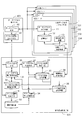
- FIG. 2 is a block diagram showing an example of a data access location selection system.
- the data access location selection system according to the present invention is realized by the distributed data holding access means 1, the information management control means 301, and the data access request means 401.
- the distributed data holding access means 1 is in each distributed node 101 in FIG. 1, the information management control means 301 is in the information management control apparatus 300 in FIG. 1, and the data access request means 401 is in the data access request node in FIG.
- a description will be given of a case where the operation is performed at 400.
- the devices on which the respective units are not limited to the above devices.
- the example shown in FIG. 2 shows a case where the information management control unit 301 operates in a device (information management control device 300) different from the distributed node 101.
- the information management control means 301 may operate on one or a plurality of computers among the distributed nodes 101 to 104.
- a program (software) for operating as the information management control unit 301 may be stored on the distributed nodes 101 to 104, and for example, the CPU may operate according to the program.
- the data access location selection system according to the present embodiment may include a plurality of distributed nodes.
- the distributed data holding / accessing means 1 includes a data access processing means 11, a storage device 12, a controlled device 13, and a distributed node control means 14.
- the above-described controlled element corresponds to the controlled device 13 in FIG.
- Storage device 12 stores data targeted in the distributed storage system.
- the storage device 111 illustrated in FIG. 1 corresponds to the storage device 12.
- the storage device 12 is realized by a storage medium such as an HDD, an SSD (Solid State Drive), or a semiconductor memory.
- the data access processing unit 11 receives a data access request from the data access request unit 401. Then, the data access processing unit 11 accesses the storage device 12 to read the requested data, and returns a result to the data access request unit 401.
- the controlled device 13 is a device capable of controlling the operation state (that is, a controlled element).
- the controlled target device 13 is a hardware device capable of controlling the operation state in the distributed data holding / accessing means 1.
- the controlled target device 13 is, for example, an arithmetic device such as a CPU, an excessive communication interface, or the like.
- the storage device 12 is also one of the controlled elements 12, but in the example illustrated in FIG. 2, the controlled target device 13 is illustrated separately from the storage device 12.
- the distributed node control means 14 issues a control instruction to devices that can control the operation state (specifically, the storage device 12 and the controlled device 13 that are controlled elements).
- the content of the control instruction is, for example, the content exemplified in the description of the controlled element.
- the data access request unit 401 includes an access destination inquiry unit 41 and a data access unit 42.
- the access destination inquiry unit 41 reads the read destination information of the data to be read (for example, information indicating the distributed node where the data is stored) and the write destination information of the data to be written (for example, information indicating the distributed node storing the data) To the information management control means 301 and receives the inquiry result (hereinafter referred to as access destination information).
- access destination information for example, information indicating the distributed node where the data is stored
- the write destination information of the data to be written for example, information indicating the distributed node storing the data
- the request for the data access request unit 401 to inquire the access destination to the information management control unit 301 will be referred to as a data access request command.
- the data access unit 42 When the access destination inquiry unit 41 receives the access destination information, the data access unit 42 performs data access to the distributed node 101 that is the access destination. Specifically, the data access unit 42 requests the data access processing unit 11 to perform access processing (for example, data writing processing or reading processing) desired to be performed on the storage device 12 of the distributed node 101.
- access processing for example, data writing processing or reading processing
- writing data may be written as writing
- reading data may be written as reading.
- the information management control means 301 includes a data storage location management means 31, a data storage location management information recording device 32, an access probability acquisition means 33, an access probability calculation recording means 34, an access probability recording device 35, and a control instruction command.
- Means 36, provisional data generation means 37, node operation state recording device 38, access receiving means 39, history storage device 50, and access history recording means 51 are provided.
- Access accepting means 39 accepts a data access request command from data access requesting means 401. Then, the access receiving unit 39 requests the data storage location managing unit 31 to select an access destination, and transmits the selection result to the data access requesting unit 401.
- the data access request command includes information for identifying data, an execution command, and data necessary for execution.
- the access receiving means 39 receives a data access request command such as “Read file A” and “Write data“ XXXX ”to file B”.
- “Read” and “Write” correspond to execution instructions.
- data necessary for execution for example, data in a Write command can be cited. Note that this data corresponds to data transferred from the initiator to the target in the data phase in SCSI (Small Computer System Interface).
- SCSI Small Computer System Interface
- iSCSI which is a standard that uses the SCSI protocol over TCP / IP
- a Write command that is an execution command is transmitted in the SCSI Command PDU, and data of the Write command is transmitted in the SCSI DATA Out PDU.
- the information for identifying data corresponds to a write destination block address or the like, and is included in the Write command. Further, for example, in the distributed key value thread system, the key stored in association with the key and key at the time of put and put is included in the data access request command. At this time, “put” is an execution instruction, “Key” is information for identifying data, and “Value” is necessary data.
- the data storage location management information recording device 32 stores a storage location of data to be held and managed in the distributed storage system. Specifically, the data storage location management information recording device 32 stores the data storage location in association with the distributed node 101. The storage location of the data stored in the data storage location management information recording device 32 is stored by the data storage location management means 31 described later. The data storage location already stored in the distributed node 101 may be stored in advance in the data storage location management information recording device 32 by a user or the like, for example.
- the contents stored in the data storage location management information recording device 32 include, for example, directories and files below “/ home / node1” in the distributed node 101 and directories and files below “/ home / node2” in the distributed node 102. It may be information indicating a rule such as storing in the.
- the data storage location management information recording device 32 is realized by an arbitrary recording medium such as a magnetic disk.
- the data storage location management means 31 manages the actual storage destination of the data held and managed in the distributed storage system, and determines the access destination of the data specified in the access request of the access reception means 39. Specifically, when the information of the distributed node corresponding to the designated data is stored in the data storage location management information recording device 32, the data storage location management means 31 stores the information on the distributed node corresponding to the designated data. The data reading destination and / or writing destination is determined from the inside.
- the data storage location management information recording device 32 stores the data storage destination in a table format defined by the database software
- the data storage location management means 31 performs a search process on the table, thereby You may search for the storage location.
- FIG. 3 is an explanatory diagram showing an example where the data storage destination is stored in a table format.
- the example shown in FIG. 3 indicates that the data storage location management information recording device 32 stores a file name for identifying data in association with a node storing the file.
- the example shown in FIG. 3 indicates that data is distributed and stored in a plurality of nodes in units of files. It is assumed that the node names node1, node2, node3, and node4 are assigned to the distributed node 101, the distributed node 102, the distributed node 103, and the distributed node 104, respectively.
- the file “/home/a.txt” illustrated in FIG. 3 is stored in node1 and node2.
- the data storage location management means 31 searches the “file name” column for the line “/home/a.txt”.
- the corresponding node may be specified from the “node” column of the retrieved data.
- the data storage location management means 31 When the data storage location management information recording device 32 stores the data storage destination in the table format defined by the database software, the data storage location management means 31 performs an addition process and an update process for the table. Thus, the data storage destination may be updated. For example, when it is desired to change the storage location of the file, the data storage location management means 31 may rewrite the corresponding record in the table in conjunction with the process of copying and migrating the actual data storage location. Furthermore, when storing a new file, the data storage location management means 31 may add a record indicating the storage location of the new data to the table.
- the format stored in the data storage location management information recording device 32 is not limited to the above format.
- the data storage location management information recording device 32 may store node name list information and a hash function.
- the data storage location management means 31 may determine the storage node destination calculated by the consistent hashing method as the data reading destination and / or the writing destination.
- the access history recording unit 51 stores the content of the access request command received by the access receiving unit 39 in the history storage device 50 as a history.
- the history storage device 50 stores the history of access request commands in response to instructions from the access history recording means 51.
- the history storage device 50 is realized by a recording medium such as a magnetic disk, for example.
- the access history recording means 51 may store the history of the access request command as, for example, a journal log in the history storage device 50, or may store it in the history storage device 50 in the table format illustrated in FIG.
- FIG. 4 is an explanatory diagram showing an example of an access request command history stored in the access history recording means 51.
- whether the execution instruction is a read instruction or a write instruction (“Read or Write” in FIG. 4), to which file the instruction is made (“dest (file name)” in FIG. 4), and , It indicates that the history of access request commands is stored in association with when the instruction is given (“time” in FIG. 4).
- the access history recording unit 51 may not store all the history of access request commands received by the access receiving unit 39 in the history storage device 50.
- the access history recording means 51 may sample a part of the access request command and store it in the history storage device 50.
- the access probability recording device 35 stores an access probability representing the probability that data stored in each distributed node is read and / or written.
- the access probability recording device 35 stores the access probability calculated by the access probability calculation recording means 34 or the data provisional probability generation means 37 described later.
- the access probability recording device 35 is realized by an arbitrary recording medium such as a magnetic disk, for example.
- the access probability calculation recording means 34 calculates an access probability based on the access history for the data, and stores the calculated access probability in the access probability recording device 35. Specifically, the access probability calculation recording means 34 refers to the access request command history stored in the history storage device 50 and calculates the access probability based on the access history information for the same file name. Since the access probability is calculated based on the access history, it can be said that it is information representing the degree to which each file is accessed.
- the access probability calculation recording means 34 may calculate the access probability by dividing the number of times the data is accessed, for example, in the period after the data is stored. For example, the access probability calculation recording means 34 calculates the number of READ accesses that occurred between 0 o'clock and 12 o'clock as the numerator, with the number of days elapsed from when the file “/home/a.txt” was generated as the denominator. By doing so, it is possible to calculate the access probability that a READ access occurs between 0 o'clock and 12 o'clock.
- FIG. 5 is an explanatory diagram showing an example of the access probability.
- the access probability recording device 35 indicates that the access probability for each time zone and the access probability for each date are stored in association with each other for the data specified by each file name. .
- the probability that a READ access will occur for the file “/home/a.txt” between 0 o'clock and 12 o'clock is 10%, and the probability that a write access will occur is 0%. It shows that. For example, in the case of a file in which READ access occurs at 3:00 am once every 10 days, the access probability is the above probability.
- the probability that READ access will occur at the beginning of the month for the file “/home/a.txt” is 100%, and the probability that READ access will occur at the middle and the end of the month. Is 0%. From this, it is understood that the file “/home/a.txt” is a file in which READ access occurs at a rate of about once every 3.3 days at the beginning of the month (for example, 1st to 10th). .
- the access probability recording device 35 stores the access probabilities in the period of the beginning, middle and late of the month.
- the period for storing the access probability is not limited to the above period.
- the access probability calculation recording means 34 calculates the access probability by dividing one year into four periods (for example, periods such as 1Q, 2Q, 3Q, 4Q, etc.), and stores the access probability in the access probability recording device 35 for each period. The access probability may be stored. Further, the access probability calculation recording means 34 may calculate the access probability every month (that is, the period from January to December), and store the access probability for each month in the access probability recording device 35.
- the access probability calculating / recording means 34 may store information indicating the number of times data access is performed within a predetermined period (hereinafter referred to as the number of accesses) in the access probability recording device 35. For example, when the number of accesses within a unit time is equal to or greater than a predetermined value, the access probability calculation recording unit 34 may store the number of accesses in the access probability recording device 35.
- the access probability calculation recording means 34 may store information (hereinafter referred to as an evaluation value) calculated by the access probability and the number of accesses in the access probability recording device 35.
- the access probability calculation recording means 34 may calculate a value obtained by multiplying the access probability by the number of accesses as an evaluation value, and store the calculated evaluation value in the access probability recording device 35.
- the method for calculating the evaluation value is not limited to the above method. From the above, it can be said that the evaluation value is information indicating access characteristics to data.
- the access probability recording device 35 may store the data storage destination in a table format defined by the database software.
- the access probability calculation / recording means 34 may search or update the access probability by performing a search process, an addition process, or an update process for the table.
- the access probability acquisition unit 33 receives an access probability acquisition request for each data from the data provisional probability generation unit 37. Then, the access probability acquisition unit 33 searches and acquires the access probability corresponding to the designated data from the access probability recording device 35, and transmits the acquired access probability to the data provisional probability generation unit 37.
- the temporary data probability generation unit 37 provisionally stores the data newly stored in the storage device 12 of the distributed node.
- a typical access probability is calculated.
- calculating the temporary access probability may be referred to as estimating the access probability.
- the co-occurrence probability that the data b is accessed s seconds after the data a is accessed is Ps (b: a)
- the co-occurrence probability Ps (b: a) is calculated using the following Equation 1. The Note that the number of times data b is accessed can be extracted from the access history stored in the history storage device 50.
- the data provisional probability generation means 37 sets the probability that the data set A ⁇ a, b,..., N ⁇ selected from the set W will be accessed by t seconds later as Pt (A: W). Then, the probability Pt (A: W) may be calculated using the following equation 2.
- the set W may be targeted for all access data so far in the entire system, or may be targeted for all access data within the last x seconds in the entire system. Furthermore, access data for a certain node may be set as a set W, and only data having a co-occurrence relationship in correlation mining may be set as a set W (the probability of other data is set to 0, etc.). The set W may be determined in advance in consideration of the amount of data, the time required for calculating the probability, and the like.
- the data provisional probability generation unit 37 can estimate the access probability for the specified data by calculating the co-occurrence probability based on the access history and the access probability to the data.
- the data provisional probability generation means 37 may use the co-occurrence probability calculated in this way as a provisional access probability.
- the method for calculating the access probability is not limited to the above method.
- the data provisional probability generation means 37 may calculate a provisional access probability by paying attention to the attribute of a newly created file.
- a method for calculating a provisional access probability will be described using a specific example.
- a case where a file named “/home/x.log” is newly created and a temporary access probability is calculated as a future access probability of the file “/home/x.log” will be described. .
- the data provisional probability generation means 37 gives the access probability of the file with the extension “log” to the access probability acquisition means 33. Request to obtain all from the access probability recording device 35.
- the data provisional probability generation means 37 averages the access probabilities of all the obtained log files, and uses the averaged result as the provisional access probability of the file “/home/x.log”.
- the data provisional probability generation unit 37 stores the provisional access probability in the access probability recording device 35.
- the data provisional probability generation means 37 may take into account not only the extension but also the directory path (for example, “/ home”). In this case, the data provisional probability generation unit 37 gives the access probability recording unit 35 the access probability of the file whose extension is “log” and stored in the directory path “/ home” with respect to the access probability acquisition unit 33. You may ask to get everything from In this case, the data provisional probability generation means 37 may use the average of the obtained access probabilities as the provisional access probability of the file “/home/x.log”.
- the data provisional probability generation unit 37 when calculating the temporary access probability, the data provisional probability generation unit 37 considers the application that performs data access to the file (that is, the file caller), not the file name or the file storage location. You may put in. In this case, the data provisional probability generation means 37 requests the access probability acquisition means 33 to acquire all access probabilities from the access probability recording device 35 with the same application name that made the data access. The average of the probabilities may be used as the provisional access probability.
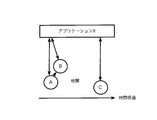
- FIG. 6 is an explanatory diagram illustrating an example of an operation in which the application X performs data access.
- A, B, and C surrounded by circles represent data accessed from the application X, respectively. Further, it indicates that the time for the application X to access data has passed from the left to the right in the figure.
- data accessed from a certain application is assumed to have temporal correlation.
- the correlation is such that data B is accessed after data A is accessed, and further, data C is accessed after data A and data B are accessed.
- the data provisional probability generation means 37 calculates provisional access probability for new data based on the access probability with the same application name accessed.
- a provisional access probability calculation method for example, a method of calculating an access probability using a co-occurrence probability may be used.
- the access probability recording device 35 determines the name of the application that has performed data access to the file along with the file name. Just remember.
- an application name is assigned to the data access request from the data access request unit 401.
- the access history recording unit 51 stores the history in which the application name is added to the content of the access request command received by the access receiving unit 39 in the history storage device 50.
- the access probability calculation recording means 34 calculates the access probability of the file for each application using the history of the access request command and stores it in the access probability recording device 35.
- the history storage device 50 and the access probability recording device 35 may store the file name and the application name in association with each other.
- the data provisional probability generation means 37 may estimate the access probability of the designated data using the evaluation value instead of the access probability. Note that the method of estimating the access probability using the evaluation value may be the same method as the method of estimating using the access probability stored in the access probability recording device 35.
- the data provisional probability generation unit 37 estimates the access probability for the designated data based on the access probability stored in the access probability recording device 35.
- the data provisional probability generation means 37 stores the estimated access probability in the access probability recording device 35.
- the data provisional probability generation unit 37 determines the data write destination based on the estimated access probability.
- the data storage location management means 31 uses a distributed node that stores data whose access probability recorded in the access probability recording device 35 is within a range between the provisional access probability and a predetermined value as a data write destination. You may decide.
- the data storage location management means 31 extracts from the access probability recording device 35 data similar to the provisional access probability (for example, data having a difference in access probability within a predetermined range). Next, the data storage location management means 31 reads the distributed node storing the identified data from the data storage location management information recording device 32. Then, the data storage location management unit 31 determines the read distributed node as a data storage location (hereinafter also referred to as an arrangement location).
- the data storage location management means 31 may determine a distributed node that has the highest estimated access probability or is operating in a time zone that exceeds a predetermined access probability as a data write destination. Whether or not it is operating is determined based on schedule information described later.
- the data access request unit 401 may add information necessary for an access request command according to an algorithm for calculating a provisional access probability of data or a format to be managed and held as an access probability.
- the instruction format may be defined according to the information. If the data to be read and / or written (hereinafter referred to as an access target) and information that can recognize the access contents are included, the data access request unit 401 uses a normal file access protocol. Also good.
- the node operation state recording device 38 stores the operation states of the computers (ie, distributed nodes 101 to 104) on which the distributed data holding / accessing means 1 operates.
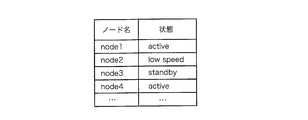
- FIG. 7 is an explanatory diagram illustrating an example of an operation state of a node.
- the state in which the node is operating normally is referred to as “active”.
- the low speed state of the node (for example, the state where the rotational speed of the disk is reduced) is referred to as “low speed”.
- a state where the node is stopped is referred to as “standby”.
- nodes 1 and 4 are operating normally, node 2 is in a low speed state, and node 3 is in a stopped state.
- the operation state stored in the node operation state recording device 38 is updated when a control instruction command means 36 described later performs a process of changing the state of the node.
- all the distributed nodes connected to the data access location selection system may be stored in the node operation state recording device 38 in advance as a stopped state, for example.
- the node operation state recording device 38 may store the operation state of the node in a table format defined by the database software.
- the control instruction command means 36 issues a control command to the distributed data holding access means 1 using the data storage location management information recording device 32 and the information stored in the access probability recording device 35.
- the control command means for example, changing the operating state of a component in a computer such as a disk (specifically, lowering the number of rotations of the disk, lowering the number of clocks of the CPU, or stopping the operation). And stopping the entire computer of the distributed node.
- the control instruction command means 36 rewrites the corresponding operation state of the node operation state recording device 38 and then gives a control instruction to change the operation state to each distributed node.
- Each distributed node may include the node operation state recording device 38.
- the control instruction command unit 36 rewrites the corresponding operation state of the node operation state recording device 38 included in the information management control unit 301 and replaces the rewritten operation state with another distributed node. 101 to 104 are notified.
- Each of the distributed nodes 101 to 104 issues a response notification to the control instruction command means 36 after the operation state is updated.
- the control instruction command means 36 issues a control instruction for changing the operation state.
- control instruction command unit 36 instructs the distributed node control unit 14 to control the operation state of the controlled element in the distributed data holding access unit 1.
- the content of the control instruction may be defined according to the controlled element.
- control instruction command means 36 controls the node using the method exemplified below. Note that the following control method is an example, and the node may be controlled using another method.
- Stop a node that is expected to have no access This is a method of calculating access probabilities for the entire data held by the distributed nodes at regular intervals and stopping nodes whose access probabilities are equal to or less than a threshold.
- the access probability calculation recording means 34 periodically reads an access history for a certain period from the history storage device 50 to calculate an access probability, and stores the calculation result in the access probability recording device 35.
- the control instruction command means 36 refers to the data storage location management information recording device 32 and the access probability recording device 35, and calculates the sum of the access probabilities of the data held by each distributed node. Then, the control instruction command unit 36 issues a stop instruction to the distributed node whose calculated access probability sum is equal to or less than the threshold value.
- control instruction command means 36 may issue a stop instruction to the target distributed node immediately, or may issue a stop instruction after a predetermined period has elapsed.
- the control instruction command unit 36 may determine a stop schedule and issue a stop instruction to the distributed node according to the schedule.
- the control instruction command means 36 may store the stop schedule in an arbitrary storage device (not shown; hereinafter referred to as schedule storage means) included in the information management control apparatus 300.
- the information stored in the schedule storage unit is not limited to the stop schedule, but may be a schedule for starting the distributed node.
- control instruction command unit 36 may perform control so as to activate at least one of the distributed nodes.
- further power saving can be expected by reducing the number of distributed nodes to be activated.
- write access is performed once to another distributed node without performing write access to the access destination distributed node, and then to the access destination distributed node at a predetermined timing (for example, after the access destination distributed node is activated).
- the control instruction command unit 36 may perform control to stop the distributed node that performs write access.
- Schedule in advance This is a method in which the time zones for starting and stopping each distributed node are determined in advance. For example, all nodes are operated from Monday to Friday, and half of the nodes are stopped on weekends.
- control instruction command means 36 issues a start command and a stop command to the distributed nodes according to a determined schedule.
- the control instruction command unit 36 specifies a distributed node whose sum of access probabilities calculated for each period is equal to or less than a threshold, the stop schedule of the specified distributed node with respect to the schedule storage unit (not shown) Set. Then, the control instruction command unit 36 stops and starts the distributed node according to the schedule set for each period. When data with a high access probability exists within the set stop period, the control instruction command unit 36 may perform control to transfer the data to a distributed node that has not stopped. Thus, the schedule determined based on the access probability is referred to as schedule information.
- control instruction command unit 36 periodically performs data rearrangement according to the data arrangement state and access probability based on this schedule information (that is, information such as starting and stopping every period). May be. For example, based on the schedule information, the control instruction command unit 36 extracts time zone candidates that can be stopped at each distributed node. Then, the control instruction command unit 36 instructs the distributed node control unit 14 to relocate data having an access probability exceeding a predetermined value in the extracted distributed node to a different distributed node in a time zone determined to be stopped. A control instruction is given to it. In this way, further power saving can be achieved.
- control instruction command means 36 gives a control instruction to move the data of the distributed node where the high access probability is concentrated to another distributed node, and controls the destination distributed node to operate in that time zone. Also good. In such a case, performance can be improved.
- the program is stored in a storage unit (not shown) of the information management control device 300, and the CPU reads the program, and according to the program, the data storage location management means 31, the access probability acquisition means 33, the access probability calculation record.
- the means 34, the control instruction command means 36, the data provisional probability generation means 37, the access reception means 39, and the access history recording means 51 may be operated.
- Each of 51 may be realized by dedicated hardware.
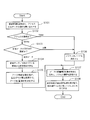
- FIG. 8 is a flowchart showing an example of data access processing in the present embodiment.
- the data access process is started when the access destination inquiry unit 41 of the data access request unit 401 issues an access request command to the access reception unit 39 of the information management control unit 301. That is, first, the access destination inquiry unit 41 issues an access request command to the access reception unit 39.
- the access receiving unit 39 inquires of the data storage location managing unit 31 about the distributed node storing the access target data (step S101). For example, when the data storage location management information recording device 32 stores the contents illustrated in FIG. 3, the access destination of the file “/home/a.txt” (that is, storage node information) is node1, node2. become.
- the data storage location management means 31 determines the type of access in the access request command (step S102). If the access type is a write process (“write” in step S102), the process proceeds to step S103, and if the access process is a read process (“read” in step S102), the process proceeds to step S106.
- the READ process represents a data read process.
- the Write process is a process other than the data read process such as a data delete process, a data update process, and a file create process in addition to a data write process. Represents processing.
- the data storage location management means 31 determines whether the data to be accessed is new data (step S103). Specifically, the data storage location management unit 31 determines whether the access request command is a write process for new data or an update process for an access target file. In the following description, when the file name to be accessed does not exist in the data storage location management information recording device 32, it is determined as a write process for new data, and when the file name exists, it is determined as an update process for the access target file. Shall.
- step S103 If it is determined as new data (“new data” in step S103), the process proceeds to step S104, and if it is determined as update processing (“update” in step S103), the process proceeds to step S106.
- the data provisional probability generation means 37 estimates the future access probability of the new data using the information included in the new data access processing request command (step S104). For example, when the access processing request command has the content of “create a new file called /home/e.txt”, the data provisional probability generation unit 37 determines the access probability of the file “/home/e.txt”. Is estimated. That is, the data provisional probability generation unit 37 calculates a provisional access probability. In the above example, “/home/e.txt” corresponds to the information included in the access processing request command.
- the access processing request command may include an instruction issuer program name, a process name, a program execution user name, and the like.
- the access probability acquisition unit 33 acquires all the access probabilities of the file having the extension “txt” from the access probability recording device 35 according to the instruction of the data provisional probability generation unit 37.
- the data provisional probability generation means 37 calculates an average value based on each access probability value, and adopts the average value as the access probability of the file “/home/e.txt”.
- the data provisional probability generation means 37 stores the adopted access probability in the access probability recording device 35. Further, the data provisional probability generation unit 37 notifies the data storage location management unit 31 of the estimated access probability.
- the data storage location management means 31 determines a data location from the notified provisional access probability (step S105 in FIG. 8).
- the data storage location management means 31 selects, for example, the same distributed node as the data similar to the provisional access probability value (for example, the difference between the access probabilities is within a certain value), and sets the distributed node as the data location location. decide.
- the distributed node By selecting such a distributed node, data access can be concentrated on the distributed node. As described above, by concentrating accesses in a certain time period to a limited distributed node, it becomes possible to stop other distributed nodes (or change the operation state to save power).
- the data storage location management means 31 may refer to the information of the node operation state recording device 38 and select a distributed node as a writing destination from among the normally operating distributed nodes. Further, for example, when the distributed node determined as the data placement location is not operating normally, the data storage location management unit 31 may determine that the distributed node that is operating normally is the distributed node that performs temporary writing. Good. In this case, when the distributed node that has not been operating normally returns to the normal operating state, the control instruction command unit 36 returns the distributed node that has returned to the normal operating state to the distributed node that has been temporarily written. A control instruction is given to move data to the node. By performing such control, it is possible to suppress the operation of unnecessary distributed nodes while ensuring availability.
- the data storage location management means 31 may determine the data location based on the schedule information stored in the schedule storage means (not shown). Specifically, of the calculated data access probabilities, a node that is operating normally (that is, active) is read from the schedule storage means during a time period when the data is accessed, and the node is determined as the data location. May be. When there are a plurality of distributed nodes that are activated (normally operating), the data storage location management unit 31 may determine one distributed node based on a predetermined logic.
- the operation schedules of three distributed nodes node1, node2, and node3 are set to operate on Monday, Wednesday, and Friday for node1, to operate on Tuesday, Thursday, and Saturday for node2, and to operate on Sunday for node3.
- the data A is newly created, and according to the provisional access probability, it is found that the data A is data that is concentratedly accessed on Monday (that is, data with a high access probability on Monday).
- the data storage location management means 31 determines node1 as the location where the data A is arranged.
- the method for determining the data location based on the schedule information will be further described using another specific example.
- the operation schedule at this time is that the distributed nodes of nodes 1 to 100 operate during the daytime on weekdays, the distributed nodes of nodes 1 to 10 operate at night on weekdays, and the distributed nodes of nodes 11 to 15 operate on weekends and holidays.
- the data storage location management means 31 determines that the nodes 11 to 15 are the locations where the data A is arranged.
- the control instruction command means 36 may separately change the schedule information to “distributed nodes of nodes 11 to 20 operate on weekends and holidays”.
- the data storage location management means 31 may determine a distributed node so that access is concentrated on at least one distributed node among the write-destination distributed nodes. This is because even if the distributed node where access is concentrated is operated, even if other write destination nodes are stopped, the target data can be read.
- the data storage location management means 31 may decide to store the file having the same access pattern in another node to ensure the performance of the distributed storage system.
- step S105 the process proceeds to step S107.
- step S106 If the access type is READ processing in step S102, or if the access request command is update processing in step S103, the data storage location management means 31 selects an access destination distributed node (step S106). .
- the data storage location management means 31 is the distributed node obtained in step S101 (that is, read from the data storage location management information recording device 32). Is selected. For example, in the case of the file “/home/a.txt” illustrated in FIG. 3, the READ destination candidate is node1 or node2.
- the data storage location management means 31 may select a distributed node using, for example, a round robin method.
- the data storage location management means 31 selects one of the normally operating distributed nodes by an arbitrary method based on the operating state of the distributed node stored in the node operation status recording device 38. May be.
- the method for selecting a distributed node is not limited to the above method.
- the data storage location management means 31 selects all the distributed nodes to be written.
- the data storage location management means 31 refers to the information of the node operation state recording device 38, and when the target distributed node is stopped (or in the power saving operation state), the distributed node that is operating normally May be selected as a distributed node that performs temporary writing.
- the control instruction command means 36 changes to the distributed node that has returned to the normal operating state with respect to the distributed node that has been temporarily written. A control instruction is given to move data.
- step S106 when the distributed node selected as the write destination is stopped, the control instruction command unit 36 may issue an activation command to the distributed node.
- the access receiving means 39 responds to the data access requesting means 401 with the distributed node information to be accessed, and requests the access history recording means 51 for access history recording processing (step S107). .
- the data access unit 401 receives the distributed node information of the access destination, the data access unit 42 issues an access request command to the distributed data holding access unit 1 of the designated distributed node (step S108).
- the data access processing unit 11 performs processing based on the received access request command and transmits the processing result to the data access request unit 401.
- the data provisional probability generation unit 37 calculates a provisional access probability at the timing of an access request for new data and stores the calculated access probability in the access probability recording device 35 has been described.
- the access probability calculation recording means 34 may calculate the access probability at an arbitrary period and store the calculated access probability in the access probability recording device 35.
- the access probability calculation recording means 34 may calculate the access probability each time when a process for rearranging data is performed or when the access probability is read. Further, the access probability calculation recording means 34 also calculates the access probability based on the actual access history after a certain period of time for the provisional access probability, and updates the contents of the access probability recording device 35 with the calculated value. May be.
- the data storage location management unit 31 may respond to the data access request unit 401 with the minimum two distributed nodes as distributed nodes that perform write processing. Then, the data storage location management means 31 determines a time zone in which data access is concentrated based on the information recorded in the access probability recording device 35, and by that time, writes the remaining four distributed nodes to the write process. The data access request unit 401 may be responded as a distributed node that performs the above.
- the information management control apparatus 300 manages a plurality of distributed nodes 101 to 104 has been described. That is, the case where the information management control device 300 includes the information management control unit 301 and the distributed node 101 includes the distributed data holding access unit 1 has been described. Instead of such a configuration, the distributed node 101 may include both the distributed data holding access unit 1 and the information management control unit 301. In this case, the plurality of distributed nodes 101 to 104 may operate in cooperation with each other as described in the above embodiment. For example, an access probability may be calculated for data in a storage device provided in each distributed node, and controlled elements may be controlled based on the access probability.
- the data storage location management means 31 has the data reading location specified from the distributed nodes corresponding to the data stored in the data storage location management information recording device 32, and / Or determine the write destination. Then, the access probability calculation recording means 34 calculates an access probability based on the access history stored in the history storage device 50 and stores the calculated access probability in the access probability recording device 35. On the other hand, when the node corresponding to the designated data is not stored in the data storage location management information recording device 32, the data provisional probability generation means 37 stores the access probability for the designated data in the access probability recording device 35. Estimate based on the access probability. In this case, the data storage location management means 31 determines the data write destination based on the estimated access probability.
- the data storage location management means 31 determines the data access destination based on the future access probability (that is, provisional access probability). Therefore, since the newly created data and the physical allocation location of the replica can be determined at the time of initial allocation, the amount of processing such as data movement such as rearrangement can be reduced, and power saving can be achieved. .
- control instruction command means 36 can change the operation state of the distributed nodes constituting the distributed system in advance before data registration based on the provisional access probability, efficient power saving control is possible.
- control instruction command means 36 moves the data of the distributed node according to the access probability, it becomes possible to select the distributed node so as to maintain the power saving operation state of the system.
- the access history recording means 51 records the data identification name and the usage contents as the access history for each data. Therefore, a power saving effect can be provided even for data having different access patterns within the same service or the same user.
- the physical allocation location of new data and its replica cannot be determined at the initial point of data storage.
- the method of calculating the access probability based on past access history data cannot predict how the data will be used in the future, and there is not enough information to determine the initial location of the data. It is.
- data copy is performed after calculating the access probability after registration. If a large amount of data copy occurs in such a situation, a large amount of network or bus I / O bandwidth is used, which adversely affects the performance of applications running on the distributed system.
- a provisional access probability for new data is calculated and the data is arranged at an appropriate position. Therefore, since the data movement cost is suppressed, it is possible to suppress power consumption as a result.
- the access history and access probability of data are handled in units of slices of physical arrangement locations where volumes are divided into fixed units.
- the data stored in the same slice cannot be separated by the rearrangement process. That is, when a volume is allocated for each service or user, it is difficult to deal with data having different access patterns for each service and user.
- the access probability is calculated in units of data, it is possible to flexibly cope with each data.
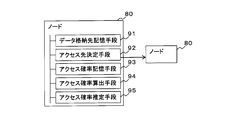
- FIG. 9 is a block diagram showing an example of the minimum configuration of the data access location selection system according to the present invention.
- FIG. 10 is a block diagram showing an example of another minimum configuration of the data access location selection system according to the present invention.
- the data access location selection system illustrated in FIG. 9 includes at least one node 80 (for example, distributed node 101) that stores data, and a management server that selects a data read destination and / or write destination from the nodes. 90 (for example, the information management control device 300).
- the management server 90 includes a data storage destination storage unit 91 (for example, the data storage location management information recording device 32) that stores a data storage destination in association with the node 80, and a designated data reading destination and / or writing destination. Is determined from the nodes corresponding to the data stored in the data storage destination storage unit 91, and the data is read from each node 80, for example.
- / or access probability storage means 93 access probability recording device 35 for storing an access probability indicating the probability of writing, and an access history to data (for example, an access history stored in the history storage device 50).
- Rate probability calculation means 94 for example, access probability calculation recording means 34
- access probability estimation means 95 for example, data for estimating the access probability for the specified data based on the access probability stored in the access probability storage means 93 Provisional probability generation means 37).
- the access probability estimation unit 95 estimates the access probability of the data (for example, the access probability of data having the same extension). An average value is calculated, an average value of access probabilities of data with the same directory is calculated, an access destination application calculates an average value of access probabilities of the same data, or a co-occurrence probability is calculated).
- the access destination determination unit 92 determines the data write destination based on the estimated access probability (for example, access A node that stores data having similar probabilities is determined as an access destination, or a node that is operating within a period exceeding a predetermined access probability is selected).
- the data access location selection system illustrated in FIG. 10 includes a plurality of nodes 80 (for example, distributed nodes 101 to 104).
- Each node 80 includes data storage destination storage means 91, access destination determination means 92, access probability storage means 93, access probability calculation means 94, and access probability estimation means 95.
- the contents of the data storage destination storage unit 91, the access destination determination unit 92, the access probability storage unit 93, the access probability calculation unit 94, and the access probability estimation unit 95 are the same as those shown in FIG.
- At least one or more nodes for example, distributed node 101 that store data
- a management server for example, information management control device 300
- a data storage destination storage means for example, the data storage location management information recording device 32
- the specified data reading destination and / or writing destination Access destination determination means for example, data storage location management means 31
- Access probability storage means for example, access probability recording device 35
- An access probability calculation unit for example, an access probability calculation that calculates an access probability based on an access history to data (for example, an access history stored in the history storage device 50) and stores the calculated access probability in an access probability storage unit.
- Access probability estimation means for example, data provisional probability generation means 37 for estimating the access probability for the designated data based on the access probability stored in the access probability storage means.
- the estimation unit estimates the access probability of the data, and the access destination determination unit determines that the node corresponding to the specified data is the data If it is not stored in the storage destination storage means, it is based on the estimated access probability.
- Data access location for example, a node storing data having similar access probability is determined as an access destination, or a node that is operating within a period exceeding a predetermined access probability is selected
- the access destination determining means is data of access probabilities within the range of the estimated access probability and a predetermined value out of the access probabilities recorded in the access probability recording means (for example, similar to provisional access probability)
- Data access location selection system that determines a node to store data as a data write destination.
- a node operation schedule determining unit for example, a control instruction command unit 36 that determines an operation schedule (for example, a stop schedule) of each node for each time zone based on the estimated access probability, and determining an access destination
- an operation schedule for example, a stop schedule
- the means determines a node where an operation schedule in a time zone in which an estimated access probability exceeds a predetermined value is in operation as a data reading destination and / or a writing destination.
- control instruction command means for example, a control instruction command means 36 for issuing a control instruction command to the node
- control instruction command means has a control instruction command (for example, a stop instruction) for the node based on the operation schedule.
- Data access location selection system for example, a control instruction command means 36 for issuing a control instruction command to the node.
- the access probability estimating means extracts the access probability of data having the same extension as the designated data (for example, extension “log”) from the access probability storage means, and calculates the average value of the extracted access probabilities A data access location selection system that estimates the access probability of specified data.
- the access probability estimating means extracts the access probability of the data stored in the same directory as the designated data (for example, the directory path “/ home”) from the access probability storage means, and the average of the extracted access probabilities A data access location selection system that estimates the value as the access probability of specified data.
- the access probability estimating means calculates the co-occurrence probability based on the access history stored in the data and the access probability stored in the access probability storage means (for example, calculated using (Equation 1)), A data access location selection system that estimates the access probability of specified data.
- Data storage destination storage means (for example, data storage location management) that includes a plurality of nodes (for example, distributed nodes 101 to 104) for storing data, and each node stores the data storage destination in association with the node.
- An information recording device 32) and an access destination determination means (for example, data) that determines a reading destination and / or a writing destination of designated data from among nodes corresponding to the data stored in the data storage destination storage means
- a storage location management means 31) an access probability storage means (access probability recording device 35) for storing an access probability indicating a probability that data is read from and / or written to each node, and an access history ( For example, the access probability is calculated based on the access history stored in the history storage device 50, and the calculated access Access probability calculation means (for example, access probability calculation recording means 34) for storing the rate in the access probability storage means, and access for estimating the access probability for the specified data based on the access probability stored in the access probability storage means
- a probability estimation unit for example, a data provisional
- the access destination determination unit determines the data write destination based on the estimated access probability (for example, A node that stores data with similar access probabilities is determined as the access destination, or a predetermined Selecting a node running within a period of more than Seth probability) data access location selection system.
- the estimated access probability for example, A node that stores data with similar access probabilities is determined as the access destination, or a predetermined Selecting a node running within a period of more than Seth probability
- the said management server is a node which stores data in a node A data storage destination storage unit that stores the data in association with each other, and an access that determines a reading destination and / or a writing destination of designated data from among nodes corresponding to the data stored in the data storage destination storage unit A destination determination means, an access probability storage means for storing an access probability indicating a probability that data is read from and / or written to each node, and the access probability is calculated based on an access history to the data.
- Access probability calculation means for storing the access probability in the access probability storage means, and designated data Access probability estimation means for estimating an access probability for the access based on the access probability stored in the access probability storage means, wherein the access probability estimation means is configured such that a node corresponding to designated data is stored in the data storage destination storage. If not stored in the means, the access probability of the data is estimated, and the access destination determination means is estimated if the node corresponding to the specified data is not stored in the data storage destination storage means A data access location selection system, wherein a data write destination is determined based on an access probability.
- the access destination determination means writes the node that stores data of the access probability within the range of the estimated access probability and a predetermined value out of the access probabilities recorded in the access probability recording means.
- the data access location selection system according to appendix 1, which is determined as the destination.
- Node operation schedule determining means for determining an operation schedule of each node for each time period based on the estimated access probability is provided, and the access destination determining means has the estimated access probability exceeding a predetermined value
- the data access location selection system according to supplementary note 1 or supplementary note 2, wherein the node in which the operation schedule in the time zone is in operation is determined as a data read destination and / or a write destination.
- control instruction instruction means for issuing a control instruction instruction to a node, wherein the control instruction instruction means issues a control instruction instruction to the node based on an operation schedule.
- the access probability estimation means extracts the access probability of data having the same extension as the designated data from the access probability storage means, and calculates the average value of the extracted access probabilities as the access of the designated data.
- the data access location selection system according to any one of Supplementary Note 1 to Supplementary Note 4, which estimates a probability.
- the access probability estimation means extracts the access probability of data stored in the same directory as the designated data from the access probability storage means, and calculates the average value of the extracted access probabilities for the designated data.
- the data access location selection system according to any one of Supplementary Note 1 to Supplementary Note 4, which estimates an access probability.
- the access probability estimating means estimates the access probability of designated data by calculating a co-occurrence probability based on the access history to the data and the access probability stored in the access probability storage means. 5.
- the data access location selection system according to any one of 1 to appendix 4.
- the access probability calculation means calculates an access probability based on an access history including information indicating an access source to data, stores the calculated access probability in the access probability storage means, and the access probability estimation means includes: The access probability of data having the same access source of the designated data is extracted from the access probability storage means, and the average value of the extracted access probabilities is estimated as the access probability.
- the described data access location selection system is configured to select an access probability based on an access history including information indicating an access source to data, stores the calculated access probability in the access probability storage means, and the access probability estimation means includes: The access probability of data having the same access source of the designated data is extracted from the access probability storage means, and the average value of the extracted access probabilities is estimated as the access probability.
- a node state storage unit that stores the operation state of the node is provided, and the access destination determination unit includes a data reading destination from among the nodes in which the operation state of the node stored in the node state storage unit is in operation 9.
- the data access location selection system according to any one of supplementary notes 1 to 8, which determines a write destination.
- An access log collecting unit that collects an access log to data is provided, and the access probability calculating unit calculates an access probability based on the access log collected by the access collecting unit.
- the data access location selection system according to any one of the above.
- the access log collecting means collects access logs including grant information that is information indicating access contents to data, and the access probability calculating means calculates an access probability for each grant information based on the access log.
- the data access location selection system according to supplementary note 10, wherein the access probability is calculated and stored in the access probability storage means.
- the access probability calculation means calculates an access frequency that is information indicating an access probability and a frequency of access to the data based on an access history to the data, and the data is calculated based on the access probability and the access frequency.
- An evaluation value which is information indicating the access characteristics to the access point, is calculated, and the evaluation value is stored in the access probability storage unit.
- the access probability estimation unit stores the access probability for the specified data in the access probability storage unit.
- the data access location selection system according to any one of supplementary note 1 to supplementary note 11, which is estimated based on the evaluated value.
- a plurality of nodes for storing data are provided, and each of the nodes stores a data storage destination storage unit that stores a data storage destination in association with the node, and a specified data reading destination and / or writing destination
- An access destination determination unit that determines a node corresponding to the data stored in the data storage destination storage unit, and an access probability that indicates a probability that data is read from and / or written to each node
- Access probability storage means for storing the access probability
- the access probability calculation means for calculating the access probability based on the access history to the data, and storing the calculated access probability in the access probability storage means, and the access probability for the specified data Is estimated based on the access probability stored in the access probability storage means.
- the access probability estimating means estimates the access probability of the data when the node corresponding to the designated data is not stored in the data storage destination storage means, and the access destination determining means A data access location selection characterized in that, when a node corresponding to designated data is not stored in the data storage destination storage means, a write destination of the data is determined based on the estimated access probability system.
- Data storage destination storage in which a selection device that selects a data reading destination and / or a writing destination from at least one or more nodes storing data stores the data storage destination in association with the node
- the reading destination and / or writing destination of the designated data is determined from the nodes corresponding to the data stored in the means, and the selection device performs reading and / or writing of data to each node.
- An access probability indicating the probability of occurrence is calculated based on an access history to the data, the calculated access probability is stored in an access probability storage means, and the node corresponding to the designated data is stored in the data storage destination If not stored in the storage means, the access probability for the specified data is stored in the access probability storage means. And when the node corresponding to the specified data is not stored in the data storage destination storage means, the selecting device estimates the access probability based on the estimated access probability.
- a data access location selection method characterized by determining a write destination.
- Supplementary note 14 that determines, among the access probabilities recorded in the access probability recording means, a node that stores data of access probabilities within the range of the estimated access probability and a predetermined value as a data write destination The data access location selection method described.
- An access destination determination process for determining a reading destination and / or a writing destination of data designated from among the nodes corresponding to the data stored in the data storage destination storage means for storing the storage destination in association with the node;
- An access probability calculation process for calculating an access probability indicating a probability that data is read from and / or written to a node based on an access history to data, and storing the calculated access probability in an access probability storage unit; and , The access probability for the specified data, the access probability When an access probability estimation process that estimates based on the access probability stored in the storage means is executed, and the node corresponding to the specified data is not stored in the data storage destination storage means in the access probability estimation process, When the access probability of the data is estimated, and the node corresponding to the specified data is not stored in the data storage destination storage unit
- the present invention is preferably applied to a data access location selection system that selects a data reading destination and / or a writing destination in a distributed storage system. That is, the present invention can be applied to a distributed storage system that distributes and stores data in a plurality of computers, and can also be applied to all IT systems that can use them.
Landscapes
- Engineering & Computer Science (AREA)
- Theoretical Computer Science (AREA)
- Human Computer Interaction (AREA)
- Physics & Mathematics (AREA)
- General Engineering & Computer Science (AREA)
- General Physics & Mathematics (AREA)
- Computer Networks & Wireless Communication (AREA)
- Information Retrieval, Db Structures And Fs Structures Therefor (AREA)
Abstract
Description
[参考文献]
特開2003-522360号公報
これは、分散ノードが保持しているデータ全体に対するアクセス確率を一定期間ごとに算出し、アクセス確率が閾値以下のノードを停止させる方法である。
これは、あらかじめ各分散ノードの起動及び停止の時間帯を決めておく方法である。例えば、月曜日から金曜日には全てのノードを稼働させ、週末には半数ノードを停止させる、といった制御である。
11 データアクセス処理手段
12 記憶装置
13 被制御対象装置
14 分散ノード制御手段
31 データ格納場所管理手段
32 データ格納場所管理情報記録装置
33 アクセス確率取得手段
34 アクセス確率算出記録手段
35 アクセス確率記録装置
36 制御指示命令手段
37 データ暫定確率生成手段
38 ノード動作状態記録装置
39 アクセス受付手段
41 アクセス先問い合わせ手段
42 データアクセス手段
50 履歴記憶装置
51 アクセス履歴記録手段
101~104 分散ノード
111~114 記憶装置
200 通信ネットワーク
300 情報管理制御装置
301 情報管理制御手段
400 データアクセス要求ノード
401 データアクセス要求手段
Claims (10)
- データを格納する少なくとも1つ以上のノードと、
データの読み取り先および/または書き込み先を前記ノードの中から選択する管理サーバとを備え、
前記管理サーバは、
データの格納先をノードと対応付けて記憶するデータ格納先記憶手段と、
指定されたデータの読み取り先および/または書き込み先を、前記データ格納先記憶手段に記憶されている当該データに対応するノードの中から決定するアクセス先決定手段と、
各ノードに対してデータの読み取りおよび/または書き込みが行われる確率を示すアクセス確率を記憶するアクセス確率記憶手段と、
データへのアクセス履歴に基づいて前記アクセス確率を算出し、算出したアクセス確率を前記アクセス確率記憶手段に記憶させるアクセス確率算出手段と、
指定されたデータに対するアクセス確率を、前記アクセス確率記憶手段に記憶されたアクセス確率に基づいて推定するアクセス確率推定手段とを備え、
前記アクセス確率推定手段は、指定されたデータに対応するノードが前記データ格納先記憶手段に記憶されていない場合、当該データのアクセス確率を推定し、
前記アクセス先決定手段は、指定されたデータに対応するノードが前記データ格納先記憶手段に記憶されていない場合、推定された前記アクセス確率をもとに当該データの書き込み先を決定する
ことを特徴とするデータアクセス場所選択システム。 - アクセス先決定手段は、アクセス確率記録手段に記録されたアクセス確率のうち、推定されたアクセス確率と所定の値の範囲内にあるアクセス確率のデータを格納するノードを、データの書き込み先と決定する
請求項1記載のデータアクセス場所選択システム。 - 推定されたアクセス確率に基づいて、時間帯ごとの各ノードの動作スケジュールを決定するノード動作スケジュール決定手段を備え、
アクセス先決定手段は、推定されたアクセス確率が所定の値を超える時間帯における前記動作スケジュールが稼働中であるノードをデータの読み取り先および/または書き込み先と決定する
請求項1または請求項2記載のデータアクセス場所選択システム。 - ノードに対して制御指示命令を発行する制御指示命令手段を備え、
前記制御指示命令手段は、動作スケジュールに基づいてノードに対する制御指示命令を行う
請求項3記載のデータアクセス場所選択システム。 - アクセス確率推定手段は、指定されたデータと同一の拡張子を有するデータのアクセス確率を前記アクセス確率記憶手段から抽出し、抽出したアクセス確率の平均値を、指定されたデータのアクセス確率と推定する
請求項1から請求項4のうちのいずれか1項に記載のデータアクセス場所選択システム。 - アクセス確率推定手段は、指定されたデータと同一のディレクトリに格納されるデータのアクセス確率を前記アクセス確率記憶手段から抽出し、抽出したアクセス確率の平均値を、指定されたデータのアクセス確率と推定する
請求項1から請求項4のうちのいずれか1項に記載のデータアクセス場所選択システム。 - アクセス確率推定手段は、データへのアクセス履歴及び前記アクセス確率記憶手段に記憶されたアクセス確率に基づいて共起確率を算出することにより、指定されたデータのアクセス確率を推定する
請求項1から請求項4のうちのいずれか1項に記載のデータアクセス場所選択システム。 - データを格納する複数のノードを備え、
前記各ノードは、
データの格納先をノードと対応付けて記憶するデータ格納先記憶手段と、
指定されたデータの読み取り先および/または書き込み先を、前記データ格納先記憶手段に記憶されている当該データに対応するノードの中から決定するアクセス先決定手段と、
各ノードに対してデータの読み取りおよび/または書き込みが行われる確率を示すアクセス確率を記憶するアクセス確率記憶手段と、
データへのアクセス履歴に基づいて前記アクセス確率を算出し、算出したアクセス確率を前記アクセス確率記憶手段に記憶させるアクセス確率算出手段と、
指定されたデータに対するアクセス確率を、前記アクセス確率記憶手段に記憶されたアクセス確率に基づいて推定するアクセス確率推定手段とを備え、
前記アクセス確率推定手段は、指定されたデータに対応するノードが前記データ格納先記憶手段に記憶されていない場合、当該データのアクセス確率を推定し、
前記アクセス先決定手段は、指定されたデータに対応するノードが前記データ格納先記憶手段に記憶されていない場合、推定された前記アクセス確率をもとに当該データの書き込み先を決定する
ことを特徴とするデータアクセス場所選択システム。 - データを格納する少なくとも1つ以上のノードの中から、データの読み取り先および/または書き込み先を選択する選択装置が、データの格納先をノードと対応付けて記憶するデータ格納先記憶手段に記憶されている当該データに対応するノードの中から指定されたデータの読み取り先および/または書き込み先を決定し、
前記選択装置が、各ノードに対してデータの読み取りおよび/または書き込みが行われる確率を示すアクセス確率をデータへのアクセス履歴に基づいて算出し、算出されたアクセス確率をアクセス確率記憶手段に記憶させ、
前記選択装置が、指定されたデータに対応するノードが前記データ格納先記憶手段に記憶されていない場合、指定されたデータに対するアクセス確率を前記アクセス確率記憶手段に記憶されたアクセス確率に基づいて推定し、
前記選択装置が、指定されたデータに対応するノードが前記データ格納先記憶手段に記憶されていない場合、推定された前記アクセス確率をもとに当該データの書き込み先を決定する
ことを特徴とするデータアクセス場所選択方法。 - データを格納する少なくとも1つ以上のノードの中から、データの読み取り先および/または書き込み先を選択するコンピュータに適用されるデータアクセス場所選択プログラムであって、
前記コンピュータに、
データの格納先をノードと対応付けて記憶するデータ格納先記憶手段に記憶されている当該データに対応するノードの中から指定されたデータの読み取り先および/または書き込み先を決定するアクセス先決定処理、
各ノードに対してデータの読み取りおよび/または書き込みが行われる確率を示すアクセス確率をデータへのアクセス履歴に基づいて算出し、算出されたアクセス確率をアクセス確率記憶手段に記憶させるアクセス確率算出処理、および、
指定されたデータに対するアクセス確率を、前記アクセス確率記憶手段に記憶されたアクセス確率に基づいて推定するアクセス確率推定処理を実行させ、
前記アクセス確率推定処理で、指定されたデータに対応するノードが前記データ格納先記憶手段に記憶されていない場合、当該データのアクセス確率を推定させ、
前記アクセス先決定処理で、指定されたデータに対応するノードが前記データ格納先記憶手段に記憶されていない場合、推定された前記アクセス確率をもとに当該データの書き込み先を決定させる
ためのデータアクセス場所選択プログラム。
Priority Applications (2)
| Application Number | Priority Date | Filing Date | Title |
|---|---|---|---|
| JP2012508037A JP5423879B2 (ja) | 2010-03-29 | 2011-01-21 | データアクセス場所選択システム、方法およびプログラム |
| US13/583,964 US8909614B2 (en) | 2010-03-29 | 2011-01-21 | Data access location selecting system, method, and program |
Applications Claiming Priority (2)
| Application Number | Priority Date | Filing Date | Title |
|---|---|---|---|
| JP2010-075514 | 2010-03-29 | ||
| JP2010075514 | 2010-03-29 |
Publications (1)
| Publication Number | Publication Date |
|---|---|
| WO2011121869A1 true WO2011121869A1 (ja) | 2011-10-06 |
Family
ID=44711641
Family Applications (1)
| Application Number | Title | Priority Date | Filing Date |
|---|---|---|---|
| PCT/JP2011/000311 Ceased WO2011121869A1 (ja) | 2010-03-29 | 2011-01-21 | データアクセス場所選択システム、方法およびプログラム |
Country Status (3)
| Country | Link |
|---|---|
| US (1) | US8909614B2 (ja) |
| JP (1) | JP5423879B2 (ja) |
| WO (1) | WO2011121869A1 (ja) |
Cited By (4)
| Publication number | Priority date | Publication date | Assignee | Title |
|---|---|---|---|---|
| WO2014199553A1 (ja) * | 2013-06-14 | 2014-12-18 | 日本電気株式会社 | 受付ノードによるデータ格納先の決定方法 |
| JP2016045850A (ja) * | 2014-08-26 | 2016-04-04 | 富士通株式会社 | データ配置プログラム、データ配置方法およびデータ配置装置 |
| EP3032397A1 (en) | 2014-12-04 | 2016-06-15 | Fujitsu Limited | Storage control device, cache control method, and cache control program |
| JP2019040292A (ja) * | 2017-08-23 | 2019-03-14 | 富士通株式会社 | 処理分散プログラム、処理分散方法、および情報処理装置 |
Families Citing this family (12)
| Publication number | Priority date | Publication date | Assignee | Title |
|---|---|---|---|---|
| WO2012105230A1 (ja) * | 2011-02-02 | 2012-08-09 | 日本電気株式会社 | 分散システム、装置、方法及びプログラム |
| US20170192684A1 (en) | 2011-05-09 | 2017-07-06 | International Business Machines Corporation | Auditing a transaction in a dispersed storage network |
| US20170192705A1 (en) * | 2011-05-09 | 2017-07-06 | International Business Machines Corporation | Data formats of self-contained audit objects |
| JP6044539B2 (ja) * | 2011-08-02 | 2016-12-14 | 日本電気株式会社 | 分散ストレージシステムおよび方法 |
| US9442668B1 (en) * | 2013-08-29 | 2016-09-13 | Western Digital Technologies, Inc. | Adaptive power management control with performance feedback |
| US9535704B2 (en) * | 2014-02-03 | 2017-01-03 | University Of Rochester | System and method to quantify digital data sharing in a multi-threaded execution |
| KR102663453B1 (ko) * | 2014-03-13 | 2024-05-20 | 더 닐슨 컴퍼니 (유에스) 엘엘씨 | 데이터베이스 사업자에 의한 기인오류 및/또는 논-커버리지에 대해 노출 데이터를 보상하기 위한 방법 및 장치 |
| CN105739909A (zh) | 2014-12-11 | 2016-07-06 | 国际商业机器公司 | 分布式存储系统中基于时间的数据放置方法和装置 |
| JP6540409B2 (ja) * | 2015-09-14 | 2019-07-10 | 富士通株式会社 | ストレージ制御装置、ストレージ制御プログラムおよびストレージ制御方法 |
| US10936757B2 (en) * | 2016-05-27 | 2021-03-02 | Mitsubishi Electric Corporation | Registration destination determination device, searchable encryption system, destination determination method, and computer readable medium |
| US11303642B2 (en) * | 2019-06-03 | 2022-04-12 | The Toronto-Dominion Bank | Dynamic management of consent and permissioning between executed applications and programmatic interfaces |
| CN117806529A (zh) * | 2022-09-26 | 2024-04-02 | 戴尔产品有限公司 | 存储装置之间的数据布局选择 |
Citations (3)
| Publication number | Priority date | Publication date | Assignee | Title |
|---|---|---|---|---|
| JP2003280950A (ja) * | 2002-03-26 | 2003-10-03 | Fujitsu Ltd | ファイル管理システム |
| JP2004240803A (ja) * | 2003-02-07 | 2004-08-26 | Hitachi Ltd | ネットワークストレージ仮想化方法およびネットワークストレージ仮想化システム |
| JP2009157571A (ja) * | 2007-12-26 | 2009-07-16 | Fujitsu Ltd | データ配置制御プログラム、データ配置制御装置、データ配置制御方法、およびマルチノードストレージシステム |
Family Cites Families (8)
| Publication number | Priority date | Publication date | Assignee | Title |
|---|---|---|---|---|
| US6385641B1 (en) * | 1998-06-05 | 2002-05-07 | The Regents Of The University Of California | Adaptive prefetching for computer network and web browsing with a graphic user interface |
| JP3756708B2 (ja) * | 1999-09-30 | 2006-03-15 | 株式会社東芝 | 情報処理端末装置およびそのファイル管理方法 |
| AU2003261090A1 (en) | 2002-09-12 | 2004-04-30 | Copan Systems, Inc. | Method and apparatus for power-efficient high-capacity scalable storage system |
| JP2007193441A (ja) * | 2006-01-17 | 2007-08-02 | Toshiba Corp | 不揮発性キャッシュメモリを用いる記憶装置とその制御方法 |
| JP2008059315A (ja) | 2006-08-31 | 2008-03-13 | Hitachi Ltd | 負荷分散方法及び計算機システム |
| US8006111B1 (en) * | 2007-09-21 | 2011-08-23 | Emc Corporation | Intelligent file system based power management for shared storage that migrates groups of files based on inactivity threshold |
| WO2011007599A1 (ja) * | 2009-07-17 | 2011-01-20 | 株式会社 東芝 | メモリ管理装置 |
| JP2011186561A (ja) * | 2010-03-04 | 2011-09-22 | Toshiba Corp | メモリ管理装置 |
-
2011
- 2011-01-21 JP JP2012508037A patent/JP5423879B2/ja not_active Expired - Fee Related
- 2011-01-21 US US13/583,964 patent/US8909614B2/en active Active
- 2011-01-21 WO PCT/JP2011/000311 patent/WO2011121869A1/ja not_active Ceased
Patent Citations (3)
| Publication number | Priority date | Publication date | Assignee | Title |
|---|---|---|---|---|
| JP2003280950A (ja) * | 2002-03-26 | 2003-10-03 | Fujitsu Ltd | ファイル管理システム |
| JP2004240803A (ja) * | 2003-02-07 | 2004-08-26 | Hitachi Ltd | ネットワークストレージ仮想化方法およびネットワークストレージ仮想化システム |
| JP2009157571A (ja) * | 2007-12-26 | 2009-07-16 | Fujitsu Ltd | データ配置制御プログラム、データ配置制御装置、データ配置制御方法、およびマルチノードストレージシステム |
Cited By (5)
| Publication number | Priority date | Publication date | Assignee | Title |
|---|---|---|---|---|
| WO2014199553A1 (ja) * | 2013-06-14 | 2014-12-18 | 日本電気株式会社 | 受付ノードによるデータ格納先の決定方法 |
| JP2016045850A (ja) * | 2014-08-26 | 2016-04-04 | 富士通株式会社 | データ配置プログラム、データ配置方法およびデータ配置装置 |
| EP3032397A1 (en) | 2014-12-04 | 2016-06-15 | Fujitsu Limited | Storage control device, cache control method, and cache control program |
| US9933966B2 (en) | 2014-12-04 | 2018-04-03 | Fujitsu Limited | Storage control device and computer system |
| JP2019040292A (ja) * | 2017-08-23 | 2019-03-14 | 富士通株式会社 | 処理分散プログラム、処理分散方法、および情報処理装置 |
Also Published As
| Publication number | Publication date |
|---|---|
| US20130041875A1 (en) | 2013-02-14 |
| JPWO2011121869A1 (ja) | 2013-07-04 |
| US8909614B2 (en) | 2014-12-09 |
| JP5423879B2 (ja) | 2014-02-19 |
Similar Documents
| Publication | Publication Date | Title |
|---|---|---|
| JP5423879B2 (ja) | データアクセス場所選択システム、方法およびプログラム | |
| US10725878B2 (en) | Storage apparatus, storage system, and control method of storage system for dynamically securing free space when a storage apparatus is disused | |
| JP5765416B2 (ja) | 分散ストレージシステムおよび方法 | |
| JP6044539B2 (ja) | 分散ストレージシステムおよび方法 | |
| US8762667B2 (en) | Optimization of data migration between storage mediums | |
| US20080294700A1 (en) | File management system, file management method, file management program | |
| US20150095282A1 (en) | Multi-site heat map management | |
| JP2004246852A (ja) | 論理ボリュームコピー先性能調整方法及び装置 | |
| CN103294167B (zh) | 一种基于数据行为的低能耗集群存储复制装置和方法 | |
| JP2007102452A (ja) | システム管理プログラムおよびシステム管理方法 | |
| CN112632027A (zh) | 一种日志数据存储方法及装置 | |
| CN120560809A (zh) | 一种大模型数据分布式管理方法、装置、设备及存储介质 | |
| CN108776690B (zh) | 基于分层治理的hdfs分布式与集中式混合数据存储系统的方法 | |
| WO2010131373A1 (en) | Storage subsystem | |
| WO2022257719A1 (zh) | 数据库事务处理的方法、系统、电子设备及存储介质 | |
| US20220066786A1 (en) | Pre-scanned data for optimized boot | |
| JP6115575B2 (ja) | データセット多重度変更装置、サーバ、データセット多重度変更方法、およびコンピュータ・プログラム | |
| WO2014102997A1 (ja) | 計算機、計算機システムの制御装置及び記録媒体 | |
| JPWO2013153646A1 (ja) | 計算機システム、データ配置管理方法及びプログラム | |
| JP5692355B2 (ja) | コンピュータシステム、制御システム、制御方法および制御プログラム | |
| JP2015064850A (ja) | データベース監視装置、データベース監視方法、並びにコンピュータ・プログラム | |
| US8543784B1 (en) | Backup application coordination with storage array power saving features | |
| JP5413378B2 (ja) | データ管理プログラム、データ管理方法、およびコンピュータ | |
| CN107819804B (zh) | 云端储存设备系统及决定其架构的高速缓存中数据的方法 | |
| JPWO2016001959A1 (ja) | ストレージシステム |
Legal Events
| Date | Code | Title | Description |
|---|---|---|---|
| 121 | Ep: the epo has been informed by wipo that ep was designated in this application |
Ref document number: 11762124 Country of ref document: EP Kind code of ref document: A1 |
|
| WWE | Wipo information: entry into national phase |
Ref document number: 2012508037 Country of ref document: JP |
|
| NENP | Non-entry into the national phase |
Ref country code: DE |
|
| WWE | Wipo information: entry into national phase |
Ref document number: 13583964 Country of ref document: US |
|
| 122 | Ep: pct application non-entry in european phase |
Ref document number: 11762124 Country of ref document: EP Kind code of ref document: A1 |