WO2011106287A1 - Salt-tolerant anionic surfactant compositions for enhanced or improved oil recovery (eor or ior) applications - Google Patents
Salt-tolerant anionic surfactant compositions for enhanced or improved oil recovery (eor or ior) applications Download PDFInfo
- Publication number
- WO2011106287A1 WO2011106287A1 PCT/US2011/025618 US2011025618W WO2011106287A1 WO 2011106287 A1 WO2011106287 A1 WO 2011106287A1 US 2011025618 W US2011025618 W US 2011025618W WO 2011106287 A1 WO2011106287 A1 WO 2011106287A1
- Authority
- WO
- WIPO (PCT)
- Prior art keywords
- ppm
- reservoir
- composition
- anionic surfactant
- groups
- Prior art date
- Legal status (The legal status is an assumption and is not a legal conclusion. Google has not performed a legal analysis and makes no representation as to the accuracy of the status listed.)
- Ceased
Links
Classifications
-
- C—CHEMISTRY; METALLURGY
- C09—DYES; PAINTS; POLISHES; NATURAL RESINS; ADHESIVES; COMPOSITIONS NOT OTHERWISE PROVIDED FOR; APPLICATIONS OF MATERIALS NOT OTHERWISE PROVIDED FOR
- C09K—MATERIALS FOR MISCELLANEOUS APPLICATIONS, NOT PROVIDED FOR ELSEWHERE
- C09K8/00—Compositions for drilling of boreholes or wells; Compositions for treating boreholes or wells, e.g. for completion or for remedial operations
- C09K8/58—Compositions for enhanced recovery methods for obtaining hydrocarbons, i.e. for improving the mobility of the oil, e.g. displacing fluids
- C09K8/584—Compositions for enhanced recovery methods for obtaining hydrocarbons, i.e. for improving the mobility of the oil, e.g. displacing fluids characterised by the use of specific surfactants
Definitions
- the present invention relates in general to the field of oil recovery, and more particularly, to a novel family of anionic surfactants for Enhanced Oil Recovery (EOR) or Improved Oil Recovery (IOR) applications having a higher salt-tolerance, a higher surface activity, and greater viscosity than conventional anionic surfactants used in EOR.
- EOR Enhanced Oil Recovery
- IOR Improved Oil Recovery
- R 3 O R 5 wherein R, Ri, R 2 , and R3 are selected from the group consisting of straight or branched chain Ci to C 22 alkyl, aryl or hydrogen, and each R moiety can be the same or different; R4 and R 5 are selected from the group comprising a straight or branched chain Ci to C6 alkyl with the further proviso that when either is a C(, it may exist as a cyclohexyl ring; R 6 and R 7 are selected from the group consisting of straight or branched chain C 2 to C6 alkyl or aryl with the further proviso that R 6 and R 7 may be the same or different and wherein X is selected from the group comprising -S-, -S-S-, ⁇ Di -Rg— D- or— R 8 — Di — Rg — wherein Rg is a straight or branched chain Ci to C 10 alkyl or aryl and Di is selected from the group consisting of—0-,— S—
- United States Patent Application No. 20080261835 (Berger et al., 2008) describes a process for recovering heavy oil with the steps of: a) injecting into one or more injection wells an aqueous injection fluid containing one or more surfactants designed to form a pseudo-emulsion between the injection fluid and the heavy oil, and, b) recovering the oil from one or more producing wells.
- the process does not require the addition of outside mechanical or thermal energy or solvents to recover the heavy oil and does not form emulsions between the injection fluid and the heavy oil that may be difficult to break when brought to the surface or may cause increased viscosity and injectivity problems within the reservoir.
- the present invention relates to a new family of anionic surfactants for use in enhanced or improved recovery of crude oil from oil reservoirs.
- the anionic surfactants described herein can be applied in chemical EOR operations in petroleum reservoirs with very high salinity and/or hardness.
- the molecules of the present invention are very surface active and have been shown to yield ultra-low interfacial tensions at very low concentrations (10 to 100 times lower concentrations compared to traditional EOR surfactants). In addition they exhibit high viscosity under certain conditions and, therefore, they can be used without any polymer (with the surfactant providing the necessary viscosity). This is in particularly advantageous because polymers become less effective i.e. have a lower viscosity as the salinity increases.
- compositions for enhanced or improved oil recovery are disclosed in one embodiment of the instant invention.
- the anionic surfactant composition for treating a hydrocarbon- bearing formation or a reservoir, wherein the surfactant is sufficiently soluble in water, hard water, hard brine or in solutions of high salinity to be injected into a hydrocarbon-bearing formation comprises a molecule described by formula (I)
- Ri and R 2 are identical or different and are selected from the group consisting of straight or branched chain d to C30 or more alkyl, aryl, hydrogen, ethylene oxide or propylene oxide groups
- Xi and X 2 are identical or different and are selected from the group consisting of phosphate, sulfate, carboxylate, sulphonate, other suitable anionic groups, ethylene oxide or propylene oxide groups
- S is a spacer group comprising 0 -15 saturated or unsaturated carbons selected from one or more alkyl groups, aryl groups, stilbene, polyethers, an ether linkage or combinations thereof and modifications and substitutions thereof.
- the composition is used alone, in conjunction with a polymer or as part of an alkaline surfactant polymer (ASP) composition for treating the hydrocarbon-bearing formation.
- ASP alkaline surfactant polymer
- the composition of the present invention can be used for environmental ground water cleanup and other surfactant based applications.
- the composition is used to treat the reservoir with reservoir brine salinities of up to about 350,000 ppm, including salinities of 200 ppm, 500 ppm, 1000 ppm, 5000 ppm, 10,000 ppm, 50,000 ppm, 100,000 ppm, 150,000 ppm, 200,000 ppm, 250,000 ppm, 300,000 ppm, and 350,000 ppm.
- the composition is used to treat the reservoir with a hardness ion concentration of up to about 250,000 ppm.
- the composition is used to treat the reservoir with a hardness ion concentration of 200 ppm, 500 ppm, 1000 ppm, 5000 ppm, 10,000 ppm, 50,000 ppm, 100,000 ppm, 150,000 ppm, 200,000 ppm, and 250,000 ppm.
- the composition of the present invention is thermally stable at temperatures of up to about 300°C.
- the composition is thermally stable at temperatures of 25°C, 50°C, 75°C, 100°C, 150°C, 200°C, 250°C, and 300°C.
- the anionic surfactant composition comprises at least one of (n-Ci 6 H 32 ) 2 (OCH 2 CH 2 CH 2 CH 2 0)(OC 2 H 4 S0 4 Na) 2 (n-C 14 H 2 8) 2 (OCH 2 CH 2 0)(OC 2 H 4 S0 4 Na) 2 or (n-C 14 H 2 8) 2 (OCH 2 CH 2 CH 2 CH 2 0)(OC 2 H 4 S0 4 Na) 2 .
- the present invention provides a method of making an anionic surfactant of formula (I) for treating a hydrocarbon-bearing formation or a reservoir
- Ri and R 2 are identical or different and are selected from the group consisting of straight or branched chain d to C30 or more alkyl, aryl, hydrogen, ethylene oxide or propylene oxide groups
- Xi and X 2 are identical or different and are selected from the group consisting of phosphate, sulfate, carboxylate, sulphonate, other suitable anionic groups, ethylene oxide or propylene oxide groups
- S is a spacer group comprising 0-15 saturated or unsaturated carbons selected from one or more alkyl groups, aryl groups, stilbene, polyethers, an ether linkage or combinations thereof and modifications and substitutions thereof, wherein the surfactant is sufficiently soluble in water, hard water, hard brine or in solutions of high salinity to be injected into a hydrocarbon-bearing formation comprising the steps of: reacting an 1 ,2-alkylepoxide [R-(CHCH 2 0)] and a diol [OH-R'-OH] in a reaction chamber
- the present invention discloses a specific method of making an anionic surfactant composition having a formula chain length of 12 or more carbon atoms comprising the steps of: reacting 1,2-epoxytetradecane and ethylene glycol in a reaction chamber in the presence of a basic catalyst to form an intermediate diol, wherein the basic catalyst comprises KOH dissolved in methanol, NaOH, NaH, KH, LiH, or any combinations thereof and reacting the intermediate diol with ethylene sulfate in the presence of a base comprising KOH in methanol, NaOH, NaH, KH, LiH to give the anionic surfactant composition having the formula chain length of 12 or more carbon atoms.
- the anionic surfactant comprises at least one of (n-C 16 H 32 ) 2 (OCH 2 CH 2 CH 2 CH 2 0)(OC 2 H 4 S0 4 Na) 2 (n-C 14 H 28 ) 2 (OCH 2 CH 2 0)(OC 2 H 4 S0 4 Na) 2 or (n-C 14 H 28 ) 2 (OCH 2 CH 2 CH 2 CH 2 0)(OC 2 H 4 S0 4 Na) 2 .
- the anionic surfactant composition is used to treat a hydrocarbon bearing formation for enhanced or improved oil recovery, environmental ground water cleanup, and other surfactant based applications.
- the anionic surfactant is sufficiently soluble in water, hard water, and hard brine or in solutions of high salinity to be injected into a hydrocarbon-bearing formation or a reservoir.
- the anionic surfactant composition is used alone, in conjunction with a polymer or as part of an alkaline surfactant polymer (ASP) composition for treating the hydrocarbon-bearing formation or reservoir.
- ASP alkaline surfactant polymer
- the instant invention in one embodiment describes a method of enhanced or improved oil recovery from a hydrocarbon bearing formation or a reservoir comprising the steps of: injecting an anionic surfactant composition of formula (I) having a general formula
- Ri and R 2 are identical or different and are selected from the group consisting of straight or branched chain d to C30 or more alkyl, aryl, hydrogen, ethylene oxide or propylene oxide groups
- Xi and X 2 are identical or different and are selected from the group consisting of phosphate, sulfate, carboxylate, sulphonate, other suitable anionic groups, ethylene oxide or propylene oxide groups
- S is a spacer group comprising 0 -15 saturated or unsaturated carbons selected from one or more alkyl groups, aryl groups, stilbene, polyethers, an ether linkage or combinations thereof and modifications and substitutions thereof, wherein the anionic surfactant composition is in water, hard water, in solutions of high salinity or hard brine and recovering the oil following the injection of the anionic surfactant composition.
- the anionic surfactant composition comprises at lease one of (n-Ci 6 H32) 2 (OCH 2 CH 2 CH 2 CH 2 0)(OC 2 H 4 S0 4 Na) 2 (n-C 14 H 28 ) 2 (OCH 2 CH 2 0)(OC 2 H 4 S0 4 Na) 2 or (n-C 14 H 28 ) 2 (OCH 2 CH 2 CH 2 CH 2 0)(OC 2 H 4 S0 4 Na) 2.
- the reservoir brine salinities are up to about 350,000 ppm.
- the reservoir can have brine salinities of 200 ppm, 500 ppm, 1000 ppm, 5000 ppm, 10,000 ppm, 50,000 ppm, 100,000 ppm, 150,000 ppm, 200,000 ppm, 250,000 ppm, 300,000 ppm, and 350,000 ppm.
- the reservoir has a hardness ion concentration of up to about 250,000 ppm including reservoirs hardness ion concentration of 200 ppm, 500 ppm, 1000 ppm, 5000 ppm, 10,000 ppm, 50,000 ppm, 100,000 ppm, 150,000 ppm, 200,000 ppm, and 250,000 ppm.
- the anionic surfactant composition as described in the method of the present invention is thermally stable at reservoir temperatures of up to about 300°C, that includes temperatures of 25°C, 50°C, 75°C, 100°C, 150°C, 200°C, 250°C, and 300°C.
- Another embodiment of the present invention discloses a method of enhanced or improved oil recovery from a hydrocarbon bearing formation or a reservoir comprising the steps of: injecting an anionic surfactant composition of formula (I) having a general formula
- Ri and R 2 are identical or different and are selected from the group consisting of straight or branched chain d to C30 or more alkyl, aryl, hydrogen, ethylene oxide or propylene oxide groups
- Xi and X 2 are identical or different and are selected from the group consisting of phosphate, sulfate, carboxylate, sulphonate, other suitable anionic groups, ethylene oxide or propylene oxide groups
- S is a spacer group comprising 0 -15 saturated or unsaturated carbons selected from one or more alkyl groups, aryl groups, stilbene, polyethers, an ether linkage or combinations thereof and modifications and substitutions thereof, alone, in conjunction with a polymer or as an alkaline-surfactant-polymer formulation (ASP) into the hydrocarbon bearing formation at temperatures of up to about 300° C, wherein the anionic surfactant composition is in water, hard water, in solutions of high salinity or hard brine and injecting a polymer "push" solution to recover the oil.
- the reservoir brine salinities are up to about 350,000 ppm and a hardness ion concentration of up to about 250,000 ppm.
- the anionic surfactant composition comprises at least one of (n-Ci 6 H32) 2 (OCH 2 CH 2 CH 2 CH 2 0)(OC 2 H 4 S0 4 Na) 2 (n-C 14 H 28 ) 2 (OCH 2 CH 2 0)(OC 2 H 4 S0 4 Na) 2 or (n-C 14 H 28 ) 2 (OCH 2 CH 2 CH 2 CH 2 0)(OC 2 H 4 S0 4 Na) 2 .
- Yet another embodiment of the present invention provides for a method of enhanced or improved oil recovery from a hydrocarbon bearing formation or a reservoir comprising the steps of: injecting an anionic surfactant composition having a formula (n-Ci 6 H 32 ) 2 (OCH 2 CH 2 CH 2 CH 2 0)(OC 2 H S0 4 Na) 2 into the hydrocarbon bearing formation or reservoir, wherein the anionic surfactant composition is in water, hard water, in solutions of high salinity or hard brine and recovering the oil following the injection of the anionic surfactant composition.
- the reservoir brine salinities are up to about 350,000 ppm and hardness ion concentration are up to about 250,000 ppm.
- the anionic surfactant composition is thermally stable at reservoir temperatures of up to about 300°C.
- compositions for treating a hydrocarbon bearing formation or a reservoir comprising: an anionic surfactant composition of formula (I)
- Ri and R 2 are identical or different and are selected from the group consisting of straight or branched chain d to C30 or more alkyl, aryl, hydrogen, ethylene oxide or propylene oxide groups
- Xi and X 2 are identical or different and are selected from the group consisting of phosphate, sulfate, carboxylate, sulphonate, other suitable anionic groups, ethylene oxide or propylene oxide groups
- S is a spacer group comprising 0 -15 saturated or unsaturated carbons selected from one or more alkyl groups, aryl groups, stilbene, polyethers, an ether linkage or combinations thereof and modifications and substitutions thereof and one or more additional surfactants selected from the group consisting of an anionic, a cationic or a non-ionic surfactant, a branched alkyl benzene sulfonate, a linear alkyl benzene sulfonate, an alkyl toluene sulfonate, and an al
- composition as disclosed hereinabove composition is used to treat the reservoir with reservoir brine salinities of up to about 350,000 ppm and a hardness ion concentration of up to about 250,000 ppm.
- the composition of the present invention is thermally stable at temperatures of up to about 300°C.
- the composition is used for enhanced or improved oil recovery, environmental ground water cleanup, and other surfactant based applications
- the present invention is a method of enhanced or improved oil recovery from a hydrocarbon bearing formation or a reservoir comprising the steps of: injecting a surfactant composition comprising an anionic surfactant composition of formula (I)
- Ri and R 2 are identical or different and are selected from the group consisting of straight or branched chain d to C30 or more alkyl, aryl, hydrogen, ethylene oxide or propylene oxide groups
- Xi and X 2 are identical or different and are selected from the group consisting of phosphate, sulfate, carboxylate, sulphonate, other suitable anionic groups, ethylene oxide or propylene oxide groups
- S is a spacer group comprising 0 -15 saturated or unsaturated carbons selected from one or more alkyl groups, aryl groups, stilbene, polyethers, an ether linkage or combinations thereof and modifications and substitutions thereof and one or more additional surfactants selected from the group consisting of an anionic, a cationic or a non-ionic surfactant, a branched alkyl benzene sulfonate, a linear alkyl benzene sulfonate, an alkyl toluene sulfonate, and an al
- the reservoir brine salinities are up to about 350,000 ppm.
- the reservoir has a hardness ion concentration of up to about 250,000 ppm.
- the anionic surfactant composition is thermally stable at reservoir temperatures of up to about 300°C.
- an anionic surfactant for optimal oil recovery from a hydrocarbon bearing formation or a reservoir comprising the steps of: (i) identifying a temperature, a salinity and a hardness ion concentration of the hydrocarbon bearing formation or the reservoir, (ii) providing an anionic surfactant composition having a formula (I)
- Ri and R 2 are identical or different and are selected from the group consisting of straight or branched chain d to C30 or more alkyl, aryl, hydrogen, ethylene oxide or propylene oxide groups
- Xi and X 2 are identical or different and are selected from the group consisting of phosphate, sulfate, carboxylate, sulphonate, other suitable anionic groups, ethylene oxide or propylene oxide groups
- S is a spacer group comprising 0 -15 saturated or unsaturated carbons selected from one or more alkyl groups, aryl groups, stilbene, polyethers, an ether linkage or combinations thereof and modifications and substitutions thereof, and (iii) selecting an appropriate Ri, R 2 , and S that would impart a suitable hydrophilic-lipophilic balance (HLB) to the anionic surfactant for optimal oil recovery from the hydrocarbon bearing formation or a reservoir.
- HLB hydrophilic-lipophilic balance
- the selected anionic surfactant effectively recovers oil in reservoir brine salinities of up to about 350,000 ppm. In another aspect the selected anionic surfactant effectively recovers oil in reservoir hardness ion concentrations of up to about 250,000 ppm. In yet another aspect the selected anionic surfactant effectively recovers oil in reservoir temperatures of up to about 300°C.
- FIG. 1 is a schematic illustration of an offshore oil platform with facilities for injecting chemical solutions into the reservoir for the purpose of flooding the reservoir to enhance the oil recovery according to some embodiments of the present invention
- FIG. 2 is a schematic showing the anionic Gemini surfactants from diglycidyl ethers 20 ;
- FIG. 3 shows the base synthesis route of the present invention 25 ;
- FIG. 4A is a schematic of reaction I to get the intermediate diol compound
- FIG. 4B is a schematic of reaction II to get the C14-C 2 -C14 molecule as described in the present invention.
- FIG. 5 is a plot of the dynamic IFT measurement for 0.01 wt % C14-C 2 -C14 molecule in brine solution (10% NaCl + 6% CaCl 2 ) with decane;
- FIG. 6 is a plot of the dynamic IFT measurement for 0.01 wt % C14-C4-C14 molecule in brine solution (10% NaCl + 6% CaCl 2 ) with decane;
- FIG. 7 is a plot of the dynamic IFT measurement showing the alkane carbon number (ACN) effect for 0.02% solutions of C 14 -C 2 -C 14 and C 14 -C 4 -C 14 surfactant in brine (20% NaCl) at 55°C for 40 mins;
- FIG. 8 is a plot of the dynamic IFT measurement showing the effect of molecular structure for 0.02% solutions of surfactant in brine (15% NaCl) at 55°C with dodecane;
- FIG. 9 is a plot of the dynamic IFT measurement showing the salinity effect for 0.02% surfactant in brine solution (15% NaCl) at 55°C with dodecane
- FIG. 10 is a plot of the dynamic IFT measurement showing the hardness (Ca ++ ) effect for 0.02% C14- C4-C14 in brine solution (15% NaCl) at 55°C with dodecane;
- FIG. 1 1 is a plot of IFT measurement showing the synergistic effect between two Gemini surfactants (C 14 -C4-C 14 and C16-C4-C16) at 0.02% and Petrostep A-l (Ci 5 _ig BABS) at different concentrations in brine solution (15% NaCl) at 55°C with dodecane;
- FIG. 12 is a plot of surfactant solution viscosity showing the concentration dependence of the apparent viscosity of aqueous solutions of Ci 6 -C 4 -Ci 6 at 50°C and shear rate of 10 s 4 ;
- FIG. 13 is a plot of the surfactant solution viscosity showing the shear rate dependence of the viscosity of aqueous solutions of Ci 6 -C 4 -Ci 6 at different concentrations at 50°C.
- the present invention describes a novel anionic surfactant composition for Enhanced or Improved Oil Recovery (EOR or IOR) applications.
- the surfactants have very low interfacial tensions at very low concentrations and exhibit very high viscosities enabling their use without any polymers. This is particularly attractive because polymers become less effective (i.e. have lowered viscosities) as the salinity increases.
- the surfactants of the instant invention can be used particularly in petroleum reservoirs with very high salinity and/or hardness.
- the molecular structure of the novel family of surfactants of the present invention is fundamentally different from ones that are traditionally used in EOR applications.
- the unique and versatile structure of these surfactants has endowed them with some interesting properties.
- Their primary advantages of the surfactants over currently used EOR surfactants are: (i) they are much more salt-tolerant. They can be used in reservoirs with reservoir brine salinities of up to 350,000 ppm and hardness ion concentrations up to 250,000 ppm, (ii) they are very surface active.
- Ultra-low interfacial tensions can be obtained with surfactant concentrations 10 to 100 times lower than traditional EOR surfactants, (iii) under certain conditions they form viscous solutions so that they can potentially be used without polymers, and (iv) they can be used in conjunction with traditional EOR surfactants at significantly lower concentrations than are currently needed.
- the present invention also addresses the problem of oil recoveries associated in reservoirs with brines salinities in excess of 100,000 ppm, which are generally considered to be difficult targets for EOR.
- the novel class of surfactant molecules of the present invention works well in such hostile environments and may make it possible to tackle this problem at a modest cost.
- This present invention enables the concentration of the surfactant used in chemical EOR to be decreased by an order of magnitude. It also enables chemical EOR to be applied to difficult reservoirs with saline, hard formation brines, which are often very troublesome to design and work with for more conventional formulations.
- the present invention can also be a viscosifier for special rheology control in either EOR or fracturing fluid applications and a co-surfactant/co-solvent in traditional chemical EOR surfactant formulations.
- the term "treating” includes placing a chemical (e.g., a fluorochemical, cationic polymer, or corrosion inhibitor) within a hydrocarbon-bearing formation using any suitable manner known in the art (e.g., pumping, injecting, pouring, releasing, displacing, spotting, or circulating the chemical into a well, well bore, or hydrocarbon-bearing formation).
- a chemical e.g., a fluorochemical, cationic polymer, or corrosion inhibitor
- polymer refers to a molecule having a structure that essentially includes the multiple repetitions of units derived, actually or conceptually, from molecules of low relative molecular mass.
- polymer includes "oligomer”.
- bonded refers to having at least one of covalent bonding, hydrogen bonding, ionic bonding, Van Der Waals interactions, pi interactions, London forces, or electrostatic interactions.
- productivity as applied to a well refers to the capacity of a well to produce hydrocarbons; that is, the ratio of the hydrocarbon flow rate to the pressure drop, where the pressure drop is the difference between the average reservoir pressure and the flowing bottom hole well pressure (i.e., flow per unit of driving force). The idea is to flood the entire reservoir with chemical solutions to mobilize and displace the oil to the production wells.
- Alkyl group and the prefix “alk-” are inclusive of both straight chain and branched chain groups and of cyclic groups having up to 30 carbons (in some embodiments, up to 20, 15, 12, 10, 8, 7, 6, or 5 carbons) unless otherwise specified. Cyclic groups can be monocyclic or polycyclic and, in some embodiments, have from 3 to 10 ring carbon atoms.
- Alkylene is the divalent form of the “alkyl” groups defined above.
- Arylalkylene refers to an "alkylene” moiety to which an aryl group is attached.
- aryl as used herein includes carbocyclic aromatic rings or ring systems, for example, having 1, 2, or 3 rings and optionally containing at least one heteroatom (e.g., O, S, or N) in the ring.
- heteroatom e.g., O, S, or N
- aryl groups include phenyl, naphthyl, biphenyl, fluorenyl as well as furyl, thienyl, pyridyl, quinolinyl, isoquinolinyl, indolyl, isoindolyl, triazolyl, pyrrolyl, tetrazolyl, imidazolyl, pyrazolyl, oxazolyl, and thiazolyl.
- an exemplary offshore oil platform is schematically illustrated and generally designated 10.
- Semi-submersible platform 12 is centered over submerged hydrocarbon-bearing formation 14 located below sea floor 16.
- Subsea conduit 18 extends from deck 20 of platform 12 to wellhead installation 22 including blowout preventers 24.
- Platform 12 is shown with hoisting apparatus 26 and derrick 28 for raising and lowering pipe strings such as work string 30.
- Wellbore 32 extends through the various earth strata including hydrocarbon-bearing formation 14. Casing 34 is cemented within wellbore 32 by cement 36. Work string 30 may include various tools including, for example, sand control screen assembly 38 which is positioned within wellbore 32 adjacent to hydrocarbon-bearing formation 14. Also extending from platform 12 through wellbore 32 is fluid delivery tube 40 having fluid or gas discharge section 42 positioned adjacent to hydrocarbon- bearing formation 14, shown with production zone 48 between packers 44, 46.
- the surfactants used in these EOR processes are mixtures of petroleum sulfonates or sulfates derived from crude oil, blended with caustic and other co-surfactants. These mixtures are often comprised of a surfactant homologous series. For these systems, surfactant concentrations of between 0.5 and 5% need to be used to achieve good phase behavior and ultra-low interfacial tension.
- the present inventors have conducted extensive and productive studies [1 8] on testing a new generation of chemical systems (polymers, improved surfactant/co-surfactant/co-solvent molecules, different alkalis and new additives), and designing systematic laboratory protocols for testing these systems.
- Gemini surfactants are made of two amphiphilic moieties (either identical or different) connected to the head groups by a spacer group (FIG. 3).
- the spacer group comprises 0 - 15 saturated or unsaturated carbons selected from one or more straight chain alkyl groups, branched chain alkyl groups, aliphatic groups, aromatic groups, heterocyclic groups, conjugated and non- conjugated aromatic groups, aryl groups, aryl groups with single or multiple ring substituents (for e.g.
- the hydrocarbon tails can vary in length
- the polar group can be anionic, cationic, nonionic or zwitterionic
- the spacer group can be polar and non-polar. It is this unique and versatile structure of Gemini surfactants that has recently attracted considerable interest from the academic and industrial communities. These molecules have been shown to be endowed with some interesting properties, which form the basis of the present invention.
- Geminis display ultralow critical micelle concentrations (CMC) and high surface activity (e.g. in reducing air-water tension) compared to conventional surfactants.
- CMC critical micelle concentrations
- high surface activity e.g. in reducing air-water tension
- the present invention explores the application of Gemini surfactants in different oil and gas related operations, especially in chemical EOR operations. More specifically the present invention describes: (i) a low-cost and high-yield synthesis routes for synthesizing Gemini surfactants, based on considerations of raw material cost, final product yield and process complexity, (ii) testing the EOR potential of Gemini surfactants using a systematic laboratory approach, including phase behavior tests, aqueous stability tests, IFT measurements and coreflooding, (iii) understanding the complex rheological behavior of Gemini aqueous solutions and to examine the feasibility of applications in mobility control and VES (viscoelastic surfactant) fracturing fluids, and (iv) studying the synergy between Gemini and conventional surfactants.
- VES viscoelastic surfactant
- anionic Gemini surfactants are suitable for EOR applications. Typically, these molecules tend to be too water soluble to be effective (increased water solubility leads to greater partitioning into the aqueous phase, lowering the ability of the surfactants to act at the oil/water interface). Gemini surfactants that have the proper hydrophilic-lipophilic balance (HLB) are suitable. This balance depends on the salinity and temperature in the hydrocarbon formation or the reservoir. The present invention clearly shows how a structure of an anionic Gemini surfactant can be tailored to achieve the appropriate HLB under a given set of conditions.
- HLB hydrophilic-lipophilic balance
- Rist and Carlsen [25] reported a two-step and more general reaction scheme (FIG. 2) for selective synthesis of Gemini surfactants. Generally, this route offers higher yield ( ⁇ 45%) and requires less laboratory operations and reaction time. The synthesis route of Rist and Carlsen was chosen as the base route in the instant invention, with modifications made to increase the final yield and screen new chemicals for reducing costs and simplifying procedures.
- Gemini surfactants are characterized by ultralow critical micelle concentrations (CMC) that are often one or two orders of magnitude lower than monomeric surfactants of equivalent chain length [12 5] .
- CMC critical micelle concentrations
- Rosen [11] ascribed these effects to a stronger distortion of the water structure by the two hydrophobic groups of a Gemini molecule. Migration of surfactants to the air/water interface is thereby promoted.
- Menger [13] further connected this with closer interfacial packing of Geminis. The smaller cross-sectional area-per-molecule configuration promotes the formation of a more coherent interfacial film.
- Zhu et al [46 ⁇ 7] investigated the synergism between a synthetic sulfonate Gemini surfactant and petroleum sulfonate. With low surfactant concentration, the mixture gave superior performance to conventional petroleum sulfonates in terms of CMC and IFT values. Tan et al. [48] synthesized several sulfonate Gemini surfactants and studied their interfacial properties. The IFT between crude oil and aqueous surfactant solution prepared in high mineralization brine could reach ultralow values, indicating the usage of Gemini surfactants in harsh water environment is promising. However, these studies were all based on a trial and error process without a full appreciation of Gemini structure- performance relationships. If these types of surfactants are to be used for EOR applications, more verification, such as phase behavior and coreflooding tests, need to be designed and carefully implemented.
- anionic Gemini surfactants synthesized and described in the present invention offer several significant advantages over other surfactants used in EOR and overcomes some of the problems in the prior art pertaining to surfactants used in EOR. These include: (i) the anionic Gemini's of the present invention are very effective when used in low concentrations. For e.g. a 0.02% surfactant solution in water is suitable for EOR, this is at least 10- 100 fold lower than the concentrations needed for other surfactants used in EOR, (ii) the anionic Gemini's of the present invention can work at very high reservoir brine salinities, for e.g.
- the anionic Gemini's of the present invention have a synergistic effect when combined with other surfactants.
- the combination leads to further lowering of the interfacial tension and the concentrations of the surfactants required for EOR
- the anionic Gemini surfactants of the present invention are extremely thermostable (stable at temperatures of up to about 300°C), this feature is extremely important as high temperatures are often encountered in EOR operations
- the anionic Gemini's of the present invention exhibit high viscosity under certain conditions and, therefore, they can be used without any polymer (with the surfactant providing the necessary viscosity). This is in particularly advantageous not only from cost considerations but also, because the polymers become less effective i.e. have a lower viscosity as the salinity increases.
- Sulfate Gemini surfactant (n- Ci 4 H 28 ) 2 (OCH 2 CH 2 0)(OC 2 H 4 S0 4 Na) 2 (denoted as C 14 -C 2 -C 14 ), was chosen to be the primary target molecule. This choice is made based on: 1) hydrophilic-lipophilic balance (HLB) considerations (a relatively long 14-carbon tail) and 2) the fact that shorter spacer group tends to give closer interfacial packing and interesting rheology.
- HLB hydrophilic-lipophilic balance
- Phase behavior tests and IFT measurements have been performed using the synthesized C14-C 2 -C14 sulfate Gemini. The key finding was the enormous ability of this molecule to tolerate high salinity and hardness while solubilizing considerable amounts of hydrocarbon even in the Type I region. Some technical implications will be discussed herein below.
- Phase Behavior Test Table 3 below summarizes all the conditions that have been examined in the phase behavior tests so far.
- Salt tolerance is very important for applications in harsh reservoir conditions. Unbiased performance for different synthetic brines and oil types shows Gemini's ability to adapt to different environments and certainly broaden its usage.
- low IFT can only be obtained in the Type III microemulsion window, in which case oil can be solubilized into a microemulsion phase, but this does not guarantee the success of a flooding process if the mobility ratio is not carefully monitored and controlled.
- the high solubilization ratio that has been observed at under-optimum (Type I) conditions is found to also coincide with ultra-low IFT measurements and is consistent with Huh's [49] theory.
- IFT Measurement Although high solubilization ratio has been recorded during phase behavior tests, IFT measurements are the only way to provide reliable information about the interfacial tension. A spinning drop tensiometer was used to measure the dynamic IFT behavior of Gemini systems.
- ultralow IFT was observed only under a very limited number of conditions. A reduction of 100 times or more in IFT was measured at 55°C for 0.01 wt% surfactant concentration. The solubilization ratio was calculated to be about 200. The applicability of Huh's equation to Gemini systems and to Type I phases and the way solubilization ratio is traditionally calculated needs to be examined carefully.
- Phase behavior and IFT measurement results show that the C 14 -C 2 -C 14 molecule is too hydrophilic and not well HLB balanced. In order to get into a reasonable salinity window and further lower IFT values, the molecule should be made more lipophilic by either using longer carbon tail groups or more hydrophobic spacer groups.
- FIG. 6 shows a similar dynamic IFT measurement done on Gemini molecule C 14 -C 4 -C 14 .
- An IFT reduction was once again observed with increasing temperature.
- the IFT values measured for C 14 -C 4 -C 14 are considerably lower that those of C 14 -C 2 -C 14 .
- FIG. 7 shows more IFT results on C 14 -C 2 -C 14 and C 14 -C 4 -C 14 at 55°C with different pure hydrocarbons as the oil phase.
- CI 2 dodecane
- FIG. 7 shows more IFT results on C 14 -C 2 -C 14 and C 14 -C 4 -C 14 at 55°C with different pure hydrocarbons as the oil phase.
- FIG. 8 shows the gradual improvement on lowering IFT values with a series of Gemini surfactants, C 14 -C 2 -C 14 , C14-C4-C14 and C16-C4-C16.
- FIG. 9 and FIG. 10 show the effect of salinity and hardness on IFT measurements.
- Gemini surfactants are extremely salinity and hardness tolerant: no phase separation or precipitation was observed in aqueous solutions with salinity up to 250,000 ppm ( ⁇ 25% NaCl) and hardness up to 150,000 ppm ( ⁇ 5% CaCl 2 ). Under high salinity and hardness conditions, ultra-low IFT ( ⁇ 0.01 dynes/cm) values were obtained, which has very important practical implication since most conventional surfactants do not work well under such harsh environments.
- FIG. 1 1 shows the synergy between two Gemini molecules and a hydrophobic surfactant (Petrostep A-l from Stepan, Ci 5 _ig BABS, branched alkyl benzene sulfonate).
- a hydrophobic surfactant Petrostep A-l from Stepan, Ci 5 _ig BABS, branched alkyl benzene sulfonate.
- This example also broadens the applicability of traditionally used EOR surfactants and hydrophobic surfactants, such as BABS (branched-), LABS (linear-), alkyl toluene sulfontes, and alkyl xylene sulfonates.
- EOR surfactants and hydrophobic surfactants such as BABS (branched-), LABS (linear-), alkyl toluene sulfontes, and alkyl xylene sulfonates.
- Gemini surfactants as co-solvents or co-surfactants can also be seen here.
- FIG. 12 shows the viscosifying capability of an example Gemini molecule, C16-C4-C16.
- C16-C4-C16 was dissolved in DI water and no salts were added.
- a sharp increase of apparent viscosity was observed, which could potentially indicate a spherical-to-wormlike micelle transition.
- conventional surfactant aqueous solutions usually behave as Newtonian liquids with viscosities only slightly greater than that of water.
- FIG. 13 illustrates the effect of shear rate on the viscosity of C16-C4-C16 at different concentrations. A shear thinning effect was observed here. The ability of Gemini molecules to develop substantial viscosity was again confirmed by these results.
- the selected anionic surfactant comprises at least one of (n-C 15 H3o) 2 (CH 2 OCH 2 CH 2 CH 2 CH 2 OCH 2 )(OC 2 H 4 S0 4 Na) 2 (n-C 13 H 26 ) 2 (CH 2 OCH 2 CH 2 OCH 2 )(OC 2 H 4 S0 4 Na) 2 or (n-C 13 H 26 ) 2 (CH 2 OCH 2 CH 2 CH 2 CH 2 OCH 2 )(OC 2 H 4 S0 4 Na) 2 .
- the unique and versatile structure of the anionic surfactants of the present invention namely ultralow critical micelle concentrations (CMC), very high surface activities, novel rheological properties and extreme water solubility and hard-water tolerance make them very attractive candidates for EOR applications particularly in difficult reservoirs with saline, hard formation brines thus significantly broadening the application scope for conventional chemical EOR methods.
- CMC critical micelle concentrations
- novel rheological properties and extreme water solubility and hard-water tolerance make them very attractive candidates for EOR applications particularly in difficult reservoirs with saline, hard formation brines thus significantly broadening the application scope for conventional chemical EOR methods.
- the single component formulation technology described hereinabove greatly simplifies the whole EOR design process in addition to providing enhanced cost benefits.
- compositions of the invention can be used to achieve methods of the invention.
- the words “comprising” (and any form of comprising, such as “comprise” and “comprises”), “having” (and any form of having, such as “have” and “has”), “including” (and any form of including, such as “includes” and “include”) or “containing” (and any form of containing, such as “contains” and “contain”) are inclusive or open-ended and do not exclude additional, unrecited elements or method steps.
- the term “or combinations thereof as used herein refers to all permutations and combinations of the listed items preceding the term.
- A, B, C, or combinations thereof is intended to include at least one of: A, B, C, AB, AC, BC, or ABC, and if order is important in a particular context, also BA, CA, CB, CBA, BCA, ACB, BAC, or CAB.
- expressly included are combinations that contain repeats of one or more item or term, such as BB, AAA, MB, BBC, AAABCCCC, CBBAAA, CABABB, and so forth.
- BB BB
- AAA AAA
- MB BBC
- AAABCCCCCC CBBAAA
- CABABB CABABB
- compositions and/or methods disclosed and claimed herein can be made and executed without undue experimentation in light of the present disclosure. While the compositions and methods of this invention have been described in terms of preferred embodiments, it will be apparent to those of skill in the art that variations may be applied to the compositions and/or methods and in the steps or in the sequence of steps of the method described herein without departing from the concept, spirit and scope of the invention. All such similar substitutes and modifications apparent to those skilled in the art are deemed to be within the spirit, scope and concept of the invention as defined by the appended claims.
Landscapes
- Chemical & Material Sciences (AREA)
- Oil, Petroleum & Natural Gas (AREA)
- Life Sciences & Earth Sciences (AREA)
- General Life Sciences & Earth Sciences (AREA)
- Engineering & Computer Science (AREA)
- Materials Engineering (AREA)
- Organic Chemistry (AREA)
- Emulsifying, Dispersing, Foam-Producing Or Wetting Agents (AREA)
Abstract
Compositions and applications of a new family of anionic surfactants for use in Enhanced or Improved Oil Recovery (EOR or IOR) applications are described herein. The unique and versatile structure of these surfactants endow them with some fascinating properties, including ultralow critical micelle concentrations (CMC), very high surface activities, novel rheological properties, extremely high water solubility, and hard-water tolerance. The surfactants of the present invention can be applied to chemical EOR operations in petroleum reservoirs with very high salinity and/or hardness, which significantly broaden the application scope for conventional chemical EOR methods. The technology of the present invention has the potential to substantially reduce the cost of EOR processes since surfactant concentrations that need to be used are reduced by an order of magnitude and in some cases polymers may not be needed. In addition, surfactants in the present invention expand the potential range of applicability of these surfactants to EOR or IOR processes in reservoirs with high salinity and temperature.
Description
SALT-TOLERANT ANIONIC SURFACTANT COMPOSITIONS FOR ENHANCED OR IMPROVED OIL RECOVERY (EOR OR IOR) APPLICATIONS
Technical Field of the Invention
The present invention relates in general to the field of oil recovery, and more particularly, to a novel family of anionic surfactants for Enhanced Oil Recovery (EOR) or Improved Oil Recovery (IOR) applications having a higher salt-tolerance, a higher surface activity, and greater viscosity than conventional anionic surfactants used in EOR.
Background Art
Without limiting the scope of the invention, its background is described in connection with methods of manufacture and use of anionic surfactants for oil recovery applications.
United States Patent No. 5,952,290 issued to Li and Tracy (1999) discloses a new, improved class of anionic Gemini surfactants consisting of two hydrophilic groups and two hydrophobic moieties joined by a bridge that possess improved surfactant functionalities yet may be characterized as mild for use in personal care products and environmentally benign. These compounds may be represented by the general structural formula shown below:
R2 O R4
I II I
R C C NT R6— V - V
I
X
I
Ri C C N R7 Y - Z
I II I
R3 O R5 wherein R, Ri, R2, and R3 are selected from the group consisting of straight or branched chain Ci to C22 alkyl, aryl or hydrogen, and each R moiety can be the same or different; R4 and R5 are selected from the group comprising a straight or branched chain Ci to C6 alkyl with the further proviso that when either is a C(, it may exist as a cyclohexyl ring; R6 and R7 are selected from the group consisting of straight or branched chain C2 to C6 alkyl or aryl with the further proviso that R6 and R7 may be the same or different and wherein X is selected from the group comprising -S-, -S-S-, ~Di -Rg— D- or— R8 — Di — Rg — wherein Rg is a straight or branched chain Ci to C10 alkyl or aryl and Di is selected from the group consisting of—0-,— S— , -S-S-, -SO2— ; Y is -PO4 or— SO3 and can be the same or different and Z is selected from the group consisting of Na, K, alkali or alkaline earth metals, ammonium, their salts and mixtures thereof.
United States Patent No. 4,976,315 issued to Prukop and Chea (1990) describes methods to increasing the recovery of oil in enhanced oil recovery operations employing anionic surfactant by
blending a taurine with said anionic surfactant. According to the '315 patent the added taurine may also increase the salt and divalent ion tolerance of the anionic surfactant.
United States Patent Application No. 20080261835 (Berger et al., 2008) describes a process for recovering heavy oil with the steps of: a) injecting into one or more injection wells an aqueous injection fluid containing one or more surfactants designed to form a pseudo-emulsion between the injection fluid and the heavy oil, and, b) recovering the oil from one or more producing wells. According to the Berger invention the process does not require the addition of outside mechanical or thermal energy or solvents to recover the heavy oil and does not form emulsions between the injection fluid and the heavy oil that may be difficult to break when brought to the surface or may cause increased viscosity and injectivity problems within the reservoir.
Disclosure of the Invention
The present invention relates to a new family of anionic surfactants for use in enhanced or improved recovery of crude oil from oil reservoirs. The anionic surfactants described herein can be applied in chemical EOR operations in petroleum reservoirs with very high salinity and/or hardness. The molecules of the present invention are very surface active and have been shown to yield ultra-low interfacial tensions at very low concentrations (10 to 100 times lower concentrations compared to traditional EOR surfactants). In addition they exhibit high viscosity under certain conditions and, therefore, they can be used without any polymer (with the surfactant providing the necessary viscosity). This is in particularly advantageous because polymers become less effective i.e. have a lower viscosity as the salinity increases.
Compositions for enhanced or improved oil recovery are disclosed in one embodiment of the instant invention. As per the present invention the anionic surfactant composition for treating a hydrocarbon- bearing formation or a reservoir, wherein the surfactant is sufficiently soluble in water, hard water, hard brine or in solutions of high salinity to be injected into a hydrocarbon-bearing formation comprises a molecule described by formula (I)
Ri Xi
I
(I)
R2 X2
wherein Ri and R2 are identical or different and are selected from the group consisting of straight or branched chain d to C30 or more alkyl, aryl, hydrogen, ethylene oxide or propylene oxide groups, Xi and X2 are identical or different and are selected from the group consisting of phosphate, sulfate, carboxylate, sulphonate, other suitable anionic groups, ethylene oxide or propylene oxide groups, S is
a spacer group comprising 0 -15 saturated or unsaturated carbons selected from one or more alkyl groups, aryl groups, stilbene, polyethers, an ether linkage or combinations thereof and modifications and substitutions thereof. In one aspect the composition is used alone, in conjunction with a polymer or as part of an alkaline surfactant polymer (ASP) composition for treating the hydrocarbon-bearing formation. In addition to EOR or IOR applications the composition of the present invention can be used for environmental ground water cleanup and other surfactant based applications. In another aspect the composition is used to treat the reservoir with reservoir brine salinities of up to about 350,000 ppm, including salinities of 200 ppm, 500 ppm, 1000 ppm, 5000 ppm, 10,000 ppm, 50,000 ppm, 100,000 ppm, 150,000 ppm, 200,000 ppm, 250,000 ppm, 300,000 ppm, and 350,000 ppm. In yet another aspect the composition is used to treat the reservoir with a hardness ion concentration of up to about 250,000 ppm. The composition is used to treat the reservoir with a hardness ion concentration of 200 ppm, 500 ppm, 1000 ppm, 5000 ppm, 10,000 ppm, 50,000 ppm, 100,000 ppm, 150,000 ppm, 200,000 ppm, and 250,000 ppm. The composition of the present invention is thermally stable at temperatures of up to about 300°C. The composition is thermally stable at temperatures of 25°C, 50°C, 75°C, 100°C, 150°C, 200°C, 250°C, and 300°C. In one aspect the anionic surfactant composition comprises at least one of (n-Ci6H32)2(OCH2CH2CH2CH20)(OC2H4S04Na)2 (n-C14H28)2(OCH2CH20)(OC2H4S04Na)2 or (n-C14H28)2(OCH2CH2CH2CH20)(OC2H4S04Na)2.
In another embodiment the present invention provides a method of making an anionic surfactant of formula (I) for treating a hydrocarbon-bearing formation or a reservoir
I

wherein Ri and R2 are identical or different and are selected from the group consisting of straight or branched chain d to C30 or more alkyl, aryl, hydrogen, ethylene oxide or propylene oxide groups, Xi and X2 are identical or different and are selected from the group consisting of phosphate, sulfate, carboxylate, sulphonate, other suitable anionic groups, ethylene oxide or propylene oxide groups, S is a spacer group comprising 0-15 saturated or unsaturated carbons selected from one or more alkyl groups, aryl groups, stilbene, polyethers, an ether linkage or combinations thereof and modifications and substitutions thereof, wherein the surfactant is sufficiently soluble in water, hard water, hard brine or in solutions of high salinity to be injected into a hydrocarbon-bearing formation comprising the steps of: reacting an 1 ,2-alkylepoxide [R-(CHCH20)] and a diol [OH-R'-OH] in a reaction chamber in the presence of a basic catalyst to form an intermediate diol, wherein the basic catalyst comprises KOH dissolved in methanol, NaOH, NaH, KH, LiH, or any combinations thereof and
reacting the intermediate diol with a cyclic alkylsulfate in the presence of a base comprising KOH to give the anionic surfactant composition of formula I.
[0001 ] In yet another embodiment the present invention discloses a specific method of making an anionic surfactant composition having a formula chain length of 12 or more carbon atoms comprising the steps of: reacting 1,2-epoxytetradecane and ethylene glycol in a reaction chamber in the presence of a basic catalyst to form an intermediate diol, wherein the basic catalyst comprises KOH dissolved in methanol, NaOH, NaH, KH, LiH, or any combinations thereof and reacting the intermediate diol with ethylene sulfate in the presence of a base comprising KOH in methanol, NaOH, NaH, KH, LiH to give the anionic surfactant composition having the formula chain length of 12 or more carbon atoms. In one aspect the anionic surfactant comprises at least one of (n-C16H32)2(OCH2CH2CH2CH20)(OC2H4S04Na)2 (n-C14H28)2(OCH2CH20)(OC2H4S04Na)2 or (n-C14H28)2(OCH2CH2CH2CH20)(OC2H4S04Na)2.
In another aspect the anionic surfactant composition is used to treat a hydrocarbon bearing formation for enhanced or improved oil recovery, environmental ground water cleanup, and other surfactant based applications. In yet another aspect the anionic surfactant is sufficiently soluble in water, hard water, and hard brine or in solutions of high salinity to be injected into a hydrocarbon-bearing formation or a reservoir. In a related aspect the anionic surfactant composition is used alone, in conjunction with a polymer or as part of an alkaline surfactant polymer (ASP) composition for treating the hydrocarbon-bearing formation or reservoir.
The instant invention in one embodiment describes a method of enhanced or improved oil recovery from a hydrocarbon bearing formation or a reservoir comprising the steps of: injecting an anionic surfactant composition of formula (I) having a general formula
Ri Xi
(I)
R2 X2
wherein Ri and R2 are identical or different and are selected from the group consisting of straight or branched chain d to C30 or more alkyl, aryl, hydrogen, ethylene oxide or propylene oxide groups, Xi and X2 are identical or different and are selected from the group consisting of phosphate, sulfate, carboxylate, sulphonate, other suitable anionic groups, ethylene oxide or propylene oxide groups, S is a spacer group comprising 0 -15 saturated or unsaturated carbons selected from one or more alkyl groups, aryl groups, stilbene, polyethers, an ether linkage or combinations thereof and modifications and substitutions thereof, wherein the anionic surfactant composition is in water, hard water, in
solutions of high salinity or hard brine and recovering the oil following the injection of the anionic surfactant composition.
In one aspect of the method of the present invention the anionic surfactant composition comprises at lease one of (n-Ci6H32)2(OCH2CH2CH2CH20)(OC2H4S04Na)2 (n-C14H28)2(OCH2CH20)(OC2H4S04Na)2 or (n-C14H28)2(OCH2CH2CH2CH20)(OC2H4S04Na)2. In another aspect of the method of the present invention the reservoir brine salinities are up to about 350,000 ppm. The reservoir can have brine salinities of 200 ppm, 500 ppm, 1000 ppm, 5000 ppm, 10,000 ppm, 50,000 ppm, 100,000 ppm, 150,000 ppm, 200,000 ppm, 250,000 ppm, 300,000 ppm, and 350,000 ppm. In yet another aspect the reservoir has a hardness ion concentration of up to about 250,000 ppm including reservoirs hardness ion concentration of 200 ppm, 500 ppm, 1000 ppm, 5000 ppm, 10,000 ppm, 50,000 ppm, 100,000 ppm, 150,000 ppm, 200,000 ppm, and 250,000 ppm. The anionic surfactant composition as described in the method of the present invention is thermally stable at reservoir temperatures of up to about 300°C, that includes temperatures of 25°C, 50°C, 75°C, 100°C, 150°C, 200°C, 250°C, and 300°C.
Another embodiment of the present invention discloses a method of enhanced or improved oil recovery from a hydrocarbon bearing formation or a reservoir comprising the steps of: injecting an anionic surfactant composition of formula (I) having a general formula
Ri Xi
I
(I)
Ϊ
R-2 ^^^^™ ^2
wherein Ri and R2 are identical or different and are selected from the group consisting of straight or branched chain d to C30 or more alkyl, aryl, hydrogen, ethylene oxide or propylene oxide groups, Xi and X2 are identical or different and are selected from the group consisting of phosphate, sulfate, carboxylate, sulphonate, other suitable anionic groups, ethylene oxide or propylene oxide groups, S is a spacer group comprising 0 -15 saturated or unsaturated carbons selected from one or more alkyl groups, aryl groups, stilbene, polyethers, an ether linkage or combinations thereof and modifications and substitutions thereof, alone, in conjunction with a polymer or as an alkaline-surfactant-polymer formulation (ASP) into the hydrocarbon bearing formation at temperatures of up to about 300° C, wherein the anionic surfactant composition is in water, hard water, in solutions of high salinity or hard brine and injecting a polymer "push" solution to recover the oil. In one aspect the reservoir brine salinities are up to about 350,000 ppm and a hardness ion concentration of up to about 250,000 ppm. In a specific aspect of the method disclosed hereinabove the anionic surfactant composition
comprises at least one of (n-Ci6H32)2(OCH2CH2CH2CH20)(OC2H4S04Na)2 (n-C14H28)2(OCH2CH20)(OC2H4S04Na)2 or (n-C14H28)2(OCH2CH2CH2CH20)(OC2H4S04Na)2.
Yet another embodiment of the present invention provides for a method of enhanced or improved oil recovery from a hydrocarbon bearing formation or a reservoir comprising the steps of: injecting an anionic surfactant composition having a formula (n-Ci6H32)2(OCH2CH2CH2CH20)(OC2H S04Na)2 into the hydrocarbon bearing formation or reservoir, wherein the anionic surfactant composition is in water, hard water, in solutions of high salinity or hard brine and recovering the oil following the injection of the anionic surfactant composition. In related aspects the reservoir brine salinities are up to about 350,000 ppm and hardness ion concentration are up to about 250,000 ppm. In a specific aspect the anionic surfactant composition is thermally stable at reservoir temperatures of up to about 300°C.
One embodiment of the present invention describes a composition for treating a hydrocarbon bearing formation or a reservoir comprising: an anionic surfactant composition of formula (I)
Ri Xi
I
Ϊ (I)
R-2 ^^^^™ ^2
wherein Ri and R2 are identical or different and are selected from the group consisting of straight or branched chain d to C30 or more alkyl, aryl, hydrogen, ethylene oxide or propylene oxide groups, Xi and X2 are identical or different and are selected from the group consisting of phosphate, sulfate, carboxylate, sulphonate, other suitable anionic groups, ethylene oxide or propylene oxide groups, S is a spacer group comprising 0 -15 saturated or unsaturated carbons selected from one or more alkyl groups, aryl groups, stilbene, polyethers, an ether linkage or combinations thereof and modifications and substitutions thereof and one or more additional surfactants selected from the group consisting of an anionic, a cationic or a non-ionic surfactant, a branched alkyl benzene sulfonate, a linear alkyl benzene sulfonate, an alkyl toluene sulfonate, and an alkyl xylene sulfonate, wherein the anionic surfactant or formula (I), the one or more additional surfactants or both are sufficiently soluble in water, hard water, hard brine or in solutions of high salinity to be injected into a hydrocarbon-bearing formation or reservoir. The composition as disclosed hereinabove composition is used to treat the reservoir with reservoir brine salinities of up to about 350,000 ppm and a hardness ion concentration of up to about 250,000 ppm. The composition of the present invention is thermally stable at temperatures of up to about 300°C. In one aspect the composition is used for enhanced or improved oil recovery, environmental ground water cleanup, and other surfactant based applications
In another embodiment the present invention is a method of enhanced or improved oil recovery from a hydrocarbon bearing formation or a reservoir comprising the steps of: injecting a surfactant composition comprising an anionic surfactant composition of formula (I)

I
(I)
Ϊ
R-2 ^^^^™ ^2
wherein Ri and R2 are identical or different and are selected from the group consisting of straight or branched chain d to C30 or more alkyl, aryl, hydrogen, ethylene oxide or propylene oxide groups, Xi and X2 are identical or different and are selected from the group consisting of phosphate, sulfate, carboxylate, sulphonate, other suitable anionic groups, ethylene oxide or propylene oxide groups, S is a spacer group comprising 0 -15 saturated or unsaturated carbons selected from one or more alkyl groups, aryl groups, stilbene, polyethers, an ether linkage or combinations thereof and modifications and substitutions thereof and one or more additional surfactants selected from the group consisting of an anionic, a cationic or a non-ionic surfactant, a branched alkyl benzene sulfonate, a linear alkyl benzene sulfonate, an alkyl toluene sulfonate, and an alkyl xylene sulfonate, wherein the anionic surfactant or formula (I), the one or more additional surfactants or both are sufficiently soluble in water, hard water, hard brine or in solutions of high salinity to be injected into a hydrocarbon-bearing formation or reservoir and recovering the oil following the injection of the surfactant composition. In one aspect the reservoir brine salinities are up to about 350,000 ppm. In another aspect the reservoir has a hardness ion concentration of up to about 250,000 ppm. In yet another aspect the anionic surfactant composition is thermally stable at reservoir temperatures of up to about 300°C.
In yet another embodiment discloses a method of selecting an anionic surfactant for optimal oil recovery from a hydrocarbon bearing formation or a reservoir comprising the steps of: (i) identifying a temperature, a salinity and a hardness ion concentration of the hydrocarbon bearing formation or the reservoir, (ii) providing an anionic surfactant composition having a formula (I)

I
(I)
Ϊ
R-2 ^^^^™ X2
wherein Ri and R2 are identical or different and are selected from the group consisting of straight or branched chain d to C30 or more alkyl, aryl, hydrogen, ethylene oxide or propylene oxide groups,
Xi and X2 are identical or different and are selected from the group consisting of phosphate, sulfate, carboxylate, sulphonate, other suitable anionic groups, ethylene oxide or propylene oxide groups, S is a spacer group comprising 0 -15 saturated or unsaturated carbons selected from one or more alkyl groups, aryl groups, stilbene, polyethers, an ether linkage or combinations thereof and modifications and substitutions thereof, and (iii) selecting an appropriate Ri, R2, and S that would impart a suitable hydrophilic-lipophilic balance (HLB) to the anionic surfactant for optimal oil recovery from the hydrocarbon bearing formation or a reservoir.
In one aspect the selected anionic surfactant effectively recovers oil in reservoir brine salinities of up to about 350,000 ppm. In another aspect the selected anionic surfactant effectively recovers oil in reservoir hardness ion concentrations of up to about 250,000 ppm. In yet another aspect the selected anionic surfactant effectively recovers oil in reservoir temperatures of up to about 300°C.
Description of the Drawings
For a more complete understanding of the features and advantages of the present invention, reference is now made to the detailed description of the invention along with the accompanying figures and in which:
FIG. 1 is a schematic illustration of an offshore oil platform with facilities for injecting chemical solutions into the reservoir for the purpose of flooding the reservoir to enhance the oil recovery according to some embodiments of the present invention;
FIG. 2 is a schematic showing the anionic Gemini surfactants from diglycidyl ethers20;
FIG. 3 shows the base synthesis route of the present invention25;
FIG. 4A is a schematic of reaction I to get the intermediate diol compound;
FIG. 4B is a schematic of reaction II to get the C14-C2-C14 molecule as described in the present invention;
FIG. 5 is a plot of the dynamic IFT measurement for 0.01 wt % C14-C2-C14 molecule in brine solution (10% NaCl + 6% CaCl2) with decane;
FIG. 6 is a plot of the dynamic IFT measurement for 0.01 wt % C14-C4-C14 molecule in brine solution (10% NaCl + 6% CaCl2) with decane;
FIG. 7 is a plot of the dynamic IFT measurement showing the alkane carbon number (ACN) effect for 0.02% solutions of C14-C2-C14 and C14-C4-C14 surfactant in brine (20% NaCl) at 55°C for 40 mins; FIG. 8 is a plot of the dynamic IFT measurement showing the effect of molecular structure for 0.02% solutions of surfactant in brine (15% NaCl) at 55°C with dodecane;
FIG. 9 is a plot of the dynamic IFT measurement showing the salinity effect for 0.02% surfactant in brine solution (15% NaCl) at 55°C with dodecane;
FIG. 10 is a plot of the dynamic IFT measurement showing the hardness (Ca++) effect for 0.02% C14- C4-C14 in brine solution (15% NaCl) at 55°C with dodecane;
FIG. 1 1 is a plot of IFT measurement showing the synergistic effect between two Gemini surfactants (C14-C4-C14 and C16-C4-C16) at 0.02% and Petrostep A-l (Ci5_ig BABS) at different concentrations in brine solution (15% NaCl) at 55°C with dodecane;
FIG. 12 is a plot of surfactant solution viscosity showing the concentration dependence of the apparent viscosity of aqueous solutions of Ci6-C4-Ci6 at 50°C and shear rate of 10 s4; and
FIG. 13 is a plot of the surfactant solution viscosity showing the shear rate dependence of the viscosity of aqueous solutions of Ci6-C4-Ci6 at different concentrations at 50°C.
Description of the Invention
While the making and using of various embodiments of the present invention are discussed in detail below, it should be appreciated that the present invention provides many applicable inventive concepts that can be embodied in a wide variety of specific contexts. The specific embodiments discussed herein are merely illustrative of specific ways to make and use the invention and do not delimit the scope of the invention.
To facilitate the understanding of this invention, a number of terms are defined below. Terms defined herein have meanings as commonly understood by a person of ordinary skill in the areas relevant to the present invention. Terms such as "a", "an" and "the" are not intended to refer to only a singular entity, but include the general class of which a specific example may be used for illustration. The terminology herein is used to describe specific embodiments of the invention, but their usage does not delimit the invention, except as outlined in the claims.
The present invention describes a novel anionic surfactant composition for Enhanced or Improved Oil Recovery (EOR or IOR) applications. The surfactants have very low interfacial tensions at very low concentrations and exhibit very high viscosities enabling their use without any polymers. This is particularly attractive because polymers become less effective (i.e. have lowered viscosities) as the salinity increases. The surfactants of the instant invention can be used particularly in petroleum reservoirs with very high salinity and/or hardness.
The molecular structure of the novel family of surfactants of the present invention is fundamentally different from ones that are traditionally used in EOR applications. The unique and versatile structure of these surfactants has endowed them with some fascinating properties. Their primary advantages of the surfactants over currently used EOR surfactants are: (i) they are much more salt-tolerant. They can be used in reservoirs with reservoir brine salinities of up to 350,000 ppm and hardness ion concentrations up to 250,000 ppm, (ii) they are very surface active. Ultra-low interfacial tensions can be obtained with surfactant concentrations 10 to 100 times lower than traditional EOR surfactants,
(iii) under certain conditions they form viscous solutions so that they can potentially be used without polymers, and (iv) they can be used in conjunction with traditional EOR surfactants at significantly lower concentrations than are currently needed.
The present invention also addresses the problem of oil recoveries associated in reservoirs with brines salinities in excess of 100,000 ppm, which are generally considered to be difficult targets for EOR. The novel class of surfactant molecules of the present invention, works well in such hostile environments and may make it possible to tackle this problem at a modest cost.
This present invention enables the concentration of the surfactant used in chemical EOR to be decreased by an order of magnitude. It also enables chemical EOR to be applied to difficult reservoirs with saline, hard formation brines, which are often very troublesome to design and work with for more conventional formulations. The present invention can also be a viscosifier for special rheology control in either EOR or fracturing fluid applications and a co-surfactant/co-solvent in traditional chemical EOR surfactant formulations.
The following definitions of terms apply throughout the specification and claims.
For methods of treating a hydrocarbon-bearing formation and/or a well bore, the term "treating" includes placing a chemical (e.g., a fluorochemical, cationic polymer, or corrosion inhibitor) within a hydrocarbon-bearing formation using any suitable manner known in the art (e.g., pumping, injecting, pouring, releasing, displacing, spotting, or circulating the chemical into a well, well bore, or hydrocarbon-bearing formation).
The term "polymer" refers to a molecule having a structure that essentially includes the multiple repetitions of units derived, actually or conceptually, from molecules of low relative molecular mass. The term "polymer" includes "oligomer".
The term "bonded" refers to having at least one of covalent bonding, hydrogen bonding, ionic bonding, Van Der Waals interactions, pi interactions, London forces, or electrostatic interactions. The term "productivity" as applied to a well refers to the capacity of a well to produce hydrocarbons; that is, the ratio of the hydrocarbon flow rate to the pressure drop, where the pressure drop is the difference between the average reservoir pressure and the flowing bottom hole well pressure (i.e., flow per unit of driving force). The idea is to flood the entire reservoir with chemical solutions to mobilize and displace the oil to the production wells.
"Alkyl group" and the prefix "alk-" are inclusive of both straight chain and branched chain groups and of cyclic groups having up to 30 carbons (in some embodiments, up to 20, 15, 12, 10, 8, 7, 6, or 5 carbons) unless otherwise specified. Cyclic groups can be monocyclic or polycyclic and, in some embodiments, have from 3 to 10 ring carbon atoms.
"Alkylene" is the divalent form of the "alkyl" groups defined above.
"Arylalkylene" refers to an "alkylene" moiety to which an aryl group is attached.
The term "aryl" as used herein includes carbocyclic aromatic rings or ring systems, for example, having 1, 2, or 3 rings and optionally containing at least one heteroatom (e.g., O, S, or N) in the ring. Examples of aryl groups include phenyl, naphthyl, biphenyl, fluorenyl as well as furyl, thienyl, pyridyl, quinolinyl, isoquinolinyl, indolyl, isoindolyl, triazolyl, pyrrolyl, tetrazolyl, imidazolyl, pyrazolyl, oxazolyl, and thiazolyl.
"Arylene" is the divalent form of the "aryl" groups defined above.
Referring to FIG. 1, an exemplary offshore oil platform is schematically illustrated and generally designated 10. Semi-submersible platform 12 is centered over submerged hydrocarbon-bearing formation 14 located below sea floor 16. Subsea conduit 18 extends from deck 20 of platform 12 to wellhead installation 22 including blowout preventers 24. Platform 12 is shown with hoisting apparatus 26 and derrick 28 for raising and lowering pipe strings such as work string 30.
Wellbore 32 extends through the various earth strata including hydrocarbon-bearing formation 14. Casing 34 is cemented within wellbore 32 by cement 36. Work string 30 may include various tools including, for example, sand control screen assembly 38 which is positioned within wellbore 32 adjacent to hydrocarbon-bearing formation 14. Also extending from platform 12 through wellbore 32 is fluid delivery tube 40 having fluid or gas discharge section 42 positioned adjacent to hydrocarbon- bearing formation 14, shown with production zone 48 between packers 44, 46. When it is desired to treat the near-wellbore region of hydrocarbon-bearing formation 14 adjacent to production zone 48, work string 30 and fluid delivery tube 40 are lowered through casing 34 until sand control screen assembly 38 and fluid discharge section 42 are positioned adjacent to the near-wellbore region of hydrocarbon-bearing formation 14 including perforations 50. Thereafter, a composition described herein is pumped down delivery tube 40 to progressively treat the near-wellbore region of hydrocarbon-bearing formation 14.
Surfactant and other chemical EOR processes aim at producing the residual oil remaining after secondary recovery with water flooding. For effective oil displacement in the reservoir rock, it is necessary to lower the interfacial tension between oil and brine to ultra-low levels (<10~2 mN/m). Such ultra-low interfacial tension, which can be achieved with suitable surfactants adsorbing at the oil-water interface, has made it possible to conduct displacements in the field at capillary numbers several orders of magnitude greater than in waterflooding.
Traditionally, the surfactants used in these EOR processes are mixtures of petroleum sulfonates or sulfates derived from crude oil, blended with caustic and other co-surfactants. These mixtures are often comprised of a surfactant homologous series. For these systems, surfactant concentrations of between 0.5 and 5% need to be used to achieve good phase behavior and ultra-low interfacial tension. The present inventors have conducted extensive and productive studies[1 8] on testing a new
generation of chemical systems (polymers, improved surfactant/co-surfactant/co-solvent molecules, different alkalis and new additives), and designing systematic laboratory protocols for testing these systems. The studies described in the present invention have been conducted with surfactants that are structurally similar to molecules that have been used in the past, primarily ethoxylated and propoxylated sulfates and sulfonates. These molecules offer a rich variety of permutations and combinations that can be used to tailor surfactant formulations for a particular crude oil and reservoir brine.
A new class of surfactants has recently appeared in the scientific literature[9 3]. These surfactants, generically referred to as Gemini surfactants, are made of two amphiphilic moieties (either identical or different) connected to the head groups by a spacer group (FIG. 3). The spacer group comprises 0 - 15 saturated or unsaturated carbons selected from one or more straight chain alkyl groups, branched chain alkyl groups, aliphatic groups, aromatic groups, heterocyclic groups, conjugated and non- conjugated aromatic groups, aryl groups, aryl groups with single or multiple ring substituents (for e.g. -OH, NO2, -NH2, -OCH3, halogens), stilbene, polyethers, ethylene oxide or propylene oxide groups, an ether linkage or combinations thereof and modifications and substitutions thereof. For Gemini surfactants, the hydrocarbon tails can vary in length, the polar group can be anionic, cationic, nonionic or zwitterionic and the spacer group can be polar and non-polar. It is this unique and versatile structure of Gemini surfactants that has recently attracted considerable interest from the academic and industrial communities. These molecules have been shown to be endowed with some fascinating properties, which form the basis of the present invention.
Geminis display ultralow critical micelle concentrations (CMC) and high surface activity (e.g. in reducing air-water tension) compared to conventional surfactants. Despite of the fact that Gemini surfactants are potential game changers in chemical EOR practices, research into their application in petroleum related areas is very limited.
The present invention explores the application of Gemini surfactants in different oil and gas related operations, especially in chemical EOR operations. More specifically the present invention describes: (i) a low-cost and high-yield synthesis routes for synthesizing Gemini surfactants, based on considerations of raw material cost, final product yield and process complexity, (ii) testing the EOR potential of Gemini surfactants using a systematic laboratory approach, including phase behavior tests, aqueous stability tests, IFT measurements and coreflooding, (iii) understanding the complex rheological behavior of Gemini aqueous solutions and to examine the feasibility of applications in mobility control and VES (viscoelastic surfactant) fracturing fluids, and (iv) studying the synergy between Gemini and conventional surfactants.
Since the 1990s, research groups from the US (Menger[10'13], Rosen[[11' 12' 16]), France (Zana[9' 15' 17]) and Japan (Okahara[20 23]) have prepared numerous Gemini surfactants and studied their unique
properties (surface activity, molecular aggregation). Early studies'18' 19] were focused on cationic Gemini surfactants with emphases on catalytic and antimicrobial effects of micelle structures. For Enhanced Oil Recovery (EOR) application, cationic surfactants are generally utilized as co- surfactants in surfactant flooding and chemical agents in wettability alteration. However, their application is limited by high retention in most sandstone reservoirs. Therefore, the present inventors focus on anionic Gemini surfactants, sulfate/sulfonate Geminis to be more specific.
However, not all anionic Gemini surfactants are suitable for EOR applications. Typically, these molecules tend to be too water soluble to be effective (increased water solubility leads to greater partitioning into the aqueous phase, lowering the ability of the surfactants to act at the oil/water interface). Gemini surfactants that have the proper hydrophilic-lipophilic balance (HLB) are suitable. This balance depends on the salinity and temperature in the hydrocarbon formation or the reservoir. The present invention clearly shows how a structure of an anionic Gemini surfactant can be tailored to achieve the appropriate HLB under a given set of conditions.
The first report which showed the properties of anionic Gemini was published by Zhu and Okahara[20]. Many anionic Gemini surfactants were prepared by utilizing the same reaction route as shown in FIG. 2 since then. This route involves a pre-reaction[24] to prepare compound I, which makes it a three-step reaction with final yield normally below 25% and takes more than one week.
Rist and Carlsen[25] reported a two-step and more general reaction scheme (FIG. 2) for selective synthesis of Gemini surfactants. Generally, this route offers higher yield (~ 45%) and requires less laboratory operations and reaction time. The synthesis route of Rist and Carlsen was chosen as the base route in the instant invention, with modifications made to increase the final yield and screen new chemicals for reducing costs and simplifying procedures.
Current interest in Gemini surfactants from both academic and industrial circles arises from several interesting properties, (i) Gemini surfactants are characterized by ultralow critical micelle concentrations (CMC) that are often one or two orders of magnitude lower than monomeric surfactants of equivalent chain length[12 5]. Most explanations proposed have been based on qualitative analyses. Rosen[11] ascribed these effects to a stronger distortion of the water structure by the two hydrophobic groups of a Gemini molecule. Migration of surfactants to the air/water interface is thereby promoted. Menger[13] further connected this with closer interfacial packing of Geminis. The smaller cross-sectional area-per-molecule configuration promotes the formation of a more coherent interfacial film. In order to fully understand the mechanism here, elegant experiments must be designed with a focus on interfacial packing of the molecules. Theoretical analysis of structural parameters and free energy will be a rational way to proceed, (ii) aqueous solutions of some Gemini surfactants with a short spacer can have a very high viscosity at a relatively low surfactant concentration, whereas the viscosity of the solution of the corresponding monomeric surfactant solution normally remains low [26]. They also show shear-induced viscoelasticity[27]. All these results
show the ability of Gemini surfactants with short spacers to form wormlike micelles at fairly low concentration, even in the absence of salt[9' 26] Aggregation behavior of a given surfactant can be predicted using the surfactant packing parameter, P = vl aMl , introduced by Israelachvili[28]. Based on the packing parameter, Zana[15] proposed a bimodal head group distance distribution. Theoretically speaking, by modifying the structure of the spacer a new way of controlling the shape and behavior of micelles can be achieved, however, very few studies of this nature have been reported so far, (iii) Gemini surfactants also tend to have better solubilizing, wetting, and foaming properties than conventional surfactants'12"15' 29' 30], and (iv) the two hydrophobic groups make Geminis much more water soluble and hard-water tolerant. The Krafft temperatures of Gemini surfactants with hydrophilic spacers (e.g. ether group) are generally very low, giving these surfactants the ability to be used in cold water. It is also worth mentioning that mixtures of Gemini and conventional surfactants show a stronger synergistic effect than two conventional surfactants'16' 17]. Once again, fundamental insights of these phenomena have been missing and very few attempts have been made to investigate the technical implications of these properties.
Until now, most research on Gemini surfactants has focused on molecular synthesis and basic surface chemical properties, whereas studies related to practical applications, especially in the oil and gas industry, are rarely seen in the literature. Zaitoun et al.[31] reported the effects of ANTISORBTM 1416 (a sulfonate oligomeric polymer) on adsorption reduction and high salt (salinity and hardness) tolerance at low concentration, which is of particular interest to operations that might be otherwise be uneconomical because of water treatment and handling cost. Berger et al.[32' 33] reported further improvement of these effects by attaching the sulfonate group to the end of the alkyl chain rather than to the aromatic ring. Ironically, the more important properties, such as surface activity, solubilization and rheology, have not been well examined.
Researchers in China have shown great interest in the application of Gemini surfactants to the energy industry [34 36]. Research groups of Luo [37^1] and Pu [42 44] synthesized two series of cationic Gemini surfactants with different tail lengths and spacer groups. Ultralow interfacial tension values were observed with certain crude oil systems. Clearly the application of these cationic surfactants is limited by adsorption/retention in porous media. Tang et al[45] reported some preliminary coreflooding tests using cationic Gemini surfactants. Due to the retention of cationic molecules and poor screening and design, incremental oil recovery after waterflooding was found to be only 7.7 % IOIP.
Zhu et al[46^7] investigated the synergism between a synthetic sulfonate Gemini surfactant and petroleum sulfonate. With low surfactant concentration, the mixture gave superior performance to conventional petroleum sulfonates in terms of CMC and IFT values. Tan et al.[48] synthesized several sulfonate Gemini surfactants and studied their interfacial properties. The IFT between crude oil and
aqueous surfactant solution prepared in high mineralization brine could reach ultralow values, indicating the usage of Gemini surfactants in harsh water environment is promising. However, these studies were all based on a trial and error process without a full appreciation of Gemini structure- performance relationships. If these types of surfactants are to be used for EOR applications, more verification, such as phase behavior and coreflooding tests, need to be designed and carefully implemented.
The anionic Gemini surfactants synthesized and described in the present invention offer several significant advantages over other surfactants used in EOR and overcomes some of the problems in the prior art pertaining to surfactants used in EOR. These include: (i) the anionic Gemini's of the present invention are very effective when used in low concentrations. For e.g. a 0.02% surfactant solution in water is suitable for EOR, this is at least 10- 100 fold lower than the concentrations needed for other surfactants used in EOR, (ii) the anionic Gemini's of the present invention can work at very high reservoir brine salinities, for e.g. their effectiveness is maintained at salinities of 350,000 ppm or higher, (iii) the anionic Gemini's of the present invention have a synergistic effect when combined with other surfactants. The combination leads to further lowering of the interfacial tension and the concentrations of the surfactants required for EOR, (iv) the anionic Gemini surfactants of the present invention are extremely thermostable (stable at temperatures of up to about 300°C), this feature is extremely important as high temperatures are often encountered in EOR operations, and (v) the anionic Gemini's of the present invention exhibit high viscosity under certain conditions and, therefore, they can be used without any polymer (with the surfactant providing the necessary viscosity). This is in particularly advantageous not only from cost considerations but also, because the polymers become less effective i.e. have a lower viscosity as the salinity increases.
Currently, most Geminis are synthesized in individual research laboratories and are not available commercially. For systematic preparation of Gemini surfactants, a fully functioning reaction chamber was designed and installed by the present inventors. As with all new surfactants, the characterization of the Geminis is very important in terms of identifying molecular structure and testing the purity of the final product. Carbon- 13 and proton NMR tests were performed.
The inventors studied optimum reaction conditions in the base synthesis route shown in FIG. 3. Criteria for screening process included: 1) low cost and good availability of reactants and catalysts; 2) high reaction yield; 3) short reaction duration; 4) high purity of final product. By fine tuning reaction temperature, amount and type of catalyst used, and careful control of all operations, optimum conditions can be achieved.
The inventors conducted comprehensive tests to examine Geminis' ability to mobilize hydrocarbons (pure oils and crude oils) under various conditions. Elongated surfactant aggregates showed exciting rheological behavior (increased viscosity and induced viscoelasticity). For Gemini surfactants with a
short spacer, the ability to form these aggregates is greatly enhanced and the concentration required is an order of magnitude lower than their conventional counterparts'141. Systematic measurements have been made for different surfactant concentrations, salinity and temperature conditions using a state of the art rheometer (ARES LS- 1 from TA Instruments). The transport behavior of these viscosified Gemini solutions can be studied using coreflooding tests with the main objective to identify the candidate molecule and its range of working conditions for possible mobility control and VES application.
In practice surfactants are sometimes used as mixtures, taking advantage of the synergy between dissimilar molecules. Study results presented in this invention show that Gemini surfactants show strong synergistic effects when mixed with high performance single-tail surfactants. The mixture shows much higher surface activity than mixtures of traditional EOR surfactants. The present inventors do not know of any past studies that exist to address this question.
Synthesis of Anionic Gemini Surfactants: Sulfate Gemini surfactant, (n- Ci4H28)2(OCH2CH20)(OC2H4S04Na)2 (denoted as C14-C2-C14), was chosen to be the primary target molecule. This choice is made based on: 1) hydrophilic-lipophilic balance (HLB) considerations (a relatively long 14-carbon tail) and 2) the fact that shorter spacer group tends to give closer interfacial packing and interesting rheology.
Several reaction trials were carried out to search for the most robust and cost-effective reaction route. The final result of this study was a two-step reaction scheme represented in FIGS. 4A and 4B. Brief summaries of typical conditions are included here in Tables 1 and 2 for each of the two reaction steps. With 1,2-epoxytetradecane and ethylene glycol as reactants, different reaction temperatures and catalyst were tested. NaH has been historically used in this reaction. However, this material needs special storage and must be dealt with extreme care due to its high reactivity. KOH is also a strong base and was used instead in the synthesis by the present inventors. Dissolved in methanol, it can be easily handled and injected into the reaction flask unlike powdered NaH (even immersed in 60% mineral oil). With catalytic usage of KOH at 120°C, final yield of 80% was achieved after about two days, and this modification has greatly reduced the complexity of setting up the reaction.
Table 1 : Reaction conditions studied to optimize reaction step 1 for the synthesis of the novel Gemini surfactants of the present invention.
Base Temp. Yield Time Note
Rxn 1 NaH, catalytic amount 85°C 31 %
48 hrs confirmed by NMR
Rxn 2 NaH, catalytic amount 85°C 40.6 %
Rxn 3 KOH in methano1' 1 20oc ^ 80o/o 44 hrs™™ c Ponent confirmed by catalytic amount (0.02%) NMR a»™e target molecule
Table 2: Reaction conditions studied to optimize reaction step 2 for the synthesis of the novel Gemini surfactants of the present invention.
Base Temp. Yield Time Note
Rxn 1 NaH 40°C 48.6 % 72 hrs confirmed by NMR
Rxn 2 NaOH 40°C 35.4 % 72 hrs low temp, rotavap and vacuum
After the diol compound synthesis in the previous step and using ethylene sulfate as a reactant, different bases were tested. NaOH has shown performance comparable with NaH. Therefore, for reaction II, more common bases can be used. The yield of this reaction, however, needs to be improved by studying more reaction conditions, mainly temperatures.
Phase Behavior and IFT Measurements: Phase behavior tests and IFT measurements have been performed using the synthesized C14-C2-C14 sulfate Gemini. The key finding was the incredible ability of this molecule to tolerate high salinity and hardness while solubilizing considerable amounts of hydrocarbon even in the Type I region. Some technical implications will be discussed herein below.
Phase Behavior Test: Table 3 below summarizes all the conditions that have been examined in the phase behavior tests so far.
Table 3 : Conditions examined in the phase behavior studies of the present invention.
Surf. Cone. Temp. Salinity Scan Oil Scan
Group I 0.1 wt% 55°C up to 20 wt% NaCl C8, CIO, C12, C14
Salinity o.O l wt% 55°C up to 20 wt% NaCl C8, CIO, C12, C14
Group II 0.1 wt% 55°C 10 % NaCl + up to 10 % CaCl2 C8, CIO, C12, C14
Hardness o.Ol wt% 55°C 10 % NaCl + up to 10 % CaCl2 C8, CIO, C12, C14
Key findings from the tests are: (i) the tested Gemini surfactant is very salinity and hardness tolerant; only Type I microemulsions were observed in all the tubes; (ii) solubilization ability is relatively insensitive to surfactant concentration; the absolute volumes of oil solubilized ( Voil ) are very comparable, between 0.1 wt% and 0.01 wt% of surfactant concentration; (iii) solubilization ability is
insensitive to salinity or hardness; Voil measurements show no general trends with all conditions been fairly close; (iv) solubilization ability is insensitive to the different hydrocarbon chain lengths; (v) solubilization ratio for all test tubes: with 0.1 wt% surfactant concentration, approximately 20 and with 0.01 wt%, approximately 200 (the difference arises due to concentration).
Salt tolerance is very important for applications in harsh reservoir conditions. Unbiased performance for different synthetic brines and oil types shows Gemini's ability to adapt to different environments and certainly broaden its usage. For conventional surfactant systems, low IFT can only be obtained in the Type III microemulsion window, in which case oil can be solubilized into a microemulsion phase, but this does not guarantee the success of a flooding process if the mobility ratio is not carefully monitored and controlled. However, for Gemini surfactants, the high solubilization ratio that has been observed at under-optimum (Type I) conditions, is found to also coincide with ultra-low IFT measurements and is consistent with Huh's[49] theory. Under-optimum (Type I) surfactant flooding[50] has a huge advantage over a conventional (Type III) process since phase trapping of microemulsions is not an issue. Once the oil has been mobilized in the water phase by low IFT, it can be easily swept out by chase water or polymer drive by essentially a miscible displacement.
IFT Measurement: Although high solubilization ratio has been recorded during phase behavior tests, IFT measurements are the only way to provide reliable information about the interfacial tension. A spinning drop tensiometer was used to measure the dynamic IFT behavior of Gemini systems.
As shown in FIG. 5, ultralow IFT was observed only under a very limited number of conditions. A reduction of 100 times or more in IFT was measured at 55°C for 0.01 wt% surfactant concentration. The solubilization ratio was calculated to be about 200. The applicability of Huh's equation to Gemini systems and to Type I phases and the way solubilization ratio is traditionally calculated needs to be examined carefully.
Phase behavior and IFT measurement results show that the C14-C2-C14 molecule is too hydrophilic and not well HLB balanced. In order to get into a reasonable salinity window and further lower IFT values, the molecule should be made more lipophilic by either using longer carbon tail groups or more hydrophobic spacer groups.
FIG. 6 shows a similar dynamic IFT measurement done on Gemini molecule C14-C4-C14. An IFT reduction was once again observed with increasing temperature. Also if compared with FIG. 5, the IFT values measured for C14-C4-C14 are considerably lower that those of C14-C2-C14.
FIG. 7 shows more IFT results on C14-C2-C14 and C14-C4-C14 at 55°C with different pure hydrocarbons as the oil phase. As can be easily seen in the plot, no obvious trend was observed with varying alkane carbon numbers, with dodecane (CI 2) being potentially the optimum oil type (with
lowest IFT). The insensitivity of IFT values to ACN again broadens the application scope of Gemini surfactants.
FIG. 8 shows the gradual improvement on lowering IFT values with a series of Gemini surfactants, C14-C2-C14, C14-C4-C14 and C16-C4-C16. By systematically increasing the lengths of tail and spacer groups, the Gemini surfactants become more and more hydrophobic, and therefore perform better (lower IFT) at the same salinity condition (15% NaCl). By modifying the molecular structure of Gemini surfactants, interfacial properties can be adjusted to accommodate different reservoir conditions and requirements (including temperature and salinity).
FIG. 9 and FIG. 10 show the effect of salinity and hardness on IFT measurements. Gemini surfactants are extremely salinity and hardness tolerant: no phase separation or precipitation was observed in aqueous solutions with salinity up to 250,000 ppm (~ 25% NaCl) and hardness up to 150,000 ppm (~ 5% CaCl2). Under high salinity and hardness conditions, ultra-low IFT (<0.01 dynes/cm) values were obtained, which has very important practical implication since most conventional surfactants do not work well under such harsh environments.
FIG. 1 1 shows the synergy between two Gemini molecules and a hydrophobic surfactant (Petrostep A-l from Stepan, Ci5_ig BABS, branched alkyl benzene sulfonate). With the addition of small amount of Petrostep A-l (0.01 wt% for C14-C4-C14 and 0.006 wt% for Ci6-C4-Ci6), IFT values for both cases were reduced by one order of magnitude, to an ultra-low value (< 0.01 dynes/cm). By further tuning the ratio of Gemini to A-l, the optimum salinity (15 wt% of NaCl for current case) can be adjusted. This example also broadens the applicability of traditionally used EOR surfactants and hydrophobic surfactants, such as BABS (branched-), LABS (linear-), alkyl toluene sulfontes, and alkyl xylene sulfonates. The potential of using Gemini surfactants as co-solvents or co-surfactants can also be seen here.
FIG. 12 shows the viscosifying capability of an example Gemini molecule, C16-C4-C16. At a temperature of 50 degree C and a shear rate of 10 s"1, C16-C4-C16 was dissolved in DI water and no salts were added. Starting from 1.0 wt% of surfactant concentration, a sharp increase of apparent viscosity was observed, which could potentially indicate a spherical-to-wormlike micelle transition. For comparison, conventional surfactant aqueous solutions usually behave as Newtonian liquids with viscosities only slightly greater than that of water.
FIG. 13 illustrates the effect of shear rate on the viscosity of C16-C4-C16 at different concentrations. A shear thinning effect was observed here. The ability of Gemini molecules to develop substantial viscosity was again confirmed by these results.
In a specific aspect of the present invention the selected anionic surfactant comprises at least one of (n-C15H3o)2(CH2OCH2CH2CH2CH2OCH2)(OC2H4S04Na)2
(n-C13H26)2(CH2OCH2CH2OCH2)(OC2H4S04Na)2 or (n-C13H26)2(CH2OCH2CH2CH2CH2OCH2)(OC2H4S04Na)2.
The unique and versatile structure of the anionic surfactants of the present invention, namely ultralow critical micelle concentrations (CMC), very high surface activities, novel rheological properties and extreme water solubility and hard-water tolerance make them very attractive candidates for EOR applications particularly in difficult reservoirs with saline, hard formation brines thus significantly broadening the application scope for conventional chemical EOR methods. The single component formulation technology described hereinabove greatly simplifies the whole EOR design process in addition to providing enhanced cost benefits.
It is contemplated that any embodiment discussed in this specification can be implemented with respect to any method, kit, reagent, or composition of the invention, and vice versa. Furthermore, compositions of the invention can be used to achieve methods of the invention.
It will be understood that particular embodiments described herein are shown by way of illustration and not as limitations of the invention. The principal features of this invention can be employed in various embodiments without departing from the scope of the invention. Those skilled in the art will recognize, or be able to ascertain using no more than routine experimentation, numerous equivalents to the specific procedures described herein. Such equivalents are considered to be within the scope of this invention and are covered by the claims.
All publications and patent applications mentioned in the specification are indicative of the level of skill of those skilled in the art to which this invention pertains. All publications and patent applications are herein incorporated by reference to the same extent as if each individual publication or patent application was specifically and individually indicated to be incorporated by reference.
The use of the word "a" or "an" when used in conjunction with the term "comprising" in the claims and/or the specification may mean "one," but it is also consistent with the meaning of "one or more," "at least one," and "one or more than one." The use of the term "or" in the claims is used to mean "and/or" unless explicitly indicated to refer to alternatives only or the alternatives are mutually exclusive, although the disclosure supports a definition that refers to only alternatives and "and/or." Throughout this application, the term "about" is used to indicate that a value includes the inherent variation of error for the device, the method being employed to determine the value, or the variation that exists among the study subjects.
As used in this specification and claim(s), the words "comprising" (and any form of comprising, such as "comprise" and "comprises"), "having" (and any form of having, such as "have" and "has"), "including" (and any form of including, such as "includes" and "include") or "containing" (and any form of containing, such as "contains" and "contain") are inclusive or open-ended and do not exclude additional, unrecited elements or method steps.
The term "or combinations thereof as used herein refers to all permutations and combinations of the listed items preceding the term. For example, "A, B, C, or combinations thereof is intended to include at least one of: A, B, C, AB, AC, BC, or ABC, and if order is important in a particular context, also BA, CA, CB, CBA, BCA, ACB, BAC, or CAB. Continuing with this example, expressly included are combinations that contain repeats of one or more item or term, such as BB, AAA, MB, BBC, AAABCCCC, CBBAAA, CABABB, and so forth. The skilled artisan will understand that typically there is no limit on the number of items or terms in any combination, unless otherwise apparent from the context.
All of the compositions and/or methods disclosed and claimed herein can be made and executed without undue experimentation in light of the present disclosure. While the compositions and methods of this invention have been described in terms of preferred embodiments, it will be apparent to those of skill in the art that variations may be applied to the compositions and/or methods and in the steps or in the sequence of steps of the method described herein without departing from the concept, spirit and scope of the invention. All such similar substitutes and modifications apparent to those skilled in the art are deemed to be within the spirit, scope and concept of the invention as defined by the appended claims.
REFERENCES
United States Patent No. 5,952,290: Anionic Gemini surfactants and methods for their preparation.
United States Patent No. 4,976,315: Use of taurine additives in enhanced oil recovery with anionic surfactants.
United States Patent Application No. 20080261835: Surfactant based compositions and process for heavy oil recovery.
1. 3rd Annual & Final Technical Report on Surfactant Based Enhanced Oil Recovery and Foam Mobility Control, Prepared for U.S. DOE (DE-FC26-03NT 15406), July (2006).
2. D.B. Levitt, Experimental Evaluation of High Performance EOR Surfactants for a Dolomite Oil Reservoir, MS Thesis, The University of Texas at Austin, Austin, Texas (2006).
3. A.J. Jackson, Experimental Study of the Benefits of Sodium Carbonate on Surfactants for Enhanced Oil Recovery, MS Thesis, The University of Texas at Austin, Austin, Texas (2006).
4. A.K. Flaaten, Experimental Study of Microemulsion Characterization and Optimization in Enhanced Oil Recovery: A Design Approach for Reservoirs with High Salinity and Hardness, MS
Thesis, The University of Texas at Austin, Austin, Texas (2007).
5. D.B. Levitt, A.C. Jackson, C. Heinson, L.N. Britton, T. Malik, V. Dwarakanath, and G.A. Pope, Identification and Evaluation of High Performance EOR Surfactants, Paper SPE 100089, presented at the Symposium on Improved Oil Recovery, Tulsa, Oklahoma, 22-26 April (2006).
6. P. Zhao, A.C. Jackson, C. Britton, D.H. Kim, L.N. Britton, D.B. Levitt, and G.A. Pope, Development of High-Performance Surfactants for Difficult Oils, Paper SPE 1 13432, presented at the
Symposium on Improved Oil Recovery, Tulsa, Oklahoma, 19-23 April (2008).
7. J. Zhang, Q.P. Nguyen, A.K. Flaaten, and G.A. Pope, Mechanisms of Enhanced Natural Imbibition with Novel Chemicals, Paper SPE 1 13453, presented at the Symposium on Improved Oil Recovery, Tulsa, Oklahoma, 19-23 April (2008).
8. A.K. Flaaten, Q.P. Nguyen, G.A. Pope, and J. Zhang, A Systematic Laboratory Approach to Low- Cost, High-Performance Chemical Flooding, Paper SPE 1 13469, presented at the Symposium on Improved Oil Recovery, Tulsa, Oklahoma, 19-23 April (2008).
9. R. Zana and Y. Talmon, Dependence of Aggregate Morphology on Structure of Dimeric Surfactants, Nature, Vol. 362, 228-230, (1993).
10. F.M. Menger and C.A. Littau, Gemini Surfactants : A New Class of Self-Assembling Molecules, Journal of the American Chemical Society, Vol. 1 15, 10083-10090 (1993).
1 1. M.J. Rosen, Geminis: A New Generation of Surfactants, CHEMTECH, Vol. 23, 30-33 (1993).
12. M.J. Rosen and D.J. Tracy, Gemini Surfactants, Journal of Surfactants and Detergents, Vol. 1, 547-554 (1998).
13. F.M. Menger and J.S. Keiper, Gemini Surfactants, Angewandte Chemie International Edition, Vol. 39, 1906-1920 (2000).
14. R. Zana, Dimeric and Oligomeric Surfactants. Behavior at Interfaces and in Aqueous Solution: A Review, Advances in Colloid and Interface Science, Vol. 97, 205-253 (2002).
15. D. Danino, Y. Talmon and R. Zana, Alkanediyl-α, ro-Bis(Dimethylalkylammonium Bromide) Surfactants (Dimeric Surfacants). 5. Aggregation and Microstructure in Aqueous Solutions,
Langmuir, Vol. 1 1, 1448-1456 (1995).
16. M.J. Rosen, Z.H. Zhu and T. Gao, Synergism in Binary Mixture of Surfactants 11. Mixtures Containing Mono- and Disulfonated Alkyl- and Diakyldiphenylethers, Journal of Colloid and Interface Science, Vol. 157, 254-259 (1993).
17. R. Zana, H. Levy and K. Kwetkat, Mixed Micellization of Dimeric (Gemini) Surfactants and Conventional Surfactants. I. Mixtures of an Anionic Dimeric Surfactant and of the Nonionic Surfactants C12E5 and
 Journal of Colloid and Interface Science, Vol. 197, 370-376 (1998).
18. C.A. Bunton, L.B. Robinson, J. Schaak, and M.F. Stam, Catalysis of Nucleophilic Substitutions by Micelles of Dicationic Detergents, The Journal of Organic Chemistry, Vol. 36, 2346-2350 (1971).
Journal of Colloid and Interface Science, Vol. 197, 370-376 (1998).
18. C.A. Bunton, L.B. Robinson, J. Schaak, and M.F. Stam, Catalysis of Nucleophilic Substitutions by Micelles of Dicationic Detergents, The Journal of Organic Chemistry, Vol. 36, 2346-2350 (1971).
19. F. Devinsky, I. Lacko, F. Bittereova, and L. Tomeckova, Relationship Between Structure, Surface Activity, and Micelle Formation of Some New Bisquatemary Isosteres of 1,5-Pentanediammonium Dibromides, Journal of Colloid and Interface Science, Vol. 114, 314-322 (1986).
20. Y. Zhu, A. Masuyama, and M. Okahara, Preparation and Surface Active Properties of Amphipathic Compounds with Two Sulfate Groups and Two Lipophilic Alkyl Chains, Journal of the American Oil Chemists' Society, Vol. 67, 459-463 (1990).
21. Y. Zhu, A. Masuyama, Y. Kobata, Y. Nakatsuji, M. Okahara, and M.J. Rosen, Double-Chain Surfactants with Two Carboxylate Groups and Their Relation to Similar Double-Chain Compounds,
Journal of Colloid and Interface Science, Vol. 158, 40-45 (1993)
22. Y. Zhu, A. Masuyama, Y. Kirito, and M. Okahara, Preparation and Properties of Double- or Triple- Chain Surfactants with Two Sulfonate Groups Derived from N-Acyldiethanolamins, Journal of the American Oil Chemists' Society, Vol. 68, 539-543 (1991).
23. Y. Zhu, A. Masuyama, Y. Kirito, M. Okahara, and M.J. Rosen, Preparation and Properties of Glycerol-Based Double or Triple- Chain Surfactants with Two Hydrophilic Ionic Groups, Journal of the American Oil Chemists' Society, Vol. 69, 626-632 (1992).
24. X.P Gu, I. Ikeda, and M. Okahara, Synthesis of Glycol Diglycidyl Ethers Using Phase-Transfer Catalysis, Synthetic Communications, 649-651 (June/July 1985).
25. O. Rist, and P.H.J. Carlsen, Synthesis of New Gemini Surfactants, Synthetic Communications, Vol. 29, 749-754 (1999).
26. F. Kern, F. Lequeux, R. Zana, S.J. Candau, Dynamical Properties of Salt-Free Viscoelastic Micellar Solutions, Langmuir, Vol. 10, 1714-1723 (1994).
27. R. Oda, P. Panizza, M. Schmutz, and F. Lequeux, Direct Evidence of the Shear-Induced Structure of Wormlike Micelles: Gemini Surfactant 12-2-12, Langmuir, Vo. 13, 6407-6412 (1997).
28. J.N. Israelachvili, D.J. Mitchell and B.W. Ninham, Theory of Self-Assembly of Hydrocarbon Amphiphiles into Micelles and Bilayers, Journal of the Chemical Society, Faraday Transactions 2, Vol. 72, 1525-1568, (1976).
29. R. Oda, P. Panizza, M. Schmutz, and F. Lequeux, Direct Evidence of the Shear-Induced Structure of Wormlike Micelles: Gemini Surfactant 12-2-12, Langmuir, Vo. 13, 6407-6412 (1997).
30. R. Zana and Y. Talmon, Dependence of Aggregate Morphology on Structure of Dimeric Surfactants, Nature, Vol. 362, 228-230, (1993).
31. A. Zaitoun, C. Fonseca, P. Berger, B. Bazin, and N. Monin, New Surfactant for Chemical Flood in High- Salinity Reservoir, Paper SPE 80237, resented at the SPE International Symposium on Oilfield Chemistry, Houston, Texas, 5-7 February (2003).
32. P.D. Berger, C.H. Lee, Ultra-Low Concentration Surfactants for Sandstone and Limestone Floods, Paper SPE 75186, presented at the SPE/DOE Improved Oil Recovery Symposium, Tulsa,
Oklahoma, 13-17 April (2002).
33. P.D. Berger, C.H. Lee, New Anionic Alkylaryl Surfactants Based on Olefin Sulfonic Acids, Journal of Surfactants and Detergents, Vol. 5, 39-43 (2002).
34. H. Wang, Y. Yang, G. Zhang, and X. Wu, Applied Prospects of New Type of Gemini Surfactant in Tertiary Oil Recovery, Petroleum Geology and Recovery Efficiency, Vol. 10, 59-61 (2003).
35. H. Wang, L.P. Zhang, L.S. Zhang, H. Ni, and X. Wu, Synthesis of Gemini Surfactant DTDPA and Its Application to EOR Technology, Journal of Zhejiang University Science Edition, Vol. 34, 665-668 (2007).
36. Q. Yue, S. Tang, Z. Zhu, and M. Hao, A New Sulphate Gemini Surfactant for Oil and Gas Recovery, Fault-Block Oil and Gas Field, Vol. 15, 52-53 (2008).
37. H. Chen, L. Han, P. Luo, and Z. Ye, The Interfacial Tension Between Oil and Gemini Surfactant Solution, Surface Science, Vol. 552, 53-57 (2004).
38. L. Han, H. Chen, and P. Luo, Viscosity Behavior of Cationic Gemini Surfactants with Long Alkyl Chains, Surface Science, Vol. 564, 141-148 (2004).
39. H. Chen, L. Han, P. Luo, and Z. Ye, The Ultralow Interfacial Tensions Between Crude Oils and Gemini Surfactant Solutions, Journal of Colloid and Interface Science, Vol. 285, 872-874 (2005).
40. H. Chen, Z. Ye, L. Han, P. Luo, and L. Zhang, Temperature-Induced Micelle Transition of Gemini Surfactant in Aqueous Solution, Surface Science, Vol. 601, 2147-2151 (2007).
41. Z. Ye, F. Zhang, L. Han, P. Luo, J. Yang, and H. Chen, The Effect of Temperature on the Interfacial Tension Between Crude Oil and Gemini Surfactant Solution, Colloids and Surfaces A:
Physicochemical and Engineering Aspects, Vol. 322, 138-141 (2008).
42. Y. Yang, Y. Li, W. Pu, Q. Hu, M. Zhou, and J. Zhao, Study Advances of Gemini Surfactants, Petroleum Geology and Recovery Efficiency, Vol. 12, 67-70 (2005).
43. X. Tang, W. Pu, and Y. Yang, Laboratory Study on Static Adsorption Properties of Cationic Gemini Surfactants, Advances in Fine Petrochemicals, Vol. 6, 12-15 (2005).
44. Y. Yang, W. Pu, Y. Liu, M. Zhou, and X. Hu, Study of Interfacial Tension Between NNMB/NAPS Binary System and Crude Oil, Journal of Southwest Petroleum Institute, Vol. 28, 68- 70 (2006).
45. S. Tang, L. Wang, M. Hao, Y. Lai, and Q. Yue, Study of Surface Activity and Displacement Efficiency of Gemini Surfactant (Q2-2-12 2Br ), Drilling and Production Technology, Vol. 30, 127- 129 (2007).
46. Z. Sun, J. Zhang, and H. Zhu, Research of Composite Oil Displacing Agent Based on Novel Sulfonate Gemini Surfactant, Fine and Specialty Chemicals, Vol. 14, 65-67 (2006).
47. Z. Sun, J. Zhang, J. Xia, Y. Zhang, and H. Zhu, Development of Two Novel Composite Oil Displacement Agents Based on Petroleum Sulfonate, Journal of China University of Petroleum, Vol. 31, 135-138 (2007).
48. Z. Tan, D. Han, and P. Yang, The Properties and Application Prospect in Enhanced Oil Recovery of Gemini Surfactant, Oilfield Chemistry, Vol. 20, 187- 191 (2003)
49. C. Huh, Equilibrium of a Microemulsion That Coexits with Oil or Brine, Society of Petroleum Engineers Journal, SPE 10728, October (1983).
50. S.L. Wellington, and E.A. Richardson, Low Surfactant Concentration Enhanced Waterflooding, Paper SPE 30748, presented at the SPE Annual Technical Conferences & Exhibition, Dallas, Texas, 22-25 October (1995).
Claims
1. An anionic surfactant composition of formula (I) for treating a hydrocarbon-bearing formation or a reservoir, wherein the surfactant is sufficiently soluble in water, hard water, hard brine or in solutions of high salinity to be injected into a hydrocarbon-bearing formation
Ri 
R2 2
wherein R and R2 are identical or different and are selected from the group consisting of straight or branched chain Q to C30 or more alkyl, aryl, hydrogen, ethylene oxide or propylene oxide groups, Xi and X2 are identical or different and are selected from the group consisting of phosphate, sulfate, carboxylate, sulphonate, other suitable anionic groups, ethylene oxide or propylene oxide groups, S is a spacer group comprising 0 -15 saturated or unsaturated carbons selected from one or more alkyl groups, aryl groups, stilbene, polyethers, an ether linkage or combinations thereof and modifications and substitutions thereof.
2. The composition of claim 1, wherein the composition is used alone, in conjunction with a polymer or as part of an alkaline surfactant polymer (ASP) composition for treating the hydrocarbon- bearing formation.
3. The composition of claim 1, wherein the composition is used for enhanced or improved oil recovery, environmental ground water cleanup, and other surfactant based applications.
4. The composition of claim 1, wherein the composition is used to treat the reservoir with reservoir brine salinities of up to about 350,000 ppm.
5. The composition of claim 1, wherein reservoir brine salinities are 200 ppm, 500 ppm, 1000 ppm, 5000 ppm, 10,000 ppm, 50,000 ppm, 100,000 ppm, 150,000 ppm, 200,000 ppm, 250,000 ppm, 300,000 ppm, and 350,000 ppm.
6. The composition of claim 1, wherein the composition is used to treat the reservoir with a hardness ion concentration of up to about 250,000 ppm.
7. The composition of claim 1, wherein the composition is used to treat the reservoir with a hardness ion concentration of 200 ppm, 500 ppm, 1000 ppm, 5000 ppm, 10,000 ppm, 50,000 ppm, 100,000 ppm, 150,000 ppm, 200,000 ppm, and 250,000 ppm.
8. The composition of claim 1, wherein the composition is thermally stable at reservoir temperatures of up to about 300°C.
9. The composition of claim 1, wherein the composition is thermally stable at reservoir temperatures of 25°C, 50°C, 75°C, 100°C, 150°C, 200°C, 250°C, and 300°C.
10. The composition of claim 1, wherein the anionic surfactant composition comprises at least one of (n-C16H32)2(OCH2CH2CH2CH20)(OC2H4S04Na)2, (n-C14H28)2(OCH2CH20)(OC2H4S04Na)2 or (n-C14H28)2(OCH2CH2CH2CH20)(OC2H4S04Na)2.
1 1. A method of making an anionic surfactant of formula (I) for treating a hydrocarbon-bearing formation or a reservoir
Ri 
R2 2
wherein Ri and R2 are identical or different and are selected from the group consisting of straight or branched chain d to C30 or more alkyl, aryl, hydrogen, ethylene oxide or propylene oxide groups, Xi and X2 are identical or different and are selected from the group consisting of phosphate, sulfate, carboxylate, sulphonate, other suitable anionic groups, ethylene oxide or propylene oxide groups, S is a spacer group comprising 0 -15 saturated or unsaturated carbons selected from one or more alkyl groups, aryl groups, stilbene, polyethers, an ether linkage or combinations thereof and modifications and substitutions thereof, wherein the surfactant is sufficiently soluble in water, hard water, hard brine or in solutions of high salinity to be injected into a hydrocarbon-bearing formation comprising the steps of:
reacting an 1,2-alkylepoxide [R-(CHCH20)] and a diol [OH-R'-OH] in a reaction chamber in the presence of a basic catalyst to form an intermediate diol, wherein the basic catalyst comprises KOH dissolved in methanol, NaOH, NaH, KH, LiH, or any combinations thereof; and
reacting the intermediate diol with a cyclic alkylsulfate in the presence of a base comprising KOH in methanol, NaOH, NaH, KH, LiH to give the anionic surfactant composition of formula I.
12. A method of making an anionic surfactant composition having a formula chain length of 12 or more carbon atoms comprising the steps of:
reacting 1,2-epoxytetradecane and ethylene glycol in a reaction chamber in the presence of a basic catalyst to form an intermediate diol, wherein the basic catalyst comprises KOH dissolved in methanol, NaOH, NaH, LiH, or any combinations thereof; and
reacting the intermediate diol with ethylene sulfate in the presence of a base comprising KOH in methanol, NaOH, NaH, KH, LiH to give the anionic surfactant composition having the formula chain length of 12 or more carbon atoms.
13. The method of claim 12, wherein the anionic surfactant comprises (n-C14H28)2(OCH2CH20)(OC2H4S04Na)2.
14. The method of claim 12, wherein the anionic surfactant composition is used to treat a hydrocarbon bearing formation, for enhanced or improved oil recovery, environmental ground water cleanup, and other surfactant based applications
15. The method of claim 12, wherein the anionic surfactant is sufficiently soluble in water, hard water, hard brine or in solutions of high salinity to be injected into a hydrocarbon-bearing formation or a reservoir.
16. The method of claim 12, wherein the anionic surfactant composition is used alone, in conjunction with a polymer or as part of an alkaline surfactant polymer (ASP) composition for treating the hydrocarbon-bearing formation or reservoir.
17. A method of enhanced or improved oil recovery from a hydrocarbon bearing formation or a reservoir comprising the steps of:
injecting an anionic surfactant composition of formula (I) having a general formula
Ri Xl 
R2 2
wherein Ri and R2 are identical or different and are selected from the group consisting of straight or branched chain d to C30 or more alkyl, aryl, hydrogen, ethylene oxide or propylene oxide groups, Xi and X2 are identical or different and are selected from the group consisting of phosphate, sulfate, carboxylate, sulphonate, other suitable anionic groups, ethylene oxide or propylene oxide groups, S is a spacer group comprising 0 -15 saturated or unsaturated carbons selected from one or more alkyl groups, aryl groups, stilbene, polyethers, an ether linkage or combinations thereof and modifications and substitutions thereof, wherein the anionic surfactant composition is in water, hard water, in solutions of high salinity or hard brine; and
recovering the oil following the injection of the anionic surfactant composition.
18. The method of claim 17, wherein the anionic surfactant composition comprises at least one of (n-C16H32)2(OCH2CH2CH2CH20)(OC2H4S04Na)2, (n-C14H28)2(OCH2CH20)(OC2H4S04Na)2 or (n-C14H28)2(OCH2CH2CH2CH20)(OC2H4S04Na)2.
19. The method of claim 17, wherein the reservoir brine salinities are up to about 350,000 ppm.
20. The method of claim 17, wherein the reservoir brine salinities are 200 ppm, 500 ppm, 1000 ppm, 5000 ppm, 10,000 ppm, 50,000 ppm, 100,000 ppm, 150,000 ppm, 200,000 ppm, 250,000 ppm, 300,000 ppm, and 350,000 ppm.
21. The method of claim 17, wherein the reservoir has a hardness ion concentration of up to about 250,000 ppm.
22. The method of claim 17, wherein the reservoir has a hardness ion concentration of 200 ppm, 500 ppm, 1000 ppm, 5000 ppm, 10,000 ppm, 50,000 ppm, 100,000 ppm, 150,000 ppm, 200,000 ppm, and 250,000 ppm.
23. The method of claim 17, wherein the anionic surfactant composition is thermally stable at reservoir temperatures of up to about 300°C.
24. The method of claim 17, wherein the anionic surfactant composition is thermally stable at reservoir temperatures of 25°C, 50°C, 75°C, 100°C, 150°C, 200°C, 250°C, and 300°C.
25. A method of enhanced or improved oil recovery from a hydrocarbon bearing formation or a reservoir comprising the steps of:
injecting an anionic surfactant composition of formula (I) having a general formula

R2 X2
wherein Ri and R2 are identical or different and are selected from the group consisting of straight or branched chain d to C30 or more alkyl, aryl, hydrogen, ethylene oxide or propylene oxide groups, Xi and X2 are identical or different and are selected from the group consisting of phosphate, sulfate, carboxylate, sulphonate, other suitable anionic groups, ethylene oxide or propylene oxide groups, S is a spacer group comprising 0 -15 saturated or unsaturated carbons selected from one or more alkyl groups, aryl groups, stilbene, polyethers, an ether linkage or combinations thereof and modifications and substitutions thereof, alone, in conjunction with a polymer or as an alkaline-surfactant-polymer formulation (ASP) into the hydrocarbon bearing formation at temperatures of up to about 300° C, wherein the anionic surfactant composition is in water, hard water, in solutions of high salinity or hard brine; and
injecting a polymer "push" solution to recover the oil.
26. The method of claim 25, wherein the reservoir brine salinities are up to about 350,000 ppm.
27. The method of claim 25, wherein the reservoir has a hardness ion concentration of up to about 250,000 ppm.
28. The method of claim 25, wherein the anionic surfactant composition comprises at least one of (n-C16H32)2(OCH2CH2CH2CH20)(OC2H4S04Na)2, (n-C14H28)2(OCH2CH20)(OC2H4S04Na)2 or (n-C14H28)2(OCH2CH2CH2CH20)(OC2H4S04Na)2.
29. A method of enhanced oil or improved recovery from a hydrocarbon bearing formation or a reservoir comprising the steps of:
injecting an anionic surfactant composition having a formula (n-C16H32)2(OCH2CH2CH2CH20)(OC2H4S04Na)2 into the hydrocarbon bearing formation or reservoir, wherein the anionic surfactant composition is in water, hard water, in solutions of high salinity or hard brine; and
recovering the oil following the injection of the anionic surfactant composition.
30. The method of claim 29, wherein the reservoir brine salinities are up to about 350,000 ppm.
31. The method of claim 29, wherein the reservoir has a hardness ion concentration of up to about 250,000 ppm.
32. The method of claim 29, wherein the anionic surfactant composition is thermally stable at reservoir temperatures of up to about 300°C.
33. A composition for treating a hydrocarbon bearing formation or a reservoir comprising:
an anionic surfactant composition of formula (I)
I (I) f
R-2 ^^^^™ ^2
wherein Ri and R2 are identical or different and are selected from the group consisting of straight or branched chain Q to C30 or more alkyl, aryl, hydrogen, ethylene oxide or propylene oxide groups, Xi and X2 are identical or different and are selected from the group consisting of phosphate, sulfate, carboxylate, sulphonate, other suitable anionic groups, ethylene oxide or propylene oxide groups, S is a spacer group comprising 0 -15 saturated or unsaturated carbons selected from one or more alkyl groups, aryl groups, stilbene, polyethers, an ether linkage or combinations thereof and modifications and substitutions thereof; and
one or more additional surfactants selected from the group consisting of an anionic, a cationic or a non-ionic surfactant, a branched alkyl benzene sulfonate, a linear alkyl benzene sulfonate, an alkyl toluene sulfonate, and an alkyl xylene sulfonate, wherein the anionic surfactant or formula (I), the one or more additional surfactants or both are sufficiently soluble in water, hard water, hard brine or in solutions of high salinity to be injected into a hydrocarbon-bearing formation or reservoir.
34. The composition of claim 33, wherein the composition is used to treat the reservoir with reservoir brine salinities of up to about 350,000 ppm.
35. The composition of claim 33, wherein the composition is used to treat the reservoir with a hardness ion concentration of up to about 250,000 ppm.
36. The composition of claim 33, wherein the composition is thermally stable at reservoir temperatures of up to about 300°C.
37. The composition of claim 33, wherein the composition is used for enhanced or improved oil recovery, environmental ground water cleanup, and other surfactant based applications
38. A method of enhanced or improved oil recovery from a hydrocarbon bearing formation or a reservoir comprising the steps of:
injecting a surfactant composition comprising an anionic surfactant composition of formula
(I)
Ri Xi
I
< (I) ¾ ¾
wherein Ri and R2 are identical or different and are selected from the group consisting of straight or branched chain d to C30 or more alkyl, aryl, hydrogen, ethylene oxide or propylene oxide groups, Xi and X2 are identical or different and are selected from the group consisting of phosphate, sulfate, carboxylate, sulphonate, other suitable anionic groups, ethylene oxide or propylene oxide groups, S is a spacer group comprising 0 -15 saturated or unsaturated carbons selected from one or more alkyl groups, aryl groups, stilbene, polyethers, an ether linkage or combinations thereof and modifications and substitutions thereof and one or more additional surfactants selected from the group consisting of an anionic, a cationic or a non-ionic surfactant, a branched alkyl benzene sulfonate, a linear alkyl benzene sulfonate, an alkyl toluene sulfonate, and an alkyl xylene sulfonate, wherein the anionic surfactant or formula (I), the one or more additional surfactants or both are sufficiently soluble in water, hard water, hard brine or in solutions of high salinity to be injected into a hydrocarbon-bearing formation or reservoir; and
recovering the oil following the injection of the surfactant composition.
39. The method of claim 38, wherein the reservoir brine salinities are up to about 350,000 ppm.
40. The method of claim 38, wherein the reservoir has a hardness ion concentration of up to about 250,000 ppm.
41. The method of claim 38, wherein the anionic surfactant composition is thermally stable at reservoir temperatures of up to about 300°C.
42. A method of selecting an anionic surfactant for optimal oil recovery from a hydrocarbon bearing formation or a reservoir comprising the steps of:
identifying a temperature, a salinity, and a hardness ion concentration of the hydrocarbon bearing formation or the reservoir;
providing an anionic surfactant composition having a formula (I)
Ri 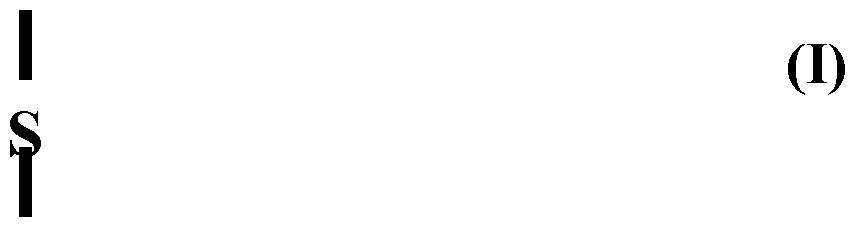 wherein Ri and R2 are identical or different and are selected from the group consisting of straight or branched chain d to C30 or more alkyl, aryl, hydrogen, ethylene oxide or propylene oxide groups, Xi and X2 are identical or different and are selected from the group consisting of phosphate, sulfate, carboxylate, sulphonate, other suitable anionic groups, ethylene oxide or propylene oxide groups, S is a spacer group comprising 0 -15 saturated or unsaturated carbons selected from one or more alkyl groups, aryl groups, stilbene, polyethers, an ether linkage or combinations thereof and modifications and substitutions thereof; and
selecting an appropriate Ri, R2, and S that would impart a suitable hydrophilic-lipophilic balance (HLB) to the anionic surfactant for optimal oil recovery from the hydrocarbon bearing formation or the reservoir.
43. The method of claim 42, wherein the selected anionic surfactant effectively recovers oil in reservoir brine salinities of up to about 350,000 ppm.
44. The method of claim 42, wherein the selected anionic surfactant effectively recovers oil in reservoir hardness ion concentrations of up to about 250,000 ppm.
45. The method of claim 42, wherein the selected anionic surfactant effectively recovers oil in reservoir temperatures of up to about 300°C.
Applications Claiming Priority (4)
| Application Number | Priority Date | Filing Date | Title |
|---|---|---|---|
| US30795610P | 2010-02-25 | 2010-02-25 | |
| US61/307,956 | 2010-02-25 | ||
| US31111510P | 2010-03-05 | 2010-03-05 | |
| US61/311,115 | 2010-03-05 |
Publications (1)
| Publication Number | Publication Date |
|---|---|
| WO2011106287A1 true WO2011106287A1 (en) | 2011-09-01 |
Family
ID=44507165
Family Applications (1)
| Application Number | Title | Priority Date | Filing Date |
|---|---|---|---|
| PCT/US2011/025618 Ceased WO2011106287A1 (en) | 2010-02-25 | 2011-02-21 | Salt-tolerant anionic surfactant compositions for enhanced or improved oil recovery (eor or ior) applications |
Country Status (1)
| Country | Link |
|---|---|
| WO (1) | WO2011106287A1 (en) |
Cited By (13)
| Publication number | Priority date | Publication date | Assignee | Title |
|---|---|---|---|---|
| CN102876313A (en) * | 2012-10-26 | 2013-01-16 | 四川光亚聚合物化工有限公司 | Hydrophobically associated polymer-composite surfactant binary combination flooding system and method |
| CN103215018A (en) * | 2012-12-17 | 2013-07-24 | 江南大学 | Preparation of double-long-chain non-ionic oil-removing surfactant and applications |
| WO2014055158A1 (en) * | 2012-10-04 | 2014-04-10 | Board Of Regents, The University Of Texas System | Salt-tolerant anionic surfactant compositions for enhanced oil recovery (eor) applications |
| CN104559999A (en) * | 2013-10-28 | 2015-04-29 | 中国石油化工股份有限公司 | Fracturing fluid resistance reducing agent and application thereof |
| CN104560000A (en) * | 2013-10-28 | 2015-04-29 | 中国石油化工股份有限公司 | Fracturing fluid drag reducer composition |
| CN104592966A (en) * | 2014-12-23 | 2015-05-06 | 青岛大学 | Method for preparing thickened oil viscosity reducer based on gutter oil as raw material |
| CN104632160A (en) * | 2015-02-09 | 2015-05-20 | 中国石油大学(华东) | Liquid extraction method for binary compound flooding subsequent water flooding stage considering inter-well difference |
| WO2018005341A1 (en) * | 2016-06-28 | 2018-01-04 | Ecolab USA, Inc. | Composition, method and use for enhanced oil recovery |
| WO2019186218A1 (en) * | 2018-03-29 | 2019-10-03 | Mol Magyar Olaj- És Gázipari Nyilvánosan Működő Részvénytársaság | Polymer-surfactant compositions for enhanced oil recovery process |
| US10767104B2 (en) | 2015-02-27 | 2020-09-08 | Ecolab Usa Inc. | Compositions for enhanced oil recovery |
| US10808165B2 (en) | 2016-05-13 | 2020-10-20 | Championx Usa Inc. | Corrosion inhibitor compositions and methods of using same |
| CN115305073A (en) * | 2022-07-14 | 2022-11-08 | 江苏海洋大学 | Gemini surfactant for preparing water reducing water from formation brine and preparation method thereof |
| CN116102093A (en) * | 2022-11-23 | 2023-05-12 | 吉林大学 | A composite solubilizing material for remediating chlorinated hydrocarbon pollution in aquifers and its preparation and application method |
Citations (3)
| Publication number | Priority date | Publication date | Assignee | Title |
|---|---|---|---|---|
| US3997451A (en) * | 1973-08-10 | 1976-12-14 | Marathon Oil Company | Sulfonate blends useful for improved oil recovery |
| WO1996035663A1 (en) * | 1995-05-11 | 1996-11-14 | Rhone-Poulenc Chimie | Oligomeric alkyl ether sulphates and use thereof in cleaning compositions |
| US5643864A (en) * | 1994-08-19 | 1997-07-01 | Rhone-Poulenc, Inc. | Anionic surfactants having multiple hydrophobic and hydrophilic groups |
-
2011
- 2011-02-21 WO PCT/US2011/025618 patent/WO2011106287A1/en not_active Ceased
Patent Citations (3)
| Publication number | Priority date | Publication date | Assignee | Title |
|---|---|---|---|---|
| US3997451A (en) * | 1973-08-10 | 1976-12-14 | Marathon Oil Company | Sulfonate blends useful for improved oil recovery |
| US5643864A (en) * | 1994-08-19 | 1997-07-01 | Rhone-Poulenc, Inc. | Anionic surfactants having multiple hydrophobic and hydrophilic groups |
| WO1996035663A1 (en) * | 1995-05-11 | 1996-11-14 | Rhone-Poulenc Chimie | Oligomeric alkyl ether sulphates and use thereof in cleaning compositions |
Non-Patent Citations (5)
| Title |
|---|
| LIU, P. ET AL.: "Synthesis of Disodium 1,omega-Di-n-alkyl 1,omega-Disulfate Surfactants", JINGXI HUAGONG, vol. 25, no. 12, 2008, pages 1179 - 1182 * |
| RENOUF, P. ET AL.: "Synthesis and surface-active properties of a series of new anionic gemini compounds", CHEMISTRY AND PHYSICS OF LIPIDS, vol. 99, 1999, pages 21 - 32 * |
| RIST, O. ET AL.: "Synthesis of Novel Diammonium Gemini Surfactants", MOLECULES, vol. 6, 2001, pages 979 - 987 * |
| SHUKLA, D. ET AL.: "Anionic Gemini Surfactants: A Distinct Class of Surfactants", JOURNAL OF OLEO SCIENCE, vol. 55, no. 5, 2006, pages 215 - 226 * |
| TAN, Z.: "Study on Characteristics and Salt-endurance Activity of Gemini Surfactant", JINGXI YU ZHUANYONG HUAXUEPIN, vol. 14, 2006, pages 50 - 54 * |
Cited By (21)
| Publication number | Priority date | Publication date | Assignee | Title |
|---|---|---|---|---|
| WO2014055158A1 (en) * | 2012-10-04 | 2014-04-10 | Board Of Regents, The University Of Texas System | Salt-tolerant anionic surfactant compositions for enhanced oil recovery (eor) applications |
| CN102876313B (en) * | 2012-10-26 | 2014-07-30 | 四川光亚聚合物化工有限公司 | Hydrophobically associated polymer-composite surfactant binary combination flooding system and method |
| CN102876313A (en) * | 2012-10-26 | 2013-01-16 | 四川光亚聚合物化工有限公司 | Hydrophobically associated polymer-composite surfactant binary combination flooding system and method |
| CN103215018B (en) * | 2012-12-17 | 2016-08-03 | 江南大学 | The preparation of the double long-chain non-ionic type alkali-free surfactant oil displacement of one class and application |
| CN103215018A (en) * | 2012-12-17 | 2013-07-24 | 江南大学 | Preparation of double-long-chain non-ionic oil-removing surfactant and applications |
| CN104559999B (en) * | 2013-10-28 | 2017-08-11 | 中国石油化工股份有限公司 | Friction-reducing agent of fracturing fluid and its application |
| CN104560000A (en) * | 2013-10-28 | 2015-04-29 | 中国石油化工股份有限公司 | Fracturing fluid drag reducer composition |
| CN104559999A (en) * | 2013-10-28 | 2015-04-29 | 中国石油化工股份有限公司 | Fracturing fluid resistance reducing agent and application thereof |
| CN104560000B (en) * | 2013-10-28 | 2017-08-11 | 中国石油化工股份有限公司 | Friction-reducing agent of fracturing fluid composition |
| CN104592966A (en) * | 2014-12-23 | 2015-05-06 | 青岛大学 | Method for preparing thickened oil viscosity reducer based on gutter oil as raw material |
| CN104632160A (en) * | 2015-02-09 | 2015-05-20 | 中国石油大学(华东) | Liquid extraction method for binary compound flooding subsequent water flooding stage considering inter-well difference |
| CN104632160B (en) * | 2015-02-09 | 2016-03-23 | 中国石油大学(华东) | A kind of extract method considering the binary combination flooding sequent water flooding stage of difference between well |
| US10767104B2 (en) | 2015-02-27 | 2020-09-08 | Ecolab Usa Inc. | Compositions for enhanced oil recovery |
| US10808165B2 (en) | 2016-05-13 | 2020-10-20 | Championx Usa Inc. | Corrosion inhibitor compositions and methods of using same |
| WO2018005341A1 (en) * | 2016-06-28 | 2018-01-04 | Ecolab USA, Inc. | Composition, method and use for enhanced oil recovery |
| US11203709B2 (en) | 2016-06-28 | 2021-12-21 | Championx Usa Inc. | Compositions for enhanced oil recovery |
| US11912925B2 (en) | 2016-06-28 | 2024-02-27 | Championx Usa Inc. | Compositions for enhanced oil recovery |
| WO2019186218A1 (en) * | 2018-03-29 | 2019-10-03 | Mol Magyar Olaj- És Gázipari Nyilvánosan Működő Részvénytársaság | Polymer-surfactant compositions for enhanced oil recovery process |
| US11781059B2 (en) | 2018-03-29 | 2023-10-10 | MOL Magyar Olaj és Gázipari Nyilvánosan MüködöRészvénytársaág | Polymer-surfactant compositions for enhanced oil recovery process |
| CN115305073A (en) * | 2022-07-14 | 2022-11-08 | 江苏海洋大学 | Gemini surfactant for preparing water reducing water from formation brine and preparation method thereof |
| CN116102093A (en) * | 2022-11-23 | 2023-05-12 | 吉林大学 | A composite solubilizing material for remediating chlorinated hydrocarbon pollution in aquifers and its preparation and application method |
Similar Documents
| Publication | Publication Date | Title |
|---|---|---|
| WO2011106287A1 (en) | Salt-tolerant anionic surfactant compositions for enhanced or improved oil recovery (eor or ior) applications | |
| US20160272874A1 (en) | Salt-tolerant anionic surfactant compositions for enhanced oil recovery (eor) applications | |
| US8211837B2 (en) | Method of manufacture and use of large hydrophobe ether sulfate surfactants in enhanced oil recovery (EOR) applications | |
| US9296942B2 (en) | Anionic polyalkoxy group comprising surfactants on basis of guerbet-alcohols, method of manufacture and use in enhanced oil recovery (EOR) applications | |
| US8403044B2 (en) | Sulfonated internal olefin surfactant for enhanced oil recovery | |
| CN102695773B (en) | Compositions and methods for controlling the stability of ether sulfate surfactants at elevated temperatures | |
| CA3082118C (en) | Pre-flush for oil foamers | |
| US10870788B2 (en) | Thermally stable surfactants for oil based drilling fluids | |
| EP3668939A1 (en) | Thermally stable surfactants for oil based drilling fluids | |
| WO2012158645A1 (en) | Surfactants for enhanced oil recovery | |
| RU2612756C2 (en) | Use of carbon dioxide soluble nonionic surfactants for enhanced crude oil recovery | |
| CN107075355B (en) | Compound, composition thereof and method for extracting oil and gas using same | |
| CN104559988B (en) | Beet alkali surface activator, preparation method and the application in intensified oil reduction | |
| EP2847293B1 (en) | Method for enhanced hydrocarbon recovery | |
| CN107916099A (en) | Alkali-free, which sticks, plays surface activator composition and its preparation method and application | |
| CN107001923B (en) | Compound, its composition and the method for being used for hydrocarbon extraction using it | |
| CN107216864B (en) | Preparation and application of a class of sulfobetaines containing double long-chain alkoxy groups | |
| US20200010757A1 (en) | Formulation to increase oil recovery | |
| CN107916101A (en) | Alkali-free, which sticks, plays surfactant and preparation method and applications | |
| CN114835601A (en) | Multifunctional surfactant fracturing fluid thickening agent with oil displacement function and preparation method thereof | |
| Pope et al. | Compositions and methods for controlling the stability of ethersulfate surfactants at elevated temperatures | |
| Pope et al. | Method of manufacture and use of large hydrophobe ether sulfate surfactants in enhanced oil recovery (EOR) applications |
Legal Events
| Date | Code | Title | Description |
|---|---|---|---|
| 121 | Ep: the epo has been informed by wipo that ep was designated in this application |
Ref document number: 11747915 Country of ref document: EP Kind code of ref document: A1 |
|
| NENP | Non-entry into the national phase |
Ref country code: DE |
|
| 122 | Ep: pct application non-entry in european phase |
Ref document number: 11747915 Country of ref document: EP Kind code of ref document: A1 |