WO2011002157A2 - 3-인돌아세토니트릴을 유효성분으로 함유하는 유두갑상선암 진단용 마커 - Google Patents
3-인돌아세토니트릴을 유효성분으로 함유하는 유두갑상선암 진단용 마커 Download PDFInfo
- Publication number
- WO2011002157A2 WO2011002157A2 PCT/KR2010/003048 KR2010003048W WO2011002157A2 WO 2011002157 A2 WO2011002157 A2 WO 2011002157A2 KR 2010003048 W KR2010003048 W KR 2010003048W WO 2011002157 A2 WO2011002157 A2 WO 2011002157A2
- Authority
- WO
- WIPO (PCT)
- Prior art keywords
- papillary thyroid
- indoleacetonitrile
- marker
- cancer
- thyroid cancer
- Prior art date
- Legal status (The legal status is an assumption and is not a legal conclusion. Google has not performed a legal analysis and makes no representation as to the accuracy of the status listed.)
- Ceased
Links
Images


Classifications
-
- G—PHYSICS
- G01—MEASURING; TESTING
- G01N—INVESTIGATING OR ANALYSING MATERIALS BY DETERMINING THEIR CHEMICAL OR PHYSICAL PROPERTIES
- G01N33/00—Investigating or analysing materials by specific methods not covered by groups G01N1/00 - G01N31/00
- G01N33/48—Biological material, e.g. blood, urine; Haemocytometers
- G01N33/50—Chemical analysis of biological material, e.g. blood, urine; Testing involving biospecific ligand binding methods; Immunological testing
-
- G—PHYSICS
- G01—MEASURING; TESTING
- G01N—INVESTIGATING OR ANALYSING MATERIALS BY DETERMINING THEIR CHEMICAL OR PHYSICAL PROPERTIES
- G01N33/00—Investigating or analysing materials by specific methods not covered by groups G01N1/00 - G01N31/00
- G01N33/48—Biological material, e.g. blood, urine; Haemocytometers
- G01N33/50—Chemical analysis of biological material, e.g. blood, urine; Testing involving biospecific ligand binding methods; Immunological testing
- G01N33/53—Immunoassay; Biospecific binding assay; Materials therefor
- G01N33/575—Immunoassay; Biospecific binding assay; Materials therefor for cancer
- G01N33/57557—Immunoassay; Biospecific binding assay; Materials therefor for cancer of other specific parts of the body, e.g. brain
-
- G—PHYSICS
- G01—MEASURING; TESTING
- G01N—INVESTIGATING OR ANALYSING MATERIALS BY DETERMINING THEIR CHEMICAL OR PHYSICAL PROPERTIES
- G01N30/00—Investigating or analysing materials by separation into components using adsorption, absorption or similar phenomena or using ion-exchange, e.g. chromatography or field flow fractionation
- G01N30/02—Column chromatography
- G01N30/88—Integrated analysis systems specially adapted therefor, not covered by a single one of the groups G01N30/04 - G01N30/86
-
- G—PHYSICS
- G01—MEASURING; TESTING
- G01N—INVESTIGATING OR ANALYSING MATERIALS BY DETERMINING THEIR CHEMICAL OR PHYSICAL PROPERTIES
- G01N2800/00—Detection or diagnosis of diseases
- G01N2800/04—Endocrine or metabolic disorders
- G01N2800/046—Thyroid disorders
Definitions
- the present invention relates to a marker for diagnosing papillary thyroid cancer containing 3-indole acetonitrile as an active ingredient.
- Thyroid cancer is a tumor that occurs in the thyroid gland and is a relatively common cancer. It occurs in 2.3 cases per 100,000 people, accounting for 1 to 3% of all malignant tumors. Thyroid cancer is more common in women and usually occurs most often between the ages of 7-20 and 40-45. Abnormal iodine intake or partial thyroidectomy may be the cause. In Western medicine, surgery, radiotherapy, endocrine therapy and chemotherapy are usually treated. These thyroid cancers include papillary and follicular cancers with a good prognosis and undifferentiated cancers with a poor prognosis, as well as medulla and lymphadenoma. Of these, papillary thyroid cancer (PTC) is the most common form of thyroid cancer and is known to be one of the fastest growing cancers. Therefore, there has been a growing interest in the study of diagnostic biomarkers for papillary thyroid cancer.
- PTC papillary thyroid cancer
- these diagnostic markers require invasive experiments that require obtaining tissue from a subject to obtain a sample, and most diagnostic markers use protein molecules.
- the bio-fluid is being searched for molecular substances that show significant changes in cancer patients compared to normal people.
- the diagnostic marker found in this way has a problem of low reproducibility, and also has a problem in that it is difficult to interpret a substance derived from cancer cells.
- the inventors of the present invention have been searching for markers for diagnosing papillary thyroid cancer using metabolites derived from cancer cells.
- the concentration of these metabolites was significantly higher in the urine of papillary thyroid cancer patients, and significantly lower in the urine of normal persons, thus completing the present invention.
- the present invention is to provide a marker for diagnosing papillary thyroid cancer containing 3-indole acetonitrile as an active ingredient.
- 1 is a diagram illustrating a process of discovering a cancer diagnostic marker.
- Figure 2 is a diagram showing the difference in concentration in the urine of patients with papillary thyroid cancer compared to normal 3-indolacetonitrile.
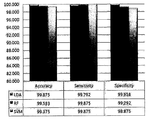
- Figure 3 is a diagram showing the accuracy, sensitivity, specificity of 3-indole acetonitrile.
- the present invention provides a marker for diagnosing papillary thyroid cancer containing 3-indole acetonitrile as an active ingredient.
- the present invention also provides a method for detecting a difference in concentration of 3-indole acetonitrile, which is a diagnostic marker for papillary thyroid cancer, in a biological sample.
- metabolites related to specific metabolic actions of cancer cells themselves are significant in biological samples of papillary thyroid cancer patients compared to normal concentrations of metabolites of metabolic pathways showing changes in cancer cells using gene expression information and metabolic pathway information. Metabolites showing one change are detected and served as markers for papillary thyroid cancer. Specifically, among the 14 metabolic pathways that show significant changes in papillary thyroid cancer cells, 122 candidate metabolites with open mass spectrum libraries were identified. By measuring t-test in the sample, it was confirmed that 16 metabolites among the candidate metabolites showed a difference in concentration between the patient group and the normal group. Among these, 3-indoleacetonitrile showed the most significant difference between the patient group and the normal group (p-value ⁇ 5.16E-12) (see Table 3). Therefore, metabolites related to specific metabolic activity of papillary thyroid cancer cells themselves according to the present invention were identified as 3-indoleacetonitrile.
- the biological sample includes, but is not limited to, blood, serum, peritoneal lavage, pituitary fluid, saliva, urine and feces, urine is most preferred in the present invention.
- the concentration difference of the 3-indole acetonitrile can be detected using a liquid chromatography / mass spectrometer, a gas chromatography / mass spectrometer, or a tandem mass spectrometer.
- the concentration difference of the 3-indoleacetonitrile can be detected in a biological sample of cancer vs. non-cancer, malignant vs. benign tumor, and invasive vs. latent cancer.
- the concentration of 3-indoleacetonitrile according to the present invention is markedly high in the urine of papillary thyroid cancer patients, and significantly lower in the urine of normal persons.
- 3-indoleacetonitrile exhibits very good classification performance of more than 99% in accuracy, sensitivity and specificity. Therefore, the 3-indole acetonitrile according to the present invention can predict the diagnosis or prognosis of papillary thyroid cancer early by a relatively simple method, and thus can be usefully used as a marker for the diagnosis of papillary thyroid cancer.
- Gene expression information used in the present invention used data provided in a paper published in 2005 (Jarzab, B., Wiench, M., Fujarewicz, K., Simek, K., Jarzab, M., Oczko-Wojciechowska , M., Wloch, J., Czarniecka, A., Chmielik, E., Lange, D., et al. (2005) Cancer research 65, 1587-1597).
- the data included gene expression information from 23 papillary thyroid cancer patients and 17 normal groups.
- Urine samples were collected from 14 patients with papillary thyroid cancer (53.29 ⁇ 15.77 years) and 14 normal patients (51.86 ⁇ 11.72 years) collected from Samsung Hospital and Hanyang University Hospital. All urine samples used were collected early in the morning.
- Metabolic information data used in the present invention includes (1) metabolic pathway information, (2) transcriptional regulation information, and (3) gene expression information. Metabolic pathways (FDR ⁇ 0.05) showing significant changes in papillary thyroid cancer cells are shown in Table 1, and the discovery process of cancer diagnosis markers is shown in FIG. 1.
- Gene expression information using a microarray is represented by z-score indicating the significance of change in the expression of each gene through t-test.
- the change significance score of gene expression is then mapped to enzymes and transcriptional regulators of each metabolic pathway to determine whether the metabolic pathway is enhanced or decreased under conditions (FIG. 1).
- Scoring function used in the present invention is to take advantage of the characteristics of the metabolic activity to detect the enzyme action showing a major change, such as the rate-determining step.
- the proposed method is applied to gene expression data of cancer cells, and found metabolic pathways that change in cancer patients compared to normal people (Table 1).
- metabolites corresponding to 14 kinds of metabolic pathways showing significant changes in papillary thyroid cancer cells there are 122 metabolites having a published mass spectrum library, and are shown in Table 2 below. These are marker candidates based on metabolic pathways that show significant changes in papillary thyroid cancer cells. These 122 candidate metabolites were measured by t-test in urine samples of cancer patients and normal groups, and the measurement results are shown in Table 3.
- t-test bilateral testing revealed 16 metabolites out of 122 candidate metabolites in the patient and normal groups, of which 3-indolacetonitrile was the most common between the patient and normal groups. A significant difference was shown (p-value ⁇ 5.16E-12). Therefore, metabolites related to specific metabolic activity of papillary thyroid cancer cells themselves according to the present invention were identified as 3-indoleacetonitrile.
- Machine learning-based classification experiments were performed to determine the extent to which cancer patients and normal subjects could be determined when 3-indolacetonitrile concentrations were observed in urine samples.
- three classification experiments Linear Discriminative Analysis (LDA), Random Forest (RF), and Support Vector Machine (SVM), are performed to test the performance of 3-indolacetonitrile markers to determine accuracy, sensitivity, and specificity. Measured.
- LDA Linear Discriminative Analysis
- RF Random Forest
- SVM Support Vector Machine
- 3-indole acetonitrile showed very good classification performance of more than 99% in accuracy, sensitivity, specificity.
- the concentration of 3-indoleacetonitrile according to the present invention is significantly high in the urine of papillary thyroid cancer patients and significantly low in the urine of normal persons, it is possible to predict the diagnosis or prognosis of papillary thyroid cancer early by a relatively simple method, and thus as a marker for diagnosing papillary thyroid cancer. It can be usefully used.
Landscapes
- Health & Medical Sciences (AREA)
- Life Sciences & Earth Sciences (AREA)
- Immunology (AREA)
- Engineering & Computer Science (AREA)
- Chemical & Material Sciences (AREA)
- Molecular Biology (AREA)
- Biomedical Technology (AREA)
- Hematology (AREA)
- Urology & Nephrology (AREA)
- Analytical Chemistry (AREA)
- Pathology (AREA)
- General Physics & Mathematics (AREA)
- General Health & Medical Sciences (AREA)
- Biochemistry (AREA)
- Physics & Mathematics (AREA)
- Biotechnology (AREA)
- Medicinal Chemistry (AREA)
- Food Science & Technology (AREA)
- Cell Biology (AREA)
- Microbiology (AREA)
- Investigating Or Analysing Biological Materials (AREA)
- Other Investigation Or Analysis Of Materials By Electrical Means (AREA)
- Measuring Or Testing Involving Enzymes Or Micro-Organisms (AREA)
Abstract
본 발명은 3-인돌아세토니트릴을 유효성분으로 함유하는 유두갑상선암 진단용 마커에 관한 것이다. 본 발명에 따른 3-인돌아세토니트릴의 농도는 유두갑상선암 환자의 소변에서는 현저히 높고, 정상인의 소변에서는 현저히 낮게 나타나 비교적 간단한 방법으로 유두갑상선암의 진단 또는 예후를 조기에 예측할 수 있으므로, 유두갑상선암 진단용 마커로서 유용하게 사용될 수 있다.
Description
본 발명은 3-인돌아세토니트릴을 유효성분으로 함유하는 유두갑상선암 진단용 마커에 관한 것이다.
갑상선암은 갑상선체부에 발생하는 종양으로 임상에서 비교적 많이 보는 암이다. 보통 10만명에 2.3명꼴로 발생하며, 전체 악성종양 환자 중 1~3%를 차지한다. 갑상선암은 비교적 여성에게 많이 발생하고, 보통 7~20세 혹은 40~45세 사이에서 제일 많이 발생한다. 요오드 섭취 이상이나 갑상선 부분절제 등이 원인으로 꼽히며, 서양의학에서는 주로 수술요법, 방사선요법, 내분비요법, 화학요법 등으로 치료한다. 이러한 갑상선암에는 예후가 양호한 유두암 및 여포암과 예후가 좋지 않은 미분화암이 있으며, 그 외에 수질암, 임파선종이 있다. 이들 중 유두갑상선암 (PTC)은 갑상선암의 가장 일반적인 형태이며 그 증가속도가 가장 빠른 암중 하나로 알려져있다. 따라서, 유두갑상선암의 진단용 바이오마커 연구에 대한 관심이 높아져왔다.
유두갑상선암 환자를 진단하는 마커에 대한 기존 연구는 크게 유전자 서열, microRNA, 단백질 분자를 중점으로 수행되었다. 그 예로, Ras, BRAF 신호전달 경로에 해당하는 유전자들에 돌연변이가 생겼을 경우 유두갑상선암 환자의 예후가 좋지 않다는 연구 보고가 있었으며 (A.M. Costa, A. Herrero, M.F. Fresno, J. Heymann, J.A. Alvarez, J. Cameselle-Teijeiro, and G. Garcia-Rostan, BRAF mutation associated with other genetic events identifies a subset of aggressive papillary thyroid carcinoma. Clin Endocrinol (Oxf) 68 (2008) 618-34.), 유두갑상선암 환자에서 miR-221과 R-222 microRNA의 과잉발현이 보고되었다 (G.A. Calin, and C.M. Croce, MicroRNA signatures in human cancers. Nat Rev Cancer 6 (2006) 857-66.). 또한 유두갑상선 암환자에서 차이를 보이는 단백질로 MDM4의 전사 저발현이 보고되었으며 (A. Prodosmo, S. Giglio, S. Moretti, F. Mancini, F. Barbi, N. Avenia, G. Di Conza, H.J. Schunemann, L. Pistola, V. Ludovini, A. Sacchi, A. Pontecorvi, E. Puxeddu, and F. Moretti, Analysis of human MDM4 variants in papillary thyroid carcinomas reveals new potential markers of cancer properties. J Mol Med 86 (2008) 585-96.) cytokeratin-19 와 galectin-3 의 과잉 발현이 보고되었다 (K.M. Murphy, F. Chen, and D.P. Clark, Identification of immunohistochemical biomarkers for papillary thyroid carcinoma using gene expression profiling. Hum Pathol 39 (2008) 420-6.).
통상 이러한 진단마커들은 개체로부터 시료를 얻기 위해 조직을 얻어내야하는 침습적 실험을 필요로 하며, 대부분의 진단마커로 단백질 분자를 사용한다. 즉, 신체유체(bio-fluid) 중 정상인 대비 암환자에서 유의한 변화를 보이는 분자물질을 찾는 방식으로 진행되고 있다. 하지만 이러한 방식으로 찾아진 진단 마커는 재현성이 낮다는 문제점을 갖고 있으며, 또한 암세포로부터 기원된 물질이라는 해석이 힘들다는 문제점들이 있었다.
따라서, 상기와 같은 문제점들을 극복하고 암세포에서 기원하는 대사물질을 이용하여 간편하게 유두갑상선암을 진단할 수 있는 마커에 대한 개발의 필요성이 요구되고 있다.
본 발명자들은 암세포에서 기원하는 대사물질을 이용하여 간편하게 유두갑상선암을 진단할 수 있는 마커에 대해 연구하던 중, 암세포 자체의 특이적 대사 작용과 관련된 대사물질을 유전자 발현 정보와 대사 경로 정보를 이용하여 찾았으며, 이러한 대사물질의 농도가 유두갑상선암 환자의 소변에서는 현저히 높고, 정상인의 소변에서는 현저히 낮은 것을 확인하고, 본 발명을 완성하였다.
본 발명은 3-인돌아세토니트릴을 유효성분으로 함유하는 유두갑상선암 진단용 마커를 제공하고자 한다.
도 1은 암진단 마커의 발굴 과정을 나타낸 도이다.
도 2는 3-인돌아세토니트릴이 정상인 대비 유두갑상선암 환자의 소변에서 유의한 농도 차이를 나타낸 도이다.
도 3은 3-인돌아세토니트릴의 정확도, 민감도, 특이도를 나타낸 도이다.
본 발명은 3-인돌아세토니트릴을 유효성분으로 함유하는 유두갑상선암 진단용 마커를 제공한다.
또한, 본 발명은 생체 시료에서 유두갑상선암 진단용 마커인 3-인돌아세토니트릴의 농도 차이를 검출하는 방법을 제공한다.
이하, 본 발명에 대해 상세히 설명한다.
본 발명은 암세포 자체의 특이적 대사 작용과 관련된 대사물질을 유전자 발현 정보와 대사 경로 정보를 이용하여 암세포에서 변화를 보이는 대사 경로의 대사물질들 중에서 그 농도가 정상인 대비 유두갑상선암 환자의 생체 시료에서 유의한 변화를 보이는 대사물질을 검출하여 유두갑상선암에 대한 마커로서 제공한다. 구체적으로는, 유두갑상선암 세포에서 유의한 변화를 보이는 14 종류의 대사 경로에 해당하는 대사물질들 중 공개된 질량 스펙트럼 라이브러리(mass spectrum library)를 갖는 122개의 후보 대사물질을 암환자와 정상군의 생체 시료에서 t-test로 측정하여 상기 후보 대사물질들 중 16개의 대사물질들이 환자군과 정상군에서 농도 차이가 나타남을 확인하였다. 이들 중 3-인돌아세토니트릴이 환자군과 정상군 사이에서 가장 유의한 차이를 나타내었다(p-value < 5.16E-12)(표 3 참조). 따라서, 본 발명에 따른 유두갑상선암 세포 자체의 특이적 대사 작용과 관련된 대사물질을 3-인돌아세토니트릴로 동정하였다.
상기 생체 시료는 혈액, 혈청, 복막 세정물, 뇌하수액, 타액, 소변 및 대변을 포함하나 이에 한정되지 않으며, 본 발명에서는 소변이 가장 바람직하다.
상기 3-인돌아세토니트릴의 농도 차이는 액체 크로마토그래피/질량 분석기, 기체 크로마토그래피/질량 분석기, 또는 텐덤 질량분석기를 이용하여 검출할 수 있다.
상기 3-인돌아세토니트릴의 농도 차이는 암 대 비-암(non-cancer), 악성 종양 대 양성 종양, 침습성 암 대 잠복성 암의 생체 시료에서 검출할 수 있다.
본 발명에 따른 3-인돌아세토니트릴의 농도는 유두갑상선암 환자의 소변에서는 현저히 높고, 정상인의 소변에서는 현저히 낮게 나타난다. 또한, 3-인돌아세토니트릴은 정확도, 민감도, 특이도 모두 99% 이상의 매우 좋은 분류 성능을 나타낸다. 따라서, 본 발명에 따른 3-인돌아세토니트릴은 비교적 간단한 방법으로 유두갑상선암의 진단 또는 예후를 조기에 예측할 수 있으므로, 유두갑상선암 진단용 마커로서 유용하게 사용될 수 있다.
이하, 본 발명의 이해를 돕기 위하여 바람직한 실시예를 제시한다. 그러나 하기의 실시예는 본 발명을 보다 쉽게 이해하기 위하여 제공되는 것일 뿐, 실시예에 의해 본 발명의 내용이 한정되는 것은 아니다.
실시예 1
: 3-인돌아세토니트릴의 대사물질 마커의 동정
1. 유전자 발현 정보
본 발명에서 사용한 유전자 발현 정보는 2005년 발표된 논문에서 제공하고 있는 데이터를 사용하였다(Jarzab, B., Wiench, M., Fujarewicz, K., Simek, K., Jarzab, M., Oczko-Wojciechowska, M., Wloch, J., Czarniecka, A., Chmielik, E., Lange, D., et al. (2005) Cancer research 65, 1587-1597). 해당 데이터는 총 23개의 유두갑상선암 환자와 17개의 정상군에서 추출된 유전자 별현 정보를 포함하고 있다.
2. 환자 샘플 수집
삼성 병원, 한양대학 병원에서 수집된 14명의 유두갑상선암 환자(나이 53.29±15.77년)와 14명의 정상군(나이 51.86±11.72년)에서 수집된 소변 샘플을 사용하였다. 사용된 소변 샘플은 모두 이른 오전에 수집되었다.
3. 통계적 분석
본 발명에서 사용하고 있는 대사 정보데이터는 (1) 대사 경로 정보, (2) 전사 조절 정보, (3) 유전자 발현 정보가 있다. 유두갑상선암 세포에서 유의한 변화를 보이는 대사 경로들(FDR≤0.05)은 표 1에 나타내었으며, 암진단 마커의 발굴 과정은 도 1에 나타내었다.
마이크로어레이를 이용한 유전자 발현 정보는 t-test를 거쳐서 각각의 유전자의 발현의 변화 유의성을 나타내는 z-score로 나타내어진다. 그 후 유전자 발현의 변화 유의성 점수는 각각의 대사 경로의 효소와 그의 전사 조절체에 매핑되어 해당 대사 경로가 조건 하에서 증진되는지 감소되는지를 판단하게 된다(도 1).
본 발명에서 사용하는 점수함수(scoring function)는 대사 작용의 특징을 살려서 속도결정단계(rate-determining step)와 같이 주요한 변화를 보이는 효소 작용을 감지하게 된다. 제안하는 방법은 암세포의 유전자 발현 데이터에 적용되며, 정상인 대비 암환자에서 변화하는 대사 경로를 찾을 수 있었다(표 1).
[표 1]

4. 대사물질 마커 후보군
유두갑상선암 세포에서 유의한 변화를 보이는 14 종류의 대사 경로에 해당하는 대사물질들 중 공개된 질량 스펙트럼 라이브러리를 갖는 대사물질은 122개가 있으며, 하기 표 2에 나타내었다. 이들은 유두갑상선암 세포에서 유의한 변화를 보이는 대사 경로들을 기반으로 한 마커 후보군들이다. 이러한 122개의 후보 대사물질을 암환자와 정상군의 소변 샘플에서 t-test로 측정하였으며, 측정 결과는 표 3에 나타내었다.
[표 2]


[표 3]

표 3에 나타난 바와 같이, t-test 양측검정 결과 122개의 후보 대사물질 중 16개의 대사물질들이 환자군과 정상군에서 농도 차이를 나타내었으며, 이들 중 3-인돌아세토니트릴이 환자군과 정상군 사이에서 가장 유의한 차이를 나타내었다(p-value < 5.16E-12). 따라서, 본 발명에 따른 유두갑상선암 세포 자체의 특이적 대사 작용과 관련된 대사물질을 3-인돌아세토니트릴로 동정하였다.
실험예 1
: 3-인돌아세토니트릴의 마커 성능
1. 3-인돌아세토니트릴의 농도 차이
이러한 암세포에서 변화를 보이는 대사 경로의 대사물질들 중에서 그 농도가 정상인 대비 유두갑상선암 환자의 소변에서 유의한 변화를 보이는 대사산물을 GC/MS로 탐색하였다.
결과는 도 2에 나타내었다.
도 2에 나타난 바와 같이, 3-인돌아세토니트릴의 농도가 유두갑상선암 환자의 소변에서는 현저히 높고, 정상인의 소변에서는 현저히 낮은 것을 확인하였다. 즉, 대사물질들 중에서 3-인돌아세토니트릴의 농도 차이가 유의하게 다르다는 것을 알 수 있다.
2. 3-인돌아세토니트릴의 정확도, 민감도, 특이도 측정
3-인돌아세토니트릴의 농도를 소변 샘플에서 관찰할 경우 어느 정도로 암환자와 정상인을 판별할 수 있는지 알아보기 위하여 기계학습기반의 분류 실험을 수행하였다. 본 발명에서는 선형판별분석(Linear Discriminative Analysis, LDA), RF (Random Forest), SVM(Support Vector Machine)의 세 가지 분류 실험으로 3-인돌아세토니트릴 마커의 성능을 실험하여 정확도, 민감도, 특이도를 측정하였다.
결과는 도 3에 나타내었다.
도 3에 나타난 바와 같이, 3-인돌아세토니트릴은 정확도, 민감도, 특이도 모두 99% 이상의 매우 좋은 분류 성능을 나타내었다.
본 발명에 따른 3-인돌아세토니트릴의 농도는 유두갑상선암 환자의 소변에서는 현저히 높고, 정상인의 소변에서는 현저히 낮게 나타나 비교적 간단한 방법으로 유두갑상선암의 진단 또는 예후를 조기에 예측할 수 있으므로, 유두갑상선암 진단용 마커로서 유용하게 사용될 수 있다.
Claims (7)
- 3-인돌아세토니트릴을 유효성분으로 함유하는 유두갑상선암 진단용 마커.
- 생체 시료에서 유두갑상선암 진단용 마커인 3-인돌아세토니트릴의 농도 차이를 검출하는 방법.
- 제 2항에 있어서, 상기 생체 시료는 혈액, 혈청, 복막 세정물, 뇌하수액, 타액, 소변 및 대변으로 이루어진 군으로부터 선택된 1종 이상인 것을 특징으로 하는 방법.
- 제 2항에 있어서, 상기 3-인돌아세토니트릴의 농도 차이는 액체 크로마토그래피/질량 분석기, 기체 크로마토그래피/질량 분석기, 및 텐덤 질량분석기로 이루어진 군으로부터 선택된 1종 이상의 기기를 이용하여 검출하는 것을 특징으로 하는 방법.
- 제 2항에 있어서, 상기 3-인돌아세토니트릴의 농도 차이는 암 대 비-암(non-cancer)의 생체 시료에서 검출하는 것을 특징으로 하는 방법.
- 제 2항에 있어서, 상기 3-인돌아세토니트릴의 농도 차이는 악성 종양 대 양성 종양의 생체 시료에서 검출하는 것을 특징으로 하는 방법.
- 제 2항에 있어서, 상기 3-인돌아세토니트릴의 농도 차이는 침습성 암 대 잠복성 암의 생체 시료에서 검출하는 것을 특징으로 하는 방법.
Applications Claiming Priority (2)
| Application Number | Priority Date | Filing Date | Title |
|---|---|---|---|
| KR1020090059270A KR101049583B1 (ko) | 2009-06-30 | 2009-06-30 | 3-인돌아세토니트릴을 유효성분으로 함유하는 유두갑상선암 진단용 마커 |
| KR10-2009-0059270 | 2009-06-30 |
Publications (2)
| Publication Number | Publication Date |
|---|---|
| WO2011002157A2 true WO2011002157A2 (ko) | 2011-01-06 |
| WO2011002157A3 WO2011002157A3 (ko) | 2011-03-24 |
Family
ID=43411547
Family Applications (1)
| Application Number | Title | Priority Date | Filing Date |
|---|---|---|---|
| PCT/KR2010/003048 Ceased WO2011002157A2 (ko) | 2009-06-30 | 2010-05-14 | 3-인돌아세토니트릴을 유효성분으로 함유하는 유두갑상선암 진단용 마커 |
Country Status (2)
| Country | Link |
|---|---|
| KR (1) | KR101049583B1 (ko) |
| WO (1) | WO2011002157A2 (ko) |
Family Cites Families (5)
| Publication number | Priority date | Publication date | Assignee | Title |
|---|---|---|---|---|
| ES2286852T3 (es) | 1997-08-04 | 2007-12-01 | Advanced Life Science Institute, Inc. | Metodos para detectar o analizar virus. |
| EP1599226B1 (en) * | 2003-02-21 | 2012-09-19 | Medvet Science Pty. Ltd. | A method of diagnosis and treatment |
| JP5629894B2 (ja) | 2004-12-07 | 2014-11-26 | 国立大学法人大阪大学 | 甲状腺乳頭癌を診断するための新規のマーカー |
| SG176477A1 (en) * | 2006-08-07 | 2011-12-29 | Ironwood Pharmaceuticals Inc | Indole compounds |
| KR100886670B1 (ko) * | 2007-01-11 | 2009-03-04 | 김현기 | 유두갑상선암의 새로운 진단마커 및 진단방법 |
-
2009
- 2009-06-30 KR KR1020090059270A patent/KR101049583B1/ko not_active Expired - Fee Related
-
2010
- 2010-05-14 WO PCT/KR2010/003048 patent/WO2011002157A2/ko not_active Ceased
Also Published As
| Publication number | Publication date |
|---|---|
| KR101049583B1 (ko) | 2011-07-14 |
| KR20110001647A (ko) | 2011-01-06 |
| WO2011002157A3 (ko) | 2011-03-24 |
Similar Documents
| Publication | Publication Date | Title |
|---|---|---|
| Wei et al. | Noninvasive saliva-based EGFR gene mutation detection in patients with lung cancer | |
| Ponti et al. | The value of fluorimetry (Qubit) and spectrophotometry (NanoDrop) in the quantification of cell-free DNA (cfDNA) in malignant melanoma and prostate cancer patients | |
| Wang et al. | Circulating exosomal miR‐363‐5p inhibits lymph node metastasis by downregulating PDGFB and serves as a potential noninvasive biomarker for breast cancer | |
| Landemaine et al. | A six-gene signature predicting breast cancer lung metastasis | |
| Sun et al. | A microfluidic platform for systems pathology: multiparameter single-cell signaling measurements of clinical brain tumor specimens | |
| Angel et al. | Extracellular matrix alterations in low‐grade lung adenocarcinoma compared with normal lung tissue by imaging mass spectrometry | |
| US20230127823A1 (en) | Non-Invasive Gene Mutation Detection in Lung Cancer Patients | |
| Chan et al. | Improved risk stratification of nasopharyngeal cancer by targeted sequencing of Epstein–Barr virus DNA in post-treatment plasma | |
| CN103937888B (zh) | 鉴别胃癌的血浆microRNA标志物的筛选与应用 | |
| Moss et al. | SCG3 transcript in peripheral blood is a prognostic biomarker for REST-deficient small cell lung cancer | |
| Unger et al. | Diagnostic potential of three serum microRNAs as biomarkers for equine sarcoid disease in horses and donkeys | |
| Kuczler et al. | Advancements in the identification of EV derived mRNA biomarkers for liquid biopsy of clear cell renal cell carcinomas | |
| Huo et al. | PRPF40A as a potential diagnostic and prognostic marker is upregulated in pancreatic cancer tissues and cell lines: an integrated bioinformatics data analysis | |
| ATE419533T1 (de) | Verfahren/präparat zur erkennung von pankreaskrebs | |
| Yu et al. | Urinary and plasma cell-free DNA comparison for lung cancer patients treated with epidermal growth factor receptor—thyroxine kinase inhibitors | |
| Fu et al. | Establishment of matrix metalloproteinase 3 time-resolved immunoassay and some potential clinical applications | |
| CN108179195A (zh) | 一种结直肠癌超早期病变检测的试剂盒、方法及其应用 | |
| CN113075413A (zh) | 基于一组肿瘤相关抗原的早期食管鳞癌筛查试剂盒 | |
| WO2011002157A2 (ko) | 3-인돌아세토니트릴을 유효성분으로 함유하는 유두갑상선암 진단용 마커 | |
| CN118480600A (zh) | 基于新型测序技术鉴定尿路上皮癌不良预后相关的肿瘤细胞亚群及其标记基因组合 | |
| US20150011411A1 (en) | Biomarkers of cancer | |
| CN114277136B (zh) | 一种基于ecDNA上的肺癌基因标志物及其应用 | |
| Odenheimer-Bergman et al. | Biology of circulating DNA in health and disease | |
| Xu et al. | Plasma miR-1, but not Extracellular Vesicle miR-1, Functions as a Potential Biomarker for Colorectal Cancer Diagnosis. | |
| WO2022124486A1 (ko) | 아스프로신을 포함하는 췌장암 진단용 바이오마커 및 이의 이용 |
Legal Events
| Date | Code | Title | Description |
|---|---|---|---|
| 121 | Ep: the epo has been informed by wipo that ep was designated in this application |
Ref document number: 10794292 Country of ref document: EP Kind code of ref document: A2 |
|
| NENP | Non-entry into the national phase |
Ref country code: DE |
|
| 122 | Ep: pct application non-entry in european phase |
Ref document number: 10794292 Country of ref document: EP Kind code of ref document: A2 |