WO2010143749A1 - 白色花を生じるトルコギキョウ[Eustoma grandiflorum (Raf.) Shinn.]を選別する方法 - Google Patents
白色花を生じるトルコギキョウ[Eustoma grandiflorum (Raf.) Shinn.]を選別する方法 Download PDFInfo
- Publication number
- WO2010143749A1 WO2010143749A1 PCT/JP2010/060256 JP2010060256W WO2010143749A1 WO 2010143749 A1 WO2010143749 A1 WO 2010143749A1 JP 2010060256 W JP2010060256 W JP 2010060256W WO 2010143749 A1 WO2010143749 A1 WO 2010143749A1
- Authority
- WO
- WIPO (PCT)
- Prior art keywords
- seq
- flower
- nucleotides
- white
- related marker
- Prior art date
- Legal status (The legal status is an assumption and is not a legal conclusion. Google has not performed a legal analysis and makes no representation as to the accuracy of the status listed.)
- Ceased
Links
Images




Classifications
-
- A—HUMAN NECESSITIES
- A01—AGRICULTURE; FORESTRY; ANIMAL HUSBANDRY; HUNTING; TRAPPING; FISHING
- A01H—NEW PLANTS OR NON-TRANSGENIC PROCESSES FOR OBTAINING THEM; PLANT REPRODUCTION BY TISSUE CULTURE TECHNIQUES
- A01H1/00—Processes for modifying genotypes ; Plants characterised by associated natural traits
- A01H1/04—Processes of selection involving genotypic or phenotypic markers; Methods of using phenotypic markers for selection
- A01H1/045—Processes of selection involving genotypic or phenotypic markers; Methods of using phenotypic markers for selection using molecular markers
-
- A—HUMAN NECESSITIES
- A01—AGRICULTURE; FORESTRY; ANIMAL HUSBANDRY; HUNTING; TRAPPING; FISHING
- A01H—NEW PLANTS OR NON-TRANSGENIC PROCESSES FOR OBTAINING THEM; PLANT REPRODUCTION BY TISSUE CULTURE TECHNIQUES
- A01H5/00—Angiosperms, i.e. flowering plants, characterised by their plant parts; Angiosperms characterised otherwise than by their botanic taxonomy
- A01H5/02—Flowers
-
- A—HUMAN NECESSITIES
- A01—AGRICULTURE; FORESTRY; ANIMAL HUSBANDRY; HUNTING; TRAPPING; FISHING
- A01H—NEW PLANTS OR NON-TRANSGENIC PROCESSES FOR OBTAINING THEM; PLANT REPRODUCTION BY TISSUE CULTURE TECHNIQUES
- A01H6/00—Angiosperms, i.e. flowering plants, characterised by their botanic taxonomy
- A01H6/40—Gentianaceae, e.g. Exacum
-
- C—CHEMISTRY; METALLURGY
- C12—BIOCHEMISTRY; BEER; SPIRITS; WINE; VINEGAR; MICROBIOLOGY; ENZYMOLOGY; MUTATION OR GENETIC ENGINEERING
- C12N—MICROORGANISMS OR ENZYMES; COMPOSITIONS THEREOF; PROPAGATING, PRESERVING, OR MAINTAINING MICROORGANISMS; MUTATION OR GENETIC ENGINEERING; CULTURE MEDIA
- C12N9/00—Enzymes; Proenzymes; Compositions thereof; Processes for preparing, activating, inhibiting, separating or purifying enzymes
- C12N9/93—Ligases (6)
Definitions
- the present invention is based on Eustoma grandiflorum (Raf.) Shinn. ] An anthocyanin synthase (ANS) gene in the white flower-related marker, a method for selecting eustoma that causes whitening, and a kit for selecting eustoma that causes whitening.
- ANS anthocyanin synthase
- Eustoma grandiflorum (Raf.) Shinn. ] Is an annual herb that belongs to the Gentian family and is native to the southeastern United States. This species has become one of the most popular cut flowers in Japan because of its large flowers, long stems, and good longevity.
- the flower color of a typical eustoma wild species is purple, and its main pigment is a delphinidin-type anthocyanin.
- Various flower colors such as pink, white, cream, mauve, and red have been created mainly by commercial breeding in Japan. However, more diverse flower colors and more efficient flower color breeding methods are desired. Yes.
- Non-Patent Document 1 Noda et al. Analyzed in detail the expression of flavonol synthase (FLS), dihydroflavonol 4-reductase (DFR), chalcone synthase (CHS), anthocyanin synthase (ANS), etc. involved in anthocyanin synthesis in Eustoma grandiflorum. However, the relationship between these genes and white flowers is unclear (Non-Patent Document 1).
- FLS flavonol synthase
- DFR dihydroflavonol 4-reductase
- CHS chalcone synthase
- ANS anthocyanin synthase
- each eustoma is a white flower unless cultivation is performed until a flower is formed at a later stage of growth.
- a colored flower line has a heterozygous white flower gene, it will not be possible to determine whether a white flower will be produced unless a progeny is created and the flower blooms until the flower blooms. It was not possible to judge. Therefore, if a specific genetic marker related to white flower expression of eustoma is found, and eustoma that produces white flowers can be selected based on the gene marker before flowering or from a colored variety, eustoma having white flowers can be selected. It is thought that it can breed efficiently.
- an object of the present invention is to develop a genetic marker related to white flowers of eustoma and to provide a method for selecting eustoma that produces white flowers before flowering or from colored varieties using the marker.
- the present inventors conducted RT-PCR analysis using primers designed based on sequence information of each gene in white flowers and colored flowers Eustoma
- the present invention is a method for selecting Eustoma of white flowers based on the difference in the base sequence, and includes the following features.
- Eustoma grandiflorum Estoma grandiflorum (Raf.) Shinn. ]
- a method for selecting eustoma that produces a white flower comprising detecting either a white flower-related marker or a colored flower-related marker in an anthocyanin synthase (ANS) gene.
- the white flower-related marker is the polynucleotide shown in SEQ ID NO: 2 or 20, or a polynucleotide comprising substitution, addition, deletion or insertion of one to a plurality of nucleotides in the polynucleotide (1) ) The method described.
- the colored flower-related marker is the polynucleotide shown in SEQ ID NO: 1 or 19, or a polynucleotide containing substitution, addition, deletion or insertion of one to a plurality of nucleotides in the polynucleotide (1) ) The method described.
- the colored flower-related marker is 1 to several nucleotides in nucleotides 2366 to 2459 of SEQ ID NO: 1 or nucleotides 2379 to 2472 of SEQ ID NO: 19, or nucleotides 2366 to 2459 of SEQ ID NO: 1 or nucleotides 2379 to 2472 of SEQ ID NO: 19.
- the method according to (1) above which is a polynucleotide comprising substitution, addition, deletion or insertion of one nucleotide.
- the method according to (1) further comprising determining the genotype of the ANS gene by detecting both a white flower-related marker and a colored flower-related marker.
- Consists of a forward primer and a reverse primer that can specifically anneal to nucleotides 2366 to 2459 of SEQ ID NO: 1 or nucleotides 5379 to 2472 adjacent to nucleotides 2379 to 2472 of SEQ ID NO: 19
- the primer set comprises a forward primer shown in SEQ ID NO: 3 and a reverse primer shown in SEQ ID NO: 4.
- a kit for selecting eustoma that produces a white flower comprising any one or more of the following (i) and (ii): (I) a nucleic acid probe having the nucleotide sequence shown in SEQ ID NO: 2 or 20 or a complementary sequence thereof; and a nucleotide sequence shown in SEQ ID NO: 2 or 20 or a complementary sequence thereof which hybridizes under stringent conditions.
- a nucleic acid probe for detecting at least one white flower-related marker selected from the group consisting of a nucleic acid probe having a length of 15 bases or more, which does not hybridize to the nucleotide sequence shown in 1 and 19 and its complementary sequence ( ii) a nucleic acid probe having the nucleotide sequence shown in SEQ ID NO: 1 or 19 or a complementary sequence thereof; hybridizes with the nucleotide sequence shown in SEQ ID NO: 1 or 19 or a complementary sequence thereof under stringent conditions, but SEQ ID NO: 2 and Nucleotide sequence shown in 20 and its A nucleic acid probe having a length of 15 bases or more that does not hybridize to a complementary sequence; and can specifically hybridize to at least a portion of nucleotides 2366 to 2459 of SEQ ID NO: 1 or nucleotides 2379 to 2472 of SEQ ID NO: 19 And a nucleic acid probe for detecting at least one colored flower-related marker selected from the group consisting of a nucle
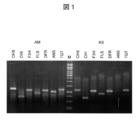
- FIG. 1 shows an electrophoretic diagram showing the difference in expression between various colored flower lines AM and white flower lines KS of various genes involved in anthocyanin biosynthesis.
- Abbreviations in the figure are as follows: CHS, chalcone synthase; CHI, chalcone isomerase; F3H, flavanone 3-hydroxylase; FLS, flavonol synthase; DFR, dihydroflavonol 4-reductase; ANS, anthocyanin Synthetic enzyme; 7GT, anthocyanidin 7-glycosylase; M, DNA size marker.
- FIG. 2 shows a sequence comparison of the ANS gene between the colored flower line AM (SEQ ID NO: 1) and the white flower line KS (SEQ ID NO: 2).
- FIG. 3 shows flowers of the colored flower line AM of Eustoma grandiflorum.
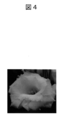
- FIG. 4 shows flowers of the white flower line KS of Eustoma grandiflorum.
- FIG. 5 shows the flowers of a hybrid between the colored flower line AM of Eustoma grandiflorum and the white flower line KS of Eustoma grandiflorum.
- FIG. 6 shows the PCR results of the ANS gene of an isolated population of progeny progenies of hybrids of the colored flower line AM of Eustoma grandiflorum and the white flower line KS of Eustoma grandiflorum.
- FIG. 3 shows flowers of the colored flower line AM of Eustoma grandiflorum.
- FIG. 4 shows flowers of the white flower line KS of Eustoma grandiflorum.
- FIG. 5 shows the flowers of a hybrid between the colored flower line AM of Eustoma grandiflorum and the white flower line KS of Eustoma grandiflorum.
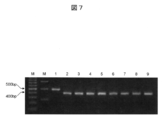
- FIG. 7 shows the PCR results of the ANS gene of Eustoma cultivar. Samples in each lane are as follows: M, DNA size marker; 1, AM (colored flower); 2, KS; 3, AW; 4, Rosina green; 5, Cute green; 6, King of yellow; Asuka type white; 8, Spica white; 9, horsetail fresh snow (white flowers above).
- FIG. 8 shows a sequence comparison of the ANS gene between the colored flower line AM (SEQ ID NO: 19) and the white flower line KS (SEQ ID NO: 20).
- the underlined portion shows a continuous 94 nucleotide deletion site characteristic of white flower lines.
- the present invention relates to Eustoma grandiflorum (Raf.) Shinn. ] (Hereinafter referred to as the method of the present invention).
- white flower as used in the present invention means that anthocyanins, which are one of the main pigments of plant flowers, are not biosynthesized at all, or because the amount of biosynthesis is very small, the expression of pigments cannot be discerned with the naked eye.
- “colored flowers” refers to red, blue, purple, orange, pink, and black flowers in which anthocyanins are expressed to the naked eye.
- the term “producing white flowers” used in the present invention refers to both that the test generation is a white flower and that the test generation is a colored flower, but potentially produces a white flower by self-propagation.
- the method of the present invention involves detecting white flower-related markers in anthocyanin synthase (ANS) genes from eustoma DNA samples.
- ANS anthocyanin synthase
- Eustoma DNA used in the present invention is extracted from eustoma tissues before flower formation, such as seeds, leaves, roots, stems, or tissues of colored varieties (including flowers) at any point in time. Can be acquired. DNA extraction may be performed in accordance with a general method for those skilled in the art.
- the eustoma tissue is finely pulverized, homogenized in an appropriate buffer, and then the total DNA is extracted by a known DNA extraction method such as phenol extraction.
- a DNA extraction kit used at that time may be a commercially available one, and for example, Plant Genomics DNA Mini Kit (Biogene) can be used.
- the white flower-related marker as used in the present invention refers to a nucleotide sequence that is characteristic of an ANS gene that is not normally expressed in a flower tissue, but not in an ANS gene that normally expresses ANS in a flower tissue.
- the ANS gene of the white flower varieties shown in SEQ ID NO: 2 or 20 (hereinafter referred to as white flower gene) or a variant thereof, or the white flower gene shown in SEQ ID NO: 2 or 20, respectively,
- white flower gene the ANS gene of the white flower varieties shown in SEQ ID NO: 2 or 20
- Examples include the corresponding region of the ANS gene (hereinafter referred to as a colored flower gene) of the colored flower varieties shown in 1 or 19 and a region (hereinafter referred to as a white flower region) having a significantly different base sequence.
- Examples of the mutant of the white flower gene referred to in the present invention include a polynucleotide containing substitution, addition, deletion or insertion of one to a plurality of nucleotides in the polynucleotide shown in SEQ ID NO: 2 or 20.
- the term “plurality” refers to an integer of 100 or less, preferably 50 or less, 40 or less, 30 or less, 20 or less, and most preferably 10 or less.
- the white flower gene variant referred to in the present invention is 80% or more, preferably 90% or more, particularly preferably 95%, 96%, 97%, 98, relative to the polynucleotide shown in SEQ ID NO: 2 or 20.
- the mutant of the white flower gene referred to in the present invention includes a polynucleotide that hybridizes with a DNA comprising a polynucleotide complementary to the polynucleotide shown in SEQ ID NO: 2 or 20 under stringent conditions.
- stringent conditions can be appropriately set by those skilled in the art. For example, hybridization at 30 to 50 ° C. in 3 to 5 ⁇ SSC and 0.1 to 1% SDS for 1 to 15 hours, followed by, for example, Washing at room temperature to 70 ° C. in 0.1 to 2 ⁇ SSC, 0.1 to 1% SDS is included.
- Variants of the white flower gene include mutants of the base sequence shown in SEQ ID NO: 2 or 20, or a complementary sequence thereof, and homologues of different Eustoma white flower varieties.
- the white flower region can be identified by selecting a sequence region that differs significantly between the two sequences, for example, from the sequence alignment of the colored flower gene and the white flower gene shown in FIGS. 2 and 8 of the present specification.
- the white flower-related marker can be detected according to any technique known to those skilled in the art.
- Such techniques include PCR amplification of the ANS gene region followed by detection by sequencing; detection using a labeled probe that specifically hybridizes to at least a portion of the white flower-related marker (eg, Southern hybridization, And the like).
- the white flower-related marker eg, Southern hybridization, And the like.
- the length of the PCR primer used for the above purpose can be set in the range of 15 to 50 bases, preferably 17 to 25 bases.
- PCR conditions are not limited as long as the target ANS gene region can be amplified. For example, denaturation at 94 to 95 ° C. for 10 seconds to 1 minute, annealing at 50 to 65 ° C. for 10 seconds to 1 minute, and annealing at 72 ° C.
- the target white flower-related marker is detected using a labeled probe that specifically hybridizes to a part of the white flower-related marker
- the length of the probe used is 15 bases or more, for example, 20 to 200 bases. 25 to 100 bases and 25 to 50 bases, and the contact between the sample and the probe is performed under stringent hybridization conditions.
- stringent conditions can be appropriately set by those skilled in the art based on the length of the probe and the base sequence of the target white flower-related marker. For example, 3 to 5 ⁇ SSC, 0.1 to 1% SDS at 30 to 50 ° C.
- the method of the present invention uses a genetic marker, it is possible to select a line that produces white flowers at any time including before flower formation, and the time required for selection can be greatly shortened. Moreover, since it is possible to avoid the inconvenience of growing an undesired flower-colored variety, it is possible to reduce the field area required for the growth, which contributes to saving agricultural materials such as agricultural chemicals and fertilizers.
- the detection of the white flower-related marker does not guarantee that the test period is a white flower. Because the white trait is inferior, if the ANS gene has a colored flower gene and a white flower gene in a hetero form, even if the white flower-related marker can be detected, Because it becomes.
- the method of the present invention can include detecting a colored flower-related marker in the ANS gene instead of or in addition to the detection of the white flower-related marker.
- the colored flower-related marker the colored flower gene shown in SEQ ID NO: 1 or 19 or a variant thereof, or the colored flower gene shown in SEQ ID NO: 1 or 19, respectively, the white flower gene shown in SEQ ID NO: 2 or 20 Examples thereof include a corresponding region and a region (hereinafter referred to as a colored flower region) having a significantly different base sequence.
- Examples of the mutant of the colored flower gene referred to in the present invention include a polynucleotide comprising substitution, addition, deletion or insertion of one or more nucleotides in the polynucleotide shown in SEQ ID NO: 1 or 19.
- “plurality” refers to an integer of 200 or less, preferably 100 or less, more preferably 50 or less, 40 or less, 30 or less, 20 or less, and most preferably 10 or less.
- the mutant of the colored flower gene referred to in the present invention is 80% or more, preferably 90% or more, particularly preferably 95%, 96%, 97%, 98 with respect to the polynucleotide shown in SEQ ID NO: 1 or 19.
- the mutant of the colored flower gene referred to in the present invention includes a polynucleotide that hybridizes under stringent conditions with a DNA comprising a polynucleotide complementary to the polynucleotide shown in SEQ ID NO: 1 or 19.
- stringent conditions can be appropriately set by those skilled in the art. For example, hybridization at 30 to 50 ° C. in 3 to 5 ⁇ SSC and 0.1 to 1% SDS for 1 to 15 hours, followed by, for example, Washing at room temperature to 70 ° C. in 0.1 to 2 ⁇ SSC, 0.1 to 1% SDS is included.
- the mutants of the colored flower gene include mutants of the nucleotide sequence shown in SEQ ID NO: 1 or 19 or its complementary sequence, and homologues of different Eustoma colored flower varieties.
- the colored flower region can be identified by selecting a sequence region that differs significantly between the two sequences, for example, from the sequence alignment of the colored flower gene and the white flower gene shown in FIGS.
- Preferred color flower regions in the present invention include nucleotides 2366 to 2459 of the color flower gene (SEQ ID NO: 1), nucleotides 2379 to 2472 of the color flower gene (SEQ ID NO: 19), or variants thereof.
- a variant of nucleotides 2366 to 2459 of SEQ ID NO: 1 or nucleotides 2379 to 2472 of SEQ ID NO: 19 refers to one to several nucleotides in nucleotides 2366 to 2459 of SEQ ID NO: 1 or nucleotides 2379 to 2472 of SEQ ID NO: 19.
- polynucleotides containing nucleotide substitutions, additions, deletions or insertions are examples of nucleotide substitutions, additions, deletions or insertions.
- “several” means an integer of 10 or less, preferably an integer of 5 or less.
- the “variant of nucleotides 2366 to 2459 of SEQ ID NO: 1 or nucleotides 2379 to 2472 of SEQ ID NO: 19” is 80% or more relative to nucleotides 2366 to 2459 of SEQ ID NO: 1 or nucleotides 2379 to 2472 of SEQ ID NO: 19.
- a polynucleotide having a nucleotide identity preferably 90% or more, particularly preferably 95%, 96%, 97%, 98%, 99% or more.
- nucleotides 2366 to 2459 of SEQ ID NO: 1 or nucleotides 2379 to 2472 of SEQ ID NO: 19 a polynucleotide complementary to nucleotides 2366 to 2459 of SEQ ID NO: 1 or nucleotides 2379 to 2472 of SEQ ID NO: 19 And a polynucleotide that hybridizes under stringent conditions with a DNA comprising:
- stringent conditions can be appropriately set by those skilled in the art. For example, hybridization at 30 to 50 ° C. in 3 to 5 ⁇ SSC and 0.1 to 1% SDS for 1 to 15 hours, followed by, for example, Washing at room temperature to 70 ° C.
- the detection of the colored flower-related marker can be performed in the same manner as the detection of the white flower-related marker.
- a probe capable of specifically hybridizing to at least a part of the colored flower-related marker is used as the colored flower-related marker.
- the test period can be determined to be a white flower without detecting a white flower-related marker.
- test genera when binding of the probe to a DNA sample of Eustoma grandiflorum is not detected, it can be determined that the test genera is a white flower because the white gene is homozygous.
- the binding of the probe to a DNA sample of Eustoma grandiflorum when the binding of the probe to a DNA sample of Eustoma grandiflorum is detected, it can be determined that the test generation is a colored flower because it has a colored flower gene in a homo or hetero form.
- eustoma that produces white flowers by self-breeding can be selected by determining the genotype of the ANS gene in combination with the detection of the white flower-related marker described above. The genotype may be determined by individually detecting a white flower-related marker and a colored flower-related marker as described above.
- nucleotides 2366 to 2459 of SEQ ID NO: 1 or nucleotides 2379 to 2472 of SEQ ID NO: 19 can be conveniently performed by PCR amplification using a primer set that can amplify the region and subsequent electrophoresis.
- a primer set that can amplify the region and subsequent electrophoresis.
- the 5 ′ sequence adjacent to nucleotides 2366 to 2459 of SEQ ID NO: 1 Many of the forward and reverse primers that can specifically anneal to the 3 ′ side sequence can also anneal specifically to the region corresponding to SEQ ID NO: 2.
- the primer set examples include a primer set consisting of a forward primer shown in SEQ ID NO: 3 and a reverse primer shown in SEQ ID NO: 4, but is not limited thereto.
- Those skilled in the art can appropriately construct appropriate primer sets based on the sequence alignments of FIGS. 2 and 8 attached.
- the present invention further includes a kit for selecting eustoma that produces white flowers.
- the kit according to the present invention includes a configuration for specifically detecting at least either a white flower-related marker or a colored flower-related marker.
- nucleic acid probes examples include, but are not limited to, the following nucleic acid probes: (I) a nucleic acid probe having the nucleotide sequence shown in SEQ ID NO: 2 or 20 or a complementary sequence thereof; and a nucleotide sequence shown in SEQ ID NO: 2 or 20 or a complementary sequence thereof which hybridizes under stringent conditions.
- the size of the nucleic acid probe is 20 to 90 bases, preferably 30 to 70 bases, for example 40 to 60 bases.
- the nucleic acid probe is preferably labeled with a labeling agent such as a fluorescent labeling agent or a radioisotope.
- a labeling agent such as a fluorescent labeling agent or a radioisotope.
- fluorescent labeling agents and radioisotopes include, but are not limited to, rhodamine, fluorescein, dansyl, and derivatives thereof, Cy dye, 32 P and 35 S.
- the kit according to the present invention preferably includes a configuration for specifically detecting both the white flower-related marker and the colored flower-related marker.
- the label of the nucleic acid probe for the white flower-related marker and the label of the nucleic acid probe for the colored flower-related marker are preferably different so that the detection of the colored flower-related marker and the detection of the white flower-related marker can be distinguished.
- the kit according to the present invention includes a configuration capable of determining the genotype of the ANS gene of Eustoma grandiflorum.
- Examples of such a configuration include, but are not limited to, a sequence A primer set consisting of a forward primer and a reverse primer capable of specifically annealing the 5 ′ sequence and the 3 ′ sequence adjacent to nucleotides 2366 to 2459 of SEQ ID NO: 1 or nucleotides 2379 to 2472 of SEQ ID NO: 19 It is done.
- Specific examples of the primer set include a primer set composed of a forward primer shown in SEQ ID NO: 3 and a reverse primer shown in SEQ ID NO: 4.
- RNA extraction expression between colored flowers varieties and white flower varieties of genes involved in anthocyanin biosynthesis was carried out from petals of 100 mg.
- Deoxyribonuclease and amplification grade were used for DNA removal after extraction.
- SuperScriptTM II First-Strand Synthesis System was used for cDNA synthesis. In each case, the experiment was performed according to the protocol attached to the product.
- RT-PCR primers were designed as follows with reference to the sequence of each gene reported in Non-patent Document 1: CHS primer, 5′-AGAGGTGAGAAGGGCTCAAAG-3 ′ (SEQ ID NO: 5) and 5 '-CGAGACACTGTGTAGAACCACTCG-3' (SEQ ID NO: 6); CHI primer, 5'-TTCCTCCCACTCCTTCCCCTTT-3 '(SEQ ID NO: 7) and 5'-ATTCGGGTTGCCAAACTCTTT-3' (SEQ ID NO: 8); F3H primer, 5'-TGGCTCCATCATCTACTA -3 '(SEQ ID NO: 9) and 5'-GATCTCCTCAATAGGCTTGCTC-3' (SEQ ID NO: 10); DFR primer, 5'-CCCTGAAAGCCCTGTAAGAGC-3 '(SEQ ID NO: 1) ) And 5'-TACGTGTCCCTGCCATGTTC-3 '(SEQ ID NO: 12); ANS primer, 5'-CCCCAGAG
- the RT-PCR reaction was performed under the following conditions. First, the total reaction volume is 20 ⁇ l [1 ⁇ Ex Taq Buffer, 0.2 mM dNTPs, 0.5 units TaKaRa Ex TaqTM HS, 0.5 ⁇ M forward, reverse each primer (each 10 ⁇ M), about 25 ng of single-stranded cDNA] After heat denaturation at 94 ° C. for 1 minute, after further heat denaturation (94 ° C. for 30 seconds), annealing (60 ° C. for 30 seconds) and extension reaction (72 ° C. for 1.5 minutes) are repeated in 25 cycles and 30 cycles, After reacting at 72 ° C. for 7 minutes, it was finally cooled to 4 ° C.
- the total reaction volume is 20 ⁇ l [1 ⁇ Ex Taq Buffer, 0.2 mM dNTPs, 0.5 units TaKaRa Ex TaqTM HS, 0.5 ⁇ M forward, reverse each primer (each 10 ⁇ M), about 25 ng of
- the PCR amplification product was electrophoresed on a 0.8% agarose gel (AMRESCO) (50 V, 1 ⁇ TAE, 60 minutes), and stained with ethidium bromide (EtBr) solution (100 ⁇ l EtBr 4 ⁇ l, TAE Buffer 400 ml) for 30 minutes. The gel was observed under UV irradiation. As can be seen from FIG. 1, no anthocyanin synthase (ANS) gene amplification was observed in the white flower cultivar KS.
- ARESCO ethidium bromide
- the PCR amplification product was electrophoresed on a 1% agarose gel (50 V 1 ⁇ TAE, 60 minutes), stained with ethidium bromide (EtBr) solution (100 ⁇ EtBr 4 ⁇ l, TAE Buffer 400 ml) for 30 minutes, and then the gel was subjected to UV irradiation. And observed that the target gene was increased. Thereafter, DNA was purified from the remaining PCR amplification products that were not used for electrophoresis. Purification was performed using PCR-M Clean Up System (VIOGENE) according to the attached protocol. Sequence analysis was performed according to the method recommended by the facility using the sequence service of the gene experiment facility, which is a joint research facility at Kagoshima University. GENETYX version 8 program (GENETYX Co.) was used for multiple alignment of base sequences and amino acid sequences.
- EtBr ethidium bromide
- primers (5′-TGGATCACAGCCCAAAGTGTGT-3 ′ (SEQ ID NO: 3) and 5′-TGGTTTGAATCCGTCTTTTG-3) which can be amplified in a form sandwiching a 94 base deletion portion based on the sequence alignment of the ANS gene shown in FIGS. '(Oligonucleotide having the DNA sequence of SEQ ID NO: 4) was designed.
- PCR reaction was performed using GeneAmp9700 system (ABI). In 20 ⁇ l of the reaction solution, 10 ng DNA, 0.5 units TAKARA EXTaq (Takara Bio Inc.), 0.2 mM dNTP, 0.5 ⁇ M, 2 ⁇ l 10 ⁇ EXTaq buffer are contained.
- PCR conditions were 95 ° C. for 10 seconds, a 62 ° C. for 30 seconds annealing, and 72 ° C. for 30 seconds extension reaction for one cycle, and 30 cycles were reacted. After the reaction, the band was confirmed by electrophoresis on a 2% agarose gel (Biogene). The result is shown in FIG. As can be seen from FIG. 6, there is always a 491 bp band in colored flowers of Eustoma and only a short band of 397 bp can be detected in white flowers of Eustoma.
- the selection method of the eustoma which produces the white flower using the novel gene marker relevant to the eustoma of a white flower and this marker is provided.
- a genetic marker it is possible to select a line that produces a white flower at any time point before flowering or before flower formation, so that the time required for selection can be greatly reduced.
- it is possible to avoid inconvenience of growing an undesired flower-colored variety it is possible to reduce the field area necessary for growing, and it is possible to save agricultural materials such as agricultural chemicals and fertilizers. All publications, patents and patent applications cited herein are incorporated herein by reference in their entirety.
Landscapes
- Life Sciences & Earth Sciences (AREA)
- Health & Medical Sciences (AREA)
- Developmental Biology & Embryology (AREA)
- Genetics & Genomics (AREA)
- Environmental Sciences (AREA)
- Botany (AREA)
- Physiology (AREA)
- General Health & Medical Sciences (AREA)
- Chemical & Material Sciences (AREA)
- Wood Science & Technology (AREA)
- Natural Medicines & Medicinal Plants (AREA)
- Spectroscopy & Molecular Physics (AREA)
- Physics & Mathematics (AREA)
- Organic Chemistry (AREA)
- Engineering & Computer Science (AREA)
- Bioinformatics & Cheminformatics (AREA)
- Zoology (AREA)
- Medicinal Chemistry (AREA)
- Microbiology (AREA)
- Biotechnology (AREA)
- Biomedical Technology (AREA)
- Biochemistry (AREA)
- General Engineering & Computer Science (AREA)
- Molecular Biology (AREA)
- Measuring Or Testing Involving Enzymes Or Micro-Organisms (AREA)
- Cultivation Of Plants (AREA)
Abstract
本発明は、トルコギキョウの白色花に関連する遺伝子マーカーの開発、及び該マーカーを利用した、開花前に又は有色品種から、白色花を生じるトルコギキョウを選別する方法、具体的には、トルコギキョウ[Eustoma grandiflorum (Raf.) Shinn.]のDNAサンプルから、アントシアニン合成酵素(ANS)遺伝子中の白色花関連マーカー又は有色花関連マーカーのいずれかを検出することを含む、白色花を生じるトルコギキョウを選別する方法、及び該方法を実施するためのキットに関する。
Description
本発明は、トルコギキョウ[Eustoma grandiflorum(Raf.)Shinn.]のアントシアニン合成酵素(ANS)遺伝子中の白色花関連マーカーを利用した、白色化を生じるトルコギキョウの選別方法、及び白色化を生じるトルコギキョウを選別するためのキットに関する。
トルコギキョウ[Eustoma grandiflorum(Raf.)Shinn.]は、リンドウ科に属し、アメリカ南西部を原産とする一年性の草本である。本種は、その大きな花と長い茎、そして花持ちのよさの点で、日本で最も人気の高い切花の一つとなっている。典型的なトルコギキョウの野生種の花色は紫色であり、その主要色素はデルフィニジン系のアントシアニンである。主に日本における商業育種によって、ピンク、白、クリーム色、藤色、赤などの多様な花色の系統が作出されているが、更なる花色の多彩化、効率的な花色育種法が望まれている。
例えば、花色の複対立遺伝子が提唱されているが、白色花の形成機構はまだDNAレベルでは詳しく証明されていない(特許文献1)。
一方、野田らは、トルコギキョウでアントシアニン合成に関わるフラボノール合成酵素(FLS)、ジヒドロフラボノール4還元酵素(DFR)、カルコン合成酵素(CHS)、アントシアニン合成酵素(ANS)などの発現を詳しく解析しているが、これらの遺伝子と白色花との関係は不明である(非特許文献1)。
例えば、花色の複対立遺伝子が提唱されているが、白色花の形成機構はまだDNAレベルでは詳しく証明されていない(特許文献1)。
一方、野田らは、トルコギキョウでアントシアニン合成に関わるフラボノール合成酵素(FLS)、ジヒドロフラボノール4還元酵素(DFR)、カルコン合成酵素(CHS)、アントシアニン合成酵素(ANS)などの発現を詳しく解析しているが、これらの遺伝子と白色花との関係は不明である(非特許文献1)。
N.Noda et al.、「Regulation of gene expression involved in flavonol and anthocyanin biosynthesis during petal development in lisianthus(Eustoma grandiflorum)」Physiologia Plantarum 2004年、第122巻、305−313.
上記のような状況下、現在までは、個々のトルコギキョウが白色花か否かは、生育の後期に花が形成されるまで栽培を行わないと判別することができなかった。また、有色花系統が白色花遺伝子をヘテロでもっている場合には、子孫を作って花が咲くまで調査を行わないと白色花を生じるか判別できないため、白色花を生じる可能性を試験当代で判定することはできなかった。
したがって、トルコギキョウの白色花発現に関係する特定の遺伝子マーカーを見出し、該遺伝子マーカーに基づいて、開花前に又は有色品種から、白色花を生じるトルコギキョウを選別することができれば、白色花を有するトルコギキョウを効率的に育種できると考えられる。
そこで本発明は、トルコギキョウの白色花に関連する遺伝子マーカーの開発、及び当該マーカーを利用した、開花前に又は有色品種から、白色花を生じるトルコギキョウを選別する方法を提供することを目的とする。
本発明者らは、白色花及び有色花のトルコギキョウにおいて、アントシアニン生合成に関与する遺伝子群を調査する過程で、各遺伝子の配列情報に基づいて設計したプライマーを用いてRT−PCR分析を行ったところ、白色花の系統ではアントシアニン合成酵素(ANS)の増幅が認められないことを確認した(図1)。
そこで白色花系統と有色花系統との間でANS遺伝子の塩基配列を調査し、両者を比較したところ、エクソンの配列は特定の連続した94ヌクレオチドの欠失を除いて約98%同一であり、イントロンの配列においては顕著な違いがあることを見出した(図2及び8)。
本発明は、上記塩基配列の差異に基づく白色花のトルコギキョウの選別方法であり、以下の特徴を包含する。
(1)トルコギキョウ[Eustoma grandiflorum(Raf.)Shinn.]のDNAサンプルから、アントシアニン合成酵素(ANS)遺伝子中の白色花関連マーカー又は有色花関連マーカーのいずれかを検出することを含む、白色花を生じるトルコギキョウを選別する方法。
(2)白色花関連マーカーは、配列番号2若しくは20に示すポリヌクレオチド、又はそれらのポリヌクレオチドにおいて1~複数個のヌクレオチドの置換、付加、欠失若しくは挿入を含むポリヌクレオチドである、上記(1)記載の方法。
(3)有色花関連マーカーは、配列番号1若しくは19に示すポリヌクレオチド、又はそれらのポリヌクレオチドにおいて1~複数個のヌクレオチドの置換、付加、欠失若しくは挿入を含むポリヌクレオチドである、上記(1)記載の方法。
(4)有色花関連マーカーは、配列番号1のヌクレオチド2366~2459若しくは配列番号19のヌクレオチド2379~2472、又は配列番号1のヌクレオチド2366~2459若しくは配列番号19のヌクレオチド2379~2472において、1~数個のヌクレオチドの置換、付加、欠失若しくは挿入を含むポリヌクレオチドである、上記(1)記載の方法。
(5)白色花関連マーカー及び有色花関連マーカーの双方を検出することにより、ANS遺伝子の遺伝子型を決定することをさらに含む、上記(1)記載の方法。
(6)配列番号1のヌクレオチド2366~2459又は配列番号19のヌクレオチド2379~2472に隣接する5’側配列及び3’側配列に特異的にアニーリングすることができる正方向プライマー及び逆方向プライマーからなるプライマーセットによるDNAサンプルのPCR増幅と、その後の電気泳動によって前記決定を行うことを特徴とする、上記(5)記載の方法。
(7)前記プライマーセットは、配列番号3に示す正方向プライマー及び配列番号4に示す逆方向プライマーからなることを特徴とする、上記(6)記載の方法。
(8)白色花関連マーカーがホモ型で存在する場合に、トルコギキョウの花色を白色と判定することをさらに含む、上記(5)記載の方法。
(9)白色花関連マーカーがヘテロ型で存在する場合に、試験当代は有色花であるが、自殖により白色花を生じるものであると判定することをさらに含む、上記(5)記載の方法。
(10)以下の(i)又は(ii)のいずれか1つ以上を含む、白色花を生じるトルコギキョウを選別するためのキット。
(i)配列番号2若しくは20に示すヌクレオチド配列又はその相補的配列を有する核酸プローブ;及びストリンジェントな条件下で配列番号2若しくは20に示すヌクレオチド配列又はその相補的配列とハイブリダイズするが配列番号1及び19に示すヌクレオチド配列並びにその相補的配列とハイブリダイズしない、15塩基以上の長さを有する核酸プローブ、よりなる群から選択される少なくとも1つの白色花関連マーカーを検出するための核酸プローブ
(ii)配列番号1若しくは19に示すヌクレオチド配列又はその相補的配列を有する核酸プローブ;ストリンジェントな条件下で配列番号1若しくは19に示すヌクレオチド配列又はその相補的配列とハイブリダイズするが配列番号2及び20に示すヌクレオチド配列並びにその相補的配列とハイブリダイズしない、15塩基以上の長さを有する核酸プローブ;及び配列番号1のヌクレオチド2366~2459又は配列番号19のヌクレオチド2379~2472の少なくとも一部に特異的にハイブリダイズ可能であり、かつ15塩基以上の長さを有する核酸プローブ、よりなる群から選択される少なくとも1つの有色花関連マーカーを検出するための核酸プローブ
(11)前記核酸プローブは標識化されている、上記(10)記載のキット。
(12)前記(i)及び(ii)を含むことを特徴とする、上記(10)記載のキット。
(13)前記(i)の核酸プローブと、前記(ii)の核酸プローブとが異なる標識を有する、上記(12)記載のキット。
(14)配列番号1のヌクレオチド2366~2459又は配列番号19のヌクレオチド2379~2472に隣接する5’側配列と3’側配列に特異的にアニーリングすることができる正方向プライマー及び逆方向プライマーからなるプライマーセットを含む、白色花を生じるトルコギキョウを選別するためのキット。
(15)前記プライマーセットは、配列番号3に示す正方向プライマー及び配列番号4に示す逆方向プライマーからなることを特徴とする、上記(14)記載のキット。
本明細書は本願の優先権の基礎である日本国特許出願2009−139477号の明細書及び/又は図面に記載される内容を包含する。
したがって、トルコギキョウの白色花発現に関係する特定の遺伝子マーカーを見出し、該遺伝子マーカーに基づいて、開花前に又は有色品種から、白色花を生じるトルコギキョウを選別することができれば、白色花を有するトルコギキョウを効率的に育種できると考えられる。
そこで本発明は、トルコギキョウの白色花に関連する遺伝子マーカーの開発、及び当該マーカーを利用した、開花前に又は有色品種から、白色花を生じるトルコギキョウを選別する方法を提供することを目的とする。
本発明者らは、白色花及び有色花のトルコギキョウにおいて、アントシアニン生合成に関与する遺伝子群を調査する過程で、各遺伝子の配列情報に基づいて設計したプライマーを用いてRT−PCR分析を行ったところ、白色花の系統ではアントシアニン合成酵素(ANS)の増幅が認められないことを確認した(図1)。
そこで白色花系統と有色花系統との間でANS遺伝子の塩基配列を調査し、両者を比較したところ、エクソンの配列は特定の連続した94ヌクレオチドの欠失を除いて約98%同一であり、イントロンの配列においては顕著な違いがあることを見出した(図2及び8)。
本発明は、上記塩基配列の差異に基づく白色花のトルコギキョウの選別方法であり、以下の特徴を包含する。
(1)トルコギキョウ[Eustoma grandiflorum(Raf.)Shinn.]のDNAサンプルから、アントシアニン合成酵素(ANS)遺伝子中の白色花関連マーカー又は有色花関連マーカーのいずれかを検出することを含む、白色花を生じるトルコギキョウを選別する方法。
(2)白色花関連マーカーは、配列番号2若しくは20に示すポリヌクレオチド、又はそれらのポリヌクレオチドにおいて1~複数個のヌクレオチドの置換、付加、欠失若しくは挿入を含むポリヌクレオチドである、上記(1)記載の方法。
(3)有色花関連マーカーは、配列番号1若しくは19に示すポリヌクレオチド、又はそれらのポリヌクレオチドにおいて1~複数個のヌクレオチドの置換、付加、欠失若しくは挿入を含むポリヌクレオチドである、上記(1)記載の方法。
(4)有色花関連マーカーは、配列番号1のヌクレオチド2366~2459若しくは配列番号19のヌクレオチド2379~2472、又は配列番号1のヌクレオチド2366~2459若しくは配列番号19のヌクレオチド2379~2472において、1~数個のヌクレオチドの置換、付加、欠失若しくは挿入を含むポリヌクレオチドである、上記(1)記載の方法。
(5)白色花関連マーカー及び有色花関連マーカーの双方を検出することにより、ANS遺伝子の遺伝子型を決定することをさらに含む、上記(1)記載の方法。
(6)配列番号1のヌクレオチド2366~2459又は配列番号19のヌクレオチド2379~2472に隣接する5’側配列及び3’側配列に特異的にアニーリングすることができる正方向プライマー及び逆方向プライマーからなるプライマーセットによるDNAサンプルのPCR増幅と、その後の電気泳動によって前記決定を行うことを特徴とする、上記(5)記載の方法。
(7)前記プライマーセットは、配列番号3に示す正方向プライマー及び配列番号4に示す逆方向プライマーからなることを特徴とする、上記(6)記載の方法。
(8)白色花関連マーカーがホモ型で存在する場合に、トルコギキョウの花色を白色と判定することをさらに含む、上記(5)記載の方法。
(9)白色花関連マーカーがヘテロ型で存在する場合に、試験当代は有色花であるが、自殖により白色花を生じるものであると判定することをさらに含む、上記(5)記載の方法。
(10)以下の(i)又は(ii)のいずれか1つ以上を含む、白色花を生じるトルコギキョウを選別するためのキット。
(i)配列番号2若しくは20に示すヌクレオチド配列又はその相補的配列を有する核酸プローブ;及びストリンジェントな条件下で配列番号2若しくは20に示すヌクレオチド配列又はその相補的配列とハイブリダイズするが配列番号1及び19に示すヌクレオチド配列並びにその相補的配列とハイブリダイズしない、15塩基以上の長さを有する核酸プローブ、よりなる群から選択される少なくとも1つの白色花関連マーカーを検出するための核酸プローブ
(ii)配列番号1若しくは19に示すヌクレオチド配列又はその相補的配列を有する核酸プローブ;ストリンジェントな条件下で配列番号1若しくは19に示すヌクレオチド配列又はその相補的配列とハイブリダイズするが配列番号2及び20に示すヌクレオチド配列並びにその相補的配列とハイブリダイズしない、15塩基以上の長さを有する核酸プローブ;及び配列番号1のヌクレオチド2366~2459又は配列番号19のヌクレオチド2379~2472の少なくとも一部に特異的にハイブリダイズ可能であり、かつ15塩基以上の長さを有する核酸プローブ、よりなる群から選択される少なくとも1つの有色花関連マーカーを検出するための核酸プローブ
(11)前記核酸プローブは標識化されている、上記(10)記載のキット。
(12)前記(i)及び(ii)を含むことを特徴とする、上記(10)記載のキット。
(13)前記(i)の核酸プローブと、前記(ii)の核酸プローブとが異なる標識を有する、上記(12)記載のキット。
(14)配列番号1のヌクレオチド2366~2459又は配列番号19のヌクレオチド2379~2472に隣接する5’側配列と3’側配列に特異的にアニーリングすることができる正方向プライマー及び逆方向プライマーからなるプライマーセットを含む、白色花を生じるトルコギキョウを選別するためのキット。
(15)前記プライマーセットは、配列番号3に示す正方向プライマー及び配列番号4に示す逆方向プライマーからなることを特徴とする、上記(14)記載のキット。
本明細書は本願の優先権の基礎である日本国特許出願2009−139477号の明細書及び/又は図面に記載される内容を包含する。
図1は、アントシアニン生合成に関与する様々な遺伝子の、有色花系統AM及び白色花系統KS間での発現差を示す電気泳動図を示す。なお図中の略記は次の通りである:CHS、カルコン合成酵素;CHI、カルコンイソメラーゼ;F3H、フラバノン3−水酸化酵素;FLS、フラボノール合成酵素;DFR、ジヒドロフラボノール4−還元酵素;ANS、アントシアニン合成酵素;7GT、アントシアニジン7−糖転移酵素;M、DNAサイズマーカー。
図2は、有色花系統AM(配列番号1)及び白色花系統KS(配列番号2)間でのANS遺伝子の配列比較を示す。下線部は、白色系花系統で特徴的な連続した94ヌクレオチドの欠失部位を示す。
図3は、トルコギキョウの有色花系統AMの花を示す。
図4は、トルコギキョウの白色花系統KSの花を示す。
図5は、トルコギキョウの有色花系統AMとトルコギキョウの白色花系統KSの交雑個体の花を示す。
図6は、トルコギキョウの有色花系統AMとトルコギキョウの白色花系統KSの交雑個体の自殖後代の分離した集団のANS遺伝子のPCRの結果を示す。
図7は、トルコギキョウの栽培品種のANS遺伝子のPCRの結果を示す。各レーンのサンプルは次の通りである:M、DNAサイズマーカー;1、AM(有色花);2、KS;3、AW;4、ロジーナグリーン;5、キュートグリーン;6、キングオブイエロー;7、あすかタイプホワイト;8、スピカホワイト;9、つくしの新雪(以上白色花)。
図8は、有色花系統AM(配列番号19)及び白色花系統KS(配列番号20)間でのANS遺伝子の配列比較を示す。下線部は、白色系花系統で特徴的な連続した94ヌクレオチドの欠失部位を示す。
図2は、有色花系統AM(配列番号1)及び白色花系統KS(配列番号2)間でのANS遺伝子の配列比較を示す。下線部は、白色系花系統で特徴的な連続した94ヌクレオチドの欠失部位を示す。
図3は、トルコギキョウの有色花系統AMの花を示す。
図4は、トルコギキョウの白色花系統KSの花を示す。
図5は、トルコギキョウの有色花系統AMとトルコギキョウの白色花系統KSの交雑個体の花を示す。
図6は、トルコギキョウの有色花系統AMとトルコギキョウの白色花系統KSの交雑個体の自殖後代の分離した集団のANS遺伝子のPCRの結果を示す。
図7は、トルコギキョウの栽培品種のANS遺伝子のPCRの結果を示す。各レーンのサンプルは次の通りである:M、DNAサイズマーカー;1、AM(有色花);2、KS;3、AW;4、ロジーナグリーン;5、キュートグリーン;6、キングオブイエロー;7、あすかタイプホワイト;8、スピカホワイト;9、つくしの新雪(以上白色花)。
図8は、有色花系統AM(配列番号19)及び白色花系統KS(配列番号20)間でのANS遺伝子の配列比較を示す。下線部は、白色系花系統で特徴的な連続した94ヌクレオチドの欠失部位を示す。
本発明は、白色花を生じるトルコギキョウ[Eustoma grandiflorum(Raf.)Shinn.]を選別する方法(以下、本発明の方法という)に関する。
本発明でいう「白色花」とは、植物の花の主要色素の一つであるアントシアニンを全く生合成しないか、又はその生合成量が非常に少ないため、肉眼で色素の発現を識別できず白く見える花をいい、レモン色、黄色、緑色の花を含む。これに対して「有色花」とは、アントシアニンが肉眼で観察可能な程度に発現している、赤、青、紫、オレンジ、ピンク、黒色の花をいう。また本発明で使用する「白色花を生じる」とは、試験当代が白色花であること、及び試験当代は有色花であるが、自殖により潜在的に白色花を生じること、の両者を指す。
本発明の方法は、トルコギキョウのDNAサンプルから、アントシアニン合成酵素(ANS)遺伝子中の白色花関連マーカーを検出することを含んでいる。
本発明に使用されるトルコギキョウのDNAは、花形成前のトルコギキョウの組織、例えば種子、葉、根、茎から、又は、あらゆる時点での有色品種の組織(花を含む)から、抽出することにより取得することができる。DNAの抽出は、当業者に一般的な手法に従って行えばよい。すなわち、トルコギキョウの組織を微塵切りにし、これを適当なバッファー中でホモジナイズした後、フェノール抽出などの公知のDNA抽出法にて、全DNAを抽出する。またその際に使用するDNA抽出キットは市販のものであってよく、例えばPlant Genomics DNA Miniキット(バイオジーン社)などを使用することができる。
本発明でいう白色花関連マーカーとは、花組織で正常にANSを発現するANS遺伝子にはない、花組織で正常に発現されないANS遺伝子に特徴的なヌクレオチド配列をいう。そのようなヌクレオチド配列として、配列番号2若しくは20に示す白色花品種のANS遺伝子(以下、白色花遺伝子と称する)又はその変異体、あるいは配列番号2又は20に示す白色花遺伝子において、それぞれ配列番号1又は19に示す有色花品種のANS遺伝子(以下、有色花遺伝子と称する)の対応領域と、塩基配列が顕著に異なる領域(以下、白色花領域と称する)を挙げることができる。
本発明でいう白色花遺伝子の変異体としては、配列番号2又は20に示すポリヌクレオチドにおいて1~複数個のヌクレオチドの置換、付加、欠失若しくは挿入を含むポリヌクレオチドが挙げられる。ここで「複数個」とは、100個以下、好ましくは50個以下、40個以下、30個以下、20個以下、そして最も好ましくは10個以下の整数をいう。
また、本発明でいう白色花遺伝子の変異体としては、配列番号2又は20に示すポリヌクレオチドに対して80%以上、好ましくは90%以上、特に好ましくは95%、96%、97%、98%、99%以上のヌクレオチド同一性を有するポリヌクレオチドが挙げられる。
さらに、本発明でいう白色花遺伝子の変異体としては、配列番号2又は20に示すポリヌクレオチドと相補的なポリヌクレオチドから成るDNAとストリンジェントな条件下でハイブリダイズするポリヌクレオチドが挙げられる。ここで、「ストリンジェントな条件」は、当業者が適宜設定でき、例えば30~50℃で、3~5xSSC、0.1~1%SDS中で1~15時間のハイブリダイゼーション、その後の、例えば0.1~2xSSC、0.1~1%SDS中、室温~70℃での洗浄を含んでいる。ストリンジェント条件の例は、例えばSambrookら、Molecular Cloning、A Laboratory Mannual、Cold Spring Harbor Laboratory Press、1989に開示されている。
上記白色花遺伝子の変異体には、配列番号2若しくは20に示す塩基配列又はその相補的配列の突然変異体、及び異なるトルコギキョウ白色花品種のホモログが含まれる。
白色花領域は、例えば本願明細書の図2及び8に示される有色花遺伝子と白色花遺伝子の配列アライメントから、両配列間で顕著に異なる配列領域を選択することによって特定することができる。
本発明の方法において、白色花関連マーカーの検出は、当業者に公知の任意の手法に従って行うことができる。そのような手法として、ANS遺伝子領域のPCR増幅と、その後の塩基配列決定による検出;白色花関連マーカーの少なくとも一部に特異的にハイブリダイズする標識化プローブを用いた検出(例えばサザンハイブリダイゼーション、マイクロアレイなどの手法による)などを挙げることができる。上記手法による白色花関連マーカーの検出に際し、当業者は適宜最適な条件を設定することができる。
具体的に、上記目的で使用されるPCRプライマーの長さは、15~50塩基、好ましくは17~25塩基の範囲で設定することができる。PCR条件は、目的のANS遺伝子領域が増幅可能な限り限定されないが、例えば94~95℃で10秒~1分の変性、50~65℃で10秒~1分間のアニーリング、72℃で30秒~10分の伸長反応を1サイクルとし、20~50サイクル反応を行うことを含む。
目的の白色花関連マーカーを該白色花関連マーカーの一部に特異的にハイブリダイズする標識化プローブを用いて検出する場合、使用されるプローブの長さは、15塩基以上、例えば20~200塩基、25~100塩基、25~50塩基であり、サンプルとプローブとの接触はストリンジェントなハイブリダイゼーション条件下にて行うものとする。ここでストリンジェントな条件は、プローブの長さ、目的の白色花関連マーカーの塩基配列に基づいて当業者が適宜設定でき、例えば30~50℃で、3~5xSSC、0.1~1%SDS中で1~15時間のハイブリダイゼーション、その後の、例えば0.1~2xSSC、0.1~1%SDS中、室温~70℃での洗浄を含んでいる。ストリンジェント条件の例は、例えばSambrookら、Molecular Cloning、A Laboratory Mannual、Cold Spring Harbor Laboratory Press、1989に開示されている。プローブの標識化は当業者に公知であり、例えば蛍光ラベル化剤、放射性同位元素を使用することによって行うことができる。
上記のようにしてトルコギキョウのDNAサンプルから目的とする白色花関連マーカーが検出された場合には、白色花を生じるトルコギキョウとして試験当代を選別することができる。
本発明の方法は、遺伝子マーカーを利用するため、花形成前を含むあらゆる時点で白色花を生じる系統の選別が可能であり、選別に要する時間を大幅に短縮することができる。また所望でない花色品種を育成する不都合を回避することができるため、育成に必要な畑面積はより少なくて済み、農薬、肥料などの農業資材の節約にも資する。
一方、上記白色花関連マーカーの検出は、試験当代が白色花であることを保証するものではない。なぜなら、白色形質は劣性であるため、ANS遺伝子が有色花遺伝子と白色花遺伝子とをヘテロ型で有している場合には、上記白色花関連マーカーが検出できたとしても試験当代は有色花となるからである。
したがって本発明の方法は、上記白色花関連マーカーの検出に代えて又はこれに加えて、ANS遺伝子中の有色花関連マーカーを検出することを含むことができる。
本発明において、有色花関連マーカーとして、配列番号1若しくは19に示す有色花遺伝子又はその変異体、あるいは配列番号1又は19に示す有色花遺伝子において、それぞれ配列番号2又は20に示す白色花遺伝子の対応領域と、塩基配列が顕著に異なる領域(以下、有色花領域と称する)を挙げることができる。
本発明でいう有色花遺伝子の変異体としては、配列番号1又は19に示すポリヌクレオチドにおいて1~複数個のヌクレオチドの置換、付加、欠失若しくは挿入を含むポリヌクレオチドが挙げられる。ここで「複数個」とは、200個以下、好ましくは100個以下、より好ましくは50個以下、40個以下、30個以下、20個以下、そして最も好ましくは10個以下の整数をいう。
また、本発明でいう有色花遺伝子の変異体としては、配列番号1又は19に示すポリヌクレオチドに対して80%以上、好ましくは90%以上、特に好ましくは95%、96%、97%、98%、99%以上のヌクレオチド同一性を有するポリヌクレオチドが挙げられる。
さらに、本発明でいう有色花遺伝子の変異体としては、配列番号1又は19に示すポリヌクレオチドと相補的なポリヌクレオチドから成るDNAとストリンジェントな条件下でハイブリダイズするポリヌクレオチドが挙げられる。ここで、「ストリンジェントな条件」は、当業者が適宜設定でき、例えば30~50℃で、3~5xSSC、0.1~1%SDS中で1~15時間のハイブリダイゼーション、その後の、例えば0.1~2xSSC、0.1~1%SDS中、室温~70℃での洗浄を含んでいる。ストリンジェント条件の例は、例えばSambrookら、Molecular Cloning、A Laboratory Mannual、Cold Spring Harbor Laboratory Press、1989に開示されている。
上記有色花遺伝子の変異体には、配列番号1若しくは19に示す塩基配列又はその相補的配列の突然変異体、及び異なるトルコギキョウ有色花品種のホモログが含まれる。
有色花領域は、例えば本願明細書の図2及び8に示される有色花遺伝子と白色花遺伝子の配列アライメントから、両配列間で顕著に異なる配列領域を選択することによって特定することができる。本発明において好ましい有色花領域として、有色花遺伝子(配列番号1)のヌクレオチド2366~2459若しくは有色花遺伝子(配列番号19)のヌクレオチド2379~2472又はその変異体を挙げることができる。
ここで「配列番号1のヌクレオチド2366~2459又は配列番号19のヌクレオチド2379~2472の変異体」としては、配列番号1のヌクレオチド2366~2459又は配列番号19のヌクレオチド2379~2472において、1~数個のヌクレオチドの置換、付加、欠失若しくは挿入を含むポリヌクレオチドが挙げられる。ここで「数個」とは、10以下の整数、好ましくは5以下の整数をいう。
また、「配列番号1のヌクレオチド2366~2459又は配列番号19のヌクレオチド2379~2472の変異体」としては、配列番号1のヌクレオチド2366~2459又は配列番号19のヌクレオチド2379~2472に対して80%以上、好ましくは90%以上、特に好ましくは95%、96%、97%、98%、99%以上のヌクレオチド同一性を有するポリヌクレオチドが挙げられる。
さらに、「配列番号1のヌクレオチド2366~2459又は配列番号19のヌクレオチド2379~2472の変異体」としては、配列番号1のヌクレオチド2366~2459又は配列番号19のヌクレオチド2379~2472と相補的なポリヌクレオチドから成るDNAとストリンジェントな条件下でハイブリダイズするポリヌクレオチドが挙げられる。ここで、「ストリンジェントな条件」は、当業者が適宜設定でき、例えば30~50℃で、3~5xSSC、0.1~1%SDS中で1~15時間のハイブリダイゼーション、その後の、例えば0.1~2xSSC、0.1~1%SDS中、室温~70℃での洗浄を含んでいる。ストリンジェント条件の例は、例えばSambrookら、Molecular Cloning、A Laboratory Mannual、Cold Spring Harbor Laboratory Press、1989に開示されている。
有色花関連マーカーの検出は、上記白色花関連マーカーの検出と同様にして行うことができるが、例えば有色花関連マーカーの少なくとも一部に特異的にハイブリダイズ可能なプローブは、有色花関連マーカーを検出することができるだけでなく、該プローブによる検出が認められない場合には、白色花関連マーカーの検出を行うことなく試験当代は白色花であると判定することができるため、好ましい。具体的に、トルコギキョウのDNAサンプルへの上記プローブの結合が検出されなかった場合には、白色遺伝子をホモ型で有しているため、試験当代は白色花であると判定することができる。
一方、トルコギキョウのDNAサンプルへの上記プローブの結合が検出された場合には、有色花遺伝子をホモ型又はヘテロ型で有しているため、試験当代は有色花であると判定することができる。なおこの場合には、上述した白色花関連マーカーの検出と組合せてANS遺伝子の遺伝子型を決定することにより、自殖により白色花を生じるトルコギキョウを選別することができる。
上記遺伝子型の決定は、上記の通り白色花関連マーカー及び有色花関連マーカーを個々に検出することによって行ってもよいが、配列番号1のヌクレオチド2366~2459又は配列番号19のヌクレオチド2379~2472(94ヌクレオチド)を挟む領域を増幅することができるプライマーセットを用いたPCR増幅と、その後の電気泳動により、簡便に行うことができる。上記の通り、有色花遺伝子と白色花遺伝子のエクソン配列は、前記94ヌクレオチドの有無を除いて約98%の配列同一性を有するため、配列番号1のヌクレオチド2366~2459に隣接する5’側配列と3’側配列に特異的にアニーリングすることができる正方向プライマーと逆方向プライマーの多くは、配列番号2のこれに相当する領域とも特異的にアニーリングすることができる。同様に、配列番号19のヌクレオチド2379~2472に隣接する5’側配列と3’側配列に特異的にアニーリングすることができる正方向プライマーと逆方向プライマーの多くは、配列番号20のこれに相当する領域とも特異的にアニーリングすることができる。したがって、上記正方向プライマーと逆方向プライマーからなるプライマーセットを用いたトルコギキョウのDNAサンプルのPCR増幅は、ANS遺伝子がヘテロ型である場合に、前記94ヌクレオチドだけ長さの異なる2種類の増幅産物を生じさせることができる。この2種類の増幅産物は、電気泳動(例えばアガロースゲル)によって視覚的に識別可能であるため、白色花関連マーカーの検出と、それに基づく遺伝子型の決定とを同時に行うことができる。すなわち、上記電気泳動によって長さの異なる2本のバンドが検出された場合には、白色花関連マーカーをヘテロで有しているため、試験当代は有色花であるが、自殖により白色花を生じるものであると判定することができる。一方、1本のバンドが検出された場合には、白色花関連マーカーをホモ型で有するものであるか増幅産物の長さに基づいて判定し、試験当代が有色花であるか又は白色花であるかを判定することができる。
上記プライマーセットの例として、配列番号3に示す正方向プライマーと配列番号4に示す逆方向プライマーとからなるプライマーセットを挙げることができるが、これに限定されるものではなく、例えば本願明細書に添付の図2及び8の配列アライメントに基づいて、当業者は適宜適切なプライマーセットを構築することができる。
上記本発明の方法により、従来は試験当代で選別することができなかった、潜在的に白色花系統を生じる有色花系統の選別も、当代個体の花形成前に簡便に行うことができ、育種規模のコンパクト化のみならず育種年限の短縮も可能になる。
本発明はさらに、白色花を生じるトルコギキョウを選別するためのキットを包含する。本発明に係るキットは、少なくとも白色花関連マーカー又は有色花関連マーカーのいずれかを特異的に検出するための構成を含んでいる。そのような構成の例として、これに限定されるものではないが、以下に示す核酸プローブを挙げることができる:
(i)配列番号2若しくは20に示すヌクレオチド配列又はその相補的配列を有する核酸プローブ;及びストリンジェントな条件下で配列番号2若しくは20に示すヌクレオチド配列又はその相補的配列とハイブリダイズするが配列番号1及び19に示すヌクレオチド配列並びにその相補的配列とハイブリダイズしない、15塩基以上の長さを有する核酸プローブ、からなる群より選択される少なくとも1つの白色花関連マーカーを検出するための核酸プローブ
(ii)配列番号1若しくは19に示すヌクレオチド配列又はその相補的配列を有する核酸プローブ;ストリンジェントな条件下で配列番号1若しくは19に示すヌクレオチド配列又はその相補的配列とハイブリダイズするが配列番号2及び20に示すヌクレオチド配列並びにその相補的配列とハイブリダイズしない、15塩基以上の長さを有する核酸プローブ;及び配列番号1のヌクレオチド2366~2459又は配列番号19のヌクレオチド2379~2472の少なくとも一部に特異的にハイブリダイズ可能であり、かつ15塩基以上の長さを有する核酸プローブ、からなる群より選択される少なくとも1つの有色花関連マーカーを検出するための核酸プローブ。
上記核酸プローブのサイズは、20~90塩基、好ましくは30~70塩基、例えば40~60塩基の長さである。また上記核酸プローブは、蛍光ラベル化剤、放射性同位元素などのラベル化剤によって標識されていることが好ましい。そのような蛍光ラベル化剤、放射性同位元素として、これに限定されるものではないが、ローダミン、フルオレセイン、ダンシル、及びそれらの誘導体、Cyダイ、32P並びに35Sなどが挙げられる。
本発明に係るキットは、好ましくは、白色花関連マーカー及び有色花関連マーカーの双方を特異的に検出するための構成を含んでいる。この場合、有色花関連マーカーの検出と白色花関連マーカーの検出とを区別できるように、白色花関連マーカー用の核酸プローブの標識と有色花関連マーカー用の核酸プローブの標識とが異なることが好ましい。
本発明に係るキットは、最も好ましくは、トルコギキョウのANS遺伝子の遺伝子型を判定することができる構成を含むものであり、そのような構成の例として、これに限定されるものではないが、配列番号1のヌクレオチド2366~2459又は配列番号19のヌクレオチド2379~2472に隣接する5’側配列と3’側配列に特異的にアニーリングすることができる正方向プライマー及び逆方向プライマーからなるプライマーセットが挙げられる。
また上記プライマーセットの具体例として、配列番号3に示す正方向プライマーと配列番号4に示す逆方向プライマーとからなるプライマーセットを挙げることができる。
以下、本発明の一例を実施例として詳細に説明するが、本発明はこの実施例のみに限定されるものではない。
本発明でいう「白色花」とは、植物の花の主要色素の一つであるアントシアニンを全く生合成しないか、又はその生合成量が非常に少ないため、肉眼で色素の発現を識別できず白く見える花をいい、レモン色、黄色、緑色の花を含む。これに対して「有色花」とは、アントシアニンが肉眼で観察可能な程度に発現している、赤、青、紫、オレンジ、ピンク、黒色の花をいう。また本発明で使用する「白色花を生じる」とは、試験当代が白色花であること、及び試験当代は有色花であるが、自殖により潜在的に白色花を生じること、の両者を指す。
本発明の方法は、トルコギキョウのDNAサンプルから、アントシアニン合成酵素(ANS)遺伝子中の白色花関連マーカーを検出することを含んでいる。
本発明に使用されるトルコギキョウのDNAは、花形成前のトルコギキョウの組織、例えば種子、葉、根、茎から、又は、あらゆる時点での有色品種の組織(花を含む)から、抽出することにより取得することができる。DNAの抽出は、当業者に一般的な手法に従って行えばよい。すなわち、トルコギキョウの組織を微塵切りにし、これを適当なバッファー中でホモジナイズした後、フェノール抽出などの公知のDNA抽出法にて、全DNAを抽出する。またその際に使用するDNA抽出キットは市販のものであってよく、例えばPlant Genomics DNA Miniキット(バイオジーン社)などを使用することができる。
本発明でいう白色花関連マーカーとは、花組織で正常にANSを発現するANS遺伝子にはない、花組織で正常に発現されないANS遺伝子に特徴的なヌクレオチド配列をいう。そのようなヌクレオチド配列として、配列番号2若しくは20に示す白色花品種のANS遺伝子(以下、白色花遺伝子と称する)又はその変異体、あるいは配列番号2又は20に示す白色花遺伝子において、それぞれ配列番号1又は19に示す有色花品種のANS遺伝子(以下、有色花遺伝子と称する)の対応領域と、塩基配列が顕著に異なる領域(以下、白色花領域と称する)を挙げることができる。
本発明でいう白色花遺伝子の変異体としては、配列番号2又は20に示すポリヌクレオチドにおいて1~複数個のヌクレオチドの置換、付加、欠失若しくは挿入を含むポリヌクレオチドが挙げられる。ここで「複数個」とは、100個以下、好ましくは50個以下、40個以下、30個以下、20個以下、そして最も好ましくは10個以下の整数をいう。
また、本発明でいう白色花遺伝子の変異体としては、配列番号2又は20に示すポリヌクレオチドに対して80%以上、好ましくは90%以上、特に好ましくは95%、96%、97%、98%、99%以上のヌクレオチド同一性を有するポリヌクレオチドが挙げられる。
さらに、本発明でいう白色花遺伝子の変異体としては、配列番号2又は20に示すポリヌクレオチドと相補的なポリヌクレオチドから成るDNAとストリンジェントな条件下でハイブリダイズするポリヌクレオチドが挙げられる。ここで、「ストリンジェントな条件」は、当業者が適宜設定でき、例えば30~50℃で、3~5xSSC、0.1~1%SDS中で1~15時間のハイブリダイゼーション、その後の、例えば0.1~2xSSC、0.1~1%SDS中、室温~70℃での洗浄を含んでいる。ストリンジェント条件の例は、例えばSambrookら、Molecular Cloning、A Laboratory Mannual、Cold Spring Harbor Laboratory Press、1989に開示されている。
上記白色花遺伝子の変異体には、配列番号2若しくは20に示す塩基配列又はその相補的配列の突然変異体、及び異なるトルコギキョウ白色花品種のホモログが含まれる。
白色花領域は、例えば本願明細書の図2及び8に示される有色花遺伝子と白色花遺伝子の配列アライメントから、両配列間で顕著に異なる配列領域を選択することによって特定することができる。
本発明の方法において、白色花関連マーカーの検出は、当業者に公知の任意の手法に従って行うことができる。そのような手法として、ANS遺伝子領域のPCR増幅と、その後の塩基配列決定による検出;白色花関連マーカーの少なくとも一部に特異的にハイブリダイズする標識化プローブを用いた検出(例えばサザンハイブリダイゼーション、マイクロアレイなどの手法による)などを挙げることができる。上記手法による白色花関連マーカーの検出に際し、当業者は適宜最適な条件を設定することができる。
具体的に、上記目的で使用されるPCRプライマーの長さは、15~50塩基、好ましくは17~25塩基の範囲で設定することができる。PCR条件は、目的のANS遺伝子領域が増幅可能な限り限定されないが、例えば94~95℃で10秒~1分の変性、50~65℃で10秒~1分間のアニーリング、72℃で30秒~10分の伸長反応を1サイクルとし、20~50サイクル反応を行うことを含む。
目的の白色花関連マーカーを該白色花関連マーカーの一部に特異的にハイブリダイズする標識化プローブを用いて検出する場合、使用されるプローブの長さは、15塩基以上、例えば20~200塩基、25~100塩基、25~50塩基であり、サンプルとプローブとの接触はストリンジェントなハイブリダイゼーション条件下にて行うものとする。ここでストリンジェントな条件は、プローブの長さ、目的の白色花関連マーカーの塩基配列に基づいて当業者が適宜設定でき、例えば30~50℃で、3~5xSSC、0.1~1%SDS中で1~15時間のハイブリダイゼーション、その後の、例えば0.1~2xSSC、0.1~1%SDS中、室温~70℃での洗浄を含んでいる。ストリンジェント条件の例は、例えばSambrookら、Molecular Cloning、A Laboratory Mannual、Cold Spring Harbor Laboratory Press、1989に開示されている。プローブの標識化は当業者に公知であり、例えば蛍光ラベル化剤、放射性同位元素を使用することによって行うことができる。
上記のようにしてトルコギキョウのDNAサンプルから目的とする白色花関連マーカーが検出された場合には、白色花を生じるトルコギキョウとして試験当代を選別することができる。
本発明の方法は、遺伝子マーカーを利用するため、花形成前を含むあらゆる時点で白色花を生じる系統の選別が可能であり、選別に要する時間を大幅に短縮することができる。また所望でない花色品種を育成する不都合を回避することができるため、育成に必要な畑面積はより少なくて済み、農薬、肥料などの農業資材の節約にも資する。
一方、上記白色花関連マーカーの検出は、試験当代が白色花であることを保証するものではない。なぜなら、白色形質は劣性であるため、ANS遺伝子が有色花遺伝子と白色花遺伝子とをヘテロ型で有している場合には、上記白色花関連マーカーが検出できたとしても試験当代は有色花となるからである。
したがって本発明の方法は、上記白色花関連マーカーの検出に代えて又はこれに加えて、ANS遺伝子中の有色花関連マーカーを検出することを含むことができる。
本発明において、有色花関連マーカーとして、配列番号1若しくは19に示す有色花遺伝子又はその変異体、あるいは配列番号1又は19に示す有色花遺伝子において、それぞれ配列番号2又は20に示す白色花遺伝子の対応領域と、塩基配列が顕著に異なる領域(以下、有色花領域と称する)を挙げることができる。
本発明でいう有色花遺伝子の変異体としては、配列番号1又は19に示すポリヌクレオチドにおいて1~複数個のヌクレオチドの置換、付加、欠失若しくは挿入を含むポリヌクレオチドが挙げられる。ここで「複数個」とは、200個以下、好ましくは100個以下、より好ましくは50個以下、40個以下、30個以下、20個以下、そして最も好ましくは10個以下の整数をいう。
また、本発明でいう有色花遺伝子の変異体としては、配列番号1又は19に示すポリヌクレオチドに対して80%以上、好ましくは90%以上、特に好ましくは95%、96%、97%、98%、99%以上のヌクレオチド同一性を有するポリヌクレオチドが挙げられる。
さらに、本発明でいう有色花遺伝子の変異体としては、配列番号1又は19に示すポリヌクレオチドと相補的なポリヌクレオチドから成るDNAとストリンジェントな条件下でハイブリダイズするポリヌクレオチドが挙げられる。ここで、「ストリンジェントな条件」は、当業者が適宜設定でき、例えば30~50℃で、3~5xSSC、0.1~1%SDS中で1~15時間のハイブリダイゼーション、その後の、例えば0.1~2xSSC、0.1~1%SDS中、室温~70℃での洗浄を含んでいる。ストリンジェント条件の例は、例えばSambrookら、Molecular Cloning、A Laboratory Mannual、Cold Spring Harbor Laboratory Press、1989に開示されている。
上記有色花遺伝子の変異体には、配列番号1若しくは19に示す塩基配列又はその相補的配列の突然変異体、及び異なるトルコギキョウ有色花品種のホモログが含まれる。
有色花領域は、例えば本願明細書の図2及び8に示される有色花遺伝子と白色花遺伝子の配列アライメントから、両配列間で顕著に異なる配列領域を選択することによって特定することができる。本発明において好ましい有色花領域として、有色花遺伝子(配列番号1)のヌクレオチド2366~2459若しくは有色花遺伝子(配列番号19)のヌクレオチド2379~2472又はその変異体を挙げることができる。
ここで「配列番号1のヌクレオチド2366~2459又は配列番号19のヌクレオチド2379~2472の変異体」としては、配列番号1のヌクレオチド2366~2459又は配列番号19のヌクレオチド2379~2472において、1~数個のヌクレオチドの置換、付加、欠失若しくは挿入を含むポリヌクレオチドが挙げられる。ここで「数個」とは、10以下の整数、好ましくは5以下の整数をいう。
また、「配列番号1のヌクレオチド2366~2459又は配列番号19のヌクレオチド2379~2472の変異体」としては、配列番号1のヌクレオチド2366~2459又は配列番号19のヌクレオチド2379~2472に対して80%以上、好ましくは90%以上、特に好ましくは95%、96%、97%、98%、99%以上のヌクレオチド同一性を有するポリヌクレオチドが挙げられる。
さらに、「配列番号1のヌクレオチド2366~2459又は配列番号19のヌクレオチド2379~2472の変異体」としては、配列番号1のヌクレオチド2366~2459又は配列番号19のヌクレオチド2379~2472と相補的なポリヌクレオチドから成るDNAとストリンジェントな条件下でハイブリダイズするポリヌクレオチドが挙げられる。ここで、「ストリンジェントな条件」は、当業者が適宜設定でき、例えば30~50℃で、3~5xSSC、0.1~1%SDS中で1~15時間のハイブリダイゼーション、その後の、例えば0.1~2xSSC、0.1~1%SDS中、室温~70℃での洗浄を含んでいる。ストリンジェント条件の例は、例えばSambrookら、Molecular Cloning、A Laboratory Mannual、Cold Spring Harbor Laboratory Press、1989に開示されている。
有色花関連マーカーの検出は、上記白色花関連マーカーの検出と同様にして行うことができるが、例えば有色花関連マーカーの少なくとも一部に特異的にハイブリダイズ可能なプローブは、有色花関連マーカーを検出することができるだけでなく、該プローブによる検出が認められない場合には、白色花関連マーカーの検出を行うことなく試験当代は白色花であると判定することができるため、好ましい。具体的に、トルコギキョウのDNAサンプルへの上記プローブの結合が検出されなかった場合には、白色遺伝子をホモ型で有しているため、試験当代は白色花であると判定することができる。
一方、トルコギキョウのDNAサンプルへの上記プローブの結合が検出された場合には、有色花遺伝子をホモ型又はヘテロ型で有しているため、試験当代は有色花であると判定することができる。なおこの場合には、上述した白色花関連マーカーの検出と組合せてANS遺伝子の遺伝子型を決定することにより、自殖により白色花を生じるトルコギキョウを選別することができる。
上記遺伝子型の決定は、上記の通り白色花関連マーカー及び有色花関連マーカーを個々に検出することによって行ってもよいが、配列番号1のヌクレオチド2366~2459又は配列番号19のヌクレオチド2379~2472(94ヌクレオチド)を挟む領域を増幅することができるプライマーセットを用いたPCR増幅と、その後の電気泳動により、簡便に行うことができる。上記の通り、有色花遺伝子と白色花遺伝子のエクソン配列は、前記94ヌクレオチドの有無を除いて約98%の配列同一性を有するため、配列番号1のヌクレオチド2366~2459に隣接する5’側配列と3’側配列に特異的にアニーリングすることができる正方向プライマーと逆方向プライマーの多くは、配列番号2のこれに相当する領域とも特異的にアニーリングすることができる。同様に、配列番号19のヌクレオチド2379~2472に隣接する5’側配列と3’側配列に特異的にアニーリングすることができる正方向プライマーと逆方向プライマーの多くは、配列番号20のこれに相当する領域とも特異的にアニーリングすることができる。したがって、上記正方向プライマーと逆方向プライマーからなるプライマーセットを用いたトルコギキョウのDNAサンプルのPCR増幅は、ANS遺伝子がヘテロ型である場合に、前記94ヌクレオチドだけ長さの異なる2種類の増幅産物を生じさせることができる。この2種類の増幅産物は、電気泳動(例えばアガロースゲル)によって視覚的に識別可能であるため、白色花関連マーカーの検出と、それに基づく遺伝子型の決定とを同時に行うことができる。すなわち、上記電気泳動によって長さの異なる2本のバンドが検出された場合には、白色花関連マーカーをヘテロで有しているため、試験当代は有色花であるが、自殖により白色花を生じるものであると判定することができる。一方、1本のバンドが検出された場合には、白色花関連マーカーをホモ型で有するものであるか増幅産物の長さに基づいて判定し、試験当代が有色花であるか又は白色花であるかを判定することができる。
上記プライマーセットの例として、配列番号3に示す正方向プライマーと配列番号4に示す逆方向プライマーとからなるプライマーセットを挙げることができるが、これに限定されるものではなく、例えば本願明細書に添付の図2及び8の配列アライメントに基づいて、当業者は適宜適切なプライマーセットを構築することができる。
上記本発明の方法により、従来は試験当代で選別することができなかった、潜在的に白色花系統を生じる有色花系統の選別も、当代個体の花形成前に簡便に行うことができ、育種規模のコンパクト化のみならず育種年限の短縮も可能になる。
本発明はさらに、白色花を生じるトルコギキョウを選別するためのキットを包含する。本発明に係るキットは、少なくとも白色花関連マーカー又は有色花関連マーカーのいずれかを特異的に検出するための構成を含んでいる。そのような構成の例として、これに限定されるものではないが、以下に示す核酸プローブを挙げることができる:
(i)配列番号2若しくは20に示すヌクレオチド配列又はその相補的配列を有する核酸プローブ;及びストリンジェントな条件下で配列番号2若しくは20に示すヌクレオチド配列又はその相補的配列とハイブリダイズするが配列番号1及び19に示すヌクレオチド配列並びにその相補的配列とハイブリダイズしない、15塩基以上の長さを有する核酸プローブ、からなる群より選択される少なくとも1つの白色花関連マーカーを検出するための核酸プローブ
(ii)配列番号1若しくは19に示すヌクレオチド配列又はその相補的配列を有する核酸プローブ;ストリンジェントな条件下で配列番号1若しくは19に示すヌクレオチド配列又はその相補的配列とハイブリダイズするが配列番号2及び20に示すヌクレオチド配列並びにその相補的配列とハイブリダイズしない、15塩基以上の長さを有する核酸プローブ;及び配列番号1のヌクレオチド2366~2459又は配列番号19のヌクレオチド2379~2472の少なくとも一部に特異的にハイブリダイズ可能であり、かつ15塩基以上の長さを有する核酸プローブ、からなる群より選択される少なくとも1つの有色花関連マーカーを検出するための核酸プローブ。
上記核酸プローブのサイズは、20~90塩基、好ましくは30~70塩基、例えば40~60塩基の長さである。また上記核酸プローブは、蛍光ラベル化剤、放射性同位元素などのラベル化剤によって標識されていることが好ましい。そのような蛍光ラベル化剤、放射性同位元素として、これに限定されるものではないが、ローダミン、フルオレセイン、ダンシル、及びそれらの誘導体、Cyダイ、32P並びに35Sなどが挙げられる。
本発明に係るキットは、好ましくは、白色花関連マーカー及び有色花関連マーカーの双方を特異的に検出するための構成を含んでいる。この場合、有色花関連マーカーの検出と白色花関連マーカーの検出とを区別できるように、白色花関連マーカー用の核酸プローブの標識と有色花関連マーカー用の核酸プローブの標識とが異なることが好ましい。
本発明に係るキットは、最も好ましくは、トルコギキョウのANS遺伝子の遺伝子型を判定することができる構成を含むものであり、そのような構成の例として、これに限定されるものではないが、配列番号1のヌクレオチド2366~2459又は配列番号19のヌクレオチド2379~2472に隣接する5’側配列と3’側配列に特異的にアニーリングすることができる正方向プライマー及び逆方向プライマーからなるプライマーセットが挙げられる。
また上記プライマーセットの具体例として、配列番号3に示す正方向プライマーと配列番号4に示す逆方向プライマーとからなるプライマーセットを挙げることができる。
以下、本発明の一例を実施例として詳細に説明するが、本発明はこの実施例のみに限定されるものではない。
アントシアニン生合成に関与する遺伝子群の有色花品種及び白色花品種間での発現の比較
RNA抽出は、Plant Total RNA Extraction Miniprep System(VIOGENE)を使用し、100mgの花弁から行った。抽出後のDNA除去のために、deoxyribonuclease、amplification grade(Invitrogen)を使用した。cDNA合成にはSuperScriptTM II First−Strand Synthesis System(Invitrogen)を使用した。いずれも製品に添付されたプロトコールに従って実験を行った。
RT−PCRのプライマーは非特許文献1に報告されている各遺伝子の配列を参考に設計した以下のようなものである:CHS用プライマー、5’−AGAGGTGAGAAGGGCTCAAAG−3’(配列番号5)及び5’−CGAGACACTGTGTAGAACCACTG−3’(配列番号6);CHI用プライマー、5’−TTCCTCCACTCCTTCCCTTT−3’(配列番号7)及び5’−ATTCGGGTTGCCAAACTCTT−3’(配列番号8);F3H用プライマー、5’−TGGCTCCATCTACACTAACAGC−3’(配列番号9)及び5’−GATCTCCTCAATAGGCTTGCTC−3’(配列番号10);DFR用プライマー、5’−CCCTGAAAGCCTGTAAGAGC−3’(配列番号11)及び5’−TACGTGTCCTTGCCATGTTC−3’(配列番号12);ANS用プライマー、5’−CCCCAGAGTAGAAAGCTTGG−3’(配列番号13)及び5’−TCCTGAAGAGCTTGTGCTTG−3’(配列番号14);7GT用プライマー、5’−AAACCTTGSTCCATGGGTCAA−3’(配列番号15)及び5’−TGCTCAGCAAACATAGGCCACGTC−3’(配列番号16)。
RT−PCR反応は以下の条件で行った。先ず反応液は合計を20μl[1×Ex Taq Buffer、0.2mM dNTPs、0.5units TaKaRa Ex TaqTM HS、0.5μM forward、reverse各プライマー(各10μM)、約25ngの一本鎖cDNA]とし、94℃で1分間熱変性させた後、さらに熱変性後(94℃30秒)、アニーリング(60℃30秒)、伸長反応(72℃1.5分)を25サイクルおよび30サイクルで繰り返し行い、72℃で7分間反応させた後、最後に4℃まで冷却させた。PCR増幅産物は0.8%アガロースゲル(AMRESCO)で電気泳動(50V、1×TAE、60分)し、エチジウムブロマイド(EtBr)溶液(100倍EtBr 4μl、TAE Buffer 400ml)で30分間染色した後、ゲルをUV照射下で観察した。
図1から分かるとおり、白色花品種KSではアントシアニン合成酵素(ANS)遺伝子の増幅が認められないことが分かった。
RNA抽出は、Plant Total RNA Extraction Miniprep System(VIOGENE)を使用し、100mgの花弁から行った。抽出後のDNA除去のために、deoxyribonuclease、amplification grade(Invitrogen)を使用した。cDNA合成にはSuperScriptTM II First−Strand Synthesis System(Invitrogen)を使用した。いずれも製品に添付されたプロトコールに従って実験を行った。
RT−PCRのプライマーは非特許文献1に報告されている各遺伝子の配列を参考に設計した以下のようなものである:CHS用プライマー、5’−AGAGGTGAGAAGGGCTCAAAG−3’(配列番号5)及び5’−CGAGACACTGTGTAGAACCACTG−3’(配列番号6);CHI用プライマー、5’−TTCCTCCACTCCTTCCCTTT−3’(配列番号7)及び5’−ATTCGGGTTGCCAAACTCTT−3’(配列番号8);F3H用プライマー、5’−TGGCTCCATCTACACTAACAGC−3’(配列番号9)及び5’−GATCTCCTCAATAGGCTTGCTC−3’(配列番号10);DFR用プライマー、5’−CCCTGAAAGCCTGTAAGAGC−3’(配列番号11)及び5’−TACGTGTCCTTGCCATGTTC−3’(配列番号12);ANS用プライマー、5’−CCCCAGAGTAGAAAGCTTGG−3’(配列番号13)及び5’−TCCTGAAGAGCTTGTGCTTG−3’(配列番号14);7GT用プライマー、5’−AAACCTTGSTCCATGGGTCAA−3’(配列番号15)及び5’−TGCTCAGCAAACATAGGCCACGTC−3’(配列番号16)。
RT−PCR反応は以下の条件で行った。先ず反応液は合計を20μl[1×Ex Taq Buffer、0.2mM dNTPs、0.5units TaKaRa Ex TaqTM HS、0.5μM forward、reverse各プライマー(各10μM)、約25ngの一本鎖cDNA]とし、94℃で1分間熱変性させた後、さらに熱変性後(94℃30秒)、アニーリング(60℃30秒)、伸長反応(72℃1.5分)を25サイクルおよび30サイクルで繰り返し行い、72℃で7分間反応させた後、最後に4℃まで冷却させた。PCR増幅産物は0.8%アガロースゲル(AMRESCO)で電気泳動(50V、1×TAE、60分)し、エチジウムブロマイド(EtBr)溶液(100倍EtBr 4μl、TAE Buffer 400ml)で30分間染色した後、ゲルをUV照射下で観察した。
図1から分かるとおり、白色花品種KSではアントシアニン合成酵素(ANS)遺伝子の増幅が認められないことが分かった。
アントシアニン合成酵素(ANS)遺伝子配列の有色花品種及び白色花品種間での比較
ゲノムDNA抽出は、Plant Genomic DNA Extraction Miniprep Systemに添付されているプロトコールに従って使用し、100mgの若い葉から行った。抽出したゲノムDNAを対象に、ANS遺伝子の全長ORFを含むプライマー(5’−ATTCAGCAAAAGTAAAGATCAAAGCA−3’(配列番号17)及び5’−CATGCATATTACATGGTTGAATCC−3’(配列番号18))を用いてゲノミックPCRを行った。反応液の合計を50μl[1×Buffer for KOD−plus−ver.2、0.2mM dNTPs、1.5mM MgSO4、1.0units KOD−plus−、0.3mM each forward、reverse各プライマー(各10μM)、約25ng鋳型DNA]とし、94℃で2分間熱変性させた後、さらに熱変性後(94℃15秒)、アニーリング(63℃30秒)、伸長反応(68℃3分)を35サイクル繰り返し行い、68℃で4分間反応させた後、最後に4℃まで冷却させた。PCR増幅産物は1%アガロースゲルで電気泳動(50V 1×TAE、60分)し、エチジウムブロマイド(EtBr)溶液(100倍EtBr 4μl、TAE Buffer 400ml)で30分間染色した後、ゲルをUV照射下で観察し、目的の遺伝子が増えていることを確認した。
その後、泳動に使用しなかった残りのPCR増幅産物からDNAを精製した。精製はPCR−M Clean Up System(VIOGENE)を用い、添付されているプロトコールに従って行った。シークエンス解析は鹿児島大学学内共同研究施設である遺伝子実験施設のシークエンスサービスを利用し、施設の推奨する方法に従って行った。塩基配列およびアミノ酸配列のマルチプルアライメントにはGENETYX version 8 program(GENETYX Co.)を用いた。
ゲノムDNA抽出は、Plant Genomic DNA Extraction Miniprep Systemに添付されているプロトコールに従って使用し、100mgの若い葉から行った。抽出したゲノムDNAを対象に、ANS遺伝子の全長ORFを含むプライマー(5’−ATTCAGCAAAAGTAAAGATCAAAGCA−3’(配列番号17)及び5’−CATGCATATTACATGGTTGAATCC−3’(配列番号18))を用いてゲノミックPCRを行った。反応液の合計を50μl[1×Buffer for KOD−plus−ver.2、0.2mM dNTPs、1.5mM MgSO4、1.0units KOD−plus−、0.3mM each forward、reverse各プライマー(各10μM)、約25ng鋳型DNA]とし、94℃で2分間熱変性させた後、さらに熱変性後(94℃15秒)、アニーリング(63℃30秒)、伸長反応(68℃3分)を35サイクル繰り返し行い、68℃で4分間反応させた後、最後に4℃まで冷却させた。PCR増幅産物は1%アガロースゲルで電気泳動(50V 1×TAE、60分)し、エチジウムブロマイド(EtBr)溶液(100倍EtBr 4μl、TAE Buffer 400ml)で30分間染色した後、ゲルをUV照射下で観察し、目的の遺伝子が増えていることを確認した。
その後、泳動に使用しなかった残りのPCR増幅産物からDNAを精製した。精製はPCR−M Clean Up System(VIOGENE)を用い、添付されているプロトコールに従って行った。シークエンス解析は鹿児島大学学内共同研究施設である遺伝子実験施設のシークエンスサービスを利用し、施設の推奨する方法に従って行った。塩基配列およびアミノ酸配列のマルチプルアライメントにはGENETYX version 8 program(GENETYX Co.)を用いた。
白色花品種アントシアニン合成酵素(ANS)遺伝子中の94ヌクレオチドの欠失を利用した、白色花品種と有色花品種の識別
トルコギキョウの有色花系統AM(図3)と白色花系統KS(図4)を交配し、有色花の後代を得た(図5)。この後代を自殖させ種子を収穫し、その種子を播種して植物体になるまで育成したところ有色花23個体、白色花8個体が得られた。これは、メンデルの法則の3:1に分離比に適合している。
これらの後代のうち有色花10個体、白色花6個体からDNAを抽出した。DNA抽出は、バイオジーン社のプラントゲノムミニプレップシステムを用いてマニュアルに従って行った。
次に図2及び8に示すANS遺伝子の配列アライメントに基づいて、94塩基欠失部分を挟み込む形で増幅可能なプライマー(5’−TGGATCACAGCCAAATGTGT−3’(配列番号3)及び5’−TGGTTGAATCCATGTCTTTTG−3’(配列番号4)のDNA配列を有するオリゴヌクレオチド)を設計した。
PCR反応はGeneAmp9700システム(ABI社)を使用して行った。反応液20μl中には10ng DNA、0.5units TAKARA EXTaq(タカラバイオ社)、0.2mM dNTP、0.5μM、2μl 10xEXTaqバッファーが含まれる。PCR条件は、95℃で10秒間のディネーチャー、62℃で30秒間のアニール、72℃で30秒間の伸長反応を1サイクルとし、30サイクル反応させた。
反応後、2%アガロースゲル(バイオジーン社)上の電気泳動によりバンドの確認を行った。
その結果を図6に示す。図6からわかるように、有色花のトルコギキョウでは、491bpのバンドが必ずあり、白色花のトルコギキョウでは397bpの短いバンドしか検出できない。
また、トルコギキョウの他の白色花品種6種(ロジーナグリーン、キュートグリーン、キングオブイエロー、あすかタイプホワイト、スピカホワイト、つくしの新雪)についても上記と同様の検出を行った(図7)。図7に示すように、他のトルコギキョウの白色花の品種でも397bpの短いバンドしか検出できなかった。また、有色花の品種は必ず491bpのバンドを有していた。
以上の結果、本発明では白色花遺伝子を持つトルコギキョウを完全に識別できる方法が確立された。
トルコギキョウの有色花系統AM(図3)と白色花系統KS(図4)を交配し、有色花の後代を得た(図5)。この後代を自殖させ種子を収穫し、その種子を播種して植物体になるまで育成したところ有色花23個体、白色花8個体が得られた。これは、メンデルの法則の3:1に分離比に適合している。
これらの後代のうち有色花10個体、白色花6個体からDNAを抽出した。DNA抽出は、バイオジーン社のプラントゲノムミニプレップシステムを用いてマニュアルに従って行った。
次に図2及び8に示すANS遺伝子の配列アライメントに基づいて、94塩基欠失部分を挟み込む形で増幅可能なプライマー(5’−TGGATCACAGCCAAATGTGT−3’(配列番号3)及び5’−TGGTTGAATCCATGTCTTTTG−3’(配列番号4)のDNA配列を有するオリゴヌクレオチド)を設計した。
PCR反応はGeneAmp9700システム(ABI社)を使用して行った。反応液20μl中には10ng DNA、0.5units TAKARA EXTaq(タカラバイオ社)、0.2mM dNTP、0.5μM、2μl 10xEXTaqバッファーが含まれる。PCR条件は、95℃で10秒間のディネーチャー、62℃で30秒間のアニール、72℃で30秒間の伸長反応を1サイクルとし、30サイクル反応させた。
反応後、2%アガロースゲル(バイオジーン社)上の電気泳動によりバンドの確認を行った。
その結果を図6に示す。図6からわかるように、有色花のトルコギキョウでは、491bpのバンドが必ずあり、白色花のトルコギキョウでは397bpの短いバンドしか検出できない。
また、トルコギキョウの他の白色花品種6種(ロジーナグリーン、キュートグリーン、キングオブイエロー、あすかタイプホワイト、スピカホワイト、つくしの新雪)についても上記と同様の検出を行った(図7)。図7に示すように、他のトルコギキョウの白色花の品種でも397bpの短いバンドしか検出できなかった。また、有色花の品種は必ず491bpのバンドを有していた。
以上の結果、本発明では白色花遺伝子を持つトルコギキョウを完全に識別できる方法が確立された。
本発明によれば、白色花のトルコギキョウに関連する新規な遺伝子マーカー、及び該マーカーを利用した白色花を生じるトルコギキョウの選別方法が提供される。遺伝子マーカーを利用することにより、開花前若しくは花形成前を含むあらゆる時点で白色花を生じる系統の選別が可能であるため、選別に要する時間を大幅に短縮することができる。また所望でない花色品種を育成する不都合を回避することができるため、育成に必要な畑面積はより少なくて済み、農薬、肥料などの農業資材の節約にもなる。
本明細書で引用した全ての刊行物、特許及び特許出願をそのまま参考として本明細書にとり入れるものとする。
本明細書で引用した全ての刊行物、特許及び特許出願をそのまま参考として本明細書にとり入れるものとする。
Claims (15)
- トルコギキョウ[Eustoma grandiflorum(Raf.)Shinn.]のDNAサンプルから、アントシアニン合成酵素(ANS)遺伝子中の白色花関連マーカー又は有色花関連マーカーのいずれかを検出することを含む、白色花を生じるトルコギキョウを選別する方法。
- 白色花関連マーカーは、配列番号2若しくは20に示すポリヌクレオチド、又はそれらのポリヌクレオチドにおいて1~複数個のヌクレオチドの置換、付加、欠失若しくは挿入を含むポリヌクレオチドである、請求項1記載の方法。
- 有色花関連マーカーは、配列番号1若しくは19に示すポリヌクレオチド、又はそれらのポリヌクレオチドにおいて1~複数個のヌクレオチドの置換、付加、欠失若しくは挿入を含むポリヌクレオチドである、請求項1記載の方法。
- 有色花関連マーカーは、配列番号1のヌクレオチド2366~2459若しくは配列番号19のヌクレオチド2379~2472、又は配列番号1のヌクレオチド2366~2459若しくは配列番号19のヌクレオチド2379~2472において、1~数個のヌクレオチドの置換、付加、欠失若しくは挿入を含むポリヌクレオチドである、請求項1記載の方法。
- 白色花関連マーカー及び有色花関連マーカーの双方を検出することにより、ANS遺伝子の遺伝子型を決定することをさらに含む、請求項1記載の方法。
- 配列番号1のヌクレオチド2366~2459又は配列番号19のヌクレオチド2379~2472に隣接する5’側配列及び3’側配列に特異的にアニーリングすることができる正方向プライマー及び逆方向プライマーからなるプライマーセットによるDNAサンプルのPCR増幅と、その後の電気泳動によって前記決定を行うことを特徴とする、請求項5記載の方法。
- 前記プライマーセットは、配列番号3に示す正方向プライマー及び配列番号4に示す逆方向プライマーからなることを特徴とする、請求項6記載の方法。
- 白色花関連マーカーがホモ型で存在する場合に、トルコギキョウの花色を白色と判定することをさらに含む、請求項5記載の方法。
- 白色花関連マーカーがヘテロ型で存在する場合に、試験当代は有色花であるが、自殖により白色花を生じるものであると判定することをさらに含む、請求項5記載の方法。
- 以下の(i)又は(ii)のいずれか1つ以上を含む、白色花を生じるトルコギキョウを選別するためのキット。
(i)配列番号2若しくは20に示すヌクレオチド配列又はその相補的配列を有する核酸プローブ;及びストリンジェントな条件下で配列番号2若しくは20に示すヌクレオチド配列又はその相補的配列とハイブリダイズするが配列番号1及び19に示すヌクレオチド配列並びにその相補的配列とハイブリダイズしない、15塩基以上の長さを有する核酸プローブ、よりなる群から選択される少なくとも1つの白色花関連マーカーを検出するための核酸プローブ
(ii)配列番号1若しくは19に示すヌクレオチド配列又はその相補的配列を有する核酸プローブ;ストリンジェントな条件下で配列番号1若しくは19に示すヌクレオチド配列又はその相補的配列とハイブリダイズするが配列番号2及び20に示すヌクレオチド配列並びにその相補的配列とハイブリダイズしない、15塩基以上の長さを有する核酸プローブ;及び配列番号1のヌクレオチド2366~2459又は配列番号19のヌクレオチド2379~2472の少なくとも一部に特異的にハイブリダイズ可能であり、かつ15塩基以上の長さを有する核酸プローブ、よりなる群から選択される少なくとも1つの有色花関連マーカーを検出するための核酸プローブ - 前記核酸プローブは標識化されている、請求項10記載のキット。
- 前記(i)及び(ii)を含むことを特徴とする、請求項10記載のキット。
- 前記(i)の核酸プローブと、前記(ii)の核酸プローブとが異なる標識を有する、請求項12記載のキット。
- 配列番号1のヌクレオチド2366~2459又は配列番号19のヌクレオチド2379~2472に隣接する5’側配列と3’側配列に特異的にアニーリングすることができる正方向プライマー及び逆方向プライマーからなるプライマーセットを含む、白色花を生じるトルコギキョウを選別するためのキット。
- 前記プライマーセットは、配列番号3に示す正方向プライマー及び配列番号4に示す逆方向プライマーからなることを特徴とする、請求項14記載のキット。
Priority Applications (1)
| Application Number | Priority Date | Filing Date | Title |
|---|---|---|---|
| JP2011518602A JP5709140B2 (ja) | 2009-06-10 | 2010-06-10 | 白色花を生じるトルコギキョウ[Eustomagrandiflorum(Raf.)Shinn.]を選別する方法 |
Applications Claiming Priority (2)
| Application Number | Priority Date | Filing Date | Title |
|---|---|---|---|
| JP2009-139477 | 2009-06-10 | ||
| JP2009139477 | 2009-06-10 |
Publications (1)
| Publication Number | Publication Date |
|---|---|
| WO2010143749A1 true WO2010143749A1 (ja) | 2010-12-16 |
Family
ID=43308998
Family Applications (1)
| Application Number | Title | Priority Date | Filing Date |
|---|---|---|---|
| PCT/JP2010/060256 Ceased WO2010143749A1 (ja) | 2009-06-10 | 2010-06-10 | 白色花を生じるトルコギキョウ[Eustoma grandiflorum (Raf.) Shinn.]を選別する方法 |
Country Status (2)
| Country | Link |
|---|---|
| JP (1) | JP5709140B2 (ja) |
| WO (1) | WO2010143749A1 (ja) |
Cited By (3)
| Publication number | Priority date | Publication date | Assignee | Title |
|---|---|---|---|---|
| WO2016052760A1 (ja) * | 2014-10-03 | 2016-04-07 | 国立大学法人鹿児島大学 | トルコギキョウの新品種作出方法 |
| JP2017535268A (ja) * | 2014-11-25 | 2017-11-30 | イッサム リサーチ デベロプメント カンパニー オブ ザ ヘブリュー ユニバーシティー オブ エルサレム リミテッド | 春化非依存的なリシアンサス植物 |
| KR102081982B1 (ko) * | 2018-11-16 | 2020-02-26 | 대한민국 | 하얀 꽃색 국화 판별용 마커 |
Citations (3)
| Publication number | Priority date | Publication date | Assignee | Title |
|---|---|---|---|---|
| JP2004236516A (ja) * | 2003-02-04 | 2004-08-26 | Fumio Hashimoto | トルコギキョウの花色遺伝型交配法 |
| WO2004103065A1 (ja) * | 2003-05-22 | 2004-12-02 | Fumio Hashimoto | 花きの花色遺伝型交配法 |
| JP2007325533A (ja) * | 2006-06-07 | 2007-12-20 | Kagoshima Univ | 花色の予測方法 |
-
2010
- 2010-06-10 JP JP2011518602A patent/JP5709140B2/ja not_active Expired - Fee Related
- 2010-06-10 WO PCT/JP2010/060256 patent/WO2010143749A1/ja not_active Ceased
Patent Citations (3)
| Publication number | Priority date | Publication date | Assignee | Title |
|---|---|---|---|---|
| JP2004236516A (ja) * | 2003-02-04 | 2004-08-26 | Fumio Hashimoto | トルコギキョウの花色遺伝型交配法 |
| WO2004103065A1 (ja) * | 2003-05-22 | 2004-12-02 | Fumio Hashimoto | 花きの花色遺伝型交配法 |
| JP2007325533A (ja) * | 2006-06-07 | 2007-12-20 | Kagoshima Univ | 花色の予測方法 |
Non-Patent Citations (4)
| Title |
|---|
| MASAMI MATO: "Anthocyanidin in the cyanic flower of Eustoma grandiflorum and flower pigments of the white flower", JOURNAL OF THE JAPANESE SOCIETY FOR HORTICULTURAL SCIENCE, vol. 71, no. SUPP.2, 2002, pages 407 * |
| MATSUBARA, K. ET AL.: "PCR-Based Markers for the Genotype Identification of Flavonoid-3',5'-Hydroxylase Genes Governing Floral Anthocyanin Biosynthesis in Commercial Petunias.", BREEDING SCIENCE, vol. 56, 2006, pages 389 - 397 * |
| NAKATSUKA, T. ET AL.: "Two different mutations are involved in the formation of white-flowered gentian plants.", PLANT SCIENCE, vol. 169, 2005, pages 949 - 958, XP025296305, DOI: doi:10.1016/j.plantsci.2005.06.013 * |
| SAEKO OTAKE ET AL.: "Torukogikyo no Hakushokuka Hinshu de Miidasareta Anthocyanidin Gosei Koso no Kesshitsu Hen'i", HORTICULTURAL RESEARCH, vol. 8, no. SUPP.2, 26 September 2009 (2009-09-26), JAPAN, pages 529 * |
Cited By (5)
| Publication number | Priority date | Publication date | Assignee | Title |
|---|---|---|---|---|
| WO2016052760A1 (ja) * | 2014-10-03 | 2016-04-07 | 国立大学法人鹿児島大学 | トルコギキョウの新品種作出方法 |
| JPWO2016052760A1 (ja) * | 2014-10-03 | 2017-08-03 | 国立大学法人 鹿児島大学 | トルコギキョウの新品種作出方法 |
| JP2017535268A (ja) * | 2014-11-25 | 2017-11-30 | イッサム リサーチ デベロプメント カンパニー オブ ザ ヘブリュー ユニバーシティー オブ エルサレム リミテッド | 春化非依存的なリシアンサス植物 |
| US10750701B2 (en) | 2014-11-25 | 2020-08-25 | Yissum Research Development Company Of The Hebrew University Of Jerusalem Ltd. | Vernalization independent lisianthus plants |
| KR102081982B1 (ko) * | 2018-11-16 | 2020-02-26 | 대한민국 | 하얀 꽃색 국화 판별용 마커 |
Also Published As
| Publication number | Publication date |
|---|---|
| JPWO2010143749A1 (ja) | 2012-11-29 |
| JP5709140B2 (ja) | 2015-04-30 |
Similar Documents
| Publication | Publication Date | Title |
|---|---|---|
| AU2009292297B2 (en) | Method for diagnostic marker development | |
| AU2010299993B2 (en) | Brassica oleracea plants resistant to Albugo candida | |
| MX2012007136A (es) | Metodos taqman de punto final para determinar cigocidad de maiz que comprende eventos tc1507. | |
| US20140302497A1 (en) | Gene controlling fruit color phenotype in palm | |
| KR101680570B1 (ko) | 양배추 자색 품종 판별용 snp 마커 및 이의 용도 | |
| AU2025208492A1 (en) | Methods and compositions for Peronospora resistance in spinach | |
| KR101639136B1 (ko) | 과채류의 노란 과색 판정방법 | |
| CN114245825B (zh) | 与玉米中穗腐病抗性相关联的新颖遗传基因座 | |
| WO2016125933A1 (ko) | 과채류의 과색 판정방법 | |
| JP5709140B2 (ja) | 白色花を生じるトルコギキョウ[Eustomagrandiflorum(Raf.)Shinn.]を選別する方法 | |
| KR101805164B1 (ko) | 과채류의 오렌지 과색 판정방법 | |
| Kimura et al. | Development of SSR markers in carnation (Dianthus caryophyllus) | |
| JP2010094070A (ja) | ブルーベリー品種の識別方法 | |
| KR101832457B1 (ko) | 핑크 과색을 나타내는 토마토의 유전자형 판별용 분자마커 및 이를 이용한 핑크 과색을 나타내는 토마토 선별방법 | |
| KR101814173B1 (ko) | 토마토의 초록 과색 판정방법 | |
| EP1466973A1 (en) | Characteristic base sequences occurring in plant genes and method of utilizing the same | |
| Kim et al. | Identification of the fourth allele of the ANS (anthocyanidin synthase) gene and its effect on red color intensity in onions (Allium cepa) | |
| ZA200602822B (en) | Isolated nucleotide sequences responsible for the tomato high pigment-1 mutant phenotypes (hp-1 and hp-1w) and uses thereof | |
| AU2014318042A1 (en) | Molecular markers for blackleg resistance gene Rlm4 in Brassica napus and methods of using the same | |
| KR101680571B1 (ko) | 저온에서 자색 또는 녹색을 띄는 양배추 품종 판별용 snp 마커 및 이의 용도 | |
| KR101832458B1 (ko) | 노란 과색을 나타내는 토마토 판별용 분자마커 및 이를 이용한 노란 과색을 나타내는 토마토 선별방법 | |
| JP6566479B2 (ja) | イチゴ属植物の四季成り性関連マーカーとその利用 | |
| AU2014203001B2 (en) | Method for diagnostic marker development | |
| WO2024015712A9 (en) | Novel loci in grapes | |
| WO2003057917A2 (en) | An isolated nucleotide sequence responsible for the tomato dark green (dg) mutation and uses thereof |
Legal Events
| Date | Code | Title | Description |
|---|---|---|---|
| DPE2 | Request for preliminary examination filed before expiration of 19th month from priority date (pct application filed from 20040101) | ||
| 121 | Ep: the epo has been informed by wipo that ep was designated in this application |
Ref document number: 10786276 Country of ref document: EP Kind code of ref document: A1 |
|
| WWE | Wipo information: entry into national phase |
Ref document number: 2011518602 Country of ref document: JP |
|
| NENP | Non-entry into the national phase |
Ref country code: DE |
|
| 122 | Ep: pct application non-entry in european phase |
Ref document number: 10786276 Country of ref document: EP Kind code of ref document: A1 |