WO2010137455A1 - 計算機システム、方法、およびプログラム - Google Patents
計算機システム、方法、およびプログラム Download PDFInfo
- Publication number
- WO2010137455A1 WO2010137455A1 PCT/JP2010/057991 JP2010057991W WO2010137455A1 WO 2010137455 A1 WO2010137455 A1 WO 2010137455A1 JP 2010057991 W JP2010057991 W JP 2010057991W WO 2010137455 A1 WO2010137455 A1 WO 2010137455A1
- Authority
- WO
- WIPO (PCT)
- Prior art keywords
- computer system
- resource
- unit
- service level
- resources
- Prior art date
- Legal status (The legal status is an assumption and is not a legal conclusion. Google has not performed a legal analysis and makes no representation as to the accuracy of the status listed.)
- Ceased
Links
Images






Classifications
-
- G—PHYSICS
- G06—COMPUTING OR CALCULATING; COUNTING
- G06Q—INFORMATION AND COMMUNICATION TECHNOLOGY [ICT] SPECIALLY ADAPTED FOR ADMINISTRATIVE, COMMERCIAL, FINANCIAL, MANAGERIAL OR SUPERVISORY PURPOSES; SYSTEMS OR METHODS SPECIALLY ADAPTED FOR ADMINISTRATIVE, COMMERCIAL, FINANCIAL, MANAGERIAL OR SUPERVISORY PURPOSES, NOT OTHERWISE PROVIDED FOR
- G06Q40/00—Finance; Insurance; Tax strategies; Processing of corporate or income taxes
- G06Q40/12—Accounting
-
- H—ELECTRICITY
- H04—ELECTRIC COMMUNICATION TECHNIQUE
- H04L—TRANSMISSION OF DIGITAL INFORMATION, e.g. TELEGRAPHIC COMMUNICATION
- H04L9/00—Cryptographic mechanisms or cryptographic arrangements for secret or secure communications; Network security protocols
- H04L9/40—Network security protocols
-
- H—ELECTRICITY
- H04—ELECTRIC COMMUNICATION TECHNIQUE
- H04L—TRANSMISSION OF DIGITAL INFORMATION, e.g. TELEGRAPHIC COMMUNICATION
- H04L41/00—Arrangements for maintenance, administration or management of data switching networks, e.g. of packet switching networks
- H04L41/02—Standardisation; Integration
- H04L41/0213—Standardised network management protocols, e.g. simple network management protocol [SNMP]
-
- H—ELECTRICITY
- H04—ELECTRIC COMMUNICATION TECHNIQUE
- H04L—TRANSMISSION OF DIGITAL INFORMATION, e.g. TELEGRAPHIC COMMUNICATION
- H04L67/00—Network arrangements or protocols for supporting network services or applications
- H04L67/01—Protocols
- H04L67/10—Protocols in which an application is distributed across nodes in the network
- H04L67/1001—Protocols in which an application is distributed across nodes in the network for accessing one among a plurality of replicated servers
Definitions
- the present invention relates to a computer system, method, and program.
- cloud service that provides various services and / or computer environments by combining hardware resources such as CPU, memory, and storage and software resources such as applications in response to requests from users via a network.
- Computing is attracting attention.
- cloud computing a model in which a user is charged on a pay-per-use basis according to the amount of resource usage is common.
- the amount of service required may vary depending on time and season.
- resources tend to be insufficient during busy periods when service demand is high, and resources are low during periods when service demand is low. Prone to surplus.
- a shortage of resources leads to a decrease in service quality, and a surplus of resources leads to a waste of management costs.
- a computer system that executes a designation process designated by a user and charges the user, a reception unit that receives an instruction to execute the designation process; At least one of a determination process, a determination unit that determines an external resource to be procured by being charged from the first other computer system, an external resource reservation unit that reserves an external resource on the first other computer system, and A computer system comprising: an execution unit that executes the unit with an external resource.
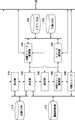
- FIG. 1 shows a configuration of a distributed system 100 according to the present embodiment.
- FIG. 2 shows an example of the configuration of the computer system 110 according to the present embodiment.
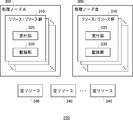
- FIG. 3 shows an example of a logical configuration of the internal resource 250 according to the present embodiment.
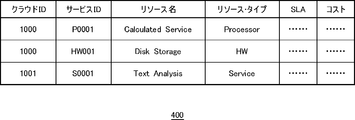
- FIG. 4 shows an example of the subcontracting table 400 stored in the subcontracting DB 285 according to this embodiment.
- FIG. 5 shows an example of the cloud table 500 stored in the cloud DB 235 according to the present embodiment.
- FIG. 6 shows an example of a main contractor table 600 stored in the main contractor DB 215 according to the present embodiment.
- FIG. 7 shows an example of the service request table 700 stored in the subcontract DB 285 according to this embodiment.
- FIG. 8 shows an example of the subcontracting cloud search request table 800 stored in the subcontracting DB 285 according to this embodiment.
- FIG. 9 shows an example of the processing flow of the computer system 110 according to this embodiment.
- FIG. 10 shows an example of the processing flow of step S930 of FIG. 9 according to the present embodiment.
- FIG. 11 shows an example of the processing flow of step S960 of FIG. 9 according to the present embodiment.
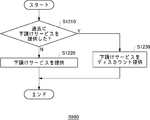
- FIG. 12 shows an example of the processing flow of step S980 of FIG. 9 according to the present embodiment.
- FIG. 13 shows an example of a graph representing the relationship between the resource management cost and the resource usage charge according to the present embodiment.
- FIG. 14A shows an example of resource filling in the own cloud according to the present embodiment.
- FIG. 14A shows an example of resource filling in the own cloud according to the present embodiment.
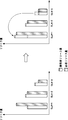
- FIG. 14B shows an example of resource filling in the own cloud and securing resources from another cloud according to the present embodiment.
- FIG. 14C shows an example of providing resources to another cloud according to the present embodiment.
- FIG. 15 shows an example of a hardware configuration of a computer 1900 according to this embodiment.
- FIG. 1 shows a configuration of a distributed system 100 according to the present embodiment.
- the distributed system 100 includes a computer system 110, one or more user terminals 120a and 120b, networks 130a and 130b, and one or more other computer systems 140a and 140b.
- the computer system 110 secures at least one hardware resource and / or software resource in the computer system 110 in response to a user processing request from the user terminal 120a, for example, and executes the processing specified by the user as a prime contractor. To do.
- the computer system 110 requests one or a plurality of other computer systems 140a and 140b as part or all of the processing as a subcontract.
- the computer system 110 accepts, as a subcontract, one or more other computer systems 140a and 140b that perform part or all of the processing that they execute as a prime contractor.
- the one or more user terminals 120a and 120b are used by the user to instruct the computer system 110 to execute a service or a program, and receive an execution result of the service or the program.
- a service refers to executing information processing corresponding to a request in response to a request from a user or the like for predetermined information processing.
- the network 130 is the Internet, an intranet, and / or a local area network, and connects one or more user terminals 120a-b, the computer system 110, and one or more other computer systems 140a-b.
- FIG. 2 shows an example of the configuration of the computer system 110 according to the present embodiment.
- the computer system 110 includes a reception unit 210, a prime contract DB 215, a determination unit 220, an external resource securing unit 230, a cloud DB 235, an execution unit 240, an internal resource 250, an internal resource securing unit 260, and a history recording unit. 270, a resource providing unit 280, and a subcontract DB 285.
- the computer system 110 performs a designation process designated by the user and charges the user.
- the accepting unit 210 accepts an instruction to execute a designated process.
- the accepting unit 210 may accept an instruction to execute a designated process transmitted from one or a plurality of user terminals 120a and 120b via the network 130.
- the receiving unit 210 may receive a service execution instruction as the designation process.
- the accepting unit 210 may accept an instruction to execute a specified process and a service level request to be satisfied by a resource that executes the specified process.
- the service level is a reliability (MTBF) guarantee value, an operation rate guarantee value, whether to perform encryption, encryption level, and / or whether hardware resources are shared with other specified processes. Or the like.
- the accepting unit 210 may accept a service level request including a service level designation corresponding to each of one or more service level items (SLO, service level offering).
- the prime contract DB 215 stores a prime contract (service offering) table that is a list of services provided to the user.
- the reception unit 210 may present a list of services provided to the user with reference to the prime contract DB 215.
- the determining unit 220 determines an external resource to be procured by being charged from one or more other computer systems 140a-b.
- the external resource is a resource that one or more other computer systems 140a-b have.
- the determination unit 220 may determine an external resource to be procured based on an SLA (Service Level Agreement) that is a guarantee contract related to one or more SLOs.
- SLA Service Level Agreement
- the external resource securing unit 230 secures external resources on one or more other computer systems 140a-b.
- the cloud DB 235 is a cloud provided by the computer system 110 and a cloud provided by one or a plurality of other computer systems 140a and 140b. Each cloud ID, IP address and access required when connecting to each cloud Stores a cloud table for storing information and the like.
- the external resource securing unit 230 may refer to the cloud DB 235 when the determining unit 220 determines an external resource to be procured. Accordingly, the external resource securing unit 230 enables the determination unit 220 to refer to the cloud using the cloud ID.
- the external resource securing unit 230 may cause one or a plurality of other computer systems 140a and 140b to execute at least a part of the specified process in response to an instruction to execute the specified process.
- the execution unit 240 causes at least a part of the designation process to be executed by an external resource.
- the execution unit 240 may return the control to the determination unit 220 immediately after receiving the execution instruction from the determination unit 220.
- the execution unit 240 may instruct the external resource securing unit 230 to execute at least a part of the specified process for the purpose of causing at least a part of the specified process to be executed by the external resource.
- the determination unit 220 or the execution unit 240 may reserve an external resource in advance, or may reserve an external resource after receiving an execution instruction. For example, for a frequent SLA request, the determination unit 220 or the execution unit 240 may reserve an external resource in advance. In this way, the computer system 110 can provide a more stable service to a user or the like when providing a frequently used service using an external resource. For SLA with low usage frequency, the execution unit 240 may secure external resources after receiving an execution instruction.
- the internal resource 250 is a resource that the computer system 110 has.
- the resource refers to a computer resource having an arbitrary scale.
- the resource is realized by, for example, a cloud computing system, a grid computing system, a parallel computer, a super computer, a server, a personal computer, and any combination of these.
- the internal resource 250 may transmit / receive specified process input / output data to / from one or more user terminals 120a-b and / or one or more other computer systems 140a-b via the network 130.
- the internal resource securing unit 260 secures the internal resource 250.
- the internal resource allocation unit 260 stores the schedule allocation start time and the schedule allocation end time for each resource of the internal resource 250, receives the allocation instruction of the internal resource 250 from the determination unit 220, and starts the schedule allocation start
- the free space of the internal resource 250 may be searched and secured based on the time and the scheduled securing end time.
- the internal resource securing unit 260 may provide information on the actual resource amount / arrangement in the internal resource 250 and the resource amount / arrangement in use.
- the internal resource reservation unit 260 may reserve the internal resource 250 when the internal resource 250 is free.
- the internal resource securing unit 260 may cause the internal resource 250 to execute at least a part of the designation process in response to the designation process execution instruction.
- the execution unit 240 may cause a part of the specified process to be executed by the external resource and the other part of the specified process may be executed by the internal resource.
- the execution unit 240 can cause the internal resource 250 to perform the specified process by instructing the internal resource securing unit 260 to execute the specified process.
- the execution unit 240 may cause the external resource to execute a part of the specified process by instructing the external resource securing unit 230 to execute a part of the specified process.
- Good the computer system 110 can provide a user with a cheaper and more continual service.
- the executing unit 240 may cause the designation process to be executed by the internal resource 250 and the external resource that satisfy the service level request.
- the execution unit 240 may cause the internal resource 250 and the external resource to execute the specification process by instructing the external resource reservation unit 230 and the internal resource reservation unit 260 to execute the specification process.
- the history recording unit 270 records the execution history of the designated process received by the computer system 110 and / or the execution history of the designated process. In this way, the determination unit 220 can quantitatively determine the resource amount used by the designation process based on the history, and thus can estimate a more accurate resource procurement amount.
- the resource providing unit 280 secures the internal resource 250 in response to a request from at least one of the one or more other computer systems 140a to 140b and uses it as a provided resource and charges.
- the subcontract DB 285 stores a subcontracting (service offering) table that is a list of services provided to the other computer systems 140a to 140b.
- the resource providing unit 280 may present a list of services to be provided to one or a plurality of other computer systems 140a-b with reference to the subcontract DB 285.
- the resource providing unit 280 may instruct the internal resource securing unit 260 to secure the internal resource 250 to secure the internal resource 250, and may be used by at least one of the one or more other computer systems 140a-b.
- FIG. 3 shows an example of a logical configuration of the internal resource 250 according to the present embodiment.
- the internal resource 250 has one or a plurality of resources used for executing information processing.
- the resources of the internal resource 250 may be hardware resources used for executing information processing, such as physical or logical processors, memories, storages, communication interfaces, information processing apparatuses, and computer clusters. Further, as an example, the resources of the internal resource 250 may be an application program, an operating system, or other software resources in which the number of users that can be used simultaneously is limited.
- Each of the one or more processing nodes 300 may be a virtual computer system that is configured by combining one or more resources (groups) 310 and cooperates to execute a designated process.
- One or a plurality of resources (group) 310 included in each processing node 300 is secured by the internal resource securing unit 260 for the purpose of executing a corresponding designation process upon receiving user approval.
- Each resource (group) 310 is configured by occupying one resource or two or more resource groups (for example, CPU + memory + hard disk) or only a part of these resources.
- Each resource (group) 310 executes part or all of the specified processing, and monitors the execution state of the execution unit 320 and transmits the monitoring result to the history recording unit 270 in the computer system 110. And a monitoring unit 330.
- the computer system 110 is not secured for any designation process, and may include one or a plurality of idle resources 340 in an idle state.
- FIG. 4 shows an example of the subcontracting table 400 stored in the subcontracting DB 285 according to the present embodiment.
- the subcontracting table 400 is associated with each service provided by the resource providing unit 280 and is used by the service such as “cloud ID”, “service ID”, “resource name”, “resource type”, and “cost”.
- the attribute of the resource to be stored, “SLA” and the like that can be provided by the resource are stored.
- the administrator of the computer system 110 may be able to update the subcontracting table 400.
- Cloud ID is an ID assigned to the cloud that processes the service.
- the computer system 110, one or more user terminals 120a-b, and one or more other computer systems 140a-b may specify a cloud by cloud ID.
- the service of the first entry in the subcontracting table 400 is processed in the cloud having the cloud ID “1000”.
- Service ID is an ID assigned to each service.
- the computer system 110, one or more user terminals 120a-b, and one or more other computer systems 140a-b may specify a service by a service ID.
- the service of the first entry in the subcontracting table 400 has “P0001” as the service ID.
- the resource providing unit 280 may use the service ID as the primary key of the subcontracting table 400.
- Resource name is the name of the resource used by each service.
- Resource type indicates the type of the resource. For example, the service of the first entry in the subcontracting table is processed with a resource of the resource type “Processor” that is good at calculation processing.
- Cost is the cost of the resource for processing each service.
- the administrator of the computer system 110 is responsible for the total cost of ownership, which is the total amount of expenses related to the purchase of resources, maintenance costs such as electricity and labor costs, and costs related to disposal of the resources.
- the cost of the resource may be calculated based on the depreciation cost per unit time and the average utilization rate of the resource, and registered in the subcontracting table 400.
- the subcontracting table 400 may include “billing information” that is updated according to resource usage status instead of “cost” or together with “cost”.
- FIG. 5 shows an example of the cloud table 500 stored in the cloud DB 235 according to the present embodiment.
- the cloud table 500 is associated with each cloud provided by the computer system 110 and one or a plurality of other computer systems 140a-b, and “cloud ID”, “host name”, “IP address”, and “access information”. And the like are stored.
- “Cloud ID” is an ID assigned to each cloud. An administrator of the computer system 110 may be able to update the cloud table 500.
- the “host name”, “IP address”, and “access information” are the host name used when the computer system 110 and one or more other computer systems 140a-b access each cloud via the network 130, IP address and access information. Since the external resource securing unit 230 and the resource providing unit 280 resolve the IP address and the like of each cloud with reference to the cloud table 500, the receiving unit 210, the determining unit 220, and the executing unit 240 are the external resource securing unit 230. In addition, each cloud can be referred to without using an IP address or the like via the resource providing unit 280.
- FIG. 6 shows an example of a main contractor table 600 stored in the main contractor DB 215 according to the present embodiment.
- the main contractor table 600 is associated with each service provided by the computer system 110 and includes attributes of the service such as “cloud ID”, “cloud name”, “service ID”, “service name”, and “cost”. , “SLA” that can be provided by the resource, “billing information” of the service, and the like are stored. “Service ID”, “Cloud ID”, “SLA”, and the like are the same as those in the subcontracting table 400.
- the main contractor table 600 includes items such as “resource type”. It does not have to be included. An administrator of the computer system 110 may be able to update the main contract table 600.
- the determination unit 220 may calculate a management cost, which is a cost necessary for processing each service, and update the primary contractor table 600 in the primary contractor DB 215 with the management cost as “cost”.
- “Service name” is the name of the service.
- “Cloud name” is the name of the cloud to which the resource used by the service belongs.
- the service of the first entry in the prime contractor table 600 has a service name “scientific calculation” and is executed in a cloud with a cloud name “IBM-C”.
- “Billing information” is information that the computer system 110 refers to when charging a user who uses the service. For example, a user who uses the service of the first entry in the prime contractor table 600 is charged 0.3 $ per hour.
- the billing amount is the service provider's underwriting income brought about by the service.
- the difference between the billing amount and the cost is the service provider's underwriting profit brought about by the service.
- FIG. 7 shows an example of the service request table 700 stored in the subcontract DB 285 according to this embodiment.
- the service request table 700 is associated with each subcontract service provided by the computer system 110 and one or more other computer systems 140a-b, such as “cloud ID”, “service ID”, and “resource name”. Stores the attribute of the service, “number of requests” that is the amount of resources requested in the service, “number of acceptances” that is the amount of resources actually provided for the request, and the like. “Cloud ID”, “Service ID”, and “Service Name” are the same as those in the main contractor table 600.
- the external resource securing unit 230 may select an external resource to be procured based on the service request table 700.
- FIG. 8 shows an example of the subcontracting cloud search request table 800 stored in the subcontracting DB 285 according to this embodiment.
- the subcontract cloud search request table 800 is associated with each external resource provided by one or a plurality of other computer systems 140a-b, and the service attributes such as “resource type” and “resource name”, The “SLA” and “cost condition” requested in the service, the “request number” that is the requested resource amount, the “acceptance number” that is the actually provided resource amount, and the like are stored.
- “Cloud ID”, “Service ID”, and “Service Name” are the same as those in the main contractor table 600.
- FIG. 9 shows an example of the processing flow of the computer system 110 according to this embodiment.
- the determination unit 220 determines the main contractor / subcontractor service and the actual resource amount / arrangement (S910).
- the determination unit 220 may determine the main contractor / subcontract service with reference to the main contractor table 600 and the subcontractor table 400. Further, the determination unit 220 may inquire the internal resource securing unit 260 to determine the resource amount / arrangement.
- the determination unit 220 receives the execution instruction of the designation process and the service level request received by the reception unit 210 (S920). Here, the determination unit 220 may receive a plurality of such requests at the same time. Next, the determination unit 220 calculates a required resource amount / arrangement necessary to satisfy the service level request (S930).
- the determination unit 220 calculates a gap between the actual resource amount / arrangement and the necessary resource amount / arrangement (S940).
- the determination unit 220 determines a gap for each SLA based on the actual resource amount / arrangement and the resource amount / arrangement in use acquired by inquiring the internal resource securing unit 260 and the requested resource amount / arrangement calculated in step S930. It may be calculated.
- the determination unit 220 determines whether there is a shortage resource based on the gap calculated in step S940 (S950).
- the determination unit 220 If it is determined that there is a shortage resource (S950: Y), the determination unit 220 performs a shortage resource elimination process (S960). The determination unit 220 changes the allocation of the internal resources secured in the computer system 110 and the external resources secured in the first other computer system 140a so as to change from the charged amount of the computer system 110 and from the first other computer system. The profit obtained by reducing the management cost of the computer system 110 including the amount to be charged may be further increased.
- the management cost of the computer system 110 includes the cost required for resource relocation (resource provisioning) processing, the cost required for executing the specified processing after resource relocation, and one or a plurality of other computer systems 140a ⁇ cost required to use the external resource b.
- the billing amount for the computer system 110 is the sum of the billing amount for one or more other computer systems 140a-b and the billing amount for the user.
- the determination unit 220 satisfies the service level requirement and minimizes the management cost with the internal resource 250, and / or Alternatively, it may be secured from an external resource.
- the determination unit 220 may determine that the resource satisfies the service level request when the service level specification corresponding to each of one or more SLOs included in the service level request is satisfied.
- the management cost may include a cost required for the rearrangement process.
- the management cost of the computer system 110 is substantially the sum of the management costs of each resource of the internal resource 250.
- the resource management cost includes a cost required for the resource in the resource rearrangement (resource provisioning) process and a cost required for the resource to execute the designated process after the resource rearrangement.
- the determination unit 220 determines whether there is a surplus resource based on the gap calculated in step S940 (S970).
- the determination unit 220 may determine whether there is a surplus resource based on the resource amount / arrangement secured in step S960 in addition to the gap.
- the determination unit 220 performs a surplus resource providing process (S980).
- the determination unit 220 notifies the acceptance unit 210 of acceptance of the SLA corresponding to the designation process and the requested service level, and instructs the execution unit 240 to start executing the execution instruction (S990).
- the determination unit 220 may notify the accepting unit 210 of the rejection of the SLA instead of the consent of the SLA. Subsequently, the determination unit 220 repeats steps S920 to S990.
- FIG. 10 shows an example of the processing flow of step S930 of FIG. 9 according to the present embodiment.
- the determination unit 220 determines the amount of internal resources to be used in the computer system 110 and / or the external resources to be procured from one or more other computer systems 140a-b. The amount may be determined. First, the determination unit 220 determines whether to predict the resource amount / arrangement from the history (S1010). The determination unit 220 may make the determination based on a policy registered in advance by the administrator of the computer system 110.
- the determination unit 220 When the resource amount / arrangement is not predicted from the history (S1010: No), the determination unit 220 counts the necessary resource amount for each SLA to which the requested service level received together with each execution request belongs for all the received execution requests. Thus, the required resource amount / arrangement is calculated (S1020). When the requested service level is not received together with the execution request, the determination unit 220 refers to the primary contractor table 600 or the subcontractor table 400 and uses the SLA previously associated with the execution request instead of the SLA to which the requested service level belongs. Thus, the necessary resource amount may be counted.
- step S1030 the determination unit 220 queries the history recording unit 270 to obtain history information, and predicts the optimal resource amount / arrangement from the history information. To do. For example, the cost of the resource corresponding to the optimum SLA calculated from the execution history of the service is lower than the cost of the resource corresponding to the SLA to which the requested service level belongs or the SLA previously associated with the execution request. In some cases, the determination unit 220 may count a necessary resource amount using the optimum SLA for the purpose of using a resource corresponding to the optimum SLA later. In this way, the computer system 110 can further save resource costs.
- FIG. 11 shows an example of the processing flow of step S960 of FIG. 9 according to the present embodiment.
- the determination unit 220 determines whether resources can be rearranged (S1110).
- the determination unit 220 may determine whether or not the resources can be relocated by inquiring the internal resource 250 to the internal resource reservation unit 260 about the free state of the internal resource 250.
- the determination unit 220 calculates a relocation cost for the resource rearrangement (S1120).
- the determining unit 220 may determine whether or not to perform a relocation process for replacing an operating system or application program operating on at least one of the resources of the computer system 110 with another operating system or application program. Good. In that case, the determination unit 220 may add the cost of the resource related to the relocation processing to the relocation cost. Further, the determination unit 220 may add the cost required for data movement between resources when the resources are rearranged to the rearrangement cost.
- the determination unit 220 determines whether the subcontractor resource can be used (S1130).
- the determination unit 220 may use the service request table 700 and the subcontracting cloud search request table 800 in order to determine whether the subcontracting resource is available.
- the determination unit 220 determines that the subcontracted resource can be used (S1130: Yes).
- the determination unit 220 calculates the usage cost of the subcontracting resource (S1140).
- the determination unit 220 is the same as the service level designation corresponding to each of one or more SLOs included in the service level request among the resources of the available computer system 110 and one or more other computer systems 140a-b.
- resources having a service level of a level are insufficient, resources having a service level higher than that specified by the service level may be secured as internal resources or external resources. In this way, even if there is no resource corresponding to the requested service level, the requested service level can be accepted, and the computer system 110 can suppress the deterioration of service quality due to the lack of resources.
- the determination unit 220 causes the external resource securing unit 230 and / or the internal resource securing unit 260 to secure a low-cost resource (S1150).
- the low-cost resource here is preferably the resource with the lowest resource management cost among the combinations of resources that can be secured.
- the determination unit 220 may calculate the management cost of each resource using a cost management curve in which the management cost of the resource is associated with one or a plurality of SLO values.
- the determination unit 220 recalculates the management cost and determines the main contractor / subcontract service and / or the charge amount (S1160).
- the determining unit 220 determines whether the profit obtained by subtracting the charged amount from the first other computer system 140a from the charged amount of the computer system 110 is equal to or less than the reference rate with respect to the management cost. May be raised. This makes it possible for the computer system 110 to ensure a certain profit even when the management cost increases due to the resource rearrangement.
- the determination unit 220 updates the billing information in the subcontractor table 400 and the main contractor table 600 (S1170).
- the determination unit 220 may reallocate the internal resource 250 and the external resource in consideration of the request from each user and the entire request from another system, thereby minimizing the overall management cost.
- the determination unit 220 may obtain an optimal allocation of resources by applying a brute force genetic algorithm or a knapsack solution, and sequentially lowering the management cost by sequentially switching the resources. Also good.
- FIG. 12 shows an example of the processing flow of step S980 of FIG. 9 according to the present embodiment.
- the determination unit 220 may change the charge amount charged for the provided resource based on at least one of the free state and the free period of the internal resource 250.
- the determination unit 220 may determine the free state and / or free period of the internal resource 250 by, for example, inquiring of the internal resource securing unit 260 and acquiring the usage schedule of the internal resource 250. Further, the determination unit 220 may determine the free state and / or free period of the internal resource by inquiring of the history recording unit 270 and acquiring the usage history of the internal resource 250.
- the determination unit 220 determines whether a subcontract service has been provided in the past (S1210).
- the determination unit 220 may determine the history of the subcontract service executed by the internal resource 250 in the past by inquiring the history recording unit 270.
- the determination unit 220 When it is determined that the subcontract service has not been provided in the past (S1210: No), the determination unit 220 provides the subcontract service in association with the surplus resource. For each subcontract service, the determination unit 220 determines the charge amount based on the TCO amortization cost and average utilization rate per unit time of the resource to be used and the expected rate of return, which are input in advance by the administrator of the computer system 110. And the subcontracting table 400 may be updated.
- the determination unit 220 When it is determined that the subcontract service has been provided in the past (S1210: Yes), the determination unit 220 provides the subcontract service (discount provision) by discounting the billing amount (S1230). The determination unit 220 may update the subcontracting table 400 by changing the charge amount based on the discount rate input in advance by the administrator of the computer system 110. In this way, the computer system 110 can further increase the utilization rate of the internal resource 250. *
- FIG. 13 shows an example of a graph representing the relationship between the resource management cost and the resource usage charge according to this embodiment.
- the service level condition is defined by one or a plurality of SLOs, and an SLA that is a guarantee contract related to the one or a plurality of SLOs has a width for each SLO.
- the SLA may be regarded as a guarantee contract related to a multidimensional hyperrectangle having a dimension of each SLO value of the one or more SLOs or a combination thereof.
- one SLA is basically provided by one or a plurality of resources belonging to the hypercube or a combination thereof.
- the graph of FIG. 13 shows five SLAs that differ only in one SLO as SLA-1, SLA-2, SLA-3, SLA-4, and SLA-5 in order of the service level of the one SLO.
- Corresponding resources are arranged on the horizontal axis, and the management cost and charge amount of the resource are shown on the vertical axis.
- This graph represents six resources corresponding to SLA-1, and five resources each corresponding to SLA-2, SLA-3, SLA-4, and SLA-5.
- the billing amount is preferably substantially higher than the management cost of any resource corresponding to each SLA. Further, it is preferable that the billing amount increases stepwise as the service level of the SLA increases.
- FIG. 14A shows an example of resource filling in the own cloud according to the present embodiment.
- the graph on the left side of FIG. 14A represents the secured resource amounts and the required resource amounts corresponding to the three SLAs SLA-1 to SLA-3 managed by the computer system 110.
- the determination unit 220 can determine to rearrange the surplus resources corresponding to SLA-3 in SLA-1. As a result, in all of SLA-1 to SLA-3, the secured resource amount can be made to exceed the required resource amount.
- FIG. 14B shows an example of resource filling in the own cloud and securing resources from another cloud according to the present embodiment.
- the determination unit 220 relocates the surplus resources corresponding to SLA-3 to SLA-1, so that The secured resource amount can exceed the required resource amount.
- the determination unit 220 can determine to secure an external resource corresponding to SLA-3 from one other computer system 140a which is another cloud. As a result, in all the SLA-1 to SLA-3, the secured resource amount can be made to exceed the necessary resource amount.
- FIG. 14C shows an example of providing resources to another cloud according to the present embodiment.
- the determination unit 220 supports SLA-1 and SLA-3 from one or more other computer systems 140a-b that are other clouds. You can decide to secure external resources. As a result, in all the SLA-1 to SLA-3, the secured resource amount can be made to exceed the necessary resource amount.
- FIG. 15 shows an example of a hardware configuration of a computer 1900 according to the present embodiment.
- a computer 1900 according to this embodiment is connected to a CPU peripheral unit including a CPU 2000, a RAM 2020, a graphic controller 2075, and a display device 2080 that are connected to each other by a host controller 2082, and to the host controller 2082 by an input / output controller 2084.
- An input / output unit having a communication interface 2030, a hard disk drive 2040, and a DVD drive 2060, and a legacy input / output unit having a ROM 2010, a flexible disk drive 2050, and an input / output chip 2070 connected to the input / output controller 2084.
- the host controller 2082 connects the RAM 2020 to the CPU 2000 and the graphic controller 2075 that access the RAM 2020 at a high transfer rate.
- the CPU 2000 operates based on programs stored in the ROM 2010 and the RAM 2020 and controls each unit.
- the graphic controller 2075 acquires image data generated by the CPU 2000 or the like on a frame buffer provided in the RAM 2020 and displays it on the display device 2080.
- the graphic controller 2075 may include a frame buffer for storing image data generated by the CPU 2000 or the like.
- the input / output controller 2084 connects the host controller 2082 to the communication interface 2030, the hard disk drive 2040, and the DVD drive 2060, which are relatively high-speed input / output devices.
- the communication interface 2030 communicates with other devices via a network.
- the hard disk drive 2040 stores programs and data used by the CPU 2000 in the computer 1900.
- the DVD drive 2060 reads a program or data from the DVD 2095 and provides it to the hard disk drive 2040 via the RAM 2020.
- the ROM 2010, the flexible disk drive 2050, and the relatively low-speed input / output device of the input / output chip 2070 are connected to the input / output controller 2084.
- the ROM 2010 stores a boot program that the computer 1900 executes at startup and / or a program that depends on the hardware of the computer 1900.
- the flexible disk drive 2050 reads a program or data from the flexible disk 2090 and provides it to the hard disk drive 2040 via the RAM 2020.
- the input / output chip 2070 connects the flexible disk drive 2050 to the input / output controller 2084 and inputs / outputs various input / output devices via, for example, a parallel port, a serial port, a keyboard port, a mouse port, and the like. Connect to controller 2084.
- the program provided to the hard disk drive 2040 via the RAM 2020 is stored in a recording medium such as the flexible disk 2090, the DVD 2095, or an IC card and provided by the user.
- the program is read from the recording medium, installed in the hard disk drive 2040 in the computer 1900 via the RAM 2020, and executed by the CPU 2000.
- a program installed on the computer 1900 and causing the computer 1900 to function as the computer system 110 includes a reception module, a prime contract DB module, a determination module, an external resource securing module, a cloud DB module, an execution module, and an internal resource module. , An internal resource securing module, a history recording module, a resource providing module, and a subcontracting DB module.
- These programs or modules work with the CPU 2000 or the like to make the computer 1900, the accepting unit 210, the main contractor DB 215, the determining unit 220, the external resource securing unit 230, the cloud DB 235, the executing unit 240, and the internal resource 250.
- the information processing described in these programs is read into the computer 1900, whereby the reception unit 210, which is a specific means in which the software and the various hardware resources described above cooperate, the prime contractor DB 215, the determination unit 220, an external resource securing unit 230, a cloud DB 235, an execution unit 240, an internal resource 250, an internal resource securing unit 260, a history recording unit 270, a resource providing unit 280, and a subcontract DB 285.
- the specific computer system 110 according to the intended purpose is constructed
- the CPU 2000 executes a communication program loaded on the RAM 2020 and executes a communication interface based on the processing content described in the communication program.
- a communication process is instructed to 2030.
- the communication interface 2030 reads transmission data stored in a transmission buffer area or the like provided on a storage device such as the RAM 2020, the hard disk drive 2040, the flexible disk 2090, or the DVD 2095, and transmits it to the network.
- the reception data received from the network is written into a reception buffer area or the like provided on the storage device.
- the communication interface 2030 may transfer transmission / reception data to / from the storage device by a DMA (direct memory access) method.
- the CPU 2000 transfers the storage device or the communication interface 2030 as a transfer source.
- the transmission / reception data may be transferred by reading the data from the data and writing the data to the communication interface 2030 or the storage device of the transfer destination.
- the CPU 2000 DMAs all or necessary portions from among files or databases stored in an external storage device such as the hard disk drive 2040, the DVD drive 2060 (DVD 2095), and the flexible disk drive 2050 (flexible disk 2090).
- the data is read into the RAM 2020 by transfer or the like, and various processes are performed on the data on the RAM 2020.
- CPU 2000 writes the processed data back to the external storage device by DMA transfer or the like.
- the RAM 2020 and the external storage device are collectively referred to as a memory, a storage unit, or a storage device.
- the CPU 2000 can also store a part of the RAM 2020 in the cache memory and perform reading and writing on the cache memory. Even in such a form, the cache memory bears a part of the function of the RAM 2020. Therefore, in the present embodiment, the cache memory is also included in the RAM 2020, the memory, and / or the storage device unless otherwise indicated. To do.
- the CPU 2000 performs various operations, such as various operations, information processing, condition determination, information search / replacement, etc., described in the present embodiment, specified for the data read from the RAM 2020 by the instruction sequence of the program. Is written back to the RAM 2020. For example, when performing the condition determination, the CPU 2000 determines whether the various variables shown in the present embodiment satisfy the conditions such as large, small, above, below, equal, etc., compared to other variables or constants. When the condition is satisfied (or not satisfied), the program branches to a different instruction sequence or calls a subroutine.
- the CPU 2000 can search for information stored in a file or database in the storage device. For example, in the case where a plurality of entries in which the attribute value of the second attribute is associated with the attribute value of the first attribute are stored in the storage device, the CPU 2000 displays the plurality of entries stored in the storage device. The entry that matches the condition in which the attribute value of the first attribute is specified is retrieved, and the attribute value of the second attribute that is stored in the entry is read, thereby associating with the first attribute that satisfies the predetermined condition The attribute value of the specified second attribute can be obtained.
- the program or module shown above may be stored in an external recording medium.
- an optical recording medium such as DVD or CD
- a magneto-optical recording medium such as MO
- a tape medium such as an IC card, and the like
- a storage device such as a hard disk or RAM provided in a server system connected to a dedicated communication network or the Internet may be used as a recording medium, and the program may be provided to the computer 1900 via the network.
- 100 distributed system 110 computer system, 120a-b one or more user terminals, 130 network, 140a-b one or more other computer systems, 210 reception unit, 215 prime contract DB, 220 determination unit, 230 external resource securing unit 235 Cloud DB, 240 execution unit, 250 internal resource, 260 internal resource securing unit, 270 history recording unit, 280 resource providing unit, 285 subcontracting DB, 300 processing node, 320 execution unit, 330 monitoring unit, 340 empty resource, 400 Table, 500 cloud table, 600 table, 700 service request table, 800 cloud search request table, 1900 computer, 2000 CPU, 2010 ROM, 2020 RAM 2030 communication interface, 2040 hard drive, 2050 flexible disk drive, 2060 DVD drive, 2070 output chip, 2075 graphic controller, 2080 a display device, 2082 host controller 2084 output controller, 2090 a flexible disk, 2095 DVD
Landscapes
- Engineering & Computer Science (AREA)
- Business, Economics & Management (AREA)
- Accounting & Taxation (AREA)
- Finance (AREA)
- Computer Security & Cryptography (AREA)
- Economics (AREA)
- Development Economics (AREA)
- Marketing (AREA)
- Strategic Management (AREA)
- Technology Law (AREA)
- Physics & Mathematics (AREA)
- General Business, Economics & Management (AREA)
- General Physics & Mathematics (AREA)
- Theoretical Computer Science (AREA)
- Signal Processing (AREA)
- Computer Networks & Wireless Communication (AREA)
- Management, Administration, Business Operations System, And Electronic Commerce (AREA)
Abstract
Description
Claims (16)
- ユーザにより指定された指定処理を実行してユーザに課金する計算機システムであって、
前記指定処理の実行指示を受け付ける受付部と、
第1の他の計算機システムから課金を受けて調達するべき外部リソースを決定する決定部と、
前記外部リソースを、前記第1の他の計算機システム上で確保する外部リソース確保部と、
前記指定処理の少なくとも一部を前記外部リソースで実行させる実行部と、
を備える計算機システム。 - 当該計算機システムの内部リソースを確保する内部リソース確保部を更に備え、
前記実行部は、前記指定処理の一部を前記外部リソースで実行させ、前記指定処理の他の一部を前記内部リソースで実行する
請求項1に記載の計算機システム。 - 前記受付部は、前記指定処理の実行指示および前記指定処理を実行するリソースが満たすべきサービスレベル要求を受け付け、
前記実行部は、前記指定処理を、前記サービスレベル要求を満たす前記内部リソースおよび前記外部リソースで実行させる請求項2に記載の計算機システム。 - 前記決定部は、当該計算機システムで確保する前記内部リソースおよび前記第1の他の計算機システムで確保する前記外部リソースの配分を変更して、当該計算機システムの課金額から、前記第1の他の計算機システムから課金される被課金額を含む当該計算機システムの管理コストを減じた利益をより高める請求項3に記載の計算機システム。
- 前記決定部は、利用可能な当該計算機システム上のリソースのうち、前記サービスレベル要求を満たし、かつ、前記管理コストが最小となるリソースを前記内部リソースとして確保する請求項4に記載の計算機システム。
- 前記決定部は、利用可能な当該計算機システムおよび前記第1の他の計算機システムのリソースのうち、前記サービスレベル要求を満たし、かつ、前記管理コストが最小となるリソースを前記内部リソースおよび前記外部リソースとして確保する請求項4または5に記載の計算機システム。
- 前記受付部は、複数のサービスレベル項目のそれぞれに対応するサービスレベルの指定を含む前記サービスレベル要求を受け付け、
前記決定部は、利用可能な当該計算機システムおよび前記第1の他の計算機システムのリソースのうち、前記サービスレベル要求に含まれる前記複数のサービスレベル項目のそれぞれに対応するサービスレベルの指定を満たし、かつ、前記管理コストが最小となるリソースを前記内部リソースおよび前記外部リソースとして確保する請求項6に記載の計算機システム。 - 前記決定部は、利用可能な当該計算機システムおよび前記第1の他の計算機システムのリソースのうち、前記サービスレベル要求に含まれる前記複数のサービスレベル項目のそれぞれに対応するサービスレベルの指定と同レベルのサービスレベルを有するリソースが不足している場合に、当該サービスレベルの指定より高いサービスレベルを有するリソースを前記内部リソースまたは前記外部リソースとして確保する
請求項7に記載の計算機システム。 - 前記決定部は、利用可能な当該計算機システムおよび前記第1の他の計算機システムのリソースのうち、前記サービスレベル要求に含まれる可用性を満たさない2以上のリソースの冗長構成により当該可用性を満たすリソースとして機能させることを更に決定する請求項4から8のいずれかに記載の計算機システム。
- 前記決定部は、
当該計算機システムのリソースの少なくとも1つの上で動作しているオペレーティングシステムまたはアプリケーションプログラムを、他のオペレーティングシステムまたはアプリケーションプログラムに入れ替える再配置処理をするか否かを更に決定し、
利用可能な当該計算機システムおよび前記第1の他の計算機システムのリソースのうち、前記サービスレベル要求を満たし、かつ、前記再配置処理に要するコストを含む前記管理コストが最小となるリソースを前記内部リソースおよび前記外部リソースとして確保する
請求項4から9のいずれかに記載の計算機システム。 - 当該計算機システムが受け取った指定処理の実行指示の履歴を記録する履歴記録部を更に備え、
前記決定部は、前記履歴記録部に記録された履歴に基づいて、前記第1の他の計算機システムから調達するべき外部リソースの量を決定する
請求項4から10のいずれかに記載の計算機システム。 - 前記第1の他の計算機システムおよび第2の他の計算機システムの少なくとも一方からの要求に応じて当該計算機システムのリソースを確保して、提供リソースとして使用させると共に課金するリソース提供部を更に備える
請求項4または11に記載の計算機システム。 - 前記決定部は、当該計算機システムのリソースの空き状態および空き期間の少なくとも一方に基づいて、前記提供リソースに対して課金する課金額を変更する請求項12に記載の計算機システム。
- 前記決定部は、当該計算機システムの前記課金額から前記第1の他の計算機システムからの前記被課金額を減じた前記利益が、前記管理コストに対して基準割合以下となったことに応じて、前記課金額を引き上げる請求項4から13のいずれかに記載の計算機システム。
- 計算機システムによって、ユーザにより指定された指定処理を実行してユーザに課金する方法であって、
受付部によって前記指定処理の実行指示を受け付ける段階と、
決定部によって第1の他の計算機システムから課金を受けて調達するべき外部リソースを決定する段階と、
外部リソース確保部によって、前記外部リソースを前記第1の他の計算機システム上で確保する段階と、
実行部によって前記指定処理の少なくとも一部を前記外部リソースで実行させる段階と、
を備える方法。 - ユーザにより指定された指定処理を実行してユーザに課金する計算機システムとしてコンピュータを機能させるプログラムであって、
前記コンピュータを請求項1から14のいずれかに記載の計算機システムとして機能させるプログラム。
Priority Applications (2)
| Application Number | Priority Date | Filing Date | Title |
|---|---|---|---|
| US13/322,529 US9037505B2 (en) | 2009-05-29 | 2010-05-12 | Mechanisms for executing a process in a cloud computing environment |
| JP2011515967A JP5244236B2 (ja) | 2009-05-29 | 2010-05-12 | 計算機システム、方法、およびプログラム |
Applications Claiming Priority (2)
| Application Number | Priority Date | Filing Date | Title |
|---|---|---|---|
| JP2009131207 | 2009-05-29 | ||
| JP2009-131207 | 2009-05-29 |
Publications (1)
| Publication Number | Publication Date |
|---|---|
| WO2010137455A1 true WO2010137455A1 (ja) | 2010-12-02 |
Family
ID=43222568
Family Applications (1)
| Application Number | Title | Priority Date | Filing Date |
|---|---|---|---|
| PCT/JP2010/057991 Ceased WO2010137455A1 (ja) | 2009-05-29 | 2010-05-12 | 計算機システム、方法、およびプログラム |
Country Status (4)
| Country | Link |
|---|---|
| US (1) | US9037505B2 (ja) |
| JP (1) | JP5244236B2 (ja) |
| TW (1) | TW201112006A (ja) |
| WO (1) | WO2010137455A1 (ja) |
Cited By (10)
| Publication number | Priority date | Publication date | Assignee | Title |
|---|---|---|---|---|
| JP2010287096A (ja) * | 2009-06-12 | 2010-12-24 | Fuji Xerox Co Ltd | 課金処理装置及び課金処理プログラム |
| WO2012124295A1 (ja) * | 2011-03-11 | 2012-09-20 | 日本電気株式会社 | コンピュータシステム、制御システム、制御方法および制御プログラム |
| WO2013103006A1 (ja) * | 2012-01-05 | 2013-07-11 | 株式会社日立製作所 | 計算機システムの管理装置及び管理方法 |
| JP2013206101A (ja) * | 2012-03-28 | 2013-10-07 | Nec Corp | 仮想化システム、リソース管理サーバ、リソース管理方法、及びリソース管理プログラム |
| JP2014153991A (ja) * | 2013-02-12 | 2014-08-25 | Nec Corp | システム自動構成装置、情報処理システム、システム自動構成方法及びシステム自動構成プログラム |
| JPWO2013038566A1 (ja) * | 2011-09-16 | 2015-03-23 | 富士通株式会社 | コンピュータシステム |
| US9736035B2 (en) | 2014-03-04 | 2017-08-15 | Fujitsu Limited | Method and apparatus for providing information for selecting clouds |
| JP2021060745A (ja) * | 2019-10-04 | 2021-04-15 | 株式会社日立製作所 | 支援装置及び方法 |
| CN114327852A (zh) * | 2020-09-29 | 2022-04-12 | 勤达睿公司 | 基于性能和成本来平衡大型机和分布式工作负载 |
| US12572963B2 (en) | 2019-10-18 | 2026-03-10 | DFINITY Stiftung | Charging for the use of resources in a distributed network |
Families Citing this family (62)
| Publication number | Priority date | Publication date | Assignee | Title |
|---|---|---|---|---|
| US8504400B2 (en) | 2010-03-24 | 2013-08-06 | International Business Machines Corporation | Dynamically optimized distributed cloud computing-based business process management (BPM) system |
| US8621058B2 (en) * | 2010-10-28 | 2013-12-31 | Hewlett-Packard Development Company, L.P. | Providing cloud-based computing services |
| US8977754B2 (en) * | 2011-05-09 | 2015-03-10 | Metacloud Inc. | Composite public cloud, method and system |
| US10360122B2 (en) | 2011-05-31 | 2019-07-23 | Red Hat, Inc. | Tracking cloud installation information using cloud-aware kernel of operating system |
| US9736065B2 (en) | 2011-06-24 | 2017-08-15 | Cisco Technology, Inc. | Level of hierarchy in MST for traffic localization and load balancing |
| US8908698B2 (en) | 2012-01-13 | 2014-12-09 | Cisco Technology, Inc. | System and method for managing site-to-site VPNs of a cloud managed network |
| US20140012992A1 (en) * | 2012-04-17 | 2014-01-09 | Siemens Aktiengesellschaft | Computational Resource Allocation System, A Code Analysis Framework, And A Method For Computational Resource Allocation System |
| WO2013168073A1 (en) * | 2012-05-08 | 2013-11-14 | Storone Ltd. | Lowering data centers operational costs |
| US9043439B2 (en) | 2013-03-14 | 2015-05-26 | Cisco Technology, Inc. | Method for streaming packet captures from network access devices to a cloud server over HTTP |
| US10410260B1 (en) * | 2013-09-12 | 2019-09-10 | West Corporation | Auctioning and management of cloud-based services |
| JP6289214B2 (ja) * | 2014-03-31 | 2018-03-07 | 三菱プレシジョン株式会社 | 情報処理システム及びその方法 |
| US10122605B2 (en) | 2014-07-09 | 2018-11-06 | Cisco Technology, Inc | Annotation of network activity through different phases of execution |
| US9825878B2 (en) | 2014-09-26 | 2017-11-21 | Cisco Technology, Inc. | Distributed application framework for prioritizing network traffic using application priority awareness |
| JP6293683B2 (ja) * | 2015-01-27 | 2018-03-14 | 株式会社日立製作所 | 計算機システム及び計算機システムの性能障害の対処方法 |
| US10050862B2 (en) | 2015-02-09 | 2018-08-14 | Cisco Technology, Inc. | Distributed application framework that uses network and application awareness for placing data |
| US10037617B2 (en) | 2015-02-27 | 2018-07-31 | Cisco Technology, Inc. | Enhanced user interface systems including dynamic context selection for cloud-based networks |
| US10708342B2 (en) | 2015-02-27 | 2020-07-07 | Cisco Technology, Inc. | Dynamic troubleshooting workspaces for cloud and network management systems |
| US10382534B1 (en) | 2015-04-04 | 2019-08-13 | Cisco Technology, Inc. | Selective load balancing of network traffic |
| US10476982B2 (en) | 2015-05-15 | 2019-11-12 | Cisco Technology, Inc. | Multi-datacenter message queue |
| US10034201B2 (en) | 2015-07-09 | 2018-07-24 | Cisco Technology, Inc. | Stateless load-balancing across multiple tunnels |
| US11005682B2 (en) | 2015-10-06 | 2021-05-11 | Cisco Technology, Inc. | Policy-driven switch overlay bypass in a hybrid cloud network environment |
| US10462136B2 (en) | 2015-10-13 | 2019-10-29 | Cisco Technology, Inc. | Hybrid cloud security groups |
| US10523657B2 (en) | 2015-11-16 | 2019-12-31 | Cisco Technology, Inc. | Endpoint privacy preservation with cloud conferencing |
| US10205677B2 (en) | 2015-11-24 | 2019-02-12 | Cisco Technology, Inc. | Cloud resource placement optimization and migration execution in federated clouds |
| US10084703B2 (en) | 2015-12-04 | 2018-09-25 | Cisco Technology, Inc. | Infrastructure-exclusive service forwarding |
| US10367914B2 (en) | 2016-01-12 | 2019-07-30 | Cisco Technology, Inc. | Attaching service level agreements to application containers and enabling service assurance |
| JP6455936B2 (ja) * | 2016-02-03 | 2019-01-23 | 日本電信電話株式会社 | 配置決定システム、配置決定方法及びプログラム |
| US10129177B2 (en) | 2016-05-23 | 2018-11-13 | Cisco Technology, Inc. | Inter-cloud broker for hybrid cloud networks |
| US10659283B2 (en) | 2016-07-08 | 2020-05-19 | Cisco Technology, Inc. | Reducing ARP/ND flooding in cloud environment |
| US10432532B2 (en) | 2016-07-12 | 2019-10-01 | Cisco Technology, Inc. | Dynamically pinning micro-service to uplink port |
| US10382597B2 (en) | 2016-07-20 | 2019-08-13 | Cisco Technology, Inc. | System and method for transport-layer level identification and isolation of container traffic |
| US10263898B2 (en) | 2016-07-20 | 2019-04-16 | Cisco Technology, Inc. | System and method for implementing universal cloud classification (UCC) as a service (UCCaaS) |
| US10142346B2 (en) | 2016-07-28 | 2018-11-27 | Cisco Technology, Inc. | Extension of a private cloud end-point group to a public cloud |
| US10567344B2 (en) | 2016-08-23 | 2020-02-18 | Cisco Technology, Inc. | Automatic firewall configuration based on aggregated cloud managed information |
| US20180060964A1 (en) * | 2016-09-01 | 2018-03-01 | International Business Machines Corporation | Intelligent agent as competitor and collaborator in a system for addressing an enterprise opportunity |
| US10523592B2 (en) | 2016-10-10 | 2019-12-31 | Cisco Technology, Inc. | Orchestration system for migrating user data and services based on user information |
| US11044162B2 (en) | 2016-12-06 | 2021-06-22 | Cisco Technology, Inc. | Orchestration of cloud and fog interactions |
| US10326817B2 (en) | 2016-12-20 | 2019-06-18 | Cisco Technology, Inc. | System and method for quality-aware recording in large scale collaborate clouds |
| US10334029B2 (en) | 2017-01-10 | 2019-06-25 | Cisco Technology, Inc. | Forming neighborhood groups from disperse cloud providers |
| US10552191B2 (en) | 2017-01-26 | 2020-02-04 | Cisco Technology, Inc. | Distributed hybrid cloud orchestration model |
| US10320683B2 (en) | 2017-01-30 | 2019-06-11 | Cisco Technology, Inc. | Reliable load-balancer using segment routing and real-time application monitoring |
| US10671571B2 (en) | 2017-01-31 | 2020-06-02 | Cisco Technology, Inc. | Fast network performance in containerized environments for network function virtualization |
| US11005731B2 (en) | 2017-04-05 | 2021-05-11 | Cisco Technology, Inc. | Estimating model parameters for automatic deployment of scalable micro services |
| US10439877B2 (en) | 2017-06-26 | 2019-10-08 | Cisco Technology, Inc. | Systems and methods for enabling wide area multicast domain name system |
| US10382274B2 (en) | 2017-06-26 | 2019-08-13 | Cisco Technology, Inc. | System and method for wide area zero-configuration network auto configuration |
| US10892940B2 (en) | 2017-07-21 | 2021-01-12 | Cisco Technology, Inc. | Scalable statistics and analytics mechanisms in cloud networking |
| US10425288B2 (en) | 2017-07-21 | 2019-09-24 | Cisco Technology, Inc. | Container telemetry in data center environments with blade servers and switches |
| US10601693B2 (en) | 2017-07-24 | 2020-03-24 | Cisco Technology, Inc. | System and method for providing scalable flow monitoring in a data center fabric |
| US10541866B2 (en) | 2017-07-25 | 2020-01-21 | Cisco Technology, Inc. | Detecting and resolving multicast traffic performance issues |
| US11481362B2 (en) | 2017-11-13 | 2022-10-25 | Cisco Technology, Inc. | Using persistent memory to enable restartability of bulk load transactions in cloud databases |
| US10705882B2 (en) | 2017-12-21 | 2020-07-07 | Cisco Technology, Inc. | System and method for resource placement across clouds for data intensive workloads |
| US11595474B2 (en) | 2017-12-28 | 2023-02-28 | Cisco Technology, Inc. | Accelerating data replication using multicast and non-volatile memory enabled nodes |
| US10511534B2 (en) | 2018-04-06 | 2019-12-17 | Cisco Technology, Inc. | Stateless distributed load-balancing |
| US10728361B2 (en) | 2018-05-29 | 2020-07-28 | Cisco Technology, Inc. | System for association of customer information across subscribers |
| US10904322B2 (en) | 2018-06-15 | 2021-01-26 | Cisco Technology, Inc. | Systems and methods for scaling down cloud-based servers handling secure connections |
| US10764266B2 (en) | 2018-06-19 | 2020-09-01 | Cisco Technology, Inc. | Distributed authentication and authorization for rapid scaling of containerized services |
| US11019083B2 (en) | 2018-06-20 | 2021-05-25 | Cisco Technology, Inc. | System for coordinating distributed website analysis |
| US10819571B2 (en) | 2018-06-29 | 2020-10-27 | Cisco Technology, Inc. | Network traffic optimization using in-situ notification system |
| US10904342B2 (en) | 2018-07-30 | 2021-01-26 | Cisco Technology, Inc. | Container networking using communication tunnels |
| US11032381B2 (en) * | 2019-06-19 | 2021-06-08 | Servicenow, Inc. | Discovery and storage of resource tags |
| CN111130810B (zh) * | 2019-11-27 | 2021-06-22 | 华为技术有限公司 | 云服务用量包的计费方法、装置及相关设备 |
| US20250004808A1 (en) * | 2023-06-30 | 2025-01-02 | VMware LLC | Placement in a virtualized computing environment based on resource allocation |
Citations (5)
| Publication number | Priority date | Publication date | Assignee | Title |
|---|---|---|---|---|
| JP2001325041A (ja) * | 2000-05-12 | 2001-11-22 | Toyo Eng Corp | 計算機資源活用方法及びシステム |
| JP2002358290A (ja) * | 2001-03-19 | 2002-12-13 | Toshiba Corp | 情報処理サービス提供方法及びプログラム並びにシステム |
| JP2003058518A (ja) * | 2001-08-06 | 2003-02-28 | Internatl Business Mach Corp <Ibm> | ネットワークシステム、cpu資源プロバイダ、クライアント装置、処理サービスの提供方法、およびプログラム |
| JP2007249470A (ja) * | 2006-03-15 | 2007-09-27 | Nec Biglobe Ltd | クラスタサーバシステム、課金装置、課金方法 |
| JP2008542871A (ja) * | 2005-05-27 | 2008-11-27 | インターナショナル・ビジネス・マシーンズ・コーポレーション | 複数のデータ・センタ中で選択的に作業負荷をオフロードするための方法および装置 |
Family Cites Families (16)
| Publication number | Priority date | Publication date | Assignee | Title |
|---|---|---|---|---|
| US6622259B1 (en) | 2000-07-14 | 2003-09-16 | International Business Machines Corporation | Non-disruptive migration of coordinator services in a distributed computer system |
| US7174379B2 (en) * | 2001-08-03 | 2007-02-06 | International Business Machines Corporation | Managing server resources for hosted applications |
| US7146353B2 (en) * | 2003-07-22 | 2006-12-05 | Hewlett-Packard Development Company, L.P. | Resource allocation for multiple applications |
| US7461149B2 (en) * | 2004-01-13 | 2008-12-02 | International Business Machines Corporation | Ordering provisioning request execution based on service level agreement and customer entitlement |
| US7418491B2 (en) * | 2004-02-19 | 2008-08-26 | International Business Machines Corporation | Architecture for a centralized management system |
| US8429630B2 (en) * | 2005-09-15 | 2013-04-23 | Ca, Inc. | Globally distributed utility computing cloud |
| US8380880B2 (en) * | 2007-02-02 | 2013-02-19 | The Mathworks, Inc. | Scalable architecture |
| US8386607B2 (en) * | 2007-04-13 | 2013-02-26 | International Business Machines Corporation | Method and system for utilizing a resource conductor to optimize resource management in a distributed computing environment |
| US8972978B2 (en) * | 2008-05-02 | 2015-03-03 | Skytap | Multitenant hosted virtual machine infrastructure |
| US9842004B2 (en) * | 2008-08-22 | 2017-12-12 | Red Hat, Inc. | Adjusting resource usage for cloud-based networks |
| US8281307B2 (en) * | 2009-06-01 | 2012-10-02 | International Business Machines Corporation | Virtual solution composition and deployment system and method |
| US20100115095A1 (en) * | 2008-10-31 | 2010-05-06 | Xiaoyun Zhu | Automatically managing resources among nodes |
| US8621476B2 (en) * | 2008-12-15 | 2013-12-31 | Korea Advanced Institute Of Science And Technology | Method and apparatus for resource management in grid computing systems |
| JP5448032B2 (ja) * | 2008-12-25 | 2014-03-19 | インターナショナル・ビジネス・マシーンズ・コーポレーション | リソース管理装置、リソース管理プログラム、およびリソース管理方法 |
| US8468246B2 (en) * | 2009-04-13 | 2013-06-18 | Raytheon Company | System and method for allocating resources in a distributed computing system |
| US9703609B2 (en) * | 2009-05-29 | 2017-07-11 | Red Hat, Inc. | Matching resources associated with a virtual machine to offered resources |
-
2010
- 2010-05-10 TW TW099114828A patent/TW201112006A/zh unknown
- 2010-05-12 WO PCT/JP2010/057991 patent/WO2010137455A1/ja not_active Ceased
- 2010-05-12 US US13/322,529 patent/US9037505B2/en not_active Expired - Fee Related
- 2010-05-12 JP JP2011515967A patent/JP5244236B2/ja not_active Expired - Fee Related
Patent Citations (5)
| Publication number | Priority date | Publication date | Assignee | Title |
|---|---|---|---|---|
| JP2001325041A (ja) * | 2000-05-12 | 2001-11-22 | Toyo Eng Corp | 計算機資源活用方法及びシステム |
| JP2002358290A (ja) * | 2001-03-19 | 2002-12-13 | Toshiba Corp | 情報処理サービス提供方法及びプログラム並びにシステム |
| JP2003058518A (ja) * | 2001-08-06 | 2003-02-28 | Internatl Business Mach Corp <Ibm> | ネットワークシステム、cpu資源プロバイダ、クライアント装置、処理サービスの提供方法、およびプログラム |
| JP2008542871A (ja) * | 2005-05-27 | 2008-11-27 | インターナショナル・ビジネス・マシーンズ・コーポレーション | 複数のデータ・センタ中で選択的に作業負荷をオフロードするための方法および装置 |
| JP2007249470A (ja) * | 2006-03-15 | 2007-09-27 | Nec Biglobe Ltd | クラスタサーバシステム、課金装置、課金方法 |
Cited By (13)
| Publication number | Priority date | Publication date | Assignee | Title |
|---|---|---|---|---|
| JP2010287096A (ja) * | 2009-06-12 | 2010-12-24 | Fuji Xerox Co Ltd | 課金処理装置及び課金処理プログラム |
| WO2012124295A1 (ja) * | 2011-03-11 | 2012-09-20 | 日本電気株式会社 | コンピュータシステム、制御システム、制御方法および制御プログラム |
| JP5692355B2 (ja) * | 2011-03-11 | 2015-04-01 | 日本電気株式会社 | コンピュータシステム、制御システム、制御方法および制御プログラム |
| JPWO2013038566A1 (ja) * | 2011-09-16 | 2015-03-23 | 富士通株式会社 | コンピュータシステム |
| WO2013103006A1 (ja) * | 2012-01-05 | 2013-07-11 | 株式会社日立製作所 | 計算機システムの管理装置及び管理方法 |
| JP2013206101A (ja) * | 2012-03-28 | 2013-10-07 | Nec Corp | 仮想化システム、リソース管理サーバ、リソース管理方法、及びリソース管理プログラム |
| JP2014153991A (ja) * | 2013-02-12 | 2014-08-25 | Nec Corp | システム自動構成装置、情報処理システム、システム自動構成方法及びシステム自動構成プログラム |
| US9736035B2 (en) | 2014-03-04 | 2017-08-15 | Fujitsu Limited | Method and apparatus for providing information for selecting clouds |
| JP2021060745A (ja) * | 2019-10-04 | 2021-04-15 | 株式会社日立製作所 | 支援装置及び方法 |
| US12572963B2 (en) | 2019-10-18 | 2026-03-10 | DFINITY Stiftung | Charging for the use of resources in a distributed network |
| CN114327852A (zh) * | 2020-09-29 | 2022-04-12 | 勤达睿公司 | 基于性能和成本来平衡大型机和分布式工作负载 |
| JP7529634B2 (ja) | 2020-09-29 | 2024-08-06 | キンドリル・インク | コンピュータ実装方法、コンピュータプログラムおよびコンピュータシステム(パフォーマンスおよびコストに基づくメインフレームおよび分散ワークロードのバランシング) |
| CN114327852B (zh) * | 2020-09-29 | 2025-10-21 | 勤达睿公司 | 基于性能和成本来平衡大型机和分布式工作负载 |
Also Published As
| Publication number | Publication date |
|---|---|
| TW201112006A (en) | 2011-04-01 |
| JPWO2010137455A1 (ja) | 2012-11-12 |
| US9037505B2 (en) | 2015-05-19 |
| US20120072318A1 (en) | 2012-03-22 |
| JP5244236B2 (ja) | 2013-07-24 |
Similar Documents
| Publication | Publication Date | Title |
|---|---|---|
| JP5244236B2 (ja) | 計算機システム、方法、およびプログラム | |
| US11425194B1 (en) | Dynamically modifying a cluster of computing nodes used for distributed execution of a program | |
| US10545796B2 (en) | Systems, methods, and apparatuses for implementing a scheduler with preemptive termination of existing workloads to free resources for high priority items | |
| US10514951B2 (en) | Systems, methods, and apparatuses for implementing a stateless, deterministic scheduler and work discovery system with interruption recovery | |
| US11294726B2 (en) | Systems, methods, and apparatuses for implementing a scalable scheduler with heterogeneous resource allocation of large competing workloads types using QoS | |
| JP5939740B2 (ja) | 動的にリソースを割り当てる方法、システム及びプログラム | |
| US9104498B2 (en) | Maximizing server utilization within a datacenter | |
| JP5400482B2 (ja) | 管理計算機、リソース管理方法、リソース管理プログラム、記録媒体および情報処理システム | |
| US10356150B1 (en) | Automated repartitioning of streaming data | |
| US10333859B2 (en) | Multi-tenant resource coordination method | |
| CN105049268A (zh) | 分布式计算资源分配系统和任务处理方法 | |
| CN112753022A (zh) | 数据库环境中的自动查询重试 | |
| KR101765725B1 (ko) | 대용량 방송용 빅데이터 분산 병렬처리를 위한 동적 디바이스 연결 시스템 및 방법 | |
| US20260037323A1 (en) | Systems and methods for dynamically scaling remote resources | |
| Taghinezhad-Niar et al. | Workflow scheduling of scientific workflows under simultaneous deadline and budget constraints | |
| JP5043166B2 (ja) | 計算機システム、データ検索方法及びデータベース管理計算機 | |
| CN118838719A (zh) | 一种分布式计算负载均衡方法及系统 | |
| US12367185B1 (en) | Replication system for data migration | |
| CN114201296B (zh) | 一种基于流式处理平台的数据平衡方法和系统 | |
| JP2020190867A (ja) | 構成変更型集積回路の割当システム、構成変更型集積回路の割当方法およびコンピュータプログラム | |
| JP7037059B2 (ja) | リソース管理システム、および、リソース割当プログラム | |
| CN114819920B (zh) | 一种基于工作流的信息处理系统 | |
| CN105096096A (zh) | 任务性能评价方法及系统 | |
| CN114168306B (zh) | 调度方法及调度装置 | |
| Ananthanarayanan et al. | Big data analytics systems. |
Legal Events
| Date | Code | Title | Description |
|---|---|---|---|
| 121 | Ep: the epo has been informed by wipo that ep was designated in this application |
Ref document number: 10780410 Country of ref document: EP Kind code of ref document: A1 |
|
| WWE | Wipo information: entry into national phase |
Ref document number: 2011515967 Country of ref document: JP |
|
| WWE | Wipo information: entry into national phase |
Ref document number: 13322529 Country of ref document: US |
|
| NENP | Non-entry into the national phase |
Ref country code: DE |
|
| 122 | Ep: pct application non-entry in european phase |
Ref document number: 10780410 Country of ref document: EP Kind code of ref document: A1 |