WO2008102253A2 - Method of biosynthesizing tetrodotoxin - Google Patents
Method of biosynthesizing tetrodotoxin Download PDFInfo
- Publication number
- WO2008102253A2 WO2008102253A2 PCT/IB2008/000408 IB2008000408W WO2008102253A2 WO 2008102253 A2 WO2008102253 A2 WO 2008102253A2 IB 2008000408 W IB2008000408 W IB 2008000408W WO 2008102253 A2 WO2008102253 A2 WO 2008102253A2
- Authority
- WO
- WIPO (PCT)
- Prior art keywords
- vibrio
- tetrodotoxin
- medium
- biosynthesizing
- extract
- Prior art date
- Legal status (The legal status is an assumption and is not a legal conclusion. Google has not performed a legal analysis and makes no representation as to the accuracy of the status listed.)
- Ceased
Links
Classifications
-
- C—CHEMISTRY; METALLURGY
- C12—BIOCHEMISTRY; BEER; SPIRITS; WINE; VINEGAR; MICROBIOLOGY; ENZYMOLOGY; MUTATION OR GENETIC ENGINEERING
- C12P—FERMENTATION OR ENZYME-USING PROCESSES TO SYNTHESISE A DESIRED CHEMICAL COMPOUND OR COMPOSITION OR TO SEPARATE OPTICAL ISOMERS FROM A RACEMIC MIXTURE
- C12P17/00—Preparation of heterocyclic carbon compounds with only O, N, S, Se or Te as ring hetero atoms
- C12P17/18—Preparation of heterocyclic carbon compounds with only O, N, S, Se or Te as ring hetero atoms containing at least two hetero rings condensed among themselves or condensed with a common carbocyclic ring system, e.g. rifamycin
Definitions
- Tetrodotoxin was first isolated from the ovaries of the puffer fish. Since then, it has been commercially extracted and purified for many years. However, the extraction rate of TTX is extremely low, about Ig TTX per 100Kg of ovaries, thus making it one of the highest priced natural neurotoxins. Further, the industry is subject to slow down as stocks of puffer fish have been falling due to over production.
- the present invention proposes methods for the biosynthesis of tetrodotoxin (TTX) resulting in high yield/ highly pure TTX.
- FIG 1 shows a method of biosynthesizing TTX in accordance with the present invention.
- FIG 2 shows a method of isolating and purifying TTX in accordance with the present invention.
- FIG 3 compares the results of the present invention's method of biosynthesizing TTX with results derived from prior art methods of TTX biosynthesis.
- tetrodotoxin-bearing organism shall refer to an organism that possesses the compound known as tetrodotoxin, chemical formula CuHnOaNg, and its analogues, including but limited to anhydrotetrodotoxin, tetrodaminotoxin, methoxytetrodotoxin, ethoxytetrodotoxin, deoxytetrodotoxin, and tetrodonic acid, in their organs • either through endogenous means such as self-production, exogenous means such as the food chain, symbiotic relationship, or a combination of such.
- “Growth factors” shall refer to substances such as proteins that are present in an organisms tissues that allow stabilization of tetrodotoxin structure in the organisms tissues, such that the structure does not decompose or under an analogue
- FIG 1 is an embodiment for a method of biosynthesizing tetrodotoxin in accordance with the present invention, containing the steps of obtaining a culture possessing one or more vibrio species 101, inoculating the Vibrio culture and a tissue extract in a fermenter 103, isolating the resultant tetrodotoxin from the culture medium 105, and purifying the tetrodotoxin 107.
- Obtaining a culture possessing one or more Vibrio species 101 consists of gathering a culture upon which Vibrio species were grown. Gathering can include obtaining a properly stored culture, or a culture obtained from a seed culture.
- One or more Vibrio species in the culture can be selected from the group consisting of Vibrio nigripulchritudo, Vibrio mediterranel, Vibrio harveyi, Vibrio alginolyticus, Vibrio salmonicida, Vibrio tubiashii, Vibrio parahaemolyticus, Vibrio campbellii, Vibrio natriegens, Vibrio nereis, Vibrio carchariae, Vibrio fl ⁇ vialis / Vibrio fischeri, Vibrio vulnificus, Vibrio spl&ndidus, Vibrio orientalis, Vibrio aestuarianvB Vibrio pelagi ⁇ s, Vibrio wodanis, Vibri
- Vibrio ordalii and Vibrio metschnkiovii and vibrio choleme.
- the Vibrio species are one or more of Vibrio alginolyticus, Vibrio anguillarum, Vibrio choleme, Vibrio parahaemolyticus, and Vibrio fluvialis.
- Vibrio species samples for culturing can be obtained from the organs of tetrodotoxin-bearing organisms including flatworms, ribbon worms, gastropods, blue-ringed octopuses, starfish, sea urchins, xanthid crabs, horsehoe crabs, gobies, frogs, newts, and puffer fish.
- the Vibrio species are obtained from puffer fish of the Tetraodontidae, Diodontidae, and Triodontidae families, for example Arothron hispidis, Arothron stellatus, Chelonodon patocoa, Takifugu alboplumbeus, Takifugu niphobles, Takifugu oblongus, Takifugu ocellatus, Takifugu xanthopter ⁇ s, and Diodo ⁇ holocanthus, In one embodiment, Vibrio species are obtained fronn Chelonodon paboca, Takifugu alboplumbeus, and Takifugu niphobles, specifically the species Vibrio alginolyticus .
- the organs, i.e. tissue, used to provide the Vibrio species can be the intestine, liver, ovary, stomach, and skin, used separately or in conjunction with one another, In one embodiment, Vibrio species are obtained from the ovary of Takifugu niphobles, the skin of Chelonodon patoca, and/or the intestine of Takifugu alboplumbeus.
- the tissues are firstly exised, preferably aseptically, from the organism.
- the exised tissue is added to a bioreactor containing a culture medium, for example a shake flask, aeration-agitation bioreactor, percolated impellor bioreactor, draught tube air-lift bioreactor, draft tube with lasplan Turbine bioreactor, air-lift loap bioreactor, rotating drum bioreactor, and spin filter bioreactor.
- a shake flask is used as the bioreactor.
- the bioreactor can be sized from about 250ml to about 1 Liter.
- the bioreactor should contain a medium such as sterile seawater, seawater, based media and serum-free medium.
- the bioreactor contains sterile seawater prior to the addition of the tissue (batch processing) .
- the tissue in medium can be agitated between about 75rpm to about 250r ⁇ m for approximately 5 to 25 minutes .
- the bioreactor contents are extracted into a second bioreactor containing a volume of medium, such volume ranging from about 25ml to about 100ml, the medium being either the same as in the first bioreactor, or different.
- the medium in the second bioreactor is the same as that used in the first reactor.
- the final concentration in the second bioreactor should be from about .04g tissue/ml to about .1Og tissue/ml.
- the substrate can be made of glass, plastic, ceramic, or a synthetic resin, and contain a growth medium, for example agar.
- the substrate can include adherent reactors such as roller bottles, plastic bag, multi-dish, multi-tray, multi-plate, spiral film, glass beads, propagator, and the like.
- adherent reactors such as roller bottles, plastic bag, multi-dish, multi-tray, multi-plate, spiral film, glass beads, propagator, and the like.
- Microcarrier culture methods such as polymer beads or glass beads, can also be used.
- Microcarrier can be made of dextran, polyocrylamide, polystyrene cellulose, gelatin, and glass.
- the microcarriers may optionally be coated with collagen, or negative charge of dimethylanimoethyl, diethylaninopropryl, and trimethyl-z- hydroxyamion propryl groups .
- the colonies may be optionally purified by methods including concentration of suspended particles, extraction, adsorption ion exchange, and the like.
- the resultant pure cultures of the Vibrio species are then placed into a medium used as a seed culture in subsequent steps. Transfer may occur by fitting a hose and tank coupling device to the bioreactor. In another embodiment, the culture may be transferred first to a sterile metal container which is attached to the seed fermenter.
- the medium in the seed culture may consist of amounts of sugars, carbon, nitrogen, water, minerals, salts, polyols, and other elements required for growth. Natural ingredients, such as soy peptones, oatmeal, and the like can also be used.
- the medium is comprised of a soy peptone in an amount of from about .25g to about Ig, yeast extract in an amount of from about .25g to about Ig, glucose in an amount of from about .25 to about Ig, distilled water, an agent for pH adjustment, at a pH of between 7.0 to 7.7.
- Incubation of the seed culture may occur between 20-30 0 C for 24 to 48 hours, the seed medium may be from 15OmL to 100OmL in volume.
- the number of successive steps involving growth in the seed medium can depend on the scale of the production of TTX in the final phase. From stage to stage, there can be a tenfold volume increase in inoculum volume. However, in some embodiment, the inoculum volume can be larger than a tenth of the fermenter volume.
- the culture may then be transferred to the fermenter.
- transfer is accomplished by air pressure.
- the medium in the fermenter can be comprised of soy protein, yeast extract, sugars, distilled water, and the like, In one embodiment, soy protein is used in an amount from about .25g to about 1.Og, yeast extract is an amount from about .25g to l.Og, sucrose from about 2.5g to about 1Og, distilled water to level, and a buffer to adjust pH to about 7,1 to about 7.7, for example 2M ammonia or 2M hydrochloric acid.
- the fermenter chamber has a temperature between 28 0 C to 35 0 C, and the medium is supplied with sterile air and agitation.
- a growth tissue extract is added simultaneously with the culture. Simultaneously does not refer to both the culture and the growth tissue extract being added at the same precise moment, rather it refers to the culture and the growth tissue extract being in the fermenter, specifically the fermenter medium, at the same time.
- the growth tissue extract or the culture may be added one before the other and vice versa.
- the growth tissue extract and the culture may inoculate in the medium for the same period of time, or one slightly less time than the other. Modifications in the length of times of either remaining with the medium is within the scope of this invention and is not a derivation therefrom. As will be discussed later, the growth tissue extract is called such because of its possession of growth factor elements.
- the growth tissue extract can be taken from the organism used in obtaining the culture 101.
- the growth tissue extract may be taken from a different organism or species provided such organism provides growth factors and TTX synthesis is exhibited in its tissue.
- the growth tissue extract may be obtained from the skin, intestine, liver, or ovary of the organism. Jn one embodiment, the extract is obtained from the liver or ovary.
- the extract is homogenized with a saline solution, and sterilised by filtration.
- the extract, prior to use, may be stored at between about -8O 0 C to about -60 0 C-
- the extract can be inoculated with the fermenter medium at a concentration of between about .5g/L to about 1.5g/L.
- tetrodotoxin 105 Fermentation is allowed to continue for at least 60 hours, or until there is an initial drop in observed cell density due to cell lysis.
- various steps may be used in conjunction, for example centrifuging, filtration, solvent extraction, ion exchange, adsorption, elution, pH-adjustment, heating, evaporation, drying, and other steps as deemed necessary to obtain highly pure, high yield tetrodotoxin (TTX) .
- TTX tetrodotoxin
- a yield of at least 90% pure TTX is obtained in an amount of at least 0.5mg TTX/L in a maximum of 3 to 5 days.
- a yield of over 95% pure TTX in an amount of lmg TTX/L in a maximum of 5 to 7 days is obtained.
- FIG 2 is an embodiment of the method of isolating and purifying TTX from the culture in accordance with the instant invention.
- the fermentation medium is firstly pH adjusted 201 to between 3.0 and about 4.0. In one embodiment, this is done with an acid such as hydrochloric acid. Additionally, the medium is heated to between 90 0 C and 100 0 C for approximately 8 to 12 minutes. The medium is then centrifuged 203, such as by a tubular-bank centrifuge, disk centrifuge, filtering centrifuge, vertical basket centrifuge, and the like. The medium may be centrifuged at a speed of 2000 to 9000 rpm for a period of between 10 minutes to 20 minutes at a temperature of Tc to 1O 0 C.
- the supernatant liquid is then retained 205 and pH-adjusted to around 6.
- the supernatant liquid is evaporated 207.
- Evaporation may occur through an evaporation system that consists of one or more evaporators, installed in series.
- the evaporators may be selected from forced circulation, submerged-tube forced circulation, oslo-type circulation, short-type vertical, propeller calandria, long-tube vertical, reairculating long-tube vertical, falling film, horizontal tube, and the like.
- the supernatant can be evaporated at a temperature between about 40 0 C and 55 0 C, preferably at a reduced pressure.
- the supernatant is evaporated to between 2% to about 8% of its original volume, resulting in the resultant TTX.
- An adsorption medium such as activated carbon, is then mixed with the resultant TTX 209.
- the adsorption medium is preferably used in an equal volume to the resultant toxin extract.
- An elution step on the adsorption medium is then performed 211.
- the adsorption medium is eluted at least 2 times, more preferably 3 times.
- the elution may occur through a 1:20 acetic acid/ ethanol solution,
- An evaporation of the eluant collected may be performed 213.
- evaporation may occur between 40 to 50 0 C in reduced pressure. Evaporation occurs until the eluant is between .5% to 2% of its original volume.
- the eluant prior to evaporation 213, the eluant may be pH-adjusted to around pH 6.
- the resultant extract, TTX is loaded unto an ion exchange column 215.
- the column is packed with weak cation exchange resin beads.
- the toxic extract is then eluted therefrom 217, with a weak acid, for example 0.5% acetic acid.
- the extract can then be pH adjusted to around ⁇ , and evaporated 219 between 40 0 C to 5O 0 C under reduced pressure to about .5% to 2% of its original volume.
- the extract can be dried 221, for example by freeze drying, spray drying, vacuum drying, fluid bed drying, etc., following by dissolution in water such as distilled water, ddw, and the like.
- the resultant solution is loaded unto another column 223, such column preferable possessing weak cation exchange resin beads.
- the column is eluted 225, and the eluant collected.
- the resultant eluant extract can be pH adjusted to around 6, followed by evaporation 227 between 40 0 C to 50 e C to between .5% and 2% of its volume.
- the extract can then be dried, such as by freeze drying, spray drying, vacuum drying, fluid drying, etc.
- the resultant TTX is at least 90% pure TTX, and in a preferred embodiment, over 95% pure TTX. Adjustment to the above methods may be made to meet the needs of scale-up without deviating from the scope and breath of this application. Techniques in scaling up are well known in the art and to those skilled therein.
- Seed medium was prepared from the following components (per 1000ml of medium) :
- a discrete colony of each Vibrio species on an agar plate was transferred aseptically with an inoculation loop and was suspended in 250 ml seed medium in a 500 ml culture flask. The inoculated culture was incubated at 25 degrees Celsius for 24-48 hours in an incubation shaker at 100 rpm.
- Takifugu alboplumbeus tissue extract was prepared from the following components and sterilized by filtration through a 0.2 ⁇ m membrane:
- a fermentation medium was prepared from the following components (per 1 L of medium) :
- the fermentation process was completed after at least 60 hours when initial drop in cell density due to cell lysis observed.
- the pH of the medium is adjusted to 3.5 with 2M hydrochloric acid and heated to 95 D C for 10 minutes.
- the medium is centrifuged at 8000 rp ⁇ i at 4 0 C for 15 minutes to remove microscopic cells. Only the supernatant in each centrifuge tube is retained, which is then adjusted to pH 6 with 2M ammonia solution.
- the pooled supernatant is evaporated at 45°C under reduced pressure to 5% of its original volume and then mixed with an equal amount of activated carbon (v/w) .
- the adsorbed toxin in the carbon is eluted with 1% acetic acid in 20% ethanol for three times.
- the el ⁇ ant is adjusted to pH 6 with 2M ammonia before evaporation at 45"C in reduced pressure to 1% of its original volume.
- the toxin extract is loaded onto a column (3x50 cm) of weak cation exchange resin (Bio-Rex® 70 Resin) .
- the toxin is eluted with 0.5% acetic acid and the toxic fractions are monitored with HPLC analyses or mouse bioassay.
- the toxic factions are pooled together and adjusted to pH 6 with 2M ammonia solution before evaporation at 45 ⁇ C under reduced pressure to 1% of its original volume.
- the extract is freeze-dried and then dissolved in distilled water, which is loaded onto another column (1x80 cm) of weak cation exchange resin (Bio-Rex® 70 Resin) .
- the toxin extract is eluted with 0-0.2% acetic acid (linear gradient) and the toxic fractions are monitored with HPLC analyses or mouse bioassay.
- the toxic factions are pooled together and adjusted to pH 6 with 2M ammonia solution before evaporation at 45 0 C under reduced pressure to 1% of its original volume.
- the extract is finally freeze-dried and it gives over 95% pure TTX.
- FIG 3 compares the production of TTX in accordance with the present invention 301 against TTX production by prior methods 303, and TTX production by simply growing the Vibrio culture in a flask 305.
- TTX production via the present invention 301 is quite rapid, yielding 0.5mg TTX/L within 3 days.
- the prior art 303 shows 0.4mg TTX/L within 6 days, and less than 0. lmg TTX/L by mere flask culturing 305 in over 10 days.
- instrumentation and control system can be controlled' and monitored by instrumentation and control system.
- instrumentation and control system may contain on-line sensors, such as probes including thermometer, thermometer, pH reference electrodes, Ag and Pb probes, conductance probes, capacitance probes, on-line instruments including tachometers, watt-meters, mass flow meters, rotameters, strain gauges, load cells, spring diaphragm, oil filled diaphragm, electro magnetic flow meters, vortex devices, and gas analysers including paramagnetic analyser, mass spectrometers, and infrared analyser.
- on-line sensors such as probes including thermometer, thermometer, pH reference electrodes, Ag and Pb probes, conductance probes, capacitance probes, on-line instruments including tachometers, watt-meters, mass flow meters, rotameters, strain gauges, load cells, spring diaphragm, oil filled diaphragm, electro magnetic flow meters, vortex devices, and gas analysers including
- Off line instruments can also be included, such instruments to measure packed cell volume, dry weight, optical density, microscopic observation, Coulter counter, and plate counts.
- the control systems may also comprise one or more controllers, such controller possessing processors, memory both temporary and permanent, algorithms for operating the production and fermenters, User Interface Devices, including displays, keyboard, mouses, etc. Examples of controllers include computers, pda's, laptop computers, and control panels.
Landscapes
- Organic Chemistry (AREA)
- Chemical & Material Sciences (AREA)
- Engineering & Computer Science (AREA)
- Zoology (AREA)
- Life Sciences & Earth Sciences (AREA)
- Wood Science & Technology (AREA)
- Chemical Kinetics & Catalysis (AREA)
- Microbiology (AREA)
- General Chemical & Material Sciences (AREA)
- Biotechnology (AREA)
- Health & Medical Sciences (AREA)
- Biochemistry (AREA)
- Bioinformatics & Cheminformatics (AREA)
- General Engineering & Computer Science (AREA)
- General Health & Medical Sciences (AREA)
- Genetics & Genomics (AREA)
- Preparation Of Compounds By Using Micro-Organisms (AREA)
- Micro-Organisms Or Cultivation Processes Thereof (AREA)
- Apparatus Associated With Microorganisms And Enzymes (AREA)
Abstract
Provided are methods for the biosynthesis of tetrodotoxin (TTX) comprising the steps of: obtaining a culture from a seed culture or storage possessing one or more of Vibrio species, inoculating the culture and a growth tissue extract from a tetrodotoxin-bearing organism in a fermentation medium, and isolating and purifying TTX from the said fermentation medium, resulting in a yield of at least 90% pure TTX of about 0.5 mg TTX/L in a maximum of 3 to 5 days.
Description
METHOD OP BIOSΪNTHESIZING TETRODOTOXIN BACKGROUND
Tetrodotoxin (TTX) was first isolated from the ovaries of the puffer fish. Since then, it has been commercially extracted and purified for many years. However, the extraction rate of TTX is extremely low, about Ig TTX per 100Kg of ovaries, thus making it one of the highest priced natural neurotoxins. Further, the industry is subject to slow down as stocks of puffer fish have been falling due to over production.
In light of these negatives, many researchers continue to propose new synthesis methodologies. The synthesis of tetrodotoxin presents a significant challenge to the organic chemist (Huang, "Synthetic Approaches to Tetrodotoxin") . For example, some methods include stereoselective methods used to incorporate the guanidine nitrogen at C8a position. Other approaches focus on novel rearrangements. But because of the continued complexity, it is still more economical to extract tetrodotoxin directly from puffer fish ovaries .
The drive to find more economical routes for TTX production is because of its potential as a novel pharmaceutical drug, being possibly useful in aiding cancer
patients and potential use as a withdrawal formulation for heroin addicts. It is estimated that 1200 g of TTX will be required by 2 million cancer patients in a one-month treatment course, whilst 400 g of TTX will be required by another 2 million drug addicts every 10 days.
It is an object of the present system to overcome the disadvantages and problems in the prior art.
DB-SCRIPTION The present invention proposes methods for the biosynthesis of tetrodotoxin (TTX) resulting in high yield/ highly pure TTX.
The present invention also proposes methods for the isolation and purification of TTX. These and other features, aspects, and advantages of the apparatus and methods of the present invention will become better understood from the following description, appended claims, and accompanying drawings where:
FIG 1 shows a method of biosynthesizing TTX in accordance with the present invention.
FIG 2 shows a method of isolating and purifying TTX in accordance with the present invention.
FIG 3 compares the results of the present invention's method of biosynthesizing TTX with results derived from prior art methods of TTX biosynthesis.
The following description of certain exemplary embodiment (s) is merely exemplary in nature and is in no way intended to limit the invention, its application, or uses. Throughout this description, "tetrodotoxin-bearing organism" shall refer to an organism that possesses the compound known as tetrodotoxin, chemical formula CuHnOaNg, and its analogues, including but limited to anhydrotetrodotoxin, tetrodaminotoxin, methoxytetrodotoxin, ethoxytetrodotoxin, deoxytetrodotoxin, and tetrodonic acid, in their organs • either through endogenous means such as self-production, exogenous means such as the food chain, symbiotic relationship, or a combination of such. "Growth factors" shall refer to substances such as proteins that are present in an organisms tissues that allow stabilization of tetrodotoxin structure in the organisms tissues, such that the structure does not decompose or under an analogue modification.
Now, to FIGs 1-3,
FIG 1 is an embodiment for a method of biosynthesizing tetrodotoxin in accordance with the present invention, containing the steps of obtaining a culture possessing one or more vibrio species 101, inoculating the Vibrio culture and a tissue extract in a fermenter 103, isolating the resultant tetrodotoxin from the culture medium 105, and purifying the tetrodotoxin 107.
Obtaining a culture possessing one or more Vibrio species 101 consists of gathering a culture upon which Vibrio species were grown. Gathering can include obtaining a properly stored culture, or a culture obtained from a seed culture. One or more Vibrio species in the culture can be selected from the group consisting of Vibrio nigripulchritudo, Vibrio mediterranel, Vibrio harveyi, Vibrio alginolyticus, Vibrio salmonicida, Vibrio tubiashii, Vibrio parahaemolyticus, Vibrio campbellii, Vibrio natriegens, Vibrio nereis, Vibrio carchariae, Vibrio flυvialis/ Vibrio fischeri, Vibrio vulnificus, Vibrio spl&ndidus, Vibrio orientalis, Vibrio aestuarianvB Vibrio pelagiυs, Vibrio wodanis, Vibrio furnissii, Vibrio proteolyticus, Vibrio ichthyoenteri, Vibrio pectenicida, Vibrio log&i, Vibrio mimicus, Vibrio mytili, Vibrio rumoiensis, Vibrio anguillarum, Vibrio gazogenes, Vibrio halioticoli, Vibrio hollisae. Vibrio ordalii, and Vibrio metschnkiovii and vibrio choleme.
In a preferred embodiment, the Vibrio species are one or more of Vibrio alginolyticus, Vibrio anguillarum, Vibrio choleme, Vibrio parahaemolyticus, and Vibrio fluvialis.
Vibrio species samples for culturing can be obtained from the organs of tetrodotoxin-bearing organisms including flatworms, ribbon worms, gastropods, blue-ringed octopuses, starfish, sea urchins, xanthid crabs, horsehoe crabs, gobies, frogs, newts, and puffer fish. In one embodiment, the Vibrio species are obtained from puffer fish of the Tetraodontidae, Diodontidae, and Triodontidae families, for example Arothron hispidis, Arothron stellatus, Chelonodon patocoa, Takifugu alboplumbeus, Takifugu niphobles, Takifugu oblongus, Takifugu ocellatus, Takifugu xanthopterυs, and Diodoπ holocanthus, In one embodiment, Vibrio species are obtained fronn Chelonodon paboca, Takifugu alboplumbeus, and Takifugu niphobles, specifically the species Vibrio alginolyticus . The organs, i.e. tissue, used to provide the Vibrio species can be the intestine, liver, ovary, stomach, and skin, used separately or in conjunction with one another, In one embodiment, Vibrio species are obtained from the ovary of Takifugu niphobles, the skin of Chelonodon patoca, and/or the intestine of Takifugu alboplumbeus.
In obtaining the Vibrio species from the organism tissues, the tissues are firstly exised, preferably aseptically, from the organism. The exised tissue is added to a bioreactor containing a culture medium, for example a shake flask, aeration-agitation bioreactor, percolated
impellor bioreactor, draught tube air-lift bioreactor, draft tube with lasplan Turbine bioreactor, air-lift loap bioreactor, rotating drum bioreactor, and spin filter bioreactor. In one embodiment, a shake flask is used as the bioreactor. The bioreactor can be sized from about 250ml to about 1 Liter. The bioreactor should contain a medium such as sterile seawater, seawater, based media and serum-free medium. In one embodiment, the bioreactor contains sterile seawater prior to the addition of the tissue (batch processing) . The tissue in medium can be agitated between about 75rpm to about 250rρm for approximately 5 to 25 minutes .
Following agitations, from about 50ml to 500ml of the bioreactor contents are extracted into a second bioreactor containing a volume of medium, such volume ranging from about 25ml to about 100ml, the medium being either the same as in the first bioreactor, or different. In one embodiment, the medium in the second bioreactor is the same as that used in the first reactor. The final concentration in the second bioreactor should be from about .04g tissue/ml to about .1Og tissue/ml.
An extract of about 10% of the previous second bioreactor volume is then taken out and placed onto a suitable substrate. The volume of extract can range from about 2.5ml to about 60ml. The substrate can be made of glass, plastic, ceramic, or a synthetic resin, and contain a growth medium, for example agar. The substrate can include
adherent reactors such as roller bottles, plastic bag, multi-dish, multi-tray, multi-plate, spiral film, glass beads, propagator, and the like. Microcarrier culture methods, such as polymer beads or glass beads, can also be used. Microcarrier can be made of dextran, polyocrylamide, polystyrene cellulose, gelatin, and glass. The microcarriers may optionally be coated with collagen, or negative charge of dimethylanimoethyl, diethylaninopropryl, and trimethyl-z- hydroxyamion propryl groups . Following colony formation on the substrate, the colonies may be optionally purified by methods including concentration of suspended particles, extraction, adsorption ion exchange, and the like.
The resultant pure cultures of the Vibrio species are then placed into a medium used as a seed culture in subsequent steps. Transfer may occur by fitting a hose and tank coupling device to the bioreactor. In another embodiment, the culture may be transferred first to a sterile metal container which is attached to the seed fermenter. The medium in the seed culture may consist of amounts of sugars, carbon, nitrogen, water, minerals, salts, polyols, and other elements required for growth. Natural ingredients, such as soy peptones, oatmeal, and the like can also be used. In one embodiment, the medium is comprised of a soy peptone in an amount of from about .25g to about Ig, yeast extract in an amount of from about .25g to about Ig, glucose in an amount of from about .25 to about Ig,
distilled water, an agent for pH adjustment, at a pH of between 7.0 to 7.7. Incubation of the seed culture may occur between 20-300C for 24 to 48 hours, the seed medium may be from 15OmL to 100OmL in volume. The number of successive steps involving growth in the seed medium can depend on the scale of the production of TTX in the final phase. From stage to stage, there can be a tenfold volume increase in inoculum volume. However, in some embodiment, the inoculum volume can be larger than a tenth of the fermenter volume.
The culture may then be transferred to the fermenter. In one embodiment, transfer is accomplished by air pressure. The medium in the fermenter can be comprised of soy protein, yeast extract, sugars, distilled water, and the like, In one embodiment, soy protein is used in an amount from about .25g to about 1.Og, yeast extract is an amount from about .25g to l.Og, sucrose from about 2.5g to about 1Og, distilled water to level, and a buffer to adjust pH to about 7,1 to about 7.7, for example 2M ammonia or 2M hydrochloric acid. The fermenter chamber has a temperature between 280C to 350C, and the medium is supplied with sterile air and agitation.
To the fermenter medium, a growth tissue extract is added simultaneously with the culture. Simultaneously does not refer to both the culture and the growth tissue extract being added at the same precise moment, rather it refers to the culture and the growth tissue extract being in the fermenter, specifically the fermenter medium, at the same
time. The growth tissue extract or the culture may be added one before the other and vice versa. The growth tissue extract and the culture may inoculate in the medium for the same period of time, or one slightly less time than the other. Modifications in the length of times of either remaining with the medium is within the scope of this invention and is not a derivation therefrom. As will be discussed later, the growth tissue extract is called such because of its possession of growth factor elements. The growth tissue extract can be taken from the organism used in obtaining the culture 101. In another embodiment, the growth tissue extract may be taken from a different organism or species provided such organism provides growth factors and TTX synthesis is exhibited in its tissue. The growth tissue extract may be obtained from the skin, intestine, liver, or ovary of the organism. Jn one embodiment, the extract is obtained from the liver or ovary. Following excising of the growth tissue extract, the extract is homogenized with a saline solution, and sterilised by filtration. The extract, prior to use, may be stored at between about -8O0C to about -600C- The extract can be inoculated with the fermenter medium at a concentration of between about .5g/L to about 1.5g/L.
Through the addition of the extract to the fermentation medium with the culture, it is believed growth of TTX will be synergistic as compared with the culture in the medium by
itself. Such synergistic growth is likely brought about through growth factors added via the tissue extract.
Fermentation is allowed to continue for at least 60 hours, or until there is an initial drop in observed cell density due to cell lysis., In isolating tetrodotoxin 105 from the fermenter medium, as will be discussed later, various steps may be used in conjunction, for example centrifuging, filtration, solvent extraction, ion exchange, adsorption, elution, pH-adjustment, heating, evaporation, drying, and other steps as deemed necessary to obtain highly pure, high yield tetrodotoxin (TTX) . In one embodiment, a yield of at least 90% pure TTX is obtained in an amount of at least 0.5mg TTX/L in a maximum of 3 to 5 days. In another embodiment, a yield of over 95% pure TTX in an amount of lmg TTX/L in a maximum of 5 to 7 days is obtained.
FIG 2 is an embodiment of the method of isolating and purifying TTX from the culture in accordance with the instant invention. In the method, the fermentation medium is firstly pH adjusted 201 to between 3.0 and about 4.0. In one embodiment, this is done with an acid such as hydrochloric acid. Additionally, the medium is heated to between 900C and 1000C for approximately 8 to 12 minutes. The medium is then centrifuged 203, such as by a tubular-bank centrifuge, disk centrifuge, filtering centrifuge, vertical basket centrifuge, and the like. The medium may be centrifuged at a
speed of 2000 to 9000 rpm for a period of between 10 minutes to 20 minutes at a temperature of Tc to 1O0C. The supernatant liquid is then retained 205 and pH-adjusted to around 6. Next, the supernatant liquid is evaporated 207. Evaporation may occur through an evaporation system that consists of one or more evaporators, installed in series. The evaporators may be selected from forced circulation, submerged-tube forced circulation, oslo-type circulation, short-type vertical, propeller calandria, long-tube vertical, reairculating long-tube vertical, falling film, horizontal tube, and the like. The supernatant can be evaporated at a temperature between about 400C and 550C, preferably at a reduced pressure. The supernatant is evaporated to between 2% to about 8% of its original volume, resulting in the resultant TTX.
An adsorption medium, such as activated carbon, is then mixed with the resultant TTX 209. The adsorption medium is preferably used in an equal volume to the resultant toxin extract.
An elution step on the adsorption medium is then performed 211. In a preferred embodiment, the adsorption medium is eluted at least 2 times, more preferably 3 times. The elution may occur through a 1:20 acetic acid/ ethanol solution,
An evaporation of the eluant collected may be performed 213. In one embodiment, evaporation may occur between 40 to
500C in reduced pressure. Evaporation occurs until the eluant is between .5% to 2% of its original volume. In an alternate embodiment, prior to evaporation 213, the eluant may be pH-adjusted to around pH 6. Following evaporating, the resultant extract, TTX, is loaded unto an ion exchange column 215. In a preferred embodiment, the column is packed with weak cation exchange resin beads. The toxic extract is then eluted therefrom 217, with a weak acid, for example 0.5% acetic acid. The extract can then be pH adjusted to around β, and evaporated 219 between 400C to 5O0C under reduced pressure to about .5% to 2% of its original volume.
The extract can be dried 221, for example by freeze drying, spray drying, vacuum drying, fluid bed drying, etc., following by dissolution in water such as distilled water, ddw, and the like. The resultant solution is loaded unto another column 223, such column preferable possessing weak cation exchange resin beads. The column is eluted 225, and the eluant collected. The resultant eluant extract can be pH adjusted to around 6, followed by evaporation 227 between 400C to 50eC to between .5% and 2% of its volume. The extract can then be dried, such as by freeze drying, spray drying, vacuum drying, fluid drying, etc.
As stated previously, the resultant TTX is at least 90% pure TTX, and in a preferred embodiment, over 95% pure TTX.
Adjustment to the above methods may be made to meet the needs of scale-up without deviating from the scope and breath of this application. Techniques in scaling up are well known in the art and to those skilled therein.
EXAMPLE
Several strains of Vibrio species were screened and isolated from the intestines of puffer fish species Takifugu alboplumbeus . The strains was stored on ORI agar plates at 4 degrees Celsius and subcultured to fresh plates before inoculation to culture media.
All culture media were sterilized by autoclaving at 121 degree Celsius for 20 minutes. Seed medium was prepared from the following components (per 1000ml of medium) :

A discrete colony of each Vibrio species on an agar plate was transferred aseptically with an inoculation loop and was suspended in 250 ml seed medium in a 500 ml culture flask. The inoculated culture was incubated at 25 degrees Celsius for 24-48 hours in an incubation shaker at 100 rpm.
Takifugu alboplumbeus tissue extract was prepared from the following components and sterilized by filtration through a 0.2 μm membrane:

A fermentation medium was prepared from the following components (per 1 L of medium) :
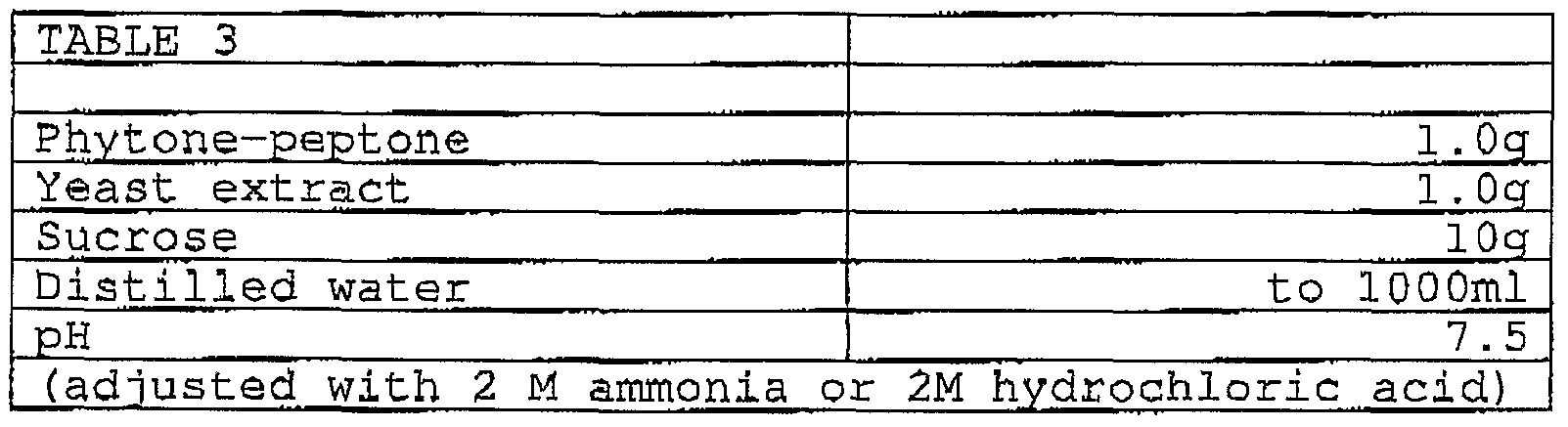
200ml of seed culture and 1Og of Takifugυ alboplumbeυs tissue extract were used to inoculate 1OL fermentation medium aseptically in a 12L fermenter. The fermenter was supplied with sterile air and agitation, and was maintained at a temperature of 30 degrees Celsius and a pH of 7.5 for 3 days.
The fermentation process was completed after at least 60 hours when initial drop in cell density due to cell lysis observed. Before collecting the fermentation medium from the fermenter chamber, the pH of the medium is adjusted to 3.5 with 2M hydrochloric acid and heated to 95DC for 10 minutes. The medium is centrifuged at 8000 rpπi at 40C for 15 minutes to remove microscopic cells. Only the supernatant in each centrifuge tube is retained, which is then adjusted to pH 6 with 2M ammonia solution. The pooled supernatant is evaporated at 45°C under reduced pressure to 5% of its
original volume and then mixed with an equal amount of activated carbon (v/w) . The adsorbed toxin in the carbon is eluted with 1% acetic acid in 20% ethanol for three times. The elυant is adjusted to pH 6 with 2M ammonia before evaporation at 45"C in reduced pressure to 1% of its original volume. The toxin extract is loaded onto a column (3x50 cm) of weak cation exchange resin (Bio-Rex® 70 Resin) . The toxin is eluted with 0.5% acetic acid and the toxic fractions are monitored with HPLC analyses or mouse bioassay. The toxic factions are pooled together and adjusted to pH 6 with 2M ammonia solution before evaporation at 45ώC under reduced pressure to 1% of its original volume. The extract is freeze-dried and then dissolved in distilled water, which is loaded onto another column (1x80 cm) of weak cation exchange resin (Bio-Rex® 70 Resin) . The toxin extract is eluted with 0-0.2% acetic acid (linear gradient) and the toxic fractions are monitored with HPLC analyses or mouse bioassay. The toxic factions are pooled together and adjusted to pH 6 with 2M ammonia solution before evaporation at 450C under reduced pressure to 1% of its original volume. The extract is finally freeze-dried and it gives over 95% pure TTX.
FIG 3 compares the production of TTX in accordance with the present invention 301 against TTX production by prior methods 303, and TTX production by simply growing the Vibrio culture in a flask 305. As shown by FIG 3, TTX production
via the present invention 301 is quite rapid, yielding 0.5mg TTX/L within 3 days. The prior art 303 shows 0.4mg TTX/L within 6 days, and less than 0. lmg TTX/L by mere flask culturing 305 in over 10 days.
The above system and measurement in accordance with the present invention can be controlled' and monitored by instrumentation and control system. Such instrumentation and. control system may contain on-line sensors, such as probes including thermometer, thermometer, pH reference electrodes, Ag and Pb probes, conductance probes, capacitance probes, on-line instruments including tachometers, watt-meters, mass flow meters, rotameters, strain gauges, load cells, spring diaphragm, oil filled diaphragm, electro magnetic flow meters, vortex devices, and gas analysers including paramagnetic analyser, mass spectrometers, and infrared analyser. Off line instruments can also be included, such instruments to measure packed cell volume, dry weight, optical density, microscopic observation, Coulter counter, and plate counts. The control systems may also comprise one or more controllers, such controller possessing processors, memory both temporary and permanent, algorithms for operating the production and fermenters, User Interface Devices, including displays, keyboard, mouses, etc. Examples of controllers include computers, pda's, laptop computers, and control panels.
Having described embodiments of the present system with reference to the accompanying drawings, it is to be understood that the present system is not limited to the precise embodiments, and that various changes and modifications may be effected therein by one having ordinary skill in the art without departing from the scope or spirit as defined in the appended claims.
In interpreting the appended claims, it should be understood that: a) the word ΛXcomprising" does not exclude the presence of other elements or acts than those listed in the given claim; b) the word "a" or ΛSan" preceding an element does not exclude the presence of a plurality of such elements; c) any reference signs in the claims do not limit their scope; d) any of the disclosed devices or portions thereof' may be combined together or separated into further portions unless specifically stated otherwise; and e) no specific sequence of acts or steps is intended to be required unless specifically indicated.
Claims
1. A method of biosynthesizing tetrodotoxm, comprising the steps of: -obtaining a culture from a seed culture or storage possessing one or more Vibrio species;
-simultaneously inoculating said culture and a growth tissue extract excised from a textrodotoxin-bearing organism in a fernaenter with a medium; and -isolating and purifying tetrodotoxin from said fermenter medium.
2. The method of biosynthesisiπg tetrodotoxin in claim 1, further comprising, before obtaining said culture:
-excising a tissue extract from a tetrodotoxin-bearing organism/
-adding said tissue extract to a bioreactor; -extracting the bioreactor contents into a second bioreactor;
-extracting the second bioreactor contents onto a substrate; and
-placing the resultant cultures from said substrate into a medium to form the seed culture.
3. The method of biosynthesizing tetrodotoxin in claim 1, wherein said one or more Vlhrio species is selected from the group consisting of Vibrio nigripulchritudo, Vibrio mediterranei, Vibrio harveyi, Vibrio alginoiyticus, Vibrio salmonicida. Vibrio tubiashii, Vibrio parahaemolyticus, Vibrio campebllii, Vibrio natri&gens, vibrio nereis/ Vibrio carchariae, Vibrio flυvialis, Vibrio fischeri, Vibrio vulnificus, Vibrio splendidus, Vibrio orientalis, Vibrio aestuarianus, Vibrio pelagius, Vibrio wodanis, Vibrio fumissii, Vibrio proteolyticus, Vibrio ichthyoenteri, Vibrio pectenicida, Vibrio logei, Vibrio mimicus, Vibrio rπytili, vibrio rumoiensis, Vibrio angυillarum, Vibrio gazogenes, Vibrio halioticoli, Vibrio hollisaef Vibrio ordalii, and Vibrio metschnkiovii.
4. The method of biosynthesizing tetrodotoxin in claim 2, wherein said one or more Vibrio species is obtained from Vibrio alginolyticus, Vibrio anguillarum, Vibrio choleme, Vibrio parahaemolyticus, and Vibrio fluvialis.
5. The method of biosynthesizing tetrodotoxin in claim 2, wherein said tissue extract is taken from organs including intestine, liver, ovary, stomach, or skin.
6. The method of biαsynthesizing tetrodotoxin in claim 2, wherein said tissue extract is from a tetrodotoxin-bearing organism selected from the group consisting of flatworms, ribbon worms, gastropods, blue-ringed octopuses, starfish, sea urchins, xanthid crabs, horsehoe crabs, gobies, frogs, neuts, and puffer fish.
7. The method of biosynthesizing tetrodotoxin in claim 2, wherein said tissue extract is from puffer fish.
8. The method of biosynthesizing tetrodotoxin in claim 7, wherein .said puffer fish can be selected from the group consisting of Arothron h±spidis, Arothron stellatus, Chelonodon patocoar Takifugu alboplumbeus, Takifugu niphobles, Takifugu oblongus, Takifugu ocellatus, Takifugu xanthopteruSf and Diodon holocanthus .
9. The method of biosynthesizing tetrodotoxin in claim 1, wherein said growth tissue extract is excised from the organs including liver, intestine, ovary, stomach, or skin.
10. The method of biosynthesizing tetrodotoxin in claim 1, wherein said growth tissue extract is excised from organs from tetrodotoxin-bearing organisms selected from the group consisting of flatworms, ribbon worms, gastropods, blue- ringed octopuses, starfish, sea urchins, xanthid crabs, horsehoe crabs, gobies, frogs, newts, and puffer fish.
11. The method of biosynthesizing tetrodotoxin in claim 2, wherein said bioreactor is a shake flask.
12. The method of biosynthesizing tetrodotoxin in claim 2, wherein said medium in said seed culture is comprised of soy peptone, yeast extract, glucose, and distilled water.
13. The method of biosynthesizing tetrodotoxin in claim lr wherein said fermenter medium comprises soy peptone, yeast extract, sugars, distilled water, and buffers.
14. The method of biosynthesizing tetrodotoxin in claim 13, wherein said fermenter medium is exposed to sterile air and agitation ,
15. The method of biosynthesizing tetrodotoxin in claim 2, wherein said growth tissue extract is excised from a different organism or species than the source of said tissue extract added to said bioreactor.
16. The method of biosynthesizing tetrodotoxin in claim 1, wherein said growth tissue extract contains one or more growth factors.
17, The method of biosynthesizing tetrodotoxin in claim 1, wherein isolating and purifying tetrodotoxin from said fermenter comprises the steps :
-adjusting the pH and heating of said fermenter medium;
-σentrifuging said medium;
-evaporating supernatant liquid collected from said centrifuged medium;
-mixing an adsorption medium with a resultant tσxin;
-eluting said adsorption medium;
-evaporating an eluant collected from said eluted adsorption medium; -loading a resultant tetrodotoxin extract unto an ion exchange column;
-drying said resultant tetrodotoxin extract;
-loading a resultant tetrodotoxin extract solution unto a second ion exchange column; -eluting said second ion exchange column; -evaporating an eluant collected therefrom; and -drying said eluant.
18. The method of biosynthesizing tetrodotoxin in claim 17, whereby said method results in at least 90% tetrodotoxin in an amount of at least 0.5mg TTX/L in a maximum of 3 to 5 days.
19. A method of biosynthesizing tetrodotoxin, comprising:
-obtaining a culture from a seed medium possessing one or more Vibrio speciesr said seed medium created through the steps of a) through d) ; a) excising a tissue extract from a tetrodotoxin- bearing organism; b) adding said tissue extract to a bioreactor; c) extracting said bioreactor contents onto a substrate; and d) placing the resultant cultures from said substrate into a medium of a seed culture.
-simultaneously inoculating said culture and a growth tissue extract excised from a textrodotαxin-bearing organism in a fermenter with a medium; and
-isolating and purifying tetrodotoxin from said fermenter medium.
Priority Applications (1)
| Application Number | Priority Date | Filing Date | Title |
|---|---|---|---|
| CN2008800059351A CN101809160B (en) | 2007-02-23 | 2008-02-25 | Biosynthesis method of tetrodotoxin |
Applications Claiming Priority (2)
| Application Number | Priority Date | Filing Date | Title |
|---|---|---|---|
| US11/709,657 US7977074B2 (en) | 2007-02-23 | 2007-02-23 | Method of biosynthesizing tetrodotoxin |
| US11/709,657 | 2007-02-23 |
Publications (2)
| Publication Number | Publication Date |
|---|---|
| WO2008102253A2 true WO2008102253A2 (en) | 2008-08-28 |
| WO2008102253A3 WO2008102253A3 (en) | 2008-11-20 |
Family
ID=39710580
Family Applications (1)
| Application Number | Title | Priority Date | Filing Date |
|---|---|---|---|
| PCT/IB2008/000408 Ceased WO2008102253A2 (en) | 2007-02-23 | 2008-02-25 | Method of biosynthesizing tetrodotoxin |
Country Status (3)
| Country | Link |
|---|---|
| US (1) | US7977074B2 (en) |
| CN (1) | CN101809160B (en) |
| WO (1) | WO2008102253A2 (en) |
Cited By (3)
| Publication number | Priority date | Publication date | Assignee | Title |
|---|---|---|---|---|
| WO2011039268A1 (en) | 2009-09-30 | 2011-04-07 | Malin Strand | Sustainable method for obtaining tetrodotoxin |
| CN102627652A (en) * | 2012-03-15 | 2012-08-08 | 河北省海洋与水产科学研究院 | Deoxytetrodotoxin extraction method |
| CN104370929A (en) * | 2014-10-19 | 2015-02-25 | 钟馨稼 | Method for preparing tetrodotoxin |
Families Citing this family (6)
| Publication number | Priority date | Publication date | Assignee | Title |
|---|---|---|---|---|
| CN102329849A (en) * | 2011-10-09 | 2012-01-25 | 南昌大学 | Method for producing tetrodotoxin from microorganisms by commensalism culture fermentation |
| CN104328070A (en) * | 2014-10-23 | 2015-02-04 | 天津瑞麟祥生物科技有限责任公司 | Marine bacterium combination for producing tetrodotoxin |
| RU2572352C1 (en) * | 2014-10-27 | 2016-01-10 | Федеральное государственное бюджетное учреждение науки Институт биологии моря им. А.В. Жирмунского Дальневосточного отделения Российской академии наук (ИБМ ДВО РАН) | Method of fugu toxin production |
| CN109337943B (en) * | 2018-11-01 | 2019-12-31 | 深圳市华唐兴东生物科技有限公司 | Method for producing tetrodotoxin |
| CN111349580A (en) * | 2020-01-17 | 2020-06-30 | 青岛春华生物医药科技有限公司 | Culture solution for producing tetrodotoxin marine microorganisms and fermentation method thereof |
| CN111676179A (en) * | 2020-07-27 | 2020-09-18 | 北京市食品安全监控和风险评估中心(北京市食品检验所) | Parahemolytic vibrio culture medium, culture method and application |
Family Cites Families (5)
| Publication number | Priority date | Publication date | Assignee | Title |
|---|---|---|---|---|
| CN1238356C (en) * | 2001-12-14 | 2006-01-25 | 上海华腾生物工程有限公司 | Method for extracting tetrodotoxin |
| CN100358997C (en) * | 2003-05-30 | 2008-01-02 | 中国科学院沈阳应用生态研究所 | A method for isolating microorganisms producing tetrodotoxin from puffer fish |
| CN1460721A (en) * | 2003-06-18 | 2003-12-10 | 清华大学 | Preparation method of microbial source spheroidine |
| CN100398543C (en) * | 2004-11-27 | 2008-07-02 | 赵继红 | Method of preparing fugutoxin water extract |
| CN1680567A (en) * | 2005-01-26 | 2005-10-12 | 清华大学 | Production of tetrodotoxin by microbiological fermentation |
-
2007
- 2007-02-23 US US11/709,657 patent/US7977074B2/en active Active
-
2008
- 2008-02-25 WO PCT/IB2008/000408 patent/WO2008102253A2/en not_active Ceased
- 2008-02-25 CN CN2008800059351A patent/CN101809160B/en active Active
Cited By (6)
| Publication number | Priority date | Publication date | Assignee | Title |
|---|---|---|---|---|
| WO2011039268A1 (en) | 2009-09-30 | 2011-04-07 | Malin Strand | Sustainable method for obtaining tetrodotoxin |
| CN102884200A (en) * | 2009-09-30 | 2013-01-16 | 纳玛法玛有限公司 | Sustainable method for obtaining tetrodotoxin |
| CN102627652A (en) * | 2012-03-15 | 2012-08-08 | 河北省海洋与水产科学研究院 | Deoxytetrodotoxin extraction method |
| CN102627652B (en) * | 2012-03-15 | 2014-05-07 | 河北省海洋与水产科学研究院 | Deoxytetrodotoxin extraction method |
| CN104370929A (en) * | 2014-10-19 | 2015-02-25 | 钟馨稼 | Method for preparing tetrodotoxin |
| CN104370929B (en) * | 2014-10-19 | 2016-07-27 | 钟馨稼 | A kind of method preparing Fugu ocellatus toxin |
Also Published As
| Publication number | Publication date |
|---|---|
| CN101809160B (en) | 2013-08-14 |
| WO2008102253A3 (en) | 2008-11-20 |
| CN101809160A (en) | 2010-08-18 |
| US20080206825A1 (en) | 2008-08-28 |
| US7977074B2 (en) | 2011-07-12 |
Similar Documents
| Publication | Publication Date | Title |
|---|---|---|
| US7977074B2 (en) | Method of biosynthesizing tetrodotoxin | |
| JPH0338276B2 (en) | ||
| CN118421534B (en) | Strain for producing 1-deoxynojirimycin and application thereof | |
| CN112680393A (en) | Construction and application of sterile escherichia coli capable of improving production efficiency | |
| WO2023016387A1 (en) | Bacillus amyloliquefaciens and use thereof in preparation of 1-deoxynojirimycin | |
| CN102329849A (en) | Method for producing tetrodotoxin from microorganisms by commensalism culture fermentation | |
| CN120536323B (en) | A strain of *Pseudomonas putida* and its application as a probiotic for fish | |
| CN108641982B (en) | Bacillus texatilis S61 and application thereof | |
| JPH02142795A (en) | Novel immunosuppressive agent compound | |
| CN116121127B (en) | A growth-promoting bacterium for promoting the growth of long-stem grape fern algae and its application | |
| Gauthier et al. | Isolation of soil microorganisms using iChip technology | |
| CN110004073A (en) | Actinomyces and its application with broad spectrum antibiotic activity | |
| CN111072670A (en) | A kind of diketopiperazine compound and its preparation method and use | |
| CN113249279B (en) | Rhodobacter sphaeroides mutant strain with high coenzyme Q10 yield and application thereof | |
| CN113755368B (en) | A Fujian Chicken Mycoplasma Synovium and Its Culture Medium | |
| CN106905342B (en) | Structure of two active metabolites of streptomyces roseoflavus and preparation thereof | |
| CN106047751B (en) | Separation method and the application of one plant of quasi- promise Cattell actinomyces and its active metabolite | |
| JPH03244387A (en) | Fermentation of staulosporin | |
| CN103173398B (en) | Short bacillus and method for preparing trehalose by virtue of fermentation | |
| CN106754408A (en) | One plant of porous trichoderma strain and its method for preparing terpenoid | |
| JPH0374388A (en) | Novel microbiologically transformed l-683, 590 products | |
| CN106282050A (en) | Actinomycetes BI87 that can produce active anticancer metabolite that one strain separates from human body intestinal canal and application thereof | |
| CN114717135B (en) | Streptomyces pratensis and method for producing pseudouridine and 1-methyl-pseudouridine by fermentation of Streptomyces pratensis | |
| RU2465316C1 (en) | Haemophilus influenzae b n 326 bacterial strain, stable producer of capsular saccharide | |
| CN113215043B (en) | Bacillus pumilus and application thereof |
Legal Events
| Date | Code | Title | Description |
|---|---|---|---|
| WWE | Wipo information: entry into national phase |
Ref document number: 200880005935.1 Country of ref document: CN |
|
| 121 | Ep: the epo has been informed by wipo that ep was designated in this application |
Ref document number: 08737292 Country of ref document: EP Kind code of ref document: A2 |
|
| NENP | Non-entry into the national phase |
Ref country code: DE |
|
| 122 | Ep: pct application non-entry in european phase |
Ref document number: 08737292 Country of ref document: EP Kind code of ref document: A2 |