SALICYLIC ACID DERIVATIVE COMPOUND AND PHARMACEUTICAL COMPOSITION CONTAINING THEM
[TECHNICAL FIELD] The present invention relates to new salicylic acid derivative compounds having specific chemical formula, pharmaceutical composition containing the same and treating or preventing method using the same.
[BACKGROUND ART]
Glutamate is an excitatory neurotransmitter mediating slow excitatory synaptic transmission through N-methyl-D-aspartate (NMDA) receptors and fast excitatory synaptic transmission through alpha-amino-3-hydroxy-5-methyl-4-isoxazolepropionic (AMPA) receptors. Physiological activity characteristics of NMDA glutamate receptors play an important role in learning and memory, and plasticity of nervous system [Siegel G. J. et al . , Basic Neurochemistry, 6th edition, Lippincott Williams & Wilkins : 315-333 (1999) ]. Besides physiological roles, excess activation of NMDA glutamate receptors can cause neuronal death [Olney, J. W. and Sharpe, L. G., Science, 166:386-388(1969); Olney, J. W. and Ho, 0. L., Nature, 227 (258 ): 609-611 (1970) ]. Administration of an antagonist of NMDA glutamate receptor is reported to suppress neuronal death in brain diseases like Lou
Gehrig's disease (Wang R and Zhang D. Eur J Neurosci. 2005 ; 22 (9) : 2376-80) , Alzheimer's dementia (Miguel-Hidalgo et al., Brain Res. 958, 210-221 (2002)), stroke (Park CK et al., Ann. Neurol. 24, 543-551 (1988)), Huntington' s disease (Verhagen
Metman L et al . , Neurology. 2002; 59 (5) : 694-9. ), spinal cord injury (Faden et al., J Neurotrauma. 1988; 5 (1) : 33-45) , Parkinson's disease (Rabey et al . , J. Neural Transm. Park Dis. Dement. Sect. 4, 277-282 (1992)), etc.; ocular diseases like glaucoma (Pang et al., Invest Ophthalmol . Vis. Sci. 40, 1170- 1176 (1999)), diabetic retinopathy (Smith et al . , Drug News Perspect. 15, 226-232 (2002)), etc.; and pain diseases like
neuropathic pain (Chaplan SR et al., J Pharmacol Exp Ther. 1997;280(2) :829-38) .
However, there are experimental results showing the toxicity of NMDA receptor antagonist, which causes doubts about the safety of such drugs. Low dose of subcutaneous injections of phencyclidine and related NMDA receptor antagonists such as MK-801 (dizocilpine maltate) , tiletamine and ketamine are reported to cause degeneration of brain cell in some sites of cerebral cortex [Olney, J. W. et al., Science, 244:1360- 1362(1989)]. This toxicity of NMDA receptor antagonists becomes
a severe obstacle in developing brain disease therapeutic agent for stroke and so on.
Reactive oxygen is known to be one of main reasons for the
cerebral nervous disease and ocular diseases. Reactive oxygen
is made by the increase of free radical production or troubles
in mechanism removing free radical in cell. Produced reactive oxygen causes oxidation of protein, lipid, nucleic acid and so on, which are essential in survival and function of cell, and induces the death of the cell in the end. Administrations of anti-oxidants are reported to be effective in treating brain
diseases like Lou Gehrig's disease (Andreassen OA et al., Neuroreport 11, 2491-2493 (2000)), Alzheimer's dementia (Sung S et al., . FASEB J. 18, 323-325 (2004)), stroke (Kuroda S et al., J Cereb Blood Flow Metab. 1999 ; 19 (7) : 778-87) , Huntington' s
disease (Andreassen et al., Neuroreport. 2001; 12 (15) : 3371-3) , spinal cord injury (Faden & salzman., Trends Pharmacol . Sci. 13,
29-35 (1992)), Parkinson's disease (Prasad et al., J. Am. Coll. Nutr. 18, 413-423 (1999)), etc.; ocular diseases like glaucoma (Neufeld et al., J. Glaucoma. 11, 221-225 (2002)), diabetic retinopathy (Chung et al., Arzneimittelforschung. 55, 573-580 (2005)), macular degeneration (Richer et al., Optometry. 75,
216-230 (2004)), etc.; neuropathic pain (Chaplan SR et al., J Pharmacol Exp Ther. 1997; 280 (2) : 829-38 ).
However, anti-oxidants like vitamin E or acetyl-L- carnitine are evaluated not to be effective in Alzheimer's
dementia and Parkinson's disease (Hudson & Tabet, 2003; Thai et al., 2003; Luchsinger et al., 2003; Morens et al., 1996). Low
potency and low blood brain barrier (BBB) permeability of known anti-oxidants are thought to be severe problems in clinical
development of therapeutic agent for brain diseases (Gilgun-
Sherki et al., 2002; Molina et al . , 1997). As said above, these obstacles that anti-oxidants and glutamate receptor antagonists are having should be overcome to be used as therapeutic agent.
Inflammation is reactions of blood membrane and cell against injury factor originated from injured cell and foreign material entered into body. 1) Metabolites of arachidonic acid, that is, prostaglandin, leukotriene, and lipoxins, 2) platelet activation factor, 3) cytokines like tumor necrosis factor-alpha, interleukin-1 (IL-I), etc. and chemokines like monocyte chemo- attractant protein (MCP-I), macrophage inflammatory protein- lalpha (MCP-lalpha) , etc., 4) nitric oxide (NO), 5) reactive oxygen, 6) vasodilating factors such as histamine, serotonin, etc. are known to be materials intervening inflammation reaction. Main purpose of inflammation reaction is to remove extraneous material and injured cell (or cell tissue) , but inflammation reaction can be a cause of chronic diseases like rheumarthritis, pancreatitis, gastritis, colitis and arteriosclerosis.
Non-steroid anti-inflammatory drugs (NSAIDs) , drugs suppressing activity of cyclooxygenase taking part in production of prostaglandin, have been developed and widely used to
alleviate symptoms, including pain, of inflammatory diseases, but there are side effects to block the use of the NSAIDs. Specifically, gastrointestinal disorders such as dyspepsia, gastritis, ulcer, bleeding and perforation are side effects often happening after administration of NSAIDs. Celecoxib and Rofecoxib, selective COX-2 (cyclooxygenase-2 ) enzyme inhibitors, having low side effects on gastrointestinal damage have been developed and used for treating arthritis and pain. However, U.S. FDA reported that long-term administration of celecoxib, rofecoxib and valdecoxib might cause heart disease, and prohibited the use of these as drug for treating arthritis. Furthermore, clinical trials to evaluate therapeutic efficacy of celecoxib and rofecoxib in dementia were discontinued because of their safety. Even in inflammatory disease, reactive oxygens produced by neutrophil, macrophage, monocyte, etc are known to be major reasons causing tissue damage by mediating inflammatory reaction. In actually, administration of drugs removing reactive oxygen are reported to be effective in treating gastric damage happing in inflammatory diseases (Matthews GM et al., Helicobacter. 2005;10 (4) :298-306) , pancreatic damage (Shi C et al., Pancreatology. 2005; 5 (4-5) : 492-500) , atherosclerosis (Tardif JC, Curr Atheroscler Rep. 2005; 7 (1) : 71-7) , colon damage (Oz HS et al., J Nutr Biochem. 2005 ; 16 (5) : 297-304 ), joint damage
(Henrotin YE et al., Osteoarthritis Cartilage. 2003 ; 11 (10) : 747- 55), renal damage (Tian N et al., Hypertension. 2005; 45 (5) : 934- 9), river damage (Loguercio C et al., Free Radio Biol Med. 2003; 34 (1) : 1-10) and cardiovascular damage (Haidara MA et al., Curr Vase Pharmacol. 2006; 4 (3) : 215-27) . In addition, administration of NSAIDs causes production of reactive oxygen, and induces damage to the gastric mucous membrane. This gastric damage is reported to be lessened by administration of anti¬
oxidant material (Graziani G et al., Gut. 2005; 54 (2 ): 193-200) .
[DISCLOSURE] [TECHNICAL PROBLEM]
Accordingly, the object of the present invention is to provide a new compound useful for treating or preventing brain
disease, ocular disease, pain and inflammatory disease; a pharmaceutical composition comprising the compound; and treating or preventing method using the compound.
That is, the object of the present invention is to provide a therapeutic agent having treating efficacy for brain disease, ocular disease, pain and inflammatory disease and no side effect, that is, a therapeutic agent suppressing excitatory toxicity, having no gastric damage unlike known anti-inflammatory drug, showing cell protective effect in low concentration, and showing anti-oxidant effect.
[TECHNICAL SOLUTION]
To achieve the object, the present invention is to provide a salicylic acid derivative compound represented by the below chemical formula 1 or its pharmaceutically acceptable salt: [Chemical formula 1]
wherein,
X is O or S; R1 is hydrogen or alkyl; R2 is hydrogen, alkyl or alkanoyl; R3 is hydrogen or alkyl; R4 is phenyl, biphenyl or naphthyl which is unsubstituted or substituted with one or more selected from the group consisting of halogen, haloalkyl, alkyl, alkoxy, haloalkoxy and nitro; and n is an integer from 2 to 4.
The present inventors have prepared and evaluated a lot of compounds, and succeeded in inventing the fact that the salicylic acid derivative compound or its pharmaceutically acceptable salt is useful for treating or preventing cerebral nervous disease, ocular disease, pain and inflammatory disease.
Hereinafter, the salicylic acid derivative compound, pharmaceutical composition containing the compound and treating or preventing method using the compound will be described in more detail.
The present invention is to provide a salicylic acid derivative compound represented by the below chemical formula 1 or its pharmaceutically acceptable salt.
[Chemical formula 1]
where in ,
X is 0 or S; Ri is hydrogen or alkyl; R2 is hydrogen, alkyl or alkanoyl; R3 is hydrogen or alkyl; R4 is phenyl, biphenyl or naphthyl which is unsubstituted or substituted with one or more selected from the group consisting of halogen, haloalkyl, alkyl, alkoxy, haloalkoxy and nitro; and n is an integer from 2 to 4.
Preferably, in the chemical formula 1, alkyl is Ci-C5 alkyl, and more preferably C1-C3 alkyl. Alkyl described above includes, but is not limited to, methyl, ethyl, propyl, isopropyl, butyl, sec-butyl and tert-butyl . Alkoxy, preferably, is Ci-C5 alkoxy, and more preferably Ci-C3 alkoxy. Alkoxy described above includes, but is not limited to, methoxy, ethoxy, and propanoxy. Halogen includes, but is not limited to, fluoride, chloride, bromide, and iodide. Preferably, alkanoyl is C2-Ci0 alkanoyl, and more preferably C3-C5 alkanoyl. Alkanoyl described above includes, but is not limited to, ethanoyl, propanoyl, and cyclohexanecarbonyl .
Preferable examples of the salicylic acid derivative
compound include, but are not limited to,
2-hydroxy-5- (2- (phenoxy-ethylamino) -benzoic acid (compound
D, 5- [2- (4-fluorophenoxy) ethylamino] -2-hydroxybenzoic acid (compound 2 ) ,
5- [2- (4-chlorophenoxy) ethylamino] -2-hydroxybenzoic acid
(compound 3) ,
5- [2- (4-bromophenoxy) ethylamino] -2-hydroxybenzoic acid (compound 4) ,
5- [2- (2, 6-difluoro-phenoxy) ethylamino] -2-hydroxybenzoic acid (compound 5) ,
2-hydroxy-5- [2- (2-pentafluoro-phenoxy) ethylamino] -benzoic acid (compound 6) , 5- [2- (2, 4-dichloro-phenoxy) ethylamino] -2-hydroxybenzoic acid (compound 7) ,
2-hydroxy-5- [2- (2, 4 , 5-trichlorophenoxy) ethylamino] benzoic
acid (compound 8),
5- [2- (2 , 6-dichloro-4-fluorophenoxy) ethylamino] -2- hydroxybenzoic acid (compound 9) ,
2-hydroxy-5- (2-p-tolyloxyethylamino) benzoic acid (compound
10),
5- [2- (2 , 6-dimethyl-phenoxy) -ethylamino] -2-hydroxy-benzoic acid (compound 11) ,
5- [2- (4-chloro-2-methylphenoxy) ethylamino] -2- hydroxybenzoic acid (compound 12),
2-hydroxy-5- [2- (4-
trifluoromethylphenoxy) ethylamino] benzoic acid (compound 13), 2-hydroxy-5- [2- (4-methoxy-phenoxy) ethylamino] -benzoic acid (compound 14) ,
2-hydroxy-5- [2- (4-trifluoromethyl- phenoxy) ethylamino] benzoic acid (compound 15),
2-hydroxy-5- [2- (2-nitrophenoxy) ethylamino] benzoic acid (compound 16) ,
2-hydroxy-5- [2- (naphthalene-2-yloxy) ethylamino] -benzoic acid (compound 17),
2-hydroxy-5- [2- ( 6-methyl-naphthalene-2-yloxy) ethylamino] - benzoic acid (compound 18), 5- [2- (biphenyl-4-yloxy) -ethylamino] -2-hydroxy-benzoic acid (compound 19) ,
2-hydroxy-5- (3-phenoxypropylamino) benzoic acid (compound 20),
5- [3- (4-fluorophenoxy) propylamino] -2-hydroxybenzoic acid (compound 21),
5- { [2- (4-chlorophenoxy) ethyl ]methylamino} -2-hydroxybenzoic acid (compound 22),
2-hydroxy-5- {methyl- [2-naphthalene-2-yloxy) -ethyl] -amino} - benzoic acid (compound 23) and
2-hydroxy-5- (2-phenylsulfanylethylamino) benzoic acid (compound 24) .
The term "pharmaceutically acceptable salt" of the present
invention means salts produced by non-toxic or little toxic base. In case that the compound of the present invention is acidic, base addition salts of the compound of the present invention can be made by reacting the free base of the compound with enough amount of desirable base and adequate inert solvent.
Pharmaceutically acceptable base addition salt includes, but is not limited to, sodium, potassium, calcium, ammonium, magnesium or salt made by organic amino. In case that the compound of the present invention is basic, acid addition salts of the compound
of the compound can be made by reacting the free base of the compound with enough amount of desirable acid and adequate inert solvent. Pharmaceutically acceptable acid addition salt includes, but is not limited to, propionic acid, isobutylic acid, oxalic acid, malic acid, malonic acid, benzoic acid, succinic acid, suberic acid, fumaric acid, mandelic acid, phthalic acid, benzenesulfonic acid, p-tolylsulfonic acid, citric acid, tartaric acid, methanesulfonic acid, hydrochloric acid, bromic acid, nitric acid, carbonic acid, monohydrogencarbonic, phosphoric acid, monohydrogen-phosphoric acid, dihydrogen- phosphoric acid, sulfuric acid, monohydrogen-sulfuric acid, hydrogen iodide, and phosphorous acid. In addition, the
pharmaceutically acceptable salt of the present invention includes, but is not limited to, a salt of amino acid like arginate and an analog of organic acid like glucuronic or galactunoric. Some of the compounds of the present invention may be hydrated form, and may exist as solvated or unsolvated form. A part of compounds according to the present invention exist as crystal form or amorphous form, and any physical form is included in the scope of the present invention. In addition, some compounds of the present invention may contain one or more asymmetric carbon atoms or double bond, and therefore exists in two or more stereoisomeric forms like racemate, enantiomer, diastereomer, geometric isomer, etc. The present invention includes these individual stereoisomers of the compounds of the present invention.
The present invention also provides a pharmaceutical composition comprising the salicylic acid derivative compound represented by the above chemical formula 1 or its
pharmaceutically acceptable salt; and pharmaceutically acceptable excipient or additive. The compound or its pharmaceutically acceptable salt of the present invention may be administered alone or with any convenient carrier, diluent, etc.
and a formulation for administration may be single-dose unit or multiple-dose unit.
The pharmaceutical composition of the present invention may be formulated in a solid or liquid form. The solid formulation includes, but is not limited to, a powder, a granule, a tablet, a capsule, a suppository, etc. Also, the solid formulation may further include, but is not limited to, a diluent, a flavoring agent, a binder, a preservative, a disintegrating agent, a lubricant, a filler, etc. The liquid
formulation includes, but is not limited to, a solution such as water solution and propylene glycol solution, a suspension, an emulsion, etc., and may be prepared by adding suitable additives such as a coloring agent, a flavoring agent, a stabilizer, a thickener, etc.
For example, a powder can be made by simply mixing the
salicylic acid derivative compound of the present invention and pharmaceutically acceptable excipients like lactose, starch, microcrystalline cellulose. A granule can be prepared as follows: mixing the compound or its pharmaceutically acceptable salt, a pharmaceutically acceptable diluent and a pharmaceutically acceptable binder such as polyvinylpyrrolidone, hydroxypropylcellulose, etc; and wet-granulating with adequate solvent like water, ethanol, isopropanol, etc, or direct- compressing with compressing power. In addition, a tablet can
be made by mixing the granule with a pharmaceutically acceptable lubricant such as magnesium stearate, and tabletting the mixture.
The pharmaceutical composition of the present invention may be administered in forms of, but not limited to, oral formulation, injectable formulation (for example, intramuscular,
intraperitoneal, intravenous, infusion, subcutaneous, implant), inhalable, intranasal, vaginal, rectal, sublingual, transdermal, topical, etc. depending on the disorders to be treated and the patient's conditions. The composition of the present invention may be formulated in a suitable dosage unit comprising a pharmaceutically acceptable and non-toxic carrier, additive and/or vehicle, which all are generally used in the art, depending on the routes to be administered. Depot type of
formulation being able to continuously release drug for desirable time also is included in the scope of the present invention .
The present invention also provides a use of the salicylic acid derivative compound or its pharmaceutically acceptable salt for treating and/or preventing brain disease, ocular disease, pain and inflammatory disease. That is, the present invention provides a pharmaceutical composition for treating or preventing brain disease, ocular disease, pain and inflammatory disease, comprising the salicylic acid derivative compound represented by the above chemical formula 1 or its pharmaceutically acceptable salt. More specifically, the salicylic acid derivative compound or its pharmaceutically acceptable salt can be used for treating
or preventing degenerative brain diseases such as Alzheimer's disease, Parkinson's disease, Lou Gehrig's disease, Huntington' s disease; cerebrovascular diseases such as stroke; acute brain or spinal cord injury; ocular disease such as glaucoma, macular degeneration and diabetic retinopathy; inflammatory disease such as arteriosclerosis, gastritis, colitis, arthritis, nephritis, hepatitis, degenerative disease; and pain.
For treating the above-mentioned diseases, particularly
cerebral nervous diseases, the compound of the present invention may be administered daily at a dose of approximately 0.01 mg/kg to approximately 100 g/kg, preferably approximately 0.1 mg/kg to approximately 10 g/kg. However, the dosage may be varied according to the patient's conditions (age, sex, body weight, etc.), the severity of patients in need thereof, the used effective components, diets, etc. The compound of the present invention may be administered once a day or several times a day in divided doses, if necessary.
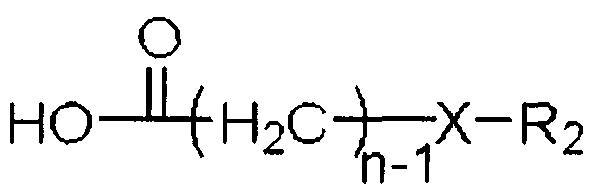
In addition, the present invention provides a method of preparing the salicylic acid derivative compound represented by the above chemical formula 1. For example, one example of the salicylic acid derivative compounds can be prepared by reacting the compound of the below chemical formula 2 with the compound of the below chemical formula 3. <Chemical formula 2>
<Chemical formula 3>
The compound of the above chemical formula 2 can be prepared, but is not limited to, by the below reaction scheme 1. <Reaction scheme 1> HOOC ^ MeOOC ^ Me0QC
HO→θ^NH2 " HOHQKNH2 - HO- KNH-BOC
For example, the reaction conditions of the reaction scheme 1 are as follows: (a) MeOH, H2SO4, reflux, 6 hours; (b) DIBOC, NaHCO3, THF/H2O, room temperature, 7 hours; (c) acetyl chloride, DMF, K2CO3, room temperature, 6 hours; (d) 1,4-dioxane (4N-HC1) , room temperature, 8 hours. However, the reaction conditions of the reaction scheme 1 are not limited to these conditions . More specifically, the salicylic acid derivative compound of the chemical formula 1 can be prepared, but is not limited to, by the below reaction scheme 2.
<Reaction scheme 2>
For example, the reaction conditions of the reaction
scheme 2 are as follows: (a) DCC, MC, room temperature, 2 hours; (b) acetic acid, NaBH4, 1,4-dioxane, reflux, 20 minutes; (c) CH3I, DMF, K2CO3, 40, 6 hours; (d) acetic acid, HC1/H2O, reflux, 12 hours. However, the reaction conditions of the reaction scheme 2 are not limited to these conditions.
[BRIEF DESCRIPTION OF THE DRAWINGS]
Figure 1 is anti-inflammatory activity results of the compound 11 (100 uM) , one example of the compounds according to the present invention, using BV-2 cell line. The levels of NO,
TNF-α and IL-6 produced by LPS were evaluated. Figure 2 is an efficacy evaluation result of compound 11 using arthritis animal model induced by collagen. After injection of collagen, compound 11 (25mg/kg/day) and methotrexate (MTX, control, lmg/kg/week) were intraperitoneally injected. After that, gross examination was performed for 4 weeks, and results were evaluated as arthritis index.
Figure 3 is efficacy evaluation results of compound 11 using arthritis animal model induced by collagen. After
injection of collagen, compound 11 (25mg/kg/day) and methotrexate (MTX, control, lmg/kg/week) were intraperitoneally
injected. Then, the levels of cytokines, TNF-α and IL-lβ, were evaluated with ELISA.
[MODES FOR CARRYING OUT THE INVENTION]
Hereinafter, the present invention is described in considerable detail to help those skilled in the art understand the present invention. However, the following examples are
offered by way of illustration and are not intended to limit the scope of the invention. It is apparent that various changes may be made without departing from the spirit and scope of the invention or sacrificing all of its material advantages.
<Synthesis example 1> Preparation of 5- [2- (4- chlorophenoxy) ethylamino] -2-hydroxybenzoic acid (compound 3)
A) 2-acetoxy-5-aminobenzoic acid methyl ether (1.06 g, 5.07 mmole) , 4-chlorophenoxyacetic acid (0.09 g, 5.57 mmole) and DCC (1.14 g, 5.55 mmole) were added to dried MC (30 ml) at room temperature under a nitrogen atmosphere. The reaction mixture was stirred for 2 hrs at room temperature. Produced floating materials were removed by filtration, and MC was removed in
vacuo. The residue was recrystallized from
methanol/ethylacetate/hexane to give 1.33 g (76.1% yield) of 2- acetoxy-5- [2- (4-chlorophenoxy) acetylamino] benzoic acid methyl ether as a white solid.
IH NMR (DMSO-cU : 8.27 (d, IH), 7.89 (q, IH), 7.35 (d, 2H), 7.18 (d, IH), 7.02 (d, 2H), 4.71 (s, 2H), 3.81 (s, 3H), 2.23 (s, 2H)
B) 2-acetoxy-5- [2- (4-chlorophenoxy) acetylamino] benzoic acid methyl ether (1.33 g, 3.54 mmole) and NaBH4 (0.69 g, 17.7 mmole) were added to 1,4-dioxane (30.0 ml) at room temperature,
and then cooled to 0 °C . Acetic acid (1.06 g, 17.7 mmole) was diluted with 1,4-dioxane, and the diluted solution was added dropwise. The reaction mixture was stirred for 15 minutes at room temperature, and refluxed for 10 minutes. Ice particle was added to the reaction mixture, and solvent was removed in vacuo. The reaction mixture was diluted with water, and then extracted with ethylacetate . The organic layer was washed with water and brine, and dried with MgSO4 anhydrous. The residue was purified by column chromatography using ethylacetate/hexane and recrystallized from ethylacetate/hexane to give 0.54 g (42.3% yield) of 2-acetoxy-5- [2- (4-chlorophenoxy) ethylamino] benzoic acid methyl ether as a white solid.
Melting point: 108°C, IH NMR (CDCl3): 7.22 (q, 2H), 7.19 (d, IH), 6.88 (d, IH), 6.82-6.76 (m, 3H), 4.15 (t, 2H), 3.92 (s, 3H),
3.51 (t, 2H) , 2.25 (s, 3H) ; 13C NMR (CDCl3) : 170.162, 164.937,
156.806, 145.453, 141.654, 129.193, 125.811, 124.188, 123.118,
117.870, 115.603, 114.670, 66.542, 52.162, 43.335, 21.007
C) 2-acetoxy-5- [2- (4-chlorophenoxy) ethylamino] benzoic acid methyl ether (544 mg, 1.49 mmole) and acetic acid (10.0 ml) were added to 6N HCl (40.0 ml) at room temperature. The reaction mixture was stirred and refluxed for 10 hours. Solvent was removed in vacuo, and then the residue was washed with ether and water to give 0.40 g (85.9% yield) of 5-[2-(4- chlorophenoxy) ethylamino] -2-hydroxybenzoic acid as a gray solid.
Melting point: 300°C>, IH NMR (DMSO-d6) : 7.28 (q, 2H) 7.16
(d, IH), 6.97 (t, 2H), 6.61 (q, IH), 6.54 (d, IH), 4.01 (t, 2H),
3.24 (s, 2H); 13C NMR (DMS0-d6): 172.538, 157.173, 153.570,
139.168, 129.082, 124.038, 119.966, 117.698, 116.098, 115.711, 113.292, 66.893, 43.527
Elemental analysis of Ci5H14ClNO4
[Table 1]
<Synthesis example 2> Preparation of 5-[2-(4- fluorophenoxy) ethylamino] -2-hydroxybenzoic acid (compound 2)
A) According to the similar procedure in A) of Synthesis Example 1, by using 2-acetoxy-5-aminobenzoic acid methyl ether
(1.03 g, 5.07 mmole) , 4-fluorophenoxyacetic acid (0.94 g, 5.57
mmole) and DCC (1.14 g, 5.55 mmole), 1.27 g (69.2% yield) of 2- acetoxy-5- [2- (4-fluorophenoxy) acetylamino] benzoic acid methyl
ether was obtained as a white solid. IH NMR (OMSO-d6) : 8.26 (d, IH), 7.88 (q, IH), 7.19-7.01 (m, 6H), 4.69 (s, 2H), 3.80 (s, 3H), 2.26 (s, 3H)
B) According to the similar procedure in B) of Synthesis Example 1, by using 2-acetoxy-5- [2- (4- fluorophenoxy) acetylamino] benzoic acid methyl ether (1.27 g, 3.51 mmole), NaBH4 (0.66 g, 17.5 mmole) and acetic acid (1.05 g, 17.5 mmole), 0.53 g (43.3 % yield) of 2-acetoxy-5- [2- (4-
fluorophenoxy) ethylamino] benzoic acid methyl ether was obtained as a white solid.
Melting point: 90°C, IH NMR (CDCl3): 7.24 (d, IH), 6.95 (t, 2H), 6.90 (d, IH), 6.80 (m, 3H), 4.15 (t, 2H), 3.91 (s, 3H), 3.45 (t, 2H), 2.24 (s, 3H); 13C NMR (CDCl3): 170.147, 164.937, 158.316, 155.949, 154.311, 154.289, 145.514, 141.585, 124.150, 123.080, 117.832, 115.823, 115.595, 115.360, 115.284, 114.624, 66.822, 52.117, 43.373, 20.977 C) According to the similar procedure in C) of Synthesis Example 1, by using 2-acetoxy-5- [2- (4- fluorophenoxy) ethylamino] benzoic acid methyl ether (0.53 g, 1.52 mmole), 0.37 g (84.7 % yield) of 5-[2-(4- fluorophenoxy) ethylamino] -2-hydroxybenzoic acid was obtained as
a gray sol id .
Melting point: 300°C>, IH NMR (DMSO-d5) : 7.06 (q, 3H), 6.94
(m, 3H), 6.75 (d, IH), 4.13 (t, 2H), 3.31 (t, 2H); 13C NMR
(DMSOd6) : 171.954, 157.506, 155.171, 154.594, 152.926, 140.814, 121.907, 117.463, 115.802, 115.635, 115.575, 112.587, 111.328,
111.350, 67.007, 43.300
Elemental analysis of CibHi4FNO4 [Table 2]
<Synthesis example 3> Preparation of 5-[2-(4-
bromophenoxy)ethylamino] -2-hydroxybenzoic acid (compound 4)
A) According to the similar procedure in A) of Synthesis
Example 1, by using 2-acetoxy-5-aminobenzoic acid methyl ether (1.03 g, 5.07 mmole) , 1.32 g (63.7 % yield) of 4-
bromophenoxyacetic acid (1.28 g, 5.57 mmole) and DCC (1.14 g,
5.55 mmole), 2-acetoxy-5- [2- (4-bromophenoxy) acetylamino] benzoic
acid methyl ether was obtained as a white solid.
IH NMR (DMSO-d6) : 8.25 (d, IH), 7.91 (q, IH), 7.46 (d, 2H),
7.18 (d, IH), 6.97 (d, 2H), 4.68 (s, 2H), 3.81 (s, 3H), 2.34 (s,
3H)
B) According to the similar procedure in B) of Synthesis
Example 1, by using 2-acetoxy-5- [2- (4-
bromophenoxy) acetylamino] benzoic acid methyl ether (1.32 g, 3.23
mmole), NaBH4 (0.61 g, 16.1 mmole) and acetic acid (0.96 g, 16.1
πimole) , 0.61 g (46.1 % yield) of 2-acetoxy-5- [2- (4- bromophenoxy) ethylamino] benzoic acid methyl ether was obtained as a white solid.
Melting point: 102~103°C, IH NMR (CDCl3): 7.35 (d, 2H), 7.21 (d, IH), 6.94 (d, IH), 6.82 (m, 3H), 4.12 (t, 2H), 3.90 (s, 3H), 3.42 (t, 2H), 2.21 (s, 3H); 13C NMR (CDCl3): 170.519, 165.294, 157.672, 145.803, 142.026, 132.493, 124.560, 123.483, 118.243, 116.483, 115.035, 113.526, 66.846, 52.535, 43.685, 21.388
C) According to the similar procedure in C) of Synthesis Example 1, by using 2-acetoxy-5- [2- (4- bromophenoxy) ethylamino] benzoic acid methyl ether (0.61 g, 1.49 mmole), 0.46 g (87.4 % yield) of 5-[2-(4- bromophenoxy) ethylamino] -2-hydroxybenzoic acid was obtained as a white solid.
Melting point: 300°C>, IH NMR (DMSO-d5) : 7.41 (d, 2H), 7.04
(d, IH), 6.87 (q, IH), 6.74 (d, 2H), 6.79 (d, IH), 4.14 (t, 2H),
3.41 (t, 2H); 13C NMR (DMSO-d6) : 171.204, 156.976, 152.539,
139.730, 131.418, 121.658, 116.925, 116.144, 111.965, 111.381,
111.222, 66.113, 42.860
Elemental analysis of Ci5Hi4BrNO4
<Synthesis example 4> Preparation of 5- [2- (2,4-
dichlorophenoxy) ethylamino] -2-hγdroxybenzoic acid (compound 7)
A) According to the similar procedure in A) of Synthesis
Example 1, by using 2-acetoxy-5-aminobenzoic acid methyl ether
(1.03 g, 5.07 mmole) , 2, 4-dichlorophenoxyacetic acid (1.23 g,
5.57 mmole) and DCC (1.14 g, 5.55 mmole), 1.62 g (77.5 % yield)
of 2-acetoxy-5- [2- (2, 4-dichlorophenoxy) acetylamino] benzoic acid methyl ether was obtained as a white solid.
IH NMR (DMSO-cU : 8.23 (d, IH), 7.83 (q, IH), 7.58 (d, IH),
7.34 (q, IH), 7.19 (d, IH), 7.11 (d, IH), 4.87 (s, 3H), 3.80 (s,
3H), 2.26 (s, 3H)
B) According to the similar procedure in B) of Synthesis
Example 1, by using 2-acetoxy-5- [2- (2, 4-
dichlorophenoxy) acetylamino] benzoic acid methyl ether (1.62 g,
3.93 mmole), NaBH4(0.74 g, 1.96 mmole) and acetic acid (1.17 g,
19.6 mmole), 0.81 g (51.8 % yield) of 2-acetoxy-5- [2- (2, 4-
dichlorophenoxy) ethylamino] benzoic acid methyl ether was obtained as a white solid.
Melting point: 72~73°C, IH NMR (CDCl3) : 7.33 (d, IH), 7.22 (d, IH), 7.12 (m, IH), 6.89 (d, IH), 6.79 (m, 2H), 4.12 (t, 2H),
3.82 (s, 3H), 3.51 (t, 3H), 2.29 (s, 3H); 13C NMR (CDCl3) :
170.132, 164.891, 152.514, 145.339, 141.638, 129.739, 127.441, 126.038, 124.157, 123.604, 123.065, 118.022, 114.632, 114.291,
67.839, 52.132, 43.115, 20.977
C) According to the similar procedure in C) of Synthesis Example 1, by using 2-acetoxy-5- [2- (2, 4- dichlorophenoxy) ethylamino] benzoic acid methyl ether (0.81 g,
2.03 mmole), 0.53 g (76.8% yield) of 5- [2- (2, 4- dichlorophenoxy) ethylamino] -2-hydroxybenzoic acid was obtained as a white solid.
Melting point: 300°C>, IH NMR (DMSO-d6): 7.48 (s, IH), 7.29 (d, IH), 7.11 (m, 2H), 6.95 (d, IH), 6.75 (d, IH), 4.16 (s, IH),
3.41 (s, IH); 13C NMR (DMSO-d6) : 171.840, 152.850, 152.751, 140.776, 129.074, 127.830, 124.410, 122.355, 121.816, 117.395, 114.900, 112.465, 111.343, 68.183, 43.125
Elemental analysis of Ci5H13C12NO4
[Table 4]
<Synthesis example 5> Preparation of 2-hydroxy-5- [2- (2 ,4 ,5-trichlorophenoxy) ethylamino] benzoic acid (compound 8) A) According to the similar procedure in A) of Synthesis Example 1, by using 2-acetoxy-5-aminobenzoic acid methyl ether (1.03 g, 5.07 mmole), 2, 4 , 5-trichlorophenoxyacetic acid (1.42 g,
5.57 mmole) and DCC (1.14 g, 5.55 mmole) , 1.63 g (71.7 % yield) of 2-acetoxy-5- [2- (2, 4, 5-trichlorophenoxy) acetylamino] benzoic
acid methyl ether was obtained as a white solid.
IH NMR (DMSO-dff) : 6.23 (d, IH), 7.80 (t, 2H), 7.45 (s, IH), 7.20 (d, IH), 4.94 (s, 2H), 3.80 (s, 3H), 2.26 (s, 3H)
B) According to the similar procedure in B) of Synthesis Example 1, by using 2-acetoxy-5- [2- (2, 4 , 5- trichlorophenoxy) acetylamino] benzoic acid methyl ether (1.63 g, 3.64 mmole), NaBH4 (0.48 g, 18.2 mmole) and acetic acid 1.09 g, 18.2 mmole), 0.48 g (27.8 % yield) of 2-acetoxy-5- [2- (2, 4 , 5- trichlorophenoxy) ethylamino] benzoic acid methyl ether was obtained as a white solid.
Melting point: 129~131°C, IH NMR (CDCl3): 7.42 (s, IH), 7.27 (d, IH), 6.98 (s, IH), 6.91 (d, IH), 6.82 (q, IH), 4.19 (t, 2H), 3.91 (s, 3H), 3.61 (t, 2H), 2.24 (s, 3H); 13C NMR (CDCl3): 170.177, 164.926, 152.840, 145.180, 141.927, 131.119, 130.801, 124.612, 124.332, 123.247, 122.057, 118.196, 114.996, 114.859, 68.165, 52.246, 43.153, 21.060
C) According to the similar procedure in C) of Synthesis Example 1, by using 2-acetoxy-5- [2- (2, 4 , 5- trichlorophenoxy) ethylamino] benzoic acid methyl ether (0.43 g, 1.01 mmole), 0.32 g (84.4 % yield) of 2-hydroxy-5- [2- (2 , 4 , 5- trichlorophenoxy) ethylamino] benzoic acid was obtained as a white solid.
Melting point: 300°C>, IH NMR (DMS0-d6) : 7.73 (s, IH), 7.47
(d, IH), 7.34 (q, IH), 6.92 (d, IH), 4.34 (t, 2H), 3.57 (t, 2H);
13C NMR (DMSO-de) : 171.150, 156.763, 152.751, 130.371, 130.333,
126,033, 122.931, 121.134, 117.949, 115.453, 112.966, 66.886, 46.121
Elemental analys i s o f Ci5Hi2C13NO4
[ Table 5 ]
% N % C % H
Calculated 3 .72 47 .84 3 .21
Found 3. 837 47. 842 3. 199
<Synthesis example 6> Preparation of 5- [2- (2,6-dichloro-4-
fluorophenoxy) ethylamino] -2-hydroxybenzoic acid (compound 9)
A) According to the similar procedure in A) of Synthesis Example 1, by using 2-acetoxy-5-aminobenzoic acid methyl ether (1.03 g, 5.07 mmole) , 2 , 6-dichloro-4-fluorophenoxyacetic acid (1.33 g, 5.57 mmole) and DCC (1.14 g, 5.55 mmole), 1.47 g
(67.2 % yield) of 2-acetoxy-5- [2- (2 , 6-^ chloro-4- fluorophenoxy) acetylamino] benzoic acid methyl ether was obtained as a white solid.
IH NMR (DMSO-dJ : 8.30 (d, IH), 7.92 (q, IH), 7.59 (d, 2H), 7.20 (d, IH), 4.61 (s, 2H), 3.84 (s, 3H), 2.34 (s, 3H) B) According to the similar procedure in B) of Synthesis Example 1, by using 2-acetoxy-5- [2- (2 , 6-dichloro-4- fluorophenoxy) acetylamino] benzoic acid methyl ether (1.47 g,
3.41 iranole), NaBH4 (0.64 g, 17.1 mmole) and acetic acid (1.02 g,
17.1 mmole), 0.76 g (53.3 % yield) of 2-acetoxy-5- [2- (2, 6-^ chloro-4-fluorophenoxy) ethylamino] benzoic acid methyl ether was obtained as a white solid.
Melting point: 103~105°C, IH NMR (CDCl3): 7.22 (s, IH), 7.03 (d, 2H), 6.93 (d, IH), 6.91 (q, IH), 4.17 (t, 2H), 3.90 (s, 3H), 3.58 (t, 2H), 2.24 (s, 3H); 13C NMR (CDCl3): 170.101, 164.982, 158.831, 156.351, 145.552, 141.775, 129.648, 129.527, 124.233, 118.029, 116.384, 116.133, 114.791, 52.147, 44.093,
21.030
C) According to the similar procedure in C) of Synthesis Example 1, by using 2-acetoxy-5- [2- (2, 6-dichloro-4- fluorophenoxy) ethylamino] benzoic acid methyl ether (0.76 g, 1.82 mmole), 0.54 g (82.3 % yield) of 5- [2- (2, 6-dichloro-4- fluorophenoxy) ethylamino] -2-hydroxybenzoic acid was obtained as a gray solid.
Melting point: 300°C>, IH NMR (DMSO-d6) : 7.45 (d, 2H), 7.05
(d, IH), 6.93 (q, IH), 6.76 (d, IH); 13C NMR (DMSO-d6): 171.871,
158.257, 155.815, 152.956, 147.564, 147.526, 140.511, 128.915, 128.794, 122.036, 117.448, 116.591, 116.333, 112.458, 111.358,
71.686, 43.595
Elemental analysis of C15Hi2C12FNO4 [Table 6]
<Synthesis example 7> Preparation of 2-hydroxy-5- (2-p-
tolyloxyethy1amino)benzoic acid (compound 10)
A) According to the similar procedure in A) of Synthesis Example 1, by using 2-acetoxy-5-aminobenzoic acid methyl ether
(1.03 g, 5.07 mmole) , 4-methylphenoxyacetic acid (0.92 g, 5.57 iranole) and DCC (1.14 g, 5.55 mmole), 1.42 g (79.5 % yield) of 2- acetoxy-5- (2-p-tolyloxyacetylamino) benzoic acid methyl ether was obtained as a white solid.
IH NMR (DMSO-ds .26 (d, IH), 7. (t, IH), 7.19 (d, IH),
7.10 (d, IH), 6.89 (d, IH), 4.65 (s, 2H), 3.80 (s, 3H), 2.26 (s, 3H), 2.23 (s, 3H)
B) According to the similar procedure in B) of Synthesis Example 1, by using 2-acetoxy-5- (2-p-tolyloxyacetylamino) benzoic acid methyl ether (1.42 g, 3.92 mmole), NaBH4 (0.74 g, 19.6 mmole) and acetic acid (1.18 g, 19.6 mmole), 0.37 g (27.2 % yield) of 2-acetoxy-5- (2-p-tolyloxyethylamino) benzoic acid methyl ether was obtained as a white solid.
Melting point: 96~98°C, IH NMR (CDCl3): 7.22 (d, IH), 7.066 (d, 2H), 6.88 (d, IH), 6.79-6.73 (m, 4H), 4.07 (t, 2H), 3.81 (t, 3H), 3.45 (t, 2H), 2.29 (t, 5H); 13C NMR (CDCl3): 170.139, 164.906, 156.010, 145.590, 141.479, 130.126, 129.724, 124.074,
122.951, 117.802, 114.556, 114.116, 66.155, 52.079, 43.373,
20.969, 20.492
C) According to the similar procedure in C) of Synthesis Example 1, by using 2-acetoxy-5- (2-p-tolyloxyethylamino) benzoic acid methyl ether (367 mg, 1.02 mmole) , 0.29 g (92.6% yield) of 2-hydroxy-5- (2-p-tolyloxyethylamino) benzoic acid was obtained as a white solid.
Melting point: 300°C>, IH NMR (DMSO-d6): 7.08 (d, IH), 7.05 (d, 2H), 6.94 (q, IH), 6.78 (q, 3H), 4.04 (t, 2H), 3.35 (t, 2H), 2.21 (s, 3H); 13C NMR (DMSO-d5) : 171.939, 156.126, 152.895, 140.829, 129.658, 129.089, 121.892, 117.418, 114.179, 112.556, 111.282, 66.332, 43.337, 20.176
Elemental analysis of Ci6Hi7NO4
[Table 7]
<Synthesis example 8> Preparation of 5- [2- (4-chloro-2- methylphenoxy) ethylamino] -2-hydroxybenzoic acid (compound 12)
A) According to the similar procedure in A) of Synthesis
Example 1, by using 2-acetoxy-5-aminobenzoic acid methyl ether
(1.03 g, 5.07 mmole), 4-chloro-2-methylphenoxyacetic acid (1.17 g, 5.57 mmole) and DCC (1.14 g, 5.55 mmole), 1.20 g (57.3 % yield) of 2-acetoxy-5- [2- (4-chloro-2- methylphenoxy) acetylamino] benzoic acid methyl ether was obtained
as a white solid.
IH NMR (OMSO-d6) : 8.21 (s, IH) , 7.83 (q, IH) , 7.23 (m, 3H) ,
6.92 (d, IH) , 4.78 (s, 2H) , 3.91 (s, 3H) , 3.25 (s, 3H) , 2.24 (d,
3H) B) According to the similar procedure in B) of Synthesis Example 1, by using 2-acetoxy-5- [2- (4-chloro-2- methylphenoxy) acetylamino] benzoic acid methyl ether (1.20 g, 2.91 irnnole) , NaBH4 (0.55 g, 14.5 mmole) and acetic acid (0.87 g, 14.5 mmole), 0.42 g (38.1 % yield) of 2-acetoxy-5- [2- (4-chloro- 2-methylphenoxy) ethylamino] benzoic acid methyl ether was obtained as a white solid.
Melting point: 61~62°C, IH NMR (CDCl3): 7.21 (d, IH), 7.08 (t, 2H), 6.90 (d, IH), 6.78 (q, IH), 6.67 (d, IH), 4.06 (t, 2H), 3.81 (s, 3H), 3.51 (t, 2H), 2.25 (s, 3h) , 2.17 (s, 3H); 13C NMR (CDCl3): 170.154, 164.899, 154.880, 145.514, 141.525, 130.240, 128.389, 126.144, 125.181, 124.135, 123.050, 117.756, 114.548, 111.871, 66.709, 52.117, 43.365, 20.969, 16.229
C) According to the similar procedure in C) of Synthesis Example 1, by using 2-acetoxy-5- [2- (4-chloro-2- methylphenoxy) ethylamino] benzoic acid methyl ether (0.42 g, 1.11 mmole), 0.29 g (82.4 % yield) of 5- [2- (4-chloro-2- methylphenoxy) ethylamino] -2-hydroxybenzoic acid was obtained as a white solid.
Melting point: 300°C>, IH NMR (DMSO-dJ : 7.21-7.02 (m, 3H),
6.97 (d, IH) , 6.91 (d, IH) , 6.78 (d, IH) , 4.12 (t, 2H) , 3.41 (t,
2H) , 2.12 (s, 3H) ; 13C NMR (DMS0-d6) : 171.628, 155.095, 153.085,
140.094, 129.620, 128.232, 126.116, 123.606, 122.241, 117.349, 112.609, 112.405, 111.965, 66.962, 43.497, 15.808
Elemental analysis of Ci 6H i 6C1NO4
[Table 8]
<Synthesis example 9> Preparation of 2-hydroxy-5- [2- (4- trifluoromethylphenoxy) ethylamino]benzoic acid (compound 13) A) According to the similar procedure in A) of Synthesis Example 1, by using 2-acetoxy-5-aminobenzoic acid methyl ether (1.03 g, 5.07 mmole) , 4-trifluoromethylphenoxyacetic acid (1.22 g, 5.57 mmole) and DCC (1.14 g, 5.55 mmole), 1.48 g (70.8 % yield) of 2-acetoxy-5- [2- (4- trifluoromethylphenoxy) acetylamino] benzoic acid methyl ether was obtained as a white solid.
Melting point: 300°C, IH NMR (DMSO-d6): 8.25 (d, IH), 7.83 (q, IH), 7.68 (d, 2H), 7.18 (q, 3H), 4.84 (s, 2H), 3.80 (s, 3H), 2.68 (s, 3H) B) According to the similar procedure in B) of Synthesis Example 1, by using 2-acetoxy-5- [2- (4- tirfluoromethylphenoxy) acetylamino] benzoic acid methyl ether
(1.48 g, 3.59 mmole), NaBH4 (0.68 g, 17.9 mmole) and acetic acid (1.07 g, 17.9 mmole), 0.52 g (36.9 % yield) of 2-acetoxy-5- [2- (4-trifluoromethylphenoxy) ethylamino] benzoic acid methyl ether
was obtained as a white solid.
Melting point: 116°C, IH NMR (CDCl3): 7.53 (d, 2H), 7.26 (t, IH), 6.97 (d, 2H), 6.91 (d, IH), 6.82 (m, IH), 4.19 (t, 2H), 3.82 (s, 3H), 3.57 (t, 2H), 2.31 (s, 3H); 13C NMR (CDCl3): 170.169, 164.967, 160.682, 145.324, 141.889, 126.872, 126.834, 126.797, 124.324, 123.285, 118.014, 114.867, 114.366, 66.542, 52.223, 43.395, 21.045
C) According to the similar procedure in C) of Synthesis Example 1, by using 2-acetoxy-5- [2- (4-
trifluoromethylphenoxy) ethylamino] benzoic acid methyl ether (0.52 g, 1.32 mmole), 0.36 g (80.3 % yield) of 2-hydroxy-5- [2- (4-trifluoromethylphenoxy) ethylamino] benzoic acid was obtained as a white solid.
Melting point: 300°C>, IH NMR (DMSOd6) : 7.85 (m, IH), 7.62 (m, 3H), 7.12 (d, IH), 7.06 (t, 2H), 4.36 (t, 2H), 3.68 (t, 2H); 13C NMR (DMSO-Ci6): 170.536, 166.600, 160.995, 160.297, 159.372, 131.137, 128.960, 126.791, 126.754, 125.639, 123.379, 122.954, 121.672, 121.308, 118.267, 114.945, 114.225, 113.360, 63.670, 48.608
Elemental analysis of Ci
6Hi
4F
3NO
4 [Table 9]
<Synthesis example 10> Preparation of 2-hydroxy-5- [2- (2- nitrophenoxy) ethylamino] benzoic acid (compound 16)
A) According to the similar procedure in A) of Synthesis
Example 1, by using 2-acetoxy-5-aminobenzoic acid methyl ether
(1.02 g, 5.07 mmole) , 2-nitrophenoxyacetic acid (1.11 g, 5.57
mmole) and DCC (1.14 g, 5.55 mmole), 1.72 g (87.3 % yield) of 2-
acetoxy-5- [2- (2-nitrophenoxy) acetylamino] benzoic acid methyl
ether was obtained as a white solid.
IH NMR (DMSO-d6) : 8.24 (d, IH), 7.91 (q, IH), 7.82 (q, IH),
7.64 (m, IH), 7.30 (d, IH), 7.15 (t, IH), 4.96 (s, 2H), 3.81 (s,
3H), 2.27 (s, 3H)
B) According to the similar procedure in B) of Synthesis
Example 1, by using 2-acetoxy-5- [2- (2-
nitrophenoxy) acetylamino] benzoic acid methyl ether (1.72 g, 4.41
mmole), NaBH4 (0.84 g, 22.6 mmole) and acetic acid (1.35 g, 22.6 mmole), 0.94 g (57.1 % yield) of 2-acetoxy-5- [2- (4-
nitrophenyl) ethylamino] benzoic acid methyl ether was obtained as
a white solid.
Melting point: 80°C, IH NMR (CDCl3) : 7.84 (q, IH), 7.51 (m, IH), 7.23 (t, IH), 7.03 (m, 2H), 6.88 (d, IH), 6.84 (q, IH),
4.23 (t, 2H), 3.82 (s, 3H), 3.57 (t, 2H), 2.27 (s, 3H)
C) According to the similar procedure in C) of Synthesis Example 1, by using 2-acetoxy-5- [2- (4- nitrophenyl) ethylamino] benzoic acid methyl ether (0.94 g, 2.52 iranole) , 0.66 g (82.2 % yield) of 2-hydroxy-5- (2-phenylsulfanyl ethylamino) benzoic acid was obtained as a white solid.
Melting point: 300°C>, IH NMR (DMSO-d5) : 7.82 (q, IH), 7.62 (m, IH), 7.38 (d, IH), 7.11 (d, IH), 7.08 (t, IH), 6.94 (q, IH), 6.78 (d, IH), 4.32 (t, 2H), 3.43 (t, 2H); 13C NMR (DMSO-d6) : 171.522, 153.199, 150.855, 139.760, 139.373, 134.163, 124.729, 122.173, 120.497, 117.402, 115.112, 112.443, 112.124, 67.947,
43.330
Elemental analysis of Cj5H14N2O6 [Table 10]
Oynthesis example 11> Preparation of 2-hydroxy-5- [2- (naphthalene-2-yloxy) ethylamino]benzoic acid (compound 17)
A) According to the similar procedure in A) of Synthesis
Example 1, by using 2-acetoxy-5-aminobenzoic acid methyl ether
(1.03 g, 5.07 iranole) , naphthalene-2-yloxyacetic acid (1.12 g, 5.57 mmole) and DCC (1.14 g, 5.55 iranole), 1.69 g (84.6 % yield) of 2-acetoxy-5- [2- (naphthalene-2-yloxy) -acetylamino] benzoic acid methyl ether was obtained as a white solid.
IH NMR (DMSO-d6) : 8.31 (d, IH), 7.94 (q, IH), 7.88-7.78 (m,
3H) , 7.45 (t, IH) , 7.35 (m, 3H) , 7.20 (d, IH) , 4.82 (s, 2H) ,
3.81 (s, 3H) , 2.23 (s, 3H)
B) According to the similar procedure in B) of Synthesis
Example 1, by using 2-acetoxy-5- [2- (naphthalene-2- yloxy) acetylamino] benzoic acid methyl ether (1.69 g, 4.29 mmole) ,
NaBH4 (0.81 g, 21.4 mmole) and acetic acid (1.28 g, 21.4 mmole),
0.76 g (46.9 % yield) of 2-acetoxy-5- [2- (naphthalene-2-
yloxy) ethylamino] benzoic acid methyl ether was obtained as a
white solid.
Melting point: 167~169°C, IH NMR (CDCl3) : 7.81 (t, 3H), 7.43 (t, IH), 7.32 (t, 2H), 7.18 (t, IH), 6.92 (m, 2H), 6.21 (t,
IH), 4.22 (t, 2H), 3.89 (s, 3H), 3.53 (t, 2H), 2.21 (t, 3H); 13C
NMR (CDCl3) : 169.489, 164.696, 156.066, 146.343, 139.639, 134.034, 129.074, 128.293, 127.292, 126.503, 126.177, 124.046,
123.401, 122.757, 118.555, 116.568, 113.125, 106.550, 66.438,
52.021, 42.397, 20.730
C) According to the similar procedure in C) of Synthesis
Example 1, by using 2-acetoxy-5- [2- (naphthalene-2-
yloxy) ethylamino] benzoic acid methyl ether (0.76 g, 2.01 mmole),
0.53 g (81.8 % yield) of 2-hydroxy-5- [2- (naphthalene-2-yloxy) - ethylamino] benzoic acid was obtained as a white solid.
Melting point: 300°C>, IH NMR (DMSOd6) : 7.83 (t, 3H), 7.52 (s, IH), 7.44 (t, IH), 7.34 (t, 3H), 7.18 (m, IH), 6.92 (d, IH),
4.29 (t, 2H) , 3.62 (t, 2H) ; 13C NMR (DMS0-d6) : 171.097, 156.649,
155.732, 133.989, 129.173, 128.460, 127.353, 126.579, 126.276,
126.033, 123.591, 118.495, 117.956, 113.095, 106.793, 64.679,
46.500
Elemental analysis of Ci9Hi7NO4
[Table 11]
% N % C % H
Calculated 4 .33 70 .58 5 .30
Found 4. 194 70. 416 5. 205
<Synthesis example 12> Preparation of 2-hydroxy-5- (3- phenoxypropylamino)benzoic acid (compound 20) A) According to the similar procedure in A) of Synthesis
Example 1, by using 2-acetoxy-5-aminobenzoic acid methyl ether
(1.03 g, 5.07 mmole) , 3-phenylpropionic acid (0.92 g, 5.57 mmole) and DCC (1.14 g, 5.55 mmole), 1.41 g (70.7 % yield) of 2- acetoxy-5- (3-phenoxypropionylamino) benzoic acid methyl ether was obtained as a white solid.
IH NMR (DMSO-d6) : 8.26 (d, IH), 7.84 (q, IH), 7.26 (t, 2H), 7.16 (d, IH), 6.91 (m, 3H), 4.28 (t, 2H), 3.81 (s, 3H), 2.83 (t, 2H), 2.27 (s, 3H)
B) According to the similar procedure in B) of Synthesis Example 1, by using 2-acetoxy-5- (3-phenoxypropionylamino) benzoic acid methyl ether (1.41 g, 3.94 mmole), NaBH4 (0.74 g, 19.7 mmole) and acetic acid (1.18 g, 19.7 mmole), 0.54 g (40.1 %
yield) of 2-acetoxy-5- (3-phenoxypropylamino) benzoic acid methyl ether was obtained as a white solid.
Melting point: 60-61 °C, IH NMR (CDCl3): 7.25 (t, 2H), 7.15 (d, IH), 6.91 (t, IH), 6.88 (m, 3H), 6.69 (q, IH), 4.02 (t, 2H), 3.80 (s, 3H), 3.28 (t, 2H), 2.27 (s, 3H), 2.03 (m, 2H); 13C NMR (CDCl3): 170.101, 164.990, 158.399, 145.893, 141.123, 129.254,
123.998, 123.020, 120.646, 117.324, 114.260, 114.215, 65.654, 52.003, 41.355, 28.834, 20.939
C) According to the similar procedure in C) of Synthesis Example 1, by using 2-acetoxy-5- (3-phenoxypropylamino) benzoic acid methyl ether (0.54 g, 1.58 mmole) , 0.39 g (85.9 % yield) of
2-hydroxy-5- (3-phenoxypropylamino) benzoic acid was obtained as a white solid.
Melting point: 300°C>, IH NMR (DMSO-d6) : 7.98 (d, IH), 7.71 (d, IH), 7.24 (q, 2H), 7.15 (d, IH), 7.87 (t, 3H), 4.05 (2H),
3.39 (t, 2H), 2.16 (m, 2H); 13C NMR (DMSO-d6) : 170.323, 160.138,
157.939, 129.582, 129.203, 127.762, 124.213, 120.459, 118.426,
114.255, 113.550, 64.421, 48.070, 25.409
Elemental analysis of Ci6H17NO4 [Table 12]
<Synthesis example 13> Preparation of 5- [3- (4-
fluorophenoxy)propylamine)] -2-hydroxybenzoic acid (compound 21)
A) According to the similar procedure in A) of Synthesis
Example 1, by using 2-acetoxy-5-aminobenzoic acid methyl ether (1.03 g, 5.07 mmole) , 4-fluorophenoxypropionic acid (1.02 g, 5.57 mmole) and DCC (1.14 g, 5.55 mmole), 1.38 g (72.3 % yield) of 2-acetoxy-5- [3- (4-fluorophenoxy) propionylamino] benzoic acid methyl ether was obtained as a white solid.
IH NMR (DMSO-Cf6) : 8.24 (d, IH), 7.82 (q, IH), 7.16 (d, IH), 7.10 (m, 2H), 6.94 (m, 2H), 4.23 (t, 2H), 3.80 (t, 3H), 2.82 (t, 2H), 2.24 (s, 3H)
B) According to the similar procedure in B) of Synthesis Example 1, by using 2-acetoxy-5- [3- (4-fluorophenoxy) propionylamino] benzoic acid methyl ether (1.38 g, 3.67 mmole), NaBH4 (0.69 g, 18.3 mmole) and acetic acid (1.09 g, 18.3 mmole), 0.53 g (39.5 % yield) of 2-acetoxy-5- [3- (4-fluorophenoxy) propyl amino] benzoic acid methyl ether was obtained as a white solid.
Melting point: 56°C, IH NMR (CDCl3): 7.16 (d, IH), 6.93 (m, 2H), 6.94-6.79 (m, 3H), 6.70 (q, IH), 4.00 (t, 2H), 3.81 (s, 3H), 3.30 (t, 2H), 2.28 (s, 3H), 2.04 (m, 2H); 13C NMR (CDCl3): 170.162, 165.035, 158.217, 155.858, 154.607, 145.878, 141.229, 124.089, 123.118, 117.377, 115.785, 115.557, 115.314, 115.239, 114.313, 66.428, 52.079, 41.348, 28.933, 20.985
C) According to the similar procedure in C) of Synthesis Example 1, by using 2-acetoxy-5- [3- (4-fluorophenoxy) propyl
amino] benzoic acid methyl ether (0.53 g, 1.45 mmole) , 0.36 g (81.5 % yield) of 5- [3- (4-fluorophenoxy) propylamino] -2- hydroxybenzoic acid was obtained as a gray solid.
Melting point: 300°C>, IH NMR (DMSO-d6) : 7.05 (m, 3H), 6.92 (q, 3H), 6.88 (q, IH), 4.02 (t, 2H), 3.12 (t, 2H), 1.96 (m, 2H); 13C NMR (DMSO-dJ : 171.779, 157.332, 154.989, 154.625, 152.971, 140.526, 121.900, 117.349, 115.689, 115.491, 115.469, 115.415, 112.678, 111.502, 65.809, 40.812, 28.261
Elemental analysis of Ci6H_i6FNO4
[Table 13]
Oynthesis example 14> Preparation of 5-{[2-(4- chlorophenoxy) ethyl] methylamino}-2-hydroxybenzoic acid (compound 22) A) According to the similar procedure in A) of Synthesis
Example 1, by using 2-acetoxy-5-aminobenzoic acid methyl ether
(1.03 g, 5.07 mmole), 4-chlorophenoxyacetic acid (0.94 g, 5.57 mmole) and DCC (1.14 g, 5.55 mmole), 1.20 g (62.5 % yield) of 2- acetoxy-5- [2- (4-chlorophenoxy) acetylamino] benzoic acid methyl ether was obtained as a white solid.
IH NMR (DMSO-d6) : 8.27 (d, IH), 7.89 (q, IH), 7.35 (d, 2H), 7.18 (d, IH), 7.02 (d, 2H), 4.71 (s, 2H), 3.81 (s, 3H), 2.23 (s,
2H)
B) According to the similar procedure in B) of Synthesis
Example 1, by using 2-acetoxy-5- [2- (4-
chlorophenoxy) acetylamino] benzoic acid methyl ether (1.20 g,
3.17 mmole) , NaBH4 (0.59 g, 15.8 mmole) and acetic acid (0.95 g,
15.8 mmole), 0.61 g (53.0 % yield) of 2-acetoxy-5- [2- (4-
chlorophenoxy) ethylamino] benzoic acid methyl ether was obtained
as a white solid.
Melting point: 108°C, IH NMR (CDCl3) : 7.22 (q, 2H), 7.19 (d, IH), 6.88 (d, IH), 6.82-6.76 (m, 3H), 4.15 (t, 2H), 3.92 (s, 3H),
3.51 (t, 2H), 2.25 (s, 3H); 13C NMR (CDCl3) : 170.162, 164.937,
156.806, 145.453, 141.654, 129.193, 125.811, 124.188, 123.118, 117.870, 115.603, 114.670, 66.542, 52.162, 43.335, 21.007
C) 2-Acetoxy-5- [2- (4-chlorophenoxy) ethylamino] benzoic acid
methyl ether (0.50 g, 1.50 mmole), K2CO3 (0.50 g) and CH3I (0.30
ml, 1.80 mmole) were added in dried DMF (10.0 inL) at room
temperature under a nitrogen atmosphere. The mixture was
refluxed and stirred at 40°C for 6 hours. The floating materials were removed by filtration, and DMF was removed in vacuo. The
residue was diluted with ethyl acetate, and extracted with water
and brine. The organic layer was removed in vacuo and
recrystallized from ethylacetate/hexane to give 0.48 g (84.8%
yield) of 2-acetoxy-5- { [2- (4-
chlorophenoxy) ethyl]methylamino}benzoic acid methyl ether as a
white solid.
Melting point: 109°C, IH NMR (CDCl3): 7.4 (s, IH), 7.3 (m, 3H), 7.0 (s, 2H), 6.8 (d, 2H), 4.2 (t, 2H), 3.83 (s, 3H), 3.80 (t, 2H), 3.0 (s, 3H), 2.3 (s, 3H)
D) According to the similar procedure in C) of Synthesis Example 1, by using 2-acetoxy-5-{ [2- (4- chlorophenoxy) ethyl]methylamino}benzoic acid methyl ether (0.31
g, 0.93 mmole) , 0.21 g (80.8 % yield) of 5-{[2-(4- chlorophenoxy) ethyl ]methylamino} -2-hydroxybenzoic acid was obtained as a white solid.
Melting point: 300°C>, IH NMR (DMSO-d6): 7.3 (d, 2H), 7.1 (m, 2H), 6.9 (d, 2H), 6.8 (d, IH), 4.2 (t, 2H), 3.6 (t, 2H), 2.9 (s, 3H); 13C NMR (DMSO-d6) : 171.69, 156.91, 152.77, 141.95, 128.97, 124.08, 121.81, 117.38, 115.95, 112.44, 112.32, 65.57, 51.92
Elemental analysis of C16Hi6C1NO4 [Table 14]
<Synthesis example 15> Preparation of 2-hydroxy-5- (2- phenylsulfanylethylamino)benzoic acid (compound 24)
A) According to the similar procedure in A) of Synthesis Example 1, by using 2-acetoxy-5-aminobenzoic acid methyl ether
(1.03 g, 5.07 mmole) , 2-phenylsulfanylacetic acid (0.93 g, 5.57
mole) and DCC (1.14 g, 5.55 mmole), 1.55 g (85.0 % yield) of 2-
acetoxy-5- (2-phenylsulfanylacetylamino) benzoic acid methyl ether
was obtained as a white solid.
IH NMR (DMSOd6) : 8.17 (d, IH), 7.78 (q, IH), 7.37 (d, 2H),
7.30 (t, 2H), 7.16 (q, 2H), 3.85 (s, 2H), 3.79 (s, 3H), 3.25 (s,
3H)
B) According to the similar procedure in B) of Synthesis
Example 1, by using 2-acetoxy-5- (2-phenylsulfanyl
acetylamino) benzoic acid methyl ether (1.55 g, 4.31 mmole),
NaBH4 (0.81 g, 21.5 mmole) and acetic acid (1.29 g, 21.5 mmole), 0.72 g (48.3% yield) of 2-acetoxy-5- (2-
phenylsulfanylethylamino) benzoic acid methyl ether was obtained as a white solid.
Melting point: 87~88°C, IH NMR (CDCl3) : 7.35 (t, 2H), 7.27 (m, 2H), 7.20 (m, 2H), 7.13 (d, IH), 6.85 (d, IH), 6.66 (q, IH),
3.81 (s, 3H), 3.29 (t, 2H), 3.09 (t, 2H), 2.29 (s, 3H); 13C NMR
(CDCl3) : 170.185, 164.853, 145.135, 141.388, 134.449, 129.914,
128.867, 126.463, 124.074, 122.951, 117.612, 114.503, 52.124,
52.094, 42.455, 33.331, 20.985
C) According to the similar procedure in C) of Synthesis
Example 1, by using 2-acetoxy-5- (2-
phenylsulfanylethylamino) benzoic acid methyl ether (0.72 g, 2.08
mmole), 0.51 g (84.7 % yield) of 2-hydroxy-5- (2-phenylasulfanyl
ethylamino) benzoic acid was obtained as a white solid.
Melting point: 300°C>, IH NMR (DMSO-d6) : 7.35-7.27 (m, 4H),
7.16 (t, IH), 6.97 (d, IH), 6.84 (m, IH), 6.73 (d, IH), 3.22 (t,
2H), 3.11 (t, 2H); 13C NMR (DMSO-d6) : 171.711, 152.759, 140.427, 135.612, 128.862, 128.066, 125.570, 121.733, 117.425, 112.503,
111.115, 43.193, 31.605
Elemental analys i s o f CibHi5NO3S
[ Table 15 ]
\ N % C % H % S
Calculated 4 .84 62 .26 5 .23 11 .08
Found 4. 596 62. 167 5. 118 11. 074
<Synthesis example 16> Psreparation of 5- [2- (2 , 6-dimethyl- phenoxy) -ethylamino] -2-hydroxy-benzoic acid (compound 11)
Compound 11
A) Preparation of compound a: To a suspension of 2,6- dimethylphenol (50 g, 0.41 mol) and K2CO3 (51 g, 0.25 mol) in 500 mL of DMF was added dropwise ethyl bromoacetate (54 mL, 0.49 mol) over 30 min and the resulting mixture was stirred overnight
at room temperature. The reaction mixture was quenched with
water (100 itiL) and stirred for 2 hours at room temperature.
After dilution with EtOAc (700 mL) , the reaction was washed with
water (500 mL X 2) and brine, dried over Na2SO4 and filtered. The filtrate was concentrated and dried to give compound a (76 g, 89 %) as pale yellow oil. The product was used for next step
without further purifications.
B) Preparation of compound b: To a suspension of LiAlH4
(16 g, 0.42 mol) in 800 mL of ether, was added compound a (76 g,
0.36 mol) in 200 mL of THF over 1.5 hours (gently refluxed) and
stirred overnight. The reaction in cold water bath was quenched
by successive addition of water (21 mL, dropwise addition over
30 minutes), 15% NaOH (21 mL) and water (63 mL) . After stirring
for 30 minutes at room temperature, the solid formed was filtered off. The filter cake was washed with diethyl ether and
the filtrate was concentrated under reduced pressure. The oily
residue was dissolved in dichloromethane, washed with brine,
dried over Na2SO4 and filtered. The filtrate was concentrated and dried to give compound b (60 g, 98 %) as a bright pink solid.
The product was used for next step without further purifications.
1H NMR (400 MHz, CDCl3) δ 7.0-6.9 (m, 3H), 3.98-3.89 (m, 4H), 2.30 (s, 6H)
C) Preparation of compound d: To a solution of oxalyl
chloride (23 mL, 0.27 mol) in dichloromethane (500 mL) at -78°C
was added DMSO (42 inL, 0.59 mol) over 30 minutes. After 30 minutes stirring, a solution of compound b (3Og, 0.18 mol) in
dichloromethane (200 inL) was added over 40 minutes at -40 ~ -
60 °C. Some starting material leftover in the dropping funnel was rinse-added slowly with additional dichloromethane (50 mL) . The
reaction mixture was slowly warmed up to 0 °C over 30 minutes and quenched by slow (over 1 hour) addition of N1N- diisopropylethylamine (140 mL, 0.8 mol). The reaction mixture
was concentrated under reduced pressure below 25°C. The oily residue was dissolved in diethyl ether, washed with 1 N HCl (300
mL) , 1 M K2HPO4 (200 mL X 2) and brine, dried over Na2SO4 and filtered. The filtrate was concentrated and the residue was dried to give compound c (35 g, quantitative) as a pale yellow oil. The product was used for next step without further purifications.
To a solution of compound c (33 g, 0.2 mol) and 2-acetoxy- 5-aminobenzoic acid methyl ether (33 g, 0.2 mol) in 1,2- dichloroethane (500 mL) at room temperature was added AcOH (12 mL, 0.2 mol). After 30 minutes, sodium triacethoxyborohydride (42 g, 0.2 mol) was added to the reaction at ice bath temperature. The reaction mixture was stirred overnight at room temperature. After quenching with water (10 mL) , the reaction mixture was washed with water, sat. NaHCO3 and brine, dried over Na2SO4 and filtered. The filtrate was concentrated and the
residue was purified by column chromatography (20 %
EtOAc/Hexane) . The oily product was crystallized from 10 %
EtOAc/Hexane to give compound d (45 g, 72 %) as a white solid.
1H NMR (400 MHz, CDCl3) δ 10.18 (s, OH, IH), 7.09 (d, IH, J = 2.8 Hz), 6.99-6.86 (m, 5H), 4.00 (br s, NH, IH), 3.95 (t, 2H, J = 5.2 Hz), 3.90 (s, 3H), 3.45 (t, 2H, J = 5.2 Hz), 2.24 (s, 6H)
D) Preparation of compound 11: A suspension of d (35 g,
0.11 mol) in 6 N HCl (200 inL) and AcOH (100 πiL) was refluxed overnight and cooled. To the reaction mixture was added NaOH
(48 g, 1.2 mol) to neutralize (pH ~ 5) while stirring. The suspension was poured into ice water (1 L) and filtered. The solid was washed with distilled water (1 L) , EtOAc (500 mL) and diethyl ether (500 mL) and dried in vacuo to give compound 11 (27 g, 90 mmol, 82 %) as a white solid.
1H NMR (400 MHz, DMSO-d6) δ 7.00 (d, IH, J = 2.8 Hz), 6.95- 6.83 (m, 5H), 6.72 (d, IH, J = 8.8 Hz), 3.80 (t, 2H, J = 5.6 Hz),
3.33 (t, 2H, J = 5.6 Hz), 2.14 (s, 6H); LCMS calc. for Ci7H19NO4 (M+H+) : 302, found 302.
<Example 1> Effects on NMDA-induced excitotoxicity as cell-protecting effect
Cortical cell cultures (DIV 11 - 15) were exposed to 100 uM NMDA for 10 minutes to induce neuronal death by
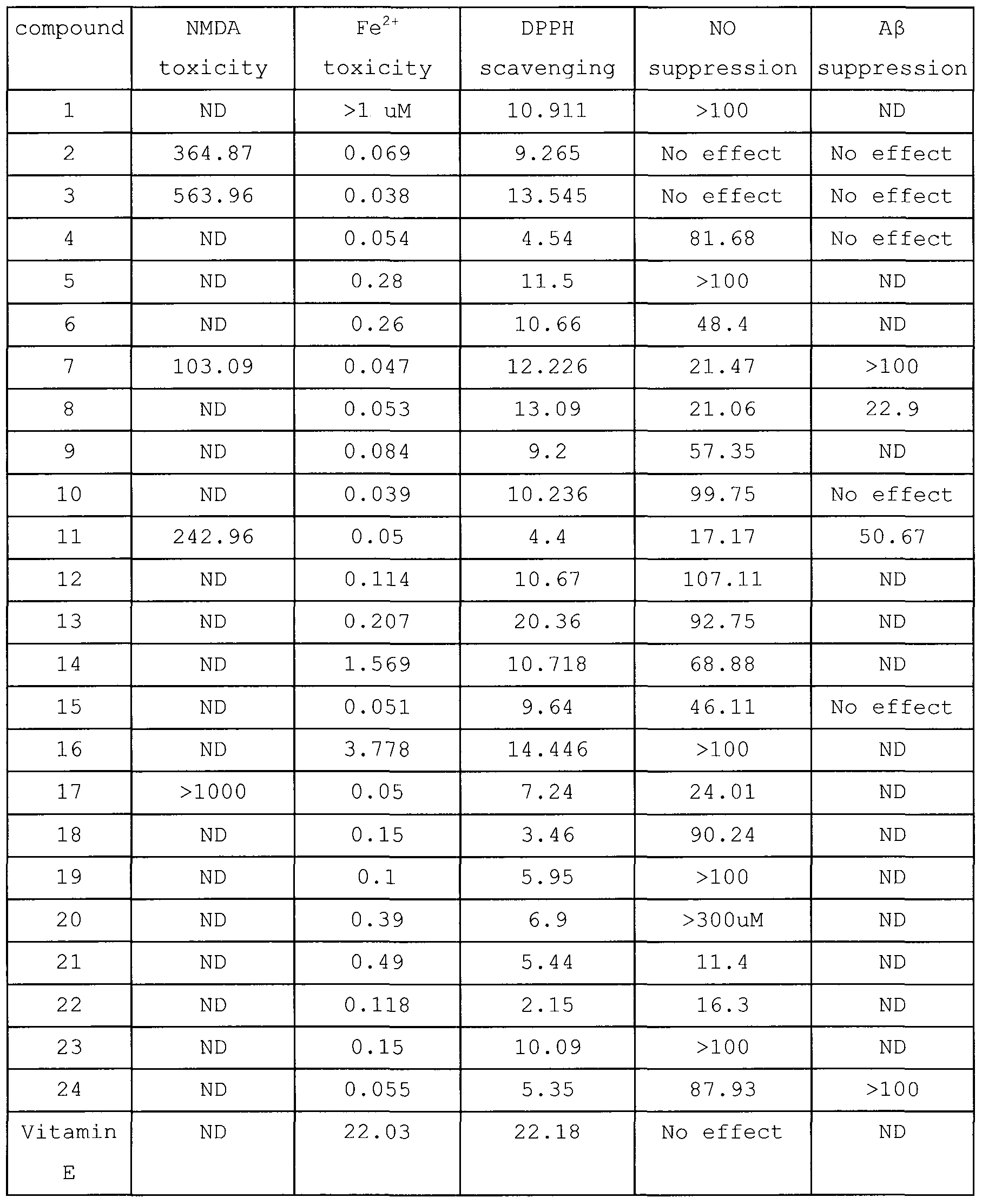
excitotoxicity, alone or with inclusion of 10 - 1000 uM of compounds 2, 3, 7, 11 or 17. Neuronal death was analyzed 24 hours later by measuring levels of LDH released into the bathing medium, and IC50 value were calculated. Results were shown in the below table 16 (NMDA toxicity) . In result, compound 2, 3 and 11 showed relatively high IC50 value, and tested compounds completely blocked neuronal death by excitotoxicity induced by
NMDA at the concentration of 1 mM.
<Example 2> Anti-oxidant effect
(2-1) Suppressing effect on oxidant toxicity by FeCl2 Cortical cell cultures (DIV 11 - 15) were continuously
exposed to 50 uM FeCl2 (which causes the production of OH- by Fenton reaction) to induce neuronal death by oxidative toxicity, alone or with inclusion of 0.01 ~ 30 uM of compounds 1 ~ 24. Some cortical cell cultures, controls, were exposed to 50 uM FeCl2 with inclusion of vitamin E, known anti-oxidant. Like the above example 1, neuronal death was analyzed 24 hours later by measuring levels of LDH released into the bathing medium, and IC50 value were calculated. Results were shown in the below table 16 (Fe2+ toxicity) . In result, compounds 1 - 24 have very much low IC50 value about neuronal death caused by FeCl2, and suppress neuronal death caused by FeCl2 in a dose-dependent manner. More particularly, compounds 4, 7, 9, 10 and 13
completely suppressed the neuronal death caused by oxidative
toxicity at the concentration of 1 uM; compound 14 completely suppressed the neuronal death at the concentration of 3 uM; compound 16 completely suppressed the neuronal death at the concentration of 10 uM; and compound 17 completely suppressed the neuronal death at the very low concentration of 0.3 uM. (2-2) Free radical scavenging activity using DPPH Relation between suppressing effects, evaluated in the above experiments, of compounds 1 ~ 24 on oxidative toxicity and free radical scavenging effect was evaluated. More specifically, the compounds 1 ~ 24 according to the present invention was reacted with 1, l-diphenyl-2-picryl-hydrazyl (DPPH), a stable free radical. After reaction, relative decrease in DPPH absorption at 517 nm was measured, and IC50 value was calculated. Results were shown in the below table 16 (DPPH scavenging) . In result, all compounds 1 ~ 24 have free radical scavenging
activity, and the activity of the compounds were stronger two or five times than vitamin E.
<Example 3> Anti-inflammatory effect
Inhibiting effect of the salicylic acid derivative compound according to the present invention on NO, inflammatory factor intervening inflammation reaction was evaluated. BV2/RAW 297.6 cell line was treated with LPS with inclusion of 10 uM, 30
uM or 100 uM of the present compound. After 24 hours of
incubation, 50 ul of culture medium was collected in 96-well plate. Then, 50 ul of Griess reagent was added and incubated for 10 minutes at room temperature. The absorbance was evaluated by ELISA reader at 540nm. IC50 value of each compound was calculated and shown in the below table 16 (NO suppression) . As shown in the below table 16, IC50 values of compound 11, 21 and 22 were 17.17 uM, 11.4 uM, and 16.3 uM, respectively. As shown in results, the salicylic acid derivative compound of the present invention is thought to be useful as anti-inflammatory agent because the compound suppresses the activity of NO intervening inflammation reaction.
<Example 4> Suppressing effect on production of beta- amyloid
The suppressing effects of the compounds of the present invention on production of beta-amyloid, the main marker in Alzheimer's dementia, were evaluated. CHO cell lines were incubated without any treatment or incubated after be treated with 20 uM, 60 uM or 100 uM of the compound of the present invention. After 24 hours of incubation, 50 ul of culture medium was reacted with ELISA kit provided by BioSource. Then, the absorbance was evaluated with ELISA reader at 540 nm, and IC50 values of each compound were calculated. Results were shown
in the below table 16 (Aβ suppression) . IC50 of compound 8 was 22.9 uM, and IC50 of compound 11 was 50.67 uM.
[Table 16]
In the table 16, the term "ND" means "not determined."
<Example 5> Anti-inflammatory effect of chemical 11
Suppressing effects of chemical 11 on NO, inflammatory factor intervening inflammation reaction and inflammatory
cytokines, TNF-α and IL-6, were evaluated. BV2 microglia cell line was treated with both 100 uM of lipopolysaccharide (LPS) , inflammation-inducing material of bacteria toxin, and 100 uM of the compound 11 of the present invention, together, and
incubated for 24 hours. Then, 50 ul of culture medium was collected in 96-well plate, and 50 ul of Griess reagent was added to the plate and incubated for 10 minutes at room temperature. After that, the absorbance was evaluated by ELISA
reader at 540nm. The levels of the cytokines, TNF-α and IL-6, were evaluated by ELISA method. Culture medium treated by LPS only for 24 hours was used as control. Results were shown in figure 1.
As shown in the figure 1, 100 uM of compound 11 decreased
NO produced by LPS by about 65%, and TNF-Q and IL-6 by about 30~40%. As shown in results, the compound 11, one example compound of the present invention is thought to be useful as anti-inflammatory agent because the compound 11 suppresses the activity of NO intervening inflammation reaction and the levels of the cytokines.
<Example 5> Protecting effect of compound 11 in arthritis animal model
To evaluate the efficacy of the compound 11, one example of the present invention, collagen-induced arthritis model (rheumarthritis animal model) was used. Bovine type II collagen was mixed with complete Freund's adjuvant to make an emulsion, and the emulsion was intradermally injected into the origin site of 8 ~ 10 week-old DBA/lLacJ mouse tail. Intradermal boosting was performed by the same method 2 weeks later. 25 mg/kg/day of compound 11, 1 mg/kg/week of methotrexate (comparative example) or 10% vehicle (control) was intraperitoneally injected one week after the second intradermal injection of collagen. For 2 ~ 3
weeks, the degree of arthritis was observed everyday, and the result was evaluated according to the below arthritic index using edema. As shown in results of arthritic index, compound
11 showed an apparent reducing effect. Results were shown in figure 2.
- Arthritic Index -
4 paws were evaluated as from 0 to 4 point, Total points: 16
0 point - normal paw
1 point - mild edema and flare limited to tarsal bone
2 points - mild edema and flare extending from ankle joint
to tarsal bone
3 points - middle edema and flare extending from ankle joint to metatarsal bone
4 points - edema and flare extending from ankle joint to total digit
In addition, the levels of TNF-α and IL-lβ, markers of inflammation, were evaluated by ELISA method in the same animal model. Results were shown in figure 3. As shown in the figure 3, compound 11 showed a significant decreasing effect.
Hereinafter, the concrete diseases applicable with the salicylic acid derivative compound or its pharmaceutically acceptable salt of the present invention are described as
follows. However, the scope of the present invention is not limited to the diseases described below.
■CApplication example 1> Hypoxic ischemia
Stroke is a disease caused by blood circulation disorders (thrombosis, embolism or stenosis) . Blood circulation disorders induce neuronal death. When stroke occurs, glutamate, an excitatory neurotransmitter, accumulates at the synaptic cleft of neuronal cell, and over-activation of Ca2+-peameable glutamate receptor rapidly causes the death of neuronal cell. In actually, antagonist of NMDA receptor is known to significantly reduce the death of brain cell caused by hypoxic ischemia which takes part
in 80% of stroke. After stroke occurs, mitochondrial electron
transport system is injured and the production of reactive oxygen is increased. Increased reactive oxygen causes necrosis of neuronal cell through destruction of cell membrane lipid, gene damage, degeneration of protein, etc. Anti-oxidant has an effect to suppress necrosis of ischemic neuronal cell. Therefore, the compound of the present invention having antioxidant effect and excitatory toxicity-suppressing effect can be effectively used for treating or preventing stroke. <Application example 2> Alzheimer's disease (AD)
Alzheimer's disease is the most common form of adult onset
dementia. Alzheimer's disease is characterized as the presence of the neurofibrillary tangles, amyloid plaques and severe neuronal death. Recently, there are lots of literatures showing that neuronal death occurring in Alzheimer's disease is related with oxidative stress. Firstly, brain metal radical (Fe, Al, and Hg) , capable of stimulating free radical generation, secondly, lipid peroxidation, and thirdly, oxidation of protein and DNA are increased in AD. Also, NMDA receptor antagonist, memantine, has been shown to improve learning and memory in several pharmacological models of AD, and thus this memantine is sold as a therapeutic agent for treating dementia. This fact shows that excitatory toxicity is related with dementia. Therefore, the compound of the present invention having anti-
oxidant effect and excitatory toxicity-suppressing effect can be
effectively used for treating AD.
•CApplication example 3> Parkinson's disease (PD)
Parkinson's disease (PD), the degenerative nervous system disease, is characterized clinically by tremor, rigidity, bradykinesia, postural instability, akinesia, etc. and diagnosed pathologically by a selective death of dopaminergic neurons in
the substantia nigra. In PD patients, oxidative stress has been proved as a main mechanism of neuronal cell death, and lipid peroxidation, DNA oxidation, and the increases of protein carbonyl and nitrotyrosine were observed in nigra. Administration of anti-oxidant is reported to have cell-
protecting effect (Prasad KN et al.r J Am Coll Nutr. 1999;18 (5) :413-23) . In addition, some antagonists of NMDA receptor inhibited the death of dopaminergic neuron in PD animal model (Nash JE et al., Exp Neurol. 2000 Sep; 165 (1) : 136-42) . Therefore, the compound of the present invention having antioxidant effect and excitatory toxicity-suppressing effect can be effectively used for treating PD. <Application example 4> Lou Gehrig Disease or Amyotrophic lateral sclerosis (ALS)
Lou Gehrig Disease is named amyotrophic lateral sclerosis or motor neuron disease, and the progressive degeneration of motorneurons is the pathological hallmark of this disease. Many
hypothesis have been put forward to account for the selective death of motorneurons in ALS. Firstly, excitatory toxicity is
known to intervene in process of ALS cell death. ALS patients have the reduced level of glutamate-transporting protein present in neuroglia cell. Administration of agonist of ionic glutamate receptor into mouse spinal cord is reported to show similar pathological changes with ALS patients. Secondly, increasing is the evidence showing that oxidative toxicity except excitatory neuronal toxicity takes part in neuronal death of ALS. The recent discovery of SOD-I gene mutation has given a hint about importance of oxidative toxicity in genetic ALS. Furthermore, the increases of protein carbonyl groups and nitrotyrosine, the markers of oxidative toxicity, are reported in brain of ALS patients. Therefore, the compound of the present invention having anti-oxidant effect and excitatory toxicity-suppressing effect can be effectively used for treating ALS.
<Application example 5> Huntington ' s disease HD is accompanied with death of interneurons present in the striata. These pathological features of HD are similarly observed after administration of NMDA receptor agonists, raising the possibility that NMDA receptor mediates selective neuronal death in HD. In addition, evidence is being accumulated that oxidative toxicity like mitochondrial dysfunction and generation of reactive oxygen is a main reason of neuronal death observed
in HD, and the drugs inhibiting reactive oxygen are presented to be used for therapy of HD. Therefore, the compound of the
present invention having anti-oxidant effect and excitatory toxicity-suppressing effect can be effectively used for treating or preventing HD.
<Application example 6> Traumatic brain injury and spinal cord injury
Excitatory neuron toxicities are closely related to the degeneration of brain cells following traumatic brain injury (TBI) and traumatic spinal cord injury (TSCI). It has been reported that NMDA receptor antagonists decrease the neuronal death following TBI and TSCI. Oxidative toxicity and cell apoptosis are closely related with degeneration of brain cells following TBI and TSCI. Brain and spinal cord injuries cause paraparesis and quadriplegia, and show neuronal death even in distal site from injured site. However, a therapeutic agent or method for these diseases has not been developed. Influx of Ca2+, collapse of cell membrane, and lipid peroxidation by oxidative toxicity were observed in TBI and TSCI, and recently evidence is disclosed that cell death is related with secondary damage. In addition, inhibitor of caspase, an enzyme intervening in cell apoptosis, is reported to reduce apoptosis of neuronal cell. Therefore, the compound of the present invention can be effectively used for treating or preventing TBI and TSCI.
•CApplication example 7> Glaucoma, macular degeneration and diabetic retinopathy
In glaucoma, the increased intraocular pressure blocks blood flow into retina, causes retinal ischemia, and induces excessive release of glutamate, neurotransmitter, into synaptic cleft. Once released, glutamate induces excitotoxicity . Recently, the evidence about apoptosis caused by ischemia is accumulating. It is reported that reactive oxygen produced during re-perfusion of blood causes death of retina neuron. In addition, it is recently reported that cell necrosis inhibitor (anti-oxidant and NMDA receptor antagonist) inhibits death of optic neuron in animal model of glaucoma. There are a lot of reports showing that neuronal degeneration of diabetic retinopathy and macular degeneration are related with the increase of reactive oxygen, excitoxicity and cell apoptosis. Therefore, the compound of the present invention can be effectively used for treating death of this optic neuronal cell. <Application example 8> Rheumarthritis The salicylic acid derivative compound of the present invention showed similar or superior therapeutic effect in collagen-induced arthritis model compared to methotrexate (control), which is used for treating arthritis, but has adverse effects. In addition, the salicylic acid derivative compound of the present invention suppressed the production of inflammatory
cytokines induced by collagen. These results mean that the salicylic acid derivative compound of the present invention can
be effectively used as a therapeutic agent for arthritis.
■CApplication example 9> Pancreatitis Acute pancreatitis is an inflammatory disease related with pancreas autodigestion caused by reflux of digestive enzyme of
pancreatic juice or bile of cholelithiasis into pancreas. Pancreatitis shows various symptoms like from mild edema to severe bleeding, which cause several damages to pancreas. There are a lot of evidences showing that pancreatitis is related with inflammation, and it is reported that COX inhibitor has a protective effect in pancreatitis model and suppresses the
production of inflammatory markers, TNF-α and prostaglandin
(Song AM et al., Am J Physiol Gastrointest Liver Physiol. 2002;283 (5) :G1166-74) . Therefore, the salicylic acid derivative
compound of the present invention can be effectively used for treating pancreatitis.
<AppIication example 10> Pain
In surgery, cancer patient, trauma, etc., injuries of peripheral and neuronal tissues increase the sensitivity of pain neuron transmission, and cause neuropathic pain. It is discovered that the activation of NMDA receptor is necessary in
the process of neuropathic pain. Therefore, results are reported that antagonist of NMDA receptor will be effectively
used for treating pain [Parson C. G., Eur. J. Pharmacol., 429:71-8(2001)]. Therefore, the compound of the present
invention having suppressing effect on neuronal death by NMDA can be effectively used for treating pain.
[INDUSTRIAL APPLICABILITY]
The present invention provides the salicylic acid derivative compound represented by the chemical formula 1 or its pharmaceutically acceptable salt having suppressing effect on excitatory toxicity, anti-oxidant effect, cell-protecting effect and anti-inflammatory effect, a pharmaceutical composition containing the compound or its salt, and a treating or preventing method using the compound or its salt. The
pharmaceutical composition of the present invention is useful for treating or preventing degenerative cerebral nerve disease such as amyotrophic lateral sclerosis, Parkinson's disease, Huntington' s disease, Alzheimer's disease, which are related with death of brain neuronal cell; convulsive disease such as epilepsy; stroke; trauma; brain injury caused by hydrocephalus; ocular disease such as glaucoma, diabetic retinopathy; pain disease such as neuropathic pain; and inflammatory disease such
as arteriosclerosis, gastritis, colitis, arthritis, nephritis, hepatitis, cancer and degenerative disease.