Description NEW SYNTHETIC METHOD OF PHENYLCARBAMATE
DERIVATIVE
Technical Field
[1] The present invention relates to a new method for synthesizing rivastigmine (INN name). Rivastigmine is a common name for (S)-N-ethyl-3-[(l-dimethylamino)ethyl]-N -methyl-phenylcarbamate represented by the following Formula 1 :
[2] (1),
[3] and has anticholinesterase activity.
[4]
Background Art
[5] Conventional methods for the synthesis of rivastigmine are as follows.
[6] According to European Patent No. 193,926, α- m-hydroxyphenylethyldimethylamine (Formula 2) is reacted with 1.5-1.7 equivalents of N-ethyl-N-methylcarbamoyl chloride using 2 equivalents of sodium hydride (NaH) to obtain the compound of Formula 3, which is a racemic form of the compound of Formula 1, as depicted in Reaction Scheme 1 below. According to the method described in German Patent DE 3805744, the compound of Formula 3 in a racemic form and di-O, O -p-toluoyl tartaric acid monohydrate are dissolved in methanol/water (2/1) under heating, cooled, and filtered to obtain crystals. The crystals are re- crystallized for three times or more, and isolated the (S)-enantiomeric compound (Formula 1) from the racemate (Formula 3) to obtain rivastigmine.
[7] Reaction Scheme 1
2 3 1
[8] However, this method involves many-times-repeated recrystallization in the final step to achieve increased enantiomeric excess (ee). Accordingly, the total yield is at a low level, high enantiomeric excess cannot be ensured, the number of equipment units
and processing steps are increased, and the amount of N-ethyl-N-methylcarbamoyl chloride (EMCC) used is increased, which make the method economically disadvantageous.
[9]
[10] J. Am. Chem. Soc. 2003, 125, 14260-14261 discloses the method for synthesizing rivastigmine (Formula 1) by carrying out the following procedures as depicted in Reaction Scheme 2. The compound of Formula 5 is prepared by asymmetric synthesis from the compound of Formula 4, and then recrystallized to achieve increased enantiomeric excess. The resulting compound is subjected to Ν-methylation, de- protection (demethylation) and O-carbamoylation,.
[11] Reaction Scheme 2
4 5
88%, 92%ee
[12] Since this method employs a metal catalyst and an organic metal in the asymmetric synthesis, however, it is not readily applied to large production processes in a technical viewpoint. In addition, since the method involves deprotection, the number of processing steps is increased, creating an economic burden. At this step, reaction with BBr at a low temperature (-780C) and purification by silica gel chromatography are disadvantageously entailed. In addition, recrystallization should be performed to increase the low enantiomeric excess (92% ee) of the compound of Formula 4 to high enantiomeric excess (99% ee). At this time, since the yield (67%) is not greatly higher than the resolution yield, the advantages of the asymmetric synthesis are diminished, which makes it difficult to apply the method to large production processes. Therefore, it is difficult to say that the method is suitable for the production of rivastigmine on an industrial scale.
[13]
[14] PCT Publication WO 03/101917 discloses a process for the preparation of rivastigmine (Formula 1) as depicted in Reaction Scheme 3 below. According to this process, the compound of Formula 2 is reacted with the compound of Formula 6 as an 0-carbamoylating reagent in the presence of a base to obtain the compound of Formula 3 as a racemic mixture. The racemic mixture is then resolved by known techniques, e.g., by the use of di-O.O'-p-toluoyl tartaric acid to obtain rivastigmine (Formula 1).
[15] Reaction Scheme 3
[16] As mentioned above, this process involves many-times-repeated recrystallization in the final step to achieve increased enantiomeric excess (ee). Such many-times-repeated recrystallization indicates a great disadvantage in yield, and it means there is a difficulty in ensuring high enantiomeric excess. Accordingly, the process has a limitation in terms of economical efficiency.
[17]
Disclosure of Invention
Technical Problem
[ 18] Therefore, it is an object of the present invention to provide a method for synthesizing a phenylcarbamate derivative with high enantiomeric excess by industrially applicable manner, in high yield and in economical efficiency .
[19]
Technical Solution
[20] In accordance with an aspect of the present invention, there is provided a new method for synthesizing rivastigmine represented by Formula 1 below:
[21] Formula 1
[22] Rivastigmine exhibits a negative optical rotation value in its free-base form, and exhibits either a positive or negative optical rotation value in the form of an acid addition salt. For example, r ivastigmine in the form of the tartaric acid salt exhibits a positive optical rotation value. The free base and acid addition salts are included in the present invention, irrespective of their optical rotation value.
[23] Specifically, the method of the present invention, preparing the compound of
Formula 1 or an acid addition salt thereof, comprises the steps of: subjecting the compound of Formula 7 below to N-methylation to obtain the compound of Formula 8
below or an acid addition salt thereof; and subjecting the compound of Formula 8 or an acid addition salt thereof to 0-carbamoylation to obtain the compound of Formula 1 or an acid addition salt thereof. The method of the present invention is depicted in Reaction Scheme 4 below: [24] Reaction Scheme 4
7 8
[25] To solve the above-mentioned problems of the prior art, the method of the present invention is characterized by the use of the already known (S)-enantiomeric compound as a starting material, rather than by resolution of a compound in a racemic form to obtain final compound. In the method of the obtaining (S)-enantiomer of this series, it is difficult to resolve the compound of Formula 1 in racemic mixture and to obtain (S)-enantiomer of the compound of Formula 2 by the following reasons. Since there is no difference in solubility between two diastereomers of the dimethyl compound of Formula 2, the diastereomers cannot be separated from each other by resolution.
[26] The N-methylation is performed using formaldehyde/formic acid.
[27] The 0-carbamoylation is performed using one of N-ethyl-N-methyl carbamoyl halogenide, such as N-ethyl-N-methyl carbamoyl chloride, and N-ethyl-N - methyl-4-nitrophenyl carbamate as an 0-carbamoylating reagent in the presence of a base. The base used in the 0-carbamoylation is selected from metal hydrides, e.g., sodium hydride, alkali, and alkaline metal oxides, hydroxides, e.g., sodium hydroxide and potassium hydroxide, carbonates, e.g., sodium carbonate and potassium carbonate, and secondary and tertiary amines, e.g., 4-dimethylaminopyridine (DMAP), Ν- ethyldiisopropylamine and triethylamine.
[28]
Best Mode
[29] The present invention will now be described in more detail with reference to the following examples. However, these examples are given for the purpose of illustration and are not to be construed as limiting the scope of the invention.
[30]
[31] Example 1.
[32] Synthesis of (S)-3-(l-dimethylaminoethyl)phenol hydrochloride (hydrochloride salt of the compound of Formula 8)
[33] (S)-3-(l-monomethylaminoethyl)phenol (Formula 7, 29.2 g, 0.192 mol, 99.6% ee)
was added to a mixture of 85% formic acid (66 ml, 0.153 mol) and formaldehyde (28.7 ml, 0.385 mol). The reaction mixture was refluxed for 3 hours, cooled to room temperature. The remaining formic acid was concentrated. Water (60 ml) and cone. HCl (20 ml) were added to the concentrate, stirred for 30 minutes, and washed with ether (150 ml). The obtained aqueous layer was concentrated, and then acetone (150 ml) was added thereto to precipitate crystals. The crystals were filtered, and dried to afford (S)-3-(l-dimethylaminoethyl)phenol hydrochloride (hydrochloride salt of the compound of Formula 8, 31. Ig, 80%).
[34] The analytical results of the compound of Formula 7 are as follows.
[35] ' H-NMR (CDCl ): 7.19 (IH, m), 6.77 (3H, m), 3.63 (IH, q), 2.33 (3H, s), 1.39
(3H, d)
[36] 13 C-NMR (CDCl ): 157.3, 145.5, 129.7, 118.9, 115.0, 113.2, 60.0, 33.9, 22.5
[37] [α ]D 20 = -68.0 (c = 5.0 in pyridine)
[38] HPLC analysis
[39] Column: Shiseido chiral CD-Ph 4.6 x 250 mm, 5 μm
[40] Flow rate: 0.7 ml/min.
[41] Wavelength: 200 nm
[42] Solvent: 0.025M NaH2PO4 solution (MeOHZH2O = 1.5/1)
[43] Retention time:
[44] 14 min.: (S)-3-(l-monomethylaminoethyl)phenol hydrochloride
[45] 22 min.: (R)-3-(l-monomethylaminoethyl)phenol hydrochloride
[46] The analytical results of the chloride of Compound 8 are as follows.
[47] 13C-NMR (D2O): 156.9, 136.7, 131.5, 121.3, 117.7, 116.3, 66.7, 41.0, 16.0
[48] 1H-NMR (D2O): 7.43 (IH, m), 7.27 (3H, m), 4.44 (IH, q), 2.81 (6H, s), 1.72 (3H, d)
[49]
[50] Example 2.
[51] Synthesis of (S)-3-(l-dimethylaminoethyl)phenol (compound of Formula 8)
[52] (S)-3-(l-dimethylaminoethyl)phenol hydrochloride (hydrochloride salt of the compound of Formula 8, 60 g, 0.296 mol) was dissolved in water (100 ml), and then an aqueous solution of Na CO • 1OH O (50.82 g, 0.178 mol) was slowly added dropwise thereto with stirring. The precipitated crystals were filtered, and dried to afford (S)-3-(l-dimethylaminoethyl)phenol (Formula 8, 44 g, 90%).
[53] m.p of the compound of Formula 8: 116°C
[54] ' H NMR (CDCl3): 7.16 (IH, m), 6.77 (3H, m), 3.27 (IH, m), 2.23 (6H, s), 1.36
(3H, d)
[55]
[56] Example 3.
[57] Synthesis of (S)-rivastigmine tartrate salt (tartaric acid salt of the compound of
Formula 1)
[58] (S)-3-(l-dimethylaminoethyl)phenol hydrochloride (hydrochloride of the compound of Formula 8, 30 g, 0.148 mol) was suspended in acetonitrile (150 ml), and then N-ethyl-N-methylcarbamoyl chloride (36.1 g, 0.297 mol) was added thereto. The resulting solution was cooled to 0°C. To the solution was added sodium hydride (29.7 g, 60%, 0.743 mol). The temperature was gradually allowed to rise to room temperature. The reaction mixture was stirred at room temperature for 24 hours. The completion of the reaction was confirmed by HPLC. The reaction mixture was extracted with ether, and organic layer was concentrated. Water and hydrochloric acid were added thereto. After the resulting mixture was stirred at room temperature for 2 hours, it was washed twice with ether. The obtained aqueous layer was concentrated and crystallized from ethylacetate, affording (S)-rivastigmine hydrochloride (22.28g, 52%). The (S)-rivastigmine hydrochloride (18.5 g, 64.5 mmol) was dissolved in water (60 ml), and then NaOH (2.58 g, 64.5 mmol, 1 eq.) was added thereto. The reaction mixture was stirred for 30 minutes. The mixture was extracted twice with ether, dried over anhydrous MgSO 4 , and concentrated under reduced pressure. The concentrate was distilled under vacuum at 116-128°C to obtain rivastigmine (10.7 g, 66.3%) as a pure distillate. To the distillate were sequentially added acetone (30 ml) and L-tartaric acid (6 g, 40 mmol, 1 eq.). The mixture was refluxed for one hour, cooled to 00C, and filtered to obtain a solid. The solid was washed, and dried to afford (S)-rivastigmine tartrate salt*2 (16 g, 93.5% from the rivastigmine hydrochloride, 99.8% ee).
[59] In addition, the same results were obtained when
(S)-3-(l-dimethylaminoethyl)phenol (Formula 8, Example 2) in the free-base form was used instead of (S)-3-(l-dimethylaminoethyl)phenol hydrochloride (hydrochloride salt of the compound of Formula 8).
[60] n : (S)-rivastigmine
[61] ' H ΝMR (CDCl3): 7.29 (IH, m), 7.01 (3H, m), 3.44 (2H, q), 3.24 (IH, q), 3.02
(3H, d), 2.20 (6H, s), 1.35 (3H, d), 1.21 (3H, m)
[62] *2 : (S)-rivastigmine tartrate salt: m.p 124°C
[63]
[64] Example 4.
[65] Synthesis of (S)-rivastigmine hydrochloride (hydrochloride salt of the compound of Formula 1)
[66] (S)-3-(l-dimethylaminoethyl)phenol hydrochloride (hydrochloride salt of the compound of Formula 8, 30 g, 0.148 mol), anhydrous K CO (35.8 g, 0.259 mol), and N-ethyl-N-methyl-4-nitrophenyl carbamate (49.9 g, 0.222 mol) were added to dimethyl sulfoxide (120 ml) under a nitrogen atmosphere, and heated with stirring. The reaction
mixture was allowed to react under heating to about 1000C for 40 hours. The reaction mixture was gradually allowed to cool to room temperature, and filtered. The filtrate was poured on ice-water, extracted with ether, dried over anhydrous MgSO , and con-
4 centrated under reduced pressure. To the concentrate were added water and cone, hydrochloric acid. The mixture was stirred at room temperature for 2 hours, and washed twice with ether. The obtained aqueous layer was concentrated and recrystallized from ethylacetate, affording (S)-rivastigmine hydrochloride (hydrochloride salt of the compound of Formula 1, 35.52 g, 84%, 99.7% ee).
[67] In addition, the same results were obtained when
(S)-3-(l-dimethylaminoethyl)phenol (Formula 8, Example 2) in the free-base form was used instead of (S)-3-(l-dimethylaminoethyl)phenol hydrochloride (hydrochloride salt of the compound of Formula 8).
[68]
[69] Example 5.
[70] Synthesis of (S)-rivastigmine tartrate salt
[71] Hydrochloride salt of the compound of Formula 1 ((S)-rivastigmine hydrochloride,
18.5 g, 64.5 mmol) was synthesized in the same manner as in Example 4. The hydrochloride salt of the compound of Formula 1 was dissolved in water (60 ml), and NaOH (2.58 g, 64.5 mmol, 1 eq.) was added thereto. The reaction mixture was stirred at room temperature for 30 minutes. The mixture was extracted twice with ether, dried over anhydrous MgSO , and concentrated under reduced pressure. Acetone (30 ml)
4 was added to the residue and then L-tartaric acid (9.7 g, 64.5 mmol) was added thereto. The reaction mixture was refluxed for one hour, cooled to 00C, and filtered to obtain a solid. The solid was washed, and dried to afford (S)-rivastigmine tartrate salt (41.7g, 84%, 99.8% ee).
[72]
[73] Example 6.
[74] Synthesis of (S)-rivastigmine hydrochloride (hydrochloride salt of the compound of Formula 1)
[75] (S)-3-(l-dimethylaminoethyl)phenol hydrochloride (hydrochloride of the compound of Formula 8, 30 g, 0.148 mol) was suspended in dichloromethane (300 ml), and then triethylamine (106 ml, 0.740 mol) and N-ethyl-N-methylcarbamoyl chloride (27.12 g, 0.220 mol) were sequentially added thereto. To the reaction solution was added 4-dimethylaminopyridine (1.82 g, 0.0148 mol). The resulting mixture was allowed to react at room temperature with stirring for 12 hours. After completion of the reaction, insoluble materials were filtered off, and the obtained filtrate was concentrated under reduced pressure to remove the dichloromethane. Water (600 ml) was added to the residue, and an aqueous sodium carbonate solution was added to adjust
the pH to 10.5, followed by extraction with dichloromethane. The obtained organic layer was dried over anhydrous MgSO , filtered, and concentrated under reduced
4 pressure to remove the dichloromethane. Water (90 ml) was added to the residue and cooled to 00C. Cone, hydrochloric acid (19.68 ml, 0.222 mol) was added dropwise to the cooled mixture and distilled under reduced pressure to remove the solvents. The o btained residue was crystallized from ethylacetate, affording (S)-rivastigmine hydrochloride (hydrochloride salt of the compound of Formula 1) (35.94 g, 85%, 99.8% ee).
[76] In addition, the same results were obtained when
(S)-3-(l-dimethylaminoethyl)phenol (Formula 8, Example 2) in the free-base form was used instead of (S)-3-(l-dimethylaminoethyl)phenol hydrochloride (hydrochloride salt of the compound of Formula 8).
[77]
[78] Comparative Example 1.
[79] Synthesis of (S)-rivastigmine tartrate salt (tartaric acid salt of the compound of
Formula 1) by Reaction Scheme 1
[80] α-m-Hydroxyphenylethyldimethylamine (Formula 2, 50.0 g, 0.3 mol) was suspended in acetonitrile (250 ml), and then N-ethyl-N-methylcarbamoyl chloride (58.3 g, 0.48 mol) was added thereto. The reaction solution was cooled to 0°C. To the cooled solution was added sodium hydroxide (14.4 g, 0.36 mol). The resulting mixture was gradually allowed to rise to room temperature, and stirred at this temperature for 24 hours. The completion of the reaction was confirmed by HPLC. Thereafter, the reaction mixture was filtered to remove salts, and the obtained filtrate was concentrated. The pH of the concentrate was adjusted to 11 using water and NaOH solution, followed by extraction with ether and concentration. To the concentrate were added water and cone. HCl. The mixture was stirred at room temperature for one hour, and washed twice with ether. The obtained aqueous layer was concentrated, and re- crystallized from ethylacetate, yielding racemic rivastigmine hydrochloride (50.6 g, 58%). The racemic rivastigmine hydrochloride (20 g, 69 mmol) was dissolved in water (60 ml), and then NaOH (3.3 g, 1.2 eq.) was added thereto. The mixture was stirred at room temperature for one hour. The resulting mixture was extracted five times with ether, dried over anhydrous MgSO , and concentrated under reduced pressure. Di-O, O'
4
-p-toluoyl tartaric acid monohydrate (DTTA, 26.5 g, 69 mmol) and a solution of methanol/water (2/1) (180 ml) were added to the concentrate, dissolved under heating, and gradually allowed to cool to room temperature to obtain a precipitate. The precipitate was filtered, and recrystallized four times to afford rivastigmine DTTA salt (11.4 g, 26% (from the racemic rivastigmine hydrochloride)). The obtained rivastigmine DTTA salt (4.7 g, 7.4 mmol) was suspended in a IM NaOH solution (8 ml)
and dichloromethane (30 ml). The suspension was stirred for 30 minutes, followed by phase separation. The obtained organic layer was concentrated, and water and ether were added to the concentrate to separate layers. The obtained ether layer was dried over K CO , and concentrated. To the concentrate were added acetone (5 ml) and L- tartaric acid (1.1 g, 7.4 mmol, 1 eq.). The resulting mixture was refluxed for one hour, cooled to 0°C, and filtered to obtain a solid. The solid was washed, and dried to afford (S)-rivastigmine tartrate salt (2.5 Ig, 99.7% ee, 85% (from the rivastigmine DTTA salt), 13% (from the α-m-hydroxyphenylethyldimethylamine).
[81] Chiral HPLC analysis was conducted under the following conditions: [82] Column: Chromtech, CHIRAL-AGP 4.0 x 100 mm, 5 μm [83] Flow rate: 0.5 ml/min. [84] Wavelength: 200 nm [85] Solvent: 0.05M Na H PO solution (MeOH/H O = 1.38/1)
2 2 4 2 [86] Retention time: 9 min. [87]
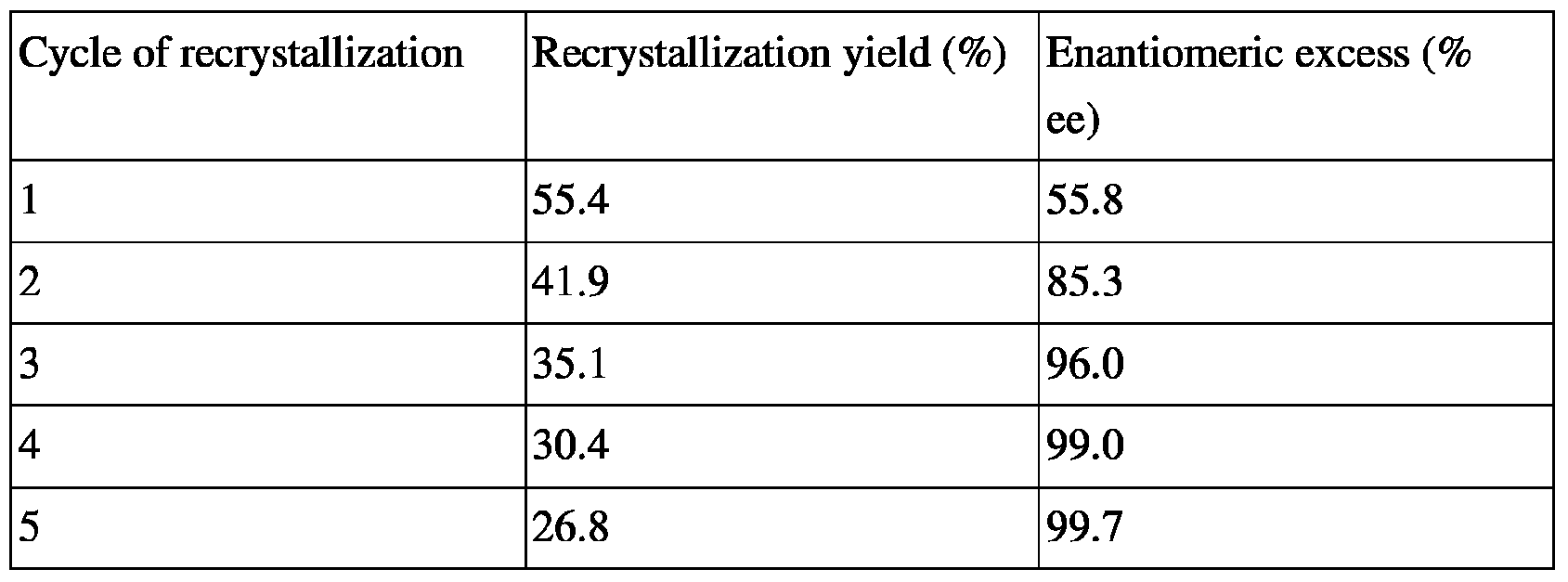
Table 1: Yield and enantiomeric excess of rivastigmine DTTA salt synthesized in Comparative Example 1 after recrystallization
[88] [89] As can be seen from the data shown in Table 1, the yield after the first recrystallization of the rivastigmine DTTA salt synthesized in Comparative Example 1 by the conventional method was as low as 55.4%, and at this time the enantiomeric excess was 55.8% ee, which it is not a high purity. When recrystallization was repeated five times to achieve a high enantiomeric excess of 99.7%, the yield of the rivastigmine DTTA salt was greatly reduced to 26.8%.
[90] In contrast, the rivastigmine synthesized in Examples 3-6 by the method of the present invention had a high enantiomeric excess in a high yield. [91]
Industrial Applicability [92] As apparent from the foregoing, according to the method of the present invention,
resolution and recrystallization are not required in the final step due to the absence of (R)-enantiomer . Therefore, rivastigmine with high enantiomeric excess can be synthesized in high yield.
[93] In addition, since (S)-enantiomer only is used as a starting material instead of a racemate in the method of the present invention, the amount of an expensive O - carbamoylation reagent (N-ethyl-N-methylcarbamoyl chloride or N-ethyl-N - methyl-4-carbamate) used can be minimized. Furthermore, since no deprotection is performed in the method of the present invention as depicted in Reaction Scheme 4, the overall procedure is simplified, which is economically advantageous.