ANALOGS OF THALIDOMIDE AS POTENTIAL ANGIOGENESIS INHIBITORS
FIELD
The present disclosure relates to anti-angiogenesis compositions and methods, and particularly thalidomide analogs that actively inhibit angiogenesis in humans and animals. BACKGROUND
Angiogenesis is the formation of new blood vessels from pre-existing vessels. Angiogenesis is prominent in solid tumor formation and metastasis. A tumor requires formation of a network of blood vessels to sustain the nutrient and oxygen supply for continued growth. Some tumors in which angiogenesis is important include most solid tumors and benign tumors, such as acoustic neuroma, neuro fibroma, trachoma, and pyogenic granulomas. Prevention of angiogenesis could halt the growth of these tumors and the resultant damage due to the presence of the tumor. It has been shown that there is a direct correlation between tumor microvessel density and the incidence of metastasis. Tumor cells themselves can produce factors that stimulate the proliferation of endothelial cells and new capillary growth. Angiogenesis is important in two stages of tumor metastasis. The first stage where angiogenesis stimulation is important is in the vascularization of the tumor, which allows tumor cells to enter the blood stream and to circulate throughout the body. After the tumor cells have left the primary site, and have settled into the secondary, metastasis site, angiogenesis must occur before the new tumor can grow and expand. Therefore, prevention of angiogenesis could lead to the prevention of metastasis of tumors and possibly contain the neoplastic growth at the primary site. These observations have led to the investigation of anti-angiogenic agents as possible therapeutic options for various cancers.
In the 1950's, thalidomide was marketed as a sedative in Europe but was withdrawn from the market when it was found to be a potent teratogen. Recently, thalidomide has been promoted as a possible inhibitor of angiogenesis. Studies have indicated, however, that thalidomide itself is not sufficiently active to inhibit angiogenesis. Instead, the anti-angiogenic activity or effects previously attributed to thalidomide are the resulting effects of compounds that are only present following metabolic activation of thalidomide (i.e., "active" thalidomide metabolites). D'Amato, R.; Loughman Flynn, E.; Folkman, J., Thalidomide as an Inhibitor of Angiogenesis. Proc. Nat'l. Acad. Sci. 91, 4082-4085, 1994; M.; Bauer, K.; Dixon, S.; Figg, W. Inhibition of Angiogenesis by Thalidomide Requires Metabolic
Activation, Which Is Species-dependent. Biochem. Pharmacology 55, 1827-1834, 1998. There are hundreds, if not thousands of compounds formed as a result of metabolism of thalidomide and the actively metabolized products of hydrolysis compounds of the thalidomide. Many of the thalidomide metabolites are inactive and/or unstable. There is no way to predict which metabolite(s) will have superior anti-angiogenic properties. As such, "active" thalidomide metabolites (or "active" thalidomide analogs) having superior anti-angiogenic properties are not yet available. If the anti-angiogenic activity can be attributed to one or a small number of thalidomide metabolites and those metabolites could be isolated and identified, then active thalidomide analogs may be synthesized to provide exceptionally effective compounds inhibiting angiogenic effects. This is especially true when comparing thalidomide to "active" thalidomide analogs. To obtain such active compounds from thalidomide, thalidomide must first be activated via metabolism; only a very small amount of thalidomide would actually be metabolized to one or more "active" metabolites. Further, it may be possible to administer such "active" thalidomide analogs in lower amounts and still achieve the desired anti-angiogenic effects. Moreover, such "active" thalidomide analogs could be safer than thalidomide in avoiding undesirable side effects, e.g., teratogenicity or neurotoxicity, and may be
more specific to tumor angiogenesis than thalidomide-thalidomide has a host of undesirable biological activities. Accordingly, there is a need for the synthesis of purified thalidomide analogs that can mimic the effects of isolated and identified thalidomide metabolites that display such anti-angiogenic activity. In addition, there is a need for a method for treating undesired angiogenesis using such active thalidomide analogs, particularly with respect to treating solid tumors.
SUMMARY
Disclosed herein are methods of inhibiting angiogenesis that include administering to a subject a therapeutically effective amount of at least one compound, or pharmaceutically acceptable salts thereof, examples of which are described in detail below. According to one aspect, the compounds described herein are administered for treating a tumor in a subject. Also disclosed herein are compounds, or pharmaceutically acceptable salts thereof, having the following structure:
Formula V
wherein R27 is a moiety having the following structure:
— CH2— O— C-CH(R28)— N(R29XR30XR31)X O
Formula VI wherein R28 is an alkylaryl; R29 and R30 are each independently H, alkyl, or -C(O)O-
C(CH3)3; R31 is H^Υ" wherein Y" is a halide such as Cl", F", or I"; and x is 0 or 1.
Additional compounds, or pharmaceutically acceptable salts thereof, also are disclosed herein that have the following structure:
Formula V wherein R27 is a moiety having the following structure:
O — (CH2)X — C— O— R32
Formula VII wherein x is 0 or 1 ; and
R is a cycloalkyl which may be unsubstituted or substituted with a substituent. Pharmaceutical compositions that include the above-described compounds are also disclosed herein. The foregoing and other features and advantages will become more apparent from the following detailed description of several examples, which proceeds with reference to the accompanying figures.
BRIEF DESCRIPTION OF THE FIGURES
FIG. 1 is a photomicrograph ofa control comprising a rat aorta ring treated with DMSO. FIG. 2 is a photomicrograph ofa rat aorta ring treated with (CPS13). FIG. 3 is a photomicrograph of a rat aorta ring treated with (CPS14). FIG. 4 is a photomicrograph of a rat aorta ring treated with (CPS 15). FIG. 5 is a photomicrograph of a rat aorta ring treated with (CPS 16). FIG. 6 is a photomicrograph of a rat aorta ring treated with (CPS 17). FIG. 7 is a photomicrograph of a rat aorta ring treated with (CPS 18). FIG. 8 is a photomicrograph of a rat aorta ring treated with (CPS 19). FIG. 9 is a photomicrograph of a rat aorta ring treated with (CPS20). FIG. 10 is a photomicrograph ofa rat aorta ring treated with (CPS21). FIG. 11 is a photomicrograph ofa rat aorta ring treated with (CPS26).
DETAILED DESCRIPTION OF SEVERAL EXAMPLES
For ease of understanding, the following terms used herein are described below in more detail: "Acid" refers to a compound capable of transferring a hydrogen atom in solution. Acid is inclusive of, but not limited to, a carboxylic acid. "Alkyl" refers to a cyclic, branched, or straight chain alkyl group containing only carbon and hydrogen, and unless otherwise mentioned typically contains one to
twelve carbon atoms. This term is further exemplified by groups such as methyl, ethyl, n-propyl, isobutyl, t-butyl, pentyl, pivalyl, heptyl, adamantyl, and cyclopentyl. Alkyl groups can either be unsubstituted or substituted with one or more substituents, e.g., halogen, alkyl, alkoxy, alkylthio, trifluoromethyl, acyloxy, hydroxy, mercapto, carboxy, aryloxy, aryl, arylalkyl, heteroaryl, amino, alkylamino, dialkylamino, morpholino, piperidino, pyrrolidin-1-yl, piperazin-1-yl, or other functionality. A "cycloalkyl" refers to a moiety that contains at least one cycloalkyl ring structure. "Amino acid moiety" refers to a moiety that contain one or more primary, secondary or tertiary amino groups and one or more acidic carboxyl groups (-
COOH) or a moiety that is a derivative or residue of an amino acid in the sense that the moiety contains one or more amino groups (e.g., -NH2) and one or more ester groups (i.e., -OC(O)-). An "animal" is a living multicellular vertebrate organism, a category that includes, for example, mammals and birds. "Aryl" refers to a monovalent unsaturated aromatic carbocyclic group having a single ring (e.g., phenyl) or multiple condensed rings (e.g., naphthyl or anthryl), which can optionally be unsubstituted or substituted with, e.g., halogen, alkyl, alkoxy, mercapto (-SH), alkylthio, trifluoromethyl, acyloxy, hydroxy, mercapto, carboxy, aryloxy, another aryl, arylalkyl, heteroaryl, amino, alkylamino, dialkylamino, morpholino, piperidino, pyrrolidin-1-yl, piperazin-1-yl, or other functionality. "Angiogenesis" refers to the development of blood vessels. Accordingly, "anti-angiogenic activity" refers to the inhibition and/or complete cessation of angiogenesis. "Halogen" refers to fluoro, bromo, chloro and iodo substituents. A "mammal" includes both human and non-human mammals. "Pharmaceutically acceptable salts" of the presently disclosed compounds include those formed from cations such as sodium, potassium, aluminum, calcium, lithium, magnesium, zinc, and from bases such as ammonia, ethylenediamine, N- methyl-glutamine, lysine, arginine, ornithine, choline, N,N'-
dibenzylethylenediamine, chloroprocaine, diethanolamine, procaine, N- benzylphenethylamine, diethylamine, piperazine, tris(hydroxymethyl)aminomethane, and tetramethylammonium hydroxide. These salts may be prepared by standard procedures, for example by reacting the free acid with a suitable organic or inorganic base. Any chemical compound recited in this specification may alternatively be administered as a pharmaceutically acceptable salt thereof. A "pharmaceutical agent" or "drug" refers to a chemical compound or composition capable of inducing a desired therapeutic or prophylactic effect when properly administered to a subject. "Subject" includes both human and animal subjects. "Thalidomide" or N-(2,6-dioxopiperidin-3-yl)phthalimide has the following chemical structure:
A "thalidomide analog" as used herein is a synthetic chemical compound using the thalidomide structure as a backbone (e.g., side groups have been added or such groups have been deleted from the parent structure). The analog differs in structure from thalidomide and its metabolite compounds such as by a difference in the length of an alkyl chain, a molecular fragment, by one or more functional groups, or a change in ionization. Thalidomide analogs generally are not naturally occurring compounds. That is, thalidomide analogs generally cannot be enzymatically or nonenzymatically formed in the body by administration of thalidomide. A "thalidomide metabolite" is a thalidomide derivative that is formed by enzymatic action, i.e., metabolism of thalidomide in the body. The metabolite is formed by phase-one reactions (e.g., oxidation, reduction, and hydrolysis) or by
phase-two reactions (e.g., conjugations). Thalidomide metabolites require an enzyme reaction to be produced. "Tumor" refers to a mass of cells resulting from excessive cellular multiplication. The above term descriptions are provided solely to aid the reader, and should not be construed to have a scope less than that understood by a person of ordinary skill in the art or as limiting the scope of the appended claims. The singular terms "a," "an," and "the" include plural referents unless context clearly indicates otherwise. Similarly, the word "or" is intended to include "and" unless the context clearly indicates otherwise. It is further to be understood that all molecular weight or molecular mass values given for compounds are approximate, and are provided for description. Although methods and materials similar or equivalent to those described herein can be used in the practice or testing of this disclosure, suitable methods and materials are described below. In addition, the materials, methods, and examples are illustrative only and not intended to be limiting. All chemical compounds include both the (+) and (-) stereoisomers (as well as either the (+) or (-) stereoisomer), and any tautomers thereof. Described herein are active thalidomide analogs that exhibit enhanced potency in the inhibition of undesirable angiogenesis, and methods for using these compounds to treat angiogenesis and solid tumors. In particular, the presently disclosed method provides for inhibiting unwanted angiogenesis in a human or animal by administering to the human or animal with the undesired angiogenesis a composition comprising an effective amount of the active thalidomide analogs. According to a more specific aspect, the method involves inhibiting angiogenesis by exposing a mass having the undesirable angiogenesis to an angiogenesis inhibiting amount of one or more compounds, or pharmaceutically acceptable salts of such compounds, wherein such compounds are selected from those of Formulae I, III, IV, V and IX as shown below.
The compounds of Formula I have the following structure:
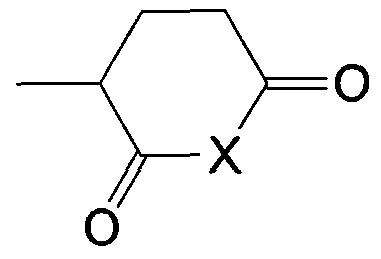
Formula wherein R ,40 is selected from: (a) a moiety of Formula II having the following structure:
Formula II wherein X is O or N;
(b) -CH3-a(C(O)Z)a wherein a is 1, 2 or 3; and each Z is independently -OH or -NH2; or (c) a 4- or 5-membered, N-containing heterocyclic ring which may be unsubstituted or substituted with at least one substituent (e.g., oxo, halogen, alkyl, alkoxy, mercapto (-SH), alkylthio, trifluoromethyl, acyloxy, hydroxy, mercapto, carboxy, aryloxy, another aryl, arylalkyl, heteroaryl, amino, alkylamino, dialkylamino, particularly with at least one oxo substituted at a cyclic C atom adjacent to the N heteroatom); and
R ,21 , R >22 , r R.23 , and R ,24 are each independently H, alkoxy, amino, or alkylamine, provided that R21, R22, R23, and R24 are not all H if R40 is a moiety of Formula II above.
The compounds of Formula III have the following structure:
Formula
The compounds of Formula IV have the following structure:
Formula IV wherein R is H or an alkyl; and R is an alkyl acid or an alkyl amide. More specifically, R26 may be -CH(C(O)Z)(CH2)b(C(O)Z) wherein Z is -OH or NH2 and b is 0, 1, 2, 3 or 4.
The compounds of Formula V have the following structure:
Formula V wherein R is selected from: (a) a moiety of Formula NI having the following structure:
— CH2— O— C-CH(R28)— Ν(R29)(R30XR31)X O
Formula VI wherein R28 is H, alkylaryl or alkyl; R29 and R30 are each independently H, alkyl, or -C(O)O-C(CH3)3; R31 is H+Y" wherein Y" is a halide such as Cl", F", or I"; x is 0 or 1 ; and provided that R and R are both H only if R is alkyl aryl or x is 1 , and R29 and R30 are -C(O)O-C(CH3)3 only if R28 is not H;
(b) a moiety of Formula Nil having the following structure:
Formula VII wherein x is 0 or 1 ; R32 is a cycloalkyl which may be unsubstituted or substituted with a substituent (e.g., oxo, halogen, alkyl, alkoxy, mercapto (-SH), alkylthio, trifluoromethyl, acyloxy, hydroxy, mercapto, carboxy, aryloxy, another aryl, arylalkyl, heteroaryl, amino, alkylamino, or dialkylamino);
(c) -CH2-COOH; (d) an alkyl ether or an alkoxy group;
(e) -Ν3; or
(f>
According to certain examples, R32 may include 3 to 5 cycloalkyl rings, and may particularly have a structure shown by Formula VIII below:
Formula VIII wherein R 134 is H or alkyl.
The compounds of Formula IX have the following structure:
Formula IX wherein R33 is an amino acid moiety or an alkyl acid.
Specific examples of synthesized compounds falling within one of the above-described formulae are shown below. Compounds are identified throughout this specification using alpha-numeric references in parenthesis.
(CPS4)
(CPS 17)
(CPS 18)
(CPS 19)
(CPS20)
(CPS21)
(CPS23)
(CPS24)
(CPS25)
(CPS26)
(CPS28)
(CPS32)
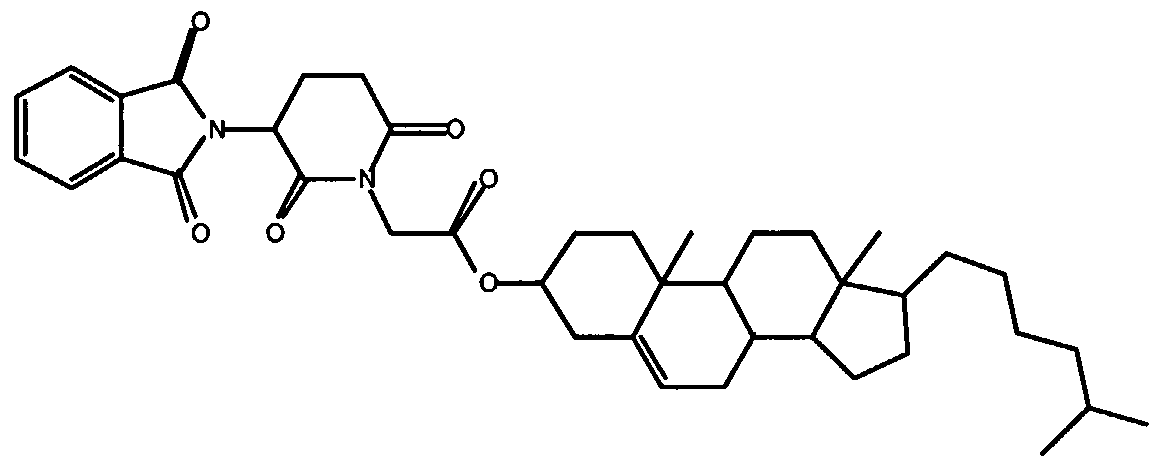
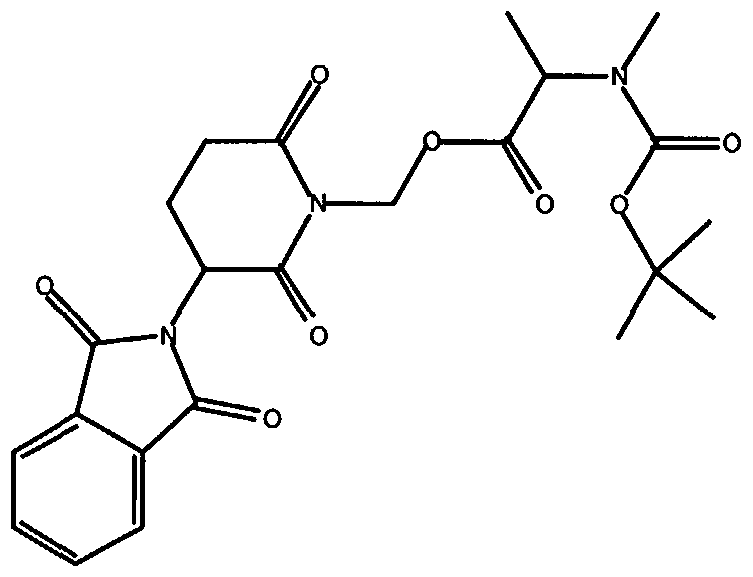
Several of the above-listed compounds can be considered to be amino acid derivatives of hydroxymethyl thalidomide. For example, (CPS 13) is a Phe- derivative, (CPS 16) is a Val- derivative, (CPS 17) is a Gly- derivative, (CPS 18) is a N-Me-Ala- derivative, (CPS 19) is a Boc-N-Me-Ala- derivative, (CPS20) is a Boc- Phe- derivative, and (CPS21) is a Boc-Gly- derivative. (CPS 14) and (CPS 15) are sterol derivatives of thalidomide and (CPS26) is a nicotinamid derivative of thalidomide. These compounds may be synthesized by techniques known in the art. For example, (CPS21), (CPS 17), (CPS 18), (CPS 16) and (CPS 19) may be synthesized as described in Canadian Patent Application No. 2,251,060. The synthesis of (CPS 14), (CPS 15) and (CPS20) is detailed below. The other compounds may be synthesized in a similar manner.
N-(Cholesteryloxyacetyl)-thalidomide (CPS 14):CPS 14 was produced via the reaction of 1.3 g (5 mmol) of thalidomide (CPS 10) with cholesterolchloroacetetate in the presence of 0.14 g (6 mmol) of sodium hydride in tetrahydrofuran (THF). After the gas evolution was complete the reaction was heated to reflux and for 1.5 hours. The reaction was then subjected to aqueous workup and purified by column chromatography. After purification, 2.14 g of a white, acetone and dichloromethane soluble substance was obtained (yield was 62.5 % of theoretical). Melting point: 157 °C. Elemental analysis: theoretical C 73.58, H 8.32, Ν 4.09; found C 73.76, H 8.44, Ν 3.91. IR (cm"1 2947 (alkane C-H), 1723 (imide stretch). Η ΝMR: (250 MHz, CDC13) δ: (ppm) 0.65 (s, 3H, cholesteryl, C- 18), 0.91-2.33 (m 42H, cholesteryl, aliphatic protons), 2.87-3.05 (m 2H, CFb-CO), 4.52 (s, 2H, Ν-CH2-O-), 4.65 (m, 1H, cholesteryl, C-3), 5.09 (m, 1H, alkenyl proton), 5.34 (m, 1H, cholesteryl, C-6, 7.76, 7.88 (m, m, 4H, aromatic).
N-Cholesteryloxycarbonyl-thalidomide (CPS 15): Thalidomide (700 mg, 3 mmol) was dissolved 10 mL THF and treated with 520 mg of sodium hydride (2 mmol) and 900 mg (2 mmol) of cholesterolchloroformate, and the reaction mixture was heated to reflux for 8 hours. Following aqueous workup a precipitate formed, the precipitate was filtered off and recrystallized from ethanol. 0.3 grams of product crystals were isolated (44.7% yield). The resulting crystalline material had a melting point of 215-220 °C. Elemental analysis: theoretical C 73.32 H 8.19 Ν 4.17, found C 73.51, H 8.38, Ν 4.01. IR (cm 1) 2949 (alkane CH) 1822-1669 (imide stretch, carbamate stretch) 1H ΝMR: (250 MHz, CDC13) δ: (ppm): 0.65 (s, 3H, cholesteryl, C-18), 0.83-2.45 (m 42H, cholesteryl, aliphatic protons), 2.81-3.04 (m 2H, CHb-CO), 4.77 (m, 1H, cholesteryl, C-3), 5.02 (m, 1H, alkenyl proton), 5.40 (m, 1H, cholesteryl, C-6), 7.77, 7.90 (m, m, 4H, aromatic).
N-BOC-L-phenylalaninylthalidomide (CPS20): CPS20 was prepared from the corresponding N-methylhydroxy thalidomide analog (not shown, 2.88 g, 10 mmol), which was esterified with N-BOC-L-phenylalanine 2.65 g (10 mmol) using dicylclohexylcarbodiimide 2.06 g (10 mmol) in the presence of catalytic 4- pyrrolidinopyridine (0.15g, 1 mmol). Compound CPS20 was purified by column chromatography to give 2.73 g (51% of theoretical). CPS20 yielded the following characterization data: Melting point 157-160 °C, Elemental analysis: formula
C28H29Ν3O8, theoretical C62.80, H 5.46 N 7.85; found C 62.76, H 5.51, N 7.69. IR (cm"1): 2978, 2932, 1752, 1720, 1392, 720. 1H NMR δ: (ppm): 1.31 (s, 9H, C(CH3)3), 2.13-2.17 (m, 1H, H-4 2.62-2.66 (m, 1H, H-5'), 2.81-3.08 (m, 4H, 2 x H-5\ benzylic H), 4.17 (m, 1H, CHNH), 5.32-5.38 (m, 1H, H-3'), 5.63-5.82 (m, 2H, NCH2O), 7.22-7.28 (m, 6H, aromatic H, NH), 7.88-7.94 (m, 4H, aromatic). 13C NMR δ: (ppm): 20.83 (C-4'), 28.06 (C(CH3)3), 31.06 (C-5'), 35.99 and 35.12 (benzylic carbon), 49.49 (C-31), 54.98 (CHNH), 63.47 (NCH2O), 78.33 (C(CH3)3), 123.45 (C-4, C-7), 126.41 (C-4"), 128.15 and 129.00 (C-2", C-3", C-5", C-6"), 131.17 (C-3a, C-7a), 134.93 (C-5, C-6), 137.30 and 137.46 (C-l"), 155.31 and 155.35 (NHCO2), 167 (C-l, C-3), 169.06 (C-6*), 170.80 and 170.92, 171.07 and 171.13 (C-2\ CHCO2). MS (TSP): m/z = 553 ([M + 18]+, 536 ([M + 1]+).
Example 1 HUVEC MTT Assay for Selected Presently Disclosed Compounds HUNEC MTT assays were performed for selected compounds as one determination of an estimate of the efficacy of such compounds in the inhibition of angiogenesis. For the MTT assay, 1.0 to 2.5 x 10³ cells per well were plated in 96- well plates in 0.1 ml medium, in triplicate. After 24 hours, the cells were exposed to treatment for 5 days. One plate was analyzed every 24 hours by the addition of 20 μL of 5 mg/ml MTT solution (available from Sigma of St. Louis, MO) in PBS, to each well for 4 hours. The MTT solution was aspirated and 170 μL DMSO was added to each well to dissolve the formazan crystals. The absorbance at 540 nm was measured using a Biokinetics plate reader (available from Bio-Tek Instruments of Winooski, NT). Triplicate wells were assayed for each condition. The assay protocol described herein stems from Kruger et al., a protein kinase C inhibitor, inhibits endothelial cell proliferation and angiogenic hypoxic response, Invasion and Metastasis, 18(4):209-218 (incorporated herein by reference). The following results for the selected compounds were determined measured utilizing growth curves comparing control wells to treated wells using the MTT assays. (CPS 15) - An inhibition of 20% was found at 100 μM. (CPS20) - An inhibition of 70% was found at 100 μM
Example 2 Anti-angiogenic Activity Analysis Results for Selected Presently Disclosed Compounds Measured Utilizing Rat Aortic Rings
Twelve-well tissue culture-grade plates were covered with 250 μL Matrigel and allowed to gel for 30 to 45 minutes at 37°C, 5% CO2. Thoracic aortas were excised from 6- to 8-week-old male Sprague-Dawley rats, and the fibroadipose
tissue was removed. The aortas were cut into 1 mm-long crosssections and placed on the Matrigel coated wells. They were then covered with an additional 250 μL Matrigel and allowed to gel for 30 to 45 minutes at 37°C, 5% CO2. The rings were cultured for 24 hours in 1 mL EGM-2. After 24 hours, the medium was removed and replaced with 1 mL EBM (Clonetics Corp.), supplemented with fetal bovine serum (2%), ascorbic acid, hydrocortisone, heparin, and amphotericin. Each selected compound was dissolved in DMSO and added to the EBM, before it was added to the well. Each selected compound was administered daily for four days at a daily dosage of 50 μM. Photos were taken on Day 5. Carboxyamidotriazole (NCI, Bethesda, MD) was used as a positive control. The vascular outgrowth was quantified using Adobe Photoshop (Adobe Systems, Inc., San Jose, CA) and the results were as follows: (CPS4) - A 23% angiogenesis inhibition activity (CPS6) - Negligible angiogenesis inhibition activity (CPS8) - A 5% angiogenesis inhibition activity (CPS9) - A 13% angiogenesis inhibition activity (CPS 10) - A 10% angiogenesis inhibition activity (CPS 13) - A 61% angiogenesis inhibition activity (see FIG. 2) (CPS 14) - A 25% angiogenesis inhibition activity (see FIG. 3) (CPS 15) - A 50% angiogenesis inhibition activity (see FIG. 4) (CPS 16) - A 88% angiogenesis inhibition activity (see FIG. 5) (CPS 17) - A 71% angiogenesis inhibition activity (see FIG. 6) (CPS 18) - A 85% angiogenesis inhibition activity at 100 μM daily dosing (see FIG. 7) (CPS 19) - A 56% angiogenesis inhibition activity (see FIG. 8) (CPS20) - A 46% angiogenesis inhibition activity (see FIG. 9) (CPS21) - A 40% angiogenesis inhibition activity (see FIG. 10) (CPS22) - A 40% angiogenesis inhibition activity (CPS23) - A 32% angiogenesis inhibition activity (CPS24) - A 13% angiogenesis inhibition activity (CPS25) - A 25% angiogenesis inhibition activity
(CPS26) - A 30% angiogenesis inhibition activity (see FIG. 11) (CPS27) - A 12% angiogenesis inhibition activity (CPS28) - A 26% angiogenesis inhibition activity (CPS32) - A 6% angiogenesis inhibition activity
Example 3 Anti-angiogenic Activity Analysis Results for Selected Presently Disclosed Compounds Measured Utilizing Human Saphenous Vein The efficacy of selected compounds was studied by 14 day treatment of human saphenous veins (obtained through an IRB-approved protocol, Surgery Brand NCI) with 100 μM daily doses of the analog. A CAI, carboxyamido-triazole, 12 μg/ml control was utilized. The results of such studies using image analysis as discussed above were as follows: (CPS 13) - A 50% angiogenesis inhibition activity (CPS 16) - A 70% angiogenesis inhibition activity (CPS 17) - A 30% angiogenesis inhibition activity (CPS 18) - A 30% angiogenesis inhibition activity Example 4 Toxicology Screen Analysis Results for Selected Presently Disclosed Compounds
Toxicology screen studies have been performed for several of the compounds disclosed herein. The results of such toxicology screening studies for the selected compounds are as follows: (CPS 13) - Treatment was safe at dosage levels of 10 and 200 mg/kg, i.p., single dose. Some amount of sedation was noticed. (CPS 16) - Treatment was safe at dosage levels of 10 and 200 mg/kg, i.p., single dose. Some amount of sedation was noticed.
(CPS 17) - Treatment was safe at dosage levels of 10 and 200 mg/kg, i.p., single dose. Some amount of sedation was noticed. (CPS 18) - Treatment was safe at dosage levels of 10 and 200 mg/kg, i.p., single dose. Some amount of sedation was noticed. (CPS20) - Treatment was safe at dosage levels of 10 and 200 mg/kg, i.p., single dose. Some amount of sedation was noticed.
Example 5
Methods of Treatment Also disclosed are methods for treating undesirable angiogenesis and angiogenesis dependent or associated diseases, in a subject such as an animal, for example a rat, or a human. The method includes administering one or more of the presently described compounds, or a combination of one or more of the compounds and one or more other pharmaceutical agents, to the subject in a pharmaceutically compatible carrier. The administration is made in an amount effective to inhibit the development or progression of angiogenesis and diseases associated with the same. Although the treatment can be used prophylactically in any patient in a demographic group at significant risk for such diseases, subjects can also be selected using more specific criteria, such as a definitive diagnosis of the condition. The vehicle in which the drug is delivered can include pharmaceutically acceptable compositions of the drugs, using methods well known to those with skill in the art. Any of the common carriers, such as sterile saline or glucose solution, can be utilized with the drugs disclosed herein. Routes of administration include but are not limited to oral and parenteral routes, such as intravenous (iv), intraperitoneal (ip), rectal, topical, ophthalmic, nasal, and transdermal. The drug may be administered in a suitable manner now known or later developed, e.g., orally or intravenously, in any conventional medium. For example, intravenous injection may be by an aqueous saline medium. The medium may also contain conventional pharmaceutical adjunct materials such as, for example, pharmaceutically acceptable salts to adjust the osmotic pressure, lipid carriers such
as cyclodextrins, proteins such as serum albumin, hydrophilic agents such as methyl cellulose, detergents, buffers, preservatives and the like. A more complete explanation of parenteral pharmaceutical carriers can be found in Remington: The Science and Practice of Pharmacy (19th Edition, 1995) in chapter 95. Examples of other pharmaceutical compositions can be prepared with conventional pharmaceutically acceptable carriers, adjuvants and counterions as would be known to those of skill in the art. The compositions are preferably in the form of a unit dose in solid, semi-solid and liquid dosage forms such as tablets, pills, powders, liquid solutions or suspensions. The compounds illustrated herein are ideally administered as soon as possible after detected unwanted angiogenesis. For example, once unwanted angiogenesis has been confirmed or the presence of a tumor has been identified, a therapeutically effective amount of the drug is administered. The dose can be given orally or by frequent bolus administration. Therapeutically effective doses of the presently described compounds can be determined by one of skill in the art, with a goal of achieving a desired level of anti- angiogenesis as illustrated in the foregoing examples. The relative toxicities of the compounds make it possible to administer in various dosage ranges. An example of such a dosage range is from about 0.5 to about 50 mg/kg body weight orally in single or divided doses. Another example of a dosage range is from about 0.5 to about 50 mg/kg body weight orally in single or divided doses. For oral administration, the compositions are, for example, provided in the form of a tablet containing from about 25 to about 500 mg of the active ingredient, particularly 100 mg of the active ingredient for the symptomatic adjustment of the dosage to the subject being treated. The specific dose level and frequency of dosage for any particular subject maybe varied and will depend upon a variety of factors, including the activity of the specific compound, the extent of existing angiogenic activity, the age, body weight, general health, sex, diet, mode and time of administration, rate of excretion, drug combination, and severity of the condition of the host undergoing therapy.
The pharmaceutical compositions can be used in the treatment of a variety of diseases mediated by angiogenesis. Examples of such diseases include all types of cancer, ocular neovascular disease, solid tumor formation and metastasis in solid tumors such as rhabdomyosarcomas, retinoblastoma, Ewing sarcoma, neuroblastoma, osteosarcoma, colon, prostate, head and neck, breast, bladder, liver, pancreatic, lung, CNS, and blood-born tumors such as leukemia, also diseases such as hemangioma, ulcerative colitis, Crohn's disease, diabetic retinopathy, macular degeneration, sickle cell anemia, sarcoid, syphilis, pseudoxanthoma elasticum, Paget's disease, vein occlusion, artery occlusion, carotid obstructive disease, chronic uveitis/vitritis, mycobacterial infections, Lyme's disease, systemic lupus erythematosis, retinopathy of prematurity, Eale's disease, Bechet's disease, infections causing a retinitis or choroiditis, presumed ocular histoplasmosis, Best's disease, myopia, optic pits, Stargart's disease, pars planitis, chronic retinal detachment, hyperviscosity syndromes, toxoplasmosis, trauma and post-laser complications. Other diseases include, but are not limited to, diseases associated with rubeosis
(neovasculanation of the angle) and diseases caused by the abnormal proliferation of fibrovascular or fibrous tissue including all forms of proliferative vitreoretinopathy.
Example 6 Combination Therapy Also disclosed herein are combinations of the presently described compounds and/or combination of the same with various other angiogenesis inhibitor compounds. For example, the presently described compounds may be administered in combination with effective doses of other anti-angiogenic agents. The term "administration" refers to both concurrent and sequential administration of the active agents. Examples of anti-angiogenic agents that can be used in combination with the thalidomide analogs of the present invention are TNP-470, carbonic anhydrase inhibitors, endostatin, angiostatin, 2-methoxyestradiol, IMiD (Immune-modulating inhibitor drug) CC5013, matrix metalloproteinase inhibitors, and COL-3. In addition, the presently described compound may be used in
combination with other forms of cancer therapy (e.g., chemotherapy, radiation therapy, hormonal therapy).
Having illustrated and described the principles of the disclosed compounds, compositions and methods, it will be apparent that these compounds, compositions and methods may be modified in arrangement and detail without departing from such principles.