NICOTINIC ACETYLCHOLINE AGONISTS IN THE TREATMENT OF GLAUCOMA AND RETINAL NEUROPATHY
FIELD OF INVENTION Nicotinic acetylcholine receptors (nAChRs) play a large role in central nervous system (CNS) activity. Particularly, they are known to be involved in cognition, learning, mood, emotion, and neuroprotection. There are several types of nicotinic acetylcholine receptors, and each one appears to have a different role in regulating CNS function. Nicotine affects all such receptors, and has a variety of activities. Unfortunately, not all of the activities are desirable. In fact, one of the least desirable properties of nicotine is its addictive nature and the low ratio between efficacy and safety. The present invention relates to molecules that have a greater effect upon the α7 nAChRs as compared to other closely related members of this large ligand-gated receptor family. Thus, the invention provides compounds that are active drug molecules with fewer side effects as neuroprotective agents in retinal neuropathy.
BACKGROUND OF THE INVENTION
The α7 nAChR is one receptor system that has proved to be a difficult target for testing. Native α7 nAChR is not routinely able to be stably expressed in most mammalian cell lines (Cooper and Millar, J. Neurochem., 1997, 68(5):2140-51). Another feature that makes functional assays of c I nAChR challenging is that the receptor is rapidly (100 milliseconds) inactivated. This rapid inactivation greatly limits the functional assays that can be used to measure channel activity.
Recently, Eisele et al. has indicated that a chimeric receptor formed between the N-terminal ligand binding domain of the al nAChR (Eisele et al., Nature,
366(6454), p 479-83, 1993), and the pore forming C-terminal domain of the 5-HT3 receptor expressed well in Xenopus oocytes while retaining nicotinic agonist sensitivity. Eisele et al. used the N- terminus of the avian (chick) form of the oc7 nAChR receptor and the C-terminus of the mouse form of the 5-HT3 gene. However, under physiological conditions the α7 nAChR is a calcium channel while the 5-HT3R is a sodium and potassium channel. Indeed, Eisele et al. teaches that the chicken α7 nAChR/ mouse 5-HT R behaves quite differently than the native α7 nAChR with the pore element not conducting calcium but actually being blocked by calcium ions. WO
00/73431 A2 reports on assay conditions under which the 5-HT3R can be made to conduct calcium. This assay may be used to screen for agonist activity at this receptor.
US 6,277,855 discloses a method of treating dry eye disease with nicotinic acetylcholine receptor agonists. α7 nAChRs have been found on retinal ganglion cells. The present invention involves the neuroprotection of retinal cells provided by alpha7 AChR full agonists and related uses and methods of treatment. The present invention discloses a method for treating, or a use of the compounds of the present invention to prepare a medicament to treat, glaucoma, diabetic retinopathy, or age- related macular degeneration by the administration of α7 nAChR full agonists to a mammal in need thereof.
SUMMARY OF THE INVENTION
The present invention discloses a method of treating glaucoma, diabetic retinopathy, or age-related macular degeneration by the administration of α7 nAChR agonists to a mammal in need thereof. One aspect of the present invention includes α7 nAChR full agonists as described herein in formula I. Another aspect of the present invention includes 7 nAChR full agonists as described elsewhere: for example, but not by way of limitation, in any one or more of the following patents and published applications: WO 01/60821 Al, WO 01/36417A1, WO 02/100857A1, WO 03/042210A1, and WO 03/029252A1. As meant herein, an α7 nAChR full agonist is a ligand that is a full agonist of the nicotinic acetylcholine receptor relative to nicotine. The use of the term α7 nAChR full agonist is used interchangeably with α7 nAChR agonists when discussing the compounds of the present invention. Embodiments of the invention may include one or more or combination of the following.
One embodiment of the present invention provides a method for treating, or use of a compound of the present invention for preparing a medicament to treat, any one or more of the following disease or condition: glaucoma, diabetic retinopathy, or age-related macular degeneration.
In another aspect, the invention includes treating a mammal suffering from glaucoma, diabetic retinopathy, or age-related macular degeneration by administering an α7 nAChR agonist in conjunction with another agent, as described herein. The
compounds of the present invention and the other agent(s) can be administered simultaneously or at separate intervals. When administered simultaneously the compounds of the present invention and the other agent can be incorporated into a single pharmaceutical composition. Alternatively, two separate compositions, i.e., one containing compounds of the present invention and the other containing the other agent, can be administered simultaneously.
A further embodiment of the present invention provides a method comprising administering a therapeutically effective amount of a compound of the present invention or a pharmaceutical composition containing said compound to the mammal, or preparing a medicament using a compound of the present invention to treat glaucoma, diabetic retinopathy, or age-related macular degeneration.
The method or use of a compound of Formula I, where X is O or S. The method or use of a compound of Formula I, where Azabicyclo is any one or more of I, II, III, IV, V, VI, or VII. The method or use of a compound of Formula I, where Ri is H, alkyl, cycloalkyl, haloalkyl, substituted phenyl, or substituted naphthyl; each R is independently F, CI, Br, I, alkyl, substituted alkyl, haloalkyl, cycloalkyl, aryl, or R2 is absent provided that kι-2, k^, k , k5, or k6 is 0; and R2-3 is H, F, CI, Br, I, alkyl, haloalkyl, substituted alkyl, cycloalkyl, or aryl. The method or use of a compound of Formula I, where the variables of formula I have any definition discussed herein.
The method or use of a compound of Formula I, where W is any one or more of (A), (B), (C), (D), (E), (F), (G), or (H), wherein the variables within each has any definition allowed. For example, and not by way of limitation, W includes any one or more of the following: 4-chlorobenz-l-yl; dibenzo[b,d]thiophene-2-yl; isoquinoline- 3-yl; furo[2,3-c]pyridine-5-yl; l,3-benzodioxole-5-yl; 2,3-dihydro-l,4-benzodioxine- 6-yl; l,3-benzoxazole-5-yl; thieno[2,3-c]pyridine-5-yl; thieno[3,2-c]pyridine-6-yl; [ 1 ]benzothieno[3,2-c]pyridine-3-yl; 1 ,3-benzothiazole-6-yl; thieno[3,4-c]pyridine-6- yl; 2,3-dihydro-l-benzofuran-5-yl; l-benzofuran-5-yl; furo[3,2-c]pyridine-6-yl; [l]benzothieno[2,3-c]pyridine-3-yl; dibenzo[b,d]furan-2-yl; l-benzofuran-6-yl; 2- naphthyl; lH-indole-6-yl; pyrrolo[l,2-c]pyrimidine-3-yl; l-benzothiophene-5-yl; 1- benzothiophene-5-yl; l-benzothiophene-6-yl; pyrrolo[l,2-a]pyrazine-3-yl; lH-indole- 6-yl; pyrazino[l,2-a]indole-3-yl; l,3-benzothiazole-6-yl; [l]benzofuro[2,3-c]pyridine- 3-yl; [l]benzofuro[2,3-c]pyridine-3-yl; 2H-chromene-6-yl; indolizine-6-yl; and
[l,3]dioxolo[4,5-c]pyridine-6-yl; any of which is optionally substituted as allowed in formula I. When W is (D), it is preferred that one of RD-I is the bond to C(X).
Specific compounds within the scope of this invention include any one or more of the following as the free base or as a pharmaceutically acceptable salt thereof: N-[(3R)-l-azabicyclo[2.2.2]oct-3-yl]-4-chlorobenzamide;
N-[(3R)-l-azabicyclo[2.2.2]oct-3-yl]dibenzo[b,d]thiophene-2-carboxamide;
N-[(3R)-l-azabicyclo[2.2.2]oct-3-yl]isoquinoline-3-carboxamide;
N-[(3R)-l-azabicyclo[2.2.2]oct-3-yl]furo[2,3-c]pyridine-5-carboxamide;
N-[(3R)-l-azabicyclo[2.2.2]oct-3-yl]-l,3-benzodioxole-5-carboxamide; N-[(3R)-l-azabicyclo[2.2.2]oct-3-yl]-2-methylfuro[2,3-c]pyridine-5-carboxamide;
N-[(3R)-l-azabicyclo[2.2.2]oct-3-yl]-2,3-dihydro-l,4-benzodioxine-6-carboxamide;
N-[(3R)-l-azabicyclo[2.2.2]oct-3-yl]-3-methylfuro[2,3-c]pyridine-5-carboxamide;
N-[(lS,2R,4R)-7-azabicyclo[2.2.1]hept-2-yl]isoquinoline-3-carboxamide;
N-[(lS,2R,4R)-7-azabicyclo[2.2.1]hept-2-yl]-3-methylfuro[2,3-c]pyridine-5- carboxamide;
N-[(3R)-l-azabicyclo[2.2.2]oct-3-yl]-l,3-benzoxazole-5-carboxamide;
N-[(3R)-l-azabicyclo[2.2.2]oct-3-yl]-2-methyl-l,3-benzoxazole-5-carboxamide;
N-[(lS,2R,4R)-7-azabicyclo[2.2.1]hept-2-yl]thieno[2,3-c]pyridine-5-carboxamide;
N-[(lS,2R,4R)-7-azabicyclo[2.2.1]hept-2-yl]thieno[3,2-c]pyridine-6-carboxamide; N-[(lS,2R,4R)-7-azabicyclo[2.2.1]hept-2-yl]furo[2,3-c]pyridine-5-carboxamide;
N-[(3R)-l-azabicyclo[2.2.2]oct-3-yl]-3-ethylfuro[2,3-c]pyridine-5-carboxamide;
N-[(3R)-l-azabicyclo[2.2.2]oct-3-yl]-3-isopropylfuro[2,3-c]pyridine-5-carboxamide;
N-[(3R)-l-azabicyclo[2.2.2]oct-3-yl]thieno[2,3-c]pyridine-5-carboxamide;
N-[(3R)-l-azabicyclo[2.2.2]oct-3-yl]thieno[3,2-c]pyridine-6-carboxamide; 5- {[(2R)-7-azoniabicyclo[2.2.1 ]hept-2-ylamino]carbonyl}-3-ethylfuro[2,3-c]pyridin-
6-ium dichloride;
5-{[(2R)-7-azoniabicyclo[2.2.1]hept-2-ylamino]carbonyl}-3-isopropylfuro[2,3- c]pyridin-6-ium dichloride;
N-[(3R,4S)-l-azabicyclo[2.2.1]hept-3-yl]furo[2,3-c]pyridine-5-carboxamide; N-l-azabicyclo[2.2.2]oct-3-yl[l]benzothieno[3,2-c]pyridine-3-carboxamide;
N-[(3R)-l-azabicyclo[2.2.2]oct-3-yl]-l,3-benzothiazole-6-carboxamide;
N-[(3R)-l-azabicyclo[2.2.2]oct-3-yl]-3-chlorofuro[2,3-c]pyridine-5-carboxamide;
N-l-azabicyclo[2.2.2]oct-3-ylfuro[2,3-c]pyridine-5-carboxamide;
N-[(3R)-l-azabicyclo[2.2.2]oct-3-yl]thieno[3,4-c]pyridine-6-carboxamide;
N-[(3R,5R)-l-azabicyclo[3.2.1]oct-3-yl]-3-methylfuro[2,3-c]pyridine-5-carboxamide;
N-[(3R,4S)-l-azabicyclo[2.2.1]hept-3-yl]-3-methylfuro[2,3-c]pyridine-5- carboxamide; N-[(3R)-l-azabicyclo[2.2.2]oct-3-yl]-2,3-dihydro-l-benzofuran-5-carboxamide;
N-[(3R,4S)-l-azabicyclo[2.2.1]hept-3-yl]thieno[2,3-c]pyridine-5-carboxamide;
N-[(3R)-l-azabicyclo[2.2.2]oct-3-yl]-l-benzofuran-5-carboxamide;
N-[(3R)-l-azabicyclo[2.2.2]oct-3-yl]furo[3,2-c]pyridine-6-carboxamide;
N-[(3R,4S)-l-azabicyclo[2.2.1]hept-3-yl]thieno[3,2-c]pyridine-6-carboxamide; N-[(3R,4S)-l-azabicyclo[2.2.1]hept-3-yl]3-ethylfuro[2,3-c]pyridine-5-carboxamide;
N-[(3R,4S)-l-azabicyclo[2.2.1]hept-3-yl]3-isopropylfuro[2,3-c]pyridine-5- carboxamide;
N-[(lS,2R,4R)-7-azabicyclo[2.2.1]hept-2-yl]-3-chlorofuro[2,3-c]pyridine-5- carboxamide; N-[(3R,4S)-l-azabicyclo[2.2.1]hept-3-yl]3-chlorofuro[2,3-c]pyridine-5-carboxamide;
N-[(2S,3R)-2-methyl-l-azabicyclo[2.2.2]oct-3-yl]furo[2,3-c]pyridine-5-carboxamide;
N-[(3R,5R)-l-azabicyclo[3.2.1]oct-3-yl]-4-chlorobenzamide;
N-[(lS,2R,4R)-7-azabicyclo[2.2.1]hept-2-yl]thieno[3,4-c]pyridine-6-carboxamide;
N-[(lS,2R,4R)-7-azabicyclo[2.2.1]hept-2-yl]dibenzo[b,d]thiophene-2-carboxamide; N-[(3R,4S)-l-azabicyclo[2.2.1]hept-3-yl]-l-benzofuran-5-carboxamide;
N-[(3R)-l-azabicyclo[2.2.2]oct-3-yl][l]benzothieno[2,3-c]pyridine-3-carboxamide;
N-[(lS,2R,4R)-7-azabicyclo[2.2.1]hept-2-yl][l]benzothieno[2,3-c]pyridine-3- carboxamide;
N-[(lS,2R,4R)-7-azabicyclo[2.2.1]hept-2-yl]-l-benzofuran-5-carboxamide; N-[(l S,2R,4R)-7-azabicyclo[2.2.1 ]hept-2-yl]dibenzo[b,d]furan-2-carboxamide;
N-[(3R,5R)-l-azabicyclo[3.2.1]oct-3-yl]furo[2,3-c]pyridine-5-carboxamide;
N-[(3R,5R)-l-azabicyclo[3.2.1]oct-3-yl]furo[2,3-c]pyridine-5-carboxamide;
N-[(3R,5R)-l-azabicyclo[3.2.1]oct-3-yl]-l-benzofuran-5-carboxamide;
N-[(3R)-l-azabicyclo[2.2.2]oct-3-yl]-3-bromofuro[2,3-c]pyridine-5-carboxamide; N-[(lS,2R,4R)-7-azabicyclo[2.2.1]hept-2-yl]-3-bromofuro[2,3-c]pyridine-5- carboxamide;
N-[(3R)-l-azabicyclo[2.2.2]oct-3-yl]-l-benzofuran-6-carboxamide;
N-[(2S,3R)-2-methyl-l-azabicyclo[2.2.2]oct-3-yl]-2-naphthamide;
N-[(3R)-l-azabicyclo[2.2.2]oct-3-yl]pyrrolo[l,2-c]pyrimidine-3-carboxamide;
N-[(3R,5R)-l-azabicyclo[3.2.1]oct-3-yl]thieno[2,3-c]pyridine-5-carboxamide;
N-[(3R,5R)-l-azabicyclo[3.2.1]oct-3-yl]thieno[3,2-c]pyridine-6-carboxamide;
N-[(2S,3R)-2-methyl-l-azabicyclo[2.2.2]oct-3-yl]furo[2,3-c]pyridine-5-carboxamide; N-[(3R,4S)-l-azabicyclo[2.2.1]hept-3-yl]-lH-indole-6-carboxamide;
N-[(2S,3R)-2-methyl-l-azabicyclo[2.2.2]oct-3-yl]thieno[2,3-c]pyridine-5- carboxamide;
3-methyl-N-[(2S,3R)-2-methyl-l-azabicyclo[2.2.2]oct-3-yl]furo[2,3-c]pyridine-5- carboxamide; N-[(2S,3R)-2-methyl-l-azabicyclo[2.2.2]oct-3-yl]-l-benzofuran-5-carboxamide;
N-[(2S,3R)-2-methyl-l-azabicyclo[2.2.2]oct-3-yl]thieno[3,2-c]pyridine-6- carboxamide;
N-[(2S,3R)-2-methyl-l-azabicyclo[2.2.2]oct-3-yl]pyrrolo[l,2-c]pyrimidine-3- carboxamide; N-[(2S,3R)-2-methyl-l-azabicyclo[2.2.2]oct-3-yl]-l,3-benzothiazole-6-carboxamide;
N-[(3R,5R)-l-azabicyclo[3.2.1]oct-3-yl]pyrrolo[l,2-c]pyrimidine-3-carboxamide;
N-[(3R)-l-azabicyclo[2.2.2]oct-3-yl]-l-benzothiophene-5-carboxamide;
N-[(l S,2R,4R)-7-azabicyclo[2.2.1 ]hept-2-yl]pyrrolo[ 1 ,2-c]pyrimidine-3-carboxamide;
N-[(3R,4S)-l-azabicyclo[2.2.1]hept-3-yl]pyrrolo[l,2-c]pyrimidine-3-carboxamide; N-[(3R,4S)-l-azabicyclo[2.2.1]hept-3-yl]-3-bromofuro[2,3-c]pyridine-5-carboxamide;
N-[(3R,4S)-l-azabicyclo[2.2.1]hept-3-yl]-l,3-benzodioxole-5-carboxamide;
N-[(3R)- 1 -azabicyclo[2.2.2]oct-3-yl]-3-bromo- 1 -benzofuran-5-carboxamide;
N-[(lS,2R,4R)-7-azabicyclo[2.2.1]hept-2-yl]-3-bromo-l-benzofuran-5-carboxamide;
N-[(3R)-l-azabicyclo[2.2.2]oct-3-yl]-3-bromothieno[2,3-c]pyridine-5-carboxamide; N-[(lS,2R,4R)-7-azabicyclo[2.2.1]hept-2-yl]-3-bromothieno[2,3-c]pyridine-5- carboxamide;
N-[(3R,4S)-l-azabicyclo[2.2.1]hept-3-yl]-l-benzothiophene-5-carboxamide;
N-[(3S)-l-azabicyclo[2.2.2]oct-3-yl]furo[2,3-c]pyridine-5-carboxamide;
N-[(3R)-l-azabicyclo[2.2.2]oct-3-yl]-3-methyl-l-benzofuran-5-carboxamide; N-[(lS,2R,4R)-7-azabicyclo[2.2.1]hept-2-yl]-3-methyl-l-benzofuran-5-carboxamide;
N-[(3R)-l-azabicyclo[2.2.2]oct-3-yl]-2-methyl-l-benzofuran-6-carboxamide;
N-[(3R,5R)-l-azabicyclo[3.2.1]oct-3-yl]-l-benzofuran-6-carboxamide;
N-[(2S,3R)-2-methyl-l-azabicyclo[2.2.2]oct-3-yl]-l-benzofuran-6-carboxamide;
N-[(2S,3R)-2-methyl-l-azabicyclo[2.2.2]oct-3-yl]-l-benzothiophene-5-carboxamide;
N-[(3R)- 1 -azabicyclo[2.2.2]oct-3-yl]- 1 -benzothiophene-6-carboxamide;
N-[(3R)-l-azabicyclo[2.2.2]oct-3-yl]pyrrolo[l,2-a]pyrazine-3-carboxamide;
N-[(3R,4S)- 1 -azabicyclo[2.2.1 ]hept-3-yl]- 1 -benzothiophene-6-carboxamide; N-[(3R)- 1 -azabicyclo[2.2.2]oct-3-yl]- 1 -methyl- 1 H-indole-6-carboxamide;
N-[(3S)-l-azabicyclo[2.2.2]oct-3-yl]-l-benzofuran-5-carboxamide;
N-[(3R)-l-azabicyclo[2.2.2]oct-3-yl]-3-isopropyl-l-benzofuran-5-carboxamide;
N-[(lS,2R,4R)-7-azabicyclo[2.2.1]hept-2-yl]-3-isopropyl-l-benzofuran-5- carboxamide; N-[(3R)-l-azabicyclo[2.2.2]oct-3-yl]-3-ethynylfuro[2,3-c]pyridine-5-carboxamide;
N-[(3R)-l-azabicyclo[2.2.2]oct-3-yl]-lH-indazole-6-carboxamide;
N-[(3R)-l-azabicyclo[2.2.2]oct-3-yl]-2-methyl-l-benzofuran-5-carboxamide;
N-[(lS,2R,4R)-7-azabicyclo[2.2.1]hept-2-yl]-2-methyl-l-benzofuran-5-carboxamide;
N-[(3R)-l-azabicyclo[2.2.2]oct-3-yl]pyrazino[l,2-a]indole-3-carboxamide; 3-bromo-N-[(2S,3R)-2-methyl-l-azabicyclo[2.2.2]oct-3-yl]furo[2,3-c]pyridine-5- carboxamide;
N-[(3R,5R)-l-azabicyclo[3.2.1]oct-3-yl]pyrrolo[l,2-a]pyrazine-3-carboxamide;
N-[(3R)- 1 -azabicyclo[2.2.2]oct-3-yl]-7-methoxy-2-naphthamide;
N-[(lS,2R,4R)-7-azabicyclo[2.2.1]hept-2-yl]pyrrolo[l,2-a]pyrazine-3-carboxamide; N-[(3R,5R)-l-azabicyclo[3.2.1]oct-3-yl]-l,3-benzothiazole-6-carboxamide;
N-[(3R,4S)-l-azabicyclo[2.2.1]hept-3-yl]-3-bromo-l-benzofuran-6-carboxamide;
N-[(3R)- 1 -azabicyclo[2.2.2]oct-3-yl] [ 1 ]benzofuro[2,3-c]pyridine-3-carboxamide;
N-[(lS,2R,4R)-7-azabicyclo[2.2.1]hept-2-yl][l]benzofuro[2,3-c]pyridine-3- carboxamide; N-[(3R)-l-azabicyclo[2.2.2]oct-3-yl]-3-ethynyl-l-benzofuran-5-carboxamide;
N-[(l S,2R,4R)-7-azabicyclo[2.2.1 ]hept-2-yl]-3-ethynyl- 1 -benzofuran-5-carboxamide;
N-[(3R)-l-azabicyclo[2.2.2]oct-3-yl]-2H-chromene-6-carboxamide;
N-[(3R)-l-azabicyclo[2.2.2]oct-3-yl]-3-prop-l-ynyl-l-benzofuran-5-carboxamide;
N-[(3R)-l-azabicyclo[2.2.2]oct-3-yl]-2-phenyl-l,3-benzodioxole-5-carboxamide; N-[(3R)-l-azabicyclo[2.2.2]oct-3-yl]-6-bromopyrrolo[l,2-a]pyrazine-3-carboxamide;
N-[(3R)-l-azabicyclo[2.2.2]oct-3-yl]-3-prop-l-ynylfuro[2,3-c]pyridine-5- carboxamide;
N-[(2S,3R)-2-methyl-l-azabicyclo[2.2.2]oct-3-yl]pyrrolo[l,2-a]pyrazine-3- carboxamide;
N-[(3R)-l-azabicyclo[2.2.2]oct-3-yl]indolizine-6-carboxamide;
2-amino-N-[(3R)-l-azabicyclo[2.2.2]oct-3-yl]-l ,3-benzothiazole-6-carboxamide; N-[(3R)-l-azabicyclo[2.2.2]oct-3-yl]-6-ethynylpyrrolo[l ,2-a]pyrazine-3-carboxamide;
N-[(3R)-l-azabicyclo[2.2.2]oct-3-yl]-8-methoxy-2-naphthamide;
N-[(2S,3R)-2-methyl-l-azabicyclo[2.2.2]oct-3-yl]indolizine-6-carboxamide;
N-[(3R)-l-azabicyclo[2.2.2]oct-3-yl][l,3]dioxolo[4,5-c]pyridine-6-carboxamide;
N-[(l S,2R,4R)-7-azabicyclo[2.2.1]hept-2-yl][l,3]dioxolo[4,5-c]pyridine-6- carboxamide;
N-[(3R)-l-azabicyclo[2.2.2]oct-3-yl]-3-cyano-l-benzofuran-5-carboxamide;
N-[(3R,4S)- 1 -azabicyclo[2.2.1 ]hept-3-yl] [ 1 ,3]dioxolo[4,5-c]pyridine-6-carboxamide;
N-[(3R)-l-azabicyclo[2.2.2]oct-3-yl]-3-ethyl-2,3-dihydro-l ,4-benzodioxine-6- carboxamide; N-[(3R)-l-azabicyclo[2.2.2]oct-3-yl]-7-hydroxy-2-naphthamide;
N-[(l S,2R,4R)-7-azabicyclo[2.2.1 ]hept-2-yl]-3-ethynylfuro[2,3-c]pyridine-5- carboxamide;
N-[(l S,2R,4R)-7-azabicyclo[2.2.1]hept-2-yl]-6-chloroisoquinoline-3-carboxamide;
N-[(3R)-l-azabicyclo[2.2.2]oct-3-yl]-3-ethyl-2,3-dihydro-l,4-benzodioxine-6- carboxamide;
N-[(3R)-l-azabicyclo[2.2.2]oct-3-yl]-3-ethyl-2,3-dihydro-l,4-benzodioxine-6- carboxamide;
N-[(3R)-l-azabicyclo[2.2.2]oct-3-yl]-6-methylisoquinoline-3-carboxamide;
N-[(l S,2R,4R)-7-azabicyclo[2.2.1 ]hept-2-yl]-6-methylisoquinoline-3-carboxamide; N-[(3R)-l-azabicyclo[2.2.2]oct-3-yl]-3-cyanofuro[2,3-c]pyridine-5-carboxamide;
N-[(3R)-l-azabicyclo[2.2.2]oct-3-yl]-2-naphthamide; and
N-[(3R)-l-azabicyclo[2.2.2]oct-3-yl]dibenzo[b,d]furan-2-carboxamide.
The present invention also includes pharmaceutical compositions containing the active compounds, and methods to treat the identified diseases. The present invention also includes a pharmaceutical composition comprising a compound of the present invention, including Formula I, or a pharmaceutically acceptable salt thereof and a pharmaceutically acceptable excipient. The pharmaceutical composition is administered bucal, intravaginally, rectally, topically,
orally, sublingually, or parenterally for a therapeutically effective interval. The pharmaceutical composition is administered to deliver a compound of the present invention in an amount of from about 0.001 to about 100 mg/kg of body weight of said mammal per day. The pharmaceutical composition is also admimstered to deliver a compound of the present invention in an amount of from about 0.1 to about 50 mg/kg of body weight of said mammal per day. The pharmaceutical composition is also administered to deliver a compound of the present invention in an amount of from about 0.1 to about 20 mg/kg of body weight of said mammal per day. The daily dose can be administered in 1 -4 doses per day. A pharmaceutical composition comprising a compound of the present invention, including Formula I, or a pharmaceutically acceptable salt thereof, and another agent, and a pharmaceutically acceptable excipient. The pharmaceutical composition is administered to independently administer said compound and said agent bucal, intravaginally, rectally, topically, orally, sublingually, or parenterally for a therapeutically effective interval. The pharmaceutical composition is administered to deliver a compound of the present invention in an amount of from about 0.001 to about 100 mg/kg of body weight of said mammal per day. The pharmaceutical composition is also administered to deliver a compound of the present invention in an amount of from about 0.1 to about 50 mg/kg of body weight of said mammal per day. The pharmaceutical composition is also administered to deliver a compound of the present invention in an amount of from about 0.1 to about 20 mg/kg of body weight of said mammal per day. The daily dose can be administered in 1-4 doses per day.
The compounds of Formula I where Azabicyclo is I have asymmetric centers on the quinuclidine ring. The compounds of the present invention include quinuclidines having 3R configuration, 2S, 3R configuration, or 3S configuration and also include racemic mixtures and compositions of varying degrees of streochemical purities. For example, and not by limitation, embodiments of the present invention include compounds of Formula I having the following stereospecificity and substitution:
wherein the Azabicyclo (i) is a racemic mixture; (ii) has the stereochemistry of 3R at C3; (iii) has the 3R,2S stereochemistry at C3 and C2, respectively; (iv) has the stereochemistry of 3S at C3; or (v) is a racemic mixture; and for (iii) and (v), R
2 has any definition or specific value discussed herein.
The compounds of Formula I where Azabicyclo is III have asymmetric centers on the 7-azabicyclo[2.2.1]heptane ring which can exhibit a number of stereochemical configurations.
The terms exo and endo axe stereochemical prefixes that describe the relative configuration of a substituent on a bridge (not a bridgehead) of a bicyclic system. If a substituent is oriented toward the larger of the other bridges, it is endo. If a substituent is oriented toward the smaller bridge it is exo. Depending on the substitution on the carbon atoms, the endo and exo orientations can give rise to different stereoisomers. For instance, when carbons 1 and 4 are substituted with hydrogen and carbon 2 is bonded to a nitrogen-containing species, the endo orientation gives rise to the possibility of a pair of enantiomers: either the IS, 2S, 4R isomer or its enantiomer, the 1R, 2R, 4S isomer. Likewise, the e o orientation gives rise to the possibility of another pair of stereoisomers which are diastereomeric and C- 2 epimeric with respect to the endo isomers: either the 1R, 2S, 4S isomer or its enantiomer, the IS, 2R, 4R isomer. The compounds of this invention exist in the exo orientation. For example, when R2 = * = H, the absolute stereochemistry is e o-(lS, 2R, 4R). The compounds of the present invention have the exo orientation at the C-2 carbon and S configuration at the C-l carbon and the R configuration at the C-2 and the C-4 carbons of the 7-azabicyclo[2.2.1]heptane ring. Unexpectedly, the inventive compounds exhibit much higher activity relative to compounds lacking the exo 2R, stereochemistry. For example, the ratio of activities for compounds having the exo 2R configuration to other stereochemical configurations may be greater than about 100: 1.
Although it is desirable that the stereochemical purity be as high as possible, absolute
purity is not required. For example, pharmaceutical compositions can include one or more compounds, each having an e o 2R configuration, or mixtures of compounds having exo 2R and other configurations. In mixtures of compounds, those species possessing stereochemical configurations other than exo 2R act as diluents and tend to lower the activity of the pharmaceutical composition. Typically, pharmaceutical compositions including mixtures of compounds possess a larger percentage of species having the exo 2R configuration relative to other configurations.
The compounds of Formula I have asymmetric center(s) on the [2.2.1] azabicyclic ring at C3 and C4. The scope of this invention includes the separate stereoisomers of Formula I being endo-AS, endo-AR, exo-AS, exo-AR:
endo-AS endo-AR exo-AS exo-AR
The endo isomer is the isomer where the non-hydrogen substituent at C3 of the [2.2.1] azabicyclic compound is projected toward the larger of the two remaining bridges. The exo isomer is the isomer where the non-hydrogen substituent at C3 of the [2.2.1] azabicyclic compound is projected toward the smaller of the two remaining bridges. Thus, there can be four separate isomers: exo-4(R), exo-A(S), endo-A(R), and endo- A(S). Some embodiments of compounds of Formula I for when Azabicyclo is II include racemic mixtures where R2 is absent (k2 is 0) or is at C2 or C6; or Azabicyclo II has the exo-A(S) stereochemistry and R2 has any definition discussed herein and is bonded at any carbon discussed herein.
The compounds of Formula I (Azabicyclo III) have asymmetric center(s) on the [2.2.1] azabicyclic ring at CI, C4 and C5. The scope of this invention includes racemic mixtures and the separate stereoisomers of Formula I being (1R,AR,5S), (1R,4R,5R), (1S,4S,5R), (1S,4S,5S):
endo-lR,AR,5R endo-lS,AS,5S exo-lR,AR,5S exo-lS,AS,5R
The endo isomer is the isomer where the non-hydrogen substituent at C5 of the [2.2.1] azabicyclic compound is projected toward the larger of the two remaining bridges. The exo isomer is the isomer where the non-hydrogen substituent at C5 of the [2.2.1]
azabicyclic compound is projected toward the smaller of the two remaining bridges. Thus, there can be four separate isomers: e-co-(lR,4R,5S), e o-(lS,4S,5R), endo- (1S,4S,5S), endo-(lR,AR,5R). Another group of compounds of Formula I (Azabicyclo III) includes R2-3 is H, or is other than H and either occurs at any carbon with sufficient valancy or is bonded at C3
The compounds of Formula I (Azabicyclo IV) have asymmetric center(s) on the [2.2.1] azabicyclic ring at CI, C4 and C6. The scope of this invention includes racemic mixtures and the separate stereoisomers of Formula I being exo-(\S,AR,6S), exo-(lR,AS,6R), endo-(lS,AR,6R), and endo-(lR,AS,6S):
e« o-lR,4S,6S endo-lS,AR,6R exo-lR,AS,6R exo-\S,AR,6S
The endo isomer is the isomer where the non-hydrogen substituent at C6 of the [2.2.1] azabicyclic compound is projected toward the larger of the two remaining bridges. The exo isomer is the isomer where the non-hydrogen substituent at C6 of the [2.2.1] azabicyclic compound is projected toward the smaller of the two remaining bridges. Thus, there can be four separate isomers: exo-(lS,AR,6S), exo-(lR,AS,6R), endo- (1S,AR,6R), and e« o-(lR,4S,6S). Another group of compounds of Formula I (Azabicyclco IV) includes R2-3 is H, or is other than H and either occurs at any carbon with sufficient valancy or is bonded at C3. The compounds of Formula I have asymmetric center(s) on the [3.2.1 ] azabicyclic ring at C3 and C5. The scope of this invention includes the separate stereoisomers of Formula I being endo-3S, 5R, endo-3R, 5S, exo-3R, 5R, exo-3S, 5S:
endo-3S, 5R endo-3R, 5S e o-3R, 5R e o-3S, 5S Another group of compounds of Formula I (Azabicyclo V) includes compounds where Azabicyclo V moiety has the stereochemistry of 3R, 5R, or is a racemic mixture and the moiety is either not substituted with R
2 (each is absent) or has one to two substituents being at either C2 and/or C4. When the moiety is substituted, the preferred substituents for substitution at C2 are alkyl, haloalkyl, substituted alkyl,
cycloalkyl, or aryl; and for substitution at C4 are F, CI, Br, I, alkyl, haloalkyl, substituted alkyl, cycloalkyl, or aryl.
The compounds of Formula I (Azabicyclo is VI) have asymmetric centers on the [3.2.2] azabicyclic ring with one center being at C3 when R2 is absent. The scope of this invention includes racemic mixtures and the separate stereoisomers of Formula I being 3(S) and 3(R):
3(S) 3(R)
Another group of compounds of Formula I (Azabicyclo VI) includes compounds where Azabicyclo VI moiety is either not substituted with R2 (each is absent) or has one to two substituents being at either C2 and/or C4. When the moiety is substituted, the preferred substituents for substitution at C2 are alkyl, haloalkyl, substituted alkyl, cycloalkyl, or aryl; and for substitution at C4 are F, CI, Br, I, alkyl, haloalkyl, substituted alkyl, cycloalkyl, or aryl. Stereoselective syntheses and/or subjecting the reaction product to appropriate purification steps produce substantially optically pure materials. Suitable stereoselective synthetic procedures for producing optically pure materials are well known in the art, as are procedures for purifying racemic mixtures into optically pure fractions. The compounds of the present invention having the specified stereochemistry above have different levels of activity and that for a given set of values for the variable substitutuents one isomer may be preferred over the other isomers. Although it is desirable that the stereochemical purity be as high as possible, absolute purity is not required. It is preferred to carry out stereoselective syntheses and/or to subject the reaction product to appropriate purification steps so as to produce substantially optically pure materials. Suitable stereoselective synthetic procedures for producing optically pure materials are well known in the art, as are procedures for purifying racemic mixtures into optically pure fractions.
Further aspects and embodiments of the invention may become apparent to those skilled in the art from a review of the following detailed description, taken in conjunction with the examples and the appended claims. While the invention is
susceptible of embodiments in various forms, described hereafter are specific embodiments of the invention with the understanding that the present disclosure is intended as illustrative, and is not intended to limit the invention to the specific embodiments described herein.
DETAILED DESCRIPTION OF THE INVENTION
Surprisingly, we have found that α7 nAChR agonists can be used to treat glaucoma, diabetic retinopathy, or age-related macular degeneration. Alpha 7 nAChR agonists within the scope of the present invention include compounds of Formula I:
Azabicyclo-N(Rι)-C(=X)-W Formula I wherein Azabicyclo is
VII wherein X is O, or S;
Ro is H, lower alkyl, substituted lower alkyl, or lower haloalkyl;
Ri is H, alkyl, cycloalkyl, haloalkyl, substituted phenyl, or substituted naphthyl;
Each R2 is independently F, CI, Br, I, alkyl, substituted alkyl, haloalkyl, cycloalkyl, aryl, or R2 is absent provided that kι-2, kι-6, k2, k5, or k6 is 0; kι-2 is 0 or 1; kι_6 is 0 or 1, provided that the sum of kj-2 and kι-6 is one; k2 is 0 or 1 ; k5 is 0, 1, or 2; k6 is 0, 1, or 2;
R2-3 is H, F, CI, Br, I, alkyl, haloalkyl, substituted alkyl, cycloalkyl, or aryl;
Each R3 is independently H, alkyl, or substituted alkyl;
Rt is H, alkyl, an amino protecting group, or an alkyl group having 1-3 substituents selected from F, CI, Br, I, -OH, -CN, -NH2, -NH(alkyl), or -N(alkyl)2; Lower alkyl is both straight- and branched-chain moieties having from 1-4 carbon atoms;
Lower haloalkyl is lower alkyl having 1 to (2n+l) substituent(s) independently selected from F, CI, Br, or I where n is the maximum number of carbon atoms in the moiety; Lower substituted alkyl is lower alkyl having 0-3 substituents independently selected from F, CI, Br, or I and further having 1 substituent selected from R5, R6, -CN, -NO2, -OR8, -SR8, -N(R8)2, -C(O)R8, -C(O)OR8, -C(S)R8, -C(O)N(R8)2, -NR8C(O)N(R8)2, -NR8C(O)R8, -S(O)R8, -S(O)2R8, -OS(O)2R8, -S(O)2N(R8)2, -NR8S(O)2R8, phenyl, or phenyl having 1 substituent selected from R9 and further having 0-3 substituents independently selected from F, CI, Br, or I;
Alkyl is both straight- and branched-chain moieties having from 1 -6 carbon atoms;
Haloalkyl is alkyl having 1 to (2n+l) substituent(s) independently selected from F, CI, Br, or I where n is the maximum number of carbon atoms in the moiety; Substituted alkyl is alkyl having 0-3 substituents independently selected from
F, CI, Br, or I and further having 1 substituent selected from R5, R6, -CN, -NO2, -OR8, -SR8, -N(R8)2, -C(O)R8, -C(O)OR8, -C(S)R8, -C(O)N(R8)2, -NR8C(O)N(R8)2, -NR8C(O)R8, -S(O)R8, -S(O)2R8, -OS(O)2R8, -S(O)2N(R8)2, -NR8S(O)2R8, phenyl, or phenyl having 1 substituent selected from R and further having 0-3 substituents independently selected from F, CI, Br, or I;
Alkenyl is straight- and branched-chain moieties having from 2-6 carbon atoms and having at least one carbon-carbon double bond;
Haloalkenyl is alkenyl having 1 to (2n-l) substituent(s) independently selected from F, CI, Br, or I where n is the maximum number of carbon atoms in the moiety; Substituted alkenyl is alkenyl having 0-3 substituents independently selected from F, or CI, and further having 1 substituent selected from R5, R6, -CN, -NO2, -OR8, -SR8, -N(R8)2, -C(O)R8, -C(O)OR8, -C(S)R8, -C(O)N(R8)2, -NR8C(O)N(R8)2,
-NR8C(O)R8, -S(O)R8, -S(O)2R8, -OS(O)2R8, -S(O)2N(R8)2, -NR8S(O)2R8, phenyl, or phenyl having 1 substituent selected from R9 and further having 0-3 substituents independently selected from F, CI, Br, or I;
Alkynyl is straight- and branched-chained moieties having from 2-6 carbon atoms and having at least one carbon-carbon triple bond;
Haloalkynyl is alkynyl having 1 to (2n-3) substituent(s) independently selected from F, CI, Br, or I where n is the maximum number of carbon atoms in the moiety;
Substituted alkynyl is alkynyl having 0-3 substituents independently selected from F, or CI, and further having 1 substituent selected from R5, R6, -CN, -NO2, -OR8, -SR8, -N(R8)2, -C(O)R8, -C(O)OR8, -C(S)R8, -C(O)N(R8)2, -NR8C(O)N(R8)2,
-NR8C(O)R8, -S(O)R8, -S(O)2R8, -OS(O)2R8, -S(O)2N(R8)2, -NR8S(O)2R8, phenyl, or phenyl having 1 substituent selected from R9 and further having 0-3 substituents independently selected from F, CI, Br, or I;
Cycloalkyl is a cyclic alkyl moiety having from 3-6 carbon atoms; Halocycloalkyl is cycloalkyl having 1-4 substituents independently selected from F, or CI;
Substituted cycloalkyl is cycloalkyl having 0-3 substituents independently selected from F, or CI, and further having 1 substituent selected from R5, R6, -CN, -NO2, -OR8, -SR8, -N(R8)2, -C(O)R8, -C(O)OR8, -C(S)R8, -C(O)N(R8)2, -NR8C(O)N(R8)2, -NR8C(O)R8, -S(O)R8, -S(O)2R8, -OS(O)2R8, -S(O)2N(R8)2, -NR8S(O)2R8, phenyl, or phenyl having 1 substituent selected from R and further having 0-3 substituents independently selected from F, CI, Br, or I;
Heterocycloalkyl is a cyclic moiety having 4-7 atoms with 1-2 atoms within the ring being -S-, -N(R10)-, or -O-; Haloheterocycloalkyl is heterocycloalkyl having 1-4 substituents independently selected from F, or CI;
Substituted heterocycloalkyl is heterocycloalkyl having 0-3 substituents independently selected from F, or CI, and further having 1 substituent selected from R5, R6, -CN, -NO2, -OR8, -SR8, -N(R8)2, -C(O)R8, -C(O)OR8, -C(S)R8, -C(O)N(R8)2, -NR8C(O)N(R8)2, -NR8C(O)R8, -S(O)R8, -S(O)2R8, -OS(O)2R8, -S(O)2N(R8)2, -NR8S(O)2R8, phenyl, or phenyl having 1 substituent selected from R9 and further having 0-3 substituents independently selected from F, CI, Br, or I;
Lactam heterocycloalkyl is a cyclic moiety having from 4-7 atoms with one atom being only nitrogen with the bond to the lactam heterocycloalkyl thru said atom being only nitrogen and having a =O on a carbon adjacent to said nitrogen, and having up to 1 additional ring atom being oxygen, sulfur, or nitrogen and further having 0-2 substituents selected from F, CI, Br, I, or R7 where valency allows;
Aryl is phenyl, substituted phenyl, naphthyl, or substituted naphthyl;
Substituted phenyl is a phenyl either having 1-4 substituents independently selected from F, CI, Br, or I, or having 1 substituent selected from Rπ and 0-3 substituents independently selected from F, CI, Br, or I; Substituted naphthyl is a naphthalene moiety either having 1-4 substituents independently selected from F, CI, Br, or I, or having 1 substituent selected from Rπ and 0-3 substituents independently selected from F, CI, Br, or I, where the substitution can be independently on either only one ring or both rings of said naphthalene moiety; Substituted phenoxy is a phenoxy either having 1 -3 substituents independently selected from F, CI, Br, or I, or having 1 substituent selected from Ri i and 0-2 substituents independently selected from F, CI, Br, or I;
R5 is 5-membered heteroaromatic mono-cyclic moieties containing within the ring 1-3 heteroatoms independently selected from the group consisting of -O-, =N-, -N(R10)-, and -S-, and having 0-1 substituent selected from R and further having 0-3 substituents independently selected from F, CI, Br, or I, or R5 is 9-membered fused- ring moieties having a 6-membered ring fused to a 5-membered ring and having the formula
wherein Li is O, S, or NRio,
wherein L is CR
12 or N, L
2 and L
3 are independently selected from CRι
2, C(Rι
2)
2, O, S, N, or NRio, provided that both L
2 and L
3 are not simultaneously O, simultaneously S, or simultaneously O and S, or
wherein L is CR
12 or N, and L
2 and L
3 are independently selected from CR
12, O, S, N, or NRio, and each 9-membered fused-ring moiety having 0-1 substituent selected from R
9 and further having 0-3 substituent(s) independently selected from F, CI, Br, or I, wherein the R
5 moiety attaches to other substituents as defined in formula I at any position as valency allows;
R6 is 6-membered heteroaromatic mono-cyclic moieties containing within the ring 1-3 heteroatoms selected from =N- and having 0-1 substituent selected from R and 0-3 substituent(s) independently selected from F, CI, Br, or I, or R6 is 10- membered heteroaromatic bi-cyclic moieties containing within one or both rings 1 -3 heteroatoms selected from =N-, including, but not limited to, quinolinyl or isoquinolinyl, each 10-membered fused-ring moiety having 0-1 substituent selected from R9 and 0-3 substituent(s) independently selected from F, CI, Br, or I, wherein the R6 moiety attaches to other substituents as defined in formula I at any position as valency allows;
R7 is alkyl, substituted alkyl, haloalkyl, -ORn, -CN, -NO2, -N(R8)2; Each R8 is independently H, alkyl, cycloalkyl, heterocycloalkyl, alkyl substituted with 1 substituent selected from R13, cycloalkyl substituted with 1 substituent selected from R13, heterocycloalkyl substituted with 1 substituent selected from Rι3, haloalkyl, halocycloalkyl, haloheterocycloalkyl, phenyl, or substituted phenyl;
R9 is alkyl, cycloalkyl, heterocycloalkyl, haloalkyl, halocycloalkyl, haloheterocycloalkyl, -ORH, -SR14, -N(R14)2, -C(O)RH, -C(O)N(R]4)2, -CN, -NR14C(O)Ri4, -S(O)2N(Rι4)2, -NR,4S(O)2Rι4, -NO2, alkyl substituted with 1-4 substituent(s) independently selected from F, CI, Br, I, or R13, cycloalkyl substituted with 1-4 substituent(s) independently selected from F, CI, Br, I, or Rπ, or heterocycloalkyl substituted with 1-4 substituent(s) independently selected from F, CI, Br, I, or Ri3;
Rio is H, alkyl, haloalkyl, substituted alkyl, cycloalkyl, halocycloalkyl, substituted cycloalkyl, phenyl, or phenyl having 1 substituent selected from R9 and further having 0-3 substituents independently selected from F, CI, Br, or I;
Each Ri i is independently H, alkyl, cycloalkyl, heterocycloalkyl, haloalkyl, halocycloalkyl, or haloheterocycloalkyl;
Each R12 is independently H, F, CI, Br, I, alkyl, cycloalkyl, heterocycloalkyl, haloalkyl, halocycloalkyl, haloheterocycloalkyl, substituted alkyl, substituted cycloalkyl, substituted heterocycloalkyl, -CN, -NO2, -ORι4, -SRι , -N(Rι4)2,
-C(O)R14, -C(O)N(R14)2, -NR,4C(O)Rι4, -S(O)2N(R14)2, -NR14S(O)2R14, or a bond directly or indirectly attached to the core molecule, provided that there is only one said bond to the core molecule within the 9-membered fused-ring moiety, further provided that where valency allows the fused-ring moiety has 0-1 substituent selected from alkyl, cycloalkyl, heterocycloalkyl, haloalkyl, halocycloalkyl, haloheterocycloalkyl, substituted alkyl, substituted cycloalkyl, substituted heterocycloalkyl, -ORι4, -SRι4, -N(R14)2, -C(O)R14, -NO2, -C(O)N(R14)2, -CN, -NR14C(O)R14, -S(O)2N(R14)2, or -NRι S(O)2R14, and further provided that the fused-ring moiety has 0-3 substituent(s) selected from F, CI, Br, or I; R,3 is -ORi4, -SR,4, -N(R14)2, -C(O)R14, -C(O)N(R14)2, -CN, -CF3,
-NR14C(O)R14, -S(O)2N(R14)2, -NR14S(O)2R14, or -NO2;
Each R)4 is independently H, alkyl, cycloalkyl, heterocycloalkyl, haloalkyl, halocycloalkyl, or haloheterocycloalkyl;
wherein W is (A):
RA-ia is H, alkyl, alkenyl, alkynyl, cycloalkyl, heterocycloalkyl, haloalkyl, haloalkenyl, haloalkynyl, halocycloalkyl, haloheterocycloalkyl, substituted alkyl, substituted alkenyl, substituted alkynyl, substituted cycloalkyl, substituted heterocycloalkyl, aryl, -R5, R6, -ORA-3, -ORA-4, -SRA-3, F, CI, Br, I, -N(RA-3)2, -N(RA.5)2, -C(O)RA.3, -C(O)RA-5, -CN, -C(O)N(RA-3)2, -C(O)N(RA-6)2, -NRA-3C(O)RA-3, -S(O)RA-3, -OS(O)2RA-3, -NRA-3S(O)2RA-3, -NO2, and -N(H)C(O)N(H)RA-3;
RA-ib is -O-RA-3, -S-RA-3, -S(O)-RA-3, -C(O)-RA-7, and alkyl substituted on the ω carbon with RA-7 where said ω carbon is determined by counting the longest carbon chain of the alkyl moiety with the C-l carbon being the carbon attached to the phenyl
ring attached to the core molecule and the ω carbon being the carbon furthest from said C-1 carbon;
Each R -3 is independently selected from H, alkyl, haloalkyl, substituted alkyl, cycloalkyl, halocycloalkyl, substituted cycloalkyl, heterocycloalkyl, haloheterocycloalkyl, substituted heterocycloalkyl, R5, R6, phenyl, or substituted phenyl;
RA- is selected from cycloalkyl, halocycloalkyl, substituted cycloalkyl, heterocycloalkyl, haloheterocycloalkyl, or substituted heterocycloalkyl;
Each RA-5 is independently selected from cycloalkyl, halocycloalkyl, substituted cycloalkyl, heterocycloalkyl, haloheterocycloalkyl, substituted heterocycloalkyl, R5, R6, phenyl, or substituted phenyl;
Each RA_6 is independently selected from alkyl, haloalkyl, substituted alkyl, cycloalkyl, halocycloalkyl, substituted cycloalkyl, heterocycloalkyl, haloheterocycloalkyl, substituted heterocycloalkyl, R5, R6, phenyl, or substituted phenyl;
RA- is selected from aryl, R5, or R6;
wherein W is (B):
B° is -O-, -S-, or -N(RB-O)-;
B1 and B2 are independently selected from =N-, or =C(RB-I)-; B3 is =N-, or =CH-, provided that when both B1 and B2 are =C(RB-ι)- and B3 is =CH-, only one =C(RB-ι)- can be =CH-, and further provided that when B° is -O-, B2 is =C(RB- - and B3 is =C(H)-, B1 cannot be =N-, RB-O is H, alkyl, cycloalkyl, heterocycloalkyl, haloalkyl, halocycloalkyl, haloheterocycloalkyl, substituted alkyl, limited substituted alkyl, substituted cycloalkyl, substituted heterocycloalkyl, or aryl, and provided that when B is (B-2) and B3 is =N- and B° is N(RB-O), RB-O cannot be phenyl or substituted phenyl;
RB-I is H, alkyl, alkenyl, alkynyl, cycloalkyl, heterocycloalkyl, haloalkyl, haloalkenyl, haloalkynyl, halocycloalkyl, haloheterocycloalkyl, substituted alkyl,
substituted alkenyl, substituted alkynyl, substituted cycloalkyl, substituted heterocycloalkyl, limited substituted alkyl, limited substituted alkenyl, limited substituted alkynyl, aryl, -ORB-2, -ORB-3, -SRB-2, -SRB-3, F, CI, Br, I, -N(RB.2)2, -N(RB-3)2, -C(O)RB.2, -C(O)RB-3, -C(O)N(RB-2)2, -C(O)N(RB-3)2, -CN, -NRB,C(0)RB , -S(O)2N(RB-2)2, -OS(O)2RB^, -S(O)2RB.2, -S(O)2RB-3, -NRB-2S(O)2RB-2, -N(H)C(O)N(H)RB-2, -NO2, R5, and R6;
Each RB-2 is independently H, alkyl, haloalkyl, substituted alkyl, cycloalkyl, halocycloalkyl, substituted cycloalkyl, heterocycloalkyl, haloheterocycloalkyl, substituted heterocycloalkyl, R5, R6, phenyl, or substituted phenyl; Each RB-3 is independently H, alkyl, haloalkyl, limited substituted alkyl, cycloalkyl, halocycloalkyl, substituted cycloalkyl, heterocycloalkyl, haloheterocycloalkyl, substituted heterocycloalkyl;
RB^ is independently H, alkyl, cycloalkyl, heterocyclo-alkyl, haloalkyl, halocycloalkyl, or haloheterocycloalkyl;
wherein W is (C):
(C) is a six-membered heterocyclic ring system having 1-2 nitrogen atoms or a 10-membered bicyclic-six-six-fused-ring system having up to two nitrogen atoms within either or both rings, provided that no nitrogen is at a bridge of the bicyclic-six- six-fused-ring system, and further having 1 -2 substitutents independently selected from RC-ι;
Each Rc-i is independently H, F, CI, Br, I, alkyl, haloalkyl, substituted alkyl, alkenyl, haloalkenyl, substituted alkenyl, alkynyl, haloalkynyl, substituted alkynyl, cycloalkyl, halocycloalkyl, substituted cycloalkyl, heterocycloalkyl, haloheterocyloalkyl, substituted heterocycloalkyl, lactam heterocycloalkyl, phenyl, substituted phenyl, -NO2, -CN, -ORc-2, -SRc-2) -SORC- , -SO2Rc-2, -NRc-2C(O)Rc-3, -NRc-2C(O)Rc-2, -NRC-2C(O)Rc-4, -N(RC-2)2, -C(O)RC-2, -C(O)2RC-2, -C(O)N(Rc-2)2, -SCN, -NRc-2C(O)Rc-2, -S(O)N(Rc-2)2, -S(O)2N(Rc-2)2, -NRc-2S(O)2Rc-2, R5, or R6; Each Rc-2 is independently H, alkyl, cycloalkyl, heterocycloalkyl, alkyl substituted with 1 substituent selected from Rj-5, cycloalkyl substituted with 1 substituent selected from Rc-5, heterocycloalkyl substituted with 1 substituent selected from Rc-5, haloalkyl, halocycloalkyl, haloheterocycloalkyl, phenyl, or substituted phenyl;
Each Rc-3 is independently H, alkyl, or substituted alkyl; Rc-4 is H, alkyl, an amino protecting group, or an alkyl group having 1-3 substituents selected from F, CI, Br, I, -OH, -CN, -NH2, -NH(alkyl), or -N(alkyl)2; Rc-5 is -CN, -CF3, -NO2, -ORc.6, -SRc-6, -N(Rc-6)2, -C(O)RC-6, -SORc.6, -SO2RRc-6, -C(O)N(Rc-6)2, -NRC-6C(O)RC-6, -S(O)2N(Rc.6)2, or -NRc-6S(O)2Rc-6; Each Rc-6 is independently H, alkyl, cycloalkyl, heterocyclo-alkyl, haloalkyl, halocycloalkyl, or haloheterocycloalkyl;
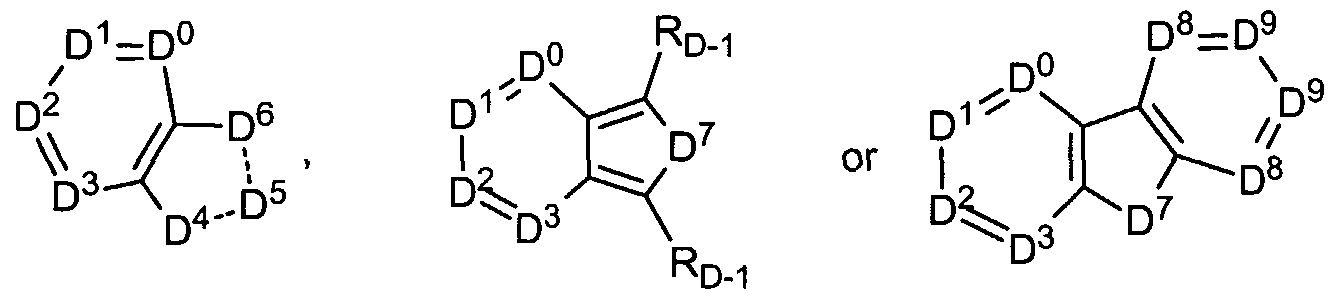
wherein W is (D):
D°, D1, D2, and D3 are N or C(RD- provided that up to one of D°, D1, D2, or D3 is N and the others are C(RD-I), provided that -C(=X)- is bonded to W at any available carbon atom of (D), further provided that when -C(X)- is bonded at D2 and D° or D1 is N, D3 is C(H); D 4___D 5___D 6 is N(RD-2)-C(RD-3)=C(RD-3), N=C(RD-3)-C(RD-4)2,
C(RD-3)=C(RD-3)-N(RD-2), C(RD-3)2-N(RD-2)-C(RD-3)2, C(RD- )2-C(RD-3)=N, N(RD-2)-C(RD-3)2-C(RD-3)2, C(RD-3)2-C(RD-3)2-N(RD.2), O-C(RD-3)=C(RD-3), O-C(RD-3)2-C(RD-3)2, C(RD-3)2-O-C(RD.3)2, C(RD-3)=C(RD-3)-O, C(RD-3)2-C(RD-3)2-O, S-C(RD-3)=C(RD-3), S-C(RD.3)2-C(RD.3)2, C(RD.3)2-S-C(RD-3)2, C(RD-3)=C(RD-3)-S, or C(RD-3)2-C(RD-3)2-S;
Each RD-ι is independently H, F, Br, I, CI, -CN, -CF3, -ORD.5, -SRD-5, -N(RD-5)2, or a bond to -C(X)- provided that only one of RD-I, RD-3, and RD^ is said bond;
Each RD-2 is independently H, alkyl, haloalkyl, substituted alkyl, cycloalkyl, halocycloalkyl, substituted cycloalkyl, heterocycloalkyl, haloheterocycloalkyl, substituted heterocycloalkyl, R5, or R6;
Each RD-3 is independently H, F, Br, CI, I, alkyl, substituted alkyl, haloalkyl, alkenyl, substituted alkenyl, haloalkenyl, alkynyl, substituted alkynyl, haloalkynyl, heterocycloalkyl, substituted heterocycloalkyl, lactam heterocycloalkyl, -CN, -NO2,
-ORD-.O, -C(O)N(Rr „)2- -NRD-ι0CORD-12, -N(RD-10)2, -SRD-ιo, -S(O)2RD-,o, -C(O)RD- 12, -CO RD-IO, aryl, R5, R , a bond to -C(X)- provided that only one of RD-ι, RD-3, and RD- is said bond:
Each Ro--t is independently H, F, Br, CI, I, alkyl, substituted alkyl, haloalkyl, alkenyl, substituted alkenyl, haloalkenyl, alkynyl, substituted alkynyl, haloalkynyl, heterocycloalkyl, substituted heterocycloalkyl, lactam heterocycloalkyl, -CN, -NO2, -ORD-IO, -C(O)N(RD-n)2, -NRD-10CORD-i2, -N(RD-n)2, -SRD-ιo, -CO2RD.10, aryl, R5, R6, a bond to -C(X)- provided that only one of RD-I, RD-3, and RD-4 is said bond; Each RD-5 is independently H, C1-3 alkyl, or C2-4 alkenyl; D7 is O, S, or N(RD.2);
D8 and D9 are C(RD-I), provided that when the molecule is attached to the phenyl moiety at D9, D8 is CH;
Each RD-IO is independently H, alkyl, cycloalkyl, haloalkyl, substituted phenyl, or substituted naphthyl; Each RD-I 1 is independently H, alkyl, cycloalkyl, heterocycloalkyl, alkyl substituted with 1 substituent selected from R13, cycloalkyl substituted with 1 substituent selected from R13, heterocycloalkyl substituted with 1 substituent selected from R13, haloalkyl, halocycloalkyl, haloheterocycloalkyl, phenyl, or substituted phenyl; RD-I2 is H, alkyl, substituted alkyl, cycloalkyl, haloalkyl, heterocycloalkyl, substituted heterocycloalkyl, substituted phenyl, or substituted naphthyl;
wherein W is (E):
RE-O is H, F, CI, Br, I, alkyl, alkenyl, alkynyl, cycloalkyl, heterocycloalkyl, haloalkyl, haloalkenyl, haloalkynyl, halocycloalkyl, haloheterocycloalkyl, substituted alkyl, substituted alkenyl, substituted alkynyl, substituted cycloalkyl, substituted heterocycloalkyl, aryl, R5, R6, -ORE.3, -ORE^, -SRE. , -SRE-5, -N(RE-3)2, -NRE-3RE.6, -N(RE-6)2, -C(O)RE-3, -CN, -C(O)N(RE.3)2, -NRE-3C(O)RE-3, -S(O)RE-3, -S(O)RE-5,
-OS(O)2RE-3, -NRE-3S(O)2RE-3, -NO2, or -N(H)C(O)N(H)RE-3;
E1 is O, CRE-I-I, or C(RE-I-I)2, provided that when E1 is CRE-I-I, one RE-ι is a bond to E1, and further provided that at least one of E1 or E2 is O;
Each RE-I-I is independently H, F, Br, CI, CN, alkyl, haloalkyl, substituted alkyl, alkynyl, cycloalkyl, -ORE, or -N(RE)2, provided that when E1 is C(RE- )2 and when one RE-ι-ι is F, Br, CI, CN, -ORE, or -N(RE)2, the other RE-ι-ι is H;
Each E-I is independently H, alkyl, substituted alkyl, haloalkyl, cycloalkyl, heterocycloalkyl, or a bond to E1 provided that E1 is RE-ι-ι;
E2 is O, CRE-2-2, or C(RE-2-2)2, provided that when E2 is CRE-2-2, one RE-2 is a bond to E2, and further provided that at least one of E1 or E2 is O;
Each RE-2-2 is independently H, F, Br, CI, CN, alkyl, haloalkyl, substituted alkyl, alkynyl, cycloalkyl, -ORE, or -N(RE)2, provided that when E2 is C(RE.2.2)2 and when one RE-2-2 is F, Br, CI, CN, -ORE, or -N(RE)2, the other RE-2-2 is H;
Each RE-2 is independently H, alkyl, substituted alkyl, haloalkyl, cycloalkyl, heterocycloalkyl, or a bond to E2 provided that E2 is CRE-2-2;
Each RE is independently H, alkyl, cycloalkyl, heterocycloalkyl, haloalkyl, halocycloalkyl, or haloheterocycloalkyl;
Each RE-3 is independently H, alkyl, haloalkyl, substituted alkyl, cycloalkyl, halocycloalkyl, substituted cycloalkyl, heterocycloalkyl, haloheterocycloalkyl, substituted heterocycloalkyl, R5, R6, phenyl, or phenyl having 1 substituent selected from R9 and further having 0-3 substituents independently selected from F, CI, Br, or I or substituted phenyl;
RE-4 is H, haloalkyl, substituted alkyl, cycloalkyl, halocycloalkyl, substituted cycloalkyl, heterocycloalkyl, haloheterocycloalkyl, substituted heterocycloalkyl, R5, R6, phenyl, or substituted phenyl;
Each RE-5 is independently H, haloalkyl, substituted alkyl, cycloalkyl, halocycloalkyl, substituted cycloalkyl, heterocycloalkyl, haloheterocycloalkyl, substituted heterocycloalkyl, R5, or R6;
Each RE-6 is independently alkyl, haloalkyl, substituted alkyl, cycloalkyl, halocycloalkyl, substituted cycloalkyl, heterocycloalkyl, haloheterocycloalkyl, substituted heterocycloalkyl, R5, R6, phenyl, or phenyl having 1 substituent selected from R and further having 0-3 substituents independently selected from F, CI, Br, or i;
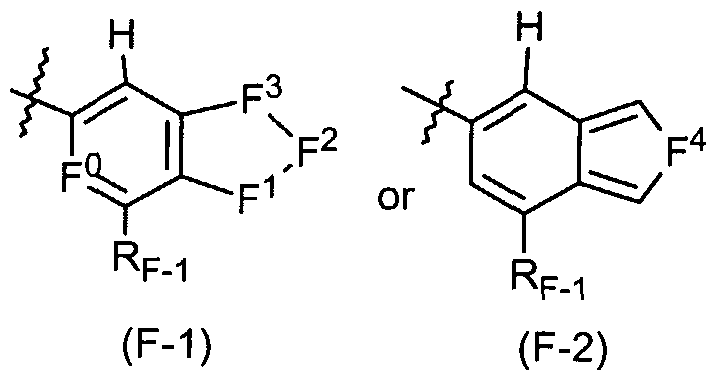
wherein W is (F):
F° is C(H) wherein F1— F2— F3 is selected from O-C(RF-2)=N, O-C(RF-3)(RF-2)-N(RF-4),
O-C(RF-3)(RF-2)-S, O-N=C(RF-3), O-C(RF-2)(RF-5)-O, O-C(RF-2)(RF-3)-O, S-C(RF.2)=N, S-C(RF-3)(RF-2)-N(RF-4), S-N=C(RF-3), N=C(RF-2)-O, N=C(RF.2)-S, N=C(RF.2)-N(RF-4), N(RF-4)-N=C(RF-3), N(RF-4)-C(RF-3)(RF-2)-O, N(RF-4)-C(RF-3)(RF-2)-S, N(RF-4)-C(RF.3)(RF-2)-N(RF-4), C(RF-3)2-O-N(RF-4), C(RF-3)2-N(RF-4)-O, C(RF-3)2-N(RF-4)-S, C(RF-3)=N-O, C(RF.3)=N-S, C(RF-3)=N-N(RF-4), C(RF-3)(RF-6)-C(RF-2)(RF-6)-C(RF.3)(RF-6), or
C(RF-3)2-C(RF.2)(RF-3)-C(RF-3)2;
F° is N wherein
F
1— F
2— F
3 is selected from O-C(R
F-
2)=N, O-C(R
F-
3)(R
F-
2)-N(R
F-
4), O-C(R
F-
3)(R
F-
2)-S, O-N=C(R
F-
3) O-C(R
F-
2)(R
F-
3)-O, S-C(R
F-
2)=N, S-C(R
F-
3)(R
F-
2)-N(R
F-
4), S-N=C(R
F-
3), N=C(R
F.
2)-O, N=C(R
F.
2)-S, N=C(R
F-
2)-N(R
F-
4), N(R
F-
4)-N=C(R
F-
3), N(R
F-
4)-C(R
F-
3)(R
F-
2)-O, N(R
F-
4)-C(R
F-
3)(R
F-
2)-S, N(R
F-
4)-C(R
F-
3)(R
F-
2)-N(R
F-
4), C(R
F-
3)
2-O-N(R
F-
4), C(R
F-
3)
2-N(R
F-
4)-O, C(R
F-
3)
2-N(R
F-
4)-S, C(R
F-
3)=N-O, C(R
F.
3)=N-S, or C(R
F-3)2-C(R
F-2)(R
F-3)-C(RF-3)2;
RF-! is H, F, CI, Br, I, -CN, -CF3, -OR,8, -SRF.8, or -N(RF-8)2;
RF-2 is H, F, alkyl, haloalkyl, substituted alkyl, lactam heterocycloalkyl, phenoxy, substituted phenoxy, R5, R6, -N(RF-4)-aryl, -N(RF.4)-substιtuted phenyl, -N(RF-4)-substιtuted naphthyl, -O-substituted phenyl, -O-substituted naphthyl, -S-substituted phenyl, -S-substituted naphthyl, or alkyl substituted on the ω carbon with RF-9 where said ω carbon is determined by counting the longest carbon chain of the alkyl moiety with the C-l carbon being the carbon
attached to W and the ω carbon being the carbon furthest, e.g., separated by the greatest number of carbon atoms in the chain, from said C-l carbon;
RF-3 is H, F, Br, CI, I, alkyl, substituted alkyl, haloalkyl, alkenyl, substituted alkenyl, haloalkenyl, alkynyl, substituted alkynyl, haloalkynyl, heterocycloalkyl, substituted heterocycloalkyl, lactam heterocycloalkyl, -CN, -NO , -OR], -C(O)N(RF- 8)2, -NHR,, -NR,CORF_8, -N(R8)2, -SR,, -C(O)RF.8, -CO2R,, aryl, R5, or R6;
RI is H, or alkyl;
Each RF-5 is independently F, Br, CI, I, alkyl, substituted alkyl, haloalkyl, alkenyl, substituted alkenyl, haloalkenyl, alkynyl, substituted alkynyl, haloalkynyl, - CN, -CF3, -ORi, -C(O)NH2, -NHRi, -SRi, -CO2R!, aryl, phenoxy, substituted phenoxy, heteroaryl, -N(RF- )-aryl, or -O-substituted aryl;
One of RF-6 is H, alkyl, substituted alkyl, haloalkyl, alkenyl, substituted alkenyl, haloalkenyl, alkynyl, substituted alkynyl, haloalkynyl, -CN, F, Br, CI, I, -ORt, -C(O)NH2, -NHRi, -SRi, -CO2Rι, aryl, R5, or R6, and each of the other two RF-6 is independently selected from alkyl, substituted alkyl, haloalkyl, alkenyl, substituted alkenyl, haloalkenyl, alkynyl, substituted alkynyl, haloalkynyl, -CN, F, Br, CI, I, -ORi, -C(O)NH2, -NHR1; -SRi, -CO2R,, aryl, R5, or R6;
RF-7 is H, alkyl, haloalkyl, substituted alkyl, cycloalkyl, halocycloalkyl, substituted cycloalkyl, phenyl, or phenyl having 1 substituent selected from R and further having 0-3 substituents independently selected from F, CI, Br, or I;
RF-8 is H, alkyl, substituted alkyl, cycloalkyl, haloalkyl, heterocycloalkyl, substituted heterocycloalkyl, substituted phenyl, or substituted naphthyl;
RF-9 is aryl, R5, or R6;
wherein W is (G):
G1 is N or CH;
Each G2 is N or C(Ro-ι), provided that no more than one G2 is N;
Each RG-I is independently H, alkyl, substituted alkyl, haloalkyl, alkenyl, substituted alkenyl, haloalkenyl, alkynyl, substituted alkynyl, haloalkynyl, -CN, -NO2, F, Br, CI, I, -C(O)N(RG.3)2, -N(RG-3)2, -SR,9,
-S(O)2Rι , -ORG-6, -C(O)RG-6,-CO2RG-6, aryl, R5, R6, or two RG-I on adjacent carbon atoms may combine for W to be a 6-5-6 fused-tricyclic-heteroaromatic-ring system optionally substituted on the newly formed ring where valency allows with 1-2 substitutents independently selected from F, CI, Br, I, and RQ.2;
RG-2 is alkyl, alkenyl, alkynyl, cycloalkyl, heterocycloalkyl, haloalkyl, haloalkenyl, haloalkynyl, halocycloalkyl, haloheterocycloalkyl, -ORG-8, -SRG-8, -S(O)2RG-8, -S(O)RG-8, -OS(O)2RG-8, -N(RG-8)2, -C(O)RG-8, -C(S)RG.8, -C(O)ORG.8, -CN, -C(O)N(RG-8)2, -NRG-8C(O)RG.8, -S(O)2N(RG.8)2, -NRG-8S(O)2RG-8, -NO2, -N(RG-8)C(O)N(RG-8)2, substituted alkyl, substituted alkenyl, substituted alkynyl, substituted cycloalkyl, substituted heterocycloalkyl, lactam heterocycloalkyl, phenyl, phenyl having 0-4 substituents independently selected from F, CI, Br, I and RG-7, naphthyl, or naphthyl having 0-4 substituents independently selected from F, CI, Br, I, or RG-7;
Each R
G.
3 is independently H, alkyl, cycloalkyl, heterocycloalkyl, alkyl substituted with 1 substituent selected from
cycloalkyl substituted with 1 substituent selected from R
GA, heterocycloalkyl substituted with 1 substituent selected from R
G-
4, haloalkyl, halocycloalkyl, haloheterocycloalkyl, phenyl, or substituted phenyl;
RG.4 is -ORG-S, -SRG-5, -N(RG.5)2, -C(O)RG.5, -SORG,, -SO2RG-5, -C(O)N(RG-5)2, -CN, -CF3, -NRG-5C(O)RG-5, -S(O)2N(RG.5)2, -NRG,S(0)2RG,, or -NO2; Each RG.5 is independently H, alkyl, cycloalkyl, heterocyclo-alkyl, haloalkyl, halocycloalkyl, or haloheterocycloalkyl;
RG.6 is H, alkyl, haloalkyl, substituted alkyl, cycloalkyl, halocycloalkyl, substituted cycloalkyl, phenyl, or phenyl having 0-4 substituents independently selected from F, CI, Br, I, and RG-7; RG-7 is alkyl, substituted alkyl, haloalkyl, -ORG-5, -CN, -NO2, -N(RG-3)2;
Each RG-8 is independently H, alkyl, haloalkyl, substituted alkyl, cycloalkyl, halocycloalkyl, substituted cycloalkyl, heterocycloalkyl, haloheterocycloalkyl,
substituted heterocycloalkyl, phenyl, or phenyl substituted with 0-4 independently selected from F, CI, Br, I, or RG-7;
whereinW is (H)
H' is N or CH;
Each R
H-ι is independently F, CI, Br, I, -CN, -NO , alkyl, haloalkyl, substituted alkyl, alkenyl, haloalkenyl, substituted alkenyl, alkynyl, haloalkynyl, substituted alkynyl, cycloalkyl, halocycloalkyl, substituted cycloalkyl, heterocycloalkyl, haloheterocycloalkyl, substituted heterocycloalkyl, lactam heterocyclcoalkyl, aryl, R
5, R
6, -OR
H-
3, -SR
H-3, -SOR
H-
3, -SO
2R
H-
3, -SCN, -S(O)N(R
H-
3)
2, -S(O)
2N(RH-
3)
2, -C(O)R
H-3, -C(O)
2R
H-
3, -C(O)N(R
H-
3)
2,
-NC(O)RH-
3, -NC(O)R
H-3, -NC(O)R
H-
3, -N(R
H.
3)
2, -NR
H-
3C(O)R
H-
3, -NR
H-
3S(O)
2RH-
3, or two RH-I on adjacent carbon atoms may fuse to form a 6-membered ring to give a 5-6 fused, bicyclic moiety where the 6-membered ring is optionally substituted with 1-3 substitutents selected from R
H-
2; m
H is 0, 1, or 2;
RH- is alkyl, alkenyl, alkynyl, cycloalkyl, heterocycloalkyl, haloalkyl, haloalkenyl, haloalkynyl, halocycloalkyl, haloheterocycloalkyl, -ORj-3, -SRH-3, -S(O)2RH-3, -S(O)RH-3, -OS(O)2RH-3, -N(RH-3)2, -C(O)RH.3, -C(S)RH-3, -C(O)ORH. , -CN, -C(O)N(RH-3)2, -NRH-3C(O)RH-3, -S(O)2N(RH-3)2, -NRH.3S(O)2RH.3, -NO2, -N(RFI-3)C(O)N(RH-3)2, substituted alkyl, substituted alkenyl, substituted alkynyl, substituted cycloalkyl, substituted heterocycloalkyl, lactam heterocycloalkyl, phenyl, phenyl having 0-4 substituents independently selected from F, CI, Br, I and R7, naphthyl, naphthyl having 0-4 substituents independently selected from F, CI, Br, I, or R7, or two RH-2 on adjacent carbon atoms may combine to form a three-ring-fused-5- 6-6 system optionally substituted with up to 3 substituents independently selected from Br, CI, F, I, -CN, -NO2, -CF3, -N(RH-3)2, -N(RH-3)C(O)RH-3, alkyl, alkenyl, and alkynyl; Each RH-3 is independently H, alkyl, haloalkyl, substituted alkyl, cycloalkyl, halocycloalkyl, substituted cycloalkyl, heterocycloalkyl, haloheterocycloalkyl,
substituted heterocycloalkyl, R5, R6, phenyl, or phenyl substituted with 0-4 independently selected from F, CI, Br, I, or R7; or pharmaceutical composition, pharmaceutically acceptable salt, racemic mixture, or pure enantiomer thereof. The present invention also includes the compounds of the present invention, pharmaceutical compositions containing the active compounds, methods to treat the identified diseases, or medicaments prepared using at least a compound of the present invention.
Abbreviations which are well known to one of ordinary skill in the art may be used (e.g., "Ph" for phenyl, "Me" for methyl, "Et" for ethyl, "h" or "hr" for hour or hours, "min" for minute or minutes, and "rt" for room temperature).
All temperatures are in degrees Centigrade.
Room temperature is within the range of 15-25 degrees Celsius. AChR refers to acetylcholine receptor. nAChR refers to nicotinic acetylcholine receptor.
Pre-senile dementia is also known as mild cognitive impairment.
5HT3R refers to the serotonin-type 3 receptor. -btx refers to α-bungarotoxin. FLIPR refers to a device marketed by Molecular Devices, Inc. designed to precisely measure cellular fluorescence in a high throughput whole-cell assay. (Schroeder et. al., J. Biomolecular Screening, 1(2), p 75-80, 1996).
TLC refers to thin-layer chromatography.
HPLC refers to high pressure liquid chromatography. MeOH refers to methanol.
EtOH refers to ethanol.
IP A refers to isopropyl alcohol.
THF refers to tetrahydrofuran.
DMSO refers to dimethylsulfoxide. DMF refers to N,N-dimethylformamide.
EtOAc refers to ethyl acetate.
TMS refers to tetramethylsilane.
TEA refers to triethylamine.
DIEA refers to NN-diisopropylethylamine.
MLA refers to methyllycaconitine.
Ether refers to diethyl ether.
HATU refers to O-(7-azabenzotriazol-l-yl)-Ν,Ν,Ν', N'-tetramethyluronium hexafluorophosphate.
CDI refers to carbonyl diimidazole.
NMO refers to N-methylmorpholine-N-oxide.
TPAP refers to tetrapropylammonium perruthenate.
Na2SO4 refers to sodium sulfate. 2CO3 refers to potassium carbonate.
MgSO4 refers to magnesium sulfate.
When Na2SO4, K2CO3, or MgSO4 is used as a drying agent, it is anhydrous.
Halogen or halo is F, CI, Br, or I.
The carbon atom content of various hydrocarbon-containing moieties is indicated by a prefix designating the minimum and maximum number of carbon atoms in the moiety, i.e., the prefix C,-j indicates a moiety of the integer 'i" to the integer "j" carbon atoms, inclusive. Thus, for example, C1-6 alkyl refers to alkyl of one to six carbon atoms.
Non-inclusive examples of heteroaryl compounds that fall within the definition of R5 and R6 include, but are not limited to, thienyl, benzothienyl, pyridyl, thiazolyl, quinolyl, pyrazinyl, pyrimidyl, imidazolyl, furanyl, benzofuranyl, benzothiazolyl, isothiazolyl, benzisothiazolyl, benzisoxazolyl, benzimidazolyl, indolyl, benzoxazolyl, pyrazolyl, triazolyl, tetrazolyl, isoxazolyl, oxazolyl, pyrrolyl, isoquinolinyl, cinnolinyl, indazolyl, indolizinyl, phthalazinyl, pydridazinyl, triazinyl, isoindolyl, purinyl, oxadiazolyl, furazanyl, benzofurazanyl, benzothiophenyl, benzothiazolyl, quinazolinyl, quinoxalinyl, naphthridinyl, and furopyridinyl.
Non-inclusive examples of heterocycloalkyl include, but are not limited to, tetrahydrofurano, tetrahydropyrano, morpholino, pyrrolidino, piperidino, piperazine, azetidino, azetidinono, oxindolo, dihydroimidazolo, and pyrrolidinono Some of the amines described herein require the use of an amine-protecting group to ensure functionalization of the desired nitrogen. One of ordinary skill in the art would appreciate where, within the synthetic scheme to use said protecting group. Amino protecting group includes, but is not limited to, carbobenzyloxy (CBz), tert
butoxy carbonyl (BOC) and the like. Examples of other suitable amino protecting groups are known to person skilled in the art and can be found in "Protective Groups in Organic synthesis," 3rd Edition, authored by Theodora Greene and Peter Wuts.
Alkyl substituted on an ω carbon with RA-7 is determined by counting the longest carbon chain of the alkyl moiety with the C-1 carbon being the carbon attached to the W moiety and the ω carbon being the carbon furthest, e.g., separated by the greatest number of carbon atoms in the chain, from said C-1 carbon. Therefore, when determining the ω carbon, the C-1 carbon will be the carbon attached, as valency allows, to the W moiety and the ω carbon will be the carbon furthest from said C-1 carbon.
The core molecule is Azabicyclo-N(R!)-C(=X)-:
Bond to core molecule
Mammal denotes human and other mammals. Brine refers to an aqueous saturated sodium chloride solution. Equ means molar equivalents.
IR refers to infrared spectroscopy.
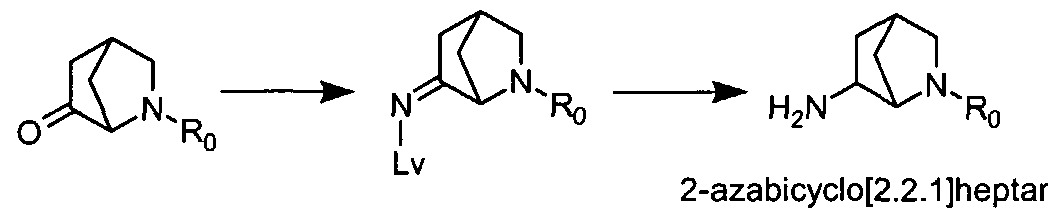
Lv refers to leaving groups within a molecule, including CI, OH, or mixed anhydride.
NMR refers to nuclear (proton) magnetic resonance spectroscopy, chemical shifts are reported in ppm (δ) downfield from TMS.
MS refers to mass spectrometry expressed as m e or mass/charge unit. HRMS refers to high resolution mass spectrometry expressed as m/e or mass/charge unit. [M+H]+ refers to an ion composed of the parent plus a proton. [M-H]" refers to an ion composed of the parent minus a proton. [M+Na]+ refers to an ion composed of the parent plus a sodium ion. [M+K]+ refers to an ion composed of the parent plus a potassium ion. El refers to electron impact. ESI refers to electrospray ionization. CI refers to chemical ionization. FAB refers to fast atom bombardment.
Compounds of the present invention may be in the form of pharmaceutically acceptable salts. The term "pharmaceutically acceptable salts" refers to salts prepared from pharmaceutically acceptable non-toxic bases including inorganic bases and
organic bases, and salts prepared from inorganic acids, and organic acids. Salts derived from inorganic bases include aluminum, ammonium, calcium, ferric, ferrous, lithium, magnesium, potassium, sodium, zinc, and the like. Salts derived from pharmaceutically acceptable organic non- toxic bases include salts of primary, secondary, and tertiary amines, substituted amines including naturally occurring substituted amines, cyclic amines, such as arginine, betaine, caffeine, choline, N, N- dibenzylethylenediamine, diethylamine, 2-diethylaminoethanol, 2-dimethylamino- ethanol, ethanolamine, ethylenediamine, N-ethylmorpholine, N-ethylpiperidine, glucamine, glucosamine, histidine, hydrabamine, isopropylamine, lysine, methylglucamine, morpholine, piperazine, piperidine, polyamine resins, procaine, purines, theobromine, triethylamine, trimethylamine, tripropylamine, and the like. Salts derived from inorganic acids include salts of hydrochloric acid, hydrobromic acid, hydroiodic acid, sulfuric acid, phosphoric acid, phosphorous acid and the like. Salts derived from pharmaceutically acceptable organic non-toxic acids include salts of Cι-6 alkyl carboxylic acids, di-carboxylic acids, and tri-carboxylic acids such as acetic acid, propionic acid, fumaric acid, succinic acid, tartaric acid, maleic acid, adipic acid, and citric acid, and aryl and alkyl sulfonic acids such as toluene sulfonic acids and the like.
By the term "effective amount" of a compound as provided herein is meant a nontoxic but sufficient amount of the compound(s) to provide the desired effect. As pointed out below, the exact amount required will vary from subject to subject, depending on the species, age, and general condition of the subject, the severity of the disease that is being treated, the particular compound(s) used, the mode of administration, and the like. Thus, it is not possible to specify an exact "effective amount." However, an appropriate effective amount may be determined by one of ordinary skill in the art using only routine experimentation.
The amount of therapeutically effective compound(s) that is administered and the dosage regimen for treating a disease condition with the compounds and/or compositions of this invention depends on a variety of factors, including the age, weight, sex and medical condition of the subject, the severity of the disease, the route and frequency of administration, and the particular compound(s) employed, and thus may vary widely. The compositions contain well know carriers and excipients in addition to a therapeutically effective amount of compounds of Formula I. The
pharmaceutical compositions may contain active ingredient in the range of about 0.001 to about 100 mg/kg/day for an adult, preferably any amount within the range of about 0.1 to about 50 mg/kg/day for an adult, including ranges within the range of about 0.1 to about 50 mg/kg/day. A total daily dose of about 1 to 1000 mg of active ingredient may be appropriate for an adult. The daily dose can be administered in one to four doses per day.
In addition to the compound(s) of Formula I, the composition for therapeutic use may also comprise one or more non-toxic, pharmaceutically acceptable carrier materials or excipients. The term "carrier" material or "excipient" herein means any substance, not itself a therapeutic agent, used as a carrier and/or diluent and/or adjuvant, or vehicle for delivery of a therapeutic agent to a subject or added to a pharmaceutical composition to improve its handling or storage properties or to permit or facilitate formation of a dose unit of the composition into a discrete article such as a capsule or tablet suitable for oral administration. Excipients can include, by way of illustration and not limitation, diluents, disintegrants, binding agents, adhesives, wetting agents, polymers, lubricants, glidants, substances added to mask or counteract a disagreeable taste or odor, flavors, dyes, fragrances, and substances added to improve appearance of the composition. Acceptable excipients include lactose, sucrose, starch powder, cellulose esters of alkanoic acids, cellulose alkyl esters, talc, stearic acid, magnesium stearate, magnesium oxide, sodium and calcium salts of phosphoric and sulfuric acids, gelatin, acacia gum, sodium alginate, polyvinyl- pyrrolidone, and/or polyvinyl alcohol, and then tableted or encapsulated for convenient administration. Such capsules or tablets may contain a controlled-release formulation as may be provided in a dispersion of active compound in hydroxypropyl- methyl cellulose, or other methods known to those skilled in the art. For oral administration, the pharmaceutical composition may be in the form of, for example, a tablet, capsule, suspension or liquid. If desired, other active ingredients may be included in the composition.
In addition to oral and topical dosing, the compositions of the present invention may be administered by any suitable route, e.g., parenterally, bucal, intravaginal, and rectal, in the form of a pharmaceutical composition adapted to such a route, and in a dose effective for the treatment intended. Such routes of administration are well known to those skilled in the art. The compositions may, for
example, be administered parenterally, e.g., intravascularly, intraperitoneally, subcutaneously, or intramuscularly. For parenteral administration, saline solution, dextrose solution, or water may be used as a suitable carrier. Formulations for parenteral administration may be in the form of aqueous or non-aqueous isotonic sterile injection solutions or suspensions. These solutions and suspensions may be prepared from sterile powders or granules having one or more of the carriers or diluents mentioned for use in the formulations for oral administration. The compounds may be dissolved in water, polyethylene glycol, propylene glycol, EtOH, corn oil, cottonseed oil, peanut oil, sesame oil, benzyl alcohol, sodium chloride, and/or various buffers. Other adjuvants and modes of administration are well and widely known in the pharmaceutical art.
Furthermore, the ocular disorders may be treated by administering directly (e.g., topically) to the eye by use of a pharmaceutical formulation that is any one or more of the following: solution, lyophilized solution, cream, ointment, emulsion, suspension and slow release formulations. Administration of these formulations to the eye can be either via the topical route or through one or more of a variety of intraocular routes such as subconjunctival, intracameral, intravitreal, subtenons, intrascleral, transcleral, retrobulbar etc. The formulation would contain from about 0.001 to about 10% (wt/vol) of the active ingredient, or any range therein, e.g., from about 0.1 to about 5% (wt vol) of the active ingredient.
Preparation of the composition can be carried out by mixing the active ingredient(s) with an ophthalmologically compatible carrier. Such carrier compounds are known, and there are a number of systems based on physiologic saline, oil solutions or ointments suggested in the literature for application of medicaments to the eye. The carrier or vehicle may furthermore contain ophthalmologically compatible preservatives including benzalkonium chloride, surfactants including polysorbate 80, liposomes or polymers including methyl cellulose, polyvinyl alcohol, polyvinyl pyrrolidone and hyaluronic acid. The latter substances may be used for increasing the viscosity of the solution. Furthermore, it is also possible to use soluble or insoluble drug inserts, for instance gels or gel type materials, in order to obtain a slow-release system.
Preferably the composition has an effective residence time in the eye of about 2 to about 24 hours, more preferably about 4 to about 24 hours and most preferably about 6 to about 24 hours.
Lacrimation is the production of tear fluid, and can remove matter from the eyes both by external wash-out and by lacrimal drainage into the nasopharyngeal cavity via the nasolacrimal ducts. "Effective residence time" herein is meant a period of time following application of the composition to the eye during which the concentration of the compound in the target ocular tissue remains above the minimum therapeutic level. The composition therefore provides sustained release an effective residence time over a period of at least about 2 hours.
A composition of the invention can illustratively take the form of a liquid wherein the drug is present in solution, in suspension or both. The term "solution/suspension" herein refers to a liquid composition wherein a first portion of the drug is present in solution and a second portion of the drug is present in particulate form, in suspension in a liquid matrix. A liquid composition herein includes a gel. Preferably the liquid composition is aqueous. Alternatively, the composition can take the form of an ointment.
As a further alternative, the composition can take the form of a solid article that can be inserted between the eye and eyelid or in the conjunctival sac, where it releases the drug as described. See, e.g., U.S. Patent No. 3,863,633 and U.S. Patent No. 3,868,445. Release is to the lacrimal fluid that bathes the surface of the cornea, or directly to the cornea itself, with which the solid article is generally in intimate contact. Solid articles suitable for implantation in the eye in such fashion are generally composed primarily of polymers and can be biodegradable or non- biodegradable. Biodegradable polymers that can be used in preparation of ocular implants carrying a selective α 7 agonist in accordance with the present invention include without restriction aliphatic polyesters such as polymers and copolymers of poly(glycolide), poly(lactide), poly(e-caprolactone), poly(hydroxybutyrate) and poly(hydroxyvalerate), polyamino acids, polyorthoesters, polyanhydrides, aliphatic polycarbonates and polyether lactones. Illustrative of suitable non-biodegradable polymers are silicone elastomers.
In another embodiment, the composition is an aqueous solution, suspension or solution/suspension, which can be presented in the form of eye drops. By means of a
suitable dispenser, a desired dosage of the drug can be metered by administration of a known number of drops into the eye. For example, administration of 1-6 drops will generally deliver about 25 to about 300 μl of the composition. Aqueous compositions of the invention preferably contain from about 0.01% to about 50% (wt vol), more preferably about 0.1% to about 20%, still more preferably about 0.2% to about 10%, and most preferably about 0.5% to about 5%, weight/volume of the selective α 7 agonist. In another embodiment, a composition of the invention contains a concentration of the selective α 7 agonist that is therapeutically or prophylactically effective in a weight/volume concentration of about 0.1% to about 50%, preferably about 0.5% to about 20%, and most preferably about 1% to about 10%. In another embodiment, a composition of the invention has relatively high loading of the drug and is suitable for a relatively long residence time in a treated eye. In this embodiment the weight/volume concentration of the drug in the composition is about 1.3%) to about 50%, preferably about 1.5% to about 30%, and most preferably about 2% to about 20%, for example about 2% to about 10%.
Generally, 1-6 drops are administered. Preferably no more than 3 drops, or less, e.g., 1 drop, 2 drops, or 3 drops, with each drop being about 15 μl to about 50 μl, or any range therein, e.g., about 20 μl to about 30 μl. The total amount of drops should contain the desired dose of the drug for administration to an eye. Administration of a larger volume to the eye risks loss of a significant portion of the applied composition by lacrimation.
Aqueous compositions of the invention have ophthalmically acceptable pH and osmolality. The term "ophthalmically acceptable" with respect to a formulation, composition or ingredient herein means having no persistent detrimental effect on the treated eye or the functioning thereof, or on the general health of the subject being treated. It will be recognized that transient effects such as minor irritation or a "stinging" sensation are common with topical ophthalmic administration of drugs and the existence of such transient effects is not inconsistent with the formulation, composition or ingredient in question being "ophthalmically acceptable" as herein defined. However, preferred formulations, compositions and ingredients are those that cause no substantial detrimental effect, even of a transient nature.
The amount of active ingredient that can be combined with the carrier materials to produce a single dosage form varies depending upon the mammalian host treated and the particular mode of administration.
The compounds of the present invention are useful for treating glaucoma, diabetic retinopathy, or age-related macular degeneration through the neuroprotection of the retinal ganglion cells (RGCs). α7 nAChR is a ligand-gated Ca^ channel formed by a homopentamer of α7 subunits. Previous studies have established that α- bungarotoxin ( -btx) binds selectively to this homopetameric, α7 nAChR subtype, and that α7 nAChR has a high affinity binding site for both α-btx and methyllycaconitine (MLA). We and others have found that α7 nAChRs are present on RGCs. See, e.g., Reed, et al., Pharmacological analysis shows multiple nAChR subtypes in rabbit retina and a possible role for the α7 subunit in directional selectivity, Prog No. 3646, E-Abstract Viewer/Itinerary Planner. Fort Lauderdale, FL: ARVO, 2001; Linn, et al., Evidence that α-Bungarotoxin-sensitive nicotinic acetylcholine receptors are present in the mammalian retina, Program No. 284.5 2001, E-Abstract Viewer/Itinerary Planner. San Diego, CA: Society for Neuroscience, 2001; Liu, et al., Immunocytochemical Localization of Nicotnic Acetylcholine Receptor Subunits in Human Retina, ARVO Prog No. 730, 2002, E-Abstract Viewer/Itinerary Planner; Linn, et al., Characterization and Expression of Nicotinic ACh Receptors in the Mammalian Retina, ARVO Prog No. 731 , 2002, E-Abstract Viewer/Itinerary Planner; Wehrwein, Neuroprotective effect of acetylcholine on pig retinal ganglion cells is mediated through a nicotinic receptor, Prog No. 36.9, 2002, E- Abstract Viewer/Itinerary Planner, Washington, DC: Society for Neuroscience, 2002, Online; Reed, et al., MLA Sensitivity in the Rabbit Retina is Medicated [sic] by Functional alpha7 nAChRS, ARVO Prog No. 4770, 2002, E-Abstract
Viewer/Itinerary Planner; and Linn, et al., Expression and Localization of the α7 Nicotinic ACh Receptor in the Mammalian Retina, Prog No. 843.6, 2002, E-Abstract Viewer/Itinerary Planner, Washington, DC: Society for Neuroscience, 2002, Online. Therefore, the invention involves the neuroprotection provided by alpha7 AChR agonists on RGCs and related uses and methods of treatment.
There are at least three mechanisms by which activation of α7 nAChRs can provide direct therapy (neuroprotection) of RGCs: by activating postsynaptic receptors to stimulate intracellular neuroprotective cascades and/or the release of beneficial
factors (e.g., nerve growth factor (NGF)), by activating presynaptic receptors to increase the release of inhibitory amino acids such as GABA which would dampen hyperexcitability, or by a combination of the preceding mechanisms.
Glaucoma is a family of diseases characterized by the loss of RGCs and pathological changes in the optic disk and optic nerve resulting in the loss of visual field. While glaucoma is usually associated with an elevation of intraocular pressure (IOP) (elevated IOP is the main risk factor for glaucoma), this is not always observed. A significant amount of patients (approximately 40%) present with the characteristics of glaucoma have normal IOP, such patients are identified as "normotensive." Also, there are subjects with elevated IOP but exhibit no signs of glaucoma. This latter group is identified as "ocular hypertensives." Therefore, there exists a need for a safe and effective method for treating glaucoma derived from not only "pressure dependent" but also "independent" events.
Currently, all therapies for glaucoma are indicated for patients with elevated IOP and display the pathological changes in the optic disk and visual field loss. These therapies fall into two main classes: those which reduce the amount of aqueous humor being produced or increase the rate of drainage of aqueous humor from the anterior chamber, both of which are to affect the IOP. More recently, combinations of classes are being utilized, such as Xalatan (to increase drainage) and Timolol (to reduce production). All of these approaches are targeted at "pressure-dependent" mechanisms localized to the anterior portion of the eye and not at the RGCs directly through "pressure-independent" mechanisms.
Neuroprotection in glaucoma is a therapeutic paradigm aimed at blocking primary destructive events and/or enhancing survival mechanisms of the RGCs and their axons and optic nerve fibers. An important potential advantage of the neuroprotective treatment is that it allows treatment of a disease for which the specific etiology is either unknown or differs among patients. This is particularly relevant to glaucoma, a heterogeneous group of disorders that share common characteristic morphological features of the optic nerve head and patterns of visual loss. RGC viability depends on a balance of positive (survival) and negative (death) stimuli, and the RGCs fail to survive if this balance is disturbed. Several pathophysiological mechanisms have been hypothesized to have a role in causing RGC death in glaucoma. One specific trigger of RGC death is excitotoxicity. Certain
excitatory neurotransmitters, such as glutamate, can overexcite a cell via activation of the N-methyl-D-aspartate (ΝMDA) subclass of receptors. To block overexcitation, several ΝMDA receptor antagonists are under development as neuroprotective agents for the treatment of glaucoma. An alternative approach to blocking glutamate excitotixicity is through the development of inhibitors of N-acetylated-alpha-linked acidic dipeptidase (ΝAALADase). These inhibitors block the catalytic formation of glutamate from N-acetyl-aspartyl-glutamate which is released after neuronal cell depoalarization. However, there is no such treatment yet on the market to prevent RGC death caused by excitotoxicity and reduce vulnerability to environmental insults. Therefore, there is an unmet medical need for the treatment of normotensive patients. Alpha 7 nAChR agonists offer a unique therapy to glaucoma patients without elevated IOP, (i.e., normotensives), by providing neuroprotection to the RGCs.
Furthermore, α7 agonists can be combined with other IOP lowering drugs for patients with "pressure" dependent glaucoma. The compounds of the present invention can be combined with other IOP lowering drugs that included, but are not limited to, any of the following: Xalatan, Xalcom, Trusopt, or Alphagan.
Moreover, α7 compounds can be used with other neuroprotective agents including, but limited to, the following: COX inhibitor (including a COX-2 inhibitor), an iΝOS inhibitor (see, e.g., Νeufeld, et al, Proc. Nat 'I Acad. Sci., Vol 96, pp. 9944- 9948 (1999)), a p38 kinase inhibitor (see, e.g., Kikuchi, et al, J. Neuroscience, 20 (13):5037-5044 (2000)), or a TΝF-α inhibitor (see, e.g., Tezel, G and Wax, M, J. Neuroscience, 20(23):8693-8700 (2000)). Overall, al agonists (alone and in combination) provide unique therapy to elevated IOP glaucoma patients, normotensive glaucoma patients and ocular hypertensives. In addition to treating persons with IOP associated glaucoma, the compounds of the present invention can be used as a neuroprotective agent when the eye experiences effects resulting in increased pressure. Such effects result from environmental incidents including, but not limited to, a bacterial infection, inflammation from an autoimmune response, and trauma-induced pressure (e.g., trauma to the eye socket). It is preferred that the compounds of the present invention be administered with other agents to treat the cause resulting in IOP, e.g., administering the compounds of the present invention in addition to an antibacterial agent to treat the bacterial infection. One of ordinary skill in the art is well versed in
the other agents and how they are to be administered to treat the underlying cause of the inflammation. The unique benefit to this combined therapy is to provide protection of eyesight that would otherwise not be directly treated with the agents to treat the underlying cause of inflammation. The compounds of the present invention can also be administered to a mammal who is pre-disposed to acquire glaucoma, regardless of whether the glaucoma results from IOP or other factors. One of ordinary skill in the art can identify said mammals predisposed to acquire glaucoma. In such cases, the compounds of the present invention would provide preventative measures to prolong the onset of glaucoma or possibly avoid the onset of glaucoma.
Diabetic retinopathy is the most common complication of diabetes, affecting over 90% of persons with diabetes and progressing to legal blindness in about 5%. The vascular features of long-term diabetic retinopathy are well documented, but the non- vascular pathology has received less attention until a recent observation that both experimental diabetes in rats and diabetes mellitus in humans are accompanied by increased apoptosis of retinal neural cells (Barber et al, 1998; J. Gin. Invest., 102, 783-791). The increase in the frequency of apoptosis occurred after only 1 month of experimental diabetes in rats is similar to that observed in a human retina after 6 years of diabetes. The significant reduction of retinal ganglion cells and the reduction in the thickness of the inner plexiform and nuclear layers after 7.5 months of streptozotocin (STZ) diabetes suggest that the apoptotic cells include ganglion cells and other neurons. Therefore, neurodegeneration could be an important feature of diabetic retinopathy (Bloodworm, 1962; Diabetes, 2, 1-22). Treatment of person with diabetic retinopathy with al nAChR agonist to mediate neuroprotection in this context means the ability to increase neurotrophic factor influence in the cellular population in the retina to reduce their vulnerability in response to the metabolic and other diabetic related insults.
There are two stages of diabetic retinopathy, an early stage known as the preproliferative stage and a late stage known as the proliferative stage. In the proliferative stage, microvascular abnormalities including neovascularization are common. In the preproliferative stage of diabetic retinopathy, neuronal apoptosis and neurodegeneration occur by an unknown mechanism (see, e.g. Nakamura et al., J. Biol. Chem., Vol 276(47):43748-43755 (2001)). Currently, the only therapy for
diabetic retinopathy is targeted against the late phase and consists of laser surgery on new blood vessels to halt growth. An α 7 nAChR agonist provides therapy for the early, preproliferative stage of diabetic retinopathy by targeting neuronal apoptosis and neurodegeneration. This would fill an unmet medical need and be the first therapy to target this early stage. It is possible that an interaction or cascade exists between the early and late stage, and a therapy targeted at the early stage would provide some benefit by reducing the severity or preventing the late stage (comparable to IOP management in glaucoma). In addition, α 7 nAChRs have been associated with blood vessels and activation of these receptors with an α 7 nAChR agonist can target the late stage independently by activating anti-angiogenic pathways.
Alternatively, a combination therapy utilizing an α 7 nAChR agonist against the early stage of diabetic retinopathy, and compounds with an indication against the late stage, would provide additional benefit over each alone. Existing compounds with utility for combining with an α 7 nAChR agonist would include, but not be limited to, matrix metalloproteinase inhibitors (MMPi) and vascular endothelial growth factor inhibitors (VEGFi) to prevent the growth of new blood vessels, and COX inhibitors (including COX-2 inhibitors) and glucocorticoid steroids to target inflammation.
In a combination therapy to treat the diseases discussed herein, the α 7 nAChR agonist and the other agent can be administered simultaneously or at separate intervals. When administered simultaneously the α 7 nAChR agonist and the other agent can be incorporated into a single pharmaceutical composition, e.g., a pharmaceutical combination therapy composition. Alternatively, two separate compositions, i.e., one containing α 7 nAChR agonist and and the other containing the other agent, can be administered simultaneously. Examples of other agents are discussed herein with regard to the different diseases to be treated.
A pharmaceutical combination therapy composition can include therapeutically effective amounts of the a 7 nAChR agonist, noted above, and a therapeutically effective amount of the other agent, including but not limited to, Xalatan, Xalcom, Truspot, Alhagan, MMPi, VEGFi, COX-2 inhibitors, or glucocorticoid steroids. These compositions may be formulated with common excipients, diluents or carriers, and compressed into tablets, or formulated elixirs or solutions for convenient oral administration or administered by intramuscular
intravenous routes. The compounds can be administered rectally, topically, orally, sublingually, parentarally, or topically and maybe formulated as sustained relief dosage forms and the like.
When separately administered, therapeutically effective amounts of compositions containing the α 7 nAChR agonist and the other agent are administered on a different schedule. One may be administered before the other as long as the time between the two administrations falls within a therapeutically effective interval. A therapeutically effective interval is a period of time beginning when one of either (a) the α 7 nAChR agonist, or (b) the other agent is administered to a mammal and ending at the limit of the beneficial effect in the treatment of the disease to be treated with a combination of (a) and (b). The methods of administration of the α 7 nAChR agonist and the other agent may vary. Thus, either agent or both agents may be administered rectally, topically, orally, sublingually, or parenterally.
Age-related macular degeneration (AMD) is a common eye disease of the macula which is a tiny area in the retina that helps produce sharp, central vision required for "straight ahead" activities that include reading and driving. Persons with AMD lose their clear, central vision. AMD takes two forms: wet and dry. The dry form of AMD features changes in the non-neuronal retinal pigment epithelium (RPE) and the photoreceptors of the macula. The RPE is a layer of vascularized, pigmented cells located directly behind the retina and separates the retina from the choroid. The RPE normally provides metabolic support and is involved in the recycling of components of the photosensitive cascade of photoreceptors. Often, there is the accumulation of a yellow exudate in the RPE called drusen during AMD. The neurodegenerative changes in the RPE and formation of drusen are thought to be manifestations of a dysfunction between the photoreceptors and the RPE in the macula. The reason for this dysfunction is unknown but possibly involves the high metabolic demand of the macula. In the wet form, the abnormal ingrowth of blood vessels from the choroid through the RPE (choroidal neovascularization) often results in fluid and/or blood ("wet") accumulation under the retina and can ultimately result in severe loss of vision. Since α 7 nAChRs have been associated with blood vessels, an α 7 nAChR agonist can activate a neuroprotective cascade within the RPE cells and prevent any dysfunction with the photoreceptors. The compounds of the present invention are
useful to treat AMD. In addition, a healthy RPE would be more likely to provide a barrier against choroidal neovascularization and therefore the "wet" stage. There currently is no cure for dry AMD. Laser surgery can treat some cases of wet AMD. Therefore, there is a need of a pharmaceutical agent to address AMD. Use of an α 7 nAChR agonist and compounds with an indication against neovascularization provide additional benefit over each alone for AMD. Existing compounds with a utility for combining with an α 7 nAChR agonist include, but are not limited to, matrix metalloproteinase inhibitors (MMPi) and vascular endothelial growth factor inhibitors (VEGFi) to prevent the growth of new blood vessels, COX inhibitors including COX-2 inhibitors, and glucocorticoid steroids to target inflammation.
The key step in the preparation of this class of compounds is the coupling of the Azabicyclo moiety with the requisite acid chloride (Lv = CI), mixed anhydride (e.g., Lv = diphenyl phosphoryl, bis(2-oxo-3-oxazolidinyl)phosphinyl, or acyloxy of the general formula of O-C(O)-R V, where RLV includes phenyl or t-butyl), or carboxylic acid (Lv =OH) in the presence of an activating reagent. Suitable activating reagents are well known in the art, for examples see Kiso, Y., Yajima, H. "Peptides" pp. 39-91, San Diego, CA, Academic Press, (1995), and include, but are not limited to, agents such as carbodiimides, phosphonium and uronium salts (such as HATU).
Compounds of Formula I can be prepared as shown in Scheme 1. The key step in the preparation of this class of compounds is the coupling of an azabicyclic moiety with the requisite acid chloride (Lv = CI), mixed anhydride (e.g., Lv = diphenyl phosphoryl, bis(2-oxo-3-oxazolidinyl)phosphinyl, or acyloxy of the general formula of O-C(O)-RLV, where RLv includes phenyl or t-butyl), or carboxylic acid (Lv =OH) in the presence of an activating reagent. Suitable activating reagents are well known in the art, for examples see Kiso, Y., Yajima, H. "Peptides" pp. 39-91, San Diego, CA, Academic Press, (1995), and include, but are not limited to, agents such as carbodiimides, phosphonium and uronium salts (such as HATU).
Scheme 1 Lv-C(=O)-W + H2N-Azabicyclo ■» W-N(H)- Azabicyclo
Generally, the carboxylic acid is activated with a uronium salt, preferably HATU (see J. Am. Chem. Soc, 4397 (1993)), in the presence of the Azabicyclico moiety and a base such as DIE A in DMF to afford the desired amides. Alternatively, the carboxylic acid is converted to the acyl azide by using DPP A; the appropriate amine precursor is added to a solution of the appropriate anhydride or azide to give the desired final compounds. In some cases, the ester (Lv being OMe or OEt) may be reacted directly with the amine precursor in refluxing methanol or ethanol to give the compounds of Formula I.
Certain 6-substituted-[2.2.2]-3-amines (Azabicyclo I) are known in the art. The preparation of compounds where R2 is present is described in Acta Pol. Pharm. 179-85 (1981). Alternatively, the 6-substituted-[2.2.2]-3-amine can be prepared by reduction of an oxime or an imine of the corresponding 6-substituted-3- quinuclidinone by methods known to one of ordinary skill in the art (see J. Labelled Compds. Radiopharm., 53-60 (1995), J. Med. Chem. 988-995, (1998), Synth. Commun. 1895-1911 (1992), Synth. Commun. 2009-2015 (1996)). Alternatively, the 6-substituted-[2.2.2]-3-amine can be prepared from a 6-substituted-3- hydroxyquinuclidine by Mitsunobu reaction followed by deprotection as described in Synth. Commun. 1895-1911 (1995). Alternatively, the 6-substituted-[2.2.2]-3-amine can be prepared by conversion of a 6-substituted-3-hydroxyquinuclidine into the corresponding mesylate or tosylate, followed by displacement with sodium azide and reduction as described inJ. Med. Chem. 587-593 (1975).
The oximes can be prepared by treatment of the 3-quinuclidinones with hydroxylamine hydrochloride in the presence of base. The imines can be prepared by treatment of the 3-quinuclidinones with a primary amine under dehydrating conditions. The 3-hydroxyquinuclidines can be prepared by reduction of the 3-
quinuclidinones. The 6-substituted-3-quinuclidinones can be prepared by known procedures (see J. Gen. Chem. Russia 3791-3795, (1963), J. Chem. Soc. Perkin Trans. 7409-420 (1991), J. Org. Chem. 3982-3996 (2000)).
Preparation of N-(2S,3R)-2-methyl- 1 -azabicyclo[2.2.2]octan-3-amine dihydrochloride (2S-methyl-2.2.2-Amine): See, e.g., US 6,500,840, incorporated herein by reference.
One of ordinary skill in the art will recognize that the methods described for the reaction of the unsubstituted 3-amino-l-azabicyclo[2.2.1]heptane (R2=absent) are equally applicable to substituted compounds (R2 ≠ H). For where Azabicyclo is II, compounds where R2 is present can be prepared from appropriately substituted nitro alcohols using procedures described in Tetrahedron (1997), 53, p. 11121 as shown below. Methods to synthesize nitro alcohols are well known in the art (see J. Am. Chem. Soc. (1947), 69, p 2608).
exo-[2.2.1]-Amine Compounds for Azabicyclo II where R
2 is present can also be prepared by modification of intermediates described in the synthesis of e o-3-amino-l- azabicyclo[2.2.1]heptane as the bis(hydro para-toluenesulfonate) salt. For example,
Int 6 can be oxidized to the aldehyde and treated with an organometallic reagent to
provide Int 20 using procedures described in Tetrahedron (1999), 55, p 13899. Int 20 can be converted into the amine using methods described for the synthesis of ejco-3- amino-l-azabicyclo[2.2.1]heptane as the bis(hydro para-toluenesulfonate) salt. Once the amine is obtained, the desired salt can be made using standard procedures.
Synthesis of e o-3 -amino- 1 -azabicyclo[2.2.1 ]heptane as the bis(hydro para-toluenesulfonate) salt (ej o-[2.2.1]-Amine): Step A. Preparation of 2-(benzoyloxy)- 1 -nitroethane (Int 1 ).
Benzoyl chloride (14.9 mL, 128 mmol) is added to a stirred solution of nitroethanol (9.2 mL, 128 mmol) in dry benzene (120 mL). The solution is refluxed for 24 hr and then concentrated in vacuo. The crude product is purified by flash chromatography on silica gel. Elution with hexanes-EtOAc (80:20) affords Int 1 as a white solid (68% yield): Η NMR (CDC13) δ 8.0, 7.6, 7.4, 4.9, 4.8. Step B. Preparation of ethyl E-4-(benzylamino)-2-butenoate (Int 2). Ethyl E-4-bromo-2-butenoate (10 mL, 56 mmol, tech grade) is added to a stirred solution of benzylamine (16 mL, 146 mmol) in CH2C12 (200 mL) at rt. The reaction mixture stirs for 15 min, and is diluted with ether (1 L). The mixture is washed with saturated aqueous NaHCO3 solution (3x) and water, dried over Na2SO , filtered and concentrated in vacuo. The residue is purified by flash chromatography on silica gel. Elution with hexanes-EtOAc (70:30) affords Int 2 as a clear oil (62% yield): 1H NMR (CDCI3) δ 7.4-7.2, 7.0, 6.0, 4.2, 3.8, 3.4, 2.1-1.8, 1.3. Step C. Preparation of trans-A-nitxo- 1 -(phenylmethyl)-3-pyrrolidineacetic acid ethyl ester (Int 3).
A solution of Int 1 (6.81 g, 34.9 mmol) and Int 2 (7.65 g, 34.9 mmol) in EtOH (70 mL) stirs at rt for 15 h and is then concentrated in vacuo. The residue is diluted with ether (100 mL) and saturated aqueous NaHCO3 solution (100 mL). The organic layer is separated and dried over Na2SO , filtered and concentrated in vacuo. The crude product is purified by flash chromatography on silica gel. Elution with hexanes- EtOAc (85:15) affords Int 3 as a clear oil (76% yield): Η NMR (CDC13) δ 7.4-7.3, 4.8-4.7, 4.1, 3.8-3.6, 3.3-3.0, 2.7-2.6, 2.4-2.3, 1.2.
Step D. Preparation of trans-A-amixio- 1 -(phenylmethyl)-3-pyrτolidineacetic acid ethyl ester (Int 4).
A mixture of Int 3 (3.28 g, 11.2 mmol) and RaNi (1.5 g) in EtOH (100 mL) is placed in a Parr bottle and hydrogenated for 4 h under an atmosphere of hydrogen (46 psi) at rt. The mixture is filtered through a pad of Celite, and the solvent is removed in vacuo to afford Int 4 as a clear oil (100% yield): Η NMR (300 MHz, CDC13) δ 7.3- 7.2, 4.1 , 3.6, 3.2, 3.0-2.9, 2.8, 2.8-2.6, 2.6-2.4, 2.30-2.2, 1.2.
Step E. Preparation of trans-A-( 1 , 1 -dimethylethoxycarbonylamido)- 1 -
(phenylmethyl)-3-pyrrolidineacetic acid ethyl ester (Int 5).
Di-tert-butyldicarbonate (3.67 g, 16.8 mmol) is added to a stirred solution of Int 4 (2.94 g, 11.2 mmol) in CH2C12 (30 mL) cooled in an ice bath. The reaction is allowed to warm to rt and stirred overnight. The mixture is concentrated in vacuo. The crude product is purified by flash chromatography on silica gel. Elution with hexanes-EtOAc (80:20) affords Int 5 as a white solid (77% yield): 1H NMR (300 MHz, CDC13) δ 7.4-7.2, 5.1-4.9, 4.1, 4.0-3.8, 3.6, 3.2-3.0, 2.8-2.6, 2.5-2.4, 2.3-2.1, 1.4, 1.3. Step F. Preparation of trans (tert-butoxycarbonylamino)-4-(2-hydroxyethyl)-l-
(N-phenylmethyl) pyrrolidine (Int 6).
LiAlH powder (627 mg, 16.5 mmol) is added in small portions to a stirred solution of Int 5 (3.0 g, 8.3 mmol) in anhydrous THF (125 mL) in a -5°C bath. The mixture is stirred for 20 min in a -5°C bath, then quenched by the sequential addition of water (0.6 mL), 15% (w/v) aqueous NaOH (0.6 mL) and water (1.8 mL). Excess anhydrous IO2CO3 is added, and the mixture is stirred for 1 h, then filtered. The filtrate is concentrated in vacuo. The residue is purified by flash chromatography on silica gel. Elution with EtOAc affords Int 6 as a white solid (94% yield): 1H NMR (CDCI3) δ 7.4-7.3, 5.3-5.2, 4.1-4.0, 3.9-3.7, 3.3-3.2, 2.8-2.7, 2.3-2.1, 1.7, 1.5. Int 6 is a racemic mixture that can be resolved via chromatography using a
Diacel chiral pack AD column. From the two enantiomers thus obtained, the (+)-enantiomer, [α]25o +35 (c 1.0, MeOH), gives rise to the corresponding optically pure exo-A-S final compounds, whereas the (-)-enantiomer, [α]25o -34 (c 0.98, MeOH), gives rise to optically pure e o-4-R final compounds. The methods described herein use the (+)-enantiomer of Int 6 to obtain the optically pure exo-A-S final compounds. However, the methods used are equally applicable to the (-)-enantiomer of Int 6, making non-critical changes to the methods provided herein to obtain the optically pure exo-A-R final compounds.
Step G. Preparation of exo 3 -(tert-butoxycarbonylamino)- 1 - azabicyclo[2.2.1]heptane (Int 7).
TEA (8.0 g, 78.9 mmol) is added to a stirred solution of Int 6 (2.5 g, 7.8 mmol) in CH2C1 (50 mL), and the reaction is cooled in an ice-water bath. CH3SO2Cl (5.5 g, 47.8 mmol) is then added dropwise, and the mixture is stirred for 10 min in an ice-water bath. The resulting yellow mixture is diluted with saturated aqueous NaHCO3 solution, extracted with CH2C12 several times until no product remains in the aqueous layer by TLC. The organic layers are combined, washed with brine, dried over Na SO4 and concentrated in vacuo. The residue is dissolved in EtOH (85 mL) and is heated to reflux for 16 h. The reaction mixture is allowed to cool to rt, transferred to a Parr bottle and treated with 10% Pd/C catalyst (1.25 g). The bottle is placed under an atmosphere of hydrogen (53 psi) for 16 h. The mixture is filtered through Celite, and fresh catalyst (10% Pd/C, 1.25 g) is added. Hydrogenolysis continues overnight. The process is repeated three more times until the hydrogenolysis is complete. The final mixture is filtered through Celite and concentrated in vacuo. The residue is purified by flash chromatography on silica gel. Elution with CHCl3-MeOH-NH4OH (90:9.5:0.5) affords Int 7 as a white solid (46% yield): H NMR (CDC13) δ 5.6-5.5, 3.8-3.7, 3.3-3.2, 2.8-2.7, 2.0-1.8, 1.7-1.5, 1.5. Step H. Preparation of exo-3-amino- 1 -azabicyclo[2.2.1 ]heptane bis(hydro- / α-toluenesulfonate).
R rø-toluenesulfonic acid monohydrate (1.46 g, 7.68 mmol) is added to a stirred solution of Int 7 (770 mg, 3.63 mmol) in EtOH (50 mL). The reaction mixture is heated to reflux for 10 h, followed by cooling to rt. The precipitate is collected by vacuum filtration and washed with cold EtOH to give e o-[2.2.1]-Amine as a white solid (84% yield): 1H NMR (CD3OD) δ 7.7, 7.3, 3.9-3.7, 3.7-3.3, 3.2, 2.4, 2.3-2.2, 1.9-1.8.
Synthesis of em/o-3 -amino- 1 -azabicyclo [2.2.1 ]heptane as the bis(hydro para-toluenesulfonate) salt (e« o-[2.2.1]-Amine): The en-fo-[2.2.1]-Amine is prepared from ethyl 5-hydroxy-6-oxo-l, 2,3,6- tetrahydropyridine-4-carboxylate:
Preparation of ethyl 5-hydroxy-6-oxo-l,2,3,6-tetrahydropyridine-4-carboxylate (Int 10): Absolute EtOH (92.0 mL, 1.58 mol) is added to a mechanically stirred
suspension of potassium ethoxide (33.2 g, 395 mmol) in dry toluene (0.470 L). When the mixture is homogeneous, 2-pyrrolidinone (33.6 g, 395 mmol) is added, and then a solution of diethyl oxalate (53.1 mL, 390 mmol) in toluene (98 mL) is added via an addition funnel. After complete addition, toluene (118 mL) and EtOH (78 mL) are added sequentially. The mixture is heated to reflux for 18 h. The mixture is cooled to rt and aqueous HC1 (150 mL of a 6.0 M solution) is added. The mixture is mechanically stirred for 15 min. The aqueous layer is extracted with CH2C12, and the combined organic layers are dried over MgSO4, filtered and concentrated in vacuo to a yellow residue. The residue is recrystallized from EtOAc to afford Int 10 as a yellow solid (38% yield): Η NMR (CDC13) δ 11.4, 7.4, 4.3, 3.4, 2.6, 1.3.
Preparation of ethyl c/5-3-hydroxy-2-oxopiperidine-4-carboxylate (Int 11): A mixture of Int 10 (15 g, 81 mmol) and 5% rhodium on carbon (2.0 g) in glacial acetic acid is placed under an atmosphere of hydrogen (52 psi). The mixture is shaken for 72 h. The mixture is filtered through Celite, and the filtrate is concentrated in vacuo to afford Int 11 as a white solid (98% yield): Η NMR (CDC13) δ 6.3, 4.2, 4.0-3.8, 3.4, 3.3-3.2, 2.2, 1.3.
Preparation of cis- 4-(hydroxymethyl)piperidin-3-ol (Int 12): Int 11 (3.7 g, 19.9 mmol) as a solid is added in small portions to a stirred solution of LiAlH in THF (80 mL of a 1.0 M solution) in an ice-water bath. The mixture is warmed to rt, and then the reaction is heated to reflux for 48 h. The mixture is cooled in an ice-water bath before water (3.0 mL, 170 mmol) is added dropwise, followed by the sequential addition of NaOH (3.0 mL of a 15% (w/v) solution) and water (9.0 mL, 500 mmol). Excess K2CO3 is added, and the mixture is stirred vigorously for 15 min. The mixture is filtered, and the filtrate is concentrated in vacuo to afford Int 12 as a yellow powder (70% yield): Η NMR (DMSO-- ) δ 4.3, 4.1, 3.7, 3.5-3.2, 2.9-2.7, 2.5-2.3, 1.5, 1.3. Preparation of benzyl c/s-3-hydroxy-4-(hydroxymethyl)piperidine-l- carboxylate (Int 13): N-(benzyloxy carbonyloxy)succinimide (3.04 g, 12.2 mmol) is added to a stirred solution of Int 12 (1.6 g, 12.2 mmol) in saturated aqueous ΝaHCO3 (15 mL) at rt. The mixture is stirred at rt for 18 h. The organic and aqueous layers are separated. The aqueous layer is extracted with ether (3X). The combined organic layers are dried over anhydrous K2CO3, filtered and concentrated in vacuo to afford Int 13 as a yellow oil (99% yield): Η NMR (CDC13) δ 7.4-7.3, 5.2, 4.3, 4.1, 3.8-3.7, 3.0-2.8, 2.1, 1.9-1.7, 1.4.
Preparation of benzyl c/5,-3-hydroxy-4-[(4-methylphenyl)sulfonyl oxymethyl]piperidine-l-carboxylate (Int 14): Rαrø-toluenesulfonyl chloride (1.0 g, 5.3 mmol) is added to a stirred solution of Int 13 (3.6 g, 5.3 mmol) in pyridine (10 mL) in a -15°C bath. The mixture is stirred for 4 h, followed by addition of HCl (4.5 mL ofa 6.0 M solution). CH2C12 (5 mL) is added. The organic and aqueous layers are separated. The aqueous layer is extracted with CH2C12. The combined organic layers are washed with brine, dried over MgSO4, filtered and concentrated in vacuo to afford Int 14 as a colorless oil (78% yield): 1H NMR (CDC13) δ 7.8, 7.4-7.2, 5.1, 4.3- 4.2, 4.1, 3.9-3.8, 2.9-2.7, 2.4, 1.9, 1.6-1.3. Preparation of exo- 1 -azabicyclo [2.2. l]heptan-3-ol (Int 15): A mixture of Int
14 (3.6 g, 8.6 mmol) and 10% Pd/C catalyst (500 mg) in EtOH (50 mL) is placed under an atmosphere of hydrogen. The mixture is shaken for 16 h. The mixture is filtered through Celite. Solid NaHCO3 (1.1 g, 13 mmol) is added to the filtrate, and the mixture is heated in an oil bath at 50°C for 5 h. The solvent is removed in vacuo. The residue is dissolved in saturated aqueous K2CO3 solution. Continuous extraction of the aqueous layer using a liquid-liquid extraction apparatus (18 h), followed by drying the organic layer over anhydrous K2CO3 and removal of the solvent in vacuo affords Int 15 as a white solid (91% yield): 1H NMR δ 3.8, 3.0-2.8, 2.6-2.5, 2.4-2.3, 1.7, 1.1. Preparation of e« o-3-azido-l-azabicyclo[2.2. l]heptane (Int 16): To a mixture of Int 15 (1.0 g, 8.9 mmol) and triphenyl phosphine (3.0 g, 11.5 mmol) in toluene- THF (50 mL, 3:2) in an ice- water bath are added sequentially a solution of hydrazoic acid in toluene (15 mL of ca. 2 M solution) and a solution of diethyl azadicarboxylate (1.8 mL, 11.5 mmol) in toluene (20 mL). The mixture is allowed to warm to rt and stir for 18 h. The mixture is extracted with aqueous l.OM HCl solution. The aqueous layer is extracted with EtOAc, and the combined organic layers are discarded. The pH of the aqueous layer is adjusted to 9 with 50% aqueous NaOH solution. The aqueous layer is extracted with CH2C12 (3X), and the combined organic layers are washed with brine, dried over Na2SO4, filtered and concentrated in vacuo. The crude product is purified by flash chromatography on silica gel. Elution with CHCl3-MeOH-NH4OH (92:7:1) affords Int 16 as a colorless oil (41% yield): Η NMR (CDC13) δ 4.1, 3.2, 2.8, 2.7-2.5, 2.2, 1.9, 1.5.
Preparation of emio-3-amino-l-azabicyclo[2.2.1 ]heptane bis(hydro-pαrα- toluenesulfonate): A mixture of Int 16 (250 mg, 1.8 mmol) and 10% Pd/C catalyst (12 mg) in EtOH (10 mL) is placed under an atmosphere of hydrogen (15 psi). The mixture is stirred for 1 h at rt. The mixture is filtered through Celite, and the filtrate is concentrated in vacuo. The residue is dissolved in EtOH (10 mL) and para- toluenesulfonic acid monohydrate (690 mg, 3.7 mmol) is added. The mixture is stirred for 30 min, and the precipitate is filtered. The precipitate is washed sequentially with cold EtOH and ether. The precipitate is dried in vacuo to afford endo-[2.2.1]-Amine as a white solid (85% yield): 1H NMR (CD3OD) δ 7.7, 7.3, 4.2, 3.9, 3.6-3.4, 3.3-3.2, 2.4, 2.3, 2.1.
There are several methods by which the amine precursor for Azabicyclo III and Azabicyclo IN can be obtained:
n-5-amine [2.2.1]-5-Amiπe
n-6-amine [2.2.1]-6-Amine where Lv can be -CH
2Ph, -CH(Me)Ph, -OH, -OMe, or -OCH
2Ph.
The respective amine precursors for Azabicyclo III and Azabicyclo IN can be prepared by reduction of an oxime or an imine of the corresponding N-2-azabicyclo[2.2.1]- heptanone by methods known to one skilled in the art (see J. Labelled Compds. Radiopharm., 53-60 (1995), J. Med. Chem. 988-995, (1998), Synth. Commun. 1895- 1911 (1992), Synth. Commun. 2009-2015 (1996)). The oximes can be prepared by treatment of the N-2-azabicyclo[2.2.1]heptanones with hydroxylamine hydrochloride in the presence of a base. The imines can be prepared by treatment of the N-2- azabicyclo[2.2.1]-heptanones with a primary amine under dehydrating conditions. The N-2-azabicyclo[2.2.1]heptanones can be prepared by known procedures (see Tet. Zett. 1419-1422 (1999), J. Med. Chem. 2184-2191 (1992), J. Med. Chem. 706-720 (2000), J. Org. Chem., 4602-4616 (1995)).
The exo- and en o-l-azabicyclo[3.2.1]octan-3-amines are prepared from 1- azabicyclic[3.2.1]octan-3-one (Thill, B. P., Aaron, H. S., J. Org. Chem., 4376-4380 (1968)) according to the general procedure as discussed in Lewin, A.H., et al., J. Med. Chem., 988-995 (1998). One of ordinary skill in the art will also recognize that the methods described for the reaction of the unsubstituted l-azabicyclo[3.2.1]octan-3-amine or 1- azabicyclo[3.2.2]nonan-3-amine (R2=absent) are equally applicable to substituted compounds (R2 present). The R2 substituent may be introduced as known to one skilled in the art through standard alkylation chemistry. Exposure of 1 - azabicyclo[3.2.1]octan-3-one or l-azabicyclo[3.2.2]nonan-3-one to a hindered base such as LDA (lithium diisopropylamide) in a solvent such as THF or ether between 0°C to -78°C followed by the addition of an alkylating agent (R2Lv, where Lv = CI, Br, I, OTs, etc.) will, after being allowed to warm to about 0°C to rt followed by an aqueous workup, provide the desired compound as a mixture of isomers. Chromatographic resolution (flash, HPLC, or chiral HPLC) will provided the desired purified alkylated ketones. From there, formation of the oxime and subsequent reduction will provide the desired endo or exo isomers.
An alternative route for the preparation of (3R,5R)-l-azabicyclo[3.2.1]octan-3- amine dihydrochloride is as follows: (3S)-l-[(S)-l-Phenethyl]-5-oxo-3-pyrrolidine-carboxylic acid: According to the literature procedure (Nielsen et al. J. Med. Chem 1990, 70-77), a mixture of itaconic acid (123.17 g, 946.7 mmol) and (S)-(-)-α-methyl benzylamine (122.0 mL, 946.4 mmol) were heated (neat) in a 160°C oil bath for 4 h. Upon cooling, MeOH (-200 mL) was added and the resulting solid collected by filtration. The solid was treated with EtOH (-700 mL) and warmed using a steam bath until -450 mL solvent remained. After cooling to rt, the solid was collected and dried to afford 83.2 g as a white crystalline solid: [α]25 D = -80 (c 0.97, DMSO). MS (El) m/z 233 (M+).
The lack of a resonance 3.59 indicates a single diastereomer. The other diastereomer can be retrieved from the initial MeOH triturant. Attempts to crystallize this material generally led to small quantities of (3RS)-l-[(S)-l-phenethyι]-5-oxo-3- pyrrolidine-carboxylic acid.
(3S)-l-[(S)-l-Phenethyl]-3-(hydroxymethyl)pyrrolidine: A suspension (3S)-1- [(S)-l-phenethyl]-5-oxo-3-pyrrolidine-carboxylic acid (82.30 g, 352.8 mmol) in Et2O
(200 mL) was added in small portions to a slurry of LiAlH4 (17.41 g, 458.6 mmol) in Et2O (700 mL). The mixture began to reflux during the addition. The addition funnel containing the suspension was rinsed with Et2O (2 x 50 mL), and the mixture was heated in a 50 °C oil bath for an additional 2 h and first allowed to cool to rt and then further cooled using an ice bath. The mixture was carefully treated with H2O (62 mL). The resulting precipitate was filtered, rinsed with Et2O, and discarded. The filtrate was concentrated to a yellow oil. When EtOAc was added to the oil, a solid began to form. Hexane was then added and removed by filtration and dried to afford 43.3 g as a white solid. [α]25 D = -71 (c 0.94, CHC13). MS (El) m/z 205 (M+). (3R)-l-[(S)-l-Phenethyl]-3-(cyanomethyl)pyrrolidine: A solution of (3S)-1-
[(S)-l-phenethyl]-3-(hydroxymethyl)pyrrolidine (42.75 g, 208.23 mmol) in chloroform (350 mL) was heated to reflux under N2. The solution was treated with a solution of thionyl chloride (41.8 mL, 573 mmol) in chloroform (40 mL) dropwise over 45 min. The mixture stirred for an additional 30 min, was cooled and concentrated. The residue was diluted with H2O (-200 mL), 1 N NaOH was added until a pH - 8 (pH paper). A small portion (-50 mL) of sat. NaHCO3 was added and the basic mixture was extracted with EtOAc (3 x 400 mL), washed with brine, dried over MgSO4, filtered and concentrated to give 46.51 g of a red-orange oil for (3S)-1- [(S)-l-phenethyl]-3-(chloromethyl)pyrrolidine: Rf. 0.50 (EtOAc-hexane 1 :1); MS (ESI+) m/z 224.2 (MH+). The chloride (46.35 g, 208.0 mmol) was transferred to a flask, dimethyl sulfoxide (200 mL) was added, and the solution was treated with NaCN (17.84 g, 363.9 mmol). The mixture was heated under N2 in a 100°C oil bath overnight and was cooled. The brown mixture was poured into H2O (300 mL) and extracted with EtOAc (1000 mL in portions). The combined organic layer was washed with H2O (6 x -50 mL), brine (-100 mL), dried (MgSO ), filtered and concentrated to give 40.61 g as an orange-red oil: Rf. 0.40 (EtOAc-PhCH3 1 :1). MS (ESI+) for m/z 215.2 (M+H+).
(3R)-Methyl l-[(S)-l-phenylethyl]pyrrolidine-3-acetate: Acetyl chloride (270 mL, 3.8 mol) was carefully added to a flask containing chilled (0°C) methanol (1100 mL). After the addition was complete, the acidic solution stirred for 45 min (0 °C) and then (3R)-l-[(S)-l-phenethyl]-3-(cyanomethyl)pyrrolidine (40.50 g, 189.0 mmol) in methanol (200 mL) was added. The ice bath was removed and the mixture stirred for 100 h at rt. The resulting suspension was concentrated. Water (-600 mL) was
added, the mixture stirred for 45 min and then the pH was adjusted (made basic) through the addition of -700 mL sat. aq. NaHCO3. The mixture was extracted with EtOAc (3 x 300 mL). The combined organics were washed with brine, dried (MgSO4), filtered through celite and concentrated to give 36.86 g as an orange-red oil. MS (ESI+) m/z 248.2 (M+H+).
(5R)-l-Azabicyclo[3.2.1]octan-3-one hydrochloride: A solution of (3R)- methyl l-[(S)-l-phenylethly]pyrrolidine-3-acetate (25.72g, 104.0 mmol) in THF (265 mL) was cooled under N2 in a CO2/acetone bath. Next, ICH2C1 (22.7 mL, 312.0 mmol) was added, and the mixture stirred for 30 min. A solution of 2.0M lithium diisopropylamide (heptane/THF/ethylbenzene, 156 mL, 312 mmol) was added slowly over 30 min. The internal temperature reached a maximum of -40°C during this addition. After 1 h, sat. NH4C1 (100 mL) was added and the mixture was allowed to warm to rt. The organic layer was separated, dried (MgSO4), filtered and concentrated. The resulting red-brown foam was chromatographed (300 g SiO2, CHCl3-MeOH-NH4OH (89: 10:1) followed by CHCl3-MeOH (3:1). The product fractions were pooled and concentrated to afford (5R)-3-oxo-l-[(lS)-l-phenylethyι]-l- azoniabicyclo[3.2.1]octane chloride (10.12g) as a tan foam (MS (ESI+) m/z 230.1 (M+H+). This foam (10.1 g, 38 mmol) was taken up in MeOH (500 mL), 10% Pd(C) (3.0 g) added and the mixture was hydrogenated (45 psi) overnight. The mixture was filtered and re-subjected to the reduction conditions (9.1 g, 10% Pd/C, 50 psi). After 5 h, TLC indicated the consumption of the (5R)-3-oxo-l-[(lS)-l-phenylethyι]-l- azoniabicyclo[3.2.1]octane chloride. The mixture was filtered, concentrated and triturated (minimal z'PrOH) to give 3.73 g in two crops, as an off-white solid: [α]25o = 33 (c 0.97, DMSO). MS (El) m/z 125 (M+). (3R,5R)-l-azabicyclo[3.2.1]octan-3-amine dihydrochloride: To a flask containing (5R)-l-azabicyclo[3.2.1]octan-3-one hydrochloride (3.64 g, 22.6 mmol), hydroxylamine hydrochloride (2.04 g, 29.4 mmol), and ethanol (130 mL) was added sodium acetate trihydrate (9.23 g, 67.8 mmol). The mixture stirred for 3 h and was filtered and concentrated. The resulting white solid was taken up in n-propanol (100 mL) and sodium (-13.6 g, 618 mmol) was added over 20-25 portions. The reaction spontaneously began to reflux, and the reaction was heated in an oil bath (100°C). The addition was complete in -20 min and the mixture had solidified after -40 min. The oil bath was removed and n-propanol (2 x 25 mL) was added dissolving the
remaining sodium metal. The mixture was carefully quenched through the dropwise addition of H2O (100 mL). Saturated aq. NaCl (20 mL) was added, and the layers were separated. The organic layer was dried (MgSO4), filtered, treated with freshly prepared MeOH/HCl, and concentrated. The resulting solid was triturated with 30 mL EtOH, filtered and dried in vaccuo to afford 3.51 g as a white solid: [α]25o = -3 (c 0.94, DMSO). MS (FAB) m/z 127 (MH+).
Preparation of e«- o-l-azabicyclo[3.2.1]octan-3-amine dihydrochloride (endo- [3.2.1]-Amine): A mixture of l-azabicyclo[3.2. l]octan-3-one hydrochloride (2.80 g, 17.3 mmol), ethanol (25 mL), and hydroxylamine hydrochloride (1.56 g, 22.4 mmol) is treated with sodium acetate trihydrate (7.07 g, 51.2 mmol). The mixture is stirred for 3 h and evaporated in vacuo. The residue is diluted with CH2C1 , treated with charcoal, filtered and evaporated. The resulting oxime (3.1 mmol) is treated with acetic acid (30 mL) and hydrogenated at 50 psi over PtO2 (50 mg) for 12 h. The mixture is then filtered and evaporated. The residue is taken up in a minimal amount of water (6 mL) and the pH is adjusted to >12 using solid NaOH. The mixture is then extracted with ethyl acetate (4 X 25 mL), dried over MgSO , filtered, treated with ethereal HCl, and evaporated to give the give e /o-[3.2.1]-Amine.
Preparation of emio-l-azabicyclo[3.2.2]nonan-3-amine dihydrochloride (endo-
[3.2.1]-Amine):
Preparation of tert-Butyl 4-(2-oxopropylidene)piperidine-l-carboxylate (Int 101): Sodium hydride (60% oil dispersion, 2.01 g, 50.2 mmol) is washed with pentane (3X) and suspended in dry THF (40 mL). The solution is cooled to 0°C before diethyl (2-oxopropyl)phosphonate (9.75 g, 50.2 mmol) is added dropwise. After complete addition, the solution is warmed to rt and stirred for 30 min. tert- Butyl 4-oxo-l-piperidinecarboxylate (5.0g, 25.1 mmol) is added in portions over 10 min, followed by stirring at rt for 2 h. A saturated aqueous solution of ammonium chloride is added, followed by dilution with ether. The organic layer is extracted with water. The organic layer is dried over anhydrous MgSO , filtered and concentrated to a yellow oil. The crude product is purified by flash chromatography on silica gel. Elution with hexanes-ether (60:40) gave 4.5 g (75%)of Int 101 as a white solid: Η NMR (CDC13) δ 6.2, 3.5, 3.4, 2.9, 2.3, 2.2, 1.5.
Preparation of tert-butyl 4-(2-oxopropyl)piperidine-l-carboxylate (Int 102): A mixture of Int 101 (4.5 g, 19 mmol) and 10% palladium on activated carbon (450mg) in EtOH (150 mL) is placed in a Parr bottle and hydrogenated for 5 h at 50 psi. The mixture is filtered through Celite, and the filtrate is concentrated in vacuo to afford 4.3 g (94%) of Int 102 as a clear oil: 1H NMR (CDC13) δ 4.1, 2.8, 2.4, 2.2, 2.0, 1.7, 1.5, 1.1. tert-Butyl 4-(3-bromo-2-oxopropyl)piperidine-l-carboxylate (Int 103): To a stirred solution lithium hexamethyldisilylamide in THF (20. 0 mL, 1.0 M) in a -78 °C bath is added chlorotrimethylsilane (11.0 mL, 86.4 mmol) dropwise. The mixture is stirred at -78 °C for 20 min, followed by addition of Int 102 (3.21 g, 13.3 mmol) in a solution of THF (50 mL) dropwise. After complete addition, the mixture is stirred at -78 °C for 30 min. The mixture is warmed to 0°C in an ice-water bath and phenyltrimethylammonium tribromide (5.25 g, 14.0 mmol) is added. The mixture is stirred in an ice-bath for 30 min, followed by the addition of water and ether. The aqueous layer is washed with ether, and the combined organic layers are washed with saturated aqueous sodium thiosulfate solution. The organic layer is dried over anhydrous MgSO , filtered and concentrated in vacuo to afford a yellow oil. The crude product is purified by flash chromatography on silica gel. Elution with hexanes- ether (60:40) gave 2.2 g (52%) of Int 103 as a It. yellow oil: 1H NMR (CDC13) δ 4.2- 4.1, 3.9, 2.8, 2.7, 2.6, 2.1-2.0, 1.7, 1.5, 1.2-1.1.2. l-Bromo-3-piperidin-4-ylacetone trifluoroacetate (Int 104): To a stirred solution of hit 103 (2.2 g, 6.9 mmol) in CH2C12 (30 mL) in an ice-water bath is added trifluoroacetic acid (10 mL, 130 mmol). The mixture is stirred at 0°C for 30 min. The volatiles are removed in vacuo to afford 2.0 g (87%) of Int 104 as a yellow residue: MS (ESI) for C8Hι5BrNO [M+H] m/e 220. l-Azabicyclo[3.2.2]nonan-3-one (Int 105): To a stirred solution of DIEA (13 mL) in acetoniltrile (680 mL) at reflux temperature is added a solution of Int 104 (2.0 g, 6.0 mmol) in acetonitrile (125 mL) over a 4 h period via syringe pump. The mixture is kept at reflux temperature overnight. The mixture is concentrated in vacuo and the remaining residue is partitioned between a saturated aqueous potassium carbonate solution and CHCl3-MeOH (90:10). The aqueous layer is extracted with CHCl3-MeOH (90:10), and the combined organic layers are dried over MgSO , filtered and concentrated in vacuo to a brown oil. The crude product is purified by
flash chromatography on silica gel. Elution with CHCl3-MeOH-NH4OH (95:4.5:0.5) gives 600 mg (72%) of Int 105 as a clear solid: Η NMR (CDC13) δ 3.7, 3.3-3.2, 3.1- 3.0, 2.7, 2.3, 2.0-1.8.
1 -Azabicyclo[3.2.2]nonan-3-amine bis(4-methylbenzenesulfonate) ([3.2.2]- Amine): To a stirred mixture of Int 105 (330 mg, 2.4 mmol) and sodium acetate'trihydrate (670 mg, 4.8 mmol) in EtOH (6.0 mL) is added hydroxylamine'hydrochloride (200 mg, 2.8 mmol). The mixture is stirred at rt for 10 h. The mixture is filtered and the filtrate is concentrated in vacuo to a yellow solid. To a solution of the solid (350 mg, 2.3 mmol) in n-propanol (30 mL) at reflux temperature is added sodium metal (2.0 g, 87 mmol) in small portions over 30 min. Heating at reflux is continued for 2 h. The solution is cooled to rt and brine is added. The mixture is extracted with w-propanol, and the combined organic layers are concentrated in vacuo. The residue is taken up in CHC13 and the remaining solids are filtered. The filtrate is dried over anhydrous MgSO , filtered and concentrated in vacuo to a clear solid. To a stirred solution of the solid (320 mg, 2.3 mmol) in EtOH (4 mL) is added / toluenesulfonic acid monohydrate (875 mg, 4.6 mmol). The solution is warmed in a water bath to 45°C for 30 min, followed by concentration of the solvent to afford 710 mg (62%) of [3.2.2]-Amine as a white solid: !H NMR (CD3OD) δ 7.7, 7.3, 4.1-3.9, 3.6-3.4, 2.6-2.5, 2.4, 2.2-2.1, 2.1-2.0, 1.9. Resolution of stereoisomers: The amine can be coupled to form the appropriate amides or thioamides as a racemic mixture. The racemic mixture can then be resolved by chromatography using chiral columns or chiral HPLC, teclmiques widely known in the art, to provide the requisite resolved enantiomers 3(R) and 3(5) of said amides.
Preparation of exo-tert-butyl (IS, 2R, 4R)-(+)-2-amino-7- azabicyclo[2.2.1 ]heptane-7-carboxylate (7-aza-[2.2.1]-Amine): Preparation of methyl-3-bromo-propiolate: Methyl propiolate (52 ml, 0.583 mole) is combined with recrystallized N-bromo-succinimide (120 g, 0.674 mole) in 1 ,700 ml acetone under nitrogen. The solution is treated with silver nitrate (9.9 g, 0.0583 mole) neat in a single lot and the reaction is stirred 6 h at RT. The acetone is removed under reduced pressure (25 °C, bath temperature) to provide a gray slurry. The slurry is washed with 2 x 200 ml hexane, the gray solid is removed by filtration,
and the filtrate is concentrated in vacuo to provide 95 g of a pale yellow oily residue. The crude material was distilled via short path under reduced pressure (65°C, about 25 mm Hg) into a dry ice/acetone cooled receiver to give 83.7 g (88%) of methyl-3- bromo-propiolate as a pale yellow oil. Anal, calc'd for C H3BrO2: C, 29.48; H, 1.86. Found: C, 29.09; H, 1.97.
Preparation of 7-tert-butyl 2-methyl 3-bromo-7-azabicyclo[2.2.1]hepta-2,5- diene-2,7-dicarboxylate: Methyl-3-bromo-propiolate (83.7 g, 0.513 mole) is added to N-t-butyloxy-pyrrole (430 ml, 2.57 mole) under nitrogen. The dark mixture is warmed in a 90 °C bath for 30 h, is cooled, and the bulk of the excess N-t-butyloxy- pyrrole is removed in vacuo using a dry ice/acetone condenser. The dark oily residue is chromatographed over 1 kg silica gel (230-400 mesh) eluting with 0-15% EtOAc/hexane. The appropriate fractions are combined and concentrated to afford 97 g (57%) of 7-tert-butyl 2-methyl 3-bromo-7-azabicyclo[2.2.1]hepta-2,5-diene-2,7- dicarboxylate as a dark yellow oil. HRMS (FAB) calc'd for C13Hι6BrΝO4+H: 330.0341, found 330.0335 (M+H)+.
Preparation of (+/-) EMύfo-7-tert-butyl 2-methyl 7-azabicyclo[2.2.1]heptane- 2,7-dicarboxylate: 7-tert-Butyl 2-methyl 3-bromo-7-azabicyclo[2.2.1]hepta-2,5- diene-2,7-dicarboxylate (97 g, 0.294 mole) is added tol0% Pd/C (6.8g) in 900 ml absolute ΕtOH in a PARR bottle. The suspension is diluted with a solution of NaHCO3 (25 g, 0.301 mole) in 250 ml water and the mixture is hydrogenated at 50 PSI for 2.5 h. The catalyst is removed by filtration, is washed with fresh ΕtOH, and the filtrate is concentrated in vacuo to give a residue. The residue is partitioned between 1 x 200 ml saturated NaHCO3 and CH2C12 (4 x 100 ml). The combined organic layer is dried over 1 : 1 anhydrous K2CO3/anhydrous MgSO and concentrated in vacuo to afford 72.8 g (98%) of (+/-) encfo-7-tert-butyl 2-methyl 7- azabicyclo[2.2.1]heptane-2,7-dicarboxylate. MS (ΕI) for Cι4H22O4, m/z: 255 (M)+.
Preparation of (+/-) exo-7-(tert-butoxycarbonyl)-7-azabicyclo[2.2.1 ]heptane- 2-carboxylic acid: (+/-)Erc-io-7-tert-butyl 2-methyl 7-azabicyclo[2.2.1]heptane-2,7- dicarboxylate (72.8 g, 0.285 mole) is dissolved in 1000 ml dry MeOH in a dried flask under nitrogen. The solution is treated with solid NaOMe (38.5 g, 0.713 mole) neat, in a single lot and the reaction is warmed to reflux for 4h. The mixture is cooled to 0°C, is treated with 400 ml water, and the reaction is stirred lh as it warms to RT. The mixture is concentrated in vacuo to about 400 ml and the pH of the aqueous
residue is adjusted to 4.5 with 12N HCl. The precipitate is collected and dried. The tan, slightly tacky solid is washed with 2 x 100 ml 60% ether in hexane and is dried to provide 47 g (68%) of exo-7-(tert-butoxycarbonyl)-7-azabicyclo[2.2.1]heptane-2- carboxylic acid as an off-white powder. HRMS (FAB) calc'd for Cι2H)9NO +H: 242.1392, found 242.1390 (M+H)+.
Preparation of (+/-) exo-tert-b tyl 2-{[(benzyloxy)carbonyl]amino}-7- azabicyclo[2.2.1 ]heptane-7-carboxylate: (+/-)E o-7-(tert-butoxycarbonyl)-7- azabicyclo[2.2.1]heptane-2-carboxylic acid (32.5 g, 0.135 mole) is combined with TEA (24.4 ml, 0.175 mole) in 560 ml dry toluene in a dry flask under nitrogen. The solution is treated drop-wise with diphenylphosphoryl azide (37.7 ml, 0.175 mole), and is allowed to stir for 20 min at RT. The mixture is treated with benzyl alcohol (18.1 ml, 0.175 mole), and the reaction is stirred overnight at 50°C. The mixture is cooled, is extracted successively with 2 x 250 ml 5% citric acid, 2 x 200 ml water, 2 x 200 ml saturated sodium bicarbonate, and 2 x 100 ml saturated NaCl. The organic layer is dried over anhydrous MgSO4 and concentrated in vacuo to an amber oil. The crude material was chromatographed over 800 g silica gel (230-400 mesh), eluting with 15-50% EtOAc/hexane. The appropriate fractions are combined and concentrated to give 44 g (94%) of (+/-) exo-tert-butyl 2- {[(benzyloxy)carbonyl]amino}-7-azabicyclo[2.2.1]heptane-7-carboxylate as a pale oil. Η NMR (CDCl3) δ 1.29-1.60, 1.44, 1.62-2.01, 3.76-3.88, 4.10, 4.24, 5.10, 7.36 ppm. Preparation of exo-tert-butyl (IS, 2R, 4R)-(+)-2{[(benzyloxy)carbonyl] amino }- 7-azabicyclo[2.2.1]heptane-7-carboxylate and exo-tert-butyl (1R, 2S, 4S)-(-)- 2{[(benzyloxy)carbonyl]amino}-7-azabicyclo[2.2.1]heptane-7-carboxylate: The isolated (+/-) exo-tert-butyl 2-{[(benzyloxy)carbonyl]amino}-7- azabicyclo[2.2.1 ]heptane-7-carboxylate is resolved via preparative chiral HPLC (50x500 mm Chiralcel OJ column, 30 deg. C, 70 mL/min. 10/90 (v/v) isopropanol/heptane). The resolution affords 10.5 g of exo-tert-butyl (IS, 2R, 4R)-(+)- 2{[(benzyloxy)carbonyl]amino}-7-azabicyclo[2.2.1]heptane-7-carboxylate and 15.5 g of exo-tert-butyl-(lR, 2S, 4S)(-)-2{[(benzyloxy)carbonyl]amino}-7- azabicyclo[2.2.1 ]heptane-7-carboxylate.
The 2R enantiomer is triturated with 12 ml ether followed by 12 ml hexane (to remove lingering diastereo and enantiomeric impurities) and is dried to afford 9.5 g (43%) of purified exo-tert-butyl (IS, 2R, 4R)-(+)-2{[(benzyloxy)carbonyl]amino}-7-
azabicyclo[2.2.1]heptane-7-carboxylate with 99% enantiomeric excess. MS (El) for Cι9H26N2O4, m/z: 346 (M)+. [α]25 D = 22, (c 0.42, chloroform).
The 2S enantiomer is triturated with 20 ml ether followed by 20 ml hexane to give 14 g (64%) of purified exo-tert-butyl (1R, 2S, 4S)-(-)- 2{[(benzyloxy)carbonyl]amino}-7-azabicyclo[2.2.1]heptane-7-carboxylate with 99% enantiomeric excess. MS (El) for Cι9H26N2O4) m/z: 346 (M)+. [α]25 D = -23, (c 0.39, chloroform).
Preparation of 7-aza-[2.2.1]-Amine: Exo-tert-butyl (IS, 2R, 4R)-(+)- 2 {[(benzyloxy)carbonyl]amino} -7-azabicyclo[2.2.1 ]heptane-7-carboxylate (9.5 g, 27.4 mmol) is combined with 950 mg 10% Pd/C in 75 ml absolute ΕtOH in a 500 ml Parr bottle. The reaction mixture is hydrogenated at 50 PSI for 3h, the catalyst is removed by filtration, and the filter cake was washed with MeOH. The filtrate is concentrated in vacuo to give 6.4 g of a residue. The crude material is chromatographed over 200 g silica gel (230-400 mesh) eluting with 7% CH3OH/CHCI3 containing 1% cone. NH4OH. The appropriate fractions are combined and concentrated to give 5.61 g (96%) of exo-tert-butyl-(lS, 2R, 4R)-(+)-2-amino-7- azabicyclo[2.2.1]heptane-7-carboxylate as a pale oil. MS (ΕI) for C\ ιH20N2O2, m/z: 212 (M)+. [α]25D = 9, (c 0.67, chloroform).
Coupling procedures using the Azabicyclo moieties discussed herein with various W moieties discussed herein to prepare compounds of formula I are discussed in the following, all of which are incorporated herein by reference: US 6,492,386; US 6,500,840; US 6,562,816; US 2003/0045540A1; US 2003/0055043A1; US 2003/0069296A1; US 2003/0073707A1; US 2003/015089A1; US 2003/0130305A1; US 2003/0153595A1; WO 03/037896; WO 03/40147; WO 03/070728; WO 03/070731 ; WO 03/070732. Although the compounds made therein may be for one specific Azabicyclo moiety, the procedures discussed, or slight non-critical changes thereof, can be used to make the compounds of formula I.
The intermediates providing the W of formula I either are commercially available or prepared using known procedures, making non-critical changes. Compounds of Formula I where W is (D) are made using the coupling procedures discussed herein and in the literature, making non-critical changes to obtain the desired compounds. The following intermediates to provide W as (D) of formula I are for exemplification only and are not intended to limit the scope of the
present invention. Other intermediates within the scope of the present invention can be obtained using known procedures or by making slight modifications to known procedures.
Intermediate Dl: furo[2,3-clpyridine-5-carboxylic acid
2-Chloro-3-pyridinol (20.0 g, 0.154 mole), NaHCO3 (19.5g, 0.232 mole, 1.5 equ), and 150 mL of water are placed in a flask. The flask is placed in an oil bath at 90°C, and after 5 min, 37% aqueous formaldehyde (40.5 mL, 0.541 mole, 3.5 equ) is added in six unequal doses in the following order: 12 mL, 3 x 8 mL, then 2.2 mL all at 90-min intervals and then the final 2.3 mL after the reaction stirs for 15 h at 90°C. The reaction is stirred at 90°C for another 4 h and then cooled by placing the flask in an ice bath. The pH of the reaction is then adjusted to 1 using 6N HCl. The reaction is stirred for 1.5 h in an ice bath allowing an undesired solid to form. The undesired solid is removed by filtration, and the filtrate is extracted seven times with EtOAc. The combined organic extracts are concentrated in vacuo, toluene is added to the flask and removed in vacuo to azeotrope water, and then CH2C12 is added and removed in vacuo to obtain 2-chloro-6-(hydroxymethyl)-3-pyridinol (I-l-D) as a pale yellow solid (81% yield) sufficiently pure for subsequent reaction. MS (El) for C6H6ClNO2, m/z: 159 (M)+. I-l-D (11.6 g, 72.7 mmol) and NaHCO3 (18.3 g, 218 mmol) are added to 200 mL H2O. The mixture is stirred until homogeneous, the flask is placed in an ice bath, iodine (19.4 g, 76.3 mmol) is added, and the reaction is stirred over the weekend at rt. The pH of the mixture is adjusted to 3 with 2N NaHSO4, and the mixture is extracted with 4 x 50 mL EtOAc. The combined organic layer is dried over MgSO4, is filtered,. and the filtrate is concentrated in vacuo to a yellow solid. The crude solid is washed with EtOAc to provide 2-chloro-6-(hydroxymethyl)-4-iodo-3-pyridinol (I-2-D as an off-white solid (62% yield), and the filtrate is concentrated to a small volume and is chromatographed over 250 g silica gel (230-400 mesh) eluting with 2.5:4.5:4:0.1 EtOAc/CH2Cl2/hexane/acetic acid to afford additional pure I-2-D (12% yield). MS (El) for C6H5CHNO2, m/z: 285(M)+.
I-2-D (13.9 g, 48.6 mmol) is combined with trimethylsilylacetylene (9.6 mL, 68 mmol), bis(triphenylphosphine) palladium dichloride (1.02 g, 1.46 mmol) and cuprous iodide (139 mg, 0.73 mmol) in 80 mL CHCl3/40 mL THF under N2. TEA
(21 mL, 151 mmol) is added, and the reaction is stirred 3 h at rt and is diluted with 200 mL CHC13. The mixture is washed with 2 x 150 mL 5% HCl and the combined aqueous layers are extracted with 2 x 50 mL CHC13. The combined organic layer is washed with 100 mL 50% saturated NaCl, is dried over MgSO , and concentrated in vacuo to an amber oil. The crude material is chromatographed over 350 g silica gel (230-400 mesh), eluting with 35% EtOAc/hexane to afford 2-chloro-6- (hydroxymethyl)-4-[(trimethylsilyl)ethynyl]-3-pyridinol (I-3-D as a golden solid (92% yield). MS (El) for CnH14ClNO2Si, m/z: 255(M)+.
I-3-D (7.9 g, 31.2 mmol) and cuprous iodide (297 mg, 1.6 mmol) in 60 mL EtOH/60 mL TEA are added to a flask. The reaction is placed in an oil bath at 70°C for 3.5h, is cooled to rt, and concentrated in vacuo. The residue is partitioned between 100 mL 5% HCl and CH C1 (4 x 50 mL). The combined organic layer is dried over MgSO4, filtered, and concentrated in vacuo to give 6.5 g of a crude amber solid. The crude material is chromatographed over 300 g silica gel (230-400 mesh) eluting with 30-40% EtOAc/hexane. Two sets of fractions with two different desired compounds are identified by TLC/UN. The two compounds eluted separately. The early-eluting pool of fractions is combined and concentrated to afford [7-chloro-2- (trimethylsilyl)furo[2,3-c]pyridin-5-yl]methanol (I-5-D) as a white solid (46% yield). The later-eluting pool of fractions is combined and concentrated to provide (7- chlorofuro[2,3-c]pyridin-5-yl)methanol (I-4-D) as a white solid (27%o yield). MS (El) for C8H6ClΝO2, m/z: 183 (M)+ for I-4-D. HRMS (FAB) calculated for CnHnClNOzSi m/z: 255.0482, found 255.0481 for I-5-D.
1-5 -D (1.05 g, 4.1 mmol) and 10% Pd/C catalyst (1.05 g) are placed in 20 mL absolute EtOH. Cyclohexene (4 mL, 40.1 mmol) is added, and the reaction is refluxed for 2.5h, and then filtered through celite. The filter cake is washed with 1 : 1 EtOH/CH2Cl2, and the filtrate is concentrated to a pale yellow solid. The residue is partitioned between 40 mL saturated NaHCO3 and extracted with CH C12 (4 x 20 mL). The combined organic layer is dried over MgSO4, filtered, and then concentrated in vacuo to a pale oil (1.04 g). The pale oil is chromatographed over 50 g silica gel (230-400 mesh) eluting with 50-70% EtOAc/hexane to afford 5- hydroxymethyl-2-trimethylsilyl-furo[2,3-c]pyridine (I-14-D) as a white solid (90% yield). MS (El) for C, ,Hι5NO2Si, m/z: 221(M)+.
I-14-D (770 mg, 3.48 mmol) is dissolved in 10 mL MeOH. 2N NaOH (3 mL, 6 mmol) is added, and the reaction is stirred for 1.5 h at rt. The solution is concentrated in vacuo to a residue. Water (20 mL) is added to the residue and extracted with 4 x 10 mL CH2C12. The combined organic layer is dried over anhydrous K CO3, filtered, and concentrated in vacuo to afford furo[2,3-c]pyridin-5-yl methanol (I-16-D as a white solid (90% yield). Analysis calculated for C8H7NO2: C, 64.42; H, 4.73; N, 9.39. Found: C, 64.60; H, 4.56; N, 9.44.
Oxalyl chloride (685μL, 7.8 mmol) is dissolved in 30 mL CH2C12 in a dry flask under N2. The flask is placed in a dry-ice/acetone bath, DMSO (1.11 mL, 15.6 mmol) in 5 mL CH2C12 is added drop-wise, and the mixture is stirred for 20 min.
I-16-D (1.0 g, 6.7 mmol) in 10 mL CH2C12 is added, and the reaction is stirred 30 min at -78°C. TEA (4.7 mL, 33.5 mmol) is added, the reaction is allowed to warm to rt, is stirred lh, and washed with 25 mL saturated NaHCO3. The organic layer is dried over anhydrous K2CO3, filtered, and concentrated in vacuo to an orange solid. The crude material is chromatographed over 50 g silica gel (230-400 mesh) eluting with 33% EtOAc/ hexane to provide furo[2,3-c]pyridine-5-carbaldehyde (I-17-D as a white solid (86% yield). MS (El) for C8H5NO2, m/z: 147 (M)+.
I-17-D (850 mg, 5.8 mmol) is dissolved in 10 mL DMSO. KH2PO4 (221 mg, 1.6 mmol) in 3 mL H2O is added and then NaClO2 (920 mg, 8.2 mmol) in 7 mL H2O is added, and the reaction is stirred 3 h at rt. The reaction is diluted with 25 mL water, the pH is adjusted to 10 with 2N NaOH, and the mixture is extracted with 3 x 20 mL ether. The combined ether layer is discarded. The pH of the aqueous layer is adjusted to 3.5 with 10% aqueous HCl and is extracted with 13 x 10 mL 10% MeOH/CH2Cl2. The MeOH/CH2Cl2 organic layer is dried over anhydrous Na2SO , filtered, and concentrated in vacuo to a pale oil. The residual DMSO is removed under a stream of N2 at rt to provide a white paste. The paste is dissolved in MeOH and concentrated to dryness. The white solid is washed with ether and dried to afford crude furo[2,3- c]pyridine-5-carboxylic acid (I-18-D) (94% yield). MS (ESI) for C8H5NO3, 162.8 (M- H)-.
Intermediate D2: Furo[3,2-c]pyridine-6-carboxylic acid
3-Bromofuran (8.99 mL, 100.0 mmol) is dissolved in DMF (8.5 mL), cooled to 0°C, treated dropwise with POCl3 (9.79 mL, 105.0 mmol), stirred for 1 h at RT and
then heated to 80°C for 2 h. The mixture is cooled to RT, poured over ice (1 kg) and neutralized to pH 9 with solid K2CO3. The mixture is stirred for 1 h, extracted with Et2O (3 X 500 mL), dried over K2CO3 and concentrated to a dark brown oil. The crude material is chromatographed over 600 g slurry-packed silica gel, eluting with 6% EtOAc/hexane (4L), 8% EtOAc/hexane (2L), 10% EtOAc/hexane (IL), and finally 20% EtOAc/hexane. The appropriate fractions are combined and concentrated in vacuo to afford 14.22 g (81%) of 3-bromo-2-furaldehyde as a yellow oil. MS (El) m/z: 11 A (M+).
3-Bromo-2-furaldehyde (14.22 g, 81.3 mmol) is combined with ethylene glycol (6.55 mL, 117.4 mmol) and /-?αrø-toluene sulfonic acid monohydrate (772 mg, 4.06 mmol) in benzene (200 mL) and heated to reflux with a Dean-Stark trap for 5 h. Additional ethylene glycol (1.64 mL, 29.41 mmol) and benzene (150 mL) are added and the solution is heated for an additional 2 h. The mixture is cooled to RT, treated with saturated NaHCO3 and stirred for 0.5 h. The layers are separated and the organics are dried over Na2SO4 and concentrated to a brown oil (18.8 g). The crude material is chromatographed over 700 g slurry-packed silica gel, eluting with 15% EtOAc/hexane. The appropriate fractions are combined and concentrated in vacuo to afford 16.45 g (92%) of 2-(3-bromo-2-furyl)-l,3-dioxolane as a yellow-orange oil. MS (El) m/z: 218 (M+). 2-(3-Bromo-2-furyl)-l,3-dioxolane (438 mg, 2.0 mmol) is dissolved in Et2O (5 mL) in a dry flask under nitrogen, cooled to -78°C, treated dropwise with tert- butyllithium (2.59 mL, 4.4 mmol) and stirred for 1 h. DMF (178 μL, 2.3 mmol) in Et2O (2 mL) is added dropwise, the mixture stirred for 4 h at -78°C, then treated with oxalic acid dihydrate (504 mg, 4.0 mmol) followed by water (2 mL). The cooling bath is removed and the mixture allowed to warm to RT over 1 h. The mixture is diluted with water (20 mL) and EtOAc (20 mL), the layers are separated and the aqueous layer extracted with EtOAc (1 X 20 mL). The organics are dried over Na2SO4 and concentrated to a yellow oil. The crude material is chromatographed over 12 g slurry-packed silica gel, eluting with 15% EtOAc/hexane. The appropriate fractions are combined and concentrated in vacuo to afford 228 mg (68%) of 2-(l,3- dioxolan-2-yl)-3-furaldehyde as a pale yellow oil. MS (El) m/z: 168 (M+).
2-(l,3-Dioxolan-2-yl)-3-furaldehyde (2.91 g, 17.31 mmol) is combined with formic acid (17 mL, 451 mmol) and water (4.25 mL) and stirred at RT for 18 h. The
mixture is slowly transferred into a solution of NaHCO3 (45 g, 541 mmol) in water (600 mL), then strirred for 0.5 h. EtOAc (200 mL) is added, the layers separated and the aqueous layer extracted with EtOAc (2 X 200 mL). The combined organics are dried over Na2SO4 and concentrated to a yellow oil (3.28 g). The crude material is chromatographed over 90 g slurry-packed silica gel, eluting with 20% EtOAc/hexane. The appropriate fractions are combined and concentrated to afford 2.45 g of furan-2,3- dicarbaldehyde slightly contaminated with ethylene glycol diformate as a yellow oil. Η NMR (CDC13): δ 7.00 (d, J= 2 Hz, 1 H), 7.67 (d, J= 2 Hz, 1 H), 10.07 (s, 1 H), 10.49 (s, l H) ppm. Methyl (acetylamino)(dimethoxyphosphoryl)acetate (2.34 g, 9.8 mmol) is dissolved in CHC13 (40 mL), treated with DBU (1.46 mL, 9.8 mmol), stirred for 5 min then added dropwise to a 0°C solution of furan-2,3-dicarbaldehyde (1.65 g, 8.9 mmol) in CHCI3 (80 mL). The mixture is stirred for 2.5 h as the cooling bath expires then 5.5 h at RT and finally 24 h at 50°C. The mixture is concentrated in vacuo to a yellow oily-solid (6.66 g). The crude material is chromatographed over a standard lOOg slurry-packed silica gel, eluting with 65% EtOAc/hexane. The appropriate fractions are combined and concentrated in vacuo to afford 1.30 g (82%) of methyl furo[3,2- c]pyridine-6-carboxylate as a yellow solid. MS (El) m/z: 11 (M+).
Methyl furo[3,2-c]pyridine-6-carboxylate (1.55 g, 8.74 mmol) is dissolved in MeOH (30 mL) and H2O (15 mL), treated with 3 N NaOH (6.4 mL) and stirred at RT for 7 h. The mixture is concentrated to dryness, dissolved in H2O (10 mL) and acidified to pH 2 with concentrated HCl. The solution is concentrated to dryness, suspended in a smaller amount of water (7 mL) and the resulting solid collected via filtration (lot A). The filtrate is concentrated, triturated with water (3 mL) and the resulting solid collected via filtration (lot B). The filtrate from lot B is concentrated and carried on without further purification as an acid/salt mixture (lot C). Both lots A and B are dried in a vacuum oven at 50°C for 18 h to afford 690 mg (48%) for lot A and 591 mg (42%) for lot B of furo[3,2-c]pyridine-6-carboxylic acid as yellow solids. MS (CI) m/z : 164 (M + H+).
Intermediate D3: 7-Chlorofuro[2,3-clpyridine-5-carboxylic acid
Oxalyl chloride (3.1 mL, 35 mmol) is dissolved in 200 mL CH2C12 in a dried flask under N2. The flask is placed in a dry-ice/acetone bath at -78°C, DMSO (4.95
mL, 70 mmol) in 10 mL CH2CI2 is added drop-wise, and the mixture is stirred for 20 min. (7-Chlorofuro[2,3-c]pyridin-5-yl)methanol (I-4-D) (5.5 g, 30 mmol) in 10 mL CH2C12 is added, and the reaction is stirred 30 min at -78°C. TEA (21.3 mL, 153 mmol) is then added. The reaction is stirred 30 min in the dry-ice/acetone bath, an ice bath replaces the dry-ice/acetone bath, and the reaction is stirred 1 h and is washed with 100 mL 1 : 1 saturated NaCl/NaHCO3. The organic layer is dried over anhydrous K2CO3, filtered, and concentrated in vacuo to afford 7-chlorofuro[2,3-c]pyridine-5- carbaldehyde (I-6-D as a pale yellow solid (97% yield). MS (El) for C8H4ClNO2 m/z: 181 (M)+. I-6-D (3.0 g, 16.5 mmol) is dissolved in 40 mL DMSO. KH2P04 (561 mg, 4.1 mmol) in 6.5 mL H2O is added and then NaClO2 (2.6 g, 23.1 mmol) in 24 mL H2O is added, and the reaction is stirred overnight at rt. The reaction is diluted with 200 mL H2O, the pH is adjusted to 9 with 2N NaOH, and any remaining aldehyde is extracted into 3 x 50 mL ether. The pH of the aqueous layer is adjusted to 3 with 10% aqueous HCl and is extracted with 4 x 50 mL EtOAc. The combined organic layer is dried over MgSO4, filtered, and concentrated in vacuo to a white solid. The solid is washed with ether and dried to afford 7-chlorofuro[2,3-c]pyridine-5-carboxylic acid (I-7-D) (55% yield). MS (CI) for C8H4ClNO3, m/z: 198 (M+H).
Intermediate D4: 2,3-Dihvdrofuro[2,3-clpyridine-5-carboxylic acid
I-7-D (980 mg, 4.98 mmol) is dissolved in 75 mL MeOH containing 500 mg 20% palladium hydroxide on carbon in a 250 mL Parr shaker bottle. The reaction mixture is hydrogenated at 20 PSI for 24 h. The catalyst is removed by filtration and the filtrate is concentrated in vacuo to a white solid. The solid is dissolved in MeOH and is loaded onto 20 mL Dowex 50W-X2 ion exchange resin (hydrogen form) which had been prewashed with MeOH. The column is eluted with 50 mL MeOH followed by 150 mL 5% TEA in MeOH to afford 2,3-dihydrofuro[2,3-c]pyridine-5-carboxylic acid (I-8-D) (74% yield). HRMS (FAB) calculated for C8H7NO3+H: 166.0504, found 166.0498 (M+H).
Intermediate D5: 3,3-Dimethyl-2,3-dihvdrofuro[2,3-clpyridine-5-carboxylic acid
2-Chloro-6-(hydroxymethyl)-4-iodo-3-pyridinol (I-2-D) (6.3 g, 22 mmol) is dissolved in 30 mL DMF in a dry flask under N2. The flask is placed in an ice bath,
and 60% sodium hydride in mineral oil (880 mg, 22 mmol) is added. The reaction is stirred 30 min while the flask is kept in an ice bath. The ice bath is removed for 30 min and then the flask is placed back into the ice bath to cool the reaction. 3-Bromo- 2-methylpropene (23.1 mmol) is added, and the reaction is stirred overnight at rt. The reaction is diluted with 150 mL EtOAc and is washed with 4 x 50 mL 50% saturated 1 : 1 NaCl/NaHCO3. The organic layer is dried over anhydrous Na2SO , filtered, and then concentrated in vacuo to a pale oil which is crystallized from hexanes to afford (6-chloro-4-iodo-5-[(2-methyl-2-propenyl)oxy]-2-pyridinyl)methanol (I-19-D) (86% yield). HRMS (FAB) calculated for C10HΠC1ΓNO2+H: 339.9603, found 339.9604 (M+H).
I-19-D (6.3 g, 18.9 mmol), sodium formate (1.49 g, 21.8 mmol), TEA (8 mL, 57.2 mmol), palladium acetate (202 mg, 0.9 mmol) and tetra (n-butyl)ammonium chloride (5.25 g, 18.9 mmol) are added to 30 mL DMF in a dry flask under N2. The reaction is warmed to 60°C for 5h, is poured into 150 mL EtOAc, and is washed with 4 x 50 mL 50% saturated 1 :1 NaCl/NaHCO3. The organic layer is dried over anhydrous Na2SO4, filtered, and concentrated in vacuo to a pale oil. The crude material is chromatographed over 40 g silica gel (Biotage), eluting with 30% EtOAc/hexane to afford (7-chloro-3,3-dimethyl-2,3-dihydrofuro[2,3-c]pyridin-5- yl)methanol (I-20-D) (54% yield). MS (El) for C10Hι2ClNO2, m/z: 213 (M)+. I-20-D (2.11 g, 9.9 mmol) and 600 mg 10% Pd/C catalyst are placed in 30 mL
EtOH in a 250 mL Parr shaker bottle. 2N NaOH (5 mL, 10 mmol) is then added and the mixture is hydrogenated at 20 PSI for 2.5 h. The catalyst is removed by filtration, and the filtrate is concentrated in vacuo to an aqueous residue. Saturated NaHCO3 (20 mL) is added to the residue and extracted with 4 x 20 mL CH2C12. The combined organic layer is dried over anhydrous K2CO3, filtered, and concentrated in vacuo to afford (3,3-dimethyl-2,3-dihydrofuro[2,3-c]pyridin-5-yl)methanol (1-21-D (92% yield). MS (El) for C10H13NO2, m/z: 179 (M)+.
Oxalyl chloride (869 μL, 9.9 mmol) is dissolved in 50 mL CH2CI2 in a dry flask under N2. The flask is placed in a dry-ice/acetone bath at -78°C, DMSO (1.41 mL, 19.8 mmol) in 5 mL CH2CI2 is added drop-wise, and the mixture is stirred for 20 min. 1-21-D (1.53 g, 8.5 mmol) in 5 mL CH2C12 is then added, and the reaction is stirred 30 min at -78°C. TEA (5.9 mL, 42.5 mmol) is added and the reaction is stirred 20 min at -78°C. The dry-ice/acetone bath is removed, the reaction is stirred lh, and
the reaction is washed with 25 mL saturated NaHCO3. The organic layer is dried over anhydrous K CO3, filtered, and then concentrated in vacuo to an orange solid. The crude material is chromatographed over 40 g silica gel (Biotage) eluting with 25% EtOAc/hexane to afford 3,3-dimethyl-2,3-dihydrofuro[2,3-c]pyridine-5-carbaldehyde (1-22-D) (92% yield). MS (El) for Cι0H, ιNO2, m/z: 111 (M)+.
1-22-D (1.35 g, 7.62 mmol) is dissolved in 40 mL THF, 20 mL t-butanol, and 20 mL H2O. KH2PO4 (3.1 lg, 22.9 mmol) and NaClO2 (2.58 g, 22.9 mmol) are added, and the reaction is stirred over the weekend at rt. The reaction is concentrated in vacuo to a residue. The residue is partitioned between 20 mL water and CH2C12 (2 x 50 mL). The combined organic layer is dried over anhydrous Na2SO4, filtered, and then concentrated in vacuo to afford crude 3,3-dimethyl-2,3-dihydrofuro[2,3- c]pyridine-5-carboxylic acid (1-23 -D) (99% yield). HRMS (FAB) calculated for C10H, ιNO3+H: 194.0817, found 194.0808 (M+H).
Intermediate D6: 2-Methylfuro[2,3-c]pyridine-5-carboxylic acid
2-Chloro-6-(hydroxymethyl)-4-iodo-3-pyridinol (I-2-D) (4.6 g, 16 mmol), propargyl trimethylsilane (2 g, 17.8 mmol), bis(triphenylphosphine) palladium dichloride (156 mg, 0.21 mmol), cuprous iodide (122 mg, 0.64 mmol), and piperidine (3.52 mL, 26.6 mmol) are added to 25 mL DMF in a dry flask under N2. The mixture is warmed to 45 °C for 7 h, is stirred overnight at rt, and is diluted with 150 mL EtOAc. The mixture is washed with 4 x 50 mL 50% saturated 1:1 NaCl/NaHCO3. The organic layer is dried over anhydrous Na2SO , filtered, and then concentrated in vacuo to an amber oil. The crude material is chromatographed over 40 g silica gel (230-400 mesh) eluting with 35% EtOAc/hexane to afford (7-chloro-2- methylfuro[2,3-c]pyridin-5-yl)methanol (I-24-D) (44% yield). MS (CI) for C9H8ClNO2, m/z: 198 (M+H).
I-24-D (2.0 g, 10.8 mmol) is added to 500 mg 10% Pd/C catalyst in 25 mL EtOH in a 250 mL Parr shaker bottle. 2N NaOH (6 mL, 12 mmol) is added, and the reaction is hydrogenated at 20 PSI for 6 h. The catalyst is removed by filtration, and the filtrate is concentrated in vacuo to an aqueous residue. The residue is partitioned between 50 mL 50% saturated NaCl and 30 mL CH2C12. The organic layer is dried over anhydrous K2CO3, filtered, and then concentrated in vacuo to afford (2-
methylfuro[2,3-c]pyridin-5-yl)methanol (1-25-01 (77% yield). MS (CI) for C9H9NO2, m/z: 164 (M+H).
Oxalyl chloride (784 μL, 8.9 mmol) is dissolved in 25 mL CH2C12 in a dry flask under N2. The flask is placed in a dry-ice/acetone bath at -78°C, and DMSO (1.26 mL, 17.8 mmol) in 5 mL CH2C12 is added. The mixture is stirred for 20 min and I-25-D (1.53 g, 8.5 mmol) in 5 mL CH2C12 is added. The reaction is stirred 1 h, TEA (5.9 mL, 42.5 mmol) is added, and the reaction is stirred 30 min at -78°C. The flask is placed in an ice bath, and the reaction is stirred 1 h. The reaction is washed with 50 mL saturated NaHCO3. The organic layer is dried over anhydrous K CO3, filtered, and then concentrated in vacuo to a tan solid. The crude material is chromatographed over 40 g silica gel (Biotage) eluting with 25% EtOAc/hexane to afford 2-methylfuro[2,3-c]pyridine-5-carbaldehyde (I-26-D) (99% yield). MS (El) for C9H7NO2, m/z: 161 (M)+.
I-26-D (1.15 g, 7.1 mmol) is dissolved in 40 mL THF, 20 mL t-butanol, and 20 mL H2O. 2-Methyl-2-butene (6.5 mL, 57.4 mmol) is added, and then KH2PO4 (3.11 g, 22.9 mmol) and NaClθ2 (2.58 g, 22.9 mmol) are added. The reaction is stirred 6 h at rt. The reaction is concentrated in vacuo. Water (20 ml) is added to the residue, a white solid remained. The white solid is collected, washed with water and then with ether, and is dried to afford 2-methylfuro[2,3-c]pyridine-5-carboxylic acid (I-27-D) (70% yield). MS (El) for C9H7NO3, m/z: 111 (M)+.
Intermediate D7: 3-Methylfuro[2,3-clpyridine-5-carboxylic acid
2-Chloro-6-(hydroxymethyl)-4-iodo-3-pyridinol (I-2-D) (7.14 g, 25.0 mmol) is dissolved in DMF (50 mL) in a dry flask under N2, sodium hydride (60% dispersion in mineral oil) (1.0 g, 25.0 mmol) is added, and the reaction is stirred for 1 h at rt. Allyl bromide (2.38 mL, 27.5 mmol) is added, and the reaction mixture is stirred 48h at rt. The mixture is diluted with EtOAc (50 mL) and washed 4 x 25 mL of a 50% saturated solution of 1:1 NaCl/NaHCO . The organic layer is dried over MgSO4, filtered and concentrated in vacuo to a white solid. The solid is washed with hexane and dried to afford 3-(allyloxy)-2-chloro-6-(hydroxymethyl)-4-iodopyridine (1-50-D) as a white solid (68% yield). MS (El) for C9H9CHNO2, m/z: 325 (M)+.
1-50-D (5.51 g, 16.9 mmol) is suspended in benzene (30 mL) in a dry flask under N2. Azo(bis)isobutyryl nitrile (289 mg, 1.8 mmol) is added, the mixture is
rapidly heated to reflux, and tributyltin hydride (4.91 mL, 18.2 mmol) in benzene (10 mL) is added. The solution is refluxed for 1.5 h, allowed to cool to rt and concentrated in vacuo. The resulting residue is chromatographed over 125 g slurry- packed silica gel, eluting with a gradient of EtOAc/hexane (20% - 60%) to afford (7- chloro-3-methyl-2,3-dihydrofuro[2,3-c]pyridin-5-yl)methanol (1-51-D) as a white solid (89% yield). MS (ESI) for C9H10C1NO2+H, m/z: 200.1 (M+H).
1-51 -D (3.00 g, 15.0 mmol) is added to 20% palladium hydroxide on carbon (800 mg) and 2N NaOH (9.2 mL, 18.2 mmol) in a Parr shaker bottle. The mixture is hydrogenated at 20 PSI for 3 h, is filtered through celite and concentrated in vacuo to a residue. The resulting residue is partitioned between H O (50 mL) and CH2C12 (4 x 30 mL). The combined organic layer is dried over MgSO4, filtered, and concentrated to a colorless oil which solidified upon standing to afford 2.50 g (greater than 100% yield) of (3-methyl-2,3-dihydrofuro[2,3-c]pyridin-5-yl)methanol (1-52-D) as a white crystalline solid. MS (El) for C9HnNO2, m/z: 165 (M)+. 1-52-D (2.48 g, 15.03 mmol) is dissolved in pyridine (15 mL), and acetic anhydride (4.18 mL, 45.09 mmol) is added and stirred for 16 h at rt under N2. The reaction is concentrated in vacuo, and the residue is diluted with EtOAc (75 mL), washed with 50% saturated NaHCO3 (4 x 30 mL), and dried over MgSO4. The organic layer is filtered and concentrated in vacuo to afford (3-methyl-2,3- dihydrofuro[2,3-c]pyridin-5-yl)methyl acetate (1-53-D) as a colorless oil (92% yield). MS (El) for C11H13NO3, m/z: 207 (M)+.
1-53-D (2.85 g, 13.8 mmol) is dissolved in dioxane (100 mL), 2,3,5,6- tertachlorobenzoquinone (3.72 g, 15.1 mmol) is added, and the reaction is heated to reflux for 17 h. The reaction is concentrated in vacuo. The resulting brown solid is washed with 1 :1 EtO Ac/ether (50 mL), and the insoluble material filtered off. The filtrate is concentrated to a brown solid, dissolved in MeOH (50 mL), treated with 2N NaOH (16 mL, 32 mmol), and stirred at rt for 1 h. The mixture is concentrated to dryness, dissolved in IN NaOH (75 mL), and extracted with CH C12 (4 x 50 mL). The combined organic layer is dried over K2CO3, filtered, and concentrated to a white solid (2.0 g). The crude material is adsorbed onto silica gel (4 g) and chromatographed over a standard 40 g Biotage column, eluting with 90% EtOAc/hexane to afford (3-methylfuro[2,3-c]pyridin-5-yl)methanol (I-54-D) as a white solid (84% yield). MS (El) for C9H9NO2, m/z: 163 (M)+.
Oxalyl chloride (1.16 mL, 13.2 mmol) is added to CH2C12 (30 mL) in a dry flask under N2 and in a dry-ice/acetone bath at -78°C. DMSO (18.80 mL, 26.5 mmol) is slowly added. The solution is stirred for 20 min, and I-54-D (1.88 g, 11.5 mmol) is added. The mixture is stirred for 1 h at -78°C, then 30 min at 0-5°C. The material is washed with saturated NaHCO3 (75 mL), dried over K2CO3, filtered, and concentrated in vacuo to a yellow solid (3.23 g). The crude material is adsorbed onto silica gel (6 g) and chromatographed over a standard 40 g Biotage column, eluting with 25% EtOAc/hexane to afford 3-methylfuro[2,3-c]pyridine-5-carbaldehyde (I-55-D) as a white solid (72% yield). MS (El) for C9H7NO2, m/z: 161 (M)+. I-55-D (1.33 g, 8.28 mmol) is dissolved in THF (50 mL), tert-butylalcohol (25 mL) and H2O (25 mL), under N2, and NaClO2 (2.81 g, 24.84 mmol) and KH2PO4 (2.25 g, 16.56 mmol) are added. The reaction mixture is stirred overnight at rt, concentrated to dryness, dissolved in 50% saturated brine (60 mL) and extracted with ether (3 X). TLC of extracts indicates acid as well as residual aldehyde, so the organic and aqueous layers are combined and basified to pH 10 with NH OH. The layers are separated and the residual aldehyde extracted with additional ether. The aqueous layer is acidified to pH 3 with concentrated HCl, then extracted with CH C12 (4 X). Large amounts of acid remained in the aqueous layer, so the aqueous layer is concentrated to dryness. The solid is triturated with CHC13 (4 X), and then 10% MeOH/CH2Cl2 (4 X) to extract much of the acid into the supernatant. The combined organic layer is dried over Na2SO , filtered, and concentrated to a tan solid (1.69 g, greater than 100% isolated yield). The solid is diluted with CHCI3 and is heated to reflux for 3 h. The flask is removed from heat, allowed to cool slightly, then filtered. The filtrate is concentrated to a tan solid (1.02 g). The solid is triturated with ether, filtered and dried to afford 3-methylfuro[2,3-c]pyridine-5-carboxylic acid (1-56-D) as a light tan solid (51% yield). MS (CI) for C9H7NO3, m/z: 178 (M+H).
Intermediate P8; 3-Ethylfuror2,3-clpyridine-5-carboxylic acid
From l-chloro-2-butene and 2-chloro-6-(hydroxymethyl)-4-iodo-3-pyridinol (I-2-D), the corresponding 3-ethylfuro[2,3-c]pyridine-5-carboxylic acid (I-60-D) was prepared. HRMS (FAB) calculated for C,0H9NO3+H: 192.0661, found 192.0659 (M+H).
Intermediate DIP: Furo[2,3-b1pyridine-2-carboxylic
Ethyl glycolate (35.5 mL, 375 mmol) is slowly added (over 20 min) to a slurry of NaOH (15.8 g, 394 mmol) in 1 ,2-dimethoxyethane (400 mL) under N2 with the flask being in an ice bath. The mixture is allowed to warm to rt, is stirred for 30 min, and ethyl 2-chloronicotinate (27.84 g, 150 mmol) in 1 ,2-dimethoxyethane (50 mL) is added over 10 minutes. The reaction is warmed to 65°C for 15h in an oil bath. The mixture is concentrated to dryness, the residue is dissolved in H2O (500 mL), washed with hexane (500 mL), acidified to pH 3 with 5% HCl, and extracted with CHCI3 (4 x 400 mL). The combined organic layer is dried over MgSO4, filtered, and concentrated to a yellow solid. The solid is suspended in ether (200 mL) and heated on a steam bath until concentrated to a volume of 40 mL. The material is allowed to crystallize overnight, then filtered to afford ethyl 3-hydroxyfuro[2,3-b]pyridine-2-carboxylate (L 40-D) as a pale orange solid (41% yield). Additional material is obtained by concentrating the filtrate. Recrystallization in ether a second time afforded I-40-D as a pale yellow solid (7.3% yield). MS (El) for C,0H9NO4, m/z: 207 (M)+.
I-40-D (207 mg, 1.0 mmol) is added to TEA (139 μL, 1.0 mmol) in CH2C12 (5 mL) at rt and 2-[N,N-bis(trifluoromethylsulfonyl)amino]-5-chloropyridine (393 mg, 1.0 mmol) is added. The solution is stirred for 1 h at rt, diluted with EtOAc (25 mL) and washed with 50% saturated brine (2 x 15 mL). The organic layer is dried over Νa2SO4, filtered, and concentrated to a yellow oil which solidified upon standing. The crude material is adsorbed onto silica gel (1.2 g) and chromatographed over 25 g slurry-packed silica gel, eluting with 20% EtOAc/hexane to afford ethyl 3- ([(trifluoromethyl)sulfonyl]oxy)furo[2,3-b]pyridine-2-carboxylate (1-41-D) as a white crystalline solid (98% yield). Analysis calculated for CπH8F3NO6S: C, 38.94; H, 2.38; N, 4.13, found: C, 38.84; H, 2.29; N, 4.11.
1-41-D (1.36 g, 4.0 mmol) is added to 10% Pd/C catalyst (68 mg) and NaHCO3 (336 mg, 4.0 mmol) in EtOH (100 mL)/H2O (5 mL) in a 250 mL Parr shaker bottle. The mixture is hydrogenated at 10 PSI for 5 h, filtered and concentrated to a residue. The residue is partitioned between 50% saturated NaHCO3 (80 mL) and EtOAc (80 mL). The organic layer is dried over Na SO , filtered, and concentrated in vacuo to a colorless oil which solidified upon standing (793 mg). The crude material is chromatographed over 40 g slurry-packed silica gel, eluting with 25% EtOAc/hexane
to afford ethyl furo[2,3-b]pyridine-2-carboxylate (1-42-D) as a white solid (90% yield). MS (El) for C10H9NO3, m/z: 191 (M)+.
1-42-D (758 rng, 3.96 mmol) is dissolved in MeOH (20 mL) and lithium hydroxide monohydrate (366 mg, 8.7 mmol) in 6mL H2O is added under N2. The reaction is stirred at rt for 2 h, concentrated to near-dryness, diluted with H2O (5 mL) and acidified to pH 3 with 10% HCl. The resulting solid is collected by filtration, washed with additional water and dried to afford furo[2,3-b]pyridine-2-carboxylic acid (1-43-D) as a white solid (97% yield). MS (El) for C8H5NO3, m/z: 163 (M)+.
Intermediate Dll: 3-Isopropylfuror2,3-c1pyridine-5-carboxylic acid
3-Isopropylfuro[2,3-c]pyridine-5-carboxylic acid (I-70-D) is obtained starting with l-chloro-3-methyl-2-butene and 2-chloro-6-(hydroxymethyl)-4-iodo-3-pyridinol (I-2-D), using the method described for Intermediate C7, making non-critical changes. HRMS (FAB) calculated for CπHnNO3+H: 206.0817, found 206.0817 (M+H)+.
Intermediate D12: Thieno[2,3-blpyridine-2-carboxylic acid
THF (200 mL) in a dry flask under N2 is chilled by placing the flask in a dry- ice/acetone bath at -78°C. Butyllithium (125 mL, 200 mmol) is added drop-wise, followed by the drop-wise addition of iodobenzene (11.19 mL, 100 mmol) in THF (10 mL). The solution is allowed to stir for 30 min at -78°C. Diisopropylamine (0.70 mL, 5 mmol) in THF (3 mL) and 2-chloropyridine (9.46 mL, 100 mmol) in THF (30 mL) are added successively in a drop- wise manner, and the solution is stirred for 1 h at - 40°C. Formyl piperidine (11.1 mL, 100 mmol) in THF (25 mL) is added drop-wise, and the solution is stirred for 1 h at -40°C. The reaction is quenched with 40 mL 6N HCl, diluted with 250 mL ether, and a small amount of sodium thiosulfate solution is added to remove the iodine color. The solution is neutralized with saturated NaHCO3, filtered, and extracted with ether (3 x 150 mL). The combined organic layer is dried over Na2SO , filtered, and concentrated in vacuo. The crude material is chromatographed over 600 g slurry-packed silica, eluting with 20% EtOAc/hexane to afford 2-chloronicotinaldehyde (I-90-D) as a pale orange solid (54% yield). MS (El) for H4C1NO, m/z: 141 (M)+.
I-90-D (1.41 g, 10.01 mmol) is dissolved in DMF (lOmL) and H2O (1 mL) under N2. K2CO3 (1.56 g, 11.27 mmol) and methyl thioglycolate (1.00 mL, 11.25
mmol) are added portionwise. The reaction is stirred at 35°C for 24 h, quenched with cold H2O (75 mL), and placed in an ice bath to enhance precipitation. The precipitate is isolated by filtration, affording methyl-thieno[2,3-b]pyridine-2-carboxylate (I-101-D) as an orange powder (40% yield). MS (El) for C9H7NO2S, m/z: 193 (M)+. I-101-D (0.700 g, 3.63 mmol) is dissolved in MeOH (15 mL) and 3 mL H2O.
2N NaOH (1.82 mL, 3.63 mmol) is added drop-wise, and the reaction is stirred at rt for 24 h. The reaction is concentrated in vacuo, and H2O (40 mL) is added to dissolve the residue. The resulting solution is acidified to pH 4 using concentrated HCl, and the precipitate is isolated by filtration, yielding thieno[2,3-b]pyridine-2-carboxylic acid (1-102-D) as a white powder (85% yield). MS (El) for C8H5NO2S, m/z: 179 (M)+.
Intermediate D13: Thieno[2,3-blpyridine-5-carboxylic acid
2-Nitrothiophene (33.76 g, 261.4 mmol) is suspended in concentrated HCl (175 mL) and heated to 50°C. Stannous chloride (118.05 g, 523.2 mmol) is added portionwise, maintaining the reaction temperature between 45-50°C with an ice bath, that is removed after the addition. The solution is allowed to cool slowly to 30°C over an hour. The solution is then cooled in an ice bath and filtered. The cake is washed with concentrated HCl (20 mL), dried in a stream of air, and washed with ether (50 mL) to afford the hexachlorostannate salt of 2-aminothiophene as a brown solid (26% yield).
3,3-Dimethyl-2-formyl propionitrile sodium (3.33 g, 20.2 mmol) can readily be prepared from the method described by Bertz, S.H., et al., J. Org. Chem., Al, 2216- 2217 (1982). 3,3-Dimethyl-2-formyl propionitrile sodium is dissolved in MeOH (40 mL), and concentrated HCl (4 mL) and the hexachlorostannate salt of 2- aminothiophene (10.04 g, 19.1 mmol) in MeOH (130 mL) is slowly added drop-wise to the mixture. Following addition, the mixture is heated to reflux in an oil bath (80°C) for 4 h, and then MeOH (10 mL) and concentrated HCl (10 mL) are added. The reaction continued refluxing for another 20 h. The solution is cooled to rt, and the reaction is concentrated in vacuo. The purple residue is dissolved in H2O (60 mL), and the slurry is filtered. The cake is pulverized and stirred vigorously with 5% MeOH/CHCl3 (105 mL) while heating to 55°C. The mixture is cooled and filtered, and the organic layer is concentrated to a green oil. The crude material is
chromatographed over 130 g slurry-packed silica, eluting with 30% EtOAc/hexane to afford thieno[2,3-b]pyridine-5-carbonitrile (I-105-D) as a pale yellow solid (24% yield). HRMS (FAB) calculated for C8H4N2S+H: 161.0173, found 161.0173 (M+H). NaOH (0.138 g, 3.45 mmol) is added to a solution of I-105-D (0.503 g, 3.14 mmol) dissolved in 70% EtOH/H2O (12 mL). The mixture is heated to reflux at 100°C for 3 h. The reaction is concentrated in vacuo, and the residue is dissolved in H2O (8 mL) and neutralized with concentrated HCl. The slurry is filtered and rinsed with ether. An initial NMR of the isolated material indicates the presence of the carboxamide intermediate, so the material is suspended in 1M NaOH (6 mL) and stirred overnight. Water (10 mL) is added, the solution is extracted with ether (3 x 10 mL), and the mixture is neutralized with concentrated HCl. The slurry is filtered and rinsed with ether, affording of thieno[2,3-b]pyridine-5-carboxylic acid (I-106-D) as an off-white solid (48% yield). MS (El) for C8H5NO2S, m/z: 179 (M)+.
Intermediate D14: Thieno[2,3-blpyridine-6-carboxylic acid
2-Nitrothiophene (12.9 g, 99.9 mmol) is dissolved in concentrated HCl (200 mL) and stirred vigorously at 30°C. Granular tin (25 g, 210 mmol) is slowly added portionwise. When the tin is completely dissolved, zinc chloride (6.1 g, 44.7 mmol) in EtOH (70 mL) is added drop-wise, the mixture is heated to 85°C, and malondialdehyde diethyl acetal (24 mL, 100 mmol) in EtOH (30 mL) is added. The solution continued stirring at 85°C for 1 h, and is quenched by pouring over ice (100 g). The mixture is adjusted to pH 10 with NH4OH, and the resulting slurry is carefully filtered through celite overnight. The liquor is extracted with CHC13 (3 x 300 mL), and the combined organic layer is dried over MgSO4, filtered, and concentrated to a brown oil. The crude material is chromatographed over 250 g slurry-packed silica, eluting with 35% EtOAc/hexane to give thieno[2,3-b] pyridine (I- 110-D) as an orange oil (26% yield). MS (El) for C7H5NS, m/z: 135 (M)+.
I- 110-D (3.47 g, 25.7 mmol) is dissolved in acetic acid (12 mL) and heated to 85°C. 30% Hydrogen peroxide (9 mL) is added drop-wise and the solution is allowed to stir overnight. The reaction is allowed to cool to rt and quenched with paraformaldehyde until a peroxide test proved negative using starch-iodine paper. The solution is diluted with H2O (100 mL) and neutralized with NaHCO3, then extracted repeatedly with CHCI3 (12 x 80 mL, 6 x 50 mL). The combined organic
layer is dried over Na2SO4, filtered, and concentrated to a brown solid. The crude material is chromatographed over 70 g slurry-packed silica eluting with 3.5% MeOH/CH2Cl2 to afford thieno[2,3-b] pyridine-7-oxide (I-l l l-D) as a pale yellow solid (22% yield). MS (El) for C7H5NOS m/z: 151 (M)+. A 0.5M solution ofl-l l l-D (5 mL, 2.5 mmol) in CH2C12 is diluted with 8 mL of CH2Ci2 under N2. Dimethyl carbamyl chloride (0.27 mL, 2.9 mmol) is added drop- wise, followed by the addition of trimethylsilyl cyanide (0.388 mL, 2.9 mmol) via syringe. The reaction is allowed to stir for 9 days and is quenched with 10% K2CO3 (10 mL). The layers are allowed to separate, the organic layer is isolated and dried over K2CO3, filtered, and concentrated to a brown solid. The crude material is chromatographed over 25 g slurry-packed silica, eluting with 35% EtOAc/hexane to afford thieno[2,3-b]pyridine-6-carbonitrile (I-112-D) as a pale yellow solid (100% yield). Analysis calculated for C8H4N2S: C, 59.98; H, 2.52; N, 17.49, found: C, 59.91; H, 2.57; N, 17.43. NaOH (398 mg, 9.95 mmol) is added portionwise to a solution of I-112-D
(674 mg, 4.2 mmol) in 70% EtOH/H2O (20 mL). The solution is heated to reflux at 100°C for 24 h, and the reaction is concentrated in vacuo. The residue is dissolved in H2O (15 mL) and washed with ether (3 x 10 mL). Concentrated HCl is used to adjust the pH to 3.5, creating a precipitate. The slurry is filtered, giving thieno[2,3- b]pyridine-6-carboxylic acid (I- 113-D) as a white solid (45% yield). MS (El) for C8H5NO2S, m/z: 179(M)+.
Intermediate D15: Thieno[2,3-clpyridine-2-carboxylic acid
THF (200 mL) is chilled to -70°C in a dry flask under N2, and N-butyllithium (24.4 mL, 55.0 mmol) is added drop-wise. The reaction is placed in an ice bath and DIA (7.71 mL, 55.0 mmol) in THF (20 mL) is added drop-wise. The solution is again chilled to -70°C, and 3-chloropyridine (4.75 mL, 50.0 mmol) in THF (20 mL) is added drop-wise. The reaction is allowed to stir for 4 h at -70°C and ethyl formate (4.44 mL, 55.0 mmol) in THF (20 mL) is added. The reaction is stirred for an additional 3 h at -70°C and quenched with H2O (500 mL). The layers are allowed to separate, and the aqueous layer is extracted with EtOAc (3 x 250 mL). The combined organic layer is dried over MgSO4, filtered, and concentrated to a dark brown solid. The crude material is chromatographed over 250 g slurry-packed silica, eluting with
50% EtOAc/hexane to give 3-chloroisonicotinaldehyde (I-120-D) as an off-white solid (55% yield). MS (El) for C6H4ClNO, m/z: 141 (M)+.
I-120-D (2.12 g, 14.9 mmol) is dissolved in DMF (75 mL) with a small amount of H2O (7.5 mL). Methyl thioglycolate (1.67 mL, 18.7 mmol) and K2CO3 (2.59 g, 18.7 mmol) are added portionwise, and the mixture is stirred at 45°C for 24 h.
The reaction is quenched with cold H2O (200 mL) and extracted with EtOAc (3 x 150 mL). The combined organic layer is washed with 50% NaCl solution (3 x 150 mL), dried over MgSO4, filtered, and concentrated to an orange solid. The crude material is chromatographed over 40 g slurry-packed silica, eluting with 50% EtOAc/hexane to afford ethyl thieno[2,3-c]pyridine-2-carboxylate (1-121-D) as a pale yellow solid (22% yield).
I-121-D (577 mg, 2.99 mmol) is combined with 2M NaOH (1.5 mL, 3.0 mmol) in MeOH (15 mL) and H2O (1.5 mL). The reaction is stirred at rt for 24 h.
The reaction is concentrated in vacuo and the residue is dissolved in H2O (75 mL). Concentrated HCl is used to acidify the solution to pH 3. The slurry is filtered, washed with H2O and ether, and dried, affording thieno[2,3-c]pyridine-2-carboxylic acid (1-122-D) as an off-white solid (38% yield). HRMS (FAB) calculated for H5NO2S+H: 180.0119, found 180.0119 (M+H).
Intermediate D16: Thieno[3,2-b1pyridine-2-carboxylic acid
3-Chloropyridine (9.5 mL. 99.9 mmol) is dissolved in acetic acid (35 mL) and heated to 98°C. 30% Hydrogen peroxide (28 mL) is added drop-wise, and the reaction stirred for 5 h at 98°C. The reaction is cooled and paraformaldehyde is added so that a negative peroxide test is achieved using starch-iodine paper. The solution is concentrated in vacuo and the crude paste is chromatographed over 600 g slurry- packed silica eluting with 4 L of 2% MeOH/CH2Cl2, 2 L of 4% MeOH7CH2Cl2, and finally 1 L of 10% MeOH/CH2Cl2 to afford 3-chloropyridine 1 -oxide (I-125-D) as a pale oil (100% yield).
A 2M solution of 1-125 -D (10 mL, 20 mmol) is combined with an additional 90 mL of CH2C12. Dimethylcarbamoyl chloride (2.03 mL, 22.0 mmol) is added drop- wise, followed by the addition of trimethyl silylcyanide (2.93 mL, 22.0 mmol) via syringe. The reaction is stirred at rt for 10 days and is quenched with 10% K2CO3 (100 mL). The layers are allowed to separate, and the organic layer is dried over
K2CO3, filtered, and concentrated to an orange solid. The crude material is chromatographed over 160 g slurry-packed silica eluting with 40% EtOAc/hexane to yield 3-chloropyridine-2-carbonitrile (I-126-D) as a white solid (59% yield). MS (El) for C6H3C1N2, m/z: 138 (M)+. I-126-D (1.01 g, 7.29 mmol) and K2CO3 (1.10 g, 7.96 mmol) are added to
DMF (10 mL) and H2O (1 mL). Methyl thioglycolate (0.709 mL, 7.93 mmol) is added drop-wise, and the solution is heated to 40°C and stirred for 3 h. The reaction is quenched with cold H2O (70 mL) and placed on ice to enhance precipitation. The slurry is filtered and the cake is dissolved in CHC13. This organic solution is dried over MgSO4, filtered, and concentrated, affording methyl 3-aminothieno[3,2- b]pyridine-2-carboxylate (I-127-D) as a yellow solid (84% yield). HRMS (FAB) calculated for C9H8N2O2S+H: 209.0385, found 209.0383 (M+H).
I-127-D (0.919 g, 4.42 mmol) is dissolved in 50% hypophosphorous acid (35 mL) and chilled in an ice bath. Sodium nitrite (0.61 g, 8.84 mmol) is dissolved in a minimal amount of H2O and added drop-wise to the previous solution, and the reaction is stirred for 3 h in an ice bath. 3M NaOH is used to adjust the pH to 7.9, and the solution is extracted with EtOAc (3 x 100 mL). The combined organic layer is dried over MgSO4, filtered, and concentrated to afford methyl thieno[3,2-b]pyridine- 2-carboxylate (I-128-D) as a yellow solid (44% yield). MS (El) for C9H7NO2S, m/z: 193 (M)+.
2M NaOH (0.8 mL, 1.6 mmol) and I-128-D (300 mg, 1.55 mmol) are added to MeOH (8 mL) and H2O (1 mL) and is stirred for 24 h. The reaction is concentrated in vacuo, and the residue is dissolved with H2O (5 mL). 5% HCl is used to adjust the pH to 3.5, creating a precipitate. The slurry is filtered and washed with ether, affording thieno[3,2-b]pyridine-2-carboxylic acid (I-129-D) as a brown solid (67% yield). HRMS (FAB) calculated for C8H5NO2S+H: 180.0119, found 180.0121 (M+H).
Intermediate D17: Thieno[3,2-blpyridine-6-carboxylic acid
Methyl 3-aminothiophene-2-carboxylate (1.52 g, 9.68 mmol) is dissolved in 2M NaOH (10 mL, 20 mmol) and heated to reflux in a 115°C oil bath for 30 min. The mixture is cooled to rt, placed in an ice bath, and carefully acidified with concentrated HCl. The slurry is filtered and rinsed with H2O (25 mL). The cake is then dissolved in acetone (50 mL), dried over MgSO , filtered, and concentrated to a thick paste.
The crude material is dissolved in 1-propanol (25 mL), and oxalic acid (0.90 g, 10.0 mmol) is added portionwise. The mixture is heated at 38°C for 45 min, cooled to rt, and diluted with ether. The precipitate is isolated via filtration, and washed with ether, affording 3-amino-thiophene oxalate (I-135-D) as a fluffy white solid (70% yield). HRMS (FAB) calculated for C4H5NS+H: 100.0221 , found 100.0229 (M+H). 3,3-Dimethyl-2-formyl propionitrile sodium (5.38 g, 32.6 mmol) is dissolved in MeOH (60 mL) with concentrated HCl (6 mL). I-135-D (6.16 g, 32.6 mmol) is suspended in MeOH (200 mL) and added drop-wise to the acidic solution. The mixture is heated to reflux at 80°C for 5 h when an additional 20 mL concentrated HCl and 20 mL H O are added; the mixture continues refluxing for another 12 h. The mixture is concentrated in vacuo, and the residue is dissolved with cold H2O (100 mL). The resulting precipitate is filtered off and dried, giving thieno[3,2-b]pyridine- 6-carbonitrile (1-136-0 as a brown solid (44% yield). HRMS (FAB) calculated for C8H4N2S+H: 161.0173, found 161.0170 (M+H). I-136-D (1.99 g, 12.5 mmol) is dissolved in 70% EtOH/H2O (20 mL), and
NaOH (0.52 g, 13.0 mmol) is added portionwise. The mixture is heated at 100°C for 15 h and then allowed to cool to rt. The mixture is concentrated in vacuo. The residue is dissolved in cold H O (30 mL), and the solution is rinsed with ether (3 x 10 mL). The pH is adjusted to 3.5 with concentrated HCl to precipitate the desired product that is removed by filtration to give thieno[3,2-b]pyridine-6-carboxylic acid (I-137-D as a tan solid (77% yield). HRMS (FAB) calculated for C8H5NO2S+H: 180.0119, found 180.01 18 (M+H).
Intermediate D18: Thieno[3,2-c1pyridine-2-carboxylic acid 4-Chloropyridine hydrochloride (15 g, 99.9 mmol) is free-based by stirring in lOOOmL 1 : 1 saturated NaHCO3/ether for 1 h. The layers are allowed to separate, the aqueous layer is extracted with ether (2 x 175 mL), and the combined organic layer is dried over MgSO4, filtered, and concentrated to an oil. THF (300 mL) is chilled to - 70°C in a dry flask. N-butyllithium (105.1 mL, 168.2 mmol) is added drop-wise, and the mixture is placed in an ice bath. Diisopropylamine (23.6mL. 168.4 mmol) in THF (50 mL) is added drop-wise, the yellow solution is stirred for 30 min, and the reaction is cooled to -70°C. The free-based 4-chloropyridine oil (9.55 g, 84.1 mmol) is dissolved in THF (50 mL) and added drop-wise to the chilled yellow solution, that
turned dark red after the addition. The reaction is stirred at -70°C for 2 h. Ethyl formate (13.6 mL, 168.3 mmol) in THF (25 mL) is then added drop-wise to the dark solution at -70°C. After 2 hours, the reaction is warmed to -10°C and quenched with water (450 mL). The layers are allowed to separate, and the aqueous layer is extracted with ether (3 x 200 mL). The combined organic layer is dried over MgSO4, filtered, and concentrated in vacuo to an oil. The crude material is chromatographed over 320 g slurry-packed silica eluting with 30% EtOAc/hexane to afford 4-chloropyridine-3- carboxaldehyde (I-140-D) an orange oil which solidified under vacuum to an orange solid (21% yield). I-140-D (2.53 g, 17.9 mmol) is dissolved in DMF (20 mL) and H2O (2 mL).
K2CO3 (2.97 g, 21.5 mmol) and methyl thioglycolate (1.92 mL, 21.5 mmol) are added portionwise. The reaction is stirred at 45°C for 24 h, then quenched with cold H2O (100 mL), and the flask is placed on ice to enhance precipitation. The precipitate is isolated by filtration and dried, affording methyl thieno[3,2-c]pyridine-2-carboxylate (I-141-D) as a white solid (92% yield). MS (El) for C9H7NO2S, m/z: 193 (M)+.
I-141-D (2.65 g, 13.7 mmol) is dissolved in MeOH (70 mL) and H2O (5 mL). 2N NaOH (6.86 mL, 13.7 mmol) is added drop-wise, and the reaction is stirred at rt for 24 h. The reaction is concentrated in vacuo, and H2O (150 mL) is added to dissolve the residue. The resulting salt solution is acidified to pH 3.5 using concentrated HCl, and the precipitate is isolated by filtration and dried, affording thieno[3,2-c]pyridine-2-carboxylic acid (1-142-D) as a white powder (57% yield). HRMS (FAB) calculated for C8H5NO2S+H: 180.0119, found 180.0124 (M+H).
Intermediate D19: Thieno[2,3-c1pyridine-5-carboxylic acid Glyoxylic acid monohydrate (20.3 g, 221 mmol) and benzyl carbamate (30.6 g,
202 mmol) are added to ether (200 mL). The solution is allowed to stir for 24 h at rt. The resulting thick precipitate is filtered, and the residue is washed with ether, affording ([(benzyloxy)carbonyl]amino)(hydroxy)acetic acid (I- 150-D) as a white solid (47% yield). MS (CI) for C,oHnNO5+H m/z: 226 (M+H). I- 150-D (11.6 g, 51.5 mmol) is dissolved in absolute MeOH (120 mL) and chilled in an ice bath. Concentrated sulfuric acid (2.0 mL) is carefully added drop- wise. The ice bath is allowed to expire as the solution stirred for 2 days. The reaction is quenched by pouring onto a mixture of 500 g ice with saturated NaHCO3 solution
(400 mL). The solution is extracted with EtOAc (3 x 300 mL), and the combined organic layer is dried over MgSO , filtered, and concentrated to a pale oil that crystallized upon standing, giving methyl([(benzyloxy)carbonyl]amino)(methoxy)- acetate (1-151-D) as a white solid (94% yield). Analysis calculated for Cι2Hι5 NO : C, 56.91; H, 5.97; N, 5.53, found: C, 56.99; H, 6.02; N, 5.60.
I-151-D (11.76 g, 46.4 mmol) is dissolved in toluene (50 mL) under N2 and heated to 70°C. Phosphorous trichloride (23.2 mL, 46.4 mmol) is added drop-wise via syringe, and the solution is stirred for 18 h at 70°C. Trimethyl phosphite (5.47 mL, 46.4 mmol) is then added drop-wise, and stirring continued for an additional 2 h at 70°C. The mixture is concentrated in vacuo to an oil, and the crude material is dissolved in EtOAc (100 mL) and washed with saturated NaHCO3 (3 x 50 mL). The organic layer is dried over Na2SO4, filtered, and concentrated to a volume of 30 mL. This remaining solution is stirred vigorously while hexane is added until a precipitate formed. The precipitated solid is removed by filtration, affording methyl ([(benzyloxy)carbonyl]amino) (dimethoxyphosphoryl)acetate (1-152-D) as a white solid (84% yield). MS (El) for Cι3H18NO7P, m/z: 331 (M)+.
1-152-D (12.65 g, 38.2 mmol) and acetic anhydride (9.02 mL, 95.5 mmol) in MeOH (100 mL) were added to a Parr flask. The solution is hydrogenated with 10% Pd/C catalyst (0.640 g) at 45 PSI for 3h. The catalyst is filtered off, and the filtrate is concentrated in vacuo to an oil. The oil is placed under reduced pressure and solidified as the reduced pressure is applied. The white residue is dissolved in a small amount of EtOAc and stirred vigorously while pentane is added until a precipitate began to form. The precipitate is removed by filtration to give methyl (acetylamino)(dimethoxyphosphoryl)acetate (1-153-D) as a white powder (87% yield). MS (CI) for C7HMNO6P, m/z: 240 (M+H).
2,3-Thiophene dicarboxaldehyde (1.40 g, 9.99 mmol) is dissolved in CH2C12 (100 mL) and the flask is placed in an ice bath. 1-152-D (2.63 g, 11.0 mmol) is dissolved in CH2C12 (50 mL), l,8-diazabicyclo[5.4.0]undec-7-ene (1.65 mL, 11.0 mmol) is added, and this solution is added drop-wise to the chilled thiophene solution. The reaction mixture is stirred for 1 h while the flask is in an ice bath and then over night at rt. The reaction is concentrated in vacuo, and the crude material is chromatographed over 300 g slurry-packed silica eluting with 50% EtOAc/hexane. The fractions were collected in two different groups to obtain the desired compounds.
Each group of fractions is combined and concentrated separately. The first group of fractions affords methyl thieno[2,3-c]pyridine-5-carboxylate (I-154-D) as a white solid (41% yield), and the second group of fractions affords methyl thieno[3,2- c]pyridine-6-carboxylate (I-155-D) as a yellow solid (38% yield). MS (El) for 1-154- D for C9H7NO2S, m/z: 193 (M)+. MS (El) for I-155-D for C9H7NO2S, m/z: 193 (M)+. I-154-D (736 mg, 3.8 mmol) is dissolved in MeOH (16 mL) with water (2 mL). 2M NaOH (2.0 mL, 4.0 mmol) is added drop-wise and the solution stirred at rt. After 2 days (complete disappearance of ester by TLC), the reaction is concentrated in vacuo. The residue is dissolved in H2O (12 mL), and the pH is adjusted to 3.5 with 10% HCl. The precipitated solid is removed by filtration, and the solid is rinsed with ether, affording thieno[2,3-c]pyridine-5-carboxylic acid (I-156-D) as a white solid (58% yield). HRMS (FAB) calculated for C8H5NO2S+H: 180.0119, found 180.0123 (M+H).
Intermediate D20: Thieno[3,2-clpyridine-6-carboxylic acid
Methyl thieno[3,2-c]pyridine-6-carboxylate (I-155-D) (678 mg, 3.5 mmol) is dissolved in MeOH (16 mL) and H2O (2 mL). 2M NaOH (1.8 mL, 3.6 mmol) is added drop-wise, and the solution stirred at rt. After 2 days (complete disappearance of ester by TLC), the solution is concentrated in vacuo. The residue is dissolved in H2O (12 mL), and the pH is adjusted to 3.5 with 10% HCl. The precipitated solid is removed by filtration, and the solid is rinsed with ether, affording thieno[3,2- c]pyridine-6-carboxylic acid (I-160-D) as a white solid (43% yield). HRMS (FAB) calculated for C8H5NO2S+H: 180.0119, found 180.0123 (M+H).
Intermediate D21: lH-Pyrrolo[2,3-c|pyridine-5-carboxylic acid
2,4-Lutidine (51.4 mL, 0.445 mole) is added drop-wise to 250 mL fuming sulfuric acid in a flask under N2 in an ice bath. The solution is treated portionwise with potassium nitrate (89.9 g, 0.889 mole) over a 15 min period. The reaction is stirred lh in an ice bath, 2 h at rt, is gradually warmed in a 100°C oil bath for 5 h, and then in a 130°C oil bath for 4 h. The mixture is cooled, is poured into 1000 mL ice, and the mixture is neutralized with NaHCO (1,100 g, 13.1 mole). The precipitated Na2SO4 is removed by filtration, the solid is washed with 500 mL H O and the filtrate is extracted with 4 x 500 mL ether. The combined organic layer is dried over MgSO4
and is concentrated in vacuo to a yellow oil (50 g). The crude oil is distilled under vacuum to provide three fractions: 16 g recovered 2,4-lutidine (85°C), 16 g 2,4- dimethyl-3-nitro-pyridine (I-169-D) contaminated with 25% 2,4-dimethyl-5-nitro- pyridine (135-145°C), and 16 g 2,4-dimethyl-5-nitro-pyridine (I-170-D) contaminated with 2,4-dimethyl-3-nitropyridine (145-153°C). Η NMR of C169 (CDC13) δ 2.33, 2.54, 7.10, 8.43 ppm. Η NMR of C170 (CDC13) δ 2.61, 2.62, 7.16, 9.05 ppm.
I-170-D/I-169-D (75:25) (5.64 g, 37 mmol) is combined with benzeneselenic anhydride (8.2 g, 22.8 mmol) in 300 mL dioxane in a flask under N2. The reaction is warmed to reflux for 10 h, is cooled, and is concentrated to a dark yellow oil. The oil is chromatographed over 250 g silica gel (230-400 mesh) eluting with 15%
EtOAc/hexane to afford 2-formyl-4-methyl-5-nitropyridine (I-171-D) (66% yield). HRMS (El) calculated for C7H6N203: 166.0378, found 166.0383 (M+).
I-171-D (1.15 g, 6.9 mmol), p-toluene sulfonic acid (41 mg, 0.22 mmol), and ethylene glycol (1.41 mL, 25 mmol) are added to 25 mL toluene in a flask equipped with a Dean-Starke trap. The reaction is warmed to reflux for 2 h, is cooled to rt, and is concentrated in vacuo to an oily residue. The crude oil is chromatographed over 40 g silica gel (Biotage), eluting with 20% EtOAc/hexane to afford 2-(l,3-dioxolan-2-yl)- 4-methyl-5-nitropyridine (1-172-D) (90% yield). MS (El) for C9H10N2O4, m/z: 210 (M)+. 1-172-D (1.3 g, 6.2 mmol) and DMF dimethyl acetal (1.12 mL, 8.4 mmol) are added to 15 mL DMF under N2. The reaction is warmed to 90°C for 3 h, is cooled, and the reaction is concentrated in vacuo. The residue is combined with 1.25 g 5% Pd/BaSO4 in 20 mL EtOH in a 250 mL Parr shaker bottle and the mixture is hydrogenated at ambient pressure until uptake ceased. The catalyst is removed by filtration, and the filtrate is combined with 500 mg 10% Pd/C catalyst in a 250 mL Parr shaker bottle. The mixture is hydrogenated at ambient pressure for 1 h. No additional hydrogen uptake is observed. The catalyst is removed by filtration, and the filtrate is concentrated in vacuo to a tan solid. The crude material is chromatographed over 50 g silica gel (230-400 mesh), eluting with 7% MeOH/CH2Cl2. The appropriate fractions are combined and concentrated to afford 5-(l,3-dioxolan-2-yl)-lH- pyrrolo[2,3-c]pyridine (1-173-D) (69%yield). MS for C10Hι0N2O2, (El) m/z: 190 (M)+.
I-1730-D (800 mg, 4.21 mmol) is dissolved in 44 mL 10% aqueous acetonitrile. p-Toluene sulfonic acid (630 mg, 3.3 mmol) is added, and the mixture is heated to reflux for 5 h. The mixture is cooled to rt, is concentrated in vacuo, and the resultant residue is diluted with 15 mL saturated NaHCO3. A pale yellow solid is collected, washed with water, and is dried to afford lH-pyrrolo[2,3-c]pyridine-5- carbaldehyde (I-174-D) (81% yield). HRMS (FAB) calculated for C8H6N2O+H: 147.0558, found 147.0564 (M+H).
I-174-D (500 mg, 3.42 mmol) is dissolved in 1.5 mL formic acid. The solution is cooled in an ice bath, 30% aqueous hydrogen peroxide (722 μL, 6.8 mmol) is added drop-wise, and the reaction is stirred 1 h in an ice bath, and allowed to stand overnight at 5°C. The mixture is diluted with H2O, the solid is collected, washed with H2O and is dried to give 522 mg of an off-white solid. The formate salt is added to 7 mL H2O, 3 mL 2N NaOH is added, and the pH is adjusted to 3 with 5% aqueous HCl. The precipitate is collected and is dried to afford lH-pyrrolo[2,3-c]pyridine-5- carboxylic acid (I-176-D) (67% yield). ΗRMS (FAB) calculated for C8Η6N2O2+Η: 163.0508, found 163.0507 (M+H).
Intermediate D22: l-Methyl-pyrrolo[2,3-c1pyridine-5-carboxylic acid
5-(l,3-Dioxolan-2-yl)-lH-pyrrolo[2,3-c]pyridine (1-173-D) (1.05 g, 5.52 mmol) is dissolved in 20 mL THF in a dried flask under N2. 60% Sodium hydride (243 mg, 6.07 mmol) is added, the reaction is stirred 30 min, methyl iodide (360 μL, 5.8 mmol) is added, and the reaction is stirred overnight at rt. The reaction is concentrated in vacuo and the residue is partitioned between 10 mL saturated NaCl and CH2C12 (4 x 10 mL). The combined organic layer is dried over anhydrous K2CO3 and is concentrated in vacuo to a tan paste. The crude material is chromatographed over 50 g silica gel (230-400 mesh) eluting with 5% MeOH/CH2Cl2. The appropriate fractions are combined and concentrated to afford 5-(l,3-dioxolan-2-yl)-l-methyl-lH- pyrrolo[2,3-c]pyridine (I-175-D) (86% yield). HRMS (FAB) calculated for CnHι2N2O2+H: 205.0977, found 205.0983. I-175-D (920 mg, 4.5 mmol) is dissolved in 25 mL 10% aqueous acetonitrile in a flask. p-Toluene sulfonic acid (630 mg, 3.3 mmol) is added, and the mixture is heated to 90°C for 8 h. The mixture is cooled to rt, concentrated in vacuo, and the residue is partitioned between 15 mL saturated NaHCO3 and CH2C12 (4 x 10 mL).
The combined organic layer is dried over anhydrous K2CO3 and is concentrated in vacuo to afford l-methyl-pyrrolo[2,3-c]pyridine-5-carbaldehyde (I-177-D) (99% yield). HRMS (FAB) calculated for C9H8N2O+H: 161.0715, found 161.0711.
I-177-D (690 mg, 4.3 mmol) is dissolved in 2 mL formic acid. The solution is cooled in an ice bath, 30% aqueous hydrogen peroxide (970 μL, 8.6 mmol) is added drop-wise, and the reaction is stirred 1 h in an ice bath, and allowed to stand overnight at 5°C. The mixture is concentrated to dryness, is suspended in H2O, and the pH is adjusted to 7 with 2N NaOH. The mixture is concentrated to dryness, is dissolved in MeOH, and is passed over 15 mL 50W-X2 ion exchange resin (hydrogen form) eluting with 200 mL MeOH followed by 200 mL 5% Et3N/MeOH. The basic wash is concentrated to dryness to afford l-methyl-pyrrolo[2,3-c]pyridine-5-carboxylic acid (I-178-D) (78% yield). HRMS (FAB) calculated for C9H8N2O2+H: 177.0664, found 177.0672 (M+H).
Intermediate D23: 3-Bromofuro[2,3-clpyridine-5-carboxylic acid
Furo[2,3-c]pyridin-5-ylmethyl acetate (5.17 g, 27.05 mmol) is dissolved in CH2C12 (130 mL), layered with saturated NaHCO3 (220 mL), treated with Br2 (8.36 mL, 162.3 mmol) and stirred very slowly for 4.5 h at rt. The mixture is stirred vigorously for 30 min, is diluted with CH C12 (100 mL) and the layers separated. The aqueous layer is extracted with CH2CI2 (2 x 100 mL) and the combined organics are concentrated to a small volume under a stream of nitrogen. The solution is diluted with EtOH (200 mL), treated with K2CO3 (22.13 g, 160.1 mmol) and stirred for 2.5 days at rt. The mixture is concentrated to dryness, partitioned between 50% saturated NaCl (200 mL) and CH2C12 (5 x 200 mL), dried over Na2SO4 and concentrated in vacuo to a yellow solid (6.07 g). The crude material is adsorbed onto silica gel (12 g) and chromatographed over 250 g slurry-packed silica gel, eluting with a gradient of 50% EtOAc / hexane to 100% EtOAc. The appropriate fractions are combined and concentrated in vacuo to afford 5.02 g (81%) of (3-bromofuro[2,3-c]pyridin-5- yl)methanol as a white solid. MS (El) m/z: 227 (M+). Oxalyl chloride (1.77 mL, 20.1 mmol) is combined with CH2CI2 (60 mL) in a dried flask under nitrogen, cooled to -78°C, treated dropwise with DMSO (2.86 mL, 40.25 mmol) and stirred for 20 min. The cooled solution is treated drop-wise with a solution of (3-bromofuro[2,3-c]pyridin-5-yl)methanol (4.0 mg, 17.5 mmol) in THF
(50 mL), stirred for 1 h, then treated drop-wise with Et3N (12.2 mL, 87.5 mmol). The mixture is stirred for 30 min at -78°C, then 30 min at 0°C. The mixture is washed with saturated NaHCO3 (120 mL) and the organics dried over K2CO3 and concentrated in vacuo to a dark yellow solid (3.91 g). The crude material is chromatographed over 150 g slurry-packed silica gel, eluting with 30% EtOAc / hexane. The appropriate fractions are combined and concentrated in vacuo to afford 3.93 g (99%) of 3-bromofuro[2,3-c]pyridine-5-carbaldehyde as a white solid. MS (El) m/z: 225 (M+).
3-Bromofuro[2,3-c]pyridine-5-carbaldehyde (3.26 g, 14.42 mmol) is dissolved in THF (100 mL)/t-BuOH (50 mL)/H2O (50 mL), treated with a single portion of NaOCl2 (4.89 g, 43.3 mmol) and KH2PO4 (3.92 g, 28.8 mmol) and stirred at rt for 18 h. The white solid is collected via filtration and the filtrate is concentrated in vacuo to dryness. The residue is suspended in water (25 mL), acidified to pH 2 with concentrated HCl and the resulting solid collected via filtration. The collected solids are dried in a vacuum oven at 50°C for 18 h and combined to afford 3.52g (99%) of 3- bromofuro[2,3-c]pyridine-5-carboxylic acid as a white solid. MS (El) m/z: 241 (M+).
Intermediate D24; 3-Chlorofuro[2,3-clpyridine-5-carboxylic acid
Furo[2,3-c]pyridin-5-ylmethanol (7.70 g, 51.63 mmol) is dissolved in pyridine (45 mL), treated with acetic anhydride (14.36 mL, 154.9 mmol) and stirred for 18 h at rt. The pyridine is removed in vacuo and the resulting residue dissolved in EtOAc (200 mL), washed with 50% saturated sodium bicarbonate (4 x 90 mL), dried over MgSO4 and concentrated in vacuo to afford 9.32 g (94%) of furo[2,3-c]pyridin-5- ylmethyl acetate as a yellow oil. MS (El) m/z: 191 (M+), 277, 148, 119, 118, 86, 84, 77, 63, 51, 50. .
Furo[2,3-c]pyridin-5-ylmethyl acetate (956 mg, 5 mmol) is dissolved in CH2C12 (40 mL) and cooled to 0°C. Chlorine gas is bubbled through the solution for 15 min, the cooling bath is immediately removed and the mixture stirred for 2 h. The mixture is re-cooled to 0°C, saturated with chlorine gas, the cooling bath removed and the solution warmed to rt. The solution is layered with saturated NaHCO3 (20 mL), stirred gently for 2 h then stirred vigorously for 15 min. The mixture is diluted with saturated NaHCO3 (50 mL), extracted with CH2C12 (1 x 40 mL then 1 x 20 mL), dried over K2CO and concentrated to a volume of 20 mL under a stream of nitrogen. The
solution is diluted with EtOH (35 mL), treated with K CO3 (4.09 g, 29.6 mmol) and stirred for 18 h at rt. Water (7 mL) is added and the mixture stirred for 2 days. The mixture is concentrated to dryness, partitioned between 50% saturated NaCl (50 mL) and CH2C12 (4 x 50 mL), dried over K2CO3 and concentrated in vacuo to a brown solid (833 mg). The crude material is chromatographed over a standard 40 g Biotage column, eluting with 50% EtOAc / hexane. The appropriate fractions are combined and concentrated to afford 624 mg (68%) of (3-chlorofuro[2,3-c]pyridin-5- yl)methanol as a yellow oil. !H NMR DMSO-d6): δ 4.69, 5.56, 7.69, 8.55, 8.93 ppm. Oxalyl chloride (231 μL, 2.6 mmol) is combined with CH2CI2 (10 mL), cooled to -78°C, treated dropwise with DMSO (373 μL, 5.3 mmol) and stirred for 20 min. The cooled solution is treated dropwise with a solution of (3-chlorofuro[2,3-c]pyridin- 5-yl)methanol (420 mg, 2.3 mmol) in THF (5 mL) / CH2C12 (5 mL), stirred for 1 h, then treated dropwise with E-3N (1.59 mL, 11.45 mmol). The mixture is stirred for 30 min at -78°C, then 30 min at 0°C. The mixture is washed with saturated NaHCO3 (20 mL) and the organics dried over K2CO3 and concentrated in vacuo to a yellow solid (410 mg). The crude material is chromatographed over 20 g slurry-packed silica gel, eluting with 15% EtOAc / hexane. The appropriate fractions are combined and concentrated in vacuo to afford 322 mg (77%) of 3-chlorofuro[2,3-c]pyridine-5- carbaldehyde as a white solid. 1H NMR (CDC13): δ 7.89, 8.33, 9.02, 10.18 ppm. 3-Chlorofuro[2,3-c]pyridine-5-carbaldehyde (317 mg, 1.74 mmol) is dissolved in THF (10 mL)/t-BuOH (5 mL)/H2O (5 mL), treated with a single portion of sodium chlorite (592 mg, 5.24 mmol) and KH2PO4 (473 mg, 3.48 mmol) and stirred at rt for 18 h. The reaction mixture is concentrated in vacuo to dryness, suspended in water (10 mL), acidified to pH 3.5 with concentrated HCl and stirred at rt for 2 h. The resulting solid is filtered, washed with water and dried in a vacuum oven at 40°C for 18 h to afford 364 mg of 3-chlorofuro[2,3-c]pyridine-5-carboxylic acid as a white solid. MS (El) m/z: 197 (M+).
Intermediate D25: Benzothieno[3,2-c1pyridine-3-carboxylic acid N-butyl lithium (150.6 ml, 241 mmol) is added dropwise to ether (100 ml) at
-20°C under N2. 3-Bromothianaphthene (10.5 ml, 80.3 mmol) is dissolved in ether (50 ml) and also added dropwise to the chilled solution, stirring cold for 0.5 h. DMF (16.3 ml, 210 mmol) is dissolved in ether (75 ml) and added dropwise, and the
solution stirred an additional 15 h at -20°C. The reaction is quenched onto ice (300 g) in 10% H2SO4 (200 ml) and stirred until both layers turn yellow in color. The resulting slurry is filtered, and the cake is allowed to dry in the air stream, affording 1- benzothiophene-2,3-dicarbaldehyde (I-180-D) as a yellow solid (60% yield). HRMS (FAB) calculated for C,0H6O2S+H: 191.0167, found 191.0172 (M+H). l-Benzothiophene-2,3-dicarbaldehyde (I-180-D) (1.91 g, 10.0 mmol) is dissolved in CH2C12 (100 ml) and chilled in an ice bath. Methyl (acetylamino)(dimethoxyphosphoryl) acetate (1-152-D) (2.63 g, 11.0 mmol) is dissolved in CH2C12 (50 ml) and added to l,8-diazabicyclo[5.4.0]undec-7-ene (1.65 ml, 11.0 mmol), stirring for 5 minutes. This solution is added dropwise to the chilled thiophene solution. The reaction mixture is stirred in the ice bath for 1 h and then over night at rt. The reaction is concentrated in vacuo and the crude material is chromatographed over 500 g slurry-packed silica eluting with 50% ethyl acetate/hexane to afford methyl benzothieno[3,2-c]pyridine-3-carboxylate (I-181-D) as a white solid (73% yield). MS for Cι3H9NO2S, (El) m/z: 243 (M)+.
I-181-D (1.43 g, 5.87 mmol) is dissolved in MeOH (25 ml) with H O (3 ml). 2M NaOH (3.0 ml, 6.0 mmol) is added dropwise and the solution stirred at rt. After 4 days (complete disappearance of ester by TLC), the reaction is concentrated in vacuo. The residue is dissolved in H2O (5 ml) and the pH is adjusted to 3 with 10% HCl. The solution is stirred over night before precipitation is complete. The slurry is filtered and the cake is rinsed with ether, giving a 100% yield of benzothieno[3,2- c]pyridine-3-carboxylic acid (I-182-D)as a white solid. HRMS (FAB) calculated for C12H7NO2S+H 230.0276, found 230.0275 (M+H).
Intermediate D26: Thienof3,4-clpyridine-6-carboxylic acid
3,4-Dibromothiophene (12.5 ml, 113 mmol) is combined with CuCN (30.4 g, 339 mmol) in DMF (40 ml) in a dry flask under nitrogen utilizing an over-head stirrer. The reaction is allowed to reflux at 180°C for 5 h. The dark mixture is then poured into a solution of FeCl3 (113.6 g, 700 mmol) in 1.7M HCl (200 ml) and heated at 65°C for 0.5 h, again using the over-head stirrer. The reaction is cooled to rt and extracted with CH2C12 (7 x 300 ml). Each extract is washed individually with 200 ml each 6M HCl (2X), water, saturated NaHCO3, and water. The organics are then combined, dried over MgSO , filtered, and concentrated, affording 10.49 g (69%) of
3,4-dicyanothiophene as a fluffy tan solid. HRMS (El) calcd for C6H2N2S: 133.9939, found 133.9929 (M+).
3,4-Dicyanothiophene (5.0 g, 37.2 mmol) is suspended in benzene (150 ml) in a dry flask under nitrogen utilizing an over-head stirrer. Diisobutyl aluminum hydride (1.0M in toluene) (82.0 ml, 82.0 mmol) is added dropwise, and the reaction stirred at rt for 2 h. The reaction is then carefully quenched with MeOH (5 ml) and poured onto 30% H2SO (60 ml) with ice (200 g). The slurry is stirred until all lumps are dissolved, and the layers are allowed to separate. The aqueous layer is extracted with Et2O (4 x 200 ml), and the combined organics are dried over MgSO4, filtered, and adsorbed onto silica. The crude material is chromatographed over 225 g slurry-packed silica, eluting with 40% EtOAc/hexane. The appropriate fractions are combined and concentrated to afford 1.88 g (36%) of 3,4-thiophene dicarboxaldehyde as a pale yellow solid. MS (El) m z: 140 (M+).
3,4-Thiophene dicarboxaldehyde (1.0 g, 7.13 mmol) is dissolved in CH C12 (40 ml) and chilled to 0°C. Methyl (acetylamino)(dimethoxyphosphoryl)acetate (1.88 g, 7.85 mmol) is dissolved in CH2C12 (30 ml) and combined with DBU (1.1 ml, 7.85 mmol). This solution is added dropwise to the chilled thiophene solution after stirring for 5 min. The reaction mixture is stirred at 0°C for 1 h and then overnight at rt. The volatiles are removed in vacuo and the crude material is chromatographed over 68 g slurry-packed silica eluting with 70% EtOAc/hexane. The appropriate fractions are combined and concentrated to yield 2.09 g of the carbinol intermediate as a white foam. The intermediate is dissolved in CHC13 (50 ml) and treated with DBU (1.32 ml, 8.8 mmol) and trifluoracetic anhydride (1.24 ml, 8.8 mmol) in a drop-wise fashion. The reaction is stirred overnight at rt and is then quenched with saturated NaHCO3 solution (50ml). The layers are separated, and the aqueous layer is extracted with CHCI3 (2 x 50 ml). The combined organics are dried over MgSO4, filtered, and concentrated to a yellow oil. This oil is chromatographed over 50 g slurry-packed silica, eluting with 90% EtOAc/hexane. The appropriate fractions are combined and concentrated to afford 1.2 g (88%) of methyl thieno[3,4-c]pyridine-6-carboxylate as a yellow solid. MS (El) m/z: 193 (Mh).
Methyl thieno[3,4-c]pyridine-6-carboxylate (250 mg, 1.3 mmol) is dissolved in MeOH (7 ml) and water (1 ml). 2M NaOH (0.72 ml, 1.43 mmol) is added drop- wise. The reaction is stirred overnight at rt and is monitored by TLC. The volatiles
are removed in vacuo and the residue is dissolved in water (2 ml). 10% HCl is used to adjust the pH to 3, and the reaction again stirred overnight at rt. The aqueous solution is extracted repeatedly with EtOAc (20 x 10 ml). The combined organics are dried over MgSO4, filtered, and concentrated to a yellow solid. The amount of isolated product via extraction is minimal (67 mg), so the aqueous layer is concentrated and found to contain the majority of product. Extraction of the solid aqueous residue with EtOAc provided 225 mg (97%) of thieno[3,4-c]pyridine-6-carboxylic acid as a yellow solid. MS (El) m/z: 179 (M+).
Intermediate D27: Benzofuran-5-carboxyIic acid l-(2,3-Dihydrobenzofuran-5-yl)ethanone is made using a procedure, making non-critical changes, as described in Dunn, J.P.; Ackerman, N.A.; Tomolois, AJ. J. Med. Chem. 1986, 29, 2326. Similar yield (82%) and similar purity (95%) are obtained. !H NMR (400 MHz, CDC13) δ 7.89, 7.83, 6.84, 4.70, 3.29 , 2.58. A mixture of l-(2,3-dihydrobenzofuran-5-yl)ethanone (4.0 g, 25 mmol) and sodium hypochlorite [160 mL of a 6.0% aqueous solution, (Clorox brand of bleach)] at 55°C is stirred for 1 h. The mixture (now homogeneous) is cooled to rt and solid sodium bisulfite is added until a clear color persists. Hydrochloric acid (80 mL of a 1.0 N aqueous solution) is added, followed by extraction with EtOAc. The organic layer is washed with brine, dried (MgSO4), filtered, and concentrated in vacuo to afford 3.93 g (97%) of 2,3-dihydrobenzofuran-5-carboxylic acid as a white solid. 1H NMR (400 MHz, CDC13) δ 11.0-10.3, 8.00, 6.87, 4.72, 3.31.
To a stirred solution of 2,3-dihydrobenzofuran-5-carboxylic acid (3.96 g, 24.1 mmol) in MeOH (200 mL) is added concentrated sulfuric acid (0.5 mL). The mixture is heated to reflux for 24 h. The mixture is cooled to rt, followed by the addition of solid sodium bicarbonate. The reaction mixture is concentrated in vacuo, and the remaining residue is partitioned between EtOAc and water. The aqueous layer is extracted with EtOAc, and the combined organic layers are dried over (MgSO4), filtered and concentrated in vacuo to afford 4.22 g (98%) of methyl 2,3- dihydrobenzofuran-5-carboxylate as a white solid. 1H NMR (400 MHz, CDC13) δ 7.93-7.89, 6.82, 4.69, 3.86, 3.28.
To a stirred solution of methyl 2,3-dihydrobenzofuran-5-carboxylate (4.2 g, 24 mmol) in anhydrous /?-dioxane (150 mL) under argon atmosphere is added 2,3-
dichloro-5,6-dicyano-l,4-benzoquinone (6.42 g, 28 mmol). The mixture is heated to reflux for 24 h, followed by cooling to rt. The reaction mixture is partitioned between ether and Vi saturated aqueous sodium carbonate solution. The organic layer is extracted several times with '/_ saturated aqueous sodium carbonate solution. The organic layer is washed with water, dried (MgSO4), filtered, and concentrated in vacuo to give a mixture (92%) of recovered starting material methyl 2,3-dihydrobenzofuran- 5-carboxylate and methyl benzofuran-5-carboxylate in a ratio of 1 :3. The crude product is purified by preparative HPLC using a Chiralcel OJ column. Elution with heptane-tso-propyl alcohol, (80:20, flow rate = 70 mL/min) gives 0.75 g (18%) of methyl 2,3-dihydrobenzofuran-5-carboxylate as a white solid and 2.5 g (61%) of methyl benzofuran-5-carboxylate as a white solid. 1H NMR for methyl benzofuran-5- carboxylate (400 MHz, CDC13) δ 8.40, 8.07, 7.73, 7.57, 6.89, 3.99.
A stirred mixture of methyl benzofuran-5-carboxylate (1.3 g, 7.38 mmol) in MeOH (51 mL) and sodium hydroxide (41 mL of a 5 % aqueous solution) is heated to 65°C for 4 h. The mixture is cooled to rt, and MeOH was removed in vacuo. The remaining aqueous layer is extracted with CH2C12. The CH2C12 layer is discarded, and the aqueous layer is acidified to pH=l with concentrated hydrochloric acid. The aqueous layer is extracted with CHC13. The organic layer is washed with water, dried (MgSO4), filtered and concentrated in vacuo to afford 1.2 g (98%) of benzofuran-5- carboxylic acid as a white solid. 1H NMR (400 MHz, OMSO-d6) δ 12.9, 8.30, 8.11, 7.92, 7.69, 7.09.
Compounds of Formula I where W is (E) are made using the coupling procedures discussed herein and in cited references, making non-critical changes to obtain the desired compounds. The following intermediates to provide W of formula I are for exemplification only and are not intended to limit the scope of the present invention. Other intermediates within the scope of the present invention can be obtained using known procedures or by making slight modifications to known procedures. It will be apparent to those skilled in the art that the requisite carboxylic acids can be obtained through synthesis via literature procedures or through the slight modification thereof. For example, compounds of Formula I where E° is N and E
1 and E
2 are O, can be obtained as follows:
Acid A can be prepared from ethyl 4,5-dihydroxypyridine-2-carboxylate (see Z Naturfirsch, 34b, 1729-1736, 1979). Alkylation with 1 ,2-dibromoethane gives B. Saponification of B with aqueous NaOH would provide the requisite carboxylic acid A. The resulting acid is coupled with an Azabicyclo using conditions described herein.
Substituents can be introduced for RE-Ϊ or RE-2 where E° is CH and E1 and E2 are each Oais described in Taniguchi, Eiji, et al., Biosci. Biotech. Biochem., 56 (4), 630-635, 1992. See also Henning, R.; Lattrell, R.; Gerhards, H. J.; Leven, M.; J.Med.Chem.; 30; 5; 1987; 814-819. This is also applicable to make the final compounds where E° is N, starting with ethyl 4,5-dihydroxypyridine-2-carboxylate to obtain the ester intermediate which could be saponified:
Furthermore, where E° is N, the compounds where one RE-I is a bond to CRE-I-I or where one RE-2 is a bond to CRE-2-2, the compounds can be obtained using methods described herein for E° is CH, making non-critical changes. Moreover, where at least one RE-I and/or at least one RE-2 is other than H and is not a bond, the compounds can be obtained using methods described herein for where E° is CH.
Compounds where E° is N, only one of E1 or E2 is O, RE-O is other than H, and one of RE-i or RE-2 is a bond, can be obtained as discussed herein using procedures for where E° is CH. For example, 2-chloro-6-(hydroxymethyl)-4-vinylpyridin-3-ol could be converted into (8-chloro-2-methyl-2H-pyrano[2,3-c]pyridin-6-yl)methanol using the procedures discussed herein. The alcohol could be oxidized to the corresponding carboxylic acid:
Similarly, (8-chloro-2H-pyrano[2,3-c]pyridin-6-yl)methanol can be oxidized to give 8-chloro-2H-pyrano[2,3-c]pyridin-6-carboxylic acid:
Some specific examples are provided for exemplification and are not intended to limit the scope of the present invention: Intermediate El: 2<3-Dihydro-l,4-benzodioxine-6-carboxylic acid A suspension of calcium ethoxide (816mg, 6.3mmol), butene oxide (5.2mL,
93mmol) and 2,4-diiodophenol (2.17g, 6.3mmol) is heated in a sealed flask at 80°C for 18 h. The reaction mixture is allowed to cool, poured into IN HCl and extracted three times with CH2C1 . The combined organic extracts are dried (Na2SO4), filtered and concentrated in vacuo. The resulting material is purified by column chromatography (two columns, step gradient of 30-40-50% CH2C12 in hexanes) to give l-(2,4-diiodophenoxy)butan-2-ol as a clear oil (1.73g, 67%).1H NMR (400 MHz, CDC13) δ 8.04, 7.56, 6.57, 4.03, 3.9, 3.84, 2.42, 1.65, 1.04.
A solution of l-(2,4-diiodophenoxy)butan-2-ol (1.27g, 3.0) in pyridine (12mL) is degassed by repeatedly evacuating the flask then filling with N2. Sodium hydride (60% suspension, 153mg, 3.8mmol) is added and the resulting mixture is stirred for 15 min. Copper (I) chloride (15mg, 0.15mmol) is added, and the resulting mixture is heated at 80°C for 2 h. The reaction is allowed to cool, poured into 1M HCl and extracted three times with CH2C12. The combined organic extracts are dried (Na SO4), filtered and concentrated in vacuo. The resulting material is purified by column chromatography (10% CH2C12 in hexanes) to give 2-ethyl-7-iodo-2,3-dihydro- 1 ,4-benzodioxine as a clear oil (493mg, 57%). Η NMR (400 MHz, CDC13) δ 7.20, 7.10, 6.61, 4.22, 4.01, 3.85, 1.7, 1.6, 1.06 .
A solution of 2-ethyl-7-iodo-2,3-dihydro-l,4-benzodioxine (486mg, 1.68mmol) in DMF (3mL) is degassed by repeatedly evacuating the flask and filling with N2. Zn(CN)2 (117mg, 1.Ommol), and Pd(PPh3)4 (97mg, 0.084mmol) are added, and the resulting solution is degassed, and is then heated to 80°C for 1.5 h. The reaction is allowed to cool, poured into water and extracted two times with ether. The combined organic extracts are dried (Na2SO4), filtered and concentrated in vacuo. The resulting material is purified by column chromatography (step gradient, 25-50% CH2C12 in hexanes) to give 3-ethyl-2,3-dihydro-l,4-benzodioxine-6-carbonitrile as a
clear oil (296mg, 92%). 1H NMR (400 MHz, CDC13) δ 7.16, 7.13, 6.91, 4.31, 4.05, 3.93, 1.7, 1.6, 1.08.
KOH (218mg, 3.9mmol) is added to a mixture of 3-ethyl-2,3-dihydro-l,4- benzodioxine-6-carbonitrile (247mg, 1.3mmol), ethanol (3mL) and water (lmL). The resulting mixture is heated to 80°C for 24 hours. The reaction is allowed to cool, diluted with water (2mL) and acidified to pH<2 with concentrated HCl. The resulting solid is filtered, washed with water and dried at 60°C under vacuum to give 3-ethyl- 2,3-dihydro-l,4-benzodioxine-6-carboxylic acid as a white solid (249mg, 92%). 1H NMR (400 MHz, OMSO-d6) δ 12.66, 7.43, 7.37, 6.95, 4.38, 4.10, 3.95, 1.64, 1.01.
Intermediate E2 : 2-(PhenoxymethvO-2,3-dihvdro-l,4-benzodioxine-6-carboxylic acid
6-Bromo-2,3-dihydro-l,4-benzodioxin-2-yl)methanol is prepared according to literature reports for 6-fluoro-2,3-dihydro-benzo-l,4-dioxin-2-yl)-methanol. See Henning, R.; Lattrell, R.; Gerhards, H. J.; Leven, M.; J.Med.Chem.; 30; 5; 1987; 814- 819. The intermediate is obtained in 70% yield as a solid: Η NMR (400 MHz, CDC13) δ 7.08, 7.00, 6.81, 4.25-4.40, 4.10-4.20, 3.85-4.00, 1.95; MS (El) m/z 244 (M+).
A mixture of (6-bromo-2,3-dihydro-l,4-benzodioxin-2-yl)methanol (3.94 g, 16.1 mmol) and DMF (35 mL) at rt is treated with a 60% dispersion of NaH in mineral oil (0.706 g, 17.7 mmol). After 15 min, the mixture is treated with benzyl bromide (2.10 mL, 17.7 mmol). After 2 h, the mixture is poured into H2O and extracted with EtOAc (2 x 125 mL). The combined organics are washed with H2O (3 x 100 mL), brine, dried (MgSO4), filtered, and concentrated. The resulting oil is adsorbed onto SiO2 and chromatographed (Biotage 40M + SIM, 5% EtOAc/Hexane). The product fractions are pooled and concentrated to give an oil which solidified (upon standing) to give 3.91 g (73%) of 2-[(benzyloxy)methyl]-6-bromo-2,3-dihydro- 1,4-benzodioxine: 1H NMR (400 MHz, CDC13) δ 7.30-7.45, 7.06, 6.99, 6.81, 4.60- 4.70, 4.30-4.40, 4.05-4.15, 3.65-3.85; MS (El) m/z 244 (M+). A mixture of 2-[(benzyloxy)methyl]-6-bromo-2,3-dihydro- 1 ,4-benzodioxine
(3.63 g, 10.8 mmol) in THF (60, mL) is cooled in a CO2/acetone bath under N2. A solution of t-butyl lithium in pentane (1.3 M, 17.5 mL, 22.8 mmol) is added. After 5 min, CO2 (g) is bubbled through the mixture and the mixture is warmed to rt. A
solution of HCl in methanol is added and the mixture concentrated. The residue is extracted between NaOH (I N) and EtOAc. The organic layer is discarded. The pH of the aqueous layer is adjusted to - 4 and is extracted with EtOAc (2 x 100 mL). The combined organics are washed with H O (3 x 100 mL), brine, dried (MgSO4), filtered, and concentrated. The resulting oil is chromatographed (Biotage 40M, 2%
MeOH/CH Cl2). The product fractions are pooled and concentrated to an give oil 1.66 g (51%) of 2-(phenoxymethyl)-2,3-dihydro-l,4-benzodioxine-6-carboxylic acid.
Intermediate E3: 3-f(Benzyloxy)methyll-2,3-dihvdro-l,4-benzodioxine-6- carboxylic acid
(R) and (S)-(7-Bromo-2,3-dihydro-benzo-l,4-dioxin-2-yl)-methanol are prepared according to the literature example. The racemic mixture is obtained starting with racemic epichlorohydrin. See Aiba, Y.; Hasegawa, et al., Bioorg.Med.Chem.Lett.; 11; 20; 2001; 2783-2786. A mixture of 7-bromo-2,3-dihydro-l ,4-benzodioxin-2-yl)methanol (2.73 g,
11.1 mmol) and DMF (25 mL) at 0°C is treated with a 60% dispersion of NaH in mineral oil (0.49 g, 12.3 mmol). After 15 min, the mixture is treated with benzyl bromide (1.46 mL, 12.37 mmol). After 2 h, the mixture is poured into H2O and extracted with EtOAc (2 x 125 mL). The combined organic layers are washed with H2O (3 x 100 mL), brine, dried (MgSO ), filtered, and concentrated. The resulting oil is adsorbed onto SiO2 and chromatographed (Biotage 40M + SIM, 5%» EtOAc/Hexane). The product fractions are pooled and concentrated to provide an oil, which solidified (upon standing) to give 3.48 g (93%) of 2-[(benzyloxy)methyl]-7- bromo-2,3-dihydro- 1 ,4-benzodioxine. A mixture of 2-[(benzyloxy)methyl]-7-bromo-2,3-dihydro- 1 ,4-benzodioxine
(3.35 g, 10.0 mmol) in THF (60, mL) is cooled in a CO2/acetone bath under N2. A solution of t-butyl lithium in pentane (1.7 M, 6.0 mL, 10.2 mmol) is added. After 5 min, CO2 (g) is bubbled through the mixture and the mixture is warmed to rt. A solution of HCl in methanol is added and the mixture concentrated. The residue is chromatographed (Biotage 40M, 3% MeOH/CH2Cl2). The product fractions are pooled and concentrated to give 1.19 g (40%) of 3-[(benzyloxy)methyl]-2,3-dihydro- 1 ,4-benzodioxine-6-carboxylic acid as an oil.
Intermediate E4: (3S)-3-f(Benzyloxy)methyll-2<3-dihvdro-1.4-benzodioxine-6- carboxyl acid
Intermediate E4 is obtained following the procedures discussed for Intermediate E3, making non-critical changes, and starting with [(2S)-7-bromo-2,3- dihydro- 1 ,4-benzodioxin-2-yl]methanol
Intermediate E5: (3R) 3-[(Benzyloxy)methyll-2,3-dihvdro-l,4-benzodioxine-6- carboxylic acid
Intermediate E5 is obtained following the procedures discussed for Intermediate E3, making non-critical changes, and starting with (3R)-3- [(benzyloxy)methyl]-2,3-dihydro- 1 ,4-benzodioxine-6-carboxylic acid.
Intermediate E6: (3S)-3-(Phenoxymethyl)-2,3-dihydro-l,4-benzodioxine-6- carboxylic acid A mixture of [(2S)-7-bromo-2,3-dihydro-l ,4-benzodioxin-2-yl]methanol (2.26 g, 9.20 mmol), phenol (0.87 g, 9.2 mmol), triphenylphosphine (2.42 g, 9.20 mmol) and THF (80 mL) is cooled in a 0°C bath under N2. Diethylazodicarboxylate (1.50 ml, 9.5 mmol) is added, and the mixture is allowed to warm to rt overnight. The mixture is adsorbed onto SiO2 and chromatographed (Biotage 40S+SIM, (1 :19) EtOAc :hexane). The product fractions are pooled and concentrated to afford 1.45 g (49%) of (2S)-7-bromo-2-(phenoxymethyl)-2,3-dihydro-l,4-benzodioxine as a clear oil.
Intermediate E7: (3R)-3-(PhenoxymethvI)-2,3-dihydro-l,4-benzodioxine-6- carboxylic acid
A mixture of [(2R)-7-bromo-2,3-dihydro- 1 ,4-benzodioxin-2-yl]methanol (0.648 g, 2.64 mmol), phenol (0.248 g, 2.64 mmol), triphenylphosphine (0.692 g, 2.64 mmol) and THF (26 mL) is cooled in a 0°C bath under N2. Diethylazodicarboxylate (0.42 ml, 2.7 mmol) is added and the mixture allowed to warm to rt overnight. The mixture is concentrated, partitioned between EtOAc and H2O, the organic layer dried (MgSO4), adsorbed onto SiO2, and chromatographed (Biotage 40S+SIM, (1 :19) EtOAc :hexane). The product fractions are pooled and concentrated to afford 0.315 g (37%) of (2R)-7-bromo-2-(phenoxymethyl)-2,3-dihydro-l,4-benzodioxine as an oil.
A solution of this oil (0.280 g, 0.87 mmol) and THF (30 ml) is cooled in a CO2 (s)/acetone bath under N2. To this is added a solution of tert-butyl lithium in pentane (1.7 M, 1.10 ml, 1.9 mmol). After stirring for 5 min, CO2 (g) is bubbled through the solution for an additional 10 min. The mixture is treated with MeOH/HCl and allowed to warm to rt. The mixture is concentrated, and the residue is chromatographed (Biotage 40S, (1 :499) MeOH:CH2Cl2). The product fractions are pooled and concentrated to afford 0.103 g (41%) of (3R)-3-(phenoxymethyl)-2,3- dihydro-l,4-benzodioxine-6-carboxylic acid as a solid.
Intermediate E8: 2,3-Dihvdro-l,4-dioxino[2,3-clpyridine-7-carboxylic acid
To a stirred solution of 4,5-hydroxypyridine-2-carboxylic acid [see:Kenichi Mochida, et al. J. Antibiot. 1987, 182] (800 mg, 4.18 mmol) in MeOH (30 mL) is added concentrated sulfuric acid (1 mL). The mixture is heated to reflux for 2 days. The mixture is cooled to rt, followed by addition of solid sodium bicarbonate. The mixture is diluted with water and the precipitate is filtered and dried to give 527 mg (75%) of methyl 4,5-dihydroxypyridine-2-carboxylate: 1H NMR (400 MHz, MeOH- d4) δ 7.68, 7.24, 3.97.
To a stirred solution of methyl 4,5-dihydroxypyridine-2-carboxylate (348 mg, 2.06 mmol) in DMF (20 mL) is added solid K2CO3 (3.1 g, 22 mmol) and 1,2- dibromoethane (386 μL, 4.5 mmol). The mixture is heated at 115°C for 2 h. DMF is removed in vacuo, the residue is partitioned between water and EtOAc. The aqueous layer is again extracted with EtOAc. The combined organic layers are dried (MgSO4) and concentrated in vacuo to give a yellow solid for methyl 2,3-dihydro-l,4- dioxino[2,3-c]pyridine-7-carboxylate (348 mg, 86%): 1H NMR (400 MHz, CDC13) δ 8.29, 7.71, 4.39, 3.99.
To a stirred solution of methyl 2,3-dihydro-l,4-dioxino[2,3-c]pyridine-7- carboxylate (300 mg, 1.54 mmol) in MeOH (10 mL) is added NaOH (10 mL of a 5% aqueous solution). The mixture is heated to reflux for 3 h, followed by cooling to rt. The methanol is removed in vacuo and the remaining aqueous layer is acidified to pH=5 with IN HCl, extracted with CH2C12 continuously for 2 days. The organic layer is concentrated to a white solid (245 mg, 88%) for 2,3-dihydro-l,4-dioxino[2,3- c]pyridine-7-carboxylic acid: 1H NMR (400 MHz, DMSO- 6) δ 13-12, 8.21, 7.52, 4.39.
Intermediate E9: Chromane-6-carboxylic acid
A mixture of chromene (see: Chatterjea, J. Indian Chem. Soc. 1959, 35, 78.) (5.00 g, 37.8 mmol) and 10% palladium on activated carbon (250 mg) in glacial acetic acid (100 mL) is placed in a Parr bottle. The mixture is shaken under an atmosphere of hydrogen (45 psi) for 3 h at rt. The mixture is filtered through Celite and the filtrate is concentrated in vacuo to afford 5.00 g (98%) of chromane as light yellow oil: 1H NMR (400 MHz, CDC13) δ 7.15-7.05, 6.89, 6.80, 4.23, 2.84, 2.08-2.02.
To a stirred solution of acetyl chloride (4.78 mL, 67.1 mmol) in dry CH2C12 (20 mL) in a -10°C bath is added aluminum trichloride (4.76 g, 35.7 mmol) in small portions. The mixture is stirred for 15 min until the solution became homogeneous. The solution is added via canula to a separate solution of chromane (4,79 g, 35.7 mmol) in CH2C12 (30 mL) all at -10 °C. After complete addition, the solution is stirred at -10°C for 30 min. The solution is poured over a mixture of crushed ice and concentrated HCl. The mixture is extracted with CH2C12. The combined organic layers are washed with brine, dried (MgSO4), filtered and concentrated in vacuo. The remaining residue is purified via crystallization from hexanes to give 4.0 g (64%) of l-(3,4-dihydro-2H-chromen-6-yl)ethanone as a white solid. 1H NMR (400 MHz, CDCI3) δl.16-1.13, 6.75, 4.27, 2.86, 2.57, 2.09-2.03. A mixture of l-(3,4-dihydro-2H-chromen-6-yl)ethanone (3.80 g, 22.0 mmol) and sodium hypochlorite [150 mL of a 6.0% aqueous solution, (Clorox brand of bleach)] in a 55°C oil bath is stirred for 2 h. The mixture (now homogeneous) is cooled to rt and solid sodium bisulfite is added until a clear color persisted. HCl (ca 15 mL of a 6.0 M aqueous solution) is added, followed by extraction with EtOAc. The organic layer is washed with brine, dried (MgSO4), filtered, and concentrated in vacuo to afford 3.10 g (82%) of chromane-6-carboxylic acid as a white solid. 1H NMR (400 MHz, DMSO--4) δ 12.55, 7.67, 7.6, 6.79, 4.20, 2.77, 1.96-1.90.
Intermediate E10: Chromane-7-carboxylic acid To a stirred solution of methyl 4-formyl-3-hydroxybenzoate [see: Harayama,
Chem. Pharm. Bull. 1994, 2170] (0.8 g, 4.1 mmol) and anhydrous K2CO3 (1.1 g, 8.0 mmol) in acetone (12 mL) is added allyl bromide (0.70 mL, 8.1 mmol). The mixture is heated in a 48°C oil bath for 2 h. The reaction mixture is cooled to rt and filtered.
The mother liquor is concentrated in vacuo to a brown oil. The crude product is purified by flash chromatography on SiO2. Elution with hexanes-EtOAc (85:15) gives 0.85 g (49%) of methyl 3-(allyloxy)-4-formylbenzoate as a clear solid: Η NMR (400 MHz, CDC13) δ 10.6, 7.9, 7.7, 6.1, 5.5, 5.4, 4.8, 4.0. Sodium hydride [220 mg (60% oil dispersion), 5.4 mmol], is washed with pentane (3x) and is suspended in THF (12 mL) in a 0°C ice bath. Methyl triphenylphosphonium bromide (1.7 g, 4.7 mmol) is added. The suspension is allowed to warm to rt and stir for 30 min. A solution of methyl 3-(allyloxy)-4- formylbenzoate (0.85 g, 3.8 mmol) in THF (5 mL) is added via canula. The mixture is stirred at rt for 2 h. The mixture is diluted with EtOAc and washed with brine. The organic layer is dried with MgSO , filtered and concentrated in vacuo to a yellow residue. The crude product is triturated with hexanes, filtered and dried in vacuo to a clear oil for methyl 3-(allyloxy)-4-vinylbenzoate (680 mg, 81%): 1H NMR (400 MHz, CDC13) δ 7.65-7.54, 7.13, 6.13, 5.88, 5.49-5.29, 4.65, 3.93. To a stirred solution of methyl 3-(allyloxy)-4-vinylbenzoate (0.67 g, 3.1 mmol) in CH2C12 (20 mL) at rt is added benzylidene-bis(tricyclohexylphosphine)- dichlororuthenium (63 mg, 0.076 mmol). The mixture is stirred at rt for 2 h. The reaction mixture is concentrated in vacuo to a dark residue. The crude product is purified by flash chromatography on SiO2. Elution with hexanes-EtOAc (95:5) gives 372 mg (64%) of methyl 2H-chromene-7-carboxylate as a clear oil: 1H NMR (400 MHz, CDCI3) δ 7.56, 7.46, 7.01, 6.46, 5.91, 4.89, 3.91.
A mixture of methyl 2H-chromene-7-carboxylate (372 mg, 1.96 mmol) and 10% Pd/C (25 mg) in methanol (15 mL) is stirred under 1 atm of hydrogen at rt for 3 h. The mixture is filtered through Celite and the filtrate is concentrated to a yellow residue. The crude product is purified by flash chromatography on SiO2. Elution with hexanes-EtOAc (95:5) gives 140 mg (37%) of methyl chromane-7-carboxylate as a clear oil: Η NMR (400 MHz, CDC13) δ 7.51, 7.47, 7.10, 4.23, 3.91, 2.85, 2.04.
To a stirred solution of methyl chromane-7-carboxylate (140 mg, 0.73 mmol) in MeOH (5 mL) is added NaOH (5 mL of a 5% aqueous solution). The mixture is heated in a 85°C oil bath for 3 h, followed by cooling to rt. The methanol is removed in vacuo and the remaining aqueous layer is acidified to pH=T with concentrated HCl, extracted with EtOAc (3X). The combined organic layers are dried (MgSOJ and
concentrated to a white solid for chromane-7-carboxylic acid (130 mg, 100%): 1H NMR (400 MHz, DMSO-d,) δ 13-12, 7.37, 7.24, 7.16, 4.16, 2.79, 1.92.
Intermediate Ell; 2Z/-chromene-6-carboxyIic acid To a stirred solution of ethyl 3-formyl-4-hydroxybenzoate [see: Skattebol,
Acta. Chemica. Scandinavica 1999, 53, 258] (1.9 g, 10.0 mmol) and anhydrous K2CO3 (2.7 g, 19.5 mmol) in acetone (30 mL) is added allyl bromide (1.7 mL, 19.8 mmol). The mixture is heated in a 60°C oil bath for 2 h. The mixture is cooled to rt, filtered and concentrated in vacuo to afford 2.1 g (92%) of ethyl 4-(allyloxy)-3- formylbenzoate as a white solid: Η NMR (400 MHz, CDC13) δ 10.5, 8.5, 8.2, 7.1, 6.1, 5.5, 5.4, 4.8, 4.4, 1.4.
To a stirred suspension of sodium hydride [588 mg (60% oil dispersion), 15 mmol), which had been previously washed with pentane (3x), in THF (30 mL) in a 0°C ice bath is added methyl triphenylphosphonium bromide (4.6 g, 13 mmol). The suspension is allowed to warm to rt and stir for 30 min. A solution of ethyl 4-
(allyloxy)-3 -formylbenzoate (2.3 g, 9.8 mmol) in THF (10 mL) is added via canula. The mixture is stirred at rt 2 h. The mixture is diluted with EtOAc and washed with brine. The organic layer is dried of MgSO4, filtered and concentrated in vacuo to a yellow residue. The crude product is purified by flash chromatography on SiO . Elution with hexanes-EtOAc (95:5) gives 1.8 g (79%) of ethyl 4-(allyloxy)-3- vinylbenzoate as a clear oil: 1H NMR (400 MHz, CDC13) δ 8.2, 7.9, 7.1, 6.9, 6.1, 5.9, 5.5, 5.3, 4.7, 4.4, 1.4.
To a stirred solution of ethyl 4-(allyloxy)-3-vinylbenzoate (1.8 g, 7.7 mmol) in CH2C12 (40 mL) at rt is added benzylidene-bis(tricyclohexylphosphine)- dichlororuthenium (127 mg, 0.15 mmol). The mixture is stirred at rt for 2.5 h. The reaction mixture is concentrated in vacuo to a dark residue. The crude product is purified by flash chromatography on SiO2. Elution with hexanes-EtOAc (95:5) gives 1.3 g (80%) of ethyl 2H-chromene-6-carboxylate as a clear oil: 1H NMR (400 MHz, CDC13) δ 7.8, 7.7, 6.8, 6.4, 5.8, 4.9, 4.4, 1.4. To a stirred solution of ethyl 2H-chromene-6-carboxylate in MeOH (80 mL) is added NaOH (40 mL of a 5% aqueous solution). The mixture is heated in a 60°C oil bath for 30 min, followed by cooling to rt. The methanol is removed in vacuo and the remaining aqueous layer is acidified to pH=l with concentrated HCl. The solid
precipitate is filtered and washed with water to afford 130 mg (13%) of 2H-chromene- 6-carboxylic acid as a white solid: Η NMR (400 MHz, CDC13) δ 12-11, 7.9, 7.7, 6.8, 6.5, 5.8, 5.0.
Intermediate E12: 2-Methyl-2H-chromene-6-carboxylic acid
To a stirred solution of lithium bis(trimethylsilyl)amide (1.0 M solution in tetrahydrofuran) (8 mL) in a 0°C ice bath is added methyl triphenylphonium bromide (1.92 g, 5.38 mmol). The mixture is allowed to warm to rt and stir for 10 min. A solution of methyl 3-formyl-4-hydroxybenzoate (200 mg, 1.11 mmol) in THF (3 mL) is added to the above solution. The mixture is stirred at rt for 5 h. The reaction mixture is acidified to pH=5 with IN HCl, and extracted with ether (3X). The combined organic layers are washed with brine, dried (MgSO ), filtered and concentrated to a yellow oil. The crude product is purified by chromatography on SiO . Elution with hexanes-EtOAc (80:20) gives 130 mg (66%) of methyl 4-hydroxy- 3-vinylbenzoate as a white solid: Η NMR (400 MHz, CDC13) δ 8.12, 7.86, 6.93, 6.85, 5.84, 5.50, 5.46, 3.92.
To a stirred solution of methyl 4-hydroxy-3-vinylbenzoate (410 mg, 2.3 mmol), triphenylphosphine (787 mg, 3.0 mmol), 3-buten-2-ol (260 μL, 3.0 mmol) in THF (15 mL) at 0°C is added a solution of diethyl azadicarboxylate (472 μL, 3.0 mmol) in THF (5 mL). The mixture is allowed to warm to rt and stir overnight. The mixture is concentrated in vacuo and the residue is purified by chromatography on SiO2. Elution with hexanes-EtOAc (95:5) gives 371 mg (69%) of methyl 3-formyl-4- [(l-methylprop-2-enyl)oxy]benzoate as a clear oil: Η NMR (400 MHz, CDC1.) δ 8.18, 7.89, 7.08, 6.90, 5.94, 5.86, 5.36-5.30, 4.93, 3.91, 1.51. To a stirred solution of methyl 3-formyl-4-[(l-methylprop-2-enyl)oxy]- benzoate (370 mg, 1.59 mmol) in CH2C12 (8 mL) at rt is added benzylidene- bis(tricyclohexylphosphine)dichlororuthenium (56 mg, 0.068 mmol). The mixture is stirred at rt overnight. The reaction mixture is concentrated in vacuo to a dark residue. The crude product is purified by flash chromatography on SiO2. Elution with hexanes-EtOAc (95:5) gives 225 mg (69%) of methyl 2-methyl-2H-chromene-6- carboxylate as a clear oil: Η NMR (400 MHz, CDC13) δ 7.82, 7.68, 6.79, 6.41, 5.71, 5.11, 3.89, 1.48.
To a stirred solution of methyl 2-methyl-2H-chromene-6-carboxylate (225 mg, 1.10 mmol) in MeOH (5 mL) is added NaOH (5 mL of a 5% aqueous solution). The mixture is heated in a 60°C oil bath for 40 min, followed by cooling to rt. The methanol is removed in vacuo and the remaining aqueous layer is acidified to pH=5 with IN HCl. The solution is extracted with EtOAc (2X), washed with brine, dried (MgSO ) and concentrated in vacuo to afford 209 mg (100%) of 2-methyl-2H- chromene-6-carboxylic acid as a yellow oil: Η NMR (400 MHz, DMSO-- ) δ 13-12, 7.68, 7.65, 6.80, 6.53, 5.85, 5.10, 1.37.
Intermediate E13: 3,4-Dihydro-2H-pyrano[2,3-clpyridine-6-carboxylic acid
2-Chloro-3-pyridinol (20.0 g, 0.154 mole and NaHCO3 (19.5g, 0.232 mole, 1.5 equ) are dissolved in 150 ml of water. The reaction mixture is placed in an oil bath at 90°C and after 5 min is treated with 37% aqueous formaldehyde (40.5 ml, 0.541 mole, 3.5 equ) which is added in six unequal doses; 12 ml initially, 3 x 8 ml followed by 1 x 2.2 ml all at 90 min intervals with the final 2.3 ml added after maintaining at 90°C overnight (15 h). After stirring in the 90°C bath for an additional 4 h, the flask is placed in ice bath, and the contents are treated with 100 ml of crushed ice, acidified with 39 ml of 6 N HCl to pH 1, and the precipitated material is stirred for 1.5 h in an ice bath. The undesired solid is removed by filtration, and the filtrate is extracted seven times with EtOAc. The combined organic extracts are concentrated at reduced pressure, treated with toluene, reconcentrated on rotary evaporator to azeotrope most of the water, suspended in CH2C12 and reconcentrated again at reduced pressure to obtain 19.9 g (81%) of 2-chloro-6-(hydroxymethyl)-3-pyridinol as a pale yellow solid sufficiently pure for subsequent reaction. MS for C6H6ClNO2: m/z: 159 (M)+. 2-Chloro-6-(hydroxymethyl)-3-pyridinol (11.6 g, 72.7 mmol) and NaHCO3
(18.3 g, 218 mmol) are dissolved in 200 ml water in a flask. The mixture is stirred until homogeneous, is cooled in an ice bath, is treated with iodine (19.4 g, 76.3 mmol), and is stirred over 60 h at rt as the cooling bath expired. The pH of the mixture is adjusted to 3 with 2N NaHSO4, and the mixture is extracted with 4 x 50 ml EtOAc. The combined organic layer is dried (MgSO ) and is concentrated in vacuo to a yellow solid. The crude solid is washed with EtOAc to provide 12.9 g (62%) of 2- chloro-6-(hydroxymethyl)-4-iodo-3-pyridinol as an off-white solid. The filtrate is concentrated to a small volume and is chromatographed over 250 g SiO2 (230-400
mesh) eluting with EtOAc/CH Cl2/hexane/acetic acid 2.5:4.5:4:0.1. The appropriate fractions are combined and concentrated to afford an additional 2.4 g (12%) of pure 2- chloro-6-(hydroxymethyl)-4-iodo-3-pyridinol. MS for C6H5CHNO2, m/z: 285 (M)+. 2-Chloro-6-(hydroxymethyl)-4-iodopyridin-3-ol (5.7 g, 20 mmol) is combined with bis (triphenylphosphine) palladium dichloride (1.12 g, 1.6 mmol) in 50 ml DMF under nitrogen. The mixture is treated with tetravinyl tin, is warmed to 60°C for 6 h followed by 50°C for 18 h, and at rt for 72 h. The mixture is diluted with 250 ml EtOAc and is extracted with 4 x 100 ml 2: 1 : 1 water/saturated NaCl/saturated NaHCO3. The organic layer is dried (MgSO4) and is concentrated in vacuo to a yellow oil. The crude material is chromatographed over 200 g SiO2 (230-400 mesh) eluting with 37% EtOAc/hexane. The appropriate fractions are combined and concentrated to afford 1.45 g (39%) of 2-chloro-6-(hydroxymethyl)-4-vinylpyridin-3- ol as a pale yellow solid. MS for C8H8ClNO2 (El) m/z: 185 (M)+.
2-Chloro-6-(hydroxymethyl)-4-vinylpyridin-3-ol (1.35 g, 7.8 mmol) is dissolved in 12 ml DMF in a dry flask under nitrogen. The yellow solution is treated with 60% sodium hydride (312 mg, 7.8 mmol), is stirred 30 min, and is treated with allyl bromide (744 μL, 8.6 mmol). The reaction is stirred 6 h at RT, is diluted with 50 ml EtOAc, and is washed with 4 x 25 ml 2:1 :1 water/sat'd NaCl/sat'd NaHCO3. The organic layer is dried (MgSO ) and is concentrated in vacuo to a yellow oil. The crude material is chromatographed over 50 g SiO2 (230-400 mesh) eluting with 30% EtOAc/hexane. The appropriate fractions are combined and concentrated to give 1.43 g (81%) of [5-(allyloxy)-6-chloro-4-vinylpyridin-2-yl]methanol as a white solid. MS for CnH12ClNO2 (El) m/z: 225 (M)+.
[5-(Allyloxy)-6-chloro-4-vinylpyridin-2-yl]methanol (225 mg, 1.0 mmol) is combined with bis (tricyclohexylphosphine) benzylidene ruthenium (IN) dichloride (16.5 mg, 0.02 mmol) in 5 ml CH2C12 and the reaction is stirred 4 h at RT. The volatiles are removed in vacuo and the residue is chromatographed over 15 g SiO2 (230-400 mesh) eluting with 40% EtOAc/hexane. The appropriate fractions are combined and concentrated to give 175 mg (89%) of (8-chloro-2H-pyrano[2,3- c]pyridin-6-yl)methanol as a tan solid. MS for C9H8ClΝO2 (El) m/z: 197 (M)+. (8-Chloro-2H-pyrano[2,3-c]pyridin-6-yl)methanol (988 mg, 5.0 mmol) is combined with 100 mg 10% Pd/C in 25 ml EtOH containing 3 ml (6 mmol) of 2N aqueous NaOH in a 250 ml PARR shaker bottle. The reaction is hydrogenated at 50
PSI for 48 h, the catalyst is removed by filtration, and the filtrate is concentrated to dryness. The mixture is partitioned between 1 x 10 ml 1 :1 saturated NaCl/ cone. NH OH and 4 x 10 ml CH2C12 and the combined organic layer is dried (K2CO3). The mixture is concentrated in vacuo to give 730 mg (89%) of 3,4-dihydro-2H-pyrano[2,3- c]pyridin-6-ylmethanol as an off-white solid. HRMS (FAB) calcd for C9Hι ]NO2 +H: 166.0868, found 166.0868 (M+H)+.
Oxalyl chloride (452μL, 5.1 mmol) is dissolved in 15 ml CH2C12 under nitrogen at -78°C. The solution is treated drop-wise with DMSO (729μL, 10.3 mmol) in 5 ml CH2C12 and the mixture is stirred 30 min at -78°C. 3,4-Dihydro-2H- pyrano[2,3-c]pyridin-6-ylmethanol (731 mg, 4.4 mmol) is added drop-wise to the reaction mixture in 5 ml CH2C1 and the reaction is stirred 30 min at -78°C. The mixture is treated with TEA (3.08 ml, 22.1 mmol), is stirred 30 min at -78°C and 2 h at 0°C. The mixture is washed with 1 x 10 ml saturated NaHCO3, is dried (K2CO3), and is concentrated in vacuo. The crude intermediate is chromatographed over 25 g SiO2 (230-400 mesh) eluting with 35% EtOAc/hexane. The appropriate fractions are combined and concentrated to give 685 mg (95%) of the aldehyde as an off-white solid.
The aldehyde (685 mg, 4.2 mmol) is combined with NaClO2 (80%, 1.42 g, 12.6 mmol) and KH2PO in 15 ml THF/7 ml t-BuOH/ 7 ml water and the reaction is stirred overnight under a stream of nitrogen. The reaction is concentrated to dryness in vacuo and the residue is dissolved in 10 ml water. The pH of the mixture is adjusted to 5 with 12 N HCl, the white solid is collected, washed with water, and is dried in vacuo at 50°C to afford 565 mg (82%) of 3,4-dihydro-2H-pyrano[2,3- c]pyridine-6-carboxylic acid as a white solid. ΗRMS (FAB) calcd for C Η9NO3 +H: 180.0661, found 180.0652 (M+H)+.
Compounds of Formula I where W is (F) are made using the coupling procedures discussed herein and in cited references, making non-critical changes to obtain the desired compounds. The following intermediates to provide W of formula I are for exemplification only and are not intended to limit the scope of the present invention. Other intermediates within the scope of the present invention can be obtained using known procedures or by making slight modifications to known procedures.
Intermediate FI: l,3-Benzoxazole-6-carboxylic acid
A mixture of 4-amino-3-hydroxybenzoic acid (250 mg, 1.63 mmol) and trimethyl orthoformate (500 μL, 4.57 mmol) is heated in an oil bath at 100°C for 2 h. The mixture is cooled to rt and diluted with MeOH. The resulting solution is filtered through a pad of Celite, and the filtrate is concentrated in vacuo to give Intermediate FI as a brown solid (237 mg, 89%): Η NMR (DMSO--4) δ 13.2, 8.9, 8.3, 8.0, 7.9.
Intermediate F2: 2-Methyl-l,3-benzoxazole-6-carboxylic acid A mixture of 4-amino-3-hydroxybenzoic acid (500 mg, 3.7 mmol) and trimethyl orthoacetate (1.0 mL, 7.9 mmol) is heated in an oil bath to 100°C for 2 h. The mixture is cooled to rt and diluted with MeOH. The resulting solution is filtered through a pad of Celite, and the filtrate is concentrated in vacuo to give intermediate F2 as an off-white solid (266 mg, 46%): 1H NMR (DMSO-- ) δ 13.1, 8.2, 8.0, 7.7, 2.7.
Intermediate F3: l,3-Benzoxazole-5-carboxylic acid
A mixture of 4-amino-3-hydroxybenzoic acid (1.0 g, 6.5 mmol) and trimethyl orthoformate (2.0 mL, 18.3 mmol) is heated in an oil bath at 100°C for 30 h. The mixture is cooled to rt and diluted with MeOH. The resulting solution is filtered through a pad of Celite, and the filtrate is concentrated in vacuo to give Intermediate F3 as a brown solid (290 mg, 27%): Η NMR (DMSO--4) δ 13.0, 8.9, 8.3, 8.1 , 7.9.
Intermediate F4: 2-MethyI-l,3-benzoxazole-5-carboxylic acid A mixture of 4-amino-3-hydroxybenzoic acid (480 mg, 3.1 mmol) and trimethyl orthoacetate (1.0 mL, 7.9 mmol) is heated in an oil bath to 107°C for 2 h. The mixture is cooled to rt and diluted with MeOH. The resulting solution is filtered through a pad of silica gel and the filtrate is concentrated in vacuo to give Intermediate F4 as an orange solid (490 mg, 88%): Η NMR ( >MSO-d6) δ 13.0, 8.2, 8.0, 7.8, 2.7.
Intermediate F5: 5-Indancarboxylic acid
To a stirred 6% aqueous sodium hypochlorite solution in an oil bath to 55°C is added l-indane-5-yl-ethanone (1.0 g, 6.2 mmol). The solution is stirred at 55°C for 2 h, followed by cooling to rt. Solid sodium bisulfite is added until the solution became clear. The mixture is diluted with water, followed by aqueous hydrochloric acid (6.0 M). The solid that forms is filtered and washed several times with water. The solid is dried under high vacuum at 60°C for 5 h to afford Intermediate F5 as a white solid (0.96 g, 95%): 1H NMR (CDC13) δ 8.0, 7.9, 7.3, 3.0, 2.1.
Intermediate F6: [1.31Oxazolo[5,4-clpyridine-6-carboxyIic acid 2-Chloro-3-pyridinol (20.0 g, 0.154 mole), NaHCO (19.5g, 0.232 mole, 1.5 equ), and 150 mL of water are placed in a flask. The flask is placed in an oil bath at 90°C, and after 5 minutes, 37% aqueous formaldehyde (40.5 mL, 0.541 mole, 3.5 equ) is added in six unequal doses in the following order: 12 mL, 3 x 8 mL, then 2.2 mL all at 90-minute intervals and then the final 2.3 mL after the reaction had stirred for 15 h at 90°C. The reaction is stirred at 90°C for another 4 h and then is cooled by placing the flask in an ice bath. The pH of the reaction is then adjusted to 1 using 6N HCl. The reaction is stirred for 1.5 h in an ice bath allowing an undesired solid to form. The undesired solid is removed by filtration, and the filtrate is extracted seven times with EtOAc. The combined organic extracts are concentrated in vacuo, toluene is added to the flask and removed in vacuo to azeotrope water, and then CH2C1 is added and removed in vacuo to obtain 2-chloro-6-(hydroxymethyl)-3-pyridinol (I-10-F) as a pale yellow solid (81% yield) sufficiently pure for subsequent reaction. MS (El) for C6H6ClNO2, m/z: 159(M)+.
I-10-F (11.6 g, 72.7 mmol) and NaHCO3 (18.3 g, 218 mmol) are added to 200 mL water. The mixture is stirred until homogeneous, the flask is placed in an ice bath, iodine (19.4 g, 76.3 mmol) is added, and the reaction is stirred over the weekend at rt. The pH of the mixture is adjusted to 3 with 2N NaHSO4, and the mixture is extracted with 4 x 50 mL EtOAc. The combined organic layer is dried over anhydrous MgSO , is filteredi and the filtrate is concentrated in vacuo to a yellow solid. The crude solid is washed with EtOAc to provide 2-chloro-6-(hydroxymethyl)- 4-iodo-3-pyridinol (I-12-F) as an off-white solid (62% yield), and the filtrate is concentrated to a small volume and is chromatographed over 250 g silica gel (230-400 mesh) eluting with 2.5:4.5:4:0.1 EtOAc/CH2Cl2/hexane/acetic acid. The desire
fractions are combined and concentrated to afford an additional pure I-12-F (12% yield). MS (El) for C6H5ClιNO2, m/z: 285(M)+.
4-(Benzylamino)-2-chloro-6-(hydroxymethyl)-3-pyridinol (I-13-F) may be produced by amination of 2-chloro-6-(hydroxymethyl)-4-iodo-3-pyridinol (I-12-F) with benzylamine under palladium catalysis. Amination of aryl iodides with primary amines such as benzylamine under palladium catalysis is generally described in a review by B.H. Yang and S.L. Buchwald in J. Organomet. Chem., 576, 125-146, 1999 and in greater detail in the references therein.
I-13-F may be oxidized to 4-(benzylamino)-2-chloro-3-hydroxypyridine-6- carboxaldehyde (I-14-F) under a wide variety of conditions (e.g., TPAP and NMO in CH2C1 ). I-14-F may be oxidized to produce the corresponding carboxylic acid I-15-F using an oxidizing reagent such as NaClO2 and KH PO4 in DMSO/H2O or Ag2O, or hydrogen peroxide or ruthenium tetroxide.
Removal of the benzyl group and the chloro group of Acid I-15-F may be accomplished by utilizing hydrogen or a hydrogen source (e.g., cyclohexene, cyclohexadiene, ammonium formate, hydrazine, etc.) in the presence of Pd/C or other catalyst, under a variety of conditions and in various solvents, to produce 4-amino-5- hydroxypyridine-2-carboxylic acid (Acid I-16-F).
Cyclocondensation of Acid I-16-F with trimethyl orthoformate in the presence
acid may be conducted to produce [ 1 ,3]oxazolo[5 ,4- c]pyridine-6-carboxylic acid.
Intermediate F7; 2-Benzoisothiophene-5-carboxylic acid
Intermediate F7 can be made by the saponification of the methyl ester I-20-E, which can be made pursuant to Wynberg, Hans, et al., Reel. Trav. Chim. Pays-Bas (1968), 87(10), 1006-1010.
Intermediate F8: l,3-Benzothiazole-5-carboxylic acid
A solution of sodium sulfidemanohydrate (1.15 g, 4.9 mmol) in methanol- water (ca. 10 mL, 1 : 1) is warmed on a hot plate. To this solution is added elemental sulfur (150 mg, 4.6 mmol). Heating is continued for 15 min before the solution is poured into a separate solution of 1.0 g (4.6 mmol) of methyl 4-chloro-3- nitrobenzoate (see: Kuene, J. Am. Chem. Soc. 1962, 48, 837.) in MeOH (5.0 mL).
The mixture is stirred for 30 min, followed by cooling in a refrigerator overnight. The solid precipitate is filtered, washed with water and methanol, and dried in vacuo at 50 °C to afford 650 mg (65%) of dimethyl 4,4'-dithio-bis-(3-nitrobenzoate) as a yellow solid: Η NMR (400 MHz, CDC13) δ 9.0, 8.2, 7.9, 4.0. To a stirred solution of dimethyl 4,4'-dithio-bis-(3-nitrobenzoate) (900mg,
2.12 mmol) in ethanol is added tin powder (1.91 g, 17.0 mmol). The mixture is heated in a 70°C oil bath for 30 minutes before 2.8 mL of concentrated hydrochloric acid is added drop-wise. After complete addition, the mixture is stirred for an additional 10 min, followed by cooling to RT. The reaction mixture is filtered and the titrate is concentrated in vacuo to a solid. The solid is washed with l.OM aqueous hydrochloric acid and dried in vacuo to afford a yellow solid. The solid (750 mg, 3.42 mmol) is suspended in formic acid (4 mL) in a 100°C oil bath. Zinc dust (15 mg) is added to the reaction. The mixture is stirred for 10 min, followed by cooling to RT. The mixture is diluted with water and extracted with EtOAc. The organic layer is dried over MgSO4, filtered and concentrated in vacuo to afford 640 mg (97%) of methyl l,3-benzothiazole-5-carboxylate as a yellow solid: 1H NMR (400 MHz, CDCI3) 8 9.1, 8.9, 8.2, 8.1, 4.0.
To a stirred solution of methyl l,3-benzothiazole-5-carboxylate (290 mg, 1.5 mmol) in MeOH (20 mL) is added sodium hydroxide (10 mL of a 5% aqueous solution). The mixture is heated in a 65°C oil bath for 30 min, followed by cooling to RT. The mixture is diluted with water and extracted with hexanes-ether (1 :1). The organic layer is discarded and the aqueous layer is acidified with concentrated hydrochloric acid to pH=l . The aqueous layer is extracted with ether. The ethereal layer is dried over MgSO4, filtered and concentrated in vacuo to a yellow powder for 1 ,3-benzothiazole-5-carboxylic acid (260 mg, 98%): Η NMR (400 MHz, DMSO-- ) δ 13-12.5, 9.5, 8.6, 8.3, 8.0.
Intermediate F9: 3-Methyl-l,2-benzisoxazole-6-carboxylic acid
3-Hydroxybenzoic acid (13.8 g, 100 mmol) is dissolved in concentrated NH4OH (200 mL) using an overhead stirrer and is treated slowly dropwise with a solution of iodine (23.4 g, 92 mmol) and KJ (18.26 g, 110 mmol) in water (100 mL). The solution is stirred for 1 h at rt and then treated rapidly dropwise with concentrated HCl (180 mL). The white solid is collected via filtration, rinsed with water and dried
overnight [by pulling air through the solid] in vacuo to afford 13.05 g (54%) of 3- hydroxy-4-iodobenzoic acid as a tan solid. Η NMR (OMSO-d6): δ 7.13, 7.43, 7.80, 10.71, 12.98 ppm.
3-Hydroxy-4-iodobenzoic acid (12.55 g, 47.5 mmol) is dissolved in MeOH (200 mL), treated slowly dropwise with thionyl chloride (32.3 mL, 442.9 mmol) at rt, then heated to reflux for 20 h. The mixture is concentrated to dryness and partitioned between CH2C12 (100 mL) and saturated NaHCO3 (50 mL). Not all of the residue is solubilized, so the mixture is filtered and the solid is washed with a small amount of CH2C12 and MeOH. The original filtrate and the organic washes are combined, concentrated to dryness, dissolved in 10% MeOH / CH2C12 (200 mL), diluted with water (50 mL) and the layers separated. The organics are washed with saturated NaHCO3 (2 x 50 mL), then water (50 mL), dried over anhydrous Na SO4 and concentrated to a tan solid. This solid is triturated with CH2C12 (50 mL) and filtered. The two solids are combined to afford 9.4 g (70%) of methyl 3-hydroxy-4- iodobenzoate as a beige solid. HRMS (FAB) calcd for C8H7IO3 +Hι : 278.9520, found 278.9521.
Methyl 3-hydroxy-4-iodobenzoate (5.22 g, 18.8 mmol) is combined with trimethylsilylacetylene (3.71 mL, 26.3 mmol), bis(triphenylphosphine)palladium dichloride (386 mg, 0.55 mmol) and cuprous iodide (54 mg, 0.28 mmol) in THF (20 mL) / CHC1 (40 mL) in a dry flask, under nitrogen. TEA (8.14 mL< 58.4 mmol) is added and the mixture is heated to 50°C for 4 h. The mixture is diluted with CHCI3 (60 mL), washed with 5% HCl (2 x 40 mL), dried over anhydrous MgSO4 and concentrated to a brown paste (8.31 g). The crude material is chromatographed over a standard 90 g Biotage column, eluting with 10% EtOAc / hexane (1 L) followed by 15 % EtOAc / hexane (1 L). The appropriate fractions are combined and concentrated to afford 4.22 g (91%) of methyl 3-hydroxy-4-[(trimethylsilyl)ethynyl]benzoate as a yellow solid. HRMS (FAB) calcd for Cι3H16O3SI +Hj: 249.0947, found 249.0947.
Methyl 3-hydroxy-4-[(trimethylsilyl)ethynyl]benzoate (540 mg, 2.17 mmole) is combined with 4 ml formic acid under nitrogen. The reaction is warmed to 80°C for 12 h, is cooled to rt, and the volatiles are removed in vacuo. The black residue is chromatographed over 25 g silica gel (230-400 mesh) eluting with 15% EtOAc/hexane. The appropriate fractions are combined and concentrated to provide
350 mg (83%) of methyl 4-acetyl-3-hydroxybenzoate as a pale yellow solid. Η NMR (CDC13) δ 2.70, 3.95, 7.54, 7.64, 7.82, 12.10 ppm.
Methyl 4-acetyl-3-hydroxybenzoate (350 mg, 1.8 mmole) is combined with 5 ml absolute EtOH. The solution is treated with hydroxylamine hydrochloride (125 mg, 1.8 mmole) dissolved in 0.9 ml 2N aqueous NaOH, and the reaction is stirred overnight at rt. The volatiles are removed in vacuo and the residue is washed with H2O, collected, and dried to give 294 mg (78%) of methyl 3-hydroxy-4-[N- hydroxyethanimidoyl]benzoate as a tan solid. MS (El) m/z : 209 (M+).
Methyl 3-hydroxy-4-[N-hydroxyethanimidoyl]benzoate (250 mg, 1.19 mmole) is combined with triphenylphosphine (446 mg, 1.7 mmole) in 14 ml dry THF in a dry flask under nitrogen. The solution is treated slowly dropwise with N,N'- diethylazidodicarboxylate (268 μL, 1.7 mmole) in 10 ml dry THF. The reaction is stirred 4 h at rt. The volatiles are removed in vacuo and the residue is chromatographed over 30 g silica gel (230-400 mesh) eluting with 10% EtOAc/hexane. The appropriate fractions are combined and concentrated to provide 125 mg (55%) of methyl 3 -methyl- 1 ,2-benzisoxazole-6-carboxylate slightly contaminated (< 10%) with methyl 4-acetyl-3-hydroxybenzoate. 1H NMR (CDC13) δ 2.64, 4.00, 7.70, 8.01, 8.25 ppm.
Methyl 3-methyl-l,2-benzisoxazole-6-carboxylate (170 mg, 0.89 mmole) is dissolved in 6 ml MeOH under nitrogen. The solution is treated with 2N aqueous NaOH (1 ml, 2 mmole) and the mixture is stirred 4 h at rt. The volatiles are removed in vacuo and the residue is dissolved in 4 ml water. The pH of the solution is adjusted to 3 with 10% aqueous HCl, the white precipitate is collected, is washed with water, and is dried to give 144 mg (92%) of 3-methyl-l,2-benzisoxazole-6-carboxylic acid as a white solid. MS m/z (ESI): 176.2 (M-H)\
Intermediate F10: 3-Methyl-l,2-benzisoxazole-5-carboxylic acid
Intermediate F13 is obtained according to the methods discussed for preparing Intermediate F12 starting with 4-hydroxybenzoic acid.
Intermediate Fll: lH-indazole-6-carboxylic acid
To a stirred solution of 3-amino-4-methylbenzoic acid (5.0 g, 33 mmol) in a mixture of water (50 mL) and concentrated hydrochloric acid (15 mL) in an acetone-
crushed ice bath is added a solution of sodium nitrite in water (12 mL) dropwise. The solution is stirred for 10 min, followed by the addition of tert-butyl mercaptan (1.8 mL, 16 mmol). The mixture is stirred for 1 h. The solid precipitate is filtered, washed with water and dried in vacuo to obtain 3.85 g (95%) of 3-[(E)-(tert- butylthio)diazenyl]-4-methylbenzoic acid as a tan solid: Η NMR (400 MHz, DMSO- </«j) 8 13.2, 7.8, 7.5, 7.3, 2.1, 1.6.
To a stirred solution of potassium tert-butoxide (8.1 g, 73 mmol) in DMSO (30 mL) was added a solution of 3-[(E)-(tert-butylthio)diazenyl]-4-methylbenzoic acid (1.9 g, 7.3 mmol) at RT. The mixture was stirred overnight, followed by the adition of ice water. The aqueous layer was extracted with ethyl acetate. The organic layer was dicarded. The pH of the aqueous layer was adjusted to 4-5 with aqueous IN HCl. The aqueous layer was extracted with ethyl acetate. The organic layer was washed with brine, dried over MgSO4, filtered and concentrated in vacuo to afford 800 mg (97%) of lH-indazole-6-carboxylic acid as a tan solid: Η NMR (400 MHz, DMSO- - ) δ 13.4, 13.0, 8.2, 8.1, 7.9, 7.7.
Compounds of Formula I where W is (G) are made using the coupling procedures discussed herein and in US 20020049225A1 and US 20020042428A1, making non-critical changes to obtain compounds where Azabicyclo is other than I. The following intermediates to provide W of formula I are for exemplification only and are not intended to limit the scope of the present invention. Other intermediates within the scope of the present invention can be obtained using known procedures or by making slight modifications to known procedures.
It will be apparent to those skilled in the art that the requisite carboxylic acids can be synthesized by known procedures, or modification thereof, some of which are described herein. For example, 3-(pyrrolo[l ,2-c]pyrimidine)carboxylic acid can be synthesized from the corresponding pyrrole-2-carboxaldehyde by reaction with an isocyanoacetate in the presence of base as described inJ. Org. Chem. 1999, 64, 7788 andJ. Org. Chem. 1976, 41, 1482 or by methods described in Liebigs Ann. Chem. 1987, 491. Scheme 1G depicts this transformation.
The pyrrolo[l,2-a]pyrazine acid fragment can be prepared using the methods shown in Scheme 2G. The ester intermediate can be prepared using methods described in Dekhane, M.; Potier, P.; Dodd, R. H. Tetrahedron 1993, 49, 8139-46, whereby the requisite pyrrole-2-carboxaldehyde is reacted with aminoester diethylacetal to form the imine. The imine can then be cyclized under acidic conditions to afford the desired bicyclic core. The resulting ester can be hydrolyzed under typical hydrolysis procedures well known in the art to afford the requisite pyrrolo[l,2-a]pyrazine acids.
Scheme 2G
The pyrrole-2-carboxaldehydes can be obtained from commercial sources or can be synthesized by known procedures. For example, pyrrole-2-carboxaldehyde can be converted into 4-halo, 5-halo and 4,5-dihalopyrrole-2-carboxaldehydes as described in Bull. Soc. Chim. Fr. 1973, 351. See Examples 12-22. Alternatively, substituted pyrroles can be converted into pyrrole carboxaldehydes by Vilsmeier formylation using procedures well known in the art (see J. Het. Chem. 1991, 28, 2053, Synth. Commun. 1994, 24, 1389 or Synthesis, 1995, 1480. Scheme 3G depicts these transformations.
Scheme 3G halogenation Vilsmeier
Non-limiting examples of W when W is (G): Ethyl pyrrolo[ 1 ,2-c]pyrimidine-3-carboxylate:
A solution of pyrrole-2-carboxaldehyde (3.6g, 38.1 mmol) in 40mL dry THF is added to ethyl isocyanoacetate (4.3g, 38.1mmol) and DBU (5.8g, 38.2mmol) in 60mL dry THF. After stirring at RT overnight, the reaction is neutralized with 10% AcOH.
The solvent is removed in vacuo. The residue is taken up in EtOAc/H2O, the aqueous layer is extracted with EtOAc, dried (MgSO4), filtered and concentrated. The residue is purified by flash chromatography on silica gel eluting with 30-70% EtOAc/hexanes.
The carboxylate is obtained (4.45g, 61%) as an off-white solid. Η NMR (400MHz,
CDC13) δ 8.86, 8.24, 7.54, 7.01, 6.78, 4.45, 1.44.
The following compounds are made from the corresponding pyrrole-2- carboxaldehydes, making non-critical variations:
Ethyl 7-chloropyrrolo[l,2-c]pyrimidine-3-carboxylate. Yield 25% starting from 5- chloropyrrole-2-carboxaldehyde. 1H NMR (400MHz, CDC13) δ 8.86, 8.21, 6.91-6.89,
6.80-6.77, 4.50-4.43, 1.47-1.42.
Ethyl 6-chloropyrrolo[l,2-c]pyrimidine-3-carboxylate. Yield 49% starting from 4- chloropyrrole-2-carboxaldehyde. Η NMR (400MHz, CDC13) δ 8.76, 8.14, 7.51, 6.72,
4.49-4.42, 1.46-1.41.
Ethyl 6-bromopyrrolo[l,2-c]pyrimidine-3-carboxylate. Yield 9% starting from 4- bromopyrrole-2-carboxaldehyde. Η NMR (400MHz, CDC13) δ 8.77, 8.15, 7.55, 6.79,
4.49-4.42, 1.46-1.41.
Pyrrolo[l,2-clpyrimidine-3-carboxylic acid hydrochloride:
Ethyl pyrrolo[l,2-c]pyrimidine-3-carboxylate (4.1g, 21.2mmol) is dissolved/suspended in lOOmL concentrated HCl. The mixture is heated under reflux. After 4h, the reaction is cooled and the solvent is removed in vacuo. Absolute EtOH is added and the solvent is removed (twice) to afford a yellow-green solid. The solid is triturated with Et2O and dried to give 4.28g (100%) of pyrrolo[l,2-c]pyrimidine-3- carboxylic acid as the hydrochloride salt. The solid can be recrystallized from EtOH. Η NMR (400MHz, DMSO) δ 9.24, 8.21, 7.90, 7.06, 6.85. The following compounds are made from the corresponding ethyl pyrrolo[l,2- c]pyrimidine-3-carboxylates, making non-critical variations:
7-Chloropyrrolo[l,2-c]pyrimidine-3-carboxylic acid hydrochloride. Yield 77%. 1H NMR (400MHz, d6-DMSO) δ 9.3, 9.04, 8.25, 7.16-7.14, 6.96-6.94. 6-Chloropyrrolo[l,2-c]pyrimidine-3-carboxylic acid hydrochloride. Yield 95%. 1H NMR (400MHz, d6-DMSO) δ 11.15, 9.14, 8.15, 8.04, 6.91. 6-Bromopyrrolo[l,2-c]pyrimidine-3-carboxylic acid hydrochloride. Yield 97%. 1H NMR (400MHz, d6-DMSO) δ 10.2, 9.12, 8.15, 8.04, 6.96.
Imidazo[1.5-a1pyridine-7-carboxylic cid:
Methyl nicotinate 1 -oxide (Coperet, C; Adolfsson, H.; Khuong, T-A. V.; Yudin, A. K.; Sharpless, K. B. J. Org. Chem. 1998, 63, 1740-41.) (5.0 g, 32.2 mmol) and dimethylsulfate (3.2 ml, 33.2 mmol) are placed in a 100 ml flask and heated to 65- 70°C for 2 h. Upon cooling a salt precipitates. The resulting precipitate is dissolved in water (12 ml). An oxygen free solution of KCN (2.5 g, 38.7 mmol) in water (9.5 ml) is added dropwise to the mixture with vigorous stirring at 0°C. After stirring for 1 h at 0°C, the mixture is warmed to rt and stirred overnight. The solution is extracted with CH2C12 (3 x 25 ml) and the combined organic layers are dried over NaSO4, filtered, and the solvent removed under vacuum. The resulting solid is purified by silica gel chromatography (EtOAc) to give a yellow solid (4.2 g, 25.9 mmol, 80%) for methyl 2-cyanoisonicotinate. MS (ESI+) for C8H6N2O2 m/z 163.0 (M+H)+. To a solution of methyl 2-cyanoisonicotinate (4.22 g, 25.9 mmol) and 10 % palladium on charcoal (2.8 g, 2.6 mmol) in MeOH (400 ml) was added cone. HCl (7.5 ml). The mixture is hydrogenated at rt and balloon pressure, until no more hydrogen is consumed (about 2 h). The reaction mixture is filtered through a pad of celite and the solvent is removed in vacuum to give a yellow solid (4.5 g, 18.8 mmol, 73%) for methyl 2-(aminomethyl) isonicotinate. This compound is used without further purification. MS (ESI+) for C8H10N2O2 m/z 167.2 (M+H)+; HRMS (FAB) calcd for C8H10N2O2+H 167.0820, found 167.0821.
Procedure A: A mixture of methyl 2-(aminomethyl) isonicotinate (4.3 g, 18.0 mmol) and acetic formic anhydride (which is prepared by heating to 50°C acetic anhydride (75.0 ml) and formic acid (65.0 ml) for 2 h) is stirred at rt for 1 h. The reaction mixture is heated to 35°C with an oil bath for 1 h. The reaction mixture is cooled to 0°C in an
ice-bath and neutralized with ammonium hydroxide at such a rate that the temperature did not rise above 5°C. The mixture is extracted with CH2C1 (3 x 200 ml) and the combined organic layers are dried over NaSO4, filtered, and the solvent removed under vacuum. The resulting solid is purified with DOWEX 50WX2-400 ion- exchange resin to give a yellow solid (3.2 g, 18.0 mmol, 100%) for methyl imidazo [l,2-a]pyridin-6-carboxylate. MS (ESI+) for C9H8N2O2 m/z 177.03 (M+H)+.
Procedure B:
Methyl imidazo [l,2-a]pyridin-6-carboxylate (3.2 g, 18.0 mmol) is dissolved in 3N HCl (200 ml) and heated under reflux for 3 h. The solvent is removed under vacuum and the resulting brown solid is recrystallized from H2O/EtOH/Et O to afford a light brown solid (4.3 g, 21.6 mmol, 119%) for imidazo[l,5-a]pyridine-7-carboxylic acid. HRMS (FAB) calcd for C8H6N2O2+H 163.0508, found 163.0489.
Pyrrolo[1.2-alpyrazine-3-carboxyIic acid hydrochloride: Procedure E:
Pyrrole-2-carboxaldehyde (recrystallized from EtOAc/hexanes prior to use) (3.67 g, 38.6 mmol) is added to a solution of ethyl 3-ethoxy-O-ethylserinate (7.95 g, 38.6 mmol) in freshly distilled THF or CH2C12 (100 mL) in an oven dried 250 mL flask. 3 A activated molecular sieves (approximately 1/3 the volume of the reaction vessel) are added, and the resulting mixture is allowed to stir under nitrogen until the starting pyrrole-2-carboxaldehyde is consumed as determined by Η NMR. The reaction mixture is filtered through a pad of celite, and the solvent removed in vacuo to give an orange oil (9.59 g) for ethyl 3-ethoxy-O-ethyl-N-(lH-pyrrol-2- ylmethylene)serinate that is used without purification: MS (ESI+) for C14Η22N2O4 m/z 282.96 (M+H)+.
Procedure F:
To a hot (65°C) solution of TFA (44 mL, 510 mmol) and phosphorus oxychloride (39.0 g, 140 mmol) is added drop-wise a solution of ethyl 3-ethoxy-O- ethyl-N-(lH-pyrrol-2-ylmethylene)serinate (Dekhane, M; Potier, P; Dodd, R. Η. Tetrahedron, 49, 1993, 8139-46.) (9.6 g, 28.0 mmol) in anhydrous 1 ,2-dichloroethane (200 mL). The black mixture is allowed to stir at 65°C for 18 h at which point it is
cooled to rt and neutralized with sat. NaHCO3 and solid NaHCO3 to pH ~ 9. The phases are separated and the basic phase extracted with EtOAc (4 x 100 mL). The organic phases are combined, washed with brine, dried over Na2SO > filtered, and concentrated to give a black oil that is purified with silica gel chromatography (35% EtO Ac/heptanes to 50% over several liters) to give a light brown solid for ethyl pyrrolo[l,2-a]pyrazine-3-carboxylate. Yield 24%. HRMS (FAB) calcd for Ci0HioN2O2+H 191.0820, found 191.0823.
Pyrrolo[l,2-a]pyrazine-3-carboxylic acid hydrochloride is prepared from ethyl pyrrolo[l,2-a]pyrazine-3-carboxylate, using Procedure B to give a pale brown solid. Yield 90%. HRMS (FAB) calcd for C8H6O2N2+H 163.0508, found 163.0513,
Pyrazino[l,2-a1indole-3-carboxylic acid hydrocholoride:
To a suspension of lithium aluminum hydride (10.6g, 264 mmol) in THF (200 mL) is added dropwise a solution of ethyl indole-2-carboxylate (50.0 g, 256 mmol) in THF (250 mL) over 25 minutes. After 3 h, water (10.6 mL) is carefully added, followed by 15% NaOH (10.6 mL), followed by additional portion of water (31.8 mL). The resulting suspension is dried (Na2SO ) and filtered through celite. After concentration under reduced pressure, the white solid (34.0 g) is crystallized from EtOAc/hexanes to give white needles for lH-indol-2-ylmethanol. Yield 83%. ΗRMS (FAB) calcd for C9Η9NO+Η 148.0762, found 148.0771. lH-Indole-2-carbaldehyde is prepared according to Berccalli, E. M., et al, J. Org. Chem. 2000, 65, 8924-32, and crystallized from EtOAc/hexanes to give a yellow/brown plates. Yield 81%. MS (ESI+) for C9Η7NO m/z 146.1 (M+H)+.
Ethyl 3-ethoxy-O-ethyl-N-(lH-indol-2-ylmethylene)serinate is prepared using Procedure E to give an orange oil. Yield 94%. MS (ESI+) for Cι8H24N2O4 m/z 333.8 (M+H)+.
Procedure G:
Ethyl 9H-beta-carboline-3-carboxylate and ethyl pyrazino[l,2-a]indole-3- carboxylate are prepared according to Dekhane, M., et al, Tetrahedron, 49, 1993, 8139-46, to give a dark colored solid that is purified with silica gel chromatography (20% to 75% EtOAc/hexanes as the eluent) to give the ethyl 9H-beta-carboline-3- carboxylate as a brown solid (yield 16%) and the ethyl pyrazino[l,2-a]indole-3-
carboxylate as a brown soild (yield 35%). Ethyl 9H-beta-carboline-3-carboxylate; MS (ESI+) for Cι4Ηι2N2O2 m/z 241.10 (M+H)+; MS (ESI-) for d4Hι2N2O2 m/z 239.15 (M-H)\
Procedure H:
To a solution of ethyl pyrazino[l,2-a]indole-3-carboxylate (0.49 g, 2.0 mmol) in EtOH (30 mL) is added crushed potassium hydroxide (1.1 g, 20.0 mmol) followed by water (30 mL). The resulting dark colored solution is stirred at rt for 40 min and then neutralized with cone. HCl to pH ~2. The acidic mixture is concentrated to dryness to afford pyrazino[l,2-a]indole-3-carboxylic acid hydrochloride. HRMS (FAB) calcd for C12H8N2O2+H 213.0664, found 213.0658.
Compounds of Formula I where W is (H) are made using the coupling procedures discussed herein, making non-critical changes. The following intermediates to provide formula I where W is (H) are for exemplification only and are not intended to limit the scope of the present invention. Other intermediates within the scope of the present invention can be obtained using known procedures or by making slight modifications thereof.
Example 1(H): N-[(3R)-l-azabicyclo[2.2.2]oct-3-yl]-4-bromo-lH-pyrazole-l- carboxamide hydrochloride:
A solution of 4-bromopyrazole (0.52g, 3.5mmol) in 30mL EtOAc is added to excess phosgene (lOmL, 20% solution in toluene) in EtOAc. After complete addition, the solution is refluxed for 1 h, cooled and concentrated in vacuo. EtOAc is added, and the mixture is concentrated again. The residue is treated with 20mL THF, (R)- (+)-3-aminoquinuclidine dihydrochloride (0.71g, 3.5mmol) and excess TEA (5.0mL, 68.1mmol). After 60h, IN NaOH solution is added. The mixture is extracted with CHC1 , dried (MgSO4), filtered and concentrated. The residue is purified by flash chromatography (Biotage 40S, 90:9: 1 CHCl3/MeOH/NH4OH). Example 1(H) is
prepared and recrystallized from MeOH/EtOAc to afford 289 mg (25%) of a white solid. HRMS (FAB) calcd for CuHι5BrN4O+H 299.0508, found 299.0516.
Example 2(H): N-[(3R)- 1 -azabicyclo[2.2.2]oct-3-yl]-4-iodo- 1 H-pyrazole- 1 - carboxamide hydrochloride:
Phenyl chloroformate (0.75mL, 6. Ommol) is added dropwise to a solution of 4- iodopyrazole (1.05g, 5.4mmol) and TEA (0.9mL, 6.5mmol) in 15mL CH C12. The reaction is stirred at RT. After 60h, water is added. The mixture is extracted with CH2C12, dried (MgSO ), filtered and concentrated. Hexane is added and the solvent is removed in vacuo. A white solid forms on standing to provide 1.6g (95%) of phenyl 4-iodo-l H-pyrazole- 1 -carboxylate. MS (El) m/z 315.1 (M+).
Phenyl 4-iodo-l H-pyrazole- 1 -carboxylate (1.6g, 5.2mmol) and (R)-(+)-3- aminoquinuclidine dihydrochloride (l.Og, 5.2mmol) are suspended in lOmL DMF. DIEA (2.7mL, 15.5mmol) is added dropwise. After 36 h, the solvent is removed and the residue is taken up in IN NaOH and CHC13. The aqueous layer is extracted with CHCI3, dried (MgSO4), filtered and concentrated. The residue is purified by chromatography (Biotage 40S, 90:9:1 CHCl3/MeOH/NH4OH) to provide 1.66g (93%) of the product as a white solid. A portion of the material is converted into the hydrochloride salt and recrystallized from MeOH/EtOAc. HRMS (FAB) calcd for CπH15IN4O+H 347.0370, found 347.0357.
Example 3(H): N-r(3R)-l-azabicvclor2.2.21oct-3-vll-4-(2-chlorophenvl)-lH- pyrazole- 1 -carboxamide hydrochloride:
HCl
Hydrazine hydrate (0.55mL, 11.3mmol) is added to a suspension of 2- chlorophenylmalondialdehyde dissolved in 20mL EtOH. The mixture is heated under reflux for 3 min, then allowed to stir at RT overnight. The solvent is removed in
vacuo to provide 4-(2-chlorophenyl)-l H-pyrazole as a yellow solid. MS (El) m z
177.0 (M -
4-Nitrophenyl chloroformate (2.3g, 11.5mmol) and 4-(2-chlorophenyl)-lH- pyrazole (2.0g, 11. Ommol) are dissolved in 30mL CH2C12 and cooled to 0°C. TEA (1.7mL, 12.0mmol) is added, and the reaction is allowed to warm to RT. After 30 min, additional 4-nitrophenyl chloroformate (0.25g) and TEA are added. After lh, water is added. The mixture is extracted with CH2C12, dried (MgSO4), filtered and concentrated to give a solid. The solid is triturated with hexanes, filtered and dried to provide 1.7g (45%) of the crude 4-nitrophenyl 4-(2-chlorophenyl)-l H-pyrazole- 1- carboxylate.
A portion of 4-nitrophenyl 4-(2-chlorophenyl)-l H-pyrazole- 1 -carboxylate (0.34g, 1. Ommol) and (R)-(+)-3-aminoquinuclidine dihydrochloride (0.22g, l.lmmol) are suspended in 5mL DMF. TEA (0.4mL, 3. Ommol) is added dropwise. After 18 h, IN NaOH is added, and the solvent is removed under reduced pressure. The residue is taken up in IN NaOH and CHCI3. The aqueous layer is extracted with CHC13, dried (MgSO4), filtered and concentrated. The residue is purified by chromatography (Biotage 40S, 90:9:1 CHCl3/MeOH/NH4OH). The hydrochloride salt is prepared and recrystallized from MeOH/EtOAc to provide 102 mg (28%) of the product. HRMS (FAB) calcd for Cι7H19ClN4O+H 331.1325, found 331.1312.
Example 4(H): N-[(3R,5R)- 1 -azabicyclo[3.2.1 ]oct-3-yl]-4-iodo- 1 H-pyrazole- 1 - carboxamide:
A solution of 4-iodopyrazole (1.05 g, 5.4 mmol) in 15 mL CH2C12 is treated with TEA (0.90 mL, 6.5 mmol) and phenylchloroformate (0.75 ml, 6.0 mmol). The mixture is stirred for 5h and treated with H2O (1 mL). The aqueous layer is discarded and the organic dried (MgSO4). The mixture is filtered, and evaporated to a yellow oil which solidifies upon evaporation from hexane. A portion of this solid (0.628 g, 2.0 mmol) is added to DMF (10 ml) containing (3R,5R)-l-azabicyclo[3.2.1]octan-3-amine dihydrochloride (0.398 g, 2.0 mmol). Diisopropylethyl amine (1.1 mL, 6.0 mmol) is added and the mixture becomes nearly homogeneous. The mixture is extracted
between EtOAc and H2O. The organic layer is washed with H2O (3X), brine, dried (MgSO4), and the mixture is evaporated. The resulting material is taken up in hot EtOAc, filtered through celite, and allowed to stand at RT. The resulting solid is collected and dried to afford Example 4(H) (0.142 g, 20 %) as a white solid: HRMS (ESI) calcd for CnH15N4OI (MH+) 347.0370, found 347.0370. Anal. Calcd for C11H15IN4O: C, 38.17; H, 4.37; N, 16.18. Found: C, 38.43; H, 4.42; N, 16.11.
Materials and Methods
Retinal ganglion cells (RGCs) obtained from adult pig retina were dissociated and cultured according to the method described by Barres et al. (1988). After removal of retinas from the eyecups, they were transferred to fresh culture medium, subsequently chopped into small fragments, and enzymatically treated with papain (27 units/mg) for 20 minutes at 37 C. Enzymatic treatment was inactivated by rinsing tissue in fresh culture medium and DNase. Tissue dissociation was achieved by gently triturating the retinal tissue using a sterile Pasteur pipette. Once the tissue was completely dissociated, cells were plated onto Petri plates and cultured for 3 days under control conditions or in the presence of appropriate agents that induced excitotoxicity or are proposed to protect against excitotoxicity. Agents were applied directly to each culture well 2 hours after plating. After 3 days in culture, cells were labeled with 2 μM calcein to label live cells, counted and compared to the percent of cells that survived under control conditions. Results:
Determining α7 nAChR Agonist Activity
Cell-based Assay for Measuring the ECsn of α7 nAChR Agonists
Construction and expression of the α7-5HT receptor:
The cDNA encoding the N-terminal 201 amino acids from the human α7 nAChR that contain the ligand binding domain of the ion channel was fused to the cDNA encoding the pore forming region of the mouse 5HT3 receptor as described by Eisele JL, et al., Chimaeric nicotinic-serotonergic receptor combines distinct ligand binding and channel specificities, Nature (1993), Dec. 2;366(6454):479-83, and modified by Groppi, et al., WO 00/73431. The chimeric α7-5HT3 ion channel was inserted into pGS175 andpGS179 which contain the resistance genes for G-418 and hygromycin B, respectively. Both plasmids were simultaneously transfected into SH- EP1 cells and cell lines were selected that were resistant to both G-418 and hyrgromycin B. Cell lines expressing the chimeric ion channel were identified by their ability to bind fluorescent α-bungarotoxin on their cell surface. The cells with the highest amount of fluorescent α-bungarotoxin binding were isolated using a Fluorescent Activated Cell Sorter (FACS). Cell lines that stably expressed the chimeric α7-5HT3 were identified by measuring fluorescent α-bungarotoxin binding after growing the cells in minimal essential medium containing nonessential amino acids supplemented with 10% fetal bovine serum, L-glutamine, 100 units/ml penicillin streptomycin, 250 ng/mg fungizone, 400 μg/ml hygromycin B, and 400
μg/ml G-418 at 37° C with 6% CO2 in a standard mammalian cell incubator for at least 4 weeks in continuous culture.
Assay of the activity of the chimeric α7-5HT3 receptor To assay the activity of the α7-5HT3 ion channel, cells expressing the channel were plated into each well of either a 96 or 384 well dish (Corning #3614) and grown to confluence prior to assay. On the day of the assay, the cells were loaded with a 1 :1 mixture of 2 mM Calcium Green 1, AM (Molecular Probes) dissolved in anhydrous DMSO and 20% pluronic F-127 (Molecular Probes). This solution was added directly to the growth media of each well to achieve a final concentration 2 μM. The cells were incubated with the dye for 60 min at 37° C and is washed with a modified version of Earle's balanced salt solution (MMEBSS) as described in WO 00/73431. The ion conditions of the MMEBSS was adjusted to maximize the flux of calcium ion through the chimeric α7-5HT3 ion channel as described in WO 00/73431. The activity of compounds on the chimeric α7-5HT3 ion channel was analyzed on FLIPR. The instrument was set up with an excitation wavelength of 488 nanometers using 500 milliwatts of power. Fluorescent emission was measured above 525 nanometers with an appropriate F-stop to maintain a maximal signal to noise ratio. Agonist activity of each compound was measured by directly adding the compound to cells expressing the chimeric α7-5HT3 ion channel and measuring the resulting increase in intracellular calcium that is caused by the agonist-induced activation of the chimeric ion channel. The assay is quantitative such that concentration-dependent increase in intracelluar calcium is measured as concentration-dependent change in Calcium Green fluorescence. The effective concentration needed for a compound to cause a 50% maximal increase in intracellular calcium is termed the EC5o.
Binding Constants:
Another way for measuring α7 nAChR agonist activity is to determine binding constants of a potential agonist in a competition binding assay. For α7 nAChR agonists, there is good correlation between functional EC50 values using the chimeric α7-5HT3 ion channel as a drug target and binding affinity of compounds to the endogenous α7 nAChR.
Membrane Preparation.
Male Sprague-Dawley rats (300-350g) are sacrificed by decapitation and the brains (whole brain minus cerebellum) are dissected quickly, weighed and homogenized in 9 volumes/g wet weight of ice-cold 0.32 M sucrose using a rotating pestle on setting 50 (10 up and down strokes). The homogenate is centrifuged at
1,000 x g for 10 min at 4°C. The supernatant is collected and centrifuged at 20,000 x g for 20 min at 4°C. The resulting pellet is resuspended to a protein concentration of 1 - 8 mg/mL. Aliquots of 5 mL homogenate are frozen at -80 °C until needed for the assay. On the day of the assay, aliquots are thawed at rt and diluted with Kreb's - 20 mM Hepes buffer pH 7.0 (at rt) containing 4.16 mM NaHCOβ, 0.44 mM KH2PO4,
127 mM NaCl, 5.36 mM KC1, 1.26 mM CaC-2, and 0.98 mM MgCl2, so that 25 - 150 μg protein are added per test tube. Proteins are determined by the Bradford method (Bradford, M.M., Anal. Biochem., 72, 248-254, 1976) using bovine serum albumin as the standard. '
Binding Assay.
For saturation studies, 0.4 mL homogenate are added to test tubes containing buffer and various concentrations of radioligand, and are incubated in a final volume of 0.5 mL for 1 hour at 25 °C. Nonspecific binding was determined in tissues incubated in parallel in the presence of 0.05 mis MLA for a final concentration of 1 μM, added before the radioligand. In competition studies, drugs are added in increasing concentrations to the test tubes before addition of 0.05 mis [-1HJ-MLA for a final concentration 3.0 to 4.0 nM. The incubations are terminated by rapid vacuum filtration through Whatman GF/B glass filter paper mounted on a 48 well Brandel cell harvester. Filters are pre-soaked in 50 mM Tris HCl pH 7.0 - 0.05 % polyethylenimine. The filters are rapidly washed two times with 5 mL aliquots of cold 0.9% saline and counted for radioactivity by liquid scintillation spectrometry. Data Analysis.
In competition binding studies, the inhibition constant (Ki) are calculated from the concentration dependent inhibition of [3H]-MLA binding obtained from non-linear regression fitting program according to the Cheng-Prusoff equation (Cheng, Y.C. and Prussoff, W.H., Biochem. Pharmacol., 22, p. 3099-3108, 1973). Hill coefficients are
obtained using non-linear regression (GraphPad Prism sigmoidal dose-response with variable slope).