USRE11368E - Engineer s brake-valve - Google Patents
Engineer s brake-valve Download PDFInfo
- Publication number
- USRE11368E USRE11368E US RE11368 E USRE11368 E US RE11368E
- Authority
- US
- United States
- Prior art keywords
- valve
- main air
- cock
- chamber
- pressure
- Prior art date
Links
- 230000001105 regulatory Effects 0.000 description 48
- 230000001276 controlling effect Effects 0.000 description 34
- 238000010276 construction Methods 0.000 description 6
- 238000005192 partition Methods 0.000 description 4
- 210000004907 Glands Anatomy 0.000 description 2
- 238000009825 accumulation Methods 0.000 description 2
- 150000001768 cations Chemical class 0.000 description 2
- DMLFJMQTNDSRFU-UHFFFAOYSA-N chlordiazepoxide hydrochloride Chemical compound Cl.O=N=1CC(NC)=NC2=CC=C(Cl)C=C2C=1C1=CC=CC=C1 DMLFJMQTNDSRFU-UHFFFAOYSA-N 0.000 description 2
- 230000003292 diminished Effects 0.000 description 2
- 238000007599 discharging Methods 0.000 description 2
- 230000000694 effects Effects 0.000 description 2
- 230000003137 locomotive Effects 0.000 description 2
- 239000000463 material Substances 0.000 description 2
- 230000003449 preventive Effects 0.000 description 2
- 230000000284 resting Effects 0.000 description 2
- 230000000153 supplemental Effects 0.000 description 2
- 239000002699 waste material Substances 0.000 description 2
- 230000003313 weakening Effects 0.000 description 2
Images



Definitions
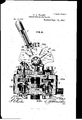
- Figure l is a plan or top View of an engineers brake valve illustrating an embodiment of my invention
- Fig. 2 a view,partl'y infront elevation and partly in longitudinal section, at the line .2, z, of Fig. 4
- Fig. 3 a longitudinal section at the lines a m, of Fig. 4, and m, cc,
- Fig. 6 a view, partly in elevation, and partly in longitudinal sec 'tion, at the line :1 y, of Fig. 3; Fig. 5, a iongitudinal section at the lines o, 'v', of Fig. l, and 'u, r, of Fig. 6 respectively, and Fig. 6,
- valve chamber. or casing composed of an 0 upper section 1 and a lower section 2, which are connected by tap bolts 3, the lower section being provided with a threaded projection 2*, for connection to any suitable support.
- a regulating cock or valve which, in
- a cock 5 of the ordi'naryplug type is fitted in a case 6, on the upper 'section 1 of the valve casing, and is adapted to be moved about its axial line, in its case 6, by a lever handle 7, formed or fixed upon a short shaft 8, which is j'ournaled, in line axially with the cock 5,in a stand 8, on the lower section 2 of the valve casing.
- the cock 5 is provided with a transverse projection or te'non 10, on its end nearestthe lever handle shaft 8, said tenon .fitting freely in a transverse recess of mortise 11, in the adjacent end of theshaft.
- the cock 5 and its operating lever are thus coupled by a clutch 0on1 .nection, so that no strain, tendingto wear'the cock unequally, or out of round, is imposed in effecting movements of the cock.
- Aspring stop or detent l2 is fitted in'the handle-7, in 0 order to limit the range of movement of the latter to the' length of a circumferential recess in a guide segment 13, formed on the stand 8, said recess having a notch or .depression 14: at one end, a shoulder 14 at the 5 other, and intermediate notches 14, 14, and 15, the several notches and the end shoulder being located in position to be engaged by the outer end of the detent 12in different adjustments of the cock 5, as hereinafter described.
- Aport or passage 17 leads transversely from thechamber 17 a to a nozzle or threaded connection 17, for the attachment of a pipeleading to the main air reservoir pressure gage, and a vertical, port or passage 17, leads to a transverse passage 17,-
- valve 34 having an opening in which is seated an extra pressure valve 34, fittedto work in a chamber 34, formed in theupper casing section 1 and closed by a removable cap 34*.
- the valve 34 is normally held to its seat by a A port 17 leads from the chamber 34 through the adjacent portion of the shell 6, of the regulating cock 5, in such location as to register, in one position of said cock, with a transverse port 5 therein and,
- a lateral port 17 which means the port 17, through the adjacent portion of the shell 6-, in such location as to register with a circumferential groove or recess 5" in the cock p 5, said recess having its middle portion in a plane transverse to the cock, and its end portions extending in opposite directions from its-middle portion, and being in planes longitudinal'to thecock.
- the port 22 being located in position to communicate, in certain positions of the cock, with a circumferential groove or recess 5 thereon, said recess com municating, by a port 5' in the cock, with a similar recess 5 located 111 the same transverse plane of the valve.
- a pipe or passage 39 of materiallylargerdi ameter than thedischarge opening which is vcontrolled by the valve 21, leads from a dis- "charge chamber 39 in the lower casing section 2 to the atmosphere. Communication between the main air reservoirpressure chamber 17 and the main air pipe pressure chamber '18, is controlled by adownwardly opening charging valve 40, of the puppet type,
- valves 40 and 41 are provided with wings fitting the openings in the partitions which are controlled by thevalves, and are, respectively, fixed upon'stems 42 and 43, guided in removable caps 44 and and 45, closing openings in the casing section 2 through which the valves are introduced and removed as required.
- the valves 40 and 41 are held normally seated by springs 46 and 47, hearing on their lower sides, and acting in conjunction with the normal excess of pressure thereon.
- valves 40 and 41 for controlling the large charging andrdischarging ports, I am enabled to employ a much smaller plug cock than would be required if both of these large ports were formed in the plug cock, with the result that the resistance and wear,as well as the weight of the cock, are diminished.
- The. valves 40 and 41 being disconnected from the handle of the regulating cock, all resistance and wear which might be due to a connection therewith are avoided, and the movements of the handle, from the running to the service position and back, are performed with the leastpossible friction, while the resistance required to be overcome 1n making an emergency applicaaxial line of itsshaft 8.
- the arms 50 and 51 being disconnected from the handle of the regulating cock, all resistance and wear which might be due to a connection therewith are avoided, and the movements of the handle, from the running to the service position and back, are performed with the leastpossible friction, while the resistance required to be overcome 1n making an emergency applicaaxial line of itsshaft 8.
- the stem 48 is provided with suitable pack- "ing, which is compressed by a gland 52, and as an'additional preventive against leakage ing to the air pump governor.
- a packing ring 53 is slipped around the stem, and is held between its head andthe adjacent-inner surface of the wall of the chamber 18. As the valve 41 is subject only to atmospheric pressure on its upper side, packing is not required for the stem 49.
- a port or passage 54,intlicated in dotted lines in Fig. 6, is led from the main air pipe pressure chamber 18 to a nozzle or threaded connection 54, for the attachment of a pipe lead-
- the lever handle 7, and regulating cock 5, control in the several positions into which they may be moved, as presently to be described, the series of ports and passages in the valve casing, by which communication The consequence is an unneces- With By this move-. ment of the valve, the stem 49, which moves is.
- the arm 50 of the lever handle 7 bears upon and. depresses the stem 48, and, through said stem, unseats the valve 40, thereby opening a-passage for air from the main air reservoir -to the main air pipethrough the pipe 17,
- the main air or train pipe is at the same time in communication with the piston chamber 22, on the lower side of the piston 19, throughthe pipe 18, and chamber- 18, and with said chamber2'2, on'the upper side of the, piston, through the pipe 18, chamber 18, port 18", port 5 of the ,cock' 5, and 1 port 22*.
- the equilibrium of pressare on opposite sides of the piston 19 being consequently destroyed, the piston and con-' .nected discharge valve 21 are moved up-V wardly by the then excess of pressure on the lower side of the piston, and air is discharged from the main air or train pipe, through the pipe 18, chamber 18, opening controlled by the valve 21, and discharge connection 23, for the application of the brakes.
- the regulating cock-5 is moved backward, into what is termed lap position, which is about midway between its second and third positions above specified, the spring stop 12 then engaging the recess 14 lVh en in said lap position, all ports are closed, and the discharge of airthrough theconnection'23 piston, in closing the discharge valve, admits of suflicient time for the equalization of pressure throughout the entire length of the main air or train pipe'and thereby insures a'substantially uniform application of the brakes on all the cars'ot a long train,
- the discharge of air may be repeated one or more times by' returning the regulating cock 5 to its service position, atter h'aving been brought to lap, and the application of the brakes'with any desired degree of force may be effected by repeated discharges ofair from thechamber above the piston.
- An engineers brake valve as herein described and shown is of small compass and can be readily applied on a locomotive en gine. dle in a vertical plane can be conveniently made by the engineer, and' the regulating cock notb'eingexposed to unbalanced pressure upon a large area, such movement does not require any material exertion of power by the operator.
- a valve casing provided with connections for pipes to a main air reservoir and to a main air .Or train pipe, a movable abutment working in said casing, a discharge valve actuated by said abutment and controlling 7 cation between the main air reservoir con nection, a regulating cock 01' valve control-' dle imparting movement to the regulating- -cock or valve and to the charging valve,'subthe exhaust of air from the main air or train pipe, a charging valve controlling communinection andthe main air or train pipe conling ports through which an equilibrium or an inequality of pressure, as the case may be,
- a valve casing provided with connections to a main air reservoir and to a main air or train pipe, a movable abutment working in said casing,adischarge valve actuatedby said abutment. and controlling the exhaust.
- a valve casing provided with connections. to a main air reservoir and to a main air or train pipe, a movable abutment working in said casing, a discharge valve actuated by said abutment and controlling the exhaust of air from the main air or train pipe, an emergency exhaust or discharge valve controlling communication between the main air or train pipe and the atmosphere, a regulating cock or valve controlling the movements of theabutment, an operating lever handle,
- a valve casing provided with connections to a main air reservoir and to a main air or train pipe, a regulating cook or valve trolling the exhaust of air from the main air or .train pipe, a charging valve controlling communication between the main reservoir connection and-the main air or train pipe connection, an exhaust or discharge valve controlling communication between the main air or train pipe connection and the atmosphere, a regulating cook or valve controlling ports through which an equilibrium or an inequal- .ity of pressure, as the case may be, is established on opposite sides of'the movable abut- IOQ merit, and an operating lever handle imparting movement to the regulating cook or valve,
- the combi- 7. The combination, in an engineers brake valve, of a valve casing PXOIVldGdNVith connections for pipes to a main air reservoir and to a main air or train pipe, a movable abutment workingin said casing, a discharge valve, actuated by said abutment and controlling the exhaust of air from the main air or train pipe, a charging valve controlling communication between the main air reservoir connection and the main air or train pipe connection, a regulating cock or valve controlling ports through which an equilibrium" or an inequality of pressure, as the case may be, is established on opposite sides of the movable abutment, an operating lever handle coupled to the regulating cock or valve, and an arm fixed to the operating lever handle and adapted to impart opening movement to thecharging valve, at a desired point in the traverse 0f the'arni, without positive connecexhaust or discharge valve, sbustant
Description
e She ets- -Sheeti a, I. L; CLARK. BNGINBBRS BRAKE VALVE.
Reissued Sept. 26, 1893 UNITED STATES PATENT OFFICE,
FRANCIS L. CLARK, on WILKINSBURG, ASSIGNOR TO THE WESTINGHOUSE AIR BRAKE COMPANY, PITTSBURG, PENNSYLVANIA.
ENGINEERS BRAKE-VALVE.
. SPECIFICATION forming-part of Reissued Letters Patent No. 1 1,368, dated September 26, 1893.
Original No. 496.638, dated May 2, 1893. Application for reissue filed August 21', 1893. Serial lie. 483,708.
To all whom it-mcpy concern:
Be it known that I, FRANCIS In. CLARK, a citizen of the United States, residing at Wilkinsburg, in the county of Allegheny and State of Pennsylvania, have invented or discovered a certain new and useful Improve ment in Engineers, Brake-Valves, of which improvement-the following is a specification.
breaking pipe connections, and freedom from 2 0 liability to undue or unequal wear of its regulating cock.
lo this end myinvention consists in certain novel devices and combinations herein after fully set forth. v 25 In the accompanying drawings: Figure l is a plan or top View of an engineers brake valve illustrating an embodiment of my invention; Fig. 2, a view,partl'y infront elevation and partly in longitudinal section, at the line .2, z, of Fig. 4; Fig. 3, a longitudinal section at the lines a m, of Fig. 4, and m, cc,
of Fig. 6, respectively; Fig. 4, a view, partly in elevation, and partly in longitudinal sec 'tion, at the line :1 y, of Fig. 3; Fig. 5, a iongitudinal section at the lines o, 'v', of Fig. l, and 'u, r, of Fig. 6 respectively, and Fig. 6,
a transverse sectional: the line 10,10, of Fig. 4. In'the practice of my invention I provide a valve chamber. or casing, composed of an 0 upper section 1 and a lower section 2, which are connected by tap bolts 3, the lower section being provided with a threaded projection 2*, for connection to any suitable support. A regulating cock or valve, which, in
this instance, is a cock 5, of the ordi'naryplug type, is fitted in a case 6, on the upper 'section 1 of the valve casing, and is adapted to be moved about its axial line, in its case 6, by a lever handle 7, formed or fixed upon a short shaft 8, which is j'ournaled, in line axially with the cock 5,in a stand 8, on the lower section 2 of the valve casing. The cock 5 is provided with a transverse projection or te'non 10, on its end nearestthe lever handle shaft 8, said tenon .fitting freely in a transverse recess of mortise 11, in the adjacent end of theshaft. The shaft and lover han die are supported entirely by the standS", andthe cock 5 is relieved of such wear as might be due to the weight of the lever, and the pressure of the operators hand thereon,if the lever was connected in the usual manner to thecoc'k. This feature of my construction is moreover, important on account of the construction and manner of operating the charging and discharging valves. Both of these valves are held to their seats by a consid'er-v able air and spring pressure, and the force exerted on the lever handle, and the arms, 50
and 5l,'in order to unseat them, imposes a'7o' considerable pressure on the fulcrum of the lever. Ifthe lever handle were connected to the cock in the usual manner, so that the cock formed the f nlcru m of the lever, the cock wonldbe subjected to considerably greater pressures on some portions of its surface than on others, tending to wear the surface in spots, and to cause the'cock to leak. By pivoting and supporting the lever handle in and on the bearing 8 and shaft 8, as shown, any unequal wear or strain is taken up by the bearing so formed, instead. of by the plug cock, and the self-adjustment of the lever handle and cock is permitted by means of the recess 1'1 and tenon 10. The cock 5 and its operating lever, are thus coupled by a clutch 0on1 .nection, so that no strain, tendingto wear'the cock unequally, or out of round, is imposed in effecting movements of the cock. Aspring stop or detent l2 is fitted in'the handle-7, in 0 order to limit the range of movement of the latter to the' length of a circumferential recess in a guide segment 13, formed on the stand 8, said recess having a notch or .depression 14: at one end, a shoulder 14 at the 5 other, and intermediate notches 14, 14, and 15, the several notches and the end shoulder being located in position to be engaged by the outer end of the detent 12in different adjustments of the cock 5, as hereinafter described.
A pipe or passage 17, adapted I to be connejctedtwith; tile-mam air reservoir of the brake'mecha'nism in which the'appliance is I spring 34.
employed, is connected to a threaded opening or nozzle in the lower valve casing section 2, and establishes continuous communication between the main air reservoir and a main air reservoir pressure chamber 17 in the lower section 2. Aport or passage 17 leads transversely from thechamber 17 a to a nozzle or threaded connection 17, for the attachment of a pipeleading to the main air reservoir pressure gage, and a vertical, port or passage 17, leads to a transverse passage 17,-
having an opening in which is seated an extra pressure valve 34, fittedto work in a chamber 34, formed in theupper casing section 1 and closed by a removable cap 34*. I The valve 34 is normally held to its seat by a A port 17 leads from the chamber 34 through the adjacent portion of the shell 6, of the regulating cock 5, in such location as to register, in one position of said cock, with a transverse port 5 therein and,
through said port 5to communicate with 'a port 18", leading to a chamber 18, communicating with the main air or train pipe, and
. with a port 22, leading to a piston chamber 22. A lateral port 17 ,'leads from the port 17, through the adjacent portion of the shell 6-, in such location as to register with a circumferential groove or recess 5" in the cock p 5, said recess having its middle portion in a plane transverse to the cock, and its end portions extending in opposite directions from its-middle portion, and being in planes longitudinal'to thecock. A pipe or passage 18, connected to and openinginto a main air pipe pressure chamber 18, in-the lower section 2 of the valve casing, leads therefrom to a connection with the main air or train pipe, which is thus maintained in communication with the chamber 18, and, through said chamber and the port 18 leading therefrom, such communication extends to the surface of the cock 5. A movable abutment 19, which is preferably, as shown, a piston, but which may, if preferred, be a flexible diaphragm, is fitted to work ,freely in a chamber 22, the
I lower side of which is open to the chamber 18,
so that the piston 19 is subject on its lower side to the pressure in the main air or train pipe. The piston 19 is secured upon a stem 20, the lower end of which carries a discharge valve 21, which is adapted to close upon a seat formed. in a bushing 21, fitted in the lower wall of! the chamber 18, the seat of the valve being formed at the inner end of a discharge passage 23, leading fromthe cham-. ber 18 to the atmosphere. Ports 22, 22",
,lead from the chamber 22 above thepiston through the case 6, to the surface of the cock 5, the port 22*.being located in position to communicate with a port 5 in said cock, as
before explained, and the port 22 being located in position to communicate, in certain positions of the cock, with a circumferential groove or recess 5 thereon, said recess com municating, by a port 5' in the cock, with a similar recess 5 located 111 the same transverse plane of the valve. A preliminary ex-.
employed to avoid weakening the shell of the lower casing section 2 by a single large pas- A ort or passage 25 leads from'the passages 25 to a nozzle or threaded connection 25", for the attachment of a pipe leading to the main. air or train pipe pressure gage. A pipe or passage 39, of materiallylargerdi ameter than thedischarge opening which is vcontrolled by the valve 21, leads from a dis- "charge chamber 39 in the lower casing section 2 to the atmosphere. Communication between the main air reservoirpressure chamber 17 and the main air pipe pressure chamber '18, is controlled by adownwardly opening charging valve 40, of the puppet type,
having its seat in a partition between the chambers 17 andil S, and communication between the main air pipe pressure chamber 18"" and the discharge chamber 39, is controlled bya downwardly opening discharge or exhanst valve 41, also of the puppet type, hav
ing its seat in a partition. between the chambers 18 and 39. The valves 40 and 41 are provided with wings fitting the openings in the partitions which are controlled by thevalves, and are, respectively, fixed upon'stems 42 and 43, guided in removable caps 44 and and 45, closing openings in the casing section 2 through which the valves are introduced and removed as required. The valves 40 and 41 are held normally seated by springs 46 and 47, hearing on their lower sides, and acting in conjunction with the normal excess of pressure thereon.
By the employment of the separate valves 40 and 41 for controlling the large charging andrdischarging ports, I am enabled to employ a much smaller plug cock than would be required if both of these large ports were formed in the plug cock, with the result that the resistance and wear,as well as the weight of the cock, are diminished. The. valves 40 and 41 being disconnected from the handle of the regulating cock, all resistance and wear which might be due to a connection therewith are avoided, and the movements of the handle, from the running to the service position and back, are performed with the leastpossible friction, while the resistance required to be overcome 1n making an emergency applicaaxial line of itsshaft 8. The arms 50 and 51,
bear respectively, (when the lever handle 7 is moved intothe positions in which the detent 12 engages the recess 14:, orabuts against the shoulder 14, as the case may be) on and depress stems 48 and 49, passing through the shell of the casing section 2, above and in line with the valves 40 and 41 respectively, and resting at their lower ends on said valves.
Either of said valves willconsequently be un-,
seated by the movement of the lever handle into the appropriate position, during which 'movement the cock 5-will, of course, be coincidently moved, so as to. open or close the proper communicating ports.
It frequently happens that when the engineer moves the handle to emergency position, he has other manipulations to make, and he merely-pushes the handle over and then withdraws his hand, leaving the'handle in the emergency position, and the emergency exhaust port remains open longer'than is necessary. sary loss and waste of air, and an undesirable reduction of train pipe pressure.
' my construction, as soon as the engineers hand is removed from the. handle, the air and spring pressures acting on the under side of the valve 41, return it to its seat, thereby closing the discharge port.
to permit the valve 41 to seat; the friction of i the spring, stop 12, preventing further backward movement of the handle. The stem 48 is provided with suitable pack- "ing, which is compressed by a gland 52, and as an'additional preventive against leakage ing to the air pump governor.
of train pipe air, a packing ring 53 is slipped around the stem, and is held between its head andthe adjacent-inner surface of the wall of the chamber 18. As the valve 41 is subject only to atmospheric pressure on its upper side, packing is not required for the stem 49. k
In order to supply air under main air or train pipe pressure to the air pump governor, a port or passage 54,intlicated in dotted lines in Fig. 6, is led from the main air pipe pressure chamber 18 to a nozzle or threaded connection 54, for the attachment of a pipe lead- The lever handle 7, and regulating cock 5, control in the several positions into which they may be moved, as presently to be described, the series of ports and passages in the valve casing, by which communication The consequence is an unneces- With By this move-. ment of the valve, the stem 49, which moves is. established as follows: first, between the air reservoir and a port leading to the extra pressure valve 3,4, which governs a passage leading to the main air or trainpipe,-in order to effect the accumulation of a determined excess of pressure in the main air reservoir to insure therelease of .the brakes, and also between the main air or train pipe and the chamber above the piston 19, to maintain an equilibrium of pressure in said chamber and the main air or train pipe; third,between the chamber above the piston 19 and the atmosphere, in order to destroy the equilibrium of pressure existing on both sides of the piston, and thereby, through the higher pressure which then acts on the lower side of the piston, to efiect its upward movement, and the consequent unseatiug of the discharge valve 21 for the discharge of air in the application of the brakes in ordinary or service stops, and, fourth, between the main air or train pipe and vthe atmosphere, through a passageof comparatively-large area, in order to eifect the application of the brakes with maximum rapidity and force, as in emergency steps.
In what may be termed the first position, or release position, of the regulating cock 5, into which it is brought by the movement of the lever handle 7 into such position that the spring stop or deteut 12- engages the recess 14 of the segment 13, being the position for charging or recharging the main air or train pipe and for thereby releasing the brakes, the arm 50 of the lever handle 7, bears upon and. depresses the stem 48, and, through said stem, unseats the valve 40, thereby opening a-passage for air from the main air reservoir -to the main air pipethrough the pipe 17,
In the second or runnin osition of the regulating cock 5, in which, as shown in the drawings, the spring stop 12 engages the recess 14, being the position While running,
the arms '50 and 51 are clear of the stems 413 t and 40, and the valves'40 and 4]. are held lowerside of the extra pressure valve 34, is
seated by their springs 46 and 47 and by the excess pressure on their lower sides. Communication from the main air reservoir to the established through the pipe 17, chamber 17, port 17,andpassage 17, and communication is established from the upper side of said valve to the main air or train pipe, through the port 17 port 5 of the cock 5, port 18", chamberlS, and pipe 18. The extra pressure valve 34 is loaded by a spring 34 to maintain a determined excess of the pressure in the main air reservoirover that in the main air or train pipe, in order that there may always be a reserve pressure in the main air reservoir to insure the release of' the brakes. The main air or train pipe is at the same time in communication with the piston chamber 22, on the lower side of the piston 19, throughthe pipe 18, and chamber- 18, and with said chamber2'2, on'the upper side of the, piston, through the pipe 18, chamber 18, port 18", port 5 of the ,cock' 5, and 1 port 22*. There is therefore an equalization exhaust port 38. The equilibrium of pressare on opposite sides of the piston 19 being consequently destroyed, the piston and con-' .nected discharge valve 21 are moved up-V wardly by the then excess of pressure on the lower side of the piston, and air is discharged from the main air or train pipe, through the pipe 18, chamber 18, opening controlled by the valve 21, and discharge connection 23, for the application of the brakes. After such an amount of air has been discharged as is requisite to apply the brakes with desired force, the regulating cock-5 is moved backward, into what is termed lap position, which is about midway between its second and third positions above specified, the spring stop 12 then engaging the recess 14 lVh en in said lap position, all ports are closed, and the discharge of airthrough theconnection'23 piston, in closing the discharge valve, admits of suflicient time for the equalization of pressure throughout the entire length of the main air or train pipe'and thereby insures a'substantially uniform application of the brakes on all the cars'ot a long train, The discharge of air may be repeated one or more times by' returning the regulating cock 5 to its service position, atter h'aving been brought to lap, and the application of the brakes'with any desired degree of force may be effected by repeated discharges ofair from thechamber above the piston.
In the emergency position of the lever handle and regulating cock, in which the spring stop'12 abuts against the end shoulder 14 of the segment 13, being the position for the application of the brakes in making emer= gene-y stops, the arm 51, of the lever handle 7, bears upon and depresses the stem 49,and', through said stem, unseats the valve 41, thereby opening a passage of comparatively large area from themain air or train pipe to the atmosphere, through the pipe 18, chamber 18*, opening controlled by the valve-:tl, chamber 39.,and discharge pipe 39. v In this, as'in the service position, pressure is'relieved from the upper side of the piston 19, through the port 22 recess 5, port 5 and recess 5 of the cock 5, and-preliminary exhaust port38. The
free and rapid discharge of air from the main 7 air or train pipe which is effected as above described, provides for the application of the brakes with maximum rapidity and force, as I required in making emergency stops.
An engineers brake valve as herein described and shown is of small compass and can be readily applied on a locomotive en gine. dle in a vertical plane can be conveniently made by the engineer, and' the regulating cock notb'eingexposed to unbalanced pressure upon a large area, such movement does not require any material exertion of power by the operator.
Access may be had to all working parts, and the same may be removed and replaced, when- The movement of the operating h'anever required, without breaking any pipecon- 4 nections, the regulating cock 5 being remov able by unscrewing and removing its cap, the valves 40 and 41 by removing their caps 44 and 45, and the piston 19, and discharge valve 21,by unscrewing the tap bolts 3 and removing the upper casing section 1. The excess pressure valve can he removed by removing its screw cap 34". r by reason of the clutch engagement of the regulating cockand its operating lever han- It will also be seen that made.
I claim as my invention anddesire to secure by Letters Patent 1. In an engineers brake valve, the combination of a lower valve casing section provided with connections for pipes to a main air reservoir, and to a main air or train pipe, a movable abutment,a discharge valve actuated by said abutment and controlling the exhaust of air from the main air or train pipe,
an upper casing section connected to the lower I section and removable therefrom independently oi the pipe connections, and a regulating cock or valve working in the upper section, and controlling ports through which an equilibrium or an inequality of pressure, as the case may be, is established on opposite sides of the movable abutment, substantially as set forth. v
2. In an engineers brake valve, the combination of a valve casing provided with connections for pipes to a main air reservoir and to a main air .Or train pipe, a movable abutment working in said casing, a discharge valve actuated by said abutment and controlling 7 cation between the main air reservoir con nection, a regulating cock 01' valve control-' dle imparting movement to the regulating- -cock or valve and to the charging valve,'subthe exhaust of air from the main air or train pipe, a charging valve controlling communinection andthe main air or train pipe conling ports through which an equilibrium or an inequality of pressure, as the case may be,
is established on opposite sidesof the movable abutment, and an operating lever-ham stantially as set forth.
nation-of a valve casing provided with connections to a main air reservoir and to a main air or train pipe, a movable abutment working in said casing,adischarge valve actuatedby said abutment. and controlling the exhaust.
of air from the main-air or train p ipe, an exhaust or dlscharge'valve controlling communimtion between the mainairor train pipe and the atmosphere,-a regulating cook or valve controlling ports through which an equi librium or an inequality of pressure as the case may be, is established on opposite sides of the movable abutment, and an operating lever handle imparting movement to the regu-- l'ating cook or, valve and to the exhaust or discharge valve, substantially as set forth.
4. In an engineers brake valve, the combination of a valve casing provided with connections. to a main air reservoir and to a main air or train pipe, a movable abutment working in said casing, a discharge valve actuated by said abutment and controlling the exhaust of air from the main air or train pipe, an emergency exhaust or discharge valve controlling communication between the main air or train pipe and the atmosphere, a regulating cock or valve controlling the movements of theabutment, an operating lever handle,
and an arm connected to said lever handleand imparting movement to the emergency exhaust or discharge valve, substantially as set forth. t y
5. In an engineers brake valve, the combination of a valve casing provided with connections to a main air reservoir and to a main air or train pipe, a regulating cook or valve trolling the exhaust of air from the main air or .train pipe, a charging valve controlling communication between the main reservoir connection and-the main air or train pipe connection, an exhaust or discharge valve controlling communication between the main air or train pipe connection and the atmosphere, a regulating cook or valve controlling ports through which an equilibrium or an inequal- .ity of pressure, as the case may be, is established on opposite sides of'the movable abut- IOQ merit, and an operating lever handle imparting movement to the regulating cook or valve,
to the charging valve, and to theexhaust or discharge valve, substantially as set forth. 3. In an engineers'brake'valve, the combi- 7. The combination, in an engineers brake valve, of a valve casing PXOIVldGdNVith connections for pipes to a main air reservoir and to a main air or train pipe, a movable abutment workingin said casing, a discharge valve, actuated by said abutment and controlling the exhaust of air from the main air or train pipe, a charging valve controlling communication between the main air reservoir connection and the main air or train pipe connection, a regulating cock or valve controlling ports through which an equilibrium" or an inequality of pressure, as the case may be, is established on opposite sides of the movable abutment, an operating lever handle coupled to the regulating cock or valve, and an arm fixed to the operating lever handle and adapted to impart opening movement to thecharging valve, at a desired point in the traverse 0f the'arni, without positive connecexhaust or discharge valve, sbustantially as IO tion to said valve, substantially as set forth. set forth. 8. In an engineersbrake valve, the combi- In testimony whereof I have hereunto setnation of aregulating cook or valveQa lever my hand. 5 handle jour naledin a bearing independent of said regulating cook or valve and coupled I thereto, an emergency-exhaust or discharge YVitnesses: 5 valve, and an arm fixed to said lever handle J .,SNOWDEN BELL, i and imparting movement to said emergency F. E. GAITHER.
FRANCIS LQCLARK
Family
ID=
Similar Documents
| Publication | Publication Date | Title |
|---|---|---|
| US496638A (en) | Engineer s brake-valve | |
| US1199840A (en) | Fluid-pressure brake. | |
| US1895476A (en) | Safety car control device | |
| US1136061A (en) | Fluid-pressure brake. | |
| US1027939A (en) | Fluid-pressure brake. | |
| US497405A (en) | de forest | |
| US1110301A (en) | Fluid-pressure brake apparatus. | |
| US858645A (en) | Air-brake mechanism. | |
| US718491A (en) | Fluid-pressure mechanism. | |
| US1283979A (en) | Regenerative brake device. | |
| US2692156A (en) | Throttle control apparatus for locomotives | |
| US1644669A (en) | Circuit-breaker device | |
| US2035046A (en) | Fluid pressure brake | |
| US853673A (en) | Air-brake apparatus. | |
| US2088166A (en) | Fluid pressure brake | |
| US1280334A (en) | Fluid-pressure brake device. | |
| US961310A (en) | Means for operating railway-brakes. | |
| US1108280A (en) | Fluid-pressure-brake apparatus. | |
| US240062A (en) | Fluid-pressure regulator for automatic brakes | |
| US1297516A (en) | Rail-sanding device. | |
| US892122A (en) | Fluid-pressure brake-mechanism. | |
| US1131969A (en) | Fluid-pressure brake. | |
| US1192482A (en) | Air-brake system. | |
| US1411368A (en) | Air-brake apparatus | |
| US1473759A (en) | Brake-valve device |