USPP8662P - Strawberry plant called `Cuesta` - Google Patents
Strawberry plant called `Cuesta` Download PDFInfo
- Publication number
- USPP8662P USPP8662P US08/041,748 US4174893V US8662P US PP8662 P USPP8662 P US PP8662P US 4174893 V US4174893 V US 4174893V US 8662 P US8662 P US 8662P
- Authority
- US
- United States
- Prior art keywords
- cuesta
- chandler
- fruit
- color
- similar
- Prior art date
- Legal status (The legal status is an assumption and is not a legal conclusion. Google has not performed a legal analysis and makes no representation as to the accuracy of the status listed.)
- Expired - Lifetime
Links
Images

Classifications
-
- A—HUMAN NECESSITIES
- A01—AGRICULTURE; FORESTRY; ANIMAL HUSBANDRY; HUNTING; TRAPPING; FISHING
- A01H—NEW PLANTS OR NON-TRANSGENIC PROCESSES FOR OBTAINING THEM; PLANT REPRODUCTION BY TISSUE CULTURE TECHNIQUES
- A01H6/00—Angiosperms, i.e. flowering plants, characterised by their botanic taxonomy
- A01H6/74—Rosaceae, e.g. strawberry, apple, almonds, pear, rose, blackberries or raspberries
- A01H6/7409—Fragaria, i.e. strawberries
-
- A—HUMAN NECESSITIES
- A01—AGRICULTURE; FORESTRY; ANIMAL HUSBANDRY; HUNTING; TRAPPING; FISHING
- A01H—NEW PLANTS OR NON-TRANSGENIC PROCESSES FOR OBTAINING THEM; PLANT REPRODUCTION BY TISSUE CULTURE TECHNIQUES
- A01H5/00—Angiosperms, i.e. flowering plants, characterised by their plant parts; Angiosperms characterised otherwise than by their botanic taxonomy
- A01H5/08—Fruits
Definitions
- This invention relates to a new and distinctive short-day type cultivar designated as ⁇ Cuesta ⁇ , which resulted from a cross performed in 1987 between the cultivar ⁇ Seascape ⁇ (U.S. Plant Pat. No. 7,614) and advanced selection Cal 83.25-2 (a hybrid between ⁇ Fern ⁇ ; U.S. Plant Pat. No. 5,263 and ⁇ Parker ⁇ ; U.S. Plant Pat. No. 5,267).
- ⁇ Cuesta ⁇ was first fruited at the University of California Wolfskill Experimental orchards near Davis, Calif. in 1988, where it was selected, originally designated Cal 87.109-3, and propagated asexually by runners. Asexual propagules from this original source have been tested at the Watsonville Strawberry Research Facility, University field stations, and to a limited extent in grower fields starting in 1989.
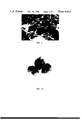
- FIG. 1 shows the general flowering and fruiting characteristics of the plant
- FIG. 2 shows a typical mature leaf during late spring
- FIG. 3 shows representative midseason fruit.
- ⁇ Cuesta ⁇ is typical of short-day types and produces fruit over an extended period when treated appropriately in cool Mediterranean climates.
- ⁇ Cuesta ⁇ differs from ⁇ Seascape ⁇ primarily in that ⁇ Seascape ⁇ is a day-neutral genotype whereas ⁇ Cuesta ⁇ is a short-day type.
- the production patterns of the two are quite different.
- the production pattern for ⁇ Cuesta ⁇ is similar to that for ⁇ Chandler ⁇ (U.S. Plant Pat. No. 5,262), although it produces larger and greater quantities of late-season fruit.
- ⁇ Cuesta ⁇ will be of special interest for winter plantings, where ⁇ Chandler ⁇ has been successful, and in summer plantings where ⁇ Pajaro ⁇ (U.S. Plant Pat. No. 4,538) has been successful.
- Plants and foliage Fruiting plants of ⁇ Cuesta ⁇ are more erect and open than plants of ⁇ Chandler ⁇ and generally smaller than either ⁇ Chandler ⁇ or ⁇ Oso Grande ⁇ (U.S. Plant Pat. No. 6,578). ⁇ Cuesta ⁇ forms branch crowns in similar quantity to ⁇ Chandler ⁇ with slightly less branching than ⁇ Oso Grande ⁇ . When propagated in the nursery, ⁇ Cuesta ⁇ has similar runner production capacity to ⁇ Chandler ⁇ . Comparative statistics for foliar characters, including leaf color, near mid-season are given for the three cultivars in Table 1, with visual comparisons of leaf color to the Munsell color scale (Nickerson Color Fan) given in Table 5.
- Leaf color is distinctly lighter on the underside for ⁇ Cuesta ⁇ ; the differential is similar to ⁇ Chandler ⁇ but not as large as for ⁇ Oso Grande ⁇ .
- Leaflets of ⁇ Cuesta ⁇ are similar in size to the comparison cultivars, but are somewhat longer and more narrow than for ⁇ Chandler ⁇ , and are substantially less rounded than for ⁇ Oso Grande ⁇ .
- Leaves (including petioles) are usually shorter than those of ⁇ Chandler ⁇ . Petioles are similar in thickness to ⁇ Chandler ⁇ and not as thick or stiff as for ⁇ Oso Grande ⁇ .
- Paired stipules borne in a median position on the petiole, appear as small, stalked, ovate to heart-shaped structures on most leaves for ⁇ Cuesta ⁇ and the comparison cultivars. Stipule size varies greatly both within and among individual plants for ⁇ Cuesta ⁇ , and one or both stipules may be absent or may abscise as the leaf matures.
- Leaf and petiole pubescence characters for ⁇ Cuesta ⁇ are similar to those for ⁇ Chandler ⁇ , except that tomentum are less dense. Also, leaves for ⁇ Cuesta ⁇ are similar in reflectance to those of ⁇ Chandler ⁇ but less yellow; leaves for ⁇ Cuesta ⁇ are similar in color intensity to ⁇ Oso Grande ⁇ but less glossy.
- ⁇ Cuesta ⁇ has concave leaves, similar to or more concave than ⁇ Chandler ⁇ , and much more concave than leaves of ⁇ Oso Grande ⁇ .
- Isozymes in leaf extracts ⁇ Cuesta ⁇ has been classified for three isozyme systems using starch gel electrophoresis (Table 2): Phosophoglucoisomerase (PGI), Leucine Aminopeptidase (LAP), and Phosphoglucomutase (PGM). It is distinguishable from all other short-day cultivars released to date except ⁇ Parker ⁇ . For electrophoretic procedures see: J. Amer. Soc. Hort. Sci. 106:684-687.
- ⁇ Cuesta ⁇ is moderately susceptible to common leaf spot (Ramularia tulasnei) and powdery mildew (Sphaerotheca macularis). When treated properly, it has tolerance to two-spotted spidermites (Tetranychus urticae) that is comparable with that of ⁇ Chandler ⁇ .
- ⁇ Cuesta ⁇ is tolerant to strawberry viruses encountered in California.
- ⁇ Cuesta ⁇ is similar to ⁇ Chandler ⁇ in its production pattern, and produces more early fruit at Watsonville than ⁇ Oso Grande ⁇ (with conventional winter planting). Comparative statistics for flower and fruit characters, including fruit color, near mid-season are given for the three cultivars in Table 3.
- the primary flowers for ⁇ Cuesta ⁇ are similar in size to ⁇ Chandler ⁇ and ⁇ Oso Grande ⁇ , whereas the sepals are somewhat larger than for the comparison cultivars; each primary flower has 5-6 petals.
- the calyx for ⁇ Cuesta ⁇ is usually even with the shoulder of the fruit; early-season fruit can have a slight neck.
- the fruit shape for ⁇ Cuesta ⁇ is a long conic, and is easily distinguished from ⁇ Chandler ⁇ (flat conic) and ⁇ Oso Grande ⁇ (rounded or block conic).
- External fruit color for ⁇ Cuesta ⁇ is slightly darker and less glossy than for ⁇ Chandler ⁇ and ⁇ Oso Grande ⁇ ; internal color is darker than ⁇ Chandler ⁇ and substantially darker than for ⁇ Oso Grande ⁇ .
- Achenes vary from light red to dark red, and are even with the fruit surface or slightly indented.
- ⁇ Cuesta ⁇ has been tested under a variety of cultural regimes, and optimal performance is obtained when nursery treatments, pre-plant chilling regimes, plant densities, and nutritional programs similar to those that optimize performance for ⁇ Chandler ⁇ are used. In general, ⁇ Cuesta ⁇ is less sensitive to over-chilling than ⁇ Chandler ⁇ .
- ⁇ Cuesta ⁇ When treated with appropriate planting regimes, ⁇ Cuesta ⁇ has larger fruit and produces greater yields than ⁇ Chandler ⁇ (Table 4); ⁇ Cuesta ⁇ has greater yield and produces fruit similar in size to fruit from ⁇ Oso Grande ⁇ . Commercial appearance ratings have been equal to or better than those for ⁇ Chandler ⁇ . Fruit firmness is similar to that for ⁇ Chandler ⁇ but ⁇ Cuesta ⁇ is not as firm as ⁇ Oso Grande ⁇ . Subjectively, ⁇ Cuesta ⁇ has very good flavor, somewhat less aromatic than ⁇ Chandler ⁇ , less sweet but better balanced than for ⁇ Oso Grande ⁇ . The fruit will be acceptable for fresh market, will be exceptional for processing, due to its internal color and will be useful for home garden purposes.
Landscapes
- Life Sciences & Earth Sciences (AREA)
- Health & Medical Sciences (AREA)
- Physiology (AREA)
- Botany (AREA)
- Developmental Biology & Embryology (AREA)
- Environmental Sciences (AREA)
- Natural Medicines & Medicinal Plants (AREA)
- Breeding Of Plants And Reproduction By Means Of Culturing (AREA)
Abstract
'Cuesta' is a short-day (June-bearing) cultivar similar to 'Chandler' (U.S. Plant Pat. No. 5,262) but with similar or better productivity, larger and more consistent fruit size, and is a more open and less vigorous plant.
Description
This invention relates to a new and distinctive short-day type cultivar designated as `Cuesta`, which resulted from a cross performed in 1987 between the cultivar `Seascape` (U.S. Plant Pat. No. 7,614) and advanced selection Cal 83.25-2 (a hybrid between `Fern`; U.S. Plant Pat. No. 5,263 and `Parker`; U.S. Plant Pat. No. 5,267).
`Cuesta` was first fruited at the University of California Wolfskill Experimental orchards near Davis, Calif. in 1988, where it was selected, originally designated Cal 87.109-3, and propagated asexually by runners. Asexual propagules from this original source have been tested at the Watsonville Strawberry Research Facility, University field stations, and to a limited extent in grower fields starting in 1989.
FIG. 1 shows the general flowering and fruiting characteristics of the plant;
FIG. 2 shows a typical mature leaf during late spring; and
FIG. 3 shows representative midseason fruit.
`Cuesta` is typical of short-day types and produces fruit over an extended period when treated appropriately in cool Mediterranean climates. `Cuesta` differs from `Seascape` primarily in that `Seascape` is a day-neutral genotype whereas `Cuesta` is a short-day type. Also the production patterns of the two are quite different. The production pattern for `Cuesta` is similar to that for `Chandler` (U.S. Plant Pat. No. 5,262), although it produces larger and greater quantities of late-season fruit. `Cuesta` will be of special interest for winter plantings, where `Chandler` has been successful, and in summer plantings where `Pajaro` (U.S. Plant Pat. No. 4,538) has been successful.
Plants and foliage: Fruiting plants of `Cuesta` are more erect and open than plants of `Chandler` and generally smaller than either `Chandler` or `Oso Grande` (U.S. Plant Pat. No. 6,578). `Cuesta` forms branch crowns in similar quantity to `Chandler` with slightly less branching than `Oso Grande`. When propagated in the nursery, `Cuesta` has similar runner production capacity to `Chandler`. Comparative statistics for foliar characters, including leaf color, near mid-season are given for the three cultivars in Table 1, with visual comparisons of leaf color to the Munsell color scale (Nickerson Color Fan) given in Table 5. Leaf color is distinctly lighter on the underside for `Cuesta`; the differential is similar to `Chandler` but not as large as for `Oso Grande`. Leaflets of `Cuesta` are similar in size to the comparison cultivars, but are somewhat longer and more narrow than for `Chandler`, and are substantially less rounded than for `Oso Grande`. Leaves (including petioles) are usually shorter than those of `Chandler`. Petioles are similar in thickness to `Chandler` and not as thick or stiff as for `Oso Grande`. Paired stipules, borne in a median position on the petiole, appear as small, stalked, ovate to heart-shaped structures on most leaves for `Cuesta` and the comparison cultivars. Stipule size varies greatly both within and among individual plants for `Cuesta`, and one or both stipules may be absent or may abscise as the leaf matures. Leaf and petiole pubescence characters for `Cuesta` are similar to those for `Chandler`, except that tomentum are less dense. Also, leaves for `Cuesta` are similar in reflectance to those of `Chandler` but less yellow; leaves for `Cuesta` are similar in color intensity to `Oso Grande` but less glossy. Visual comparisons of fruit color according to the Munsell color scale (Nickerson Color Fan) are given in Table 5. `Cuesta` has concave leaves, similar to or more concave than `Chandler`, and much more concave than leaves of `Oso Grande`.
Isozymes in leaf extracts: `Cuesta` has been classified for three isozyme systems using starch gel electrophoresis (Table 2): Phosophoglucoisomerase (PGI), Leucine Aminopeptidase (LAP), and Phosphoglucomutase (PGM). It is distinguishable from all other short-day cultivars released to date except `Parker`. For electrophoretic procedures see: J. Amer. Soc. Hort. Sci. 106:684-687.
Disease and pest reaction: `Cuesta` is moderately susceptible to common leaf spot (Ramularia tulasnei) and powdery mildew (Sphaerotheca macularis). When treated properly, it has tolerance to two-spotted spidermites (Tetranychus urticae) that is comparable with that of `Chandler`. `Cuesta` is tolerant to strawberry viruses encountered in California.
              TABLE 1
______________________________________
Foliar characteristics for `Cuesta`, `Chandler`, and `Oso Grande`.
          Cultivar
Foliar Character
            `Cuesta`   `Chandler` `Oso Grande`
______________________________________
Mid-tier leaflet
Length (mm)
mean        84.0       82.4       77.2
range       74-96      78-94      75-80
Width (mm)
mean        66.8       71.4       67.6
range       52-77      63-88      62-71
Mid-tier leaf
Length (mm)
mean        218.0      244.2      191.6
range       205-228    218-262    170-200
Width (mm)
mean        137.4      148.0      137.2
range       117-154    132-158    130-149
Leaf color
(CIELAB)*
L*
mean        31.2       31.4       31.9
range       28.6-34.2  27.1-33.3  29.9-33.0
a*
mean        -5.5       -8.0       -5.3
range       -3.8--6.8  -5.2--8.2  -4.2--8.3
b*
mean        14.4       16.0       15.5
range       12.4-16.7  12.9-21.4  12.5-20.6
# leaflets/leaf
            3          3          3
Leaf convexity
            concave    concave    concave
Serrations
number      many       many       moderate
shape       semi-pointed
                       semi-pointed
                                  semi-round
Leaf pubescence
            sparse     moderate/  moderate/
                       sparse     heavy
Petiole pubescence
density     sparse     heavy      heavy
direction   perpendicular
                       acropetal  perpendicular
______________________________________
 *CIELAB is the abbreviation of the international color system known as
 "Commission Internationale De L'Eclairage" 1978. Recommendations on
 uniform color spaces -- color difference equations, psychometric color
 terms, Supplement No. 2 to CIE Publication No. 15. PARIS.
              TABLE 2
______________________________________
Isozyme phenotypes for `Cuesta`, `Chandler`, and `Oso Grande`.
Cultivar
Locus   `Cuesta`     `Chandler`
                               `Oso Grande`
______________________________________
PGI     A4           A1        A2
LAP     B3           B3        B3
PGM     C2           C1        C2
______________________________________
Flowering, fruiting, fruit, and production characteristics: `Cuesta` is similar to `Chandler` in its production pattern, and produces more early fruit at Watsonville than `Oso Grande` (with conventional winter planting). Comparative statistics for flower and fruit characters, including fruit color, near mid-season are given for the three cultivars in Table 3. The primary flowers for `Cuesta` are similar in size to `Chandler` and `Oso Grande`, whereas the sepals are somewhat larger than for the comparison cultivars; each primary flower has 5-6 petals. The calyx for `Cuesta` is usually even with the shoulder of the fruit; early-season fruit can have a slight neck. The fruit shape for `Cuesta` is a long conic, and is easily distinguished from `Chandler` (flat conic) and `Oso Grande` (rounded or block conic). External fruit color for `Cuesta` is slightly darker and less glossy than for `Chandler` and `Oso Grande`; internal color is darker than `Chandler` and substantially darker than for `Oso Grande`. Achenes vary from light red to dark red, and are even with the fruit surface or slightly indented.
`Cuesta` has been tested under a variety of cultural regimes, and optimal performance is obtained when nursery treatments, pre-plant chilling regimes, plant densities, and nutritional programs similar to those that optimize performance for `Chandler` are used. In general, `Cuesta` is less sensitive to over-chilling than `Chandler`.
When treated with appropriate planting regimes, `Cuesta` has larger fruit and produces greater yields than `Chandler` (Table 4); `Cuesta` has greater yield and produces fruit similar in size to fruit from `Oso Grande`. Commercial appearance ratings have been equal to or better than those for `Chandler`. Fruit firmness is similar to that for `Chandler` but `Cuesta` is not as firm as `Oso Grande`. Subjectively, `Cuesta` has very good flavor, somewhat less aromatic than `Chandler`, less sweet but better balanced than for `Oso Grande`. The fruit will be acceptable for fresh market, will be exceptional for processing, due to its internal color and will be useful for home garden purposes.
              TABLE 3
______________________________________
Flower and fruit characters for
`Cuesta`, `Chandler`, and `Oso Grande`.
            Cultivar
Character     `Cuesta`  `Chandler`
                                  `Oso Grande`
______________________________________
# petals
mean           6.5       6.6       5.0
range         5-6       6-8       5-5
Flower position
              even/     even/     exposed
(relative to foliage)
              slightly  exposed
              interior
Calyx diam. (mm)
mean          60.0      47.7      34.1
range         50-68     45-53     27-38
Corolla diam. (mm)
mean          41.0      39.3      32.2
range         38-46     36-46     27-41
Fruit shape
length/width   1.32      1.33      1.06
ratio
subjective    conic     flat conic
                                  blocky/conic
Calyx position
              even      even/slight
                                  even/slight
                        neck      indent
Seed position even/slight
                        even/slight
                                  even
              indent    indent
Fruit color (CIELAB)
external
L*            21.7      23.6      22.4
a*            26.3      38.5      31.2
b*            14.7      14.8      17.2
internal
L*            39.9      46.2      54.1
a*            41.2      39.1      30.4
b*            33.2      29.4      22.7
______________________________________
              TABLE 4
______________________________________
Performance for selection `Cuesta` compared with `Oso Grande`
and `Chandler` at the Watsonville Research Facility for the
1991 trial. All plants were dug from a nursery near MacDoel,
CA on October 5, 1990.
                               Appear-
       Weeks Yield    Size     ance
       storage
             (g/plant)
                      (g/fruit)
                               Score  Firmness
______________________________________
`Cuesta` 1       1,906    24.4   4.0    7.2
         3       2,274    27.8   4.2    7.4
`Chandler`
         1       1,647    23.2   3.8    6.8
         3       2,078    25.8   4.0    7.1
`Oso Grande`
         1       1,237    25.7   3.7    8.0
         3       1,740    27.1   3.8    8.3
______________________________________
              TABLE 5
______________________________________
Munsell color classification for leaf and fruit characters.
Munsell                  Munsell
Leaf Color Classes       Fruit Color Classes
       Upper      Lower
Item   (Adaxial)  (Abaxial)  External
                                     Internal
______________________________________
Chandler
       5GY 4/3    5GY 5/6    5R 5/13 7R 5/13
       5GY 5/6               5R 4/12
Oso    5GY 4/3    5GY 5/6    5R 5/13 7.5R 7/9
       5GY 3/2    7.5GY 6/8  7.5R 5/13
                                     7.5R 6/12
Cuesta 7.5GY 6/8  10GY 7/8   5R 4/12 7.5R 5/13
                             5R 3/7  7.5R 4/11
______________________________________
Claims (1)
1. The new and distinct variety of strawberry plant illustrated and described and having the characteristics above enumerated.
Priority Applications (1)
| Application Number | Priority Date | Filing Date | Title |
|---|---|---|---|
| US08/041,748 USPP8662P (en) | 1993-04-01 | 1993-04-01 | Strawberry plant called `Cuesta` |
Applications Claiming Priority (1)
| Application Number | Priority Date | Filing Date | Title |
|---|---|---|---|
| US08/041,748 USPP8662P (en) | 1993-04-01 | 1993-04-01 | Strawberry plant called `Cuesta` |
Publications (1)
| Publication Number | Publication Date |
|---|---|
| USPP8662P true USPP8662P (en) | 1994-03-29 |
Family
ID=21918123
Family Applications (1)
| Application Number | Title | Priority Date | Filing Date |
|---|---|---|---|
| US08/041,748 Expired - Lifetime USPP8662P (en) | 1993-04-01 | 1993-04-01 | Strawberry plant called `Cuesta` |
Country Status (1)
| Country | Link |
|---|---|
| US (1) | USPP8662P (en) |
Cited By (2)
| Publication number | Priority date | Publication date | Assignee | Title |
|---|---|---|---|---|
| USPP25223P2 (en) | 2013-01-22 | 2015-01-13 | The United States Of America, As Represented By The Secretary Of Agriculture | Strawberry plant named ‘Sweet Sunrise’ |
| USPP25300P2 (en) | 2013-01-22 | 2015-02-24 | The United States Of America, As Represented By The Secretary Of Agriculture | Strawberry plant named ‘Charm’ |
-
1993
- 1993-04-01 US US08/041,748 patent/USPP8662P/en not_active Expired - Lifetime
Cited By (2)
| Publication number | Priority date | Publication date | Assignee | Title |
|---|---|---|---|---|
| USPP25223P2 (en) | 2013-01-22 | 2015-01-13 | The United States Of America, As Represented By The Secretary Of Agriculture | Strawberry plant named ‘Sweet Sunrise’ |
| USPP25300P2 (en) | 2013-01-22 | 2015-02-24 | The United States Of America, As Represented By The Secretary Of Agriculture | Strawberry plant named ‘Charm’ |
Similar Documents
| Publication | Publication Date | Title |
|---|---|---|
| USPP8708P (en) | Strawberry plant called `Camarosa` | |
| USPP8661P (en) | Strawberry plant called Sunset | |
| USPP5262P (en) | Strawberry plant `Chandler` | |
| USPP13469P3 (en) | Strawberry plant named ‘Ventana’ | |
| USPP7614P (en) | Strawberry plant named `Seascape` | |
| USPP20735P2 (en) | Strawberry plant named ‘DrisStrawEight’ | |
| USPP6578P (en) | Strawberry plant called `Oso Grande` | |
| USPP12817P2 (en) | Strawberry plant named ‘Marathon’ | |
| USPP11279P (en) | Strawberry plant named `Mirador` | |
| USPP14109P3 (en) | Strawberry plant named Madeira | |
| USPP19240P2 (en) | Strawberry plant named ‘DrisStrawFour’ | |
| USPP16070P2 (en) | Strawberry plant named ‘Driscoll Malibu’ | |
| USPP6579P (en) | Strawberry poant called `Mrak` | |
| US20030079263P1 (en) | Strawberry plant named Calusa | |
| USPP5263P (en) | Strawberry plant `Parker` | |
| USPP8660P (en) | Strawberry plant called "Carlsbad" | |
| USPP8659P (en) | Strawberry plant called Anaheim | |
| USPP8663P (en) | Strawberry plant named `Laguna` | |
| USPP10451P (en) | Strawberry plant named `Aromas` | |
| USPP10461P (en) | Strawberry plant named `Gaviota` | |
| USPP21415P3 (en) | Strawberry plant named ‘Reliance’ | |
| USPP10435P (en) | Strawberry plant `Diamante` | |
| USPP10436P (en) | Strawberry plant named `Pacific` | |
| USPP17312P2 (en) | Strawberry plant named ‘PS-5016’ | |
| USPP6558P (en) | Strawberry plant called `Muir` |
Legal Events
| Date | Code | Title | Description |
|---|---|---|---|
| AS | Assignment |
Owner name: REGENTS OF THE UNIVERSITY OF CALIFORNIA, THE, CALI Free format text: ASSIGNMENT OF ASSIGNORS INTEREST;ASSIGNORS:BRINGHURST, ROYCE S.;SHAW, DOUGLAS V.;VOTH, VICTOR;REEL/FRAME:006549/0858;SIGNING DATES FROM 19930301 TO 19930319 |