USPP8131P - Anthurium `Georgusis Pink Number 1` - Google Patents
Anthurium `Georgusis Pink Number 1` Download PDFInfo
- Publication number
- USPP8131P USPP8131P US07/740,498 US74049891V US8131P US PP8131 P USPP8131 P US PP8131P US 74049891 V US74049891 V US 74049891V US 8131 P US8131 P US 8131P
- Authority
- US
- United States
- Prior art keywords
- anthurium
- leaf
- color
- red
- green
- Prior art date
- Legal status (The legal status is an assumption and is not a legal conclusion. Google has not performed a legal analysis and makes no representation as to the accuracy of the status listed.)
- Expired - Lifetime
Links
- 241001312221 Anthurium Species 0.000 title claims abstract description 12
- 241000196324 Embryophyta Species 0.000 claims abstract description 17
- 230000017260 vegetative to reproductive phase transition of meristem Effects 0.000 claims abstract description 5
- 239000000049 pigment Substances 0.000 claims description 2
- 241001406299 Altha Species 0.000 description 6
- 210000003462 vein Anatomy 0.000 description 6
- 241000238631 Hexapoda Species 0.000 description 3
- 201000010099 disease Diseases 0.000 description 3
- 208000037265 diseases, disorders, signs and symptoms Diseases 0.000 description 3
- 229910000906 Bronze Inorganic materials 0.000 description 2
- 235000011449 Rosa Nutrition 0.000 description 2
- 239000010974 bronze Substances 0.000 description 2
- 239000003086 colorant Substances 0.000 description 2
- KUNSUQLRTQLHQQ-UHFFFAOYSA-N copper tin Chemical compound [Cu].[Sn] KUNSUQLRTQLHQQ-UHFFFAOYSA-N 0.000 description 2
- 230000019612 pigmentation Effects 0.000 description 2
- 239000002689 soil Substances 0.000 description 2
- 230000018109 developmental process Effects 0.000 description 1
- 238000005259 measurement Methods 0.000 description 1
- 238000002156 mixing Methods 0.000 description 1
- 210000000056 organ Anatomy 0.000 description 1
- 238000004161 plant tissue culture Methods 0.000 description 1
- 230000001850 reproductive effect Effects 0.000 description 1
Images
Classifications
-
- A—HUMAN NECESSITIES
- A01—AGRICULTURE; FORESTRY; ANIMAL HUSBANDRY; HUNTING; TRAPPING; FISHING
- A01H—NEW PLANTS OR NON-TRANSGENIC PROCESSES FOR OBTAINING THEM; PLANT REPRODUCTION BY TISSUE CULTURE TECHNIQUES
- A01H5/00—Angiosperms, i.e. flowering plants, characterised by their plant parts; Angiosperms characterised otherwise than by their botanic taxonomy
- A01H5/02—Flowers
-
- A—HUMAN NECESSITIES
- A01—AGRICULTURE; FORESTRY; ANIMAL HUSBANDRY; HUNTING; TRAPPING; FISHING
- A01H—NEW PLANTS OR NON-TRANSGENIC PROCESSES FOR OBTAINING THEM; PLANT REPRODUCTION BY TISSUE CULTURE TECHNIQUES
- A01H6/00—Angiosperms, i.e. flowering plants, characterised by their botanic taxonomy
Definitions
- This invention relates to an Anthurium cultivar which was selected from a planting of Anthurium because it appeared to offer a quite different overall appearance because of the flower color which was rather unusual.
- the cultivar herein described was in fact selected because of the delicate pink general appearance of the flowers which is in decided contrast to the dark green foliage. The pink color was rather unevenly dispersed over the white background.
- the color Adverting to the flower color, as might be expected, the color initially makes its appearance as unevenly dispersed red-purple over the white background, with the color becoming somewhat more pronounced as the flowers mature. Actually the color becomes more distinct as the blooms age, but it never attains any deep pink color.
- the red-purple appears upon close examination as being irregularly dispersed over the white background.
- the cultivar is denominated as Anthurium Georgusis Pink #1 as a suitable designation.
- the cultivar hereof may be compared as set forth hereinafter with some of those plants which were grown under similar conditions in the Altha, Fla. area.
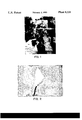
- FIG. 1 discloses a typical plant with the rather delicate pink flowers contrasted with the dark green leaves.
- FIG. 2 a single flower is shown.
- Propagation Plant tissue culture.
- Leaf bases change with overall plant maturity. Leaves formed on young plants have an obtuse base eventually of isolated leaf is of mature leaf). A mature leaf ranges from 18-22 cm long by 11-13 cm wide, depending on age. Reflexed. Margins entire.
- Type.--Spathe and spadix Spathe tightly rolled around spadix during development. The spathe is fully opened when peduncle is fully elongated. The spathe is smooth, unpuckered, ovate, obtuse base, cuspidate tip. Typically, a width to length ratio 5.5-6 cm by 3.5-4.5 cm wide. Polished appearance. Flowers are consistently held above the foliage.
- Spathe color.--Flower color pigment is irregularly dispersed as red-purple (65 A-B) over a background of white (155 D). As a young flower, the red-purple of pigmentation is more concentrated towards the margins of the spathe while the area around the mid vein is predominantly white. The red-purple pigmentation is more evenly distributed as the flower matures. The red-purple color is more prominent under cooler conditions.
- Spadix --4-5 cm long, 7-8 mm wide at base.
- a young spadix color changes from the base of the spadix, red-purple (68 C) to the middle section, red-purple (73 C) to the tip, red-purple (64 A).
- Roots Root developed above soil line are fleshy and non-branching. Roots developed below the soil line are fleshy and well branched with fine lateral roots.
- Anthurium ⁇ Rosa ⁇ Rosa is a larger plant with a somewhat loose spreading growth habit. The leaves are a lighter green with the newest leaves a bronze color. Rosa displays larger, heart shaped, puckered, red (48 D) flowers.
- Anthurium ⁇ Ozaki Red ⁇ Tall, leggy growth habit. Exhibits less lateral branching. Leaves generally lighter green color. Flower is heart shaped, puckered, red (47 A-B).
- Anthurium ⁇ Lady Jane ⁇ Similar in growth habit, leaf shape and color. Flowers wider and longer (1:2 ratio), smooth, red (51 B). Flowers produced on young plants open even to or slightly below foliage canopy.
- Anthurium ⁇ Southern Blush ⁇ Similar in size with a loose spreading habit. Leaves are lighter green with the new growth a bronze color. Leaf blade thinner and narrower. Leaves are held on longer petioles. The same size flower is displayed above the foliage. The flower is heart shaped, smooth, red (54 B-C), with darker margins.
Landscapes
- Life Sciences & Earth Sciences (AREA)
- Health & Medical Sciences (AREA)
- Physiology (AREA)
- Botany (AREA)
- Developmental Biology & Embryology (AREA)
- Environmental Sciences (AREA)
- Breeding Of Plants And Reproduction By Means Of Culturing (AREA)
Abstract
A compact freely branching and flowering Anthurium hybrid with light pink flower color unevenly dispersed over a white background, with contrasting dark green leaves providing a flowering, commercial pot plant of distinct appearance.
Description
This invention relates to an Anthurium cultivar which was selected from a planting of Anthurium because it appeared to offer a quite different overall appearance because of the flower color which was rather unusual.
The cultivar herein described was in fact selected because of the delicate pink general appearance of the flowers which is in decided contrast to the dark green foliage. The pink color was rather unevenly dispersed over the white background.
The contrast between the pink flower color and the dark green leaves makes the plant well suited as a commercial pot plant.
In addition, greenhouse trials in the vicinity of Altha, Fla. indicate that the cultivar has good resistance against traditional diseases which affect Anthurium plants and no unusual susceptibility to insects has been found to be present up to the present time.
The foregoing is of interest because the cultivar was selected from the planting which was made in the vicinity of Hollywood, Fla.
Adverting to the flower color, as might be expected, the color initially makes its appearance as unevenly dispersed red-purple over the white background, with the color becoming somewhat more pronounced as the flowers mature. Actually the color becomes more distinct as the blooms age, but it never attains any deep pink color.
More specifically, the red-purple appears upon close examination as being irregularly dispersed over the white background.
In view of the foregoing, the cultivar is denominated as Anthurium Georgusis Pink #1 as a suitable designation.
I have caused the cultivar to be asexually reproduced and found that the characteristics hereinafter described in detail, come true in successive generations which have been reproduced by tissue culture in the vicinity of Altha, Fla.
Since the initial plant selected was grown in a cultivated area, in which a number of Anthurium plants have been grown, the cultivar hereof may be compared as set forth hereinafter with some of those plants which were grown under similar conditions in the Altha, Fla. area.
In the drawing showing the plant hereof,
FIG. 1 discloses a typical plant with the rather delicate pink flowers contrasted with the dark green leaves.
In FIG. 2, a single flower is shown.
In order to clearly define many of the characteristics of the new cultivar, the following description is set forth:
Parentage:
Seed parent.--Anthurium×cultorum.
Pollen parent.--Anthurium antioquiense.
Propagation: Plant tissue culture.
Plant descriptions: All colors are described using The Royal Horticultural Society Colour Chart. Measurements and colors were taken from mature plants grown near Altha, Fla.
Stem.--Smooth, yellow-green (144 D).
Lenticels.--Not obvious.
Petioles.--32-37 cm. Smooth. Color when young, yellow-green (146 C). Mature, yellow-green (146 B).
Leaves.--Ovate, cuspidate tip. Leaf bases change with overall plant maturity. Leaves formed on young plants have an obtuse base eventually of isolated leaf is of mature leaf). A mature leaf ranges from 18-22 cm long by 11-13 cm wide, depending on age. Reflexed. Margins entire.
Color.--Young expanding leaf, green (143 A) adaxial (top), polished, abaxial (bottom) yellow-green (146 D). Mature leaf, green (137 A) adaxial (top), yellow-green (146 C) abaxial (bottom). Dull appearance.
Veins.--Main vein (Rib) prominent from base of leaf to mid section of leaf. Both main rib and lateral veins near base of leaf protrude from leaf surface. Rib and veins in remainder of leaf are even to somewhat sunken in the leaf surface. The rib color is in sharp contrast to the leaf color. On a young leaf, the rib color near the base of the leaf is yellow-green (146 C) changing towards the leaf tip to green (143 A). On a mature leaf the rib color is yellow-green (146 B) near the base changing towards the tip to green (137 A).
Leaf sheath.--10-11 cm long pending age. Surrounds young leaf during early developmental stages and is directly attached to the stem below the leaf attachment. The leaf sheath surrounding the youngest leaf is yellow-green (144 D). With age turns greyed-orange (165 B).
Flower:
Type.--Spathe and spadix. Spathe tightly rolled around spadix during development. The spathe is fully opened when peduncle is fully elongated. The spathe is smooth, unpuckered, ovate, obtuse base, cuspidate tip. Typically, a width to length ratio 5.5-6 cm by 3.5-4.5 cm wide. Polished appearance. Flowers are consistently held above the foliage.
Spathe color.--Flower color pigment is irregularly dispersed as red-purple (65 A-B) over a background of white (155 D). As a young flower, the red-purple of pigmentation is more concentrated towards the margins of the spathe while the area around the mid vein is predominantly white. The red-purple pigmentation is more evenly distributed as the flower matures. The red-purple color is more prominent under cooler conditions.
Spathe veins.--Inconspicuous. Protrude from spathe surface.
Peduncle.--40-42 cm long. Yellow-green (146 C) at maturity.
Reproductive organs:
Spadix.--4-5 cm long, 7-8 mm wide at base. A young spadix color changes from the base of the spadix, red-purple (68 C) to the middle section, red-purple (73 C) to the tip, red-purple (64 A). Mature spadix, base red (55 B) blending to tip red purple (61 B).
Stamens.--Anthers and filaments not clearly visible.
Flowering time: After approximately 7-10 months depending on season 1-4 blossoms will be present. Smaller flowers may occur on less mature plants.
Roots: Root developed above soil line are fleshy and non-branching. Roots developed below the soil line are fleshy and well branched with fine lateral roots.
Diseases: Initial greenhouse trials in Altha, Fla. indicate good resistance against traditional diseases.
Insects: No unusual susceptibility to insects noted to date.
Note: These comparisons were made from plants grown under similar conditions near Altha, Fla.
Anthurium `Rosa`: Rosa is a larger plant with a somewhat loose spreading growth habit. The leaves are a lighter green with the newest leaves a bronze color. Rosa displays larger, heart shaped, puckered, red (48 D) flowers.
Anthurium `Ozaki Red`: Tall, leggy growth habit. Exhibits less lateral branching. Leaves generally lighter green color. Flower is heart shaped, puckered, red (47 A-B).
Anthurium `Lady Jane`: Similar in growth habit, leaf shape and color. Flowers wider and longer (1:2 ratio), smooth, red (51 B). Flowers produced on young plants open even to or slightly below foliage canopy.
Anthurium `Southern Blush`: Similar in size with a loose spreading habit. Leaves are lighter green with the new growth a bronze color. Leaf blade thinner and narrower. Leaves are held on longer petioles. The same size flower is displayed above the foliage. The flower is heart shaped, smooth, red (54 B-C), with darker margins.
Claims (1)
1. A new and distinct Anthurium cultivar substantially as herein shown and described characterized particularly as to novelty by the red-purple flower color pigment irregularly dispersed over the white background becoming more evenly distributed as the flower matures, the freely branching and flowering form of the plant, dark green leaves contrasting with light pink flower color, and the substantially for commercial distribution as a flowering pot plant.
Priority Applications (1)
| Application Number | Priority Date | Filing Date | Title |
|---|---|---|---|
| US07/740,498 USPP8131P (en) | 1991-08-05 | 1991-08-05 | Anthurium `Georgusis Pink Number 1` |
Applications Claiming Priority (1)
| Application Number | Priority Date | Filing Date | Title |
|---|---|---|---|
| US07/740,498 USPP8131P (en) | 1991-08-05 | 1991-08-05 | Anthurium `Georgusis Pink Number 1` |
Publications (1)
| Publication Number | Publication Date |
|---|---|
| USPP8131P true USPP8131P (en) | 1993-02-02 |
Family
ID=24976755
Family Applications (1)
| Application Number | Title | Priority Date | Filing Date |
|---|---|---|---|
| US07/740,498 Expired - Lifetime USPP8131P (en) | 1991-08-05 | 1991-08-05 | Anthurium `Georgusis Pink Number 1` |
Country Status (1)
| Country | Link |
|---|---|
| US (1) | USPP8131P (en) |
Cited By (1)
| Publication number | Priority date | Publication date | Assignee | Title |
|---|---|---|---|---|
| USPP10186P (en) * | 1996-09-03 | 1998-01-06 | Oglesby Plant Laboratories, Inc. | Anthurium plant `A1` |
-
1991
- 1991-08-05 US US07/740,498 patent/USPP8131P/en not_active Expired - Lifetime
Cited By (1)
| Publication number | Priority date | Publication date | Assignee | Title |
|---|---|---|---|---|
| USPP10186P (en) * | 1996-09-03 | 1998-01-06 | Oglesby Plant Laboratories, Inc. | Anthurium plant `A1` |
Similar Documents
| Publication | Publication Date | Title |
|---|---|---|
| USPP8129P (en) | Anthurium plant `Georgusis White Number 1` | |
| USPP35095P2 (en) | Chamelaucium plant named ‘SIRIUS’ | |
| USPP8131P (en) | Anthurium `Georgusis Pink Number 1` | |
| USPP10156P (en) | Lantana plant named `Robpatdes` | |
| USPP9124P (en) | Rosemary plant named `Renzels` | |
| USPP8849P (en) | Spathiphyllum plant "Bond A" | |
| USPP9677P (en) | Spathiphyllum plant `S8` | |
| US20250241255A1 (en) | Philodendron phoenix plant named ‘phoenix’ | |
| USPP7760P (en) | Anthurium `Rotolante #1` | |
| USPP8540P (en) | Anthurium `Ruth Morat` | |
| USPP10423P (en) | Dogwood (Cornus florida) named `Am-erika Touch-O-Pink` | |
| USPP36864P2 (en) | Chamelaucium plant named ‘GRAND ADI’ | |
| USPP32591P2 (en) | Dianthus plant named ‘Goody Gumdrops’ | |
| USPP34430P2 (en) | Anthurium plant named ‘ANTHGNOBIC’ | |
| USPP35224P2 (en) | Anthurium plant named ‘AN2863066’ | |
| USPP9896P (en) | Canna plant named `Roblibsca` | |
| US20250241256A1 (en) | PHILODENDRON PLANT NAMED “White Dragon Philodendron” | |
| USPP9154P (en) | Canna plant `Bugle Boy` | |
| USPP9355P (en) | Anthurium plant `75-10` | |
| USPP7608P (en) | Hibiscus plant named `Sweet Caroline` | |
| USPP9901P (en) | Spathiphyllum plant `S9` | |
| USPP31335P2 (en) | Anthurium plant named ‘ANTHAMYO’ | |
| USPP13284P2 (en) | Anthurium plant named ‘Valentine’ | |
| USPP13608P2 (en) | Anthurium plant named ‘Atwentysix’ | |
| USPP8811P (en) | Anthurium plant Brooks No. 1 |
Legal Events
| Date | Code | Title | Description |
|---|---|---|---|
| AS | Assignment |
Owner name: OGLESBY PLANT LABORATORIES, INC., FLORIDA Free format text: ASSIGNMENT OF ASSIGNORS INTEREST.;ASSIGNOR:GEORGUSIS, JAMES J.;REEL/FRAME:005961/0312 Effective date: 19911226 |