USPP20054P2 - Petunia plant named ‘DANLITTUN3’ - Google Patents
Petunia plant named ‘DANLITTUN3’ Download PDFInfo
- Publication number
- USPP20054P2 USPP20054P2 US12/157,176 US15717608V USPP20054P2 US PP20054 P2 USPP20054 P2 US PP20054P2 US 15717608 V US15717608 V US 15717608V US PP20054 P2 USPP20054 P2 US PP20054P2
- Authority
- US
- United States
- Prior art keywords
- danlittun3
- approximately
- near rhs
- color
- flower
- Prior art date
- Legal status (The legal status is an assumption and is not a legal conclusion. Google has not performed a legal analysis and makes no representation as to the accuracy of the status listed.)
- Active
Links
- 240000007377 Petunia x hybrida Species 0.000 title claims 2
- 241000196324 Embryophyta Species 0.000 abstract description 26
- 241000207748 Petunia Species 0.000 abstract description 13
- 230000017260 vegetative to reproductive phase transition of meristem Effects 0.000 abstract description 4
- 239000007787 solid Substances 0.000 abstract 1
- 238000005520 cutting process Methods 0.000 description 5
- 102220574131 Heart- and neural crest derivatives-expressed protein 1_N74D_mutation Human genes 0.000 description 2
- 240000001140 Mimosa pudica Species 0.000 description 2
- 102220469353 Putative uncharacterized protein URB1-AS1_N74A_mutation Human genes 0.000 description 2
- 241000607479 Yersinia pestis Species 0.000 description 2
- 230000001488 breeding effect Effects 0.000 description 2
- 239000003086 colorant Substances 0.000 description 2
- 238000005259 measurement Methods 0.000 description 2
- 210000003462 vein Anatomy 0.000 description 2
- 241001164374 Calyx Species 0.000 description 1
- 230000011681 asexual reproduction Effects 0.000 description 1
- 238000013465 asexual reproduction Methods 0.000 description 1
- 238000007796 conventional method Methods 0.000 description 1
- 201000010099 disease Diseases 0.000 description 1
- 208000037265 diseases, disorders, signs and symptoms Diseases 0.000 description 1
- 235000013399 edible fruits Nutrition 0.000 description 1
- 230000007613 environmental effect Effects 0.000 description 1
- 238000005562 fading Methods 0.000 description 1
- 239000003205 fragrance Substances 0.000 description 1
- 238000000034 method Methods 0.000 description 1
- 210000000056 organ Anatomy 0.000 description 1
- 210000001672 ovary Anatomy 0.000 description 1
- 244000052769 pathogen Species 0.000 description 1
- 230000001850 reproductive effect Effects 0.000 description 1
- 241000894007 species Species 0.000 description 1
Images

Classifications
-
- A—HUMAN NECESSITIES
- A01—AGRICULTURE; FORESTRY; ANIMAL HUSBANDRY; HUNTING; TRAPPING; FISHING
- A01H—NEW PLANTS OR NON-TRANSGENIC PROCESSES FOR OBTAINING THEM; PLANT REPRODUCTION BY TISSUE CULTURE TECHNIQUES
- A01H5/00—Angiosperms, i.e. flowering plants, characterised by their plant parts; Angiosperms characterised otherwise than by their botanic taxonomy
- A01H5/02—Flowers
-
- A—HUMAN NECESSITIES
- A01—AGRICULTURE; FORESTRY; ANIMAL HUSBANDRY; HUNTING; TRAPPING; FISHING
- A01H—NEW PLANTS OR NON-TRANSGENIC PROCESSES FOR OBTAINING THEM; PLANT REPRODUCTION BY TISSUE CULTURE TECHNIQUES
- A01H6/00—Angiosperms, i.e. flowering plants, characterised by their botanic taxonomy
- A01H6/82—Solanaceae, e.g. pepper, tobacco, potato, tomato or eggplant
- A01H6/824—Petunia
Definitions
- the new Petunia cultivar is a product of a planned breeding program conducted by the inventor, Gabriel Danziger, in Moshav Mishmar Hashiva, Israel.
- the objective of the breeding program was to produce new Petunia varieties for commercial applications.
- the seed parent is the unpatented, proprietary seedling variety referred to as Petunia sensu Wijsman ‘CV-770.’
- the pollen parent is the unpatented, proprietary seedling variety referred to as Petunia sensu Wijsman ‘CV-179.’
- the new variety was discovered in April 2006 by the inventor in a group of seedlings resulting from that crossing, in a commercial greenhouse in Moshav Mishmar Hashiva, Israel.
- the cultivar ‘DANLITTUN3’ has not been observed under all possible environmental conditions.
- the phenotype may vary somewhat with variations in environment such as temperature, day length, and light intensity, without, however, any variance in genotype.
- Plants of the new cultivar ‘DANLITTUN3’ are similar to plants of the parent, Petunia sensu Wijsman ‘CV 770’ in most horticultural characteristics, however, plants of the new cultivar ‘DANLITTUN3’ have a different flower color.
- Plants of the new cultivar ‘DANLITTUN3’ are similar to plants of the parent, Petunia sensu Wijsman ‘CV-179’ in most horticultural characteristics, however, plants of the new cultivar ‘DANLITTUN3’ have a different flower color.
- Plants of the new cultivar ‘DANLITTUN3’ are similar to plants of the commercial variety ‘Danpetblu,’ U.S. Plant Pat. No. 16,878 in most horticultural characteristics, however, plants of the new cultivar ‘DANLITTUN3’ have different flower coloration, smaller foliage and smaller diameter flowers.
- Plants of the new cultivar ‘DANLITTUN3’ are also similar to plants of the commercial variety ‘Danpetyel,’ U.S. Plant Pat. No. 16,879 in most horticultural characteristics, however, plants of the new cultivar ‘DANLITTUN3’ have different flower coloration, smaller foliage and smaller diameter flowers.
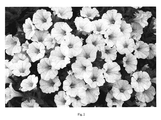
- FIG. 1 illustrates in full color a typical plant of ‘DANLITTUN3’ grown in a greenhouse, in a 16 cm basket. Age of the plant photographed is approximately 90 days from a rooted cutting.
- FIG. 2 illustrates in full color a close up of a typical bloom of ‘DANLITTUN3.’
Landscapes
- Life Sciences & Earth Sciences (AREA)
- Health & Medical Sciences (AREA)
- Physiology (AREA)
- Botany (AREA)
- Developmental Biology & Embryology (AREA)
- Environmental Sciences (AREA)
- Natural Medicines & Medicinal Plants (AREA)
- Breeding Of Plants And Reproduction By Means Of Culturing (AREA)
- Cultivation Of Plants (AREA)
Abstract
A new and distinct Petunia cultivar named ‘DANLITTUN3’ is disclosed, characterized by having solid, bright pink flowers, small flowers and foliage, a compact, mounded plant habit and continuous flowering. The new variety is a Petunia, normally produced as an outdoor garden or container plant.
Description
Latin name of the genus and species: Petunia sensu Wijsman.
The new Petunia cultivar is a product of a planned breeding program conducted by the inventor, Gabriel Danziger, in Moshav Mishmar Hashiva, Israel. The objective of the breeding program was to produce new Petunia varieties for commercial applications. The seed parent is the unpatented, proprietary seedling variety referred to as Petunia sensu Wijsman ‘CV-770.’ The pollen parent is the unpatented, proprietary seedling variety referred to as Petunia sensu Wijsman ‘CV-179.’ The new variety was discovered in April 2006 by the inventor in a group of seedlings resulting from that crossing, in a commercial greenhouse in Moshav Mishmar Hashiva, Israel.
Asexual reproduction of the new cultivar ‘DANLITTUN3’ by vegetative cuttings was first performed at a commercial greenhouse in Moshav Mishmar Hashiva, Israel in April 2006 and has shown that the unique features of this cultivar are stable and reproduced true to type in successive generations.
The cultivar ‘DANLITTUN3’ has not been observed under all possible environmental conditions. The phenotype may vary somewhat with variations in environment such as temperature, day length, and light intensity, without, however, any variance in genotype.
The following traits have been repeatedly observed and are determined to be the unique characteristics of ‘DANLITTUN3’ These characteristics in combination distinguish ‘DANLITTUN3’ as a new and distinct Petunia cultivar:
-
- 1. Small flowers
- 2. Compact growth habit
- 3. Distinctive bright pink flowers.
- 4. Suitability for outdoor containers and garden situations.
Plants of the new cultivar ‘DANLITTUN3’ are similar to plants of the parent, Petunia sensu Wijsman ‘CV 770’ in most horticultural characteristics, however, plants of the new cultivar ‘DANLITTUN3’ have a different flower color.
Plants of the new cultivar ‘DANLITTUN3’ are similar to plants of the parent, Petunia sensu Wijsman ‘CV-179’ in most horticultural characteristics, however, plants of the new cultivar ‘DANLITTUN3’ have a different flower color.
Plants of the new cultivar ‘DANLITTUN3’ are similar to plants of the commercial variety ‘Danpetblu,’ U.S. Plant Pat. No. 16,878 in most horticultural characteristics, however, plants of the new cultivar ‘DANLITTUN3’ have different flower coloration, smaller foliage and smaller diameter flowers.
Plants of the new cultivar ‘DANLITTUN3’ are also similar to plants of the commercial variety ‘Danpetyel,’ U.S. Plant Pat. No. 16,879 in most horticultural characteristics, however, plants of the new cultivar ‘DANLITTUN3’ have different flower coloration, smaller foliage and smaller diameter flowers.
The accompanying photograph in FIG. 1 illustrates in full color a typical plant of ‘DANLITTUN3’ grown in a greenhouse, in a 16 cm basket. Age of the plant photographed is approximately 90 days from a rooted cutting.
The photographs were taken using conventional techniques and although colors may appear different from actual colors due to light reflectance it is as accurate as possible by conventional photographic techniques.
In the following description, color references are made to The Royal Horticultural Society Colour Chart except where general terms of ordinary dictionary significance are used. The following observations and measurements describe ‘DANLITTUN3’ plants grown in a greenhouse in Moshav Mishmar Hashiva, Israel. The growing temperature ranged from 18° C. to 24° C. The greenhouse is subject to partial shade. General light conditions are bright, normal sunlight, with some shade during the brightest part of the day. Measurements and numerical values represent averages of typical plant types.
- Botanical classification: Petunia sensu Wijsman cultivar ‘DANLITTUN3.’
- Time to initiate roots: About 8 days at approximately 18-30° C.
- Time to develop roots: About 14-21 days at approximately 18-30° C.
- Root description: Fine, fibrous.
- Time to produce a rooted cutting: About 14 to 21 days at 18-30° C.
- Growth habit: Compact, spreading annual.
- Pot size of plant described: 12 cm.
- Age of plant described: Approximately 90 days from a rooted cutting.
- Height:
-
- To top of flowers.—Approximately 25-30 cm.
-
- Plant spread: Approximately 50 cm.
- Growth rate: Moderate.
- Branching characteristics: Well-branched. Branches from base of plant.
- Characteristics of lateral branches:
-
- Diameter.—Approximately 0.2-3 cm.
- Form.—Cylindrical.
- Color.—Near RHS Yellow-Green 144A.
- Texture.—Smooth.
-
- Internode length: Approximately 2 cm.
- Leaf:
-
- Arrangement.—Alternate.
- Quantity.—Approximately 180 per branch.
- Average length.—Approximately 3 cm.
- Average width.—Approximately 1.5 cm.
- Shape of blade.—Elliptic.
- Apex.—Obtuse.
- Base.—Acute.
- Margin.—Entire.
- Texture of top surface.—Lustrous.
- Aspect.—Slanted upward 45-90°.
- Color.—Young foliage upper side: Near RHS Yellow-Green 146A. Young foliage under side: Near RHS Yellow-Green 146A. Mature foliage upper side: Near RHS Yellow-Green 147A. Mature foliage under side: Near RHS Yellow-Green 146A.
- Venation.—Type: Pinnate. Venation color upper side: Near RHS Yellow-Green 144C. Venation color under side: Near RHS Yellow-Green 144C.
- Petiole.—Length: 0.5 cm. Diameter: 0.5 cm. Color: Near RHS Yellow-Green 144C.
-
- Natural flowering season: Freely flowering all year in Moshav Mishmar Hashiva Israel. Begins flowering approximately 55 days after planting a rooted cutting.
- Inflorescence and flower type and habit: Salverform, horizontal single with fused petals.
- Rate of flower opening: Approximately 4 to 5 days from bud to fully opened flower.
- Flower longevity on plant: Individual flowers last 4 to 5 days on the plant.
- Quantity of flowers: Approximately 60 per plant.
- Flower size:
-
- Diameter.—Approximately 2.5 cm.
- Flower tube length.—Approximately 2 cm.
- Flower tube diameter at distal end.—Approximately 0.7 cm.
- Flower tube diameter at proximal end.—Approximately 0.2 cm.
-
- Petals:
-
- Length from throat.—About 1 cm.
- Width.—About 2 cm.
- Quantity.—5, fused.
- Texture.—Smooth.
- Apex.—Truncate.
- Margin.—Entire.
-
- Color:
-
- When opening.—Upper surface: Near RHS Red-Purple N74A. Lower surface: Near RHS Red-Purple N74D.
- Fully opened.—Upper surface: Near RHS Red-Purple N74A. Lower surface: Near Red-Purple N74D. Flower throat (inside): Near RHS Red-Purple 73A. Flower throat, vein: Near RHS Red-Purple 73A. Flower tube (outside). Near RHS Red-Purple 73A. Flower tube, vein: Near RHS Red-Purple 73A. Petal color, fading to: Fades to a lighter shade of the above, with white tones.
-
- Bud:
-
- Shape.—Ovate.
- Length.—Approximately 0.5 cm.
- Diameter.—Approximately 0.25 cm.
- Color.—Near RHS Green 142C.
-
- Calyx/sepals:
-
- Quantity per flower.—5, fused at base.
- Sepal shape.—Oblong.
- Length.—Approximately 1 cm.
- Width.—Approximately 0.2 cm.
- Apex.—Obtuse.
- Base.—Fused.
- Margin.—Entire.
- Texture.—Pubescent.
- Color.—Upper Surface: Near RHS Green 137A. Lower Surface: Near RHS Green 137B.
-
- Peduncle:
-
- Length.—Approximately 2 cm.
- Diameter.—Approximately 0.1 cm.
- Color.—Near RHS Green 137B.
- Orientation.—Upright.
-
- Fragrance: None.
- Stamens:
-
- Number.—5.
- Filament length.—Approximately 1.5 cm.
-
- Anthers:
-
- Length.—Approximately 0.1 cm.
- Shape.—Oblate.
- Color.—Near RHS Violet-Blue 97C.
- Pollen.—Color: Near RHS White 155A. Quantity: Abundant.
-
- Pistil:
-
- Number.—1.
- Length.—Approximately 1.5 cm.
- Style.—Length: Approximately 0.1 cm. Color: Near RHS Yellow-Green 146C.
- Stigma.—Shape: Oblate. Color: Near RHS Yellow-Green 146C. Ovary Color: Near RHS Yellow-Green 146C.
-
- Seeds and fruits: Produces a moderate amount of seeds compared to similar commercial petunias.
- Disease/pest resistance: Neither resistance nor susceptibility to pathogens and pests common to Petunia have been observed.
- Temperature tolerance: The new variety tolerates temperatures between 8 to 35° C.
Claims (1)
1. A new and distinct cultivar of Petunia plant named ‘DANLITTUN3’ as herein illustrated and described.
Priority Applications (1)
| Application Number | Priority Date | Filing Date | Title |
|---|---|---|---|
| US12/157,176 USPP20054P2 (en) | 2008-06-06 | 2008-06-06 | Petunia plant named ‘DANLITTUN3’ |
Applications Claiming Priority (1)
| Application Number | Priority Date | Filing Date | Title |
|---|---|---|---|
| US12/157,176 USPP20054P2 (en) | 2008-06-06 | 2008-06-06 | Petunia plant named ‘DANLITTUN3’ |
Publications (1)
| Publication Number | Publication Date |
|---|---|
| USPP20054P2 true USPP20054P2 (en) | 2009-06-02 |
Family
ID=40672595
Family Applications (1)
| Application Number | Title | Priority Date | Filing Date |
|---|---|---|---|
| US12/157,176 Active USPP20054P2 (en) | 2008-06-06 | 2008-06-06 | Petunia plant named ‘DANLITTUN3’ |
Country Status (1)
| Country | Link |
|---|---|
| US (1) | USPP20054P2 (en) |
-
2008
- 2008-06-06 US US12/157,176 patent/USPP20054P2/en active Active
Similar Documents
| Publication | Publication Date | Title |
|---|---|---|
| USPP25265P3 (en) | Petunia plant named ‘PBLRS38-0’ | |
| USPP19788P2 (en) | Salvia plant named ‘DANSALFUN1’ | |
| USPP19459P2 (en) | Calibrachoa plant named ‘DANO36’ | |
| USPP20054P2 (en) | Petunia plant named ‘DANLITTUN3’ | |
| USPP19779P2 (en) | Calibrachoa plant named ‘DANOA35’ | |
| USPP20056P2 (en) | Petunia plant named ‘DANLITTUN5’ | |
| USPP32919P2 (en) | Salvia plant named ‘DSALAXBL’ | |
| USPP19452P2 (en) | Petunia plant named ‘DANLITTUN2’ | |
| USPP19785P2 (en) | Petunia plant named ‘Danlittun4’ | |
| USPP19792P2 (en) | Salvia plant named ‘DANSALCIN1’ | |
| USPP19458P2 (en) | Petunia plant named ‘Danlittun1’ | |
| USPP19967P2 (en) | Petunia plant named ‘DANCASBIF1’ | |
| USPP22310P2 (en) | Petunia plant named ‘DANLITT248’ | |
| USPP22286P2 (en) | Petunia×Calibrachoa plant named ‘DANCALI3’ | |
| USPP19958P2 (en) | Calibrachoa plant named ‘DANOA37’ | |
| USPP29341P3 (en) | Petunia plant named ‘DLITRDFIRE’ | |
| USPP19782P2 (en) | Sutera plant named ‘DANCOP27’ | |
| USPP22235P2 (en) | Petunia plant named ‘Bluette Strawberry Sundae RS’ | |
| USPP19786P2 (en) | Sutera plant named ‘Dancop26’ | |
| USPP23219P2 (en) | Verbena plant named ‘DVER70’ | |
| USPP19451P2 (en) | Angelonia plant named ‘DANGELONI4’ | |
| USPP28771P3 (en) | Nemesia plant named ‘DNEMSANGEL’ | |
| USPP22987P2 (en) | Calibrachoa plant named ‘DANOA60’ | |
| USPP19453P2 (en) | Salvia plant named ‘DANSALCIN5’ | |
| USPP21684P2 (en) | Sutera plant named ‘DANCOP29’ |