USPP1979P - Chrysanthemum plant - Google Patents
Chrysanthemum plant Download PDFInfo
- Publication number
- USPP1979P USPP1979P US PP1979 P USPP1979 P US PP1979P
- Authority
- US
- United States
- Prior art keywords
- new variety
- plant
- color
- variety
- new
- Prior art date
Links
- 240000005250 Chrysanthemum indicum Species 0.000 title 1
- 241000196324 Embryophyta Species 0.000 description 10
- 241000723353 Chrysanthemum Species 0.000 description 6
- 230000017260 vegetative to reproductive phase transition of meristem Effects 0.000 description 4
- 235000007516 Chrysanthemum Nutrition 0.000 description 3
- 235000005986 Chrysanthemum x morifolium Nutrition 0.000 description 3
- 241000404039 Glebionis coronaria Species 0.000 description 2
- 238000009402 cross-breeding Methods 0.000 description 2
- 241001270131 Agaricus moelleri Species 0.000 description 1
- 241001164374 Calyx Species 0.000 description 1
- 241000233866 Fungi Species 0.000 description 1
- 210000004392 Genitalia Anatomy 0.000 description 1
- 210000001672 Ovary Anatomy 0.000 description 1
- 230000002411 adverse Effects 0.000 description 1
- 230000011681 asexual reproduction Effects 0.000 description 1
- 238000002845 discoloration Methods 0.000 description 1
- 201000009910 diseases by infectious agent Diseases 0.000 description 1
- 235000013399 edible fruits Nutrition 0.000 description 1
- 230000002349 favourable Effects 0.000 description 1
- 238000009396 hybridization Methods 0.000 description 1
- 230000011514 reflex Effects 0.000 description 1
Images
Definitions
- My present invention comprises a new and distinct variety of chrysanthemum plant which is the result of cross breeding the variety Cupid (unp atented), a variety of my own introduction, and the unpatented variety which I have designated No. 5350.
- the object of my invention has been to produce a new variety of chrysanthemurn of the indicuml type, which has a different and improved color over the parents, with an improved reflex type of flower as well as foliage and plant habit.
- the blooms of my new variety are of a generally pale pink color with pale orange yellow center (Nickerson Color Fan published by Munsell Color Company). As grown in the vicinity of Niles, Michigan, under uniform culture, plants of my new variety are of medium height.
- the blooms of my new variety appear from about mid-September and profusely and continuously until a killing frost, and thus the blooming season is a relatively long period of time.
- the foliage and plant habit of my new variety are improvements over both the parents in that the plant habit is more compact, somewhat branching and very vigorous, the foliage being much more abundant and of smooth texture.
- BotanicChrysanthemunt indicumt Flower Blooming habit Blooms very profusely from early September and continuously until killing frost in the fall.
- Stamens anthers.-Small; few. Colon-Yellow. Arrangement.-Regular around styles. Stamens, fiIaments.--Short. Colon-White. Styles.-Columnar. Length.-Sh0rt. Stigmas.-White. Ovaries.-All enclosed in calyx. Fruit: Variety is fertile with own pollen.
Description
Nov. 1, 1960 Q, o, DUNHAM Plant Pat. 1,979
CHRYSANTHEMUM PLANT Filed July 27, 1959 Plant Pat. 1,979 Patented Nov. 1, '1960' CHRYSANTHEMUM PLANT Orville 0. Dunham, Niles, Mich, assignor to George J. Ball, Inc., West Chicago, 11]., a corporation of Illinois Filed July 27, 1959, Ser. No. 829,942 '1 Claim. or. 47-60) My present invention comprises a new and distinct variety of chrysanthemum plant which is the result of cross breeding the variety Cupid (unp atented), a variety of my own introduction, and the unpatented variety which I have designated No. 5350.
The object of my invention has been to produce a new variety of chrysanthemurn of the indicuml type, which has a different and improved color over the parents, with an improved reflex type of flower as well as foliage and plant habit.
This present new variety has resulted from a program of careful selection and cross-breeding which generally speaking has involved so-called American garden chrysanthemums and English ear-1y chrysanthemums. The program has been primarily concerned with taking advantage of the most favorable features of both of the basic types, the early flowering date of both and the continuous flowering feature of the English early chrysanthemum, as contrasted with the short flowering period of the American garden chrysanthemum.
The result of the specific hybridization previously mentioned has been to produce my present new and distinct variety of chrysantlremum plant characterized by the pale orange yellow center, pale pink general tonality, improved refiexed type bloom, the very double arrangement of its petals, the earlier, continuous, long blooming period, its more vigorous, compact plant habit and larger, more abundant foliage.
More specifically, the blooms of my new variety are of a generally pale pink color with pale orange yellow center (Nickerson Color Fan published by Munsell Color Company). As grown in the vicinity of Niles, Michigan, under uniform culture, plants of my new variety are of medium height.
While the parents of my new variety are both generally speaking, of the pale pink color, and therefore this characteristic is present in the new variety, the pale orange yellow center is not found in either of the parents, and my new variety differs from both of its parents and some other known varieties in many other respects.
In comparing the blooms of my new variety with the blooms of the parents, it is noted that neither is very reflexed in contrast and further that the parent No. 5350 is of incurved form, in contrast to the new variety which is reflexed extensively. The petal arrangement of my new variety is very double and the stamens are small and few in number.
Under conditions of culture in the region of Niles, Michigan, the blooms of the pollen parent Cupid begin to appear in early October and the blooms of the seed parent No. 5350 quite early in September. The resulting new variety blooms in mid-September, deriw'ng its earliness of flowering from the seed parent No. 5350.
The blooms of my new variety appear from about mid-September and profusely and continuously until a killing frost, and thus the blooming season is a relatively long period of time.
The foliage and plant habit of my new variety are improvements over both the parents in that the plant habit is more compact, somewhat branching and very vigorous, the foliage being much more abundant and of smooth texture.
I My new variety has been asexually reproduced by cuttings, in the vicinity of Niles, Michigan.
My new variety has been found to retain its distinctive characteristics through successive asexual reproductions.
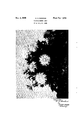
The accompanying drawing forming a part hereof shows a typical plant of my new variety of chrysanthemum.
The following is a detailed description of'rn-y new variety of ohrysanthemum plant, the color references being to the Nickerson Color Fan published by Munsell Color Company:
Parentage: Seedling.
Seed parent.No 5350 (unpatented). Pollen parent.Cupid (unpatented).
Classification: BotanicChrysanthemunt indicumt Flower Blooming habit: Blooms very profusely from early September and continuously until killing frost in the fall. Bud:
Size.Large. F0rm.Sl1ort with flat top. Not afiected by hot or wet weather. Color.When petals begin to unfurlMunsell Hue 101 7/7 moderate purplish pink washed with 10P 6/9 light reddish purple. When half blown: inside of petals-Munsell Hue 2.5RP 7/8 moderate purplish pink washed with 2.SRP 8/5 light purplish pink; reverse of petalswhite washed with pale purplish pink 10P 8/5. Peduncle.-Long. Aspect.Rough. Colon-Medium green. Strength-Stiff; erect. Opening.Bud opens wellsomewhat affected by adverse conditions. Bloom:
Size.L-arge. Average size when fully expanded- 5 inches (disbudded). B0rne.-In clusters; iregular.
Stems.Long. Form-Flat. Permanence--retains its form to the end.
Petalage.-Very double. Number of petals under normal conditionsinnumerable.
Color.Center of flower-7.5YR 9/4 Munsell Hue 7.5YR. Outer petals2.5R 9/ 3 Munsell Hue 2.5R. Base of petals (singlet)2.5R 9/3 Munsell Hue 2.5R. Inside of petals2.5R 9/ 3 Munsell Hue 2.5R. Reverse of petals-2.5R 9/ 3 Munsell Hue 2.5R. General tonalit-y from a distance 25R 9/3 Munsell Hue 2.5R.
Discoloration.--First week-retains same color. Second week-retains much the same color. Third week-retains mudh the same color.
Petals:
Texzure.-'I"hin. Bleaches in hot Weather.
tible to fungus infection in wet weather.
Appearance.--InsidPvelvety. Outside-satiny.
Arrangemcnt.--Imbricated.
Petal0ids.--None.
Persistence-Hang on and dry.
Lastingness.-On the plantvery long. As cut flower--long.
Suscep- 3 Genital organs:
Stamens, anthers.-Small; few. Colon-Yellow. Arrangement.-Regular around styles. Stamens, fiIaments.--Short. Colon-White. Styles.-Columnar. Length.-Sh0rt. Stigmas.-White. Ovaries.-All enclosed in calyx. Fruit: Variety is fertile with own pollen.
F0rm .0blong shaped. Aswan-Rough. Color at maturity.Brownisl1 grey. Form: Bush. Growth: Vigorous; dwarf; branching; compact. Foliage:
Size.-Large. Quantity-Abundant. Colon-New. foliage: upper side-normal green; under sidelight green. Old foliage: upper side-dark green; under sidedark green.
Under side Under side--smooth.
I claim:
A new and distinct variety of chrysanthernum plant substantially as herein disclosed, characterized as to novelty by the pale orange yellow center, pale pink general tonality, improved reflexed type bloom, very double arrangement of its petals, the earlier, continuous, long blooming period, its more vigorous, compact plant habit and larger, more abundant foliage.
No references cited. 20
Family
ID=
Similar Documents
| Publication | Publication Date | Title |
|---|---|---|
| USPP4930P (en) | Alstroemeria named Stablaco | |
| USPP2006P (en) | Chrysanthemum plant | |
| USPP2004P (en) | Chrysanthemum plant | |
| USPP1978P (en) | Chrysanthemum plant | |
| USPP2003P (en) | Chrysanthemum plant | |
| USPP2005P (en) | Chrysanthemum plant | |
| USPP2001P (en) | Chrysanthemum plant | |
| USPP802P (en) | Chrysanthemum plant | |
| USPP2007P (en) | Chrysanthemum plant | |
| USPP1980P (en) | Chrysanthemum plant | |
| USPP5088P (en) | Chrysanthemum named Copper Mine | |
| USPP9758P (en) | Carnation plant named `Velvet` | |
| USPP2297P (en) | Chrysanthemum plant | |
| USPP865P (en) | Chrysanthemum plant | |
| USPP2227P (en) | Carnation | |
| USPP2033P (en) | Chrysanthemum plant | |
| USPP7911P (en) | Carnation named Stasundel | |
| USPP2517P (en) | Chrysanthemum plant | |
| USPP2400P (en) | Rose plant | |
| USPP2390P (en) | Chrysanthemum plant | |
| USPP2117P (en) | Chrysanthemum plant | |
| USPP2070P (en) | Chrysanthemum plant | |
| USPP9759P (en) | Carnation plant named `Paco` | |
| USPP2002P (en) | Chrysanthemum plant | |
| USPP29780P2 (en) | Veronica plant named ‘Verspi’ |