USPP16415P2 - Veronica plant named ‘High Five’ - Google Patents
Veronica plant named ‘High Five’ Download PDFInfo
- Publication number
- USPP16415P2 USPP16415P2 US11/073,471 US7347105V USPP16415P2 US PP16415 P2 USPP16415 P2 US PP16415P2 US 7347105 V US7347105 V US 7347105V US PP16415 P2 USPP16415 P2 US PP16415P2
- Authority
- US
- United States
- Prior art keywords
- veronica
- plants
- plant
- new
- color
- Prior art date
- Legal status (The legal status is an assumption and is not a legal conclusion. Google has not performed a legal analysis and makes no representation as to the accuracy of the status listed.)
- Expired - Lifetime, expires
Links
Images

Classifications
-
- A—HUMAN NECESSITIES
- A01—AGRICULTURE; FORESTRY; ANIMAL HUSBANDRY; HUNTING; TRAPPING; FISHING
- A01H—NEW PLANTS OR NON-TRANSGENIC PROCESSES FOR OBTAINING THEM; PLANT REPRODUCTION BY TISSUE CULTURE TECHNIQUES
- A01H5/00—Angiosperms, i.e. flowering plants, characterised by their plant parts; Angiosperms characterised otherwise than by their botanic taxonomy
- A01H5/02—Flowers
-
- A—HUMAN NECESSITIES
- A01—AGRICULTURE; FORESTRY; ANIMAL HUSBANDRY; HUNTING; TRAPPING; FISHING
- A01H—NEW PLANTS OR NON-TRANSGENIC PROCESSES FOR OBTAINING THEM; PLANT REPRODUCTION BY TISSUE CULTURE TECHNIQUES
- A01H6/00—Angiosperms, i.e. flowering plants, characterised by their botanic taxonomy
- A01H6/68—Plantaginaceae, e.g. Antirrhinum
Definitions
- Botanical designation Veronica hybrida.
- the present Invention relates to a new and distinct cultivar of Veronica plant, botanically known as Veronica hybrida , and hereinafter referred to by the cultivar name ‘High Five’.
- the new Veronica is a product of a planned breeding program conducted by the Inventor in Haarlem, The Netherlands.
- the objective of the breeding program was to create sturdy new Veronica cultivars with numerous flowers with attractive coloration.
- the new Veronica originated from a cross-pollination made by the Inventor in July, 1998 of a proprietary Veronica longifolia ⁇ Veronica spicata selection, not patented, as the female, or seed, parent with a proprietary Veronica spicata ⁇ Veronica longifolia selection, not patented, as the male, or pollen, parent.
- the new Veronica was discovered and selected by the Inventor during the summer of 2000 as a single flowering plant within the progeny of the stated cross-pollination in a controlled environment in Haarlem, The Netherlands.
- Plants of the cultivar High Five have not been observed under all possible environmental conditions. The phenotype may vary somewhat with variations in environment such as temperature and light intensity without, however, any variance in genotype.
- Plants of the new Veronica can be compared to the parent selections. Compared to plants of the parent selections, plants of the new Veronica are more compact, are sturdier, have shorter flower racemes and have more distinct flower coloration.
- Plants of the new Veronica can be compared to plants of the Veronica cultivar Sunny Border Blue, not patented. Plants of the new Veronica differ from plants of the cultivar Sunny Border Blue in the following characteristics:
- the photograph on the first sheet comprises a side perspective view of a typical flowering plant of ‘High Five’ grown in a container.
- the photograph at the top of the second sheet is a close-up view of a typical flower raceme of ‘High Five’.
- the photograph at the bottom of the second sheet is a close-up view of a typical leaf of ‘High Five’.
Landscapes
- Life Sciences & Earth Sciences (AREA)
- Health & Medical Sciences (AREA)
- Physiology (AREA)
- Botany (AREA)
- Developmental Biology & Embryology (AREA)
- Environmental Sciences (AREA)
- Natural Medicines & Medicinal Plants (AREA)
- Breeding Of Plants And Reproduction By Means Of Culturing (AREA)
Abstract
A new and distinct cultivar of Veronica plant named ‘High Five’, characterized by its upright, compact and sturdy plant habit; freely basal branching habit; dense and bushy plant form; long flower racemes; freely flowering habit; and violet blue-colored flowers.
Description
Botanical designation: Veronica hybrida.
Cultivar denomination: ‘High Five’.
The present Invention relates to a new and distinct cultivar of Veronica plant, botanically known as Veronica hybrida, and hereinafter referred to by the cultivar name ‘High Five’.
The new Veronica is a product of a planned breeding program conducted by the Inventor in Haarlem, The Netherlands. The objective of the breeding program was to create sturdy new Veronica cultivars with numerous flowers with attractive coloration.
The new Veronica originated from a cross-pollination made by the Inventor in July, 1998 of a proprietary Veronica longifolia×Veronica spicata selection, not patented, as the female, or seed, parent with a proprietary Veronica spicata×Veronica longifolia selection, not patented, as the male, or pollen, parent. The new Veronica was discovered and selected by the Inventor during the summer of 2000 as a single flowering plant within the progeny of the stated cross-pollination in a controlled environment in Haarlem, The Netherlands.
Asexual reproduction of the new cultivar by cuttings since 2001 in Haarlem, The Netherlands, has shown that the unique features of this new Veronica are stable and reproduced true to type in successive generations.
Plants of the cultivar High Five have not been observed under all possible environmental conditions. The phenotype may vary somewhat with variations in environment such as temperature and light intensity without, however, any variance in genotype.
The following traits have been repeatedly observed and are determined to be the unique characteristics of ‘High Five’. These characteristics in combination distinguish ‘High Five’ as a new and distinct Veronica cultivar:
-
- 1. Upright, compact and sturdy plant habit.
- 2. Freely basal branching habit; dense and bushy plant form.
- 3. Long flower racemes.
- 4. Freely flowering habit.
- 5. Violet blue-colored flowers.
Plants of the new Veronica can be compared to the parent selections. Compared to plants of the parent selections, plants of the new Veronica are more compact, are sturdier, have shorter flower racemes and have more distinct flower coloration.
Plants of the new Veronica can be compared to plants of the Veronica cultivar Sunny Border Blue, not patented. Plants of the new Veronica differ from plants of the cultivar Sunny Border Blue in the following characteristics:
-
- 1. Plants of the new Veronica are more compact and sturdier than plants of the cultivar Sunny Border Blue.
- 2. Plants of the new Veronica have longer flower racemes than plants of the cultivar Sunny Border Blue.
- 3. Plants of the new Veronica have darker colored flowers than plants of the cultivar Sunny Border Blue.
The accompanying colored photographs illustrate the overall appearance of the new cultivar, showing the colors as true as it is reasonably possible to obtain in colored reproductions of this type. Colors in the photographs may differ slightly from the color values cited in the detailed botanical description which accurately describe the actual colors of the new Veronica.
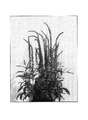
The photograph on the first sheet comprises a side perspective view of a typical flowering plant of ‘High Five’ grown in a container.
The photograph at the top of the second sheet is a close-up view of a typical flower raceme of ‘High Five’.
The photograph at the bottom of the second sheet is a close-up view of a typical leaf of ‘High Five’.
Plants shown in the aforementioned photographs and used in the following description were grown under conditions which closely approximate commercial production conditions during the late spring and summer in an outdoor nursery in Lisse, The Netherlands. During the production of the plants, day temperatures aranged from 10 to 30° C. and night temperatures ranged from 4 to 15° C. Plants were about two years old when the photograph and description were taken. In the following description, color references are made to The Royal Horticultural Society Colour Chart, 2001 Edition, except where general terms of ordinary dictionary significance are used.
- Botanical classification: Veronica hybrida cultivar High Five.
- Parentage:
-
- Female, or seed, parent.—Proprietary Veronica longifolia×Veronica spicata selection, not patented.
- Male, or pollen, parent.—Proprietary Veronica spicata×Veronica longifolia selection, not patented.
-
- Propagation:
-
- Type.—By cuttings.
- Time to produce a rooted young plant.—About one month during the spring.
- Root description.—Thick; freely branching.
-
- Plant description:
-
- Form.—Perennial. Upright, compact and sturdy plant habit; narrow inverted triangle. Freely basal branching with about 17 flowering stems per plant; dense and bushy plant habit; moderately vigorous growth habit. Numerous flowers arranged on crowded terminal racemes.
- Plant height.—About 49 cm.
- Plant width.—About 30.5 cm.
- Lateral stem description.—Length (excluding inflorescence): About 22.1 cm. Diameter: About 3 mm. Internode length: About 4.3 cm. Strength: Strong. Texture: Sparsely pubescent. Color: 144A.
- Foliage description.—Arrangement: Opposite, simple. Length: About 7.3 cm. Width: About 2.5 mm. Shape: Lanceolate. Apex: Acute. Base: Attenuate. Margin: Serrate. Texture, upper surface: Smooth, glabrous. Texture, lower surface: Sparsely pubescent. Venation pattern: Pinnate. Color: Developing foliage, upper surface: Between, but slightly darker than 137A and 143A. Developing foliage, lower surface: 138A. Fully expanded foliage, upper surface: Between 137A and 139A. Fully expanded foliage, lower surface: 137C to 138A. Venation, upper surface: Similar to lamina. Venation, lower surface: 144B. Petiole length: About 1.6 cm. Petiole diameter: About 2 mm. Petiole color: Between 143B and 144B.
-
- Flower description:
-
- Flower arrangement and shape.—Single campanulate flowers closely spaced on upright terminal racemes; flowers face mostly outward. Freely flowering habit, about 400 flowers per raceme.
- Natural flowering season.—Continuous flowering from July to late September in The Netherlands.
- Flower longevity on the plant.—Individual flowers last about one week on the plant. Flowers not persistent.
- Flower buds.—Length: About 6 mm. Diameter: About 3 mm. Shape: Ovoid. Color: N88A.
- Inflorescence size.—Length: About 26.9 cm. Diameter: About 2.4 cm.
- Flowers.—Diameter: About 8 mm. Depth (height): About 1 cm.
- Petals.—Arrangement: Campanulate; four petals fused towards the base. Length: About 7 mm. Width: About 3 mm. Shape: Oblanceolate. Apex: Broadly acute. Margin: Entire. Texture: Smooth, glabrous. Color: When opening and fully opened, upper surface: 93B to 93C. When opening and fully opened, lower surface: 93B.
- Sepals.—Arrangement: Four sepals fused towards the base; lower two sepals nearly twice as long as upper two sepals. Length: Upper sepals: About 3 mm. Lower sepals: About 5.5 mm. Width: Upper sepals: About 1 mm. Lower sepals: About 1.5 mm. Shape: Narrowly ovate. Apex: Acute. Base: Fused. Margin: Entire. Texture, upper and lower surfaces: Pubescent. Color, upper surface: 137A. Color, lower surface: 137A to 137B.
- Peduncles.—Length: About 26.9 cm. Diameter: About 3 mm. Aspect: Erect to 20° from vertical. Strength: Strong. Color: 143B.
- Pedicels.—Length: About 2 mm. Diameter: About 0.75 mm. Aspect: About 50° from vertical. Strength: Strong. Color: 143B.
- Reproductive organs.—Stamens: Quantity per flower: Two. Filament length: About 9 mm. Filament color: 93B to 93C. Anther shape: Elliptic. Anther length: About 1 mm. Anther color: N77C. Pollen amount: Moderate. Pollen color: 2C. Pistils: Quantity per flower: One. Pistil length: About 9 mm. Stigma shape: Clavate, flattened. Stigma color: 93B. Style length: About 8 mm. Style color: 93C. Ovary color: 143C. Fruit: Length: About 3 mm. Diameter: About 3 mm. Texture: Smooth. Color: 144B. Seed: Quantity per fruit: About 12. Length: About 1 mm. Diameter: About 1 mm. Texture: Smooth. Color: N199C to N199D.
-
- Disease/pest resistance: Plants of the new Veronica have not been noted to be resistant to pathogens and pests common to Veronica.
- High temperature tolerance: Plants of the new Veronica have been observed to tolerate temperatures up to 30° C.
- Hardiness: Plants of the new Veronica have been observed to be hardy to USDA Zone 4.
Claims (1)
1. A new and distinct cultivar of Veronica plant named ‘High Five’, as illustrated and described.
Priority Applications (1)
| Application Number | Priority Date | Filing Date | Title |
|---|---|---|---|
| US11/073,471 USPP16415P2 (en) | 2005-03-05 | 2005-03-05 | Veronica plant named ‘High Five’ |
Applications Claiming Priority (1)
| Application Number | Priority Date | Filing Date | Title |
|---|---|---|---|
| US11/073,471 USPP16415P2 (en) | 2005-03-05 | 2005-03-05 | Veronica plant named ‘High Five’ |
Publications (1)
| Publication Number | Publication Date |
|---|---|
| USPP16415P2 true USPP16415P2 (en) | 2006-04-04 |
Family
ID=36102218
Family Applications (1)
| Application Number | Title | Priority Date | Filing Date |
|---|---|---|---|
| US11/073,471 Expired - Lifetime USPP16415P2 (en) | 2005-03-05 | 2005-03-05 | Veronica plant named ‘High Five’ |
Country Status (1)
| Country | Link |
|---|---|
| US (1) | USPP16415P2 (en) |
-
2005
- 2005-03-05 US US11/073,471 patent/USPP16415P2/en not_active Expired - Lifetime
Similar Documents
| Publication | Publication Date | Title |
|---|---|---|
| USPP21727P2 (en) | Cimicifuga plant named ‘Queen of Sheba’ | |
| USPP16311P2 (en) | Veronica plant named ‘Pink Panther’ | |
| USPP16414P2 (en) | Veronica plant named ‘Twilight’ | |
| USPP27084P2 (en) | Veronica plant named ‘Candied Candle’ | |
| USPP17650P2 (en) | Veronica plant named ‘Fairytale’ | |
| USPP24785P2 (en) | Veronica plant named ‘Verspink’ | |
| USPP17639P2 (en) | Veronica plant named ‘Purpleicious’ | |
| USPP18743P2 (en) | Veronica plant named ‘Pink Eveline’ | |
| USPP16428P2 (en) | Veronica plant named ‘Baby Doll’ | |
| USPP17573P2 (en) | Papaver plant named ‘Little Candyfloss’ | |
| USPP28798P3 (en) | Veronica plant named ‘Allvglove’ | |
| USPP15971P2 (en) | Tradescantia plant named ‘Pink Chablis’ | |
| USPP14933P2 (en) | Astilbe plant named ‘Rhythm and Beat’ | |
| USPP17610P2 (en) | Papaver plant named ‘Miss Piggy’ | |
| USPP17609P2 (en) | Papaver plant named ‘Pink Pearl’ | |
| USPP17333P2 (en) | Papaver plant named ‘Scarlet O'Hara’ | |
| USPP29059P3 (en) | Veronica plant named ‘Allv1461’ | |
| USPP18615P2 (en) | Verbena plant named ‘Sunmarired’ | |
| USPP17349P2 (en) | Papaver plant named ‘Matador’ | |
| USPP16972P2 (en) | Sedum plant named ‘Novem’ | |
| USPP18965P2 (en) | Astilbe plant named ‘Vision in White’ | |
| USPP23271P2 (en) | Veronica plant named ‘Alllady’ | |
| USPP17345P2 (en) | Papaver plant named ‘Inferno’ | |
| USPP14888P2 (en) | Veronica plant named ‘Eveline’ | |
| USPP23294P2 (en) | Veronica plant named ‘Alllord’ |
Legal Events
| Date | Code | Title | Description |
|---|---|---|---|
| AS | Assignment |
Owner name: WITEMAN & CO., NETHERLANDS Free format text: ASSIGNMENT OF ASSIGNORS INTEREST;ASSIGNOR:VERSCHOOR, JAN;REEL/FRAME:016366/0103 Effective date: 20041110 |