USPP1237P - Rose plant - Google Patents
Rose plant Download PDFInfo
- Publication number
- USPP1237P USPP1237P US PP1237 P USPP1237 P US PP1237P
- Authority
- US
- United States
- Prior art keywords
- color
- plate
- rose
- neyron
- long
- Prior art date
Links
- 241000220317 Rosa Species 0.000 title description 5
- 241000196324 Embryophyta Species 0.000 description 6
- 241001122767 Theaceae Species 0.000 description 3
- 230000034303 cell budding Effects 0.000 description 3
- 241000109329 Rosa xanthina Species 0.000 description 2
- 235000004789 Rosa xanthina Nutrition 0.000 description 2
- 230000011681 asexual reproduction Effects 0.000 description 2
- 238000004519 manufacturing process Methods 0.000 description 2
- 241000209134 Arundinaria Species 0.000 description 1
- 241001164374 Calyx Species 0.000 description 1
- 241000207199 Citrus Species 0.000 description 1
- 210000004209 Hair Anatomy 0.000 description 1
- 241001124569 Lycaenidae Species 0.000 description 1
- 206010027146 Melanoderma Diseases 0.000 description 1
- 241001465805 Nymphalidae Species 0.000 description 1
- 102100019815 SRRT Human genes 0.000 description 1
- 101700037877 SRRT Proteins 0.000 description 1
- 240000003453 Spinacia oleracea Species 0.000 description 1
- 235000009337 Spinacia oleracea Nutrition 0.000 description 1
- 230000001154 acute Effects 0.000 description 1
- 230000001488 breeding Effects 0.000 description 1
- 235000020971 citrus fruits Nutrition 0.000 description 1
- 150000001875 compounds Chemical class 0.000 description 1
- 238000005034 decoration Methods 0.000 description 1
- 201000010099 disease Diseases 0.000 description 1
- 239000003205 fragrance Substances 0.000 description 1
- 239000011521 glass Substances 0.000 description 1
- 230000002045 lasting Effects 0.000 description 1
- 210000000056 organs Anatomy 0.000 description 1
- 230000001850 reproductive Effects 0.000 description 1
Images
Definitions
- the present invention relates to a new and distinct variety of rose plant of the hybrid tea class, which originated as a sport of the variety Better Times (Plant Patent No. 23).
- the sport was found by me at Decatur, Illinois, among cultivated plants of "Better Times which I was growing in my greenhouses. While in the act of cutting flowers from some of the Better Times plants in my greenhouses, my attention was attracted to a light pastel pink bloom which I found had sprung off one side of a Better Times" plant, and I thereupon carefully preserved the sport and promptly took steps to asexually reproduce the same in order to develop it and ascertain whether the new color characteristic of the bloom was permanently established and transmissible by asexual reproduction.
- Type Hardy; greenhouse and outdoor; sport
- Propagation Holds its distinguishing characteristics through succeeding propagations by cuttings, grafting and budding.
- Fragrance Slight; very weak citrus scent.
- bramka- Color-Claret Rose Plate As first petal opens.--Size-medium-large. Form long-pointed. Color outside: Neyron Rose, Plate 623-2; inside: Neyron Rose, Plate S23-1.
- Opcuing-0pens up well is not retarded from opening by cold, hot, wet or dry weather.
- Bloom Size, when fully open-large; from 4 inches to 41/2 inches.
- Petaluma- Double (more petals, but the stamens not hidden) from 32 to 34 petals; arranged regularly.
- Petals Thick; leathery; with both inside and outside satiny.
- Neyron Rose, Plate 623-1 Colori- Outside petal-outside surface: Neyron Rose, Plate 623-1; inside surface: Neyron Rose, Plate S23-1. Intermediate petal-outside surface; Neyron Rose, Plate 623-1; inside surface; Neyron Rose, Plate S23-1. Inner petal-outside surface: Neyron Rose, Plate 623-1; inside surface: Neyron Rose. Plate 623-1.
- Colon-Outside petal-outside surface Neyron Rose, Plate S23-2; inside surface: Neyron Rose, Plate S23-2.
- Inside petal-- outside suriace Neyron Rose, Plate S23-1; inside surface: Neyron Rose. Plate 6234.
- Reproductive organs Stamens Medium number; arranged irregularly about pistils. ColormCadmium Orange, Plate 8-2.
- Rachis (the supporting stem of the compound leaf) .-Heavy. Upper side-smooth. Under side-sparsely prickly.
- Main stems Color bright green. Thorns-few; medium-length; slightly curved downward; with long, narrow base. Prickles-none. Hairs-none.
- a new and distinct variety of rose plant of the hybrid tea class substantially as herein shown and described, characterized particularly as to novelty by its upright and bushy habit of growth, by its relatively leathery foliage, by its relatively large and long-pointed buds, by iis full-petaled iiowers of Neyron Pink general color tonality, by the uniformity of the color of its blooms and their good-keeping and long-lasting quality with complete absence of bluing of the petals, by its habit of bearing owers on relatively strong, long and large stems, by .its freedom from bullheading of the owers, and by its freedom and profusion of blooms, with attending superior production for cut-ower purposes.
Description
Patented Dec. 29, 1953 Plant Pat. 1,237
UNITED STATES PATENT OFFICE 1 Claim.
The present invention relates to a new and distinct variety of rose plant of the hybrid tea class, which originated as a sport of the variety Better Times (Plant Patent No. 23). The sport was found by me at Decatur, Illinois, among cultivated plants of "Better Times which I was growing in my greenhouses. While in the act of cutting flowers from some of the Better Times plants in my greenhouses, my attention was attracted to a light pastel pink bloom which I found had sprung off one side of a Better Times" plant, and I thereupon carefully preserved the sport and promptly took steps to asexually reproduce the same in order to develop it and ascertain whether the new color characteristic of the bloom was permanently established and transmissible by asexual reproduction.
In the course of asexually reproducing my new variety by cuttings, grafting and budding, at
Decatur, Illinois, I found that the new variety was not only distinguished from "Better Times" by the light pastel pink color of its blooms, but I also found that it had other desirable characteristcs which distinguish it from its parent, as
well as from all other varieties of its class, the
most outstandingf distinguishing features being as follows:
(l) The plants of the new variety are upright and bushy in form, and are endowed with a very vigorous freedom of growth;
(2) The foliage is normal green in color but somewhat more leathery than the foliage of Better Times;
(3) The buds are long-pointed in form and relatively large in size, while the open flowers are full, large and almost flat-topped, with more petals than those of Better Times, free from bullheading and borne on stronger, slightly longer and larger stems than those of "Better Times";
(4) The general color tonality of the flowers of the new variety is best described as Neyron Pink, as distinguished from the cerise color of Better Times, and the color of the flowers of my new variety is more uniform and holds much better and longer without any bluing of the petals, as compared with Better Times, with excellent lasting quality of the blooms; and
(5) Under the same cultural conditions in both the greenhouse and outdoors, my new variety produces appreciably more blooms than ts parent Better Times, or other pink varieties heretofore known, thereby making my new variety an excellent one for commercial production.
Asexual reproduction of my new variety by cutbil tings, grafting and budding, as performed at Decatur, Illinois, shows that the foregoing characteristics and distinctions come true to form and are established and transmitted through succeeding propagations.
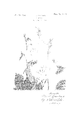
The accompanying drawing shows specimens of the Iiowers, foliage and stems of my new variety in different stages of development.
The following is a detailed description of my new variety, with color terminology in accordance with the Horticultural Color Chart issued by the British Color Council, except where general color terms of ordinary dictionary significance are obvious:
Type: Hardy; greenhouse and outdoor; sport;
for cut nowers and for garden decoration.
Class: Hybrid tea.
Breeding: Sport of Better Times."
Propagation: Holds its distinguishing characteristics through succeeding propagations by cuttings, grafting and budding.
Flower Locality where grown and observed: Decatur,
Illinois.
Continuity: Continuous.
Fragrance: Slight; very weak citrus scent.
Flowers borne: Singly; on strong, long stems.
Quantity of bloom: Profuse both outdoors and in greenhouse.
Bud:
Peduncle.-Long; heavy; erect; stiff; entirely smooth; no hairs. Colon- Light green.
Before calyx breaks. Size medium. Form-pointed; with a conspicuous neck; with foliaceous appendages on the surface of the bud; with slender, bristle-like foliaceous parts extending beyond the tip of the bud equal to 1,4 of its length. Color- Spinach Green, Plate S60-1.
As calya: bramka- Color-Claret Rose, Plate As first petal opens.--Size-medium-large. Form long-pointed. Color outside: Neyron Rose, Plate 623-2; inside: Neyron Rose, Plate S23-1.
Opcuing-0pens up well; is not retarded from opening by cold, hot, wet or dry weather.
Bloom: Size, when fully open-large; from 4 inches to 41/2 inches.
Petaluma- Double (more petals, but the stamens not hidden) from 32 to 34 petals; arranged regularly.
Form.-Flatopen; full center at first; re-
maining flat-open; petals being at nrst tightly rolled inward; becoming later at maturity loosely rolled outward and almost at. Petals: Thick; leathery; with both inside and outside satiny.
Shape.-Outside-round to almost orbicular.
Intermediate*round. Inside-round Colon- Color remains practically the same under ordinary greenhouse conditions.
This description of a newly opened flower was made from a rose grown in a greenhouse in the month of November, at Decatur, Illinois:
Colori- Outside petal-outside surface: Neyron Rose, Plate 623-1; inside surface: Neyron Rose, Plate S23-1. Intermediate petal-outside surface; Neyron Rose, Plate 623-1; inside surface; Neyron Rose, Plate S23-1. Inner petal-outside surface: Neyron Rose, Plate 623-1; inside surface: Neyron Rose. Plate 623-1.
This description was made from a rose that was open for three days in a greenhouse in the month of November, at Decatur, Illinois:
Colon-Outside petal-outside surface: Neyron Rose, Plate S23-2; inside surface: Neyron Rose, Plate S23-2. Inside petal-- outside suriace: Neyron Rose, Plate S23-1; inside surface: Neyron Rose. Plate 6234.
General color clicca-Newly opened flower-Neyron Rose, Plate S23-l. Three days open-Neyron Rose, Plate (323-2.
Behavior.-Drop oli cleanly; never blues or purples: remains uniform color under glass.
Flower longevity-On bush in garden-5 days or more from June to November, Cut roses grown outdoors and kept at living room temperatures-6 days from June to November. Cut roses grown in greenhouse and kept at living room temperatures-6 days in any month.
Reproductive organs Stamens: Medium number; arranged irregularly about pistils. ColormCadmium Orange, Plate 8-2.
Filaments: Medium-length; most with anthers.
Color-yellow.
Anthers: Large; open at various times. Coloryellow. Pollen: Moderate abundance. Colorgold 4 Color-Spinach Green, Plate 960-1. Seeds: Very few: medium size.
Plant Foliage:
Leaves-Compound of 5 leaflets; moderately abundant; medium-large; leathery.
Leafets.-Ovate in shape; with acute apex;
round base; simply serrate.
Color. Mature upper surface: normal dark green; under surface: normal greygreen. Young-upper surface: moderately light red; under surface: light greenishred.
Rachis (the supporting stem of the compound leaf) .-Heavy. Upper side-smooth. Under side-sparsely prickly.
Stipules. Medium-long; medium width; with medium-long points turning out at an angle of less than 45.
Disease resistance- Resistant to mildew and blackspot, as determined by `comparison with other varieties grown under the same cultural conditions at Decatur, Illinois.
Growth:
Habit-Busby; upright; branched.
Growth- Free and vigorous.
Canes.-Mediumheavy.
Main stems. Color bright green. Thorns-few; medium-length; slightly curved downward; with long, narrow base. Prickles-none. Hairs-none.
Branches.-Colorbright green. IThorns-- few; medium-length; slightly curved downward; with long, narrow base. Prickles-enone. Hans-none.
New shoots.-Color-bright red. Thornsfew; short; slightly curved downward; with long, narrow base. Prickles-none. Hairs-none I claim:
A new and distinct variety of rose plant of the hybrid tea class, substantially as herein shown and described, characterized particularly as to novelty by its upright and bushy habit of growth, by its relatively leathery foliage, by its relatively large and long-pointed buds, by iis full-petaled iiowers of Neyron Pink general color tonality, by the uniformity of the color of its blooms and their good-keeping and long-lasting quality with complete absence of bluing of the petals, by its habit of bearing owers on relatively strong, long and large stems, by .its freedom from bullheading of the owers, and by its freedom and profusion of blooms, with attending superior production for cut-ower purposes.
FRANK SPANBAUER.
No references cited
Family
ID=
Similar Documents
| Publication | Publication Date | Title |
|---|---|---|
| USPP2183P (en) | Rose plant | |
| USPP1603P (en) | Rose plant | |
| USPP2689P (en) | Rose plant | |
| USPP1888P (en) | Rose plant | |
| USPP1765P (en) | Rose plant | |
| USPP2082P (en) | Miniature rose plant | |
| USPP2525P (en) | Rose plant | |
| USPP2205P (en) | Rose plant | |
| USPP2333P (en) | Rose pl ant | |
| USPP1860P (en) | Rose plant | |
| USPP2219P (en) | Rose plant | |
| USPP2557P (en) | De ruiter | |
| USPP1700P (en) | Meilland | |
| USPP601P (en) | roseplant | |
| USPP2258P (en) | Rose plant | |
| USPP1227P (en) | Rose plant | |
| USPP1742P (en) | E- lammerts | |
| USPP1886P (en) | rose plant | |
| USPP2995P (en) | Delbard | |
| USPP2088P (en) | Rose plant | |
| USPP2626P (en) | Rose plant | |
| USPP2986P (en) | E-louise me | |
| USPP3161P (en) | Rose plant | |
| USPP1558P (en) | Rose plant | |
| USPP1304P (en) | Eose plant |