USH758H - Sealant composition - Google Patents
Sealant composition Download PDFInfo
- Publication number
- USH758H USH758H US07/137,036 US13703687A USH758H US H758 H USH758 H US H758H US 13703687 A US13703687 A US 13703687A US H758 H USH758 H US H758H
- Authority
- US
- United States
- Prior art keywords
- component
- polymer component
- composition
- midblock
- blocks
- Prior art date
- Legal status (The legal status is an assumption and is not a legal conclusion. Google has not performed a legal analysis and makes no representation as to the accuracy of the status listed.)
- Abandoned
Links
- 239000000203 mixture Substances 0.000 title claims abstract description 54
- 239000000565 sealant Substances 0.000 title claims abstract description 37
- 229920000642 polymer Polymers 0.000 claims abstract description 51
- 229920006030 multiblock copolymer Polymers 0.000 claims abstract description 14
- 150000004945 aromatic hydrocarbons Chemical class 0.000 claims abstract description 10
- OFOBLEOULBTSOW-UHFFFAOYSA-N Malonic acid Chemical compound OC(=O)CC(O)=O OFOBLEOULBTSOW-UHFFFAOYSA-N 0.000 claims abstract description 7
- 150000001993 dienes Chemical class 0.000 claims abstract description 5
- 229920005989 resin Polymers 0.000 claims description 31
- 239000011347 resin Substances 0.000 claims description 31
- 229920001400 block copolymer Polymers 0.000 claims description 16
- 239000000758 substrate Substances 0.000 claims description 9
- 150000001732 carboxylic acid derivatives Chemical class 0.000 claims description 8
- XAGFODPZIPBFFR-UHFFFAOYSA-N aluminium Chemical compound [Al] XAGFODPZIPBFFR-UHFFFAOYSA-N 0.000 claims description 7
- 229910052782 aluminium Inorganic materials 0.000 claims description 7
- 239000004793 Polystyrene Substances 0.000 claims description 6
- 229920002223 polystyrene Polymers 0.000 claims description 6
- PPBRXRYQALVLMV-UHFFFAOYSA-N Styrene Natural products C=CC1=CC=CC=C1 PPBRXRYQALVLMV-UHFFFAOYSA-N 0.000 claims description 5
- 239000004014 plasticizer Substances 0.000 claims description 5
- FPYJFEHAWHCUMM-UHFFFAOYSA-N maleic anhydride Chemical compound O=C1OC(=O)C=C1 FPYJFEHAWHCUMM-UHFFFAOYSA-N 0.000 claims description 4
- SMZOUWXMTYCWNB-UHFFFAOYSA-N 2-(2-methoxy-5-methylphenyl)ethanamine Chemical compound COC1=CC=C(C)C=C1CCN SMZOUWXMTYCWNB-UHFFFAOYSA-N 0.000 claims description 3
- NIXOWILDQLNWCW-UHFFFAOYSA-N 2-Propenoic acid Natural products OC(=O)C=C NIXOWILDQLNWCW-UHFFFAOYSA-N 0.000 claims description 3
- 229920006395 saturated elastomer Polymers 0.000 claims description 3
- 230000015572 biosynthetic process Effects 0.000 claims description 2
- 230000009477 glass transition Effects 0.000 claims description 2
- VZCYOOQTPOCHFL-UPHRSURJSA-N maleic acid Chemical compound OC(=O)\C=C/C(O)=O VZCYOOQTPOCHFL-UPHRSURJSA-N 0.000 claims description 2
- 239000011976 maleic acid Substances 0.000 claims description 2
- 238000005191 phase separation Methods 0.000 claims description 2
- 238000000926 separation method Methods 0.000 claims description 2
- VZCYOOQTPOCHFL-UHFFFAOYSA-N trans-butenedioic acid Natural products OC(=O)C=CC(O)=O VZCYOOQTPOCHFL-UHFFFAOYSA-N 0.000 claims description 2
- KAKZBPTYRLMSJV-UHFFFAOYSA-N butadiene group Chemical group C=CC=C KAKZBPTYRLMSJV-UHFFFAOYSA-N 0.000 claims 2
- 125000003011 styrenyl group Chemical group [H]\C(*)=C(/[H])C1=C([H])C([H])=C([H])C([H])=C1[H] 0.000 claims 1
- 239000000853 adhesive Substances 0.000 abstract description 8
- 230000001070 adhesive effect Effects 0.000 abstract description 8
- 230000006866 deterioration Effects 0.000 abstract description 2
- XLYOFNOQVPJJNP-UHFFFAOYSA-N water Substances O XLYOFNOQVPJJNP-UHFFFAOYSA-N 0.000 abstract description 2
- 150000001735 carboxylic acids Chemical class 0.000 abstract 1
- 229920001577 copolymer Polymers 0.000 description 13
- 229920002633 Kraton (polymer) Polymers 0.000 description 9
- 239000000178 monomer Substances 0.000 description 9
- 150000003254 radicals Chemical class 0.000 description 7
- 238000012360 testing method Methods 0.000 description 7
- 239000003921 oil Substances 0.000 description 6
- -1 acrylic ester Chemical class 0.000 description 5
- 238000009472 formulation Methods 0.000 description 5
- 239000002904 solvent Substances 0.000 description 5
- BKOOMYPCSUNDGP-UHFFFAOYSA-N 2-methylbut-2-ene Chemical compound CC=C(C)C BKOOMYPCSUNDGP-UHFFFAOYSA-N 0.000 description 4
- 238000006243 chemical reaction Methods 0.000 description 4
- 239000012943 hotmelt Substances 0.000 description 4
- 238000000034 method Methods 0.000 description 4
- PMJHHCWVYXUKFD-SNAWJCMRSA-N (E)-1,3-pentadiene Chemical group C\C=C\C=C PMJHHCWVYXUKFD-SNAWJCMRSA-N 0.000 description 3
- ZWEHNKRNPOVVGH-UHFFFAOYSA-N 2-Butanone Chemical compound CCC(C)=O ZWEHNKRNPOVVGH-UHFFFAOYSA-N 0.000 description 3
- XEKOWRVHYACXOJ-UHFFFAOYSA-N Ethyl acetate Chemical compound CCOC(C)=O XEKOWRVHYACXOJ-UHFFFAOYSA-N 0.000 description 3
- YXFVVABEGXRONW-UHFFFAOYSA-N Toluene Chemical compound CC1=CC=CC=C1 YXFVVABEGXRONW-UHFFFAOYSA-N 0.000 description 3
- FACXGONDLDSNOE-UHFFFAOYSA-N buta-1,3-diene;styrene Chemical class C=CC=C.C=CC1=CC=CC=C1.C=CC1=CC=CC=C1 FACXGONDLDSNOE-UHFFFAOYSA-N 0.000 description 3
- 229920005549 butyl rubber Polymers 0.000 description 3
- 239000011521 glass Substances 0.000 description 3
- 239000000463 material Substances 0.000 description 3
- 150000002978 peroxides Chemical class 0.000 description 3
- PMJHHCWVYXUKFD-UHFFFAOYSA-N piperylene Natural products CC=CC=C PMJHHCWVYXUKFD-UHFFFAOYSA-N 0.000 description 3
- 230000001737 promoting effect Effects 0.000 description 3
- VTYYLEPIZMXCLO-UHFFFAOYSA-L Calcium carbonate Chemical compound [Ca+2].[O-]C([O-])=O VTYYLEPIZMXCLO-UHFFFAOYSA-L 0.000 description 2
- RRHGJUQNOFWUDK-UHFFFAOYSA-N Isoprene Chemical compound CC(=C)C=C RRHGJUQNOFWUDK-UHFFFAOYSA-N 0.000 description 2
- 229910000831 Steel Inorganic materials 0.000 description 2
- XLOMVQKBTHCTTD-UHFFFAOYSA-N Zinc monoxide Chemical compound [Zn]=O XLOMVQKBTHCTTD-UHFFFAOYSA-N 0.000 description 2
- 239000000969 carrier Substances 0.000 description 2
- 238000000576 coating method Methods 0.000 description 2
- ZSWFCLXCOIISFI-UHFFFAOYSA-N cyclopentadiene Chemical compound C1C=CC=C1 ZSWFCLXCOIISFI-UHFFFAOYSA-N 0.000 description 2
- 229920001971 elastomer Polymers 0.000 description 2
- 239000000945 filler Substances 0.000 description 2
- BDAGIHXWWSANSR-UHFFFAOYSA-N methanoic acid Natural products OC=O BDAGIHXWWSANSR-UHFFFAOYSA-N 0.000 description 2
- VLKZOEOYAKHREP-UHFFFAOYSA-N n-Hexane Chemical class CCCCCC VLKZOEOYAKHREP-UHFFFAOYSA-N 0.000 description 2
- 150000001451 organic peroxides Chemical class 0.000 description 2
- 239000005060 rubber Substances 0.000 description 2
- 238000010058 rubber compounding Methods 0.000 description 2
- 239000003381 stabilizer Substances 0.000 description 2
- 239000010959 steel Substances 0.000 description 2
- 229920000468 styrene butadiene styrene block copolymer Polymers 0.000 description 2
- QMMOXUPEWRXHJS-HYXAFXHYSA-N (z)-pent-2-ene Chemical compound CC\C=C/C QMMOXUPEWRXHJS-HYXAFXHYSA-N 0.000 description 1
- UBRWPVTUQDJKCC-UHFFFAOYSA-N 1,3-bis(2-tert-butylperoxypropan-2-yl)benzene Chemical compound CC(C)(C)OOC(C)(C)C1=CC=CC(C(C)(C)OOC(C)(C)C)=C1 UBRWPVTUQDJKCC-UHFFFAOYSA-N 0.000 description 1
- KPAPHODVWOVUJL-UHFFFAOYSA-N 1-benzofuran;1h-indene Chemical compound C1=CC=C2CC=CC2=C1.C1=CC=C2OC=CC2=C1 KPAPHODVWOVUJL-UHFFFAOYSA-N 0.000 description 1
- HECLRDQVFMWTQS-RGOKHQFPSA-N 1755-01-7 Chemical class C1[C@H]2[C@@H]3CC=C[C@@H]3[C@@H]1C=C2 HECLRDQVFMWTQS-RGOKHQFPSA-N 0.000 description 1
- KGRVJHAUYBGFFP-UHFFFAOYSA-N 2,2'-Methylenebis(4-methyl-6-tert-butylphenol) Chemical compound CC(C)(C)C1=CC(C)=CC(CC=2C(=C(C=C(C)C=2)C(C)(C)C)O)=C1O KGRVJHAUYBGFFP-UHFFFAOYSA-N 0.000 description 1
- XMNIXWIUMCBBBL-UHFFFAOYSA-N 2-(2-phenylpropan-2-ylperoxy)propan-2-ylbenzene Chemical compound C=1C=CC=CC=1C(C)(C)OOC(C)(C)C1=CC=CC=C1 XMNIXWIUMCBBBL-UHFFFAOYSA-N 0.000 description 1
- OSWFIVFLDKOXQC-UHFFFAOYSA-N 4-(3-methoxyphenyl)aniline Chemical compound COC1=CC=CC(C=2C=CC(N)=CC=2)=C1 OSWFIVFLDKOXQC-UHFFFAOYSA-N 0.000 description 1
- 229920000089 Cyclic olefin copolymer Polymers 0.000 description 1
- NTIZESTWPVYFNL-UHFFFAOYSA-N Methyl isobutyl ketone Chemical compound CC(C)CC(C)=O NTIZESTWPVYFNL-UHFFFAOYSA-N 0.000 description 1
- UIHCLUNTQKBZGK-UHFFFAOYSA-N Methyl isobutyl ketone Natural products CCC(C)C(C)=O UIHCLUNTQKBZGK-UHFFFAOYSA-N 0.000 description 1
- 239000005062 Polybutadiene Substances 0.000 description 1
- 230000006750 UV protection Effects 0.000 description 1
- 239000012963 UV stabilizer Substances 0.000 description 1
- BGYHLZZASRKEJE-UHFFFAOYSA-N [3-[3-(3,5-ditert-butyl-4-hydroxyphenyl)propanoyloxy]-2,2-bis[3-(3,5-ditert-butyl-4-hydroxyphenyl)propanoyloxymethyl]propyl] 3-(3,5-ditert-butyl-4-hydroxyphenyl)propanoate Chemical compound CC(C)(C)C1=C(O)C(C(C)(C)C)=CC(CCC(=O)OCC(COC(=O)CCC=2C=C(C(O)=C(C=2)C(C)(C)C)C(C)(C)C)(COC(=O)CCC=2C=C(C(O)=C(C=2)C(C)(C)C)C(C)(C)C)COC(=O)CCC=2C=C(C(O)=C(C=2)C(C)(C)C)C(C)(C)C)=C1 BGYHLZZASRKEJE-UHFFFAOYSA-N 0.000 description 1
- 239000002253 acid Substances 0.000 description 1
- 150000001336 alkenes Chemical class 0.000 description 1
- XYLMUPLGERFSHI-UHFFFAOYSA-N alpha-Methylstyrene Chemical compound CC(=C)C1=CC=CC=C1 XYLMUPLGERFSHI-UHFFFAOYSA-N 0.000 description 1
- RREGISFBPQOLTM-UHFFFAOYSA-N alumane;trihydrate Chemical compound O.O.O.[AlH3] RREGISFBPQOLTM-UHFFFAOYSA-N 0.000 description 1
- 150000008064 anhydrides Chemical class 0.000 description 1
- 239000003963 antioxidant agent Substances 0.000 description 1
- 230000003078 antioxidant effect Effects 0.000 description 1
- XITRBUPOXXBIJN-UHFFFAOYSA-N bis(2,2,6,6-tetramethylpiperidin-4-yl) decanedioate Chemical compound C1C(C)(C)NC(C)(C)CC1OC(=O)CCCCCCCCC(=O)OC1CC(C)(C)NC(C)(C)C1 XITRBUPOXXBIJN-UHFFFAOYSA-N 0.000 description 1
- 229910000019 calcium carbonate Inorganic materials 0.000 description 1
- 239000012876 carrier material Substances 0.000 description 1
- 238000010538 cationic polymerization reaction Methods 0.000 description 1
- 239000004927 clay Substances 0.000 description 1
- 229910052570 clay Inorganic materials 0.000 description 1
- 239000010960 cold rolled steel Substances 0.000 description 1
- 238000013329 compounding Methods 0.000 description 1
- 150000001875 compounds Chemical class 0.000 description 1
- 230000001143 conditioned effect Effects 0.000 description 1
- 238000004132 cross linking Methods 0.000 description 1
- 238000000354 decomposition reaction Methods 0.000 description 1
- 230000000593 degrading effect Effects 0.000 description 1
- 239000012933 diacyl peroxide Substances 0.000 description 1
- 239000000539 dimer Substances 0.000 description 1
- 239000006185 dispersion Substances 0.000 description 1
- 239000003759 ester based solvent Substances 0.000 description 1
- 150000002148 esters Chemical class 0.000 description 1
- 235000019253 formic acid Nutrition 0.000 description 1
- 238000007306 functionalization reaction Methods 0.000 description 1
- 239000004615 ingredient Substances 0.000 description 1
- 230000000977 initiatory effect Effects 0.000 description 1
- 229910052500 inorganic mineral Inorganic materials 0.000 description 1
- 239000005453 ketone based solvent Substances 0.000 description 1
- 239000007788 liquid Substances 0.000 description 1
- 239000011707 mineral Substances 0.000 description 1
- YKYONYBAUNKHLG-UHFFFAOYSA-N n-Propyl acetate Natural products CCCOC(C)=O YKYONYBAUNKHLG-UHFFFAOYSA-N 0.000 description 1
- 239000003960 organic solvent Substances 0.000 description 1
- 230000003647 oxidation Effects 0.000 description 1
- 238000007254 oxidation reaction Methods 0.000 description 1
- 239000000049 pigment Substances 0.000 description 1
- 229920002857 polybutadiene Polymers 0.000 description 1
- 229920005990 polystyrene resin Polymers 0.000 description 1
- 150000003097 polyterpenes Chemical class 0.000 description 1
- 229920002635 polyurethane Polymers 0.000 description 1
- 239000004814 polyurethane Substances 0.000 description 1
- 238000002360 preparation method Methods 0.000 description 1
- 229940090181 propyl acetate Drugs 0.000 description 1
- 235000015096 spirit Nutrition 0.000 description 1
- 239000000126 substance Substances 0.000 description 1
- 239000000454 talc Substances 0.000 description 1
- 229910052623 talc Inorganic materials 0.000 description 1
- 238000012956 testing procedure Methods 0.000 description 1
- 239000000326 ultraviolet stabilizing agent Substances 0.000 description 1
- NQPDZGIKBAWPEJ-UHFFFAOYSA-N valeric acid Chemical compound CCCCC(O)=O NQPDZGIKBAWPEJ-UHFFFAOYSA-N 0.000 description 1
- 125000000391 vinyl group Chemical group [H]C([*])=C([H])[H] 0.000 description 1
- 229920002554 vinyl polymer Polymers 0.000 description 1
- 239000011787 zinc oxide Substances 0.000 description 1
Images
Classifications
-
- C—CHEMISTRY; METALLURGY
- C09—DYES; PAINTS; POLISHES; NATURAL RESINS; ADHESIVES; COMPOSITIONS NOT OTHERWISE PROVIDED FOR; APPLICATIONS OF MATERIALS NOT OTHERWISE PROVIDED FOR
- C09K—MATERIALS FOR MISCELLANEOUS APPLICATIONS, NOT PROVIDED FOR ELSEWHERE
- C09K3/00—Materials not provided for elsewhere
- C09K3/10—Materials in mouldable or extrudable form for sealing or packing joints or covers
-
- C—CHEMISTRY; METALLURGY
- C08—ORGANIC MACROMOLECULAR COMPOUNDS; THEIR PREPARATION OR CHEMICAL WORKING-UP; COMPOSITIONS BASED THEREON
- C08F—MACROMOLECULAR COMPOUNDS OBTAINED BY REACTIONS ONLY INVOLVING CARBON-TO-CARBON UNSATURATED BONDS
- C08F287/00—Macromolecular compounds obtained by polymerising monomers on to block polymers
-
- C—CHEMISTRY; METALLURGY
- C08—ORGANIC MACROMOLECULAR COMPOUNDS; THEIR PREPARATION OR CHEMICAL WORKING-UP; COMPOSITIONS BASED THEREON
- C08L—COMPOSITIONS OF MACROMOLECULAR COMPOUNDS
- C08L51/00—Compositions of graft polymers in which the grafted component is obtained by reactions only involving carbon-to-carbon unsaturated bonds; Compositions of derivatives of such polymers
- C08L51/006—Compositions of graft polymers in which the grafted component is obtained by reactions only involving carbon-to-carbon unsaturated bonds; Compositions of derivatives of such polymers grafted on to block copolymers containing at least one sequence of polymer obtained by reactions only involving carbon-to-carbon unsaturated bonds
-
- C—CHEMISTRY; METALLURGY
- C09—DYES; PAINTS; POLISHES; NATURAL RESINS; ADHESIVES; COMPOSITIONS NOT OTHERWISE PROVIDED FOR; APPLICATIONS OF MATERIALS NOT OTHERWISE PROVIDED FOR
- C09K—MATERIALS FOR MISCELLANEOUS APPLICATIONS, NOT PROVIDED FOR ELSEWHERE
- C09K2200/00—Chemical nature of materials in mouldable or extrudable form for sealing or packing joints or covers
- C09K2200/06—Macromolecular organic compounds, e.g. prepolymers
- C09K2200/0642—Copolymers containing at least three different monomers
Definitions
- sealant compositions are known in the literature.
- One of the basic patents in this field is Harlan, U.S. Pat. No. 3,239,478, which shows combinations of styrene-diene block copolymers with tackifying resins and the like to produce a wide variety of sealants and adhesives.
- butyl rubbers can be used in a variety of adhesives, sealants and coatings. It has been known that these butyl rubber compounds do not adhere well to polar substrate since the butyl rubber does not form strong chemical bonds to polar substrates.
- U.S. Pat. No. 4,007,311 also issued to Harlan, recognized this phenomenon and provides a sealant composition which improves the adhesive qualities of the base block copolymer to polar substrates.
- This composition covers a base formulation which comprises 5 to 50 weight percent of a block copolymer, to which had been grafted a polymer of an acrylic ester, and from 95-50 weight percent of a non-modified polymer, e.g. polyurethanes, block copolymers, etc.
- the base copolymer was applied to the substrates in a solvent solution.
- the invention involves a sealant composition comprising:
- said polymer component comprising a multiblock copolymer having at least two end blocks A and at least one midblock B, wherein:
- the A blocks comprise monoalkenyl arene blocks and the B blocks comprise substantially completely hydrogenated conjugated diene polymer blocks, and the average molecular weight of the A blocks is greater than the minimum molecular weight needed to obtain microphase separation and domain formation of the A blocks, and is less than the maximum molecular weight which would render the polymer incapable of being melt processed,
- the multiblock copolymer comprises a monoalkenyl arene content which is no more than the maximum weight percent needed to retain a modulus suitable as a sealant in the resultant composition and no less than the minimum weight percent needed to obtain the desired phase separation and the desired cohesive strength;
- the midblock compatible component can be either a midblock compatible resin or a midblock compatible plasticizer or mixtures thereof.
- a midblock compatible component is included in the formulation, up to about 400 parts by weight of the midblock compatible component is used.
- mixtures of midblock compatible components are used, the total may be included in the formulation at up 800 parts by weight.
- the carboxylic acid containing polymer component preferably comprises a multiblock copolymer having at least two endblocks A and at least one midblock B as described, wherein the average molecular weights of the A blocks are between about 3000 and about 40,000 and the multiblock copolymer has a monoalkenyl arene content of between about 7% and about 45% by weight.
- the most preferred weight percent of the monoalkenyl arene of the multiblock copolymer is between 10% and 30% wt.
- the sealant may also contain an endblock compatible component at a concentration which is less than the solubility limit of the component in the polymer with utility to maintain the cohesive qualities of the resultant composition at elevated temperatures.
- Additional components may be present in the sealant, including up to about 900 parts by weight of a filler, an antioxidant, and an ultraviolet stabilizer.
- the term "functionalized polymer component” refers to the combination of a multiblock copolymer reacted with a carboxylic or dicarboxylic acid monomer or derivative thereof as described in U.S. Pat. No. 4,578,429, owned by Shell Oil Co., which is incorporated by reference herein.
- the '429 patent teaches the preparation of the desired polymer component such as by reacting a hydrogenated styrene-butadienestyrene (S-EB-S) block copolymer with a dicarboxylic acid or carboxylic acid monomer such as maleic acid or formic acid or derivatives thereof such as maleic anhydride in the presence of an organic peroxide that is capable of generating free radicals in the hydrogenated styrene- butadiene-styrene copolymer.
- S-EB-S hydrogenated styrene-butadienestyrene
- a dicarboxylic acid or carboxylic acid monomer such as maleic acid or formic acid or derivatives thereof such as maleic anhydride
- an organic peroxide that is capable of generating free radicals in the hydrogenated styrene- butadiene-styrene copolymer.
- the copolymer preferably has a weight percent of about 10% to about
- the amount of the acid monomer used should be between about 0.5% to about 5% by weight of the polymer component to obtain noticeable improvement in adhesion of the sealant composition without severely degrading the block copolymer.
- An amount of 1% to 3% by weight is preferred to provide good adhesion.
- the functionalized polymer component is prepared using a free radical generator which consists of an organic peroxide which can generate free radicals in a typical hydrogenated styrene-butadienestyrene copolymer at a reaction temperature resulting in a half-life of 6 minutes and preferably less than 1 minute at the reaction temperature.
- organo peroxides are dialkyl peroxides such as dicumyl peroxide and 1,3-bis(tert-butylperoxyisopropyl)benzene.
- Other peroxides such as diacyl peroxides, alkyl peresters and percarbonates may be suitable for initiating graft sites on the polymer.
- the amount of free radical generator to be added to facilitate the functionalization of the polymer component depends on the properties (copolymer composition and melt index) of the hydrogenated styrene-butadiene-styrene copolymer used and the desired degree of crosslinking as well as on the type of free radical generator. From about 0.01 wt % to about 3 wt % of free radical generator is added. Preferably from about 0.05 wt % to about 1.5% of free radical generator is used.
- the reaction between the hydrogenated styrene-butadiene-styrene copolymer and carboxylic acid containing monomer or its derivative is executed in the temperature range between 140° C. up to the decomposition temperature of the hydrogenated styrenebutadiene-styrene copolymer.
- This reaction can be carried out in any appropriate device as long as an adequate dispersion of the added material and an adequate temperature of the kneaded material are achieved.
- single or double screw extruders, the Ko-Kneader, the Banbury mixer or roll mills may be used within the scope of the invention.
- the functionalized block copolymer component by itself lacks the required adhesion needed for a sealant composition. Therefore, it is necessary to add an adhesion promoting or tackifying resin that is compatible with the elastomeric hydrogenated conjugated diene block.
- a common tackifying resin is a diene-olefin copolymer of piperylene and 2-methyl-2-butene having a softening point of about 95° C. This resin is available commercially under the tradename Wingtack 95, and is prepared by the cationic polymerization of 60% piperylene, 10% isoprene, 5% cyclopentadiene, 15% Z-methyl-2-butene and about 10% dimer, as taught in U.S. Pat. No. 3,577,398.
- tackifying resins of the same general type may be employed in which the resinous copolymer comprises 20-80 weight percent of piperylene and 80-20 weight percent of 2-methyl-2-butene.
- the resins normally have softening points (ring and ball) between about 80° C. and about 115° C.
- adhesion promoting resins which are also useful in the compositions of this invention include hydrogenated rosins, esters of rosins, polyterpenes, terpenephenol resins, and polymerized mixed olefins.
- the tackifying resin be a saturated resin, e.g., a hydrogenated dicyclopentadiene resin such as Escorez® 5000 series resin made by Exxon or a hydrogenated polystyrene or polyalphamethylstyrene resin such a Regalrez® resin made by Hercules.
- the amount of adhesion promoting resin employed varies from about 20 to about 400 parts by weight per hundred parts rubber (phr), preferably between about 100 to about 350 phr.
- the sealant composition of the instant invention may contain plasticizers, such as rubber extending plasticizers, or compounding oils or liquid resins.
- Plasticizers are well-known in the art and include both high saturates content oils and high aromatics content oils.
- Preferred plasticizers are highly saturated oils, e.g. Tufflo@6056 made by Arco.
- the amount of rubber compounding oil employed in the inventive composition can vary from 0 to about 100 phr, and preferably between about 0 to about 60 phr.
- an endblock-compatible resin may be employed. Compatibility is judged by the method disclosed in U.S. Pat. No. 3,917,607. Normally, the resin should have a softening point above about 100° C., as determined by ASTM method E 28, using a ring and ball apparatus. Mixtures of endblock compatible resins having high and low softening points may also be used. Useful resins include coumaroneindene resins, polystyrene resins, vinyl toluene-alphamethylstyrene copolymers, and polyindene resins. An alphamethylstyrene resin is most preferred. The amount of endblock-compatible resin can vary from 0 to about 200 phr.
- compositions of this invention may be modified with supplementary materials including oxidation/UV stabilizers, pigments and fillers, such as calcium carbonate, talc, clay, aluminum trihydrate (an accelerator) or zinc oxide (a retarder).
- oxidation/UV stabilizers such as calcium carbonate, talc, clay, aluminum trihydrate (an accelerator) or zinc oxide (a retarder).
- sealant For some applications it may be desirable to apply the sealant as a hot melt. In those situations, no additional solvents or carriers are required.
- Suitable carrier materials include organic solvents such as hexanes, naphthas, mineral spirits, and toluene, ester solvents such as ethyl acetate and propyl acetate, and ketone solvents such as methyl ethyl ketone and methyl isobutyl ketone.
- the amount of solvent added can vary from 0 to about 400 phr, and preferably from 0 to about 200 phr.
- the sealants used in the following illustrative embodiments generally have the combination of properties which are normally found in relatively soft, elastomeric sealants. All of the sealants in the illustrative embodiment examples are expected to have a Shore A hardness in the 10 to 50 range, preferably about 25.
- the critical test which distinguishes sealants made with conventional technology :rom the novel sealants of this invention is the 180° peel test of the sealant on glass, cold rolled steel, and anodized aluminum. This test is run according to the testing procedure given in Federal Specification TT-S-00230C. Test samples made with the solvent based sealants were prepared according to the procedure given in TT-S-00230C, applying the sealant and curing it for 21 days prior to testing. Test samples made with the hot melt sealants were prepared according to the procedure given in TT-S-00230C except that the sealants were applied with a standard hot melt applicator. After the sealants cool, they are conditioned 24 hours at standard conditions before testing.
- Polymers used to illustrate the invention are shown in Table 1.
- Polymer 1 is an unfunctionalized KRATON®G1652 A-B-A type block polymer (available from Shell Chemical Co.) where A is polystyrene and B is hydrogenated polybutadiene containing about 30%wt. of the polystyrene.
- Polymer 1 was included to illustrate the performance which can be achieved with conventional, prior art technology.
- the polymers used to illustrate the present invention are polymers 2 and 3 in Table 1.
- Polymers 2 and 3 have been functionalized by extruding the KRATON®G 1652 block polymer with a monomer and peroxide using a 30 mm corotating twin screw extruder.
- the temperature profile in the extruder during grafting varied from about 150° C. at the feed port to about 250° C. at the exit.
- Results in Table 1 show the effectiveness of two different monomers grafted onto the KRATON® G block polymer.
- Formulation 2 in Table 1 is based on KRATON®G1652 block copolymer grafted with 1.2 wt.% maleic anhydride, an anhydride derivative of maleic acid.
- Formulation 3 is based on KRATON® G 1652 block copolymer grafted with 1.6 wt. % acrylic acid. Results show that carboxylic acid monomers and anhydride derivatives are effective in improving the adhesion of the sealant composition to the glass, steel, and aluminum substrates. Further, the functionalized block copolymers sufficiently improved the adhesion of the composition to aluminum to give cohesive failure of the composition rather than adhesive failure.
Landscapes
- Chemical & Material Sciences (AREA)
- Organic Chemistry (AREA)
- Health & Medical Sciences (AREA)
- Chemical Kinetics & Catalysis (AREA)
- Medicinal Chemistry (AREA)
- Polymers & Plastics (AREA)
- Engineering & Computer Science (AREA)
- Materials Engineering (AREA)
- Sealing Material Composition (AREA)
- Compositions Of Macromolecular Compounds (AREA)
- Adhesives Or Adhesive Processes (AREA)
- Graft Or Block Polymers (AREA)
Abstract
A sealant composition comprises a functionalized polymer component which is prepared by grafting enough carboxylic acid, dicarboxylic acid, or derivative thereof onto a polymer component to thereby functionalize the polymer component and provide a resultant sealant composition with adhesive which is resistant to deterioration in the presence of water, said polymer component comprising a multiblock copolymer having at least two end blocks A and at least one midblock B, wherein the A blocks comprise monoalkenyl arene blocks and the B blocks comprise substantially completely hydrogenated conjugated diene polymer blocks.
Description
Numerous sealant compositions are known in the literature. One of the basic patents in this field is Harlan, U.S. Pat. No. 3,239,478, which shows combinations of styrene-diene block copolymers with tackifying resins and the like to produce a wide variety of sealants and adhesives. Further, it is known that butyl rubbers can be used in a variety of adhesives, sealants and coatings. It has been known that these butyl rubber compounds do not adhere well to polar substrate since the butyl rubber does not form strong chemical bonds to polar substrates.
U.S. Pat. No. 4,007,311, also issued to Harlan, recognized this phenomenon and provides a sealant composition which improves the adhesive qualities of the base block copolymer to polar substrates. This composition covers a base formulation which comprises 5 to 50 weight percent of a block copolymer, to which had been grafted a polymer of an acrylic ester, and from 95-50 weight percent of a non-modified polymer, e.g. polyurethanes, block copolymers, etc. The base copolymer was applied to the substrates in a solvent solution.
U.S. Pat. No. 4,578,429, issued to Gergen et al, describes hydrogenated block copolymers to which are grafted unsaturated, carboxylic acid containing monomers that are non polymerizable or slowly polymerizable. These modified block copolymers were expected to improve the adhesion of the block copolymers to substrates when used in adhesives, sealants, and coatings, although no examples were given of such uses.
The invention involves a sealant composition comprising:
(a) 100 parts by weight of a functionalized polymer component which is prepared by grafting enough carboxylic acid or dicarboxylic acid containing monomer or derivatives thereof onto a polymer component to thereby functionalize the polymer component and provide a resultant sealant composition with adhesion which is resistant to deterioration in the presence of water;
said polymer component comprising a multiblock copolymer having at least two end blocks A and at least one midblock B, wherein:
the A blocks comprise monoalkenyl arene blocks and the B blocks comprise substantially completely hydrogenated conjugated diene polymer blocks, and the average molecular weight of the A blocks is greater than the minimum molecular weight needed to obtain microphase separation and domain formation of the A blocks, and is less than the maximum molecular weight which would render the polymer incapable of being melt processed,
the multiblock copolymer comprises a monoalkenyl arene content which is no more than the maximum weight percent needed to retain a modulus suitable as a sealant in the resultant composition and no less than the minimum weight percent needed to obtain the desired phase separation and the desired cohesive strength; and
(b) an amount of a midblock compatible component wherein said midblock compatible component is at a concentration to maintain the resultant composition in a pliable condition at room temperature and to maintain the glass transition temperature of the resultant composition below 10° C.
The midblock compatible component can be either a midblock compatible resin or a midblock compatible plasticizer or mixtures thereof. When a midblock compatible component is included in the formulation, up to about 400 parts by weight of the midblock compatible component is used. When mixtures of midblock compatible components are used, the total may be included in the formulation at up 800 parts by weight.
The carboxylic acid containing polymer component preferably comprises a multiblock copolymer having at least two endblocks A and at least one midblock B as described, wherein the average molecular weights of the A blocks are between about 3000 and about 40,000 and the multiblock copolymer has a monoalkenyl arene content of between about 7% and about 45% by weight. The most preferred weight percent of the monoalkenyl arene of the multiblock copolymer is between 10% and 30% wt.
The sealant may also contain an endblock compatible component at a concentration which is less than the solubility limit of the component in the polymer with utility to maintain the cohesive qualities of the resultant composition at elevated temperatures.
Additional components may be present in the sealant, including up to about 900 parts by weight of a filler, an antioxidant, and an ultraviolet stabilizer.
The term "functionalized polymer component" refers to the combination of a multiblock copolymer reacted with a carboxylic or dicarboxylic acid monomer or derivative thereof as described in U.S. Pat. No. 4,578,429, owned by Shell Oil Co., which is incorporated by reference herein. The '429 patent teaches the preparation of the desired polymer component such as by reacting a hydrogenated styrene-butadienestyrene (S-EB-S) block copolymer with a dicarboxylic acid or carboxylic acid monomer such as maleic acid or formic acid or derivatives thereof such as maleic anhydride in the presence of an organic peroxide that is capable of generating free radicals in the hydrogenated styrene- butadiene-styrene copolymer. This component can be produced using the usual equipment for processing S-EB-S copolymers under normal processing conditions. For the present invention, the copolymer preferably has a weight percent of about 10% to about 30% styrene.
The amount of the acid monomer used should be between about 0.5% to about 5% by weight of the polymer component to obtain noticeable improvement in adhesion of the sealant composition without severely degrading the block copolymer. An amount of 1% to 3% by weight is preferred to provide good adhesion.
The functionalized polymer component is prepared using a free radical generator which consists of an organic peroxide which can generate free radicals in a typical hydrogenated styrene-butadienestyrene copolymer at a reaction temperature resulting in a half-life of 6 minutes and preferably less than 1 minute at the reaction temperature. Typical examples of organo peroxides are dialkyl peroxides such as dicumyl peroxide and 1,3-bis(tert-butylperoxyisopropyl)benzene. Other peroxides such as diacyl peroxides, alkyl peresters and percarbonates may be suitable for initiating graft sites on the polymer.
The amount of free radical generator to be added to facilitate the functionalization of the polymer component depends on the properties (copolymer composition and melt index) of the hydrogenated styrene-butadiene-styrene copolymer used and the desired degree of crosslinking as well as on the type of free radical generator. From about 0.01 wt % to about 3 wt % of free radical generator is added. Preferably from about 0.05 wt % to about 1.5% of free radical generator is used.
In the first step of preparing the novel sealant composition of the present invention, the reaction between the hydrogenated styrene-butadiene-styrene copolymer and carboxylic acid containing monomer or its derivative is executed in the temperature range between 140° C. up to the decomposition temperature of the hydrogenated styrenebutadiene-styrene copolymer. This reaction can be carried out in any appropriate device as long as an adequate dispersion of the added material and an adequate temperature of the kneaded material are achieved. For example, single or double screw extruders, the Ko-Kneader, the Banbury mixer or roll mills, may be used within the scope of the invention.
The functionalized block copolymer component by itself lacks the required adhesion needed for a sealant composition. Therefore, it is necessary to add an adhesion promoting or tackifying resin that is compatible with the elastomeric hydrogenated conjugated diene block. A common tackifying resin is a diene-olefin copolymer of piperylene and 2-methyl-2-butene having a softening point of about 95° C. This resin is available commercially under the tradename Wingtack 95, and is prepared by the cationic polymerization of 60% piperylene, 10% isoprene, 5% cyclopentadiene, 15% Z-methyl-2-butene and about 10% dimer, as taught in U.S. Pat. No. 3,577,398. Other tackifying resins of the same general type may be employed in which the resinous copolymer comprises 20-80 weight percent of piperylene and 80-20 weight percent of 2-methyl-2-butene. The resins normally have softening points (ring and ball) between about 80° C. and about 115° C.
Other adhesion promoting resins which are also useful in the compositions of this invention include hydrogenated rosins, esters of rosins, polyterpenes, terpenephenol resins, and polymerized mixed olefins. To obtain good ultraviolet resistance, it is preferred that the tackifying resin be a saturated resin, e.g., a hydrogenated dicyclopentadiene resin such as Escorez® 5000 series resin made by Exxon or a hydrogenated polystyrene or polyalphamethylstyrene resin such a Regalrez® resin made by Hercules.
The amount of adhesion promoting resin employed varies from about 20 to about 400 parts by weight per hundred parts rubber (phr), preferably between about 100 to about 350 phr.
The sealant composition of the instant invention may contain plasticizers, such as rubber extending plasticizers, or compounding oils or liquid resins. Rubber compounding oils are well-known in the art and include both high saturates content oils and high aromatics content oils. Preferred plasticizers are highly saturated oils, e.g. Tufflo@6056 made by Arco. The amount of rubber compounding oil employed in the inventive composition can vary from 0 to about 100 phr, and preferably between about 0 to about 60 phr.
Optionally, an endblock-compatible resin may be employed. Compatibility is judged by the method disclosed in U.S. Pat. No. 3,917,607. Normally, the resin should have a softening point above about 100° C., as determined by ASTM method E 28, using a ring and ball apparatus. Mixtures of endblock compatible resins having high and low softening points may also be used. Useful resins include coumaroneindene resins, polystyrene resins, vinyl toluene-alphamethylstyrene copolymers, and polyindene resins. An alphamethylstyrene resin is most preferred. The amount of endblock-compatible resin can vary from 0 to about 200 phr.
The compositions of this invention may be modified with supplementary materials including oxidation/UV stabilizers, pigments and fillers, such as calcium carbonate, talc, clay, aluminum trihydrate (an accelerator) or zinc oxide (a retarder).
For some applications it may be desirable to apply the sealant as a hot melt. In those situations, no additional solvents or carriers are required.
In other situations, it may be desirable to employ the novel sealant at ambient temperatures. In those situations additional solvents or carriers are added. Suitable carrier materials include organic solvents such as hexanes, naphthas, mineral spirits, and toluene, ester solvents such as ethyl acetate and propyl acetate, and ketone solvents such as methyl ethyl ketone and methyl isobutyl ketone. The amount of solvent added can vary from 0 to about 400 phr, and preferably from 0 to about 200 phr.
The sealants used in the following illustrative embodiments generally have the combination of properties which are normally found in relatively soft, elastomeric sealants. All of the sealants in the illustrative embodiment examples are expected to have a Shore A hardness in the 10 to 50 range, preferably about 25. The critical test which distinguishes sealants made with conventional technology :rom the novel sealants of this invention is the 180° peel test of the sealant on glass, cold rolled steel, and anodized aluminum. This test is run according to the testing procedure given in Federal Specification TT-S-00230C. Test samples made with the solvent based sealants were prepared according to the procedure given in TT-S-00230C, applying the sealant and curing it for 21 days prior to testing. Test samples made with the hot melt sealants were prepared according to the procedure given in TT-S-00230C except that the sealants were applied with a standard hot melt applicator. After the sealants cool, they are conditioned 24 hours at standard conditions before testing.
The invention is further illustrated by means of the following illustrative embodiments, which are given for the purpose of illustration only and are not meant to limit the invention to the particular components and amounts disclosed.
The polymers used to illustrate the invention are shown in Table 1. Polymer 1 is an unfunctionalized KRATON®G1652 A-B-A type block polymer (available from Shell Chemical Co.) where A is polystyrene and B is hydrogenated polybutadiene containing about 30%wt. of the polystyrene. Polymer 1 was included to illustrate the performance which can be achieved with conventional, prior art technology. The polymers used to illustrate the present invention are polymers 2 and 3 in Table 1.
Polymers 2 and 3 have been functionalized by extruding the KRATON®G 1652 block polymer with a monomer and peroxide using a 30 mm corotating twin screw extruder. The temperature profile in the extruder during grafting varied from about 150° C. at the feed port to about 250° C. at the exit.
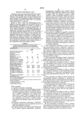
Results in Table 1 show the effectiveness of two different monomers grafted onto the KRATON® G block polymer. Formulation 2 in Table 1 is based on KRATON®G1652 block copolymer grafted with 1.2 wt.% maleic anhydride, an anhydride derivative of maleic acid. Formulation 3 is based on KRATON® G 1652 block copolymer grafted with 1.6 wt. % acrylic acid. Results show that carboxylic acid monomers and anhydride derivatives are effective in improving the adhesion of the sealant composition to the glass, steel, and aluminum substrates. Further, the functionalized block copolymers sufficiently improved the adhesion of the composition to aluminum to give cohesive failure of the composition rather than adhesive failure.
              TABLE 1
______________________________________
Specific Adhesion Improvement with Functionalized
KRATON ® G Block Copolymer In Hot Melt Sealants
INGREDIENTS       1        2        3
______________________________________
                           PHR
KRATON G1652 Copolymer
                  100
KRATON G1652/MA            100
Copolymer.sup.a
KRATON G1652/AA                     100
Copolymer.sup.b
REGALREZ 1018 Resin
                  270      270      270
ENDEX 160 Resin   50       50       50
IRGANOX 1010 Antioxidant
                  1        1        1
TINUVIN 770 U.V. Stabilizer
                  1        1        1
TINUVIN P U.V. Stabilizer
                  1.5      1.5      1.5
Melt Viscosity at 177° C., cps
                  3205     3315     2180
TENSILE PROPERTIES
Tensile Strength at break
                  343 psi  346 psi  211 psi
Modulus at 100% elongation
                   46 psi   66 psi   33 psi
Elongation at break
                  750%     800%     750%
ADHESION RESULTS.sup.c
180° PEEL T0 GLASS, PLI
                  35 A     77 A     52 AC
180° PEEL T0 STEEL, PLI
                  27 A     70 A     39 AC
180° PEEL T0 ALUMINUM,
                  16 A      79 C    53 C
PLI
180° PEEL TO ANODIZED
                  23 A     115 C    72 C
ALUMINUM, PLI
______________________________________
 .sup.a 1.2 wt. % Maleic Anhydride grafted.
 .sup.b 1.6 wt. % Acrylic Acid grafted.
 .sup.c Substrates preheated to 130° C. for 10 minutes, peel
 adhesion assembly post heated at 130° C. for 10 minutes.
 AC: adhesive failure to canvas backing.
 C: cohesive sealant failure.
 A: adhesive failure to substrate.
Claims (16)
1. A sealant composition comprising:
(a) 100 parts by weight of a functionalized polymer component which is prepared by grafting carboxylic acid, dicarboxylic acid, or a derivative thereof onto a polymer component in an amount from about 0.5% to about 5.0% by weight of the polymer component to thereby functionalize the polymer component and provide a resultant sealant composition with adhesion improved to polar substrates;
said polymer component comprising a multiblock copolymer having at least two endblocks A and at least one midblock B, wherein:
the A blocks comprise monoalkenyl arene blocks and the B blocks comprise substantially completely hydrogenated conjugated diene polymer blocks, and the average molecular weight of the A blocks is greater than the minimum molecule weight needed to obtain microphase separation and domain formation of the A blocks, and is less than the maximum molecular weight which would render the polymer incapable of being melt processed;
the multiblock copolymer comprises a monoalkenyl arene content which is no more than the maximum weight percent needed to retain a modulus suitable as a sealant in the resultant composition and no less than the minimum weight percent needed to obtain the desired phase separation and the desired minimum cohesive strength; and
(b) an amount of a midblock compatible component wherein said midblock compatible component is at a concentration to maintain the resultant composition in a pliable condition at room temperature, to maintain the glass transition temperature of the resultant composition below 10? C., and to provide sufficient peel strength to allow cohesive failure of the sealant composition when applied to aluminum or anodized aluminum.
2. The composition according to claim 1, wherein said functionalized polymer component comprises a multiblock copolymer having at least two endblocks A and at least one midblock B as described, with an average molecular weight of the A blocks between about 3000 and about 40,000 and said multiblock copolymer has a monoalkenyl arene content of between about 7% and about 45% by weight.
3. The composition according to claim 2, wherein the weight percent of the monoalkenyl arene of the multiblock copolymer is between 10% and 30%wt.
4. The composition according to claim 2, wherein said monoalkenyl arene portion of the functionalized polymer component is styrene and said conjugated diene portion of the functionalized polymer component is hydrogenated butadiene.
5. The composition according to claim 1, wherein said multiblock copolymer of the functionalized polymer component is a selectively hydrogenated linear polystyrene-polybutadiene-polystyrene block copolymer.
6. The composition according to claim 5, wherein the functionalized polymer component is produced by grafting maleic acid or maleic anhydride to the polymer in an amount between about 1.0% and about 3.0% by total weight of the polymer component.
7. The composition according to claim 5, wherein the functionalized polymer component is produced by grafting acrylic acid to the polymer in an amount between about 1.0% and about 3.0% by total weight of the polymer component.
8. The composition according to claim 1, wherein said multiblock copolymer of the functionalized polymer component is a selectively hydrogenated polystyrene-polyisoprene-polystyrene block copolymer.
9. The composition according to claim 4, wherein said hydrogenated butadiene component of the functionalized polymer component has a l, configuration of between about 35 and 65 mol percent.
10. The composition according to claim 1, wherein said midblock compatible component is a member of the group consisting of a midblock compatible resin, a midblock compatible plasticizer and mixtures thereof.
11. The composition according to claim 1, wherein said midblock compatible component is present from about 270 to about 400 parts by weight per hundred parts of the functionalized polymer component.
12. The composition of claim 1, further comprising an amount of endblock compatible component wherein said component is at a concentration which is less than the solubility limit of the component in the polymer with utility to maintain the cohesive qualities of the resultant composition at elevated temperatures.
13. The composition of claim 12, wherein said endblock compatible component is an endblock compatible resin.
14. The composition of claim 13, wherein said endblock compatible resin is amorphous polyalphamethyl styrene.
15. The composition of claim 11 wherein the midblock compatible component is a saturated resin selected from a group consisting of hydrogenated dicylopentadiene, hydrogenated polystyrene, and hydrogenated polyalphamethylstyrene.
16. The composition of claim 15 wherein the midblock compatible component is hydrogenated polyalphamethylstyrene.
Priority Applications (5)
| Application Number | Priority Date | Filing Date | Title |
|---|---|---|---|
| US07/137,036 USH758H (en) | 1987-12-23 | 1987-12-23 | Sealant composition |
| CA000584965A CA1328941C (en) | 1987-12-23 | 1988-12-05 | Sealant composition |
| DE3850557T DE3850557T2 (en) | 1987-12-23 | 1988-12-16 | Sealant compositions. |
| EP88202925A EP0322055B1 (en) | 1987-12-23 | 1988-12-16 | Sealant composition |
| JP63323224A JP2825515B2 (en) | 1987-12-23 | 1988-12-21 | Sealant composition |
Applications Claiming Priority (1)
| Application Number | Priority Date | Filing Date | Title |
|---|---|---|---|
| US07/137,036 USH758H (en) | 1987-12-23 | 1987-12-23 | Sealant composition |
Publications (1)
| Publication Number | Publication Date |
|---|---|
| USH758H true USH758H (en) | 1990-04-03 |
Family
ID=22475537
Family Applications (1)
| Application Number | Title | Priority Date | Filing Date |
|---|---|---|---|
| US07/137,036 Abandoned USH758H (en) | 1987-12-23 | 1987-12-23 | Sealant composition |
Country Status (5)
| Country | Link |
|---|---|
| US (1) | USH758H (en) |
| EP (1) | EP0322055B1 (en) |
| JP (1) | JP2825515B2 (en) |
| CA (1) | CA1328941C (en) |
| DE (1) | DE3850557T2 (en) |
Cited By (2)
| Publication number | Priority date | Publication date | Assignee | Title |
|---|---|---|---|---|
| USH1862H (en) * | 1993-06-07 | 2000-09-05 | Shell Oil Company | High service temperature adhesives and sealants made with highly functionalized block copolymers |
| US20150135619A1 (en) * | 2010-08-13 | 2015-05-21 | Knauf Insulation Gmbh | Insulative sealing system and materials therefor |
Families Citing this family (7)
| Publication number | Priority date | Publication date | Assignee | Title |
|---|---|---|---|---|
| JP3133334B2 (en) * | 1991-11-15 | 2001-02-05 | インペリアル ケミカル インダストリーズ パブリック リミティド カンパニー | Polymerizable composition |
| US5519081A (en) * | 1991-11-15 | 1996-05-21 | Imperial Chemical Industries Plc | Polymerisable compositions |
| EP0673970B1 (en) * | 1994-03-25 | 1999-06-02 | Shell Internationale Researchmaatschappij B.V. | Conveyor belts derived from compositions comprising vinyl aromatic-conjugated diene block copolymers |
| DE69509958T2 (en) * | 1994-03-25 | 1999-10-14 | Shell Internationale Research Maatschappij B.V. | Conveyor belts derived from compositions based on block copolymers of vinyl aromatic monomer-conjugated diene |
| US5777043A (en) * | 1997-03-05 | 1998-07-07 | Shell Oil Company | Sealant formulations containing high vinyl content hydrogenated styrene-butadiene-styrene block copolymers |
| FR2759379A1 (en) * | 1997-10-06 | 1998-08-14 | Urgo Laboratoires | Hydrophilic adhesive for dressing wounds |
| CN110041470B (en) * | 2019-03-15 | 2021-11-12 | 佳易容相容剂江苏有限公司 | Functionalized olefin block copolymer antioxidant masterbatch and preparation method thereof |
Citations (4)
| Publication number | Priority date | Publication date | Assignee | Title |
|---|---|---|---|---|
| US3239478A (en) | 1963-06-26 | 1966-03-08 | Shell Oil Co | Block copolymer adhesive compositions and articles prepared therefrom |
| US4007311A (en) | 1975-11-06 | 1977-02-08 | Shell Oil Company | Polyacrylate-grafted block copolymer adhesive compositions |
| US4418123A (en) | 1978-12-06 | 1983-11-29 | H. B. Fuller Company | Extrudable self-adhering elastic and method of employing same |
| US4578429A (en) | 1984-08-31 | 1986-03-25 | Shell Oil Company | Selectively hydrogenated block copolymers modified with acid compounds or derivatives |
Family Cites Families (5)
| Publication number | Priority date | Publication date | Assignee | Title |
|---|---|---|---|---|
| US4101482A (en) * | 1976-10-04 | 1978-07-18 | Phillips Petroleum Company | Sealant based on mixture of unsaturated and hydrogenated block copolymers |
| JPS57128762A (en) * | 1981-02-02 | 1982-08-10 | Asahi Chem Ind Co Ltd | Adhesive composition |
| JPS57149369A (en) * | 1981-03-11 | 1982-09-14 | Asahi Chem Ind Co Ltd | Novel adhesive |
| JPS5834838A (en) * | 1981-08-24 | 1983-03-01 | Asahi Chem Ind Co Ltd | Ionomer-containing polymer composition |
| EP0238135B1 (en) * | 1986-03-21 | 1992-12-02 | Shell Internationale Researchmaatschappij B.V. | Hot melt sealant compositions |
-
1987
- 1987-12-23 US US07/137,036 patent/USH758H/en not_active Abandoned
-
1988
- 1988-12-05 CA CA000584965A patent/CA1328941C/en not_active Expired - Fee Related
- 1988-12-16 EP EP88202925A patent/EP0322055B1/en not_active Expired - Lifetime
- 1988-12-16 DE DE3850557T patent/DE3850557T2/en not_active Expired - Lifetime
- 1988-12-21 JP JP63323224A patent/JP2825515B2/en not_active Expired - Fee Related
Patent Citations (4)
| Publication number | Priority date | Publication date | Assignee | Title |
|---|---|---|---|---|
| US3239478A (en) | 1963-06-26 | 1966-03-08 | Shell Oil Co | Block copolymer adhesive compositions and articles prepared therefrom |
| US4007311A (en) | 1975-11-06 | 1977-02-08 | Shell Oil Company | Polyacrylate-grafted block copolymer adhesive compositions |
| US4418123A (en) | 1978-12-06 | 1983-11-29 | H. B. Fuller Company | Extrudable self-adhering elastic and method of employing same |
| US4578429A (en) | 1984-08-31 | 1986-03-25 | Shell Oil Company | Selectively hydrogenated block copolymers modified with acid compounds or derivatives |
Cited By (2)
| Publication number | Priority date | Publication date | Assignee | Title |
|---|---|---|---|---|
| USH1862H (en) * | 1993-06-07 | 2000-09-05 | Shell Oil Company | High service temperature adhesives and sealants made with highly functionalized block copolymers |
| US20150135619A1 (en) * | 2010-08-13 | 2015-05-21 | Knauf Insulation Gmbh | Insulative sealing system and materials therefor |
Also Published As
| Publication number | Publication date |
|---|---|
| CA1328941C (en) | 1994-04-26 |
| JP2825515B2 (en) | 1998-11-18 |
| EP0322055A3 (en) | 1991-04-03 |
| EP0322055B1 (en) | 1994-07-06 |
| JPH01203487A (en) | 1989-08-16 |
| DE3850557T2 (en) | 1994-12-01 |
| DE3850557D1 (en) | 1994-08-11 |
| EP0322055A2 (en) | 1989-06-28 |
Similar Documents
| Publication | Publication Date | Title |
|---|---|---|
| EP0240044B1 (en) | Sealant composition | |
| US20120101231A1 (en) | Polymer Composition prepared from acrylic polymer grafted with a functionalized block copolymers | |
| AU684836B2 (en) | Dissimilar arm asymmetric radial or star block copolymers for adhesives and sealants | |
| US5627235A (en) | Multiblock hydrogenated polymers for adhesives | |
| US4101482A (en) | Sealant based on mixture of unsaturated and hydrogenated block copolymers | |
| US5403658A (en) | Adhesives containing vinyl aromatic hydrocarbon/diene/acrylic monomer block copolymers | |
| EP1311559B1 (en) | Compositions comprising a functionalized block copolymer crosslinked with aluminum acetylacetonate | |
| US4138378A (en) | Liquid polyalkene in thermoplastic elastomer sealant formulation | |
| EP0238135B1 (en) | Hot melt sealant compositions | |
| US4101484A (en) | Sealant based on thermoplastic elastomer and mixed modifying resins | |
| JPH05194703A (en) | Functionalized Block Copolymer Cured with Isocyanate | |
| USH758H (en) | Sealant composition | |
| CA1305806B (en) | Heat cross-linkable polymer composition and their production process | |
| US4113914A (en) | Process for applying sealant composition | |
| US5135816A (en) | Radiation-reactive phenylbutadiene multiblock copolymers | |
| US5066728A (en) | Radiation-reactive phenylbutadiene multiblock copolymers | |
| USH1251H (en) | Acrylic-containing diene copolymers in adhesives, sealants and coatings | |
| JPH05239400A (en) | Car undercoating composition | |
| USH1862H (en) | High service temperature adhesives and sealants made with highly functionalized block copolymers | |
| JPH0284422A (en) | Liquid polymer composition | |
| KR20220131850A (en) | Silane functionalized styrenic block copolymer | |
| CA1293074C (en) | Hot melt sealant compositions | |
| JPH08866B2 (en) | Polyolefin resin composition | |
| JPH05302071A (en) | Hot-melt self-adhesive composition |
Legal Events
| Date | Code | Title | Description |
|---|---|---|---|
| STCF | Information on status: patent grant |
Free format text: PATENTED CASE |