US9994706B2 - Internal mold release agent for reinforced composite - Google Patents

Internal mold release agent for reinforced composite Download PDF

Info

Publication number
US9994706B2
US9994706B2 US14/909,766 US201414909766A US9994706B2 US 9994706 B2 US9994706 B2 US 9994706B2 US 201414909766 A US201414909766 A US 201414909766A US 9994706 B2 US9994706 B2 US 9994706B2
Authority
US
United States
Prior art keywords
mixture
imr
acrylic ester
resin composition
molded
Prior art date
Legal status (The legal status is an assumption and is not a legal conclusion. Google has not performed a legal analysis and makes no representation as to the accuracy of the status listed.)
Active
Application number
US14/909,766
Other versions
US20160185951A1 (en
Inventor
Toni Ristoski
David H. Bank
Gary L. Jialanella
Current Assignee (The listed assignees may be inaccurate. Google has not performed a legal analysis and makes no representation or warranty as to the accuracy of the list.)
Dow Global Technologies LLC
Original Assignee
Dow Global Technologies LLC
Priority date (The priority date is an assumption and is not a legal conclusion. Google has not performed a legal analysis and makes no representation as to the accuracy of the date listed.)
Filing date
Publication date
Application filed by Dow Global Technologies LLC filed Critical Dow Global Technologies LLC
Priority to US14/909,766 priority Critical patent/US9994706B2/en
Publication of US20160185951A1 publication Critical patent/US20160185951A1/en
Assigned to DOW GLOBAL TECHNOLOGIES LLC reassignment DOW GLOBAL TECHNOLOGIES LLC ASSIGNMENT OF ASSIGNORS INTEREST (SEE DOCUMENT FOR DETAILS). Assignors: JIALANELLA, GARY L., RISTOSKI, TONI, BANK, DAVID H.
Application granted granted Critical
Publication of US9994706B2 publication Critical patent/US9994706B2/en
Active legal-status Critical Current
Anticipated expiration legal-status Critical

Links

Images

Classifications

    • CCHEMISTRY; METALLURGY
    • C08ORGANIC MACROMOLECULAR COMPOUNDS; THEIR PREPARATION OR CHEMICAL WORKING-UP; COMPOSITIONS BASED THEREON
    • C08FMACROMOLECULAR COMPOUNDS OBTAINED BY REACTIONS ONLY INVOLVING CARBON-TO-CARBON UNSATURATED BONDS
    • C08F290/00Macromolecular compounds obtained by polymerising monomers on to polymers modified by introduction of aliphatic unsaturated end or side groups
    • C08F290/02Macromolecular compounds obtained by polymerising monomers on to polymers modified by introduction of aliphatic unsaturated end or side groups on to polymers modified by introduction of unsaturated end groups
    • C08F290/06Polymers provided for in subclass C08G
    • C08F290/064Polymers containing more than one epoxy group per molecule
    • CCHEMISTRY; METALLURGY
    • C08ORGANIC MACROMOLECULAR COMPOUNDS; THEIR PREPARATION OR CHEMICAL WORKING-UP; COMPOSITIONS BASED THEREON
    • C08JWORKING-UP; GENERAL PROCESSES OF COMPOUNDING; AFTER-TREATMENT NOT COVERED BY SUBCLASSES C08B, C08C, C08F, C08G or C08H
    • C08J5/00Manufacture of articles or shaped materials containing macromolecular substances
    • C08J5/04Reinforcing macromolecular compounds with loose or coherent fibrous material
    • CCHEMISTRY; METALLURGY
    • C08ORGANIC MACROMOLECULAR COMPOUNDS; THEIR PREPARATION OR CHEMICAL WORKING-UP; COMPOSITIONS BASED THEREON
    • C08JWORKING-UP; GENERAL PROCESSES OF COMPOUNDING; AFTER-TREATMENT NOT COVERED BY SUBCLASSES C08B, C08C, C08F, C08G or C08H
    • C08J5/00Manufacture of articles or shaped materials containing macromolecular substances
    • C08J5/04Reinforcing macromolecular compounds with loose or coherent fibrous material
    • C08J5/0405Reinforcing macromolecular compounds with loose or coherent fibrous material with inorganic fibres
    • C08J5/042Reinforcing macromolecular compounds with loose or coherent fibrous material with inorganic fibres with carbon fibres
    • CCHEMISTRY; METALLURGY
    • C08ORGANIC MACROMOLECULAR COMPOUNDS; THEIR PREPARATION OR CHEMICAL WORKING-UP; COMPOSITIONS BASED THEREON
    • C08KUse of inorganic or non-macromolecular organic substances as compounding ingredients
    • C08K5/00Use of organic ingredients
    • C08K5/04Oxygen-containing compounds
    • C08K5/10Esters; Ether-esters
    • C08K5/101Esters; Ether-esters of monocarboxylic acids
    • CCHEMISTRY; METALLURGY
    • C08ORGANIC MACROMOLECULAR COMPOUNDS; THEIR PREPARATION OR CHEMICAL WORKING-UP; COMPOSITIONS BASED THEREON
    • C08KUse of inorganic or non-macromolecular organic substances as compounding ingredients
    • C08K7/00Use of ingredients characterised by shape
    • C08K7/02Fibres or whiskers
    • CCHEMISTRY; METALLURGY
    • C08ORGANIC MACROMOLECULAR COMPOUNDS; THEIR PREPARATION OR CHEMICAL WORKING-UP; COMPOSITIONS BASED THEREON
    • C08LCOMPOSITIONS OF MACROMOLECULAR COMPOUNDS
    • C08L33/00Compositions of homopolymers or copolymers of compounds having one or more unsaturated aliphatic radicals, each having only one carbon-to-carbon double bond, and only one being terminated by only one carboxyl radical, or of salts, anhydrides, esters, amides, imides or nitriles thereof; Compositions of derivatives of such polymers
    • C08L33/04Homopolymers or copolymers of esters
    • C08L33/06Homopolymers or copolymers of esters of esters containing only carbon, hydrogen and oxygen, which oxygen atoms are present only as part of the carboxyl radical
    • C08L33/08Homopolymers or copolymers of acrylic acid esters
    • CCHEMISTRY; METALLURGY
    • C08ORGANIC MACROMOLECULAR COMPOUNDS; THEIR PREPARATION OR CHEMICAL WORKING-UP; COMPOSITIONS BASED THEREON
    • C08LCOMPOSITIONS OF MACROMOLECULAR COMPOUNDS
    • C08L63/00Compositions of epoxy resins; Compositions of derivatives of epoxy resins
    • CCHEMISTRY; METALLURGY
    • C08ORGANIC MACROMOLECULAR COMPOUNDS; THEIR PREPARATION OR CHEMICAL WORKING-UP; COMPOSITIONS BASED THEREON
    • C08JWORKING-UP; GENERAL PROCESSES OF COMPOUNDING; AFTER-TREATMENT NOT COVERED BY SUBCLASSES C08B, C08C, C08F, C08G or C08H
    • C08J2363/00Characterised by the use of epoxy resins; Derivatives of epoxy resins

Definitions

  • Reinforced composites i.e., carbon fiber composites made from mixing carbon fibers with thermosetting resins, offer a material that is lower density/weight while retaining similar mechanical properties as those of steel and aluminum.
  • the reinforced composites can be molded into final or nominee molded parts for automotive assembly.
  • internal mold release (“IMR”) agents are typically used to aid the release of the composite from the molding device after the process.
  • IMR agents There are many known materials that can be used as IMR agents. The selection is dependent on the type of resins used in the composite, the type of molding to be performed, and the temperature of the molding process, etc. Often, the molded part will be painted or adhesively bonded to other components.
  • IMR agents One challenge with the use of IMR agents is that they can interfere with adhesion properties of the molded parts after the reinforced composite has been molded.
  • the present invention provides an acrylic ester as an IMR agent for the molding process of the reinforced composite, such as carbon fiber reinforced composite.
  • the acrylic ester has the ability to copolymerize with free radical type of adhesives and coatings and therefore will not have any negative impact to the adhesion property of the molded composite parts. It is suspected that if the acrylic ester is incorporated or otherwise chemically bonded into the backbone of the adhesive or coating materials, it will no longer be at the interface of the molded parts acting as a weak boundary layer between the adhesive/coating and the molded part.
  • FIG. 1 illustrates the suspected incorporation of acrylic ester into the backbone of the adhesive or coating resins when the resins are applied to the surface of the molded parts.
  • FIG. 2 illustrates the aluminum lap shear set up for heated press test.
  • FIG. 3 is a lap shear configuration using carbon fiber composites with various IMR's as the adhesive and aluminum 6061 as the adherent.
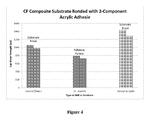
  • FIG. 4 is a lap shear configuration with a 2-component acrylic adhesive bonded to carbon fiber composite substrate molded with various IMR's.
  • the present invention provides acrylic esters, as shown below in Formula I, as IMR agents for the molding process of the reinforced composite, such as carbon fiber reinforced composite.
  • the preferred acrylic esters used in the present invention will have a C number above 12. These include C 13 -tridecyl acrylate (SR 489 available from Sartomer), C 14 -tetradecyl acrylate and C 16 -hexadecyl acrylate both available from TCI America, C 18 -stearyl acrylate (SR 257 available from Sartomer.
  • the IMR agents are typically mixed first with the resin composition.
  • the IMR containing resin compositions are then mixed with carbon fibers and molded into molded parts.
  • the resin composition used in the present invention may comprise solid epoxy resin, liquid epoxy resin, epoxy novolac resin, or a mixture thereof.
  • the resin composition comprises (all weight percentages are based on total weight of the resin composition): 40 to 70 wt % and preferably 45 to 60 of a solid epoxy resin, 0 to 20 wt % and preferably 5 to 15 of a liquid epoxy resin, 15 to 35 wt % and preferably 20 to 30 of epoxy novolac resin, 5 to 10 wt % and preferably 6 to 8 of a curing agent, and 1 to 8 wt % and preferably 2 to 6 of a catalyst.
  • the resin composition comprises:
  • DENTM 438 epoxy novolac resin available from The Dow Chemical Company
  • AmicureTM CG 1200 (dicyandiamide curing agent available from Air Products); and 3.7 wt % of OmicureTM 410M (aromatic substituted urea accelerator available from Emerald Performance Materials).
  • the resin components can be mixed together into one mixture with the curing agent and catalyst or the curing agent and catalyst can be incorporated into the resin mixture at the same time with the reinforcing fibers.
  • Reinforcing fibers that can be used in the present invention include glass fibers, carbon fibers, and aramid fibers.
  • the resin composition may further contain additives, catalysts, curing agents, thickeners, diluents, wetting agents, impact modifiers and fillers.
  • Acrylic esters of the present invention may be mixed with the resin composition in any known methods. Acrylic esters can be pre heated at about 35° C. to melt into a liquid and added into the resin composition during any of the mixing steps. After the mixing of IMR agents with the resin composition, the mixture typically contains, based on the total weight of the mixture, more than 0.1 wt. %, preferably more than 1.0 wt. % and more preferably more than 3.0 wt % of acrylic esters of Formula 1.
  • the IMR agents of the present invention may also include other known conventional internal molding release chemicals. These include long chain fatty acids, fatty acid salts, fatty acid esters, amide waxes and mixtures of fatty acids, amines and esters. Commercially available examples of known IMR's include stearic acid, zinc stearate, calcium stearate, proprietary mixtures from Axel Plastics Laboratories sold under the Mold Wiz name brand and proprietary mixtures from Rexco Mold Care sold under the Marbalease IMR name brand. In a typical embodiment when both an acrylic ester of Formula 1 IMR agent and other conventional IMR agents are used, the other conventional IMR agents are used in less than 10 wt % and preferably in less than 5%.
  • the mixture is ready to be processed to include the reinforcement materials, such as carbon fiber, and to be molded.
  • the mixture will typically contain 10 to 80% of fibers, preferably, 30 to 70 wt % fibers, based on the total weight of the mixture.
  • the IMR agents may be added to the resin composition at the same time with the addition of reinforcement materials.
  • Epoxy containing resin compositions were prepared in a plastic cup using a FlackTek speed mixer.
  • the following resin composition was prepared by the procedure outlined below:
  • the composition was made by adding the solid epoxy resin and acetone to the speed mixer cup. The mixture was mixed for 2 minutes at a time at 1,500 rpm, repeating the process until the solid epoxy is dissolved. The rest of the raw materials were added, including the liquid epoxy resins, curing agent and accelerator and mixed for 2 minutes at 1,500 rpm to make a master batch of resin composition.
  • Four speed mixer cups were filled with 30 g of the master batch described above and to each of the four cups 1 g of one of the following compounds was added:
  • the resin composition material was mixed for 2 minutes at 1,500 rpm. Each material was then applied to strips of carbon fiber woven fabric provided by DowAksa Ileri Kompozit Malzemeler Sanayi Limited Sirketi. The strip of woven carbon fiber fabric was placed on top of release paper and the resin composition was applied on the top side with a tongue depressor, spread evenly over the fabric using the tongue depressor going back and forth until uniform coverage is achieved and the excess removed. Once one side of the fabric was evenly coated, the strip was flipped over on the release paper and the same procedure was repeated on the other side. The composite thus made should contain about 60 wt % carbon fiber. The coated strips were left in the hood over night to allow all of the solvent to evaporate before any testing was conducted. Once the solvent evaporates out, these strips become tack free prepregs that will be used for further testing.
  • candidate lap shears were made using aluminum as the substrate and the strips of carbon fiber composite as the adhesive.
  • the aluminum used was Aluminum 6061 cut into 4 ⁇ 1 in strips which were cleaned with isopropyl alcohol to prevent interference in the results from contamination. This was achieved by cutting the strips of prepreg prepared in a previous step into 20 ⁇ 20 mm squares as shown below in FIG. 2 , stacking 2 squares of prepreg on top of each other and placing them between the aluminum substrate.
  • the aluminum lap shears were placed on a 12 ⁇ 12 in metal panel with a spacer keeping the top coupons above the bottom ones.
  • the lap shears were tested using an Instron to measure the force required to separate the two substrates in shear. The testing was conducted at 23° C./50% relative humidity and the samples were pulled apart at 12 mm/min. The break strength of each sample was recorded.
  • FIG. 3 shows the data for lap shears prepared and tested by the method described above, with the variable being the type of mold release agent incorporated into the resin composition.
  • the data shows that zinc stearate and stearyl acrylate exhibited excellent release properties, while stearyl methacrylate and lauryl acrylate showed an insignificant reduction in the adhesion strength.
  • This resin composition was then divided into 2 speed mixer cups containing 70 g each. Six cups containing 70 g each of this resin formulation were prepared. To two of those cups 40 g of AKSACA Carbon Fiber AC3101 were added and mixed for 2 minutes at 1500 rpm, these were then molded into plaques as described in the procedure below and marked as the control substrate that does not contain any IMR. To the next 2 cups, 2 g of zinc stearate was added to each cup along with 40 g of AKSACA Carbon Fiber AC3101, the molded plaques from these formulations were marked as containing zinc stearate as an IMR. To the final 2 cups, 2 g of stearyl acrylate (SR 257) were added along with 40 g of AKSACA Carbon Fiber AC3101, the molded plaques from these formulations were marked as containing stearyl acrylate as an IMR.
  • SR 257 stearyl acrylate
  • the resin compositions were prepared in a plastic cup using a FlackTek speed mixer.
  • the formulations were made by adding the solid epoxy resin and acetone to the speed mixer cup. Mixing for 2 minutes at a time at 1,500 rpm, repeating the process until the solid epoxy is dissolved. The rest of the raw components were added, including the liquid epoxy resins, curing agent and accelerator and mixed for 2 minutes at 1,500 rpm.
  • To 70 g of the resin/solvent mixture 40 g of chopped carbon fiber were added and mixed for 2 minutes at 1500 rpm. Once the fibers were homogeneously distributed in the resin/solvent mixture, the material was placed on release paper inside a hood for at least 24 hours to allow the solvent to evaporate.
  • the material was placed in an oven at 90° C. for 10 minutes to soften the material prior to molding. Once soft, the material was compacted down, placed between 2 sheets of Teflon coated paper and placed in a heated press set at 150° C. with 3 mm spacers. The material was compressed with a force of about 10,000 lbs and held at that pressure and temperature for 10 minutes. The size of the molded plaques was about 6 ⁇ 6 in. These plaques were then cut into 1 ⁇ 4 in strips that were used as coupons to make adhesively bonded lap shears.
  • Lap shears were made using coupons prepared by the method described above that incorporated zinc stearate as an IMR in one set, stearyl acrylate as IMR in another set and a control with no IMR included in a third set. There was no surface treatment done on the coupons other than a dry wipe with a microfiber rag. The adhesion test results for these lap shears are listed in FIG. 4 .
  • the adhesion was negatively impacted by the presence of zinc stearate in the substrate. Not only are the strength values reduced, but, the failure mode is changed from a substrate break to an unacceptable adhesive failure mode. However, when stearyl acrylate is used, not only is there no reduction in strength, but, the failure mode remains substrate break, even though stearyl acrylate exhibited the same excellent release properties as zinc stearate.

Landscapes

  • Chemical & Material Sciences (AREA)
  • Health & Medical Sciences (AREA)
  • Chemical Kinetics & Catalysis (AREA)
  • Medicinal Chemistry (AREA)
  • Polymers & Plastics (AREA)
  • Organic Chemistry (AREA)
  • Engineering & Computer Science (AREA)
  • Manufacturing & Machinery (AREA)
  • Materials Engineering (AREA)
  • Inorganic Chemistry (AREA)
  • Reinforced Plastic Materials (AREA)
  • Compositions Of Macromolecular Compounds (AREA)

Abstract

An acrylic ester containing resin mixture for production of reinforced composite, and the process of making and using the same.

Description

FIELD OF THE INVENTION
As the automotive industry moves towards more fuel efficient cars, one path to reducing fuel usage is to reduce the vehicle weight. However, the weight needs to be reduced without sacrificing vehicle integrity and safety. Reinforced composites, i.e., carbon fiber composites made from mixing carbon fibers with thermosetting resins, offer a material that is lower density/weight while retaining similar mechanical properties as those of steel and aluminum.
The reinforced composites can be molded into final or semifinal molded parts for automotive assembly. During such molding process, internal mold release (“IMR”) agents are typically used to aid the release of the composite from the molding device after the process. There are many known materials that can be used as IMR agents. The selection is dependent on the type of resins used in the composite, the type of molding to be performed, and the temperature of the molding process, etc. Often, the molded part will be painted or adhesively bonded to other components. One challenge with the use of IMR agents is that they can interfere with adhesion properties of the molded parts after the reinforced composite has been molded.
Typically, some pretreatment of the molded parts is needed to improve the adhesion to the other substrate component. For example, in Surface Treatment of Materials for Adhesion Bonding (p. 220) by Sina Ebnesajjad, the author describes the removal of mold release agent present on the surface of thermoset materials by a detergent wash, solvent-wash, or solvent wipe, followed by light sanding. In “Joining: Understanding the Basics” (p. 291) by Flake C. Campbell, the author describes that “Many parts molded from thermosetting materials have a mold-release agent on the surface that must be removed before adhesive bonding can be accomplished.” The author described various techniques used to remove the release agents including: washing or wiping with detergent or solvent followed by light sanding and another solvent wipe.
Therefore, there is a need for an IMR agent that works well in releasing the molded part from the molding device and allows the molded part to be adhered to without extensive pretreatment of its surface.
SUMMARY OF THE INVENTION
The present invention provides an acrylic ester as an IMR agent for the molding process of the reinforced composite, such as carbon fiber reinforced composite. The acrylic ester has the ability to copolymerize with free radical type of adhesives and coatings and therefore will not have any negative impact to the adhesion property of the molded composite parts. It is suspected that if the acrylic ester is incorporated or otherwise chemically bonded into the backbone of the adhesive or coating materials, it will no longer be at the interface of the molded parts acting as a weak boundary layer between the adhesive/coating and the molded part.
BRIEF DESCRIPTION OF THE DRAWINGS
FIG. 1 illustrates the suspected incorporation of acrylic ester into the backbone of the adhesive or coating resins when the resins are applied to the surface of the molded parts.
FIG. 2 illustrates the aluminum lap shear set up for heated press test.
FIG. 3 is a lap shear configuration using carbon fiber composites with various IMR's as the adhesive and aluminum 6061 as the adherent.
FIG. 4 is a lap shear configuration with a 2-component acrylic adhesive bonded to carbon fiber composite substrate molded with various IMR's.
DETAILED DESCRIPTION OF THE INVENTION
The present invention provides acrylic esters, as shown below in Formula I, as IMR agents for the molding process of the reinforced composite, such as carbon fiber reinforced composite. The preferred acrylic esters used in the present invention will have a C number above 12. These include C13-tridecyl acrylate (SR 489 available from Sartomer), C14-tetradecyl acrylate and C16-hexadecyl acrylate both available from TCI America, C18-stearyl acrylate (SR 257 available from Sartomer.
Figure US09994706-20180612-C00001
    • Where R is a hydrocarbon chain with greater than 12 carbons
It is suspected that the acrylic ester of Formula 1 is incorporated into or otherwise chemically bonded with the backbone of the adhesive or coating applied to the molded part, and hence no longer at the interface acting as a weak boundary layer between the adhesive/coating and the molded composite. An example of this backbone incorporation is illustrated in FIG. 1.
In the present invention, the IMR agents are typically mixed first with the resin composition. The IMR containing resin compositions are then mixed with carbon fibers and molded into molded parts.
The resin composition used in the present invention may comprise solid epoxy resin, liquid epoxy resin, epoxy novolac resin, or a mixture thereof. In preferred embodiments of the present invention, the resin composition comprises (all weight percentages are based on total weight of the resin composition): 40 to 70 wt % and preferably 45 to 60 of a solid epoxy resin, 0 to 20 wt % and preferably 5 to 15 of a liquid epoxy resin, 15 to 35 wt % and preferably 20 to 30 of epoxy novolac resin, 5 to 10 wt % and preferably 6 to 8 of a curing agent, and 1 to 8 wt % and preferably 2 to 6 of a catalyst. In one preferred embodiment, the resin composition comprises:
53.6 wt % of DER™ 6508 (solid epoxy resin available from The Dow Chemical Company);
8.9 wt % of DER™ 331 (liquid epoxy resin available from The Dow Chemical Company);
26.8 wt % of DEN™ 438 (epoxy novolac resin available from The Dow Chemical Company);
7.0 wt % of Amicure™ CG 1200 (dicyandiamide curing agent available from Air Products); and 3.7 wt % of Omicure™ 410M (aromatic substituted urea accelerator available from Emerald Performance Materials).
The resin components can be mixed together into one mixture with the curing agent and catalyst or the curing agent and catalyst can be incorporated into the resin mixture at the same time with the reinforcing fibers. Reinforcing fibers that can be used in the present invention include glass fibers, carbon fibers, and aramid fibers.
In some embodiments, the resin composition may further contain additives, catalysts, curing agents, thickeners, diluents, wetting agents, impact modifiers and fillers.
Acrylic esters of the present invention may be mixed with the resin composition in any known methods. Acrylic esters can be pre heated at about 35° C. to melt into a liquid and added into the resin composition during any of the mixing steps. After the mixing of IMR agents with the resin composition, the mixture typically contains, based on the total weight of the mixture, more than 0.1 wt. %, preferably more than 1.0 wt. % and more preferably more than 3.0 wt % of acrylic esters of Formula 1.
In addition to acrylic esters of Formula 1, the IMR agents of the present invention may also include other known conventional internal molding release chemicals. These include long chain fatty acids, fatty acid salts, fatty acid esters, amide waxes and mixtures of fatty acids, amines and esters. Commercially available examples of known IMR's include stearic acid, zinc stearate, calcium stearate, proprietary mixtures from Axel Plastics Laboratories sold under the Mold Wiz name brand and proprietary mixtures from Rexco Mold Care sold under the Marbalease IMR name brand. In a typical embodiment when both an acrylic ester of Formula 1 IMR agent and other conventional IMR agents are used, the other conventional IMR agents are used in less than 10 wt % and preferably in less than 5%.
Once the IMR agents are added to the resin composition, the mixture is ready to be processed to include the reinforcement materials, such as carbon fiber, and to be molded. The mixture will typically contain 10 to 80% of fibers, preferably, 30 to 70 wt % fibers, based on the total weight of the mixture. Alternatively, the IMR agents may be added to the resin composition at the same time with the addition of reinforcement materials.
The present invention is further illustrated with the following non-limiting examples.
Sample Preparation:
Epoxy containing resin compositions were prepared in a plastic cup using a FlackTek speed mixer. The following resin composition was prepared by the procedure outlined below:
Weight
Component (g)
DEN 438 (Epoxy novolac resin) 30
DER 6508 (Solid epoxy resin) 60
DER 331 (Liquid epoxy resin) 10
Acetone 30
Amicure CG1200 (Dicyandiamide curing agent) 7.8
Omicure 410M (Aromatic substituted urea accelerator) 4.1
Total weight 141.9
The composition was made by adding the solid epoxy resin and acetone to the speed mixer cup. The mixture was mixed for 2 minutes at a time at 1,500 rpm, repeating the process until the solid epoxy is dissolved. The rest of the raw materials were added, including the liquid epoxy resins, curing agent and accelerator and mixed for 2 minutes at 1,500 rpm to make a master batch of resin composition. Four speed mixer cups were filled with 30 g of the master batch described above and to each of the four cups 1 g of one of the following compounds was added:
    • Zinc stearate
    • Stearyl acrylate (SR 257 from Sartomer)
    • Stearyl methacrylate (SR 324 from Sartomer)
    • Lauryl acrylate (SR 335 from Sartomer)
Once each IMR was added, the resin composition material was mixed for 2 minutes at 1,500 rpm. Each material was then applied to strips of carbon fiber woven fabric provided by DowAksa Ileri Kompozit Malzemeler Sanayi Limited Sirketi. The strip of woven carbon fiber fabric was placed on top of release paper and the resin composition was applied on the top side with a tongue depressor, spread evenly over the fabric using the tongue depressor going back and forth until uniform coverage is achieved and the excess removed. Once one side of the fabric was evenly coated, the strip was flipped over on the release paper and the same procedure was repeated on the other side. The composite thus made should contain about 60 wt % carbon fiber. The coated strips were left in the hood over night to allow all of the solvent to evaporate before any testing was conducted. Once the solvent evaporates out, these strips become tack free prepregs that will be used for further testing.
Aluminum Lap Shear Test:
To screen the effectiveness of each mold release, candidate lap shears were made using aluminum as the substrate and the strips of carbon fiber composite as the adhesive. The aluminum used was Aluminum 6061 cut into 4×1 in strips which were cleaned with isopropyl alcohol to prevent interference in the results from contamination. This was achieved by cutting the strips of prepreg prepared in a previous step into 20×20 mm squares as shown below in FIG. 2, stacking 2 squares of prepreg on top of each other and placing them between the aluminum substrate. The aluminum lap shears were placed on a 12×12 in metal panel with a spacer keeping the top coupons above the bottom ones.
Nine lap shears were set up side by side on the metal panel making three lap shears for each IMR to be screened, the three lap shears were spread on the panel to reduce the possible impact of temperature variation that may occur from the center of the press to the edges. The setup described in FIG. 1 was then placed in a heated press that was preheated to 150° C. A force of 5 metric tons was applied and kept for 10 minutes while the composite cured. At the end of the 10 minutes the panel was removed from the press and the lap shears were allowed to cool to room temperature prior to testing.
The lap shears were tested using an Instron to measure the force required to separate the two substrates in shear. The testing was conducted at 23° C./50% relative humidity and the samples were pulled apart at 12 mm/min. The break strength of each sample was recorded.
FIG. 3 shows the data for lap shears prepared and tested by the method described above, with the variable being the type of mold release agent incorporated into the resin composition. The data shows that zinc stearate and stearyl acrylate exhibited excellent release properties, while stearyl methacrylate and lauryl acrylate showed an insignificant reduction in the adhesion strength.
Carbon Fiber Composite Substrate Preparation:
The following resin compositions were prepared using the procedure described below:
Component weight (g)
DEN 438 30
DER 6508 60
DER 331 10
Acetone 30
Amicure 7.8
CG1200
Omicure 410M 4.1
Total weight 141.9
This resin composition was then divided into 2 speed mixer cups containing 70 g each. Six cups containing 70 g each of this resin formulation were prepared. To two of those cups 40 g of AKSACA Carbon Fiber AC3101 were added and mixed for 2 minutes at 1500 rpm, these were then molded into plaques as described in the procedure below and marked as the control substrate that does not contain any IMR. To the next 2 cups, 2 g of zinc stearate was added to each cup along with 40 g of AKSACA Carbon Fiber AC3101, the molded plaques from these formulations were marked as containing zinc stearate as an IMR. To the final 2 cups, 2 g of stearyl acrylate (SR 257) were added along with 40 g of AKSACA Carbon Fiber AC3101, the molded plaques from these formulations were marked as containing stearyl acrylate as an IMR.
The resin compositions were prepared in a plastic cup using a FlackTek speed mixer. The formulations were made by adding the solid epoxy resin and acetone to the speed mixer cup. Mixing for 2 minutes at a time at 1,500 rpm, repeating the process until the solid epoxy is dissolved. The rest of the raw components were added, including the liquid epoxy resins, curing agent and accelerator and mixed for 2 minutes at 1,500 rpm. To 70 g of the resin/solvent mixture, 40 g of chopped carbon fiber were added and mixed for 2 minutes at 1500 rpm. Once the fibers were homogeneously distributed in the resin/solvent mixture, the material was placed on release paper inside a hood for at least 24 hours to allow the solvent to evaporate. Once the solvent evaporates, the material was placed in an oven at 90° C. for 10 minutes to soften the material prior to molding. Once soft, the material was compacted down, placed between 2 sheets of Teflon coated paper and placed in a heated press set at 150° C. with 3 mm spacers. The material was compressed with a force of about 10,000 lbs and held at that pressure and temperature for 10 minutes. The size of the molded plaques was about 6×6 in. These plaques were then cut into 1×4 in strips that were used as coupons to make adhesively bonded lap shears.
Lap shears were made using coupons prepared by the method described above that incorporated zinc stearate as an IMR in one set, stearyl acrylate as IMR in another set and a control with no IMR included in a third set. There was no surface treatment done on the coupons other than a dry wipe with a microfiber rag. The adhesion test results for these lap shears are listed in FIG. 4.
As can be seen in FIG. 4, the adhesion was negatively impacted by the presence of zinc stearate in the substrate. Not only are the strength values reduced, but, the failure mode is changed from a substrate break to an unacceptable adhesive failure mode. However, when stearyl acrylate is used, not only is there no reduction in strength, but, the failure mode remains substrate break, even though stearyl acrylate exhibited the same excellent release properties as zinc stearate.

Claims (5)

The invention claimed is:
1. A mixture of epoxy resin composition, fibers, and an internal molding release agent, wherein the internal molding releasing agent is an acrylic ester with a chemical structure of Formula I:
Figure US09994706-20180612-C00002
wherein R is a hydrocarbon chain with greater than 12 carbons; and
wherein the mixture further comprising one or more selected from long chain fatty acids, fatty acid salts, fatty acid esters, amide waves and mixtures of fatty acids, amines and esters.
2. The mixture according to claim 1 wherein R is a hydrocarbon chain with 13 to 18 carbons.
3. The mixture according to claim 1 comprising more than 0.1 wt %, based on the total weight of the mixture, of acrylic ester of Formula 1.
4. The mixture according to claim 3 comprising more than 1 wt %, based on the total weight of the mixture, of acrylic ester of Formula 1.
5. The mixture according to claim 4 comprising more than 3 wt %, based on the total weight of the mixture, of acrylic ester of Formula 1.
US14/909,766 2013-09-10 2014-08-25 Internal mold release agent for reinforced composite Active US9994706B2 (en)

Priority Applications (1)

Application Number Priority Date Filing Date Title
US14/909,766 US9994706B2 (en) 2013-09-10 2014-08-25 Internal mold release agent for reinforced composite

Applications Claiming Priority (3)

Application Number Priority Date Filing Date Title
US201361875739P 2013-09-10 2013-09-10
PCT/US2014/052529 WO2015038319A1 (en) 2013-09-10 2014-08-25 Internal mold release agent for reinforced composite
US14/909,766 US9994706B2 (en) 2013-09-10 2014-08-25 Internal mold release agent for reinforced composite

Publications (2)

Publication Number Publication Date
US20160185951A1 US20160185951A1 (en) 2016-06-30
US9994706B2 true US9994706B2 (en) 2018-06-12

Family

ID=51539337

Family Applications (1)

Application Number Title Priority Date Filing Date
US14/909,766 Active US9994706B2 (en) 2013-09-10 2014-08-25 Internal mold release agent for reinforced composite

Country Status (5)

Country Link
US (1) US9994706B2 (en)
EP (1) EP3044262A1 (en)
JP (1) JP2016532762A (en)
CN (1) CN105555865A (en)
WO (1) WO2015038319A1 (en)

Families Citing this family (3)

* Cited by examiner, † Cited by third party
Publication number Priority date Publication date Assignee Title
CN106925672A (en) * 2015-12-29 2017-07-07 上海杰事杰新材料(集团)股份有限公司 A kind of resin die and preparation method thereof
CN106273102A (en) * 2016-08-30 2017-01-04 山东圣泉新材料股份有限公司 A kind of releasing agent, resin combination, section bar and its preparation method and application
US20180086924A1 (en) * 2016-09-23 2018-03-29 Tyco Electronics Corporation Composite Article and Method of Forming a Composite Article

Citations (7)

* Cited by examiner, † Cited by third party
Publication number Priority date Publication date Assignee Title
EP0503866A1 (en) 1991-03-12 1992-09-16 Ciba-Geigy Ag Powder coating compositions
GB2297332A (en) 1995-01-27 1996-07-31 Kobe Steel Europ Ltd Composites containing radiation-curable compositions
US5883193A (en) * 1997-07-01 1999-03-16 Minnesota Mining And Manufacturing Company Adhesive compositions with durability under conditions of high humidity
US20010028953A1 (en) 1998-11-16 2001-10-11 3M Innovative Properties Company Adhesive compositions and methods of use
US6348118B1 (en) * 1995-01-13 2002-02-19 3M Innovative Properties Company Method and composition for bonding components to glass
JP2003212925A (en) 2002-01-24 2003-07-30 Mitsubishi Chemicals Corp Long-chain alkyl (meth) acrylate polymer and method for producing the same
JP2010155888A (en) 2008-12-26 2010-07-15 Nof Corp Internal mold release agent for epoxy resin

Family Cites Families (3)

* Cited by examiner, † Cited by third party
Publication number Priority date Publication date Assignee Title
JPS59129295A (en) * 1983-01-12 1984-07-25 Dainippon Ink & Chem Inc Releasing agent
JP4599034B2 (en) * 2001-05-22 2010-12-15 株式会社ブリヂストン Adhesive composition and method for bonding to rubber
JP5378024B2 (en) * 2009-03-25 2013-12-25 地方独立行政法人東京都立産業技術研究センター Volatile organic matter absorbent

Patent Citations (7)

* Cited by examiner, † Cited by third party
Publication number Priority date Publication date Assignee Title
EP0503866A1 (en) 1991-03-12 1992-09-16 Ciba-Geigy Ag Powder coating compositions
US6348118B1 (en) * 1995-01-13 2002-02-19 3M Innovative Properties Company Method and composition for bonding components to glass
GB2297332A (en) 1995-01-27 1996-07-31 Kobe Steel Europ Ltd Composites containing radiation-curable compositions
US5883193A (en) * 1997-07-01 1999-03-16 Minnesota Mining And Manufacturing Company Adhesive compositions with durability under conditions of high humidity
US20010028953A1 (en) 1998-11-16 2001-10-11 3M Innovative Properties Company Adhesive compositions and methods of use
JP2003212925A (en) 2002-01-24 2003-07-30 Mitsubishi Chemicals Corp Long-chain alkyl (meth) acrylate polymer and method for producing the same
JP2010155888A (en) 2008-12-26 2010-07-15 Nof Corp Internal mold release agent for epoxy resin

Non-Patent Citations (3)

* Cited by examiner, † Cited by third party
Title
Database WPI 1-6, Week 198436, Thomson Scientific, London, GB; AN 1984-221869, XP0O2734848, & JP S59 129295 A (Dainippon Ink & Chem KK), Jul. 25, 1984 (Jul. 25, 1984), Abstract.
Database WPI 1-6, Week 200413, Thomson Scientific, London, GB; AN 2004-126027, XPO02734849, & JP 2003 212925 A (Mitsubishi Chem Corp), Jul. 30, 2003 (Jul. 30, 2003), Abstract.
Database WPI 1-6, Week 201050, Thomson Scientific, London, GB; AN 2010-J13984, XPQ02734850, & JP 2010 155888 A (Nippon Oils & Fats Co LTD), Jul. 15, 2010 (Jul. 15, 2010),Abstract.

Also Published As

Publication number Publication date
US20160185951A1 (en) 2016-06-30
CN105555865A (en) 2016-05-04
EP3044262A1 (en) 2016-07-20
WO2015038319A1 (en) 2015-03-19
JP2016532762A (en) 2016-10-20

Similar Documents

Publication Publication Date Title
JP6436593B2 (en) Adhesive gel sheet having adhesive application, method for producing the same, method for fixing a pair of adherends, and composite material
CN105602488A (en) Adhesive sheet and bonding method using same
US9994706B2 (en) Internal mold release agent for reinforced composite
JP5632336B2 (en) Adhesive composition and method for producing thermosetting adhesive sheet
US12203017B2 (en) Elastic one-part structural adhesive tape
DE102008004112A1 (en) Semifinished textile product with at least one surface provided with an adhesive
WO2019188020A1 (en) Internal mold release agent for fiber-reinforced composite material, fiber-reinforced composite material, molding method therefor, and joining method for fiber-reinforced resin molded product
WO2018228936A1 (en) Two component polyurethane composition
WO2015086778A1 (en) Pretreatment of substrates that have unsaturated units
JP2022504197A (en) Curable precursor of structural adhesive composition
KR20160058827A (en) Activator composition, adhesive system comprising the same, and method of bonding substrates using the same
JP2017203107A (en) Molding material and fiber-reinforced composite material
KR102399784B1 (en) adhesive composition
JP2025520014A (en) High-strength adhesive made from sustainable ingredients
US8309503B2 (en) Release agent for composite panel
JP7186310B2 (en) Curable precursor for structural adhesive compositions
JP7678983B2 (en) Fiber-reinforced composite molding containing internal release agent
EP2882809A1 (en) Method for improving adhesion of polyurethane adhesive to polyester based laminate without surface preparation
CN106589318A (en) Super soft epoxy curing agent composition and preparation method thereof
CN108884364B (en) Epoxy patch with improved adhesion characteristics
CN115038745B (en) Fiber-reinforced composite molded article and molding method thereof
RU2774179C1 (en) Adhesive sublayer for attaching rubbers to metal
KR20160060480A (en) Adhesive composition for structure, and preparing method thereof
RU2448997C2 (en) Adhesive composition
JP7480865B2 (en) Vehicle side step and manufacturing method thereof

Legal Events

Date Code Title Description
AS Assignment

Owner name: DOW GLOBAL TECHNOLOGIES LLC, MICHIGAN

Free format text: ASSIGNMENT OF ASSIGNORS INTEREST;ASSIGNORS:RISTOSKI, TONI;BANK, DAVID H.;JIALANELLA, GARY L.;SIGNING DATES FROM 20131206 TO 20131219;REEL/FRAME:044348/0033

STCF Information on status: patent grant

Free format text: PATENTED CASE

MAFP Maintenance fee payment

Free format text: PAYMENT OF MAINTENANCE FEE, 4TH YEAR, LARGE ENTITY (ORIGINAL EVENT CODE: M1551); ENTITY STATUS OF PATENT OWNER: LARGE ENTITY

Year of fee payment: 4

MAFP Maintenance fee payment

Free format text: PAYMENT OF MAINTENANCE FEE, 8TH YEAR, LARGE ENTITY (ORIGINAL EVENT CODE: M1552); ENTITY STATUS OF PATENT OWNER: LARGE ENTITY

Year of fee payment: 8