US9943498B2 - Fe(III) complex compounds for the treatment and prophylaxis of iron deficiency symptoms and iron deficiency anemias - Google Patents
Fe(III) complex compounds for the treatment and prophylaxis of iron deficiency symptoms and iron deficiency anemias Download PDFInfo
- Publication number
- US9943498B2 US9943498B2 US15/185,186 US201615185186A US9943498B2 US 9943498 B2 US9943498 B2 US 9943498B2 US 201615185186 A US201615185186 A US 201615185186A US 9943498 B2 US9943498 B2 US 9943498B2
- Authority
- US
- United States
- Prior art keywords
- group
- alkyl
- iron
- hydroxy
- halogen
- Prior art date
- Legal status (The legal status is an assumption and is not a legal conclusion. Google has not performed a legal analysis and makes no representation as to the accuracy of the status listed.)
- Active
Links
- 0 [1*]/C([OH+][CH2-])=C(\[2*])C(=[O+][CH2-])N([3*])[4*] Chemical compound [1*]/C([OH+][CH2-])=C(\[2*])C(=[O+][CH2-])N([3*])[4*] 0.000 description 58
- OUHZAYIWEMUJQX-UHFFFAOYSA-N CC(=O)C1CCCN(C)C1=O Chemical compound CC(=O)C1CCCN(C)C1=O OUHZAYIWEMUJQX-UHFFFAOYSA-N 0.000 description 2
- YPEWWOUWRRQBAX-UHFFFAOYSA-N CC(=O)CC(=O)N(C)C Chemical compound CC(=O)CC(=O)N(C)C YPEWWOUWRRQBAX-UHFFFAOYSA-N 0.000 description 2
- RTGXHFOQJOVTLT-UHFFFAOYSA-N CC(=O)CC(=O)N1CCN(C(C)=O)CC1 Chemical compound CC(=O)CC(=O)N1CCN(C(C)=O)CC1 RTGXHFOQJOVTLT-UHFFFAOYSA-N 0.000 description 2
- RKPILPRSNWEZJV-UHFFFAOYSA-N CC(=O)CC(=O)N1CCOCC1 Chemical compound CC(=O)CC(=O)N1CCOCC1 RKPILPRSNWEZJV-UHFFFAOYSA-N 0.000 description 2
- HEBKIWUJDDTIMO-UHFFFAOYSA-N CC(=O)CC(=O)NCCCCCO Chemical compound CC(=O)CC(=O)NCCCCCO HEBKIWUJDDTIMO-UHFFFAOYSA-N 0.000 description 2
- NZYWLPBUTGJOKE-UHFFFAOYSA-N CC(=O)CC(=O)NCCCCO Chemical compound CC(=O)CC(=O)NCCCCO NZYWLPBUTGJOKE-UHFFFAOYSA-N 0.000 description 2
- WKUJTXURFXTQIY-UHFFFAOYSA-N CCCCCCNC(=O)CC(C)=O Chemical compound CCCCCCNC(=O)CC(C)=O WKUJTXURFXTQIY-UHFFFAOYSA-N 0.000 description 2
- SPGSBMCHOJTDID-CZNIERBDSA-K C=C(OCC)C1=CC(N(C)C)=O[Fe]23(O1)(OC(C(=O)OCC)=CC(N(C)C)=O2)OC(C(=O)OCC)=CC(N(C)C)=O3 Chemical compound C=C(OCC)C1=CC(N(C)C)=O[Fe]23(O1)(OC(C(=O)OCC)=CC(N(C)C)=O2)OC(C(=O)OCC)=CC(N(C)C)=O3 SPGSBMCHOJTDID-CZNIERBDSA-K 0.000 description 1
- GTWAMDYQOBATDR-UHFFFAOYSA-N CC(=O)C(C#N)C(=O)N1CCCCC1 Chemical compound CC(=O)C(C#N)C(=O)N1CCCCC1 GTWAMDYQOBATDR-UHFFFAOYSA-N 0.000 description 1
- MMXQZJDQYGVATM-UHFFFAOYSA-N CC(=O)C(C#N)C(=O)N1CCCCC1.CC(=O)C1C(=O)CN(C)C1=O.CC(=O)C1C(=O)CNC1=O.CC(=O)CC(=O)N(C)C.CC(=O)CC(=O)NCC(=O)OC(C)C.CC(=O)CC(=O)NCC(=O)OCC(C)C.CC(=O)CC(N)=O.CCCCOC(=O)CNC(=O)CC(C)=O.CCCOC(=O)CNC(=O)CC(C)=O.CCN(CC)C(=O)CC(C)=O.CCOC(=O)C1(NC(=O)CC(C)=O)CC1.CCOC(=O)C1(NC(=O)CC(C)=O)CCC1.CNC(=O)CC(C)=O.COC(=O)C1(NC(=O)CC(C)=O)CC1.COC(=O)C1(NC(=O)CC(C)=O)CCC1 Chemical compound CC(=O)C(C#N)C(=O)N1CCCCC1.CC(=O)C1C(=O)CN(C)C1=O.CC(=O)C1C(=O)CNC1=O.CC(=O)CC(=O)N(C)C.CC(=O)CC(=O)NCC(=O)OC(C)C.CC(=O)CC(=O)NCC(=O)OCC(C)C.CC(=O)CC(N)=O.CCCCOC(=O)CNC(=O)CC(C)=O.CCCOC(=O)CNC(=O)CC(C)=O.CCN(CC)C(=O)CC(C)=O.CCOC(=O)C1(NC(=O)CC(C)=O)CC1.CCOC(=O)C1(NC(=O)CC(C)=O)CCC1.CNC(=O)CC(C)=O.COC(=O)C1(NC(=O)CC(C)=O)CC1.COC(=O)C1(NC(=O)CC(C)=O)CCC1 MMXQZJDQYGVATM-UHFFFAOYSA-N 0.000 description 1
- PPUURUJMSXGDPC-UHFFFAOYSA-N CC(=O)C(C)C(=O)N(C)C Chemical compound CC(=O)C(C)C(=O)N(C)C PPUURUJMSXGDPC-UHFFFAOYSA-N 0.000 description 1
- XRQGOUDDRZTQDL-SEQOBQBRSA-N CC(=O)C(C)C(=O)N(C)C.CC(=O)CC(=O)N(C)C(C)C.CC(=O)CC(=O)N1CCCC1.CC(=O)CC(=O)NCC1CC1.CC(=O)CC(=O)NN1CCN(C)CC1.CC(=O)CC(=O)N[C@H]1CC[C@H](O)CC1.CC(C)C(=O)CC(=O)N(C)CCO.CC(C)C(=O)CC(=O)N1CCOCC1.CC(C)C(=O)CC(=O)NC(C)(C)CO.CCN(C)C(=O)CC(C)=O.CN(C)C(=O)C1CCCC1=O.CN(C)C(=O)C1CCCCC1=O.CN(C)C(=O)CC(=O)CC(=O)N(C)C.COCC(=O)CC(=O)N1CCOCC1.NC(=O)C1CCCC1=O.NC(=O)C1CCCCC1=O Chemical compound CC(=O)C(C)C(=O)N(C)C.CC(=O)CC(=O)N(C)C(C)C.CC(=O)CC(=O)N1CCCC1.CC(=O)CC(=O)NCC1CC1.CC(=O)CC(=O)NN1CCN(C)CC1.CC(=O)CC(=O)N[C@H]1CC[C@H](O)CC1.CC(C)C(=O)CC(=O)N(C)CCO.CC(C)C(=O)CC(=O)N1CCOCC1.CC(C)C(=O)CC(=O)NC(C)(C)CO.CCN(C)C(=O)CC(C)=O.CN(C)C(=O)C1CCCC1=O.CN(C)C(=O)C1CCCCC1=O.CN(C)C(=O)CC(=O)CC(=O)N(C)C.COCC(=O)CC(=O)N1CCOCC1.NC(=O)C1CCCC1=O.NC(=O)C1CCCCC1=O XRQGOUDDRZTQDL-SEQOBQBRSA-N 0.000 description 1
- OBBPTJNDUMTIOT-UHFFFAOYSA-N CC(=O)C(F)C(=O)N(C)C Chemical compound CC(=O)C(F)C(=O)N(C)C OBBPTJNDUMTIOT-UHFFFAOYSA-N 0.000 description 1
- FIPBKMWSAAPENW-UHFFFAOYSA-N CC(=O)C(F)C(=O)N(C)C.CC(=O)C1CCN(C)C1=O.CC(=O)CC(=O)N1CCC(CO)CC1.CC(=O)CC(=O)N1CCCC(O)C1.CC(=O)CC(=O)NC1CCCC1.CC(=O)CC(=O)NC1CCCCC1.CC(=O)CC(=O)NCCCCO.CC(C)C(=O)CC(=O)N(C)C.CC(C)C(=O)CC(N)=O.CCC(CC)NC(=O)CC(C)=O.CCCCNC(=O)CC(=O)COC.CCCNC(=O)C(F)C(C)=O.CCNC(=O)CC(C)=O.CCOC(=O)C(=O)C1CCCN(C)C1=O.CCOC(=O)C(=O)C1CCN(C)C1=O.COCC(=O)CC(=O)N(C)C.COCC(=O)CC(N)=O Chemical compound CC(=O)C(F)C(=O)N(C)C.CC(=O)C1CCN(C)C1=O.CC(=O)CC(=O)N1CCC(CO)CC1.CC(=O)CC(=O)N1CCCC(O)C1.CC(=O)CC(=O)NC1CCCC1.CC(=O)CC(=O)NC1CCCCC1.CC(=O)CC(=O)NCCCCO.CC(C)C(=O)CC(=O)N(C)C.CC(C)C(=O)CC(N)=O.CCC(CC)NC(=O)CC(C)=O.CCCCNC(=O)CC(=O)COC.CCCNC(=O)C(F)C(C)=O.CCNC(=O)CC(C)=O.CCOC(=O)C(=O)C1CCCN(C)C1=O.CCOC(=O)C(=O)C1CCN(C)C1=O.COCC(=O)CC(=O)N(C)C.COCC(=O)CC(N)=O FIPBKMWSAAPENW-UHFFFAOYSA-N 0.000 description 1
- IBWGAHTUJJVRSI-CEEBXDRMSA-N CC(=O)C(F)C(N)=O.CC(=O)CC(=O)N(C)CC(O)CO.CC(=O)CC(=O)NC(C)C.CC(=O)CC(=O)NC(C)CO.CC(=O)CC(=O)NC(CO)CO.CC(=O)CC(=O)NCC(C)O.CC(=O)CC(=O)NCC(O)CO.CC(=O)CC(=O)NCCCCCO.CCC(CO)NC(=O)CC(C)=O.CCCCN(CCCC)C(=O)CC(=O)CC.CCCCNC(=O)CC(=O)CCCC.CCOC(=O)CN(C)C(=O)CC(C)=O.COC(=O)[C@H](CO)NC(=O)CC(C)=O Chemical compound CC(=O)C(F)C(N)=O.CC(=O)CC(=O)N(C)CC(O)CO.CC(=O)CC(=O)NC(C)C.CC(=O)CC(=O)NC(C)CO.CC(=O)CC(=O)NC(CO)CO.CC(=O)CC(=O)NCC(C)O.CC(=O)CC(=O)NCC(O)CO.CC(=O)CC(=O)NCCCCCO.CCC(CO)NC(=O)CC(C)=O.CCCCN(CCCC)C(=O)CC(=O)CC.CCCCNC(=O)CC(=O)CCCC.CCOC(=O)CN(C)C(=O)CC(C)=O.COC(=O)[C@H](CO)NC(=O)CC(C)=O IBWGAHTUJJVRSI-CEEBXDRMSA-N 0.000 description 1
- HQEKTWIWHYSKBB-UHFFFAOYSA-N CC(=O)C1C(=O)CN(C)C1=O Chemical compound CC(=O)C1C(=O)CN(C)C1=O HQEKTWIWHYSKBB-UHFFFAOYSA-N 0.000 description 1
- VBCBPTJXBPZYET-STEVGLSPSA-N CC(=O)C1CCCN(C)C1=O.CC(=O)CC(=O)N1C(C)(C)CC(O)CC1(C)C.CC(=O)CC(=O)N1CC(C)OC(C)C1.CC(=O)CC(=O)N1CC(O)C1.CC(=O)CC(=O)N1CCC(N(C)C)CC1.CC(=O)CC(=O)N1CCCC(CO)C1.CC(=O)CC(=O)N1CCCCC1CO.CC(=O)CC(=O)N1CCN(C)CC1.CC(=O)CC(=O)N1CCN(CCO)CC1.CC(=O)CC(=O)N1CC[C@H](O)C1.CC(=O)CC(=O)NCCCN1CCOCC1.CC(=O)CC(=O)NCCCO.CC(=O)CC(=O)NN1CCOCC1 Chemical compound CC(=O)C1CCCN(C)C1=O.CC(=O)CC(=O)N1C(C)(C)CC(O)CC1(C)C.CC(=O)CC(=O)N1CC(C)OC(C)C1.CC(=O)CC(=O)N1CC(O)C1.CC(=O)CC(=O)N1CCC(N(C)C)CC1.CC(=O)CC(=O)N1CCCC(CO)C1.CC(=O)CC(=O)N1CCCCC1CO.CC(=O)CC(=O)N1CCN(C)CC1.CC(=O)CC(=O)N1CCN(CCO)CC1.CC(=O)CC(=O)N1CC[C@H](O)C1.CC(=O)CC(=O)NCCCN1CCOCC1.CC(=O)CC(=O)NCCCO.CC(=O)CC(=O)NN1CCOCC1 VBCBPTJXBPZYET-STEVGLSPSA-N 0.000 description 1
- FNRBNSZXDRIQCZ-UHFFFAOYSA-N CC(=O)C1CCN(C)C1=O Chemical compound CC(=O)C1CCN(C)C1=O FNRBNSZXDRIQCZ-UHFFFAOYSA-N 0.000 description 1
- LOHNNFZIEJDKPT-BXXIHRPOSA-N CC(=O)CC(=O)N(C)C1CCCCC1.CC(=O)CC(=O)N1CCC1.CC(=O)CC(=O)NC(C)(CO)CO.CC(=O)CC(=O)NC1CCC1.CC(=O)CC(=O)NC1CCN(C)CC1.CC(=O)CC(=O)NCC(C)(C)CO.CC(=O)CC(=O)NCCCCCCO.CC(=O)CC(=O)NCCN1CCCC1.CC(=O)CC(=O)NCCN1CCCCC1.CC(=O)CC(=O)NCCN1CCOCC1.CC(=O)CC(=O)NCCSCCO.CC(=O)CC(=O)NN1CCCCC1.CC(=O)CC(=O)N[C@H](CO)C(C)C.CCCN(C)C(=O)CC(C)=O Chemical compound CC(=O)CC(=O)N(C)C1CCCCC1.CC(=O)CC(=O)N1CCC1.CC(=O)CC(=O)NC(C)(CO)CO.CC(=O)CC(=O)NC1CCC1.CC(=O)CC(=O)NC1CCN(C)CC1.CC(=O)CC(=O)NCC(C)(C)CO.CC(=O)CC(=O)NCCCCCCO.CC(=O)CC(=O)NCCN1CCCC1.CC(=O)CC(=O)NCCN1CCCCC1.CC(=O)CC(=O)NCCN1CCOCC1.CC(=O)CC(=O)NCCSCCO.CC(=O)CC(=O)NN1CCCCC1.CC(=O)CC(=O)N[C@H](CO)C(C)C.CCCN(C)C(=O)CC(C)=O LOHNNFZIEJDKPT-BXXIHRPOSA-N 0.000 description 1
- KPQVWAZFMCMKBA-UHFFFAOYSA-N CC(=O)CC(=O)N(C)CC(O)CO Chemical compound CC(=O)CC(=O)N(C)CC(O)CO KPQVWAZFMCMKBA-UHFFFAOYSA-N 0.000 description 1
- QCHSWMNOJUUGMM-UHFFFAOYSA-N CC(=O)CC(=O)N(C)CCCO Chemical compound CC(=O)CC(=O)N(C)CCCO QCHSWMNOJUUGMM-UHFFFAOYSA-N 0.000 description 1
- JEWWNBDPUNWCBF-UHFFFAOYSA-N CC(=O)CC(=O)N(C)CCCO.CC(=O)CC(=O)N1CCN(C(C)=O)CC1.CC(=O)CC(=O)NC1CCOCC1.CC(=O)CC(=O)NN1CCC(O)CC1.CC(C)C(=O)CC(=O)N1CCC(O)CC1.CCC(=O)CC(=O)N1CCC(O)CC1.CCC(=O)CC(=O)N1CCOCC1.CCN1CCN(C(=O)CC(C)=O)CC1.CCOC(=O)C(=O)CC(=O)N(C)C.COC1CCN(C(=O)CC(C)=O)CC1 Chemical compound CC(=O)CC(=O)N(C)CCCO.CC(=O)CC(=O)N1CCN(C(C)=O)CC1.CC(=O)CC(=O)NC1CCOCC1.CC(=O)CC(=O)NN1CCC(O)CC1.CC(C)C(=O)CC(=O)N1CCC(O)CC1.CCC(=O)CC(=O)N1CCC(O)CC1.CCC(=O)CC(=O)N1CCOCC1.CCN1CCN(C(=O)CC(C)=O)CC1.CCOC(=O)C(=O)CC(=O)N(C)C.COC1CCN(C(=O)CC(C)=O)CC1 JEWWNBDPUNWCBF-UHFFFAOYSA-N 0.000 description 1
- QFANTGKUBVBXCJ-UHFFFAOYSA-N CC(=O)CC(=O)N(C)CCO Chemical compound CC(=O)CC(=O)N(C)CCO QFANTGKUBVBXCJ-UHFFFAOYSA-N 0.000 description 1
- ZJZMELFTYBJYCA-UHFFFAOYSA-N CC(=O)CC(=O)N(C)CCO.CC(=O)CC(=O)N(CCO)CCO.CC(=O)CC(=O)N1CCCCC1.CC(=O)CC(=O)N1CCOCC1.CC(=O)CC(=O)NC(C)(C)CO.CC(=O)CC(=O)NC(C)C(C)C.CC(=O)CC(=O)NCC(C)(C)C.CC(=O)CC(=O)NCC(C)C.CC(=O)CC(=O)NCCCO.CC(=O)CC(=O)NCCO.CCCCC(=O)CC(=O)NC.CCCCC(=O)CC(N)=O.CCCCN(C)C(=O)CC(C)=O.CCCCN(CCCC)C(=O)CC(C)=O.CCCCNC(=O)CC(C)=O.CNC(=O)C(Cl)C(C)=O.COCCNC(=O)CC(C)=O Chemical compound CC(=O)CC(=O)N(C)CCO.CC(=O)CC(=O)N(CCO)CCO.CC(=O)CC(=O)N1CCCCC1.CC(=O)CC(=O)N1CCOCC1.CC(=O)CC(=O)NC(C)(C)CO.CC(=O)CC(=O)NC(C)C(C)C.CC(=O)CC(=O)NCC(C)(C)C.CC(=O)CC(=O)NCC(C)C.CC(=O)CC(=O)NCCCO.CC(=O)CC(=O)NCCO.CCCCC(=O)CC(=O)NC.CCCCC(=O)CC(N)=O.CCCCN(C)C(=O)CC(C)=O.CCCCN(CCCC)C(=O)CC(C)=O.CCCCNC(=O)CC(C)=O.CNC(=O)C(Cl)C(C)=O.COCCNC(=O)CC(C)=O ZJZMELFTYBJYCA-UHFFFAOYSA-N 0.000 description 1
- NVRDIXNYKQBMNW-UHFFFAOYSA-N CC(=O)CC(=O)N(CCO)CCO Chemical compound CC(=O)CC(=O)N(CCO)CCO NVRDIXNYKQBMNW-UHFFFAOYSA-N 0.000 description 1
- FNAZWHGVJBHAHZ-UHFFFAOYSA-N CC(=O)CC(=O)N1CC(C)OC(C)C1 Chemical compound CC(=O)CC(=O)N1CC(C)OC(C)C1 FNAZWHGVJBHAHZ-UHFFFAOYSA-N 0.000 description 1
- IWWTYUXIESLMIO-MYKYGOMNSA-N CC(=O)CC(=O)N1CCC(C(=O)O)CC1.CC(=O)CC(=O)N1CCC(C(C)=O)CC1.CCOC(=O)C(C)(C)NC(=O)CC(C)=O.CCOC(=O)C1CCN(C(=O)CC(C)=O)CC1.CCOC(=O)N1CCN(C(=O)CC(C)=O)CC1.CCOC(=O)[C@@H](NC(=O)CC(C)=O)C(C)C.CCOC(=O)[C@H](CO)NC(=O)CC(C)=O.COC(=O)C(C)(C)NC(=O)CC(C)=O.COC(=O)C1CCN(C(=O)CC(C)=O)CC1 Chemical compound CC(=O)CC(=O)N1CCC(C(=O)O)CC1.CC(=O)CC(=O)N1CCC(C(C)=O)CC1.CCOC(=O)C(C)(C)NC(=O)CC(C)=O.CCOC(=O)C1CCN(C(=O)CC(C)=O)CC1.CCOC(=O)N1CCN(C(=O)CC(C)=O)CC1.CCOC(=O)[C@@H](NC(=O)CC(C)=O)C(C)C.CCOC(=O)[C@H](CO)NC(=O)CC(C)=O.COC(=O)C(C)(C)NC(=O)CC(C)=O.COC(=O)C1CCN(C(=O)CC(C)=O)CC1 IWWTYUXIESLMIO-MYKYGOMNSA-N 0.000 description 1
- JYAVSHQOJDVWPW-UHFFFAOYSA-N CC(=O)CC(=O)N1CCC(CO)CC1 Chemical compound CC(=O)CC(=O)N1CCC(CO)CC1 JYAVSHQOJDVWPW-UHFFFAOYSA-N 0.000 description 1
- FSDWVQGTSUNLHN-UHFFFAOYSA-N CC(=O)CC(=O)N1CCC(N(C)C)CC1 Chemical compound CC(=O)CC(=O)N1CCC(N(C)C)CC1 FSDWVQGTSUNLHN-UHFFFAOYSA-N 0.000 description 1
- HTQCEXQJYIIIEC-UHFFFAOYSA-N CC(=O)CC(=O)N1CCC(O)CC1 Chemical compound CC(=O)CC(=O)N1CCC(O)CC1 HTQCEXQJYIIIEC-UHFFFAOYSA-N 0.000 description 1
- AOLXCJHOWDEBLQ-WPIUJXCBSA-N CC(=O)CC(=O)N1CCC(O)CC1.CC(=O)CC(=O)NC(CO)(CO)CO.CC(=O)CC(=O)NC1CC1.CC(=O)CC(=O)NCC(N)=O.CCC(=O)CC(=O)N(C)C.CCC(=O)CC(N)=O.CCCCC(=O)CC(=O)N(C)C.CCCCCCNC(=O)CC(C)=O.CCCN(CCC)C(=O)CC(C)=O.CCOC(=O)CCNC(=O)CC(C)=O.CCOC(=O)CNC(=O)CC(C)=O.CCOC(=O)[C@H](C)NC(=O)CC(C)=O.COC(=O)CCNC(=O)CC(C)=O.COC(=O)CN(C)C(=O)CC(C)=O.COC(=O)CNC(=O)CC(C)=O.COC(=O)[C@H](C)NC(=O)CC(C)=O Chemical compound CC(=O)CC(=O)N1CCC(O)CC1.CC(=O)CC(=O)NC(CO)(CO)CO.CC(=O)CC(=O)NC1CC1.CC(=O)CC(=O)NCC(N)=O.CCC(=O)CC(=O)N(C)C.CCC(=O)CC(N)=O.CCCCC(=O)CC(=O)N(C)C.CCCCCCNC(=O)CC(C)=O.CCCN(CCC)C(=O)CC(C)=O.CCOC(=O)CCNC(=O)CC(C)=O.CCOC(=O)CNC(=O)CC(C)=O.CCOC(=O)[C@H](C)NC(=O)CC(C)=O.COC(=O)CCNC(=O)CC(C)=O.COC(=O)CN(C)C(=O)CC(C)=O.COC(=O)CNC(=O)CC(C)=O.COC(=O)[C@H](C)NC(=O)CC(C)=O AOLXCJHOWDEBLQ-WPIUJXCBSA-N 0.000 description 1
- FXUALHRYFUWFRK-UHFFFAOYSA-N CC(=O)CC(=O)N1CCC1 Chemical compound CC(=O)CC(=O)N1CCC1 FXUALHRYFUWFRK-UHFFFAOYSA-N 0.000 description 1
- PBQBOJJYEHAJLI-UHFFFAOYSA-N CC(=O)CC(=O)N1CCCC(CO)C1 Chemical compound CC(=O)CC(=O)N1CCCC(CO)C1 PBQBOJJYEHAJLI-UHFFFAOYSA-N 0.000 description 1
- AQESZLYCCTUVFV-UHFFFAOYSA-N CC(=O)CC(=O)N1CCCC(O)C1 Chemical compound CC(=O)CC(=O)N1CCCC(O)C1 AQESZLYCCTUVFV-UHFFFAOYSA-N 0.000 description 1
- GOHRQEHMWBECSS-UHFFFAOYSA-N CC(=O)CC(=O)N1CCCC1 Chemical compound CC(=O)CC(=O)N1CCCC1 GOHRQEHMWBECSS-UHFFFAOYSA-N 0.000 description 1
- OVIHQCKYIOKFFX-UHFFFAOYSA-N CC(=O)CC(=O)N1CCCCC1 Chemical compound CC(=O)CC(=O)N1CCCCC1 OVIHQCKYIOKFFX-UHFFFAOYSA-N 0.000 description 1
- PEQFCXMFYQYOPI-UHFFFAOYSA-N CC(=O)CC(=O)N1CCCCC1CO Chemical compound CC(=O)CC(=O)N1CCCCC1CO PEQFCXMFYQYOPI-UHFFFAOYSA-N 0.000 description 1
- QNWDWCWGUTWDNK-UHFFFAOYSA-N CC(=O)CC(=O)N1CCN(C)CC1 Chemical compound CC(=O)CC(=O)N1CCN(C)CC1 QNWDWCWGUTWDNK-UHFFFAOYSA-N 0.000 description 1
- FOIKFEUFDCCTPP-UHFFFAOYSA-N CC(=O)CC(=O)N1CCN(CCO)CC1 Chemical compound CC(=O)CC(=O)N1CCN(CCO)CC1 FOIKFEUFDCCTPP-UHFFFAOYSA-N 0.000 description 1
- ACGAVODCZFUGNK-ZETCQYMHSA-N CC(=O)CC(=O)N1CC[C@H](O)C1 Chemical compound CC(=O)CC(=O)N1CC[C@H](O)C1 ACGAVODCZFUGNK-ZETCQYMHSA-N 0.000 description 1
- JVEQPDBYYZDGRP-UHFFFAOYSA-N CC(=O)CC(=O)NC(C)(C)CO Chemical compound CC(=O)CC(=O)NC(C)(C)CO JVEQPDBYYZDGRP-UHFFFAOYSA-N 0.000 description 1
- KGDFBLAMEFQDOK-UHFFFAOYSA-N CC(=O)CC(=O)NC(C)C Chemical compound CC(=O)CC(=O)NC(C)C KGDFBLAMEFQDOK-UHFFFAOYSA-N 0.000 description 1
- OXLSWPGMPOCHQZ-UHFFFAOYSA-N CC(=O)CC(=O)NC(C)CO Chemical compound CC(=O)CC(=O)NC(C)CO OXLSWPGMPOCHQZ-UHFFFAOYSA-N 0.000 description 1
- QIBMEWOWPWEBLK-UHFFFAOYSA-N CC(=O)CC(=O)NC1CC1 Chemical compound CC(=O)CC(=O)NC1CC1 QIBMEWOWPWEBLK-UHFFFAOYSA-N 0.000 description 1
- FFSDMPIYRGPEIP-UHFFFAOYSA-N CC(=O)CC(=O)NC1CCC(O)CC1 Chemical compound CC(=O)CC(=O)NC1CCC(O)CC1 FFSDMPIYRGPEIP-UHFFFAOYSA-N 0.000 description 1
- RGULGTYVGOVQNR-UHFFFAOYSA-N CC(=O)CC(=O)NC1CCC1 Chemical compound CC(=O)CC(=O)NC1CCC1 RGULGTYVGOVQNR-UHFFFAOYSA-N 0.000 description 1
- FRSZNJZKRMQMOU-UHFFFAOYSA-N CC(=O)CC(=O)NC1CCCC1 Chemical compound CC(=O)CC(=O)NC1CCCC1 FRSZNJZKRMQMOU-UHFFFAOYSA-N 0.000 description 1
- FLCPERRDPXWFDK-UHFFFAOYSA-N CC(=O)CC(=O)NC1CCCCC1 Chemical compound CC(=O)CC(=O)NC1CCCCC1 FLCPERRDPXWFDK-UHFFFAOYSA-N 0.000 description 1
- RGORMYKKQKBJEN-IDALVVRTSA-N CC(=O)CC(=O)NCC(=O)OC(C)(C)C.CC(=O)CC(=O)NCCCN(C)C.CC(=O)CC(=O)NCCN(C)C.CCN(CC)CCNC(=O)CC(C)=O.CCOC(=O)C(=O)CC(=O)N1CCC(O)CC1.CCOC(=O)C(=O)CC(=O)N1CCOCC1.CCOC(=O)[C@H](CC(C)C)NC(=O)CC(C)=O.COC(=O)[C@@H](NC(=O)CC(C)=O)C(C)C.COC(=O)[C@@H]1CCCN1C(=O)CC(C)=O.COC(=O)[C@H](CC(C)C)NC(=O)CC(C)=O Chemical compound CC(=O)CC(=O)NCC(=O)OC(C)(C)C.CC(=O)CC(=O)NCCCN(C)C.CC(=O)CC(=O)NCCN(C)C.CCN(CC)CCNC(=O)CC(C)=O.CCOC(=O)C(=O)CC(=O)N1CCC(O)CC1.CCOC(=O)C(=O)CC(=O)N1CCOCC1.CCOC(=O)[C@H](CC(C)C)NC(=O)CC(C)=O.COC(=O)[C@@H](NC(=O)CC(C)=O)C(C)C.COC(=O)[C@@H]1CCCN1C(=O)CC(C)=O.COC(=O)[C@H](CC(C)C)NC(=O)CC(C)=O RGORMYKKQKBJEN-IDALVVRTSA-N 0.000 description 1
- BNKYYQFJJOWIFX-UHFFFAOYSA-N CC(=O)CC(=O)NCC(C)(C)CO Chemical compound CC(=O)CC(=O)NCC(C)(C)CO BNKYYQFJJOWIFX-UHFFFAOYSA-N 0.000 description 1
- YGMCNSNOHVPULE-UHFFFAOYSA-N CC(=O)CC(=O)NCC(C)C Chemical compound CC(=O)CC(=O)NCC(C)C YGMCNSNOHVPULE-UHFFFAOYSA-N 0.000 description 1
- VLLTUANDBLPWFQ-UHFFFAOYSA-N CC(=O)CC(=O)NCC(C)O Chemical compound CC(=O)CC(=O)NCC(C)O VLLTUANDBLPWFQ-UHFFFAOYSA-N 0.000 description 1
- KWGCCCWIRZMEMH-UHFFFAOYSA-N CC(=O)CC(=O)NCC1CC1 Chemical compound CC(=O)CC(=O)NCC1CC1 KWGCCCWIRZMEMH-UHFFFAOYSA-N 0.000 description 1
- FZOXOROBGAKTMS-UHFFFAOYSA-N CC(=O)CC(=O)NCCC(=O)OC(C)C.CCCOC(=O)CCNC(=O)CC(C)=O.CCOC(=O)C(=O)CC(=O)NC.CCOC(=O)C(=O)CC(=O)NC(C)(C)CO.CCOC(=O)C(=O)CC(=O)NCCO.CCOC(=O)C(=O)CC(N)=O.CCOCC(=O)CC(=O)N(C)C.CCOCC(=O)CC(=O)NC(C)(C)CO.CCOCC(=O)CC(N)=O.CNC(=O)CC(=O)COC.COCC(=O)CC(=O)NC(C)(C)CO.COCC(=O)CC(=O)NCCO Chemical compound CC(=O)CC(=O)NCCC(=O)OC(C)C.CCCOC(=O)CCNC(=O)CC(C)=O.CCOC(=O)C(=O)CC(=O)NC.CCOC(=O)C(=O)CC(=O)NC(C)(C)CO.CCOC(=O)C(=O)CC(=O)NCCO.CCOC(=O)C(=O)CC(N)=O.CCOCC(=O)CC(=O)N(C)C.CCOCC(=O)CC(=O)NC(C)(C)CO.CCOCC(=O)CC(N)=O.CNC(=O)CC(=O)COC.COCC(=O)CC(=O)NC(C)(C)CO.COCC(=O)CC(=O)NCCO FZOXOROBGAKTMS-UHFFFAOYSA-N 0.000 description 1
- KTPYGIIAPUGSSW-UHFFFAOYSA-N CC(=O)CC(=O)NCCCO Chemical compound CC(=O)CC(=O)NCCCO KTPYGIIAPUGSSW-UHFFFAOYSA-N 0.000 description 1
- CYLHYHWFVOHKMK-UHFFFAOYSA-N CC(=O)CC(=O)NCCO Chemical compound CC(=O)CC(=O)NCCO CYLHYHWFVOHKMK-UHFFFAOYSA-N 0.000 description 1
- IWAFCQZOHDVCKH-UHFFFAOYSA-N CC(=O)CC(=O)NN1CCOCC1 Chemical compound CC(=O)CC(=O)NN1CCOCC1 IWAFCQZOHDVCKH-UHFFFAOYSA-N 0.000 description 1
- HQAZXRXUSFSAOR-VIFPVBQESA-N CC(=O)CC(=O)N[C@H](CO)CC(C)C Chemical compound CC(=O)CC(=O)N[C@H](CO)CC(C)C HQAZXRXUSFSAOR-VIFPVBQESA-N 0.000 description 1
- GCPWJFKTWGFEHH-UHFFFAOYSA-N CC(=O)CC(N)=O Chemical compound CC(=O)CC(N)=O GCPWJFKTWGFEHH-UHFFFAOYSA-N 0.000 description 1
- CZDPGIXMEXRMMK-YNEVXYPXSA-K CC(=O)N1CCN(C2=CC(C)=O[Fe]34(O2)(OC(N2CCN(C(C)=O)CC2)=CC(C)=O3)OC(N2CCN(C(C)=O)CC2)=CC(C)=O4)CC1 Chemical compound CC(=O)N1CCN(C2=CC(C)=O[Fe]34(O2)(OC(N2CCN(C(C)=O)CC2)=CC(C)=O3)OC(N2CCN(C(C)=O)CC2)=CC(C)=O4)CC1 CZDPGIXMEXRMMK-YNEVXYPXSA-K 0.000 description 1
- XBYDFCRYHPNXJV-UHFFFAOYSA-N CC(C(C)=[O]1)=C(C)O[I]1(=C)#C Chemical compound CC(C(C)=[O]1)=C(C)O[I]1(=C)#C XBYDFCRYHPNXJV-UHFFFAOYSA-N 0.000 description 1
- GMGIFUPJBSWLGW-UHFFFAOYSA-K CC(C)(CNC(O1)=CC(C)=[O][Fe]112([O]=C(C)C=C(NCC(C)(C)CO)O1)[O]=C(C)C=C(NCC(C)(C)CO)O2)CO Chemical compound CC(C)(CNC(O1)=CC(C)=[O][Fe]112([O]=C(C)C=C(NCC(C)(C)CO)O1)[O]=C(C)C=C(NCC(C)(C)CO)O2)CO GMGIFUPJBSWLGW-UHFFFAOYSA-K 0.000 description 1
- YSPUSDPNKVHBIM-UHFFFAOYSA-N CC(C)C(=O)CC(=O)N(C)C Chemical compound CC(C)C(=O)CC(=O)N(C)C YSPUSDPNKVHBIM-UHFFFAOYSA-N 0.000 description 1
- SWKLNPQKWQKSMA-UHFFFAOYSA-N CC(C)C(=O)CC(=O)N(C)CCO Chemical compound CC(C)C(=O)CC(=O)N(C)CCO SWKLNPQKWQKSMA-UHFFFAOYSA-N 0.000 description 1
- RCKRDPVVOBCVHD-UHFFFAOYSA-N CC(C)C(=O)CC(=O)N1CCC(O)CC1 Chemical compound CC(C)C(=O)CC(=O)N1CCC(O)CC1 RCKRDPVVOBCVHD-UHFFFAOYSA-N 0.000 description 1
- WGUXMGWSRWTFSA-UHFFFAOYSA-N CC(C)C(=O)CC(=O)N1CCOCC1 Chemical compound CC(C)C(=O)CC(=O)N1CCOCC1 WGUXMGWSRWTFSA-UHFFFAOYSA-N 0.000 description 1
- SCVKMLWCLLKXFR-WRAAWFJZSA-K CC(C)C1=CC(N(C)CCO)=O[Fe]23(O1)(OC(C(C)C)=CC(N(C)CCO)=O2)OC(C(C)C)=CC(N(C)CCO)=O3 Chemical compound CC(C)C1=CC(N(C)CCO)=O[Fe]23(O1)(OC(C(C)C)=CC(N(C)CCO)=O2)OC(C(C)C)=CC(N(C)CCO)=O3 SCVKMLWCLLKXFR-WRAAWFJZSA-K 0.000 description 1
- NPHSVKZOHCPSIW-YNEVXYPXSA-K CC(C)C1=CC(N2CCC(O)CC2)=O[Fe]23(O1)(OC(C(C)C)=CC(N1CCC(O)CC1)=O2)OC(C(C)C)=CC(N1CCC(O)CC1)=O3 Chemical compound CC(C)C1=CC(N2CCC(O)CC2)=O[Fe]23(O1)(OC(C(C)C)=CC(N1CCC(O)CC1)=O2)OC(C(C)C)=CC(N1CCC(O)CC1)=O3 NPHSVKZOHCPSIW-YNEVXYPXSA-K 0.000 description 1
- PUTWGVJKWQLOCC-NCJHBDPTSA-K CC(C)C1=CC(N2CCOCC2)=O[Fe]23(O1)(OC(C(C)C)=CC(N1CCOCC1)=O2)OC(C(C)C)=CC(N1CCOCC1)=O3 Chemical compound CC(C)C1=CC(N2CCOCC2)=O[Fe]23(O1)(OC(C(C)C)=CC(N1CCOCC1)=O2)OC(C(C)C)=CC(N1CCOCC1)=O3 PUTWGVJKWQLOCC-NCJHBDPTSA-K 0.000 description 1
- MGPLKKXLHARQJN-UHFFFAOYSA-K CC(C=C(NC1CCC1)O1)=[O][Fe]112([O]=C(C)C=C(NC3CCC3)O1)[O]=C(C)C=C(NC1CCC1)O2 Chemical compound CC(C=C(NC1CCC1)O1)=[O][Fe]112([O]=C(C)C=C(NC3CCC3)O1)[O]=C(C)C=C(NC1CCC1)O2 MGPLKKXLHARQJN-UHFFFAOYSA-K 0.000 description 1
- JVAZNWYTJVNUSI-UHFFFAOYSA-K CC(C=C(NCCCCO)O1)=[O][Fe]112([O]=C(C)C=C(NCCCCO)O1)[O]=C(C)C=C(NCCCCO)O2 Chemical compound CC(C=C(NCCCCO)O1)=[O][Fe]112([O]=C(C)C=C(NCCCCO)O1)[O]=C(C)C=C(NCCCCO)O2 JVAZNWYTJVNUSI-UHFFFAOYSA-K 0.000 description 1
- VFHDCLNTBRYLEG-UHFFFAOYSA-K CC(O[Fe](OC(C)=C1C#N)(OC(C)=C2C#N)([O]=C3C4CCCCC4)([O]=C1N1CCCCC1)[O]=C2N1CCCCC1)=C3C#N Chemical compound CC(O[Fe](OC(C)=C1C#N)(OC(C)=C2C#N)([O]=C3C4CCCCC4)([O]=C1N1CCCCC1)[O]=C2N1CCCCC1)=C3C#N VFHDCLNTBRYLEG-UHFFFAOYSA-K 0.000 description 1
- WOPZIANJTGGSPE-UHFFFAOYSA-N CC([OH+][Fe-])=C(C)C(=[O+][Fe-])N(C)C Chemical compound CC([OH+][Fe-])=C(C)C(=[O+][Fe-])N(C)C WOPZIANJTGGSPE-UHFFFAOYSA-N 0.000 description 1
- VFHDCLNTBRYLEG-CRZXMPGRSA-K CC1=C(C#N)C(C2CCCCC2)=O[Fe]23(O1)(OC(C)=C(C#N)C(N1CCCCC1)=O2)OC(C)=C(C#N)C(N1CCCCC1)=O3 Chemical compound CC1=C(C#N)C(C2CCCCC2)=O[Fe]23(O1)(OC(C)=C(C#N)C(N1CCCCC1)=O2)OC(C)=C(C#N)C(N1CCCCC1)=O3 VFHDCLNTBRYLEG-CRZXMPGRSA-K 0.000 description 1
- FNARYQFDTLYWJJ-YSMBQZINSA-N CC1=C(C)C(N(C)C)=[O+][Fe-2][OH+]1 Chemical compound CC1=C(C)C(N(C)C)=[O+][Fe-2][OH+]1 FNARYQFDTLYWJJ-YSMBQZINSA-N 0.000 description 1
- FYOQURLNIKUXIS-GEZQSONGSA-K CC1=C(F)C(N(C)C)=O[Fe]23(O1)(OC(C)=C(F)C(N(C)C)=O2)OC(C)=C(F)C(N(C)C)=O3 Chemical compound CC1=C(F)C(N(C)C)=O[Fe]23(O1)(OC(C)=C(F)C(N(C)C)=O2)OC(C)=C(F)C(N(C)C)=O3 FYOQURLNIKUXIS-GEZQSONGSA-K 0.000 description 1
- MYTXMTZOMRNXGU-RKJMKLQTSA-K CC1=C2CCCN(C)C2=O[Fe]23(O1)(OC(C)=C1CCCN(C)C1=O2)OC(C)=C1CCCN(C)C1=O3 Chemical compound CC1=C2CCCN(C)C2=O[Fe]23(O1)(OC(C)=C1CCCN(C)C1=O2)OC(C)=C1CCCN(C)C1=O3 MYTXMTZOMRNXGU-RKJMKLQTSA-K 0.000 description 1
- YAAYURIPZSPICO-YFTRRBBBSA-K CC1=C2CCN(C)C2=O[Fe]23(O1)(OC(C)=C1CCN(C)C1=O2)OC(C)=C1CCN(C)C1=O3 Chemical compound CC1=C2CCN(C)C2=O[Fe]23(O1)(OC(C)=C1CCN(C)C1=O2)OC(C)=C1CCN(C)C1=O3 YAAYURIPZSPICO-YFTRRBBBSA-K 0.000 description 1
- IDGJLYUCLFSIRF-KYQUTVEVSA-K CC1=O[Fe]23(OC(N(C)C)=C1)(OC(N(C)C)=CC(C)=O2)OC(N(C)C)=CC(C)=O3 Chemical compound CC1=O[Fe]23(OC(N(C)C)=C1)(OC(N(C)C)=CC(C)=O2)OC(N(C)C)=CC(C)=O3 IDGJLYUCLFSIRF-KYQUTVEVSA-K 0.000 description 1
- LHEBRCQOWYPBPG-BUEWOJMVSA-K CC1=O[Fe]23(OC(N(C)CC(O)CO)=C1)(OC(N(C)CC(O)CO)=CC(C)=O2)OC(N(C)CC(O)CO)=CC(C)=O3 Chemical compound CC1=O[Fe]23(OC(N(C)CC(O)CO)=C1)(OC(N(C)CC(O)CO)=CC(C)=O2)OC(N(C)CC(O)CO)=CC(C)=O3 LHEBRCQOWYPBPG-BUEWOJMVSA-K 0.000 description 1
- HRKWKBJANBMUTC-WRAAWFJZSA-K CC1=O[Fe]23(OC(N(C)CCCO)=C1)(OC(N(C)CCCO)=CC(C)=O2)OC(N(C)CCCO)=CC(C)=O3 Chemical compound CC1=O[Fe]23(OC(N(C)CCCO)=C1)(OC(N(C)CCCO)=CC(C)=O2)OC(N(C)CCCO)=CC(C)=O3 HRKWKBJANBMUTC-WRAAWFJZSA-K 0.000 description 1
- JBLKAQSUTGDYMT-HIDANINISA-K CC1=O[Fe]23(OC(N(C)CCO)=C1)(OC(N(C)CCO)=CC(C)=O2)OC(N(C)CCO)=CC(C)=O3 Chemical compound CC1=O[Fe]23(OC(N(C)CCO)=C1)(OC(N(C)CCO)=CC(C)=O2)OC(N(C)CCO)=CC(C)=O3 JBLKAQSUTGDYMT-HIDANINISA-K 0.000 description 1
- KBCDKPMNDMLXAA-WRAAWFJZSA-K CC1=O[Fe]23(OC(N(CCO)CCO)=C1)(OC(N(CCO)CCO)=CC(C)=O2)OC(N(CCO)CCO)=CC(C)=O3 Chemical compound CC1=O[Fe]23(OC(N(CCO)CCO)=C1)(OC(N(CCO)CCO)=CC(C)=O2)OC(N(CCO)CCO)=CC(C)=O3 KBCDKPMNDMLXAA-WRAAWFJZSA-K 0.000 description 1
- CQNQQMBYEAVSMR-DJFUMVPSSA-K CC1=O[Fe]23(OC(N)=C1)(OC(N)=CC(C)=O2)OC(N)=CC(C)=O3 Chemical compound CC1=O[Fe]23(OC(N)=C1)(OC(N)=CC(C)=O2)OC(N)=CC(C)=O3 CQNQQMBYEAVSMR-DJFUMVPSSA-K 0.000 description 1
- ZQFAJBKLPPHZJC-MPXMOOEISA-K CC1=O[Fe]23(OC(N4CC(C)OC(C)C4)=C1)(OC(N1CC(C)OC(C)C1)=CC(C)=O2)OC(N1CC(C)OC(C)C1)=CC(C)=O3 Chemical compound CC1=O[Fe]23(OC(N4CC(C)OC(C)C4)=C1)(OC(N1CC(C)OC(C)C1)=CC(C)=O2)OC(N1CC(C)OC(C)C1)=CC(C)=O3 ZQFAJBKLPPHZJC-MPXMOOEISA-K 0.000 description 1
- QKYBGEDUVSCXCY-RQZVHVPOSA-K CC1=O[Fe]23(OC(N4CCC(CO)CC4)=C1)(OC(N1CCC(CO)CC1)=CC(C)=O2)OC(N1CCC(CO)CC1)=CC(C)=O3 Chemical compound CC1=O[Fe]23(OC(N4CCC(CO)CC4)=C1)(OC(N1CCC(CO)CC1)=CC(C)=O2)OC(N1CCC(CO)CC1)=CC(C)=O3 QKYBGEDUVSCXCY-RQZVHVPOSA-K 0.000 description 1
- OYJFCUKRJKHFMS-AODGAHDNSA-K CC1=O[Fe]23(OC(N4CCC(N(C)C)CC4)=C1)(OC(N1CCC(N(C)C)CC1)=CC(C)=O2)OC(N1CCC(N(C)C)CC1)=CC(C)=O3 Chemical compound CC1=O[Fe]23(OC(N4CCC(N(C)C)CC4)=C1)(OC(N1CCC(N(C)C)CC1)=CC(C)=O2)OC(N1CCC(N(C)C)CC1)=CC(C)=O3 OYJFCUKRJKHFMS-AODGAHDNSA-K 0.000 description 1
- HTHQBJHNNSGKCQ-KYZRAZBSSA-K CC1=O[Fe]23(OC(N4CCC(O)CC4)=C1)(OC(N1CCC(O)CC1)=CC(C)=O2)OC(N1CCC(O)CC1)=CC(C)=O3 Chemical compound CC1=O[Fe]23(OC(N4CCC(O)CC4)=C1)(OC(N1CCC(O)CC1)=CC(C)=O2)OC(N1CCC(O)CC1)=CC(C)=O3 HTHQBJHNNSGKCQ-KYZRAZBSSA-K 0.000 description 1
- SMYRWEJXGDSODT-HIDANINISA-K CC1=O[Fe]23(OC(N4CCC4)=C1)(OC(N1CCC1)=CC(C)=O2)OC(N1CCC1)=CC(C)=O3 Chemical compound CC1=O[Fe]23(OC(N4CCC4)=C1)(OC(N1CCC1)=CC(C)=O2)OC(N1CCC1)=CC(C)=O3 SMYRWEJXGDSODT-HIDANINISA-K 0.000 description 1
- FFACMGAOUIOKNL-WXFAJMKNSA-K CC1=O[Fe]23(OC(N4CCCC(CO)C4)=C1)(OC(N1CCCC(CO)C1)=CC(C)=O2)OC(N1CCCC(CO)C1)=CC(C)=O3 Chemical compound CC1=O[Fe]23(OC(N4CCCC(CO)C4)=C1)(OC(N1CCCC(CO)C1)=CC(C)=O2)OC(N1CCCC(CO)C1)=CC(C)=O3 FFACMGAOUIOKNL-WXFAJMKNSA-K 0.000 description 1
- LPNPBCHJHPWBTH-RHTWDINPSA-K CC1=O[Fe]23(OC(N4CCCC(O)C4)=C1)(OC(N1CCCC(O)C1)=CC(C)=O2)OC(N1CCCC(O)C1)=CC(C)=O3 Chemical compound CC1=O[Fe]23(OC(N4CCCC(O)C4)=C1)(OC(N1CCCC(O)C1)=CC(C)=O2)OC(N1CCCC(O)C1)=CC(C)=O3 LPNPBCHJHPWBTH-RHTWDINPSA-K 0.000 description 1
- LYMHAVVONAQLJK-WRAAWFJZSA-K CC1=O[Fe]23(OC(N4CCCC4)=C1)(OC(N1CCCC1)=CC(C)=O2)OC(N1CCCC1)=CC(C)=O3 Chemical compound CC1=O[Fe]23(OC(N4CCCC4)=C1)(OC(N1CCCC1)=CC(C)=O2)OC(N1CCCC1)=CC(C)=O3 LYMHAVVONAQLJK-WRAAWFJZSA-K 0.000 description 1
- XAISRTDYZRGIAT-NCJHBDPTSA-K CC1=O[Fe]23(OC(N4CCCCC4)=C1)(OC(N1CCCCC1)=CC(C)=O2)OC(N1CCCCC1)=CC(C)=O3 Chemical compound CC1=O[Fe]23(OC(N4CCCCC4)=C1)(OC(N1CCCCC1)=CC(C)=O2)OC(N1CCCCC1)=CC(C)=O3 XAISRTDYZRGIAT-NCJHBDPTSA-K 0.000 description 1
- WXQOHOGSDCKJPT-RQZVHVPOSA-K CC1=O[Fe]23(OC(N4CCCCC4CO)=C1)(OC(N1CCCCC1CO)=CC(C)=O2)OC(N1CCCCC1CO)=CC(C)=O3 Chemical compound CC1=O[Fe]23(OC(N4CCCCC4CO)=C1)(OC(N1CCCCC1CO)=CC(C)=O2)OC(N1CCCCC1CO)=CC(C)=O3 WXQOHOGSDCKJPT-RQZVHVPOSA-K 0.000 description 1
- XDPPTURBXHSVTI-NCJHBDPTSA-K CC1=O[Fe]23(OC(N4CCN(C)CC4)=C1)(OC(N1CCN(C)CC1)=CC(C)=O2)OC(N1CCN(C)CC1)=CC(C)=O3 Chemical compound CC1=O[Fe]23(OC(N4CCN(C)CC4)=C1)(OC(N1CCN(C)CC1)=CC(C)=O2)OC(N1CCN(C)CC1)=CC(C)=O3 XDPPTURBXHSVTI-NCJHBDPTSA-K 0.000 description 1
- KLBCNLIWHGDWIV-SEZCKZERSA-K CC1=O[Fe]23(OC(N4CCN(CCO)CC4)=C1)(OC(N1CCN(CCO)CC1)=CC(C)=O2)OC(N1CCN(CCO)CC1)=CC(C)=O3 Chemical compound CC1=O[Fe]23(OC(N4CCN(CCO)CC4)=C1)(OC(N1CCN(CCO)CC1)=CC(C)=O2)OC(N1CCN(CCO)CC1)=CC(C)=O3 KLBCNLIWHGDWIV-SEZCKZERSA-K 0.000 description 1
- IJJGHWGLWXMMDG-WRAAWFJZSA-K CC1=O[Fe]23(OC(N4CCOCC4)=C1)(OC(N1CCOCC1)=CC(C)=O2)OC(N1CCOCC1)=CC(C)=O3 Chemical compound CC1=O[Fe]23(OC(N4CCOCC4)=C1)(OC(N1CCOCC1)=CC(C)=O2)OC(N1CCOCC1)=CC(C)=O3 IJJGHWGLWXMMDG-WRAAWFJZSA-K 0.000 description 1
- KGKWOSGWOSQVFB-KHTYZVJXSA-K CC1=O[Fe]23(OC(N4CC[C@H](O)C4)=C1)(OC(N1CC[C@H](O)C1)=CC(C)=O2)OC(N1CC[C@H](O)C1)=CC(C)=O3 Chemical compound CC1=O[Fe]23(OC(N4CC[C@H](O)C4)=C1)(OC(N1CC[C@H](O)C1)=CC(C)=O2)OC(N1CC[C@H](O)C1)=CC(C)=O3 KGKWOSGWOSQVFB-KHTYZVJXSA-K 0.000 description 1
- HCTGGTIKORPRLH-YHHPVXJTSA-K CC1=O[Fe]23(OC(NC(C)(C)CO)=C1)(OC(NC(C)(C)CO)=CC(C)=O2)OC(NC(C)(C)CO)=CC(C)=O3 Chemical compound CC1=O[Fe]23(OC(NC(C)(C)CO)=C1)(OC(NC(C)(C)CO)=CC(C)=O2)OC(NC(C)(C)CO)=CC(C)=O3 HCTGGTIKORPRLH-YHHPVXJTSA-K 0.000 description 1
- AAZDWUSAUOFWLR-YHHPVXJTSA-K CC1=O[Fe]23(OC(NC(C)C)=C1)(OC(NC(C)C)=CC(C)=O2)OC(NC(C)C)=CC(C)=O3 Chemical compound CC1=O[Fe]23(OC(NC(C)C)=C1)(OC(NC(C)C)=CC(C)=O2)OC(NC(C)C)=CC(C)=O3 AAZDWUSAUOFWLR-YHHPVXJTSA-K 0.000 description 1
- IVPZSVGWSQDHSS-VGJXVRGDSA-K CC1=O[Fe]23(OC(NC(C)CO)=C1)(OC(NC(C)CO)=CC(C)=O2)OC(NC(C)CO)=CC(C)=O3 Chemical compound CC1=O[Fe]23(OC(NC(C)CO)=C1)(OC(NC(C)CO)=CC(C)=O2)OC(NC(C)CO)=CC(C)=O3 IVPZSVGWSQDHSS-VGJXVRGDSA-K 0.000 description 1
- SHLUAZPUILDPSI-YHHPVXJTSA-K CC1=O[Fe]23(OC(NC4CC4)=C1)(OC(NC1CC1)=CC(C)=O2)OC(NC1CC1)=CC(C)=O3 Chemical compound CC1=O[Fe]23(OC(NC4CC4)=C1)(OC(NC1CC1)=CC(C)=O2)OC(NC1CC1)=CC(C)=O3 SHLUAZPUILDPSI-YHHPVXJTSA-K 0.000 description 1
- ZXEVKWGUFRNORK-PAHXLVERSA-K CC1=O[Fe]23(OC(NC4CCC(O)CC4)=C1)(OC(NC1CCC(O)CC1)=CC(C)=O2)OC(NC1CCC(O)CC1)=CC(C)=O3 Chemical compound CC1=O[Fe]23(OC(NC4CCC(O)CC4)=C1)(OC(NC1CCC(O)CC1)=CC(C)=O2)OC(NC1CCC(O)CC1)=CC(C)=O3 ZXEVKWGUFRNORK-PAHXLVERSA-K 0.000 description 1
- MGPLKKXLHARQJN-YXKGCPEZSA-K CC1=O[Fe]23(OC(NC4CCC4)=C1)(OC(NC1CCC1)=CC(C)=O2)OC(NC1CCC1)=CC(C)=O3 Chemical compound CC1=O[Fe]23(OC(NC4CCC4)=C1)(OC(NC1CCC1)=CC(C)=O2)OC(NC1CCC1)=CC(C)=O3 MGPLKKXLHARQJN-YXKGCPEZSA-K 0.000 description 1
- HDGOAAXBTFUZDB-KYZRAZBSSA-K CC1=O[Fe]23(OC(NC4CCCC4)=C1)(OC(NC1CCCC1)=CC(C)=O2)OC(NC1CCCC1)=CC(C)=O3 Chemical compound CC1=O[Fe]23(OC(NC4CCCC4)=C1)(OC(NC1CCCC1)=CC(C)=O2)OC(NC1CCCC1)=CC(C)=O3 HDGOAAXBTFUZDB-KYZRAZBSSA-K 0.000 description 1
- IUNVNSYRHKIEBM-YNEVXYPXSA-K CC1=O[Fe]23(OC(NC4CCCCC4)=C1)(OC(NC1CCCCC1)=CC(C)=O2)OC(NC1CCCCC1)=CC(C)=O3 Chemical compound CC1=O[Fe]23(OC(NC4CCCCC4)=C1)(OC(NC1CCCCC1)=CC(C)=O2)OC(NC1CCCCC1)=CC(C)=O3 IUNVNSYRHKIEBM-YNEVXYPXSA-K 0.000 description 1
- GMGIFUPJBSWLGW-BPQHREDBSA-K CC1=O[Fe]23(OC(NCC(C)(C)CO)=C1)(OC(NCC(C)(C)CO)=CC(C)=O2)OC(NCC(C)(C)CO)=CC(C)=O3 Chemical compound CC1=O[Fe]23(OC(NCC(C)(C)CO)=C1)(OC(NCC(C)(C)CO)=CC(C)=O2)OC(NCC(C)(C)CO)=CC(C)=O3 GMGIFUPJBSWLGW-BPQHREDBSA-K 0.000 description 1
- IYHZMMMKBBEIPC-BPQHREDBSA-K CC1=O[Fe]23(OC(NCC(C)C)=C1)(OC(NCC(C)C)=CC(C)=O2)OC(NCC(C)C)=CC(C)=O3 Chemical compound CC1=O[Fe]23(OC(NCC(C)C)=C1)(OC(NCC(C)C)=CC(C)=O2)OC(NCC(C)C)=CC(C)=O3 IYHZMMMKBBEIPC-BPQHREDBSA-K 0.000 description 1
- KUFSAYHFVKMCHM-VGJXVRGDSA-K CC1=O[Fe]23(OC(NCC(C)O)=C1)(OC(NCC(C)O)=CC(C)=O2)OC(NCC(C)O)=CC(C)=O3 Chemical compound CC1=O[Fe]23(OC(NCC(C)O)=C1)(OC(NCC(C)O)=CC(C)=O2)OC(NCC(C)O)=CC(C)=O3 KUFSAYHFVKMCHM-VGJXVRGDSA-K 0.000 description 1
- FRRQNUXULQXRCG-BPQHREDBSA-K CC1=O[Fe]23(OC(NCC4CC4)=C1)(OC(NCC1CC1)=CC(C)=O2)OC(NCC1CC1)=CC(C)=O3 Chemical compound CC1=O[Fe]23(OC(NCC4CC4)=C1)(OC(NCC1CC1)=CC(C)=O2)OC(NCC1CC1)=CC(C)=O3 FRRQNUXULQXRCG-BPQHREDBSA-K 0.000 description 1
- CUXMONJGWJKMMH-NCJHBDPTSA-K CC1=O[Fe]23(OC(NCCCCCO)=C1)(OC(NCCCCCO)=CC(C)=O2)OC(NCCCCCO)=CC(C)=O3 Chemical compound CC1=O[Fe]23(OC(NCCCCCO)=C1)(OC(NCCCCCO)=CC(C)=O2)OC(NCCCCCO)=CC(C)=O3 CUXMONJGWJKMMH-NCJHBDPTSA-K 0.000 description 1
- JVAZNWYTJVNUSI-WRAAWFJZSA-K CC1=O[Fe]23(OC(NCCCCO)=C1)(OC(NCCCCO)=CC(C)=O2)OC(NCCCCO)=CC(C)=O3 Chemical compound CC1=O[Fe]23(OC(NCCCCO)=C1)(OC(NCCCCO)=CC(C)=O2)OC(NCCCCO)=CC(C)=O3 JVAZNWYTJVNUSI-WRAAWFJZSA-K 0.000 description 1
- MIVIYBNLSMOCJS-HIDANINISA-K CC1=O[Fe]23(OC(NCCCO)=C1)(OC(NCCCO)=CC(C)=O2)OC(NCCCO)=CC(C)=O3 Chemical compound CC1=O[Fe]23(OC(NCCCO)=C1)(OC(NCCCO)=CC(C)=O2)OC(NCCCO)=CC(C)=O3 MIVIYBNLSMOCJS-HIDANINISA-K 0.000 description 1
- WOAKESLUMNYPBV-KYQUTVEVSA-K CC1=O[Fe]23(OC(NCCO)=C1)(OC(NCCO)=CC(C)=O2)OC(NCCO)=CC(C)=O3 Chemical compound CC1=O[Fe]23(OC(NCCO)=C1)(OC(NCCO)=CC(C)=O2)OC(NCCO)=CC(C)=O3 WOAKESLUMNYPBV-KYQUTVEVSA-K 0.000 description 1
- PFEYYMZQFILELY-WRAAWFJZSA-K CC1=O[Fe]23(OC(NN4CCOCC4)=C1)(OC(NN1CCOCC1)=CC(C)=O2)OC(NN1CCOCC1)=CC(C)=O3 Chemical compound CC1=O[Fe]23(OC(NN4CCOCC4)=C1)(OC(NN1CCOCC1)=CC(C)=O2)OC(NN1CCOCC1)=CC(C)=O3 PFEYYMZQFILELY-WRAAWFJZSA-K 0.000 description 1
- YDLKOSFVYWDXDI-YJOCEBFMSA-N CC1=[O+][Fe-2][OH+]C(N(C)C)=C1C Chemical compound CC1=[O+][Fe-2][OH+]C(N(C)C)=C1C YDLKOSFVYWDXDI-YJOCEBFMSA-N 0.000 description 1
- ASSYHWUVYSFJHR-UHFFFAOYSA-N CCC(=O)CC(=O)N(C)C Chemical compound CCC(=O)CC(=O)N(C)C ASSYHWUVYSFJHR-UHFFFAOYSA-N 0.000 description 1
- UUEFEMJBRZLTRQ-UHFFFAOYSA-N CCC(=O)CC(=O)N1CCC(O)CC1 Chemical compound CCC(=O)CC(=O)N1CCC(O)CC1 UUEFEMJBRZLTRQ-UHFFFAOYSA-N 0.000 description 1
- IHXZZOJEHDRLGK-UHFFFAOYSA-N CCC(=O)CC(=O)N1CCOCC1 Chemical compound CCC(=O)CC(=O)N1CCOCC1 IHXZZOJEHDRLGK-UHFFFAOYSA-N 0.000 description 1
- FMWHPEKDAPOYOE-UHFFFAOYSA-N CCC(=O)CC(N)=O Chemical compound CCC(=O)CC(N)=O FMWHPEKDAPOYOE-UHFFFAOYSA-N 0.000 description 1
- KSVGMZKHCUQFII-UHFFFAOYSA-N CCC(CO)NC(=O)CC(C)=O Chemical compound CCC(CO)NC(=O)CC(C)=O KSVGMZKHCUQFII-UHFFFAOYSA-N 0.000 description 1
- WBIJNHISGFKBGB-BPQHREDBSA-K CCC(CO)NC1=CC(C)=O[Fe]23(O1)(OC(NC(CC)CO)=CC(C)=O2)OC(NC(CC)CO)=CC(C)=O3 Chemical compound CCC(CO)NC1=CC(C)=O[Fe]23(O1)(OC(NC(CC)CO)=CC(C)=O2)OC(NC(CC)CO)=CC(C)=O3 WBIJNHISGFKBGB-BPQHREDBSA-K 0.000 description 1
- LRVQWYQUMZJYQO-UHFFFAOYSA-K CCC(O1)=CC(N(C)C)=[O][Fe]1(OC(CC)=C1)(OC(CC)=C2)([O]=C1N(C)C)[O]=C2N(C)C Chemical compound CCC(O1)=CC(N(C)C)=[O][Fe]1(OC(CC)=C1)(OC(CC)=C2)([O]=C1N(C)C)[O]=C2N(C)C LRVQWYQUMZJYQO-UHFFFAOYSA-K 0.000 description 1
- LRVQWYQUMZJYQO-YFTRRBBBSA-K CCC1=CC(N(C)C)=O[Fe]23(O1)(OC(CC)=CC(N(C)C)=O2)OC(CC)=CC(N(C)C)=O3 Chemical compound CCC1=CC(N(C)C)=O[Fe]23(O1)(OC(CC)=CC(N(C)C)=O2)OC(CC)=CC(N(C)C)=O3 LRVQWYQUMZJYQO-YFTRRBBBSA-K 0.000 description 1
- MAWQTPLLRCIVJQ-LNTINUHCSA-K CCC1=CC(N)=O[Fe]23(O1)(OC(CC)=CC(N)=O2)OC(CC)=CC(N)=O3 Chemical compound CCC1=CC(N)=O[Fe]23(O1)(OC(CC)=CC(N)=O2)OC(CC)=CC(N)=O3 MAWQTPLLRCIVJQ-LNTINUHCSA-K 0.000 description 1
- ABIYOQDPBRZVET-UHFFFAOYSA-N CCC1=CC(N2CCC(O)CC2)=OC23(O1)(OC(CC)=CC(N1CCC(O)CC1)=O2)OC(CC)=CC(N1CCC(O)CC1)=O3 Chemical compound CCC1=CC(N2CCC(O)CC2)=OC23(O1)(OC(CC)=CC(N1CCC(O)CC1)=O2)OC(CC)=CC(N1CCC(O)CC1)=O3 ABIYOQDPBRZVET-UHFFFAOYSA-N 0.000 description 1
- MHOGDTUNJOCPFI-LWTKGLMZSA-K CCC1=CC(N2CCOCC2)=O[Fe]23(O1)(OC(CC)=CC(N1CCOCC1)=O2)OC(CC)=CC(N1CCOCC1)=O3 Chemical compound CCC1=CC(N2CCOCC2)=O[Fe]23(O1)(OC(CC)=CC(N1CCOCC1)=O2)OC(CC)=CC(N1CCOCC1)=O3 MHOGDTUNJOCPFI-LWTKGLMZSA-K 0.000 description 1
- RBBKDYLDWRZLPA-UHFFFAOYSA-N CCCCC(=O)CC(=O)N(C)C Chemical compound CCCCC(=O)CC(=O)N(C)C RBBKDYLDWRZLPA-UHFFFAOYSA-N 0.000 description 1
- YXOVUJYUNZUQFZ-UHFFFAOYSA-N CCCCC(=O)CC(=O)NC Chemical compound CCCCC(=O)CC(=O)NC YXOVUJYUNZUQFZ-UHFFFAOYSA-N 0.000 description 1
- WEANAGXNXWYDDB-UHFFFAOYSA-N CCCCC(=O)CC(N)=O Chemical compound CCCCC(=O)CC(N)=O WEANAGXNXWYDDB-UHFFFAOYSA-N 0.000 description 1
- JVRMJWMNEDQWDE-LWTKGLMZSA-K CCCCC1=CC(N(C)C)=O[Fe]23(O1)(OC(CCCC)=CC(N(C)C)=O2)OC(CCCC)=CC(N(C)C)=O3 Chemical compound CCCCC1=CC(N(C)C)=O[Fe]23(O1)(OC(CCCC)=CC(N(C)C)=O2)OC(CCCC)=CC(N(C)C)=O3 JVRMJWMNEDQWDE-LWTKGLMZSA-K 0.000 description 1
- OCHDMMWGBSEYBT-YFTRRBBBSA-K CCCCC1=CC(N)=O[Fe]23(O1)(OC(CCCC)=CC(N)=O2)OC(CCCC)=CC(N)=O3 Chemical compound CCCCC1=CC(N)=O[Fe]23(O1)(OC(CCCC)=CC(N)=O2)OC(CCCC)=CC(N)=O3 OCHDMMWGBSEYBT-YFTRRBBBSA-K 0.000 description 1
- YSVLKIYIAINIOK-RKJMKLQTSA-K CCCCC1=CC(NC)=O[Fe]23(O1)(OC(CCCC)=CC(NC)=O2)OC(CCCC)=CC(NC)=O3 Chemical compound CCCCC1=CC(NC)=O[Fe]23(O1)(OC(CCCC)=CC(NC)=O2)OC(CCCC)=CC(NC)=O3 YSVLKIYIAINIOK-RKJMKLQTSA-K 0.000 description 1
- NVGBBTCHCBMCHC-SEZCKZERSA-K CCCCCCNC1=CC(C)=O[Fe]23(O1)(OC(NCCCCCC)=CC(C)=O2)OC(NCCCCCC)=CC(C)=O3 Chemical compound CCCCCCNC1=CC(C)=O[Fe]23(O1)(OC(NCCCCCC)=CC(C)=O2)OC(NCCCCCC)=CC(C)=O3 NVGBBTCHCBMCHC-SEZCKZERSA-K 0.000 description 1
- GUXGKADCUASAGV-UHFFFAOYSA-N CCCCN(C)C(=O)CC(C)=O Chemical compound CCCCN(C)C(=O)CC(C)=O GUXGKADCUASAGV-UHFFFAOYSA-N 0.000 description 1
- WLKAFBLHLIMIEB-UHFFFAOYSA-K CCCCN(C)C(O1)=CC(C)=[O][Fe]112([O]=C(C)C=C(N(C)CCCC)O1)[O]=C(C)C=C(N(C)CCCC)O2 Chemical compound CCCCN(C)C(O1)=CC(C)=[O][Fe]112([O]=C(C)C=C(N(C)CCCC)O1)[O]=C(C)C=C(N(C)CCCC)O2 WLKAFBLHLIMIEB-UHFFFAOYSA-K 0.000 description 1
- WLKAFBLHLIMIEB-NCJHBDPTSA-K CCCCN(C)C1=CC(C)=O[Fe]23(O1)(OC(N(C)CCCC)=CC(C)=O2)OC(N(C)CCCC)=CC(C)=O3 Chemical compound CCCCN(C)C1=CC(C)=O[Fe]23(O1)(OC(N(C)CCCC)=CC(C)=O2)OC(N(C)CCCC)=CC(C)=O3 WLKAFBLHLIMIEB-NCJHBDPTSA-K 0.000 description 1
- NHCRJQNJALVLLV-UHFFFAOYSA-N CCCCN(CCCC)C(=O)CC(=O)CC Chemical compound CCCCN(CCCC)C(=O)CC(=O)CC NHCRJQNJALVLLV-UHFFFAOYSA-N 0.000 description 1
- QYIYWUBFHJEWPO-UHFFFAOYSA-N CCCCN(CCCC)C(=O)CC(C)=O Chemical compound CCCCN(CCCC)C(=O)CC(C)=O QYIYWUBFHJEWPO-UHFFFAOYSA-N 0.000 description 1
- FOZDEKJCFINJRW-FUZXWUMZSA-K CCCCN(CCCC)C1=O[Fe]23(OC(C)=C1)(OC(C)=CC(N(CCCC)CCCC)=O2)OC(C)=CC(N(CCCC)CCCC)=O3 Chemical compound CCCCN(CCCC)C1=O[Fe]23(OC(C)=C1)(OC(C)=CC(N(CCCC)CCCC)=O2)OC(C)=CC(N(CCCC)CCCC)=O3 FOZDEKJCFINJRW-FUZXWUMZSA-K 0.000 description 1
- OICKUQWVVKYEOJ-GCNXSBQASA-K CCCCN(CCCC)C1=O[Fe]23(OC(CC)=C1)(OC(CC)=CC(N(CCCC)CCCC)=O2)OC(CC)=CC(N(CCCC)CCCC)=O3 Chemical compound CCCCN(CCCC)C1=O[Fe]23(OC(CC)=C1)(OC(CC)=CC(N(CCCC)CCCC)=O2)OC(CC)=CC(N(CCCC)CCCC)=O3 OICKUQWVVKYEOJ-GCNXSBQASA-K 0.000 description 1
- TVKCGFKZTGIJQG-UHFFFAOYSA-N CCCCNC(=O)CC(=O)CCCC Chemical compound CCCCNC(=O)CC(=O)CCCC TVKCGFKZTGIJQG-UHFFFAOYSA-N 0.000 description 1
- JYDHKIHLKJDQLL-UHFFFAOYSA-N CCCCNC(=O)CC(C)=O Chemical compound CCCCNC(=O)CC(C)=O JYDHKIHLKJDQLL-UHFFFAOYSA-N 0.000 description 1
- RGQQHRXERDORTL-RKJMKLQTSA-K CCCCNC1=O[Fe]23(OC(C)=C1)(OC(C)=CC(NCCCC)=O2)OC(C)=CC(NCCCC)=O3 Chemical compound CCCCNC1=O[Fe]23(OC(C)=C1)(OC(C)=CC(NCCCC)=O2)OC(C)=CC(NCCCC)=O3 RGQQHRXERDORTL-RKJMKLQTSA-K 0.000 description 1
- HEJGEZDWUGBMND-GNOQXXQHSA-K CCCCNC1=O[Fe]23(OC(CCCC)=C1)(OC(CCCC)=CC(NCCCC)=O2)OC(CCCC)=CC(NCCCC)=O3 Chemical compound CCCCNC1=O[Fe]23(OC(CCCC)=C1)(OC(CCCC)=CC(NCCCC)=O2)OC(CCCC)=CC(NCCCC)=O3 HEJGEZDWUGBMND-GNOQXXQHSA-K 0.000 description 1
- MDGLAZHWDSJEJP-UHFFFAOYSA-N CCCN(CCC)C(=O)CC(C)=O Chemical compound CCCN(CCC)C(=O)CC(C)=O MDGLAZHWDSJEJP-UHFFFAOYSA-N 0.000 description 1
- UGECMDQEWMYFNT-SEZCKZERSA-K CCCN(CCC)C1=CC(C)=O[Fe]23(O1)(OC(N(CCC)CCC)=CC(C)=O2)OC(N(CCC)CCC)=CC(C)=O3 Chemical compound CCCN(CCC)C1=CC(C)=O[Fe]23(O1)(OC(N(CCC)CCC)=CC(C)=O2)OC(N(CCC)CCC)=CC(C)=O3 UGECMDQEWMYFNT-SEZCKZERSA-K 0.000 description 1
- KDNYGKLOSIPSRS-UHFFFAOYSA-N CCCNC(=O)C(F)C(C)=O Chemical compound CCCNC(=O)C(F)C(C)=O KDNYGKLOSIPSRS-UHFFFAOYSA-N 0.000 description 1
- TUQWGWGZFILPME-UHFFFAOYSA-K CCCNC(C(F)=C(C)O1)=[O][Fe]1(OC(C)=C1F)(OC(C)=C2F)([O]=C1NCCC)[O]=C2NCCC Chemical compound CCCNC(C(F)=C(C)O1)=[O][Fe]1(OC(C)=C1F)(OC(C)=C2F)([O]=C1NCCC)[O]=C2NCCC TUQWGWGZFILPME-UHFFFAOYSA-K 0.000 description 1
- TUQWGWGZFILPME-VWNCFGDFSA-K CCCNC1=O[Fe]23(OC(C)=C1F)(OC(C)=C(F)C(NCCC)=O2)OC(C)=C(F)C(NCCC)=O3 Chemical compound CCCNC1=O[Fe]23(OC(C)=C1F)(OC(C)=C(F)C(NCCC)=O2)OC(C)=C(F)C(NCCC)=O3 TUQWGWGZFILPME-VWNCFGDFSA-K 0.000 description 1
- NTMXFHGYWJIAAE-UHFFFAOYSA-N CCN(CC)C(=O)CC(C)=O Chemical compound CCN(CC)C(=O)CC(C)=O NTMXFHGYWJIAAE-UHFFFAOYSA-N 0.000 description 1
- GLMWFVVHIHFDPA-WRAAWFJZSA-K CCN(CC)C1=CC(C)=O[Fe]23(O1)(OC(N(CC)CC)=CC(C)=O2)OC(N(CC)CC)=CC(C)=O3 Chemical compound CCN(CC)C1=CC(C)=O[Fe]23(O1)(OC(N(CC)CC)=CC(C)=O2)OC(N(CC)CC)=CC(C)=O3 GLMWFVVHIHFDPA-WRAAWFJZSA-K 0.000 description 1
- OHJISZJJQULDOW-UHFFFAOYSA-N CCOC(=O)C(=O)C1CCCN(C)C1=O Chemical compound CCOC(=O)C(=O)C1CCCN(C)C1=O OHJISZJJQULDOW-UHFFFAOYSA-N 0.000 description 1
- SGNXSJMOJPXRQZ-UHFFFAOYSA-N CCOC(=O)C(=O)C1CCCN(C)C1=O.CCOC(=O)C(=O)C1CCN(C)C1=O Chemical compound CCOC(=O)C(=O)C1CCCN(C)C1=O.CCOC(=O)C(=O)C1CCN(C)C1=O SGNXSJMOJPXRQZ-UHFFFAOYSA-N 0.000 description 1
- QGHCXDHZMRQGOX-UHFFFAOYSA-N CCOC(=O)C(=O)C1CCN(C)C1=O Chemical compound CCOC(=O)C(=O)C1CCN(C)C1=O QGHCXDHZMRQGOX-UHFFFAOYSA-N 0.000 description 1
- YIXCOPCKJKTGLX-UHFFFAOYSA-N CCOC(=O)C(=O)CC(=O)N(C)C Chemical compound CCOC(=O)C(=O)CC(=O)N(C)C YIXCOPCKJKTGLX-UHFFFAOYSA-N 0.000 description 1
- OWGYCQNGCLXLMC-UHFFFAOYSA-N CCOC(=O)C(=O)CC(=O)NCCCO.CCOC(=O)C(=O)CC(=O)NCCOC.CCOCC(=O)CC(=O)N1CCC(O)CC1.CCOCC(=O)CC(=O)NCCCO.COCC(=O)CC(=O)N1CCC(O)CC1.COCC(=O)CC(=O)NCCCO.COCCNC(=O)CC(=O)COC Chemical compound CCOC(=O)C(=O)CC(=O)NCCCO.CCOC(=O)C(=O)CC(=O)NCCOC.CCOCC(=O)CC(=O)N1CCC(O)CC1.CCOCC(=O)CC(=O)NCCCO.COCC(=O)CC(=O)N1CCC(O)CC1.COCC(=O)CC(=O)NCCCO.COCCNC(=O)CC(=O)COC OWGYCQNGCLXLMC-UHFFFAOYSA-N 0.000 description 1
- JMDXYZPKCDIFCC-LWTKGLMZSA-K CCOC(=O)C1=C2CCCN(C)C2=O[Fe]23(O1)(OC(C(=O)OCC)=C1CCCN(C)C1=O2)OC(C(=O)OCC)=C1CCCN(C)C1=O3 Chemical compound CCOC(=O)C1=C2CCCN(C)C2=O[Fe]23(O1)(OC(C(=O)OCC)=C1CCCN(C)C1=O2)OC(C(=O)OCC)=C1CCCN(C)C1=O3 JMDXYZPKCDIFCC-LWTKGLMZSA-K 0.000 description 1
- YLANGRMEUNAMIF-RKJMKLQTSA-K CCOC(=O)C1=C2CCN(C)C2=O[Fe]23(O1)(OC(C(=O)OCC)=C1CCN(C)C1=O2)OC(C(=O)OCC)=C1CCN(C)C1=O3 Chemical compound CCOC(=O)C1=C2CCN(C)C2=O[Fe]23(O1)(OC(C(=O)OCC)=C1CCN(C)C1=O2)OC(C(=O)OCC)=C1CCN(C)C1=O3 YLANGRMEUNAMIF-RKJMKLQTSA-K 0.000 description 1
- OIDYPAJTFSLTLP-YFTRRBBBSA-K CCOC(=O)C1=CC(N(C)C)=O[Fe]23(O1)(OC(C(=O)OCC)=CC(N(C)C)=O2)OC(C(=O)OCC)=CC(N(C)C)=O3 Chemical compound CCOC(=O)C1=CC(N(C)C)=O[Fe]23(O1)(OC(C(=O)OCC)=CC(N(C)C)=O2)OC(C(=O)OCC)=CC(N(C)C)=O3 OIDYPAJTFSLTLP-YFTRRBBBSA-K 0.000 description 1
- DRKHMCMEGYSMTQ-LWTKGLMZSA-K CCOC(=O)C1=CC(N2CCOCC2)=O[Fe]23(O1)(OC(C(=O)OCC)=CC(N1CCOCC1)=O2)OC(C(=O)OCC)=CC(N1CCOCC1)=O3 Chemical compound CCOC(=O)C1=CC(N2CCOCC2)=O[Fe]23(O1)(OC(C(=O)OCC)=CC(N1CCOCC1)=O2)OC(C(=O)OCC)=CC(N1CCOCC1)=O3 DRKHMCMEGYSMTQ-LWTKGLMZSA-K 0.000 description 1
- GCQOFFVMMOBQSJ-UHFFFAOYSA-N CCOC(=O)C1CCN(C(=O)CC(C)=O)CC1 Chemical compound CCOC(=O)C1CCN(C(=O)CC(C)=O)CC1 GCQOFFVMMOBQSJ-UHFFFAOYSA-N 0.000 description 1
- FVORPJFQCXDGLY-AODGAHDNSA-K CCOC(=O)C1CCN(C2=CC(C)=O[Fe]34(O2)(OC(N2CCC(C(=O)OCC)CC2)=CC(C)=O3)OC(N2CCC(C(=O)OCC)CC2)=CC(C)=O4)CC1 Chemical compound CCOC(=O)C1CCN(C2=CC(C)=O[Fe]34(O2)(OC(N2CCC(C(=O)OCC)CC2)=CC(C)=O3)OC(N2CCC(C(=O)OCC)CC2)=CC(C)=O4)CC1 FVORPJFQCXDGLY-AODGAHDNSA-K 0.000 description 1
- CORIDKYBSCVADI-UHFFFAOYSA-N CCOC(=O)CNC(=O)CC(C)=O Chemical compound CCOC(=O)CNC(=O)CC(C)=O CORIDKYBSCVADI-UHFFFAOYSA-N 0.000 description 1
- YTUKCWQSMRQAOQ-YHHPVXJTSA-K CCOC(=O)CNC1=CC(C)=O[Fe]23(O1)(OC(NCC(=O)OCC)=CC(C)=O2)OC(NCC(=O)OCC)=CC(C)=O3 Chemical compound CCOC(=O)CNC1=CC(C)=O[Fe]23(O1)(OC(NCC(=O)OCC)=CC(C)=O2)OC(NCC(=O)OCC)=CC(C)=O3 YTUKCWQSMRQAOQ-YHHPVXJTSA-K 0.000 description 1
- VFIOSNDKLZLAFI-ZETCQYMHSA-N CCOC(=O)[C@H](C)NC(=O)CC(C)=O Chemical compound CCOC(=O)[C@H](C)NC(=O)CC(C)=O VFIOSNDKLZLAFI-ZETCQYMHSA-N 0.000 description 1
- HDVNEYDXJLTKMJ-LVWKSPOJSA-K CCOC(=O)[C@H](C)NC1=CC(C)=O[Fe]23(O1)(OC(N[C@@H](C)C(=O)OCC)=CC(C)=O2)OC(N[C@@H](C)C(=O)OCC)=CC(C)=O3 Chemical compound CCOC(=O)[C@H](C)NC1=CC(C)=O[Fe]23(O1)(OC(N[C@@H](C)C(=O)OCC)=CC(C)=O2)OC(N[C@@H](C)C(=O)OCC)=CC(C)=O3 HDVNEYDXJLTKMJ-LVWKSPOJSA-K 0.000 description 1
- LHDPKXKXQUUMIV-UHFFFAOYSA-N CN(C)C(=O)C1CCCC1=O Chemical compound CN(C)C(=O)C1CCCC1=O LHDPKXKXQUUMIV-UHFFFAOYSA-N 0.000 description 1
- SKMOVDJCNIGXKW-UHFFFAOYSA-N CN(C)C(=O)C1CCCCC1=O Chemical compound CN(C)C(=O)C1CCCCC1=O SKMOVDJCNIGXKW-UHFFFAOYSA-N 0.000 description 1
- PESQTBHLQZPFIQ-UHFFFAOYSA-K CN(C)C1=O[Fe]23(OC4=C1CCC4)(OC1=C(CCC1)C(N(C)C)=O2)OC1=C(CCC1)C(N(C)C)=O3 Chemical compound CN(C)C1=O[Fe]23(OC4=C1CCC4)(OC1=C(CCC1)C(N(C)C)=O2)OC1=C(CCC1)C(N(C)C)=O3 PESQTBHLQZPFIQ-UHFFFAOYSA-K 0.000 description 1
- XIWMZCRVSYHMER-UHFFFAOYSA-N CNC(=O)C(Cl)C(C)=O Chemical compound CNC(=O)C(Cl)C(C)=O XIWMZCRVSYHMER-UHFFFAOYSA-N 0.000 description 1
- ATWLCPHWYPSRBQ-UHFFFAOYSA-N CNC(=O)CC(C)=O Chemical compound CNC(=O)CC(C)=O ATWLCPHWYPSRBQ-UHFFFAOYSA-N 0.000 description 1
- HUVOORSWLLAEKU-GEZQSONGSA-K CNC1=C(Cl)C(C)=O[Fe]23(O1)(OC(NC)=C(Cl)C(C)=O2)OC(NC)=C(Cl)C(C)=O3 Chemical compound CNC1=C(Cl)C(C)=O[Fe]23(O1)(OC(NC)=C(Cl)C(C)=O2)OC(NC)=C(Cl)C(C)=O3 HUVOORSWLLAEKU-GEZQSONGSA-K 0.000 description 1
- XHZBFVYWWBHWRJ-XUDSUPNESA-K CNC1=CC(C)=O[Fe]23(O1)(OC(NC)=CC(C)=O2)OC(NC)=CC(C)=O3 Chemical compound CNC1=CC(C)=O[Fe]23(O1)(OC(NC)=CC(C)=O2)OC(NC)=CC(C)=O3 XHZBFVYWWBHWRJ-XUDSUPNESA-K 0.000 description 1
- ILINIINMVINURN-UHFFFAOYSA-N COC(=O)C(=O)CC(=O)N1CCOCC1 Chemical compound COC(=O)C(=O)CC(=O)N1CCOCC1 ILINIINMVINURN-UHFFFAOYSA-N 0.000 description 1
- FSKVNONGPJLSJS-UHFFFAOYSA-N COC(=O)CNC(=O)CC(C)=O Chemical compound COC(=O)CNC(=O)CC(C)=O FSKVNONGPJLSJS-UHFFFAOYSA-N 0.000 description 1
- SKJJZVNVZVBNAB-XQCJSWFGSA-K COC(=O)CNC1=CC(C)=O[Fe]23(O1)(OC(NCC(=O)OC)=CC(C)=O2)OC(NCC(=O)OC)=CC(C)=O3 Chemical compound COC(=O)CNC1=CC(C)=O[Fe]23(O1)(OC(NCC(=O)OC)=CC(C)=O2)OC(NCC(=O)OC)=CC(C)=O3 SKJJZVNVZVBNAB-XQCJSWFGSA-K 0.000 description 1
- ROHDTESEWDDESY-LURJTMIESA-N COC(=O)[C@H](CO)NC(=O)CC(C)=O Chemical compound COC(=O)[C@H](CO)NC(=O)CC(C)=O ROHDTESEWDDESY-LURJTMIESA-N 0.000 description 1
- GHAJTFSNQVJEQO-RJUQMYCISA-K COC(=O)[C@H](CO)NC1=CC(C)=O[Fe]23(O1)(OC(N[C@@H](CO)C(=O)OC)=CC(C)=O2)OC(N(C)[C@@H](CO)C(=O)OC)=CC(C)O3 Chemical compound COC(=O)[C@H](CO)NC1=CC(C)=O[Fe]23(O1)(OC(N[C@@H](CO)C(=O)OC)=CC(C)=O2)OC(N(C)[C@@H](CO)C(=O)OC)=CC(C)O3 GHAJTFSNQVJEQO-RJUQMYCISA-K 0.000 description 1
- FHGHBXHEIZTCHN-UHFFFAOYSA-N COC1CCN(C(=O)CC(C)=O)CC1 Chemical compound COC1CCN(C(=O)CC(C)=O)CC1 FHGHBXHEIZTCHN-UHFFFAOYSA-N 0.000 description 1
- MVYPTVATLZUVSR-YNEVXYPXSA-K COC1CCN(C2=CC(C)=O[Fe]34(O2)(OC(N2CCC(OC)CC2)=CC(C)=O3)OC(N2CCC(OC)CC2)=CC(C)=O4)CC1 Chemical compound COC1CCN(C2=CC(C)=O[Fe]34(O2)(OC(N2CCC(OC)CC2)=CC(C)=O3)OC(N2CCC(OC)CC2)=CC(C)=O4)CC1 MVYPTVATLZUVSR-YNEVXYPXSA-K 0.000 description 1
- COFPOBRDQVOODM-UHFFFAOYSA-N COCC(=O)CC(=O)N(C)C Chemical compound COCC(=O)CC(=O)N(C)C COFPOBRDQVOODM-UHFFFAOYSA-N 0.000 description 1
- UMTPPXBWMJXKKT-UHFFFAOYSA-N COCC(=O)CC(=O)N1CCC(O)CC1 Chemical compound COCC(=O)CC(=O)N1CCC(O)CC1 UMTPPXBWMJXKKT-UHFFFAOYSA-N 0.000 description 1
- AYPQPIGGZVIFOW-UHFFFAOYSA-N COCC(=O)CC(=O)N1CCOCC1 Chemical compound COCC(=O)CC(=O)N1CCOCC1 AYPQPIGGZVIFOW-UHFFFAOYSA-N 0.000 description 1
- JMVGNPXKXNCSTP-KYQUTVEVSA-K COCC1=CC(N(C)C)=O[Fe]23(O1)(OC(COC)=CC(N(C)C)=O2)OC(COC)=CC(N(C)C)=O3 Chemical compound COCC1=CC(N(C)C)=O[Fe]23(O1)(OC(COC)=CC(N(C)C)=O2)OC(COC)=CC(N(C)C)=O3 JMVGNPXKXNCSTP-KYQUTVEVSA-K 0.000 description 1
- FRZTVQKRHIZGQW-KYZRAZBSSA-K COCC1=CC(N2CCC(O)CC2)=O[Fe]23(O1)(OC(COC)=CC(N1CCC(O)CC1)=O2)OC(COC)=CC(N1CCC(O)CC1)=O3 Chemical compound COCC1=CC(N2CCC(O)CC2)=O[Fe]23(O1)(OC(COC)=CC(N1CCC(O)CC1)=O2)OC(COC)=CC(N1CCC(O)CC1)=O3 FRZTVQKRHIZGQW-KYZRAZBSSA-K 0.000 description 1
- NWMSTFLRIPBGEA-WRAAWFJZSA-K COCC1=CC(N2CCOCC2)=O[Fe]23(O1)(OC(COC)=CC(N1CCOCC1)=O2)OC(COC)=CC(N1CCOCC1)=O3 Chemical compound COCC1=CC(N2CCOCC2)=O[Fe]23(O1)(OC(COC)=CC(N1CCOCC1)=O2)OC(COC)=CC(N1CCOCC1)=O3 NWMSTFLRIPBGEA-WRAAWFJZSA-K 0.000 description 1
- LVVPRHPICZJZJP-UHFFFAOYSA-N COCCNC(=O)CC(C)=O Chemical compound COCCNC(=O)CC(C)=O LVVPRHPICZJZJP-UHFFFAOYSA-N 0.000 description 1
- SKQLCPMWILFJJP-HIDANINISA-L COCCNC1=CC(C)=O[Fe]2(/O=C(C)\C=C(/O)NCCOC)(O1)OC(NCCOC)=CC(C)=O2 Chemical compound COCCNC1=CC(C)=O[Fe]2(/O=C(C)\C=C(/O)NCCOC)(O1)OC(NCCOC)=CC(C)=O2 SKQLCPMWILFJJP-HIDANINISA-L 0.000 description 1
Classifications
-
- A—HUMAN NECESSITIES
- A61—MEDICAL OR VETERINARY SCIENCE; HYGIENE
- A61K—PREPARATIONS FOR MEDICAL, DENTAL OR TOILETRY PURPOSES
- A61K31/00—Medicinal preparations containing organic active ingredients
- A61K31/28—Compounds containing heavy metals
- A61K31/295—Iron group metal compounds
-
- C—CHEMISTRY; METALLURGY
- C07—ORGANIC CHEMISTRY
- C07D—HETEROCYCLIC COMPOUNDS
- C07D265/00—Heterocyclic compounds containing six-membered rings having one nitrogen atom and one oxygen atom as the only ring hetero atoms
- C07D265/28—1,4-Oxazines; Hydrogenated 1,4-oxazines
- C07D265/30—1,4-Oxazines; Hydrogenated 1,4-oxazines not condensed with other rings
-
- A—HUMAN NECESSITIES
- A61—MEDICAL OR VETERINARY SCIENCE; HYGIENE
- A61K—PREPARATIONS FOR MEDICAL, DENTAL OR TOILETRY PURPOSES
- A61K31/00—Medicinal preparations containing organic active ingredients
- A61K31/33—Heterocyclic compounds
- A61K31/395—Heterocyclic compounds having nitrogen as a ring hetero atom, e.g. guanethidine or rifamycins
- A61K31/435—Heterocyclic compounds having nitrogen as a ring hetero atom, e.g. guanethidine or rifamycins having six-membered rings with one nitrogen as the only ring hetero atom
- A61K31/44—Non condensed pyridines; Hydrogenated derivatives thereof
- A61K31/445—Non condensed piperidines, e.g. piperocaine
- A61K31/4453—Non condensed piperidines, e.g. piperocaine only substituted in position 1, e.g. propipocaine, diperodon
-
- A—HUMAN NECESSITIES
- A61—MEDICAL OR VETERINARY SCIENCE; HYGIENE
- A61K—PREPARATIONS FOR MEDICAL, DENTAL OR TOILETRY PURPOSES
- A61K31/00—Medicinal preparations containing organic active ingredients
- A61K31/33—Heterocyclic compounds
- A61K31/555—Heterocyclic compounds containing heavy metals, e.g. hemin, hematin, melarsoprol
-
- A—HUMAN NECESSITIES
- A61—MEDICAL OR VETERINARY SCIENCE; HYGIENE
- A61K—PREPARATIONS FOR MEDICAL, DENTAL OR TOILETRY PURPOSES
- A61K45/00—Medicinal preparations containing active ingredients not provided for in groups A61K31/00 - A61K41/00
- A61K45/06—Mixtures of active ingredients without chemical characterisation, e.g. antiphlogistics and cardiaca
-
- A—HUMAN NECESSITIES
- A61—MEDICAL OR VETERINARY SCIENCE; HYGIENE
- A61K—PREPARATIONS FOR MEDICAL, DENTAL OR TOILETRY PURPOSES
- A61K9/00—Medicinal preparations characterised by special physical form
- A61K9/0012—Galenical forms characterised by the site of application
- A61K9/0053—Mouth and digestive tract, i.e. intraoral and peroral administration
-
- A—HUMAN NECESSITIES
- A61—MEDICAL OR VETERINARY SCIENCE; HYGIENE
- A61P—SPECIFIC THERAPEUTIC ACTIVITY OF CHEMICAL COMPOUNDS OR MEDICINAL PREPARATIONS
- A61P1/00—Drugs for disorders of the alimentary tract or the digestive system
- A61P1/14—Prodigestives, e.g. acids, enzymes, appetite stimulants, antidyspeptics, tonics, antiflatulents
-
- A—HUMAN NECESSITIES
- A61—MEDICAL OR VETERINARY SCIENCE; HYGIENE
- A61P—SPECIFIC THERAPEUTIC ACTIVITY OF CHEMICAL COMPOUNDS OR MEDICINAL PREPARATIONS
- A61P25/00—Drugs for disorders of the nervous system
- A61P25/28—Drugs for disorders of the nervous system for treating neurodegenerative disorders of the central nervous system, e.g. nootropic agents, cognition enhancers, drugs for treating Alzheimer's disease or other forms of dementia
-
- A—HUMAN NECESSITIES
- A61—MEDICAL OR VETERINARY SCIENCE; HYGIENE
- A61P—SPECIFIC THERAPEUTIC ACTIVITY OF CHEMICAL COMPOUNDS OR MEDICINAL PREPARATIONS
- A61P29/00—Non-central analgesic, antipyretic or antiinflammatory agents, e.g. antirheumatic agents; Non-steroidal antiinflammatory drugs [NSAID]
-
- A—HUMAN NECESSITIES
- A61—MEDICAL OR VETERINARY SCIENCE; HYGIENE
- A61P—SPECIFIC THERAPEUTIC ACTIVITY OF CHEMICAL COMPOUNDS OR MEDICINAL PREPARATIONS
- A61P3/00—Drugs for disorders of the metabolism
- A61P3/02—Nutrients, e.g. vitamins, minerals
-
- A—HUMAN NECESSITIES
- A61—MEDICAL OR VETERINARY SCIENCE; HYGIENE
- A61P—SPECIFIC THERAPEUTIC ACTIVITY OF CHEMICAL COMPOUNDS OR MEDICINAL PREPARATIONS
- A61P31/00—Antiinfectives, i.e. antibiotics, antiseptics, chemotherapeutics
- A61P31/04—Antibacterial agents
-
- A—HUMAN NECESSITIES
- A61—MEDICAL OR VETERINARY SCIENCE; HYGIENE
- A61P—SPECIFIC THERAPEUTIC ACTIVITY OF CHEMICAL COMPOUNDS OR MEDICINAL PREPARATIONS
- A61P37/00—Drugs for immunological or allergic disorders
- A61P37/02—Immunomodulators
- A61P37/04—Immunostimulants
-
- A—HUMAN NECESSITIES
- A61—MEDICAL OR VETERINARY SCIENCE; HYGIENE
- A61P—SPECIFIC THERAPEUTIC ACTIVITY OF CHEMICAL COMPOUNDS OR MEDICINAL PREPARATIONS
- A61P7/00—Drugs for disorders of the blood or the extracellular fluid
- A61P7/06—Antianaemics
-
- A—HUMAN NECESSITIES
- A61—MEDICAL OR VETERINARY SCIENCE; HYGIENE
- A61P—SPECIFIC THERAPEUTIC ACTIVITY OF CHEMICAL COMPOUNDS OR MEDICINAL PREPARATIONS
- A61P9/00—Drugs for disorders of the cardiovascular system
-
- C—CHEMISTRY; METALLURGY
- C07—ORGANIC CHEMISTRY
- C07F—ACYCLIC, CARBOCYCLIC OR HETEROCYCLIC COMPOUNDS CONTAINING ELEMENTS OTHER THAN CARBON, HYDROGEN, HALOGEN, OXYGEN, NITROGEN, SULFUR, SELENIUM OR TELLURIUM
- C07F15/00—Compounds containing elements of Groups 8, 9, 10 or 18 of the Periodic Table
- C07F15/02—Iron compounds
- C07F15/025—Iron compounds without a metal-carbon linkage
Definitions
- the invention relates to iron(III)- ⁇ -ketoamide complex compounds and pharmaceutical compositions comprising them for the use as medicaments, in particular for the treatment and/or prophylaxis of iron deficiency symptoms and iron deficiency anemias.
- Iron is an essential trace element for almost all organisms and is relevant in particular with respect to growth and the formation of blood.
- the balance of the iron metabolism is in this case primarily regulated on the level of iron recovery from hemoglobin of ageing erythrocytes and the duodenal absorption of dietary iron.
- the released iron is taken up via the intestine, in particular via specific transport systems (DMT-1, ferroportin, transferrin, transferrin receptors), transferred into the circulation and thereby conveyed to the appropriate tissues and organs.
- DMT-1 specific transport systems
- the element iron is of great importance for oxygen transport, oxygen uptake, cell functions such as mitochondrial electron transport, and ultimately for the entire energy metabolism.
- the human body contains 4 to 5 g iron, with it being present in enzymes, in hemoglobin and myoglobin, as well as depot or reserve iron in the form of ferritin and hemosiderin.
- the daily iron requirement of an adult human is between 0.5 to 1.5 mg per day, infants and women during pregnancy require 2 to 5 mg of iron per day.
- the daily iron loss e.g. by desquamation of skin and epithelial cells, is low; increased iron loss occurs, for example, during menstrual hemorrhage in women.
- blood loss can significantly reduce the iron level since about 1 mg iron is lost per 2 ml blood.
- the normal daily loss of iron of about 1 mg is usually replaced via the daily food intake.
- the iron level is regulated by absorption, with the absorption rate of the iron present in food being between 6 and 12%; in the case of iron deficiency, the absorption rate is up to 25%.
- the absorption rate is regulated by the organism depending on the iron requirement and the size of the iron store.
- the human organism utilizes both divalent as well as trivalent iron ions.
- iron(III) compounds are dissolved in the stomach at a sufficiently acid pH value and thus made available for absorption.
- the absorption of the iron is carried out in the upper small intestine by mucosal cells.
- trivalent non-heme iron is first reduced in the intestinal cell membrane to Fe(II) for absorption, for example by ferric reductase (membrane-bound duodenal cytochrome b), so that it can then be transported into the intestinal cells by means of the transport protein DMT1 (divalent metal transporter 1).
- heme iron enters the enterocytes through the cell membrane without any change.
- iron is either stored in ferritin as depot iron, or discharged into the blood by the transport protein ferroportin.
- Hepcidin plays a central role in this process because it is the most important regulating factor of iron uptake.
- the divalent iron transported into the blood by ferroportin is converted into trivalent iron by oxidases (ceruloplasmin, hephaestin), the trivalent iron then being transported to the relevant places in the organism by transferrin (see for example “Balancing acts: molecular control of mammalian iron metabolism”. M. W. Hentze, Cell 117, 2004, 285-297.)
- Mammalian organisms are unable to actively discharge iron.
- the iron metabolism is substantially controlled by hepcidin via the cellular release of iron from macrophages, hepatocytes and enterocytes.
- a reduced serum iron level leads to a reduced hemoglobin level, reduced erythrocyte production and thus to anemia.
- External symptoms of anemias include fatigue, pallor as well as reduced capacity for concentration.
- the clinical symptoms of an anemia include low serum iron levels (hypoferremia), low hemoglobin levels, low hematocrit levels as well as a reduced number of erythrocytes, reduced reticulocytes and elevated levels of soluble transferrin receptors.
- Iron deficiency symptoms or iron anemias are treated by supplying iron. In this case, iron substitution takes place either orally or by intravenous iron administration. Furthermore, in order to boost erythrocyte formation, erythropoietin and other erythropoiesis-stimulating substances can also be used in the treatment of anemias.
- Anemia can often be traced back to malnutrition or low-iron diets or imbalanced nutritional habits low in iron. Moreover, anemias occur due to reduced or poor iron absorption, for example because of gastroectomies or diseases such as Crohn's disease. Moreover, iron deficiency can occur as a consequence of increased blood loss, such as because of an injury, strong menstrual bleeding or blood donation. Furthermore, an increased iron requirement in the growth phase of adolescents and children as well as in pregnant women is known.
- iron deficiency not only leads to a reduced erythrocyte formation, but thereby also to a poor oxygen supply of the organism, which can lead to the above-mentioned symptoms such as fatigue, pallor, reduced powers of concentration, and especially in adolescents, to long-term negative effects on cognitive development, a highly effective and well tolerated therapy is of particular interest.
- the Fe(II) iron salts such as FeSO 4 , which is caused by oxidative stress. Poor compliance, which often is the reason for the deficient elimination of the iron deficiency condition, is thus avoided.
- Another large portion of the group of the polymer complex compounds is comprised of the iron-peptide complex compounds (CN101481404, EP939083, JP02083400).
- Fe complex compounds described in the literature that are structurally derived from macromolecules such as hemoglobin, chlorophyll, curcumin and heparin (US474670, CN1687089, Biometals, 2009, 22, 701-710).
- Fe complex compounds are also described in the literature. A large number of these Fe complex compounds comprises carboxylic acid and amino acids as ligands. In this case, the focus is on aspartate (US2009035385) and citrate (EP308362) as ligands. Fe complex compounds containing derivatized phenylalanine groups as ligands are also described in this context (ES2044777).
- Hydroxypyrone and hydroxypyridone Fe complex compounds are also described in the literature (EP159194, EP138420, EP107458).
- the corresponding 5-ring systems, the hydroxyfuranone Fe complex compounds, are also described in analogy thereto (WO2006037449).
- iron-cyclopentadienyl complex compounds are also described in the literature (GB842637).
- ⁇ -ketoamides as Fe ligands are also described in the literature. However, the compounds were not proposed or used as medicaments, in particular for a treatment of iron deficiency conditions. These are ketoamide structural units that are a constituent of siderophores (JACS, 2008, 130, 2124-2125). Furthermore, hexadentate ferric aerobactin complex compounds ( Inorg. chem. 2006, 45, 6028-6033) were described. Moreover, tripodal Fe ligands with ⁇ -ketoamide structural units are disclosed in the literature ( Inorg. chem. 1990, 29, 4096-9).
- Iron salts e.g. iron(II) sulfate, iron(II) fumarate, iron(III) chloride, iron(II) aspartate, iron(II) succinate
- iron salts are another important constituent for the treatment of iron deficiency symptoms and iron deficiency anemias.
- iron salts are very problematic in that, in part, they are highly incompatible (up to 50%) in the form of nausea, vomiting, diarrhea and also obstipation and cramps.
- free iron(II) ions which catalyze the formation (inter alia Fenton reaction) of reactive oxygen species (ROS) occur during the use of these iron(II) salts.
- ROS reactive oxygen species
- the object of the present invention lay in developing new therapeutically effective compounds that can be used for an effective therapy for the preferably oral treatment of iron deficiency symptoms and iron deficiency anemias.
- these iron complexes were supposed to exhibit significantly fewer side effects than the classically used Fe(II) salts.
- these iron complexes in contrast to the known polymeric iron complex compounds, were, if possible, supposed to have a defined structure (stoichiometry) and be preparable by simple synthesis processes. This goal was achieved by the development of novel Fe(III) complex compounds.
- novel iron complexes were supposed to be designed such that they are taken up into the intestinal cells directly via the membrane in order thus to release their complex-bound iron directly to the ferritin or the transferrin or to reach the bloodstream directly as an intact complex. Because of their properties, these new complexes are supposed to virtually not lead to the occurrence of high concentrations of free iron ions. For it is precisely the free iron ions that lead to the occurrence of ROS which are ultimately responsible for the side effects that occur.
- the inventors developed new Fe(III) complex compounds with a molecular weight that is not too large, medium lipophila and an optimal complex stability.
- Fe(III) complex compounds with ⁇ -ketoamide ligands were particularly suitable for the above-described requirements. It was possible to demonstrate that these Fe complex compounds exhibited a high iron uptake, whereby a quick therapeutic success in the treatment of iron deficiency anemia could be achieved. Especially in comparison to iron salts, the complex compounds according to the invention exhibited a faster and higher utilization. Furthermore, these new systems have significantly reduced side effects than the classically used iron salts since there is no noteworthy occurrence of free iron ions in this case. The complex compounds according to the invention exhibit almost no oxidative stress since there is no formation of free radicals. Thus, significantly fewer side effects occur in the case of these complex compounds than in the case of the Fe salts known from the prior art. The complex compounds exhibit good stability at various pH value ranges. The complex compounds can be prepared well and are optimally suitable for the formulation of medicaments, in particular for oral administration.
- the subject matter of the invention are iron(III)- ⁇ -ketoamide complex compounds or their pharmaceutically acceptable salts for use as medicaments.
- Subject matter of the invention are therefore also iron (III)- ⁇ -ketoamide complex compounds or their pharmaceutically acceptable salts for use in a method for therapeutic treatment of the human or animal body.
- the iron(III)- ⁇ -ketoamide complex compounds in particular include such compounds which comprise the following structural element:
- a ⁇ -ketoamide ligand carries a negative charge and iron a positive charge (i.e., in the case of three ⁇ -ketoamide ligands, the iron formally has the oxidation number +3). Furthermore, it is clear to the person skilled in the art that a delocalization of the electrons occurs in the ⁇ -ketoamide ligand.
- iron(III)- ⁇ -ketoamide complex compounds are also comprised in which the ⁇ -ketoamide ligand forms a bridge between different iron atoms:
- bidentate ⁇ -ketoamide ligands are preferred in which the bonding to the iron atom occurs via the two oxygen atoms of the ⁇ -keto structural unit.
- higher-dentate ⁇ -ketoamide ligands such as tridentate, tetradentate, pentadentate or even hexadentate ⁇ -ketoamide ligands are comprised in the present invention, they are less preferred due to their high complex stability (chelate effect) because possibly, iron is not released in a sufficient extent in the body due to the complex stabilities being too high.
- Higher-dentate ⁇ -ketoamide ligands are in particular those which, besides the two oxygen atoms of the ⁇ -ketoamide structure, comprise further functional coordinating groups, which are present, for example, in the substituent groups R 1 to R 4 explained below. These can be, for example, oxygen or nitrogen-containing functional groups, such as hydroxy, amino or the like.
- the iron(III)- ⁇ -ketoamide complex compounds according to the invention include, in particular, such complex compounds that have at least one, preferably bidentate, ⁇ -ketoamide ligand bonded to one or two different iron atoms, as shown above.
- Iron(III)- ⁇ -ketoamide complex compounds are preferred which exclusively comprise preferably bidentate ⁇ -ketoamide ligands that can be the same or different.
- iron(III)- ⁇ -ketoamide complex compounds are particularly preferred which exclusively comprise the same, preferably bidentate ⁇ -ketoamide ligands.
- complex compounds are comprised, which, besides the ⁇ -ketoamide ligand, preferably have one or more (such as two or three) mono- or polydentate ligands that are the same or different, such as, for example, carboxylic acid or carboxylate ligands (R—COOH , RCOO ⁇ ), alcohol ligands (R—OH), such as carbohydrate ligands, primary or secondary amino ligands (R—NH 2 , R—NHR), imino ligands (R ⁇ NH), oximo ligands (R ⁇ N—OH), hydroxy ligands (OH or H 2 O), ether ligands, or halogen ligands.
- Such complex compounds can also occur intermediately during the breakdown in the body, that is, in particular in an aqueous solution and, if applicable, in that case also intermediately coordinatively unsaturated.
- the coordination number of the iron atoms is generally six (6), with the coordinating atoms generally being arranged octahedrally.
- mono- or polynuclear iron(III)- ⁇ -ketoamide complex compounds in which one or more (such as 2, 3 or 4) iron atoms are present are also comprised according to the invention.
- mononuclear iron(III)- ⁇ -ketoamide complex compounds in which a central iron atom is present are preferred.
- iron(III)- ⁇ -ketoamide complex compounds 1-4 iron atoms and 2-10 ligands can be present in the iron(III)- ⁇ -ketoamide complex compounds.
- Mononuclear iron(III)- ⁇ -ketoamide complex compounds with at least one preferably tri-, preferably bidentate I-ketoamide ligand are preferred.
- the iron(III)- ⁇ -ketoamide complex compounds are generally present in neutral form. However, salt-like iron(III)- ⁇ -ketoamide complex compounds are also included, in which the complex has a positive or negative charge which is compensated, in particular, by pharmacologically compatible, substantially non-coordinating anions (such as, in particular, halogenides, such as chloride) or cations (such as, in particular, alkaline or alkaline-earth metal ions).
- substantially non-coordinating anions such as, in particular, halogenides, such as chloride
- cations such as, in particular, alkaline or alkaline-earth metal ions.
- iron(II) complex compounds are particularly preferred that contain at least one ligand of the formula (I):
- iron(III)-complex compounds comprising at least one ligand of formula (I):
- R 1 is optionally substituted alkyl
- R 2 is selected from the group consisting of hydrogen, optionally substituted alkyl, halogen and cyano, or R 1 and R 2 , together with the carbon atoms to which they are bonded, form an optionally substituted 5- or 6-membered ring, which may optionally contain one or more heteroatoms
- R 3 and R 4 are the same or different and are respectively selected from the group consisting of hydrogen and optionally substituted alkyl, or R 3 and R 4 , together with the nitrogen atom to which they are bonded, form an optionally substituted 3- to 6-membered ring, which may optionally contain one or more further heteroatoms, or, in another embodiment: R 2 and R 3 together form a saturated or unsaturated, optionally substituted 5- or 6-membered ring while forming a ligand of the formula (Ia):
- R 1 and R 4 are defined as above, or, in another embodiment: R 2 and R 3 together form a saturated or unsaturated, optionally substituted 5- or 6-membered ring, and R 1 and R 2 together form a saturated or unsaturated, optionally substituted 5- or 6-membered ring, while forming a ligand of the formula (Ib):
- R 4 is defined as above, or pharmaceutically acceptable salts thereof.
- a preferred embodiment of the invention relates to this iron(III) complex compounds, containing at least one ligand of the formula (I):
- R 1 is selected from the group consisting of optionally substituted alkyl, and optionally substituted alkoxycarbonyl, preferably optionally substituted alkyl
- R 2 is selected from the group consisting of hydrogen, optionally substituted alkyl, halogen and cyano, or R 1 and R 2 , together with the carbon atoms to which they are bonded, form an optionally substituted 5- or 6-membered ring, which may optionally contain one or more heteroatoms
- R 3 and R 4 are the same or different and are respectively selected from the group consisting of hydrogen, optionally substituted amino, and optionally substituted alkyl, preferably hydrogen and optionally substituted alkyl, or R 3 and R 4 , together with the nitrogen atom to which they are bonded, form an optionally substituted 3- to 6-membered ring, which may optionally contain one or more further heteroatoms.
- optionally substituted alkyl in particular for the substituents R 1 to R 4 , preferably includes:
- the above-mentioned alkyl groups can optionally carry preferably 1 to 3 substituents, respectively.
- substituents are preferably selected from the group consisting of: hydroxy, optionally substituted aryl, in particular as defined below, optionally substituted heteroaryl, in particular as defined below, optionally substituted alkoxy, in particular as defined below, optionally substituted alkoxycarbonyl, in particular as defined below, optionally substituted acyl, in particular as defined below, halogen, in particular as defined below, optionally substituted amino, in particular as defined below, optionally substituted aminocarbonyl, in particular as defined below, and cyano.
- Iron(III) complex compounds in which R 1 , R 2 , R 3 and/or R 4 represent aryl or heteroaryl-substituted alkyl groups are less preferred according to the invention.
- Halogen includes, here and within the context of the present invention, fluorine, chlorine, bromine and iodine, preferably fluorine or chlorine.
- one or more, more preferably 1 to 3 carbon atoms can furthermore be replaced with hetero-analogous groups that contain nitrogen, oxygen or sulfur.
- alkyl residues having 1 to 8 carbon atoms include: a methyl group, an ethyl group, an n-propyl group, an i-propyl group, an n-butyl group, an i-butyl group, a sec-butyl group, a t-butyl group, an n-pentyl group, an i-pentyl group, a sec-pentyl group, a t-pentyl group, a 2-methylbutyl group, an n-hexyl group, a 1-methylpentyl group, a 2-methylpentyl group, a 3-methylpentyl group, a 4-methylpentyl group, a 1-ethylbutyl group, a 2-ethylbutyl group, a 3-ethylbutyl group, a 1,1-dimethylbutyl group, a 2,2-dimethylbutyl group, a 3,3-dimethyl
- alkyl groups produced by replacement with one or more hetero-analogous groups are preferably such groups in which one or more methylene groups (—CH 2 —) are replaced with —O— while forming an ether group, such as methoxymethyl, ethoxymethyl, 2-methoxyethyl etc. Therefore, the definition of alkyl also includes, for example, alkoxyalkyl groups as defined below, which are produced from the above-mentioned alkyl groups by replacement of a methylene group with —O—.
- alkoxy group are additionally permitted as substituents of alkyl
- several ether groups can also be formed in this manner (such as a —CH 2 —O—CH 2 —OCH 3 -group).
- polyether groups are also comprised by the definition of alkyl.
- thio-containing alkyl radicals especially as R 4 are:
- Cycloalkyl groups with 3 to 8 carbon atoms preferably include: a cyclopropyl group, a cyclobutyl group, a cyclopentyl group, a cyclohexyl group, a cycloheptyl group, a cyclooctyl group, etc.
- a cyclopropyl group, a cyclobutyl group, a cyclopentyl group and a cyclohexyl group are preferred.
- cycloalkyl groups may optionally be substituted, preferably with 1 to 2 substituents such as hydroxyl, such as in the case of the 4-hydroxycyclohexyl, or C1-C6-alkoxycarbonyl, such as in the case of the following radicals:
- the definition of the optionally substituted alkyl also includes alkyl groups which are substituted by the above mentioned cycloalkyl groups, such as cyclopropylmethyl, cyclobutylmethyl, cyclopentylmethyl or cyclohexylmethyl.
- Heterocyclic alkyl groups according to the invention are preferably those formed by the replacement of methylene with hetero-analogous groups from cycloalkyl, and include, for example, saturated 5 or 6-membered heterocyclic residues, which may be attached via a carbon atom or a nitrogen atom, and which preferably may have 1 to 3, preferably 2 heteroatoms, especially O,N, such as tetrahydrofuryl, azetidine-1-yl, substituted azetidinyl, such as 3-hydroxyazetidin-1-yl, pyrrolidinyl, such as pyrrolidin-1-yl, substituted pyrrolidinyl, such as 3-hydroxypyrrolidin-1-yl, 2-hydroxypyrrolidin-1-yl 2-methoxycarbonylpyrrolidin-1-yl, 2-ethoxycarbonylpyrrolidin-1-yl, 2-methoxypyrrolidin-1-yl, 2-ethoxypyrrolidin-1-yl
- Examples of a linear or branched alkyl group substituted with halogen and having 1 to 8 carbon atoms include, in particular:
- alkyl group substituted with hydroxy examples include the above-mentioned alkyl residues, which have 1 to 3 hydroxy residues, such as, for example hydroxymethyl, 2-hydroxyethyl, 3-hydroxypropyl, 4-hydroxybutyl, 5-hydroxypentyl, 6-hydroxyhexyl, etc. and which possibly also may have other substituents such as alkoxycarbonyl or may have hetero atoms, such as sulfur, such as for example:
- Optionally substituted aryl preferably includes according to the invention aromatic hydrocarbon residues with 6 to 14 carbon atoms (with no hetero atom in the aromatic ring system), for example: phenyl, naphthyl, phenanthrenyl and anthracenyl.
- the aforementioned aromatic groups optionally can preferably have one or more, preferably one, substituent, in particular halogen, hydroxy, alkyl, alkoxy, in each case as explained above or below.
- a preferred aromatic group is phenyl.
- a preferred alkyl substituted with an aromatic group (arylalkyl) is benzyl.
- Optionally substituted aryl according to the present invention further includes optionally substituted heteroaryl, that is, heteroaromatic groups, such as for example: pyridyl, pyridyl-N-oxide, pyrimidyl, pyridazinyl, pyrazinyl, thienyl, furyl, pyrrolyl, pyrazolyl, imidazolyl, thiazolyl, oxazolyl or isoxazolyl, indolizinyl, indolyl, benzo[b]thienyl, benzo[b]furyl, indazolyl, quinolyl, isoquinolyl, naphthyridinyl, quinazolinyl.
- heteroaromatic groups such as for example: pyridyl, pyridyl-N-oxide, pyrimidyl, pyridazinyl, pyrazinyl, thienyl, furyl,
- 5- or 6-membered aromatic heterocycles such as, for example pyridyl, pyridyl-N-oxide, pyrimidyl, pyridazinyl, furyl and thienyl are preferred.
- the aforementioned heteroaromatic groups can preferably have one or more, preferably one, substituent, in particular halogen, hydroxy, alkyl, alkoxy, in each case as explained above or below.
- Preferred examples of an alkyl substituted with a heteroaromatic group are methyl, ethyl, or propyl, in each case substituted with a heteroaromatic group, such as thienylmethyl, pyridylmethyl etc.
- optionally substituted alkoxy includes, for example, linear or branched alkoxy groups with up to 6 carbon atoms, such as a methoxy group, an ethoxy group, an n-propyloxy group, an i-propyloxy group, an n-butyloxy group, an i-butyloxy group, a sec-butyloxy group, a t-butyloxy group, an n-pentyloxy group, an i-pentyloxy group, a sec-pentyloxy group, a t-pentyloxy group, a 2-methylbutoxy group, an n-hexyloxy group, an i-hexyloxy group, a t-hexyloxy group, a sec-hexyloxy group, a 2-methylpentyloxy group, a 3-methylpentyloxy group, a 1-ethylbutyloxy group, a 2-ethyloxy group, an n-
- the alkoxy groups may optionally be substituted, such as with the above possible substituents for alkyl.
- Methoxy, ethoxy, n-propoxy, n-butoxy, etc. are preferred alkoxy.
- optionally substituted alkoxycarbonyl (RO—CO—) groups are formally derived from the above alkyl groups by adding a —OC(O)— residue under formation of an optionally substituted alkyloxycarbonyl residue.
- optionally substituted alkoxycarbonyl (RO—CO—) groups are derived from the aforementioned alkoxy groups by the addition of a carbonyl group.
- Methoxycarbonyl, ethoxycarbonyl, n-propoxycarbonyl, n-butoxycarbonyl tert.-butoxycarbonyl etc. are preferred alkoxycarbonyl, which may all be substituted as the above defined alkyl groups.
- Optionally substituted amino includes according to the invention preferably: amino (—NH 2 ), optionally substituted mono- or dialkylamino (RHN—, (R) 2 N—) for which with regard to the definition of optionally substituted alkyl reference can be made to the above definition. Furthermore included are optionally substituted mono- or diarylamino groups or mixed optionally substituted alkylarylamino groups, for which as regards the definition of optionally substituted alkyl or aryl reference can be made to the above definitions.
- Such groups include, for example methylamino, dimethylamino, ethylamino, hydroxyethylamino, such as 2-hydroxyethylamino, diethylamino, phenylamino, methylphenylamino etc.
- Optionally substituted amino further includes an optionally substituted cyclic amino, such as optionally substituted 5 or 6-membered cyclic amino that may contain further hetero atoms such as N, O, S, preferably O.
- cyclic amino groups include the above-mentioned nitrogen-containing heterocyclic groups bonded through a nitrogen atom, such as piperidin-1-yl, 4-hydroxy-piperidin-1-yl, 2-(methoxycarbonyl)pyrrolidin-1-yl, pyrrolidin-1-yl, morpholin-4-yl, etc.
- Optionally substituted acyl includes, within the scope of the invention aliphatic and aromatic acyl, wherein aliphatic acyl is, in particular, formyl and optionally substituted alkylcarbonyl, for which with regard to the definition of the optionally substituted alkyl reference can be made to the foregoing definition of optionally substituted alkyl.
- Aromatic acyl therefore includes an optionally substituted arylcarbonyl, for which with regard to the definition of the optionally substituted aryl reference can be made to the foregoing definition of optionally substituted aryl.
- acyl groups according to the invention include for example: formyl (—C( ⁇ O)H), acetyl, propionyl, butanoyl, pentanoyl, hexanoyl, and in each case the isomers thereof, and benzoyl.
- Substituents of acyl groups include the above mentioned substituents for alkyl and aryl, and accordingly it can be referred to the above definitions.
- Optionally substituted aminocarbonyl according to the invention can be formally derived from the above defined optionally substituted amino by adding a carbonyl from ((R) 2 N—C( ⁇ O)—), and accordingly reference can be made to the above definition of optionally substituted amino.
- Examples include, therefore, carbamoyl (H 2 NC( ⁇ O)—), optionally substituted mono- or dialkylaminocarbonyl (RHNC( ⁇ O)—, (R) 2 NC( ⁇ O)—) wherein reference can be made to the above definition of optionally substituted alkyl.
- optionally substituted mono- or diarylaminocarbonyl residues or mixed optionally substituted alkylarylaminocarbonyl radicals wherein reference can be made to the above definitions of optionally substituted alkyl and aryl.
- Such groups include, for example methylaminocarbonyl, dimethylaminocarbonyl, ethylaminocarbonyl, diethylaminocarbonyl, phenylaminocarbonyl, methylphenylaminocarbonyl to etc.
- iron(III) complex compounds are preferred that contain at least one ligand of the formula (I):
- R 1 is alkyl, which can be optionally substituted with 1 to 3 substituents selected from the group consisting of hydroxy, alkoxy, ss defined above, in particular methoxy, ethoxy, halogen, cyano, alkoxycarbonyl, as defined above, such as especially methoxycarbonyl, ethoxycarbonyl, and aminocarbonyl as defined above, in particular carbamoyl, dimethylaminocarbonyl, or R 1 is alkoxycarbonyl that can be substituted by 1 to 3 substituents selected from the group consisting of hydroxy, C1-C6-alkoxy and halogen, in particular methoxycarbonyl, ethoxycarbonyl, propoxycarbonyl, etc., R 2 is selected from the group consisting of
- R 3 or R 4 is hydrogen.
- R 3 and R 4 together with the nitrogen atom to which they are bonded, form an optionally substituted 3- to 6-membered ring, which may optionally contain one or more further heteroatoms, such as the above-mentioned optionally substituted via nitrogen bonded heterocycles.
- R 2 and R 3 form together form a saturated or unsaturated, optionally substituted 5- or 6-membered ring while forming a ligand of the formula (Ia):
- R 1 and R 4 are defined as above, like for example realized in the following compounds:
- 5- or 6-membered ring systems may optionally be substituted, as for example by one to three substituents such as oxo, halogen, such as in the following example:
- R 2 and R 3 together form a saturated or unsaturated, optionally substituted 5- or 6-membered ring, and R 1 and R 2 together form a saturated or unsaturated, optionally substituted 5- or 6-membered ring, while forming a ligand of the formula (Ib):
- R 4 is defined as above, or pharmaceutically acceptable salts thereof.
- iron(III) complex compounds of the formula (II) are particularly preferred:
- R 1 , R 2 , R 3 and R 4 are respectively defined as above or preferably as below.
- R 1 is selected from the group consisting of:
- R 1 is C 1-6 -alkyl, preferably as presented above, in particular methyl, ethyl, propyl, in particular n-propyl, and butyl, in particular n-butyl.
- R 1 is methyl, ethyl and n-butyl which are optionally substituted by C 1-6 -alkoxy, such as methoxy or by di-C 1-6 -alkylaminocarbonyl such as dimethylaminocarbonyl, or R 1 is C1-4 alkoxycarbonyl, especially methoxycarbonyl or ethoxycarbonyl.
- R 2 is selected from the group consisting of:
- R 2 is hydrogen, halogen, C 1-6 -alkyl or Cyano, respectively preferably as presented above, still more preferably hydrogen, methyl and halogen, in particular chlorine or fluorine, most preferably hydrogen or fluorine.
- R 1 and R 2 together with the carbon atoms to which they are bonded, can form an optionally substituted 5- or 6-membered ring, which may optionally contain one or more (such as, in particular, 2) heteroatoms.
- ⁇ -ketoamide ligands of the following formula are present:
- R 3 and R 4 are as described above or below. However, this embodiment is less preferred.
- R 1 and R 2 together preferably represent a propylene (—CH 2 —CH 2 —CH 2 —)— or a butylene (—CH 2 —CH 2 —CH 2 —CH 2 —)-group, in which one methylene group (—CH 2 —), respectively, can be replaced with —O—, —NH—, or —NR 5 —, wherein R 5 is optionally substituted alkyl, and wherein the groups formed by R 1 and R 2 can furthermore respectively be substituted by one to three substituents selected from the group consisting of hydroxy, C 1-4 -alkoxy, amino and mono- or di-(C 1-4 -alkyl)amino.
- Exemplary ligands are the following:
- R 3 and R 4 are respectively defined as above and wherein the rings may optionally carry 1 or 2 substituents such as oxo, alkyl or halogen.
- R 3 and R 4 are the same or different and are respectively selected from the group consisting of hydrogen, optionally substituted amino, and optionally substituted alkyl, preferably from hydrogen and optionally substituted alkyl, each as defined above.
- R 3 and R 4 together with the nitrogen atom to which they are bonded, form an optionally substituted 3- to 6-membered ring, which may optionally contain one or more further heteroatoms each as defined above.
- R 3 and R 4 are the same or different and are respectively selected from the group consisting of:
- R 3 and R 4 are the same or different and are selected from
- R 3 and R 4 together form a pentylene (—CH 2 —CH 2 —CH 2 —CH 2 —CH 2 —CH 2 —)— group, in which one methylene group (—CH 2 —), respectively, can be replaced with —O—, —NH—, or —NR 5 — (as defined above), and which can be respectively substituted by a substituent selected from hydroxy, C 1-4 -alkoxy, amino (—NH 2 ) and mono- or di(C 1-4 -alkyl)amino.
- Examples of groups arising from R 3 and R 4 and the nitrogen atom to which they are bonded, are, for example the above-mentioned via nitrogen bound heterocycles, which can optionally have 1 to 3, like 1 or 2 hetero atoms such as in particular O, N, such as azetidin-1-yl, substituted azetidinyl, such as 3-hydroxyazetidin-1-yl, pyrrolidinyl, such as pyrrolidin-1-yl, substituted pyrrolidinyl, such as 3-hydroxypyrrolidin-1-yl, 2-hydroxypyrrolidin-1-yl, 2-methoxycarbonylpyrrolidin-1-yl, 2-ethoxycarbonylpyrrolidin-1-yl, 2-methoxypyrrolidin-1-yl, 2-ethoxypyrrolidine-1-yl, 3-methoxycarbonylpyrrolidin-1-yl, 3-ethoxycarbonylpyrrolidin-1-yl, 3-methoxypyrrolidin
- piperidin-1-yl particularly preferred are piperidin-1-yl, piperazin-1-yl, morpholin-4-yl which may optionally be substituted, such as by hydroxyl, such as 4-hydroxy-piperidin-1-yl. Even more preferred are 4-hydroxy-piperidin-1-yl and piperidin-1-yl.
- R 2 and R 3 together form a saturated or unsaturated, optionally substituted 5- or 6-membered ring while forming a ⁇ -ketoamide of the formula (Ia):
- R 1 and R 4 are defined as above.
- Examples for such ligands are compounds in which R 2 and R 3 together form an ethylene (—CH 2 —CH 2 —)— or propylene (—CH 2 —CH 2 —CH 2 —)— group:
- Ligands of this type are described, for example, in Korte et al., Chemische Berichte, 95, 2424 and Wamhoff et al., Liebigs Ann. Chem. 715, 23-34 (1968).
- R 2 and R 3 together form a saturated or unsaturated, optionally substituted 5- or 6-membered ring, and R 1 and R 2 together form a saturated or unsaturated, optionally substituted 5- or 6-membered ring, while forming a ⁇ -ketoamide of the formula (Ib):
- R 4 is defined as above.
- ligands examples include:
- the mesomeric forms A and C are analytically indistinguishable. In the context of the present invention in each case, all forms are included, but in the context of the present invention the ligand in general, is only drawn in the keto form.
- the ligand formally arises from the corresponding ⁇ -ketoamide compounds by abstraction of a proton.
- the iron(III)- ⁇ -ketoamide complex compounds in particular of the general formula (II), can be present in the form or various isomers.
- Isomeric forms include, for example, regioisomers which differ in the position of the ligands relative to one another, including so-called optical isomers that have an image/mirror image relationship to one another. If asymmetric carbon atoms are present, the ligands can be present in the form or optical isomers which have a image/mirror image relationship to one another, and include pure enatiomers, mixtures of the enantiomers, in particular racemates.
- Enantiomerically pure ligands can be obtained, as is known to the person skilled in the art, by optical resolution methods, such as reaction with chiral reagents to form diastereomers, separation of the diastereomers and release of the enantiomers.
- R 1 is selected from the group consisting of:
- R 2 is selected from the group consisting of:
- R 3 and R 4 are the same or different and are respectively selected from the group consisting of:
- 1-6C-alkyl preferably includes straight-chained or branched alkyl groups with 1 to 6 carbon atoms. Examples therefor can be methyl, ethyl, n-propyl, iso-propyl, n-butyl, iso-butyl, sec-butyl, tert-butyl n-pentyl, iso-pentyl, neo-pentyl, n-hexyl, iso-hexyl and neo-hexyl.
- 3-6C-Cycloalkyl preferably includes cycloalkyl 1 to 6 carbon atoms, such as cyclopropyl, cyclobutyl, cyclopentyl, cyclohexyl.
- 3-6C-cycloalkyl-1-4C-alkyl preferably includes a 1-6C-alkyl group described above, substituted with a 3-6C-cycloalkyl group described above. Examples therefor can be a cyclopropylmethyl, cyclopentylmethyl and cyclohexylmethyl group.
- 1-3C-alkoxy-carbonyl-1-6C-alkyl preferably includes a 1-6C-alkyl group described above, which is linked to a carbonyl group which is present with a 1-3C alkoxy group as a carboxylic acid ester.
- Examples therefor can be methoxycarbonylmethyl, ethoxycarbonylmethyl, methoxycarbonylethyl, ethoxycarbonylethyl and isopropoxycarbonylmethyl.
- 1-4C-alkoxy preferably includes a 1-4C-alkoxy group, in which an oxygen atom is connected to a straight or branched alkyl chain with 1-4 carbon atoms.
- this group can be methoxy, ethoxy, propoxy and isobutoxy.
- 1-4C-alkoxy-1-4C-alkyl preferably includes a 1-4C-alkoxy group described above, which is substituted with a 1-4C-alkyl group described above. Examples of this group can be methoxyethyl, ethoxypropyl, methoxypropyl, isobutoxymethyl.
- Hydroxy-1-4C-alkyl includes a 1-4C-alkyl group described above, which is substituted with a hydroxy group. Examples therefor can be hydroxyethyl, hydroxybutyl and hydroxyisopropyl.
- Fluoro-1-4C-alkyl includes a 1-4C-alkyl group described above, which is substituted with one to three fluorine atoms. Examples therefor can by trifluoromethyl and trifluoreethyl.
- Halogen signifies F, Cl, Br, I.
- the groups and residues can also contain chiral centers. In that case, all possible entantiomer mixtures and the pure enantiomers are then included.
- the invention further relates to a method for the preparation of the iron(III) complex compounds according to the invention which comprises the reaction of a ⁇ -ketoamide with an iron(III) salt.
- ⁇ -ketoamide include, in particular, those of the formula (III):
- R 1 to R 4 are defined as above.
- iron(III) salts include: iron(III) chloride, iron(III) acetate, iron(III) sulfate, iron(III) nitrate and iron(III) acetylacetonate, among which iron(III) chloride is preferred.
- X is an anion such as halogenide, such as chloride, a carboxylate, such as acetate, sulfate, nitrate and acetylacetonate and base is a common organic or inorganic base.
- iron(III) salts (IV) in this case Fe(III) chloride, Fe(II) acetate, Fe(III) sulfate and Fe(III) acetylacetonate are particularly suitable
- iron(III) salts (IV) in this case Fe(III) chloride, Fe(II) acetate, Fe(III) sulfate and Fe(III) acetylacetonate are particularly suitable
- the synthesis is carried out under the pH conditions optimal for complex formation.
- the optimum pH value is set by adding a base (V); in this case, the use of sodium carbonate, sodium hydrogencarbonate, sodium methanolate, potassium carbonate, potassium hydrogencarbonate or potassium methanolate is particularly suitable.
- R 1 to R 4 are respectively defined as above.
- Pharmaceutically acceptable salts of the compounds according to the invention in which the iron(ill) complex formally carries a positive charge include, for example, salts with sutiable anions, such as carboxylates, sulfonates, sulfates, chlorides, bromides, iodides, phosphates, tartates, methanesulfonates, hydroxethanesulfonates, glycinates, maleates, propionates, fumarates, tulouenesulfonates, benzene sulfonates, trifluoroacetates, naphthalenedisulfonates-1,5, salicylates, benzoates, lactates, salts of malic acid, salts of 3-hydroxy-2-naphthoic acid-2, citrates and acetates.
- sutiable anions such as carboxylates, sulfonates, sulfates, chlorides, bromides, iodides,
- salts of the compounds according to the invention in which the iron(III) complex formally carries a negative charge include, for example, salts with suitable pharmaceutically acceptable bases, such as, for example, salts with alkaline or alkaline-earth hydroxides, such as NaOH, KOH, Ca(OH) 2 , Mg(OH) 2 etc., amine compounds such as ethylamine, diethylamine, triethylamine, ethyldiisopropylamine, ethanolamine, diethanolamine, triethanolamine, methylglucamine, dicyclohexylamine, dimethylaminoethanol, procaine, dibenzylamine, N-methylmorpholine, arginine, lysine, ethylenediamine, N-methylpiperidin, 2-amino-2-methyl-propanol-(1), 2-amino-2-methyl-propandiol-(1,3), 2-amino-2-hydroxyl-methyl-propandiol-(1,3)
- the water-solubility or the solubility in physiological saline solution and thus, optionally, also the efficacy of the compounds according to the invention can be significantly influenced by salt formation in general, specifically by the choice of the counterion.
- the compounds according to the invention constitute neutral complex compounds.
- the inventors found that the iron(III) ⁇ -ketoamide complex compounds which are the subject matter of the present invention and which are represented, in particular, by the general structural formula (II), are stable bioavailable iron complexes and suitable for use as a medicament for the treatment and prophylaxis of iron deficiency symptoms and iron deficiency anemias the symptoms accompanying them.
- the medicaments containing the compounds according to the invention are suitable for use in human and veterinary medicine.
- the compounds according to the invention are thus also suitable for preparing a medicament for the treatment of patients suffering from symptoms of an iron deficiency anemia, such as, for example: fatigue, listlessness, lack of concentration, low cognitive efficiency, difficulties in finding the right words, forgetfulness, unnatural pallor, irritability, acceleration of heart rate (tachycardia), sore or swollen tongue, enlarged spleen, desire for strange foods (pica), headaches, lack of appetite, increased susceptibility to infections or depressive moods.
- symptoms of an iron deficiency anemia such as, for example: fatigue, listlessness, lack of concentration, low cognitive efficiency, difficulties in finding the right words, forgetfulness, unnatural pallor, irritability, acceleration of heart rate (tachycardia), sore or swollen tongue, enlarged spleen, desire for strange foods (pica), headaches, lack of appetite, increased susceptibility to infections or depressive moods.
- the iron(III) complex compounds according to the invention are furthermore suitable for the treatment of iron deficiency anemia in pregnant women, latent iron deficiency anemia in children and adolescents, iron deficiency anemia caused by gastrointestinal abnormalities, iron deficiency anemia due to blood loss, such as gastrointestinal hemorrhage (e.g.
- iron deficiency anemia due to ulcers, carcinoma, hemorrhoids, inflammatory disorders, taking of acetylsalicylic acid
- iron deficiency anemia caused by menstruation
- iron deficiency anemia caused by injuries
- iron deficiency anemia due to reduced dietary iron uptake, in particular in selectively eating children and adolescents
- immunodeficiency caused by iron deficiency anemia brain function impairment caused by iron deficiency anemias, restless leg syndrome caused by iron deficiency anemias, iron deficiency anemias in the case of cancer, iron deficiency anemias caused by chemotherapies, iron deficiency anemias triggered by inflammation (AI), iron deficiency anemias in the case of congestive cardiac insufficiency (CHF; congestive heart failure), iron deficiency anemias in the case of chronic renal insufficiency stage 3-5 (CDK 3-5; chronic kidney
- Administration can take place over a period of several months until the iron status is improved, which is reflected, for example, by the hemoglobin level, transferrin saturation and the serum ferritin level of the patients, or until the desired improvement of the state of health affected by iron deficiency anemia.
- the preparation according to the invention can be taken by children, adolescents and adults.
- the applied compounds according to the invention can in this case be administered both orally as well as parentally. Oral administration is preferred.
- the compounds according to the invention and the aforementioned combinations of the compounds according to the invention with other active substances or medicines can thus be used, in particular, for the preparation of medicaments for the treatment of iron deficiency anemia, such as iron deficiency anemia in pregnant women, latent iron deficiency anemia in children and adolescents, iron deficiency anemia caused by gastrointestinal abnormalities, iron deficiency anemia due to blood loss, such as gastrointestinal hemorrhage (e.g.
- iron deficiency anemia due to sprue due to reduced dietary iron uptake, in particular in selectively eating children and adolescents, immunodeficiency caused by iron deficiency anemia, brain function impairment caused by iron deficiency anemia, restless leg syndrome.
- the application according to the invention leads to an improvement of the iron, hemoglobin, ferritin and transferrin levels, which, in particular in children and adolescents, but also in adults, is accompanied by an improvement in short-term memory tests (STM), long-term memory tests (LTM), Ravens' progressive matrices test, in the Wechsler adult intelligence scale (WAIS) and/or in the emotional coefficient (Baron EQ-i, YV test, youth version), or to an improvement of the neutrophile level, the antibody levels and/or lymphocyte function.
- STM short-term memory tests
- LTM long-term memory tests
- WAIS Wechsler adult intelligence scale
- Baron EQ-i YV test, youth version
- the present invention relates to pharmaceutical compositions comprising one or more of the compounds according to the invention, in particular according to the formula (II), as well as optionally one or more further pharmaceutically effective compounds, as well as optionally one or more pharmacologically acceptable carriers and/or auxiliary substances and/or solvents.
- compositions are suitable, for example, for intravenous, intraperitoneal, intramuscular, intravaginal, intrabuccal, percutaneous, subcutaneous, mucocutaneous, oral, rectal, transdermal, topical, intradermal, intragasteral or intracutaneous application and are provided, for example, in the form of pills, tablets, enteric-coated tablets, film tablets, layer tablets, sustained release formulations for oral, subcutaneous or cutaneous administration (in particular as a plaster), depot formulations, dragees, suppositories, gels, salves, syrup, granulates, suppositories, emulsions, dispersions, microcapsules, microformulations, nanoformulations, liposomal formulations, capsules, enteric-coated capsules, powders, inhalation powders, microcrystalline formulations, inhalation sprays, epipastics, drops, nose drops, nose sprays, aerosols
- the compounds according to the invention as well as pharmaceutical compositions containing such compounds are applied orally, although other forms, such as parentally, in particular intravenously, are also possible.
- the compounds according to the invention are preferably provided in pharmaceutical compositions in the form of pills, tablets, enteric-coated tablets, film tablets, layer tablets, sustained release formulations for oral administration, depot formulations, dragees, granulates, emulsions, dispersions, microcapsules, microformulations, nanoformulations, liposomal formulations, capsules, enteric-coated capsules, powders, microcrystalline formulations, epipastics, drops, ampoules, solutions, suspensions, infusion solutions or injection solutions.
- the compounds according to the invention can be administered in pharmaceutical compositions which may contain various organic or inorganic carrier and/or auxiliary materials as they are customarily used for pharmaceutical purposes, in particular for solid medicament formulations, such as, for example, excipients (such as saccharose, starch, mannitol, sorbitol, lactose, glucose, cellulose, talcum, calcium phosphate, calcium carbonate), binding agents (such as cellulose, methylcellulose, hydroxypropylcellulose, polypropyl pyrrolidone, gelatine, gum arabic, polyethylene glycol, saccharose, starch), disintegrating agents (such as starch, hydrolyzed starch, carboxymethylcellulose, calcium salt of carboxymethylcellulose, hydroxypropyl starch, sodium glycol starch, sodium bicarbonate, calcium phosphate, calcium citrate), lubricants (such as magnesium stearate, talcum, sodium laurylsulfate), a flavorant (such as citric acid, menthol, gly
- Liquid medicament formulations such as solvents, suspensions and gels usually contain a liquid carrier, such as water and/or pharmaceutically acceptable organic solvents. Furthermore, such liquid formulations can also contain pH-adjusting agents, emulsifiers or dispersing agents, buffering agents, preserving agents, wetting agents, gelatinizing agents (for example methylcellulose), dyes and/or flavoring agents.
- the compositions may be isotonic, that is, they can have the same osmotic pressure as blood. The isotonicity of the composition can be adjusted by using sodium chloride and other pharmaceutically acceptable agents, such as, for example, dextrose, maltose, boric acid, sodium tartrate, propylene glycol and other inorganic or organic soluble substances.
- the viscosity of the liquid compositions can be adjusted by means of a pharmaceutically acceptable thickening agent, such as methylcellulose.
- a pharmaceutically acceptable thickening agent such as methylcellulose.
- suitable thickening agents include, for example, xanthan gum, carboxymethylcellulose, hydroxypropylcellulose, carbomer and the like.
- the preferred concentration of the thickening agent will depend on the agent selected.
- Pharmaceutically acceptable preserving agents can be used in order to increase the storage life of the liquid composition. Benzyl alcohol can be suitable, even though a plurality of preserving agents including, for example, paraben, thimerosal, chlorobutanol and benzalkonium chloride can also be used.
- the active substance can be administered, for example, with a unit dose of 0.001 mg/kg to 500 mg/kg body weight, for example 1 to 4 times a day.
- the dose can be increased or reduced depending on the age, weight, condition of the patient, severity of the disease or type of administration.
- IR in substance, cm ⁇ 1 : 3001, 2936, 2856, 1719, 1631, 1584, 1486, 1441, 1389, 1355, 1302, 1255, 1219, 1159, 1137.
- IR in substance, cm ⁇ 1 : 3381, 2941, 2885, 1718, 1626, 1481, 1432, 1361, 1312, 1212, 1053.
- IR in Substance, cm ⁇ 1 : 2958, 2932, 2873, 1721, 1635, 1593, 1493, 1381, 1358, 1307, 1228, 1209, 1144.
- IR in substance, cm ⁇ 1 : 3401, 2928, 2869, 1717, 1617, 1448, 1360, 1307, 1268, 1206, 1158, 1074, 1026.
- IR in substance, cm ⁇ 1 ): 2964, 2934, 2876, 1721, 1634, 1589, 1490, 1456, 1430, 1392, 1381, 1359, 1301, 12444, 1101.
- IR in substance, cm ⁇ 1 : 3272, 3098, 2956, 2921, 2872, 2853, 1728, 1709, 1644, 1563, 1467, 1419, 1363, 1347, 1336, 1190, 1167.
- IR in substance, cm ⁇ 1 : 3346, 1750, 1708, 1669, 1538, 1399, 1360, 1320, 1278, 1198, 1165, 1024.
- IR in substance, cm ⁇ 1 : 3368, 3178, 2956, 2932, 2872, 1703, 1651, 1619, 1466, 1439, 1408, 1376, 1345, 1306, 1221, 1183, 1125, 1058, 716, 663.
- IR in substance, cm ⁇ 1 : 3368, 3178, 2956, 2932, 2872, 1703, 1651, 1619, 1466, 1439, 1408, 1376, 1345, 1306, 1221, 1183, 1125, 1058, 716, 663.
- IR in substance, cm ⁇ 1 : 2957, 2932, 2873, 1717, 1639, 1597, 1501, 1465, 1396, 1366, 1302, 1262, 1197, 1142, 1058, 933, 776, 726, 692, 645, 612.
- IR in substance, cm ⁇ 1 : 3370, 3177, 2974, 2937, 2878, 1705, 1651, 1620, 1440, 1384, 1355, 1301, 1268, 1189, 1109, 1043, 999, 911, 863, 804, 740, 659.
- IR in substance, cm ⁇ 1 : 2976, 2939, 1717, 1637, 1500, 1459, 1396, 1376, 1357, 1298, 1262, 1198, 1142, 1107, 1055, 967, 912, 775, 647, 611.
- IR in substance, cm ⁇ 1 ): 3009, 2943, 2863, 2206, 2147, 1763, 1659, 1573, 1483, 1455, 1275, 1229, 1131, 1022, 969.
- IR in substance, cm ⁇ 1 : 3271, 3097, 2959, 2928, 2867, 1714, 1644, 1561, 1459, 1421, 1357, 1227, 1163, 1000, 968, 759, 724, 656, 619.
- IR in substance, cm ⁇ 1 : 2958, 2932, 2873, 1722, 1635, 1590, 1490, 1458, 1431, 1392, 1372, 1292, 1226, 1144, 1113, 1037, 1007, 931, 774, 732, 683.
- IR (neat, cm ⁇ 1 ): 2959, 2933, 2874, 1721, 1631, 1589, 1490, 1458, 1429, 1393, 1374, 1320, 1292, 1250, 1223, 1188, 1144, 1111, 1061, 940, 914, 800, 775, 732, 689, 635.
- IR (neat, cm ⁇ 1 ): 2942, 1729, 1650, 1501, 1403, 1358, 1260, 1217, 1176, 1151, 1072, 962, 829, 705, 681, 632, 611.
- IR (neat, cm ⁇ 1 ): 3325, 2967, 2938, 2878, 1736, 1665, 1535, 1460, 1441, 1421, 1359, 1277, 1235, 1210, 1179, 1150, 1089, 963, 892, 818, 617.
- IR (neat, cm ⁇ 1 ): 2969, 2934, 2875, 1714, 1630, 1597, 1502, 1467, 1396, 1384, 1359, 1322, 1263, 1207, 1162, 1142, 1073, 1047, 972, 927, 892, 782, 725, 701, 650, 614.
- IR (neat, cm ⁇ 1 ): 2969, 2929, 2858, 1713, 1636, 1587, 1460, 1436, 1385, 1361, 1301, 1272, 1243, 1190, 1166, 1113, 1069, 1050, 1036, 984, 964, 929, 886, 850, 779, 733, 700, 660, 619.
- IR (neat, cm ⁇ 1 ): 2921, 2857, 2361, 1729, 1633, 1590, 1438, 1362, 1303, 1272, 1244, 1199, 1111, 1069, 1038, 1019, 984, 965, 939, 920, 849, 778, 718, 681, 631.
- the acidic aqueous phase was saturated with NaCl and extracted 5 times with 300 ml ethyl acetate.
- the combined organic layers were dried over Na 2 SO 4 , and the solvent was removed on a rotary evaporator.
- the remaining yellow oil was purified by column chromatography. This gave 5.10 g product as a light yellow oil.
- IR (neat, cm ⁇ 1 ): 3495, 2929, 2885 m 1714, 1674, 1500, 1433, 1403, 1358, 1297, 1262, 1166, 1107, 989, 763, 712.
- IR (neat, cm ⁇ 1 ): 3342, 2977, 2939, 1723, 1658, 1581, 1498, 1469, 1448, 1373, 1344, 1307, 1269, 1196, 1160, 1117, 1094, 1024, 977, 903, 876, 819, 783, 737, 701, 675.
- IR (neat, cm ⁇ 1 ): 2981, 2935, 1721, 1610, 1503, 1449, 1393, 1371, 1331, 1304, 1247, 1223, 1193, 1095, 1081, 1028, 995, 944, 895, 860, 794, 758, 722, 671, 628.
- aqueous phase was extracted five times with 100 ml ethyl acetate.
- the combined organic layers were dried over sodium sulfate and the solvent was removed on a rotary evaporator.
- IR (neat, cm ⁇ 1 ): 3506, 2940, 2865, 1715, 1632, 1597, 1498, 1463, 1443, 1401, 1386, 1354, 1330, 1310, 1252, 1203, 1160, 1118, 1081, 983, 952, 887, 762, 686, 651, 606.
- IR (neat, cm ⁇ 1 ): 2984, 2941, 1738, 1620, 1507, 1467, 1393, 1370, 1355, 1313, 1260, 1170, 1126, 1016, 927, 860, 823, 772, 723, 628.
- IR (neat, cm ⁇ 1 ): 2965, 2918, 2858, 1718, 1633, 1587, 1488, 1436, 1359, 1303, 1273, 1245, 1220, 1112.
- IR (neat, cm ⁇ 1 ): 3291, 3095, 2978, 2922, 2887, 2851, 1709, 1643, 1560, 1417, 1356, 1344, 1297, 1195, 1166, 1122, 1092.
- IR (neat, cm ⁇ 1 ): 3266, 3082, 3017, 2953, 2922, 1724, 1666, 1636, 1450, 1421, 1358, 1338, 1221, 1193, 1161, 1014.
- IR (neat, cm ⁇ 1 ): 3254, 3088, 2975, 2925, 1725, 1633, 1561, 1459, 1422, 1350, 1334, 1314, 1289, 1190, 1160, 1133.
- IR (neat, cm ⁇ 1 ): 3273, 3097, 2973, 2938, 2880, 1710, 1646, 1558, 1494, 1465, 1420, 1362, 1347, 1312, 1297, 1215, 1190, 1166, 1052, 1038.
- IR (neat, cm ⁇ 1 ): 3295, 3090, 2940, 2877, 1715, 1643, 1545, 1470, 1416, 1358, 1324, 1213, 1160, 1056, 963.
- IR (neat, cm ⁇ 1 ): 3273, 3098, 2933, 2866, 1712, 1644, 1555, 1418, 1361, 1344, 1322, 1188, 1167, 1060.
- IR (neat, cm ⁇ 1 ): 3269, 3096, 2928, 2855, 1725, 1711, 1643, 1418, 1361, 1340, 1190, 1166, 1060. 1007.
- IR (neat, cm ⁇ 1 ): 3308, 2973, 2932, 1714, 1646, 1545, 1456, 1412, 1359, 1331, 1267, 1160, 1057.
- IR (neat, cm ⁇ 1 ): 3407, 2934, 1717, 1620, 1491, 1401, 1357, 1308, 1161, 1121, 1050, 928, 861, 778.
- IR (neat, cm ⁇ 1 ): 3307, 3088, 2972, 2930, 1714, 1643, 1545, 1415, 1359, 1326, 1161, 1134, 1090.
- IR (neat, cm ⁇ 1 ): 3295, 3083, 2974, 2935, 2877, 1714, 1640, 1544, 1454, 1413, 1358, 1324, 1220, 1160, 1095, 1050, 992.
- IR (neat, cm ⁇ 1 ): 3294, 3085, 2986, 2936, 2878, 1714, 1640, 1544, 1461, 1414, 1358, 1218, 1160, 1089, 1052.
- IR (neat, cm ⁇ 1 ): 3385, 2931, 1716, 1616, 1492, 1403, 1358, 1310, 1162, 1103, 1040, 925.
- IR (neat, cm ⁇ 1 ): 3340, 1716, 1618, 1596, 1485, 1462, 1437, 1410, 1360, 1343, 1319, 1279, 1263, 1185, 1159, 1138, 1001. 921, 858.
- IR (neat, cm ⁇ 1 ): 3401, 3003, 2918, 2860, 1718, 1618, 1447, 1358, 1313, 1270, 1200, 1158, 1089, 1036, 987, 956.
- IR (neat, cm ⁇ 1 ): 3411, 2926, 2859, 1717, 1618, 1442, 1358, 1308, 1262, 1222, 1183, 1160, 1036, 855.
- IR (neat, cm ⁇ 1 ): 3403, 2936, 1717, 1612, 1442, 1357, 1309, 1267, 1226, 1158, 1139, 1049.
- IR (neat, cm ⁇ 1 ): 3390, 2948, 1717, 1616, 1438, 1383, 1357, 1224, 1188, 1160, 1102, 988, 871.
- IR (neat, cm ⁇ 1 ): 3412, 2922, 2812, 1717, 1628, 1441, 1357, 1305, 1156, 1051, 1001, 875.
- IR (neat, cm ⁇ 1 ): 2938, 2847, 2792, 1719, 1633, 1586, 1488, 1440, 1338, 1358, 1291, 1257, 1141, 1050, 1001, 778.
- IR (neat, cm ⁇ 1 ): 3407, 2936, 1718, 1622, 1493, 1402, 1358, 1310, 1161, 1128, 1058, 945.
- IR (neat, cm ⁇ 1 ): 3274, 2940, 2859, 1716, 1639, 1543, 1450, 1423, 1338, 1221, 1136, 1098, 1058, 1009, 963, 948, 900.
- IR (neat, cm ⁇ 1 ): 3253, 3099, 2957, 2873, 1724, 1637, 1581, 1476, 1453, 1428, 1358, 1325, 1162, 1035, 995, 785.
- IR (neat, cm ⁇ 1 ): 3270, 2930, 2863, 2721, 1719, 1633, 1585, 1492, 1448, 1389, 1360, 1270, 1238, 1198, 1154, 1060, 1040, 958, 873, 775.
- IR (neat, cm ⁇ 1 ): 2930, 2863, 1720, 1635, 1586, 1488, 1445, 1390, 1359, 1270, 1188, 1097, 1077, 1067, 1024, 939, 904.
- IR (neat, cm ⁇ 1 ): 3683, 2974, 2863, 1720, 1635, 1440, 1377, 1359, 1322, 1246, 1223, 1171, 1139, 1083, 1035, 966, 839.
- IR (neat, cm ⁇ 1 ): 3095, 2940, 2841, 1711, 1677, 1625, 1591, 1504, 1448, 1380, 1358, 1302, 1263, 1193, 1163, 1109, 1073, 1038, 912, 869.
- IR (neat, cm ⁇ 1 ): 2973, 2858, 1716, 1633, 1437, 1359, 1301, 1272, 1247, 1171, 1111, 1068, 1032, 961, 850, 584.
- IR (neat, cm ⁇ 1 ): 2940, 2877, 1715, 1616, 1449, 1369, 1299, 1171, 1108, 1077, 1059, 1018, 978, 930, 583.
- IR (neat, cm ⁇ 1 ): 3268, 3098, 2958, 2931, 2873, 1723, 1707, 1641, 1563, 1466, 1455, 1434, 1416, 1377, 1350, 1337, 1255, 1227, 1176, 1159, 1125, 1098, 1065, 1013, 969, 904, 881, 774, 734, 716, 650.
- IR (neat, cm ⁇ 1 ): 2934, 2873, 1712, 1619, 1449, 1384, 1364, 1330, 1300, 1267, 1225, 1187, 1166, 1117, 1071, 1025, 979, 955, 930, 846, 808, 777, 733, 693.
- IR (neat, cm ⁇ 1 ): 2969, 2934, 2875, 1713, 1621, 1491, 1466, 1401, 1384, 1358, 1303, 1265, 1211, 1120, 1072, 1048, 996, 926, 892, 862, 784, 726, 692, 615.
- IR (neat, cm ⁇ 1 ): 2984, 2938, 1721, 1632, 1497, 1451, 1396, 1355, 1312, 1265, 1214, 1180, 1145, 1078, 1041, 952, 795, 770, 734, 689, 635, 623.
- IR (neat, cm ⁇ 1 ): 2939, 2867, 1691, 1639, 1496, 1454, 1442, 1429, 1409, 1396, 1342, 1316, 1287, 1261, 1208, 1155, 1130, 1096, 1067, 1038, 1012, 959, 923, 897, 870, 853, 808, 769, 696, 659, 623.
- IR (neat, cm ⁇ 1 ): 2955, 2884, 1735, 1634, 1494, 1455, 1396, 1320, 1260, 1198, 1167, 1140, 1101, 1059, 1025, 1004, 983, 946, 915, 904, 833, 752, 689, 623.
- IR (neat, cm ⁇ 1 ): 3256, 3083, 2947, 2919, 2868, 1719, 1647, 1626, 1556, 1422, 1357, 1197, 1161, 999.
- IR (neat, cm ⁇ 1 ): 2972, 2875, 1719, 1633, 1589, 1481, 1433, 1381, 1356, 1226, 1193, 1159, 934, 776.
- IR (neat, cm ⁇ 1 ): 3499, 3297, 2962, 1734, 1712, 1642, 1556, 1430, 1416, 1351, 1316, 1246, 1209, 1190, 1170, 1137, 1081, 1040, 978, 704.
- IR (neat, cm ⁇ 1 ): 2919, 2864, 1718, 1631, 1422, 1358, 1307, 1284, 1248, 1159, 1063, 993.
- IR (neat, cm ⁇ 1 ): 3259, 3088, 2929, 2852, 1716, 1648, 1627, 1560, 1449, 1427, 1359, 1346, 1193, 1162, 1105, 1001, 892, 751, 718.
- IR (neat, cm ⁇ 1 ): 3346, 1750, 1708, 1669, 1538, 1399, 1360, 1320, 1278, 1198, 1165, 1024.
- IR (neat, cm ⁇ 1 ): 3269, 3098, 2964, 2875, 1711, 1640, 1574, 1473, 1414, 1355, 1328, 1271, 1190, 1160, 976, 823, 764, 727.
- IR (neat, cm ⁇ 1 ): 3255, 3083, 3008, 2932, 1712, 1640, 1415, 1356, 1326, 1276, 1191, 1160, 1079, 1017, 830, 800, 775, 729.
- IR (neat, cm ⁇ 1 ): 2998, 2980, 2915, 2873, 1722, 1632, 1585, 1489, 1446, 1396, 1375, 1271, 1236, 1136, 1113, 1072, 1054, 1019, 981, 917, 874, 858, 837, 825, 766, 723, 639.
- IR (neat, cm ⁇ 1 ): 3308, 2985, 1720, 1647, 1537, 1453, 1360, 1205, 1155, 1056, 1021.
- IR (neat, cm ⁇ 1 ): 3251, 3080, 2974, 2949, 1721, 1649, 1626, 1554, 1423, 1356, 1341, 1243, 1216, 1162, 994, 748, 717.
- IR (neat, cm ⁇ 1 ): 3107, 2983, 2958, 2885, 1718, 1631, 1462, 1443, 1410, 1367, 1306, 1298, 1237, 1188, 1168, 1154, 1112, 1014, 851, 736.
- IR (neat, cm ⁇ 1 ): 2957, 2932, 2863, 1721, 1634, 1446, 1314, 1272, 1250, 1173, 1158, 1110, 1097, 1039, 939.
- IR (neat, cm ⁇ 1 ): 2931, 1729, 1618, 1448, 1365, 1310, 1266, 1201, 1132, 1101, 1072, 1025, 977, 935, 809, 776, 716, 681.
- mice Male NMRI (SPF) mice (approximately 3 weeks old) were fed a low-iron diet (approx. 5 ppm iron) for approximately 3 weeks. The iron complexes were then administered to them by means of a stomach tube (2 mg iron/kg body weight/day) for 2 times 5 days, with an interruption of 2 days (days 1-5 and 8-12). Utilization on day 15 was calculated from the hemoglobin increase and the body weight increase in accordance with the formula
- IR in substance, cm ⁇ 1 : 3317, 3187, 1618, 1569, 1507, 1415, 1328, 1194, 1092, 1034, 978, 935, 780.
- IR in substance, cm ⁇ 1 : 2973, 2932, 1597, 1557, 1511, 1492, 1454, 1434, 1374, 1356, 1309, 1274, 1204, 1163, 1082, 1004, 962.
- IR in substance, cm ⁇ 1 : 2918, 1720, 1643, 1557, 1523, 1490, 1433, 1401, 1347, 1260, 1211, 1177, 1061, 1032, 989, 955.
- IR in substance, cm ⁇ 1 : 3336, 3119, 2913, 1558, 1500, 1448, 1411, 1275, 1191, 1157, 1104, 1010, 959, 935, 779.
- IR in substance, cm ⁇ 1 ): 2936, 2858, 2197, 1594, 1532, 1506, 1439, 1387, 1270, 1217, 1169, 1145, 1072, 1020, 973, 905, 854, 755, 700, 653.
- IR in substance, cm ⁇ 1 : 3359, 2942, 1545, 1468, 1406, 1375, 1260, 1155, 1118, 1028, 935, 796, 748.
- IR in substance, cm ⁇ 1 : 2935, 1645, 1592, 1533, 1508, 1439, 1387, 1270, 1219, 1143, 1073, 1020, 973, 909, 855, 822, 699, 652.
- IR in substance, cm ⁇ 1 : 2957, 2931, 2872, 1596, 1558, 1513, 1492, 1461, 1431, 1366, 1292, 1257, 1229, 1199, 1155, 1112, 1007, 956, 764.
- IR in substance, cm ⁇ 1 : 2930, 2852, 1594, 1556, 1509, 1483, 1461, 1442, 1374, 1347, 1256, 1231, 1205, 1022, 958.
- IR in substance, cm ⁇ 1 : 3318, 3195, 2956, 2930, 2870, 1715, 1617, 1564, 1507, 1458, 1355, 1192, 1093, 946, 780, 663.
- IR in substance, cm ⁇ 1 : 3283, 3117, 2956, 2932, 2871, 1718, 1561, 1502, 1420, 1377, 1271, 1157, 1108, 1082, 967, 937, 886, 779, 649.
- IR in substance, cm ⁇ 1 ): 3327, 2974, 2934, 2880, 1632, 1567, 1516, 1494, 1438, 1361, 1301, 1228, 1206, 1170, 1052.
- IR in substance, cm ⁇ 1 : 2956, 2930, 2871, 1598, 1557, 1515, 1492, 1464, 1353, 1308, 1230, 1211, 1088, 957.
- IR in substance, cm ⁇ 1 ): 3334, 2923, 2859, 1589, 1554, 1509, 1485, 1443, 1362, 1265, 1227, 1205, 1054, 1023, 954.
- IR in substance, cm ⁇ 1 : 2962, 2931, 2874, 1597, 1557, 1510, 1491, 1468, 1456, 1431, 1367, 1299, 1246, 1202, 1164, 1102, 1058, 996, 958.
- IR in substance, cm ⁇ 1 : 3289, 2956, 2926, 2857, 1719, 1656, 1589, 1556, 1503, 1453, 1434, 1410, 1274, 1188, 1037, 1017, 960, 946.
- the tris(N,N-dimethyl-3-oxoheptaneamide)-iron(III) complex was prepared starting with iron(III) chloride and 3-oxo-heptanoic acid dimethylamide.
- IR in substance, cm ⁇ 1 : 3318, 3189, 2974, 2938, 2361, 1715, 1625, 1567, 1509, 1458, 1341, 1299, 1242, 1184, 1107, 1077, 1020, 952, 917, 804, 785.
- IR in substance, cm ⁇ 1 : 2965, 2933, 2871, 2362, 1720, 1596, 1553, 1526, 1492, 1428, 1402, 1371, 1352, 1311, 1259, 1197, 1175, 1061, 1020, 983, 932, 835, 798, 766, 718, 688.
- Tris-(ethyl N-(3-oxobutanoyl)glycinate)-iron(l) complex Tris((3-Oxo-butyrylamino)ethyl acetate)iron
- IR in substance, cm ⁇ 1 ): 3304, 2982, 2936, 1736, 1661, 1586, 1543, 1497, 1453, 1411, 1374, 1284, 1184, 1134, 1051, 1026.
- IR (neat, cm ⁇ 1 ): 2957, 2931, 2872, 2359, 1721, 1634, 1596, 1556, 1513, 1491, 1461, 1429, 1393, 1366, 1316, 1291, 1254, 1225, 1190, 1155, 1112, 1079, 1062, 990, 926, 799, 767, 733, 711, 657.
- IR (neat, cm ⁇ 1 ): 2937, 2361, 2341, 1737, 1656, 1573, 1477, 1419, 1402, 1361, 1332, 1259, 1209, 1145, 1051, 1020, 977, 894, 870, 736.
- IR (neat, cm ⁇ 1 ): 3306, 3090, 2966, 2936, 2876, 1736, 1674, 1602, 1549, 1522, 1459, 1438, 1382, 1275, 1246, 1160, 1114, 1088, 1050, 992, 958, 899, 821, 774, 744, 645.
- IR (neat, cm ⁇ 1 ): 2930, 2822, 1730, 1603, 1568, 1497, 1424, 1402, 1368, 1331, 1260, 1200, 1174, 1109, 1059, 1023, 992, 959, 924, 862, 769, 736, 681.
- IR (neat, cm ⁇ 1 ): 2958, 2927, 2868, 1720, 1593, 1556, 1526, 1502, 1487, 1402, 1378, 1359, 1311, 1260, 1198, 1176, 1157, 1083, 1006, 946, 891, 801, 773, 722, 678, 655.
- IR (neat, cm ⁇ 1 ): 2964, 2924, 2857, 1714, 1678, 1640, 1549, 1516, 1478, 1459, 1439, 1384, 1371, 1357, 1313, 1300, 1273, 1244, 1189, 1159, 1114, 1087, 1065, 1018, 990, 947, 885, 851, 773, 717, 680.
- IR (neat, cm ⁇ 1 ): 2969, 2897, 2856, 1732, 1640, 1597, 1563, 1514, 1441, 1383, 1301, 1273, 1246, 1197, 1110, 1065, 1017, 992, 961, 922, 863, 765, 730, 676.
- IR (neat, cm ⁇ 1 ): 2915, 2866, 1677, 1601, 1553, 1497, 1476, 1443, 1401, 1365, 1344, 1267, 1182, 996, 964, 908, 746, 612.
- IR (neat, cm ⁇ 1 ): 2933, 2896, 1719, 1704, 1607, 1500, 1477, 1455, 1407, 1395, 1367, 1350, 1303, 1270, 1207, 1170, 1107, 1031, 1008, 914, 869, 780, 743, 718, 633.
- IR (neat, cm ⁇ 1 ): 2939, 2863, 1724, 1610, 1573, 1538, 1480, 1402, 1364, 1308, 1256, 1219, 1195, 1101, 1079, 1060, 1016, 959, 920, 892, 858, 811, 764, 724, 692.
- IR (neat, cm ⁇ 1 ): 2927, 2855, 1559, 1462, 1399, 1303, 1254, 1202, 1181, 1082, 992, 921, 887, 856, 757, 707, 626.
- IR (neat, cm ⁇ 1 ): 2927, 1719, 1616, 1575, 1501, 1433, 1404, 1362, 1235, 1174, 1136, 1019, 944, 924, 767, 742, 652.
- IR (neat, cm ⁇ 1 ): 2961, 2896, 2854, 1595, 1553, 1509, 1476, 1443, 1362, 1299, 1273, 1244, 1193, 1110.
- IR (neat, cm ⁇ 1 ): 3269, 2980, 2928, 2882, 2830, 1650, 1550, 1499, 1451, 1410, 1275, 1192, 1117, 1092, 1017, 958.
- IR (neat, cm ⁇ 1 ): 3245, 3088, 3008, 1549, 1493, 1453, 1405, 1334, 1275, 1219, 1189, 1060, 1023, 981, 937.
- IR (neat, cm ⁇ 1 ): 3248, 3101, 2972, 2936, 2873, 1544, 1492, 1468, 1447, 1365, 1321, 1265, 1187, 1171, 1129, 998, 968.
- IR (neat, cm ⁇ 1 ): 3259, 3110, 2946, 2875, 1552, 1498, 1451, 1405, 1360, 1273, 1188, 1059, 1018. 955, 778.
- IR (neat, cm ⁇ 1 ): 3270, 2939, 1551, 1500, 1407, 1270, 1188, 1008, 973, 947, 777.
- IR (neat, cm ⁇ 1 ): 3273, 2934, 2867, 1649, 1555, 1502, 1436, 1409, 1272, 1188, 1053, 1027, 946, 778.
- IR (neat, cm ⁇ 1 ): 3255, 3109, 2932, 2862, 1558, 1500, 1433, 1407, 1274, 1187, 1021, 949, 779.
- IR (neat, cm ⁇ 1 ): 3286, 2972, 2927, 1593, 1550, 1498, 1446, 1411, 1363, 1287, 1225, 1189, 1050, 962.
- IR (neat, cm ⁇ 1 ): 3371, 2975, 2930, 2884, 1638, 1561, 1517, 1494, 1436, 1351, 1301, 1205, 1170, 1051, 958.
- IR (neat, cm ⁇ 1 ): 3281, 2973, 2925, 1552, 1501, 1454, 1409, 1377, 1272, 1190, 1079, 1053, 951, 777.
- IR (neat, cm ⁇ 1 ): 3259, 2973, 1551, 1494, 1451, 1409, 1270, 1189, 1158, 1091, 1041, 962.
- IR (neat, cm ⁇ 1 ): 3268, 2965, 2933, 2875, 1546, 1493, 1457, 1410, 1285, 1188, 1049, 1000, 959, 775.
- IR (neat, cm ⁇ 1 ): 3349, 2929, 1635, 15559, 1519, 1493, 1353, 1210, 1157, 1099, 1044, 996, 956, 765.
- IR (neat, cm ⁇ 1 ): 3290, 2929, 2859, 1554, 1509, 1483, 1441, 1363, 1254, 1228, 1206, 1143, 1072, 997, 953, 858, 760.
Landscapes
- Health & Medical Sciences (AREA)
- Chemical & Material Sciences (AREA)
- Pharmacology & Pharmacy (AREA)
- Veterinary Medicine (AREA)
- Public Health (AREA)
- General Health & Medical Sciences (AREA)
- Animal Behavior & Ethology (AREA)
- Medicinal Chemistry (AREA)
- Life Sciences & Earth Sciences (AREA)
- Organic Chemistry (AREA)
- Epidemiology (AREA)
- Chemical Kinetics & Catalysis (AREA)
- Nuclear Medicine, Radiotherapy & Molecular Imaging (AREA)
- General Chemical & Material Sciences (AREA)
- Bioinformatics & Cheminformatics (AREA)
- Engineering & Computer Science (AREA)
- Nutrition Science (AREA)
- Immunology (AREA)
- Biomedical Technology (AREA)
- Diabetes (AREA)
- Hematology (AREA)
- Neurosurgery (AREA)
- Neurology (AREA)
- Physiology (AREA)
- Communicable Diseases (AREA)
- Rheumatology (AREA)
- Pain & Pain Management (AREA)
- Hospice & Palliative Care (AREA)
- Obesity (AREA)
- Oncology (AREA)
- Psychiatry (AREA)
- Heart & Thoracic Surgery (AREA)
- Cardiology (AREA)
- Pharmaceuticals Containing Other Organic And Inorganic Compounds (AREA)
- Acyclic And Carbocyclic Compounds In Medicinal Compositions (AREA)
- Medicines That Contain Protein Lipid Enzymes And Other Medicines (AREA)
- Pyrrole Compounds (AREA)
- Organic Low-Molecular-Weight Compounds And Preparation Thereof (AREA)
- Hydrogenated Pyridines (AREA)
- Heterocyclic Carbon Compounds Containing A Hetero Ring Having Nitrogen And Oxygen As The Only Ring Hetero Atoms (AREA)
Abstract
Description

or its mesomeric resonance formula:

wherein


-
- wherein
- the arrows respectively represent a coordinate bond to one or different iron atoms,
- R1 is selected from the group consisting of optionally substituted alkyl, and optionally substituted alkoxycarbonyl,
- R2 is selected from the group consisting of hydrogen, optionally substituted alkyl, halogen and cyano, or
- R1 and R2, together with the carbon atoms to which they are bonded, form an optionally substituted 5- or 6-membered ring, which may optionally contain one or more heteroatoms,
- R3 and R4 are the same or different and are respectively selected from the group consisting of hydrogen, optionally substituted amino, and optionally substituted alkyl, or
- R3 and R4, together with the nitrogen atom to which they are bonded, form an optionally substituted 3- to 6-membered ring, which may optionally contain one or more further heteroatoms, or
- R2 and R3 together form a saturated or unsaturated, optionally substituted 5- or 6-membered ring while forming a ligand of the formula (Ia):

-
- wherein R1 and R4 are defined as above,
- or
- R2 and R3 together form a saturated or unsaturated, optionally substituted 5- or 6-membered ring, and R1 and R2 together form a saturated or unsaturated, optionally substituted 5- or 6-membered ring, while forming a ligand of the formula (Ib):

-
- wherein R4 is defined as above,
- or pharmaceutically acceptable salts thereof.

wherein
the arrows respectively represent a coordinate bond to one or different iron atoms,
R1 is optionally substituted alkyl,
R2 is selected from the group consisting of hydrogen, optionally substituted alkyl, halogen and cyano, or
R1 and R2, together with the carbon atoms to which they are bonded, form an optionally substituted 5- or 6-membered ring, which may optionally contain one or more heteroatoms,
R3 and R4 are the same or different and are respectively selected from the group consisting of hydrogen and optionally substituted alkyl, or
R3 and R4, together with the nitrogen atom to which they are bonded, form an optionally substituted 3- to 6-membered ring, which may optionally contain one or more further heteroatoms,
or, in another embodiment:
R2 and R3 together form a saturated or unsaturated, optionally substituted 5- or 6-membered ring while forming a ligand of the formula (Ia):

wherein R1 and R4 are defined as above,
or, in another embodiment:
R2 and R3 together form a saturated or unsaturated, optionally substituted 5- or 6-membered ring, and R1 and R2 together form a saturated or unsaturated, optionally substituted 5- or 6-membered ring, while forming a ligand of the formula (Ib):

wherein R4 is defined as above,
or pharmaceutically acceptable salts thereof.

wherein
the arrows respectively represent a coordinate bond to one or different iron atoms,
R1 is selected from the group consisting of optionally substituted alkyl, and optionally substituted alkoxycarbonyl, preferably optionally substituted alkyl,
R2 is selected from the group consisting of hydrogen, optionally substituted alkyl, halogen and cyano, or
R1 and R2, together with the carbon atoms to which they are bonded, form an optionally substituted 5- or 6-membered ring, which may optionally contain one or more heteroatoms,
R3 and R4 are the same or different and are respectively selected from the group consisting of hydrogen, optionally substituted amino, and optionally substituted alkyl, preferably hydrogen and optionally substituted alkyl, or
R3 and R4, together with the nitrogen atom to which they are bonded, form an optionally substituted 3- to 6-membered ring, which may optionally contain one or more further heteroatoms.


(*=binding site),

(*=binding site), or

(*=binding site),

(*=Binding site),

(*=Binding site),

(*=Binding site),

(*=Binding site),

(*=Binding site),

(*=Binding site),

(*=Binding site),

(*=Binding site),

(*=Binding site),

(*=Binding site),

(*=Binding site),

(*=Binding site),

(*=Binding site),

(*=Binding site),

(*=Binding site),
which are also all examples of R3 and/or R4.

wherein
the arrows respectively represent a coordinate bond to one or different iron atoms,
R1 is alkyl, which can be optionally substituted with 1 to 3 substituents selected from the group consisting of hydroxy, alkoxy, ss defined above, in particular methoxy, ethoxy, halogen, cyano, alkoxycarbonyl, as defined above, such as especially methoxycarbonyl, ethoxycarbonyl, and aminocarbonyl as defined above, in particular carbamoyl, dimethylaminocarbonyl, or
R1 is alkoxycarbonyl that can be substituted by 1 to 3 substituents selected from the group consisting of hydroxy, C1-C6-alkoxy and halogen, in particular methoxycarbonyl, ethoxycarbonyl, propoxycarbonyl, etc.,
R2 is selected from the group consisting of
-
- hydrogen,
- alkyl, which can be optionally substituted with 1 to 3 substituents selected from the group consisting of hydroxy, alkoxy, halogen, cyano and alkoxycarbonyl,
- halogen such as chlorine, fluorine, preferably fluorine and
- cyano or
R1 and R2, together with the carbon atoms to which they are bonded, form an optionally substituted 5- or 6-membered ring, such as a cyclopentane ring or a cyclohexane ring which may optionally also contain one or more heteroatoms, and may have further substituents such as those mentioned for alkyl,
R3 and R4 are the same or different and are respectively selected from the group consisting of hydrogen and alkyl, which can be optionally substituted with 1 to 3 substituents selected from the group consisting of hydroxy, alkoxy, halogen, cyano, optionally substituted amino and alkoxycarbonyl, and where alkyl may have one or more hetero atoms selected from —O— or —S— instead of —CH2—, and/or
R3 and R4 are selected from optionally substituted amino, as mentioned above, in particular, hydroxyethylamino, 4-morpholinyl, 1-piperidyl, 4-hydroxy-1-piperidyl, piperazin-1-yl, 4-methyl-1-yl.

wherein R1 and R4 are defined as above, like for example realized in the following compounds:

where the 5- or 6-membered ring systems may optionally be substituted, as for example by one to three substituents such as oxo, halogen, such as in the following example:

which carries oxo as a substituent,
or, in another embodiment
R2 and R3 together form a saturated or unsaturated, optionally substituted 5- or 6-membered ring, and R1 and R2 together form a saturated or unsaturated, optionally substituted 5- or 6-membered ring, while forming a ligand of the formula (Ib):

wherein R4 is defined as above,
or pharmaceutically acceptable salts thereof.

wherein R1, R2, R3 and R4 are respectively defined as above or preferably as below.
-
- C1-6-alkyl, preferably as presented above, optionally substituted with C1-4 alkoxy, as explained above, or with dialkylaminocarbonyl, also as explained above,
- C3-6-cycloalkyl, preferably as presented above,
- C3-6-cycloalkyl-C1-4-alkyl, preferably as presented above,
- C1-4-alkoxy-C1-4-alkyl, preferably as presented above,
- hydroxy-C1-4-alkyl, preferably as presented above, and
- halogen-C1-4-alkyl, preferably as presented above, or
- C1-4-alkoxycarbonyl, preferably as described above.
-
- hydrogen,
- halogen, preferably as presented above.
- C1-6-alkyl, preferably as presented above,
- C3-6-cycloalkyl, preferably as presented above,
- halogen-C1-4-alkyl, preferably as presented above, and
- cyano.

wherein R3 and R4 are as described above or below. However, this embodiment is less preferred.

wherein R3 and R4 are respectively defined as above and wherein the rings may optionally carry 1 or 2 substituents such as oxo, alkyl or halogen.
-
- hydrogen, and
- substituted or unsubstituted alkyl groups, such as selected from:
- C1-6-alkyl, preferably as presented above,
- Di(C1-6-alkyl)amino-C1-6-alkyl such as dimethyl- or diethylamino-C1-6-alkyl, preferably as described above,
- Di(C1-6-alkyl)aminocarbonyl-C1-6-alkyl such as aminocarbonyl-C1-6-alkyl, or dimethyl- or diethylaminocarbonyl-C1-6-alkyl, preferably as described above,
- C3-6-cycloalkyl, preferably as presented above,
- C3-6-cycloalkyl-C1-4-alkyl, preferably as presented above,
- C1-4-alkoxy-C1-4-alkyl, preferably as presented above,
- C1-3-alkoxycarbonyl-C3-6-cycloalkyl, preferably as described above,
- C1-3-alkoxycarbonyl-C1-6-alkyl, preferably as presented above,
- hydroxy-C1-4-alkyl, preferably as presented above, and
- halogen-C1-4-alkyl, preferably as presented above,
- where possibly also more that one substituent can be present simultaneously on the alkyl, such as hydroxy and C1-3-alkoxycarbonyl, or more hydroxyl groups, such as 2 to 3 hydroxyl groups,
- C3-6-cycloalkyl also includes C3-6-heterocyclyl, and where appropriate —CH2- can be replaced by —S—, in each case as described above, or
R3 and R4 together form an ethylene (—CH2—CH2—)—, propylene (—CH2—CH2—CH2—)—, isopropylene (—CH2—CH(CH3)—)—, butylene (—CH2—CH2—CH2—CH2—)—, isobutylene-, pentylene (—CH2—CH2—CH2—CH2—CH2—)—, or isopentylene group, in which in each case one methylene group (—CH2—), respectively, can be replaced with —O—, —NH—, or —NR5—, wherein R5 is optionally substituted alkyl, and wherein the groups formed by R3 and R4 can furthermore respectively be substituted by one to three substituents selected from the group consisting of hydroxy, C1-4-alkoxy, amino (—NH2) and mono- or di(C1-4-alkyl)amino. Which means that R3 and R4 in this case, form an optionally substituted nitrogen-containing 5- to 6-membered heterocycle, such as the above or those indicated below.
-
- hydrogen,
- C1-6-alkyl, preferably as presented above, in particular methyl, ethyl, propyl, in particular n-propyl, butyl, in particular n-butyl, pentyl, in particular n-pentyl and hexyl, in particular n-hexyl, and
- hydroxy-C1-4-alkyl, preferably as presented above, and preferably hydroxymethyl, hydroxyethyl,
- C1-3-alkoxycarbonyl-C1-6-alkyl, preferably as presented above, and preferably methoxycarbonyl, ethoxycarbonyl,
- C1-4-alkoxy-C1-4-alkyl, as presented above.

wherein R1 and R4 are defined as above. Examples for such ligands are compounds in which R2 and R3 together form an ethylene (—CH2—CH2—)— or propylene (—CH2—CH2—CH2—)— group:


wherein R4 is defined as above.


arise from the corresponding R-ketoamide compounds:

in which there is a keto-enol tautomerism, as is known:


formally therefore carries a uninegative charge. Also for the iron complex compounds in the context of the present invention always only one of the localized resonance formulas is depicted:

although due to the lower electron density at the amidic oxygen atom, is is to be expected that the resonance formula C prevails. As explained above, an analytical distinction of the resonance formulas A and C is not possible.


-
- 1-6C-alkyl, (i.e. alkyl with 1 to 6 carbon atoms),
- 3-6C-cycloalkyl,
- 3-6C-cycloalkyl-1-4C-alkyl,
- 1-4C-alkoxy-1-4C-alkyl,
- hydroxy-1-4C-alkyl,
- fluoro-1-4C-alkyl;
-
- H,
- 1-6C-alkyl,
- 3-6C-cycloalkyl,
- fluoro-1-4C-alkyl,
- halogen,
- cyano;
or R1 and R2 together form a propylene (—CH2—CH2—CH2), butylene (—CH2—CH2—CH2—CH2—), azabutylene or oxabutylene group;
-
- H,
- 1-6C-alkyl,
- 3-6C-cycloalkyl,
- 3-6C-cycloalkyl-1-4C-alkyl,
- 1-4C-alkoxy-1-4C-alkyl,
- 1-3C-alkoxy-carbonyl-1-6C-alkyl,
- hydroxy-1-4C-alkyl,
- fluoro-1-4C-alkyl;
or R3 and R4 together form an ethylene (—CH2—CH2—)—, propylene (—CH2—CH2—CH2—)—, hydroxypropylene, preferably 2-hydroxypropylene, 3-methylpropylene, butylene (—CH2—CH2—CH2—CH2—), 2-hydroxybutylene, 2-methoxybutylene, isobutylene, pentylene (—CH2—CH2—CH2—CH2—CH2—), hydroxypentylene, preferably 3-hydroxypentylene, methoxypentylene, preferably 3-methoxypentylene, ethoxypentylene, preferably 3-ethoxypentylene, propoxypentylene, preferably 3-propoxypentylene, isopropoxypentylene, preferably 3-isopropoxypentylene, cyclopropoxypentylene, preferably 3-cyclopropoxypentylene, azapentylene in particular —CH2—CH2—NH—CH2—CH2—, or an oxapentylene group, in particular —CH2—CH2—O—CH2—CH2—
or pharmaceutically acceptable salts thereof.
- R1 is selected from the group consisting of:
- 1-6C-alkyl,
- 1-4C-alkoxy-1-4C-alkyl,
- hydroxy-1-4C-alkyl;
- R2 is selected from the group consisting of:
- H,
- 1-6C-alkyl;
and
- R3 and R4 are the same or different and are respectively selected from the group consisting of:
- H,
- 1-6C-alkyl,
- 1-4C-alkoxy-1-4C-alkyl,
- 1-3C-alkoxy-carbonyl-1-6C-alkyl,
- hydroxy-1-4C-alkyl;
or R3 and R4 together form a butylene (—CH2—CH2—CH2—CH2—)—, pentylene (—CH2—CH2—CH2—CH2—CH2—), hydroxypentylene, azapentylene or oxapentylene group.
- R1 is selected from the group consisting of:
- 1-6C-alkyl;
- R2 is selected from the group consisting of:
- H,
- 1-6C-alkyl;
and
- R3 and R4 are the same or different and are respectively selected from the group consisting of:
- H,
- 1-6C-alkyl,
- 1-4C-alkoxy-1-4C-alkyl,
- 1-3C-alkoxy-carbonyl-1-6C-alkyl,
- hydroxy-1-4C-alkyl;
or R3 and R4 together form a pentylene (—CH2—CH2—CH2—CH2—CH2—), hydroxypentylen, preferably 3-hydroxypentylene or oxapentylene group, as described above.

wherein R1 to R4 are defined as above.

wherein R1 to R4 are defined as above, X is an anion such as halogenide, such as chloride, a carboxylate, such as acetate, sulfate, nitrate and acetylacetonate and base is a common organic or inorganic base.


wherein R1 to R4 are respectively defined as above.

Commercially available: Fluka 00405

Commercially available: Aldrich 165093

Commercially available: Aldrich 407054

Commercially available: Acros 25544

Commercially available: Aurora Fine Chemicals Ltd. Kafd-00164


- 0.07=Factor for 70 ml blood per kg body weight (BW)
- 0.0034=Factor for 0.0034 g Fe/g Hb
- Hb1=Hemoglobin level (g/I) on day 1
- Hb2(3)=Hemoglobin level (g/I) on day 8 (or 15)
- BW4=body weight (g) on day 1
- BW9(14)=body weight (g) on day 8 (or 15)
- Hb1 Control=average hemoglobin level (g/I) on day 1 in the control group,
- Hb2(3) Control=average hemoglobin level (g/I) on day 8 (or 15) in the control group,
- BW4 Control=average body weight (g) on day 1 in the control group,
- BW9(14) Control=average body weight (g) on day 8 (or 15) in the control group,
- Fe Dos.=entire administered iron (mg Fe) over 5 or 10 days,
- Fe ut.=(Hb2(3)*BW9(14)-Hb1*BW4)*0.07*0.0034 (mg Fe)
Δ Utilization=Fe tot. utilized (examined group)—Fe ut. Control group, utilized from food, (mg Fe)
| TABLE | |||
| Utilization n 15 d | |||
| Example-No. | (abs. %) | ||
| 1 | 61 | ||
| 2 | 41 | ||
| 3 | 95 | ||
| 4 | 90 | ||
| 5 | 61 | ||
| 6 | 57 | ||
| 7 | 41 | ||
| 8 | 69 | ||
| 9 | 54 | ||
| 10 | 45 | ||
| 11 | 75 | ||
| 12 | 35 | ||
| 13 | 71 | ||
| 14 | 68 | ||
| 15 | 68 | ||
| 16 | 60 | ||
| 17 | 48 | ||
| 18 | 81 | ||
| 19 | 73 | ||
| 20 | 77 | ||
| 21 | — | ||
| 22 | 78 | ||
| 23 | 88 | ||
| 24 | 70 | ||
| 25 | 60 | ||
| 26 | 64 | ||
| 27 | 88 | ||
| 28 | 73 | ||
| 29 | 79 | ||
| 30 | — | ||
| 31 | 71 | ||
| 32 | 81 | ||
| 33 | 69 | ||
| 34 | 32 | ||
| 35 | 44 | ||
| 36 | 79 | ||
| 37 | 34 | ||
| 38 | 77 | ||
| 39 | 66 | ||
| 40 | 87 | ||
| 41 | 68 | ||
| 42 | 30 | ||
| 43 | 75 | ||
| 44 | 73 | ||
| 45 | — | ||
| 46 | 78 | ||
| 47 | 61 | ||
| 48 | 53 | ||
| 49 | — | ||
| 50 | — | ||
| 51 | 78 | ||
| 52 | 84 | ||
| 53 | — | ||
| 54 | 76 | ||
| 55 | 84 | ||
| 56 | — | ||
| 57 | — | ||
| 58 | — | ||
| 59 | 80 | ||
| 60 | 80 | ||
| 61 | 73 | ||
| 62 | 68 | ||
| 63 | 71 | ||
| 64 | 79 | ||
| 65 | 73 | ||
| 66 | — | ||
| “—” means: not determined. | |||


Claims (12)


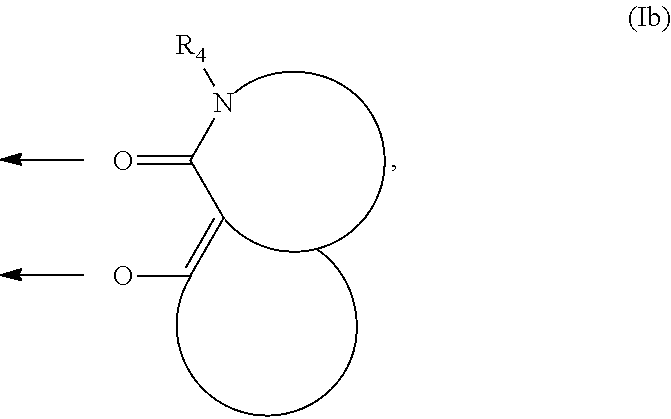


Priority Applications (1)
| Application Number | Priority Date | Filing Date | Title |
|---|---|---|---|
| US15/185,186 US9943498B2 (en) | 2010-03-23 | 2016-06-17 | Fe(III) complex compounds for the treatment and prophylaxis of iron deficiency symptoms and iron deficiency anemias |
Applications Claiming Priority (6)
| Application Number | Priority Date | Filing Date | Title |
|---|---|---|---|
| EP10157387.1 | 2010-03-23 | ||
| EP10157387 | 2010-03-23 | ||
| EP10157387 | 2010-03-23 | ||
| PCT/EP2011/054315 WO2011117225A1 (en) | 2010-03-23 | 2011-03-22 | Fe(iii) complex compounds for the treatment and prophylaxis of iron deficiency symptoms and iron deficiency anemias |
| US201213583276A | 2012-11-20 | 2012-11-20 | |
| US15/185,186 US9943498B2 (en) | 2010-03-23 | 2016-06-17 | Fe(III) complex compounds for the treatment and prophylaxis of iron deficiency symptoms and iron deficiency anemias |
Related Parent Applications (2)
| Application Number | Title | Priority Date | Filing Date |
|---|---|---|---|
| PCT/EP2011/054315 Division WO2011117225A1 (en) | 2010-03-23 | 2011-03-22 | Fe(iii) complex compounds for the treatment and prophylaxis of iron deficiency symptoms and iron deficiency anemias |
| US13/583,276 Division US9394324B2 (en) | 2010-03-23 | 2011-03-22 | Fe(III) complex compounds for the treatment and prophylaxis of iron deficiency symptoms and iron deficiency anemias |
Publications (2)
| Publication Number | Publication Date |
|---|---|
| US20160310459A1 US20160310459A1 (en) | 2016-10-27 |
| US9943498B2 true US9943498B2 (en) | 2018-04-17 |
Family
ID=42710524
Family Applications (2)
| Application Number | Title | Priority Date | Filing Date |
|---|---|---|---|
| US13/583,276 Expired - Fee Related US9394324B2 (en) | 2010-03-23 | 2011-03-22 | Fe(III) complex compounds for the treatment and prophylaxis of iron deficiency symptoms and iron deficiency anemias |
| US15/185,186 Active US9943498B2 (en) | 2010-03-23 | 2016-06-17 | Fe(III) complex compounds for the treatment and prophylaxis of iron deficiency symptoms and iron deficiency anemias |
Family Applications Before (1)
| Application Number | Title | Priority Date | Filing Date |
|---|---|---|---|
| US13/583,276 Expired - Fee Related US9394324B2 (en) | 2010-03-23 | 2011-03-22 | Fe(III) complex compounds for the treatment and prophylaxis of iron deficiency symptoms and iron deficiency anemias |
Country Status (25)
| Country | Link |
|---|---|
| US (2) | US9394324B2 (en) |
| EP (1) | EP2549991B1 (en) |
| JP (1) | JP5648120B2 (en) |
| KR (1) | KR101529273B1 (en) |
| CN (1) | CN102892415B (en) |
| AR (1) | AR080802A1 (en) |
| AU (1) | AU2011231710B2 (en) |
| BR (1) | BR112012023780A2 (en) |
| CA (1) | CA2793153C (en) |
| CL (1) | CL2012002624A1 (en) |
| CO (1) | CO6630090A2 (en) |
| CR (1) | CR20120478A (en) |
| DO (1) | DOP2012000250A (en) |
| ES (1) | ES2660202T3 (en) |
| MA (1) | MA34067B1 (en) |
| MX (1) | MX2012010950A (en) |
| NZ (1) | NZ602289A (en) |
| PE (1) | PE20130246A1 (en) |
| PH (1) | PH12012501814A1 (en) |
| RU (1) | RU2589710C2 (en) |
| SG (1) | SG183972A1 (en) |
| TN (1) | TN2012000457A1 (en) |
| TW (1) | TWI426900B (en) |
| WO (1) | WO2011117225A1 (en) |
| ZA (1) | ZA201207550B (en) |
Families Citing this family (17)
| Publication number | Priority date | Publication date | Assignee | Title |
|---|---|---|---|---|
| AR086606A1 (en) * | 2011-05-31 | 2014-01-08 | Vifor Int Ag | COMPOUNDS OF THE FAITH COMPLEX (III) FOR THE TREATMENT AND PROFILAXIS OF SYMPTOMS OF IRON DEFICIENCY AND ANEMIES FOR IRON DEFICIENCY |
| EP2767280B1 (en) * | 2011-10-12 | 2024-05-22 | SBI Pharmaceuticals Co., Ltd. | Anemia of cancer improving / prophylactic agent |
| EP2604618A1 (en) | 2011-12-12 | 2013-06-19 | Sika Technology AG | Metal complexes as catalysts for polyurethane compositions |
| EP2604615A1 (en) * | 2011-12-12 | 2013-06-19 | Sika Technology AG | Bismuth containing catalyst for polyurethane compositions |
| EP2604617A1 (en) * | 2011-12-12 | 2013-06-19 | Sika Technology AG | Iron(III) complexes as catalysts for polyurethane compositions |
| RU2641030C2 (en) * | 2012-12-21 | 2018-01-15 | Вифор (Интернациональ) Аг | Complex compounds of ferric iron for treatment and prevention of symptoms of iron deficiency and iron deficiency anemia |
| KR20150134353A (en) * | 2013-03-28 | 2015-12-01 | 비포르 (인터내셔날) 아게 | Fe(iii) complexes for treatment and prophylaxis of iron deficiency symptoms and iron deficiency anaemias |
| CN103819425A (en) * | 2014-03-05 | 2014-05-28 | 南通惠康国际企业有限公司 | Preparation method for resin curing agent N-acetoacetyl morpholine |
| EP3157516A4 (en) | 2014-06-22 | 2017-12-13 | Dexcel Pharma Technologies Ltd. | Pharmaceutical compositions comprising ferric citrate and methods for the production thereof |
| KR102920596B1 (en) | 2018-05-16 | 2026-01-30 | 세바 상뜨 아니말르 | Veterinary composition and use thereof for controlling iron deficiency in non-human mammals |
| WO2021035662A1 (en) * | 2019-08-30 | 2021-03-04 | Dow Global Technologies Llc | Methods for reducing aldehyde emissions in polyether polyols and polyurethane foams |
| WO2021222898A1 (en) * | 2020-05-01 | 2021-11-04 | North Carolina State University | Nutritional supplements comprising dietary metal complexes in a matrix of cellulosic materials |
| RU2763135C1 (en) * | 2021-04-23 | 2021-12-27 | Виктор Павлович Ремез | Pharmacological composition for iron deficiency anemia treatment |
| EP4405362A2 (en) * | 2021-09-20 | 2024-07-31 | Novaled GmbH | Compound, semiconductor layer comprising compound and organic electronic device |
| KR102623739B1 (en) * | 2022-07-28 | 2024-01-11 | 주식회사 페라메드 | Complex of comprising the citrate and iron ion and the food composition comprising the same |
| CN116199572B (en) * | 2023-03-02 | 2025-01-14 | 南京师范大学 | Method for alpha-bromination of iron-catalyzed ketone |
| WO2025158745A1 (en) | 2024-01-24 | 2025-07-31 | 株式会社レゾナック | Method for searching for ligand |
Citations (2)
| Publication number | Priority date | Publication date | Assignee | Title |
|---|---|---|---|---|
| US6121287A (en) | 1998-07-15 | 2000-09-19 | Active Biotech Ab | Quinoline derivatives |
| US20050192315A1 (en) | 2004-02-06 | 2005-09-01 | Active Biotech Ab | New compositions containing quinoline compounds |
Family Cites Families (19)
| Publication number | Priority date | Publication date | Assignee | Title |
|---|---|---|---|---|
| US474670A (en) | 1892-05-10 | Automatic fire-alarm | ||
| US2832790A (en) * | 1954-09-28 | 1958-04-29 | Du Pont | 4-negative functionally substituted 2, 3, 5-trichalcogenpyrrolidines, their salts, and methods for preparing them |
| GB842637A (en) | 1955-12-27 | 1960-07-27 | Andre Georges Jules Jallais | Glass frames, more especially for forced cultivation |
| GB2128998B (en) | 1982-10-22 | 1986-07-16 | Nat Res Dev | Pharmaceutical compositions of iron complexes of 3 hydroxy-4-pyrone |
| GB8325496D0 (en) | 1983-09-23 | 1983-10-26 | Hider R C | Pharmaceutical compositions |
| US4788281A (en) | 1984-01-04 | 1988-11-29 | Tosoni Anthony L | Dextran hexonic acid derivative, ferric hydroxide complex and method manufacture thereof |
| GB8410289D0 (en) | 1984-04-19 | 1984-05-31 | Callingham B A | Pharmaceutical compositions |
| IT1222654B (en) | 1987-09-14 | 1990-09-12 | Schering Ag | IRON-CITRATE MICELLAR COMPLEX |
| JPH0283400A (en) | 1988-09-21 | 1990-03-23 | Snow Brand Milk Prod Co Ltd | Production of iron casein |
| ES2044777B1 (en) | 1992-03-03 | 1994-08-01 | Dabeer Sa | PROCEDURE FOR OBTAINING A GREAT SOLUBILITY IRON CHELATE. |
| US20030236224A1 (en) | 1997-12-09 | 2003-12-25 | Hedlund Bo E. | Modified polysaccharides exhibiting altered biological recognition |
| IT1297022B1 (en) | 1997-12-24 | 1999-08-03 | Chemi Spa | IRON-SUCCINYLCASEINE COMPLEX, PROCESS FOR ITS PREPARATION AND PHARMACEUTICAL COMPOSITIONS THAT CONTAIN IT |
| DE10249552A1 (en) | 2002-10-23 | 2004-05-13 | Vifor (International) Ag | Water-soluble iron-carbohydrate complexes, their preparation and medicaments containing them |
| BRPI0515847A (en) | 2004-10-08 | 2008-08-12 | Unilever Nv | use of an iron complex, food composition, iron fortified foodstuff, beverage composition, iron fortified beverage, food supplement and pharmaceutical composition |
| US20090035385A1 (en) | 2004-12-22 | 2009-02-05 | Drugtech Corporation | Compositions including iron |
| CN100443485C (en) | 2005-04-08 | 2008-12-17 | 吴华君 | Derivative of soldium iron chlorophyllin, preparation method and application |
| WO2007062546A1 (en) | 2005-11-30 | 2007-06-07 | Chongqing Pharmaceutical Research Institute Co., Ltd. | Iron-saccharide complexs easy to reconstitute and the method for manufacture them |
| EP1997833A1 (en) | 2007-05-29 | 2008-12-03 | Vifor (International) Ag | Water-soluble ferric carbohydrate derivative complexes, their manufacture and medicines containing these |
| CN101481404B (en) | 2008-12-17 | 2011-10-05 | 中国农业大学 | A kind of enzymolyzed milk protein ferrous complex microcapsule iron supplement and preparation method thereof |
-
2011
- 2011-03-22 AU AU2011231710A patent/AU2011231710B2/en not_active Ceased
- 2011-03-22 JP JP2013500465A patent/JP5648120B2/en not_active Expired - Fee Related
- 2011-03-22 NZ NZ602289A patent/NZ602289A/en not_active IP Right Cessation
- 2011-03-22 CN CN201180018134.0A patent/CN102892415B/en not_active Expired - Fee Related
- 2011-03-22 ES ES11710182.4T patent/ES2660202T3/en active Active
- 2011-03-22 MX MX2012010950A patent/MX2012010950A/en unknown
- 2011-03-22 CA CA2793153A patent/CA2793153C/en not_active Expired - Fee Related
- 2011-03-22 TW TW100109720A patent/TWI426900B/en not_active IP Right Cessation
- 2011-03-22 EP EP11710182.4A patent/EP2549991B1/en not_active Not-in-force
- 2011-03-22 WO PCT/EP2011/054315 patent/WO2011117225A1/en not_active Ceased
- 2011-03-22 KR KR1020127027642A patent/KR101529273B1/en not_active Expired - Fee Related
- 2011-03-22 SG SG2012066734A patent/SG183972A1/en unknown
- 2011-03-22 PH PH1/2012/501814A patent/PH12012501814A1/en unknown
- 2011-03-22 US US13/583,276 patent/US9394324B2/en not_active Expired - Fee Related
- 2011-03-22 PE PE2012001611A patent/PE20130246A1/en not_active Application Discontinuation
- 2011-03-22 BR BR112012023780-2A patent/BR112012023780A2/en not_active IP Right Cessation
- 2011-03-22 RU RU2012144844/04A patent/RU2589710C2/en not_active IP Right Cessation
- 2011-03-23 AR ARP110100974A patent/AR080802A1/en not_active Application Discontinuation
-
2012
- 2012-09-13 MA MA35211A patent/MA34067B1/en unknown
- 2012-09-19 CO CO12162314A patent/CO6630090A2/en active IP Right Grant
- 2012-09-20 DO DO2012000250A patent/DOP2012000250A/en unknown
- 2012-09-21 CL CL2012002624A patent/CL2012002624A1/en unknown
- 2012-09-21 CR CR20120478A patent/CR20120478A/en unknown
- 2012-09-21 TN TNP2012000457A patent/TN2012000457A1/en unknown
- 2012-10-08 ZA ZA2012/07550A patent/ZA201207550B/en unknown
-
2016
- 2016-06-17 US US15/185,186 patent/US9943498B2/en active Active
Patent Citations (2)
| Publication number | Priority date | Publication date | Assignee | Title |
|---|---|---|---|---|
| US6121287A (en) | 1998-07-15 | 2000-09-19 | Active Biotech Ab | Quinoline derivatives |
| US20050192315A1 (en) | 2004-02-06 | 2005-09-01 | Active Biotech Ab | New compositions containing quinoline compounds |
Non-Patent Citations (4)
| Title |
|---|
| International Preliminary Report on Patentability for corresponding PCT/EP2011/054315 dated Oct. 4, 2012, seven pages. |
| International Search Report for corresponding PCT/EP2011/054315 dated Jun. 8, 2011, three pages. |
| Schüttler et al., Tetrahedron, vol. 28, 1972, pp. 4871-4875. |
| Syamal "Ferric benzoylacetanilides," Canadian Journal of Chemistry, vol. 47, 1969, pp. 1693-1696. |
Also Published As
Similar Documents
| Publication | Publication Date | Title |
|---|---|---|
| US9394324B2 (en) | Fe(III) complex compounds for the treatment and prophylaxis of iron deficiency symptoms and iron deficiency anemias | |
| US9439910B2 (en) | Fe(III)-pyrazine complex compounds for treatment and prophylaxis of iron-deficiency phenomena and iron-deficiency anaemia | |
| US9422247B2 (en) | Fe(III) complex compounds for the treatment and prophylaxis of iron deficiency symptoms and iron deficiency anemias | |
| US9248134B1 (en) | Fe(III) complex compounds for the treatment and prophylaxis of iron deficiency symptoms and iron deficiency anemias | |
| US9452152B2 (en) | Fe(III) complex compounds for the treatment and prophylaxis of iron deficiency symptoms and iron deficiency anemias | |
| US20140248342A1 (en) | Fe(III) 2,4-Dioxo-1-Carbonyl Complexes For Treatment And Prophylaxis Of Iron Deficiency Symptoms And Iron Deficiency Anaemias | |
| TW201302191A (en) | Fe(III) complex compounds for the treatment and prophylaxis of iron deficiency symptoms and iron deficiency anemias |
Legal Events
| Date | Code | Title | Description |
|---|---|---|---|
| AS | Assignment |
Owner name: VIFOR (INTERNATIONAL) AG, SWITZERLAND Free format text: ASSIGNMENT OF ASSIGNORS INTEREST;ASSIGNORS:BARK, THOMAS;BUHR, WILM;BURCKHARDT, SUSANNA;AND OTHERS;SIGNING DATES FROM 20121012 TO 20121030;REEL/FRAME:039242/0157 |
|
| STCF | Information on status: patent grant |
Free format text: PATENTED CASE |
|
| MAFP | Maintenance fee payment |
Free format text: PAYMENT OF MAINTENANCE FEE, 4TH YEAR, LARGE ENTITY (ORIGINAL EVENT CODE: M1551); ENTITY STATUS OF PATENT OWNER: LARGE ENTITY Year of fee payment: 4 |
|
| MAFP | Maintenance fee payment |
Free format text: PAYMENT OF MAINTENANCE FEE, 8TH YEAR, LARGE ENTITY (ORIGINAL EVENT CODE: M1552); ENTITY STATUS OF PATENT OWNER: LARGE ENTITY Year of fee payment: 8 |