BACKGROUND
In electrical systems, there is typically a power source that produces power, and an electrical load that consumes the produced power. The various sources and loads often have different electrical properties and require power electronics to transfer power between components. A power converter is an electrical device for converting electrical energy from one form to another, such as between alternating current (AC) and direct current (DC), between different voltages or frequencies, or a combination of these. A specific type of converter, called an inverter, changes DC to AC. In a drive system, a voltage source inverter (VSI) may be used to transfer real power from a DC power source to an AC load.
In a three-phase AC system, the common-mode (CM) voltage can be defined as a voltage difference between the power source ground and the neutral point of a three-phase load. If the load is an AC motor, the neutral point of the load means the stator neutral of the motor. Inverters generate CM voltages relative to the power source ground that cause coupling currents through parasitic capacitances inside the motor (load). The main source of bearing currents is the capacitance-coupling currents that return via the motor bearings back to the ground. The bearing damage in inverter-driven motors is mainly caused by the shaft voltage and the bearing currents created by the common-mode voltage.
Conventional VSIs consist of two or three phase-legs, each of which is a series connection of two semiconductor switches. During normal operation, the output potential of each phase leg with respect to ground is continuously switched between a positive and a negative DC bus potential based on a pulse width modulation of the switches. As a result, the CM voltage imposed on the load also exhibits six step-changes during each switching cycle. Each step-change induces a charging or discharging current into the parasitic capacitances between load and ground that leads to issues such as electromagnetic interference emissions, inverter losses, and motor damage. CM chokes and filters may be used to mitigate the CM voltage induced issues. However, since CM chokes have to block a significant amount of CM voltage, they are bulky in size, and constitute a large portion of the product cost.
SUMMARY
In an example embodiment, an inverter is provided. The inverter includes, but is not limited to, a positive direct current (DC) line, a negative DC line, and a plurality of inverter legs. Each inverter leg includes, but is not limited to, a first switch, a second switch, a third switch, a first switch control line, a second switch control line, and a third switch control line. The first switch control line is connected to the first switch and configured to receive a first control signal to control an on or off state of the first switch. The second switch control line is connected to the second switch and configured to receive a second control signal to control an on or off state of the second switch. The third switch control line is connected to the third switch and configured to receive the first control signal to control an on or off state of the third switch. A first connector line is connected between the first switch and the second switch. A second connector line is connected between the second switch and the third switch. The first switch, the second switch, and the third switch are connected sequentially in series between the positive DC line and the negative DC line. The first connector line is configured to be connected to a first winding of an electric machine. The second connector line is configured to be connected to a second winding of the electric machine. The second control signal is complementary to the first control signal.
In another example embodiment, an electric machine drive is provided. The electric machine drive includes, but is not limited to, the inverter and a controller. The controller includes, but is not limited to, a first control signal line and a second control signal line. The controller is configured to generate a first control signal on the first control signal line and to generate a second control signal on the second control signal line. The first control signal is complementary to the second control signal. The first control signal controls an on or off state of the first switch and the third switch together. The second control signal controls an on or off state of the second switch.
In yet another example embodiment, an electric machine system is provided. The electric machine drive includes, but is not limited to, the inverter, the controller, and an electric machine. The electric machine includes, but is not limited to, a stator, a rotor configured to rotate relative to the stator, a first winding wound around at least a first portion of the stator, and a second winding wound around at least a second portion of the stator. The first connector line is configured to be connected to the first winding. The second connector line is configured to be connected to the second winding.
Other principal features of the disclosed subject matter will become apparent to those skilled in the art upon review of the following drawings, the detailed description, and the appended claims.
BRIEF DESCRIPTION OF THE DRAWINGS
Illustrative embodiments of the disclosed subject matter will hereafter be described referring to the accompanying drawings, wherein like numerals denote like elements.
FIG. 1 is a block diagram of an electric machine system connected to an input source in accordance with an illustrative embodiment.
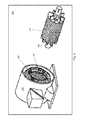
FIG. 2 depicts an electric machine of FIG. 1 in accordance with an illustrative embodiment.
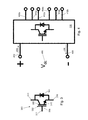
FIG. 3 depicts a switch circuit in accordance with an illustrative embodiment.
FIG. 4 is a block diagram of a 3-phase inverter of the electric machine system of FIG. 1 in accordance with an illustrative embodiment.
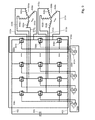
FIG. 5 is a circuit diagram of an inverter of the electric machine system of FIG. 1 in accordance with a first illustrative embodiment.
FIG. 6 is a circuit diagram of an inverter of the electric machine system of FIG. 1 in accordance with a second illustrative embodiment.
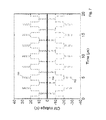
FIG. 7 shows a CM voltage generated using the inverter of FIG. 6.
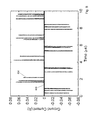
FIG. 8 shows a ground leakage current comparison between a conventional inverter and the inverter of FIG. 6.
FIG. 9 is a circuit diagram of an inverter of the electric machine system of FIG. 1 in accordance with a third illustrative embodiment.
FIG. 10 is a circuit diagram of an inverter of the electric machine system of FIG. 1 in accordance with a fourth illustrative embodiment.
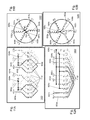
FIGS. 11A and 11B depict a winding configuration of the electric machine of FIG. 1 in accordance with a first illustrative embodiment.
FIGS. 12A and 12B depict a winding configuration of the electric machine of FIG. 1 in accordance with a second illustrative embodiment.
FIG. 13 depicts a general winding configuration of a dual-voltage, 9-lead electric machine in accordance with an illustrative embodiment.
FIG. 14 depicts a winding configuration of the electric machine of FIG. 1 created by disconnecting and reconnecting the general winding configuration of FIG. 13.
DETAILED DESCRIPTION
Referring to FIG. 1, an electric machine system 100 may include a controller 104, an inverter 106, and an electric machine 108. Electric machine 108 may be a motor such as an induction motor, a reluctance motor, a synchronous motor, etc. that may include windings and/or permanent magnets to generate mechanical power. Inverter 106 converts DC power from DC input source 102 to the AC power supplied to electric machine 108 to generate the mechanical power.
A direct current (DC) input source 102 is electrically connected to controller 104 and to inverter 106. DC input source 102 can include one or more DC sources. DC input source 102 may be a DC grid, batteries, a dc output of a single-phase or multi-phase passive or active rectifier, etc. that provides approximately constant instantaneous power flow. DC input source 102 may provide DC power and DC input source measured signals to controller 104. DC input source 102 provides DC power to inverter 106. Inverter 106 provides alternating current (AC) power to electric machine 108.
Controller 104 may be electrically connected to DC input source 102, inverter 106, and electric machine 108. Controller 104 controls the supply of power by inverter 106 to electric machine 108 through control signals input to inverter 106. The control signals may be generated by controller 104 based on the DC input source measured signals received from DC input source 102 and signals measured and received from electric machine 108. In an illustrative embodiment, controller 104 implements a closed loop current control to determine the control signals though other control algorithms may be implemented by controller 104. Illustrative control methods include direct/indirect field orientation control and direct torque control. Illustrative modulation techniques include sine pulse width modulation (PWM), space vector PWM, discrete PWM, and random PWM. Illustrative sensing techniques include a hall effect sensor, an encoder, a resolver, and self-sensing.
Referring to FIG. 2, an AC motor 200 is shown in accordance with an illustrative embodiment. AC motor 200 is merely an example of electric machine 108. AC motor 200 may include a rotor 202 and a stator 204 with a stator winding 206 in various arrangements as understood by a person of skill in the art. AC motor 200 may be an AC electric motor in which the electric current in a rotor winding needed to produce torque is induced by electromagnetic induction from a magnetic field formed by a current in stator winding 206. For illustration, rotor 202 of AC motor 200 may be wound type, squirrel-cage type, etc. AC motor 200 further may be configured to have any size rating. A shaft 208 is mounted to rotate with rotor 202.
Stator winding 206 may include one or more sets of windings that carry current having one or more phases of electrical energy that are distributed around stator 206. Rotor 202 is mounted relative to stator 204 in various axial and radial arrangements. The illustrative embodiment of FIG. 2, shows an interior, radial mounted rotor 202 that is mounted within stator 204. Stator 204 is mounted within a motor housing 210. Controller 104 and inverter 106 can be mounted inside a controller housing 212 of electric machine 108 and connected to stator winding 206 as well as other components of AC motor 200.
Referring to FIG. 3, a switch 300 is shown in accordance with an illustrative embodiment. Switch 300 may include a transistor 302 and a diode 304. Transistor 302 may include a drain (or collector) 306, a gate (or base) 308, and a source (or emitter) 310 as in a metal-oxide-semiconductor field-effect transistor (MOSFET), an insulated-gate bipolar transistor (IGBT), a bipolar junction transistor, etc. Diode 304 is connected anti-parallel across source 310 and drain 306 of transistor 302. Depending on the switching logic and whether transistor 302 is an n-type or a p-type, drain 306 and source 310 may be reversed. A voltage applied to gate 308 determines a switching state of transistor 302. In an illustrative embodiment, transistor 302 is an insulated-gate field-effect transistor such as a MOSFET, IGBT, Gallium Nitride (GaN) device, Silicon Carbide (SiC) device, other Silicon based device, etc.
A switch control line 312 is electrically connected between gate 308 and controller 104 to provide a control signal to switch 300. Depending on an amplitude of the control signal, switch 300 allows current flow from drain 306 to source 310 and onto a source line 316, or blocks current flow from drain 306 to source 310 to allow a current flow through diode 304 from source line 316 to a drain line 314 that bypasses transistor 302. Current flow through transistor 302 from drain 306 to source 310 may be termed an “on” state of switch 300. Blocking current flow through transistor 302 from drain 306 to source 310 may be termed an “off” state of switch 300. When switch 300 is in the “off” state, current can flow through diode 304 of switch 300.
Referring to FIG. 4, a block diagram of inverter 106 is shown in accordance with an illustrative embodiment. A V dc 400 is applied across a positive DC line 402 and a negative DC line 403. An input current 404 is provided through positive DC line 402, and an output current 406 is provided through negative DC line 403. V dc 400 represents the voltage from DC input source 102. In the illustrative embodiment, inverter 106 includes two sets of three phase lines that output a current. A first-phase current Ia through a first-phase line 408 a, a second-phase current Ib through a second-phase line 410 a, a third-phase current Ic through a third-phase line 412 a, a fourth-phase current Ia′ through a fourth-phase line 408 b, a fifth-phase current Ib′ through a fifth-phase line 410 b, and a sixth-phase current Ic′ through a third sixth phase line 412 b. The phase currents provide AC power to electric machine 108. In the illustrative embodiment, inverter 106 is a three-phase inverter though a different number of phases may be output from inverter 106 in alternative embodiments.
Referring to FIG. 5, a circuit diagram of a first inverter 106 a is shown in accordance with an illustrative embodiment. First inverter 106 a is a first illustrative embodiment of inverter 106. A capacitor 500 may be connected across V dc 400 between positive DC line 402 and negative DC line 403 of first inverter 106 a. First inverter 106 a may include a first leg 502 a and a second leg 502 b. First leg 502 a includes a first switch 504 a, a second switch 506 a, and a third switch 508 a connected sequentially in series between positive DC line 402 and negative DC line 403. Similarly, second leg 502 b includes a first switch 504 b, a second switch 506 b, and a third switch 508 b connected sequentially in series between positive DC line 402 and negative DC line 403.
Each of first switch 504 a, second switch 506 a, and third switch 508 a of first leg 502 a and of first switch 504 b, second switch 506 b, and third switch 508 b of second leg 502 b is an instance of switch 300 with transistor 302 and diode 304. As a result, transistor 302 of each switch of each leg of first inverter 106 a includes drain 306, gate 308, and source 310.
Drain 306 of first switch 504 a of first leg 502 a is connected to positive DC line 402. Source 310 of first switch 504 a of first leg 502 a is connected to drain 306 of second switch 506 a of first leg 502 a. Source 310 of second switch 506 a of first leg 502 a is connected to drain 306 of third switch 508 a of first leg 502 a. Source 310 of third switch 508 a of first leg 502 a is connected to negative DC line 403.
Drain 306 of first switch 504 b of second leg 502 b is connected to positive DC line 402. Source 310 of first switch 504 b of second leg 502 b is connected to drain 306 of second switch 506 b of second leg 502 b. Source 310 of second switch 506 b of second leg 502 b is connected to drain 306 of third switch 508 b of second leg 502 b. Source 310 of third switch 508 b of second leg 502 b is connected to negative DC line 403.
A first connector line 510 a of first leg 502 a is connected between source 310 of first switch 504 a of first leg 502 a and drain 306 of second switch 506 a of first leg 502 a. A second connector line 512 a of first leg 502 a is connected between source 310 of second switch 506 a of first leg 502 a and drain 306 of third switch 508 a of first leg 502 a.
A first connector line 510 b of second leg 502 b is connected between source 310 of first switch 504 b of second leg 502 b and drain 306 of second switch 506 b of second leg 502 b. A second connector line 512 b of second leg 502 b is connected between source 310 of second switch 506 b of second leg 502 b and drain 306 of third switch 508 b of second leg 502 b.
A first stator winding 514 a is connected between first connector line 510 a of first leg 502 a and first connector line 510 b of second leg 502 b. A second stator winding 514 b is connected between second connector line 512 a of first leg 502 a and second connector line 512 b of second leg 502 b. For illustration, first stator winding 514 a and second stator winding 514 b are wound about stator 206 of AC motor 200.
Though not shown, each gate 308 of first switch 504 a, second switch 506 a, and third switch 508 a of first leg 502 a and of first switch 504 b, second switch 506 b, and third switch 508 b of second leg 502 b is connected to controller 104 to receive control signals to control a switching state of each switch. A first control signal is provided simultaneously to first switch 504 a and to third switch 508 a of first leg 502 a. A second control signal is inverted relative to or “complementary to” the first control signal and is applied simultaneously to second switch 506 a of first leg 502 a. Thus, if the first control signal is “A” to switch on first switch 504 a and third switch 508 a of first leg 502 a, the second control signal is “−A” to switch off second switch 506 b of first leg 502 a, and vice versa.
A third control signal is provided simultaneously to first switch 504 b and to third switch 508 b of second leg 502 b. A fourth control signal is inverted relative to or “complementary to” the third control signal and is applied simultaneously to second switch 506 b of second leg 502 b. As understood by a person of skill in the art, the first control signal, the second control signal, the third control signal, and the fourth control signal are pulse width modulated signals selected to generate an AC waveform from the DC input waveform by rapidly switching the states of the switches of first inverter 106 a on and off.
A first voltage results across first stator winding 514 a, and a first current flows through first stator winding 514 a. Correspondingly, a second voltage and a second current result across and flow through second stator winding 514 b. The second voltage and the second current are 180 degrees out of phase relative to the first voltage and the first current, respectively.
First inverter 106 a cancels a total CM voltage by generating two equal-amplitude, opposite-signed CM voltages on first stator winding 514 a and second stator winding 514 b. As a result, AC motor 200, which is an illustrative embodiment of electric machine 108, remains at ground potential, and no current flows to ground.
Second switch 506 a of first leg 502 a and second switch 506 b of second leg 502 b may be rated to support a maximum DC power (voltage). First switch 504 a and third switch 508 a of first leg 502 a and first switch 504 b and third switch 508 b of second leg 502 b may be rated to support half the maximum DC power because the power (voltage) is split between the first and third switches of each leg.
Referring to FIG. 6, a circuit diagram of a second inverter 106 b is shown in accordance with an illustrative embodiment. Second inverter 106 a is a second illustrative embodiment of inverter 106. Capacitor 500 may be connected across V dc 400 between positive DC line 402 and negative DC line 403 of second inverter 106 b. Negative DC line 403 may be grounded at a ground potential.
Second inverter 106 b may include first leg 502 a, second leg 502 b, and a third leg 502 c. Similar to first leg 502 a and second leg 502 b, third leg 502 c includes a first switch 504 c, a second switch 506 c, and a third switch 508 c connected sequentially in series between positive DC line 402 and negative DC line 403. Each of first switch 504 c, second switch 506 c, and third switch 508 c of third leg 502 c is an instance of switch 300 with transistor 302 and diode 304. As a result, transistor 302 of each switch of each leg of second inverter 106 b includes drain 306, gate 308, and source 310.
Drain 306 of first switch 504 c of third leg 502 c is connected to positive DC line 402. Source 310 of first switch 504 c of third leg 502 c is connected to drain 306 of second switch 506 c of third leg 502 c. Source 310 of second switch 506 c of third leg 502 c is connected to drain 306 of third switch 508 c of third leg 502 c. Source 310 of third switch 508 c of third leg 502 c is connected to negative DC line 403.
A first connector line 510 c of third leg 502 c is connected between source 310 of first switch 504 c of third leg 502 c and drain 306 of second switch 506 c of third leg 502 c. A second connector line 512 c of third leg 502 c is connected between source 310 of second switch 506 c of third leg 502 c and drain 306 of third switch 508 c of third leg 502 c.
A first stator winding 600 a is connected between first connector line 510 a of first leg 502 a and a first common neutral connector 606 a. A second stator winding 602 a is connected between first connector line 510 b of second leg 502 b and first common neutral connector 606 a. A third stator winding 604 a is connected between first connector line 510 c of third leg 502 c and first common neutral connector 606 a. For illustration, first stator winding 600 a, second stator winding 602 a, and third stator winding 604 a are wound about stator 206 of AC motor 200 and connected to form a first three-phase wye connection configuration. In an alternative embodiment, first stator winding 600 a, second stator winding 602 a, and third stator winding 604 a may be wound about stator 206 of AC motor 200 and connected to form a first three-phase delta connection configuration.
First stator winding 600 a is supplied a first current Ia through first connector line 510 a of first leg 502 a. Second stator winding 602 a is supplied a second current Ib through first connector line 510 b of second leg 502 b. Third stator winding 604 a is supplied a third current Ic through first connector line 510 c of third leg 502 c. As understood by a person of skill in the art, the currents applied to the machine windings are 360/n degrees out of phase with respect to each other, where n represents a number of phases. Thus, Ia, Ib, and Ic are 120 degrees out of phase with respect to each other.
A fourth stator winding 600 b is connected between second connector line 512 a of first leg 502 a and a second common neutral connector 606 b. A fifth stator winding 602 b is connected between second connector line 512 b of second leg 502 b and second common neutral connector 606 b. A sixth stator winding 604 b is connected between second connector line 512 c of third leg 502 c and second common neutral connector 606 b. For illustration, fourth stator winding 600 b, fifth stator winding 602 b, and sixth stator winding 604 b are wound about stator 206 of AC motor 200 and connected to form a second three-phase wye connection configuration. In an alternative embodiment, fourth stator winding 600 b, fifth stator winding 602 b, and sixth stator winding 604 b may be wound about stator 206 of AC motor 200 and connected to form a second three-phase delta connection configuration.
Fourth stator winding 600 b is supplied a fourth current Ia′ through second connector line 512 a of first leg 502 a. Fifth stator winding 602 b is supplied a second current Ib′ through second connector line 512 b of second leg 502 b. Sixth stator winding 604 b is supplied a third current Ic′ through second connector line 512 c of third leg 502 c. As understood by a person of skill in the art, the currents applied to the windings of electric machine 108 are 360/n degrees out of phase with each other. Thus, Ia′, Ib′, and Ic′ are 120 degrees out of phase with respect to each other. Ia and Ia′ are 180 degrees out of phase with respect to each other. Ib and Ib are 180 degrees out of phase with respect to each other. Ic and Ic′ are 180 degrees out of phase with respect to each other.
Gate 308 of first switch 504 a and third switch 508 a of first leg 502 a are both connected to a first control line 608 a of controller 104 to receive a first control signal to control the switching state of each switch together. Gate 308 of second switch 506 b of first leg 502 a is connected to a second control line 610 a of controller 104 to receive a second control signal to control the switching state of second switch 506 b of first leg 502 a. The second control signal is inverted relative to or “complementary to” the first control signal and is applied simultaneously to second switch 506 a of first leg 502 a.
Gate 308 of first switch 504 b and third switch 508 b of second leg 502 b are both connected to a third control line 608 b of controller 104 to receive a third control signal to control the switching state of each switch together. Gate 308 of second switch 506 b of second leg 502 b is connected to a fourth control line 610 b of controller 104 to receive a fourth control signal to control the switching state of second switch 506 b of second leg 502 b. The fourth control signal is inverted relative to or “complementary to” the third control signal and is applied simultaneously to second switch 506 b of second leg 502 b.
Gate 308 of first switch 504 c and third switch 508 c of third leg 502 c are both connected to a fifth control line 608 c of controller 104 to receive a fifth control signal to control the switching state of each switch together. Gate 308 of second switch 506 c of third leg 502 c is connected to a sixth control line 610 c of controller 104 to receive a sixth control signal to control the switching state of second switch 506 c of third leg 502 c. The sixth control signal is inverted relative to or “complementary to” the fifth control signal and is applied simultaneously to second switch 506 c of third leg 502 c.
As understood by a person of skill in the art, the first control signal, the second control signal, the third control signal, the fourth control signal, the fifth control signal, and the sixth control signal are pulse width modulated signals selected to generate an AC waveform from the DC input waveform by rapidly switching the states of the switches of second inverter 106 b on and off. For illustration, there may be eight possible switching vectors for second inverter 106 b, V0 through V7 with six active switching vectors and two zero vectors based on the complementary operation of the second switch of each leg relative to the first and third switches of each leg, and the common control of the first and third switches of each leg. As a result, control algorithms for inverters that include two switches per leg may be used to control operation of second inverter 106 b subject to the common control of the first and third switches of each leg.
Second switch 506 a of first leg 502 a, second switch 506 b of second leg 502 b, and second switch 506 c of third leg 502 c may be rated to support a maximum DC power (voltage). First switch 504 a and third switch 508 a of first leg 502 a, first switch 504 b and third switch 508 b of second leg 502 b, and first switch 504 c and third switch 508 c of third leg 502 c may be rated to support half the maximum DC power because the power (voltage) is split between the first and third switches of each leg.
Second inverter 106 b cancels a total CM voltage by generating two equal-amplitude, opposite-signed CM voltages on the two sets of three phase windings, a first set of windings that includes first stator winding 600 a, second stator winding 602 a, and third stator winding 604 a, and a second set of windings that includes fourth stator winding 600 b, fifth stator winding 602 b, and sixth stator winding 604 b. As a result, AC motor 200, which is an illustrative embodiment of electric machine 108, remains at ground potential, and no current flows to ground.
Referring to FIG. 7, a CM voltage generated using second inverter 106 is shown. A first CM voltage curve 700 shows the CM voltage generated on the first set of windings. A second CM voltage curve 702 shows the CM voltage generated on the second set of windings. A third CM voltage curve 704 shows the total CM voltage generated, which is zero as expected due to the cancellation effect.
Referring to FIG. 8, a ground leakage current comparison is shown between second inverter 106 and a conventional inverter that includes two switches per leg. A first leakage current curve 800 shows the zero ground leakage current that results using second inverter 106. A second leakage current curve 802 shows the ground leakage current spikes that result using the conventional inverter when the controller switches the state of the switches of the conventional inverter. Cancellation of the total CM voltage eliminates the ground leakage current in electric machine 108 using second inverter 106.
Referring to FIG. 9, a circuit diagram of a third inverter 106 c is shown in accordance with an illustrative embodiment. Third inverter 106 c is a third illustrative embodiment of inverter 106. Capacitor 500 may be connected across V dc 400 between positive DC line 402 and negative DC line 403 of third inverter 106 c, which may be grounded.
Third inverter 106 c may include first leg 502 a, second leg 502 b, third leg 502 c, . . . , and an nth leg 502 n. Similar to first leg 502 a, second leg 502 b, and third leg 502 c, nth leg 502 n includes a first switch 504 n, a second switch 506 n, and a third switch 508 n connected sequentially in series between positive DC line 402 and negative DC line 403.
Each of first switch 504 n, second switch 506 n, and third switch 508 n of nth leg 502 n is an instance of switch 300 with transistor 302 and diode 304. As a result, transistor 302 of each switch of each leg of third inverter 106 c includes drain 306, gate 308, and source 310.
Drain 306 of first switch 504 n of nth leg 502 n is connected to positive DC line 402. Source 310 of first switch 504 n of nth leg 502 n is connected to drain 306 of second switch 506 n of nth leg 502 n. Source 310 of second switch 506 n of nth leg 502 n is connected to drain 306 of third switch 508 n of nth leg 502 n. Source 310 of third switch 508 n of nth leg 502 n is connected to negative DC line 403.
A first connector line 510 n of nth leg 502 n is connected between source 310 of first switch 504 n of nth leg 502 n and drain 306 of second switch 506 n of nth leg 502 n. A second connector line 512 n of nth leg 502 n is connected between source 310 of second switch 506 n of nth leg 502 n and drain 306 of third switch 508 n of nth leg 502 n.
A first nth stator winding 608 a is connected between first connector line 510 n of nth leg 502 n and first common neutral connector 606 a. A second nth stator winding 608 b is connected between second connector line 512 n of nth leg 502 n and second common neutral connector 606 b. For illustration, first nth stator winding 608 a and second nth stator winding 608 b are also wound about stator 206 of AC motor 200. First stator winding 600 a, second stator winding 602 a, third stator winding 604 a, and first nth stator winding 608 a are connected to form a first n-phase wye connection configuration. First stator winding 600 b, second stator winding 602 b, third stator winding 604 b, and second nth stator winding 608 b are connected to form a second n-phase wye connection configuration. In an alternative embodiment, first stator winding 600 a, second stator winding 602 a, third stator winding 604 a, and second nth stator winding 608 a may be connected to form a first n-phase polygon connection configuration, and first stator winding 600 b, second stator winding 602 b, third stator winding 604 b, and second nth stator winding 608 b may be connected to form a second n-phase polygon connection configuration.
First nth stator winding 608 a is supplied a first nth current In through first connector line 510 n of nth leg 502 n. Second nth stator winding 608 a is supplied a second nth current In′ through second connector line 512 n of nth leg 502 n. In and In′ are 180 degrees out of phase with respect to each other.
Gate 308 of first switch 504 n and third switch 508 n of nth leg 502 n are both connected to a first nth control line 608 n of controller 104 to receive a first nth control signal to control the switching state of each switch together. Gate 308 of second switch 506 n of nth leg 502 n is connected to a second nth control line 610 n of controller 104 to receive a second nth control signal to control the switching state of second switch 506 b of nth leg 502 n. The second nth control signal is inverted relative to or “complementary to” the first nth control signal and is applied simultaneously to second switch 506 n of nth leg 502 n. The first nth control signal and the second nth control signal are also pulse width modulated signals selected to generate an AC waveform from the DC input waveform by rapidly switching the states of the switches of third inverter 106 c on and off. The AC waveform includes n×2 phases.
Second switch 506 n of nth leg 502 n may be rated to support a maximum DC power (voltage). First switch 504 n and third switch 508 n of nth leg 502 n may be rated to support half the maximum DC power because the power (voltage) is split between the first and third switches of each leg.
Third inverter 106 c cancels a total CM voltage by generating two equal-amplitude, opposite-signed CM voltages on the two sets of n-phase windings, set one that includes first stator winding 600 a, second stator winding 602 a, third stator winding 604 a, . . . , and first nth stator winding 608 a, and set two that includes fourth stator winding 600 b, fifth stator winding 602 b, sixth stator winding 604 b, . . . , and second nth stator winding 608 b. As a result, AC motor 200, which is an illustrative embodiment of electric machine 108, remains at ground potential, and no current flows to ground.
Referring to FIG. 10, a block diagram of a cascaded inverter 1000 is shown in accordance with an illustrative embodiment. Cascaded inverter 1000 and capacitor 500 may be connected across V dc 400 between positive DC line 402 and negative DC line 403 of third inverter 106 c, which may be grounded. Cascaded inverter 1000 may include a first inverter 106-1, a second inverter 106-2, . . . , and an mth inverter 106-m. Cascaded inverter 1000 can include any number of m inverters subject to the power requirements of each electric machine 108 to which each inverter of cascaded inverter 1000 is connected. First inverter 106-1, second inverter 106-2, and mth inverter 106-m may be any of first inverter 106 a, second inverter 106 b, and third inverter 106 c.
First inverter 106-1 includes first and second connector lines 1002 a, where the number of first and second connector lines 1002 a is a function of a number of phases supported by first inverter 106-1 as discussed previously. Second inverter 106-2 includes first and second connector lines 1002 b, where the number of first and second connector lines 1002 a is a function of a number of phases supported by second inverter 106-2 as discussed previously. mth inverter 106-m includes first and second connector lines 1002 m, where the number of first and second connector lines 1002 m is a function of a number of phases supported by mth inverter 106-m as discussed previously.
Various winding configurations may be suitable for electric machine 108. Referring to FIGS. 11A and 12A, two winding sets are shown for illustration. Electric machine 108 includes two sets of windings. Machine manufacturers usually connect machine windings in series, but the machine windings of existing machines can be disconnected and reconnected into several winding groups. In an illustrative embodiment, individual machine winding groups have the same gauge, number of turns, and configuration as conventional ones.
Referring to FIG. 11A, a first winding configuration 1100 is shown in accordance with an illustrative embodiment for stator winding 206. First winding configuration 1100 includes first stator winding 600 a, second stator winding 602 a, third stator winding 604 a, fourth stator winding 600 b, fifth stator winding 602 b, and sixth stator winding 604 b with each winding positioned in one of a plurality of slots 1102 of stator 204. First winding configuration 1100 forms a three-phase, four-pole, and twelve slot (1 slot per pole per phase) winding configuration where the three-phase windings forming different poles are separated and have their own neutral points, first common neutral connector 606 a and second common neutral connector 606 b.
Referring to FIG. 11B, first winding configuration 1100 is shown in accordance with an illustrative embodiment distributed into portions of stator 204. First stator winding 600 a and fourth stator winding 600 b are equally separated from each other by 180 degrees. Second stator winding 602 a and fifth stator winding 602 b are equally separated from each other by 180 degrees. Third stator winding 604 a and sixth stator winding 604 b are equally separated from each other by 180 degrees. Each portion is approximately a 60 degree portion of stator 204.
Referring to FIG. 12A, a second winding configuration 1200 is shown in accordance with an illustrative embodiment for stator winding 206. Second winding configuration 1200 includes first stator winding 600 a, second stator winding 602 a, third stator winding 604 a, fourth stator winding 600 b, fifth stator winding 602 b, and sixth stator winding 604 b with each winding positioned in one of the plurality of slots 1102 of stator 204, but in different slots relative to first winding configuration 1100.
Second winding configuration 1200 forms a three-phase, two-pole, and twelve slot (2 slots per pole per phase) winding configuration where the three-phase windings forming different poles are separated and have their own neutral points, first common neutral connector 606 a and second common neutral connector 606 b. If electric machine 108 has 2P poles with O slots per phase in each pole, the windings can be split into P·O segments. The windings can also be split into any factor of P·O segments, e.g., if P·O=6, the windings can be split into 1, 2, 3, or 6 segments.
Referring to FIG. 12B, second winding configuration 1200 is shown in accordance with an illustrative embodiment distributed about portions of stator 204. First stator winding 600 a and fourth stator winding 600 b are equally separated from each other by 60 degrees. Second stator winding 602 a and fifth stator winding 602 b are equally separated from each other by 60 degrees. Third stator winding 604 a and sixth stator winding 604 b are equally separated from each other by 60 degrees.
Referring to FIG. 13, a third winding configuration 1300 is shown in accordance with an illustrative embodiment. Third winding configuration 1300 includes first stator winding 600 a, second stator winding 602 a, third stator winding 604 a, fourth stator winding 600 b, fifth stator winding 602 b, and sixth stator winding 604 b arranged to form a dual-voltage 9-lead electric machine.
Referring to FIG. 14, a fourth winding configuration 1400 is shown in accordance with an illustrative embodiment for stator winding 206 in which third winding configuration 1300 has been disconnected and reconnected to form a first winding set 1402 and a second winding set 1404. First winding set 1402 includes first stator winding 600 a, second stator winding 602 a, and third stator winding 604 a. Second winding set 1404 includes fourth stator winding 600 b, fifth stator winding 602 b, and sixth stator winding 604 b.
Because the described inverter circuits cancel the CM voltage, no CM electromagnetic interference filters are needed, resulting in an increased power density (6-25%), an increased system efficiency, and a reduced product cost. The ground leakage currents are further eliminated resulting in no interference with the control, gating, and protection circuits, which leads to increased system reliability. Use of the described inverter circuits further results in a prolonged motor life with reduced maintenance costs. Existing control algorithm, modulation, and sensing technologies are directly applicable to the new topology.
As used in this disclosure, the term “connect” includes join, unite, mount, couple, associate, insert, hang, hold, affix, attach, fasten, bind, paste, secure, bolt, screw, rivet, pin, nail, clasp, clamp, cement, fuse, solder, weld, glue, form over, slide together, layer, and other like terms. The phrases “connected on” and “connected to” include any interior or exterior portion of the element referenced.
Elements referenced as connected to each other herein may further be integrally formed together. As a result, elements described herein as being connected to each other need not be discrete structural elements. The elements may be connected permanently, removably, or releasably.
The word “illustrative” is used herein to mean serving as an example, instance, or illustration. Any aspect or design described herein as “illustrative” is not necessarily to be construed as preferred or advantageous over other aspects or designs. Further, for the purposes of this disclosure and unless otherwise specified, “a” or “an” means “one or more”. Still further, using “and” or “or” in the detailed description is intended to include “and/or” unless specifically indicated otherwise.
The foregoing description of illustrative embodiments of the disclosed subject matter has been presented for purposes of illustration and of description. It is not intended to be exhaustive or to limit the disclosed subject matter to the precise form disclosed, and modifications and variations are possible in light of the above teachings or may be acquired from practice of the disclosed subject matter. The embodiments were chosen and described in order to explain the principles of the disclosed subject matter and as practical applications of the disclosed subject matter to enable one skilled in the art to utilize the disclosed subject matter in various embodiments and with various modifications as suited to the particular use contemplated. It is intended that the scope of the disclosed subject matter be defined by the claims appended hereto and their equivalents.