US9883221B1 - System and method for optimizing real-time video-on-demand recording in a content delivery network - Google Patents
System and method for optimizing real-time video-on-demand recording in a content delivery network Download PDFInfo
- Publication number
- US9883221B1 US9883221B1 US14/668,040 US201514668040A US9883221B1 US 9883221 B1 US9883221 B1 US 9883221B1 US 201514668040 A US201514668040 A US 201514668040A US 9883221 B1 US9883221 B1 US 9883221B1
- Authority
- US
- United States
- Prior art keywords
- content
- server
- index
- fact
- offering
- Prior art date
- Legal status (The legal status is an assumption and is not a legal conclusion. Google has not performed a legal analysis and makes no representation as to the accuracy of the status listed.)
- Active
Links
Images




Classifications
-
- H—ELECTRICITY
- H04—ELECTRIC COMMUNICATION TECHNIQUE
- H04N—PICTORIAL COMMUNICATION, e.g. TELEVISION
- H04N21/00—Selective content distribution, e.g. interactive television or video on demand [VOD]
- H04N21/20—Servers specifically adapted for the distribution of content, e.g. VOD servers; Operations thereof
- H04N21/25—Management operations performed by the server for facilitating the content distribution or administrating data related to end-users or client devices, e.g. end-user or client device authentication, learning user preferences for recommending movies
- H04N21/262—Content or additional data distribution scheduling, e.g. sending additional data at off-peak times, updating software modules, calculating the carousel transmission frequency, delaying a video stream transmission, generating play-lists
- H04N21/26258—Content or additional data distribution scheduling, e.g. sending additional data at off-peak times, updating software modules, calculating the carousel transmission frequency, delaying a video stream transmission, generating play-lists for generating a list of items to be played back in a given order, e.g. playlist, or scheduling item distribution according to such list
-
- H04L65/4076—
-
- H04L65/4084—
-
- H—ELECTRICITY
- H04—ELECTRIC COMMUNICATION TECHNIQUE
- H04L—TRANSMISSION OF DIGITAL INFORMATION, e.g. TELEGRAPHIC COMMUNICATION
- H04L65/00—Network arrangements, protocols or services for supporting real-time applications in data packet communication
- H04L65/60—Network streaming of media packets
- H04L65/61—Network streaming of media packets for supporting one-way streaming services, e.g. Internet radio
- H04L65/611—Network streaming of media packets for supporting one-way streaming services, e.g. Internet radio for multicast or broadcast
-
- H—ELECTRICITY
- H04—ELECTRIC COMMUNICATION TECHNIQUE
- H04L—TRANSMISSION OF DIGITAL INFORMATION, e.g. TELEGRAPHIC COMMUNICATION
- H04L65/00—Network arrangements, protocols or services for supporting real-time applications in data packet communication
- H04L65/60—Network streaming of media packets
- H04L65/61—Network streaming of media packets for supporting one-way streaming services, e.g. Internet radio
- H04L65/612—Network streaming of media packets for supporting one-way streaming services, e.g. Internet radio for unicast
-
- H—ELECTRICITY
- H04—ELECTRIC COMMUNICATION TECHNIQUE
- H04L—TRANSMISSION OF DIGITAL INFORMATION, e.g. TELEGRAPHIC COMMUNICATION
- H04L65/00—Network arrangements, protocols or services for supporting real-time applications in data packet communication
- H04L65/60—Network streaming of media packets
- H04L65/65—Network streaming protocols, e.g. real-time transport protocol [RTP] or real-time control protocol [RTCP]
-
- H—ELECTRICITY
- H04—ELECTRIC COMMUNICATION TECHNIQUE
- H04L—TRANSMISSION OF DIGITAL INFORMATION, e.g. TELEGRAPHIC COMMUNICATION
- H04L67/00—Network arrangements or protocols for supporting network services or applications
- H04L67/01—Protocols
- H04L67/02—Protocols based on web technology, e.g. hypertext transfer protocol [HTTP]
-
- H—ELECTRICITY
- H04—ELECTRIC COMMUNICATION TECHNIQUE
- H04L—TRANSMISSION OF DIGITAL INFORMATION, e.g. TELEGRAPHIC COMMUNICATION
- H04L67/00—Network arrangements or protocols for supporting network services or applications
- H04L67/01—Protocols
- H04L67/10—Protocols in which an application is distributed across nodes in the network
- H04L67/1095—Replication or mirroring of data, e.g. scheduling or transport for data synchronisation between network nodes
-
- H—ELECTRICITY
- H04—ELECTRIC COMMUNICATION TECHNIQUE
- H04N—PICTORIAL COMMUNICATION, e.g. TELEVISION
- H04N21/00—Selective content distribution, e.g. interactive television or video on demand [VOD]
- H04N21/20—Servers specifically adapted for the distribution of content, e.g. VOD servers; Operations thereof
- H04N21/21—Server components or server architectures
- H04N21/222—Secondary servers, e.g. proxy server, cable television Head-end
-
- H—ELECTRICITY
- H04—ELECTRIC COMMUNICATION TECHNIQUE
- H04N—PICTORIAL COMMUNICATION, e.g. TELEVISION
- H04N21/00—Selective content distribution, e.g. interactive television or video on demand [VOD]
- H04N21/20—Servers specifically adapted for the distribution of content, e.g. VOD servers; Operations thereof
- H04N21/23—Processing of content or additional data; Elementary server operations; Server middleware
- H04N21/238—Interfacing the downstream path of the transmission network, e.g. adapting the transmission rate of a video stream to network bandwidth; Processing of multiplex streams
- H04N21/2387—Stream processing in response to a playback request from an end-user, e.g. for trick-play
-
- H—ELECTRICITY
- H04—ELECTRIC COMMUNICATION TECHNIQUE
- H04N—PICTORIAL COMMUNICATION, e.g. TELEVISION
- H04N21/00—Selective content distribution, e.g. interactive television or video on demand [VOD]
- H04N21/40—Client devices specifically adapted for the reception of or interaction with content, e.g. set-top-box [STB]; Operations thereof
- H04N21/47—End-user applications
- H04N21/472—End-user interface for requesting content, additional data or services; End-user interface for interacting with content, e.g. for content reservation or setting reminders, for requesting event notification, for manipulating displayed content
- H04N21/47202—End-user interface for requesting content, additional data or services; End-user interface for interacting with content, e.g. for content reservation or setting reminders, for requesting event notification, for manipulating displayed content for requesting content on demand, e.g. video on demand
-
- H—ELECTRICITY
- H04—ELECTRIC COMMUNICATION TECHNIQUE
- H04N—PICTORIAL COMMUNICATION, e.g. TELEVISION
- H04N21/00—Selective content distribution, e.g. interactive television or video on demand [VOD]
- H04N21/60—Network structure or processes for video distribution between server and client or between remote clients; Control signalling between clients, server and network components; Transmission of management data between server and client, e.g. sending from server to client commands for recording incoming content stream; Communication details between server and client
- H04N21/61—Network physical structure; Signal processing
- H04N21/6106—Network physical structure; Signal processing specially adapted to the downstream path of the transmission network
- H04N21/6125—Network physical structure; Signal processing specially adapted to the downstream path of the transmission network involving transmission via Internet
-
- H—ELECTRICITY
- H04—ELECTRIC COMMUNICATION TECHNIQUE
- H04N—PICTORIAL COMMUNICATION, e.g. TELEVISION
- H04N21/00—Selective content distribution, e.g. interactive television or video on demand [VOD]
- H04N21/60—Network structure or processes for video distribution between server and client or between remote clients; Control signalling between clients, server and network components; Transmission of management data between server and client, e.g. sending from server to client commands for recording incoming content stream; Communication details between server and client
- H04N21/63—Control signaling related to video distribution between client, server and network components; Network processes for video distribution between server and clients or between remote clients, e.g. transmitting basic layer and enhancement layers over different transmission paths, setting up a peer-to-peer communication via Internet between remote STB's; Communication protocols; Addressing
- H04N21/64—Addressing
- H04N21/6405—Multicasting
-
- H—ELECTRICITY
- H04—ELECTRIC COMMUNICATION TECHNIQUE
- H04N—PICTORIAL COMMUNICATION, e.g. TELEVISION
- H04N21/00—Selective content distribution, e.g. interactive television or video on demand [VOD]
- H04N21/60—Network structure or processes for video distribution between server and client or between remote clients; Control signalling between clients, server and network components; Transmission of management data between server and client, e.g. sending from server to client commands for recording incoming content stream; Communication details between server and client
- H04N21/63—Control signaling related to video distribution between client, server and network components; Network processes for video distribution between server and clients or between remote clients, e.g. transmitting basic layer and enhancement layers over different transmission paths, setting up a peer-to-peer communication via Internet between remote STB's; Communication protocols; Addressing
- H04N21/643—Communication protocols
-
- H—ELECTRICITY
- H04—ELECTRIC COMMUNICATION TECHNIQUE
- H04N—PICTORIAL COMMUNICATION, e.g. TELEVISION
- H04N21/00—Selective content distribution, e.g. interactive television or video on demand [VOD]
- H04N21/60—Network structure or processes for video distribution between server and client or between remote clients; Control signalling between clients, server and network components; Transmission of management data between server and client, e.g. sending from server to client commands for recording incoming content stream; Communication details between server and client
- H04N21/63—Control signaling related to video distribution between client, server and network components; Network processes for video distribution between server and clients or between remote clients, e.g. transmitting basic layer and enhancement layers over different transmission paths, setting up a peer-to-peer communication via Internet between remote STB's; Communication protocols; Addressing
- H04N21/647—Control signaling between network components and server or clients; Network processes for video distribution between server and clients, e.g. controlling the quality of the video stream, by dropping packets, protecting content from unauthorised alteration within the network, monitoring of network load, bridging between two different networks, e.g. between IP and wireless
- H04N21/64784—Data processing by the network
-
- H—ELECTRICITY
- H04—ELECTRIC COMMUNICATION TECHNIQUE
- H04N—PICTORIAL COMMUNICATION, e.g. TELEVISION
- H04N21/00—Selective content distribution, e.g. interactive television or video on demand [VOD]
- H04N21/80—Generation or processing of content or additional data by content creator independently of the distribution process; Content per se
- H04N21/83—Generation or processing of protective or descriptive data associated with content; Content structuring
- H04N21/845—Structuring of content, e.g. decomposing content into time segments
- H04N21/8456—Structuring of content, e.g. decomposing content into time segments by decomposing the content in the time domain, e.g. in time segments
Definitions
- This invention relates generally to a content delivery system, and more particularly to a video-on-demand system.
- Video-on-demand is becoming increasingly popular. With video-on-demand, a consumer can choose not only the content they wish to see, but also the viewing time as well.
- the selected content is delivered from a server to a receiving unit at the person's location, which is frequently a set-top box.
- Servers are distributed across a network and managing bandwidth between client devices and serving servers in response to client requests for content offerings can be difficult. This difficulty is compounded when the content offering is being recorded in real time when the client request is made.
- FIG. 1 illustrates one explanatory video-on-demand system in accordance with one or more embodiments of the disclosure.
- FIG. 2 illustrates another explanatory video-on-demand system in accordance with one or more embodiments of the disclosure.
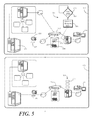
- FIGS. 3-5 illustrate an explanatory method of delivering content offerings being recorded in real time in response to client requests in accordance with one or more embodiments of the disclosure.
- FIG. 6 illustrates another explanatory method of delivering content offerings being recorded in real time in response to client requests in accordance with one or more embodiments of the disclosure.
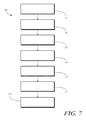
- FIG. 7 illustrates another explanatory method of delivering content offerings being recorded in real time in response to client requests in accordance with one or more embodiments of the disclosure.
- FIG. 8 illustrates one or more embodiments of the disclosure.
- embodiments of the invention described herein may be comprised of one or more conventional processors and unique stored program instructions that control the one or more processors to implement, in conjunction with certain non-processor circuits, some, most, or all of the functions of the selection of edge servers as described herein.
- the non-processor circuits may include, but are not limited to, network communication devices, routers, switches, video compression and decompression engines, and user video-on-demand devices. As such, these functions may be interpreted as steps of a method to perform edge server selection as described herein. It is expected that one of ordinary skill, notwithstanding possibly significant effort and many design choices motivated by, for example, available time, current technology, and economic considerations, when guided by the concepts and principles disclosed herein will be readily capable of generating such systems and methods with minimal experimentation.
- Embodiments of the disclosure provide methods and systems by which a client device in a video-on-demand system can start playback of a content offering that is currently being recorded without having to continually request index file updates.
- a client device requests a content offering, such as a television program
- the client device would transmit a unicast request to a server for portions of the content and an index file.
- the index file included data corresponding to portions of the content offering that had been recorded at the time of the request.
- the client device would need to repeatedly request retransmissions of the index file.
- the index file is a continually growing cache of data, repeated transmissions of the ever increasing index files to multiple client devices causes bandwidth inefficiencies.
- Embodiments of the present disclosure advantageously eliminate such bandwidth issues by leveraging index fact datagrams transmitted via a parallel path from a multicast server. Instead of continually requesting an index file that increases in size, once the content occurring from the predetermined start time and the request time is consumed, an edge server serving the client device simply obtains additional data from the series of index fact datagrams that have been received from a multicast server and cached at the edge server. In short, instead of requesting additional index files from a central server, the edge server simply draws additional data from its own cache, i.e., data received from a multicast channel, and incorporates that data into the index file originally received in response to the content offering request.
- Video-on-demand network operators have provided an “on-demand” option for television programs for quite some time. For example, if an episode of the television program “Buster and Mackie” starts at 8:00 PM Eastern, subscribers have had the option to view the entire program upon request, even when that request comes after the predetermined start time of 8:00 PM. Illustrating by example, if a user requests Buster and Mackie at 8:10 PM Eastern, many video-on-demand networks provide a “start over” service that allows the user to start the program over from the beginning of the program while the actual program is being recorded at a central server. The offering of a “start over” feature required the video-on-demand delivery network to be able to deliver the content offering to a client device while the offering was being recorded.
- a content delivery network content is generally delivered from a central server to an edge server located proximately with one or more client devices.
- This intermediate delivery to the edge server results in the edge server losing knowledge of the actual, current length of the content offering as it is being recorded. This is true because in content delivery networks the recording operation occurs at a central server, while the delivery of playback to a client device occurs from an edge server.
- An index file is essentially a playlist in a streaming content delivery network that contains a list of the media files transmitted in a streaming system.
- the index file can also include metadata corresponding to a content offering.
- Client devices use the index file to properly construct the media files in the proper order during playback.
- the edge server relies upon mapping of the “normal play time” of a particular content offering to the media file byte offsets when executing the “start over” function. Moreover, edge servers employ normal play time offsets into corresponding byte offsets into trick-play files to support trick play, such as fast forward, rewind, pause, and so forth. Said differently, access to the index file is an imperative for an edge server in a content delivery network to properly play a content offering and to perform trick play operations.
- the index file allows the edge server to support fast movement forward and backward in a content offering, as well as for resuming playback of the content offering and ensuring that the user does not fast-forward past the end of the content offering as it is being recorded.
- an edge server must continually request new index files from a central server when a user begins consuming a content offering while it is being recorded at a central server. Since the index file by definition gets longer as more of the content offering is recorded, repeated transmission of the index file to multiple devices causes bandwidth inefficiencies. This is especially true when multiple edge servers are simultaneously streaming a popular content offering as it is being recorded.
- Embodiments of the present disclosure provide a system and method for broadcasting index fact datagrams from a central server recording a content offering to all edge servers via a multicast server.
- This broadcast of datagrams through the multicast channel eliminates the need of an edge server to constantly request new index files. Instead, the edge server simply caches the datagrams as they are received for assemblage into an ad hoc index file. Once data in an initially delivered partial index file is used, the edge server draws additional data from the ad hoc index file instead of requesting new index files from the central server, thereby removing bandwidth inefficiencies.
- a multicast server delivers a content offering to an edge server beginning at a predetermined time.
- the predetermined time is the time that a central server begins recording the content offering as it is received from a content provider.
- this delivery includes delivering portions of content in succession, where each portion of content is accompanied by an index fact datagram to be included in an index file stored at the edge server.
- the central server delivers one or more portions of the content offering and an index file portion comprising all index fact datagrams delivered by the multicast server between the predetermined time and the request time.
- the central server delivers an instruction to the edge server to, when reaching a last index fact datagram of the index file portion, obtain any additional index fact datagrams corresponding to any additional portions of the content offering from the index file stored at the edge server. This eliminates the need for the edge server to repeatedly request new index files from the central server, thereby saving bandwidth in the system.
- FIG. 1 illustrated therein is a content delivery system 100 configured with video-on-demand functionality.
- the content delivery system 100 of FIG. 1 stores content offerings on a local storage device or cache 111 proximately located with an edge server 105 .
- the stored content offering 112 is then delivered to the requestor of a video-on-demand session by way of a streaming server 107 .
- a content provider 101 delivers the content offering 120 to a server complex 102 .
- the content offering 120 can comprise any type of data, but for ease of illustration will be referred to as video content, as well as associated audio content, metadata, or other content, suitable for use in a video-on-demand session.
- the content can be digitally compressed video content that can be demultiplexed and stored in a convenient format such as MPEG, MPEG 2, or MPEG 4. It will be clear to those of ordinary skill in the art having the benefit of this disclosure that other types of content could be used with the systems, methods, and devices described herein.
- the content provider 101 can provide the content offering 120 in various formats.
- the system may receive radio-frequency signals by satellite 113 or data packets by land-based communication networks.
- the system may receive adaptive bitrate packets by satellite 113 or terrestrial network.
- the server complex 102 records the content offering 120 into a cache 111 at the server complex 102 .
- the server complex 102 may record the content offering 120 from a predetermined start time until completion.
- the server complex 102 then is operable to deliver the content offering 120 to components across the content delivery system 100 as needed and/or as directed. In some cases, this delivery is based upon demand requests from an edge server 105 .
- the edge server 105 in one embodiment, is a device capable of requesting and storing quantities of data, including but not limited to video content and other types of content. In one embodiment, the edge server 105 is operable with a streaming server 107 to deliver video-on-demand content 114 across an interactive network 108 upon the request of a subscriber device 109 .
- the subscriber device 109 can be any number of types of devices. For example, in FIG. 1 , subscriber device 109 is a set-top box coupled to a monitor or television at a person's home. However, the subscriber device 109 can be other types of devices as well, including a smartphone, a tablet computer, a laptop computer, or a desktop computer. These types of devices are illustrative only, as others will be obvious to those of ordinary skill in the art having the benefit of this disclosure.
- the server complex 102 can include one or more servers.
- the server complex 102 is shown has having only a central server 110 for brevity.
- the central server 110 of the server complex 102 records content offerings as they are received by storing the content offerings in a content database 112 .
- the central server 110 of the server complex 102 can optionally process and/or reformat the content offering as necessary for delivery to the edge server 105 or the subscriber device 109 .
- the content database 112 in one embodiment, comprises a disk array.
- the disk array may be a JBOD (just a bunch of disks) or RAID (redundant array of inexpensive disks) with various architectures and interfaces, such as FC-AL (Fiber Channel-Arbitrated Loop) or SSA (Serial Storage Architecture).
- FC-AL Fiber Channel-Arbitrated Loop
- SSA Serial Storage Architecture
- the server complex 102 and/or central server 110 includes one or more processors 127 and, optionally, a relational database management system 119 .
- the relational database management system 119 can function, in one or more embodiments, as a server or storage device.
- the storage devices of the relational database management system 119 can contain a listing or table of one or more of the following: the content providers 101 , the content offerings 120 , index files 124 , etc., the edge servers 105 upon which the content offering 120 is stored, and so forth.
- the subscriber device When user requests video-on-demand content 114 with a subscriber device 109 , the subscriber device requests the video-on-demand content 114 from an edge server.
- the edge server is a HTTP (hypertext transfer protocol) client of the central server 110 . Accordingly, the edge server 105 makes the request by sending an HTTP GET command to the central server 110 .
- the central server sends one or more portions of the content offering 103 and an index file 124 to the edge server 105 .
- the edge server 105 then delivers the one or more portions of the content offering 103 to the subscriber device 109 via the streaming server 107 as video-on-demand content 114 .
- the edge server 105 must send another HTTP GET request to the central server 110 for more content portions.
- the central server 110 delivers another index file 124 to the edge server 105 .
- This process repeats, with the edge server 105 making more and more requests for content portions and index files.
- the index files become longer and longer. This results in consumption of more bandwidth when delivering these longer files.
- bandwidth spikes can be extreme.
- Embodiments of the present disclosure provide a system and method for broadcasting index fact datagrams from the real-time recording system, i.e., the central server 110 , out to edge servers 105 using a multicast server.
- the system and method eliminate the need for the edge server 105 to constantly reread the “ever-changing index file.”
- FIG. 2 illustrated therein is the server complex 102 of FIG. 1 in operation with a multicast server 210 .
- the server complex 102 of FIG. 2 is capable of operating in the unicast method described above with reference to FIG. 1 where the edge server 105 transmits requests for content offerings to the central server 110 .
- the central server 110 can then deliver one or more portions of the content offering 103 and the index file 124 through a unicast channel 221 to the edge server 105 .
- the content delivery network 200 of FIG. 2 also includes a multicast path 222 though which the multicast server 210 may deliver one or more portions of a content offering 203 to multiple edge servers 105 , 201 , 202 , 203 at the same time.
- the server complex 102 may elect to cause the multicast server 210 to deliver one or more portions of the content offering 203 to a plurality, or all, edge servers 105 , 201 , 202 , 203 in the system.
- each portion of the content offering is accompanied by an index file datagram 204 .
- the index file datagram 204 includes at least the following fact information: An originator identifier that identifies the indexing service of the server complex 102 transmitting the index fact datagram 204 ; a sequence number 205 ; an content offering identifier 207 that identifies the content offering to which the index file datagram 204 corresponds; a normal play time 208 of the content offering to which the index file datagram 204 corresponds; a byte offset 209 into the content offering to which the index file datagram 204 corresponds; and a byte offset 211 into a trick file of the content offering to which the index file datagram 204 corresponds.
- This fact information is explanatory only, as other information suitable for use as an index file datagram 204 will be obvious to those of ordinary skill in the art having the benefit of this disclosure.
- the sequence number 205 is set such that zero is included with the first index fact datagram 204 , which corresponds to the predetermined start time of the recording of a content offering.
- the byte offset 211 into the trick file comprises multiple byte offsets.
- this byte offset 211 can include a byte offset for each trick speed and/or trick play direction if different trick files for each speed and direction are used.
- the index file datagram 204 can be defined within a structure complete with length and checksum features providing the required appropriate robustness.
- each edge server 105 , 201 , 202 , 203 can then assemble each of these index file datagrams 204 into an index file 212 , 213 , 214 , 215 that can be stored in a cache 111 , 216 , 217 , 218 operable with each edge server 105 , 201 , 202 , 203 .
- each edge server 105 , 201 , 202 , 203 includes an indexing component that writes the index fact datagrams 204 to an index file 212 , 213 , 214 as a content offering is being recorded at the central server 110 and is being delivered to the edge servers 105 , 201 , 202 , 203 .
- this indexing component is updated as the index fact datagrams 204 are being received.
- the indexing component writes these index fact datagrams 204 to the index file 212 , 213 , 214 , 215 of its cache 111 , 216 , 217 , 218 .
- Embodiments of the disclosure leverage this ad hoc index file 212 , 213 , 214 , 215 stored in each cache 111 , 216 , 217 , 218 to eliminate the need for the edge server to constantly reread the “ever-changing index file” as described above with reference to FIG. 1 .
- FIG. 3 illustrates how this occurs in one embodiment.
- a central server 110 begins receiving a content offering 120 at a predetermined time.
- the predetermined time is the start time when the central server 110 begins receiving the content offering 120 from a content provider ( 101 ).
- the predetermined time may be 8:00 PM.
- the central server 110 begins recording the content offering 120 to its cache 111 .
- the central server 110 then delivers, with the multicast server 210 , the content offering 120 to an edge server 105 beginning at the predetermined time.
- this delivery includes delivering portions of content 303 in succession.
- each portion of content 303 is accompanied by an index fact datagram 204 .
- each index file datagram 204 is to be included in an index file 215 stored in a cache 111 at the edge server 105 .
- This process repeats at step 302 as the recording of the content offering 120 continues, with additional index fact datagrams 304 being written to the index file 215 stored in a cache 111 at the edge server 105 .
- a subscriber device 109 requests playback of the content offering 120 .
- this occurs while the central server 110 is recording the content offering 120 .
- the edge server 105 serving the subscriber device 109 transmits a request 403 for the content offering at a request time occurring after the predetermined time. For example, if the predetermined time was 8:00 PM Eastern, and the content offering 120 were a 30-minute sitcom, the request time may be something after 8:00 PM but before 8:30 PM, such as 8:10 PM.
- the request 403 comprises an HTTP GET request sent through the unicast channel 221 .
- the central server 110 receives this request 403 at step 402 .
- the central server 110 delivers, to the edge server 105 , one or more portions 103 of the content offering 120 .
- the central server 110 also delivers an index file portion 404 corresponding to the one or more portions 103 of the content offering 120 .
- the index file portion 404 may be a playlist for portions of the content offering 120 recorded by the central server 110 between 8:00 PM and 8:10 PM.
- the playlist comprises a list of index file datagrams comprising the information described above with reference to FIG. 2 .
- the central server 110 also sends a third item, namely, an instruction 405 to the edge server 105 to, when reaching a last index fact datagram 406 of the index file portion 404 , obtain any additional index fact datagrams 407 corresponding to any additional portions 408 of the content offering from the index file 215 stored at the edge server 105 .
- the edge server 105 then receives the one or more portions 103 of the content offering 120 , the index file portion 404 corresponding to the one or more portions 103 of the content offering 120 , and the instruction 405 . While this information can be used to serve the initial user request, the edge server 105 continues to receive additional index file datagrams 407 from the multicast server 210 . The edge server 105 then amends its index file 215 with these additional index fact datagrams 407 .
- edge servers 105 will not have to constantly reread the remote index files of each “start over” content offering they are streaming. Instead, when the information in the index file portion 404 is used, the edge server 105 simply receives any additional index fact datagrams 407 corresponding to any additional portions 408 of the content offering from the index file 215 stored at the edge server 105 . This advantageously reduces storage requirements at the central server 110 .
- the scalability, reliability, and serviceability of both the edge server 105 and the central server 110 both benefit from embodiments of the disclosure.
- the edge server 105 receives the one or more portions ( 103 ) of the content offering ( 120 ), the index file portion 404 corresponding to the one or more portions ( 103 ) of the content offering ( 120 ), and the instruction ( 405 ) to, when reaching a last index fact datagram 406 of the index file portion 404 , obtain any additional index fact datagrams 407 corresponding to any additional portions 408 of the content offering from the index file 215 stored at the edge server 105 .
- the edge server 105 executes a method 503 while playing out the content offering ( 120 ) to the subscriber device 109 . This is best illustrated by example.
- the index file portion 404 can then provide a playlist for portions of the content offering ( 120 ) recorded by the central server 110 between 8:00 PM and 8:10 PM. As long as the user is navigating within that window, be it via continuous play, fast forward trick play, rewind trick play, executing a “start over” function, and so forth, the edge server 105 utilizes the index file portion 404 to provide this playout.
- the edge server 105 retrieves additional index file information from the index file 215 stored at the edge server 105 , which continues to incorporate index fact datagrams 507 from the multicast server 210 .
- the edge server 105 obtains index fact datagrams 507 corresponding to any additional portions of the content 508 from a multicast server 210 , either in real time or from the index file 215 stored at the edge server 105 .
- Step 502 illustrates the edge server 105 delivering playout 509 of the content offering ( 120 ) to the subscriber device 109 based upon the index file 215 stored at the edge server 105 .
- this step 502 comprises delivering trick content 510 to the subscriber device 109 as a function of the data in the index file 215 . If the playout 509 is such that the edge server 105 is receiving additional index fact datagrams 507 in real time, the trick content 510 can be a function of the data in those index fact datagrams 507 .
- step 601 the method 600 delivers, with a multicast server, a content offering to an edge server beginning at a predetermined time.
- step 601 includes delivering portions of content in succession, with each portion of content accompanied by an index fact datagram to be included in an index file stored at the edge server.
- the method 600 receives, at a central server operable with the multicast server, a request for the content offering.
- step 602 occurs at a request time that is later than the predetermined time of step 601 .
- the request comprises an HTTP GET request for at least a portion of the content offering.
- the method 600 delivers, also with the central server, one or more portions of the content offering.
- the method 600 delivers an index file portion comprising all index fact datagrams delivered by the multicast server between the predetermined time and the request time.
- the method 500 delivers an instruction to the edge server to, when reaching a last index fact datagram of the index file portion, obtain any additional index fact datagrams corresponding to any additional portions of the content offering from the index file stored at the edge server. In one embodiment, steps 603 - 605 occur in response to the receiving step 602 .
- the index fact datagram delivered at step 605 includes a sequence number. In one embodiment, the sequence number is zero at the predetermined time occurring at step 601 . In one embodiment, the index fact datagram delivered at step 605 comprises an content offering identifier. In one embodiment, the index fact datagram delivered at step 605 includes a byte offset in the content offering. In one embodiment, the index fact datagram delivered at step 605 comprises a byte offset in one or more trick files corresponding to the content offering.
- the method 600 plays back the content offering to a subscriber device. In one embodiment this playback is a function of the index file portion.
- the method 600 switches from the index file portion to a streaming channel from a streaming server to acquire index fact datagrams.
- the method 600 plays back the content offering as a function of the index fact datagrams received from the streaming server.
- the playback of either step 606 or step 607 can comprise trick playback.
- step 701 the method 700 transmits, with an edge server, a request for a content offering.
- the content offering is scheduled to begin at a predetermined time.
- step 701 occurs at a request time that is later than the predetermined time.
- the transmitting of step 701 comprises sending an HTTP GET request to a central server.
- the method 700 includes receiving, at the edge server, one or more portions of the content offering.
- the method 700 includes receiving an index file corresponding to the one or more portions of the content offering.
- the method 700 includes receiving an instruction to, when reaching a portion of the content offering occurring at the request time, obtain index fact datagrams corresponding to any additional portions of the content from a multicast server. In one embodiment, steps 702 - 704 occur in response to the transmitting of step 701 .
- the index fact datagrams are received at step 705 .
- the index fact datagrams received at step 705 comprise a byte offset in the content offering. In one embodiment, the index fact datagrams receives at step 705 comprise a byte offset in one or more trick files corresponding to the content offering.
- the method 700 comprises amending the index file with the index fact datagrams.
- the method 700 includes delivering, with the edge server, trick content to a client device that is a function of data in the index file.
- a server complex in a content delivery network comprises a central server, a multicast server, and an edge server.
- the central server comprises one or more processors.
- the one or more processors are to deliver, with the multicast server, a content offering to the edge server.
- the content offering begins at a predetermined time.
- the one or more processors deliver the content offering by transmitting, across a network, portions of content in succession.
- each portion of content is accompanied by an index fact datagram.
- the edge server comprises another one or more processors to store, in a memory device at the edge server, each index fact datagram in an index file.
- the one or more processors of the central server are to receive a request for the content offering at a request time. In one embodiment, the request time occurs after the predetermined time.
- the one or more processors of the central server are to deliver one or more portions of the content offering, an index file portion comprising all index fact datagrams delivered by the multicast server between the predetermined time and the request time, and an instruction to the edge server to, when reaching a last index fact datagram of the index file portion, obtain any additional index fact datagrams corresponding to any additional portions of the content offering from the index file stored at the edge server.
- the another one or more processors of the edge server are to deliver trick content to a client device as a function of data in one or more of the additional index fact datagrams.
- the request of 801 comprises an HTTP GET request.
- the index fact datagrams of 801 comprise a byte offset in the content offering.
- the index fact datagrams of 801 comprise a byte offset in one or more trick files corresponding to the content offering.
- the index fact datagrams of 801 comprise a sequence number. In one embodiment, the sequence number is set to zero at the predetermined time.
- edge server which is not the server performing a recording function, is responsible for playback of content offerings recorded by the central server. Since the edge server is not performing the recording, the edge server has no knowledge of the actual length of the recording.
- the edge server can properly perform the playback operation is by having an index file that includes a mapping of the “normal play time” to content offering file byte offsets.
- the index file can also include normal playtime offsets that correspond to byte offsets of trick files as well.
- the index file is used by the edge server for playback, trick plays, skipping forward in an content offering, skipping backward in an content offering, pausing and resuming play of the content offering, and ensuring that a user does not fast forward or rewind past the end or beginning of an content offering, respectively, as it is being recorded.
- embodiments of the disclosure illustrated and described above provide a system and method for broadcasting index file datagrams through a multicast server from the real-time recording system out to edge servers.
- embodiments of the disclosure eliminate the need for the edge server to constantly reread the “ever-changing index file.”
- a central server creates index file data and writes it to storage at the central server as content offerings are being recorded.
- the central server then broadcasts index fact datagrams from a multicast server.
- each index fact datagram includes the identity of the central server sending the datagram, a sequence number, with the beginning of recording indicated by sequence number zero, a content offering identifier, a normal play time, a byte offset in the main content offering, and a byte offset into one or more trick files.
- each edge server updates its own in-memory index file, and/or persists the index information to cache or storage at its discretion.
- the first time that an edge device begins playback of an content offering being recorded it receives an index file portion from the central server. After the information in this index file portion is exhausted, the edge device simply retrieves additional index information from its cache rather than requesting new index files.
Landscapes
- Engineering & Computer Science (AREA)
- Multimedia (AREA)
- Signal Processing (AREA)
- Computer Networks & Wireless Communication (AREA)
- Databases & Information Systems (AREA)
- Computer Security & Cryptography (AREA)
- Human Computer Interaction (AREA)
- Two-Way Televisions, Distribution Of Moving Picture Or The Like (AREA)
Abstract
Description
Claims (20)
Priority Applications (1)
| Application Number | Priority Date | Filing Date | Title |
|---|---|---|---|
| US14/668,040 US9883221B1 (en) | 2015-03-25 | 2015-03-25 | System and method for optimizing real-time video-on-demand recording in a content delivery network |
Applications Claiming Priority (1)
| Application Number | Priority Date | Filing Date | Title |
|---|---|---|---|
| US14/668,040 US9883221B1 (en) | 2015-03-25 | 2015-03-25 | System and method for optimizing real-time video-on-demand recording in a content delivery network |
Publications (1)
| Publication Number | Publication Date |
|---|---|
| US9883221B1 true US9883221B1 (en) | 2018-01-30 |
Family
ID=61005527
Family Applications (1)
| Application Number | Title | Priority Date | Filing Date |
|---|---|---|---|
| US14/668,040 Active US9883221B1 (en) | 2015-03-25 | 2015-03-25 | System and method for optimizing real-time video-on-demand recording in a content delivery network |
Country Status (1)
| Country | Link |
|---|---|
| US (1) | US9883221B1 (en) |
Cited By (3)
| Publication number | Priority date | Publication date | Assignee | Title |
|---|---|---|---|---|
| CN108763475A (en) * | 2018-05-29 | 2018-11-06 | 维沃移动通信有限公司 | A recording method, recording device and terminal equipment |
| CN110300308A (en) * | 2018-03-22 | 2019-10-01 | 贵州白山云科技股份有限公司 | Streaming media playback method and device |
| CN110300339A (en) * | 2018-03-22 | 2019-10-01 | 贵州白山云科技股份有限公司 | Live multimedia playback method, device and system |
Citations (24)
| Publication number | Priority date | Publication date | Assignee | Title |
|---|---|---|---|---|
| JP2002318720A (en) | 2001-04-19 | 2002-10-31 | Oki Electric Ind Co Ltd | Contents delivery management system |
| US20030120793A1 (en) | 2001-12-21 | 2003-06-26 | Pekka Marjola | Method and arrangement for sending a video presentation |
| JP2005004615A (en) | 2003-06-13 | 2005-01-06 | Oki Electric Ind Co Ltd | Content distribution management system |
| US20080235746A1 (en) | 2007-03-20 | 2008-09-25 | Michael James Peters | Methods and apparatus for content delivery and replacement in a network |
| US20100058405A1 (en) | 2008-08-29 | 2010-03-04 | At&T Corp. | Systems and Methods for Distributing Video on Demand |
| WO2010045511A2 (en) | 2008-10-15 | 2010-04-22 | Gal Zuckerman | Methods and systems for delivering content |
| US20100242079A1 (en) | 2009-03-18 | 2010-09-23 | Steven Riedl | Apparatus and methods for network video recording |
| US20100251313A1 (en) | 2009-03-31 | 2010-09-30 | Comcast Cable Communications, Llc | Bi-directional transfer of media content assets in a content delivery network |
| JP2011044052A (en) | 2009-08-24 | 2011-03-03 | Hitachi Consumer Electronics Co Ltd | Content delivery device |
| US20110093900A1 (en) | 2009-10-20 | 2011-04-21 | Vipul Patel | Gateway apparatus and methods for digital content delivery in a network |
| US8042132B2 (en) | 2002-03-15 | 2011-10-18 | Tvworks, Llc | System and method for construction, delivery and display of iTV content |
| US20130144983A1 (en) | 2011-12-01 | 2013-06-06 | Digitial Keystone, Inc. | Methods and apparatuses for cdn shaping |
| US8489760B2 (en) | 2011-03-31 | 2013-07-16 | Juniper Networks, Inc. | Media file storage format and adaptive delivery system |
| US8516529B2 (en) | 2009-10-30 | 2013-08-20 | Time Warner Cable Enterprises Llc | Methods and apparatus for packetized content delivery over a content delivery network |
| US20130246643A1 (en) | 2011-08-31 | 2013-09-19 | Qualcomm Incorporated | Switch signaling methods providing improved switching between representations for adaptive http streaming |
| US20130254346A1 (en) | 2010-06-30 | 2013-09-26 | Unicorn Media, Inc. | Dynamic chunking for delivery instances |
| US20140059627A1 (en) | 2004-12-15 | 2014-02-27 | Time Warner Cable Enterprises Llc | Method and apparatus for high bandwidth data transmission in content-based networks |
| US8719879B2 (en) | 2010-06-11 | 2014-05-06 | Kuautli Media Investment Zrt. | Method and apparatus for content delivery |
| US8776101B2 (en) | 2009-03-30 | 2014-07-08 | Time Warner Cable Enterprises Llc | Personal media channel apparatus and methods |
| US20140237525A1 (en) | 2013-02-15 | 2014-08-21 | Cox Communications, Inc. | Storage optimization in a cloud-enabled network-based digital video recorder |
| US20140258449A1 (en) | 2013-03-11 | 2014-09-11 | Comcast Cable Communications, Llc | Segmented content delivery |
| US8856852B2 (en) | 2009-09-26 | 2014-10-07 | Mimik Technology Inc. | Method of obtaining television content from a serving node |
| US20150249854A1 (en) * | 2009-12-28 | 2015-09-03 | Akamai Technologies, Inc. | Method and system for recording streams |
| US20150334431A1 (en) * | 2013-09-04 | 2015-11-19 | Arris Enterprises, Inc. | Averting Ad Skipping in Adaptive Bit Rate Systems |
-
2015
- 2015-03-25 US US14/668,040 patent/US9883221B1/en active Active
Patent Citations (25)
| Publication number | Priority date | Publication date | Assignee | Title |
|---|---|---|---|---|
| JP2002318720A (en) | 2001-04-19 | 2002-10-31 | Oki Electric Ind Co Ltd | Contents delivery management system |
| US20030120793A1 (en) | 2001-12-21 | 2003-06-26 | Pekka Marjola | Method and arrangement for sending a video presentation |
| US8042132B2 (en) | 2002-03-15 | 2011-10-18 | Tvworks, Llc | System and method for construction, delivery and display of iTV content |
| JP2005004615A (en) | 2003-06-13 | 2005-01-06 | Oki Electric Ind Co Ltd | Content distribution management system |
| US20140059627A1 (en) | 2004-12-15 | 2014-02-27 | Time Warner Cable Enterprises Llc | Method and apparatus for high bandwidth data transmission in content-based networks |
| US20080235746A1 (en) | 2007-03-20 | 2008-09-25 | Michael James Peters | Methods and apparatus for content delivery and replacement in a network |
| US20100058405A1 (en) | 2008-08-29 | 2010-03-04 | At&T Corp. | Systems and Methods for Distributing Video on Demand |
| WO2010045511A2 (en) | 2008-10-15 | 2010-04-22 | Gal Zuckerman | Methods and systems for delivering content |
| US20100242079A1 (en) | 2009-03-18 | 2010-09-23 | Steven Riedl | Apparatus and methods for network video recording |
| US8776101B2 (en) | 2009-03-30 | 2014-07-08 | Time Warner Cable Enterprises Llc | Personal media channel apparatus and methods |
| US20100250773A1 (en) | 2009-03-31 | 2010-09-30 | Comcast Cable Communications, Llc | Dynamic generation of media content assets for a content delivery network |
| US20100251313A1 (en) | 2009-03-31 | 2010-09-30 | Comcast Cable Communications, Llc | Bi-directional transfer of media content assets in a content delivery network |
| JP2011044052A (en) | 2009-08-24 | 2011-03-03 | Hitachi Consumer Electronics Co Ltd | Content delivery device |
| US8856852B2 (en) | 2009-09-26 | 2014-10-07 | Mimik Technology Inc. | Method of obtaining television content from a serving node |
| US20110093900A1 (en) | 2009-10-20 | 2011-04-21 | Vipul Patel | Gateway apparatus and methods for digital content delivery in a network |
| US8516529B2 (en) | 2009-10-30 | 2013-08-20 | Time Warner Cable Enterprises Llc | Methods and apparatus for packetized content delivery over a content delivery network |
| US20150249854A1 (en) * | 2009-12-28 | 2015-09-03 | Akamai Technologies, Inc. | Method and system for recording streams |
| US8719879B2 (en) | 2010-06-11 | 2014-05-06 | Kuautli Media Investment Zrt. | Method and apparatus for content delivery |
| US20130254346A1 (en) | 2010-06-30 | 2013-09-26 | Unicorn Media, Inc. | Dynamic chunking for delivery instances |
| US8489760B2 (en) | 2011-03-31 | 2013-07-16 | Juniper Networks, Inc. | Media file storage format and adaptive delivery system |
| US20130246643A1 (en) | 2011-08-31 | 2013-09-19 | Qualcomm Incorporated | Switch signaling methods providing improved switching between representations for adaptive http streaming |
| US20130144983A1 (en) | 2011-12-01 | 2013-06-06 | Digitial Keystone, Inc. | Methods and apparatuses for cdn shaping |
| US20140237525A1 (en) | 2013-02-15 | 2014-08-21 | Cox Communications, Inc. | Storage optimization in a cloud-enabled network-based digital video recorder |
| US20140258449A1 (en) | 2013-03-11 | 2014-09-11 | Comcast Cable Communications, Llc | Segmented content delivery |
| US20150334431A1 (en) * | 2013-09-04 | 2015-11-19 | Arris Enterprises, Inc. | Averting Ad Skipping in Adaptive Bit Rate Systems |
Non-Patent Citations (5)
| Title |
|---|
| "A scalable video streaming approach using distributed b-tree", the University of British Columbia; Published in Apr. 2011; by Shantanu Khan Gramsci. |
| "An analysis and comparison of CDN-P2P-hybrid content delivery system and model", Journal of Communication 7.3; Published 2012; pp. 232-245. |
| "An Integrated, Interactive Application Environment for Session-Oriented IPTV Systems, Enabling Shared User Experiences", Published by Diss. Berlin Institute of Technology, 2011; Authored by Friedrich. |
| "Provider-Controlled Bandwidth Management for HTTP-based Video Delivery", Dissertation University of New Hampshire; Published 2012; Authored by Kevin J. Ma. |
| "White Paper", Survey and gap analysis for http streaming standards and implementations; Published 2010; Authored by Zong. |
Cited By (6)
| Publication number | Priority date | Publication date | Assignee | Title |
|---|---|---|---|---|
| CN110300308A (en) * | 2018-03-22 | 2019-10-01 | 贵州白山云科技股份有限公司 | Streaming media playback method and device |
| CN110300339A (en) * | 2018-03-22 | 2019-10-01 | 贵州白山云科技股份有限公司 | Live multimedia playback method, device and system |
| CN110300308B (en) * | 2018-03-22 | 2021-10-08 | 贵州白山云科技股份有限公司 | A kind of streaming media playback method and device |
| CN110300339B (en) * | 2018-03-22 | 2022-03-29 | 贵州白山云科技股份有限公司 | Live multimedia playback method, device and system |
| CN108763475A (en) * | 2018-05-29 | 2018-11-06 | 维沃移动通信有限公司 | A recording method, recording device and terminal equipment |
| CN108763475B (en) * | 2018-05-29 | 2021-01-15 | 维沃移动通信有限公司 | Recording method, recording device and terminal equipment |
Similar Documents
| Publication | Publication Date | Title |
|---|---|---|
| USRE50355E1 (en) | Reducing unicast session duration with restart TV | |
| US8776157B2 (en) | Methods and systems for a current channel buffer for network based personal video recording | |
| US8079053B2 (en) | System and method of deferring multimedia content delivery | |
| US8589992B2 (en) | Video workflow automation platform for publishing a video feed in multiple formats | |
| US8918820B2 (en) | Video workflow automation platform | |
| EP1955518B1 (en) | Network based instant replay and time shifted playback | |
| US10499101B2 (en) | Apparatus and method for providing media content | |
| US20160182960A1 (en) | Apparatus and methods for network video recording | |
| US20090100496A1 (en) | Media server system | |
| US20080086743A1 (en) | Enhanced personal video recorder | |
| US10057543B2 (en) | Digital video recorder having live-off-disk buffer for receiving missing portions of buffered events | |
| US7634652B2 (en) | Management of streaming content | |
| CN102638708A (en) | Systems and methods for enhanced trick-play functions | |
| US10893338B1 (en) | Method for unified ad delivery to consumer devices within service provider networks | |
| US20210377606A1 (en) | Apparatus, system, and method for abr segment pull dvr | |
| US8185926B1 (en) | System and method for providing media stream related applications | |
| US9924239B2 (en) | Video on demand over satellite | |
| US20060188222A1 (en) | System and method for facilitating fast-forwarding of first-run programs | |
| US20160212483A1 (en) | Hybrid program change for ip-enabled multimedia devices | |
| EP2892225B1 (en) | Recording method, device and system | |
| Kim et al. | An on-demand TV service architecture for networked home appliances |
Legal Events
| Date | Code | Title | Description |
|---|---|---|---|
| AS | Assignment |
Owner name: CONCURRENT COMPUTER CORPORATION, GEORGIA Free format text: ASSIGNMENT OF ASSIGNORS INTEREST;ASSIGNOR:ROGERS, THOMAS J;REEL/FRAME:035347/0160 Effective date: 20150318 |
|
| STCF | Information on status: patent grant |
Free format text: PATENTED CASE |
|
| AS | Assignment |
Owner name: VECIMA NETWORKS INC., CANADA Free format text: ASSIGNMENT OF ASSIGNORS INTEREST;ASSIGNOR:CONCURRENT COMPUTER CORPORATION;REEL/FRAME:045443/0376 Effective date: 20171215 |
|
| MAFP | Maintenance fee payment |
Free format text: PAYMENT OF MAINTENANCE FEE, 4TH YR, SMALL ENTITY (ORIGINAL EVENT CODE: M2551); ENTITY STATUS OF PATENT OWNER: SMALL ENTITY Year of fee payment: 4 |
|
| MAFP | Maintenance fee payment |
Free format text: PAYMENT OF MAINTENANCE FEE, 8TH YR, SMALL ENTITY (ORIGINAL EVENT CODE: M2552); ENTITY STATUS OF PATENT OWNER: SMALL ENTITY Year of fee payment: 8 |
|
| MAFP | Maintenance fee payment |
Free format text: PAYMENT OF MAINTENANCE FEE UNDER 1.28(C) (ORIGINAL EVENT CODE: M1559); ENTITY STATUS OF PATENT OWNER: LARGE ENTITY |
|
| FEPP | Fee payment procedure |
Free format text: ENTITY STATUS SET TO UNDISCOUNTED (ORIGINAL EVENT CODE: BIG.); ENTITY STATUS OF PATENT OWNER: LARGE ENTITY |