US9882829B2 - Orchestrating hybrid cloud services - Google Patents

Orchestrating hybrid cloud services Download PDF

Info

Publication number
US9882829B2
US9882829B2 US14/394,656 US201214394656A US9882829B2 US 9882829 B2 US9882829 B2 US 9882829B2 US 201214394656 A US201214394656 A US 201214394656A US 9882829 B2 US9882829 B2 US 9882829B2
Authority
US
United States
Prior art keywords
cloud
application programming
service
interface
hybrid
Prior art date
Legal status (The legal status is an assumption and is not a legal conclusion. Google has not performed a legal analysis and makes no representation as to the accuracy of the status listed.)
Active, expires
Application number
US14/394,656
Other versions
US20150074279A1 (en
Inventor
Stephane Herman Maes
Mark Perreira
Bryan P. Murray
Rajeev Bharadhwaj
Current Assignee (The listed assignees may be inaccurate. Google has not performed a legal analysis and makes no representation or warranty as to the accuracy of the list.)
Hewlett Packard Enterprise Development LP
Original Assignee
Hewlett Packard Enterprise Development LP
Priority date (The priority date is an assumption and is not a legal conclusion. Google has not performed a legal analysis and makes no representation as to the accuracy of the date listed.)
Filing date
Publication date
Application filed by Hewlett Packard Enterprise Development LP filed Critical Hewlett Packard Enterprise Development LP
Assigned to HEWLETT-PACKARD DEVELOPMENT COMPANY, L.P. reassignment HEWLETT-PACKARD DEVELOPMENT COMPANY, L.P. ASSIGNMENT OF ASSIGNORS INTEREST (SEE DOCUMENT FOR DETAILS). Assignors: PERREIRA, Mark, MAES, STEPHANE HERMAN, BHARADHWAJ, RAJEEV, MURRAY, BRYAN P
Publication of US20150074279A1 publication Critical patent/US20150074279A1/en
Assigned to HEWLETT PACKARD ENTERPRISE DEVELOPMENT LP reassignment HEWLETT PACKARD ENTERPRISE DEVELOPMENT LP ASSIGNMENT OF ASSIGNOR'S INTEREST Assignors: HEWLETT-PACKARD DEVELOPMENT COMPANY, L.P.
Application granted granted Critical
Publication of US9882829B2 publication Critical patent/US9882829B2/en
Active legal-status Critical Current
Adjusted expiration legal-status Critical

Links

Images

Classifications

    • HELECTRICITY
    • H04ELECTRIC COMMUNICATION TECHNIQUE
    • H04LTRANSMISSION OF DIGITAL INFORMATION, e.g. TELEGRAPHIC COMMUNICATION
    • H04L47/00Traffic control in data switching networks
    • H04L47/70Admission control; Resource allocation
    • H04L47/78Architectures of resource allocation
    • H04L47/781Centralised allocation of resources
    • GPHYSICS
    • G06COMPUTING OR CALCULATING; COUNTING
    • G06FELECTRIC DIGITAL DATA PROCESSING
    • G06F9/00Arrangements for program control, e.g. control units
    • G06F9/06Arrangements for program control, e.g. control units using stored programs, i.e. using an internal store of processing equipment to receive or retain programs
    • G06F9/46Multiprogramming arrangements
    • G06F9/50Allocation of resources, e.g. of the central processing unit [CPU]
    • G06F9/5061Partitioning or combining of resources
    • G06F9/5072Grid computing
    • H04L67/16
    • HELECTRICITY
    • H04ELECTRIC COMMUNICATION TECHNIQUE
    • H04LTRANSMISSION OF DIGITAL INFORMATION, e.g. TELEGRAPHIC COMMUNICATION
    • H04L67/00Network arrangements or protocols for supporting network services or applications
    • H04L67/50Network services
    • H04L67/51Discovery or management thereof, e.g. service location protocol [SLP] or web services

Definitions

  • a cloud service generally refers to a service that allows end recipient computer systems (thin clients, portable computers, smartphones, desktop computers and so forth) to access a pool of hosted computing and/or storage resources (i.e., the cloud resources) and networks over a network (the Internet, for example).
  • the host a cloud service provider, may, as examples, provide Software as a Service (SaaS) by hosting applications; Infrastructure as a Service (IaaS) by hosting equipment (servers, storage components, network components, etc.); or Platform as a Service (PaaS) by hosting a computing platform (operating system, hardware, storage, etc.).
  • SaaS Software as a Service
  • IaaS Infrastructure as a Service
  • PaaS Platform as a Service
  • a typical cloud service incurs charges on a demand basis, is managed by the cloud service provider and may be scaled (scaled according to desired storage capacity, processing power, network bandwidth and so forth) by the end user.
  • the cloud service may be a public service (an Internet-based service, for example) that is generally available to all potential users or a limited access private service that is provided over a private network (a business enterprise network, for example) as well as a managed cloud service (e.g., a virtual private cloud service) or a hybrid cloud service (a cloud service that is a combination of the above).
  • FIG. 1 is a schematic diagram of a hybrid cloud system according to an example implementation.
  • FIG. 2 is a flow diagram depicting a technique to orchestrate hybrid cloud services according to an example implementation.
  • FIG. 3 is a flow diagram depicting a technique to search hybrid cloud resources according to an example implementation.
  • FIG. 4 is a flow diagram depicting a technique to check a requested action against predetermined policies according to an example implementation.
  • FIG. 5 is an illustration of a recipe according to an example implementation.
  • FIG. 6 is a flow diagram depicting a technique to design a service using a service blueprint according to an example implementation.
  • FIG. 7 is a schematic diagram of a hybrid cloud service interface according to another example implementation.
  • FIG. 8 is a schematic of a machine architecture according to an example implementation.
  • Cloud service providers typically offer cloud services in many different forms.
  • cloud service providers may provide Information as a Service (Iaas)-based cloud services
  • APIs application programming interfaces
  • cloud services such as IaaS services
  • the services are provided to an end user system by a hybrid cloud may be formed from a combination of multiple clouds having two or more cloud types.
  • the different cloud types refers to clouds formed from traditional networks; public clouds (and possibly multiple service providers); private clouds (business enterprise-based clouds, for example); next generation data centers (data centers that provide cloud services such as IaaS and other cloud services); managed clouds (on the premise for virtual clouds); virtual private clouds (limited access clouds formed from public clouds, for example); and so forth.
  • a technique 100 includes providing (block 104 ) a first interface to manage cloud services provided by hybrid cloud resources that form a hybrid cloud.
  • the first interface is used (block 108 ) to orchestrate the cloud services, including using the first interface to orchestrate APIs to allow at least one cloud resource management function to be performed across at least two of the cloud resources.
  • the orchestration of the APIs 82 manages functions across the cloud services for users of user end systems 50 (desktops, portable computers, smartphones, clients, thin clients, servers, and so forth).
  • FIG. 1 depicts an example implementation of system 10 in a service blueprint-based architecture that is used to orchestrate the APIs 82 . More particularly, as disclosed herein, a cloud service manager 60 of the system 10 orchestrates the APIs 82 of existing cloud hybrid services.
  • the cloud service manager 60 may be accessed by a given end user system 50 via network fabric 29 (network fabric formed from one or more of local area network (LAN) fabric, wide area network (WAN) fabric, Internet fabric, and so forth).
  • network fabric 29 network fabric formed from one or more of local area network (LAN) fabric, wide area network (WAN) fabric, Internet fabric, and so forth.
  • the cloud service manager 60 may reside on an Internet server, reside on a server within a private LAN, reside on a server within a WAN, reside on a desktop computer, or may be a web or SaaS (Software as a service), as just a few examples.
  • the users of the cloud service manager 60 may select and order, manage and monitor “cloud capabilities” through the cloud service manager 60 , where the “cloud capabilities” refer to user-selected combinations of existing cloud services that are provided by existing cloud resources 20 , as well as lifecycle management services that are offered and delivered by the cloud service manager 60 . All of these cloud capabilities (the existing cloud services, the combinations of the existing cloud services and the lifecycle management services) are generally referred to herein as “cloud capabilities” herein.
  • the cloud service manager 60 contains a user interface module 62 that contains one or more graphical user interfaces (GUIs) and/or APIs, that allow a user to access a service consumption module 66 (of the cloud service manager 60 ) for purposes of browsing, selecting, ordering, managing and/or monitoring cloud capabilities that are offered by the cloud service manager 60 .
  • GUIs graphical user interfaces
  • APIs graphical user interfaces
  • the user interface module 62 permits the end user system 50 , via a hybrid cloud service interface 80 , to perform one or more functions across multiple clouds of the hybrid cloud.
  • the end user system 50 may access one or more cloud resources 20 of the hybrid cloud, such as an IaaS resource 20 - 1 (a resource that provides hosted equipment, such as servers, storage components and network components as a service); a Platform as a Service (PaaS) resource 20 - 2 (a resource that provides a hosted computing platform such as an operating system, hardware, storage, and so forth); a Software as a Service (SaaS) resource 20 - 3 (a resource that provides hosted applications as a service); a DataBase as a Service (DBaaS) resource 20 - 4 (a resource that provides a hosted database as a service); and so forth.
  • IaaS resource 20 - 1 a resource that provides hosted equipment, such as servers, storage components and network components as a service
  • PaaS Platform as a Service
  • SaaS Software as a Service
  • DBaaS DataBase as a Service
  • the available existing cloud resources 20 further include, in accordance with example implementations, resources 20 that provide other services for the hybrid cloud, such as (as examples), resources 20 - 5 , 20 - 6 and 20 - 7 that provide services derived from their provisioning using the Server Automation (SA), Database Middleware Automation (DMA), Matrix Operating Environment (MOE), or Operations Orchestration (OO) software available from Hewlett Packard® and other any other infrastructure provisioning or IaaS provisioning system.
  • SA Server Automation
  • DMA Database Middleware Automation
  • MOE Matrix Operating Environment
  • OO Operations Orchestration
  • the cloud resources may include these as well as other cloud services/capabilities 20 - 8 , in accordance with further implementations.
  • one or multiple of the existing cloud resources 20 may be provided by the cloud service manager 60 , in accordance with example implementations.
  • the hybrid cloud service interface 80 orchestrates a set of cloud service APIs 82 for purposes of allowing the APIs 82 to be subscribed to and managed.
  • the APIs 82 may include, as examples, a set of IaaS APIs to perform “basic” IaaS life cycle management functions, such as APIs to launch a specified number of cloud service instances, terminate cloud service instances, reboot one or more cloud service instances, cluster virtual machines (VMs), acquire information about specific VM clusters, update information about VM clusters, delete VM clusters, migrate VMs, list servers, start selected servers, stop selected servers, configure selected servers, delete selected servers, reboot selected servers, configure networks, configure storage volumes, configure object stores, list object stores, and so forth.
  • VMs cluster virtual machines
  • the APIs 82 are coarse grain APIs that are associated with coarse grain services shared in common among the clouds of the hybrid cloud.
  • the hybrid cloud service interface 80 allows supplementation to the basic APIs with additional APIs that may be later defined/added or discovered for purposes of providing additional cloud service management functions (e.g., specifying exactly which resource pool to use or discovering resource pool capabilities, as discussed hereafter).
  • some of the APIs 82 may target a specific cloud or pool of resources; and other APIs 82 may be in respective forms that do not specify a certain cloud or pool.
  • the APIs 82 may be used in an implementation to query or discover an available pool of resources.
  • the query may be used for purposes of identifying a specific cloud or pool of cloud resources so that a proper identifier or identifiers may be acquired for subsequently accessing this pool.
  • FIG. 1 referring to FIG.
  • such an API implementation may perform a technique 130 that includes receiving (block 124 ) user provided search criteria and allowing the hybrid cloud service interface 80 to be used (via the APIs 82 ), pursuant to block 128 , to automatically select a resource pool based on the search criteria.
  • the technique 130 includes spreading (block 129 ) the request across multiple clouds (for the case of a hybrid cloud) or across multiple network technologies (such as the case of a heterogeneous cloud that is implemented by different resource resource technologies, for example).
  • the APIs 82 may be used in an exemplary implementation in which a particular API of a target pool or resource (an IaaS or management system, for example) may be called for purposes of allowing the API to provision the resource and possibly subsequently manage the resource when the target pool/cloud is specified.
  • an exemplary implementation may use the APIs 82 to determine the best pool/cloud or pools/clouds (according to a selection criteria) to provision and then manage them otherwise.
  • an exemplary implementation may use the API 82 to determine the best pool based on a capacity consideration; a latency or delay consideration; an availability consideration (scheduled maintenance, etc.); a service level agreement (SLA) consideration; a quality of service (QoS) consideration; a load consideration; and/or some other decision strategy or criteria, depending on the particular implementation.
  • a capacity consideration a latency or delay consideration
  • an availability consideration scheduled maintenance, etc.
  • SLA service level agreement
  • QoS quality of service
  • the APIs 82 may be used, in an exemplary implementation, to provide metadata as a result of a search to allow the requester to determine the best target pool of resources or cloud(s) of the hybrid could.
  • a technique 130 includes receiving (block 134 ) a user request for a cloud service action and checking (block 138 ) the cloud service action against the policy. Correction may then be selectively taken by the implementation that uses the API(s) 82 , pursuant to block 142 . For example, if the policy prohibits the action due to, for example, location or a cost restriction, a given API 82 may recommend an alternative resource/service type. Other variations are contemplated, and are within the scope of the appended claims.
  • the hybrid cloud service interface 80 may create a service instance 49 (see FIG. 1 ) for the purpose of tracking a particular service across the cloud, including managing and monitoring the service.
  • a service instance 49 for the purpose of tracking a particular service across the cloud, including managing and monitoring the service.
  • one or more issues identified as a result of the check may be communicated back to the requester, who, in turn, may correct the request.
  • the addition of a new pool of resources or cloud is accomplished by providing a corresponding identification (ID) and an API 82 for the new resource/cloud, cataloging the corresponding capabilities, creating instances, and so forth. In other implementations an ID may not be passed.
  • adding a new pool or resources or cloud adds a new capability (adds storage capability that was previously not offered, for example), and the hybrid cloud service interface 80 orchestrates the one or multiple APIs of the new services.
  • the cloud service manager 60 uses service blueprints 70 to orchestrate the APIs 82 .
  • Each service blueprint 70 has an associated collection of functions, or “recipes,” which may be executed (by logic 96 , for example) for purposes of orchestrating the APIs 82 .
  • the APIs 82 are objects of the service blueprints 70 and are executed for purposes of performing the above-described cloud management functions that may occur across the hybrid cloud.
  • execution of a particular set of recipes may cause the orchestration of the appropriate API 82 to provision, instantiate and build a cloud services; monitor a cloud service, meter a cloud service; perform searches across the hybrid cloud; locate a particular pool of resources; recommend a pool of resources; check requested functions against certain policies; and so forth.
  • a recipe may be a script or workflow or any other executable, in accordance with example implementations, which may be executed by the logic 96 for purposes of performing the actions specified by the service blueprint 70 .
  • a given service blueprint 70 may be instantiated/deployed by executing its associated recipe(s), which results in a service instance, such as exemplary service instance 49 of FIG. 1 , that may be tracked, for example, information technology (IT) management systems by feeding the service instance into an IT service management (ITSM) service, a real time service management (RTSM) service, or a configuration management database (CMDB) with a full topology of how a service instance is supported/implemented.
  • IT information technology
  • IT IT service management
  • RTSM real time service management
  • CMDB configuration management database
  • the service delivery module 68 may contain a service instance service management component 49 (e.g., an RTSM, CMDB or ITSM) for this purpose.
  • the component 49 may be available for other management systems to monitor and manage separately the instantiated instances (identified and tracked based on topology information stored in the database).
  • the actions to set up the monitoring and management are achieved through the use of the service blueprints 70 .
  • additional APIs may also be implemented as recipes calling the different pools.
  • New services may be built with traditional service blueprint designer and discovery may be based on querying the repository of service compositions/service blueprints.
  • a service blueprint 70 may be constructed using a workflow 489 that is illustrated in FIG. 4 .
  • a cloud service provider 490 may include a provider interface 491 that has GUIs and tools that allow a designer/administrator to construct orchestrated flows 492 - 1 and 492 - 2 , which are defined by associated process definitions 494 . These orchestrated flows, in turn, create actions 496 for resource offerings 495 .
  • the workflow 489 of FIG. 4 produces may produce one or more service blueprints 70 that have a design 497 constructed of service components 498 and resource bindings 499 .
  • the cloud service manager 60 includes a service consumption module 66 , which regulates user subscriptions to these services, in accordance with example implementations.
  • the service consumption module 66 includes catalogs 41 , which users may browse to review and select offered cloud capabilities.
  • the service consumption module 66 may contain such other components, such as user login components 42 (components managing passwords/login identifications and so forth); user and tenant information; user subscription components 35 (components describing subscription contract terms, subscription rates, and so forth); and an engine 40 that contains logic that allows access and modification to the offered services, updating of subscription data, updating of login information and so forth.
  • the designers/administrators may also use GUI-based tools of the service delivery module 68 to modify existing service blueprints 70 and form new service blueprints 70 based on combinations of existing service blueprints 70 .
  • a given recipe may automate the actions that a given user may otherwise undertake for purposes of performing a cloud service across one or more clouds and/or technologies.
  • an exemplary recipe 400 may use exemplary branches 410 , 420 and 430 for purposes of abstracting different IaaS technologies and clouds.
  • the branches 410 , 420 and 430 may be, for example, associated with multiple clouds and/or resource pools that are used to perform a given cloud service action.
  • Each branch 410 , 420 and 430 uses the appropriate APIs 82 to make calls (illustrated by states 412 , 414 and 416 of the branch 410 ; states 422 and 424 of the branch 420 ; and states 432 , 434 and 436 of the branch 430 ) to perform the action for these cloud(s)/resource pool(s).
  • cloud service designers may design new recipes to build higher level services as executable or work flow/composition/business process/scripts (i.e., flows of conditions and actions) of API calls to the resource interfaces and API calls to other functions (calls to activation/provisioning service resources, for example).
  • new recipes may be constructed and existing recipes may be modified by the users of the cloud service manager 60 /designers. It is noted that the recipes may be constructed using, for example, an API of the cloud service manager 60 to design a script; or the construction of the recipes may be GUI-based.
  • a designer may edit the service blueprint 70 with GUI objects representing each resource or service involved.
  • the GUI links may represent the workflow (customizable conditions and actions, for example). By clicking on the object, the designer may then be able to customize each service blueprint of the resource or service (e.g. setting variables or linking variables to other contexts, etc.)
  • the designer may use the logic of the engine 40 of the service consumption module 66 to add, delete or other modify recipes for a given service blueprint 70 ; or create a new service blueprint 70 .
  • the GUI guides the designer through this process. It is noted, that in accordance with some implementations, different GUIs may be provided for the different users and designers.
  • the storefront module 62 may contain various GUIs for designers and possibly for users to modify, delete and create service blueprints 70 .
  • separate screens may be presented in the portal to manage order capabilities.
  • an instantiated service blueprint 70 may be captured in an instantiated service repository 46 .
  • data captured in the repository 46 may be viewed via a user interface for purposes of displaying reports and statuses of services to the users.
  • the service repository 46 in addition to being populated via the designer tools, may ingest/aggregate/federate from different service repositories.
  • the users may also use GUI-based tools for purposes of viewing order statuses and managing order capabilities, in accordance with further implementations.
  • a corresponding console page may also be used to call other service blueprint-related functions to manage the service instances. It is noted that information and alerts about the service blueprints resulting from monitoring the instances ensures that service blueprints recipes include deployment of appropriate agent/tool/setup to ensure management, and management tools associated to the resources are configured to monitor the instances.
  • a hybrid cloud service interface 500 may orchestrate the APIs 82 as part of an API model-based architecture that is illustrated in FIG. 7 .
  • This API model-based architecture may or may not contain components of the service blueprint architecture of FIG. 1 , depending on the particular implementation.
  • the hybrid cloud service interface 500 contains overarching APIs 550 , which are a superset of the APIs 82 (M APIs 82 - 1 , 82 - 2 . . . 82 -M, being depicted in FIG. 7 as examples), which are associated with a hybrid arrangement of clouds and different technologies.
  • each API 82 forms an interface between one or multiple APIs 510 of a given cloud and the overarching APIs 550 .
  • logic 555 may provide additional behavior described above for purposes of performing various cloud services actions, such as the actions depicted in FIGS. 3 and 4 , for example (selection of pool/cloud, policy enforcement and so forth).
  • the hybrid cloud service interface 500 may provide services for multiple tenants, and as such, may include a shared services module 560 containing an API 562 to control multiple tenant access, as well as a tenant resource registry 566 .
  • each of the cloud APIs 82 correspond to a cloud service, such as a compute, storage, network, or image management service, as examples.
  • each cloud API 82 may communicate with a corresponding cloud container 500 (M cloud containers 500 - 1 , 500 - 2 . . . 500 -M, being depicted in FIG. 7 as examples), which, in turn, form the specific interfaces for the clouds that form the hybrid cloud.
  • the cloud compute container 500 contains APIs 510 for the various services provided as part of an associated cloud.
  • the APIs 510 for a given container 500 may contain APIs 510 for virtual machines, storage volumes, object stores, networks, and so forth of the associated cloud.
  • a given cloud container 500 may also contain a shared services registry 504 as well as an API 520 for purposes of interfacing the APIs 510 to the corresponding associated cloud API 82 .
  • message brokering is employed for purposes of feeding requests through the APIs 550 to the appropriate API 82 .
  • the cloud containers 500 are associated with coarse grain cloud services.
  • the services may vary among the cloud containers 500 , with some of the cloud services being shared in common.
  • the overarching APIs 550 correspond to cloud services that are shared among the cloud containers 500 . Therefore, for example, if a cloud does not provide a storage service, storage requests are directed to the other cloud(s) that offer the storage service. Conversely, if a cloud offers additional features or capabilities that are not offered by the other clouds, the additional feature(s) or service(s) may be potentially be lost.
  • the overarching APIs 550 may be extended to expose “new” cloud services that are provided by newly-added clouds. If a request is made to use one of the new cloud services, the corresponding capabilities to perform the service are provisioned/reserved in the cloud(s) that offer these services.
  • the API model architecture depicted in FIG. 7 may be replicated so that the cloud containers 500 of this additional model correspond to the clouds that offer the new services.
  • APIs 82 that correspond to new features are orchestrated using the above-described service blueprints 70 .
  • the above-described service blueprint-based and API model-based architectures may be combined in a hybrid architecture in which some new feature APIs 82 are realized using service blueprints 70 and other new feature APIs 82 are realized using the API model-based architecture.
  • the introduction of a new cloud service in the service-blueprint architecture may be realized not re-authoring the service blueprints 70 , but instead by binding “hybrid” service blueprints 70 to providers that are implementing (via adapters or plug-ins) the connection to the new cloud APIs.
  • the same overarching APIs 550 may then be used across the different clouds. Additional new capability overarching APIs 550 may be exposed by building the specific blueprints for these functions.
  • the service blueprints are discoverable in terms of the APIs that trigger their actions.
  • any of the service blueprint or API model architectures that are disclosed herein may be implemented on a system 599 that is depicted in FIG. 8 .
  • the system 599 includes one or multiple physical machines 600 (N physical machines 600 - 1 . . . 600 -N, being depicted as examples in FIG. 8 ).
  • the physical machine 600 is a machine that is made of actual hardware 610 and actual machine executable instructions 650 .
  • the physical machines 600 are depicted in FIG. 8 as being contained within corresponding boxes, a particular physical machine 600 may be a distributed machine, which has multiple nodes that provide a distributed and parallel processing system.
  • the physical machine 500 may be located within one cabinet (or rack); or alternatively, the physical machine 500 may be located in multiple cabinets (or racks).
  • a given physical machine 600 may include such hardware 610 as one or more processors 614 and a memory 620 that stores machine executable instructions 650 , application data, configuration data and so forth.
  • the processor(s) 614 may be a processing core, a central processing unit (CPU), and so forth.
  • the memory 620 is a non-transitory memory, which may include semiconductor storage devices, magnetic storage devices, optical storage devices, and so forth.
  • the physical machine 600 may include various other hardware components, such as a network interface 616 and one or more of the following: mass storage drives; a display, input devices, such as a mouse and a keyboard; removable media devices; and so forth.
  • a network interface 616 and one or more of the following: mass storage drives; a display, input devices, such as a mouse and a keyboard; removable media devices; and so forth.
  • the machine executable instructions 650 contained in the physical machine 600 may, when executed by the processor(s) 614 , cause the processor(s) 614 to form one or more components of any of the above-described service blueprint, API model or hybrid service blueprint-API model architectures that are disclosed herein.
  • the physical machines 600 communicate with each other over a communication link 670 .
  • This communication link 670 may be coupled to the user end devices 50 (see FIG. 1 ) and as such, may form at least part of the network fabric 29 (see FIG. 1 ).
  • the communication link 670 represents one or multiple types of network fabric (i.e., wide area network (WAN) connections, local area network (LAN) connections, wireless connections, Internet connections, and so forth).
  • the communication link 670 may represent one or more multiple buses or fast interconnects.
  • the cloud service provider may be an application server farm, a cloud server farm, a storage server farm (or storage area network), a web server farm, a switch, a router farm, and so forth.
  • two physical machines 600 are depicted in FIG. 8 for purposes of a non-limiting example, it is understood that the system 599 may contain a single physical machine 600 or may contain more than two physical machines 600 , depending on the particular implementation (i.e., “N” may be “1,” “2,” or a number greater than “2”).

Landscapes

  • Engineering & Computer Science (AREA)
  • Physics & Mathematics (AREA)
  • Software Systems (AREA)
  • Theoretical Computer Science (AREA)
  • Computer Networks & Wireless Communication (AREA)
  • Signal Processing (AREA)
  • Mathematical Physics (AREA)
  • General Engineering & Computer Science (AREA)
  • General Physics & Mathematics (AREA)
  • Information Transfer Between Computers (AREA)
  • Computer And Data Communications (AREA)
  • Stored Programmes (AREA)

Abstract

A technique includes providing a first interface to manage a plurality of cloud services that are provided by a plurality of cloud resources that form a hybrid cloud. Each of the cloud resources is associated with an application programming interface. The technique includes using the first interface to orchestrate the cloud services, where the orchestration includes using the first interface to orchestrate the application programming interfaces to allow at least one cloud resource management function provided by the first interface to be performed across at least two of the cloud resources.

Description

BACKGROUND
A cloud service generally refers to a service that allows end recipient computer systems (thin clients, portable computers, smartphones, desktop computers and so forth) to access a pool of hosted computing and/or storage resources (i.e., the cloud resources) and networks over a network (the Internet, for example). In this manner, the host, a cloud service provider, may, as examples, provide Software as a Service (SaaS) by hosting applications; Infrastructure as a Service (IaaS) by hosting equipment (servers, storage components, network components, etc.); or Platform as a Service (PaaS) by hosting a computing platform (operating system, hardware, storage, etc.).
A typical cloud service incurs charges on a demand basis, is managed by the cloud service provider and may be scaled (scaled according to desired storage capacity, processing power, network bandwidth and so forth) by the end user. The cloud service may be a public service (an Internet-based service, for example) that is generally available to all potential users or a limited access private service that is provided over a private network (a business enterprise network, for example) as well as a managed cloud service (e.g., a virtual private cloud service) or a hybrid cloud service (a cloud service that is a combination of the above).
BRIEF DESCRIPTION OF THE DRAWINGS
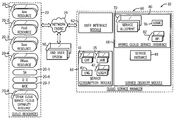
FIG. 1 is a schematic diagram of a hybrid cloud system according to an example implementation.
FIG. 2 is a flow diagram depicting a technique to orchestrate hybrid cloud services according to an example implementation.
FIG. 3 is a flow diagram depicting a technique to search hybrid cloud resources according to an example implementation.
FIG. 4 is a flow diagram depicting a technique to check a requested action against predetermined policies according to an example implementation.
FIG. 5 is an illustration of a recipe according to an example implementation.
FIG. 6 is a flow diagram depicting a technique to design a service using a service blueprint according to an example implementation.
FIG. 7 is a schematic diagram of a hybrid cloud service interface according to another example implementation.
FIG. 8 is a schematic of a machine architecture according to an example implementation.
DETAILED DESCRIPTION
Cloud service providers typically offer cloud services in many different forms. For example, although different cloud service providers may provide Information as a Service (Iaas)-based cloud services, the manner in which these services are delivered differ in such ways as the application programming interfaces (APIs) that are offered; the services that are provided through these APIs in terms of capabilities and the properties/characteristics of these capabilities (the locations, the capacities, and so forth); and the technologies used to deliver these capabilities. In accordance with example implementations, which are disclosed herein, cloud services, such as IaaS services, may be provided by to a given end user system in the form of a hybrid cloud that is formed from a multitude of clouds, which, in turn, may be associated with multiple cloud service providers and technologies.
In this regard, in example implementations that are disclosed herein, the services are provided to an end user system by a hybrid cloud may be formed from a combination of multiple clouds having two or more cloud types. The different cloud types refers to clouds formed from traditional networks; public clouds (and possibly multiple service providers); private clouds (business enterprise-based clouds, for example); next generation data centers (data centers that provide cloud services such as IaaS and other cloud services); managed clouds (on the premise for virtual clouds); virtual private clouds (limited access clouds formed from public clouds, for example); and so forth.
Referring to FIG. 1, systems and techniques that are disclosed herein for purposes of orchestrating APIs 82 associated with constituent clouds of a hybrid cloud for purposes of allowing at least one cloud resource management function to be performed across two or more of the constituent clouds. More specifically, referring to FIG. 2 in conjunction with FIG. 1, in accordance with example implementations that are disclosed herein, a technique 100 includes providing (block 104) a first interface to manage cloud services provided by hybrid cloud resources that form a hybrid cloud. In this manner, the first interface is used (block 108) to orchestrate the cloud services, including using the first interface to orchestrate APIs to allow at least one cloud resource management function to be performed across at least two of the cloud resources. The orchestration of the APIs 82 manages functions across the cloud services for users of user end systems 50 (desktops, portable computers, smartphones, clients, thin clients, servers, and so forth).
FIG. 1 depicts an example implementation of system 10 in a service blueprint-based architecture that is used to orchestrate the APIs 82. More particularly, as disclosed herein, a cloud service manager 60 of the system 10 orchestrates the APIs 82 of existing cloud hybrid services.
As depicted in FIG. 1, the cloud service manager 60 may be accessed by a given end user system 50 via network fabric 29 (network fabric formed from one or more of local area network (LAN) fabric, wide area network (WAN) fabric, Internet fabric, and so forth). As such, depending on the particular implementation, the cloud service manager 60 may reside on an Internet server, reside on a server within a private LAN, reside on a server within a WAN, reside on a desktop computer, or may be a web or SaaS (Software as a service), as just a few examples.
In general, the users of the cloud service manager 60 may select and order, manage and monitor “cloud capabilities” through the cloud service manager 60, where the “cloud capabilities” refer to user-selected combinations of existing cloud services that are provided by existing cloud resources 20, as well as lifecycle management services that are offered and delivered by the cloud service manager 60. All of these cloud capabilities (the existing cloud services, the combinations of the existing cloud services and the lifecycle management services) are generally referred to herein as “cloud capabilities” herein.
In general, the cloud service manager 60 contains a user interface module 62 that contains one or more graphical user interfaces (GUIs) and/or APIs, that allow a user to access a service consumption module 66 (of the cloud service manager 60) for purposes of browsing, selecting, ordering, managing and/or monitoring cloud capabilities that are offered by the cloud service manager 60. Moreover, the user interface module 62 permits the end user system 50, via a hybrid cloud service interface 80, to perform one or more functions across multiple clouds of the hybrid cloud. In this regard, via the hybrid cloud service interface 80, the end user system 50 may access one or more cloud resources 20 of the hybrid cloud, such as an IaaS resource 20-1 (a resource that provides hosted equipment, such as servers, storage components and network components as a service); a Platform as a Service (PaaS) resource 20-2 (a resource that provides a hosted computing platform such as an operating system, hardware, storage, and so forth); a Software as a Service (SaaS) resource 20-3 (a resource that provides hosted applications as a service); a DataBase as a Service (DBaaS) resource 20-4 (a resource that provides a hosted database as a service); and so forth.
The available existing cloud resources 20 further include, in accordance with example implementations, resources 20 that provide other services for the hybrid cloud, such as (as examples), resources 20-5, 20-6 and 20-7 that provide services derived from their provisioning using the Server Automation (SA), Database Middleware Automation (DMA), Matrix Operating Environment (MOE), or Operations Orchestration (OO) software available from Hewlett Packard® and other any other infrastructure provisioning or IaaS provisioning system. Thus, in general, the cloud resources may include these as well as other cloud services/capabilities 20-8, in accordance with further implementations.
It is noted that one or multiple of the existing cloud resources 20 may be provided by the cloud service manager 60, in accordance with example implementations.
In accordance with example implementations, the hybrid cloud service interface 80 orchestrates a set of cloud service APIs 82 for purposes of allowing the APIs 82 to be subscribed to and managed. In accordance with some implementations, the APIs 82 may include, as examples, a set of IaaS APIs to perform “basic” IaaS life cycle management functions, such as APIs to launch a specified number of cloud service instances, terminate cloud service instances, reboot one or more cloud service instances, cluster virtual machines (VMs), acquire information about specific VM clusters, update information about VM clusters, delete VM clusters, migrate VMs, list servers, start selected servers, stop selected servers, configure selected servers, delete selected servers, reboot selected servers, configure networks, configure storage volumes, configure object stores, list object stores, and so forth.
In accordance with some implementations, the APIs 82 are coarse grain APIs that are associated with coarse grain services shared in common among the clouds of the hybrid cloud. However, as further described herein, in accordance with further example implementations, the hybrid cloud service interface 80 allows supplementation to the basic APIs with additional APIs that may be later defined/added or discovered for purposes of providing additional cloud service management functions (e.g., specifying exactly which resource pool to use or discovering resource pool capabilities, as discussed hereafter).
In accordance with some implementations, some of the APIs 82 may target a specific cloud or pool of resources; and other APIs 82 may be in respective forms that do not specify a certain cloud or pool. In some implementations, the APIs 82 may be used in an implementation to query or discover an available pool of resources. In this regard, the query may be used for purposes of identifying a specific cloud or pool of cloud resources so that a proper identifier or identifiers may be acquired for subsequently accessing this pool. In this regard, referring to FIG. 3, in accordance with some implementations, such an API implementation may perform a technique 130 that includes receiving (block 124) user provided search criteria and allowing the hybrid cloud service interface 80 to be used (via the APIs 82), pursuant to block 128, to automatically select a resource pool based on the search criteria. The technique 130 includes spreading (block 129) the request across multiple clouds (for the case of a hybrid cloud) or across multiple network technologies (such as the case of a heterogeneous cloud that is implemented by different resource resource technologies, for example).
As further examples, the APIs 82 may be used in an exemplary implementation in which a particular API of a target pool or resource (an IaaS or management system, for example) may be called for purposes of allowing the API to provision the resource and possibly subsequently manage the resource when the target pool/cloud is specified. As another example, an exemplary implementation may use the APIs 82 to determine the best pool/cloud or pools/clouds (according to a selection criteria) to provision and then manage them otherwise. In this regard, in accordance with some implementations, an exemplary implementation may use the API 82 to determine the best pool based on a capacity consideration; a latency or delay consideration; an availability consideration (scheduled maintenance, etc.); a service level agreement (SLA) consideration; a quality of service (QoS) consideration; a load consideration; and/or some other decision strategy or criteria, depending on the particular implementation.
As another example, the APIs 82 may be used, in an exemplary implementation, to provide metadata as a result of a search to allow the requester to determine the best target pool of resources or cloud(s) of the hybrid could.
As another example, one or multiple APIs 82 may be used in an exemplary implementation in which user requests are checked against certain policy requirements. In this regard, referring to FIG. 4, in accordance with some implementations, a technique 130 includes receiving (block 134) a user request for a cloud service action and checking (block 138) the cloud service action against the policy. Correction may then be selectively taken by the implementation that uses the API(s) 82, pursuant to block 142. For example, if the policy prohibits the action due to, for example, location or a cost restriction, a given API 82 may recommend an alternative resource/service type. Other variations are contemplated, and are within the scope of the appended claims. For example, in further implementations, in accordance with some implementations, the hybrid cloud service interface 80 may create a service instance 49 (see FIG. 1) for the purpose of tracking a particular service across the cloud, including managing and monitoring the service. As another variation, one or more issues identified as a result of the check may be communicated back to the requester, who, in turn, may correct the request.
In accordance with some implementations, the addition of a new pool of resources or cloud is accomplished by providing a corresponding identification (ID) and an API 82 for the new resource/cloud, cataloging the corresponding capabilities, creating instances, and so forth. In other implementations an ID may not be passed. Moreover, as further disclosed herein, in some implementations, adding a new pool or resources or cloud adds a new capability (adds storage capability that was previously not offered, for example), and the hybrid cloud service interface 80 orchestrates the one or multiple APIs of the new services.
In accordance with example implementations, the cloud service manager 60 uses service blueprints 70 to orchestrate the APIs 82. Each service blueprint 70 has an associated collection of functions, or “recipes,” which may be executed (by logic 96, for example) for purposes of orchestrating the APIs 82. The APIs 82 are objects of the service blueprints 70 and are executed for purposes of performing the above-described cloud management functions that may occur across the hybrid cloud. In this regard, execution of a particular set of recipes may cause the orchestration of the appropriate API 82 to provision, instantiate and build a cloud services; monitor a cloud service, meter a cloud service; perform searches across the hybrid cloud; locate a particular pool of resources; recommend a pool of resources; check requested functions against certain policies; and so forth. A recipe may be a script or workflow or any other executable, in accordance with example implementations, which may be executed by the logic 96 for purposes of performing the actions specified by the service blueprint 70.
A given service blueprint 70 may be instantiated/deployed by executing its associated recipe(s), which results in a service instance, such as exemplary service instance 49 of FIG. 1, that may be tracked, for example, information technology (IT) management systems by feeding the service instance into an IT service management (ITSM) service, a real time service management (RTSM) service, or a configuration management database (CMDB) with a full topology of how a service instance is supported/implemented. In this manner, in accordance with example implementations, the service delivery module 68 may contain a service instance service management component 49 (e.g., an RTSM, CMDB or ITSM) for this purpose. If shared across an ITSM system, the component 49 may be available for other management systems to monitor and manage separately the instantiated instances (identified and tracked based on topology information stored in the database). In accordance with some implementations, the actions to set up the monitoring and management are achieved through the use of the service blueprints 70.
In accordance with some implementations, additional APIs may also be implemented as recipes calling the different pools. New services may be built with traditional service blueprint designer and discovery may be based on querying the repository of service compositions/service blueprints.
Referring to FIG. 6, in accordance with some implementations, a service blueprint 70 may be constructed using a workflow 489 that is illustrated in FIG. 4. Pursuant to the workflow 489, a cloud service provider 490 may include a provider interface 491 that has GUIs and tools that allow a designer/administrator to construct orchestrated flows 492-1 and 492-2, which are defined by associated process definitions 494. These orchestrated flows, in turn, create actions 496 for resource offerings 495. Thus, for example, the workflow 489 of FIG. 4 produces may produce one or more service blueprints 70 that have a design 497 constructed of service components 498 and resource bindings 499.
Referring back to FIG. 1, in addition to presenting the service offerings, the cloud service manager 60 includes a service consumption module 66, which regulates user subscriptions to these services, in accordance with example implementations. In this manner, as depicted in FIG. 1, in accordance with some implementations, the service consumption module 66 includes catalogs 41, which users may browse to review and select offered cloud capabilities. The service consumption module 66 may contain such other components, such as user login components 42 (components managing passwords/login identifications and so forth); user and tenant information; user subscription components 35 (components describing subscription contract terms, subscription rates, and so forth); and an engine 40 that contains logic that allows access and modification to the offered services, updating of subscription data, updating of login information and so forth.
The designers/administrators may also use GUI-based tools of the service delivery module 68 to modify existing service blueprints 70 and form new service blueprints 70 based on combinations of existing service blueprints 70.
In accordance with exemplary implementations, a given recipe may automate the actions that a given user may otherwise undertake for purposes of performing a cloud service across one or more clouds and/or technologies. For example, referring to FIG. 6 in conjunction with FIG. 1, an exemplary recipe 400 may use exemplary branches 410, 420 and 430 for purposes of abstracting different IaaS technologies and clouds. In this manner, the branches 410, 420 and 430 may be, for example, associated with multiple clouds and/or resource pools that are used to perform a given cloud service action. Each branch 410, 420 and 430 uses the appropriate APIs 82 to make calls (illustrated by states 412, 414 and 416 of the branch 410; states 422 and 424 of the branch 420; and states 432, 434 and 436 of the branch 430) to perform the action for these cloud(s)/resource pool(s).
In accordance with some implementations, cloud service designers may design new recipes to build higher level services as executable or work flow/composition/business process/scripts (i.e., flows of conditions and actions) of API calls to the resource interfaces and API calls to other functions (calls to activation/provisioning service resources, for example). Moreover, new recipes may be constructed and existing recipes may be modified by the users of the cloud service manager 60/designers. It is noted that the recipes may be constructed using, for example, an API of the cloud service manager 60 to design a script; or the construction of the recipes may be GUI-based.
In this regard, in accordance with some implementations, a designer may edit the service blueprint 70 with GUI objects representing each resource or service involved. The GUI links may represent the workflow (customizable conditions and actions, for example). By clicking on the object, the designer may then be able to customize each service blueprint of the resource or service (e.g. setting variables or linking variables to other contexts, etc.)
For example, in accordance with some implementations, the designer may use the logic of the engine 40 of the service consumption module 66 to add, delete or other modify recipes for a given service blueprint 70; or create a new service blueprint 70. In accordance with some implementations, the GUI guides the designer through this process. It is noted, that in accordance with some implementations, different GUIs may be provided for the different users and designers. In this regard, the storefront module 62 may contain various GUIs for designers and possibly for users to modify, delete and create service blueprints 70. Moreover, separate screens may be presented in the portal to manage order capabilities.
In accordance with some implementations, an instantiated service blueprint 70 may be captured in an instantiated service repository 46. In this regard, data captured in the repository 46 may be viewed via a user interface for purposes of displaying reports and statuses of services to the users. The service repository 46, in addition to being populated via the designer tools, may ingest/aggregate/federate from different service repositories. It is noted that the users may also use GUI-based tools for purposes of viewing order statuses and managing order capabilities, in accordance with further implementations. A corresponding console page may also be used to call other service blueprint-related functions to manage the service instances. It is noted that information and alerts about the service blueprints resulting from monitoring the instances ensures that service blueprints recipes include deployment of appropriate agent/tool/setup to ensure management, and management tools associated to the resources are configured to monitor the instances.
In accordance with a further implementation, a hybrid cloud service interface 500 may orchestrate the APIs 82 as part of an API model-based architecture that is illustrated in FIG. 7. This API model-based architecture may or may not contain components of the service blueprint architecture of FIG. 1, depending on the particular implementation.
The hybrid cloud service interface 500 contains overarching APIs 550, which are a superset of the APIs 82 (M APIs 82-1, 82-2 . . . 82-M, being depicted in FIG. 7 as examples), which are associated with a hybrid arrangement of clouds and different technologies. For this implementation, each API 82 forms an interface between one or multiple APIs 510 of a given cloud and the overarching APIs 550. As also depicted in FIG. 7, in accordance with some implementations, logic 555 may provide additional behavior described above for purposes of performing various cloud services actions, such as the actions depicted in FIGS. 3 and 4, for example (selection of pool/cloud, policy enforcement and so forth). The hybrid cloud service interface 500 may provide services for multiple tenants, and as such, may include a shared services module 560 containing an API 562 to control multiple tenant access, as well as a tenant resource registry 566.
As depicted in FIG. 7, in accordance with example implementations, each of the cloud APIs 82 correspond to a cloud service, such as a compute, storage, network, or image management service, as examples. As such, each cloud API 82 may communicate with a corresponding cloud container 500 (M cloud containers 500-1, 500-2 . . . 500-M, being depicted in FIG. 7 as examples), which, in turn, form the specific interfaces for the clouds that form the hybrid cloud. In this regard, the cloud compute container 500 contains APIs 510 for the various services provided as part of an associated cloud. For example, the APIs 510 for a given container 500 may contain APIs 510 for virtual machines, storage volumes, object stores, networks, and so forth of the associated cloud. A given cloud container 500 may also contain a shared services registry 504 as well as an API 520 for purposes of interfacing the APIs 510 to the corresponding associated cloud API 82. In accordance with example implementations, message brokering is employed for purposes of feeding requests through the APIs 550 to the appropriate API 82.
In accordance with some implementations, the cloud containers 500 are associated with coarse grain cloud services. The services may vary among the cloud containers 500, with some of the cloud services being shared in common. In accordance with some implementations, the overarching APIs 550 correspond to cloud services that are shared among the cloud containers 500. Therefore, for example, if a cloud does not provide a storage service, storage requests are directed to the other cloud(s) that offer the storage service. Conversely, if a cloud offers additional features or capabilities that are not offered by the other clouds, the additional feature(s) or service(s) may be potentially be lost.
Therefore, in accordance with further implementations, the overarching APIs 550 may be extended to expose “new” cloud services that are provided by newly-added clouds. If a request is made to use one of the new cloud services, the corresponding capabilities to perform the service are provisioned/reserved in the cloud(s) that offer these services. In accordance with some implementations, the API model architecture depicted in FIG. 7 may be replicated so that the cloud containers 500 of this additional model correspond to the clouds that offer the new services. As another variation, in accordance with an example implementation, APIs 82 that correspond to new features are orchestrated using the above-described service blueprints 70. As yet another variation, in accordance with an example implementation, the above-described service blueprint-based and API model-based architectures may be combined in a hybrid architecture in which some new feature APIs 82 are realized using service blueprints 70 and other new feature APIs 82 are realized using the API model-based architecture. Moreover, in accordance with further implementations, the introduction of a new cloud service in the service-blueprint architecture may be realized not re-authoring the service blueprints 70, but instead by binding “hybrid” service blueprints 70 to providers that are implementing (via adapters or plug-ins) the connection to the new cloud APIs. The same overarching APIs 550 may then be used across the different clouds. Additional new capability overarching APIs 550 may be exposed by building the specific blueprints for these functions. The service blueprints are discoverable in terms of the APIs that trigger their actions.
Any of the service blueprint or API model architectures that are disclosed herein may be implemented on a system 599 that is depicted in FIG. 8. Referring to FIG. 8, the system 599 includes one or multiple physical machines 600 (N physical machines 600-1 . . . 600-N, being depicted as examples in FIG. 8). The physical machine 600 is a machine that is made of actual hardware 610 and actual machine executable instructions 650. Although the physical machines 600 are depicted in FIG. 8 as being contained within corresponding boxes, a particular physical machine 600 may be a distributed machine, which has multiple nodes that provide a distributed and parallel processing system.
In accordance with exemplary implementations, the physical machine 500 may be located within one cabinet (or rack); or alternatively, the physical machine 500 may be located in multiple cabinets (or racks).
A given physical machine 600 may include such hardware 610 as one or more processors 614 and a memory 620 that stores machine executable instructions 650, application data, configuration data and so forth. In general, the processor(s) 614 may be a processing core, a central processing unit (CPU), and so forth. Moreover, in general, the memory 620 is a non-transitory memory, which may include semiconductor storage devices, magnetic storage devices, optical storage devices, and so forth.
The physical machine 600 may include various other hardware components, such as a network interface 616 and one or more of the following: mass storage drives; a display, input devices, such as a mouse and a keyboard; removable media devices; and so forth.
The machine executable instructions 650 contained in the physical machine 600 may, when executed by the processor(s) 614, cause the processor(s) 614 to form one or more components of any of the above-described service blueprint, API model or hybrid service blueprint-API model architectures that are disclosed herein. In general, the physical machines 600 communicate with each other over a communication link 670. This communication link 670, in turn, may be coupled to the user end devices 50 (see FIG. 1) and as such, may form at least part of the network fabric 29 (see FIG. 1). As non-limiting examples, the communication link 670 represents one or multiple types of network fabric (i.e., wide area network (WAN) connections, local area network (LAN) connections, wireless connections, Internet connections, and so forth). Thus, the communication link 670 may represent one or more multiple buses or fast interconnects.
As an example, the cloud service provider may be an application server farm, a cloud server farm, a storage server farm (or storage area network), a web server farm, a switch, a router farm, and so forth. Although two physical machines 600 (physical machines 600-1 and 600-N) are depicted in FIG. 8 for purposes of a non-limiting example, it is understood that the system 599 may contain a single physical machine 600 or may contain more than two physical machines 600, depending on the particular implementation (i.e., “N” may be “1,” “2,” or a number greater than “2”).
While a limited number of examples have been disclosed herein, those skilled in the art, having the benefit of this disclosure, will appreciate numerous modifications and variations therefrom. It is intended that the appended claims cover.
Claims (20)

What is claimed is:
1. A method comprising:
providing a hybrid cloud service interface to manage a plurality of cloud services provided by a plurality of cloud resources that form a hybrid cloud, the hybrid cloud service interface containing an overarching application programming interface that is a superset of coarse grain cloud application programming interfaces of the hybrid cloud service interface, each of the cloud application programming interfaces corresponding to a cloud resource of the plurality of cloud resources, and each of the cloud application programming interfaces forming an interface to at least one application programming interface of a corresponding cloud resource; and
orchestrating, by the hybrid cloud service interface, the cloud services by execution of the cloud application programming interfaces in the superset contained by the overarching application programming interface to perform at least one cloud resource management function provided by the hybrid cloud service interface across at least two of the plurality of cloud resources that form the hybrid cloud,
wherein the overarching application programming interface provides a cloud application programming interface for at least one function shared in common among the plurality of cloud resources.
2. The method of claim 1, wherein orchestrating the hybrid cloud service interface comprises using a service shared in common by the cloud application programming interfaces.
3. The method of claim 1, further comprising automatically selecting, by the hybrid cloud service interface, one of the cloud resources based on at least one of user provided criteria and criteria other than the user provided criteria.
4. The method of claim 1, further comprising checking, by the hybrid cloud service interface, a user request for a cloud service action against a policy.
5. The method of claim 1, further comprising providing, by the hybrid cloud service interface, at least one additional overarching application programming interface in response to an additional cloud service.
6. The method of claim 1, wherein the providing the hybrid cloud service interface comprises providing a service blueprint triggered by at least one of the cloud application programming interfaces to orchestrate the cloud application programming interfaces.
7. The method of claim 1, comprising:
providing, by the cloud application programming interfaces, metadata; and
using, by the hybrid cloud service interface, the metadata to determine cloud resources to be provisioned in response to a request.
8. The method of claim 1, wherein the hybrid cloud service interface includes service blueprints, each service blueprint including at least one recipe for executing cloud application programming interfaces, and
the orchestrating includes executing a recipe of a service blueprint of the service blueprints.
9. The method of claim 1, wherein the orchestrating includes executing a recipe that includes multiple branches associated with multiple cloud resources of the plurality of cloud resources, and each branch of the multiple branches making calls by an associated cloud application programming interface in the superset contained by the overarching application programming interface.
10. The method of claim 1, further comprising introducing, by the hybrid cloud service interface, a new cloud service for orchestration by binding service blueprints to a new cloud application programming interface.
11. An article comprising a non-transitory computer readable storage medium to store instructions that when executed by a processor cause the processor to:
provide a hybrid cloud service interface to manage a plurality of cloud services provided by a plurality of cloud resources that form a hybrid cloud;
provide at least one overarching application programming interface within the hybrid cloud service interface, the overarching application programming interface being a superset of coarse grain cloud application programming interfaces of the hybrid cloud service interface, each of the cloud application programming interfaces corresponding to a cloud resource of the plurality of cloud resources, and each of the cloud application programming interfaces forming an interface to at least one application programming interface of a corresponding cloud resource;
orchestrate the cloud services by execution of the cloud application programming interfaces in the superset contained by the overarching application programming interface to perform at least one cloud resource management function provided by the hybrid cloud service interface to be performed across at least two of the plurality of cloud resources; and
provide a cloud application programming interface in the overarching application programming interface for at least one function shared in common among the plurality of cloud resources.
12. The article of claim 11, the storage medium storing instructions that when executed by the processor cause the processor to provide an orchestrating application programming interface to orchestrate the application programming interfaces associated with the cloud resources.
13. The article of claim 11, the storage medium storing instructions that when executed by the processor cause the processor to provide a service blueprint triggered by at least one of the cloud application programming interfaces to orchestrate the cloud application programming interfaces.
14. The article of claim 11, the storage medium storing instructions that when executed by the processor cause the processor to:
provide metadata as a result of a search; and
use the metadata to determine cloud resources to provision in response to a request for cloud resources.
15. A system comprising:
a plurality of cloud containers, each of the cloud containers being associated with a cloud resource of a plurality of cloud resources forming a hybrid cloud and being associated with cloud services available for an associated cloud resource; and
a processor to provide a hybrid cloud service interface that
contains an overarching application programming interface that is a superset of coarse grain cloud application programming interfaces of the hybrid cloud service interface, each of the cloud application programming interfaces to communicate with a corresponding cloud container of the plurality of cloud containers, and each of the cloud application programming interfaces forming an interface to at least one application programming interface of the corresponding cloud container, and
orchestrates the cloud services by execution of the cloud application programming interfaces in the superset to perform at least one cloud resource management function provided by the hybrid cloud service interface across at least two of the plurality of cloud resources that form the hybrid cloud;
wherein the overarching application programming interface is to orchestrate cloud services that are shared in common among the cloud containers.
16. The system of claim 15, wherein at least one of the cloud containers comprises additional application programming interfaces, each of the additional application programming interfaces being associated with one of the cloud services associated with the container.
17. The system of claim 16, wherein the cloud services comprise at least one of a compute service, a storage service, a network service and an image management service.
18. The system of claim 15, comprising:
metadata generated by the cloud application programming interfaces, responsive to a search, wherein the metadata is usable to determine cloud resources to be provisioned in response to a request for cloud resources.
19. The system of claim 15, wherein the hybrid cloud service interface includes service blueprints, each service blueprint including at least one recipe for executing cloud application programming interfaces, and
the execution of the cloud application programming interfaces to orchestrate the cloud services includes execution of a recipe of a service blueprint of the service blueprints.
20. The system of claim 15, wherein the execution of the cloud application programming interfaces by the hybrid cloud service interface includes execution, by the processor, of a recipe that includes multiple branches associated with multiple cloud resources of the plurality of cloud resources, and each branch of the multiple branches including making calls by an associated cloud application programming interface in the superset contained by the overarching application programming interface.
US14/394,656 2012-07-31 2012-07-31 Orchestrating hybrid cloud services Active 2033-04-21 US9882829B2 (en)

Applications Claiming Priority (1)

Application Number Priority Date Filing Date Title
PCT/US2012/048991 WO2014021849A1 (en) 2012-07-31 2012-07-31 Orchestrating hybrid cloud services

Publications (2)

Publication Number Publication Date
US20150074279A1 US20150074279A1 (en) 2015-03-12
US9882829B2 true US9882829B2 (en) 2018-01-30

Family

ID=50028365

Family Applications (1)

Application Number Title Priority Date Filing Date
US14/394,656 Active 2033-04-21 US9882829B2 (en) 2012-07-31 2012-07-31 Orchestrating hybrid cloud services

Country Status (4)

Country Link
US (1) US9882829B2 (en)
EP (1) EP2831746A1 (en)
CN (1) CN104246741A (en)
WO (1) WO2014021849A1 (en)

Cited By (12)

* Cited by examiner, † Cited by third party
Publication number Priority date Publication date Assignee Title
US20190052550A1 (en) * 2012-09-07 2019-02-14 Oracle International Corporation System and method for providing a service management engine for use with a cloud computing environment
US20200057618A1 (en) * 2018-08-14 2020-02-20 Hyperblox Inc. Software Acceleration Platform for Supporting Decomposed, On-Demand Network Services
US10642896B2 (en) 2016-02-05 2020-05-05 Sas Institute Inc. Handling of data sets during execution of task routines of multiple languages
US10650045B2 (en) 2016-02-05 2020-05-12 Sas Institute Inc. Staged training of neural networks for improved time series prediction performance
US10650046B2 (en) 2016-02-05 2020-05-12 Sas Institute Inc. Many task computing with distributed file system
USD898060S1 (en) 2017-06-05 2020-10-06 Sas Institute Inc. Display screen or portion thereof with graphical user interface
US10795935B2 (en) 2016-02-05 2020-10-06 Sas Institute Inc. Automated generation of job flow definitions
USD898059S1 (en) 2017-02-06 2020-10-06 Sas Institute Inc. Display screen or portion thereof with graphical user interface
US11563647B1 (en) * 2022-04-13 2023-01-24 Dell Products L.P. Deploying services to multiple public cloud environments using cloud-specific encapsulated communication logic
US11570065B2 (en) * 2014-04-09 2023-01-31 Convida Wireless, Llc Service enabler function
US11652702B2 (en) 2021-07-06 2023-05-16 Hewlett Packard Enterprise Development Lp Configuring a software as-a-service platform for remotely managing a cloud application
US20230342144A1 (en) * 2022-04-21 2023-10-26 Ncr Corporation Multi-cloud machine-learning model building

Families Citing this family (77)

* Cited by examiner, † Cited by third party
Publication number Priority date Publication date Assignee Title
US9246765B2 (en) * 2012-06-20 2016-01-26 Cognizant Business Services Limited Apparatus and methods for auto-discovery and migration of virtual cloud infrastructure
US10148530B2 (en) 2012-09-07 2018-12-04 Oracle International Corporation Rule based subscription cloning
US9621435B2 (en) 2012-09-07 2017-04-11 Oracle International Corporation Declarative and extensible model for provisioning of cloud based services
US20140074659A1 (en) 2012-09-07 2014-03-13 Oracle International Corporation Ramped ordering for cloud services
US9467355B2 (en) 2012-09-07 2016-10-11 Oracle International Corporation Service association model
US9542400B2 (en) 2012-09-07 2017-01-10 Oracle International Corporation Service archive support
US9276942B2 (en) 2012-09-07 2016-03-01 Oracle International Corporation Multi-tenancy identity management system
US9292342B2 (en) * 2012-12-26 2016-03-22 Microsoft Technology Licensing, Llc Schedule based execution with extensible continuation based actions
US9843487B2 (en) * 2013-03-12 2017-12-12 Oracle International Corporation System and method for provisioning cloud services using a hybrid service management engine plugin
US9608958B2 (en) 2013-03-12 2017-03-28 Oracle International Corporation Lightweight directory access protocol (LDAP) join search mechanism
KR20150011250A (en) * 2013-07-22 2015-01-30 한국전자통신연구원 Method and system for managing cloud center
US10148523B1 (en) * 2013-09-16 2018-12-04 Amazon Technologies, Inc. Resetting computing resources in a service provider network
WO2015065382A1 (en) * 2013-10-30 2015-05-07 Hewlett-Packard Development Company, L.P. Instantiating a topology-based service using a blueprint as input
US10177988B2 (en) 2013-10-30 2019-01-08 Hewlett Packard Enterprise Development Lp Topology remediation
US10567231B2 (en) 2013-10-30 2020-02-18 Hewlett Packard Enterprise Development Lp Execution of a topology
EP3063657B1 (en) 2013-10-30 2021-12-01 Hewlett Packard Enterprise Development LP Monitoring a cloud service modeled as a topology
US10230580B2 (en) 2013-10-30 2019-03-12 Hewlett Packard Enterprise Development Lp Management of the lifecycle of a cloud service modeled as a topology
US10452373B2 (en) * 2013-10-30 2019-10-22 Oracle International Corporation System and method for service import/export in a cloud platform environment
WO2015065353A1 (en) 2013-10-30 2015-05-07 Hewlett-Packard Development Company, L.P. Managing the lifecycle of a cloud service modeled as topology decorated by a number of policies
US10476760B2 (en) 2013-10-30 2019-11-12 Oracle International Corporation System and method for placement logic in a cloud platform environment
WO2015065355A1 (en) 2013-10-30 2015-05-07 Hewlett-Packard Development Company, L. P. Stitching an application model to an infrastructure template
US9787582B1 (en) * 2014-01-24 2017-10-10 EMC IP Holding Company LLC Cloud router
US10530650B2 (en) * 2014-10-13 2020-01-07 Vmware, Inc. Cross-cloud policy management for hybrid cloud deployments
US10171560B2 (en) 2015-01-05 2019-01-01 International Business Machines Corporation Modular framework to integrate service management systems and cloud orchestrators in a hybrid cloud environment
US10756968B2 (en) 2015-01-26 2020-08-25 Rapid7, Inc. Network resource management devices methods and systems
US9912613B2 (en) 2015-03-30 2018-03-06 International Business Machines Corporation Dynamic service orchestration within PaaS platforms
CN106161547B (en) * 2015-04-14 2019-03-12 阿里巴巴集团控股有限公司 A method and apparatus for generating a cloud service experience tool
US10496710B2 (en) 2015-04-29 2019-12-03 Northrop Grumman Systems Corporation Online data management system
US20170006118A1 (en) 2015-06-30 2017-01-05 SkyKick, Inc. Use and configuration of templates for management of cloud providers
US11714685B2 (en) * 2015-07-31 2023-08-01 The Conundrum Ip Llc Discovering and publishing API information
US10142174B2 (en) 2015-08-25 2018-11-27 Oracle International Corporation Service deployment infrastructure request provisioning
US10200246B1 (en) 2015-09-01 2019-02-05 Vmware, Inc. Importing parameters from nested information-technology blueprints
CN105281955B (en) * 2015-10-27 2018-10-09 上海华为技术有限公司 A kind of system, the method and device of business and resource layout
US20180316572A1 (en) * 2015-10-30 2018-11-01 Hewlett Packard Enterprise Development Lp Cloud lifecycle managment
US10938665B2 (en) * 2015-12-15 2021-03-02 At&T Intellectual Property I, L.P. Method and apparatus for creating a custom service
US9606794B1 (en) 2015-12-16 2017-03-28 International Business Machines Corporation Generating and managing applications using any number of different platforms
CN105554015B (en) * 2015-12-31 2018-12-11 北京轻元科技有限公司 Management network and method of multi-tenant container cloud computing system
US11449365B2 (en) * 2016-01-04 2022-09-20 Trilio Data Inc. Ubiquitous and elastic workload orchestration architecture of hybrid applications/services on hybrid cloud
US10462262B2 (en) * 2016-01-06 2019-10-29 Northrop Grumman Systems Corporation Middleware abstraction layer (MAL)
CN107493310B (en) * 2016-06-13 2020-08-21 腾讯科技(深圳)有限公司 Cloud resource processing method and cloud management platform
CN106375308A (en) * 2016-08-31 2017-02-01 上海宽惠网络科技有限公司 Hybrid cloud-oriented cross-cloud user authentication system
US10412195B2 (en) 2016-09-26 2019-09-10 International Business Machines Corporation Risk-aware service management stack transformation during workload migration
US10701137B2 (en) * 2016-09-30 2020-06-30 Micro Focus Llc Exchange service management contents with a cloud entity via a self-contained cloud content package
US10608896B2 (en) 2016-11-10 2020-03-31 International Business Machines Corporation Enforce pre-optimized service contracts associated with containers
US10171377B2 (en) * 2017-04-18 2019-01-01 International Business Machines Corporation Orchestrating computing resources between different computing environments
US10833962B2 (en) 2017-12-14 2020-11-10 International Business Machines Corporation Orchestration engine blueprint aspects for hybrid cloud composition
US10972366B2 (en) * 2017-12-14 2021-04-06 International Business Machines Corporation Orchestration engine blueprint aspects for hybrid cloud composition
US11025511B2 (en) 2017-12-14 2021-06-01 International Business Machines Corporation Orchestration engine blueprint aspects for hybrid cloud composition
CN108259642B (en) * 2018-01-02 2021-04-02 未鲲(上海)科技服务有限公司 Public service virtual machine access method and device based on private cloud
US10628280B1 (en) 2018-02-06 2020-04-21 Northrop Grumman Systems Corporation Event logger
US11257184B1 (en) 2018-02-21 2022-02-22 Northrop Grumman Systems Corporation Image scaler
US10880194B2 (en) 2018-03-29 2020-12-29 Wipro Limited Method and system for performing intelligent orchestration within a hybrid cloud
US11157003B1 (en) 2018-04-05 2021-10-26 Northrop Grumman Systems Corporation Software framework for autonomous system
US10963294B2 (en) 2018-07-02 2021-03-30 International Business Machines Corporation Cognitive cloud migration optimizer
US11392284B1 (en) 2018-11-01 2022-07-19 Northrop Grumman Systems Corporation System and method for implementing a dynamically stylable open graphics library
US11128547B2 (en) * 2018-11-29 2021-09-21 Sap Se Value optimization with intelligent service enablements
CN110109686B (en) * 2019-04-25 2023-03-24 中电科嘉兴新型智慧城市科技发展有限公司 Application operation and maintenance method and system based on container management engine
CN110083454B (en) * 2019-05-05 2023-01-24 山东浪潮科学研究院有限公司 Hybrid cloud service arrangement method with quantum computer
TWI723410B (en) * 2019-05-31 2021-04-01 伊雲谷數位科技股份有限公司 Cloud resource management system, cloud resource management method, and non-transitory computer-readable storage medium
US11635990B2 (en) 2019-07-01 2023-04-25 Nutanix, Inc. Scalable centralized manager including examples of data pipeline deployment to an edge system
US11501881B2 (en) 2019-07-03 2022-11-15 Nutanix, Inc. Apparatus and method for deploying a mobile device as a data source in an IoT system
US11093302B2 (en) 2019-09-24 2021-08-17 Amazon Technologies, Inc. User-customizable application programming interfaces in a provider network
US12155731B2 (en) 2019-10-09 2024-11-26 Nutanix, Inc. Platform-as-a-service deployment including service domains
US11556497B2 (en) * 2020-01-06 2023-01-17 Armiq Co., Ltd. Real-time archiving method and system based on hybrid cloud
JP7416198B2 (en) * 2020-02-27 2024-01-17 日本電信電話株式会社 Server frequency control device, control method, program
CN111552471A (en) * 2020-04-07 2020-08-18 电科云(北京)科技有限公司 Task scheduling method and system in hybrid cloud environment
US12306733B2 (en) 2020-10-21 2025-05-20 Nutanix, Inc. Key value store in a clustered containerized system
US11726764B2 (en) 2020-11-11 2023-08-15 Nutanix, Inc. Upgrade systems for service domains
US11665221B2 (en) 2020-11-13 2023-05-30 Nutanix, Inc. Common services model for multi-cloud platform
WO2022132947A1 (en) * 2020-12-15 2022-06-23 Nebulon, Inc. Allocation, distribution, and configuration of volumes in storage systems
US11736585B2 (en) 2021-02-26 2023-08-22 Nutanix, Inc. Generic proxy endpoints using protocol tunnels including life cycle management and examples for distributed cloud native services and applications
CN113114482B (en) * 2021-03-08 2022-06-14 中国—东盟信息港股份有限公司 Container-based hybrid cloud management system and method
CN113596110B (en) * 2021-07-08 2023-12-15 交通银行股份有限公司太平洋信用卡中心 Cloud primary micro-service platform oriented to heterogeneous cloud
US20230091577A1 (en) * 2021-09-20 2023-03-23 International Business Machines Corporation Heterogenous replication in a hybrid cloud database
US12288189B2 (en) * 2021-10-27 2025-04-29 IFS World Operations AB Enterprise and information technology services management orchestrating a plurality of enterprise applications
US11843673B2 (en) * 2021-12-20 2023-12-12 Verizon Patent And Licensing Inc. Systems and methods for modifying connectivity and cloud services
WO2025144077A1 (en) * 2023-12-25 2025-07-03 Общество С Ограниченной Ответственностью "Т.Парк Ит" Reverse identification technology with three-tier architecture

Citations (16)

* Cited by examiner, † Cited by third party
Publication number Priority date Publication date Assignee Title
WO2010151273A1 (en) 2009-06-04 2010-12-29 Unisys Corporation Secure custom application cloud computing architecture
WO2011067062A2 (en) 2009-12-03 2011-06-09 International Business Machines Corporation Provisioning services using a cloud services catalog
US20110231899A1 (en) 2009-06-19 2011-09-22 ServiceMesh Corporation System and method for a cloud computing abstraction layer
CN102255933A (en) 2010-05-20 2011-11-23 中兴通讯股份有限公司 Cloud service medium, cloud computing method and cloud system
US20120011077A1 (en) 2010-07-12 2012-01-12 Bhagat Bhavesh C Cloud Computing Governance, Cyber Security, Risk, and Compliance Business Rules System and Method
US20120054626A1 (en) 2010-08-30 2012-03-01 Jens Odenheimer Service level agreements-based cloud provisioning
EP2439637A1 (en) 2010-10-07 2012-04-11 Deutsche Telekom AG Method and system of providing access to a virtual machine distributed in a hybrid cloud network
US20120096149A1 (en) 2010-10-13 2012-04-19 Sash Sunkara Cloud federation in a cloud computing environment
US20120124211A1 (en) 2010-10-05 2012-05-17 Kampas Sean Robert System and method for cloud enterprise services
US20120204169A1 (en) * 2011-02-08 2012-08-09 International Business Machines Corporation Hybrid cloud integrator
US20130067090A1 (en) * 2011-09-12 2013-03-14 Microsoft Corporation Coordination engine for cloud selection
US20130191539A1 (en) * 2012-01-23 2013-07-25 International Business Machines Corporation System and method for supporting secure application deployment in a cloud
US20130232498A1 (en) * 2012-03-02 2013-09-05 Vmware, Inc. System to generate a deployment plan for a cloud infrastructure according to logical, multi-tier application blueprint
US20130281192A1 (en) * 2011-08-04 2013-10-24 Gamblit Gaming, Llc SIDE BETTING FOR ENRICHED GAME PLAY ENVIRONMENT (SINGLE and/or MULTIPLAYER) FOR CASINO APPLICATIONS
US20140007079A1 (en) * 2012-06-29 2014-01-02 Bmc Software, Inc. Hybrid-cloud infrastructures
US20150295731A1 (en) * 2014-04-15 2015-10-15 Cisco Technology, Inc. Programmable infrastructure gateway for enabling hybrid cloud services in a network environment

Patent Citations (16)

* Cited by examiner, † Cited by third party
Publication number Priority date Publication date Assignee Title
WO2010151273A1 (en) 2009-06-04 2010-12-29 Unisys Corporation Secure custom application cloud computing architecture
US20110231899A1 (en) 2009-06-19 2011-09-22 ServiceMesh Corporation System and method for a cloud computing abstraction layer
WO2011067062A2 (en) 2009-12-03 2011-06-09 International Business Machines Corporation Provisioning services using a cloud services catalog
CN102255933A (en) 2010-05-20 2011-11-23 中兴通讯股份有限公司 Cloud service medium, cloud computing method and cloud system
US20120011077A1 (en) 2010-07-12 2012-01-12 Bhagat Bhavesh C Cloud Computing Governance, Cyber Security, Risk, and Compliance Business Rules System and Method
US20120054626A1 (en) 2010-08-30 2012-03-01 Jens Odenheimer Service level agreements-based cloud provisioning
US20120124211A1 (en) 2010-10-05 2012-05-17 Kampas Sean Robert System and method for cloud enterprise services
EP2439637A1 (en) 2010-10-07 2012-04-11 Deutsche Telekom AG Method and system of providing access to a virtual machine distributed in a hybrid cloud network
US20120096149A1 (en) 2010-10-13 2012-04-19 Sash Sunkara Cloud federation in a cloud computing environment
US20120204169A1 (en) * 2011-02-08 2012-08-09 International Business Machines Corporation Hybrid cloud integrator
US20130281192A1 (en) * 2011-08-04 2013-10-24 Gamblit Gaming, Llc SIDE BETTING FOR ENRICHED GAME PLAY ENVIRONMENT (SINGLE and/or MULTIPLAYER) FOR CASINO APPLICATIONS
US20130067090A1 (en) * 2011-09-12 2013-03-14 Microsoft Corporation Coordination engine for cloud selection
US20130191539A1 (en) * 2012-01-23 2013-07-25 International Business Machines Corporation System and method for supporting secure application deployment in a cloud
US20130232498A1 (en) * 2012-03-02 2013-09-05 Vmware, Inc. System to generate a deployment plan for a cloud infrastructure according to logical, multi-tier application blueprint
US20140007079A1 (en) * 2012-06-29 2014-01-02 Bmc Software, Inc. Hybrid-cloud infrastructures
US20150295731A1 (en) * 2014-04-15 2015-10-15 Cisco Technology, Inc. Programmable infrastructure gateway for enabling hybrid cloud services in a network environment

Non-Patent Citations (6)

* Cited by examiner, † Cited by third party
Title
B. Adler, Designing Private and Hybrid Clouds, Whitepaper, Apr. 17, 2012, 18 pages, http://www.rightscale.com/info-center/white-papers/rightscale-white-paper-designing-private-hybrid-cloud.
B. Adler, Designing Private and Hybrid Clouds, Whitepaper, Apr. 17, 2012, 18 pages, http://www.rightscale.com/info—center/white-papers/rightscale-white-paper-designing-private-hybrid-cloud.
I. Hardenburgh, Eucalyptus Provides Adaptable and Cost-effective Hybrid Cloud Option, Blog, Apr. 4, 2012.
International Searching Authority, "Notification of Transmittal Od The International Search Report and the Written Opinion", PCT/US2012/048991, dated Feb. 7, 2013.
J. Judkowitz, Hybrid Cloud with Nimbula and Amazon Web Services Executive Summary, Blog, Apr. 12, 2012, 2 pages, http://blog.nimbula.com/corporate/2012/04/hybrid-cloud-with-nimbula-and-arnazon-web-services/.
J. Whitehurst, Red Hat CloudForrns is an Open Hybrid Cloud Management Product, Jun. 11, 2012, http://www.hostingtecnews.com/red-hat-cloudforms-open-clouds-under-your-control.

Cited By (27)

* Cited by examiner, † Cited by third party
Publication number Priority date Publication date Assignee Title
US11374833B2 (en) * 2012-09-07 2022-06-28 Oracle International Corporation System and method for providing a service management engine for use with a cloud computing environment
US12452147B2 (en) * 2012-09-07 2025-10-21 Oracle International Corporation System and method for providing a service management engine for use with a cloud computing environment
US20240297833A1 (en) * 2012-09-07 2024-09-05 Oracle International Corporation System and method for providing a service management engine for use with a cloud computing environment
US12009999B2 (en) * 2012-09-07 2024-06-11 Oracle International Corporation System and method for providing a service management engine for use with a cloud computing environment
US20190052550A1 (en) * 2012-09-07 2019-02-14 Oracle International Corporation System and method for providing a service management engine for use with a cloud computing environment
US20220321430A1 (en) * 2012-09-07 2022-10-06 Oracle International Corporation System and method for providing a service management engine for use with a cloud computing environment
US12375369B2 (en) 2014-04-09 2025-07-29 Convida Wireless, Llc Service enabler function
US11968100B2 (en) 2014-04-09 2024-04-23 Convida Wireless, Llc Service enabler function
US11570065B2 (en) * 2014-04-09 2023-01-31 Convida Wireless, Llc Service enabler function
US10657107B1 (en) 2016-02-05 2020-05-19 Sas Institute Inc. Many task computing with message passing interface
US10650046B2 (en) 2016-02-05 2020-05-12 Sas Institute Inc. Many task computing with distributed file system
US10795935B2 (en) 2016-02-05 2020-10-06 Sas Institute Inc. Automated generation of job flow definitions
US10642896B2 (en) 2016-02-05 2020-05-05 Sas Institute Inc. Handling of data sets during execution of task routines of multiple languages
US10747517B2 (en) 2016-02-05 2020-08-18 Sas Institute Inc. Automated exchanges of job flow objects between federated area and external storage space
US10740076B2 (en) 2016-02-05 2020-08-11 SAS Institute Many task computing with message passing interface
US10649750B2 (en) 2016-02-05 2020-05-12 Sas Institute Inc. Automated exchanges of job flow objects between federated area and external storage space
US10740395B2 (en) 2016-02-05 2020-08-11 Sas Institute Inc. Staged training of neural networks for improved time series prediction performance
US10650045B2 (en) 2016-02-05 2020-05-12 Sas Institute Inc. Staged training of neural networks for improved time series prediction performance
USD898059S1 (en) 2017-02-06 2020-10-06 Sas Institute Inc. Display screen or portion thereof with graphical user interface
USD898060S1 (en) 2017-06-05 2020-10-06 Sas Institute Inc. Display screen or portion thereof with graphical user interface
US11169787B2 (en) 2018-08-14 2021-11-09 Hyperblox Inc. Software acceleration platform for supporting decomposed, on-demand network services
US10809987B2 (en) * 2018-08-14 2020-10-20 Hyperblox Inc. Software acceleration platform for supporting decomposed, on-demand network services
US20200057618A1 (en) * 2018-08-14 2020-02-20 Hyperblox Inc. Software Acceleration Platform for Supporting Decomposed, On-Demand Network Services
US11652702B2 (en) 2021-07-06 2023-05-16 Hewlett Packard Enterprise Development Lp Configuring a software as-a-service platform for remotely managing a cloud application
US11563647B1 (en) * 2022-04-13 2023-01-24 Dell Products L.P. Deploying services to multiple public cloud environments using cloud-specific encapsulated communication logic
US20230342144A1 (en) * 2022-04-21 2023-10-26 Ncr Corporation Multi-cloud machine-learning model building
US11972253B2 (en) * 2022-04-21 2024-04-30 Ncr Voyix Corporation Multi-cloud machine-learning model building

Also Published As

Publication number Publication date
US20150074279A1 (en) 2015-03-12
EP2831746A1 (en) 2015-02-04
WO2014021849A1 (en) 2014-02-06
CN104246741A (en) 2014-12-24

Similar Documents

Publication Publication Date Title
US9882829B2 (en) Orchestrating hybrid cloud services
US11943119B2 (en) Managing a cloud service
US12131195B2 (en) Discovering and publishing API information
US10999406B2 (en) Attaching service level agreements to application containers and enabling service assurance
US20150244597A1 (en) Managing a hybrid cloud service
US10944621B2 (en) Orchestrator for a virtual network platform as a service (VNPAAS)
US8364819B2 (en) Systems and methods for cross-vendor mapping service in cloud networks
US10033662B2 (en) Policy based selection of resources for a cloud service
US10372490B2 (en) Migration of a virtual machine from a first cloud computing environment to a second cloud computing environment in response to a resource or services in the second cloud computing environment becoming available
US10212050B2 (en) Providing recursively-generated instantiated computing resource in a multi-tenant environment
US20150304175A1 (en) Binding of application and infrastructure blueprints
EP2870541A1 (en) Managing a multitenant cloud service
CN107003906A (en) The type of cloud computing technology part is to type analysis
US20150207703A1 (en) Abstraction models for monitoring of cloud resources
US11195216B2 (en) Federated marketplace portal
US10419283B1 (en) Methods, systems, and computer readable mediums for template-based provisioning of distributed computing systems
Wibowo Cloud management and automation

Legal Events

Date Code Title Description
AS Assignment

Owner name: HEWLETT-PACKARD DEVELOPMENT COMPANY, L.P., TEXAS

Free format text: ASSIGNMENT OF ASSIGNORS INTEREST;ASSIGNORS:MAES, STEPHANE HERMAN;PERREIRA, MARK;MURRAY, BRYAN P;AND OTHERS;SIGNING DATES FROM 20120731 TO 20121017;REEL/FRAME:033956/0344

AS Assignment

Owner name: HEWLETT PACKARD ENTERPRISE DEVELOPMENT LP, TEXAS

Free format text: ASSIGNMENT OF ASSIGNORS INTEREST;ASSIGNOR:HEWLETT-PACKARD DEVELOPMENT COMPANY, L.P.;REEL/FRAME:037079/0001

Effective date: 20151027

STCF Information on status: patent grant

Free format text: PATENTED CASE

MAFP Maintenance fee payment

Free format text: PAYMENT OF MAINTENANCE FEE, 4TH YEAR, LARGE ENTITY (ORIGINAL EVENT CODE: M1551); ENTITY STATUS OF PATENT OWNER: LARGE ENTITY

Year of fee payment: 4

MAFP Maintenance fee payment

Free format text: PAYMENT OF MAINTENANCE FEE, 8TH YEAR, LARGE ENTITY (ORIGINAL EVENT CODE: M1552); ENTITY STATUS OF PATENT OWNER: LARGE ENTITY

Year of fee payment: 8