US9850420B1 - Composition and method for enhanced oil recovery - Google Patents
Composition and method for enhanced oil recovery Download PDFInfo
- Publication number
- US9850420B1 US9850420B1 US15/603,378 US201715603378A US9850420B1 US 9850420 B1 US9850420 B1 US 9850420B1 US 201715603378 A US201715603378 A US 201715603378A US 9850420 B1 US9850420 B1 US 9850420B1
- Authority
- US
- United States
- Prior art keywords
- nanoparticles
- oil recovery
- composition
- enhanced oil
- ampsa
- Prior art date
- Legal status (The legal status is an assumption and is not a legal conclusion. Google has not performed a legal analysis and makes no representation as to the accuracy of the status listed.)
- Expired - Fee Related
Links
Images




Classifications
-
- C—CHEMISTRY; METALLURGY
- C09—DYES; PAINTS; POLISHES; NATURAL RESINS; ADHESIVES; COMPOSITIONS NOT OTHERWISE PROVIDED FOR; APPLICATIONS OF MATERIALS NOT OTHERWISE PROVIDED FOR
- C09K—MATERIALS FOR MISCELLANEOUS APPLICATIONS, NOT PROVIDED FOR ELSEWHERE
- C09K8/00—Compositions for drilling of boreholes or wells; Compositions for treating boreholes or wells, e.g. for completion or for remedial operations
- C09K8/58—Compositions for enhanced recovery methods for obtaining hydrocarbons, i.e. for improving the mobility of the oil, e.g. displacing fluids
-
- C—CHEMISTRY; METALLURGY
- C09—DYES; PAINTS; POLISHES; NATURAL RESINS; ADHESIVES; COMPOSITIONS NOT OTHERWISE PROVIDED FOR; APPLICATIONS OF MATERIALS NOT OTHERWISE PROVIDED FOR
- C09K—MATERIALS FOR MISCELLANEOUS APPLICATIONS, NOT PROVIDED FOR ELSEWHERE
- C09K8/00—Compositions for drilling of boreholes or wells; Compositions for treating boreholes or wells, e.g. for completion or for remedial operations
- C09K8/58—Compositions for enhanced recovery methods for obtaining hydrocarbons, i.e. for improving the mobility of the oil, e.g. displacing fluids
- C09K8/584—Compositions for enhanced recovery methods for obtaining hydrocarbons, i.e. for improving the mobility of the oil, e.g. displacing fluids characterised by the use of specific surfactants
-
- E—FIXED CONSTRUCTIONS
- E21—EARTH OR ROCK DRILLING; MINING
- E21B—EARTH OR ROCK DRILLING; OBTAINING OIL, GAS, WATER, SOLUBLE OR MELTABLE MATERIALS OR A SLURRY OF MINERALS FROM WELLS
- E21B43/00—Methods or apparatus for obtaining oil, gas, water, soluble or meltable materials or a slurry of minerals from wells
- E21B43/16—Enhanced recovery methods for obtaining hydrocarbons
-
- C—CHEMISTRY; METALLURGY
- C09—DYES; PAINTS; POLISHES; NATURAL RESINS; ADHESIVES; COMPOSITIONS NOT OTHERWISE PROVIDED FOR; APPLICATIONS OF MATERIALS NOT OTHERWISE PROVIDED FOR
- C09K—MATERIALS FOR MISCELLANEOUS APPLICATIONS, NOT PROVIDED FOR ELSEWHERE
- C09K2208/00—Aspects relating to compositions of drilling or well treatment fluids
- C09K2208/10—Nanoparticle-containing well treatment fluids
Definitions
- the present invention relates to oil field techniques, and particularly to a composition and method for enhanced oil recovery, especially from carbonate reservoirs, that includes metal oxide or carbonate nanoparticles capped or encapsulated by a water soluble poly(ionic liquid) and used as a surfactant when flooding wells.
- nanoparticles or nanomaterials might be used for enhanced oil recovery.
- nanomaterials have high economic cost and are adversely affected by the harsh conditions in an oil reservoir, including high salinity and high temperatures, which may lead to aggregation, precipitation, and efficiency losses.
- the search for new compositions and new techniques to maximize recovery of an oil reservoir's capacity is never-ending.
- composition and method for enhanced oil recovery solving the aforementioned problems is desired.
- the composition for enhanced oil recovery includes metal oxide or carbonate nanoparticles capped or encapsulated by a water soluble poly(ionic liquid) (PIL).
- the nanoparticles may be, e.g., CaCO 3 , TiO 2 , Cu 2 O.Fe 3 O 4 , or ZrO 2 .
- the poly(ionic liquid) may be a copolymer of 2-acrylamido-2-methyl-1-propanesulfonic acid (AMPS or AMPSA) with N-isopropyl acrylamide, N-vinyl pyrrolidone, methacrylic acid, or acrylamide.
- the composition is made by synthesizing the metal oxide or carbonate nanoparticles in the presence of the PIL.
- the resulting nanocomposite or nanomaterial alters the wettability of carbonate rock in a carbonate reservoir, releasing asphaltenic crude oil from the surface of the carbonate rock and replacing oil in the pores of the rock, thereby enhancing secondary and tertiary oil recovery.
- the method for enhanced oil recovery includes adding the composition to seawater used to flood a carbonate reservoir for secondary or tertiary oil recovery.
- FIG. 1 is a reaction scheme for the synthesis of poly(ionic liquids) (PILS) used for making a composition for enhanced oil recovery.
- PILS poly(ionic liquids)
- FIG. 2 is a schematic diagram illustrating mixing metal oxide or carbonate nanoparticles with an AMPSA copolymer during synthesis and the structure of the resulting composition for enhanced oil recovery in which the nanoparticles are encapsulated or capped within the PIL.
- FIGS. 3A, 3B, and 3C are the 1H NMR spectra of an AMPSA/acrylamide (AM) copolymer, an AMPSA/methacrylic acid (MAA) copolymer, and an AMPSA/N-vinyl pyrrolidone (VP) copolymer, respectively.
- AM AMPSA/acrylamide
- MAA AMPSA/methacrylic acid
- VP AMPSA/N-vinyl pyrrolidone
- FIG. 4 is an x-ray diffractogram (XRD) of calcium carbonate nanoparticles capped by an AMPSA/VP copolymer.
- FIGS. 5A and 5B are TEM micrographs of CaCO 3 nanoparticles capped with 1 g of AMPSA/VP copolymer and capped with 2 g of AMPSA/MAA copolymer, respectively.
- FIGS. 5C and 5D are dynamic light scattering (DLS) plots of particle size distribution of the nanomaterials of FIGS. 5A and 5B , respectively.
- DLS dynamic light scattering
- FIGS. 6A and 6B are XRD diffractograms of Cu 2 .Fe 3 O 4 nanoparticles capped with AMPSA/VP copolymer and Cu 2 .Fe 3 O 4 nanoparticles capped with AMPSA/MAA copolymer, respectively.
- FIGS. 6C and 6D are dynamic light scattering (DLS) plots of particle size distribution of Cu 2 .Fe 3 O 4 nanoparticles capped with AMPSA/MAA copolymer and Cu 2 .Fe 3 O 4 nanoparticles capped with AMPSA/VP copolymer, respectively.
- DLS dynamic light scattering
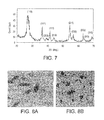
- FIG. 7 is an x-ray diffractogram (XRD) of titanium dioxide (TiO 2 ) nanoparticles capped by 4 wt % AMPSA/VP copolymer.
- XRD x-ray diffractogram
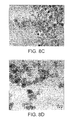
- FIG. 8A is a TEM micrograph of TiO 2 nanoparticles uncapped by a PIL and FIGS. 8B, 8C, and 8D are TEM micrographs of TiO 2 nanoparticles capped by 1 wt %, 2 wt %, and 4 wt %, respectively, of AMPSA/VP copolymer.
- FIGS. 9A and 9B are dynamic light scattering (DLS) plots of particle size distribution of titanium dioxide (TiO 2 ) nanoparticles capped by 1 wt % and capped by 4 wt %, respectively, of AMPSA/VP copolymer.
- DLS dynamic light scattering
- FIGS. 9C and 9D are plots of zeta potential of titanium dioxide (TiO 2 ) nanoparticles capped by AMPSA/VP copolymer and capped by AMPSA/MAA copolymer, respectively.
- FIGS. 10A and 10B are a dynamic light scattering (DLS) plot of particle size distribution and a plot of zeta potential, respectively, of zirconium dioxide (ZrO 2 ) nanoparticles capped by 2 wt % of AMPSA/VP copolymer.
- DLS dynamic light scattering
- FIGS. 11A, 11B, 11C, and 11D are dynamic light scattering (DLS) plots of particle size distribution of crushed limestone in seawater, CaCO 3 nanoparticles capped with AMPSA/VP copolymer, TiO 2 nanoparticles capped with AMPSA/VP copolymer, and ZrO 2 nanoparticles capped with AMPSA/VP copolymer, respectively, at 25° C.
- DLS dynamic light scattering
- FIGS. 12A, 12B, and 12C are schematic diagrams graphically representing the contact angle of an oil droplet with a limestone surface in the presence of seawater, in the presence of 5000 ppm of an AMPSA/MAA copolymer, and in the presence of 5000 ppm of an AMPSA/VP copolymer, respectively.
- FIGS. 13A, 13B, and 13C are schematic diagrams graphically representing the contact angle of an oil droplet with a limestone surface in the presence of 5000 ppm of TiO 2 nanoparticles capped with an AMPSA/MAA copolymer, in the presence of 5000 ppm of CaCO3 nanoparticles capped with an AMPSA/MAA copolymer, and in the presence of 5000 ppm of ZrO 2 nanoparticles capped with an AMPSA/MAA copolymer, respectively, at 65° C.
- FIGS. 14A, 14B, 14C, and 14D are schematic diagrams graphically representing the contact angle of an oil droplet with a limestone surface in the presence of TiO 2 nanoparticles capped with an AMPSA/VP copolymer at concentrations of 5000 ppm, 2500 ppm, 1500 ppm, and 500 ppm, respectively, at 65° C.
- the composition for enhanced oil recovery includes metal oxide or carbonate nanoparticles capped or encapsulated by a water soluble poly(ionic liquid) (PIL).
- the nanoparticles may be, e.g., CaCO 3 , TiO 2 , Cu 2 O.Fe 3 O 4 , or ZrO 2 .
- the poly(ionic liquid) may be a copolymer of 2-acrylamido-2-methyl-1-propanesulfonic acid (AMPS or AMPSA) with N-isopropyl acrylamide, N-vinyl pyrrolidone, methacrylic acid, or acrylamide.
- the composition is made by synthesizing the metal oxide or carbonate nanoparticles in the presence of the PIL.
- the resulting nanocomposite or nanomaterial alters the wettability of carbonate rock in a carbonate reservoir, releasing asphaltenic crude oil from the surface of the carbonate rock and replacing oil in the pores of the rock, thereby enhancing secondary and tertiary oil recovery.
- the method for enhanced oil recovery includes adding the composition to seawater used to flood a carbonate reservoir for secondary or tertiary oil recovery.
- compositions will be better understood by reference to the following experimental data, including the synthesis and testing of various examples.
- TiCl 4 titanium tetrachloride
- Ca(OH) 2 calcium hydroxide
- NH 4 HCO 3 ammonium bicarbonate
- anhydrous ferric chloride sodium sulfite, cupric chloride (CuCl 2 .2H 2 O), zirconium sulfate (Zr(SO 4 ) 2 ) and sodium hydroxide are reagents used to prepare metal oxide and carbonate nanoparticles.
- AMPS 2-Acrylamido-2-methyl-1-propanesulfonic acid
- NIPAm N-isopropyl acrylamide
- AN acrylonitrile
- VP N-vinyl pyrrolidone
- acrylic acid AA
- MAA methacrylic acid
- DEEA diethyl ethanolamine
- AM acrylamide
- Heavy Arabian crude oil (19.3 API) was used as oil phase. Its water and asphaltene contents were 0.145 wt % and 10 wt % respectively. Sea water collected from the Arabian Gulf was used as aqueous phase to dilute the PILs and for displacement and contact angle measurements.
- the main characteristics of the limestone material can be summarized as: mainly calcite (94 mole %), small amounts of Al and Si (0.86 and 1.37 mole %, respectively), which indicated low clay content.
- One of the tested cores contained about 3.7 mole % iron, but other cores did not contain iron.
- Permeability in the range of 8-30 mD. and BET N2-surface area was 0.18 m 2 /g.
- the morphology of nanomaterials was observed under Transmission Electron Microscope (TEM, JEOL JEM-2100 F) electron microscope. High resolution HR-TEM images recorded at an acceleration voltage of 200 kv.
- the TEM sample was prepared by placing a dilute drop of aqueous particles onto the copper grids and allowing it to dry.
- the patterns were collected in the 2 [theta] range of 4-70° with step size of 0.02° and scan rate of 1 s.
- Zeta potentials of nanomaterials were determined using Laser Zeta meter Malvern Instruments (Model Zetasizer 2000) in aqueous solution in the presence of KCl (0.01 M) at different pH solutions.
- thermogravimetric analysis TGA; TGA-50 SHIMADZU at flow rate 50 ml/min and heating rate of 20° C./min).
- the dispersion stability, polydispersity index (PDI) and surface charges (zeta potential; mV) of nanomaterials were determined by using dynamic light scattering (DLS; Laser Zeta meter Malvern Instruments; Model Zetasizer 2000).
- Nanomaterials capped with PILs sea water solutions of different concentrations were prepared and used to measure the rock wettability using contact angle measurement technique. This was conducted on cut and polished substrates of the rock samples at reservoir conditions of 2000 psi and 60° C. The impact of ionic composition of aqueous phases on rock samples surface charge can be used to explain rock wettability. Hence, Zeta potential measurements were conducted by dispersing certain amount of pulverized particles of rock sample in sea water, and different concentrations of nanomaterials capped with PILs solutions at 60° C. A small representative quantity of each dispersed solution was used to perform the test.
- a mixture of equal molar ratios (1:1 mol %) of AMPS and VP, NIPAm, MAA, AM or AA (6 mmol of each monomer) was stirred with 6 mmol of DEEA under nitrogen atmosphere at 10° C. in a flask. The mixing was carried out for 5 hrs to complete dissolution of AMPS in VP (or NIPAm, MAA, AM or AA) and DEEA solutions. A transparent solution was obtained with yield of 99%, which indicates the formation of quaternized DEEA organic salt with VP (or NIPAm, MAA, AM or AA) and AMPS monomers.
- ABIN initiator (0.08 mmol) was added to the reaction mixture under nitrogen bubbling, and the mixture was heated to 70° C. for 24 hrs. The viscosity of the mixture was increased, and a transparent, light yellow mixture was precipitated from acetone into cold diethyl ether (dry ice/acetone bath) and collected after filtration. The viscous oil was dried under vacuum at 40° C. to remove any residual volatile materials in order to obtain AMPSA/VP, AMPSA/NIPAm, AMPSA/MAA) or AMPSA/AA polymer with high yield (98.7%).
- FeCl 3 (13.4-23 g) was dissolved with 100 mL distilled water, and charged into a 500 mL three-necked flask. A solution of 5-75 mL of Na 2 SO 3 (4.8-14.5 wt %) was added to the reaction mixture, followed by bubbling with N 2 and stirring for 1 h. The reaction mixture was heated at temperatures ranging from 40 to 65° C. A sample of CuCl 2 .2H 2 O (1.75-7.4 g) was dissolved in 50 mL water and was added to the reaction mixture in the presence a PIL (1-10 g). A solution of (1-2 M) of NaOH 100 mL in water was added dropwise to the reaction mixture during 1 h.
- Ammonium hydroxide (4-8 g) dissolved in 50 mL aqueous solution was added to the reaction mixture at the same time with a solution of (1-2 M) of NaOH 100 mL in water, and the temperature was maintained at a temperature from 40 to 65° C. for 2-10 h.
- the suspended brownish black solution was centrifuged at 15000 rpm for 10 min.
- the precipitate obtained was washed several times with distilled water to remove NaCl and other salts from the solvent.
- the Cu 2 O.2Fe 3 O 4 nanoparticles were at last dispersed in distilled water, and adjusted (pH 2) with 2 mol/L HCl for further experiments.
- the yield percentage of the reaction ranged from 85 to 95%.
- TiO 2 nanoparticles can be obtained from TiCl 4 at low temperature in the presence of alcohol, HCl and PILs complex mixtures to prevent the formation of orthotitanic acid that releases large amounts of heat when TiCl 4 directly solubilized in water, and thus prevents the homogeneous precipitation of TiO 2 particles.
- a mixture of HCl and water, having different concentrations ranged from 1 to 8 mol/L, for example (volume ratio of 1:19, 36% HCl: H 2 O) were prepared.
- PILs having different concentrations of PILs in alcohol ranged from 1 to 30 Wt % were prepared.
- the alcohols are 2-propanol, ethanol and methanol.
- PILs solutions in alcohol were mixed with HCl aqueous solution at ice-cooled temperatures with vigorous stirring.
- the pure titanium tetrachloride (10 mL) was added dropwise to 500 mL of hydrochloric acid aqueous solutions and 500 mL of PILs with alcohol to obtain TiCl 4 solution (1.0 mol/L).
- the mixture was heated at a rate of 2° C./min to obtain the reaction temperature ranged from ⁇ 40° C. to 90° C., depending on the type of alcohol and the alcohol: water ratio.
- the transparent solution became turbid and white at a certain temperature, indicating the formation of TiO 2 particles.
- the reaction mixture was aged at a constant temperature for different time intervals ranged 30 minute to 24 h.
- the TiO 2 particles were separated by centrifuge and then washed in alcohol and water several times.
- Zr(SO4) 2 (1 mmol) was mixed with benzyl alcohol (2 mmol) to form a gel. Sodium lauryl sulfate (2 mmol) was added to the reaction mixture under vigorous stirring for 1 h. The product was dried at 200° C. for 5 h. The powder was calcined at 600° C. for 5 h to produce ZrO 2 nanoparticles. ZrO 2 (2 g) was added to reaction solution of polyvinylpyrrolidone (1 g dissolved in 100 ml (85:15) of EtOH:Water) and PILs (1-10 g) under vigorous stirring for 24 h. The solid powder was separated using ultracentrifuge at 9000 rpm and dried at room temperature.
- AMPS is selected to prepare copolymers with NIPAm, VP, AM, MAA and AA monomers that have great efficacy to act as stabilizing, capping and reducing agent.
- the scheme of copolymerization of quaternized EDA with AMPS copolymers is represented in FIG. 1 .
- the solubility test of the prepared PILs confirms their complete solubility in water and seawater without precipitation or cloudiness at elevated temperatures. This proves that thermal and salt sensitivity of AMPS, MAA, AAm and VP are inhibited, with the formation of organic salts rather than formation of polyelectrolyte.
- AMPSA copolymers have great tendency to form nanomaterials, as illustrated in FIG. 2 . It is proposed that the PIL have great tendency to surround the metal cations more than IL monomers into flexible network by polar interactions between cations and negative anion of AMPSA copolymers chains to produce stable hydrosol.
- the chemical structures of the prepared AMPSA PILs were determined from 1 H NMR spectra presented in FIGS. 3A, 3B, and 3C for an AMPSA/acrylamide (AM) copolymer, an AMPSA/methacrylic acid (MAA) copolymer, and an AMPSA/N-vinyl pyrrolidone (VP) copolymer, respectively.
- the expected chemical structures are represented on the spectra combined with their representative peaks.
- the appearance of a broad peak at 8.3 ppm confirms the de-shielding proton of the quaternized amine groups of DEA with sulfonate group in all 1 HNMR spectra.
- the present work tends to form CaCO 3 nanoparticles modified with PIL from a water-ethanol solution of Ca(OH) 2 and CO 2 gas that is produced from decomposition of ammonium carbonate or bicarbonate as described in Example 2.
- Different concentrations of PILs were used as capping agent to produce capped CaCO 3 nanoparticles.
- the formation of CaCO 3 nanoparticles is a continuous process, in which the size of initially formed CaCO 3 nanoparticles was capped with PILs to control the nanomaterial sizes.
- the formation mechanism of the capping of calcium carbonate by PILs could be postulated due to chemical or physical adsorption of positively charged Ca cations with negative charges of PILs and to negatively charged carbonate anion with positive charges of PILs on the surface of the PILs.
- the dipole-dipole interactions between oxygen of calcium carbonate and amide groups of PILs are expected to form physical capping of PILs on the calcium carbonate surfaces. It was expected that the particle sizes could be affected by the type of capping agent and lack of decomposed gas (NH 3 , CO 2 , H 2 O) from NH 4 HCO 3 at the beginning of synthesis.
- the XRD diffractograms of CaCO3 capped with AMPSA/VP is represented in FIG. 4 . That confirms that CaCO 3 was formed without any contaminates of other calcium salts.
- the XRD diffraction patterns showed the CaCO 3 crystals can be formed, as well as different salts, such as calcite ( ⁇ -CaCO3), aragonite ( ⁇ -CaCO3) and vaterite ( ⁇ -CaCO 3 ).
- the morphology and particle sizes of CaCO 3 nanomaterials capped with PAMPSA/VP and PAMPSA/MAA were determined by TEM and DLS that are represented in FIGS. 5A-5B and FIGS. 5C-5D , respectively.
- the presence of PAMPSA/VP forms uniform porous CaCO 3 with particle sizes of 64.2 nm and polydispersity index (PDI) of 0.323.
- the capping of CaCO 3 with PAMPSA/MAA produced clusters with particle sizes of 272.8 nm and PDI 0.986 as polydisperse CaCO 3 particles.
- the mechanism for preparing the Cu 2 O.2Fe 3 O 4 in the presence of NaOH and NH 2 OH can be represented in the following equations: 6Fe 3+ +SO 3 2 ⁇ +O 2 ⁇ SO 4 2 ⁇ +2Fe 2+ +4Fe 3+ (1) 2Fe 2+ +4Fe 3+ +18OH ⁇ ⁇ 2Fe 3 O 4 +9H 2 O (2) 2Cu 2+ +NH 2 OH ⁇ 2Cu + +(NHOH)+2H + (3) (NHOH)+1 ⁇ 2O 2 ⁇ NO 2 ⁇ +H + (4) 2Cu + +2OH ⁇ ⁇ Cu 2 O+H 2 O (5) 6FeCl 3 +2CuCl 2 +Na 2 SO 3 +23NaOH+NH 2 OH+1 ⁇ 2O 2 ⁇ Cu 2 O.2Fe 3 O 4 +Na 2 SO 4 +NaNO 2 +22NaCl+13H 2 O (6) These equations represent the oxidation reduction reactions to convert the ferric chloride and cupric chloride salt to
- PIL reducing and capping agents
- VP is used as comonomer with AMPSA (see FIG. 1 ) to produce PIL, since it has great tendency to reduce metal ions to metal nanoparticles.
- DEEA in the chemical structure of AMPSA/VP will assist the reduction of ions to metal due to the presence of a hydroxyl group.
- AMPSA/VP was used to produce Cu 2 O.2Fe 3 O 4 in a simple one-step method.
- the crystal structure of Cu 2 O.2Fe 3 O 4 nanocomposites can be determined from XRD patterns as represented in FIGS. 6A and 6B . Seven major reflections, located at about 30.1°, 35.5°, 43.2°, 53.5°, 57.1°, 62.6° and 74.3°, as shown in FIGS. 6A-6B , can be assigned to diffraction of Fe 3 O 4 nanoparticles with cubic-phase from the (220), (311), (400), (422), (511), (440) and (533) planes (JCPDS card no. 65-3107), respectively.
- the particle size of Cu 2 O.2Fe 3 O 4 PAMPSA/MAA and PAMPSA/VP forms polydispersity clusters with particle sizes of 2392 and 601 nm, respectively as represented in Table 1 and FIG. 5 a and b , respectively.
- the thermal hydrolysis of TiCl 4 in water is a highly exothermic reaction that produces more HCl that can be controlled in the present synthesis by using alcoholic solutions of PILs that have strong capability to form complexes with TiCl 4 .
- different types of alcohol such as isopropanol, ethanol, and methanol were used to control the particle sizes, shape, dispersity and type of TiO 2 nanoparticles, such as anatase or rutile types.
- PILS based on AMPSA/VP, AMPSA/NIPAm, AMPSA/MAA, or AMPSA/AM on the types and concentrations in the production of TiO 2 nanoparticles having controlled sizes and shapes also was investigated.
- HCl can serve as an acidic catalyst to control the hydrolysis speed of a titanium source to produce rutile TiO 2 phase.
- the reaction mechanism obeys the following equations: TiCl 4 +2HCl+6H 2 O ⁇ 2[TiO(OH 2 ) 5 ] +2 .4Cl ⁇ (7) 2[TiO(OH 2 ) 5 ] +2 .4Cl ⁇ +PIL ⁇ TiO 2 +HCl (8)
- the PIL can serve as a capping agent based on its strong interaction with the (110) facet of rutile. More specifically, we can demonstrate that the presence of VP in the chemical structure of AMPSA/VP favors the formation of rutile structure with a controlled shape due to the mutual stacking of VP rings.
- the crystal structure of TiO 2 capped with PILs can be investigated using X-ray diffraction (XRD) pattern, as represented in FIG. 7 .
- XRD X-ray diffraction
- FIGS. 8A-8D The morphologies of TiO 2 capped in the presence and in the absence of AMPSA/VP were analyzed by TEM and represented in FIGS. 8A-8D .
- the presence of at least 1 wt % of AMPSA controlled the shapes of TiO 2 to be spherical and dispersed particles according the PIL contents ( FIGS. 8B-8D ).
- PILs altered the morphology of the particles, resulting in clusters with smaller aspect ratios but greater uniformity of shape and size.
- the presence of both cations and anions in the chemical structures of PILs facilitate the interaction between the formed complex in equation 7 and PILs.
- the formation of hydrogen bonds between TiO 2 surfaces and amide groups of VP facilitate controlling the sizes and shapes of the produced nanoparticles, as represented in FIGS. 8A-8D .
- the particle sizes and surface charges of TiO 2 capped with AMPSA/VP were summarized in Table 1 above and represented in FIGS. 9A-9B and 9C-9D , respectively.
- the data confirmed that the particle sizes were reduced from 433 to 30.6 nm with increment in the PIL content.
- the zeta potential values also confirmed that the stability of TiO 2 dispersability in water increased with using AMPSA/MAA, as capping agents as represented in Table 1 and FIG. 9B .
- This type of nanomaterial is based on the preparation of ZrO 2 in the absence of PILs, followed by dispersion or physical capping with PIL as described in Example 5.
- the calcination of Zr oxides produced from reaction of zirconium sulfate with benzyl alcohol and sodium lauryl sulfate, at 600° C. produced ZrO 2 .
- Their surfaces can be capped with AMPSA/VP that contains more amide groups to control their dispersion in water.
- the particle sizes of ZrO 2 capped with 2 wt % of AMPSA/VP ( FIG. 10A ) is 98.8 nm and its zeta potential ( FIG. 10B ) is ⁇ 33.85 mV.
- FIGS. 11A-11D The interactions of the seawater and the present prepared nanomaterials capped with PILs in aqueous solutions, all at 3000 mg/L concentration, with the crushed limestone powder were determined using DLS technique and represented in FIGS. 11A-11D .
- FIG. 11A confirms that seawater cannot easily disperse the crushed powder of limestone and forming agglomerate with particle sizes of 1306 nm and polydispersity index (PDI) of 0.672.
- PDI polydispersity index
- FIG. 11B The interaction of CaCO 3 capped with AMPSA/VP solution indicates the covering of all particle sizes ranged from 100 nm to 10 ⁇ m with a PDI value of 0.456. This can be attributed to the good interaction between CaCO 3 and limestone calcite.
- FIGS. 12A and 12B-12C summarize the contact angle measurements of crude oil drop on substrates representing the limestone soaked in solutions of sea water and PILs having concentrations of 5000 ppm, respectively.
- the rock showed slightly oil wet characteristics in the presence of seawater with a contact angle around 122°. This can be related to the presence of divalent cations in seawater, resulting in more positive charges on rock pore surfaces, making it attractive to crude negative end polar components and resulting in a wettability shift away from water-wet characteristics. As different PILs are added at different concentrations, wettability tends to shift gradually as concentration increases. Wettability showed a drastic shift at maximum concentration of 5000 ppm towards preferentially water wet state. PIL based on AMPSA/VP improved the wetting characteristics of limestone and achieved contact angles of 63°.
- FIGS. 13A-13C and 14A-14D The contact angles measurements for different concentrations of TiO 2 capped with AMPSA/VP are represented in FIGS. 13A-13C and 14A-14D .
Landscapes
- Chemical & Material Sciences (AREA)
- Life Sciences & Earth Sciences (AREA)
- Engineering & Computer Science (AREA)
- General Life Sciences & Earth Sciences (AREA)
- Oil, Petroleum & Natural Gas (AREA)
- Materials Engineering (AREA)
- Organic Chemistry (AREA)
- Geology (AREA)
- Mining & Mineral Resources (AREA)
- Fats And Perfumes (AREA)
- Physics & Mathematics (AREA)
- Environmental & Geological Engineering (AREA)
- Fluid Mechanics (AREA)
- Lubricants (AREA)
- Geochemistry & Mineralogy (AREA)
- Inorganic Compounds Of Heavy Metals (AREA)
Abstract
Description
| TABLE 1 |
| Size and Zeta Potential of Nanoparticles Capped with PILs |
| Ratio | Nano- | Zeta | |||
| PIL:nano- | particle | Potential | |||
| PIL | Reactants | particles | Size (nm) | PDI | (mV) |
| AMPSA/VP | TiO2 | 2:1 | 43.0 | 0.326 | −16.4 |
| AMPSA/VP | ZrO2 | 2:1 | 98.1 | 0.349 | −35.65 |
| AMPSA/VP | CaCO3 | 2:1 | 151.1 | 0.415 | −13.99 |
| AMPSA/VP | Cu2•Fe3O4 | 2:1 | 239.0 | 1.289 | −18.4 |
| AMPSA/MAA | TiO2 | 2:1 | 58.9 | 0.248 | −43.18 |
| AMPSA/MAA | CaCO3 | 2:1 | 272.3 | 0.986 | −2272 |
| AMPSA/VP | TiO2 | 1:1 | 30.7 | 0.203 | −50.73 |
| AMPSA/VP | CaCO3 | 1:1 | 64.2 | 0.323 | −21.16 |
6Fe3++SO3 2−+O2→SO4 2−+2Fe2++4Fe3+ (1)
2Fe2++4Fe3++18OH−→2Fe3O4+9H2O (2)
2Cu2++NH2OH→2Cu++(NHOH)+2H+ (3)
(NHOH)+½O2→NO2 −+H+ (4)
2Cu++2OH−→Cu2O+H2O (5)
6FeCl3+2CuCl2+Na2SO3+23NaOH+NH2OH+½O2→Cu2O.2Fe3O4+Na2SO4+NaNO2+22NaCl+13H2O (6)
These equations represent the oxidation reduction reactions to convert the ferric chloride and cupric chloride salt to produce Cu2O.2Fe3O4 composites.
TiCl4+2HCl+6H2O→2[TiO(OH2)5]+2.4Cl− (7)
2[TiO(OH2)5]+2.4Cl−+PIL→TiO2+HCl (8)
Claims (13)
Priority Applications (2)
| Application Number | Priority Date | Filing Date | Title |
|---|---|---|---|
| US15/603,378 US9850420B1 (en) | 2017-05-23 | 2017-05-23 | Composition and method for enhanced oil recovery |
| SA118390626A SA118390626B1 (en) | 2017-05-23 | 2018-05-22 | Composition and method for enhanced oil recovery |
Applications Claiming Priority (1)
| Application Number | Priority Date | Filing Date | Title |
|---|---|---|---|
| US15/603,378 US9850420B1 (en) | 2017-05-23 | 2017-05-23 | Composition and method for enhanced oil recovery |
Publications (1)
| Publication Number | Publication Date |
|---|---|
| US9850420B1 true US9850420B1 (en) | 2017-12-26 |
Family
ID=60674757
Family Applications (1)
| Application Number | Title | Priority Date | Filing Date |
|---|---|---|---|
| US15/603,378 Expired - Fee Related US9850420B1 (en) | 2017-05-23 | 2017-05-23 | Composition and method for enhanced oil recovery |
Country Status (2)
| Country | Link |
|---|---|
| US (1) | US9850420B1 (en) |
| SA (1) | SA118390626B1 (en) |
Cited By (3)
| Publication number | Priority date | Publication date | Assignee | Title |
|---|---|---|---|---|
| US20180203143A1 (en) * | 2015-12-07 | 2018-07-19 | Halliburton Energy Services, Inc. | Mapping Fractures using Micro-Seismic Events |
| WO2020180340A1 (en) * | 2019-03-04 | 2020-09-10 | Saudi Arabian Oil Company | Cationic coatings for improved nanoparticle transport in a carbonate reservoir |
| US20230348773A1 (en) * | 2022-02-25 | 2023-11-02 | Saudi Arabian Oil Company | Ionic liquid monomer for synthesis of friction reducer and methods thereof |
Citations (9)
| Publication number | Priority date | Publication date | Assignee | Title |
|---|---|---|---|---|
| US7547347B2 (en) | 2005-05-13 | 2009-06-16 | University Of Rochester | Synthesis of nano-materials in ionic liquids |
| US20120034129A1 (en) | 2009-04-08 | 2012-02-09 | Kwang-Suck Suh | Production method for a metal nanostructure using an ionic liquid |
| US20130165353A1 (en) * | 2011-12-21 | 2013-06-27 | Baker Hughes Incorporated | Stable suspensions of carbon nanoparticles for nano-enhanced pdc, lbl coatings, and coolants |
| US20130221289A1 (en) | 2010-07-30 | 2013-08-29 | Universidade De Santiago De Compostela | Method for the preparation of nanoparticles in ionic liquids |
| US20140070139A1 (en) | 2011-03-22 | 2014-03-13 | Cornell University | Nanoscale ionic material (nim) compositions via acid/base reaction |
| US20140216730A1 (en) * | 2012-04-10 | 2014-08-07 | Halliburton Energy Services, Inc. | Method and apparatus for generating seismic pulses to map subterranean fractures |
| US20140228258A1 (en) * | 2011-08-31 | 2014-08-14 | Self-Suspending Proppant Llc | Self-suspending proppants for hydraulic fracturing |
| US20160137767A1 (en) * | 2013-06-12 | 2016-05-19 | Merck Patent Gmbh | Particles for electrophoretic displays |
| US9468902B1 (en) | 2016-02-22 | 2016-10-18 | King Saud University | Synthesis of zinc oxide nanocomposites using poly (ionic liquid) |
-
2017
- 2017-05-23 US US15/603,378 patent/US9850420B1/en not_active Expired - Fee Related
-
2018
- 2018-05-22 SA SA118390626A patent/SA118390626B1/en unknown
Patent Citations (9)
| Publication number | Priority date | Publication date | Assignee | Title |
|---|---|---|---|---|
| US7547347B2 (en) | 2005-05-13 | 2009-06-16 | University Of Rochester | Synthesis of nano-materials in ionic liquids |
| US20120034129A1 (en) | 2009-04-08 | 2012-02-09 | Kwang-Suck Suh | Production method for a metal nanostructure using an ionic liquid |
| US20130221289A1 (en) | 2010-07-30 | 2013-08-29 | Universidade De Santiago De Compostela | Method for the preparation of nanoparticles in ionic liquids |
| US20140070139A1 (en) | 2011-03-22 | 2014-03-13 | Cornell University | Nanoscale ionic material (nim) compositions via acid/base reaction |
| US20140228258A1 (en) * | 2011-08-31 | 2014-08-14 | Self-Suspending Proppant Llc | Self-suspending proppants for hydraulic fracturing |
| US20130165353A1 (en) * | 2011-12-21 | 2013-06-27 | Baker Hughes Incorporated | Stable suspensions of carbon nanoparticles for nano-enhanced pdc, lbl coatings, and coolants |
| US20140216730A1 (en) * | 2012-04-10 | 2014-08-07 | Halliburton Energy Services, Inc. | Method and apparatus for generating seismic pulses to map subterranean fractures |
| US20160137767A1 (en) * | 2013-06-12 | 2016-05-19 | Merck Patent Gmbh | Particles for electrophoretic displays |
| US9468902B1 (en) | 2016-02-22 | 2016-10-18 | King Saud University | Synthesis of zinc oxide nanocomposites using poly (ionic liquid) |
Non-Patent Citations (5)
| Title |
|---|
| Abdullah et al., Synthesis of novel water soluble poly (ionic liquids) based on quaternary ammonium acrylamidomethyl propane sulfonate for enhanced oil recovery, Journal of Molecular Liquids, 233 (May 2017) 508-516. |
| Atta et al., "Dipoles poly (ionic liquids) based on 2-acrylamido-2-methylpropane sulfonic acid-co-hydroxyethyl methacrylate for demulsification of crude oil water emulsions", Journal of Molecular Liquids, 222, (2016), 680-690. |
| Atta et al., "Synthesis of zinc oxide nanocomposites using poly (ionic liquids) based on quarternary ammonium acrylamidomethyl propane sulfonate for water treatment", Journal of Molecular Liquids, 236 (Jun. 2017), 38-47. |
| Kedir et al., "Nanoparticles for Enhanced Oil Recovery: Phase Transition of Aluminum-Cross-Linked Partially Hydrolyzed Polyacrylamide under Low Salinity Conditions by Rheology and Nuclear Magnetic Resonance", Energy & Fuels, 28.5, pp. 2948-2958 (2014). |
| Yuan et al, Poly(ionic liquid)s: Polymers expanding classical property profiles, Polymer 52 (2011) 1469-1482. * |
Cited By (4)
| Publication number | Priority date | Publication date | Assignee | Title |
|---|---|---|---|---|
| US20180203143A1 (en) * | 2015-12-07 | 2018-07-19 | Halliburton Energy Services, Inc. | Mapping Fractures using Micro-Seismic Events |
| WO2020180340A1 (en) * | 2019-03-04 | 2020-09-10 | Saudi Arabian Oil Company | Cationic coatings for improved nanoparticle transport in a carbonate reservoir |
| US20230348773A1 (en) * | 2022-02-25 | 2023-11-02 | Saudi Arabian Oil Company | Ionic liquid monomer for synthesis of friction reducer and methods thereof |
| US12534659B2 (en) * | 2022-02-25 | 2026-01-27 | Saudi Arabian Oil Company | Ionic liquid monomer for synthesis of friction reducer and methods thereof |
Also Published As
| Publication number | Publication date |
|---|---|
| SA118390626B1 (en) | 2021-07-28 |
Similar Documents
| Publication | Publication Date | Title |
|---|---|---|
| Lv et al. | Controlled growth of three morphological structures of magnesium hydroxide nanoparticles by wet precipitation method | |
| US9468902B1 (en) | Synthesis of zinc oxide nanocomposites using poly (ionic liquid) | |
| Xu et al. | Surface charging of layered double hydroxides during dynamic interactions of anions at the interfaces | |
| Yu et al. | Fabrication of hollow inorganic microspheres by chemically induced self‐transformation | |
| Zhan et al. | Ultrathin layered double hydroxide nanosheets prepared from a water-in-ionic liquid surfactant-free microemulsion for phosphate removal from aquatic systems | |
| Soytaş et al. | Polymer nanocomposites with decorated metal oxides | |
| Du et al. | In situ preparation of hydrophobic CaCO3 nanoparticles in a gas–liquid microdispersion process | |
| US10954429B2 (en) | Controlled release of surfactants for enhanced oil recovery | |
| Atta et al. | Synthesis of zinc oxide nanocomposites using poly (ionic liquids) based on quaternary ammonium acrylamidomethyl propane sulfonate for water treatment | |
| Qiu et al. | Review on preparation, modification and application of nano‐calcium carbonate | |
| EP2804186B1 (en) | Coated magnetic nanoparticles | |
| Hosseini et al. | Improving the stability of nanofluids via surface-modified titanium dioxide nanoparticles for wettability alteration of oil-wet carbonate reservoirs | |
| Sifontes et al. | Chitosan as template for the synthesis of ceria nanoparticles | |
| CN102249281A (en) | Lensing spherical vaterite calcium carbonate crystal with high purity and preparation method thereof | |
| CN108712999A (en) | Method for preparing synthetic hectorite at low temperature and normal pressure | |
| DE10297614T5 (en) | Inorganic porous fine particles | |
| CN102336426A (en) | Preparation method of hydrophobic nanoscale calcium carbonate | |
| CN107876000A (en) | A kind of nano phosphorus removal agent, preparation method and application | |
| Pilarska et al. | Preparation and characterisation of unmodified and poly (ethylene glycol) grafted magnesium hydroxide | |
| Shen et al. | A novel process to synthesize magnetic hollow silica microspheres | |
| JP6015224B2 (en) | Method for producing metal oxide nanostructure | |
| SA118390626B1 (en) | Composition and method for enhanced oil recovery | |
| JP3651017B2 (en) | Spherical magnetite particles and method for producing the same | |
| Widoniak et al. | Synthesis and characterisation of porous and non-porous monodisperse TiO2 and ZrO2 particles | |
| Fu et al. | Synthesis and characterization of anatase TiO2 nanolayer coating on Ni–Cu–Zn ferrite powders for magnetic photocatalyst |
Legal Events
| Date | Code | Title | Description |
|---|---|---|---|
| AS | Assignment |
Owner name: KING SAUD UNIVERSITY, SAUDI ARABIA Free format text: ASSIGNMENT OF ASSIGNORS INTEREST;ASSIGNORS:ATTA, AYMAN MOHAMAMDY, DR.;ABDULLAH, MAHMOOD MOHAMMED, MR.;AL-LOHEDAN, HAMAD ABDULLA, DR.;REEL/FRAME:042541/0836 Effective date: 20170522 |
|
| STCF | Information on status: patent grant |
Free format text: PATENTED CASE |
|
| FEPP | Fee payment procedure |
Free format text: MAINTENANCE FEE REMINDER MAILED (ORIGINAL EVENT CODE: REM.); ENTITY STATUS OF PATENT OWNER: SMALL ENTITY |
|
| LAPS | Lapse for failure to pay maintenance fees |
Free format text: PATENT EXPIRED FOR FAILURE TO PAY MAINTENANCE FEES (ORIGINAL EVENT CODE: EXP.); ENTITY STATUS OF PATENT OWNER: SMALL ENTITY |
|
| STCH | Information on status: patent discontinuation |
Free format text: PATENT EXPIRED DUE TO NONPAYMENT OF MAINTENANCE FEES UNDER 37 CFR 1.362 |
|
| FP | Lapsed due to failure to pay maintenance fee |
Effective date: 20211226 |