The compounds described herein are useful for the treatment of diseases resulting from changes in splicing processes.
Viruses, in particular from the retroviral family, are one of the major causes of diseases around the world. Three subfamilies can be distinguished within the retroviral family: the oncoviruses, the lentiviruses and the spumaviruses.
The oncoviruses are thus termed because they can be associated with cancers and malignant infections. There may be mentioned, for example, leukemogenic viruses such as the avian leukemia virus (ALV), the murine leukemia virus (MULV), also called Moloney virus, the Abelson leukemia virus, the murine mammary tumor virus, the Mason-Pfizer monkey virus (or MPMV), the feline leukemia virus (FELV), human leukemia viruses such as HTLV1 (also, named HTLV-I) and HTLV2 (also named HTLV-II), the simian leukemia virus or STLV, the bovine leukemia virus or BLV, the primate type D oncoviruses, the type B oncoviruses which are inducers of mammary tumors, or oncoviruses which cause a rapid cancer (such as the Rous sarcoma virus or RSV).
Although the term oncovirus is still commonly used, other terms can also be used such as Alpharetrovirus for avian leukosis virus and Rous sarcoma virus; Betaretrovirus for mouse mammary tumor virus; Gammaretrovirus for murine leukemia virus and feline leukemia virus; Deltaretrovirus for bovine leukemia virus and human T-lymphotropic virus; and Epsilonretrovirus for Walleye dermal sarcoma virus.
The spumaviruses manifest fairly low specificity for a given cell type or a given species, and they are sometimes associated with immunosuppressive phenomena; that is the case, for example, for the simian foamy virus (or SFV), also named chimpanzee simian virus, the human foamy virus (or HFV), bovine syncytial virus (or BSV), feline syncytial virus (FSV) and the feline immunodeficiency virus.
The lentiviruses, such as Human Immunodeficiency Virus (HIV, also known as HTLV-III or LAV for lymphotrophic adenovirus and which can be distinguished within HIV-1 and HIV-2), are thus named because they are responsible for slow-progressing pathological conditions which very frequently involve immunosuppressive phenomena, including AIDS. Among the lentiviruses, the visna/maedi virus (or MVV/Visna), equine infectious anemia virus (EIAV), caprine arthritis encephalitis virus (CAEV), simian immunodeficiency virus (SIV) can also be cited. Certain indole derivative compounds such as ellipticine derivatives and aza-ellipticine derivatives are already known as intercalating molecules for correcting dysfunctions in gene expression, notably in DNA replication. They have been more specifically described for treating diseases such as cancer, leukemia or AIDS (see in particular patents FR 2 627 493, FR 2 645 861, FR 2 436 786).
Intracellular splicing consists of eliminating introns in pre-messenger RNAs to produce mature messenger RNAs that can be used by the translation mechanism of the cell (SHARP, Cell, vol. 77, p. 805-815, 1994). In the case of alternative splicing, the same precursor can be the source of messenger RNAs coding for proteins with distinct functions (BLACK, Annu. Rev. Biochem. vol. 72, p. 291-336, 2003). The precise selection of 5′ and 3′ splicing sites is thus a mechanism that generates diversity and that can lead to the regulation of gene expression according to the type of tissue or during the development of an organism. The factors involved in this selection include a family of proteins called SR, characterized by the presence of one or two RNA recognition motifs (RRM) and a domain rich in arginine and serine residues called an RS domain (MANLEY & TACKE, Genes Dev., vol. 10, p. 1569-1579, 1996). By binding to short exon or intron sequences of the pre-mRNA, called ESE (exonic splicing enhancer) or ISE (intronic splicing enhancer), SR proteins are able to activate, in a dose-dependent manner, sub-optimal splicing sites and to enable the inclusion of exons (GRAVELEY, RNA, vol. 6, p. 1197-1211, 2000). The activity of an SR protein in alternative splicing is specific insofar as the inactivation of the corresponding gene is lethal (WANG et al., Mol. Cell, vol. 7, p. 331-342, 2001).
Sequencing of the human genome and analysis of EST (expressed sequence tag) banks has revealed that 65% of genes are expressed in the form of alternatively spliced variants (EWING & GREEN, Nat. Genet., vol. 25, p. 232-234, 2000; JOHNSON et al., Science, vol. 302, p. 2141-2144, 2003). This mechanism is thus a favored target of modifications that can affect the factors involved in regulating splicing and of mutations that affect the sequences necessary for this regulation. At present, it is estimated that roughly 50% of the point mutations responsible for genetic diseases induce aberrant splicing. These mutations can interfere with splicing by inactivating or creating splicing sites, but also by modifying or generating regulating elements such as splicing enhancers or splicing silencers in a particular gene (CARTEGNI et al., Nat. Rev. Genet., vol. 3, p. 285-298, 2002; TAZI et al., TIBS, vol. 40, p. 469-478, 2005).
The strategies currently developed to correct these splicing defects rest on the use of various types of molecules (TAZI et al., cited above, 2005).
One strategy aimed at developing novel molecules to correct or eliminate abnormal splicing, for example, rests on the overexpression of proteins that interfere with this type of splicing (NISSIM-RAFINIA et al., Hum. Mol. Genet., vol. 9, p. 1771-1778, 2000; HOFINANN et al., Proc. Natl. Acad. Sci. U.S.A., vol. 97, p. 9618-9623, 2000).
Other strategies rest on the use of antisense oligonucleotides (SAZANI et al., Nat. Biotechnol., vol. 20, p. 1228-1233, 2002; SAZANI & KOLE, Prog. Mol. Subcell. Biol., vol. 31, p. 217-239, 2003) or of PNA (CARTEGNI et al., Nat. Struct. Biol., vol. 10, p. 120-125, 2003) enabling, respectively, the inhibition or activation of a splicing event.
Yet another strategy rests on the identification of compounds that influence the splicing efficiency of the pre-mRNA of interest (ANDREASSI et al., Hum. Mol. Genet., vol. 10, p. 2841-2849, 2001).
Lastly, a strategy based on the use of trans-splicing to replace mutant exons has been described (LIU et al., Nat. Biotechnol., vol. 20, p. 47-52, 2002).
One of the disadvantages of the developed strategies cited above to correct or eliminate abnormal splicing is their production cost. Indeed, the cost of producing antisense oligonucleotides that must be modified to improve their stability, and that of PNA molecules, is high.
Another disadvantage of the developed strategies cited above is that they require the use of expression vectors, such as, for example, for the strategy based on the use of trans-splicing.
International application WO05023255, under French priority of applications FR0310460 and FR0400973, filed by the Applicant, disclosed the use of indole derivatives to treat diseases related to the pre-messenger RNA splicing process in the cell.
Thus it was recently shown that certain indole derivatives prove particularly effective in treating metastatic cancer and in treating AIDS (BAKKOUR et al., PLoS Pathogens, vol. 3, p. 1530-1539, 2007).
However, the compounds described have a flat structure with four rings that have the disadvantage of intercalating between DNA bases and can thus lead to cellular toxicity.
In order to minimize the risk that these indole derivatives intercalate between DNA bases, the inventors developed novel compounds that are particularly effective in treating diseases related to the splicing process, but which, in a surprising manner, have a cellular toxicity that is clearly less than the indole derivatives of the prior art. In addition, these compounds are able to selectively inhibit certain splicing events.
In certain aspects, the methods described herein include contacting a cell having a retroviral infection with at least one of the compounds described below, wherein the retroviral infection does not include HIV. In another aspect, the methods described herein include inhibiting RNA splicing of a retrovirus by administering a compound to a subject in need thereof, wherein the compound includes at least one compound described below and the retrovirus does not include HIV. In yet another aspect, the methods described herein include methods for treating a retroviral infection or a disease caused by the retroviral infection comprising administering an effective amount of a pharmaceutical composition to a subject in need thereof, wherein the pharmaceutical composition includes at least one compound described herein and the retroviral infection does not include HIV and the disease caused by the retroviral infection does not include AIDS.
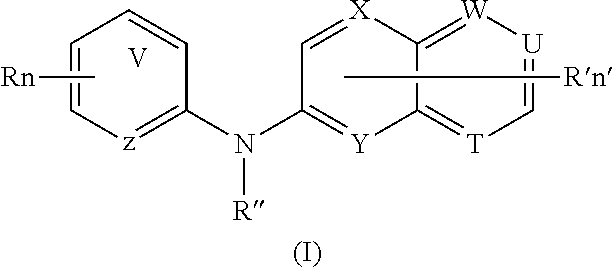
According to a first aspect, the compound of formula (I)
wherein:
means an aromatic ring wherein V is C or N and when V is N, V is in ortho, meta or para of Z, i.e. forms respectively a pyridazine, a pyrimidine or a pyrazine group,
R independently represent a hydrogen atom, a halogen atom or a group chosen among a —CN group, a hydroxyl group, a —COOR1 group, a (C1-C3)fluoroalkyl group, a (C1-C3)fluoroalkoxy group, a —NO2 group, a —NR1R2 group, a (C1-C4)alkoxy group, a phenoxy group and a (C1-C3)alkyl group, said alkyl being optionally mono-substituted by a hydroxyl group,
R1 and R2 are independently a hydrogen atom or a (C1-C3)alkyl group,
n is 1, 2 or 3,
n′ is 1 or 2,
R′ is a hydrogen atom or a group chosen among a (C1-C3)alkyl group, a halogen atom, a hydroxyl group, a —COOR1 group, a —NO2 group, a —NR1R2 group, a morpholinyl or a morpholino group, a N-methylpiperazinyl group, a (C1-C3)fluoroalkyl group, a (C1-C4)alkoxy group and a —CN group,
R″ is a hydrogen atom or a (C1-C4)alkyl group,
Z is N or C,
Y is N or C,
X is N or C,
W is N or C,
T is N or C,
U is N or C,
and wherein at most four of the groups V, T, U, Z, Y, X and W are N,
and at least one of the groups T, U, Y, X and W is N,
or anyone of its pharmaceutically acceptable salt,
can be used for for preventing or treating the infection of a cell and/or an individual, preferably a human, in need thereof by a retrovirus and/or for preventing retrovirus and/or for preventing, inhibiting or treating a disease caused by retroviruses, wherein the retroviruses include visna/maedi virus or MVV/visna, equine infectious anemia virus or EIAV, caprine arthritis encephalitis virus or CAEV, simian immunodeficiency virus or SIV, avian leukemia virus or ALV, murine leukemia virus also called Moloney virus or MULV, Abelson leukemia virus, murine mammary tumor virus, Mason-Pfizer monkey virus or MPMV, feline leukemia virus or FELV, human leukemia viruses HTLV-I, human leukemia viruses HTLV-II, simian leukemia virus or STLV, bovine leukemia virus or BLV, primate type D oncoviruses, type B oncoviruses, Rous sarcoma virus or RSV, simian foamy virus or SFV or chimpanzee simian virus, human foamy virus, and feline immunodeficiency virus, the human foamy virus or HFV, bovine syncytial virus or BSV, feline syncytial virus FSV, the feline immunodeficiency virus, avian leukosis virus, Walleye dermal sarcoma virus, T-cell lymphoma, acute ATL, lymphomatous ATL, chronic ATL, smoldering ATL, neurologic diseases, Tropical spastic paraparesis or HTLV-associated myelopathy, inflammatory and autoimmune diseases such as uveitis, dermatitis, pneumonitis, rheumatoid arthritis, and polymyositis hematologic and dermatologic diseases, lung diseases, brain diseases, and/or immunodeficiency and the retrovirus does not include HIV and the disease caused by the retroviral infection is not AIDS.
According to one aspect, the compound of formula (I) as defined above, wherein Z is N, V is C, Y is N, X is C, T is C, U is C and W is C, for use as an agent for preventing or treating the infection of a cell and/or an individual, preferably a human, in need thereof by a retrovirus and/or for preventing retrovirus and/or for preventing, inhibiting or treating a disease caused by retroviruses.
According to another aspect, the compound of formula (I) as defined above, wherein Z is C, V is C, Y is N, X is C, T is C, U is C and W is C, for use as an agent for preventing or treating the infection of a cell and/or an individual, preferably a human, in need thereof by a retrovirus and/or for preventing retrovirus and/or for preventing, inhibiting or treating a disease caused by retroviruses.
According to another aspect, the compound of formula (I) as defined above, wherein Z is N, V is C, Y is C, X is N, T is C, U is C and W is C, for use as an agent for preventing or treating the infection of a cell and/or an individual, preferably a human, in need thereof by a retrovirus and/or for preventing retrovirus and/or for preventing, inhibiting or treating a disease caused by retroviruses.
According to another aspect, the compound of formula (I) as defined above, wherein Z is N, V is C, Y is C, X is C, T is C, U is C and W is N, for use as an agent for preventing or treating the infection of a cell and/or an individual, preferably a human, in need thereof by a retrovirus and/or for preventing retrovirus and/or for preventing, inhibiting or treating a disease caused by retroviruses.
According to another aspect, the compound of formula (I) as defined above, wherein Z is N, V is N and is in para of Z, Y is N, X is C, T is C, U is C and W is C, for use as an agent for preventing or treating the infection of a cell and/or an individual, preferably a human, in need thereof by a retrovirus and/or for preventing, inhibiting or treating a disease caused by retroviruses.
According to another aspect, the compound of formula (I) as defined above, wherein Z is C, V is N and is in para of Z, Y is C, X is N, T is C, U is C and W is C, for use as an agent for preventing or treating the infection of a cell and/or an individual, preferably a human, in need thereof by a retrovirus and/or for preventing, inhibiting or treating a disease caused by retroviruses.
According to another aspect, the compound of formula (I) as defined above, wherein Z is C, V is N and is in meta of Z and is in para of the bond linked to NR″, Y is N, X is C, T is C, U is C and W is C, for use as an agent for preventing or treating the infection of a cell and/or an individual, preferably a human, in need thereof by a retrovirus and/or for preventing, inhibiting or treating a disease caused by retroviruses.
According to another aspect, the compound of formula (I) as defined above, wherein Z is C, V is N and is in meta of Z and is in para of the bond linked to NR″, Y is C, X is N, T is C, U is C and W is C, for use as an agent for preventing or treating the infection of a cell and/or an individual, preferably a human, in need thereof by a retrovirus and/or for preventing, inhibiting or treating a disease caused by retroviruses.
According to another aspect, the compound of formula (I) as defined above, wherein Z is C, V is C, Y is C, X is N, T is C, U is C and W is C, for use as an agent for preventing or treating the infection of a cell and/or an individual, preferably a human, in need thereof by a retrovirus and/or for preventing, inhibiting or treating a disease caused by retroviruses.
According to another aspect, the compound of formula (I) as defined above, wherein Z is C, V is C, Y is N, X is N, T is C, U is C and W is C, for use as an agent for preventing or treating the infection of a cell and/or an individual, preferably a human, in need thereof by a retrovirus and/or for preventing, inhibiting or treating a disease caused by retroviruses.
According to another aspect, the compound of formula (I) as defined above, wherein Z is N, V is N and is in meta of Z and in ortho of the bond linked to NR″, Y is N, X is C, T is C, U is C and W is C, for use as an agent for preventing or treating the infection of a cell and/or an individual, preferably a human, in need thereof by a retrovirus and/or for preventing, inhibiting or treating a disease caused by retroviruses.
According to another aspect, the compound of formula (I) as defined above, wherein Z is N, V is N and is in para of Z, Y is C, X is C, T is C, U is C and W is N, for use as an agent for preventing or treating the infection of a cell and/or an individual, preferably a human, in need thereof by a retrovirus and/or for preventing, inhibiting or treating a disease caused by retroviruses.
According to another aspect, the compound of formula (I) as defined above, wherein Z is N, V is N and is in para of Z, Y is C, X is N, T is C, U is C and W is C, for use as an agent for preventing or treating the infection of a cell and/or an individual, preferably a human, in need thereof by a retrovirus and/or for preventing, inhibiting or treating a disease caused by retroviruses.
According to another aspect, the compound of formula (I) as defined above, wherein Z is N, V is C, Y is N, X is N, T is C, U is C and W is C, for use as an agent for preventing or treating the infection of a cell and/or an individual, preferably a human, in need thereof by a retrovirus and/or for preventing, inhibiting or treating a disease caused by retroviruses.
According to another aspect, the compound of formula (I) as defined above, wherein Z is N, V is N and is in meta of Z and is in ortho of the bond linked to NR″, Y is N, X is N, T is C, U is C and W is C, for use as an agent for preventing or treating the infection of a cell and/or an individual, preferably a human, in need thereof by a retrovirus and/or for preventing, inhibiting or treating a disease caused by retroviruses.
According to another aspect, the compound of formula (I) as defined above, wherein Z is C, V is C, Y is C, X is C, T is N, U is C and W is C, for use as an agent for preventing or treating the infection of a cell and/or an individual, preferably a human, in need thereof by a retrovirus and/or for preventing, inhibiting or treating a disease caused by retroviruses.
According to another aspect, the compound of formula (I) as defined above, wherein Z is N, V is C, Y is C, X is C, T is N, U is C and W is C, for use as an agent for preventing or treating the infection of a cell and/or an individual, preferably a human, in need thereof by a retrovirus and/or for preventing, inhibiting or treating a disease caused by retroviruses.
According to another aspect, the compound of formula (I) as defined above, wherein Z is N, V is C, Y is C, X is C, T is C, U is N and W is C, for use as an agent for preventing or treating the infection of a cell and/or an individual, preferably a human, in need thereof by a retrovirus and/or for preventing, inhibiting or treating a disease caused by retroviruses.
The compounds described herein may exist in the form of free bases or of addition salts with pharmaceutically acceptable acids.
Suitable physiologically acceptable acid addition salts of compounds of formula (I) include hydrobromide, tartrate, citrate, trifluoroacetate, ascorbate, hydrochloride, tartrate, triflate, maleate, mesylate, formate, acetate and fumarate.
The compounds of formula (I) and or salts thereof may form solvates (e.g. hydrates).
As disclosed herein, the term:
-
- “halogen” is understood to mean chlorine, fluorine, bromine, or iodine, and in particular denotes chlorine, fluorine or bromine,
- “(C1-C3)alkyl” as used herein respectively refers to C1-C3 normal, secondary or tertiary saturated hydrocarbon. Examples are, but are not limited to, methyl, ethyl, 1-propyl, 2-propyl,
- “(C1-C3)alkoxy” as used herein respectively refers to O—(C1-C3)alkyl moiety, wherein alkyl is as defined above. Examples are, but are not limited to, methoxy, ethoxy, 1-propoxy, 2-propoxy,
- “fluoroalkyl group” and “fluoroalkoxy group” refers respectively to alkyl group and alkoxy group as above-defined, said groups being substituted by at least one fluorine atom. Examples are perfluoroalkyl groups, such as trifluoromethyl or perfluoropropyl, and
- “individual” and “patient” may extend to humans or mammals, such as cats or dogs.
According to one preferred aspect, the compound of formula (I) as defined above, wherein Z is N, V is C, Y is N, X is C, T is C, U is C and W is C, for use as an agent for preventing or treating the infection of a cell and/or an individual, preferably a human, in need thereof by a retrovirus and/or for preventing, inhibiting or treating a disease caused by retroviruses.
According to another preferred aspect, the compound of formula (I) as defined above, wherein Z is C, V is C, Y is N, X is C, T is C, U is C and W is C, for use as an agent for preventing or treating the infection of a cell and/or an individual, preferably a human, in need thereof by a retrovirus and/or for preventing, inhibiting or treating a disease caused by retroviruses.
According to another preferred aspect, the compound of formula (I) as defined above, wherein Z is N, V is C, Y is C, X is N, T is C, U is C and W is C, for use as an agent for preventing or treating the infection of a cell and/or an individual, preferably a human, in need thereof by a retrovirus and/or for preventing, inhibiting or treating a disease caused by retroviruses.
According to another preferred aspect, the compound of formula (I) as defined above, wherein Z is N, V is N and is in para of Z, Y is N, X is C, T is C, U is C and W is C, for use as an agent for preventing or treating the infection of a cell and/or an individual, preferably a human, in need thereof by a retrovirus and/or for preventing, inhibiting or treating a disease caused by retroviruses.
According to another preferred aspect, the compound of formula (I) as defined above, wherein Z is N, V is C, Y is N, X is N, T is C, U is C and W is C, for use as an agent for preventing or treating the infection of cell and/or an individual, preferably a human, in need thereof by a retrovirus and/or for preventing, inhibiting or treating a disease caused by retroviruses.
Another object described herein relates to a compound of the following formula (I′):
wherein:
X1, X2 and X3 independently represent a nitrogen atom, or a CR8 group, at least one of X1 and X2 being a nitrogen atom;
R8 represents a hydrogen atom or a halogen atom, a hydroxyl, alkyl, trifluoroalkyl, ester, ether, such as a methoxy or trifluoromethoxy group, or benzyl, optionally substituted, a nitro or a cyano group, preferably R8 represents a hydrogen atom,
when a ring A, defined below, is in position a, X4 represents a nitrogen atom or a CR8 group, and when a ring A is in position b, X4 represents a carbon atom part of the ring A,
R1, R2, R3 and R5 independently represent a hydrogen or a halogen atom, an alkyl, a trifluoroalkylgroup, ether, such as a methoxy or trifluoromethoxy group, or benzyl, optionally substituted, a nitro or a cyano group.
when the ring A is at position b, R4 represents a hydrogen atom, a halogen atom or an alkyl, a trifluoroalkyl, ester, ether group, such as a methoxy or trifluoromethoxy group, or benzyl, optionally substituted, and when the ring A is at position a, R4 is a carbon atom part of the ring A,
R10 represents a carbon atom part of ring A,
R6 represents a hydrogen atom or an alkyl group,
A represents a ring at position a or b of formula I, said ring A corresponding to:
wherein:
R7 represents a hydrogen, or halogen atom or an alkyl, hydroxyl or amine group which can be linear or branched and/or unsaturated and optionally substituted,
pharmaceutically acceptable salts of said compounds, isomers thereof and/or mixtures of the same can be used for for preventing or treating the infection of a cell and/or an individual, preferably a human, in need thereof by a retrovirus and/or for preventing retrovirus and/or for preventing, inhibiting or treating a disease caused by retroviruses, wherein the retroviruses include visna/maedi virus or MVV/visna, equine infectious anemia virus or EIAV, caprine arthritis encephalitis virus or CAEV, simian immunodeficiency virus or SIV, avian leukemia virus or ALV, murine leukemia virus also called Moloney virus or MULV, Abelson leukemia virus, murine mammary tumor virus, Mason-Pfizer monkey virus or MPMV, feline leukemia virus or FELV, human leukemia viruses HTLV-I, human leukemia viruses HTLV-II, simian leukemia virus or STLV, bovine leukemia virus or BLV, primate type D oncoviruses, type B oncoviruses, Rous sarcoma virus or RSV, simian foamy virus or SFV or chimpanzee simian virus, human foamy virus, and feline immunodeficiency virus, the human foamy virus or HFV, bovine syncytial virus or BSV, feline syncytial virus FSV, the feline immunodeficiency virus, avian leukosis virus, Walleye dermal sarcoma virus, T-cell lymphoma, acute ATL, lymphomatous ATL, chronic ATL, smoldering ATL, neurologic diseases, Tropical spastic paraparesis or HTLV-associated myelopathy, inflammatory and autoimmune diseases such as uveitis, dermatitis, pneumonitis, rheumatoid arthritis, and polymyositis hematologic and dermatologic diseases, lung diseases, brain diseases, and/or immunodeficiency and the retrovirus does not include HIV and the disease caused by the retroviral infection is not AIDS.
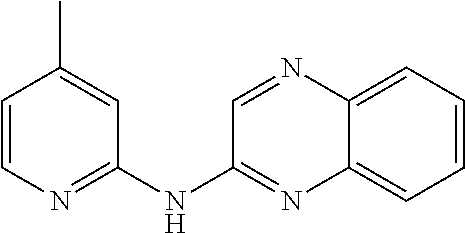
with the exception of the following compound:
“Halogen atom” means the group comprising F, Cl, Br and I, preferably said halogen atom is a chlorine atom.
“Unsaturated” means that the group comprises at least one double bond.
Preferably, X1 represents a CR8 group when X2 represents a nitrogen group, and
X2 represents a CR8 group when X1 represents a nitrogen group.
Preferably, at least one of X3 and X4 is a nitrogen atom when the cycle A is in position a.
Preferably X3 and X4 are different, and even more preferably X3 represents a CR8 group when X2 represents a nitrogen group or a and X4 represents a CR8 group when X1 represents a nitrogen group.
Preferably, R1 represents a hydrogen atom or a methoxy group.
Preferably, R2, R3, R4 and R5 independently represent a hydrogen atom or a halogen atom or an alkyl, or benzyl, optionally substituted.
Preferably, R4 represents a hydrogen atom.
Preferably, R2 represents a hydrogen atom or a C1 to C4 alkyl group, preferably a methyl.
Preferably, R3, R5 and R6 independently represent a hydrogen atom.
Preferably, R7 represents a hydrogen, or halogen atom, more preferably a hydrogen or a chlorine atom.
Preferably, the ring A is attached at position a or b of the compound of formula I via the carbons numbered 1 and 2 in ring A.
Preferably, when the ring A is at position a, R4 is the carbon atom numbered 2 of the ring A, more preferably R4 is the carbon atom numbered 2 of the ring A and R10 is the carbon numbered 1.
Preferably, when a ring A is in position b, X4 is the carbon atom numbered 1 of the ring A, more preferably, X4 is the carbon atom numbered 1 of the ring A and R10 is the carbon numbered 2.
Preferably, the compound as described above does not include the following compounds:
- 5,8-Dimethyl-6-(pyridin-2-ylamino)-2H-isoquinolin-1-one
- 5,8-dimethyl-6-(3 methoxy-pyridin-2-ylamino)-isoquinolin-1-one
- 5,8-Dimethyl-6-(pyridin-2-ylamino)-2H-isoquinolin-1-one
Advantageously, the compound of formula I is chosen among the group comprising:
- Pyridin-4-yl-quinolin-3-yl-amine; compound (121) of table I
- (8-Chloro-quinolin-2-yl)-(4-methyl-pyridin-2-yl)-amine; compound (6) of table I
- (3-Methoxy-pyridin-2-yl)-quinolin-3-yl-amine; compound (10) of table I; and
- Isoquinolin-5-yl-(3-methoxy-pyridin-2-yl)-amine.
According to a particular embodiment, compound of formula (Ia)
wherein:
R independently represent a hydrogen atom, a halogen atom or a group chosen among a (C1-C3)alkyl group, a —CN group, a hydroxyl group, a —COOR1 group, a (C1-C3)fluoroalkyl group, a —NO2 group, a —NR1R2 group and a (C1-C3)alkoxy group,
R″ is as defined above and is advantageously a hydrogen atom,
n is as defined above and is advantageously 1,
n′ is as defined above and is advantageously 1,
R′ is a hydrogen atom, a halogen atom or a group chosen among a (C1-C3)alkyl group, a —NO2 group, a (C1-C3)alkoxy group and a —NR1R2 group,
R1 and R2 are a hydrogen atom or a (C1-C3)alkyl group,
or one of its pharmaceutically acceptable salt,
can be used for for preventing or treating the infection of a cell and/or an individual, preferably a human, in need thereof by a retrovirus and/or for preventing retrovirus and/or for preventing, inhibiting or treating a disease caused by retroviruses, wherein the retroviruses include visna/maedi virus or MVV/visna, equine infectious anemia virus or EIAV, caprine arthritis encephalitis virus or CAEV, simian immunodeficiency virus or SIV, avian leukemia virus or ALV, murine leukemia virus also called Moloney virus or MULV, Abelson leukemia virus, murine mammary tumor virus, Mason-Pfizer monkey virus or MPMV, feline leukemia virus or FELV, human leukemia viruses HTLV-I, human leukemia viruses HTLV-II, simian leukemia virus or STLV, bovine leukemia virus or BLV, primate type D oncoviruses, type B oncoviruses, Rous sarcoma virus or RSV, simian foamy virus or SFV or chimpanzee simian virus, human foamy virus, and feline immunodeficiency virus, the human foamy virus or HFV, bovine syncytial virus or BSV, feline syncytial virus FSV, the feline immunodeficiency virus, avian leukosis virus, Walleye dermal sarcoma virus, T-cell lymphoma, acute ATL, lymphomatous ATL, chronic ATL, smoldering ATL, neurologic diseases, Tropical spastic paraparesis or HTLV-associated myelopathy, inflammatory and autoimmune diseases such as uveitis, dermatitis, pneumonitis, rheumatoid arthritis, and polymyositis hematologic and dermatologic diseases, lung diseases, brain diseases, and/or immunodeficiency and the retrovirus does not include HIV and the disease caused by the retroviral infection is not AIDS.
According to another particular embodiment, compound of formula (Ib)
wherein:
R independently represent a hydrogen atom, a halogen atom or a group chosen among a (C1-C3)alkyl group, a —NR1R2 group, a (C1-C3)fluoroalkoxy group, a —NO2 group, a phenoxy group and a (C1-C4)alkoxy group,
R1 and R2 are independently a hydrogen atom or a (C1-C3)alkyl group,
R″ is as defined above and is advantageously a hydrogen atom,
n is as defined above and is preferably 1 or 2,
n′ is as defined above and is preferably 1,
R′ is a hydrogen atom, a halogen atom or a group chosen among a (C1-C3)alkyl group and a (C1-C4)alkoxy group,
or one of its pharmaceutically acceptable salt,
can be used for for preventing or treating the infection of a cell and/or an individual, preferably a human, in need thereof by a retrovirus and/or for preventing retrovirus and/or for preventing, inhibiting or treating a disease caused by retroviruses, wherein the retroviruses include visna/maedi virus or MVV/visna, equine infectious anemia virus or EIAV, caprine arthritis encephalitis virus or CAEV, simian immunodeficiency virus or SIV, avian leukemia virus or ALV, murine leukemia virus also called Moloney virus or MULV, Abelson leukemia virus, murine mammary tumor virus, Mason-Pfizer monkey virus or MPMV, feline leukemia virus or FELV, human leukemia viruses HTLV-I, human leukemia viruses HTLV-II, simian leukemia virus or STLV, bovine leukemia virus or BLV, primate type D oncoviruses, type B oncoviruses, Rous sarcoma virus or RSV, simian foamy virus or SFV or chimpanzee simian virus, human foamy virus, and feline immunodeficiency virus, the human foamy virus or HFV, bovine syncytial virus or BSV, feline syncytial virus FSV, the feline immunodeficiency virus, avian leukosis virus, Walleye dermal sarcoma virus, T-cell lymphoma, acute ATL, lymphomatous ATL, chronic ATL, smoldering ATL, neurologic diseases, Tropical spastic paraparesis or HTLV-associated myelopathy, inflammatory and autoimmune diseases such as uveitis, dermatitis, pneumonitis, rheumatoid arthritis, and polymyositis hematologic and dermatologic diseases, lung diseases, brain diseases, and/or immunodeficiency and the retrovirus does not include HIV and the disease caused by the retroviral infection is not AIDS.
According to another particular embodiment, compound of formula (Ic)
wherein:
R independently represent a hydrogen atom or a group chosen among a (C1-C3)alkyl group, a (C1-C3)fluoroalkyl group, a —NR1R2 group, a —COOR1 group, a —NO2 group and a (C1-C3)alkoxy group,
R″ is as defined above and is advantageously a hydrogen atom,
n is as defined above and is advantageously 1,
n′ is as defined above and is advantageously 1,
R′ is a hydrogen atom,
R1 and R2 are independently a hydrogen atom or a (C1-C3)alkyl group,
or one of its pharmaceutically acceptable salt,
can be used for for preventing or treating the infection of a cell and/or an individual, preferably a human, in need thereof by a retrovirus and/or for preventing retrovirus and/or for preventing, inhibiting or treating a disease caused by retroviruses, wherein the retroviruses include visna/maedi virus or MVV/visna, equine infectious anemia virus or EIAV, caprine arthritis encephalitis virus or CAEV, simian immunodeficiency virus or SIV, avian leukemia virus or ALV, murine leukemia virus also called Moloney virus or MULV, Abelson leukemia virus, murine mammary tumor virus, Mason-Pfizer monkey virus or MPMV, feline leukemia virus or FELV, human leukemia viruses HTLV-I, human leukemia viruses HTLV-II, simian leukemia virus or STLV, bovine leukemia virus or BLV, primate type D oncoviruses, type B oncoviruses, Rous sarcoma virus or RSV, simian foamy virus or SFV or chimpanzee simian virus, human foamy virus, and feline immunodeficiency virus, the human foamy virus or HFV, bovine syncytial virus or BSV, feline syncytial virus FSV, the feline immunodeficiency virus, avian leukosis virus, Walleye dermal sarcoma virus, T-cell lymphoma, acute ATL, lymphomatous ATL, chronic ATL, smoldering ATL, neurologic diseases, Tropical spastic paraparesis or HTLV-associated myelopathy, inflammatory and autoimmune diseases such as uveitis, dermatitis, pneumonitis, rheumatoid arthritis, and polymyositis hematologic and dermatologic diseases, lung diseases, brain diseases, and/or immunodeficiency and the retrovirus does not include HIV and the disease caused by the retroviral infection is not AIDS.
According to another particular embodiment, compound of formula (Id)
wherein:
R independently represent a hydrogen atom or a group chosen among a (C1-C3)alkyl group, a (C1-C3)fluoroalkyl group and a (C1-C3)alkoxy group,
R″ is as defined above and is advantageously a hydrogen atom,
n is as defined above and is advantageously 1,
n′ is as defined above and is advantageously 1,
R′ is a hydrogen atom,
or one of its pharmaceutically acceptable salt,
can be used for for preventing or treating the infection of a cell and/or an individual, preferably a human, in need thereof by a retrovirus and/or for preventing retrovirus and/or for preventing, inhibiting or treating a disease caused by retroviruses, wherein the retroviruses include visna/maedi virus or MVV/visna, equine infectious anemia virus or EIAV, caprine arthritis encephalitis virus or CAEV, simian immunodeficiency virus or SIV, avian leukemia virus or ALV, murine leukemia virus also called Moloney virus or MULV, Abelson leukemia virus, murine mammary tumor virus, Mason-Pfizer monkey virus or MPMV, feline leukemia virus or FELV, human leukemia viruses HTLV-I, human leukemia viruses HTLV-II, simian leukemia virus or STLV, bovine leukemia virus or BLV, primate type D oncoviruses, type B oncoviruses, Rous sarcoma virus or RSV, simian foamy virus or SFV or chimpanzee simian virus, human foamy virus, and feline immunodeficiency virus, the human foamy virus or HFV, bovine syncytial virus or BSV, feline syncytial virus FSV, the feline immunodeficiency virus, avian leukosis virus, Walleye dermal sarcoma virus, T-cell lymphoma, acute ATL, lymphomatous ATL, chronic ATL, smoldering ATL, neurologic diseases, Tropical spastic paraparesis or HTLV-associated myelopathy, inflammatory and autoimmune diseases such as uveitis, dermatitis, pneumonitis, rheumatoid arthritis, and polymyositis hematologic and dermatologic diseases, lung diseases, brain diseases, and/or immunodeficiency and the retrovirus does not include HIV and the disease caused by the retroviral infection is not AIDS.
According to another particular embodiment, compound of formula (Ie)
wherein:
R represents a hydrogen atom,
R″ is as defined above and is advantageously a hydrogen atom,
n is as defined above and is advantageously 1,
n′ is as defined above and is advantageously 1,
R′ is a hydrogen atom, a halogen atom or a group chosen among a (C1-C3)alkyl group and a (C1-C3)alkoxy group,
or one of its pharmaceutically acceptable salt,
can be used for for preventing or treating the infection of a cell and/or an individual, preferably a human, in need thereof by a retrovirus and/or for preventing retrovirus and/or for preventing, inhibiting or treating a disease caused by retroviruses, wherein the retroviruses include visna/maedi virus or MVV/visna, equine infectious anemia virus or EIAV, caprine arthritis encephalitis virus or CAEV, simian immunodeficiency virus or SIV, avian leukemia virus or ALV, murine leukemia virus also called Moloney virus or MULV, Abelson leukemia virus, murine mammary tumor virus, Mason-Pfizer monkey virus or MPMV, feline leukemia virus or FELV, human leukemia viruses HTLV-I, human leukemia viruses HTLV-II, simian leukemia virus or STLV, bovine leukemia virus or BLV, primate type D oncoviruses, type B oncoviruses, Rous sarcoma virus or RSV, simian foamy virus or SFV or chimpanzee simian virus, human foamy virus, and feline immunodeficiency virus, the human foamy virus or HFV, bovine syncytial virus or BSV, feline syncytial virus FSV, the feline immunodeficiency virus, avian leukosis virus, Walleye dermal sarcoma virus, T-cell lymphoma, acute ATL, lymphomatous ATL, chronic ATL, smoldering ATL, neurologic diseases, Tropical spastic paraparesis or HTLV-associated myelopathy, inflammatory and autoimmune diseases such as uveitis, dermatitis, pneumonitis, rheumatoid arthritis, and polymyositis hematologic and dermatologic diseases, lung diseases, brain diseases, and/or immunodeficiency and the retrovirus does not include HIV and the disease caused by the retroviral infection is not AIDS.
According to another particular embodiment compound of formula (If)
wherein:
R represents a hydrogen atom,
R″ is as defined above and is advantageously a hydrogen atom,
n is as defined above and is advantageously 1,
n′ is as defined above and is advantageously 1,
R′ is a hydrogen atom,
or one of its pharmaceutically acceptable salt,
can be used for for preventing or treating the infection of a cell and/or an individual, preferably a human, in need thereof by a retrovirus and/or for preventing retrovirus and/or for preventing, inhibiting or treating a disease caused by retroviruses, wherein the retroviruses include visna/maedi virus or MVV/visna, equine infectious anemia virus or EIAV, caprine arthritis encephalitis virus or CAEV, simian immunodeficiency virus or SIV, avian leukemia virus or ALV, murine leukemia virus also called Moloney virus or MULV, Abelson leukemia virus, murine mammary tumor virus, Mason-Pfizer monkey virus or MPMV, feline leukemia virus or FELV, human leukemia viruses HTLV-I, human leukemia viruses HTLV-II, simian leukemia virus or STLV, bovine leukemia virus or BLV, primate type D oncoviruses, type B oncoviruses, Rous sarcoma virus or RSV, simian foamy virus or SFV or chimpanzee simian virus, human foamy virus, and feline immunodeficiency virus, the human foamy virus or HFV, bovine syncytial virus or BSV, feline syncytial virus FSV, the feline immunodeficiency virus, avian leukosis virus, Walleye dermal sarcoma virus, T-cell lymphoma, acute ATL, lymphomatous ATL, chronic ATL, smoldering ATL, neurologic diseases, Tropical spastic paraparesis or HTLV-associated myelopathy, inflammatory and autoimmune diseases such as uveitis, dermatitis, pneumonitis, rheumatoid arthritis, and polymyositis hematologic and dermatologic diseases, lung diseases, brain diseases, and/or immunodeficiency and the retrovirus does not include HIV and the disease caused by the retroviral infection is not AIDS.
According to another particular embodiment, compound of formula (Ig)
wherein:
R represents a hydrogen atom,
R″ is as defined above and is advantageously a hydrogen atom,
n is as defined above and is advantageously 1,
n′ is as defined above and is advantageously 1,
R′ is a hydrogen atom or a halogen atom,
or one of its pharmaceutically acceptable salt,
can be used for for preventing or treating the infection of a cell and/or an individual, preferably a human, in need thereof by a retrovirus and/or for preventing retrovirus and/or for preventing, inhibiting or treating a disease caused by retroviruses, wherein the retroviruses include visna/maedi virus or MVV/visna, equine infectious anemia virus or EIAV, caprine arthritis encephalitis virus or CAEV, simian immunodeficiency virus or SIV, avian leukemia virus or ALV, murine leukemia virus also called Moloney virus or MULV, Abelson leukemia virus, murine mammary tumor virus, Mason-Pfizer monkey virus or MPMV, feline leukemia virus or FELV, human leukemia viruses HTLV-I, human leukemia viruses HTLV-II, simian leukemia virus or STLV, bovine leukemia virus or BLV, primate type D oncoviruses, type B oncoviruses, Rous sarcoma virus or RSV, simian foamy virus or SFV or chimpanzee simian virus, human foamy virus, and feline immunodeficiency virus, the human foamy virus or HFV, bovine syncytial virus or BSV, feline syncytial virus FSV, the feline immunodeficiency virus, avian leukosis virus, Walleye dermal sarcoma virus, T-cell lymphoma, acute ATL, lymphomatous ATL, chronic ATL, smoldering ATL, neurologic diseases, Tropical spastic paraparesis or HTLV-associated myelopathy, inflammatory and autoimmune diseases such as uveitis, dermatitis, pneumonitis, rheumatoid arthritis, and polymyositis hematologic and dermatologic diseases, lung diseases, brain diseases, and/or immunodeficiency and the retrovirus does not include HIV and the disease caused by the retroviral infection is not AIDS.
According to another particular embodiment, compound of formula (Ih)
wherein:
R represents a hydrogen atom,
R″ is as defined above and is advantageously a hydrogen atom,
n is as defined above and is advantageously 1,
n′ is as defined above and is advantageously 1,
R′ is a hydrogen atom,
or one of its pharmaceutically acceptable salt,
can be used for for preventing or treating the infection of a cell and/or an individual, preferably a human, in need thereof by a retrovirus and/or for preventing retrovirus and/or for preventing, inhibiting or treating a disease caused by retroviruses, wherein the retroviruses include visna/maedi virus or MVV/visna, equine infectious anemia virus or EIAV, caprine arthritis encephalitis virus or CAEV, simian immunodeficiency virus or SIV, avian leukemia virus or ALV, murine leukemia virus also called Moloney virus or MULV, Abelson leukemia virus, murine mammary tumor virus, Mason-Pfizer monkey virus or MPMV, feline leukemia virus or FELV, human leukemia viruses HTLV-I, human leukemia viruses HTLV-II, simian leukemia virus or STLV, bovine leukemia virus or BLV, primate type D oncoviruses, type B oncoviruses, Rous sarcoma virus or RSV, simian foamy virus or SFV or chimpanzee simian virus, human foamy virus, and feline immunodeficiency virus, the human foamy virus or HFV, bovine syncytial virus or BSV, feline syncytial virus FSV, the feline immunodeficiency virus, avian leukosis virus, Walleye dermal sarcoma virus, T-cell lymphoma, acute ATL, lymphomatous ATL, chronic ATL, smoldering ATL, neurologic diseases, Tropical spastic paraparesis or HTLV-associated myelopathy, inflammatory and autoimmune diseases such as uveitis, dermatitis, pneumonitis, rheumatoid arthritis, and polymyositis hematologic and dermatologic diseases, lung diseases, brain diseases, and/or immunodeficiency and the retrovirus does not include HIV and the disease caused by the retroviral infection is not AIDS.
According to another particular embodiment, compound of formula (Ii)
wherein:
R independently represent a hydrogen atom or a group chosen among a (C1-C3)fluoroalkoxy group and a (C1-C3)alkoxy group,
R″ is as defined above and is advantageously a hydrogen atom,
n is as defined above and is advantageously 1,
n′ is as defined above and is advantageously 1,
R′ is a hydrogen atom,
or one of its pharmaceutically acceptable salt,
can be used for for preventing or treating the infection of a cell and/or an individual, preferably a human, in need thereof by a retrovirus and/or for preventing retrovirus and/or for preventing, inhibiting or treating a disease caused by retroviruses, wherein the retroviruses include visna/maedi virus or MVV/visna, equine infectious anemia virus or EIAV, caprine arthritis encephalitis virus or CAEV, simian immunodeficiency virus or SIV, avian leukemia virus or ALV, murine leukemia virus also called Moloney virus or MULV, Abelson leukemia virus, murine mammary tumor virus, Mason-Pfizer monkey virus or MPMV, feline leukemia virus or FELV, human leukemia viruses HTLV-I, human leukemia viruses HTLV-II, simian leukemia virus or STLV, bovine leukemia virus or BLV, primate type D oncoviruses, type B oncoviruses, Rous sarcoma virus or RSV, simian foamy virus or SFV or chimpanzee simian virus, human foamy virus, and feline immunodeficiency virus, the human foamy virus or HFV, bovine syncytial virus or BSV, feline syncytial virus FSV, the feline immunodeficiency virus, avian leukosis virus, Walleye dermal sarcoma virus, T-cell lymphoma, acute ATL, lymphomatous ATL, chronic ATL, smoldering ATL, neurologic diseases, Tropical spastic paraparesis or HTLV-associated myelopathy, inflammatory and autoimmune diseases such as uveitis, dermatitis, pneumonitis, rheumatoid arthritis, and polymyositis hematologic and dermatologic diseases, lung diseases, brain diseases, and/or immunodeficiency and the retrovirus does not include HIV and the disease caused by the retroviral infection is not AIDS.
According to another particular embodiment, compound of formula (Ij)
wherein:
R independently represent a hydrogen atom or a group chosen among a (C1-C3)fluoroalkoxy group and a (C1-C3)alkyl group,
R″ is as defined above and is advantageously a hydrogen atom,
n is as defined above and is advantageously 1,
n′ is as defined above and is advantageously 1,
R′ is a hydrogen atom,
or one of its pharmaceutically acceptable salt,
can be used for for preventing or treating the infection of a cell and/or an individual, preferably a human, in need thereof by a retrovirus and/or for preventing retrovirus and/or for preventing, inhibiting or treating a disease caused by retroviruses, wherein the retroviruses include visna/maedi virus or MVV/visna, equine infectious anemia virus or EIAV, caprine arthritis encephalitis virus or CAEV, simian immunodeficiency virus or SIV, avian leukemia virus or ALV, murine leukemia virus also called Moloney virus or MULV, Abelson leukemia virus, murine mammary tumor virus, Mason-Pfizer monkey virus or MPMV, feline leukemia virus or FELV, human leukemia viruses HTLV-I, human leukemia viruses HTLV-II, simian leukemia virus or STLV, bovine leukemia virus or BLV, primate type D oncoviruses, type B oncoviruses, Rous sarcoma virus or RSV, simian foamy virus or SFV or chimpanzee simian virus, human foamy virus, and feline immunodeficiency virus, the human foamy virus or HFV, bovine syncytial virus or BSV, feline syncytial virus FSV, the feline immunodeficiency virus, avian leukosis virus, Walleye dermal sarcoma virus, T-cell lymphoma, acute ATL, lymphomatous ATL, chronic ATL, smoldering ATL, neurologic diseases, Tropical spastic paraparesis or HTLV-associated myelopathy, inflammatory and autoimmune diseases such as uveitis, dermatitis, pneumonitis, rheumatoid arthritis, and polymyositis hematologic and dermatologic diseases, lung diseases, brain diseases, and/or immunodeficiency and the retrovirus does not include HIV and the disease caused by the retroviral infection is not AIDS.
According to another particular embodiment, compound of formula (Ik)
wherein:
R represents a hydrogen atom,
R″ is as defined above and is advantageously a hydrogen atom,
n is as defined above and is advantageously 1,
n′ is as defined above and is advantageously 1,
R′ is a hydrogen atom, a halogen atom or a (C1-C3)alkyl group,
or one of its pharmaceutically acceptable salt,
can be used for for preventing or treating the infection of a cell and/or an individual, preferably a human, in need thereof by a retrovirus and/or for preventing retrovirus and/or for preventing, inhibiting or treating a disease caused by retroviruses, wherein the retroviruses include visna/maedi virus or MVV/visna, equine infectious anemia virus or EIAV, caprine arthritis encephalitis virus or CAEV, simian immunodeficiency virus or SIV, avian leukemia virus or ALV, murine leukemia virus also called Moloney virus or MULV, Abelson leukemia virus, murine mammary tumor virus, Mason-Pfizer monkey virus or MPMV, feline leukemia virus or FELV, human leukemia viruses HTLV-I, human leukemia viruses HTLV-II, simian leukemia virus or STLV, bovine leukemia virus or BLV, primate type D oncoviruses, type B oncoviruses, Rous sarcoma virus or RSV, simian foamy virus or SFV or chimpanzee simian virus, human foamy virus, and feline immunodeficiency virus, the human foamy virus or HFV, bovine syncytial virus or BSV, feline syncytial virus FSV, the feline immunodeficiency virus, avian leukosis virus, Walleye dermal sarcoma virus, T-cell lymphoma, acute ATL, lymphomatous ATL, chronic ATL, smoldering ATL, neurologic diseases, Tropical spastic paraparesis or HTLV-associated myelopathy, inflammatory and autoimmune diseases such as uveitis, dermatitis, pneumonitis, rheumatoid arthritis, and polymyositis hematologic and dermatologic diseases, lung diseases, brain diseases, and/or immunodeficiency and the retrovirus does not include HIV and the disease caused by the retroviral infection is not AIDS.
According to another particular embodiment, compound of formula (Il)
wherein:
R represents a hydrogen atom,
R″ is as defined above and is advantageously a hydrogen atom,
n is as defined above and is advantageously 1,
n′ is as defined above and is advantageously 1,
R′ is a hydrogen atom,
or one of its pharmaceutically acceptable salt,
can be used for for preventing or treating the infection of a cell and/or an individual, preferably a human, in need thereof by a retrovirus and/or for preventing retrovirus and/or for preventing, inhibiting or treating a disease caused by retroviruses, wherein the retroviruses include visna/maedi virus or MVV/visna, equine infectious anemia virus or EIAV, caprine arthritis encephalitis virus or CAEV, simian immunodeficiency virus or SIV, avian leukemia virus or ALV, murine leukemia virus also called Moloney virus or MULV, Abelson leukemia virus, murine mammary tumor virus, Mason-Pfizer monkey virus or MPMV, feline leukemia virus or FELV, human leukemia viruses HTLV-I, human leukemia viruses HTLV-II, simian leukemia virus or STLV, bovine leukemia virus or BLV, primate type D oncoviruses, type B oncoviruses, Rous sarcoma virus or RSV, simian foamy virus or SFV or chimpanzee simian virus, human foamy virus, and feline immunodeficiency virus, the human foamy virus or HFV, bovine syncytial virus or BSV, feline syncytial virus FSV, the feline immunodeficiency virus, avian leukosis virus, Walleye dermal sarcoma virus, T-cell lymphoma, acute ATL, lymphomatous ATL, chronic ATL, smoldering ATL, neurologic diseases, Tropical spastic paraparesis or HTLV-associated myelopathy, inflammatory and autoimmune diseases such as uveitis, dermatitis, pneumonitis, rheumatoid arthritis, and polymyositis hematologic and dermatologic diseases, lung diseases, brain diseases, and/or immunodeficiency and the retrovirus does not include HIV and the disease caused by the retroviral infection is not AIDS.
According to another particular embodiment, compound of formula (Im)
wherein:
R represents a hydrogen atom,
R″ is as defined above and is advantageously a hydrogen atom,
n is as defined above and is advantageously 1,
n′ is as defined above and is advantageously 1,
R′ is a hydrogen atom,
or one of its pharmaceutically acceptable salt,
can be used for for preventing or treating the infection of a cell and/or an individual, preferably a human, in need thereof by a retrovirus and/or for preventing retrovirus and/or for preventing, inhibiting or treating a disease caused by retroviruses, wherein the retroviruses include visna/maedi virus or MVV/visna, equine infectious anemia virus or EIAV, caprine arthritis encephalitis virus or CAEV, simian immunodeficiency virus or SIV, avian leukemia virus or ALV, murine leukemia virus also called Moloney virus or MULV, Abelson leukemia virus, murine mammary tumor virus, Mason-Pfizer monkey virus or MPMV, feline leukemia virus or FELV, human leukemia viruses HTLV-I, human leukemia viruses HTLV-II, simian leukemia virus or STLV, bovine leukemia virus or BLV, primate type D oncoviruses, type B oncoviruses, Rous sarcoma virus or RSV, simian foamy virus or SFV or chimpanzee simian virus, human foamy virus, and feline immunodeficiency virus, the human foamy virus or HFV, bovine syncytial virus or BSV, feline syncytial virus FSV, the feline immunodeficiency virus, avian leukosis virus, Walleye dermal sarcoma virus, T-cell lymphoma, acute ATL, lymphomatous ATL, chronic ATL, smoldering ATL, neurologic diseases, Tropical spastic paraparesis or HTLV-associated myelopathy, inflammatory and autoimmune diseases such as uveitis, dermatitis, pneumonitis, rheumatoid arthritis, and polymyositis hematologic and dermatologic diseases, lung diseases, brain diseases, and/or immunodeficiency and the retrovirus does not include HIV and the disease caused by the retroviral infection is not AIDS.
According to another particular embodiment, compound of formula (Io)
wherein:
R independently represent a hydrogen atom or a halogen atom or a group chosen among, a —NO2 group, a —CN group and a (C1-C3)alkyl group, said alkyl being optionally mono-substituted by a hydroxyl group,
R″ is as defined above and is advantageously a hydrogen atom,
n is as defined above and is advantageously 1,
n′ is as defined above and is advantageously 1,
R′ is a hydrogen atom, a halogen atom or a (C1-C3)fluoroalkyl group,
or one of its pharmaceutically acceptable salt,
can be used for for preventing or treating the infection of a cell and/or an individual, preferably a human, in need thereof by a retrovirus and/or for preventing retrovirus and/or for preventing, inhibiting or treating a disease caused by retroviruses, wherein the retroviruses include visna/maedi virus or MVV/visna, equine infectious anemia virus or EIAV, caprine arthritis encephalitis virus or CAEV, simian immunodeficiency virus or SIV, avian leukemia virus or ALV, murine leukemia virus also called Moloney virus or MULV, Abelson leukemia virus, murine mammary tumor virus, Mason-Pfizer monkey virus or MPMV, feline leukemia virus or FELV, human leukemia viruses HTLV-I, human leukemia viruses HTLV-II, simian leukemia virus or STLV, bovine leukemia virus or BLV, primate type D oncoviruses, type B oncoviruses, Rous sarcoma virus or RSV, simian foamy virus or SFV or chimpanzee simian virus, human foamy virus, and feline immunodeficiency virus, the human foamy virus or HFV, bovine syncytial virus or BSV, feline syncytial virus FSV, the feline immunodeficiency virus, avian leukosis virus, Walleye dermal sarcoma virus, T-cell lymphoma, acute ATL, lymphomatous ATL, chronic ATL, smoldering ATL, neurologic diseases, Tropical spastic paraparesis or HTLV-associated myelopathy, inflammatory and autoimmune diseases such as uveitis, dermatitis, pneumonitis, rheumatoid arthritis, and polymyositis hematologic and dermatologic diseases, lung diseases, brain diseases, and/or immunodeficiency and the retrovirus does not include HIV and the disease caused by the retroviral infection is not AIDS.
According to another particular embodiment, compound of formula (Ip)
wherein:
R represents a hydrogen atom,
R″ is as defined above and is advantageously a hydrogen atom,
n is as defined above and is advantageously 1,
n′ is as defined above and is advantageously 1,
R′ is a hydrogen atom,
or one of its pharmaceutically acceptable salt,
can be used for for preventing or treating the infection of a cell and/or an individual, preferably a human, in need thereof by a retrovirus and/or for preventing retrovirus and/or for preventing, inhibiting or treating a disease caused by retroviruses, wherein the retroviruses include visna/maedi virus or MVV/visna, equine infectious anemia virus or EIAV, caprine arthritis encephalitis virus or CAEV, simian immunodeficiency virus or SIV, avian leukemia virus or ALV, murine leukemia virus also called Moloney virus or MULV, Abelson leukemia virus, murine mammary tumor virus, Mason-Pfizer monkey virus or MPMV, feline leukemia virus or FELV, human leukemia viruses HTLV-I, human leukemia viruses HTLV-II, simian leukemia virus or STLV, bovine leukemia virus or BLV, primate type D oncoviruses, type B oncoviruses, Rous sarcoma virus or RSV, simian foamy virus or SFV or chimpanzee simian virus, human foamy virus, and feline immunodeficiency virus, the human foamy virus or HFV, bovine syncytial virus or BSV, feline syncytial virus FSV, the feline immunodeficiency virus, avian leukosis virus, Walleye dermal sarcoma virus, T-cell lymphoma, acute ATL, lymphomatous ATL, chronic ATL, smoldering ATL, neurologic diseases, Tropical spastic paraparesis or HTLV-associated myelopathy, inflammatory and autoimmune diseases such as uveitis, dermatitis, pneumonitis, rheumatoid arthritis, and polymyositis hematologic and dermatologic diseases, lung diseases, brain diseases, and/or immunodeficiency and the retrovirus does not include HIV and the disease caused by the retroviral infection is not AIDS.
According to another particular embodiment, compound of formula (Iq)
wherein:
R independently represent a hydrogen atom, a (C1-C3)alkoxy group or a (C1-C3)fluoroalkoxy group,
R″ is as defined above and is advantageously a hydrogen atom,
n is as defined above and is advantageously 1,
n′ is as defined above and is advantageously 1,
R′ is a hydrogen atom or a group chosen among a —NR1R2 group, a N-methylpiperazinyl group, a (C1-C3)alkoxy group and a morpholino group,
R1 and R2 are independently a hydrogen atom or a (C1-C3)alkyl group,
or one of its pharmaceutically acceptable salt,
can be used for for preventing or treating the infection of a cell and/or an individual, preferably a human, in need thereof by a retrovirus and/or for preventing retrovirus and/or for preventing, inhibiting or treating a disease caused by retroviruses, wherein the retroviruses include visna/maedi virus or MVV/visna, equine infectious anemia virus or EIAV, caprine arthritis encephalitis virus or CAEV, simian immunodeficiency virus or SIV, avian leukemia virus or ALV, murine leukemia virus also called Moloney virus or MULV, Abelson leukemia virus, murine mammary tumor virus, Mason-Pfizer monkey virus or MPMV, feline leukemia virus or FELV, human leukemia viruses HTLV-I, human leukemia viruses HTLV-II, simian leukemia virus or STLV, bovine leukemia virus or BLV, primate type D oncoviruses, type B oncoviruses, Rous sarcoma virus or RSV, simian foamy virus or SFV or chimpanzee simian virus, human foamy virus, and feline immunodeficiency virus, the human foamy virus or HFV, bovine syncytial virus or BSV, feline syncytial virus FSV, the feline immunodeficiency virus, avian leukosis virus, Walleye dermal sarcoma virus, T-cell lymphoma, acute ATL, lymphomatous ATL, chronic ATL, smoldering ATL, neurologic diseases, Tropical spastic paraparesis or HTLV-associated myelopathy, inflammatory and autoimmune diseases such as uveitis, dermatitis, pneumonitis, rheumatoid arthritis, and polymyositis hematologic and dermatologic diseases, lung diseases, brain diseases, and/or immunodeficiency and the retrovirus does not include HIV and the disease caused by the retroviral infection is not AIDS.
According to another particular embodiment, compound of formula (Ir)
wherein:
R independently represent a hydrogen atom or a (C1-C3)alkyl group,
R″ is as defined above and is advantageously a hydrogen atom,
n is as defined above and is advantageously 1,
n′ is as defined above and is advantageously 1,
R′ is a hydrogen atom or a group chosen among a —NR1R2 group, a morpholino group and a (C1-C3)alkoxy group,
R1 and R2 are independently a hydrogen atom or a (C1-C3)alkyl group,
or one of its pharmaceutically acceptable salt,
can be used for for preventing or treating the infection of a cell and/or an individual, preferably a human, in need thereof by a retrovirus and/or for preventing retrovirus and/or for preventing, inhibiting or treating a disease caused by retroviruses, wherein the retroviruses include visna/maedi virus or MVV/visna, equine infectious anemia virus or EIAV, caprine arthritis encephalitis virus or CAEV, simian immunodeficiency virus or SIV, avian leukemia virus or ALV, murine leukemia virus also called Moloney virus or MULV, Abelson leukemia virus, murine mammary tumor virus, Mason-Pfizer monkey virus or MPMV, feline leukemia virus or FELV, human leukemia viruses HTLV-I, human leukemia viruses HTLV-II, simian leukemia virus or STLV, bovine leukemia virus or BLV, primate type D oncoviruses, type B oncoviruses, Rous sarcoma virus or RSV, simian foamy virus or SFV or chimpanzee simian virus, human foamy virus, and feline immunodeficiency virus, the human foamy virus or HFV, bovine syncytial virus or BSV, feline syncytial virus FSV, the feline immunodeficiency virus, avian leukosis virus, Walleye dermal sarcoma virus, T-cell lymphoma, acute ATL, lymphomatous ATL, chronic ATL, smoldering ATL, neurologic diseases, Tropical spastic paraparesis or HTLV-associated myelopathy, inflammatory and autoimmune diseases such as uveitis, dermatitis, pneumonitis, rheumatoid arthritis, and polymyositis hematologic and dermatologic diseases, lung diseases, brain diseases, and/or immunodeficiency and the retrovirus does not include HIV and the disease caused by the retroviral infection is not AIDS.
According to another particular embodiment, compound of formula (Iee)
wherein:
R independently represent a hydrogen atom, a (C1-C3)alkyl group or a (C1-C3)fluoroalkyl group,
R″ is as defined above and is advantageously a hydrogen atom,
n is as defined above and is advantageously 1,
n′ is as defined above and is advantageously 2,
R′ is a hydrogen atom or a (C1-C3)alkyl group,
or one of its pharmaceutically acceptable salt,
can be used for for preventing or treating the infection of a cell and/or an individual, preferably a human, in need thereof by a retrovirus and/or for preventing retrovirus and/or for preventing, inhibiting or treating a disease caused by retroviruses, wherein the retroviruses include visna/maedi virus or MVV/visna, equine infectious anemia virus or EIAV, caprine arthritis encephalitis virus or CAEV, simian immunodeficiency virus or SIV, avian leukemia virus or ALV, murine leukemia virus also called Moloney virus or MULV, Abelson leukemia virus, murine mammary tumor virus, Mason-Pfizer monkey virus or MPMV, feline leukemia virus or FELV, human leukemia viruses HTLV-I, human leukemia viruses HTLV-II, simian leukemia virus or STLV, bovine leukemia virus or BLV, primate type D oncoviruses, type B oncoviruses, Rous sarcoma virus or RSV, simian foamy virus or SFV or chimpanzee simian virus, human foamy virus, and feline immunodeficiency virus, the human foamy virus or HFV, bovine syncytial virus or BSV, feline syncytial virus FSV, the feline immunodeficiency virus, avian leukosis virus, Walleye dermal sarcoma virus, T-cell lymphoma, acute ATL, lymphomatous ATL, chronic ATL, smoldering ATL, neurologic diseases, Tropical spastic paraparesis or HTLV-associated myelopathy, inflammatory and autoimmune diseases such as uveitis, dermatitis, pneumonitis, rheumatoid arthritis, and polymyositis hematologic and dermatologic diseases, lung diseases, brain diseases, and/or immunodeficiency and the retrovirus does not include HIV and the disease caused by the retroviral infection is not AIDS. Among the previous defined families of compounds of formulae (Ia) to (Iee), some are more particularly preferred for their use as an agent for preventing or treating the infection of a cell and/or an individual, preferably a human, by a retrovirus and/or for preventing, inhibiting or treating a disease caused by retroviruses. These preferred compounds particularly belong to formulae (Ia), (Ib), (Ic), (Ie) and (Io), as defined above or one of its pharmaceutically acceptable salts.
Accordingly compounds of formula (Ia), (Ib), (Ic), (Ie) and (Io), as defined above, can be used as an agent for preventing or treating the infection of an individual, preferably a human, by a retrovirus and/or for preventing, inhibiting or treating a disease caused by retroviruses.
Thus, according to a more particular embodiment, compound of formula (Ia)
wherein:
R independently represent a hydrogen atom, a halogen atom or a group chosen among a (C1-C3)alkyl group, a (C1-C3)fluoroalkyl group, a hydroxyl group, a —CN group, a-COOH group and a (C1-C3)alkoxy group,
R″ is as defined above and more preferably is a hydrogen atom,
n is as defined above and more preferably is 1,
n′ is as defined above,
R′ is a hydrogen atom, a halogen atom, a —NO2 group or a (C1-C3)alkyl group,
or one of its pharmaceutically acceptable salt can be used for the methods described herein. Still according to this more particular embodiment, compounds of formula (Ia′),
wherein,
R independently represent a hydrogen atom, a —CN group, a (C1-C3)alkyl group, a (C1-C3)fluoroalkyl group, a halogen atom or a hydroxyl group,
R′ is as defined in formula (Ia) and is preferably a halogen, a (C1-C3)alkyl group or a NO2 group,
R″ is a hydrogen atom,
n is 1 or 2
or one of its pharmaceutically acceptable salt can be used for the methods described herein. According to another more particular embodiment, a compound of formula (Ib)
wherein:
R independently represent a hydrogen atom, a halogen atom, a group chosen among a (C1-C4)alkyl group, a —NR1R2 group, a (C1-C3)alkoxy group and a (C1-C3)fluoroalkoxy group,
R1 and R2 are independently a hydrogen atom or a (C1-C3)alkyl group,
R″ is as defined above and more preferably is a hydrogen atom,
n is as defined above,
n′ is as defined above,
R′ is a hydrogen atom, halogen atom or a (C1-C3)alkyl group,
or one of its pharmaceutically acceptable salt can be used for the methods described herein.
Still according to this more particular embodiment, compounds of formula (Ib′),
wherein:
R independently represent a hydrogen atom, a halogen atom, a group chosen among a (C1-C3)alkoxy group, a (C1-C3)fluoroalkoxy group,
R″ is as defined above and more preferably is a hydrogen atom,
n is as defined above and more preferably is 1,
or one of its pharmaceutically acceptable salt can be used for the methods described herein. According to another more particular embodiment, a compound of formula (Ic)
wherein:
R independently represent a hydrogen atom or a group chosen among a (C1-C3)fluoroalkyl group, a —NO2 group, a —NR1R2 group and a (C1-C3)alkoxy group,
R1 and R2 are independently a hydrogen atom or a (C1-C3)alkyl group,
R″ is as defined above and more preferably is a hydrogen atom,
n is as defined above and more preferably is 1,
n′ is as defined above,
R′ is a hydrogen atom,
or one of its pharmaceutically acceptable salt can be used for the methods described herein. According to another more particular embodiment, the present disclosure particularly focuses on a compound of formula (Ie)
wherein:
R represents a hydrogen atom,
R″ is as defined above and more preferably is a hydrogen atom,
n is as defined above and more preferably is 1,
n′ is as defined above,
R′ is a hydrogen atom or a halogen atom,
or one of its pharmaceutically acceptable salt,
for use as an agent for preventing, inhibiting or treating retroviral infection.
According to another more particular embodiment, the present disclosure particularly focuses on a compound of formula (Io)
wherein:
R independently represent a hydrogen atom, a halogen atom or a group chosen among a (C1-C3)alkyl group and a —NO2 group,
R″ is as defined above and more preferably is a hydrogen atom,
n is 1, 2 or 3,
n′ is as defined above,
R′ is a hydrogen atom or a (C1-C3)fluoroalkyl group,
or one of its pharmaceutically acceptable salt. In a particular embodiment, the present disclosure relates to a compound of formula (Ia), (Ic) or (Io) as defined above or one of its pharmaceutically acceptable salts, for use as an agent for preventing or treating the infection of a cell and/or an individual, preferably a human, by a retrovirus and/or for preventing, inhibiting or treating a disease caused by retroviruses.
According to a preferred embodiment, the compound for use as an agent for preventing, inhibiting or treating the retroviruses described herein is chosen from:
- (1) (8-Chloro-quinolin-2-yl)-pyridin-2-yl-amine
- (2) 2-(Quinolin-2-ylamino)-isonicotinic acid
- (3) (4-Methyl-pyridin-2-yl)-quinolin-2-yl-amine
- (4) Pyridin-2-yl-quinolin-2-yl-amine
- (5) 2-(8-Chloro-quinolin-2-ylamino)-isonicotinic acid
- (6) (8-Chloro-quinolin-2-yl)-(4-methyl-pyridin-2-yl)-amine
- (7) 6-(Quinolin-2-ylamino)-nicotinonitrile
- (8) Quinolin-2-yl-(4-trifluoromethoxy-phenyl)-amine
- (9) Pyridin-2-yl-quinolin-3-yl-amine
- (10) (3-Methoxy-pyridin-2-yl)-quinolin-3-yl-amine
- (11) Quinolin-3-yl-(5-trifluoromethyl-pyridin-2-yl)-amine
- (12) (5-Nitro-pyridin-2-yl)-quinolin-3-yl-amine
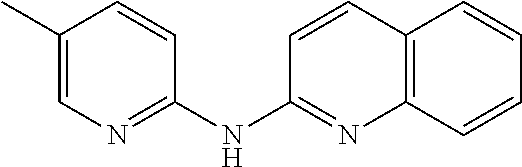
- (13) (5-Methyl-pyridin-2-yl)-quinolin-3-yl-amine
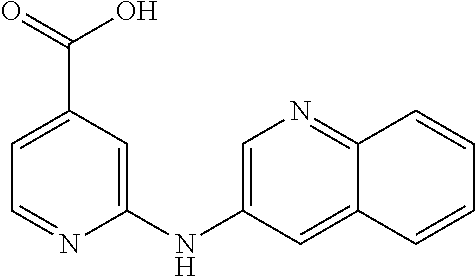
- (14) 2-(Quinolin-3-ylamino)-isonicotinic acid
- (15) Quinolin-6-yl-(5-trifluoromethyl-pyridin-2-yl)-amine
- (16) (6-Methyl-pyridin-2-yl)-quinolin-6-yl-amine
- (17) N-(6-methylpyridin-2-yl)quinolin-2-amine
- (18) 8-chloro-N-(6-methylpyridin-2-yl)quinolin-2-amine
- (19) 4-methyl-N-(pyridin-2-yl)quinolin-2-amine
- (20) 4-methyl-N-(4-methylpyridin-2-yl)quinolin-2-amine
- (21) 3-methyl-N-(4-methylpyridin-2-yl)quinolin-2-amine
- (22) 3-methyl-N-(pyridin-2-yl)quinolin-2-amine
- (23) 6-((4-methylquinolin-2-yl)amino)nicotinonitrile
- (24) 6-((3-methylquinolin-2-yl)amino)nicotinonitrile
- (25) 6-chloro-N-(4-methylpyridin-2-yl)quinolin-2-amine
- (26) 6-chloro-N-(6-methylpyridin-2-yl)quinolin-2-amine
- (27) 4-methyl-N-(5-nitropyridin-2-yl)quinolin-2-amine
- (28) N-(3-nitropyridin-2-yl)quinolin-2-amine
- (29) 8-chloro-N-(3-nitropyridin-2-yl)quinolin-2-amine
- (30) 2-((4-methylquinolin-2-yl)amino)nicotinonitrile
- (31) N-(3-methylpyridin-2-yl)quinolin-2-amine
- (32) N-(5-methylpyridin-2-yl)quinolin-2-amine
- (33) 2-(quinolin-2-ylamino)isonicotinonitrile
- (34) N-(5-(trifluoromethyl)pyridin-2-yl)quinolin-2-amine
- (35) 8-chloro-N-(3-methylpyridin-2-yl)quinolin-2-amine
- (36) 8-chloro-N-(5-methylpyridin-2-yl)quinolin-2-amine
- (37) 8-chloro-N-(5-(trifluoromethyl)pyridin-2-yl)quinolin-2-amine
- (38) N-(3-methoxypyridin-2-yl)quinolin-2-amine
- (39) N-(5-nitropyridin-2-yl)quinolin-2-amine
- (40) 6-((8-chloroquinolin-2-yl)amino)nicotinonitrile
- (41) N-(5-fluoropyridin-2-yl)quinolin-2-amine
- (42) N-(6-(trifluoromethyl)pyridin-2-yl)quinolin-2-amine
- (43) 8-chloro-N-(5-fluoropyridin-2-yl)quinolin-2-amine
- (44) 2-((8-chloroquinolin-2-yl)amino)nicotinic acid
- (45) 4-methyl-N-(6-methylpyridin-2-yl)quinolin-2-amine
- (46) 3-methyl-N-(6-methylpyridin-2-yl)quinolin-2-amine
- (47) 5-cyano-2-(quinolin-2-ylamino)pyridin-1-ium chloride
- (48) 2-((8-chloroquinolin-2-yl)amino)-4-methylpyridin-1-ium chloride
- (49) 8-chloro-N-(4-ethylpyridin-2-yl)quinolin-2-amine
- (50) 8-chloro-N-(6-ethylpyridin-2-yl)quinolin-2-amine
- (51) 8-chloro-N-(4,6-dimethylpyridin-2-yl)quinolin-2-amine
- (52) 6-((8-chloroquinolin-2-yl)amino)-2-methylnicotinonitrile
- (53) 8-chloro-N-(4-chloropyridin-2-yl)quinolin-2-amine
- (54) 8-methyl-N-(4-methylpyridin-2-yl)quinolin-2-amine
- (55) N-(5-bromo-4-methylpyridin-2-yl)-8-chloroquinolin-2-amine
- (56) 8-chloro-N-(3-ethyl-6-methylpyridin-2-yl)quinolin-2-amine
- (57) 8-fluoro-N-(4-methylpyridin-2-yl)quinolin-2-amine
- (58) 8-bromo-N-(4-methylpyridin-2-yl)quinolin-2-amine
- (59) methyl 6-(quinolin-2-ylamino)nicotinate
- (60) methyl 6-[(8-chloroquinolin-2-yl)amino]pyridine-3-carboxylate
- (61) methyl 6-[(3-methylquinolin-2-yl)amino]pyridine-3-carboxylate
- (62) methyl 2-[(8-chloroquinolin-2-yl)amino]pyridine-3-carboxylate
- (63) 8-methoxy-N-(4-methylpyridin-2-yl)quinolin-2-amine
- (64) N-(4-methylpyridin-2-yl)-5-nitroquinolin-2-amine
- (65) 2-N-(4-methylpyridin-2-yl)quinoline-2,8-diamine
- (66) N-(4-methylpyridin-2-yl)-5-aminoquinolin-2-amine
- (67) methyl 6-[(4-methylquinolin-2-yl)amino]pyridine-3-carboxylate
- (68) 8-chloro-N-[4-(trifluoromethyl)pyridin-2-yl]quinolin-2-amine
- (69) 2-[(8-chloroquinolin-2-yl)amino]pyridin-3-ol
- (70) 8-chloro-N-[6-(trifluoromethyl)pyridin-2-yl]quinolin-2-amine
- (71) 6-chloro-N-(5-fluoropyridin-2-yl)quinolin-2-amine
- (72) N-(6-ethylpyridin-2-yl)-3-methylquinolin-2-amine
- (73) N-(5-fluoropyridin-2-yl)-3-methylquinolin-2-amine
- (74) 3-methyl-N-[5-(trifluoromethyl)pyridin-2-yl]quinolin-2-amine
- (75) 4-N-(8-chloroquinolin-2-yl)-1-N,1-N-dimethylbenzene-1,4-diamine
- (76) N-(4-methoxyphenyl)quinolin-2-amine
- (77) 8-chloro-N-(4-methoxyphenyl)quinolin-2-amine
- (78) 4-methyl-N-[4-(trifluoromethoxy)phenyl]quinolin-2-amine
- (79) N-(4-methoxyphenyl)-3-methylquinolin-2-amine
- (80) 3-methyl-N-[4-(trifluoromethoxy)phenyl]quinolin-2-amine
- (81) 1-N,1-N-dimethyl-4-N-(3-methylquinolin-2-yl)benzene-1,4-diamine
- (82) N-[2-methyl-4-(trifluoromethoxy)phenyl]quinolin-2-amine
- (83) N-[3-(trifluoromethoxy)phenyl]quinolin-2-amine
- (84) N-[2-(trifluoromethoxy)phenyl]quinolin-2-amine
- (85) N-(4-nitrophenyl)quinolin-2-amine
- (86) N-(3-fluorophenyl)quinolin-2-amine
- (87) 8-chloro-N-[3-(trifluoromethoxy)phenyl]quinolin-2-amine
- (88) 8-chloro-N-(3-fluorophenyl)quinolin-2-amine
- (89) 2-{[4-(trifluoromethoxy)phenyl]amino}quinolin-1-ium chloride
- (90) 8-chloro-N-[4-(trifluoromethoxy)phenyl]quinolin-2-amine
- (91) 3-methyl-N-[2-methyl-4-(trifluoromethoxy)phenyl]quinolin-2-amine
- (92) 3-methyl-N-[3-(trifluoromethoxy)phenyl]quinolin-2-amine
- (93) 3-methyl-N-[2-(trifluoromethoxy)phenyl]quinolin-2-amine
- (94) 8-chloro-N-[2-methyl-4-(trifluoromethoxy)phenyl]quinolin-2-amine
- (95) 3-methyl-2-{[4-(trifluoromethoxy)phenyl]amino}quinolin-1-ium chloride
- (96) 6-chloro-N-(4-(trifluoromethoxy)phenyl)quinolin-2-amine
- (97) 4-methyl-2-{[4-(trifluoromethoxy)phenyl]amino}quinolin-1-ium chloride
- (98) 8-bromo-N-[4-(trifluoromethoxy)phenyl]quinolin-2-amine
- (99) 8-fluoro-N-[4-(trifluoromethoxy)phenyl]quinolin-2-amine
- (100) 8-methyl-N-[4-(trifluoromethoxy)phenyl]quinolin-2-amine
- (101) N-(4-butoxyphenyl)-8-chloroquinolin-2-amine
- (102) N-(4-phenoxyphenyl)quinolin-2-amine
- (103) 8-methoxy-N-[4-(trifluoromethoxy)phenyl]quinolin-2-amine
- (104) 8-chloro-N-[3-chloro-4-(trifluoromethoxy)phenyl]quinolin-2-amine
- (105) N-(6-methylpyridin-2-yl)quinolin-3-amine
- (106) N-(3-nitropyridin-2-yl)quinolin-3-amine
- (107) N-(5-methylpyridin-2-yl)quinolin-6-amine
- (108) N-(3-methoxypyridin-2-yl)quinolin-6-amine
- (109) 6-chloro-N-(pyrazin-2-yl)quinolin-2-amine
- (110) 8-bromo-N-(pyrazin-2-yl)quinolin-2-amine
- (111) 8-methyl-N-(pyrazin-2-yl)quinolin-2-amine
- (112) 8-chloro-N-(pyrazin-2-yl)quinolin-2-amine
- (113) N-(pyrazin-2-yl)quinolin-2-amine
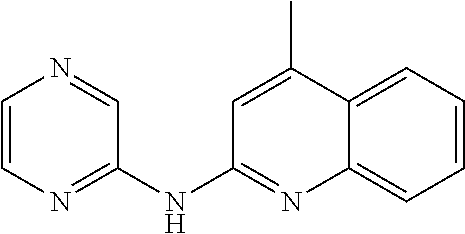
- (114) 4-methyl-N-(pyrazin-2-yl)quinolin-2-amine
- (115) 3-methyl-N-(pyrazin-2-yl)quinolin-2-amine
- (116) 8-fluoro-N-(pyrazin-2-yl)quinolin-2-amine
- (117) 8-methoxy-N-(pyrazin-2-yl)quinolin-2-amine
- (118) N-(pyridin-3-yl)quinolin-3-amine
- (119) 8-chloro-N-(pyridin-4-yl)quinolin-2-amine
- (120) N-(pyridin-4-yl)quinolin-2-amine
- (121) N-(pyridin-4-yl)quinolin-3-amine
- (122) N-[4-(trifluoromethoxy)phenyl]quinolin-3-amine
- (123) N-(4-methoxyphenyl)quinolin-3-amine
- (124) N-[4-(trifluoromethoxy)phenyl]quinoxalin-2-amine
- (125) N-[2-methyl-4-(trifluoromethoxy)phenyl]quinoxalin-2-amine
- (126) N-[3-(trifluoromethoxy)phenyl]quinoxalin-2-amine
- (127) N-[2-(trifluoromethoxy)phenyl]quinoxalin-2-amine
- (128) N-(pyrimidin-2-yl)quinolin-2-amine
- (129) 8-chloro-N-(pyrimidin-2-yl)quinolin-2-amine
- (130) 4-methyl-N-(pyrimidin-2-yl)quinolin-2-amine
- (131) N-(pyrazin-2-yl)quinolin-6-amine
- (132) N-(pyrazin-2-yl)quinolin-3-amine
- (133) 6-methyl-N-(naphthalen-2-yl)pyridin-2-amine
- (134) N-(naphthalen-2-yl)pyridin-2-amine
- (135) N-(pyridin-2-yl)quinoxalin-2-amine
- (136) N-(4-methylpyridin-2-yl)quinoxalin-2-amine
- (137) 6-(quinoxalin-2-ylamino)pyridine-3-carbonitrile
- (138) N-(6-methylpyridin-2-yl)quinoxalin-2-amine
- (139) N-(4-methylpyridin-2-yl)-3-(trifluoromethyl)quinoxalin-2-amine
- (140) N-(3,5-dichloro-4-methylpyridin-2-yl)quinoxalin-2-amine
- (141) N-(4-methyl-3-nitropyridin-2-yl)quinoxalin-2-amine
- (142) N-(pyrimidin-2-yl)quinoxalin-2-amine
- (143) 4-N,4-N-dimethyl-7-N-[4-(trifluoromethoxy)phenyl]quinoline-4,7-diamine
- (144) 4-(morpholin-4-yl)-N-[4-(trifluoromethoxy)phenyl]quinolin-7-amine
- (145) 4-methoxy-N-(pyridin-2-yl)quinolin-7-amine
- (146) 4-methoxy-N-(4-methylpyridin-2-yl)quinolin-7-amine
- (147) 4-N,4-N-dimethyl-7-N-(4-methylpyridin-2-yl)quinoline-4,7-diamine
- (148) 5,8-dimethyl-N-(5-methylpyridin-2-yl)isoquinolin-6-amine
- (149) 5,8-dimethyl-N-(5-trifluoromethylpyridin-2-yl)isoquinolin-6-amine
- (150) N-(4-methylpyridin-2-yl)-8-nitroquinolin-2-amine
- (151) 6-chloro-N-(6-ethylpyridin-2-yl)quinolin-2-amine
- (152) 6-chloro-N-(5-methylpyridin-2-yl)quinolin-2-amine
- (153) 6-chloro-N-[5-(trifluoromethyl)pyridin-2-yl]quinolin-2-amine
- (154) N2-(8-chloroquinolin-2-yl)-4-methylpyridine-2,3-diamine
- (155) N-(4-butoxyphenyl)-3-methylquinolin-2-amine
- (156) 4-N-(6-chloroquinolin-2-yl)-1-N,1-N-dimethylbenzene-1,4-diamine
- (157) 8-chloro-N-(3-chloro-4-methoxyphenyl)quinolin-2-amine
- (158) N1-(8-chloroquinolin-2-yl)-4-(trifluoromethoxy)benzene-1,2-diamine
- (159) N-(3-aminopyridin-2-yl)quinolin-3-amine
- (160) 6-chloro-N-(4-methylpyridin-2-yl)quinoxalin-2-amine
- (161) N-(4-ethylpyridin-2-yl)quinoxalin-2-amine
- (162) N-(5-bromo-4-methylpyridin-2-yl)quinoxalin-2-amine
- (163) N-(4,6-dimethylpyridin-2-yl)quinoxalin-2-amine
- (164) [2-(quinoxalin-2-ylamino)pyridin-4-yl]methanol
- (165) N-(4-methyl-5-nitropyridin-2-yl)quinoxalin-2-amine
- (166) N-(4-methoxyphenyl)-4-(4-methylpiperazin-1-yl)quinolin-7-amine
- (167) 4-methoxy-N-[4-(trifluoromethoxy)phenyl]quinolin-7-amine
- (168) N-(4-methylpyridin-2-yl)-4-(morpholin-4-yl)quinolin-7-amine
- and their pharmaceutically acceptable salts.
Among said compounds, compounds (1), (6), (33), (34), (35), (36), (37), (38), (42), (43), (44), (45), (46), (48), (50), (64), (68), (69), (70), (71), (72), (73), (74), (75), (77), (78), (79), (80), (81), (82), (86), (87), (88), (90), (92), (96), (104), (106), (109), (112), (136), (139), (140) and (141) are of particular interest.
As described herein, compounds (1), (6), (33), (34), (35), (36), (37), (38), (42), (43), (44), (45), (46), (48), (50), (64), (68), (69), (70), (71), (72), (73), (74), (75), (77), (78), (79), (80), (81), (82), (86), (87), (88), (90), (92), (96), (104), (106), (109), (112), (136), (139), (140) and (141) or one of its pharmaceutically acceptable salts can be used for for preventing or treating the infection of a cell and/or an individual, preferably a human, in need thereof by a retrovirus and/or for preventing retrovirus and/or for preventing, inhibiting or treating a disease caused by retroviruses, wherein the retroviruses include visna/maedi virus or MVV/visna, equine infectious anemia virus or EIAV, caprine arthritis encephalitis virus or CAEV, simian immunodeficiency virus or SIV, avian leukemia virus or ALV, murine leukemia virus also called Moloney virus or MULV, Abelson leukemia virus, murine mammary tumor virus, Mason-Pfizer monkey virus or MPMV, feline leukemia virus or FELV, human leukemia viruses HTLV-I, human leukemia viruses HTLV-II, simian leukemia virus or STLV, bovine leukemia virus or BLV, primate type D oncoviruses, type B oncoviruses, Rous sarcoma virus or RSV, simian foamy virus or SFV or chimpanzee simian virus, human foamy virus, and feline immunodeficiency virus, the human foamy virus or HFV, bovine syncytial virus or BSV, feline syncytial virus FSV, the feline immunodeficiency virus, avian leukosis virus, Walleye dermal sarcoma virus, T-cell lymphoma, acute ATL, lymphomatous ATL, chronic ATL, smoldering ATL, neurologic diseases, Tropical spastic paraparesis or HTLV-associated myelopathy, inflammatory and autoimmune diseases such as uveitis, dermatitis, pneumonitis, rheumatoid arthritis, and polymyositis hematologic and dermatologic diseases, lung diseases, brain diseases, and/or immunodeficiency and the retrovirus does not include HIV and the disease caused by the retroviral infection is not AIDS.
The compounds of formulae (I), (Ia), (Ib), (Ic), (Id), (Ie), (If), (Ig), (Ih), (Ii), (Ij), (Ik), (Il), (Im), (Io), (Ip), (Iq), (Ir) and (Iee) can comprise one or more asymmetric carbon atoms. They can thus exist in the form of enantiomers or of diastereoisomers. These enantiomers, diastereoisomers and their mixtures, including the racemic mixtures, are encompassed within the scope of the present disclosure.
According to a particular embodiment, the present disclosure encompasses compounds of formula (Ig)
wherein:
R independently represent a hydrogen atom, a halogen atom or a group chosen among a (C1-C3)alkyl group, a —CN group, a hydroxyl group, a —COOR1 group, a (C1-C3)fluoroalkyl group, a (C1-C3)fluoroalkoxy group, a —NO2 group, a —NR1R2 group, and a (C1-C3)alkoxy group,
n is 1 or 2,
n′ is 1 or 2,
R′ is a hydrogen atom or a group chosen among a (C1-C3)alkyl group, a halogen atom, a hydroxyl group, a —COOR1 group, a —NO2 group, a —NR1R2 group, a (C1-C3)alkoxy group and a —CN group,
R″ is a hydrogen atom or a (C1-C4)alkyl group,
R1 and R2 are independently a hydrogen atom or a (C1-C3)alkyl group,
with the proviso that R and R′ are not simultaneously a hydrogen atom,
and when n and n′ are 1 and R is a hydrogen atom then R′ is not a —COOH group,
or anyone of its pharmaceutically acceptable salt.
According to another particular embodiment, the present disclosure encompasses compounds of formula (If)
wherein:
R independently represent a hydrogen atom, a halogen atom or a group chosen among a (C1-C3)alkyl group, a —CN group, a hydroxyl group, a —COOR1 group, a (C1-C3)fluoroalkyl group, a (C1-C3)fluoroalkoxy group, a —NO2 group, a —NR1R2 group, and a (C1-C3)alkoxy group,
n is 1 or 2,
n′ is 1 or 2,
R′ is a hydrogen atom or a group chosen among a (C1-C3)alkyl group, a halogen atom, a hydroxyl group, a —COOR1 group, a —NO2 group, a —NR1R2 group, a (C1-C3)alkoxy group and a —CN group,
R″ is a hydrogen atom or a (C1-C4)alkyl group,
R1 and R2 are independently a hydrogen atom or a (C1-C3)alkyl group,
or anyone of its pharmaceutically acceptable salt.
According to another particular embodiment, the present disclosure encompasses compounds of formula (Ih)
wherein:
R independently represent a hydrogen atom, a halogen atom or a group chosen among a (C1-C3)alkyl group, a —CN group, a hydroxyl group, a —COOR1 group, a (C1-C3)fluoroalkyl group, a (C1-C3)fluoroalkoxy group, a —NO2 group, a —NR1R2 group, and a (C1-C3)alkoxy group,
n is 1 or 2,
n′ is 1 or 2,
R′ is a hydrogen atom or a group chosen among a (C1-C3)alkyl group, a halogen atom, a hydroxyl group, a —COOR1 group, a —NO2 group, a —NR1R2 group, a (C1-C3)alkoxy group and a —CN group,
R″ is a hydrogen atom or a (C1-C4)alkyl group,
R1 and R2 are independently a hydrogen atom or a (C1-C3)alkyl group,
or anyone of its pharmaceutically acceptable salt.
According to another particular embodiment, the present disclosure encompasses compounds of formula (Il)
wherein:
R independently represent a hydrogen atom, a halogen atom or a group chosen among a (C1-C3)alkyl group, a —CN group, a hydroxyl group, a —COOR1 group, a (C1-C3)fluoroalkyl group, a (C1-C3)fluoroalkoxy group, a —NO2 group, a —NR1R2 group, and a (C1-C3)alkoxy group,
n is 1 or 2,
n′ is 1 or 2,
R′ is a hydrogen atom or a group chosen among a (C1-C3)alkyl group, a halogen atom, a hydroxyl group, a —COOR1 group, a —NO2 group, a —NR1R2 group, a (C1-C3)alkoxy group and a —CN group,
R″ is a hydrogen atom or a (C1-C4)alkyl group,
R1 and R2 are independently a hydrogen atom or a (C1-C3)alkyl group,
with the proviso that R and R′ are not simultaneously a hydrogen atom,
or anyone of its pharmaceutically acceptable salt.
According to another particular embodiment, the present disclosure encompasses compounds of formula (Im)
wherein:
R independently represent a hydrogen atom, a halogen atom or a group chosen among a (C1-C3)alkyl group, a —CN group, a hydroxyl group, a —COOR1 group, a (C1-C3)fluoroalkyl group, a (C1-C3)fluoroalkoxy group, a —NO2 group, a —NR1R2 group, and a (C1-C3)alkoxy group,
n is 1 or 2,
n′ is 1 or 2,
R′ is a hydrogen atom or a group chosen among a (C1-C3)alkyl group, a halogen atom, a hydroxyl group, a —COOR1 group, a —NO2 group, a —NR1R2 group, a (C1-C3)alkoxy group and a —CN group,
R″ is a hydrogen atom or a (C1-C4)alkyl group,
R1 and R2 are independently a hydrogen atom or a (C1-C3)alkyl group,
with the proviso that when n and n′ are 1 and R is a hydrogen atom, R′ is not a chlorine atom,
or anyone of its pharmaceutically acceptable salt.
According to another particular embodiment, the present disclosure encompasses compounds of formula (Ia), as such,
wherein:
R″ and n are as defined in formula (Ia),
n′ is 1,
R independently represent a hydrogen atom, a halogen atom or a group chosen among a (C1-C3)alkyl group, a —CN group, a hydroxyl group, a —COOR1 group, a (C1-C3)fluoroalkyl group, a —NO2 group, a (C1-C3)fluoroalkoxy group and a (C1-C3)alkoxy group,
R′ is a hydrogen atom or a halogen atom or a group chosen among a (C1-C3)alkyl group, a —COOR1 group, and a —CN group,
and wherein:
with the proviso that
when R and R′ are not simultaneously a hydrogen atom,
when n is 1, R is not a methyl group in ortho or para position with respect to Z, Z being N,
when R′ is a hydrogen atom, R is not a bromine atom or a chlorine atom,
when R is a hydrogen atom, R′ is not a methyl or ethyl group, a —COOH group, a COOC2H5 group or a bromine atom, said bromine atom being in ortho position of the bond linked to NR″,
or one of its pharmaceutically acceptable salt.
Still according to this particular embodiment, the present disclosure more particularly focuses on compounds of formula (Ia), as such, wherein,
R independently represent a hydrogen atom, a (C1-C3)fluoroalkyl group, a halogen atom, a —CN group or a (C1-C3)alkyl group,
R″ is as defined in formula (Ia),
R′ is a hydrogen atom, a halogen atom or a —NO2 group,
n′ is 1,
n is 1,
with the proviso that
when n is 1, R is not a methyl group in ortho or para position with respect to Z, Z being N,
R is not a bromine atom or a chlorine atom when R′ is a hydrogen atom,
or one of its pharmaceutically acceptable salt.
Still according to this particular embodiment, the present disclosure more preferably focuses on compounds of formula (Ia′), as such,
wherein,
R independently represent a hydrogen atom, a (C1-C3)alkyl group, a (C1-C3)fluoroalkyl group, a halogen atom or a hydroxyl group,
R″ is as defined in formula (Ia),
n is 1 or 2, and preferably 1,
or one of its pharmaceutically acceptable salt.
The present disclosure further relates to a compound of formula (Ib) as defined above, as such
wherein:
R′ and R″ are as defined in formula (Ib),
n is 1, and
R is a hydrogen atom or a (C1-C3)fluoroalkoxy group,
-
- or one of its pharmaceutically acceptable salt.
Still according to this particular embodiment, the present disclosure more particularly focuses on compounds of formula (Ib)
wherein:
R is a hydrogen atom or a (C1-C3)fluoroalkoxy group,
R′ is a hydrogen atom, a halogen atom or a (C1-C4)alkyl group,
R″ is as defined in the formula (Ib),
n′ is 1 or 2 and is preferably 1,
n is 1 or 2 and is preferably 1,
or one of its pharmaceutically acceptable salt.
Still according to this particular embodiment, the present disclosure more particularly focuses on compounds of formula (Ib′)
wherein:
R, R″ and n are as defined in formula (Ib),
R′ is as defined in formula (Ib),
with the proviso that R′ is different from a methyl group in position 4 on the quinoline,
or one of its pharmaceutically acceptable salt.
Still according to this particular embodiment, the present disclosure more particularly focuses on compounds of formula (Ib″)
wherein:
R, R″ and n are as defined in formula (Ib),
with the proviso that when n is 1, R is not a hydrogen atom, a methyl group in para of the bond linked to NR″, a ethoxy group in para of the bond linked to NR″, nor a fluorine atom in para of the bond linked to NR″,
or one of its pharmaceutically acceptable salt.
According to another particular embodiment, the present disclosure encompasses compounds of formula (Ic), as such,
wherein:
R independently represent a hydrogen atom, a halogen atom or a group chosen among a (C1-C3)alkyl group, a —CN group, a hydroxyl group, a —COOR1 group, a (C1-C3)fluoroalkyl group, a —NO2 group, a —NR1R2 group and a (C1-C3)alkoxy group,
R1 and R2 are independently a hydrogen atom or a (C1-C3)alkyl group,
n is 1 or 2, and advantageously 1,
n′ is 1 or 2,
R″ is as defined in formula (Ic),
R′ is a hydrogen atom or a group chosen among a (C1-C3)alkyl group, a —NO2 group, a —NR1R2 group and a (C1-C3)alkoxy group,
with the proviso that
R and R′ are not simultaneously a hydrogen atom,
R is not a bromine atom when R′ is a hydrogen atom,
or one of its pharmaceutically acceptable salt.
Still according to this particular embodiment, the present disclosure more particularly focuses on compounds of formula (Ic), as such, wherein,
R is a hydrogen atom or a —NO2 group,
n is 1,
R′, R″ and n′ are as defined in formula (Ic), and
R′ is preferably a (C1-C3)alkyl group or a hydrogen atom,
or one of its pharmaceutically acceptable salt.
The present disclosure further relates to a compound of formula (Ie) as defined above, as such
wherein:
R, R′, R″ n and n′ are as defined in formula (I),
with the proviso that
when R is a hydrogen atom, R′ is not a bromine atom,
or one of its pharmaceutically acceptable salt.
According to another particular embodiment, the present disclosure encompasses compounds of formula (Io), as such,
wherein:
R independently represent a hydrogen atom, a halogen atom or a group chosen among a (C1-C3)alkyl group, a —CN group, a hydroxyl group, a —COOR1 group, a (C1-C3)fluoroalkyl group, a (C1-C3)fluoroalkoxy group, a —NO2 group, a —NR1R2 group and a (C1-C3)alkoxy group,
R1 and R2 are independently a hydrogen atom or a (C1-C3)alkyl group,
n is 1, 2 or 3,
n′ is 1 or 2,
R′ is a hydrogen atom or a group chosen among a (C1-C3)alkyl group, a halogen atom, a hydroxyl group, a —COOR1 group, a —NO2 group, a —NR1R2 group, a (C1-C3)alkoxy group and a —CN group,
R″ is a hydrogen atom or a (C1-C4)alkyl group,
with the proviso that
when R is a hydrogen atom and n′ is 1, R′ is not a hydroxyl group,
or one of its pharmaceutically acceptable salt.
Still according to this particular embodiment, the present disclosure more particularly focuses on compounds of formula (Io′), as such, wherein
wherein:
n is 1, 2 or 3,
n′ is 1 or 2,
R independently represent a hydrogen atom, a halogen atom or a group chosen among a (C1-C3)alkyl group, a —CN group, a hydroxyl group, a —COOR1 group, a (C1-C3)fluoroalkyl group, a (C1-C3)fluoroalkoxy group, a —NO2 group, a —NR1R2 group and a (C1-C3)alkoxy group, and is preferably a —NO2 group, a hydrogen atom or a halogen atom,
R′ is a hydrogen atom or a group chosen among a (C1-C3)alkyl group, a halogen atom, a hydroxyl group, a —COOR1 group, a —NO2 group, a —NR1R2 group, a (C1-C3)alkoxy group and a —CN group, a (C1-C3)fluroralkyl group, and preferably is a hydrogen atom or a (C1-C3)fluoroalkyl group,
R1 and R2 are as defined in formula (Io),
R″ is a hydrogen atom or a (C1-C4)alkyl group,
or one of its pharmaceutically acceptable salt.
Among said compounds as such, compounds (1), (2), (5)-(8), (10)-(16), (18), (21)-(44), (46)-(75), (77)-(84), (86)-(119), (121), (124)-(130), (132), (135)-(141), (143)-(147), (149)-(168) and their pharmaceutically acceptable salts are of particular interest.
The present disclosure therefore extends to compounds (1), (2), (5)-(8), (10)-(16), (18), (21)-(44), (46)-(75), (77)-(84), (86)-(119), (121), (124)-(130), (132), (135)-(141), (143)-(147), (149)-(168) and their pharmaceutically acceptable salts, as such.
More preferably, compounds (8), (75), (77)-(84), (86)-(104), (109)-(117), (155)-(158) and their pharmaceutically acceptable salts are of particular interest.
The present disclosure therefore extends more preferably to compounds (8), (75), (77)-(84), (86)-(104), (109)-(117), (155)-(158) and their pharmaceutically acceptable salts, such as hydrobromide, tartrate, citrate, trifluoroacetate, ascorbate, hydrochloride, tartrate, triflate, maleate, mesylate, formate, acetate and fumarate.
Still more preferably, the present disclosure extends to compounds (75), (77), (78), (79), (80), (81), (82), (86), (87), (88), (90), (92), (96), (104), (109), (112), and their pharmaceutically acceptable salts, such as hydrobromide, tartrate, citrate, trifluoroacetate, ascorbate, hydrochloride, tartrate, triflate, maleate, mesylate, formate, acetate and fumarate.
The compounds of formulae (Ia), (Ic), (Io), (Ib), (Ib′), (Ib″) and (Ie) and the specific compounds as listed above are thus useful for preventing or treating the infection of cell and/or an individual, preferably a human, by a retrovirus and/or for inhibiting, preventing or treating a disease caused by retroviruses, such retroviruses being oncoviruses, lentiviruses and/or spumaviruses.
As described herein, the term oncovirus can include Alpharetrovirus (for example, avian leukosis virus and Rous sarcoma virus); Betaretrovirus (for example, mouse mammary tumor virus); Gammaretrovirus (for example, murine leukemia virus and feline leukemia virus); Deltaretrovirus (for example bovine leukemia virus and human T-lymphotropic virus); and Epsilonretrovirus (for example, Walleye dermal sarcoma virus).
More generally, the retroviruses described herein may be, for example, visna/maedi virus or MVV/visna, equine infectious anemia virus or EIAV, caprine arthritis encephalitis virus or CAEV, simian immunodeficiency virus or SIV, avian leukemia virus or ALV, murine leukemia virus also called Moloney virus or MULV, Abelson leukemia virus, murine mammary tumor virus, Mason-Pfizer monkey virus or MPMV, feline leukemia virus or FELV, human leukemia viruses HTLV-I, human leukemia viruses HTLV-II, simian leukemia virus or STLV, the bovine leukemia virus or BLV, primate type D oncoviruses, type B oncoviruses, Rous sarcoma virus or RSV, and/or simian foamy virus or SFV or chimpanzee simian virus, human foamy virus, and feline immunodeficiency virus, the human foamy virus (or HFV), bovine syncytial virus (or BSV), feline syncytial virus (FSV) and the feline immunodeficiency virus.
More particularly, HTLV-I causes T-cell lymphoma (ATL for Adult T-cell leukemia/lymphoma, including the different forms of ATL such as acute ATL, lymphomatous ATL, chronic ATL and smoldering ATL), neurologic disease, Tropical spastic paraparesis (TSP) (also known as HTLV-associated myelopathy (HAM) or chronic progressive myelopathy), and diverse inflammatory and autoimmune diseases such as uveitis, dermatitis, pneumonitis, rheumatoid arthritis, and polymyositis (Harrison's Infections diseases, Kasper and Fauci, 2010, section V, part 4, chapter 89, Longo and Fauci, 785-792); HTLV-II may play a role in certain neurologic, hematologic and dermatologic diseases (Harrison's Infections diseases, Kasper and Fauci, 2010, section V, part 4, chapter 89, Longo and Fauci, 785-792); HIV (HIV1 and HIV2) causes AIDS; the visna virus causes lung and brain diseases in sheep; the feline immunodeficiency virus causes immunodeficiency in cat; Rous sarcoma virus and mouse mammary tumor virus causes tumor growth and cancer.
In certain aspects, the methods described herein include contacting a cell having a retroviral infection with at least one of the compounds described herein, wherein the retroviral infection does not include HIV. In another aspect, the methods described herein include inhibiting RNA splicing of a retrovirus by administering a compound to a subject in need thereof, wherein the compound includes at least one compound described herein and the retrovirus does not include HIV. In yet another aspect, the methods described herein include methods for treating a retroviral infection or a disease caused by the retroviral infection comprising administering an effective amount of a pharmaceutical composition to a subject in need thereof, wherein the pharmaceutical composition includes at least one compound described herein and the retroviral infection does not include HIV and the disease caused by the retroviral infection does not include AIDS.
The compounds of the present disclosure can be prepared by conventional methods of organic synthesis practiced by those skilled in the art. The general reaction sequences outlined below represent a general method useful for preparing the compounds of the present disclosure and are not meant to be limiting in scope or utility.
The compounds of general formula (I) can be prepared according to scheme 1 below.
As appears in said scheme two routes are available for recovering a compound of formula (I) according to the present disclosure.
The synthesis is based on a coupling reaction alternatively starting from a halogeno-bicycle of formula (III), wherein X, Y, W, T, U, n′, R′ and R″ are as defined above and X′ is a chlorine atom or a bromine atom or from a chloro-monocycle of formula (V), wherein Z, V, n and R are as defined above and X′ is a chlorine atom or a bromine atom.
According to route (A), the compound of formula (III) is placed in a protic solvent such as tert-butanol. The compound of formula (IV) is then added in a molar ratio ranging from 1 to 1.5 with respect to the compound of formula (III) in presence of an inorganic base, such as Cs2CO3 or K2CO3 in a molar ratio ranging from 1 and 2, in the presence of a diphosphine, such as Xantphos (4,5-Bis(diphenylphosphino)-9,9-dimethylxanthene) or X-Phos (2-Dicyclohexylphosphino-2′,4′,6′-triisopropylbiphenyl) in an amount ranging from 2 mol % to 10 mol % relative to the total amount of compound of formula (III), and in the presence of a catalyst, such as Pd(OAc)2 or Pd2dba3 in an amount ranging from 2 mol % and 10 mol % relative to the total amount of compound of formula (III). The reaction mixture can then be heated at a temperature ranging from 80 to 120° C., for example at 90° C. and stirred for a time ranging from 15 to 25 hours, for example during 20 hours under inert gas and for example argon. The reaction mixture can be concentrated under reduced pressure.
According to route (B) the compound of formula (V) is placed in a protic solvent such as tert-butanol. The compound of formula (VI) is then added in a molar ratio ranging from 1 to 1.5 with respect to the compound of formula (V) in presence of an inorganic base, such as Cs2CO3 or K2CO3 in a molar ratio ranging from 1 to 2, in the presence of a diphosphine, such as Xantphos (4,5-Bis(diphenylphosphino)-9,9-dimethylxanthene) or X-Phos (2-Dicyclohexylphosphino-2′,4′,6′-triisopropylbiphenyl) in an amount ranging from 2 mol % to 10 mol % relative to the total amount of compound of formula (V), and in the presence of a catalyst, such as Pd(OAc)2 or Pd2dba3 in an amount ranging from 2 mol % to 10 mol % relative to the total amount of compound of formula (V). The reaction mixture can then be heated at a temperature ranging from 80 to 120° C., for example at 90° C. and stirred for a time ranging from 15 to 25 hours, for example during 20 hours under inert gas and for example argon. The reaction mixture can be concentrated under reduced pressure.
The starting compounds of formula (III), (IV), (V) and (VI) are commercially available or can be prepared according to methods known to the person skilled in the art.
The chemical structures and spectroscopic data of some compounds of formula (I) of the disclosure are illustrated respectively in the following Table I and Table II.
| 1 |
|
| |
| 2 |
|
| |
| 3 |
|
| |
| 4 |
|
| |
| 5 |
|
| |
| 6 |
|
| |
| 7 |
|
| |
| 17 |
|
| |
| 18 |
|
| |
| 19 |
|
| |
| 20 |
|
| |
| 21 |
|
| |
| 22 |
|
| |
| 23 |
|
| |
| 24 |
|
| |
| 25 |
|
| |
| 26 |
|
| |
| 27 |
|
| |
| 28 |
|
| |
| 29 |
|
| |
| 30 |
|
| |
| 31 |
|
| |
| 32 |
|
| |
| 33 |
|
| |
| 34 |
|
| |
| 35 |
|
| |
| 36 |
|
| |
| 37 |
|
| |
| 38 |
|
| |
| 39 |
|
| |
| 40 |
|
| |
| 41 |
|
| |
| 42 |
|
| |
| 43 |
|
| |
| 44 |
|
| |
| 45 |
|
| |
| 46 |
|
| |
| 47 |
|
| |
| 48 |
|
| |
| 49 |
|
| |
| 50 |
|
| |
| 51 |
|
| |
| 52 |
|
| |
| 53 |
|
| |
| 54 |
|
| |
| 55 |
|
| |
| 56 |
|
| |
| 57 |
|
| |
| 58 |
|
| |
| 59 |
|
| |
| 60 |
|
| |
| 61 |
|
| |
| 62 |
|
| |
| 63 |
|
| |
| 64 |
|
| |
| 65 |
|
| |
| 66 |
|
| |
| 67 |
|
| |
| 68 |
|
| |
| 69 |
|
| |
| 70 |
|
| |
| 71 |
|
| |
| 72 |
|
| |
| 73 |
|
| |
| 74 |
|
| |
| 150 |
|
| |
| 151 |
|
| |
| 152 |
|
| |
| 153 |
|
| |
| 154 |
|
| |
| 8 |
|
| |
| 75 |
|
| |
| 76 |
|
| |
| 77 |
|
| |
| 78 |
|
| |
| 79 |
|
| |
| 80 |
|
| |
| 81 |
|
| |
| 82 |
|
| |
| 83 |
|
| |
| 84 |
|
| |
| 85 |
|
| |
| 86 |
|
| |
| 87 |
|
| |
| 88 |
|
| |
| 89 |
|
| |
| 90 |
|
| |
| 91 |
|
| |
| 92 |
|
| |
| 93 |
|
| |
| 94 |
|
| |
| 95 |
|
| |
| 96 |
|
| |
| 97 |
|
| |
| 98 |
|
| |
| 99 |
|
| |
| 100 |
|
| |
| 101 |
|
| |
| 102 |
|
| |
| 103 |
|
| |
| 104 |
|
| |
| 155 |
|
| |
| 156 |
|
| |
| 157 |
|
| |
| 158 |
|
| |
| 9 |
|
| |
| 10 |
|
| |
| 11 |
|
| |
| 12 |
|
| |
| 13 |
|
| |
| 14 |
|
| |
| 105 |
|
| |
| 106 |
|
| |
| 159 |
|
| |
| 109 |
|
| |
| 110 |
|
| |
| 111 |
|
| |
| 112 |
|
| |
| 113 |
|
| |
| 114 |
|
| |
| 115 |
|
| |
| 116 |
|
| |
| 117 |
|
| |
| 135 |
|
| |
| 136 |
|
| |
| 137 |
|
| |
| 138 |
|
| |
| 139 |
|
| |
| 140 |
|
| |
| 141 |
|
| |
| 160 |
|
| |
| 161 |
|
| |
| 162 |
|
| |
| 163 |
|
| |
| 164 |
|
| |
| 165 |
|
| |
| TABLE II |
| |
| Ex |
Characterizations |
| |
| |
| 1 |
MS (ESI) [M + H]+ = 256 |
| 2 |
1H NMR (300 MHz, D2O) δ 8.31 (d, J = 5.1, 1H), 8.21 (d, J = 9.3, 1H), 7.60 (d, J = 7.5, |
| |
3H), 7.34 (dd, J = 6.2, 15.6, 2H), 7.18 (s, 1H), 6.99 (d, J = 9.1, 1H) |
| |
MS (ESI) [M + H]+ = 266 |
| 5 |
MS (ESI) [M + H]+ = 300 |
| 6 |
1H NMR (300 MHz, DMSO) δ 10.23 (s, 1H), 8.96 (s, 1H), 8.18 (d, J = 8.8, 2H), |
| |
7.78 (dd, J = 7.7, 13.7, 2H), 7.46 (d, J = 8.9, 1H), 7.31 (t, J = 7.8, 1H), 6.86 (d, J = 4.3, |
| |
1H), 2.37 (s, 3H). |
| |
13C NMR (75 MHz, DMSO) δ 153.63, 153.61, 148.37, 147.32, 142.65, 137.52, |
| |
129.68, 129.47, 126.82, 125.06, 123.26, 118.36, 115.10, 113.31, 21.24. |
| |
MS (ESI) [M + H]+ = 270 |
| 7 |
1H NMR (300 MHz, DMSO) δ 10.71 (s, 1H), 8.71 (d, J = 1.4, 1H), 8.62 (d, J = 8.9, |
| |
1H), 8.24 (d, J = 8.9, 1H), 8.17 (dd, J = 1.9, 8.9, 1H), 7.89-7.74 (m, 2H), |
| |
7.66 (dd, J = 7.9, 14.2, 2H), 7.42 (t, J = 7.3, 1H). |
| |
13C NMR (75 MHz, DMSO) δ 156.09, 152.40, 152.11, 146.24, 141.07, 137.83, |
| |
129.87, 127.67, 126.78, 124.50, 124.21, 118.04, 114.49, 111.67, 100.12. |
| |
MS (ESI) [M + H]+ = 247 |
| 8 |
1H NMR (300 MHz, CDCl3) δ 7.92 (d, J = 8.9, 1H), 7.79 (d, J = 8.4, 1H), 7.65 (t, J = 7.7, |
| |
3H), 7.59 (dd, J = 7.1, 8.3, 1H), 7.31 (t, J = 7.0, 1H), 7.20 (d, J = 8.5, 2H), |
| |
6.88 (d, J = 8.9, 1H), 6.80 (s, 1H) |
| |
13C NMR (75 MHz, CDCl3) δ 153.88, 147.62, 144.35, 139.26, 138.11, 130.13, |
| |
127.65, 127.12, 124.43, 123.70, 122.20, 120.95, 112.25. |
| |
MS (ESI) [M + H]+ = 305 |
| 10 |
1H NMR (300 MHz, CDCl3) δ 9.10 (d, J = 2.5, 1H), 8.83 (d, J = 2.6, 1H), 8.02 (d, J = 7.9, |
| |
1H), 7.94 (dd, J = 1.3, 5.0, 1H), 7.85-7.79 (m, 1H), 7.52 (pd, J = 1.5, 6.9, |
| |
2H), 7.33 (s, 1H), 7.04 (dd, J = 1.2, 7.9, 1H), 6.81 (dd, J = 5.1, 7.9, 1H), 3.95 (s, |
| |
3H) |
| 11 |
MS (ESI) [M + H]+ = 290 |
| 12 |
1H NMR (300 MHz, CDCl3) δ 9.18 (d, J = 2.7, 1H), 8.86 (d, J = 2.5, 1H), 8.56 (d, J = 2.3, |
| |
1H), 8.33 (dd, J = 2.7, 9.2, 1H), 8.08 (d, J = 8.5, 1H), 7.83 (d, J = 8.5, 1H), |
| |
7.71-7.63 (m, 2H), 7.57 (t, J = 7.4, 2H), 6.82 (d, J = 9.1, 1H) |
| 13 |
1H NMR (300 MHz, CDCl3) δ 8.83 (d, J = 2.6, 1H), 8.37 (d, J = 2.3, 1H), 8.00 (d, J = 8.2, |
| |
1H), 7.71 (d, J = 7.7, 1H), 7.59-7.51 (m, 1H), 7.46 (dd, J = 7.3, 15.1, 2H), |
| |
6.71 (d, J = 8.3, 1H), 6.67 (d, J = 7.4, 1H), 2.49 (s, 3H) |
| |
13C NMR (75 MHz, CDCl3) δ 157.13, 154.59, 145.81, 144.43, 138.78, 134.54, |
| |
129.22, 128.86, 127.41, 127.27, 121.48, 115.41, 106.50, 24.18. |
| |
MS (ESI) [M + H]+ = 236 |
| 14 |
MS (ESI) [M + H]+ = 266 |
| 15 |
MS (ESI) [M + H]+ = 290 |
| 16 |
1H NMR (300 MHz, CDCl3) δ 8.77 (dd, J = 1.5, 4.2, 1H), 8.04 (dd, J = 4.7, 8.7, |
| |
2H), 7.92 (d, J = 2.4, 1H), 7.59 (dd, J = 2.5, 9.1, 1H), 7.47 (t, J = 7.8, 1H), |
| |
7.35 (dd, J = 4.2, 8.3, 1H), 6.87 (s, 1H), 6.81 (d, J = 8.2, 1H), 6.70 (d, J = 7.4, 1H), |
| |
2.50 (s, 3H) |
| |
MS (ESI) [M + H]+ = 236 |
| 18 |
1H NMR (300 MHz, CDCl3) δ 8.53 (d, J = 59.9, 2H), 7.76 (d, J = 8.6, 1H), 7.58 (t, |
| |
J = 8.3, 2H), 7.42 (d, J = 7.8, 1H), 7.09 (t, J = 7.7, 1H), 6.95 (d, J = 8.7, 1H), |
| |
6.71 (d, J = 7.3, 1H), 2.38 (s, 3H) |
| 21 |
1H NMR (300 MHz, CDCl3) δ 8.78 (s, 1H), 8.13 (d, J = 5.1, 1H), 7.89 (d, J = 8.3, |
| |
1H), 7.79 (s, 1H), 7.63 (d, J = 8.0, 1H), 7.56 (d, J = 7.3, 1H), 7.38 (s, 1H), 7.33 (t, J = 7.5, |
| |
1H), 6.79 (d, J = 4.9, 1H), 2.44 (s, 6H) |
| 22 |
1H NMR (300 MHz, CDCl3) δ 8.95 (d, J = 8.4, 1H), 8.28 (d, J = 5.7, 1H), 7.87 (d, J = 8.3, |
| |
1H), 7.78 (s, 1H), 7.76-7.70 (m, 1H), 7.62 (d, J = 8.0, 1H), 7.60-7.52 (m, |
| |
1H), 7.42 (s, 1H), 7.32 (t, J = 7.4, 1H), 6.95 (dd, J = 5.1, 6.5, 1H), 2.45 (s, 3H) |
| 23 |
1H NMR (300 MHz, CDCl3) δ 8.64 (d, J = 8.4, 1H), 8.55 (d, J = 2.1, 1H), 8.03 (s, |
| |
1H), 7.90 (d, J = 8.5, 4H), 7.66 (t, J = 7.6, 1H), 7.44 (t, J = 7.6, 1H), 7.06 (s, 1H), |
| |
2.67 (s, 4H) |
| 24 |
1H NMR (300 MHz, CDCl3) δ 9.09 (d, J = 8.9, 1H), 8.53 (d, J = 1.7, 1H), 7.94 (dd, |
| |
J = 2.2, 8.9, 1H), 7.92-7.84 (m, 2H), 7.67 (d, J = 8.6, 2H), 7.65-7.58 (m, 1H), |
| |
7.40 (t, J = 7.4, 1H), 2.49 (s, 3H) |
| 25 |
1H NMR (300 MHz, CDCl3) δ 8.16 (d, J = 5.2, 1H), 8.10 (s, 1H), 7.90 (d, J = 8.8, |
| |
1H), 7.79 (d, J = 9.0, 1H), 7.66 (d, J = 2.2, 1H), 7.55 (dd, J = 2.3, 8.9, 1H), 7.39 (d, |
| |
J = 9.0, 1H), 6.79 (d, J = 5.2, 1H), 2.42 (s, 3H) |
| |
MS (ESI) [M + H]+ = 270 |
| 26 |
1H NMR (300 MHz, CDCl3) δ 8.06 (d, J = 8.3, 1H), 7.70 (d, J = 9.0, 1H), 7.64 (d, J = 8.9, |
| |
1H), 7.49 (t, J = 7.9, 2H), 7.40 (dd, J = 2.3, 8.9, 1H), 7.18 (d, J = 8.9, 1H), |
| |
6.68 (d, J = 7.4, 1H), 2.38 (s, 3H) |
| |
MS (ESI) [M + H]+ = 270 |
| 27 |
1H NMR (300 MHz, CDCl3) δ 9.17 (d, J = 2.5, 1H), 8.71 (s, 1H), 8.49 (dd, J = 2.6, |
| |
9.0, 1H), 7.99 (s, 1H), 7.93 (d, J = 8.9, 2H), 7.74-7.64 (m, 1H), 7.48 (dd, J = 4.2, |
| |
11.4, 1H), 7.09 (s, 1H), 2.71 (s, 3H) |
| 28 |
1H NMR (300 MHz, CDCl3) δ 8.64-8.51 (m, 3H), 8.18 (d, J = 9.0, 1H), 7.93 (d, J = 8.4, |
| |
1H), 7.79 (d, J = 8.1, 1H), 7.73-7.64 (m, 1H), 7.51-7.41 (m, 1H), |
| |
7.00 (dd, J = 4.6, 8.2, 1H), 6.75 (dd, J = 4.6, 8.3, 0H) |
| 29 |
1H NMR (300 MHz, CDCl3) δ 10.77 (s, 1H), 8.60 (s, 3H), 8.19 (d, J = 8.2, 1H), |
| |
7.76 (dd, J = 6.6, 25.5, 2H), 7.38 (d, J = 7.2, 1H), 7.04 (d, J = 4.4, 1H) |
| 30 |
1H NMR (300 MHz, CDCl3) δ 8.46 (dd, J = 1.9, 5.0, 1H), 7.87 (dd, J = 2.0, 7.6, |
| |
1H), 7.82 (d, J = 7.3, 1H), 7.60 (t, J = 7.3, 2H), 7.43-7.33 (m, 1H), 6.90 (dd, J = 5.0, |
| |
7.6, 1H), 2.64 (s, 3H) |
| 31 |
1H NMR (300 MHz, CDCl3) δ 8.44 (d, J = 9.1, 1H), 8.17 (d, J = 4.8, 1H), 8.03 (d, J = 9.1, |
| |
1H), 7.78 (d, J = 8.4, 1H), 7.68 (d, J = 8.0, 1H), 7.62-7.54 (m, 1H), 7.39 (d, |
| |
J = 7.3, 1H), 7.32 (t, J = 7.5, 1H), 6.82 (dd, J = 5.0, 7.3, 1H), 2.31 (s, 3H) |
| |
MS (ESI) [M + H]+ = 236 |
| 32 |
1H NMR (300 MHz, CDCl3) δ 8.23 (d, J = 8.5, 1H), 8.10 (s, 1H), 7.91 (d, J = 8.9, |
| |
1H), 7.82 (d, J = 8.4, 1H), 7.62 (d, J = 8.3, 1H), 7.56 (d, J = 7.3, 1H), 7.50 (dd, J = 1.8, |
| |
8.5, 1H), 7.37-7.24 (m, 2H), 2.26 (s, 3H) |
| |
MS (ESI) [M + H]+ = 236 |
| 33 |
1H NMR (300 MHz, CDCl3) δ 8.87 (s, 1H), 8.32 (d, J = 5.0, 1H), 7.95 (d, J = 8.8, |
| |
1H), 7.84 (d, J = 8.3, 1H), 7.60 (dd, J = 7.4, 14.1, 2H), 7.32 (t, J = 7.5, 1H), |
| |
7.04 (dd, J = 5.0, 9.0, 2H) |
| |
MS (ESI) [M + H]+ = 247 |
| 34 |
1H NMR (300 MHz, CDCl3) δ 8.52 (s, 1H), 8.45 (d, J = 8.6, 1H), 8.01 (d, J = 8.8, |
| |
1H), 7.87 (dd, J = 2.5, 8.5, 2H), 7.72-7.56 (m, 2H), 7.39 (d, J = 9.0, 2H) |
| |
MS (ESI) [M + H]+ = 290 |
| 35 |
1H NMR (300 MHz, CDCl3) δ 8.32 (d, J = 9.1, 1H), 8.07 (d, J = 4.8, 1H), 7.93 (d, J = 9.1, |
| |
1H), 7.59 (t, J = 7.9, 1H), 7.52 (d, J = 8.0, 1H), 7.36 (d, J = 7.2, 1H), 7.14 (t, |
| |
J = 7.8, 1H), 6.77 (dd, J = 5.0, 7.3, 1H), 2.29 (s, 3H) |
| |
MS (ESI) [M + H]+ = 270 |
| 36 |
1H NMR (300 MHz, CDCl3) δ 8.70 (d, J = 7.2, 1H), 8.01 (s, 1H), 7.82 (d, J = 8.9, |
| |
1H), 7.62 (d, J = 7.6, 1H), 7.53 (dd, J = 1.8, 8.6, 1H), 7.46 (d, J = 7.9, 1H), 7.12 (t, |
| |
J = 7.8, 1H), 7.05 (d, J = 8.8, 1H), 2.21 (s, 3H) |
| |
MS (ESI) [M + H]+ = 270 |
| 37 |
1H NMR (300 MHz, CDCl3) δ 9.08 (d, J = 8.5, 1H), 8.55 (s, 1H), 8.36 (s, 1H), |
| |
8.02 (d, J = 8.1, 2H), 7.77 (d, J = 7.2, 1H), 7.62 (d, J = 7.6, 1H), 7.35-7.24 (m, 1H), |
| |
7.12 (d, J = 8.8, 1H) |
| |
MS (ESI) [M + H]+ = 324 |
| 38 |
1H NMR (300 MHz, CDCl3) δ 8.69 (d, J = 9.1, 1H), 7.97 (d, J = 9.1, 1H), |
| |
7.80-7.74 (m, 1H), 7.70 (d, J = 8.4, 1H), 7.59 (d, J = 8.0, 1H), 7.54-7.45 (m, 1H), |
| |
7.22 (t, J = 7.5, 1H), 6.87 (d, J = 7.9, 1H), 6.68 (dd, J = 5.0, 7.9, 1H), 3.73 (s, 3H) |
| |
MS (ESI) [M + H]+ = 252 |
| 39 |
1H NMR (300 MHz, CDCl3) δ 8.57 (d, J = 29.4, 1H), 7.80 (d, J = 8.8, 1H), 7.66 (t, |
| |
J = 6.7, 2H), 7.46 (d, J = 7.9, 1H), 7.14 (t, J = 7.8, 1H), 7.06 (d, J = 8.8, 1H), |
| |
6.79 (d, J = 7.3, 1H), 2.73 (dd, J = 7.6, 15.2, 2H), 1.28 (t, J = 7.7, 3H) |
| 40 |
1H NMR (300 MHz, DMSO) δ 9.75 (s, 1H), 9.12 (d, J = 2.3, 1H), 8.50 (d, J = 2.2, |
| |
1H), 8.48 (s, 1H), 8.13 (s, 1H), 7.83 (s, 1H), 7.80 (s, 1H), 7.64 (t, J = 7.7, 1H), |
| |
7.45 (t, J = 7.8, 1H) |
| 41 |
1H NMR (300 MHz, CDCl3) δ 8.52 (dd, J = 2.8, 8.6, 1H), 8.35 (s, 1H), 8.15 (d, J = 2.3, |
| |
1H), 7.94 (d, J = 8.8, 1H), 7.84 (d, J = 8.2, 1H), 7.65 (d, J = 7.8, 1H), 7.59 (d, |
| |
J = 7.2, 1H), 7.50-7.40 (m, 1H), 7.33 (t, J = 7.4, 1H), 7.11 (d, J = 8.9, 1H) |
| |
MS (ESI) [M + H]+ = 240 |
| 42 |
1H NMR (300 MHz, CDCl3) δ 8.55 (d, J = 6.8, 1H), 8.01 (d, J = 8.9, 2H), 7.82 (dd, |
| |
J = 9.1, 17.3, 2H), 7.69 (d, J = 8.0, 1H), 7.63 (t, J = 7.6, 1H), 7.37 (t, J = 7.5, 1H), |
| |
7.32-7.18 (m, 2H) |
| |
MS (ESI) [M + H]+ = 290 |
| 43 |
1H NMR (300 MHz, DMSO) δ 10.41 (s, 1H), 9.08 (dd, J = 4.1, 9.3, 1H), 8.31 (d, J = 2.9, |
| |
1H), 8.20 (d, J = 8.9, 1H), 7.88-7.70 (m, 3H), 7.44 (d, J = 8.9, 1H), 7.32 (t, |
| |
J = 7.8, 1H) |
| |
13C NMR (75 MHz, DMSO) δ 156.30, 153.32, 153.04, 150.17, 142.55, 137.73, |
| |
135.06, 134.74, 129.58, 129.49, 126.86, 125.29, 125.14, 125.04, 123.36, 114.91, |
| |
113.36. |
| |
MS (ESI) [M + H]+ = 274 |
| 44 |
1H NMR (300 MHz, CDCl3) δ 11.09 (s, 1H), 8.78 (d, J = 9.0, 1H), 8.42 (dd, J = 1.9, |
| |
4.7, 1H), 8.28 (dd, J = 1.9, 7.8, 1H), 8.11 (d, J = 9.1, 1H), 7.73 (d, J = 7.5, 1H), |
| |
7.65 (d, J = 8.1, 1H), 7.27 (dd, J = 6.4, 9.2, 1H), 6.88 (dd, J = 4.8, 7.8, 1H) |
| |
MS (ESI) [M + H]+ = 300 |
| 46 |
1H NMR (300 MHz, CDCl3) δ 8.59 (d, J = 8.3, 1H), 7.73 (d, J = 8.3, 1H), 7.57 (s, |
| |
1H), 7.51 (t, J = 7.9, 1H), 7.43 (t, J = 9.2, 2H), 7.17 (t, J = 7.4, 1H), 6.67 (d, J = 7.4, |
| |
1H), 2.36 (s, 3H), 2.28 (s, 3H) |
| 47 |
1H NMR (300 MHz, MeOD) δ 8.99 (s, 1H), 8.76 (d, J = 9.2, 1H), 8.32 (d, J = 8.7, |
| |
1H), 8.22 (d, J = 8.6, 1H), 8.11 (d, J = 7.8, 1H), 8.01 (t, J = 7.1, 1H), 7.76 (t, J = 7.4, |
| |
1H), 7.55-7.43 (m, 2H) |
| |
MS (ESI) [M + H]+ = 247 |
| 48 |
1H NMR (300 MHz, MeOD) δ 8.48 (d, J = 9.1, 1H), 8.40 (d, J = 6.7, 1H), 7.94 (d, |
| |
J = 8.4, 1H), 7.90 (d, J = 7.8, 1H), 7.54 (t, J = 8.0, 1H), 7.38 (d, J = 8.6, 1H), |
| |
7.30 (s, 2H), 2.58 (s, 3H) |
| |
MS (ESI) [M + H]+ = 270 |
| 49 |
1H NMR (300 MHz, CDCl3) δ 9.34 (s, 1H), 8.95 (s, 1H), 8.21 (d, J = 5.1, 1H), |
| |
7.87 (d, J = 8.9, 1H), 7.71 (d, J = 7.5, 1H), 7.52 (d, J = 7.9, 1H), 7.19 (t, J = 7.8, 1H), |
| |
7.05 (d, J = 8.9, 1H), 6.84 (d, J = 5.1, 1H), 2.76 (q, J = 7.6, 2H), 1.37 (t, J = 7.6, |
| |
3H) |
| 50 |
1H NMR (300 MHz, CDCl3) δ 8.57 (d, J = 29.4, 1H), 7.80 (d, J = 8.8, 1H), 7.66 (t, |
| |
J = 6.7, 2H), 7.46 (d, J = 7.9, 1H), 7.14 (t, J = 7.8, 1H), 7.06 (d, J = 8.8, 1H), |
| |
6.79 (d, J = 7.3, 1H), 2.73 (dd, J = 7.6, 15.2, 2H), 1.28 (t, J = 7.7, 3H) |
| 51 |
1H NMR (300 MHz, CDCl3) δ 8.64 (s, 1H), 8.06 (s, 1H), 7.89 (d, J = 8.7, 1H), |
| |
7.71 (d, J = 7.4, 1H), 7.54 (d, J = 7.8, 1H), 7.20 (t, J = 7.7, 1H), 7.02 (d, J = 8.8, 1H), |
| |
6.67 (s, 1H), 2.43 (s, 3H), 2.39 (s, 3H) |
| |
13C NMR (75 MHz, CDCl3) δ 156.15, 153.17, 152.82, 150.16, 143.70, 137.92, |
| |
131.34, 129.89, 126.49, 125.47, 123.43, 118.62, 114.47, 111.02, 24.13, 21.70. |
| |
MS (ESI) [M + H]+ = 284 |
| 52 |
1H NMR (300 MHz, CDCl3) δ 8.89 (d, J = 8.8, 1H), 8.05 (d, J = 8.8, 1H), 8.01 (s, |
| |
1H), 7.93 (d, J = 8.8, 1H), 7.79 (d, J = 7.5, 1H), 7.64 (d, J = 8.0, 1H), 7.32 (t, J = 7.8, |
| |
1H), 7.13 (d, J = 8.8, 1H), 2.67 (s, 3H) |
| 53 |
1H NMR (300 MHz, CDCl3) δ 9.27 (s, 1H), 8.33 (d, J = 5.7, 1H), 8.13 (d, J = 5.2, |
| |
1H), 8.00 (d, J = 8.8, 1H), 7.76 (d, J = 7.4, 1H), 7.60 (d, J = 8.0, 1H), 7.29 (d, J = 7.9, |
| |
1H), 7.07 (d, J = 8.9, 1H), 6.97 (d, J = 4.8, 1H) |
| 54 |
MS (ESI) [M + H]+ = 250 |
| 55 |
1H NMR (300 MHz, CDCl3) δ 8.19 (s, 1H), 7.90 (d, J = 9.0, 1H), 7.63 (d, J = 7.5, |
| |
1H), 7.52 (d, J = 7.9, 1H), 7.33 (d, J = 7.4, 1H), 7.14 (t, J = 7.8, 1H), 6.69 (d, J = 7.5, |
| |
1H), 2.70 (dd, J = 7.3, 14.8, 2H), 2.47 (s, 3H), 1.26 (t, J = 7.7, 3H) |
| 56 |
1H NMR (300 MHz, CDCl3) δ 8.20 (s, 1H), 7.90 (d, J = 9.0, 1H), 7.63 (d, J = 7.5, |
| |
1H), 7.52 (d, J = 7.9, 1H), 7.33 (d, J = 7.4, 1H), 7.14 (t, J = 7.8, 1H), 6.69 (d, J = 7.5, |
| |
1H), 2.70 (dd, J = 7.3, 14.8, 2H), 2.47 (s, 3H), 1.25 (dd, J = 7.5, 15.5, 3H) |
| 57 |
MS (ESI) [M + H]+ = 253 |
| 58 |
MS (ESI) [M + H]+ = 314-316 |
| 59 |
1H NMR (300 MHz, CDCl3) δ 8.91 (d, J = 1.7, 1H), 8.46 (d, J = 8.8, 1H), 8.28 (dd, |
| |
J = 2.0, 8.8, 1H), 8.23 (s, 1H), 8.03 (d, J = 8.8, 1H), 7.88 (d, J = 8.3, 1H), 7.70 (d, J = 8.0, |
| |
1H), 7.67-7.58 (m, 1H), 7.38 (t, J = 7.4, 1H), 7.32 (d, J = 8.8, 2H), 3.91 (s, |
| |
3H) |
| 60 |
1H NMR (300 MHz, CDCl3) δ 8.94 (d, J = 8.9, 1H), 8.91 (d, J = 1.8, 1H), 8.37 (dd, |
| |
J = 2.2, 8.8, 1H), 8.04 (d, J = 8.9, 2H), 7.77 (d, J = 7.5, 1H), 7.62 (d, J = 7.2, 1H), |
| |
7.30 (t, J = 7.8, 2H), 7.19 (d, J = 8.8, 2H), 3.92 (s, 3H) |
| 61 |
1H NMR (300 MHz, CDCl3) δ 8.96 (d, J = 8.8, 1H), 8.85 (d, J = 1.3, 1H), 8.28 (d, J = 9.9, |
| |
1H), 7.84 (d, J = 8.0, 1H), 7.77 (s, 1H), 7.65 (s, 1H), 7.59 (d, J = 8.4, 2H), |
| |
7.53 (d, J = 8.4, 1H), 7.31 (t, J = 7.4, 1H), 3.88 (s, 4H), 2.42 (s, 4H) |
| |
MS (ESI) [M + H]+ = 294 |
| 62 |
1H NMR (300 MHz, CDCl3) δ 11.02 (s, 1H), 8.75 (d, J = 9.2, 1H), 8.44 (d, J = 3.7, |
| |
1H), 8.31 (d, J = 7.9, 1H), 8.10 (d, J = 9.0, 1H), 7.72 (d, J = 7.5, 1H), 7.64 (d, J = 8.2, |
| |
1H), 7.27 (d, J = 8.1, 1H), 6.88 (dd, J = 4.7, 7.8, 1H), 3.97 (s, 3H) |
| |
MS (ESI) [M + H]+ = 314 |
| 63 |
MS (ESI) [M + H]+ = 266 |
| 64 |
1H NMR (300 MHz, DMSO) δ 10.38 (s, 1H), 8.56 (s, 1H), 8.28 (d, J = 9.1, 1H), |
| |
8.20-8.03 (m, 3H), 7.50 (d, J = 8.7, 1H), 7.45 (d, J = 8.0, 1H), 6.88 (d, J = 4.4, |
| |
1H), 2.37 (s, 3H) |
| 65 |
MS (ESI) [M + H]+ = 314-316 |
| 66 |
MS (ESI) [M + H]+ = 250 |
| 67 |
1H NMR (300 MHz, DMSO) δ 10.51 (s, 1H), 8.83 (d, J = 2.3, 1H), 8.62 (d, J = 9.3, |
| |
1H), 8.24 (dd, J = 2.7, 9.1, 1H), 7.96 (d, J = 8.9, 1H), 7.81 (d, J = 7.8, 1H), 7.67 (t, |
| |
J = 7.6, 1H), 7.45 (d, J = 11.2, 2H), 3.86 (s, 3H), 2.62 (s, 3H) |
| |
MS (ESI) [M + H]+ = 294 |
| 68 |
1H NMR (300 MHz, CDCl3) δ 9.57 (s, 1H), 8.44 (d, J = 4.8, 1H), 8.05 (d, J = 8.8, |
| |
1H), 7.86 (s, 1H), 7.80 (d, J = 7.5, 1H), 7.64 (d, J = 8.0, 1H), 7.31 (t, J = 7.8, 1H), |
| |
7.19 (d, J = 4.3, 1H), 7.04 (d, J = 8.8, 1H) |
| 69 |
1H NMR (300 MHz, CDCl3) δ 9.12 (s, 1H), 7.94 (d, J = 8.6, 1H), 7.71 (d, J = 7.5, |
| |
1H), 7.57 (d, J = 7.8, 1H), 7.40 (s, 1H), 7.25 (d, J = 10.2, 2H), 7.17 (s, 1H), 7.05 (s, |
| |
1H) |
| 70 |
1H NMR (300 MHz, CDCl3) δ 9.07 (d, J = 8.5, 1H), 7.97 (d, J = 8.8, 1H), 7.90 (t, J = 8.0, |
| |
1H), 7.84 (s, 1H), 7.75 (dd, J = 1.1, 7.5, 1H), 7.62-7.55 (m, 1H), 7.31 (d, J = 7.6, |
| |
1H), 7.27 (t, J = 7.8, 1H), 7.08 (d, J = 8.8, 1H) |
| |
MS (ESI) [M + H]+ = 274 |
| 71 |
MS (ESI) [M + H]+ = 274 |
| 72 |
1H NMR (300 MHz, CDCl3) δ 8.67 (d, J = 7.9, 1H), 7.83 (d, J = 8.3, 1H), 7.71 (s, |
| |
1H), 7.69-7.61 (m, 1H), 7.57 (d, J = 7.9, 2H), 7.52 (d, J = 7.1, 1H), 7.28 (t, J = 7.4, |
| |
1H), 2.74 (q, J = 7.6, 2H), 2.42 (s, 3H), 1.31 (t, J = 7.6, 3H) |
| |
MS (ESI) [M + H]+ = 264 |
| 73 |
1H NMR (300 MHz, CDCl3) δ 8.91 (dd, J = 3.8, 9.0, 1H), 8.11 (d, J = 2.9, 1H), |
| |
7.81 (d, J = 8.3, 1H), 7.71 (s, 1H), 7.56 (dd, J = 7.4, 14.1, 2H), 7.51-7.42 (m, 1H), |
| |
7.29 (d, J = 7.2, 1H), 2.38 (s, 3H) |
| |
MS (ESI) [M + H]+ = 254 |
| 74 |
1H NMR (300 MHz, CDCl3) δ 8.96 (d, J = 8.3, 1H), 8.49 (s, 1H), 7.89 (dd, J = 1.9, |
| |
9.0, 1H), 7.82 (d, J = 8.2, 1H), 7.72 (s, 1H), 7.57 (t, J = 8.7, 3H), 7.33 (t, J = 7.4, |
| |
1H), 2.37 (s, 3H) |
| |
MS (ESI) [M + H]+ = 304 |
| 75 |
1H NMR (300 MHz, CDCl3) δ 7.83 (d, J = 9.0, 1H), 7.69 (dd, J = 1.3, 7.6, 1H), |
| |
7.53 (dd, J = 1.2, 8.0, 1H), 7.42 (d, J = 8.9, 2H), 7.15 (t, J = 7.8, 1H), 6.89 (d, J = 8.9, |
| |
2H), 6.79 (d, J = 8.9, 2H), 2.97 (s, 6H) |
| 77 |
1H NMR (300 MHz, CDCl3) δ 7.83 (d, J = 8.8, 1H), 7.70 (d, J = 7.6, 1H), 7.59 (d, J = 8.6, |
| |
2H), 7.52 (d, J = 7.3, 1H), 7.16 (t, J = 7.7, 1H), 6.94 (d, J = 8.4, 3H), 6.86 (d, |
| |
J = 8.8, 1H), 3.82 (s, 3H) |
| |
13C NMR (75 MHz, CDCl3) δ 156.40, 155.54, 144.29, 138.09, 132.96, 130.44, |
| |
129.99, 126.61, 125.22, 123.29, 122.66, 114.73, 112.16, 55.74. |
| |
MS (ESI) [M + H]+ = 285 |
| 78 |
1H NMR (300 MHz, CDCl3) δ 7.80 (t, J = 7.6, 2H), 7.64 (d, J = 8.9, 2H), |
| |
7.61-7.55 (m, 1H), 7.33 (t, J = 7.6, 1H), 7.19 (d, J = 8.7, 2H), 2.59 (s, 3H) |
| 79 |
1H NMR (300 MHz, CDCl3) δ 7.78 (d, J = 8.4, 1H), 7.76-7.71 (m, 2H), 7.69 (s, |
| |
1H), 7.57 (dd, J = 1.1, 8.0, 1H), 7.51 (ddd, J = 1.5, 7.0, 8.4, 1H), 7.29-7.21 (m, |
| |
1H), 6.96-6.90 (m, 2H), 3.82 (s, 3H), 2.35 (s, 3H) |
| 80 |
1H NMR (300 MHz, CDCl3) δ 7.92 (d, J = 8.9 Hz, 2H), 7.84 (d, J = 8.3 Hz, 1H), |
| |
7.78 (s, 1H), 7.62 (d, J = 8.0 Hz, 1H), 7.57 (t, J = 7.7 Hz, 1H), 7.32 (t, J = 7.4 Hz, |
| |
1H), 7.24 (d, J = 8.7 Hz, 2H), 6.53 (s, 1H), 2.42 (s, 3H) |
| |
13C NMR (75 MHz, CDCl3) δ 152.46, 146.25, 143.86, 139.33, 136.83, 128.93, |
| |
126.96, 126.71, 124.75, 123.56, 121.88, 120.44, 119.95, 17.77. |
| |
MS (ESI) [M + H]+ = 319 |
| 81 |
1H NMR (300 MHz, CDCl3) δ 7.75 (d, J = 8.3, 1H), 7.66 (d, J = 8.5, 3H), 7.55 (d, J = 7.8, |
| |
1H), 7.48 (t, J = 7.6, 1H), 7.20 (d, J = 7.2, 1H), 6.80 (d, J = 8.8, 2H), 6.32 (s, |
| |
1H), 2.93 (s, 7H), 2.35 (s, 3H) |
| 82 |
1H NMR (300 MHz, CDCl3) δ 7.92 (d, J = 8.9, 1H), 7.82-7.70 (m, 2H), 7.66 (d, J = 7.8, |
| |
1H), 7.59 (t, J = 7.6, 1H), 7.30 (dd, J = 6.0, 13.5, 1H), 7.14 (s, 1H), 7.11 (s, |
| |
1H), 6.84 (d, J = 8.9, 1H), 2.32 (s, 3H) |
| |
MS (ESI) [M + H]+ = 319 |
| 83 |
1H NMR (300 MHz, CDCl3) δ 7.93-7.86 (m, 1H), 7.85 (s, 1H), 7.82 (d, J = 8.4, |
| |
1H), 7.59 (dd, J = 8.2, 15.5, 2H), 7.44-7.38 (m, 1H), 7.29 (dd, J = 8.3, 16.8, 2H), |
| |
6.91 (d, J = 9.0, 1H), 6.87 (d, J = 8.3, 1H) |
| |
MS (ESI) [M + H]+ = 305 |
| 84 |
1H NMR (300 MHz, CDCl3) δ 8.67 (d, J = 8.1, 1H), 7.92 (d, J = 8.9, 1H), 7.85 (d, J = 8.4, |
| |
1H), 7.63 (d, J = 7.6, 1H), 7.58 (d, J = 7.3, 1H), 7.30 (dd, J = 6.8, 14.8, 3H), |
| |
7.02 (t, J = 7.8, 1H), 6.89 (d, J = 8.9, 1H) |
| |
MS (ESI) [M + H]+ = 305 |
| 86 |
1H NMR (300 MHz, CDCl3) δ 7.93 (d, J = 8.9, 1H), 7.83 (d, J = 8.3, 1H), 7.70 (d, J = 12.0, |
| |
1H), 7.61 (dd, J = 7.9, 18.1, 2H), 7.32 (d, J = 7.9, 1H), 7.31-7.25 (m, 1H), |
| |
7.21 (t, J = 6.5, 1H), 6.92 (d, J = 8.9, 1H), 6.79-6.68 (m, 1H) |
| |
MS (ESI) [M + H]+ = 239 |
| 87 |
1H NMR (300 MHz, CDCl3) δ 8.27 (s, 1H), 7.76 (d, J = 8.9, 1H), 7.67 (d, J = 7.5, |
| |
1H), 7.51 (d, J = 8.2, 1H), 7.45 (d, J = 7.9, 1H), 7.28 (d, J = 8.2, 1H), 7.14 (t, J = 7.8, |
| |
1H), 6.86 (d, J = 10.1, 1H), 6.76 (d, J = 8.9, 1H) |
| |
MS (ESI) [M + H]+ = 339 |
| 88 |
1H NMR (300 MHz, CDCl3) δ 8.11 (dt, J = 2.1, 12.1, 1H), 7.76 (d, J = 8.9, 1H), |
| |
7.66 (dd, J = 1.2, 7.6, 1H), 7.45 (dd, J = 1.1, 8.0, 1H), 7.22 (dd, J = 1.4, 7.2, 2H), |
| |
7.18 (d, J = 7.6, 1H), 7.12 (d, J = 7.8, 1H), 6.75 (d, J = 8.9, 1H), 6.69 (d, J = 7.9, |
| |
1H) |
| |
MS (ESI) [M + H]+ = 273 |
| 89 |
1H NMR (300 MHz, DMSO) δ 11.38 (s, 1H), 8.41 (d, J = 9.1, 1H), 7.93 (d, J = 7.8, |
| |
1H), 7.80 (dt, J = 8.1, 20.9, 4H), 7.50 (d, J = 7.8, 3H), 7.36 (d, J = 9.3, 1H) |
| 90 |
1H NMR (300 MHz, CDCl3) δ 7.84 (d, J = 9.1, 2H), 7.79 (d, J = 8.9, 1H), 7.67 (dd, |
| |
J = 1.2, 7.6, 1H), 7.48 (dd, J = 1.1, 8.0, 1H), 7.18 (s, 3H), 6.89 (s, 1H), 6.75 (d, J = 8.9, |
| |
1H) |
| |
13C NMR (75 MHz, CDCl3) δ 153.88, 144.30, 143.91, 139.00, 138.25, 131.13, |
| |
130.13, 126.55, 125.42, 123.45, 122.50, 122.17, 120.49, 119.10, 113.24. |
| |
MS (ESI) [M + H]+ = 339 |
| 91 |
1H NMR (300 MHz, CDCl3) δ 8.74 (s, 1H), 8.54 (s, 1H), 8.46 (d, J = 8.8, 1H), |
| |
7.91 (dd, J = 5.5, 14.5, 2H), 7.79 (d, J = 8.9, 1H), 7.67 (d, J = 2.1, 1H), 7.56 (dd, J = 2.3, |
| |
8.9, 1H), 7.35 (d, J = 8.9, 1H) |
| 92 |
1H NMR (300 MHz, CDCl3) δ 8.67 (d, J = 7.9, 1H), 7.83 (d, J = 8.3, 1H), 7.71 (s, |
| |
1H), 7.69-7.61 (m, 1H), 7.55 (dd, J = 7.5, 14.4, 2H), 7.29 (d, J = 7.8, 1H), |
| |
6.80 (d, J = 7.4, 1H) |
| 93 |
1H NMR (300 MHz, CDCl3) δ 9.21 (dd, J = 1.5, 8.4, 1H), 7.85 (d, J = 8.4, 1H), |
| |
7.73 (s, 1H), 7.58 (d, J = 7.8, 1H), 7.53 (dd, J = 1.3, 8.3, 1H), 7.40-7.35 (m, 1H), |
| |
7.32 (dd, J = 1.1, 4.6, 1H), 7.31-7.24 (m, 2H), 7.04 (s, 1H), 7.02-6.94 (m, 1H), |
| |
2.38 (s, 3H) |
| 94 |
1H NMR (300 MHz, CDCl3) δ 8.16 (d, J = 8.7, 1H), 7.83 (d, J = 8.9, 1H), 7.63 (d, J = 7.6, |
| |
1H), 7.48 (d, J = 8.0, 1H), 7.13 (t, J = 7.8, 1H), 7.08 (s, 1H), 7.04 (s, 2H), |
| |
6.81 (d, J = 8.9, 2H), 2.27 (s, 3H) |
| |
MS (ESI) [M + H]+ = 353 |
| 95 |
1H NMR (300 MHz, MeOD) δ 8.42 (s, 1H), 7.94 (d, J = 7.9, 1H), 7.83 (d, J = 8.1, |
| |
1H), 7.78 (d, J = 7.1, 1H), 7.72 (d, J = 8.7, 2H), 7.58 (d, J = 8.2, 3H), 2.60 (s, 3H) |
| |
MS (ESI) [M + H]+ = 319 |
| 96 |
1H NMR (300 MHz, CDCl3) δ 7.79 (d, J = 8.9, 1H), 7.70 (d, J = 8.9, 1H), 7.64 (d, J = 8.9, |
| |
2H), 7.59 (d, J = 2.1, 1H), 7.50 (dd, J = 2.3, 8.9, 1H), 7.19 (d, J = 8.6, 2H), |
| |
6.85 (d, J = 8.9, 1H) |
| |
MS (ESI) [M + H]+ = 281 |
| 97 |
1H NMR (300 MHz, MeOD) δ 8.11 (d, J = 8.4, 1H), 7.81 (s, 2H), 7.62 (d, J = 8.7, |
| |
3H), 7.51 (d, J = 8.3, 2H), 7.12 (s, 1H), 2.77 (s, 3H) |
| |
MS (ESI) [M + H]+ = 319 |
| 98 |
MS (ESI) [M + H]+ = 383-385 |
| 99 |
MS (ESI) [M + H]+ = 320 |
| 100 |
MS (ESI) [M + H]+ = 316 |
| 101 |
1H NMR (300 MHz, CDCl3) δ 7.82 (d, J = 8.9, 1H), 7.70-7.63 (m, 1H), 7.51 (dd, |
| |
J = 5.3, 7.6, 3H), 7.14 (t, J = 7.8, 1H), 6.91 (d, J = 8.8, 3H), 6.85 (d, J = 9.0, 2H), |
| |
3.96 (t, J = 6.5, 2H), 1.84-1.68 (m, 3H), 1.49 (dd, J = 7.4, 15.0, 3H), 0.97 (t, J = 7.4, |
| |
3H) |
| |
MS (ESI) [M + H]+ = 327 |
| 102 |
1H NMR (300 MHz, CDCl3) δ 7.89 (d, J = 8.9, 1H), 7.76 (d, J = 8.5, 1H), 7.63 (d, J = 8.1, |
| |
1H), 7.59 (s, 1H), 7.54 (d, J = 8.8, 2H), 7.38-7.24 (m, 3H), 7.09 (d, J = 7.4, |
| |
1H), 7.02 (dd, J = 2.4, 8.8, 4H), 6.90 (d, J = 8.9, 1H) |
| |
MS (ESI) [M + H]+ = 313 |
| 103 |
MS (ESI) [M + H]+ = 334 |
| 104 |
1H NMR (300 MHz, CDCl3) δ 8.49 (d, J = 2.5, 1H), 7.89 (d, J = 8.8, 1H), 7.72 (d, J = 7.6, |
| |
1H), 7.63 (dd, J = 2.5, 8.9, 1H), 7.53 (d, J = 8.0, 1H), 7.23 (dd, J = 6.2, 14.0, |
| |
2H), 7.04 (s, 1H), 6.81 (d, J = 8.8, 1H) |
| |
MS (ESI) [M + H]+ = 373 |
| 105 |
1H NMR (300 MHz, CDCl3) δ 8.85 (d, J = 2.6, 1H), 8.45 (d, J = 2.3, 1H), 8.01 (d, J = 8.1, |
| |
1H), 7.71 (d, J = 7.8, 1H), 7.58 (s, 1H), 7.53 (d, J = 7.6, 1H), 7.51-7.45 (m, |
| |
2H), 7.45-7.36 (m, 1H), 6.72-6.62 (m, 2H), 2.48 (s, 3H) |
| |
13C NMR (75 MHz, CDCl3) δ 157.18, 154.80, 145.42, 143.80, 138.17, 135.04, |
| |
128.88, 128.76, 127.17, 127.04, 120.69, 115.22, 106.73, 24.38 |
| 106 |
1H NMR (300 MHz, DMSO) δ 10.24 (s, 1H), 9.06 (d, J = 2.3, 1H), 8.65 (d, J = 1.8, |
| |
1H), 8.60 (d, J = 8.3, 1H), 8.56 (d, J = 4.5, 1H), 7.97 (dd, J = 8.2, 14.4, 2H), |
| |
7.69 (t, J = 6.9, 1H), 7.59 (t, J = 7.4, 1H), 7.08 (dd, J = 4.6, 8.3, 1H) |
| |
MS (ESI) [M + H]+ = 267 |
| 107 |
1H NMR (300 MHz, CDCl3) δ 8.77 (dd, J = 1.5, 4.3, 1H), 8.06 (dd, J = 10.8, 18.4, |
| |
3H), 7.93 (d, J = 2.4, 1H), 7.57 (dd, J = 2.4, 9.0, 1H), 7.39 (ddd, J = 3.1, 8.3, 12.5, |
| |
3H), 6.93 (d, J = 8.4, 1H), 6.89 (s, 1H), 2.29 (s, 3H) |
| 108 |
1H NMR (300 MHz, CDCl3) δ 8.72 (dd, J = 1.6, 4.2, 1H), 8.61 (d, J = 2.4, 1H), |
| |
8.11 (d, J = 8.3, 1H), 8.00 (d, J = 9.0, 1H), 7.91 (dd, J = 1.2, 5.0, 1H), 7.69 (dd, J = 2.4, |
| |
9.1, 1H), 7.35-7.26 (m, 2H), 7.01 (dd, J = 1.2, 7.9, 1H), 6.77 (dd, J = 5.1, 7.8, |
| |
1H), 3.93 (s, 3H) |
| 109 |
1H NMR (300 MHz, CDCl3) δ 9.68 (s, 1H), 8.21 (s, 2H), 7.94 (d, J = 8.9, 1H), |
| |
7.79 (d, J = 9.2, 1H), 7.67 (d, J = 2.3, 1H), 7.56 (dd, J = 2.3, 8.9, 1H), 7.34 (d, J = 8.9, |
| |
1H) |
| |
MS (ESI) [M + H]+ = 257 |
| 110 |
1H NMR (300 MHz, CDCl3) δ 10.32 (s, 1H), 8.33-8.21 (m, 2H), 8.05 (d, J = 8.9, |
| |
1H), 8.00 (dd, J = 1.2, 7.6, 1H), 7.69 (dd, J = 1.1, 7.8, 1H), 7.61 (s, 1H), |
| |
7.30-7.22 (m, 3H), 7.16 (d, J = 8.8, 1H). |
| |
MS (ESI) [M + H]+ = 301-303 |
| 111 |
1H NMR (300 MHz, CDCl3) δ 7.82 (d, J = 8.9, 1H), 7.70-7.63 (m, 1H), 7.51 (dd, |
| |
J = 5.3, 7.6, 3H), 7.14 (t, J = 7.8, 1H), 6.91 (d, J = 8.8, 3H), 6.85 (d, J = 9.0, 2H), |
| |
3.96 (t, J = 6.5, 2H), 1.84-1.68 (m, 3H), 1.49 (dd, J = 7.4, 15.0, 3H), 0.97 (t, J = 7.4, |
| |
3H) |
| 112 |
1H NMR (300 MHz, CDCl3) δ 7.89 (d, J = 8.9, 1H), 7.76 (d, J = 8.5, 1H), 7.63 (d, J = 8.1, |
| |
1H), 7.59 (s, 1H), 7.54 (d, J = 8.8, 2H), 7.38-7.24 (m, 3H), 7.09 (d, J = 7.4, |
| |
1H), 7.02 (dd, J = 2.4, 8.8, 4H), 6.90 (d, J = 8.9, 1H) |
| |
13C NMR (75 MHz, DMSO) δ 152.94, 150.19, 142.48, 142.18, 138.20, 137.55, |
| |
135.74, 129.71, 126.99, 125.35, 123.84, 114.75. |
| |
MS (ESI) [M + H]+ = 255 |
| 113 |
1H NMR (300 MHz, CDCl3) δ 9.74 (s, 1H), 8.20 (s, 2H), 8.03 (d, J = 8.6, 1H), |
| |
7.87 (d, J = 7.6, 1H), 7.80 (s, 1H), 7.70 (d, J = 8.0, 1H), 7.63 (t, J = 7.7, 1H), 7.37 (t, J = 7.4, |
| |
1H), 7.30 (d, J = 8.7, 1H) |
| 114 |
1H NMR (300 MHz, CDCl3) δ 9.67 (s, 1H), 8.34-8.12 (m, 2H), 7.84 (d, J = 8.0, |
| |
2H), 7.70-7.54 (m, 1H), 7.38 (t, J = 7.6, 1H), 7.17 (s, 1H), 2.61 (s, 3H) |
| |
MS (ESI) [M + H]+ = 237 |
| 115 |
1H NMR (300 MHz, CDCl3) δ 10.15 (s, 1H), 8.24-8.12 (m, 2H), 7.79 (s, 1H), |
| |
7.71 (s, 1H), 7.55 (t, J = 8.3, 2H), 7.30 (t, J = 7.9, 1H), 2.38 (s, 3H) |
| |
MS (ESI) [M + H]+ = 237 |
| 116 |
MS (ESI) [M + H]+ = 240 |
| 117 |
MS (ESI) [M + H]+ = 253 |
| 118 |
MS (ESI) [M + H]+ = 222 |
| 119 |
MS (ESI) [M + H]+ = 256 |
| 121 |
MS (ESI) [M + H]+ = 222 |
| 124 |
1H NMR (300 MHz, CDCl3) δ 8.42 (s, 1H), 7.95 (dd, J = 1.3, 8.2, 1H), |
| |
7.87-7.78 (m, 3H), 7.70-7.61 (m, 1H), 7.55-7.47 (m, 1H), 7.26 (dd, J = 2.4, 6.5, 3H), |
| |
6.90 (s, 1H) |
| |
MS (ESI) [M + H]+ = 306 |
| 125 |
1H NMR (300 MHz, CDCl3) δ 8.42 (s, 1H), 8.03 (d, J = 9.5, 1H), 7.92 (d, J = 8.2, |
| |
1H), 7.73 (d, J = 8.2, 1H), 7.61 (t, J = 7.3, 1H), 7.46 (t, J = 7.2, 1H), 7.13 (s, 2H), |
| |
6.84 (s, 1H), 2.35 (s, 3H) |
| 126 |
1H NMR (300 MHz, CDCl3) δ 8.40 (s, 1H), 8.03 (s, 1H), 7.94 (d, J = 8.2, 1H), |
| |
7.84 (d, J = 8.2, 1H), 7.65 (t, J = 7.4, 1H), 7.53 (d, J = 7.1, 1H), 7.48 (d, J = 7.2, 1H), |
| |
7.35 (t, J = 8.2, 1H), 7.22 (s, 1H), 6.94 (d, J = 8.1, 1H) |
| 127 |
1H NMR (300 MHz, CDCl3) δ 8.85 (dd, J = 1.0, 8.3, 1H), 8.47 (s, 1H), 7.96 (d, J = 8.2, |
| |
1H), 7.85 (d, J = 8.3, 1H), 7.72-7.61 (m, 1H), 7.57-7.47 (m, 1H), |
| |
7.42-7.36 (m, 1H), 7.33 (d, J = 10.0, 1H), 7.14 (s, 1H), 7.13-7.04 (m, 1H) |
| 128 |
1H NMR (300 MHz, CDCl3) δ 9.17 (s, 1H), 8.68 (d, J = 9.1, 1H), 8.64 (d, J = 4.8, |
| |
2H), 8.15 (d, J = 9.1, 1H), 7.87 (d, J = 8.4, 1H), 7.76 (d, J = 8.1, 1H), 7.64 (t, J = 7.7, |
| |
1H), 7.39 (t, J = 7.5, 1H), 6.87 (t, J = 4.8, 1H) |
| |
13C NMR (75 MHz, CDCl3) δ 158.34, 138.07, 129.85, 127.63, 127.31, 124.34, |
| |
114.20, 113.90. |
| 129 |
1H NMR (300 MHz, CDCl3) δ 9.14 (s, 1H), 8.73 (d, J = 21.2, 3H), 8.17 (s, 1H), |
| |
7.73 (d, J = 20.3, 2H), 7.28 (d, J = 9.6, 2H), 6.91 (s, 1H) |
| 130 |
1H NMR (300 MHz, CDCl3) δ 9.05 (s, 1H), 8.64 (d, J = 4.8, 2H), 8.52 (s, 1H), |
| |
7.89 (dd, J = 8.5, 14.6, 2H), 7.63 (t, J = 7.5, 1H), 7.41 (t, J = 7.4, 1H), 6.86 (t, J = 4.8, |
| |
1H), 2.74 (s, 3H) |
| |
MS (ESI) [M + H]+ = 237 |
| 132 |
1H NMR (300 MHz, CDCl3) δ 8.86 (d, J = 2.6, 1H), 8.70 (d, J = 2.5, 1H), 8.32 (d, J = 1.1, |
| |
1H), 8.25-8.21 (m, 1H), 8.10 (d, J = 2.7, 1H), 8.06 (d, J = 8.3, 1H), |
| |
7.82 (dd, J = 1.2, 7.9, 1H), 7.66-7.51 (m, 3H), 6.89 (s, 1H) |
| 135 |
1H NMR (300 MHz, CDCl3) δ 9.09 (s, 1H), 8.71 (s, 1H), 8.54 (d, J = 8.4, 1H), |
| |
8.37 (dd, J = 1.0, 4.9, 1H), 7.96 (d, J = 8.2, 1H), 7.85 (d, J = 8.3, 1H), 7.82-7.74 (m, |
| |
1H), 7.66 (t, J = 7.6, 1H), 7.52 (dd, J = 7.0, 8.1, 1H), 7.02 (dd, J = 5.0, 7.2, 1H) |
| |
MS (ESI) [M + H]+ = 223 |
| 136 |
1H NMR (300 MHz, CDCl3) δ 9.02 (s, 1H), 8.70 (s, 1H), 8.30 (s, 1H), 8.20 (d, J = 5.1, |
| |
1H), 7.94 (d, J = 8.1, 1H), 7.84 (d, J = 8.2, 1H), 7.64 (t, J = 7.6, 1H), 7.49 (t, J = 8.1, |
| |
1H), 6.83 (d, J = 5.0, 1H), 2.43 (s, 3H) |
| |
13C NMR (75 MHz, CDCl3) δ 153.28, 150.20, 148.55, 147.40, 140.93, 139.83, |
| |
138.35, 130.44, 129.16, 127.18, 126.28, 119.70, 113.75, 21.87. |
| |
MS (ESI) [M + H]+ = 237 |
| 137 |
1H NMR (300 MHz, DMSO) δ 11.10 (s, 1H), 9.03 (s, 1H), 8.82-8.75 (m, 1H), |
| |
8.56 (d, J = 8.9, 1H), 8.24 (dd, J = 2.3, 8.9, 1H), 7.96 (dd, J = 1.2, 8.2, 1H), |
| |
7.87 (dd, J = 1.0, 8.3, 1H), 7.79-7.71 (m, 1H), 7.61 (ddd, J = 1.4, 7.0, 8.3, 1H) |
| |
MS (ESI) [M + H]+ = 248 |
| 138 |
1H NMR (300 MHz, CDCl3) δ 8.72 (s, 1H), 8.53 (s, 1H), 8.20 (d, J = 8.3, 1H), |
| |
7.93 (d, J = 8.2, 1H), 7.81 (d, J = 8.3, 1H), 7.62 (td, J = 3.4, 8.1, 2H), 7.53-7.43 (m, |
| |
1H), 6.83 (d, J = 7.4, 1H), 2.48 (s, 3H) |
| |
13C NMR (75 MHz, CDCl3) δ 156.86, 152.27, 148.40, 140.92, 139.70, 139.00, |
| |
138.35, 130.42, 129.13, 127.14, 126.27, 117.76, 110.01, 24.15. |
| |
MS (ESI) [M + H]+ = 237 |
| 139 |
1H NMR (300 MHz, CDCl3) δ 8.53 (s, 1H), 8.20 (d, J = 4.8, 1H), 8.04 (d, J = 8.3, |
| |
1H), 7.92 (d, J = 8.4, 1H), 7.87 (s, 1H), 7.79 (t, J = 7.6, 1H), 7.60 (t, J = 7.6, 1H), |
| |
6.88 (d, J = 4.7, 1H), 2.46 (s, 3H) |
| 140 |
1H NMR (300 MHz, CDCl3) δ 9.93 (s, 1H), 8.19 (s, 1H), 8.05 (d, J = 8.1, 1H), |
| |
7.99 (s, 1H), 7.82 (d, J = 8.2, 1H), 7.69 (t, J = 7.6, 1H), 7.59 (t, J = 8.2, 1H), 2.53 (s, |
| |
4H) |
| 141 |
1H NMR (300 MHz, CDCl3) δ 9.72 (s, 1H), 9.35 (s, 1H), 8.30 (d, J = 5.0, 1H), |
| |
8.05 (d, J = 7.7, 1H), 7.87 (d, J = 7.0, 1H), 7.66 (dd, J = 7.4, 16.9, 3H), 6.92 (d, J = 4.9, |
| |
1H), 2.58 (s, 3H) |
| 143 |
1H NMR (300 MHz, DMSO) δ 8.85 (s, 1H), 8.42 (d, J = 5.3, 1H), 7.96 (d, J = 9.1, |
| |
1H), 7.44 (s, 1H), 7.30 (s, 4H), 7.28-7.21 (m, 2H), 6.66 (d, J = 5.3, 1H), 2.99 (s, |
| |
6H) |
| |
13C NMR (75 MHz, DMSO) δ 156.82, 150.25, 149.69, 143.79, 141.71, 125.95, |
| |
122.33, 118.88, 117.37, 115.95, 109.39, 104.92, 43.57 |
| |
MS (ESI) [M + H]+ = 348 |
| 144 |
MS (ESI) [M + H]+ = 390 |
| 145 |
MS (ESI) [M + H]+ = 252 |
| 146 |
1H NMR (300 MHz, DMSO) δ 9.34 (s, 1H), 8.59 (d, J = 5.2, 1H), 8.53 (s, 1H), |
| |
8.13 (d, J = 5.1, 1H), 7.98 (d, J = 9.0, 1H), 7.66 (d, J = 9.1, 1H), 6.80 (d, J = 5.2, |
| |
1H), 6.76 (s, 1H), 6.69 (d, J = 4.9, 1H), 4.00 (s, 3H), 2.26 (s, 3H) |
| |
13C NMR (75 MHz, DMSO) δ 161.31, 155.67, 151.63, 150.25, 147.77, 147.01, |
| |
142.97, 121.56, 119.16, 116.61, 114.75, 112.60, 111.41, 98.91, 55.78, 20.66. |
| |
MS (ESI) [M + H]+ = 266 |
| 147 |
MS (ESI) [M + H]+ = 279 |
| 149 |
MS (ESI) [M + H]+ = 318 |
| 150 |
MS (ESI) [M + H]+ = 280 |
| 151 |
1H NMR (300 MHz, CDCl3) δ 8.35 (s, 1H), 8.04 (d, J = 8.3, 1H), 7.82 (d, J = 8.9, |
| |
1H), 7.74 (d, J = 8.9, 1H), 7.60 (t, J = 7.8, 2H), 7.50 (dd, J = 2.3, 8.9, 1H), 7.36 (d, |
| |
J = 8.9, 1H), 6.79 (d, J = 7.4, 1H), 2.75 (q, J = 7.6, 2H), 1.30 (t, J = 7.6, 3H). |
| |
MS (ESI) [M + H]+ = 284 |
| 152 |
1H NMR (300 MHz, CDCl3) δ 8.30 (d, J = 8.5, 1H), 8.08 (s, 1H), 7.90 (d, J = 9.0, |
| |
1H), 7.77 (d, J = 8.9, 1H), 7.65 (d, J = 2.2, 1H), 7.55 (td, J = 2.0, 8.8, 2H), 7.39 (d, |
| |
J = 9.0, 1H), 2.31 (s, 3H). |
| |
MS (ESI) [M + H]+ = 270 |
| 153 |
1H NMR (300 MHz, CDCl3) δ 8.75 (s, 1H), 8.54 (s, 1H), 8.46 (d, J = 8.8, 1H), |
| |
7.91 (dd, J = 5.5, 14.5, 2H), 7.79 (d, J = 8.9, 1H), 7.67 (d, J = 2.1, 1H), 7.56 (dd, J = 2.3, |
| |
8.9, 1H), 7.35 (d, J = 8.9, 1H). |
| |
MS (ESI) [M + H]+ = 324 |
| 154 |
1H NMR (300 MHz, DMSO) δ 9.08 (s, 1H), 8.12 (d, J = 8.4, 1H), 7.73 (d, J = 8.2, |
| |
2H), 7.66 (d, J = 10.0, 1H), 7.53 (s, 1H), 7.25 (s, 1H), 6.82 (s, 1H), 5.10 (s, 2H), |
| |
2.16 (s, 4H). |
| |
MS (ESI) [M + H]+ = 285 |
| 155 |
1H NMR (300 MHz, CDCl3) δ 7.68 (d, J = 8.3, 1H), 7.61 (s, 1H), 7.56 (d, J = 11.5, |
| |
2H), 7.44 (d, J = 8.3, 1H), 7.38 (d, J = 7.8, 1H), 7.13 (t, J = 7.4, 1H), 6.80 (d, J = 8.7, |
| |
2H), 3.85 (t, J = 6.5, 2H), 2.18 (s, 3H), 1.73-1.58 (m, 2H), 1.48-1.31 (m, |
| |
2H), 0.88 (t, J = 7.3, 3H) |
| |
MS (ESI) [M + H]+ = 307 |
| 156 |
1H NMR (300 MHz, CDCl3) δ 7.75 (d, J = 9.1, 1H), 7.62 (d, J = 8.9, 1H), 7.58 (d, J = 2.2, |
| |
1H), 7.48 (dd, J = 2.4, 8.9, 1H), 7.30 (d, J = 8.9, 2H), 6.86 (d, J = 9.0, 1H), |
| |
6.77 (d, J = 8.9, 2H), 6.71 (s, 1H), 2.97 (s, 6H) |
| |
MS (ESI) [M + H]+ = 298 |
| 157 |
1H NMR (300 MHz, CDCl3) δ 7.98 (d, J = 2.6, 1H), 7.89 (d, J = 8.9, 1H), 7.72 (d, J = 7.5, |
| |
1H), 7.62 (dd, J = 2.6, 8.8, 1H), 7.55 (d, J = 7.8, 1H), 7.20 (t, J = 7.8, 1H), |
| |
6.95 (d, J = 8.9, 1H), 6.84 (d, J = 8.9, 1H), 6.79 (s, 1H), 3.91 (s, 3H) |
| |
MS (ESI) [M + H]+ = 319 |
| 158 |
1H NMR (300 MHz, CDCl3) δ 7.89 (d, J = 9.0, 1H), 7.70 (dd, J = 1.2, 7.5, 1H), |
| |
7.56 (dd, J = 1.1, 8.0, 1H), 7.30 (d, J = 8.6, 1H), 7.20 (t, J = 7.8, 1H), 6.71 (t, J = 5.9, |
| |
2H), 6.64 (d, J = 9.5, 1H). |
| |
MS (ESI) [M + H]+ = 354 |
| 159 |
1H NMR (300 MHz, CDCl3) δ 8.80 (d, J = 2.6, 1H), 8.37 (d, J = 2.6, 1H), 8.01 (d, J = 8.1, |
| |
1H), 7.91 (dd, J = 1.6, 4.9, 1H), 7.78-7.70 (m, 1H), 7.58-7.43 (m, 2H), |
| |
7.09 (dd, J = 1.6, 7.6, 1H), 6.84 (dd, J = 4.9, 7.6, 1H), 6.69 (s, 1H), 3.82-3.07 (m, |
| |
2H). |
| 160 |
1H NMR (300 MHz, CDCl3) δ 9.68-8.90 (m, 1H), 8.77 (s, 1H), 8.35 (s, 1H), |
| |
8.14 (d, J = 5.0, 1H), 7.96 (s, 1H), 7.79 (d, J = 8.8, 1H), 7.61 (d, J = 8.5, 1H), 6.88 (d, J = 4.8, |
| |
1H), 2.46 (s, 3H) |
| 161 |
1H NMR (300 MHz, CDCl3) δ 9.98 (s, 1H), 8.70 (s, 1H), 8.45 (s, 1H), 8.27 (d, J = 5.2, |
| |
1H), 7.94 (d, J = 8.1, 1H), 7.84 (d, J = 8.2, 1H), 7.63 (t, J = 7.5, 1H), 7.48 (t, J = 7.5, |
| |
1H), 6.87 (d, J = 5.0, 1H), 2.74 (q, J = 7.6, 2H), 1.34 (t, J = 7.6, 3H). |
| |
MS (ESI) [M + H]+ = 251 |
| 162 |
1H NMR (300 MHz, CDCl3) δ 8.73 (s, 1H), 8.70-8.60 (m, 1H), 8.48 (s, 1H), |
| |
8.31 (s, 1H), 7.98 (d, J = 8.1, 1H), 7.86 (d, J = 7.9, 1H), 7.68 (t, J = 8.2, 1H), 7.54 (t, J = 8.1, |
| |
1H), 2.49 (s, 3H) |
| |
MS (ESI) [M + H]+ = 315 |
| 163 |
1H NMR (300 MHz, CDCl3) δ 8.75 (s, 1H), 8.68 (s, 1H), 8.01 (s, 1H), 7.95 (d, J = 8.2, |
| |
1H), 7.84 (d, J = 8.3, 1H), 7.64 (t, J = 8.2, 1H), 7.49 (t, J = 7.0, 1H), 6.69 (s, |
| |
1H), 2.45 (s, 3H), 2.38 (s, 3H) |
| |
MS (ESI) [M + H]+ = 251 |
| 164 |
1H NMR (300 MHz, DMSO) δ 10.46 (s, 1H), 9.00 (s, 1H), 8.41 (s, 1H), 8.24 (d, J = 3.0, |
| |
1H), 7.90 (d, J = 8.2, 1H), 7.79 (d, J = 8.3, 1H), 7.69 (t, J = 7.0, 1H), 7.52 (t, |
| |
J = 7.4, 1H), 6.98 (d, J = 4.8, 1H), 5.45 (q, J = 5.6, 1H), 4.58 (d, J = 5.7, 2H). |
| |
MS (ESI) [M + H]+ = 253 |
| 165 |
1H NMR (300 MHz, CDCl3) δ 9.07 (s, 1H), 8.79 (s, 1H), 8.51 (s, 1H), 8.18 (s, 1H), |
| |
8.09-8.01 (m, 1H), 7.94 (d, J = 8.4, 1H), 7.81-7.71 (m, 1H), 7.69-7.59 (m, |
| |
1H), 2.80 (s, 3H) |
| |
MS (ESI) [M + H]+ = 282 |
| 166 |
1H NMR (300 MHz, CDCl3) δ 8.49 (d, J = 5.0, 1H), 7.77 (d, J = 9.0, 1H), 7.32 (d, J = 2.0, |
| |
1H), 7.12 (d, J = 9.0, 2H), 6.99 (dd, J = 2.0, J = 9.0, 1H), 6.82 (d, J = 9.0, |
| |
2H), 6.57 (d, J = 5.0, 1H), 5.78 (s, 1H), 3.74 (s, 3H), 3.17 (s, 4H), 2.62 (s, 4H), |
| |
2.34 (s, 3H) |
| 167 |
MS (ESI) [M + H]+ = 335 |
| 168 |
MS (ESI) [M + H]+ = 321 |
| |
The following examples are provided as illustrations and in no way limit the scope of this disclosure.
The following examples illustrate in detail the preparation of some compounds according to the disclosure. The structures of the products obtained have been confirmed by NMR spectra.
EXAMPLES
According to route (A), the compound of formula (III) is placed in a protic solvent such as tert-butanol. The compound of formula (IV) is then added in a 1.1 molar ratio with respect to the compound of formula (III) in presence of Cs2CO3, in a 2.8 molar ratio, in the presence of Xantphos (4,5-Bis(diphenylphosphino)-9,9-dimethylxanthene), in a 2 mol % amount relative to the total amount of compound of formula (III), and in the presence of Pd(OAc)2, in a 2 mol % amount relative to the total amount of compound of formula (III). The reaction mixture is then heated at 90° C., and stirred during 20 hours, under argon. The reaction mixture is concentrated under reduced pressure and the resulting residue is diluted with ethyl acetate. The organic phase is then washed twice with water, dried on magnesium sulphate, filtered and concentrated under reduced pressure. The residue could then be purified by column chromatography on silica gel to yield pure compounds (6), (43), (77), (80), (90), (112) and (136).
According to route (B), the compound of formula (V) is placed in a protic solvent such as tert-butanol. The compound of formula (VI) is then added in a 1.1 molar ratio with respect to the compound of formula (V) in presence of Cs2CO3 in a 2.8 molar ratio, in the presence of Xantphos (4,5-Bis(diphenylphosphino)-9,9-dimethylxanthene) in a 2 mol % amount relative to the total amount of compound of formula (V), and in the presence of a Pd(OAc)2, in a 2 mol % amount relative to the total amount of compound of formula (V). The reaction mixture is then heated at 90° C., and stirred during 20 hours, under argon. The reaction mixture is concentrated under reduced pressure and the resulting residue is diluted with ethyl acetate. The organic phase is then washed twice with water, dried on magnesium sulphate, filtered and concentrated under reduced pressure. The residue could then be purified by column chromatography on silica gel to yield pure compound (106).
Example 1: Compound (6) of the Table I
According to route (A), a mixture of 2,8-dichloroquinoline (1.5 g) and 2-amino-4methylpyridine (904 mg), Pd(OAc)2 (34 mg), XantPhos (88 mg) and Cs2CO3 (7.0 g) in 30 mL of t-BuOH gave compound (6) (1.3 g).
1H NMR (300 MHz, DMSO) δ 10.23 (s, 1H), 8.96 (s, 1H), 8.18 (d, J=8.8, 2H), 7.78 (dd, J=7.7, 13.7, 2H), 7.46 (d, J=8.9, 1H), 7.31 (t, J=7.8, 1H), 6.86 (d, J=4.3, 1H), 2.37 (s, 3H).
13C NMR (75 MHz, DMSO) δ 153.63, 153.61, 148.37, 147.32, 142.65, 137.52, 129.68, 129.47, 126.82, 125.06, 123.26, 118.36, 115.10, 113.31, 21.24.
MS (ESI) [M+H]+=270
Example 2: Compound (43) of the Table I
According to route (A), a mixture of 2,8-dichloroquinoline (394 mg) and 2-amino-5fluoropyridine (246 mg), Pd(OAc)2 (9 mg), XantPhos (23 mg) and Cs2CO3 (1.8 g) in 8 mL of t-BuOH gave compound (43) (320 mg).
1H NMR (300 MHz, DMSO) δ 10.41 (s, 1H), 9.08 (dd, J=4.1, 9.3, 1H), 8.31 (d, J=2.9, 1H), 8.20 (d, J=8.9, 1H), 7.88-7.70 (m, 3H), 7.44 (d, J=8.9, 1H), 7.32 (t, J=7.8, 1H).
13C NMR (75 MHz, DMSO) δ 156.30, 153.32, 153.04, 150.17, 142.55, 137.73, 135.06, 134.74, 129.58, 129.49, 126.86, 125.29, 125.14, 125.04, 123.36, 114.91, 113.36.
MS (ESI) [M+H]+=274
Example 3: Compound (77) of the Table I
According to route (A), a mixture of 2,8-dichloroquinoline (985 mg) and p-anisidine (677 mg), Pd(OAc)2 (22 mg), XantPhos (58 mg) and Cs2CO3 (4.6 g) in 20 mL of t-BuOH gave compound (77) (629 mg).
1H NMR (300 MHz, CDCl3) δ 7.83 (d, J=8.8, 1H), 7.70 (d, J=7.6, 1H), 7.59 (d, J=8.6, 2H), 7.52 (d, J=7.3, 1H), 7.16 (t, J=7.7, 1H), 6.94 (d, J=8.4, 3H), 6.86 (d, J=8.8, 1H), 3.82 (s, 3H).
13C NMR (75 MHz, CDCl3) δ 156.40, 155.54, 144.29, 138.09, 132.96, 130.44, 129.99, 126.61, 125.22, 123.29, 122.66, 114.73, 112.16, 55.74.
MS (ESI) [M+H]+=285
Example 4: Compound (80) of the Table I
According to route (A), a mixture of 2-chloro-3methylquinoline (885 mg) and 4-(trifluoromethoxy)aniline (743 μL), Pd(OAc)2 (22 mg), XantPhos (58 mg) and Cs2CO3 (4.6 g) in 20 mL of t-BuOH gave compound (80) (1.3 g).
1H NMR (300 MHz, CDCl3) δ 7.92 (d, J=8.9 Hz, 2H), 7.84 (d, J=8.3 Hz, 1H), 7.78 (s, 1H), 7.62 (d, J=8.0 Hz, 1H), 7.57 (t, J=7.7 Hz, 1H), 7.32 (t, J=7.4 Hz, 1H), 7.24 (d, J=8.7 Hz, 2H), 6.53 (s, 1H), 2.42 (s, 3H).
13C NMR (75 MHz, CDCl3) δ 152.46, 146.25, 143.86, 139.33, 136.83, 128.93, 126.96, 126.71, 124.75, 123.56, 121.88, 120.44, 119.95, 17.77.
MS (ESI) [M+H]+=319
Example 5: Compound (90) of the Table I
According to route (A), a mixture of 2,8-dichloroquinoline (984 mg) and 4-(trifluoromethoxy)aniline (743 μL), Pd(OAc)2 (22 mg), XantPhos (58 mg) and Cs2CO3 (4.6 g) in 20 mL of t-BuOH gave compound (90) (1.1 g).
1H NMR (300 MHz, CDCl3) δ 7.84 (d, J=9.1, 2H), 7.79 (d, J=8.9, 1H), 7.67 (dd, J=1.2, 7.6, 1H), 7.48 (dd, J=1.1, 8.0, 1H), 7.18 (s, 3H), 6.89 (s, 1H), 6.75 (d, J=8.9, 1H).
13C NMR (75 MHz, CDCl3) δ 153.88, 144.30, 143.91, 139.00, 138.25, 131.13, 130.13, 126.55, 125.42, 123.45, 122.50, 122.17, 120.49, 119.10, 113.24.
MS (ESI) [M+H]+=339
Example 6: Compound (106) of the Table I
According to route (B), a mixture of 3-aminoquinoline (316 mg) and 2-chloro-3nitropyridine (315 mg), Pd(OAc)2 (22 mg), XantPhos (58 mg) and Cs2CO3 (4.6 g) in 20 mL of t-BuOH gave compound (106) (374.1 mg).
1H NMR (300 MHz, DMSO) δ 10.24 (s, 1H), 9.06 (d, J=2.3, 1H), 8.65 (d, J=1.8, 1H), 8.60 (d, J=8.3, 1H), 8.56 (d, J=4.5, 1H), 7.97 (dd, J=8.2, 14.4, 2H), 7.69 (t, J=6.9, 1H), 7.59 (t, J=7.4, 1H), 7.08 (dd, J=4.6, 8.3, 1H).
MS (ESI) [M+H]+=267
Example 7: Compound (112) of the Table I
According to route (A), a mixture of 2,8-dichloroquinoline (958 mg) and aminopyrazine (522 mg), Pd(OAc)2 (22 mg), XantPhos (58 mg) and Cs2CO3 (4.6 g) in 20 mL of t-BuOH gave compound (112) (728 mg).
1H NMR (300 MHz, DMSO) δ 10.58 (s, 1H), 10.26 (s, 1H), 8.36 (s, 1H), 8.27 (s, 2H), 7.91-7.74 (m, 2H), 7.50 (d, J=8.8, 1H), 7.37 (t, J=7.6, 1H).
13C NMR (75 MHz, DMSO) δ 152.94, 150.19, 142.48, 142.18, 138.20, 137.55, 135.74, 129.71, 126.99, 125.35, 123.84, 114.75.
MS (ESI) [M+H]+=255
Example 7: Compound (136) of the Table I
According to route (A), a mixture of 2-chloroquinoxaline (82.0 mg) and 2-amino-4methylpyridine (59.4 mg), Pd(OAc)2 (2.2 mg), XantPhos (5.8 mg) and Cs2CO3 (456 mg) in 2 mL of t-BuOH gave compound (136) (35.4 mg).
1H NMR (300 MHz, CDCl3) δ 9.02 (s, 1H), 8.70 (s, 1H), 8.30 (s, 1H), 8.20 (d, J=5.1, 1H), 7.94 (d, J=8.1, 1H), 7.84 (d, J=8.2, 1H), 7.64 (t, J=7.6, 1H), 7.49 (t, J=8.1, 1H), 6.83 (d, J=5.0, 1H), 2.43 (s, 3H).
13C NMR (75 MHz, CDCl3) δ 153.28, 150.20, 148.55, 147.40, 140.93, 139.83, 138.35, 130.44, 129.16, 127.18, 126.28, 119.70, 113.75, 21.87.
MS (ESI) [M+H]+=237
Example 8: Method for Synthesizing the Compounds of the Present Disclosure
Typical Procedure for Pd-Catalyzed Aminations
To a solution of halogeno compound (0.5 mmol, 1 equiv) in tert-butanol (2 mL) were added the amino moiety (0.55 mmol, 1.1 equiv), Cs2CO3 (456 mg, 1.4 mmol, 2.8 equiv), Xantphos (4,5-Bis(diphenylphosphino)-9,9-dimethylxanthene) (5.8 mg, 0.01 mmol, 2 mol %), Pd(OAc)2 (2.2 mg, 0.01 mmol, 2 mol %). The reaction mixture was heated at 90° C. and stirred for 20 h under argon. The reaction mixture was concentrated under reduced pressure. The residue was purified by column chromatography on silica gel to yield pure compounds.
For example this procedure permitted to synthetize the following compounds:
Isoquinolin-5-yl-(3-methoxy-pyridin-2-yl)-amine
1H NMR (300 MHz, CDCl3) δ 9.24 (s, 1H), 8.66 (dd, J=1.7, 6.8, 1H), 8.55 (d, J=6.0, 1H), 7.85 (d, J=5.0, 1H), 7.76 (d, J=6.0, 1H), 7.69-7.58 (m, 2H), 7.53 (s, 1H), 7.06 (d, J=7.7, 1H), 6.78 (dd, J=5.1, 7.8, 1H), 3.99 (s, 3H).
13C NMR (75 MHz, CDCl3) δ 153.23, 146.60, 142.97, 142.79, 138.53, 134.82, 129.53, 129.13, 127.95, 121.66, 119.82, 115.18, 115.05, 114.09, 100.15, 55.80.
(8-Chloro-quinolin-2-yl)-(4-methyl-pyridin-2-yl)-amine: (6) of the table I
1H NMR (300 MHz, CDCl3) δ 8.82 (s, 1H), 8.17 (d, J=5.1, 1H), 8.09 (s, 1H), 7.98 (d, J=8.9, 1H), 7.76 (dd, J=1.2, 7.6, 1H), 7.61 (dd, J=1.0, 8.0, 1H), 7.26 (t, J=7.8, 2H), 7.15 (d, J=8.7, 1H), 6.83 (d, J=5.0, 1H), 2.46 (s, 3H).
13C NMR (75 MHz, CDCl3) δ 153.52, 153.14, 149.90, 147.43, 143.68, 138.08, 131.37, 129.98, 126.56, 125.58, 123.58, 119.17, 114.52, 114.02, 21.84.
(3-Methoxy-pyridin-2-yl)-quinolin-3-yl-amine: (10) of the table I
1H NMR (300 MHz, DMSO) δ 9.17 (d, J=2.5, 1H), 8.97 (d, J=2.4, 1H), 8.79 (s, 1H), 7.94-7.79 (m, 3H), 7.58-7.46 (m, 2H), 7.31 (d, J=7.9, 1H), 6.88 (dd, J=5.0, 7.9, 1H), 3.94 (s, 3H).
Pharmalogical Data
The compounds of the disclosure have been the subject of pharmacological tests which have demonstrated their relevance as active substances in therapy and in particular for preventing or treating the infection of an individual, preferably a human, by a retrovirus and/or for preventing, inhibiting or treating a disease caused by retroviruses.
Example 9: Development of IDC16 Derivative Compounds
The inventors have shown that compound IDC16 (BAKKOUR et al., cited above, 2007) interacts functionally with the SF2/ASF complex and thus contributes to blocking alternative splicing during HIV replication, leading to the termination of the production of Tat protein.
Accordingly, the family of polycyclic indoles, to which compound IDC16 belongs, is known to exhibit the properties of DNA intercalating agents. Such compounds thus present a risk in terms of undesirable side effects.
The inventors thus sought to develop novel molecules exhibiting activity comparable to IDC16, in terms of activity inhibiting HIV splicing, but while not exhibiting the characteristics of DNA intercalating agents.
In their initial hypothesis, the inventors considered that the two polar heterocycles at the two ends of compound IDC16 were associated with its activity and that the two median rings were of less importance.
Based on this hypothesis, the inventors considered that:
-
- the nitrogen of the indoline and of the D ring of IDC16 might act as acceptors of hydrogen bonds;
- the N-methylated 4-pyridinone motif might be preserved in the analogues;
- the flat tetracyclic geometry was not optimal and it might be wise to replace the B and C rings by other motifs to limit DNA intercalating properties.
Example 10: Inhibition of HTLV-1
The Human T-lymphotropic virus (HTLV) is a human RNA retrovirus that is known to cause a type of cancer. HLTV undergoes splicing to replicate.
To determine whether the compounds described above could act as HTLV inhibitors, a screen was performed on HUT102 (HTLV-1 chronically infected) cells.
Cells were plated at a density of 150 000 cells per well in 96 wells plates and treated daily with 10 μM of compounds for three days.
Cells were then harvested and an aliquot was used for cytotoxicity evaluation with Cell Titer (Promega).
The remaining cells was washed in phosphate buffer saline (PBS) and lysed for protein quantification with Bradford Assay (Sigma).
Then, HTLV Tax-1 protein expression was evaluated from 30 μg of total proteins by western blotting analysis.
Tax-1 expression was normalised by tubulin expression and related to control (DMSO treated) cells. Each compound was tested in triplicate.
Using the above described assay, compound 166 reduced Tax-1 expression by 80% when compared to control, suggesting that compound 166 has effective HTLV-1 inhibition capacity.
In certain aspects, the compounds described above can be included in pharmaceutical compositions. For example, these pharmaceutical compositions may comprise at least one compound of formula (Ib) or (Ie) or anyone of compounds (8), (75), (77)-(84), (86)-(104), (109)-(117), (155)-(158) and their pharmaceutically acceptable salts, such as hydrobromide, tartrate, citrate, trifluoroacetate, ascorbate, hydrochloride, tartrate, triflate, maleate, mesylate, formate, acetate and fumarate and, optionally, a pharmaceutically acceptable support.
As examples of pharmaceutically acceptable supports, the composition can include emulsions, microemulsions, oil in water emulsions, anhydrous lipids and water in oil emulsions or other types of emulsions.
The compositions described herein can further include one or more additives such as diluents, excipients, stabilizers and preservatives. Such additives are well known to those skilled in the art and are described notably in “Ullmann's Encyclopedia of Industrial Chemistry, 6th Ed.” (various editors, 1989-1998, Marcel Dekker) and in “Pharmaceutical Dosage Forms and Drug Delivery Systems” (ANSEL et al., 1994, WILLIAMS & WILKINS).
The aforementioned excipients are selected according to the dosage form and the desired mode of administration.
In this context they can be present in any pharmaceutical form which is suitable for enteral or parenteral administration, in association with appropriate excipients, for example in the form of plain or coated tablets, hard gelatine, soft shell capsules and other capsules, suppositories, or drinkable, such as suspensions, syrups, or injectable solutions or suspensions, in doses which enable the daily administration of from 0.1 to 1000 mg of active substance.
Still a further object consists of the use of at least one compound of formula (I), (Ia), (Ib), (Ic), (Id), (Ie), (If), (Ig), (Ih), (Ii), (Ij), (Ik), (Il), (Im), (Io), (Ip), (Iq), (Ir) or (fee) as defined above, and compounds (1) to (168) as defined above, or one of its pharmaceutically acceptable salts according to the present disclosure in preparing a drug to treat, in a subject, a disease resulting from at least one splicing anomaly.
Therefore, the present disclosure relates to a compound of formula (I), (Ia), (Ib), (Ic), (Id), (Ie), (If), (Ig), (Ih), (Ii), (Ij), (Ik), (Il), (Im), (Io), (Ip), (Iq), (Ir) or (Iee) as defined above, and compounds (1) to (168) as defined above, or one of its pharmaceutically acceptable salts according to the present disclosure for preparing a drug to treat, in a subject, a disease resulting from at least one splicing anomaly.
As used in the present application, the term “subject” refers to a mammal such as a rodent, cat, dog, primate or human, preferably said subject is a human.
Preferably, the compounds described herein have the ability to inhibit pre-messenger RNA splicing processes that are either constitutive or, more specifically, dependent on regulating sequences known as an ESE (exonic splicing enhancer), ISE (intronic splicing enhancer), ESS (exonic splicing silencer) and ISS (intronic splicing silencer).
In a particularly preferred way, splicing processes are either constitutive and/or or dependent on ESE regulating sequences.
Preferably, the present disclosure relates to the use of the at least one compound of formula (I), (I), (Ia), (Ib), (Ic), (Id), (Ie), (If), (Ig), (Ih), (Ii), (Ij), (Ik), (Il), (Im), (Io), (Ip), (Iq), (Ir) or (Iee) as defined above, or one of its pharmaceutically acceptable salts according to the present disclosure, and more particularly of formula (Ia), (Ib), (Ic), (Ie) and (Io) as described above for preparing a drug to treat, in a subject, the infection by a retrovirus or a disease caused by retroviruses described herein.
Therefore, the present disclosure relates to a one of said compounds, and more particularly to a compound (1) to (168) or one of its acceptable salts for treating the infection by a retrovirus or a disease caused by retroviruses described herein. Another object of the disclosure relates to a therapeutic method for treating a subject for a genetic disease resulting from splicing anomalies comprising the administration of a therapeutically effective quantity of a compound of formula (I), (Ia), (Ib), (Ic), (Id), (Ie), (If), (Ig), (Ih), (Ii), (Ij), (Ik), (Il), (Im), (Io), (Ip), (Iq), (Ir) or (Iee) as defined above, more particularly of formula (Ia), (Ib), (Ic), (Ie) and (Io) as described above, and even more particularly of at least one compound (1) to (168) or one of its acceptable salts.
A “therapeutically effective quantity” means a quantity that induces inhibition of the splicing of the pre-mRNAs of interest. Those skilled in the art will be able to determine said therapeutically effective quantity based on their general knowledge and on the methods described in the examples.
The compounds can be administered by any mode of administration such as, for example, by intramuscular, intravenous or oral route, etc.
In one embodiment according to the disclosure, said composition further includes an excipient making it possible to formulate the inventive compounds in such a way that said composition is provided in solid or liquid form to be prepared and administered by intravenous route.
The inventive compounds preferably will be administered by intravenous route at a concentration of 80-100 mg/m2. The concentration will be chosen by those skilled in the art according to the organ or tissue to be treated, the state of advancement of the disease and the targeting mode used.