US9821044B2 - CD4 T cell vaccine and use thereof - Google Patents
CD4 T cell vaccine and use thereof Download PDFInfo
- Publication number
- US9821044B2 US9821044B2 US14/535,940 US201414535940A US9821044B2 US 9821044 B2 US9821044 B2 US 9821044B2 US 201414535940 A US201414535940 A US 201414535940A US 9821044 B2 US9821044 B2 US 9821044B2
- Authority
- US
- United States
- Prior art keywords
- cell
- cells
- 1bbl
- seq
- cancer
- Prior art date
- Legal status (The legal status is an assumption and is not a legal conclusion. Google has not performed a legal analysis and makes no representation as to the accuracy of the status listed.)
- Active
Links
Images



Classifications
-
- A—HUMAN NECESSITIES
- A61—MEDICAL OR VETERINARY SCIENCE; HYGIENE
- A61K—PREPARATIONS FOR MEDICAL, DENTAL OR TOILETRY PURPOSES
- A61K39/00—Medicinal preparations containing antigens or antibodies
- A61K39/395—Antibodies; Immunoglobulins; Immune serum, e.g. antilymphocytic serum
- A61K39/39533—Antibodies; Immunoglobulins; Immune serum, e.g. antilymphocytic serum against materials from animals
- A61K39/39558—Antibodies; Immunoglobulins; Immune serum, e.g. antilymphocytic serum against materials from animals against tumor tissues, cells, antigens
-
- A—HUMAN NECESSITIES
- A61—MEDICAL OR VETERINARY SCIENCE; HYGIENE
- A61K—PREPARATIONS FOR MEDICAL, DENTAL OR TOILETRY PURPOSES
- A61K39/00—Medicinal preparations containing antigens or antibodies
- A61K39/0005—Vertebrate antigens
- A61K39/0011—Cancer antigens
-
- A—HUMAN NECESSITIES
- A61—MEDICAL OR VETERINARY SCIENCE; HYGIENE
- A61K—PREPARATIONS FOR MEDICAL, DENTAL OR TOILETRY PURPOSES
- A61K40/00—Cellular immunotherapy
- A61K40/10—Cellular immunotherapy characterised by the cell type used
- A61K40/11—T-cells, e.g. tumour infiltrating lymphocytes [TIL] or regulatory T [Treg] cells; Lymphokine-activated killer [LAK] cells
-
- A—HUMAN NECESSITIES
- A61—MEDICAL OR VETERINARY SCIENCE; HYGIENE
- A61K—PREPARATIONS FOR MEDICAL, DENTAL OR TOILETRY PURPOSES
- A61K40/00—Cellular immunotherapy
- A61K40/40—Cellular immunotherapy characterised by antigens that are targeted or presented by cells of the immune system
- A61K40/41—Vertebrate antigens
- A61K40/42—Cancer antigens
-
- A—HUMAN NECESSITIES
- A61—MEDICAL OR VETERINARY SCIENCE; HYGIENE
- A61K—PREPARATIONS FOR MEDICAL, DENTAL OR TOILETRY PURPOSES
- A61K40/00—Cellular immunotherapy
- A61K40/40—Cellular immunotherapy characterised by antigens that are targeted or presented by cells of the immune system
- A61K40/41—Vertebrate antigens
- A61K40/42—Cancer antigens
- A61K40/4202—Receptors, cell surface antigens or cell surface determinants
- A61K40/421—Immunoglobulin superfamily
-
- A—HUMAN NECESSITIES
- A61—MEDICAL OR VETERINARY SCIENCE; HYGIENE
- A61K—PREPARATIONS FOR MEDICAL, DENTAL OR TOILETRY PURPOSES
- A61K40/00—Cellular immunotherapy
- A61K40/40—Cellular immunotherapy characterised by antigens that are targeted or presented by cells of the immune system
- A61K40/41—Vertebrate antigens
- A61K40/42—Cancer antigens
- A61K40/4231—Cytokines
- A61K40/4232—Tumor necrosis factors [TNF] or CD70
-
- A—HUMAN NECESSITIES
- A61—MEDICAL OR VETERINARY SCIENCE; HYGIENE
- A61P—SPECIFIC THERAPEUTIC ACTIVITY OF CHEMICAL COMPOUNDS OR MEDICINAL PREPARATIONS
- A61P35/00—Antineoplastic agents
- A61P35/04—Antineoplastic agents specific for metastasis
-
- A—HUMAN NECESSITIES
- A61—MEDICAL OR VETERINARY SCIENCE; HYGIENE
- A61P—SPECIFIC THERAPEUTIC ACTIVITY OF CHEMICAL COMPOUNDS OR MEDICINAL PREPARATIONS
- A61P37/00—Drugs for immunological or allergic disorders
- A61P37/02—Immunomodulators
- A61P37/06—Immunosuppressants, e.g. drugs for graft rejection
-
- C—CHEMISTRY; METALLURGY
- C07—ORGANIC CHEMISTRY
- C07K—PEPTIDES
- C07K14/00—Peptides having more than 20 amino acids; Gastrins; Somatostatins; Melanotropins; Derivatives thereof
- C07K14/435—Peptides having more than 20 amino acids; Gastrins; Somatostatins; Melanotropins; Derivatives thereof from animals; from humans
- C07K14/705—Receptors; Cell surface antigens; Cell surface determinants
-
- C—CHEMISTRY; METALLURGY
- C12—BIOCHEMISTRY; BEER; SPIRITS; WINE; VINEGAR; MICROBIOLOGY; ENZYMOLOGY; MUTATION OR GENETIC ENGINEERING
- C12N—MICROORGANISMS OR ENZYMES; COMPOSITIONS THEREOF; PROPAGATING, PRESERVING, OR MAINTAINING MICROORGANISMS; MUTATION OR GENETIC ENGINEERING; CULTURE MEDIA
- C12N15/00—Mutation or genetic engineering; DNA or RNA concerning genetic engineering, vectors, e.g. plasmids, or their isolation, preparation or purification; Use of hosts therefor
- C12N15/09—Recombinant DNA-technology
- C12N15/87—Introduction of foreign genetic material using processes not otherwise provided for, e.g. co-transformation
- C12N15/89—Introduction of foreign genetic material using processes not otherwise provided for, e.g. co-transformation using microinjection
-
- C—CHEMISTRY; METALLURGY
- C12—BIOCHEMISTRY; BEER; SPIRITS; WINE; VINEGAR; MICROBIOLOGY; ENZYMOLOGY; MUTATION OR GENETIC ENGINEERING
- C12N—MICROORGANISMS OR ENZYMES; COMPOSITIONS THEREOF; PROPAGATING, PRESERVING, OR MAINTAINING MICROORGANISMS; MUTATION OR GENETIC ENGINEERING; CULTURE MEDIA
- C12N5/00—Undifferentiated human, animal or plant cells, e.g. cell lines; Tissues; Cultivation or maintenance thereof; Culture media therefor
- C12N5/06—Animal cells or tissues; Human cells or tissues
- C12N5/0602—Vertebrate cells
- C12N5/0634—Cells from the blood or the immune system
- C12N5/0636—T lymphocytes
-
- A—HUMAN NECESSITIES
- A61—MEDICAL OR VETERINARY SCIENCE; HYGIENE
- A61K—PREPARATIONS FOR MEDICAL, DENTAL OR TOILETRY PURPOSES
- A61K39/00—Medicinal preparations containing antigens or antibodies
- A61K2039/51—Medicinal preparations containing antigens or antibodies comprising whole cells, viruses or DNA/RNA
- A61K2039/515—Animal cells
- A61K2039/5156—Animal cells expressing foreign proteins
-
- A—HUMAN NECESSITIES
- A61—MEDICAL OR VETERINARY SCIENCE; HYGIENE
- A61K—PREPARATIONS FOR MEDICAL, DENTAL OR TOILETRY PURPOSES
- A61K39/00—Medicinal preparations containing antigens or antibodies
- A61K2039/51—Medicinal preparations containing antigens or antibodies comprising whole cells, viruses or DNA/RNA
- A61K2039/515—Animal cells
- A61K2039/5158—Antigen-pulsed cells, e.g. T-cells
-
- A—HUMAN NECESSITIES
- A61—MEDICAL OR VETERINARY SCIENCE; HYGIENE
- A61K—PREPARATIONS FOR MEDICAL, DENTAL OR TOILETRY PURPOSES
- A61K2121/00—Preparations for use in therapy
-
- A—HUMAN NECESSITIES
- A61—MEDICAL OR VETERINARY SCIENCE; HYGIENE
- A61K—PREPARATIONS FOR MEDICAL, DENTAL OR TOILETRY PURPOSES
- A61K2239/00—Indexing codes associated with cellular immunotherapy of group A61K40/00
- A61K2239/31—Indexing codes associated with cellular immunotherapy of group A61K40/00 characterized by the route of administration
-
- A—HUMAN NECESSITIES
- A61—MEDICAL OR VETERINARY SCIENCE; HYGIENE
- A61K—PREPARATIONS FOR MEDICAL, DENTAL OR TOILETRY PURPOSES
- A61K2239/00—Indexing codes associated with cellular immunotherapy of group A61K40/00
- A61K2239/38—Indexing codes associated with cellular immunotherapy of group A61K40/00 characterised by the dose, timing or administration schedule
-
- A—HUMAN NECESSITIES
- A61—MEDICAL OR VETERINARY SCIENCE; HYGIENE
- A61K—PREPARATIONS FOR MEDICAL, DENTAL OR TOILETRY PURPOSES
- A61K2239/00—Indexing codes associated with cellular immunotherapy of group A61K40/00
- A61K2239/46—Indexing codes associated with cellular immunotherapy of group A61K40/00 characterised by the cancer treated
- A61K2239/48—Blood cells, e.g. leukemia or lymphoma
-
- A—HUMAN NECESSITIES
- A61—MEDICAL OR VETERINARY SCIENCE; HYGIENE
- A61K—PREPARATIONS FOR MEDICAL, DENTAL OR TOILETRY PURPOSES
- A61K2239/00—Indexing codes associated with cellular immunotherapy of group A61K40/00
- A61K2239/46—Indexing codes associated with cellular immunotherapy of group A61K40/00 characterised by the cancer treated
- A61K2239/57—Skin; melanoma
-
- Y—GENERAL TAGGING OF NEW TECHNOLOGICAL DEVELOPMENTS; GENERAL TAGGING OF CROSS-SECTIONAL TECHNOLOGIES SPANNING OVER SEVERAL SECTIONS OF THE IPC; TECHNICAL SUBJECTS COVERED BY FORMER USPC CROSS-REFERENCE ART COLLECTIONS [XRACs] AND DIGESTS
- Y02—TECHNOLOGIES OR APPLICATIONS FOR MITIGATION OR ADAPTATION AGAINST CLIMATE CHANGE
- Y02A—TECHNOLOGIES FOR ADAPTATION TO CLIMATE CHANGE
- Y02A50/00—TECHNOLOGIES FOR ADAPTATION TO CLIMATE CHANGE in human health protection, e.g. against extreme weather
- Y02A50/30—Against vector-borne diseases, e.g. mosquito-borne, fly-borne, tick-borne or waterborne diseases whose impact is exacerbated by climate change
Definitions
- the present invention relates to a CD4T cell vaccine which can induce an antigen-specific cytotoxic T lymphocyte (CTL) response, and a use thereof.
- CTL cytotoxic T lymphocyte
- a cytotoxic CD8T cell is a major immune system effector capable of recognizing and destroying a tumor cell through numerous cell killing mechanisms. Activation of the CD8 T cell requires involvement of a T cell receptor and an allogeneic peptide major histocompatibility complex (pMHC) class I and also a costimulatory signal.
- pMHC allogeneic peptide major histocompatibility complex
- the tumor cell seems to express a MHC molecule and a costimulatory ligand at an insufficient level, and, thus, it is necessary to manipulate a cellular adjuvant such as a dendritic cell in order to induce or increase an appropriate tumor-reactive CD8T cell response.
- the dendritic cell is a very effective and specialized antigen-presenting cell since it can express a MHC molecule and a costimulatory ligand at a high level.
- a dendritic cell loaded with a tumor-associated antigen for clinical application has already been studied; DC-based cell vaccines are the choice important in the current cancer immunotherapy strategies against various tumors.
- the DC has a serious shortcoming as a cellular adjuvant since it is present in a human peripheral blood cell at a low ratio (0.1 to 0.5%) and it is necessarily difficult to obtain DC sufficient for clinical application.
- an autologous APC Antigen-Presenting Cell
- some researchers studied other autologous cells which can be obtained from a small amount of peripheral blood since it is possible to easily proliferate and obtain pure allogeneic groups.
- the other researchers and the inventors of the present invention exhibited that B cells activated in vitro by treatment with inflammatory cytokine, CD40L, and toll-like receptor ligands can induce effective T cell priming and therapeutic anti-tumor immunity in vivo.
- an activated human ⁇ T cell exhibits an effective antigen-presenting activity similar to DC activity that promotes proliferation and differentiation of a naive T cell.
- a CD4 T cell also induced a functional memory CD8 T cell response.
- direct cross-priming by peptide-loaded lymphocytes exhibited that a memory cytotoxic T cell response takes place in a mouse model.
- a human CD4 T cell representing a viral epitope induces a functional virus-specific memory CD8 T cell response.
- the present invention has been made in an effort to provide a CD4 T cell vaccine that serves as an antigen-presenting cell by overexpressing a transfected foreign antigen and a costimulatory ligand and increasing an antigen-specific cytotoxic T cell response.
- the present invention has also been made in an effort to provide a pharmaceutical use using a therapeutic effect of an antigen-specific cytotoxic T cell response of the CD4 T cell vaccine.
- An exemplary embodiment of the present invention provides a CD4 T cell vaccine which is transfected with nucleic acid encoding a foreign antigen; and nucleic acid encoding one or more costimulatory ligands selected from the group consisting of CD80, 4-1BBL, CD70, and OX40L.
- Another exemplary embodiment of the present invention provides a method of treating tumors, pathogenic infectious diseases, or autoimmune diseases from a subject, including administering a pharmaceutically effective dose of the CD4 T cell vaccine of the present invention to the subject in need thereof.
- FIGS. 1A-1B illustrate expression results of costimulatory molecules in a naive CD4 T cell and a CD4 T cell proliferated in vitro
- FIG. 1A illustrates a result obtained by culturing freshly isolated CD4 T cells using immune magnetic beads in a culture medium alone (- ⁇ -), in 5 ⁇ g/mL of ⁇ CD3 alone (- ⁇ -), in 5 ⁇ g/mL of ⁇ CD3 and 2 ⁇ g/mL of ⁇ CD28 (- ⁇ -), and in ⁇ CD3/CD28-coated beads (- ⁇ -) in the presence of 30 IU/mL of IL-2 (point: mean values of fold expansion over time; and bar: SD) and FIG. 1B illustrates an analysis result of surface molecule expression of CD4 T cells cultured with ⁇ CD3/CD28-coated beads for 7 days and freshly isolated CD4 T cells (shaded portion) included as a control;
- FIGS. 2A-2C illustrate confirmation results of expression of CD80 and 4-1BBL in CD4 T cells that expresses CD80- and/or 4-1BBL established by RNA transfer by electroporation
- FIG. 2A illustrates analysis results of expression of costimulatory molecules from cells obtained from respective groups of CD4 T cell expanded in vitro without RNA (Mock) and CD4 T cells RNA-transferred by electroporation in CD80 alone (CD80-T), in 4-1BBL alone (4-1BBL-T), and in CD80 and 4-1BBL(CD80/4-1BBL-T) with the lapse of 24 hours after electroporation
- FIG. 2B illustrates proliferation results of OT-I cells in reactions with respect to expanded CD4 T cells obtained by labelling OT-I (CD45.2) cells with 5 ⁇ M CFSE and culturing them with CD80- and/or 4-1BBL-expressing CD4 T cells electroporated with Ova RNA and obtaining the cells on 3 days after culturing and analyzing the cells with a flow cytometry
- FIG. 2C illustrates analysis results of expression of costimulatory molecules from cells obtained from respective groups of CD4 T cells expanded in vitro and RNA-transfected by electroporation in CD70 alone (CD70-T) and OX40L alone (OX40L-T) with the lapse of 24 hours after electroporation;
- FIGS. 3A-3C illustrate that expression of CD80 and 4-1BBL in CD4 T cells increases cell vitality
- FIG. 3A illustrates evaluation results of cell viability and apoptosis in the CD4 T cells transfected as illustrated in FIG. 2A , cultured in the presence of 30 IU/ml of IL-2 only, and stained with Annexin V and 7-AAD at 2 days after culturing
- FIG. 3B illustrates the number of viable cells of the CD80- and/or 4-1BBL-expressing CD4 T cells transfected by electroporation as a result of a test for 5 days
- 3C illustrates that co-expression of CD80 and 4-1BBL in vivo extends maintenance of CD4 T cells as a result of administration of an RNA-transfected CD4 T cell to congenic (CD45.2) mice and measurement of the total number of cells (CD45.1) designed in spleens on days 2 and 5 after administration;
- FIGS. 4A-4C exhibit immunogenicity of a CD80- and/or 4-1BBL-expressing CD4 T cell
- FIG. 4A illustrates a result of a test in which a CD80- and/or 4-1BBL-expressing CD4 T cell electroporated with Ova RNA is administered to mice intravenously 3 times at 4-day intervals, CD8 T cells are purified from pooled splenocytes on the eighth day after last immunization, an antigen-induced IFN ⁇ is tested to EG7, Ova 257 -pulsed EL4 cell (EL4/Ova 257 ) and un-pulsed EL4 cell (negative control) (the result illustrates the average number of spots from triplicate wells with SD (bars)), FIG.
- 4B illustrates a result of measurement of a ratio of CFSE hi and CFSE low target cells using CD45.1-positive cell gating with a flow cytometry, the CFSE hi and CFSE low target cells remaining after a 1:1 mixture of Ova 257 -pulsed CFSE hi cells and Ova 257 -un-pulsedCFSE low -labelled splenocytes (CD45.1) is administered to the vaccinated mice described in FIG.
- FIG. 4A illustrates an analysis result of antigen-specific CD8 T cell proliferation through treatment of congenic (CD45.1) mice with a CFSE-labelled OT-I (CD45.2) cell on the day before immunization and CD45.2-positive cell gating on the second day after vaccination (the non-vaccinated (No Vax) mice are a negative control and values represent the percentage of expanded cells in the respective groups);
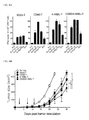
- FIGS. 5A-5C exhibit a therapeutic anti-tumor effect of a CD80- and/or 4-1BBL-expressing CD4 T cell
- FIG. 5A illustrates a result obtained by subcutaneously inoculating 5 ⁇ 10 5 liveEG7 cells to mice (4 mice per group) and 3 days later, vaccinating CD4 T cell vaccines including the CD4 T cell alone as described in FIG. 4A 3 times every 4 days, FIG.
- FIG. 5B exhibits a tumor growth in mice in which CD80/4-1BBL-T cell-vaccinated CD4 T cell, CD8 T cell, and NK cell are decreased and in a EG7-bearing mice intraperitoneally administered while reducing an antibody on 1 day and/or 2 days before immunization without vaccination (No Vax) as a control
- FIG. 5C illustrates a result obtained by subcutaneously administering 1 ⁇ 10 6 EG7 cells (in the opposite flank) of a tumor-free (tumor-rejecting) mice at the end of the experiment described in FIG.
- a tumor size is indicated by a tumor area in mm 2 and a point represents a mean for each group of mice and a bar represents SD;
- FIGS. 6A-6B exhibit a therapeutic anti-tumor effect of a CD80- and/or 4-1BBL-expressing CD4 T cells in a melanoma tumor model
- FIG. 6A illustrates evaluation results of an antigen-specific CD8 T cell response by intravenously administering CD4 T cell vaccines to mice as illustrated in FIG.
- FIG. 7 illustrates an evaluation result of antigen-specific CD8 T cell response of a CD70- or OX40L-expressing CD4 T cell by EliSpot assay.
- the present invention relates to a CD4 T cell vaccine which is transfected with nucleic acid encoding a foreign antigen; and nucleic acid encoding one or more costimulatory ligands selected from the group consisting of CD80, 4-1BBL, CD70, and OX40L.
- the present invention provides a CD4 T cell vaccine which can serve as an autologous antigen-presenting cell and induce an antigen-specific cytotoxic T cell response as an alternative to overcome the shortcoming of the conventional antigen-presenting cell, for example, dendritic cell, which is present in a small amount in a human peripheral blood cell and difficult to obtain in a large amount for clinical application.
- a CD4 T cell vaccine which can serve as an autologous antigen-presenting cell and induce an antigen-specific cytotoxic T cell response as an alternative to overcome the shortcoming of the conventional antigen-presenting cell, for example, dendritic cell, which is present in a small amount in a human peripheral blood cell and difficult to obtain in a large amount for clinical application.
- the CD4 T cell vaccine is a CD4 T cell transfected with only nucleic acid encoding costimulatory ligands CD80 and 4-1BBL in a specific example, cell surface expression of the costimulatory ligands is increased as compared with a control and maintained for up to about 5 days. If nucleic acid encoding a foreign antigen is transfected to this CD4 T cell, antigen-specific CD8 T cell proliferation can be synergistically increased. Thus, it can be seen that the CD4 T cell can serve as an antigen-presenting cell.
- the CD4 T cell used in transfer of a foreign antigen and costimulatory ligands is a cell in an activation state stimulated in vitro and has no significant difference in expression level of CD80 and 4-1BBL from a resting CD4 T cell, but exhibits an increase in expression of OX40L.
- the activation state of a T cell defines whether the T cell is “resting” (i.e., in the G 0 phase of the cell cycle) or “activated” after an appropriate stimulus such as the recognition of its specific antigen, or by stimulation with OKT3 antibody, PHA or PMA.
- the “phenotype” of the T cell (for example, naive, central memory, effector memory, lytic effectors, help effectors (TH1 and TH2 cells), and regulatory effectors) describes the function the cell exerts when activated.
- a healthy donor has T cells of each of these phenotypes, and which are predominately in the resting state.
- a naive T cell will proliferate upon activation, and then differentiate into a memory T cell or an effector T cell. It can then assume the resting state again, until it gets activated the next time, to exert its new function and may change its phenotype again.
- An effector T cell will be divided upon activation and antigen-specific effector function.
- the stimulated CD4 T cell can be obtained by performing electroporation and transfer of an RNA encoding a foreign antigen and an RNA encoding costimulatory ligands to a CD4 T cell isolated from peripheral blood under IL-2 and a stimulated CD4 T cell mixed with ⁇ CD3/CD28-coated beads and cultured and proliferated, and mixing the CD4 T cells with the ⁇ CD3/CD28-coated beads at a ratio of the number of beads per unit cell of 1:1 to 2 and culturing and proliferating the mixture.
- the mixing ratio is adopted for relatively excellent proliferation, and according to a specific example of the present invention, when a resting CD4 T cell is cultured with ⁇ CD3 or a ⁇ CD3/CD28 mixture or ⁇ CD3/CD28-coated beads, the culture obtained from culturing with the ⁇ CD3/CD28-coated beads exhibits a 100 or more-fold increase in CD4 T cell proliferation.
- the stimulated CD4 T cell exhibits a significant increase in expression of other kinds of costimulatory ligands such as CD40L, OX40L, and CD86, and, thus, may affect proliferation, survival, and cytotoxic T cell response of a CD80- and 4-1BBL-transfected CD4 T cell. Preferably, it may affect an increasing aspect.
- CD40L naturally proliferated in the stimulated CD4 T cell can induce an antigen-specific CD8 T cell and strong anti-tumor immunity in combination with other costimulatory ligands.
- an antigen is well understood in the art and includes any molecule that can bind to an antibody, as well as epitopes, peptides fragments of antigens which can bind to MHC molecules, and immunogens.
- an antigen may include, but is not limited to, a tumor antigen, a pathogen antigen, or an autoantibody (normal or disease-related).
- the term “foreign antigen” is used to mean that a molecule (antigen) which is naturally present or not in a cell is delivered into the cell from the outside.
- the delivery means transfection.
- the tumor antigen is a tumor associated antigen (TAA) which refers to an antigen that is associated with a tumor.
- TAAs include ovalalbumin, survivin, gp75, gp100, MDM2, MART-1, MAGE-1, MAGE-3, tyrosinase, telomerase, her-2/neu, ⁇ -1 fetoprotein, G250, NY-ESO-1, and the like.
- tumors associated with the tumor antigen include a solid tumor, a liquid tumor, a hematologic tumor, renal cell cancer, melanomas, breast cancer, prostate cancer, testicular cancer, bladder cancer, ovarian cancer, cervical cancer, stomach cancer, esophageal cancer, pancreatic cancer, lung cancer, neuroblastomas, glioblastomas, retinoblastomas, leukemias, myelomas, lymphomas, hepatoma, adenomas, sarcomas, carcinomas, blastomas, and the like.
- the pathogen antigen refers to any disease causing organism or virus and also to attenuated derivatives thereof.
- pathogen refers to any virus or organism which is involved in the etiology of a disease and also to attenuated derivatives thereof.
- pathogens include, but are not limited to, bacteria, protozoan, fungal and viral pathogens such as Helicobacter sp., such as Helicobacter pylori; Salmonella sp.; Shigella sp.; Enterobacter sp.; Campylobacter sp.; various mycobacteria, such as Mycobacterium leprae, Mycobacterium tuberculosis; Bacillus anthracis; Yersinia pestis; Francisella tularensis; Brucella sp.; Leptospira interrogans; Staphylococcus sp., such as S.
- Helicobacter sp. such as Helicobacter pylori
- Salmonella sp. Shigella sp.
- Enterobacter sp. Campylobacter sp.
- various mycobacteria such as Mycobacterium leprae, Mycobacterium tuberculosis
- herpes virus such as herpes simplex virus type 1, herpes simplex virus type 2, coronavirus, varicella-zoster virus, and Epstein-Barr virus; papilloma virus; influenza virus; hepatitis B virus; poliomyelitis virus; measles virus; mumps virus; or rubella virus.
- the autoantibody includes, but is not limited to, an anti-nuclear antibody, an anti- ⁇ -globulin antibody, an antibody to an autoblood component, or an antibody to an autoorgan. If the autoantibody is used as a foreign antigen, the CD4 T cell vaccine can induce strong anti-tumor immunity, and, thus, it can be effective in overcoming potential immunological tolerance to a self-antigen expressed in a normal tissue.
- costimulatory ligand refers to a molecule involved in the interaction between receptor-ligand pairs expressed on the surface of antigen-presenting cells and T cells. Resting T cells require two or more signals for induction of cytokine gene expression and proliferation. One signal, the one that confers specificity, can be produced by the interaction between the MHC/peptide complex and the TCR/CD3 complex. The second signal is not antigen specific and is called the “costimulatory” signal. This signal is known as an activity provided by bone-marrow-derived accessory cells such as macrophages and dendritic cells. Costimulatory ligands mediate costimulatory signal(s), which are necessary, under normal physiological conditions, to achieve full activation of naive T cells. The present invention amplifies such roles of CD80, 4-1BBL, CD70, OX40L, and the like.
- RNA refers to polymeric forms of ribonucleotides of any length, wherein the ribonucleotides or ribonucleotide analogs are joined together by phosphodiester bonds.
- RNA includes, for example, single-stranded, double-stranded and triple helical molecules, primary transcripts, mRNA, tRNA, rRNA, in vitro transcripts, in vitro synthesized RNA, branched polyribonucleotides, isolated RNA of any sequence, and the like.
- mRNA refers to an RNA that can be translated in a cell. Such mRNAs are typically capped and have a ribosome binding site (Kozak sequence) and a translational initiation codon.
- the RNA encoding a foreign antigen can be appropriately adopted depending on a kind of an antigen.
- the CD4 T cell vaccine of the present invention can express one or more costimulatory ligands selected from the group consisting of CD80, 4-1BBL, CD70, and OX40L.
- the costimulatory ligand can be transfected in the form of an encoding nucleic acid into the CD4 T cell vaccine.
- the CD80 may be a human- or mouse-derived nucleic acid, and may be, for example, a base sequence represented by SEQ ID NO: 1, but not particularly limited thereto.
- the 4-1BBL may be a human- or mouse-derived nucleic acid, and may be, for example, a base sequence represented by SEQ ID NO: 2, but not particularly limited thereto.
- the CD70 may be a human- or mouse-derived nucleic acid, and may be, for example, a base sequence represented by SEQ ID NO: 3, but not particularly limited thereto.
- the OX40L may be a human- or mouse-derived nucleic acid, and may be, for example, a base sequence represented by SEQ ID NO: 4, but not particularly limited thereto.
- the nucleic acid encoding costimulatory ligands may be in the form of RNA.
- the CD4 T cell vaccine of the present invention may be transfected with an RNA encoding a tumor antigen; and an RNA encoding CD80 and 4-1BBL.
- RNA can be generated by any method known in the art.
- an expression cassette includes a promoter (T7 promoter, SP6 promoter, and the like) suitable for in vitro transcription.
- the mRNA may include 3′UTRs and/or 5′UTRs in order to increase mRNA stability and translational efficiency.
- the CD4 T cell vaccine of the present invention can be generated by transferring a foreign antigen-encoding RNA and a costimulatory ligand-encoding RNA to a stimulated CD4 T cell in an activated state, and a transfer method may employ electroporation with high efficiency and low toxicity or transfer by liposome.
- conditions for electroporation include field strength of 100 to 150 Volts/mm gap width (for example, 400 to 600 V over a 4 mm gap) for 2 to 10 ms using a square wave pulse, but can be appropriately adjusted by those skilled in the art.
- the CD4 T cell vaccine transfected with a foreign antigen and a costimulatory ligand increases an antigen-specific T cell response, and, thus, exhibits excellent efficacy and can be used in treating tumors, pathogenic infectious diseases, or autoimmune diseases.
- the present invention provides a pharmaceutical composition including the CD4 T cell vaccine for treating tumors, pathogenic infectious diseases, or autoimmune diseases.
- the tumors may include tumors associated with the above-described tumor antigen.
- the tumors may include a solid tumor, a liquid tumor, a hematologic tumor, renal cell cancer, melanomas, breast cancer, prostate cancer, testicular cancer, bladder cancer, ovarian cancer, cervical cancer, stomach cancer, esophageal cancer, pancreatic cancer, lung cancer, neuroblastomas, glioblastomas, retinoblastomas, leukemias, myelomas, lymphomas, hepatoma, adenomas, sarcomas, carcinomas, blastomas, and the like.
- the pathogenic infectious diseases may include infectious diseases associated with the above-described pathogen antigen.
- infectious diseases may include gastritis, paratyphoid fever, food poisoning, meningitis, pneumonia, urinary tract infection, skin infection, bacteremia, tuberculosis, anthrax, plague, tularemia, leptospirosis, atopic dermatitis, septicemia, scarlatina, rheumatic fever, tetanus, candida vaginitis, malaria, black fever, human trypanosomiasis, AIDS, hepatitis C, cervical cancer, influenza, hepatitis B, poliomyelitis, mumps, measles, simple herpes, wart, or rubella.
- the autoimmune diseases may include diseases associated with the above-described autoantibody.
- Examples of the autoimmune diseases may include systemic lupus erythematosus (SLE), rheumatoid arthritis (RA), rheumatoid fever, and the like, but are not particularly limited thereto.
- the pharmaceutical composition may include an active agent with a pharmaceutically acceptable carrier, active or inert, making the composition suitable for diagnostic or therapeutic use in vitro, in vivo or ex vivo.
- pharmaceutically acceptable carrier includes any of the pharmaceutical carriers compatible with T cells, such as a phosphate buffered saline solution, protein excipients including serum albumin such as human serum albumin (HSA), recombinant human albumin (rHA), gelatin, and casein.
- serum albumin such as human serum albumin (HSA), recombinant human albumin (rHA), gelatin, and casein.
- HSA human serum albumin
- rHA recombinant human albumin
- gelatin and casein.
- carrier may include a buffer or a pH adjusting agent.
- the buffer is a salt prepared from an organic acid or base.
- Representative buffers include organic acid salts such as salts of citric acid, ascorbic acid, gluconic acid, carbonic acid, tartaric acid, succinic acid, acetic acid, or phthalic acid; Tris, tromethamine hydrochloride, or phosphate buffers.
- Additional carriers include polymeric excipients/additives such as polyvinylpyrrolidones, ficolls (a polymeric sugar), dextrates (for example, cyclodextrins, such as 2-hydroxypropyl-quadrature-cyclodextrin), polyethylene glycols, antioxidants, antistatic agents, surfactants (for example, polysorbates such as “TWEEN 20” and “TWEEN 80”), lipids (for example, phospholipids, fatty acids), steroids (for example, cholesterol), and chelating agents (for example, EDTA). Agents for preventing or reducing ice formation may be included.
- polymeric excipients/additives such as polyvinylpyrrolidones, ficolls (a polymeric sugar), dextrates (for example, cyclodextrins, such as 2-hydroxypropyl-quadrature-cyclodextrin), polyethylene glycols, antioxidants, antistatic agents, surfactants (for example, poly
- compositions suitable for parenteral administration such as, for example, by intratumoral, intraarterial (in the joints), intravenous, intramuscular, intradermal, intraperitoneal, intranodal and subcutaneous routes, and carriers include antioxidants, buffers, bacteriostats, and solutes that render the formulation isotonic with the blood of the intended recipient, and aqueous and non-aqueous sterile suspensions that can include suspending agents, solubilizers, thickening agents, stabilizers, and preservatives.
- Intravenous or intraperitoneal administration is the preferred method of administration for the CD4 T cell vaccine of the present invention.
- the dose of cells administered to a subject is in an effective amount, effective to achieve the desired beneficial therapeutic response in the subject over time, or to inhibit growth of cancer cells, or to inhibit infection.
- the method can be practiced by obtaining and saving blood samples from the subject prior to infusion for subsequent analysis and comparison.
- at least about 1 ⁇ 10 4 to 1 ⁇ 10 6 and typically, between 1 ⁇ 10 8 and 1 ⁇ 10 10 cells may be infused intravenously or intraperitoneally into a 70 kg patient over roughly 60 to 120 minutes.
- cells of the present invention can be administered at a rate determined by the LD-50 (or other measure of toxicity) of the cell type and the side-effects of the cell type at various concentrations in consideration of the mass and overall health of the subject. Administration can be accomplished via single or divided doses.
- the CD4 T cell vaccine of the present invention can supplement other treatments for a condition by known conventional therapy, including cytotoxic agents, nucleotide analogues and biologic response modifiers.
- biological response modifiers are optionally added for treatment by the CD4 T cell vaccine of the present invention.
- the CD4 T cell vaccine is optionally administered with an adjuvant, or cytokine such as GM-CSF, IL-12 or IL-2.
- Yet another aspect of the present invention relates to a method of inducing or promoting an immune response to an antigen in a subject, particularly a patient with a tumor, a pathogenic infection disease, or an autoimmune disease.
- the method includes administering a pharmaceutically effective dose of the CD4 T cell vaccine to the patient in need thereof as described above.
- Still another aspect of the present invention relates to the use of the CD4 T cell vaccine of the present invention for treating and/or preventing disease states.
- diseases which can be treated by the method of the present invention may include the above-described tumors, pathogenic infectious diseases, and autoimmune diseases.
- Still yet another aspect of the present invention provides a method of treating tumors, pathogenic infectious diseases, or autoimmune diseases from a subject by administering a pharmaceutically effective dose of the CD4 T cell vaccine to the subject in need thereof to enhance a tumor-, a pathogenic infectious disease-, or an autoimmune disease-specific immune response.
- administration of the CD4 T cell vaccine induces or promotes an immune response that inhibits, halts, delays, or prevents the onset or progression of disease states.
- the subject may include human, dog, cat, mouse, and the like without limitation.
- the “effective dose” means an amount necessary at least partly to attain the desired immune response or to delay or to entirely halt the onset or progression of a particular disease to be treated.
- the amount varies depending upon the health and physical condition of the individual to be treated, the racial background of the individual to be treated, the ability of the immune system of the individual that synthesizes an antibody, the degree of protection desired, the formulation of the vaccine, the assessment of the medical situation, and other relevant factors. It is expected that the amount will fall in a relatively broad range that can be determined through routine trials.
- mice 6-8-week-old female C57BL/6(B6) mice were purchased from Orient Bio (Seongnam, Korea) and B6.SJL (CD45.1) congenic and OT-I TCR transgenic mice were purchased from Jackson Laboratories (Bar Harbor, Me.), and were bred under pathogen-free condition in the animal laboratory of the clergy University School of Medicine. Breeding and experiment on the animals was conducted according to the guidelines of the Institutional Animal Care and Use Committee.
- EL4, Ovalbumin (Ova)-expressing EG7 and B16 melanoma cells were purchased from American Type Culture Collection (Manassas, Va.). Synthetic peptides representing CD8 T-cell epitope Ova 257 (SIINFEKL), tyrosinase-related protein 1 455 (Trp1 455 ; TAPDNLGYA), Trp2 180 (SVYDFFVWL), and glycoprotein 100 25 (gp100 25 ; EGSRNQDWL) with a purity of >80% were purchased from A&A Labs (San Diego, Calif.). Rat monoclonal antibodies against mouse CD3, CD28, NK, CD4, and CD8 were purchased from BioXCell (West lebanon, NH). Fluorescein-labelled antibodies for flow cytometry were purchased form eBioscience (San Diego, Calif.).
- CD4 T cells were purified using a MACS CD4 T cell isolation kit (Miltenyi Biotec GmbH, Germany) with a purity of >90%.
- MACS CD4 T cell isolation kit MACS CD4 T cell isolation kit
- 4 ⁇ 10 6 CD4 T cells and ⁇ CD3/CD28-coated beads were mixed at a ratio of beads per unit cell of 1:1 (loaded Anti-Biotin MACSiBead particles per cell (bead-to-cell ratio)) and then incubated.
- CD4 T cells were expanded in a plate coated with 5 ⁇ g/mL of ⁇ CD3 alone or together with 2 ⁇ g/mL of ⁇ CD28. 30 IU/mL of IL-2 was used in culturing cells.
- mouse CD80 and 4-1BBL were cloned to pcDNA3 vectors (Invitrogen, Carlsbad, Calif.). Antigen-specific immunity was evaluated using plasmid pcDNA3-Ova and pME7 encoding three melanosomal CD8 T cell epitopes, Trp1 455 , Trp2 180 , and gp100 25 (Cho & Celis, 2012). Further, in vitro transcription was carried out using the mMES SAGE mMACHINE kit (Ambion, Austin, Tex.).
- CD70 and OX40L were also transfected into CD4 T cells through the same process as described above, and OVA 257 peptide was selected as a foreign antigen and pulsed for 1 day.
- RNA-transfected CD4 T cells were stained with fluorescein-labelled annexin-V and 7-amino-actinomycin D (7-AAD) and analyzed by flow cytometry. Total cell counts were measured with trypan blue exclusion.
- RNAs-transfected CD4 T cells (CD45.1) were intravenously administered to a B6 wild-type mice. On days 2 and 5 post-injection, splenocytes were stained, and CD4- and CD45.1-positive cells were analyzed by flow cytometry.
- mice were immunized intravenously with 5 ⁇ 10 6 CD4 T cells transfected with a mixture of RNAs to express CD80 and/or 4-1BBL and antigen (Ova or ME7). Mice received three booster immunizations every 4 days.
- IFN ⁇ interferon- ⁇ enzyme-linked immunosorbent spot
- Responder CD8 T cells were incubated with peptide-pulsed or un-pulsed EL4 or with EG7 and B16 melanoma cells at various responder-to-stimulator cell ratios.
- OVA 257 peptide was pulsed to CD70 or OX40L RNA-transfected CD4 T cells for 1 day, and then, the immunization and immune response was evaluated through the same process as described above.
- OT-I cells (CD45.2) were labelled with carboxyfluorescein succinimidyl ester (CFSE; Molecular Probes, Eugene, Oreg.) at a final concentration of 5 ⁇ M at 37° C. for 15 minutes.
- CFSE carboxyfluorescein succinimidyl ester
- 2 ⁇ 10 5 OT-I cells were seeded in a 96-well plate with 1 ⁇ 10 5 stimulator CD4 T cells (CD45.1) expressing CD80 and/or 4-1BBL. After 3 days in culture, the cells were stained with ⁇ CD8 (to allow gating for OT-I cells) and then analyzed.
- 2 ⁇ 10 6 CFSE-labelled OT-I cells were intravenously administered to a B6 congenic (CD45.1) mice.
- mice were vaccinated with 5 ⁇ 10 6 CD80- and/or 4-1BBL-expressing CD4 T cells which were electroporated together with Ova RNA.
- splenocytes were stained in order to analyze CD8 T cells confined in a CD45.2-positive group.
- splenocytes from congenic (CD45.1) mice un-pulsed or pulsed with 10 ⁇ g/mL of Ova 257 peptide at 37° C. for 2 hours, were labelled with CFSE at a low concentration (0.5 ⁇ M; CFSE low ) and a high concentration (5 ⁇ M; CFSE high ) respectively. Both types of CFSE-labelled cells (2 ⁇ 10 7 ) were mixed equally in a 1:1 ratio and injected intravenously into immunized mice and high naive mice. Mice were euthanized 20 h later, and the ratio of CFSE high to CFSE low in splenocytes was determined.
- mice received subcutaneous inoculations of 5 ⁇ 10 5 EG7 or 1 ⁇ 10 5 B16 tumor cells (per mouse) in a rear flank 3 days before their first immunization. In some instances, survivor mice (that had rejected tumors) were rechallenged with 1 ⁇ 10 6 EG7 cells in the opposite flank. For the depletion of lymphocyte subsets, each mouse received intraperitoneal administration of 300 ⁇ g of ⁇ NK, ⁇ CD4, or ⁇ CD8 on days ⁇ 2 and/or ⁇ 1 relative to immunization. Depletions were confirmed with blood samples using flow cytometry. Tumor growth was monitored every 3 to 4 days in individual tagged mice by measuring 2 opposing diameters with calipers. Results are presented as mean tumor size (area in mm 2 ) ⁇ SD for every treatment group at various time points until the termination of the experiment.
- the tumor sizes were analyzed for significance by 2-way ANOVA. All the analyses and graphs were done using Prism 5.01 software (GraphPad, San Diego, Calif.).
- CD4 T cells expressing a costimulatory ligand at a high level can serve as natural APCs which induce cytotoxic CD8 T cells
- the optimum in vitro conditions for expanding CD4 T cells and surface expression of molecules involved in antigen presentation and costimulation and interacting with CD8 T cells were investigated. Freshly isolated CD4 T cells were incubated in plates coated with either ⁇ CD3 alone or combination of ⁇ CD3 and ⁇ CD28, and together with commercial ⁇ CD3/CD28-coated beads, respectively, in the presence of low-dose IL-2.
- CD4 T cells stimulated with ⁇ CD3/CD28-coated beads for 7 days were examined for surface expression of MHC and costimulatory molecules.
- the number of cells expressing MHC class I, CD86, CD40L, and OX40L was higher in expanded CD4 T cells compared to freshly isolated CD4 T cells.
- the levels of MHC class II and CD80 expression were slightly augmented in expanded CD4 T cells whereas 4-1BBL expression was unaffected.
- CD80 and 4-1BBL in expanded CD4 T cells as these molecules are involved in complete T cell activation together with pMHC/TCR engagement.
- CD80 and 4-1BBL In order to enhance expression of CD80 and 4-1BBL, a single RNA or an RNA mixture encoding CD80 and/or 4-1BBL was electroporated in the in vitro expanded CD4 T cells.
- surface expression of the transfected cells hereinafter, referred to as CD80-T, 4-1BBL-T, CD80/4-1BBL-T cells, CD70-T and OX40L-T cells
- Phenotypic analysis of mock-electroporated CD4 T cells was shown for comparison ( FIG. 2A ).
- RNA-transfected CD4 T cells expression levels of CD80 and 4-1BBL on the cell surfaces were exhibited as positive proportion of each marker.
- the mock-T cells expressed 11.4% of CD80 and 0.5% of 4-1BBL
- the CD80-T cells expressed 22.3% of CD80
- the 4-1BBL-T cells expressed 66.5% of 4-1BBL
- the CD80/4-1BBL-T cells expressed 25.6% of CD80 and 39.2% of 4-1BBL.
- CFSE-labelled OT-I/CD45.2 cells were cultured together with CD80- and/or 4-1BBL-expressing CD4 T cells transfected with Ova RNA.
- CD80-T and 4-1BBL-T cells induced moderate OT-I proliferative responses in comparison to mock-T cells (57% for the CD80-T cells, 57.1% for the 4-1BBL-T cells as compared with 54.9% for the mock-T cells), OT-I cells were proliferated at 74.6% when cultured with CD80/4-1BBL-T ( FIG. 2B ).
- the mock-T cells expressed 3.35% of CD70 and 0.0667% of OX40L, but the CD70-T cells expressed 5.67% of CD70, and the OX40L-T cells expressed 19.9% of OX40L.
- the mock-T cells expressed 3.35% of CD70 and 0.0667% of OX40L, but the CD70-T cells expressed 5.67% of CD70, and the OX40L-T cells expressed 19.9% of OX40L.
- One of the obstacles facing cellular vaccination is the insufficient endurance of infused cells (as APCs) in vivo for the stimulation of CD8 T cells.
- APCs infused cells
- a survival rate of CD4 T cells transfected with CD80 and/or 4-1BBL was analyzed.
- 4-1BBL expression in CD4 T cells prevented impulsive cell death compared to mock- and CD80-transfected CD4 T cells (14.2% for the 4-1BBL-T cells as compared with 17.2% for the mock-T cells and 17.0% for the CD80-T cells), and expression of CD80 in addition to 4-1BBL enhanced this early cell survival benefit (12.9% for the CD80/4-1BBL-T) ( FIG. 3A ).
- the live cell number of CD80/4-1BBL-T cells was slightly higher than that of the CD80 cells or 4-1BBL-T cells ( FIG. 3B ).
- the number of the mock-T cells was decreased to be less than about two times the number of the CD80-T cells or 4-1BBL-T cells.
- CD45.2 congenic mice as a recipients
- the splenocytes were obtained at various time points after cell infusion, and the absolute number of CD45.1-positive CD4 T cells in the spleen was enumerated.
- the transfection of CD4 T cells with CD80 and/or 4-1BBL allowed their persistence in higher numbers in hosts, compared to Mock-T cells, and infusion with CD80/4-1BBL-T cells demonstrated significantly prolonged endurance in vivo.
- CD4 T cells expressing CD80 and 4-1BBL showed enhanced in vitro cell vitality while inhibiting apoptosis, and that in vivo survival benefits can be achieved when CD80 and 4-1BBL are present together.
- CD4 T cell vaccine which is the same but electroporated with Ova RNA in various conditions was intravenously administered to a B6 mice three times.
- a functional activity of freshly isolated CD8 T cells (without additional stimuli) from the spleen was evaluated by EliSpot assay ( FIG. 4A ).
- Antigen-specific recognition is a proof for a peptide-pulsed target (EL4 cell) and an ova-expressing EG7 tumor cell.
- EL4 cell peptide-pulsed target
- ova-expressing EG7 tumor cell a peptide-pulsed target
- the number of IFN ⁇ spots was calculated significantly higher as compared with the case of other CD4 T cell vaccination (two times higher for the EG7 tumor cells as compared with the 4-BBL-T cells).
- CFSE-labelled OT-I/CD45.2 cells were infused into congenic CD45.1 mice, and a CD80- and/or 4-1BBL-expressing CD4 T cell was vaccinated in various conditions. Almost all of OT-I cells obtained from the non-vaccinated mice remained as being not divided, whereas the mice vaccinated with the CD80/4-1BBL-T cells exhibited excellent OT-I proliferative responses in vivo as compared with the other CD4 T cell-vaccinated mice ( FIG. 4B ).
- effector cytolytic function of the antigen-specific CD8 T cells was evaluated with a target cell pulsed with Ova 257 peptide (CFSE high ) using the in vivo cytotoxicity assay as described above.
- mice vaccinated with the CD80/4-1BBL-T cell had a much higher level of the effector cytotoxic function as compared with CD8 T-cell response induced by another conditioned T cell vaccination (58% vs 34 to 38%; FIG. 4C ).
- CD8 T cells generated by CD4 T cell vaccination have an in vivo therapeutic antitumor effect against established tumors was evaluated.
- An EG7 tumor was subcutaneously inoculated to mice. 3 days later, vaccination was initiated and provided three times at 4-day intervals.
- NK cells and CD4 T cells that could participate in the induction of the CD8 T-cell response and/or synergize with CD8 T cells in fighting established tumors were evaluated ( FIG. 5B ).
- CD4 T cells had no significant deleterious effect on the therapeutic advantage of CD80/4-1BBL-T cell vaccination, but a decrease in CD8 T cells completely abolished the therapeutic antitumor effect, suggesting that the CD8 T cells are important for rejection against established tumors.
- a decrease in NK cells has a moderate effect on the therapeutic benefit, suggesting that these cells will somewhat contribute to inhibit the tumor growth.
- mice As compared with a naive control challenged with the same tumor, any one of the mice did not develop a tumor. Further, the mice exhibiting tumor rejection had a higher level of an antigen-specific CD8 T cell response (data not shown). This suggests that CD80/4-1BBL-T cell vaccination can induce an antigen-specific memory CD8 T cell response for a long time.
- plasmid ME7 including three CD8 T cell epitopes derived from melanosomal proteins Trp1, Trp2, and gp100 (Cho & Celis, CII 61, pp. 343 to 351, 2012).
- the mock-T cell vaccination generated a low immune repose, but as measured by EliSpot assay, all CD4 T cell vaccinations induced substantial CD8 T cell responses with respect to all of the three melanosomal epitopes.
- CD80/4-1BBL-T cell vaccination yielded significantly higher number of IFN ⁇ spots than did other CD4 T cell vaccinations ( FIGS. 6A-6B ). More important is that the CD8 T cells obtained from CD4 T cell vaccinated mice effectively recognized not only a peptide-pulsed target but also a B16 melanoma cells.
- CD4 T cell vaccination delayed the tumor growth for about 1 week in such a very aggressive tumor model and exhibited a significant therapeutic benefit as compared with the non-vaccinated control ( FIG. 6B ).
- the CD80/4-1BBL-T cells had a remarkably higher antitumor effect, but the CD80- and 4-1BBL-T cells had a moderate therapeutic advantage as compared with the mock-T cells. This suggests that vaccination with CD4 T cell expressing CD80 and 4-1BBL is effective in avoiding any potential tolerance against a self-antigen expressed in a normal tissue, and resultantly exhibits a significant antitumor therapeutic effect against established tumors.
- CD70-T cell and OX40L-T cell vaccination produced a significantly higher number of IFN ⁇ spots as compared with vaccination with other CD4 T cell.
- the present invention provided a CD4 T cell vaccine that extends intracellular viability and increases an antigen-specific cytotoxic T cell response.
- the CD4 T cell vaccine can be used in treating tumors, pathogenic infectious diseases, or autoimmune diseases with excellent efficacy.
Landscapes
- Health & Medical Sciences (AREA)
- Life Sciences & Earth Sciences (AREA)
- General Health & Medical Sciences (AREA)
- Veterinary Medicine (AREA)
- Animal Behavior & Ethology (AREA)
- Public Health (AREA)
- Chemical & Material Sciences (AREA)
- Engineering & Computer Science (AREA)
- Epidemiology (AREA)
- Organic Chemistry (AREA)
- Immunology (AREA)
- Genetics & Genomics (AREA)
- Bioinformatics & Cheminformatics (AREA)
- Biomedical Technology (AREA)
- Medicinal Chemistry (AREA)
- Zoology (AREA)
- Biotechnology (AREA)
- Wood Science & Technology (AREA)
- Pharmacology & Pharmacy (AREA)
- Microbiology (AREA)
- General Engineering & Computer Science (AREA)
- Biochemistry (AREA)
- Oncology (AREA)
- General Chemical & Material Sciences (AREA)
- Cell Biology (AREA)
- Nuclear Medicine, Radiotherapy & Molecular Imaging (AREA)
- Biophysics (AREA)
- Chemical Kinetics & Catalysis (AREA)
- Molecular Biology (AREA)
- Mycology (AREA)
- Hematology (AREA)
- Physics & Mathematics (AREA)
- Transplantation (AREA)
- Plant Pathology (AREA)
- Toxicology (AREA)
- Gastroenterology & Hepatology (AREA)
- Proteomics, Peptides & Aminoacids (AREA)
- Medicines Containing Antibodies Or Antigens For Use As Internal Diagnostic Agents (AREA)
- Medicines That Contain Protein Lipid Enzymes And Other Medicines (AREA)
- Medicines Containing Material From Animals Or Micro-Organisms (AREA)
Abstract
Description
Claims (12)
Applications Claiming Priority (3)
| Application Number | Priority Date | Filing Date | Title |
|---|---|---|---|
| KR10-2014-0026476 | 2014-03-06 | ||
| KR1020140026476A KR101576728B1 (en) | 2014-03-06 | 2014-03-06 | Immune cell vaccine and use thereof |
| KR1020140026476 | 2014-03-06 |
Publications (2)
| Publication Number | Publication Date |
|---|---|
| US20160136251A1 US20160136251A1 (en) | 2016-05-19 |
| US9821044B2 true US9821044B2 (en) | 2017-11-21 |
Family
ID=54244319
Family Applications (1)
| Application Number | Title | Priority Date | Filing Date |
|---|---|---|---|
| US14/535,940 Active US9821044B2 (en) | 2014-03-06 | 2014-11-07 | CD4 T cell vaccine and use thereof |
Country Status (2)
| Country | Link |
|---|---|
| US (1) | US9821044B2 (en) |
| KR (1) | KR101576728B1 (en) |
Families Citing this family (1)
| Publication number | Priority date | Publication date | Assignee | Title |
|---|---|---|---|---|
| CN112386684B (en) * | 2020-11-12 | 2023-12-05 | 广东昭泰细胞生物科技有限公司 | COVID-19 vaccine and preparation method and application thereof |
Citations (2)
| Publication number | Priority date | Publication date | Assignee | Title |
|---|---|---|---|---|
| US20040219161A1 (en) * | 1998-11-18 | 2004-11-04 | Pacific Northwest Research Institute | Surface receptor antigen vaccines |
| US20120309091A1 (en) * | 2006-05-25 | 2012-12-06 | Sangamo Biosciences, Inc. | Methods And Compositions For Gene Inactivation |
-
2014
- 2014-03-06 KR KR1020140026476A patent/KR101576728B1/en active Active
- 2014-11-07 US US14/535,940 patent/US9821044B2/en active Active
Patent Citations (2)
| Publication number | Priority date | Publication date | Assignee | Title |
|---|---|---|---|---|
| US20040219161A1 (en) * | 1998-11-18 | 2004-11-04 | Pacific Northwest Research Institute | Surface receptor antigen vaccines |
| US20120309091A1 (en) * | 2006-05-25 | 2012-12-06 | Sangamo Biosciences, Inc. | Methods And Compositions For Gene Inactivation |
Non-Patent Citations (8)
| Title |
|---|
| GenBank Accession No. GQ258349.1 GI:254575546, Cloning vector pRama-34, complete sequence. |
| Guinn, et al. 4-1BBL cooperates with B7-1 and B7-2 in converting a B cell lymphoma cell line into a long-lasting antitumor vaccine. J. Immunol. 1999; 162: 5003-5010. * |
| Hye-Mi Park et al., "Alternative Cellular Cancer Vaccine Using Expanded CD4+T Cells", 2nd Graduate school Conference of Department of Microbiology and Immunology, College of Medicine, (Dec. 4, 2013). |
| Hye-Mi Park et al., "Alternative Cellular Cancer Vaccine Using Expanded CD4+T Cells", The 2013 Fall Conference of the Korean Association of Immunologists, (Nov. 7, 2013). |
| Hyn-II Cho et al., "Design of immunogenic and effective multi-epitope DNA vaccines for melanoma" Cancer Immunol Immunother.61(3): 343-351, (Mar. 2012). |
| Jun Tang et al., "A novel self-assembled nanoparticle vaccine with HIV-1 Tat 49-57/HPV16E7 49-57 fusion peptide and GM-CSF DNA elicits potent and prolonged CD8+T cell-dependent anti-tumor immunity in mice", Vaccine 30:1071-1082, (2012). |
| Melero et al. Amplification of tumor immunity by gene transfer of the co-stimulatory 4-1BB ligand: synergy with the CD28 co-stimulatory pathway. Eur J Immunol. 1998; 28: 1116-1121. * |
| Petra Krause et al., "Prostaglandin E2 enhances T-cell proliferation by inducing the costimulatory molecules OX40L, CD70, and 4-1BBL on dendritic cells." Blood 113 (11): 2451-2460, 2009. |
Also Published As
| Publication number | Publication date |
|---|---|
| US20160136251A1 (en) | 2016-05-19 |
| KR20150104756A (en) | 2015-09-16 |
| KR101576728B1 (en) | 2015-12-10 |
Similar Documents
| Publication | Publication Date | Title |
|---|---|---|
| US20230287347A1 (en) | Exosome for stimulating t cell and pharmaceutical use thereof | |
| CN103502439B (en) | Method for T cells with antigenic specificity propagation | |
| JP7523203B2 (en) | Delivery of biomolecules to immune cells | |
| JP6022667B2 (en) | ICOS critically regulates the proliferation and function of inflammatory human Th17 cells | |
| US11684671B2 (en) | Enhancing the T-cell stimulatory capacity of human antigen presenting cells in vitro and in vivo and its use in vaccination | |
| EP2700708B1 (en) | Enhancing the T-cell stimulatory capacity of human antigen presenting cells in vitro and in vivo and its use in vaccination | |
| US20200129603A1 (en) | Medical treatment method with administration of dendritic cells | |
| US20210077623A1 (en) | Synthetic vaccine | |
| KR20110002496A (en) | Vaccine Compositions and Methods | |
| JP2016155851A (en) | Methods and compositions for inhibition of regulatory t cells | |
| JP2004538000A (en) | Methods for maturation of dendritic cells | |
| US20160136251A1 (en) | CD4 T Cell Vaccine and Use Thereof | |
| US20200297829A1 (en) | Integrative Immunotherapy for Cancer Treatment | |
| KR20170113961A (en) | B cell vaccine and use thereof | |
| AU2020267768B2 (en) | Fibroblast generated patient-specific vaccines | |
| US20220313734A1 (en) | Fibroblast generated patient-specific vaccines | |
| US10716810B2 (en) | Canine autologous immunotherapy using dendritic cell induced cancer killing immunocytes | |
| US20120076827A1 (en) | Compositions and methods for generating an immune response in a subject |
Legal Events
| Date | Code | Title | Description |
|---|---|---|---|
| AS | Assignment |
Owner name: THE CATHOLIC UNIVERSITY OF KOREA INDUSTRY-ACADEMIC Free format text: ASSIGNMENT OF ASSIGNORS INTEREST;ASSIGNORS:KIM, TAI GYU;CHO, HYUN IL;PARK, HYE MI;REEL/FRAME:034972/0468 Effective date: 20141029 |
|
| STCF | Information on status: patent grant |
Free format text: PATENTED CASE |
|
| AS | Assignment |
Owner name: VIGENCELL INC., KOREA, REPUBLIC OF Free format text: ASSIGNMENT OF ASSIGNORS INTEREST;ASSIGNOR:THE CATHOLIC UNIVERSITY OF KOREA INDUSTRY - ACADEMIC COOPERATION FOUNDATION;REEL/FRAME:054759/0224 Effective date: 20201221 |
|
| MAFP | Maintenance fee payment |
Free format text: PAYMENT OF MAINTENANCE FEE, 4TH YR, SMALL ENTITY (ORIGINAL EVENT CODE: M2551); ENTITY STATUS OF PATENT OWNER: SMALL ENTITY Year of fee payment: 4 |
|
| MAFP | Maintenance fee payment |
Free format text: PAYMENT OF MAINTENANCE FEE, 8TH YR, SMALL ENTITY (ORIGINAL EVENT CODE: M2552); ENTITY STATUS OF PATENT OWNER: SMALL ENTITY Year of fee payment: 8 |