US9806877B2 - Calibration method and calibration circuit - Google Patents
Calibration method and calibration circuit Download PDFInfo
- Publication number
- US9806877B2 US9806877B2 US15/291,938 US201615291938A US9806877B2 US 9806877 B2 US9806877 B2 US 9806877B2 US 201615291938 A US201615291938 A US 201615291938A US 9806877 B2 US9806877 B2 US 9806877B2
- Authority
- US
- United States
- Prior art keywords
- signal
- signal path
- path
- calibration
- derotated
- Prior art date
- Legal status (The legal status is an assumption and is not a legal conclusion. Google has not performed a legal analysis and makes no representation as to the accuracy of the status listed.)
- Active
Links
- 238000000034 method Methods 0.000 title claims abstract description 36
- 238000012360 testing method Methods 0.000 claims description 61
- 238000005070 sampling Methods 0.000 claims description 33
- 230000004044 response Effects 0.000 claims description 14
- 238000012549 training Methods 0.000 abstract description 12
- 230000005540 biological transmission Effects 0.000 abstract description 3
- 238000005457 optimization Methods 0.000 abstract 1
- 238000010586 diagram Methods 0.000 description 10
- 238000004891 communication Methods 0.000 description 5
- 239000008186 active pharmaceutical agent Substances 0.000 description 4
- 230000008569 process Effects 0.000 description 2
- 230000002159 abnormal effect Effects 0.000 description 1
- 230000004075 alteration Effects 0.000 description 1
- 230000007547 defect Effects 0.000 description 1
- 230000010354 integration Effects 0.000 description 1
- 238000004519 manufacturing process Methods 0.000 description 1
- 238000012986 modification Methods 0.000 description 1
- 230000004048 modification Effects 0.000 description 1
Images




Classifications
-
- H—ELECTRICITY
- H04—ELECTRIC COMMUNICATION TECHNIQUE
- H04L—TRANSMISSION OF DIGITAL INFORMATION, e.g. TELEGRAPHIC COMMUNICATION
- H04L25/00—Baseband systems
- H04L25/02—Details ; arrangements for supplying electrical power along data transmission lines
- H04L25/03—Shaping networks in transmitter or receiver, e.g. adaptive shaping networks
- H04L25/03828—Arrangements for spectral shaping; Arrangements for providing signals with specified spectral properties
-
- H—ELECTRICITY
- H04—ELECTRIC COMMUNICATION TECHNIQUE
- H04L—TRANSMISSION OF DIGITAL INFORMATION, e.g. TELEGRAPHIC COMMUNICATION
- H04L27/00—Modulated-carrier systems
- H04L27/32—Carrier systems characterised by combinations of two or more of the types covered by groups H04L27/02, H04L27/10, H04L27/18 or H04L27/26
- H04L27/34—Amplitude- and phase-modulated carrier systems, e.g. quadrature-amplitude modulated carrier systems
- H04L27/38—Demodulator circuits; Receiver circuits
-
- H—ELECTRICITY
- H04—ELECTRIC COMMUNICATION TECHNIQUE
- H04L—TRANSMISSION OF DIGITAL INFORMATION, e.g. TELEGRAPHIC COMMUNICATION
- H04L7/00—Arrangements for synchronising receiver with transmitter
- H04L7/0016—Arrangements for synchronising receiver with transmitter correction of synchronization errors
- H04L7/0033—Correction by delay
Definitions
- the instant disclosure relates to a calibration method and a calibration circuit; in particular, to a method and a circuit that calibrate mismatches between a first signal path and a second signal path of a transmitter.
- phase difference and amplitude difference can be calibrated, when the frequency of the input baseband signal varies or the baseband signal is inputted to a communication system having a wider frequency band, there may still be mismatches between the in-phase signal path and the quadrature signal path of the transmitter due to the frequency dependency, because mismatches between local oscillators and between mixers may not be related to the frequency of the baseband signal.
- the above mismatches due to the frequency dependency are caused by differences between electrical characteristics of the corresponding circuit elements in the in-phase signal path and in the quadrature signal path, such as differences between electrical characteristics of the filter in the in-phase signal path and the filter in the quadrature signal path.
- the mismatches between the in-phase signal path and the quadrature signal path of the transmitter may be generated because of certain defects in the electric element manufacturing process, which makes the electrical characteristics of the corresponding electric elements in the in-phase signal path and in the quadrature signal path not match perfectly, further making the signals passing through the in-phase signal path and the quadrature signal path different and generating an unexpected image interference. Accordingly, how to compensate mismatches between the in-phase signal path and the quadrature signal path of a transmitter resulted from the frequency dependency is still a problem to be solved.
- the instant disclosure provides a calibration method, used to calibrate mismatches between a first signal path and a second signal path of a transmitter.
- a delay chain is configured in the first signal path of the transmitter to delay a signal transmitted through the first signal path.
- a finite impulse response (herein after FIR) filter is configured in the second signal path to compensate the mismatches between the first signal path and the second signal path of the transmitter.
- the calibration method comprises: respectively inputting a multiple-frequency signal to a digital-to-analog converter (DAC) configured in both of the first signal path and the second signal path, and respectively inputting an output of the digital-to-analog converter in the first signal path and an output of the digital-to-analog converter in the second signal path to a low-pass filter (LPF) configured in both of the first signal path and the second signal path, to generate a first test signal corresponding to the first signal path and a second test signal corresponding to the second signal path; respectively sampling the first test signal and the second test signal by at least one analog-to-digital converter (ADC), and respectively feeding sampling results generated by the analog-to-digital converter back to the delay chain and the FIR filter, to generate a delay signal and a compensated output signal; and executing a subtraction operation for the delay signal and the compensated output signal to obtain a first calibration coefficient related to the FIR filter in the second signal path, and calibrating a plurality of tap coefficients of the FIR filter by
- the instant disclosure further provides a calibration circuit, used to calibrate mismatches between a first signal path and a second signal path of a transmitter.
- a delay chain is configured in the first signal path of the transmitter to delay a signal transmitted through the first signal path.
- a FIR filter is configured in the second signal path to compensate the mismatches between the first signal path and the second signal path of the transmitter.
- the calibration circuit comprises a test signal generating unit, a sampling unit and a first calibration unit.
- the test signal generating unit respectively inputs a multiple-frequency signal to a digital-to-analog converter configured in both of the first signal path and the second signal path, and respectively inputs an output of the digital-to-analog converter in the first signal path and an output of the digital-to-analog converter in the second signal path to a low-pass filter configured in both of the first signal path and the second signal path, to generate a first test signal corresponding to the first signal path and a second test signal corresponding to the second signal path.
- the sampling unit respectively samples the first test signal and the second test signal by at least one analog-to-digital converter, and respectively feeds sampling results generated by the analog-to-digital converter back to the delay chain and the FIR filter, to generate a delay signal and a compensated output signal.
- the first calibration unit executes a subtraction operation for the delay signal and the compensated output signal, to obtain a first calibration coefficient related to the FIR filter in the second signal path, and calibrates a plurality of tap coefficients of the FIR filter by the first calibration coefficient, such that the calibrated FIR filter in the second signal path compensates the mismatches between the first signal path and the second signal path.
- the calibration method and the calibration circuit provided by the instant disclosure calibrate a plurality of tap coefficients of the FIR filter in the second signal path and optimizes the tap coefficients, according to the different electrical characteristics, obtained before the data transmission has started by the transmitter (that is, when the transmitter is working in the training mode), between the DAC convertor and the LPF configured in the first signal path and the DAC convertor and the LPF configured in the second signal path.
- the calibration method and the calibration circuit provided by the instant disclosure can compensate mismatches between the first signal path and the second signal path with a high efficiency and a high accuracy.
- FIG. 1 shows a block diagram of a transmitter of one embodiment of the instant disclosure.
- FIG. 2 shows a flow chart of a calibration method of one embodiment of the instant disclosure.
- FIG. 3 shows a block diagram of a transmitter of another embodiment of the instant disclosure.
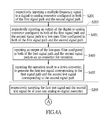
- FIG. 4A and FIG. 4B show flow charts of a calibration method of another embodiment of the instant disclosure.
- FIG. 5 shows a block diagram of a transmitter of still another embodiment of the instant disclosure.
- FIG. 6 shows a block diagram of a calibration circuit of one embodiment of the instant disclosure.
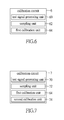
- FIG. 7 shows a block diagram of a calibration circuit of another embodiment of the instant disclosure.
- FIG. 1 shows a block diagram of a transmitter of one embodiment of the instant disclosure.
- the transmitter 1 has a first signal path 10 and a second signal path 12 , wherein a digital-to-analog converter 102 , a low-pass filter 104 and a mixer 106 are configured in the first signal path 10 , and a digital-to-analog converter 122 , a low-pass filter 124 and a mixer 126 are configured in the second signal path 20 .
- a delay chain 100 is configured in the first signal path 10 to delay an input signal in the first signal path 10
- a finite impulse response (herein after FIR) filter 120 is configured in the second signal path 12 to compensate mismatches between the first signal path 10 and the second signal path 12 .
- FIR finite impulse response
- the FIR filter 120 can compensate differences between the electrical characteristics of the digital-to-analog converters 102 and 122 , and between the electrical characteristics of the low-pass filters 104 and 124 (that is, the FIR filter 120 can compensate mismatches between the first signal path 10 and the second signal path 12 ), but when the transmitter 1 is working in a normal data transmitting mode, the mismatches between the first signal path 10 and the second signal path 12 may vary with certain factors, such as the temperature. In this case, the mismatches need to be again compensated, which needs another calibration process and takes a long time which results in the fact that the mismatches between the first signal path 10 and the second signal path 12 cannot be compensated accurately and efficiently.
- FIG. 2 shows a flow chart of a calibration method of one embodiment of the instant disclosure.
- the calibration method provided by the embodiment shown in FIG. 2 can be implemented in the transmitter 1 shown in FIG. 1 , but it is not limited herein.
- step S 201 a multiple-frequency signal is respectively inputted to a digital-to-analog converter 102 in a first signal path 10 and a digital-to-analog converter 122 in a second signal path 12 .
- step S 203 an output of the digital-to-analog converter 102 in the first signal path 10 is inputted to a low-pass filter 104 in the first signal path 10 , and an output of the digital-to-analog converter 122 in the second signal path 12 is inputted to a low-pass filter 124 in the second signal path 12 , to generate a first test signal corresponding to the first signal path 10 and a second test signal corresponding to the second signal path 12 .
- step S 205 at least one analog-to-digital converter (not shown in FIG. 1 ) samples from the first test signal and the second test signal.
- step S 207 sampling results generated by the analog-to-digital converter are fed back to the delay chain 100 and the FIR filter 120 to generate a delay signal and a compensated output signal.
- step S 209 a subtract operation is executed for the delay signal and the compensated output signal, to obtain a first calibration coefficient related to the FIR filter 120 in the second signal path 12 .
- tap coefficients of the FIR filter 120 are calibrated by the first calibration coefficient.
- step S 211 the FIR filter 120 with the calibrated tap coefficients in the second signal path 12 compensates mismatches between the first signal path 10 and the second signal path 12 of the transmitter 1 .
- one of achievements of the calibration method provided by this embodiment is that, before the transmitter 1 starts to transmit data (that is, when the transmitter 1 is working in a training mode), differences between the electrical characteristics of the digital-to-analog converters 102 and 122 , and between the electrical characteristics of the low-pass filters 104 and 124 can be obtained via a multiple-frequency signal generated by the transmitter 1 .
- the multiple-frequency signals do not be transmitted from a radio frequency module (such as mixers 106 and 126 , a summator 108 and an oscillator LO shown in FIG. 1 ) after passing through the digital-to-analog converter 102 and the low-pass filter 104 in the first signal path 10 , and passing through the digital-to-analog converter 122 and the low-pass filter 124 in the second signal path 12 .
- a radio frequency module such as mixers 106 and 126 , a summator 108 and an oscillator LO shown in FIG. 1
- a first calibration coefficient related to the FIR filter 120 is obtained according to an output of the delay chain 100 and an output of the FIR filter 120 .
- the first calibration coefficient is used to calibrate a plurality of tap coefficients of the FIR filter 120 , and thus the optimum values of these tap coefficients can be determined.
- the transmitter 1 when the transmitter 1 starts to transmit data (that is, the transmitter 1 is working in a normal data transmitting mode), the transmitter 1 can compensate mismatches between the first signal path 10 and the second signal path 12 by the FIR filter 120 with the calibrated tap coefficients. Thereby, the mismatches between the first signal path 10 and the second signal path 12 can be effectively compensated.
- steps S 201 ⁇ S 209 are supposed to be executed before the transmitter 1 starts to transmit data (that is, the transmitter 1 is working in a training mode).
- FIG. 3 shows a block diagram of a transmitter of another embodiment of the instant disclosure.
- similar numbers or symbols refer to the same elements.
- the transmitter 1 ′ shown in FIG. 3 further comprises four switch elements S 1 ⁇ S 4 to switch the transmitter 1 ′ to the training mode or to the normal data transmitting mode.
- the digital-to-analog converters 102 and 122 are both connected to a frequency signal generating unit 300 by the switching elements S 1 and S 2 .
- the frequency signal generating unit 300 is configured as a signal source to output a multiple-frequency signal SMF respectively to the digital-to-analog converter 102 in the first signal path 10 and to the digital-to-analog converter 122 in the second signal path 12 .
- the low-pass filters 104 and 124 are respectively connected to the analog-to-digital converters 302 and 304 by the switching elements S 3 and S 4 .
- the signal source under the training mode of a transmitter is usually a single frequency signal.
- the calibration method provided by this embodiment uses a multiple-frequency signal SMF as the signal source in the training mode, and thus the differences between the electrical characteristics of the digital-to-analog converters 102 and 122 , and between the electrical characteristics of the low-pass filters 104 and 124 can be effectively obtained, which helps to determine the optimum values for the tap coefficients of the FIR filter 120 .
- a first test signal TS 1 corresponding to the first signal path 10 and a second test signal TS 2 corresponding to the second signal path 12 are generated.
- the first test signal TS 1 and the second test signal TS 2 are then sampled by the analog-to-digital converters 302 and 304 .
- the working principle of the analog-to-digital converters 302 and 304 is easily understood by those skilled in the art and thus the detailed description for the sampling process done by the analog-to-digital converters 302 and 304 is omitted herein.
- the designed circuit configuration for a feedback to a delay chain 100 ′ (similar to the delay chain 100 ) and a FIR filter 120 ′ (similar to the FIR filter 120 ) are similar to the designed circuit configuration for an input to the delay chain 100 ′ and the FIR filter 120 ′.
- the delay chain 100 ′ shown in the left side of FIG. 3 plays a role as the delay chain 100 shown in the right side of FIG. 3
- the FIR filter 120 ′ shown in the left side of FIG. 3 plays a role as the FIR filter 120 shown in the right side of FIG. 3 .
- Coef_n′ is the value of the n th calibrated tap coefficient
- step is a programmable coefficient.
- equation (3) is taken as an example to show the calibration for the tap coefficients, but not as a restriction.
- “Sin_of_EQ_err” is a symbol bit of the first calibration coefficient EQ_err. For example, when the first calibration coefficient EQ_err is larger than zero, and the symbol bit sin_of_EQ_err is “1”. If the first calibration coefficient EQ_err is smaller than zero, and the symbol bit sin_of_EQ_err is “ ⁇ 1”. In addition, when the first calibration coefficient EQ_err is equal to zero, the symbol bit sin_of_EQ_err is “0”.
- the calibration method or circuit for the tap coefficients Coef_n can be set by those skilled in the art as needed. No limitations are attempted to be made herein.
- the transmitter 1 ′ starts to work in the normal data transmitting mode.
- the digital-to-analog converters 102 and 122 are again respectively connected to the delay chain 100 and the FIR filter 120 by the switching elements S 1 and S 2
- the low-pass filters 104 and 124 are again respectively connected to the mixers 106 and 126 .
- the calibration method provided by this embodiment based on the tap coefficients that are most recently calibrated, it only takes a short time for the transmitter 1 ′ to adjust the tap coefficients again by the same calibration method.
- the mismatches between the first signal path 10 and the second signal path 12 can be compensated more accurately and with a high efficiency.
- one of the first signal path 10 and the second signal path 12 is supposed to be an in-phase signal path, and the other one is supposed to be a quadrature signal path correspondingly, but it is not limited herein.
- FIG. 4A and FIG. 4B show flow charts of a calibration method of another embodiment of the instant disclosure
- FIG. 5 shows a block diagram of a transmitter of still another embodiment of the instant disclosure.
- the calibration method shown in FIG. 4A and FIG. 4B can be executed by the transmitter shown in FIG. 5 , but it is not limited herein.
- similar reference numbers or symbols refer to steps alike
- FIG. 3 and FIG. 5 similar reference numbers or symbols refer to elements alike
- Step S 203 further comprises steps S 401 ⁇ S 405 .
- step S 401 an output of the digital-to-analog converter 102 in the first signal path 10 and an output of the digital-to-analog converter 122 in the second signal path 12 are respectively inputted to the low-pass filter 104 in the first signal path 10 and the low-pass filter 124 in the second signal path 12 .
- step S 403 an output of the low-pass filter 104 in the first signal path 10 and an output of the low-pass filter 124 in the second signal path 12 are inputted to an up-converter 500 for operation.
- step S 405 an operation result generated by the up-converter 500 is inputted to a down-converter 502 to generate a first test signal TS 1 ′ corresponding to the first signal path 10 and a second test signal TS 2 ′ corresponding to the second signal path 12 .
- step S 207 further comprises steps S 407 ⁇ S 409 .
- step S 407 sampling results of the first test signal and the second test signal generated by the analog-to-digital converters 302 and 304 are inputted to a phase derotator 504 to generate a first derotated signal Derot 1 corresponding to the first signal path 10 and a second derotated signal Derot 2 corresponding to the second signal path 12 .
- step S 409 the first derotated signal and the second derotated signal are respectively fed back to the delay chain 100 and the FIR filter 120 to generate a delay signal DS and a compensated output signal EQ_OUT.
- the transmitter 1 ′′ shown in FIG. 5 further comprises three switching elements S 1 , S 2 and S 5 to switch the training mode and the normal data transmitting mode of the transmitter 1 ′′.
- the up-converter 500 shown in FIG. 5 can be considered as the integration of the mixers 106 and 126 and the summator 108 in both of FIG. 1 and FIG. 3 .
- the up-converter 500 is connected to the down-converter 502 by the switching element S 5 , such that after multiple-frequency signals SMF pass through the digital-to-analog converter 102 , the low-pass filter 104 and the up-converter 500 , and multiple-frequency signals SMF pass through the digital-to-analog converter 122 , the low-pass filter 124 and the up-converter 500 , they will not be emitted through the antenna but be directly down-converted by the down-converter 502 (that is, an RF signal is down-converted to a baseband signal) to generate a first test signal TS 1 ′ corresponding to the first signal path 10 and a second test signal TS 2 ′ corresponding to the second signal path 12 .
- the first test signal TS 1 ′ and the second test signal TS 2 ′ are sampled by the analog-to-digital converters 302 and 304 respectively.
- Sampling results generated by the analog-to-digital converters 302 and 304 are inputted to a phase derotator 504 to generate a first derotated signal Derot 1 corresponding to the first signal path 10 and a second derotated signal Derot 2 corresponding to the second signal path 12 .
- the first derotated signal Derot 1 and the second derotated signal Derot 2 are respectively inputted to a delay chain 100 ′ and a FIR filter 120 ′ (that is, the first derotated signal Derot 1 and the second derotated signal Derot 2 are respectively fed back to the delay chain 100 and the FIR filter 120 ) to generate a delay signal DS and a compensated output signal EQ_OUT.
- one of achievements of embodiments shown in FIG. 4 and FIG. 5 is to additionally compensate mismatches among elements of the up-converter 500 (that is, the mixers 106 and 126 and the summator 108 shown in FIG. 1 and FIG. 3 ) so as to obtain a more accurate first calibration coefficient EQ_err that helps to increase the efficiency of compensating mismatches between the first signal path 10 and the second signal path.
- elements of the up-converter 500 that is, the mixers 106 and 126 and the summator 108 shown in FIG. 1 and FIG. 3
- the transmitter 1 ′′ further comprises a phase-locked loop (PLL) 506 to adjust outputs of the phase derotator 504 , which are the first derotated signal Derot 1 and the second derotated signal Derot 2 , such that the frequency offset between the local oscillator LO and the oscillator LO 2 can be effectively fixed.
- PLL phase-locked loop
- a subtraction operation is executed for the first derotated signal Derot 1 and the second derotated signal Derot 2 to obtain a second calibration coefficient PLL err related to the phase-locked loop 506 configured between the first signal path 10 and the second signal path 12 . Also, the first derotated signal Derot 1 and the second derotated signal Derot 2 generated by the phase derotator 504 are adjusted by the second calibration coefficient PLL err.
- FIG. 6 shows a block diagram of a calibration circuit of one embodiment of the instant disclosure.
- the calibration circuit 6 described as below is for illustrating how the calibration methods in the above embodiments can be executed but not for restricting the instant disclosure.
- the calibration circuit 6 comprises a test signal generating unit 60 , a sampling unit 62 and a first calibration unit 64 , which can be implemented by hardware circuits, or the hardware circuit with a firmware or software, and it is not limited herein.
- the test signal generating unit 60 , the sampling unit 62 and the first calibration unit 64 can be integrated with each other or each of them can be independent, and it is also not limited herein.
- the test signal generating unit 60 inputs a multiple-frequency signal to a digital-to-analog converter in the first signal path and to a digital-to-analog converter in the second signal path respectively.
- An output of the digital-to-analog converter in the first signal path and an output of the digital-to-analog converter in the second signal path are inputted to a low-pass filter in the first signal path and to a low-pass filter in the second signal path, to generate a first test signal corresponding to the first signal path and a second test signal corresponding to the second signal path.
- the sampling unit 62 respectively samples the first test signal and the second test signal by at least one analog-to-digital converter. Sampling results generated by the sampling unit 62 are fed back to a delay chain and a FIR filter respectively, to generate a delay signal and a compensated output signal.
- the first calibration unit 64 executes a subtraction operation for the delay signal and the compensated output signal to obtain a first calibration coefficient related to the FIR filter in the second signal path.
- a plurality of tap coefficients of the FIR filter is calibrated by the first calibration coefficient, such that the FIR filter having the calibrated tap coefficients can compensate mismatches between the first signal path and the second signal path.
- the calibration circuit 6 of FIG. 6 can work with the transmitter 1 ′ shown in FIG. 3 , but details herein are not repeated again.
- FIG. 7 shows a block diagram of a calibration circuit of another embodiment of the instant disclosure.
- the calibration circuit 7 shown in FIG. 7 is only one example circuit that can execute the calibration method in the above embodiments.
- similar reference numbers or symbols refer to the same elements.
- the calibration circuit 7 comprises a test signal generating unit 70 , a sampling unit 72 , a first calibration unit 64 and a second calibration unit 74 .
- the test signal generating unit 70 , the sampling unit 72 , the first calibration unit 64 and the second calibration unit 74 can be implemented by hardware circuits or hardware circuits with a firmware or software, and it is not limited herein.
- the test signal generating unit 70 , the sampling unit 72 , the first calibration unit 64 and the second calibration unit 74 can be integrated with each other or each of them can be independent, and it is also not limited herein.
- the test signal generating unit 70 inputs a multiple-frequency signal to a digital-to-analog converter configured both in the first signal path and the second signal path.
- An output of the digital-to-analog converter in the first signal path and an output of the digital-to-analog converter in the second signal path are inputted to a low-pass filter configured both in the first signal path and a low-pass filter respectively.
- An output of the low-pass filter in the first signal path and an output of the low-pass filter in the second signal path are inputted to an up-converter for operation, and an operation result is inputted to a down-converter to generate a first test signal corresponding to the first signal path and a second test signal corresponding to the second signal path.
- the sampling unit 72 samples the first test signal and the second test signal by at least one analog-to-digital converter. Sampling results generated by the sampling unit 72 are inputted to a phase derotator to generate a first derotated signal corresponding to the first signal path and a second derotated signal corresponding to the second signal path. After that, the first derotated signal and the second derotated signal are fed back respectively to a delay chain and a FIR filter to generate a delay signal and a compensated output signal.
- the second calibration unit 74 executes a subtraction operation for the first derotated signal and the second derotated signal to obtain a second calibration coefficient related to a phase-locked loop configured between the first signal path and the second signal path. After that, the second calibration unit 74 adjusts the first derotated signal and the second derotated signal generated from the phase derotator by the second calibration coefficient
- the calibration circuit 7 shown in FIG. 7 can work with the transmitter 1 ′′ shown in FIG. 5 , but details herein are not repeated again.
- the calibration method and the calibration circuit provided by the instant disclosure calibrate a plurality of tap coefficients of the FIR filter in the second signal path and optimizes the tap coefficients, according to the different electrical characteristics, obtained before the data transmission has started by the transmitter (that is, when the transmitter is working in the training mode), between the DAC convertor and the LPF configured in the first signal path and the DAC convertor and the LPF configured in the second signal path.
- the calibration method and the calibration circuit provided by the instant disclosure can compensate mismatches between the first signal path and the second signal path with a high efficiency and a high accuracy.
Landscapes
- Engineering & Computer Science (AREA)
- Computer Networks & Wireless Communication (AREA)
- Signal Processing (AREA)
- Physics & Mathematics (AREA)
- Spectroscopy & Molecular Physics (AREA)
- Power Engineering (AREA)
- Transmitters (AREA)
- Digital Transmission Methods That Use Modulated Carrier Waves (AREA)
- Analogue/Digital Conversion (AREA)
Abstract
Description
EQ_OUT=sum(Input_n*Coef_n) Equation (1)
EQ_err=DS−EQ_OUT Equation (2)
EQ_err=DS−EQ_OUT Equation (3)
Coef_n′=Coef_n+(step*sin_of_EQ_err*Input_n) Equation (4)
Claims (10)
Applications Claiming Priority (3)
| Application Number | Priority Date | Filing Date | Title |
|---|---|---|---|
| CN201510898442 | 2015-12-08 | ||
| CN201510898442.7 | 2015-12-08 | ||
| CN201510898442.7A CN105471780B (en) | 2015-12-08 | 2015-12-08 | correction method and correction circuit |
Publications (2)
| Publication Number | Publication Date |
|---|---|
| US20170163405A1 US20170163405A1 (en) | 2017-06-08 |
| US9806877B2 true US9806877B2 (en) | 2017-10-31 |
Family
ID=55609065
Family Applications (1)
| Application Number | Title | Priority Date | Filing Date |
|---|---|---|---|
| US15/291,938 Active US9806877B2 (en) | 2015-12-08 | 2016-10-12 | Calibration method and calibration circuit |
Country Status (2)
| Country | Link |
|---|---|
| US (1) | US9806877B2 (en) |
| CN (1) | CN105471780B (en) |
Cited By (1)
| Publication number | Priority date | Publication date | Assignee | Title |
|---|---|---|---|---|
| US11215694B2 (en) * | 2018-02-08 | 2022-01-04 | Nxp B.V. | Built-in self-test for a radar unit receiver and method therefor |
Families Citing this family (3)
| Publication number | Priority date | Publication date | Assignee | Title |
|---|---|---|---|---|
| CN107154906A (en) * | 2017-04-27 | 2017-09-12 | 太仓鸿策腾达网络科技有限公司 | A kind of error-preventing method for being used to correct communication system |
| CN112054984B (en) * | 2020-08-10 | 2022-01-14 | 北京智芯微电子科技有限公司 | IQ imbalance correction method and device |
| DE102020132425A1 (en) | 2020-12-07 | 2022-06-23 | Infineon Technologies Ag | Devices and methods for comparing redundant signals in functionally safe systems |
Citations (10)
| Publication number | Priority date | Publication date | Assignee | Title |
|---|---|---|---|---|
| US20020150171A1 (en) * | 2001-04-16 | 2002-10-17 | Myers Michael H. | Bandpass predistortion method and apparatus for radio transmission |
| US7627055B2 (en) | 2003-02-27 | 2009-12-01 | Nokia Corporation | Error adjustment in direct conversion architectures |
| US7760817B2 (en) * | 2006-08-10 | 2010-07-20 | Mediatek Inc. | Communication system for utilizing single tone testing signal having specific frequency or combinations of DC value and single tone testing signal to calibrate impairments in transmitting signal |
| US20100198540A1 (en) * | 2007-07-10 | 2010-08-05 | Kiyoshi Yanagisawa | Signal processing apparatus and signal processing method |
| US20100197250A1 (en) * | 2009-02-03 | 2010-08-05 | Samsung Electronics Co. Ltd. | Apparatus and method for dc offset calibration in system |
| US20100239056A1 (en) * | 2006-04-21 | 2010-09-23 | Nec Corporation | Signal processing circuit |
| US7903771B2 (en) * | 2006-11-30 | 2011-03-08 | Samsung Electro-Mechanics Co., Ltd. | Time-domain IQ mismatch detection apparatus of OFDM receiver |
| US20140072077A1 (en) * | 2012-09-07 | 2014-03-13 | Agency For Science, Technology And Research | Transmitter |
| US20150030103A1 (en) * | 2013-05-20 | 2015-01-29 | Analog Devices, Inc. | Wideband quadrature error detection and correction |
| US9008161B1 (en) * | 2013-12-04 | 2015-04-14 | Realtek Semiconductor Corp. | Calibration method and calibration apparatus for calibrating mismatch between I-path and Q-path of transmitter/receiver |
Family Cites Families (5)
| Publication number | Priority date | Publication date | Assignee | Title |
|---|---|---|---|---|
| US7133657B2 (en) * | 2002-09-26 | 2006-11-07 | Agere Systems Inc. | Channel calibrator for use with a quadrature mixing receiver and a method of operation thereof |
| CN1655465A (en) * | 2004-02-11 | 2005-08-17 | 络达科技股份有限公司 | Receiver gain balance compensation circuit and method thereof |
| US8064848B2 (en) * | 2008-10-27 | 2011-11-22 | Mediatek Inc. | Transmitter and control method for transmitting and calibrating a phase signal and an amplitude signal |
| EP2746814A1 (en) * | 2012-12-24 | 2014-06-25 | u-blox AG | A method of processing a radio frequency signal, a signal processing device for carrying out the method, a radio frequency front-end, a radio receiver and a GNSS receiver |
| TWI536779B (en) * | 2014-05-29 | 2016-06-01 | 瑞昱半導體股份有限公司 | Correction method and correction device for correcting mismatch between first and second signal paths of transmitter/receiver |
-
2015
- 2015-12-08 CN CN201510898442.7A patent/CN105471780B/en active Active
-
2016
- 2016-10-12 US US15/291,938 patent/US9806877B2/en active Active
Patent Citations (12)
| Publication number | Priority date | Publication date | Assignee | Title |
|---|---|---|---|---|
| US20020150171A1 (en) * | 2001-04-16 | 2002-10-17 | Myers Michael H. | Bandpass predistortion method and apparatus for radio transmission |
| US7627055B2 (en) | 2003-02-27 | 2009-12-01 | Nokia Corporation | Error adjustment in direct conversion architectures |
| US20100239056A1 (en) * | 2006-04-21 | 2010-09-23 | Nec Corporation | Signal processing circuit |
| US7760817B2 (en) * | 2006-08-10 | 2010-07-20 | Mediatek Inc. | Communication system for utilizing single tone testing signal having specific frequency or combinations of DC value and single tone testing signal to calibrate impairments in transmitting signal |
| US7903771B2 (en) * | 2006-11-30 | 2011-03-08 | Samsung Electro-Mechanics Co., Ltd. | Time-domain IQ mismatch detection apparatus of OFDM receiver |
| US20100198540A1 (en) * | 2007-07-10 | 2010-08-05 | Kiyoshi Yanagisawa | Signal processing apparatus and signal processing method |
| US20100197250A1 (en) * | 2009-02-03 | 2010-08-05 | Samsung Electronics Co. Ltd. | Apparatus and method for dc offset calibration in system |
| US20140072077A1 (en) * | 2012-09-07 | 2014-03-13 | Agency For Science, Technology And Research | Transmitter |
| US20150030103A1 (en) * | 2013-05-20 | 2015-01-29 | Analog Devices, Inc. | Wideband quadrature error detection and correction |
| US9008161B1 (en) * | 2013-12-04 | 2015-04-14 | Realtek Semiconductor Corp. | Calibration method and calibration apparatus for calibrating mismatch between I-path and Q-path of transmitter/receiver |
| US20150155955A1 (en) | 2013-12-04 | 2015-06-04 | Realtek Semiconductor Corp. | Calibration method and calibration apparatus for calibrating mismatch between i-path and q-path of transmitter/receiver |
| TW201524166A (en) | 2013-12-04 | 2015-06-16 | Realtek Semiconductor Corp | Calibration method and calibration apparatus for calibrating mismatch between first signal path and second signal path of transmitter/receiver |
Cited By (1)
| Publication number | Priority date | Publication date | Assignee | Title |
|---|---|---|---|---|
| US11215694B2 (en) * | 2018-02-08 | 2022-01-04 | Nxp B.V. | Built-in self-test for a radar unit receiver and method therefor |
Also Published As
| Publication number | Publication date |
|---|---|
| CN105471780A (en) | 2016-04-06 |
| CN105471780B (en) | 2018-08-31 |
| US20170163405A1 (en) | 2017-06-08 |
Similar Documents
| Publication | Publication Date | Title |
|---|---|---|
| US9762336B2 (en) | Calibration method and calibration circuit | |
| TWI528764B (en) | Calibration method and calibration apparatus for calibrating mismatch between first signal path and second signal path of transmitter/receiver | |
| KR101831208B1 (en) | Apparatus and methods for transceiver calibration | |
| US9479203B2 (en) | Transceiver capable of IQ mismatch compensation on the fly and method thereof | |
| US9300444B2 (en) | Wideband quadrature error correction | |
| US9749172B2 (en) | Calibration method and calibration apparatus for calibrating mismatch between first signal path and second signal path of transmitter/receiver | |
| US9270391B2 (en) | Calibration method performing spectrum analysis upon test signal and associated apparatus for communication system | |
| TWI416899B (en) | Method and apparatus for correcting mismatch between in-phase/orthogonal signals in a communication circuit | |
| KR100710125B1 (en) | Transceiver circuit and compensation method for compensating IP mismatch and carrier leakage | |
| TW201301818A (en) | Devices of IQ mismatch calibration, and methods thereof | |
| US20150381228A1 (en) | Calibrating a transceiver circuit | |
| US20170163405A1 (en) | Calibration method and calibration circuit | |
| US20220345164A1 (en) | Transmitter circuit, compensation value calibration device and method for calibrating IQ imbalance compensation values | |
| US10728081B1 (en) | Wideband TX IQ imbalance estimation | |
| CN103023834B (en) | Unbalance compensator, unbalance compensation method and direct down-frequency receiving device | |
| EP2830227A2 (en) | Wideband quadrature error detection and correction | |
| US9385822B2 (en) | Wideband calibration method and wideband calibration apparatus for calibrating mismatch between first signal path and second signal path of transmitter/receiver | |
| CN105282062B (en) | Method and apparatus for correcting mismatch between signal paths of transmitter/receiver | |
| JP5068109B2 (en) | Method and apparatus for compensating mismatch in digital quadrature transmitter / receiver with direct conversion structure | |
| KR20170066246A (en) | Apparatus and methods for phase synchronization of local oscillators in a transceiver | |
| CN100576830C (en) | Method for compensating DC offset, gain offset and phase offset and correction system | |
| US11038740B2 (en) | Communication system | |
| CN112054984B (en) | IQ imbalance correction method and device | |
| US20160065360A1 (en) | Radio communication apparatus | |
| CN104717164B (en) | Signal correction method and correction device |
Legal Events
| Date | Code | Title | Description |
|---|---|---|---|
| AS | Assignment |
Owner name: ALI CORPORATION, TAIWAN Free format text: ASSIGNMENT OF ASSIGNORS INTEREST;ASSIGNOR:CHEN, YUE-YONG;REEL/FRAME:040000/0802 Effective date: 20160304 |
|
| STCF | Information on status: patent grant |
Free format text: PATENTED CASE |
|
| MAFP | Maintenance fee payment |
Free format text: PAYMENT OF MAINTENANCE FEE, 4TH YEAR, LARGE ENTITY (ORIGINAL EVENT CODE: M1551); ENTITY STATUS OF PATENT OWNER: LARGE ENTITY Year of fee payment: 4 |
|
| FEPP | Fee payment procedure |
Free format text: ENTITY STATUS SET TO SMALL (ORIGINAL EVENT CODE: SMAL); ENTITY STATUS OF PATENT OWNER: SMALL ENTITY |
|
| MAFP | Maintenance fee payment |
Free format text: PAYMENT OF MAINTENANCE FEE, 8TH YR, SMALL ENTITY (ORIGINAL EVENT CODE: M2552); ENTITY STATUS OF PATENT OWNER: SMALL ENTITY Year of fee payment: 8 |